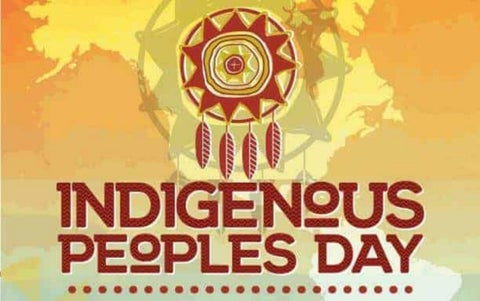
Indigenous People’s Day 2020: Reclaiming the Past, Confronting the Present,
Shaping the Future
Monday, October 12, 2020
All Events via Zoom
Join students, faculty and the community for an all-day exposure to some of the global indigenous movements and their centuries-long struggle for the defense of territory, culture, and the environment within the context of the many crises facing the planet. This annual event is co-sponsored by the Center for Civic Engagement, the Center for “Race,” Culture and Social Justice, Hofstra University Honors College; the Latin American and Caribbean Studies Program, Office of Intercultural, Engagement and Inclusion, and the Hofstra Cultural Center.
11:15 a.m.-12:40 p.m. RECLAIMING THE PAST: WHY SETTING THE RECORD STRAIGHT ON INDIGENOUS HISTORY AND COLONIALISM IS NECESSARY TODAY A Panel Discussion about the problematic origins of the Doctrine of Discovery, the history of Columbus Day’s place in the U.S. political culture, and the growing global movement to change the narrative on how we got where we are today. Introduced by Mario A. Murillo, professor, Vice Dean, The Lawrence Herbert School of Communication Moderated by Rebecca LoPresti, Senior, majoring in History, Student Fellow, Center for Civic Engagement.
Speakers – Steve Newcomb (Shawnee/Lenape), indigenous law research coordinator at the Sycuan education department of the Sycuan Band of the Kumeyaay Nation in San Diego County, Author of Pagans in the Promised Land: Decoding the Doctrine of Discovery
Elias Jade Not Afraid (Apsaalooké, Crow nation), traditional beadwork artist, Whitecone, Arizona.
Joseph Pierce, (Cherokee Nation), professor of Hispanic studies at Stony Brook University, author of Argentine Intimacies. Queer Kinship in an Age of Splendor, 1890-1910 (SUNY Press, 2019); he is currently working on a project on Resistance.
Steven Newcomb is a Shawnee-Lenape scholar and author. He has been studying and writing about U.S. federal Indian law and policy since the early 1980s, particularly the application of international law to Indigenous nations and peoples. Mr. Newcomb is the Director of the Indigenous Law Institute, which he co-founded with Birgil Kills Straight, a Traditional Headman and Elder of the Oglala Lakota Nation. Together they have carried on a global campaign challenging imperial Vatican documents from the fifteenth century. Those documents resulted in the decimation of Original Nations and Peoples of Mother Earth and thereby deprived the planet of life-ways, sustainable ecosystems, and Sacred Teachings; Newcomb’s book Pagans in the Promised Land: Decoding the Doctrine of Christian Discovery (2008) relies upon recent findings in cognitive theory and a semantic analysis of the Latin and English versions of 15th century Vatican documents. He has identified the little noticed patterns found in those documents and a U.S. Supreme Court ruling, which claimed a right of a “Christian prince or people” to discover and exert a right of domination (dominorum Christianorum) over the lands of “heathens and infidels;” He has worked on Indigenous Peoples issues at the United Nations for twenty years, and has worked with numerous Native Nations and Peoples. He has been a regular columnist with Indian Country Today Media Network Now since 2001. Elias Jade Not Afraid (he/him) is 30 years old and a member of the Apsaalooké nation (Crow nation). He was born and raised on the Crow Indian reservation in Montana and taught himself to bead at the age of 12. He uses antique/vintage glass cut beads on smoked deer hide to create works of art from both sustainable and recycled materials. He has received multiple ribbons for his work at art markets. He has his work featured in the permanent collections of the Smithsonian, the Field museum and the Minneapolis institute of Art. He has also been in multiple publications including Vogue magazine. His main goal is to teach others about the materials that he uses as well as the history of anything related to Native American beadwork, including antique glass beads, various materials, and techniques. He posts tutorials about how to do beadwork and answers any questions other beaders might have. Joseph M. Pierce is Associate Professor in the Department of Hispanic Languages and Literature at Stony Brook University. His research focuses on the intersections of kinship, gender, sexuality, and race in Latin America, 19th century literature and culture, queer studies, Indigenous studies, and hemispheric approaches to citizenship and belonging. He is the author of Argentine Intimacies: Queer Kinship in an Age of Splendor, 1890-1910 (SUNY Press, 2019) and co-editor of Políticas del amor: Derechos sexuales y escrituras disidentes en el Cono Sur (Cuarto Propio, 2018) as well as the forthcoming special issue of GLQ, “Queer/Cuir !méricas: Translation, Decoloniality, and the Incommensurable;” His work has been published recently in Taller de Letras, Revista Hispánica Moderna, Critical Ethnic Studies, and has also been featured in Indian Country Today. He is a citizen of the Cherokee Nation.
12:50-2:30 p.m.
CONFRONTING THE PRESENT: IN DEFENSE OF INDIGENOUS TERRITORY AGAINST PREDATORY EXTRACTION From Standing Rock to the Amazonian Rainforest, indigenous communities are at the forefront of today’s most important campaigns to contest the practices of transnationl extractive industries in order to protect sacred spaces and human rights. This panel features some of the leaders in the fight, both north and south. Moderated by Benita Sampedro Vizcaya, Professor of Spanish Colonial Studies, former !ssociate Director of the Center for “Race,” Culture and Social Justice, and co-director of Latin American and Caribbean Studies program. Translations for this session by Hofstra students attending a Latin American and Caribbean Studies course Elian Ramos and Evelyn Mejía Speakers – Patricia Gualinga, (Kichwa), Indigenous Rights Defender, community leader of the Pueblo Kichwa de Sarayaku (Kichwa People of Sarayaku), an indigenous community in the Ecuadoran Amazon. Ruth Anna Buffalo, (Mandan/Hidtsa/Arikara), legislator, District 27 North Dakota House of Representatives, Board Treasurer at National Native American Boarding School Healing Coalition, and Special Projects at First Nations Women's Alliance Vilma Almendra, (Nasa/Misak, Colombia), Co-Founder, Tejijdo de Comunicación, Pueblo Nasa, Cauca, co-founder Pueblos en Camino.
Vilma Rocio Almendá Kiwenas, (Nasa/Misak, Cauca, Colombia), is a co-founder of the Tejijdo de Comunicación, a grassroots, internationally-recognized indigenous communication movement of the Pueblo Nasa, in the northern Cauca region of southwest Colombia. A long time organizer and human rights activist, she is a contributor and co-founder of Pueblos en Camino. She is the author of Entre la emancipación y la Captura: Memorias y caminos desde la lucha Nasa en Colombia.
Ruth Anna Buffalo is an educator, community organizer and public health professional. She is a volunteer to several local, statewide and national boards which focus on improving the quality of life for people. She has served on advisory councils focused on women’s health, women’s leadership and local food systems; She is a 2019-2020 Women’s Peacemaker Fellow, former Chair of the North Dakota Human Rights Coalition and a 2017 recipient of the National Center for !merican Indian Enterprise Development’s 40 under 40 leadership award. The Fargo Inforum newspaper named her among local leaders to watch in 2019. She was selected as the 2019 North Dakota Women of the Year by the ND Women’s Network; Her consultant and independent contract work has included several nonprofit organizations. Her work includes research and advocacy, community capacity-building and continued reconciliation efforts through education. Ruth hopes her efforts will contribute to policy changes in all levels of government for future generations. She is a community advocate and works to inform the public of the electoral and legislative process. Her passion is safe and healthy communities. Ruth is originally from Mandaree, North Dakota and currently resides in South Fargo
with her husband and four children. In 2018, she was elected to serve a four-year term in the North Dakota legislature representing the people of North Dakota as a Representative for District 27. She is a citizen of the Mandan, Hidatsa, and Arikara Nation and a descendant of the Chiricahua Apache. Ruth earned a Bachelor of Science in Criminal Justice (2002) and Master degrees in Management (2005), Business Administration (2010), and Public Health (2016).
Patricia Gualinga is the International Relations Director for the Kichwa First People of Sarayaku. She has played an important role in the fight for indigenous rights. Patricia has been on the front lines of Sarayaku's struggle, a key protagonist in the recent historic Indigenous rights victory at the Inter-American Court of Human Rights, and an incredible leader of a rapidlygrowing movement of women defending the Amazon. Gualinga is a spokeswoman for many environmental projects, and led the women's group of the Pueblo for six years. She worked to strengthen the organization of women in the Sarayaku community. In 2018, she joined the Climate Change Summit of COP23. She is a spokesperson for the indigenous-led proposal 'Kawsak Sacha', or 'Living Forest', that calls for legal protection of the Ecuadorian Amazon.
2:55-4:20 p.m.
SHAPING THE FUTURE: ON WHY DECOLONIZING CULTURAL, POLITICAL AND SOCIAL SPACES IS A MUST FOR A SUSTAINABLE WORLD This session will explore issues of misrepresentation and misappropriation in media, cultural and educational institutions, and the myriad ways in which indigenous peoples around the world are fighting back to decolonize political and social spaces. Moderated by S.M. Rodriguez, scholar-activist, and Assistant Professor of Sociology, Hofstra University Speakers – David Hernandez Palmar, (Wayuu, Iipuana Clan, Venezuela), Academic Director at Fundación Audiovisual Indígena Wayaakua, Political Advisor at CLACPI, and Programming Manager at Muestra Internacional de Cine Indígena de Venezuela Manuel Rozental, Colombia, physician and veteran human rights activist, Cofounder of Pueblos en Camino Colleen Thurston, (Choktaw), Assistant Professor, University of Arkansas School of Journalism and Strategic Media, Emmy Award-winning nonfiction media producer, educator, and film programmer Elias Jade Not Afraid (Apsaalooké, Crow nation), traditional beadwork artist, Whitecone, Arizona.
David Hernández Palmar, (Wayuu, IIPUANA Clan, Venezuela), is a filmmaker, independent curator and film programmer with recognized experience in the Latin American region. He is also a photographer, journalist, researcher and producer of several audiovisual works that have portrayed the Wayuu world. He is a member of the Wayuu People Communications Network, Director of the Indigenous Audiovisual Foundation Wayaakua, Curator and Programmer of the Wayuu Film and Video Showcase and Programmer of the International Indigenous Film Showcase of Venezuela MICIV. He is the Political Advisor for Latin American Coordinator of Cinema and Communication of Indigenous Peoples, CLACPI. He has co-directed films such as: "Owners of The Water", "Wounmainkat". With the short film "The Foreign Body", World Premiere in competition at the Toronto International Film Festival TIFF and Winner of the First Prize at FICMAYAB (13th International Festival of Film and Communication of Indigenous Peoples), he began his career as a Film Producer.
Manuel Rozental is a veteran human rights and social justice activist, a physician, and community organizer who has worked for years with the Indigenous movement in Colombia, where he was one of the co-founders of el Tejijdo de Comunicación, a grassroots, internationally-recognized indigenous communication movement of the Pueblo Nasa, in the northern Cauca region of Colombia. He is one of the founders of the international website and movement Pueblos en Camino.
Colleen Thurston is an award-winning media producer and film programmer from Tulsa, Oklahoma. She is an Assistant Professor of Journalism and Strategic Media at the University of Arkansas, where she teaches documentary studies and video production. Colleen holds a BA from the University of Arizona in Media Arts and Anthropology, and earned her Masters of Fine Arts from Montana State University's Science and Natural History Filmmaking program. Specializing in short form non-fiction production, her films tend to explore the relationships between humans and the natural world, and often focus on Indigenous stories and perspectives. Colleen has worked for the Smithsonian’s National Museum of the !merican Indian and the Smithsonian Channel and has produced and crewed documentaries for museums, public television stations and federal agencies. She also produced and directed short documentaries for four seasons of the Cherokee Nation’s series, “Osiyo, Voices of the Cherokee People,” earning two Emmy awards for her work as a producer and writer. In 2019, Colleen had two short documentaries on Native women "Speaking Through Generations" and "Chasing 14,000," on the film festival circuit. She is currently in production on her first feature length documentary, "Drowned Land," which deals with water rights issues in the Choctaw Nation. Currently a board member of the Fayetteville Film Festival, Colleen also curates film and storytelling events independently and in conjunction with partnering organizations. Colleen is a 2019-2021 Firelight Media Documentary Lab fellow, a citizen of the Choctaw Nation and a seventh generation Oklahoman.
Elias Jade Not Afraid (he/him) is 30 years old and a member of the Apsaalooké nation (Crow nation). He was born and raised on the Crow Indian reservation in Montana and taught himself to bead at the age of 12. He uses antique/vintage glass cut beads on smoked deer hide to create works of art from both sustainable and recycled materials. He has received multiple ribbons for his work at art markets. He has his work featured in the permanent collections of the Smithsonian, the Field museum and the Minneapolis institute of Art. He has also been in multiple publications including Vogue magazine. His main goal is to teach others about the materials that he uses as well as the history of anything related to Native American beadwork, including antique glass beads, various materials, and techniques. He posts tutorials about how to do beadwork and answers any questions other beaders might have.