
Culturally Responsive Education: Understanding the History of Worldwide Genocide
Cori Sternstein and Dominick Pursino
Introduction
Problem: The NYS Social Studies Standards have failed to recognize the issue of genocide, despite it being a large part of our global community today, and much of the 20th century. Teachers are also often very limited in how much they are able to address such a topic due to its severity.
Purpose: The purpose of this unit is to allow students the opportunity about the history of genocide around the world, and allow for them the chance to learn about agents of change for their own inspiration.
Unit Compelling Question
Howcouldourunderstandingofhumanrightsviolationsinthe 20thcenturyhelpustounderstandtheword“genocide,”aswell asattemptsbyresistorstostopit?
Unit Supporting Questions
1. Howdidtheword“genocide”changehowtheworldrespondstomass violence?
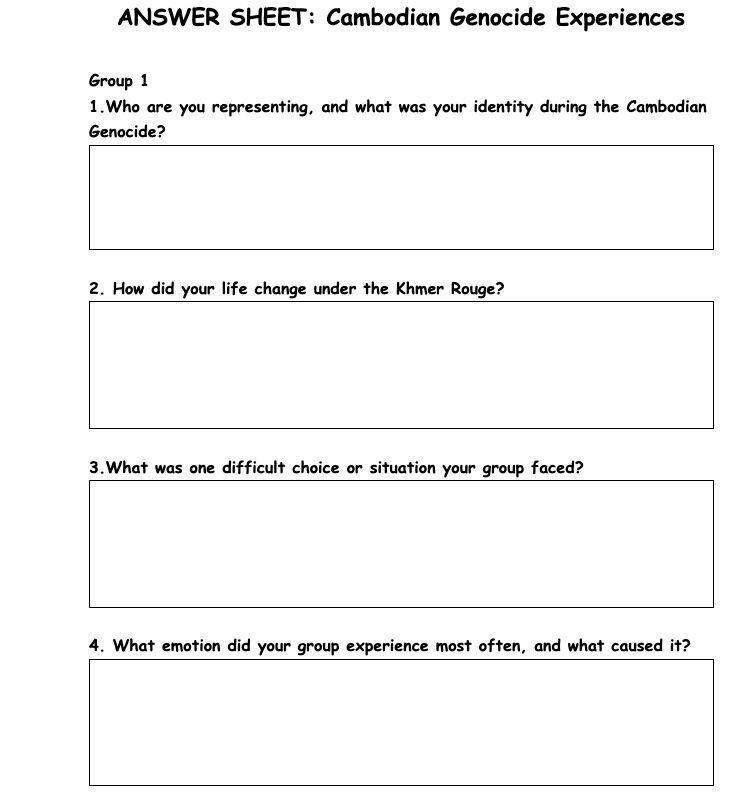
2. HowdidtheCambodianGenocidefittheUNdefinitionofgenocide?
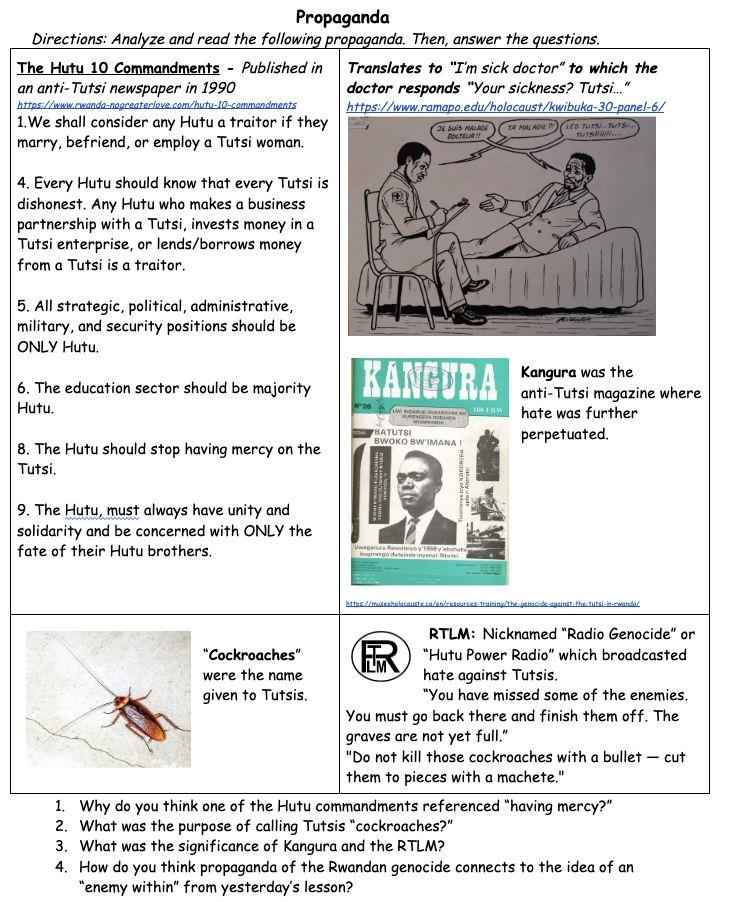
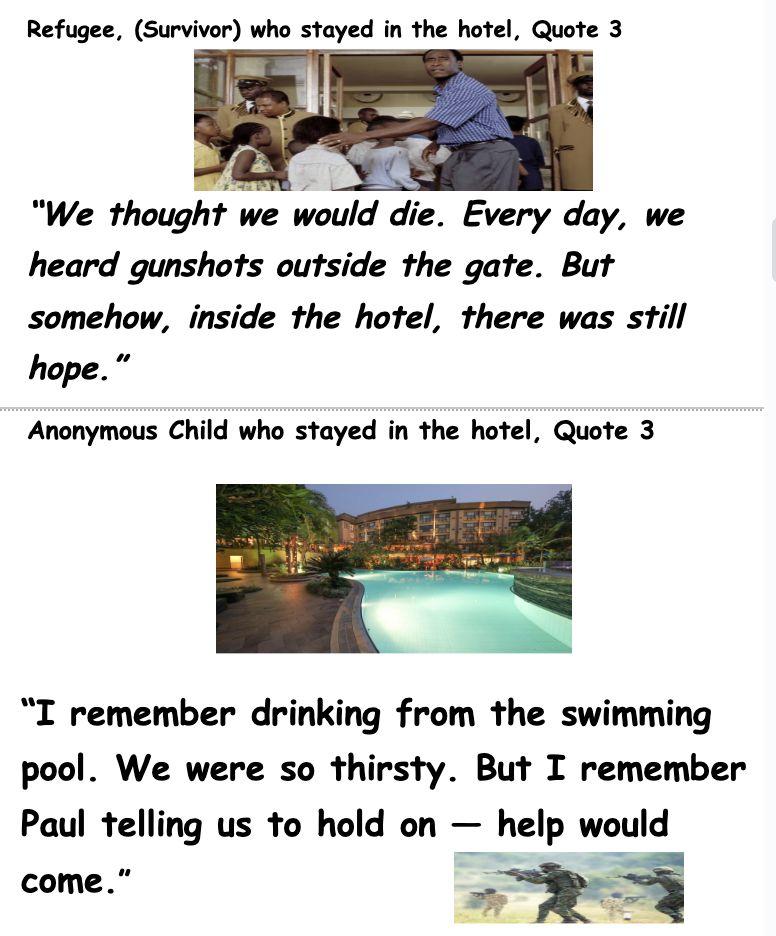
3. HowdidtheRwandanGenocidechangetheinternationalcommunity’s approachtoaddressinggenocide?
4. Howdidattemptsforresistanceagainsttheperpetratorsofgenocide instilltheneedforlegislativechange?
SocialAwareness:“Theabilitiestounderstandtheperspectivesof andempathizewithothers,includingthosefromdiverse backgrounds,cultures,andcontexts.Thisincludestakingothers’ perspectives,recognizingstrengthsinothers,demonstrating empathyandcompassion,showingconcernforthefeelingsof others,identifyingdiversesocialnorms,includingunjustones, recognizingsituationaldemandsandopportunities,and understandingtheinfluencesoforganizationsandsystemson behavior.(Principle2)
Strategies
HighExpectationsandRigorousInstruction(CR-SEducation Framework 27)
CriticalExaminationofPowerStructures(SupportingQuestions2and3) OngoingProfessionalLearningandSupport(CR-SEducationFramework28) Curriculumandinstructionisalignedwiththehistories,languages,and experiencesoftraditionallymarginalizedvoices. Provideopportunitiesforstudentstocriticallyexaminetopicsofpowerandprivilege. Thesecanbeplannedproject-basedlearninginitiatives(FosteringHighExpectations andRigorousInstruction)
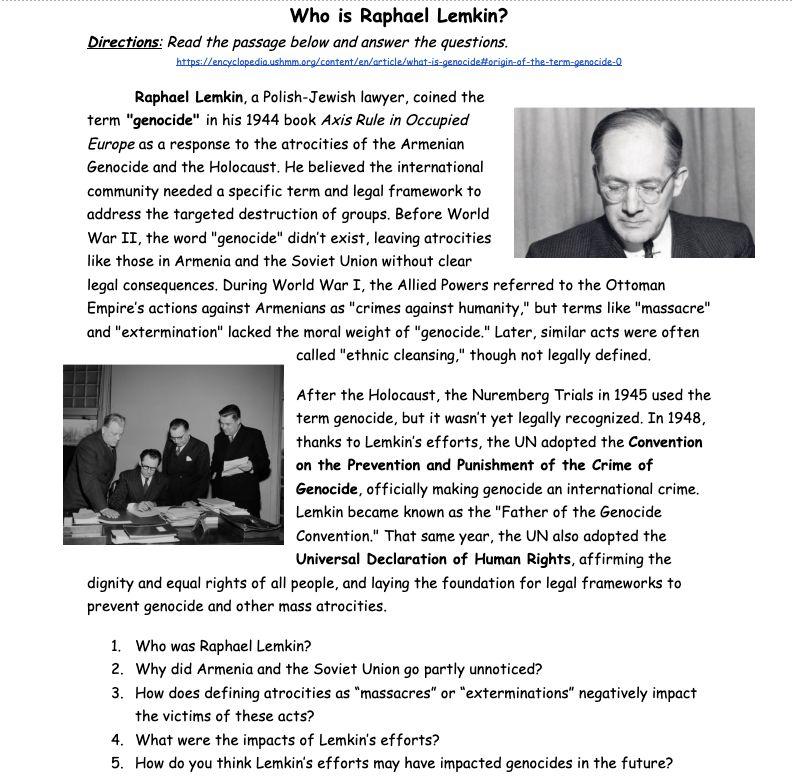
10.5eHumanatrocitiesandmassmurdersoccurredinthistime period. StudentswillexaminetheatrocitiesagainsttheArmenians; examinetheUkrainianHolodomor,andexaminetheHolocaust.
10.10cHUMANRIGHTSVIOLATIONS:SincetheHolocaust, humanrightsviolationshavegeneratedworldwideattentionand concern.TheUnitedNationsUniversalDeclarationofHuman Rightshasprovidedasetofprinciplestoguideeffortstoprotect threatenedgroupsPage27Grades9-12andhasservedasalens throughwhichhistoricaloccurrencesofoppressioncanbeevaluated.
Students will be paired up and will create a powerpoint presentation about one of the genocides that we did not discuss in class. They will incorporate what they have learned about the definitions of genocides, the attempts and interventions to stop these genocides, along with pictures.
Howdothesegenocidesstillimpactvariouspeoplearoundthe worldtoday?
- Therearestillvarioushumanrightsviolationsoccurringinthe worldtoday,suchastheUighursinChinaandRohingyain Myanmar.
- Studentswillvisitthe HolocaustMemorial&Tolerance CenterinGlenCovetoexploretherecentinstancesof genocideinourworldtodayasinspirationfortheir powerpoints.
Prior to the creation of the word genocide, different groups around the world were targetted, usually on the basis of their ethnicity, religion, or race. The creation of the word gave the international community a platform to act, allowing for those guilty of committing genocide to be punished.
Despite the creation of means of prevention for genocide, these events still continued to occur all over the world during the 20th century, and even into the 21st century. Genocide and its related acts continuously are left out of news outlets today, or are often breezed over in an effort to shield the world from the severity.