
Introduction
Introduction
Byresearchingvariousreactionsundersolvent-free conditions,wecanidentifytheoptimalproductsmayform. Severalpossibletransformationsofafluorinatedaromatic compoundwereanalyzed.Bycomparingtheenergiesofthe reactants,thechargedintermediate,andtheradicalstructure, wecandeterminewhichreactionpathwaysaremost energeticallyfavorable.Wearealsoabletodetermine whethertheproductsformedarestablerelativetothe reactantsused.
Computational Details
GeometryoptimizationswererunwiththePBEdensity functionalandaTZVPbasissetinGaussian.
Reactantsformingthe carbocation Delta(E)[eV]
ReactanttoIntermediates withCharge
toEther
Results
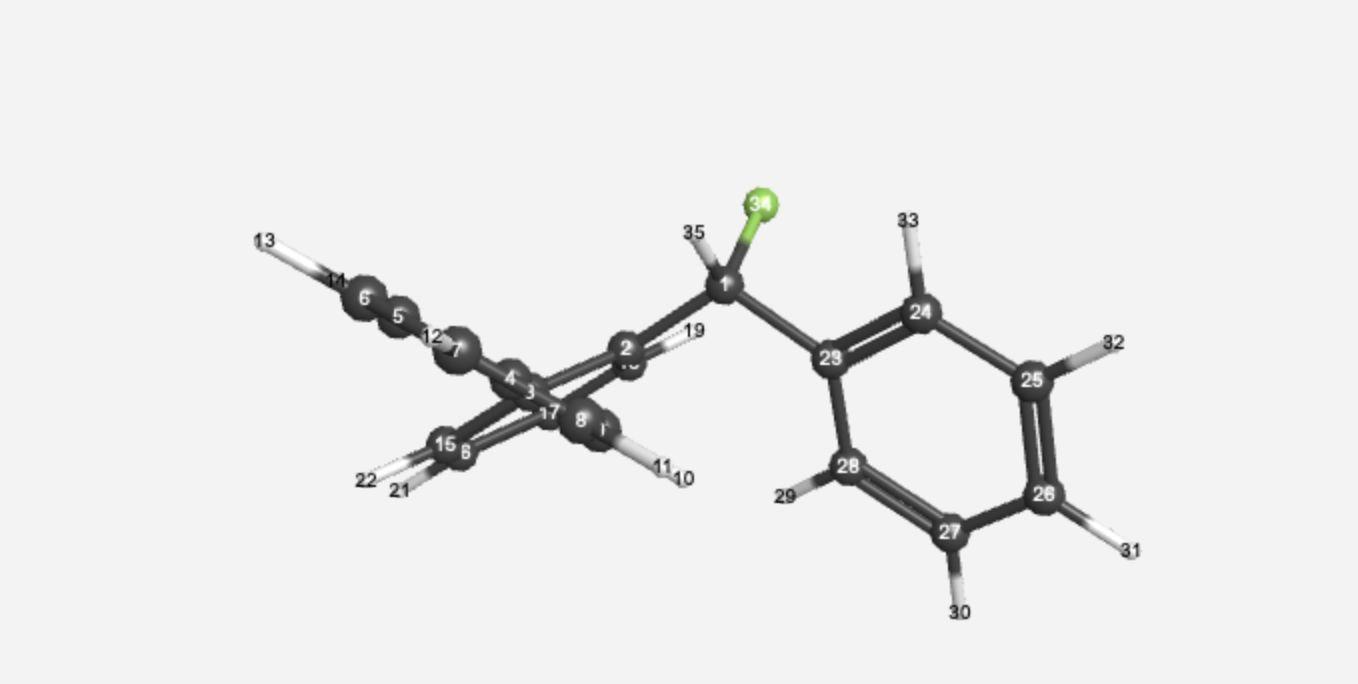
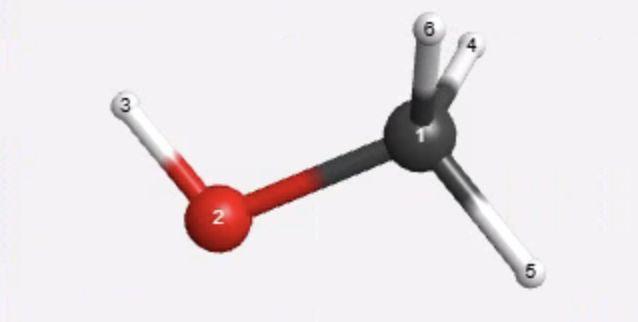
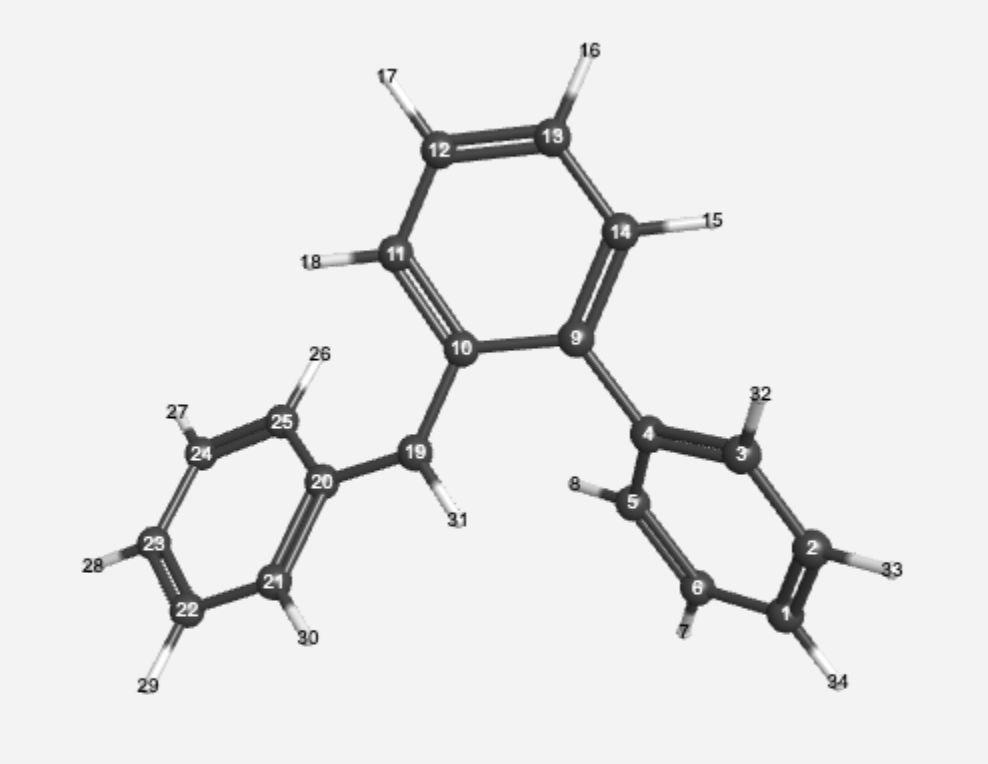
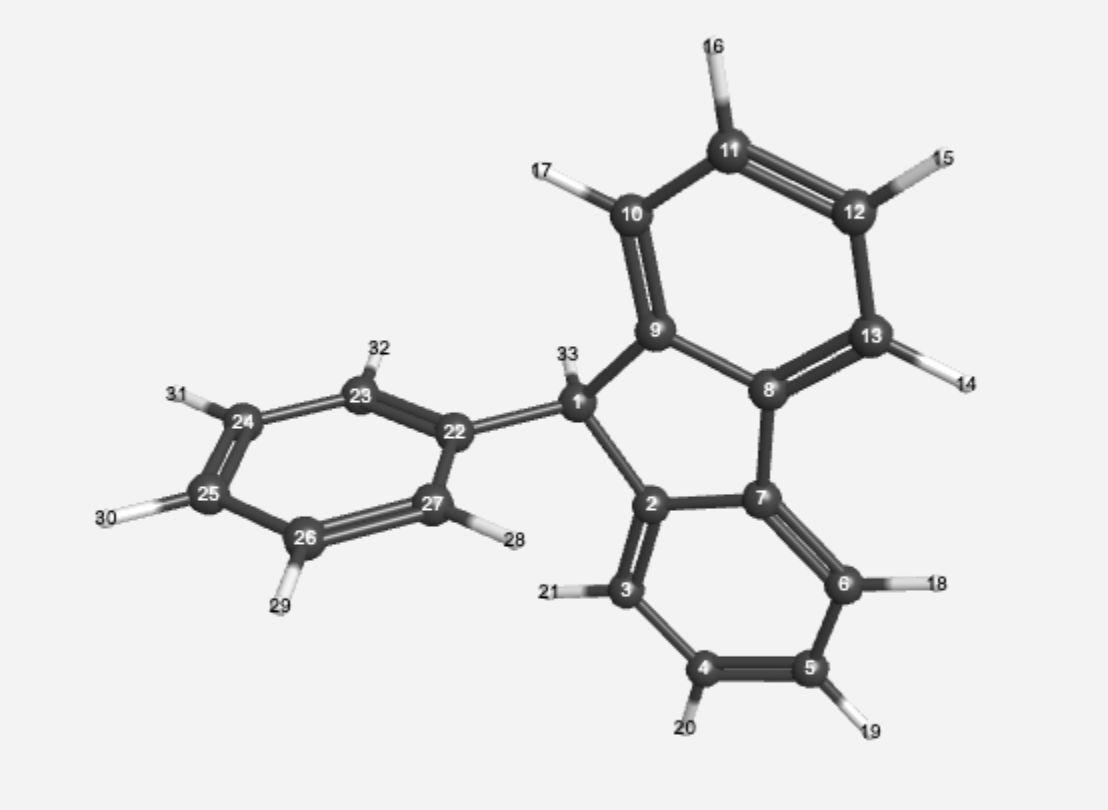
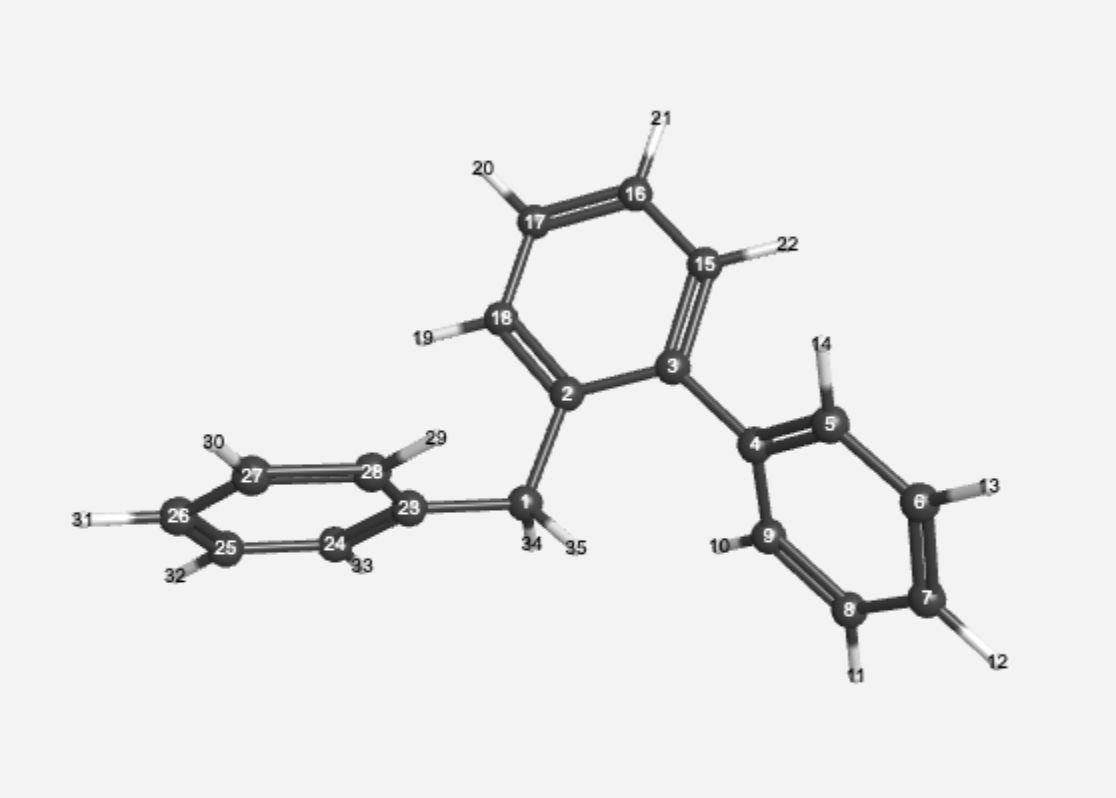
Thecalculatedenergies(ΔE)demonstratedcleardifferencesin favoribilityamongthesolvent-freereactionsinvestigated. Formationoftheetherproducts(figure1.)wasthemost favorablereactionwithacalculatedenergyof-0.246Hartree. TheFriedel-Craftspathway(figure3.)wasmildlyfavorable, showingandenergyof-.0148Hartree.Thechargedintermediate reaction(figure2.)showedthehighestenergyresultof+0.28 Hartree,makingittheleastfavorablereactiondemonstrated.The productsofthehydrogen-replacementpathway(figure4.)were closetoaneutralenergy,measuredat+0.0155Hartree.Overall, thedatademonstratesthatsolvent-freereactionsstronglyfavor etherformationoverfluorinesubstitutionpathways.
to Friedel-CraftsProduct
to H-Replacement
Conclusion
Amongthesolvent-freemechanismsexamined,theresults demonstratethatproductsofanether-formationpathway (Figure1.)areenergeticallythemostfavorable.Compared tothecarbocation,Friedel-Crafts,andhydrogen replacementpathways,etherformationindicatedastrong drivingforceformethanolsubstitution.Thesefindings suggestthatwithoutasolvent,thereactionismorelikelyto formtheetherratherthankeepingthefluorineormaking lessstableintermediates.Overall,theenergyresultsshow thatetherformationisthemostfavorablepathway.