Are We Growing in Our Understanding?
BY RALPH TATE
Of all the aspects of the COVID pandemic that have affected all of us, the one that concerns me the most has been the apparent truncation and termination of open exchanges of ideas and thoughts about the virus. I may be mistaken, but it seems to me that almost any discussion about COVID occurring between people who do not have the same perspective results in either elevated emotions as each side tries to defend their position while attacking the other or abruptly ends because they know that if it continues, that’s where it will end.
On a national and state level, we are told
Decision-Making in Challenging Times
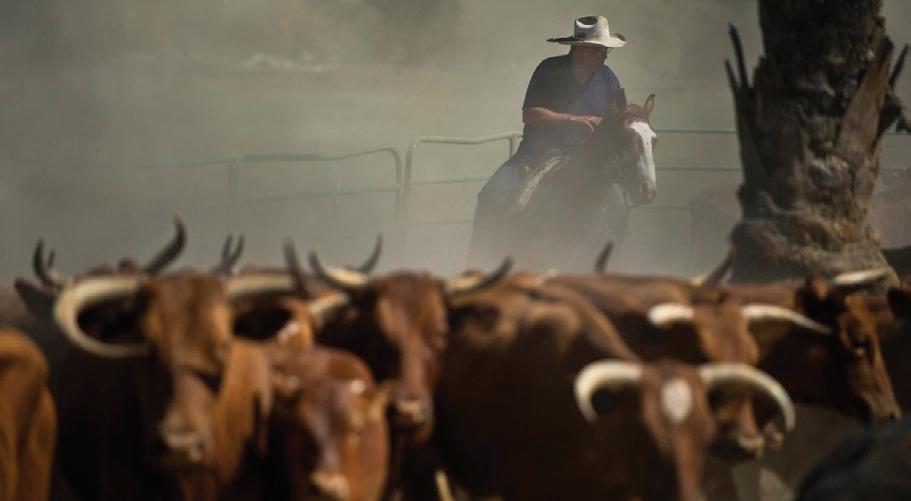
In these challenging times it helps to have a process for decision-making to help you sift through issues and concerns and determine what are key pieces of information or criteria on which to focus. The Holistic Management® DecisionMaking process has helped numerous people determine how and when to invest in a business, how to handle the pandemic, or determine the right production and marketing practices. Read how long-time Holistic Management practitioner, Frank Fitzpatrick, has developed a new business and is working to address climate change.
In Practice
what “science” is and anything else is treated as “misinformation” and forcibly removed from social media sites. Any attempt to share alternative experiences is met with calls of radicalism or name-calling.
So, in the midst of this world that seems to become crazier every day, I think the tools that we have learned as Holistic Management Certified Educators actually enable us to see what is going on and, perhaps provide a saner approach to seeking understanding.
In learning Holistic Management, the first principle we learned was: Key Insight #1—Nature is complex. You cannot change just one aspect of nature. Any change will result in other changes occurring, although the changes may not occur immediately.
Any time we have introduced an herbicide, an insecticide or an antibiotic, it isn’t too long before we find nature starting to produce weeds, insects or bacteria that are resistant to the chemical. So chemical companies create more chemicals, resulting in more resistant plants, insects and bacteria and the cycle just keeps going, to the chagrin of the chemical companies. But we also know that it isn’t just the plants, insects or bacteria that are affected. It is other parts of the ecosystem as well. Entire biological systems are disrupted. Dung beetles disappear from pastures following cattle treated with fly tags. Monarch butterflies no longer reproduce because GMOs have changed the genetic makeup of milkweed plants. And on it goes.
Did it surprise us when we were told to isolate from each other for an extended period of time with a corresponding loss of jobs and social interaction, and we saw a significant increase in depression, obesity, domestic abuse, and suicides? They may have been unintended consequences, but we knew things would not stay the same.
A key concept we learned in decision-making was: When dealing with social or financial decisions, assume the decision you made was correct, but when dealing with biological systems, assume the decision you made may be wrong and look for the first possible indicator that nature
is not responding the way you anticipated.
In his book, Think Again, author Adam Grant illustrates these same principles in a little different way. He says we can act as a Preacher, a Prosecutor, a Politician or a Scientist. We act as a Preacher whenever we believe our sacred beliefs are in jeopardy and our response is to protect and promote our ideals. We act as a Prosecutor when we look for flaws in other people’s reasoning and then attack their position. When we seek to convince people of our position and win them over to our way of thinking, we are acting as a Politician. But the character Grant encourages us to emulate is that of a Scientist, who is constantly aware of the limits of his own understanding. He doubts what he knows and is curious about what he doesn’t know.
One of the examples Grant referenced in his book was Orville and Wilbur Wright and their efforts to develop an airplane. It was not uncommon for the brothers to have different ideas about how to solve a particular problem and become very vocal about their ideas, both becoming Preachers or Politicians in the defense of their own position. Typically, the following day, when they showed up to work, they had thought about the problem overnight and had become convinced that their brother’s approach was correct! They then realized that neither approach was correct, and, assuming the role of Scientists, were able to cooperatively arrive at a better alternative. They were able to do this repeatedly as they worked through the myriad of technical challenges until they prevailed, and on December 17, 1903, Orville Wright became the first man to fly in a heavier-than-air powered aircraft.
In my opinion, one of the major bottlenecks in communication today is understanding that science is never settled. There is no “final” answer. We don’t ever “arrive” at complete understanding. There is always something else to learn that we didn’t realize was connected or even existed. What we “knew” one hundred or two hundred years ago, many times is considered almost comical in its simplicity or its errancy. A somewhat humorous example of this
Healthy Land. Healthy Food. Healthy Lives.® a publication of Holistic Management International MARCH / APRIL 2022 NUMBER 202 WWW.HOLISTICMANAGEMENT.ORG
INSIDE THIS ISSUE
ON PAGE 2
CONTINUED
HMI’s mission is to envision and realize healthy, resilient lands and thriving communities by serving people in the practice of Holistic Decision Making & Management.
STAFF
Wayne Knight Interim Executive Director
Ann Adams Education Director
Carrie Stearns Director of Communications & Outreach
Stephanie Von Ancken Program Manager
Dana Bonham Program & Grants Manager
Oris Salazar Program Assistant
BOARD OF DIRECTORS
Walter Lynn, Chair
Breanna Owens, Vice-Chair
Jim Shelton, Secretary
Delane Atcitty
Jonathan Cobb
Ariel Greenwood
Daniel Nuckols
Kelly Sidoryk
Casey Wade
Brian Wehlburg
HOLISTIC MANAGEMENT® IN PRACTICE
(ISSN: 1098-8157) is published six times a year by: Holistic Management International 2425 San Pedro Dr. NE, Ste A Albuquerque, NM 87110 505/842-5252, fax: 505/843-7900; email: hmi@holisticmanagement.org.; website: www.holisticmanagement.org
Copyright © 2022
Holistic Management® is a registered trademark of Holistic Management International
Are We Growing in Our Understanding?
CONTINUED FROM PAGE 1
is in 17th century England, a cure for baldness was a healthy application of chicken dung to the˛scalp!
We grow in our understanding of the world around us only when we ask questions, observe events that don’t make sense to our current understanding and seek answers. It isn’t about who is “right” or who is “wrong”. At some point, all of our current perceptions will prove false, only to be replaced by those with a little more insight. I encourage us to shift our attention from our current answers and pay more attention to the questions, probing to gain a better understanding of what we don’t know.
So, consider the following questions as simply a starting point:
• Do masks work? Some studies say yes, some say no. Why? Why are the results different? Who is paying for the studies?
• Is the COVID vaccine “safe and effective”? Politicians and pharmaceutical companies say yes (although ironically, they are protected from any medical liability). Others want more data and time to see what symptoms are manifested. Most vaccines take 5 to 7 years to be approved, and then only after extensive testing. The mRNA gene therapy protocol is extremely new. How concerned should we be with this one being developed and fielded in such a short period of time? How is nature likely to respond to the vaccine?
• Are there alternatives other than the vaccine to protect people from COVID, like hydroxychloroquine, ivermectin and others? Many epidemiologists say yes, they work. Politicians and pharmaceutical companies say they are dangerous and are causing adverse effects among those who have COVID or have been vaccinated. If that is true, what does that say about the effectiveness of the vaccine? Curiously,
if FDA were to acknowledge existing treatments are available for COVID, it would require them to terminate all current COVID Emergency Use Authorizations (EUAs).
• Ivermectin was developed by Merck Pharmaceutical and approved by FDA in 1996 to treat human diseases; River Blindness and Lymphatic Filariasis. In fact, the treatment proved so successful that the two doctors who discovered the drug were awarded the 2015 Nobel Prize in Physiology or Medicine and now these diseases are on the verge of eradication. So after more than 25 years of successfully treating humans around the world and recognized as one of the “essential medicines” by the World Health Organization (WHO), why would Merck claim it to be toxic to humans at the same time they are petitioning for an EUA by the FDA for their new, more expensive antiviral medication?
• What should we do about the various strains of COVID? More vaccines? Boosters? Coronaviruses have as one of their characteristics the ability to mutate rapidly. Do we really think nature will not (continue) to develop a vaccine-resistant strain? Some of those exposed to the 1918 Spanish Flu epidemic were shown to maintain immunity for over 70 years. Is that true of COVID immunity as well?
• We know that different groups of people vary in their susceptibility to COVID. Those over 65 and those with obesity, diabetes, hypertension and pulmonary comorbidities are more susceptible and can have potentially more severe symptoms. What are the minimum necessary and sufficient actions we can take to provide adequate protection to these people without adversely affecting everyone else? Where in nature do we see that “one size fits all” approach?
• Should the vaccine be mandatory for CONTINUED ON PAGE 20
2 IN PRACTICE h March / April 2022 In Practice Healthy Land. Healthy Food. Healthy Lives. a publication of Hollistic Management International FEATURE STORIES Holistic Decision-Making in Corona Times WIEBKE VOLKMANN 3 Making Room for Relationships— How Journeyperson is Helping Racing Heart Pace Itself BRIAN DEVORE 7 LAND & LIVESTOCK 5 Bar Beef— Cattle Hire Out to Restore the Land HEATHER SMITH THOMAS 9 Bar Cross Ranch— Exploring Production Possibilities on Wyoming Rangeland HEATHER SMITH THOMAS 12 NEWS & NETWORK Board Chair 19 Grapevine 20 Certified Educators 21 Market Place 22 Development Corner 24
Holistic DecisionMaking in Corona Times
BY WIEBKE VOLKMANN
In one of the many “personal growth” events I have participated in, I came to hear about the value of not knowing only where I am going, but also where I am coming from. And that has meant less the historical circumstances than the sponsoring thought, attitude and mood and psychological conditioning that influences my perception of where I am and what I envision. This has certainly been true in the time of the Coronavirus pandemic.
In 2018 I read my first book by Yuval Noah Harari, Sapiens. I have yet to pluck the courage to read Homo Deus, as the three threats to the survival of our species (nuclear war, climate change/ecological collapse and artificial intelligence together with biotechnology) described in Sapiens and 21 Lessons for the 21st Century already confronted me with a pretty scary outlook.
So I felt somehow prepared for COVID-19 as pandemics and the effect of mass influence of our biology via mere information and sound consumption were included in some of the possibilities that Harari describes. He also highlights what seems to distinguish homo sapiens from other existing and past species— that we are moved and guided not by biological and physical needs only, but by mental narratives, where immaterial concepts assume the status of “being real.”
The Power & Discomfort of Difference
Simultaneously with the news from Wuhan during the summer holiday (Southern hemisphere) of 2019/2020, my partner, Conrad, and I watched the wonderful presentations by Walter Jehne from Australia. We learnt that new scientific insight shows that it takes microbes that are produced in green leaves to serve as nucleus for water vapour to form drops so that clouds can form and rain can fall. At last my photovoltaic engineer partner understood what I had tried to explain so inadequately for over a decade—that photosynthesis has much to offer in counter-balancing global warming, not only the advances of technologies that help reduce carbon emissions. While our lack of academic training in these field does not always allow full grasp of the scientific concepts, we were highly attuned to the power of microbes and their mobility!
Many other authors and influential people
and experiences before this time have contributed to my awareness that the loss of biodiversity is what makes human and all life on earth so precarious. As I write this piece now, I am reminded of the long discussions we had with Allan Savory, Christine Jost and other colleagues around the fires in Dibangombe, Zimbabwe about the governments’ questionable strategies of dealing with the spread of the Foot and Mouth Disease (FMD). I learned that if ungulates enjoy healthy nutrition, their immune system can live with FMD and can keep it in check like any other infectious disease. These conversations like many other Holistic Management related concepts were
of where I came from and where I was when suddenly we received information and regulations to prevent catastrophic disaster.
The shock from the global shutdown also came at a time where my friends (a married couple, Simon and Ina) dealt with simultaneously going through chemotherapy and radiation for cancer treatment. While I knew that this would be another uncomfortable experience of integrating loss (of dreams, of a form of life, of companionship) I also sensed the potential of transformation to engage with them during this time.
accompanied by a sense of provocation, almost heresy. I remember the crazy combination of discomfort from “being different” and the excitement from “being different.”
Several experiences later in life brought me to that state where I felt that I had to lose my innocence in order to gain my inner sense of what it means to accept and participate in the full cycle of life. Michael Brown uses this word play in his book The Presence Process.
Living in a community where I have been and still am confronted with my colonialist heritage, I feel deeply grateful to have encountered opportunities and tools for “personal” integration. These focus not only on “external” social and political integration of “the other,” but also on inner integration, which let me face the exploiter, the perpetrator, the predator, the prey, the victim, the donor, and all those states in between which are not publicly acknowledged, but keenly felt in moods and private thoughts.
COVID & Inspiration Strike
What does all this have to do with experiencing COVID-19? It is an overview
Ina had started an urban farm on the outskirts of our capital city with the poor inhabitants of the informal settlements, all economic migrants from our Northern communal lands. Once a week she drove out there to coach the group in permaculture principles and brought support to implement these on the steep and stony grounds the municipality had provided. Besides precarious food security, these underserviced informal settlements had suffered from outbreaks of Hepatitis E, as there are no toilets and pre-paid water collection points only. Washing hands under running fresh water, rather than everyone sharing the same bowl of water over and over again was needed way before COVID-19 started.
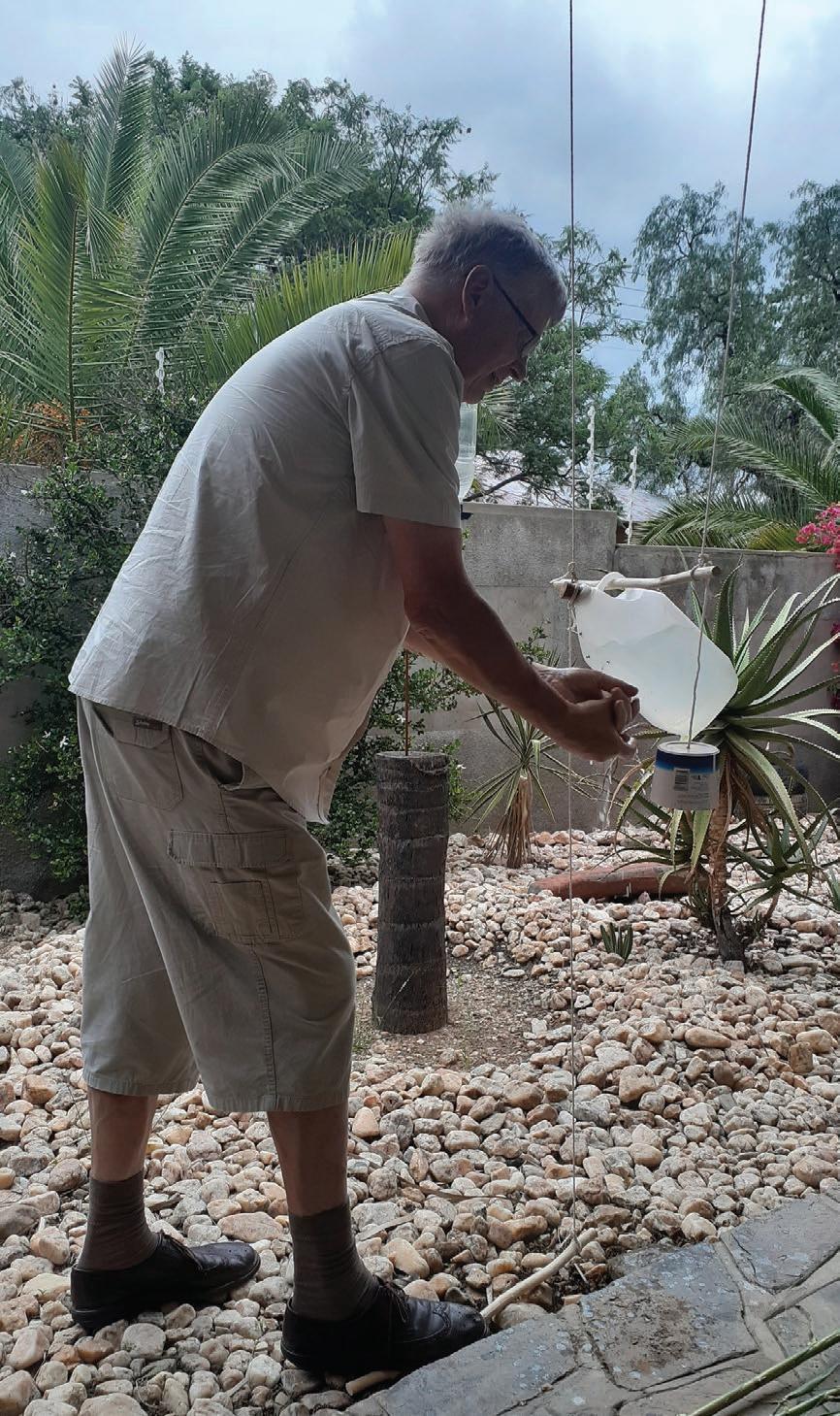
When my brother sent me a picture of a “tippy tap” he had built for the staff of his compound on the coast of Kenya, I loved the simple design demonstrating powerful laws of physics (see the picture) and that it could be built from waste materials. Having just watched the very helpful videos by Dr Martin Wucher, a local dentist, farmer and lifelong student of microbiology, I had an idea of what a virus actually is and what determines its integrity and destruction and how many multiple and beneficial functions viruses perform in the environment and in my body. I knew that the “fatty layer” that forms the “skin” of the molecule can be broken up by the warmth generated by rubbing hands together and using soap to help break up the “fat.”
Inspired by a YouTube instruction of how to assemble a tippy tap, I built one for my own home, asking everyone to wash their hands
Number 202 h IN PRACTICE 3
CONTINUED ON PAGE 4
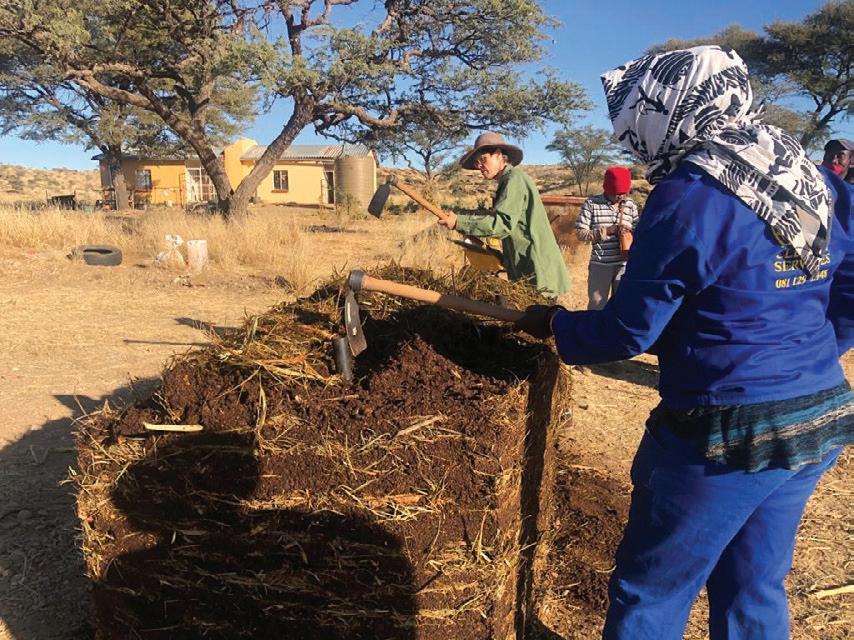
Wiebke (in back) working with communities on creating their own compost piles.
Holistic Decision-Making in Corona Times
CONTINUED FROM PAGE 3
before entering. Then, during our weekly Saturday meeting over coffee at the Farmer’s Market, I said to Ina, that I’d love to help bring this technology to the informal settlements. Could we possibly collaborate and use the team from farm Okukuna and the youth members of the Shack Dweller’s Federation to build tippy taps all over?
Ina promptly spoke to her donors. Their planned garden trainings could not take place because of lock-down regulations, but building tippy taps counted as essential service. The money for the trainings could be re-allocated and paid to the community members. The 2020 Tippy Tap Challenge was born. In these weeks, people, mostly women who lost all their income opportunity from selling food by the road side, earned money for each new tippy tap of which they sent in a photo and location pin.
To protect Ina from a possible infection of not only COVID, but a common cold or stomach bug, I could function as a go-between.
While everyone else went into isolation, and while I witnessed the scramble for hand sanitizers and masks everywhere I used the Holistic Decision-Making questions to assess an alternative plan of action:
Should I collect and source materials (mostly recycled waste) and distribute them in Katutura, showing groups of people how to build and use tippy taps that use small amount of water and ordinary soap and address the need for greater hygiene with limited resources? In the process I would be getting into contact with a lot of dirty materials, transporting them in my car (a Nissan Leaf), while knowing that I could carry pathogens to my partner who has preconditions that make him “vulnerable” (having had cancer and having had a very serious pneumonia the year before) and my friends being weak from cancer treatment.
Here are my responses to the questions. Please be warned that I add a lot of associated thoughts to express my attitude and understanding of complexity.
Root Cause/Cause and Effect
Clearly I would never have started building tippy taps had there not been a problem. Where was/is the root cause of the problem of C19 threatening lives? Our failing town planning and municipal service delivery? The uniform advice of a global entity for isolation, which results in separation, not considering location and context specific conditions and the collateral damage
of such strategies? The loss of biodiversity that makes one entity (one virus) so powerful? The lack of knowledge and awareness that prevents individuals to think for themselves and to adopt response-able and preventative behavior (such as hand hygiene to reduce infectious disease impact and to support biodiversity in our daily lives)? The fear of loss (of lives, of power, of certainty, of comfort, of hope)?
For me it was and is a combination of all of these. Besides offering technical and material assistance our action would contribute to education and awareness about microbiology (my own and that of those I was working with). I also saw the action focusing on what everyone could and can influence, rather than focusing on the worry and fear about the “invisible enemy,” the things we could not understand and influence. This could strengthen the psychological confidence, resilience, and creative response which is so important for a good immune response. The reasons why we used a lot of refuse and repurposed materials was to encourage our partners to improvise, rather than giving them standard materials from a hardware supplier.
Vision
The description of my holistic context includes: “A diverse, vibrant community of living organisms, humans and others; people who are critical thinkers, confident, self-determined, response-able citizens who enjoy good health, livelihoods and peaceful connections. People in my community know how their lifestyle choices contribute to all of this. People appreciate innovation and relevant education and development programs. Infrastructure and natural resource management is guided by principles of regeneration.”
I would bring material means to the people, but I would also have conversations and would demonstrate through my own practices and choices some ways of supporting my immune system, always remembering my privileged situation, but also establishing the common ground which made or makes our choices similar, if not equal. I shared my knowledge and experience with nutrition, the value of movement, especially joyful movement, of being out in the sun, of breathing deeply. Most of all I encouraged open conversations about fear. These conversations revealed all kinds of unexpected comparisons, raising awareness for imagined and for real fears. It also revealed what people appreciated about this down time.
Although I envisaged it, I didn’t formulate the following results in advance. The connections that emerged through the Tippy Tap Challenge
later led to me facilitating a Holistic Management based training of the Farm Okukuna community, where there was further opportunity to reflect on what was/is really important to everyone individually and collectively and what strategies were/are open to them to realize these values. The trust that Ina and the Okukuna group developed in me allowed us to develop greater ecological and economic literacy and greater agency for people who mostly experience themselves as either resigned victims of circumstances or dutiful but unquestioning followers in a patriarchal system.
Weak Link—Biological
My understanding of microbiology let me think that this one molecule could only get to be so dangerous because the “natural enemies” were weakened and conditions favourable for the one virus. Also, by learning more from the clinical experiences of diverse doctors treating C19 patients in remote and non-governmental hospitals and practices, I learnt that reducing the virus load in symptomatic patients was critical, while asymptomatic carriers were not leading to the spread of the virus as much as was claimed by officials.
With trepidation I wondered how Windhoek’s water treatment system was affected by the rampant use of non-specific sanitizers while we at the time had such few positive cases. (Windhoek has the biggest water reclamation plant on the Southern Hemisphere where sewage water is turned into drinking water mostly through microbial digestors.)
Using ordinary water and soap for washing hands frequently would reduce the favourable conditions for human infection, without compromising the microbial diversity and interaction that can help to keep pathogenic viral spread in check.
Weak Link—Social
There were and are people among my acquaintances who considered the tippy tap and ordinary soap not “strong” enough to deal with the immense danger at hand. Others again found my mingling with many people reckless or selfish or not being in solidarity with the fate (restriction) that everyone else dutifully adhered to, declaring my own “essential service” status in order to move about, rather than getting an official permission.
Fear and shame and the need to belong with a group are strong forces. I now consider myself fortunate that I met the dark side of these forces long before COVID-19 and that I found ways of integrating them along with the wonderfully broad range of emotions that create social
4 IN PRACTICE h March / April 2022
connections and boundaries.
I remind myself again and again that I have a choice of letting my actions come from fear— or from trust and love. There are times when they don’t come from trust and love, but from a crazy mix of fear, curiosity, wonder, desire, and many other drivers. The important thing for me is to remain aware of all these motivational dynamics and to be authentic. While our Holistic Management training has taught us that this question is about establishing necessary support and compassion for an action, I now find it equally important that we consider the courage to bear the disapproval of people rather than trying to explain to them why I am doing what I am doing and how when they are not really open to this. To lose friends, to lose respect, to lose trust, to lose stability all these things now sometimes seem to be asked from us if we want to be authentic and conscious.
So I asked my sick friends and Conrad how they felt about me being a potential carrier, putting us all at risk of infection. They all responded by asking to be sensible (i.e. washing my own hands and body after coming back from my outings) and when we came together for our Saturday breakfast, sitting out on the veranda in front of Simon and Ina’s house, not hugging and touching anymore, but sharing a table and laughing without masks hiding our faces. We enjoyed good food and celebrated life and companionship, critical and courageous conversation and sensual pleasures as much and as long as we could.
What the social weak link test does for me is to regularly check in with my partner and other “significant others” even if I don’t need to “test a specific action.” I do this to see how they change, to let them experience my current state so that together we may remain alert enough to recognize new opportunities for transformation and consciousness.
For me the global social weak link is that the generalized C19 response, distributed by political governments and capitalistic networks did not sufficiently consider the specific climatic, geographical, demographical, economic, cultural and other aspects of context. In Namibia we soon felt the collateral damage to existential survival.
I don’t only speak of material breakdown (tourism being such an important income and job creation sector), but also of the
psychological confusion and polarization. Suicide has for long been rampant in Namibia. Countless (countless, because those figures seem not important enough to be researched compared to the daily C19 statistics) babies were conceived into highly insecure households or even worse homeless situations, because the public clinics ran out of condoms and birth control pills due to lack of foreign currency, C19 measures, and due to enforced idleness and cramped living conditions without public meeting
the context of COVID-19 did not squash my capacity for rage and courage. Rather than expressing that rage as disapproval with the status quo, I try to channel the energy into joyous determination and creative projects that generate what I want, rather than fighting what I do not want—such as co-facilitating learning events for organic compost making and agriculture, linking these with nutrition education and tasting opportunities, improvising illustrative learning aids and more.
From the natural and unnatural deaths in my family before COVID-19 I have come to experience compassion as the willingness to witness suffering. This can be very very challenging, especially when guilt creeps in when I am not suffering myself. Being with all the emotions and states that another is going through without being able to or consciously not trying to change what they are going through comes from a deep trust that our awareness can grow deeper and wider from pain and discomfort.
Weak Link—Financial
The economic effect of my action with the Tippy Tap Challenge was only partly planned and tested. Prior to COVID-19 I had very few professional engagements, given the fact that Namibia didn’t qualify as a low-income country anymore since it was classified as middle-income. Most of my professional work had been with marginalized and resource poor people, financed by foreign donors. I was and am in the privileged position that I have rental income from property and that my partner contributes to household expenses.
of these policies, I am reminded of a panel discussion with Rianne Eisler, famous for her passionate work for partnership. The panel discussed appropriate responses to the #Me Too movement. In her closing remarks Eisler said what is now asked from us is courage and that the word courage comes from the Latin word cor—meaning heart. As far as I recall Eisler said the second part of the word rage is equally important: providing the energy needed to speak for and from the heart.
For me, my concern for social cohesion in
The Tippy Tap Challenge I initiated as a pro-bono action, not expecting that it would result in a new client and opening up lucrative and satisfying paid work. In a way I could not foresee but which I felt instinctively it addressed my marketing weak link.
For me this experience confirmed that abundance flows from the combination of joyful determination and humility to accept things as they are rather than worrying about potential failure.
Money and Energy—Source and Use
Besides the real joy of gliding silently through CONTINUED ON PAGE 6
Number 202 h IN PRACTICE 5
Wiebke’s home Tippy Tap in use.
Holistic Decision-Making in Corona Times
CONTINUED FROM PAGE 5
the quiet streets of our capital in the middle of the week with my electric car, I know I would not have easily taken on this project did I have to go with my “other” petrol guzzling car. Yes, the electric car stank from all those used yogurt, milk, soap and water containers, but I relished the fact that this gift I had received a year earlier from my partner served so many good purposes. The fact that we were using recycled materials, rather than buying new containers and metal bars as the other Tippy Tap Projects implemented in the informal settlements, spoke to my understanding of re-using the energy invested in the manufacture of goods. It also set an example that people could build a tippy tap without having to wait for money from outside. We used donor money that otherwise could not be spent on urban food production. The payments to the community members contributed to only temporary food security. However, the action introduced me to the planning process and the training scope at the urban farm. When I was asked to design a capacity building curriculum for 2021 I insisted that record keeping and holistic financial planning on a household level must be taught to make the “beneficiaries” more self-reliant in the long run. Later in 2021 I lost Okukuna as a client again, but the work I was able to do there opened another door, this time even bigger and more in line with my values.
How Do I feel About this Action?
I started off having a big “checkmark” in my heart and it was still so, after having gone through the question catalogue. I realized there were risks and I determined that the earliest indicator I would watch would be the moment to moment responses of all the people I would come into contact with. If they expressed discomfort or objection, or if I myself would feel unsafe, I would reconsider.
I was also influenced by an online presentation by a Nordic European psychologist I watched. He spoke of modern society’s addiction to safety and security and how the insurance industry is testament to this. Through his profession he has been in close proximity to despair and anxiety for most of his life. He has started to question if one of the root causes for rising mental health problems was not the widely sanctioned and encouraged aversion to risk and the subtle spread of fear. I, too, question that.
Early Warning Signal
I resolved to be vigilant and watch out for all messages and to integrate this feedback for future action and decisions. I found that in my interactions with the people in the coming months, there were plenty opportunities to rejoice, to laugh, to play, to realize freedom, to celebrate our natural authentic way of being and not only the “normalized behavior”. We embodied this realization by meeting physically, trusting our common sense, all the while being considerate and cognizant of the fact that our common sense did not and does not know exactly the nature and extent of this pandemic and what it wants from us as individuals and as community.
Closing Reflection
What I celebrated at the close of 2021 is the fact that I found new playmates, that I can design creative learning and practice activities that combine rational understanding, bodily sensing and compassionate insight – all to build capacity for complexity and awareness of systemic dynamics.
I witness how these activities speak to intellectually highly trained and articulate people as well as to people who have only rudimentary formal education. I let myself be surprised by the fact that I was asked to submit proposals by staff from an international development agency who I had come to avoid for their “tick box” programs. I listen to my partner’s gloomy reports of what further information he found about the worldwide threats to democratic values and self-responsibility. I also listen to online presentations by highly acclaimed scientists to build my capacity to understand the basics of biochemistry and microbiology, as well as political psychology. The increasing number of scientists who come from a systems paradigm and who courageously face the reductionist establishment fills me with gratitude and wonder that I am alive now.
Corona afforded me to linger at the farmer’s market and chat to a local retired professor of Sustainable Agriculture, Dr. Ibo Zimmermann. Through him I got to know the work of Walter Jehne, Garry Gillespie and then of Dr. Zach Bush who all link the deterioration of human immune systems to agricultural practices and how we treat the environment. These scientists speak as human beings, recognizing the psychosomatic effect on biological functions.
Hearing a practicing doctor who also conducts and collaborates in clinical research speak of the mass extinction event we are now in and that as a species we may be lucky to have another 70 years can be unsettling.
But when I hear and see the work of the foundation he established for regenerative farming (Farmer’s Footprint) and when I hear him sharing the excitement that lies in evolution coming up with yet other forms of intelligent existence, a kind of growing on my compost heap of being homo sapiens, I find courage to face the uncertainties.
With my interpretation of holistic decisionmaking, the creative work with soil, plants, animals, and other living organisms is a lot more relevant and effective in creating mutually beneficial connection and healing than deciding to get vaccinated or day to day wearing of protective gear against a virus which proves difficult to be controlled and even managed and this virus causing relatively few people to fall ill, compared to other medical conditions.
Considering the bigger context in which I live, I feel that after the political independence from South Africa we in Namibia have had to enter composting. Old structures and habits and orders needed to break down. Composting is never a beautiful business. The transformation happens in the dark. Form is lost in the process of decomposition and nobody knows yet, what will grow in and from this nutritious mess. The compost heap has assumed a mythic importance for me—helping me to accept death and dying, accept uncertainties, accept insecurity, accept change and also disappointment as a way of getting to know the real. In German, disappointment is called Enttaeuschung, meaning the fake is removed.
I am willing to make mistakes and learn from these mistakes. In the process my body shows me what the consequences of inviting biodiversity can be—through a fungal infection in the ear and under a fingernail. It demands discipline to maintain hygiene, and I approach it with curiosity, rather than fear. It requires being willing to embody my knowing with all the potential risks. If I compare these with the little talked about personal and public health risks that come with industrial agriculture, they seem manageable.
I am reminded of a saying Allan Savory used when teaching us what goes into formulating and being invested in a holistic goal: Are you willing to die for this? At the time I rebelled against this statement. I wanted it to be Are you willing to live for this? Yesterday, during a year-end reflection, my friend Tossie offered this view: “If what you are willing to die for is the same as what you are willing to live for (and not “just” survive), then you are in integrity.” For me, nurturing the awareness for this integrity forms the foundation of physical and mental health.
CONTINUED ON PAGE 19
6 IN PRACTICE h March / April 2022
Making Room for Relationships— How Journeyperson is Helping Racing Heart Pace Itself
BY BRIAN DEVORE Land Stewardship Project landstewardshipproject.org
Reprinted by permission.
Pack-shed or people? That’s the question Les Macare and Els Dobrick are grappling with on a dank day in mid-March as they brave a biting wind to inspect the garden plots, cover crops, and outbuildings on Racing Heart Farm in western Wisconsin. With the exception of some onions sprouting in one of the hoop houses, little sign of the coming spring is in sight, but the vegetable farmers need to decide soon how they will approach the 2021 growing season. Like many Community Supported Agriculture (CSA) operations, COVID-19 launched Racing Heart on a bit of a roller coaster ride in 2020. Demand for shares exploded as the pandemic fueled concerns about the food system and people were spending more time at home, cooking.
“We had a hard time saying ‘no’ last year. We capped it at 100 members and then opened it up again when we were hearing everybody’s CSA was filling up,” recalls Macare. “And also we heard that one of our farmers’ markets was going totally online.”
As a result, the CSA portion of Macare and Dobrick’s farm more than doubled from 70 to 200 shares in one year. The vegetables produced for those shares were shifted away from what they had been selling through two farmers’ markets they serviced on a weekly basis, so they didn’t have to cultivate more land to meet the requirements of the expanded CSA enterprise. But there was one downside to the CSA-centric shift: preparing more share boxes means more time in the packing shed and less time with customers.
“We like the efficiency of the CSA but we also get a lot from the farmers’ market — it’s exhilarating, it’s fun, we get to have face-to-face interaction with the people who are seeing the vegetables right in front of them and oohing and ahhing,” says Macare.
Would 2021 be another mega-CSA year, or would they shrink back that portion of the enterprise to provide more face time at farmers’ markets? Fortunately, Dobrick and Macare feel equipped to make such decisions thanks
to the training they received through the Land Stewardship Project’s Journeyperson Course. Through that experience, they learned that when making farming decisions, it’s not just about dollars and cents, productivity, and efficiency— it’s also about meeting the needs of every aspect of the farm in a holistic way, from the health of the soil to the quality-of-life of the farmers themselves.
That training has given them the tools to regularly “check in” and assess whether the decisions they are making contribute to the overall success of the farm or are leading them down unfruitful side roads.
“We can actually take a particular piece out if it’s not working for us and that’s okay,” says Dobrick. “We don’t have to just get so focused on one enterprise or spreading ourselves too thin, or focusing on something that isn’t working out.”
From Sand to Soil
The couple has been thinking a lot about how to stay true to their values since launching a small vegetable operation in Minnesota on a half-acre of rented land in 2014. They concede that first foray into farming together was a flop agronomically—it was on extremely sandy soil with a pH level only a pickle maker could love. But it helped them realize they liked farming and that they could work together raising food.
Neither Dobrick nor Macare grew up on a farm, although they both have grandparents with farming backgrounds. Macare, 38, grew up in Connecticut and has worked on vegetable operations on both the East and West Coast. Dobrick, 45, grew up in Minneapolis, lived in Seattle for a dozen years, and came to farming through an interest in native plants and small-scale gardening.
After the first year on the “sand farm,” they rented land for two more seasons on another piece of ground in the Twin Cities area. Through that experience, they gained more confidence in how to raise vegetables on a larger scale for a combination of farmers’ markets and CSA customers. But the couple felt they still lacked
the business acumen needed to make farming a full-time career.
“We had no idea how to do the finances and just having some structure sounded really nice,” says Dobrick.
In 2015, they enrolled in LSP’s Journeyperson Course to get grounded in nutsand-bolts financial management. The year-long Journeyperson Course is designed to support people who have several years of managing a farm under their belt, and are working to take their operation to the next level. It provides advanced farm business planning, a matched savings account, and a mentorship, as well as guidance on balancing farm, family, and personal needs.
In a sense, Journeyperson is a good “postgraduate” step for people who take LSP’s Farm Beginnings course. However, like some other Journeyperson participants, Dobrick and Macare are actually not Farm Beginnings grads.
They found Journeyperson’s focus on Holistic Management particularly useful. Holistic Management, which was developed four decades ago by Allan Savory, focuses on “big picture” decision-making and goal setting processes. Savory’s expertise is in the area of
livestock grazing, but over the years Holistic Management has helped farmers of all types, as well as other entrepreneurs and natural resource professionals, achieve a “triple bottom line” of sustainable economic, environmental, and social benefits. In a Holistic Management system, a farmer’s quality of life is put on the same level as the health of the soil or the operation’s economic viability. Holistic Management relies on a process of constantly monitoring whether a certain decision on the farm is helping meet
Number 202 h IN PRACTICE 7 CONTINUED ON PAGE 8
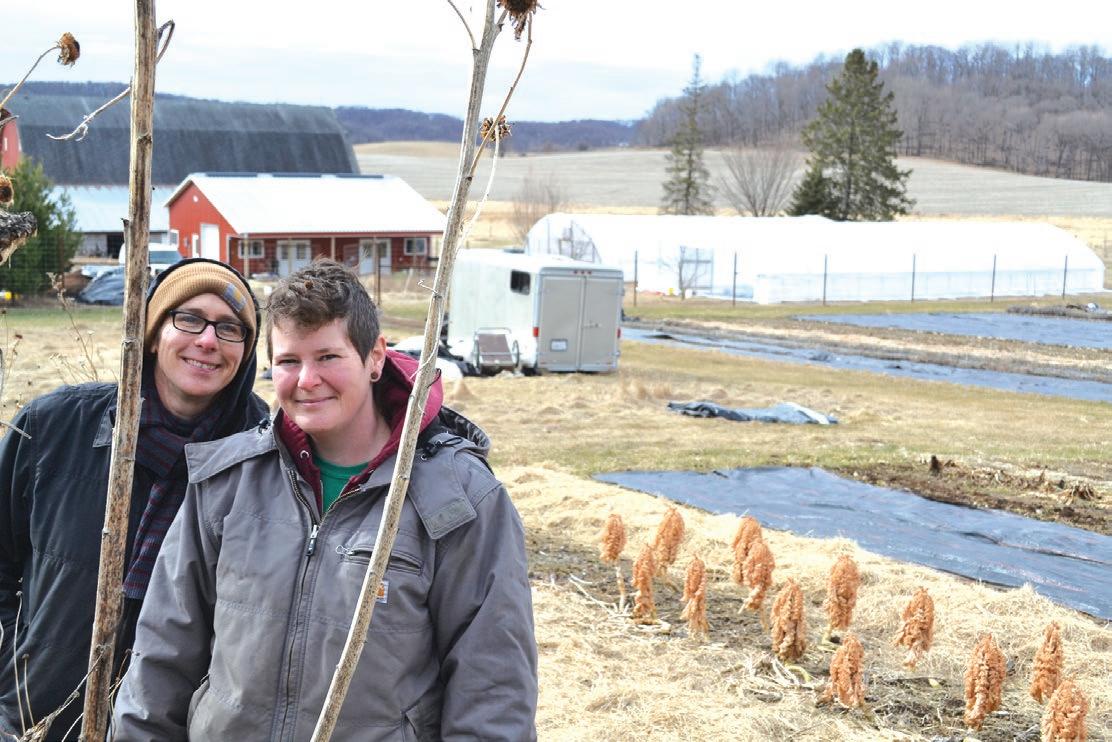
Els Dobrick and Les Macare.
Making Room for Relationships
CONTINUED FROM PAGE 7
long-term overall goals, or is just an off-ramp toward something that in the end may undermine a farmer’s values and needs.
For Macare, who studied “non-violent communication” some years ago, Holistic Management was a bit of a homecoming. Founded by Marshall Rosenberg, non-violent communication is based on the idea that every person has the same basic set of human needs, and every action that we take in life is an attempt to meet one of those universal needs.
“Basically, Holistic Management is nonviolent communication for your farm,” says Macare. “When you think about holistic goals, you’re really talking about your needs, your values. Conflict only arises when we’re trying to meet those needs or values with a specific strategy.”
To reduce that conflict, one needs to keep in mind not only their own needs, but the needs of who they are farming with, as well as neighbors and the wider community, say Macare and Dobrick, adding that when they started farming together their romantic partnership was new. That meant having a framework for talking about bigger personal/farm business visions and goals was even more critical.
“Farming is very much a lifestyle, so having language to talk about that within a structure that we’re trying to create together is key,” says Macare. “It isn’t just about our relationship with the land, it’s also about how we interact together.”
A Useful Delay
Such relationships became even more real
to the couple in 2017 when they purchased 36 acres of a former dairy farm in Wisconsin’s Dunn County. The farm is an hour-and-a-half from the Twin Cities and 25 miles from Menomonie, Wis., providing good access to markets. However, Dobrick and Macare ended up with more land than they need for their garden plots. They grow about 1.5 acres of vegetables—the rest is pasture and woods. The farm was sold to them by landowners who had listed it in LSP’s Seeking Farmers-Seeking Land Clearinghouse because they were looking for someone who would use it as a farm and a home, rather than just bulldoze the house and outbuildings and make it another corn-soybean field. Thus, the sellers were patient as Dobrick and Macare went through the eight-month application process of getting a USDA Farm Service Agency (FSA) Beginning Farmer Loan. Beginning farmers often express frustration over the lengthy FSA loan process, but Macare and Dobrick say the delay actually helped them become convinced they were ready to be landowners.
“After the second season of renting, I was ready to have our own place to invest in,” says Dobrick.
And the loan application process gave them a chance to put the Holistic Management financial plan they had developed through Journeyperson to good use.
“We could just hand over the spreadsheet to our loan officer and it made sense to her, it wasn’t just my chicken scratch note-keeping,” says Macare.
Having organized financials has also paid off since they moved onto the land and applied for other grants to help with developing infrastructure. In the past few years, they’ve received another FSA loan along with a private grant through the Lakewinds Organic Field Fund to help build a pack-shed. Macare and Dobrick also successfully applied for USDA Environmental Quality Incentives Program support to erect a second hoop house in addition to the one that was already present on the farm.
“It seems like every year we have occasion to organize and submit our finances to somebody,” Macare says.
In general, the news that those spreadsheets are relaying is good. Through expansion of markets and putting aside money on a regular basis (something they got accustomed to through Journeyperson’s matched savings account program), Dobrick and Macare are at a place where they aren’t relying on off-farm income to get by. This has provided them the ability to take a longer view of what they, and the land, need.
All Ears
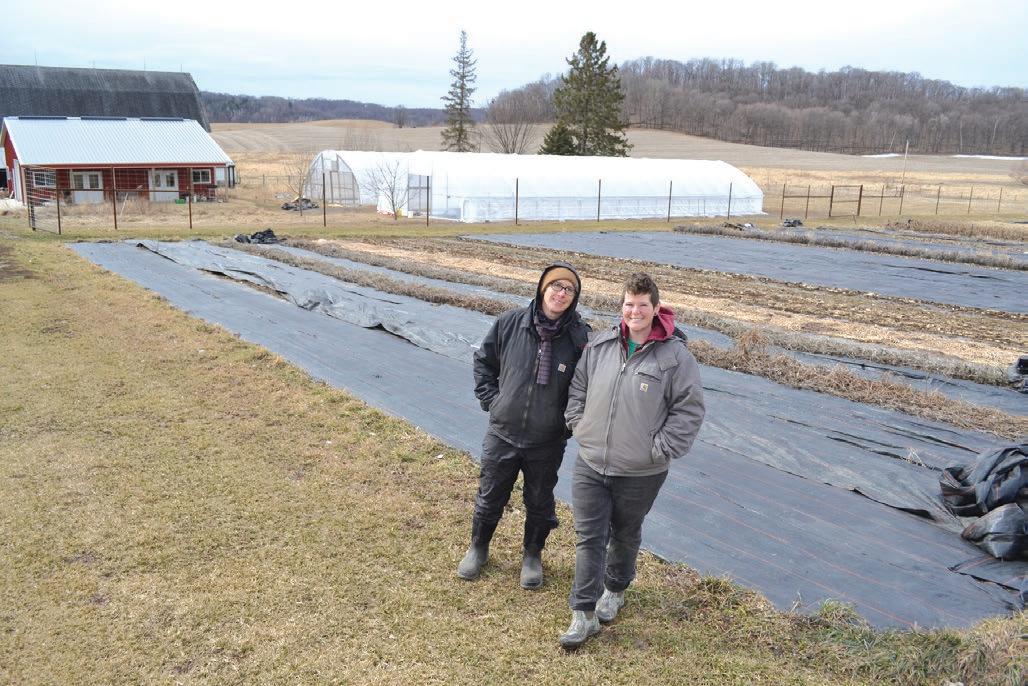
As the farmers walk the land on that March day, they point out areas where they want to establish more pollinator and other natural habitat. They also describe the no-till production system they are establishing as a way to build soil health and shield the land from the extreme weather that’s become more common as a result of climate change. With a combination of hay mulch, cover crops, broadforking, and utilizing landscape fabric to deny weeds access to sunlight, they’ve been able to avoid intense disturbance of the soil without using chemicalbased weed control.
Long term plans include possibly using the rest of the farm as an incubator for other beginning farmers. They are currently letting a neighbor hay their extra open land, and there are possibilities for other enterprises. Dobrick and Macare feel that when they were launching their own farming operation, they benefited from having access to land through low-cost rental arrangements—now they’d like to pay it forward. After all, because of the topography and soil type present on the farm, they don’t see themselves raising vegetables on much more than the few acres that already make up the garden plots—that leaves a lot of real estate for other enterprises.
“It hasn’t been revealed to us yet what exactly we’re going to do,” says Dobrick. “We’re in the listening phase.”
They are also getting a chance to listen to other farmers in the region who are dealing with similar challenges and opportunities. Macare and Dobrick get together regularly with a group of other producers from a six-county area who direct-market what they raise. The group communicates via an e-mail listserv and holds “mini-conferences” every-other-year or so—the last one drew 50 to 60 people.
“It’s been really valuable to connect with other folks in this region,” says Dobrick. “I didn’t really know what we were getting into when we
8 IN PRACTICE h March / April 2022
Racing Heart Farm’s fields and hoophouses that grow vegetables for their 120-person CSA.
19
CONTINUED ON PAGE
& LIVESTOCK
5 Bar Beef— Cattle Hire Out to Restore the Land
 BY HEATHER SMITH THOMAS
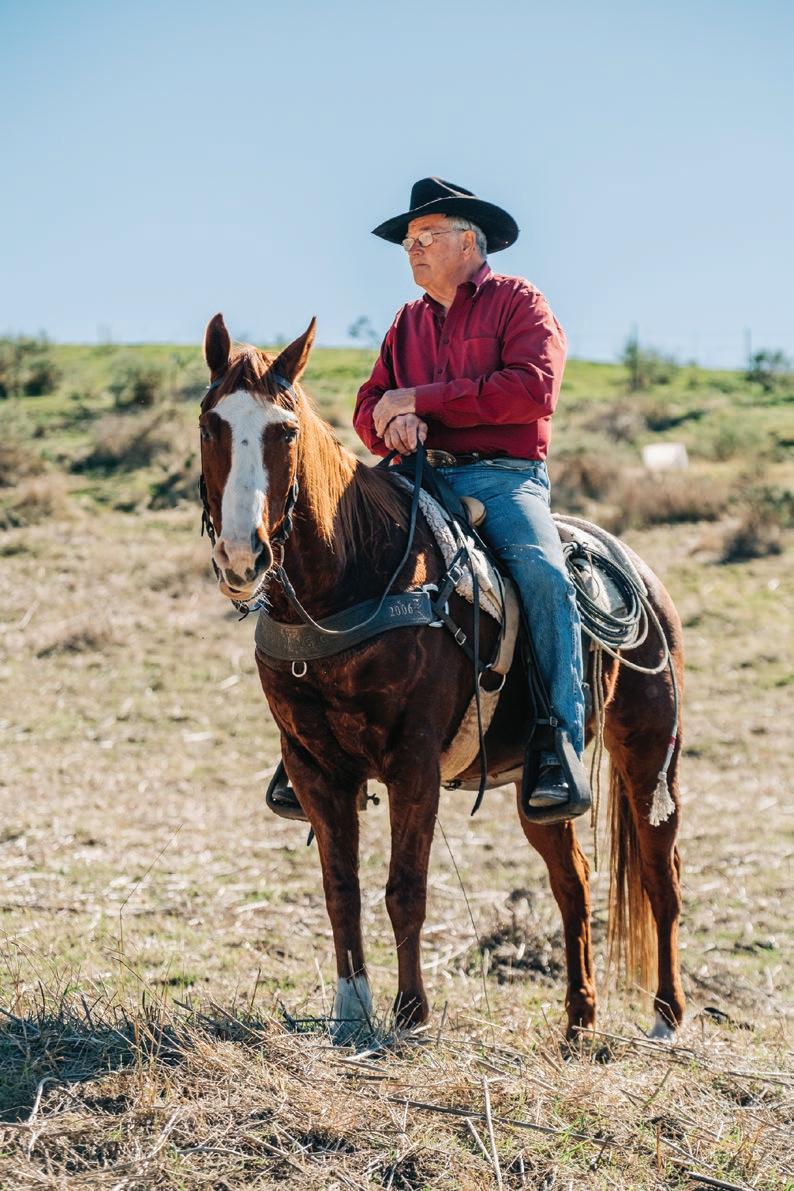
Frank Fitzpatrick grew up at Silverado Canyon, California and went to college at Cal Poly at San Luis Obispo, graduating in 1971 with degrees in Animal Science and Ag Business. “While I was there, Newt Wright and I were exchanging ideas,” say Frank. “He grew up in Sandpoint Idaho and I met him when I was 14, before I went to college. He graduated two years ahead of me, and went to Idaho. He turned out to be my cattle partner. He and his neighbor imported the first Limousin and Simmental cattle in Idaho.
“I did my senior project on those two breeds. Then I started studying Jan Bonsma’s work and how to evaluate, measure and select cattle for functional traits. I followed him around the country and listened to what he had to say. I’ve had cattle since I was in high school, in FFA. I liked to rope, and ride; I love cows and I get along well with horses. I was bouncing around the country and meeting cattle people.”
It is those interests that has kept Frank firmly in the ranching and community and he continues to learn and adapt to the changing conditions of the ranching industry.
Adapting to Market Demand
Frank’s interest in cattle genetics led him to purchase some Barzona cattle. “A friend of ours went out of the Barzona business and several of us bought his Barzona cows. I bought seven Barzona cows in 1979 and hauled them to Oreana, Idaho to start my cattle business with these partners. We ranched there in Idaho for about five years, on the Snake River.
“I was home for the winter in 1982 and Pete Jamison called me on the phone and told me there was a guy from South Africa giving a talk in Buelton, Califonia and said I should come listen to him. I drove up there, and met Allan Savory while he still had black hair and was still young. I bought his book and read it about eight times.
“I’ve always used Allan Savory’s principles but the piece of ground I’m on now I’ve only been allowed to use holistically planned grazing for about the past four years. When it dries up, I feed the cattle every day, so I have a pretty good handle on the grass situation.” However, currently Frank has had to supplement feed his 600 head due to the drought.
“I have used 13 dedicated holistic programs in the last 40 years and all of them failed for the same reason; the people who owned the ground were trying to do it on a fiscal basis, and we are trying to change plant succession which is in an ecological time frame. People get tired of waiting for you to make progress,” Frank says.
For many years he and his family raised Barzona bulls for commercial
cattlemen in range country, but the Angus breed became popular and he quit selling bulls about 20 years ago. Instead, he started taking his cattle to packing houses, processing them, and selling them direct to consumers. “I found out they were worth more money that way than selling them as bulls,” Frank says.
Frank also sold meat through farmers’ markets since 2002 until COVID shut things down. Within two weeks the grocery store shelves were empty of meat and he couldn’t keep up with the orders coming in over the phone. “COVID was the best thing that ever happened to my business. I am just a small operation, and I sold 156 whole carcasses and halves last year and butchered another 63 head to package and sell in pieces,” he says.
He only raises and sells intact animals; all the meat he sells is from a bull or a cow. “We don’t castrate, vaccinate, dehorn, deworm or wean. The cows wean their own calves,” says Frank.
His Barzona cattle fend for themselves and can be a little bit on the wild side. His method of gentling them is to rope them when they are calves, tie them down and hold them down until they relax and their
Number 202 h Land & Livestock 9
CONTINUED ON PAGE 10
Frank Fitzpatrick
adrenaline level drops—a little bit like imprinting a foal so they no longer fear people but trust and respect people.
Grazing for Dollars
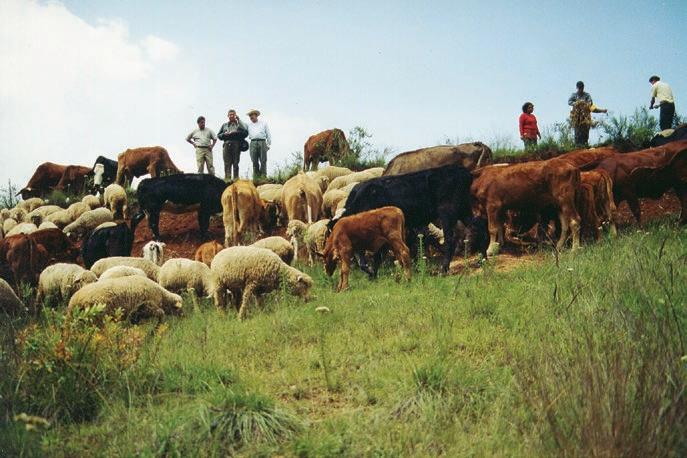
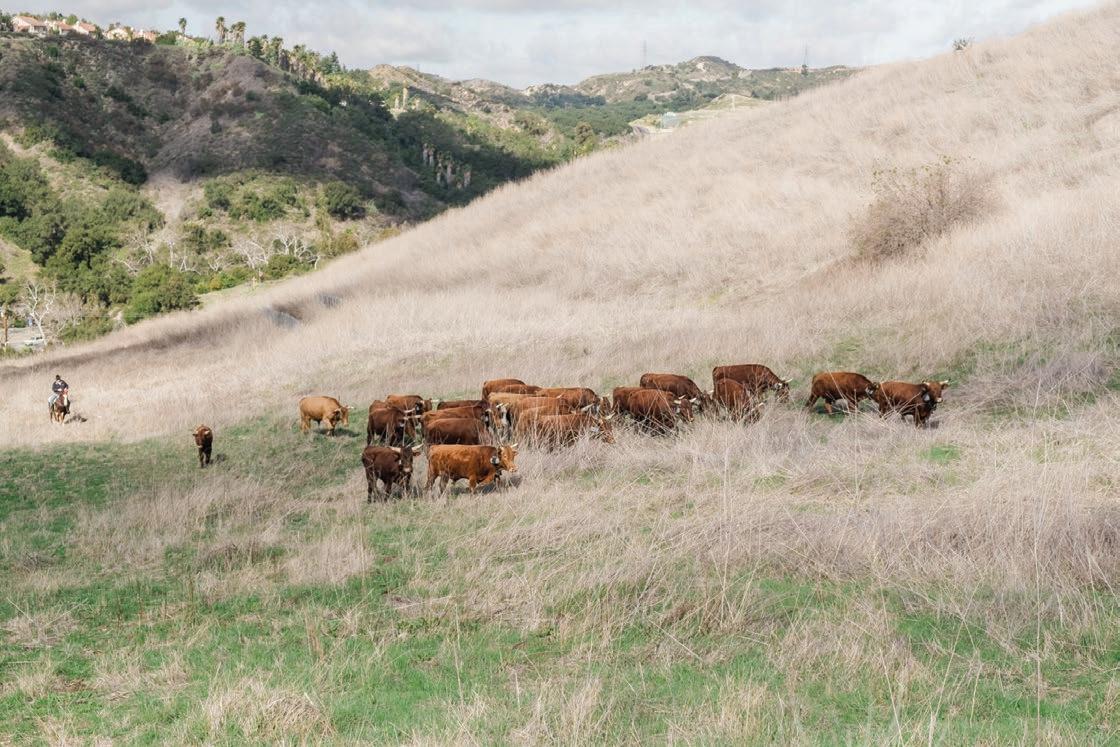
Frank has done planned intensive grazing for many years to improve the soil and pastures on his ranch, and now has people paying him to graze certain areas that need to regenerate the soil, get rid of invasive plants, reduce fire risk and restore native plant populations. “This is really exciting, to get paid by people to mow their weeds!”
Timing is important. The cattle eat non-native annual plants as they are beginning to sprout and grow—and trample the thick layer of old, dry mustard plants. The hoof action exposes the sprouting native grasses to sunlight and moisture so they can grow and take over the areas that were invaded by non-native plants. The non-native annual plants generally sprout first and crowd out the sparse native plants that were damaged by fire or earlier overgrazing. By grazing the annual plants early, then giving the area a rest, the native perennials have more chance to grow and restore the local ecosystem.
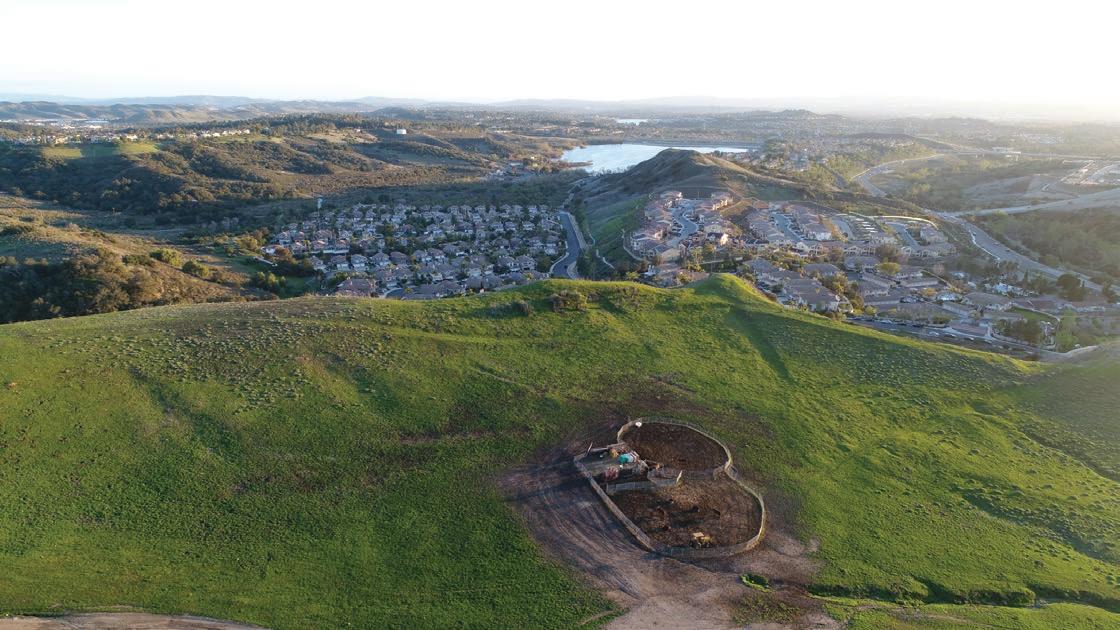
The pilot project involves a small portion of the TCA’s 2,000 acres of preserved open spaces that are spread across 17 sites in Orange County, and will show what grazing can do to restore the land. The cattle wear GPS collars that are programmed to facilitate an invisible (virtual) fence that keeps them in the area they need to be—without needing a real fence. If the cattle get near the invisible border, they’re warned with a beeping sound from the collar. If they step beyond that boundary, they receive a zap—like from an electric fence. Once they are trained to the virtual fence, they respect the invisible boundary and don’t venture across it when they hear the warning beep. The virtual fence can be moved where needed, to effectively move the cattle. “This makes planned grazing doable in any kind of terrain and in large areas,” says Frank.
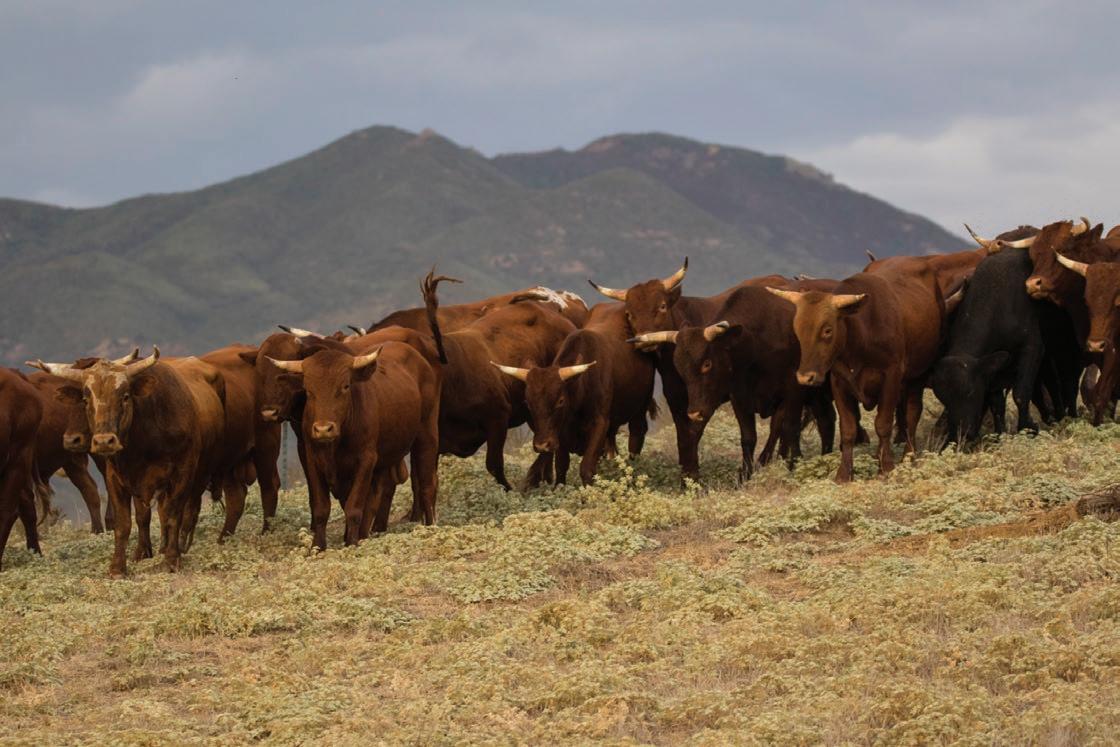
“It’s only about 80% effective, however (some animals walk through the virtual boundary) but much better than any electric fence ever built. It would be impossible to move electric fences every day, in large pastures.” And wildlife would tear them down.
The University of California, Davis became involved with a project that uses his cattle to restore degraded land. “This is a big deal in California right now,” he says. Currently his cattle are part of a pilot project with the Transportation Corridor Agencies to show the good job that cattle can do.
Many people think cattle are bad for the land. “They hate cows because they’ve been fed a bill of goods that they are harmful,” Frank says, due to damage done from overgrazing in the past, on many of Orange County’s rolling hills. Fitzpatrick points out that the overgrazing and environmental degradation was due to human decisions. It’s not the cow; it’s the how. Properly managed, grazing is the best thing that can happen to keep the land healthy or restore degraded landscapes, mimicking nature. Native plant communities evolved with grazing. Herds of grazing animals moving over the land was what stimulated the plants, spread their seeds and fertilized them.
Frank’s small herd of Barzona bulls has been hired by the TCA to graze 23 acres next to Live Oak Canyon Road—a piece of land that the transportation agency is tasked with preserving as open space. This project will show how cattle can be used in a beneficial way. By moving the cattle around (with a high number in a small area for a short time), they help regenerate the soil and native plant communities. They eat plants that shouldn’t be there (reducing fire danger), and the soil benefits from the nutrients left by the cattle urinating and defecating. A period of rest before being grazed again enables the native plants to thrive.
“The only way planned grazing really works is if you are putting anywhere from 300,000 to a million pounds of animals on one acre of land. You need a lot of impact for a short time. Putting about 800 cows (or bulls) on that one acre, it is cheaper to herd them than to use fences. The virtual fence makes herding easier,” he explains.
Fitzpatrick
The pilot program is expected to last three years and Fitzpatrick is being paid $11,500 annually to graze his cattle on that piece three times each year. The TCA’s goal is to mitigate wildfire risk and help bring back some of the native riparian grasses and coastal sage scrub that support the threatened coastal California gnatcatcher and the endangered
10 Land & Livestock h March / April 2022
supplements the cattle with extra protein and supplies water and salt.
5 Bar Beef CONTINUED FROM PAGE 9
Frank’s Barzona bulls do well on sparse feed and he sells them as grassfed beef.
Frank’s ranch is on eastern edge of Orange County next to 13 million people.
Riverside fairy shrimp. TCA biologists will monitor the sites and collect data to use in planning restoration of some of their other conservation lands in the county.
“Everyone wants to just give me little bitty pieces of ground to see if this works, to eliminate fire danger, knock the brush and standing forbs down and eat the grass. It grows back prettier and nicer and people like it, but we really need much larger areas (like 6,000 to 7,000 acres) to move a larger bunch of cattle around on, and then people could actually see beneficial changes in plant communities and succession toward native perennial grass species in California,” says Frank.
The Savory Institute came out to monitor his ranch in 2021. “I have more variety and density of perennial grasses on this ranch than any other ranch that they looked at this year in California. Even though I am winning the battle, I feel like I’m not doing a very good job—because I don’t have big enough pieces to get enough cattle on to do it properly,” he says.
Solving Pollution Problems with Cattle
Many cities, including Irvine, have serious problems with weeds because the perennial grasses in areas of open ground have been destroyed. Weed control relies mainly on toxic chemicals. “Kim Konte lives in an Irvine neighborhood on the north end close to our old ranch. People there had kids that got sick and one is dying of brain cancer. Her kids were getting headaches from the contamination. She started a group called Nontoxic Irvine. She lobbied the city to discontinue use of glycophosphates (such as Roundup) in the city. Other people wanted to be involved and soon this movement included other cities, and they created some ‘nontoxic neighborhoods’ on city-controlled properties,” says Frank.
“About three years ago when Kim started this, a friend of mine introduced me to her and I told her this was a wonderful project but all she’s doing is putting a bandaid on a symptom and not addressing the real problem. Banning the chemicals is great but you haven’t healed the ground and it simply propagates weeds. Instead, we need to use systems that heal the soil and return the grasslands back to their natural state. She didn’t like what I said and spent about six months bad-mouthing me and then finally she realized that I was right.
“The city of Irvine was mad at her because they’d passed a law that you couldn’t use these chemicals and also passed a law that you can’t have any weeds in the city, and the cost of weed abatement had gone up exponentially. They’d been using a crew of eight guys to control weeds and now had 40 guys plus volunteers mowing and pulling weeds. It became a major problem. So now she’s working on some kind of natural amendment that will kill weeds and I told her that all she is doing is smearing the grease around and not cleaning it up, not fixing the problem.
“To do it right, people need to holistically manage the land and put fertility back in the soil and grow sustainable grass instead of weeds, and then let my cows eat it—which sounds a little self-centered. If you
talk to people about all the degradation going on in the world, very few of them understand what the real problems are. The main problem with our environment is cities, concrete and asphalt—and monocrop farming— because these things shut off the water cycle. We need to grow more grass!
“Another program I have going right now is in the city of Irvine—to graze 170 acres in the Great Park in downtown Irvine. This Park is part of the old El Toro Marine Base. In 2002, the Department of Defense sold the land to private interests to be developed into a park.”
Barzona Cattle
This breed was developed in the mountains and deserts of Yavapai County, Arizona, starting with some crossbred cattle owned by the Bard family. They wanted to develop a breed that could adapt to their rugged, rocky region with extreme temperatures, sparse rainfall, and sparse feed.
The Barzona is a medium-size beef animal— actual mature size varying somewhat with the environment. These cattle may be horned or polled. Barzona are red, but the color may vary from dark to light red, with occasional white on the underline or switch.
About 100 acres of this 170 acres in the park is now going to be deeded back to the Department of Defense and the Veterans Administration and they are building a veteran’s cemetery there. “It will be developed over a 20-year period,” says Frank. “So my plan was to start in one corner with the cemetery and holistically graze the rest of it. Then as they need more space for plots, just keep moving the fence. Within 20 years we can do a lot of good there, and probably convince someone that continuing to have a nice grassy field wouldn’t be a bad idea, for this city-owned piece.
Barzonas have a high degree of herd instinct (traveling and grazing together as a group) and are curious and intelligent. Females usually breed as yearlings to calve at two. With light birth weight, streamlined calves, they tend to calve easily without assistance and breed back year after year even under stressful conditions. Barzona bulls are hardy and vigorous, with high libido. They tend to reach puberty early and are useful throughout a long productive life. The breed does well in rough country and produces excellent beef under marginal conditions.
“I am trying to get them to pay for the fence and water. The biggest problem is that for many years Jet-A (a type of aviation fuel—extremely refined kerosene) was dumped there, since 1941, and now there’s a big pool of Jet-A about 10 feet under the ground.”
Previously, before the site could be developed for civilian use, the Department of the Navy (which oversees both Navy and Marine Corps) was required to clean up the contaminated soil. Some of the
CONTINUED ON PAGE 18
Number 202 h Land & Livestock 11
Frank’s Barzona cattle at work on Live Oak Canyon Road project.
Bar Cross Ranch— Exploring Production Possibilities on Wyoming Rangeland
 BY HEATHER SMITH THOMAS
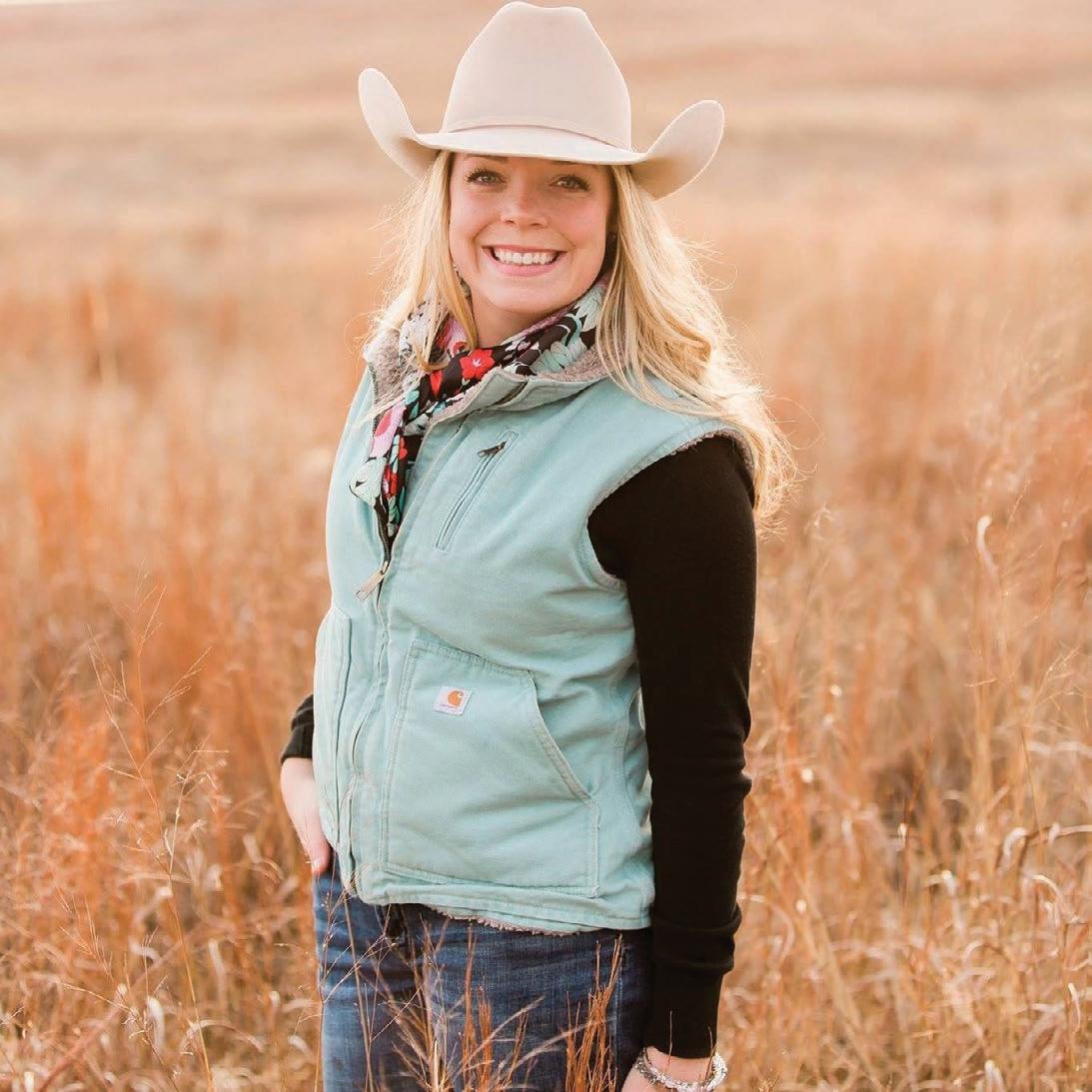
The Bar Cross Ranch near Cora, Wyoming (a little town southeast of Jackson Hole) was historically two ranches--the Willow Creek Ranch and the Bar Cross Ranch, and is now owned by the Speath family and managed by Katie Scarbrough.
“Before the current ownership, the Bar Cross ranch was owned by the Blatt family. Before that, the Bar Cross was owned by John Perry Barlow, lead singer for the Grateful Dead. He was raised here on that ranch,” she says.
can determine which new practices can pencil out in both the short- and long-term to make a difference on the land in this harsh climate.
Transitioning Production Practices
The operation for many years was typical to the area, putting up hay in summer while the cattle were on the range, and grazing the hayfield aftermath in the fall. “The cows spent time on the uplands in the spring and then went on up to the forest permit in the summer. They came back to the foothills to graze again in the fall, with the grass freshened up by fall moisture, and then the cows were fed hay in the winter,” she says.
“We’ve tried to change that around, and today there’s not a cow on the place anymore; it’s all yearlings, and just here for summer grazing. We run yearlings for two reasons; one, we can get the density and impact we want to have on the land, and it’s easier to do that—and move them around as one group—than with cows and calves. Two, this country is not ideal for raising cattle, due to winter costs and having to feed hay for so many months—especially this winter, with hay prices so high,” Katie explains.
This is the second year the ranch has been running yearlings exclusively. “We’d gone through an awkward transition period in which we tried to run a certain number of cows and fill in with yearlings but then realized that if we were running multiple herds we were not achieving what we want to achieve,” says Katie. “The yearlings can be used (more effectively than cow-calf pairs) as a tool but are also the economic engine that drives this ranch. We are land stewards and the cattle are a tool, but they are also our main focus because they are our main enterprise. We need to be able to pay for what we want to do.”
the late 1920s, Jenkins had 15,000 acres and 2,500 head of cattle in the Upper Green River Valley.
John Perry’s mother, Miriam, and her husband, Norman Barlow were married in 1929 and moved a year later to the family’s Bar Cross Ranch to run it. Miriam and Norman had only one child, John Perry. He took over the ranching operations for the Bar Cross Ranch in Cora when his father suffered a stroke, and helped run the family ranch with his mother after Norman’s death in 1972. John Perry hosted the Grateful Dead band members at the Bar Cross in the 1970s and 1980s and was a songwriter for the group. In 1988, he sold the Bar Cross Ranch.
“The Speath family has owned the ranch for about four years,” says Katie. “Currently, both ranches are together with a combination of the forest permits on those ranches. We also obtained another Forest permit so we run cattle on about 25,000 acres of forest—directly north of the ranch and contiguous with the ranch,” Katie says.
With new ownership has come a strong interest in improving the range conditions and Katie has been tasked with bringing together a team that
This arid environment is challenging, grazing at high altitudes in dry conditions with sagebrush and bunch grasses. It’s a bit easier grazing the lower elevations on the meadows and brush ground. “Our current model is high-density frequent moves for the cattle, moving them every 8 to 12 hours in the meadows and not putting up any hay. We graze those meadows in the spring, which gives the brush ground a good chance for the grass to get started. We have the cattle spend the summer on the brush ground and then finish the fall grazing with a last pass through the meadows—more slowly but with heavier density. The cattle do a lot better on the meadows late in the season,” she says.
The first pass through the meadows, the grass is lush and green, growing rapidly; the plants are high in water content and protein, and not enough fiber. The cattle eat a lot (not enough fiber fill) and it goes through them too fast (loose feces). “But they like that soft lush feed, and when they go to the brush they are not as happy because they prefer the soft, easy-to-eat salad-bar type diet. When we put them in the brush ground they don’t want to be there!”
It takes some adjustment. “We are still trying to figure out how best to manage this, especially on the brush ground with native grasses. It is so dry here in the summers, at this altitude. Even by the end of June and
12 Land & Livestock h March / April 2022
Katie Scarbrough.
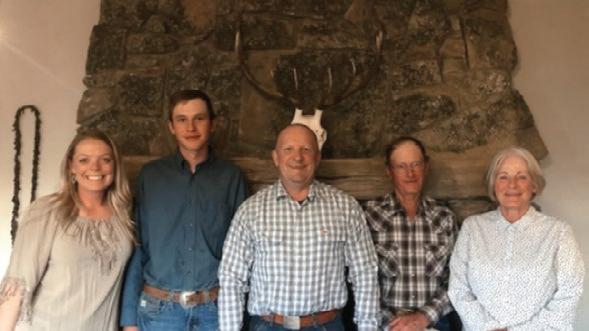
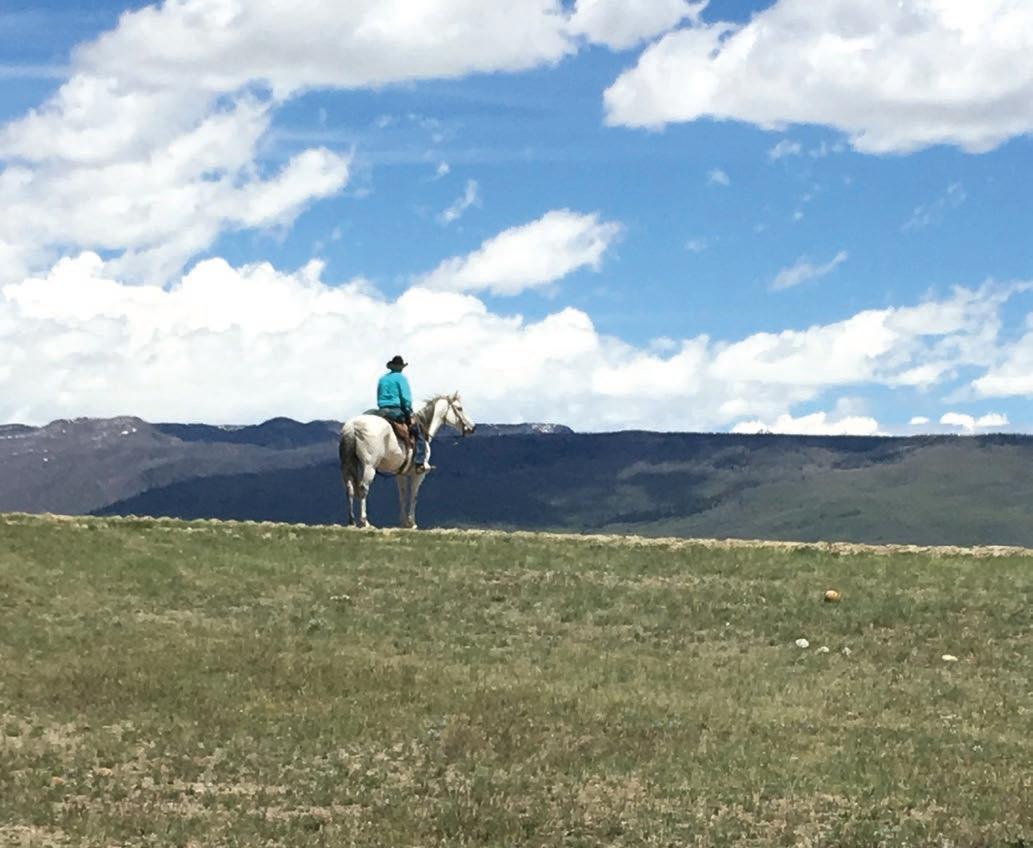
Team Photo (left to right): Katie Scarbrough, Brody Brown, Jason Spaeth, Mac McCormick, Delta McCormick.
early July, everything is drying out in this arid environment. This is truly high desert. I tell people that where I live is like a combination of New Mexico and Colorado (high country, but very dry),” Katie says.
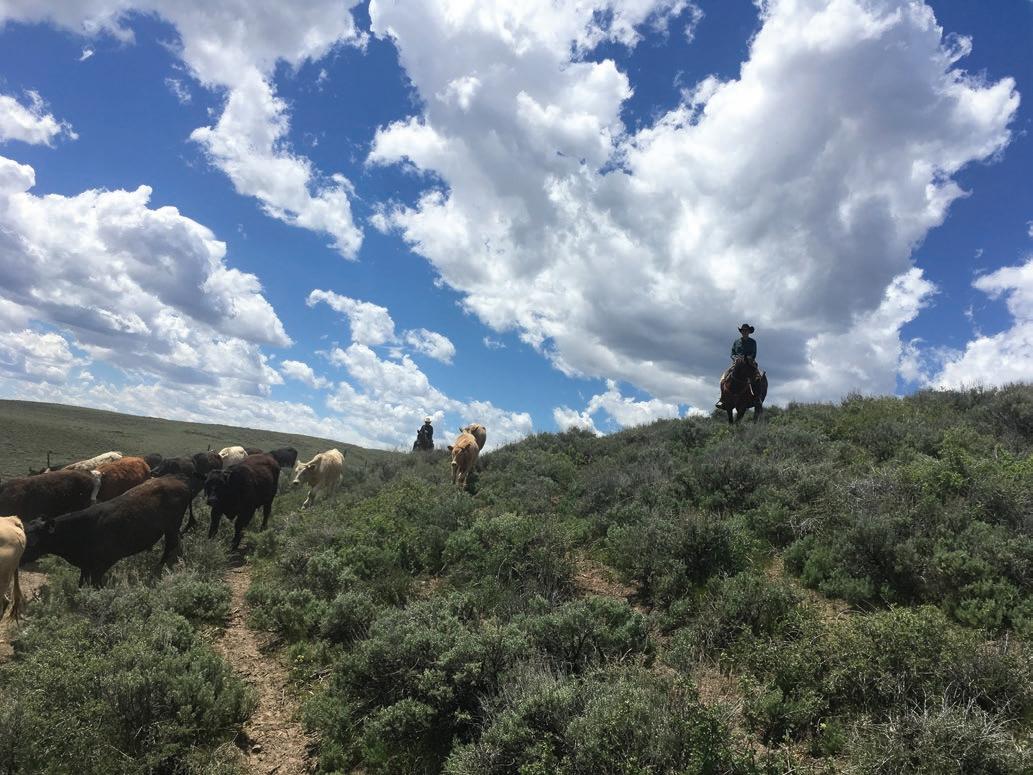
“We are really struggling to make rotational grazing work in the uplands, using one herd at high density. With 2,000 head, you might move through a 1,000-acre pasture in three days. That’s how sparse the feed is. You don’t want to stay any longer with that many cattle or you would damage the plant communities. You don’t want to hit it too hard, especially these bunch grasses,” she explains.
“In the spring we let that grass get a good start and produce some biomass, then bite it off—a little bit after seed set, but hopefully before it gets too dry. We do get some fall freshening most years with a little fall
Focus on the People Part
Katie notes they try to implement all three legs of Holistic Management three-legged stool (social, environment, and economic). “One thing that I feel is not stressed enough is the balance,” says Katie. “Sometimes it’s actually bad to try to do the very best thing for your land, striving hard for regeneration. In doing that, you may sacrifice other things. You might think you should go out there and move those cattle every three hours, but if you did that, would you have any employees that would want to do it? Here, there’s not a tree on the place, the wind blows almost constantly, and the sagebrush is abundant. To move the cattle that often in these conditions is not socially sustainable!
“This is one thing we struggle with. We are also seasonal; our employees are here from May until November and only one or two of us are fulltime through winter. How do I motivate a new employee and get the most from that person? Are we doing our best for the landscape, the people and our pocketbook? I think sometimes the environmental leg of the stool gets stressed so much that we are too willing to sacrifice too much financially and socially, and that doesn’t work either.
“You can’t do it if you can’t pay for it, or do the work, and if you are subsidizing that work, it’s not real; why are you out there to begin with? This is part of the struggle in dealing with the vastness of these big landscapes—how to economically manage them and realistically assess this socially. If you ask someone to go check the steers, it might take them half a day to get to where those steers are and find them.
rain, so hopefully it grows a little more biomass, and then the snow comes through and lays it down. But it is so dry by the time we go in there in late June/early July that we are really having trouble getting the litter to break down. There are plant carcasses from the previous year, manure that’s years old; nothing is breaking down to help the soil.
“Someone once tried to tell me that it’s not brittle here because it snows once a year, but they need to come see it in July! So I am struggling to determine the best way to graze this, and wonder if I maybe should start coming into these pastures in the spring and then increase the rest-rotation. Right now I have 20% rest-rotation and maybe I should increase it to 25% and if a pasture gets grazed early in the spring it gets the next year off, and if it gets grazed in the summer it can be grazed by the next fall, etc.”
Sometimes these things must be figured out with trial and error, keeping in mind that every year might be a little different in terms of weather and moisture. It can be a moving target. “It’s especially challenging in our brittle environment, because it takes so long to see any positive changes and even the smallest mistake can cause catastrophic changes; it takes longer to recover,” Katie explains. Some bunch grasses almost do best if you leave them alone during the growing season and graze them in the fall/winter after they are mature and have gone to seed (when they are not set back by grazing), trampling the seeds into the soil, but it all depends on the individual situation. If there’s deep snow you won’t be able to graze it!
“Our forest permits are managed a little more traditionally. We are looking at options, to try to consolidate herds and not use season-long stocking. We are trying to work with the Forest Service to get some joint monitoring in place, in conjunction with our Conservation District and Game and Fish to create a baseline and then hopefully do a 3-year trial. We might be able to combine some herds, with the two permits,” she says.
The Forest Service’s operating instructions are not very flexible, however, which can be a huge problem. “And unfortunately for us, the rangers are stretched so thin that they don’t have enough time to be out on the landscape, let alone having these kinds of conversations, to provide ranchers with what they need, to be successful. The Forest Service
CONTINUED ON PAGE 14
Number 202 h Land & Livestock 13
Brody Brown and Delta McCormick moving cattle.
Foreman, Mac McCormick, riding the range.
Bar Cross Ranch
CONTINUED FROM PAGE 13
becomes simply an enforcer (range police) rather than innovative to do what’s best for the land,” says Katie.
“We are blessed in Sublette County, however, in terms of agencies working together. The project we are trying to do with the Conservation Districts, Forest Service, Game and Fish is a common occurrence in this county, where I will be working with three to four agencies on one project. This is wonderful. I’ve never been anywhere else that this has been the case; the various agencies normally argue and can’t get on the same page. So I have really been hoping that we can get something going on this, and effect some positive changes.
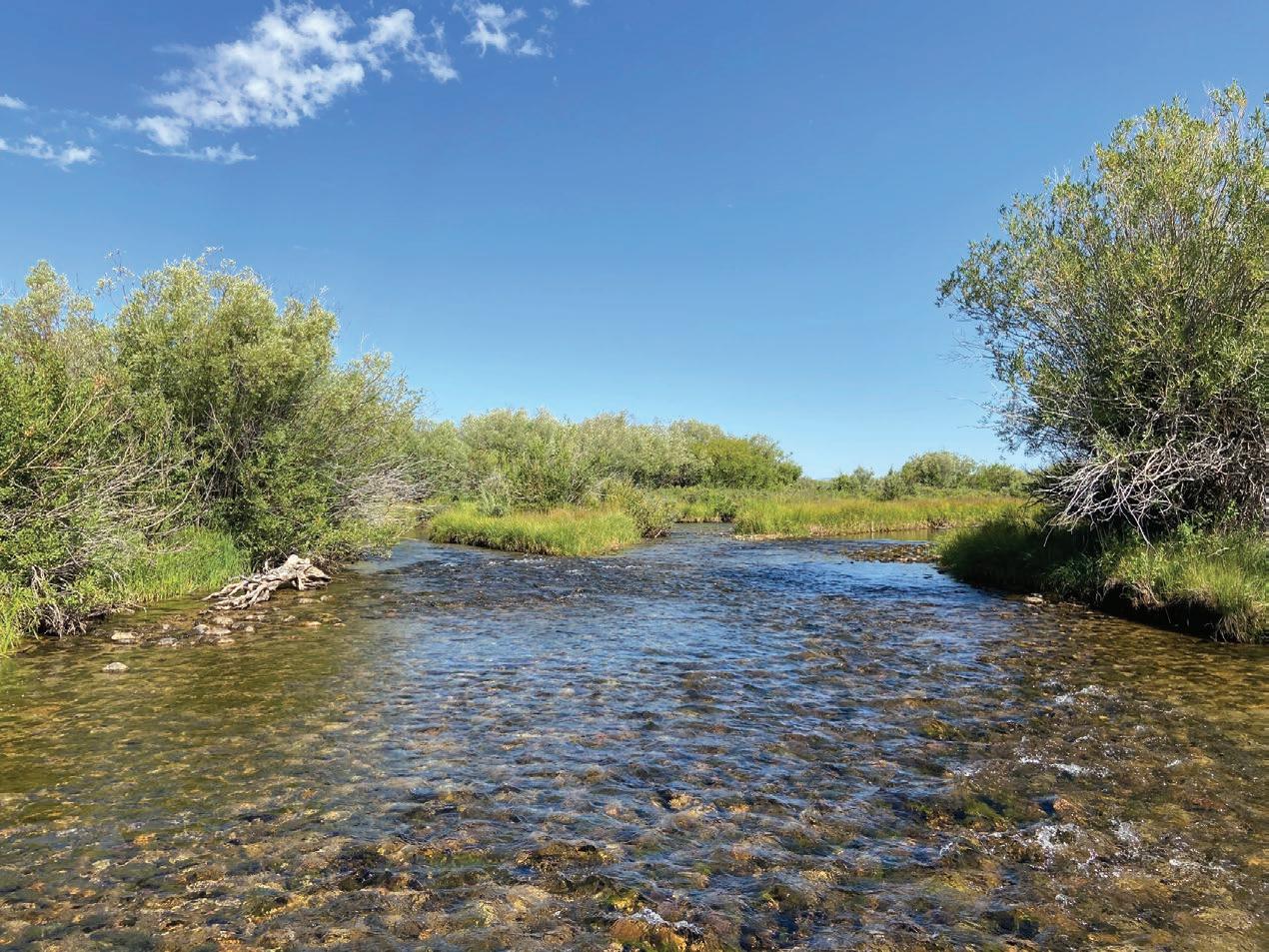
“All of these things have to be socially sustainable. We know they can pay, in terms of combining herds, etc. But moving one herd of yearlings within 20,000 acres in the forest may be challenging! It will be interesting to see what we can accomplish, and I am hopeful.
“So we are trying to work on some different projects like that. And on the ranch, doing what we are doing is so different that we are trying to work with several agencies and have a monitoring plan and data collection plan, starting with a baseline and where we want to move it to when these practices have been implemented. Anyone who wants to can come out and see what we are doing is welcome—whether they have questions or are just curious because they think we are crazy; they are all welcome.”
Consensus Building
Consensus Building is part of the social aspect of Holistic Management, sharing ideas. Some folks might think something won’t work, but then see that it might. “I think I’ve learned more, being on other peoples’ places and seeing what they do, than anything else I’ve ever done,” says Katie.
Jeff Goebel, an HMI Certified Educator has done some work with Katie on the ranch. “He calls his work consensus building. He helps us all work together,” says Katie.
“When I arrived at the ranch, the foreman had been here a long time, doing a very traditional ranch operation. It’s hard when ownership changes, new people are hired, and employees who have been there much longer than the current ownership don’t see eye to eye. This is very difficult, and also difficult from my position as ranch manager. I was ranch raised and I understand all the social dynamics. I understand the old guys with the opinions and I respect them immensely because a person can always learn things from them, too. I know some of my ideas may seem
outlandish, and I run them by my foreman and ask him how much he disagrees with them. Can we try it? Or tweak it? I tell him I am going to do it, but I want his opinion and input and I ask how he would do it, or what am I missing?
“All of these people are necessary components, to make it work. We need someone who knows the ranch intimately because they have been here so long—knows the seasonality, knows the changes.” He’s seen the variations over the years, the extreme weather events, and can create points of comparison.
“He has seen those, and knows how it affects the land, and how it affected the things that happened that year and in years afterward. He is so knowledgeable. At the end of the day, all that matters to our foreman is this ranch. That is what is in his heart. Everything he does is because he loves this place,” Katie says.
“It’s interesting, because the new owner also loves this place. He has a great passion for this ranch, yet these two people have vastly differing opinions on what is best for the ranch. Yet the root of it all is that they both love it. This is what’s so great about Jeff’s help. He does such a great job, and that makes my job easier. The owner, at the end of the day, is who sets the expectations regarding the return on his investment, and what he wants this place to do. My job is to take those goals and make them happen, and implement the system to make them happen.
“So in order to work with my foreman, who has been here forever, I tell him the goals and say that I think we can all agree to these goals; we all want this place to make money, we all want to do what’s best for the land, so how can we make this happen? I think Jeff does a really good job of helping get everyone on the same page because he filters a lot of the emotion out and gets everything out in the open.” Then everyone can more readily look at it impartially and maybe see some of the other peoples’ thoughts.
“He has us publicly address it. He asks what is our biggest fear, and what we think the worst thing is that could possibly happen. Then he has us compare it to what is the best thing we think could possibly happen here. Through this process, we build a consensus and realize that it is all about this ranch; we all love this ranch. We have different language, different ways of expressing it, different methods, but in the end we are all trying to accomplish the same things.
“Jeff does a great job with this and helps level everyone out, because people can become really emotional over a piece of land. Sometimes people demonize someone else and think that person is doing something to hurt the land.
“So we have to stop and get back on the same page and realize we are all trying to do this together. There is this social component, though of course we have a hierarchy and who we answer to, and at the end of
14 Land & Livestock h March / April 2022
One of the many water points throughout the Bar Cross Ranch.
the day everyone answers to me. Yet their ideas and opinions are just as important as mine and need to be weighed in, or we won’t be successful. I tell them I have an open door policy. Anything they want to bring to me, they should absolutely bring to me. But if it’s anything negative, or they want to just complain, they should also have a solution, or they can’t bring it!
“This is one thing I always try to emphasize. I want everyone to speak up. If any of them don’t like my idea, even if they are a part-time ditch cleaner on the irrigation, I want them to tell me.
“This is part of the social sustainability; everyone needs to feel validated and that their opinion matters. To see their opinion or idea implemented makes them feel they really are part of the team. Sometimes you do need to hire someone that you know is going to always disagree with you, just to make you better and keep you sharp. We definitely don’t have everything figured out yet, but we are getting closer every year.”
Exploring ROI
Jeff also brought in Gregg Simonds last summer, for his input. “Gregg used to manage the Deseret Ranch in Utah and is now retired,” says Katie. “He is a very fascinating person and a friend of Jeff’s. He sees so many things and can often help answer questions. One of our big questions is what can we expect from our uplands. What is reasonable to think we can achieve in terms of production? Number two—what is the best method? Is it high density? Do we need aeration or bugs sprayed out there, or some other tool? Whatever it may be, and more important than the method, is the cost.
“The third question is time. If someone could tell me that we could triple our forage base by applying high density at a cost of x per acre but it will take 40 years, I don’t even need to try to do the math. We can’t pay for that. We are trying hard to understand the costs of various methods and we are bringing in a lot of people to help us. This is one reason we brought in Gregg.”
Unfortunately, this particular region has not had much soil mapping. A lot of the country had this done during the 1970s, determining what types of soils existed on various rangelands and private land. USDA Natural Resources Conservation Service (NRCS) has done soil mapping on about 95% of the counties in the U.S. “Our area is still under scrutiny and the soil mapping has not been finalized,” she explains.
“We don’t have eco-site descriptions or any written, storable record of what these sites appear to be—like what percent canopy cover did we have earlier, and how much upland shrubs, etc. We don’t really know. I often wonder about historic grazing use. People often say the buffalo came through periodically, and imagine what it would look like after a herd of buffalo, etc. I am not so sure the buffalo actually came up here into these mountains. They may have come through and grazed the meadows, and went from one riparian area to another, but they probably didn’t
spread out over the sagebrush at 10,000 feet elevation.
“The species that survive here today are pronghorn antelope, elk, mule deer and a few other animals. There may have been buffalo going through but we don’t know if they were here regularly. Some of the early explorers in many areas of the intermountain West reported herds of buffalo, but we don’t know if those herds were passing through or resident; they may not have been in those areas all the time. Early records, including early conversations with the Native American tribes in these areas are scanty. Evidence like old horn shells, bones, fossils have told us of buffalo at many sites in Western mountain country, but our knowledge of those early days is still very incomplete.
“This part of the world was Indian country for so long—until very recent times—that we don’t even have much record from early settlers. There are places here that were not homesteaded or settled (up this far from the valley) until the early to mid-1900’s.
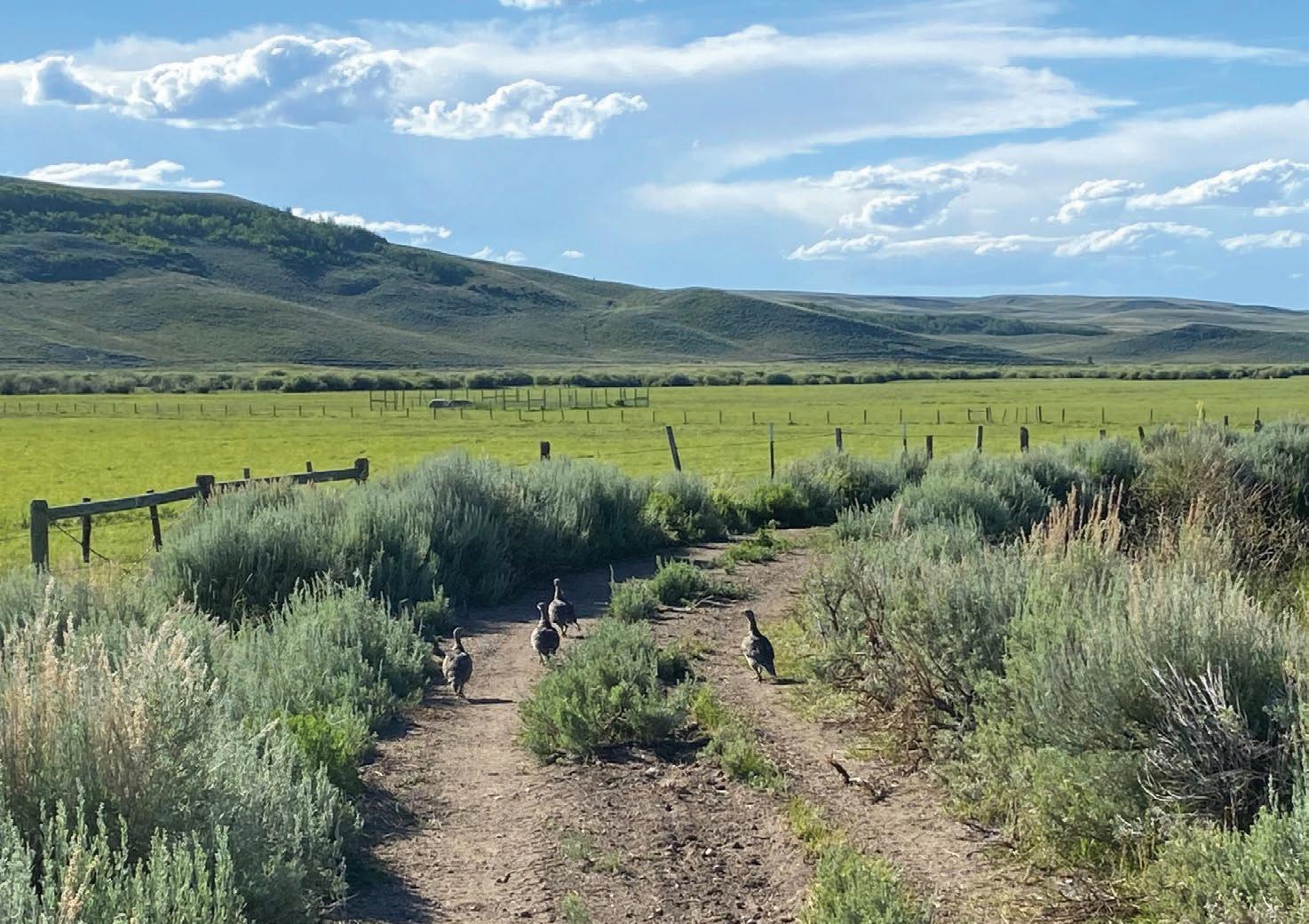
“So what can we do here? Do we really need to spend 20 years of time, effort, energy and money to know that we can’t grow enough forage, or that our current model is not the answer? There is so much antagonism in this question. Do we need more animal units to create more impact to create more turnover? This then forces us into being a function of the commodity market. Then the question is, can we grow enough forage to be profitable in a commodity market?
“Or, maybe we don’t need the severity of impact that we are thinking. Maybe we didn’t have the buffalo here regularly. Maybe we need a different model. But then we need to find a way to obtain more gross margin. For a place with this scale, how few animals would that be, to be able to obtain enough gross margin and still be profitable? It’s very antagonistic, trying to figure out how to manage in terms of the wholes within the whole, and how do I staff this place, how many units do I turn over and how hard do I push them?
Where do I focus? There are so many questions!
“This is why we brought in Gregg, to ask him what he thinks. Should we even have cattle out in the sagebrush at certain times when there is no moisture? Should we be there in the spring when the snow melts? In other parts of the country you’d be told to wait and let the grass get fully started.” Yet the native animals in mountain country follow the green-up, going from the valleys and up into the mountains following the new grass. They grazed it as they went to the uplands, but maybe only for a short time. There are a lot of wildlife that do use this area.
CONTINUED ON PAGE 16
Number 202 h IN PRACTICE 15
The Bar Cross Ranch is home to many different species of wildlife.
Bar Cross Ranch
CONTINUED FROM PAGE 15
“This ranch has been flagged as a major part of the Sublette mule deer herd migration, and also the pronghorn,” says Katie. “In the fall the deer are really moving. One of my favorite things to do is get up on a hill and watch them and see what they are doing naturally, and try to see what I am not doing right, that these guys are. I try to understand all of this, and that’s why we brought Gregg in, and several other people, to try to get their opinion and what they might think is possible.
“Alejandro Carrillo has done a lot of grazing work, and has a project called Understanding Ag on the Chihuahuan Desert. We are hoping to have him out here in the spring of 2022 and get his opinion.”
Alejandro owns the Las Damas Ranch in Chihuahua, Mexico. The ranch is in the middle of the Chihuahuan Desert with 8 to 10 inches of annual precipitation. The ranch was purchased by Alejandro’s father in 1985 and consists of 30,000 acres, of which about 25,000 acres were grazable. With traditional season-long grazing the land was degraded and it took about 150 acres to support a cow-calf pair. From 1985 until 2006, the ranch was operated conventionally with three herds on three separate areas of the ranch. Total number of cows averaged about 200 head annually. In 2006, there were 12 pastures on 25,000 acres.
When Alejandro began running the ranch he studied Holistic Management and began putting in more fences to do rotational grazing. By 2012, he had installed more permanent cross-fencing to form a total of 55 pastures. The three herds were combined into a single herd and moved across the ranch every few days depending on available forage in any one pasture. Then he adopted Adaptive Grazing practices and regenerative principles, with more water sources and temporary fencing. By 2018 he had 300-plus pastures with a combination of both permanent cross fencing (using a single high tensile strand) and temporary polywire fencing. Cattle had become less selective (eating all major species, even cactus) and were moved at least once daily to new pastures. Rest periods for previously grazed pastures was extended to a minimum of 10-14 months between grazing events.
The ranch has tripled the number of cows that can run on the same acres, now running 600 cows, with plans to further expand cow numbers. The original requirement for acres per cow ranged from 125 to 150 acres and is now 42 acres. Annual mortality rates were above 10% and are now below 1%. The ranch requires less labor to operate even though cattle are moved twice daily. Net revenue has increased 350% with triple the cow numbers and a lower unit cost of production. The cost for investment in water and fencing infrastructure was about $40/acre, spread over a period of 15 years. Being able to triple cow numbers on the same acres with the same rainfall is testament to the ability of nature to heal herself.
These are the sorts of things that the Bar Cross Ranch is investigating for their own situation. “It’s not that this place can’t be profitable; we just need to find the right model, and I don’t have 20 to 40 years to figure that out!” Katie says.
Water Investments
Katie is excited about the help Gregg Simonds brings as they explore these options. “He is an expert with water, and that’s one thing this ranch is abundantly blessed with. We have some older water rights on the meadows; we have so much water that I could actually hire two fulltime flood irrigators all season long. But I keep going back to the economics. If one guy spent x amount of increased time—let’s say it took him 20% longer to do a certain field—we could maybe spread water onto the higher bumps. Those high areas might only be 10% of the field, however, so if you do the
math, I can’t pay for that. Even in a meadow where I could grow several hundred more pounds of forage per acre, it won’t pencil out,” she says.
“One thing we are talking about now is trying some non-human natural water solutions. We could prove up our water right, prove that we are still using it, and find a way to develop some systems like a series of ponds on top of ridges and create gravity flow. We have a hillside with 600 acres of water rights and in the early days the people were out there for hours, moving that water around. It can be done, but we have to look at the cost and man hours,” she explains.
“We had a prototype drawn up, and there would be so much force on that water (to irrigate with gravity flow) that we’d need 1,200 slide gates in a series, down this hillside, to not blow out the ditches! I asked the engineers how much labor it would take to operate the 1,200 slide gates. It would take 1.5 fulltime people all season long, to irrigate the 600 acres. I can’t afford to pay for that. So we are trying to figure out solutions for things like this. Do we build a series of ponds? Do we build a series of berms and slowly drop the water down? We have all these different ideas, but I’d like to implement more of what the water would naturally do if we were not here. Let’s help it do that,” she says.
“Where we see springs on hillsides there may be aspens at the top, and a riparian channel and willows at the bottom. Do we need to plant some things or spread the water more at the top and let it sink higher up and pop up farther down the valley and maybe flood irrigate with it there? We are trying to look at more possibilities.
“Gregg is fantastic at how he looks at things. He likes to go to a high point and see everything around it. He provided input on several ideas and let me know that there were certain things we shouldn’t try to change or move. He was very helpful. The more ideas, opinions and input, the better, in this type of country.”
Development Pressure
Part of this ranch—the Bar Cross side--is now in a conservation easement, but Willow Creek is not. “It’s an open easement, very geared to agriculture and compatible with what we are doing. In all of our operations we don’t have any constraints that would interfere with what we are trying to do. We work with the Jackson Hole Land Trust and they come out a couple times a year to see what we are doing,” Katie says.
“Unfortunately this area will be hard to keep in agriculture long-term unless you can keep a profitable operation. Otherwise everything here will eventually be developed. There is so much pressure from Jackson and into Pinedale since it is basically landlocked by Forest Service and BLM land. There is a lot of people pressure, elevating property values.
“Someone wanted to purchase a piece of river property north of us—and would be our neighbor—wanting to build a gated community/ golf course, with fishing on that river. It was shocking, but there was a transaction that blocked this from happening. Unfortunately this is what the future will bring in this area unless it is kept open and profitable for agricultural operations.
“This entire region depends on perennial grass production, in order for agriculture to survive. The more we see it degraded, the more we see these sagebrush ecosystems invaded by cheat grass. This is the future that will be forced upon us if we don’t effect change and keep thinking there has to be something better.
“I want to know what this ground is capable of. Just looking at it, in terms of what little bit we know, I realize that our sagebrush ecosystems are probably just a shadow of what they were before, because people didn’t know how to use them. But I also think that there is a way to do this and effect positive change. We just need to figure out what it is and how do we pay for it.”
16 Land & Livestock h March / April 2022
Vision Leads to Successful Practice
CONTINUED FROM PAGE 24
“During the financial planning I realized how many financial decisions we were making that took us away from our holistic goal. We found a lot of money, made up of a lot of little things, that wasn’t in alignment and that was a really powerful understanding. We wanted to travel and explore so we started setting money aside for that and creating a family vacation fund and committing to those kinds of things which would make that vacation a reality each year. The kids liked to be involved in the planning of that.
“We have a summer cottage on Lake Ontario and we used to go for two weeks every summer. We’d go play mini golf and take the kids to the movies because we thought they were bored. When we were working on our holistic goal, both kids said they loved to go to the cottage because it was just the four of us and we could just hang out. That was an interesting revelation. Our perception of them wasn’t accurate when they were 11-13 years old. They thought we were the ones that were bored with hanging out. By having that conversation, we saw our values coming out in them because they were willing to talk about these things in the context of us creating the life we all wanted.
“The biggest thing that I changed as a professional was that I took the expert hat off and put the facilitator hat on. That way I could get more folks to talk about their goals
and dreams for their farm. The NRCS does encourage goal setting conversations, and Holistic Management is a really efficient vehicle to get people to think about what it is they really value. So I don’t go in and say you need to do strip cropping (or some other practice) because you have an erosion problem. We explore the options together after I know why they are farming.
“For example, I went to a farm and the couple were nurses from New Jersey and they had moved to New York to farm. One was still working full time as a nurse and the other was farming full time. They had some natural resource issues, and the woman had come to a talk I gave and asked me to come to the farm. The guy wasn’t crazy about the appointment and they were very tense. So we went for a walk and they were walking about 10 feet apart. I knew something was up. So I asked them what their goals were when they came to the farm. I asked about their motivations and dreams and how they ended up here.
“They started talking about their goals that they had written down. I started asking them more and they were finishing each other’s sentences and they were looking at each other and getting closer together. They were struggling because she was working full-time and they weren’t making enough money. So they talked about pasture improvements and wet areas around the barn. We talked about the resource issues and I kept circling back to the goal. I just felt we weren’t going to get anything done at the beginning because they were at odds. We had about a 45-minute appointment. I was going to refer them to people for the resource issues so I didn’t need to work on that with them. When we got to the house they were holding hands. I realized then the power of reminding people of their vision for their future. It was a great end to the meeting. I hadn’t given them any technical help, but I reminded them why they were there so they could both be able to work on the farm together. To apply a conservation practice you’ve got to be holding hands. You can’t be walking apart. Your ability to succeed
is much greater when you connect people with their vision.”
Phil continued to collaborate with HMI with writing more grants for professional development for agricultural professionals funded by NE SARE. In 2003, there was a follow up training with the 2001 cohort. Then in 2009 HMI was awarded a Beginning Farmer/Rancher Development grant from USDA National Institute of Food & Agriculture (NIFA). Phil was one of the instructors for that program that took place in the Northeast, using the cohort of Certified Educators that had been trained in 2001. The program was for beginning women farmers. “That was a fabulous grant,” says Phil. “My experience is that women are more intuitive than men. Men can be overconfident and we are taught to always have our ‘eyes on the prize.’ I think that narrow of a focus is a bad idea because you have to keep your eyes wide open. The world is constantly changing. It’s fine to be moving forward, but you have to have good peripheral vision.
“The Beginning Women Farmer program was a great atmosphere to be in because the women were open minded and willing to explore ideas. They might not be listened to on their farms or in their communities. In some cases, their own fathers wouldn’t let them take the farm over and there were some heartbreaking stories because of that lack of faith.
“There was one woman who wanted to be a sheep farmer but her mother wanted her to be a nurse and get married. So that woman tested whether she should stay and fight to farm on her family’s land or leave the farm. The relationship was pretty rough, so the daughter moved away from the family farm to save her relationship with her mother. With those kinds of challenges, it was great that these women now had a support system and role models with the other women in the classes and with the mentor women and instructors.”
Most recently, HMI collaborated with the Center for Agricultural Development and Education (CADE) for another NE SARE professional development grant for agricultural professionals and Phil helped write the grant and was one of the instructors for that program.
In 2012, HMI was awarded a grant from Western SARE to provide online training to agricultural professionals. Phil was one of the instructors for that program. He was not really enthusiastic about this type of education at first. “I couldn’t tell if people were listening or
Number 202 h IN PRACTICE 17 CONTINUED ON PAGE 18
“I think that Holistic Management makes a difference in people’s lives…there are so many stresses on farmers. Holistic Management has that social piece that allows farm families or partnerships to work together. Farming is such a challenging occupation. Now you have a framework to help you talk about these things and manage toward what you want.”
CONTINUED FROM PAGE 11
contamination was caused by volatile organic compounds (VOCs). These are primarily industrial solvents that had been used over the years for degreasing, paint stripping, and cleaning of aircraft. Over the years, the VOCs seeped into the groundwater, resulting in contaminated groundwater extending three miles to the west. In 2005 they announced that the cleanup was complete, but this still left the pool of Jet-A under the ground.
“The only mitigation strategy they had was to take off the overburden (10 feet of soil), and haul it off. I met with the mayor and told her that Jet-A is just a carbohydrate.” All petroleum products are from long ago dead plants and animals, and Jet-A is just more refined than the oil we get out of the ground.
“I told her that if we could just reach down there to tap it, the plant’s root systems will eat it; the Mycorrhizal fungi will devour it and turn it into plant food, and none of it ever get up into the plant stems. They are intrigued by this idea. I don’t know if it will actually work, but it should. A couple of scientists from UCI are trying to figure it out.”
Other contaminants are also a problem. Fitzpatrick says PFOS is a manmade “forever” chemical that is getting into the water supply in southern California. Perfluoroalkyl and polyfluoroalkyl substances (PFAS) are a group of man-made chemicals that include Perfluorooctane Sulfonate (PFOS) and Perfluorooctanoic Acid (PFOA). These can both have a negative effect on human health. They came into use in the 1940s and 1950s because of their ability to repel fire, water, oil and stains. Various companies used them in a variety of products, including stain-resistant and water-resistant fabrics, non-stick cookware (such as Teflon), polishes, waxes, paints, cleaning products and firefighting foams.
Even though their harmful effects were later discovered and they are no longer used in the U.S. and Canada, they are still used in other countries and may be in certain imported products. These chemicals have a residual impact on the environment today because of their stable molecular structure (taking longer to break down than other organic chemicals), and have polluted the air, soil and water. PFAS contamination is still found in certain water supplies across North America.
“An outfit in New Jersey has a bacterium called Acidimicrobium (A6) that thrives in low-oxygen conditions. It’s been found to digest about
60% of these chemicals within about 90 days in a petri dish in the lab. We are trying to figure out how to get this in the ground in the grass at the root system, suck it up and break it down. Once it breaks down it becomes sodium chloride and fluorine chloride so you are making it into salt,” he says.
Grazing can be a great tool to help restore degraded land. Frank wants to change public opinion about land use and show the importance of holistic planned grazing as a form of regenerative agriculture. Two years ago he started the Holistic Education for Reversing Desertification (HERD) Foundation. The goal is to develop, apply and teach holistic planned grazing as part of a broader theme of regenerative agriculture, since this is a tool to regenerate and create healthy soils, restore the watershed, mitigate fire and flood risk, foster carbon sequestration, and increase the nutrition and resiliency of plant and animal production.
“My idea was to teach kids holistic planned grazing, but since COVID we haven’t been able to get any kids out here to the ranch.” Once COVID gets out of the way, Fitzpatrick plans to include public presentations about conservation efforts on the land and work with FFA and 4-H groups.
“I want to give every FFA kid in Orange County online chapters and a one-day seminar in holistic planned grazing. Then next year if we can get a little more funding we will do the 4-H kids. I have a lot of big ideas but I just don’t have enough money to get them all accomplished!” Frank says.
“There are 320,000 un-grazed acres in Orange County alone. I own a house here that’s worth $1.5 million. I’ve been here 73 years and I don’t want to move. The temperature suits me, I’m 15 miles from town, and there’s 13 million people that close to me, but they don’t affect me very much. I would like to see Orange County graze more land, but to do that we have to change people’s minds and allow them to see that cows are not bad.
“Holistic planned grazing is so beneficial, and I’ve been doing this so long that I probably incorporate all the principles of Holistic Management including lifestyle and economics.
“My goal is to get the 230,000 acres in Orange County under holistic planned grazing, as a management tool for healing the environment. Growing more grass is the first step because it restores soil health and the water cycle.”
Vision Leads to Successful Practice
CONTINUED FROM PAGE 17
understanding,” says Phil. “I had to grow and learn how to read the virtual ‘room’ and slow down the pace. It is harder to know if you are making it work. I learned what is possible for me, what I was good at doing. I put some pressure on the audience to participate more.” Now, Phil not only teaches online for HMI but also for Cornell’s Small Farm Program.
“I think that Holistic Management makes a difference in people’s lives,” says Phil. “I think there are so many stresses on farmers. Holistic Management has that social piece that allows farm families or partnerships to work together. Farming is such a challenging occupation. Now you have a framework to help you talk about these things and manage toward what you want. There’s no guarantee that your farming career is going to be successful, but Holistic Management gives you an
advantage beyond just crunching the numbers. It gives you something to rally around. You get the importance of having a land ethic because you are a land based business and the land health is the basis of all your wealth. The producers learn they need to be profitable and to make the social and ecological work as well. Having good students who actually have that paradigm shift that comes with Holistic Management lets me know they are not going back to what they did before or how they thought before. They are always going to be moving forward and continuing toward the life they are trying to create. That’s why I love to teach and facilitate Holistic Management.”
Phil Metzger can be reached at: pmetzger17@gmail.com
18 IN PRACTICE h March / April 2022
5 Bar Beef
From the Board Chair
BY WALTER LYNN
There have been numerous personal experiences in my life from Kansas and a recent viewing of a video about the 2021 Kansas Dust Bowl that has prompted me to reflect about Kansas and its importance to agriculture. In the summer of 1972, I spent time at Fort Riley, Kansas, because of my US Army Reserve Officers’ Training Corps commitment. I was in the four-year ROTC program at Western Illinois University. The commitment to wear the US Army uniform, that summer of 1972 helped me to personally grow. I cherish that experience to this day since I personally grew that summer.
In the 1980s, I was on a nonprofit board for the Central Illinois Ag Research Farm; this agricultural nonprofit was a precursor to the regenerative and sustainable ag groups today. Another board member and I went to Champaign, Illinois one evening to see Wes Jackson with the Land Institute in Salina, Kansas. I did feel at the time, this evening with Wes Jackson was almost covert!! Several years later I was in Wichita and got to hear Wes Jackson again. In 2019, still on a mission to support healthy soil, I went to dinner with Fred Iutzi, the president of the Land Institute. Fred grew up in western Illinois, near Carthage, Illinois and is another great connection in regenerative agriculture in Kansas.
I have developed some other amazing contacts in soil health in Kansas who are outstanding resource managers and educators including Gail Fuller and Lynnette Miller in Severy; Jessica Gnad, with Great Plains Regeneration; Ted Alexander in Barber County; Pete Ferrell
Holistic Decision-Making in Corona Times
CONTINUED FROM PAGE 6
When at the end of his book 21 Lessons for the 21st Century Yuval Noah Harari writes that it is meditation he considers as one of the essential lessons for our times, I could not agree more. Inviting every day an inner state of sensing and observation without purpose and expectation brings me the peace I included in the quality of life statement of my holistic context. Not only my conscious doing, but also my way of being here, now, with all its holy contradictions matters. Embracing the contradictions, “failing forward” and suspending judgments, even refraining from naming those dynamics that move or that still me, have opened up new and inspiring perspectives for me.
Wiebke Volkmann is a Holistic Management ® Certified Educator living in Windhoek, Namibia. She can be reached at: wiebke@afol. com.na.
For more information on how to build a Tippy Tap, view HMI’s blog where full instructions are provided.
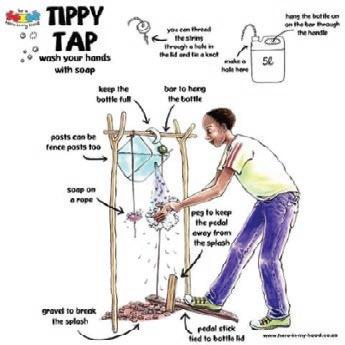
in Beaumont; and Linda Pechin-Long in Beaumont is also HMI Certified Educator trainee. The seriousness of their commitment is unparalleled in Kansas Ag. We have to respect how these individuals are making true differences in rural Kansas and improving land health.
However, they are still in the minority for Kansas agricultural producers. A point made more evident in December 2021 when I recently saw a Kansas Dust Bowl 2021 video on the internet showing how we still have Dust Bowl challenges despite the efforts at soil and water conservation over the last 80 years and the current situation we are facing on the Great Plains.
On April 14, 1935 a dust storm originating in Texas-Oklahoma Panhandle country traveled across five states and on into Canada. Today, the color of a dust storm is brown versus black from when “Black Sunday” occurred and a black blizzard arrived. The five states the Dust Bowl covered were Oklahoma, Texas, Kansas, Colorado, and New Mexico.
We don’t want the Dust Bowl to happen again, but we can see how management practices are creating too much bare soil resulting in a great deal of erosion—affecting land health, air quality, and farm/ranch profits. HMI has course offerings that you can participate in with your business team to help create the land stewardship for future generations for your family business. The land is the legacy for our families. What legacy do you want to leave?
Making Room for Relationships
CONTINUED FROM PAGE 8
moved out here from Minneapolis. I was sort of worried about moving away from something, and I was so pleased to realize I actually moved towards something.”
…And Back to that Decision
So, fast forward: once the growing season arrived, where did Racing Heart Farm land on the question of spending more time in the pack-shed or with people? In some ways, it was a harder decision than what they faced in 2020, when the pandemic shut-down limited choices.
“In 2020 it was like, something happened, and we have to make decisions now, now, now,” says Dobrick, punctuating the words with a slap of the hands.
If the decision was based on pure economics and efficiencies, a 200-member CSA might have been the way to go. But in the end, after considering quality-of-life issues and what really excites them about farming, the vegetable producers went with an option somewhere in the middle. When they got word that at least one of the farmers’ markets they had served in the past would be open to in-person access, they decided to go with 120 CSA shares in 2021, which gave them the time and resources needed to still have face-to-face contact with customers at the market stall.
In this case, they didn’t just listen to their bank account, the land, or even the community—they also listened to themselves.
Number 202 h IN PRACTICE 19
a fulfilling quality of life. They direct sell beef and have a small-scale agritourism enterprise. Additionally, they operate a travel agency—Farm and Food Travel–where they take farmers and rural entrepreneurs on inspiring journeys. Congratulations, Philipp!
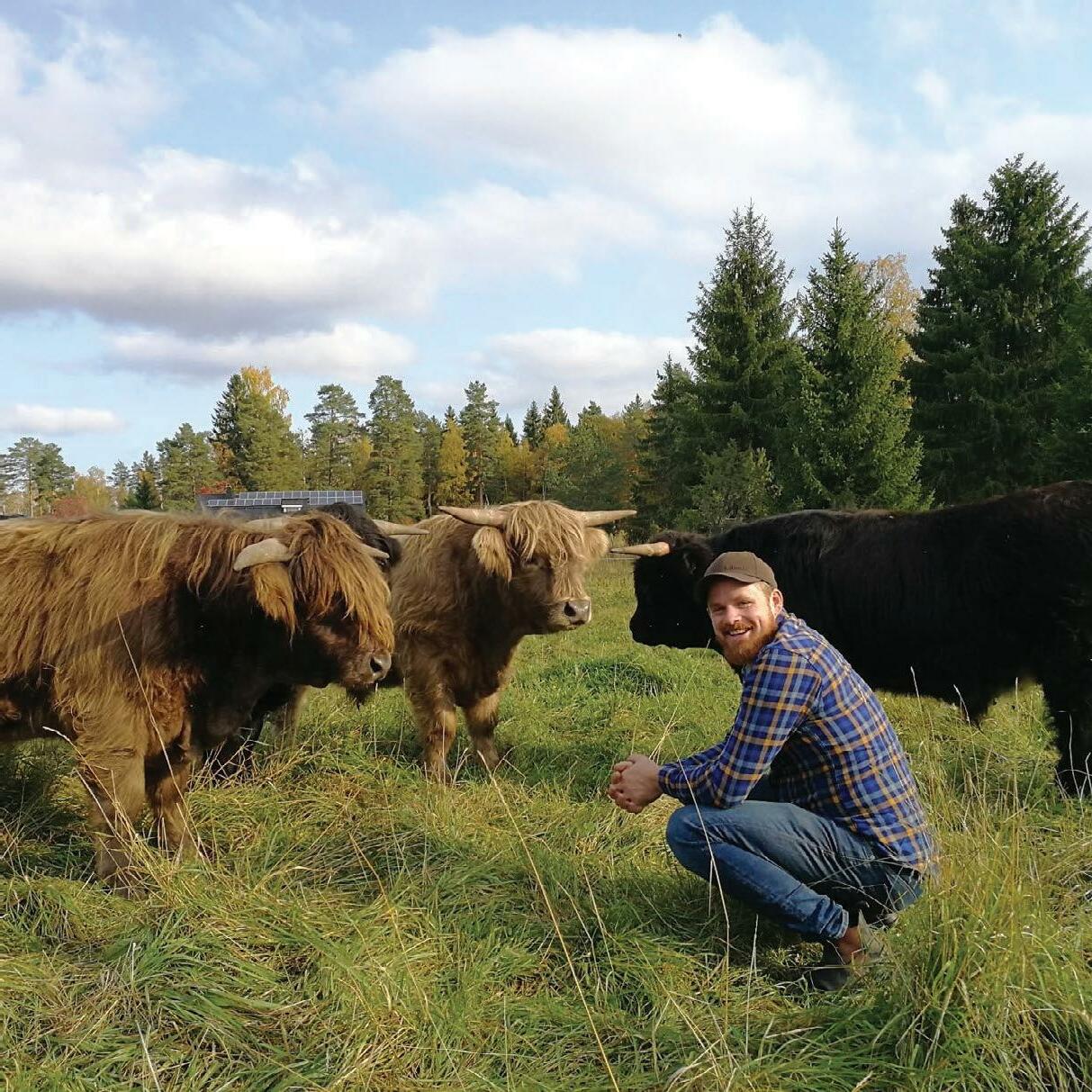
In Memoriam
It is with great sadness that HMI learned about the passing of long-time Holistic Management practitioner and soil health consultant, Betsy Ross of Granger, Texas.
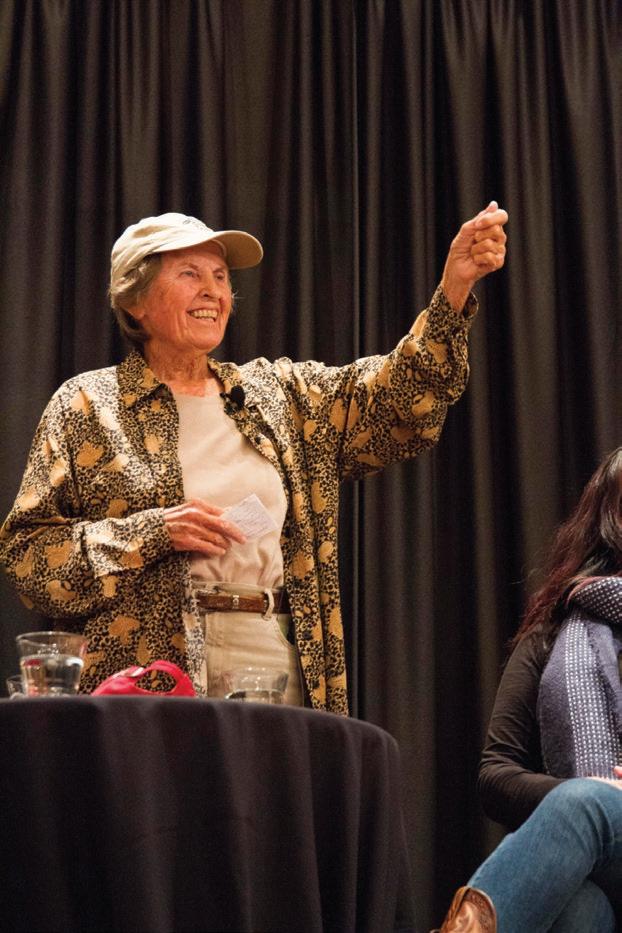
Betsy Ross was dedicated to the principle that healthy soils grow healthy plants and these are necessary for healthy livestock, and ultimately, healthy people. Betsy had been a Certified Soil Foodweb Advisor since 2004. In addition to being a founding partner in Sustainable Growth Texas, she operated, with her family, a 530-acre stock farm in eastern Williamson County along the San Gabriel River farm is used as a ‘lab site’ for Sustainable Growth Texas work. Grass-fed finished beef is marketed as Betsy Ross Grass-fed Beef Pharmacies and Greenling Organic Food Delivery in Austin, TX, as well as through the Internet and farm sales. Tenderness, flavor, and consistency are Ross Farm‘s mark of excellence. No corn, hormones, antibiotics,
Are We Growing in Our Understanding?
CONTINUED FROM PAGE 2
everyone? What about those who have contracted the virus and developed a natural immunity? Dr Robert Malone, the developer of the vaccine, has urged the Biden Administration not to mandate the vaccine for everyone because he is concerned about how nature will respond. Should we be concerned?
• Are we even placing our priorities (financial, medical, social and political) in the right place? If, as Dr Rodney Dietert writes in his book, Human Superorganism, noncommunicable diseases (NCDs), such as allergies, cancer, heart disease, obesity, autism, and Alzheimer’s
synthetic fertilizers, herbicides, or insecticides are used in the grass-based production system.
Betsy was a wonderful resource to HMI and the Holistic Management community in Texas, never turning down a request for sharing her knowledge. She served as a mentor and instructor in HMI’s Beginning Farmer and Rancher program in Texas and took extra time to train a number of the participants in soil health, compost teas, and biological preparations so they too could be a resource to their communities.
HMI was also saddened to learn of the passing of long-time Holistic Management practitioner, ranching consultant, and writer, Walt Davis of Calera, Oklahoma. Walt spent over fifty years ranching in west Texas and in southeast Oklahoma and was a fifthgeneration rancher. He attended Texas A&M College where he completed a BS degree in animal husbandry.
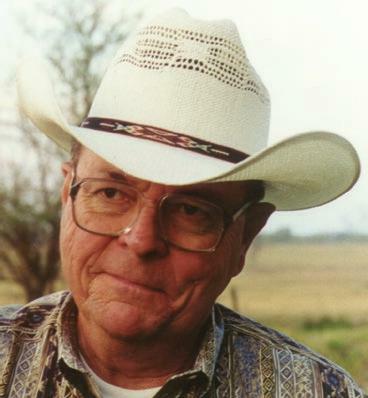
After almost going broke following the advice of high tech agriculture experts, he learned about Holistic Management, which he implemented successfully on the Walt Davis Ranch with amazing results. With planned grazing, biodiversity exploded with an increase of dung beetles and earthworms and a decrease of pest organisms. The ranch became consistently profitable as expenses dropped and production increased.
Walt generously shared his knowledge and experience as speaker and educator at many Holistic Management and regenerative agriculture events around the country. He also worked as a management consultant and provided leadership for numerous organizations including Holistic Management of Texas, HRM Oklahoma, and the Oklahoma Land Stewardship Alliance. He also served on the Board of Directors for the Dixon Water Foundation.
Walt also loved to write and was the author of numerous articles Farm Progress family of magazines and in The Stockman He also published five books, Cerebral Ranching, Do Your Strawberries Taste Red, How to Not go Broke Ranching, A Gathering at The Green Revolution Delusion.
Betsy and Walt will be missed by all of us at HMI and within the Holistic Management community! HMI offers our condolences to Betsy and Walt’s family and friends.
kill almost 3 times as many people (68% of deaths) as infectious diseases (23%), why are we not focusing on these “root causes”? These and many other questions can and should be wrestled with. None of us knows everything there is to know about COVID, so let’s not act like we do. When given the opportunity to engage in discussion and investigation, do we immediately become Preachers, Prosecutors or Politicians to defend or attack? Or do we become Scientists and ask and seek and learn? We can make significant contributions to this important national conversation.
Ralph Tate is a Holistic Management Certified Educator and resides near Papillion, Nebraska. He can be reached at: tateralph74@gmail.com
20 IN PRACTICE h March / April 2022
Betsy Ross.
Philipp Mayer.
Walt Davis
Certified Educators
The following Certified Educators listed have been trained to teach and coach individuals in Holistic Management. On a yearly basis, Certified Educators renew their agreement to be affiliated with HMI. This agreement requires their commitment to practice Holistic Management in their own lives and to seek out opportunities for staying current with the latest developments in Holistic Management.
UNITED STATES
NEW HAMPSHIRE
Seth Wilner
Newport 603/863-9200 (w) • seth.wilner@unh.edu
NEW MEXICO
Ann Adams
Holistic Management International
Albuquerque 505/842-5252 ext 5 anna@holisticmanagement.org
Kirk Gadzia
Bernalillo
505/263-8677 (c) • kirk@rmsgadzia.com
Jeff Goebel
Belen
CALIFORNIA
* Lee Altier College of Agriculture, CSU
Chico
530/636-2525 • laltier@csuchico.edu
Owen Hablutzel Los Angeles
310/567-6862 • go2owen@gmail.com
Richard King Petaluma 707/217-2308 (c) rking1675@gmail.com
Doniga Markegard Half Moon Bay 650/670-7984 Doniga@markegardfamily.com
* Kelly Mulville Paicines 707/431-8060 • kmulville@gmail.com
Don Nelson Red Bluff 208/301-5066 nelson-don1@hotmail.com
Rob Rutherford San Luis Obispo 805/550-4858 (c) robtrutherford@gmail.com
COLORADO
* Joel Benson Buena Vista 719/221-1547 joel@paratuinstitute.com
Cindy Dvergsten Dolores 970/739-2445 info@wholenewconcepts.com
Tim McGaffic Dolores 808/936-5749 tim@timmcgaffic.com
* Katie Belle Miller Calhan 970/310-0852 heritagebellefarms@gmail.com
IDAHO
Angela Boudro Moyie Springs 541/ 890-4014 angelaboudro@gmail.com
KANSAS
William Casey Erie 620/423-2842 bill.caseyag@gmail.com
MARYLAND
Christine C. Jost
Silver Springs 773/706-2705 • christinejost42@gmail.com
MICHIGAN
Larry Dyer Petoskey 231/881-2784 (c) ldyer3913@gmail.com
MISSISSIPPI
* Preston Sullivan Meadville 601/384-5310 (h) preston.sullivan@hughes.net
MONTANA
Roland Kroos Bozeman 406/581-3038 (c) • kroosing@msn.com
* Cliff Montagne Montana State University Bozeman 406/599-7755 (c) montagne@montana.edu
NEBRASKA
* Paul Swanson Hastings 402/463-8507 • 402/705-1241 (c) pswanson3@unl.edu
Ralph Tate Papillion 402/250-8981 (c) • tateralph74@gmail.com
AUSTRALIA
Judi Earl Coolatai, NSW 61-409-151-969 judi_earl@bigpond.com
Graeme Hand Mount Coolum, QLD 61-4-1853-2130 graemehand9@gmail.com
Helen Lewis
Warwick, QLD 61-4-1878-5285 hello@decisiondesignhub.com.au
Dick Richardson Mt. Pleasant, SA 61-4-2906-9001 dick@dickrichardson.com.au
* Jason Virtue Cooran QLD 61-4-27 199 766 jason@spiderweb.com.au
Brian Wehlburg Port Macquarie NSW 61-0408-704-431
brian@insideoutsidemgt.com.au
CANADA
Don Campbell Meadow Lake, SK 306/236-6088 • doncampbell@sasktel.net
541/610-7084 • goebel@aboutlistening.com
NEW YORK
* Erica Frenay
Brooktondale
607/342-3771 (c) • info@shelterbeltfarm.com
* Craig Leggett
Chestertown 518/491-1979 • craigrleggett@gmail.com
Elizabeth Marks
Chatham
518/567-9476 (c) • elizabeth_marks@hotmail.com
Phillip Metzger
Norwich 607/316-4182 • pmetzger17@gmail.com
NORTH CAROLINA
Christina Allday-Bondy
Hendersonville
512/658-2051 • christina.alldaybondy@gmail.com
NORTH DAKOTA
* Joshua Dukart
Hazen
701/870-1184 • joshua_dukart@yahoo.com
SOUTH DAKOTA
* Randal Holmquist
Mitchell 605/730-0550 • randy@heartlandtanks.com
Ralph Corcoran Langbank, SK 306/434-9772 • rlcorcoran@sasktel.net
Blain Hjertaas Redvers, SK 306/452-7723 • bhjer@sasktel.net
Brian Luce Ponoka, AB 403/783-6518 • lucends@cciwireless.ca
Noel McNaughton Edmonton, AB 780/432-5492 • noel@mcnaughton.ca
Tony McQuail Lucknow, ON 519/440-2511 • tonymcquail@gmail.com
Kelly Sidoryk Blackroot, AB 780/872-2585 (c) kelly.sidoryk@gmail.com
FINLAND
Tuomas Mattila Pusula 358-407432412 tuomas.j.mattila@gmail.com
Philipp Mayer
Pirkanmaa 358-409306406 mayer_philipp@gmx.at
Deborah Clark
Henrietta 940/328-5542
TEXAS
deborah@birdwellandclarkranch.com
Wayne Knight
Holistic Management International Van Alstyne 940/626-9820
waynek@holisticmanagement.org
Tracy Litle
Orange Grove 361/537-3417 (c) • tjlitle@hotmail.com
Peggy Maddox
Hermleigh 325/226-3042 (c) • peggy@kidsontheland.org
VERMONT
John Thurgood
Stowe (1/2 year in Oneonta NY) 802/760-7799 • thurgood246@gmail.com
WISCONSIN
* Larry Johnson Madison 608/665-3835 • larrystillpointfarm@gmail.com
* Laura Paine
Columbus 608/338-9039 (c) • lkpaine@gmail.com
For more information about or application forms for the HMI’s Certified Educator Training Programs, contact Ann Adams or visit our website: www.holisticmanagement.org.
These associate educators provide educational services to their communities and peer groups.
NAMIBIA
Usiel Seuakouje Kandjii
Windhoek
264-812840426
kandjiiu@gmail.com
* Colin Nott
Windhoek
264-81-2418778 (c) canott@iafrica.com.na
Wiebke Volkmann
Windhoek 264-81-127-0081 wiebke@afol.com.na
NEW ZEALAND
* John King Christchurch 64-276-737-885
john@succession.co.nz
SOUTH AFRICA
Jozua Lambrechts
Somerset West, Western Cape +27-83-310-1940
jozua@websurf.co.za
* Ian Mitchell-Innes
Ladysmith, Kwa-Zulu Natal +27-83-262-9030
ian@mitchell-innes.co.za
Number 202 h IN PRACTICE 21
*
INTERNATIONAL
Twin Mountain Fence Dual Powered Energizer (B1500D)

Power On Demand, However You Need It!
Resource Management Services, LLC



kirk@rmsgadzia.com www.rmsgadzia.com
How can Kirk help you?
On-Site Consulting:

All aspects of holistic management, including financial, ecological and human resources.
Ongoing Support:
Follow-up training sessions and access to continued learning opportunities and developments.
Property Assessment:
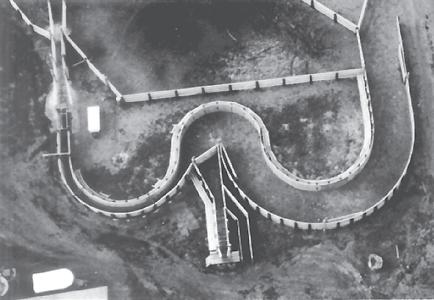
Land health and productivity assessment with recommended solutions.



Next Step
Holistic Management®
Comprehensive Training
One-on-one learning all at a fraction of the cost of a consultant!
Introduction to Holistic Management®
Financial Planning
Grazing Planning
Cropping Planning
Marketing/Business Planning
Biological Monitoring Land Planning
$700 per module or 5 for $3150 scholarships available bonus materials
www.holisticmanagement.org/ next-step/
22 IN PRACTICE h March / April 2022 THE MARKETPLACE
Originator of Curved Ranch Corrals The wide curved Lane makes lling the crowding tub easy Low Stress Cattle Handling Video $59. Send checks/money order to: CORRAL
GRANDIN LIVESTOCK SYSTEMS 2918 Silver Plume Dr., Unit C-3 Fort Collins, CO 80526 970/229-0703 • www.grandin.com Includes detailed drawings for loading ramp, V chute, round crowd pen, dip vat, gates and hinges. Plus cell center layouts and layouts compatible with electronic sorting systems. Articles on cattle behavior. 27 corral layouts. $55. Featuring the Twin Mountain Fence 3-Year Warranty, Including Lightning! www.twinmountainfence.com sales@twinmountainfence.com
By World Famous Dr. Grandin
DESIGNS
Introducing our most powerful dual powered energizer, the B1500D. The B1500D is a 150-mile, 15 joule, dual powered energizer with TWO digital displays. It can be used as AC (120V), DC (12V), or solar powered options. *Available in 15, 50, & 80 mile options as well
L. Gadzia, Certified Educator
Box 1100
NM
Kirk
PO
Bernalillo,
87004 505-263-8677
Pasture Scene Investigation
CORRAL DESIGNS
HMI Grazing Planning Software
• User-friendly excel-based interface
• Let the computer do the math while you plan
• Easy SAU and ADA calculations
• Account for multiple herds
Brian Wehlburg
Holistic Management Training
• Decision Making
NM Ranch for Sale
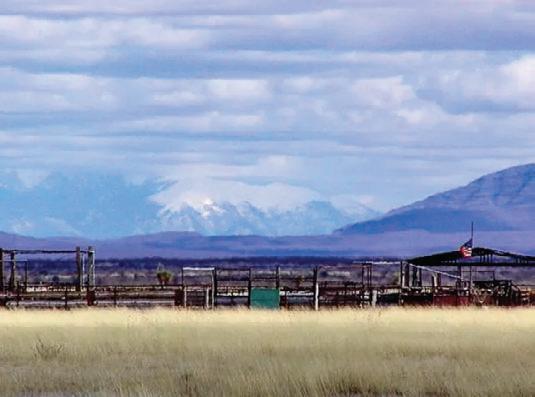 By World Famous Dr Grandin
• Grazing Manual hyperlinks
Originator of Cur ved Ranch Corrals
• Livestock and Land Performance Worksheet
• And many more features
The wide cur ved Lane makes filling the crowding tub easy
•
•
•
$150$40 TO UPGRADE
Includes detailed drawings for loading ramp, V chute, round crowd pen, dip vat, gates
•
— Arnold Mattson, Agri-Environment Services Branch, Agriculture and Agri-Food Canada
GRANDIN LIVESTOC K SYSTEMS
2918 Silver Plume Dr., Unit C-3
TO LEARN MORE or TO ORDER:
For t Collins, CO 80526 970/229-0703
Call 505/842-5252 or visit us at www.holisticmanagement.org/store/
www.g randin.com
• Goal Setting
• Goal Setting
• Land Planning
• Land Planning
• Environmental Monitoring
• Environmental Monitoring
• Grazing Planning
• Grazing Planning
Training Individuals and groups (Landcare, TAFE, CMA, etc )

Training Individuals and groups (Landcare, TAFE, CMA, etc.)
The Buckhorn Ranch, located 40 miles east of Truth or Consequences, New Mexico, has been in the same family since 1929. This award winning 42,000+/- acre ranch consists of 45 paddocks and is intensively managed under the concept of Holistic Management/regenerative grazing since 1990 and is rated at 504 cattle year round. Priced at $3,500,000 View detailed write-up and photos at https://www.sidwellfarmandranch. com/buckhorn-ranch
Contact: +61 4 0870 4431
Contact: 61-2-6587-4353, 61- 04-087-4431 or 61-04087-404-431 (cell)
Contact: 61-2-6587-4353 or 61- 04-087-4431
Email tom@sidwellfarmandranch.com or call Tom Sidwell, 575-403-6903
Mid-North Coast NSW, Australia
Mid-North Coast NSW, Australia
Brian@insideoutsidemgt.com.au www.insideoutsidemgt.com.au
Brian@insideoutsidemgt.com.au www.insideoutsidemgt.com.au
SIDWELL FARM AND RANCH REALTY, LLC

Tom Sidwell, Broker 6237 Hwy 209 Tucumcari, NM 88401
“I did this course with Brian and can thoroughly recommend it. It takes land management to a whole new level. He brings a wealth of experience to the table.” Martin Bartlett, Sydney

Rangeland can provide an abundance of plant varieties for livestock nutrition. But what about the more “developed” pastures and hay meadows? Soil tests from all types of livestock producers show 95+% of all such soils do not have the correct nutrient levels to provide the best nutrition for livestock.
You can change that! Choose an area, split it and soil test both sides separately. Test your hay or forage from both sides too. Treat one side as normal. On the other side, correct the fertility based on soil tests using the Kinsey/Albrecht fertility program.
Test feed quality from both sides again next year. Take soil tests again and treat accordingly. Depending on nutrients requirements it may take two or three years to achieve the top potential. Test each year and, as fertility needs are met, feed value and yield tend to increase for all three years.
Increased yields will more than pay for the investment with increased feed quality as a bonus. Prove it for yourself!
Number 202 h IN PRACTICE 23 THE MARKETPLACE KINSEY Agricultural Services, Inc. INCREASE FEED QUALITY For consulting or educational services contact: Kinsey Agricultural Services, Inc. Ph: 573/683-3880, Fax: 573/683-6227 Charleston, Missouri 63834 www.kinseyag.com • info@kinseyag.com
“This tool has already given us a many fold return beyond our initial investment and we have just begun to use it.”
2014
and hinges Plus cell center layouts and layouts compatible with electronic sor ting systems Ar ticles on cattle behavior 27 corral layouts $55 Low Stress Cattle Handling Video $59 Send checks/money order to: J T
performance of conventional a Improving soil health
Comparing
Effective biological monitoring
Forage assessment techniques
•
Multi-species grazing systems
The
of dung beetles
role
Brush control using animal impact
The connection between soil & human health L K
•
please send address corrections before moving so that we do not incur unnecessary postal fees
DEVELOPMENT CORNER
Vision Leads to Successful Practice
Phil Metzger has had a long history as a natural resources development professional and consultant who retired from a 31-year career as a resource conservationist for the USDA – Natural Resources Conservation Service (NRCS) in 2012. He lives in Norwich, New York with his wife, Tami. When he’s not busy being a Holistic Management® Certified Educator, he’s taking care of his grandchildren or participating in the Senior Olympics.
Phil was introduced to Holistic Management when his office hosted a farm diversity conference in New York in 2000 and he heard Allan Savory speak. “I remember I was on the edge of my seat as I listened to him,” said Phil. As an NRCS conservationist he was aware that the NRCS/USDA had begun to look at farmer goals for conservation as a motivator and here was Allan talking about goals. “We were starting to look at how finances were important in terms of people making decisions about conservation,” says Phil. “When Allan came to talk, he connected the three legs of the stool—social, economic, and environmental. I thought that this approach was something that would work. It was a different way to talk to farmers. I always considered myself a good communicator, but it was always hard to get people to bite, to make changes in their cultural practices. And our conservation application rate was lower than we wanted. When Allan connected those three elements and how important it was to have a goal to make
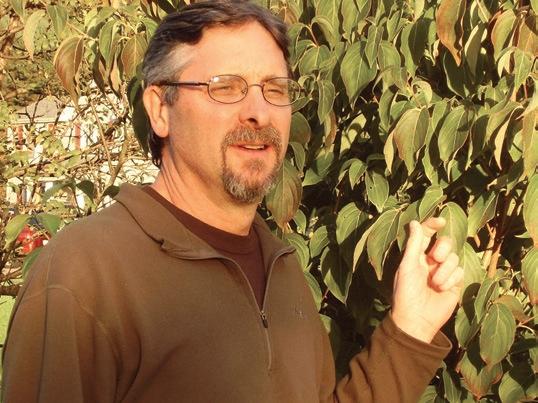
decisions toward, it clarified everything for me and I could see this would be a good tool to help farmers make decisions about exploring new conservation practices.”

In 2001, Phil was providing federal assistance to the Central New York RC&D (Resource Conservation and Development), Inc. He was approached by HMI to see if he would be willing to collaborate on a Northeast Sustainable Agriculture, Research, and Education (NE SARE) Professional Development Grant. Phil thought this training would fit the programs they offered and RC&D was behind it. “I wasn’t going to take the training, because I thought this training was really for others,” says Phil. But Kelly White, HMI’s Education Director at the time, told Phil he needed to take the course and he wouldn’t regret it. “So, I got permission to take the training. Once it started I saw that this was going to change everything,” says Phil.
“The NESARE Professional Development grant allowed us to create a program for service providers. That training ended up having a profound effect on my job and how I approached it. I better understood what motivates people to do conservation. Since then I’ve always tried to be a service provider leading with Holistic Management.
“Before the training I didn’t understand the social piece and didn’t give it equal power to the financial and ecological analysis I could offer. I was mistaken to think that financial benefit was the main motivator for producers. It was really the lifestyle and job they wanted and the environment they wanted to create for their families. Those motivations went beyond finances to the social piece. And land health, once they understood how that influenced increased production and profitability, was another selling point. But, the main focus was about helping them create the life they wanted. People could recognize and see the importance of managing toward their values, and now they had a system and framework to move toward the life they had described.
“When I first started practicing Holistic Management at home as part of the training program, I was trying to explain Holistic Management to my family, particularly the holistic goal. Everyone was confused. Then my older son asked, ‘So, you describe what you want in your life and make decisions toward that?’ That was exactly what I had been trying to say and we were able to do that going forward as a family.
Nonprofit U.S POSTAGE PAID Jefferson City, MO PERMIT 210 a publication of Holistic Management International 2425 San Pedro Dr. NE, Ste A Albuquerque, NM 87110 USA RETURN SERVICE REQUESTED Printed On Recycled Paper Healthy Land. Healthy Food. Healthy Lives.
ON PAGE 17
CONTINUED
Phil Metzger
