Do You Suffer from Investment-Deficit Disorder?
BY ANN ADAMS
In a recent New York Times web article, author David Leonhardt discussed the importance of the $1 T bi-partisan infrastructure bill. In the article, Mr. Leonhardt used the term “investment-deficit disorder” to describe what he perceived as a problematic lack by the recent (last 35 years) American government to invest in key infrastructure for America. Mr. Leonhardt has been banging this drum for the last decade and is excited about the potential improvements such investment could create in the economy and for the quality of life for Americans.
The phrase “Investment-Deficit Disorder” made me think about the financial challenges that farmers and ranchers face on their farms. When I have taught classes through the Farm Service Agency’s (FSA) Borrower Financial Training Program, I’ve seen a lot of people struggling both to pay themselves a living
In Practice
wage and having a clear process to help them determine what is the best way to invest in their businesses.
Leonhardt notes in his article that “The relatively decrepit state of American infrastructure acts like a tax on our economy and a drag on our well-being. It slows the movement of people and goods and reduces the quality of everyday life.” Does this sound like your farm or ranch? It sure sounds like a description of why it’s important to use the financial weak link test as well as explore if you have a logjam and any adverse factors.
What I love about Holistic Financial Planning is how it helps you look at all aspects of your life when you are developing your financial plan for the year. When you look at the logjam you can consider all aspects of your holistic goal: social, environmental, and economic. Is there a blockage that is keeping you from making significant progress toward your holistic goal? If so, what resources—time and money—do you need to devote to removing that blockage? This is the most critical investment.
I also really appreciate the way the financial weak link test helps you hone in on each enterprise and determine the weakest link in
2021 Program Review
INSIDE THIS ISSUE
the value chain so you can more effectively invest in the weakest link and not just the part of the business that attracts your attention. I’ve seen producers really learn to shift their focus and make an investment in a critical area of enterprise improvement that takes their enterprise and their profit from it to the next level.
Of course, the Gross Profit Analysis helps many producers figure out what their cost of production is and where there are opportunities for improving profit margins to help contribute to the overheads of the operation. I’ve seen many producers explore multiple gross profits and realize that an investment in a particular enterprise can make an enterprise more profitable even including the additional cost of the annual amortization of that investment over the lifetime of the asset.
The Campbell family of the B-C Ranch in Saskatchewan, Canada have also used the Comparing Options test to consider the effect of various new production/marketing decisions on the overall financial plan. They have been able to see that just increasing the price/pound of their yearlings by even a penny would make a huge difference in their profit margin as well as being able to purchase their hay for $5/ton less given the amount of hay they purchase. In clarifying the value of these changes they can then prioritize their time invested in making those changes rather than being distracted by smaller changes that will not provide the same return on investment.
I think the key reason that many farmers and ranchers may not be making effective investments is because they don’t have a holistic goal that provides their operations the “decision compass” necessary to make effective decisions. Many of them also don’t know their numbers at a sufficient level that would enable them to know where they are losing money and where there is opportunity to increase profit. Certainly having that kind of information and direction will help toward moving the average farm net to actual profit instead of loss and will go a long way toward attracting the next generation to agriculture.
Healthy Land. Healthy Food. Healthy Lives.® a publication of Holistic Management International JANUARY / FEBRUARY 2022 NUMBER 201 WWW.HOLISTICMANAGEMENT.ORG
HMI’s 2021 program offerings ended with a flurry in the fall of 2021. Go to page 13 to learn what people are getting from HMI’s training and all the work we have done with our incredible practitioners, Certified Educators, and collaborators—including the 2021 REGENERATE conference, workshops, and field days attended by 605 people.
HMI’s mission is to envision and realize healthy, resilient lands and thriving communities by serving people in the practice of Holistic Decision Making & Management.
STAFF
Wayne Knight Interim Executive Director
Ann Adams Education Director
Carrie Stearns Director of Communications & Outreach
Stephanie Von Ancken Program Manager
Dana Bonham Program & Grants Manager
Oris Salazar Program Assistant
BOARD OF DIRECTORS
Walter Lynn, Chair
Breanna Owens, Vice-Chair
Jim Shelton, Secretary
Delane Atcitty
Jonathan Cobb
Ariel Greenwood
Daniel Nuckols
Kelly Sidoryk
Casey Wade
Brian Wehlburg
HOLISTIC MANAGEMENT® IN PRACTICE
(ISSN: 1098-8157) is published six times a year by: Holistic Management International 2425 San Pedro Dr. NE, Ste A Albuquerque, NM 87110
505/842-5252, fax: 505/843-7900; email: hmi@holisticmanagement.org.; website: www.holisticmanagement.org
Copyright © 2022
Holistic Management® is a registered trademark of Holistic Management International
Ranch Roads Should Be a Necessity not a Blessing
BY JACK VARIAN
My wife Zee and I closed escrow on an 8,000-acre mountainous ranch, between 1,500 to 4,000 feet elevation, in November of 1961 in Central California that today we call the V6 Ranch. It now encompasses 20,000 wild and diverse acres. So it’s grown in size a fair amount these past 60 years while I spent a lot of those years taking this very special place for granted. Assuming that it would always rain, the grass would always grow come springtime, and what my neighbors were doing was comforting to see that we were all caring for our ranches about the same, so we all must be on the right track. Well that assumption took me 30 years to question its validity. I had to nearly go broke before a friend of mine invited me to a Holistic Resource Management seminar that after three days of “this makes so much sense” I felt almost giddy when the last day of class came to a close and I could see clearly now that I had a new path to follow that had nothing to do with the past or what my neighbors were doing. With my mind almost on overload with new ways to solve old problems. I was now equipped with ways to test if the grass was growing like it once did and if it was not. Was my banker glad to see me? I’m sure not. So I started to read a paper called The Stockman Grass Farmer and then ACRES magazine. With this sizable pile of new information at my disposal I was ready to put these new thoughts into action. One of the first practices that didn’t pass the holistic test was “Dry Farming,” a very destructive way to erode my best land to grow barley hay to feed my saddle horses and my stocker cattle waiting to be branded and then I would sell what was left over. Well it failed on every count. I’ve never really had that burning
desire coursing through my veins to climb on a tractor and go round and round all day tilling the soil. So it was an easy choice to see two balers, a swather, and the harrow bed that picked up those thousands of three wire bales and all the rest of the paraphernalia necessary to grow a crop go up for sale. I watched with no regrets, only relief as that pile of iron went out my gate and down the road to a new home. I was now able to return 1,000 acres of my best ground to grass. But I still had one piece of equipment left, that I knew was causing a lot of destruction to my roads and hillsides in the form of rills and gullies that took place when rain water stayed too long on one of my mountainous roads, so when it exited and started its erosive downhill journey it was enough for me to never be tempted again to use this six wheeled monster called a road grader. So, I permanently removed temptation by lighting my cutting torch and with a gleeful look I proceeded to cut it up into little pieces and I sold it all for scrap.
Now I had a chance to maintain my ranch roads that are very necessary in a way that their footprint would be as modest as possible.
I think bare ground is first and ranch roads are second in line for their ability to change the face of a ranch from beautiful to ugly. I believe that if a steward of the land treats his or her roads as “what a nice blessing to have, I can drive over every square inch of my land,” you are no longer a steward but a lazy oof. You are not interested enough to get out of your “go anywhere vehicle” and see what’s really happening beneath your feet, or gaze at the unsullied beauty of a mountain covered in grass, and realize that good things are happening.
I think we can all agree that a road system on a working ranch or farm is a necessity. If this is so then they need to be placed only where necessary and then maintained so they cause as little erosion as possible and washboards are kept to a size that won’t knock the doors off their hinges and beat the undercarriages to death on your truck or tractor.
2 IN PRACTICE h January / February 2022 In Practice Healthy Land. Healthy Food. Healthy Lives. a publication of Hollistic Management International FEATURE STORIES Ranch Roads Should Be a Necessity not a Blessing JACK VARIAN 2 Learning to See RICHARD KING 4 LAND & LIVESTOCK Bale Grazing— Stewardship During Drought to Grow Soil Health MARK BIAGGI AND CELIA HOFFMAN 6 Next Level Grazing— Helping to Improve New Zealand Grazing ANN ADAMS 9 NEWS & NETWORK Program Round Up 13 Board Chair 19 Grapevine 20 Certified Educators 21 Market Place 22 Development Corner 24
You already know of my dislike for road graders to maintain roads. Because they are limited to making roads that are really too smooth. So here’s your dilemma: you’ve got too much water and you’re on your ATV, both moving too fast, giving a person only a quick windshield look at how that fast moving water put a big gullie in your road. Now what are you going to do about it? A bulldozer will grade your roads depending on how good your operator is and then it will also build nice big long lasting water bars and turn outs that can divert the biggest of storms and if you have enough of them you will have divided up the waters destructive energy so when it leaves a
the ranch that was poorly served. To choose where this pipeline would go. I got out my much used U.S. Geological Survey map that covers the part of the ranch that my waterline would traverse. This “tell all” map told me distance, it told me the elevation at the water well, and the elevation at the end of the pipeline to be. By multiplying .43 times the feet of elevation I will know the water pressure I will be dealing with and it tells me, by looking at how close or how far apart the contour lines are, how steep the ground I am going to crossover is. Next my map shows me a ridge I can follow almost the whole distance where Greg will then rip the Poly Pipe into the ground 18″ deep followed by a heavy
where Greg had to make a passable cut to make room for the tractor and ripper to pass. This wheel track has evolved into my kind of road that makes as small a footprint as possible while allowing me a way to make sure all the troughs and float valves are working for cattle and wildlife. The ranch roads that have been in place for many years, wherever possible, I want a 1% side slope so winter rains will sheet off. This design says to me and to others, don’t drive on this road when it’s muddy for you may find yourself stuck with a long walk home.
As for the gullies that can happen in a wet year after a big winter storm, come spring I don’t just fill them in with dirt and expect a
road it can be absorbed harmlessly into your soil sponge. Now if you still have gullies down your roads and down a hillside, you don’t have enough water bars. Go back and build some more. My Cat D6 C has many more uses like building water retention basins, clearing brush to make a firebreak thus creating a place to help Cal Fire put out a wildfire.
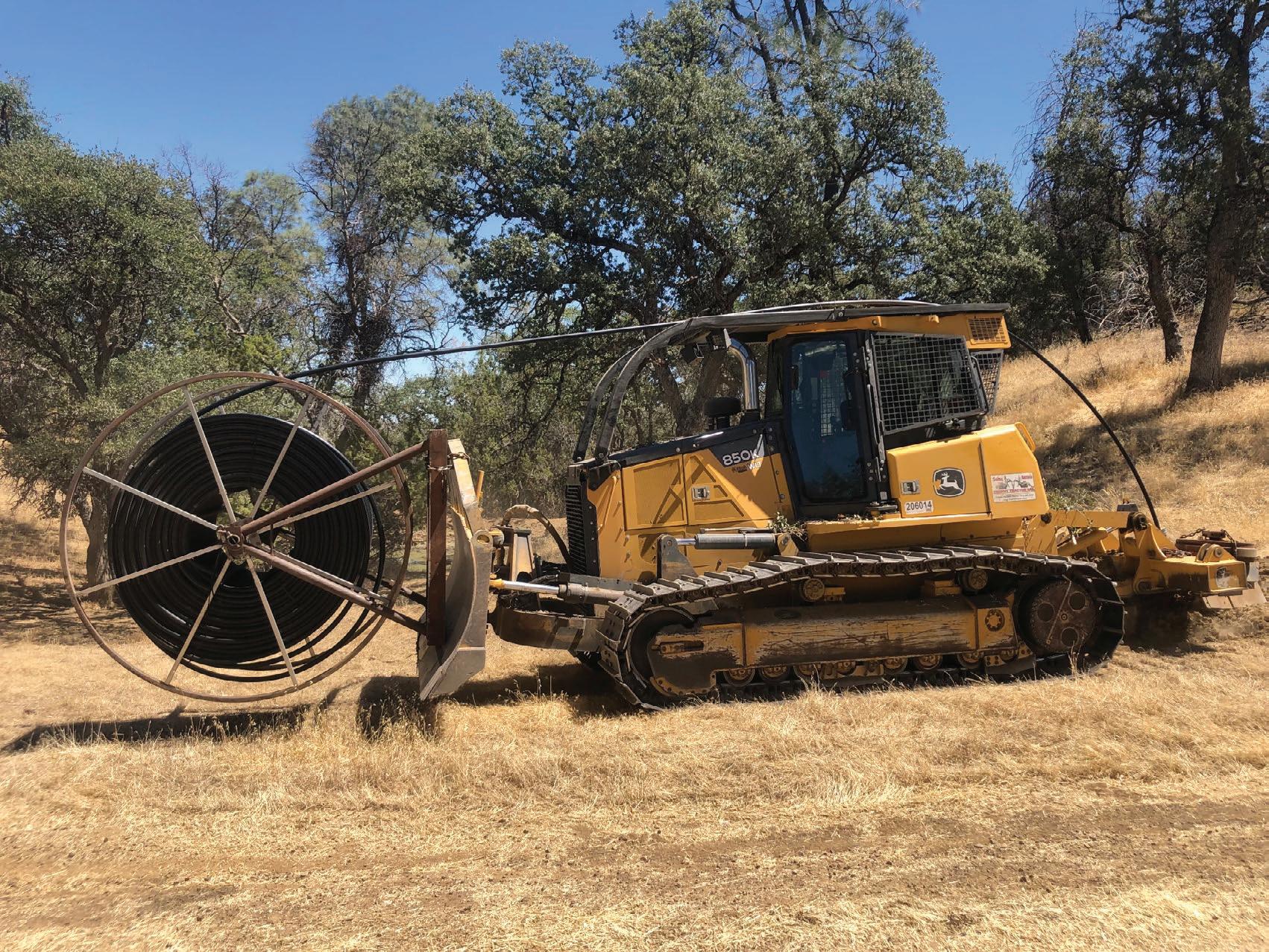
About a year ago my son, Greg, with his 850 John Deere tracklayer installed a couple of miles of “Poly Pipe” so I could install eight watering troughs to take water to a part of
piece of V shaped Iron to cover the rip mark. I next installed 8 watering troughs with a big rock inside the troughs and one outside so any and all critters can get a drink. Hooray, I have a new underutilized part of the ranch that I can manage more efficiently and it’s a lot cheaper than buying more land.
By making a wheel track in the grass that Greg could follow and trying to hold a 1% side slope to my track and using natural undulations I was able to make natural water bars and with but one 100-yard span around a side hill
different outcome the following year. Instead I like to use juniper branches that will last many many years to fill these gullies as they will catch all the soil and debris. When a storm arrives, it’s destructive force will be neutralized by the juniper branches.
I close by saying I encourage grass to grow on my roads and it comes down to this: If whatever I’m doing on the ranch speeds water up, I have probably made a bad decision. If what I’m doing slows water down, Mother Nature gives me an “atta boy.”
Number 201 h IN PRACTICE 3
The Varian’s rig for laying pipe.
Learning to See
BY RICHARD KING
In the late 1970s, the Spurlock Ranch near Holbrook, Arizona started working with range consultants Allan Savory and Stan Parsons to help the ranch survive and even thrive. At that time, I was still getting my bearings as a new employee of the USDA Soil Conservation Service (SCS) in Flagstaff and learning how to more effectively help landowners improve the health of their ranch operations.
I was anxious to learn more about what was going on at the Spurlock Ranch. My technical supervisor, Barry Wallace, worked in an office next door to mine, and I learned what he was seeing and learning about this new approach to ranch management.
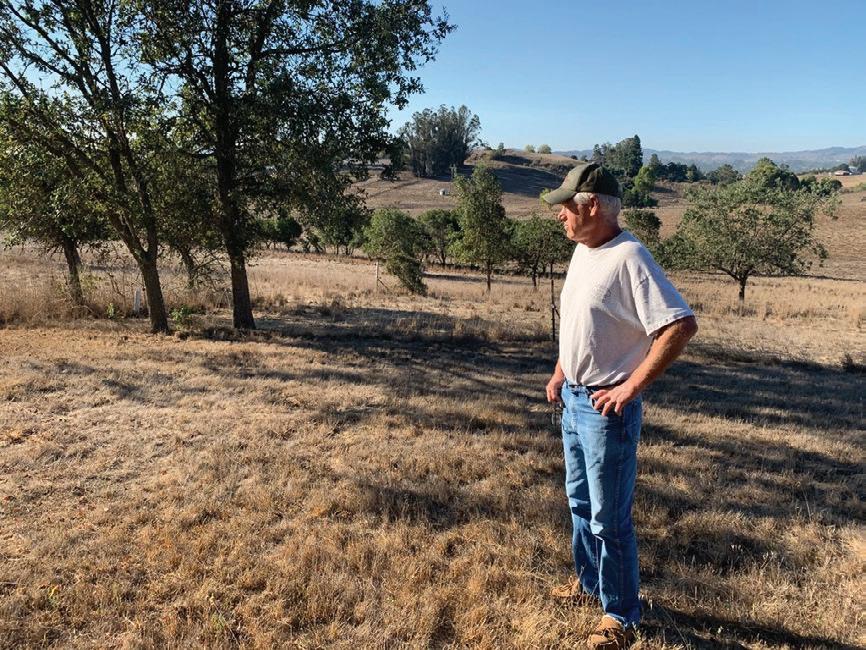
I remember a field trip to the Spurlock Ranch where I saw these crazy looking two- or three-wire electric fences heading out across the landscape. I couldn’t help but wonder if they could actually control range cattle on such expansive ranches that were typically over 20,000 acres. The presentation provided by Savory and Parsons late in the day was fascinating. What I was hearing was making sense to me but also raised many questions.
I also recall the intense conflict between what Savory and Parsons were advising and the range management profession in the USA, particularly academia. Most ranches were under-stocked and overgrazed? Create more pastures with minimal electric fencing instead of a good physical barrier? Focus on production per acre instead of production per animal? Minimize overgrazing from the individual plant’s point of view to immediately improve forage production? These were just a few of the new viewpoints that ranchers, agencies, academia, and I struggled with when hearing about this new and different Savory Grazing Method.
Changes and Adaptations
Many ranches I visited were struggling to survive as a business and a way of life. It made sense to me that managing the complexity of any whole under management is not easy given that few if any people have learned to manage their land, people, and money resources simultaneously and effectively. It can take desperation and the survival instinct to kick-in before many of us will listen more closely or risk trying a very new and different idea or direction.
To manage my resources holistically, I’ve learned to look for and question my own beliefs and become more open to new points
of view that don’t initially make sense to me. The ‘assume wrong’ part of the Holistic Management® Framework helps me remember to examine my own beliefs and look for blind spots. By definition, it is very difficult to see my personal blind spots that help drive my behaviors. But once identified, making progress toward the life I want to live becomes easier.
In the late 1970s Don Sylvester, a former SCS State Range Conservationist in New Mexico, convinced Savory that these new ideas and planning processes had to be more effectively shared to be successfully implemented. Many people were misunderstanding this new decision-making and planning framework, and there were many ‘wrecks’ when ranches picked up only part of the ideas but didn’t understand how to make them work effectively. Those wrecks became ammo for critics of all kinds.
I don’t remember when the first workshops were held by Savory and Parsons, or perhaps the first was only Savory because the two had split up their business. Regardless, my first exposure to what people learned at a workshop was very early in the winter of 1981/82. Barry Wallace attended one of those early workshops and brought back a binder with all the handout materials and notes. He sent that information out to a half dozen SCS Range Conservationists on April 5, 1982, including me. I still have it and remain impressed at the amount of detailed useful guidance it provides.
Over the years Savory has repeated the same basic information regarding Holistic Management® over and over. The holistic goal shifted to being called the ‘holistic context’ to guide all decisions and came in the third edition of his book in 2016. It was an important change to improve understanding. I had a local Extension Service person bring her community college class to visit my property several years ago. One of the questions I remember was “How will you know when you’ve reached your holistic goal?” It was clear that the word ‘goal’ implied it was something to implement and reach. I explained to the class that my wife and I don’t try to reach it; we strive to live by it, and therefore it becomes the guidepost for all our decision-making and planning to live the life we want. That’s the change from holistic goal to holistic context.
After moving from Flagstaff to Red Bluff, California in late 1982, I found that most trusted professional people I encountered were strong critics of Savory and Parsons even though their clients on the north coast were very enthusiastic after practicing this change in management.
Putting It into Practice
In 1983, I attended my first week-long training with Savory in Bend, Oregon. I learned a great deal, and it was a great experience to
learn directly from Savory and the people in his workshop. The class was mostly ranchers and a few agency people.
When I got back to my home in a suburb of Red Bluff, I focused on the resources I could manage. I didn’t have livestock to manage, so my wife Cynthia and I used the financial planning process I’d learned at the workshop. We immediately transformed living paycheck to paycheck to saving $500 per month.
Learning to financially plan for the coming year by envisioning how you want your lives to be was surprisingly effective. We learned that every dollar can begin to help create the life you want to live. It isn’t always easy, but when focused on the desired outcomes outlined in the holistic context, nothing becomes impossible.
Red Bluff’s Tehama County Resource Conservation District became interested in these ideas. In 1985 they brought Savory to town to provide a two-day introduction to Holistic Resource Management in northern California. On the first day the auditorium was packed with ranchers, university people, and agency folks like me. At the end of the first day, I would estimate half the people leaving the room thought his presentation was insulting, and the other half thought it was compelling. Yet they all heard the same presentation. I realized the importance of how the point is being made can
4 IN PRACTICE h January / February 2022
Richard enjoys the oaks and life now thriving on the family’s farm former cropland.
be more important than the actual point.
How family members make a point with each other at home is also important. Was one of my blind spots how I sometimes talked with my wife and kids? My sweetheart and I were looking for skills that would help us create less “downtime” between the two of us and/or others within our family.
Cynthia and I went twice to Don Green’s week-long workshops that had become sponsored and recommended by Savory’s Center for Holistic Resource Management. These workshops addressed personal and managerial values, family dynamics, team development and personal planning. I quickly understood why Savory said he too attended them as a student. His presentation in Red Bluff had created as many new critics as it had interested supporters.
In 1989 while still living in Red Bluff, a job vacancy with SCS occurred in Santa Rosa, California close to the small country town of Penngrove where I’d grown up. Cynthia and I, along with our three boys, found that my parent’s offer of 40 acres that had been my great grand-parents farm was enticing. It would mean moving closer to family and less traveling in my job. I would be able to practice the kind of land management I’d been recommending that other landowners pursue. We figured out how to build our home on this old worn-out cropland that had been used to grow oat hay. It didn’t have a single shrub or tree on it. We moved into it in April 1991 finding ourselves land rich and cash poor.
manage the small cattle herd once it arrived.
Grazing planning began, even though I wasn’t confident about doing planned grazing on the planning chart. The planimeter I used at SCS to measure field acreage of large farm/ ranches using aerial photos didn’t work to measure my very small and very odd shaped paddocks.
However, I knew I could easily minimize overgrazing of plants and keep decent soil cover by recording recovery periods provided for each small paddock. After GPS and computers evolved to quickly and accurately measure the actual size of my paddocks, I became immediately impressed with just how comprehensive the planning chart is for forward grazing planning, actual use, and monitoring. The power of thinking and using animal days per acre became possible.
Paying It Forward
In 1995 the Natural Resource Conservation Service (NRCS and formerly called SCS) closed my office in Santa Rosa by combining it with Petaluma, and I once again focused on assisting all the offices in northern California. It was then that I seriously considered more in-depth training in Holistic Management® to keep me focused on something I got excited about.
and processes, not just go through the training. In 2001 I became a Holistic Management® Certified Educator.
One of the things I learned is that Holistic Management is not about going through the courses. It is about using the framework for
I then invited people interested in Savory’s work to visit my new property and help us brainstorm the land plan and potential income sources from that small ranch. We couldn’t afford to buy any livestock so I rented out the pasture under the agreement that I would
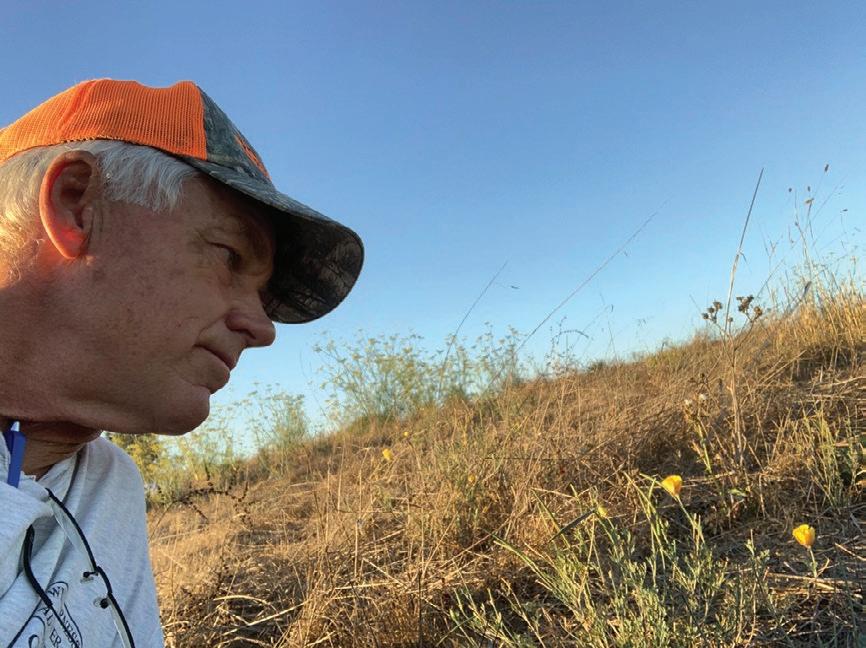
With a $10,000 tuition then (now $4,500), not including travel, that would not be easy for us. Cynthia convinced me to go for it, and I joined the new class of 1997. The week-long trainings occurred over two years and was quite amazing not only because of the experienced trainers but also because of the Center’s insistence that the class members like me were going to do the actual training. That meant I was expected to know the stuff I was flying to New Mexico to learn! It was a way to motivate those of us in the class to do adequate preparation and to understand that if you want to be certified with the organization, you’d better know how to do the work and effectively convey the principles
decision-making and planning in your own life. Certification is merely knowing it well enough that Holistic Management International will vouch for your knowledge and ability to help others learn. Anyone is welcome to teach it, but Holistic Management International will only vouch for those they know are qualified. Many others were providing training that was faulty in very significant ways, hence the need for a certification process.
Over the many years before and after being a Certified Educator, I’ve very much enjoyed practicing this approach to management as well as providing presentations, courses, and consulting to anyone interested. I know that I continue to learn and improve my skills at helping others learn. This work has enriched my life immensely as well as helping many others become more successful.
Consensus Building
Managing any whole more effectively doesn’t work for long without successfully managing the relationships between the people directly and indirectly affected by significant decisions. Over the decades, I’ve come to believe that very few of us ever learned consensus skills that can turn two opposing views into a win/win resolution. I just haven’t met many people who had learned such skills, including me. I think consensus skills are the most underemphasized and most easily overlooked aspects of the Holistic Management® framework. CONTINUED ON
Number 201 h IN PRACTICE 5
PAGE 18
Richard enjoying fall poppies on Poppy Hill Farm before the fall rains even begin.
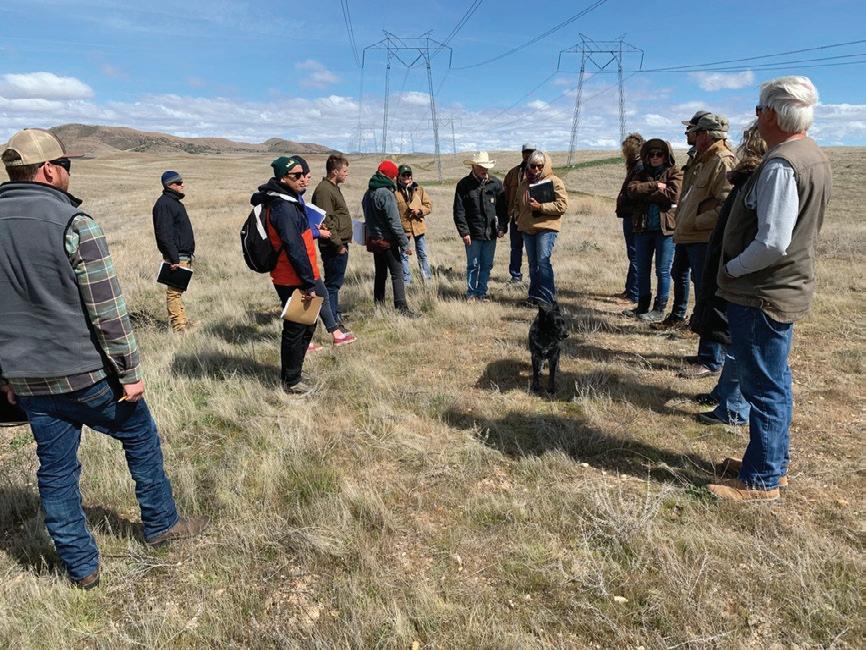
Planned grazing workshop March 2020 and calculating ADAs at Carrizo Ranch.
& LIVESTOCK
Bale Grazing— Stewardship During Drought to Grow Soil Health
 BY MARK BIAGGI AND CELIA HOFFMAN
Editor’s Note: This article first appeared on the Tomkat Ranch website and is used by permission: https:// tomkatranch.org/2021/06/18/bale-grazing-stewardshipduring-drought-to-grow-soil-health/
Background on Bale Grazing
When fresh grass is not available in the winter across much of the US and Canada, ranchers feed cattle big bales (1,000 lbs+) of hay either in a feeder or rolled out randomly across their pastures. Decomposing uneaten hay (some would call it “wasted” because it didn’t contribute to animal performance) combined with manure and urine can boost the soil microbial community and provide beneficial biomass. This “wasted” groundcover sustains microbes when Spring arrives leading to healthier soils, improved infiltration and retention of snow-mel and rainwater, and increased land productivity.

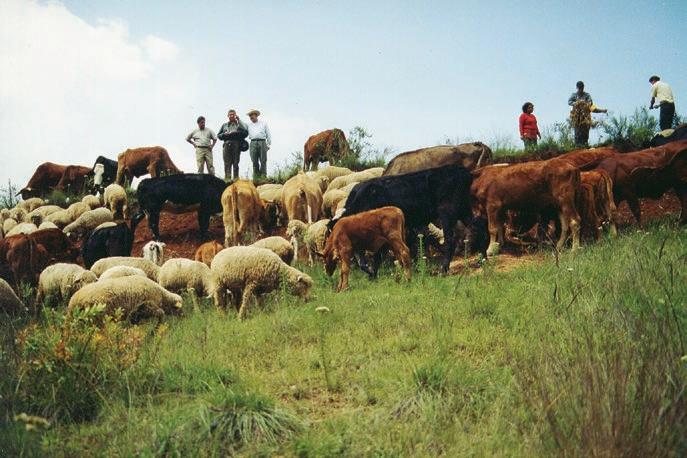
Given all of the benefits, this is an amazingly efficient and effective way to feed both livestock and microbes and puts this practice squarely in the toolbox of options for regenerative ranchers. As is often the case with planned grazing, organized and planned bale grazing has shown incredible results for both livestock and growing healthier and more resilient soils. Unfortunately, many practitioners do not fully recognize the benefits and so choose to place the hay bales in locations based on convenience more than potential impact.
Five years ago, in the winter at TomKat Ranch, we tried bale feeding as a supplement but had not selected the right locations or spread the bales which resulted in negative results. We had placed the bales, and therefore the cattle, in concentrated areas on wet clay soils which inevitably led to soil compaction from the cattle’s hooves, or “pugging.” Soil compaction is one of the more detrimental impacts on soil health and can take years to heal. During the intervening years, we researched other bale grazing methods and shifted our approach. Here are three things we learned about how best to apply this practice:
6 Land & Livestock h January / February 2022
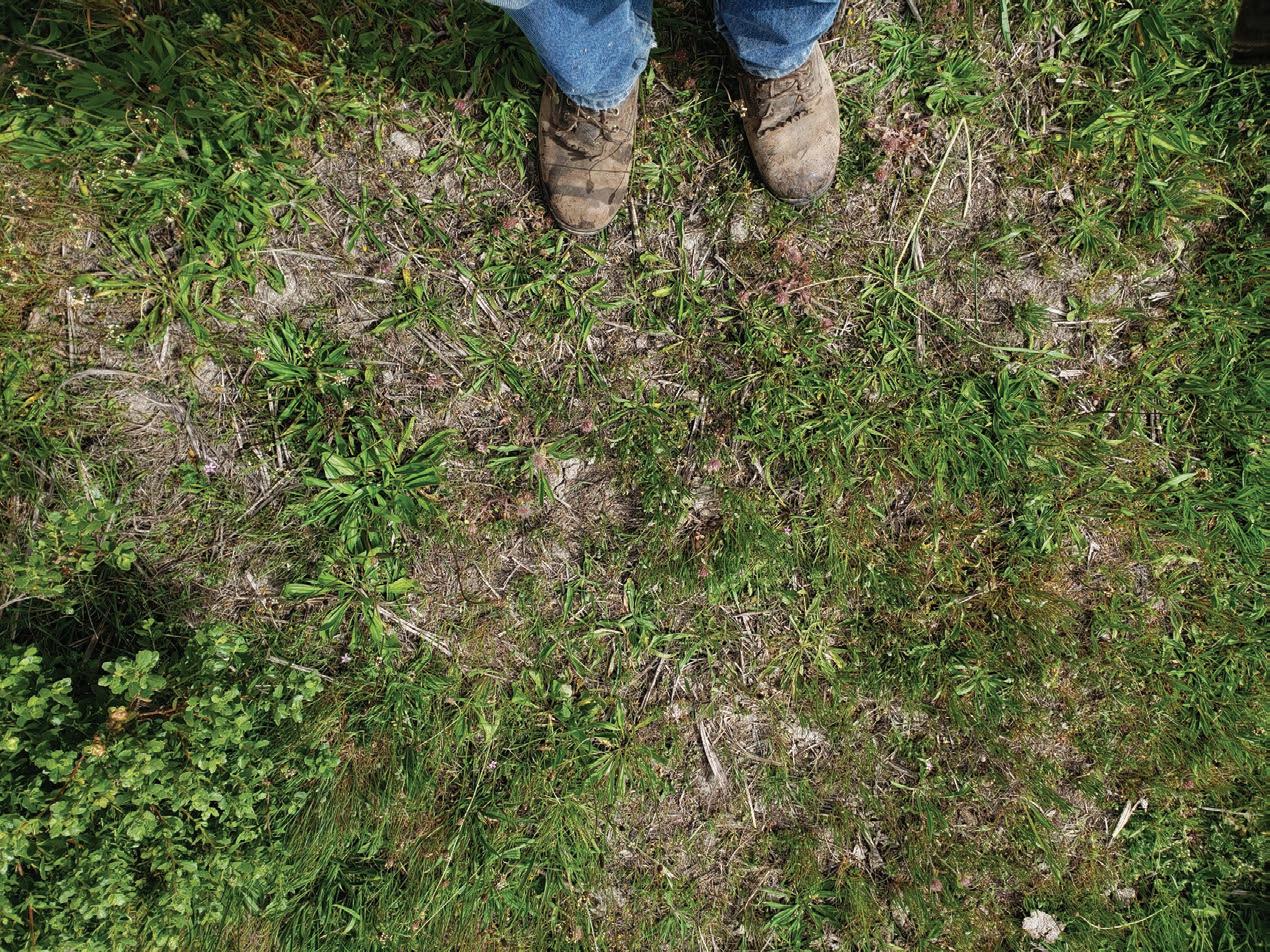
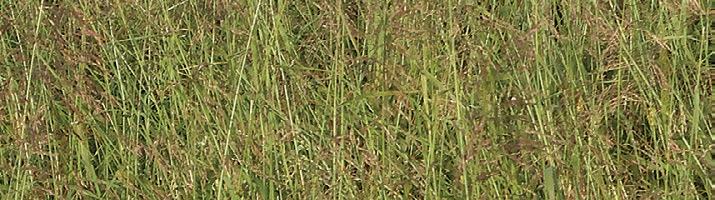
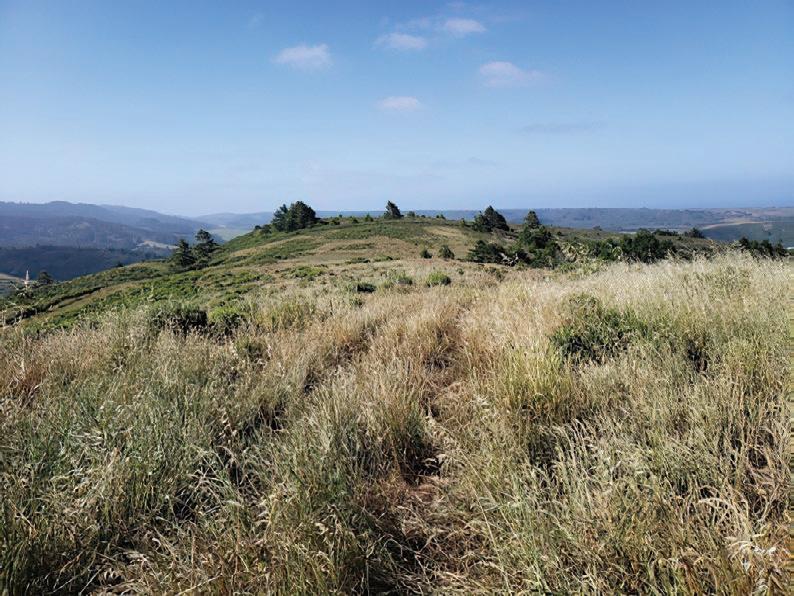
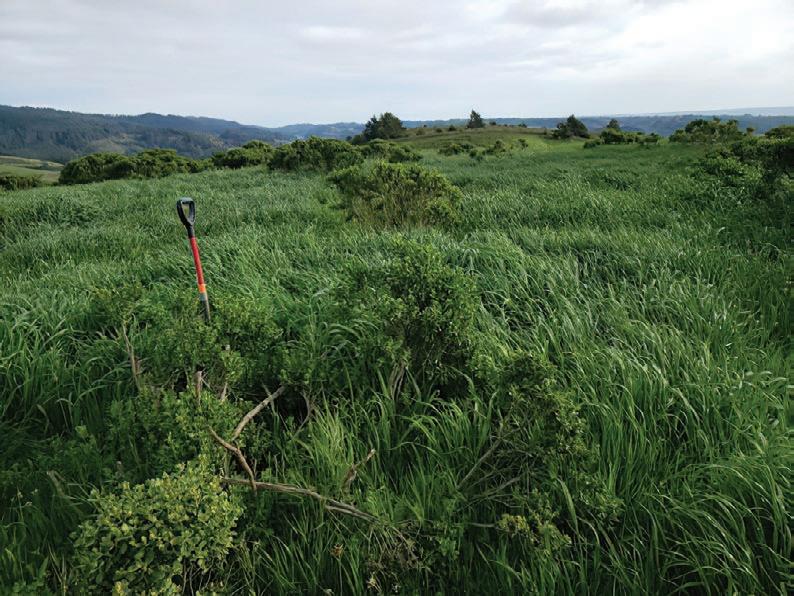
April 2021 Control plot — Soil is obviously visible even after winter rains.
April 2021 Test Plot — Grass completely covering the soil. Water infiltration appears improved resulting in robust growth.
1. Focus on the soil. Soil is the foundation of the pasture and as such, we need to ensure all practices build soil life (we think about using the hay to feed microbes and restore soil health)
2. Prevent damage. By not feeding bales when the ground is hard (in our climate that means in the fall before the rain), we can avoid pugging.
3. Save ungrazed pasture. By planning appropriately we can stockpile (save) enough ungrazed pasture to let the cattle spread out to graze during times when the soil is saturated and also susceptible to pugging.
Last fall, in the face of yet another dry winter, limited projected forage production, and less than optimal acres of grass due to the previous dry year, TomKat Ranch (along with every grassland livestock producer in the area) had to make the decision to destock or feed supplemental hay. As always, there are positive and negative long-term consequences to consider. Most often, destocking is considered the best decision to protect a ranch’s fields, soil, and economics. In our case, however, the long-term strategy of our learning laboratory is to protect the soil and improve water infiltration and absorption rates for when the rain reappears…so we decided not to de-stock and instead set out to use our herd to address the question: can hay and the practice of bale grazing rebuild the soil during dry years without destroying the existing pasture?
What We’re Doing at TomKat Ranch
We selected Lone Tree Hill, a 15-acre field with low productivity located away from a main waterway (to guard against nutrient runoff) for the bale grazing trial. This pasture was tilled and farmed for decades before the current ownership and the last hay crop was harvested in 2010. The years of farming heavily compacted the clay soils and left behind minimally productive native perennial grass and low-yielding annual grasses.
For 28 days starting in late November 2020, we spread a combination of alfalfa hay and milo bales over a limited area to feed cows and concentrate the litter and hoof disturbance. Every third day, the cows moved to a new section of the field and were fed fresh bales to make sure they had access to fresh feed and a new space to spread manure and urine and hoof impact equally around the trial area. The cows covered the entire field throughout the month, consumed 92,727 pounds of hay, and spread on average 4,945 pounds of manure per acre.
A month after the cows left the field, we sprayed both the control and test areas with a mix of Vermicast, humates, kelp, and liquid calcium to enhance the breakdown of the manure and stimulate microbial growth to help move the plant community towards more grasses, forbs, and legumes.
Results So Far
To be clear, we set up the bale grazing trial on Lone Tree Hill not as a scientific trial, but as a safe-to-fail study using observation as the key measuring tool. We considered the areas where the big bales were placed as test plots while any areas outside were control plots.
After the cows’ departed, we checked the field regularly for signs of growth and change. In late February, two months after the cows had left, there were high densities of thick, 8-10″ tall, green grass-covered areas where the bales had been placed (the tests). However, cow manure pats remained numerous and had not broken down, possibly an indicator of low microbial activity. Additionally, Brix test results (a measure of the photosynthetic capacity and quality of the plant-based on
its carbohydrate content) were a low 3–4 in the test areas, compared to 6–7 in the control area. Ideally, Brix ratings for cattle grazing should be in the 10–14 range.
In March, we moved the cows back into the field with both control and test areas to observe their preference. At the time, they disliked the feed grown across the entire field and were not interested in eating except for a few areas of the test sample, so we moved them out within hours. Based on the low Brix results—and the cow’s lack of interest in the test plots—we concluded that the lack of rain had likely slowed the breakdown of the manure and urine resulting in forage that “appeared” good but was actually “offensive” to the cattle—a natural phenomenon where cattle will not readily graze near the manure of the same species.
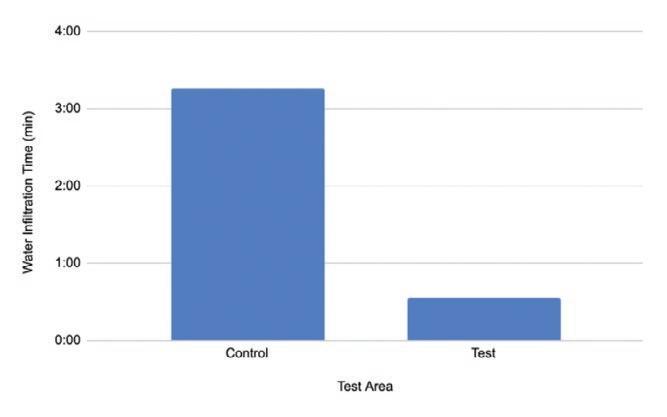
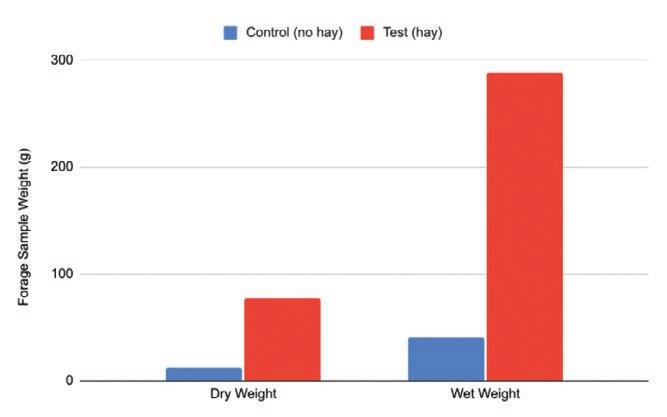
By mid-April, the bale grazed area supported forage still in a vegetative state (growing) while the grasses in the control areas had moved into reproductive stages (energy diverted from growing to seed production). Initial results from soil samples showed little difference between test and control. However, the biomass and water infiltration tests showed large differences as seen in Figures 1 and 2 respectively.
The average biomass (3 weeks dry weight) increased from 0.6 tons/
acre to 3.7 tons/acre, a 630% increase! Water infiltration had an average improvement of 658%! We think the significant changes in biomass production and water infiltration support expanding the bale grazing
CONTINUED ON PAGE 8
Number 201 h Land & Livestock 7
Figure 1: This figure shows the average dry and wet weights of twelve biomass samples taken per treatment across four sections of Lone Tree Hill — a ~630% increase in weight in both cases.
Figure 2: This figure shows the average water infiltration time of four replicates per treatment in each of four sections of the field. The test sample showed a 658% infiltration improvement from the control sample.
Bale Grazing
CONTINUED FROM PAGE 7
different areas of the ranch. Given increasingly dry conditions—our second rainfall year with less than 50% of average—we wish to test the degree to which biological inputs can heal heavily farmed soils and prepare fields to capture water more efficiently. The critical elements of this strategy are soil cover (layer of litter) to protect the soil from dehydration, promote water infiltration, provide food for microbial life (manure, urine, and litter), and prevent soil compaction by diffusing hoof impact.
Photo May 4, 2017 at Lone Tree Hill Pasture — a North facing pasture where we fed cattle in the winter of 2016–2017. A few positive impacts can be seen but overall there is too much “wasted hay” that didn’t break down into food for the
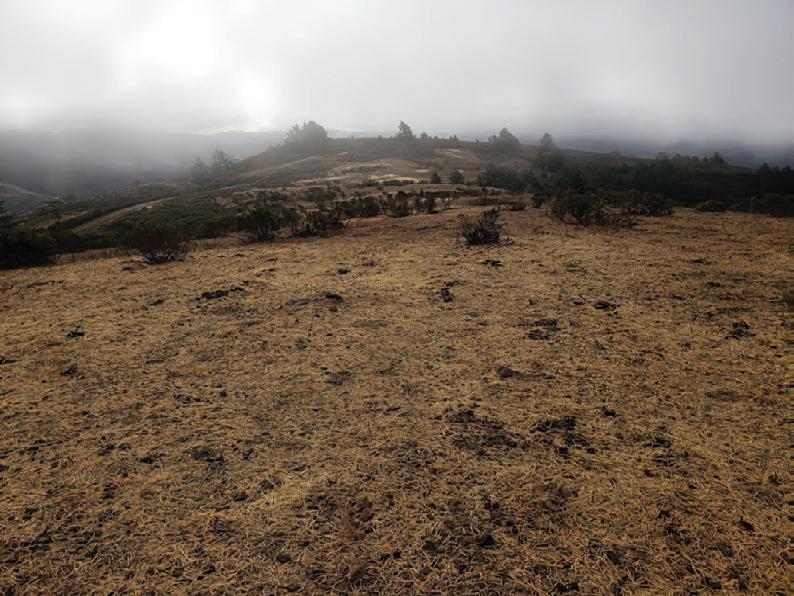
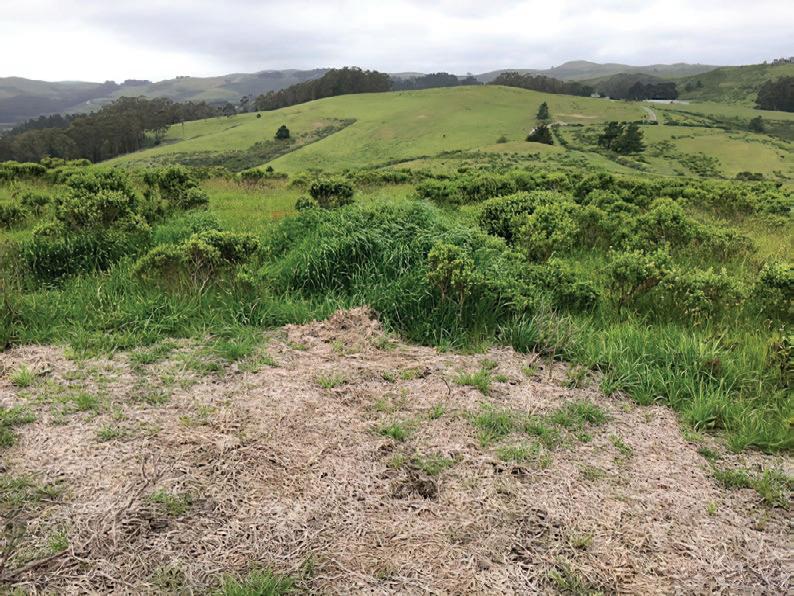
December 2020 Trial Plot —This photo is after the cows were fed the bales. Soil is covered with a thick layer of “wasted hay” mixed with manure and urine that will feed the microbes.
trial to additional acres under similar conditions to see if this method of grazing can show similar benefits at scale.
Next Steps
We will bring cows back to Lone Tree Hill in late summer 2021, allow for maximum manure decomposition before regrazing, and observe cattle grazing patterns to see if they are showing a preference for the grass of either the test or control site.
In fall 2021, we will try the same practices on a larger scale in
At this point in the drought conditions, we see bale grazing as a long-term investment (given the time it takes to see benefits to the soil and forage). We are excited to continue to learn about the possible benefits of using bale grazing as a tool for soil building and as a reaction to drought years. We look forward to continuing to share our results in the hope that other grazers can learn from our mistakes as well as
8 Land & Livestock h January / February 2022
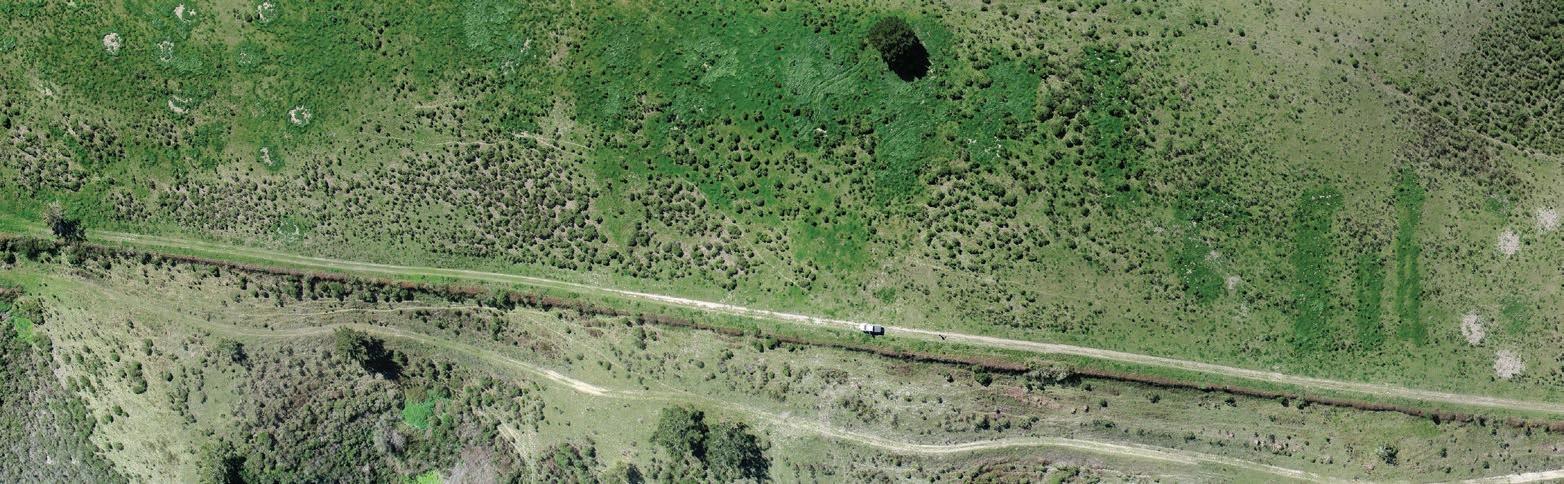
Composite aerial view of Lone Tree Hill pasture showing bale grazing test area results. Early into the trial, the test areas are already ‘greening-up’ suggesting high biological activity and greater water retention than the surrounding “control” areas. March, 2021
June 2021 — Growing season is slowing. Forage will be ‘stockpiled’ for Fall grazing.
Next Level Grazing— Helping to Improve New Zealand Grazing
 BY ANN ADAMS
Siobhan Griffin has been farming for almost 30 years, starting in New York State after earning an animal science degree from Cornell University. After working on conventional dairy farms she and her husband at the time started their own farm in Vermont in 1989 with 10 cows. By 1997 she began running her 300-acre farm, Raindance Farm, near Cooperstown, organically and had 40 cows. In 2006, she had grown the herd to 100 and began the journey of learning about Holistic Management which helped her successfully make the transition to regenerative grazing.
Along the way she made costly mistakes but eventually witnessed her farm bloom with diversity of plants in the pasture and then more life of all kinds. Ground nesting bird populations exploded, especially bobolinks. Rare eastern bluebirds came to nest and the even more rare karner blue butterfly appeared in 2014. A birder counted 86 species of birds on the farm in 2016. The cows at Raindance Farm bloomed as well—with health and the milk, meat, and cheese tasted sweet and delicious. The most profound unexpected result was the return of life to the soil. When she first came to Raindance Farm a worm couldn’t be found because the previous owner grew continuous corn with chemicals. With holistic planned grazing, the soil organic matter increased a half a percent per year from 2007 to 2017, sequestering untold tons of carbon.
southern hemisphere and he introduced her to many farmers there including her sheep farming fiancé, Rick Cameron. John and Siobhan now work together teaching farmers more in depth about the grazing plan in a New Zealand context, adding Siobhan’s perspective as a Holistic Management practitioner who has learned the hard way how to use Holistic Management to improve dairy farm performance.
So when Siobhan moved to New Zealand in 2017, she started a consulting business, Next Level Grazing, to help reduce the steep learning curve for New Zealand farmers who want to heal their stressed farms and grow food while helping build the climate healing carbon sponge in their soil.
When Siobhan came to New Zealand she met with HMI Certified Educator John King to learn more about Holistic Management in the
A Holistic Journey
Siobhan originally learned about Holistic Management through Troy Bishopp, an NRCS employee in 2008 when she was shifting to regenerative grazing practices. “I started out using the grazing chart pad to record my grazing moves. I also learned from other farmers featured in ACRES USA, GRAZE and Stockman Grassfarmer. I was learning about the need for longer pasture recovery, but also what was too long. When I read Allan Savory’s book I was blown away by his insights.
“I was also hugely influenced by Ian Mitchell-Innes. We had a field day on our farm with Ian Mitchell-Innes in 2011 through the Northeast Organic Dairy Producers Alliance (NODPA). At that point I was making the mistake that most Holistic Management practitioners make, I was providing longer pasture recovery, but I went too far, especially in the dairy context (or for finishing lamb or beef). There is the danger of resting too much. In particular, the concept of energy conversion, the more grazings you get, the more profitable you will be, but you have to have enough plant recovery to encourage the plant diversity you desire. Ian Mitchell-Innes helped us find that balance. He puts a lot of emphasis on animal impact to help with the high level of grass quality required for dairy cows.
Number 201 h Land & Livestock 9
CONTINUED ON PAGE 10
The perennial rye grass and clover sward recovered and ready to graze on Raindance Farm.
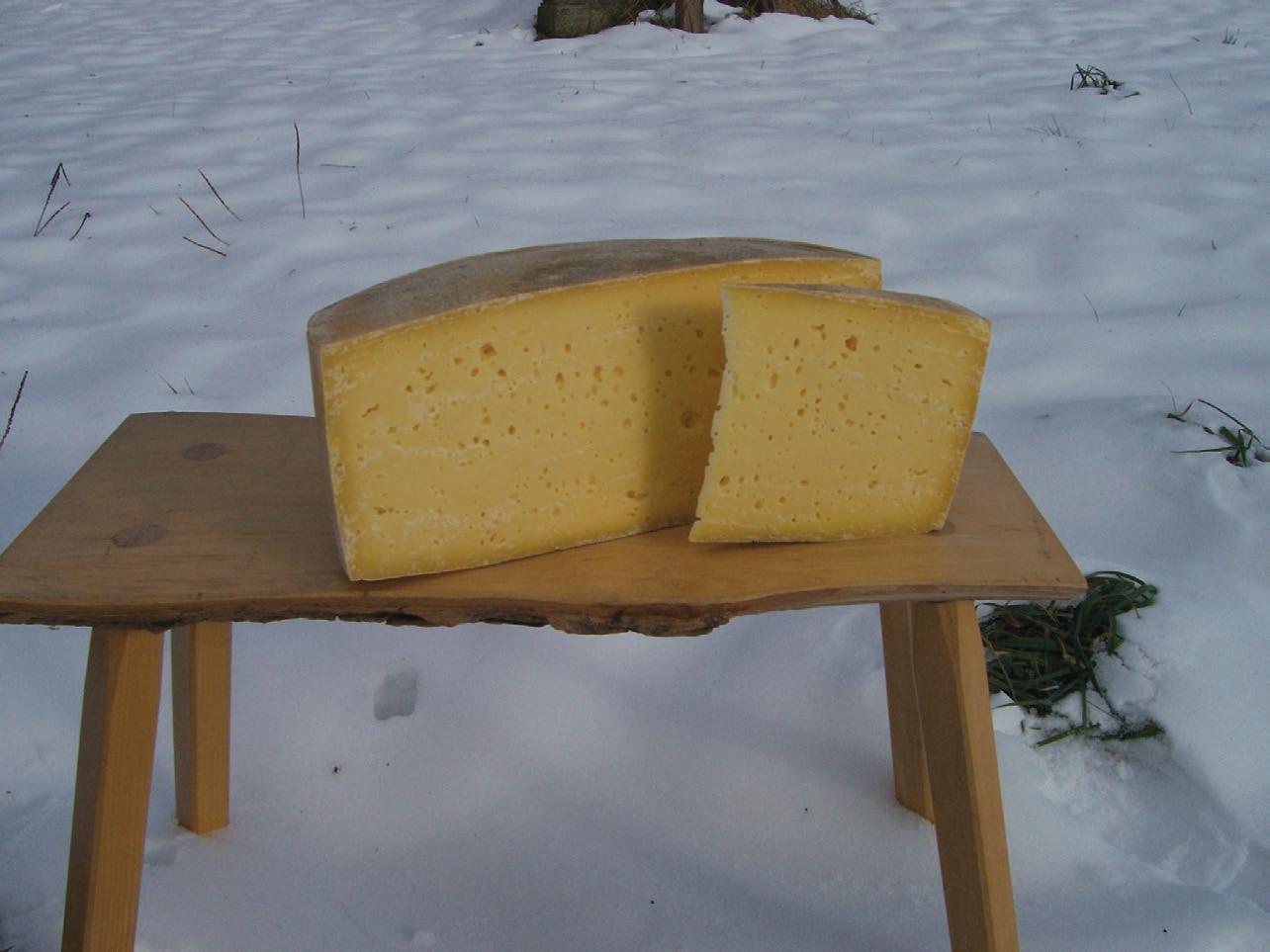
Cheese is what got Siobhan started in Holistic Management.
Next Level Grazing
CONTINUED FROM PAGE 9
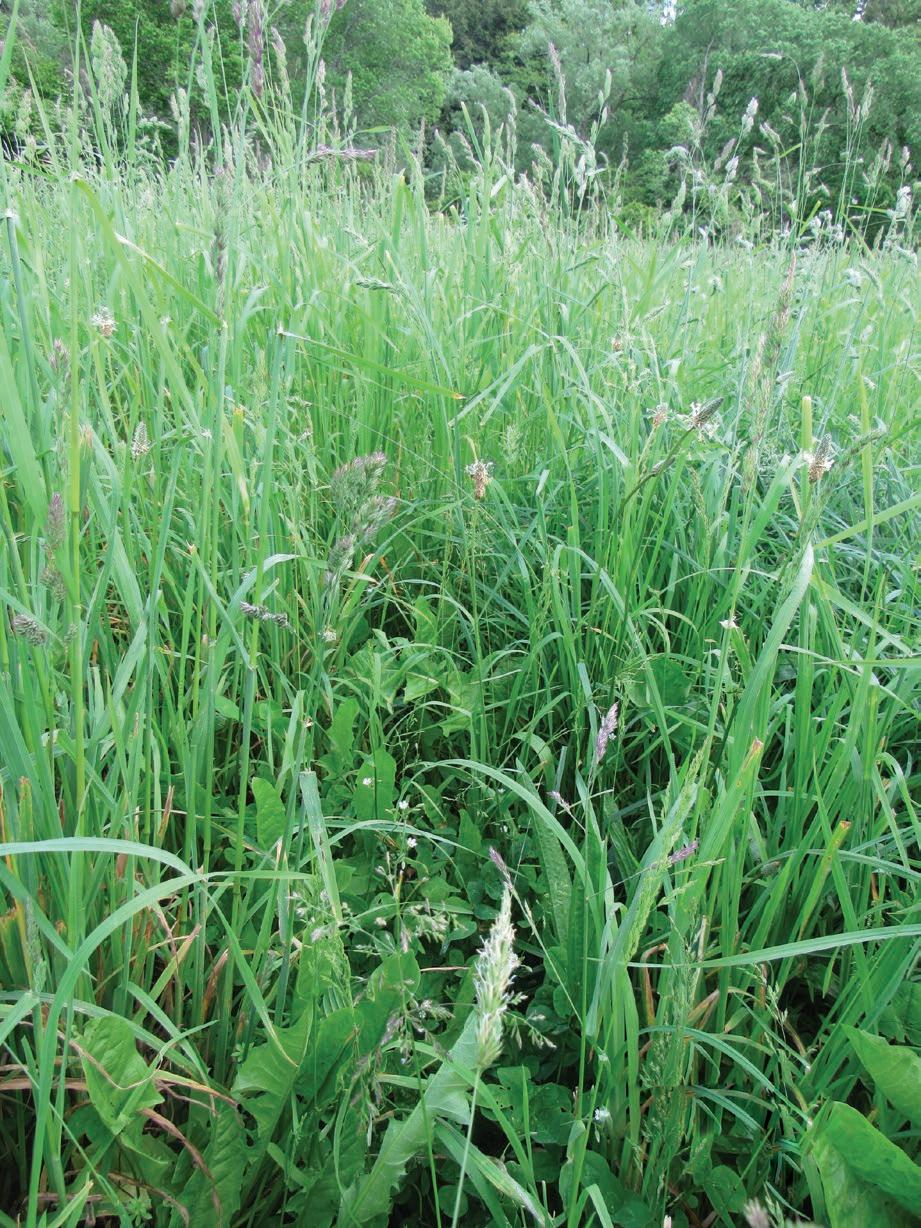
“I explain these grazing concepts to farmers in New Zealand who are grazing mostly perennial ryegrass and white clover. While farming in Vermont for six years in the early 90’s, I was tutored through the University of Vermont’s pasture outreach program developed by Dr. Bill Murphy. We were learning the New Zealand pasture system which focused on perennial ryegrass and white clover. To manage that well you have to graze it down quite hard, so it comes up fresh. We managed for quality with high utilization by the cows, but that leaves nothing to feed the soil. Other poor quality plants survive in that short rotation system and weeds tend to infiltrate the pasture.
changed my management practice, I could quit regrassing, because I had a good stand because I allowed pasture recovery times which favored a healthy diverse sward.
“I had a massive increase in soil organic matter because of that management change. In 2006–2009, we went from 6% to 9.5%. At the start of 2016 a lovely young regenerative farmer, John Meulenburg, bought my farm and is doing an even better job of managing the farm regeneratively. He is selling his milk through Maple Hill Creamery now, and they measured the farm’s soil organic matter at 11%. So that change from 2007–2017 is about a half a percent a year average, and that’s massive! We dug trenches for plumbing projects and know that our grass roots were going down at least 800mm (31 inches).
“I used to think that the litter which the livestock trample was what was going to improve the soil carbon, but now I think it is the liquid carbon pathway after learning about this from Dr. Christine Jones. There was a study done at Yale that found “living root inputs are 2–13 times more efficient than litter inputs in forming both slow‐cycling, mineral‐associated SOC as well as fast‐cycling, particulate organic Carbon”. That explains why when I stopped using the plow, cover crops, and regrassing that I saw such a massive increase in carbon sequestration. We had living roots pumping carbon into the soil at all times.”
Balancing Residual & Recovery
Siobhan notes that she didn’t change grazing practices to sequester carbon. She did it to make her cheese taste better. She was selling cheese into the New York City market and taste is the best way to differentiate your product. As she increased her grass residuals and recovery periods, she found that the flavor of the cheese was improving. “I thought my milk tasted good until we started to manage for diversity,” says Siobhan. “We couldn’t believe how good the milk and meat tasted. If you graze it short you can have excessive protein which negatively affects the
“With Holistic Management, as taught by Ian Mitchell-Innes, you manage for quality pasture by mobbing up livestock to trample adequate green material to feed the soil biology and new high quality forage comes up through that. I always thought the dung and urine were fertilizing the soil, but they are just the inoculant. In the ancient grassland systems, I think the fertilizer was grown from the sun when the residual pasture was trampled to feed the soil. The carbon to nitrogen ratio of trampled green grass is around 25:1, like good compost ingredients. It’s intuitive to any gardener what the soil organisms like to eat. A gardener will mix the right amount of leaves and manure and soil with the microbes in it to get lovely, beautiful compost. That mirrors what you get when trampling residual pasture. Lignin in the grass stems provide the carbon and the green leaves supply nitrogen which gives the perfect balance that makes that sheet composting system work. We are trying to regenerate those grasslands our livestock evolved in.
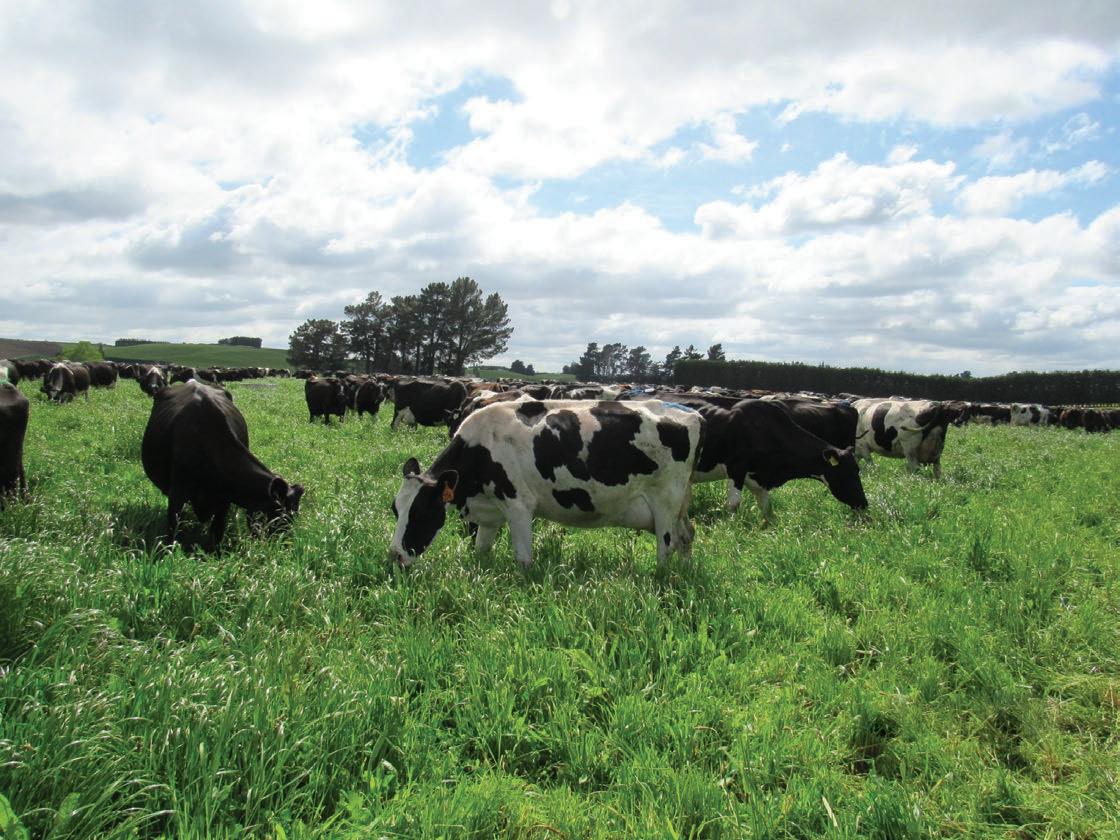
“I was reading anecdotal stories from Stockman Grassfarmer in 2007 of ranches using Holistic Management and I thought we could use it for dairy. I started by lifting my grazing and residual height by two inches/year because I wanted to go slow and not push the cow’s psychology and rumen. Dairy farmers have a lot of pressure to pay the bills. In year two I saw red clover consistently, but I never got it to stick because I didn’t have enough residual. Once I got to a six-inch residual, then I got the red clover to persist as well as trefoil, timothy, and other desirable plants which appeared without being seeded. I didn’t do much regrassing. For the 15 years prior, I was managing perennial ryegrass and my soil organic matter didn’t go up. But when I
flavor.
“We grazed the top half of the plant to balance the protein, so my milk urea/nitrogen wasn’t high. Once we got the balance, the taste became
10 Land & Livestock h January / February 2022
In 2011 Ian Mitchell-Innes visited the farm and noted that 29 days was too long a recovery in the spring for Raindance Farm given the amount of lignification in the forage.
Siobhan works to create a patchwork of various heights of grazing in a pasture to improve diversity of species and wildlife habitat as well as more plant material for trampling and feeding the soil.
more complex and sweeter. You know your cheese is good when kids beg their parents to buy the cheese.
“Previously when we were managing for perennial rye grass, we would have a 20 to 30-day recovery period. It works well in spring and summer, but in July and August, I wasn’t extending recovery and then the cows were ahead of the grass because I didn’t slow the cows down. So I created more paddocks to extend the recovery to 35–45 days if the weather became dry. I don’t think farmers react proactively to that slow growth, and they don’t realize how much money they are leaving on the table by stunting the grass growth by overgrazing. In spring when we had too much grass, it’s hard to keep quality. So we drop some of the pastures from the rotation and keep the herd on vegetative grass, grazing the plants before the grass went to seed to keep animal performance up. We kept the finishing beef herd in with the dairy herd.
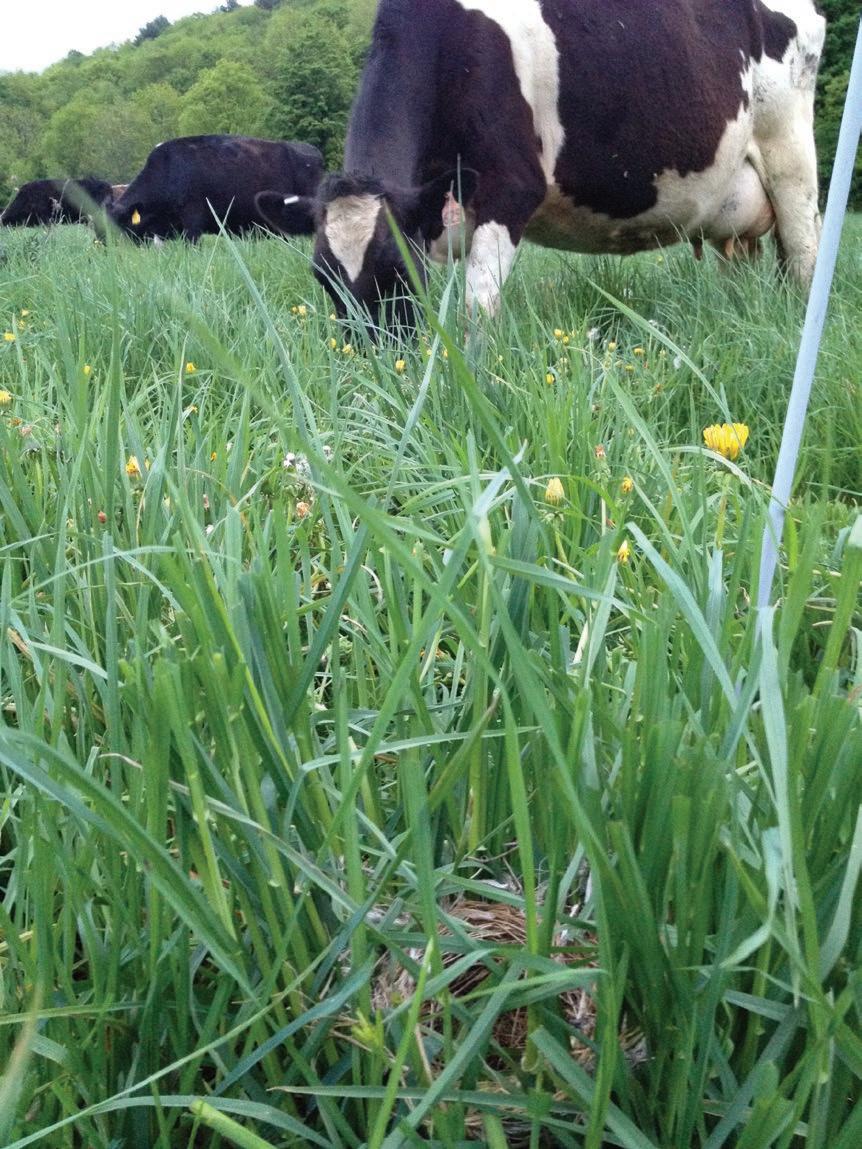
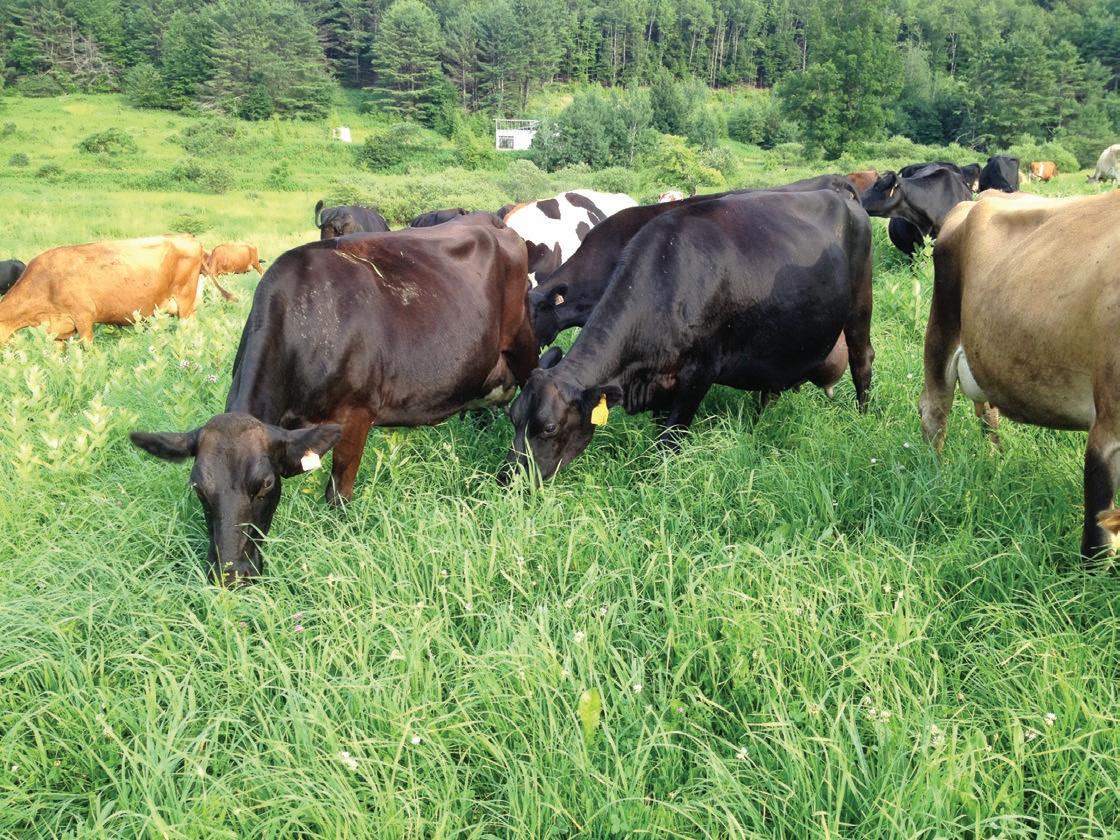
“The first year I was targeting the three-leaf stage for the ryegrass when I put the cows into the paddock to graze and four leaves for orchard grass. Five years later I could achieve five to seven leaves on the orchard grass before grazing it again and it was still vegetative and had not gone to seed. I added one half of a leaf stage per year to make that gradual shift. We always tried to graze before seed head formation. We used those dropped pastures for hay or we came back in with heifers and do a deferred graze as soon as possible while the forage was still as green as possible. Only green vegetative plants will pump liquid carbon into the soil. Or you can even do it with the dairy cows if they lick out the best parts like the clover, but it has to be at a high density with four to five shifts per day to get it trampled. In the hot part of summer you can bring that pasture back into the rotation and lengthen the grazing round.”
Siobhan noted that she used animal performance to know when she was making her animals graze too deeply and not just take the top half to one third. “I realized if you don’t listen to the animals your milk production goes down,” says Siobhan. “The dairy farmers have instant feedback in the milk tank, so you may need to shift the herd sooner than you think. If they reach under the electric wire to get to the next break that’s a clue it is time to move them to fresh grass. We were focused on grazing the top half of the sward, so you have to give more breaks each day. We used one wire for cows and two for calves. We would take the day paddock and split it
in half and also the night paddock to quadruple our density. In springtime when there is fast growth, we might give three to four breaks during the day. You can make mistakes if you have them too dense. If the cows are on a small paddock too long they can deck your paddock. We were grazing two or three acres/day with 100 cows and we would divide that into four to seven mini-paddocks in the early spring and summer.”
Siobhan also shifted the genetics in her herd as part of her regenerative grazing journey. She first introduced Normande as a dual-purpose breed, but had calving trouble with the bull calves being too big for the cows so she shifted to milking Red Devons. “The plan was to go to a system of grassfed beef production from dual purpose cows,” says Siobhan. “We penciled out a plan where we would keep all the calves with their moms and milk the cows for just three months once a day and make cheese. By three months of age the calves would be guzzling up all their moms’ milk so we would stop milking and enjoy our summer while the cows raised the calves. We would have no weaning stress and the calves not needed for replacements would be raised for grassfed beef.
“The dual purpose cows were not as milky but we were happy with the beef quality.
Consumers are more interested in animal welfare and so we focused on this. I don’t enjoy weaning the calves off the moms because everyone gets upset.”
New Zealand Trial
Bobolink Nest: When Siobhan raised the height of her residual she heard bobolinks for the first time as they returned to the farm and nested in the fields. The cows never stepped on the nest.
While Siobhan is focused on her consulting business, she sometimes helps out on her partner’s 1,000-acre sheep farm near Milton, New Zealand. Rick’s son, Ben, manages the farm. “We use two-wire electric fencing for the sheep. We winter 4,200 ewes and have over 5,000 lambs in summer. The best thing about raising sheep is we don’t have to get up in the dark to milk them. It’s really fun to learn about sheep. I loved cattle, but now I love sheep too. Trying to grow lambs quickly is tricky in this scenario. We don’t
Number 201 h Land & Livestock 11
Cows on Raindance Farm doing well with once a day milking.
CONTINUED ON PAGE 12
Next Level Grazing
do any cropping which could damage soil health.
“Rick is using 1/5 th of the property for a regenerative grazing trial and we are in our second year. It’s teaching us a lot about sheep, but the same principles apply. Everything with sheep you downsize. It’s going to work best if you lift your grazing wedge gradually, about 1–2 cm (1/3 to ¾ inch) per year. Eventually, you ideally want to graze at belly height, as a common sense measurement. Rick is targeting the two-leaf stage of perennial ryegrass for lambs which means we are compromising on recovery right now. The pasture isn’t recovered at that stage, but it does grow the lamb. If you leave the recovery longer, then the lambs don’t grow fast enough to make it economically viable. Once the lambs are sold, then you can allow for optimal recovery for the plants you want to see more of like timothy, birdsfoot trefoil, orchardgrass and red clover. These plants perform better when the weather gets dry and we are having more frequent dry summers here.
“I spend most of my time consulting with other farmers who have decided they really want to go regenerative and hear about me word of mouth. The grazing plan helps farmers optimize energy capture by lifting their grazing wedge. The low hanging fruit is how to convert pasture to a saleable product and reduce the summer time overgrazing that is a problem all over the world.
“If you machine harvest too many pastures and soon can’t provide optimal pasture recovery, then it’s not profitable. The grazing planning was the only way I was able to wrap my head around the idea of learning how much pasture will I need come mid-summer when things dry out. It’s hard to know in spring time and you have a knee jerk reaction of cutting too much for hay/baleage in the spring, then you get stuck in the summer with not enough grass and relying on hay. The grazing plan is indispensable to help farmers plan those paddocks and know where the animals will be in the summer so that you can lift your grazing wedge in front of you.”
When questioned about the key challenges farmers face, Siobhan noted that a lot of people have started going down the regenerative farming route, but they are making the same mistakes of letting the recovery be too long with the class of animal they have for the animal performance they need. “The more grazings you get per year with optimal recovery, the more profitable you will be,” says Siobhan.
“The whole pasture doesn’t have to go to seed to get the good results we achieved. With optimal recovery just to the end of the vegetative stage of the grass growth we were able to increase soil organic matter because of the living, green plant diversity. Even at higher densities all the plants aren’t trampled and that creates a patchwork.”
Siobhan tried to limit the patchwork of ungrazed grass to 15% of the pasture at Raindance Farm. This provided a seedbank and wildlife habitat,
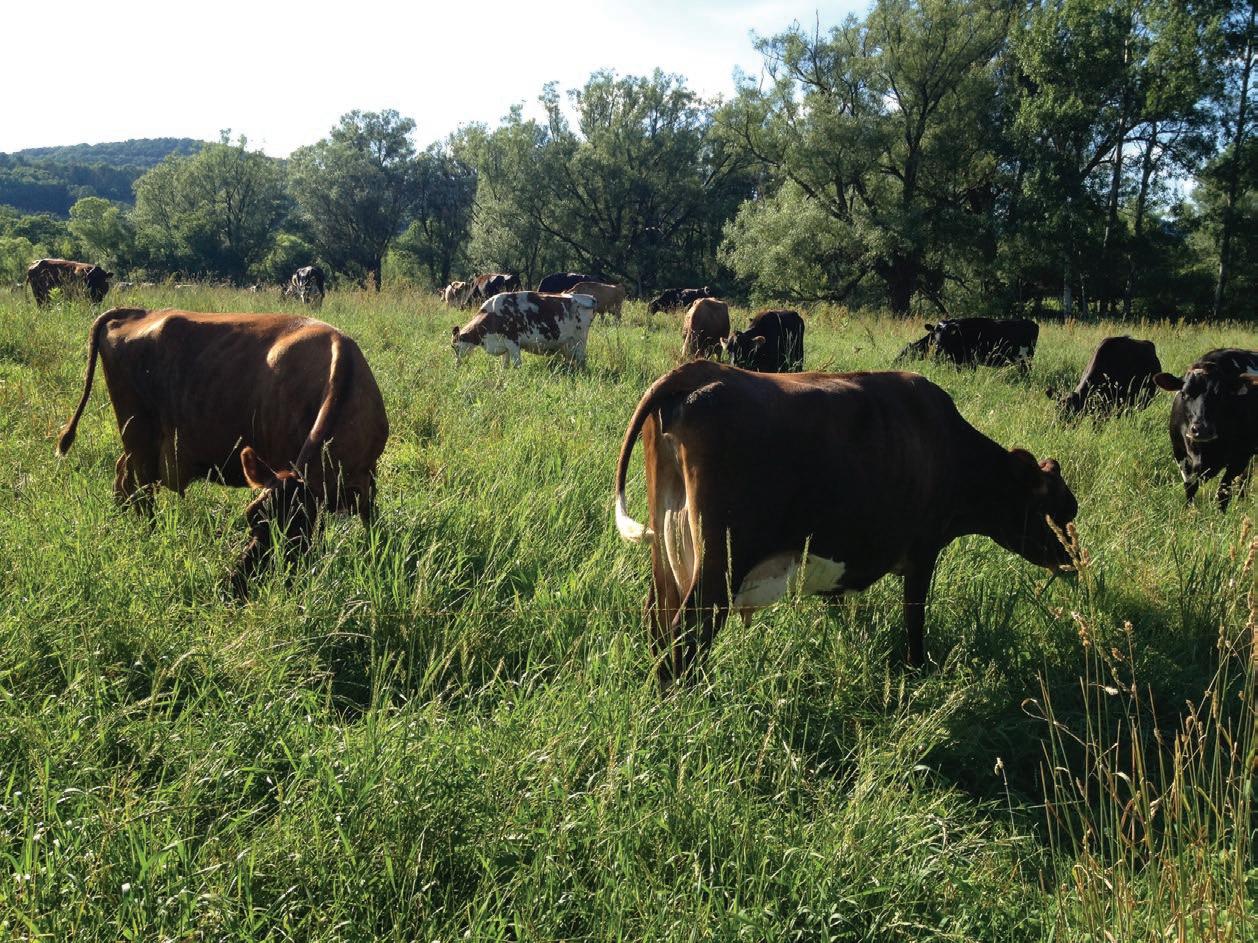
and all the ecosystem benefits of drought resilience, nesting areas, carbon sequestration, etc. “You don’t need the whole paddock going to seed,” says Siobhan. “Because we are managing for the green leaves and the liquid carbon pathway keeps pumping, we sequester more carbon. One of our mistakes was that we didn’t apply enough animal density to manage for green leaves and we had too much brown. You can go broke that way in the dairy or beef/lamb finishing business. That was really the take home message from Ian Mitchell-Innes for me and that’s when we began dividing pasture more. As grass gets taller, it gets easier to trample. Perennial rye grass is hard to trample when it is being grazed low. In a diverse sward, the best grazing height for our diverse sward was around knee height, but the residual has to be above the ankle bone (15 cm/ 6 inches) or plants like red clover and good grasses like timothy didn’t persist.”
To learn more about Next Level Grazing, contact Siobhan at next level.grazing@ gmail.com.
Raindance Farm Results
With Holistic Management Siobhan was able to achieve the following results on Raindance Farm
● 86 species of birds
● 90% less lameness
● 99% mastitis free
● No drench in the last 6 years of the farm
Siobhan is excited to share what she has learned about Holistic Management and the results she and others have achieved to help improve the profitability and production of landscapes that are overgrazed. She is also excited about the opportunity to let people know that this kind of grazing offers a very positive story about the environment that answers vegetarian concerns about the destruction to the land by livestock without all the environmental damage that can be caused by row crops that are used to grow the ingredients for fake meat. She sees grass farming being more in harmony with nature and offering a way to increase the soil carbon sponge through carbon sequestration on a landscape scale so we can heal the hydrology and climate of our one of a kind planet. “It’s so important to get this information out there, so people hear the stories and how these practices are more environmentally friendly,” says Siobhan. “Row crops have resulted in less than 2% organic matter on average in the US and cause dead zones like in the Gulf of Mexico. People aren’t being told that part of the vegetarian story.”
● Reduced purchased supplement by $80K
● Organic Matter went from 6%-11% in 5 years
● Didn’t have to worm because grazing higher
● 9 out of 10 summers were dry but plant diversity helped to keep the pasture from drying up where it used to go completely dormant
12 Land & Livestock h January / February 2022
The recovered plants ready for grazing are the height of a cow’s belly on Raindance Farm.
CONTINUED FROM PAGE 11
PROGRAM ROUND UP
2021 REGENERATE Conference a Success
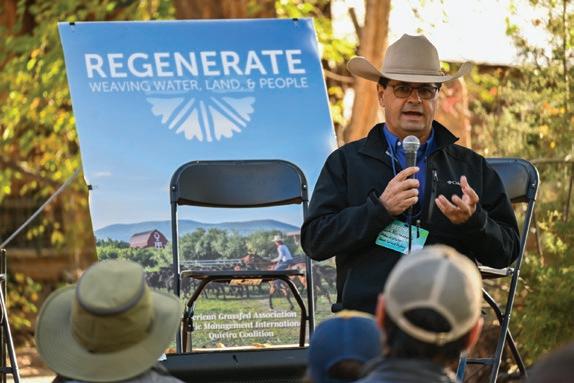
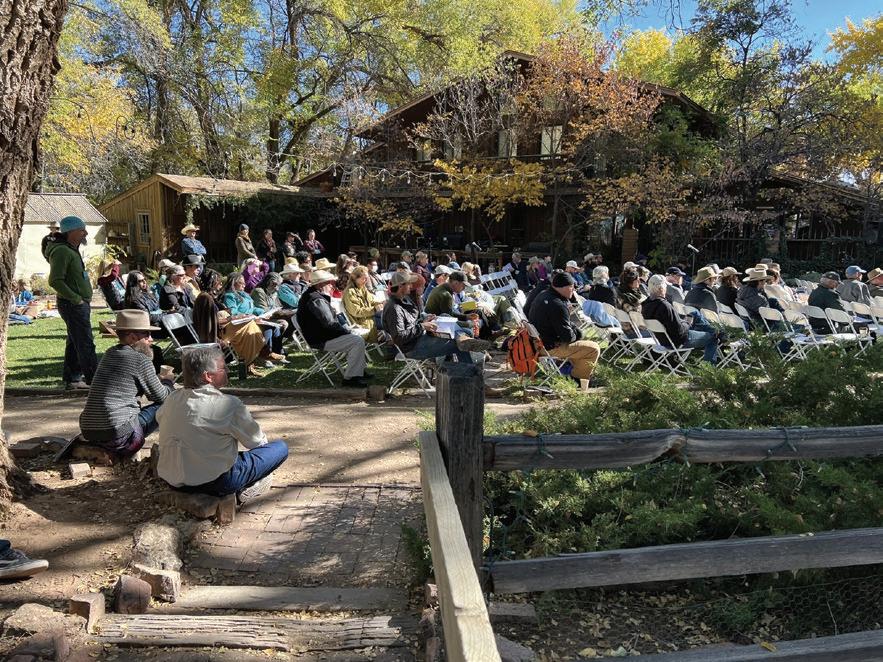
The hybrid 2021 REGENERATE Conference hosted by the American Grassfed Association, the Quivira Coalition, and Holistic Management International on November 3–4, 2021 was an unmitigated success with over 605 registering for the conference (in person and virtually), over 30 workshops, and 8 field days located in six states. This international conference had speakers and participants from seven countries as well as 37 states
To address COVID concerns, the conference was held at the Old Town Farm in Albuquerque so that all plenaries, roundtables and social events were held outside. Participants were encouraged to put a colored dot on their name tags to denote their comfort level regarding masks and social distancing (green, yellow, and red) to facilitate a comfortable way to encourage networking. In person participants consistently said they loved the venue and being out doors, although the cool mornings and evenings prompted a layered clothing approaches along with some portable fire pits.
Given the 2021 conference theme, “Weaving Water, Land, and People,” there was a diverse group of presenters including: Corine Pearce, Lucille Contreras, Alejandro Carrillo, Darryl Birkenfeld, Bluesette Campbell, Bill DeBuys, Sarah Parmar, Ken Lausten, Don Bixby, Daryl Vigil, Kate Zeigler, Amber Smith, Louis Martin, Sergio Schwartz, Kara Boyd, Silas Bernadoni, Michael Johnson, Renard Turner, Lastahia Redhouse, Emily Luscombe, Tomie Peterson, and Zach Ducheneaux.
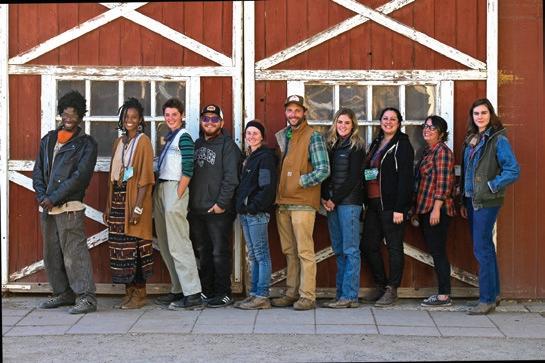
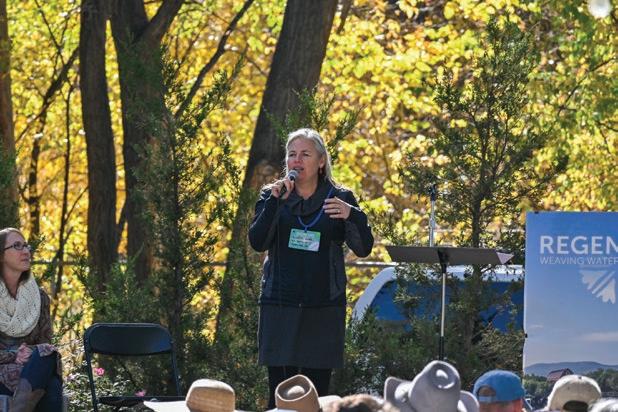
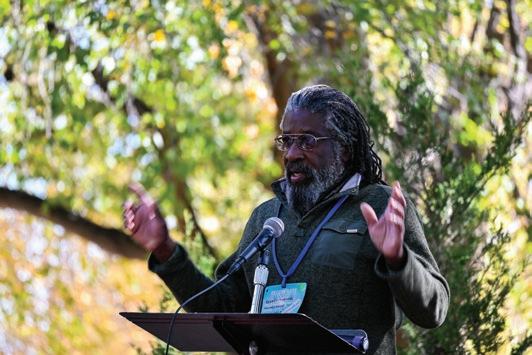
Presenters covered topics as wide ranging as: Weaving to Heal Land and People, Navigating the Rivers of Our Future, A Water Future for All of Us, Grazing for Rain, Making Cents of Heritage Breeds, Adding Value Through the Way We Farm, Restoration of Indigenous Agriculture, A
History of Black Farmers, Weaving a Water Future Together, You’re Gonna Have to Get Creative, and Contemplating the Federal Role in the Regenerative Movement. Roundtables on these topics followed the plenaries so participants could dive deep into the topics and share
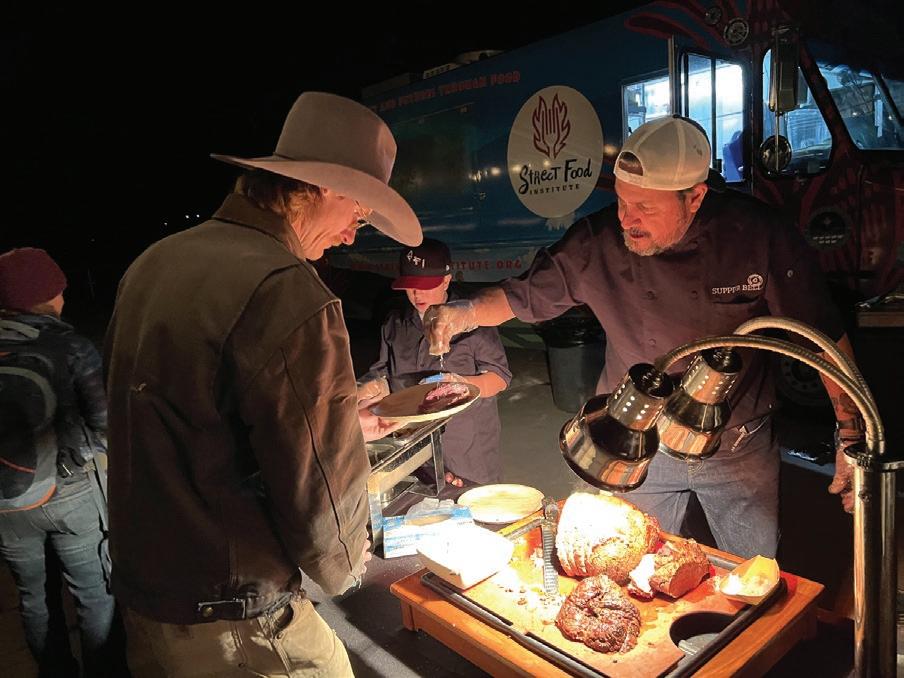
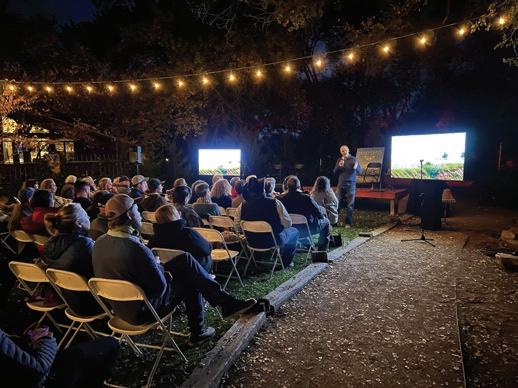
Delicious local food was served by The Street Food Institute for lunches, the pre-conference Social, and the Outdoor Barn Party on Wednesday night which included music by Lone Pinon. In addition, the evening included the presentation of the 2021 New Mexico Leopold Conservation Award to Tuda Crews and the Ute Creek Cattle Company.
An additional part of the conference included a week of virtual workshops on such topics as: Leasing Your Future, Standardbred Heritage Poultry Production, Land Conservation for a Changing Water Climate, So You Want to Buy a Farm.., Solar Grazing, The Meat Sales Matrix, Ground Water and Surface Water in the Law, Using Compost on Dry Rangelands, Getting More From the Other Half, Cultural Appropriation in Regenerative Agriculture, Heritage Cattle, Processor Relations, The Right Business Structure, Carbon Ranch Planning, Regenerating Your Soil Sponge, Introduction to Veterinarian Homeopathy, Leaving a Lasting Land Legacy, and Low-Cost, Low-Risk Grazing.
The conference also included options to participate in 8 in-person field days held from California to Georgia. Field days and topics included: Chispas Farm: Small Land, Big Possibilities: Holistic Management Practices for Urban Land Managers in Albuquerque, NM; The Regen Ranch: Healthy Soil, Healthy Livestock, Healthy People in Oakwood, TX; Rainshadow Organics: Vertically integrated farm-to-table cuisine focused on soil health, diversity, and conservation management in Sisters, OR; Ogallala Field Day: Shifting Production Practices for Effective Water Utilization & Aquifer Recharge in Hereford, TX;
Number 201 h Land & Livestock 13 CONTINUED ON PAGE 14
REGENERATE Evening Social.
Photo Credit: REGENERATE Conference
Renard Turner.
Photo Credit: REGENERATE Conference
Bluesette Campbell, B-C Ranch, Saskatchewan, Canada.
Photo Credit: REGENERATE Conference
2021 REGENERATE Conference Plenary.
2021 HERD Fellows.
Photo Credit: REGENERATE Conference
Zach Ducheneaux, Administrator of USDA Farm Service Agency.
CONTINUED ON PAGE 14
Photo Credit: REGENERATE Conference
Photo Credit: REGENERATE Conference
Program Round Up
CONTINUED FROM PAGE 13
White Oak Pastures: Radically Traditional Farming in Bluffton, GA; Tomkat Ranch: A Day at the Ranch in Pescadero, CA; Mannix Ranch: Partnerships in Ranching and Land Stewardship in Helmville, MT; and Lazy M Ranch: Connecting Healthy Range To Healthy Livestock with Holistic Grazing in Angel Fire, NM.
The REGENERATE Conference partners would like to thank all our sponsors and business partners for their support of this event, particularly: The HERD, #NoRegretsInitiative, the Paicines Ranch, Grasslans Charitable Foundation, Thornburg Foundation, 11th Hour Project, Taos Ski Valley Foundation, Regenerative Agriculture Foundation, Lydia B. Stokes Foundation, Nancy Ranney and David Levi. Business partners included: Old Town Farm, Street Food Institute, Gunthrop Farms, Thousand Hills, Lone Pinon, Mosaic Event Management, Full Image Media, Polk’s Folly Farm, and Routes Bicycle Rentals.
Ogallala Open Gate
On October 27th, 2021, 44 people convened at the brand new civic center in Hereford, Texas to discuss techniques and solutions for water recharge in the Ogallala Aquifer region. HMI Executive Director, Wayne Knight, set the stage by sharing his story of water management on his former ranch in South Africa and stressed our ability as land stewards to make positive impacts, ecologically, socially and financially. Dr. Chris Grotegut, veterinarian and grass, livestock, and crop farmer who hosted the event, outlined his family’s incentive for embarking on a journey towards regeneration. The trend lines on their land were obvious at that time: the water table was declining, the erosion gullies deeper and the yields deteriorating while input costs climbed in relation to income. “If the kids were going to inherit something, then we had to try something different,” says Chris. Chris shared his key realizations:
• Healthy soils are key to effective water utilization in an arid environment.
• Plant diversity is essential for soil health.
• Animals are essential, but the timing of exposure to animals and enough time for plant recovery are critical.
• Tillage accelerates water evaporation and carbon loss from soils
• Plants inject liquid carbon for soil microbes when grazed effectively
• Native grasses and forbs are superbly adapted for animal nutrition and thriving in the local climate
• His experiment found that management and surface conditions
have a huge impact on Ogallala water table recharge over time.
• With judicious pumping of wells, water tables rise over time.
• Findings may be very site specific. Principles can help everywhere.
• Regenerative Agriculture is not just another fad. It is a cause to work towards as working with nature builds stability in water availability, community sustainability, healthy food and economic sustainability.
The next speaker was RN Hopper, a continuous no-till farmer from Petersburg, Texas. He and his wife, Lyndi, live on the farm with their three children. They grow corn, cotton, wheat, sorghum, and sunflowers. RN is one of the founders and current President of the No-Till Texas organization whose focus is to increase awareness of soil health issues and to establish a network of producers helping each other implement soil conservation practices. RN encouraged the group to think of their land management practices through a lens of stewardship. Only when we are responsibly caring for and nurturing the land will we see positive results in soil health and financial health.
Chris, RN and Wayne all shared personal stories and experiences that spoke to approaches that foster profitable, sustainable, and regenerative practices.
The group enjoyed a delicious lunch catered by Parson’s Steakhouse of Hereford and took advantage of the unstructured time to network and chat with other attendees.
After lunch, Dr. Richard Teague, Professor Emeritus of Grazing Ecosystems Ecology in the Department of Rangeland, Wildlife and Fisheries Management at Texas A&M University shared his research findings from his study exploring the hypothesis that using Holistic Planned Grazing improves soil health and is a sustainable base to improve ecosystem function and increase net farm profits.
Co-funder and collaborator, Kara Kroeger of NCAT Soil For Water, presented on ways the Soil for Water Program supports farmers, ranchers, and land managers across the United States who are taking steps to catch and hold more water in the soil.
Dr. Pancho Abello followed Kara and spoke on our need to change how we value water and how our current paradigm, that water is worth what it costs to pump out of the ground, is deeply flawed and needs to change. Likewise, we need to understand that our current production paradigm, capital intensive agriculture, is a significant impediment to changes towards regenerative agricultural practices. He shared how there either needs to be significant institutional change, in terms of consumer demand, financial or crop insurance, or change will only come through new entrants to the industry, and that will be too slow. The current incentives and entrenched production models and support incentives are not enough to foster largescale conversions to regenerative agriculture. However, folks like Chris Grotegut, Wayne Knight, and RN Hopper are showing these new practices work. And a lot of attendees are as well. And, most
14 Land & Livestock h January / February 2022 CONTINUED ON PAGE 14
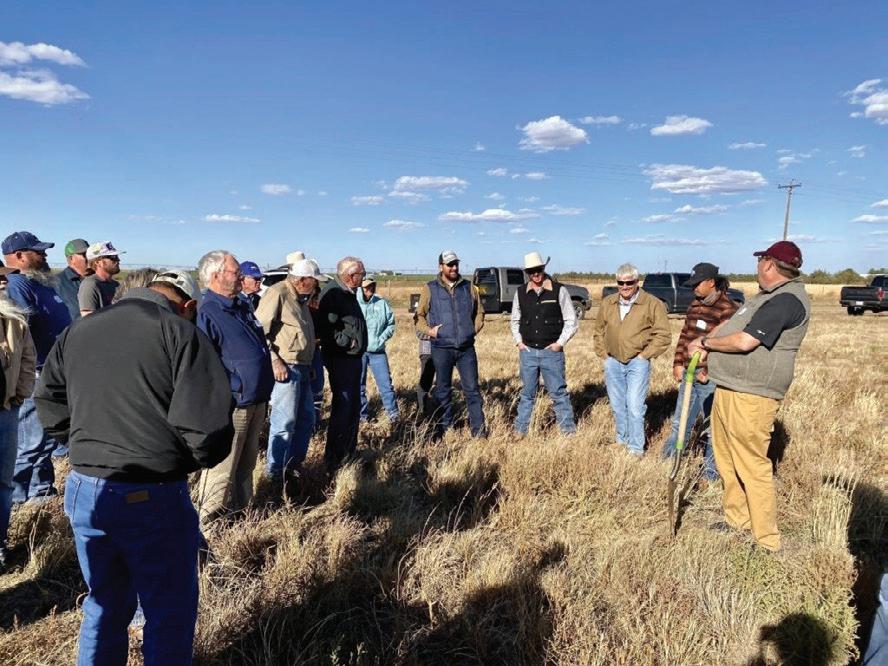
Ogallala Open Gate participants learning about regenerative agriculture and water infiltration.
importantly, there is help and support available through HMI’s RAMP Peer Mentorship Program that supports incremental change towards more regenerative practices.
The group caravanned out to Chris’s land in the later afternoon and witnessed how his management practices have produced more diversity in their grass species, more growth and healthier soils as well as better water infiltration for aquifer recharge.
Every raindrop counts and in uncertain times like these, farming and ranching can be stressful. Solutions can seem hard to come by, but it is reassuring to know that some folks within the Ogallala Aquifer Region are finding ways to improve their situation.
Do you intend to change management practices or apply ideas you learned during this course?
Did you expand your network today by meeting new people or learning about resources available?
Overall satisfaction of the event?
Would you recommend this event to others?
Ogallala Open Gate Results.
A huge thank you to our funder the Tecovas Foundation for making this day possible. Thank you to our collaborator and co-sponsor, NCAT, for funds and outreach support. And thank you to Ogallala Commons and the Dixon Water Foundation for collaboration and support in putting the day together.
The attendees comprised a diverse group of seasoned and beginner ranchers, researchers, educators and researchers from Texas, Oklahoma, New Mexico and Louisiana. The expertise and experience of the group produced in-depth discussions and great learning moments for all involved.
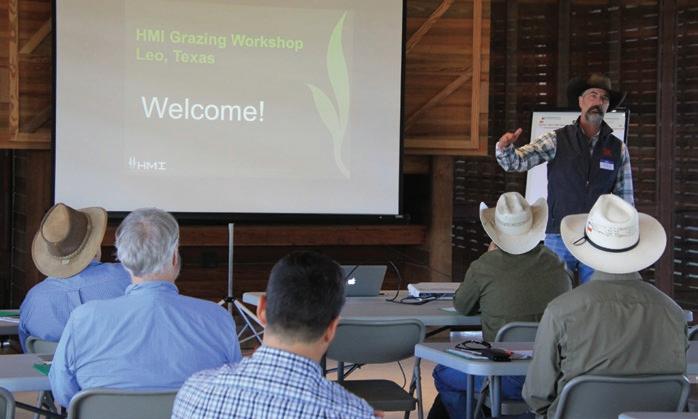
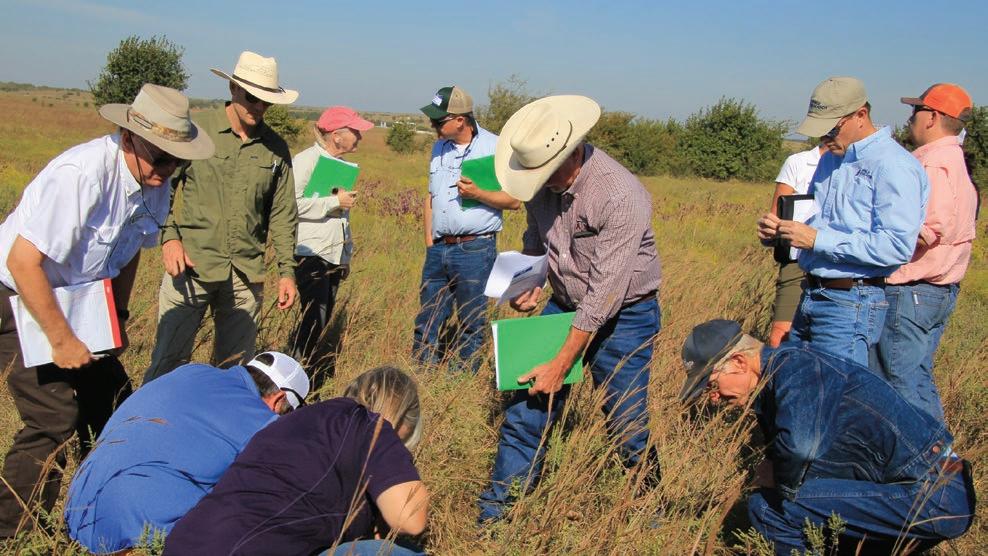
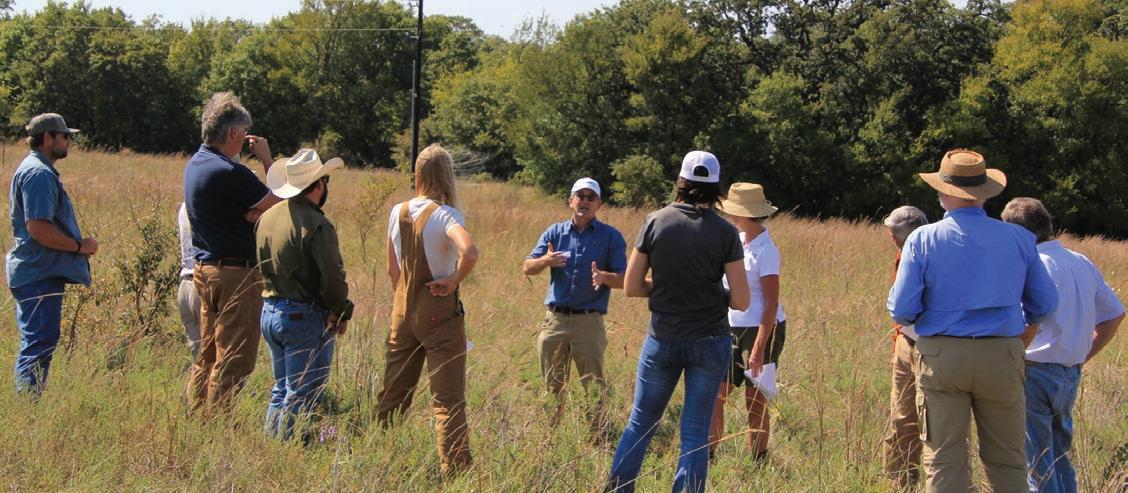
Wayne Knight, South African rancher, HMI’s Certified Educator, and now HMI’s Executive Director, facilitated the interactive, and largely field-based training. A highlight of the event was conducting forage assessments in north Texas Tall Grass Prairie. The rangeland has been grazed by densely spaced herds of sheep and cattle and given extended recovery periods to yield high forage production, diverse prairie flora and abundant biodiversity. This management regimen promotes healthy soils, ample rainfall infiltration and reduced run-off.
Leo Ranch Low Risk, Low Cost Grazing Workshop
On October 7th and 8th HMI presented a Low Risk, Low-Cost Grazing Workshop to 33 participants who manage almost 35,000 acres. The event was hosted at the Dixon Water Foundation’s award-winning Leo Ranch, Betty & Clint Josey Pavilion, near Decatur in north Texas. In the risky and uncertain ranching environment where input costs continually rise and income fluctuates widely, approaching ranching with a low-cost focus can yield a surprising profit. The low-risk component of the workshop covered two vital aspects— effective drought planning and learning new techniques to increase stock density in incremental steps that do not jeopardize business profitability.
Wayne highlighted the lead indicator monitoring for the critical components that contribute most to rancher’s stress, risk and profitability, which are animal performance, forage utilization, and environmental health. The concept of running inexpensive trials to determine the impact of animal density, plant recovery and depth of graze on ecosystem function was both discussed and demonstrated. A key of the event was linking the theory of managing these interrelated concepts to hands-on tools and observations that attendees can apply when they get home. Turning the learning into meaningful interpretation on how to act practically to achieve the objectives of improving rangeland production, profitable animal performance and managing forage flow to mitigate drought risk were achieved.
Number 201 h IN PRACTICE 15 CONTINUED ON PAGE 16
80%
100%
100%
100%
Wayne Knight leading a discussion on low risk, low cost grazing out in the field at Leo Ranch.
Small group activity out in the field to reinforce classroom presentations were a highlight for many participants.
CONTINUED ON PAGE 16
Casey Wade explaining the Leo Ranch’s approach to low cost ranching.
Program Round Up
CONTINUED FROM PAGE 15
Casey Wade, Dixon Water Foundation’s Vice-president of Ranching Operations, gave an excellent presentation on how his team have used forage assessment, drought-safe dates and an integrated planning process to reduce animal numbers early to maintain animal performance, protect enterprise net worth and improve rangeland health during drought conditions. He stressed the value of acting early, being creative and assessing the long-term impact of each reductions on each class of stock on future cashflows.
Melissa Bookhout, Dixon Water Foundation’s Treasurer and North Texas Education Coordinator gave a great presentation on rangeland monitoring. She outlined the data they collect, and how the data is used to inform decision-making on animal performance and ecosystem health over years. The data and results are very impressive.
Thank you to Amber Arseneaux from the Texas Land Conservancy who presented on her organizations efforts to keep Texas working lands in agriculture amid the ever increasing pressure placed on wild spaces and food production in north Texas as demand for housing and small holdings increases. She explained the benefits of creating structures to protect land from future development and the tax benefits from doing so.
HMI would like to thank all involved for the learning, sharing and contributions to a great event. Thanks to Dixon Water Foundation for being wonderful hosts on an exemplary learning site!
Online Succession Planning Course Report
From September 22nd – October 13, 2021 HMI, in conjunction with the 2021 REGENERATE Conference, ran a Lessons in Leaving a Land Legacy: A Holistic Succession/Transfer Planning Workshop. 27 participants joined the workshop online from all over the US and Canada. Experienced Certified Educator and HMI Board Member, Kelly Sidoryk facilitated the workshop with assistance from HMI Program Manager, Marie von Ancken.
The succession planning issue is on the top of many people’s minds. So many of the tools Holistic Management offers are helpful to aid in the planning process. Many of the participants had commonalities but they also all came with their own unique set of circumstances. Having a participatory approach gave us the opportunity for real shared learning with the presenter, guest speakers and all of the participants. The importance of developing a shared three-part Holistic Goal/Context was stressed throughout as was the realization that succession planning is a process and not just a one-time event. Kelly covered family business theory and discussed the importance of continuing open and positive communication and reviewed roles, rights and responsibilities of all
stakeholders and explored different personality profiles.
Did your participation in this workshop help motivate you to review, update or create a contingency plan (ie. will, estate plan, etc.)? 80%
Overall satisfaction of the workshop?
Would you recommend this workshop to others?
Online Succession Planning Course Results
Thank you to the Thornburg Foundation for making this workshop possible.
2021 Grow the Growers Report
100%
100%
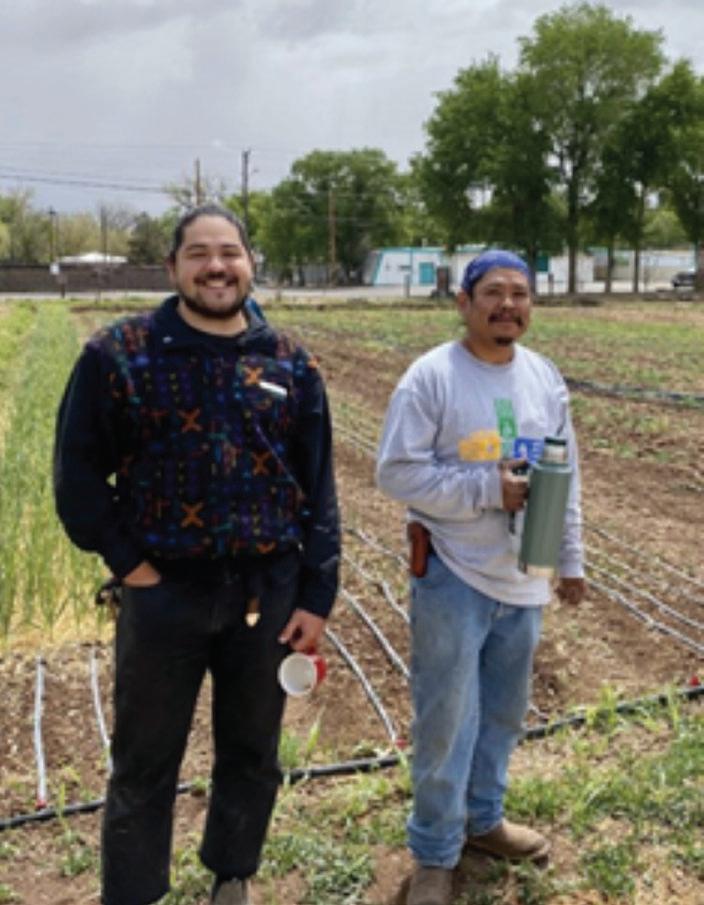
HMI’s 2021 Grow the Growers training has come to an end. This training is a partnership between HMI, the Bernalillo County Open Space and New Mexico State University (NMSU) Extension. The goal is to provide training in holistic goal setting, decision testing, holistic financial planning, land planning and holistic cropping planning to the interns participating in the Grow the Growers Program at the Gutierrez Hubbell House in the South Valley of Albuquerque, New Mexico. As in former years, Holistic Management International facilitated three 2-day intensive courses for the Grow the Growers Program first year interns and
Jeff Goebel, a Professional Certified Educator with HMI, taught the introduction module in April. This course focused on key Holistic Management planning concepts and principles to help participants manage their farm/ranch for the triple bottom line and more effectively manage resources. Participants experimented with their ability to observe, understand and make decisions based on what they can control. Participants were more talkative than most years which brought about broad conversations of the potential implementations of Holistic Management practices in farming and ranching, in family situations, in policy and government and in community development. The group reviewed last year’s holistic goal and engaged in a conversation about their values and hopes for this year. The participants learned about on-farm decision testing and practiced with a decision case example. Through these new skills participants now have the
16 Land & Livestock h January / February 2022 CONTINUED ON PAGE 14
How to plan for risk? 81% Ability to trial approaches to understand the importance of animal density, plant recovery and depth of graze? 81% Overall satisfaction of the event? 100% Would you recommend this event to others? 100% Low Cost Low Risk Grazing Course Results, Leo Ranch.
Grow the Growers interns at the Gutierrez Hubbell House crop fields.
knowledge and tools to improve their ability to not only work with nature and increase productivity but to work together in a group, team or community environment.
During late June to early July, Sarah Williford led the Holistic Cropping Planning Module. She covered the necessary material for participants to begin a successful holistic cropping plan. They began with a review of Whole Farm Resource Inventory and Holistic Goal Setting and talked about how a holistic crop plan is directly related to and reliant on both of these foundational documents. Sarah also shared the benefits of creating a holistic crop plan.
Key learning points and outcomes of the workshop were:
• Key crop planning principles and guidelines
• Ecosystem Processes & Soil facts and terms
• Tools for Managing Ecosystem Processes
• Farm Ecosystem Strategies
• Crop Rotation and Sequencing
• How to develop your Holistic Crop Plan, the first four steps (tying it to your holistic goal)
• Bio-monitoring techniques and General Monitoring of our actions taken (part of the feedback loop)
This group had five in-class activities plus four homework assignments throughout the workshop guiding participants to and through the first four steps of creating a holistic crop plan. Participants finished with a list of next steps for their personal garden plots as well as steps towards ways Grow the Growers can spend time together more effectively.
Long-time HMI Certified Educator, Cindy Dvergsten facilitated the final session in August via Zoom. Through this training Cindy provided the group with key land planning principles and practices to help participants create a whole farm land plan and make land planning decisions effectively. Participants explored key infrastructure/land improvement projects in the context of their whole farm goal and developed management consideration lists, land plan options and explored tool options and the return of investment of the different land planning options.
Participants mapped a future landscape as outlined through the whole farm goal, identified how key natural resources, production, and social issues are affecting the land planning process, and they learned how to prioritized infrastructure development to increase productivity and profit.
As usual, it was a joy to work with the Grow the Growers Program. Next year we are looking forward to broadening our training and hopefully including more stakeholders in the conversations!
Thank you to the Thornburg Foundation for making this course possible!
Overall satisfaction with all three courses?
Would you recommend this course to others?
Intent to change management practices as a result of this training?
More confident in your ability to make complex decision on your farm/ranch?
Increased ability to create a whole farm goal? 100%
Increased ability to identify healthy soil? 100%
Increased ability to improve key resource concerns? 100%
Confidence creating a land plan ?
Key Outcomes from Program (percentage of participants).
Regen Ranch Open Gate Report
The Regen Ranch Field Day in Oakwood Texas, supported by the Dixon Water Foundation, the Texas Grazing Land Coalition, and Tarrant Regional Water District and held in conjunction with the 2021 Regenerate Conference, brought a unique mix of 53 individuals who impact 46,666 acres—from students to agriculture producers to health care professionals. The theme of the day, “Linking Soil Health, Animal Health, and Human Health,” allowed them to explore the connections between them.
The day was grounded by Regen Ranch owner, Christine Martin, and Betsy Ross, who has been a science teacher, rancher, Holistic Management mentor, and Co-Owner/Founder of Betsy Ross GrassFed Beef. Betsy is also the CEO and President of Sustainable Growth Texas, LLC, an organization that helps people regenerate their soil and manage for desired plant communities.
“Keeping the life in the soil, that’s what matters,” said Betsy. “If you nurture the soil, it will take care of making health forage, which means healthy cows that don’t need antibiotics, hormones, or steroids,” she added. “You’ve got to be holistic,” Betsy stated.
Wayne Knight, HMI Executive Director, built on Betsy’s theme that making good management decisions is key to soil and plant health, as well as animal health. Wayne shared an introduction to tools that help ensure animal performance goals are being met. He also shared key indicators for monitoring that provide cues as to the impact management decisions are making on the health of animals and the profitability and sustainability of a farm/ranch, and how to balance those key factors.
Connecting human health as the next step in the chain, Dr. Fred Provenza introduced the pitfalls of our modern nutritional health paradigm, which assumes that our primary nutritional requirements; starch, proteins, and fats are what nutrition is about. Fred demonstrated research that shows how healthy foods are produced from healthy soils. In human, animal, and plant health, nutrition is the key to everything.
According to his presentation, healthy foods are being produced in ways that make them incipit and bland, for example too much water promotes growth versus richness. “Foods do not taste the way food did when our grandparents ate them,” he added. “Meanwhile, unhealthy foods are made to taste good through additives and flavorings, even though they are not good for us,” he stated. “We need to return to real food with real nutrition to attain more healthy lives,” Provenza added.
Dr. Stephan van Vliet added to Provenza’s presentation by explaining how the components of food are designed to heal and
Number 201 h IN PRACTICE 17
100%
100%
100%
100%
100%
CONTINUED ON PAGE 18
Dr. Arland Hill
Program Round Up
CONTINUED FROM PAGE 17
reduce inflammation in the body. These healing qualities are absent in industrially produced foods as they require soil health. They require diverse soil microbiology that accompanies biodiverse plant populations. Van Vliet’s research links food production systems to the nutrient density of food and subsequent effects on human health.
Dr. Arland Hill, Clinical Director of Complete Care Wellness Centers, focuses his work on the use of science-based natural therapies, including nutrition, for the management of chronic diseases. His practice works to explain how he sees scores of patients who are chronically ill and whose metabolic diseases reflect what they eat. With a goal of improving patient nutrition and health beyond clinical boundaries, Hill became a “ranching doctor” as the owner of Harvest Hills Ranch, a regenerative agriculture ranch aimed to create health in those it serves. Much like Ross’s analogy on how plant species indicate the health and deficiencies in soil, Hill’s discussion added a layer to the theme that people’s health reflects the health of what they eat.
Learning to See
CONTINUED FROM PAGE 5
The framework reminds us that to apply any one of the ecosystem management tools, we will need creatively think through all the options available and also creatively address the money/labor required. In my copy of the framework, I’ve added ‘consensus skills’ to creativity, money & labor. It is too easy to overlook the importance of avoiding or resolving conflict, or even discovering an invisible existing conflict with others. We have to improve our skills at resolving and preventing conflict. Doing so transforms ‘getting nowhere fast’ to ‘resolving issues with synergy and even more creativity.’
I drove from Red Bluff to Pasco, Washington in the late 1980s to attend a conference created to assemble groups of people who had been learning to manage holistically. The training had been funded by a Kellogg Foundation grant. Holistic Management® Certified Educators Jeff Goebel and Don Nelson provided the grant leadership. I walked into the hotel lobby early to watch for any arriving people I might recognize. As ranchers, environmentalists, and agency people arrived, I was amazed at the big smiles and hugs I was observing. At that time, environmentalists and ranchers seemed to be at odds with each other all over the west and about all kinds of issues. But here I watched with astonishment as they behaved as long lost best of friends.
After the conference was over, about 30-40 people from various countries stayed to talk
Chispas Farm Open Gate Report
On October 12, 2021 35 people braved the cold weather to attend the Chispas Farm Field Day in conjunction with the 2021 REGENERATE Conference. Certified Educator and rangeland consultant Kirk Gadzia, Chispas Farm Owner, Casey Holland, and a stellar lineup of other practitioners and speakers explored regenerative and Holistic Management practices to create a successful and scalable urban farm business.
The day began with a short overview of Holistic Management led by Kirk Gadzia followed by a brief history of Chispas Farm by Farm Owner Casey Holland and Farmer Reyna Banteah. Chispas Farm is a 4-acre farm located in Albuquerque’s South Valley on occupied Tiwa land. They grow over 120 varieties of heirloom vegetables and fruits, have 100 laying hens for eggs, and also keep sheep, goats, and ducks. They are currently transitioning the farm to no-till agricultural practices and strive for a regenerative and sustainable closed loop cycle. They save a variety of seeds and have perennial pasture for their livestock to graze. Their primary method of pest management is adequate crop
about how everyone who was jazzed about Holistic Management might figure out how to more effectively spread the learning, work together, and support each other’s efforts. It seemed like an hour went by with lots of talking, but no agreement was occurring. Then someone suggested we ask one of the participants if he would facilitate the discussion to see if we could reach consensus on the right thing to do.
I was amazed at the next two hours facilitated by Jeff Goebel. The group, broken into smaller groups at times, came up with each individual’s ideas. Finally, the process Jeff used created a written plan on poster paper that the group read aloud together. Everyone supported this plan. Jeff had used the consensus-building process developed by Robert Chadwick and moved us from no agreement to everyone agreeing on the right thing to do.
One of the things I learned at the conference was the power of listening more carefully and respectfully to someone. I thought respectful listening meant being polite and attentive to what someone was saying, but I was wrong. It’s much more than that, and I had to learn more. Since that conference, learning Chadwick’s process in more depth from Jeff Goebel has made handling difficult situations much easier for me.
I continue to learn. Conflicts are part of life, whether my own internal “What shall I do?” conflicts or those I encounter between people or groups. Now, not only do I enjoy helping people learn to understand and practice using the Holistic Management® Framework, I also enjoy
helping others learn how to resolve conflicts thanks to training and mentoring from Jeff.
The Holistic Management® Framework developed through Allan Savory’s work and the consensus approach Robert Chadwick developed are the two simplest and most powerful processes I have discovered to create the lives we want for ourselves and for future generations. Everyday people can learn and practice using them both. Skills will improve every year with practice.
During the two years of training I enjoyed in New Mexico long ago, I used to confess to Savory about all the reasons it would be difficult for me to do whatever assignment I had been asked to do. He would say something like ‘just do it, practicing doesn’t mean it will be perfect, you’ll do better each time, just do it.’
The alternatives to managing holistically that are being used universally haven’t worked very well to improve our management of complex systems and human interrelationships in families, businesses, organizations, or government. In contrast, seeing improvements in land and money and the human relationships with Savory’s work and Chadwick’s work has been extremely eye-opening, exciting and helpful to me in my personal and public life. I highly recommend learning more about both of their processes.
Richard King can be reached at rking1675@gmail.com. To access Bob Chadwick’s work go to: https:// managingwholes.com/--consensus.htm/.
18 Land & Livestock h January / February 2022
rotation and planting lots of flowers for beneficial insects, and soil health is their number one priority. Chispas Farm was founded in 2001 and since then has grown and evolved much over the last two decades. Casey Holland has been running Chispas since 2017.
Kirk presented on holistic goal setting and how it is useful when managing land. Participants were given the opportunity to start working on their own Holistic Goal while others shared their goals with the group. Melanie Kirby of Zia Queen Bees presented on beneficial pollinators and how to support them. She brought a number of props to share with the group including a portable viewing hive with real bees!
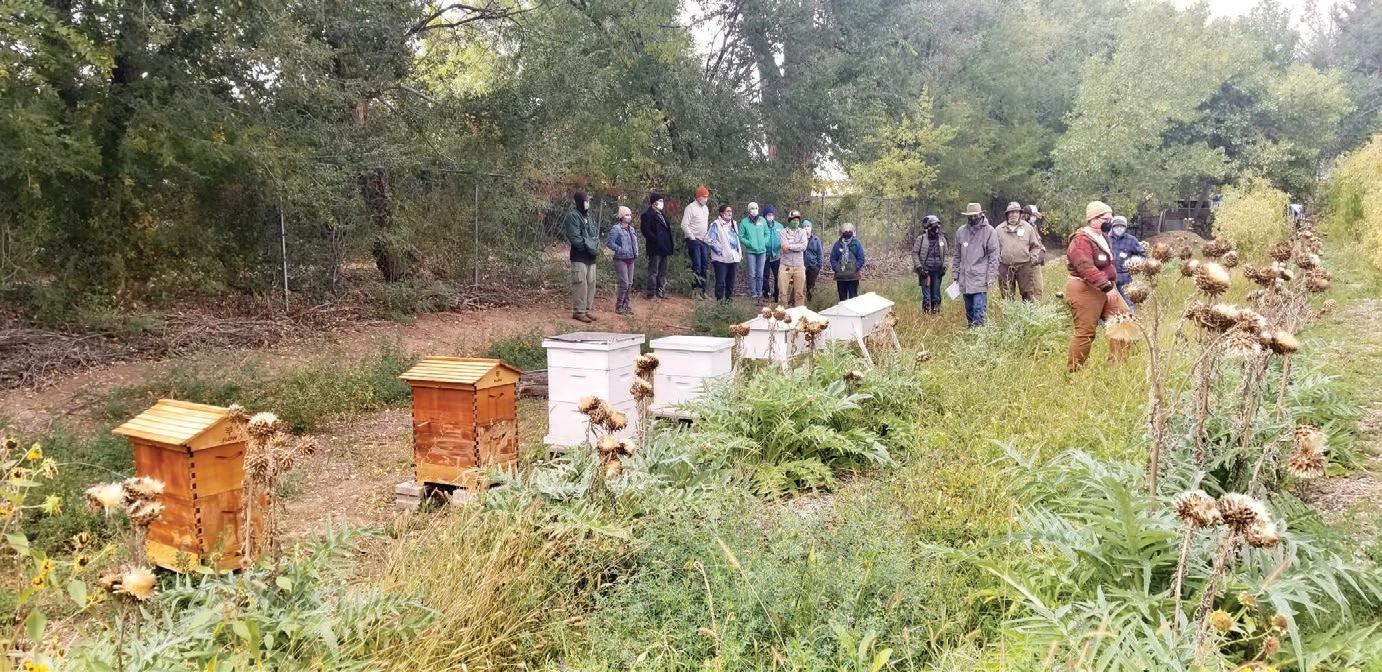
The group enjoyed a lunch catered by Three Sisters Kitchen, an incredible local non-profit community food space in the heart of downtown Albuquerque where delicious, affordable, and locally produced foods come together to nourish the community from the ground up. The lunch featured produce from Chispas Farm!
After lunch Casey and Kirk lead a tour around the farm, pointing out and discussing different enterprises, land management techniques, cover cropping practices, water management trials and errors, and how they all impact soil health.
The day concluded with a Local Young Producer Panel of Reyna Banteah, Sage Hogan (owner and farmer at Tierra Sagrada Farm), and
From the Board Chair
BY WALTER LYNN
In this month’s article, I would like to share how my path last summer connected unexpectedly with someone I had not expected.
A former special coworker called last summer, and I asked if I could meet him at our local farmers’ market the upcoming Saturday. I indicated I could meet Mike at the farmers’ market. Mike is involved with the Central Illinois Citizens’ Climate Lobby (CCL) Chapter. They are committed to building political will for climate solutions. Their goal is developing respectful relationships, cultivating and demonstrating local support, and promoting a climate solution having appeal across the political spectrum.
On that Saturday morning, I met Adam Farcus; Adam was a summer artist at our local art association. Mike and Adam are both active in the local CCL chapter. Mike wanted to introduce me to Adam. We had a great conversation; I listened to the impact Mike and Adam we’re trying to develop politically with our state and federal legislators. I did not have my HMI hat on that Saturday but wanted to give more context to the efforts Mike and Adam were fostering. I shared how important soil and water were to the carbon conversation. Mike and I have a strong relationship and have a mutual respect. It was the first time I had met Adam, so he respected the bond Mike and I share.
Mike asked if I would participate in a zoom call with our local congressman’s office. He wanted me to discuss and support a Senate bill relating to carbon measurement. I agreed and participated on the call with the congressman’s staffer.
Adam is a young artist raised in the rural town Coal City, Illinois.
Casey Holland. Thanks to the Thornburg Foundation for their support of this event!
Did
Adam has traveled and exhibited in numerous venues, including the Modern Museum of Art Fort Worth; Vox Populi, Philadelphia; the American University Museum; and Advance Art Museum, Changsha, China. On his website he states, “I approach the concerns of climate change, social justice, and their intersections from a phenomenological point of view. Phenomenology offers us a lens to understand how phenomenon that permeate our culture, such as climate change and injustice, should not be accepted as “things as they are” or pre-determined outcomes; rather, they are understood as constructed and institutionalized. The purpose of my work is to ask viewers not to ignore climate change or its effects, to confront their fears and anxieties, acknowledge how we are part of the issues, and find motivation and strength to be part of the solutions.”
Adam asked for examples to sense the power of the ecological systems I had presented to him and Mike. Some I discussed he was familiar with locally, but he wanted more understanding. I kidnapped him for a road trip to Rick Clark’s farm near Willamsport, Indiana. While we were there, he asked what color for me describes climate issues. I shared with him it is green for me. Green gives me the possibilities we can create on our farms and ranches. Others would share red or yellow as their colors. He then uses a book of lighting gels over a camera lens to capture the related emotion.
Our discussion made me realize how our perspectives literally influence how we see the world and take in information and process it. We need to really understand that concept if we are going to be better able to work with others who may not share our perspective. Through that understanding we can shape better coalitions and collaborations to solve the issues we face. Holistic Management is one lens I know I have found to be helpful for truly seeing the natural world and improving our management to partner with Nature.
Number 201 h IN PRACTICE 19
you expand your network today by meeting new people or learning about resources available? 100% Overall satisfaction of the field day? 100% Would you recommend this field day to others? 100% Do you intend to change management practices or apply ideas you learned during this field day? 100% Participant Results.
Chispas Farm
GRAPEVINE
The NEWS FROM HOLISTIC MANAGEMENT INTERNATIONAL
people programs projects
h h
Board Changes
During HMI’s annual board meeting in November, Casey Wade, was voted on as a new member on HMI’s Board of Directors. Casey is the Vice-President of Ranching Operations with the Dixon Water Foundation and manages the Foundation’s North Texas and West Texas ranches. He is a husband and father of three sons. He is a graduate of Hardin Simmons University and has spent most of his career managing hunting and wildlife operations as well as livestock
Development Corner
CONTINUED FROM PAGE 24
“This is why I love Holistic Management. It attracts such amazing people. It’s great to help people in a completely different way. They learn things they don’t expect. I had one student in the Beginning Women Farmer program who was working on her holistic goal at the end of first class. At the end of the class, we shared what their ‘take away’ moment was. She started crying, and said: ‘When I wrote my future vision, I realized that the farm I have is nothing like the farm I want to have.’ It was great that she caught that in that moment. The holistic goal helps you to pull back and gives you the big picture.”
The NE SARE Professional Development Program totally changed the way that Elizabeth worked with farmers, but it also influenced numerous other service professionals work as well as Elizabeth has been a part of a more recent program with other service professionals.
“Holistic Management gives you permission to talk about personal things which is necessary because farming is personal. As service professionals we need that information to help farmers make those decisions, like implementing conservation practices. The practices I recommend are based on the values the farmer has articulated and there is a higher adoption rate because I understand their resources. Our goal is higher adoption rates of conservation practices so this allows us to better understand the needs of the producers and help them determine the best practices for them.”
Elizabeth is passionate about helping other service providers learn the skills she has found so valuable. She even donated her services as a Certified Educator mentor to Ashley Pierce who is working with extension at Cornell and who wanted to become a Certified Educator. “Ashley’s been fantastic,” says Elizabeth. “She’s done incredible work with her Holistic Management learning community that was required as part of the NE SARE program. She invited me out to speak during a field day with monitoring and pasture management. I want to share what I know because people did that for me. HMI put in a lot of time and mentoring when I was going through the Certified Educator program and people were always willing to help. I’m just paying it forward. I really believe in the Certified Educator Training Program. It was like getting a masters for me.
“As a service professional I am talking about the ecosystem processes
ranches.
Casey believes it is our job to carefully study the land and wildlife, in order to work with, rather than against, these systems. In this way, people and livestock can be part of the solution instead of contributing to the problem. Welcome Casey!
HMI would also like to thank departing board members, Gerardo Bezanilla, Colin Nott, and Brad Schmidt for their years of service on HMI’s board.
all the time with farmers. Rather than saying ‘You have an erosion problem’, we move beyond that looking at the root cause of why the soil is bare in the first place. We look at what happens to the water cycle if the water is not infiltrating. We look at how the soils are drying out and the energy flow is decreasing. Dams aren’t going to work. I want them to see that if they have more water infiltration, then there will be more organic matter and more biology.”
Besides her day job as an NRCS Employee, Elizabeth also is an instructor for HMI’s Online courses. “The cool thing about online classes you can reach a lot of people in a lot of different areas and a lot international students, particularly from Canada,” says Elizabeth. “I also teach soil health through Cornell. It’s a challenge teaching in very different parts of the world with different brittleness, but I enjoy the challenge.
“I particularly love reading people’s holistic goals because there are a lot of different people and I’m surprised about how much I relate to each holistic goal. I’ve only read one holistic goal that I didn’t resonate with at all. They are very similar because we all want the same things when it comes to values.
“Really, what we are focused on in the training is about farming smarter not harder and improving the decisions you make. That’s what Allan was getting at. It’s about improving decision making to get what you want. My house was a specific example. I was very intentional and I articulated what I valued and what I needed to have in place and the future vision and that helped guide me to get what I wanted. When people come to my place for my AirBnB, they feel that intentionality and peace. I created that space and when I had a profit from, I could then invest in the purchase for the space, like nicer furniture.
“I love adapting Holistic Management to non-farm examples. For example, with my AirBnB, the resource conversion weak link is the space that is available. The product conversion weak link is the cleaning and prep. Marketing is about selling the space for the price I want. My weakest link is in product because I need cleaning help. I’m getting more business than I can handle. But I can get distracted with getting new sheets or creating a website. So I focused on getting more cleaners.
“Holistic Management has given me so much and I’m so grateful. That’s why I’m doing this training. Others have given me encouragement and it feels good to be an instructor and leader in the Holistic Management community, particularly as a woman.”
20 IN PRACTICE h January / February 2022
Casey Wade
Certified Educators
The following Certified Educators listed have been trained to teach and coach individuals in Holistic Management. On a yearly basis, Certified Educators renew their agreement to be affiliated with HMI. This agreement requires their commitment to practice Holistic Management in their own lives and to seek out opportunities for staying current with the latest developments in Holistic Management.
UNITED STATES
NEW HAMPSHIRE
Seth Wilner
Newport 603/863-9200 (w) • seth.wilner@unh.edu
NEW MEXICO
Ann Adams
Holistic Management International
Albuquerque 505/842-5252 ext 5 anna@holisticmanagement.org
Kirk Gadzia
Bernalillo
505/263-8677 (c) • kirk@rmsgadzia.com
Jeff Goebel
Belen
Deborah Clark
Henrietta
940/328-5542
TEXAS
deborah@birdwellandclarkranch.com
Kathryn Frisch
Dallas 214/417-6583
kathytx@pm.me
Wayne Knight
Holistic Management International
Van Alstyne 940/626-9820
waynek@holisticmanagement.org
Tracy Litle
CALIFORNIA
* Lee Altier College of Agriculture, CSU
Chico
530/636-2525 • laltier@csuchico.edu
Owen Hablutzel Los Angeles
310/567-6862 • go2owen@gmail.com
Richard King Petaluma 707/217-2308 (c) rking1675@gmail.com
Doniga Markegard Half Moon Bay 650/670-7984 Doniga@markegardfamily.com
* Kelly Mulville Paicines 707/431-8060 • kmulville@gmail.com
Don Nelson Red Bluff 208/301-5066 nelson-don1@hotmail.com
Rob Rutherford San Luis Obispo 805/550-4858 (c) robtrutherford@gmail.com
COLORADO
* Joel Benson Buena Vista 719/221-1547 joel@paratuinstitute.com
Cindy Dvergsten Dolores 970/882-4222 cadwnc@gmail.com
Tim McGaffic Dolores 808/936-5749 tim@timmcgaffic.com
* Katie Belle Miller Calhan 970/310-0852 heritagebellefarms@gmail.com
IDAHO
Angela Boudro Moyie Springs 541/ 890-4014 angelaboudro@gmail.com
KANSAS
William Casey Erie 620/423-2842 bill.caseyag@gmail.com
MARYLAND
Christine C. Jost
Silver Springs
773/706-2705 • christinejost42@gmail.com
MICHIGAN
Larry Dyer Petoskey 231/881-2784 (c) ldyer3913@gmail.com
MISSISSIPPI
* Preston Sullivan Meadville 601/384-5310 (h) preston.sullivan@hughes.net
MONTANA
Roland Kroos Bozeman 406/581-3038 (c) • kroosing@msn.com
* Cliff Montagne Montana State University Bozeman 406/599-7755 (c) montagne@montana.edu
NEBRASKA
* Paul Swanson Hastings 402/463-8507 • 402/705-1241 (c) pswanson3@unl.edu
Ralph Tate Papillion 402/250-8981 (c) • tater2d2@cox.net
INTERNATIONAL
AUSTRALIA
Judi Earl Coolatai, NSW 61-409-151-969 judi_earl@bigpond.com
Graeme Hand Franklin, Tasmania 61-4-1853-2130 graemehand9@gmail.com
Helen Lewis
Warwick, QLD 61-4-1878-5285 hello@decisiondesignhub.com.au
Dick Richardson Mt. Pleasant, SA 61-4-2906-9001 dick@grazingnaturally.com.au
* Jason Virtue Cooran QLD 61-4-27 199 766 jason@spiderweb.com.au
Brian Wehlburg Wauchope NSW 61-0408-704-431 brian@insideoutsidemgt.com.au
CANADA
Don Campbell Meadow Lake, SK 306/236-6088 • doncampbell@sasktel.net
541/610-7084 • goebel@aboutlistening.com
NEW YORK
* Erica Frenay
Brooktondale
607/342-3771 (c) • info@shelterbeltfarm.com
* Craig Leggett
Chestertown
518/491-1979 • craigrleggett@gmail.com
Elizabeth Marks
Chatham
518/567-9476 (c) • elizabeth_marks@hotmail.com
Phillip Metzger
Norwich 607/316-4182 • pmetzger17@gmail.com
NORTH CAROLINA
Christina Allday-Bondy
Hendersonville
512/658-2051 • christina.alldaybondy@gmail.com
NORTH DAKOTA
* Joshua Dukart
Hazen
701/870-1184 • joshua_dukart@yahoo.com
SOUTH DAKOTA
* Randal Holmquist
Mitchell 605/730-0550 • randy@zhvalley.com
Ralph Corcoran Langbank, SK 306/434-9772 • rlcorcoran@sasktel.net
Blain Hjertaas Redvers, SK 306/452-7723 bhjer@sasktel.net
Brian Luce Ponoka, AB 403/783-6518 lucends@cciwireless.ca
Noel McNaughton Edmonton, AB 780/432-5492 noel@mcnaughton.ca
Tony McQuail Lucknow, ON 519/440-2511 tonymcquail@gmail.com
Kelly Sidoryk Blackroot, AB 780/872-2585 (c) kelly.sidoryk@gmail.com
FINLAND
Tuomas Mattila Pusula 358-407432412 tuomas.j.mattila@gmail.com
Orange Grove 361/537-3417 (c) • tjlitle@hotmail.com
Peggy Maddox
Hermleigh
325/226-3042 (c) • peggy@kidsontheland.org
Peggy Sechrist
Fredericksburg 830/456-5587 (c) • peggysechrist@gmail.com
WISCONSIN
* Larry Johnson
Madison 608/665-3835 • larrystillpointfarm@gmail.com
* Laura Paine Columbus 608/338-9039 (c) • lkpaine@gmail.com
For more information about or application forms for the HMI’s Certified Educator Training Programs, contact Ann Adams or visit our website: www.holisticmanagement.org.
*
These associate educators provide educational services to their communities and peer groups.
NAMIBIA
Usiel Seuakouje Kandjii
Windhoek 264-812840426
kandjiiu@gmail.com
* Colin Nott Windhoek
264-81-2418778 (c) canott@iafrica.com.na
Wiebke Volkmann
Windhoek
264-81-127-0081
wiebke@afol.com.na
NEW ZEALAND
* John King
Christchurch 64-276-737-885
john@succession.co.nz
SOUTH AFRICA
Jozua Lambrechts
Somerset West, Western Cape +27-83-310-1940
jozua@websurf.co.za
* Ian Mitchell-Innes
Ladysmith, Kwa-Zulu Natal +27-83-262-9030
ian@mitchell-innes.co.za
Number 201 h IN PRACTICE 21
Electra-Lock Fence System
Electra-Lock is a revolutionary fencing system designed to improve livestock containment at a fraction of the cost of traditional fencing methods. It is manufactured in the U.S.A using hi-tensile, class-3 galvanized wire.

•Greater Visual Barrier
•Available in 660’ rolls
•Ability to energize entire fence
•Available in four or five strands
•Easy Installation
Resource Management Services, LLC


Kirk L. Gadzia, Certified Educator PO Box 1100
Bernalillo, NM 87004 505-263-8677
kirk@rmsgadzia.com
www.rmsgadzia.com
How can Kirk help you?
On-Site Consulting:

All aspects of holistic management, including financial, ecological and human resources.
Ongoing Support:
Follow-up training sessions and access to continued learning opportunities and developments.
Property Assessment:
Land health and productivity assessment with recommended solutions.

CORRAL DESIGNS

Next Step
Holistic Management®
Comprehensive Training
One-on-one learning all at a fraction of the cost of a consultant!
By World Famous Dr. Grandin Originator of Curved Ranch Corrals
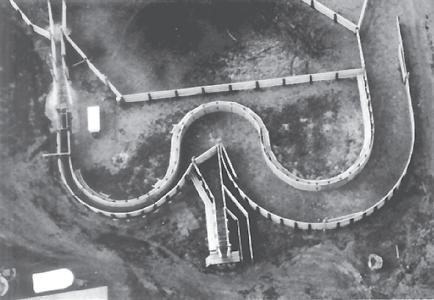
The wide curved Lane makes lling the crowding tub easy



Includes detailed drawings for loading ramp, V chute, round crowd pen, dip vat, gates and hinges. Plus cell center layouts and layouts compatible with electronic sorting systems. Articles on cattle behavior. 27 corral layouts. $55.
Low Stress Cattle Handling Video $59. Send checks/money order to:
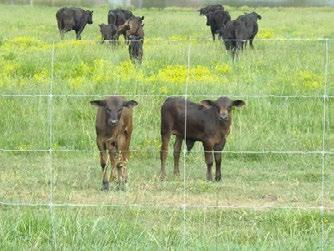
GRANDIN LIVESTOCK SYSTEMS
2918 Silver Plume Dr., Unit C-3 Fort Collins, CO 80526 970/229-0703 • www.grandin.com
Introduction to Holistic Management®
Financial Planning
Grazing Planning
Cropping Planning
Marketing/Business Planning
Biological Monitoring Land Planning
$700 per module or 5 for $3150 scholarships available bonus materials
www.holisticmanagement.org/ next-step/
22 IN PRACTICE h January / February 2022 THE MARKETPLACE
Office:
Fax: (325) 949-2047 Email: sales@twinmountainfence.com www.twinmountainfence.com
15% OFF any Twin Mountain energizer with your Electra-Lock Fence order. Free Shipping On Complete Fence Set! Contact us for more details!
(800) 527-0990
Get
Protect Your Investment $$$$$$
More Fence for Your Money!
Pasture Scene Investigation
February
February 22 – March 5, 2022




April 12 – May 24, 2022
Rangeland can provide an abundance of plant varieties for livestock nutrition. But what about the more “developed” pastures and hay meadows? Soil tests from all types of livestock producers show 95+% of all such soils do not have the correct nutrient levels to provide the best nutrition for livestock. You can change that! Choose an area, split it and soil test both sides separately. Test your hay or forage from both sides too. Treat one side as normal. On the other side, correct the fertility based on soil tests using the Kinsey/Albrecht fertility program.
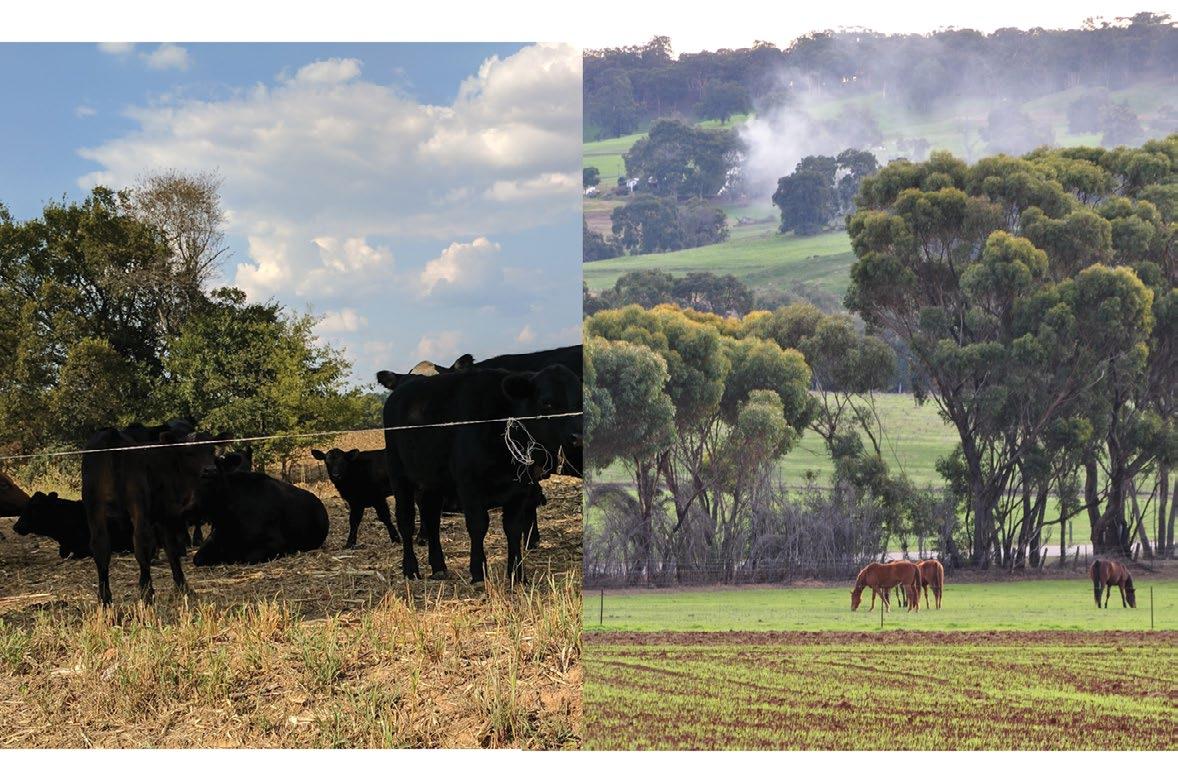
Test feed quality from both sides again next year. Take soil tests again and treat accordingly. Depending on nutrients requirements it may take two or three years to achieve the top potential. Test each year and, as fertility needs are met, feed value and yield tend to increase for all three years.
Increased yields will more than pay for the investment with increased feed quality as a bonus. Prove it for yourself!
Number 201 h IN PRACTICE 23 THE MARKETPLACE KINSEY Agricultural Services, Inc. INCREASE FEED QUALITY For consulting or educational services contact: Kinsey Agricultural Services, Inc. Ph: 573/683-3880, Fax: 573/683-6227 Charleston, Missouri 63834 www.kinseyag.com • info@kinseyag.com KINSEY Agricultural Services, Inc. ADVANCED I SOIL FERTILITY COURSE FOR TREE CROPS For consulting or educational services contact: Kinsey Agricultural Services, Inc. Ph: 573/683-3880, Fax: 573/683-6227 Charleston, Missouri 63834 www.kinseyag.com • info@kinseyag.com
TO LEARN MORE or TO ORDER: “This tool has already given us
beyond
initial investment
have just begun to use it.” — Arnold Mattson, Agri-Environment Services Branch, Agriculture and Agri-Food Canada • User-friendly excel-based interface • Let the computer do the math while you plan • Easy SAU and ADA calculations • Account for multiple herds • Grazing Manual hyperlinks • Livestock and Land Performance Worksheet • And many more features Call 505/842-5252 or visit us at www.holisticmanagement.org/store/ HMI Grazing Planning Software $150$40 TO UPGRADE Healthy Land. Healthy Food. Healthy Lives.®
a many fold return
our
and we
Holistic Management® Foundation
Interactive Online Learning
2
Grazing Planning
– March 16, 2022 Holistic
Financial Planning
Holistic
please send address corrections before moving so that we do not incur unnecessary postal fees

DEVELOPMENT CORNER
The Power of Defining Values
Elizabeth Marks readily acknowledges she just “fell” into a Holistic Management training being offered through the Northeast Sustainable Agricultural Research and Education (SARE) Professional Development Program. Holistic Management® Certified Educator, Phil Metzger, was running a program in 2005 to train agricultural professionals in Whole Farm Planning through Holistic Management.
Phil knew Elizabeth who had just started working for the NRCS in New York and told Elizabeth she had to apply for the program because the Holistic Management training was the best training he’d ever taken in his whole career. “I was new to the job so I agreed to take the course, and I’m so glad I did,” says Elizabeth.
“Holistic Management was life changing for me. While I didn’t know what I was getting into, once I started learning, I embraced the process completely because it made sense to me—the holistic goal, the resource inventory, the ecosystem processes, and the financial planning.
“I often tell the story when I first took the class I was very stressed out with my job. I had this fantasy of becoming a pet food salesperson, travelling to vet offices and peddling whatever products. But when I did my holistic goal, I realized one of my values is to help people. With that understanding, I realized that the job I was in was the perfect job for
me. Once I had that realization, my angst around the job was eliminated because I realized I was in the right place doing the right thing to achieve that value. It made the job less stressful because I became clear that I wanted to be there. I didn’t have to second guess myself.
“I think the testing questions are very helpful in that same way, especially for women who tend to second guess themselves. I’ve used that process in many different ways personally and with my family to help me look at situations from different angles. I’ve also used it with my family, like with my sister who is a film director, and it’s helped her make some big life changing decisions and has improved her thinking. She even decided to write a holistic goal for her wedding. I think it is important to have someone lead you through the decision making process when it’s a big decision--no matter how good you know the questions. I even have someone help me.
“The financial planning training was also really life changing because it introduced a couple of concepts that were really important to help me with my finances. After the training I started budgeting for depreciation, in particular, my car. I figured out how to save money so I could buy my car with cash as I didn’t want any more car loans and I didn’t want to be in debt. I started monitoring and used the You Need a Budget (YNAB) app. I went from never being able to save money to cash for cars and nice trips. That led me to purchase my house with 50% down.
“That training also totally changed the way I interacted with farmers. The first question I ask now is ‘What are your goals?’ And then I listen. In the past, I would have given information. Now I ask good questions like ‘What do you value?’ I listen a very long time before I give advice. Just listening to a farmer talk about their problems helps them solve their problems. They don’t have colleagues to bounce off ideas, so my number one role is to talk things out. I can be their sounding board and reality check and provide technical information. Before, I would just go to the technical information, which might not have been right for them.”
Elizabeth says that the kind of help she offers has been received very positively. “I’m not looked at as a ‘know it all’ government employee, and I help them solve their problem,” says Elizabeth. “That’s what Holistic Management is about--using tools and information, and the knowledge of the Holistic Management principles and practices to help them make an informed decision.
Nonprofit U.S POSTAGE PAID Jefferson City, MO PERMIT 210 a publication of Holistic Management International 2425 San Pedro Dr. NE, Ste A Albuquerque, NM 87110 USA RETURN SERVICE REQUESTED Printed On Recycled Paper Healthy Land. Healthy Food. Healthy Lives.
CONTINUED ON PAGE 20
Elizabeth Marks
