Weaving Water, Land, and People
 BY ANN ADAMS
I’ve been reading Braiding Sweetgrass: Indigenous Wisdom, Scientific Knowledge, and the Teachings of Plants by Robin Wall Kimmerer. If you haven’t started reading it, I highly recommend it. As the subtitle suggests, Kimmerer integrates Indigenous stories and culture with her knowledge as an environmental biologist, with her personal experience as a hunter/gather and mother. The result is a delightful and thought-provoking collection of essays that makes connections across so many disciplines it is mind boggling.
Of particular importance to me was her articulation of restorative reciprocity. It was
Root Cause
INSIDE THIS ISSUE
In Practice
a clear articulation of what we as holistic managers are attempting to do. While I have often used the term “symbiotic relationships,” the phrase “restorative reciprocity” seems an even more elegant way to define that relationship as one of reciprocity. This reciprocity is not merely a give and take, but an effort to create greater outcomes for all parties as “medicine for our broken relationship with earth.”
Kimmerer grounds her essays in the understanding that so many of her biology students come to her classes with the clear certainty that humans are bad for the planet. She suggests that such a broken relationship is not a given and has not always been the case. She notes: “As the land becomes impoverished, so too does the scope of [our] vision.” Thus, Braiding Sweetgrass is a book that helps us move past that impoverished vision and engage in whatever restorative reciprocity we are capable of doing as we listen more closely to what the water, land, plants, animals, and people are telling us.
It was with an expansive vision of our ability as humans to engage in restorative reciprocity that the organizing committee for the 2021 REGENERATE Conference decided on the theme for this year’s conference: Weaving Water, Land and People. The Quivira Coalition, the American Grassfed Association, and HMI will co-host this conference which will be both place-based and online to address the needs of our international audience and be responsive to COVID concerns. The conference will weave together field days, workshops, and plenaries—some of which can be attended in person.
Field days will take place in the month of September, while workshops will take place during October, with plenaries taking place the first week in November. Registration will go live in July but we’ll be sending update emails throughout the late spring.
Weaving is part art form and part survival. Every culture has some form of weaving that takes individual threads that become a
whole cloth, serving practical and, potentially, aesthetic purposes. When we as producers choose to engage in restorative reciprocity on the lands we manage, we are weaving those symbiotic relationships that result in more resilient landscapes, businesses, and communities.
We chose three elements for the theme: water, land, and people. Within the elements of water and land, we include all those beings that make up each of those ecosystems as well as the relationships between them. We separated out people to highlight how we, as a species with great power and the receiver of many gifts from nature, must consider our responsibility to use that power in a way that restores and builds reciprocity. At the very least, in our own enlightened self-interest, we must understand that as we impoverish our vision and our practices, we are destined to impoverish our families, businesses, and communities.
So, how can we more consistently come to our work with that concept of restorative reciprocity in the forefront of our mind? How do we share what has worked for us with others so they, too, can achieve the results of improved land health, profitability and sustainable businesses that can be passed to the next generation of producers, keeping working lands working, and developing communities that support this work because the work supports them?
These are the questions we will be exploring during the conference as we work to bring you a diverse group of producers who have learned or are learning how to weave water, land, and people in their production practices, marketing, and land stewardship. We hope you will join us as we all work to create a deeper understanding of what the world could look like if we lived “as if [our] children’s future matter, to take care of the land as if our lives, both material and spiritual, depended on it.”
To purchase Braiding Sweetgrass online, go to: https://milkweed.org/book/braidingsweetgrass.
Healthy Land. Healthy Food. Healthy Lives.® a publication of Holistic Management International JULY / AUGUST 2021 NUMBER 198 WWW.HOLISTICMANAGEMENT.ORG
One of HMI’s testing questions involves identifying the problem you are trying to solve and then determining the root cause of the problem to make sure you are addressing that cause in any decision you are making. Learn what HMI’s Interim Executive Director, Wayne Knight, has to say about the root cause of brush on page 2.
HMI’s mission is to envision and realize healthy, resilient lands and thriving communities by serving people in the practice of Holistic Decision Making & Management.
STAFF
Wayne Knight Interim Executive Director
Ann Adams Education Director
Kathryn Frisch Program Director
Carrie Stearns Director of Communications & Outreach
Stephanie Von Ancken Program Manager
Oris Salazar Program Assistant
BOARD OF DIRECTORS
Walter Lynn, Chair
Jim Shelton, Vice-Chair
Breanna Owens, Secretary
Delane Atcitty
Gerardo Bezanilla
Jonathan Cobb
Ariel Greenwood
Colin Nott
Daniel Nuckols
Brad Schmidt
Kelly Sidoryk
Brian Wehlburg
HOLISTIC MANAGEMENT® IN PRACTICE
(ISSN: 1098-8157) is published six times a year by: Holistic Management International 2425 San Pedro Dr. NE, Ste A Albuquerque, NM 87110 505/842-5252, fax: 505/843-7900; email: hmi@holisticmanagement.org.; website: www.holisticmanagement.org
Copyright © 2021
Holistic Management® is a registered trademark of Holistic Management International
Digging Deeper into Root Cause
 BY WAYNE KNIGHT
In Holistic Management, we aim to think holistically. We endeavor to simultaneously consider profitability, ecological health, and quality of life to create balance in our businesses and lives, now and into the future. We strive at improving the way we make decisions through clarity on short-term needs
Root Cause which asks: “If you are dealing with a problem, does this decision or action deal with the root cause of the problem?”
In our day-to-day lives, we often unwittingly deal with the symptoms of problems, rather than taking the time to discover and deal with the underlying causes. Investing the time in
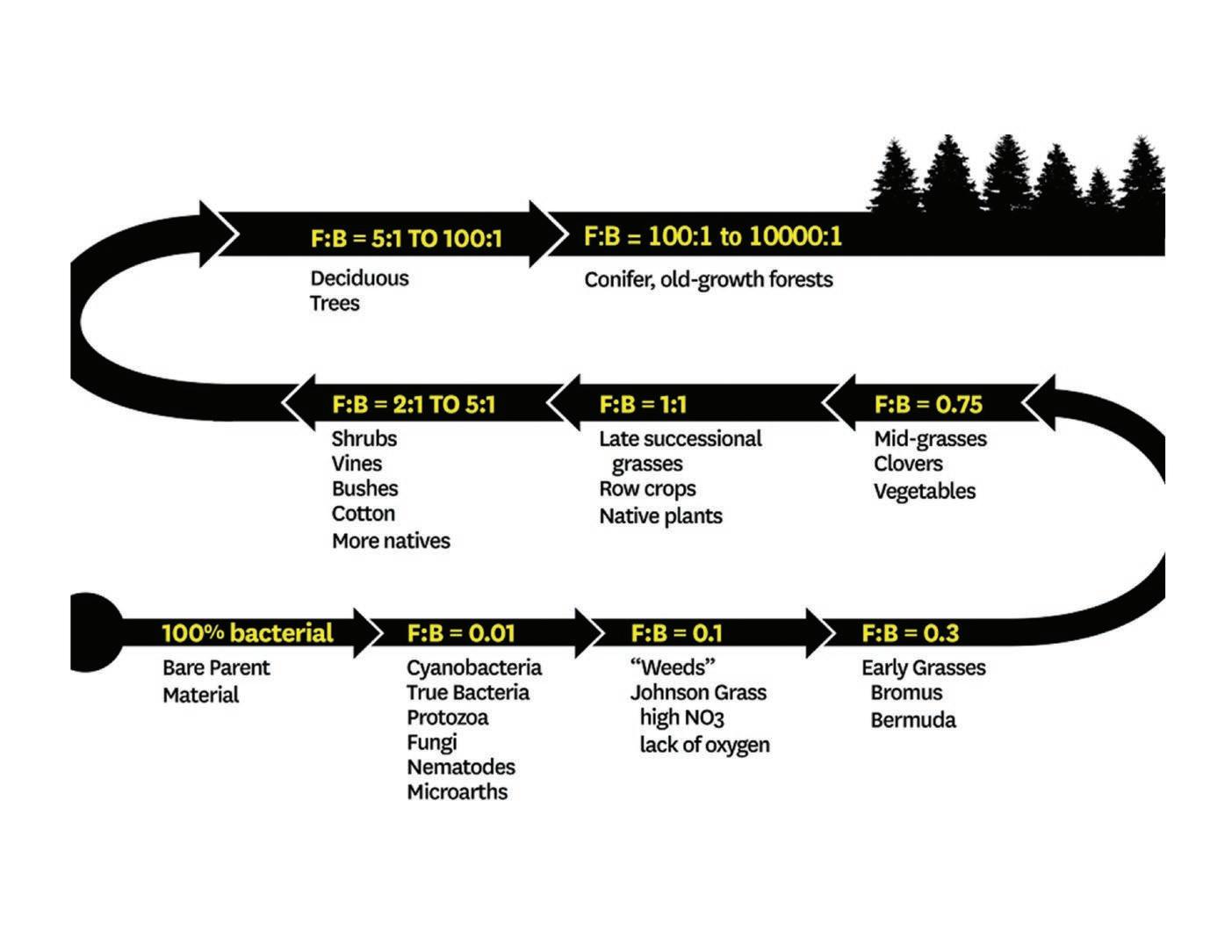
Courtesy of Betsy Ross, CEO of Sustainable Growth Texas.
and long-term necessity by linking our decisions and actions to these balanced outcomes.
We use a set of testing questions to ensure that we are thinking holistically when we consider important decisions. Realizing that all parts of our lives are interconnected helps bring balance to our thoughts and decisions.
I’d like to dig deeper in the first question—
looking at the root cause could save us so much effort and money not to mention averting the frustration often associated with symptom treatment. An internet search reveals dozens of examples of how to effectively locate the root cause of a problem.
There are obvious examples like pain pills that relieve pain temporarily, while ignoring the
2 IN PRACTICE h July / August 2021 In Practice Healthy Land. Healthy Food. Healthy Lives. a publication of Hollistic Management International FEATURE STORIES Digging Deeper into Root Cause WAYNE KNIGHT 2 Grazing to Feed Soil Life Beyond Under-Utilization and Over-Utilization BETSY ROSS 3 Still Learning after 60 Years JOHN VARIAN 4 Sidonia Beef — Finding Balance on the Farm ANN ADAMS 6 Expense Allocations— Start with the Big Stuff WAYNE KNIGHT 8 LAND & LIVESTOCK C Lazy J Livestock— Improving Land Stewardship & Wildlife Habitat in Montana HEATHER SMITH THOMAS 9 Barney Creek Livestock — Transitioning a Montana Ranch to Regenerative Practices HEATHER SMITH THOMAS 13 Achieving 350% Net Revenue Increase with Beef Cattle — Alejandro Carrillo ANN ADAMS 17 NEWS & NETWORK From the Field / Board Chair 18 Reader’s Forum / Program Round Up 19 Certified Educators 21 Market Place 22 Development Corner 24
root cause—a fracture. Or, perhaps a dead battery may be the result of lights left on or the water level in the battery or a failed alternator because of a worn out fan belt. The root cause here is a routine maintenance failure.
Let’s consider the worldwide “invasive plant” problem. Invasive plant “control” budgets run into millions of dollars annually. Instead of dealing with the symptoms, invasive plants, shouldn’t we be looking for the root cause of the problem— why is brush invading areas where it was not a problem 30–50 years ago?
Before the advent of fences, land ownership, and human population growth, massive herds of wildlife “managed” the grassy plains of our planet. Concentrated in
May 1998
large herds to evade predators and moving to keep their rumens full of nutritious grass, they meandered in large herds.
What has changed since then to produce the explosion of woody plants that we see growing in these former grasslands? In many cases, it has been the result of both overgrazing and over rest that has created more bare ground and the opportunity for tap rooted plants to establish that starts the shift to woody species and weeds.
Key Concepts
• By spending time and effort on correcting the way we manage land and influence soils really does make an impact on the plants that grow there.
• By investing money on improving the underlying causes of invasive plant encroachment, not only can we improve our land and profitability, but the cause of the problem disappears.
• By treating the symptom, we are not investing in what we want, and the problem persists.
September 2019
Grazing to Feed Soil Life— Beyond Under-Utilization and Over-Utilization
An Interview with Betsy Ross, CEO of Sustainable Growth Texas
Q: Is all bare ground bacterially dominated?
A: I question whether all bare ground is bacterially dominated. It depends, of course. How did it come to be bare? What was there before it became bare? The answer, for me, is tied to ‘over- or under-grazed.’ And really, this is really the heart of ‘being a good grazer’ and is why HMI is so very important. It is also related to ‘if left alone, everything returns to a forest.’ The real issue is ‘has the bacteria had a chance to reach homeostasis? (Think of a person eating until all they want, but knowing they need to leave some room for the chocolate cake). Now they eat the cake (fungi). Then they are full and push back from the table, and are satisfied with that part of the meal. Now the fungi get a chance to reach homeostasis. The nourishment needs have been fully met and the bacteria and fungi have worked in tandem to allow the plant to function ecologically—not too much, not too little—not overgrazed, not undergrazed.
If we mess up this grazing function, we throw everything off. If we graze too soon time after time, the fungi run out of carbon and shut down and the bacteria bloom. If we wait too long to graze, the energy from the natural processes (probably photosynthesis processes) retire and there is no constant energy for everyone to be supplied. I think when you undergraze, even with lots of soil organic matter left, the whole system is on idle and takes huge amounts of energy (fuel) to start back up.
The prairie, to me, is the ideal action scene for ‘just right.’ I think the most important thing HMI can teach is how to be a good grazier. Really we could say, teach how to manage your soil biology to keep it alive and well fed.
There is also another piece of this puzzle. If potassium is excessive relative to the other major cations, you are going to have lots of woody weeds. And once again, the ‘over/under grazing’ triggers all sorts of biochemical processes.
When Sustainable Growth Texas heads to the country, we always note how is this land being grazed. And if it is too little or too much, we start looking for one of HMI’s Certified Educators to come help.
That’s my take on it. Not too much, not too little. You can’t eat just chocolate cake.
Number 198 h IN PRACTICE 3
CONTINUED ON PAGE 5
Still Learning after 60 Years
BY JACK VARIAN
My family and I have been cattle ranching in the Diabolo Mountain range of California located midway between Los Angeles and San Francisco and since 1961.
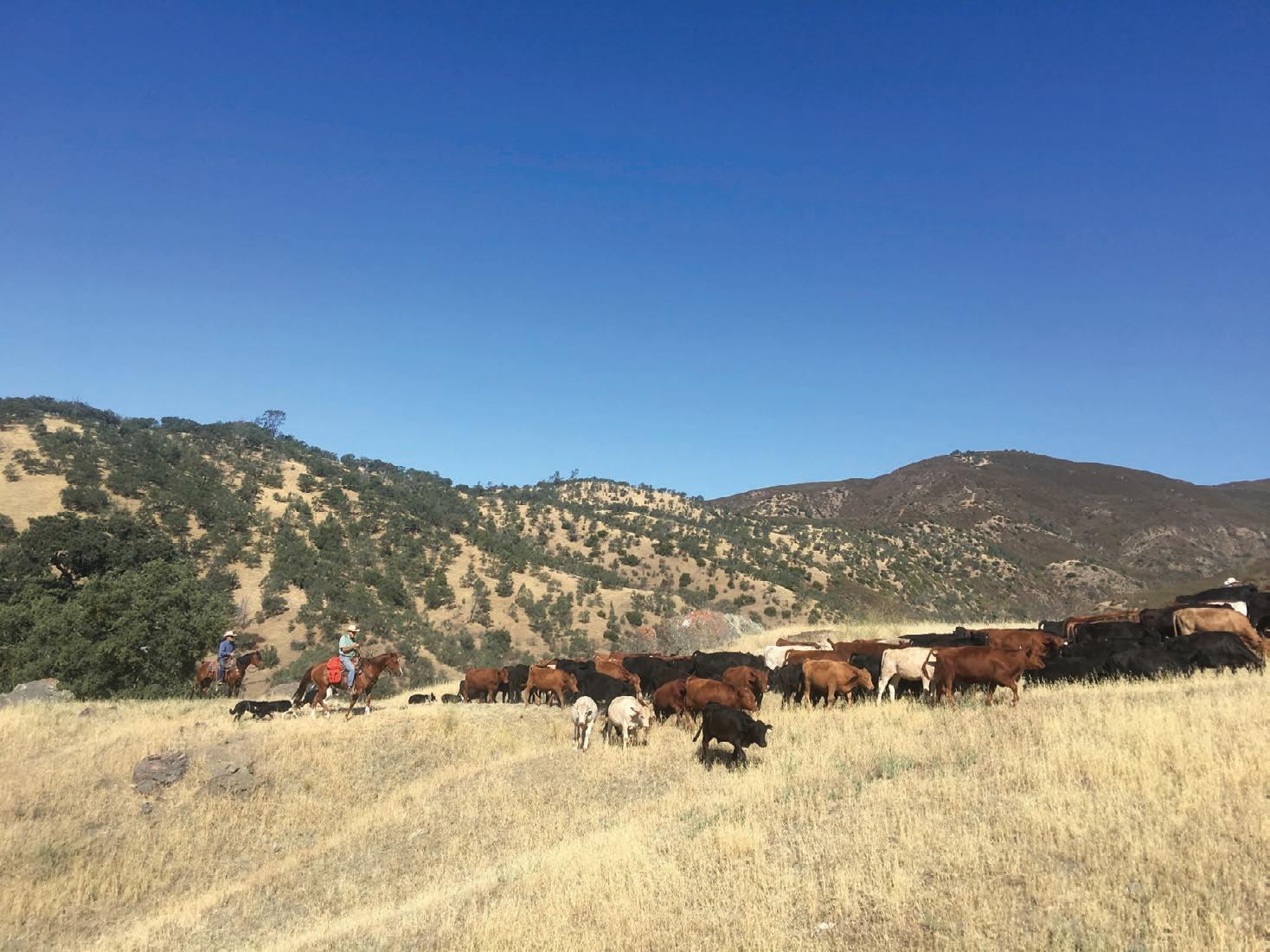
My wife and I married as I finished up my last year at Cal Poly college in 1958. We were both certain that owning land that we could raise a family on and make a living by raising cattle was our goal. With some help from my non-ranching parents I was able to buy a 2700 acre fixer upper ranch, meaning one that was long on brush, rock, fences on the ground, a house that needed
My nonchalance was gone in a heartbeat as I quickly said yes. Those 30 days were an eternity thinking that the sale might fall through when the buyer saw what my country club neighbors called my ranch “Pinch Gut Canyon.” They said it would starve a good man to death. But it didn’t fall out and with $150,000 in my pocket I was off to find our dream ranch.
With my very pregnant wife and our first child sleeping in the back of our station wagon in mid August we explored the high desert region of Northern Nevada, Eastern Oregon and Southern Idaho. Before we left, a friend told me, “If you find yourselves in Idaho take a look at a place called New Meadows.” So we made a point of getting out our Idaho road map as we had just crossed into Idaho. It was about lunch time the next day as we entered New Meadows and Zee
people from your neck of the woods. We may like you and we may not. Second, come here in January when there’s four feet of snow on the ground and you’re feeding hay for six months, unless you happen to have some low country to go to.
Zee and I thanked the gentleman for telling us about the dark side of paradise. Zee said, “We were both born and raised in California and that’s where are hearts and friends are. Why don’t we look where we know the lay of the land?”
We had hardly gotten unpacked when a friend called. “There’s a ranch for sale about 50 miles east of your old brush pile, but this one has more grass than brush.”
We drove what seemed like forever into the Diablo Mountains. Then as we crested the Parkfield Grade we both knew that we were looking at something very special. The realtor had told me, if you look to the east side of the Cholame Valley there are 8,000 acres of mountains that take up most of your view that is the ranch. It was “Love at first sight.”
After three hours bouncing around in the owner’s Jeep I was sure my wife was going to have our second child in the back of his Jeep. But Zee held off for long enough (three weeks) before our second daughter was born. So with my $150,000 dollars and a mortgage for $250,000 with Northwest Mutual Life we escrow.
In 2021 we will have lived here for 60 wonderful years. We are now a tribe of 20 counting husband, wives, children, grandchildren and one great grandchild. 2001 was a momentous year for the family when Zee and I placed a Conservation Easement over the entire ranch of 17,000 acres so that it could never be subdivided. It was our way of thanking this land for giving us a place to live where there has been a lot more love and laughter than gloom and doom over the years.
more than a “spring cleaning” and plenty of Black Tail Deer for $70,000. It was very short on our annual grasses, the predominant feed for cattle here in California.
After three years fixing what I could, I knew that this was not going to work. However, a fellow from Los Angeles was looking for a deer hunting ranch. His realtor approached me and said, “Folks in the area say your ranch for deer hunting is top notch!” I replied, trying to act nonchalant that I would entertain an offer.
A couple of days went by when the doorbell rang. There stood the realtor and buyer. The realtor offered $150,000 all cash, 30 day escrow.
had spied a little café on the Main Street where we hoped we might learn a little about this pretty little town, nestled on the edge of a beautiful meadow surrounded by mountains.
“Do you suppose this is the promised land?” I asked.
Her reply was “I could make a life here with you. It’s certainly more than I have ever dreamed of.”
We were about to leave when an old cowboy introduced himself. “I overheard your conversation and I would like to tell you a little about this country. First he said you’re from California and folks up here aren’t real fond of
We then deeded the ranch to our four children as one indivisible parcel so there would be no arguing over dividing the ranch into individual parcels that none alone would be sustainable. Economically our children wouldn’t be blindsided with onerous inheritance taxes. Zee and I are now tenants renting the grazing rights for our cattle. So what could possibly cause two people of sound mind and body to take such a risk?
Attendance at a Holistic Resource Management seminar and knowing our children was my answer. The year was 1991 and I was on shaky financial ground after experiencing low cattle prices of the 80s with 20% interest rates to start the decade down to 12% by the end of the 1980s had me running scared. However, the
4 IN PRACTICE h July / August 2021
Jack and John Varian riding the V6 Ranch.
seminar turned my fortunes around and sent me in a totally new direction. For the first time I was not just given the permission to think “outside the box” but for me it became a requirement.
The 1990s was a decade of reinventing how to operate our V6 Ranch. Many new ideas now crossed my mind on a regular basis. Once while watching a movie “City Slickers” I whispered to Zee, “We’ve got the horses and the ranch and when it’s necessary to move the cattle why not bring along some guests while we are camped out at Mustang Camp for three days?” For the last 27 years we have four cattle drives per year each with 20 guests. A non-guided hunting club has become our most profitable operation.
In 2000 we examined our hay making program on almost 1,000 acres of our best land. Putting this very erosive practice to the holistic test I found that it failed miserably on every front as I could buy hay cheaper than I could raise it. So as the last piece of hay making equipment exited the ranch, I had an older motor grader left. I took my cutting torch and sold it for scrap.
I came to the ranch, in my youth, full of vim and vigor. Now almost 60 years later the vim my priorities have changed. I now think of myself not as a Cattleman but as a Grass Man first who uses my cattle as a tool to convert grass into cash and improve the rangeland. I still have unanswered questions about my stewardship.
In 2000 I quit dry farming. Three years ago I took 100 acres out of what had been 1,000 acres of dry farming ground and planted it to pistachio trees in the name of diversity. Lastly, my son-in-law who is a cattle buyer also runs his own stocker operation. Two years ago he convinced me to buy all my stockers on video from ranches
Digging Deeper into Root Cause
CONTINUED FROM PAGE 3
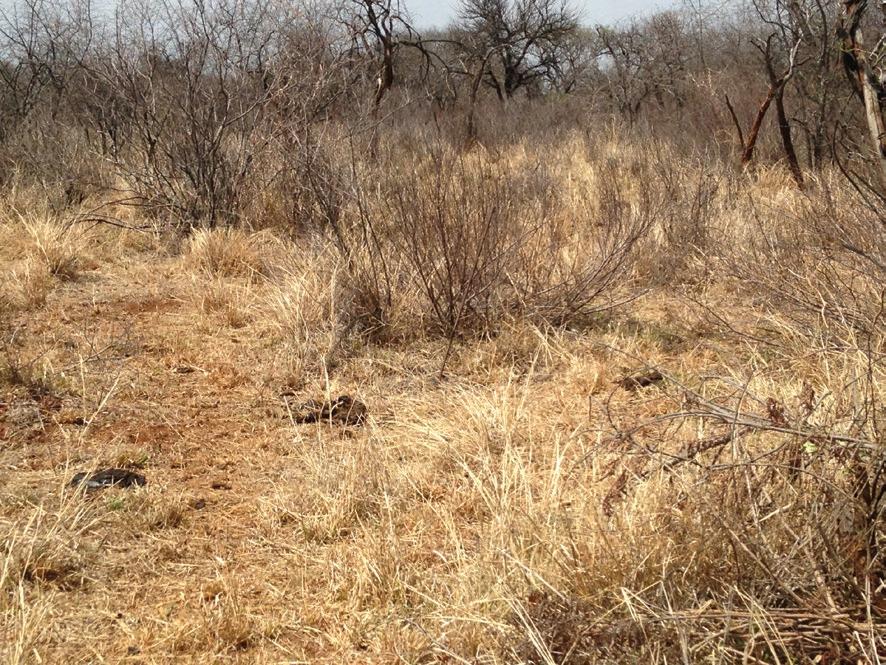
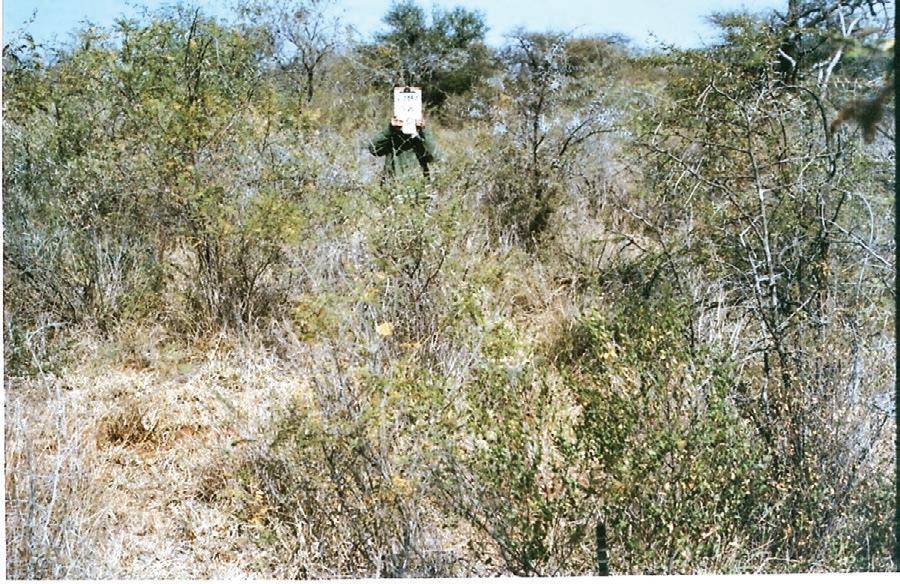
But, we also know that changes in soil microbiological balances will favor one plant type over another. Fungal dominated soils may favor the germination of woody plant species. Soils with relatively more bacteria may favor the germination and growth of lower-successional grasses and annuals. As you can see from the pictures on page three, with good management (in this case planned grazing), you can shift the successional process to reverse the movement toward woody species and actually change the environment in which they are growing, resulting in a reduction of woody plants and flourishing grass plants. In both pictures, planned grazing was the only tool used that resulted in the death of what was once flourishing brush.
in the high desert of Nevada, Eastern Oregon and Southern Idaho and stay away from the sale barns, and that means a lot less stress and less problems with pneumonia weaning some calves that don’t sell as well.
Now I’m into my second year of Mike video buying for me only good high desert steers weighing 550 to 650 that have been weaned 30 days, and have had the two shot series for pneumonia prevention and where they were born and delivered from the same ranch. Delivery is mid-October to mid-December. They arrive after a 12 to 18-hour haul and usually in the middle of the night. I unload them into a bull strong pen with hay bunks full of grain hay, which is the only hay that they will receive while here on the ranch. They are allowed to rest that day and the next morning, first thing, we process them.
One shot I find to be advantageous is Enforce that gives a boost to the immune system. They are then driven about a mile to a pasture of about 400 acres in size and after watching them for any sign of sickness for a few days they get turned out to the mountain pastures were they will stay until the following June. There they will find plenty of dry annual grass that’s a bit better than straw but with 28% protein tubs available they do quite well while they await the start of a new grass season, which starts the first of November and ends the fifteenth day of June. This is the opposite of the rest of the USA.
I expect my 1,000 head of stockers to gain 300 pounds. Except for a few bad eyes I have had not one sick or dead in two years. For me that’s unheard of as I usually figure 1 to 2% death loss as acceptable and doctoring 3 to 5% as acceptable.
I am a firm believer now that feeding hay is a loser but I do need my cattle to spend most days gaining weight without feeding hay. Here comes the question. I have been using a commercial nitrogen fertilizer on my ex farming ground that after 80 years of dry farming is absent of most of its nitrogen. The results have been dazzling to say the least. An increase in production of three or four times and a quick green up with the first rain, so my cattle now get a mouth full of grass a month to two months earlier than not using fertilizer. I read the Stockman Grass Farmer with a little jealousy for the things that you can do perennial pastures. How to restore them to their former productivity without the need for any fertilizer that comes in a bag?
I end by answering my own question. I don’t want to run out of years before my soil runs out of nitrogen. To the purest of our holistic community, I think they would call this, a hold your nose sacrifice, where my footprint is still much too big, but I’ve heard no answer as how to fix it. But I believe, what I’m doing sure helps pay the bills and no hay is needed. Hopefully there’s some reader of the Stockman Grass Farmer out there who might have a different solution for me to ponder.
John Varian can be reached at Jovv6ranch@gmail.com
Reprinted from The Stockman Grass Farmer Magazine. Call 800-748-9808 or email sgfsample@aol.com to receive a free Sample Edition.
Share your response to Jack with us as well so we can print your answer.
Email: anna@holisticmanagement.org.
So what is the root cause of invasive plant growth? Does treating the invasive plants using chemicals or mechanical means effectively deal with the root cause of the problem? We know the answer! Again and again, after posttreatment we see more seedlings germinating than before the treatment was done. The root cause has not been dealt with!
An improved approach should be to discover the human management that needs to change in order to recreate the soil conditions that originally produced thriving, diverse grasslands. My personal experience is that changing the management will alter the soil condition enough that the problem plant is no longer a problem. It dies and is not replaced by more woody plants.
Instead, perennial grasses flourish.
The photos on page three show the same spot 21 years apart. There is brush in both photos. The first photo shows thorny young trees and lots of grey old material on the ground—under-utilization. The second photo shows much better grass utilization and dying brush. Note the color difference of the grass between the photos. The yellow or gold color in the second photo shows better nutrition— indicating a healthy mineral cycle. The only tool used was Holistic Planned Grazing—simply using animal density and timing of exposure to animals improved soil conditions. Fire and chemicals were not applied.
Number 198 h IN PRACTICE 5
Sidonia Beef— Finding Balance on the Farm
BY ANN ADAMS
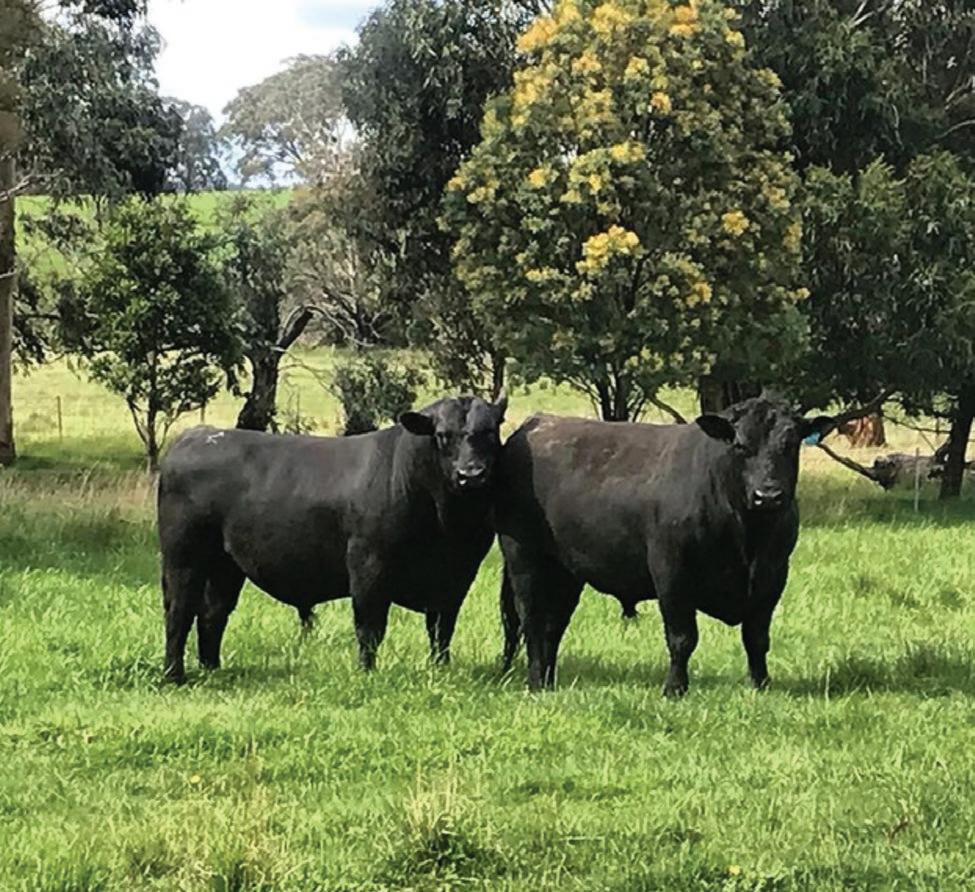
Sam White is the sixth generation to farm Sidonia Hills, a 2,000-acre farm north of Kyneton, in Victoria, Australia. He and his wife, Miranda, are busy developing Sidonia Beef as a paddock to plate business that supplies the local customers, restaurants, and butchers with grassfed beef while managing the family farm. While Sam runs Black Angus cattle on 1,500 acres, Sam’s father, Frank, runs 350 sheep on 400 acres.
Sam’s journey as a grassfed farmer began in earnest in 2005 when he made a commitment to farming, returning full-time in 2009. He and his father also began farming organically in 2005, but in 2015 he took a Holistic Management course with HMI Certified Educator Brian Wehlburg that changed his life.
The Regenerative Journey
While Sam has always loved the farm, it was only in the last 15 years that he became engaged in the management of it. During that time, various family members have been involved, but Sam and Miranda have now stepped into the full management of the beef operation.
“In 1921, my grandparents bought this place,” says Sam. “I’ve always loved the farm since I was a little kid. We grew up in the town
The office job/city life wasn’t for me at all. I knew I was a country person.
“Everybody else (including five siblings) has gone off farm and have other jobs. They don’t make day to day decisions, but they have input. They are interested and supportive, but I need to make the decisions. I’ve used our management group to help me with decision-making. My sister was doing the marketing for a while, but she’s gone over to another job, so my wife and I bought the business.
“We live on the farm and lease the land from my dad. We were leasing the cattle from him before. He’s also supportive but isn’t involved in the daily activities. When we were trying to figure out how to make the transition my dad and I came up with a figure for the value of the cattle. We decided I would lease the cows from my father, but all the offspring were mine. We just negotiated the rates by looking up lease rates in the dairy industry which ended up being $50/cow/year. We also pay anything that needs to happen with the cattle like vet bills. We take care of it all. If an animal doesn’t look quite right, it’s sold and the income goes to my dad. The land lease was negotiated the same way as we looked at similar rates and did a family rate that was a bit under the going rate. My dad is in his 80s and lives on the farm so it’s worked out for everyone.
management with the sheep. Right now I have only cattle on my leased land. My dad has some acreage around his house where the sheep are
with Dad and my brothers. I did part-time work in Melbourne for a while, but in 2009 I became full-time on the farm as Dad needed more help.
“The succession planning started 15 years ago between all of us kids. We all know where the succession is going. Everyone’s got a piece of land in the future, but I can lease it or share the farm. One of my brothers is particularly interested in sheep so we may possibly do multi-species grazing. We currently run 350 merino sheep and we are working on plan to integrate the cattle in the grazing
run and he is in charge of the sheep. Over the years he’s seen some of the benefits of the long recovery I’ve given the land with my grazing so he’s taken that on board and the grazing is improving with the sheep.
A New Chapter
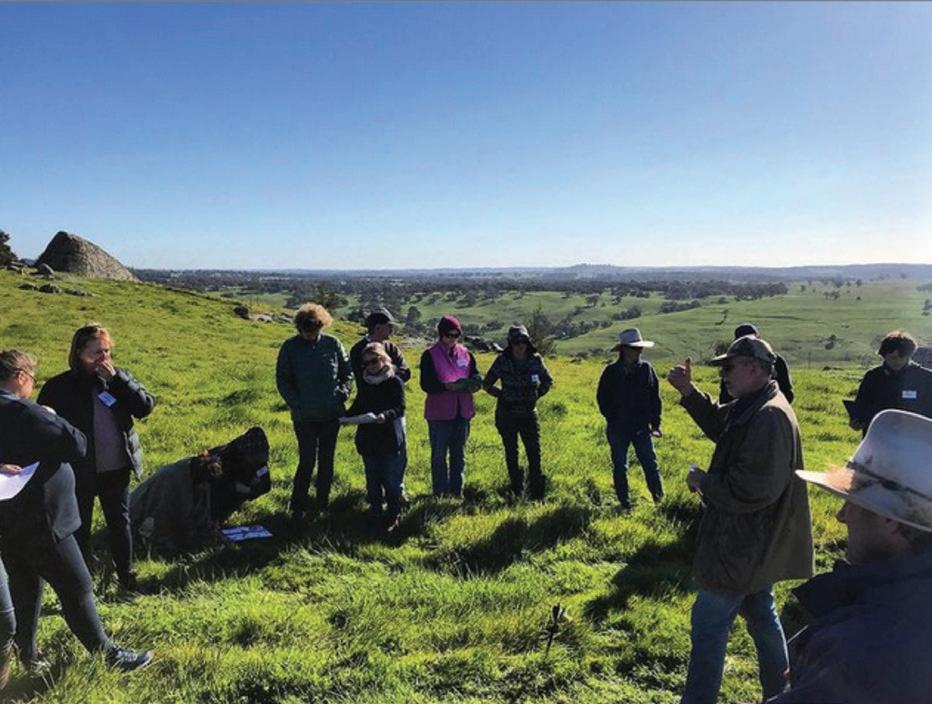
When asked how the Holistic Management training they received from HMI Certified Educator Brian Wehlburg has influenced him, Sam says, “It literally changed our lives. He introduced to me a way of farming and a new way of thinking. The way he delivers his course and teaches is just inspiring. We took the 8-day training in 2015 in Victoria after I came across the Inside Outside website. My aha moment was the realization I was running so many mobs on our farms and just realized how complex I was making it, and yet how simple it could be if we managed one herd. With that our farm would have more paddocks and more recovery time. I was very much on the grazing side of the course, but then I learned about the financial and social parts and realized it’s about everything. I did a diploma in organic agriculture in 2009 and I started down the organic path so I was already looking down the alternative path. In the 2015 Holistic Management course I met new people. We have a support group going now thanks to Brian and Gill Sanbrook. It’s been going since 2015 with a core group of 12 participants. I’ve also done the course a couple of times as a refresher.”
“I had heard about Holistic Management in 2013. One of the local couple had an Open Gate day on their farm and I got to see the results on their farm. I also did a course with Colin Seis in 2012 looking a pasture cropping. Colin said
6 IN PRACTICE h July / August 2021
The Whites continue to grow their direct market for their animals.
Holistic Management training session with HMI Certified Educator Brian Wehlburg.
this land was not really cropping country so it was not a good idea to try the pasture cropping here. I also went to Graeme Hand’s course, he was talking about when to tell that a plant had recovered and when it’s ready to be grazed as well as how to make sure you have good litter.
“With Brian I first learned about grazing planning and how to do the full planning. I’ve continued to do that. I used to do the full moving of the wires every day. I put 10 mobs into one mob of 500 animals. I just opened the gate and they’d move through. In 2016–2018 I was running 500 cattle of all different ages from different mobs. It was really a learning curve to run such a big mob. I had to figure out how to manage animal husbandry and how to get an excited mob moving through a small gate. Basically I would sneak down and open the gate and then drive through the mob on my bike and dribble them through. I found the bike was a pretty powerful tool. They learned that was their wake up call and that they were going to be moved. If I didn’t want them in a certain area, I would just take them to another area. I was really inspired by Temple Grandin as I watched her videos.
While Sam has run as much as 500 cattle in one mob, the average number he runs is
that infrastructure development is increased productivity with next to no input costs. Our profits are much better than they ever were. Now we can fence water points to allow more grass to grow and provide longer recovery, so we can potentially double the herd. We’ve been able to increase stock density by doing some temporary fencing at certain times of the year.
“We are looking at animal days per acre, but we are monitoring daily on how the best plant in the paddock is performing. I monitor for when the cattle have taken the bite out of that plant and I know it’s enough. Then I take them out if they have taken more
were running less than we had been but the land recovered most of 2019. We put the cattle back on in November 2019 after six months of recovery. We had been leaving reserves and
to 60 over a three-year period. They also developed some gravity-fed water infrastructure with more to do. “We’ve been able to pay for the infrastructure development on the part we own through the profit we’ve earned through our sales,” says Sam. “The results of
With improved grazing and kelp and apple cider vinegar supplements (but no free choice supplements),the Whites are seeing their steers put on 1–2 pounds of gain a day with 100% breeding rates with their cows.
paddock one to three days. Our recovery periods are 120 days in the non-growing season and down to 40–60 days during the growing season, depending on how well the season is going. Our paddock sizes range from 10–180 acres with an average of 25–30 acres.
“In 2019 we had no rain from January through May. Our average rain is 630 mm (25 inches), but in 2019 we only had 300 mm (12 inches) with a dry winter and rains beginning in May. We made the tough decision to sell 90% of the cattle because we were running out of feed. The grazing plan got me through that decision. It was the best thing for us. We sold our calves and we used that to buy a new herd of cattle. In 2020 we
litter and we saw how quickly the land recovered, especially compared to neighbors. They were feeding through the winter and spring and they had to feed 3-4 months more before they got their production going. So we were able to buy and agist cattle from November through the end of March. We had grass when most of Australia didn’t have grass. We bought 50 cows/calves and 75 steers plus we ran 80 cows for contract.” It was through their holistic grazing that they could run any animals at all without input and have hopes of building back up to their average numbers of animals soon.
Sam monitors progress on the land in a variety of ways. “In 2015 we did some monitoring with Brian,” says Sam. “We had a fair percentage of bare ground, approximately 50% bare ground between perennial plant. So I focused my grazing on those areas and now we only have 20% bare ground and we have more diversity. A lot of original native plants have come back and we’ve sown some perennial plants. A lot of the annuals we had are now gone like capeweed and stork’s bill geranium. Now we have more wallaby grass, kangaroo grass, red native grass, and microlaena, which is like Lucerne. Gill Sanbrook said, ‘If you see that come back you are doing something right.’
Number 198 h IN PRACTICE 7
CONTINUED ON PAGE 8
Part of the White’s succession plan was to have Sam lease his father’s cattle with the understanding that all calves would be Sam’s.
“I don’t do formal soil testing as I am a visual person. I look around and get feedback from my observations. The animals are looking healthy and happy. I look at their behavior, temperament, and coats. In 2005 we had some vet bills and then we turned off the tap to all chemicals for the animals and the farm. I got into Pat Colby’s mineral supplements. We drench with cod liver oil, and give kelp and apple cider vinegar. We struggled at first as we got our grazing right. The cattle did go backwards at first for a generation as we had more illness and death and a drop in animal performance. They didn’t have the immunity and we saw in the drop in weight gains and non-calvers.
“Then things started to improve. We are not doing any free choice supplement and we are putting on .5–1 kg/day (1–2 pounds/day) on the steers as well as getting 100% with our breeding. We continue to improve the herd genetics with each purchase. The cows had needed to be sold because they were getting old so we got some Te Mania genetics. They produce good calves and have good temperaments. They are Angus with a mid-size frame, and a finish weight around 330 kg (728 pounds).
Sam also monitors the land’s ability to stay in place despite the sudden storms that can happen. “We used to have a lot of topsoil
Expense Allocations— Start with the Big Stuff
BY WAYNE KNIGHT
For any business keeping costs low is a critical management function. For an agricultural business, this is especially important. At HMI, we recommend analyzing costs based on a reallocation of your expenses list.
Consider dividing your costs into the following categories because not all expenses are equal:
• Top Priority Investments (also known as wealth-generating expenses)
• Inescapable expenses (liabilities, contractual agreements, taxes, etc)
• Maintenance expenses
This cost allocation assumes you are clear on which enterprise contributes to covering most of the overheads of your business. It
erosion,” says Sam. “We can have storms that are two inches in an hour. Before, when we had the sheep hanging out on the top of the hills and then the rains would come, the soil would run down the hill and knock down the fences. Now, when we have those rain events, the soil doesn’t move because it’s covered. We had Brian and the management group come out to those hills and they couldn’t believe how much grass there was and that we had 100% ground cover.”
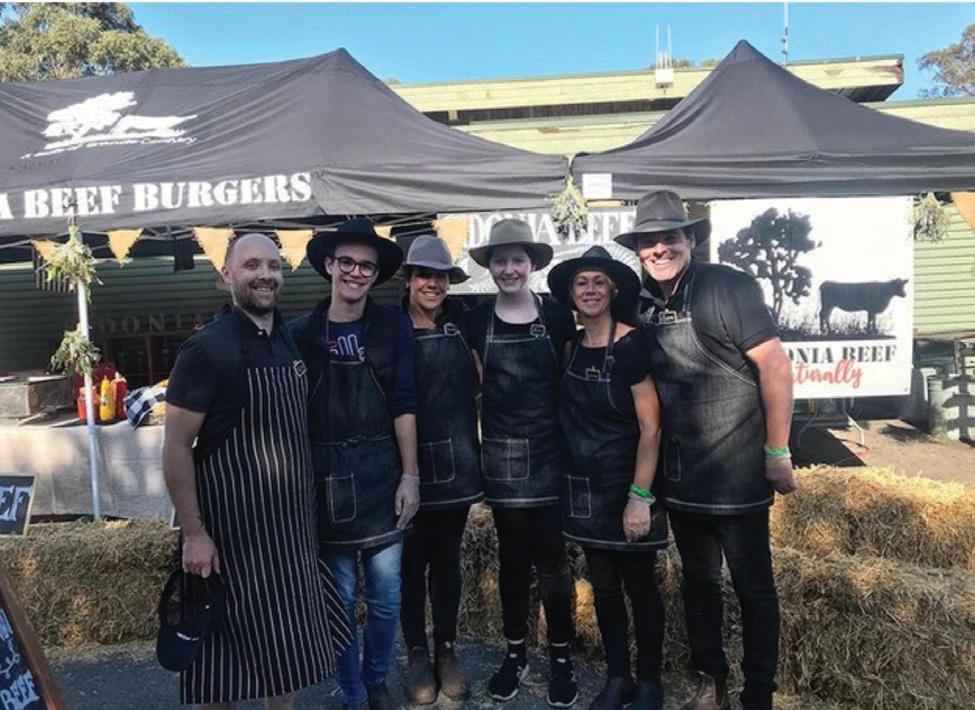
The Whites are currently working to get more of their beef in the local market. Like many producers they were inundated with interest in their product because of COVID. The demand for their product doubled and the local slaughterhouse that is just 15 minutes down the road could accommodate them. They currently are selling 100 beeves a year with about 20% going to the local market. Once their cattle are processed, they dry age the beef for a minimum of 14 days.
“We have a growing marketing list for our grassfed beef,” says Sam. “We do events like Lost Trade Fairs where there are 20,000 people. We cook burgers as a lunch option and then promote our seasonal beef boxes. We do a couple of those events each year and spread our message on our farming.”
Sam says the greatest challenge in this style of farming is to determine the appropriate balance among the people, plants, and animals.
“I try to get that right balance between growing
enough grass and getting production from the animals without taking too much from the farm,” says Sam. “For example, we have bentgrass that is difficult to manage and is a headache. It’s an introduced, perennial, sod grass that has no nutrient value for stock and doesn’t allow any other plant to grow near it. We had high density stocking on it to tear it, but we can’t totally get rid of it. We have been able to knock it back with high intensity grazing then long recovery. Usually a forb species will come to take its place then over a two-year period we will get some perennial grass. If you come back too soon or stay too long, then you change the dynamic and switch the land back to bentgrass.”
But, Sam is learning how the land responds and what the animals need. With improved infrastructure comes improved grazing and improved ecosystem function, increased biodiversity, land productivity and resilience, and profitability from a low-input system. While there will be droughts, fires, and other challenges, the system that Sam has created has helped him weather these challenges and participate in a successful farm transfer.
“Our holistic context says we want to increase biodiversity,” says Sam. “We want good functioning soil, healthy animals, and kids and family to enjoy the farm. We are the artists painting the picture and the land is our product and we improve it for the future. Holistic Management is a tool to get you there.”
also assumes you have considered risk in enterprise selection.
Wealth-generating expenses are those that will add to your ability to generate wealth (profit in monetary or land health terms). These include investments in things like water infrastructure to achieve your grazing and herd expansion goals or a hoop house for season extension.
Inescapable expenses are the expenses you are legally or morally obligated to pay.
Maintenance expenses are those expenses that maintain your production level where they are. These expenses are anything that doesn’t fall into the first two categories of top priority investment or inescapable. Hay expenses might be a way to reduce risk, a way to maintain the production of your animals, and an expensive habit. Or it could be a way to improve soil fertility if fed out in the field as bale grazing. Being clear about what the expense is for and if it is really needed will help you free up money for investing in expenses that will address an operation-wide logjam or a weak
link within a key enterprise that can take your farm or ranch to the next level.
Are there maintenance expenses you can simply eliminate from the budget through improved management practices?
Look hard at maintenance expenses. Don’t cut these if that will lead to a drop in profitability. Are they really maintenance expenses? In an animal-based operation, this may include genetics expenses, feed expenses, or forage growing expenses. Holistic Management’s Financial Weak Link test and Comparing Options tests would be very useful in helping you decide where these expenses fit in your current production situation.
When allocating time to spend on cost reduction and category allocation, spend the most time on the big-ticket items. Spend the most time where you will get the most return on your time. Don’t sweat the small stuff—the insignificant expenses in the budget. By spending more time on the biggest expense items you will be getting the biggest bang for your buck.
8 Land & Livestock h July / August 2021
Sidonia Beef CONTINUED FROM PAGE 7
& LIVESTOCK
C Lazy J Livestock— Improving Land Stewardship & Wildlife Habitat in Montana
 BY HEATHER SMITH THOMAS
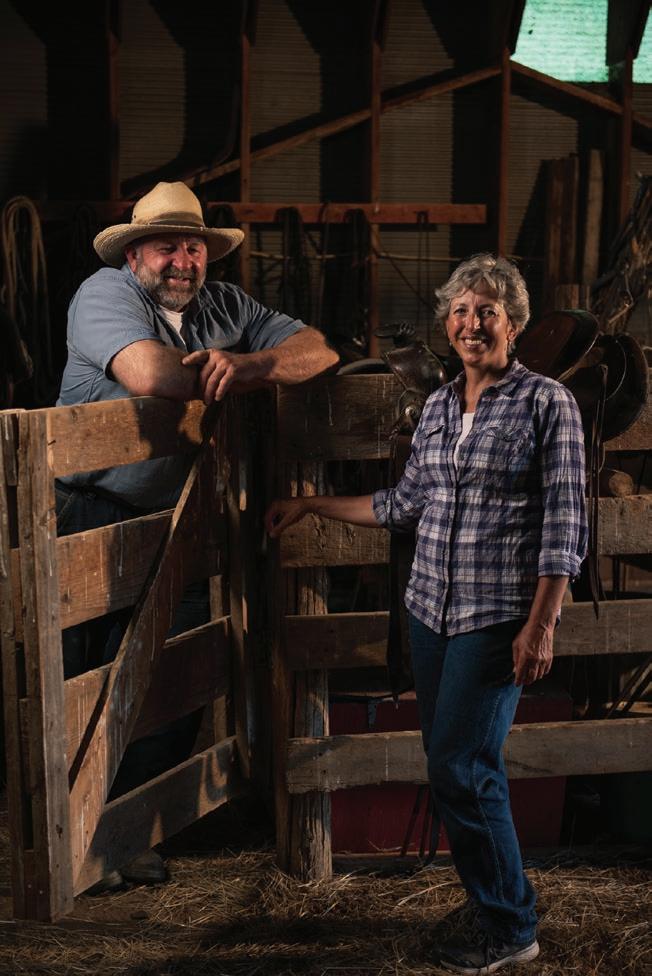
Craig and Conni French own C Lazy J Livestock near Malta, Montana, and were the 2020 recipients of the Montana Leopold Conservation Award for their conservation efforts. They have been ranching together since 1991, starting out on a ranch that was homesteaded by Craig’s great grandfather in 1910.
“We met in college, at Bozeman, Montana and after we got married we worked at a private guest ranch just outside Yellowstone Park for a couple years, and started a family,” Conni says. “Then Craig’s parents were expanding their ranch and wondered if we’d like to come back to the ranch, and we were excited about that opportunity. We worked with his mom and dad for 25 years.
“Then we were able to purchase a place of our own—a ranch on the northern border of his parents’ place that came up for sale. So we just added our property into the management plan of the whole ranch and we ran our cattle in common.”
Then, about three years ago Craig’s parents started doing estate planning and other family members decided they wanted to come back and try their hand at ranching. “We decided this was the opportunity to do our own thing and pursue some of our own ideas. It’s not always easy, in a family situation, because a person always has to compromise and it can be challenging. Making the decision to go our own way gave us a little more freedom,” Conni says.
“We thought we’d let them follow their dreams and we would follow our dreams and it’s been a wonderful thing. It was one of the hardest decisions we’ve ever made in our lives, but one of the best.”
A Land Stewardship Education
When Craig and Conni were thinking about how they wanted to manage their place, they thought that their son Tyler would like to eventually ranch with them. He is an Air Force pilot and was deployed to
Afghanistan. “While he was there he had a revelation, and realized he really would rather be ranching because that’s where his heart is,” says Conni. “He had some free time now and then, and asked us to gather some good books on ranching and land stewardship and send them to him. So we started asking around, to find some books for him.”
They had several neighbors who recommended books, and one of those books was Allan Savory’s book on Holistic Management. “We sent the books to Tyler in Afghanistan and he read them and got fired up—and sent them back to us and insisted we read them, too. He pushed us and that’s what we needed,” Conni says.
They had also attended a one-day NRCS grazing workshop that had been held in their area. “Craig and I attended, and this was a lightbulb moment for us, listening to that speaker,” says Conni. “We realized that we had not been doing the best we could do, for our land, and knew that we could improve.” She and Craig had always considered themselves good land stewards, but now realized that their ranch’s future was tied to healthy soils and grass. This introduction to Holistic Management called into question some of their long-held, traditional ways of thinking.
“We’ve learned more now and can adopt some of these ideas that were earlier not as widespread,” says Conn. “This got us started and we realized we needed more education.
“At that time we were still ranching with Craig’s parents and running the yearling herd on the main ranch,” says Conni. “We started using electric fence and trying to intensify grazing management, and had some nice success. This motivated us even farther.” This allowed more recovery time for perennial vegetation to flourish in this semi-arid environment of short prairie grass, resulting in better forage and wildlife habitat.
When the time came for them to make the decision to leave Craig’s parents’ ranch and start out on their own, they had the courage and confidence to do it because of the continuing education they had engaged in. “We also feel that it was a God thing,” says Conni. “We realized there were certain things that we needed, that had to happen, for us to be able to make it on our own, and uncannily it all fell into place, like it was meant to be.
“This also gave us confidence that we were on the right road, and thinking there was a reason for this—that maybe we were meant to do it
Number 198 h Land & Livestock 9
CONTINUED ON PAGE 10
Craig and Conni French
Photo Credit: Isaac Miller
C Lazy J Livestock
so we could help other people; maybe we could set an example for other people to have the courage to try this road, and that maybe this is how we are supposed to take care of this land.”
Working with Nature
When Craig and Conni started ranching with his parents, they bought cattle from them, and some cattle from neighbors—some older, short-term cows—and built their herd slowly. When they moved to their own place they started more intensive grazing management and brought those cows along. They didn’t make a huge shift in calving date, but gradually backed it off to later calving.
They quit pouring the cattle with chemicals, and monitored the cows closely. There have been some fall out of the program because they didn’t adapt to the change but most of them have done fairly well.
The cow herd is basically Black Angus, but Conni and Craig started buying bulls from folks who are raising grass-based cattle, trying to work toward a more efficient herd. “We’ve been doing that for many years, even before we started doing what we are doing now,” says Conni. “We wanted to work toward a smaller animal that does better on grass, and have always been a proponent of letting Nature do the genetic selection. We calve our cattle out on range pastures; we’ve done that for many years.”
For replacement heifer selection, at first they sorted off and sold the smallest ones, but now they keep all their heifer calves and let them sort themselves. The ones that do fine are the ones they keep. “We don’t worry about what they look like, as long as they do the job they are meant to do,” says Conni.
For grazing management, the Frenches try to graze one-third, leave one-third, and trample one-third, and keep the cattle moving frequently— especially the yearlings. “They usually don’t spend more than three days in any one paddock, particularly during the peak of the growing season, and we prefer to move them every day,” Conni says. “Life sometimes gets in the way, however, and we have things to do and don’t always get that accomplished. A person has to be flexible, but we do the best we can and realize we are just scratching the surface and have much more to learn, and know that we can get better at this. There are so many folks out there doing inspiring things, and we’d like to get to that point someday.”
A Commitment to Conservation
While the Frenches may think there is much more they could be doing, their management practices have resulted in improved wildlife habitat. For example, they have replaced some of the permanent fence with temporary electric fence to reduce conflicts with wildlife. In addition, they use targeted grazing of non-native grasses to improve habitat for grassland birds and sage grouse.
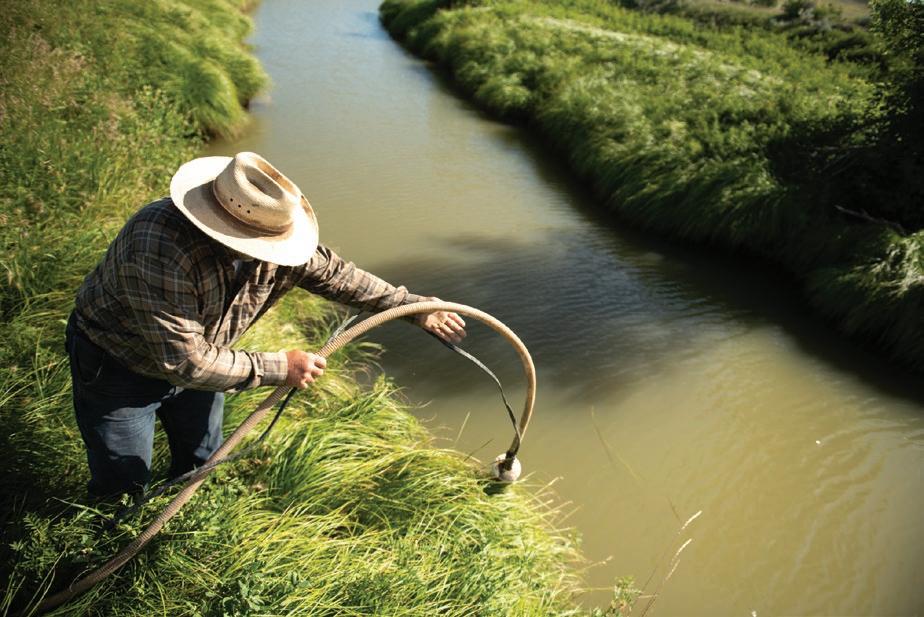
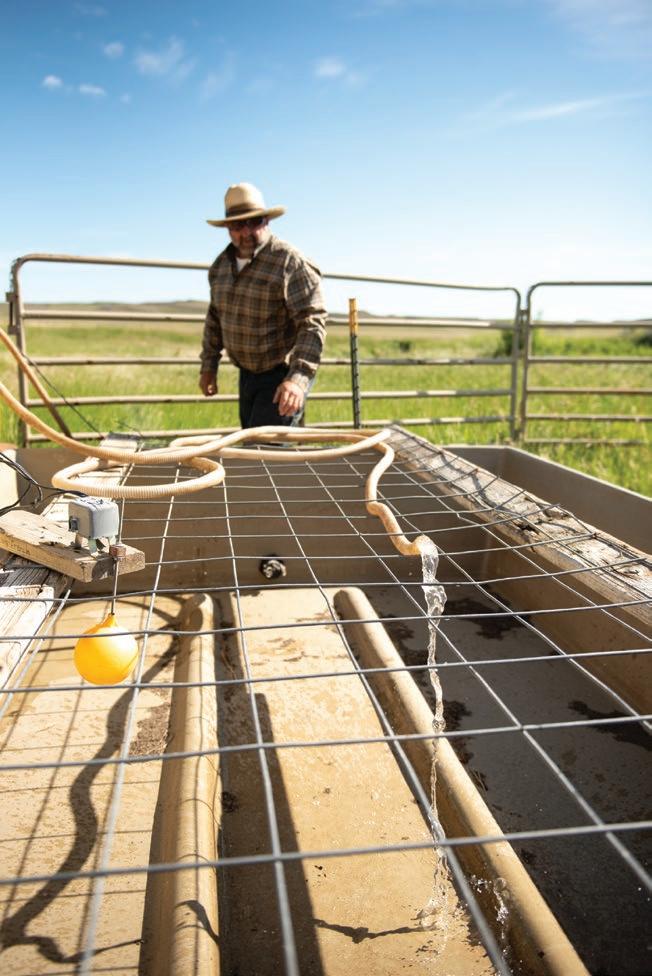
Also, with assistance from the NRCS’s Environmental Quality Incentives Program (EQIP), they moved livestock water tanks and windbreaks away from Beaver Creek, a stream that flows through three miles of the ranch. The return of willow trees along the creek is a sign their efforts are paying off.
Craig and Conni collaborate with federal and state agencies, non-profit groups, and other ranchers to achieve conservation goals. A few years ago they began a voluntary 30-year conservation lease with Montana’s
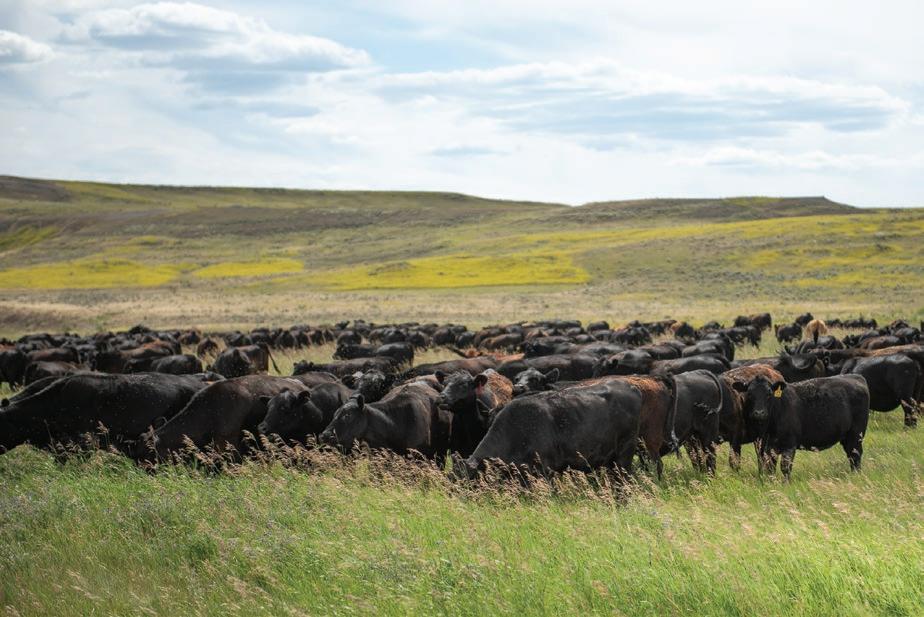
Fish, Wildlife, and Parks to ensure that their ranch’s native grassland and sagebrush will remain uncultivated and undeveloped. They also work with the Nature Conservancy, and agreed to sustain and improve habitat for four species of imperiled grassland birds and sage-grouse, and have their numbers surveyed, as part of the CCAA (Candidate Conservation Agreement with Assurances) program, administered by the Nature Conservancy in Phillips County.
They also work with Ranchers Stewardship Alliance (RSA), which is a community conservation group. As long-time members of this rancher-led conservation group that helps educate folks within and outside the ranch community, they share their experience with Holistic Management, cell grazing and other innovative conservation practices.
“We formed a conservation committee and have folks on that committee from NFWF (National Fish and Wildlife Foundation) partners program, Ducks Unlimited, Fish, Wildlife and Parks, BLM (Bureau of Land Management), NRCS, National Wildlife Federation, WWF (World Wildlife Fund), TNC (The Nature Conservancy), etc.,” says Conni. “Many different groups sit down at the table together and go over the projects that some of the other members of the conservation committee have brought to the table; we look at maps, budgets, etc.”
Many of the biologists in the area, and folks working for the partners’ program and the NRCS have contacts with landowners. “They come up with projects the landowners want to work on, to improve their grazing and maybe need some fences or waterlines or wells—or some reseeding,” explains Conni. “It might be folks from the NRCS, NFWF, BLM or Fish Wildlife and Parks who identify the landowners’ needs and bring these proposed projects to the table, or they’ll see a need from the conservation side, and approach the landowners.
“Right now they are working on some big game migration corridors, for instance, and talk with landowners to see if they can modify the fences or help them do that. It might be a reseeding project, water development, or fencing. Our conservation committee looks at the projects and ranks them, and tries to fund them. Then all these organizations that have various conservation programs look at those projects to see if they might be able to participate.”
Fish and Wildlife might have some money that would buy water tanks to help with a certain project, or supply some funding. The BLM representative might say they could help with some fencing modification for big game movements and could supply some money for that. It’s a great partnership and team effort.
“It’s gratifying to see all these people—and a lot of them young people—coming together and working together, leaving their egos at the door (nobody has to be the leader of a certain project)” says Conni. “We have accomplished a lot and have brought over a million dollars into this area to help landowners with infrastructure and seeding to improve their grazing and practice conservation at the same time. This has been an exciting thing to be a part of. We are also very interested in making sure
10 Land & Livestock h July / August 2021
CONTINUED FROM PAGE 9
The yearling herd enjoying the improved forage on the French Ranch.
Photo Credit: Isaac Miller
that good conservation and land stewardship is practiced, as well.
“Through this RSA we were able to put in some permanent electric fence on some expired CRP ground on our ranch (an old crested wheat seeding) and some pipeline and water tanks to help intensify our grazing. Off that permanent electric fence we can run temporary electric fence to strip graze (dividing the pastures into smaller pieces) to really intensify the grazing.”
A Yearling Herd
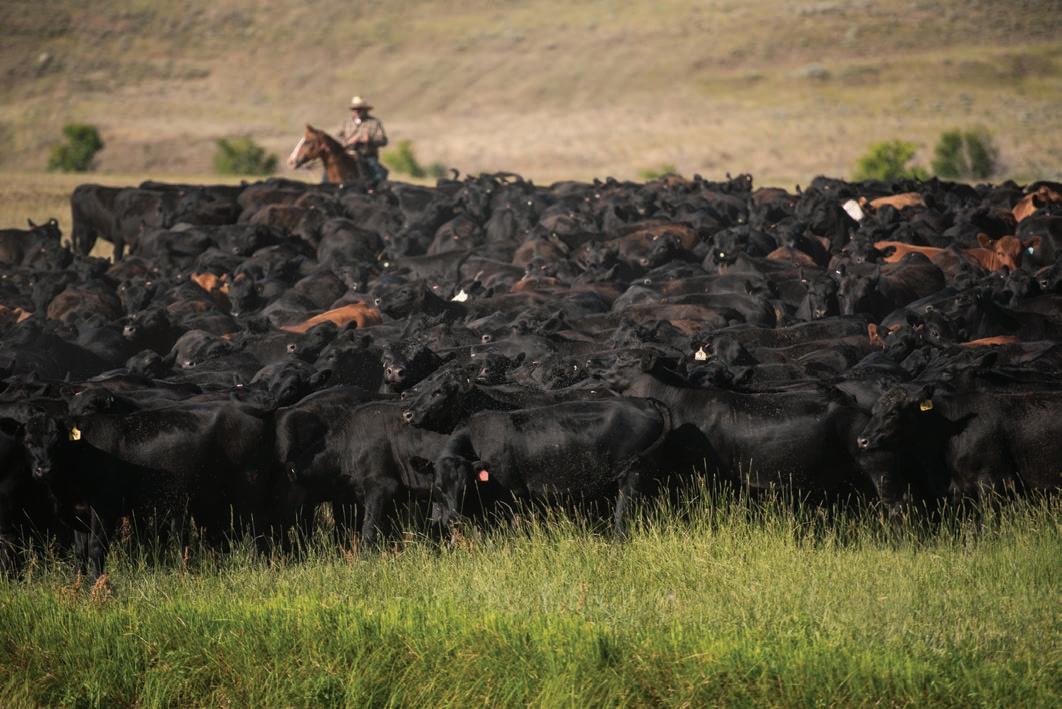
The Frenches have also experimented with creating a larger yearling herd through collaborating with their neighbors. “We were able to bring in extra yearlings and do some custom grazing this summer, with some yearling heifers,” says Conni. “We got this idea from a program called a grass bank, at the Matador Ranch west of us, owned by the Nature Conservancy. They bring cattle from different ranches and run them all together in larger herds (three separate herds). This creates more animal impact where they want it. A person can do things with a larger herd that you can’t do with just a few cattle, when managing grassland.
“What we are trying to do is not exactly the same, but this is where we got our inspiration to bring in more yearlings to custom graze. Having the larger herd created more animal impact and got some of that old crested wheat knocked down. We don’t want to eradicate it, but are hoping to get more plant diversity and healthier crested wheat plants themselves, since it is a very old and decadent stand that needs to be refreshed.
“Bringing in more yearlings was fun; we sourced them from neighbors who each keep a few yearling heifers. There might be a herd of 30 on one ranch and 75 on another, and 40 on another place, etc. Being able to put them all together as one herd made it easier to use that herd as a tool to manage the resource.
“We actually took the yearlings off our property and onto other properties, as well—to places where people needed more animal impact for a while. One neighbor was having a hard time making his cattle use one end of his pasture, so we took our yearlings in there and they did a nice job of knocking down some of that old grass and refreshing his pasture. That was a great project and we are hoping to continue doing that next year, to help other ranchers in our community.”
Craig and Conni have also used this yearling herd to improve old hay meadows. “We run on a combination of BLM, state land and private ground,” explains Conni. “Beaver Creek is one of the main drainages in our area and it goes through three miles of our place. There are many hay meadows along the creek, but we’ve quit haying and now just graze our hay meadows. That has been an amazing change. With our hay meadows being along the creek, much of the creek bank never got grazed much. We sometimes turned the cattle in there in the winter but couldn’t do that very often because the creek was dangerous for the cattle that time of year, but we got some use out of it.
“Now that we’ve quit haying, we have more plant diversity, which has
helped the grazing and our cattle numbers. It has been really good for the grass. One of the first times we brought extra yearlings in, we wanted to have them graze our old hay meadows early. We watched closely and made sure the grass was at a 3 to 3 ½ leaf stage and then turned the yearlings in; we went through the grass quickly with those cattle and just took the top third and moved them out. We were able to get some irrigation water on those meadows and then come back later in the summer (in July) with cow-calf pairs. Some of the smooth brome plants that were just little 3 to 3 ½ leaf plants when we grazed them the first time were amazing when we came back 45 to 60 days later. Those plants had 12 leaves on them. It was amazing!
“We are seeing healthier plants and we took photos in August 2020 when we turned our cowcalf pairs into some of the hay meadows that we’d gone over quickly with the yearlings earlier. Our region was pretty dry in 2020 and had a major grasshopper problem. I have photos of when we turned the cattle into those hay meadows and it is green and lush and hard to walk through because there is so much grass. I thought, this is what intensive grazing management can do!
“In talking to some other folks, they were saying that the healthier green plants, with a higher sugar level, are avoided by grasshoppers. The grasshoppers have a harder time digesting the sugars, according to those folks. So this is something we want to look into more fully. If we can do a better job of managing our grasses, maybe we can protect our grasslands from these insect predators that can decimate these grasslands during a drought. Some people were saying the grasshoppers were eating their pastures, and we were pleasantly surprised to see that ours were healthy.”
Riparian Restoration
Conni and Craig have also tried to protect and improve the riparian areas along Beaver Creek. The cattle are watered in tanks, using a solar pump to pump water up out of the creek, to try to keep the cattle off the riparian areas as much as possible. “But another thing we found, when pasturing cattle here along the creek for short periods of time, was that this grazing was actually beneficial,” says Conni. “Those areas also need
CONTINUED ON PAGE 12
Number 198 h Land & Livestock 11
Photo Credit: Isaac Miller
To protect the riparian area along Beaver Creek, the Frenches use a solar pump to pump water into stock tanks away from the edge of the creek.
Photo Credit: Isaac Miller
C Lazy J Livestock
CONTINUED FROM PAGE 11
grazed, and the cattle find places where they can get down the bank to water in the creek.”
Beaver Creek and many of the other creeks in this area have steep banks, where the water has eroded the fragile soils, making a cut bank. “But the cattle have found places to get down, and have created trails that break down the bank and make it less steep,” Conni explains. “Where the cattle are in there only for a short time and then leave, we are seeing those trails they’ve created down to the creek fill in with weeds and marsh grasses. The cattle have actually helped create an area for the bank to heal and have vegetation holding the soil again, and now the wildlife are using those trails also as access points, to get in and out of the creek for water. We have an increase in predator bugs like dragonflies, and we have more dung beetles. It has a snowball effect, when you help the environment in one area it improves other facets and everything starts to recover.”
Sharing Knowledge & Experience
In the near future, Craig and Conni plan to use 320 acres of recently purchased farmland as a demonstration site for the soil health benefits of cover crops. Healthier soil and more species diversity also improves wildlife habitat and there is a lot more wildlife diversity on their entire ranch now, including more game animals. Hunters are allowed access to their ranch’s thriving wildlife populations through enrollment in the state’s Block Management program.
“We hunted for many years ourselves, and our kids did,” explains Conni. “We don’t hunt anymore, but I grew up hunting in western Montana with my family. We came to eastern Montana to hunt, on occasion, and I remember what a great thing it was for my family and for me.”
Allowing hunters to come to the ranch has been interesting for the Frenches, meeting people from all over the U.S. and from other countries. “They talk about the lack of hunting opportunities in other countries and we realize we don’t ever want to see hunting become just a rich man’s sport in our country, so we are as open as we possibly can—providing opportunity for people to come here and hunt,” says Conni.
“We feel we are incredibly blessed, to be able to live here and do what we do, and this is a way of sharing this with other people. This is part of the responsibility of our blessings—to share them.
“Agriculture gets a lot of bad press and if people never get out on a ranch, they have no way to really know what it is like. If we can bring people onto the ranch, whether through hunting, kayaking, bird-watching, etc. and open our doors so people can see what we are doing, then they have more actual knowledge and won’t believe every bad article they read in the press about agriculture.”
Craig notes that in caring for the land for many species, they have also improved their ability to be profitable in production agriculture. “Our
twist on what we think land stewardship should be provides the habitat for many species,” says Craig. “The different management of ranch land across the country provides a mosaic of different habitats, due to the many management styles. This is beneficial for wildlife, to not have just one type of universal management method. With a focus on food and fiber production (to benefit people), this is how we get to stay in business and do this, but we are in a unique occupation where we can take care of the land and grow food and fiber for a growing human population as well.
“We shouldn’t dumb it down; there is a lot to it. You can take the science approach, the observational approach, or a ‘this is how we’ve always done it’ approach, but personally I think the people who take the latter approach eventually fall behind because they are not adapting. As different information becomes available, such as high-intensity short-duration grazing, we need to pay attention. “We are catering our management to our strengths and we are just one adjective away from being sheep herders. We are cow herders. We enjoy the cattle, the frequent movements, and the land stewardship in general. This is what gets us up in the morning, eager for a new day—and not the dollars involved. That’s what keeps us up at night (worrying about the financial aspect)! The joy every morning is in the job we are doing with our cattle and the land.”
Craig and Conni also understand the importance of passing on a land ethic to the next generation, and want to make sure that their ranch will stay productive into the future. They have engaged their three children in ranch planning. They also recognize that even if their kids don’t take over the ranch, they would like to pass on a ranch operation that is sustainable, both environmentally and economically.
The Frenches are pleased that they have partner organizations that feel a connection to their ranch, and their Leopold Award is an indicator of those connections. “The folks who asked us to apply volunteered to fill out the application forms, so that made it easy for us to agree to,” says Craig. “The thing that warms our heart is the fact that they felt like they were a part of our place and knowledgeable enough to go ahead and fill it out for us. We had benefited from their education, in whatever field they are in—whether it was BLM, NRCS, Fish, Wildlife and Parks, etc.—and filtered it to how we think it applies to what we are doing. These folks wanted us to put our name in the hat and offered to write things up for us.
“We plan to continue our open door policy and hope to be able to help other people along the way. The really neat thing about the Leopold Award is that it gives us an opportunity to connect with other people and maybe help them if they are interested in some of these things--if they think it will fit their management to go this direction. The Award is a good way to help spread the word. It’s not that we have it all figured out (we are just trying to do the best job we can, with what we have—and keep trying to improve because we know we still have a long way to go), but we might be able to inspire someone to go ahead with some changes on their own place.”
12 Land & Livestock h July / August 2021
Craig French moving the yearling herd.
Photo Credit: Isaac Miller
Barney Creek Livestock— Transitioning a Montana Ranch to Regenerative Practices
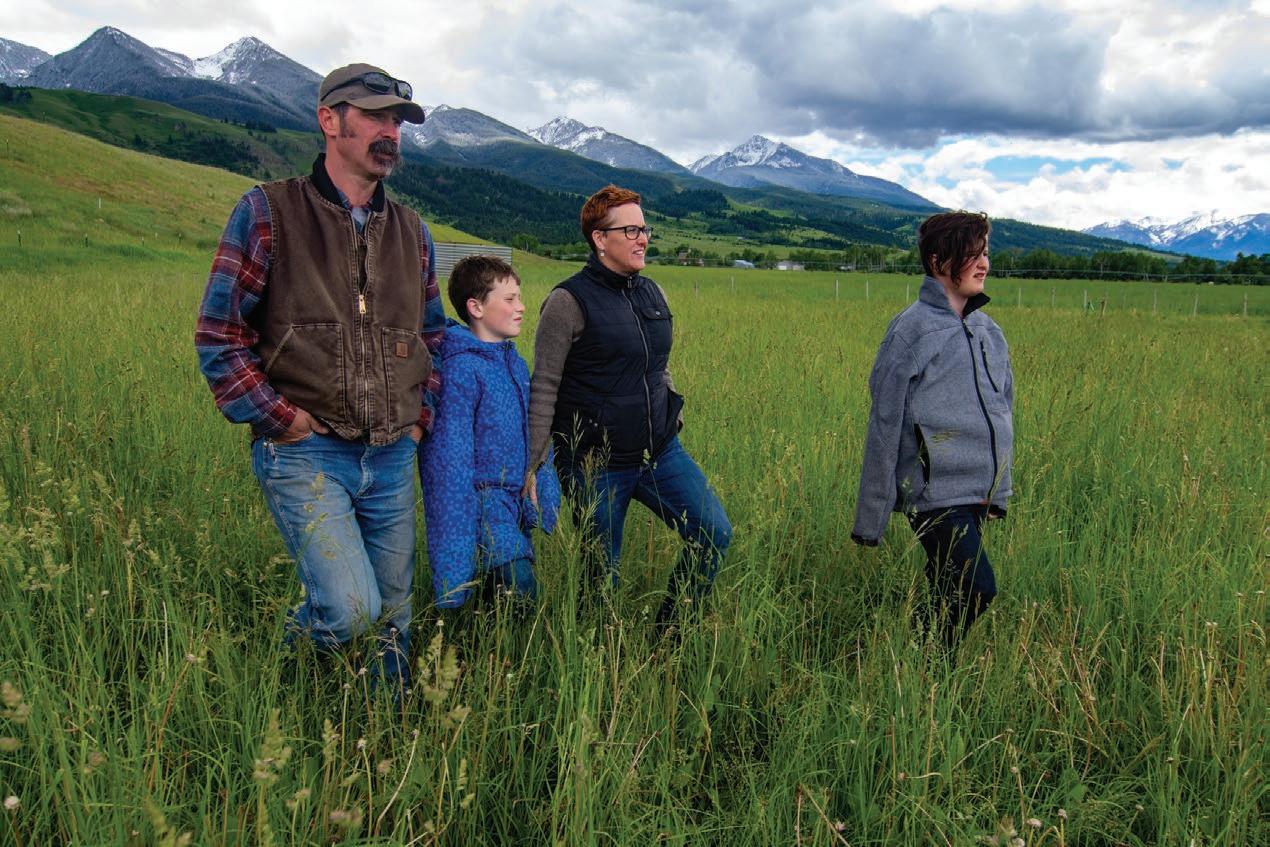 BY HEATHER SMITH THOMAS
Set in the beautiful Paradise Valley near Livingston, Montana, Barney Creek Livestock is a family operation devoted to regenerative agriculture. Pete and Meagan Lannan have been practicing Holistic Management for over six years and feel that it’s the only way they have been able to remain in agriculture. Their ranch was runner-up in 2020 for the Montana Aldo Leopold Award.
This ranch has been in the family since 1900, when Pete’s great grandparents, Rueben and Mary Ellen Forney, purchased it from the estate of Barney Maguire, who homesteaded the place in 1867. Three generations currently live on the ranch.
Pete’s parents, Larry and Cathy, the third generation, grew the ranch to what it is today, after Larry bought it from his own parents back in the late 1950s. Pete and Meagan, the fourth generation, currently operate the ranch as they raise the fifth generation with a passion for regenerative agriculture—daughter Maloi, 14, and son Liam, 12.
“When my dad took over the ranch, it was the era of modernization,” Pete says. “My dad built up the cattle herd and some nice pasture and did a little bit of everything. He always had a job on the side, as well. I’m the youngest of five children in the family, and when I was about nine years old my parents started a small dairy.
“We operated the dairy until I was 18 years old, and since I was the youngest and the last to leave home, I think that’s part of the reason why it ended when I was 18 and went to college. The labor was leaving, and that’s when my dad went back into beef cows.”
Making the Transition
But, Pete was always interested in the ranch. “I would leave home, but always came back, and helped my dad. About 20 years ago Dad had his first hip replacement and then my mom convinced him that he needed to sell all the cows. He did some other jobs and he and my mom put up a lot of hay and I helped out when I could. I worked for the Forest Service from the time I got out of high school and started on the trail crew, then ended up fighting fire. I was gone a lot (on fires around the nation) for about six months every summer, so I wasn’t able to help very much on the ranch,” he says.
“Then five years ago my dad called me, and I was in West Yellowstone fighting fire. He asked if I wanted the ranch to keep going and said that he was going to lease it to someone else unless I could figure out a way to make it work. This got me to thinking pretty hard, since I still had to work for the Forest Service for another six years or so before I could retire. I started reading a lot of different things and stumbled across the concept of grazing year round and not farming.”
Pete knew he wouldn’t be able to put up hay and continue his Forest Service job and it would not be economical to have anyone else put up the hay. “Looking at the cost of equipment, etc. I had to find another way to keep the ranch going. I started reading about Allan Savory and what he was doing, and read books by Joel Salatin. I watched some YouTube videos late at night after work and got ahold of some of Gabe Brown’s information and thought it was pretty amazing. I read Jim Gerrish’s book Kick the Hay Habit and a bunch of other books about grazing,” he says.
“My interest in Holistic Management and rotational grazing started out as a purely economic need; I didn’t want to have to prop the ranch up with my outside job; I wanted to have that job for our family’s living and I also wanted the ranch to be profitable on its own.” His venture into Holistic Management and regenerative agriculture started out as being frugal and not having the time to do a lot of farming. It was a matter of necessity.
“I realized I could probably hire someone to move cows frequently and it would be simpler (and less risky) than hiring someone to run machinery. Moving cattle still takes some skill, but not the type of skill required to operate a $150,000 tractor and baler. It’s a little different skill set.
“I brought this idea back to my dad and he didn’t think it was a very good idea; it didn’t make any sense to him. So that first year I told him I could just put some cows on a small section and hire a high school student to move cows around the ranch, just to try it. That young man spent a couple hours a day irrigating and moving cows. We did that for one year and it worked out pretty well”.
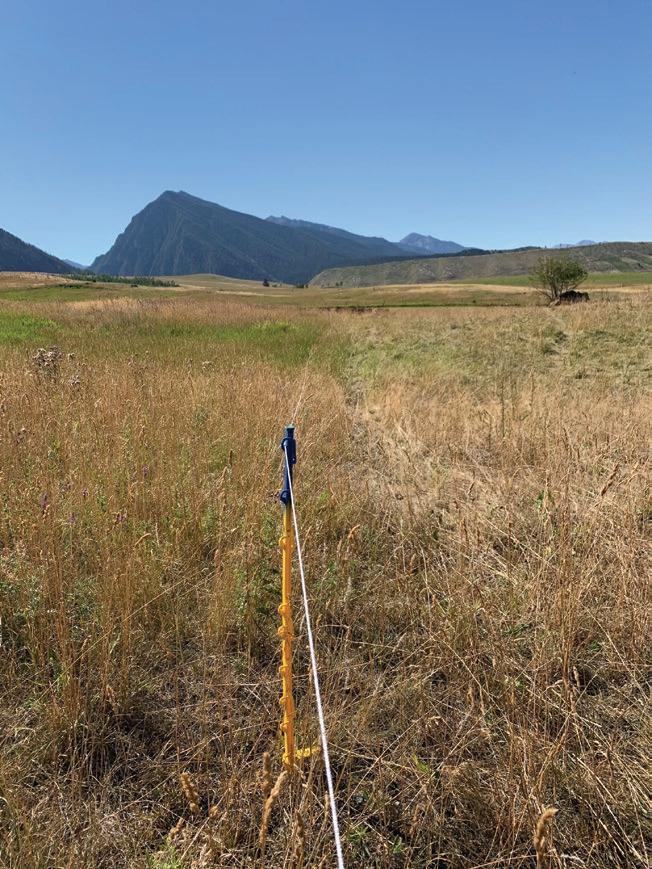
It worked well enough that his dad thought it might work on more of the ranch so they turned most of the hay meadows into pasture. Pete started dividing those meadows into big pastures, using high tensile wire fence.
“I had started strip grazing those meadows the winter before and got the hang of using poly wire. I did some research on how to do it because a lot of our ground is under pivot and irrigated, which made it nice to manage. I started figuring out how to set things up to rotationally graze it, with temporary fence, and went from there.
Number 198 h Land & Livestock 13
ON PAGE 14
CONTINUED
Pete, Liam, Megan, and Maloi Lannan.
Barney Creek Livestock
CONTINUED FROM PAGE 13
“One of the things we talked about was input costs and why we did certain things such as deworming our cows. It was very expensive for what we were getting from it. We started reading about that and then got into the topic of dung beetles and focusing on soil health—and eliminating inputs that kill things.
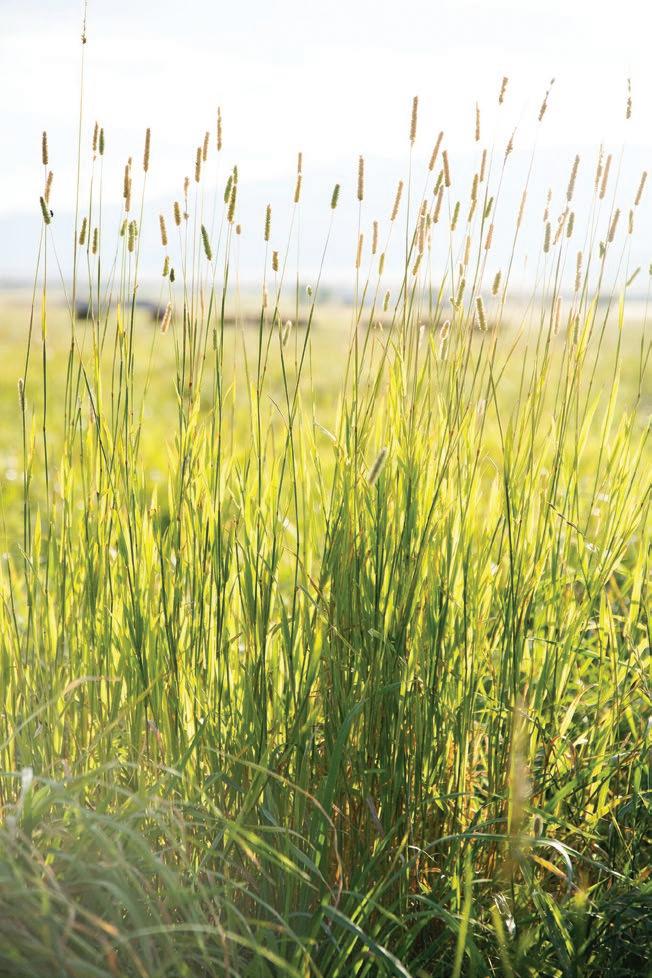
“I didn’t want to spend a couple thousand dollars here and a couple thousand dollars there and started wondering what the consequences might be if we didn’t. The other thing we had to deal with was the fact that I can’t be here in February and March calving, so had to figure out when I could be here—or if I can’t be here, when would be a good time to calve. Luckily we have a neighbor who had been calving in May for about 15 years.”
It happened that Pete was gone one March for training, and Meagan had to get a cow in and pull a calf. It was late in the evening and snowing after she came home from work—in a dress and heels. She got the cow in and called the neighbor. “He and his wife came and helped pull the calf. They got to talking with Meagan about calving, and afterward he and I got to talking and I asked him how long he’d been calving in May and what he thought about that. He told me he’d never go back to doing it any other way.”
That’s the year Pete decided to start calving later. “I just held the bulls out until after mid-July and then turned them in. In the mean time I heard about some other people in our area who were calving in May and I called them. One was Roger Indreland. I am a pretty shy person but I just called him up, out of the blue, and this was pretty hard for me to do. I called him after work one day and talked to him for two or three hours. One of the things I asked was how he transitioned into calving later (starting end of April/early May). He did it incrementally over four or five years but said he wished he’d done it all at once. The cows that fell out of the production system would have fallen out in just one year instead of over the course of four or five years. I was glad to hear that, because that’s what I did.
“Now we were addressing the economics, the environment and the part that is most challenging—the human, social side of it. Meagan is an outstanding, outgoing person; she finds friends and resources and people to talk to. She found some folks that have been good support for us, and
Creating a Team
Pete and Meagan make a great team as they have similar values and interests. Meagan grew up in northwestern Montana—in the little logging town of Thompson Falls--but she and Pete didn’t meet in Montana. “My dad was a logger, a cowboy and a rancher,” says Meagan. “My mom was a librarian and didn’t like ranching very much. She did 4-H with all of us kids but hated how the cows took so much of our time. I loved it, however, and went everywhere with my dad on the back of his horse until I finally got a horse of my own—and I just loved ranching.
“I grew up, graduated and did many things, then ended up in Nevada on a hot shot fire crew in Carson City. I really thought that was where I would stay—maybe in Elko or Reno. I was a wildfire apprentice and met a gal through the apprenticeship program who worked for Pete on his fire crew. For two years I kept hearing about Pete; it was Pete this and Pete that, so I began to wonder, ‘who is this guy and what is his deal?’ because all his employees kept talking about him.
“I became friends with that gal through the Wildland Fire Apprenticeship Academy and she was marrying a college roommate of Pete’s who was also Pete’s good friend. I was on this hotshot crew when she asked me to be in the wedding, which was going to be in Big Sky, Montana. I thought that would be nice—to get to go back to Montana— and was pretty sure we’d be done with fire season by then. But we got a call the day before I was to leave to go to the wedding, to go out on a fire. I’d had a lot of hours of overtime by then and by October I was really ready to hang up my boots. So I made a big deal about having to be in this wedding. My superintendent told me to quit worrying about it and just get in the truck, and promised me he would get me off that fire.
“My dog and I got in my truck and drove straight through from Carson City to Big Sky. I’d been around all these Elko cowboys who really knew how to dance, and grew up dancing with my dad who was an amazing dancer, so I loved to dance. At the reception, in walks this tall handsome guy in a big cowboy hat, with a big ol’ mustache and I wondered who he was. Then I saw him dance and I thought, ‘Oh man! I am going to dance with this guy all night!’ It was Pete, and that was pretty much all it took. I moved to Livingston, Montana and have been here ever since. So that’s how we met—at a wedding—and it got me back to Montana!”
14 Land & Livestock h July / August 2021
we just had to figure out our own part in this.”
The Lannans use temporary fencing to divide up the pivots for grazing (post graze on right and pre-graze on left).
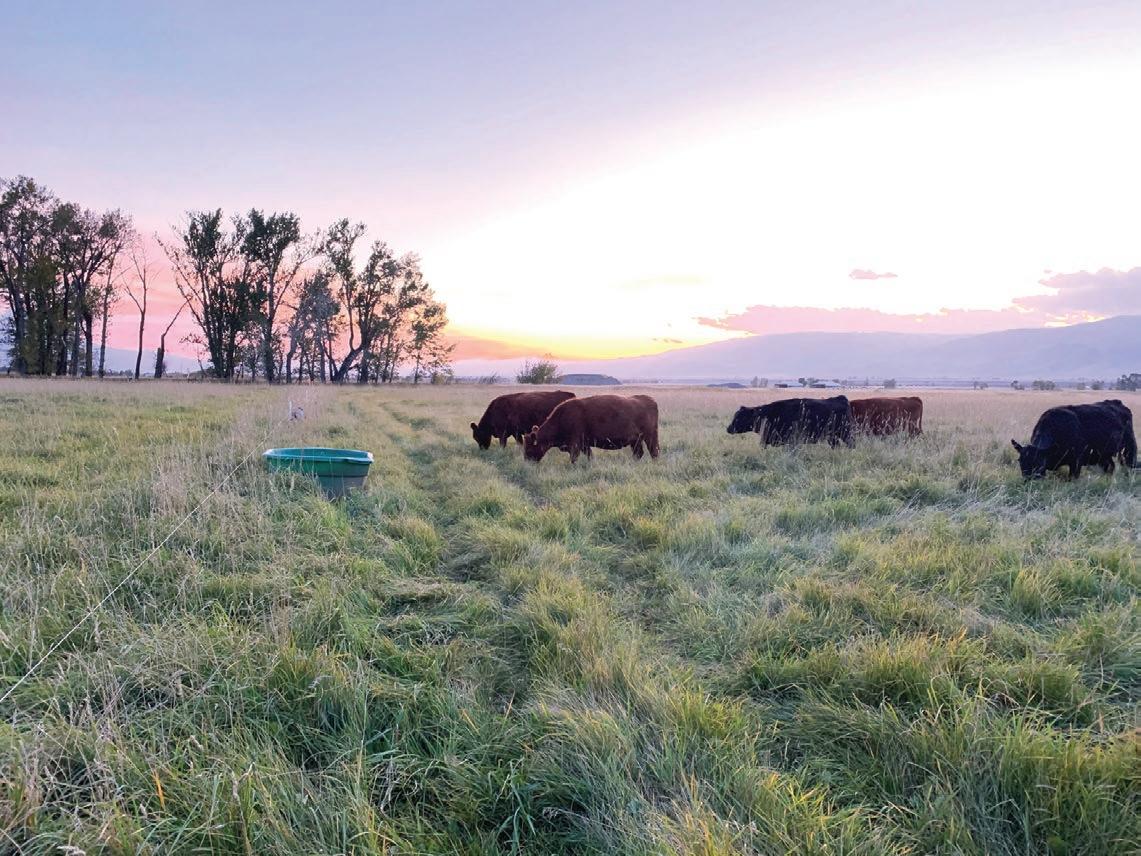
Improved grazing has led to increased productivity, soil health, and diversity of forage at Barney Creek Livestock.
Working on Genetics
Pete says their cattle enterprise is just a small operation. “In 2011 my dad was diagnosed with cancer and by that time had sold all the cows. In the middle of all that, he decided that we should get some cows again. It wasn’t at the peak of the market, but certainly not the cheapest time to buy cows. We got some contacts and found a few cows and got back into the cow business during that time he was fighting the cancer and trying to get better. He’s done well with it, but it was challenging.
“Of course we bought the wrong kind of cows. They were the kind we had before—1,300 pound cows that calved in February, and all black. Since we started down this path we’ve been focused on different types of enterprises, but as far as our cow-calf operation goes, we found a seedstock producer who is focused on efficiency, smaller-framed cows, good leg structure, etc. We have such a small herd we probably shouldn’t even keep our own replacements but I can’t help myself,” Pete says.
“So we’ve been focusing on buying bulls that sire heifers with those qualities— smaller framed animal, more efficient on grass, etc. We live in a part of the country where cattle can do pretty well for most of the year on grass but sometimes we get a lot of snow. I’d like to be able to only feed for 30 days or less; those are the kind of cows I want.
“It’s partly just me being stubborn, and pushing them pretty hard. We are now to a place where our average cow size is 1,200 pounds or under. I am excited about our replacement heifers this year and looking forward to watching them calve next year and keeping calves from them. We have a mix of red and black Angus.”
Pete and Meagan both love the red Angus. “They seem to do very well and haven’t had as many of the good traits bred out of them. If we had our choice we’d run all red cows and buy some red bulls—if we were just selling grass-fed beef direct to consumers. As it is right now, however, we market some of our calves through traditional means and everyone wants black calves. So we buy black bulls, since you always get black calves from them. We have found some good niche producers, like the Indrelands, who produce that kind of bull, so this works.
“Since we started doing this, we’ve been leasing a few places, and some of them are more conducive to daily moves while on other places we don’t move the cattle as often due to lack of infrastructure. It’s fun to watch those cows. Even when you move them only every few days, it’s interesting to watch them and see how they act.
“Several of our leases have a lot of good forage and also a lot of weeds. The cows will eat knapweed and thistles and they work as a herd. Even when you don’t confine them so closely (and don’t move them often) like we do down here at home where we push them harder to work as a herd, they have that behavior built into them now.”
Learning & Sharing Knowledge
Meagan says the other piece of the equation regarding Holistic Management is education. “I hung up my fire boots for good, had two kids and stayed home as long as I could for them. The time came when I needed to get back into the workforce. I ended up with a job at the Department of Labor and Industry (DLI) doing Work Force Development. This position puts you in an education mode because you are trying to bridge career and education to upskill or help someone shift to a different career. Working with DLI, I did workshops and training/ education. I traveled across the state and worked with business and industry connecting skills and education with their needs. I did a lot with job shadows, internships, and apprenticeships with high school students exploring careers and the workforce. I was also learning a lot about what we do here on the ranch and realized that most people really don’t know what ranchers do or the way Pete and I do things, which is different.
“I was now the business owner wanting to inform people about what we do: increasing and promoting holistic practices when talking with our customers— educating them and making them an integral part of our operation.
“Many ranchers have a non-ecological view, and what we are doing is a game-changer. I was asked by the Farm-toSchool program to speak to the kindergarten through 2nd graders for Beef Month, about how we ranch and why it’s important. I was trying to figure out how to talk about soil health and our ecosystem with kindergarten children.
“Our daughter Maloi is in 4-H and did a veterinary science project. She had done an interview and gave a really big demonstration about adaptive grazing, holistically-planned grazing and moving cattle and how it helps the health of the cows and the whole system. The judge for her 4-H presentation said she thought she should talk more about vaccination and animal health. Maloi responded by saying, yes, if the cattle need it, but that it shouldn’t be the main focus. I was sitting over by the parents during her project interview, and Maloi came up to me and said she was so mad, and started to cry out of frustration. I asked what was wrong and she said she only got a red ribbon—and that she was trying to talk about soil health but the judge wanted her to talk about vaccination!
“So we focused on this as a possible opportunity. I asked her what she could do with this situation. How can we do more on this? I asked Maloi if there was something she could do to help get her message across. She had to think about it. She is a really good artist and I asked if she’d like to draw some coloring pages for these kids in those classes (the Farm2School Kindergarten and First graders) and she thought that
Number 198 h IN PRACTICE 15
CONTINUED ON PAGE 16
The Lannans have been working on cattle genetics so they only have to feed their cattle 30 days out of the year.
Livestock
was a great idea. One thing led to another.
“We talked to the kids and they loved it, so Maloi thought she could make a coloring book. She e-mailed Gabe Brown (who wrote Dirt to Soil), Nicole Masters (who wrote the book For the Love of Soil: Strategies to Regenerate Our Food Production Systems), Joel Salatin, etc. and they all responded. They communicated with her in long e-mails about this coloring book and she asked them about their favorite quotes and why they do this or that. It’s all in her coloring book,” Meagan says.
A year later Maloi had read Gabe Brown’s book Dirt to Soil and she told her parents that they needed more species diversity. “She’s only 12 years old but she has things figured out! I told her we were working on that in our grass, but she said we also needed more species on the land,
been so much fun, and so important.”
Pete says that it’s been great having young people help move the cows and learn about this effort, but they also spend a lot of time sharing this information with their customers. “We started direct marketing our beef and this has been a good venture. We help people realize that this is not the beef they buy at the grocery store but this is how we raise beef,” he says.
One of the boys who came to the ranch grew up in several urban areas; he had never seen this much grass in his life except in a park. He’d never sat in field of grass to eat his lunch after working. “He said this was so wonderful and he couldn’t believe we actually live and work here and work hard,” says Meagan.
“It was fun to watch the sparks fly as that young man looked at ranching and ranchers in a different way. Being able to show students this kind of ranching is such a great opportunity. We can talk about the soil and what they are walking on, and all the things going on underground, and all of the life there that ends up in the food they eat.
“One girl who was going to a boarding school in San Francisco was really interested and I told her about a couple websites that tell about regenerative beef or pork. She could not wait to take this information back to her parents, and relate it to what they are eating.”
Meagan says it has also been amazing to work with the different landowners. “Some of them are very interested in regenerative grazing practices and putting these practices to work on their land. The Paradise Valley has many second-home property owners. It is similar to many other beautiful places in the West; people move there for the scenery.”
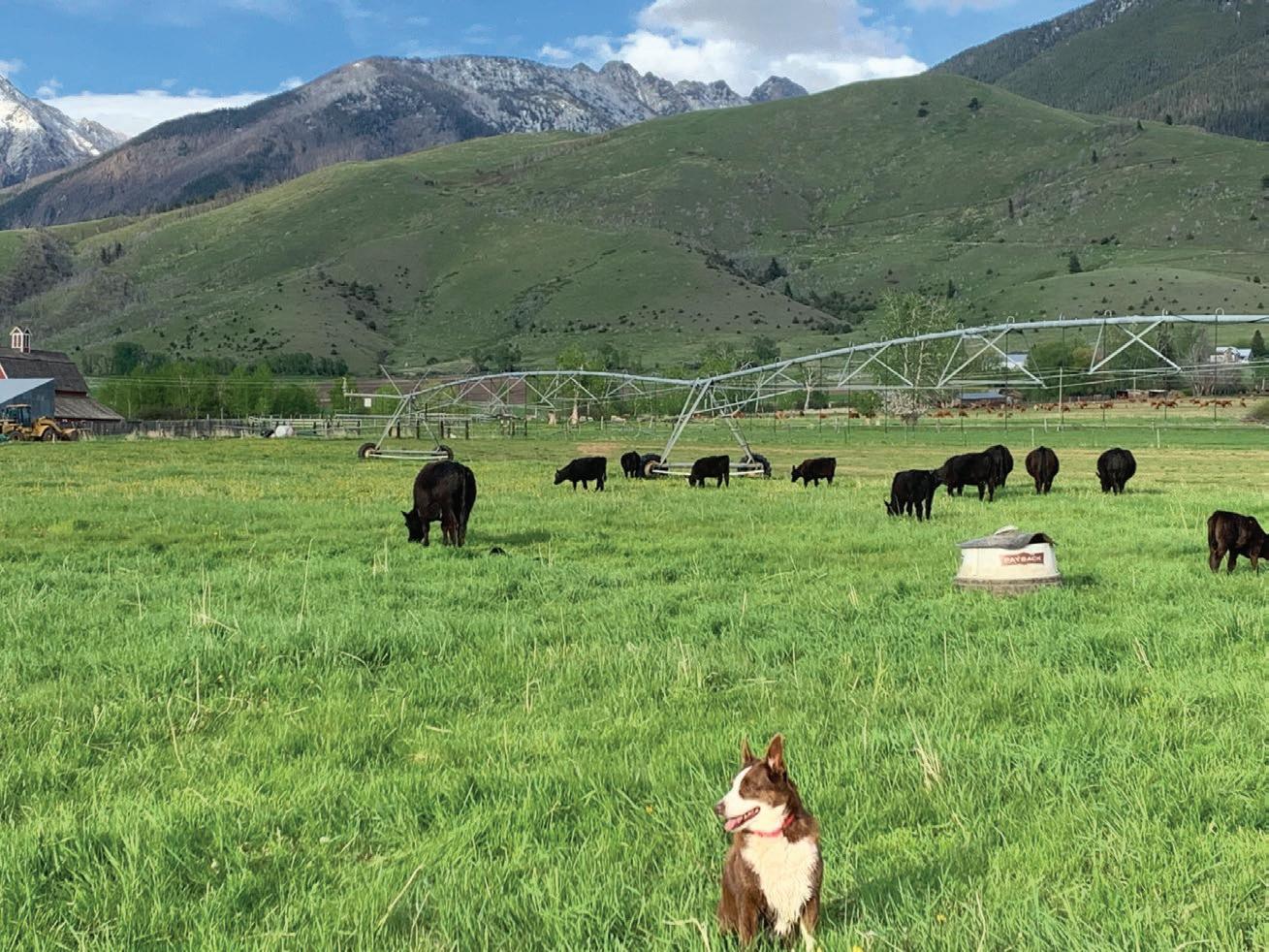
“We met with a couple land owners recently and both of them really wanted to do the right thing for the land,” says Pete. “This is a big part of it and the interesting thing was that we didn’t seek them out; they found us.”
like sheep, and drew up a proposal about getting some sheep. She sold her coloring books for $10 apiece and put enough money in the bank to buy her first five sheep. Then she sold those and bought more, and now she’s up to 15 sheep.” Maloi and Pete go through the math every year— Holistic Management math, Ranching for Profit math—looking at inputs and being very realistic.
“We had her write her own check for those sheep and she told us that was a lot of money! She secured a grass lease from a neighbor and she moves the sheep every day all summer and after school.
“It’s been so awesome to share holistic/regenerative practices with other people. We’ve had high school students here, and recently had 50 students doing work, stacking sticks in our riparian areas and we explain why we do this. I think this is part of our job, to take time to explain to people why we do what we do and what it is doing for them. This has
“It is nice to be able to work with them and talk about improving the land,” says Meagan. “One placxxe, the previous owner didn’t do a very good job and the new owner wondered if there was any hope for it, and we said yes. We’ve seen degraded land improve, here and in Africa. Nature will recover it, with proper management.”
“My dad did a great job of managing this place,” says Pete. “He did go down the conventional road because that’s what he knew—and it’s no criticism against him or anybody else who has done things that way. He was doing what everybody else was doing and trying to improve things the best he could.
“We were fortunate to start with a pretty good land base here, with my folks’ place. There were some soil health issues but it was not degraded. It was fertile soil and had irrigation, so our learning curve was probably not as steep as it could have been, and some of our challenges were probably a little bit easier.
16 Land & Livestock h July / August 2021
Barney Creek
CONTINUED FROM PAGE 15
Ongoing education is a big part of how the Lannans have been able to shift to regenerative practices on their operation while reducing the slope of the learning curve and improve the desired outcomes for their land, animals, and people.
“I hope we will get the opportunity to lease some of these other places and we are excited about the challenge, if we do, because they are considerably degraded. I’d love to see what we can do—with what we have learned--and to see what we still don’t know, and there’s a lot.”
“One couple asked us if we could do a case study,” says Meagan. “This is a service to the landowner, and the cattle would be improving degraded soils. We would be doing an ecosystem service. So we will write up a proposal and see what they decide. We tried to get a lease last year with one landowner and we offered him a large sum of money because we needed grass, but he looked at our proposal and turned us down, to make hay on his place instead. That was his choice but I remember Pete coming home and saying that he just couldn’t understand why people don’t get it about what we are doing for the land. I think eventually more people will get it.”
Meagan has done a lot of webinars, many of them with Abbey Smith at the Jefferson Center for Holistic Management and she also works for a non-profit called Western Sustainability Exchange, which is doing a Montana Grasslands Carbon Project with Native Energy. “We are trying to pool some money together so my colleague Chris Mehus and I can take the Jefferson Center course. We are planning to take the course this winter. It’s been so amazing, the things we’ve been learning, thanks to HMI. More people are beginning to understand these things.”
Pete says there is so much to learn, and that’s the beauty of the
Achieving 350% Net Revenue Increase with Beef Cattle— Alejandro Carrillo
BY ANN ADAMS
If you are looking for a way to make a profit with beef cattle in an arid environment, I highly recommend you learn more about Alejandro Carrillo and the Las Damas Ranch located in Chihuahua, Mexico. The reason for this profitable business model is not access to cheap labor as some people may assume, but because it is a low-input system. How does he do it?
This 25,000-acre ranch was managed conventionally from 19852006. But as Alejandro moved to Holistic Management, he added to the original 12 paddocks to create more than 500 paddocks (permanent and
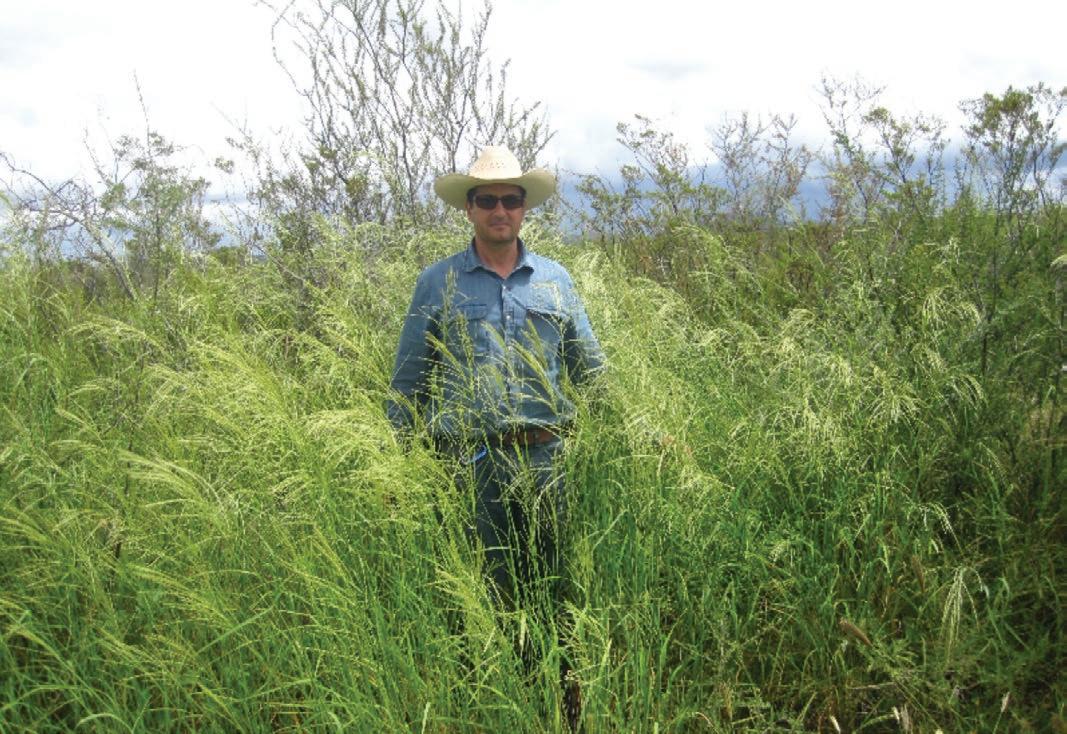
networking and sharing. “It’s mainly a change of mindset. What we do is not drastically different from what other people do, but just thinking about it differently. Someone once said that if you want to significantly change things you don’t have to change how you do things; just change how you see things. That’s how I look at it. Maybe a certain plant looks like a weed, but right now it’s just part of the pasture, and the cows can eat it,” he says.
“This is really what I keep going back to—trying to manage for what we want, as opposed to managing against what we don’t want. This was a fundamental mind shift for me. That whole idea of managing ‘for’ something is a huge shift in mindset. We want to manage for better pasture. Maybe those few thistles out there are not a big deal unless they are an indicator of a symptom of something we need to manage to improve.”
On one ranch walk over a piece of ground that was very degraded, Pete asked Meagan what she observed. “I didn’t see any ladybugs, dragonflies or dung beetles. I kicked over a lot of manure but didn’t see any beetles. When you are doing things the best you can, the agroecosystem is mind-blowing, and then when you go somewhere else where it’s not managed regeneratively, and you realize you are making a difference,” she says.
“None of us have all of it figured out,” says Pete. It’s always a work in progress, and an exciting journey.”
temporary fencing being used) and combined his herds into one herd. With these changes he was able to give 10–14 months of recovery to his forage while grazing each paddock one day or less.
This kind of grazing management has resulted in a 221% increase in stocking rate moving from 135 acres/cow to 42 acres/cow. Water infiltration rates are now 18–20 inches/hour versus the neighbor’s land which average two inches/hour.
Alejandro sells most of his beef into commodity markets with a gross profit/cow on the wholesale market is about US $300 per animal, and that represents about 80% of their culled cows. Their gross-profit per steer on the direct market is about US $450.
To create the infrastructure to allow for this type of management, Alejandro invested in 21 water reservoirs and 38 gravity-fed water troughs. The total cost for this infrastructure development is $40/acre or $1,000,000 over a 15-year period. This $66,667/year price tag means they were able to triple the number of cows they ran from the original 200 cows to now 600 cows even with drought and less than average rainfall, increasing their net profit by 350%. They could use part of the profits to pay for that infrastructure each year keeping risks low as they built resilience in their land and their grazing system.
As Alejandro notes: “Many people believe that our costs are low because of cheap labor in Mexico. In reality, the major expense in most ranches in northern Mexico is hay and any inputs for the cows. We give no inputs to our cattle but sea salt, that it is! The second major expense is fuel, but we have been installing solar systems which help reduce fuel expenses. The third major expense is labor. We have one full-time employee for each 500 animals.”
To read a more in depth article on the Las Damas Ranch go to: https://holisticmanagement.org/wp-content/uploads/2021/03/lasdamas.pdf.
Number 198 h IN PRACTICE 17
Alejandro Carrillo
From the Field
‘No Dig’ Gardening at TomKat Ranch
BY ANDREA HATSUKAMI AND SUSAN HADACEK
Typically, landscaping at the ranch focuses on the care of flowers, orchards, and a modest vegetable garden. Last year, however, as we began to see the impacts of COVID-19, we wanted to do more to address food insecurity in our community. We quickly identified a single-acre plot outfitted with a former hydroponics greenhouse and a perimeter deer fence, as the ideal location to start a market garden.
Preparing and maintaining farm ground can be hard work. To make it less strenuous for our two-person team, we decided to implement a ‘no-dig’ regenerative method of planting. To do this, we placed layers of flattened recycled cardboard boxes on the ground for weed suppression and spread a thick layer of finished compost over the top. The combination of increased moisture retention and microbial activity from the compost, along with the penetrative power of the plants’ roots easily breaks down the cardboard within the first month or two. For the beds, we used compost made of horse manure, bedding, and food scraps from the ranch. The no-dig method effectively grows vegetables while improving soil biology; last year’s growing season yielded 1,700 pounds of produce which we donated to a local food distribution program run by Puente, our community nonprofit resource center.
To prepare for this year’s growing season, we no-till drilled a cool season cover crop, more than doubled the number of no-dig garden beds, laid underground irrigation, prepped three new compost piles, and attended a Holistic Management International crop planning course. With the help of our HMI instructors and classmates, we built a planning chart
From the Board Chair
BY WALTER LYNN
Iwant to share some recent examples of how the social dynamics are changing in Agriculture to create a better landscape and tie that to offerings from HMI.
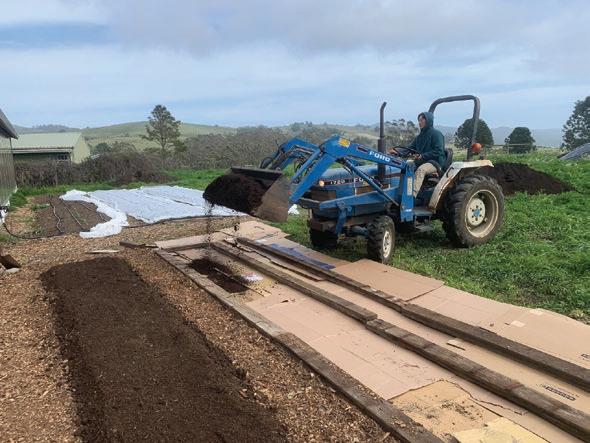
On April 10th I had a phone conversation with Cliff Schuette, near Breese, Illinois in Clinton County, which is just two counties east of St. Louis, Missouri. This southern Illinois County is the number one livestock county in Illinois involved in dairy, pork, and beef production. In that phone conversation, Cliff invited me to attend a cover crop soil health tour his seed business was hosting. I decided to drive to see what Cliff’s cover crop customers were doing in Clinton County and Cliff had four different operations to share with the approximately 35 attendees on the bus tour. Successes and challenges were observed. The group’s observation skills were well honed. Some were checking soil temperatures. Some asked “why” the prior year’s crop residue had not broken down more over the winter. They were piecing together that the cover crop mix or diversity was a crucial factor on the soil biology with the management of the various mixes observed.
Attendees were also measuring compaction with a probe. Herbicide carryover impact was observed in one cereal rye cover crop field. One farmer had a diverse mix over 36 inches, even on April 11 to be chopped
that details dates for planting, inoculating, harvesting, etc for each month of the year.
Organizing the garden planning chart felt similar to a logic puzzle. To start, we created a list of new produce that we wanted to grow this year as well as produce we knew would grow well based on our efforts last season. We then identified concrete parameters—factors outside our control—such as the conditions associated with growing season and fire season (indicated in green and red boxes to serve as reminders of changes in water availability and weather). Once the concrete parameters were established, we planned the growing and harvesting schedules accordingly.
Although the garden’s small size allows us to be extremely specific on what and when we are planting, this method of planning can be easily scaled up to larger fields. The final step is to take notes on any changes from the original plan. As with any holistic grazing or cropping chart, there will always be deviations so keeping accurate records is key to informing and improving future planning sessions. Stay tuned to hear more updates on production and distribution as the season progresses.
To see the full article online go to: https://tomkatranch. org/2021/04/30/no-dig-gardening-at-tomkat-ranch/.
for feed and followed by another crop; this specific farm had both cereal rye and annual rye grass in the mix. The species annual rye grass develops a root that can penetrate and mellow the Southern Illinois fragipan for other crops. The Clinton County group understood their “why” for using cover crops and had a willingness to share with each other. Cliff’s coaching and mentoring showed all afternoon.
The Clinton County Farm Bureau Vice-President’s farm was a part of the tour. His young teenage son was with his dad that afternoon. The Farm Bureau VP made several wonderful comments. First, he stated he was using soil health to leave a legacy to his son. Secondly, he stated that if he knew what he knows now from his soil health journey, he would not have started his off-farm electrical business earlier in life!! We cannot look at our past direction in life and say we failed. We can learn from the tuition paid.
The farmers and families in Clinton County, Illinois understand the power of sharing with each other. Is it the nurturing they each do on their own farms with their livestock? A comment about why a creek in a current crop season is out of its banks 45–60 days now versus 25 years ago only a few days, signifies this group is thinking like a watershed. They are thinking about what is done on their farms impacts someone downstream.
HMI has the resources available to you and your family to help build your legacy and community, like in Clinton County. Kudos to Cliff for fostering the culture to make this difference.
18 IN PRACTICE h July / August 2021
Prepping garden beds with compost over cardboard for a no-dig approach.
Reader’s Forum Testing Decisions in COVID Times
BY ELIZABETH MARKS
Ilove the challenge of approaching a problem using Holistic Management, especially if it is a non-farm example. Many of the students I teach don’t have a farm yet and I am always encouraging them to use Holistic Management off the farm. Here’s how I used the decision testing process to determine my policies and actions during COVID, particularly wearing a mask.
Monitoring
When I throw the dart in my pasture and it hits bare soil, I know I have to throw the dart at least 9 more times to get a better picture of what is going on. I can’t assume from that one throw that all of my pasture is bare soil, just like I can’t stand at the edge of a field and look across it and know what is going on. I have to throw the dart a bunch of times. I would say this is the case with looking at various studies on the efficacy of wearing mask to reduce transmission spread. While one study might seem to indicate that masks weren’t useful, there are many more studies that find that masks are helpful in
preventing transmission and/or lessening the severity of the disease if you do get it.
Observing Successful Actions
One of the things that attracted me to Holistic Management is that the most successful farmers I worked with were using Holistic Management. I started a farmer-to-farmer learning community so we could share the secrets of their/our success. We can learn a lot if we look at countries or states who are being successful at keeping transmission and death rates low. To see what was deemed as more successful techniques read: https://science. sciencemag.org/content/371/6531/eabd9338
Social Weak Link
Sometimes I wear a mask in situations (like being outside) where it probably isn’t necessary, however I do it to show I am concerned for the emotional and physical well-being of my fellow human. I have family members that are much more conservative than I am when it comes to mask wearing but I comply to their standards because in my holistic goal I value family.
Sure we could consider measures like isolating everyone over 70 so we don’t have to wear masks, but this fails the social weak link test for me. Also people under 70 are getting the virus and dying. Three out of four people who die from the virus are men. I wouldn’t advocate for men isolating themselves because they are dying at a
PROGRAM ROUND UP
Online Courses Update
In the first half of 2021 HMI trained 175 land managers and stewards from over 15 different countries in our interactive online learning courses. These participants joined us for the Introduction to Holistic Management, Holistic Financial Planning, Holistic Cropping Planning or Holistic Grazing Planning six week courses leaving with a stronger understanding of the principles and practices that can support them towards their goals. A number of beginning farmers from Plantation Park Heights Urban Farm joined us for our Introduction to Holistic Management course and we are excited to see how their team implements the practices they learned in their vital work feeding those who face food insecurity in Baltimore. We are also looking forward to offering our Online Introduction course taught in Spanish in August!
Featured Participants: Adrian Favis—Holistic Grazing Planning
I started the family ranch for my parents in Masbate Province in the Philippines in 1976 fresh out of college. I ran it conventionally and started with 100 head. But, after 30 years we could not get past 600 heads on
higher rate and stressing the medical system.
Resource Inventory and Holistic Goal
It would be easy to focus on the cancelled trips, no in-person yoga classes, not seeing friends and family, working from home again, and overall disruption of daily life, however in Holistic Management, we move towards what we want. At the beginning of COVID in 2020, I sat down and brainstormed all of the resources available that I can take advantage of (i.e. outdoor activities, connecting over Zoom, meal delivery services, spending time with my sister, brother-in-law and niece who moved out of their NYC apartment to live with my Mom an hour away from me until COVID is over). I’ve been able to do a whole bunch of things that I never would have done otherwise. I can still achieve my values but am using human creativity to get there using a different path. That is why we encourage writing down core values and not specific ones. My core value is health and exercise—I can achieve that in a yoga zoom class just as easily as an in-person class.
So, I’m going to wear a mask, manage for what I want, and care for my fellow human beings as we get through this pandemic.
Elizabeth Marks is an HMI Certified Educator and can be reached at: Elizabeth_marks@hotmail.com
1,700 acres. When we reached 600 heads the first time, the cattle were in excellent shape but their condition eventually declined although we maintained the same number of head. We have a wet season of 9 months with an average rainfall of 78 inches.
I started with HMI free downloads, then got the Holistic Management book and the Handbook. I got the grazing software and the Grazing manual in 2015 but I got stuck on evaluating pasture yield and calculating what our area could carry. I decided to take HMI’s Grazing Planning course when I read that it would teach me how to use the software properly.
I learned to estimate our pastures’ carrying capacities and how to allocate resources depending on rest periods, rainfall and number of heads. The grazing planning software makes it easier to do all this. Taking this course increased my grasp of my whole environment.
This course gave me discipline, confidence and flexibility in planning the season’s grazing, wet and dry separately. I now have a better picture of the environment I am in, its different parts and the roles each part plays. I am now more aware that even if you know a lot, if you cannot tie it together, it is not much use. The course strengthened my knowledge and guided my application of that knowledge.
The most important thing I learned is that this one course will not be enough but I have to get the same grasp on the other aspects of ranching and tie everything together.
Number 198 h IN PRACTICE 19
C&R Ranch
CONTINUED FROM PAGE 24
of annuals in their dryland pastures. They have noticed that the annuals outcompete the perennials unless they give the perennials the recovery they need so they can grow their roots. The Eklands do not return to
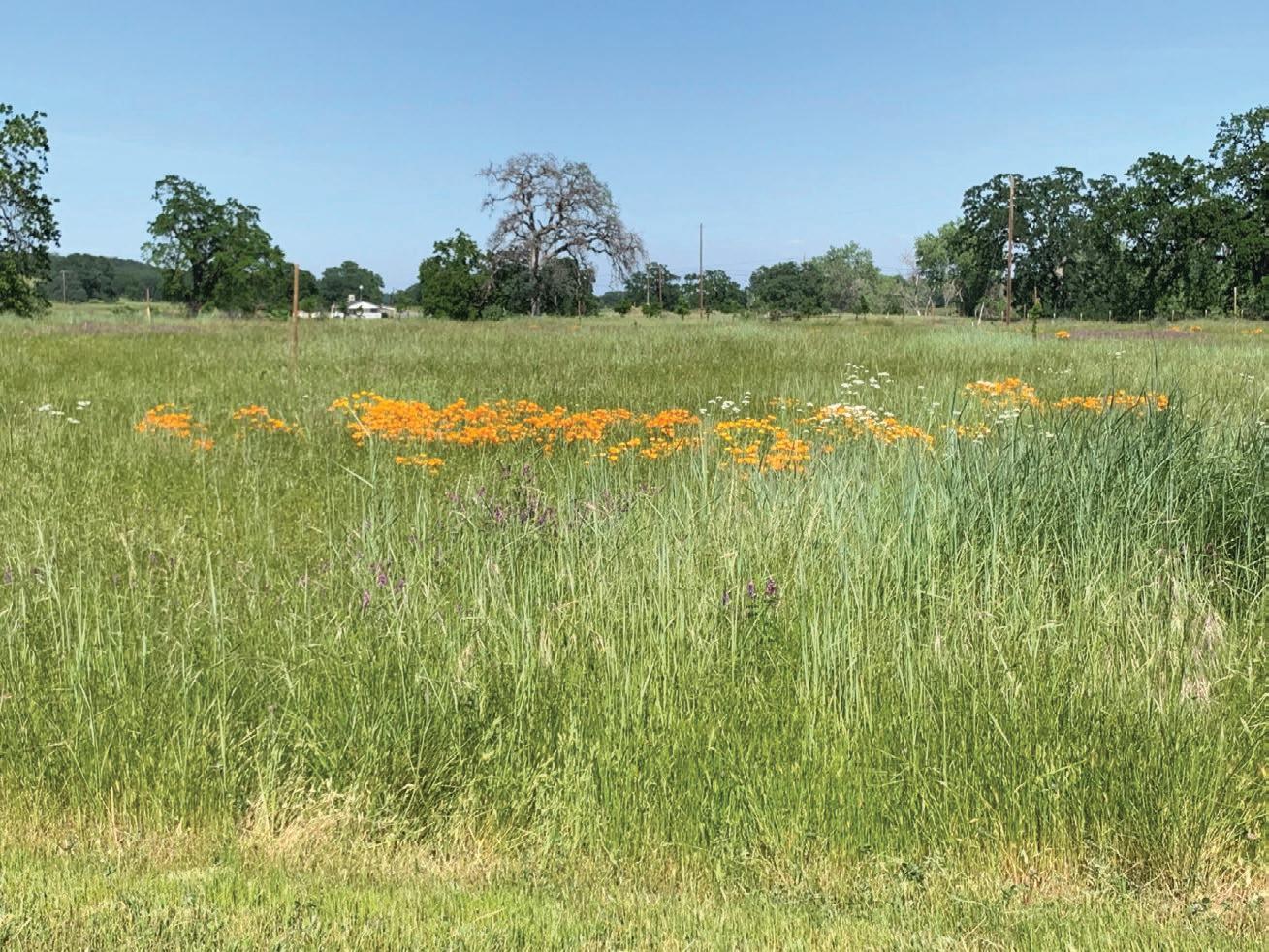
the perennial grasses. I see the ability to raise cattle on this land even with drought. We are improving the soil and sequestering carbon. While other people are wringing their hands, I’m having fun. I’m outside and in nature and I have hope, which is a much nicer place to me.
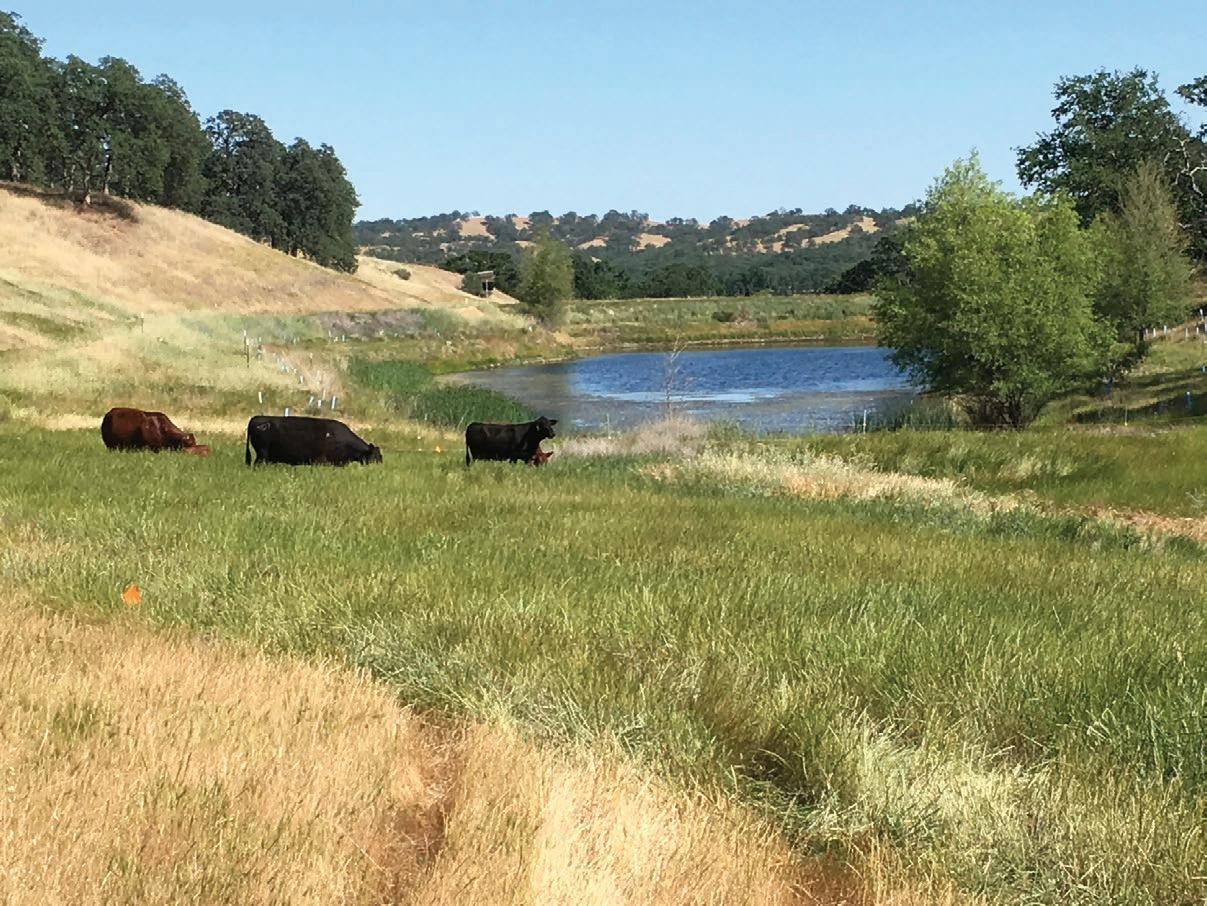
“But, my little ranch is not going to make a big difference. We need all these organizations like HMI, the Savory Institute, and the Quivira Coalition to focus on these issues. It is the hope to conquering climate change.
We have a NAP apprentice (Quivira’s New Agrarian Program). Most of the people who own ranches around here are, like us, older, so we need new people to do this kind of regenerative work.
“Our apprentice really helps us with the labor and she is learning how to take care of animals. Every day she is learning ranch skills, like how to weld and put up fence braces. Having a younger person around is wonderful. She is enthusiastic and has lots of energy. Our biggest concern was that we wouldn’t be able to find the right apprentice for our needs, but Quivira has been terrific. They have a whole process for helping with the interviews and provided lots of support and guidance in choosing the right person. It would have been impossible if we had tried to get an apprentice on our own. Quivira supports both us as mentors and our apprentice.
two months during fast growth. Last year they started experimenting with high stock density and seeding in an attempt to speed up recovery. This year they have been doing bale grazing to get the stock density to 100,000 pounds/acre on some of these lands.
In contrast, on their irrigated pasture, where they typically graze a paddock for three to five days, they have seen the grass increasing and have been able to graze them longer with the increased production in a matter of three years.
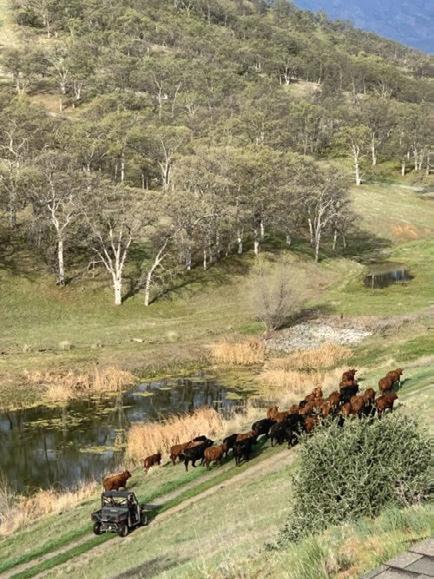
Charlotte, an HMI supporter, believes strongly that regenerative agriculture is the way forward and her work on the ranch provides her hope. “I read this long article about climate change and how the migration patterns are going to change,” says Charlotte.
“It was doom and gloom, and I couldn’t finish the article. This project with the ranch gives me hope. I see the improvements in
“Our vision for the ranch is that we will improve the soil and use any successes we have to expose others to Holistic Management. What’s more important to us than
making a profit is training apprentices to take what we have learned into the future. We would also like to participate in the Rancher to Rancher program with Richard King and be able to share our experiences and learn from others.”
20 IN PRACTICE h July / August 2021
The pond on the Paskenta property during a good rain year.
Moving cattle on the Paskenta property.
A stand of native grasses and wildflowers now flourishing on the C&R Ranch
Certified Educators
The following Certified Educators listed have been trained to teach and coach individuals in Holistic Management. On a yearly basis, Certified Educators renew their agreement to be affiliated with HMI. This agreement requires their commitment to practice Holistic Management in their own lives and to seek out opportunities for staying current with the latest developments in Holistic Management.
UNITED STATES
MISSISSIPPI
CALIFORNIA
* Lee Altier College of Agriculture, CSU
Chico
530/636-2525 • laltier@csuchico.edu
Owen Hablutzel Los Angeles
310/567-6862 • go2owen@gmail.com
Richard King Petaluma 707/217-2308 (c) rking1675@gmail.com
Doniga Markegard Half Moon Bay 650/670-7984 Doniga@markegardfamily.com
* Kelly Mulville Paicines 707/431-8060 • kmulville@gmail.com
Don Nelson Red Bluff 208/301-5066 nelson-don1@hotmail.com
Rob Rutherford San Luis Obispo 805/550-4858 (c) robtrutherford@gmail.com
COLORADO
* Joel Benson Buena Vista 719/221-1547 joel@paratuinstitute.com
Cindy Dvergsten Dolores 970/882-4222 cadwnc@gmail.com
Tim McGaffic Dolores 808/936-5749 tim@timmcgaffic.com
* Katie Belle Miller Calhan 970/310-0852 heritagebellefarms@gmail.com
KANSAS
William Casey Erie
620/423-2842 bill.caseyag@gmail.com
MARYLAND
Christine C. Jost
Silver Springs
773/706-2705 • christinejost42@gmail.com
MICHIGAN
* Preston Sullivan Meadville 601/384-5310 (h) preston.sullivan@hughes.net
MONTANA
Roland Kroos Bozeman 406/581-3038 (c) • kroosing@msn.com
* Cliff Montagne Montana State University Bozeman 406/599-7755 (c) • montagne@montana.edu
NEBRASKA
* Paul Swanson Hastings 402/463-8507 • 402/705-1241 (c) pswanson3@unl.edu
Ralph Tate
Papillion
402/250-8981 (c) • tater2d2@cox.net
NEW HAMPSHIRE
Seth Wilner
Newport 603/863-9200 (w) seth.wilner@unh.edu
NEW MEXICO
INTERNATIONAL
AUSTRALIA
Judi Earl Coolatai, NSW 61-409-151-969 judi_earl@bigpond.com
Graeme Hand Franklin, Tasmania 61-4-1853-2130 graemehand9@gmail.com
Helen Lewis
Warwick, QLD 61-4-1878-5285 hello@decisiondesignhub.com.au
Dick Richardson Mt. Pleasant, SA 61-4-2906-9001 dick@grazingnaturally.com.au
* Jason Virtue Cooran QLD 61-4-27 199 766 jason@spiderweb.com.au
Ann Adams
Holistic Management International
Albuquerque 505/842-5252 ext 5 anna@holisticmanagement.org
Christina Allday-Bondy
Edgewood 512/658-2051 • christina.alldaybondy@gmail.com
Kirk Gadzia
Bernalillo 505/263-8677 (c) • kirk@rmsgadzia.com
Jeff Goebel
Belen 541/610-7084 • goebel@aboutlistening.com
NEW YORK
* Erica Frenay
Brooktondale 607/342-3771 (c) • info@shelterbeltfarm.com
* Craig Leggett
Chestertown 518/491-1979 • craigrleggett@gmail.com
Elizabeth Marks
Chatham 518/567-9476 (c) elizabeth_marks@hotmail.com
Phillip Metzger
Norwich 607/316-4182 • pmetzger17@gmail.com
NORTH DAKOTA
* Joshua Dukart Hazen 701/870-1184 • joshua_dukart@yahoo.com
OREGON
Angela Boudro
Central Point 541/ 890-4014 • angelaboudro@gmail.com
SOUTH DAKOTA
* Randal Holmquist Mitchell 605/730-0550 • randy@zhvalley.com
TEXAS
Ralph Corcoran Langbank, SK 306/434-9772 • rlcorcoran@sasktel.net
Blain Hjertaas Redvers, SK 306/452-7723 bhjer@sasktel.net
Brian Luce Ponoka, AB 403/783-6518 lucends@cciwireless.ca
Noel McNaughton Edmonton, AB 780/432-5492 noel@mcnaughton.ca
Tony McQuail Lucknow, ON 519/440-2511 tonymcquail@gmail.com
Brian Wehlburg Wauchope NSW 61-0408-704-431 brian@insideoutsidemgt.com.au
Larry Dyer
Petoskey 231/881-2784 (c) ldyer3913@gmail.com
CANADA
Don Campbell Meadow Lake, SK 306/236-6088 • doncampbell@sasktel.net
Kelly Sidoryk Blackroot, AB 780/872-2585 (c) kelly.sidoryk@gmail.com
FINLAND
Tuomas Mattila Pusula 358-407432412 tuomas.j.mattila@gmail.com
Deborah Clark
Henrietta 940/328-5542
deborah@birdwellandclarkranch.com
Kathryn Frisch
Holistic Management International Dallas 214/417-6583
kathyh@holisticmanagement.org
Wayne Knight
Holistic Management International Van Alstyne 940/626-9820
waynek@holisticmanagement.org
Tracy Litle Orange Grove 361/537-3417 (c) • tjlitle@hotmail.com
Peggy Maddox
Hermleigh 325/226-3042 (c) • peggy@kidsontheland.org
Peggy Sechrist
Fredericksburg 830/456-5587 (c) • peggysechrist@gmail.com
WISCONSIN
* Larry Johnson Madison 608/665-3835 • larrystillpointfarm@gmail.com
* Laura Paine Columbus 608/338-9039 (c) • lkpaine@gmail.com
For more information about or application forms for the HMI’s Certified Educator Training Programs, contact Ann Adams or visit our website: www.holisticmanagement.org.
*
These associate educators provide educational services to their communities and peer groups.
NAMIBIA
Usiel Seuakouje Kandjii
Windhoek 264-812840426 kandjiiu@gmail.com
* Colin Nott Windhoek
264-81-2418778 (c) canott@iafrica.com.na
Wiebke Volkmann
Windhoek
264-81-127-0081
wiebke@afol.com.na
NEW ZEALAND
* John King
Christchurch
64-276-737-885
john@succession.co.nz
SOUTH AFRICA
Jozua Lambrechts
Somerset West, Western Cape +27-83-310-1940
jozua@websurf.co.za
* Ian Mitchell-Innes
Ladysmith, Kwa-Zulu Natal +27-83-262-9030
ian@mitchell-innes.co.za
Number 198 h IN PRACTICE 21
Twin Mountain Fence Solar Energizer (S300)


Featuring
Order online and receive a FREE 5VM fence tester! ($28.50 value)
Use Code HM20 at checkout!
Resource Management Services, LLC
Kirk L. Gadzia, Certified Educator
PO Box 1100
Bernalillo, NM 87004
505-263-8677
kirk@rmsgadzia.com www.rmsgadzia.com
CORRAL DESIGNS
Pasture Scene Investigation
How can RMS, LLC help you?
On-Site Consulting: All aspects of holistic management, including financial, ecological and human resources.
Training Events: Regularly scheduled and customized training sessions provided in a variety of locations.
Ongoing Support: Follow-up training sessions and access to continued learning opportunities and developments.
Land Health Monitoring: Biological monitoring of rangeland and riparian ecosystem health.
Property Assessment: Land health and productivity assessment with recommended solutions.
By World Famous Dr. Grandin Originator of Curved Ranch Corrals
The wide curved Lane makes filling the crowding tub easy. Includes detailed drawings for loading ramp, V chute, round crowd pen, dip vat, gates and hinges. Plus cell center layouts and layouts compatible with electronic sorting systems. Articles on cattle behavior. 27 corral layouts. $55. Low Stress Cattle Handling Video $59. Send checks/money order to:
GRANDIN LIVESTOCK SYSTEMS
2918 Silver Plume Dr., Unit C-3 Fort Collins, CO 80526 970/229-0703
www.grandin.com
“Bud Williams”
Livestock Marketing & Stockmanship
McConnell & Tina Williams
good stockmanship can make handling experiences
Helping farms and communities through the holistic lens of an ecologist
how livestock marketing based on today’s price (no crystal ball) can help you realize
Helping farms and communities through the holistic lens of an ecologist
• Educational Programs
• Educational Programs
• Group Process Facilitation
• Group and Individual Consultation
May 25-26 — 2 Day Stockmanship only, Dickinson, ND
• Group Process Facilitation
Specializing in:
• Group and Individual Consultation
• Organic vegetable production
• Season extension
May 30-June 1 — 3 Day Marketing/ Stockmanship, Wawota, SK
Specializing in:
• Organic vegetable production
• Passive solar greenhouse management
• Season extension
• Local food systems
• Whole Farm Planning with Holistic Management®
• Passive solar greenhouse management
Coming also to Alberta, Wyoming, and Iowa!
• Local food systems
• Whole Farm Planning with Holistic Management® 1113 Klondike Ave., Petoskey, MI 49770 231-347-7162 • 231-881-2784 (cell) ldyer3913@gmail.com
www.handnhandlivestocksolutions.com info@handnhandlivestocksolutions.com 417-327-6500
1113 Klondike Ave. Petoskey, MI 49770 231-347-7162 • 231-881-2784 (cell) ldyer3913@gmail.com

22 IN PRACTICE h July / August 2021 THE MARKETPLACE
Originator of Curved Ranch Corrals The wide curved Lane makes lling the crowding tub easy Low Stress Cattle Handling Video $59. Send checks/money order to:
GRANDIN LIVESTOCK SYSTEMS 2918 Silver Plume Dr., Unit C-3 Fort Collins, CO 80526 970/229-0703 • www.grandin.com Includes detailed drawings for loading ramp, V chute, round crowd pen, dip vat, gates and hinges. Plus cell center layouts and layouts compatible with electronic sorting systems. Articles on cattle behavior. 27 corral layouts. $55. Get The Power You Need, Wherever You Need It! TwinMountainFence.com Sales@TwinMountainFence.com
By World Famous Dr. Grandin
CORRAL DESIGNS
S300.
S300
30-mile, 3 joule, solar energizer.
for
livestock. AC
for easy battery recharging.
lightning protection
on Demand.”
Introducing our most powerful, compact solar energizer, the
The
is a
Ideal
most
adapter is included
Built-in
and “Power
the Twin Mountain Fence 3-year guarantee, including lightning.
T H E M A R K E T P L A C E 22 IN PRACTICE May / June 2016
DyerLarryEcological
Agriculture Consulting
Larry Dyer
Ecological Agriculture Consulting
Cindy Dvergsten
HMI
Certified Educator
Customized training in all aspects of Holistic Management
Farm & Ranch Management
Holistic Financial Planning
Soil Health / Biological Monitoring
Business Planning and Marketing
Holistic Grazing Planning & Mgt. I work over the phone & internet as well as in person. My clients include family farms & ranches, small businesses, non-profits and government agencies.
Contact me to discover how you may benefit from my life-long farming experiences, 25 years as a Holistic Management Educator and professional work in natural resources & small business.
Whole New Concepts llc Training & Development for Todays World 970-739-2445

cadwnc@gmail.com
WWW wholenewconcepts.com

KIDS ON THE LAND
Kids On the Land is a unique STEM environmental program designed to teach children about the region where they live, connecting them to the land and a more sustainable future.
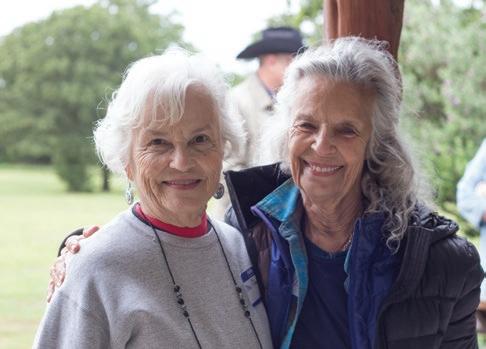
Kids On the Land is ready for an appearance in your school district. Peggy Maddox can come help your host landowner and school get started.
Executive Director

Peggy Maddox
325/226-3042
peggy@kidsontheland.org
http://kidsontheland.org
Graeme Hand
Certified Educator
• We make sure you can adopt Holistic Management by focusing on your barriers to adoption
• Enterprise re-design to lower risks and expenses while reducing your workload
• Systematic process to determine recovery and animal impact on your land
• Clear, unambiguous, proven definition of perennial grass recovery that increases ecosystem function
• Early warning indicators of animal & land performance
• Including Multi Species/ Cocktail Cover Cropping in your grazing plan
• Our training uses the latest research on reducing barriers to adoption (www.CBSM.com) to increase your success
Mobile: +61418532130
Email: graemehand9@gmail.com www.handfortheland.com
Rangeland can provide an abundance of plant varieties for livestock nutrition. But what about the more “developed” pastures and hay meadows? Soil tests from all types of livestock producers show 95+% of all such soils do not have the correct nutrient levels to provide the best nutrition for livestock.
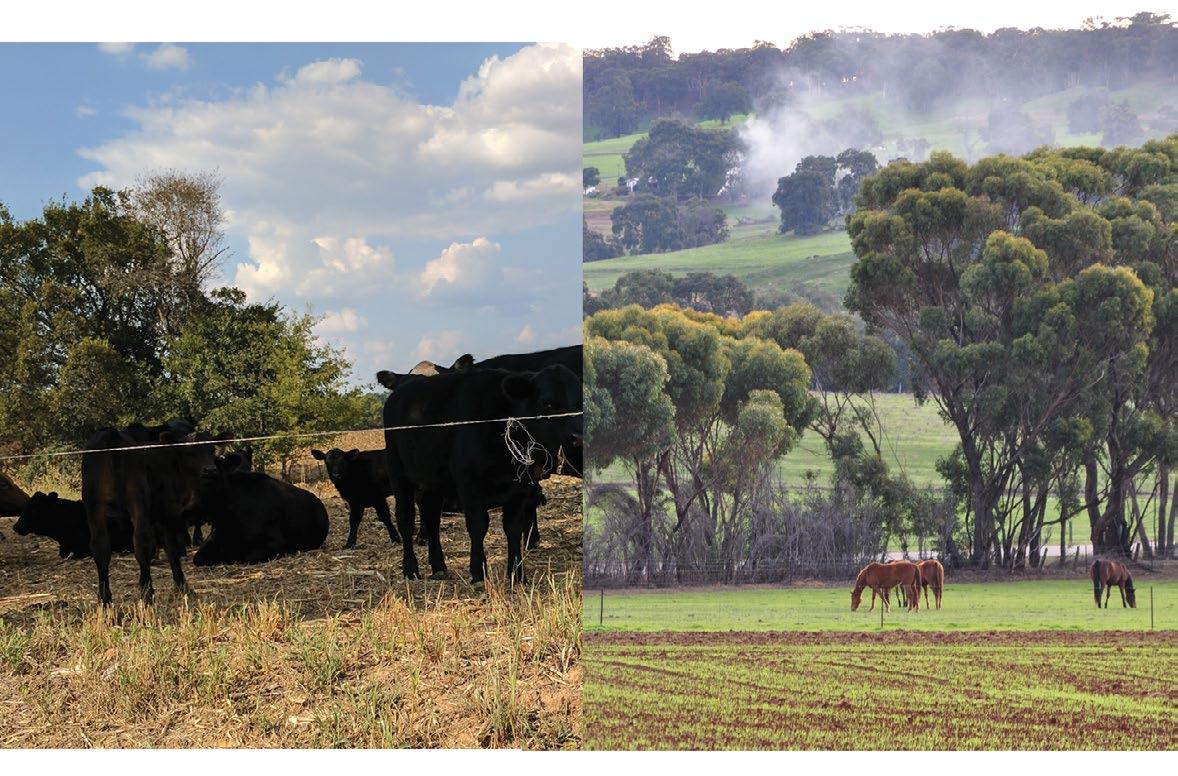
You can change that! Choose an area, split it and soil test both sides separately. Test your hay or forage from both sides too. Treat one side as normal. On the other side, correct the fertility based on soil tests using the Kinsey/Albrecht fertility program.
Test feed quality from both sides again next year. Take soil tests again and treat accordingly. Depending on nutrients requirements it may take two or three years to achieve the top potential. Test each year and, as fertility needs are met, feed value and yield tend to increase for all three years.
Increased yields will more than pay for the investment with increased feed quality as a bonus. Prove it for yourself!
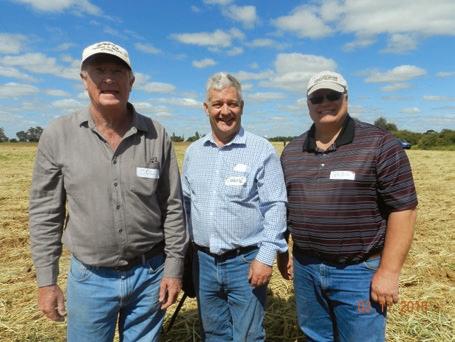
Number 198 h IN PRACTICE 23 THE MARKETPLACE KINSEY Agricultural Services, Inc. INCREASE FEED QUALITY For consulting or educational services contact: Kinsey Agricultural Services, Inc. Ph: 573/683-3880, Fax: 573/683-6227 Charleston, Missouri 63834 www.kinseyag.com • info@kinseyag.com
please send address corrections before moving so that we do not incur unnecessary postal fees

DEVELOPMENT CORNER
C&R Ranch
Charlotte Ekland grew up in the San Francisco East Bay with a very suburban upbringing. Her husband, Roy, was raised on a dairy farm that later sold custom beef. He and his brother ran the ranch, so Roy dreamed of owning a ranch someday. The first time Roy mentioned his dream to Charlotte, she was so shocked and amazed that she almost fell off her chair.
Yet, fast forward to today and you will find the C&R Ranch about one hour from Chico, California. The C&R Ranch is comprised of a 325-acre main ranch near the foothills in the Coastal Range in predominantly hilly country with oak savannah. The Eklands purchased this marginal land in 2009 and bought five Angus bred cows in 2012. After several years of buying huge quantities of hay, they bought a second 120-acre ranch with irrigated pastures near the Sierra Nevadas that can support three to four times the number of animals of the home ranch.
The Eklands now run 26 cows and as many as 35 steers and heifers at various stages of growth. They usually market most of their animals to other ranchers who have grassfed market businesses as wholesale.
Charlotte notes that when they bought the ranch they had never heard of regenerative or holistic grazing planning. “Roy’s father
was Swedish and into neatness and order,” says Charlotte. “When Roy was a child he loved the creek, with the mess of greenery and animals. His father struggled to keep the creek clean. So the original idea for the ranch was to do it differently from Roy’s father with the focus on restoration.
“The ranch had been extensively grazed for 150 years so it was just trees and invasive, annual grasses. The idea was to plant a wildlife corridor with native bushes that would also provide for pollinators. We planted several acres of California native bunch grasses and exotic perennial pasture grasses. We were attempting to bring our California grassland back to deep rooted perennial rather than shallow rooted annual grasses. But, we hadn’t heard about cows being good for the environment. “Then in 2013 I read Cows Save the Planet by Judith Schwartz. We realized we were thinking about all of this all wrong. We had ‘no cow’ areas, but we needed cows.”
So the Eklands attended Holistic Management workshops including one taught by HMI Certified Educator Richard King and then later by Savory Institute Field Professional Spencer Smith. With the help of NRCS grants, they continued to develop the necessary infrastructure for the ranch and implemented planned grazing.
The new grazing system is slowly increasing native bunch grasses and improving the quality CONTINUED
Nonprofit U.S POSTAGE PAID Jefferson City, MO PERMIT 210 a publication of Holistic Management International 2425 San Pedro Dr. NE, Ste A Albuquerque, NM 87110 USA RETURN SERVICE REQUESTED Printed On Recycled Paper Healthy Land. Healthy Food. Healthy Lives.
ON PAGE 20
Charlotte Ekland
Roy Ekland
