Caravaggio_Eng version- 54th Hong Kong Arts Festival
Please
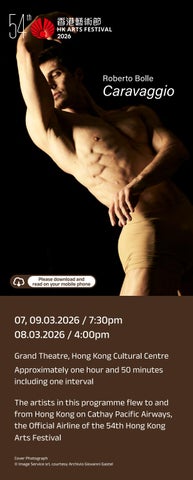
07, 09.03.2026 / 7:30pm 08.03.2026 / 4:00pm
Grand Theatre, Hong Kong Cultural Centre
Approximately one hour and 50 minutes including one interval
The artists in this programme flew to and from Hong Kong on Cathay Pacific Airways, the Official Airline of the 54th Hong Kong Arts Festival
House Rules
※ Please switch off mobile phones and all electronic devices so they will not emit sound or light during the performance, disturbing the performers and other audience members.
※ Unauthorised photography or recording of any kind is strictly prohibited.
※ Please keep noise to a minimum during the performance.
※ The content of all works is independently produced by the creative team, and does not reflect the views or opinions of the Sponsor.
※ The content of this programme and the opinions featured in this publication are solely those of the artists/guest writers and do not represent the views or opinions of the Hong Kong Arts Festival (“HKAF”).
※ Ticket holders are strongly advised to arrive punctually. The HKAF reserves the right to refuse the (a) admission of latecomers (whether at the beginning of the performance or after the intermission) and (b) re-admission of audience members who leave the auditorium during the performance.
※ The HKAF also reserves the right to determine the possibility of admission and re-admission of audience members (which includes latecomers and audience members who have left the auditorium and are seeking re-admission), as well as the manner in which they are admitted.
※ In any case, should the HKAF permit the admission of latecomers, such latecomers shall only be admitted at designated latecomer point(s). No refunds or changes will be offered if ticket holders are refused admission due to late arrival. In the event of any dispute, the HKAF reserves all rights to make the final decision.
※ The English version of the house rules on the HKAF website and front-of-house announcements will prevail in the event of any dispute.
Pre-Performance Talk
Faith and Shadows: The Life of Caravaggio 08.03.2026 / 2:30pm-3:30pm
Lemna of the alchemist
Contents
Chief Executive’s Message
Chairman’s Message
Foreword
Creative & Production Team,
Cast & Characters
About Caravaggio
Creative Note
About Michelangelo Merisi da Caravaggio
Choreographer’s Profile
Cast Profiles
Feature Article
About the Hong Kong Arts Festival
Committee & Staff List
Acknowledgements
Chief Executive’s Message
I am pleased to congratulate the Hong Kong Arts Festival on the organisation of its 2026 season. This year’s Festival, the 54th edition, features some 180 performances, encompassing music, Chinese and Western opera, theatre, dance, arts technology and a dazzling variety of performing arts productions.
The Festival opens on 27 February with Ballet Nacional de España’s acclaimed operatic ballet La Bella Otero , recreating the glamour of Paris’ golden era on stage. The Festival concludes on 27 March with the large-scale dance theatre production DreaminThePeonyPavilion , directed and choreographed by Li Xing, injecting fresh life into the timeless love classic. This year’s music performances present a number of brilliant pianists, including young Korean piano sensation Yunchan Lim, and Hong Kong-born Aristo Sham, the gold medallist and audience award winner at the 2025 Van Cliburn International Piano Competition.
As ever, the Festival features a diverse range of outreach and educational activities. This year’s PLUS programme focuses on a wide cultural experience for arts lovers and deeper understanding of world-class artists, contributing to promoting engagement in cultural events and consolidating Hong Kong’s positioning as the East-meets-West centre for international cultural exchange.
I am grateful to our many sponsors and donors for their generous support. My thanks also, as always, go to the Hong Kong Arts Festival for once again bringing Hong Kong, and the world, a shining season of arts and culture, entertainment and wonder.
John KC LEE Chief Executive Hong Kong Special Administrative Region
Chairman’s Message
A warm welcome to the 54th Hong Kong Arts Festival. As a leading international performing arts event, the Festival continues to uphold its mission of enriching our city’s cultural life and promoting the best of the performing arts to different sectors of our community. This year, the Festival brings to Hong Kong more than 1,100 distinguished local and international artists from a wide range of artistic disciplines in over 180 performances of more than 45 programmes, as well as about 300 “PLUS”, outreach and education events.
I would like to express my sincere gratitude to the HKSAR Government, acting through the Leisure and Cultural Services Department, for its annual subvention and matching grant. My heartfelt thanks also go out to The Hong Kong Jockey Club Charities Trust, our corporate sponsors, charitable foundations and donors for their generous support. Their invaluable contributions empower us to actively advance the community through the performing arts.
My genuine appreciation goes to all our internationally renowned and most talented artists for their creativity and outstanding performances on stage. Their dedication profoundly motivates us to continue showcasing exceptional productions, commissioning new works and nurturing local talent. I am also deeply grateful to the HKAF team for its commitment and efforts to bring this Festival to life.
Finally, I extend my warmest thanks to all audience members. We truly hope you enjoy this artistic journey and discover moments of delight, resonance and inspiration throughout the programmes being presented this year.
Lo Kingman C hairman Hong Kong Arts Festival
The 54th Hong Kong Arts Festival once again brings together great masters and outstanding artists, presenting more than 180 performances across music, dance, theatre, opera, Chinese opera, arts-tech and interdisciplinary creations—showcasing the exceptional craft of leading local and international talent.
One of this year’s themes is an exploration of “Courage and Peace”. At a time when the world is troubled by war, displacement, economic downturns and other hardships, artists respond from their own distinctive perspectives and in their own languages on stage, reminding us of the need to be resilient and hopeful.
Some works in this year’s Festival adopt a minimalistic theatrical approach, enabling us to transcend the constraints of geography and resources. We also continue to embrace arts-tech, using mixed-reality technologies to open up new performance possibilities.
As always, the Festival presents more than 300 outreach and education activities. Our PLUS events feature a curated series of talks, masterclasses, backstage tours and guided cultural walks. Our comprehensive education initiatives tailored for primary, secondary and tertiary students are aimed at enabling students to gain a more indepth understanding and appreciation of the works we present.
I sincerely thank you for joining us at this performance, and we hope that you find joy and resonance in the experience.
Flora Yu Executive Director Hong Kong Arts Festival
The Hong Kong Arts Festival is made possible with the funding support of:
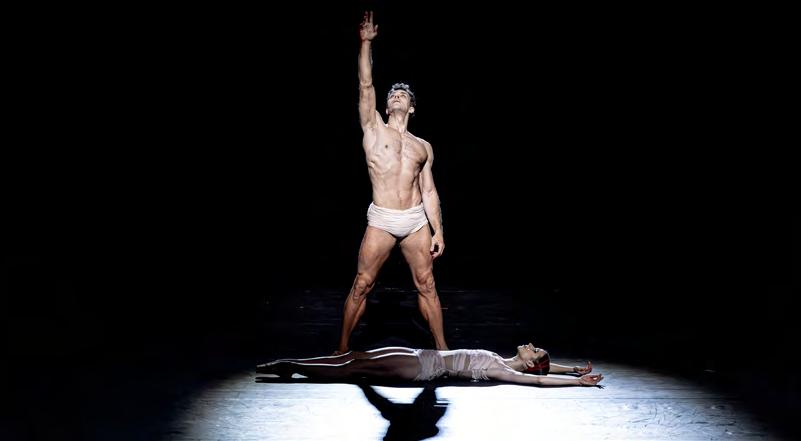
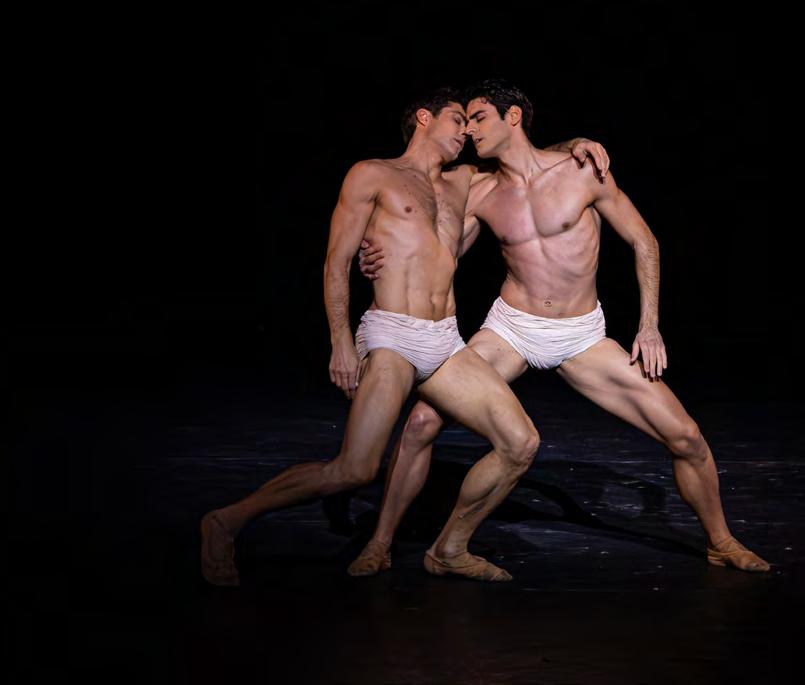
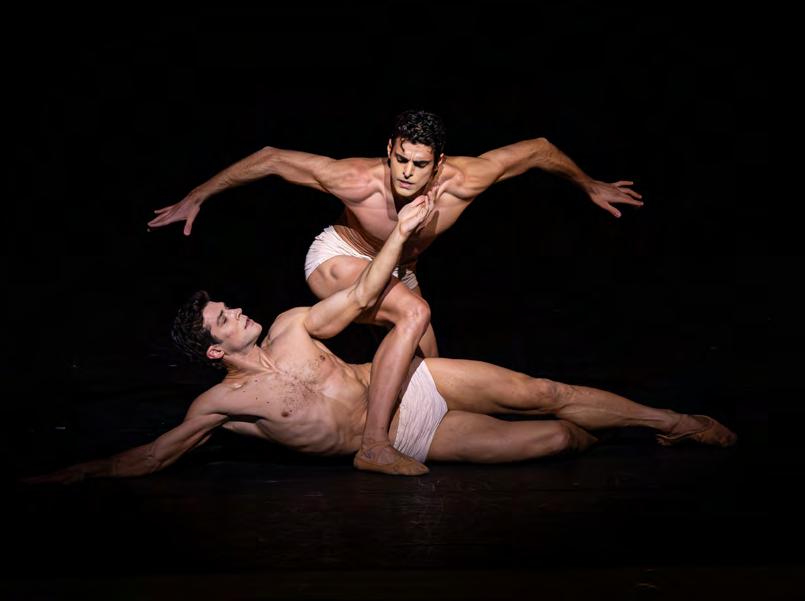
Caravaggio is a two-act ballet created by acclaimed contemporary Italian choreographer Mauro Bigonzetti. Originally created for the Staatsballett Berlin, directed by Vladimir Malakhov in 2008, the ballet is inspired by the works of the painter Michelangelo Merisi da Caravaggio (1571–1610). It serves as a tribute to the intense drama and theatricality of the great Italian artist, whose revolutionary paintings broke away from traditional models with an exceptional sensitivity and attention to the three-dimensional depiction of human nature—both physical and emotional.
Bigonzetti’s aim is to bring to the stage the complexity of Caravaggio’s persona, celebrating the facets that defined both the man and the artist: on one side, his tormented inner world, driven by a deeply restless soul; and on the other, the narrative expressed through his art. Caravaggio, following the interrelation of these two aspects, culminates in a psychological and dramatic ballet whose dramaturgical “motifs” recur through solos, duets, trios and quartets, interspersed with ensemble scenes that ease the tension and set the rhythm of the action fundamentally centred on the Caravaggesque self.
Thanks to the minimalist set design and lighting, masterfully crafted by Carlo Cerri, the union between these two worlds unfolds, enhancing the choreographic vision and elevating the movement of the dancers’ bodies. The ballet is performed to music by Claudio Monteverdi, with selections from L’Orfeo, “Il combattimento di Tancredi e Clorinda”, L’incoronazione di Poppea and the Settimo libro dei madrigali These are newly orchestrated into a symphonic score by the Italian composer and conductor Bruno Moretti.
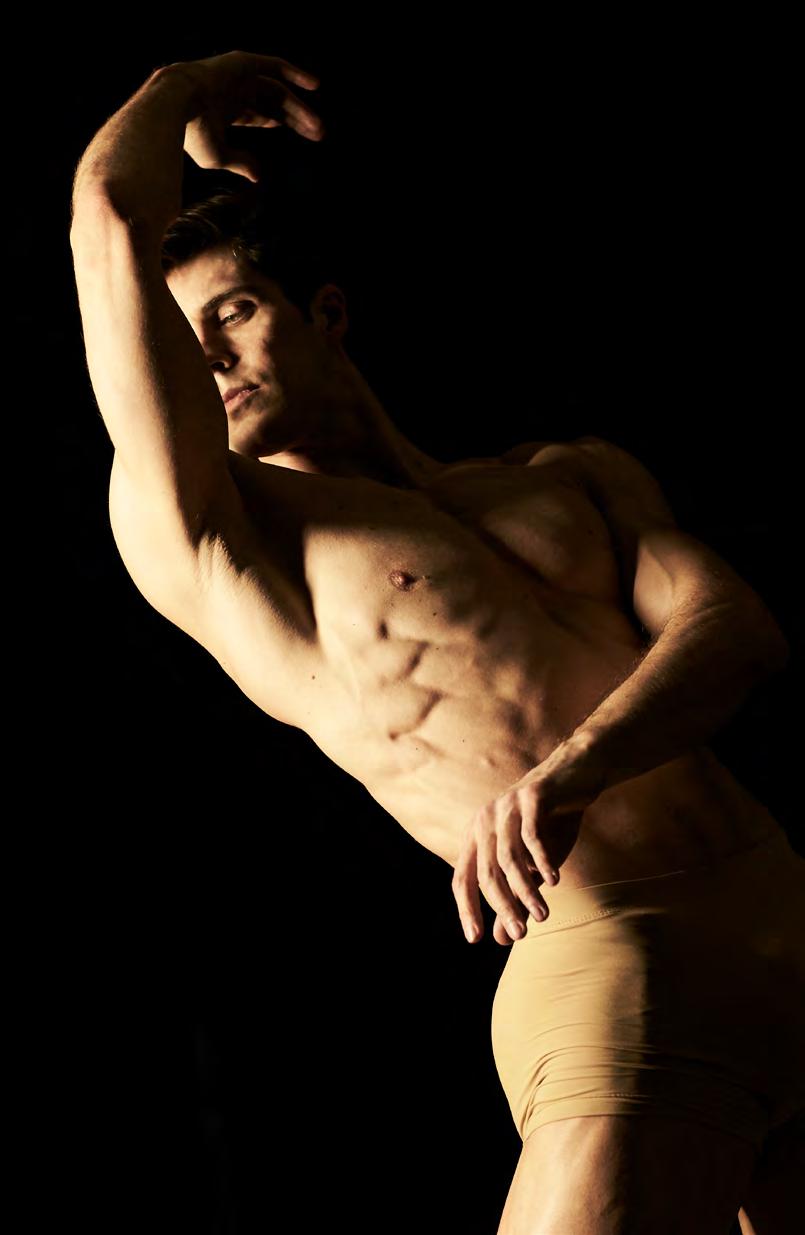
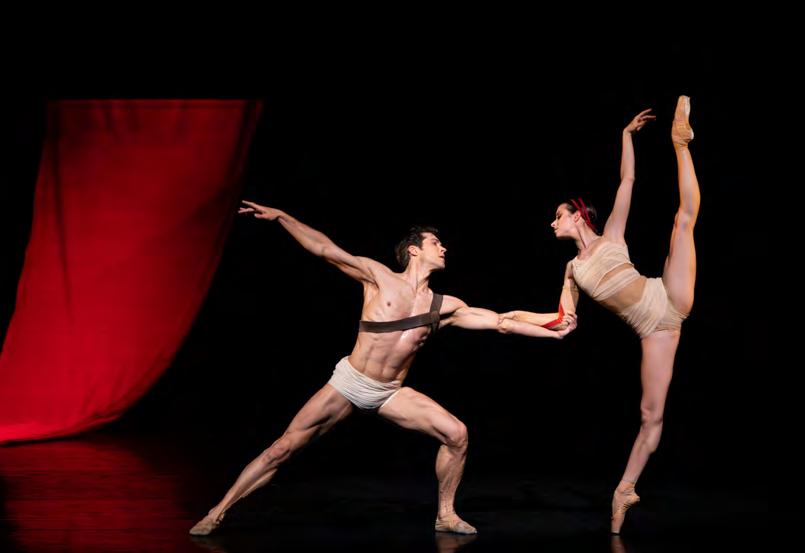
The promoter and leading performer of Caravaggio is Roberto Bolle, the celebrated Étoile of Teatro Alla Scala, who since the beginning of his career has been an ambassador of Italian culture abroad and a master of ballet as an art form accessible to everyone. Thanks to Bolle and his production agency ARTEDANZASRL, Caravaggio premiered in Italy in May 2025, embarking on a tour that will reach Hong Kong in the spring of 2026.
Joining him in this ambitious project are some of the finest Italian and international solo dancers, along with a corps de ballet formed specifically for the production through auditions, involving around 30 freelance professional dancers. The creation of a company for the performance further enriches the project’s significance— an entirely Italian-made ballet whose value lies not only in its artistic achievement, but in the power and memorability of its realisation.
At the end of the 1500s, Caravaggio, then in his 20s, arrived in Rome—a city teeming with a vast and diverse humanity made up of monsignors and gentlemen, soldiers and acrobats, pilgrims and idlers, gypsies and prostitutes. He fixed his attention on this infinite variety of bodies, faces, wealth and misery, studying their features, absorbing them and transforming them into the works that would become the foundation of a true artistic revolution.
From what is now Piazza Navona to the Corso, from the Scrofa to Campo de’ Fiori, Caravaggio roamed the streets of Rome with a voracious appetite for life, drawing sustenance from his surroundings. The art and life of this artist are inseparable. His paintings are filled with an expressive power born of a life lived openly; his art becomes an instantaneous reflection of that reality.
Three of the four creators of this ballet dedicated to Caravaggio were themselves born in Rome and lived their formative adolescent years there.
To walk along those same streets— narrow corridors of stone where light slices sharply between rows of buildings, opening suddenly onto sundrenched squares—is to experience the alternating play of light and shadow that defines theatrical vision. It is to breathe the same visions Caravaggio once breathed and to feel part of them.
To step inside one of Rome’s countless churches and discover traces of his passage—immortalised in a painting that was revolutionary in its time— is inevitably to absorb an aesthetic influence in the very process of one’s own artistic formation.
This, then, is the essence of this ballet about Caravaggio: to convey the sense of an aesthetic. The fusion of all its elements and artistic culture shaped by breathing the same air as he once did—dance, music and visual design— without any temptation toward literal iconography, seeks to express that conception of art which arises from life itself. The movement of bodies, inspired and fuelled by lived experience, develops through the composition of gesture, tracing the lines of a contemporary and passionate choreography that always maintains the rigour of technique.
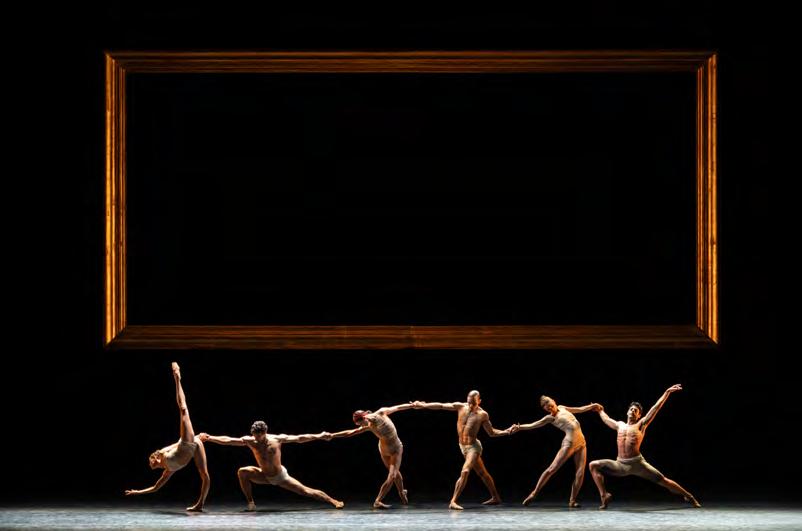
Visually, a large suspended frame evokes the anticipation of the artwork emerging from life, while the stage becomes a space in which human passions are expressed. Those same human passions are also found in Monteverdi’s music, where the composer’s portrayal of the sacred draws on the same popular roots that inspired Caravaggio. The construction of the musical structure follows this same pursuit of aesthetic synthesis. It unfolds in a Baroque-style Prologue, in which the protagonist encounters the allegorical figure that represents him— in this case, “Light”.
Act One portrays the human experiences of Caravaggio, while Act Two delves into the art that sprang from those experiences—from which he drew the strength of a vision so powerful that it transcends life and becomes narration.
Text: Mauro Bigonzetti
About Michelangelo Merisi da Caravaggio
Michelangelo Merisi da Caravaggio, born in September 1571 in Milan, Italy, was a revolutionary Baroque painter whose dramatic use of light and shadow transformed the art world. Orphaned at a young age, Caravaggio moved to Rome, where he quickly gained recognition for his innovative approach to realism and emotional intensity. His works often depicted religious themes, but he infused them with a raw humanity that was unprecedented at the time.
Caravaggio’s signature technique, known as chiaroscuro, involved stark contrasts between light and dark, creating a sense of depth and drama. Notable masterpieces including The Calling of Saint Matthew, Judith Beheading Holofernes and The Supper at Emmaus showcase his ability to capture intense moments of action and emotion.
However, Caravaggio’s life was as tumultuous as his art. He was known for his fiery temperament and frequent run-ins with the law, including a murder charge that forced him to flee Rome. He spent his later years traveling between Naples, Malta and Sicily, continuing to create masterpieces until his death under mysterious circumstances in July 1610.
Despite his short life, his ability to capture the human experience, with all its flaws and virtues, secured his position in the history of Western art.
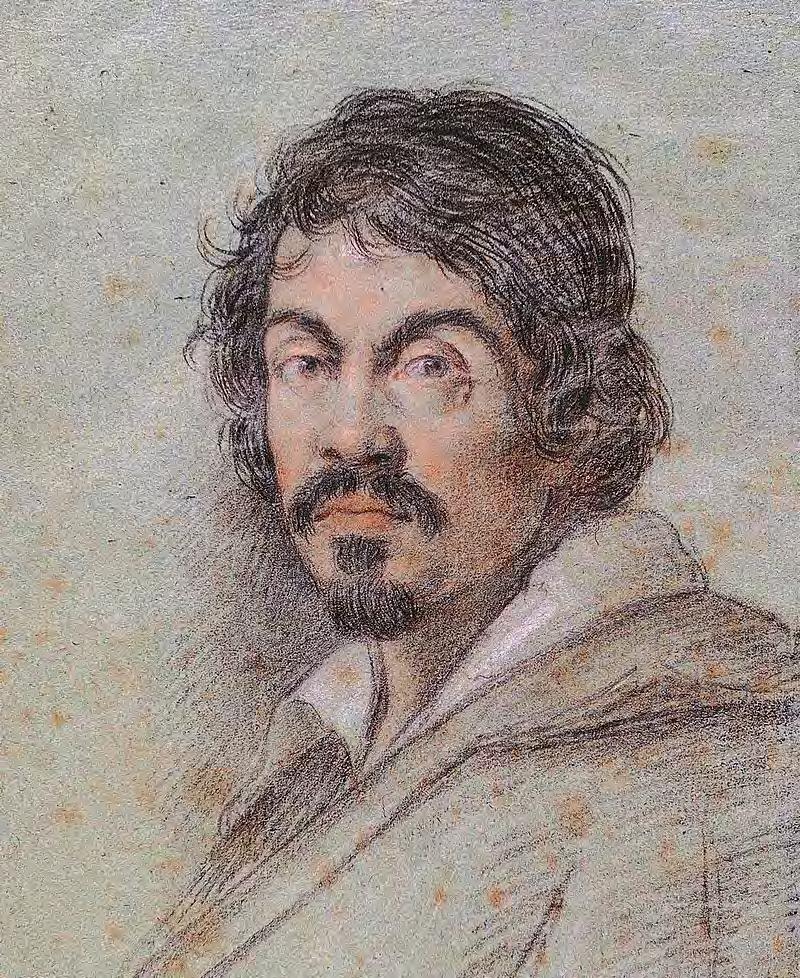
Chalk portrait of Caravaggio by Ottavio Leoni, circa 1621
Choreographer’s Profile
Choreography
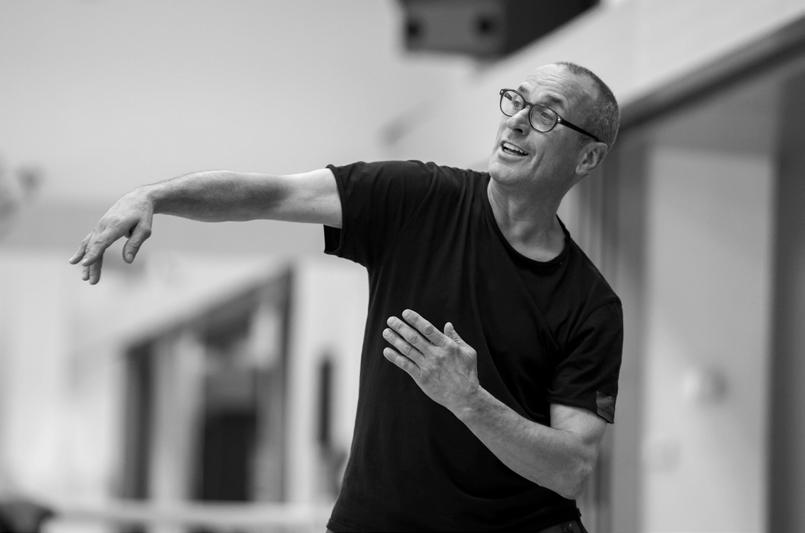
Mauro Bigonzetti
Mauro Bigonzetti, born in Rome, trained at the Teatro dell’Opera di Roma and joined the company before moving to Aterballetto in 1982/83. He gained experience with renowned choreographers such as Alvin Ailey, Glen Tetley, William Forsythe and Jennifer Muller, and danced in Balanchine and Massine ballets. He created his first ballet, Sei in movimento, in 1990. After 1992/93, he freelanced, collaborating with Balletto di Toscana and various international companies.
In 1997 he returned to Aterballetto as Artistic Director, revitalising the company before stepping down to focus on freelance choreography; he remained Resident Choreographer until 2012. In 2016, he was appointed Director of the Ballet Company of Teatro alla Scala in Milan. His notable collaborations include the New York City Ballet, the English National Ballet, the Stuttgart Ballet, Gauthier Dance, Alvin Ailey American Dance Theater, the Staatsballett Berlin, Les Grands Ballets Canadiens, the National Ballet of China, the Bolshoi Ballet and Portugal’s Companhia Nacional de Bailado.
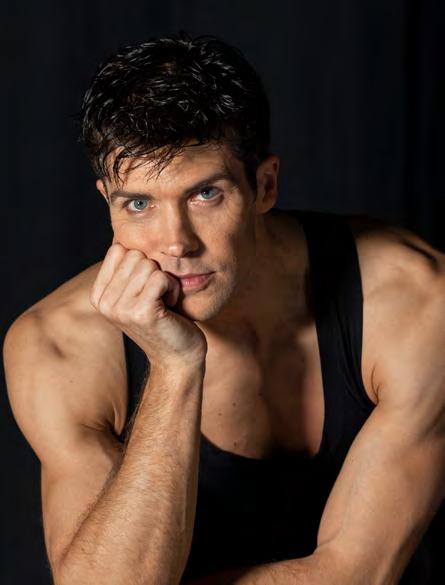
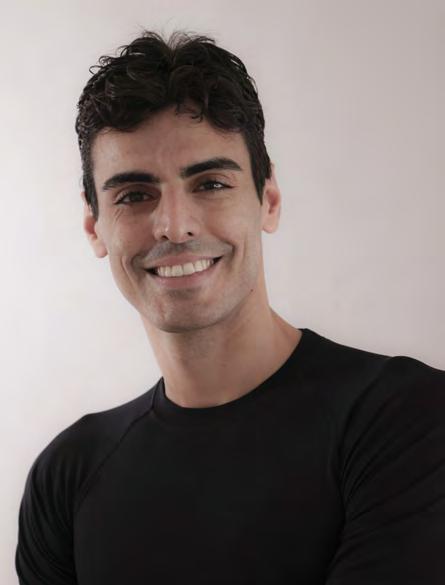
Cast Profiles Teatro Alla Scala, Milan Roberto Bolle as Caravaggio
Roberto Bolle trained at the School of Teatro alla Scala in Milan, where
he has been Étoile since 2004. He served as Principal Dancer with the American Ballet Theatre from 2009, a full-season member for a decade— the first Italian dancer to receive this honour. His gala show Roberto Bolle and Friends has drawn tens of thousands to squares and theatres worldwide during the past 25 years.
Bolle has worked in film and television, conceiving projects such as Questa nottemihaapertogliocchi; Danza con me (2018–23 on Italian TV) and Viva (2024–25 for International Dance Day). He is a UNICEF Ambassador (since 1999) and a UNESCO Gold Medal recipient (2014) for his artistic achievements. In 2018 he was named Officer of the Order of Merit of the Italian Republic, promoted to Grand Officer in 2021, and received an honorary degree from the University of Florence in 2025.
He has collaborated with artists including Bob Wilson, Peter Greenaway, Annie Leibovitz and Bruce Weber. In 2025 he premiered Mauro Bigonzetti’s Caravaggio in Italy and was named Chevalier de l’Ordre des Arts et des Lettres. Bolle created OnDance, a Milan-based dance festival entering its ninth edition in 2026. Mariinsky Ballet, Saint Petersburg Maria Khoreva as La Luce (The Light)
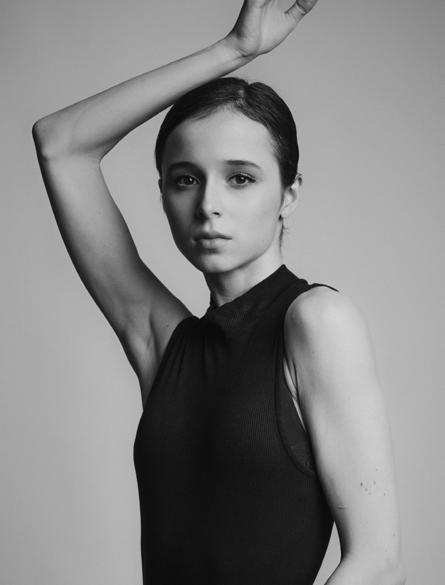
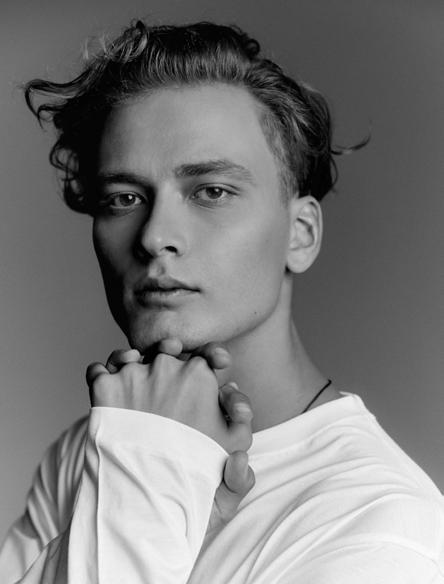
Maria Khoreva was born in Saint Petersburg. At the age of four, she started receiving trained in rhythmic gymnastics and piano. In 2009 she entered the Vaganova Academy, graduating with honours in 2018 under Lyudmila Kovaleva. While studying, she performed leading roles in The Fairy Doll The Nutcracker and Suite en Blanc. After graduation, she joined the Mariinsky Ballet and was soon promoted to First Soloist following her debut as Terpsichore in Apollo Her repertoire spans classical stars— Nikiya, Aurora, Kitri, Giselle, Odette/ Odile, Medora—and contemporary works, including Seven Sonatas and Concerto DSCH by Alexei Ratmansky, and Caravaggio by
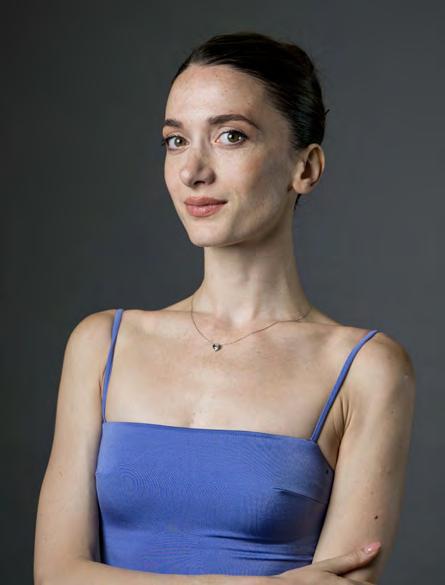
Born in Tbilisi, she trained at the Vakhtang Chabukiani Tbilis State Ballet School and began her professional career with the State Ballet of Georgia, where she danced as a Principal for 13 years. In 2023 she joined Ballet Dortmund, bringing extensive experience to the
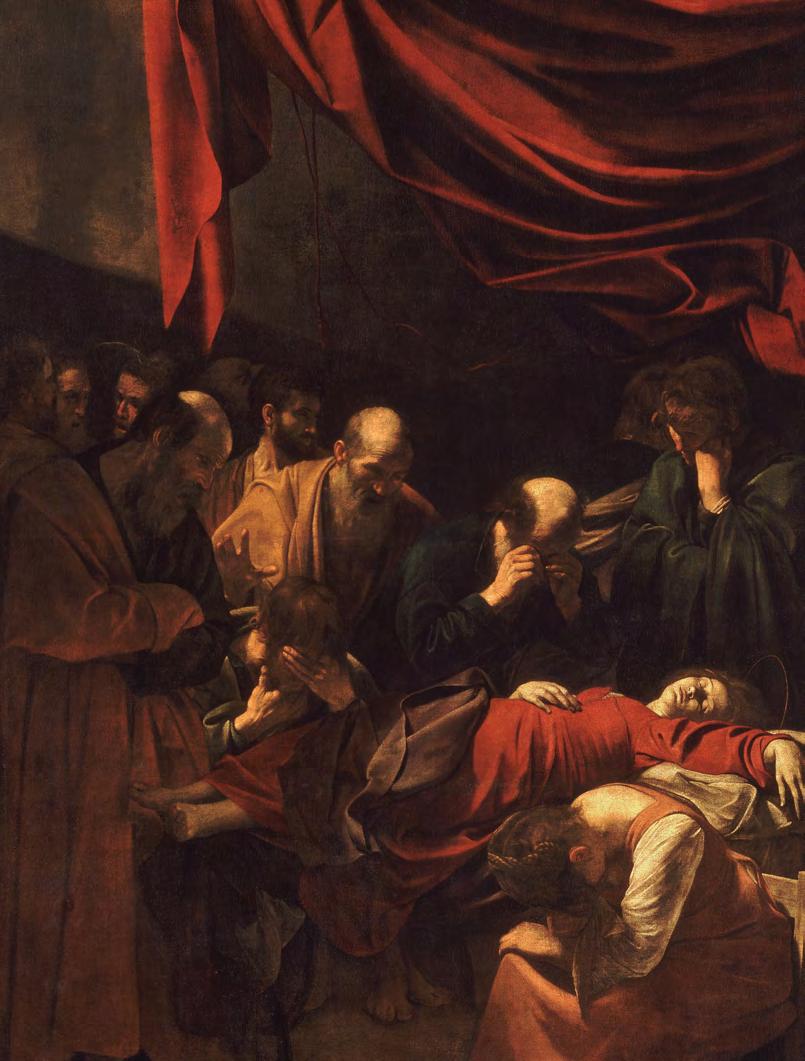
the painting in the chapel. This painting became one of the most iconic examples of why Caravaggio was viewed as a heretic in the art world. A pioneer of realism, he pioneered the chiaroscuro technique—the dramatic interplay of light and shadow—leaving an indelible mark on Baroque art. But his themes were often violent or grotesque: decapitations, dismemberment and raw human suffering were common subjects. He never depicted saints as serene or divine, but as tormented figures, revealing the frailty and deceit at the heart of human nature. He frequently used the urban poor as models, grounding sacred scenes in gritty, earthly realism.
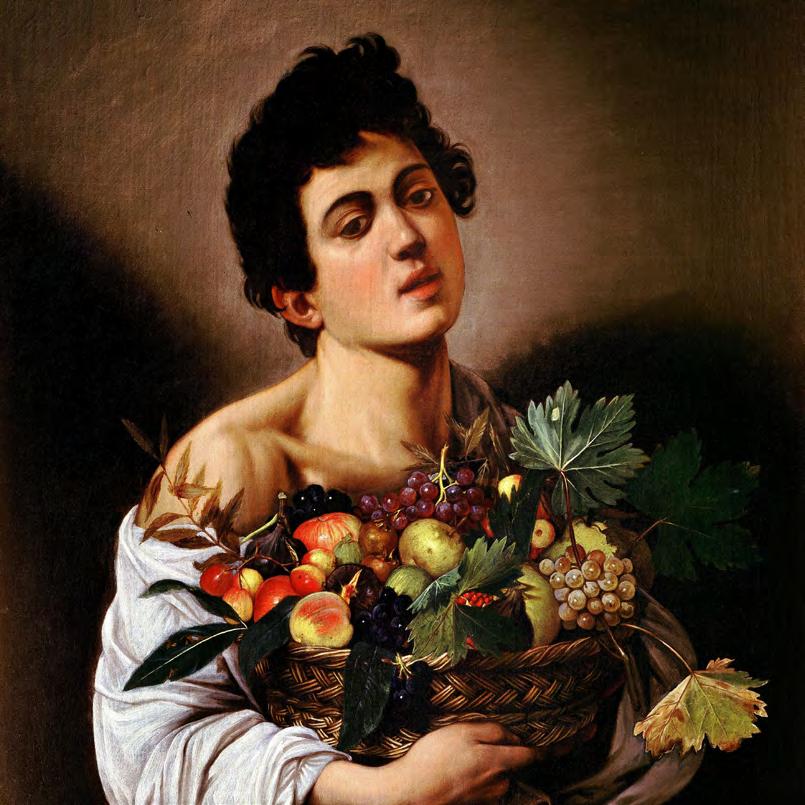
(1593)
Caravaggio lost both parents at a young age. After moving to Milan, he worked under painter Giuseppe Cesari. By day, he painted; by night, he indulged in drinking, brothels and frequent brawls. He befriended society’s outcasts— gamblers, sex workers—many of whom appeared in his early works. During these tumultuous years, the married Caravaggio fell in love with a teenage Sicilian boy, Mario Minniti, immortalising his beauty in BoywithaBasketofFruit. In 1606, Caravaggio killed a man in a street fight—an altercation allegedly connected to Minniti. Fleeing Rome, he found refuge with the powerful Colonna family in Naples, where his artistic career flourished. In 1610, as he prepared to return to Rome, Caravaggio died mysteriously in Porto Ercole at the age of 38. The cause of death remains unknown, adding another layer of mystery to his already legendary life.
Caravaggio’s life and art have inspired generations of creatives. Among them is Italian choreographer Mauro Bigonzetti. Originally trained in fine art, Bigonzetti was long immersed in the visual world before turning to dance. When the
Staatsballett Berlin commissioned a work rooted in Italian culture, he immediately chose Caravaggio as his subject. He told the HKAF: “The performance highlights Caravaggio’s inspiration and his observations of society, of the lowest people in society. The most earthly person becomes sacred in his paintings.”
The ballet Caravaggio makes its Asia premiere at the 54th Hong Kong Arts Festival, starring celebrated dancer Roberto Bolle in a collaboration with the production company ARTEDANZASRL
It wasn’t easy to immerse myself in
Caravaggio’s life and personality, as he was a figure of great complexity with many darker aspects—very different from myself,” Bolle tells the HKAF.
“However, the challenge made the experience deeply stimulating. What helped me the most was repeatedly studying his works. His genius is undeniable and, through his paintings, I was able to grasp the depth of his character and emotions.”
Minimalist in stage design and cloaked in deep, moody lighting, Caravaggio visually echoes the aesthetics of the painter’s work and its signature tenebrism.
“The most important element is the relationship between the choreographer and lighting designer. The set design and choreography are the result of much preparation. The objective is to drown the bodies in light and shadow, imitating the chiaroscuro technique,” Bigonzetti says. Composer Bruno Moretti re-imagines
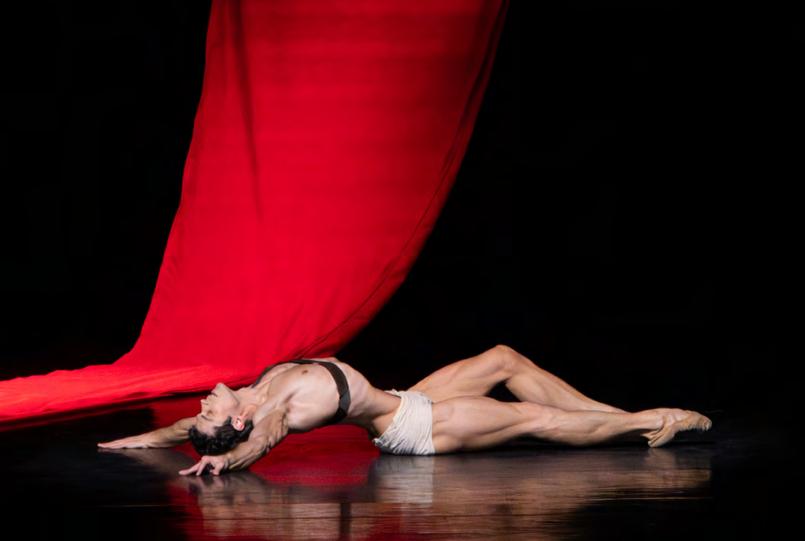
Monteverdi’s operatic masterpieces into a sweeping symphonic score that evokes the atmosphere of the 16th century. In the climax of Act One, a giant golden frame descends as a crimson curtain drops to the floor—symbolising the fateful murder of 1606 and mirroring the vivid blood-red strokes that so often appear in Caravaggio’s paintings. Russian novelist Fyodor Dostoevsky, in Crime and Punishment, proposed the theory of the “extraordinary man”— someone whose genius or destiny entitles him to transcend moral and legal boundaries in pursuit of a higher purpose. Caravaggio may well have been such a man: volatile, extreme, even murderous—yet history remembers him for his art. This does not excuse his crimes. But perhaps, beyond morality and law, there is another measure of a person: the depth of their talent, creativity and human insight—a capacity to bring a ray of light even into the darkest places.
Text: Trista Yeung
This article was originally published on the HKAF’s
About the Hong Kong Arts Festival
Launched in 1973, the Hong Kong Arts Festival is a major international arts festival committed to enriching the cultural life of the city. In February and March every year, the Festival presents leading local and international artists in all genres of the performing arts, placing equal importance on great traditions and contemporary creations. The Festival also commissions and produces work in Cantonese opera, theatre, music, chamber opera and contemporary dance by Hong Kong’s creative talent and emerging artists; many of these works have had successful subsequent runs in Hong Kong and overseas. The Festival also presents “PLUS” and educational activities that bring a diverse range of arts experiences to the community as well as tertiary, secondary and primary school students. In addition, through the “No Limits” project co-presented with The Hong Kong Jockey Club Charities Trust, the Festival strives to create an inclusive space for people with different abilities to share the joys of the arts together.
The HKAF is a non-profit organisation . The total estimated income for FY2025 / 26 (including the 54th Hong Kong Arts Festival and 2026 “No Limits”) is approximately HK$159 million. Current Government annual baseline funding accounts for around 12% of the Festival's total income. Around 24% of the Festival’s income needs to come from the box office, and around 44% from sponsorship and donations made by corporations, individuals and charitable foundations. The remaining 20% is expected to come from other revenue sources including the Government’s matching grant scheme, which matches income generated through private sector sponsorship and donations.
Full Organisational Profile: https://www.hk.artsfestival.org/en/ about-us/index.html?
ADDRESS Room 1205, 12/F, 2 Harbour Road, Wan Chai, Hong Kong
TEL (852)2824 3555 FAX (852)2824 3798、(852)2824 3722