

How nature adapts of climate change to the growing threat
How nature adapts of climate change to the growing threat


River project leaves lasting legacy Wild hope






Meet the volunteers helping seagrass

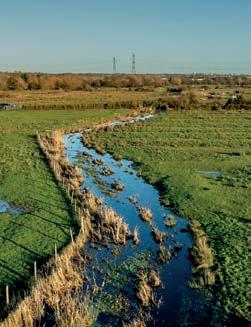
How water connects land, life and people








Welcome to the spring edition of your new-look Wild, bringing you the wildlife stories you love alongside the projects and people driving real change for nature.
Sara Mills, Editor
IT IS WONDERFUL to see our reserves begin to bounce back a er a wet season. Across our sites, work to improve natural flood management is helping land and wildlife recover.
Nature is resilient, but climate change continues to shape the world around us, challenging species to adapt — a theme explored in our special feature on page 18
One living measure of good river health is Atlantic salmon featured on page 4 , while along the coast our work supports native oysters ( page 6) and we reveal the hidden life of our rockpools ( page 7).
I am continually inspired by the volunteers who give their time, knowledge and enthusiasm to support nature’s recovery. From seagrass restoration in the Solent ( page 22) to five years of the Watercress and Winterbournes scheme ( page 28), their work is helping protect some of our most pressured waterways.
Thanks to an incredible response from members, supporters and the local community, our Meon Valley Land Appeal has exceeded its £65,000 target, enabling us to work towards the purchase of Court House Meadows, an ecologically rare sanctuary in the heart of the Meon Valley. Restoring this site and a section of the River Meon will help the floodplain return to a more natural state, enhancing wildlife habitat, slowing and storing water and reducing flood risk for local communities. Donations can still be made: hiwwt.org.uk/meon
We are deeply grateful for your generosity and enthusiasm for this work – thank you for helping nature thrive.
7 Wild spring
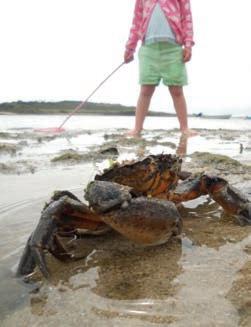
From obvious sand scuttlers to clever masters of disguise, this is how to spot four fascinating crabs along the Solent.
14 Wild action
How communities are pulling together and taking strides towards a wilder, more thriving and greener future.

18 The Bu erfly Effect
Lizzie Laybourne explores how the shifting patterns of climate change are reshaping our wildlife.
22 Saviours of the Sea
Meet the heroes at the heart of two ambitious marine projects which aim to restore and protect Seagrass.
26 The Sea is the Source
Senior marine specialist Tim Ferrero explains why the sea is the true source – and why protecting it matters.
28 A Lasting Legacy
Celebrating five years of community action to protect Hampshire’s rare chalk streams and the species within.
16 A word from our CEO
A reflection on shifting the narrative by Debbie Tann MBE, Hampshire & Isle of Wight Wildlife Trust Chief Executive.
17 Spot the di erence
How to tell a native, white-clawed crayfish from its invasive rival: the signal crayfish.
30 Wild people
Your space to send us your stories and photos of wildlife, plus a celebration of support from our wider network.
31 e Wild According To Policy and Advocacy Officer, Lorna Selby, who is giving rivers a voice and inspiring others to stand up for nature.



Hampshire & Isle of Wight Wildlife Trust @hantsiwwildlife
@hampshireandisleofwightwildlifetrust
@hampshire&isleofwightwildlifetrust hiwwt.org.uk
editor@hiwwt.org.uk
01489 774400

Hampshire & Isle of Wight Wildlife Trust, Beechcroft House, Vicarage Lane, Curdridge, Southampton SO32 2DP.
Editor: Sara Mills




Contributors: Lizzie Laybourne, Tim Ferrero, Ellie Parker, Caitlin Woombs, Casey Spry, Jill Doubleday, Katy Gary, Ben Rushbrook, Kira Fuller, Kathryn Boler and Helen Skelton-Smith
Design: Keely Docherty-Lee
Contact the editorial team: editor@hiwwt.org.uk









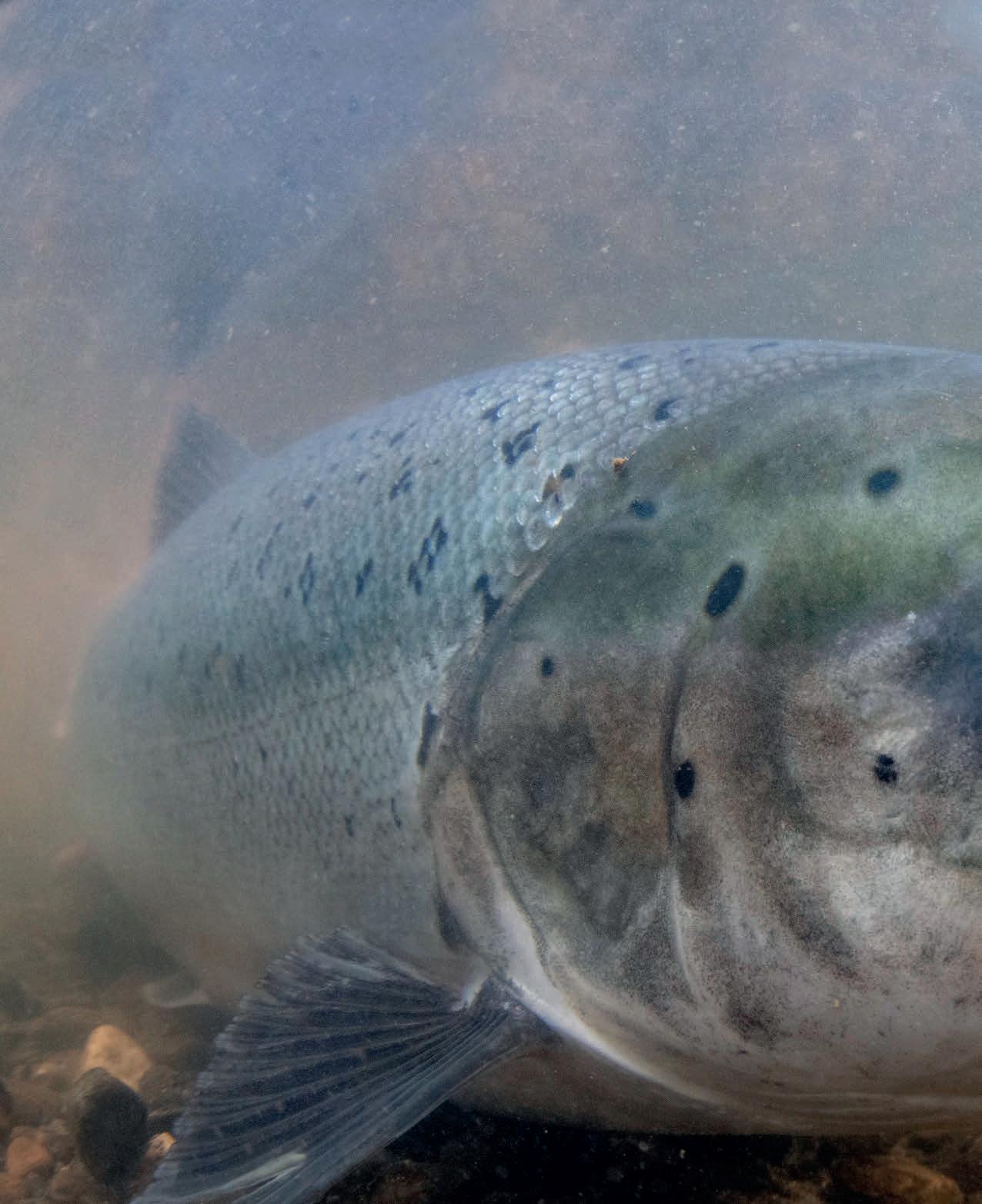


Each spring, Hampshire’s chalk streams carry a living promise to the sea; wild Atlantic salmon.
BORN IN THE CLEAN, gravelly headwaters of rivers like the Itchen, Test, and Meon, Atlantic salmon begins its life hidden beneath the stones, invisible but vital. As daylight lengthens and river temperatures rise, young salmon –known as smolts – feel an ancient pull. Its body transforms, silvering as it prepares for salt water, and it turns downstream, beginning a perilous journey to the Atlantic.
This is only the fi rst leg of one of nature’s most extraordinary migrations. Atlantic salmon will spend years at sea, roaming vast ocean feeding grounds, before a empting the impossible: navigating thousands of miles back to the exact river –sometimes the very stream – where it was born. How it does this remains one of nature’s great mysteries, guided by scent, magnetic fields and instinct honed over millennia.
Here in Hampshire, Atlantic salmon is an endangered form of wild salmon, shaped by generations of returning to the same clear rivers, giving it subtle but real genetic differences found almost nowhere else on Earth. But it is more than a rare fi sh. It is an indicator species, a living measure of the health of our rivers. Its decline tells a stark story, but its recovery would signal hope for everything that depends on chalk streams, from water voles to mayfl ies.
Spring is a moment of urgency. The salmon is moving. The window to act is open. By restoring its habitat, improving water quality, and reconnecting rivers, we can keep this ancient journey alive – from Hampshire’s headwaters to the wide Atlantic, and back again.
But this epic journey is increasingly stacked against the salmon. Weirs, dams, and low flows make rivers harder to pass. Pollution and abstraction weaken the chalk streams they depend on. Obstacles cost precious energy – energy salmon needs to survive, leap barriers, and one day carve its redds into clean gravel upstream.
The Itchen Salmon Delivery Plan (ISDP) brings together multiple organisations, including the Trust, to coordinate these efforts. By pooling expertise and resources, the plan tackles threats at every stage of the salmon’s life cycle, from river to sea and back, giving hope that this extraordinary migration will endure for generations to come.
Go wild

Find out more about this plan and why it matters, and learn how your local conservation efforts can make a real impact in helping endangered salmon: hiwwt.org.uk/save-our-salmon

Explore and enjoy the nature on your patch
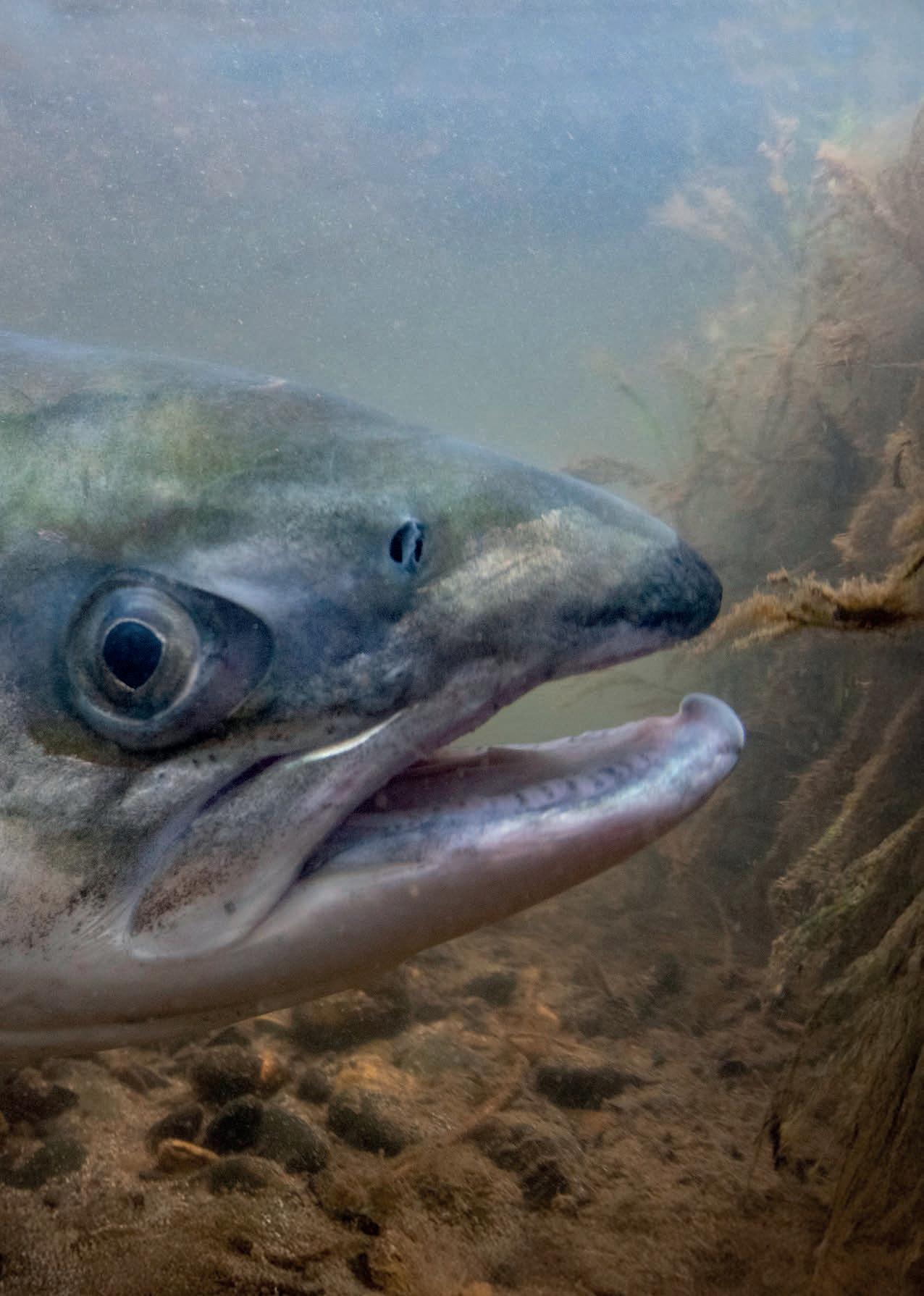
Wild but true Salmon live up to 13 years. They require loose, silt-free gravel in fast-flowing, shallow waters (riffles) to dig "redds" (nests). The eggs must remain oxygenated while buried 10–30cm from late autumn to early spring.
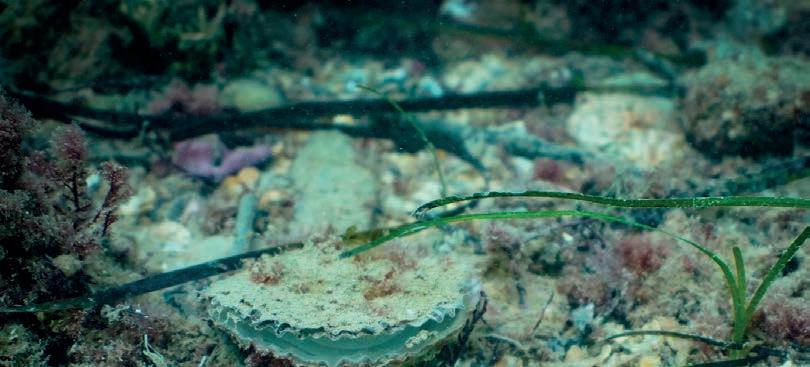
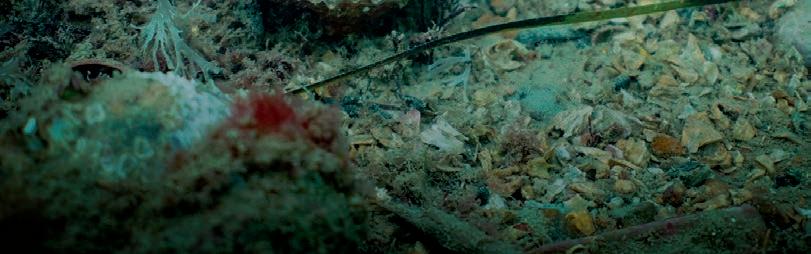
The native oyster, Ostrea edulis, is tricky to fi nd on our shores these days, so it is always exciting when you come across one. Typically brown and yellow in colour, it has smooth, concentric growth rings on its surface. This oyster is usually found alone, but historically it formed extensive reefs
which supported remarkable biodiversity. Both algae and animals use the li le nooks and crannies of the reef to se le and make their home. Unfortunately, human activities such as overfi shing, pollution and outbreaks of disease have driven a severe decline in oyster populations, with around
Left: Juvenile oyster and juvenile seagrass together.
95% lost in the UK since the mid-19th century. This decline is even more significant when you consider that as recently as the 1980s the Solent was home to Europe’s largest oyster fi shery, which collapsed in 2006. The native oyster has found it difficult to bounce back because it reproduces internally (unlike the much more abundant pacific oyster, Crassostrea gigas). Successful reproduction requires oysters to be close together, stacked in reefs, so that females can access the sperm released into the water.
Along with its cultural and historical importance, one of the most amazing things about the native oyster is its ability to fi lter up to 200 litres of water per day. Picture hundreds of thousands of these si ing in the Solent, removing nutrients, pollutants, chemicals, and even microplastics from our waters. The native oyster is being restored as part of Solent Seascape Project’s work alongside three other crucial habitats: seagrass, saltmarsh, and mudflats. These habitats are all connected, so by helping one we are making strong steps towards helping the others.
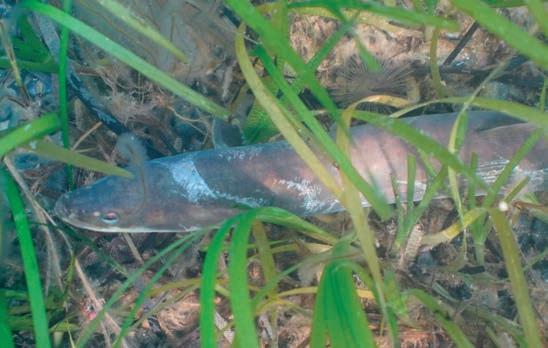
Once common in our rivers and estuaries, the European eel is now critically endangered. Discover its extraordinary life cycle and why sightings in the Solent are so rare.
The European eel, Anguilla anguilla, has a remarkable life cycle. It begins life as a tiny, leaf-shaped larva in the distant Sargasso Sea, dri ing on Atlantic currents for thousands of miles until it reaches European coasts. Here, it transforms into a transparent “glass eel” and enters estuaries on spring tides. As an elver, it migrates upstream into freshwater, where it may spend five to 20 years growing as a yellow eel before transforming into a silver eel and returning to the Sargasso Sea to spawn – once in its lifetime.
European eels are now critically endangered, with populations at less than 10% of historic levels. Barriers such as dams, habitat loss, pollution,
disease, and past overfi shing have all contributed to this. As such, sightings are rare, making any encounter a special one for wildlife watchers.
Our conservation efforts focus on restoring habitats and improving river access, which supports population recovery. As we work towards seagrass regrowth in the Solent, we continue to support all kinds of marine life. All credit to our eagleeyed Solent Seagrass Restoration Project Intern, Eva Walton, for
spo ing this wonderful European eel in an existing seagrass meadow at Seaview, Isle of Wight.
European eel, Anguilla anguilla, in Seaview seagrass meadow.






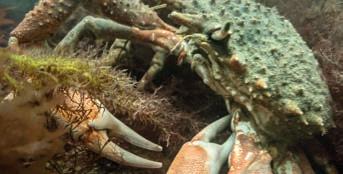
Meet four fascinating crabs which scuttle along Solent shores. Some are easy to spot, while others are masters of disguise. Here’s how to find them – and what makes each one special.

1

Difficulty level: ★★✩✩✩
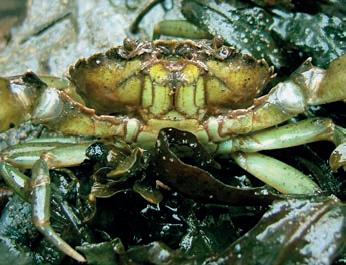
The shore crab is the most familiar on Solent shores. Usually green, sometimes brown, red, or orange, it has five small spikes along each side. If you see a bright orange mass under its belly, it is probably a female carrying eggs, but parasitic barnacles can also occupy this space, producing smoother, paler eggs.
Difficulty level: ★★★✩✩
Long-legged and spiny, spider crabs camouflage themselves with bits of seaweed, often making them look like a walking plant! You might find them under a rock on the lower shore, but you are more likely to find their shed shells along the strand line. After molting, they are soft and vulnerable for a few days until their new shell hardens.
3 2
Difficulty level: ★★★★✩
The broad-clawed porcelain crab is tiny and often hidden under rocks, but look closely for its huge flat claws –sometimes bigger than its body. Its relative, the long-clawed porcelain crab, has thin, elongated claws instead. Both species are delicate and may shed a leg if attacked. It is this fragility that gives it its name.
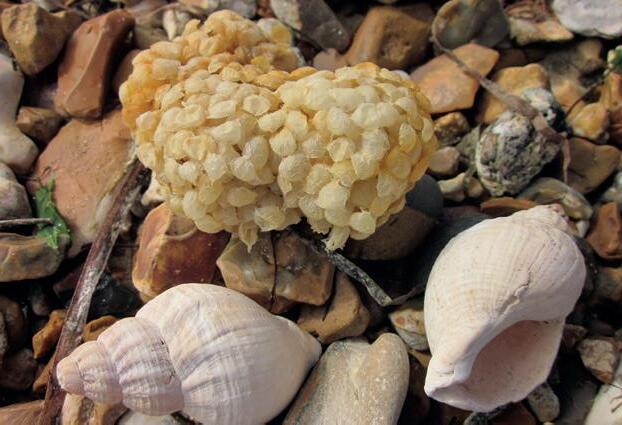
As the largest sea snail found in British seas, these active predators use their own shell to prise open the shells of other bivalves or worms. The egg cases of a common whelk are o en found washed up on shore. In each case there can be hundreds of eggs and the fi rst egg to hatch out will eat all the others inside.
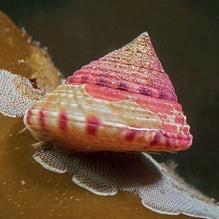
With its pink, purple or yellowish bands and tall, conical shell, this pre y sea snail lives on rocky shores in the Solent, grazing on algae at low tide. Always clean, it is thought to use its extendable foot to keep its shell in good condition.
4
Difficulty level: ★★★✩✩

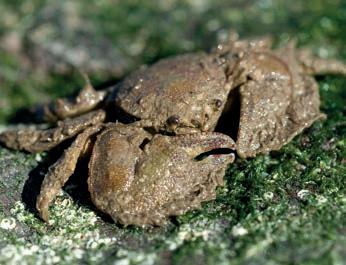
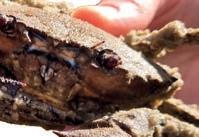
The velvet swimming crab hides under rocks or among seaweed on the lower shore. Its green-brown body is easy to miss, but the bright red eyes give it away. It is aggressive and beware its sharp claws. Its flattened back legs let it swim, and tiny hairs covering its body give it a soft, velvety feel.




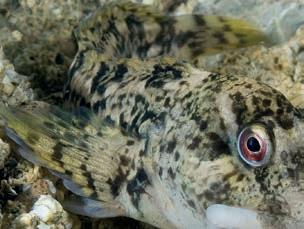




The most likely fi sh you will spot on the shores as it can survive out of water. You will have to hunt to fi nd it as it is o en under rocks or sea weeds and can be well camouflaged. Once the female has laid the eggs, the male will stand guard over them for over a month.
• Don't forget to follow the seashore code: hiwwt.org.uk/ blog/summer-marine

Kirsty Horne, Trainee Assistant Reserves Officer, Central Team, sees a pygmy shrew for the first time.



SIGHTED
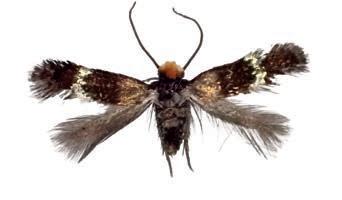
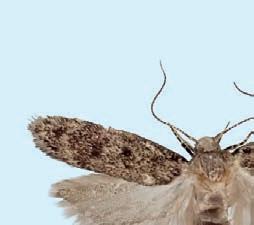
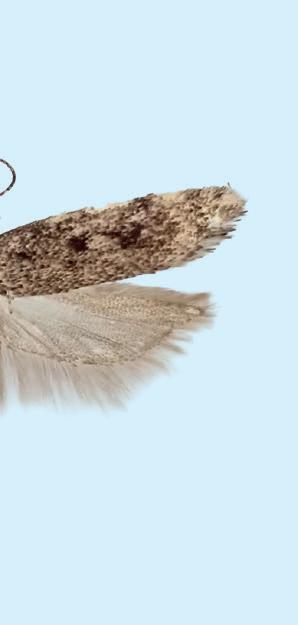
Pamber Forest Nature Reserve has made county history with the first-ever Hampshire records of two rare moths – Gelechia scotinella and Haplotinea insectella


Andy Reeves , Reserves Officer, Central, Rivers and Downs


The discoveries came during the 2025 recording season, when volunteers surveying the ancient woodland logged 305 species in a single early July session, with at least 20 species new


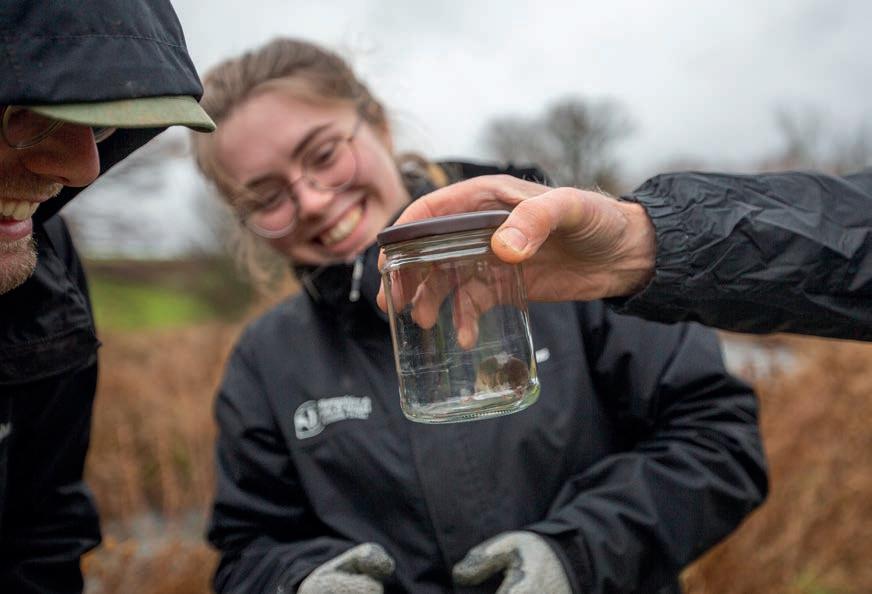
Surveys like this help us understand which small mammal species are using the site, particularly the differences between riparian corridors (along a river) and field margins (grassy strips at the edge of fields). Data for many species was previously lacking, so this work sheds light on these o en-overlooked animals.



Using Longworth traps, we survey two linear sections of the meadow once in winter and again in autumn each year. This shows how meadow management affects populations and can indicate whether species such as harvest mice and water shrews are present.
We focus on vole populations, which are vital prey for barn owls. In January, our records included eight common shrews, five field voles, three bank voles, 14 wood mice and one very tiny pygmy shrew.
Tracking trends helps highlight the importance of sensitive water meadow and floodplain management.
Seeing the species we protect first-hand is invaluable, and offering survey opportunities to new team members is rewarding and helps inspire the next generation of conservationists.


David Jordan OBE has retired after 10 years as Chair of the Trust. During his tenure, the Trust delivered major land acquisitions, developed its Wilder strategy, and strengthened its voice for nature. He is succeeded by Professor Joy Carter CBE (pictured), elected Chair at the Trust’s October AGM. Joy brings extensive governance experience, having served on 21 boards – 11 as chair – alongside a strong commitment to nature and social justice.










dark brown micro-moth with silvery wing spots. Previously known from just three other UK counties, it is nationally scarce and a proposed Red Data Book (RDB) species. Haplotinea insectella, also proposed pRDB, has pale yellow-brown wings and larvae that feed on fungi growing on old tree trunks, making Pamber’s veteran woodland ideal habitat. These finds were made possible by Pamber’s dedicated volunteer “moth-ers”, whose recording and conservation work is revealing the hidden diversity of this special reserve. The Trust is inviting more volunteers to get involved, from moth recording to practical habitat management.
Find more
hiwwt.org.uk/ volunteeringopportunities



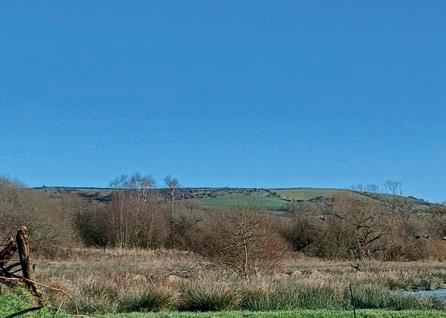
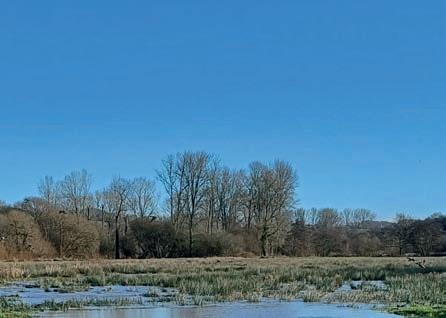
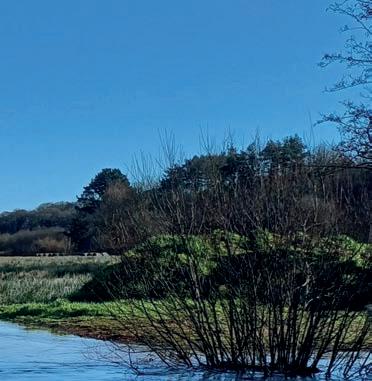
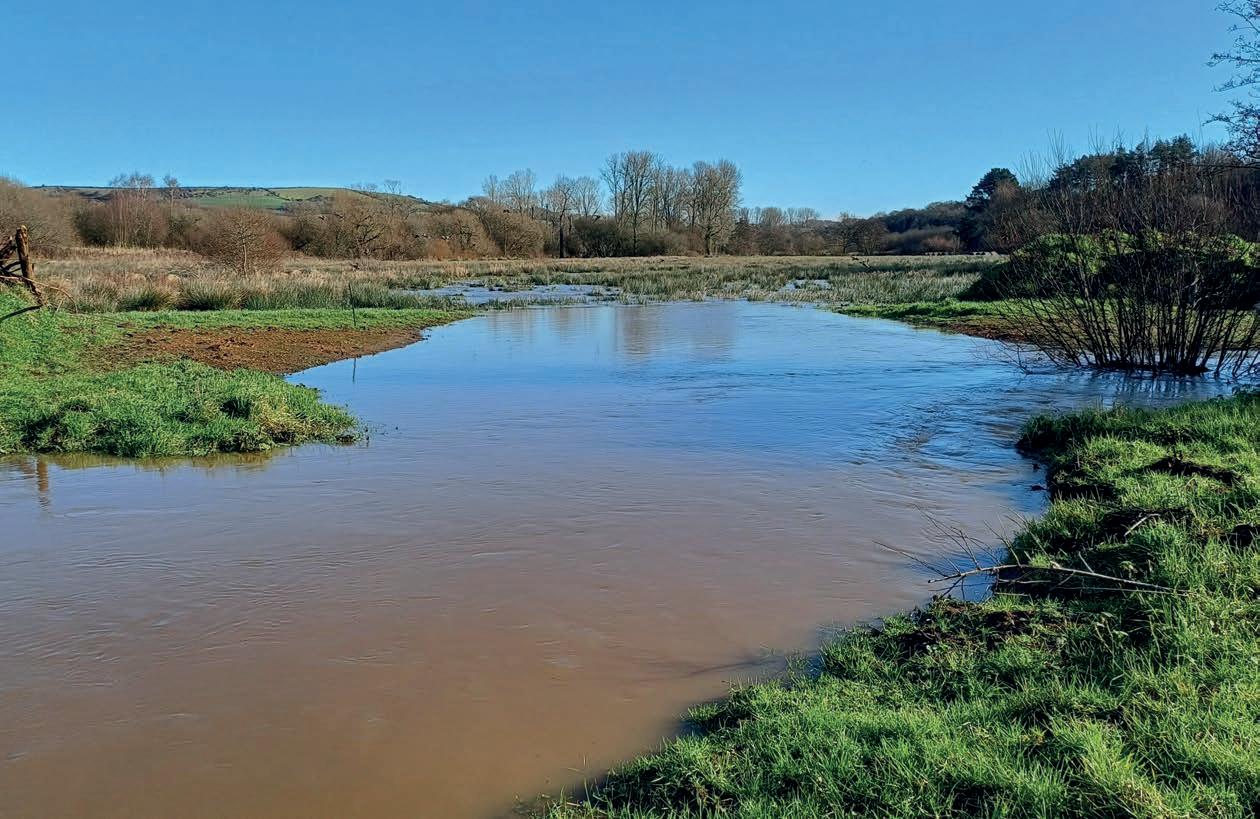

two-year project to restore the Eastern Yar River on the Isle of Wight is already transforming the valley for wildlife and people alike. With works completed by Cappagh for the Trust in autumn 2025, the restoration has reconnected the river with its natural floodplain, revived rare wetland habitats, and made the landscape more resilient to flooding and climate change.
Wetlands are some of the UK’s most threatened habitats, with over 90% lost in the past century. Floodplains act as nature’s sponges, holding water during wet periods, slowing its flow, and reducing downstream flooding — while providing homes for amphibians, invertebrates, wading birds, and wetland plants.
The Eastern Yar floodplain, across Newchurch, Alverstone Mead, and Sandown Nature Reserves, had been disconnected from the river for decades due to dredging and raised banks. During heavy rainfall, water was forced downstream, increasing the risk of flash flooding.
The restoration has re-profi led riverbanks (reshaping them so water can spread naturally), cut swales (shallow channels that store and direct floodwater), created ponds and scrapes, removed shading willow and scrub to restore fen and reedbeds, installed woody debris to encourage natural river meanders, and updated water-control structures. These changes allow the floodplain to store an estimated 155 million litres – equivalent to 62 Olympic-sized swimming pools.
Jamie Marsh, Director of Land Management, said: “When you walk the floodplain now, you can feel water moving where it hasn’t for decades.
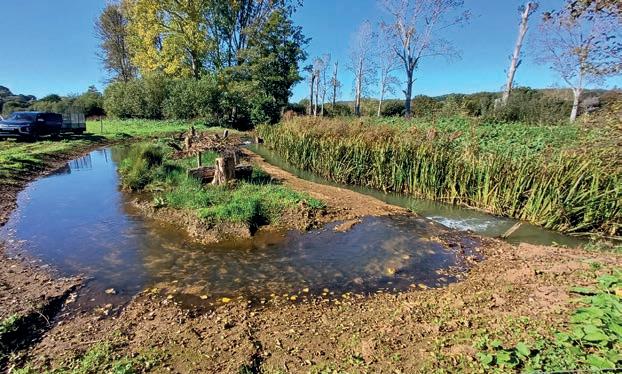
Restoring the river’s natural function has created thriving habitat while building a more climateresilient valley. This is only the beginning — the floodplain will continue to se le and flourish in the years ahead.”
Early signs are promising. Wetlands are re-we ing, fen plants are recolonising, and wildlife is returning — from snipe, lapwing, and teal to kingfi shers, dragonfl ies, and pollinating insects. Marsh cinquefoil, yellow flag iris, hemp agrimony, and fen bedstraw are also reappearing in restored areas.
This project shows how careful restoration can benefit both nature and the community.
Ongoing monitoring will ensure these restored habitats continue to thrive, while the project provides a strong blueprint for future floodplain restoration further downstream along the Eastern Yar.
Find more
For more details about this extensive project, visit hiwwt.org.uk/ eastern-yarriverrestorationproject
celebrate a job well
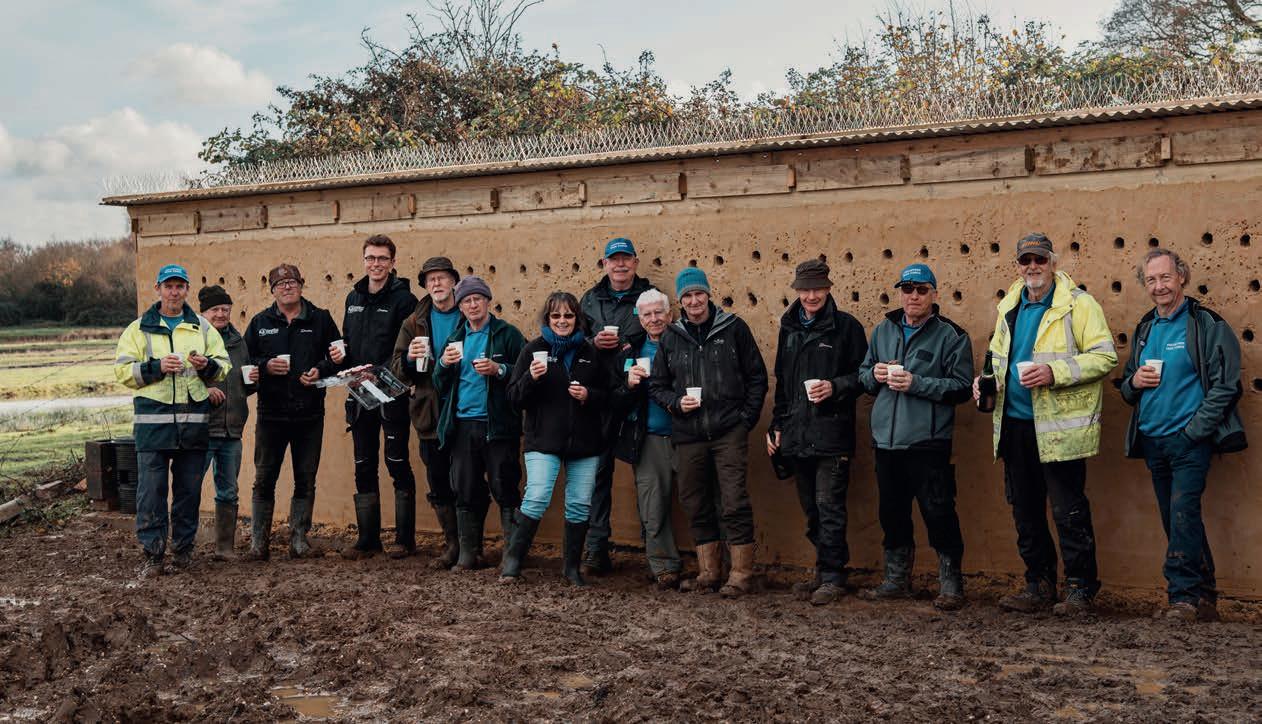
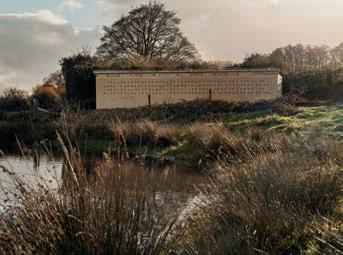
A NEW SAND MARTIN nesting bank has been created at Testwood Lakes Nature Reserve, near To on, to safeguard the only known breeding colony of sand martins in the Test Valley.
Built by the Trust, the structure replaces an older bank that had supported the colony for more than 20 years but had deteriorated over time. Drawing on modern designs, the new bank provides a safe and secure place for these migratory birds to nest, lay eggs and raise their chicks.
Sand martins’ natural nesting habitat is in sandy riverbanks and cliffs, but habitat loss caused by development, erosion and riverbank reinforcement has made suitable sites increasingly scarce. Artificial nesting banks now play an important role in supporting the species.
The new bank contains nearly 180 nest chambers and is designed to mimic a natural sandy cliff face. Small entrance holes allow birds to fly directly into tunnels angled upwards that lead to individual nest chambers,
Testwood’s sand martin colony began over 20 years ago, when birds nested in temporary piles of sand during the reserve’s lake creation. A wooden nesting bank followed, but the latest artificial bank provides ideal habitat near open water with an abundance of flying insects for breeding birds and their chicks.
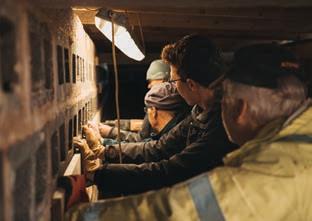
protecting nests from predators and the weather. Each chamber can be accessed via discreet wooden doors, enabling Trust staff to monitor the colony with minimal disturbance.
Ben Pickup, Reserves Officer for Lower Test Valley, said: “The new bank provides sand martins with a safe, stable nesting space to use year a er year. Every tunnel has been carefully angled to protect nests while allowing the birds to behave naturally.
“With the potential to support nearly 180 pairs, the bank will help secure Testwood Lakes’ colony and boost Hampshire’s sand martin population. We simply could not have built this structure without our volunteers, whose effort and commitment have been extraordinary.”
Sand martins are the smallest member of the swallow family and one of the earliest spring migrants, arriving from Africa in March and typically raising up to two broods before leaving in August. In Hampshire, the species is now largely confi ned to sand and gravel pits, with

We are so grateful to our volunteers who transported hundreds of heavy blocks and loads across difficult terrain, created the tunnel moulds by hand, and supported the build from the first row of blocks to the final render.
hiwwt.org.uk/ sand-martin-bank
only a handful of active colonies remaining.

The bank was built with incredible support from the Volunteer Task Force and Friends of Testwood volunteers, with the majority of funding provided by Hampshire Ornithological Society (HOS). Designed to blend into the landscape, it includes improved drainage, predator protection and features that support long-term maintenance.
Visitors can view the new bank from the sand martin hide, with peak activity expected in the coming weeks as birds pair up and begin nesting.
• Visit hiwwt.org.uk/testwood-lakes




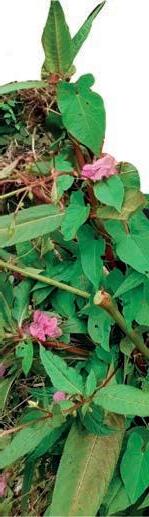
We continue to work with landowners and managers to stop invasive non-native plants spreading across the New Forest. The New Forest Non-Native Plants Project tackles species such as Himalayan balsam, Japanese knotweed and giant hogweed. Holly Fitzgerald, the Trust’s new Non-Native Plants Officer, succeeds Catherine Cha ers, who retired this autumn a er 16 years, leading the project by coordinating control efforts, supporting volunteers, and raising awareness to safeguard this special landscape.
• More info: hiwwt.org.uk/new-forest-non-native-plants
The Trust is calling for nature recovery to be placed at the heart of England’s evolving devolution plans, as new powers are set to be passed from central government to local regions.

Know what you grow – choose native or non-invasive plants.
Dispose responsibly – don’t dump garden or pond plants in the wild.
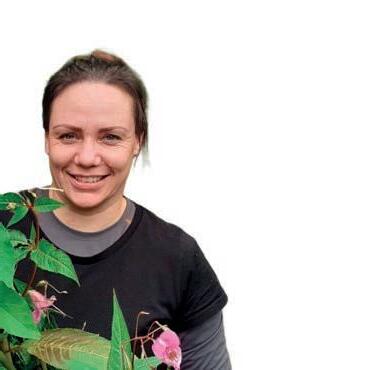
Keep it contained – prevent invasive species spreading into sensitive

RIVER PROTECTION habitats.
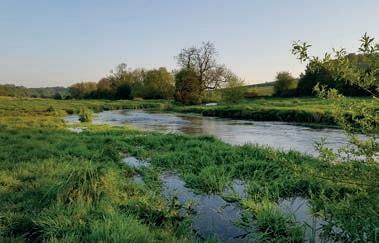
East Hampshire District is the latest council to unanimously pass a motion recognising the Rights of Rivers, helping protect chalk streams such as the River Meon.
The Council joins Basingstoke & Deane, Southampton and Test Valley in backing the Trust’s Save Our Chalk Streams campaign.
• For more information, visit: hiwwt.org.uk/rivers

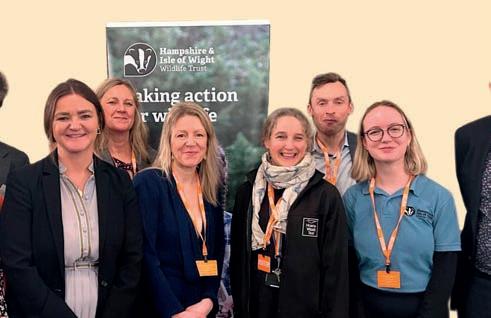
Devolution has the potential to give communities a stronger voice over decisions that affect the places they live – including how land is used, how homes and infrastructure are planned, and how nature is protected and restored. Wildlife Trusts across the country are urging the Government to ensure that new devolved authorities are given clear duties to support nature recovery and align growth with Local Nature Recovery Strategies.
Here in Hampshire and the Isle of Wight, devolution could shape future decisions on transport, housing, economic growth, climate change and the environment. Ge ing this right presents a significant opportunity to secure be er outcomes for people and for wildlife – but only if nature is embedded at the centre of the new system from the outset.
Find out more about what devolution could mean for our region and for nature in Debbie Tann’s column on page 16.
• Follow our progress: hiwwt.org.uk/ devolution.
Devolution is the process of transferring powers and funding from central government to local areas. In May 2028, Hampshire and the Solent will elect a Mayor to represent the new Mayoral Combined Authority.
Below: The Trust united parliamentarians, local leaders and environmental organisations at a special event in Westminster to put nature recovery at the heart of England’s evolving devolution agenda.


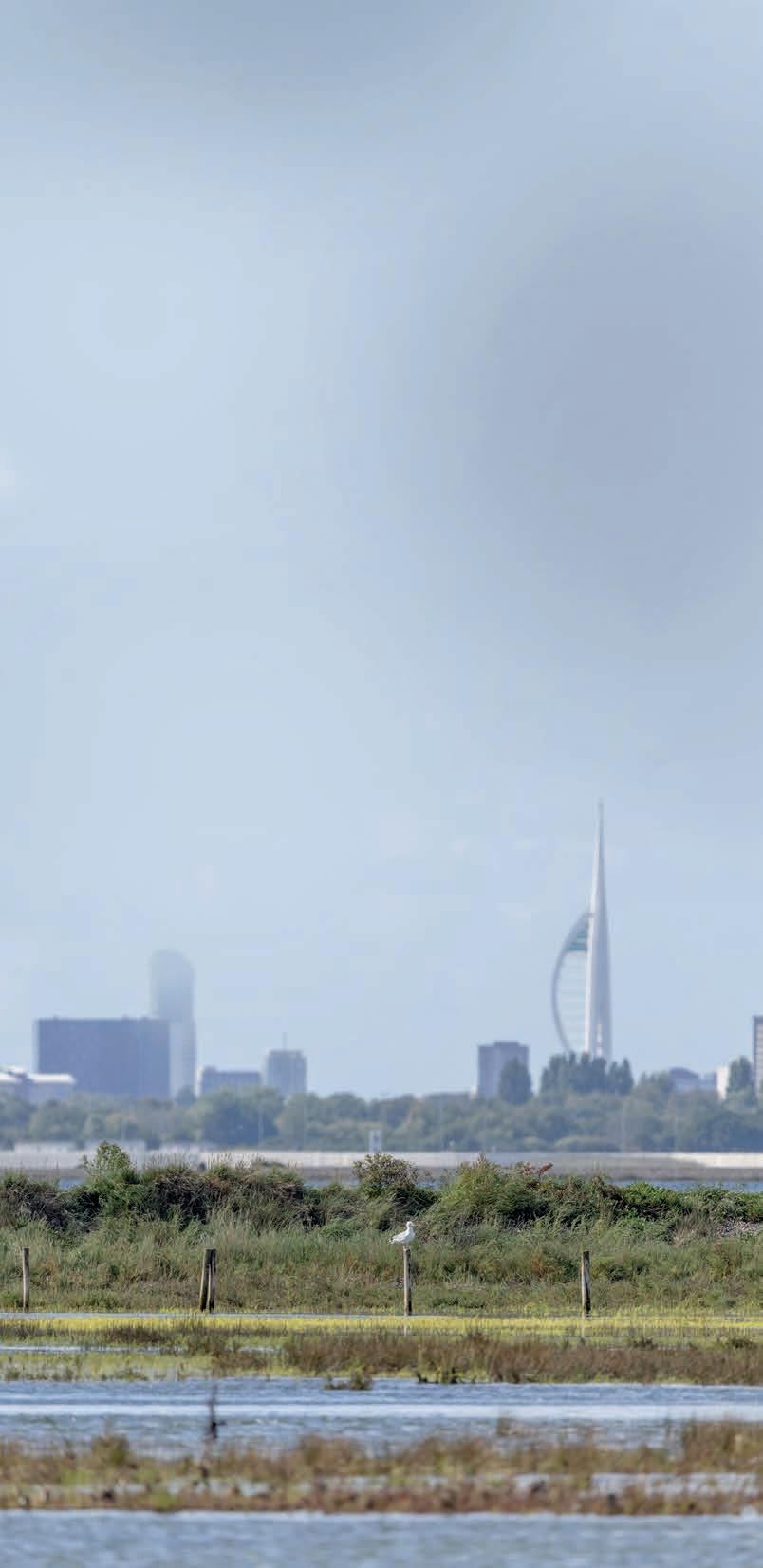
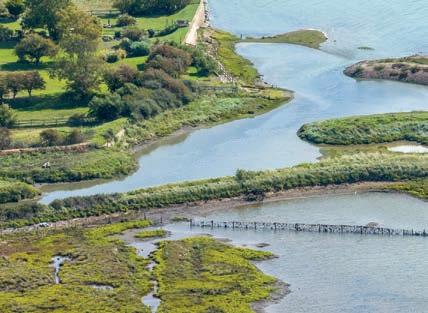
RESERVE sits in an unlikely place – a pocket of wildlife edged by industry on the margins of Langstone Harbour. Once part of the former IBM manufacturing plant, complete with a running track, the Trust took on the site in 2002 and managed it as coastal grazing marsh: wet meadows, grasses and scrub, alive with birds and summer flowers, including a beautiful display of marsh orchids.
In September 2020, a sea wall on neighbouring privately owned land breached. With maintenance budgets reduced, the wall could not be repaired and so nature has taken its course. Since then, each high tide pushes saline water through the breach, spreading across adjoining land into parts of the nature reserve itself.
The change has been dramatic but also revealing. Former grazing marsh is gradually transforming into transitional mudflat and salt marsh –offering a rare chance to see how coastal habitats respond when the sea is allowed to move naturally inland. Water now fi nds the lowest points, carving shallow channels, while mudflats form on lower ground and saltmarsh begins to establish on slightly higher areas.
“Most
of the Solent coastline is heavily defended, but without those defences, habitats naturally retreat as sea levels rise – and that’s exactly what
we’re seeing here. It’s intriguing to watch these transitional habitats emerge.”
Jamie Marsh, Director of Land Management
On the edge of a busy, urban landscape, the higher ground at Southmoor has become an important high-tide refuge for wildlife – and a living illustration of the challenges and changes shaping our coastline.






































































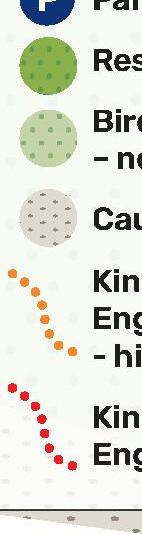
Parking Reserve


Bird nesting area – no public access
Caution soft mud
King Charles III
England Coast Path
- high tide route
King Charles III
England Coast Path

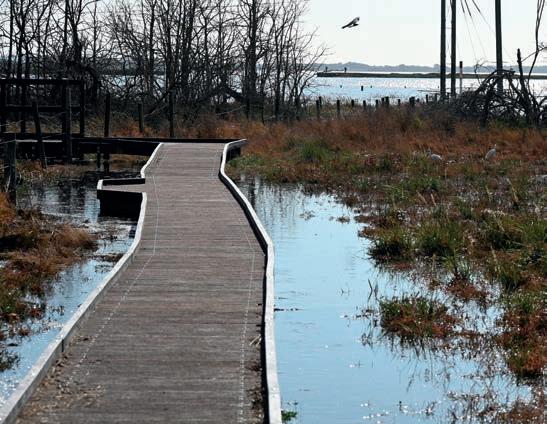
A new boardwalk, made with recycled materials, has been installed by Natural England as part of the King Charles III England Coast Path, to improve access through the site, particularly during high tide. This public path runs through the reserve, offering ever-changing views across Southmoor. Conditions vary, so check the weather and tides before arrival.


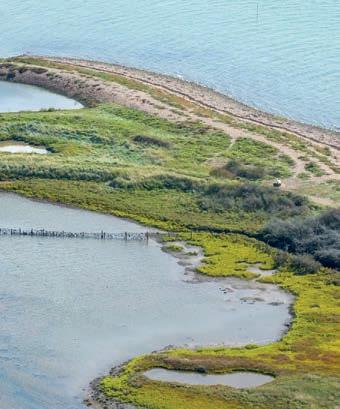








As habitats change, Southmoor continues to support a rich mix of wildlife, particularly at high tide when birds seek refuge from rising waters elsewhere.

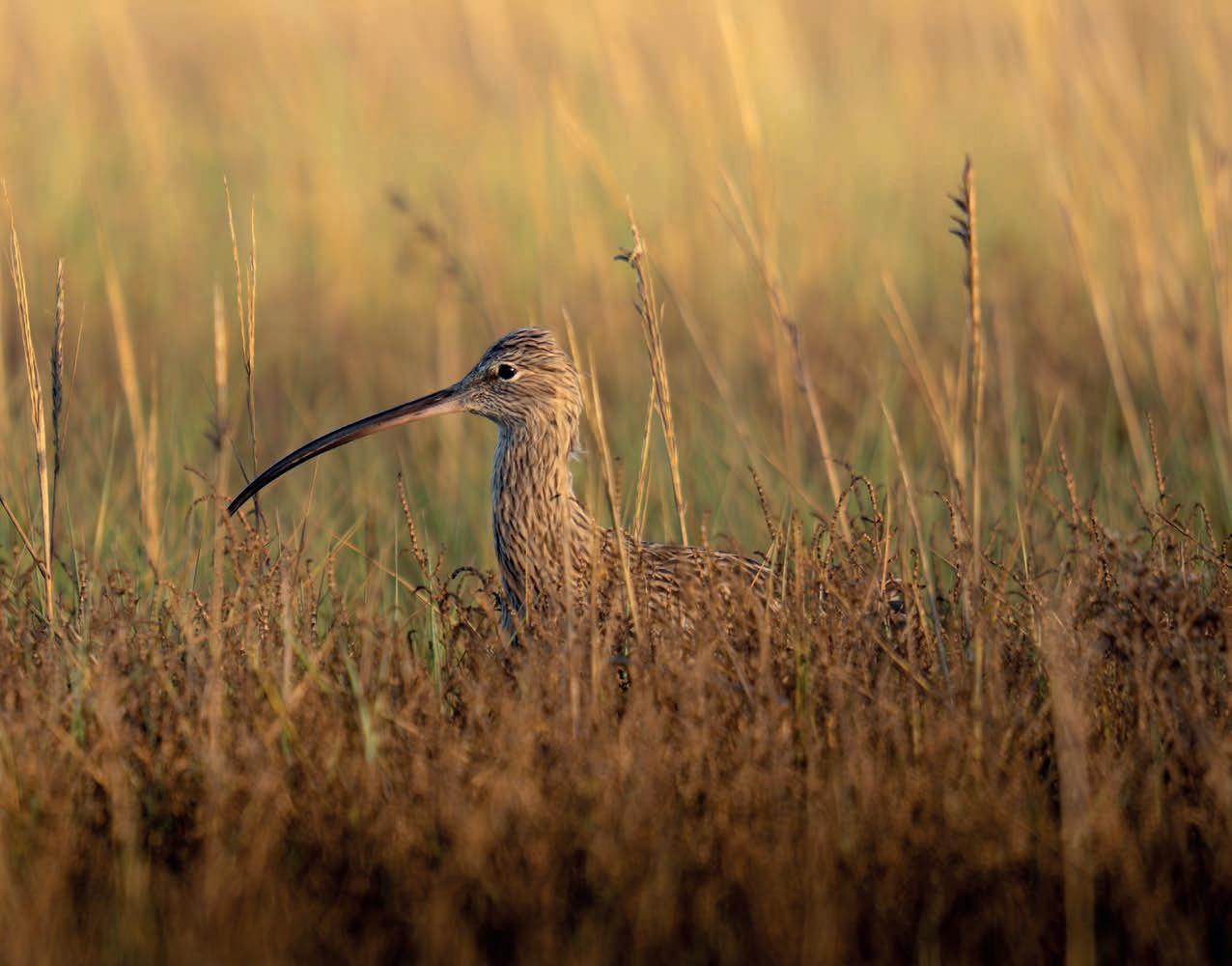
Arriving each winter from Siberia, these small geese gather in noisy flocks, grazing along the coast before returning north in spring.


The breached sea wall, on adjoining land, marks a turning point in Southmoor’s story. Without hard defences holding the sea back, the land is behaving as it once would have done naturally, retreating inland as sea levels rise. While this presents real challenges for managing nature reserves along a developed coast, it also offers a rare glimpse of coastal change in action along the otherwise heavily defended Solent shoreline.



Size: 11 hectares (27 acres)

Location: Southmoor Lane, Havant, PO9 1JW

What3Words: former.guess.nests



OS Map Reference: SU709051
Parking: Spaces available on Southmoor Lane

Access: Look out for our new signage for routes.















Instantly recognisable by their loud calls, red bills and legs, these waders specialise in feeding on shellfi sh along the shore.



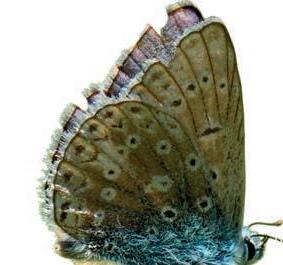
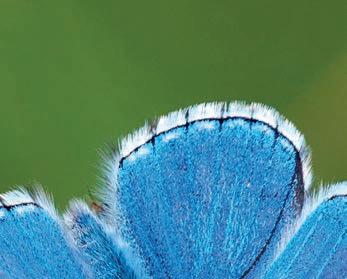
Common blue bu erfly One of our most widespread bu erfl ies. Males shimmer bright blue in summer, while females show so er brown tones with a blue dusting.
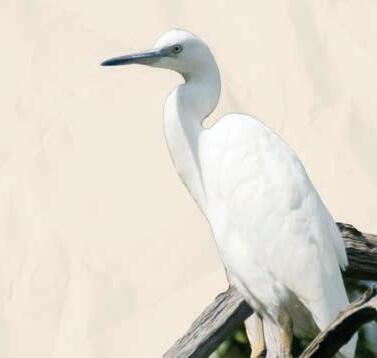
Once a rare visitor, this elegant white heron is now a familiar sight.
Look for black legs, yellow feet and fi ne breeding plumes in spring.

In autumn 2024, the Trust and housing association Abri launched an 18-month partnership to help make the Mansbridge estate in Southampton a wilder, greener, and more connected place to live. The project focused on three strands – community engagement, enhancing the estate’s green spaces to increase habitat for wildlife, and working with Mansbridge Primary School.
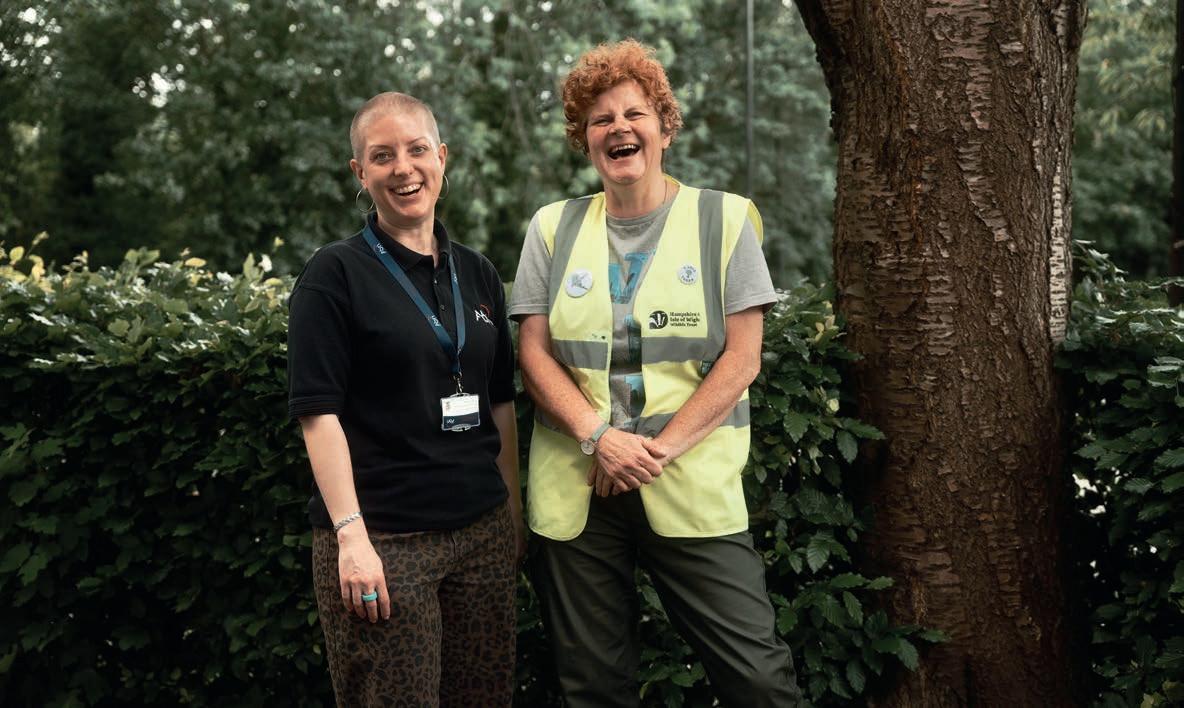
Wilder Communities Officer Jill Doubleday led the community engagement, working closely with Abri’s Community Development Officer, Cara Headon. Jill said: “Cara has been invaluable, with her in-depth knowledge of the community and brilliant ideas.”
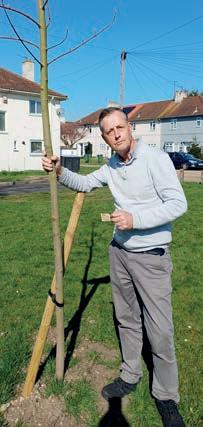
Abri planted 100 trees to celebrate the centenary of the estate, leading to the launch of the Tree Guardians scheme, open to anyone living on the estate. Guardians were given wildflower seeds, invited to events such as bulb planting, and encouraged to tell others about their tree. One of the fi rst to sign up was Paul, who later volunteered at Trust events. He said the new trees would “have a significant impact on the local environment and support new habitats for wildlife.”
The Trust trained Abri’s grounds team and produced a management plan to support longterm care of the habitats.
Cara said: “Wilder Mansbridge has been a fantastic way to bring people together. It’s not just about trees and wildflowers; it’s about creating spaces residents feel proud of and connected to.”
This sense of connection extended to Mansbridge Primary School. Wilder School Engagement Officer Craig Whitelock helped pupils form a Green Team eco club and showed them how to create features such as hedgehog houses and corridors, linking their grounds to other green spaces on the estate. Deputy headteacher Alison von Landau said: “Craig’s exciting initiatives to encourage wildlife into our grounds have really inspired the children to care more about nature.”
Reflecting on the project, Jill said: “This was a unique opportunity for me to spend a long time with one community, and it’s been hugely rewarding. There was so much enthusiasm from the people who live in Mansbridge, and I feel confident that they’ll look a er their green spaces for years to come.”
To read more, visit the blog: hiwwt.org.uk/mansbridge
The Trust is supporting four Isle of Wight parishes — Godshill, Rookley, Arreton, and Chillerton & Gatcombe — as they work together on a local Greening Campaign programme.
As part of the Island’s Local Nature Recovery Strategy, we are working with the community to focus efforts on the species and habitats most in
need of support. A community mapping walk will help identify opportunities to create and improve spaces for wildlife, and volunteers have already stepped forward as wildlife garden champions, offering advice to residents on simple ways to encourage more wildlife into gardens and green spaces.
Katy Gary, Senior Community Development Officer, said: “It’s encouraging to see local people already taking the initiative, with one site identified for new tree planting and pollinator-friendly flowers.”
Become a wildlife garden champion: hiwwt.org.uk/wilder-champion
What sparked your passion for marine life?
Growing up on the Isle of Wight, the sea was always part of my life. Rock-pooling and snorkelling as a child meant natural history quickly became my main fascination; I loved this underwater world and wanted a way to show people what I was seeing.
How did photography become part of that journey?
When I was about 15, I bought a GoPro and started experimenting underwater. Photography and marine ecology came together naturally, and I’m self-taught. It’s all about sharing that hidden world.
Why do you think people aren’t as engaged with our seas and its wildlife as they are with land creatures?
In the UK, there’s a real disconnect with marine nature. People think our seas are cold, grey and murky – and if you’ve never been taught about what lies beneath the surface, you won’t know any different. It’s hard to believe but I’ve spoken to adults who thought seahorses were mythical creatures!
How does your work challenge that perception?
My photography helps bring what is under the sea to people who may never snorkel or dive, breaking down those preconceptions and building connection. My work with the Trust is about building on that connection with people, especially younger audiences.
What makes the Isle of Wight’s marine environment so special?
For such a small island, the diversity is incredible – seagrass meadows, kelp forests, chalk reefs and open water, all supporting a huge range of species. These temperate seas are some of the most biologically productive on the
Marine biologist, award-winning underwater photographer and Trust Super Champion Theo Vickers shares what drives his passion for life below the waves – and why connection is key to conservation.
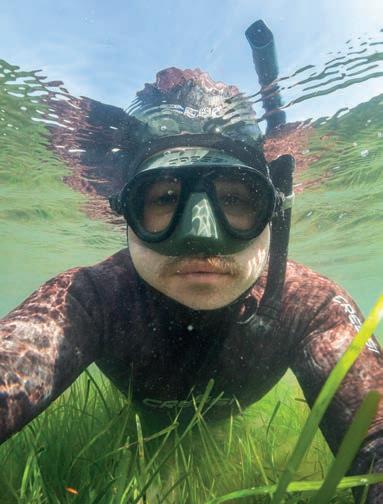
planet. Seeing stingrays and sharks glide past you in a seagrass meadow is unforge able. You feel like you’re in Australia, but really you are just hanging out in Ryde.”
What do you hope to achieve as a Super Champion?
With the Trust, I’m pu ing together a proposal for a programme that will help more people gain the skills they need to enter environmental careers.
O erbourne C of E Primary School has taken a hands-on approach to understanding and protecting their local chalk stream, the River Itchen.
As part of a topic on rivers, school staff linked learning across Geography and English using the Trust’s Save Our Chalk Streams resources to help pupils not just study nature – but act for it.
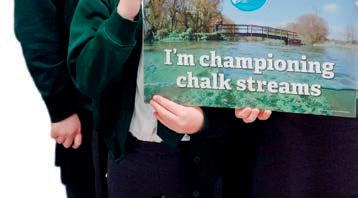
On a Trust-led visit to Compton Lock, Year 5 and 6 pupils explored the species the Itchen supports. In school, Trust Wilder Schools staff then ran a session on the wildlife and pressures facing chalk rivers, helping pupils turn their notes into speeches for their local MP to support the ‘Rights of the River’ motion.
Head of Year, Mrs Holland, said: “This project has helped pupils discover the power of their own voices, see how their ideas can influence real decision-makers, and understand that protecting the environment is not just a topic in a book but a responsibility they carry into the future.”
Want to get involved?

where teenagers can drop in with
It's early days, but we're also trying to get a youth nature forum on the island set up. It's like a club or society where teenagers can drop in with like-minded people and experience natural history, not just marine, in many ways.







I want island communities, especially young people, to feel closer to both nature on land and sea, and empowered to take action. If people feel that connection, they’ll care – and that’s how real change happens.

To find out more about Team Wilder or becoming a Super Champion visit hiwwt.org.uk/team-wilder



Want to nurture the next generation of conservation champions? By funding a Wilder Schools package, you could help teachers qualify as Outdoor Leaders and enrich pupils’ curriculums with nature-led learning: Visit hiwwt.org.uk/wilder-schools, or email Wilder.Schools@ hiwwt.org.uk for more details.




ACROSS MY RECENT magazine columns and blogs I’ve returned to a frustrating but persistent theme: the idea that nature is somehow in the way of progress. Too o en, the national conversation frames wildlife, landscapes and environmental protections as obstacles to growth, housing or infrastructure. It’s a false choice – and one we urgently need to challenge.
Nature is not a “nice to have”. It is critical infrastructure. Healthy rivers reduce flooding, thriving soils support food production, woodlands cool our towns and cities, and accessible green spaces improve physical and mental health. When nature is damaged, the costs don’t disappear – they simply show up later, and usually on the public balance sheet. Treating nature as expendable doesn’t speed up prosperity; it undermines it.
That’s why recent government narratives, which suggest environmental rules are holding Britain back, are so worrying. We are seeing this play out across multiple policy fronts. Alongside planning reform, the Government’s recently published Review of Nuclear Regulation raises serious concerns. Weakening protections may look like an easy win in the short term, but it risks locking us into higher costs, greater risk and poorer outcomes for communities. What’s missing from much of the national debate is recognition of nature as essential infrastructure.
So how do we move the conversation on? First, we need to be clear and confident about the solutions nature already provides. Nature-based solutions – restoring floodplains, recovering peatlands, reconnecting habitats – are proven, cost-effective and deliver multiple benefits at once. They should sit alongside housing, transport and energy as part of a joined-up national infrastructure plan.
Second, we must insist that nature recovery is given equal weight to economic growth,
not treated as an a erthought. Growth that damages natural systems is fragile by defi nition. Growth that works with nature is more resilient, more affordable in the long term, and fairer for future generations.
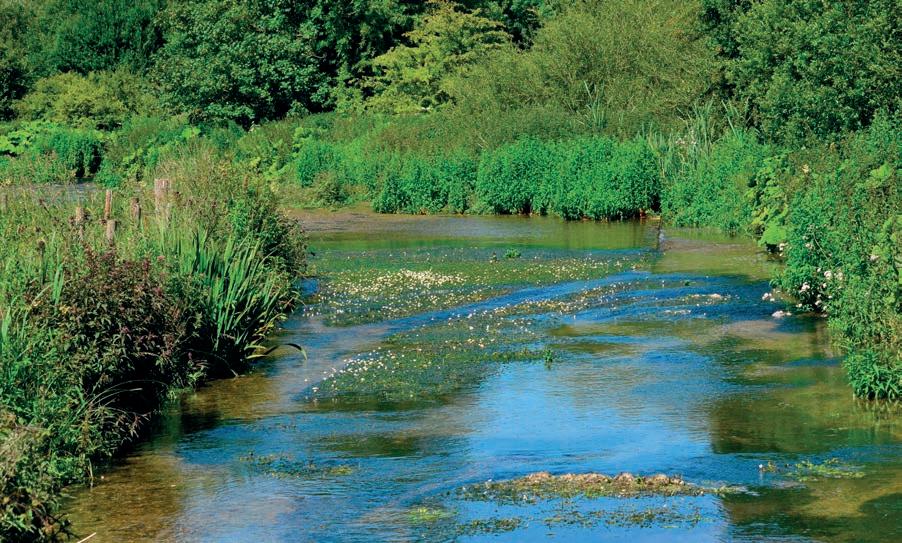
Left: Healthy waterways like the River Itchen are critical sources of drinking water, they provide natural flood management and water infiltration, as well as essential habitat for wildlife.
To read more from Debbie: hiwwt.org.uk/blog/ debbie-tann
Debbie Tann MBE
This is where devolution could offer real opportunity. Decisions made closer to communities can be er reflect local landscapes, local needs and local ambition. With the right powers and funding, devolved authorities could integrate nature recovery into planning, flood management, farming and health strategies –not as a constraint, but as an enabler.
As Wildlife Trusts, we are ready to play our part. We bring evidence, practical experience and trusted relationships with communities. We can help design solutions that work on the ground, delivering for nature while supporting thriving local economies.
The challenge now is to shi the narrative. Nature is not a problem we must work around. It is the foundation for our future. If we can help government – national and local – to see that clearly, we move from confrontation to collaboration, and from crisis management to long-term recovery.
Debbie Tann MBE, Chief Executive









Below: Staff from The Wildlife Trusts including Debbie (centre), RSPB, National Trust and Wildlife & Countryside Link at the parliamentary briefing on risks to nature following the recently published Nuclear Regulatory Review.










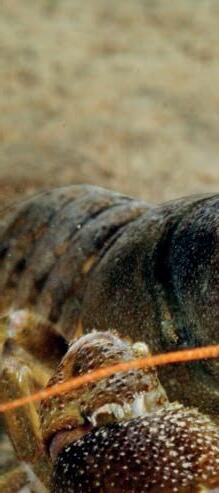
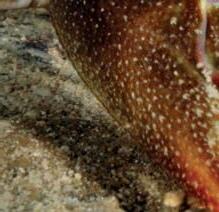
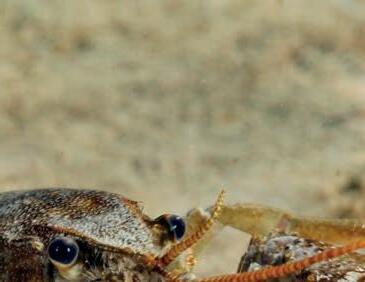


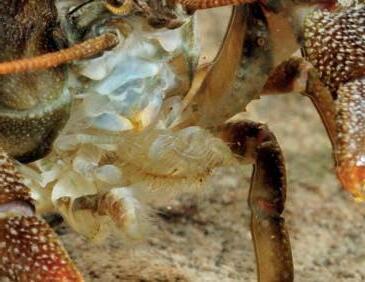
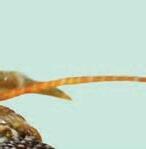

Habitat impact Balanced part of the ecosystem, minimal bank damage, important role in nutrient cycling by feeding on detritus.






Aggression
Generally more docile, though can be aggressive when disturbed.



Origin Native to the UK, Ireland and mainland Europe.
Size Up to 10-12cm, though juveniles can be less than 1cm.
Disease Highly susceptible to crayfish plague, typically suffers 100% mortality.
Reproductive rate Lower fertility; typically producing 30-50 eggs per brood, with a maximum of around 80.
Claw colour Underside pale; mottled ‘bumpy’ brown upper side.


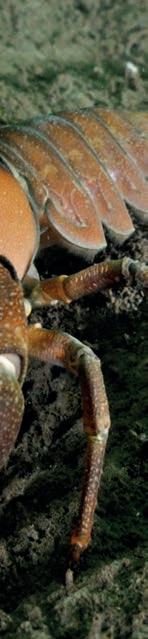
Spotting the difference between our native crayfish and the invasive non-native signal crayfish is more than a wildlife curiosity – it’s essential for conservation.
Origin Introduced from North America.
Size Grows larger and bulkier, up to 16-18cm, but can be any size from 1cm.

Disease Carrier of crayfish plague but largely immune; a primary vector spreading this disease to native crayfish.
Reproductive rate High reproductive output, producing as many as 200 eggs per brood, enabling rapid population expansion.
Claw colour Deep red underside; reddish-brown or with blue tinge to upper side with a distinctive white 'signal' patch at the joint.

Habitat impact Burrows extensively, causing bank erosion and habitat modification.

The white-clawed crayfish , Austropotamobius pallipes, is the only species of crayfi sh that is native to the UK. White-clawed crayfi sh have suffered a devastating decline over the past 40 years, primarily due to signal crayfi sh, Pacifastacus leniusculus, and a deadly crayfi sh disease they spread. Signal crayfish also outcompete and predate on many of our aquatic species, and damage habitats. By learning to tell them apart, we can help protect native populations, report signal crayfi sh sightings, and support the health of our rivers and streams.







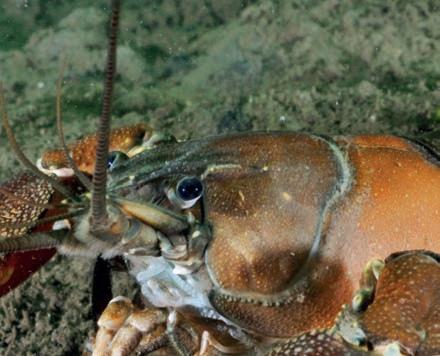
Aggression
Highly aggressive and outcompete native crayfish and other species for food and shelter.

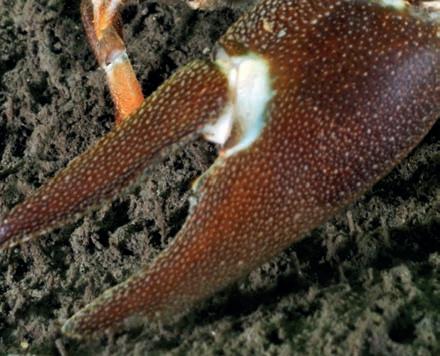





on our local wildlife and the range of measures the


Lizzie Laybourne, Lead Officer for Climate and Sustainability, looks at the impact of climate change on our local wildlife and the range of measures the Trust is taking to help species adapt.





LIMATE CHANGE IS accelerating at an alarming rate. Global and local climate records are repeatedly being broken, bringing more frequent and unpredictable weather extremes that are already having significant impacts on our wildlife and the nature reserves we care for.
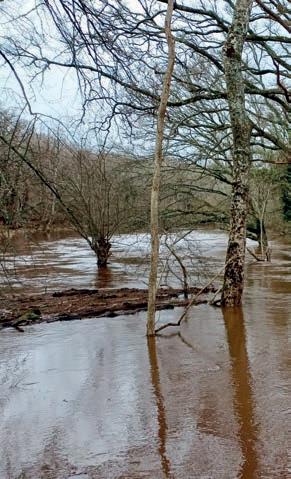
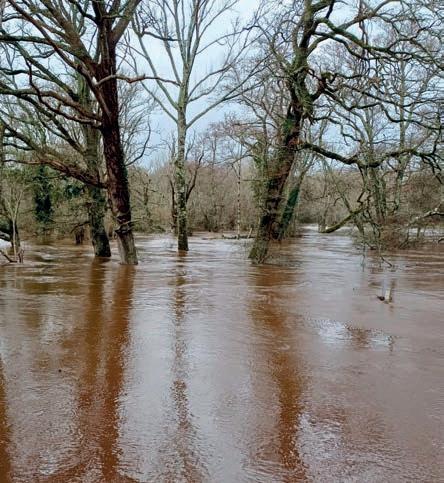
This winter has been the we est in more than a decade across the south of England, with rainfall totals close to double the seasonal average. According to the Met Office, Hampshire and the Isle of Wight saw more than twice the typical monthly rainfall in February alone, pushing river levels exceptionally high and causing widespread flooding and disruption for communities across the county.
Yet the pa ern is not simply one of we er conditions. In contrast, last spring and summer were the warmest on record, including the driest spring in 100 years. These rapid swings between extremes are becoming a defining feature of our changing climate.
In Hampshire, extreme weather and longer-term trends in climate change have already had a wide range of impacts across our work. By recording these changes, our teams can plan and account for the impacts faced.
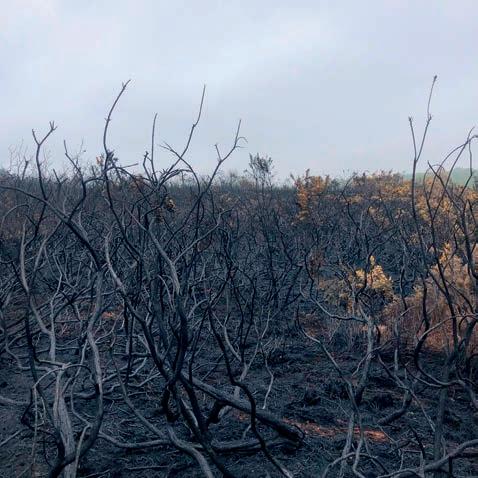
There are many risks associated with increased hot weather and droughts on our reserves. Teams have already seen fi res appearing earlier in the season, and, regardless of cause, the conditions on the ground exacerbate these fi res and increase the likelihood and intensity of habitat destruction. According to the National Fire Chiefs Council (NFCC), fi re services in England and Wales responded to 564 wildfi res from January to June 2025 – an increase of 69 fi res compared with the previous year. Hot, dry conditions with low humidity and high winds create a perfect environment for fi res to start and spread rapidly while the presence of dry vegetation (like grasses, shrubs, and fallen leaves) is what gives fi re the fuel to burn.
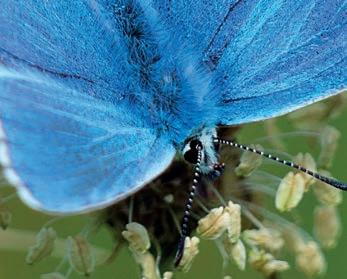

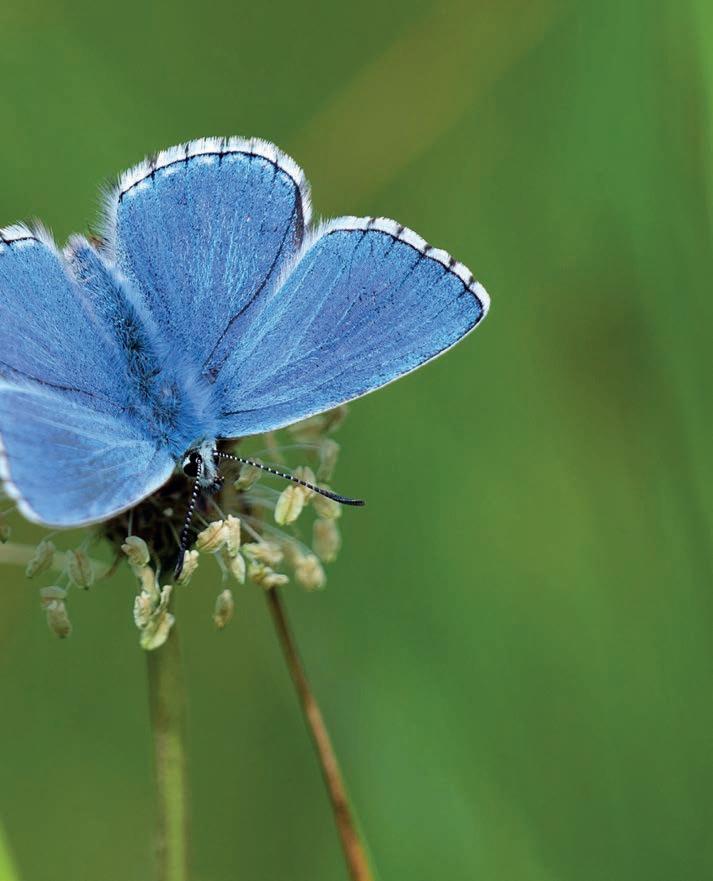



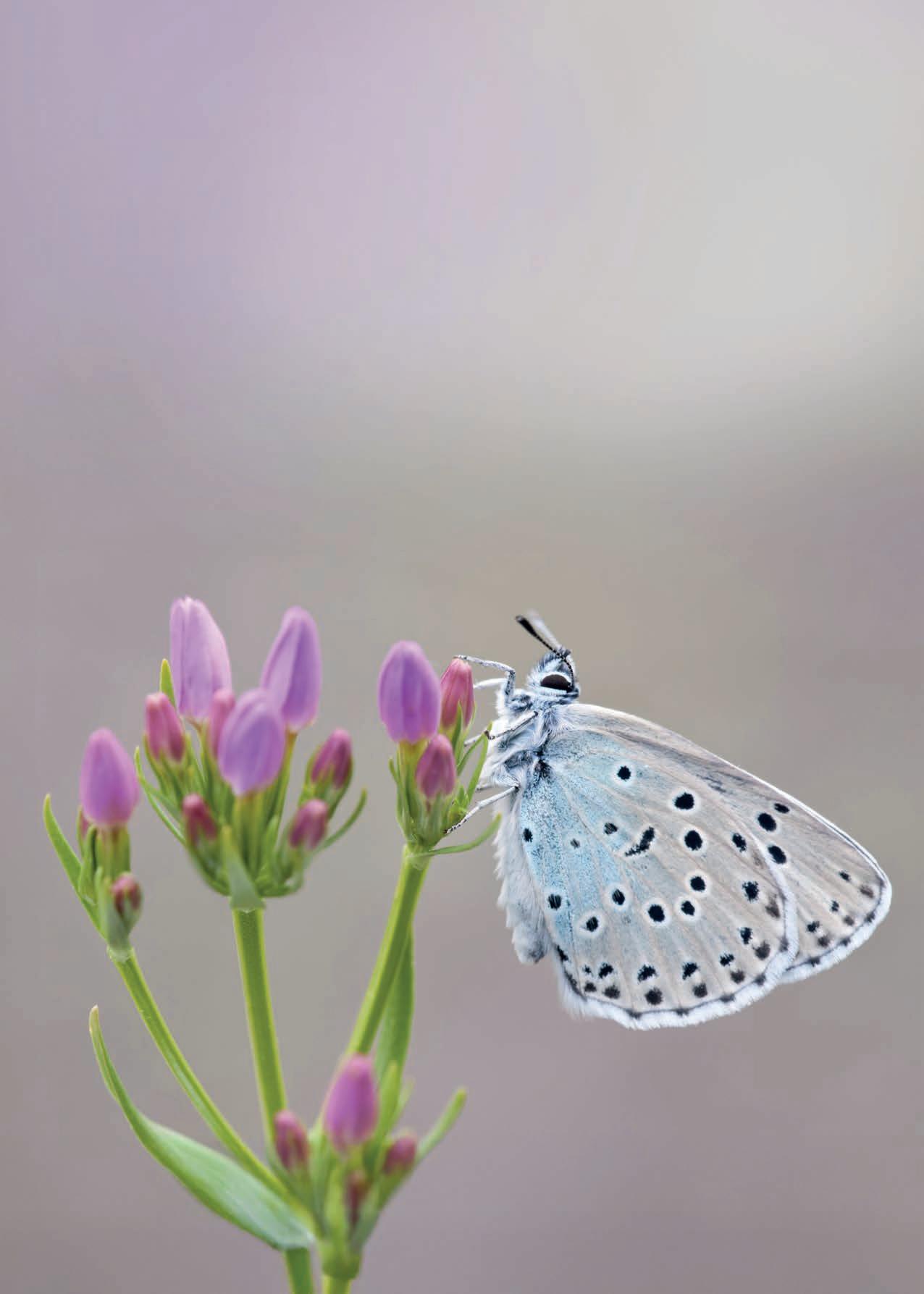
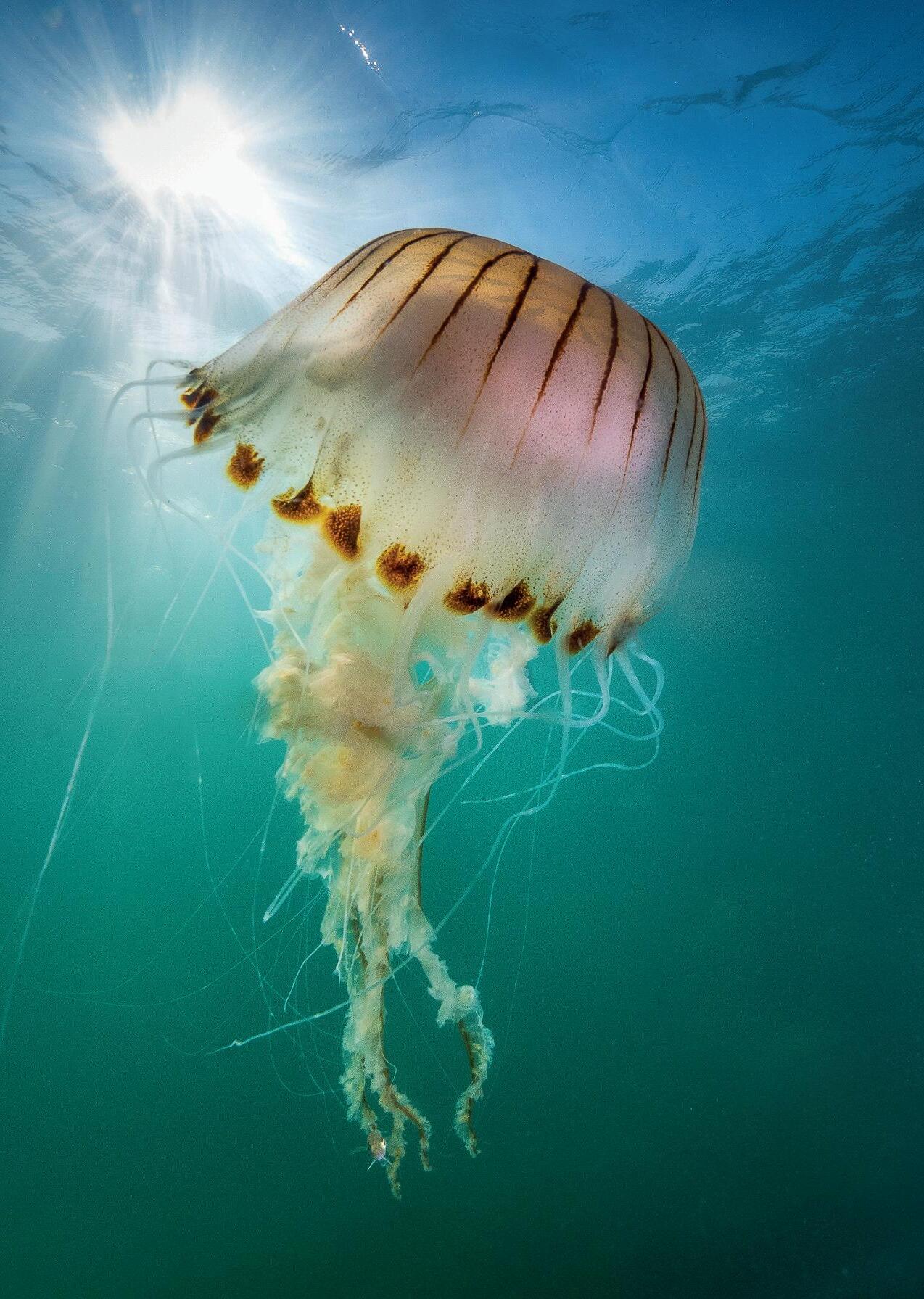
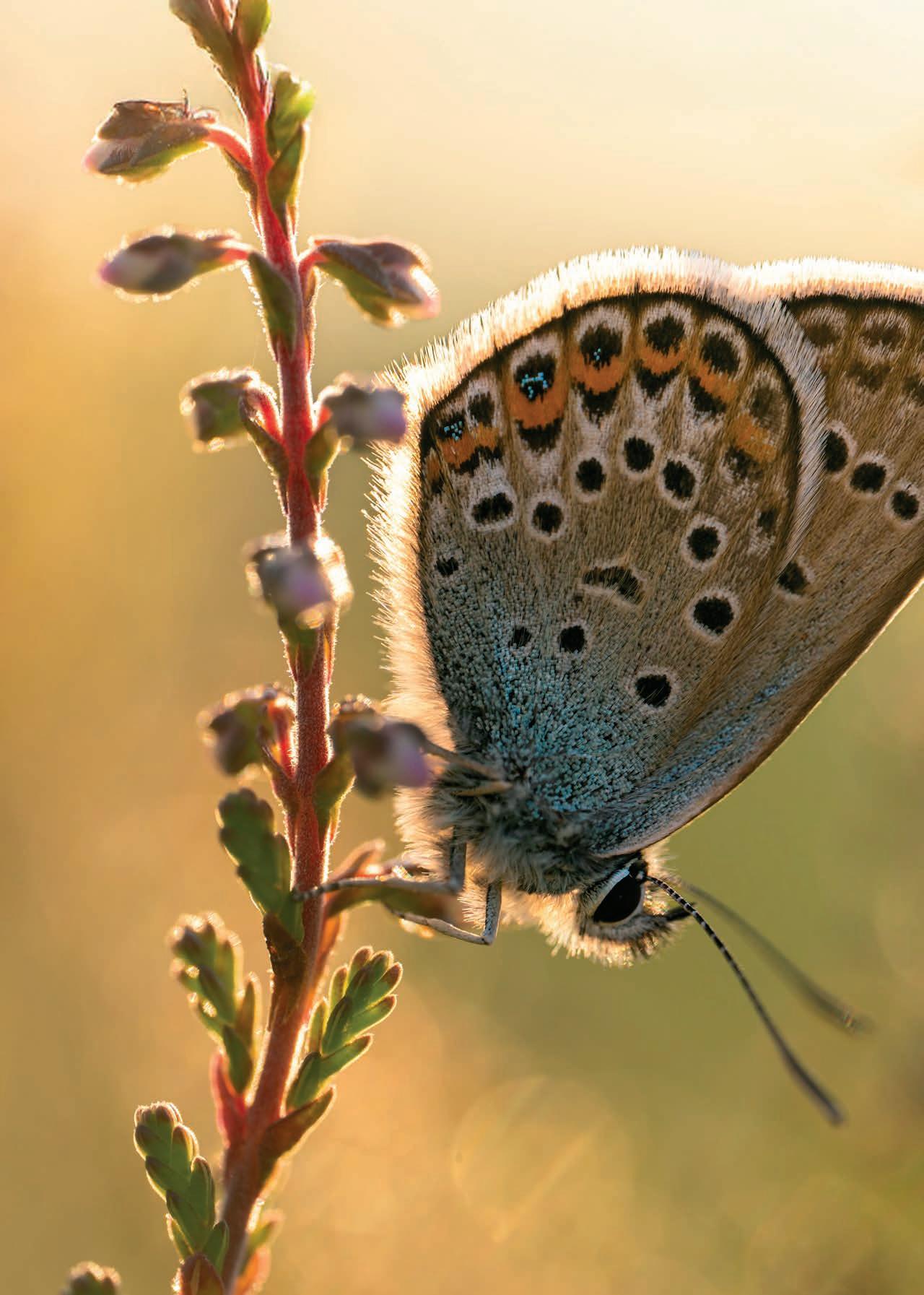
(pictured) may benefit from warmer conditions, as it needs hot microclimates for egg-laying and larval growth. But climate extremes could still pose serious risks to the species due to a reduction in larval plant food caused by
drought conditions and scorching.
Ho er, drier summers are hi ing our heathlands hard. On south-facing slopes, fi res are more common causing heather to die back, creating bare patches that briefly add variety to the habitat. These gaps can benefit some species, like certain insects or groundnesting birds, which take advantage of the open space. But without heather regrowth, these bare areas can expand, risking the long-term decline of the heath itself. That is why our work to support regeneration –through careful management and replanting where needed – is so important for keeping these iconic landscapes healthy and full of wildlife.
One way to combat these changes is fi nding ways to hold more water on our reserves. This keeps the land we er for longer, reducing the chances of drought conditions that can lead to wildfi res. Alongside raising awareness about fi re risk, this work will help protect our sites from future wildfi res.
Along the Solent coast, Manor House Farm, located between Testwood Lakes and Lower Test Nature Reserves, now plays a key role as a natural floodplain. Last year, the site experienced its fi rst seasonal




flooding as newly installed sluice gates directed water on to the floodplain, creating essential niches for overwintering waders, migratory wildfowl, southern damselfl ies, and local fi sh species.







damselfl ies, and local fi sh species.






A major project to physically restructure the floodplain along the Eastern Yar river has taken place on the Isle of Wight (see page 9). The restoration of the riverbanks helps reconnect the river with its natural floodplain. As water spreads across the landscape, it creates valuable wetland habitat for species such as wigeon, li le egrets and marsh harriers, while also helping to ease pressure on nearby roads and communities during increasingly unpredictable weather.



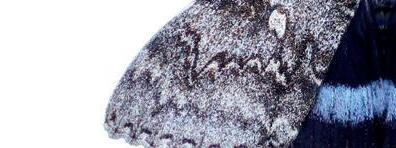






Blue underwing, Clifden nonpareil is an impressively large and rare moth. Nonpareil in French for ‘without equal’.

While heavy rainfall a er a drought may feel like a relief, it can put our natural environment under stress. Dry, compacted ground struggles to absorb sudden downpours, sending water – along with sediment and nutrients from nearby farmland –rushing into our chalk streams. Changes in local farming, like growing more maize and vineyards without extra plants alongside the


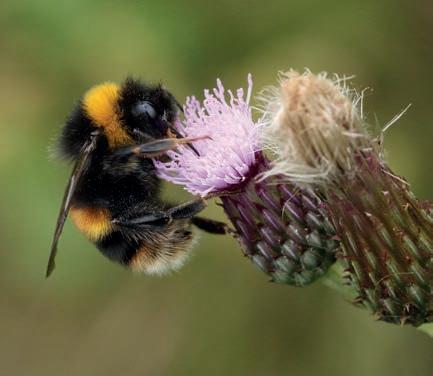
Since the 1990s, sightings have shown that buff-tailed bumblebees (Bombus terrestris) are breaking from their usual seasonal patterns. Rather than entering dormancy, some queens are setting up nests in autumn, producing workers, males, and even mating pairs during a period when bumblebee activity was once virtually unknown. This remarkable shift is one of the clearest insect responses to our warming climate.
main crop (a practice called undersowing or intercropping), make soils even more vulnerable to erosion. Our Watercress and Winterbournes team has been working with farmers and local communities to encourage these techniques and increase crop diversity, helping protect fragile streams from the effects of extreme weather.
Milder springs are bringing our fi rst signs of spring earlier each year. Migratory birds are arriving sooner, which gives our teams less time for winter scrub management – a vital task to maintain the grassland and habitat mosaics our wildlife depends on. Grazing animals also help keep scrub under control, but extreme weather is making this harder.
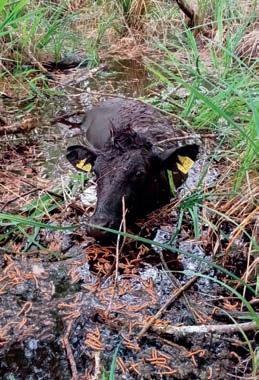
Jack Norris, Senior Estates Manager (North and Central Hampshire), explains: “During periods of intense heat, natural water sources have dried up, meaning we’ve had to move ca le off some sites. Where water is available, animals sometimes get stuck in boggy areas, and extreme storms – like those in 2024 – caused flooding that trapped livestock at Greywell Moors.
“To cope, we’re making our grazing regimes more flexible, giving us space to move and shelter ca le during extreme weather. Climate change also brings new disease risks: milder, we er conditions allow illnesses such as bluetongue to spread further and for longer each year, posing an additional challenge for livestock management.”
Warmer temperatures are changing the wildlife we see on our reserves. New species of fl ies and dragonfl ies, like the southern migrant hawker, are appearing further north. Some moths, such as the Clifden nonpareil and Jersey tiger, are now breeding locally, while others like the argent and sable are declining.
Non-native species are also on the rise, especially in our marine environments. Pacific oysters, introduced decades ago, are thriving thanks to warmer seas, with longer spawning seasons and higher survival rates (see page 6 for more on native oysters). Regular surveys help us track these shi s and understand how climate change is reshaping our wildlife.
Over-development along the Solent coastline is causing erosion, pushing habitats back and squeezing species into smaller spaces. In 2020, on land adjoining Southmoor Nature Reserve in Havant, the old sea wall collapsed, turning former coastal grazing marsh into saltmarsh. Here, saltwater specialist plants such as glassworts have already begun to take hold in the new conditions. You can read more about this site and its changes on page 8 . In Southampton, at Lower Test, habitats have been allowed to shi inland, helping species adapt to rising seas.


To give us a better idea of what the climate may look like in Hampshire in the future, we have used projections of climate change, as well as the risks associated to it, to inform our work. These have been collated from the UK Climate Resilience Programme and show the extremes we may face in Hampshire under the current trajectory of climate change by the 2050s, compared with a baseline of 1981-2010.

A max summer temperature increase of 1.47 ⁰C or higher


The lowest annual river flow will be 30% lower across Hampshire.
flow


Many sites experiencing very high fire risk weather up to 52 days a year


Average summer rainfall across the county decreasing by 15% winter rainfall increasing by 8%
Did you know?


A predicted 26cm increase in the sea level rise anomaly across our coastal sites. Under the worst-case scenario, this could be up to 40.8cm


The silver-studded blue butterfly needs heathland heather to survive. Droughts or wildfires can leave the caterpillars hungry if the heather doesn’t regrow.





















BTeamwork: A trio of volunteers dispense seeds together.




Meet

ENEATH THE SURFACE of the Solent, a quiet recovery is taking place and volunteers are at the heart of it. From muddy shorelines to laboratory benches, hundreds of people are giving their time, energy, and curiosity to help restore and protect one of our most important marine habitats: seagrass.
This underwater world is part of a broader vision for wilder seas: restoring marine habitats at scale, building climate resilience along the coastline, and connecting people with the wildlife on their doorstep. The Solent is internationally important for marine biodiversity, yet faces pressure from pollution, development, and rising sea temperatures. By working with communities, partners, and volunteers, the Trust is helping ensure these waters recover, thrive, and continue to support both wildlife and people.
Seagrass meadows provide nursery grounds for an array of marine life, improve water quality, lock away carbon, and help stabilise our coastlines. Yet across the UK, seagrass has declined dramatically over the past century. Through ambitious restoration and protection work led by the Trust’s Solent Seagrass Restoration Project, together with the Solent Seascape Project, these underwater meadows are beginning to make a comeback – powered by an extraordinary volunteer effort. Our funding partners make this volunteering possible, with many of their own teams ge ing hands on as well.
Our thanks go to our supporters: Boskalis Westminster, CooperVision, East Head Impact, Endangered Landscapes and Seascapes Programme, Eco Dri , EGS International, FatFace Foundation, Isle of Wight Distillery, Meaningful Planet, The University of Portsmouth and Wightlink.
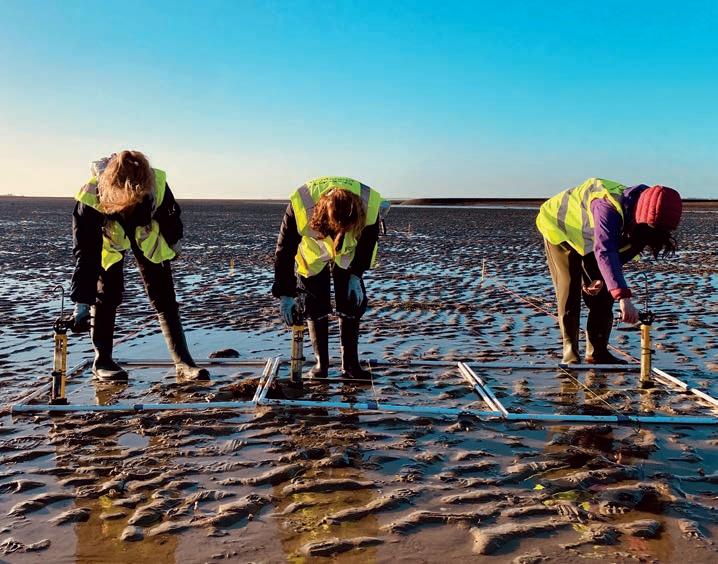
Our 330 Solent Seagrass Champions are active in every stage of the project, from surveying and monitoring existing meadows, to collecting seeds, sorting them in the lab at the University of Portsmouth’s Institute of Marine Science, and planting them back into the Solent’s waters. Many rise as early as 5am to meet the team on the shore and pick seagrass seeds, while others share photos, videos, and expertise to help the wider community connect with and understand these vital habitats. Alongside trained Seagrass Survey Leaders, they are helping to gather essential data, support restoration, and inspire more people to join in.
Over the past year alone, volunteers tripled the previous year’s record, logging more than 1,330 hours of conservation action. In the lab, they have sorted an impressive 24,888 Zostera marina seeds, contributing 275 hours of hands-on work. These efforts form part of a much larger restoration programme, with approximately 180,000 seeds now safely stored and ready for planting across the Solent this spring.
Ellie Parker, Marine Officer, Solent Seagrass Project, said: “Bringing this rare habitat back to the Solent is incredibly special, especially because it’s being driven by local people from Hampshire and the Isle of Wight. Collecting and planting seagrass takes real dedication, working around tides, early and late starts at low tide, and long days sorting seed back in the lab. It’s fantastic to see how each meadow contributes to healthier seas, richer biodiversity, and a stronger, more resilient coastline. Being part of that, and doing it alongside our incredible local volunteers, makes every early morning and long day completely worthwhile."
collective action,

resilient coastline. Being part of that, and doing it
Here, we introduce you to seven of our volunteers –individuals whose stories show how collective action, supported by commi ed partners, is helping to bring the Solent’s underwater seascapes back to life.
underwater seascapes back to life.



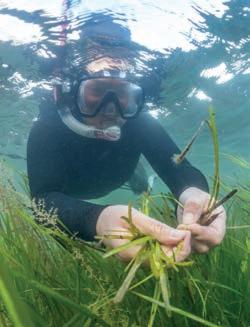
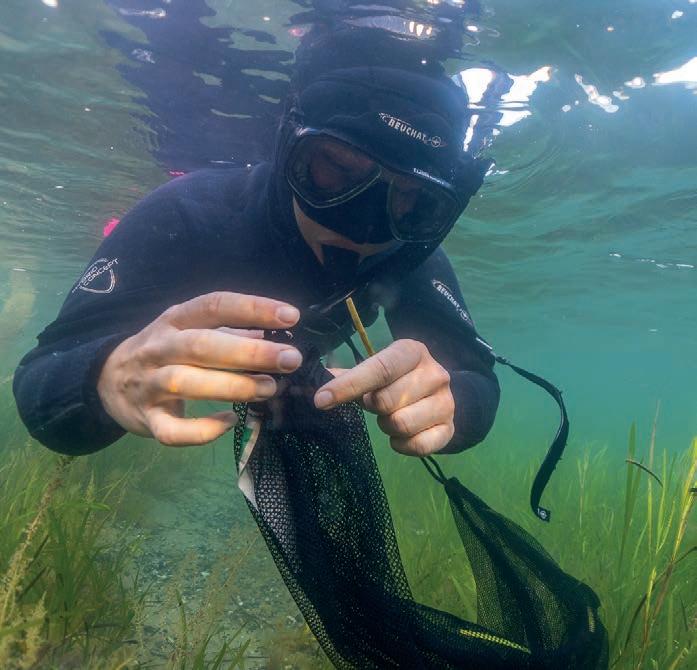
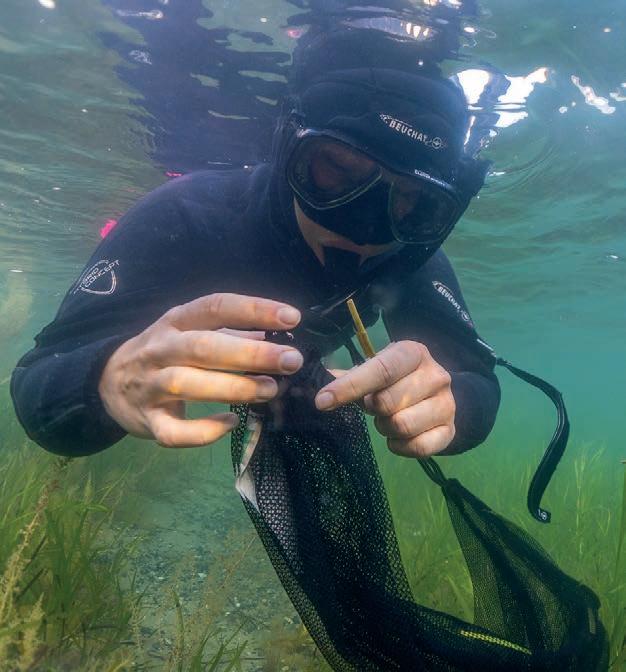
A snorkeller collecting seagrass seeds.

Ethan Ross Research Fellow for Solent Seascape Project, University of Portsmouth
“ Volunteering in 2019 with the Trust helped me both personally and professionally. As a Marine Champion, I organised student beach cleans, ran public science stalls, and gave presentations about seagrass and the benefit to marine life and our coastal communities. This role also introduced me to my favourite habitat: seagrass. Hearing about its huge benefit to people, and to biodiversity in the Solent, sparked a long-term fascination. It inspired my PhD in seagrass ecology which led me to work on the Solent Seascape Project at the University of Portsmouth, and I was recently awarded Best Presentation at the UK Seagrass Symposium for my research using environmental DNA to monitor biodiversity in seagrass meadows.”

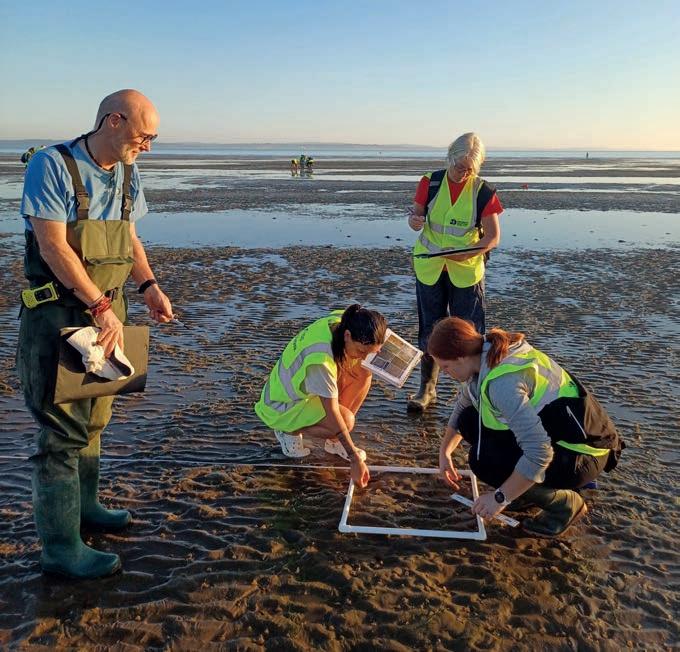
From muddy boots to careful monitoring, our seagrass volunteers play a vital role in restoring these rich seascapes and the wildlife that depends on them.
Judith Wilkinson Experienced volunteer

“ I’ve been supporting the intertidal surveys for the past two years at Hill Head and Warsash , carrying out species identification and collaborating in small teams. To see the changes and impact of the work locally, like seeing seagrass thriving in the river, is so inspiring. When I share the diversity of local marine life through talks, art workshops, and private surveys for fellow Sailing Club members it is really rewarding; we’ve even had members join as volunteers off the back of these events. It’s a wonderful way to connect with new people.”
“ I began collecting seagrass last summer by snorkelling and wading and I’ve also helped with the sorting process. I’m now eagerly awaiting the time when we plant the seed back into its natural habitat. Every seed feels important. Knowing that one could grow into a mature plant gives me an enormous sense of pride. I o en joke with my family that I’m helping to save the planet, ‘one seed at a time’.”
“A er lockdown, volunteering with the Trust in 2022 felt like a natural choice. I trained to be a Survey Leader, carrying out my fi rst shore search event at St Helen’s and my fi rst seagrass survey at Chilling Beach. I’ve given around 15 public talks about seagrass and its key habitats for the Solent Seascape Project. There are so many highlights: hearing the audience laugh during my talks, the Wildheart Sanctuary's FOCAS Festival, and the camaraderie of seagrass collection at Seaview."


Higgins


Antoni Dimitrov Managing Director of Eco Dri
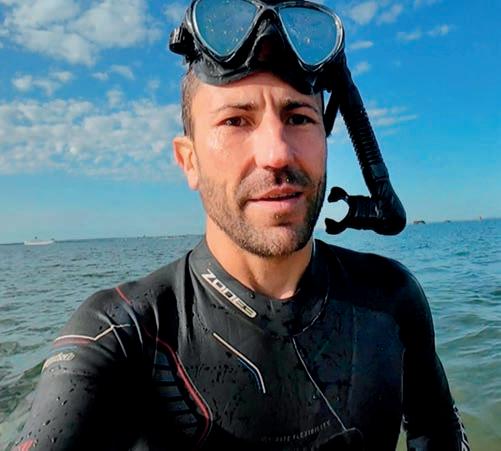
5“ We’ve supported the Trust for the past two years, via its ‘1% for the Planet’ funding commitment and with hands-on practical projects. When choosing organisations to support, we wanted the work to lead to real, tangible improvements to the local environment. The seagrass restoration work has been exactly that. Taking part in the seed collection at Seaview and surveying at Chilling Beach has been eye-opening; contributing to long-term data on carbon, habitats, and biodiversity is genuinely meaningful. It’s not abstract. You can see what you’re working towards. As part of my time volunteering, I’ve learned so much about seagrass, how it’s propagated and reintroduced on to the mudflats. This practical understanding changes how you see the coastline completely.”











“ In 2022, the FatFace Foundation was looking for an innovative charity partner. The Trust's Solent Seagrass Restoration project stood out for its science, ambition, and sense of community. In March 2023, we joined forces with the Trust to support the Seagrass Champion Volunteer Programme. As project partners, we were invited to see the work fi rst-hand; an experience I found so fun and fulfi lling I signed up as a Seagrass Champion. I’ve been volunteering for three years now and I’ve encouraged friends and colleagues to join me, which has been a real joy. When the tides align with warm July weather, I cycle from Portsmouth, hop on the passenger ferry with my friend and fellow volunteer Anna, and snorkel off Seaview collecting seagrass seeds – it’s magical. As an avid diver, I sometimes get distracted; spo ing pipefi sh hidden in the seagrass or cu lefi sh eggs tucked safely into the meadow, but I promise I still manage to gather plenty of seeds!"

Trust's Solent Seagrass Restoration project stood out for its science, ambition, and sense of hop









friend and fellow volunteer









hidden in the seagrass or










7“Alongside my work as an environmental engineer with Boskalis Westminster, I’ve been volunteering on seagrass restoration for over two years. I love ge ing hands-on and seeing the full restoration cycle. Meeting the marine team and other volunteers in person is always a highlight too. Volunteering has taught me so much about the effort behind restoring seagrass meadows, and it’s incredibly inspiring to see everyone’s dedication. Being outdoors is energising. I love seeing how people take the project further; from poetry and robotics to engineering seed-rotation devices. Planting and collecting seeds is almost meditative, and I learn something new every time. It’s fun, educational, and profoundly inspiring.”
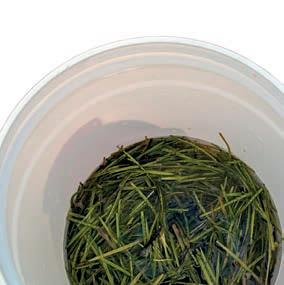

Bucket of seagrass seed collected for replanting.

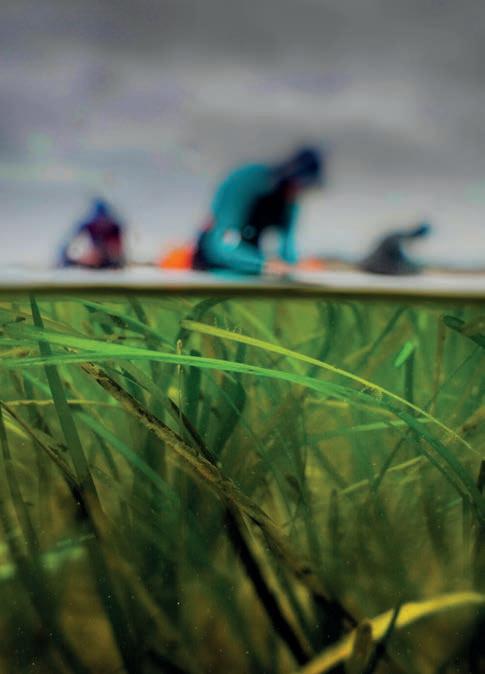

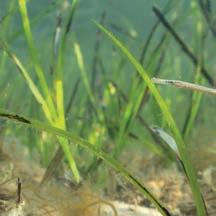
Seagrass is a flowering underwater plant that forms lush meadows, supporting species from sea anemones to thornback rays and providing nurseries for fi sh like cod and sea bass. Early signs of recovery are already visible: seagrass planted by the Trust in the River Hamble – lost since the 1920s – has taken root and begun flowering, marking the fi rst confi rmed growth in almost a century.
THANK YOU
Our volunteer commitment to marine work has had resounding impacts. We are so grateful to everyone who has been a part of our seagrass restoration work – whether that’s following the project through updates, signing up to our e-newsletter, volunteering your time for a day or longer, being a Seagrass Survey leader, fundraising or being a partner or supporter. We couldn’t do our seagrass restoration work without you, and the Solent is a better place because of your interest, enthusiasm and dedication to nature.
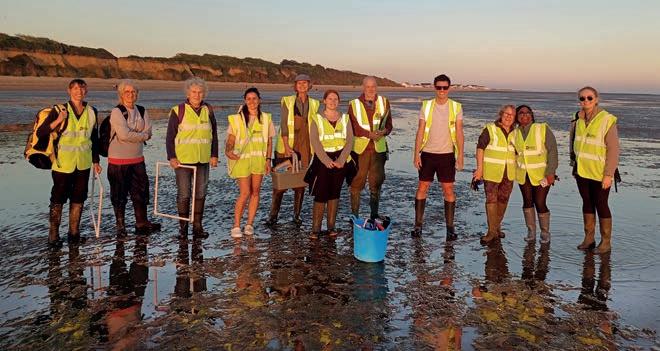
The marine team is launching ‘Communication for Change’, a new training programme for volunteers. This workshop series builds confidence, empathy and resilience, offering practical tools for navigating conversations, managing conflict and working well together. Interested? Get in touch: marine@hiwwt.org.uk









spotted at an at Calshot.




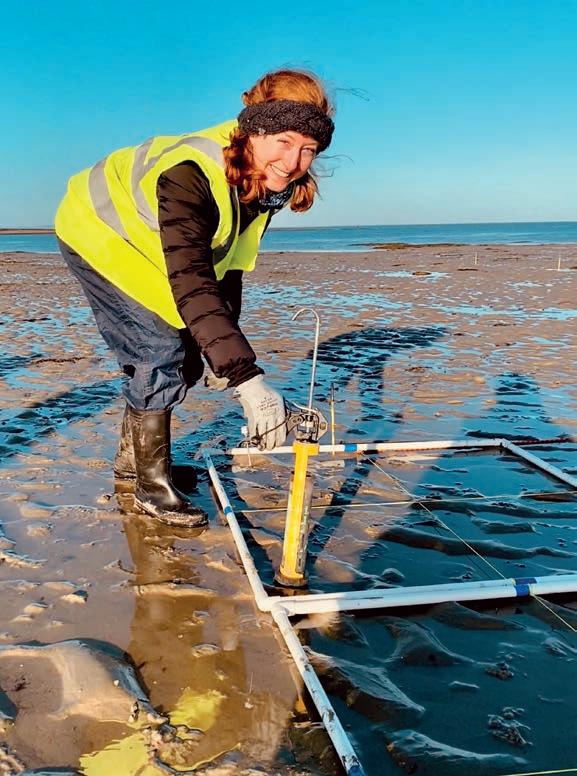
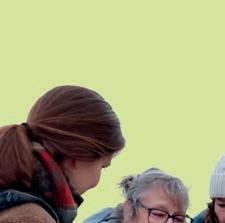
Volunteers can help with intertidal surveys along the Solent coastline, gathering vital data to support conservation efforts and gain hands-on knowledge about the species and habitats encountered. Surveys are held roughly twice a month (Mar-Oct) at coastal locations across Hampshire and the Isle of Wight.
Hampshire & Isle of Wight Wildlife Trust offers multiple ways to get involved and help protect these delicate marine habitats.
Each summer, volunteers help collect seagrass seed to aid the restoration of this vitally important marine habitat. Volunteers can participate by wading or snorkelling, a brilliant way to see seagrass meadows up close and learn about their role in supporting biodiversity.
Volunteers can also engage with local communities through events, shows, and social media, sharing fascinating facts and stories about the marine environment to inspire others.

Find out more and get involved: hiwwt.org.uk/ volunteering-opportunities






STim Ferrero,
Senior Specialist –
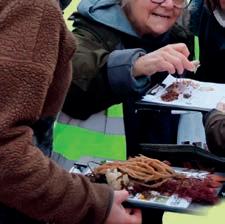
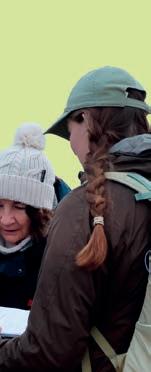
Marine Conservation, argues that our waters are not a one-way journey ‘from source to sea’, but a single, connected system that begins – and ends – in the ocean.
OURCE TO SEA is o en used when we talk about water and the environment. It’s meant to remind us that what we do on land affects our rivers, and what happens in rivers affects the sea. In places like the Solent, with its rich marine life and protected habitats, that message ma ers. Our water quality is already impacted, and anything that encourages people to reduce pollution entering rivers is welcome. But I’ve always felt uneasy about the phrase itself.
“Source to sea” suggests a simple, one-way journey: water starts somewhere inland and eventually ends up in the ocean. That framing subtly shapes how we think about responsibility, implying that problems begin upstream and fi nish at the coast. Yet water doesn’t work like that – and neither do the impacts we have on it.
A geographer might defi ne the source of a river as the place where it begins. But that isn’t where the water itself comes from. To me, a source is where the supply originates where it could be turned off. And that certainly isn’t the top of a river.
In fact, all our freshwater comes from the sea. Water evaporates from the ocean, forms clouds, and falls as rain. That rain feeds soils, aquifers, lakes and rivers before flowing back to the sea. It’s a continuous cycle, not a one-way trip. The sea isn’t the end point at all – it’s the starting point.
This idea stayed with me a er reading J.G. Ballard’s The Burning World as a teenager. In the apocalyptic novel, pollution forms a fi lm on the surface of the sea that blocks evaporation. Without evaporation there is no fresh water, no rain and no rivers. While the science is exaggerated, the warning is clear: disrupt the ocean, and the entire system begins to fail.
We learn about the water cycle through neat diagrams that show clouds, rivers and oceans, but leave people out entirely. In reality, human activity shapes every stage. We divert water, store it, contaminate it, sometimes clean it – but too o en return it polluted.
Some sources of pollution are obvious: industrial waste and wastewater from our homes. These are regulated, yet accidents and illegal discharges still occur and can devastate rivers. Other sources are less visible but just as damaging. Rain washing over fields carries
fertilisers, pesticides and animal waste into waterways. Run-off from roads, roofs and driveways does the same. In fact, run-off from roads is now the biggest source of oil pollution entering the sea in the UK.
Fertilisers are a particular concern. Nutrients washed into rivers and coastal waters fuel blooms of green algae that smother habitats and undermine efforts to restore seagrass meadows in the Solent. Surprisingly, fertiliser run-off contributes more nutrients to coastal waters than sewage discharges do.
And the cycle doesn’t stop there. As seawater evaporates too – some of that pollution can return to land as rain. In the past, rain was relatively pure. Today, that can’t be taken for granted. We remember acid rain and radioactive fallout; now we face a growing problem from so-called “forever chemicals”.
These chemicals can evaporate into the atmosphere and fall back to earth in rainfall. As a result, rainwater is no longer considered safe to drink without treatment. Forever chemicals spread widely, build up through food chains, and quietly weaken wildlife – disrupting hormones, reducing fertility and increasing disease. Species don’t usually disappear overnight; they slowly fade away.
There are positive signs. Public concern about the health of our rivers and seas is growing, and water pollution is receiving increasing a ention in the media.
The Trust works to protect our rivers and seas by delivering practical conservation projects on the ground, supporting other organisations and stakeholders, and campaigning for stronger protections, such as the Save Our Chalk Streams campaign. Along the coast, seagrass restoration in the Solent is helping rebuild habitats that improve water quality by trapping sediments and pollutants as water moves through them.
But safeguarding water is not the responsibility of any single sector. It will take effective regulation, responsible action from industry, be er land management and greater public awareness of what happens to water a er it leaves our homes.
The health of our waterways will be shaped by the choices made now, because clean, living rivers and seas are a legacy worth protecting.
The problem, then, isn’t just how water moves from land to sea. It’s how we treat water throughout its cycle – and how pollution moves with it.

Some cosmetics, soaps, washing-up liquids and cleaning products can be harmful to wildlife with long-lasting effects. Here’s how you can make positive change: hiwwt.org.uk/ actions/watch-what-youwash-away
Join us to help monitor and survey the health of our rivers and coast. Get in touch and get involved: hiwwt.org.uk/ volunteering-opportunities
Tell your MP you want action with independent, continuous monitoring of sewage discharge as well as bespoke legal protections for our chalk streams. Here’s how: hiwwt.org.uk/ actions/contact-your-mp


Our Nutrient Reduction Programme provides a way to mitigate and reduce harmful levels of nitrogen and phosphorus in the Solent, our rivers and chalk streams.
To find out more, visit: hiwwt.org.uk/reducingnitrates-solent
We celebrate five years of Watercress & Winterbournes (W&W) and the community groups which will ensure its impacts last.
LOBALLY, CHALK STREAMS are extraordinary; fewer than 200 exist, and nearly half of them are in England. Here, at the headwaters of the Test and Itchen, they rise as tiny trickles from hidden springs, feeding meadows and wetlands before winding through villages, farmland, and historic towns. Their waters are not only beautiful but fragile, home to species which depend on these rivers: water voles weaving through marginal reeds, kingfi shers fl ashing like jewels over the banks, and o ers sliding silently beneath overhanging willows.
Yet these rivers have been under pressure for decades. Pollution, invasive species, sedimentation, and barriers to fi sh have changed the character of many stretches. Without careful stewardship, these rare habitats could fade. That’s where the communities of the Watercress & Winterbournes Landscape Partnership Scheme have stepped in.
Funded by the National Lo ery Heritage Fund and delivered in partnership with 16 organisations, the scheme has spent the past five years connecting communities with these rare waterways, restoring habitats, and inspiring people to care for them. Now, as the scheme approaches its






RIVERS TRUST
WESSEX
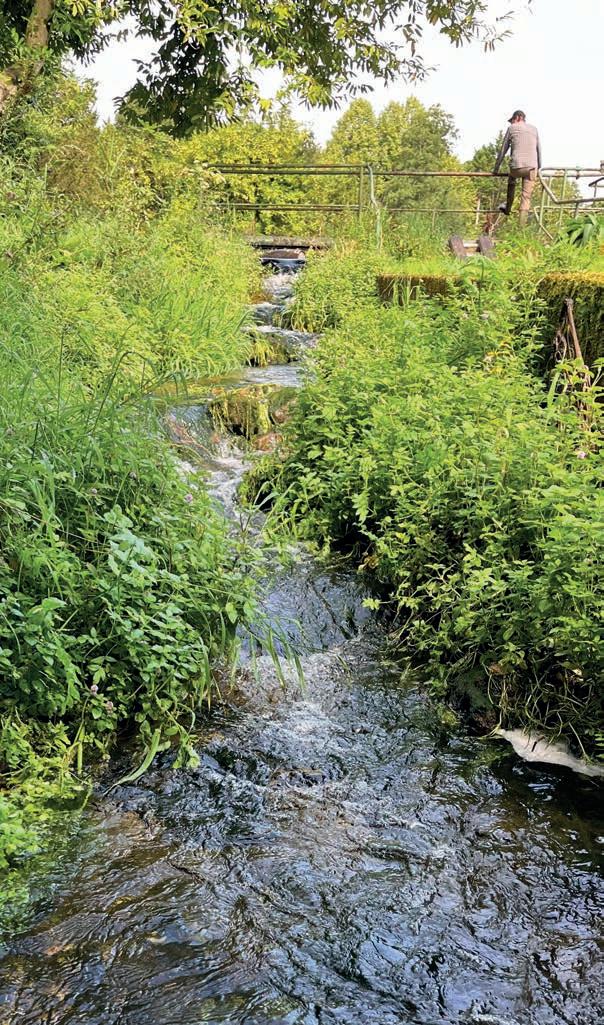
Vegetation flourishing alongside the new rock ramp one year after work on the




“When W&W began, I hoped we’d do two things: build an army of people to stand up for the chalk streams, which we’ve done, and make a real difference to the rivers themselves. That’s been a much bigger challenge but I do think we’ve made a difference, especially with habitat, even though there’s still much to do.”
Kathryn Boler,
W&W Partnership Manager
conclusion, it leaves behind a network of volunteers, educators, and local groups ready to carry its legacy forward.
Over the past five years, thousands of volunteers have removed invasive species, peered at invertebrates through microscopes, created berms in the streams, and managed streamside vegetation. They have run education programmes with children, celebrated chalk streams in poetry and photography, and monitored water quality and invertebrate numbers with meticulous care.
not just for the waterways themselves, but for the people who have grown to love and protect them. These chalk streams, once overlooked and under threat, now flow with renewed life, carrying a promise for the future: that beauty, rarity, and resilience can coexist if we are willing to nurture them. And thanks to the commitment of communities across the Test and Itchen catchments, that promise will continue long a er the funding ends.

From the thrill of spo ing a rare damselfly for the fi rst time to the quiet satisfaction of seeing a restored riffle support migrating trout, these rivers have become a canvas for both wildlife and human care.
From the thrill of spo ing a rare damselfly

The result is a story of transformation –
A pupil making rafts out of bindweed for the Chalk Stream Challenge.





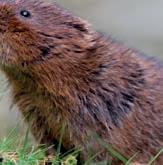
Water vole surveys show that in 2021, before works at Cheriton Stream, activity was limited to a small area. By 2023, it had expanded, with one burrow, one run, one dropping, and eight feeding stations recorded. In 2025, signs of water voles had surged, with multiple burrows, runs, feeding remains, and even a live sighting.

Over 4km of chalk stream habitat has been renaturalised with new rock ramps for fi sh passage, sediment reduction schemes, and restored meanders and flows. Funded by the Lo ery, partner Wessex Rivers Trust have led on delivering work to open migration routes for fi sh and create resilient habitats that will benefit rivers long a er the project ends. Here are just two of our successful River Restoration projects:
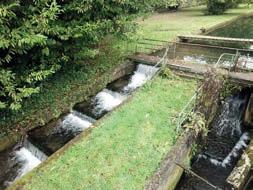
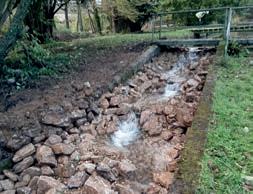
Before: The stepped channel which was impassable for fish and then, straight after construction the rock ramp which allows fish to travel up and down stream.
1In autumn 2020, W&W carried out weir notching and replaced a stepped concrete channel with a new rock ramp at the Saw Mill on the Bourne Rivulet. This work allows wildlife passage up and down stream and has opened 3km of habitat for upstream migration of fish.
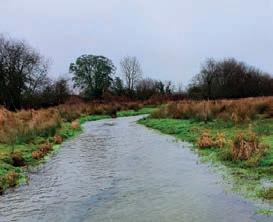
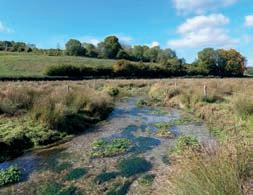
Before: a straightened wide stream.
After: a narrowed stream with better flow and meanders.
This reach of the Cheriton Stream was overly wide and straight resulting in a build-up of silt due to the low flows. In 2022, working with Portsmouth Services Fly Fishing Association (who manage the site), staff and volunteers installed woody bundles called berms which catch the silt and narrow the stream creating

Engaging local communities has been essential to our work. People who live near chalk streams often notice changes fi rst, hold valuable knowledge of how the river once behaved, and become long-term stewards. For centuries, our local chalk streams have inspired residents and visitors alike, which W&W explored through community projects and events. Here’s a snapshot of how we involved others:
Thanks to National Lottery Heritage Fund support, over 3,500 children have explored chalk streams through river dipping, assemblies, and workshops. Eco Teams, like at Abbotts Ann C of E Primary School, even designed rainwater planters to highlight the importance of saving water. These young champions ensure the project’s legacy lives on.

Thank you to everyone involved in Watercress and Winterbournes, from our partners to our volunteers and, of course, our funders e National Lo ery Heritage Fund for making this meaningful work possible.

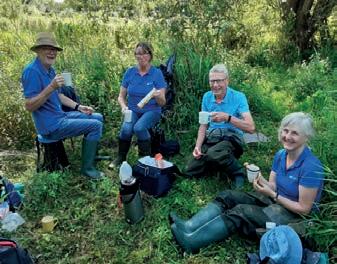

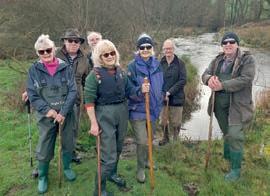

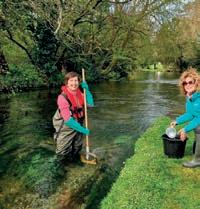



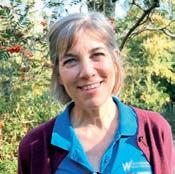
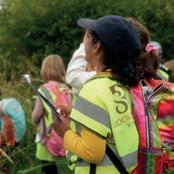
Volunteers have monitored water quality, invertebrate numbers, trout spawning, and water voles, creating a detailed picture of river health. As the scheme comes to a close, trained community members will continue these vital surveys, keeping a watchful eye on the streams for years to come. "Our volunteers have become close friends, and that sense of connection really matters." Maggie Shelton, W&W Community Catchment Officer
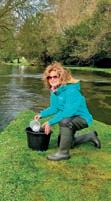



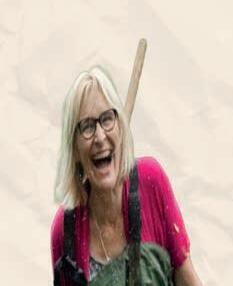



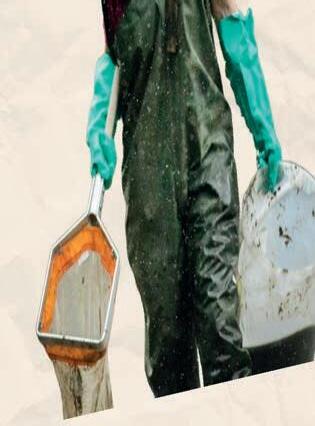


Chalk streams have inspired poetry, photography, literature festivals, and the family-friendly Chalk Stream Challenge badge. By embedding creativity alongside conservation, the Lottery-funded project has built lasting connections between people and their rare local rivers.

Contractor Cappagh has supported our conservation work at St Clair’s Meadow, creating shallow channels within the meadow’s historic drainage ditches. These channels will hold water through the winter, providing valuable habitat for wading birds such as snipe, which rely on muddy margins, wet grassland and water edges to feed and shelter.
LEGACY DONOR
In 2023, we were saddened to lose long-standing Trust supporter and volunteer Loraine Martin (pictured below), a member for more than 50 years. After retiring to Winchester, following a life spent teaching biology around the world, Loraine threw herself into local conservation.
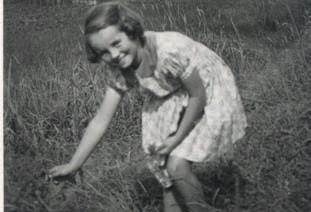
She served on the Winchester local group committee, organised events, led walks, shared her deep botanical knowledge, and inspired countless people through her talks. Loraine’s dedication to Hampshire’s wild places didn’t end with her passing. She kindly left a gift in her Will, ensuring she will continue to shape the landscapes she loved, like Deacon Hill and Coulters Dean. A close friend also chose to honour her memory, telling us: “Loraine gave so much. Passing on a gift felt like a way to continue the work she cared about.”
If you would like to leave a Gift in your Will to help nature thrive, visit: hiwwt.org.uk/leave-gift-in-will

Thank you!
to Cappagh for supporting this project
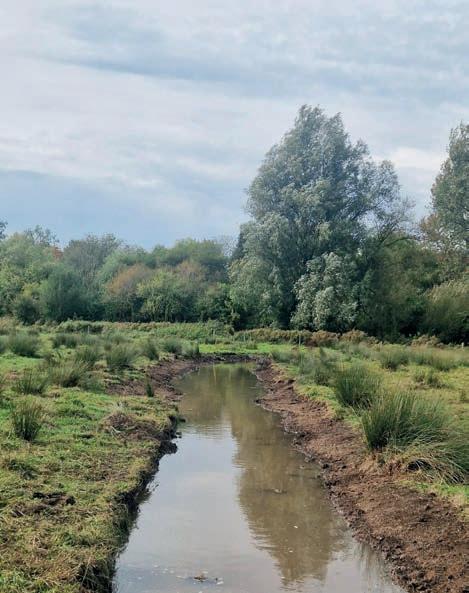
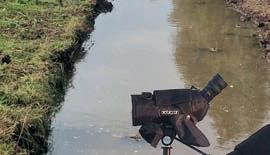
“Alive with wildlife”
Gordon Bird's year at Hurst Spit
“As a retiree, and passionate about nature, I've spent the past year volunteering on a coastal engagement project led by the Trust and its partners. The project monitors wildlife and visitor activity along this busy stretch of coastline, protecting sensitive habitats while keeping the area welcoming for people. Our small team of six promotes responsible recreation, engaging visitors and raising awareness about local wildlife.


Hurst Spit is a very special and dynamic landscape. On one side, there’s the open sea with seabirds and diving gannets; on the other, the shingle ridge shelters saltmarsh, mudflats, reedbeds, and watercourses.
All year round, we record bird
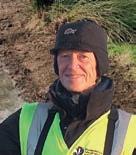
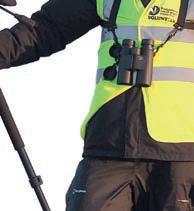
numbers, human activity, and any disturbances. In spring and summer, we focus on ground-nesting birds like ringed plovers and oystercatchers, cordoning off sensitive areas and monitoring nests, sometimes using cameras to see when eggs hatch. It’s been fascinating to watch and learn through the seasons.

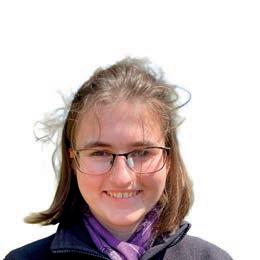
“When I started my traineeship, I never imagined how much it would shape my future. I’ve been out moth trapping, checking dormouse boxes and carrying out my fi rst river assessments –learning by doing, and building the confidence I needed to take my fi rst steps into conservation.



"My traineeship has given me the hands-on experience I needed to gain my fi rst full-time trainee ecologist role with Red Ecology.” - Zoe Anderton Funding traineeships gives people like Zoe the chance to work on the ground and develop vital skills.
To help, please visit: hiwwt.org.uk/ support-a-role
Let’s hear it! Tell us about your encounters and experiences. Contact editor@hiwwt.org.uk
"CONSERVATION WASN’T always at the top of my list. I cared about climate change and the environment, but I hadn’t fully connected it up… that is, until a job opportunity came up at the Wildlife Trust in 2024.
The Trust’s mission just made sense to me – people and nature should thrive together. Something about that idea of everything being connected really clicked. At school, geography was my favourite subject – I loved seeing how all the elements link up. Later, while studying Politics and International Relations at the University of Southampton, I took an environmental module called Green Political Thought. It looked at the academic side of conservation, asking whether we protect nature for ourselves, or for its own sake.
We learned about the growing Rights of the River movement – the idea that nature should have its own rights is fascinating. It changes the way you think about rivers and wildlife, and it’s a perspective I’ve been able to bring into my work.
My work quickly showed me how rivers are treated – and not well. It’s not just sewage pollution, but also agricultural run-off , urban waste, chemicals, and the constant pressure from new building projects along the banks. I wanted to do something to protect this precious resource that gives us water, takes away waste, and provides beautiful places like Winnall Moors.
“Rivers are more than water – they’re life and beautiful spaces all in one.”
I’ve been lucky – I’ve had a lot of freedom to design my own campaigns and stand up for nature. There are so many passionate councillors in Hampshire and the Isle of Wight. Some have taken my ideas and run with them; others ask for a bit of guidance and then step up themselves.
In Basingstoke, Cllr Kate Tuck wanted to champion the River Loddon and its tributaries. At the same time, there was already a lot of conversation in the press about rivers, and Robert Macfarlane’s book ‘Is a River Alive?’ had just come out. It felt like the perfect moment to get the community involved.
Together, we hosted an event to spark interest and excitement about the motion we wanted the council to pass. And it worked – a strong consensus across parties agreed that rivers in Basingstoke and Deane should have protection rights.
The motion passed unanimously. Now we’re helping the council turn it into a clear declaration of the rivers’ rights.
Even be er, other Hampshire councils have started to join the effort. It really shows what’s possible when people come together with the same goal.
Another big focus for the policy team has been pushing for stronger protections for our rivers in the government’s Planning and Infrastructure Bill, especially our precious chalk streams.
Our members really made their voices heard, contacting their local MPs and in Parliament, 34% of MPs in a endance (130 MPs) voted to keep an amendment which would have given be er protection for chalk streams. While we didn’t win this particular fi ght (central Government is hard to sway) and we’re disappointed not to have secured the amendment we wanted, we’re still motivated for the next campaign.
I work with an amazing team across many Trusts, all looking a er chalk streams in their patches. We want the same thing: nature protected from harm. It’s empowering to know you’re not doing this alone.
Because if we don’t stand up for nature through policy and law, even special places like Winnall Moors could be under threat.”
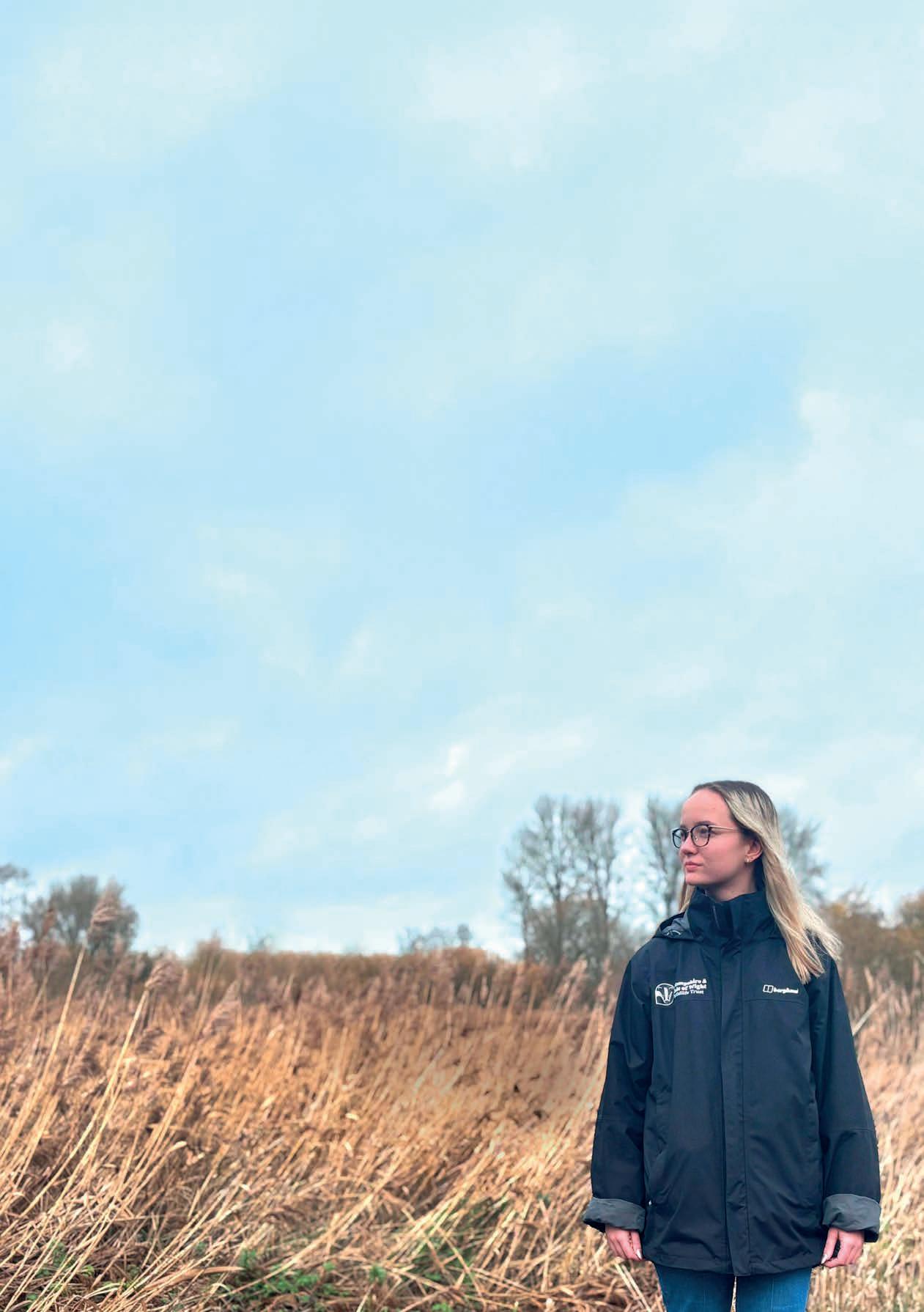
Policy and Advocacy Officer Lorna Selby is giving nature a voice and inspiring others to join the fight.




Many kind individuals have chosen to support local wildlife and wild spaces through gi s in their Wills.
Gi s in Wills help:
● Bring back species so wildlife can thrive.
Gi s in Wills are an investment in nature’s future


● Secure additional land to give nature more space.
● Drive campaigns to tackle climate and biodiversity loss.
● Protect our land, seas, rivers, and the habitats under threat.
No ma er the size, every gi contributes to conservation victories.

More info: hiwwt.org.uk/ legacy-events
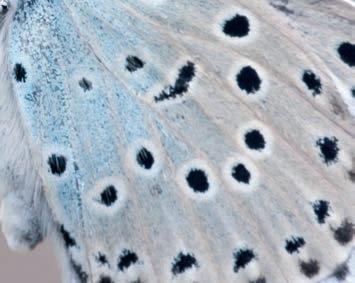



Join us at one of our special events to learn how gi s in Wills support the Trust’s work, celebrate achievements, and explore how future gi s can help wildlife.
• Date: Tue, 2 June, 2-3.30pm
• Venue: Li leton Memorial Hall, SO22 6QL
• Date: Weds, 10 June, 2-3.30pm
• Venue: Biddenfield Farm, nr Wickham, SO32 2HP
Reserve your place




Book online at hiwwt.org.uk/legacy-events, or contact the team by emailing charlo e.rogers@hiwwt.org.uk