EX VIVO
Winter 2025 anatomy of becoming
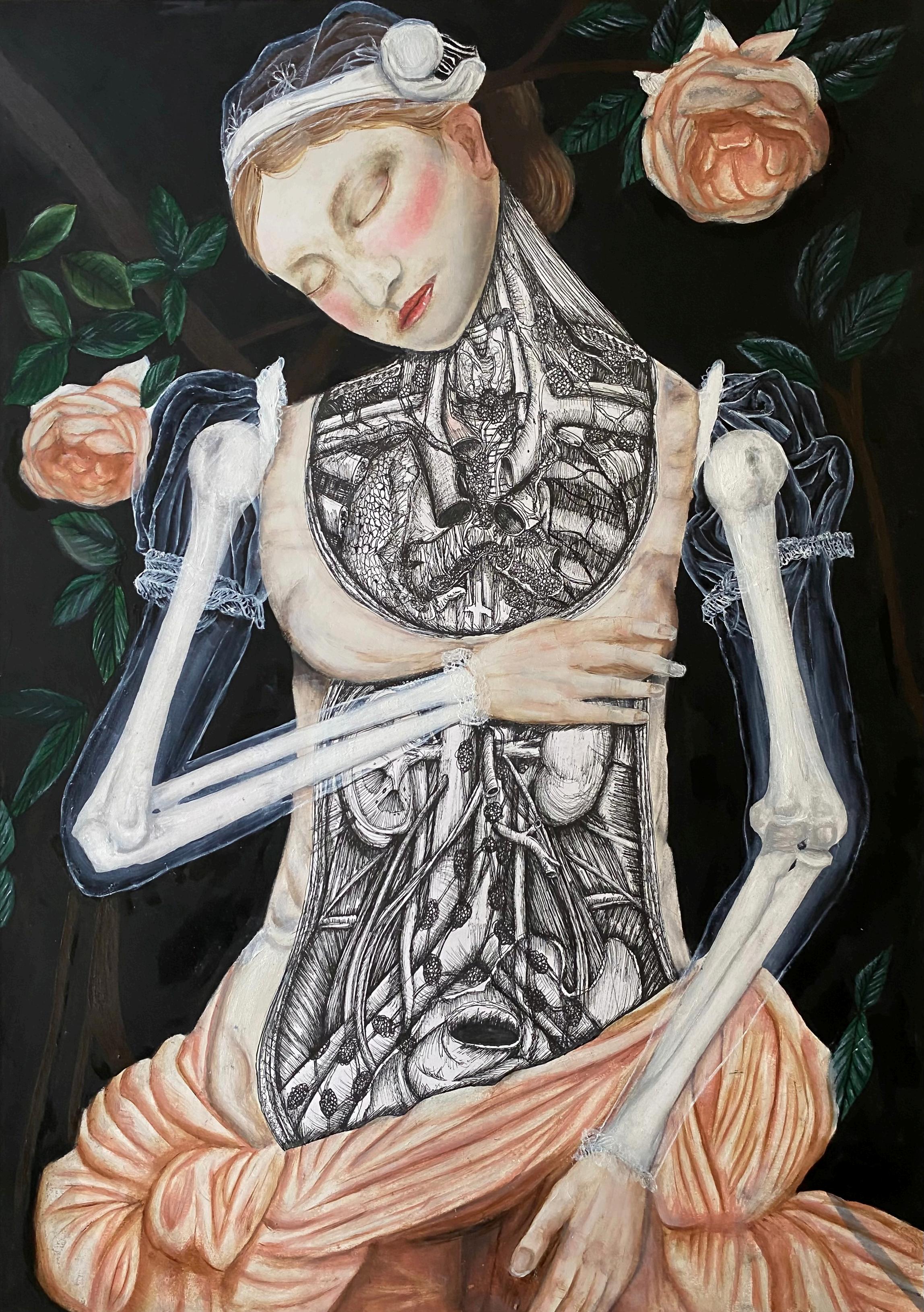
cover art: the anatomist’s musE by claire orr
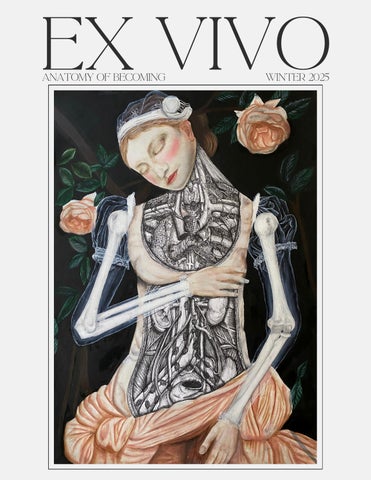
cover art: the anatomist’s musE by claire orr
Dear Reader,
To create is to cut, sometimes gently, sometimes painfully into the surface of our own experience. Ex Vivo, “out of the living” is born from that belief: that art made by trainees emerges from not theory or abstraction but from the raw experience of life itself.
We call this first issue "Anatomy of Becoming" because it opens, exposes, and asks us to make sense of what we find inside.
Incision Every beginning is a break in the surface Lindsey Lofgren's poem "Imposter Syndrome" names the wound many of us carry into these halls, “ a malady without any vaccines” as that persistent feeling that we don't belong, even as we take our place at the table. The work in this section cracks something open: curiosity, grief, and the fragile architecture of identity.
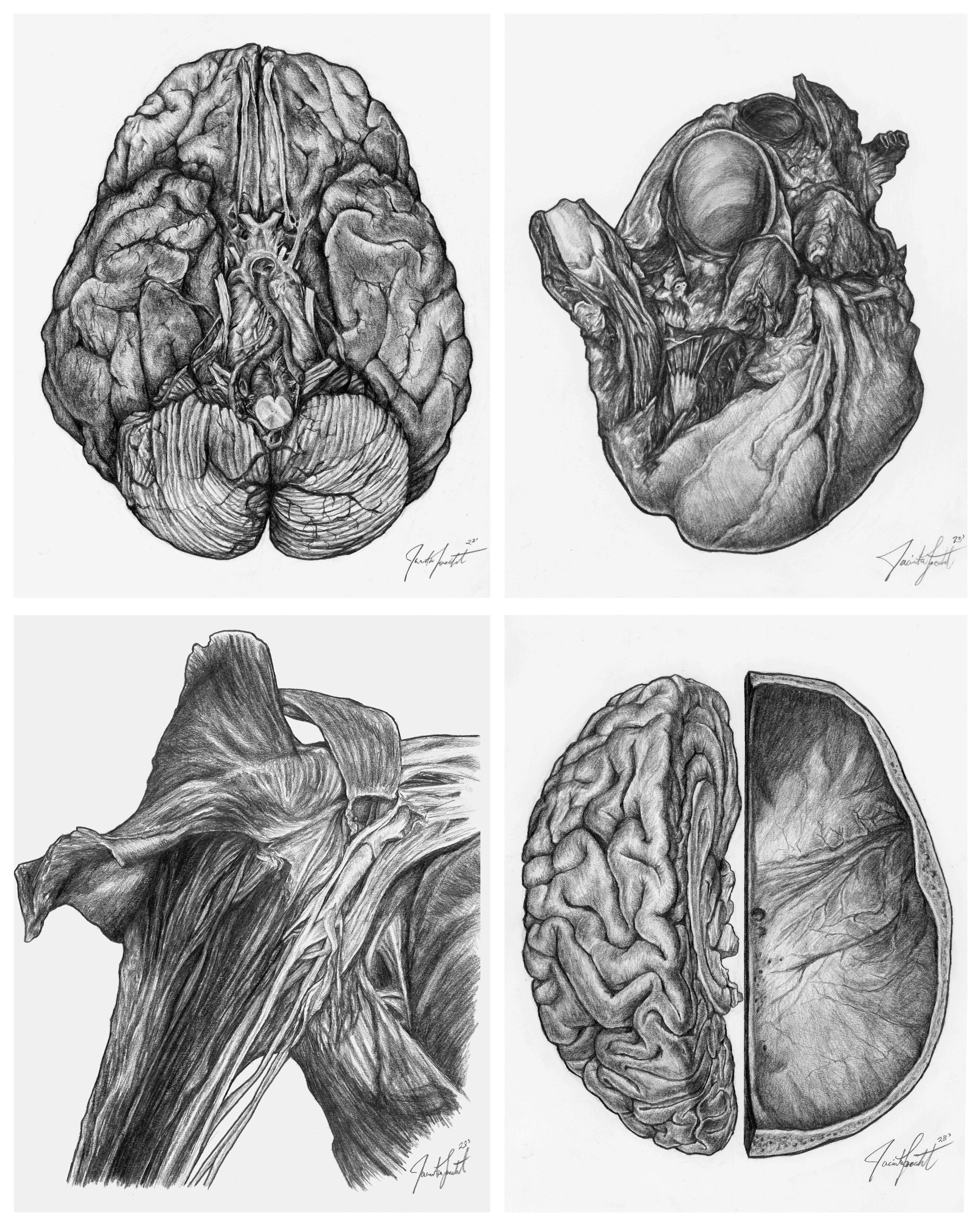
Exposure takes us deeper, into the vulnerable middle where we confront what lies beneath. Here, Jacinta Specht's anatomical sketches echo this spirit with body parts rendered open and laid bare. This is the section of burnout and intimacy, of confrontation and the ache of being truly seen. It's uncomfortable. It's necessary.
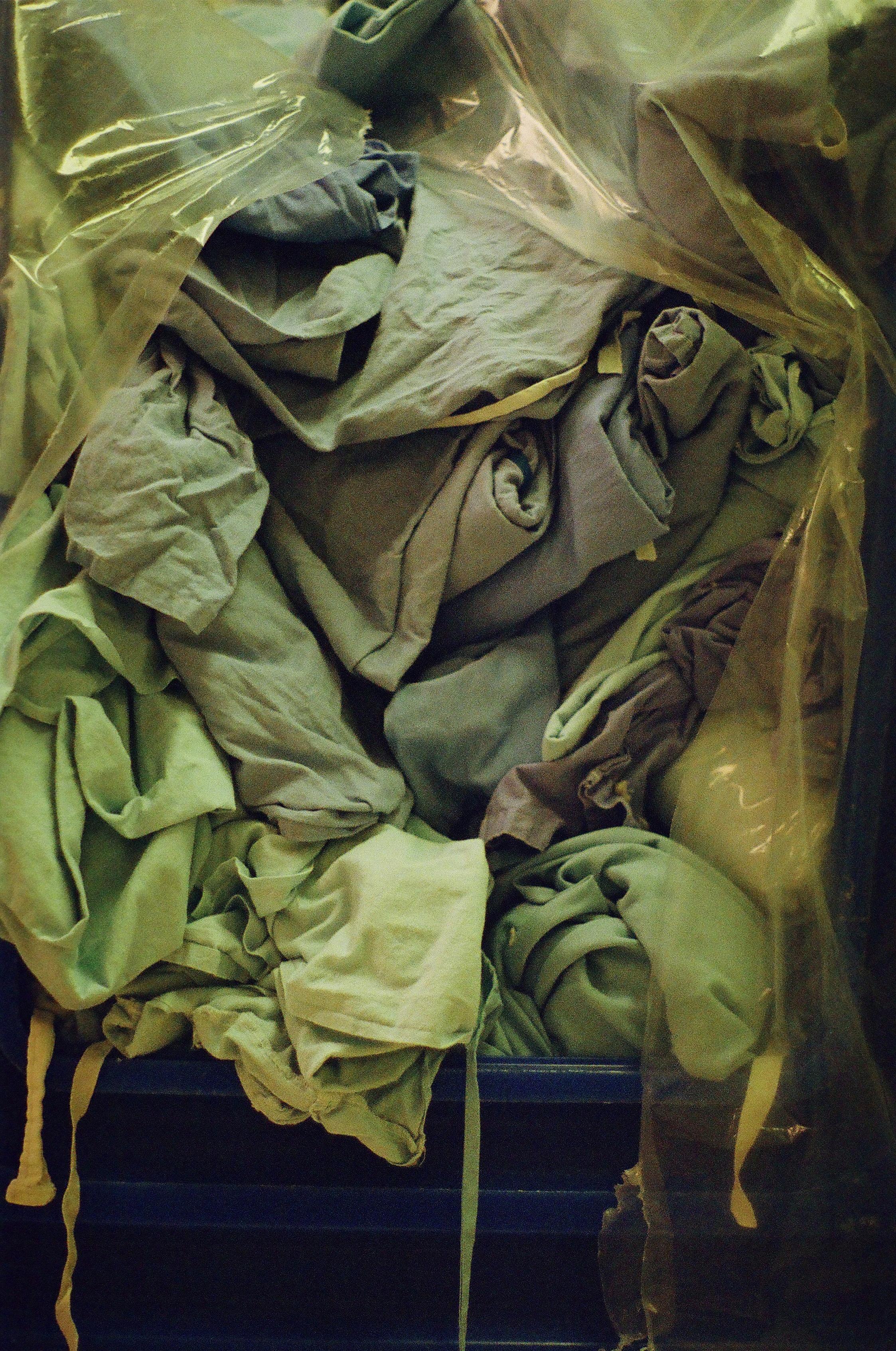
Closure offers not answers, but breath. Nisha Reddy's photographs remind us that healing often happens in the smallest moments: beauty in the mundane, the rhythm of the everyday Closure isn’t always dramatic nor does it have to mean resolution; sometimes it means learning to live with the scar
As you move through this issue, I hope you feel the pulse of the living in every page: the courage, the repair. Medicine is what happens in vivo. But this is what happens after. This is Ex Vivo.
Thank you for trusting us with your work, and thank you, reader, for witnessing it.
With gratitude, Lily Nguyen
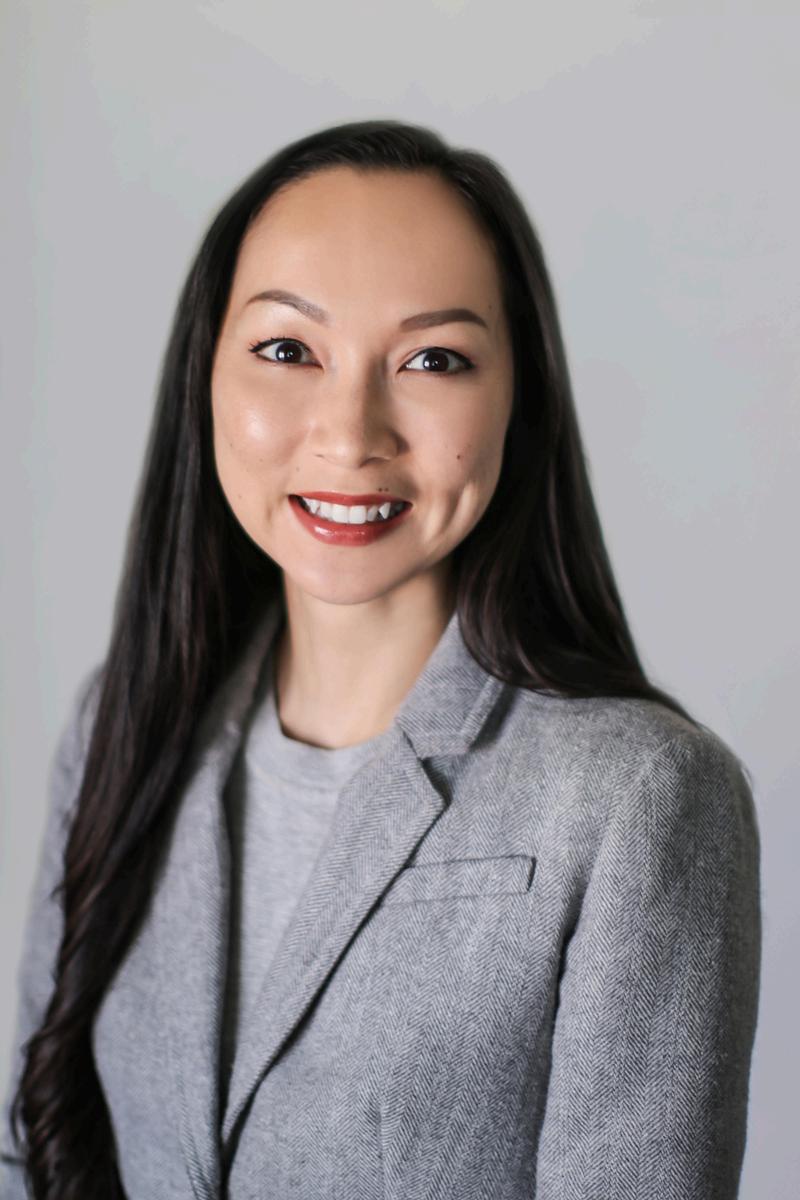
Lily Nguyen is a former RN, now radiologist-in-training. She is an avid runner, dog-lover and passionate about empowering RNs to pursue medicine.
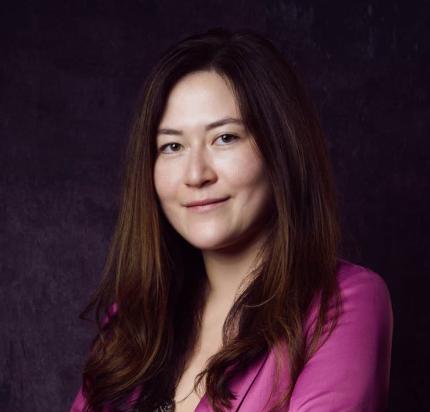
Frances Mei Hardin is an ex-ENT surgeon and reformed gunner. She is a writer, consultant, and advocate for the multi-hyphenate physician.
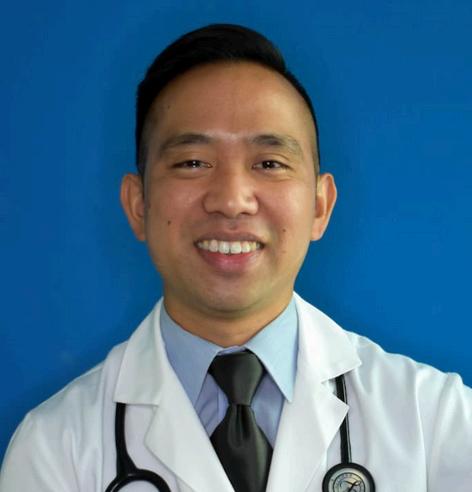
Ryan Montoya is a Family Medicine physician with training in opioid narcotic dependence. He is also a professional comic book artist and luggage designer, currently living in Belgrade, Serbia.
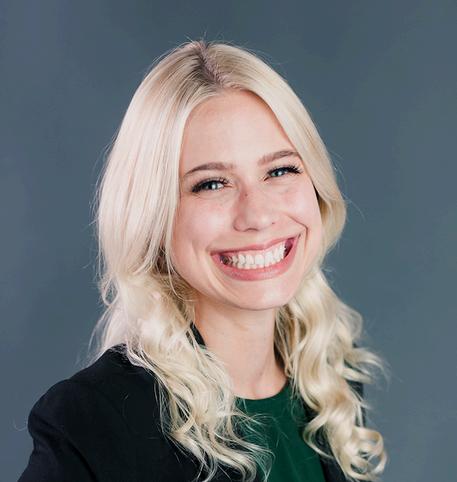
Kate is originally from Chicago, now residing in Phoenix. She is: a former surgery resident, podcast fiend, rock climber, yogi, devoted dog mom
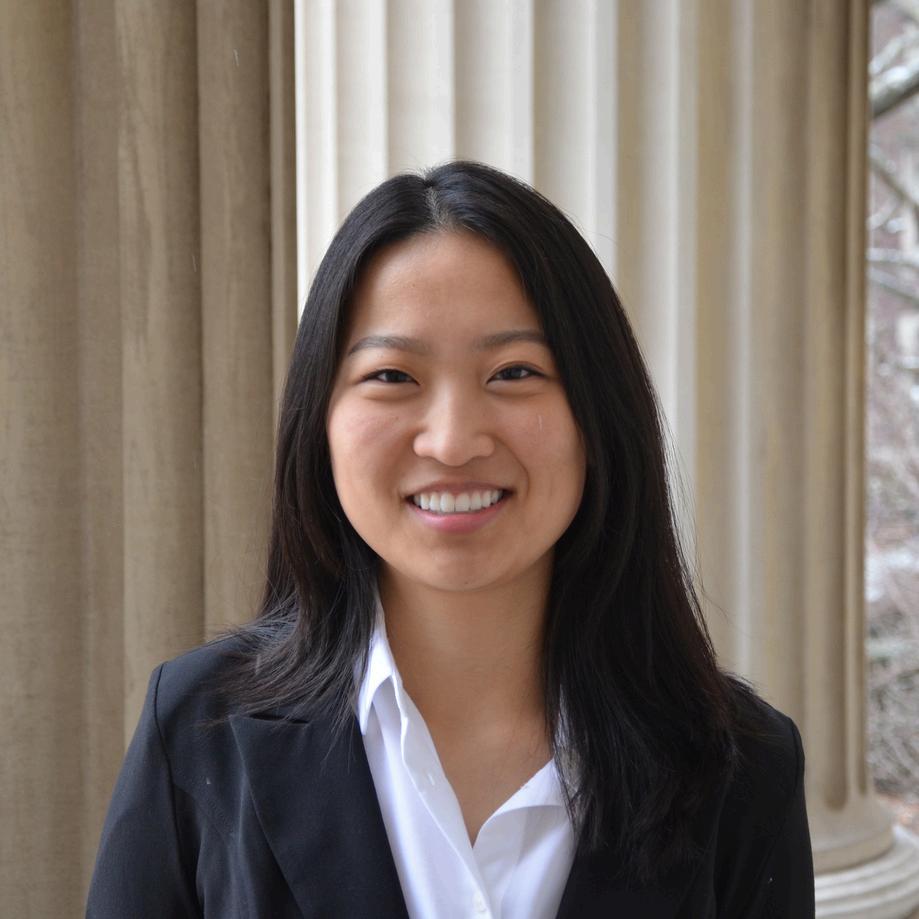
Kelly is a medical student interested in neurology and currently pursuing a master’s in history of medicine in the UK She enjoys running, hiking, and visiting museums
Ex Vivo is an art and literary magazine by Hippocratic Collective, showcasing the creative voices of medical trainees.
act I: incision
the anatomist’s muse claire orr
imposter syndrome
lindsey lofgren
won’t you lend your lungs to me?
jordan davis
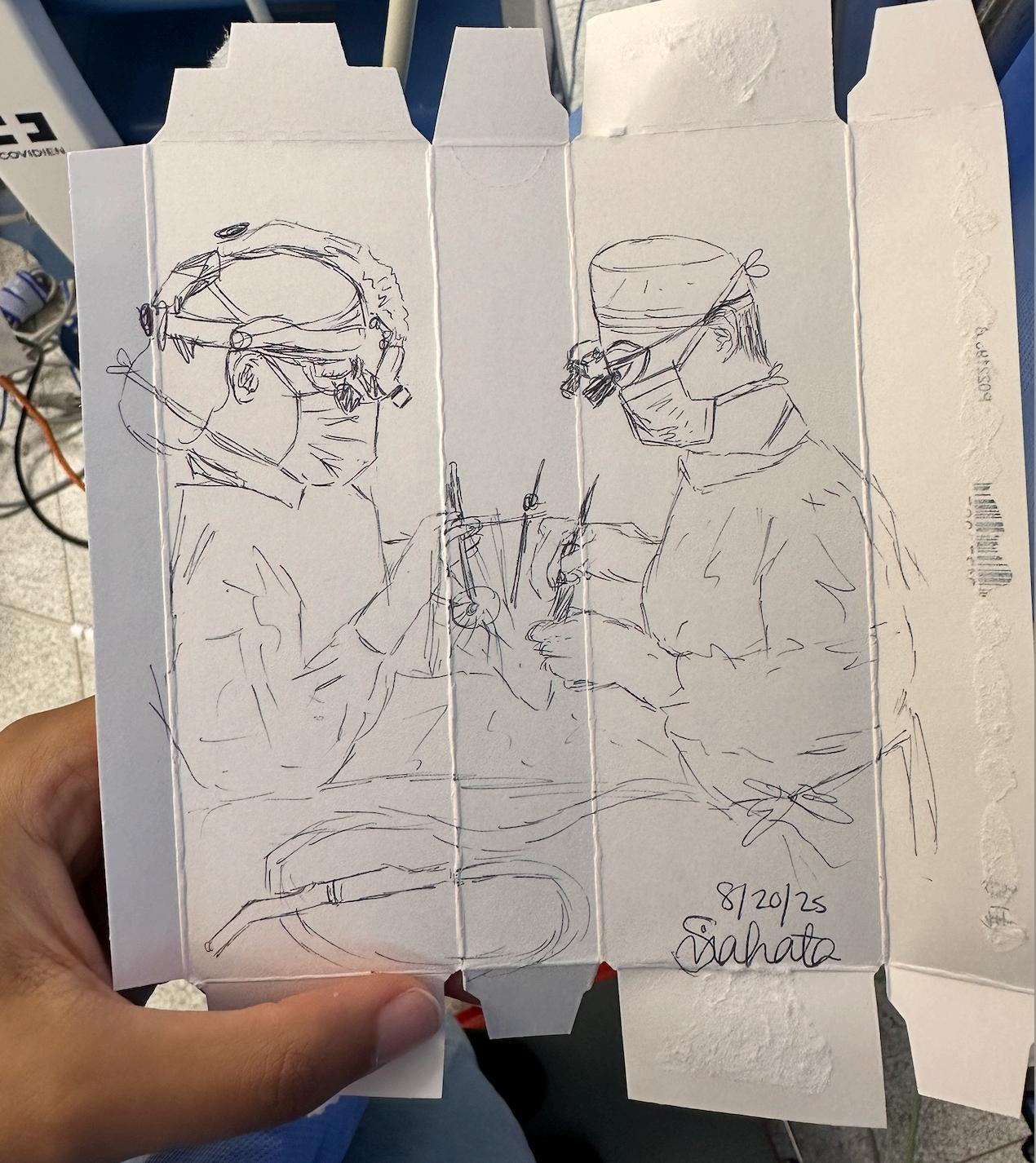
sketch that I made during cardiopulmonary bypass sumana mahata
life of a medical student in tanzania levina kulembeka
act II: exposure introspection
robyn g ku
all at once aiden gannon
the space before knowing krista schemitsch
ii. donor roosha mandal
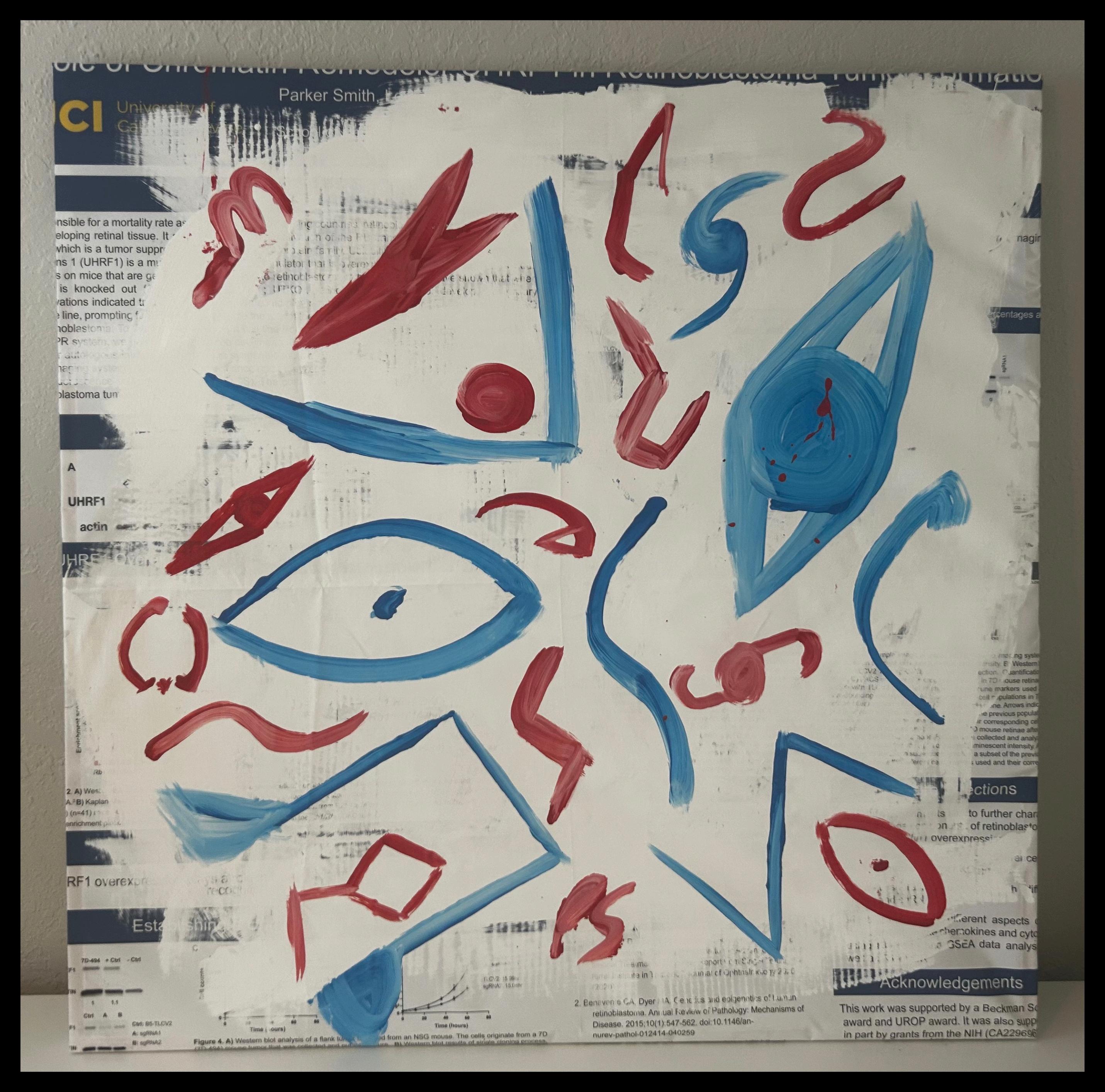
mohs map parker smith
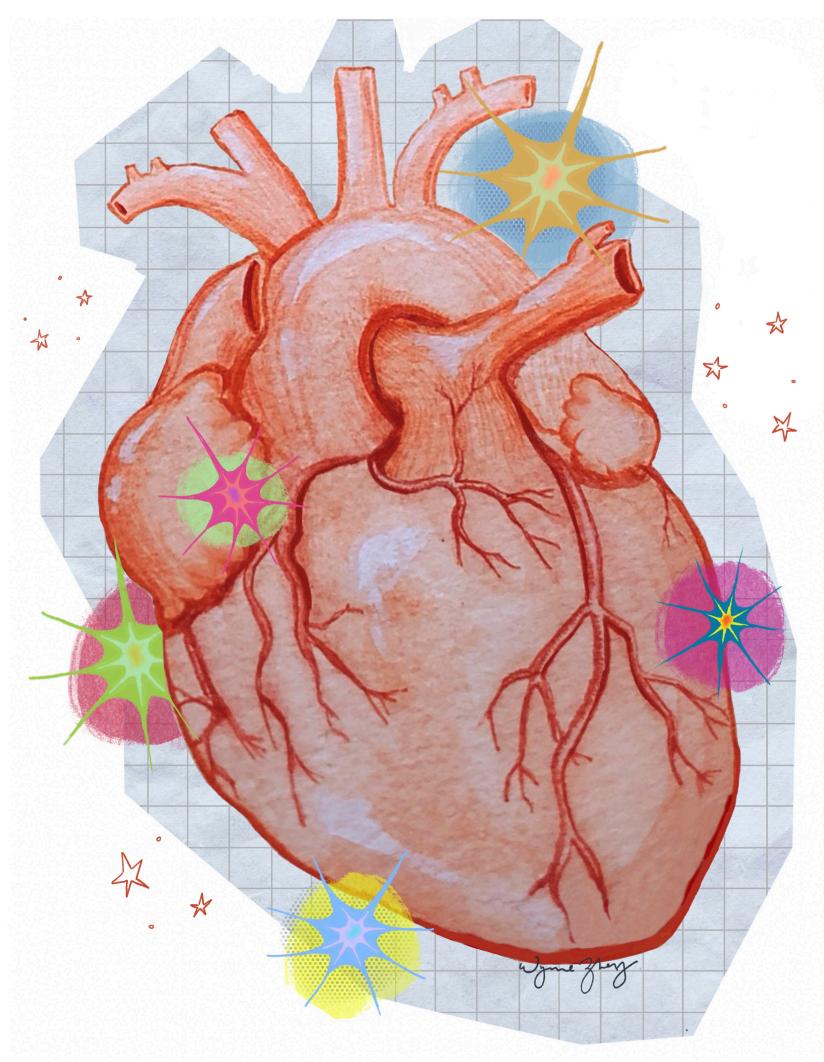
rhythm in technicolor wynne zheng
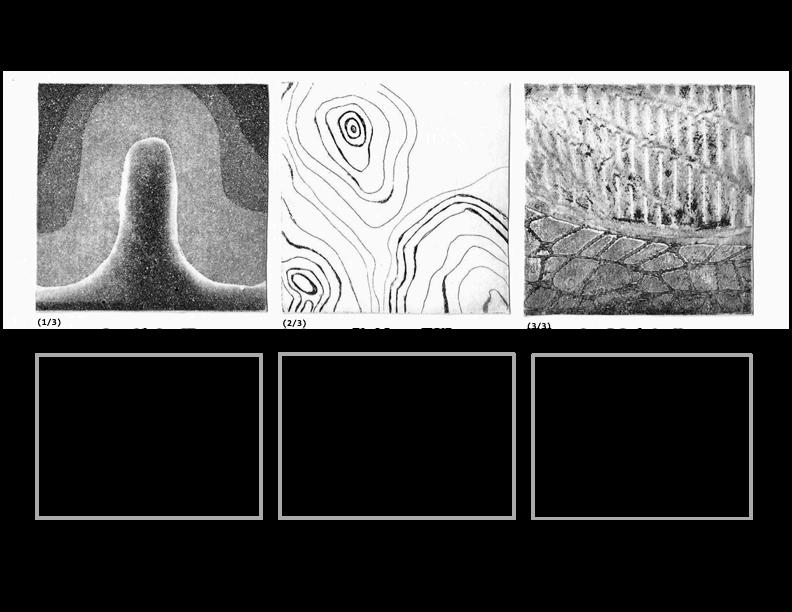
intaglio prints
maria krakora
Mar-thee-nuh marthena phan
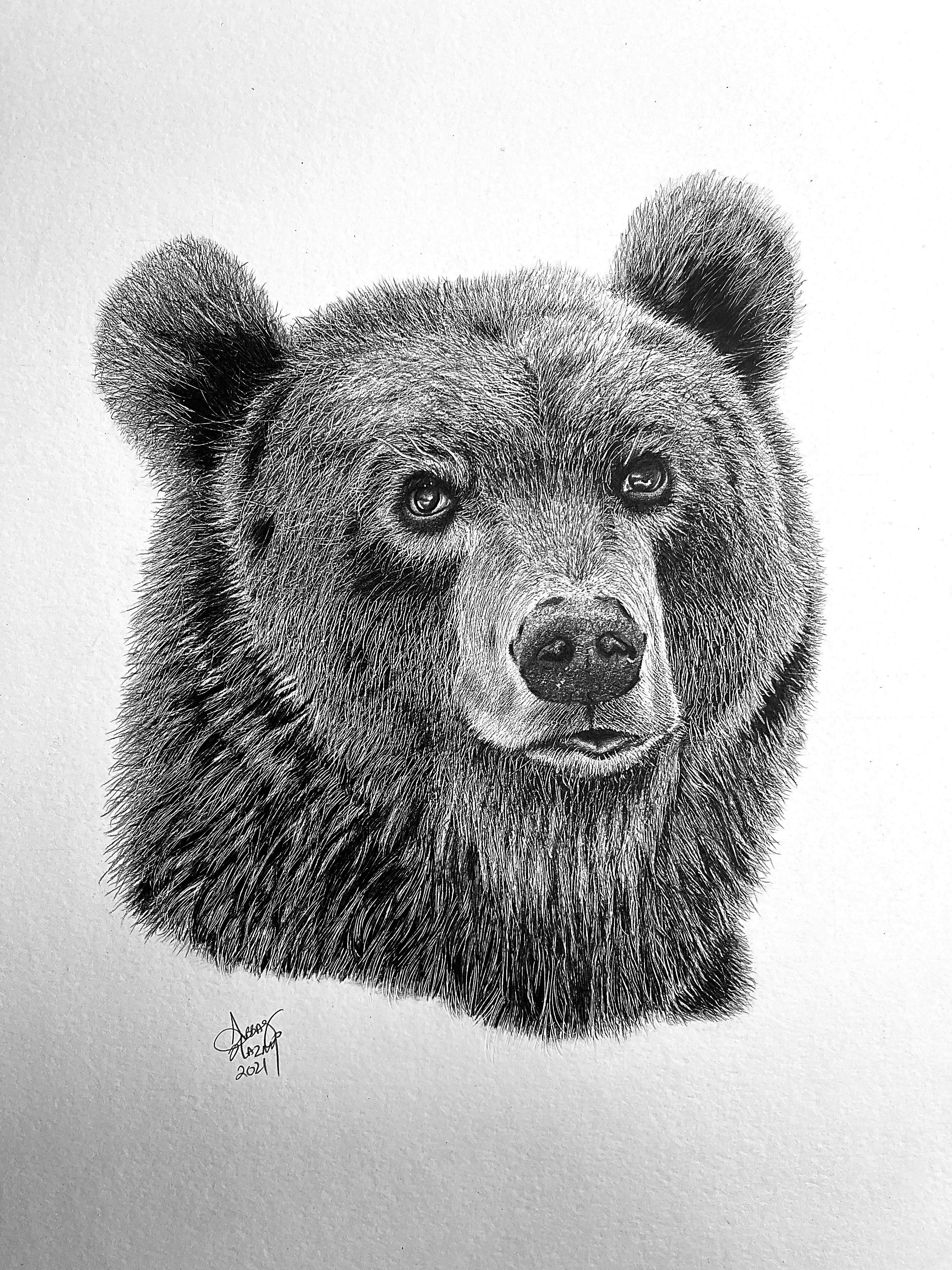
grizzly bear syed abbas moazzam kazmi
i. pre-rounds
iii. crying in the imaging suite roosha mandal
iatrike
jacinta specht
Act III: Closure photography
jenelle safadi the divide ines zuna
how to talk to patients about death and dying anatomy lab what womanhood feels like to me, sometimes manda nguyen-sanh
the day I found out marthena phan
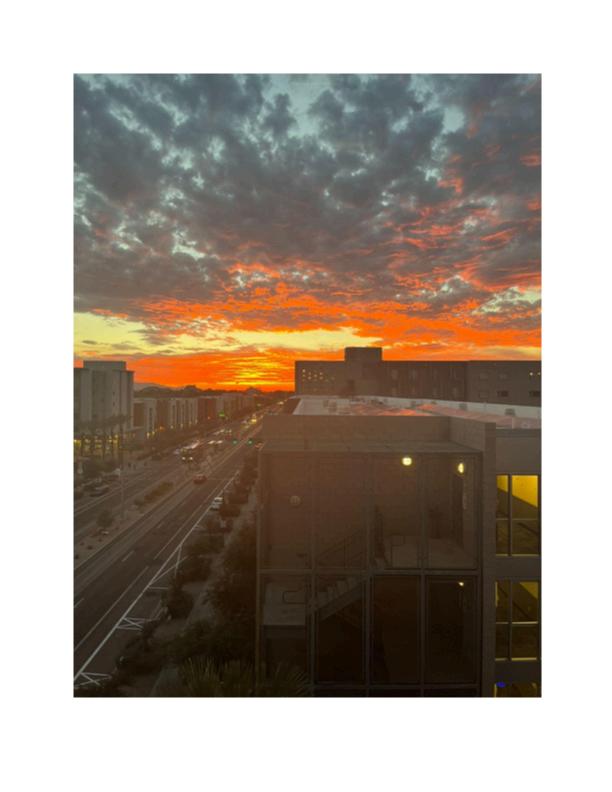
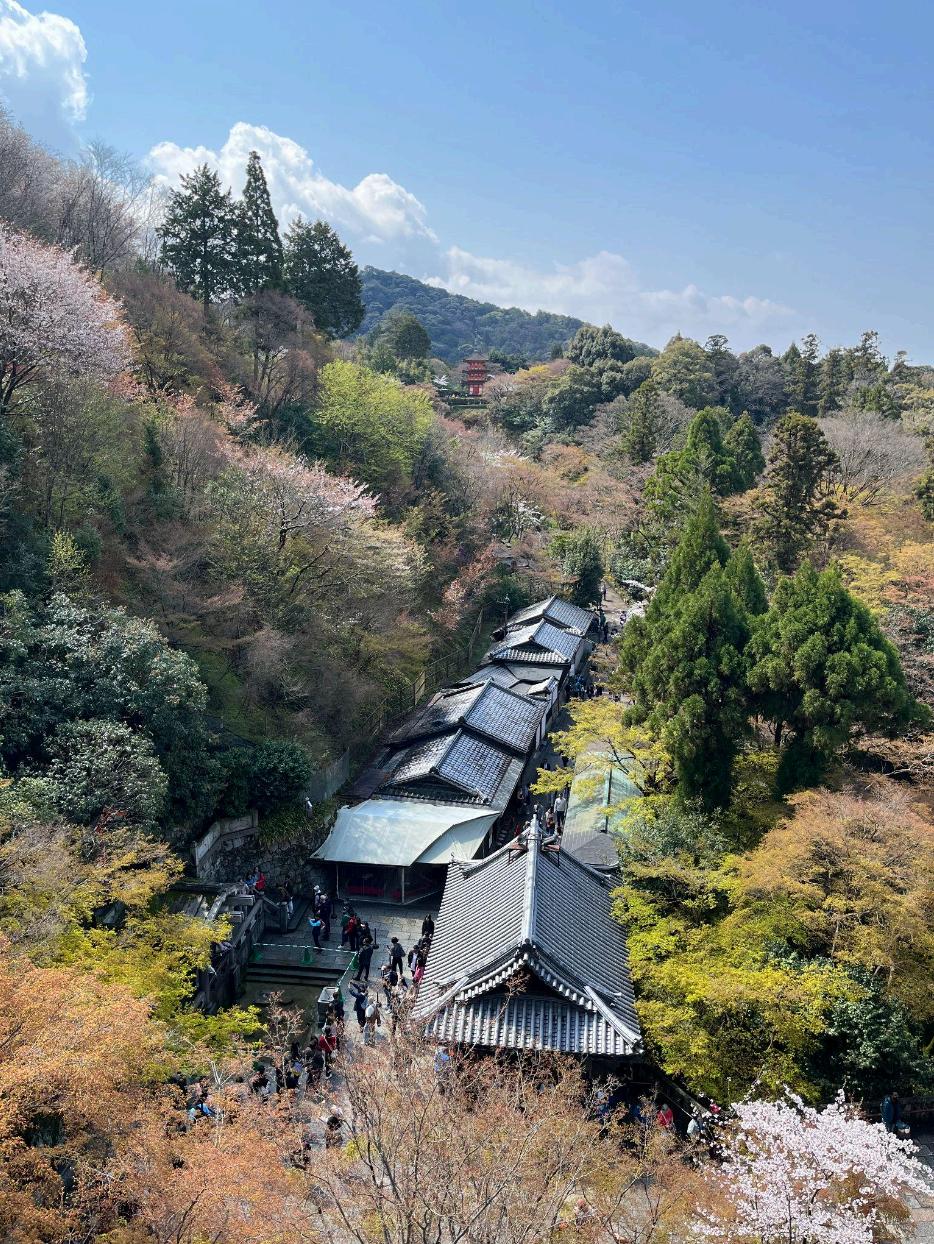
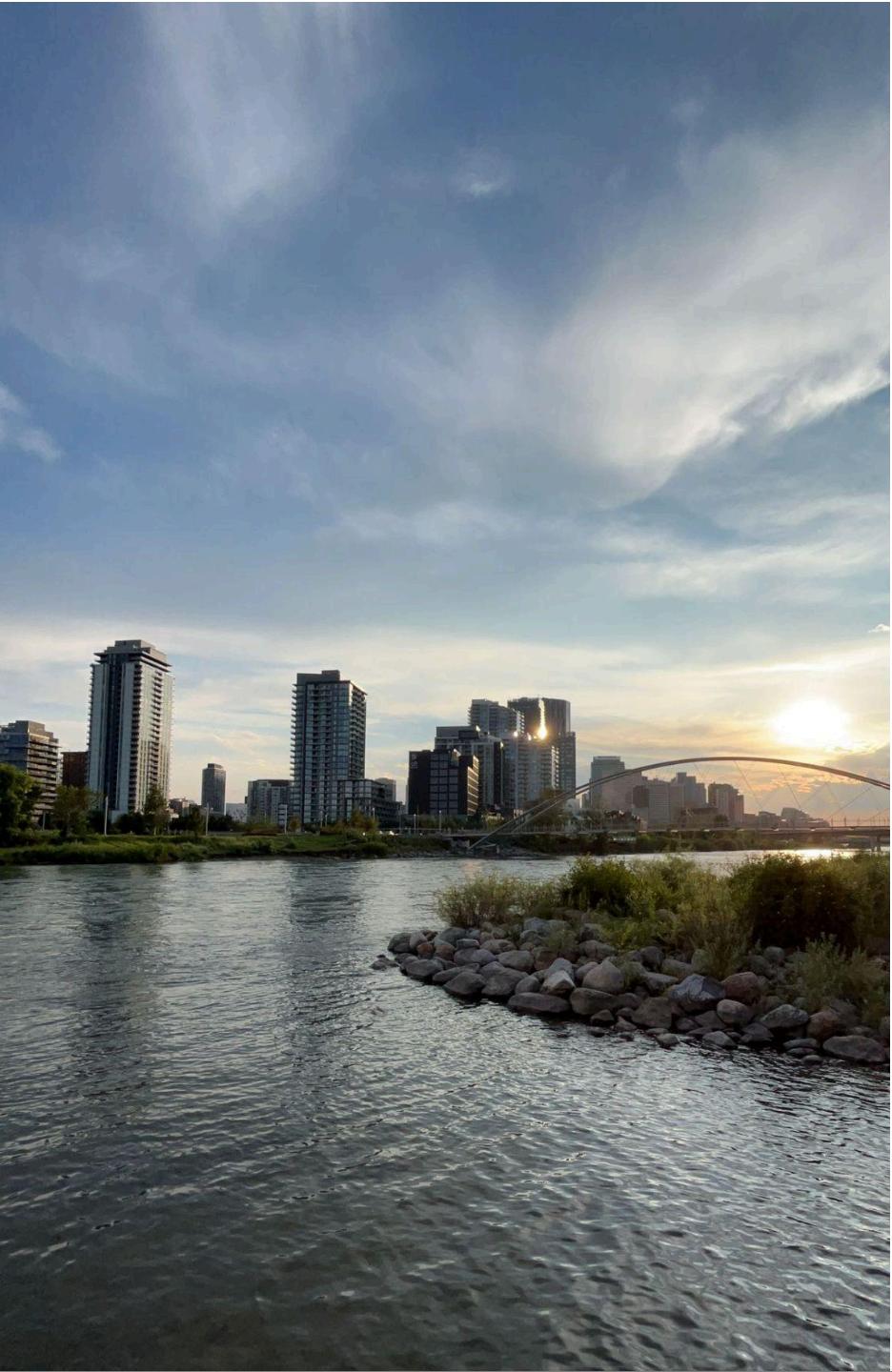
preclinical landscapes nisha reddy
the dichotomy meghan acheson
a panorama of my uninterrupted subconsciousness muhammad mushahid hussain rizvi
stranger at bedside riley latham
preclinical landscapes nisha reddy
Life beaTs down aNd crushes the soul and art reminds you that you have one
-stella adler
imposter syndrome by lindsey lofgren
Inoperable and plaguing the mind, With symptoms of overthinking and doubt, These conditions many students may find, Will just distort their sense of self throughout. A quiet murmur no stethoscope hears, A malady without any vaccines, Internal beliefs are controlled by fears, And perceived ineptitudes pollute dreams. But true competence is ever present, And the path walked is formed by ambition, No step in this journey by accident, For years of hard work come to fruition This iatrogenic bout can be cured: Conviction of oneself must be secured.
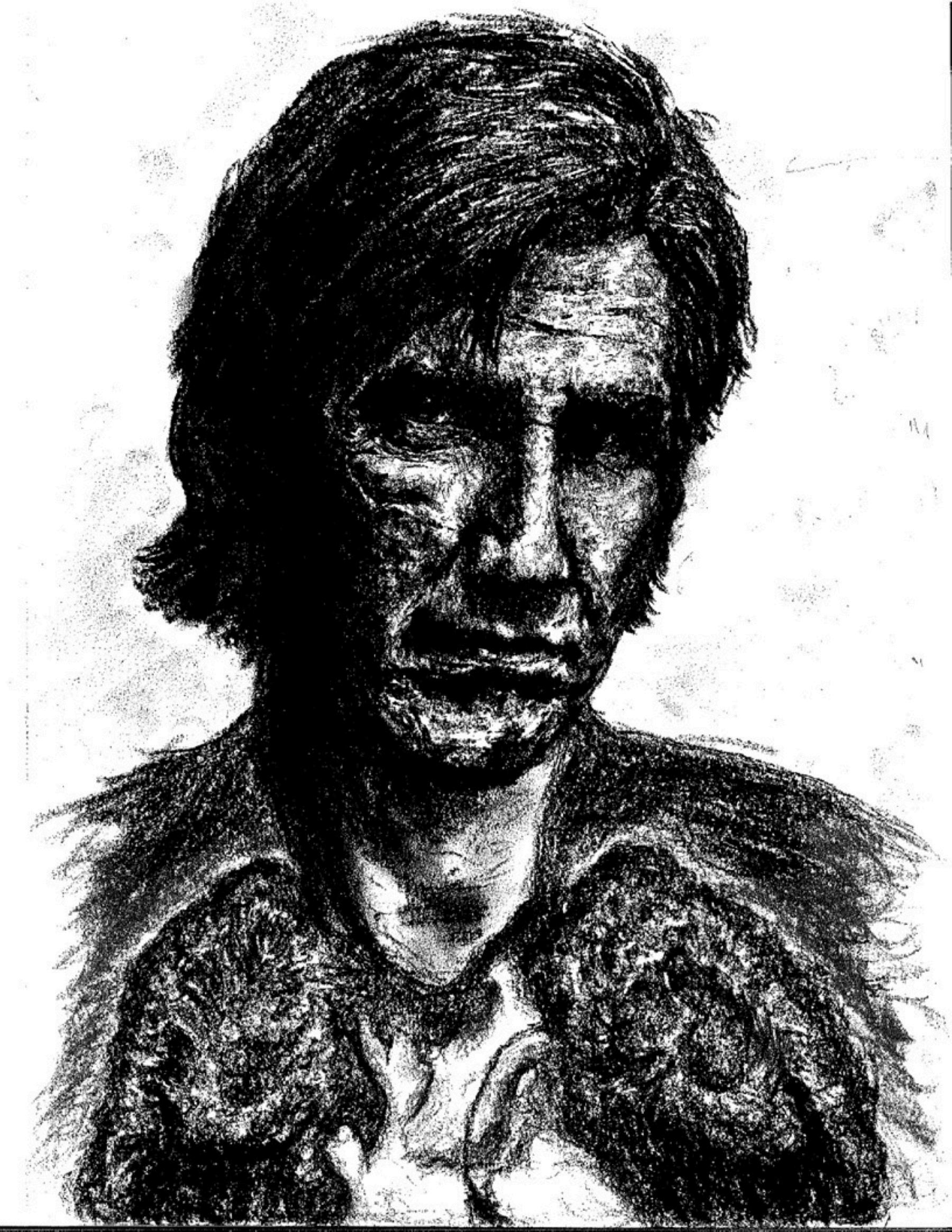
by jordan davis
Won’t You Lend Your Lungs to Me?
Charcoal Drawing, 11x8in., 2023; A note from the artist
Townes Van Zandt was a martyr of expectations. From the beginning his art focused on the brevity he expected from his time on earth and his unapologetic struggles with addiction and interpersonal pain. He created a visceral image of a weary, contemplative, self-destructive troubadour - one that resonated deeply with audiences and other creatives He was unyielding in his intensity and authenticity as he translated decades of pain and existential longing into timeless songs about love, loss, change, and death He eventually fulfilled his own prophecy and died at 52 of a cardiac arrhythmia after leaving the hospital against medical advice and initiating his final session of binge drinking. His body and soul had been battered by years of addiction, depression, and memory loss. Towne’s music continues to uplift and inspire many who will never know his lived experience. Yet the lifestyle that inspired his poetry was one that any physician would have sought to change. It begs the question, how complicit is the world who loved his music in his and so many other artists’ demise? Did we learn enough from his example to justify his suffering?
life of a medical student in tanzania by
levina kulembeka
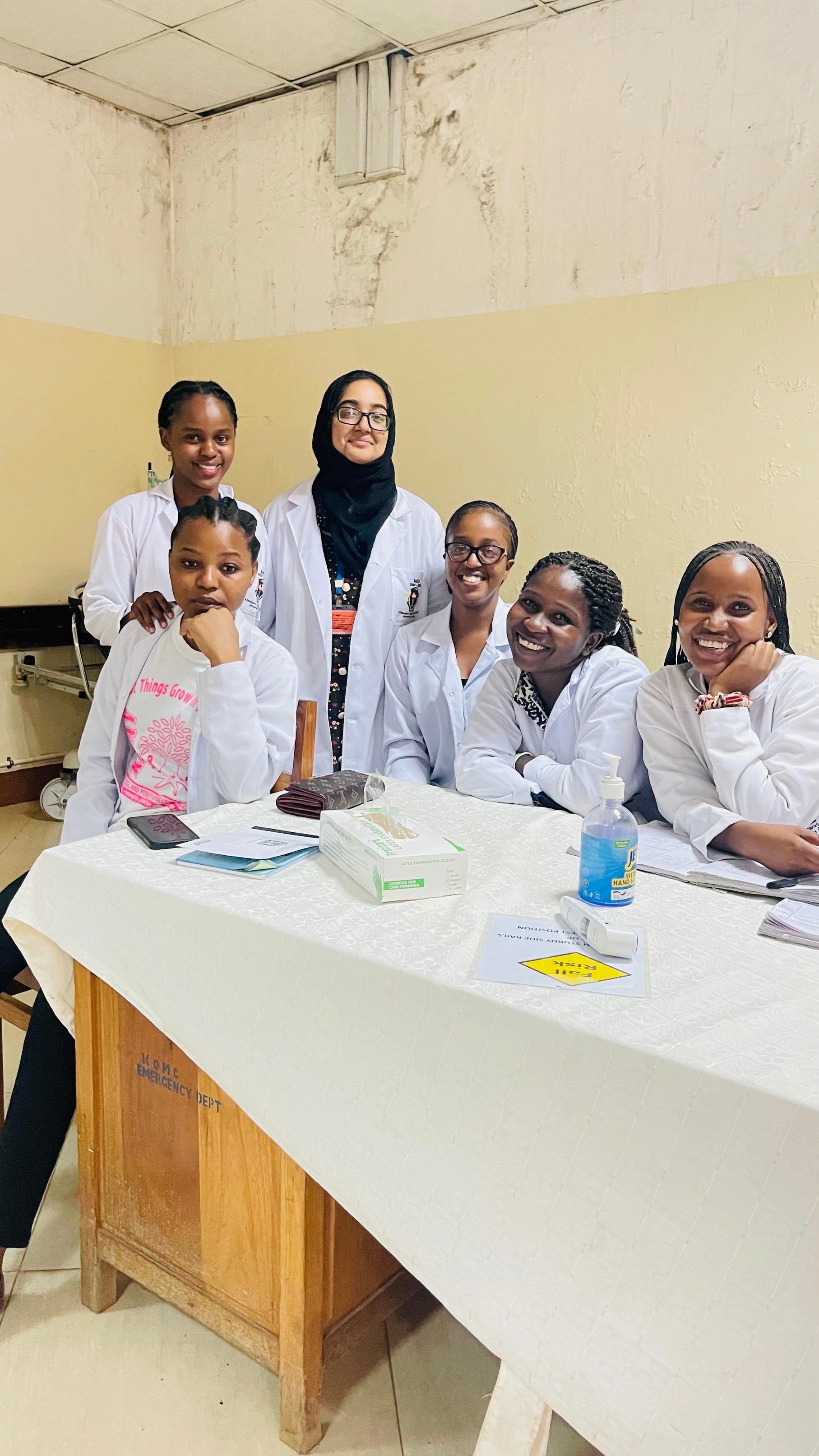
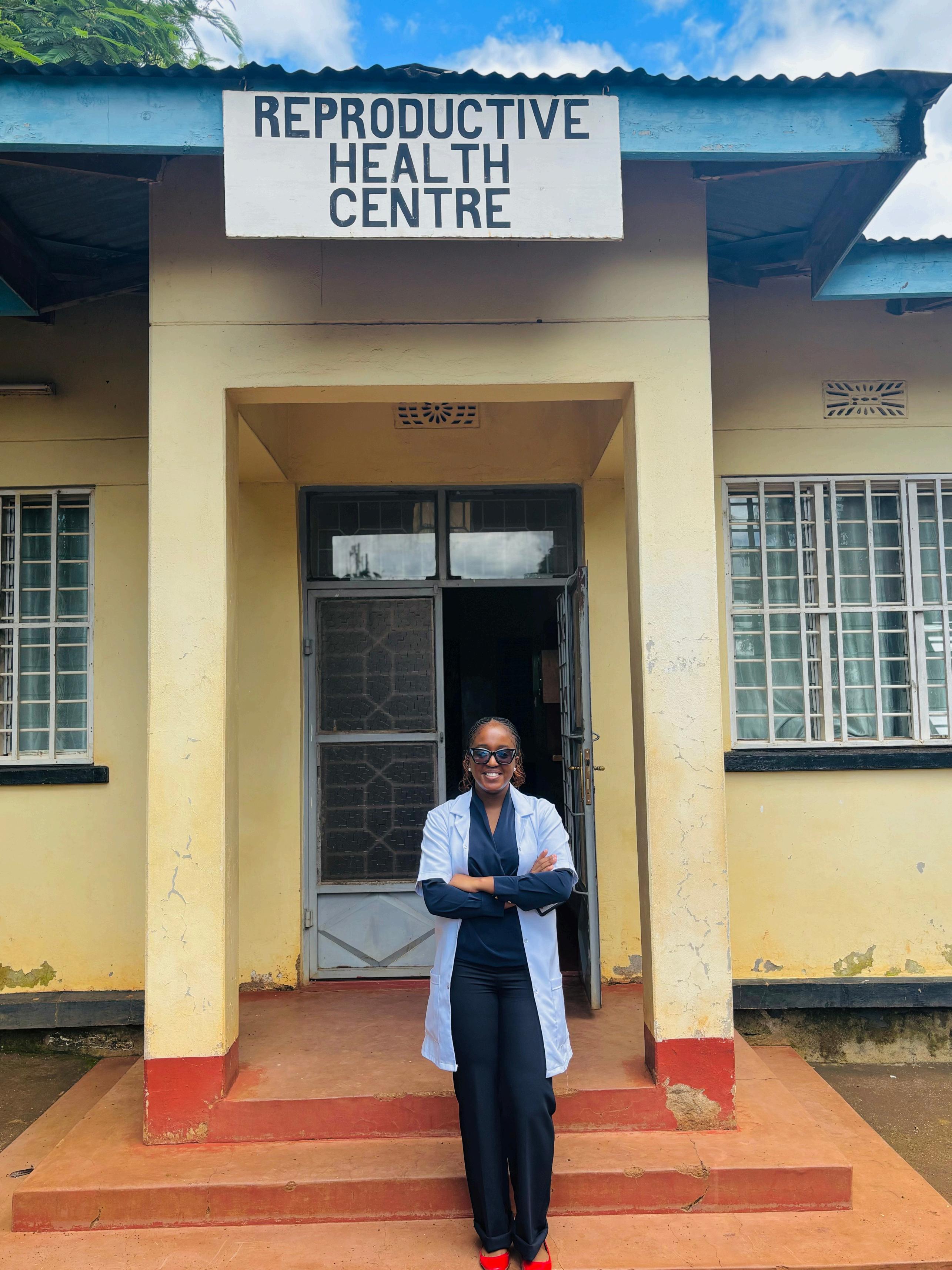
Imagine competing in a race while carrying Gray's anatomy on your back if you ' re curious about what life is like as a medical student in Tanzania. You can feel like you can save lives and make a difference in the world one moment, and then you ' re worn out and fatigued the next There are both good and bad days in medical school It ultimately boils down to one straightforward query: why am I in medicine? As a medical student, what do I want to do differently? For me and those around me, what does wearing a white coat mean? People perceive you extremely differently when you are wearing a white coat than when you are not. When a patient spots you wearing white, they call you "Daktari, daktari, daktari".
overlooked the pockets? They have everything from a stethoscope, a patella hammer, a tuning fork, a blood pressure monitor, a tape measure, a notepad, and occasionally even food. I know, so incredibly so That, then, is the story of a Tanzanian medical student
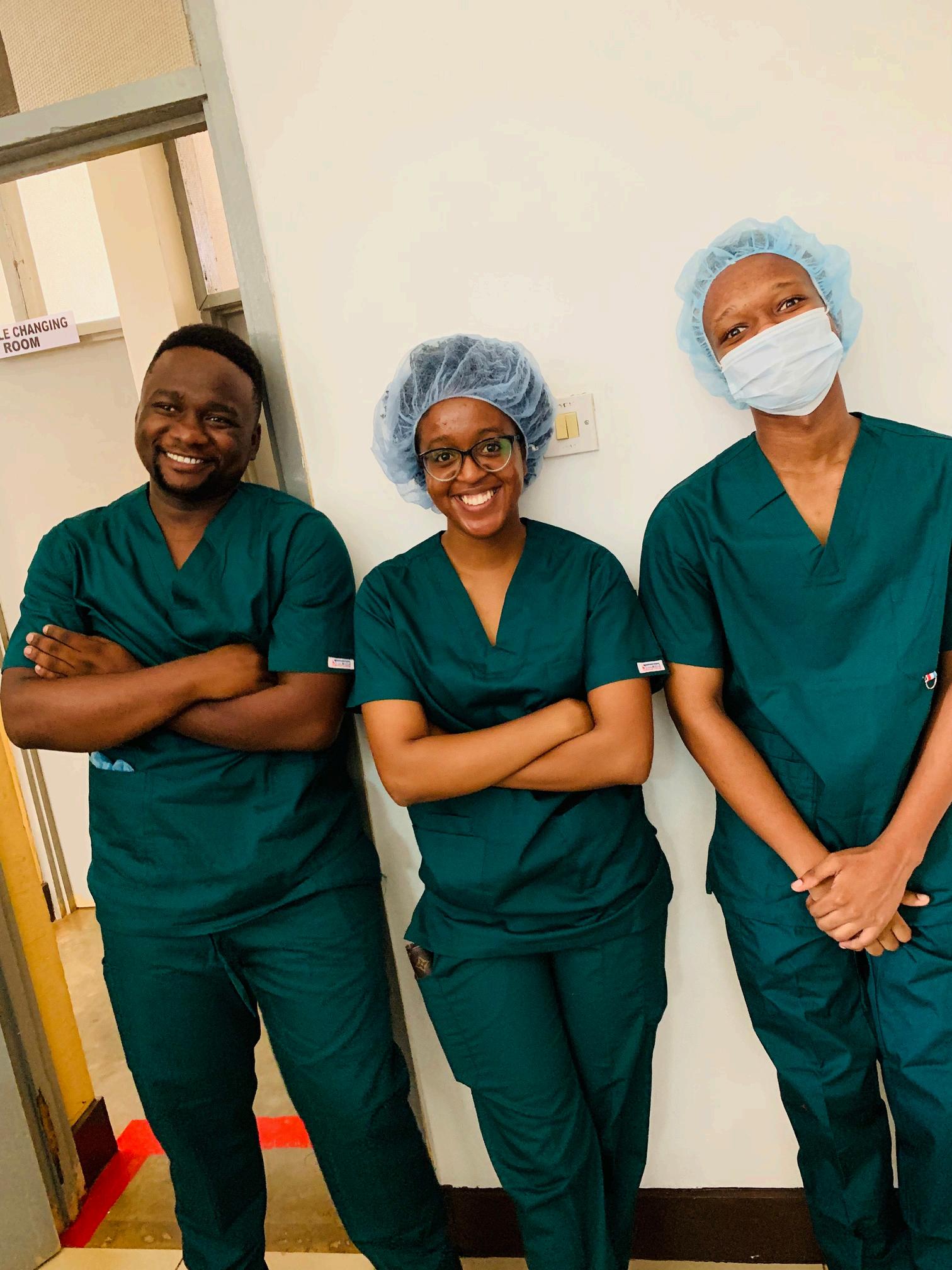
Let's discuss the weight of the material covered in medical school From self-preparation to morning report meetings, where everyone gathers to hear updates on patients over the previous 24 hours, mornings start as early as feasible. The presentation varies periodically. It could be a medical student, intern, or resident. After that, we have ward rounds, which is where the real fun starts “So tell us Daktari”. Senior doctors will test
A white coat might symbolise many things to different individuals, but for patients, it represents hard work, integrity, compassion, love, hope, and care White coats are more than just a garment in Tanzania; they represent a declaration of intent The amusing thing about the white coats is that some of them appear to have never seen water, while others are really white and ironed. Have I
your knowledge, so as a medical student, you must be ready, informed, and able to communicate It's acceptable if you don't always understand it You must do a lot of studying. This entails reading books like Harrison and Hutchinson that include a lot of material that you must absorb.
Additionally, we now have afternoon classes that are often held after lunch, which is when you see folks using different napping techniques. Coffee has been helpful in this regard during my medical school experience While some said it saved their lives, others claimed it made matters
worse "Daktari, can you explain the pathophysiology?" is a question that will be posed to you if you sit in the front of the class Now, in the clinical years, theory and reality collide When you clerk a patient for the first time, even though theory makes sense, presenting to a chief consultant is the biggest test; you feel like you ' re in a difficult situation.
life of a medical student In tanzania cont. by
levina kulembeka
Ward rounds are a delicate balance between what you have studied and what the chief wants you to deliver Physical examinations, history taking, scrubbing during surgeries, venipuncture, sterile dressings, catheterisation, cannulation, suturing, wound care, and medication administration are among the practical skills that can be learnt there.
Although most are unaware of it, clinical life also requires soft skills like professionalism, cooperation, empathy, active listening, and clear communication. From giving birth to your first child to helping a chief consultant in the operation room some even fainting these experiences never go away They are hilarious! Everyone is in survival mode during exam week, thus Tanzanian medical students are not to be taken lightly. Discussion groups are really beneficial, but you must read before attending to avoid being a passive listener.
Additionally, the subjects of discussion quickly go from medical issues to arguments about why you didn't take a different route to debates about different topics in life You develop consistency, resilience, discipline, and commitment during the difficult exams. The places you visit the most are lecture halls and libraries. Reading something challenging and receiving recognition during ward rounds, as well as when everything shows up on the test, is what makes it gratifying. There is nothing more uplifting than this
Medical school is ultimately an emotional roller coaster There are days when you feel invincible and in control of the world, and other days when you doubt your own talents. You feel worthless and without hope Small achievements bring happiness somewhere in between fatigue and weariness. You study a lot for moments like passing an exam. When your group members turn into family, you form enduring friendships that support one another's success. Take on problems with greater assurance, try new things, and develop your leadership abilities
That moment when a patient says "Asante Daktari" to you only because you were kind to them despite the fact that you aren't a doctor. I personally treated a patient who was distraught by a below-knee amputation. I therefore went to her every
life of a medical student In tanzania cont. by
levina kulembeka
morning before ward rounds to listen to her, tell her stories, and keep her updated on all of her medical developments. She came to like it. Some patients only need to be heard, listened to, and handled with compassion; they don't require medication.
Being a medical student is a challenging life. It's difficult, draining, and frightening, but it's also stunning and transformative. You get to witness the beginning and end of existence. Long study sessions, hectic and never-ending ward rounds, memories, smiles, and laughter all combine to form a story. For as long as I can remember, I will always remember them. I've read books like "This is going to hurt" by Adam Kay and "Being mortal" by Atul Gawande throughout my time in medical school. It helped me see that every person is a human being who puts their relationships, health, and occasionally mental stability on the line in order to care for others.
Although lucrative, medicine has a human cost. Healthcare professionals should now be respected and supported by society. However, medicine is not only about preventing death at all costs, but also about allowing people to live until the end of their lives. To all incoming and current medical students, medicine is incredibly fascinating and powerful. Invest in yourself and your growth, learn and excel in it Don't work alone on this Discover, investigate, and create enduring relationships
Every act of creation is first an act of destruction
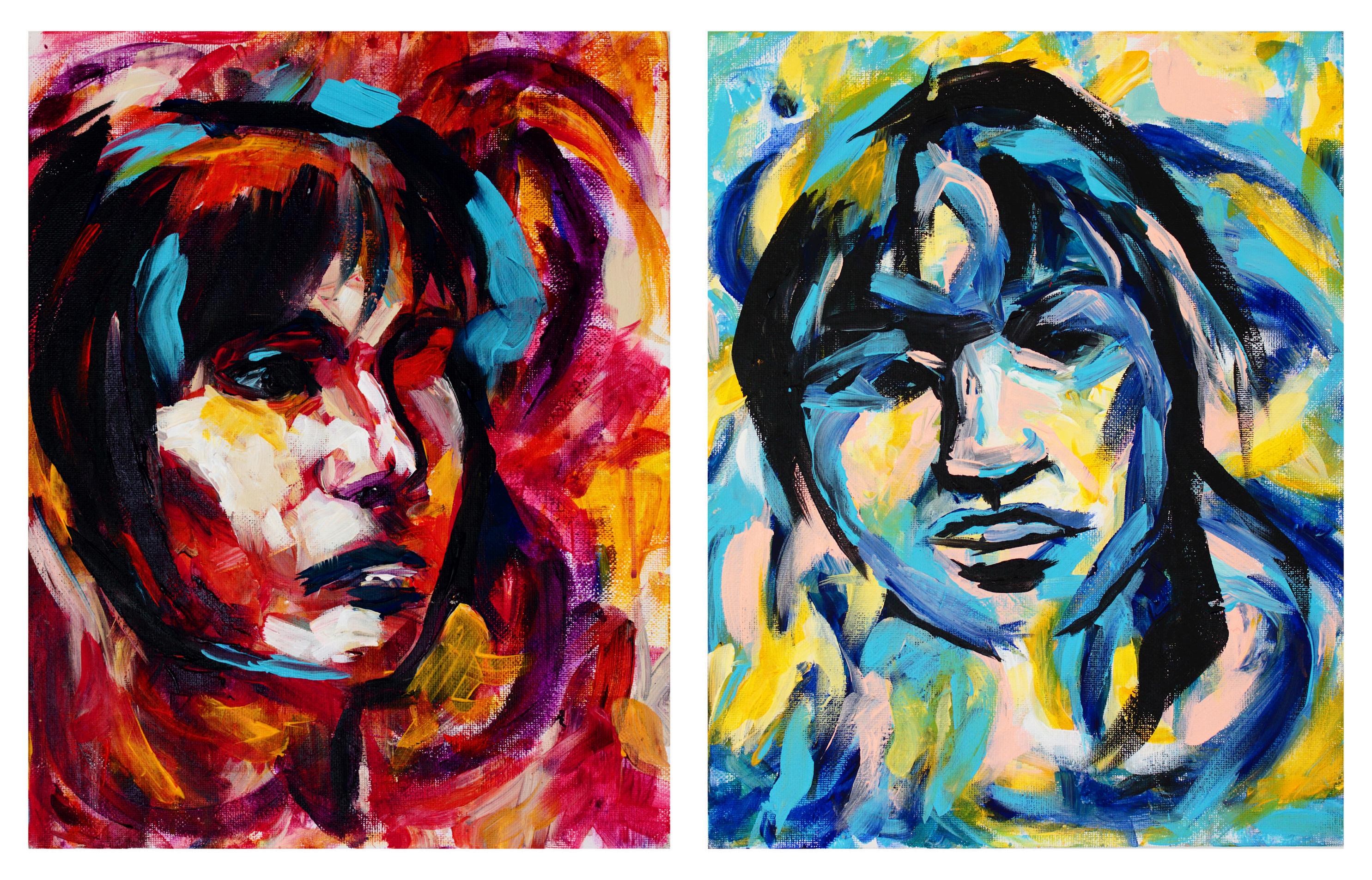
all at once
by aiden gannon
Medicine is a world entirely separate from the rest Foreign is the language and it’s a constant test
Give up yourself to learn how to give Constantly pour yourself like a sieve
Thrown into a program unlike even peers Confusing enough to bring a grown man to tears
Thrown into the jungle everyday I must act Humor or misery I put on a mask
Seperate from friends sometime separate from self
Lie if I have to, one day for the best
Where must I learn if I learn all at once
Overwhelmed, would simply be understatement of the month
Trust in the process, the curve makes a J How can I trust it? Is that all you can say?
So many times it seems as if it’s me vs the world A greater weight on my shoulders and my head in a swirl
Migraines for months and self doubt to the brim Until finally I understood it all stems from within
Conversation with family and much needed reflect My attitude of the world I could no longer neglect
Thus little by little the mask made of clay
Chips away with each passing day
Wake up and pray then clock in and clock out
Present to attending then put food in my mouth
Repeat and repeat accept the simple life
That every day I strive and put my trust in Christ
Used to pretend when I speak to not seem like a dunce But now I contribute, Didn’t happen all at once
So maybe that’s the point, that was always the AIM Or maybe some self-credit is more than ordained
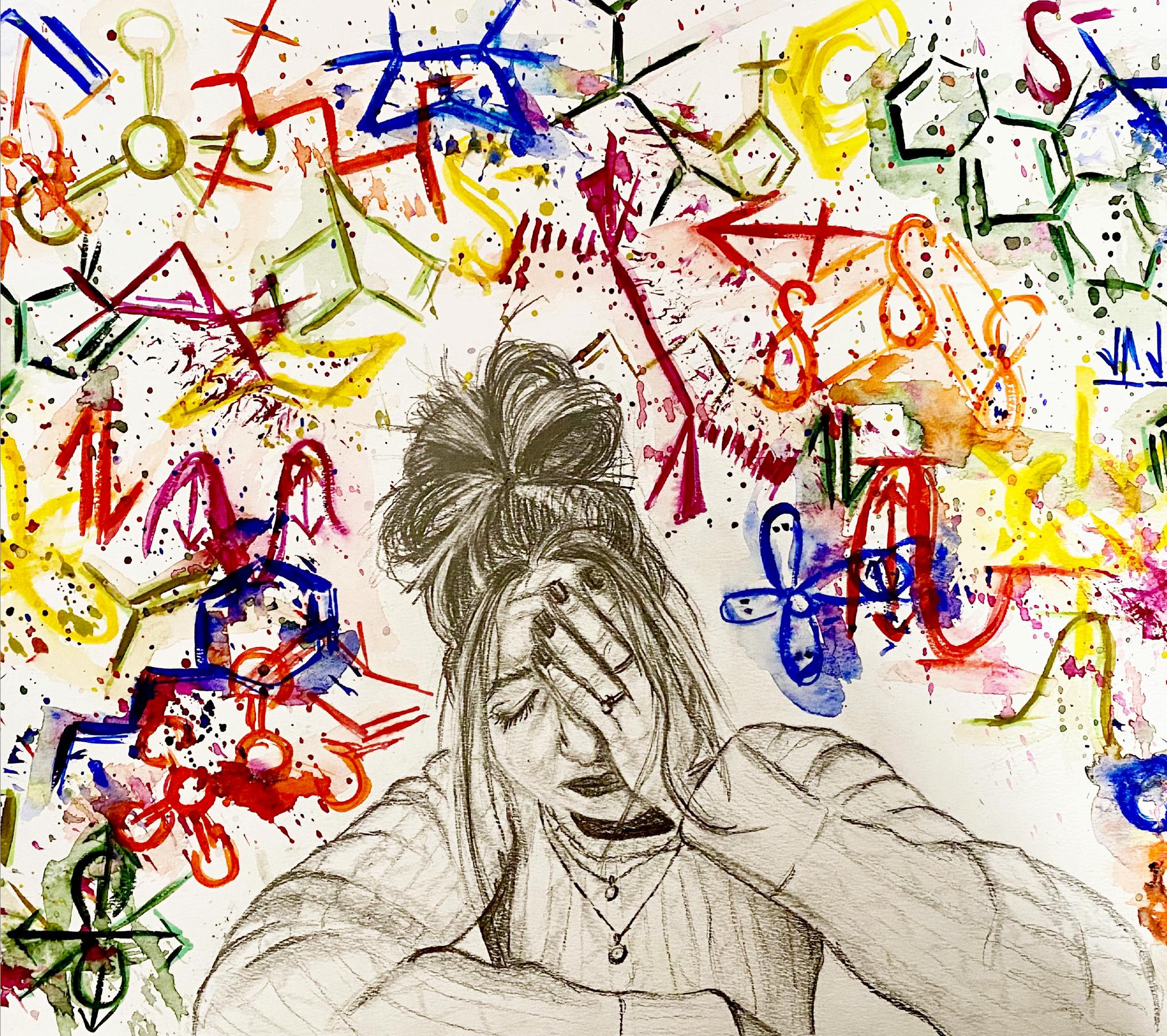
the space before knowing by krista schemitsch
The Space Before Knowing captures the chaotic yet beautiful moment when students wrestle with ideas that haven’t fully taken shape. The swirling colors and fragmented symbols reflect the struggle, persistence, and mental noise that fill the gap between confusion and clarity This piece honors that liminal space It is the breath just before everything clicks and understanding finally emerges
ii. donor by roosha mandal
my parents can’t remember by blood type from birth, but I learn it 27 years later: an almost a universal donor, sharing a label with 38% of humans on earth. Same as my father, who donated blood and plasma weekly to patients for the 6 months my mother was admitted for bone marrow transplant. A gift he gave to others, for her.
an anonymous donor gives her new cells, regenerating, multiplying, saving her life The body keeps the score and fights the graft, I imagine her blood on fire and see scales of GVHD on her ankles
On the wards, when my patient’s hemoglobin drops below 7, we transfuse, a type and screen document on file. We ask for consent: Sign here if you will accept this blood product. Take this bag with compatible cells. Let the number go up. We’ll investigate the source later.
The first time I donate blood I pass out; I come to with a cookie and juice nestled in my hands. The second time, after I fast, they collect 10 vials for living donor testing. I stay awake. I sign my consent. I give what I cannot save.
rhythm in technicolor by wynne zheng
intaglio prints
Mar-thee-nuh
by marthena phan
I’ve always had a love-hate relationship with my name. Don’t get me wrong, I love the uniqueness of my name and the significance behind it, especially since it was chosen because of its close resemblance to my mom ’ s name, Martha I just hate how most people never seem to make any genuine effort to pronounce it right or even remember it I often get so fed up with unsuccessfully correcting people that I give up and let them butcher my name forever.
In every stage of my life so far, I’ve been called many interesting variations of my name, including Martina (the most common one), Marthena with an unwarranted emphasis on the “then”, Marthena with a prominent “thuh”, and even “Marthayna” as if the e had the French “l’accent aigu” (é).
Throughout elementary school, which I attended from kindergarten to the 8th grade, whenever a new or substitute teacher was taking attendance and suddenly paused, I knew that they were staring at my name, trying to decipher the eight letters and three syllables into something they could say out loud One of my most vivid memories from elementary school is when a sub was doing roll call, paused, and then confidently announced, “Martelina!” Silence and confusion filled the air of the classroom. After a few uncomfortable seconds, I slowly raised my hand.
“Do you mean Marthena?” I asked sheepishly. “Oh yes I did,” the sub replied. No apology was offered before she continued down the list of names that were much easier to pronounce.
During my transition from elementary to high school, I was excited about many things: finally leaving the school where I’d spent the last ten years of my life, taking more interesting classes, meeting new people and friends, attending football games, and even wearing the uniform dictated by my Catholic high school (please don’t ask me why because I don’t have an answer). However, I was most excited about
finally getting my name pronounced correctly more often – I foolishly believed that my name and I would be taken more seriously now that I was officially a teenager on the cusp on adulthood. This hope was quickly dashed as my ears continued to fall victim to a cornucopia of mispronunciations over the next four years, including “Mrmph!” uttered from the lips of a speech professor who, ironically, never spoke clearly.
Now what about college? Medical school? Surely things got better then, right? Folks, I’m disappointed but not surprised to announce that no, they didn’t In addition to the many mispronunciations, some classmates, colleagues, and faculty completely forgot my name even after multiple meetings and corrections on my part
“Mar-thee-na? Why is your name Marthena, and not Martina?”
Others poked fun at my name and questioned its validity During a didactic session in my thirdyear OB/GYN rotation, the lecturer, a gyn-onc surgeon with a huge personality, many quirks, and a penchant for randomly calling on students to explain the anatomy and pathophysiology of every organ and disease, intensely locked eyes with me as he asked for my name. As soon as I gave it, he cried out, “Mar-thee-na? Why is your name Marthena, and not Martina?” I internally sighed, then explained how I was named after my mom, Martha. “Oh, that makes SO much sense! Now that you ’ ve given me the pathophysiology of your name, I’ll never forget it!” he exclaimed as the class erupted into lau-
by marthena phan
-ghter. I have to admit, I laughed along with my classmates, and I still think his response is pretty funny today.
Why do so many people struggle so much to pronounce my name? Fluent English speakers should know that “th-“ is not the same as the hard “t ” Maybe it’s because “th-“ requires one to push their tongue against the back of their front teeth and release air, while the classic “t” is rapid, straightforward, and requires much less tongue mechanics, air physics, and effort. I guess I can understand the confusion with the “the” in Marthena since it’s spelt similarly to the most common pronunciation of the word. However, “the” is pronounced “thee” when paired with the word “end.” Perhaps this specific pronunciation of “the” in my name is not just a mere coincidence, but a desperate plea for “the end” of the butchering of Marthena!
i. pre-rounds by roosha mandal
I think about my patient with bruised arms, who took 4 tries, 2 nurses, and an ultrasound for access. Her labs ordered for electrolyte are drawn each day, and we take blood faster than I can afford to spell out hemoglobin in my note Her hands hold callouses of a lifetime from scrubbing floors that I can still feel through nitrile gloves
The bruising on her stomach from DVT prophylaxis is worse, a dark grim amorphous shape growing, creeping, hurting, we type tender to palpation and document on the media tab. I check her pulse on her wrist, a ribbon beating back, steadfast, and ask her to take a deep breath as I listen and hold my own. A pause, a hope for air, an exhale.
Benign physical exam, I report on rounds, we don’t contain the time to describe the multitudes of holding my stethoscope over her heart.
iii crying in the imaging suite by roosha mandal
in the resident room, we get a call from the radiology tech who tells us our patient refuses an ultrasound. We step down to speak with her; she cries, scared of being poked or cut open again. I show her the probe and squeeze out the cold gel into my hand for her to feel. Just pressure, no pokes, no medicine. She nods, understanding. Her dopplers come back fine.
in the CT room, I know exactly what will happen to me; the contrast dye will feel funny, the test will take half an hour But when I lie back and the dye injected, filling me with uncomfortable, almost unbearable warmth, a metallic lump in my throat I cannot swallow, I squeeze my eyes shut, breathing in and out when the automated voice tells me to. I flinch when my IV is pulled out, blink back what I cannot acknowledge.
I have been bent and broken, but — I hope — into a better shape
Charles Dickens
"caring" doesn't make you "good"
a war waged listen too closely, empathize too deeply, hold space for the suffering. vs diagnose. order. treat. it took months of therapy and i am still unlearning two things can exist at once and in the end, all you hope is that somebody cares
how to talk to patients about death and dying by manda nguyen-sanh
That’s the lecture I’m sitting in today me, a twenty-four year old first-year medical student learning how to tell you that your mother brother sister daughter dad is dying or dead
The doctor giving the talk tells the class it’s a graceful art a thousand things not to do or say She says we won’t be perfect but we can be human I’m only human that’s what I have to keep telling myself We’re all only human.
anatomy lab by manda nguyen-sanh
Your face was covered the day we met Your hands and feet, too. I told myself: I can do this
As I pulled the sheet off your body for the first time. That day, I cut open your chest with a saw And held your heart in my hands
There was no beat, of course, but even so That did not make it any less precious For three months and hours on end I parsed through your body
Silently, you taught me about what makes us all who we are
The day we moved to your face, I told myself once again I can do this
With a scalpel in my hand I made delicate cuts
Your brain – it was magnificent And in that moment I felt You were also magnificent And I was lucky to know you
what womanhood feels like to me, sometimes by manda nguyen-sanh
They would have burned me at the stake in Salem
For these thoughts I harbor inside They’re like flames that lick the edge of a pit Secret whispers spreading in a crowd And little breezes that’ll swirl into a storm
These thoughts of mine, you call them wicked Do you fear they make you look weak? It seems so, the way you grab your men and chains and torches Every time you hear a woman like me say: There is nothing I cannot do.
Thank you, a hundred times over For the gift you have given me May you rest well and know I will always remember you
- For Donor 33
By marthena phan
The day I found out I had to repeat my first year of medical school, I was studying for my upcoming heme/onc midterm. I had just finished a block of practice questions and my Anki for the day, and I was feeling confident that I would do at least decently on the exam
The day I found out I had to repeat my first year of medical school, I finally tested negative for COVID I had spent the past five days cooped up at home, recovering while studying for my exam because medical school never slows down for anyone.
The day I found out I had to repeat my first year of medical school, I cried to my mom. She hugged me tightly, then looked into my eyes and said, “You can’t give up now. You need to get up and give it your all this time around. You can do it.”
The day I found out I had to repeat my first year of medical school, I called my best friend. She cried as I shared the news with her “What will I do without you in our class?” she sobbed “We’ve been through everything together! Med school’s not going to be the same without you I’m going to miss you so much ” I reassured her that I would still be there for her and that we would remain best friends.
The day I found out I had to repeat my first year of medical school, I sent my boyfriend, a rising MS4, a long text message explaining everything. A chill ran down my spine as I hit “send”. How would he react? Would he, a high achiever at the top of his class preparing to apply for residency, still want to be with me, or would he leave me because I was too much of a train wreck and failure? Within seconds, he called me, asking me how I was before reassuring me that everything would be okay and that he would support me no matter what
The day I found out I had to repeat my first year of medical school, I rollerbladed to Dairy Queen and ordered the Cotton Candy Blizzard, my favorite. As I sat on the bench outside of the shop
alone, the sweetness of the vanilla ice cream blended with cotton candy pieces mixed with the saltiness of my tears.
The day I found out I had to repeat my first year of medical school, I was devastated, ashamed, scared, and uncertain of what the future held What if things don’t work out the second time? What am I going to do differently this time around? What will both my old and new classmates think of me? What will my family think of me? Will they think I let them down? How could I have let this happen? Why am I such a failure? I wish I could just disappear.
The day I found out I had to repeat my first year of medical school, I was resigned but cautiously optimistic. Despite the uncertainty, this was the perfect opportunity to start fresh. I would have to figure out what I did wrong, learn from my mistakes, lean on my support system, and take better care of myself to overcome this obstacle As far as I was concerned, the old me was now dead The new me would be stronger, more confident, more empathetic, and most importantly, happier
Epilogue: Since repeating my first year of medical school three years ago, I am all of the above and more. In addition to excelling in both my preclinical courses and clinical rotations, passing Step 1 on my first attempt, and scoring above my goal, the national average, and the average for my specialty on Step 2, I have prioritized my physical and mental health, maintained my close relationships, been involved in activities that I am deeply passionate about (including narrative medicine, a medical student-led band for which I sing and play guitar, and a program co-founded by me and my aforementioned best friend that gifts pediatric cancer patients full outfits tailored to their personal styles), and mentored other medical students experiencing similar academic challenges at both my medical school and others across the country.
the dichotomy by meghan acheson
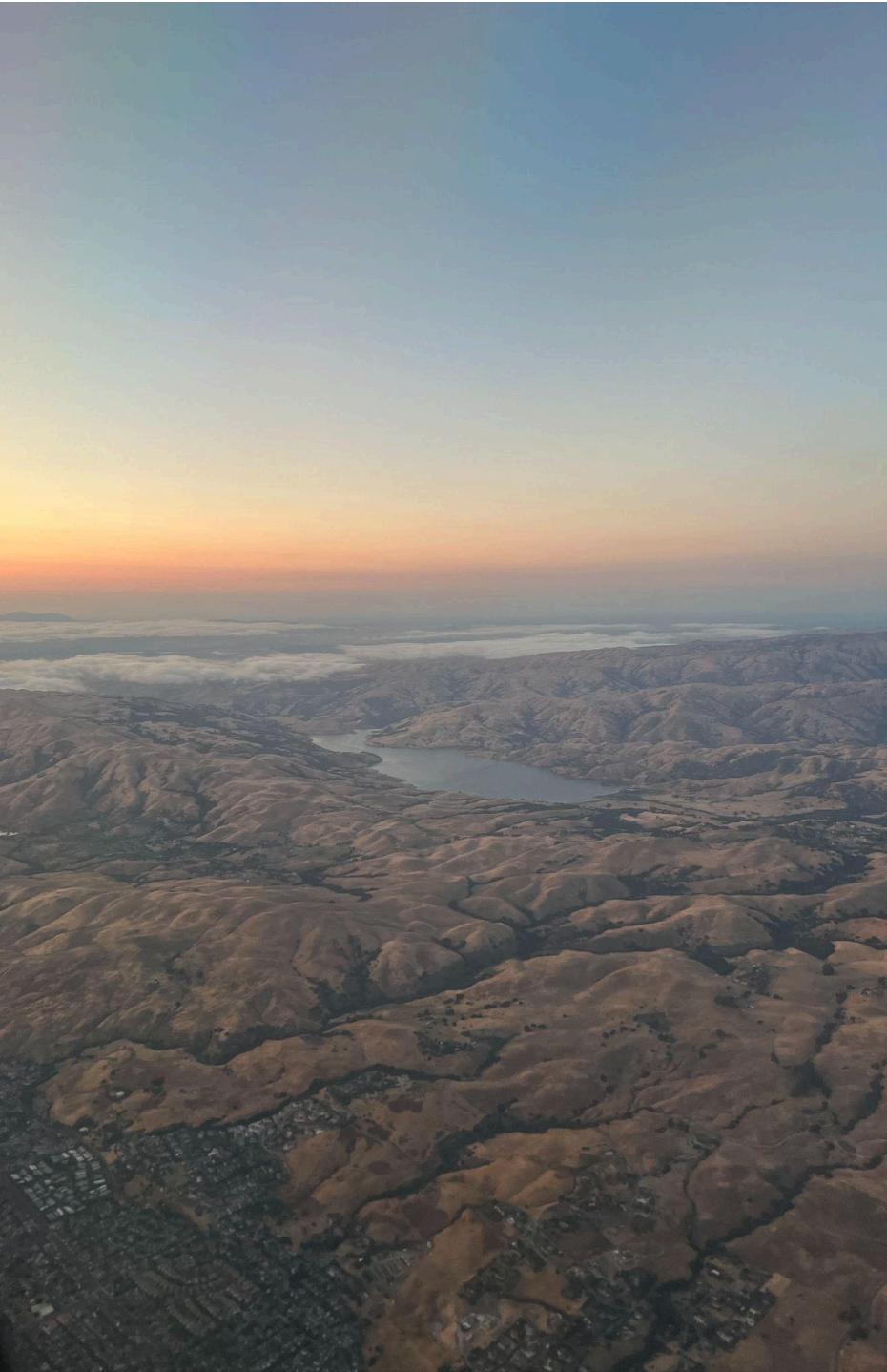
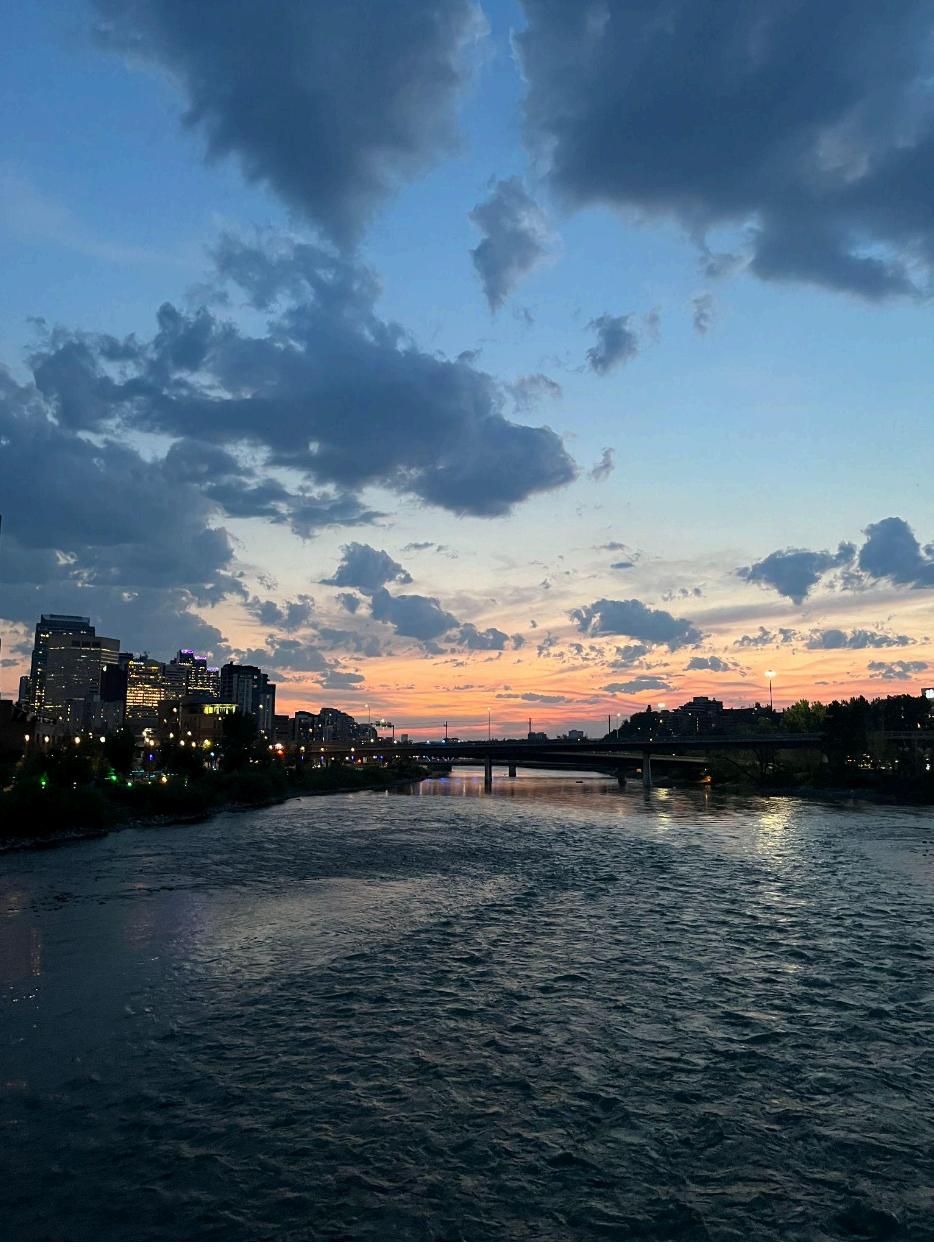
Witnessing the first breath of life, the last before death; “You are cancer free!”, “The cancer has returned;” “You are pregnant!”, “There is no longer a heartbeat;”
The scream of a mother echoing down the hallway as she brings new life into the world, the scream as she watches her child depart it.
Tears of joy in one patient’s room as their scan was clear, tears of sorrow in the next as the scan shows new metastasis;
The dichotomy of medicine - the best and the worst in life; What a privilege and honor it is to walk with people on the best and worst days of their lives
a panorama of my uninterrupted subconsciousness by muhammad mushahid hussain rizvi
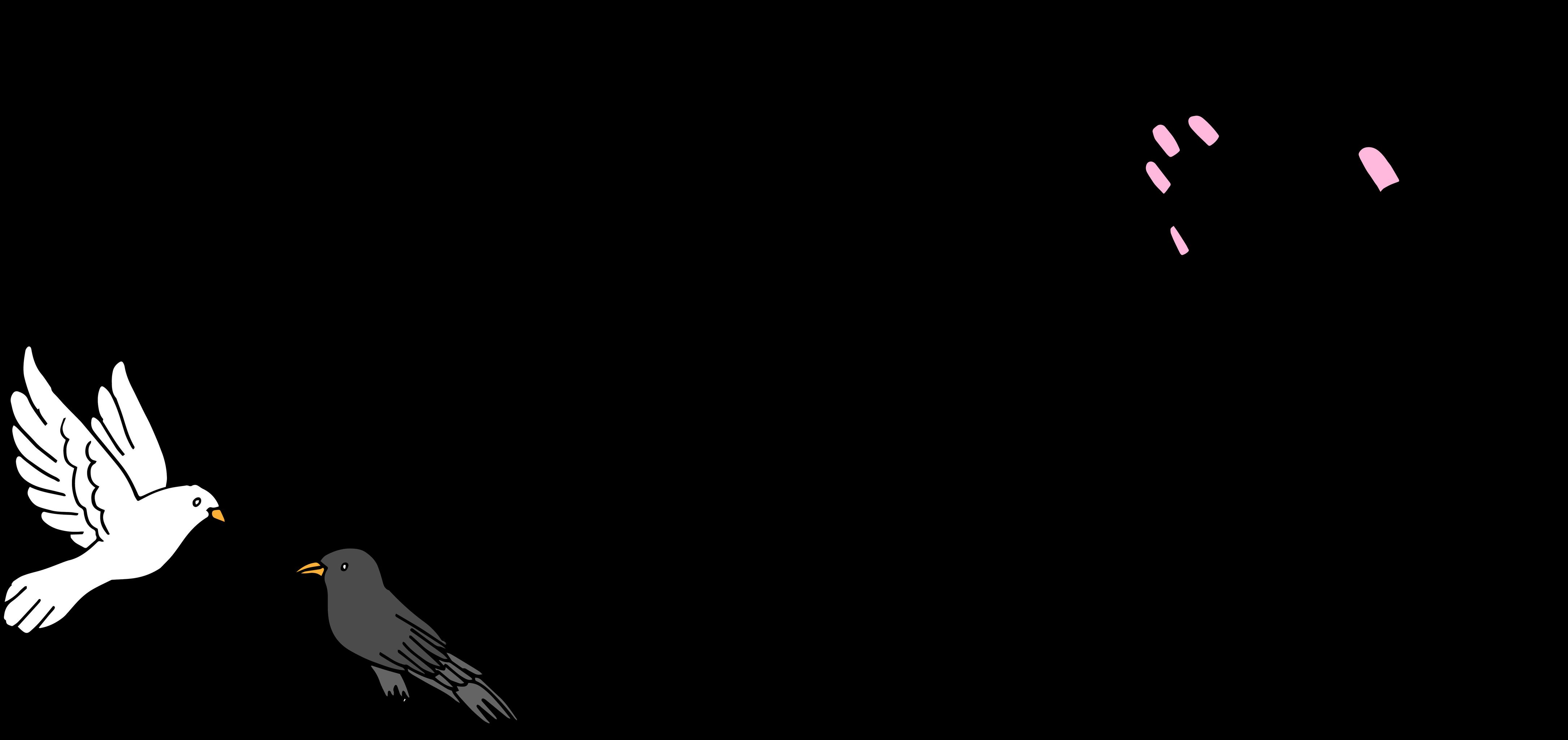
The speedboat gallops over the furious waves, racing off towards the dying sun, slashing the waves that foam in anger. A bullet of happiness fires away, A short-lived emotion of fleeting delight slips from your grasp.
Left stranded on the bleak shore, no means of escape, no salvation in sight.
The island of dread floats on my sea of subconsciousness, the wandering thoughts create ripples and waves, masking the gigantic ocean beneath, rendering me incapable of understanding the depth of my being.
I do see ships nearby, however, Rusting from despair and corroded by anguish, Flakes of iron stripping away from the hull, These boats seem ancient, and yet, They stand tall and persist, Unlike the racing boat for optimism that perished, and remains no more than a speck in my vast sky of consciousness.
A 'bullet' of happiness touches upon the short-lived nature of joy, a momentary glimpse that is barely discernible. The 'galloping speedboat' exemplifies positive emotions that are quick to pass. Failure seems to stay longer in our thoughts than successes (i.e. the rest of the ships in the harbour). Our inclination to dwell on the negative has been hard-wired into our brains well past the advent of computers, algorithms, and even the first wheel. It can be argued that it is dated back to our primitive ancestors, whose only purpose for living was to survive. Back then, human beings may have been as much a threat to other species as squirrels are to us today. With no sense of community or a haven, there's no time to keep an upbeat demeanour. Your view of the world tilts towards the negative entirely because it's preferable to misidentify an innocent animal in the wild as a threat. Better to be the hunter than the hunted. There's little room left for optimism or the benefit of the doubt. Fast forward hundreds of generations later, and we find ourselves occupied with the same mindset.
We must work harder to see the upside of things; it's mentally harder for people to convert losses to gains than vice versa. Bad tends to propagate itself. If someone snaps at you, you ' re likely to snap back at them, and you snap at the next guy too. We stew over a negative comment often the entire day, and yet, a compliment from someone would barely stay in our heads for a minute, assuming we ' re trusting them to be genuine in the first place. We can train our minds to be more innovative but lack the awareness to practise gratitude. The first step would be to ask yourself about what happened today that was good, and somewhere in the telling, you'll start to smile.
by riley latham
One unfortunate reality about starting medical school is that even if you ’ re genuinely service oriented, the demands of studying make it hard to do the kinds of volunteering that led you to study medicine in the first place Then again, maybe that was just the excuse I told myself when, after being in medical school for over a year, I realized I had only been using my time to serve myself One of my colleagues had been volunteering with a local hospice company and had inspiring things to say about his experience. Every week he told me how he would go to the patient’s home and tend to chores around the house and yard. That really wasn’t in the job description, but who's going to say no when a hospice patient asks for help planting flowers? Upon completion of the day's tasks he would sit and chat for hours with the patient and his wife about this and that. After his patient's passing he continued to visit his widow at her home, he wasn’t a volunteer at that point but now a friend. Reflecting on the depth of his experiences and the values that drew me towards medicine in the first place, I signed up, imagining myself in a similar relationship-centered role
The reality of my experience, however, turned out to be much different than I expected. I received my first patient assignment and was informed that she lived in a memory care facility, was in her late 80s, and had advanced Alzheimer's. Yard work was clearly off the table. I wasn't nervous about our initial meeting, at least not until I arrived at the facility for the first time. The receptionist buzzed me through the heavy locked door that separated the patients’ common area from the outside world. Inside there was a distinct smell, not necessarily a bad one but unique enough to make me brace myself before entering the building in the future I navigated my way towards the TV room where I would find her There were residents slumped awkwardly on benches lining the hall Some were asleep and breathing in loud gasps, and others stared blankly or mumbled rapidly to themselves while rocking gently. None of them seemed concerning to the friendly staff that were walking
around so I kept my course. Would my patient be in a similar state? If she was this withdrawn, I wondered how my presence would make any difference for her.
The Price is Right was blasting from one corner of the TV room, and in an arch around it were a few rows of residents in recliners. Most were asleep, some were watching the show, and some were holding a conversation with their sleeping neighbor Another sweet staff member pointed out my patient for me Martha wasn’t asleep, just sitting quietly with her hands folded in her lap and staring at the floor When I placed a hand on her arm she looked up with bright amber eyes and exclaimed “Oh, hi!” as if she hadn’t noticed there was anyone else in the room before. Her fine white hair was pulled back in a low short ponytail. She was very frail, but the crumbs lingering on her lap implied she had a decent appetite. The stimulation of being addressed had brought a lovely expression to her face, which was bright and glowing with excitement. I pulled up a chair next to hers and settled in to find out what our time would look like. Questions about her past didn’t spark much conversation from her She attempted to answer my questions about her family and life growing up but only had vague ideas that came after long silences Her responses were never lon-
The stimulation of being addressed had brought a lovely expression to her face, which was bright and glowing with excitement.
by riley latham
-ger than a few words, and occasionally you could see the instance a thought escaped her. She never looked at me when we talked, instead she would shift her weight in my direction and look off into space as my questions came
Having learned close to nothing about her through questions, I gave up my investigative efforts and decided to switch tactics “Look Martha, our nails match ” I took one of her hands in mine and held our fingers out to display our pink nails. She let out a soft chuckle before bringing her hands together to sandwich mine. “Oh, your hands are so warm. So warm. ” I hadn’t yet recovered from this, her longest sentence yet, before I was surprised again. Lifting my hand, she kissed it with the smallest mwah before resting her cheek against it and slowly closing her eyes. I turned my head to blink away the swelling tears, relieved to have found a way to be helpful to her.
“Look Martha, our nails match.” I took one of her hands in mine and held our fingers out to display our pink nails.
We spent many afternoons that way. I would wipe her hands and face clean, then sit and hold her hand while Golden Girls or an old western played It was always apparent that she didn’t recognize me from the previous week, however, every week she was blissfully content to have a friendly presence to pass the time with If you asked her something personal, odds are you'd have no luck, but if you talked about lunch or the weather you could get a sentence or two out. Martha liked to
comment on the price of groceries, and there were days where she told me my hands were warm about a dozen times. Every now and then a care tech would wheel her away to change her. Her reactions to this ranged from looking to me to defend her against tyranny to confessing love for the tech Sometimes when I started saying goodbye she would say “Oh, stay five more minutes?” I’d sit back down, and five minutes later she’d ask for another five minutes.
One week Martha was acting differently. She was restless, constantly fidgeting with her blanket and trying to get out of her chair. She refused my hand because she couldn’t sit still. I assumed this was heralding a decline, but I didn’t think it would escalate as quickly as it did. A few days later the coordinator texted me with news that they were expecting her to pass in the coming days. I wanted to give her family space to be with her, so when my usual visit time came I called the facility to make sure the family wasn’t at her bedside They weren’t, so I went to see her for the last time As the nurse showed me to her room, she told me that Martha was actively transitioning and that it could be any moment now The walls of her room were bare, there was a large window but the curtains were drawn. The only furniture was a small bedside table which held a few family pictures, and a twin sized bed which held Martha. Her elbows were drawn into her sides with her hands half curled into fists over her chest. Her neck lay slightly extended against a soft pile of pillows, leaving her eyes half open in a quiet stillness. Every ten seconds or so she would steal a sudden breath through her gaping mouth before becoming still again. As I pulled up a chair at her side the nurse repeated that her passing was imminent After she left the room I allowed myself to feel the rollercoaster of emotions
For the first 20 minutes I was a tearful, sniveling train wreck as I held her manicured hands and told her I was there. I pulled up the covers to keep her hands warm she always hated being cold. I said
stranger at bedside co by
riley latham
a prayer for her and fo played her favorite ba to think of what I would bedside. Each breath couldn’t look away fro absent for her final m and humbling to me th strangers we were alon
These were the last h of life and they consist person they never kne intermittent waterwork going to pass away even that night. I was f of leaving her. After p could I finally faced h ok,” I squeaked, “You’re need.” Then I gave he squeeze before tuckin and rushing outside to
Two days later the vol me of her passing A time they were full of r offer Martha other tha presence. That didn’ anatomical knowledg could’ve gotten it fro didn’t need medicine needed another human
preclinical landscapes by
syed abbas moazzam kazmi, mbbs
Otolaryngology, Head and Neck Surgery
Syed Abbas Moazzam Kazmi is an otolaryngology clinical research fellow in Karachi, Pakistan, whose creative work ranges from drawings of animals, trees,
and people, to prose about the sea, weaving in themes of nostalgia and childhood memories He uses art and writing to quietly archive fleeting moments, soften the edges of everyday life, and stay connected to the people and places that have shapedhim.
syedabbas24@alumniakuedu linkedincom/in/syed-abbas-moazzam-kazmi-7701b125b/
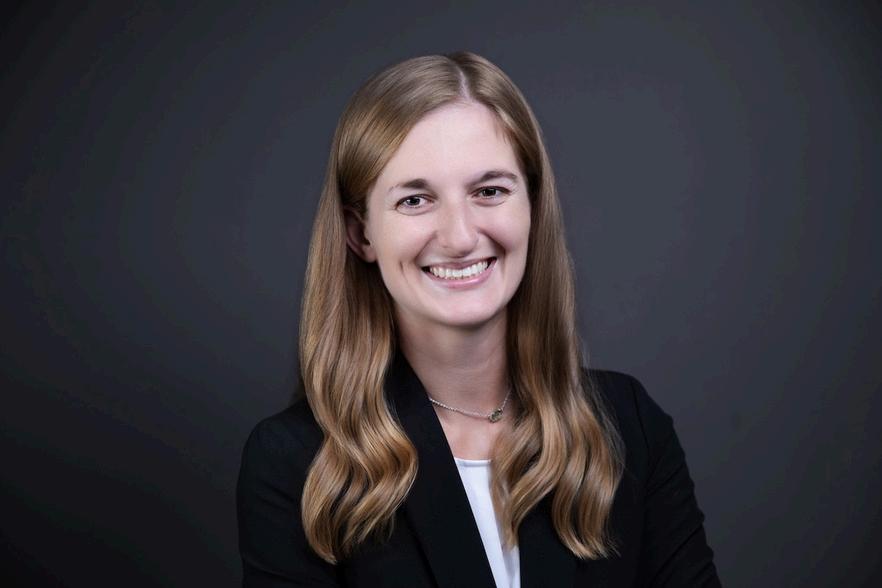
meghan acheson
Internal Medicine, Hematology/ Oncology
Meghan is a fourth year medical student at Emory University School of Medicine in Atlanta, GA. She is currently applying to Internal Medicine residency and is
interested in pursuing a career in Hematology/Oncology meghan acheson@emory edu
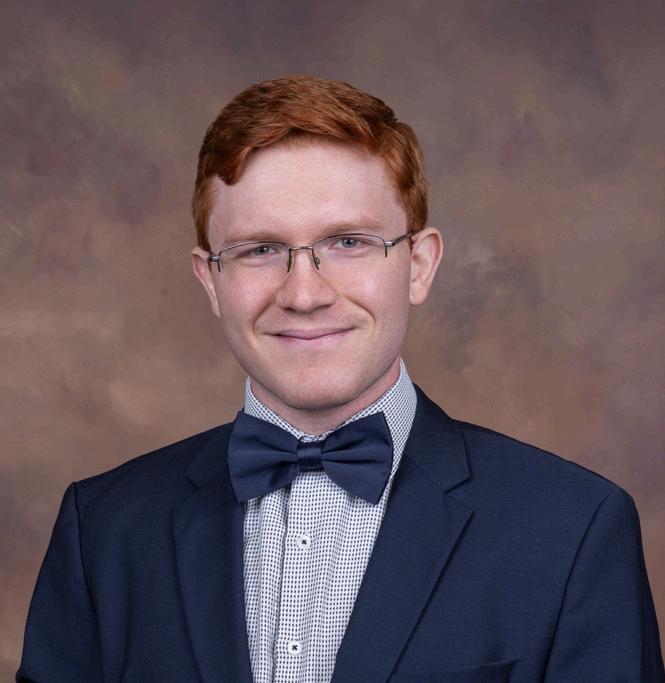
jordan davis Internal Medicine
I am a first-generation medical student from Georgia, and I have worked my whole life to be like the physician who inspired me to pursue this career I am involved with student
government and advocacy and love to find ways of incorporating my art into my role as a future physician davisjordan214@gmail com IG: coffeestained drawings66
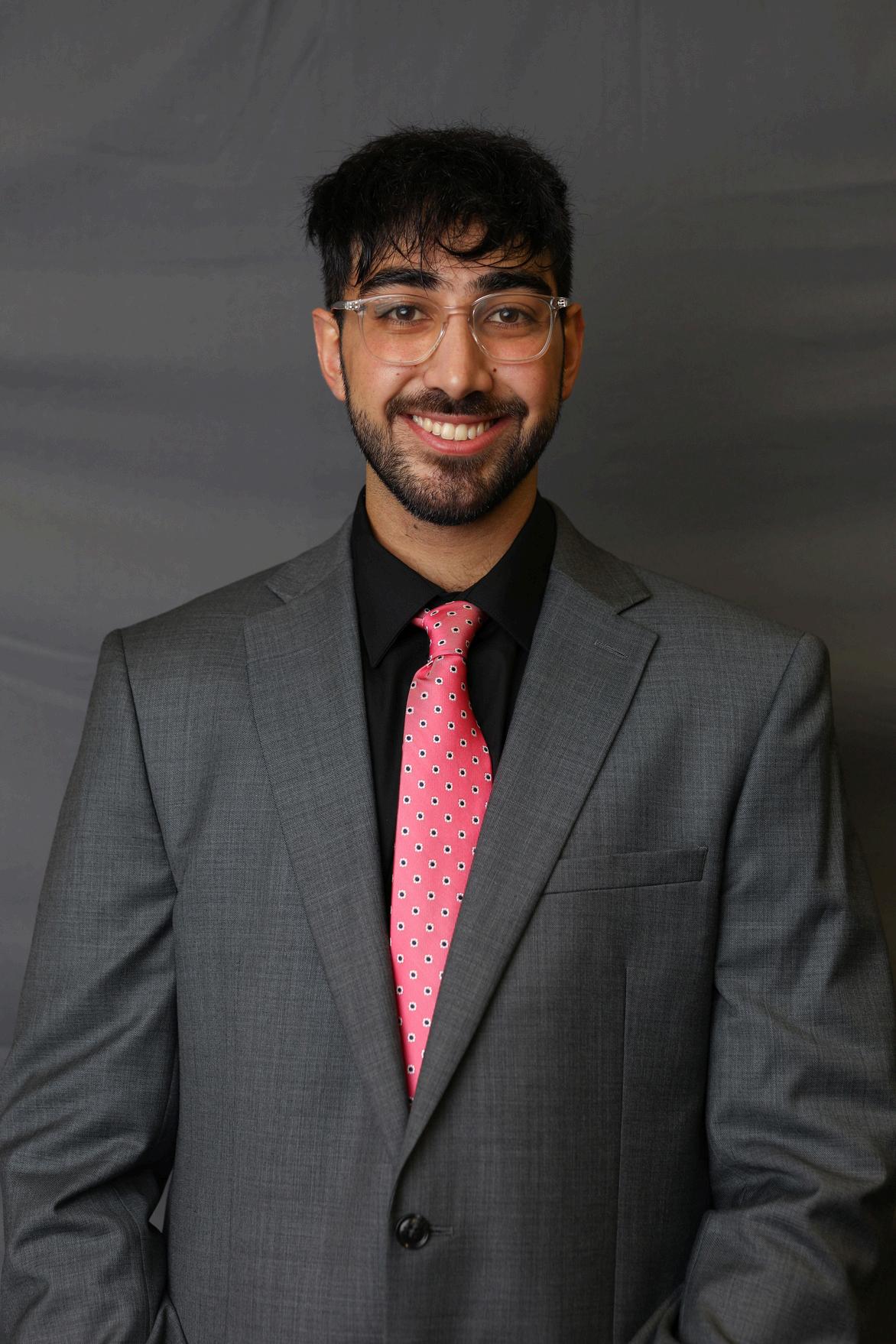
aiden gannon
Psychiatry or Radiation Oncology
The unique curriculum as a Texas A&M AIM student has come with its fair share of struggles but it has also helped me grow as a future physician and as a young man and person. I don't want to
lose sight of the passion, humor, and fun I have with medicine throughoutmycareer aidengannon@tamu.edu
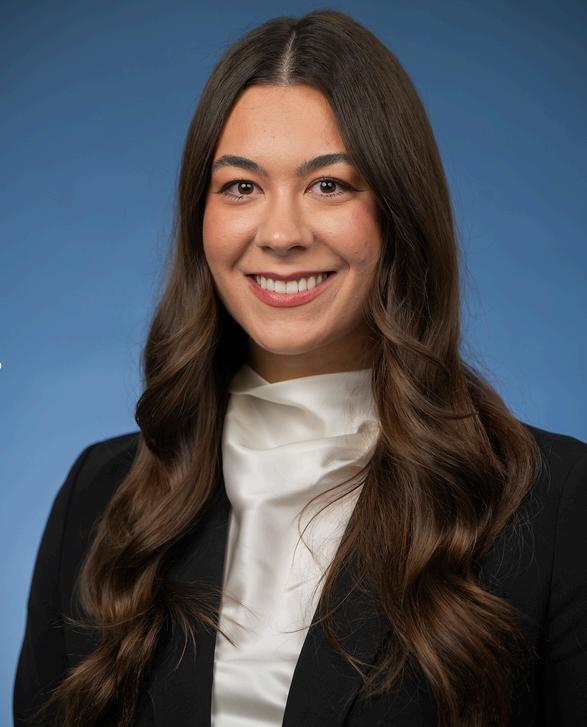
maria krakora, ms
Maria Krakora is a Pittsburgh native and fourth-year medical student pursuing Diagnostic and Interventional Radiology She studied studio arts in college and explores the relationship
between art and medicine through painting, drawing, sculpture, and intaglio print making.
mkrakora93694@med lecom edu IG: mariakrakora
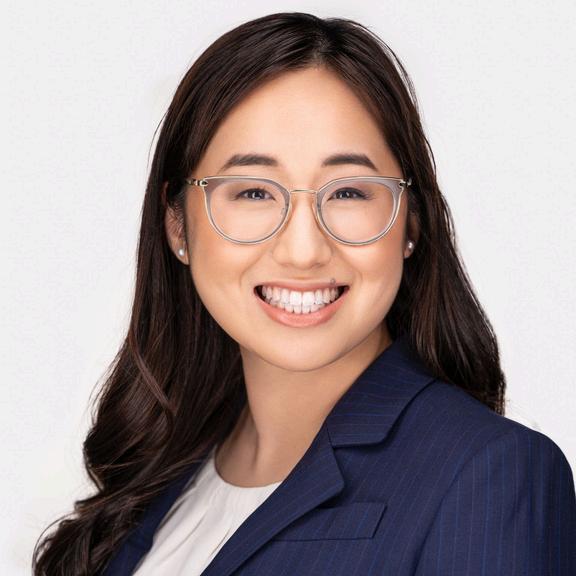
robyn.guo@duke.edu
robyn g. ku
Dermatology
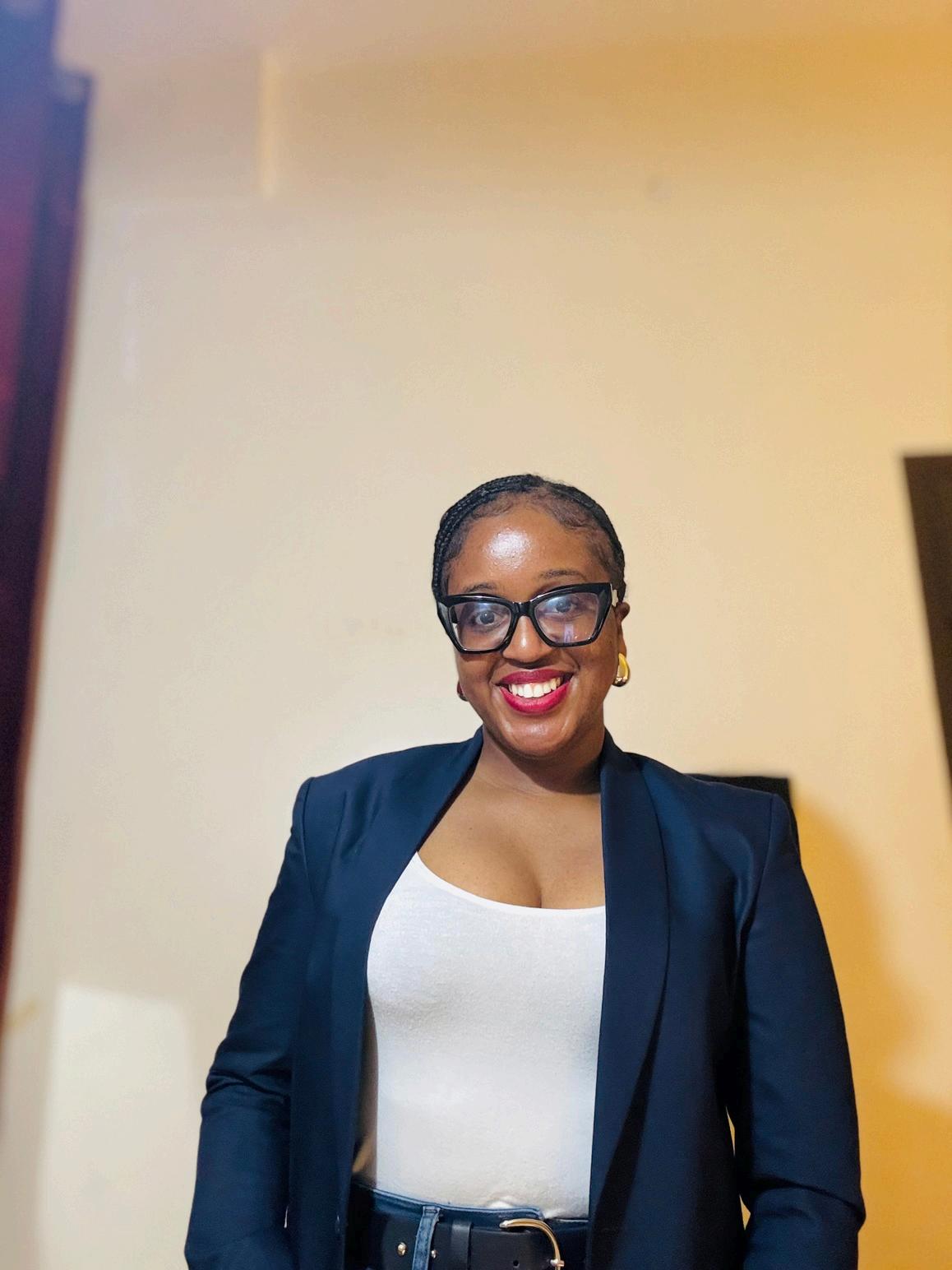
Robyn G. Ku is a fourth-year medical student at Duke interested in the intersection of art, wellness, and community health
Vascular and Interventional Radiology levina kulembeka, md
Global Health, Family Medicine
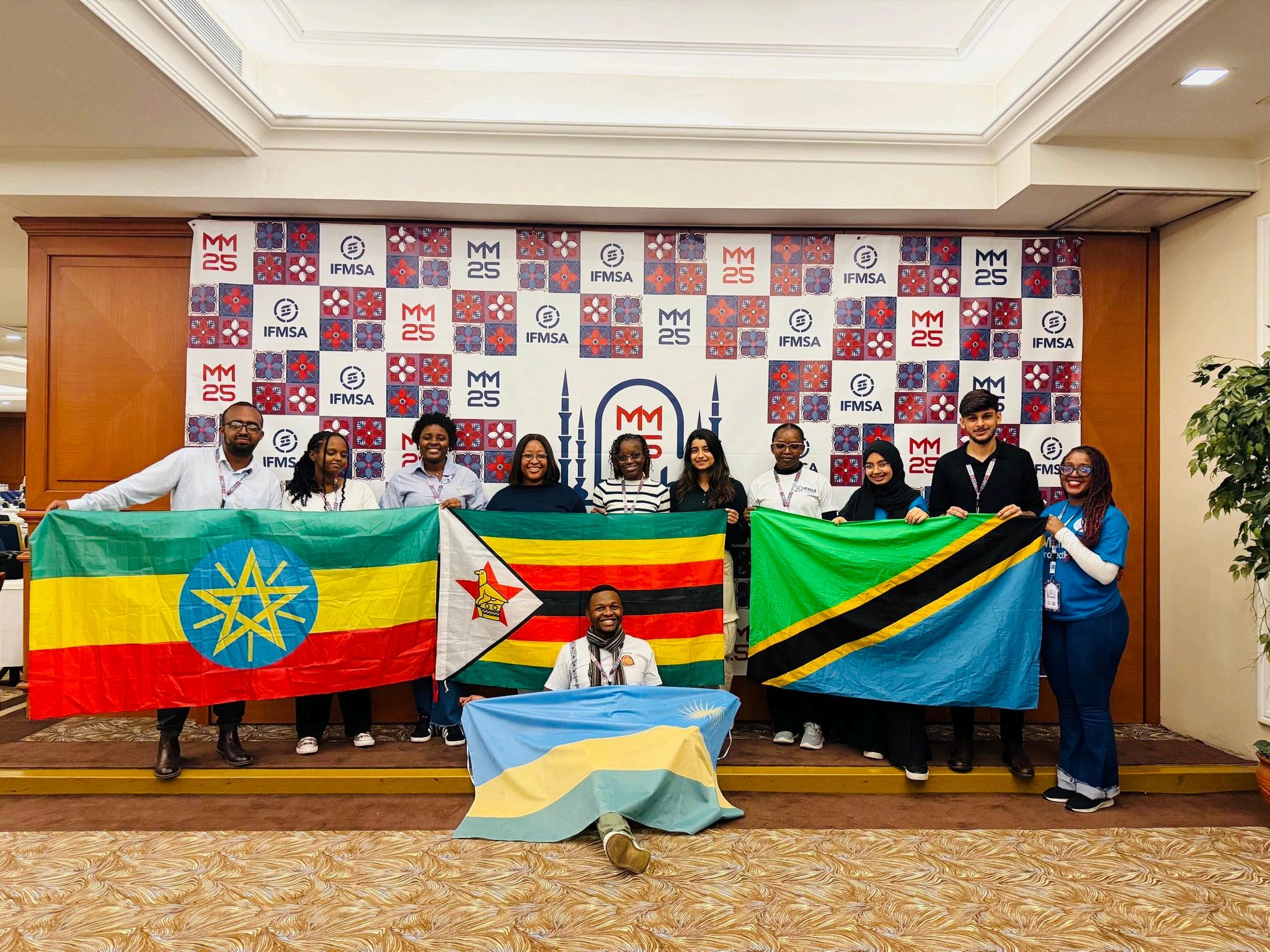
My name is Levina Kulembeka, a Medical Doctor from Tanzania passionate about global health, health advocacy and leadership.
levinakulembeka@gmail com
IG: levina hk
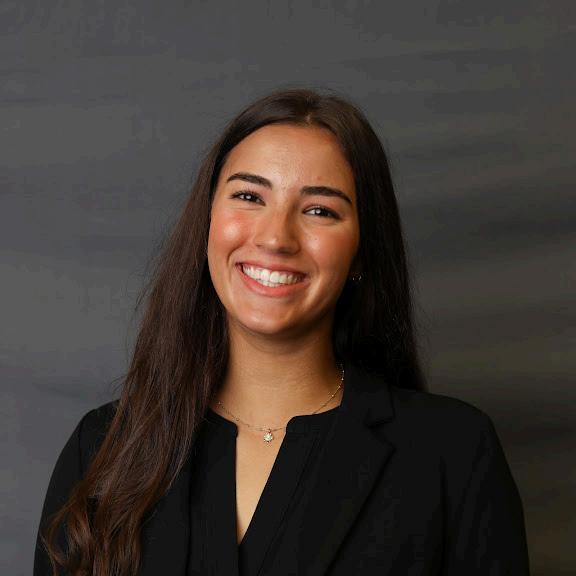
lathamrl@tamu edu
riley latham Family Medicine
I'm a third year medical student at Texas A&M University. I grew up in a small town in East Texas and hope to practice full scope family medicine thereafterresidency
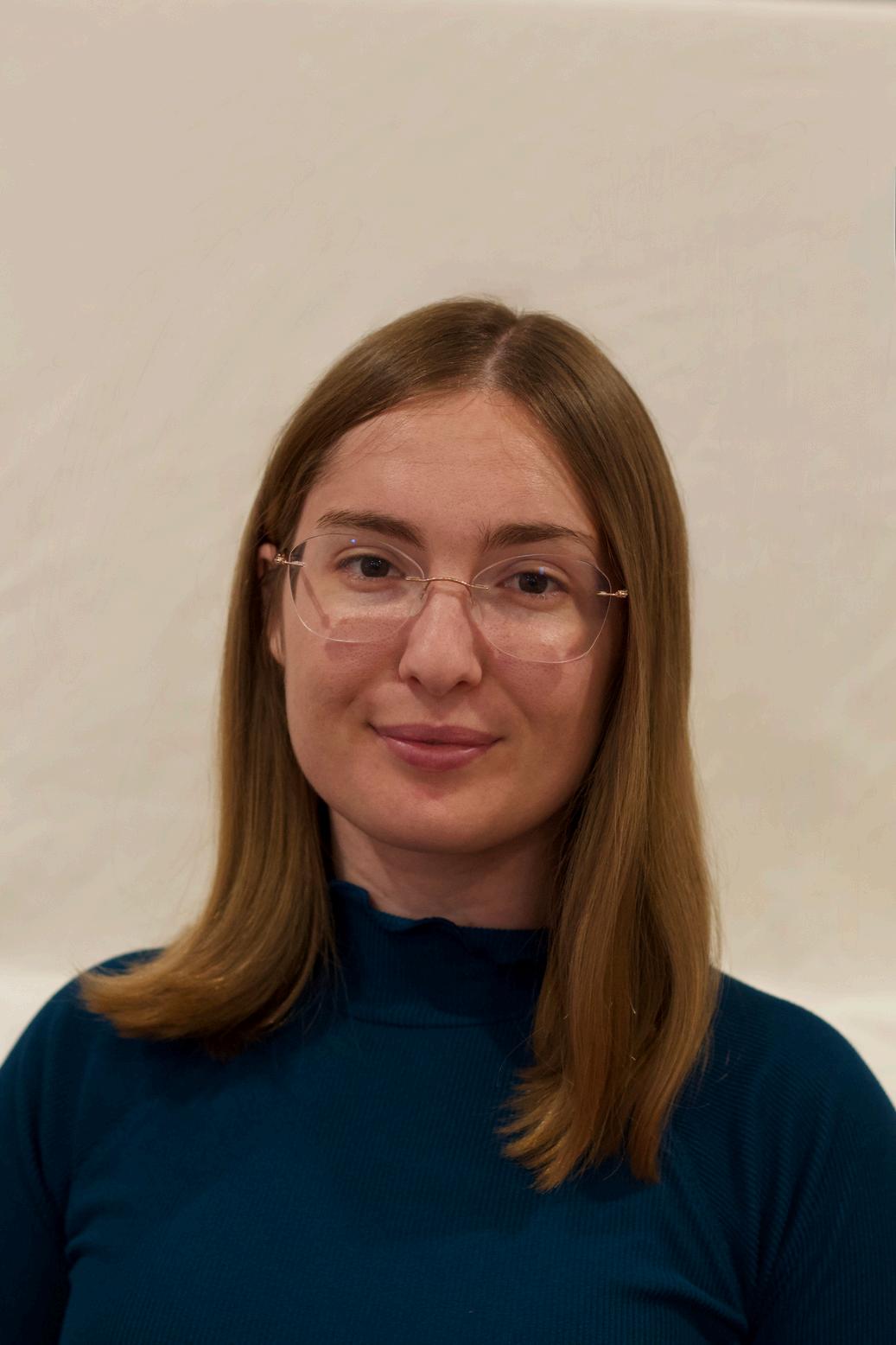
Pediatrics
My name is Lindsey Lofgren and I am an OMS-II from Arizona I use poetry as a way to make sense of the world around me and to remain grounded amid the whirlwind of medical life.
sa214394@atsu edu
IG: hippolover32
ICG,orMethyleneblue
Anesthesiology
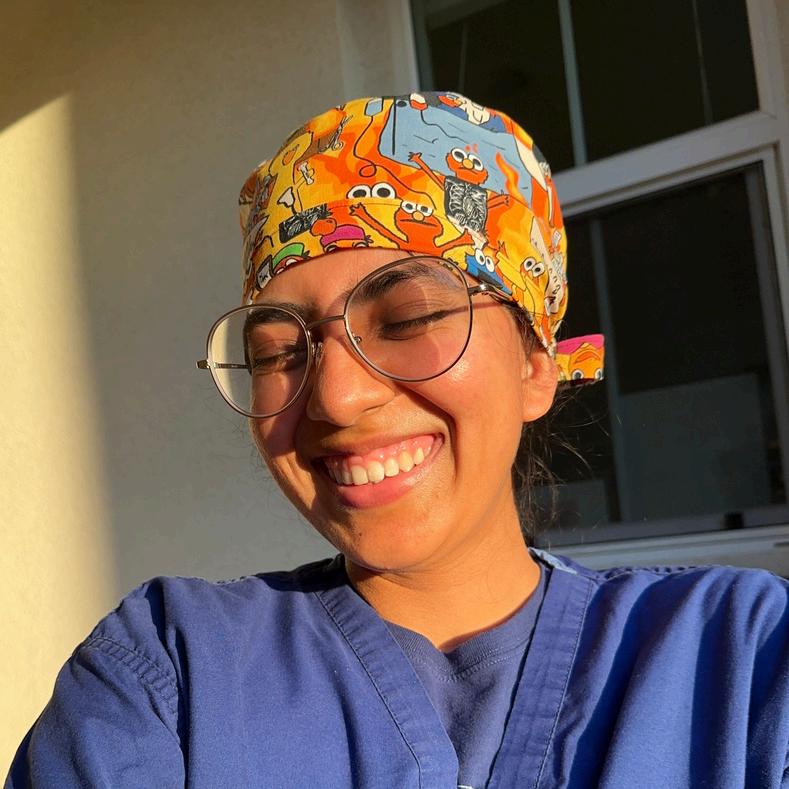
Sumana Mahata is an anesthesia resident who incorporates art into her practice through designing and sewing scrub caps and drawing in the OR, often with leftover dyes (think Fluorescein,
sumanamahata@gmailcom
IG:hodgepodgebricolage andmakingart
IG:rooshdoesart
physical medicine & rehabilitation
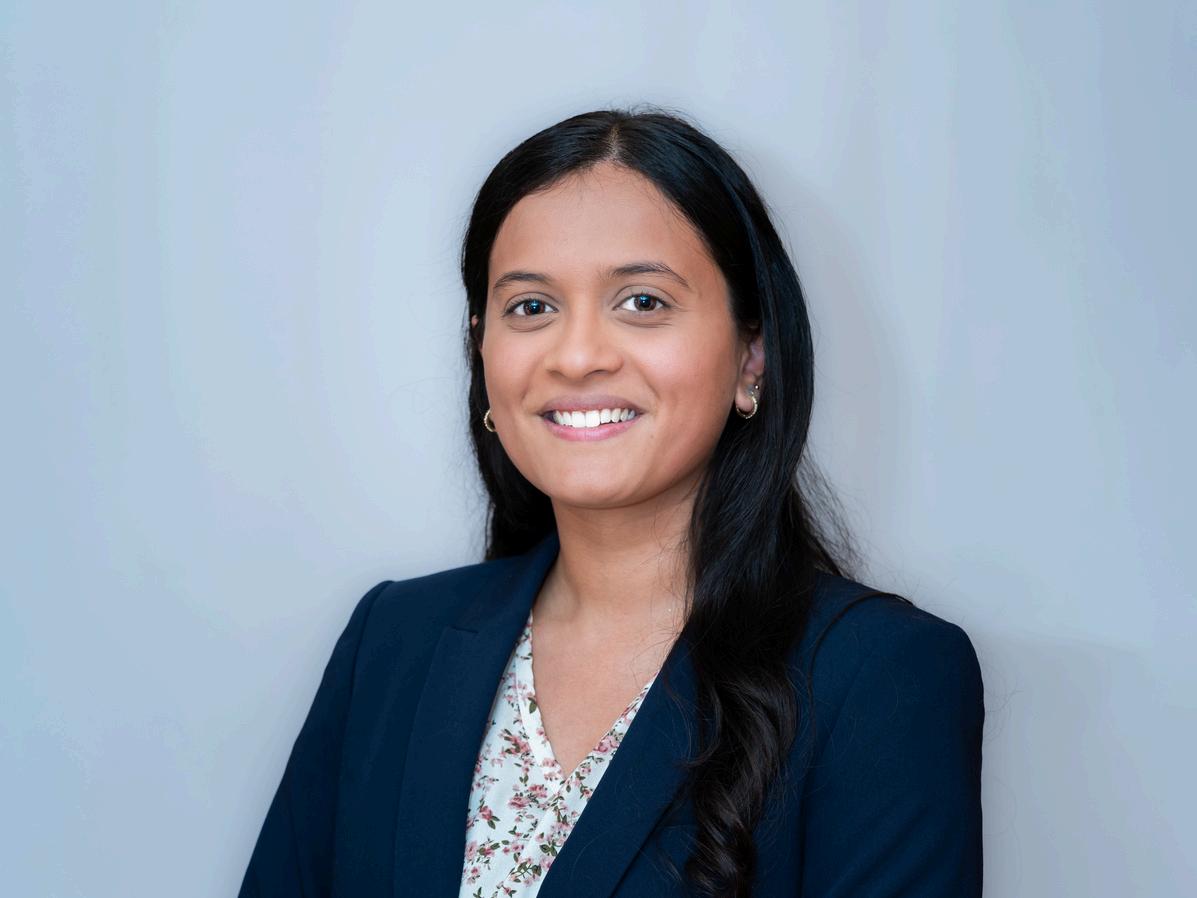
Roosha (she/her/hers) is a current PGY1 PM&R resident in NYC and previous Creative Writing major in college s a ding
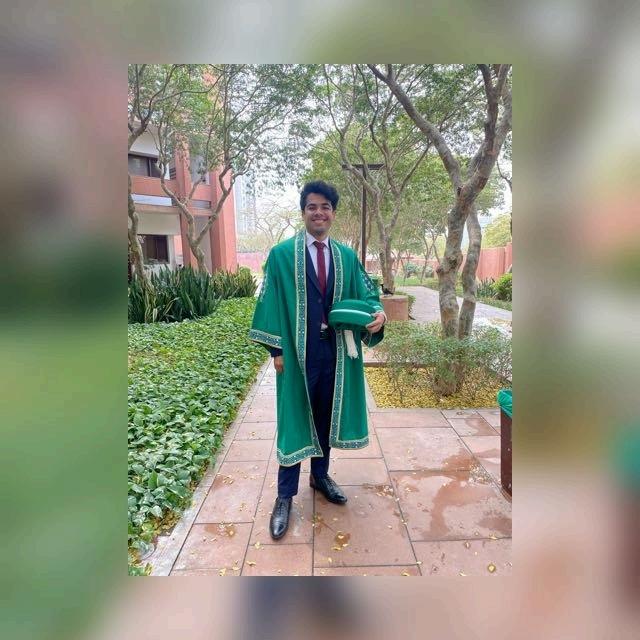
Mushahid, a surgery aspirant Love to box, play cricket, squash and a few more sports. Huge fan of Muhammad Ali, the heavyweight champion Graduated from
fthe Aga Khan University, Karachi, Pakistan, 2024. mushahidhussain1966@gmail com
IG: charcoal fable
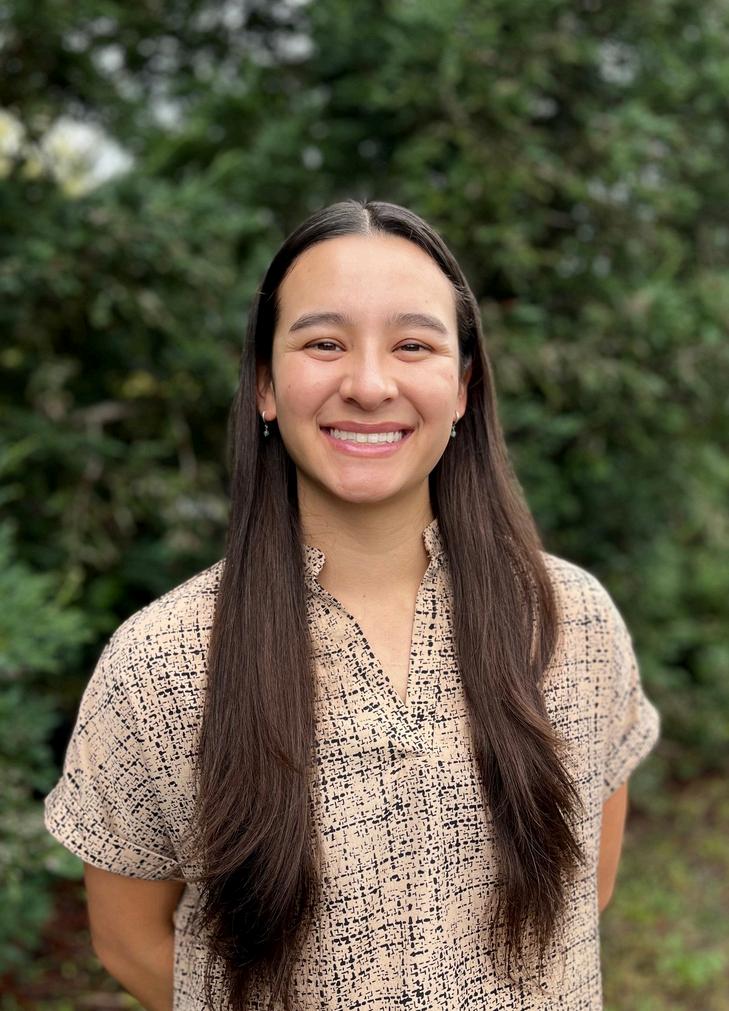
Manda Nguyen-Sanh is from Sacramento, California and is currently an OMS2 at Touro University California She started writing poetry in medical school as a coping mechanism and then
quickly fell in love with it for all kinds of other reasons, including just finding it fun In her free time, Manda likes to spend time in the sun, bother her cat, and write Yelp reviews.
manda.nguyensanh@gmail.com
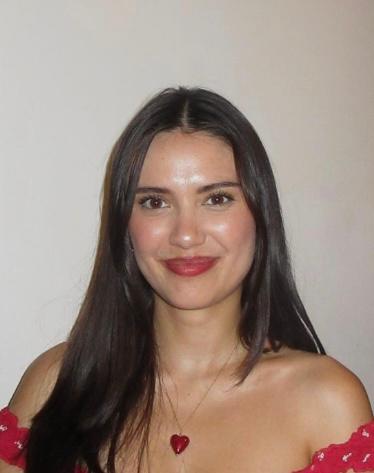
Pediatrics
anatomical paintings and medical illustrations
Claire is a Second Year Medical Student at the University of Warwick (UK) Her previous degree in Architecture lives on throughout her medical degree, as she continues to draw, producing
claire2orr@gmail.com linkedin.com/in/claire-orr-5a5920247/
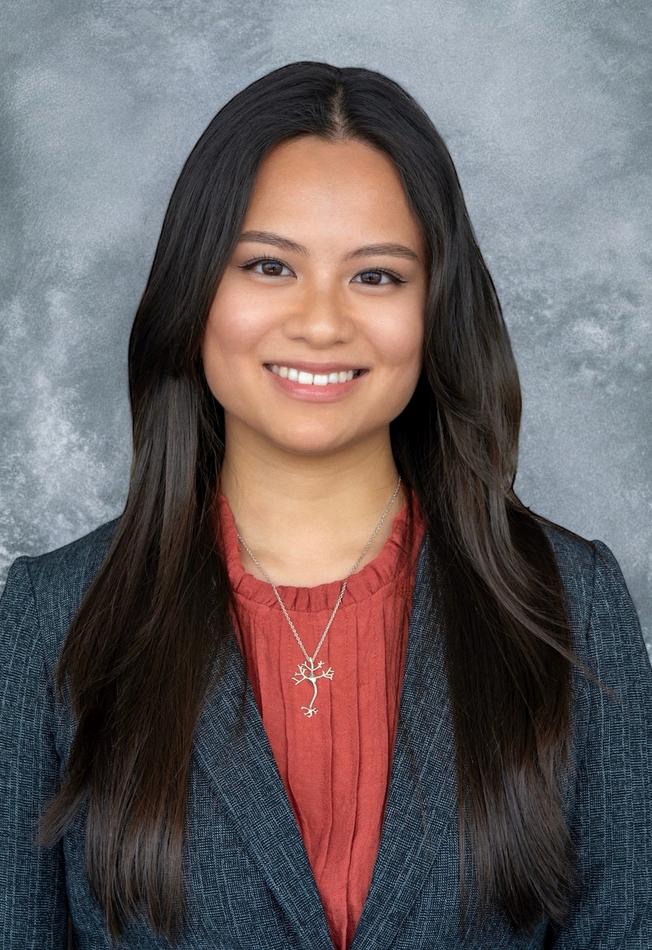
Originally from Toronto, Canada, Marthena is a fourth-year medical student at Florida International University Herbert Wertheim College of Medicine in Miami and an aspiring child
neurologist Since writing is a lifelong passion of hers, Marthena is also pursuing a career as a physician-writer and hopes to publish a novel in the future
mphan013@fiu edu
IG: marthenaphan
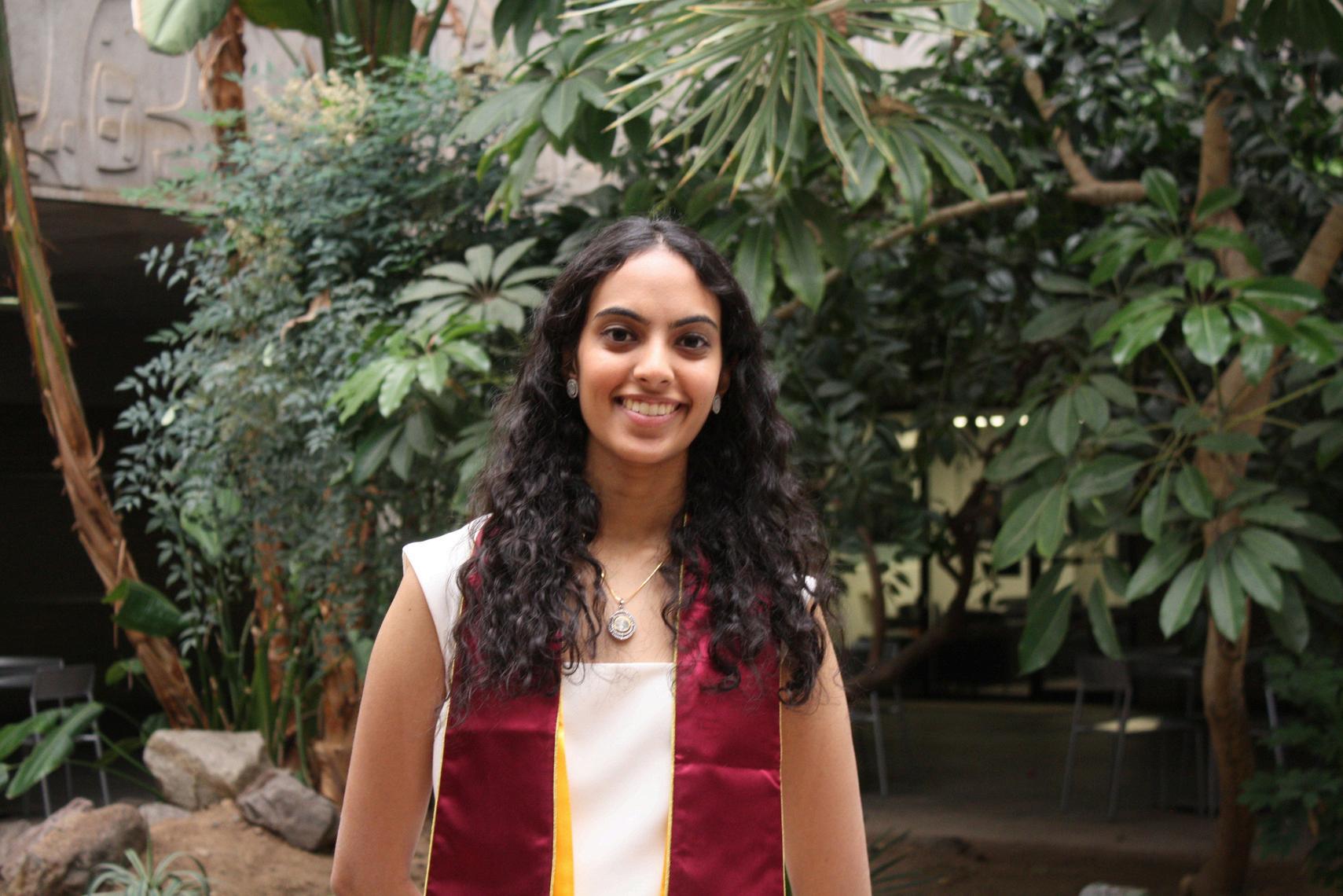
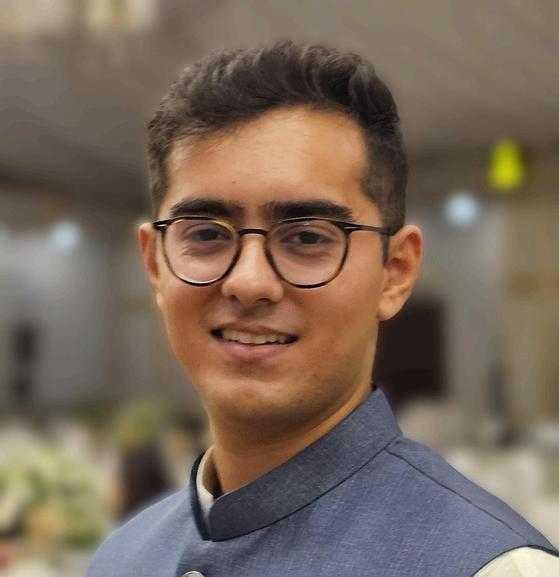
Nisha is a first-year medical student at the University of Toledo College of Medicine and Life Sciences Originally from Phoenix, Arizona, she graduated from Barrett, The Honors College at nisha reddy Internal Medicine
sionate about the arts, semi-classical dance, s to continue exploring these creative pursuits throughout medical school.
nisha.reddy@rockets.utoledo.edu IG: nisha r03
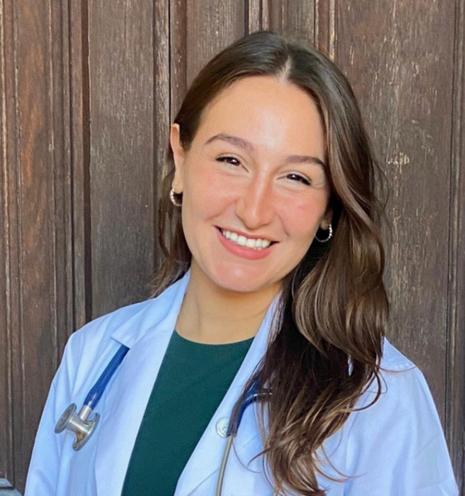
jenelle safadi, md Ophthalmology
Jenelleisaresidentphysicianwhoenjoys exploring the intersection of art and medicine She shoots 35mm film and her photos have been featured in multiple localartshowsandstudentmagazines
drresident.pr@gmail.com Tiktok:doctorresident
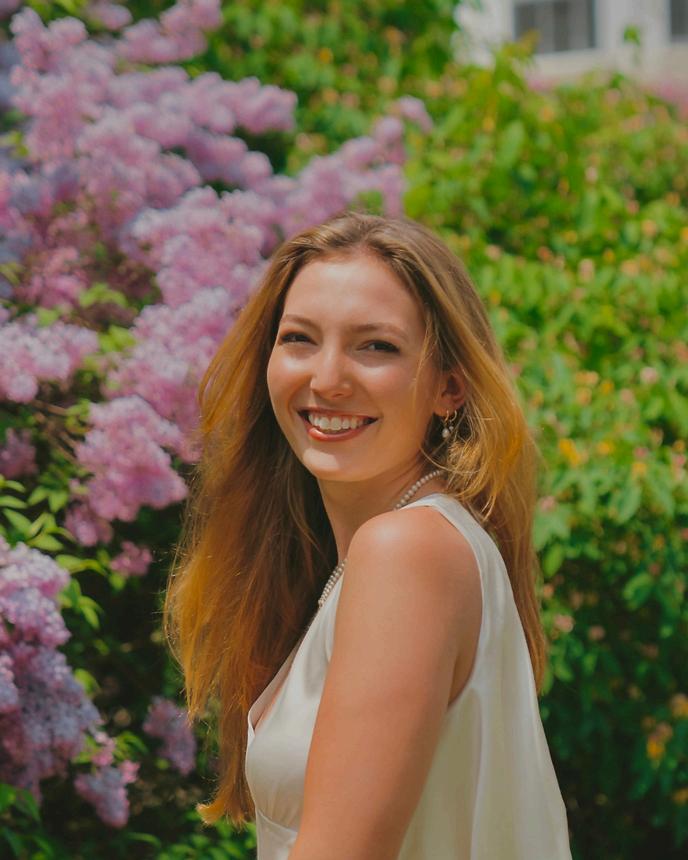
krista schemitsch Undecided
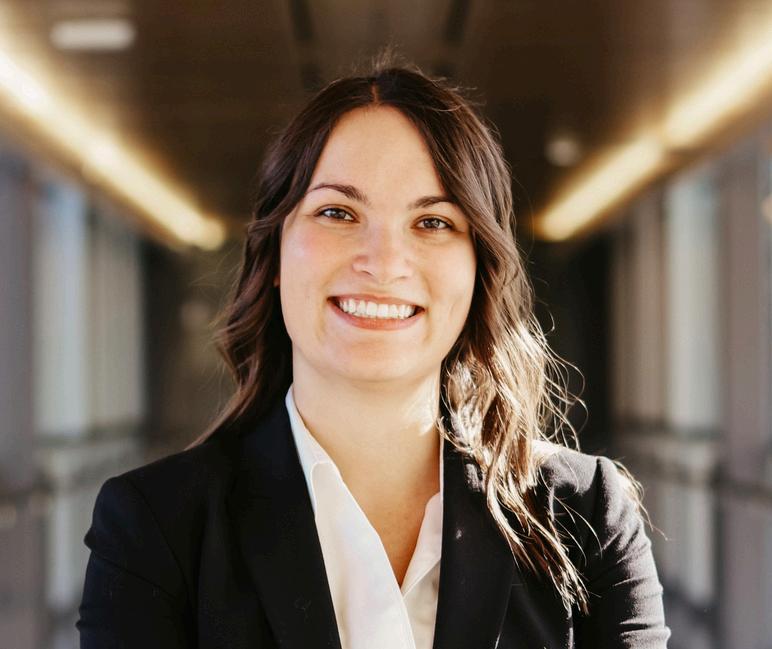
jacinta specht, md, msc Diagnostic Radiology
Jacinta Specht is a 1st year Diagnostic Radiology resident physician at the University of Alberta in Edmonton, Canada who is passionate about imaging, martial arts, neuroscience and
hiking the Rocky Mountains with her dog, Rush In 2020, she foundedf acintaspechtart com to create graphite, acrylic and digital art which has led to projects with prominent mixed martial arts fighters.
jacintaspechtart@gmail.com IG: jspechtart
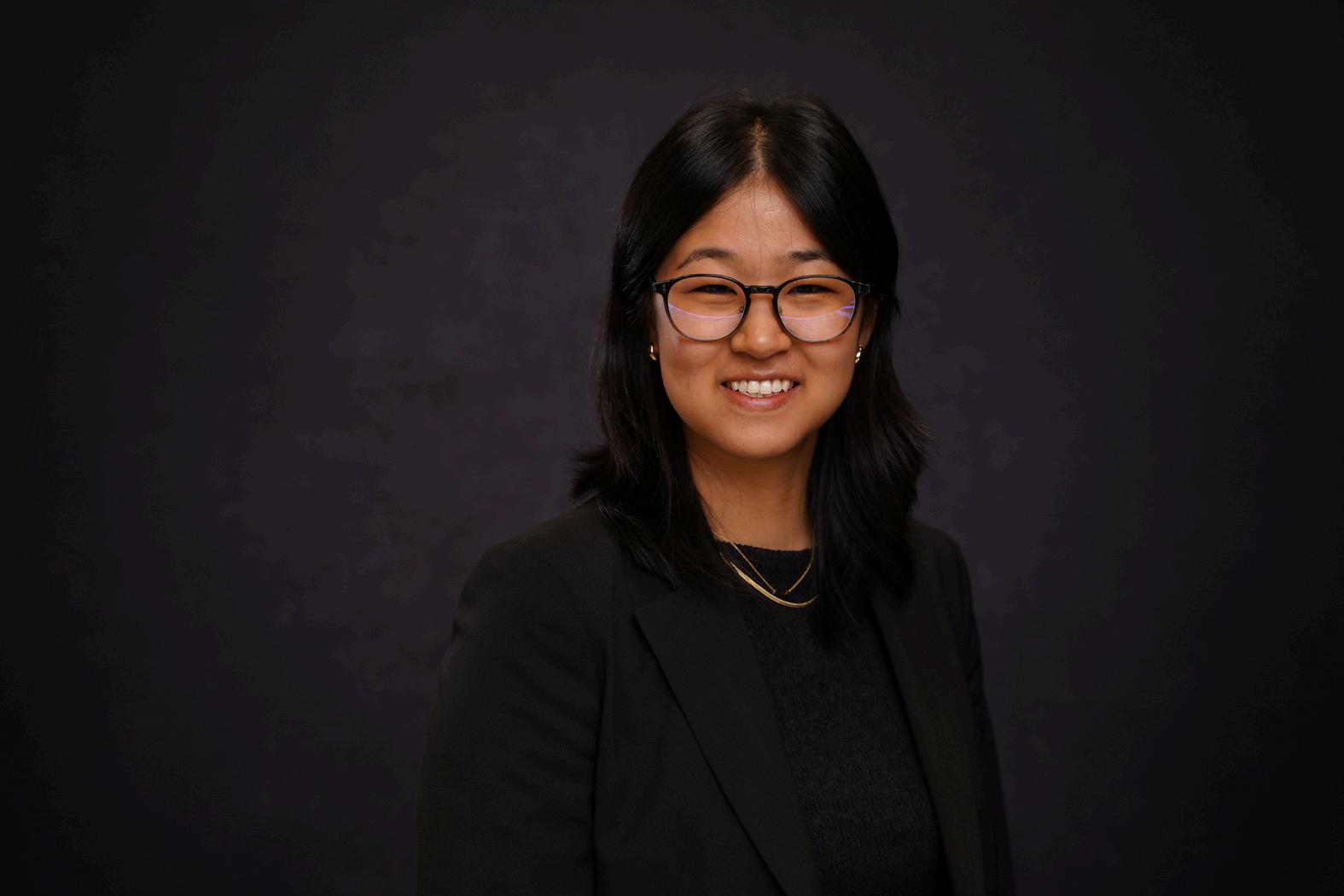
ne zheng, ma sychiatry
edical student at Georgetown d in how medicine can m both patient and physician, through the intimate depth of ric care or the surgical precision
of ENT. Outside of medicine, I'm a passionate collector of cookbooks and kitchen gadgets and an equally passionate orderer of takeout! wz287@georgetown edu
Krista Schemitsch is a first-year medical student at Penn State College of Medicine and an artist who uses her experimental photography and drawing practice as a form of research into the
human condition. She studied Studio Art at Dartmouth College, where she began to examine the intersections of the body, perception,andhealing
kschemitsch@pennstatehealth psu edu kristaschemitsch.wordpress.com
Anesthesiology University of British Columbia Anesthesiology ines zuna@gmail com
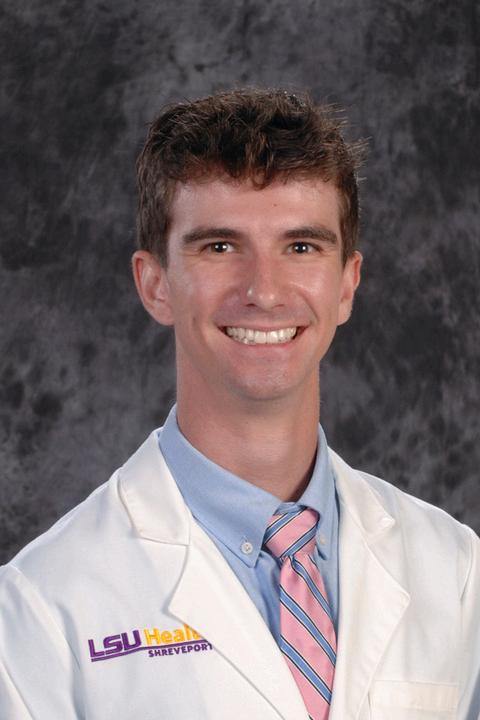
parker smith ENT, Facial Plastics
IwasbornintheUK,grewupinLouisiana, lived in California and Tennessee before starting medical school at LSU Heath Shreveport Istartedpaintingasawayto expresstheuniquebeautyofmedicine
andcapturetheintenseandfascinatingshapes,colors,andideas ofthemedicalworld.
pjs002@lsuhs.edu elparko com