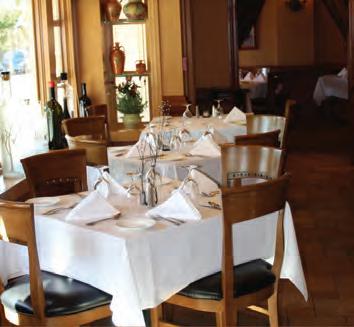
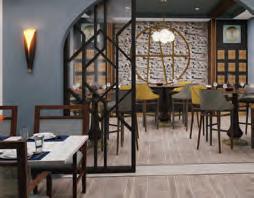
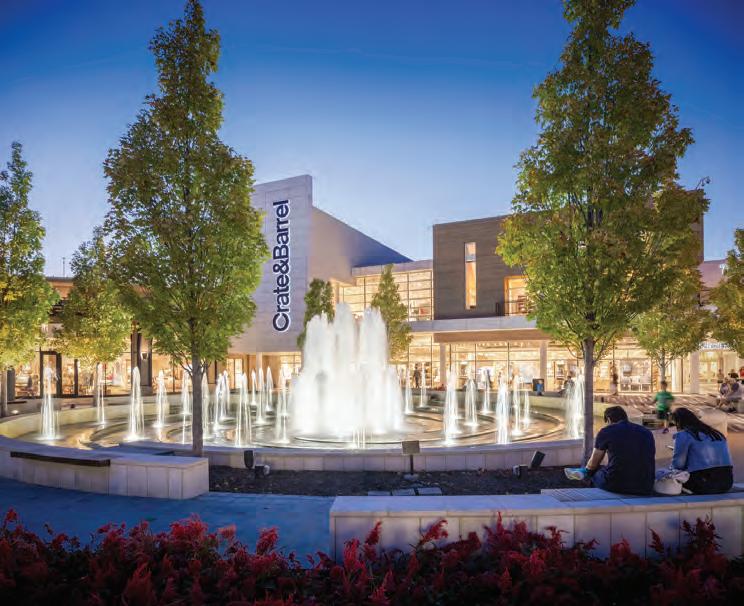
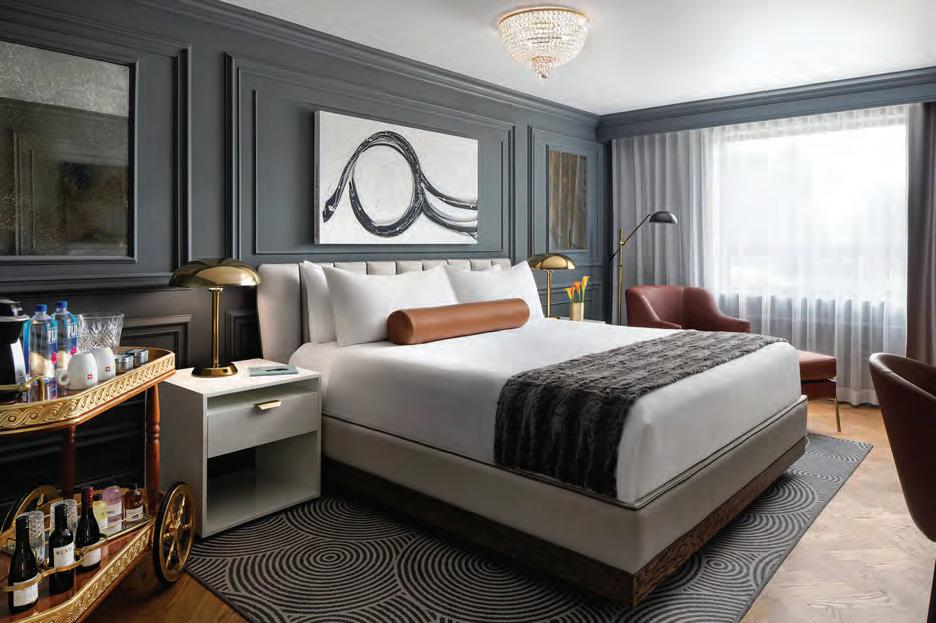
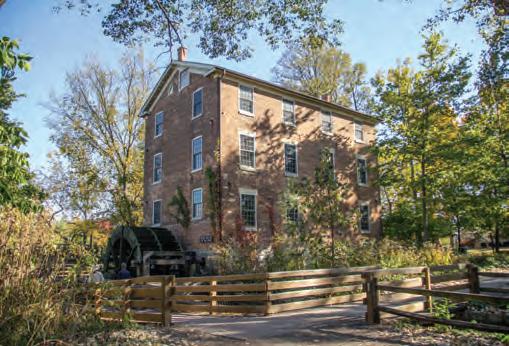
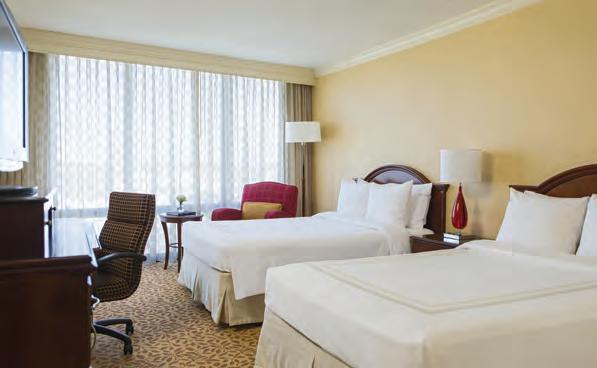
Experience the award-winning Italian restaurant, serving a culinary voyage of classic proportions. The restaurant offers a menu of trend-setting fare, including fresh fish, veal, chicken, award winning steaks and of course, our delicious pastas. Roberto’s Ristorante radiates a Tuscan atmosphere, compliments of its warm decor and impeccable service.
Creating Reality.
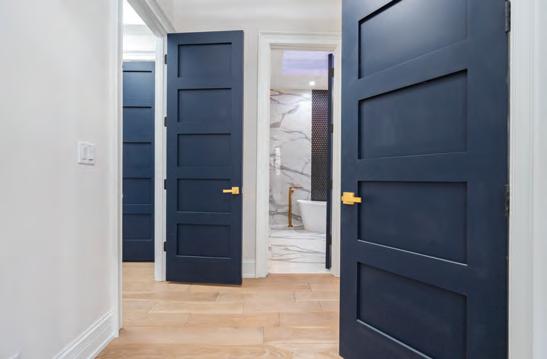
At Craftwood Products, we take pride in the work that we do and the results speak for themselves. We owe our loyal customer base and our reputation to our experienced sta . They understand that home design projects do not sit well with a one-size-fits-all approach and work individually with each customer to understand the requirements of their home and meet the same while ticking all the boxes of comfort, safety, uniqueness, and aesthetics.
Learn how the DuPage Community Transformation Partnership (DCTP) has already impacted more than 230,000 lives in DuPage County.
We’re supporting local nonprofits addressing four key areas: FOOD INSECURITY MENTAL HEALTH
The results so far are remarkable.
Watch our Interim Impact Report videos to see how this collaborative partnership, fueled by American Rescue Plan Act (ARPA) funds, has awarded more than $10 million in grants and is transforming lives across our community.
WAt Home in Elmhurst
elcome to the March 2026 edition of Elmhurst Magazine. This issue highlights the many ways home, community, and personal legacy are connected in Elmhurst.
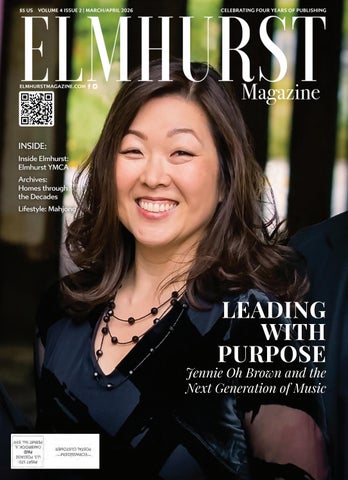
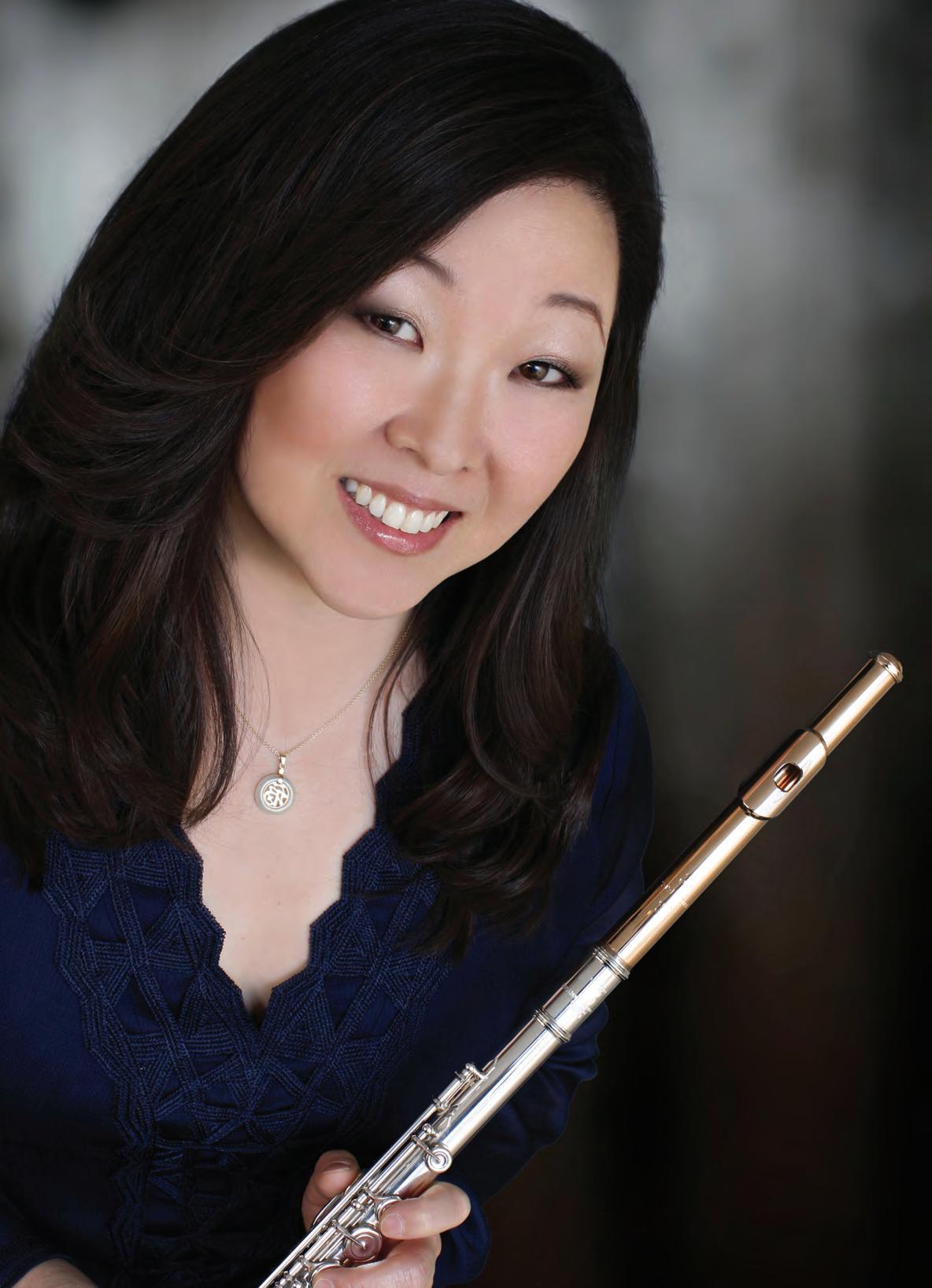
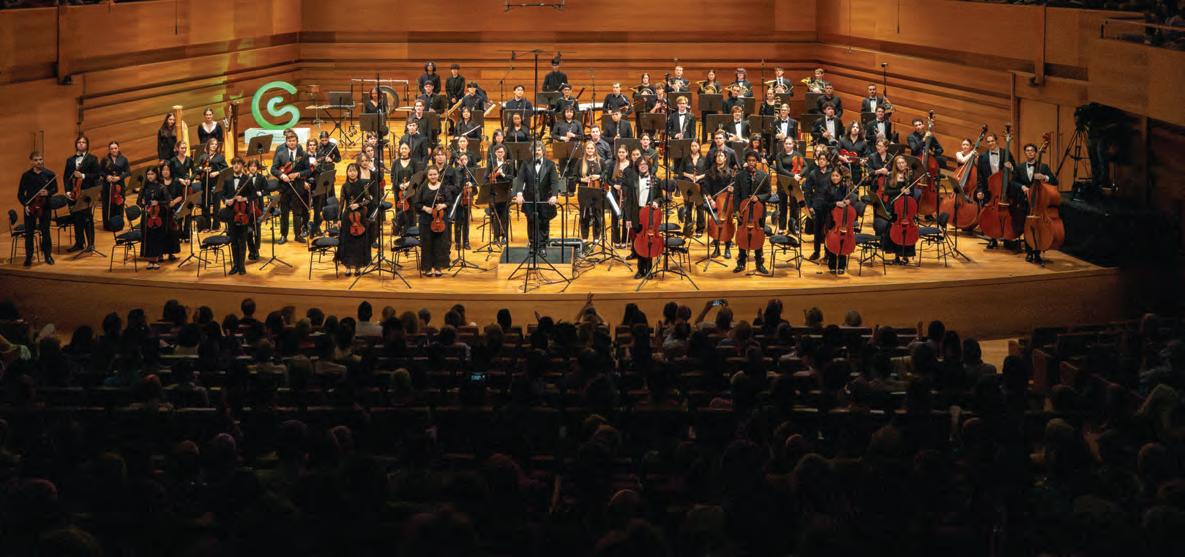
Our cover story introduces Jennie Oh Brown, a professional flutist whose career has taken her to major orchestras and stages around the world and who now serves as Executive Director of the Chicago Youth Symphony Orchestras. She leads an organization that includes dozens of ensembles, more than 60 staff members, and students representing more than 150 ZIP codes. Her work reflects a lifelong commitment to music education, access, and mentorship, and her leadership role builds on decades as a performer and educator, guiding young musicians.
championships, national rankings, Olympic Festival participation, and more than 20 years leading the Dukes. Her impact is measured in the generations of athletes and coaches she has developed.
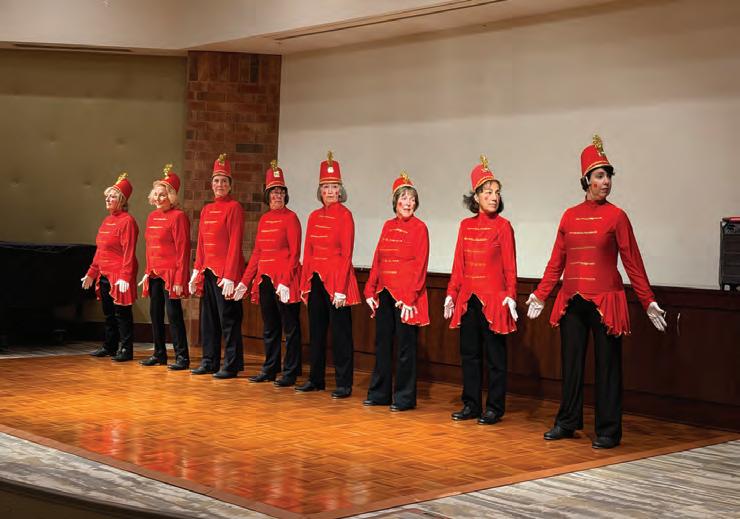
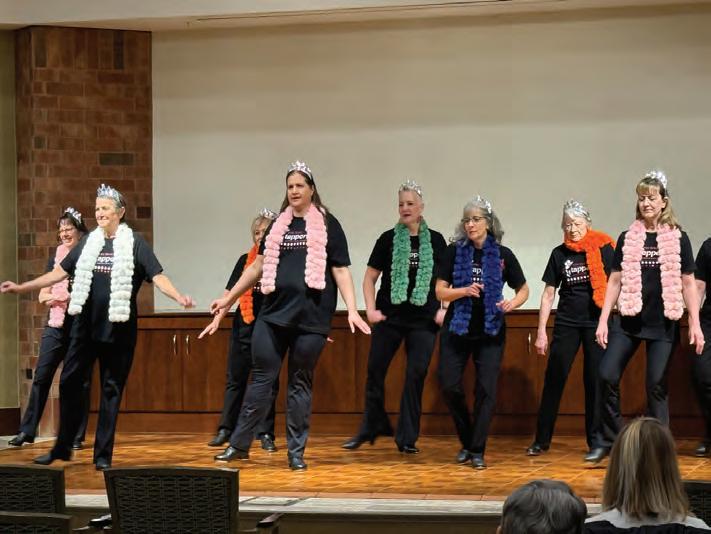
Elmhurst’s park district shows how lifelong participation begins with opportunity. The Tree Town Tappers, formed through adult tap classes, continue to perform throughout the community. Many members began dancing later in life, and the group has become a place for creativity, connection, and movement.
Community tradition is another focus. The Elmhurst YMCA celebrates 65 years as a gathering place that serves residents at every stage of life, from youth programs and swim lessons to summer camps and first jobs. Anniversary events brought the community together while launching a fundraising effort to support operations and future improvements. The Y’s outdoor ice rink remains a rare feature nationwide and continues to anchor new partnerships and expanded hockey programming.
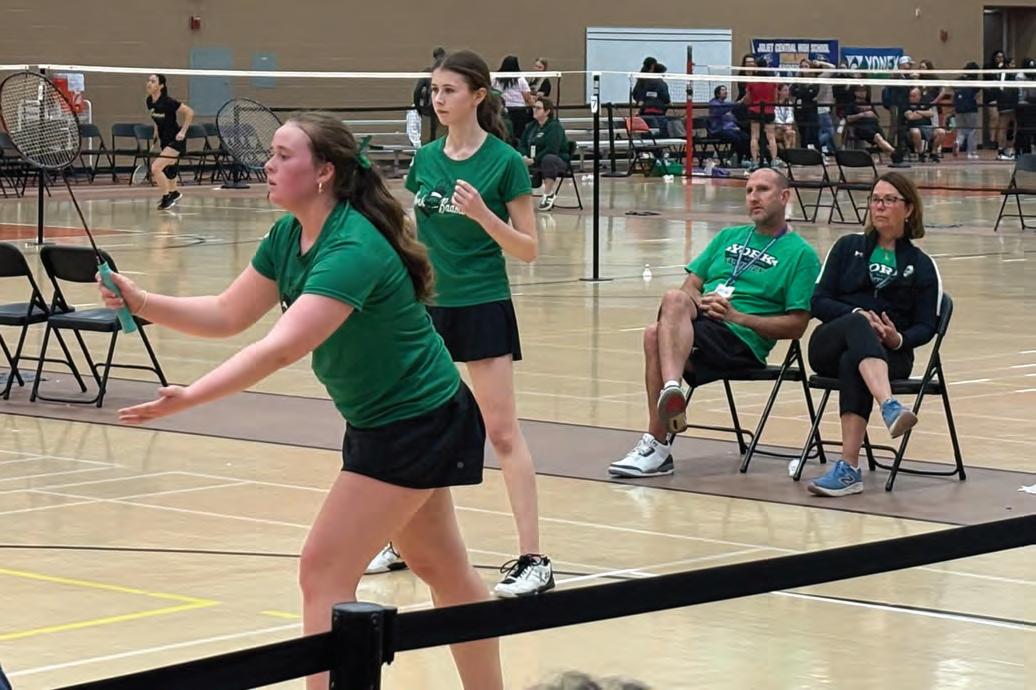
We also recognize the individuals who shape local programs. York High School badminton coach Gena Fite enters her final season after decades of coaching, mentoring, and competing at the national and international level. Her career includes collegiate
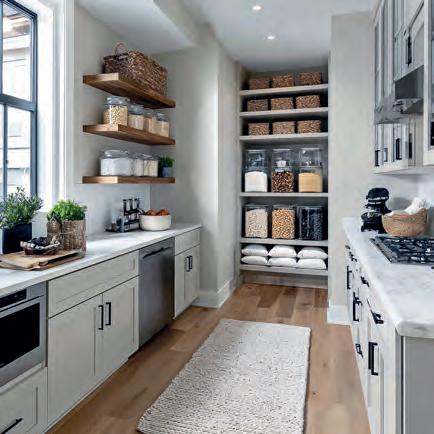
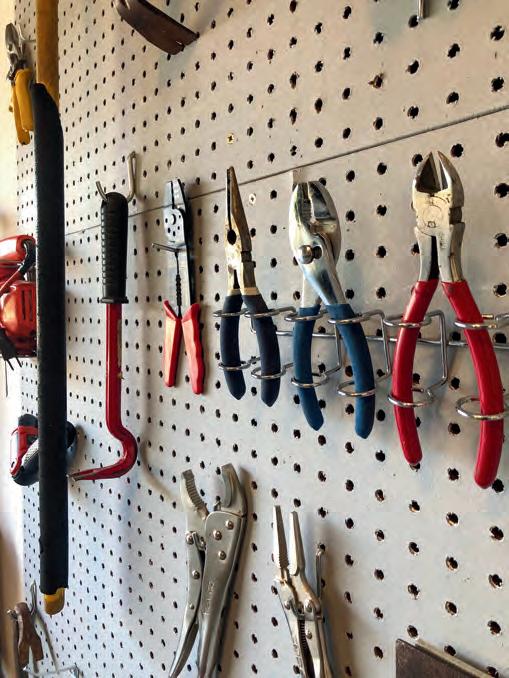
This issue also looks at how our understanding of home continues to evolve. A feature on the Elmhurst Art Museum’s McCormick House examines the influence of Ludwig Mies van der Rohe and the lasting impact of Modernist design, from open interiors to the connection between indoor and outdoor space. Our Homes Through the Decades story traces residential architecture from early formal layouts to today’s flexible, multipurpose homes designed for work, wellness, and family life. An organizing feature focuses on storage systems, drop zones, customized closets, and functional garages designed to support daily routines.
Together, these stories reflect a shared idea. In Elmhurst, home is shaped not only by architecture and design, but by the people, programs, and institutions that support the way we live.
Warm regards,
Scott Jonlich, Publisher Elmhurst Magazine
LEADING WITH PURPOSE
Jennie Oh Brown and the Next Generation of Music
We Put Our Whole Heart Into Healing Yours
Every heart is unique and so is every patient.
Our team of cardiovascular and stroke specialists provide advanced, personalized care close to home. From complex bypass and valve procedures to leading-edge electrophysiology and stroke intervention, we combine clinical excellence with compassionate, whole-person care.
With coordinated teams and proven outcomes, we’re here to support your heart health every step of the way.
Advanced heart and stroke care, close to home
On the Cover: Jennie Oh Brown
Photo by Forestt Strong Lafave
Where Nature & Community Come Together
With its picturesque setting and expansive layout, K-B House feels like a welcoming neighborhood. Winding paths, lush greenery, and thoughtfully designed living spaces create a true sense of home – where comfort, community, and connection come naturally. Here, every moment fosters a deep sense of belonging. Let it begin today.
Find Home with Us.
6101 S. County Line Rd. Burr Ridge, IL 60527
(630) 216-8744
FOUNDER & PUBLISHER
Scott Jonlich
sjonlich@HinsdaleMag.com
GROUP PUBLISHER & EDITOR
Anne Healy
anne@HinsdaleMag.com
MANAGING EDITOR
Larry Atseff
larry@HinsdaleMag.com
CONTRIBUTING EDITORS
Maureen Callahan
Valerie Hardy
Anna Hughes
GRAPHIC DESIGNERS
Jennifer Frencl
Rachel Pavlovich
Katie Bolinger
CONTRIBUTING WRITERS
Jack Rodak
Marcus Fertig
Jeff Vorva
FEATURE PHOTOGRAPHERS
Victor Hilitski
Atticus Fair, Video Editor
ADVERTISING SALES
marcus@HinsdaleMag.com graphics@hinsdalemag.com
Hinsdale Magazine Group
Elmhurst Magazine 107 W. First Street Elmhurst, IL 60126 ElmhurstMagazine.com Scan to Subscribe
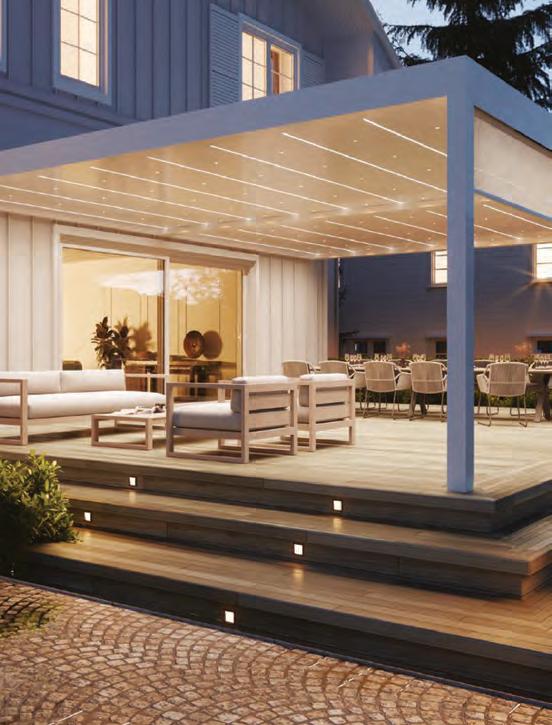
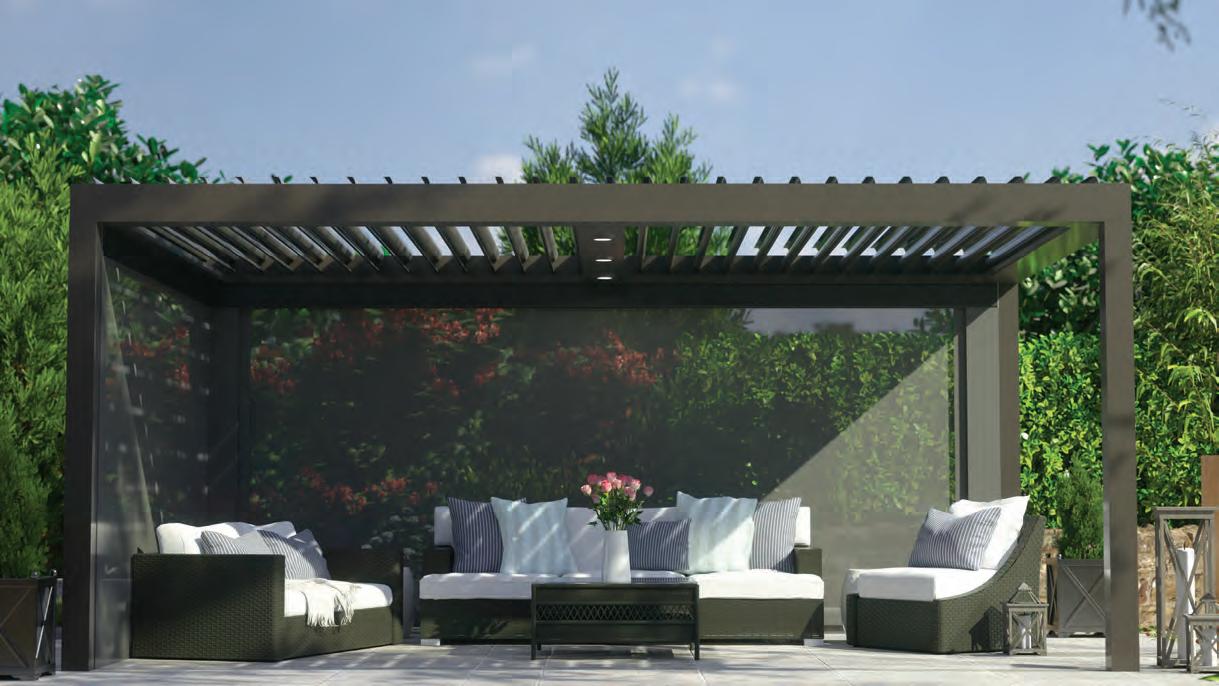
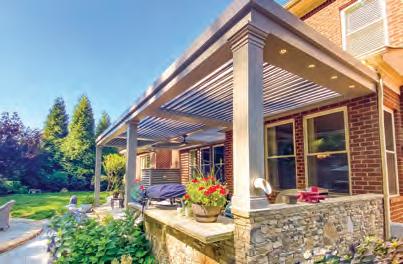
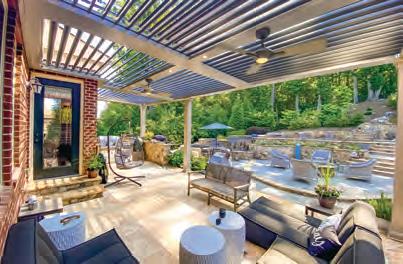
• Premium Shade Solutions: We use high-quality materials to bring beauty, style, and elegance to your space.
• Custom & Standard Designs: From standard awnings to fully custom structures, we design the right fit for your project.
• No project is too large or too small we upgrade homes, pools, and patios of all sizes.
• Guaranteed Excellence: We prioritize superior products and stand behind our work.
• Committed to unparalleled customer service and a seamless home improvement experience.
SPRINGING UP
Springtime is just around the corner, and it’s the perfect time to fill up your calendar with fun and fresh ways to get outside and enjoy the warmer weather. We’ve curated a list of activities across the western suburbs for the whole family to enjoy all season long.
BY ANNA HUGHES
ROBBINS PARK EGG HUNT
Robbins Park in Hinsdale
March 28
9:45 AM - 11:30 AM villageofhinsdale.org
The Hinsdale Parks and Recreation Department and The Community House present the 2026 Egg Hunt! Children 11 and under and their families are invited to bring their baskets, hunt for treats, and visit with the Easter Bunny. Times are scattered for each age group. Visit the village website for more information on this family-favorite, free event or for details on how to become a sponsor.
Oak Brook Park District’s Swim Central
April 2-3
obparks.org
If your kids are looking for a glimpse of summer fun while battling the last of the cold weather, this unique spring festivity is an egg-celent option for the whole family. Each Underwater Egg Hunt registration is for a 90-minute experience at Swim Central that begins with the egg hunts and ends with open swim for the entire family. Eggs can be exchanged for prizes, and families can visit with the Easter Bunny for the remainder of their event experience. Visit the Oak Brook Park District website for more information and to register online.
“FATHER OF THE BRIDE”
Drury Lane Theatre
April 8-May 31
drurylanetheatre.com
After hearing the news that his daughter is engaged, Mr. Banks must accept that he’s now responsible for planning — and paying for — a wedding, all while grappling with the idea that he has to let go of
his baby girl. Based on the novel by Edward Streeter that inspired the hit movie starring Steve Martin, this classic comedy and feel-good family tale is the perfect spring outing. Showtimes vary by date.
SPRING FLORAL ARRANGEMENTS CLASS
Elmhurst History Museum
April 18, 1:00 - 2:30 PM elmhursthistory.org
If you’ve ever wanted to create beautiful floral arrangements but didn’t know where to start, now’s the time to learn! In honor of Stress Awareness Month, join the Elmhurst History Museum in partnership with the Illinois Extension Master Gardeners to create a unique floral arrangement. Workshop attendees will create beautiful spring arrangements through the instruction of DuPage County Master Gardener
Art in Wilder Park
Photo courtesy of Elmhurst Art Museum
Aqua Egg Hunt
Photo courtesy of the Oak Brook Park District
AQUA EGG HUNT
Marlene Ashby. All materials, including flowers and vases, will be provided. Light bites and beverages will be available, and the cost to participate is $40.
COUNTRY IN THE PARK
Downers Grove Museum
May 2, 12:00 - 3:00 PM dghistory.org
The Downers Grove Park District, Downers Grove Public Library, the Downers Grove Museum & Downers Grove Historical Society present Country in the Park, a fan-favorite part of the annual Downers Grove FoundersFest celebration. Families have an opportunity to visit with farm animals, try out 1850s pioneer-era games, listen to live music, and more! Take a trip back in time with this free event and celebrate the history of Downers Grove.
ART IN WILDER PARK
May 2-3 epd.org
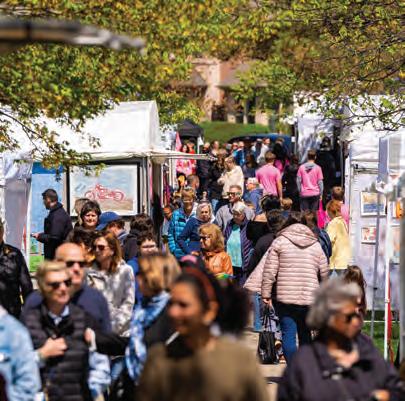
Kick off the spring festival season at one of the area’s most anticipated art events — the 29th annual Art in Wilder Park. The free two-day event takes place at Elmhurst’s Wilder Park, 175 South Cottage Hill Ave., and draws thousands of visitors from all over the Midwest with artists selling one-of-a-kind jewelry, paintings, sculptures, ceramics, prints, and fiber arts, as well as delicious treats from local food vendors. The event is all about uniting creativity and community and will feature over 130 booths.
WALK FOR WELLNESS HOUSE
May 3, 8 AM wellnesshouse.org
The annual Walk for Wellness House will take place at the Home of Hope in Hinsdale, bringing together cancer survivors, families, friends, volunteers, and community members to raise critical funds for free cancer support programs. The family-friendly, pet-friendly event begins at 8 A.M. and includes a 3K walk and 5K run through northeast Hinsdale, along with activities for children. Funds raised through the Walk support more than 48,446 annual visits to Wellness House programs, including nutrition, exercise, stress management, counseling, education, and child and family support.
Walk for Wellness House
Photo courtesy of The Wellness House
glimpse
Soré Wellness
Soré Wellness was founded on the concept of Social Rejuvenation, a lifestyle that brings together health, wellness, and meaningful connection. Shaped by early experiences with yoga, mindful living, and meditation, the vision evolved into a modern wellness destination that offers more than relaxation alone. Today, Soré Wellness provides an elevated space where clients can reset, restore, and feel their best.
Supervising physician Dr. Samiya Hashmi emphasizes the importance of integrating Emerald Laser into a comprehensive health plan.
The studio offers a curated mix of longevityfocused recovery and beauty-driven wellness services designed to deliver results from the inside out. Core offerings include full-body Red Light Therapy for rejuvenation and recovery, complexion treatments that deeply hydrate and refresh the skin, and advanced sunlight therapy using LED light bed technology. Soré Wellness continues to expand its menu with non-invasive fat loss services, salt saunas, cold plunge contrast therapy, and future additions such as oxygen chambers and float therapy.
Among its most sought-after treatments is Emerald® Laser, an FDA-cleared body contouring service that supports fat loss without pain or downtime. Using low-level laser technology, Emerald helps release stored fat naturally through the body’s lymphatic system and is commonly used for areas such as the abdomen, hips, thighs, arms, and chin. Sessions are relaxing and require no recovery time.
“What I appreciate most about the Emerald Laser is that it is effortless, painless, and completely non-invasive,” says Dr. Hashmi. “When incorporated into a structured wellness plan, it can support body composition goals, insulin sensitivity, and overall metabolic health.”
Soré’s medical-grade Red Light Therapy delivers higher-intensity, full-body coverage than at-home devices for more consistent results. “There is no bias for who can benefit from our medical-grade red light therapy,” adds Owner and Practice Manager Stephanie Witt. “Those who utilize it consistently have life-changing benefits.”
Most clients arrive with goals that blend beauty, confidence, and long-term wellness. By integrating treatments into a consistent routine, clients report increased energy, glowing skin, and sustainable results.
Visit Soré Wellness in Western Springs, Lombard, Wheaton, St. Charles, and Geneva.
Soré Wellness operates with medical oversight to ensure treatments align with broader wellness goals. www.sorewellness.com
Dr. Samiya Hashmi
Emerald Laser
A Constant in the Community
Celebrating the Elmhurst YMCA’s 65th anniversary
BY VALERIE HARDY
For Elmhurst, the YMCA is more than just a catchy song. It is a mainstay within the community, and one that is now 65 years strong.
The Elmhurst YMCA, part of the YMCA of Metropolitan Chicago, is a nonprofit organization committed to building strong communities and supporting community members in mind, body, and spirit.
Ron Anderson, Executive Director of the Elmhurst YMCA, explained that since it first opened its doors in the early 1960s, the local Y has operated as a “come as you are” institution, serving the community across generations. It offers everything from “youth programming, to teen development, to entry level jobs, to adult programming,” Anderson said.
ANNIVERSARY CELEBRATIONS
To mark its 65th anniversary, the Elmhurst YMCA held a Legacy Celebration on the evening of Nov. 21. Hosted at the community’s YMCA building (211 W. First Street), this all-ages event included light refreshments and focused on the Y’s more than six decades of impact. It also celebrated “what the YMCA is today and how we rethink and reimagine what Elmhurst and the YMCA may look like in the future,” Anderson said.
During the Legacy Celebration, supervised children’s activities were also offered on site as part of a free Kids’ Night Out.
The Legacy Celebration ended at 8:30 p.m., but the festivities continued with a hockey game between Elmhurst University and Loyola University Chicago, played on the Elmhurst Y’s trademark outdoor ice rink. Over 100
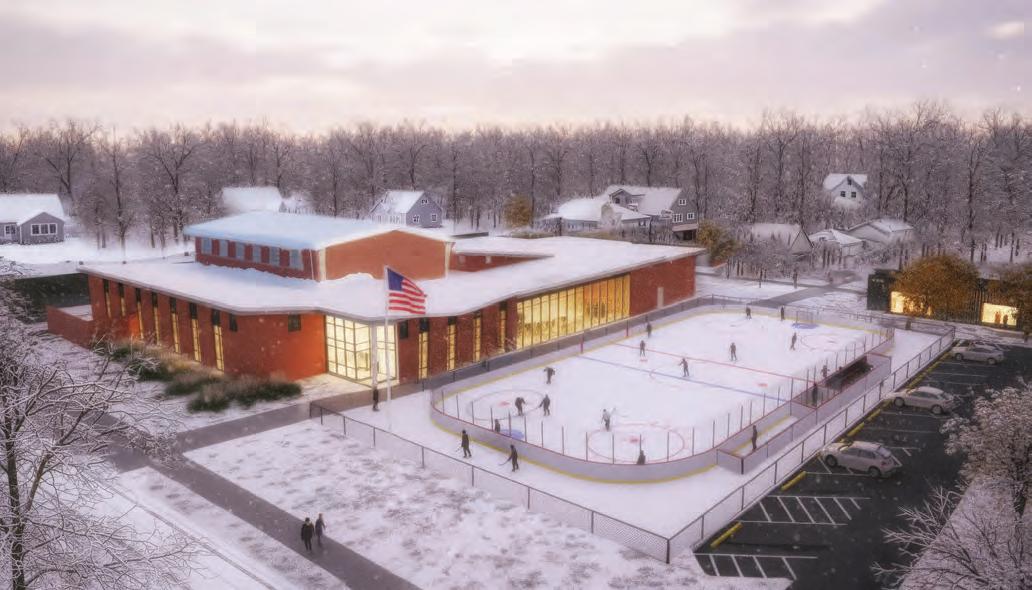
A rendering of a potential design for renovations on the Elmhurst YMCA
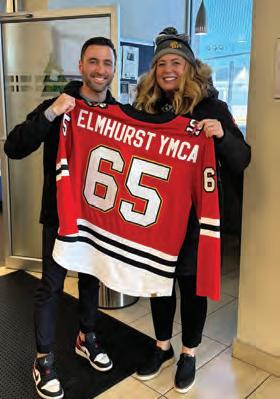
Elmhurst YMCA’s Executive Director Ron Anderson and Chicago Blackhawks Foundation’s Executive Director Annie DavisKorelc showcase a special jersey presented during the Community Open Skate for the Y’s 65th anniversary celebration.
spectators attended the game, which was the first collegiate-level one played there in several years.
A week later, on the afternoon of Nov. 28, the Y held another anniversary celebration: a free Community Open Skate. Both celebrations were made possible by “great partners, including the Chicago Blackhawks, that came in to sponsor the 65th anniversary,” Anderson explained.
FUTURE FOCUSED
Aligned with its 65th anniversary, the Elmhurst YMCA set a goal to raise $65,000 between November and the end of April. In addition to contributions from regular donors, funds were raised via an end-of-season ice rink celebration held toward the end of February. The fundraising will likely wrap up with another local fundraiser, such as a trivia night, in April.
Anderson said that “these familyfriendly fundraisers invite folks in to put the exclamation points on the anniversary celebration.”
Funds raised will go toward operating expenses for the second half of this year, but a larger capital campaign for possible future expansion and renovation of the existing YMCA facilities may not be far behind. In fact, the Elmhurst YMCA already has renderings of what a reimagined version of its space could look like.
PRESERVING HISTORY WHILE EVOLVING WITH THE TIMES
The ice rink has always been a unique feature of the Elmhurst YMCA. “No other YMCA in the United States, that I know of, still operates an outdoor ice rink, and definitely not one of this size,” Anderson said.
Typically open mid-November through the end of February, the rink allows the Y to offer skating lessons, hockey classes and leagues, and open skating opportunities for people of all ages. Over the years, interest in hockey programming has increased significantly. Based on the demand for hockey training, earlier this season, the Elmhurst Y started a Little Blackhawks program in partnership with the Chicago Blackhawks. Participants learn the basics of skating and playing hockey, with all equipment provided by the Blackhawks, defraying costs for
participating families. Over 50 youth signed up for the recent Little Blackhawks session, which met Sundays from 4-5 p.m.
Other growth areas over the years are aquatics programs and summer camps. The Elmhurst YMCA currently has approximately 280 youth enrolled in monthly swim lessons. The Y has also “eclipsed the 300 kid-per-week mark in summer camp programming,” Anderson emphasized.
All of the Y’s programs are made possible by dedicated staff, a local advisory board, and community volunteers. “Time, talent, or treasure, we’re always looking for additional support,” Anderson said.
For information about volunteer opportunities or other ways to support for the Elmhurst YMCA, contact randerson@ymcachicago.org. ■
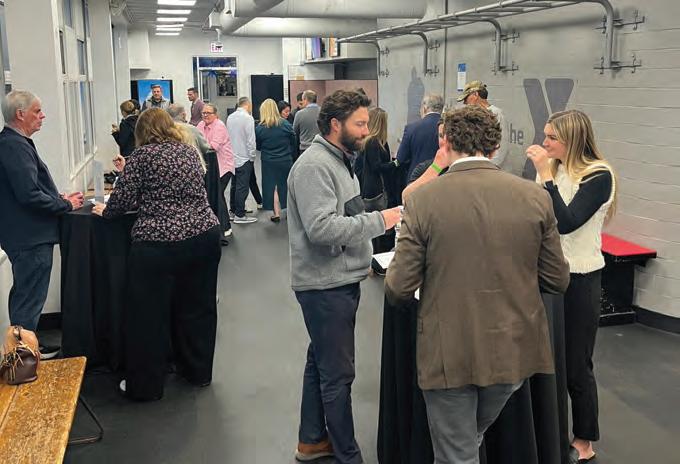
ABOVE: Staff, advisory board members, and community members commemorate the Y’s 65th anniversary at the Legacy Celebration in November.
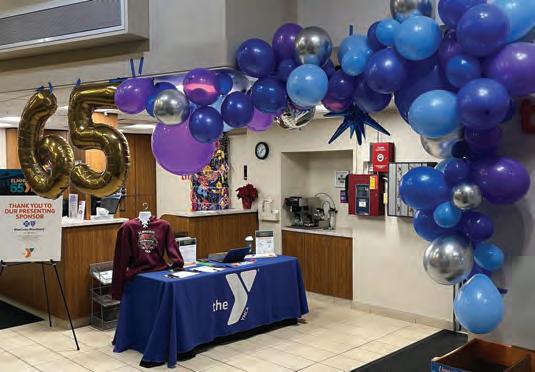
LEFT: Balloons decorate the Elmhurst YMCA in celebration of its 65 years in the community.
Elmhurst University and Loyola University Chicago face off in the first collegiate-level hockey game at the Elmhurst YMCA’s ice rink in several years.
Get Spring Break Ready
Your Ultimate Pre-Trip Beauty Guide
Spring break is just around the corner, and with it comes the promise of sun, sand, and relaxation. But before you can soak up the rays, you might be thinking about getting your body feeling and looking its absolute best. Forget last-minute crash diets; this year, it’s all about strategic, confidence-boosting treatments that leave you glowing from head to toe.
We’re talking about a curated regimen that combines skin tightening, body contouring, hair removal, and a full-body glow-up to ensure you step onto that beach feeling utterly fabulous.
Smooth & Sculpted: BBL SkinTyte & Exilis
For many, the thought of swimwear brings concerns about skin laxity or stubborn areas of fat. This is where a dynamic duo of treatments can work wonders:
BBL SkinTyte: If you’re looking to firm up the skin, especially after a winter of less sun exposure, SkinTyte can be a game-changer. This non-invasive treatment uses advanced infrared light technology to deeply heat your dermal collagen. The controlled heating initiates the body’s natural healing process, which leads to renewed collagen production and a noticeable improvement in skin firmness and elasticity. It’s excellent for addressing crepey skin and can be used on various body parts, including the abdomen, arms, and thighs, helping you achieve a smoother, more toned appearance
Exilis: For targeted body contouring and fat reduction, Exilis is a popular choice. This treatment utilizes radiofrequency energy to precisely heat deep tissue. The thermal energy helps to disrupt fat cells, which are then naturally flushed out by the body’s lymphatic system. Simultaneously, the heating stimulates collagen
production, resulting in tighter skin in the treated areas. Exilis is versatile and can be used on almost any area of the body, including the abdomen, love handles, arms, and even the face and neck for tightening. Together, SkinTyte and Exilis can create a more sculpted and refined silhouette, perfect for those spring break bikinis.
A Body DiamondGlow is a medical-grade, non-invasive skin resurfacing treatment designed to deeply clean and rejuvenate the skin on your body, not just your face. It is often called a “3-in-1” technology because it performs three actions simultaneously: exfoliation, extraction, and infusion. Since you are preparing for spring break, this is the “polish” that makes the other treatments (like SkinTyte and Exilis) really pop.
Targeted Benefits for Your Body
Body version is used to solve specific “beach body” skin issues.
“Strawberry Legs” & KP: It is highly effective at smoothing out Keratosis Pilaris (those tiny bumps on the back of the arms and thighs).
Back Acne (Bacne): The extraction and pore-clearing serums help clear up breakouts on the back or chest before you put on a swimsuit.
Rough “Winter” Patches: It instantly softens rough skin on the elbows, knees, and heels.
Stretch Marks & Crepey Skin: By stimulating circulation and infusing hydrating serums (like Hyaluronic Acid), it plumps up the skin and improves the appearance of texture.
Why it’s great for Spring Break
Zero Downtime: You’ll be glowing immediately. There is no peeling or “healing” phase, so you can do it just a few days before you leave.
The Perfect “Prep”: Removing the dead layer of skin allows your vacation moisturizers and sunscreens to absorb better.
Spray Tan Secret: If you plan on getting a spray tan, a DiamondGlow 24–48 hours before ensures the tan goes on perfectly even and lasts much longer because it’s adhering to fresh, hydrated skin.
Silky Smooth: Laser Hair Removal
Say goodbye to daily shaving or painful waxing sessions! Laser hair removal offers a long-term solution for achieving endlessly smooth skin, making it an essential pre-spring break treatment.
About the Authors:
Dr. Christina Steil is a board-certified dermatologist specializing in medical and cosmetic dermatology.
Dr. Rachel Bognet is a board-certified dermatologist and Mohs surgeon, focusing on comprehensive medical dermatology and skin cancer surgery.
CSC Steil Dermatology 125 W 2nd St, Hinsdale 5157 Main St 205, Downers Grove (630) 455-0045 | www.cscdermatology.com
The Spring Break Beauty Countdown
Weeks 5–6 Out
Laser Hair Removal (Session 1): Start immediately. You need to catch hair in the growth phase. You’ll see a reduction in “stubble” and ingrowns just in time for your trip.
• Exilis (Session 1): Start your contouring now. Exilis usually requires 2–4 sessions spaced a week apart to begin breaking down fat cells and tightening skin.
• The DiamondGlow Consultation: Schedule your body treatment to clear out “winter skin” (dryness/clogged pores) on your back, arms, or legs.
Weeks 3–4 Out
• BBL SkinTyte (Session 1): This is the perfect time for your first SkinTyte session. It provides an immediate “plump” and starts the long-term collagen building.
• Exilis (Session 2): Keep the momentum going for fat melting and skin smoothing.
• Hydration: Start doubling your water intake. Both Exilis and SkinTyte work better when your cells are well-hydrated.
Weeks 2 Out
• Exilis (Final Session): Most people see their “peak” contouring results a few weeks after the final session.
• Laser Hair Removal (Touch-up): Depending on your cycle, a second quick pass might be possible, but mostly, you’re enjoying the lack of daily shaving.
• BBL SkinTyte (Session 2): A second session here will “stack” the collagen benefits so you look firm and toned for the beach.
1 Week Out
• DiamondGlow Body Treatment: This is your “Red Carpet” moment. Do this 3–5 days before you leave. It exfoliates dead winter skin and infuses serums (like Hyaluronic Acid or Vitamin C) for a literal head-to-toe glow.
• Final Buff & Shine: Since DiamondGlow has no downtime, your skin will be perfectly prepped for sunscreen or a professional spray tan (wait 24 hours after DiamondGlow before tanning!).
WATCH THE BIRDIE
York’s head badminton coach, Gena Fite, enters her last season
BY MAUREEN CALLAHAN
“My dad always said a person has a responsibility to give back using their gifts,” said York head badminton coach, Gena Fite. “Sports were always easy for me. So, I knew from a young age that this [coaching] would be my way of giving back.”
Fite has been coaching and mentoring athletes younger than herself since she was in high school – a young age indeed. “I was dating a guy who thought it would be fun to coach together,” Fite recalled. “So we coached a little girls’ eight-year-old-and-under softball team. It was really fun!”
Fite’s long career began at her father’s behest to use her talents to their fullest. “I’m glad my dad gave me that advice early in life, because it really directed my career path.”
Now decades later, she’s heading into her last season of coaching the York varsity badminton team. And a new season of life – retirement.
But for Fite, the idea is a little surreal. Just like there’s a doctor’s doctor, Fite is the coach’s coach. It’s been a journey, and each stop along the way has been a paver in the road.
Fite played varsity tennis and badminton at Arlington Heights High School. While her tennis record was excellent, having won both conference and district titles, her badminton record was outstanding. After she won fourth and third places individually in the state tournament during her sophomore and junior years, respectively, the team took first in her senior year.
“My high school coach laid the foundation for my coaching,” said Fite. “She was the one who really instilled that sense of team and made us believe we had unlimited capabilities.”
Fite received a full badminton scholarship to Illinois State University (ISU). “It was great until ISU dropped all their minority sports – lacrosse, badminton, all JV sports teams – after my freshman year,” she remembered. Just as one door closed, however, another opened. “My coach was determined to get me in front of, Arizona State University. Little did I know their badminton team was first in the nation,” Fite smiled, as she recalled. The ASU badminton program had seen several alumni go on to play on Olympic teams.
Gena Fite started her career at York in 2001.
The ASU coach agreed to let Fite play as a walk-on her sophomore year after seeing her almost beat the second seed in the National Junior Badminton Tournament that year. After she beat some of her teammates in tournaments, performing well at nationals, ASU offered her a full scholarship for her last two years. Senior year, the team won nationals. Timing was serendipitous, as badminton was unfortunately dropped from ASU’s athletic program the next year.
Over the past couple of decades, Fite’s name has become synonymous with York badminton. She first joined the Dukes in 2001 as head coach. When family life became more of a priority, she took a break in 2008. She returned to York in 2017 as the freshman coach and resumed her former position as head coach the following year, where she has been ever since.
While York has been the bulk of her career, the years before her arrival at the school were peppered with many exciting opportunities revolving around badminton. Fite finished in the top 5 in the U.S. adult rankings following college and first in the Midwest for both singles and doubles for seven years in a row. Tryouts for Team U.S.A. earned her a spot as an alternate.
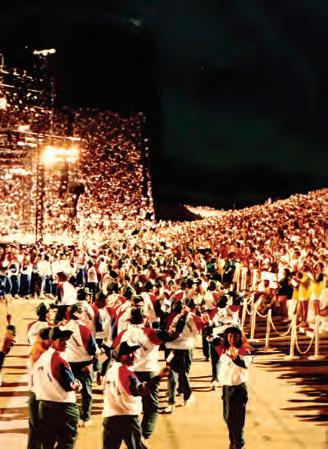
“The Olympic Festivals were definitely some of my favorite memories,” said Fite. When the Olympic Games used to be held every four years, ‘Olympic Festivals’ were held in rotating cities throughout the U.S. every non-Olympic year. The festivals brought high-level talent together for the possibility of being noticed for future Olympic competition. “Those were so much fun,” she remembered. “We had an opening and closing ceremony, an Olympic
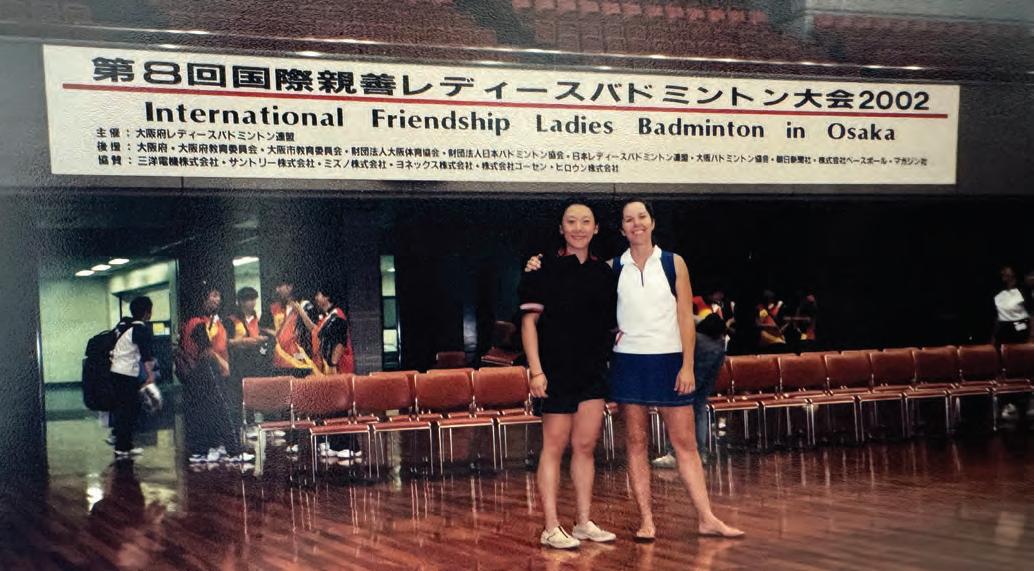
She has also competed internationally. “I played in the International Friendship Tournament in Japan in my early 40s,” she recounted. “My team finished third out of 39 teams - the highest a U.S. team has ever placed.” And there’s been so much more!
Having served as President of the Illinois Girls Coaches Association, Fite enjoyed teaching coaches how to coach through hosting clinics. She’s organized camps and tournaments and taught private lessons. She even strung badminton rackets for other area schools. All because she loved it. When you’ve been at it as long as Fite, the idea of hanging up the racket takes some getting used to. But with a new grandchild on the way this summer, the timing seems right.
“I’m going to miss these kids,” said Fite. “They’re incredibly wonderful.” But after having coached for so long and having also taught tennis at Courts Plus for the past 25 years, she’ll be around town. What advice does she leave the York community? “Badminton competition has evolved over the years. Always bring your A game.” ■
village – the whole works.” Fite served as a line officiator at the 1996 Summer Olympic Games in Atlanta.
Fite competing at the International Friendship Tournament in Japan.
Fite (bottom right) recalls that the Olympic Festivals were among her favorite memories.
6,541 YARDS
No increase in membership rates or green fees for the season
Benefits: Advanced tee time reservations, pro shop discounts, complimentary hand carts, access to special events and MORE
Due to high demand, golf memberships will be capped this year, so secure your golf and driving range membership before it’s too late!
New and Coming Soon: Trackman Range
Next-level tech for every skill level Makes practice feel like a game Hit balls rain or shine
Rhythm and Friendship How Tree Town Tappers keep moving
BY MAUREEN CALLAHAN
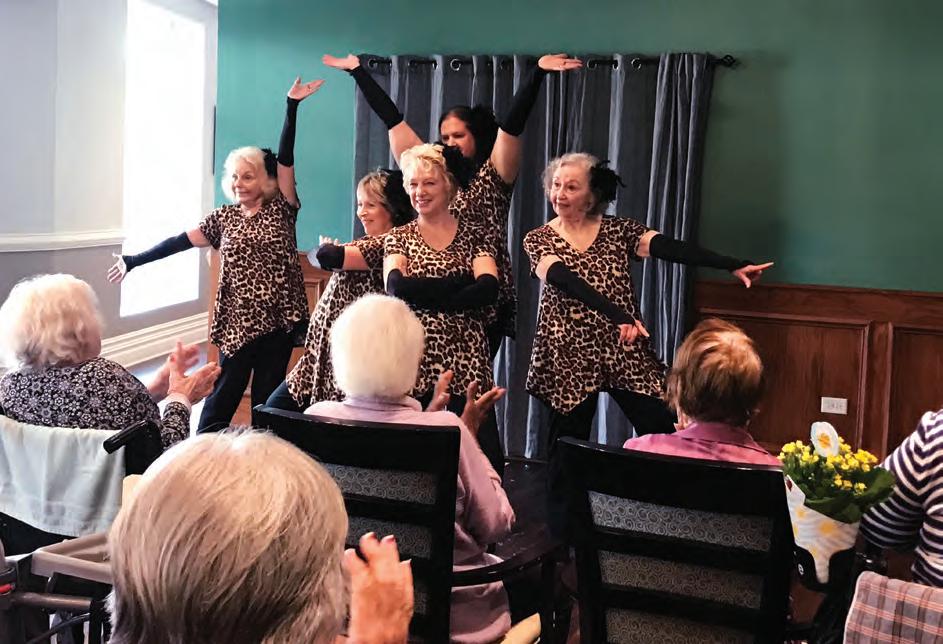
One of the advantages of living in Elmhurst is our wonderful Park District. There’s something for everyone here, and one of the most noteworthy opportunities is the Tree Town Tappers (TTT), a performing tap dance group.
TTT, as a group, started in 2014, but many members were dancing together long before they began performing. “For a while, we would perform somewhere if a request came in,” said Dianne Hain, who serves as moderator of the group as well as a teacher at Elmhurst Park District.
It all started when Hain enrolled in a tap dance class in 1998. “I joined an adult class at the EPD. The teacher moved out of state about two years later, and they asked me to take over
teaching the class,” said Hain. “I agreed, thinking I would be there that night anyway, so I might as well teach. Then that class grew into two classes as some wanted to come a second night during the week for exercise.”
Eventually, more and more classes were added until Hain had a rather full schedule that included six classes a week. “I even started a daytime class as some of the dancers were starting to retire and preferred to come during the day. I worked a part-time day job, so I arranged my day class around that schedule.”
After a while, some of the students expressed a desire to keep going with dances that they learned for the annual recital each spring. They thought it would be fun to perform some of them, so TTT was born.
“That’s a wonderful thing about EPD,” said Hain. “They listen to the community. If a few people express interest in learning something, they will find a teacher. That’s me!”
New people keep joining. Many still attend a weekly tap class, even as they join the performing group. It’s good reinforcement as they are able to practice and eventually perform dances they have learned in Hain’s classes.
Then there are those who begin as retirees, who have always wanted to learn to dance. Hain welcomes and encourages them. “Not everyone learned to dance as a child. For some, dancing has always been a bucket list item,” she realizes. “I always tell my beginners they can eventually become Tree Town Tappers. It gives them something to work toward.”
Tree Town Tappers started in 2014 through the Elmhurst Park District.
“Not everyone learned to dance as a child. for some, dancing has always been a bucket list item.”
– DIANNE HAIN, DIRECTOR OF THE TREE TOWN TAPPERS
While Hain choreographs most of the group’s dances, two other members also help. “It’s wonderful, because you don’t always have fresh ideas,” she knows. “If one of us hears a piece of music we like, we all listen to it on our own and see if we can come up with a dance. Music means different things to different people, so we all envision different things when we hear it.” The group then incorporates their ideas together.
One TTT member underwent chemotherapy for much of last year. During her time off, she often listened to music and was able to choreograph a dance to Feliz Navidad in her head. Eventually, she taught it to Hain. “That was our holiday finale for our shows this past season,” she said. “It made her feel
at about age seven,” Hain remembered. “Back then, you’d take all kinds of dance – jazz, and then there was what they call acrobatics, which was a little like gymnastics. Tap was your fun class of the week.”
Like most groups, membership waxes and wanes. TTT began with 16 dancers and is now down to 14, but numbers are always fluctuating. One woman in the group who started dancing at EPD when Hain started is now 96 years old and still dances when she can! “She has
Hain is a lifelong dancer who loves to share her talent, not only with TTT audiences but also with her students. Like many dancers, she began studying ballet as a child. “It’s the foundation of all dance. I began with the serious stuff
Hain danced her way through college at Northern. “The performing dance team was new when I got there. I started learning modern dance then, too.” It fulfilled her P.E. requirements. “I thought, ‘oh this is a dream come true!’”
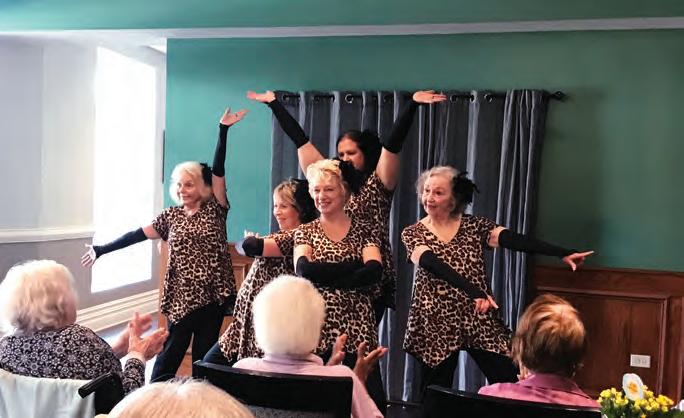
ABOVE: Members dance at their holiday show this past holiday season LEFT: The Tree Town Tappers share their love of dance with the community.
two daughters who were coming to the performances to help their mom change into her costumes,” said Hain. “They saw how much fun their mom was having and eventually joined the group, too!” Two sisters who started in Hain’s class years ago and then got married and had children have recently returned now that the kids are in college. “People move or have babies or whatever. I always say, ‘family first,’” she said. But TTT seems to be a close second.
For information on joining TTT, or hiring the group to perform, visit epd.org. ■
Fitness Formula Clubs Elmhurst glimpse
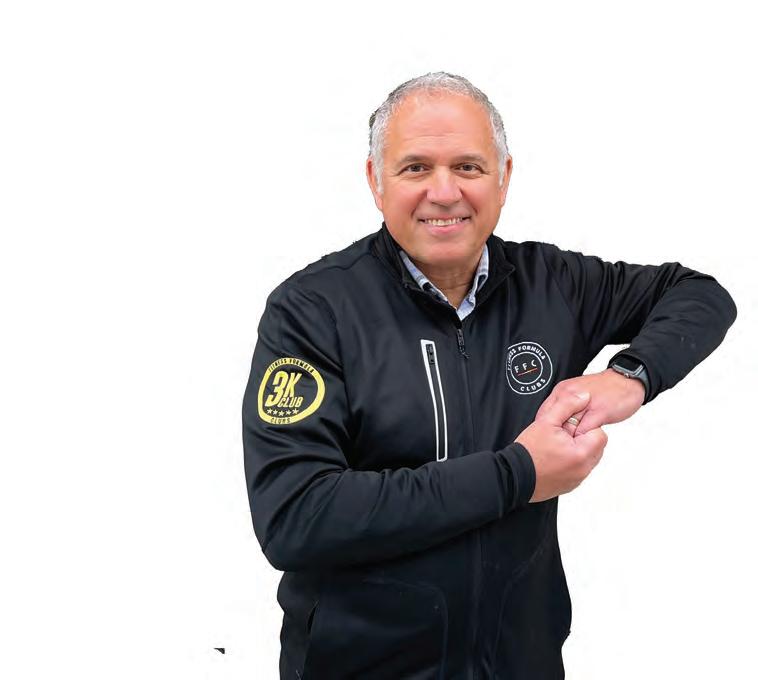
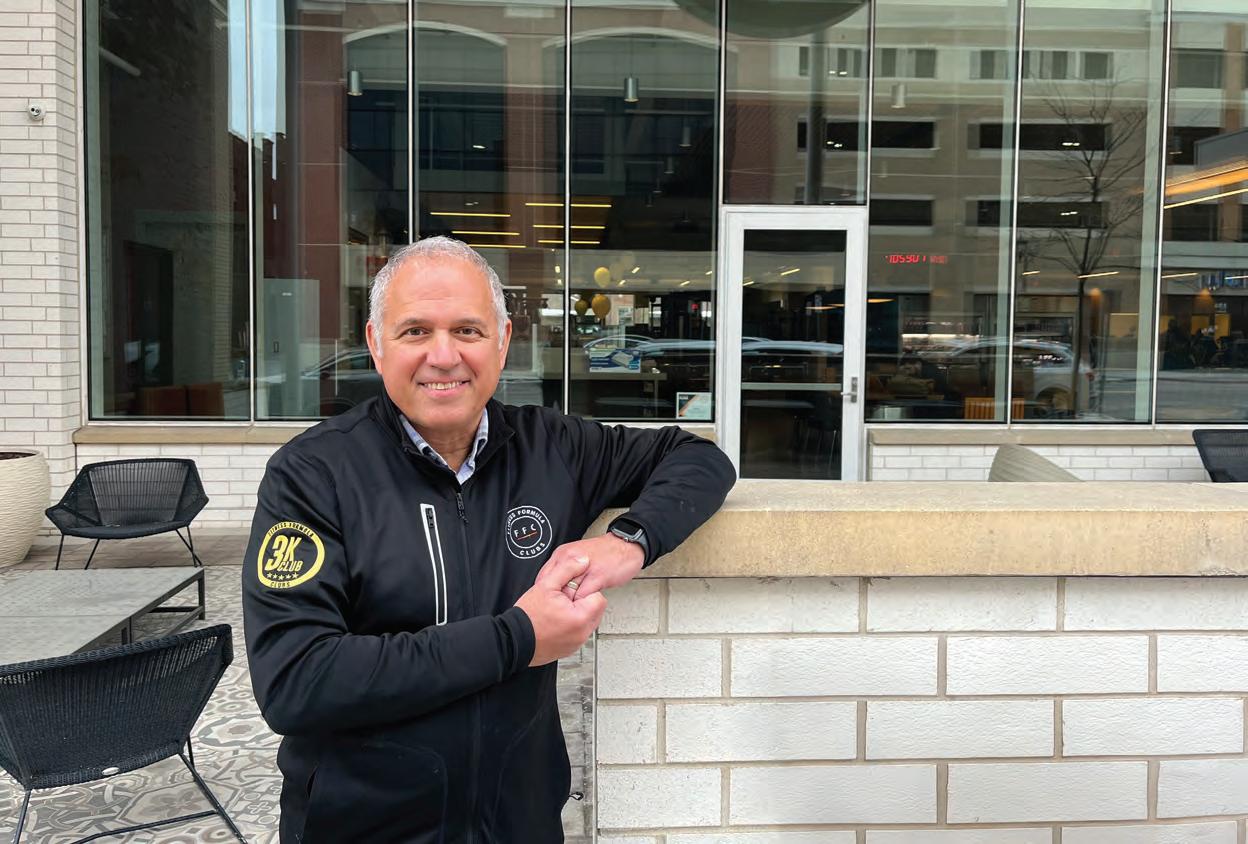
Fitness Formula Clubs Elmhurst (FFC) has a clear mission: Enhancing the lives of their members and guests by improving their overall health and well-being. Every decision, from amenities to staff training, is guided by a focus on creating an environment where members feel motivated, supported, and empowered throughout their wellness journey. Scott Lewandowski, the General Manager of FFC Elmhurst, has been with the company for over 30 years, holding a range of positions before leading the Elmhurst location. His extensive experience reflects the company’s commitment to growth, innovation, and personalized member care.
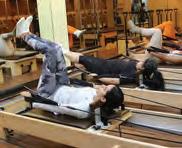
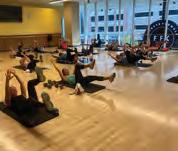
FFC approaches wellness through a “triangle” of usage, variety, and support. Offerings include personal training, Pilates, nutrition guidance including medical nutrition therapy, massage therapy, a recovery lounge, Indoor and outdoor pools, pickleball, over 80 group fitness classes per week, and more.This variety allows each individual to create a balanced approach to fitness, addressing both physical performance and overall wellness.
Central to the FFC experience is the staff. Every team member completes extensive hospitality training, ensuring members feel welcomed, guided, and connected. Staff provide not only technical expertise but also motivation, accountability, and a sense of community, helping members stay consistent and engaged in their health and wellness journey.
Some of the programming that truly sets the club apart includes live music at a full-service bar, summer camp and an after-school program that extends support to families beyond just a kids club, complimentary InBody body composition analysis, and our Goal Getters program, which provides guidance for each member’s fitness journey. We also offer a full-service recovery lounge featuring a red-light infrared sauna, as well as unique group fitness programs such as a floating sound bath.
Under the guidance of long-standing leadership, Fitness Formula Clubs Elmhurst has created a culture where structure, care, and community work together. The result is more than a gym, it’s an environment built to support lasting progress, meaningful connections, and a healthier way of life.
Fitness Formula Clubs Elmhurst 140 N Addison Ave, Elmhurst, IL 60126 (630) 882-0140 | ffc.com/elmhurst
Elmhurst Art Museum’s
Robert McCormick House
Mies van der Rohe’s eternal Modernism
BY MAUREEN CALLAHAN
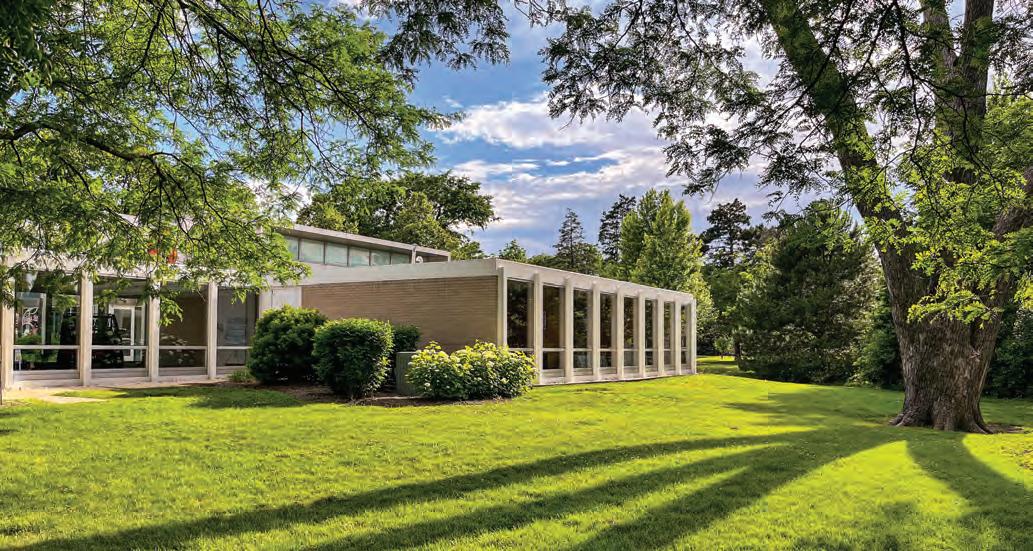
Have you ever wondered about the house adjacent to the Elmhurst Art Museum? It used to be a private residence here in town and is one of only three in the United States designed by German immigrant Ludwig Mies van der Rohe. Mies van der Rohe is not only the home’s architect, but he is also considered one of the fathers of its distinctly industrial style, known as Modernism.
The house’s design was commissioned by real estate developer Robert Hall McCormick III and his wife, Isabella Stewart Gardner, in 1951. McCormick had met Mies van der Rohe through a construction project he was co-launching- twin steel and glass apartment buildings at 860-880 Lake Shore Drive. Mies van der Rohe’s rising reputation around the city led McCormick and his business partner to hire the architect after being turned
down by several others, such as Frank Lloyd Wright.
The “Mies Towers” still stand at the edge of an internationally respected architectural cityscape. They are considered an epitome of his industrial,
avant-garde style. Eventually, Mies van der Rohe & Associates came to be respected as one of the country’s most influential architectural firms.
McCormick and his wife, Isabella, lived in the house at its original 299 S.
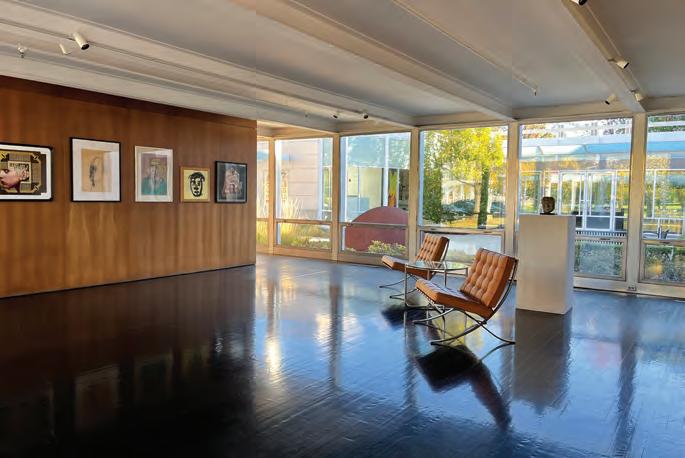
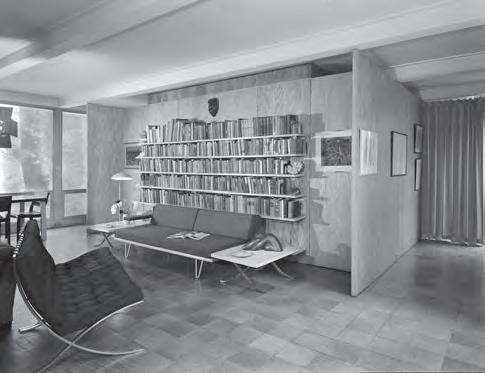
The architect's Barcelona chairs in the McCormick House exhibit
Photo courtesy of Elmhurst Art Museum Archives
Prospect Avenue location for seven years. After their divorce, the house was rented to Arthur and Marilyn Sladek, where they raised their six children for a couple of years. In 1963, former Elmhurst mayor Ray Fick and his wife, Mary Ann, bought the house and lived in it until it was acquired by the Elmhurst Fine Arts and Civic Center Foundation in the early 90s. In 1994, it was moved by flatbed truck to its current site, where a contemporary art complex (the home and Elmhurst Art Museum building) was
incorporated. Today, a concrete plaza and walkway connect the museum building to the McCormick House.
Mies van der Rohe was a student and later, the last director, of the wellrespected Bauhaus School of architecture, design and applied arts in Germany. Time spent at the institution influenced his modernistic style. The ‘less-is-more’ philosophy (a term which was popularized by Mies van der Rohe himself) is reflective of the architect who made his name on the design’s minimalism. Often described as “skin and bones,” importance is placed on the visibility of structural elements.
Mies van der Rohe’s austere style was first introduced as part of the German Pavilion (a home) at the 1929 Barcelona World’s Fair. The fair put his work on
the proverbial map as photos of the prototype home circulated around the continent. The fair also afforded an opportunity to showcase his furniture designs, such as his internationally famous Barcelona Chair.
Mies van der Rohe fled Hitler’s rise to power in the late 30s. He came to Chicago to head up Illinois Institute of Technology’s (then known as The Armour Institute) architectural program. He also designed many of the buildings on the university’s new
Station. The designs of these three buildings reflect the emphasis on functionality and simplicity synonymous with the architect’s name.
The McCormick House is a fine example of these philosophies. Concepts of free-flowing space and minimal interior wall partitions, as well as his desire to connect indoor and outdoor spaces, became Mies van der Rohe’s calling card.
campus.
Over the next three decades, Mies van der Rohe’s name came to be significant through the modern designs of the three buildings that comprise Chicago’s Federal Center – the Kluczynski Federal Building, the Dirksen Federal Building and the Post Office Loop
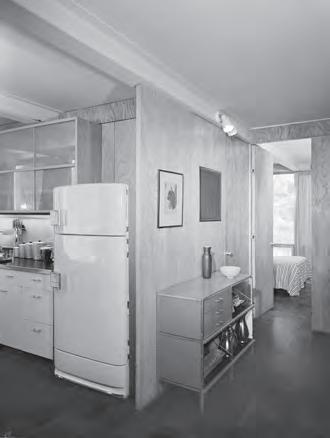
The house consists of two wings – one intended for the parents and the other for the children. Glass exterior walls and steel partitions, as opposed to mortar walls and conventional windows, were hallmarks of Mies van der Rohe’s designs. Both wings lack traditional interior walls between rooms. Mechanical services, bathrooms, a galley kitchen and heaters were arranged compactly into a central core surrounded by movable wooden panels.
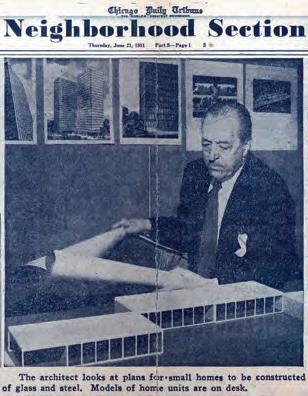
The McCormick House -actually built as a prefabricated home prototyperepresented Mies van der Rohe’s attempt to join the housing shortage discussion of the decade following the end of World War II. In that moment, his renderings, based on an increasingly urbanizing America, made sense. While his designs became part of the larger conversation, his prefabrication plans never came to fruition.
Like his style or not, Mies van der Rohe earned a place of profound respect in the city’s skyline. His name is synonymous with Chicago architecture. Today, only three private “Mies homes” are found in the U.S. – The McCormick House, The Farnsworth House, in Plano, IL and The Morris Greenwald House in Weston, CT. We are fortunate to have such a concrete example of Modernism as part of The Elmhurst Art Museum’s permanent collection. ■
Above Photos: Modernism dictates open spaces with few permanent walls. Photo by Hedrich Blessing, Courtesy of Elmhurst Art Museum Archives
The architect with prefabricated models Chicago Tribune, Courtesy of Elmhurst Art Museum Archives
Jennie Oh Brown
Photo by Devon Cass
Music and Mentorship Elmhurst resident leads Chicago Youth Symphony Orchestras
BY ANNA HUGHES
When Jennie Oh Brown first picked up a flute in eighth grade, something clicked.
“I never really thought about talent,” Brown said. “I just thought about the fact that I really loved it, and it was really fun.”
Brown had tried other instruments before — piano, violin, string bass, and even singing in her school choir — but her relationship with the flute quickly grew serious. She left her public high school to attend the Interlochen Arts Academy in Michigan, where she honed in on her craft and decided she was going to be a musician.
“I remember sitting at the dinner table with my parents when I was a sophomore, and I basically just announced that I was going to be a professional flutist,” Brown recalled.
Today, the Elmhurst resident is a seasoned professional flutist whose decades-long career has taken her from the Lyric Opera Orchestra and the Milwaukee Symphony to stages across the country and around the world.
But her impact in the Chicagoland area expands far beyond performance: Brown spent 22 years on faculty at Wheaton College and 10 years at Elmhurst University. She ran a contemporary music festival, launched a concert series, served as artistic director at Epiphany Center for the Arts, and co-founded and performs with the chamber ensemble
Picosa, which performs throughout Chicago.
In 2023, she became the Executive Director of the Chicago Youth Symphony Orchestras (CYSO).
“CYSO is an organization that I’ve known about forever because I grew up in Chicago, and it’s an organization that I’ve respected deeply,” Brown said.
Her oldest son, a bassoonist, was a CYSO student and performer, and Brown had a firsthand look at how formative the experience was for him as a musician. When the job became available, and friends excitedly encouraged her to apply, she decided to take the chance.
“It didn’t occur to me at first to apply for it, but I’m obviously glad I did because it’s just been a really wonderful experience and opportunity for me,” Brown said.
As executive director, Brown’s job is to oversee the entire organization: 60 staff members, whom she describes as a wonderful, professional team; 13 large music ensembles; and more than two dozen smaller groups and programs. At first, she questioned whether she was prepared to lead such a prominent organization within Chicago’s music community. She soon realized that her diverse career and expansive experience prepared her for the role.
“Because I’ve been in leadership positions pretty much my entire career, the opportunity to lead an
organization like this is truly a privilege and an honor, but it also feels like a very logical progression in my career,” Brown said. “What would have been described as a portfolio career is actually remarkably wellsuited to an organization that’s as diverse and broad as CYSO.”
“Can we talk about just the value of creating beauty and creating art and creating music, and what that does for the soul and how healing that is to the spirit?”
- JENNIE OH BROWN, CYSO EXECUTIVE DIRECTOR
As a professional musician, parent, former private teacher, and a leader of an organization like CYSO, Brown is uniquely equipped to offer any advice or guidance to CYSO students and families.
“For those parents who are nervous… come to an organization like CYSO, and we will help you, and
we will support you throughout the entire journey,” Brown said. “That’s what I’m here for. That’s my job, and that’s what I love. That is actually probably what I love the most.”
For those unsure of where to start, Brown assured that there’s an entry spot for anyone.
“Some of the ensembles are audition ensembles. But then we have our steel pan orchestras, where you need zero musical experience to be in our steel pan orchestras… those also start at age eight and go all the way up through the end of high school as well,” Brown said. “It really runs the gamut, and there’s space for everyone in some way.”
Brown is proud of the work that CYSO is doing to strengthen the Chicago music community and expand its reach. Not only do they partner with local public schools to support students throughout the city, but they also teach aspiring musicians from over 150 zip codes.
“CYSO needs to be reflective of the city of Chicago and of the broader Midwest, and so that’s something that’s really critically important to us, and it’s that access is very much a key part of our identity,” Brown said. “We’ve had students coming in from
Iowa, from Indiana. They might live in a more rural part of the state, they might be homeschooled or something like that, and they drive into CYSO to be a part of this community, which is really, truly incredible.”
Since its founding in 1946, CYSO has emphasized inclusion — a principle that continues to guide the organization today. The music itself serves as the bridge between counties and cultures, connecting students to each other.
“[Music] is this ultimate form of teamwork because you’re all engaging in the same activity, creating the same aesthetic sound, and the same emotions, the same emotional connections. As you’re working together, you’re problem-solving, and you’re facing challenges, and you’re resilient, and you’re learning how to communicate with someone,” Brown said. “In all of these ways, kids are learning how to be a really remarkable human being.”
Because of this, Brown encourages all parents to promote music education within their households. She is thankful to her parents for encouraging it in their household, for allowing her to try different things, and for supporting her dream of
doing it professionally. (They still attend all her concerts.) She hopes to instill this same love and appreciation of music in all students who walk through CYSO’s doors.
“Music activates the entire brain. And from what I understand, it’s actually the only activity that activates the entire brain as you’re engaging with it, and when you think about what that does, especially for young minds, this opportunity to engage with creating beauty,” Brown said. “Can we talk about just the value of creating beauty and creating art and creating music, and what that does for the soul and how healing that is to the spirit?”
Regardless of where students go after CYSO — whether it’s to an elite collegiate music program, as many do, or otherwise — Brown is proud that they’ve all shared in something special, developing as both musicians and people.
“This is really, truly world-class training in every possible description of the word,” she said. “I’m very, very proud to be part of that landscape in every way.”
For more information about the Chicago Youth Symphony Orchestras, visit cyso.org. ■
Chicago Youth Symphony Orchestras during their 2025 Symphony Orchestra International Tour at Centro Cultural Miguel Delibes in Valladolid, Spain.
Park Place, Elmhurst’s
Here, retirement means new adventures. With more time for what matters, you’ll enjoy concerts, fitness, social events and a welcoming community. Our beautifully designed, spacious apartments offer comfort and style in an exceptional setting. From the warmth of the residents to the supportive team, you’ll immediately sense the uplifting spirit that defines senior living at Park Place. Call (630) 634-0546 to schedule your visit or request a free Rightsizing Guide.
graphics@hinsdalemag.com
www.hinsdalemagazinegroup.com
Potempa’s POTENTIAL
‘Underdog’ volleyball star skips final HS semester to get a jump on college career
BY JEFF VORVA
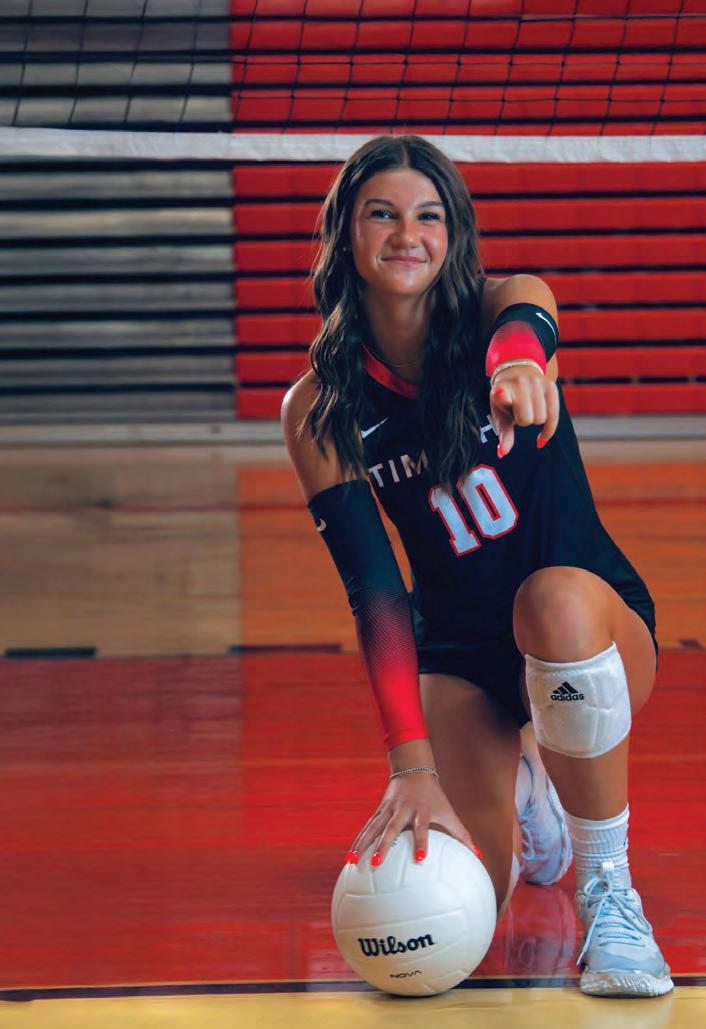
Downers Grove’s Bella Potempa was fully aware she was going to miss out on some fun.
The Timothy Christian High School volleyball standout made an important decision. With enough credit hours under her belt, Potempa had the opportunity to skip her final semester in order to start taking classes at Tennessee Tech University and to work with her new volleyball teammates.
When she moved to Cookeville, Tennessee, in January, she realized that she was going to miss out on senior activities. At the time, prom was a question mark, but the good news for Potempa was that the semester at her college would wrap up before Timothy Christian’s graduation in Elmhurst.
“I’ll be able to go back to my high school and walk and receive my physical diploma,” she said in January. “It will be a nice experience.”
Potempa was taking 13 credit hours of work while spending time getting acclimated to college life and life on a Division I volleyball team. It was not a decision she took lightly.
“I didn’t want to give up my senior year in high school, but it was something I needed to do,” she said.
“Being as driven as I am, I have goals that I set for myself. This is where the grind starts. If I were to come here in August, the season would have started right away. I wouldn’t have had a chance to prove myself.
“I want to start off as strong as I can and be built and well-rounded to
play against these 20-year-old girls that I may be going up against.”
The 5-foot-7, 17-year-old outside hitter said she always felt like she was an “underdog” in the sport. She said she was told she would not be a Division I player.
“My whole life, I’ve been told ‘I can’t,’ I won’t,’ It’s not going to happen,’ and ‘You’re too short,’’’ she said. “Yes, at
times it was hard to hear, but I’ve learned to bite my tongue and take it with a smile.”
She was able to smile 13 times as she said she had 13 DI offers to mull over.
While making a Division I rosters proved doubters wrong, that’s just not good enough for Potempa. She wants to make an impact in the sport in college and beyond.
“This is my priority right now,” she said. “I have accepted that this is what I want to do. Volleyball is my passion and my life.”
Potempa said that one of the first things her new coach, Jeannette Phillips, did was ask players to describe themselves in one word. Potempa chose the word “determined.”
“I have always been a go-getter, and I’ve been a driven athlete,” she said.
“I have accepted that this is what I want to do. Volleyball is my passion and my life.”
- BELLA POTEMPA
“I’m the oldest in the family, so I set the tone, I guess. I wanted to play collegiate volleyball, and my goal was DI. I still have aspirations to play after college and play professionally. But I’m taking it one step at a time.”
In her senior season, Potempa racked up 359 kills and 280 digs, so she was dangerous on both ends of the court. She was an all-state selection by the Illinois Volleyball Coaches Association.
Since 2022, Potempa has earned a long laundry list of accomplishments, from the all-state award to several all-tournament team selections and all-area recognitions. She also tried her hand at track and was a two-time state finalist.
She is making a name for herself in a family that features accomplished athletes. Her father, Brian, played three sports at Moraine Valley Community College and Millikin University. Her aunt, Bonnie Kraemer, played softball at Northwestern and Eastern Illinois University.
Her younger brother, Ethan, is a budding hockey star, and Bella is making it her mission to inject some of her determination into his mindset.
“I tell him he has to keep up with his sister,” Bella said of Ethan. “I tell him ‘you can’t let your sister beat you.’’’n
Downers Grove’s Bella Potempa headed to college early to get a jump on her academic and volleyball careers.
Bella Potempa said she is making her college volleyball career a priority and has been working with Tennessee Tech since January.
Dr. Hadley Thurmon
High skills, authentic care for patients, warm, well-lit surroundings, and the latest in dental technology. When you walk into the office of Alpine Creek Dental on York Road, you sense that Dr. Hadley Thurmon’s practice is ready to serve.
Dr. Thurmon: “As the daughter of a teacher, I have always valued education and professional growth. At Alpine Creek Dental, myself, Dr. Krupa Patel, and our entire team, regularly attend continuing education courses, so we may provide the best care and results for our patients.”
“Our technology also helps set us apart. For example, our Digital Radiographs (x-rays) emit minimal radiation as we create immediate images to aid diagnosis. Our Sirona Cone Beam Unit captures three-dimensional images of oral structures to aid in implant placement, endodontic treatment, and diagnosis of possible cancerous and non-cancerous lesions. We use an iTero intraoral scanner to capture digital impressions of teeth and gums in a wand about the size of an electric toothbrush. That size virtually eliminates the risk of gagging, which can occur with traditional impressions. We use electric handpieces, which are
quieter, smoother, and more efficient than air-driven handpieces, for a less traumatic experience. We also use Pearl AI second opinion software, which is very effective in early detection of pathology and differentiating anatomical abnormalities. We have a Diode Laser that helps us during surgery and a Piezo unit that reduces the amount of hand scaling needed when we remove tartar.”
She adds, “I am also happy to announce that we have just added a 3D Surgical Guide Printer for providing superior dental implants. This unit creates extremely accurate templates in the placement and angulation of implants. That enables us to drill implants with maximum accuracy, predictability and precision. Because the unit is in our office, we also speed up the entire process of helping patients get the final restoration sooner.”
As a local, privately owned dental practice in Elmhurst, we are committed to providing honest, compassionate, and comprehensive dental care. From routine cleanings to advanced treatments, your smile is our priority. Schedule your appointment today and experience dentistry centered around you.
Visit www.alpinecreekdental.com, or call 630-941-9299.
Alpine Creek Dental of Elmhurst
RENOVATIONS Worth Every Dollar
The home upgrades bring the biggest return
COURTESY OF AMY ROBEY, MAINSTREET REALTORS®
We’ve always known that first impressions matter, but did you know the same is true of your home?
Replace an outdated front door with a new steel door, and you’re likely to recoup 100% of the value when it comes time to sell. Opt for fiberglass, and you can recover 80%. These are just two of the many trends illuminated by the National Association of REALTORS® 2025 Remodeling Impact Report.
Real estate experts consistently share that curb appeal shapes buyer
expectations before they ever step into a home. How well a home is maintained outside signals how well it is maintained overall, which can influence a buyer’s perceived value once they walk through the door.
REMODELING AS A WAY OF LIFE IN AMERICA
In 2024, Americans spent an estimated $603 billion remodeling their homes. While many homeowners are making changes to their homes to increase the quality of life, like adding a new primary bathroom or upgrading the kitchen, it’s helpful to know which projects also contribute to the future resale value of your home.
What’s notable is that resale value and livability are no longer seen as competing goals. Many of today’s highest-return projects are those that make homes more comfortable, efficient, and functional right now, while also aligning with what future buyers are actively seeking.
In addition to upgrading the front door, closet renovations yield one of the strongest returns on investment (83% of the value recovered) because buyers gravitate toward clean, functional spaces. Also in the top 10 are new vinyl windows (74%), which increase comfort, reduce outside noise and improve efficiency.
Converting a basement to a living area (71%) to create more usable square footage inside the home adds value, along with making minor kitchen upgrades (60%) or renovating a bathroom (50%) with modern, energy-efficient appliances, updated hardware, paint colors and lighting.
Top-agent-recommended projects to increase the value of your home also include painting the entire house, followed by painting one room, new roofing, a kitchen upgrade or a bathroom renovation.
However, REALTORS® say it’s not just major upgrades that buyers notice.
EVEN SMALL HOME UPGRADES CAN INCREASE PROPERTY VALUE
Some smaller projects punch above their weight because they’re highly visible, relatively affordable, and easy for buyers to appreciate immediately. Unlike major renovations, they don’t require buyers to imagine future improvements. They can see and feel the impact right away.
Paint a room in your house or even one wall in a moody hue, like mocha, mahogany, navy blue or emerald green. Or select a standout wallpaper, such as a textured neutral, small-scale patterns or nature-inspired prints.
Experts say that these tones can create a sense of comfort, making a home feel lived-in rather than cold and empty. And deep, grounding shades can add sophistication and give spaces a polished, high-end look. An added benefit is that these deep shades make a statement, helping potential buyers form a connection with the home and making sure they don’t forget it.
REALTORS® also suggest updating your home’s lighting as an easy win. Bright rooms make spaces look larger.
You can replace old bulbs with LEDs to make your home feel more modern, add dimmer switches or replace outdated fixtures. If you really want to go the extra mile, spring for underlighting in your cabinets and shelves or ambient lighting to create a spa appeal in your primary bathroom.
LARGER HOME UPGRADES THAT YIELD RETURNS
More and more, buyers are looking for turnkey, move-in ready homes with Instagram-worthy appeal.
According to REALTORS®, even modest kitchen upgrades can deliver strong returns on investment. Zonda’s 38th Cost vs. Value Report underscores this point: a minor kitchen remodel is the only interior project to rank in the top five for return on investment, highlighting the enduring importance of a functional, livable kitchen. These upgrades can include repainting or resurfacing existing cabinets and updating hardware. Swapping dated countertops for buyer-friendly materials, such as quartz or granite, refreshing the backsplash and upgrading appliances.
Energy-efficient homes also raise buyer appeal and potential home value. In particular, U.S. Energy Information Administration data shows that household energy consumption and costs remain a persistent concern for many homeowners, supporting the value of energy-efficiency upgrades in resale decisions. The addition of high-performance windows or exterior doors, like the steel or fiberglass doors mentioned above, as well as updated siding, are great additions that increase your home’s efficiency and value.
Today’s homebuyers are also willing to pay a premium for wellness spaces. Wellness encompasses physical well-being, like clean air, water and access to spaces that
encourage movement and mental health, like quiet corners and restorative bathrooms.
Buyers who prioritize wellness are looking for things like modern, well-equipped kitchens, energy-efficient insulation, HVAC and lighting, water and air filtration systems and solar battery storage or backup power generators. These trends are especially relevant in the Chicagoland suburbs, where move-in-ready homes command a premium.
EXTERIOR SPACES ALSO INCREASE HOME VALUE
Moving to exterior improvements, decks, patios and outdoor living rooms showcase the home as an extension of indoor living. Think beyond a sitting area to incorporate an outdoor kitchen, entertainment area or even a workout center. You can also attach an outdoor living space to your home, by creating a covered or screened-in porch, sunroom or pergola.
Features like mounted outdoor TVs and lounge spaces are not only becoming more popular–even in Illinois–they’re also increasing property value. Outdoor living spaces, from decks and patios to outdoor kitchens, fire pits and lounge areas, are widely recognized by designers and agents as features that extend usable living space and boost buyer appeal.
Fresh mulch and manicured beds also contribute to a home’s curb appeal, along with low-maintenance plants. Then, just like indoor lighting, outdoor lighting along the entryway walk, uplighting the trees or highlighting architectural features creates an element of sophistication.
While all of these upgrades will bring you joy today, they are also likely to bode well for the future resale value of your home. n
HOUSE + HOME
A home is more than an address. It’s where routines take shape, memories are made, and personal style comes to life. Across the western suburbs, homeowners are continually reimagining their spaces to reflect changing needs, tastes, and lifestyles. From first-time buyers to longtime residents planning their next renovation, the journey is filled with important choices. This community is fortunate to be surrounded by talented local professionals who bring creativity, craftsmanship, and expertise to every stage of the process. In this special Noteworthy House + Home section, Hinsdale Magazine Group showcases trusted industry leaders who help transform houses into places that truly feel like home.
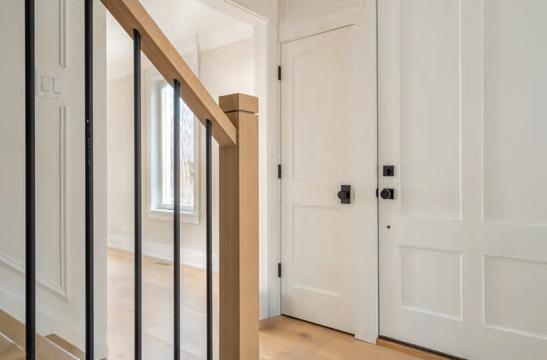
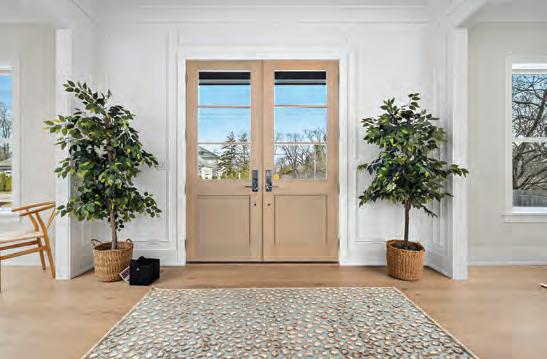
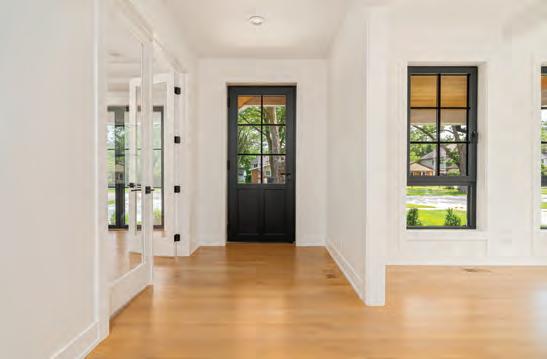
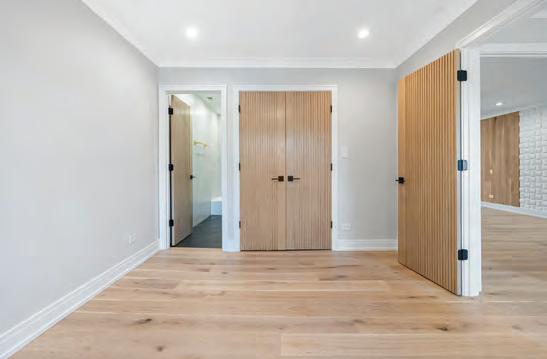
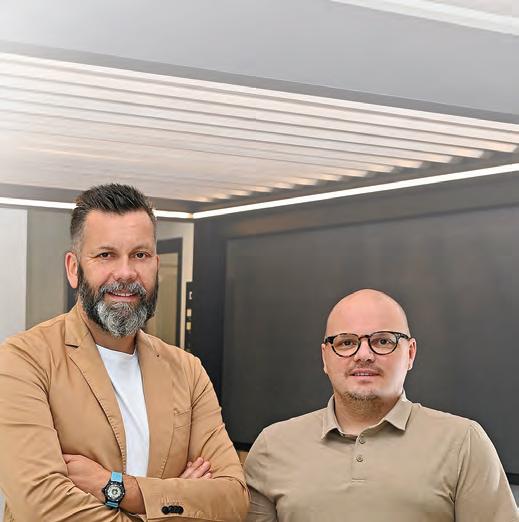
Craftwood Doors & Windows
Greg Kaminski & Jakub Raniak
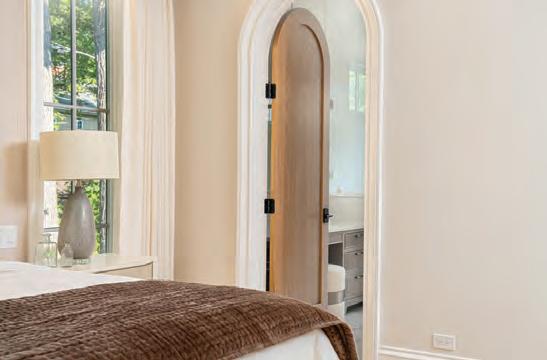
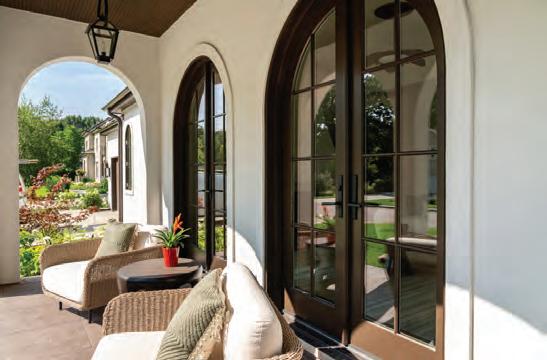
In home design, the elements that matter most are often the ones that quietly do their job every day. Doors, windows, and architectural details influence how a space functions, how it feels, and how it ages over time. For nearly two decades, Craftwood Doors & Windows has helped shape those decisions for homeowners, builders, and designers across the Chicago area.
Craftwood specializes in doors, windows, moldings, and architectural hardware, offering materials that support both modern living and timeless design. Their work spans custom homes, renovations, and commercial projects, with an emphasis on thoughtful selection rather than one-size-fits-all solutions.
“Our role is really about helping people make confident decisions early in the process,” says Jakub Raniak, Director of Sales. “Doors and windows are long-term investments. When they’re chosen with intention, they elevate the entire home.”
The company’s offerings include interior and exterior doors in wood, steel, and fiberglass; energy-efficient windows and patio doors; decorative and structural moldings; and a wide range of architectural and cabinet hardware. Each project begins with an understanding of how the space will be used and how individual components will work together visually and functionally.
That attention to detail continues behind the scenes. Craftwood’s process often includes reviewing architectural plans, preparing detailed estimates, and conducting on-site visits to ensure accuracy before materials are ordered. According to Greg Kaminski, Director of Operations, that preparation is essential.
“Good execution starts long before anything is delivered,” he says. “Our job is to anticipate challenges early so the installation phase feels smooth for everyone involved.”
The team itself reflects that balance of creativity and precision, with professionals spanning sales, estimating, drafting, project management, and warehouse operations. This structure allows Craftwood to handle complex projects while maintaining a hands-on, collaborative experience for clients.
Over time, Craftwood has earned a reputation not just for the products it supplies, but for the guidance it provides. By focusing on process, craftsmanship, and clear communication, the company continues to play a quiet but essential role in how well-designed spaces come together.
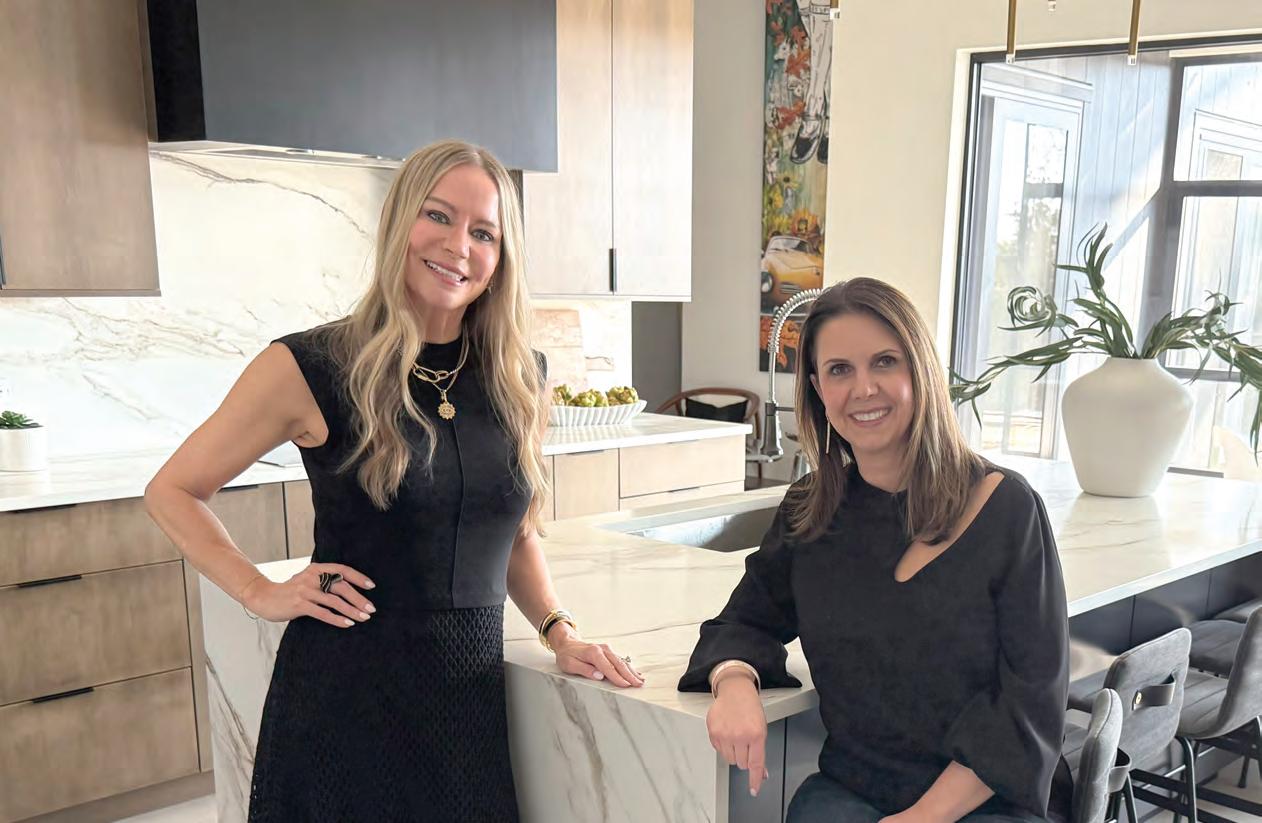
Melanie Lee Interior Design
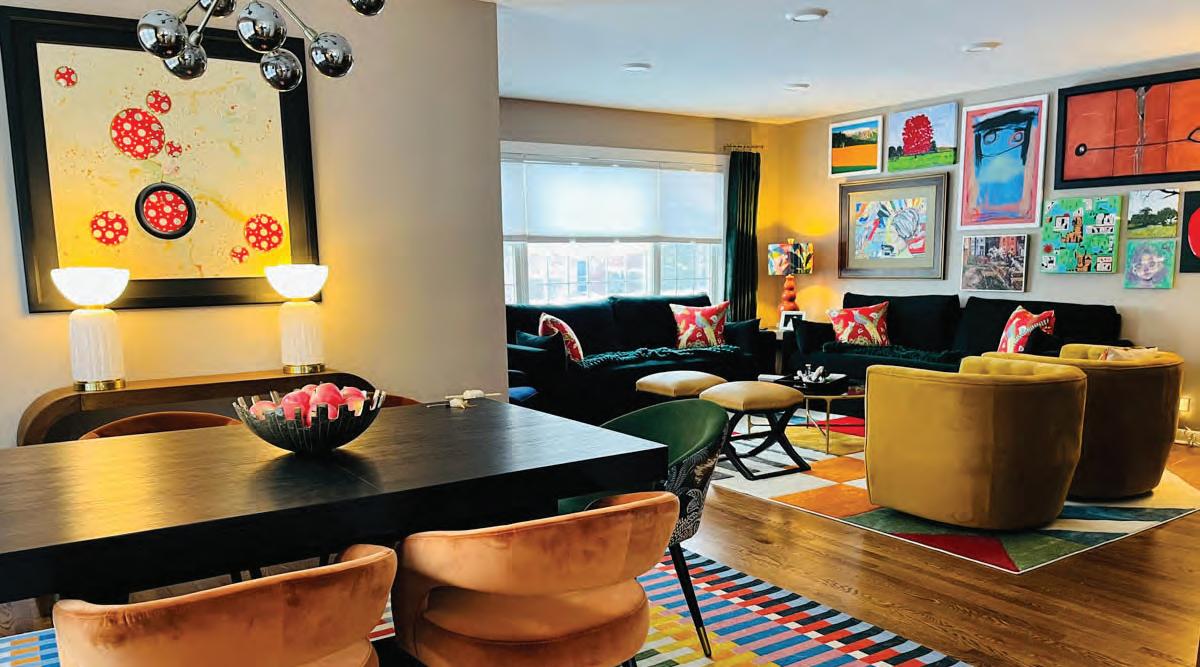
Melanie Lee Interior Design acts as a creative anchor for homeowners who want their spaces to tell a story. Founded in 1999, Melanie Lee brings almost three decades of experience to the art of creating layered, livable, and timeless interiors. Based in Elmhurst, Illinois, Melanie has built a trusted reputation in her hometown for her ability to seamlessly blend high and low design, proving that beautiful spaces are not defined by price point or project size, but by thoughtful curation and heart. Melanie and her team members, Lynda McDonald and Lara Stavridis are known for their intuitive ability to channel each client’s personal style, they translate their vision into spaces that feel authentic.
Melanie Lee’s signature aesthetic is comfortable, and elevated. With projects spanning cities across the United States, she approaches every home, whether a full-scale renovation or a single-room transformation, with the same level of care, expertise, and attention to detail. For Melanie, no job is too big or too small; every space deserves to feel personal, refined, and enduring.
This full-service interior design studio removes the stress from the renovation process. Many clients feel overwhelmed by the sheer number of choices available today. If you do not know your style, Melanie and her team help you define it. They act as your guide to ensure
every decision adds value and beauty to your home.
The studio offers a comprehensive suite of services. Space planning and layout are essential for ensuring a room flows well and functions for your lifestyle. They handle paint selection and wall decor to create the perfect backdrop for your life. For highimpact areas, they specialize in kitchen and bathroom design and remodeling. These complex projects require a keen eye for detail which the team provides. They also design custom built-ins, assist with new construction decisions, and source furniture and accessories. Window treatments serve as the final touch that pulls a room together.
Flexibility is a core part of their philosophy. Any of the above services can be worked into a design package that will suit your design needs, budget and time frame. You receive the benefit of national design experience with the personal attention of a local expert.
Melanie Lee Interior Design 0S748 Linden Elmhurst, Illinois
312-318-6797
@melanieleeinteriordesign (instagram)
Jacob Lukas Design
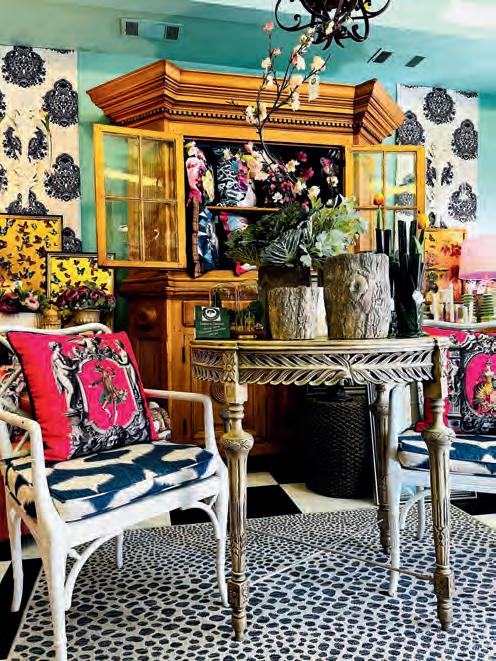
Elmhurst has welcomed a vibrant addition to its local business community with the opening of Wanderlust. This brick-and-mortar store acts as the retail counterpart to the acclaimed Jacob Lukas Design. For Kurt Miller and Lukas Mack, the duo behind the brand, opening this physical storefront fulfills a longstanding dream to bring their curated vision directly to the public. While they are already nationally recognized for their interior design work, they chose to remain local to Elmhurst to serve their neighbors.
The shop bridges the gap between high-end interior design and creative home decor. Many people admire the look of a professionally designed home but might not be ready to commit to a full-service contract. Wanderlust solves this by allowing you to shop designer looks on your own terms. You can walk in and shop for singular items and find the same caliber of furniture and accessories that appear in their larger projects without needing an appointment.
Walking through the doors feels like entering the vibrant home of a world traveled rather than a standard retail space. The name itself suggests a curiosity about the world and the collection reflects that spirit. Every item on the shelves has been chosen with a specific point of view. You will find unique textiles, statement lighting, and one-of-a-kind accessories that add character to any room. This level of curation saves you from the fatigue of sorting through endless options online.
The benefit of having a nationally recognized firm anchor a local shop cannot be overstated. It brings a level of authority and trust to your shopping experience. You know that the pieces available have met the standards of industry professionals who work on a national stage. Yet the atmosphere remains welcoming and neighborhood focused.
Wanderlust encourages you to engage with design in a tactile way. You can feel the weight of a ceramic vase or see how a fabric catches the light. This sensory experience is vital for creating a home that feels comfortable and authentic. Miller and Mack bring their design background to the floor and are ready to guide you toward pieces that fit your style—and that same thoughtful approach extends beyond the showroom through their free in-home interior design consultations. Whether you are hunting for a specific item or just seeking inspiration for a big renovation, Wanderlust invites you to explore. It is a celebration of design that belongs right here in Elmhurst.
Wanderlust 109 North Addison Ave., Elmhurst, Illinois 312-450-5101 | jacoblukasdesign.com
FB: Wanderlust Home Store
IG: @wanderlusthomestore
Patty Klingbiel residence/Elmhurst
Moderne Living
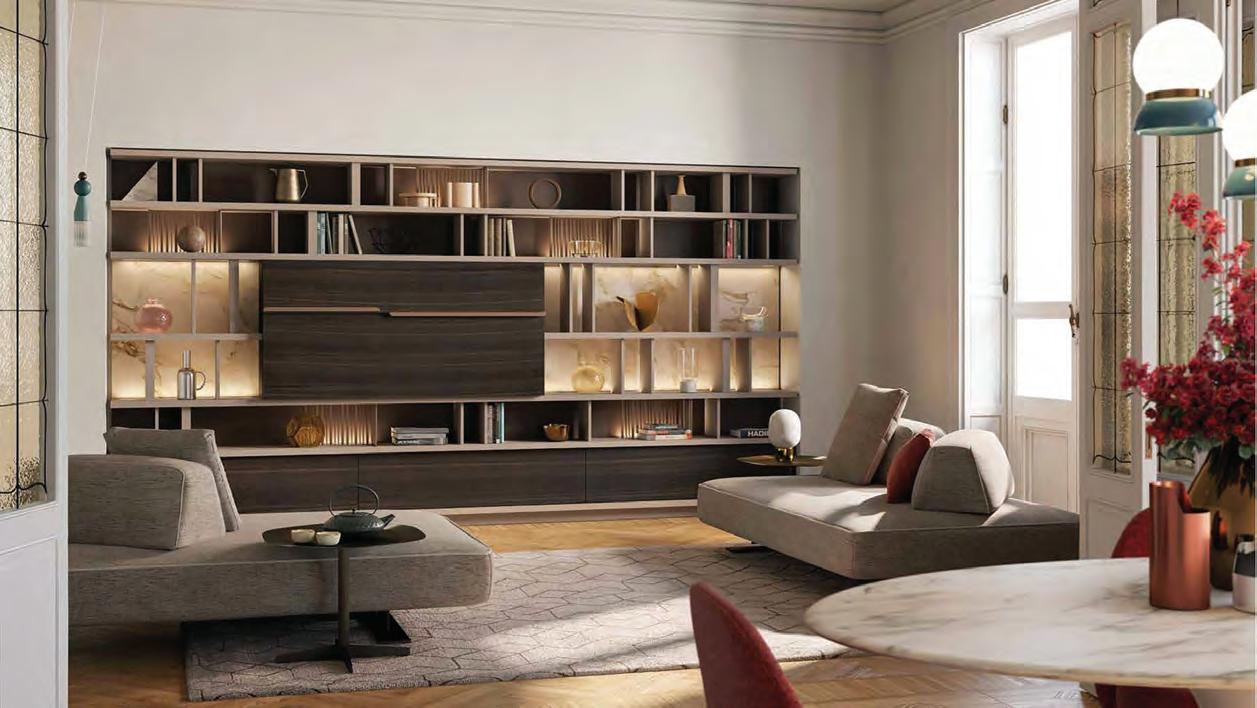
Established in August 2005, Moderne Living was created to bring refined European contemporary design to Chicago homeowners seeking modern sophistication with everyday comfort. From its inception, the company has prioritized curated furnishings and architectural elements defined by clean lines, premium materials, and enduring craftsmanship.
Today, Moderne Living delivers comprehensive, highend design solutions that extend well beyond furniture. The showroom features fully realized kitchen displays, contemporary bath environments, architectural lighting installations, and premium interior door systems—allowing clients to experience complete, integrated living concepts rather than isolated pieces. Each collection is selected for quality construction, thoughtful engineering, and cohesive design.
Specializing in authentic, award-winning European collections from Italy, Poland, and Germany, the company partners with respected international manufacturers known for precision craftsmanship, modular flexibility, and material innovation. Customization options allow layouts to be tailored for both urban residences and larger suburban homes, ensuring that form and function work seamlessly together. A commitment to responsibly sourced wood veneers, sustainable materials, and lowemission finishes further supports healthier indoor environments.
Beyond product selection, Moderne Living provides personalized design guidance to ensure scale, proportion, and materiality align harmoniously within a space. The team assists with kitchen planning, bath configurations, lighting strategy, and architectural detailing—recognizing that contemporary interiors require balance. Too minimal can feel stark; too ornate can feel cluttered. Their expertise helps clients achieve environments that are sophisticated, functional, and distinctly personal.
Moderne Living also collaborates closely with architects, interior designers, and remodeling professionals, coordinating specifications and material selections early in the planning process to preserve design integrity and streamline execution and national delivery.
Clients are encouraged to visit the River North showroom to see and feel the difference firsthand—from supple Italian leathers to precision metal detailing— experiencing immersive kitchen, bath, lighting, and door systems that bring elevated European living to life.
222 W. Superior Street, Chicago, Illinois 312-380-0058 | moderneliving.com
Woodland Windows & Doors
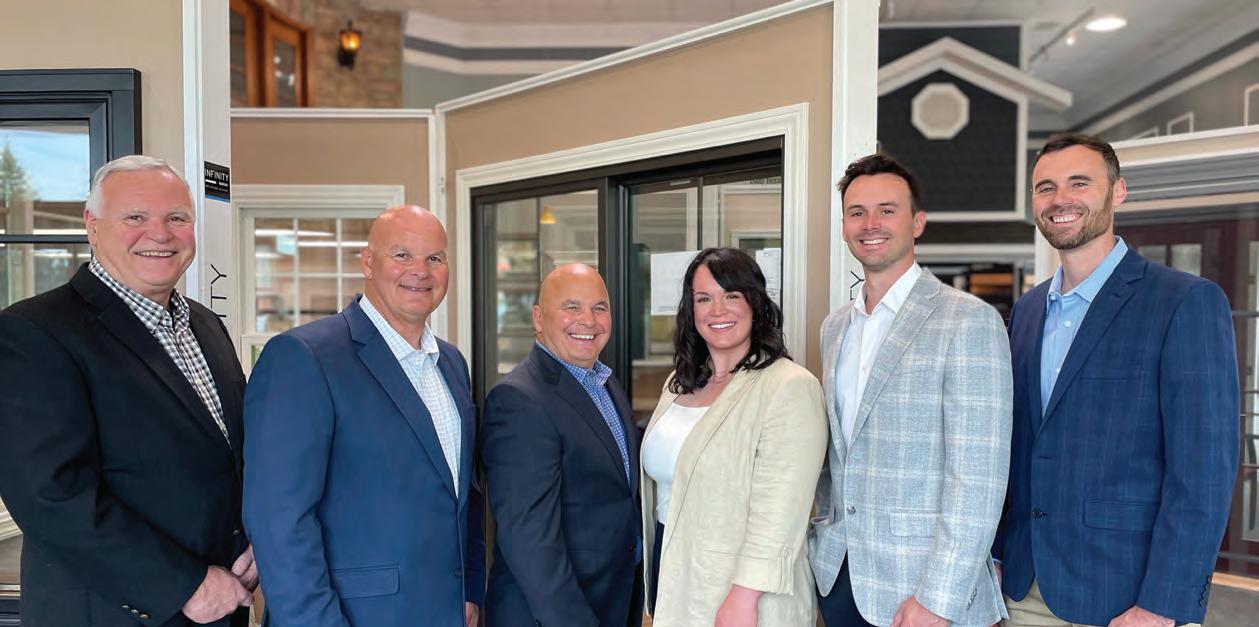
Woodland Windows & Doors has spent more than half a century transforming homes across the greater Chicago area with quality, craftsmanship, and trust earned one project at a time. Founded in 1969 by John and Ann Mariotti, the company began in a small storefront and has grown into a respected full-service provider of replacement windows, doors, and expert installations, all rooted in family values and a commitment to exceeding homeowner expectations.
What sets Woodland apart isn’t just the products it offers, Although they offer some of the most respected brands in the industry offering the full line of Marvin, Infinity by Marvin and Andersen, it’s the way the team helps homeowners navigate choices with confidence and clarity. From designing solutions to fit each home’s unique personality to handling every detail of installation, Woodland’s seasoned professionals bring expertise that turns visions into reality.
At the heart of the company’s strength is its own installation staff, employed directly by Woodland and certified to ensure precision on every job. Whether helping a homeowner choose the ideal window style or installing a full set of doors and frames, Woodland installers bring meticulous attention to detail paired with a respectful, customer-first attitude.
Woodland Windows & Doors also places strong emphasis on education throughout the process. Homeowners are guided through differences in materials, glass options, energy ratings, and long-term performance so they can make informed decisions that align with both their homes
and their budgets. Rather than rushing selections, the team encourages thoughtful planning, helping clients understand how the right window or door choice can improve comfort, reduce noise, and support energy efficiency year-round.
The second generation of the Mariotti family, Rano, Ralph, and Ken, along with thirdgeneration leaders Ashley, Matt, and Phil, are working side by side to guide Woodland into its next chapter. That shared commitment to craftsmanship and innovation is taking a visible step forward with the opening of a brandnew showroom in Oak Brook, slated for Spring 2026. The expanded space will allow clients to explore products up close, receive expert design guidance, and experience firsthand the quality and service that have defined Woodland for decades.
From energy-efficient window replacements that enhance comfort and value to elegant door solutions that elevate curb appeal, Woodland aims to bring light, style, and lasting performance to homes throughout Chicagoland. With roots firmly planted in quality service and a reputation built on referrals across generations, Woodland Windows & Doors continues to be a trusted partner for homeowners and builders alike.
Woodland Windows & Doors 25W355 Lake St, Roselle, Illinois
• Specialty themed meals and drinks at our Pool Café
• Exciting events including Movie Nights, Luau Day, Tie Dye Day and Swim & Save with Wintrust Bank
• Pool Obstacle Course
• British Swim School with professional swim lesson instruction
• Swim Team
• Fluid Running
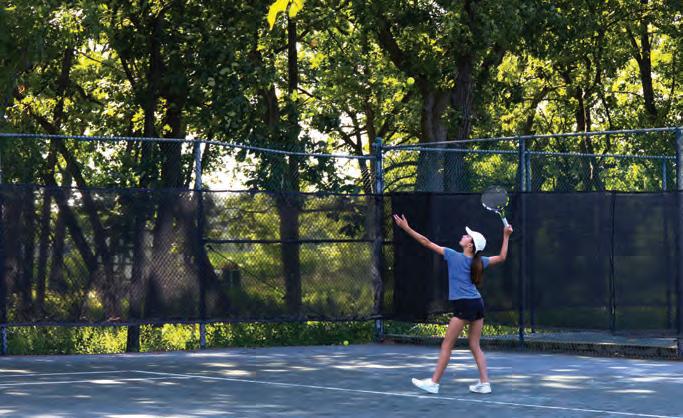
On the Court
• Professional tennis instruction adults & children
• Weekly drills
• Social Events
• Nike Tennis Camps
• Tennis Only Memberships available
• Coming in June
• Register for the month or by week
• Ages 7-13
• Golf, Tennis, Soccer & Swim
• Exclusively for OBBT Members
Built for the
TIMES
A look at how homes evolve with us
BY HINSDALE MAGAZINE GROUP STAFF
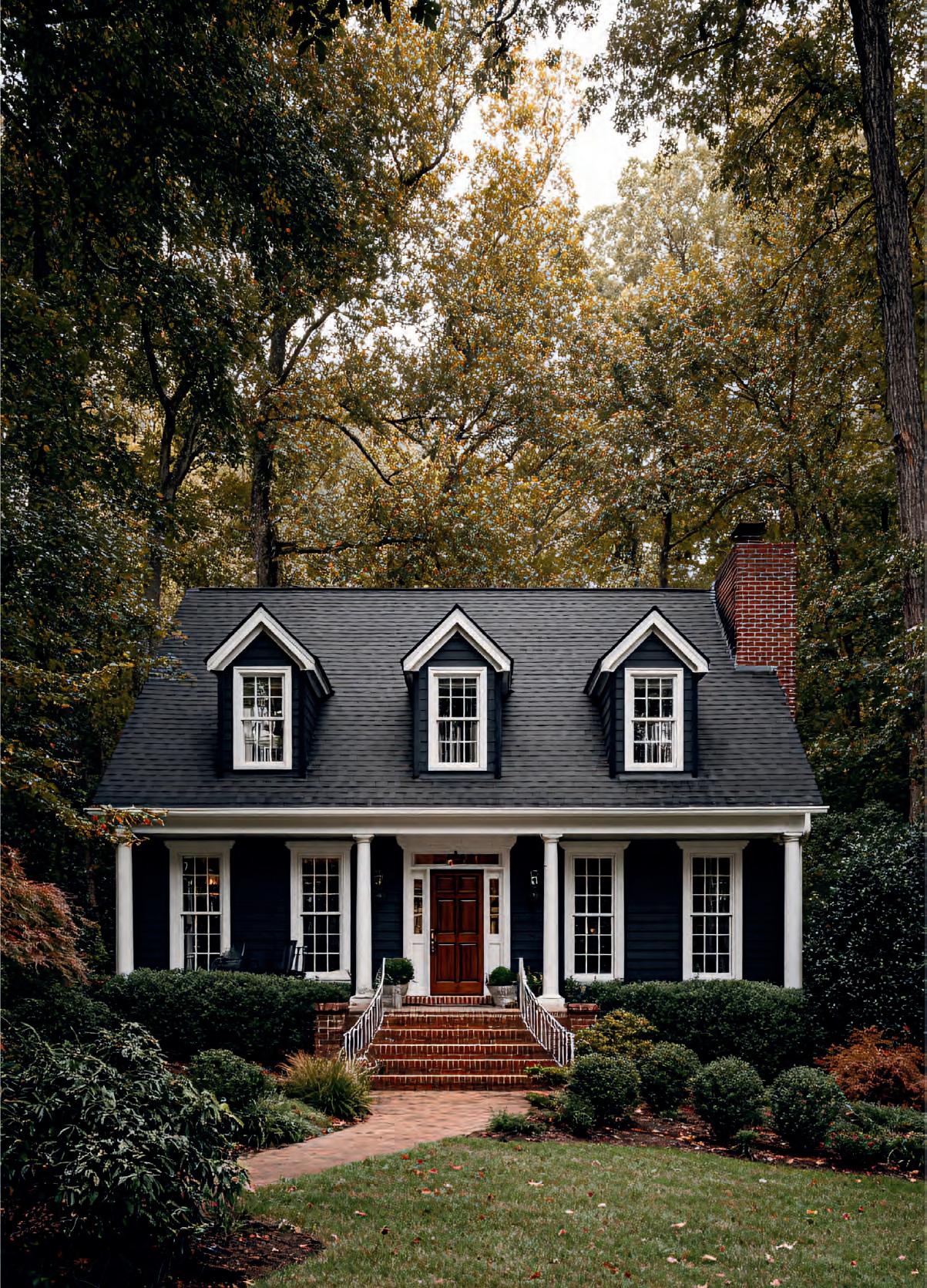
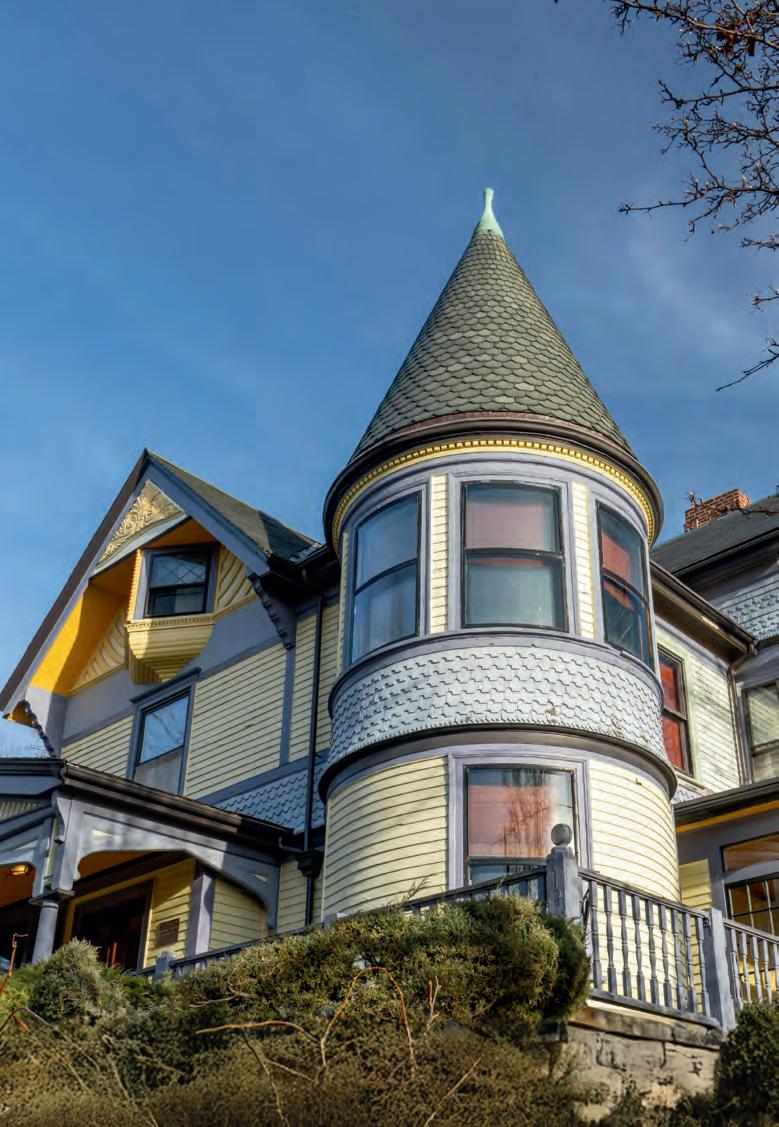
Home styles reflect how people live at different moments in history. From early formal houses to today’s flexible layouts, architecture has changed alongside family life, technology, and cultural priorities. These familiar home types trace the evolution of suburban living.
COLONIAL & VICTORIAN (1800S–EARLY 1900S): TRADITION AND DETAIL
Early American homes favored symmetry and structure. Colonial houses featured central entrances, evenly spaced windows, and steep roofs that suited formal living. As the Victorian era emerged, homes became more expressive and decorative, with ornate trim, bay windows, turrets, and wraparound porches. Rooms were clearly defined and designed for entertaining and social gatherings, emphasizing craftsmanship and status.
CRAFTSMAN, BUNGALOW & AMERICAN FOURSQUARE (1900S–1930S): COMFORT AND PRACTICALITY
In the early 20th century, design shifted toward simplicity and function. Craftsman homes highlighted natural materials, exposed beams, and built-in cabinetry. Bungalows offered modest footprints and efficient layouts, appealing to young families entering suburban neighborhoods.
During this same period, the American Foursquare became a familiar sight throughout Midwestern communities. Recognized by its boxy shape, broad front porch, and practical four-room layout on each
floor, the Foursquare bridged ornate Victorian homes and the simpler styles that followed. These durable houses remain a defining feature of many Chicago-area suburbs.
CAPE COD & MINIMAL TRADITIONAL
(1930S–1950S): AFFORDABLE AND EFFICIENT
Economic challenges and post-war housing demand shaped the next generation of homes. Cape Cod cottages, with their steep roofs and compact footprints, became popular with returning veterans and young
families. Minimal Traditional homes followed a similar philosophy, offering straightforward design with limited ornamentation and strong practicality.
These homes supported the rapid expansion of suburban neighborhoods and remain among the most recognizable styles in the region today.
RANCH & MID-CENTURY MODERN (1950S–1970S): CASUAL LIVING
The post-war era introduced a more relaxed approach to home design.
Ranch houses spread outward rather than upward, offering single-story living with open floor plans and sliding glass doors that connected indoor and outdoor spaces. Mid-Century Modern homes embraced clean lines, large windows, and a strong relationship with nature. Together, these styles reflected a cultural shift toward informal, family-centered living.
SPLIT-LEVEL & EXPANDED SUBURBAN HOMES
(1960S–1980S): ROOM TO GROW
Split-level homes introduced separate but connected living zones, providing privacy while maintaining flow. As families grew, houses became larger and more specialized, with finished basements, family rooms, and attached garages. These designs balanced flexibility with the desire for defined spaces for work, play, and gathering.
LATE 1990S–2000S: SIZE AND STATEMENT
By the end of the 20th century, homes expanded dramatically in scale. Often referred to as “McMansions,” these houses combined multiple architectural influences and emphasized square footage, grand entryways, and expansive primary suites. They reflected a period when homes were designed to make a visual statement as much as serve daily life.
TODAY: PURPOSEFUL AND FLEXIBLE DESIGN
Modern homes blend historical inspiration with contemporary needs. Open interiors are balanced with defined zones for work, wellness, and family time. Mudrooms, home offices, and multi-generational spaces are now standard features. Sustainability and smart technology guide today’s designs, focusing on efficiency and adaptability rather than ornament alone. ■
Celebrating Over 75 Years of Excellence
At Mirabella, Kincaid, Frederick & Mirabella, LLC, our attorneys believe that an informed client is better able to make effective decisions. Many of our clients come to us facing the most difficult times in their lives. Our experience has shown us that divorce, custody battles, sexual harassment, employment discrimination, and injury cases should be handled correctly by a skilled legal professional who can help minimize stress and expenses. We take the time to fully educate our clients about the legal process and develop strategies tailored to our clients' goals and objectives
Practice Areas Divorce
Collaborative Divorce
Family Law
Alternative Dispute Resolution
Sexual Harassment
Criminal Law
School Law
Employment Discrimination
Civil Litigation
Estate Planning
Personal Injury
Home Organizing
Smarter Systems for Modern Living
BY HINSDALE MAGAZINE GROUP STAFF
Home organizing has shifted from a focus on perfection to a focus on function. As homes take on more roles than ever before, homeowners are investing in systems that support real life and spaces that are easy to maintain, flexible, and thoughtfully designed.
FUNCTION OVER PERFECTION
Today’s organizing trend prioritizes usability over appearance. Rather than striving for picture-perfect spaces, homeowners are choosing systems that reflect daily routines. Adjustable shelving, labeled zones, and storage based on habits help reduce clutter before it builds up. A well-organized space should feel effortless.
Quick Organizing Tips
+ Organize based on how you use a space, not how it looks
+ Create zones for everyday items to prevent clutter from spreading
+ Choose adjustable systems that can evolve over time
+ Use closed storage in hightraffic areas to reduce visual clutter
+ Revisit and edit storage seasonally
Trends
DROP ZONES THAT CONTAIN THE CHAOS
Entryways and mudrooms have become critical organizing areas. Often called “drop zones,” these spaces serve as a home’s first line of defense against clutter. Builtin cubbies, hooks, drawers, and charging stations provide a place for shoes, backpacks, coats, and mail. When everyday items have a designated home, the rest of the house stays calmer and more organized.
PANTRIES WITH PURPOSE
Modern pantries do far more than store food. Many now include appliance garages, prep counters, coffee stations, and even secondary refrigerators. By moving small appliances and overflow items out of the main kitchen, pantries help maintain clean countertops and open sightlines. These hardworking spaces support both daily routines and entertaining.
CLOSETS THAT WORK SMARTER
Closets are increasingly customized to match individual needs. Walk-in closets are designed with adjustable rods, built-in drawers, and improved lighting, while smaller closets benefit from modular systems that maxi mize every inch. Seasonal storage zones and flexible layouts make it easier to stay organized long term.
ORGANIZED HOME OFFICES
With remote and hybrid work now part of everyday life, home offices
require thoughtful organization. Closed storage helps hide paperwork and technology when the workday ends, while cable management keeps desks clutter-free. Flexible furniture allows these spaces to shift easily between work and personal use.
GARAGES AS FUNCTIONAL SPACES
Garages are no longer just storage overflow. Homeowners are creating defined zones for tools, sports equipment, and hobbies using wall-mounted systems and cabinetry. An organized garage supports active lifestyles and makes everyday tasks easier and more efficient.
A MORE SUSTAINABLE APPROACH
Sustainability is influencing organizational decisions as well. Instead of buying more containers, homeowners are editing what they own and investing in fewer, high-quality storage solutions. The emphasis is on long-lasting systems that encourage mindful living. n
Mahjong Madness
A captivating game, equal parts strategy and social, is sweeping its way through the suburbs
BY VALERIE HARDY
Step back, bridge and bunco. There’s a new game in town – mahjong –and it’s spreading like wildfire across the western suburbs and throughout the nation.
The History of the Game
Many Americans only recently learned mahjong, but the game has a deeply rooted history. It originated in China during the nineteenth century, a gambling game played primarily by men. Mahjong made its way to the United States in the early twentieth century, proliferating around the 1920s, with many Chinese Americans, military wives, and Jewish women playing under varying rules. However, in 1937, a group of Jewish women in New York City formed the National Mah Jongg League (NMJL), standardizing the game; what is now
known as American mahjong was officially born.
A Crash Course on Mahjong
American mahjong is typically a four-player game using 144 tiles across three major suits – Bams (bamboos), Cracks (characters), and Dots (circles)
– and four categories of non-suited tiles: Dragons, Flowers, Winds, and Jokers. Players try to create a winning hand (called a “mahjong”), based on one of many possible tile combinations as outlined on the annual card published by the NMJL. The most recent card features 71 distinct 14-tile “mahjong” sequences. A new card comes out each spring, so players are continually challenged to learn new tile combinations to “mahj” (win). Some compare mahjong to the more familiar tile-based game Rummikub or card games like canasta or gin rummy.
Mahjong’s Ascent in Popularity
While mahjong has been played in the United States for nearly a century, its popularity peaked only recently. The game has become so popular that shoppers can find mahjong-themed merchandise in almost any local
Mahjong instructors
Angela Buikema and Colleen Loftus at the mahjong league they jointly run.
Local women learn mahjong at a class Colleen Loftus hosted at Alter Brewing in Downers Grove.
Angela Buikema teaches mahjong at a public class in Elmhurst.
boutique, and many mahjong set distributors, like Oh My Mahjong, are frequently out of stock because the demand is so high.
Interest in learning to play mahjong has also spiked, turning some mahjong players into professionals in response. Over the past year, Colleen Loftus (Mariposa Mahjong), Emily Hannigan (Mahj Ed), and Angela Buikema (Mahjong Mischief) all began local mahjong instruction businesses. Each runs multiple classes per week, often needing additional instructional assistants to accommodate the volume of participants.
These mahjong instructors offer public classes at venues like local coffee shops, breweries, and libraries plus private classes at homes or country clubs. They teach introductory mahjong classes, and after taking an initial class, participants often sign up for at least one guided play session to gain a more nuanced understanding of the game. Loftus and Buikema recently partnered to provide tournament-style play for more experienced players through their Lucky Tiles Mahjong League, which began in January at Alter Brewing + Kitchen in
“Mahjong has exploded across cultures, genders, generations, and geographies.”
– COLLEEN LOFTUS OF MARIPOSA MAHJONG
Oak Brook. Loftus, Hannigan, and Buikema also continue to grow their mahjong expertise, including through attendance at a national mahjong convention last month.
While not the same as in-person instruction, Buikema said those new to mahjong may find online tutorials and games or “periodically practicing making hands with a [tangible] tile set” helpful in becoming more comfortable with the game.
A Trend That’s Likely Here to Stay
Loftus explained that “mahjong has exploded across cultures, genders, generations, and geographies” for several reasons. It challenges players to use their brains, allows them to connect with old friends and make new ones, and has an appealing aesthetic. She noted that people are “drawn to the artistry of the tiles,” and the sensory experience extends beyond the visual.
“Some people like the sounds of it too,” Hannigan said. “It’s like playing with blocks, or ASMR noise.”
Hannigan said another appeal of mahjong is that each game is relatively short, typically 25-30 minutes. Mahjong can also be played any season and anywhere – even in the pool or hot tub, with floating boards and waterproof tiles now on the market.
Mahjong’s rituals are as important as its rules. Mahjong sometimes seems to have its own language. For example, the “dealer” is referred to as “East.” Players also exchange tiles at the start of the game in a set order through a process known as "the Charleston."
Yet the old game continues to have new applications. For example, in cities across the nation, “mahjong cafes are popping up,” Hannigan said. “Maybe I should open a local one!”
For now, people looking to learn mahjong can seek classes like those offered by Loftus, Hannigan, and Buikema or by contacting their public library or park district to see if mahjong programming is available. n
Outdoor mahjong for the win!
The beautiful tiles and mats add to the appeal of mahjong.
FIRST AUDIENCE
How music begins at home and grows into a lifelong passion
BY LAURA MICHAUD AND MELISSA G. WILSON
The Living Room Debut
Before there are stages, spotlights, or packed auditoriums, there is almost always a living room. Or a kitchen. Or the back seat of a car. For many performers, the first audience is family—people close enough to hear every missed note and kind enough to applaud anyway. These early performances feel universal: impromptu concerts after dinner, bedroom dress rehearsals, songs sung simply because silence felt too quiet. What makes these moments possible is safety—the feeling that, no matter how rough the performance, the audience isn’t going anywhere.
Larry Collins’s memories capture this perfectly. Growing up, music wasn’t something reserved for special occasions; it was part of daily life.
“Along the way, those of us who were old enough, sang every song my father knew,” Collins recalls of long car rides from their home in to the Hospital as siblings were born. “One by one, the songs flew as we drove to and from the hospital.” Those hours of singing—“10 plus hours of singing for each baby born”—were informal rehearsals that planted something lasting.
What Home Performances
Teach Us
Performing at home builds confidence gently. The stakes are low, but the lessons are real. You learn how it feels to be heard. You learn how to recover after a mistake. You learn to take feedback—both the warm encouragement of parents and the blunt honesty of siblings, who can be surprisingly tough critics.
Most importantly, home performances offer freedom: freedom to fail, laugh, and try again. That freedom transforms performance from something intimidating into something joyful. Over time, it nurtures a relationship with music that isn’t based on perfection, but on participation.
The Transition Out
Eventually, many performers feel ready to step beyond the living room. That readiness doesn’t arrive all at once; it builds quietly. If I can do this here, maybe I can do it elsewhere. The confidence formed at home becomes the foundation for school stages, community performances, and public events.
For Collins, early family sing-alongs grew into a lifelong connection to music. Today, he sings in Lombard, a western suburb of Chicago — with Acappellago, a vocal group that performs formal concerts as well as national anthems at sporting events. What once began as car-ride harmonies has evolved into polished performances before large audiences, yet the roots remain the same.
Creating That Safe Space for Others
For parents and families, being a first audience isn’t about pushing for excellence or demanding polish. It’s about listening, encouraging, and making room for creativity without judgment. Collins reflects that “we’ve all retained our love of music by either performing or attending musical events whenever we’re able,” a legacy he credits to his father leading them in song.
That legacy continues. “My own three children, now long since grown with families of their own, still pursue the arts,” Collins says. And for performers at any stage, the need for a safe space never disappears. Even now, many still rehearse at home—quietly, imperfectly—before stepping into the spotlight. Because no matter how far the journey goes, it almost always begins at home. n
About the authors: Laura Michaud is a founding member of the Encore Center for Performing Arts and Stage 773. Melissa G. Wilson is a performing arts enthusiast, author, and renowned n etworker. For more information visit EncoreCenterforPerformingArts.org
Photo by Vitaly
Lombard ’s LILAC LEGACY
The history and heritage of Lilacia Park
BY HINSDALE MAGAZINE GROUP STAFF
| PHOTOS COURTESY OF LOMBARD PARK DISTRICT
For over a century, lilacs have been synonymous with Lombard. Each spring, countless lilacs, tulips, and more bloom across the historic 8.5 acre Lilacia Park.
Lilacs have a long and well-traveled history, dating back to their origin in Asia Minor. Syringia vulgaris (the lilac or common lilac) was long-admired by locals before being introduced to Western Europe in the 16th century. Cultivated in Vienna, lilacs spread across France and eventually to North America.
Lombard’s famed lilac heritage traces back to Col. William Plum and his wife, Helen
Photo courtesy of the Lombard Historical Society
Maria Williams Plum. Born in Massillon, Ohio, in 1845, Col. Plum served in the Civil War as a master telegrapher before enrolling at Yale Law School in 1865. He married Helen two years later.
In 1869, Plum moved west with hopes of pursuing a law career in Chicago. After a short stay in the city, he discovered the small village of Lombard, then known as Babcock’s Grove. There, he purchased property at the corner of Park and Maple — an estate that would later become known as Lilacia.
The couple’s passion for lilacs blossomed during their travels in Europe, where they toured the famous gardens of Victor Lemoine, a prolific flower breeder whose work contributed to modern lilac varieties, in Nancy, France.
After touring, the Plums purchased two lilacs: Syringa vulgaris ‘Mme Casimir Périer,’ a double white, and Syringa vulgaris ‘Michel Buchner,’ a double lilac color. These would become the foundation of Lilacia’s blooms. Over the next 20 years, the Plums traveled the world, increasing their lilac collection to over 200 varieties and roughly 1,200 lilac bushes.
After his wife’s passing in 1924, Plum offered the collection for sale and to Joy Morton. Morton told him that the collection should remain in Lombard, not at Thornhill Farm, now known as the Morton Arboretum.
Colonel Plum died three years after his wife in April of 1927. His will stated that the land be given to the people of Lombard as a public park and, in memory of his wife, that their house be given as a “free public library and reading rooms.”
That September, Lombard residents voted to accept these conditions, and the Lombard Park District was born.
The famous landscape architect Jens Jensen was commissioned by the park district to design what was called the Lombard Community Garden, now known as Lilacia Park.
Visitors now enjoy the park year-round, but its most popular season is “Lilac Time,” typically arriving in early May. Lilac Time celebrations began in 1930 to officially open Lilacia Park. Early festivities included grand pageants with several hundred participants, Lilac Princesses, and a Queen. In 2019, Lilacia Park was added to the National Register of Historic Places in recognition of its historical and cultural significance.
For historical tours, visit lombardhistory.org. For more information on Lilacia Park or to track the “Bloom-ometer,” visit lombardlilactime.com. Hinsdale Magazine Group appreciates the Lombard Park District and Lombard Historical Society for their contributions to this story. ■
GuestRedefiningExperiences
The future of modern hotel design
I n this exclusive interview, Oak Brook Magazine sits down with Komal Patel, CEO of Vinayaka Hospitality. Patel oversees the prominent DoubleTree by Hilton Chicago - Oak Brook and the Chicago Marriott Oak Brook. Here, he shares insights into the meticulous design process, evolving guest expectations, and the art of creating a “home away from home.”
OAK BROOK MAGAZINE (OBM): Can you walk us through how a hotel room renovation comes to life – from research and inspiration to final design decisions?
KOMAL PATEL: There are many elements to consider when designing a hotel room, and every renovation begins with understanding both the location and the guest profile. We looked closely at the area’s identity – Oak Brook is home to hundreds of acres of forest, as well as a thriving hub for business and retail. We wanted the design to reflect the natural beauty of the area while nodding to the culture that defines the town. Organic elements such as stone, warm wood textures, autumn tones, and water-inspired blues were incorporated to create a space that feels elevated yet grounded. We believe strong design requires a careful
After: Chicago Marriott Oak Brook
Before: Chicago Marriott Oak Brook
balance of aesthetics and performance; we prioritize furniture, finishes, and layouts that are not only sophisticated but also durable and comfortable. In a suburban setting that welcomes business professionals, athletes, and brides alike, everyone who walks through our doors should feel at home. A successful design isn’t just visual; it’s experiential. Every decision supports how the guest lives in the space.
OBM: Do hotel rooms follow a standard layout, or is there room for variation?
PATEL: We are a Marriott hotel and have been since our inception. Following a standard layout and adhering to brand standards is essential to delivering the Marriott experience, while also ensuring efficiency and accessibility across the board. There isn’t much variation from room to room, and that consistency is intentional – it allows us to provide every guest with the same high level of comfort and experience. That said, a guest won’t have the same experience when checking into a suite versus a standard room. In those cases, variation is expected and welcomed.
OBM: How have guest expectations for hotel rooms changed over the past several years?
PATEL: Guest expectations for hotel rooms have changed quite a bit over the past few years. Technology should be seamless and almost invisible; digital conveniences like mobile check-in, app-based services, and easy access to charging are considered standard. At the same time, guests are looking for greater comfort and personalization. Rooms are expected to be flexible and multifunctional, evolving with the guest from morning to night. Amenities matter
more than ever, but guests prefer them to feel purposeful rather than arbitrary. Overall, expectations have shifted toward intentional design, with a clear focus on quality over quantity.
OBM: In what ways do you see hotel rooms becoming more like a “home away from home”?
PATEL: We’re seeing a move away from sterile uniformity toward warmer, more lived-in environments. Softer lighting, layered textures, and natural tones help spaces feel human rather than institutional. Functional zones also play an important role – coffee bars, ergonomic desks, and comfortable seating support real daily habits. The goal is to create a room guests can truly live in, not just sleep in.
OBM: How do decisions about furniture, carpet, and finishes reflect both design trends and the practical needs of hotel guests?
PATEL: Hospitality design is always a balance between trend and durability. Guests expect rooms to feel clean and
After: DoubleTree by Hilton Chicago - Oak Brook
Before: DoubleTree by Hilton Chicago - Oak Brook
new, whether they’re staying tomorrow or several years from now. Furniture must maintain a contemporary look while withstanding constant wear. While our overarching aesthetic nods to current trends, finishes are ultimately selected for longevity, cleanability, and comfort. We like to say that good design should age gracefully – it shouldn’t feel dated a few years down the line, and it should always feel welcoming.
OBM: How do you incorporate technology without overwhelming the guest experience?
PATEL: We incorporate technology in a way that feels intuitive. Features like digital keys, app-based services, and smart lighting are integrated seamlessly so they feel effortless. It’s ultimately about convenience. For the guest, it should be as simple as the click of a button!
OBM: Are there any design elements you believe homeowners are increasingly borrowing from hotels?
PATEL: Absolutely. We’re seeing homeowners adopt heated bathroom floors, blackout curtains, rainfall showers, floating vanities, smart lighting systems, and layered accent lighting. Hotels are often testing grounds for comfort innovations. When guests experience something luxurious during travel, they want to recreate that feeling at home.
OBM: How do you balance timeless design with current trends?
PATEL: Our design philosophy looks beyond trends to create hotel rooms with lasting appeal. We acknowledge trends subtly through elements that are easier to update over time, such as artwork, wallpaper, textiles, and accent details. Pops of color help keep a space feeling current while remaining relatively neutral. When colors are thoughtfully chosen and work well together, they modernize the space without overpowering it, as reflected throughout the rooms.
OBM: Looking ahead, how do you see hotel room design continuing to evolve?
PATEL: Guests are looking for spaces that feel personal yet sleek and modern, with rooms that are both sustainable and adaptable. Hotel rooms are increasingly functioning as hybrid living spaces – part retreat, part workspace, part sanctuary. At Vinayaka Hospitality, we prioritize timeless design while drawing inspiration from our surroundings. As the industry continues to evolve, technology is becoming more seamlessly integrated into the experience rather than standing out. Design is also moving toward thoughtful minimalism, creating warm, refined spaces that feel calm and purposeful without excess. Renovating during a time of so much change has allowed us to deliberately incorporate these shifts and create an experience that feels relevant, comfortable, and built for the future. ■