THE LIBRARY OF STEPHEN J. FARBER
MAY 14, 2026 | CHICAGO

MAY 14, 2026 | CHICAGO
Sale 6501 May 14, 2026 | Chicago 10:00am CT | Live Lots 1–274
PREVIEW BY APPOINTMENT
222 North Maplewood Avenue, Chicago, IL books@freemansauction.com
PROPERTY PICK UP HOURS
Monday–Friday | 9:00am–4:00pm By appointment 312.280.1212
All property must be paid for within seven days and picked up within thirty days per our Conditions of Sale.
All lots in this catalogue with a lower estimate value of $5,000 and above are searched against the Art Loss Register database
To view the complete catalogue, sign up to bid, and read our Conditions of Sale, visit freemansauction.com or the Freeman’s App. All bidders must agree to Freeman’s Conditions of Sale prior to registering to bid. For bid support contact: 312.280.1212 or bid@freemansauction.com.
“As a kid I was a voracious reader. I was accumulating books through my twenties, and by my thirties I could afford the ones I really wanted.”
–Stephen Farber–

Stephen Farber, born in New York City and raised in Miami Beach, Florida, has spent most of his life reading and collecting books. When asked what first sparks his enthusiasm, the word that returns again and again is “whimsy.” Beginning with the mysteries and science fiction he devoured in his youth, he has spent more than seven decades assembling superb copies of some of the most important works of literature ever printed. Yet it was always Alice in Wonderland, his first love, to which he returned most often. Accompanied by his wife, Nancy, Steve logged thousands of miles driving across the United States in search of books, visiting fairs, antique shops, and auction houses, and building a collection for which even the word “extraordinary” feels insufficient.
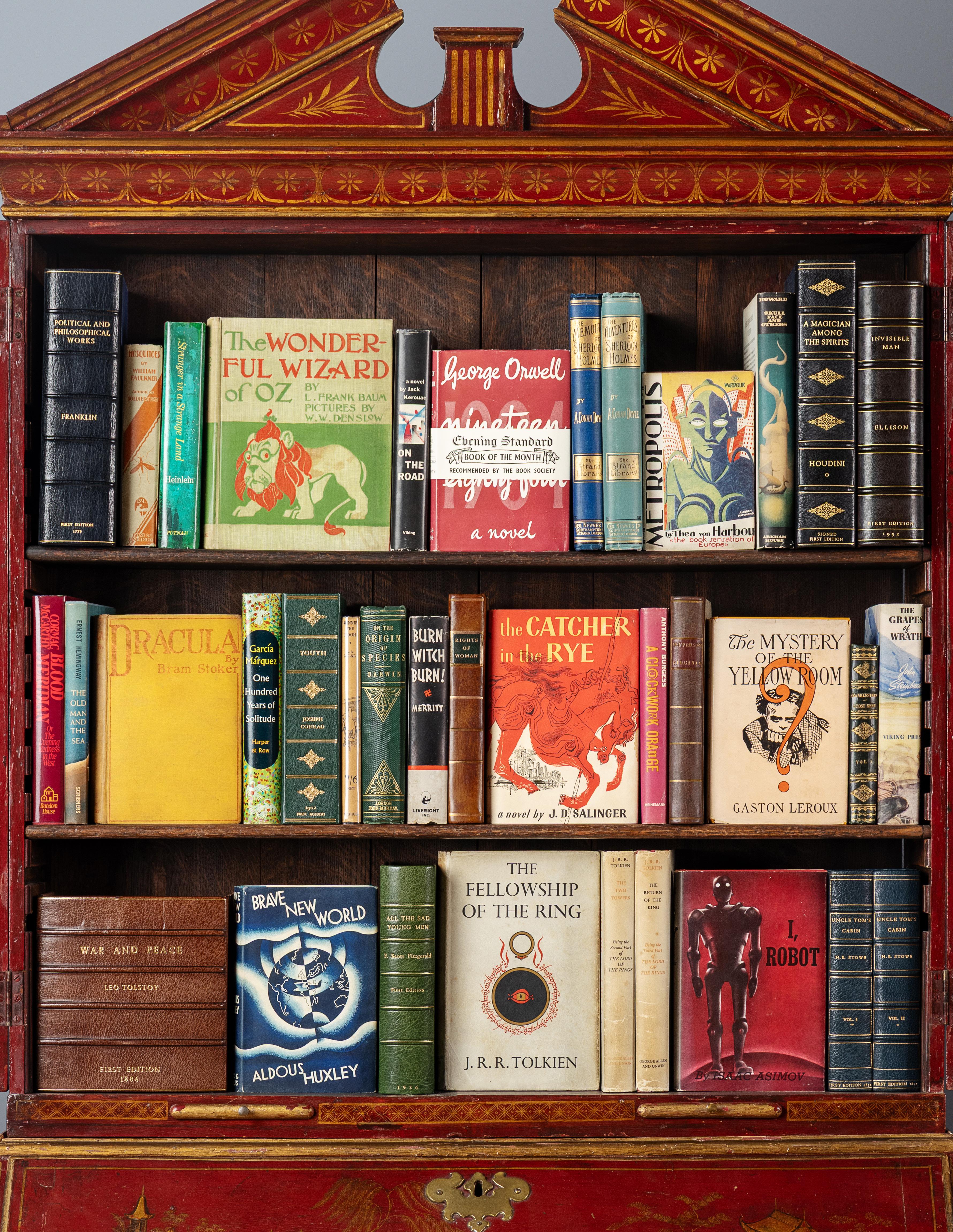
The passion behind the collection is evident the moment Steve begins to speak about it. This was never a library formed chiefly with financial gain in mind, but one shaped by genuine delight in the objects themselves—whether first editions, board games, globes, or playing cards. Among its highlights are a near-pristine first edition of George Orwell’s Nineteen Eighty-Four with the scarce original wraparound band; a first edition of H.G. Wells’s When the Sleeper Wakes, inscribed by the author to Oscar Wilde’s son, Vyvyan Holland; numerous original printings of works by Edgar Allan Poe, including a first printing of “The Raven” in the exceptionally scarce original wrappers; a first edition set of J.R.R. Tolkien’s The Lord of the Rings; and Mary Wollstonecraft’s foundational feminist text, A Vindication of the Rights of Woman. All survive in remarkable condition, and a glance at Steve’s library makes clear why: they were kept in solid wood built-in bookcases with glass doors, a setting of warmth and dignity well suited to books of this importance.
Yet what makes the library so compelling is not only its great monuments of literature, but also the breadth of Steve’s curiosity. Shelved among these canonical works are books by lesser-known authors, preserved with the same care and attention as the 1831 edition of Frankenstein containing the first published illustration of the Creature. As Steve himself puts it, “They’re not always valuable, but they are part of what was interesting to me.”
When asked why he has chosen to consign the collection to auction, Steve’s answer is characteristically simple: “I would want to see these books go to people who will love them.” It is therefore with great honor, and in the spirit of the collector’s own wishes, that we present the Library of Stephen J. Farber.
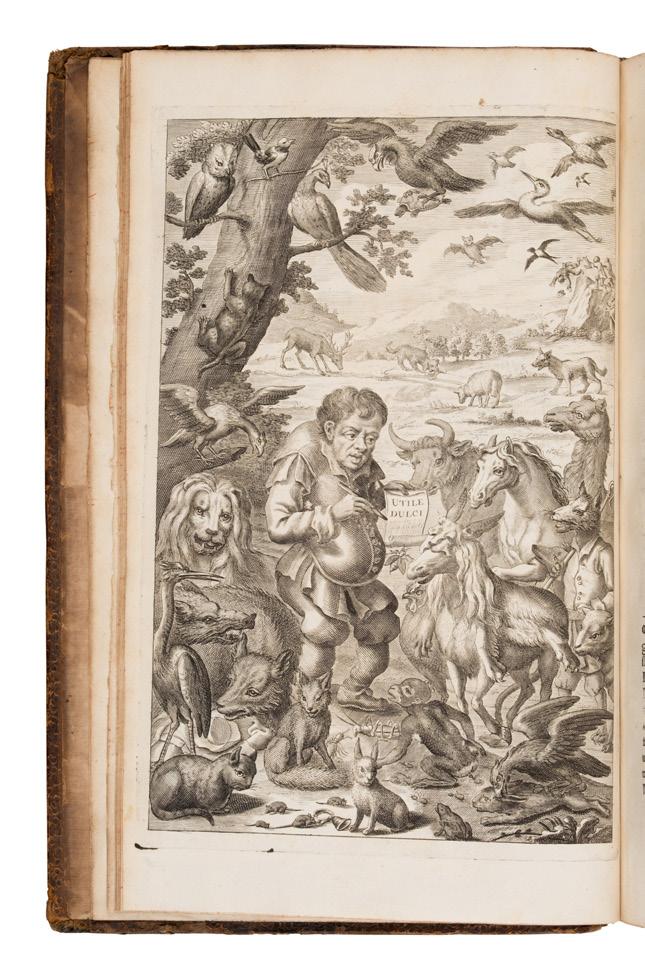
1 [Aesop (ca 620-560 B.C.)]. L’estrange, Roger, Sir (1616-1704). Fables of Aesop and Other Eminent Mythologists. London: for R. Sare, T. Sawbridge, B. Took, et al, 1692.
Folio (324 x 197 mm). Engraved portrait frontispiece, engraved plate. Contemporary paneled calf, spine in 6 compartments with 5 raised bands, morocco lettering-piece gilt in second (joints touched up, foot and forecorners worn). Provenance: J. Drake (early ownership signature on front free endpaper).
FIRST EDITION of Sir Roger L’Estrange’s celebrated translation of Aesop’s Fables, among the most influential English renditions of the classical corpus. Wing A706.
$800 - 1,200
2
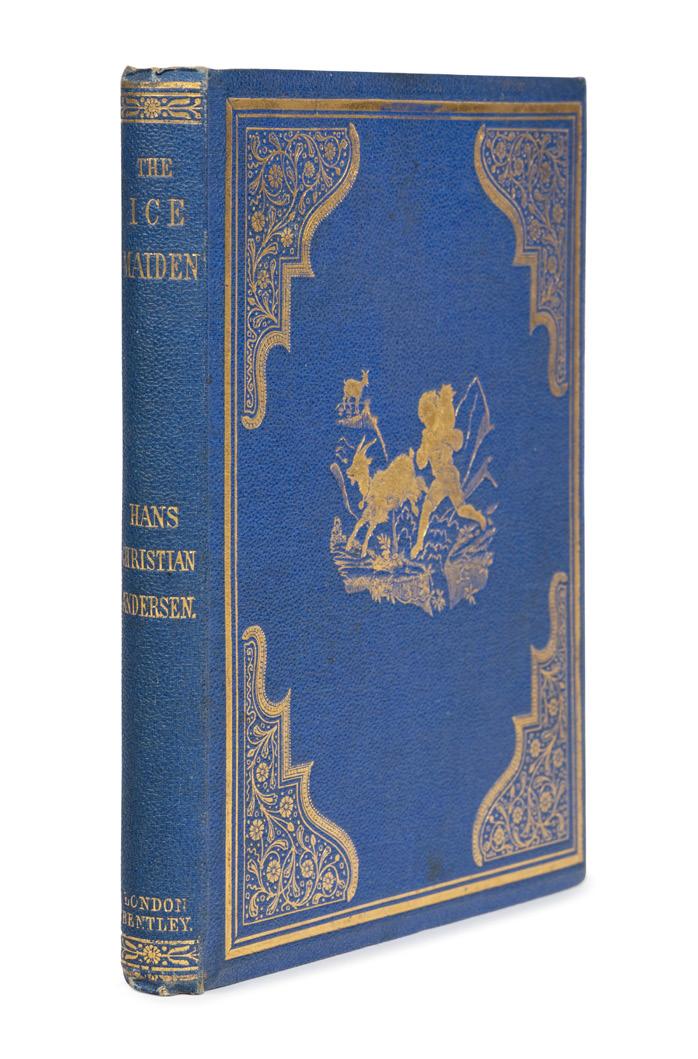
Andersen, Hans Christian (1805-1875). The Ice-Maiden. Translated from the Danish by Anne Bushby. London: Richard Bentley, 1863.
Square 8vo. Numerous illustrations in the text after Johann Baptist Zwecker. (Light toning to title-page.) Original gilt-decorated pebbled blue cloth, giltlettered spine, all edges gilt, by Westleys & Co. with their binders’ ticket (spine slightly leaned, very light rubbing to corners, a few tiny spots of darkening to covers). Provenance: I.J.L. (early ownership initials on title-page).
FIRST ENGLISH EDITION, published a year after the original Danish. After the title story, the collection includes “The Butterfly”, “Psyche”, and “The Snail and the Rosebush”. Osborne p.16; Wolff 137. A BRIGHT COPY.
$400 - 600
3
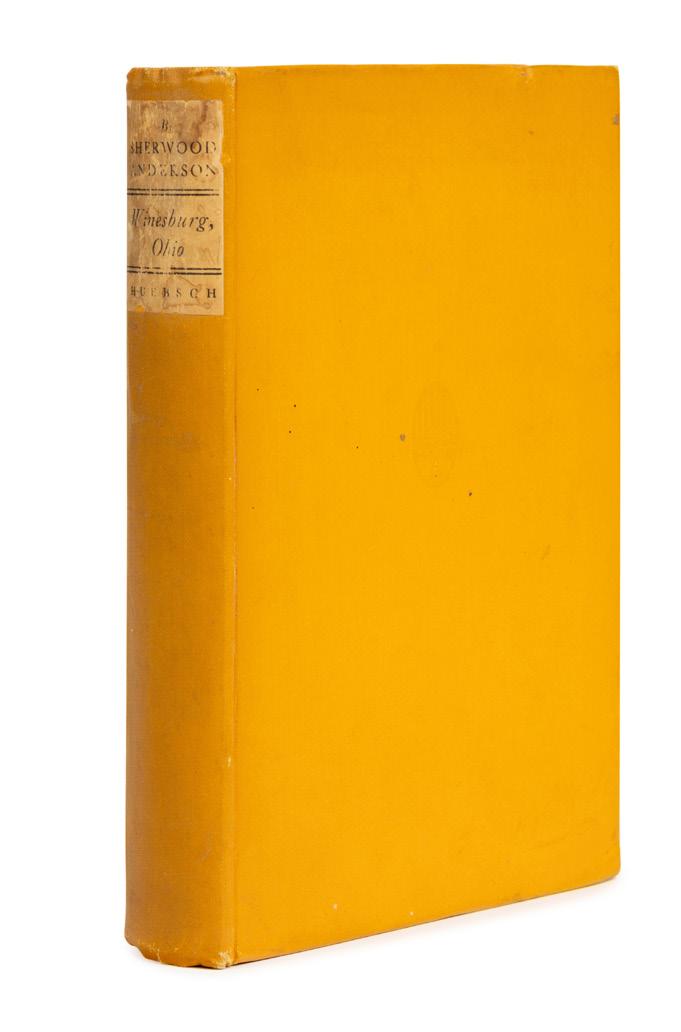
Anderson, Sherwood (1876-1941). Winesburg, Ohio. New York: B.W. Huebsch, 1919.
8vo. Original orange cloth, printed spine label, top edge stained orange, front pastedown with a map of Winesburg (spine darkened, some rubbing and a small stain to label, top edge bumped); slipcase. Provenance: Lee D. Pfouts, Payson, Utah (embossed stamp on front free endpaper, inscription on halftitle: “...Read it & send a review to.”
FIRST EDITION, FIRST ISSUE, with top edge stained yellow, with “lay” for “lie” in line 5 on p. 86 and broken type in the word “the” in line 3 on p. 251. Anderson’s most desirable book being a collection of 22 short stories set in Winesburg, Ohio. Sheehy & Lohf 9.
$300 - 500
4
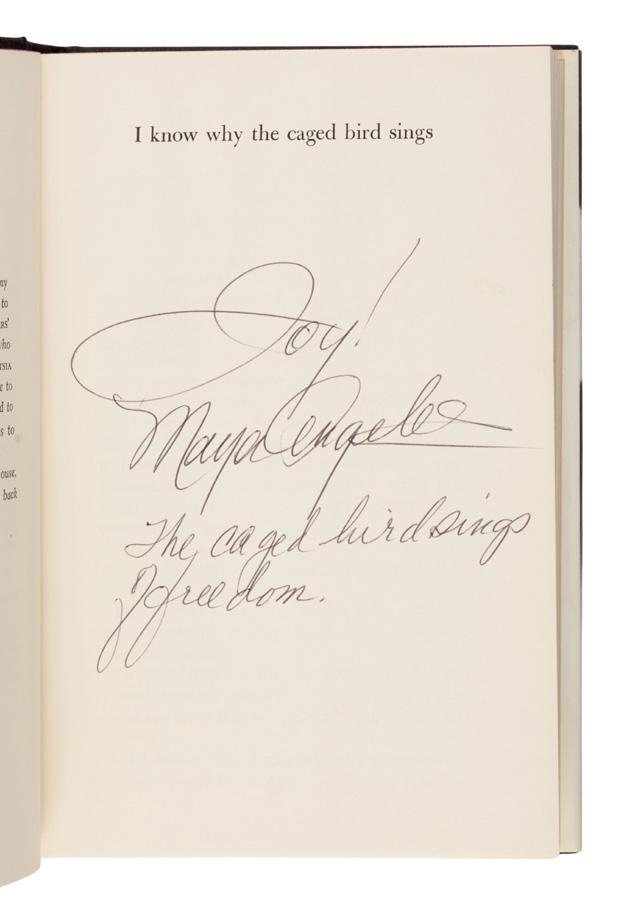
Angelou, Maya (1928-2014). I Know Why the Caged Bird Sings. New York: Random House, 1969.
8vo. Original black cloth gilt, top edge stained red; dust jacket.
FIRST EDITION. INSCRIBED BY MAYA ANGELOU: “Joy!.. The caged bird sings of freedom.” I Know Why the Caged Bird Sings marks the first volume in what would ultimately become a seven volume autobiography. It was written in the months following the assassination of Dr. Martin Luther King, Jr. on 4 April 1968 - coincidentally, also Maya Angelou’s birthday - at the suggestion of James Baldwin, as a way of working through her grief and depression over King’s death. Baldwin would later call the resulting work “a Biblical study of life in the midst of death.” Its themes of identity, racism, trauma, and literacy led to equal parts acclaim and criticism, with the book hailed as one of the greatest works of biography ever produced by an American author and one of the most frequently banned or challenged books in the United States.
$400 - 600
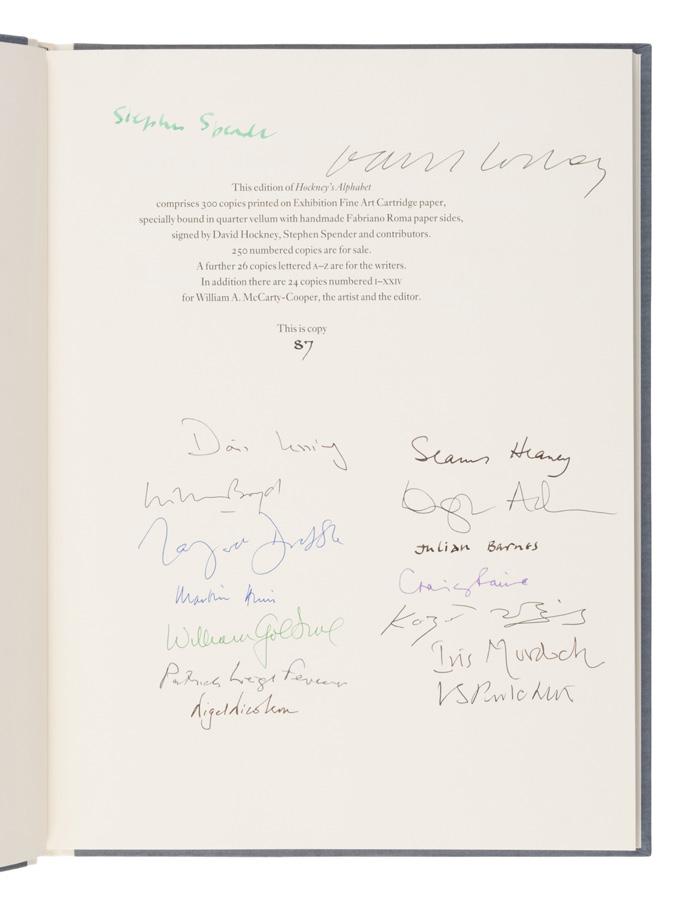
5 [Artist Book]. Hockney, David (b.1937). Hockney’s Alphabet. Stephen Spender, editor. London: Faber & Faber, 1991.
Folio. Each letter of the alphabet and “&” is illustrated by Hockney and accompanied by a poem or short text by a contributor. Original quarter vellum, handmade Fabriano Roma paper sides; slipcase with color-printed label.
LIMITED EDITION, number 87 of 250 copies, SIGNED HOCKNEY, SPENDER, AND 22 CONTRIBUTORS: Douglas Adams, Martin Amis, Julian Barnes, William Boyd, Margaret Drabble, Patrick Leigh Fermor, William Golding, Seamus Heaney, David Hockney, Kazuo Ishiguro, Erica Jong, Doris Lessing, Norman Mailer, Ian McEwan, Arthur Miller, Iris Murdoch, Nigel Nicolson, John Julius Norwich, Joyce Carol Oates, V.S. Pritchett, Craig Raine, Susan Sontag, Stephen Spender, and John Updike. Printed for the AIDS Crisis Trust, all proceeds from the book were donated to support its programs to help people suffering from the disease. A FINE COPY.
$1,000 - 1,500
6
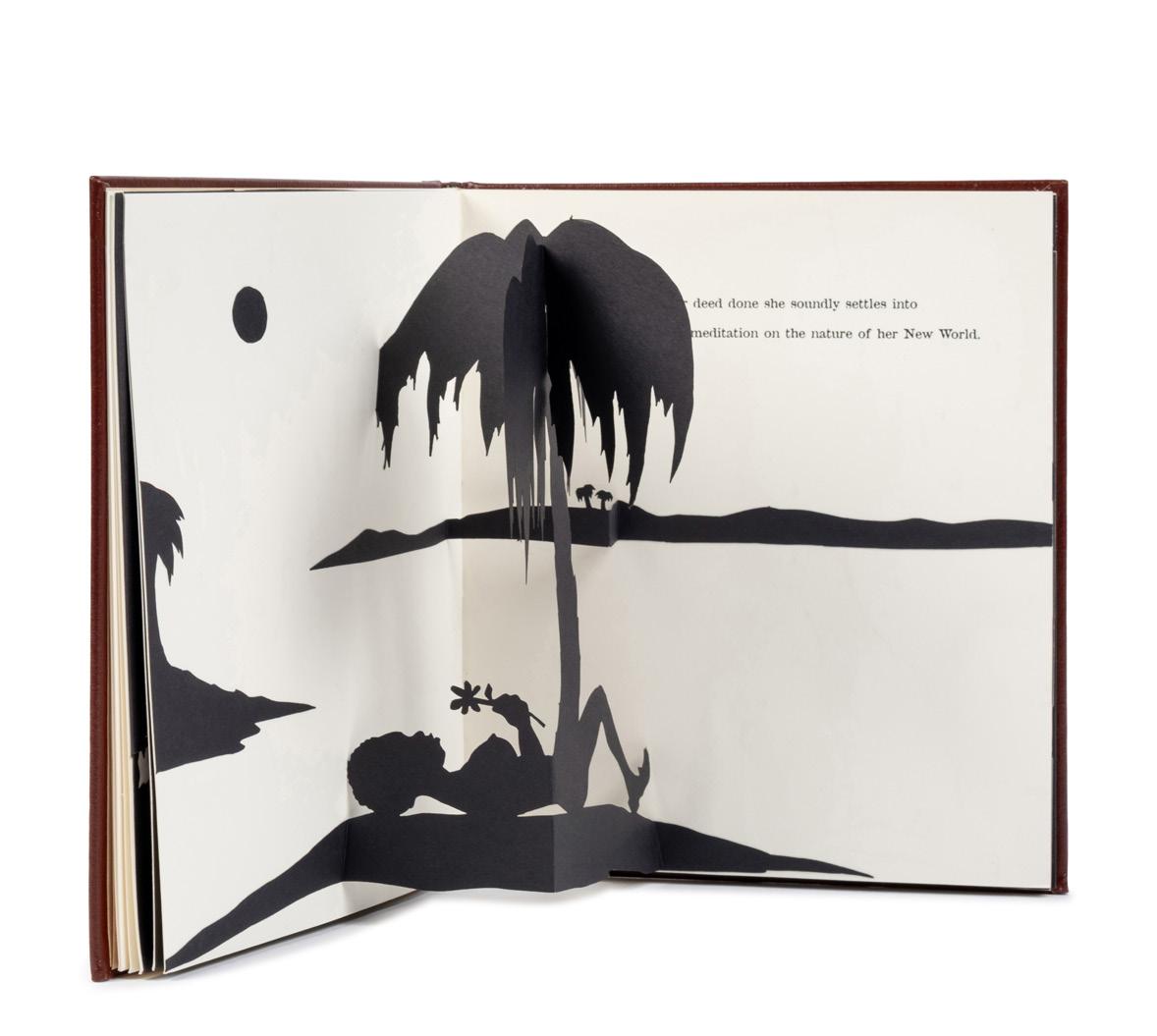
[Artist Book]. Walker, Kara Elizabeth (b.1969). Freedom: A Fable. A Curious Interpretation of the Wit of a Negress in Troubled Times... Pasadena: Typecraft, Inc. for the Peter Norton Family, 1997.
4to. Offset lithographs and 5 laser-cut pop-up silhouettes on wove paper. (Small crease to first silhouette.) Original russet faux leather binding as issued.
FIRST EDITION, LIMITED ISSUE, one of 4000 copies printed by Typecraft, Inc., Pasadena, and distributed to friends and colleagues. “The painstakingly produced pop-ups create an intimate atmosphere in the hands of the reader. Upon turning each page, with a single movement a whole backdrop is constructed for the dreams of a ‘soon-to-be-emancipated 19th century Negress’, as her character is described in the introduction. In this work Walker also tells the more lugubrious story of a black slave woman who is ill-treated, and whose life ends as a stowaway on a rudderless ship. It is the vision of a just world that keeps the slave woman going.” (Artist’s Books, p.324).
$3,000 - 5,000

7
Asimov, Isaac (1920-1992). I, Robot. New York: Gnome Press, Inc., 1950.
8vo. Original red cloth [Currey binding A, priority established] stamped in black (light spotting to top edge); dust jacket (spine faded, a touch of wear to spine ends).
FIRST EDITION of Asimov’s second book, containing nine positronic robot stories that have been considered “by most critical accounts one of the most influential books in the history of modern science fiction because it established new conventions for writing robot stories” (Touponce, Isaac Asimov, p. 32). This collection includes the story (Runaround) in which Asimov’s “Three Laws of Robotics”, a fictional framework for AI safety, first appears. Barron, Anatomy of Wonder: Science Fiction 4-40; Currey, p.17.
[With:] ASIMOV. I, Robot. New York: Signet, 1956. Original pictorial wrappers. FIRST PAPERBACK EDITION..
$2,000 - 3,000
8
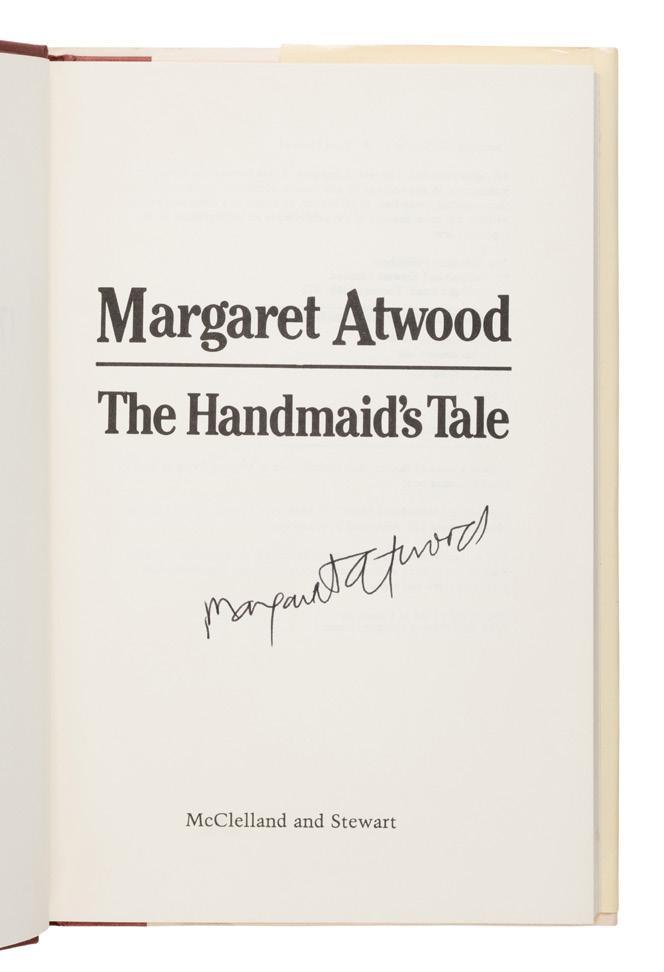
Atwood, Margaret (b. 1939). The Handmaid’s Tale. Toronto: McClelland & Stewart, 1985.
8vo. Original two-toned cloth; dust jacket.
FIRST EDITION. SIGNED BY ATWOOD ON TITLE PAGE. A classic of dystopian fiction, The Handmaid’s Tale was written, according to Atwood, as a response to western commentators who looked at oppressive tactics against women in other countries who claimed that such things “can’t happen here.” She noted in a later interview, “I didn’t put in anything that we haven’t already done, we’re not already doing, we’re seriously trying to do, coupled with trends that are already in progress...”; during promotion for the book Atwood was noted for carrying newspaper clippings and excerpts from history books detailing many of the same practices found in her work. In the years since its initial publication The Handmaid’s Tale has become one of the most challenged and banned books in North America. It was later adapted into an awardwinning television series starring Elisabeth Moss as Offred.
[With:] A used ticket for an “In Conversation with Margaret Atwood” event at the Avon Theatre, Stratford Festival, 8 September 2018—very likely the occasion at which the present work was signed.
$800 - 1,200
9
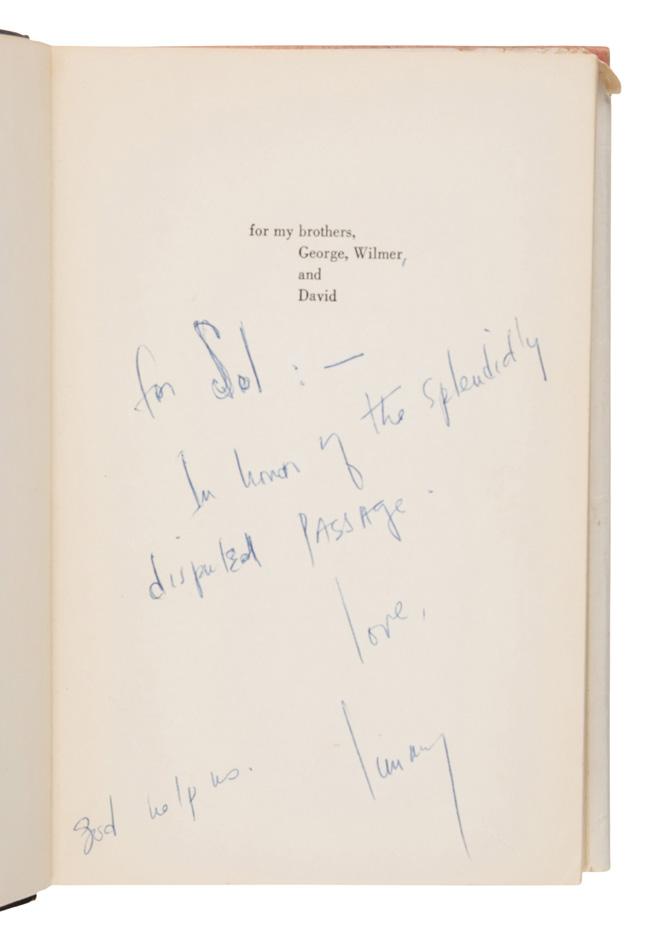
Baldwin, James (1924-1987). Nobody Knows My Name: More Notes of a Native Son. New York: The Dial Press, 1961.
8vo. (Some spotting or toning to endpapers.) Original cloth-backed boards; dust jacket (short creases and chipping to spine and fore-corners, faint dampstaining to front panel). Provenance: Sol Stein (1926-2019), American author and Publisher of Stein and Day (author’s inscription).
FIRST EDITION. PRESENTATION COPY, INSCRIBED BY THE BALDWIN TO HIS FRIEND AND PUBLISHER, SOL STEIN, on dedication page: “For Sol: –In honor of the splendidly disputed passage. love, Jimmy, god help us.” Stein began his lifelong association with James Baldwin when they were both editors of The Magpie, the literary magazine at DeWitt Clinton High School in the Bronx. In 1955, Stein would edit and publish Baldwin’s anthology of essays on the black experience, Notes of a Native Son, and later chronicled their literary relationship and brotherhood in Native Sons: A Friendship That Created One of the Greatest Works of the Twentieth Century: Notes of a Native Son (2004).
$1,500 - 2,500
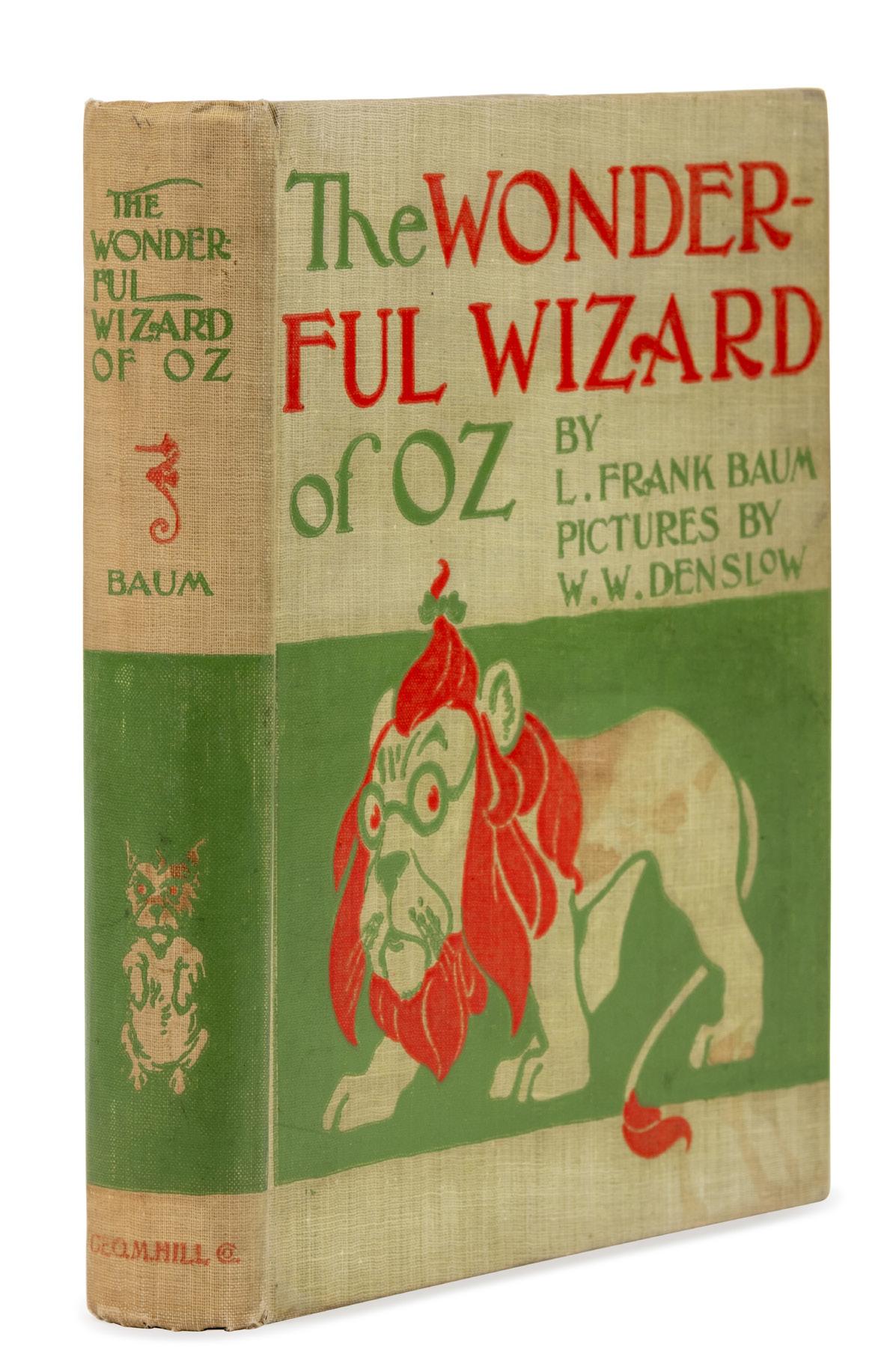
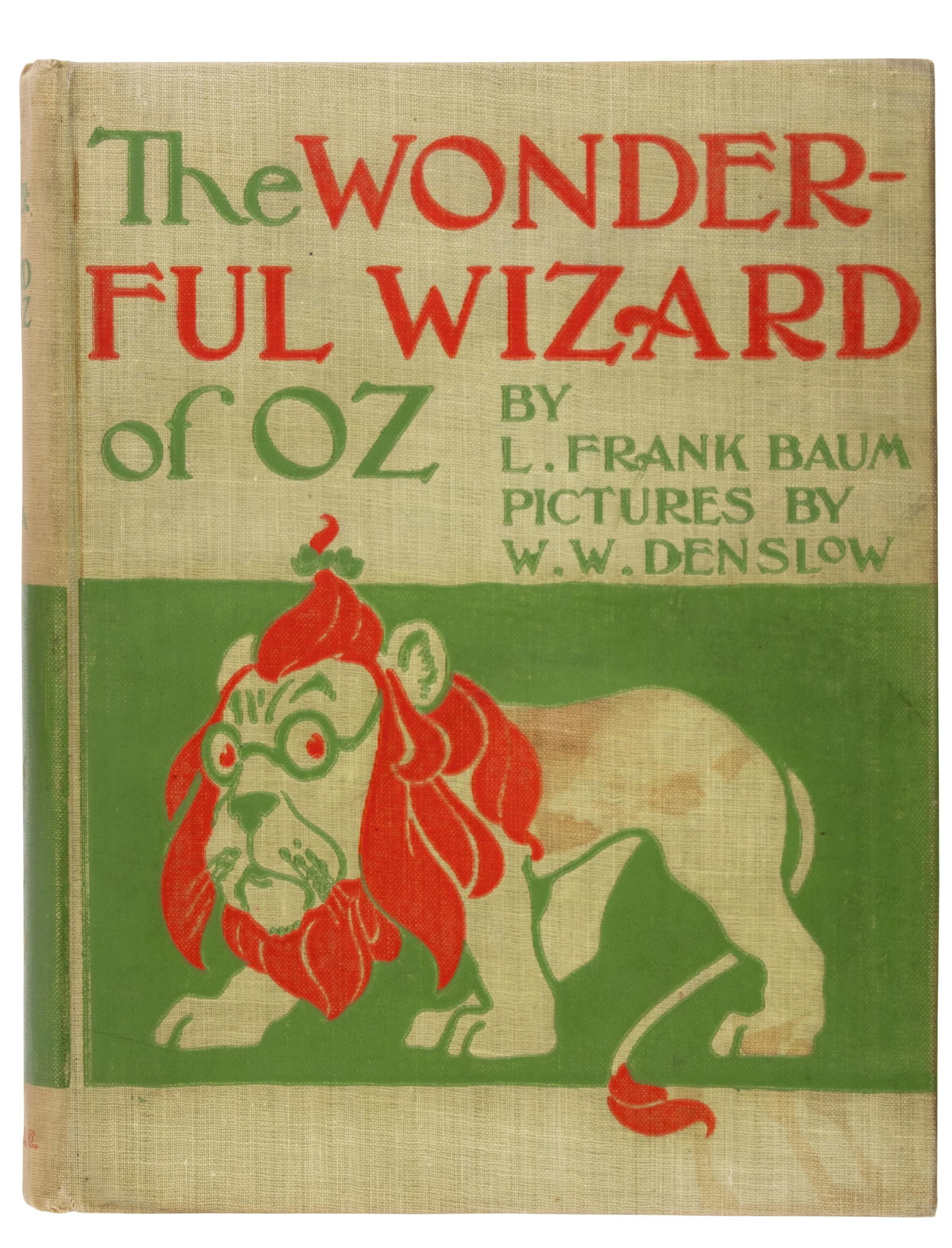
Baum, L. Frank (1856-1919). The Wizard of Oz. Chicago and New York: Geo. M. Hill Co., 1900.
8vo. 24 color plates including the pictorial title, and color illustrations throughout, all by W.W. Denslow. Original pictorial green cloth [binding “C”] stamped in red and green (a few minor stains to upper cover, small split to rear joint, hinges tender); morocco-backed folding case.
FIRST EDITION, FIRST STATE, with the following points: ads on p. [2] enclosed in a single-rule box; verso of title-page blank; uncorrected text on pp. 14, 81, and [227]; earliest state of plates facing pp. 34 and 92; colophon printed in 11 lines within a double-ruled box.
In his introduction, Baum explained that the story was written “solely to please children of today,” noting that “the old-time fairy tale, having served its purpose, may now be classed as ‘historical.’” “For Baum, the dark world of European fairy stories seemed outdated amid the prosperity and opportunities of America’s Gilded Age. His bright ‘modernized fairy tale,’ emphasizing self-reliance, positive attitudes, and rewards, struck home with readers... [that] had become as deeply embedded in American culture as the ageless tales of Cinderella and Sleeping Beauty” (Grolier).
L. Frank Baum’s path to literary success had been a long one. He began writing nearly twenty-five years before the publication of The Wonderful Wizard of Oz, founding a newspaper in Bradford, Pennsylvania; after leaving the paper, he “went on to manage opera houses, act in the theater, and
establish a magazine for window dressers,” pursuing a variety of creative ventures before achieving lasting success as an author. In 1897, Baum published his first children’s book, Mother Goose in Prose, illustrated by Maxfield Parrish. Around that time, Baum met W. W. Denslow, a versatile artist who regularly supplied illustrations to New York journals. The two soon collaborated on a follow-up to Mother Goose, the popular Father Goose: His Book, whose unexpected success persuaded George M. Hill Company to publish The Wonderful Wizard of Oz, provided Baum and Denslow themselves financed the cost of the printing plates. The resulting volume was issued with an unusually elaborate design program—costly for a children’s book of the period—incorporating numerous color plates and decorative typographic elements integrated throughout Denslow’s illustrations.
The book proved an immediate success and launched what would become the celebrated Oz series, a popularity that, as Maurice Hungiville notes, “kept him writing Oz books for the rest of his life: and even beyond his life, for after he died in 1919 others were commissioned to write more books about the Wizard.” Baum himself explored the world of Oz across multiple media, envisioning projects such as a never-realized Oz amusement park on Pedloe Island off the California coast and founding the Oz Film Manufacturing Company in 1914, which produced the first two cinematic adaptations of the story, preceding the landmark 1939 film The Wizard of Oz starring Judy Garland. See Maurice Hungiville, The Wizard of Oz and Who He Was (1984). Bienvenue & Schmidt, pp.4-6; Blank, Peter Parley to Penrod pp.111-113; Grolier, One Hundred Books Famous in Children’s Literature p.196.
$10,000 - 15,000
12
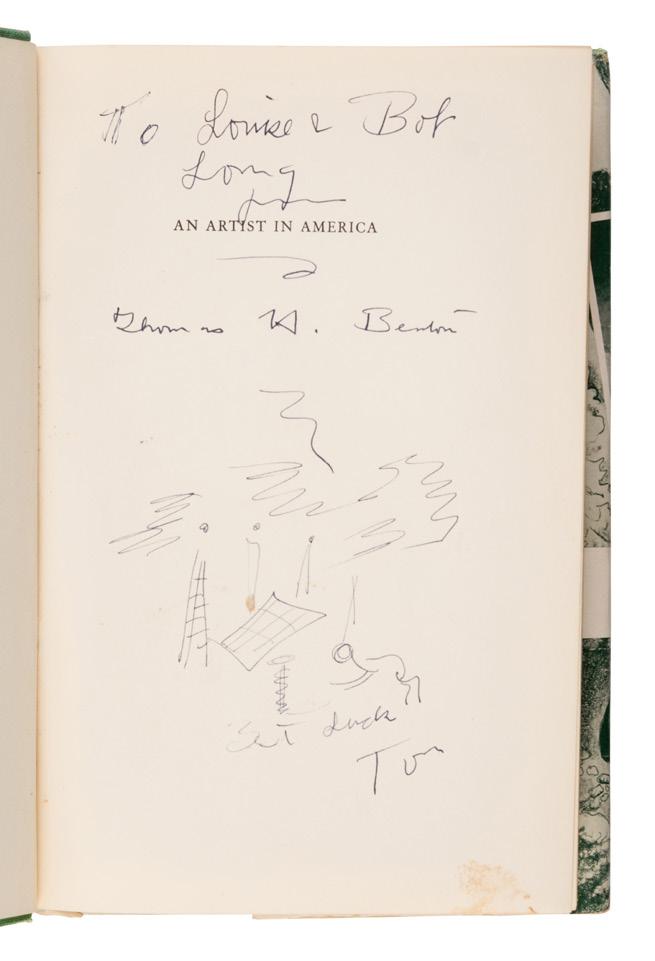
11
Benton, Thomas Hart (1889-1975). An Artist in America. New York: University of Kansas City Press, 1951.
8vo. 79 illustrations. Original green cloth stamped in red; dust jacket (chipping along extremities). Provenance: Louise and Bob Long (presentation inscription).
Revised edition. PRESENTATION COPY, INSCRIBED BY THOMAS HART BENTON WITH ORIGINAL PEN AND INK SKETCH. A painter, printmaker, and muralist, Thomas Hart Benton is considered to be one of the most significant American regionalist artists of the twentieth century, alongside Grant Wood and John Steuart Curry. An Artist in America was first published in 1937 and was greeted with significant critical acclaim, with Sinclair Lewis saying of the book, “Here’s a rare thing, a painter who can write.”
$400 - 600
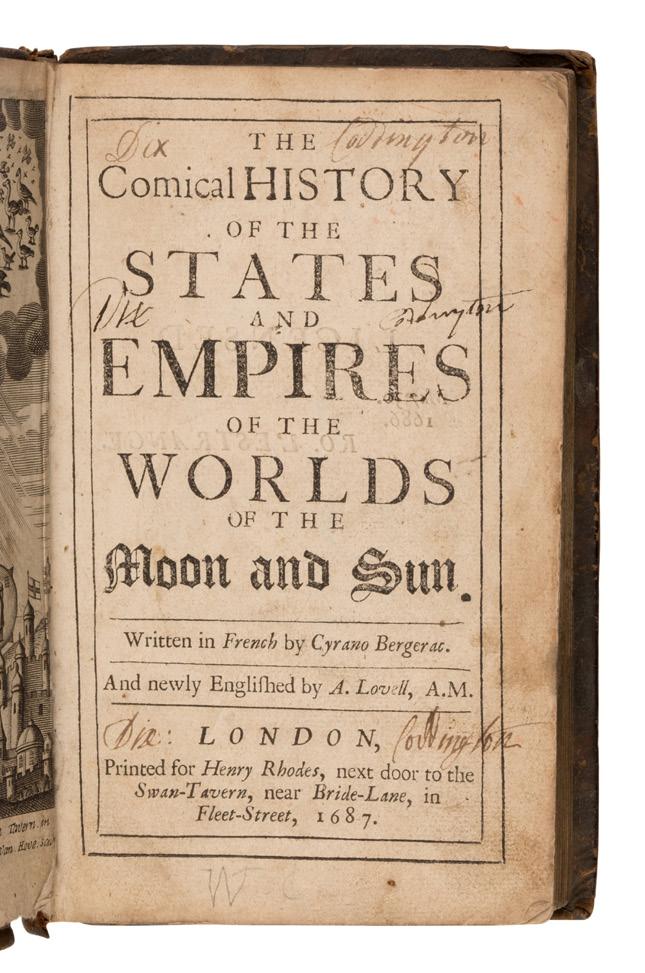
Bergerac, Cyrano de (1619-1655). The Comical History of the States and Empires of the Worlds of the Moon and Sun. Translated by A. Lovell London: Printed for Henry Rhodes, 1687.
2 parts in one, 8vo (173 x 102 mm). Engraved frontispiece. (Some slight marginal worming, a few headlines in part 2 trimmed.) Contemporary calf, spine in 6 compartments with 5 raised bands (front board detached, some soiling to interior boards, rubbing). Provenance: Reverend William Coddington (ownership inscription on title-page); James Stevens Cox (1910-1997), British historian, author, and archivist; previously sold his sale, Forum Auctions (22 March 2018, sale 1024 lot 60).
FIRST ENGLISH EDITION. The Comical History of the States and Empires of the Worlds of the Moon and Sun was first published in 1657, and is considered to be one of the first science fiction stories, with author Arthur C. Clarke crediting it with the first literary depiction of spaceflight. It would go on to inspire countless other works of science fiction, most notably Jonathan Swift’s Gulliver’s Travels. Wing C7717.
$600 - 800
13
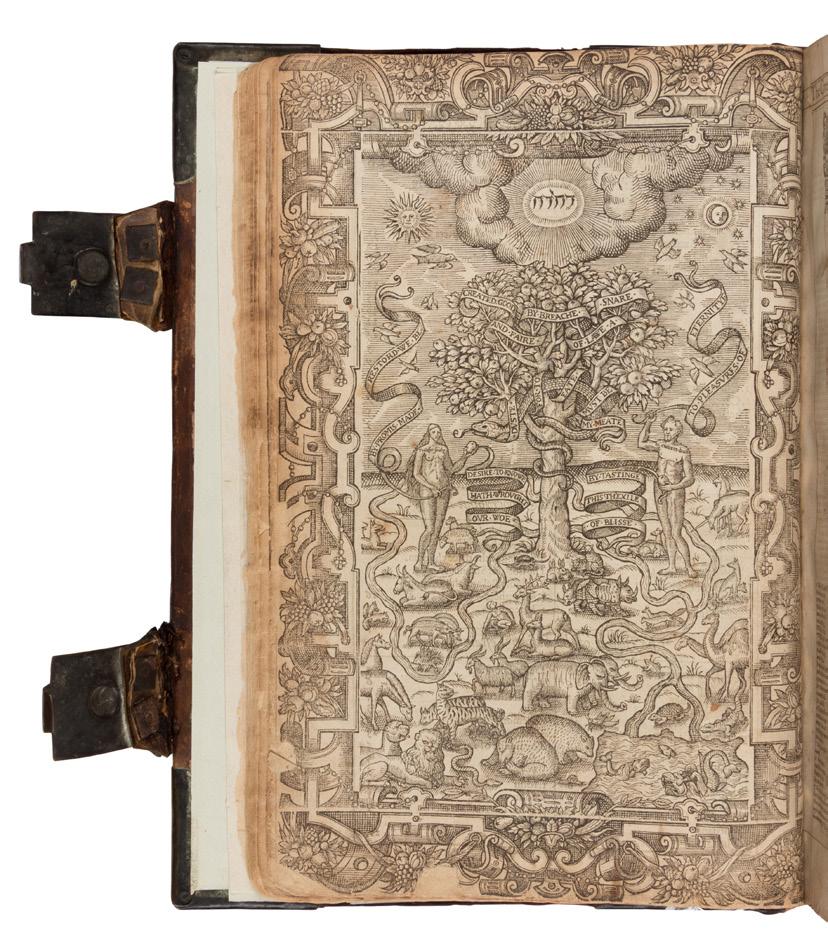
[Bible, in English]. The Booke of Common Prayer, with the Psalter or Psalmes of David: of that translation which is appointed to be used in churches. [With:] The Bible, that is The holy Scriptures contained in the Old & New Testament. [With:] The Whole Booke of Psalms. London: Robert Barker, 1607.
3 parts in one, folio (318 x 216 mm). Double-column text, ruled in red throughout. Engraved titles for the first two works, engraved double-page map (“A Description of Canaan”) by John Speed (small repair near gutter, reinserted on stub), woodcut headpiece and small ornament on New Testament title-page with continuous register but separate foliation, full-page woodcut of Adam and Eve in Eden facing Genesis, 31 woodcut text illustrations, diagrams, and maps, woodcut initials, head- and tail-pieces. (First title heavily remargined with losses to border, some marginal repairs to first few leaves, quire 3E1 with marginal repairs, K5-K6 and L1 also with marginal repairs, soiling and toning throughout.) Contemporary paneled calf, brass bosses and clasps engraved with a floral design (rebacked, endpapers renewed).
Reprint of the Geneva version of the Old Testament, first issued in 1560, translated by William Whittingham, Anthony Gilby, Thomas Sampson, and perhaps others, with Laurence Tomson’s revision of the Geneva version of the New Testament and his translation of Franciscus Junius’ translation of Revelation. Interestingly, the Geneva Bible is also referred to as the “Breeches Bible,” named for its unique translation of Genesis 3:7, which states that Adam and Eve sewed fig leaves together to make “breeches” instead of aprons. The Booke of Common Prayer is bound before the Bible. ESTC S122320; Herbert 289; STC 2199.
$800 - 1,200
14
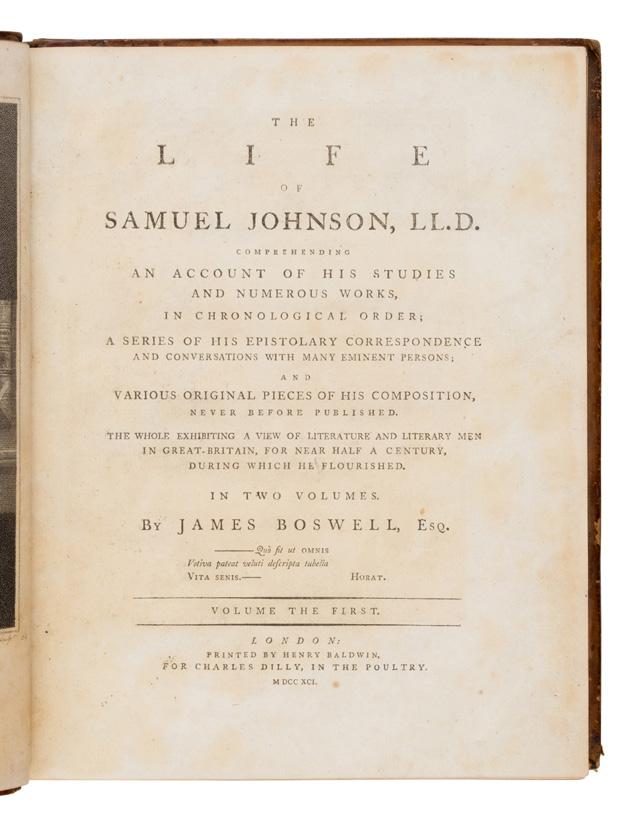
Boswell, James (1740-1795). The Life of Samuel Johnson. London: Henry Baldwin for Charles Dilly, 1791.
2 volumes, 4to (267 x 210 mm). Engraved frontispiece in vol. I of Johnson after Sir Joshua Reynolds, 2 engravings in vol. II. (Marginal spotting to frontispiece with some offsetting to title-page, light spotting throughout.) Early tree calf gilt, smooth spines in 6 compartments with red and dark olive morocco lettering-pieces gilt in two (some splits along joints, heads of spines repaired, light chipping at spines ends, fore-corners rubbed).
FIRST EDITION, FIRST ISSUE with “gve” reading on p.135, line 10, of the first volume. “Homer is not more decidedly the first of heroic poets, Shakespeare is not more decidedly the first of the dramatists, Demosthenes is not more sensibly the first of orators, than Boswell is the first of biographers” (Macaulay). Boswell’s great biography of his friend, author Dr. Samuel Johnson was published 16 May 1791 and achieved immediate critical acclaim. It has not been out of print since. ESTC T64481; GrolierEnglish 65; Rothschild 463; Tinker 338.
$1,000 - 1,500
15
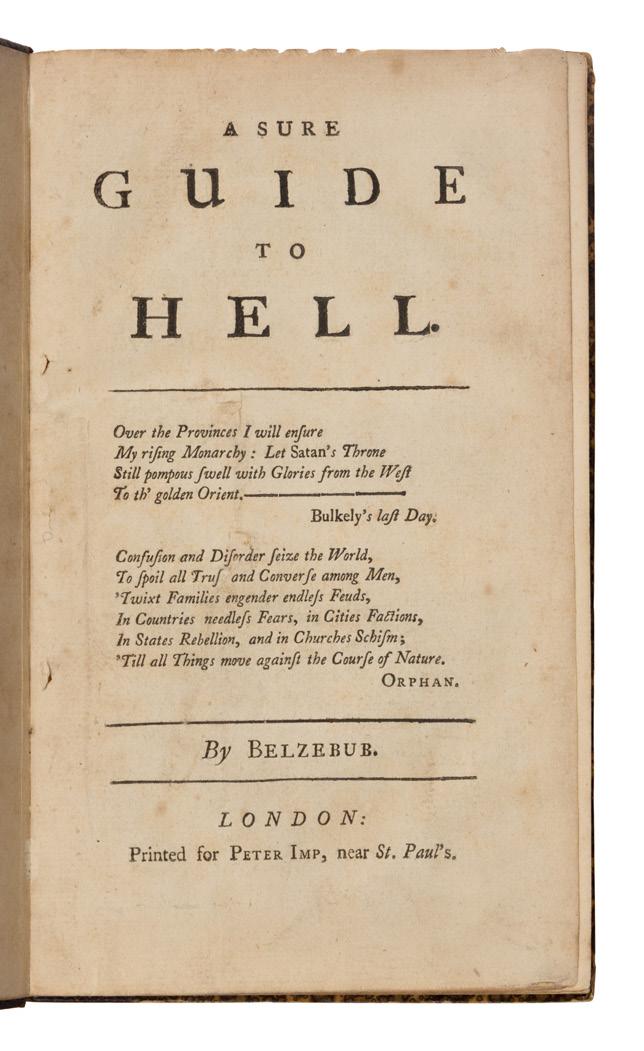
Bourn, Benjamin (“Belzebub”). A Sure Guide to Hell. London: Printed for Peter Imp, near St. Paul’s, n.d. [1750].
8vo (197 x 114 mm). Wood-engraved head-piece and initial. (Light soiling to title, front hinge starting after title.) Later quarter calf, marbled boards (light rubbing at ends and fore-corners). Provenance: Nathan Comfort Starr (bookplate); sold, Heritage (8-9 April 2015, sale 6117, lot 45108).
FIRST EDITION. A Sure Guide to Hell is a comic and satirical attack on the follies and vices of the day, written in response to A Sure Guide to Heaven. Under the persona of “Belzebub,” the author offers mock advice to youths— encouraging acts such as defacing public parks and buildings—employing irony to expose the moral failings of Georgian society. EXCEEDINGLY RARE: According to online records, this is the only copy to appear at auction since 1967 (Swann).
$800 - 1,200
16
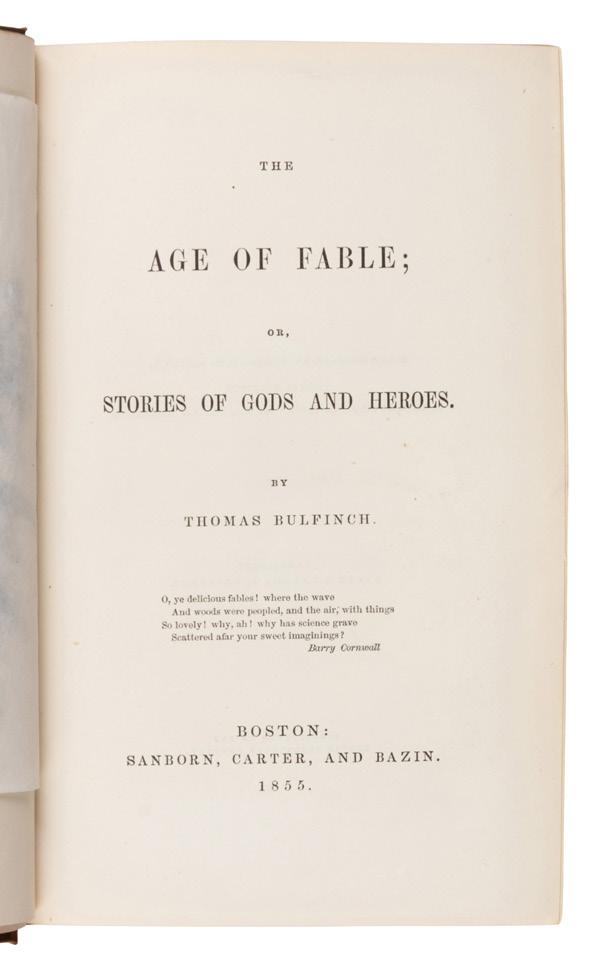
Bulfinch, Thomas (1796-1867). The Age of Fable; or, Stories of Gods and Heroes. Boston: Sanbord, Carter, and Bazin, 1855.
8vo (197 x 121 mm). Wood-engraved frontispiece, numerous vignettes in text; 1p. publisher’s ad at end. Original blind-stamped brown cloth, giltlettered spine (some cockeling and a few scuffs to upper cover). Provenance: early penciled ownership signature on front free endpaper.
FIRST EDITION, FIRST STATE with names of both the printer and the stereotyper on copyright page. “Prior to Bulfinch, literate America’s knowledge of classical mythology was derived from the accurate but very dull Classical Dictionary of Professor Charles Anthon of Columbia, and from the recent Wonder-Book and Tanglewood Tales of Hawthorne, covering only a few of the myths. Bulfinch described the entire field, combining Anthon’s accuracy with Hawthorne’s charm...” (Grolier). Peter Parley to Penrod, p.13; Grolier American 65.
$400 - 600
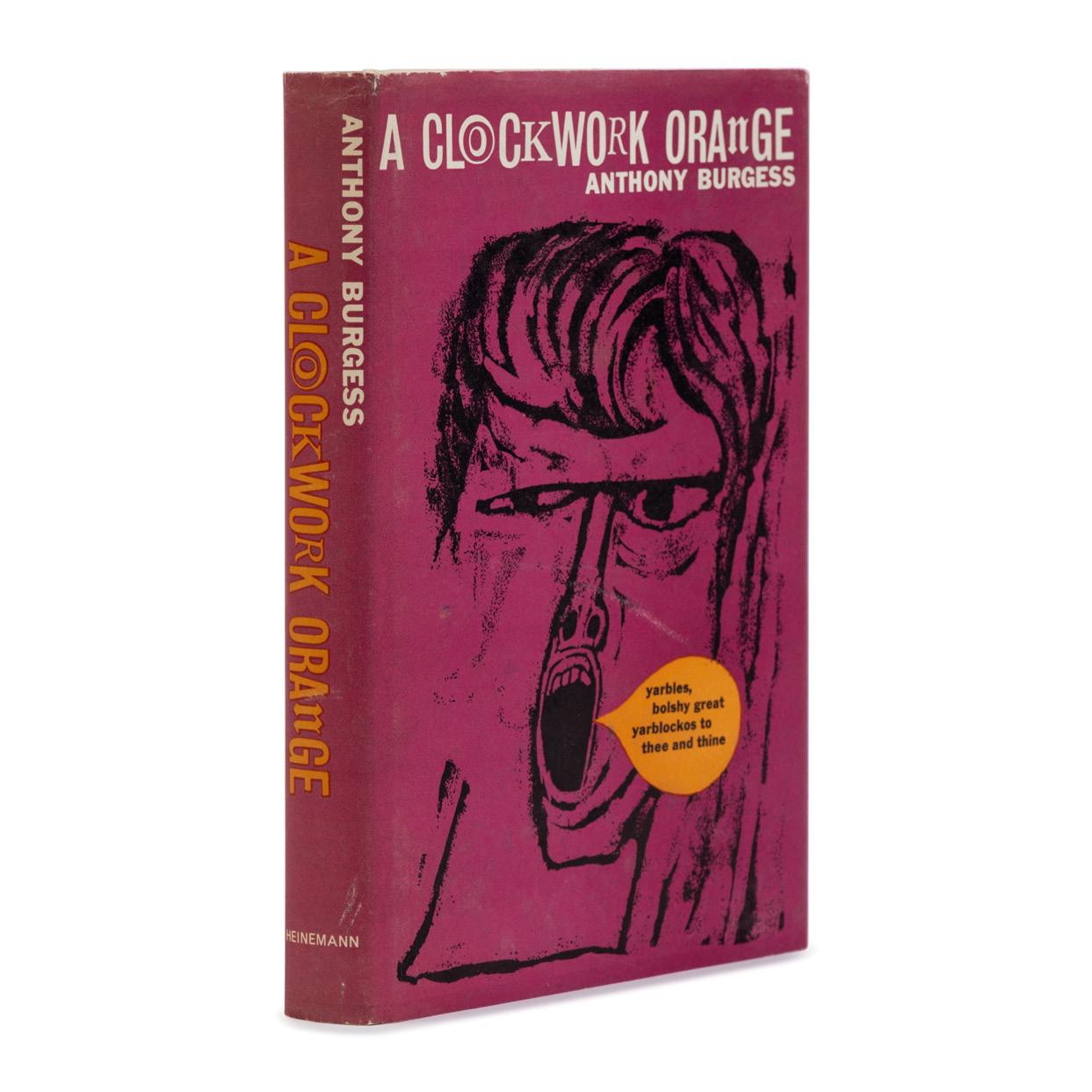
17 Burgess, Anthony (1917-1993). A Clockwork Orange. London, et al: Heinemann, 1962.
8vo. Original gilt-lettered black cloth; dust jacket priced at “16s” (minor scuff to front panel, a touch of light wear near top of spine); morocco-backed folding case. Provenance: Ronald and Joan McNicoll (book label).
FIRST EDITION, IN THE FIRST ISSUE BLACK CLOTH BINDING. A Clockwork Orange is a dystopian novel that issued a “futuristic warning against both mindless violence and the mechanical reconditioning that is often proposed as society’s solution to its ills” (100 Banned Books, pp.368-371). The novel follows the teenage narrator Alex and his gang through acts of extreme brutality, rendered in the invented slang “Nadsat,” which many critics and authorities felt glamorized violence. Public concern intensified after the release of A Clockwork Orange, whose disturbing imagery led to accusations that the story encouraged copycat crimes. As a result, the book was frequently challenged and removed from schools and libraries, and in Britain, the controversy surrounding the film and novel became so intense that Kubrick himself withdrew the film from circulation there for many years. Pringle, Science Fiction: The 100 Best Novels 36. A VERY BRIGHT COPY.
$1,000 - 1,500
8vo. Frontispiece and title vignette, numerous illustrations by Reginald B. Birch; 14pp. publisher’s catalogue at end. (A few marginal stains.) Original brown pictorial cloth stamped in red and gilt, brown coated endpapers (slight lean, foot of spine worn, light rubbing to fore-corners, front hinge repaired); folding chemise and morocco-backed slipcase. Provenance: Charles J. Rosenbloom (bookplate).
FIRST EDITION, FIRST ISSUE with the De Vinne printer’s device on p.210, signature mark 12 present, and the publisher’s ads at the end. SIGNED BY BURNETT on the front flyleaf.
First published serially in St. Nicholas Magazine (November 1885–October 1886), Burnett’s book “earned wide praise on its publication; enthusiastic reviewers included Louisa May Alcott, and among its English admirers was Gladstone” (Carpenter & Prichard, 316). BAL 2064.
[With:] BURNETT. Autograph letter signed (“Frances Hodgson Burnett”), to Mr. Eduards, Chapman Cottage, 3 February 1909. 1p., 12mo, single fold. Burnett discusses contracts and prospects for her novel, A Lady of Quality
$600 - 800
19
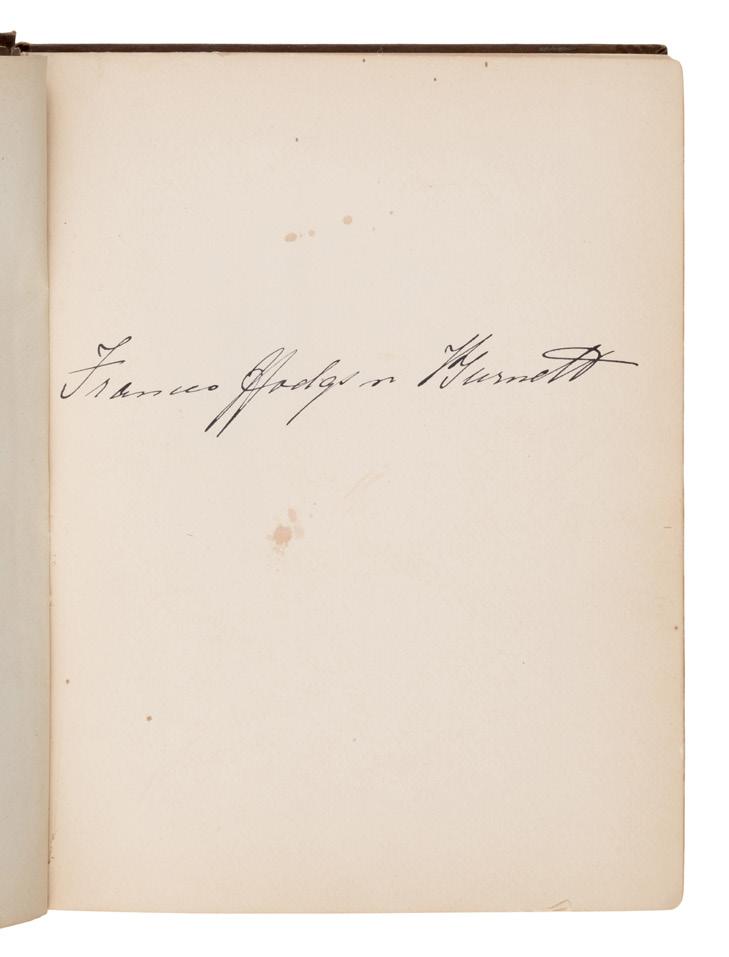
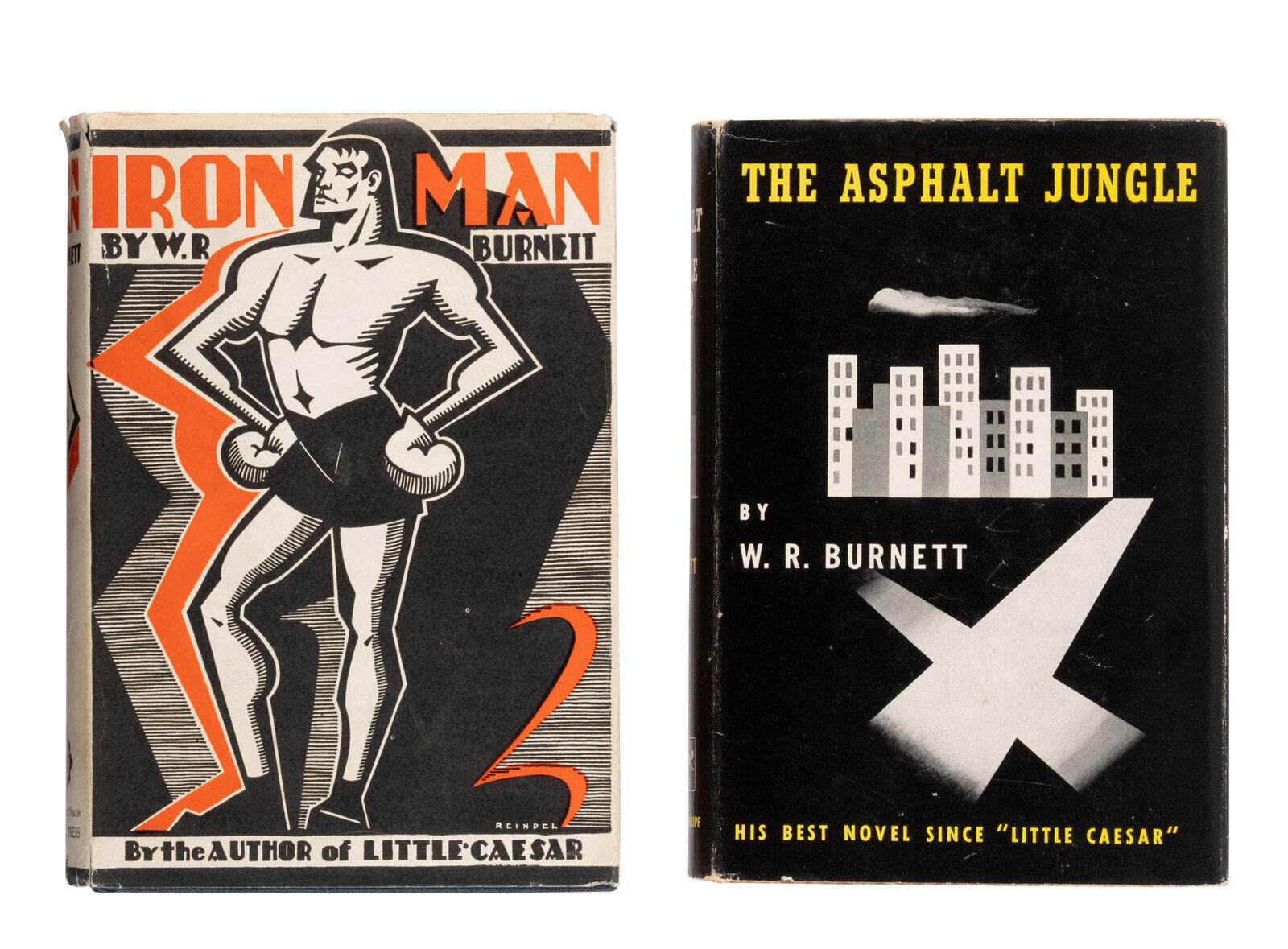
Burnett, W. R. (1899-1982). Iron Man. New York: Lincoln Mac Veagh/ The Dial Press, 1930.
8vo. Original blue cloth; dust jacket (very minor vertical splits at spine ends with accompanying creases).
FIRST EDITION. SIGNED BY BURNETT. Iron Man was published the year after Burnett’s breakthrough novel, Little Caesar. Following its success Burnett moved from Chicago to Hollywood, where he spent the next thirty-nine years writing screenplays and novels. It was adapted into a 1931 motion picture starring Lew Ayres and directed by Tod Browning and again in 1951, the latter of which featured an early appearance by Rock Hudson.
[With:] BURNETT, W.R. The Asphalt Jungle. New York: Alfred A. Knopf, 1949. 8vo. Original printed cloth; dust jacket. FIRST EDITION.
$400 - 600
20
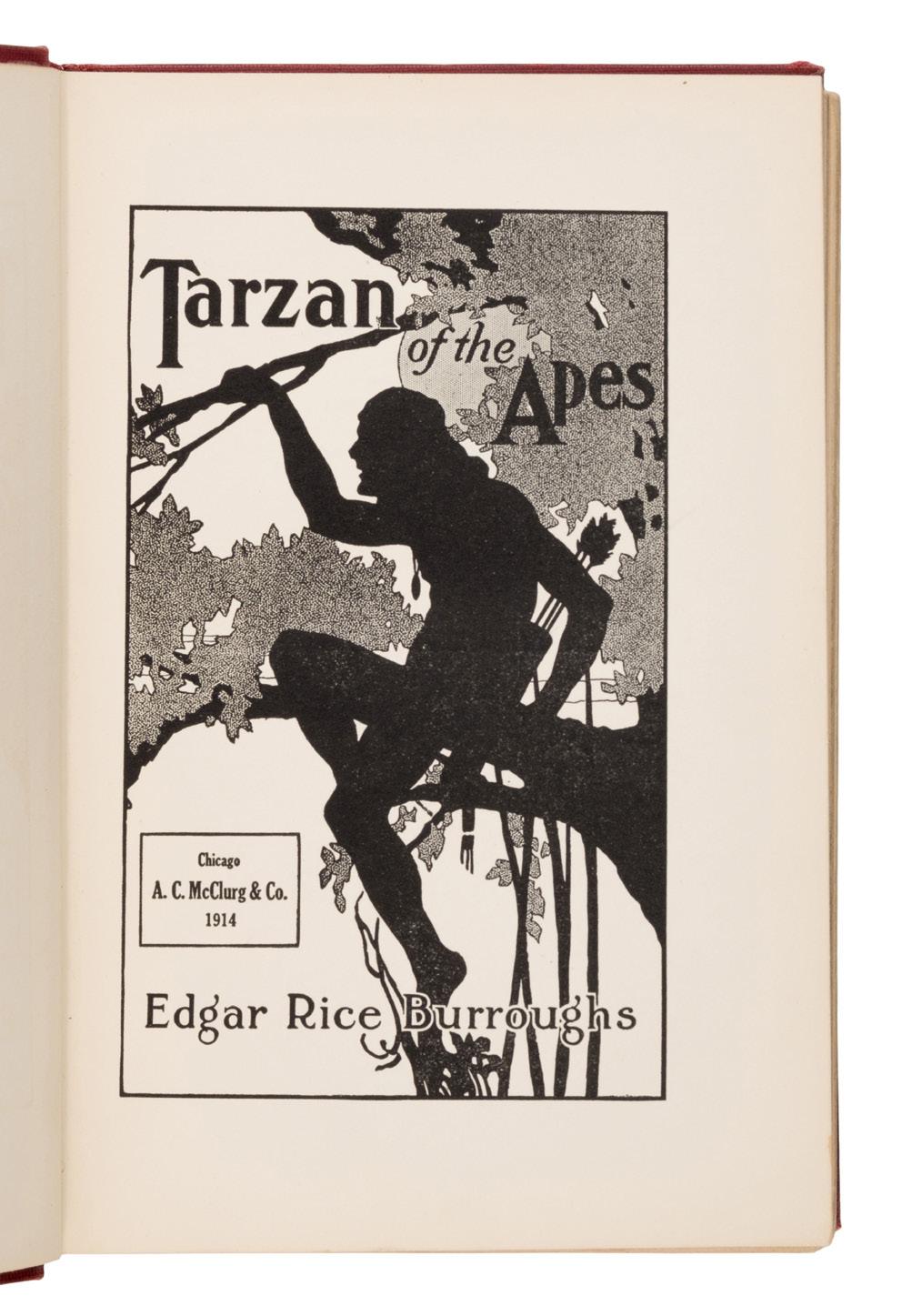
Burroughs, Edgar Rice (1875-1950). Tarzan of the Apes. Chicago: A.C. McClurg & Co., 1914.
8vo. (A few marginal stains.) Original red cloth, upper cover and spine lettered in gilt (contents starting, light horizontal crease to spine, light soiling or darkening to covers); facsimile dust jacket.
FIRST EDITION, FIRST STATE without the acorn device on spine and “W.F. Hall Printing Co. Chicago” in Old English script on copyright. The first in the Tarzan series and Burroughs’s first story in hardcover format. Currey, p.92; Heins TA-2; Zeuschner pp.424-425.
$600 - 800
21
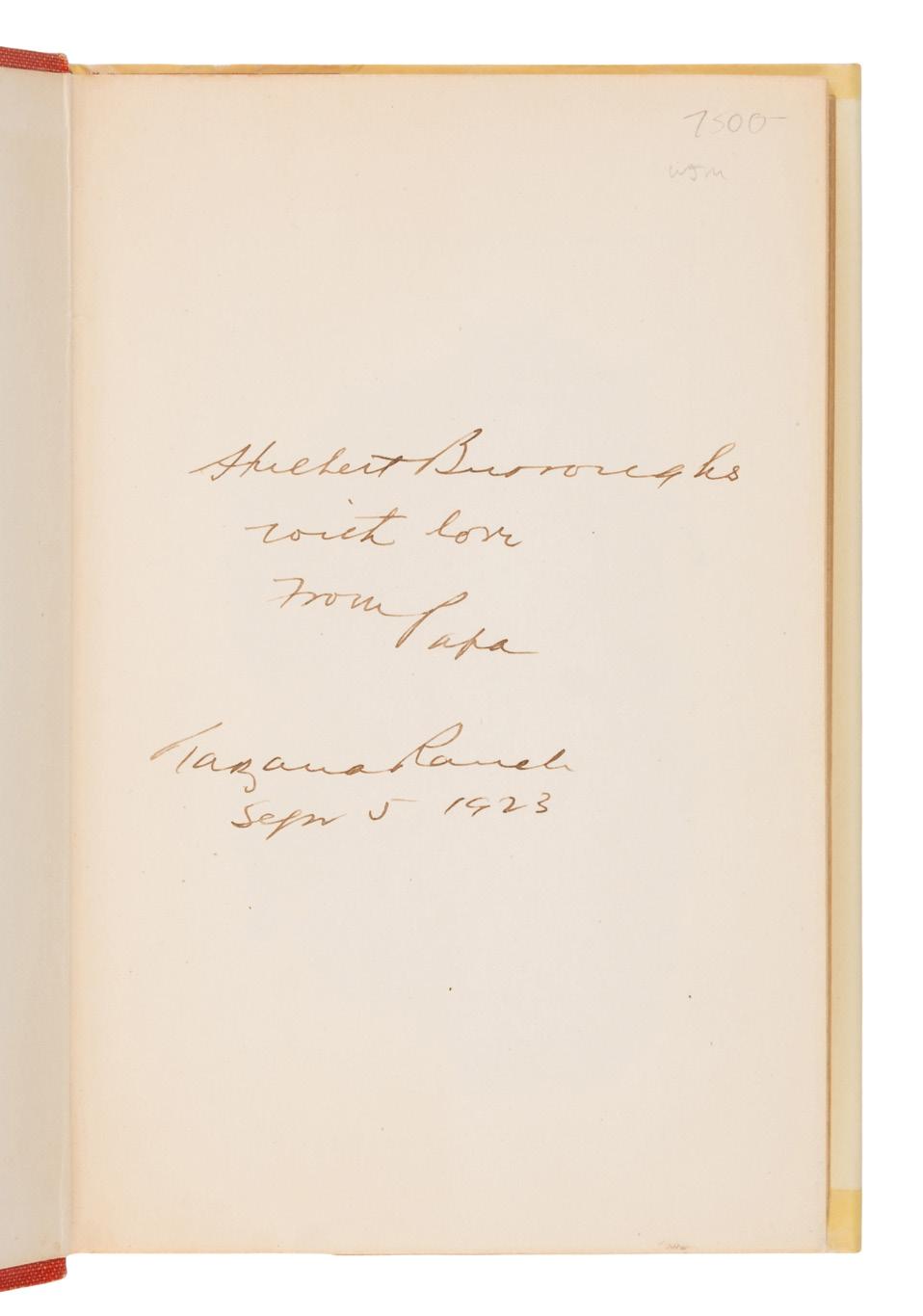
Burroughs, Edgar Rice (1875-1950). Pellucidar. Chicago: A.C. McClurg & Co., 1923.
8vo. 4 plates after J. Allen St. John. Original red-orange cloth lettered in black (spine lightly sunned, a tiny bit of rubbing and wear to extremes); dust jacket (light edgewear reinforced with cellotape along edges, also on verso along spine). Provenance: Hulbert Burroughs (1909-1991), son of Edgar Rice Burroughs (author’s inscription; ownership inscription on verso of dust jacket: “Hulbert Burroughs, Tarzana Ranch, April 23, 1925, L.A., California”); Otto Penzler (his sale, Heritage, 15 October 2020, lot 45055).
THE OTTO PENZLER COPY.
FIRST EDITION. PRESENTATION COPY INSCRIBED BY BURROUGHS TO HIS SON on the front free pastedown: “Hulbert Burroughs, with love, from Papa, Tarzana Ranch, Sept 5 1923.” The inscription is dated the day of publication and reflects Burroughs’s well-documented practice of presenting the first copy of each newly issued book to his son, Hulbert Burroughs, who frequently assisted his father in managing the affairs of Tarzana Ranch and the growing literary enterprise surrounding the Tarzan series.
Pellucidar is the second novel in the Pellucidar series, following At the Earth’s Core. The work first appeared in serial form in All-Story Cavalier Weekly in May 1915 before its publication in book form. Bleiler, Science Fiction 312; Zeuschner 388.
$3,000 - 4,000
22
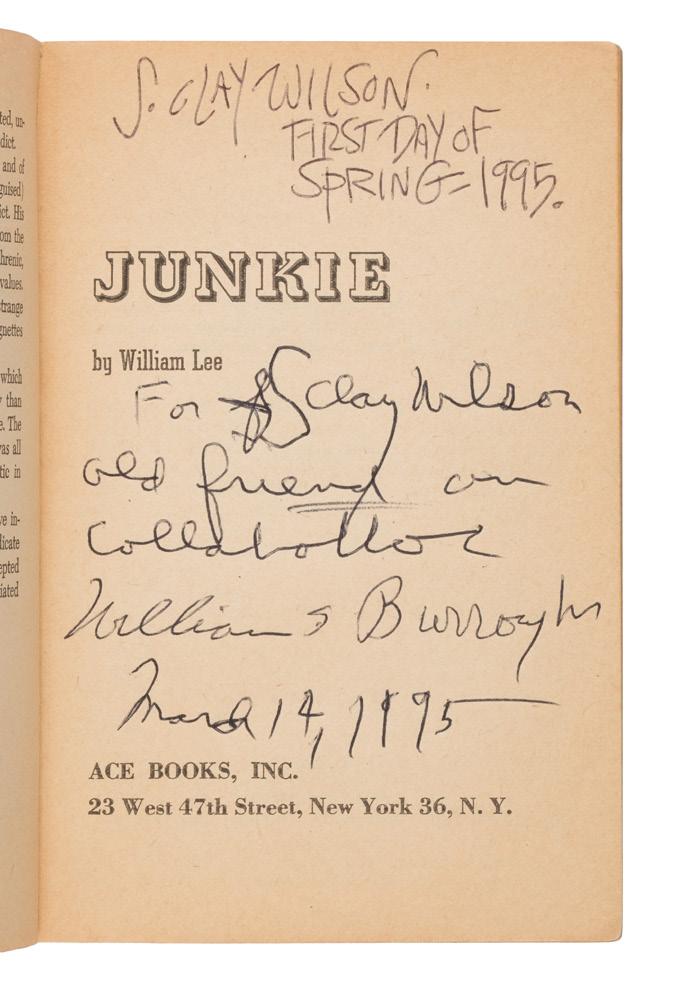
Burroughs, William S. (“William Lee”) (1914-1997). Junkie: Confessions of an Unredeemed Drug Addict. New York: Ace Double Books, 1953.
12mo. (Contents evenly toned as usual.) Original color pictorial wrappers (some light edgewear and short creases). Provenance: S. Clay Wilson (1941-2021), American underground cartoonist (ownership inscription on the title-page, “S. Clay Wilson. First Day of Spring-1995”; recipient of author’s inscription).
FIRST EDITION. PRESENTATION COPY, INSCRIBED BY BURROUGHS on the title-page: “For S. Clay Wilson, old friend and collaborator, William S. Burroughs, March 15, 1995”. Burroughs’s first book of his notorious semi-autobiographical novel of heroin addiction, which “tells us more about heroin use during the wartime and immediate postwar 1940s than any other volume; millions have read it since its original publication” (Dope Menace, p. 54). Bound dos-a-dos with Maurice Helbrandt’s Narcotic Agent
S. Clay Wilson, along with Robert Crumb and other artists, was a founding contributor to Zap Comix, the influential underground comix anthology that emerged in San Francisco in the late 1960s and helped define the countercultural comics movement. Wilson’s work was notorious for its confrontational style, combining explicit violence, sexual imagery, and grotesque satire, pushing the boundaries of what comics could depict and helping to establish the raw aesthetic associated with underground comix. Beyond his contributions to Zap, Wilson also illustrated the German-language editions of Cities of the Red Night and The Wild Boys by William Burroughs. Maynard & Miles A1a.
$1,000 - 1,500
23
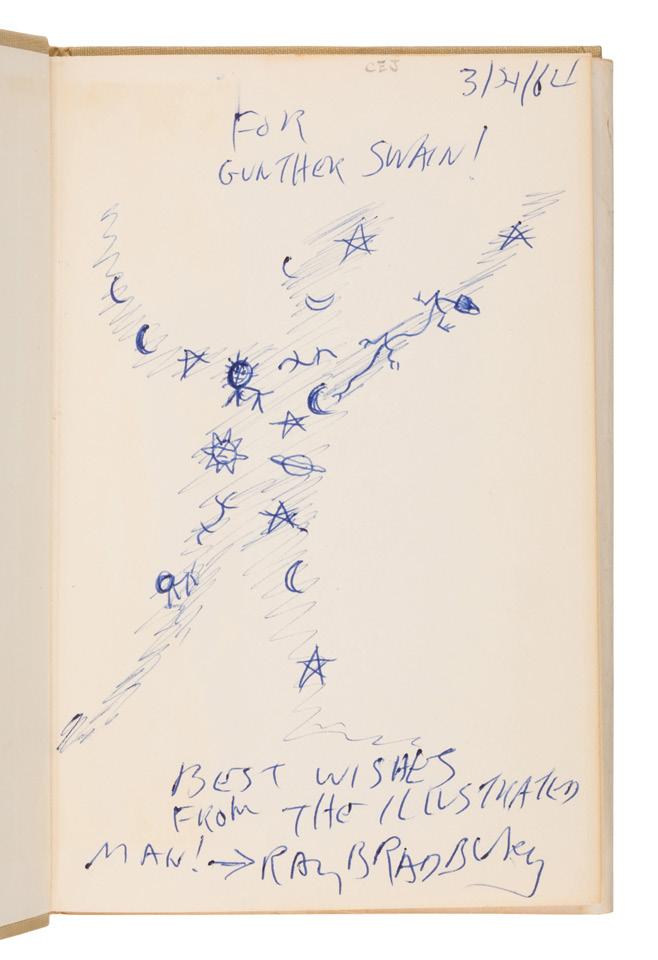
Bradbury, Ray (1920-2012). The Illustrated Man. Garden City: Doubleday & Company, Inc., 1951.
8vo. Original beige cloth, spine lettered in black (light toning to cover edges); dust jacket (spine sunned with few tiny chips and short creases at spine ends). Provenance: Gunther Swain (author’s inscription dated 21 March 1964).
FIRST EDITION. PRESENTATION COPY, INSCRIBED BY BRADBURY WITH AN ORIGINAL DRAWING OF “THE ILLUSTRATED MAN”: “For Gunter Swain! [drawing] Best wishes, from the Illustrated Man! Ray Bradbury.” The Illustrated Man collects eighteen stories plus prologue and epilogue, including “The Veldt,” “Kaleidoscope,” “The Long Rain,” and “Zero Hour.” Anatomy of Wonder (1987) 3-63; Bleiler, Supernatural Fiction 256.
$800 - 1,200
24
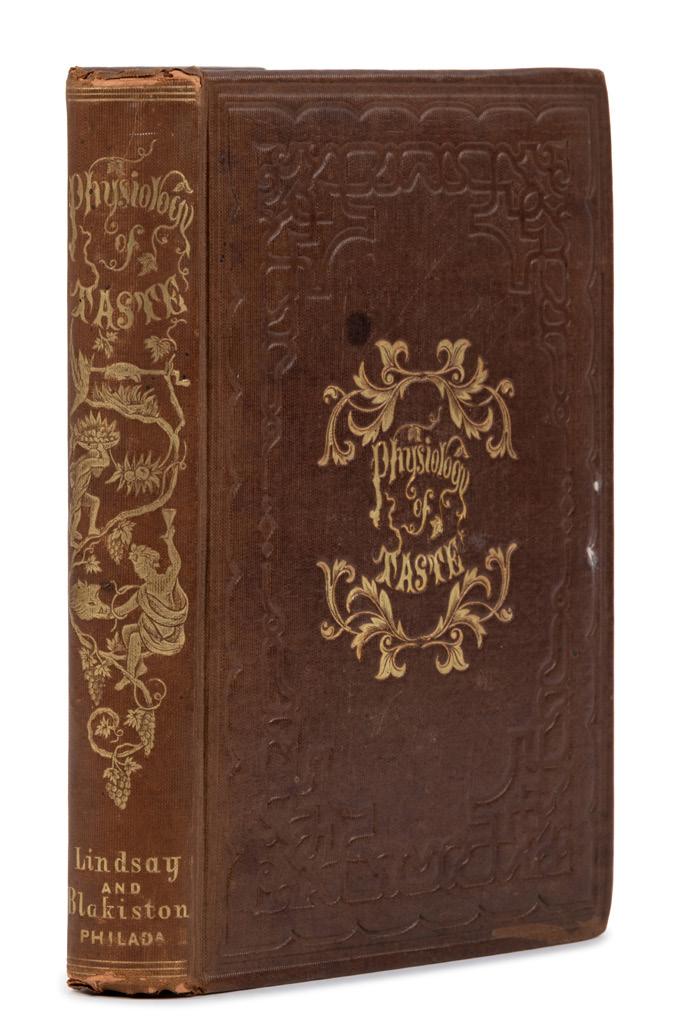
Brillat-Savarin, Jean-Anthelme (1755-1826). The Physiology of Taste; Or, Transcendental Gastronomy. Fayette Robinson, translator. Philadelphia: Lindsay & Blakiston, 1854.
8vo (191 x 127 mm). Half-title; 4pp. publisher’s ads at end. (Light spotting throughout.) Original gilt-lettered brown cloth, top edge gilt (spine lightly sunned, light wear to spine ends, few tiny spots of discoloration to upper cover). Provenance: Epes Ellery, San Francisco (booksellers’ ticket).
FIRST EDITION IN ENGLISH of one of the most celebrated works in the literature of gastronomy. Written over many years and published shortly before the author’s death, The Physiology of Taste is “one of the most witty discussions on food ever written… The work is filled with entertaining anecdotes and commentary on good eating, including several pages of impressions about the United States” (Feret). The work is also the source of the famous maxim “Tell me what you eat, and I will tell you what you are,” which gave rise to the modern phrase “You are what you eat.”
SOLD BY SAN FRANCISCO’S FIRST ANTIQUARIAN BOOKSELLER with his bookseller’s ticket. Ellery, together with Augustus Doyle, established the Montgomery Street shop, then the commercial center, in 1854. Operating during the height of the California Gold Rush, Ellery supplied books to miners, merchants, and the expanding professional class of the city. Bitting, 60; Cagle & Stafford 103; Feret, 38; Lowenstein 639; Reid, 75.
$1,000 - 1,500
25
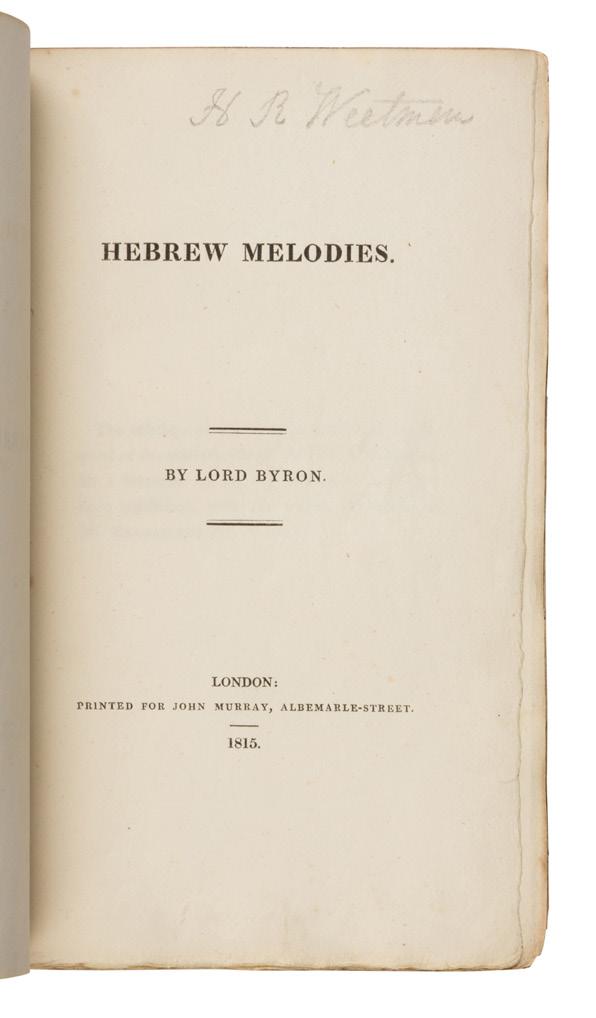
Byron, George Gordon Noel, Lord (1788-1824). Hebrew Melodies. London: John Murray, 1815.
8vo (223 x 142 mm). Half-title; text is followed by: 2-page publisher’s advertisements, half-titles and titles to be used in binding the pamphlet editions of Byron’s Works into two volumes, and an additional 4 pages of publisher’s advertisements dated June 1815. Original brown wrappers, uncut (discreetly rebacked); folding chemise and slipcase. Provenance: ownership signature dated 1818 on front free endpaper; H.R. Weetman (penciled signature on title-page).
FIRST EDITION, FIRST ISSUE, with Roger’s “Jacqueline” and Campbell’s “Selected Beauties” listed second and third on the second page of advertisements ([E4v]). At the request of his friend D. Kinnaird, Byron wrote Hebrew Melodies, which was originally accompanied by music composed by Isaac Nathan. Randolph and Wise do not record the additional 4 pages of advertisements for Murray’s works, printed by J.F. Dove. Randolph, p.50; Wise Byron I, pp.103-104.
$300 - 500
26
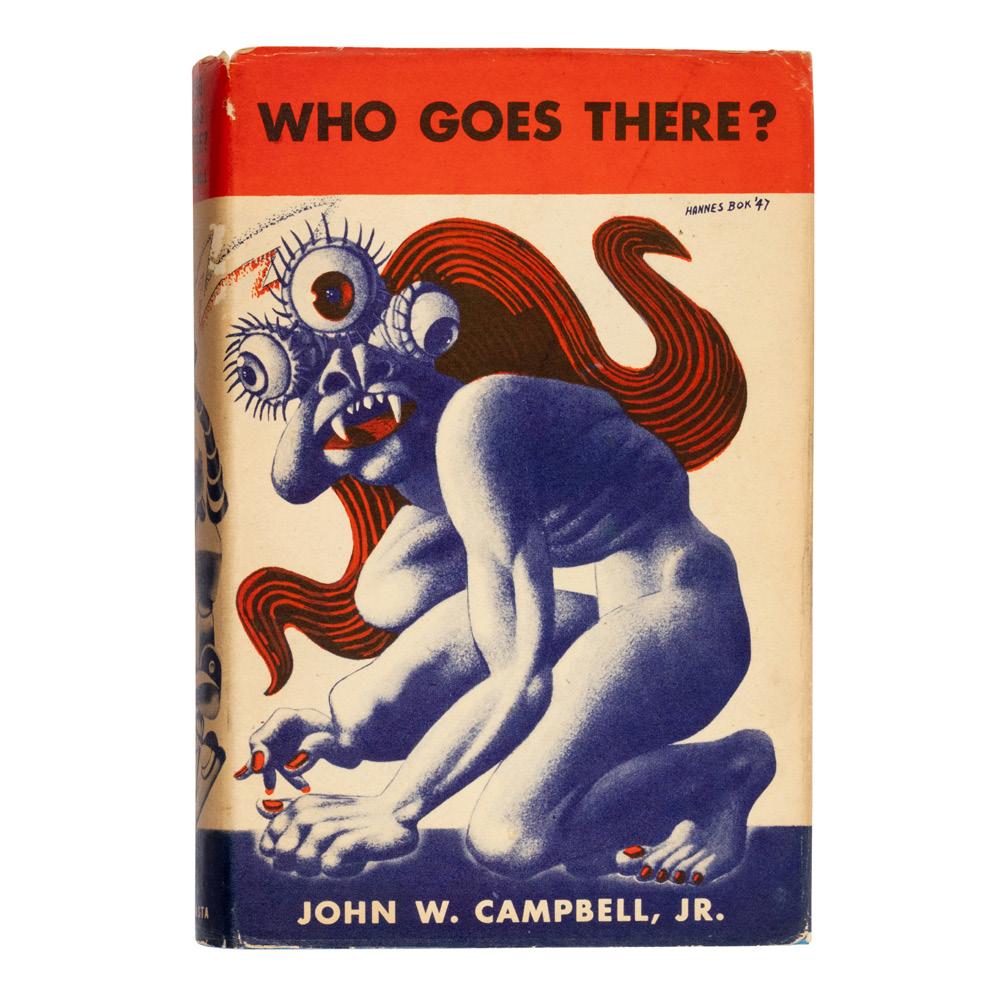
Campbell, John W., Jr. (1910-1971). Who Goes There? Seven Tales of Science-Fiction. Chicago: Shasta Publishers, 1948.
8vo. Original blue cloth, gilt-lettered spine (top fore-edge corners bumped); dust jacket (light wear at spine ends, small spot of marring to spine panel, spine lightly toned).
FIRST EDITION. Who Goes There? was the basis for the 1951 motion picture The Thing From Another World, directed by Christian Ny, and the 1982 motion picture The Thing, directed by John Carpenter, and features dust jacket art by Hugo Award-winning artist Hannes Bok.
[With:] a copy of the first paperback edition.
$400 - 600
27
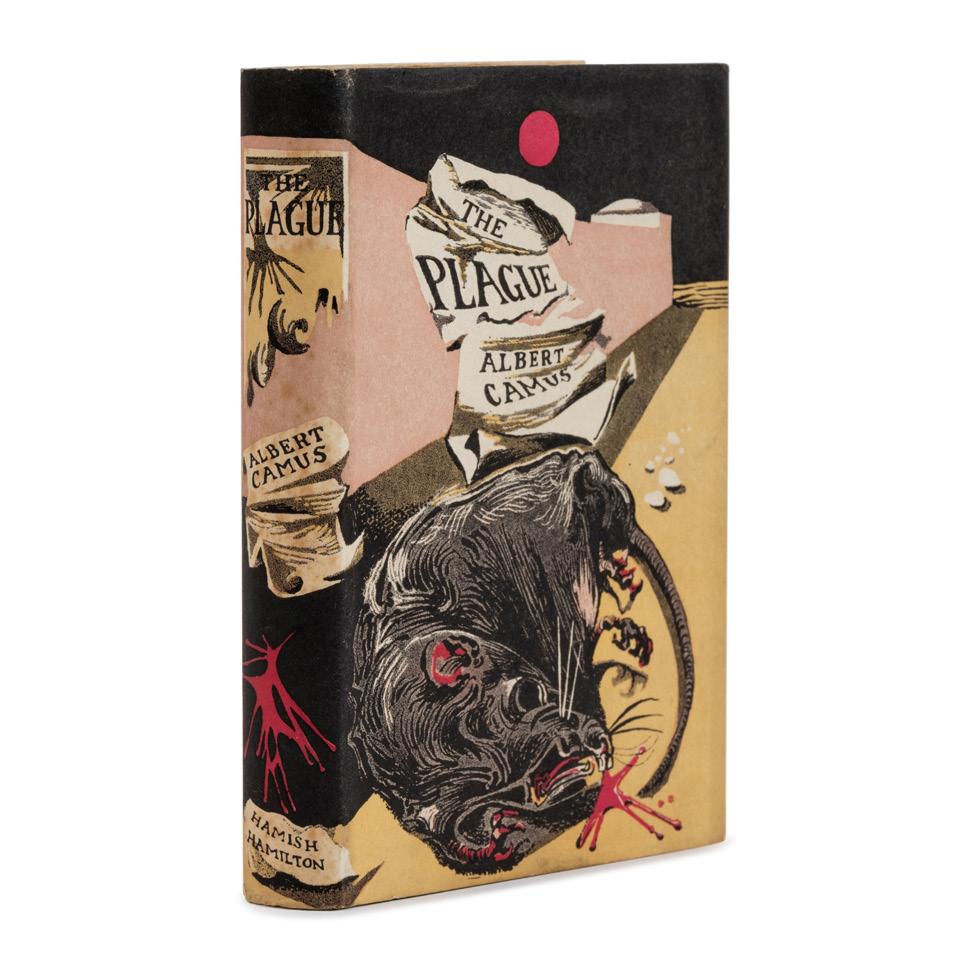
Camus, Albert (1913-1960). The Plague. London: Hamish Hamilton, 1948.
8vo. Original blue-green cloth, spine stamped in silver and lettered in red (light spotting to text block); dust jacket (price-clipped, spotting to extremities).
Provenance: From the William A. Strutz Library (his sale, Heritage, 10 September 2025, lot 45037).
FIRST ENGLISH EDITION. Originally published in French in 1947 as La Peste (Paris, Gallimard), this edition was translated from the French by Stuart Gilbert and precedes the U.S. edition published by Knopf. “[The Plague] represents the liberation of Camus from existentialism into something nearer the collective revolutionary heroism of La Condition Humaine. It is an allegory of the German Occupation, transposed as an outbreak of the plague in Oran” (Connolly, The Modern Movement 95). A BRIGHT COPY.
$800 - 1,200
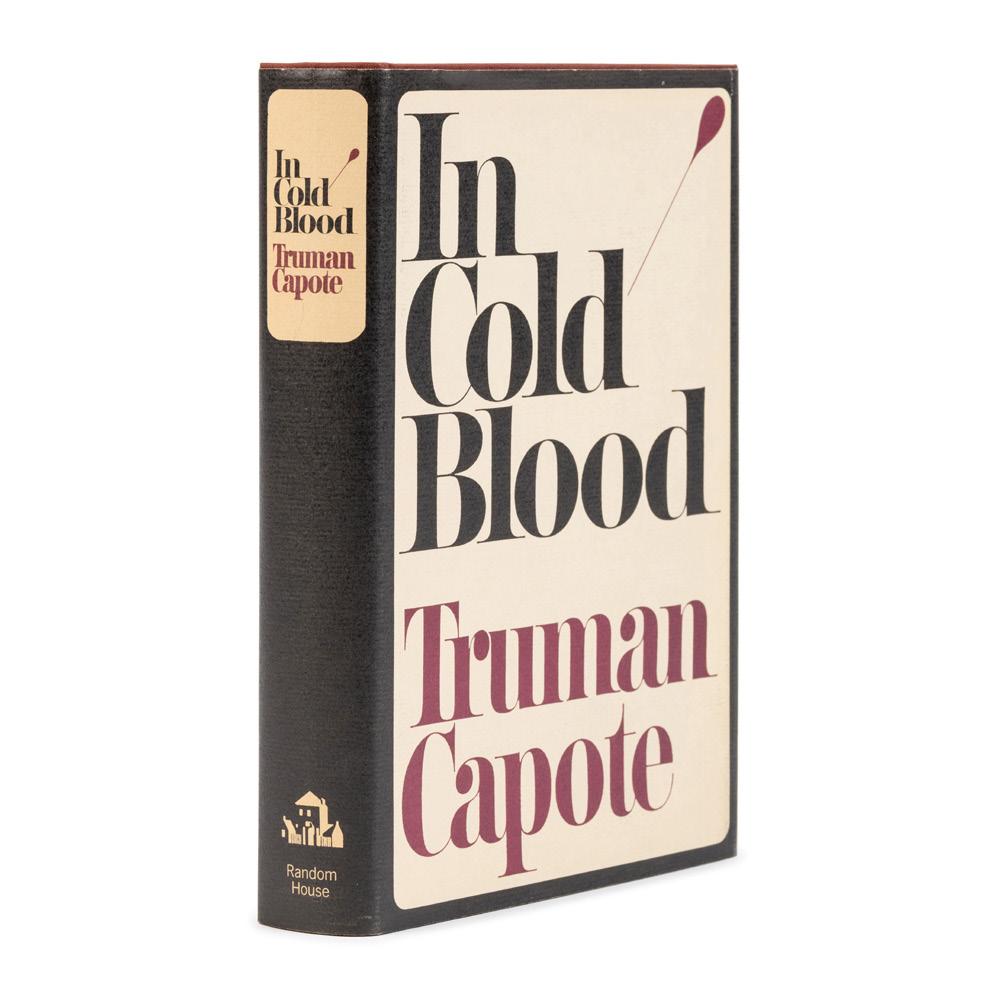
28 Capote, Truman (1924-1984). In Cold Blood. New York: Random House, 1965.
8vo. Original burgundy cloth, stamped in gold and silver, top edge stained navy; dust jacket.
FIRST EDITION, FIRST PRINTING (stated on copyright page), of Capote’s acclaimed true crime novel. Wilson A10b. AN EXCEPTIONALLY FINE COPY.
$300 - 400
29
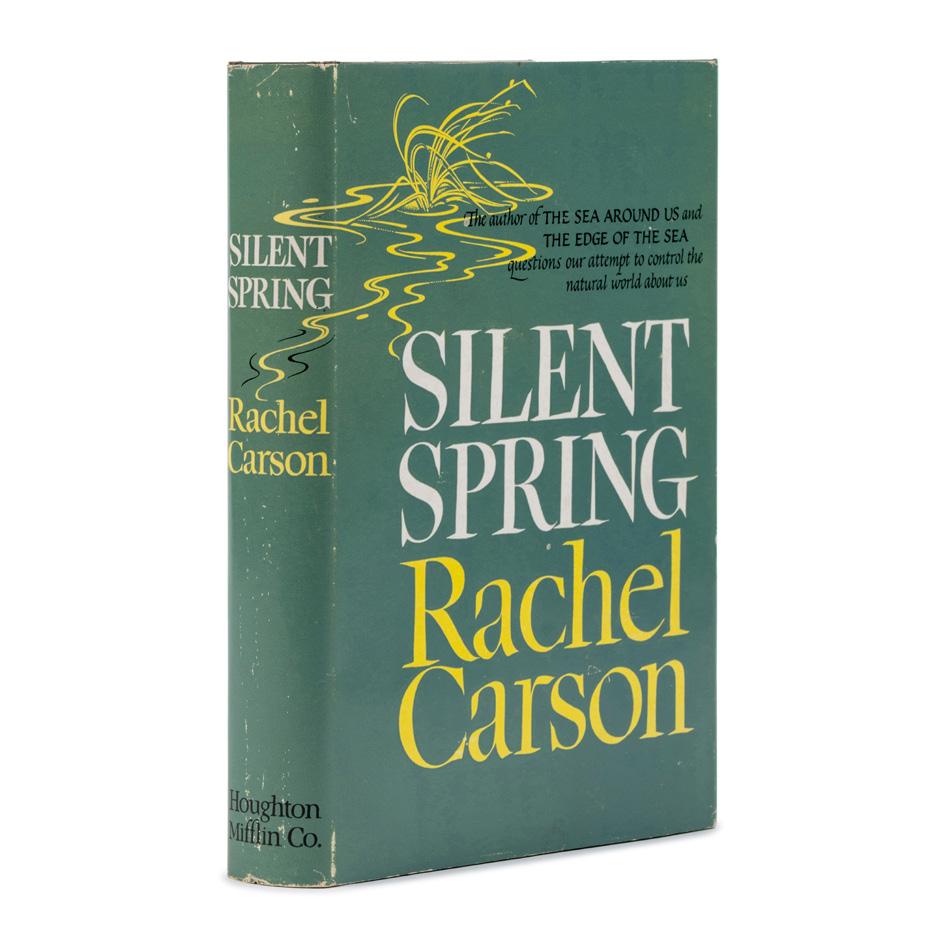
Carson, Rachel (1907-1964). Silent Spring. Boston: Houghton Mifflin Company, 1962.
8vo. Original green cloth gilt; dust jacket (light rubbing to spine).
FIRST EDITION. Beginning in the late 1940s environmentalist and author Rachel Carson began to turn her attention to the effect of pesticide use on the environment. Following publication in The Boston Herald of a letter describing a mass death of birds after a nearby crop was sprayed with the chemical pesticide DDT, Carson set to work on an expose of the effect of toxic chemicals on the environment. The resulting work, Silent Spring, describes the effects of chemical pesticides not only on the environment but also on humans and animal life, and is credited with kickstarting the modern environmental movement.
$300 - 500
30
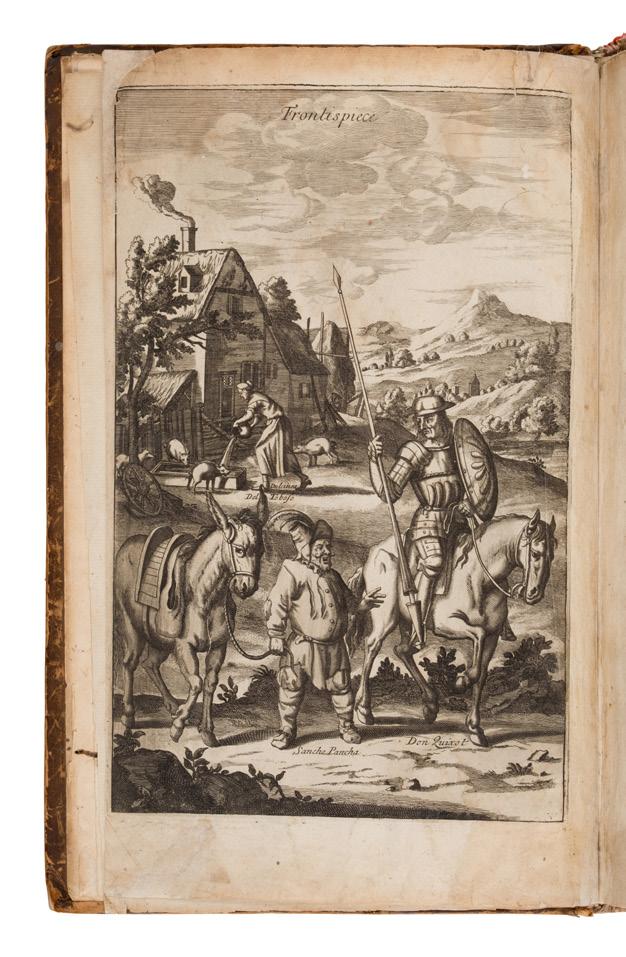
Cervantes Saavedra, Miguel de (1587-1616). The History of the Most Renowned Don Quixote of Mancha: and His Trusty Squire Sancho Pancha. John Phillips, translator. London: Printed by Tho. Hodgkin, and are to be sold by John Newton, 1687.
Folio (311 x 191 mm). 9 engraved plates including frontispiece. (Dampstaining near gutter throughout, some at margins, frontispiece reinserted and with few marginal repairs, some marginal toning, tiny marginal worm holes to leaves near end.) Early calf, ruled in gilt (early rebacking in sheep, extremes rubbed). Provenance: Henry John Sperling (armorial bookplate); C. Hardyman (inked name on title); Eliza Cranmer (early signature on title).
FIRST ILLUSTRATED EDITION IN ENGLISH and the first edition of John Phillips’s translation. Phillips (1631-1706) was the nephew and godson of John Milton (1608-1674), and his translation is only the second into English, following Thomas Shelton’s in 1612 (part one only) and 1620 (first complete edition). ESTC R25756; Palau 52465; Wing C1774A.
$2,000 - 3,000
31
Chandler, Raymond (1888-1959). The Big Sleep. New York: Knopf, 1939.
8vo. Original orange cloth, stamped in grey, top edge stained blue (spine slightly toned, some rubbing along joints); dust jacket (restoration along edges and folds, split to upper panel near flap fold).
FIRST EDITION OF CHANDLER’S FIRST BOOK, including the first appearance of detective Philip Marlowe. Chandler’s hard-boiled crime novel has been adapted to film twice: in 1946, starring Humphrey Bogart and Lauren Bacall, with a script co-authored by William Faulkner, and in 1978 starring Robert Mitchum. Bruccoli A.1.1.a.
$2,000 - 3,000
32
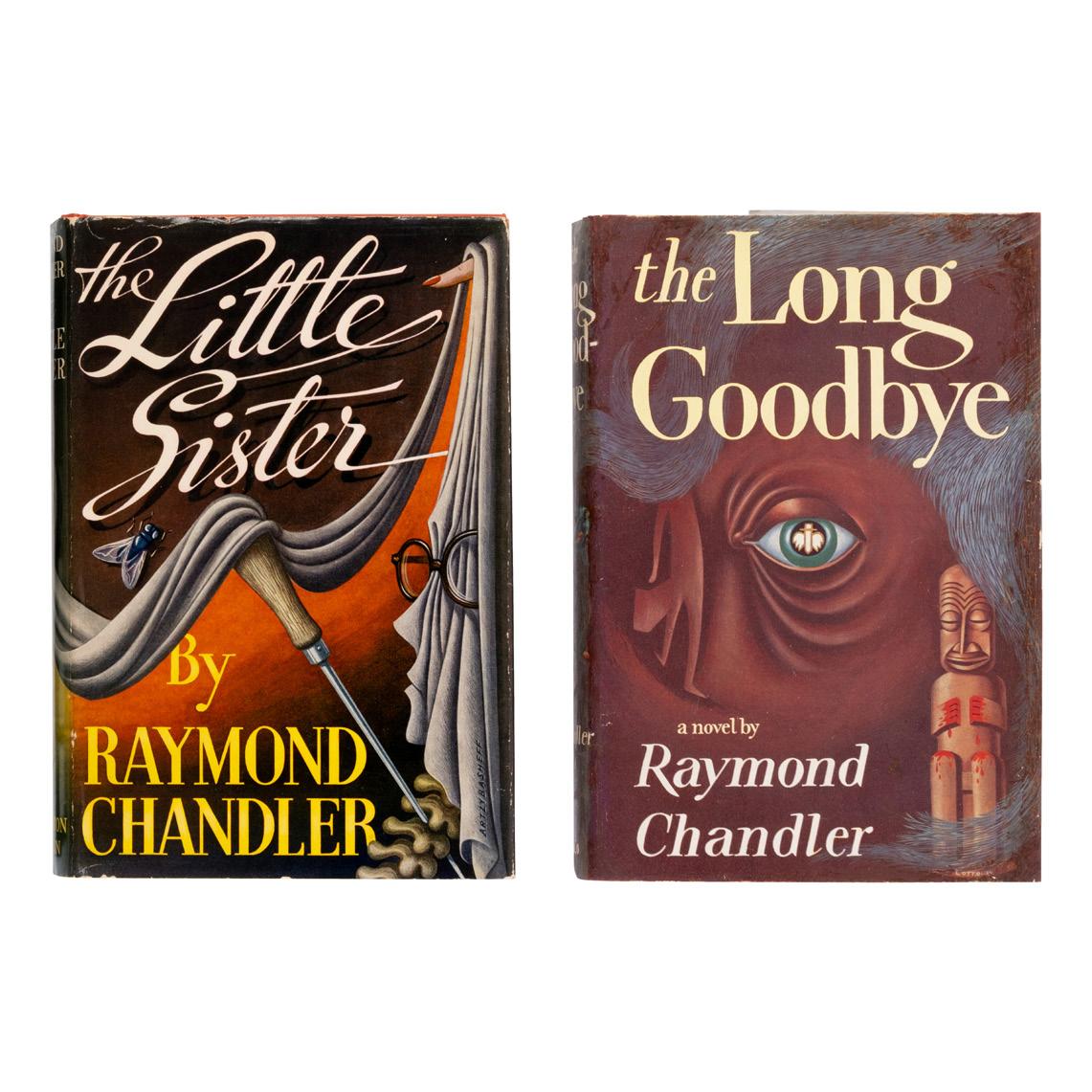
Chandler, Raymond (1888-1959). The Little Sister. Boston: Houghton Mifflin Company, 1949.
8vo. Original orange-red cloth stamped in blue; dust jacket (spine lightly sunned, some edgewear near top, spots reinforced with cellotape). Provenance: Levinson’s (booksellers’ ticket).
FIRST AMERICAN EDITION of the fifth Philip Marlowe mystery. Bruccoli A8.2.a.
[With:] CHANDLER. The Long Goodbye. Boston: Houghton Mifflin Company, 1954. 8vo. Original two-tone cloth lettered in dark green, top edge stained green; dust jacket (restoration along edges and spine). FIRST AMERICAN EDITION. The return of Phillip Marlowe. Bruccoli A10.2.a.
$400 - 600
33
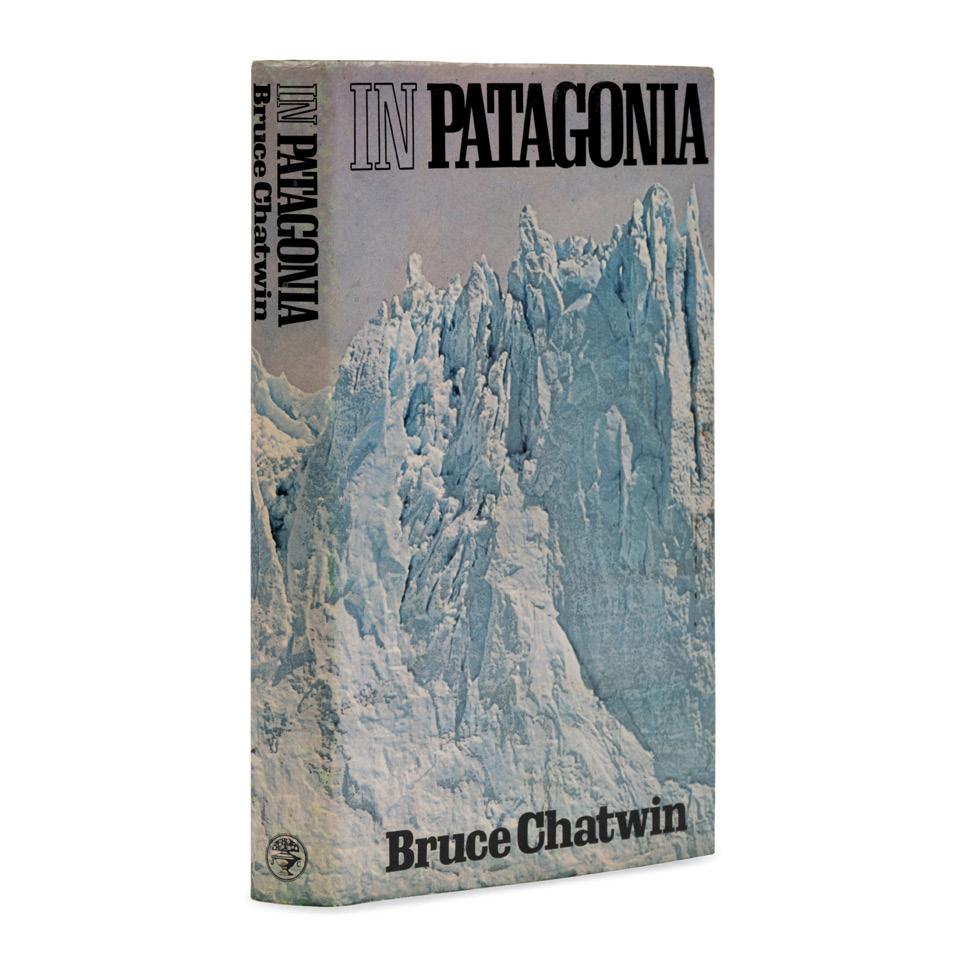
Chatwin, Bruce (1940-1989). In Patagonia. London: Jonathan Cape, 1977.
8vo. Frontispiece map, half-tone plates. Original dark blue cloth, spine lettered in gilt (slight lean, spotting to text block edges); dust jacket (spotting to flaps).
FIRST EDITION of the author’s first book, a seminal work of modern travel literature, recounting his journey through southern Argentina and Chile in a series of episodic, finely observed sketches. The book was awarded the Hawthornden Prize in 1978.
[With:] CHATWIN. The Viceroy of Ouidah. New York: Summit Books, 1980. FIRST EDITION.
$400 - 600

34
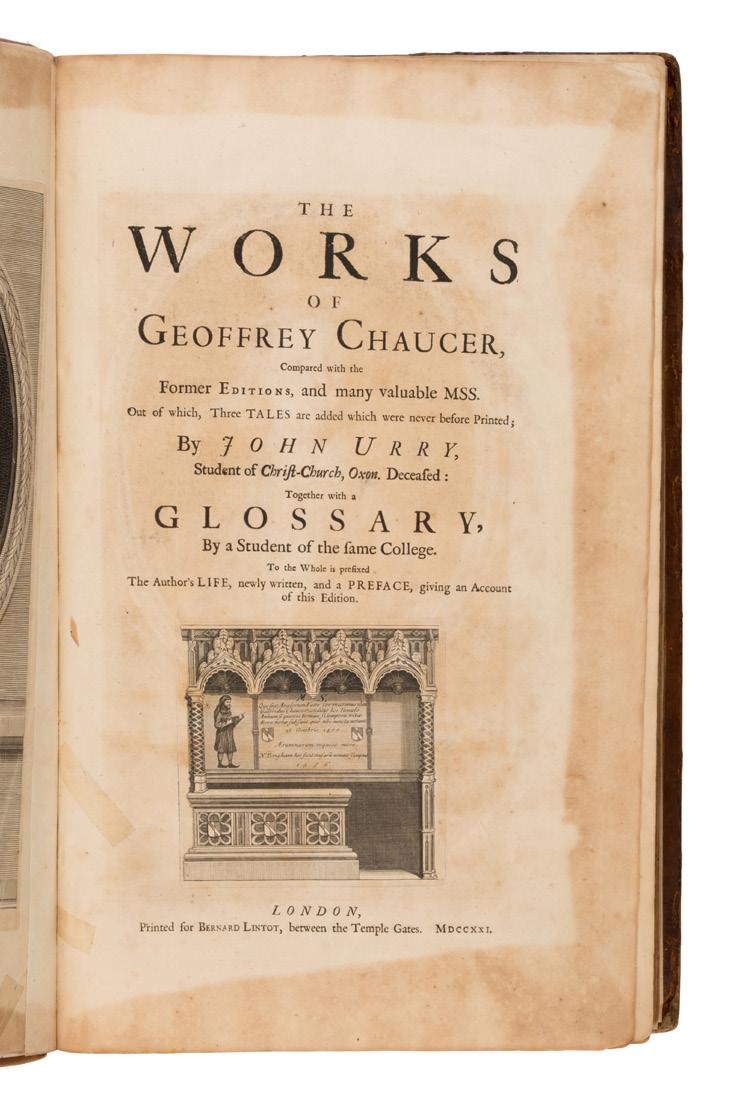
Chaucer, Geoffrey (ca 1343-1400). The Works...together with a glossary. John Urry, editor. London: for Bernard Lintot, 1721.
Large folio (438 x 279 mm). Engraved portrait frontispiece of Urry, engraved portrait of Chaucer, engraved vignette on title-page, numerous engravings in the text, engraved head-pieces and initials. (Marginal toning to frontispiece and title-page, frontispiece reinserted on as stub, marginal repairs to both, offsetting to text from plates, occasional spotting or toning to text.) Contemporary calf ruled in gilt (rebacked, endpapers renewed, fore-corners worn).
FIRST URRY EDITION, LARGE PAPER ISSUE, of Chaucer’s collected works, one of the principal editions of Chaucer, as well as the first to be printed in roman, rather than gothic, type. Urry’s work “was the first edition of Chaucer for nearly a hundred and fifty years to consult any manuscripts and is the first since that of William Thynne in 1534 to seek systematically to assemble a substantial number of manuscripts to establish his text. It is also the first edition to offer descriptions of the manuscripts of Chaucer’s works, and the first to print texts of ‘Gamelyn’ and ‘The Tale of Beryn’, works ascribed to, but not by, Chaucer” (ODNB). This edition was left incomplete upon Urry’s death in 1715, was continued by Thomas Ainsworth until his own death in 1719, and was then finished by Timothy and William Thomas, who compiled the glossary printed in the rear. William Boyer printed this work for Lintot, and Boyer’s records show only 1250 copies were printed, in 3 paper sizes (all folio variants, with the shorter variant comprising 1,000 of those copies). The present is one of the larger issues, with sheets just over 17.25” tall. ESTC T106027; Hammond, pp.128-130.
$800 - 1,200
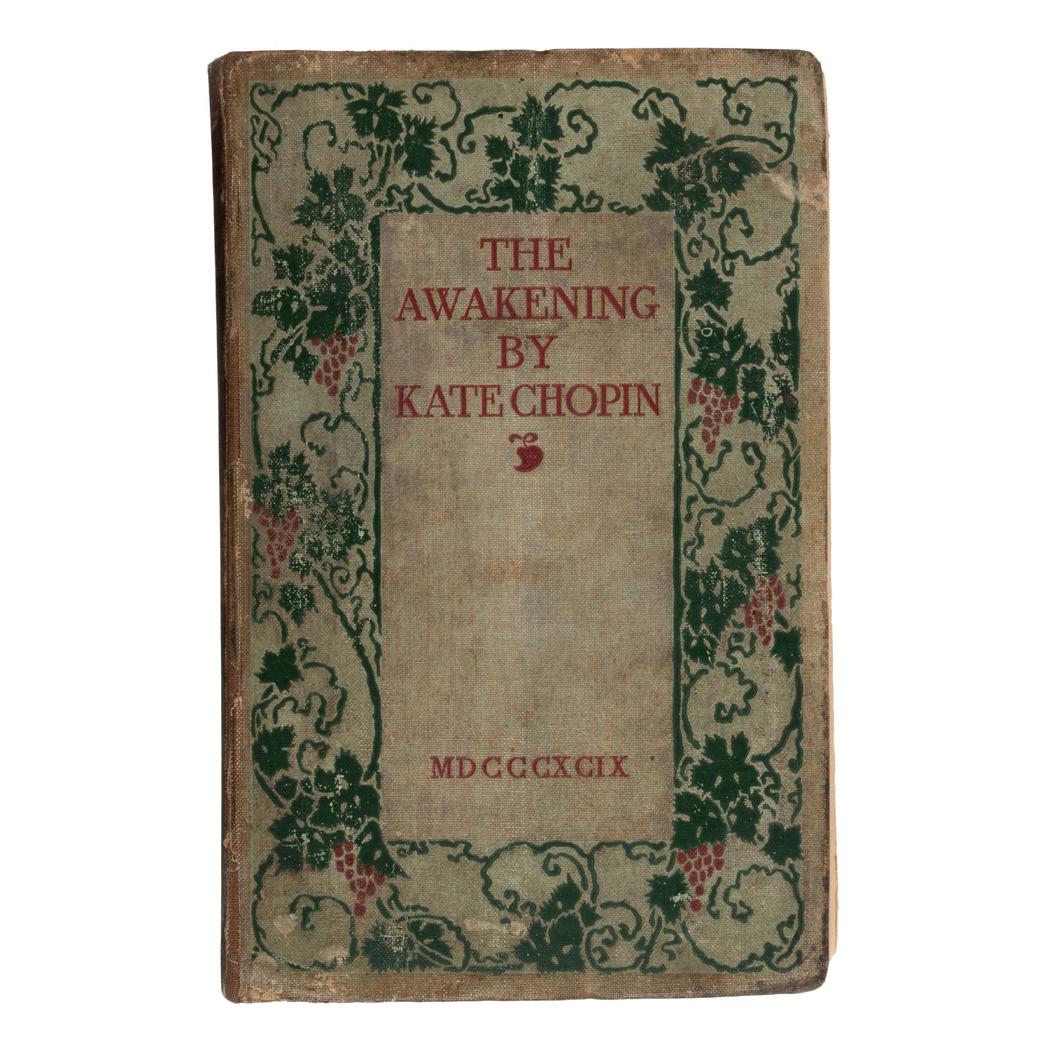
35 Chopin, Kate (1850-1904). The Awakening. Chicago and New York: Herbert S. Stone & Company, 1899.
8vo. Title-page printed in black and red. (Some minor spotting or staining.) Original pictorial green cloth stamped in dark green and red, top edge gilt (darkened and soiled, rebacked preserving original spine and endpapers, front hinge detached). Provenance: Wilson’s Library (stamp on title-page).
FIRST EDITION of Chopin’s novel, whose frank and sexual themes drew condemnation from contemporary reviewers. In light of these reviews, the publisher declined subsequent printings of the work, which is now regarded not only as a major early feminist work but also as a precursor to American modernist literature. BAL 3246.
$1,000 - 1,500
36
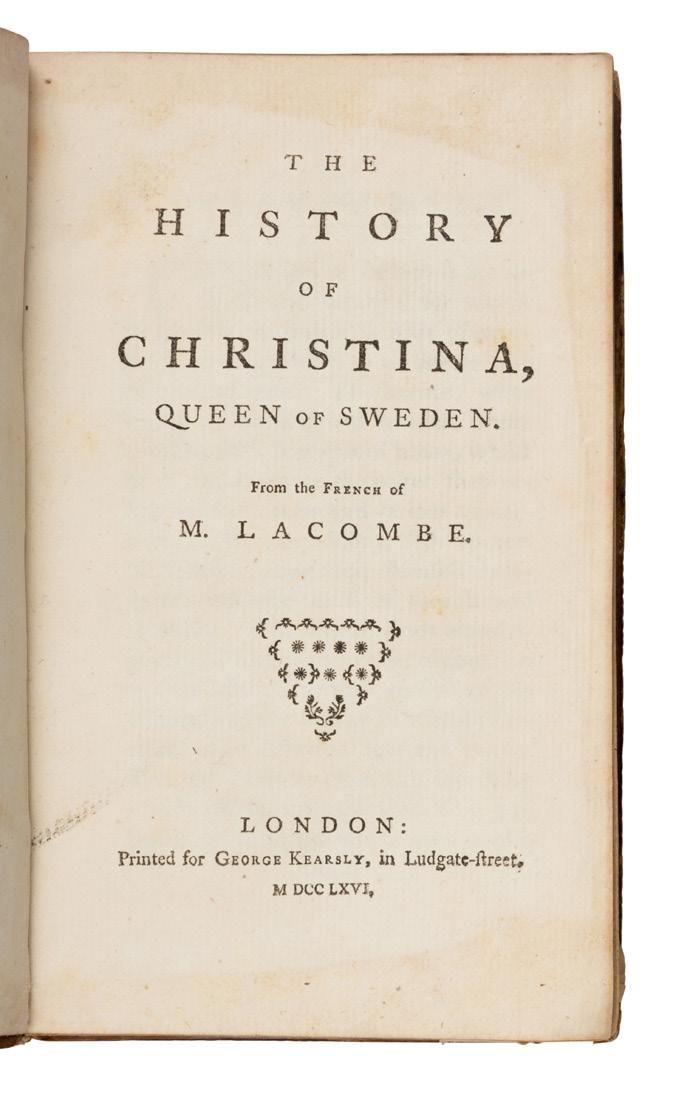
[Christina (1626-1689)]. The History of Christina, Queen of Sweden. From the French of M. Lacombe. London: for George Kearsley, 1766.
8vo (171 x 102 mm). Woodcut device on title-page. (Light marginal toning to title.) Contemporary calf gilt, spine in 6 compartments with 5 raised bands, morocco-lettering piece gilt in second (spine ends a bit worn, few splits to joints, front hinge repaired). Provenance: ownership inscription on front free endpaper.
FIRST EDITION IN ENGLISH, an early biography of this “queen without a realm, a Christian without faith, and a woman without shame” (Pope Alexander VII). Widely regarded as one of the most educated women of her age, Christina was crowned at the tender age of six, but abdicated the throne in 1654, aged 27, declaring herself unwilling to marry and provide an heir. Her intellectual curiosity, patronage of the arts, and advocacy for the rights of women are today widely celebrated, but in her lifetime, they brought her many enemies and provoked the ire of the church to which she had converted. RARE: According to online records, no other copies have appeared at auction, and ESTC records only five copies at institutions in the British Isles. ESTC T110827.
$300 - 500
37
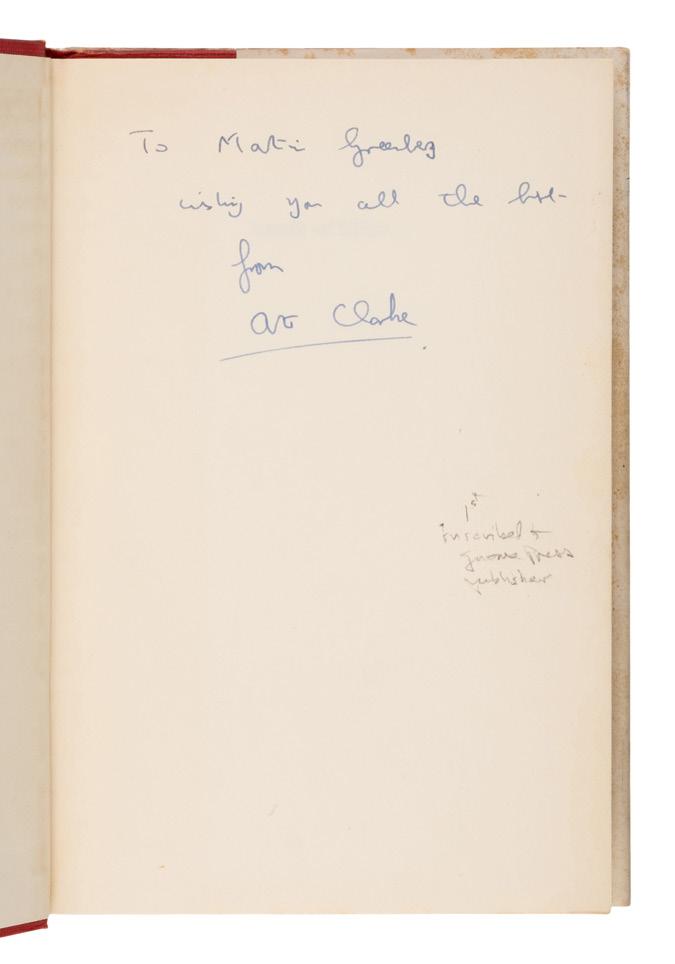
Clarke, Arthur C. (1917-2008). Sands of Mars. New York: Gnome Press Inc., 1952.
8vo. Original red cloth; dust jacket (light wear to spine ends).
FIRST AMERICAN EDITION. PRESENTATION COPY, INSCRIBED BY CLARKE TO THE PUBLISHER, MARTIN GREENBERG, on the front free endpaper: “To Martin Greenberg, wishing you all the best, from, Art Clarke.”
Founded in New York in 1948 by science-fiction editor and publisher Martin Greenberg, together with fellow fan and writer David A. Kyle, Gnome Press quickly became one of the most important early specialty publishers of science fiction in hardcover. At a time when most science-fiction writing appeared only in pulp magazines, Gnome Press issued the first durable book editions of many now-canonical works, aimed at collectors and libraries. Among its most notable publications were early hardcover editions of works by Isaac Asimov—including the first book appearances of the Foundation trilogy—as well as titles by Robert A. Heinlein. The press also published several works by Arthur C. Clarke, such as The Sands of Mars (1951) and Against the Fall of Night, helping introduce Clarke’s work to the U.S. market.
$600 - 800
38
Clarke, Arthur C. (1917-2008). 2001 A Space Odyssey. New York: The New American Library, 1968.
8vo. Original two-toned paper boards (light toning to cover extremities; dust jacket (tiny closed tear near head of spine, a very light touch of toning to edges); folding case.
FIRST EDITION. 2001 A Space Odyssey was the author’s novelization based on the joint screenplay by Clarke and Stanley Kubrick. With the success of both the book and film, Clarke became perhaps the best “known science fiction writer in the world” (Clarke & Nicholls, p.231). Currey, p.115.
$500 - 700
39
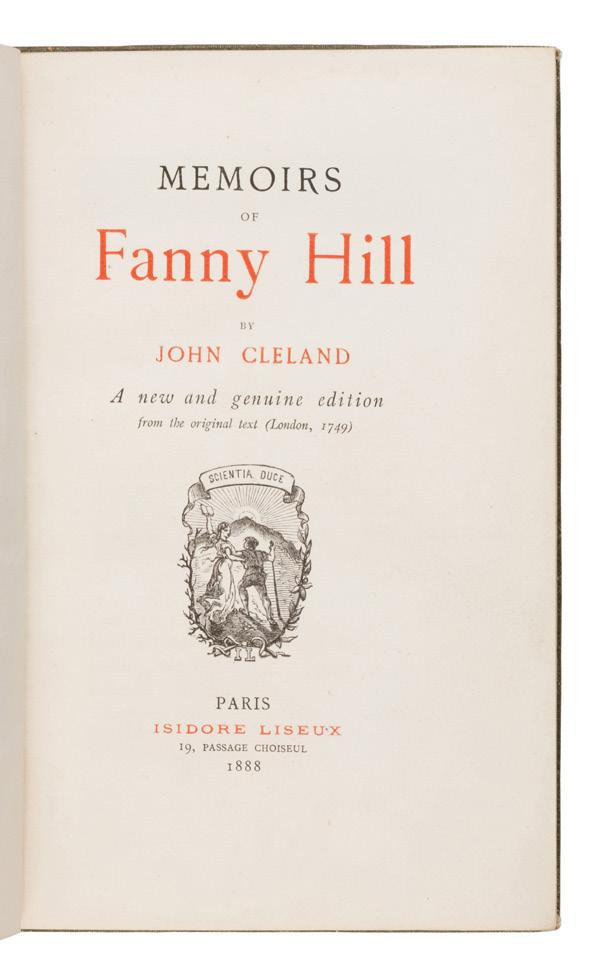
Cleland, John (1709-1789). Memoirs of Fanny Hill. Paris: Isidore Liseux, 1888.
One volume in 2, 8vo (197 x 127 mm). Half-titles, title-page printed in red and black. (Some browning near gutter to second half-title.) Contemporary green cloth gilt (light rubbing to extremes, front hinges slightly starting). Provenance: C. Beaufort Hunt (armorial bookplate).
“New and Genuine Edition” of the first English erotic novel, published here with the suppressed passage of a homosexual encounter. First published in London in 1748-49, Memoirs of a Woman of Pleasure—better known as Fanny Hill—appeared anonymously under the authorship of John Cleland, who is believed to have written the work while imprisoned for debt. Issued in two parts by the publisher Fenton Griffiths, the novel quickly attracted notoriety for its explicit content, becoming one of the earliest and most famous works of English-language erotic fiction. Its publication coincided with growing anxieties over print culture and public morality in mid-18th-century Britain, and it was swiftly suppressed: both Cleland and Griffiths were arrested, and the book was formally condemned as obscene.
[With:] CLELAND. Memoirs of a Woman of Pleasure (Fanny Hill). London: Published for Bibliothiles, 1894. 2 volumes, 8vo. Illustrated. Original red cloth (hinges broken, contents loose, sold as is); folding case. LIMITED EDITION, number 25 of 50 copies.
$300 - 500

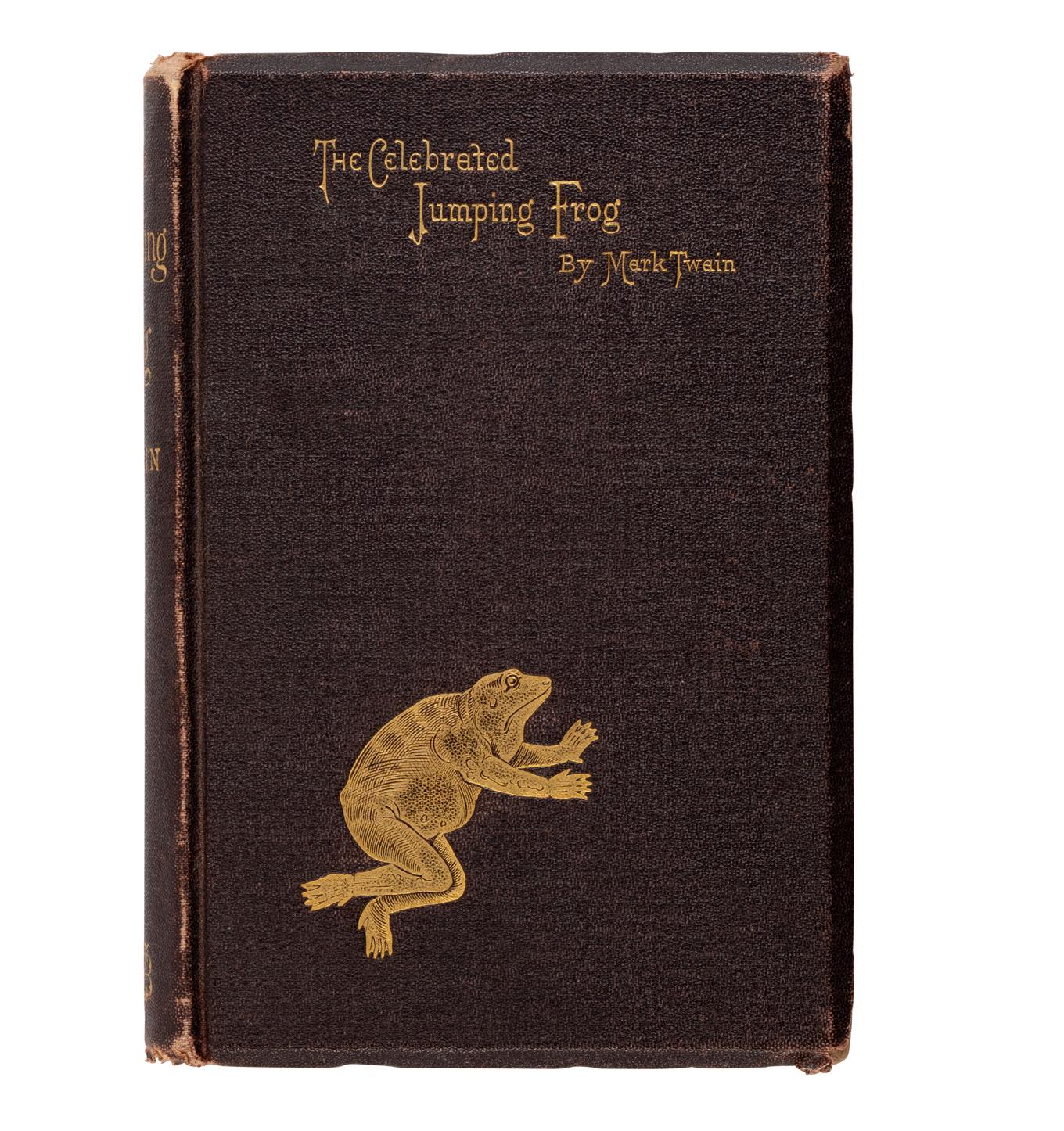
40 Clemens, Samuel L. (“Mark Twain”) (1835-1910). The Celebrated Jumping Frog of Calaveras County. New York: C.H. Webb, 1867.
8vo. Original brown beveled cloth with gilt frog at the lower left corner of the front cover, blind impression of the frog on rear cover, gilt-lettered on front cover and spine, brown coated endpapers (wear to spine ends and forecorners, joints a bit rubbed); folding case. Provenance: Capt. Chasley to; Capt. W.K. Mansfield (gift inscription, Grand Rapids, May 1869).
FIRST EDITION, second issue, lacking the ad leaf before title. Queen notes that Twain’s first book is the “first important foreshadowing of crime-inthe-ascendancy in the short story... This acknowledged classic of legend and folklore is an early example of the confidence game in fiction. If this statement surprises you, reread Mark Twain’s tale of trickery and ask yourself: When the slick stranger filled Jim Smiley’s frog, Dan’l Webster, full of quailshot, wasn’t he really playing a clever skin game?” (Queen’s Quorum, 7). BAL 3310; Johnson, pp.3-9; McBride, 2.
$800 - 1,200
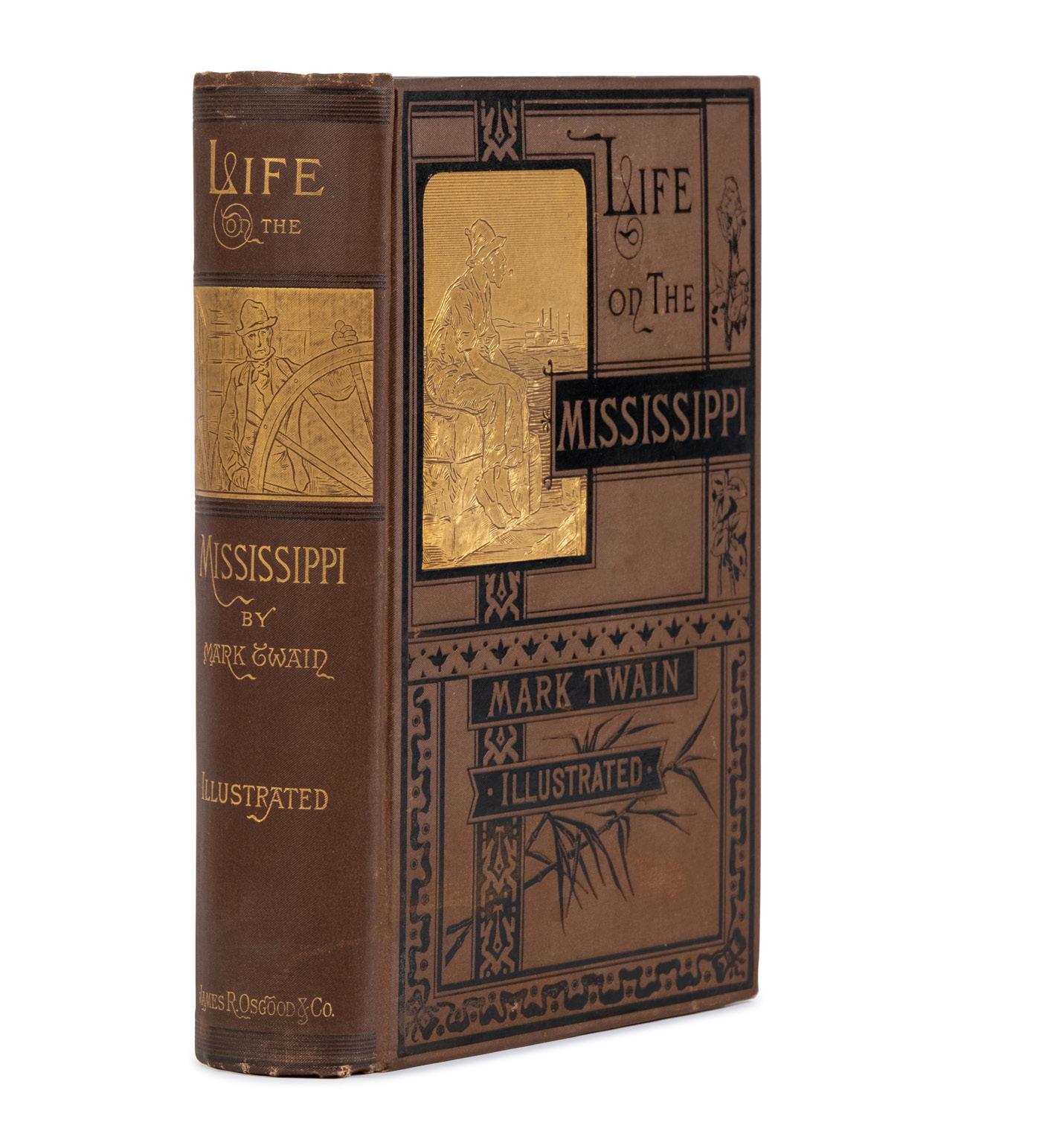
41 Clemens, Samuel L. (“Mark Twain”) (1835-1910). Life on the Mississippi. Boston: James R. Osgood & Company, 1883.
Large 8vo. Original pictorial brown cloth stamped in gilt and black (light edgewear). Provenance: S.R. Carter (given to:); Mollin Elliott (inscription dated 11 July 1883 on rear free endpaper); The Stacey-Hintons (bookplate).
FIRST EDITION, FIRST STATE, with the tail-piece on p.441 depicting an urn, flames, and the head of Twain, and the caption on p.443 reading “The St. Louis Hotel.” BAL 3411; Johnson, pp.41-43; McBride, p.84.
$600 - 800
42
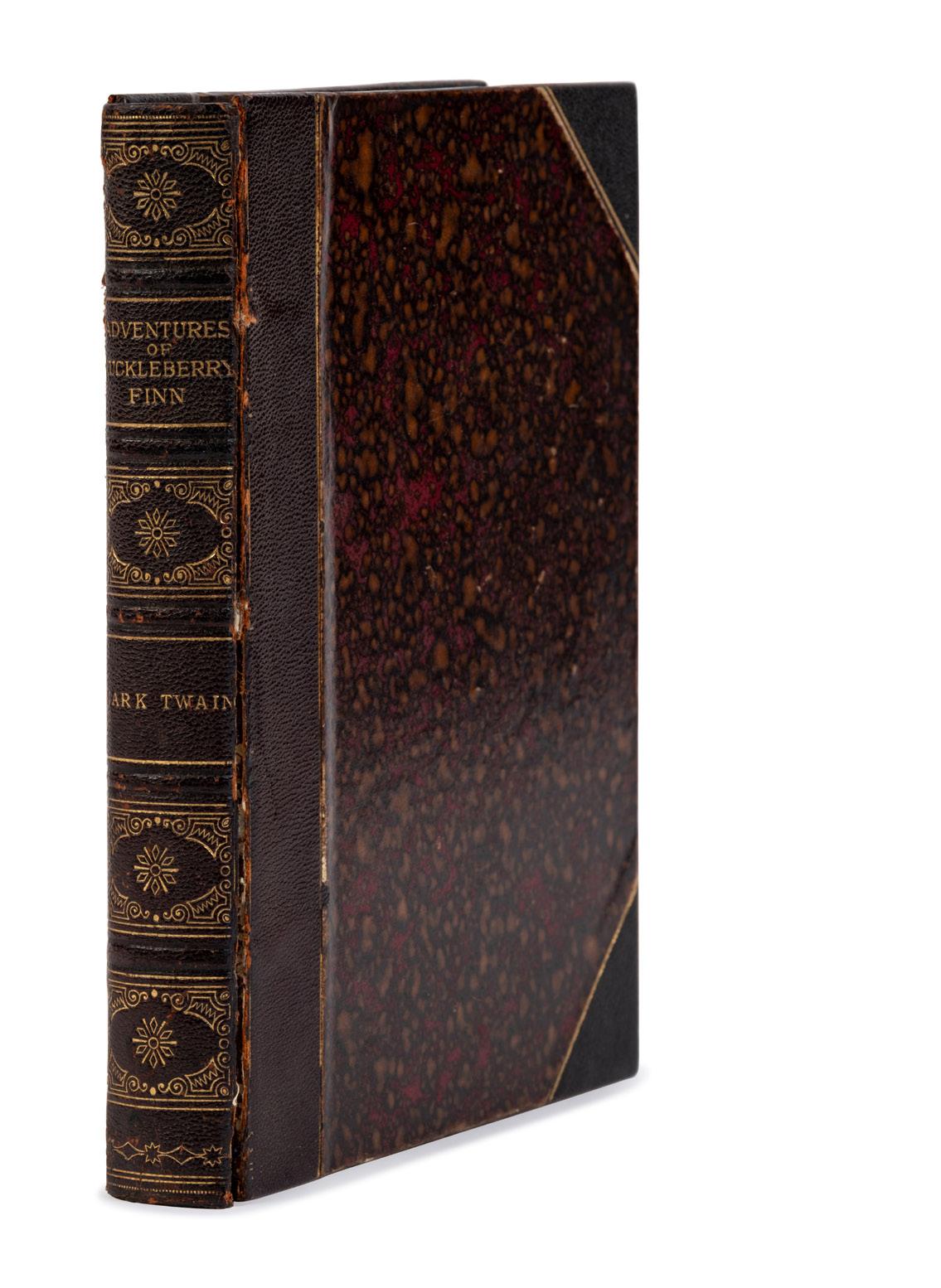
Clemens, Samuel Langhorne (1835-1910) (“Mark Twain”). The Adventures of Huckleberry Finn. New York: Charles L. Webster & Company, 1885.
8vo. Lithographic frontispiece by E. W. Kemble with tissue-guard, photographic portrait frontispiece of the bust of Mark Twain by Karl Gerhardt [BAL state 2], in-text illustrations throughout. Publisher’s deluxe threequarter morocco gilt, all edges marbled (upper cover detached, rear joint splitting); morocco-backed slipcase and folding chemise.
FIRST AMERICAN EDITION, EARLY STATE, with the following issue points: the title leaf is in either second or third state (first state only noted in the prospectus; no copy has ever been seen); first state portrait frontispiece; first state of p.9 with “decided” for “decides”; first state of p.13 with “Him and Another Man” plate incorrectly listed as being on p.88; first state of p.57 with “was” for “saw”; first/second state of pagination on p.155.
IN THE RARE PUBLISHER’S DELUXE MOROCCO. “Less than two weeks before publication, Webster announced that he was binding 20,000 copies in cloth, another 2,500 in sheep, and 500 copies in three-quarter morocco” (Mac Donell, Firsts, Vol. 8, No. 9, September 1998, p.35). BAL 3415; Grolier100 American, 87; Johnson, pp.43-50.
$2,000 - 3,000
43
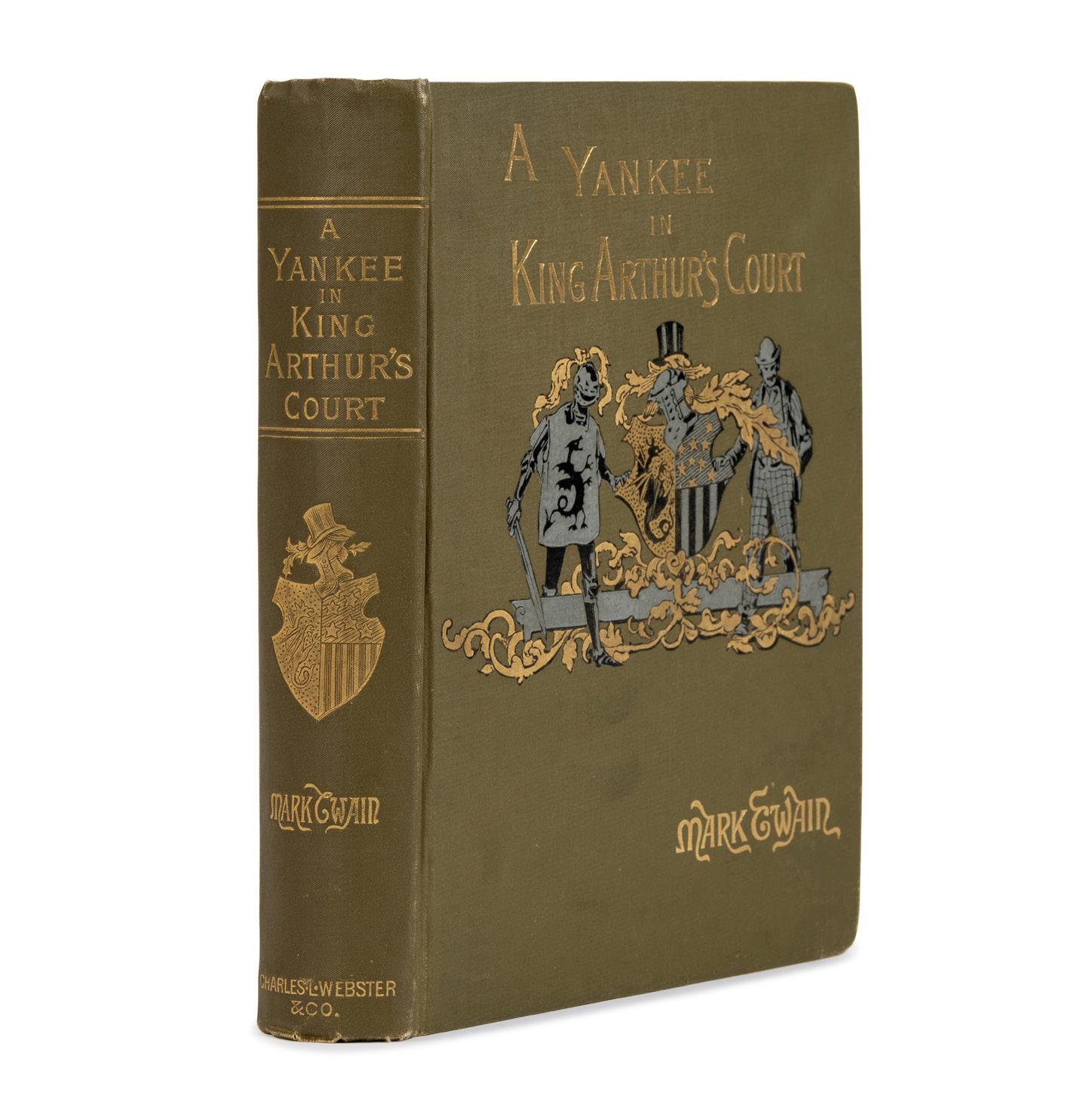
Clemens, Samuel (“Mark Twain”) (1835-1910). A Connecticut Yankee in King Arthur’s Court. New York: Charles L. Webster & Company, 1889.
8vo. 44 wood-engraved plates and numerous illustrations in text by Dan Beard; 2pp. publisher’s advertisements at end. Original olive green pictorial cloth stamped in blue/gray, black and gilt, spine gilt (fore-corners and spine ends a bit rubbed, small scuff on lower cover). Provenance: Protective Assn. (booksellers’ ticket).
FIRST EDITION, FIRST STATE, with the S-like ornament between the two words in the caption on p.[59]. BAL 3429; Johnson, pp.50-52.
$400 - 600
44
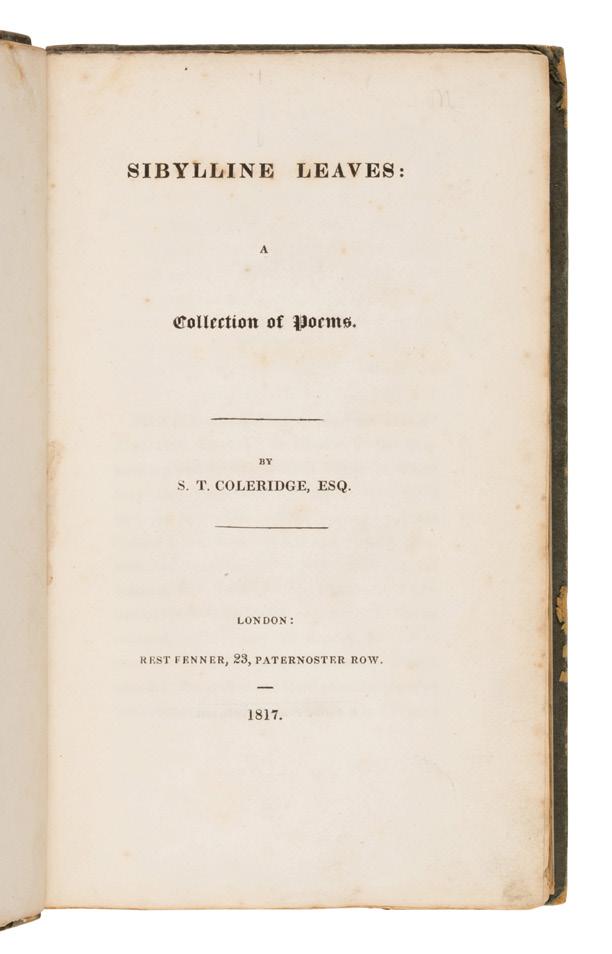
Coleridge, Samuel Taylor (1772-1834). Sibylline Leaves: A Collection of Poems. London: Rest Fenner, 1817.
8vo. Half-title. (Spotting.) ORIGINAL DRAB BOARDS, UNCUT (spine ends worn and partially detached, splitting to joints, fore-corners rubbed).
FIRST EDITION. Among Coleridge’s major works here collected are “The Rime of the Ancient Mariner,” “The Nightingale,” “Dejection: An Ode,” and “France: An Ode.” This was originally projected to be the second part of an intended two-volume project consisting of Biographia Literaria and Sibylline Leaves, printed by John Evans & Co. of Bristol in 1814-15 (hence the appearance of the register ‘Vol. II’ at intervals in the text). This project was abandoned and the sheets were acquired by Rest Fenner, who printed the preliminaries and issued the work, as here, in 1817. Ashley I, p.206; Tinker 697; Wise Coleridge, 45.
$600 - 800
45
Coleridge, Samuel Taylor (1772-1834). A group of 17 editions of The Rime of the Ancient Mariner, including:
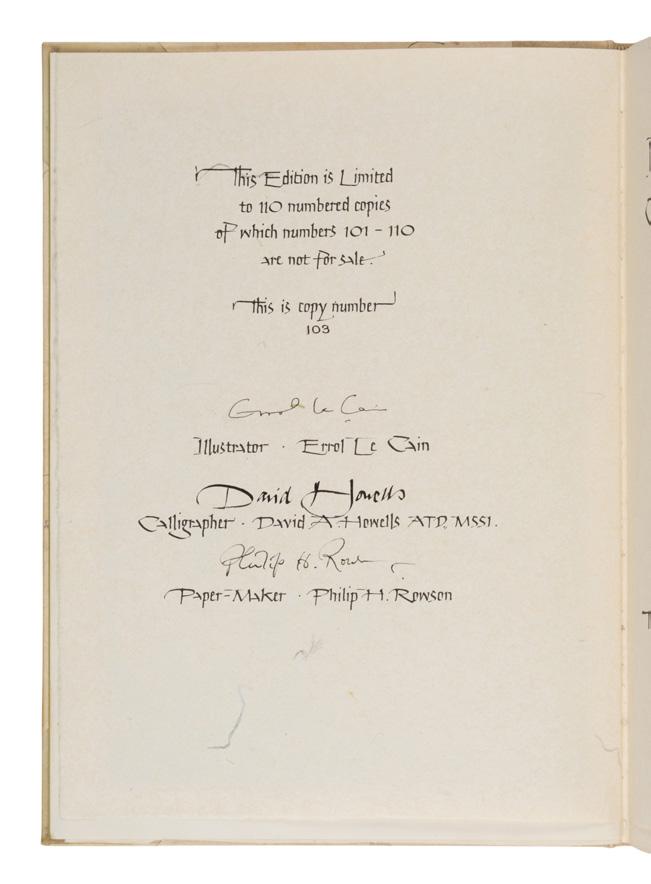
London: The Art Union of London, 1863. Illustrated by J. Noel Paton. -- New York: Harper & Brothers, 1877. Illustrated by Gustave Doré. -- East Aurora: The Roycrofters, 1899. In a designer binding with wood inlays. LIMITED EDITION, number 368 of 400 copies, SIGNED BY ELBERT HUBBARD. -- London: George C. Harrap & Co., Ltd., [1910]. Illustrated by Willy Pogany. REVIEW COPY. -- Bristol: Douglas Cleverdon, 1929. 10 engravings by David Jones. LIMITED EDITION, number 188 of 460 copies. INSCRIBED BY PRINTER S.A. JACOBS on the half-title. Samuel A. Jacobs was an American printer and book designer, best known as e.e. Cummings’s personal printer. -- New York: Cheshire House, 1931. LIMITED EDITION, number 1,171 of 1,200 copies. -- New York: The Limited Editions Club, 1945. LIMITED EDITION, number 1,015 of 1,500 copies, SIGNED BY ILLUSTRATOR EDWARD A. WILSON. -- London: Allen and Richard Lane, 1945. Illustrations by Duncan Grant. LIMITED EDITION, one of 700 copies. -- London: The Arcadia Press, 1972. Original half-vellum over seaweed boards by Zaehsdorf. LIMITED EDITION, number 103 of 110 copies (100-110 not for sale), SIGNED BY ILLUSTRATOR ERROL LE CAIN, CALLIGRAPHER DAVID HOWELLS AND PAPER MAKER PHILIP R. ROWSON.
And 8 others. Together, 17 works in 17 volumes, various folio, 4to, and 8vo sizes, all in original bindings, many with slipcases. Condition generally very fine.
$2,000 - 3,000
46
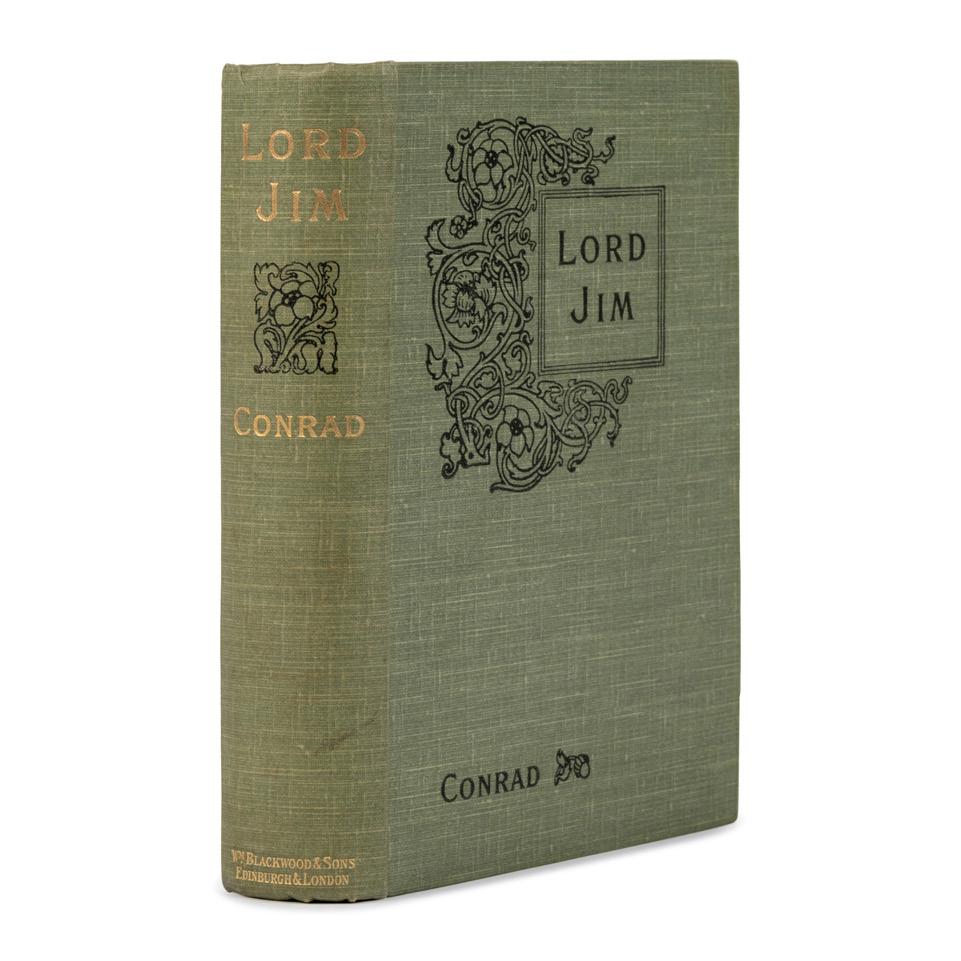
Conrad, Joseph (1857-1924). Lord Jim. Edinburgh and London: William Blackwood and Sons, 1900.
8vo. (Light spotting to a few leaves, including the title, free endpapers toned.) Original green cloth stamped in black, spine lettered in gilt, unopened (spine a touch toned).
FIRST EDITION, FIRST ISSUE, with: “anyrate” p.77, l. 5, “cure” for “cured” p.226, 7 lines from the bottom, the omission of “keep” after “can” p.226, 7 lines from the bottom, and “his” p.319, last line, being printed below the line. The Modern Library ranked Lord Jim 85th on its list of the 100 best Englishlanguage novels of the 20th century. Cagle A5a(1); Smith 5; Wise 7.
$800 - 1,200
47
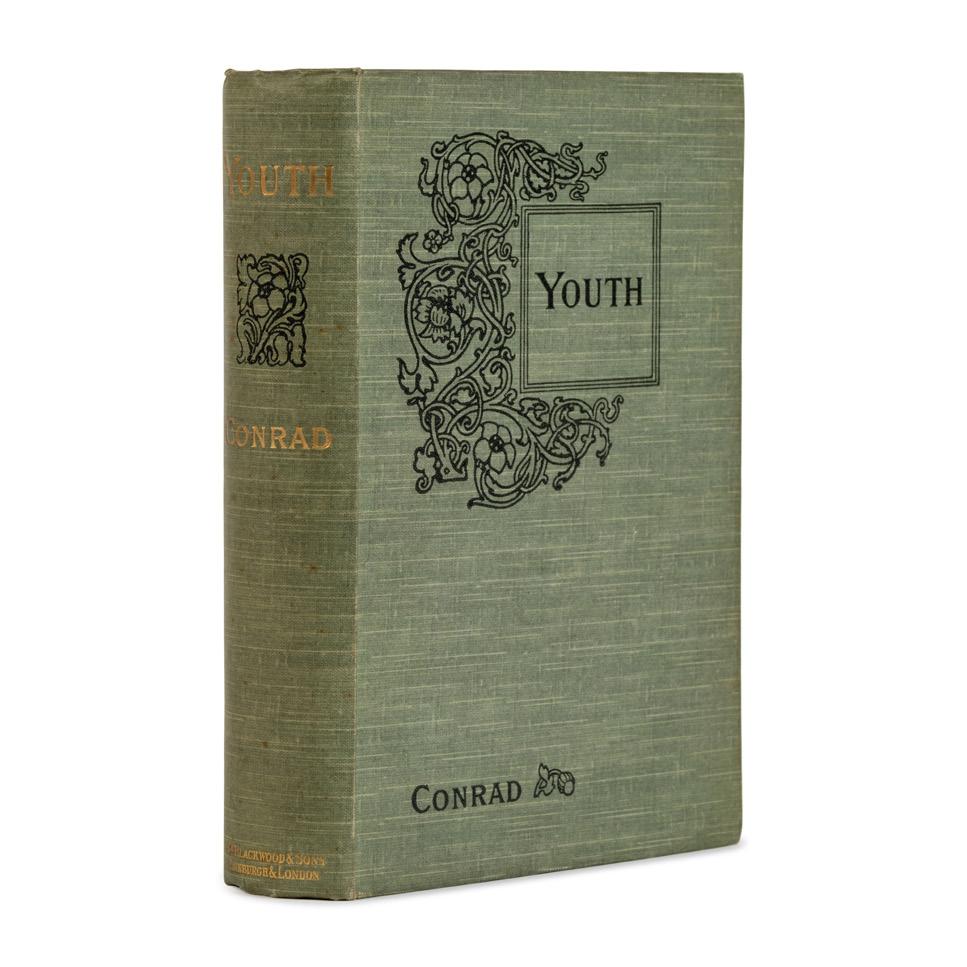
Conrad, Joseph (1857-1924). Youth: A Narrative and Two Other Stories Edinburgh and London: William Blackwood and Sons, 1902.
8vo. 32pp. publisher’s catalogue at end dated “10/02”. (Light spotting to text block.) Original green cloth stamped in black, spine lettered in gilt (spine lightly sunned with some spotting); morocco-backed folding case. Provenance: Harald Pedersen (bookplate).
FIRST EDITION, FIRST ISSUE with all internal flaws called for by Smith. Conrad’s most important collection of stories includes “The Heart of Darkness,” which inspired Francis Ford Coppola’s 1979 film Apocalypse Now. Cagle A7a(1); Connolly, The Modern Movement 14; Smith 8; Wise 10.
$2,000 - 3,000
48
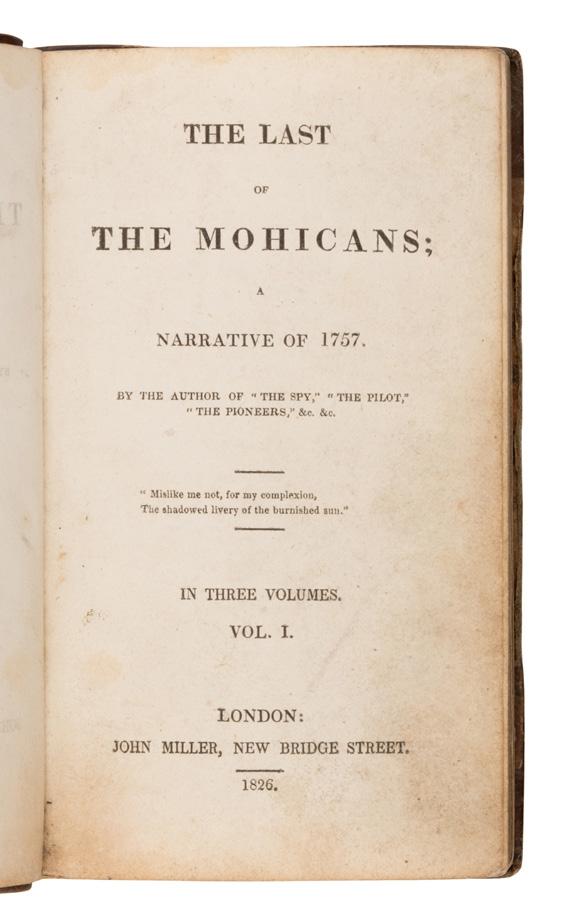
Cooper, James Fenimore (1789-1851). The Last of the Mohicans; A Narrative of 1757. London: John Miller, 1826.
3 volumes, 12mo (175 x 102 mm). Half-titles in vols. 2 and 3. (Marginal soiling and toning throughout.) Contemporary half calf, marbled boards, smooth spines, gilt-lettered in 2 compartments (boards a bit worn, fore-corners rubbed).
FIRST ENGLISH EDITION, published about one month after the Philadelphia edition. Set in the Adirondacks during the French and Indian War, The Last of the Mohicans is the second novel in James Fenimore Cooper’s Leatherstocking Tales, the series that follows the life of the frontier scout Natty Bumppo. The character first appeared in The Pioneers (1823), and the present novel provides much of his early backstory. See BAL 3833 note. Grolier American 34.
$800 - 1,200
49
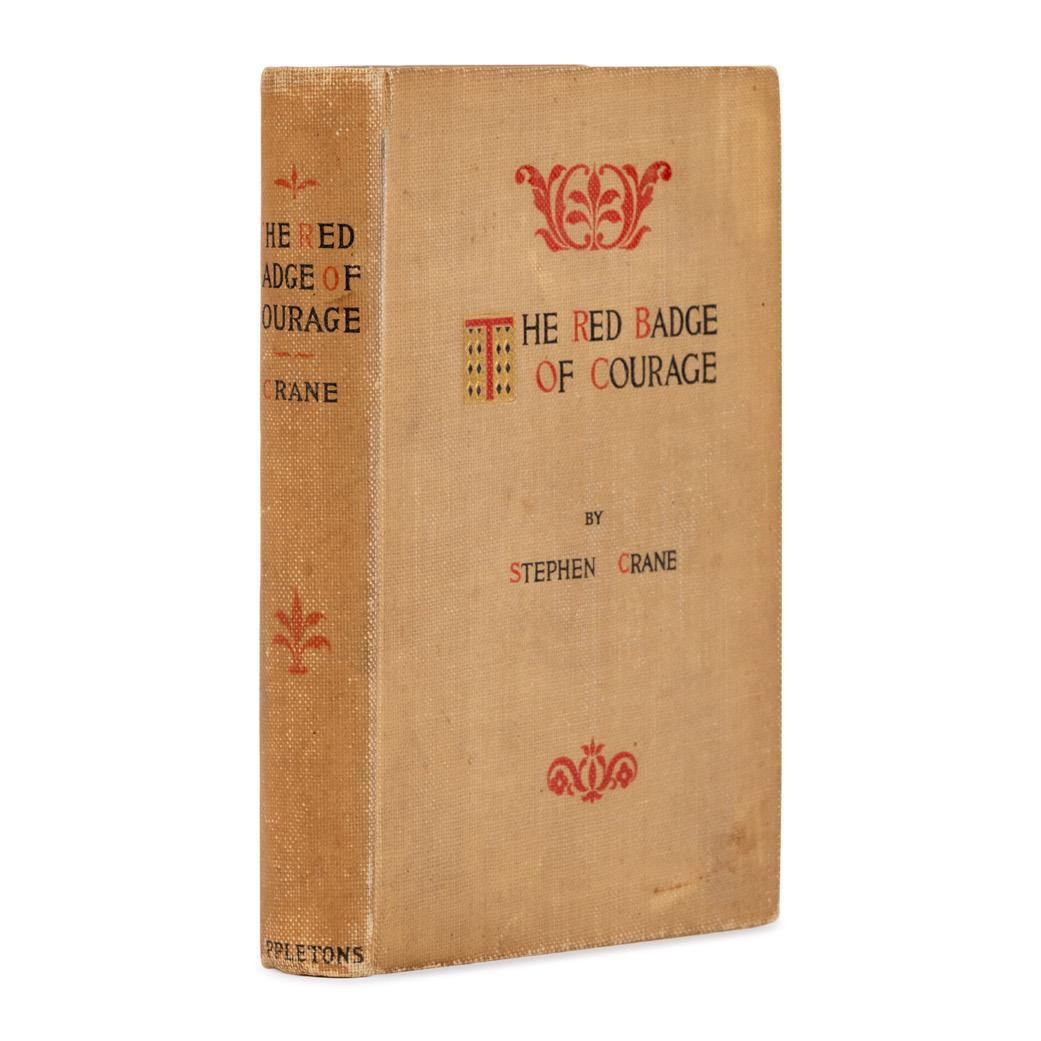
Crane, Stephen (1871-1900). The Red Badge of Courage. An Episode of the American Civil War. New York: D. Appleton and Company, 1895.
8vo. (Marginal chips to a couple of leaves.) 4pp. publisher’s ads at end. Original oatmeal cloth decorated in red, black, and gilt, top edge stained yellow (renewed endpapers, spine lightly toned, a few light scattered stains to covers, light rubbing to extremes).
FIRST EDITION, FIRST ISSUE, with the top edge stained, printed on laid paper, and with the advertisements on p.235 reading “Gilbert Parker’s Best Books.” The Red Badge of Courage is “an extraordinary study of the common man amid the turmoil, clamor and distortion typified by war...its intensity, its startling yet inevitable descriptive phrase, struck a new note in American prose” (DAB). BAL 4071; Grolier American 98; Johnson High Spots 25; Stallman 3.
$1,500 - 2,500
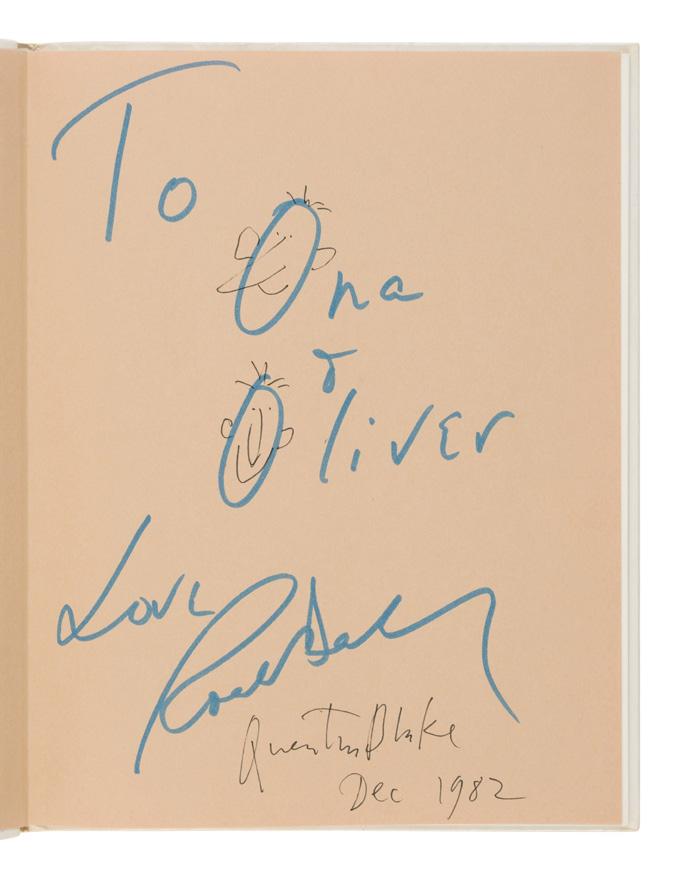
50 Dahl, Roald (1916-1990). Revolting Rhymes. London: Jonathan Cape, 1982.
4to. Color illustrations after Quentin Blake. Original color pictorial boards (covers very lightly sunned, publisher’s price sticker on lower cover).
Later edition. INSCRIBED BY DAHL AND SIGNED BY THE ILLUSTRATOR WITH TWO SMALL DRAWINGS on the front free endpaper: “To Ona & Oliver, Love, Roald Dahl” and “Quentin Blake, Dec 1982.” Roald Dahl’s Revolting Rhymes recasts familiar fairy tales in verse, transforming them into darkly comic parodies marked by violence, wit, and subversive surprise. Stories such as Little Red Riding Hood are stripped of their conventional moral sweetness and given Dahl’s characteristically mischievous treatment, as in the heroine’s memorable shooting of the wolf with a pistol kept in her knickers.
[With:] Letter of authenticity from PSA.
$600 - 800
51
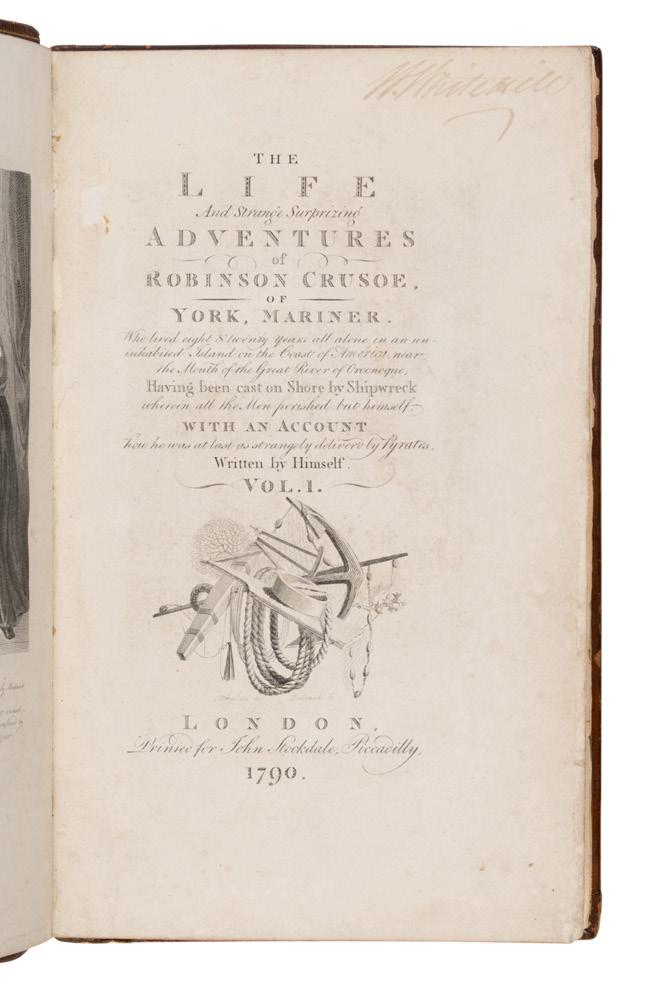
Defoe, Daniel (1660-1731). The Life and Strange Surprizing Adventures of Robinson Crusoe. London: printed for John Stockdale, 1790.
2 volumes, royal 8vo (229 x 146 mm). Engraved titles with vignettes, 15 engraved plates including frontispieces after Stothard by Medland; 14pp. publisher’s catalogue bound in at rear of Volume II. (The preface leaf in vol.1 remargined to text and reinserted, vol.2 title-page remargined at top) Contemporary diced calf gilt, top edges gilt (early rebacking to style, head of spine chipped on vol.1). Provenance: early illegible signature on title-page of vol.1).
FIRST STOTHARD EDITION with the first appearance of George Chalmer’s biography of The Life of Daniel De Foe (1790) bound in Volume II with continued pagination. Stothard was the “first English artist to realize the visual potential of Robinson Crusoe” with his depiction of Crusoe being an emphasis of contentment, harmony and the nobility of man (Picturing the First Castaway, Rutgers University). Lowndes II, p.613. A TALL COPY.
$400 - 600 52
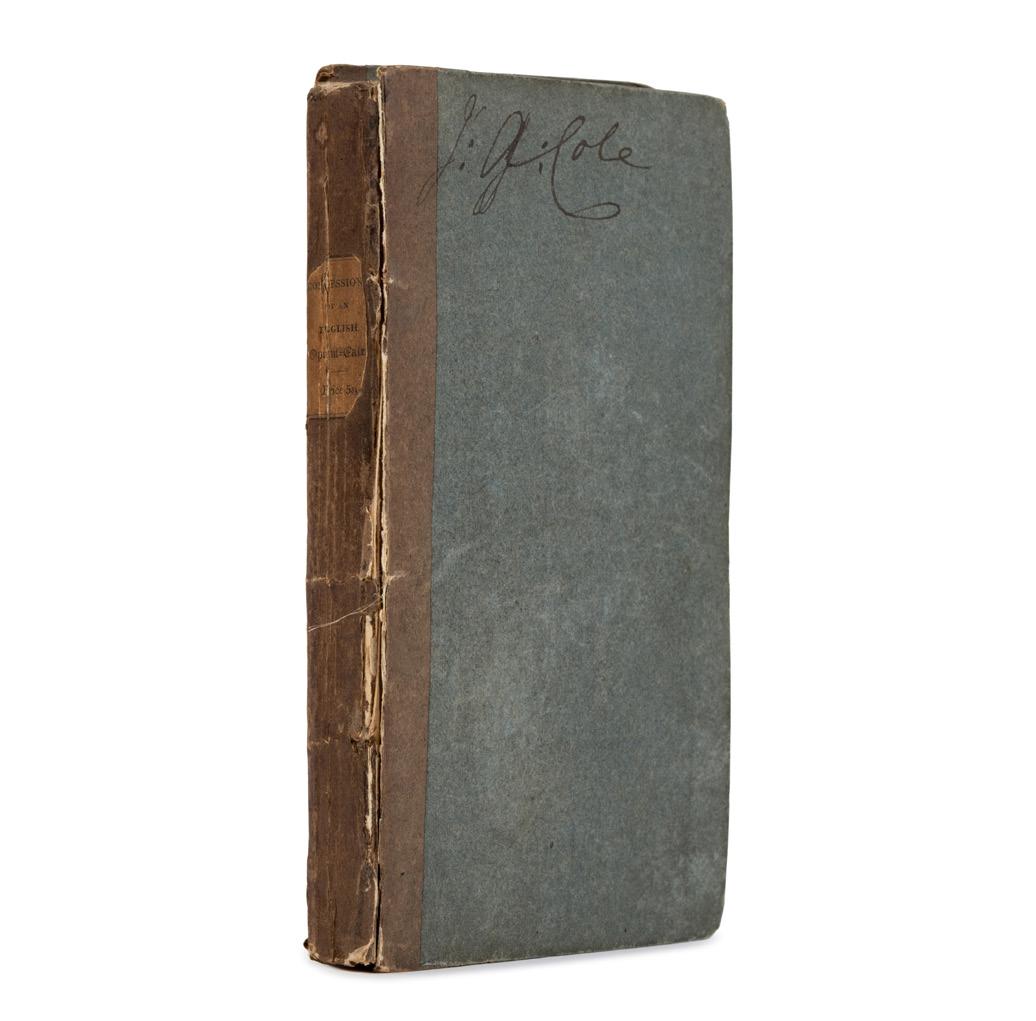
De Quincey, Thomas (1785-1859). Confessions of an English OpiumEater. London: J. Moyes for Taylor and Hessey, 1822.
8vo (178 x 102 mm). Half-title. ORIGINAL PUBLISHER’S DRAB BOARDS, PRINTED PAPER SPINE LABEL, UNCUT (upper cover detached, spine label chipped, splitting to lower joint); morocco pull-off case and folding chemise. Provenance: J. G. Cole (early ownership signature on upper cover).
FIRST EDITION in book form of “the most famous account of drug addiction in English literature” (Norman) and the earliest example of “addiction literature” in the English language. Confessions was first published in The London Magazine in October and November 1821; an appendix, added to the editions in book form, included a tabulated statement of De Quincey’s opium consumption during a time when he was attempting to reduce his dependency. Ashley II, p. 37; Norman 619; Phantastica 57; Sterling 229; Tinker 817.
$1,500 - 2,500
53
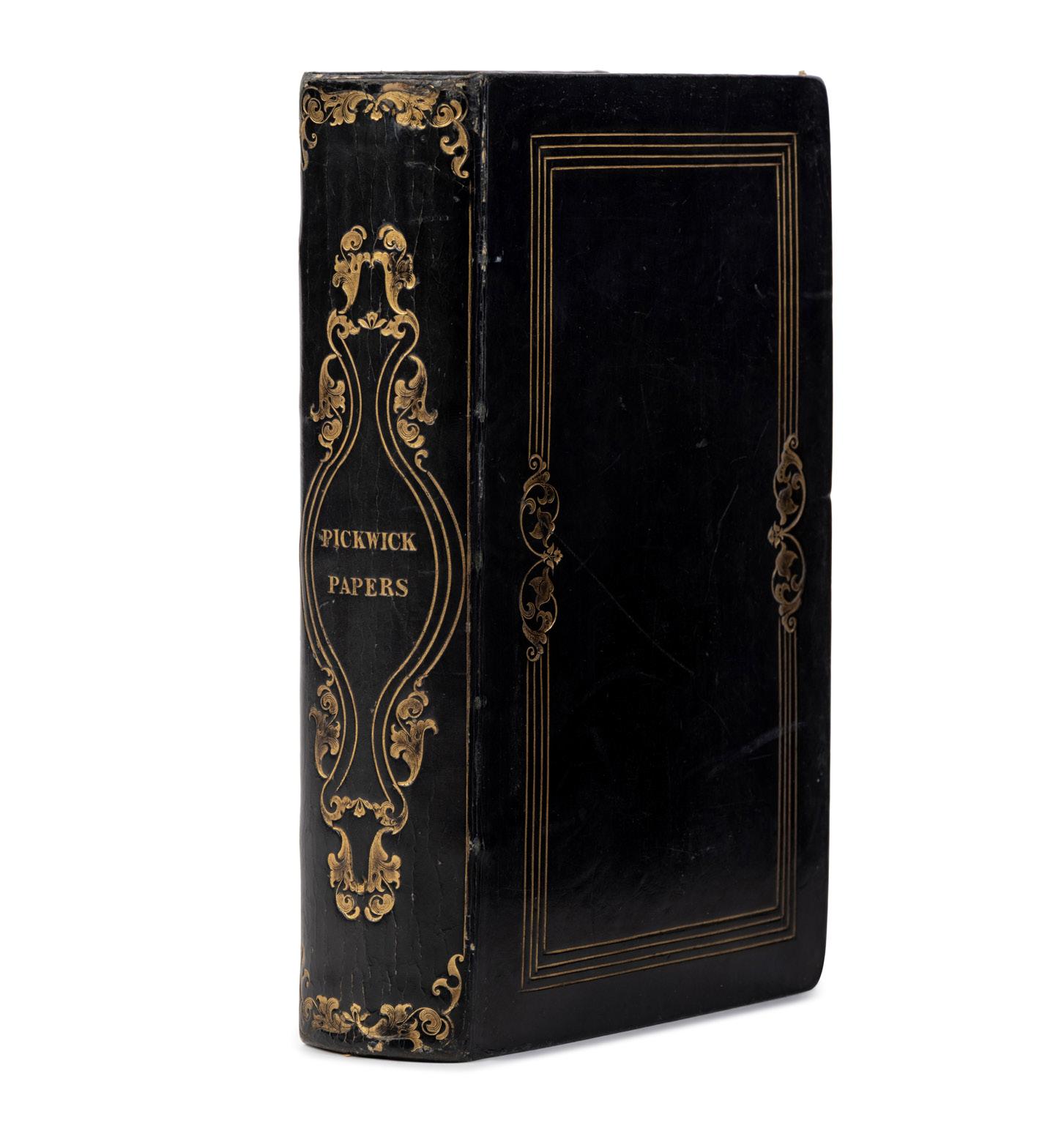
Dickens, Charles (1812-1870). The Posthumous Papers of the Pickwick Club. London: Chapman and Hall, 1837.
8vo (210 x 127 mm). 43 etchings by Robert Seymour, Robert William Buss, and Hablot Knight Browne (offsetting, spotting throughout.) Contemporary publisher’s deluxe(?) full polished dark plum calf gilt, covers ruled in gilt with acanthus leaf devices, spine gilt-stamped with a Baroque design of acanthus leaves (light rubbing to extremes) Provenance: Arthur Thompson (ownership bookplate).
FIRST EDITION, MIXED ISSUE, BOUND FROM THE ORIGINAL PARTS. POSSIBLY IN A PUBLISHER’S DELUXE BINDING. The Posthumous Papers of the Pickwick Club was the first novel by Charles Dickens, initially serialized from March 1836 to November 1837. At the time Dickens was working as a parliamentary reporter and was commissioned by his publisher, Chapman & Hall, to create a narrative around a series of comical illustrations by Robert Seymour. The origins of the story itself are controversial, as Seymour has generally received credit for the central idea by everyone except for Dickens himself, who claimed that because the story continued following Seymour’s death only a few months into the serialization he clearly did not have very much influence. After Seymour’s death Robert William Buss took over illustration duties but his work appeared in only the third installment, after which Dickens’s preferred illustrator, Hablot Knight Browne (“Phiz”) took over.
Chapman & Hall offered three bindings for The Pickwick Papers: calf, half calf, and cloth, as well as a set of “super-bound” deluxe bindings for Dickens to present as gifts, with most but not all bound by Hayday. Eckel, pp. 23-50; Hatton & Cleaver, pp. 3-88; Smith I:3.
$600 - 800
54
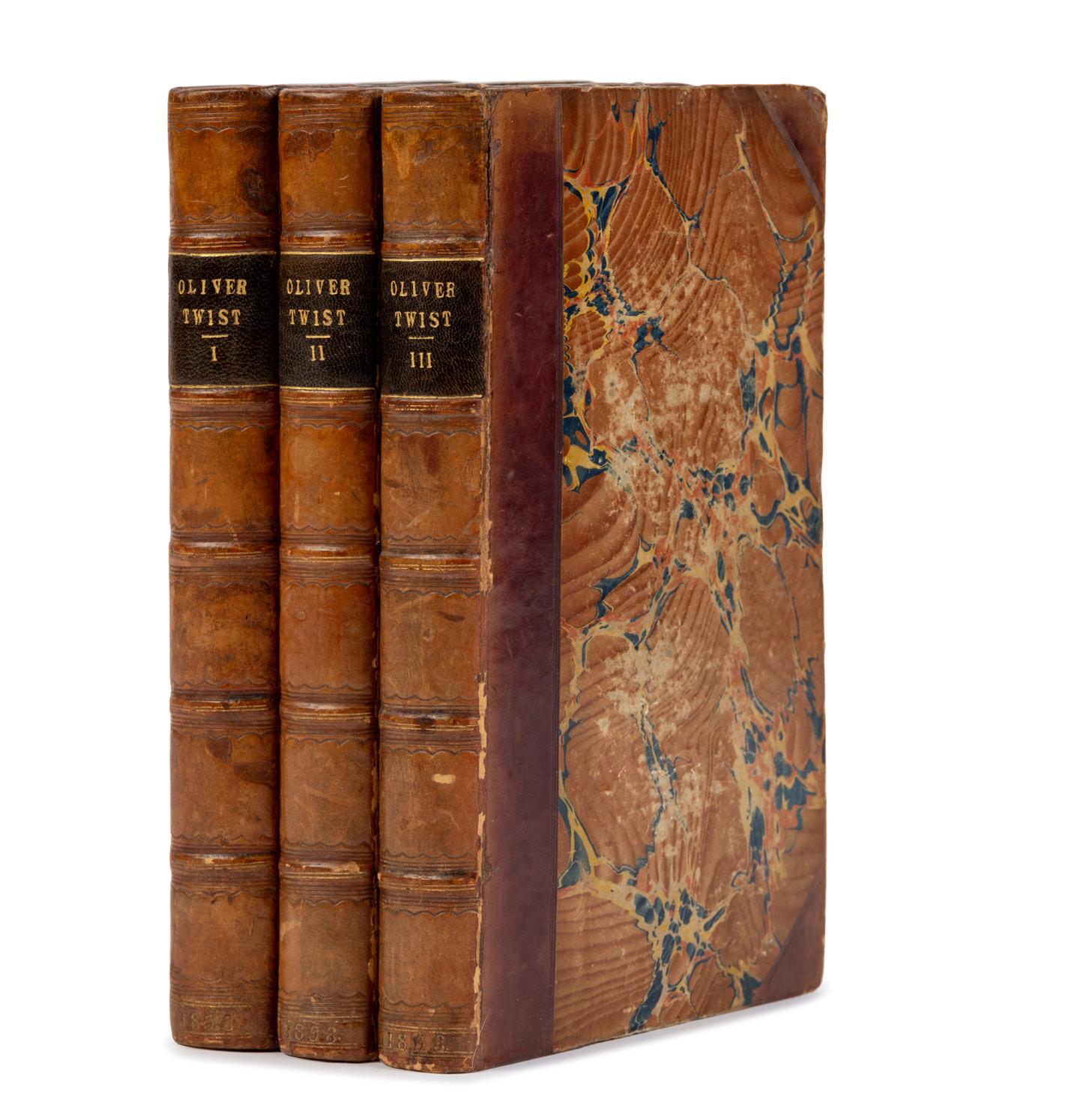
Dickens, Charles (1812-1870). Oliver Twist; or, the Parish Boy’s Progress. By “Boz”. London: Richard Bentley, 1838.
3 volumes, 8vo (191 x 114 mm). Etched frontispiece to each volume and 21 plates after George Cruikshank. (Some marginal toning and spotting.)
Contemporary half calf, marbled boards, spines in 6 compartments with 5 raised bands, new olive morocco lettering-pieces gilt (spines evenly sunned, boards and fore-corners rubbed). Provenance: Frederic L. Mieville (armorial bookplate).
FIRST EDITION OF THE FIRST ENGLISH NOVEL TO FEATURE A YOUNG CHILD AS A PROTAGONIST, mixed issue with “Boz” on the title-page on vol.1 only and with the corrected “Church” plate in vol.3. Eckel, pp.59-60; Gimbel A27; Smith I:4.
$1,000 - 1,500
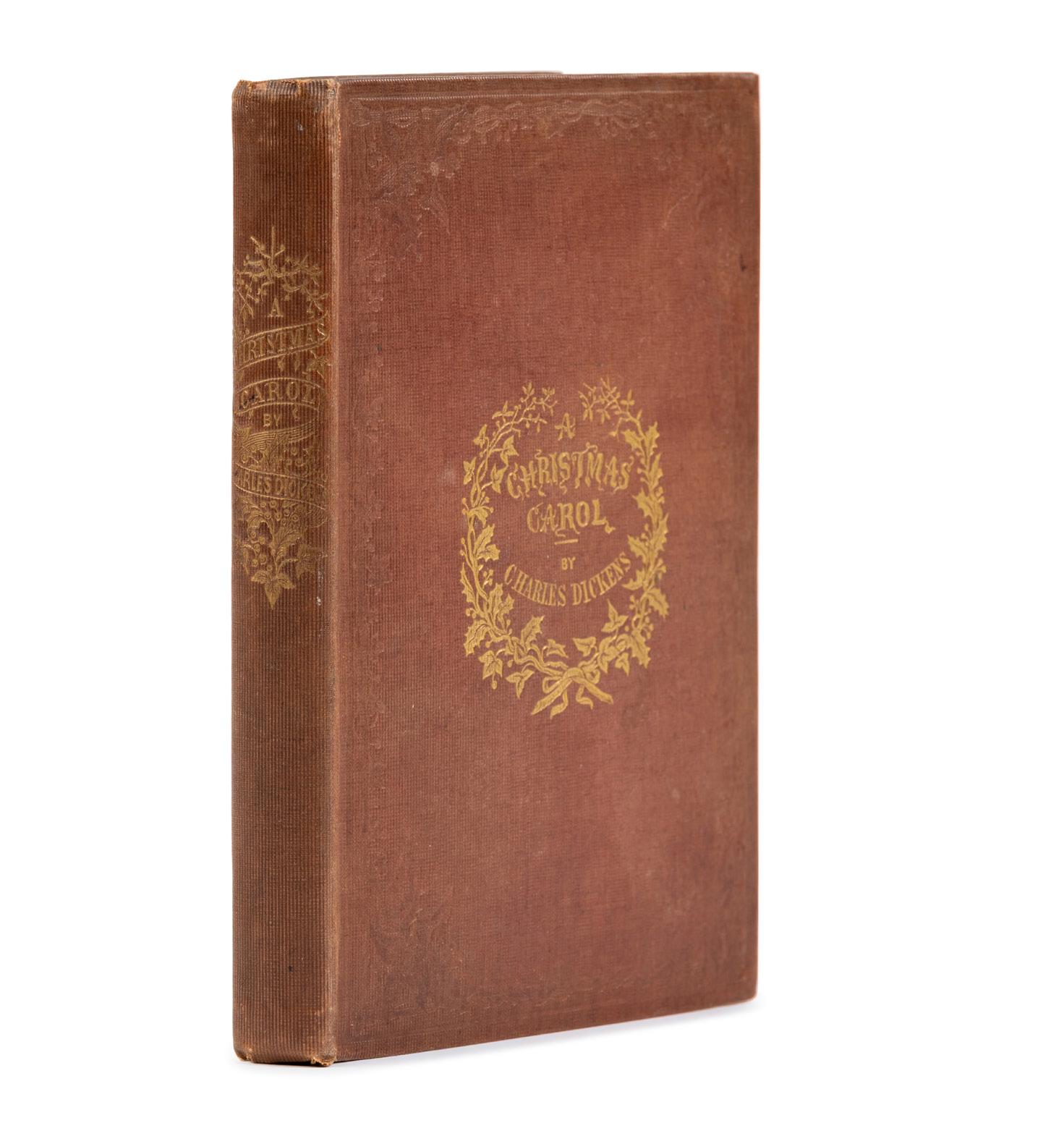
55 Dickens, Charles (1812-1870). A Christmas Carol. In Prose. Being a Ghost Story of Christmas. London: [Bradbury and Evans for] Chapman & Hall, 1843.
8vo. Half-title printed in blue, title-page printed in red and blue with verso printed in blue, hand-colored steel-engraved frontispiece and 3 hand-colored steel-engraved plates by John Leech (a few heightened in gum arabic), 4 wood-engravings in the text by W.J. Linton after Leech; 2pp. publisher’s advertisements at end; new tissue-guards tipped in. (Very occasional and light spotting to a few leaves.) Original brick-red fine-ribbed cloth, covers with decorative blind border surrounding central gilt cartouche and lettering on upper, spine lettered and decorated in gilt, all edges gilt, green coated endpapers (spine a bit darkened and with a slight lean, a few tiny ink stains on lower cover). Provenance: J. Andrews, London (contemporary booksellers’ ticket); Jacob Bromley (bookplate).
FIRST EDITION, TODD’S FIRST IMPRESSION, with “Stave I” as the first chapter heading, balance of text uncorrected, red and blue title-page dated 1843, and green endpapers. The binding has the first state “D” of Dickens unbroken, and the closest interval between the blind decorative border on the left and the left extremity of the gilt cartouche measuring 14-15mm. This copy has the unbroken “C” in the signature on p.17, which “probably indicates the earliest printing of the text” (Smith, note 3, p.26). “The greatest Christmas book from the pen of any man... it was a pronounced success and from a literary aspect it has delighted millions of readers. It may readily be called the Bible of Christmas and the Authors its Apostle” (Eckle, p.110). Issued about 10 days before Christmas of 1843, A Christmas Carol sold 6,000 copies on the first day, with 24 editions in the original format and numerous reprintings, though the profits did not meet Dickens’ expectations. Eckel, pp.110-115; Smith II:4; Gimbel A79.
$6,000 - 8,000
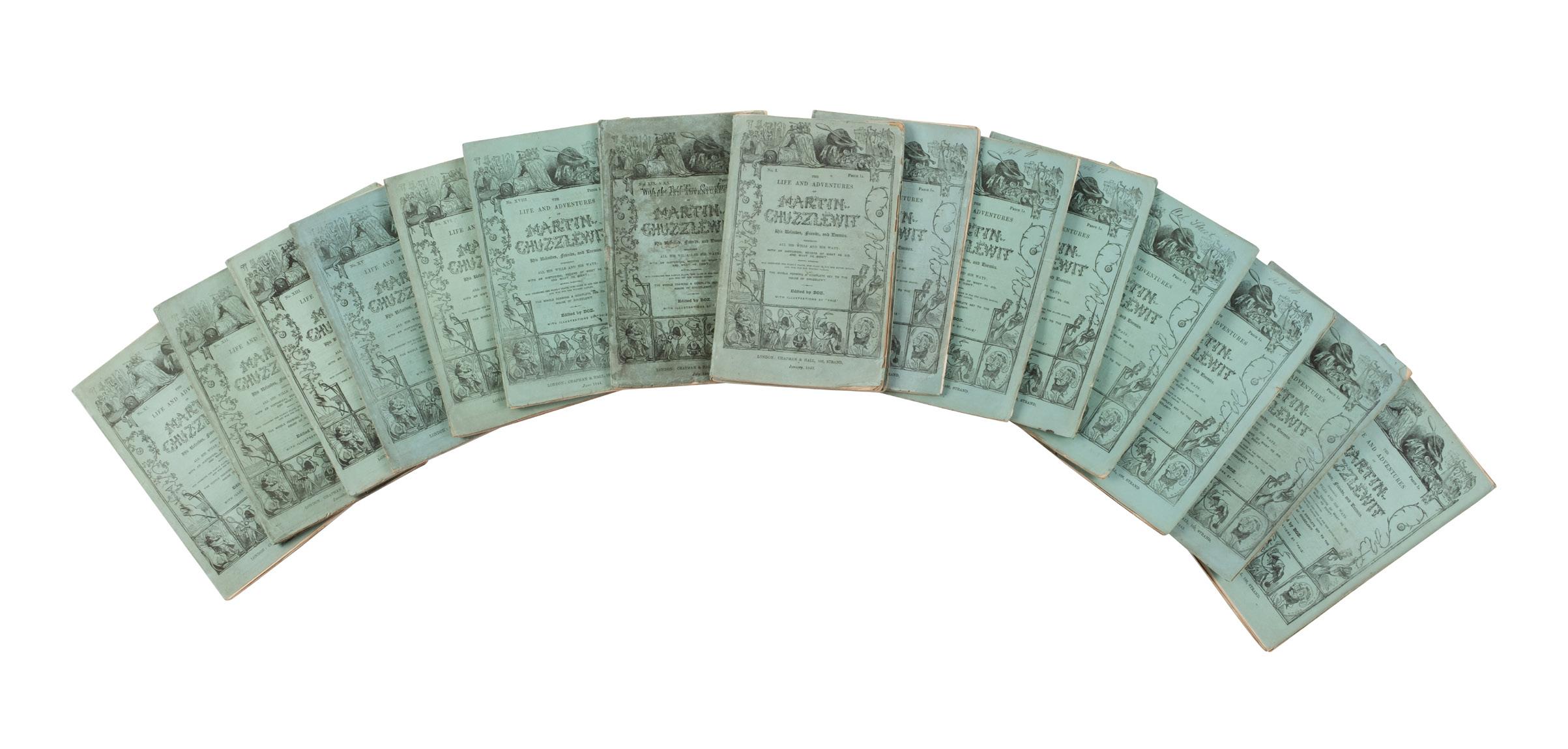
56 Dickens, Charles (1812-1870). The Life and Adventures of Martin Chuzzlewit. London: Chapman & Hall, January 1843-July 1844.
20 parts in 19, 8vo. Half-title, vignette title, contents, preface, list of plates and errata in the final part; etched frontispiece, vignette title-page and 38 plates by Hablot K. Browne (“Phiz”). (Some light toning, spotting, and chipping, lacking 2 preliminary ad leaves to part 6.) Original blue-green pictorial printed wrappers (most spines repaired, some minor soiling and chipping with some repairs); slipcase.
PUBLISHER’S PRESENTATION COPY, part 19/20 front wrapper stamped, “With The Publisher’s Compliments.” FIRST EDITION IN ORIGINAL MONTHLY PARTS, FIRST ISSUE, with the following points: “The Temple of Fashion” 32pp. booklet at the end of part 16; the engraved vignette titlepage in the first impression with the reversed “100£,” 7 studs in the trunk lid, and signed “Phiz fecit,” in part 19/20. NEARLY COMPLETE WITH ALL TEXT, PLATES, WRAPPERS, SLIPS, AND ADVERTISEMENTS as called for in Hatton & Cleaver and in the first issue, except for: the rare and lacking “Foreign Travel” 2pp. slip in part 7 (noted in only 6 copies by Hatton and Cleaver); lacking “The ‘Pride of London’” 32pp. back advertisement in part 11 (present in part 10). Eckel, pp. 66-70; Hatton & Cleaver, pp. 183-212; Smith pp. 65-67.
$500 - 700
57
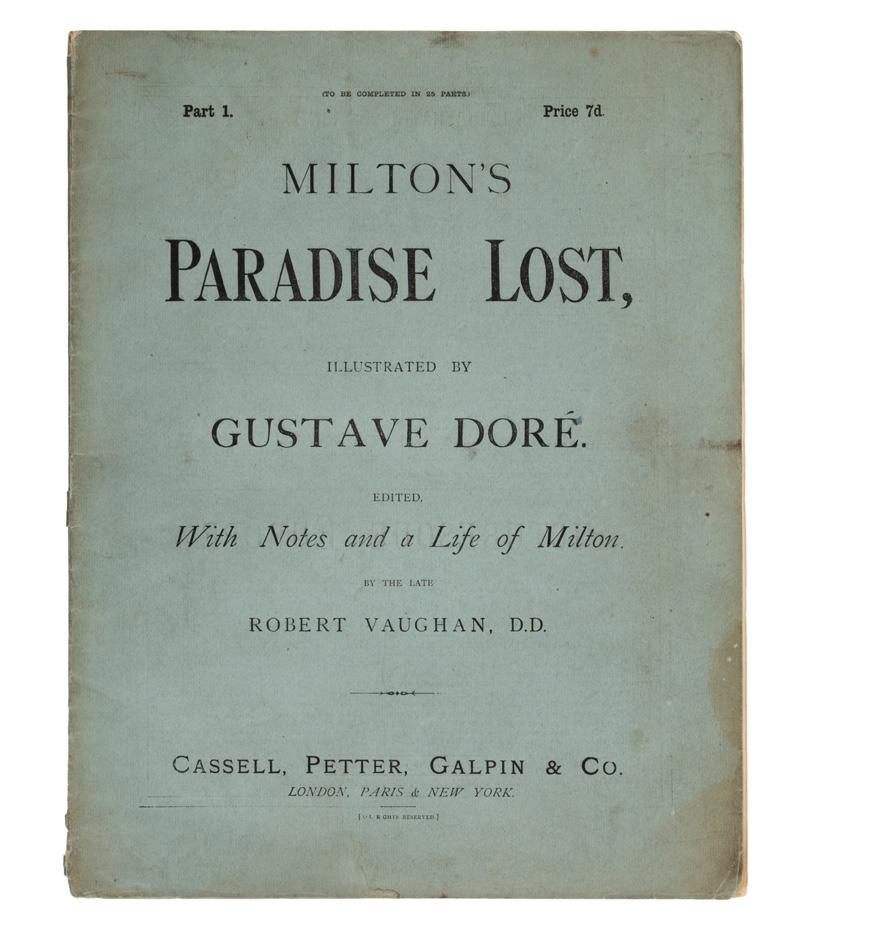
[Doré, Gustave (1832-1883), illustrator]. -- Milton, John (1608-1674). Milton’s Paradise Lost. London, Paris & New York: Cassell, Petter, Galpin & Co., n.d. [ca. 1883].
25 parts, folio (343 x 267 mm). (Minor marginal spotting to preliminary leaves of part 1, upper corner dampstained in part 13, spotting throughout part 25.) Original blue printed wraps, many pages unopened throughout (soiling to front cover of part 1, some toning, very minor marginal soiling and rubbing to spines); folding case.
JOHN MILTON’S EPIC POEM PARADISE LOST WITH LARGE-FORMAT ILLUSTRATIONS BY GUSTAV DORÉ, RARE IN THE ORIGINAL PARTS.
Paradise Lost is an epic poem by John Milton, first published in ten books in 1667. A second edition was issued in 1674, its text expanded to fourteen books, and numerous reprintings followed. Gustave Doré was approached to create illustrations for a new edition to be published by Cassell, Petter, Galpin, & Company after the Doré Bible was issued in 1865. “None can dispute the fact that here, as in all other works he has attempted to interpret, Doré stands as a giant among his contemporaries and predecessors” (New York Times).
EXCEEDINGLY RARE: According to online records, we trace only one other copy of Paradise Lost in the original parts sold at auction.
$600 - 800
59
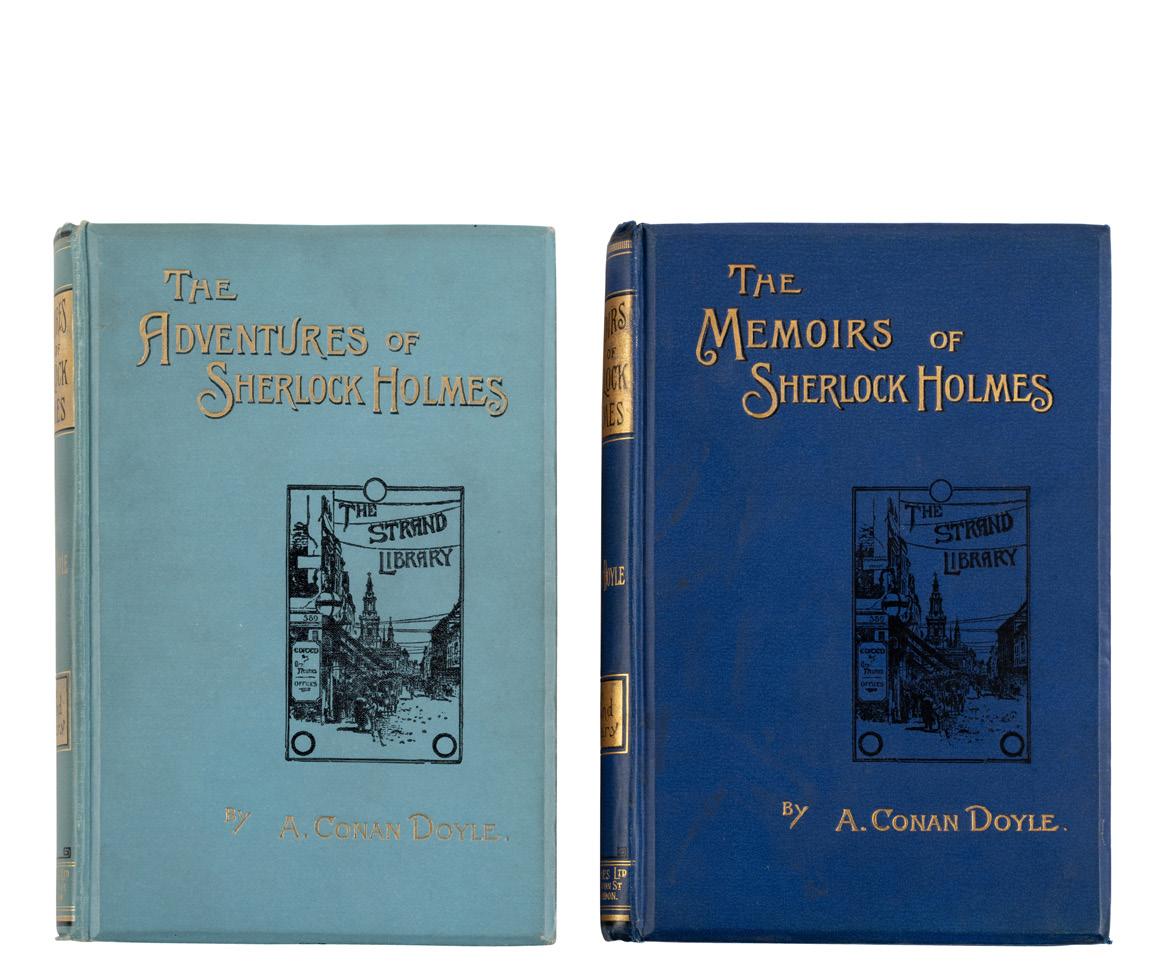
Doyle, Arthur Conan (1859-1930). The Adventures of Sherlock Holmes. London: George Newnes, 1892.
Tall 8vo. Half-title; numerous illustrations in the text by Sidney Paget. (Light spotting.) Original pictorial light blue cloth over bevelled boards, stamped in gilt and black, all edges gilt, floral decorated endpapers (slight lean, very light sunning to spine, light rubbing to joints and fore-corners, hinges starting).
Provenance: contemporary gift inscription dated in the year of publication on the front free endpaper.
“Rarely has a character so quickly established itself on the popular imagination as did Sherlock Holmes in the latter half of 1891” (Green & Gibson).”
FIRST EDITION IN BOOK FORM, FIRST STATE with “Violent Hunter” for “Violet Hunter” on p.317. IN THE FIRST ISSUE BINDING, the vignette on the upper cover depicting the street sign without text. The Adventures of Sherlock Holmes was the first collection of Holmes stories to be published, following closely upon the phenomenal success of the series in the Strand Magazine. Green & Gibson A10a; De Waal 520; Queen’s Quorum 16. A Haycraft-Queen Cornerstone of Detective Fiction.
[With:] DOYLE. The Memoirs of Sherlock Holmes. London: George Newnes, 1894. Tall 8vo. Half-title; numerous illustrations in the text by Sidney Paget. (Light spotting) Original pictorial blue cloth over bevelled boards, stamped in gilt and black, all edges gilt (some darkening to upper cover, a touch of rubbing to edges, rear hinge starting); folding case housed with the above. FIRST EDITION. Green & Gibson A14a; De Waal 596.
58
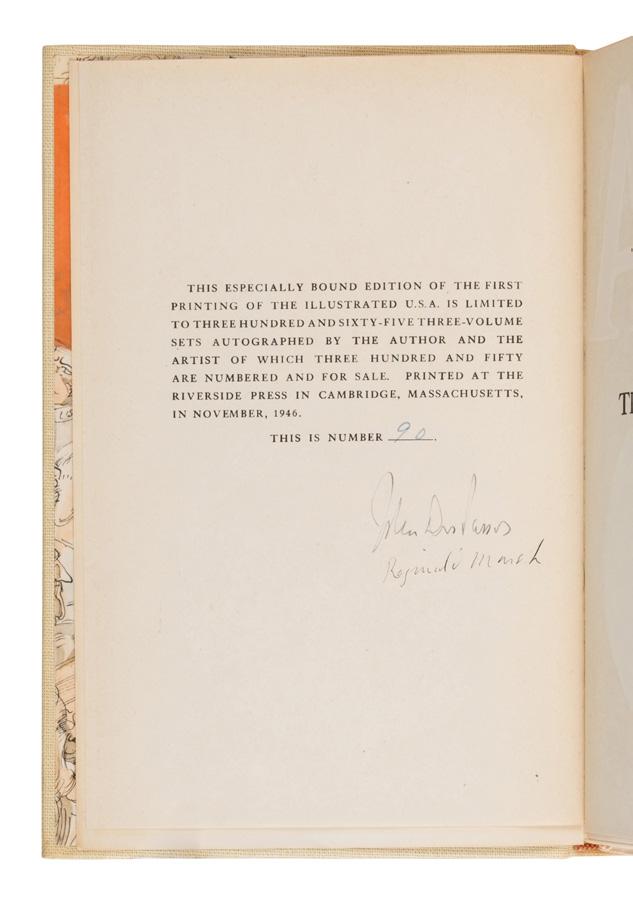
Dos Passos, John (1896-1970). [The U.S.A. Trilogy]. Comprising: The 42nd Parallel. -- 1919. -- The Big Money. Boston: Houghton Mifflin, 1946.
3 works in 3 volumes, 8vo. Illustrated by Reginald Marsh. Original cream buckram, beveled boards, morocco lettering-pieces gilt on upper covers and spines, top edges gilt (spines a touch toned, a few minor scuffs to labels); later cloth slipcase.
LIMITED EDITION, number 90 of 365 copies SIGNED BY DOS PASSOS AND MARSH. Potter 18.
$400 - 500
$3,000 - 4,000

60
Du Bois, William Edward Burghardt (1868-1963). The Souls of Black Folk Chicago: A.C. McClurg & Co., April 18, 1903.
8vo. (Hinges discreetly repaired, edition statement on title partially removed.) Original gilt-lettered black cloth, covers ruled in blind, top edge gilt, others uncut (spine lightly toned, some light edgewear). Provenance: Wilbur W. Winn (bookplate, ownership signature on front free endpaper); Jack Misner (ownership stamp on front free endpaper).
“Second edition”, but actually a first edition, second printing, published only six months after the first. There were, in all, three printings in 1903 alone. Du Bois’s most famous work, which was a landmark in the history of sociology and a cornerstone of African American literature. In his work, Du Bois first used the term “double consciousness” to describe the two fields of vision that Black Americans consciously must use: how they view themselves and how the world views them. Du Bois describes this agony as “two warring ideals in one dark body, whose dogged strength alone keeps it from being torn asunder”.
$600 - 800
61
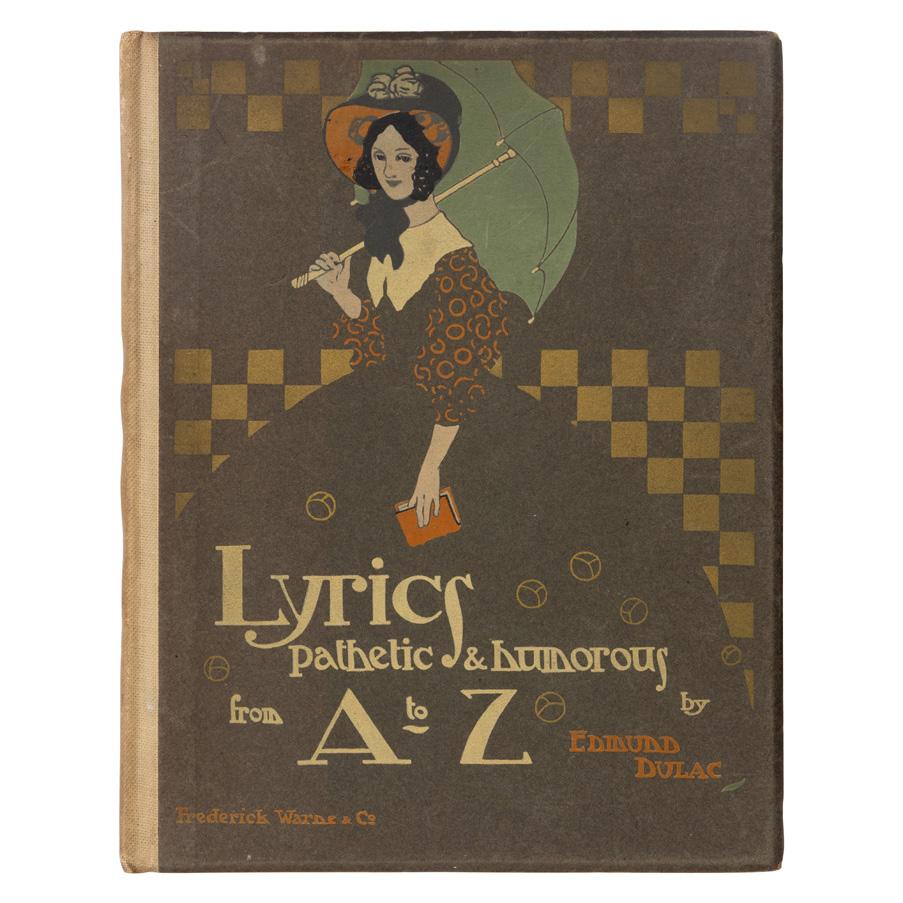
Dulac, Edmund (1882-1953). Lyrics Pathetic & Humorous from A to Z. London and New York: Frederick Warne & Co., 1908.
4to. 24 color-printed plates after Dulac. Original cream buckram-backed pictorial boards (spine a bit toned, fore-corners lightly rubbed). Provenance: Florence Waterhouse (ownership signature dated 1908 on front free endpaper verso).
FIRST EDITION.
$200 - 300
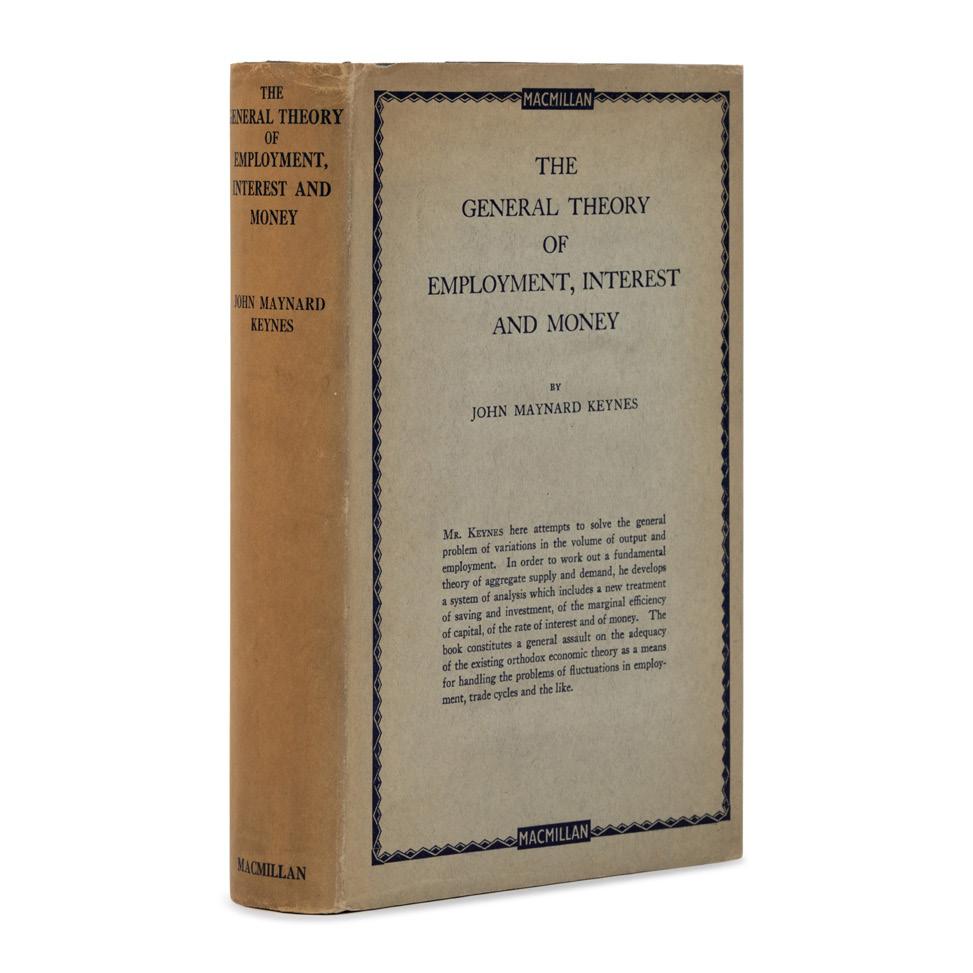
62 [Economics]. Keynes, John Maynard (1883-1946). The General Theory of Employment, Interest and Money. London: Macmillan, 1936.
8vo. Original blue cloth, spine lettered in gilt (spine very lightly sunned, a few faint spots to covers); dust jacket (spine lightly toned, few short creases to head of spine).
FIRST EDITION OF THE MOST INFLUENTIAL ECONOMIC TREATISE OF THE 20TH CENTURY. “The world-wide slump after 1929 prompted Keynes to attempt an explanation of, and new methods for controlling, the vagaries of the trade-cycle. First in A Treatise on Money, 1930, and later in his General Theory, he subjected the definitions and theories of the classical school of economics to a penetrating scrutiny and found them seriously inadequate and inaccurate” (PMM 423).
$5,000 - 7,000
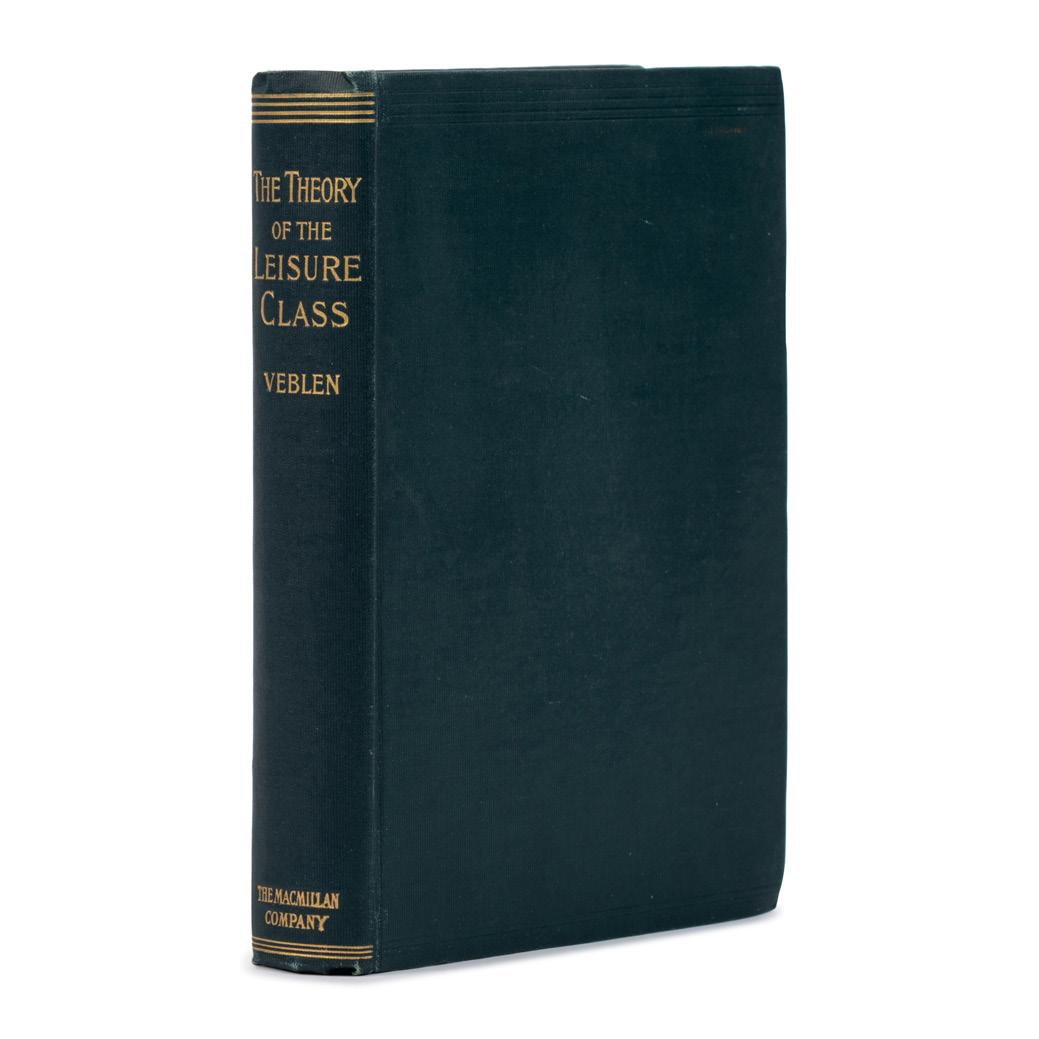
63 [Economics]. Veblen, Thorstein (1857-1929). The Theory of the Leisure Class. An Economic Study in the Evolution of Institutions. New York: Macmillan, 1899.
8vo. Original dark green cloth, gilt-lettered spine, top edge gilt, unopened (tiny spot to rear cover). Provenance: Julian Weinkle (bookplate).
FIRST EDITION OF VEBLEN’S SEMINAL WORK ON ECONOMICS AND CLASS, the origin of the concepts of “conspicuous consumption” and “conspicuous leisure,” describing the ways in which wealth and social status are displayed through visible expenditure rather than practical need. Adams, Radical Literature 59; Grolier American, 100.
$1,500 - 2,500
64
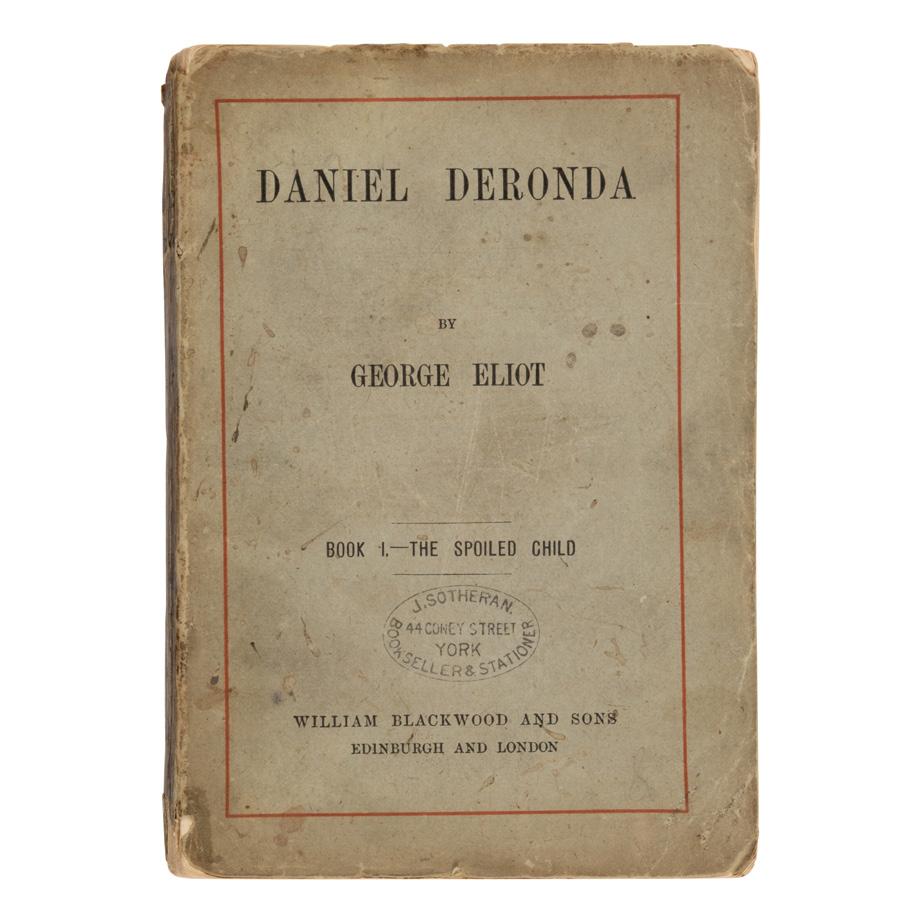
Eliot, George (pseudonym of Mary Anne Evans, 1819-1880). Daniel Deronda. Edinburgh and London: William Blackwood and Sons, February-September 1876.
4 volumes in 8 parts, 8vo. Printed advert slips in parts I-III, VI-VII; errata slips in parts III, VI. Original greenish-grey wrappers printed in black and red (spine ends chipped with losses, scattered soiling or darkening, small stain to upper cover of part VIII); slipcase. Provenance: J. Sotheran (booksellers’ rubberstamp on upper covers); illegible ownership signature on upper cover of part I.
FIRST EDITION IN ORIGINAL PARTS. Daniel Deronda, Eliot’s final novel, follows an idealistic young aristocrat whose rescue of a young woman draws him into Jewish life in Victorian London. Remarkable for its unusually sympathetic treatment of Jewish identity and proto-Zionist thought, the novel proved among Eliot’s most controversial works. Yet despite some contemporary readers’ resistance to this aspect of the story, it was a commercial success, with approximately 8,000 copies of the parts issue sold. Baker & Ross A11.1.a.1; Parrish, pp.37-38; Sadleir 813.
$1,000 - 1,500
65
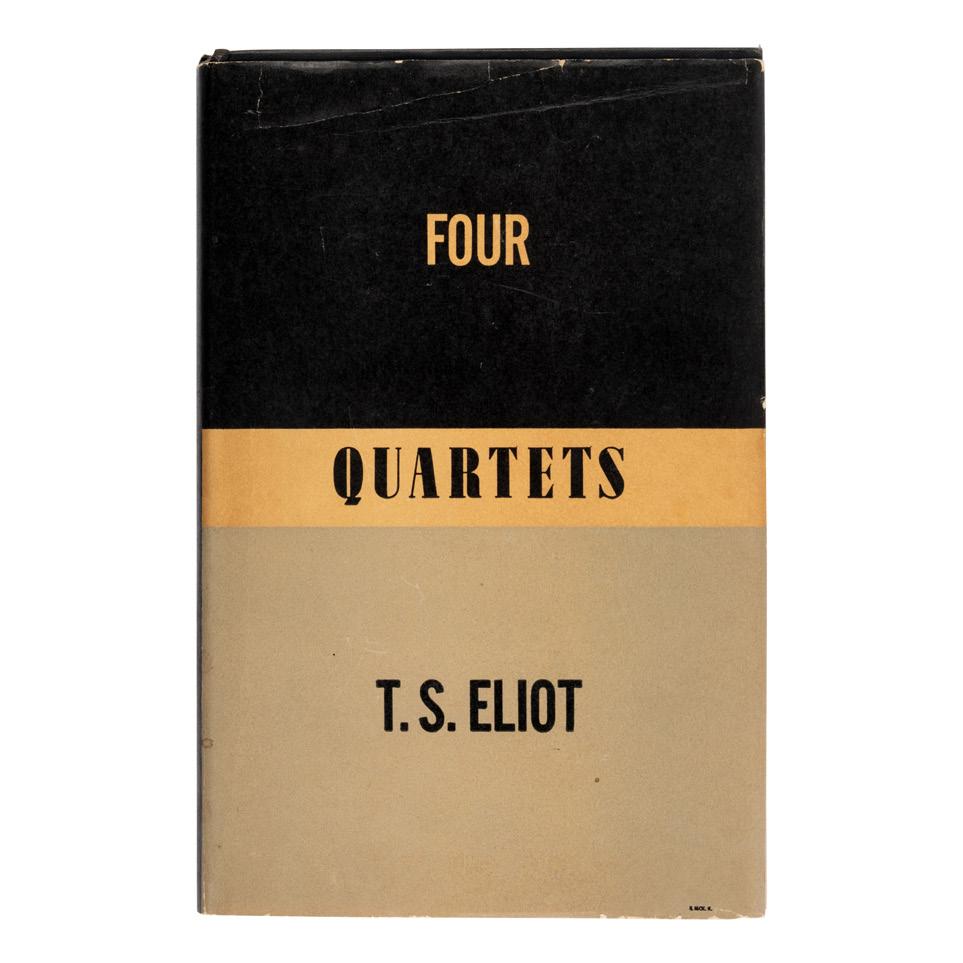
Eliot, T. S. (1888-1965). Four Quartets. New York: Harcourt, Brace and Company, 1943.
8vo. (Few tiny spots to title.) Original black cloth gilt; dust jacket (extremities evenly toned as usual, a few short closed tears near top edge, neatly repaired on verso, crease near top edge of front panel). Provenance: ownership signature on front free endpaper.
FIRST EDITION, FIRST IMPRESSION, with “first American edition” on titlepage verso. Of the 4165 copies of the first impression that were printed, 377 were destroyed due to faulty imposition by unskilled wartime labor leading to incorrect margins. The entire impression would have been destroyed, but 788 copies were distributed for review and other purposes before the corrected issue was complete in order to meet the announced publication date and preserve copyright. Connolly, The Modern Movement 92; Gallup A43a.
$800 - 1,200

66
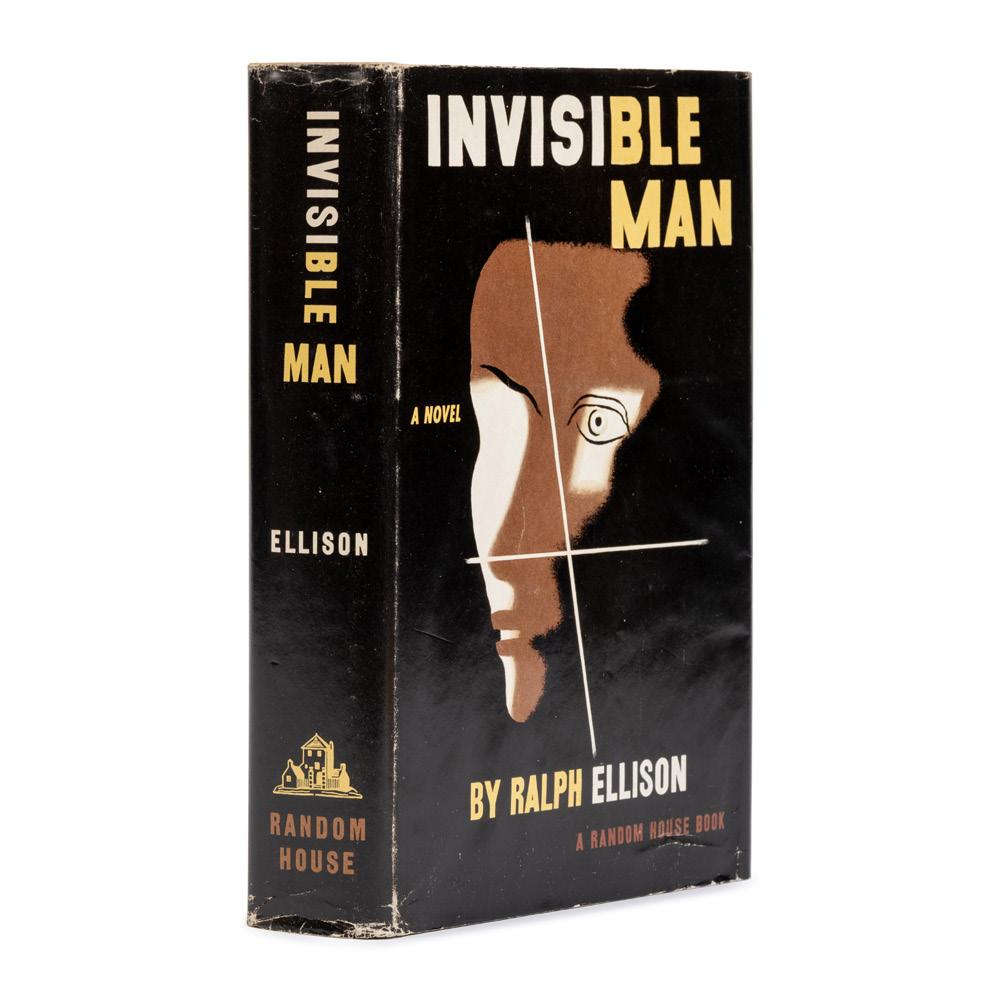
Ellison, Ralph (1914-1994). Invisible Man. New York: Random House, 1952.
8vo. Original two-toned cloth; dust jacket (minor wear to extremities); morocco-backed folding case.
FIRST EDITION OF ELLISON’S FIRST NOVEL. Ralph Ellison began work on Invisible Man while on sick leave from the Merchant Marine in 1945, with the novel taking nearly five years to complete. It won the 1953 National Book Award, and during his acceptance speech Ellison said of his book’s genesis, “To see America with an awareness of its rich diversity and its almost magical fluidity and freedom I was forced to conceive of a novel unburdened by the narrow naturalism which has led after so many triumphs to the final and unrelieved despair which marks so much of our current fiction. I was to dream of a prose which was flexible, and swift as American change is swift, confronting the inequalities and brutalities of our society forthrightly, but yet thrusting forth its images of hope, human fraternity, and individual selfrealization.” President Barack Obama would later cite Invisible Man as a key source of inspiration in the writing of his first memoir, Dreams from My Father
$800 - 1,200
67
Endore, Guy (1901-1970). The Werewolf of Paris. New York: Farrar & Rinehart, 1933.
8vo. Original mustard yellow cloth lettered in red, top edge stained red; dust jacket (spot of wear near top of spine).
FIRST EDITION, FIRST PRINTING with the Farrar & Rinehart seal present on the copyright page. This work served as the basis for the 1961 horror film The Curse of the Werewolf, with a screenplay by Anthony Hinds and direction by Terence Fisher, starring Oliver Reed, Clifford Evans, and Yvonne Romain. Notably, the film adaptation remains the only werewolf picture produced by Hammer Film Productions, the studio otherwise famed for its long-running cycles of Dracula and Frankenstein films. The dust jacket features a striking montage of macabre imagery set against a Parisian backdrop.
The Werewolf of Paris is a “classic novel that takes its inspiration from a reported case of necrophilia and cannibalism at the time of the Paris Commune...A sarcastic and bitterly misanthropic allegory, by far the most effective of all the novels in which the werewolf becomes a symbol of divided and conflict-ridden human nature” (Barron).
EXCEEDINGLY RARE: According to online records, no copies of the true first edition have appeared at auction. Barron, Anatomy of Horror 4-51; Bleiler, Supernatural 611. A VERY FINE COPY.
$2,000 - 3,000
68
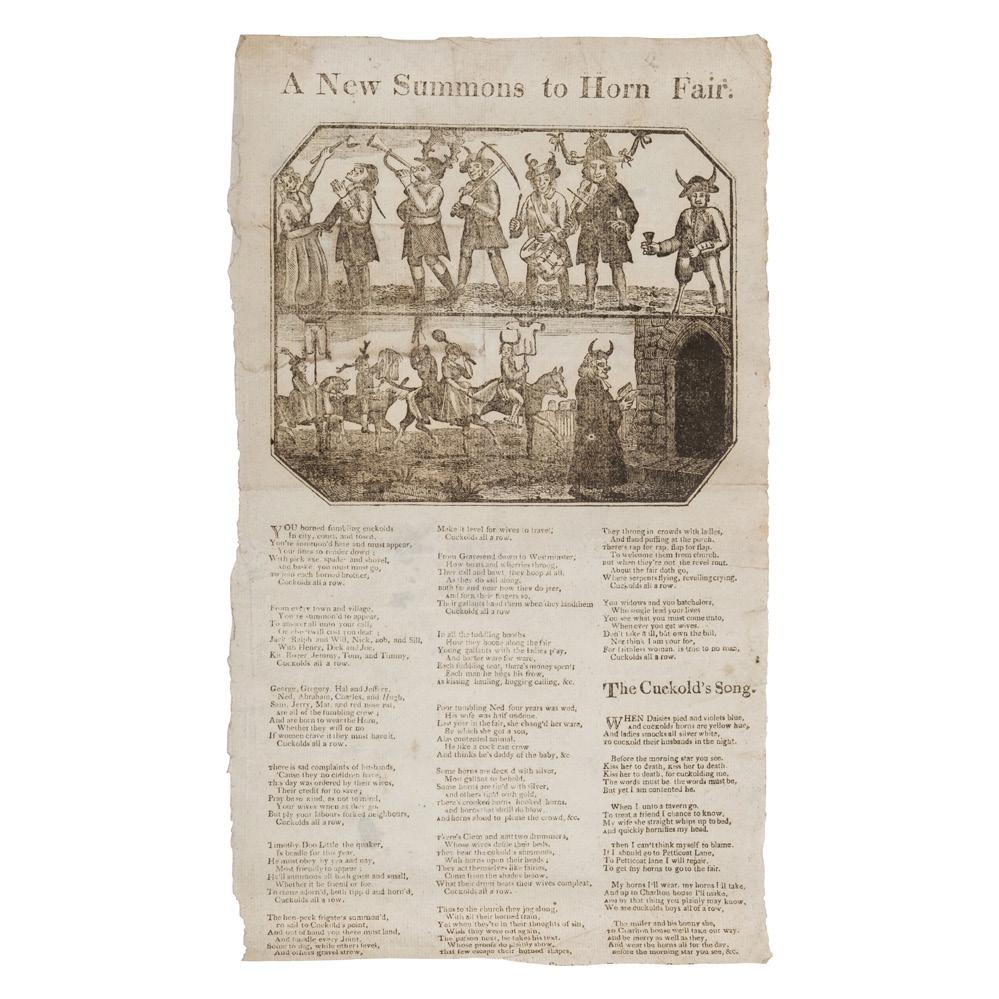
[Erotica]. A New Summons to Horn Fair. N.p., n.p., [London: Printed in Stone-Cutter Street], n.d. [ca 1709].
14 x 8 in. printed broadside with half-sheet wood-engraved vignette. (Lower portion containing imprint trimmed, some staining on verso).
“You horned fumbling cuckolds, In city, court, and town, You’re summon’d here and must appear, Your fines to render down; With pick axe, spade, and shovel, And baske, you must go, To join each horned brother, Cuckolds all a row...” RARE: We could trace only two institutional copies and none at auction.
$300 - 500
69
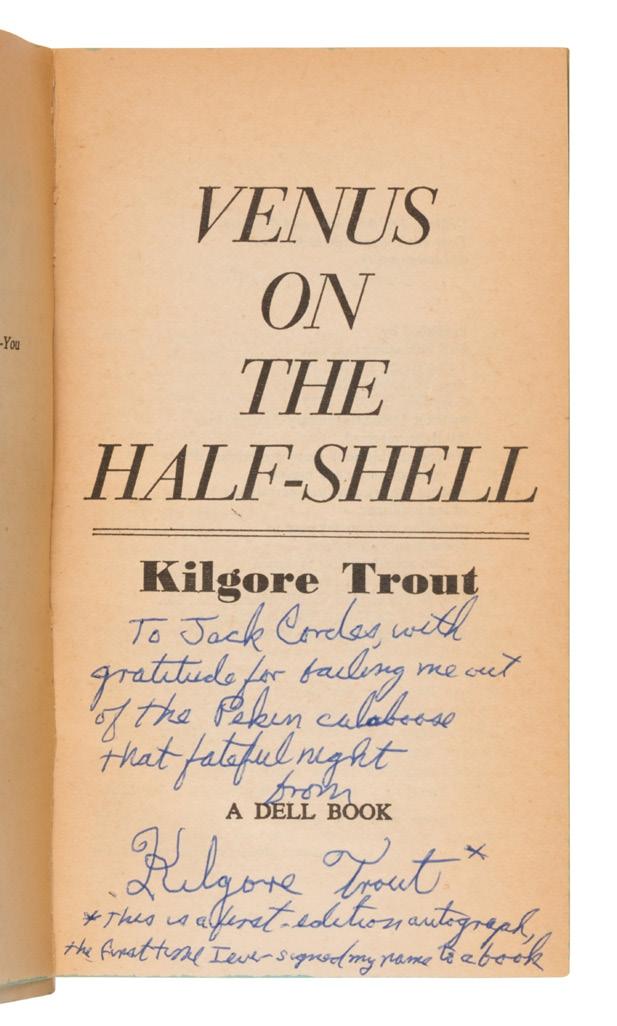
Farmer, Philip Jose (“Kilgore Trout”) (1918-2009). Venus on the Half-Shell New York: Dell Publishing, Inc., 1975.
8vo. Original color-printed pictorial wrappers (front cover detached).
Provenance: Jack Cordes (presentation inscription); sold, Heritage Auctions (11 April 2012, lot 36613).
FIRST EDITION. PRESENTATION COPY INSCRIBED BY FARMER TO JACK CORDES AS “KILGORE TROUT”: “With gratitude for bailing me out of the Pekin calaboose that fateful night from Kilgore Trout* / *This is a first edition autograph, the first time I’ve ever signed my name in a book.” Kilgore Trout was a character introduced by Kurt Vonnegut, Jr. in God Bless You, Mr. Rosewater (1965) as an unsuccessful science fiction writer whose most famous novel, Venus on the Half-Shell, is partially excerpted in chapter nine of the same work. Author Philip Jose Farmer approached Vonnegut about expanding Vonnegut’s story fragment into a full novel, with Vonnegut’s original excerpt inserted into Farmer’s story as an in-joke.
Tension developed between the two writers following publication of the book thanks to a poorly-written article which implied that Farmer planned to write it regardless of whether or not he was given permission. This combined with the widespread impression that Vonnegut himself was the author led to Farmer’s name appearing on all future editions. Though not particularly well-received at the time, it was listed by The Guardian in 2009 as one of the “1,000 books everyone should read” and was cited by author Douglas Adams as an inspiration for The Hitchhiker’s Guide to the Galaxy.
$400 - 600
70
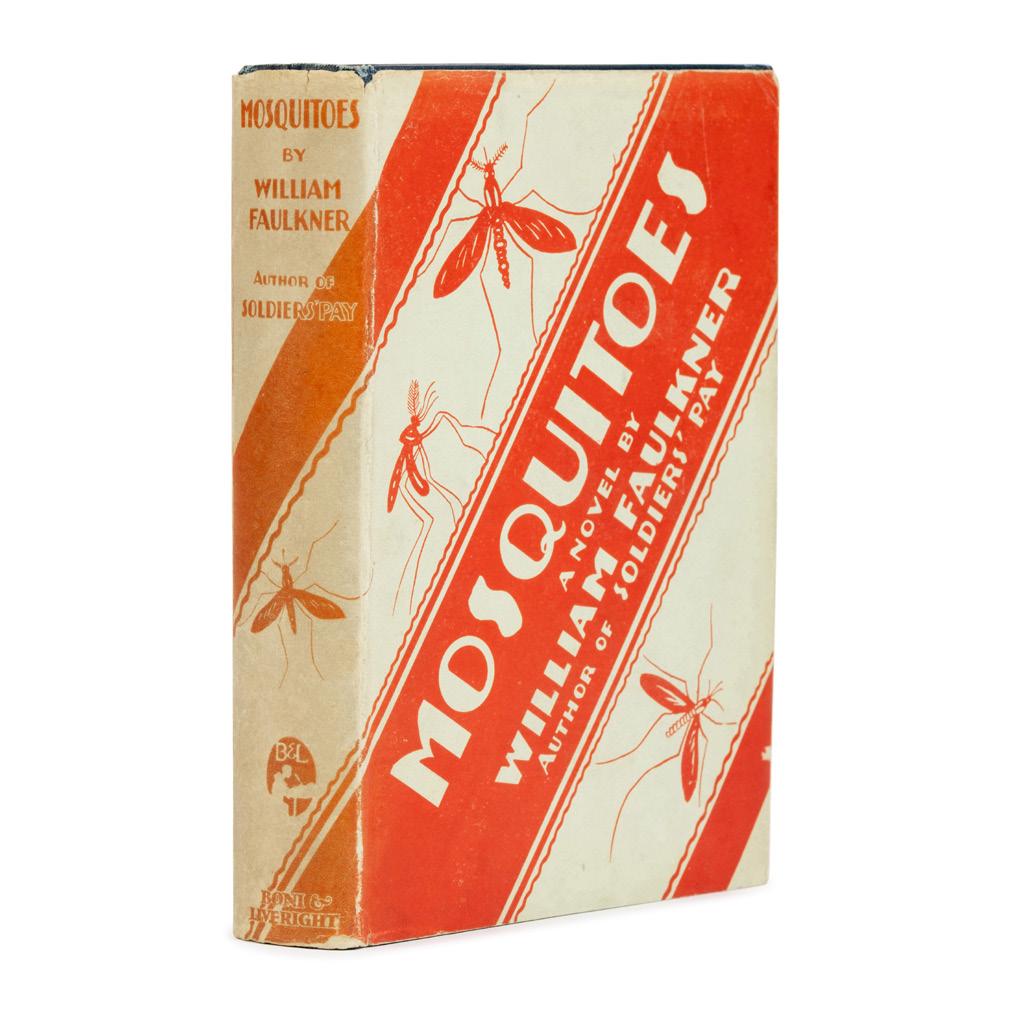
Faulkner, William (1897-1962). Mosquitoes. New York: Boni and Liveright, 1927.
8vo. Title printed in blue and black. Original blue cloth lettered in yellow, top edge stained yellow, blue decorative endpapers (a light touch of wear at spine ends and fore-corners); dust jacket (spine lightly faded, light rubbing to joints and folds, two small closed tears to rear panel); morocco-backed case and chemise.
FIRST EDITION IN THE FIRST STATE DUST JACKET with the “mosquitoes” design of Faulkner’s satirical second novel about the residents of a New Orleans artistic colony who embark on a four-day yachting cruise. Petersen A4.1a. A VERY BRIGHT COPY.
$2,000 - 3,000
71
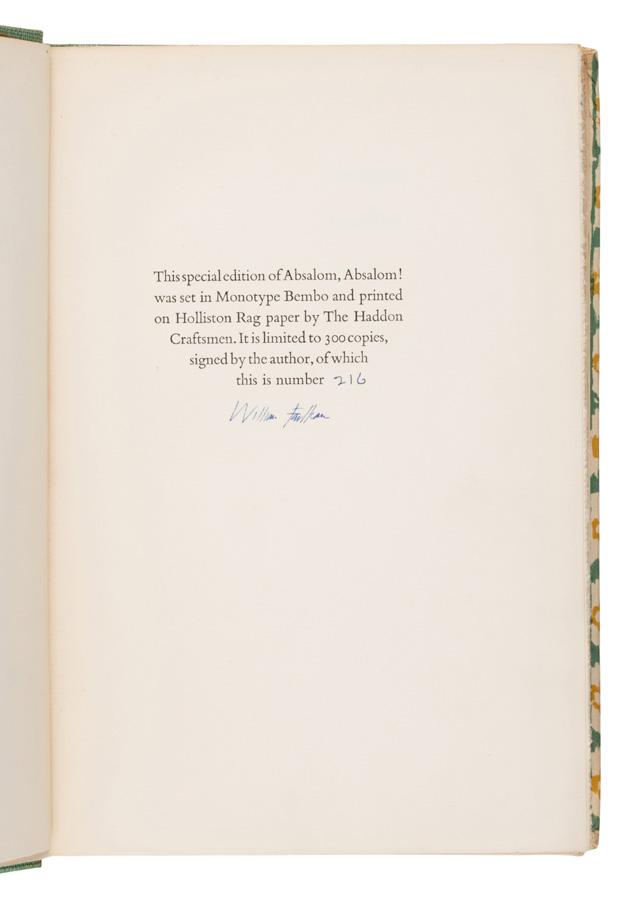
Faulkner, William (1897-1962). Absalom, Absalom! New York: Random House, 1936.
Original green buckram-backed decorative paper boards, gilt-lettered spine, top edge gilt (light toning to extremities).
FIRST EDITION, LIMITED ISSUE, number 216 of 300 copies on Holliston Rag paper, SIGNED BY FAULKNER. The novel details the rise and fall of Thomas Sutpen, and the story is told almost entirely in flashbacks narrated by Quentin Compson (his Harvard roommate). Its groundbreaking technique, along with that of The Sound and the Fury, contributed to his being awarded the Nobel Prize for Literature. Petersen A18.2a.
$1,500 - 2,500
73
72
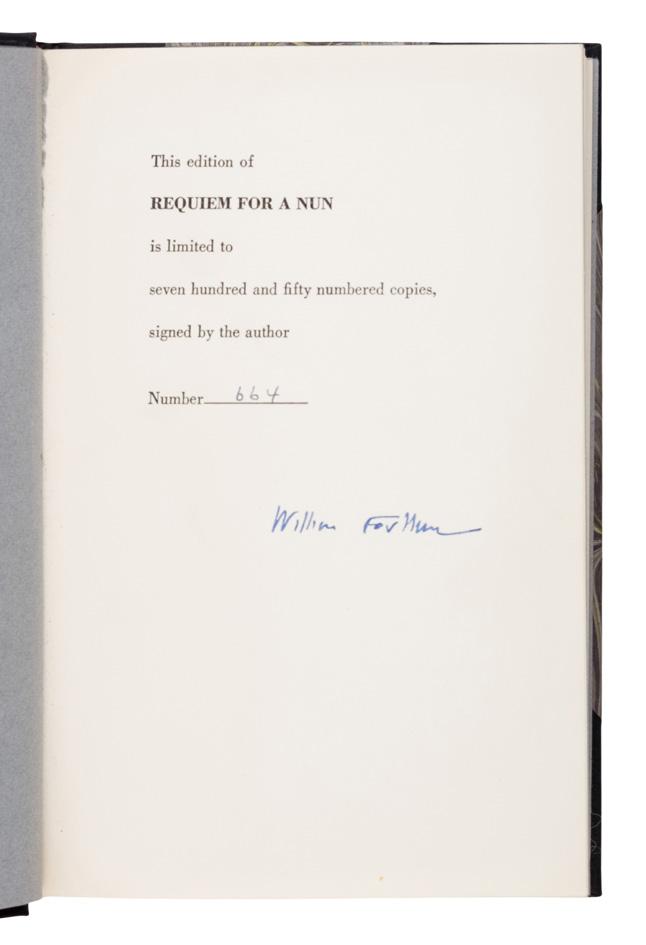
Faulkner, William (1897-1962). Requiem for a Nun. New York: Random House, 1951.
8vo. Original half black cloth, marbled boards, gilt-lettered spine; slipcase.
FIRST EDITION, LIMITED ISSUE, number 664 of 750 copies, SIGNED BY FAULKNER. Requiem for a Nun is perhaps best-known for its inclusion of one of Faulkner’s most famous lines: “The past is never dead. It’s not even past.” Petersen A32.1a.
[With:] FAULKNER. Requiem for a Nun. New York: Random House, 1951. Original two-tone cloth; dust jacket (spine lightly sunned). FIRST TRADE EDITION. Petersen A32.1b.
$600 - 800
Fielding, Henry (1707-1754). The History of Tom Jones, a Foundling. London: Printed for A. Millar, 1749.
6 volumes, 12mo (159 x 95 mm). Errata and all canceled leaves present. Contemporary speckled calf twice ruled in gilt (each neatly rebacked, preserving original backstrip and labels, vol.3 spine renewed); housed in a full calf traveling book case, fitted with latch and gilt-lettered false spines, stamp-signed by Krumin of Boston (extremities rubbed). Provenance: Robert Duchele (armorial bookplate); William Forbes Morgan (bookplate); William M. Fitzhugh Jr. (bookplate).
FIRST EDITION of Fielding’s masterpiece, which was rushed to publication in 1749. As a result, the first edition contains a number of errors due to both compositor and author error. The work was immediately revised after the publication of the first edition, and the errors are addressed in subsequent editions which also omit the errata leaf (present in this copy). According to early bibliographer Frederick S. Dickson, the second edition was likely begun while the sixth volume of the first edition went to press in February 1749.
Cross III, pp. 122 and 316; Grolier English 48; Rothschild 85.
$1,500 - 2,500

74
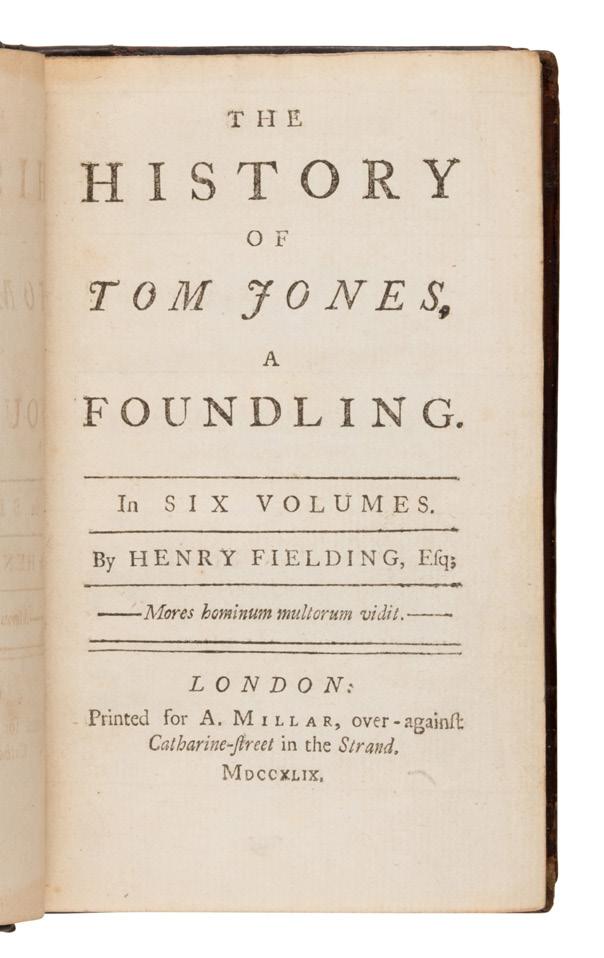
[Fine Press - Arion Press]. Abott, Edwin A. (1836-1926). Flatland. A Romance of Many Dimensions. San Francisco: Arion Press, 1980.
Tall 4to. Initials by Gill Shadow; 14 line drawings and 10 diecuts by Andrew Hoyem. 56 accordionfolded pages in original aluminum covers that sits in a metal frame, hinged with a top latch. With original prospectus and instructions for display laid-in.
ONE OF THE MOST UNUSUAL BOOKS EVER PRINTED.
LIMITED EDITION, number 153 of 275 copies, SIGNED BY BRADBURY AND HOYEM. One of the most sought-after books printed by the Arion Press, Flatland is a classic of mathematical fiction. The work describes the existence and adventures of a square in a 2-dimensional world as it encounters geometric figures of both higher and lower dimensions, and is deemed a science-fiction satire of the mores of Victorian England. The Arion Press has very wittily printed the book in an accordion format, such that the entirety of the text folds out into a single flat 30-foot sheet of paper (like the planegeometrical citizens of Flatland), and the text runs contiguously in columns on both sides of the sheet. Great care has been taken in the printing of the text—the entire book was printed by hand, with additional color work applied by hand—and the aluminum binding that houses the book is one of the most famous “publisher’s bindings” ever conceived.
$2,000 - 3,000
75
[Fine Press - Arion Press]. Applebroog, Ida, illustrator. -- Dickens, Charles. A Christmas Carol in Prose, Being a Ghost Story of Christmas. San Francisco: The Arion Press, 1993.
Long 4to. Original green cloth, red spine label gilt; publisher’s slipcase. With prospectus laid in.
LIMITED EDITION, number 119 of 200 copies, SIGNED BY IDA APPLEBROG. The Arion Press edition of A Christmas Carol was published to commemorate the 150th anniversary of the original printing of Charles Dickens’s immortal classic.
$400 - 600

77
[Fine Press - Arion Press]. Todd, Glenn, editor. Shaped Poetry: A Suite of 30 Typographic Prints Chronicling this Literary Form from 300BC to the Present. San Francisco: The Arion Press, 1981.
Elephant folio. Loose as issued in original printed wraps; companion volume in original printed wraps; publisher’s folding case; plexiglass frame.
LIMITED EDITION, one of 300 copies. Shaped Poetry consists of 30 poems printed on individual sheets of handmade paper, accompanied by a companion volume discussing the history of each poem. Authors include Robert Angot, Guillaume Apollinaire, Eustorg de Beaulieu, André Breton, Lewis Carroll, E.E. Cummings, Eugen Gomringer, George Herbert, John Hollander, Stéphane Mallarmé, Christian Morgenstern, Porfyrius Optatianus, Charles François Panard, Man Ray, Dieter Roth, Gertrude Stein, Simias, May Swenson, Theocritus, Dylan Thomas, and others. Arion Press Bibliography, 8.
$800 - 1,200
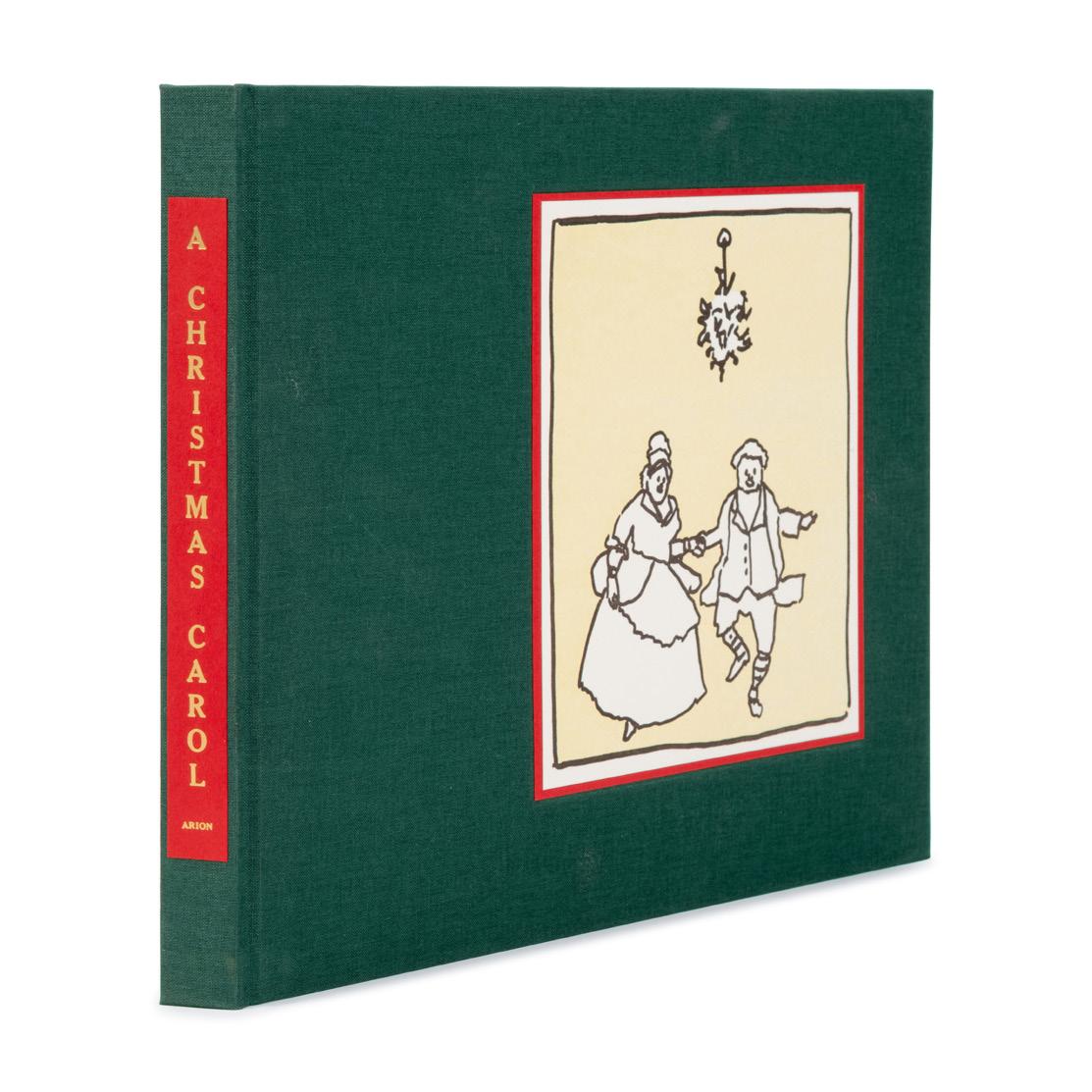
76
[Fine Press - Arion Press]. Eliot, T.S. (1888-1965). -- Kitaj, R. B. (1932-2007), illustrator. The Waste Land. San Francisco: The Arion Press, 2007.
4to. Original beige cloth gilt. With prospectus laid in.
LIMITED EDITION, number 238 of 300 numbered copies, SIGNED BY R.B. KITAJ. The Waste Land was the seventy-ninth publication of the Arion Press, and features details from R.B. Kitaj’s 1976 painting If Not, Not.
$500 - 700
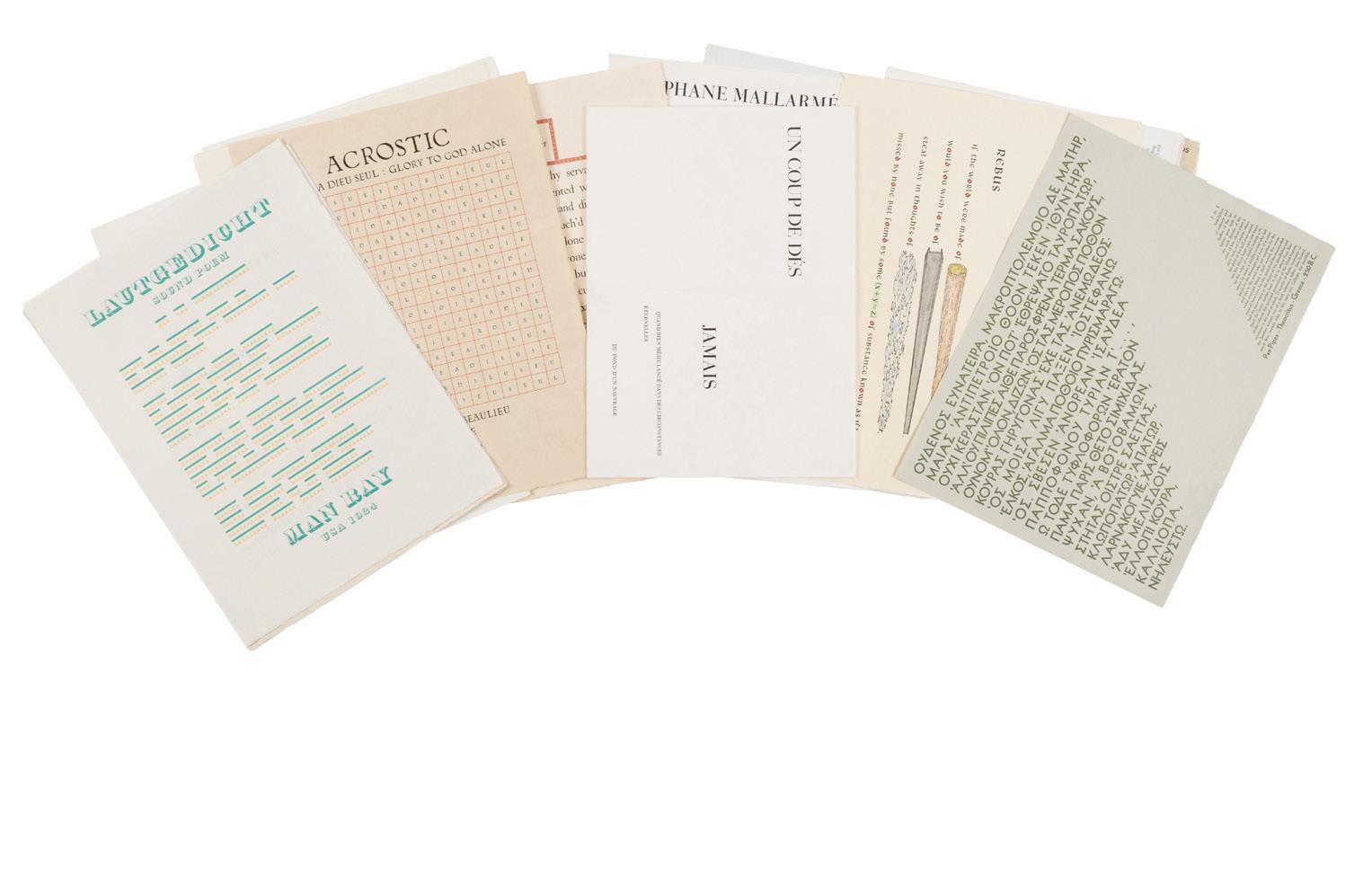
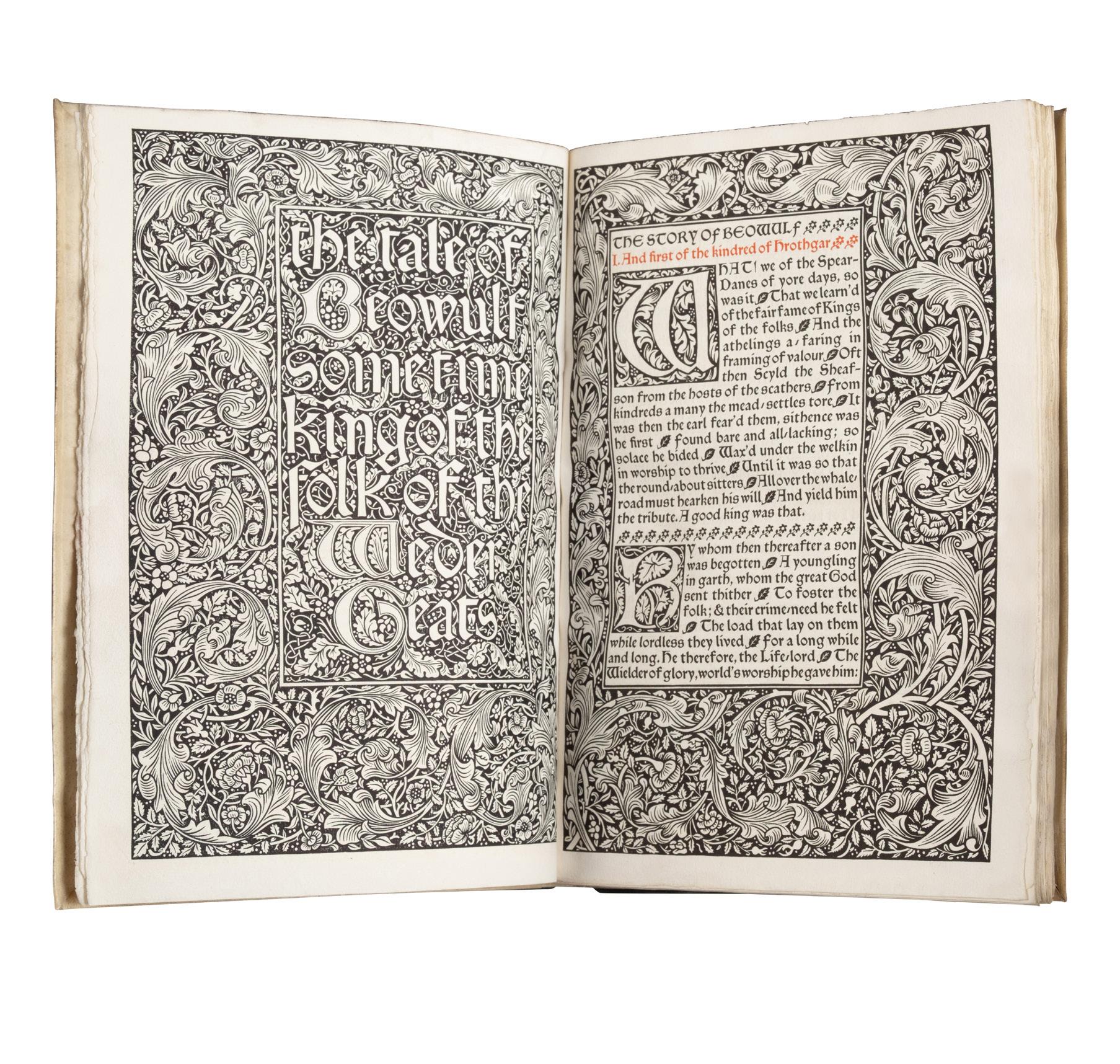
78
[Fine Press - Kelmscott Press]. Morris, William (1834-1896) and A.J. Wyatt (b. 1858), translators. The Tale of Beowulf. Hammersmith: Kelmscott Press, 1895.
4to. Printed in Troy type (with Argument, glossary, and other parts in Chaucer type) in black and red, woodcut title-page, facing page with full woodcut page-border, numerous three-quarter and smaller woodcut page-borders, 8-line and smaller initial capitals; inserted “note to reader” slip. Original limp vellum, yapp edges, silk ties.
LIMITED EDITION, one of 300 copies on Perch paper, of an edition of 308. One of Morris’s favorite poems in the English language. “The borders in this book were only used once again, in the Jason.” Cockerell 32; Peterson A32. A FINE COPY.
$6,000 - 8,000
79
[Fine Press - Nonesuch Press]. Homer (ca 8th century BCE). The Iliad [and:] The Odyssey Translated by Alexander Pope. Holland: Joh. Enschede en Zonen, Haarlem for The Nonesuch Press, 1931.
2 volumes, 4to. Text in Greek and English. Original tan niger ruled in gilt, spines in 6 compartments with 5 raised bands, gilt-lettering in the second, top edges gilt (very minor loss to top of Iliad, minor spotting to boards); original slipcases (rubbing to extremes). Provenance: Stanley William Sykes (1894-1961), British crime writer and anaesthetist (bookplate in The Iliad).
LIMITED EDITIONS, number 1,071 of 1,450 copies of The Iliad and number 1,008 of 1,300 copies of The Odyssey. The Nonesuch Press was founded in 1922 by Francis Meynall, his wife Vera Mendel, and their friend David Garnett. Over nearly forty years of operation the press produced 140 books, of which The Iliad and The Odyssey were considered to be among their finest. Nonesuch Century, 72 and 78.
$600 - 800
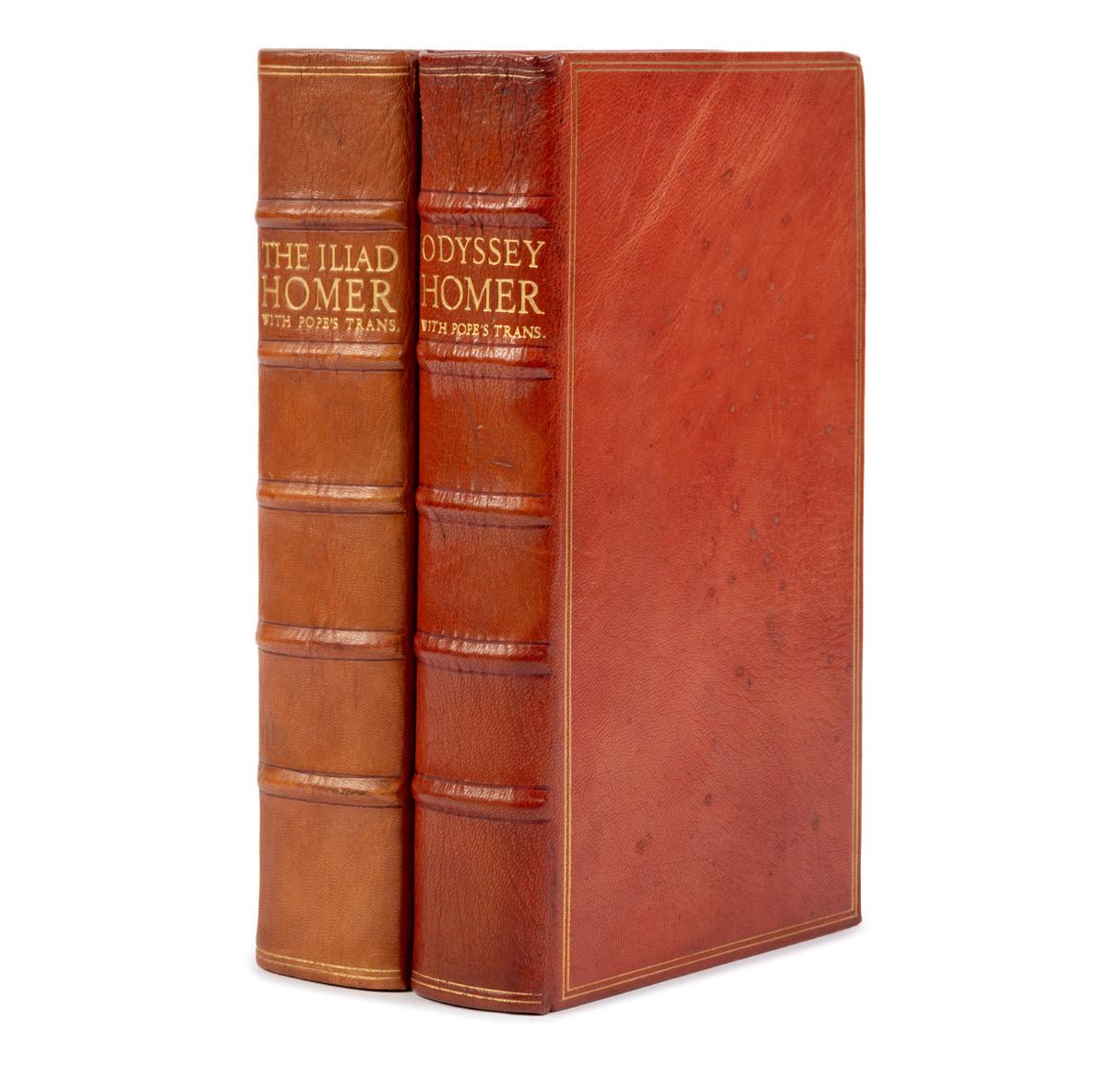
80 Fitzgerald, F. Scott (1896-1940). The Great Gatsby. New York: Charles Scribner’s Sons, 1925.
8vo. (Light spotting to title-page.) Original green cloth lettered in blind and gilt (spine slightly leaned, tiny spot of fraying to top of spine, few small spots of discoloration to boards); facsimile dust jacket.
FIRST EDITION, FIRST PRINTING, with Scribner’s seal on copyright page and no subsequent printing statements, with with “chatter” for “echolalia” on p.60, “northern” for “southern” on p.119, “sick in tired” for “sickantired” on p.205, and “Union Street station” for “Union Station” on p.211. Bruccoli A11.1.a; Connolly, The Modern Movement 48.
$1,000 - 1,500
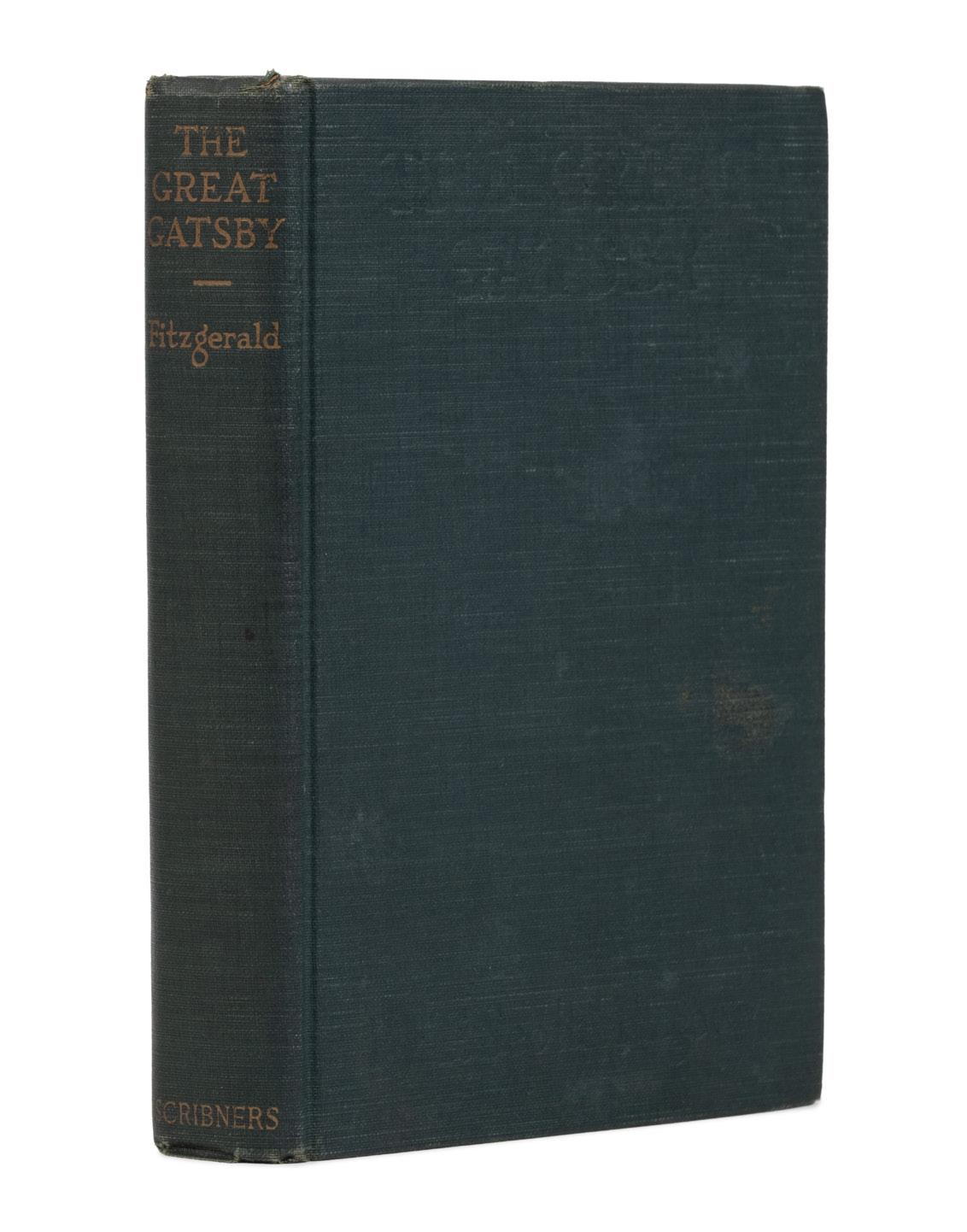
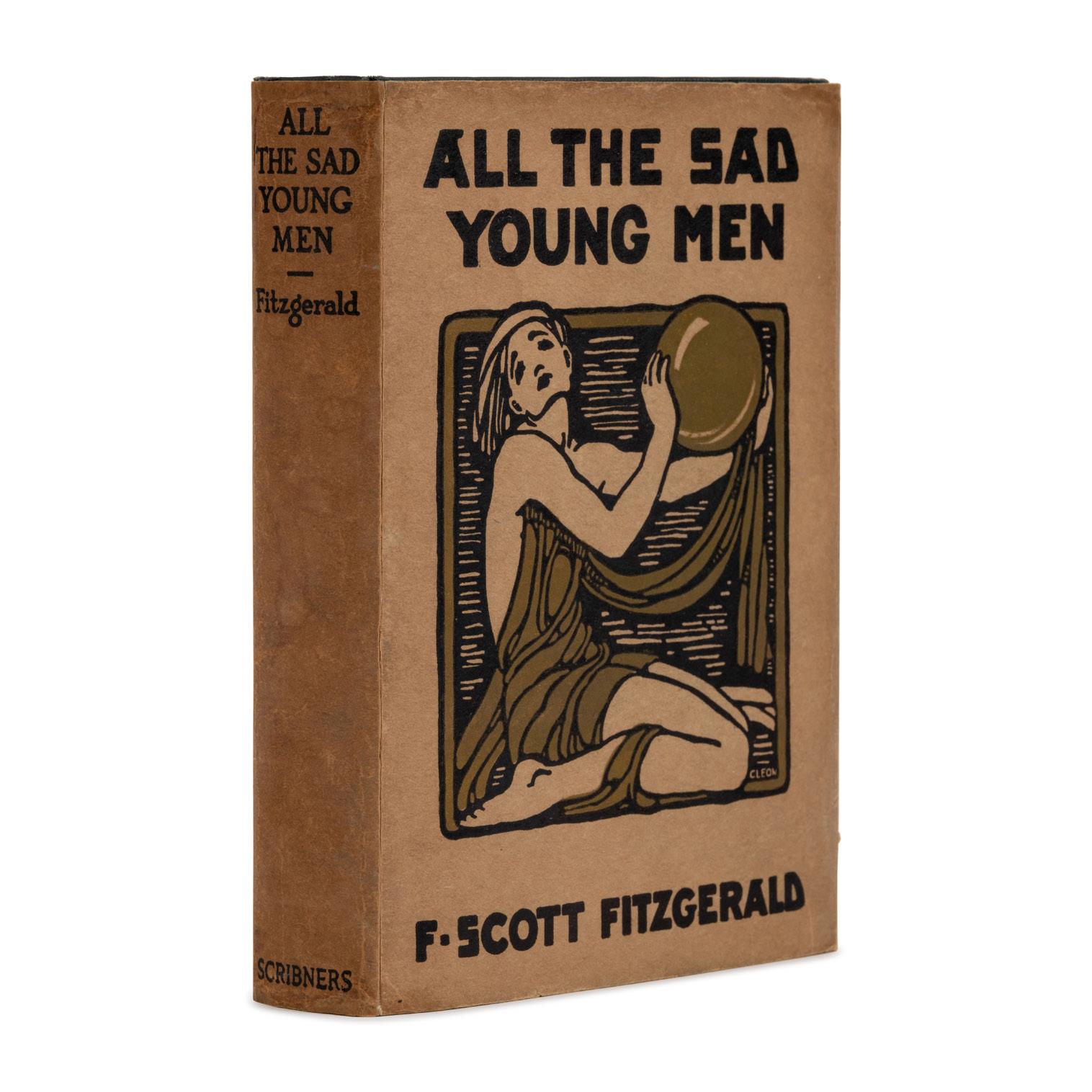
81
Fitzgerald, F. Scott (1896-1940). All the Sad Young Men. New York: Charles Scribner’s Sons, 1926.
8vo. Original green cloth lettered in blind and gilt (tiny spot on lower cover); dust jacket (light restoration along joints and folds verso, light restoration also to spine ends, not touching letters); morocco folding case.
FIRST EDITION, FIRST ISSUE with unbroken type on pages 36, 90, 248. Of the nine stories, one of the best received, “Absolution,” was originally planned to explain the background of The Great Gatsby. IN THE FIRST ISSUE DUST JACKET with the woman’s lips unbattered. Bruccoli A13.1.a.
$1,000 - 1,500
Flaubert, Gustave (1821-1880). Madame Bovary Moeurs de Province. Paris: Michel Levy Freres, 1857. 2 volumes in one, 8vo (178 x 114 mm). Half-title; EXTRA-ILLUSTRATED 7 ADDITIONAL PLATES by Émile Boilvin, including vignette title. (Lacking second title.) Late 19th century navy blue levant gilt, spine in 6 compartments with 5 raised bands, gilt-lettering in second, others gilt, all edges gilt, gilt stamp-signed by Émile Rousselle (light wear to spine ends, front free endpaper detached). Provenance: B.D. Lagneau (ownership stamp on half-title, morocco label at rear).
FIRST EDITION, FIRST ISSUE with “Senart” for “Senard” on the dedication page. First published in the magazine La Revue de Paris in 1856, Madame Bovary was immediately sued for “outrage aux bonnes moeurs” (“affront to public decency”). The book, which tells the story of Emma Bovary, a provincial doctor’s wife who engages in adulterous affairs and lives beyond her means in pursuit of romantic and material fulfillment, was considered scandalous and offensive to public morals and religion by French authorities. Flaubert and his publisher were brought to trial in January 1857 by the French government on charges of offenses against public and religious morality. The prosecution argued that the novel depicted adulterous behavior in a sympathetic light and included what they considered explicit descriptions of Emma Bovary’s affairs. The authorities believed the book could corrupt readers, especially women. Flaubert’s defense attorney, Jules Senard, successfully argued that the novel actually condemned Emma’s actions by showing the dire consequences of her behavior. The court ultimately acquitted Flaubert, and the novel was allowed to be published in full.
Widely recognized as one of the greatest novels, the book has been described as a “perfect” work of fiction; Henry James thought that it “stand[s] almost alone” among novels, holding itself with “a supreme unapproachable assurance”, and Vladimir Nabokov said that stylistically, Madame Bovary “is prose doing what poetry is supposed to.”
$1,000 - 1,500

83
Fleming, Ian (1908-1964). Thunderball. London: Jonathan Cape, 1961.
8vo. Original blind-stamped black cloth, gilt-lettered spine [Gilbert binding A, no priority]; dust jacket priced “15s. net” (tiny chips to fore-corners, tiny dampstain to front panel, flap edges toned). Provenance: Maurice Johnson (ownership signature on front free endpaper); George’s (booksellers’ ticket).
FIRST EDITION, FIRST IMPRESSION. Fleming’s ninth Bond book, and his eighth full-length Bond novel. It was the first Bond novel to be based on a screenplay, written by Fleming, Kevin McClory and Jack Whittingham: the credit was shared between the three co-writers after McClory and Whittingham took Fleming to court, shortly before he publicized the novel. Gilbert A9a(1.1).
$400 - 600
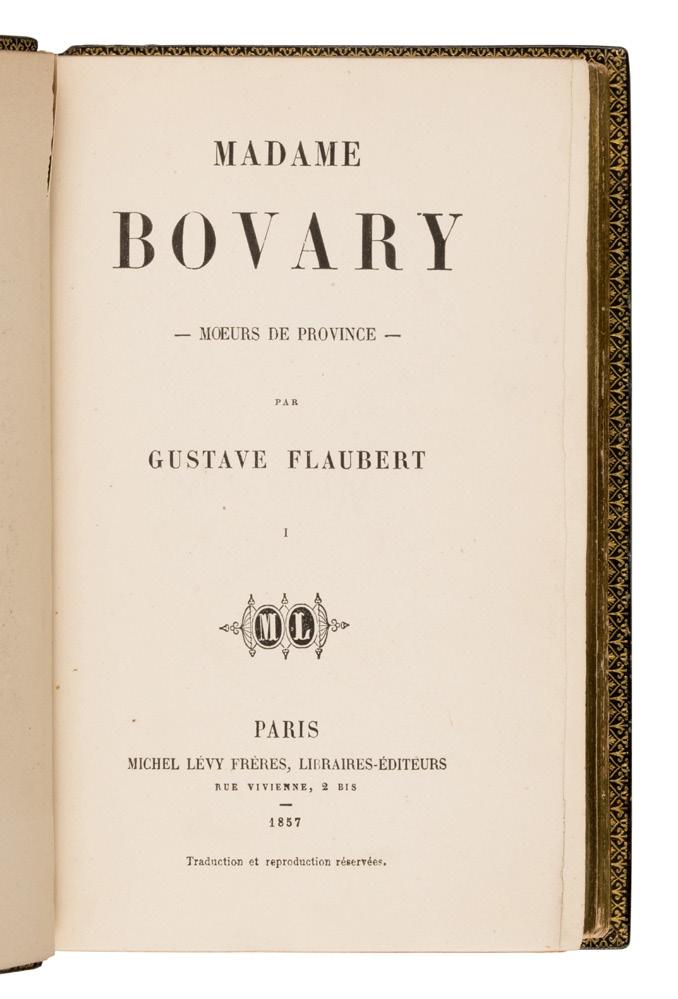
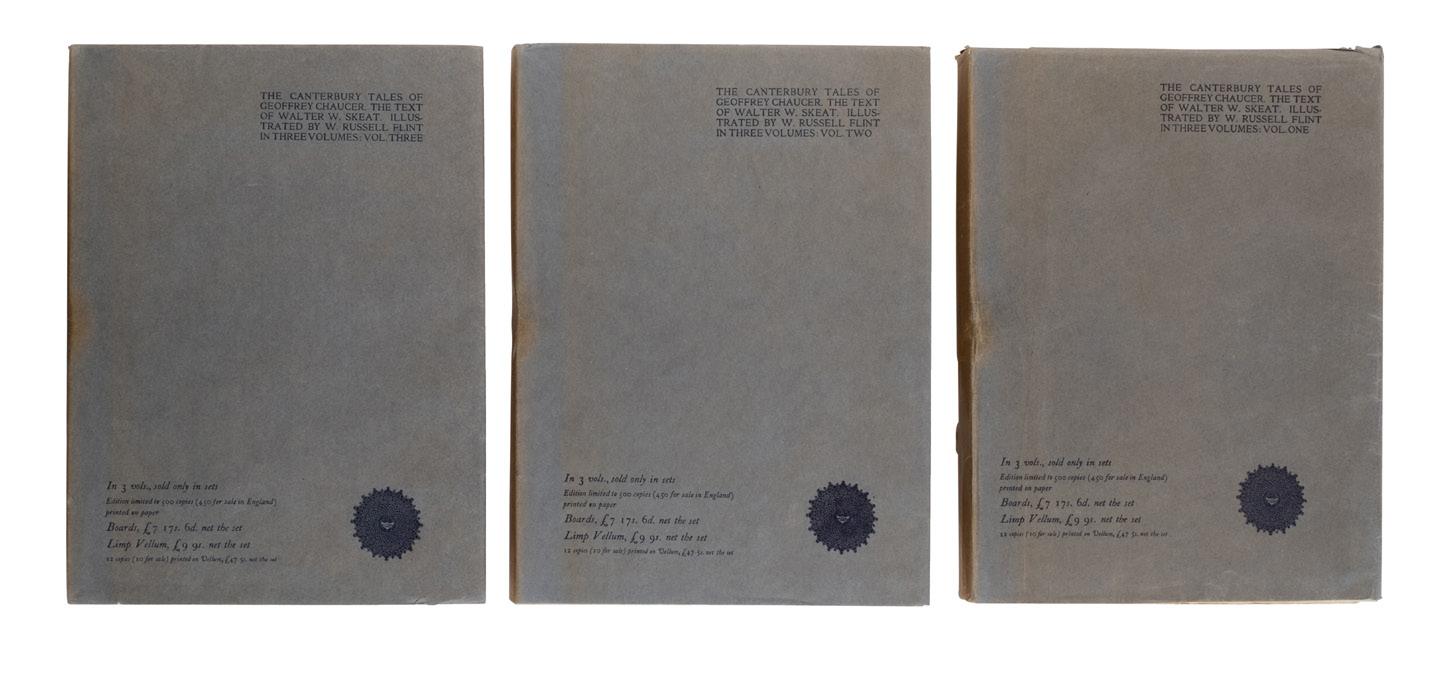
84
[Flint, William Russell, Sir (1880-1969), illustrator]. The Canterbury Tales of Geoffrey Chaucer. London: Riccardi Press for Philip Lee Warner at the Medici Society, 1913.
3 volumes, 4to (260 x 197 mm). 36 full color plates with tissue guards. Original limp vellum gilt, green silk ties, top edges gilt; publisher’s blue printed dust jackets (toning, sunning to spines); publisher’s slipcases (some splitting along edges, toning). With prospectuses and advertisements laid in.
LIMITED EDITION, number 129 of 500 copies on paper, SIGNED BY WILLIAM RUSSELL FLINT. The Riccardi Press was founded in the early 1900s by poet Herbert Percy Horne (1864-1916) while he was living in Florence, Italy, with Horne himself designing the Riccardi typeface. The Riccardi edition of The Canterbury Tales remains one of the outfit’s most lavish, with only their four-volume edition of Le Morte d’Arthur surpassing it in number of illustrations, with 48 to its credit. Sir William Russell Flint was a Scottish artist who began his career with the Illustrated London News. His illustrations for the Riccardi Press, like those executed by Sir Edward BurneJones for the Kelmscott Press, were heavily influenced by medieval artistic styles. Tomkinson, p. 149.
$1,200 - 1,600
85
Freud, Sigmund (1856-1939). The Interpretation of Dreams...Authorised Translation of Third Edition with Introduction by A.A. Brill. New York: The Macmillan Company, 1913.
8vo. Original gilt-lettered blue cloth (spine lightly sunned with a touch of rubbing at ends, hinges tender); folding case. Provenance: C. Grant Bain M.D. (ownership signature on front free endpapers).
FIRST EDITION IN ENGLISH, AMERICAN ISSUE with the integral title-page indicating priority over the second state (which included a cancel title from unbound sheets from the London issue once Macmillan ran out).
“This is unquestionably Freud’s greatest single work. It contains all the basic components of psychoanalytic theory and practice: the erotic nature of dreams, the ‘Oedipus complex,’ the libido and the rest; all related to the background of the ‘unconscious,’ later to be called the ‘sub-conscious’” (PMM). Garrison-Morton 4980; Norman F33; PMM 389 (all citing the original edition); Rieber & Gach 167 (this edition).
$1,000 - 1,500
86
Garcia Marquez, Gabriel (1927-2014). One Hundred Years of Solitude Gregory Rabassa, translator. New York and Evanston: Harper & Row, 1970.
8vo. Original gilt-stamped green cloth (some spotting to upper cover, small stain on text block fore-edge); dust jacket (few creases and short closed tears along edges).
FIRST AMERICAN EDITION, FIRST ISSUE, without the publisher’s numerical code on p.422 and with an exclamation mark at the end of the first paragraph on the front flap. Garcia Marquez’s celebrated novel of magical realism and a representative novel of the literary Latin American Boom of the 1960s and 1970s.
$600 - 800
87 Gershwin, George (1898-1937). George Gershwin’s Song-Book. New York: Random House, 1932.
4to. Frontispiece photograph of Gershwin, photograph of Gershwin’s hands, 18 full-page colour illustrations after Constantin Alajalov, including the 8-page printed piano score “Mischa, Yascha, Toscha, Sascha,” loosely inserted in a pocket at rear. Original dark blue morocco gilt (edges rubbed, splitting to joints, hinges reinforced).
FIRST EDITION, LIMITED ISSUE, number 40 of 300 copies, SIGNED BY GERSHWIN AND THE ILLUSTRATOR.
$1,000 - 1,500

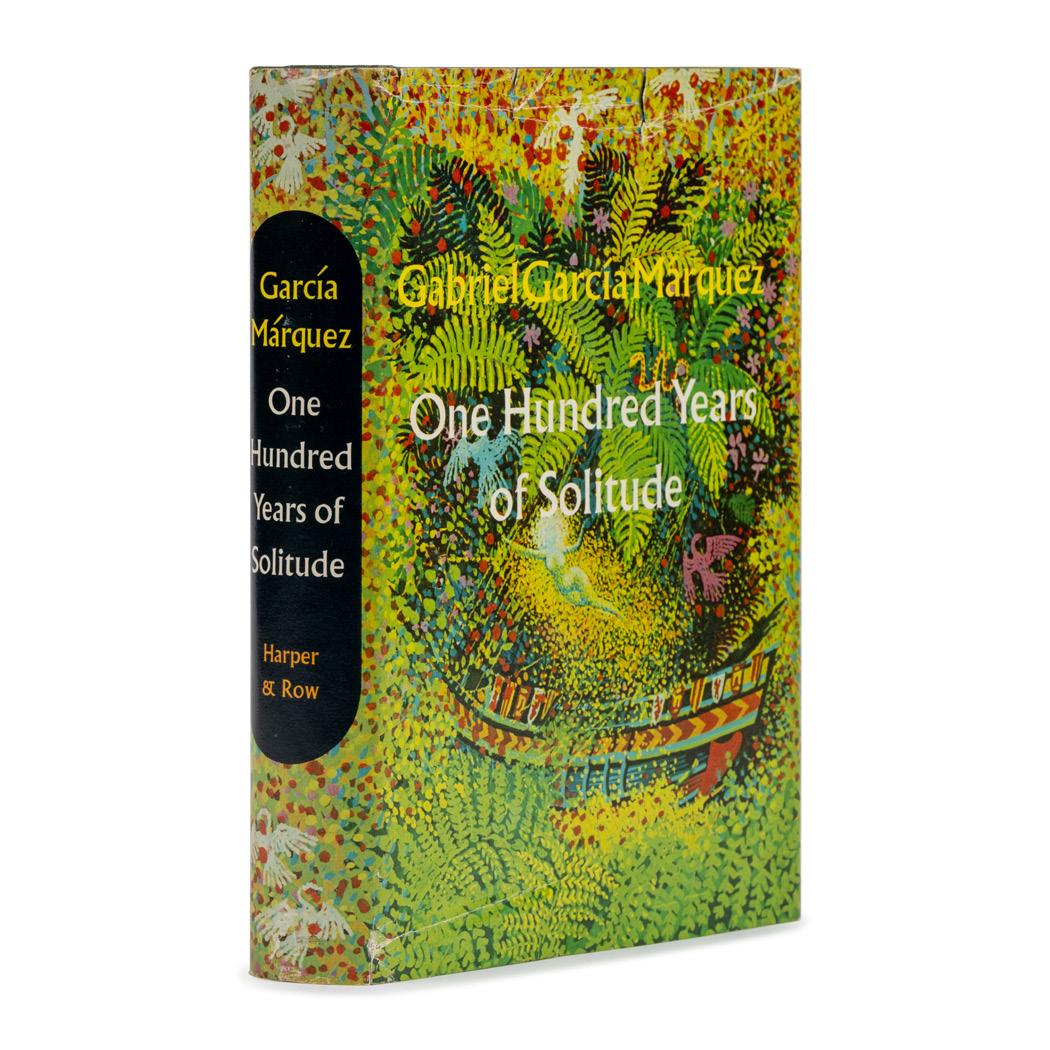
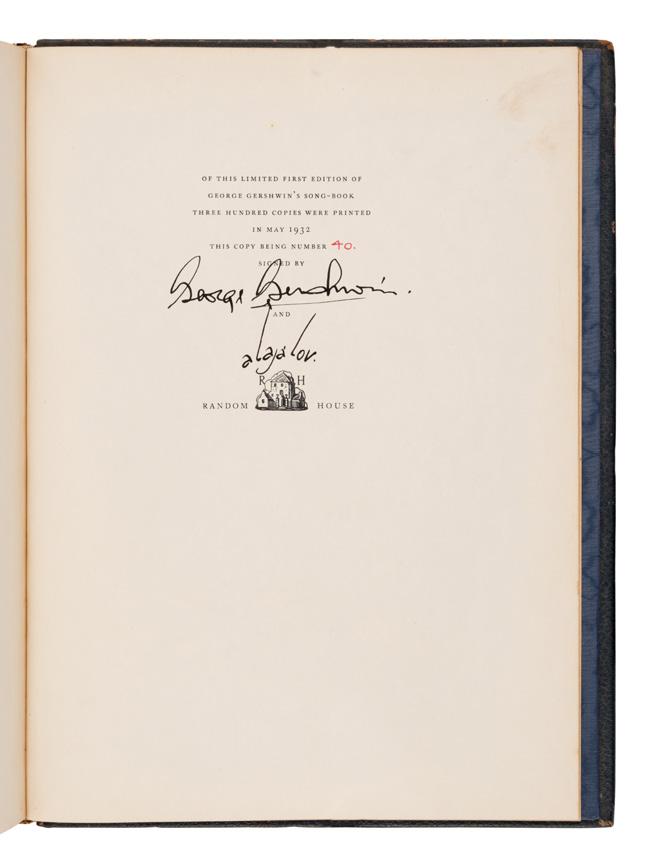



88 Geisel, Theodor (“Dr. Seuss”) (1904-1991). How the Grinch Stole Christmas! New York: Random House, 1957.
4to. Numerous illustrations throughout. Original color-printed pictorial boards; dust jacket (cockling to rear affecting some parts of spine, minor rubbing). Provenance: “Torina” (contemporary gift inscription).
FIRST EDITION, FIRST ISSUE with 250/250 price on front flap of dust jacket, fourteen titles listed on rear flap, and advertisement for The Cat in the Hat on rear panel. The Grinch character made his first appearance in a 1955 illustrated poem entitled “The Hoobub and the Grinch,” published in the May issue of Redbook. He began work on a book with The Grinch as the central character in late 1956 after a particularly difficult holiday season in which his wife’s health problems, combined with his distaste for the overcommercialization of Christmas, left him feeling “very Grinchish.” It was completed within weeks and published just in time for the 1957 holiday season, and became an instant holiday classic, leading to an animated adaptation narrated by Boris Karloff in 1966 and a live-action film starring Jim Carrey in 2000.
$300 - 400
89 Golding, William (1911-1993). Lord of the Flies. New York: CowardMcCann, 1954.
8vo. Original two-toned cloth (light toning to extremes); dust jacket (a touch of rubbing near edges).
FIRST AMERICAN EDITION. WITH AN EDWARD GOREY DESIGNED BOOKPLATE SIGNED BY GOLDING. Lord of the Flies is the debut novel of William Golding, who was inspired to write by an 1857 children’s novel called The Coral Island, which, while similar in plot, Golding felt was unrealistic in its portrayal of how children would behave in such a situation. Following completion, it was rejected by numerous publishers before Faber & Faber agreed to publish it in a first edition run of 3,000 copies. The book has since become one of the most popular and one of the most challenged books of the 20th and 21st centuries. Gekoski & Grogan A2(b).
$1,000 - 1,500
90 Grey, Zane (1872-1939). The Last of the Plainsmen. New York: The Outing Publishing Company, 1908.
8vo. Numerous illustrations from photographs by Grey. Original pictorial olive green cloth stamped in blue, white, and gilt (a few spots of sunning to lower cover); DUST JACKET (spine and rear panel lightly faded, light stains on front panel, some chipping to spine ends).
FIRST EDITION. The Last of the Plainsmen recounts the adventures of the famed frontier scout and lawman William F. “Buffalo” Jones, whom Zane Grey accompanied on a hunting expedition in northern Arizona. The book proved Grey’s first major success and helped introduce the themes of frontier adventure and the mythic American West that would define much of his later work. Myers, p.3. IN THE EXCEEDINGLY RARE DUST JACKET.
$1,000 - 1,500
91 Grimm, Jakob (1785-1863) and Wilhelm Grimm (1786-1859). German Popular Stories. Translated from the Kinder und Haus Märchen [by Edgar Taylor]. London: C. Baldwyn [vol. II: James Robins], 1824-1826.
2 volumes, 8vo (171 x 102 mm). Numerous engravings throughout, with 20 by George Cruikshank (spotting throughout, minor offsetting.) Late 19th century long-grain morocco gilt with floral blind-stamped borders and spine in 4 compartments with 5 raised bands, all edges gilt (minor rubbing).
Mixed set: second English edition of vol.1; FIRST ENGLISH EDITION of vol.2. German Popular Stories or, Kinder- und Hausmärchen as originally published, comprises a collection of fairy tales compiled by brothers Jakob and Wilhelm Grimm. The process of collecting these stories began in 1808 at the suggestion of their friend, the poet Clemens Brentano, who intended to have them published. When it became clear that Brentano had lost interest in the project, the brothers decided to publish the stories themselves, believing that the stories were in danger of disappearing entirely otherwise. In the preface to the first edition of their work they wrote, “It was perhaps just the right time to record these tales since those people who should be preserving them are becoming more and more scarce. . . . Wherever the tales still exist, they continue to live in such a way that nobody ponders whether they are good or bad, poetic or crude. People know them and love them because they have simply absorbed them in a habitual way. And they take pleasure in them without having any reason. This is exactly why the custom of storytelling is so marvelous.”
$800 - 1,200
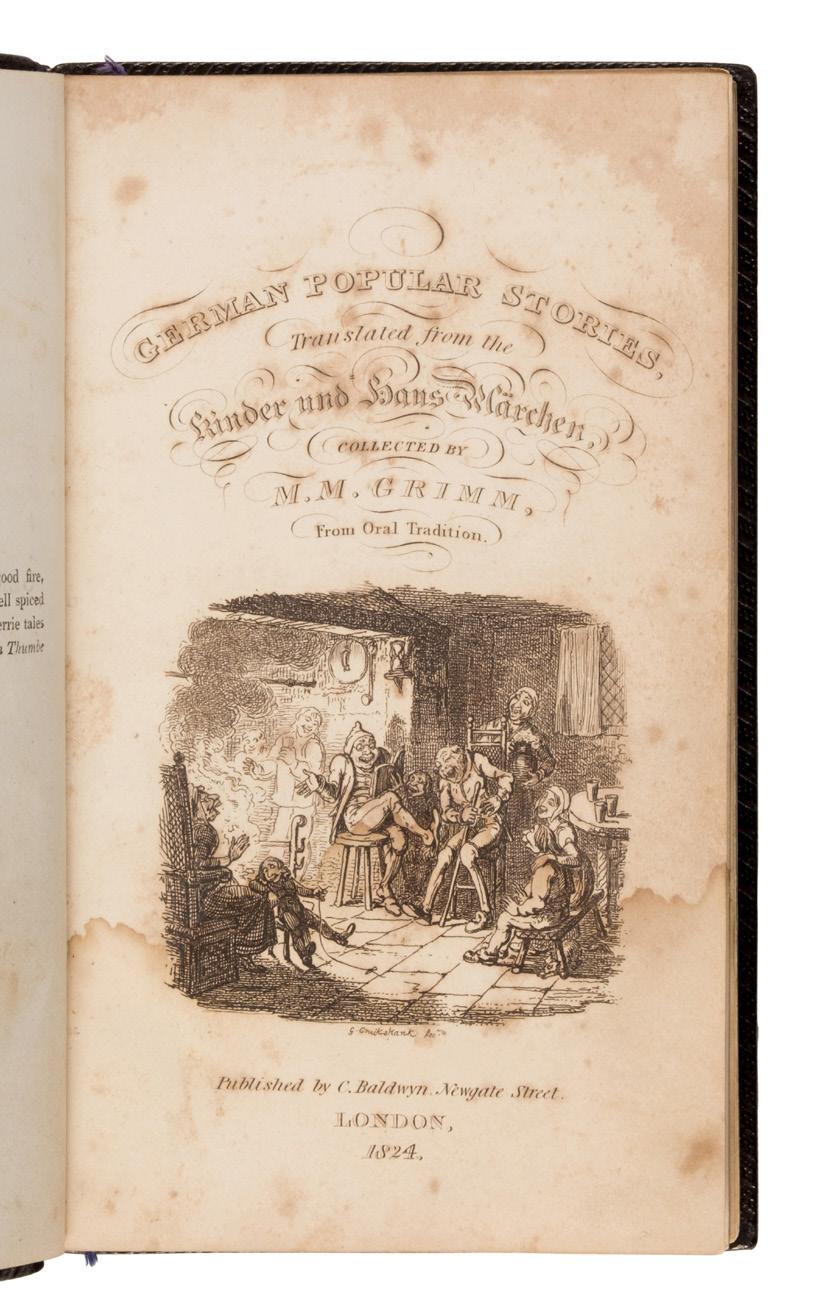
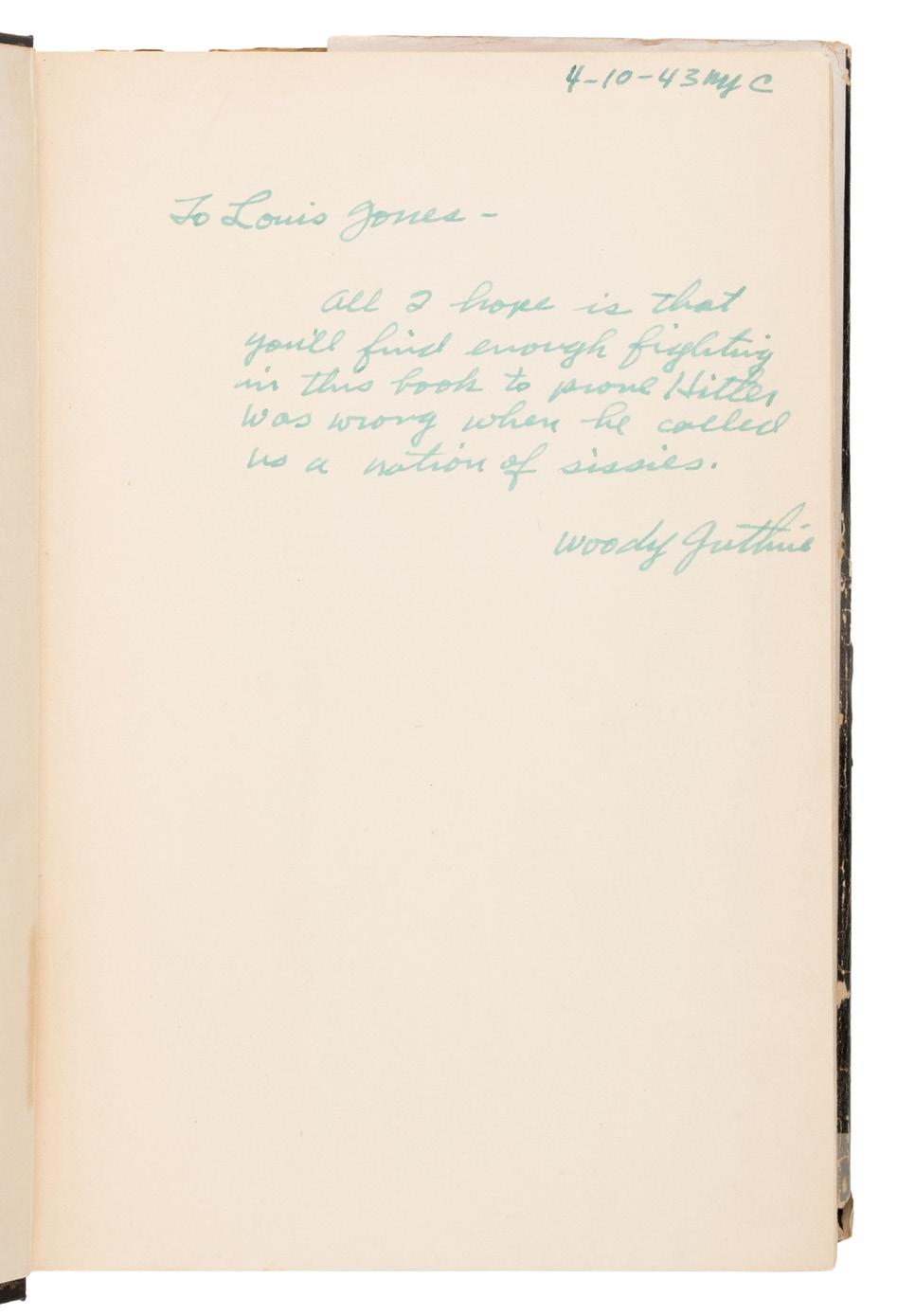
92
Guthrie, Woody (1912-1967). Bound for Glory. New York: E.P. Dutton, 1943.
8vo. Photographic frontispiece by Robin Carson, illustrations in the text after Guthrie. Original black cloth gilt; dust jacket (mild rubbing to spine, some chipping along extremities with accompanying creases, minor loss to spine tail). Provenance: Louis Jones (author’s inscription).
FIRST EDITION. INSCRIBED BY WOODY GUTHRIE TO LOUIS JONES: “All I hope is that you’ll find enough fighting in this book to prove Hitler was wrong when he called us a nation of sissies.”
Bound for Glory is a semi-fictionalized autobiography of Guthrie’s life, tracing his early years “riding the rails” and his later success as one of America’s most significant singer-songwriters. Now considered a classic of “Dust Bowl literature,” the book was particularly influential to folk singer Bob Dylan, who would write in his own autobiography, “I went through it cover to cover like a hurricane, totally focused on every word, and the book sang out to me like the radio.” It was later adapted into a 1976 motion picture of the same name starring David Carradine as Woody Guthrie.
$2,000 - 3,000
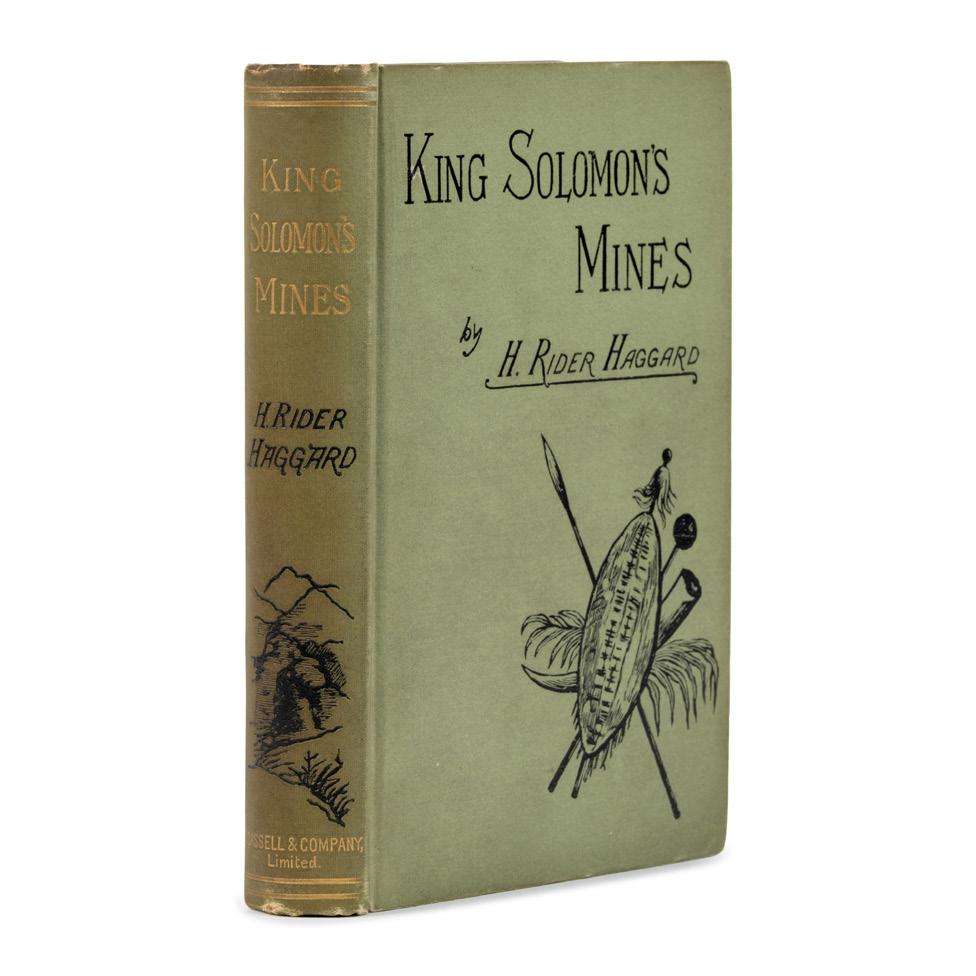
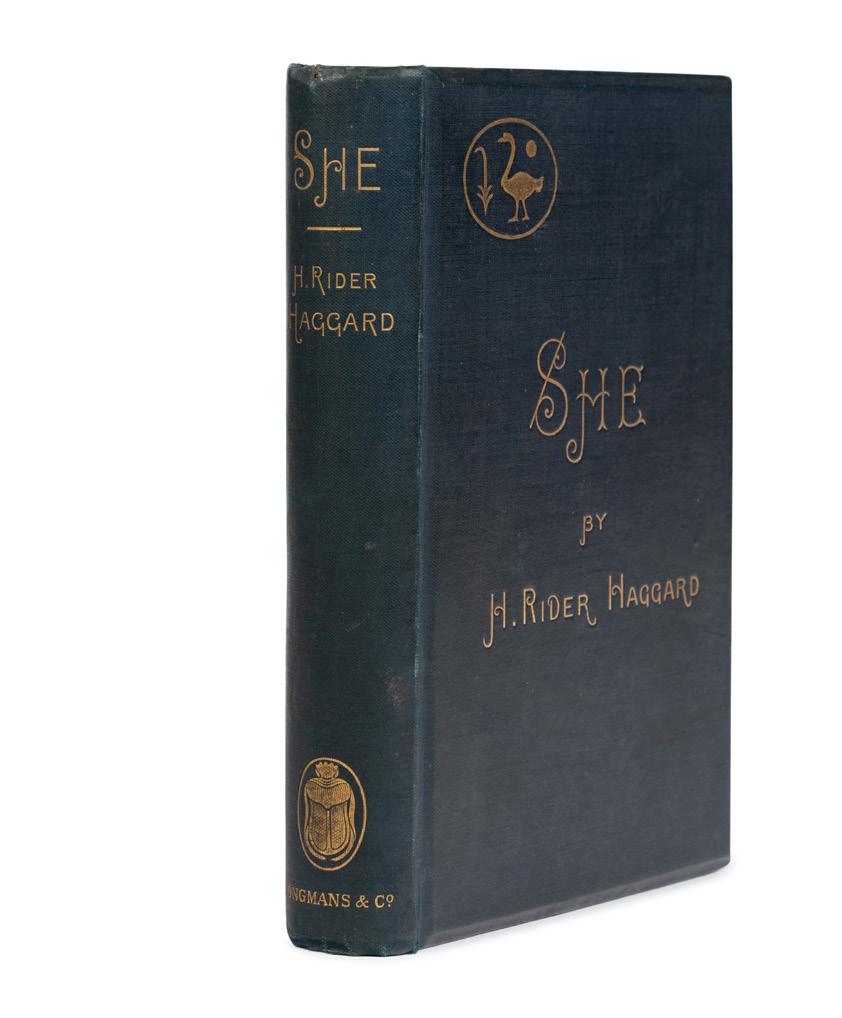
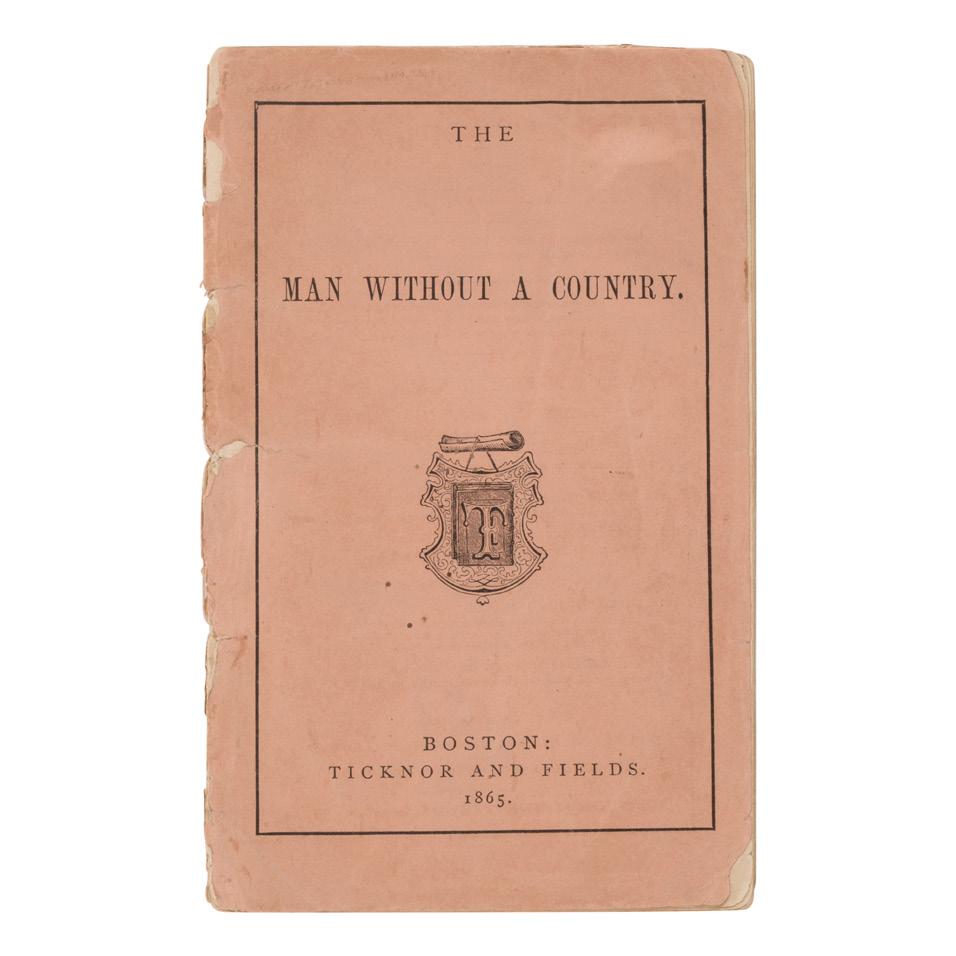
93
Haggard, H. Rider (1856-1925). King Solomon’s Mines. London: Cassell & Company, 1885.
8vo. Folding colored frontispiece (very occasional spotting). Original green cloth stamped in black (front hinge starting, spine leaning, contemporary ink markings at top portions of inner board and front free endpaper).
FIRST EDITION, AMERICAN ISSUE, bound in New York City and lacking publisher’s ads at rear with the following misprints: “Bamamgwato”” on p. 10, line 14; “to let twins to live” on p. 122, line 27; “wrod”” in place of “word” in the fifth line of footnote on p. 307. King Solomon’s Mines was initially published in London with a first print run of 2,000 copies. The first 1,500 were printed there, with the sheets comprising the last 500 shipped to New York, to be bound and sold, lacking the 8 pp. of ads in the London edition. The first “official” American edition was not published until the following year. Inspired by Robert Louis Stevenson’s Treasure Island, Rider’s novel was one of the first English adventure novels set in Africa. Cassell embarked on a promotional blitz for the work, with billboards and posters posted all around London advertising it as “The Most Amazing Book Ever Written.” Since its publication, the adventurer Allan Quartermain has become Rider’s most iconic creation, appearing in numerous film, radio, and television adaptations. McKay, 4; Sadleir 1089; Wolff 2863.
$2,000 - 3,000
94
Haggard, H. Rider (1856-1925). She. A History of Adventure. London: Longmans, Green and Co., 1887.
8vo. 2 color lithograph plates at front; 2pp. publisher’s ads at end. (Light spotting near front.) Original gilt lettered and decorated dark blue cloth (spine leaned, hinges starting).
FIRST ENGLISH EDITION, a work that has been credited as the foundational text of the “Lost World” subgenre of fantasy literature. McKay 5a; Sadleir 1092; Wolff 2881.
$500 - 700
95
Hale, Edward Everett (1822-1909). The Man Without a Country. Boston: Ticknor and Fields, 1865.
12mo (165 x 102 mm). (Some toning throughout.) Original light terra cotta printed wrappers (spine worn, corner loss to rear wrap, some minor marginal soiling); folding chemise and quarter morocco slipcase.
“No matter what happens to you, no matter who flatters you or who abuses you, never look at another flag, never let a night pass but you pray God to bless that flag.”
FIRST SEPARATE EDITION, FIRST ISSUE lacking errata slip as called for. The Man Without A Country was first published in the December 1863 issue of The Atlantic Monthly. The grand-nephew of Revolutionary War spy Nathan Hale, who famously declared “I only regret that I have but one life to lose for my country,” Edward Everett Hale wrote the story to strengthen northern support for the Union cause. The story was well-received and a separate edition was issued shortly before the end of the Civil War. “One of the best short stories written by an American, and representing Hale at his best as a writer of fiction with a purpose” (ANB). Peter Parley to Penrod, p.24; Sabin 29627; Wright, American Fiction 1851-1875, 1056.
$400 - 600
96
Haley, Alex (1921-1992), editor. The Autobiography of Malcolm X. New York: Grove Press, Inc., 1965.
8vo. Illustrated from photographs. Original black cloth; dust jacket (very slight edgewear near spine ends, neat inked price notation below the printed price). Provenance: gift inscription from “W.W.D.” to F & A. Gerspach.
FIRST EDITION. The Autobiography of Malcolm X was originally slated to be published by Doubleday, with the publisher opting to cancel its contract following the assassination of Malcolm X on February 21, 1965; this move has since been called “the most disastrous decision in corporate publishing history.” Its influence on the civil rights movement and American culture as a whole is immeasurable, with Time naming it one of ten “required reading” non-fiction books in 1998.
$300 - 500
97
Hamsun, Knut (1859-1952). Hunger. Translated from the Norwegian by Mary Chavelita Dunne Bright (“George Egerton”). London: Leonard Smithers and Co., 1899.
8vo. (Very light spotting to title page.) Original pictorial grey cloth (rubbing to spine).
FIRST EDITION IN ENGLISH. Widely considered to be one of the first “psychological” novels and a precursor to literary trends of the 20th century which would inspire the works of Ernest Hemingway, Franz Kafka, and Thomas Mann, Hunger was first published in 1890 as Sult. In 1899 Hamsun’s friend and former lover, noted feminist author and playwright Mary Chavelita Dunne Bright, translated it into English for the first time, significantly opening Hamsun’s work up to a wider audience. Hamsun went on to publish an additional twenty works over a career spanning seven decades and was awarded the Nobel Prize for Literature in 1920.
$1,000 - 1,500
98
Harbou, Thea Von (1888-1954). Metropolis. London: The Readers Library, 1927.
12mo. Original gilt-decorated burgundy cloth (front hinge tender); dust jacket designed by Aubrey Hammond (spine and flap folds lightly toned, light wear near foot).
FIRST EDITION IN ENGLISH, FIRST ISSUE, without mention of this title in list of Readers Library books on p.[7].
First published in 1926 in German to coincide with the release of Metropolis, Thea von Harbou’s novelization of the film appeared in advance of the premiere and represents the first book appearance of one of the most influential works of early science fiction cinema. Harbou’s text elaborates on the narrative she conceived with her husband and collaborator, Fritz Lang, depicting a futuristic city defined by stark divisions between the ruling elite and the oppressed workers who labor beneath it. As Clute and Nicholls observe, the film—often described as “the first SF epic of the cinema”—also shares much with “the cinema of the Gothic.” Though set amid “towering buildings and vast brooding machines,” the city of Metropolis retains “an underworld dark and medieval in atmosphere.” While the story itself may be “trite” and its politics “ludicrously simplistic,” these shortcomings, they argue, “cannot detract from the sheer visual power of the film.” Enormously expensive to produce and “not a financial success,” Metropolis nearly bankrupted the studio UFA, and the film was cut almost immediately after release; even modern restorations remain “half an hour shorter than the original” (Clute and Nicholls, The Encyclopedia of Science Fiction, 1993, pp. 804-5). Anatomy of Wonder III, 2-123; Bleiler, Early Years 1040; Lewis, Utopian Literature p.198; Locke, A Spectrum of Fantasy p.104.
$1,000 - 1,500

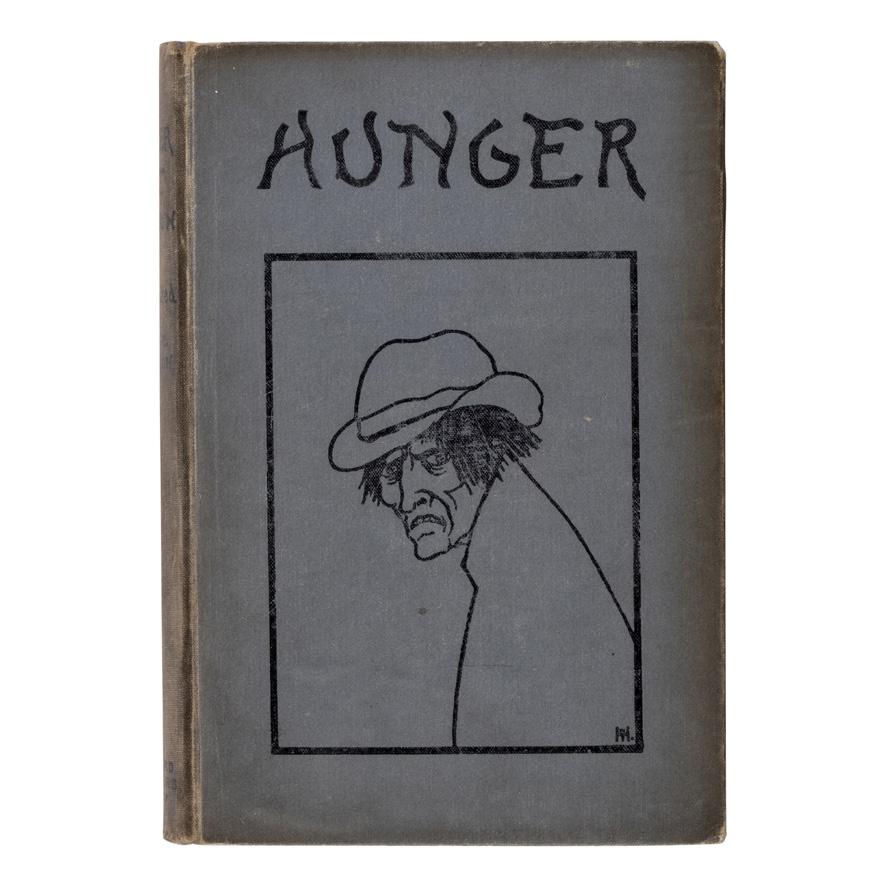
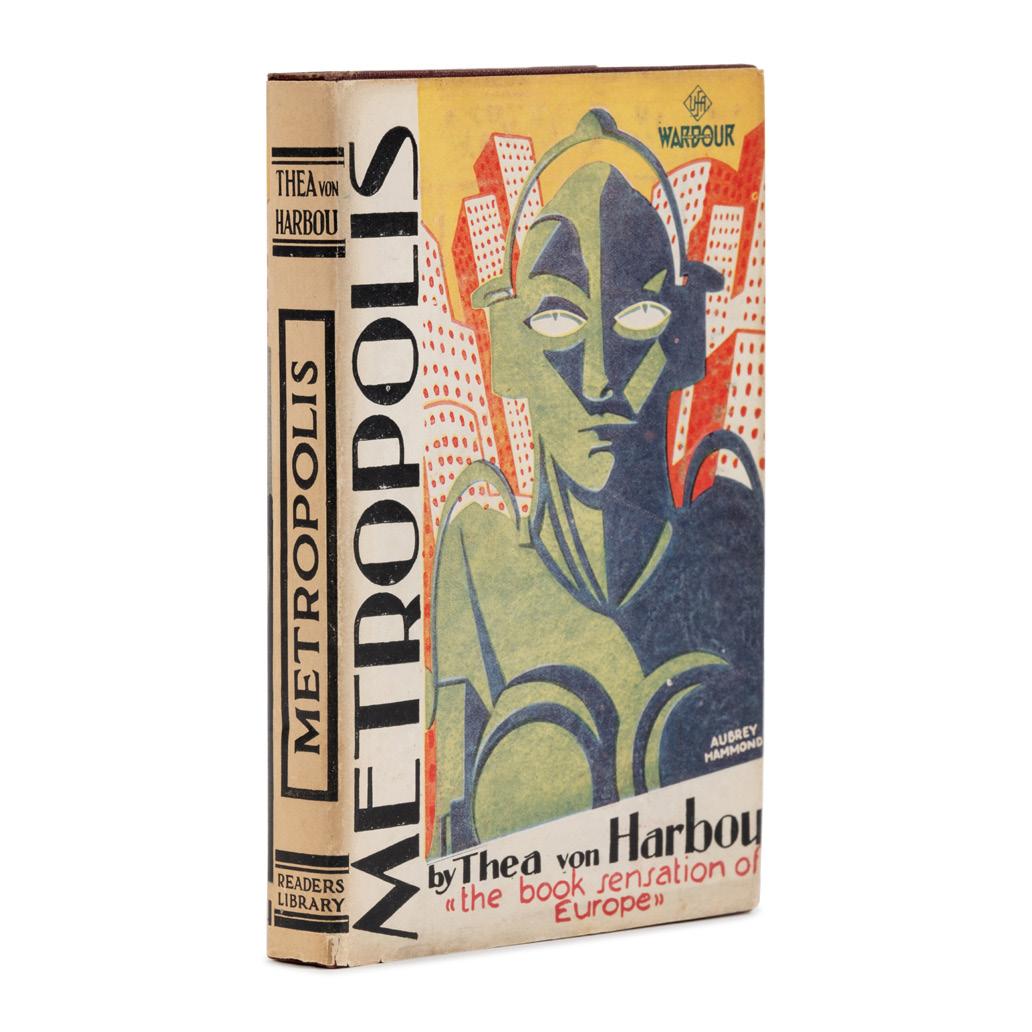
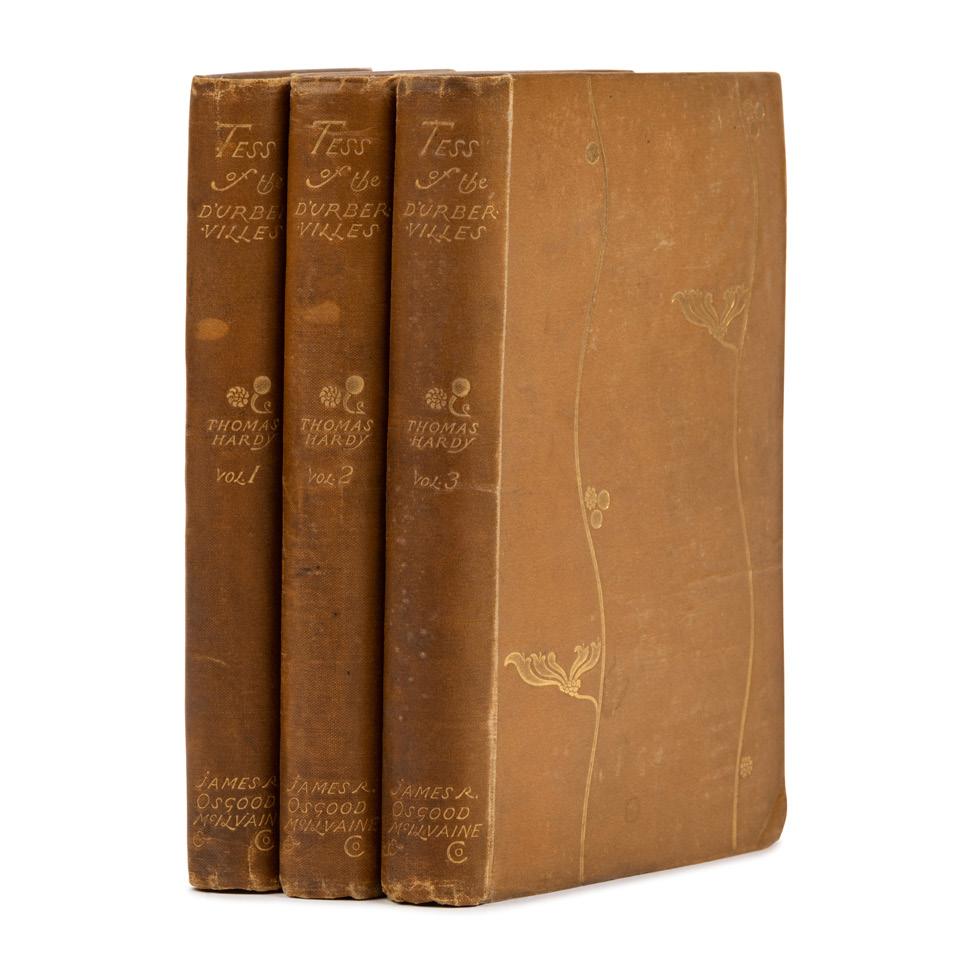
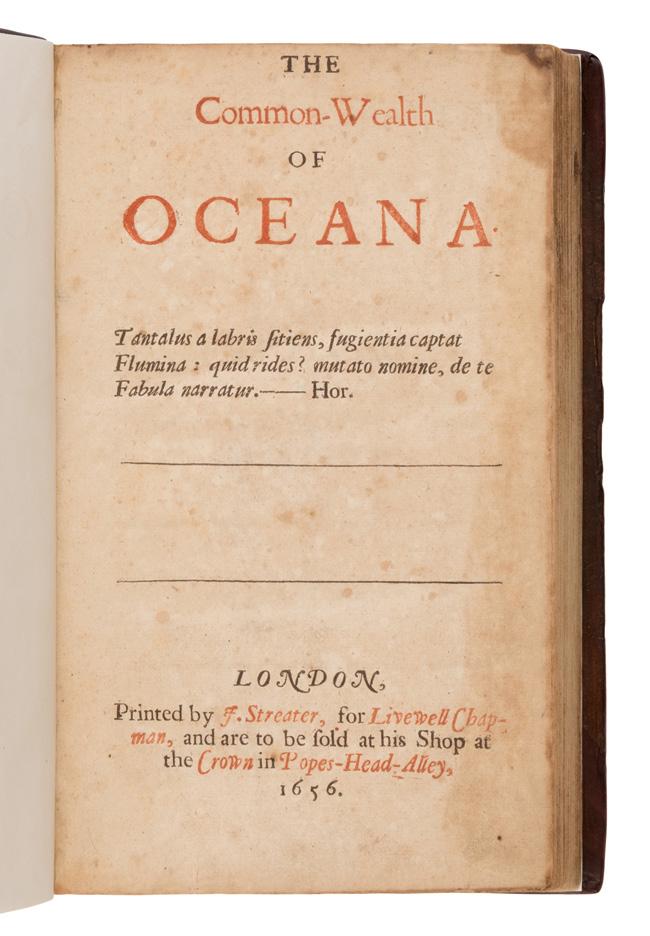
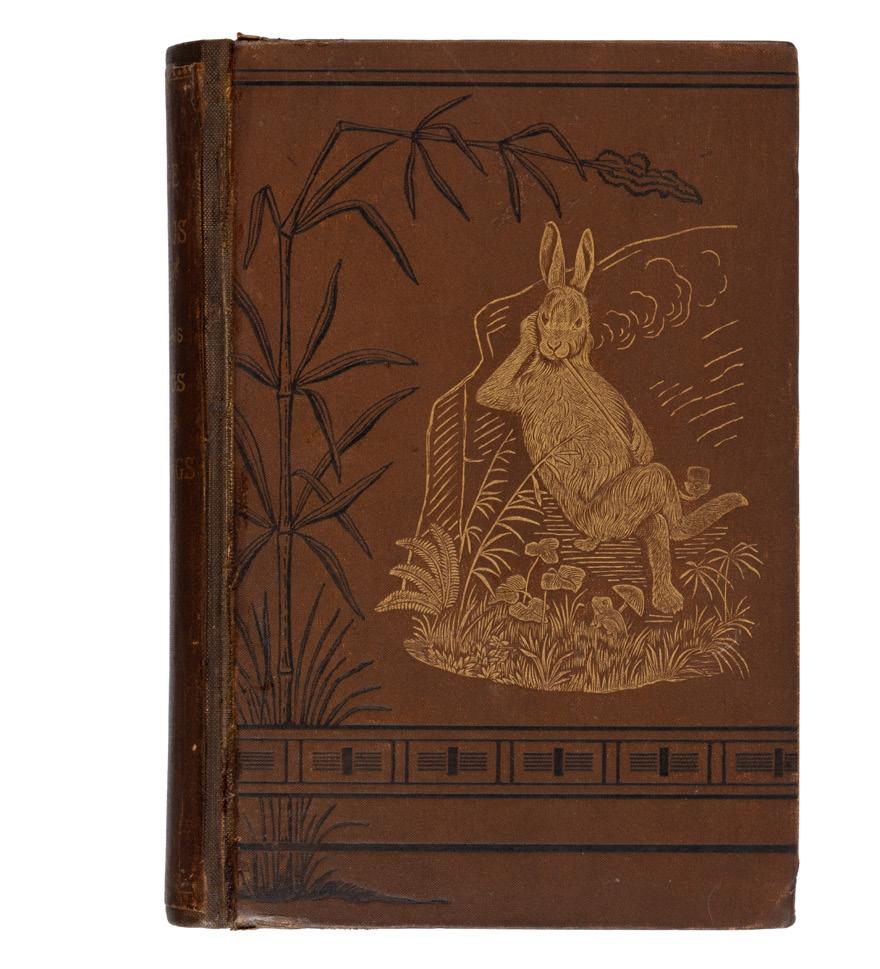
99 Hardy, Thomas (1840-1928). Tess of the D’Urbervilles. A Faithful Woman London: James R. Osgood, McIlvaine and Co., 1891.
3 volumes, 8vo. (Light spotting to endpapers and a few textual leaves.) Original tan cloth decorated in gilt (spines leaned and a bit darkened, forecorners lightly rubbed and bumped, spotting to top edges).
FIRST EDITION, WITH ALL FIRST ISSUE POINTS PRESENT. Tess of the d’Urbervilles was first printed as a weekly serial in The Graphic from 4 July to 26 December 1891. Due to objections over two chapters dealing with the seduction of Tess by Alec d’Urberville and the baptism and death of Tess’s child, described as being “more especially addressed to adult readers” by Hardy, the story as it originally appeared in The Graphic was incomplete and in many places greatly altered by Hardy in order to make the story appear more complete. The story as originally written by Hardy was printed in full the following year with its publication in these three volumes. Purdy, pp.67-78; Sadleir 1114; Wolff 2993.
$2,000 - 3,000
100
Harrington, James, Sir (1611-1677). The Common-Wealth of Oceana. London: Printed by J. Streater for Livewell Chapman, 1656..
Chancery folio (267 x 165 mm). Title printed in red and black. (Marginal toning to title-page, light offsetting and spotting throughout.) Contemporary dark calf (rebacked to style, endpapers renewed, fore-corners repaired). Provenance: contemporary marginalia and underlining.
FIRST EDITION OF HARRINGTON’S MASTERPIECE OF POLITICAL THEORY, in which, next to Thomas More’s Utopia, is perhaps the most famous attempt at envisioning a model commonwealth” (Pforzheimer). A work of utopian fiction, here Harrington envisions the country of Oceana, with a republican constitution, bicameral legislature, and other features that would have a profound influence on thinkers such as Montesquieu, Hume, Blackstone, and Locke, as well as thinkers of the American Revolutionary generation such as John Adams. Pforzheimer 449; Wing H-809.
$600 - 800
101
Harris, Joel Chandler (1848-1908). Uncle Remus. His Songs and His Sayings. New York: Appleton, 1881.
8vo. Wood-engraved illustrations in text after Frederick S. Church and James H. Moser; 8pp. publisher’s ads. (Occasional light marginal soiling and spotting.) Original pictorial brown cloth stamped in gilt (rebacked, preserving original spine and endpaper, fore-corners rubbed).
FIRST EDITION, FIRST ISSUE, with “presumptive” for “presumptuous” on p.9, and no mention of this title in ads at end, of Harris’s popular retelling of African-American folk-tales and myths. BAL 7100; Grolier American 83; Johnson High Spots 36; Peter Parley to Penrod, pp.56-57.
$800 - 1,200
102
[Harvey, William Henry (“Aleph”) (1796-1866)]. Geographical Fun, being Humourous Outlines of Various Countries. London: Hodder and Stoughton, n.d. [1869].
4to. 12 chromolithographic maps by Vincent Brooks, Day & Sons after Harvey. Original pictorial printed boards (old rebacking, new front endpaper, rear fore-corner renewed, extremities worn, upper cover partially detached).
Second edition (advertisements dated 1869), first issued in 1868. The introduction attributes the series of whimsical caricature maps to a “young lady … in her fifteenth year,” purportedly created to amuse and entertain her sick brother; in reality, the work is by William Harvey, the accomplished wood-engraver, illustrator, and occasional writer of verse for children. IN THE RARE ORIGINAL PICTORIAL BOARDS.
[With:] a suite of 4 satirical maps, ca 1910.
$800 - 1,200
103
Hawthorne, Nathaniel (1804-1864). The Scarlet Letter. Boston: Ticknor, Reed and Fields, 1850.
8vo. Title printed in red and black. (Lacking ads, a few marginal stains, a few corners creased.) Original brown blind-embossed cloth, gilt-lettered spine (slight lean to spine, few scattered stains, fore-corners and spine ends rubbed, rear hinge starting); morocco pull-off case.
FIRST EDITION with the contents listed on pp. iii-iv and no preface (the preface appeared on pp iii-iv and the contents list on pp. v-vi in the second edition). Hawthorne’s work was an immediate success, selling 2,500 copies in its first week of publication, giving Hawthorne his first literary success. BAL 7600; Clark A16.1; Grolier American 59.
$1,000 - 1,500
104
Hawthorne, Nathaniel (1804-1864). The House of the Seven Gables. Boston, 1851.
8vo. 4pp. publisher’s advertisements dated March 1851 at front [BAL’s printing B, no priority]. (Some spotting.) Original brown blind-embossed cloth, gilt-lettered spine [BAL’s binding A] (some light pale stains to covers, slight lean to spine, light rubbing to spine ends and fore-corners).
FIRST EDITION of Hawthorne’s gothic novel, published only a year after The Scarlet Letter. Inspired by the Turner-Ingersoll Mansion in Salem, Massachusetts, and family ties to the Witch Trials, the story follows a New England family and their ancestral home. BAL 7604.
$400 - 600
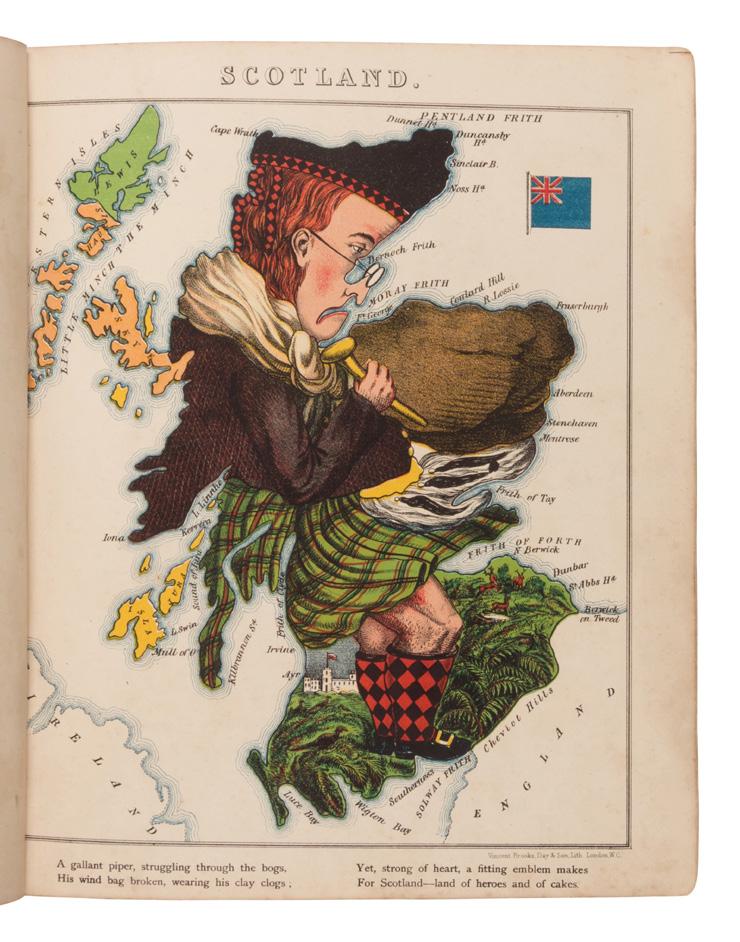
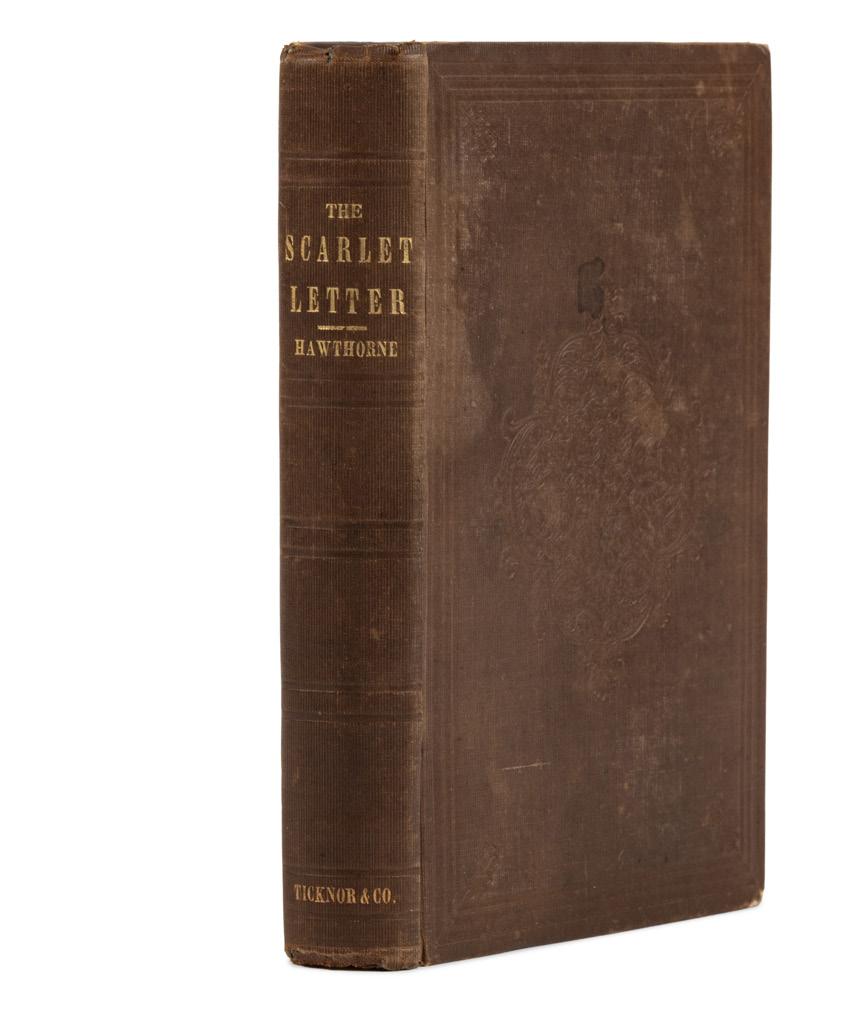
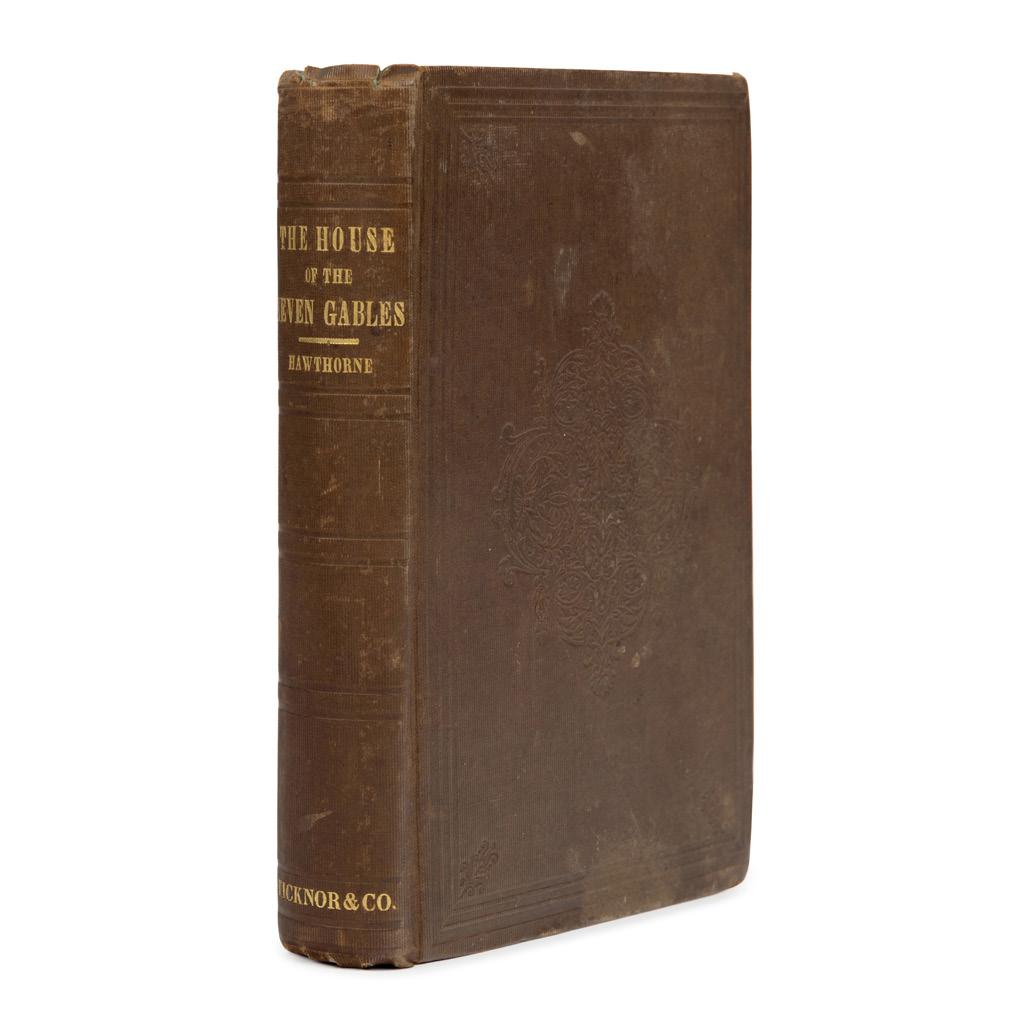
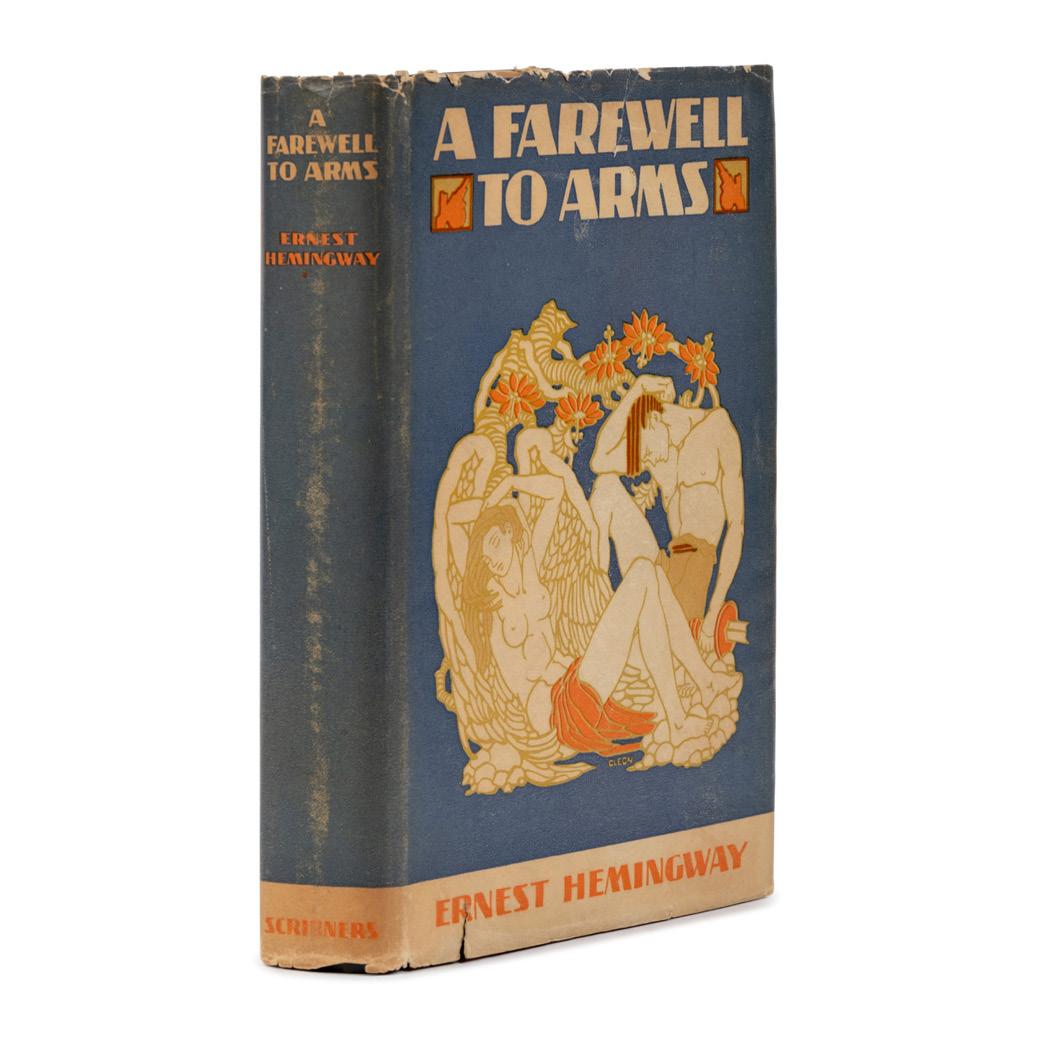
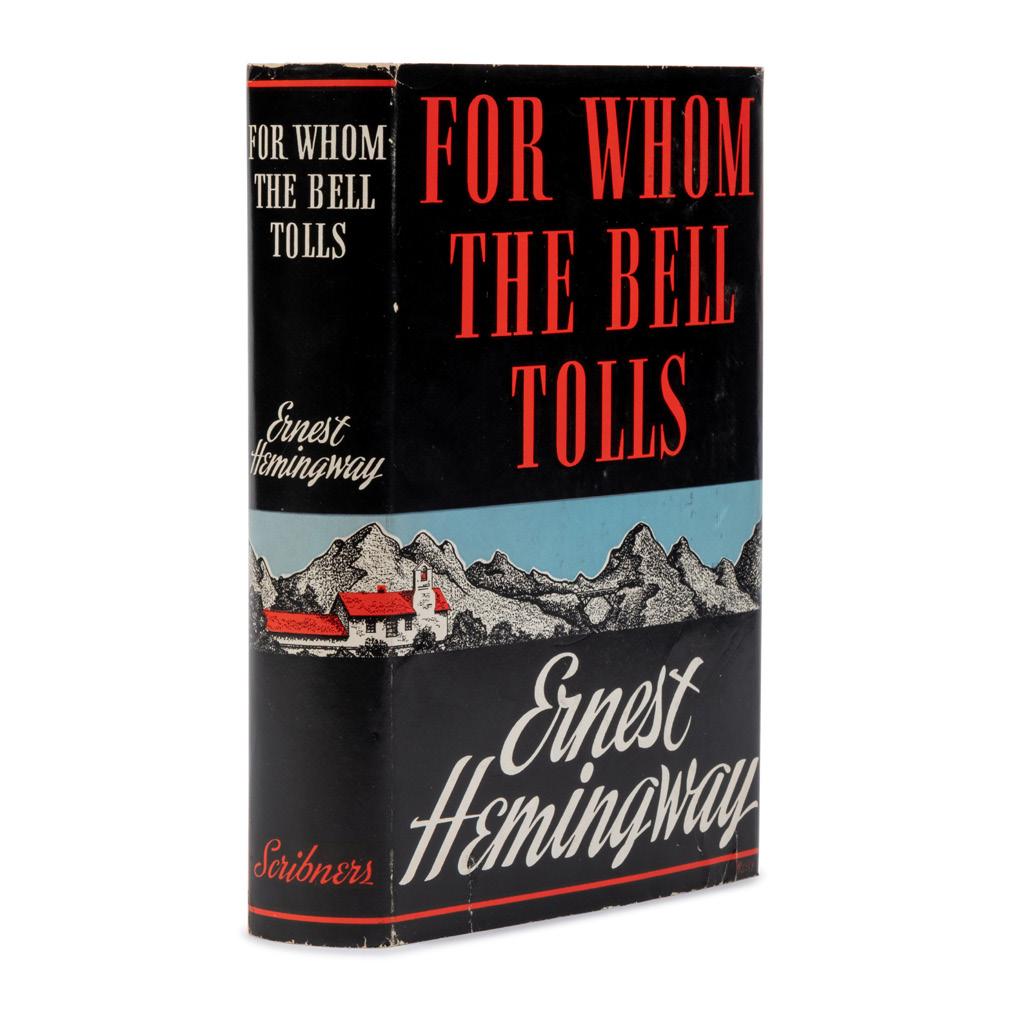
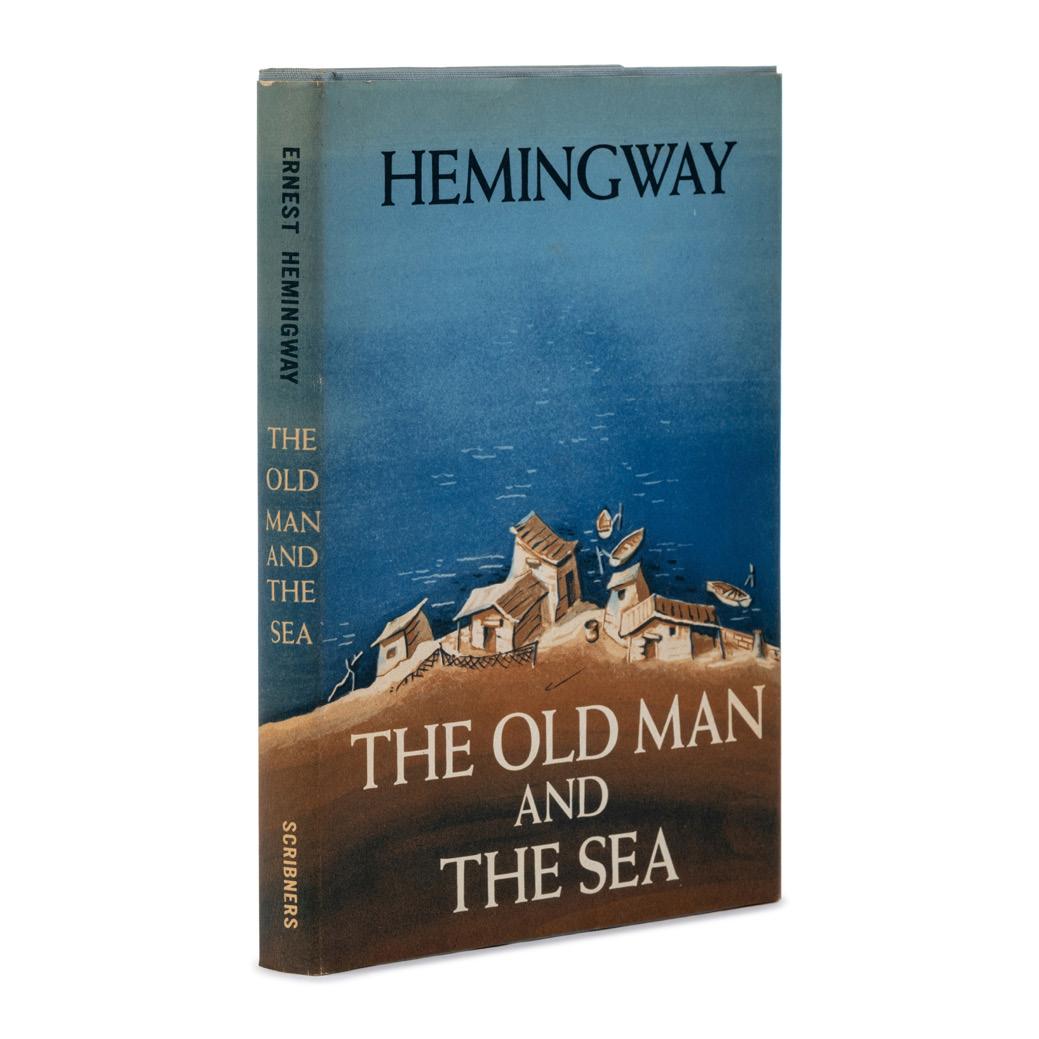
105
Hemingway, Ernest (1899-1961). A Farewell To Arms. New York: Charles Scribner’s Sons, 1929.
8vo. Original black cloth, printed gilt labels on upper cover and spine; dust jacket (chipping along extremities, toning, rubbing); folding chemise and morocco-backed slipcase.
FIRST TRADE EDITION, with “1929” on the title-page and the Scribner’s seal on the copyright page, FIRST ISSUE, without the disclaimer on page [x]. In the FIRST ISSUE DUST JACKET with the “$2.50” price and misspelling of “Katharine Barclay” on the front flap. Set during the Italian campaign of World War I, A Farewell to Arms was based partly on Hemingway’s own experiences with the character of Catherine Barkley based on American nurse Agnes von Kurowsky, who cared for Hemingway after he was wounded by an Austrian mortar shell explosion while distributing chocolate to Italian soldiers. The title is taken from a 16th-century poem by dramatist George Peele. Connolly, The Modern Movement 60 (“His first full-length novel and probably his best”); Hanneman A8a.
$1,000 - 1,500
106
Hemingway, Ernest (1899-1961). For Whom the Bell Tolls. New York: Charles Scribner’s Sons, 1940.
8vo. Original beige cloth stamped in black and red; dust jacket (very minor marginal chipping).
FIRST EDITION, FIRST ISSUE with Scribner’s “A” on the copyright page. In a FIRST ISSUE DUST JACKET, without the photographer credit on the rear panel. For Whom the Bell Tolls was written throughout 1939 in Havana, Key West, and Sun Valley, Idaho, and is based on Hemingway’s experiences as a field reporter during the Spanish Civil War. It became an immediate success upon publication. The book was slated to win the 1941 Pulitzer Prize however Columbia University president and head of the board Nicholas Murray Butler found the novel to be offensive; as a result, no award was given that year. Hanneman A18a. A VERY BRIGHT COPY.
$400 - 600
107
Hemingway, Ernest (1899-1961). The Old Man and The Sea. New York: Charles Scribner’s Sons, 1952.
8vo. Original blue cloth; dust jacket (price-clipped). Provenance: Starr Ford (ownership inscription).
FIRST EDITION, FIRST ISSUE with Scribner’s “A” and publisher’s seal on copyright page. IN THE FIRST ISSUE DUST JACKET with the rear panel photo tinted blue. The Old Man and the Sea was the last of Hemingway’s major works to be published in his lifetime. Written during the winter of 1950-51 while living with his muse, Italian poet Adriana Ivancich, in Cuba, the book was conceived as being part of a planned “sea trilogy,” the only other completed part of which would be posthumously published in 1970 as Islands in the Stream. The book was so well-received that for weeks after its publication Hemingway estimated that he received eighty letters a day congratulating him on it. The Old Man and the Sea would go on to win the 1953 Pulitzer Prize for Fiction. Hanneman A24a.
$800 - 1,200
108
Heinlein, Robert A. (1907-1988). Stranger in a Strange Land. New York: G.P. Putnam’s Sons, 1961.
8vo. Original green cloth, spine lettered in gilt, top edge stained green (a faint spot of darkening to spine); dust jacket (a few tiny areas of touch-ups, light dampstaining to spine panel and front flap fold, stains appearing on verso).
FIRST EDITION, FIRST PRINTING, with top edge stained green and C22 code at foot of p. 408. In the FIRST ISSUE DUST JACKET, priced $4.50, and with blurbs for Starship Troopers on the rear panel. The 1962 Hugo Award winner, a science fiction novel that became a cultural phenomenon. Currey, p.193.
$2,000 - 3,000

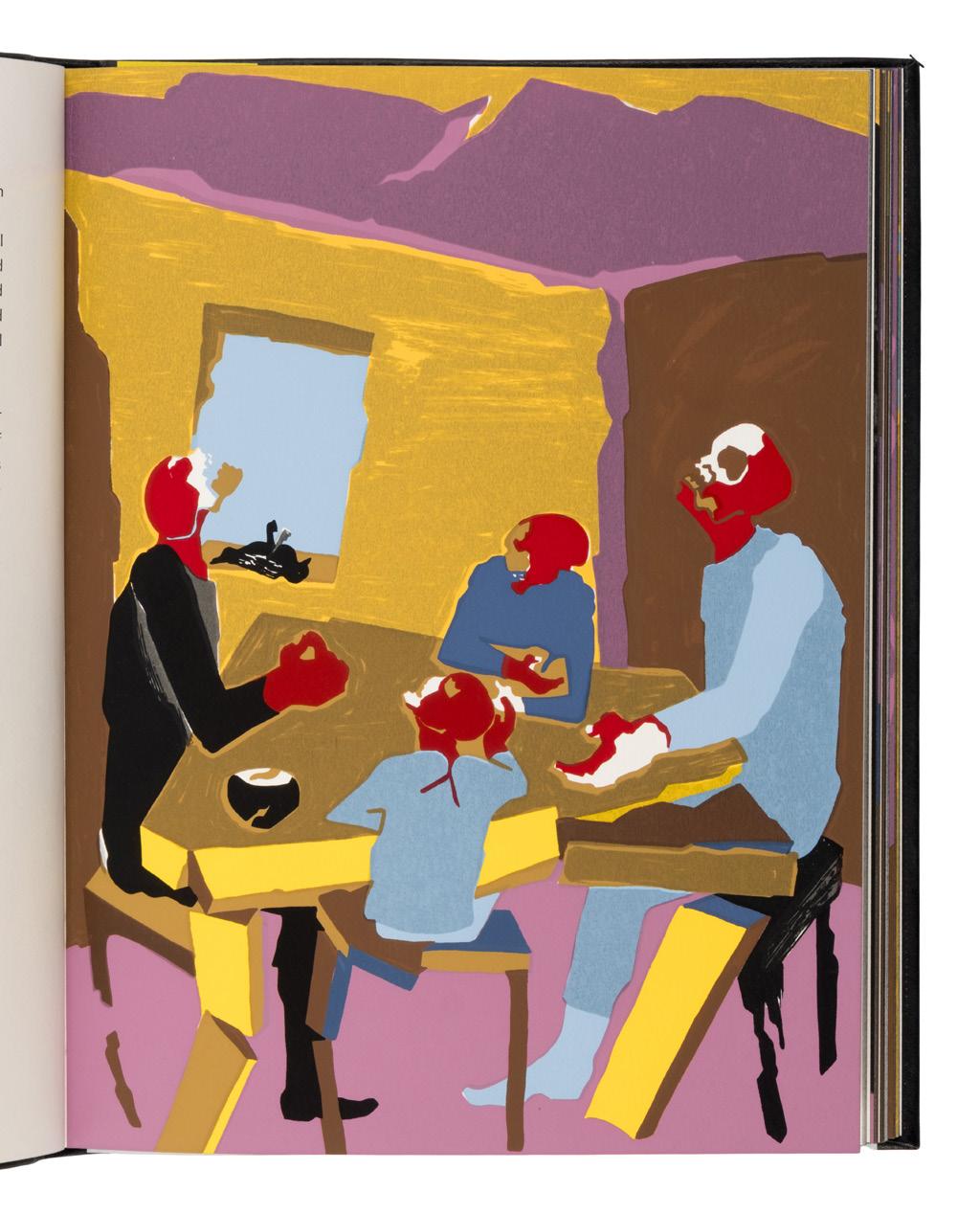
109
Hersey, John (1914-1993). -- Lawrence, Jacob (1917-2000), illustrator. Hiroshima. New York: The Limited Editions Club, 1983.
Folio. 8 silkscreens by Jacob Lawrence. Original black aniline leather (light scratches, rubbing); publisher’s slipcase (rubbing).
LIMITED EDITION, number 332 of 1,500 copies, SIGNED BY HERSEY, LAWRENCE, AND ROBERT PENN WARREN. Hiroshima was written in the immediate aftermath of John Hersey’s late 1945 tour of what remained of Hiroshima. As one of the first western journalists to view the city’s ruins, Hersey began work at the request of New Yorker editor William Shawn on an article about the real-world effects of nuclear weapons. The article was published in the 31 August 1946 issue. Written in plain prose, Hersey’s article created an outpouring of support amongst the American public for the sufferings of the Japanese people. A scientist who worked on the Manhattan Project claimed that after reading Hersey’s article he was struck with an overwhelming shame for his role in the bomb’s creation. The United States military government in Japan, while not expressly prohibiting publication of the book, nonetheless discouraged widespread printings, and so a Japanese edition did not appear until 1949. In 1999 Hersey’s original article was ranked the finest piece of American journalism published in the 20th century by New York University’s Department of Journalism.
$600 - 800
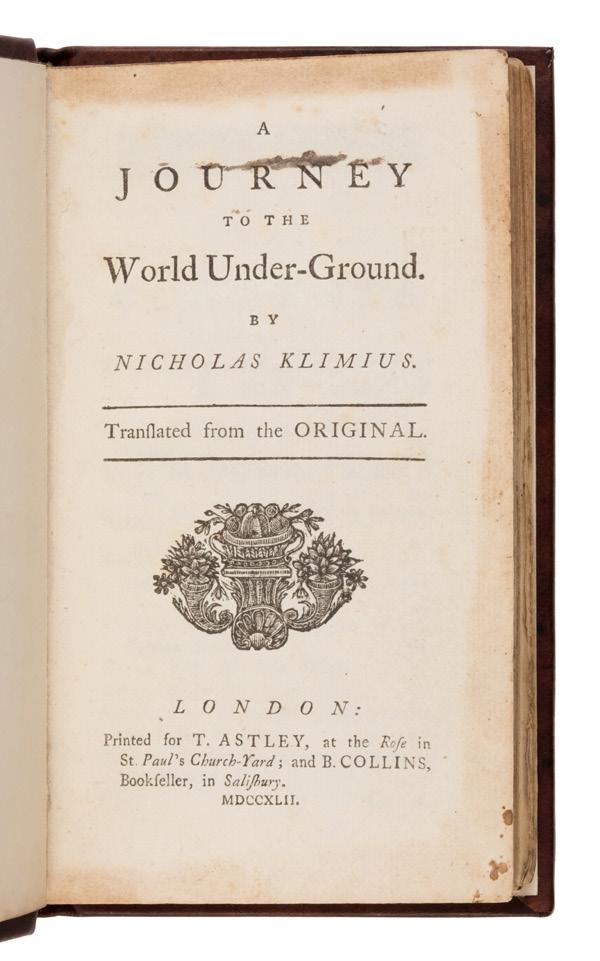
110
[The Hollow Earth]. [Holberg, Ludvig (1684-1754)]. A Journey to the World Under-Ground by Nicholas Klimius. London: T. Astley and B. Collins, 1742.
8vo (160 x 89 mm). (Very light spotting throughout, marginal toning to title page with minor ink stains.) Modern calf antique. Provenance: John Brownjohn (calligraphic ownership inscription at rear dated 26 October 1769).
FIRST ENGLISH EDITION. The notion of a subterranean world dates back to ancient times, and was resurrected in Renaissance Europe by Athanasius Kircher in Mundus Subterraneus, a scientific textbook printed in 1665 which proposed that there is an “intricate system of cavities and a channel of water connecting the poles.” The idea was further expanded upon by Edmond Halley in 1692, and throughout the eighteenth and nineteenth centuries American explorers sought access to hidden underground worlds which were thought to be populated by highly intelligent peoples; explorer J.N. Reynolds attempted to organize an expedition to this underground world, gaining 25 congressional votes in favor. A Journey to the World Under-Ground by Nicholas Klimius, written by Norwegian essayist and playwright Ludvig Holberg, is believed to be one of the earliest fictional works ever published to deal with the Hollow Earth theory, an idea so controversial at the time that Holberg initially published the book in Germany under the pseudonym Nicholas Klimius.
[With]: BURNET, Thomas. The Sacred Theory of the Earth... Fifth Edition. London: J. Hooke, 1722. 2 volumes, 8vo (193 x 114 mm). Numerous folding plates (some spotting throughout, toning, minor offsetting.) Modern quarter calf. Provenance: John Spolman (ownership signature at head of chapter one).
[With]: REED, William. The Phantom of the Poles. New York: Walter S. Rockey Company, 1906. 8vo. Original dark olive cloth (light rubbing). FIRST EDITION.
$1,200 - 1,600
111
Holmes, Oliver Wendell (1841-1935). The Autocrat of the Breakfast-Table. Boston: Phillips, Sampson and Company, 1858.
8vo. Half-title, engraved title, additional letterpress title printed in red and black, 8 engraved plates; publisher’s ads printed on endpapers. Original brown pebble blind-stamped cloth [BAL Binding A, no priority], spine stamped in gilt (a touch of rubbing to spine ends and fore-corners); folding chemise and slipcase.
FIRST EDITION, FIRST ISSUE, with the period after the word “Company” in the imprint. Framed as informal conversations at a Boston boardinghouse table, Holmes blends wit, philosophy, and social commentary, capturing the intellectual spirit of mid-19th-century New England. BAL 8781; Tilton P.69ff.
$200 - 300
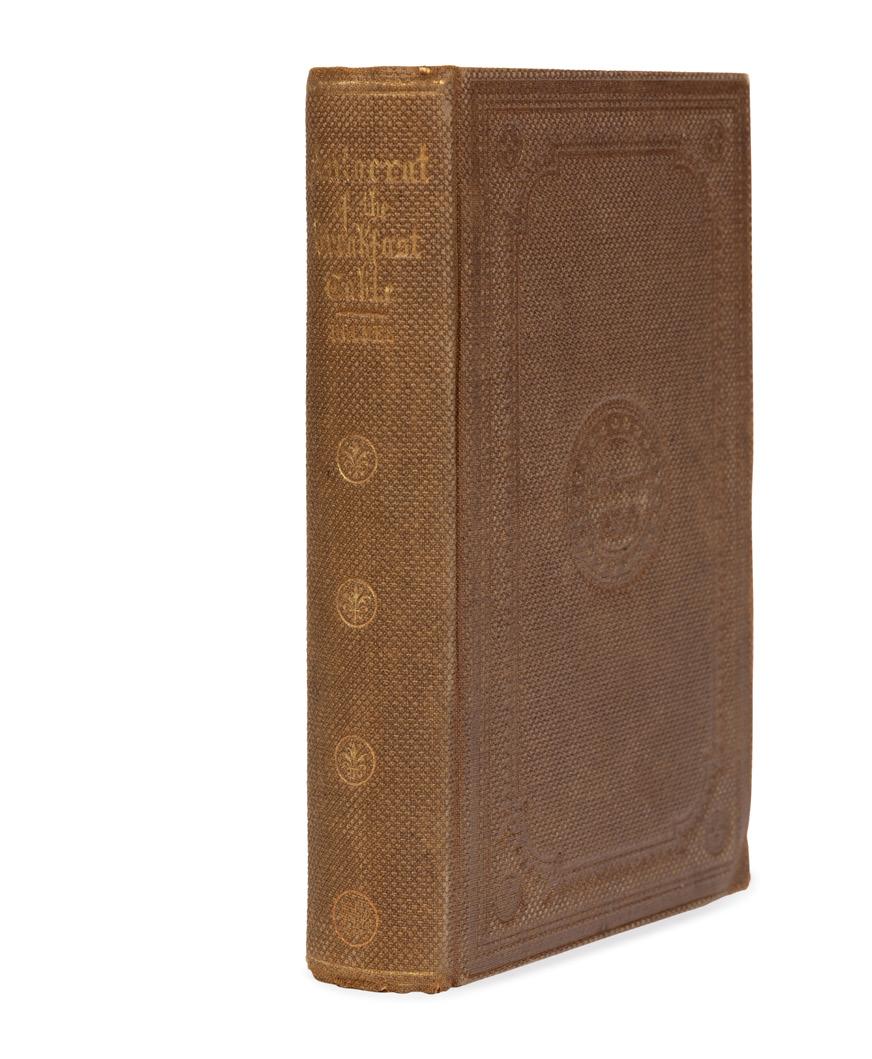
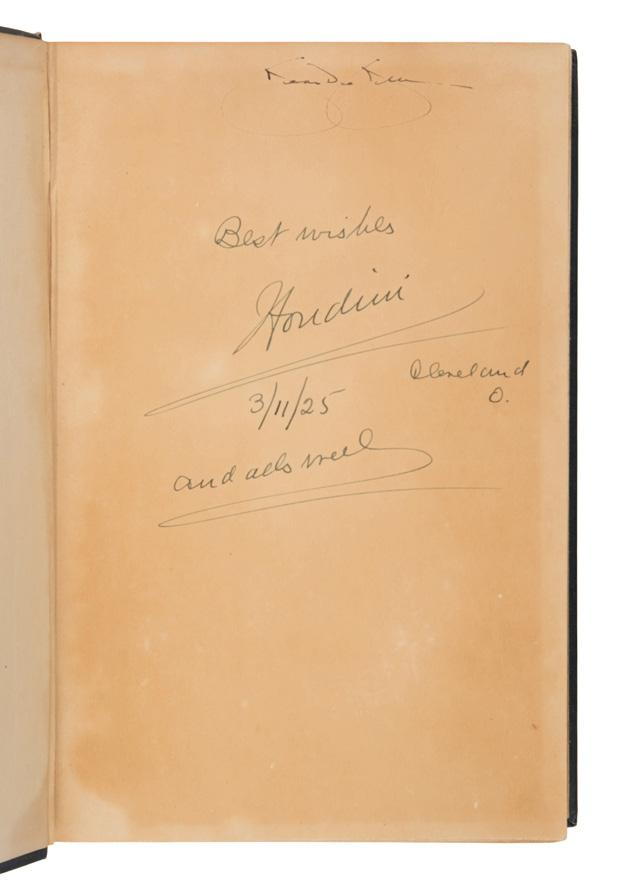
112
Houdini, Harry (Erik Weisz, 1874-1926). A Magician Among the Spirits. New York: Harper & Brothers, 1924.
8vo. Numerous plates from photographs. Original grey-blue cloth gilt (rubbing and darkening to spine, endpapers toned); morocco-backed folding case. Provenance: unidentified ownership signature above author inscription and title-page.
FIRST EDITION. INSCRIBED BY HOUDINI on front free endpaper: “Best wishes... 3/11/25 / Cleveland O. / and all’s well.”
On 9 March 1925, illusionist and escape artist Harry Houdini began a two-week engagement at Cleveland’s Palace Theatre, with the first devoted to his escape act and the second to debunking spiritualists. The last of Houdini’s books to be published in his lifetime, A Magician Among the Spirits, was the culmination of over thirty years of studying and debunking occult phenomena, in particular spiritualists, whom Houdini considered to be little more than con artists.
On 10 March, Houdini, County Prosecutor Edward C. Stanton, and a representative from the Cleveland Press went undercover at a seance conducted by spiritualist George Renner, whose gatherings included floating trumpets supposedly controlled by spirits. As the lights went down, Houdini smeared the trumpets with lamp soot, then, as the trumpets began to rise, suddenly turned on a flashlight, revealing Renner’s face and hands covered in soot and proving that it was he who was controlling the “floating” trumpets. Renner was arrested, and Houdini left just in time to make that evening’s performance at the Palace Theatre. The present volume was signed the following day, likely by a Houdini still very pleased with himself over the previous evening’s expose.
$2,000 - 3,000
113
Howard, Robert E. (1906-1936). Skull-Face and Others. Sauk City, WI: Arkham House, 1946.
8vo. Original black cloth; dust jacket (very light sunning to spine, a few tiny nicks to spine ends).
FIRST EDITION. Skull-Face and Others comprises the first major collection of stories by Robert E. Howard, creator of Conan the Barbarian and widely considered to be the father of the “sword and sorcery” genre. Many of these stories were initially published in Weird Tales. Publisher August Derleth received some criticism from readers for not including more Conan stories, a criticism which he anticipated and addressed in his introduction to the book, writing, “the earlier Howard wrote more skillfully than the Howard who created and exploited the popular Conan.” The dust jacket features art by Hugo Award-winning artist Hannes Bok. Jaffery, 19.
$400 - 600
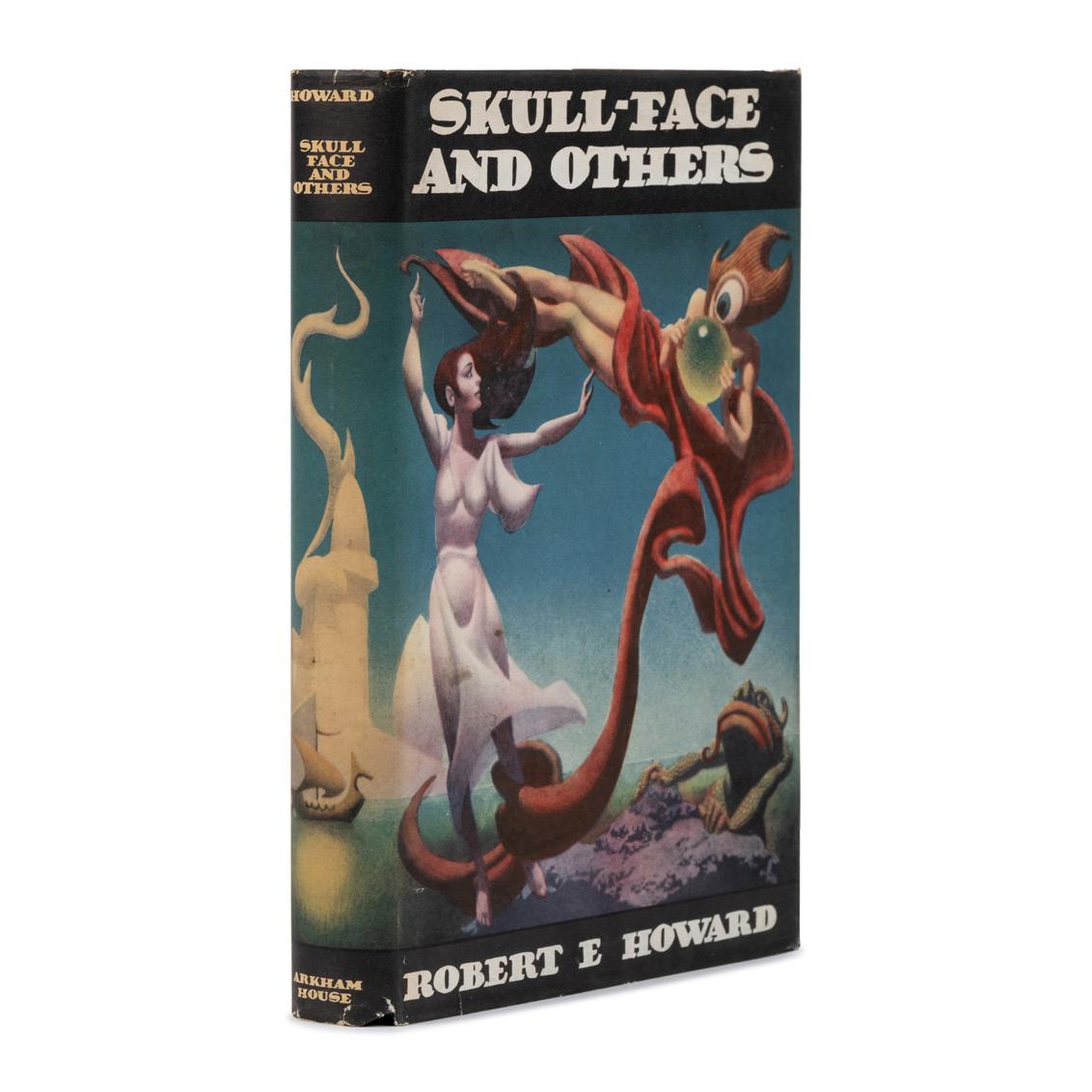
114
Hughes, Langston (1901-1967) and Roy DeCarava (1919-2009). The Sweet Flypaper of Life. New York: Simon and Schuster, 1955.
8vo. Photographic illustrations by Roy DeCarava. Original photographic wrappers (extremities toned, light rubbing to joints, front joint discretely reattached); folding case. Provenance: Stella Holt (1899-1967), American theater producer (presentation inscription).
FIRST EDITION, wrappers issue (preferred), with text beginning on the front wrapper and continuing on p. 3. PRESENTATION COPY, INSCRIBED IN THE YEAR OF PUBLICATION BY HUGHES TO HIS CLOSE FRIEND, RENOWNED THEATRICAL PRODUCER STELLA HOLT, on the inside front cover: “Especially for Stella Holt, with thanks for so many fine plays, sincerely, Langston Hughes, New York, New York, Nov. 30, 1955.”
Stella Holt was “one of the first producers to use integrated casts” (New York Times). In her 1965 production of Hughes’ Prodigal Son, Holt and Hughes brought in African American playwright Vinnette Carroll as director. “Holt turned Hughes’ gospel drama into ‘a swinging dance pantomime,’ as he marveled, ‘a novel concoction I never dreamed of—but a delightful one’... ‘Stella was devoted to Langston,’ Vinnette Carroll recalled’” (Rampersad, Life of Langston Hughes II:391-2). Holt was also behind the successful 1957 Broadway production of Hughes’ Simply Heavenly. She died three months after Hughes in 1967.
The Sweet Flypaper of Life appeared in November 1955, just as Hughes was completing the manuscript for his autobiography, I Wonder as I Wander. The critical reception of the work was positive: “No book by Hughes was ever greeted so rhapsodically.... Calling it ‘a delicate and lovely fiction-document of life in Harlem,’ the New York Times praised its ‹astonishing verisimilitude’” (Rampersad, Life, Vol. II, p.249). For his part, Roy DeCarava “looked at their book and almost burst into tears.....[expecting] a big glossy book with [his] photographs lavishly laid out,” but the critical reception brought him around (ibid., p249). The Sweet Flypaper of Life remains “one of the most successful collaborations between a great writer and a great photographer ever published” (101 Books, pp.138-9). Auer, p.357; The Photobook, vol. I, p. 242 (“A publishing success and... an important step forward”).
$1,000 - 1,500
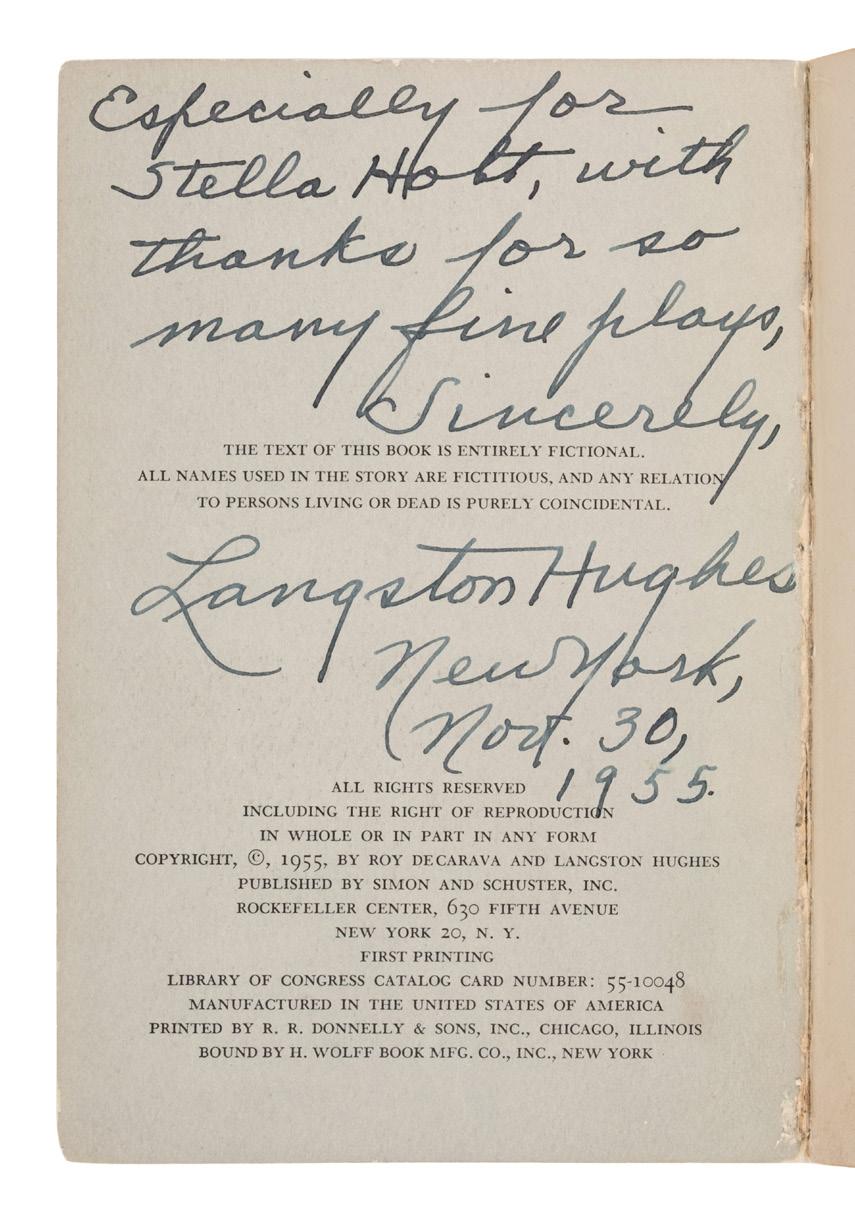
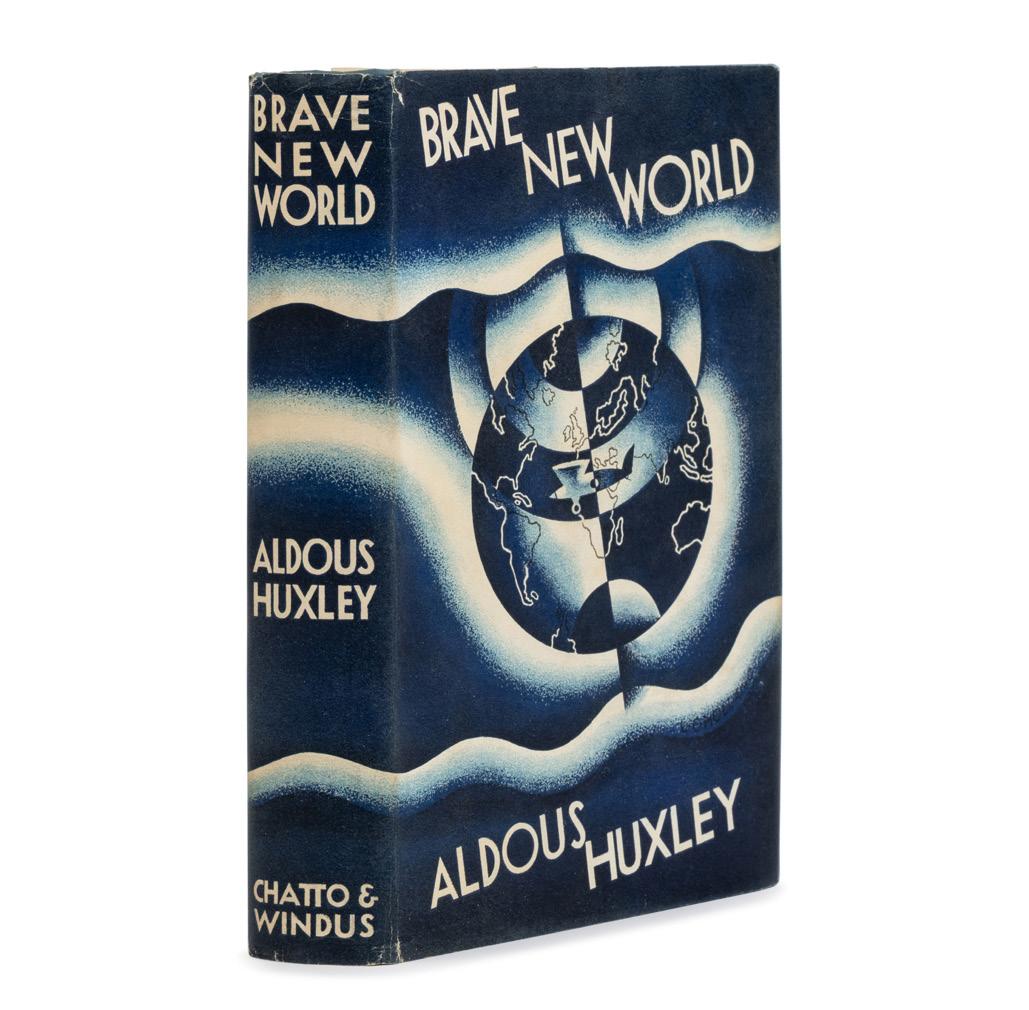
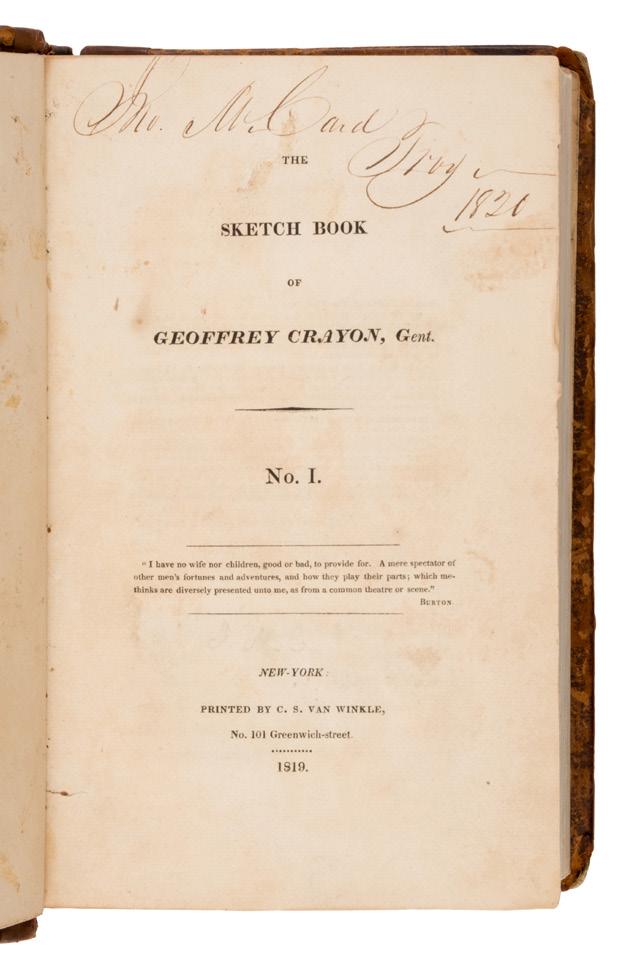
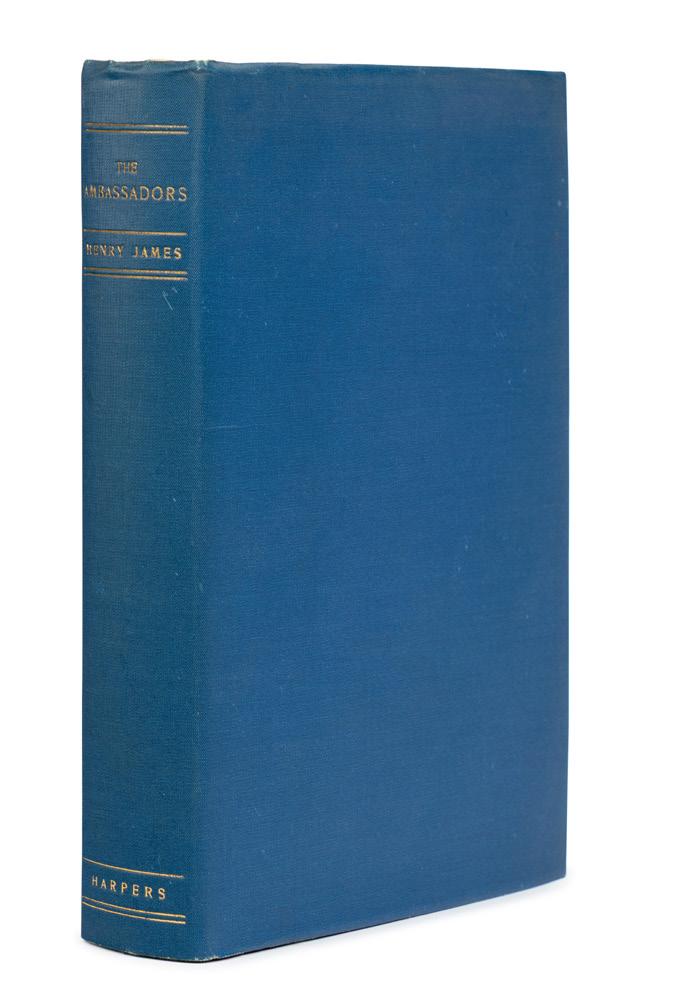
115
Huxley, Aldous (1894-1963). Brave New World. London: Chatto & Windus, 1932.
8vo. Original blue cloth, spine lettered gilt (spine lightly faded and leaned); dust jacket (a touch of light wear to spine ends, some spotting to flaps).
FIRST EDITION of Huxley’s dystopian novel, ranked fifth by the Modern Library on its list of the 100 best English-Language novels of the 20th century. Connolly describes the novel as “a Utopia which is never dull, of which the horror is always credible as one sympathies grow more involved with the fate of the young primitive from the Indian Reservation who challenges the machine.” Bromer A29.2; Connolly, The Modern Movement 75 (“brilliantly plausible fantasy”). A NEAR FINE COPY IN AN UNRESTORED DUST JACKET.
$3,000 - 4,000
116
Irving, Washington (1783-1859). The Sketch Book of Geoffrey Crayon, Gent. No. I [-VII] New York: C.S. Van Winkle, 1819-1820.
7 parts in one, 8vo (210 x 127 mm). (Scattered browning and offsetting, a few leaves in part VI dampstained, p.119/120 reinserted on stub). Contemporary calf (rebacked, boards worn). Provenance: early illegible ownership signature on parts I and IV, dated 1820.
FIRST EDITIONS, FIRST PRINTINGS of Nos. I, VI and VII (i.e., first printing throughout where such a distinction has been made by BAL). Published serially in parts between 1819 and 1820, The Sketch Book of Geoffrey Crayon, contains two of Irving’s most celebrated tales, “Rip Van Winkle” and “The Legend of Sleepy Hollow.” The work also marks Irving’s first sustained use of the fictional narrator Geoffrey Crayon, a persona he would employ in several later writings. BAL 10106; Langfeld & Blackburn pp.15-23; Peter Parley to Penrod, p.143.
$1,000 - 1,500
117
James, Henry (1843-1916). The Ambassadors. New York and London: Harper & Brothers, 1903.
8vo. Original blue boards, gilt-lettered spine, top edge gilt (light toning near edges); cloth dust jacket, gilt-lettered spine. Provenance: S. Mitchell (bookplate and ownership signature on front free endpaper dated 25 Dec. 1903).
FIRST EDITION of one of Henry James’s personal favorites among his novels and one of the most significant works to emerge at the turn of the century. BAL 10656; Edel & Laurence A58b.
$300 - 400
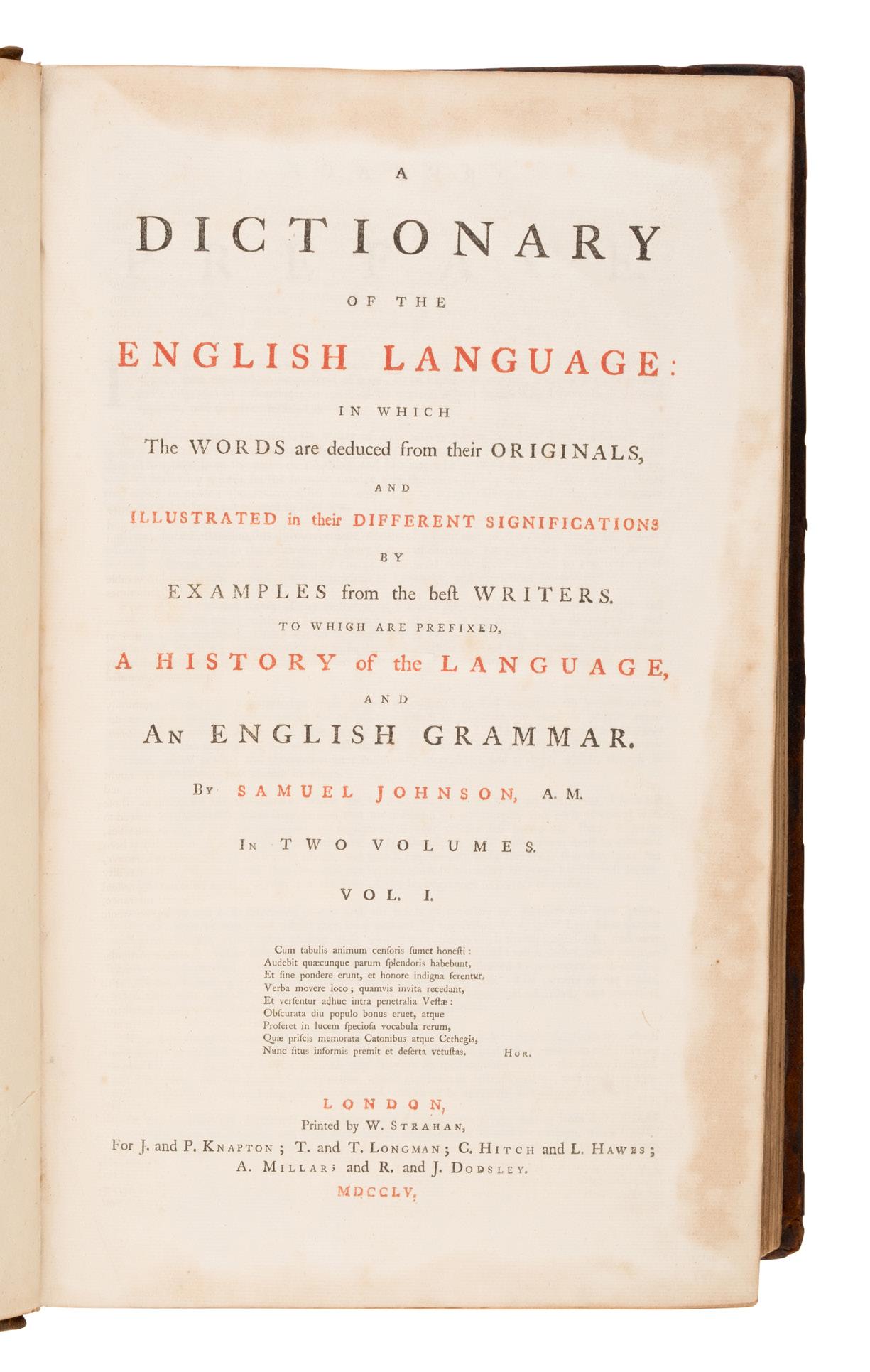
118
Johnson, Samuel (1709-1784). A Dictionary of the English Language in which the words are deduced from their originals, and illustrated in their different significations by examples from the best writers. London: W. Strahan for J. and P. Knapton; T. and T. Longman; C. Hitch and L. Hawes; A. Millar; and R. and J. Dodsley, 1755.
2 volumes, large folio (419 x 254 mm). Titles in red and black, woodcut tail-pieces. (Intermittent marginal toning or spotting.) Contemporary reverse calf (rebacked to style, preserving lettering-pieces and endpapers); folding cases. Provenance: armorial bookplate (Moncreiffe?).
“THE MOST AMAZING, ENDURING AND ENDEARING ONE-MAN FEAT IN THE FIELD OF LEXICOGRAPHY” (PMM)
FIRST EDITION OF JOHNSON’S DICTIONARY, one of the most influential books in the history of the English language and “a monument of industry and talent [and] the unrivaled authority for the English language” (Courtney and Smith p.54). Johnson’s achievement in compiling his great Dictionary was immediately recognized. Adam Smith commended it in one of its earliest reviews, and Boswell called it a work of “superior excellence.” Not only did Johnson give lucid definitions and codify spelling, but he also offered over 114,000 illustrative quotations, providing a compendium of excerpts from canonical works of English literature, meaning that even today it “may still be consulted for instruction as well as pleasure” (PMM). Noah Webster claimed that it was to language what Newton’s discoveries were to mathematics. The present copy has Todd’s variant “a” settings of 19D (press figures 1v–9 and 2v–7) and 24O (press figure 1v–2), both in the first state, which Todd notes as highly uncommon. Of 13 copies examined by Todd, only one had both settings; 19D, which ‘occurs very infrequently’ in the first setting, has 58 textual variants in the second.
Fleeman I, p. 410; Grolier English 50; PMM 201; Rothschild 1237; Todd, “Variants in Johnson’s Dictionary 1755,” The Book Collector, XIV (1965), pp. 212-214.
$4,000 - 6,000
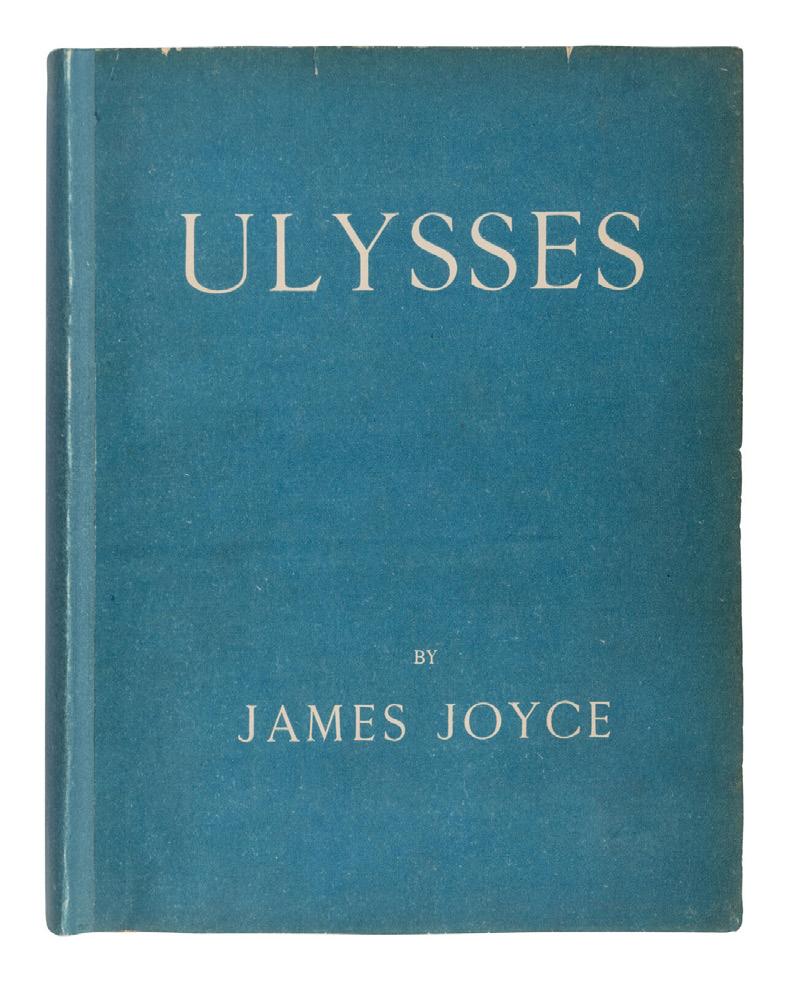
120
119
Joyce, James (1882-1941). Ulysses. London and Paris: John Rodker for The Egoist Press, 1922.
Small 4to. Half-title; 7pp. errata at end. Original “Greek flag” blue printed wrappers, uncut (rebacked, few tiny closed tears and light rubbing at extreme edges); folding case.
FIRST ENGLISH EDITION, LIMITED ISSUE, number 670 of 200 copies on handmade paper printed in Dijon from the original plates for Joyce’s patron, Harriet Weaver, who was unable to find a printer in London, and distributed by Rodker and Ezra Pound.
Of the 2,000 copies printed, 500 copies were sent to America and were subsequently reported seized and burned by the United States government authorities; recent evidence suggests that not all of the copies sent to America were destroyed. According to Harriet Shaw Weaver, “a good number of copies sent by ordinary book post to the U.S.A got through to their various destinations, but some time between October 1922 (when the Egoist edition as published) and December, the U.S.A censorship authorities evidently became suspicious until finally 400-500 copies were confiscated and burnt” (qtd. in Slocum and Cahoon). Slocum and Cahoon A18.
[With:] Publisher’s pre-publication announcement of the Shakespeare and Co. first edition laid in, with ink notations (presumably by the publisher) correcting the publisher’s address and indicating that the 750 copies of the first edition printed on handmade paper had already sold out.
$1,500 - 2,500
[Matisse, Henri (1869-1954), illustrator]. -- Joyce, James (1882-1941). Ulysses. New York: The Limited Editions Club, 1935.
4to. 6 etchings and 20 reproductions of preliminary drawings on colored paper. Original brown cloth with upper cover and spine gilt-decorated, printed label on spine; glassine dust jacket (some chipping along extremities with 4 in. to front panel with loss); publisher’s printed slipcase (light soiling and rubbing to extremes).
LIMITED EDITION, number 511 of 1,500 copies, SIGNED BY MATISSE. Considered one of the most important works by Irish author James Joyce, Ulysses was first published in Paris by Shakespeare & Co. in 1922 and, from there, spent over a decade fending off legal challenges for perceived obscenity before finally seeing publication in the United States in 1934. The following year, George Macy, founder and publisher of the Limited Editions Club, paid French artist Henri Matisse $5,000 to create the illustrations for Macy’s edition. Matisse famously created illustrations based on Homer’s epic poem The Odyssey, claiming that he had not read Joyce’s book. Though it is reported that Joyce was so angry at this perceived snub that he refused to sign more than 250 copies, the contract Joyce initially signed with Macy allowed only 250 copies to be signed by both him and Matisse, owing to Joyce’s failing eyesight. The American Livre de Peintre, 32; The Artist and the Book, 197; Slocum and Calhoun, A22.
$2,000 - 3,000
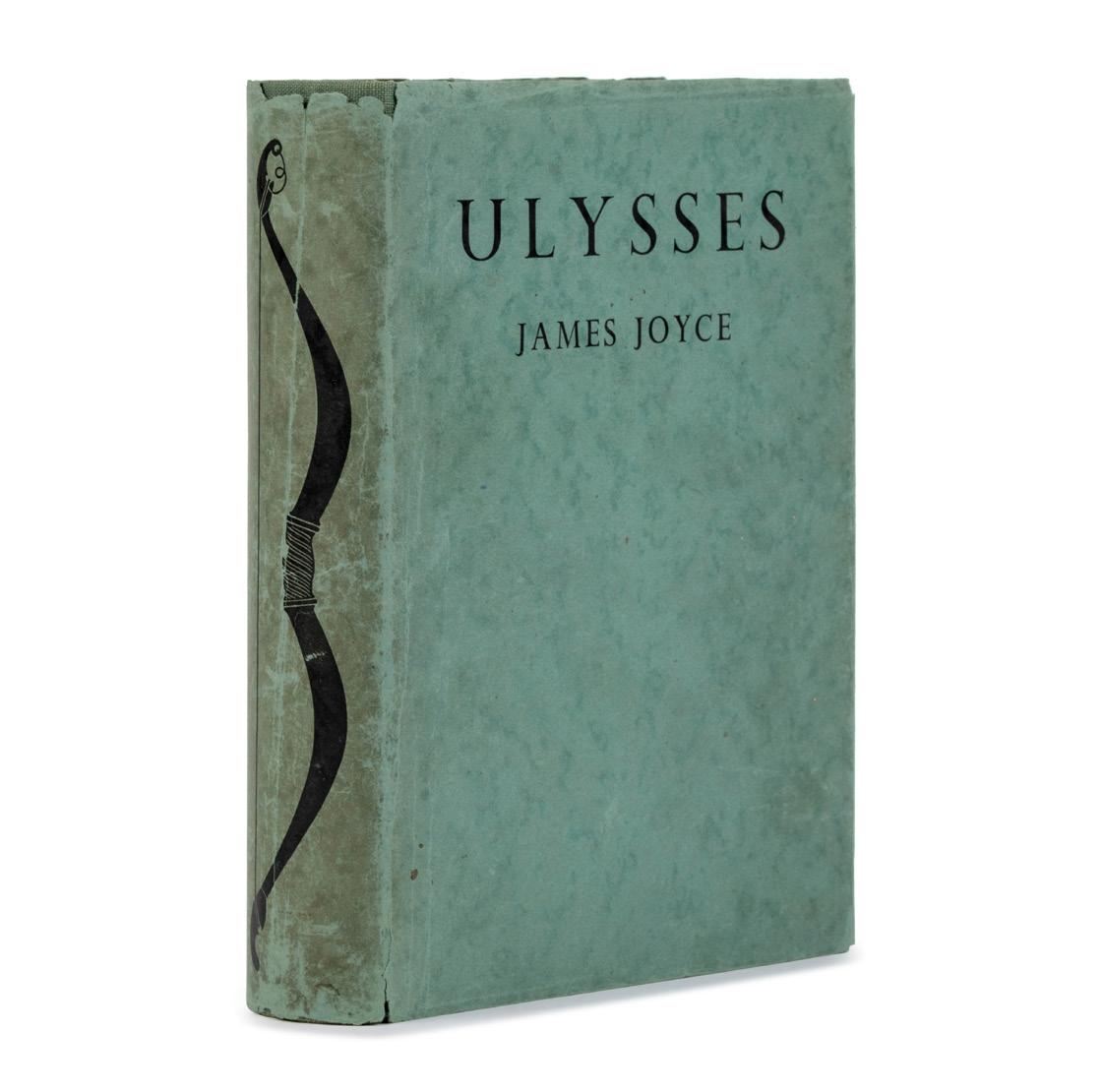
121
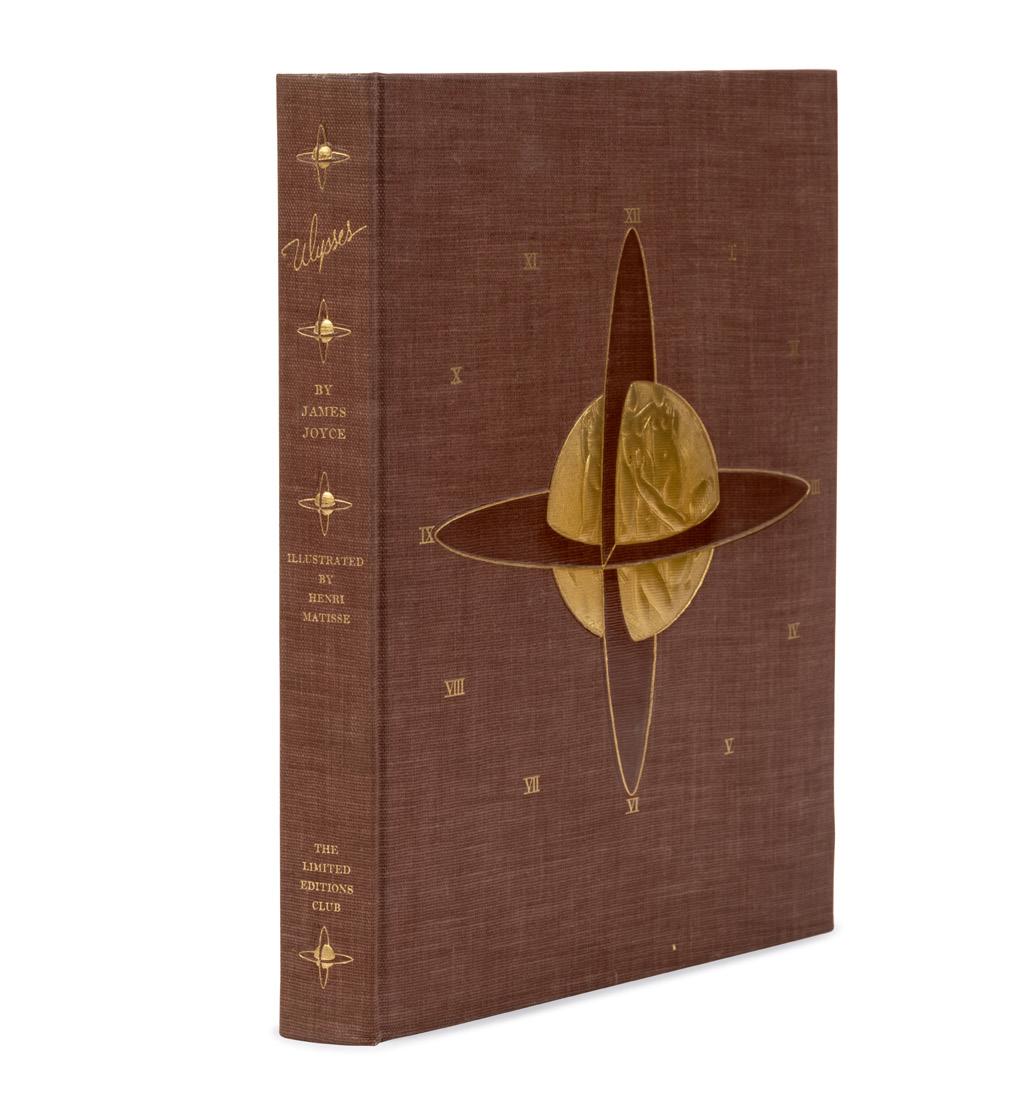
Joyce, James (1882-1941). Ulysses. London: John Lane the Bodley Head, 1937.
8vo. Original green cloth with Homeric bow gilt on upper cover designed by Eric Gill, giltlettered spine (spine lightly sunned); dust jacket (vertical crease and some darkening along spine panel, light chipping at extreme ends).
FIRST ENGLISH TRADE EDITION, reproduced from the 1936 edition that was limited to 900 copies, and generally considered the “final and definitive edition” of the novel. Slocum & Cahoon 23 (first English edition).
$600 - 800
122
Kafka, Franz (1883-1924). Die Verwandlung. Leipzig: Kurt Wolff Verlag, 1915.
8vo. 5pp. publisher’s ads at end. Original pictorial wrappers printed in red and black with an illustration by Ottomar Starke, printed flaps, uncut (light spotting to upper cover, some toning and rubbing to extremities, small split to front joint near head of spine); morocco-backed folding case.
FIRST EDITION, THE PREFERRED WRAPPERS ISSUE, of Kafka’s eerie fantasy of psychological transformation and social alienation. “This ‘exceptionally repulsive story’ is the most sustained work of fiction published during Kafka’s lifetime and the one with which his name is most profoundly associated in the common conscious. In his critical hierarchy of the great prose works of the Twentieth Century, Vladimir Nabokov rates Die Verwandlung second behind only James Joyce’s Ulysses, a work that is twenty or more times its length” (The Breon Mitchell Collection of the Works of Franz Kafka, p.7).
Following its first appearance in the journal “Die Weissen Blätter,” Kafka was eager to have the novel published in book form by Kurt Wolff. After he learned that Ottomar Starke was illustrating the cover, he wrote to the publishing house in a letter dated 25 October 1915: “The insect itself must not be illustrated by a drawing. It cannot be shown at all, not even from a distance.” “Der Jüngste Tag” 22/23; Dietz 26; Wilpert/Gühring 4.
$3,000 - 4,000

123
Kerouac, Jack (1922-1969). On the Road. New York: Viking, 1957.
8vo. Original black cloth lettered in white, top edge stained red (faint spotting to spine, a touch of spotting to rear flap); dust jacket (very light wear to spine ends).
FIRST EDITION, FIRST ISSUE with red top stain. In a FIRST STATE dust jacket with red and blue stripes on rear panel. “[On the Road’s] composition has become a well-known anecdote in its own right...in April 1951 he fed a 120-foot roll of teletype into his typewriter, typed for three weeks and the result, largely unrevised, was On the Road.” (Parker, 339). Charters A2a. AN EXCEPTIONALLY FINE COPY.
$2,500 - 3,500

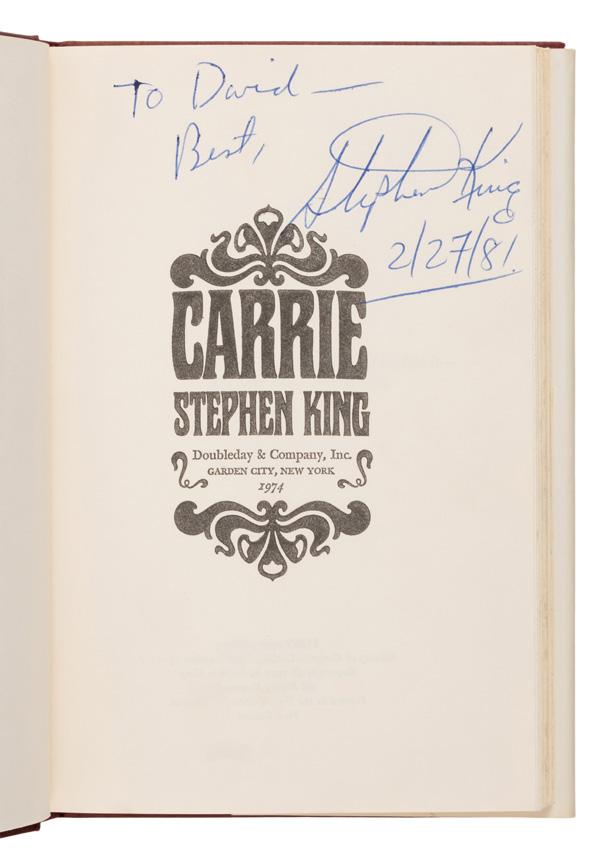
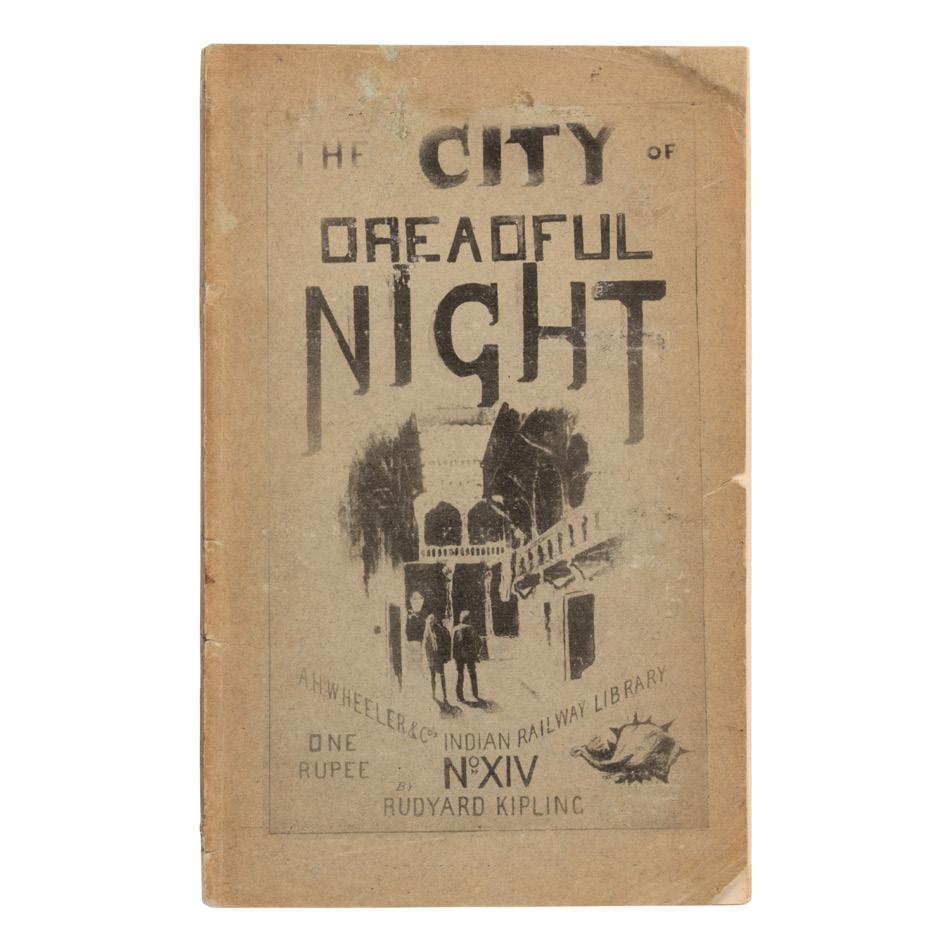
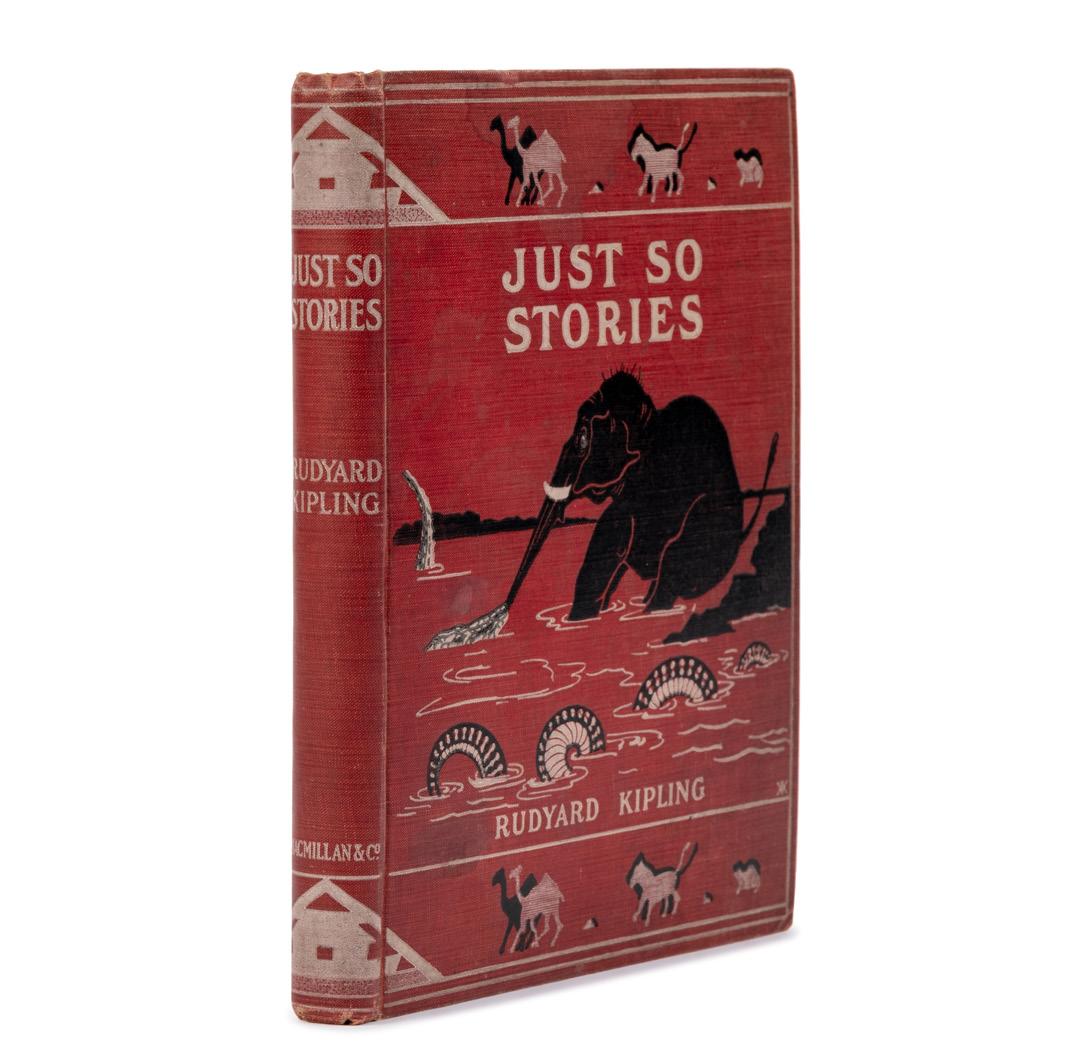
124
King, Stephen (b. 1947). Carrie. Garden City, New York: Doubleday and Co., Inc., 1974.
8vo. Original purple cloth; dust jacket (some minor marginal rubbing to rear).
FIRST EDITION, FIRST ISSUE with “P6” gutter code on p.199. INSCRIBED BY KING ON TITLE PAGE, “To David.” Inspired in part by two elementary school classmates and his own experiences as a high school teacher, Stephen King began work on Carrie intending to submit it as a short story to one of the men’s magazines in which he most often published his work, however after three pages he became uncomfortable with the story and threw it away. It was famously rescued from the garbage bin by King’s wife, Tabitha, who encouraged him to finish the story. It was initially published in April 1974 and quickly proved a massive success, kickstarting King’s career as one of the bestselling novelists of the twentieth century.
$1,500 - 2,500
125
Kipling, Rudyard (1865-1936). The City of Dreadful Night and Other Places. Allahabad: A.H. Wheeler & Co., 1891.
8vo. 13pp. publisher’s ads and opinions of the press. Original pictorial wrappers (few spots of chipping at spine and front panel edges, splitting to front joint, top fore corner repaired); folding chemise and morocco-backed slipcase. Provenance: Ronald K. Siegel (his sale of drug literature, Potter & Potter Auctions, 1 June 2023, lot 110).
FIRST PUBLISHED EDITION, issued as No. 14 in Wheeler’s Indian Railway Library series. A slightly expanded version of the suppressed edition of 1840 (all but three copies destroyed from a print run of 3,000). “Efforts were made to suppress this collection, but, although it is very scarce, copies can be found, and several have been reported” (Livingston). Kipling describes the opium dens or ”chandu shops” in Calcutta, where the purest form of opium is smoked (raw opium is boiled and strained). Livingston 70; Richards A52.
$400 - 600
126
Kipling, Rudyard (1865-1936). Just So Stories for Little Children. London: Macmillan, 1902.
Square 8vo. Illustrated with plates by Kipling. Original red pictorial cloth stamped in black and white (light rubbing).
FIRST EDITION of Kipling’s classic collection of children’s stories explaining, among other questions, “How the Camel Got its Hump.” The tales included in Just So Stories largely began as bedtime stories told by Kipling to his daughter Josephine, with the first three appearing in a children’s magazines a year before her death. Kipling later wrote, “...in the evening there were stories meant to put Effie to sleep, and you were not allowed to alter those by one single little word. They had to be told just so; or Effie would wake up and put back the missing sentence. So at last they came to be like charms, all three of them – the whale tale, the camel tale, and the rhinoceros tale.” The other nine were written down following Josephine’s passing and were published “just so,” with the narrator often referring to the listener as “My best Beloved.” In 2002 a series of British postal stamps were issued featuring images from Just So Stories in commemoration of its one hundredth anniversary. Grolier, One Hundred Books Famous in Children’s Literature 57; Livingston 267; Stewart 260. A VERY FINE COPY.
$400 - 600
127
[Koran]. -- Sale, George (1696-1736), translator. The Koran, Commonly called The Alcoran of Mohammed. London: C. Ackers, 1734.
4to (248 x 191 mm). Title printed in red and black, engraved folding map (small closed tear near gutter), 4 engraved plates (3 folding). (Marginal worming to several leaves towards the end.) Contemporary mottled calf, all edges stained red (rebacked to style, endpapers renewed, forecorners rubbed). Provenance: Eugene Field (1850-1895), American author (bookplate tipped to new endpaper); Eugene Field II (1887-1944), American forger (inscription on rear free endpaper identifying that this book came from his father’s library, dated 10 Sept. 1922).
FIRST EDITION IN ENGLISH of George Sale’s important translation from the Arabic, to which he added a “long ‘preliminary discourse’, a compendium of all that was known about the religion of Islam” at the time of publication (DNB). The plates comprise 3 genealogical tables and a folding plan and view of Mecca.
$1,500 - 2,500
128
Lawrence, D.H. (1885-1930). The Rainbow. London: Methuen & Co., 1915.
8vo. 4pp. publisher’s ads at end. Original green cloth, spine stamped in gilt (hinges repaired); folding case. Provenance: sold, Christie’s (20 April 1979, lot 369).
FIRST EDITION. The Rainbow was published in September 1915 but was almost immediately withdrawn from sale in the face of widespread public outrage for its frank depiction of sexual desire. Methuen’s refusal to stand by its author led to a rift between them, as in an article in the London Times dated 15 November 1915 a representative for the firm claimed that the manuscript was returned many times for changes to the more controversial passages before Lawrence refused to do any more and Methuen was forced to publish the book as-is. The resulting trial led to over 1,000 copies of the 1,250 print run being seized and destroyed and the book banned from sale for over a decade. Roberts A7.
[With:] AUTOGRAPH NOTE FROM SUFFRAGIST MAY SINCLAIR LAID IN: “I certainly strongly opposed the disgraceful banning of The Rainbow. But I do not remember if I wrote about it in the press.”
May Sinclair (1863-1946) was a British author and suffragist whose best-known work, The Combined Maze, was praised by George Orwell and Agatha Christie, the latter of whom declared it “one of the greatest British novels of [our] time.” She also worked as a literary critic and was a founding backer of the Medico-Psychological Clinic, one of the first psychotherapeutic outfits in Britain.
$600 - 800
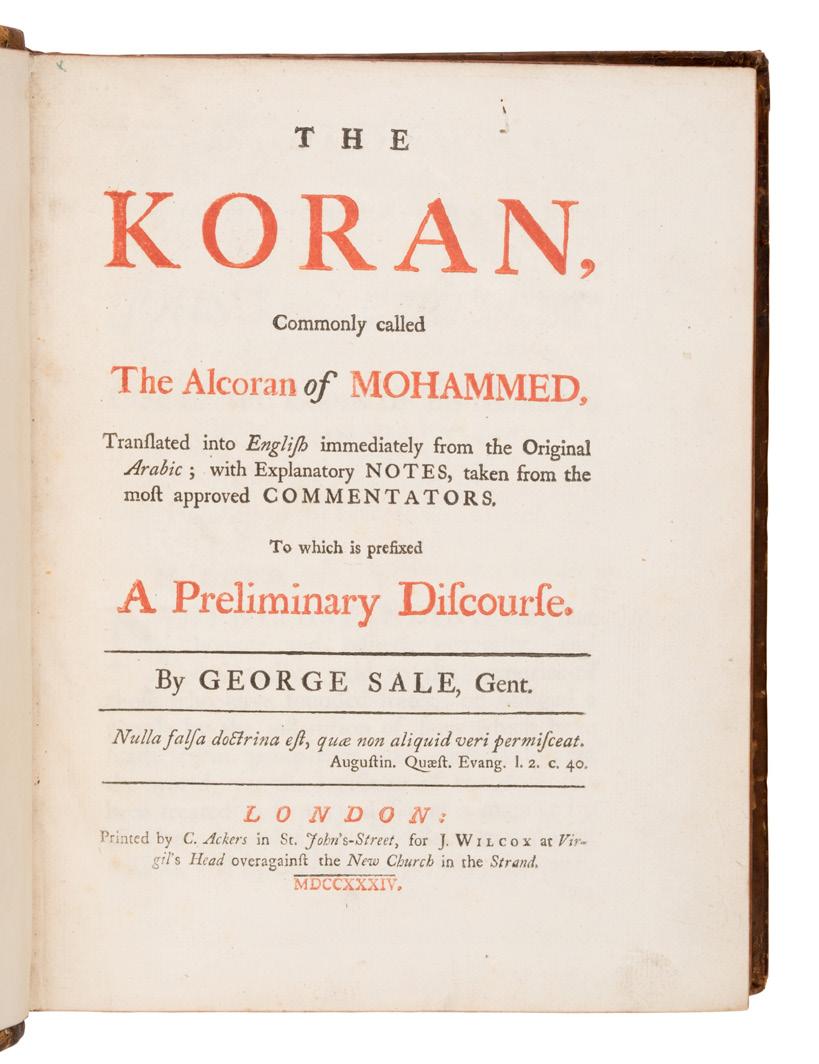
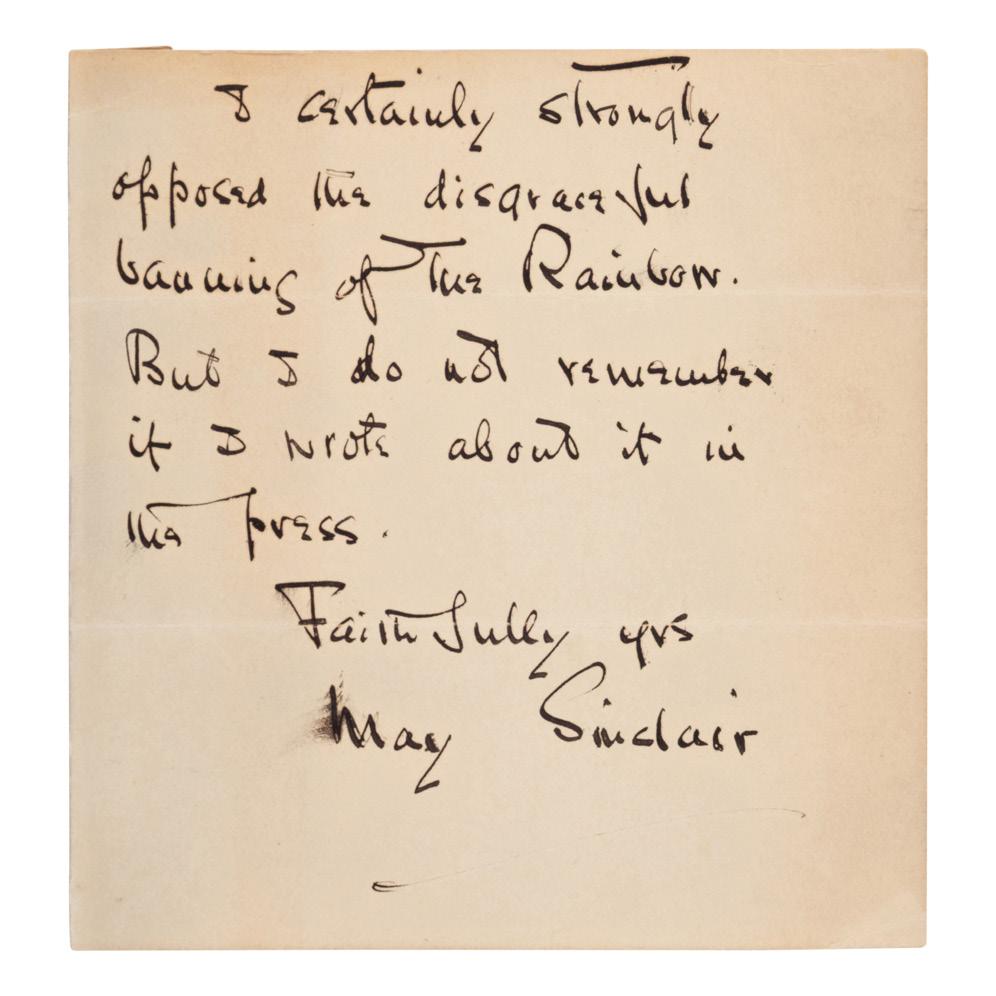
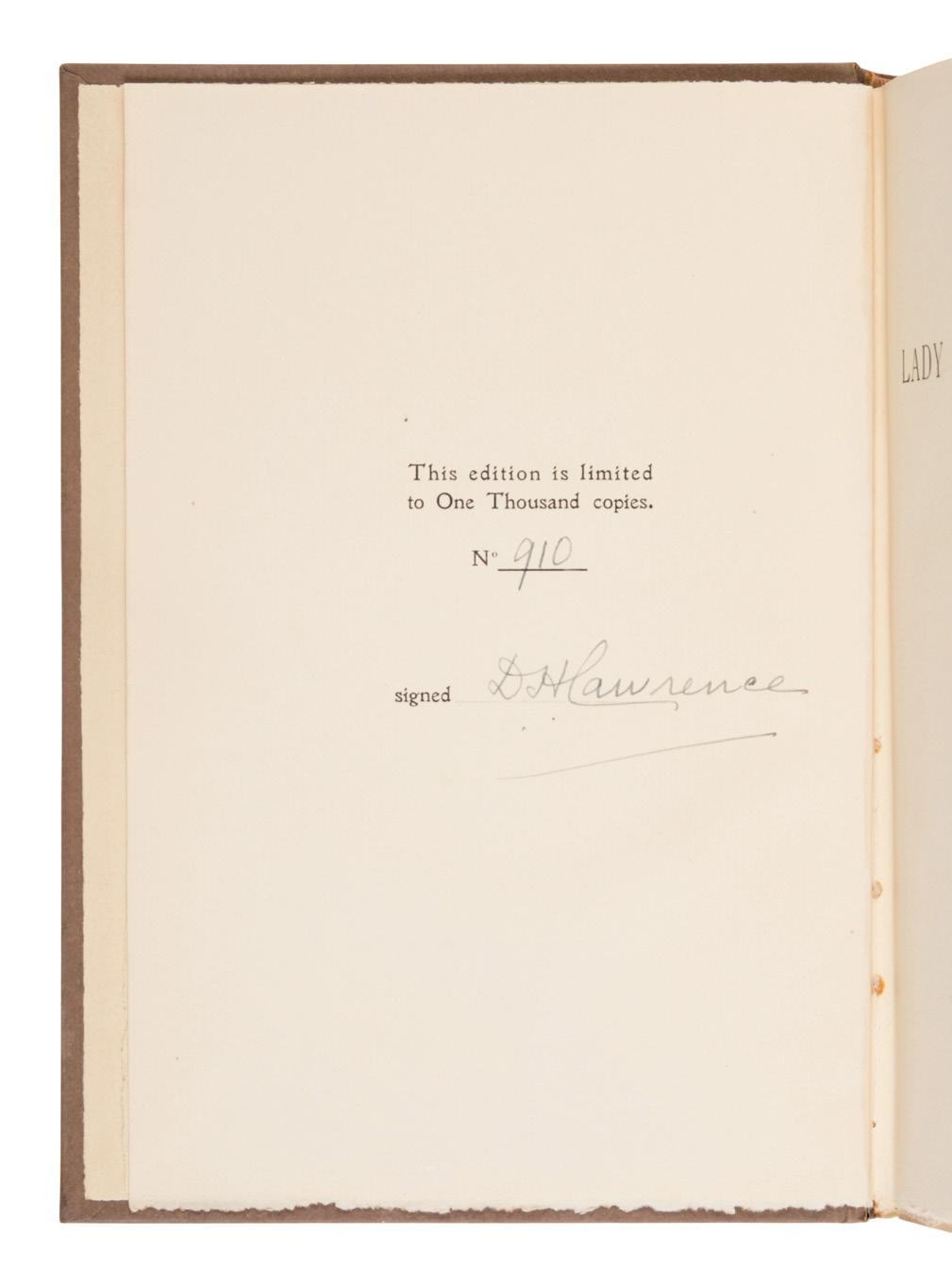
129 Lawrence, D.H. (1885-1930). Lady Chatterley’s Lover. Florence: Privately Printed, 1928.
8vo. Original brown boards stamped in black, printed paper label on spine, uncut and unopened; PLAIN CREAM DUST JACKET (chipping to fore-corners and spine ends, partial closed tear to spine panel, extremities sunned).
FIRST EDITION, LIMITED ISSUE, number 910 of 1,000 copies SIGNED BY LAWRENCE.
After repeated refusals from English publishers, D.H. Lawrence arranged for Lady Chatterley’s Lover to be privately printed in Florence in the spring of 1928 by the Tipografia Giuntina. Issued in an edition of 1,000 numbered copies priced at £2 each, Lawrence distributed order forms to friends and contacts in Europe and America who acted as informal agents for the book. The novel’s frank treatment of sexuality and its depiction of a relationship between an aristocratic woman and her gamekeeper quickly drew the attention of censors; it was suppressed in Britain and barred from import into the United States, forcing it to circulate largely through privately distributed or smuggled copies. By December 1928, nearly the entire edition had been sold despite these restrictions. The ban in Britain was not effectively lifted until the landmark 1960 obscenity trial, R v Penguin Books Ltd, in which Penguin Books successfully defended its right to publish an unexpurgated edition under the new Obscene Publications Act, a decision widely regarded as a turning point in modern literary censorship. Connolly, The Modern Movement 57; Roberts A42a. IN THE RARE DUST JACKET.
$6,000 - 8,000
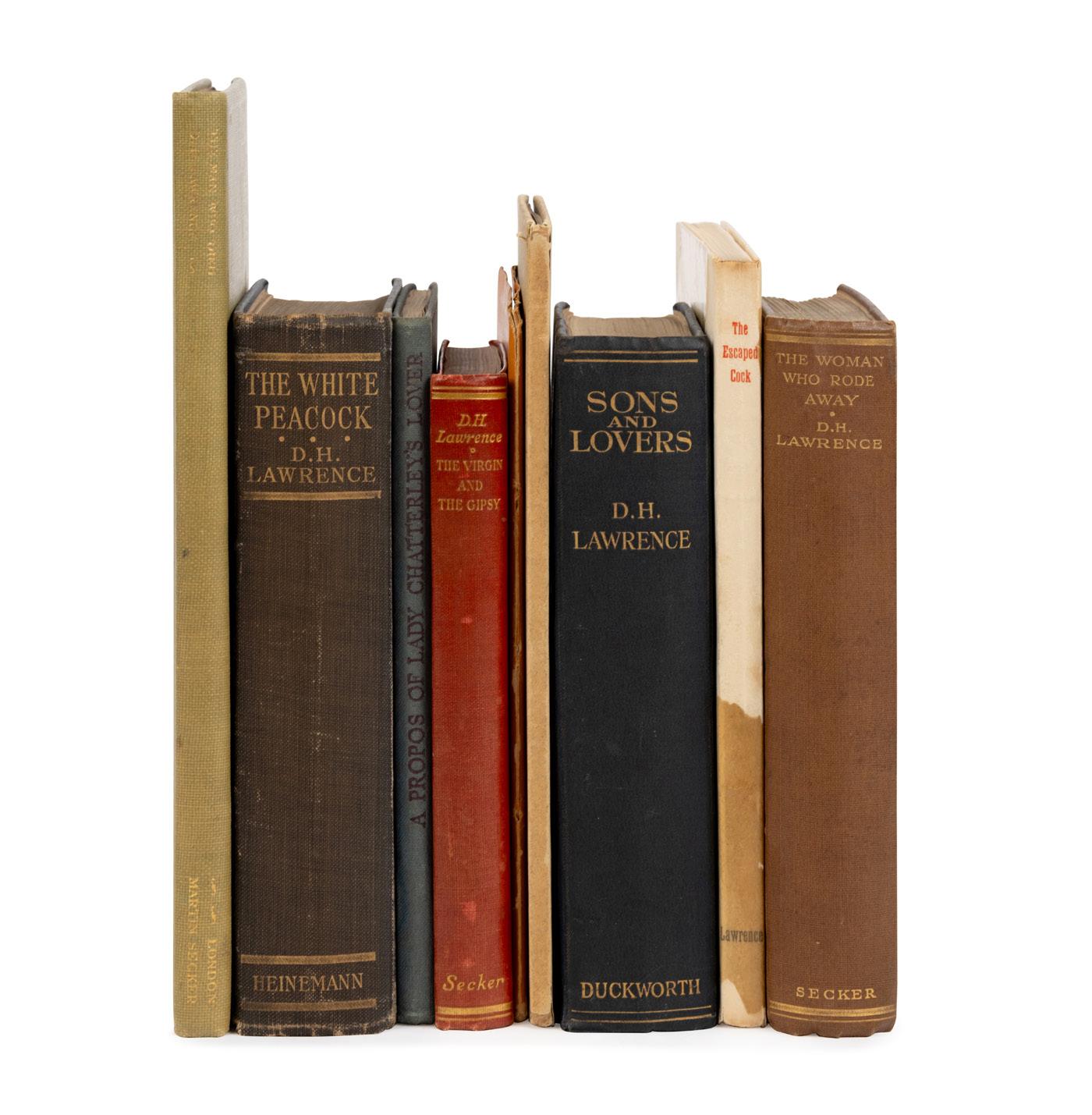
130
Lawrence, D.H. (1885-1930). A group of 9 titles, most first editions, comprising:
The White Peacock. London: William Heinemann, 1911. Original dark blue cloth (rubbing); slipcase. Provenance: Maggie Burges, former girlfriend of DH Lawrence (provenance letters from Claude Cox, Philip Titcombe). FIRST EDITION. -- Sons and Lovers. London: Duckworth & Co., 1913. Original dark blue cloth; folding case. Provenance: George Dudley Seymour (1859-1945), American historian, antiquarian, and author (bookplate). FIRST EDITION, variant 1. -- The Woman Who Rode Away and Other Stories. London: Martin Secker, 1928. Original brown cloth (rubbing). Provenance: Geoffrey Marks (ownership signature). FIRST EDITION. -- Pornography and Obscenity. London: Faber & Faber, 1929. Original printed wrappers. FIRST EDITION. -- My Skirmish with Jolly Roger. New York: Random House, 1929. Original cloth. LIMITED EDITION, number 264 of 600 copies. -- A Propos of Lady Chatterley’s Lover. London: Mandrake Press, 1930. Original blue cloth (rubbing). FIRST EDITION. -- The Escaped Cock. Paris: The Black Sun Press, 1929. Original printed wrappers; glassine dustjacket (some loss to spine); publisher’s slipcase (cover detached, rubbing, edgewear). Provenance: Ralph D. Hartman (bookplate affixed to slipcase). FIRST EDITION. -- The Virgin and the Gypsy London: Martin Secker, 1931. Original red cloth (some darkening to spine). Provenance: Edith R. Lewis (ownership signature). Third edition. -- The Man Who Died. London: Martin Secker, 1931. Original olive cloth gilt. LIMITED EDITION, one of 2,000 copies.
Together, 9 works in 9 volumes, all 8vo. Condition generally fine.
$500 - 700
131
Le Carre, John (1931-2020). The Spy Who Came In from the Cold. London: Victor Gollancz Ltd., 1963.
8vo. Original pale blue cloth (light toning near top edge of covers); dust jacket (light soiling to rear panel, a few minor spots, tiny closed tear to front panel foot). Provenance: [indecipherable] J. Kellway (ownership signature on front free endpaper dated year of publication).
FIRST EDITION of the author’s third book and the first novel to win both the Crime Writers’ Association 1963 Gold Dagger Award and the Edgar Award. It was also the basis for the film of the same name directed by Martin Ritt released in 1965, starring Richard Burton, Claire Bloom, and Oskar Werner.
$800 - 1,200
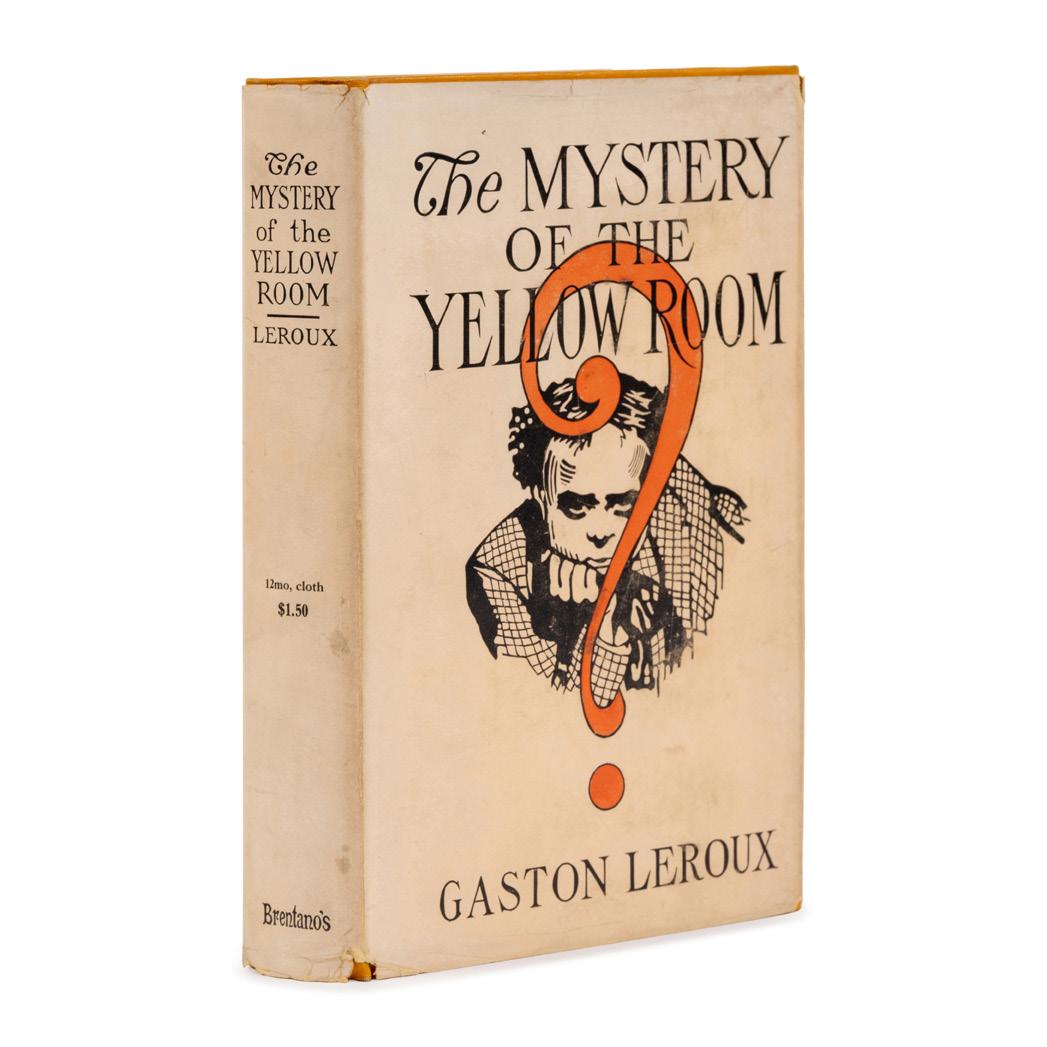
132

Leroux, Gaston (1868-1927). The Mystery of the Yellow Room Extraordinary Adventures of Joseph Rouletabille Reporter. New York: Brentano’s, 1908.
8vo. Portrait frontispiece. Original pictorial yellow-orange cloth stamped in black after a design by Pierre Leffite; DUST JACKET (extremities a bit faded, light chipping to spine ends and fore-corners, tiny cellotape repair near foot verso); slipcase and folding chemise. Provenance: Otto Penzler, American editor of mystery fiction and proprietor of The Mysterious Bookshop (his sale, Heritage, 15-16 October 2020, lot 45272).
THE OTTO PENZLER COPY OF THE FIRST EDITION IN ENGLISH OF THE FIRST “LOCKED ROOM MYSTERY”. First serialized in L’Illustration in 1907 before appearing in book form in Paris the following year, the novel quickly became one of the foundational works of modern detective fiction. Its central puzzle—the attempted murder of Mlle. Stangerson inside a chamber locked from the inside—was widely regarded as one of the most ingenious “locked-room” problems ever devised. IN THE EXCEEDINGLY RARE DUST JACKET: According to online records, there have been only two copies appearing at auction in dust jacket in at least a century (this copy, and another that was mostly restored). A Haycraft Queen Cornerstone.
$2,000 - 3,000
133
Lewis, Sinclair (1885-1951). Babbitt. New York: 1922.
8vo. Original blue and orange cloth; dust jacket (price-clipped, toning to spine).
FIRST EDITION, FIRST ISSUE with “Supposing Purdy and I...” on p. 49, line 4 and “... to ruin my fellow human...” on p. 49, line 5. SIGNED BY SINCLAIR LEWIS ON FRONT FREE ENDPAPER. Babbitt was written in response to the rise of the American middle class following the end of World War I, which was, in turn, fueled by growing fears of communism in the United States. “A most grievous victim of his own militant dullness,” the character of George Babbitt led to the name “Babbitt” becoming something of a pejorative in 1920s culture, used to describe a complacent, conformist figure, afraid to stray too far from his creature comforts. Numerous scholars have, in fact, suggested that the main character of J.R.R. Tolkien’s The Hobbit, Bilbo Baggins, was inspired by George Babbitt (Leslie Ellen Jones, J.R.R. Tolkien: A Biography, p.83-84). Pastore, 8.
[With:] LEWIS. Babbitt. New York: Grosset & Dunlap, n.d. [ca 1924]. 8vo. Original dark blue and orange cloth (rubbing); dust jacket (sunning to spine, rubbing, chipping along extremities). Photoplay edition. INSCRIBED BY SINCLAIR LEWIS TO MARIA LEWIS, “With love and Christmas greetings.”
$800 - 1,200
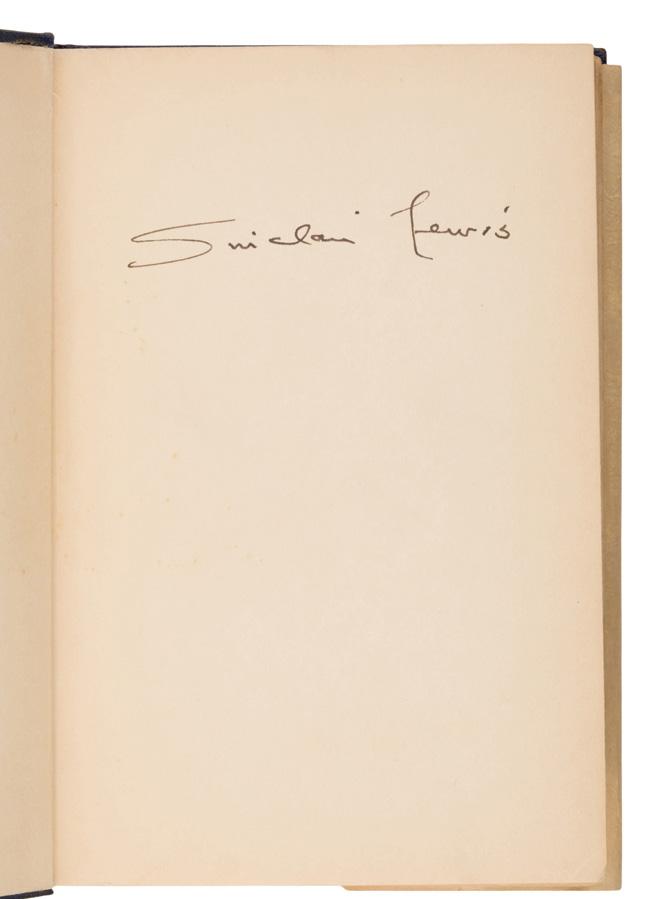
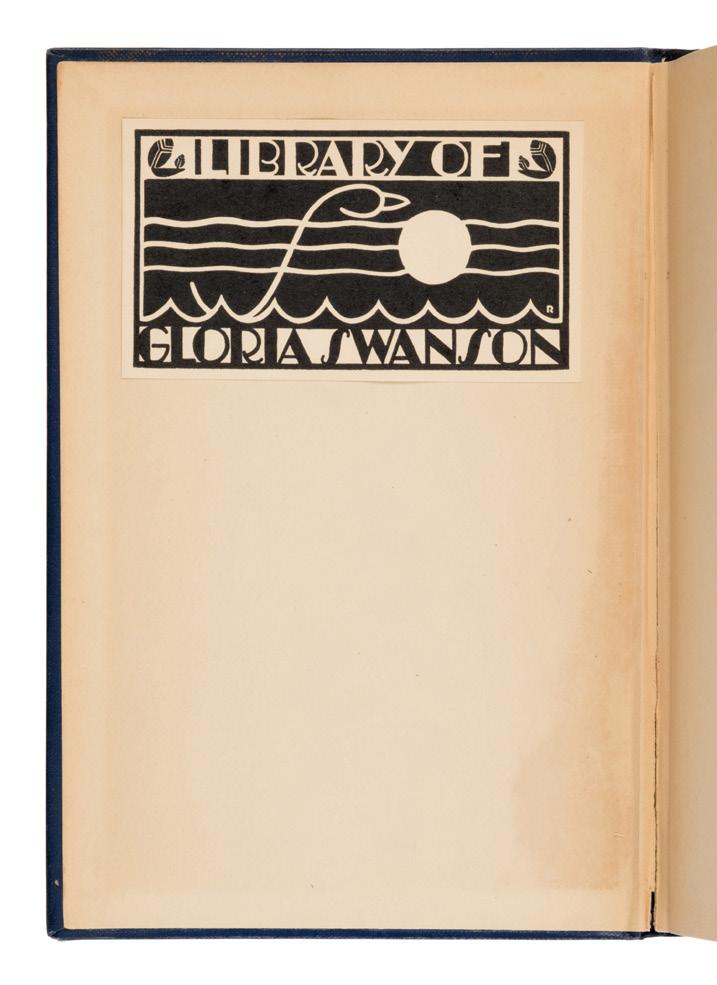
134
Lewis, Sinclair (1885-1951). Elmer Gantry. New York: Harcourt, Brace, & Co., 1927.
8vo. Original blue and orange cloth (front free endpaper starting); dust jacket. Provenance: Gloria Swanson (1899-1983), American actress (ownership bookplate).
GLORIA SWANSON’S COPY.
FIRST EDITION, FIRST ISSUE with spine mistakenly printed as “Elmer Cantry.” Nicknamed “the preacher novel” by its author, the title character is an alcoholic, womanizing preacher who steadily becomes a major political and moral force in the Methodist Church. While working on the novel, Lewis began attending 2-3 church services every Sunday, carefully observing the speaking styles of the preachers. Advance copies of the book were sent to clergymen all over the country, with predictable results: Elmer Gantry was condemned by nearly every religious institution in the United States. In anticipation of a surefire bestseller, Harcourt ordered 140,000 copies of the first edition printed - the largest first printing of any book in the history of book printing. Less than 20,000 copies were produced and shipped before a bookseller noticed that the title read “Elmer Cantry.” The rest were recalled and a second run was hastily printed. As a result of the controversy Elmer Gantry was banned in Boston and numerous other cities and its author was the recipient of death threats, including one particularly infamous instance when Lewis received an invitation to his own lynching. Pastore, 13.
[With]: LEWIS. Elmer Gantry. New York: Harcourt, Brace, & Company, 1927. 8vo. Original orange and blue cloth (light rubbing). Second printing with corrected spelling on spine.
$800 - 1,200 135
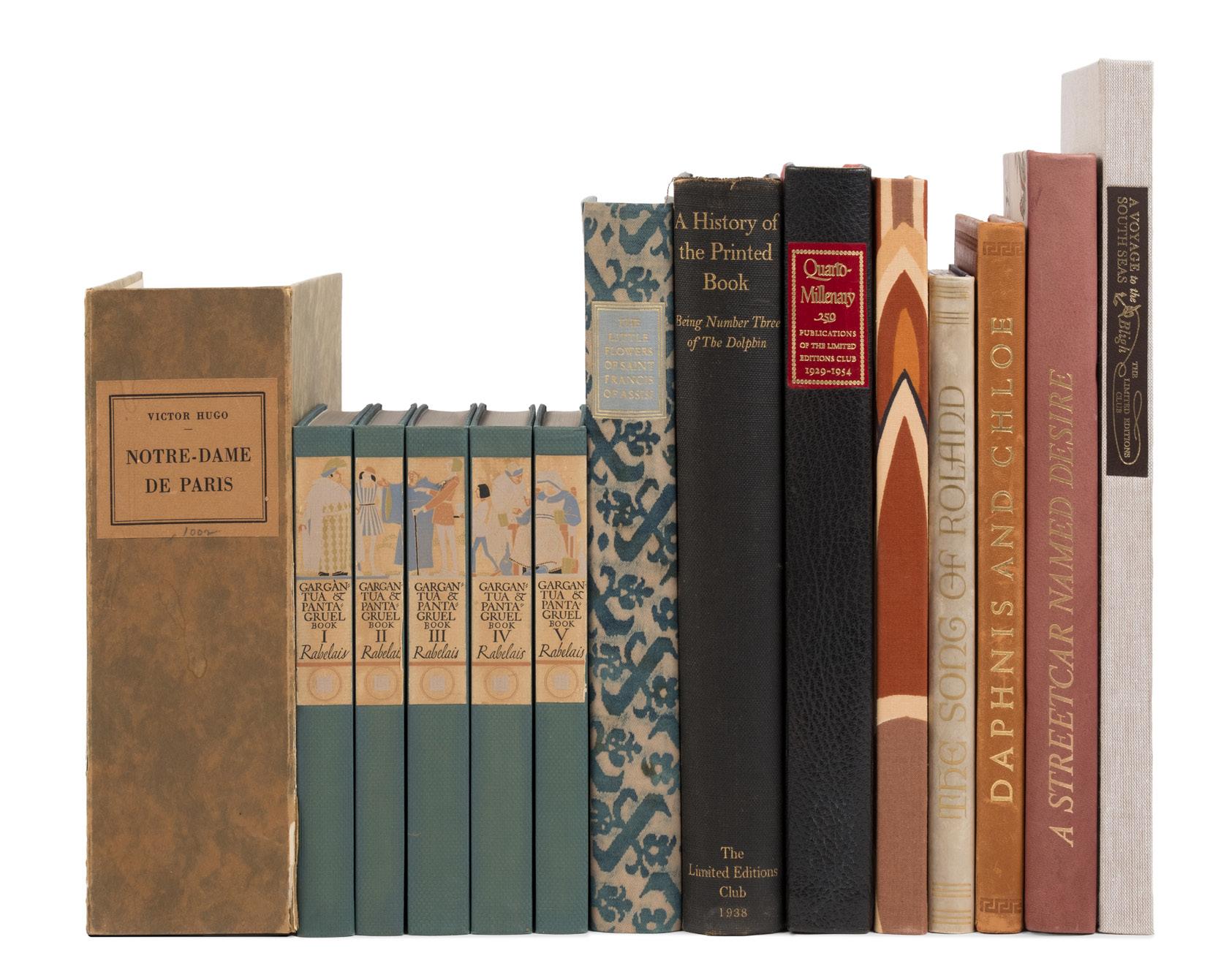
[Limited Editions Club]. A group of 10 titles, comprising:
The Little Flowers of Saint Francis of Assisi. 1930. Number 89 of 1500 copies, SIGNED BY PAOLO MOLNAR. -- HUGO, Victor. Notre-Dame de Paris. 1930. 2 volumes. Number 1002 of 1500 copies, SIGNED BY FRANS MASEREEL. -- LONGUS. The Pastoral Loves of Daphnis and Chloe. 1934. Number 89 of 1500 copies, SIGNED BY RUTH REEVES. -- RABELAIS, Francois. Gargantua and Pantagruel. 1936. 5 volumes. Number 89 of 1500 copies, SIGNED BY W.A. DWIGGINS. -- The Song of Roland. 1938. Number 89 of 1500 copies, SIGNED BY VALENTI ANGELO. -- WROTH, Lawrence C., editor. A History of The Printed Book. 1938. One of 1800 copies. -- Quarto-Millenary. The First 250 Publications and the First 25 Years 1929-1954 of the Limited Editions Club. 1959. Number 2221 of 2250 copies. -- BLIGH, William. A Voyage to the South Seas. 1975. Number 1367 of 2000 copies, SIGNED BY ALAN VILLIERS AND GEOFFREY C. INGLETON. -- FINNEY, Charles G. The Circus of Dr. Lao. 1982. Number 377 of 2000 copies, SIGNED BY CLAIRE VAN VLIET. -- WILLIAMS, Tennessee. A Streetcar Named Desire. 1982. Number 1546 of 2000 copies, SIGNED BY AL HIRSHFELD. -- Together, 10 works in 15 volumes, 8vo and folio, all published by The Limited Editions Club, condition generally very good.
$800 - 1,200
136
London, Jack (1876-1916). The Call of the Wild. New York: The MacMillan Company, 1903.
8vo. 2 pp. publisher ads at end; 11 color printed plates including frontispiece with tissue guard and 7 full-page woodcuts by Philip P. Goodwin and Charles Livingston Bull, with numerous decorations by Charles Edward Hooper. Original decorated green cloth stamped in red, white, and black with gilt lettering to upper cover and spine, top edge gilt, decorated endpapers (light rubbing to stamping and joints, some discoloration near foot of spine, slight lean); DUST JACKET (spine ends, flap folds, and portion of front panel restored, spine panel reinforced on verso, vertical split to front panel near joint, chip near foot of front panel). Provenance: Rebecca London Fleming (1902-1992), daughter of Jack London (gift inscription); to Robert Martens, bibliographer; Alton Ripley (ownership signature below the above).
FIRST EDITION, FIRST ISSUE with vertically ribbed cloth. ASSOCIATION COPY, INSCRIBED BY JACK LONDON’S DAUGHTER TO A JACK LONDON BIBLIOGRAPHER on half-title: “For Bob Martens with best wishes from Becky London, October 20, 1978.” Robert Martens co-wrote with James Sisson, Jack London First Editions Illustrated: A Chronological Reference Guide (Star Rover House, 1979).
London’s Call of the Wild is one of the most desirable classics in American literature and “one of the first American novels to examine the quest of the pioneering individual who breaks away from the sheltered environment of civilization and is romantically compelled to find freedom in nature. In the early part of the century this was considered the American dream.” (Parker, 16). BAL 11876; Sisson & Martens, p.13. IN THE SCARCE DUST JACKET.
$2,000 - 3,000
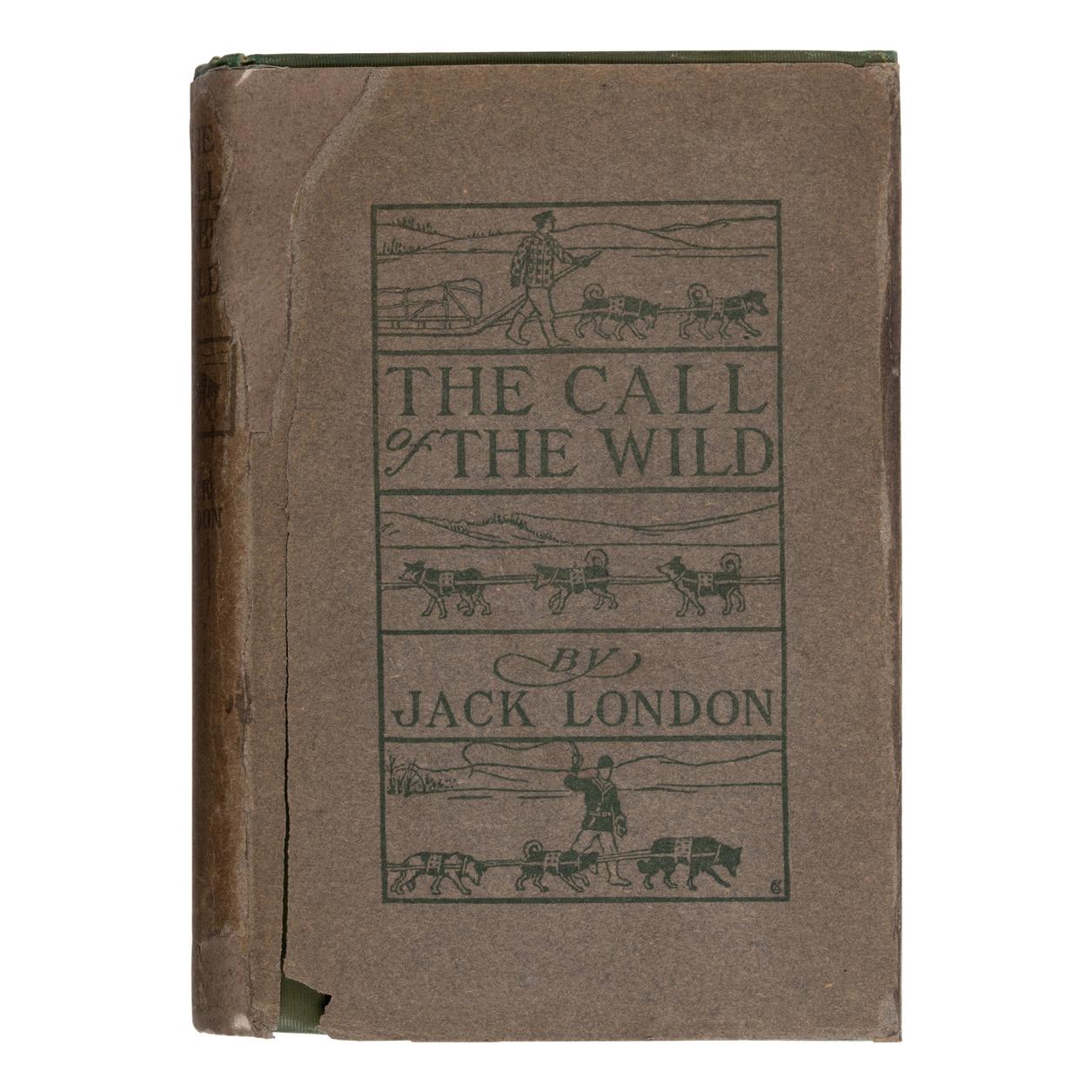
137
London, Jack (1876-1916). The Sea-Wolf. New York: The Macmillan Company, 1904.
8vo. Illustrations by W.J. Aylward. (Very minor marginal spotting to preliminary leaves.) Original pictorial blue cloth stamped in white, red, and blue, spine lettered in gilt.
FIRST EDITION, FIRST ISSUE IN THE RARE FIRST ISSUE BINDING with gilt-lettering on spine. Thanks in large part to the success of The Call of the Wild, anticipation for The Sea-Wolf was so high that its first printing of 40,000 copies sold out before the book was even published. The very first copies were lettered in gilt on the spine, a printing error that was corrected as soon as London discovered it, as he felt that it did not match the rest of the book. The novel went on to become one of London’s best known, with Ambrose Bierce writing of it, “The great thing—and it is among the greatest of things— is that tremendous creation, Wolf Larsen... the hewing out and setting up of such a figure is enough for a man to do in one lifetime...”
“Most copies are entirely lettered in white on both front cover and spine; but some few have been found with the spine only lettered in gold...the cover with spine gilt is never found on anything but first issue sheets...” (A Practical Guide to American Book Collecting, 1941, p.196). BAL 11882; Sisson & Martens, p.20. A BRIGHT COPY.
$600 - 800
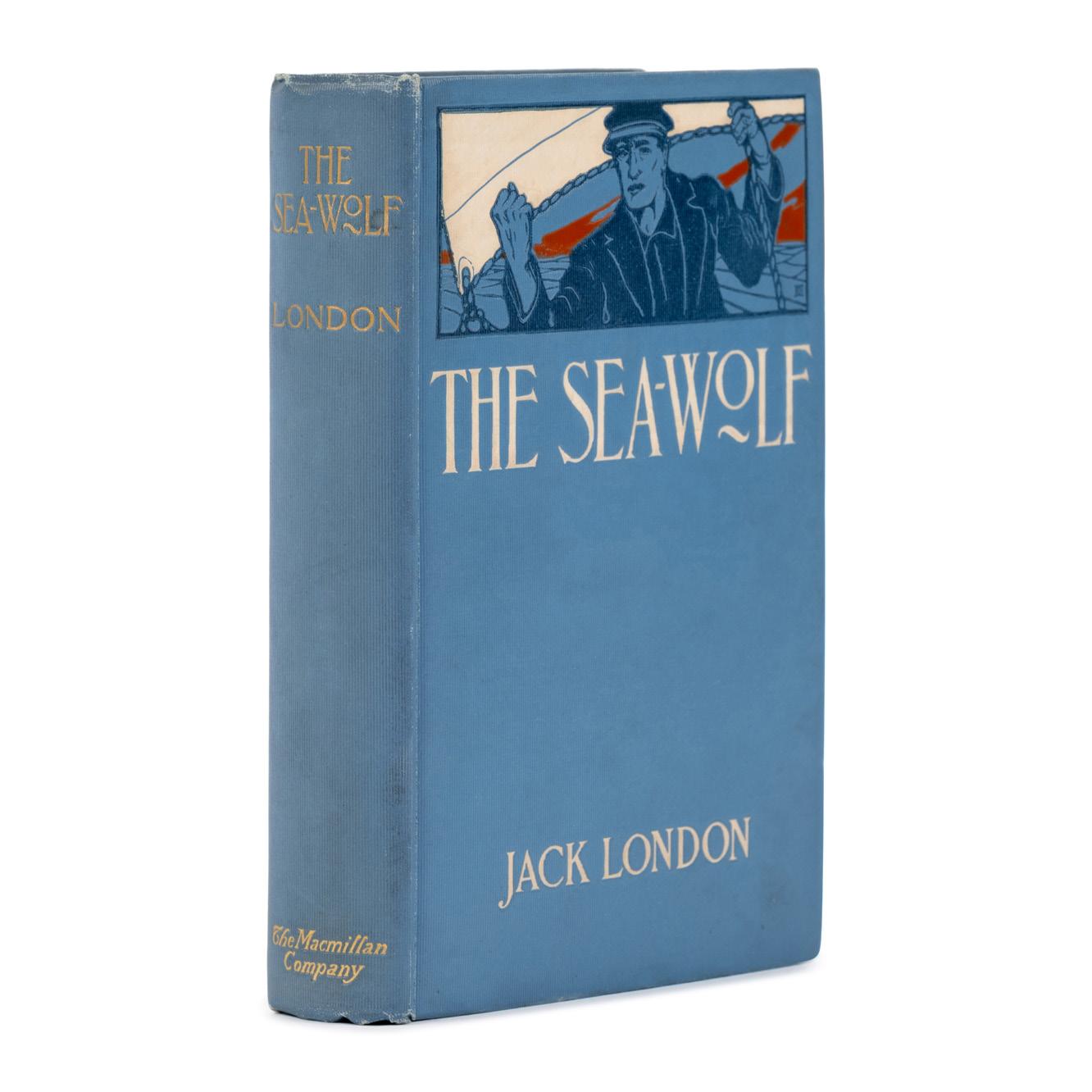
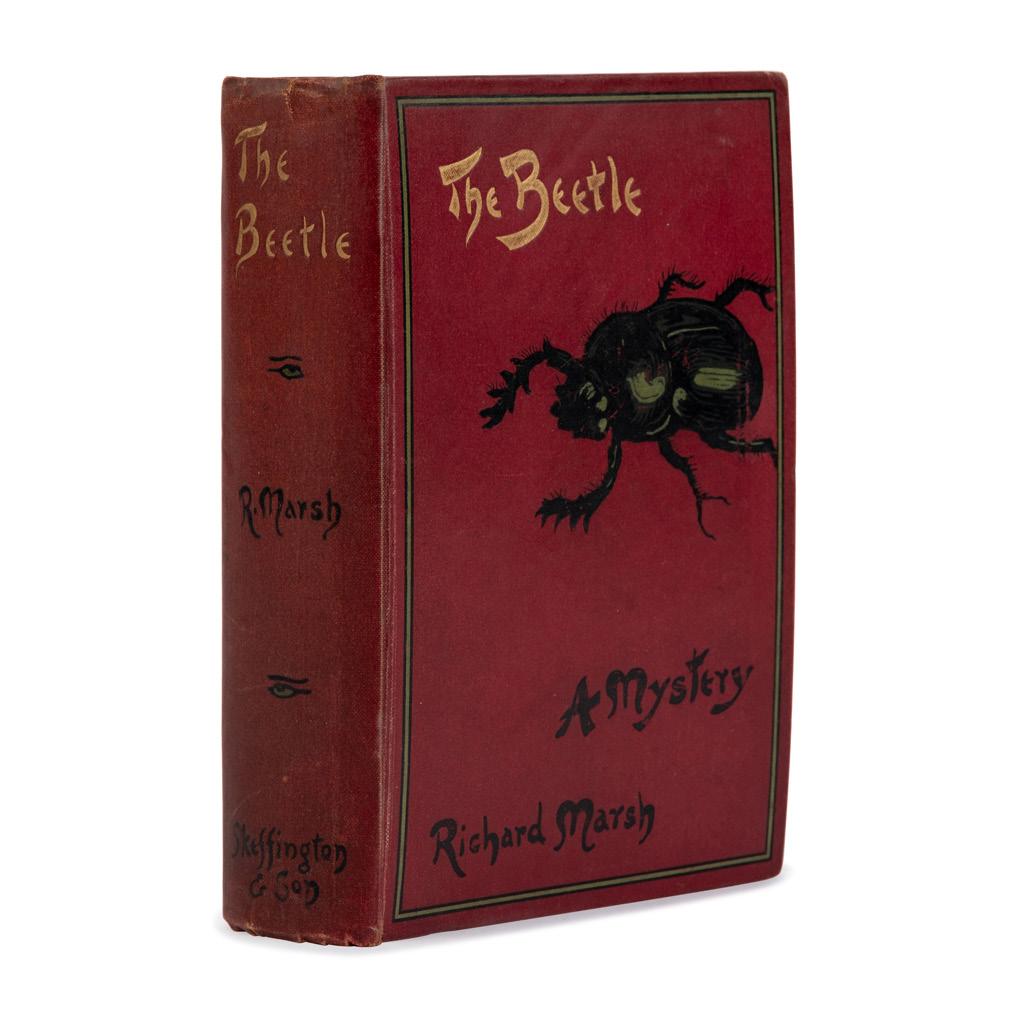
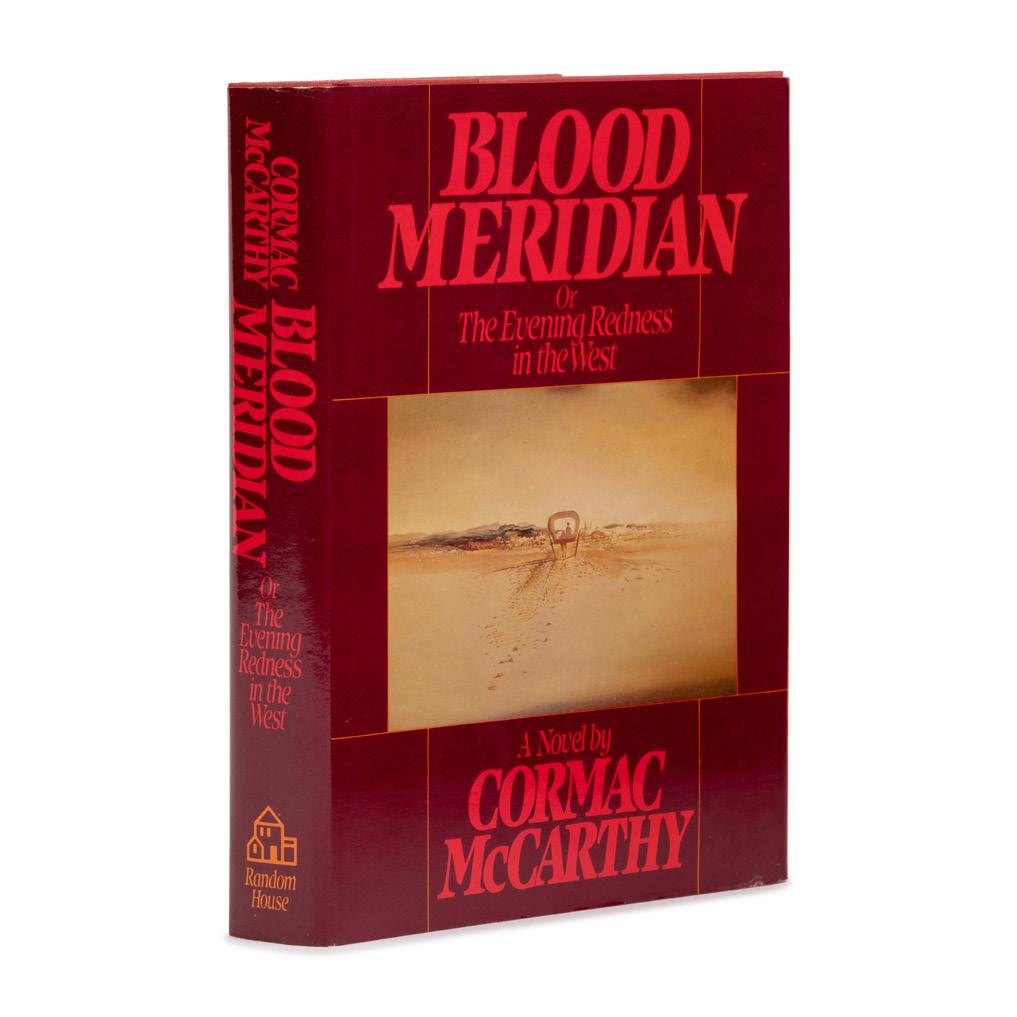
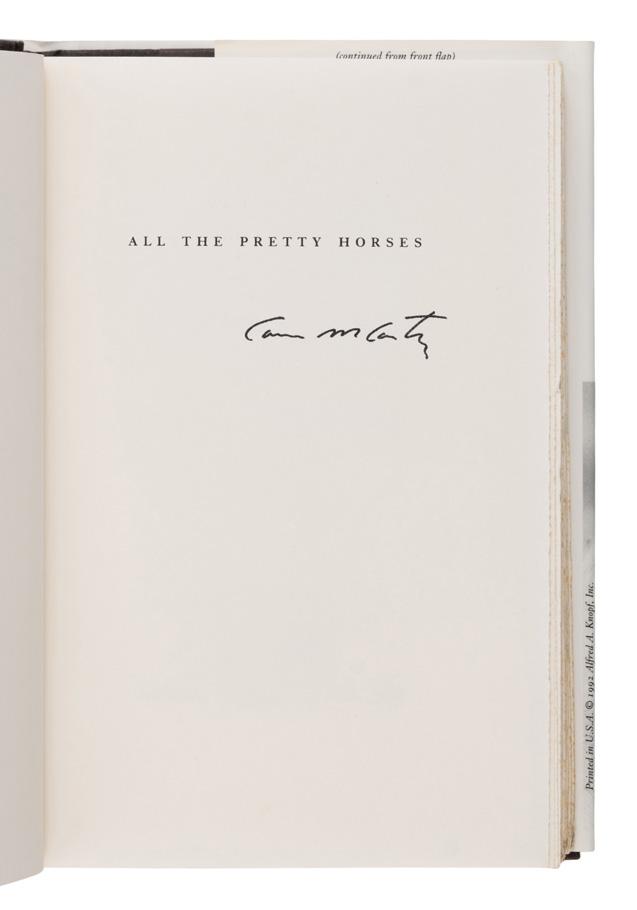
138
Marsh, Richard [pseudonym of Richard Bernard Heldmann, (18571915)]. The Beetle. A Mystery. London: Skeffington & Son, 1897.
8vo. 4 plates after John Williamson. Original red pictorial cloth stamped in black, grey and green, lettered in gilt on upper cover and spine (spine slightly leaned and a bit darkened, hinges partially starting near ends, a touch of rubbing to fore-corners and ends). Provenance: sold, Bertram Rota Bookseller (autograph letter signed to client Paul Hall, 12 February 1940); Paul Hall (recipient of letter); Norman Dodge (autograph letter signed to Mr. Hall declining the book); John Talbot Gernon (leather bookplate).
FIRST EDITION, of the supernatural masterpiece about a tale of a shapeshifting Egyptian creature seeking revenge. Published in September 1897, just two months after Bram Stoker’s Dracula, The Beetle is ranked by H.P. Lovecraft on the same level. Its immediate success initially outsold the vampire’s tale and was reprinted fifteen times by 1913. Barron, Horror 3-141; Bleiler, Supernatural 1111; Locke I, p.151; Tymn, Horror 3-162.
$800 - 1,200
139 McCarthy, Cormac (1933-2023). Blood Meridian. New York: Random House, 1985.
8vo. Original cloth-backed boards, gilt-lettered spine; dust jacket.
FIRST EDITION of the author’s magnum opus that is considered the “Great American Novel” that “asks us to endure a vision of the Old West full of charred human skulls, blood-soaked scalps, a tree hung with the bodies of dead infants. But while Cormac McCarthy’s fifth novel is hard to get through, it is harder to ignore. Any page of his work reveals his originality, a passionate voice given equally to ugliness and lyricism” (James, The New York Times, 28 April 1985). A FINE COPY.
$3,000 - 4,000
140
McCarthy, Cormac (1933-2023). [The Border Trilogy:] All the Pretty Horses. 1992. -- The Crossing. 1994. -- Cities of the Plain. 1998. All New York: Alfred A. Knopf.
Together, 3 works in 3 volumes, 8vo. All in original cloth-backed boards (light spotting to text block of All the Pretty Horses); dust jackets.
FIRST EDITIONS, ALL SIGNED BY McCARTHY on half-titles. The Border Trilogy, set primarily on the border between the Southwestern United States and Mexico, revolves around the coming of age of young cowboys John Grady Cole and Billy Parham.
$2,000 - 3,000
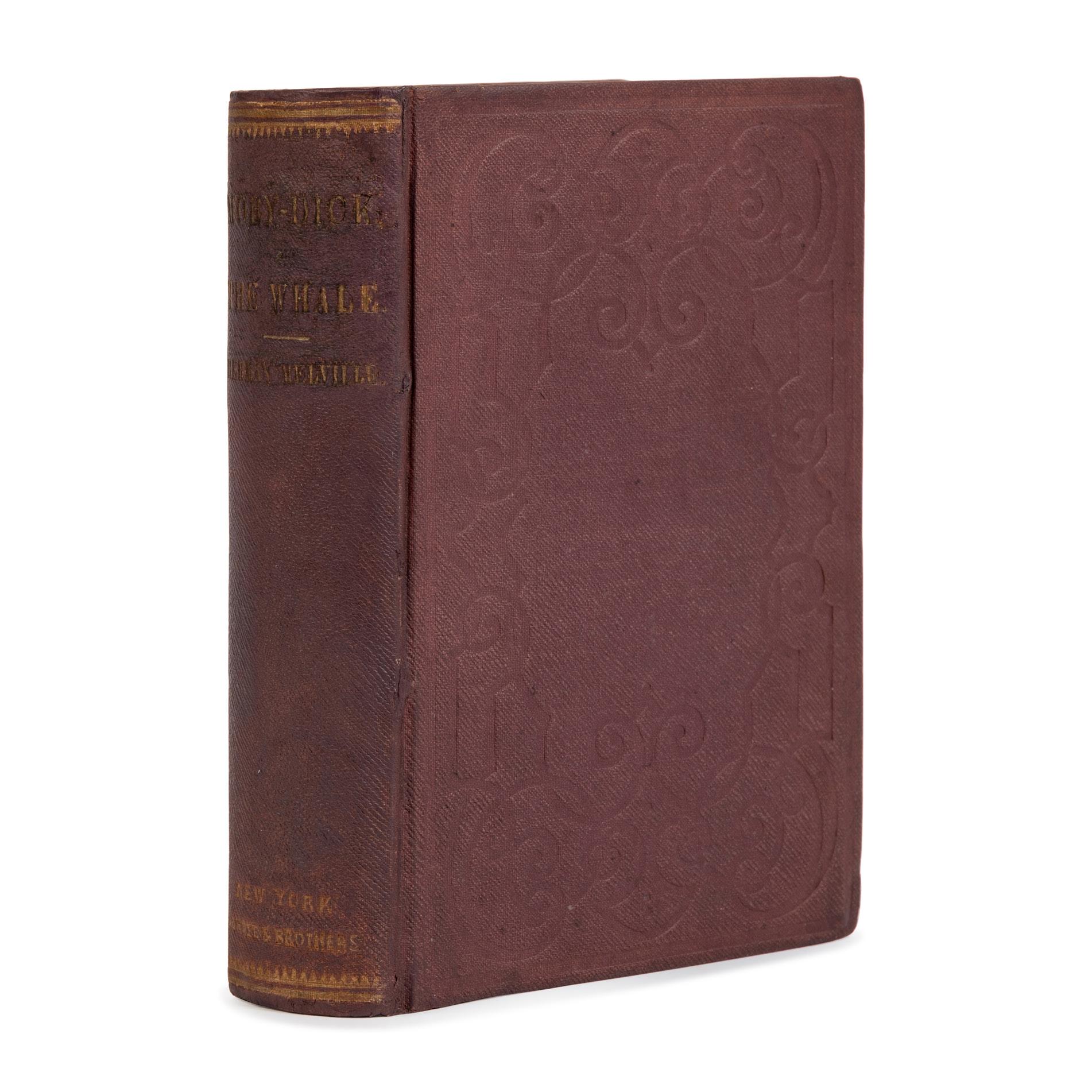
141
Melville, Herman (1819-1891). Moby Dick, or, The Whale. New York: Harper & Brothers, 1851.
8vo. 6pp. publisher’s ads at end. (Spotting throughout, small marred area on dedication leaf.) Original purple-brown cloth [BAL second binding, unrecorded variant color], blind-stamped with a grolieresque frame to covers, spine lettered in gilt (spine ends restored with some lettering re-gilted, discrete color touch-ups to spine); cloth slipcase and chemise.
FIRST AMERICAN EDITION, in the BAL second binding (priority established), following the 3-volume English edition by a month, and contains thirty-five passages not present in that edition. In Grolier’s One Hundred Influential American Books, Melville’s great novel can best be described as containing “the sounds and scents, the very flavor, of the maritime life of our whaling ancestors,” and in Johnson’s High Spots, a “masterpiece” after rising from semiobscurity in the 20th century. BAL 13664; Grolier American 60; Johnson’s American First Editions, p.247; Johnson, High Spots of American Literature p.57. A BRIGHT, SQUARE COPY.
$8,000 - 12,000
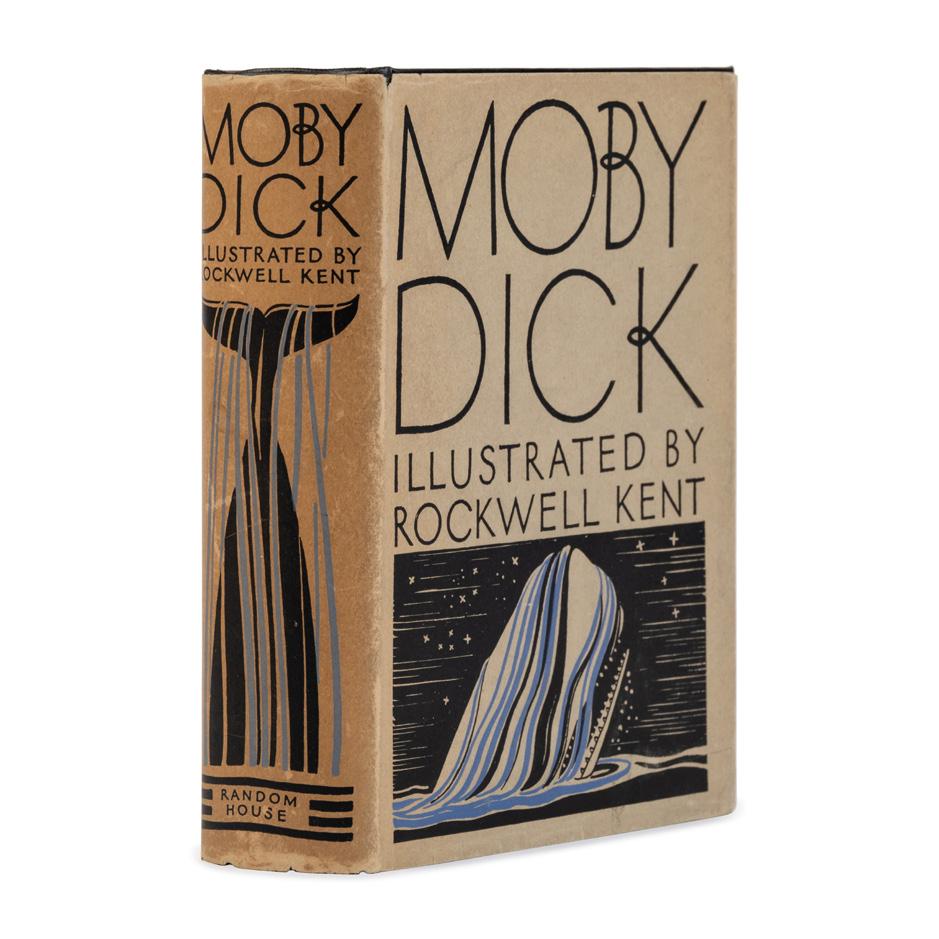
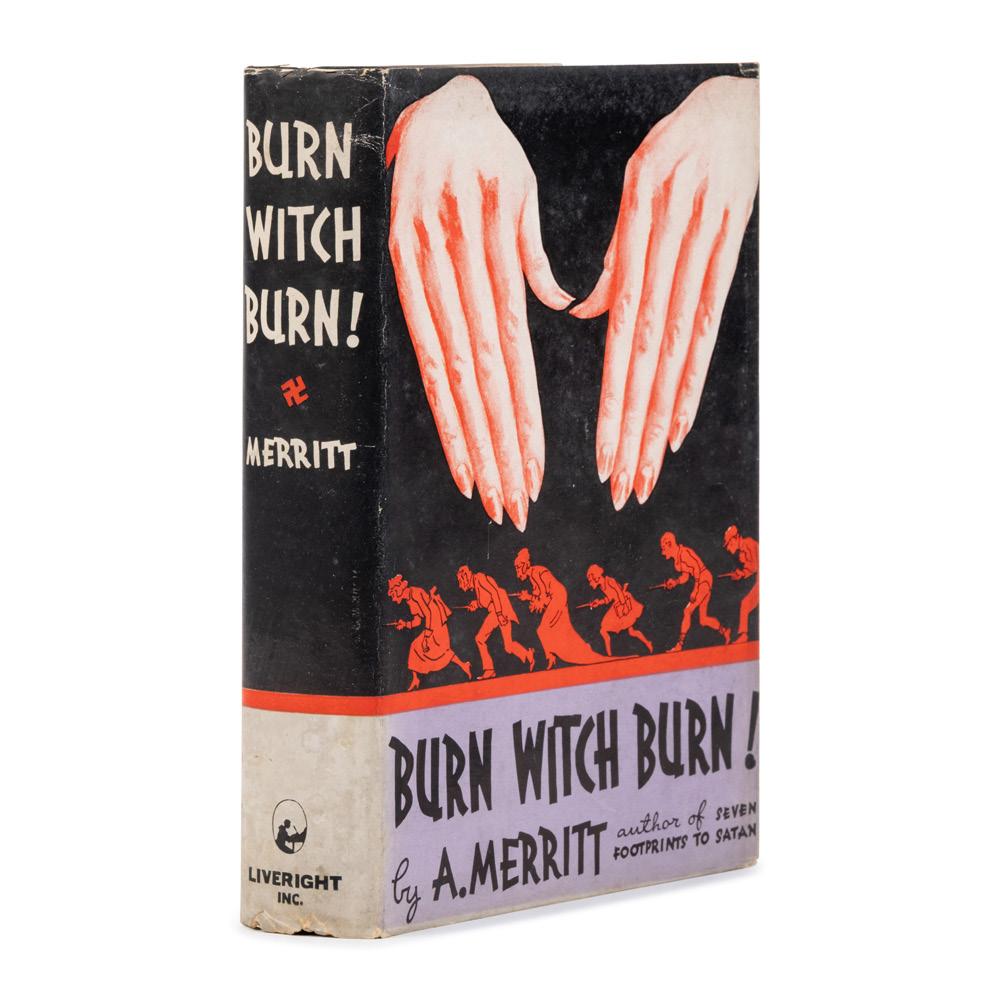
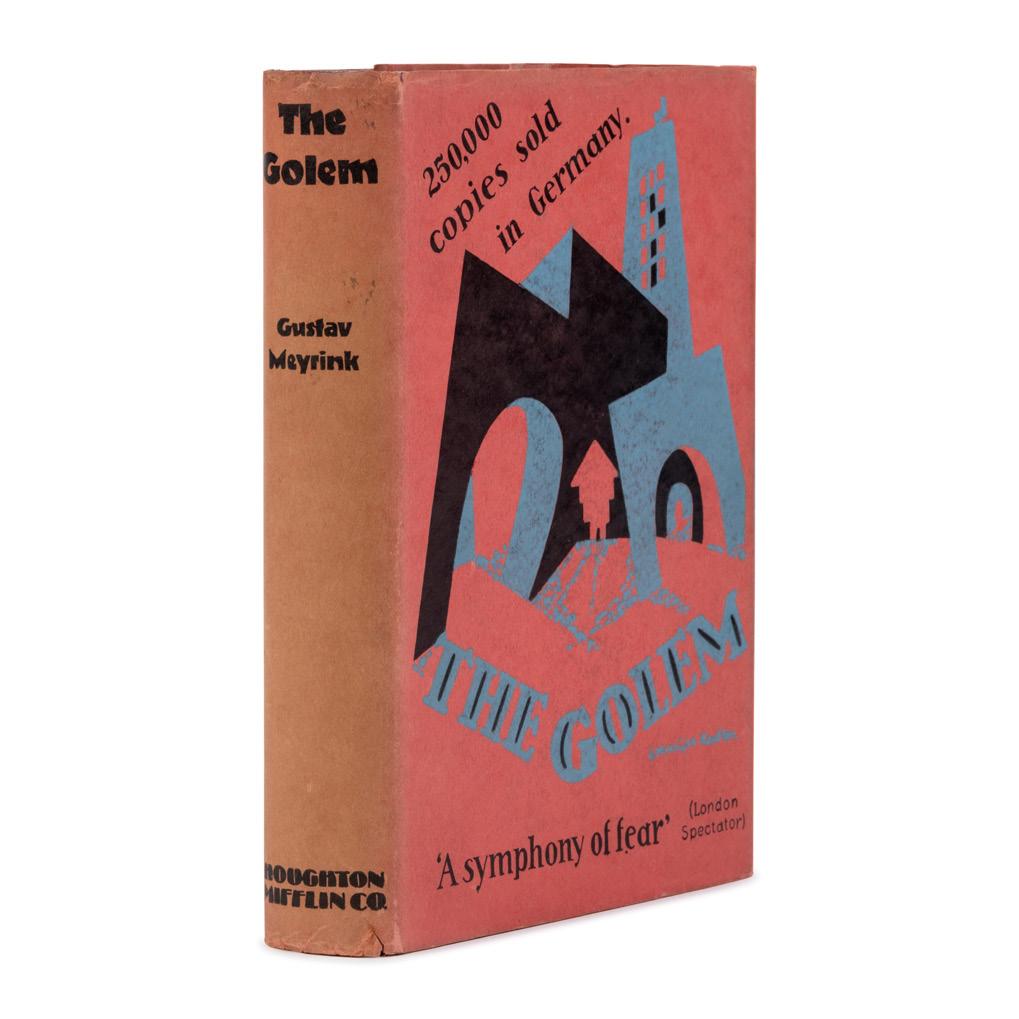
142
[Kent, Rockwell (1882-1971), illustrator]. -- Melville, Herman (18191891). Moby Dick; Or, the Whale. New York: Random House, 1930.
8vo. Numerous illustrations by Kent. Original pictorial black cloth stamped in silver; dust jacket (spine toned and lightly rubbed)
FIRST TRADE EDITION of Rockwell Kent’s illustrated Moby Dick, a smallformat, one-volume version published following the Lakeside Press threevolume limited edition.
$600 - 800
143
Merritt, A. (1884-1943). Burn Witch Burn! New York: Liveright Inc., Pub., 1933.
8vo. Original black cloth (very light rubbing); dust jacket.
FIRST EDITION. Burn Witch Burn! was the second to last novel ever published by early twentieth century fantastic fiction writer Abraham Grace (“A.”) Merritt, as well as one of his most influential, with the likes of H.P. Lovecraft, Robert Bloch, and Michael Moorcock acknowledging their affection for it. It was later loosely adapted into a 1936 motion picture by Tod Browning and starring Lionel Barrymore. Barron, Horror, 3-146; Bleiler, Supernatural, 1160. A FINE COPY.
$1,200 - 1,600
144
Meyrink, Gustav (1868-1932. The Golem. Boston and New York: Houghton Mifflin Co., 1928.
8vo. Original decorative purple cloth lettered in black, top edge stained black (slight lean to spine, light spotting to fore-edge); dust jacket designed by E. McKnight Kauffer (spine sunned). Provenance: The Whaler Book Shop (bookseller’s ticket).
FIRST AMERICAN EDITION of the author’s first novel, considered a classic supernatural work of German Expressionism. First published in 1915 in Leipzig, Meyrink’s celebrated occult novel is set in the labyrinthine Jewish ghetto of Prague and blends elements of folklore, mysticism, and psychological fantasy. The narrative follows the gem engraver Athanasius Pernath as he becomes entangled in visions and strange encounters tied to the legendary Golem—an enigmatic presence said to appear in the ghetto at intervals. Drawing upon Jewish legend, Kabbalistic symbolism, and the atmosphere of old Prague, the work became one of the most influential supernatural novels of the early twentieth century. The first English-language edition was published in London in 1928, and this American edition shortly thereafter. Barron, Horror 3-148 (first purchase title); Bleiler, Supernatural 1173 (first English edition); Locke I, p.157.
$500 - 700
145
Mill, John Stuart (1806-1873). On Liberty. London: John W. Parker and Son, 1859.
8vo (194 x 114 mm). Original purple cloth, spine lettered in gilt (sunning to spine, mild wear to spine ends, 1 1/2 in. split to rear hinge).
FIRST EDITION. PRESENTATION COPY INSCRIBED IN A SECRETARIAL HAND, “FROM THE AUTHOR.” On Liberty was begun in 1854 as a short essay which Mill and his wife, Harriet, eventually decided to revise and expand upon. Harriet, who was a noted women’s rights advocate, inspired her husband to reconsider many of his earlier opinions on basic morality and the role of women in society. Mill later wrote that On Liberty “was more directly and literally our joint production than anything else which bears my name.” When Harriet died suddenly in 1858 Mill abruptly ceased work on the project and submitted it immediately to his publisher.
A great success upon publication, On Liberty has been heavily criticized in subsequent years for its narrow focus in some areas and lack of clearlyformed opinions in others; it was theorized by such thinkers as Matthew Arnold and Thomas Carlyle that “liberty” as conceptualized by Mill could only lead to anarchy. Nonetheless, it is acknowledged as a seminal work in liberal thought, with literary critics Denise Evans and Mary L. Onorato declaring Mill’s writings “on government, economics, and logic suggest[ing] a model for society that remains compelling and relevant.” Goldsmiths’ Library 35525; Kress C7500; PMM 345.
$4,000 - 6,000
146
Mill, John Stuart (1806-1873). The Subjection of Women. London: Longmans, Green, Reader, and Dyer, 1869.
8vo (197 x 121 mm). Original tan cloth, gilt-lettered spine (rubbing, darkening to spine). Provenance: Richard Watson Gilder (1844-1909), American poet and author (gift inscription, book label).
“[T]he most vehement feminist tract in English after the Vindication of Mary Wollstonecraft” (Martin Seymour-Smith, The 100 Most Influential Books Ever Written, p.353).
FIRST EDITION. The Subjection of Women is an essay written by Mill based on theories developed between himself and his wife, noted women’s rights advocate Harriet Taylor Mill, many of whose arguments as previously published in her 1851 essay The Enfranchisement of Women appear here in slightly amended form. He argues that equality between the sexes results in a stronger society as both men and women would then be equally productive in contributing to its enrichment, and that an unequal society is a relic of the past that has no place in the modern world.
In his 1873 autobiography Mill acknowledges his debt to Harriet Taylor Mill, as well as to her daughter Helen: “As ultimately published [The Subjection of Women] was enriched with some important ideas of my daughter’s and some passages of her writing. But all that is most striking and profound in what was written by me belongs to my wife, coming from the fund of thought that had been made common to us both by our innumerable conversations and discussions on a topic that filled so large a place in our minds.” PMM 345.
$500 - 700
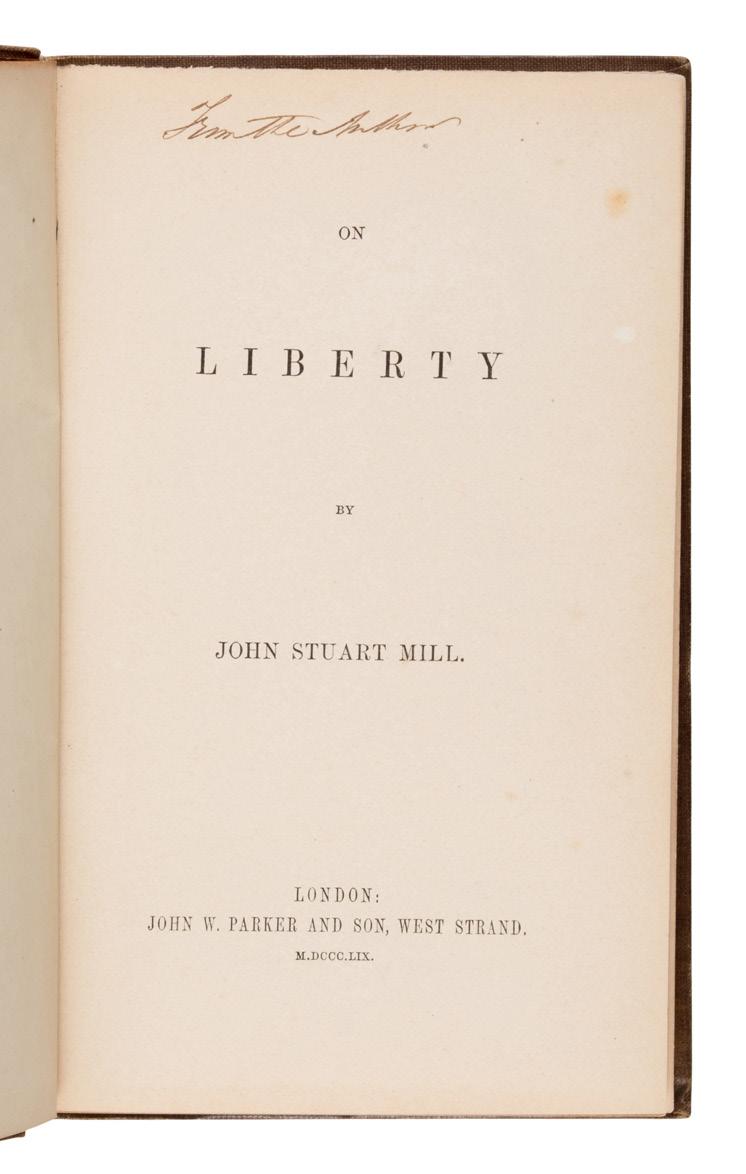
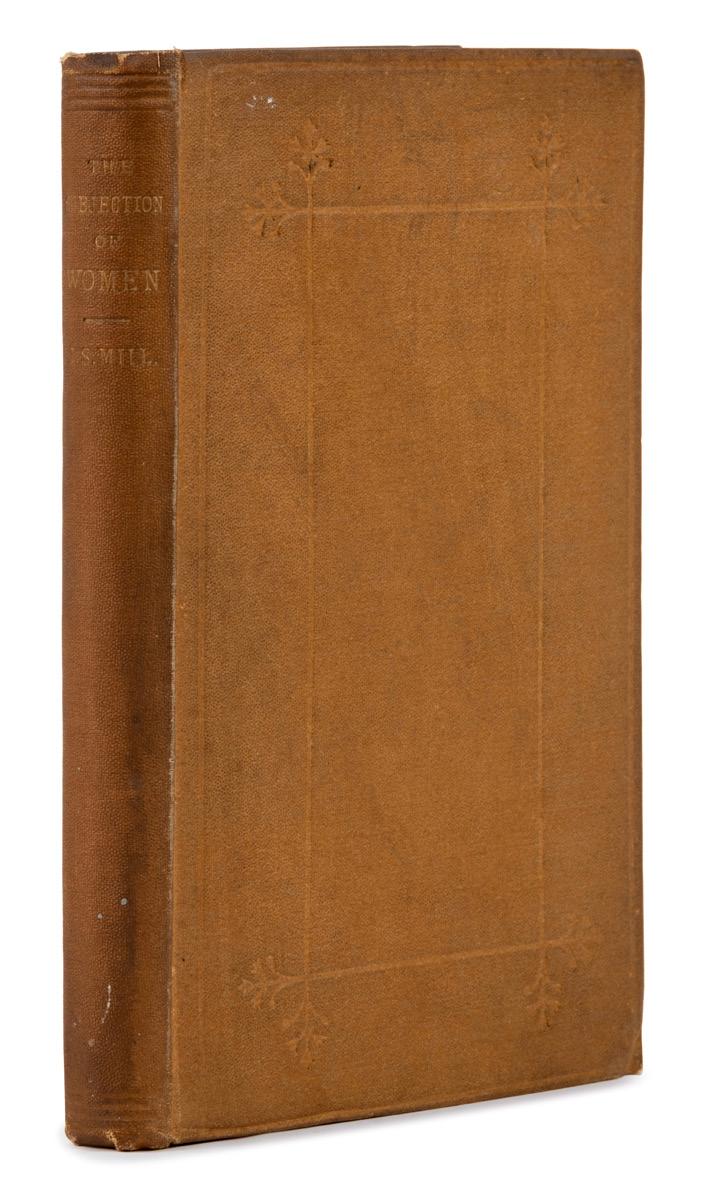
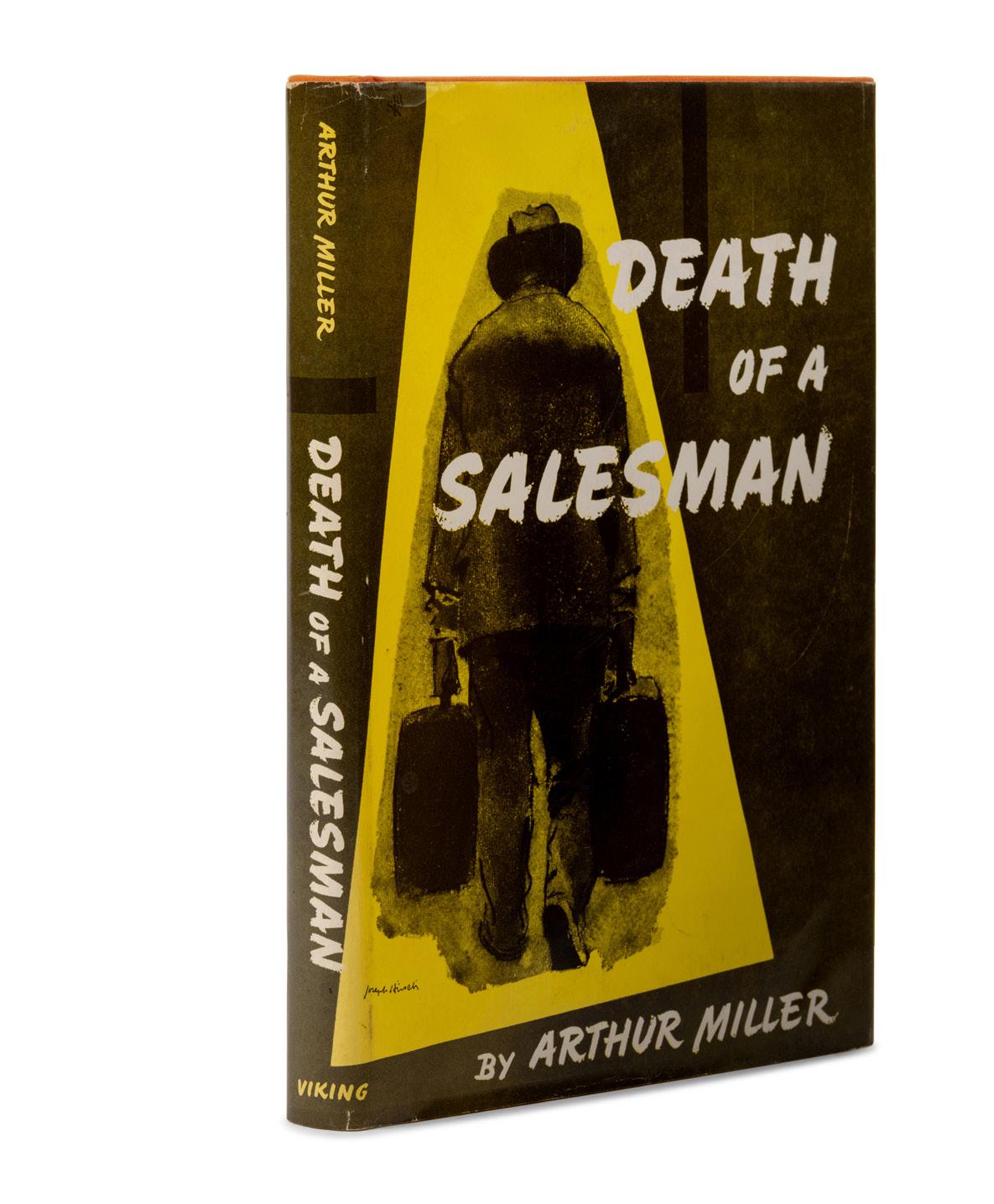
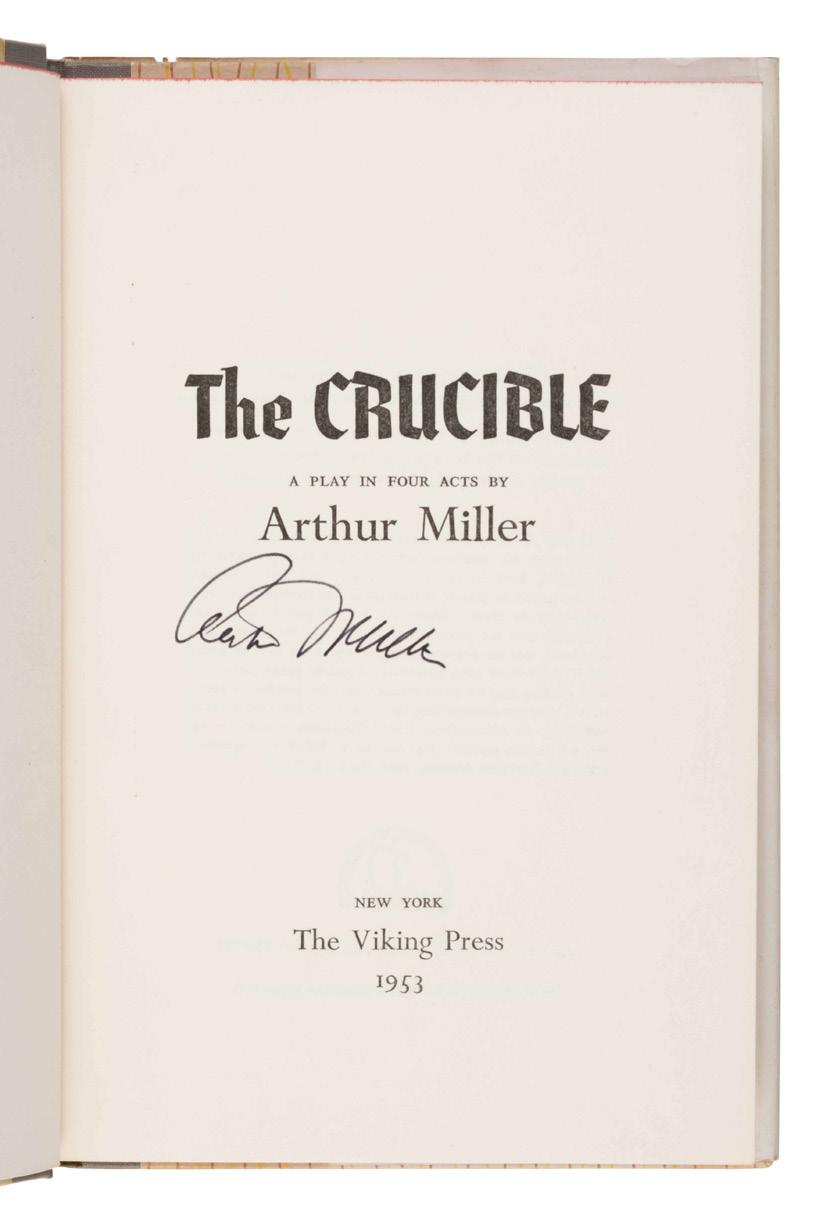
147
Miller, Arthur (1915-2005). Death of a Salesman. New York: Viking Press, 1949.
8vo. Original orange cloth stamped in brown; dust jacket; slipcase.
FIRST EDITION, IN THE FIRST ISSUE DUST JACKET with the second “s” in “Salesman” touching Willy Loman’s right arm in the front panel illustration, no mention of New York Drama Critics’ Circle Award for 1949 and with Esther Handler photo credit on rear flap. Death of a Salesman premiered at the Morosco Theatre on 10 February 1949 with Lee J. Cobb as Willy Loman and Mildred Dunnock as Linda. It would go on to win multiple Tony Awards as well as the 1949 Pulitzer Prize for Drama. Bruccoli & Clark, p.265; Jensen A.IV.1a. A FINE COPY.
$600 - 800
148
Miller, Arthur (1915-2005). The Crucible. New York: The Viking Press, 1953.
8vo. Original grey cloth; dust jacket (sunning to spine).
FIRST EDITION. SIGNED BY ARTHUR MILLER. Written at the height of the McCarthy era, The Crucible was conceived as an allegory for unjust persecution of innocent people by the state. Six years earlier Lion Feuchtwanger had written a similar allegory, also set during the Salem Witch Trials of 1692, entitled Wahn oder der Teufel in Boston (Delusion, or The Devil in Boston). The play opened at New York City’s Martin Beck Theatre on 22 January 1953 with Arthur Kennedy as John Proctor. Not long after, the House of Representatives’ Committee on Un-American Activities took notice of Miller, all but forcing him to appear before the Committee in 1956. During this hearing Miller lamented his earlier associations with the Communist Party, however when pressed to name names of other associates Miller refused to comply, stating, “I could not use the name of another person and bring trouble on him. As a result Miller was found guilty of contempt of Congress, fined, and sentenced to prison, and permanently denied a US passport, all of which were overturned the following year by the U.S. Court of Appeals for the District of Columbia. The Crucible won in every category in which it was nominated in the 1953 Tony Awards including Best Author, Best Play, Best Producer of a Play, and Best Featured Actress in a Play.
$800 - 1,200
149
Milne, A.A. (1882-1956). Winnie-The-Pooh. Ernest H. Shepard, decorations. London: Methuen & Co. Ltd, 1926.
8vo. Numerous illustrations by Shepard. Original pictorial green cloth gilt, top edge gilt, others uncut; dust jacket (light soiling to spine panel).
FIRST TRADE EDITION of Milne’s beloved classic. In the FIRST ISSUE DUST JACKET, with the “117th Thousand” advertisement for When We Were Very Young on rear flap and the “7/6 Net” price on spine panel.
Milne began the poems in When We Were Very Young for his son, Christopher Robin. They had originally appeared in Punch magazine and, to the shock of Milne and Methuen, the book sold out on publication day. It was an unqualified success, quoted, recited, and parodied everywhere. Milne based the stories of his second major book Winnie-the-Pooh on a set of stuffed animals Christopher Robin (called “Billy Moon” in the family) owned. Methuen published Milne’s third children’s book just two months after Winnie-the-Pooh The House at Pooh Corner would be the last of the Pooh books. Milne wanted both to stop while the books were selling well—”I have had my thrill out of children’s books, and know that I shall never recapture it”—and to protect his growing son: “I feel that the legal Christopher Robin has already had more publicity than I want for him. Moreover, since he is growing up, he will soon feel that he has had more publicity than he wants for himself. We all, young and old, hope to make some sort of name, but we want to make it in our own chosen way, and, if possible, by our own exertions” (Thwaite, pp.338-39). Grolier, One Hundred Books Famous in Children’s Literature 71. A BRIGHT COPY.
$1,000 - 1,500
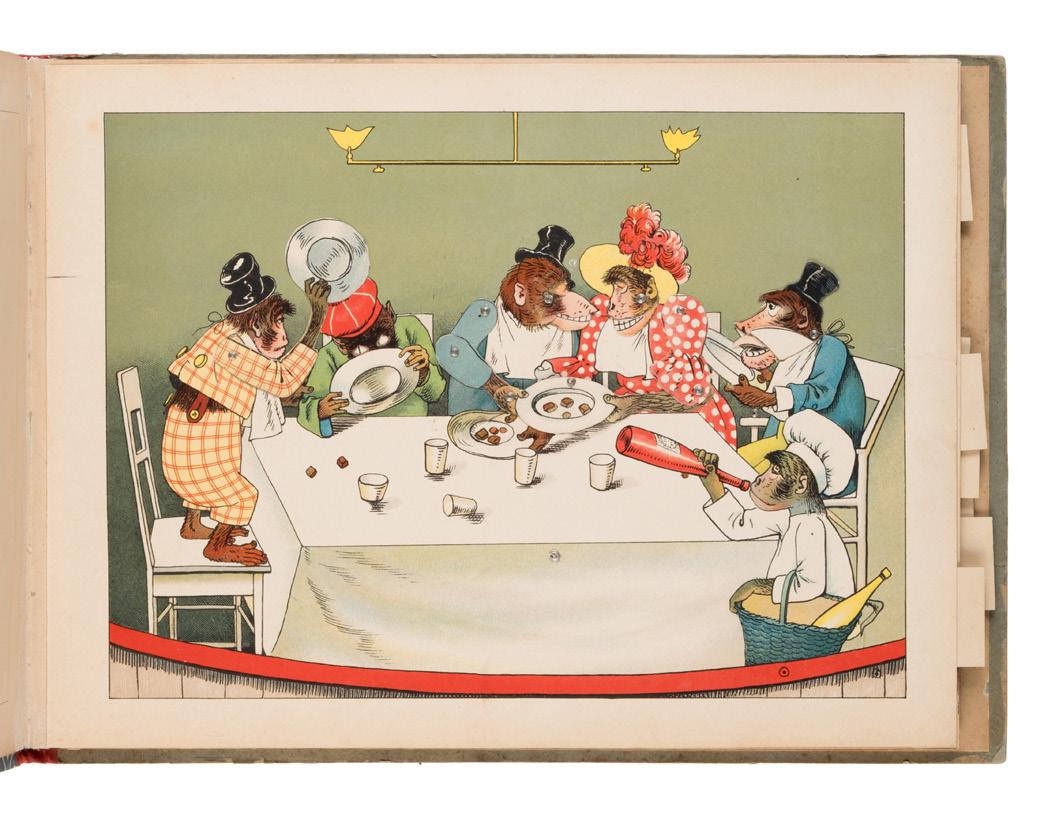
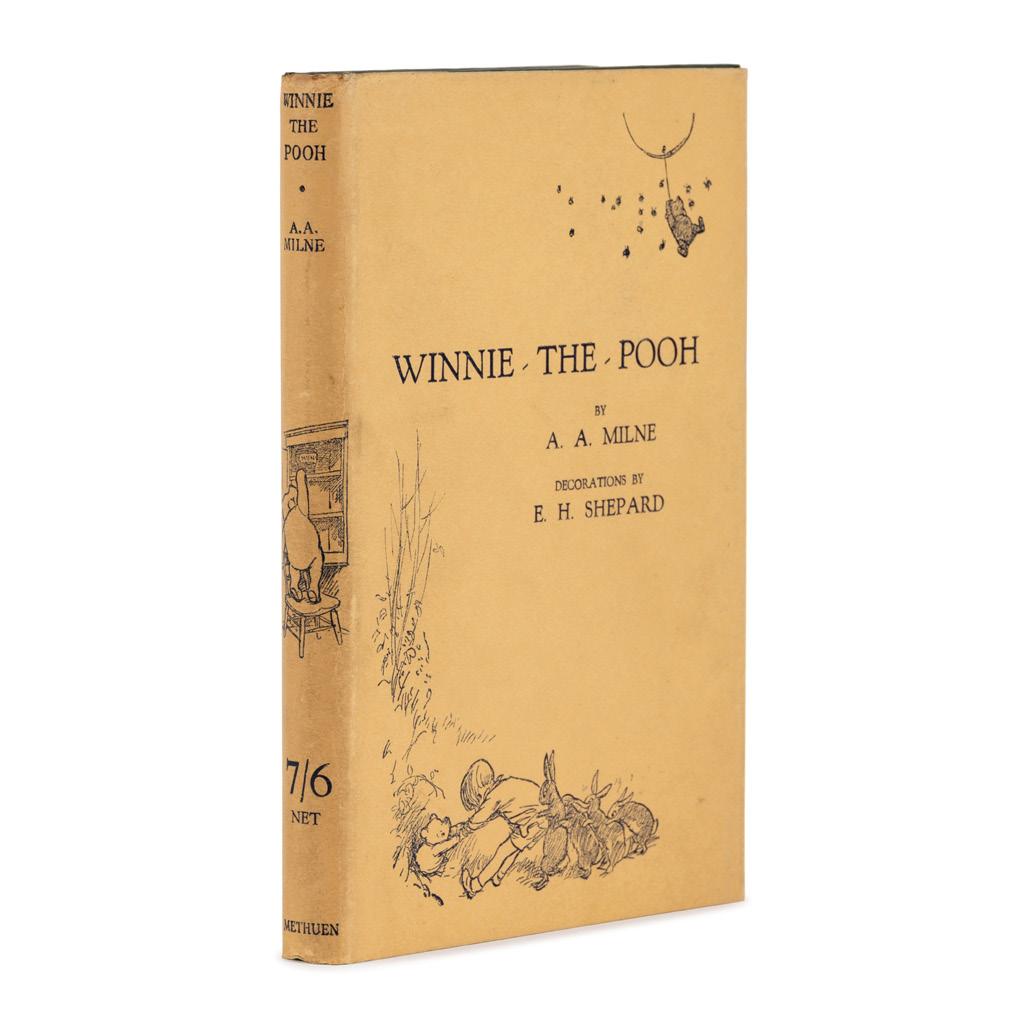
150 [Movable Book]. Meggendorfer, Lothar (1847-1925). Lebendes Affentheater. Ein Ziehbilderbuch. [The Monkey Theatre. A Moveable Toybook]. Munich: J.F. Schreiber, n.d. [ca 1893].
Oblong 4to. 8 chromolithographed plates with movable parts and pull-tabs. Original linen-backed color pictorial boards (light soiling to covers, hinges discretely reinforced).
FIRST EDITION OF THIS SCARCE MOVEABLE BOOK. “Meggendorfer’s reputation today is based almost solely on his ingenious mechanical picturebooks for children. These he began to design during the late 1880s, and many of these books went into multiple German editions besides translations into English, French, Italian, Spanish, Bohemian, Hungarian, and Russian. Deservedly, he is considered the creator and chief innovator of moveable toy books, and his printed works are eagerly sought after by collectors of historical children’s literature. He produced books with moveable figures, transformation pictures segmented into three parts and thus interchangeable, books with pop-up designs, rotating wheels as well as four-panel slat pictures which change the illustrations through movement, and simply funny picture books for children that would certainly make them laugh and generally contributed to some educational benefit” (Justin G. Schiller’s Introduction to The Publishing Archive of Lothar Meggendorfer, 1975). Bilderwelt 2055; Krahé, Spielwelt 81; Ries 84.
$600 - 800
151
pictorial dark green cloth stamped in gilt, light purple, and light blue (rubbing, minor wear to spine ends).
FIRST EDITION. John Muir began his exploration of the Yosemite Valley shortly after his move to San Francisco in 1868. Writing of the experience later, he said, “[I] was overwhelmed by the landscape, scrambling down steep cliff faces to get a closer look at the waterfalls, whooping and howling at the vistas, jumping tirelessly from flower to flower.” He theorized that the valley had been sculpted by glaciers and not earthquakes, as was the popular theory at the time; his discovery of an alpine glacier beneath Merced Peak helped to legitimize his theories. In March 1872 a strong earthquake ripped through the valley, terrifying fellow settlers who still believed in the more accepted earthquake theories of the valley’s creation. Muir began work on The Yosemite at the suggestion of writer, poet, diplomat and conservationist Robert Underwood Johnson, whose association with Muir inspired him to establish the Sierra Club in 1892 and who helped to write the bill established Yosemite as a national park.
[With:] Photo album with views of Yosemite National Park. Ca. 1910s. 38 black and white photographs, each approximately 5 1/2 x 3 1/4 in., mounted into photo album.
$400 - 600
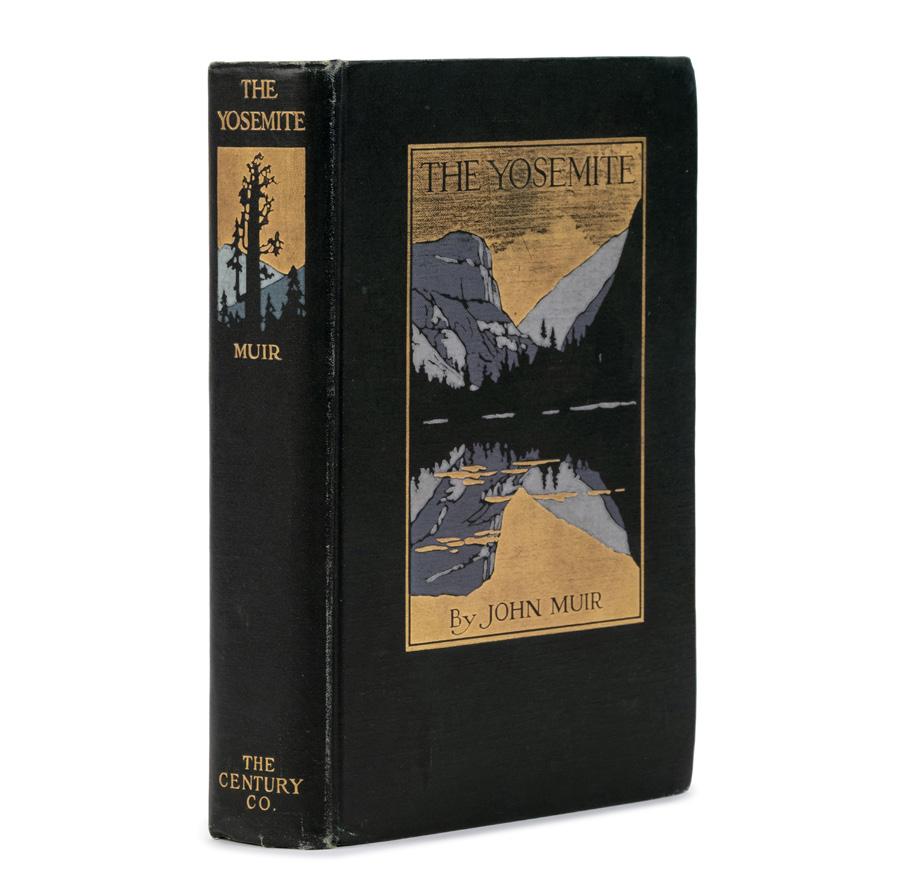
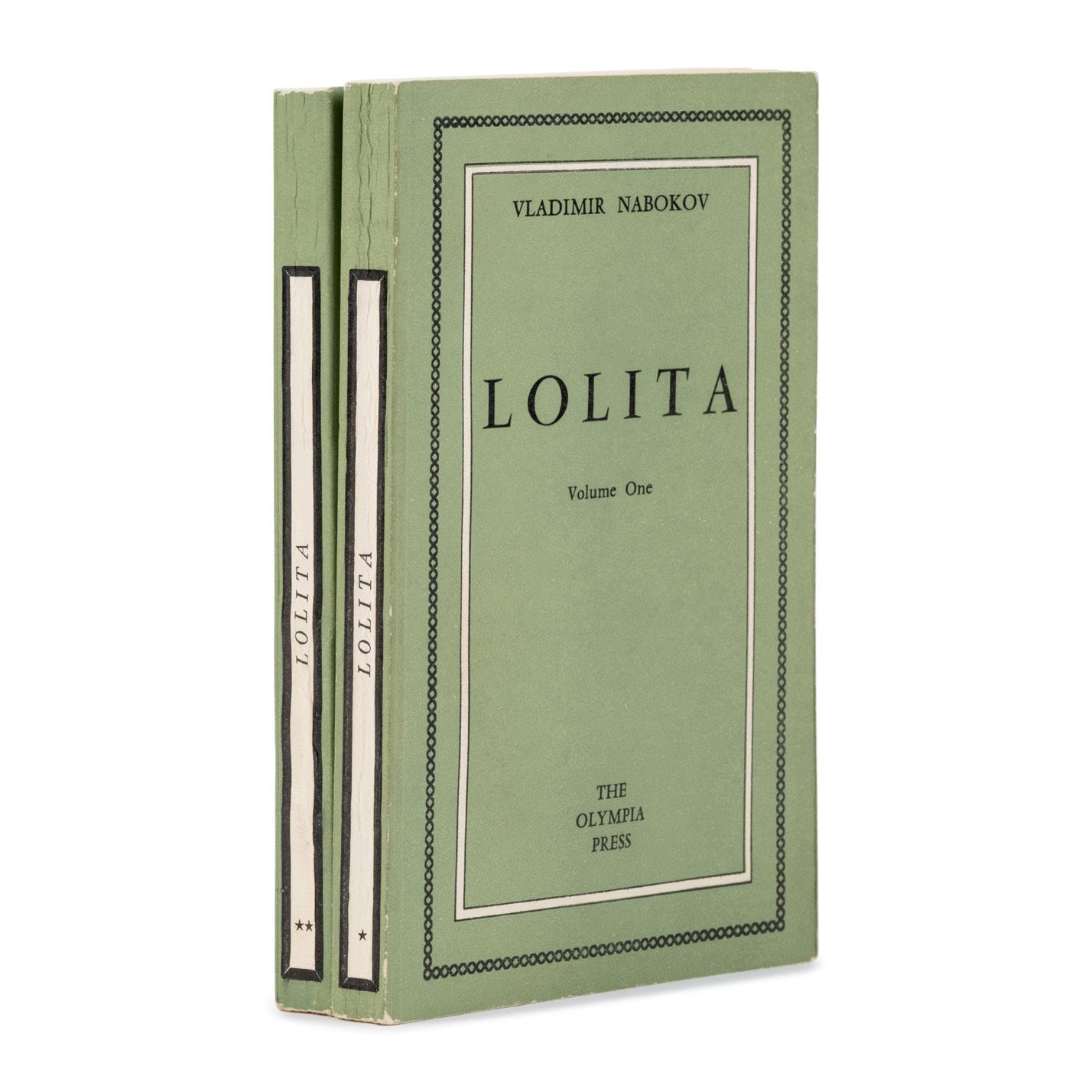
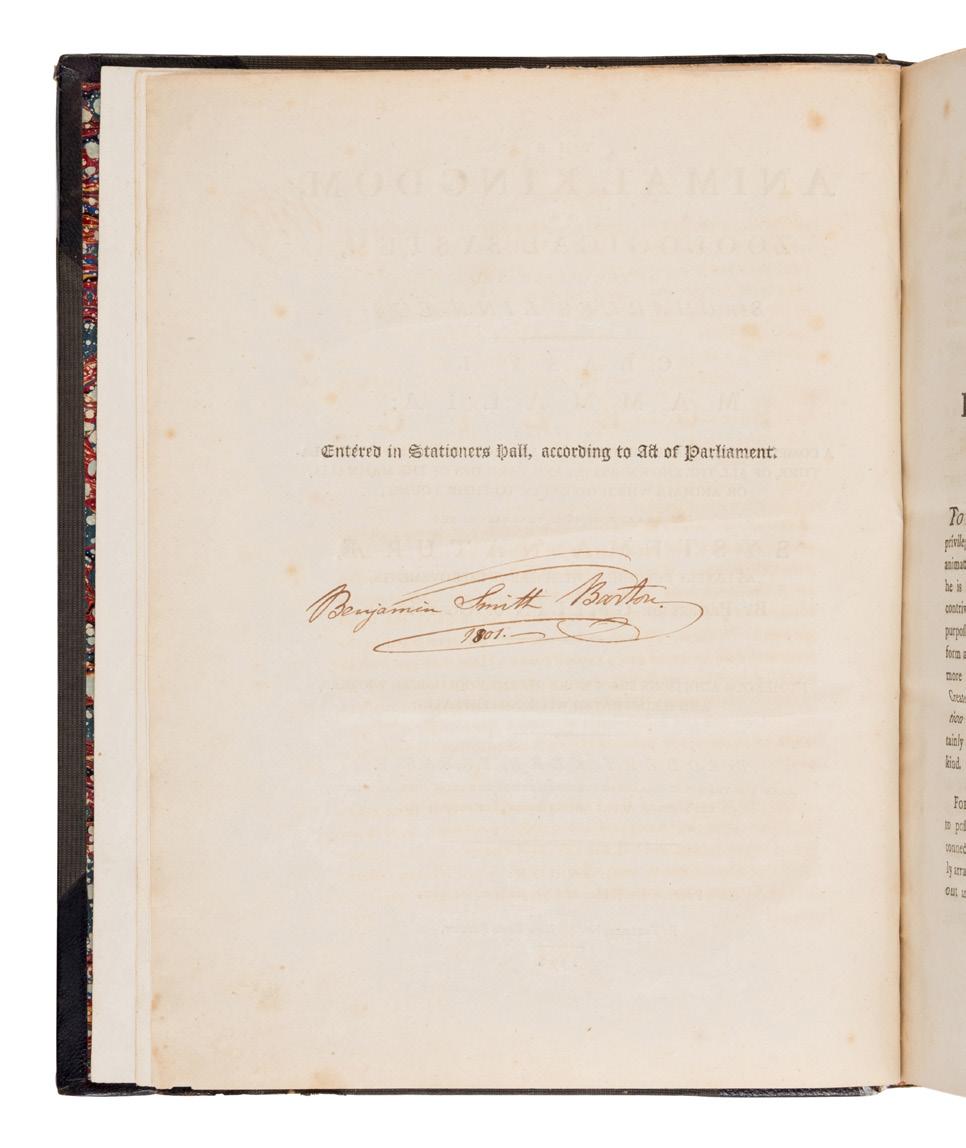
152
Nabokov, Vladimir (1899-1977). Lolita. Paris: The Olympia Press, 1955.
2 volumes, 8vo. Original green printed wrappers; slipcase and chemise.
FIRST EDITION, FIRST ISSUE, with printed price “Francs: 900” on rear cover. Nabokov’s controversial novel was rejected by American publishers, all of whom feared the repercussions of publishing such a “pornographic” work. It was finally accepted by the avant-garde Olympia Press in Paris and published in this two-volume edition. The first edition sold out quickly, but it was not warmly received abroad: alarmed by Graham Greene’s assessment of Lolita as “one of the three best books of 1955,” the English government pressured the French to ban the novel, and it was not published in America until 1958. Lolita is ranked fourth on the Modern Library’s list of 100 Best Novels of the 20th Century. Juliar A28.1.1, issue a.
$2,000 - 3,000
153
[Natural History]. [Barton, Benjamin Smith (1766-1815), his copy]. -- Linnaeus, Charles (1707-1778). The Animal Kingdom, or Zoological System. J.F. Gemlin and Robert Kerr, editors. London: J. Murray, 1792.
4to (273 x 216 mm). 10 engraved plates. (Spotting.) 19th century half morocco gilt, spine in 6 compartments with 5 raised bands, gilt-lettering in two (front joint touched up, fore-corners rubbed). Provenance: Benjamin Smith Barton (1766-1815), American botanist (signature on verso of title, dated 1801; initials on opposite leaf).
PREVIOUSLY OWNED BY ONE OF THE FIRST PROFESSORS OF BOTANY AND NATURAL HISTORY IN THE UNITED STATES.
Born into a distinguished Philadelphia family, Barton received a broad education in both America and Europe, studying medicine and natural history in Edinburgh and Göttingen before returning to Philadelphia to establish his career. Appointed professor of botany at the University of Pennsylvania in 1789—the first such professorship in the United States—Barton quickly emerged as a central authority in American natural science. He later held the chair of materia medica and ultimately succeeded Benjamin Rush as professor of the theory and practice of medicine. Perhaps most significantly, Barton played an instrumental role in preparing Meriwether Lewis for the Lewis and Clark Expedition, providing intensive instruction in botany, zoology, and scientific observation. Lewis returned with 226 plants, which are now preserved at the Lewis and Clark Herbarium at the Academy of Sciences in Philadelphia. Soulsby, p.16.
$600 - 800
154
[Natural History]. Darwin, Charles (1809-1882). On the Origin of Species by Means of Natural Selection, or the Preservation of Favoured Races in the Struggle for Life London: John Murray, 1860.
8vo. Half-title with quotations on verso, 32pp. catalogue dated January 1860 at end. Folding lithographic diagram by William West after Darwin facing p.117. (Some light spotting.) Original green cloth [Freeman variant b], covers decorated in blind, spine stamped and lettered in gilt, brown coated endpapers, uncut, bound by Edmonds and Remnants with their ticket (small stain on spine, light rubbing to fore-corners, marred area on pastedowns, contents starting).
SECOND EDITION, second issue with an 1860 imprint and “fifth thousand” on the title page. In actuality, only 3,000 copies were printed, bringing the total to 4,250 with several revisions to the text. Roughly two copies of the first issue exist with an 1859 imprint.
Darwin considered the second edition of On the Origin of Species an improvement upon the first because it allowed him to correct errors and respond to the immediate wave of criticism that followed the book’s publication in 1859. The first edition sold out on the day of publication and provoked widespread scientific and public debate. Preparing the second edition only months later, Darwin revised numerous passages, corrected mistakes, clarified several arguments concerning natural selection and variation, and added a new historical preface acknowledging earlier evolutionary thinkers.
Darwin himself noted the extent of these changes, writing in the preface to the new edition that “numerous corrections have been made” and that he had taken the opportunity to address points raised by reviewers and correspondents. Among the most notable additions was the acknowledgment of earlier writers who had proposed evolutionary ideas, including Jean-Baptiste Lamarck and Robert Chambers. Darwin also modified certain phrasing to clarify his arguments and temper misunderstandings, making the second edition, in his own view, a more accurate and carefully expressed presentation of his theory of natural selection. Freeman F376. A VERY BRIGHT COPY OF THE MOST INFLUENTIAL AND IMPORTANT BIOLOGICAL WORK EVER PRODUCED ON ANY CONTINENT.
$5,000 - 7,000
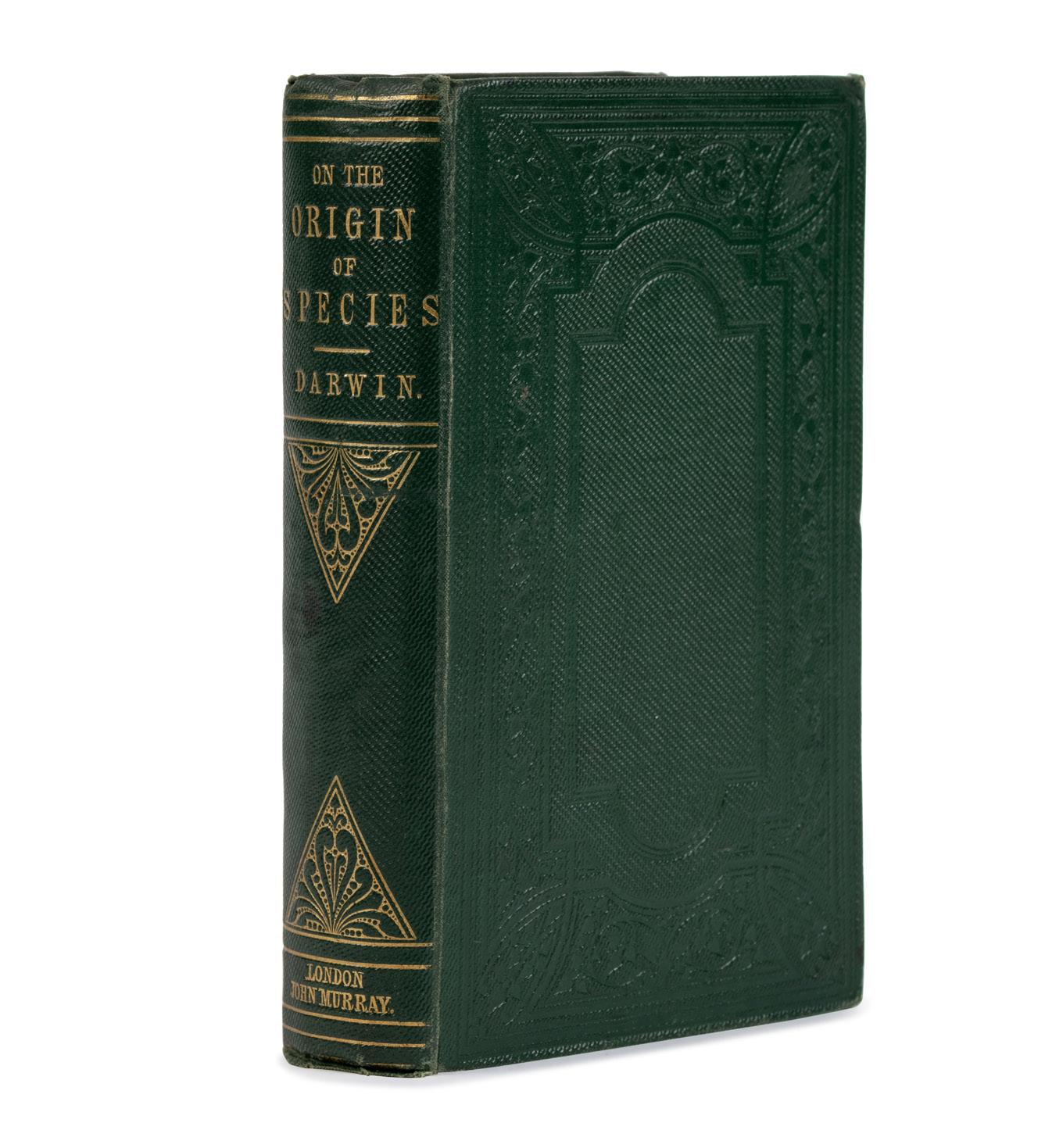
155 [Natural History]. Manuel, Blaise Etienne. -- Sève, Jacques Eustache de (d. 1829), illustrator. Nouveau Muséum d’Histoire Naturelle... Dessinées par M. Desève, et autres habiles Artistes... Tome Premier. Paris: Chez F. Dufart, 1806.
8vo (216 x 140 mm). Half title, 101 color-printed plates with tissue guards (minor offsetting, very light spotting throughout.) Original red straight-grain paper over boards, morocco lettering-pieces gilt (rubbing, splits to joints, wear to spine ends, labels partially peeling). Provenance: sold, Heritage Auctions (4 November 2015, sale 6148 lot 45200).
FIRST EDITION, ONE OF ONLY THREE COPIES EXTANT OF ONE OF THE FIRST ZOOLOGY BOOKS PRINTED WITH COLOR PLATES.
Very little is known about the production of Nouveau Muséum d’Histoire Naturelle..., as during the period in which it was printed French publishers faced unprecedented challenges due to the transition to industrial printing, strict censorship laws imposed by Napoleon, and the destruction of the printing guilds which to that point had dominated the French book trade. French bibliographer Joseph-Marie Quérard, whose La France littéraire gives only a passing mention to the present work in his section dealing with Manuel, claims that it “appears to have been merely projected, for no mention of it is found anywhere other than in Mr. Debray’s volume” (translated from the original French). All bibliographers agree that at sixty francs the book was prohibitively expensive and given the upheaval reverberating through France at this time, and with only twenty-four subscribers listed (nearly all of whom were either royalty or nobility) it comes as little surprise that a second volume was never produced.
EXCEEDINGLY RARE: The present example is one of only three examples traced and the only one known to have ever appeared at auction, with the other two in the holdings of the Field Museum Library (Chicago) and the U.S. Department of the Interior Library. Nissen, DZB, 2686; Quérard, La France littéraire, V, p. 497
$2,000 - 3,000
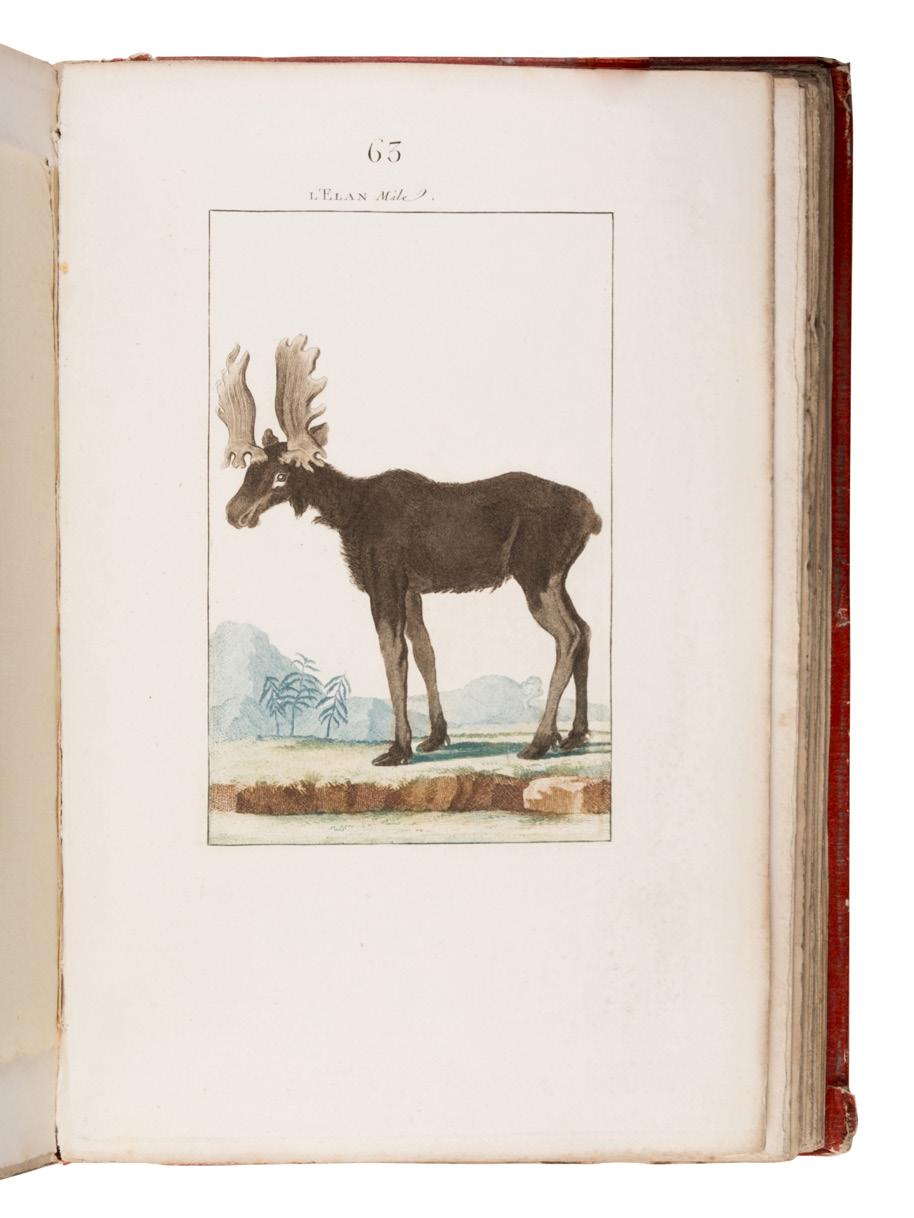
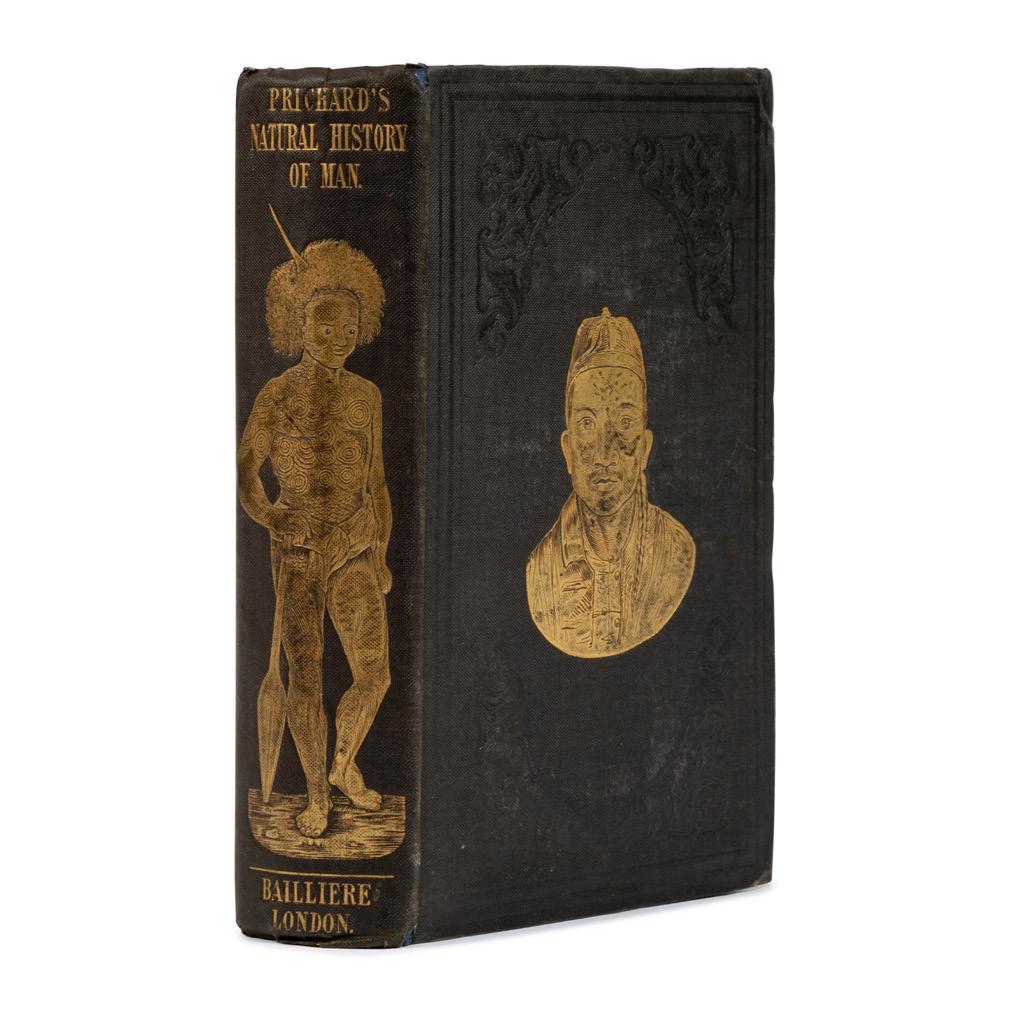
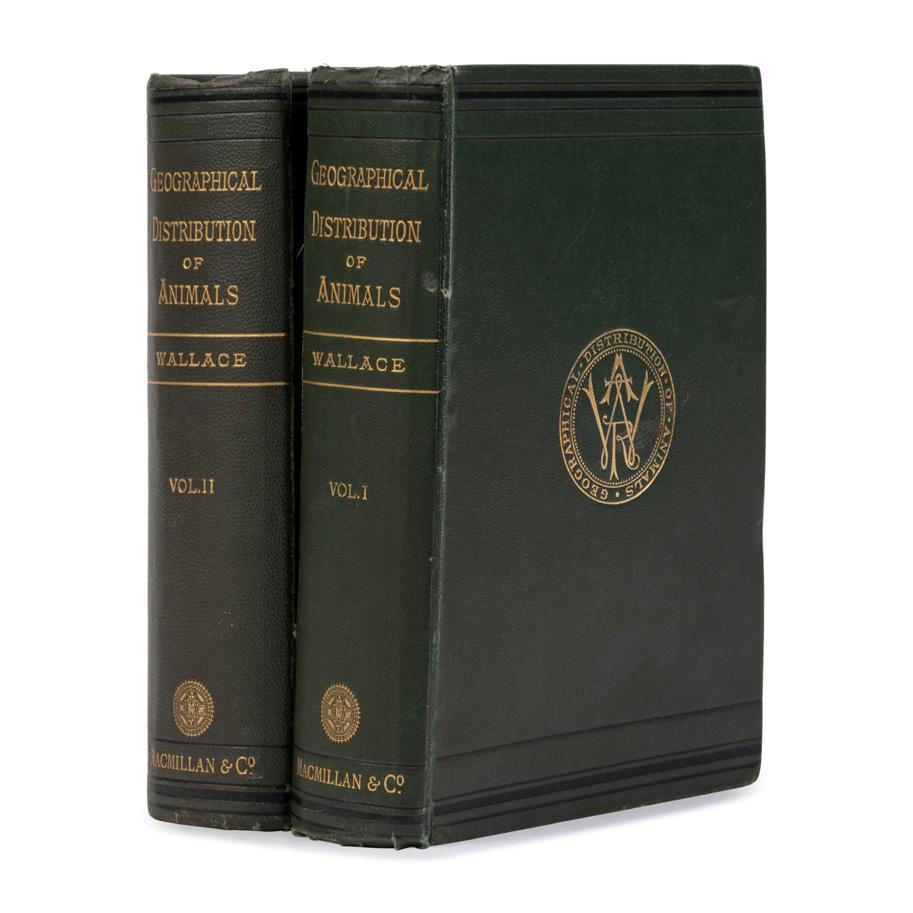
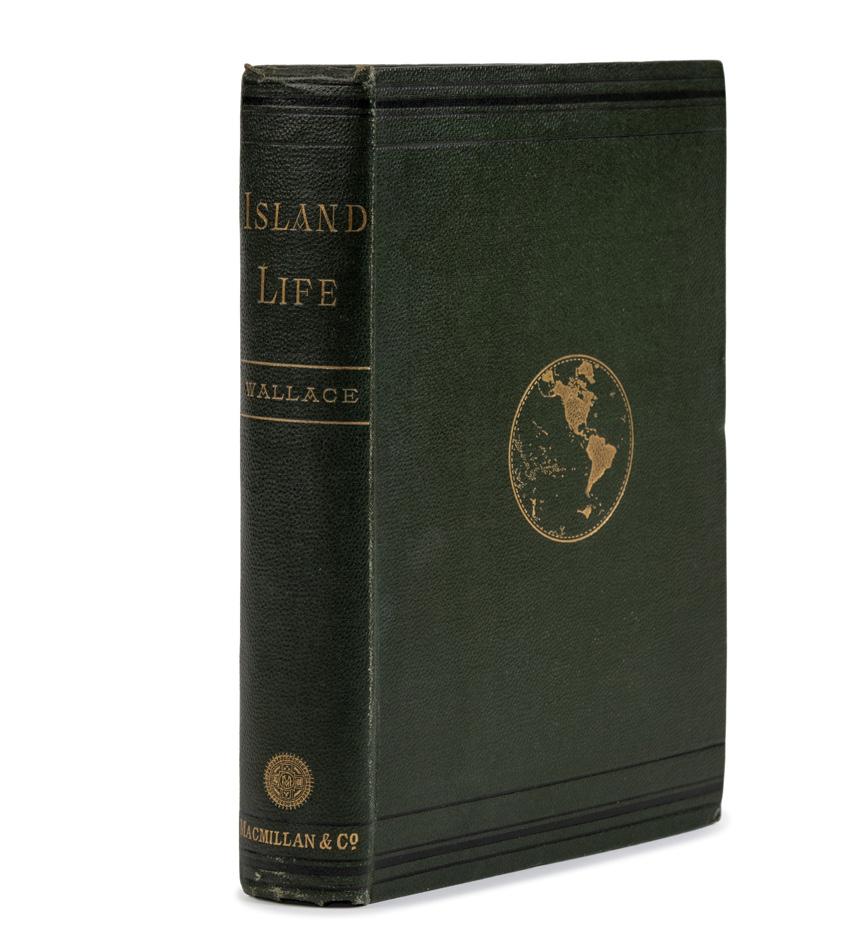
156
[Natural History]. Prichard, James Cowles (1786-1848). The Natural History of Man. London, [et al]: H. Bailliere, 1843.
Royal 8vo. Half-title; 16pp. publisher’s catalogue at end; hand-coloured aquatint frontispiece, 38 engraved plates (33 hand-colored), numerous wood-engraved illustrations. (Some marginal browning or spotting to uncolored plates.) Original pictorial brown cloth gilt, Remnant & Edmonds binders’ ticket (contents a bit loose, old residue from letter or bookplate on front pastedown). Provenance: Capt. Beaumont, R.N. and Mr. Y. Barliff? (early lending library notations at foot of pastedown); Dr. Wright (ownership signature on pastedown). Presumably, this is Captain Lewis Beaumont (18471922) of the Royal Navy, who served as a senior lieutenant in the British Arctic Expedition aboard HMS Discovery in an attempt to reach the North Pole.
FIRST EDITION of Prichard’s final book-length work, presenting a concise popularization of the anthropological and ethnological ideas he had first developed in his influential study Researches into the Physical History of Man (1813 and subsequent editions). He concluded that the human race developed from dark-skinned ancestors and that the lighter pigmentation of some peoples emerged gradually alongside the rise and expansion of civilization. By 1836 he had advanced the view that “all human races are of one species and one family,” despite the wide variety of physical characteristics observed among them. Sabin 65475. A VERY BRIGHT COPY.
$800 - 1,200
157
[Natural History]. Wallace, Alfred Russel (1823-1913). The Geographical Distribution of Animals, with a Study of the Relations of Living and Extinct Faunas as Elucidating the Past Changes of the Earth’s Surface. London: MacMillan, 1876.
2 volumes, large 8vo. 20 wood-engraved plates, 7 color-printed maps (most double-page). Original dark olive cloth gilt, unopened (splitting to rear joint of vol.1, light rubbing to fore-corners and joints, hinges starting). Provenance: K.E.H. (bookplate).
FIRST EDITION. The Geographical Distribution of Animals “established evolutionary zoogeography on its modern foundation... [and] few, if any, subsequent works have been more important to the subject” (DSB). Wood, p.617.
$600 - 800
158
[Natural History]. Wallace, Alfred Russel (1823-1913). Island Life: or, the Phenomena and Causes of Insular Faunas and Floras. London: Macmillan & Co., 1880.
8vo. 2pp. publisher’s ads at end; 3 chromolithographed maps including frontispiece, numerous maps and diagrams in the text. (Light spotting to a few preliminaries.) Original green cloth, central gilt medallion of the Western Hemisphere on upper cover, gilt-lettering on spine, top edge gilt (light rubbing at extreme ends).
FIRST EDITION OF ONE OF THE “FOUNDATIONAL WORKS ON ZOOGEOGRAPHY” (Norman), which includes the first theory of continental glaciation based on a combination of geographical and astronomical causes, a discussion of island classification, and a survey of worldwide island faunas and floras. Norman 2179; Wood p.617.
$500 - 700
159
Nordhoff, Charles (1887-1947) and James Norman Hall (1887-1951). [The Bounty Trilogy]. Mutiny on the Bounty. 1932. -- Men Against the Sea 1934. -- Pitcairn’s Island. 1934. Boston: Little, Brown, and Company.
8vo. Together, 3 works in 3 volumes, all in original cloth and dust jackets (some toning, darkening to spine of Pitcairn’s Island).
FIRST EDITIONS. The Bounty Trilogy presents a fictionalized account of the 1789 mutiny against Lieutenant William Bligh aboard the HMS Bounty Its main protagonist, Roger Byam, is loosely based on midshipman Peter Haywood, whose true role in the mutiny was never quite clear. Men Against the Sea follows the journey of Bligh and fellow loyalists after they were set to sea by the mutineers, with the success of Mutiny on the Bounty allowing it to be serialized in the Saturday Evening Post in 1933 prior to its publication in book form in January 1934. The final book in the trilogy, Pitcairn’s Island, was also serialized in the Saturday Evening Post prior to publication and tells the story of John Adams, the last surviving mutineer from the HMS Bounty, who, along with fourteen others, built a settlement on the island of Tahiti, which was not discovered until 1808.
$500 - 700
160
O’Hara, John (1905-1970). Appointment in Samarra. New York: Harcourt, Brace, 1934.
8vo. Original black cloth, gilt-lettered spine; dust jacket (toning, minor chipping along extremities).
FIRST EDITION, FIRST ISSUE in the first issue dust jacket with “Recent Fiction” on rear panel and errata slip tipped in before the dedication page. Appointment in Samarra was a massive success upon publication, with an enthusiastic Ernest Hemingway writing of it, “If you want to read a book by a man who knows what he is writing about and has written it marvelously well, read Appointment in Samarra by John O’Hara.” The author would later credit a retelling of an ancient Mesopotamian tale by W. Somerset Maugham in his 1933 play Sheppey with providing the inspiration for the title, writing that “Dorothy [Parker] didn’t like the title; [publisher] Alfred Harcourt didn’t like the title; his editors didn’t like it; nobody liked it but me.” In 2011 it was placed in Time Magazine’s List of the 100 Best Novels published since the magazine’s founding in 1923. Bruccoli A2.1.
$1,000 - 1,500
161
Orwell, George (1903-1950). Animal Farm. New York: Harcourt, Brace and Company, 1946.
Small 8vo. Original black cloth, gilt-lettered spine; dust jacket (light rubbing to spine).
FIRST AMERICAN EDITION. Largely written as a critique not of socialism itself but of the Stalinistic corruption of socialist ideals, Animal Farm was written between November 1943 and February 1944, in part due to the failure of his previous nonfiction work, Homage to Catalonia, which contained similar themes. In an unpublished preface to the book Orwell wrote of the genesis of Animal Farm, “I saw a little boy, perhaps ten years old, driving a huge carthorse along a narrow path, whipping it whenever it tried to turn. It struck me that if only such animals became aware of their strength we should have no power over them, and that men exploit animals in much the same way as the rich exploit the proletariat.”
The manuscript was nearly lost in June 1944 when a German bomb destroyed Orwell’s London flat. According to his adopted son, Orwell spent hours sifting through the rubble to find it. Originally intending to publish it through Faber & Faber, the book was rejected by director T.S. Eliot on the grounds that criticizing the Soviet Union in the midst of World War II would be unwise. It was eventually published by Secker & Warburg in 1945. Fenwick A.10d.
$300 - 400
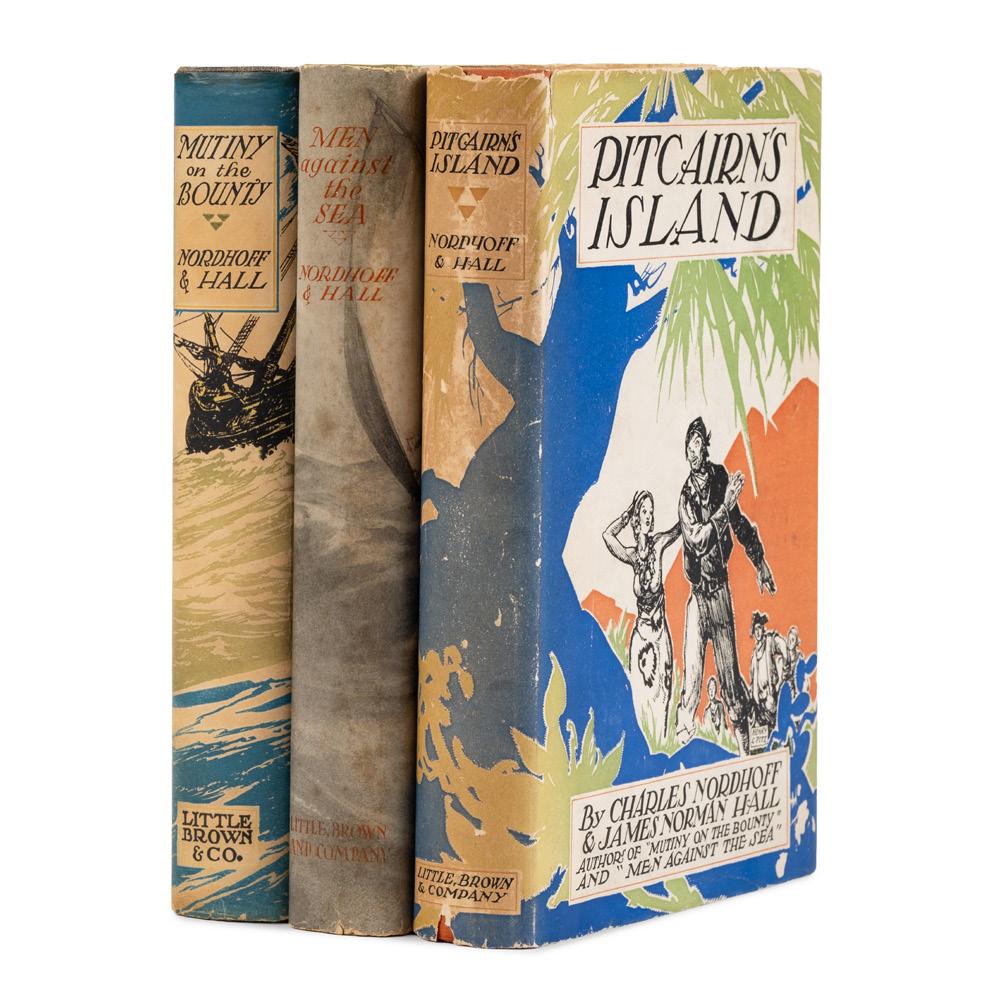


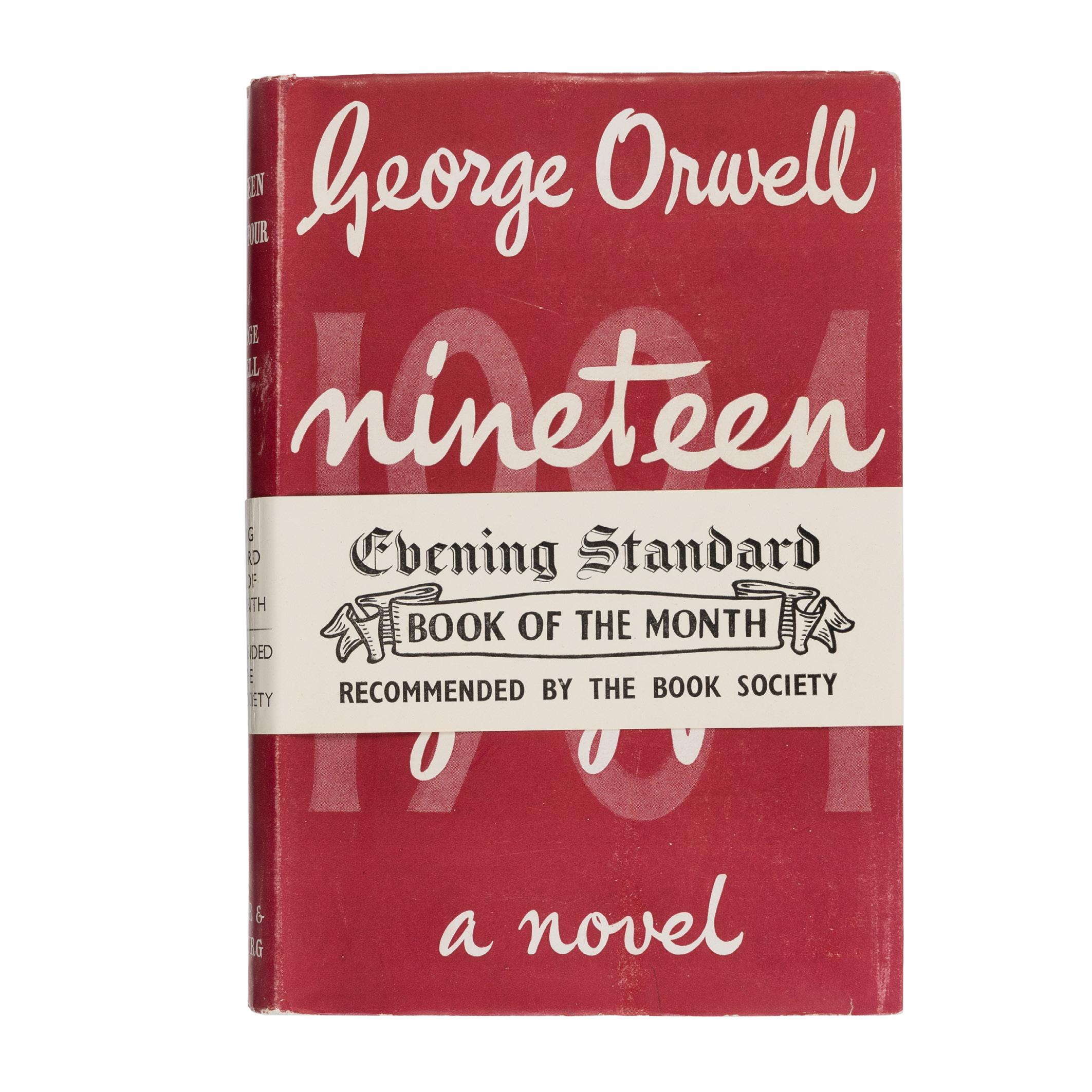
162
Orwell, George (1903-1950). Nineteen Eighty-Four. London: Secker & Warburg, 1949.
8vo. Original lime green cloth, spine lettered in red, top edge stained red; dust jacket (a touch of rubbing to spine, tiny closed tear near head, neatly repaired on verso); WITH PRINTED “EVENING STANDARD” WRAP-AROUND BAND.
FIRST EDITION of Orwell’s famous dystopian novel, published just a year before his death. In the preferred red dust jacket (issued in both red and green, no priority established), WITH THE RARE PUBLISHER’S PRINTED WRAP-AROUND BAND.
Nineteen Eighty-Four “has been called an embittered book… the political arguments are never dull… ‘Double Think,’ ‘Newspeak,’ and ‘Big Brother’ now form parts of the language. It is a warning against totalitarianism under any disguise– left of right” (Connolly). It is also one of the most often censored books in the U.S., ranking 5th among frequently challenged books in American schools from 1965 to 1982, and although the book was already considered a classic by critics, it was only present in 43% of school libraries (cf. 100 Banned Books, pp.118-123).
Ibid., The Modern Movement p.94; Fenwick A12a. AN EXCEPTIONALLY BRIGHT COPY.
$8,000 - 12,000
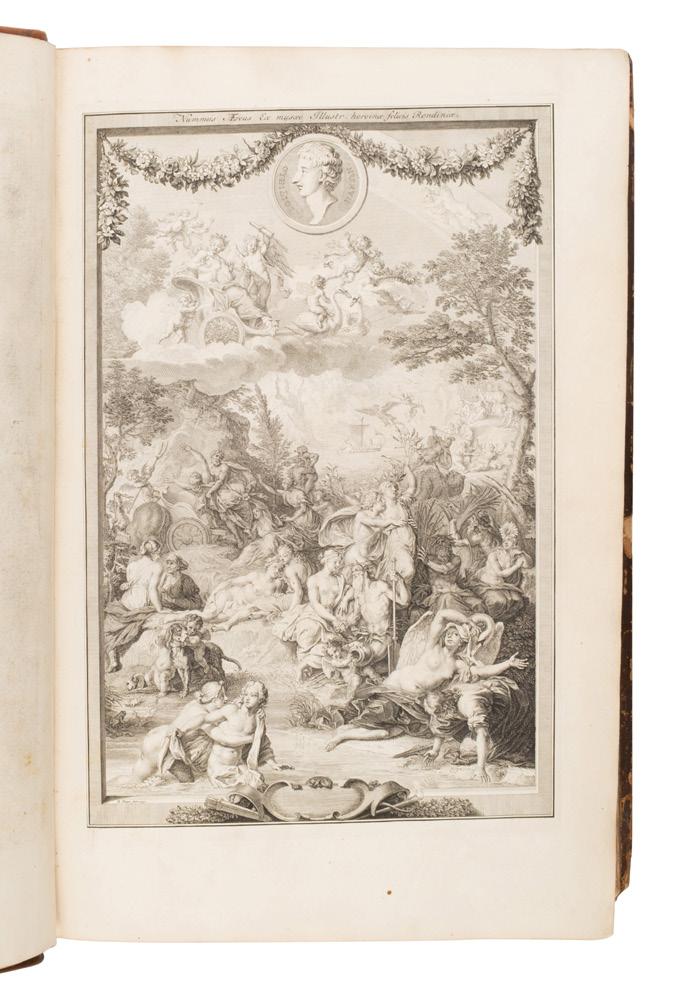
163
Ovid (46 BCE-17/18 CE). Ovid’s Metamorphoses, in Latin and English. Translated into English by Dryden, Addison, Pope, Gay, and other “eminent hands”. Amsterdam: for Wetsteins and Smith, 1732.
2 volumes in one, folio (470 x 298 mm). Half-title; allegorical frontispiece, title page printed in red and black, with engraved vignette, 130 half-page copper engravings by Bernard Picart, Charles Le Brun, Maas, Romain, and others, woodcut head and tail pieces, and initials. (Light marginal spotting.) Contemporary calf, all edges stained red (rebacked, preserving original endpapers). Provenance: John Peachey (armorial bookplate); James Hale Bates (bookplate); Newsell’s Library (label).
FIRST PICART EDITION, considered the most beautiful edition of Ovid’s epic of transformation, which Brunet says is sought after because of the wonderful plates by Picart. Brunet IV, p.285; Cohen-De-Ricci, pp.348-349 (“a magnificent work”); Lowndes III, p.1744.
$1,000 - 1,500
164
[Parrish, Maxfield (1870-1966), illustrator]. -- Irving, Washington (1783-1859)]. A History of New York from the Beginning of the World to the End of the Dutch Dynasty. London and Boston: D.B. Updike, The Merrymount Press for John Lane, 1900.
Small folio. 8 black-and-white plates after Parrish. Original cloth-backed boards, pictorial label mounted on upper cover, gilt-lettered spine, uncut (light rubbing to fore-corners and spine ends).
FIRST PARRISH EDITION.
$200 - 300
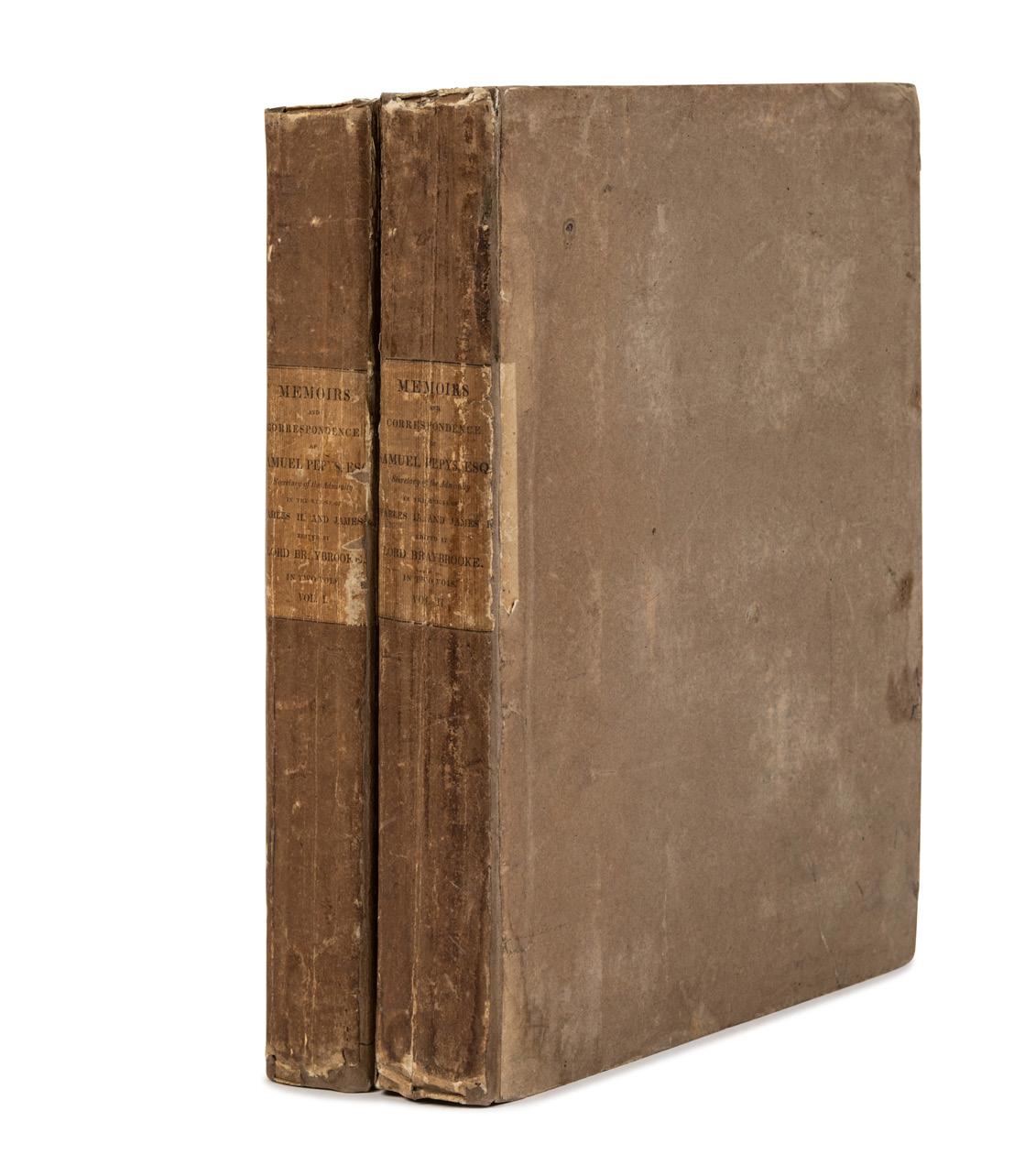
165
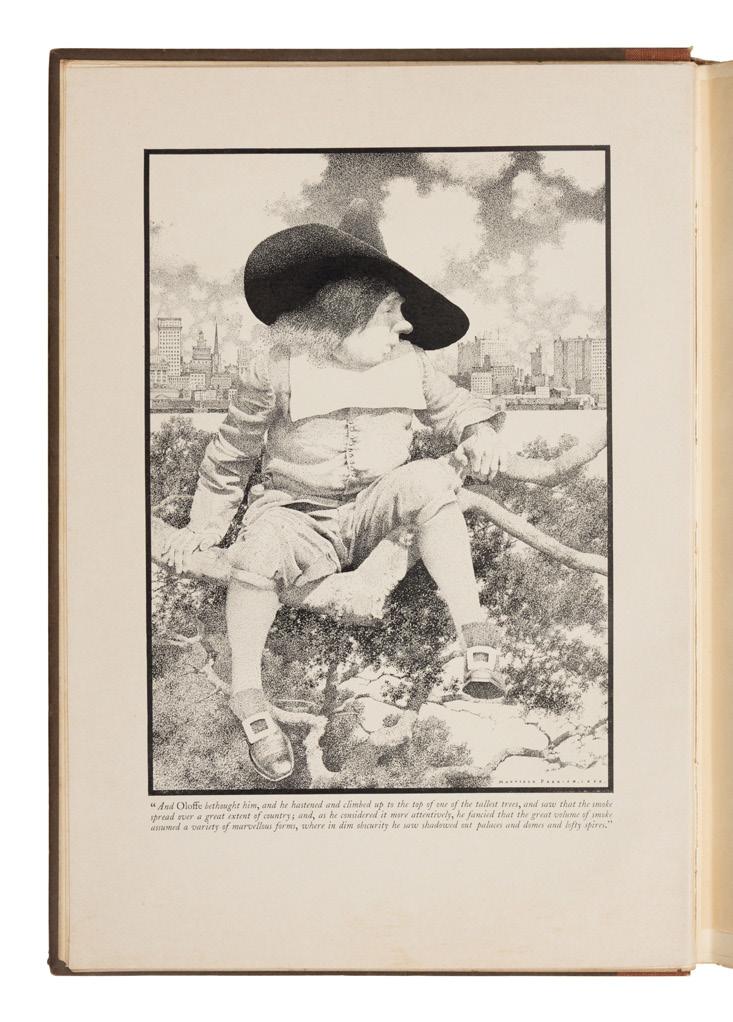
Pepys, Samuel (1633-1703). Memoirs of Samuel Pepys, Esq. F.R.S... Comprising his diary from 1659 to 1669, deciphered by the Rev. John Smith... Edited by Richard, Lord Braybrooke. London: Henry Colburn, 1825.
2 volumes, large 4to (318 x 241 mm). Half-titles with “presentation copy” printed in red, 2 engraved frontispieces, and 11 engraved plates. (Light offsetting from frontispiece portrait onto title in Vol. I, some minor toning and pale spotting.) ORIGINAL DRAB BOARDS, with original printed paper labels on spines, uncut (skillfully rebacked preserving original backstrips and labels, labels toned with some chipping, some pale staining and soiling to boards, boards rubbed and scuffed); cloth folding cases. Provenance: Francis Lunn (armorial bookplates); William A. Strutz (book label); his sale, Heritage Auctions, 27 June 2024, lot 45146).
FIRST EDITION, “PRESENTATION COPY” ON FINE PAPER. “Some copies of the book on fine paper, with beautiful impressions of the plates, are marked in red on the half title page ‘Presentation copy’” (Grolier). According to Lowndes, only 12 copies were done for presentation.
Samuel Pepys served as the Secretary to the Admiralty during the reigns of Charles II and James II. His original diary, written in six volumes of shorthand, resides at Magdalen College, and was deciphered by the Rev. John Smith in the early nineteenth century. Pepys’ Memoirs not only document some of the most turbulent events in English history, including the coronation of Charles II, the Great Plague, and the Great Fire of London, but also provide an observant and tangible record of habits, community, and day-to-day life at the time. Grolier, English 75; Lowndes, p.1828.
$3,000 - 5,000
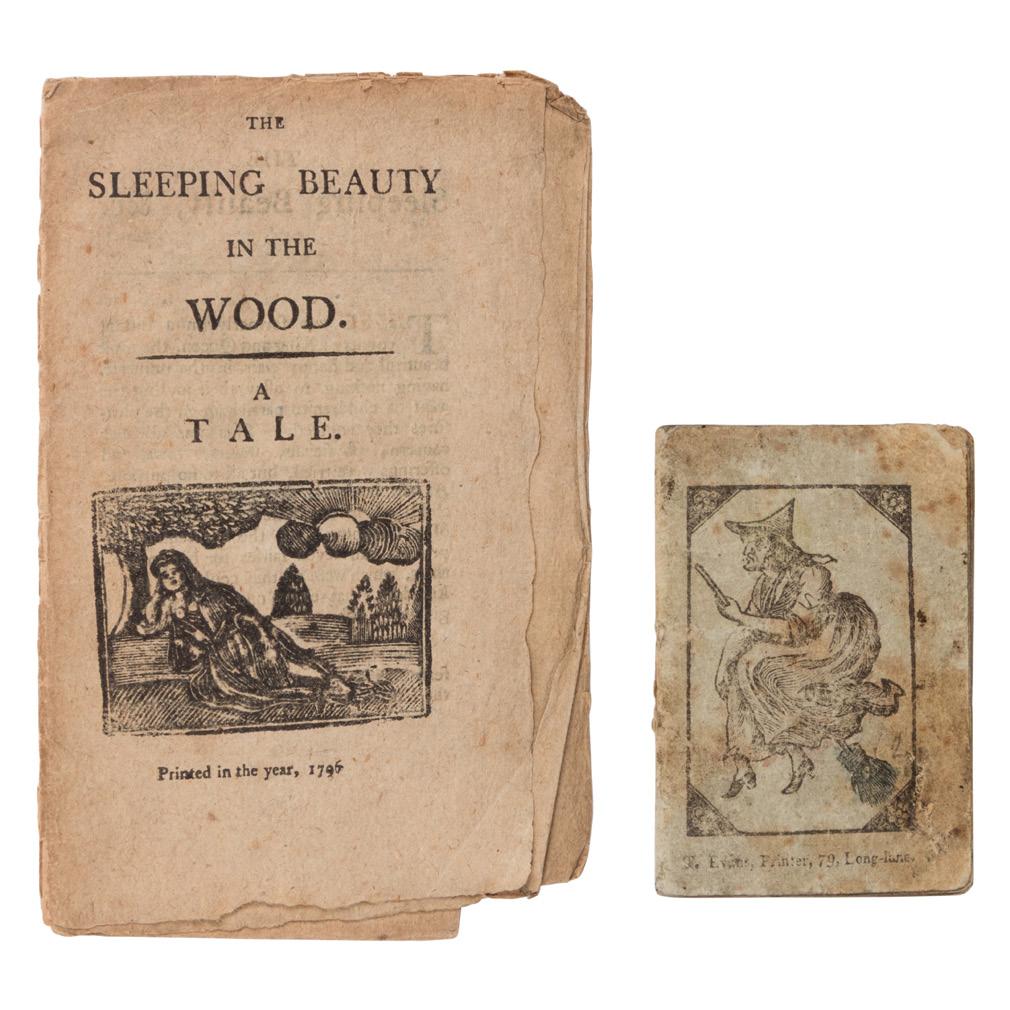
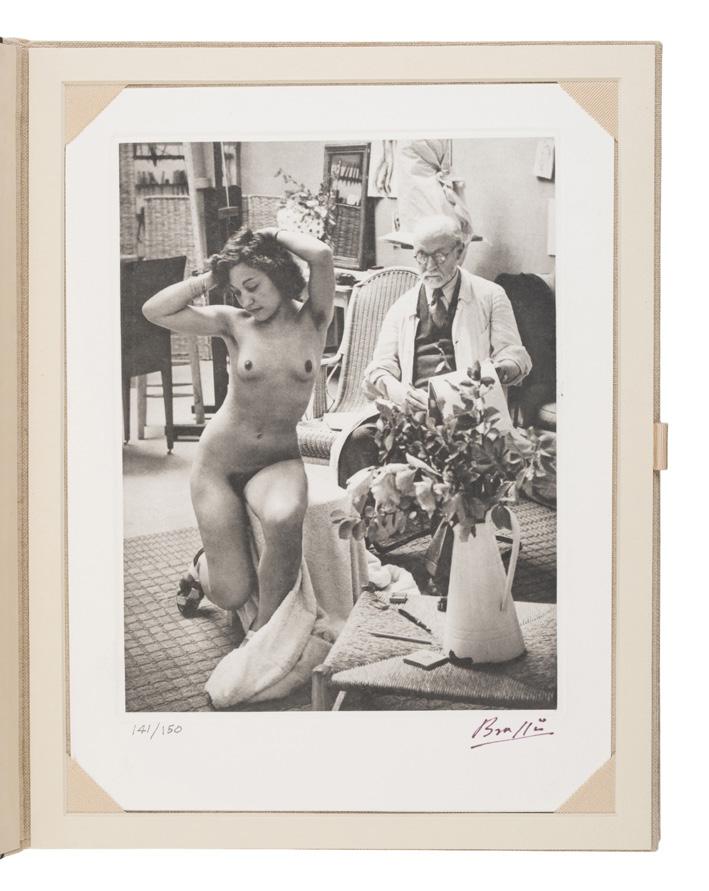
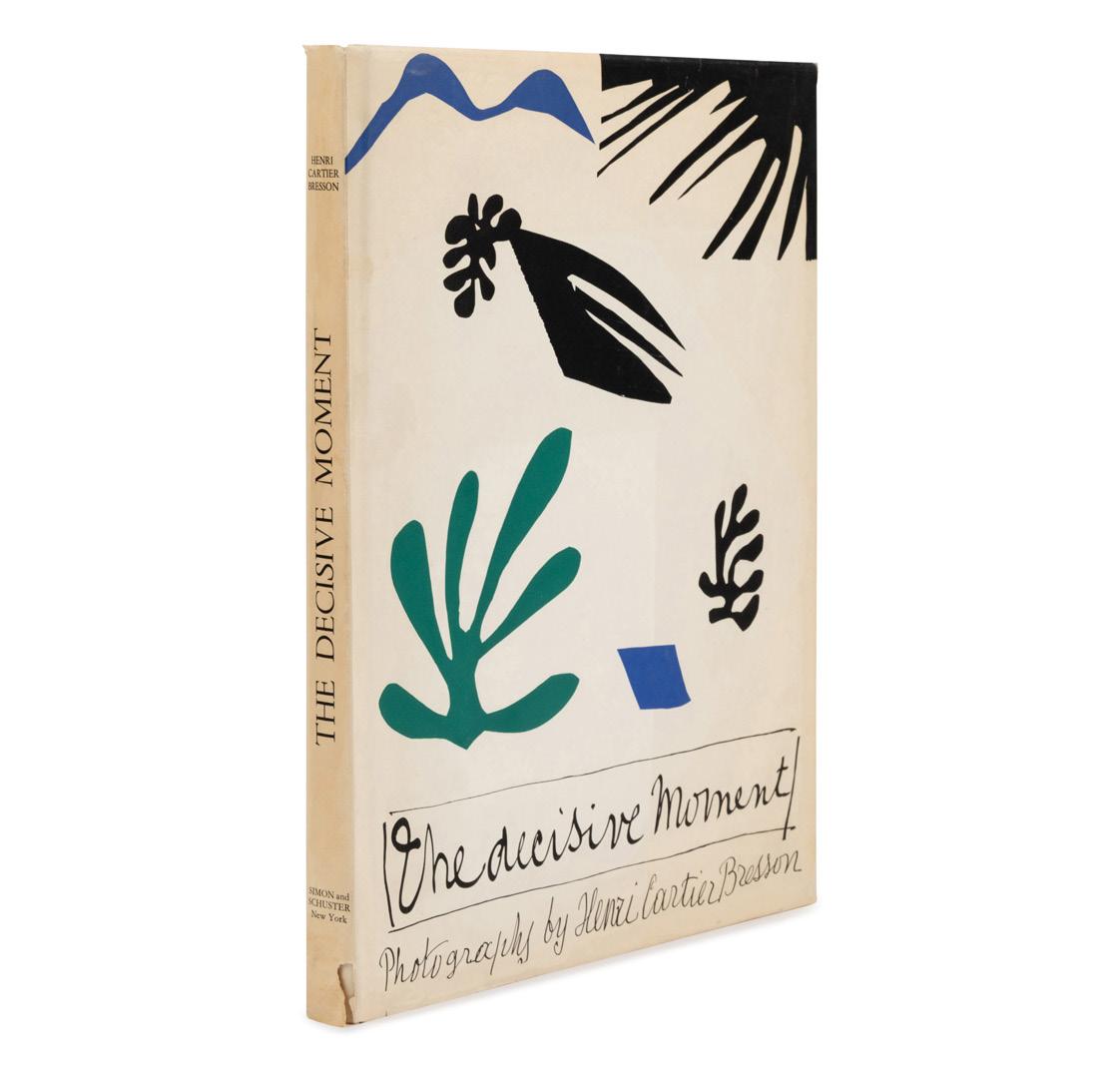
166
[Perrault, Charles (1628-1703)]. The Sleeping Beauty in the Wood. A Tale [London?]: N.p., 1796.
12mo (165 x 110 mm). Title-page vignette and woodcut on [p.22]. (Light spotting.) Self-wrappers, uncut and unopened (splitting to spine).
A rare English translation of La Belle au bois dormant (Sleeping Beauty). Charles Perrault was a French author and a foundational figure in the development of the literary fairy tale, helping lay the groundwork for later collectors and adapters such as the Brothers Grimm. First published in 1695, La Belle au bois dormant (Sleeping Beauty) appears alongside several of his most enduring tales, including Le Petit Chaperon rouge (Little Red Riding Hood), Le Maître chat ou le Chat botté (Puss in Boots), and Cendrillon ou la petite pantoufle de verre (Cinderella).
[With:] The Entertaining and Remarkable History of Robin Hood. London: Printed for T. Evans by P. Norbury, n.d. [ca 1800]. 32mo. Illustrated with woodcuts in the text, wood-engraved frontispiece printed on the inside of the front cover. (Light spotting.) Original pictorial wrappers with an image of a witch and a soldier, partially hand-colored (scattered stains to covers, tiny hole to upper wrapper).
Provenance: Justin Schiller (his sale, Heritage, 12 December 2020, lots 45063, 45314).
$800 - 1,200
167
[Photography]. Brassaï (pseudonym of Gyula Halász, 1899-1984). The Artists of My Life. New York: The Viking Press, 1982.
4to. Original patterned cloth, lucite tie at fore-edge.
LIMITED EDITION, number 141 of 150 copies, SIGNED BY BRASSAÏ. WITH ADDITIONAL DUST-GRAIN PHOTOGRAVURE SIGNED BY BRASSAÏ of Henri Matisse in his studio with a model. Brassaï was a Hungarian-French sculptor and photographer who moved from his native Transylvania to Paris following the end of the First World War. His photographs of post-war Paris, many of which featured fellow artists like Henri Matisse and Salvador Dalí, gained him international renown.
$600 - 800
168
[Photography]. Cartier-Bresson, Henri (1908-2004), photographer. The Decisive Moment. New York: Simon and Schuster, 1952.
Folio. Original color pictorial boards with a design by Henri Matisse; dust jacket (some minor toning, 1 in. closed tear at spine tail).
FIRST AMERICAN EDITION. Called “one of the greatest photography books ever published,” The Decisive Moment comprises photographs from the first twenty years of Cartier-Bresson’s career. A collaborative effort between Cartier-Bresson, artist Henri Matisse, and art critic and publisher Tériade, the book is credited with introducing the term “decisive moment” as a sort of trademark for Cartier-Bresson’s work, despite the original title for the work being Images à la Sauvette (Images on the Run). Of his process Cartier-Bresson wrote, “In a photograph, composition is the result of a simultaneous coalition, the organic coordination of elements seen by the eye. One does not add composition as though it were an afterthought superimposed on the basic subject material, since it is impossible to separate content from form.” A VERY BRIGHT COPY.
$1,000 - 1,500
169
[Photography]. Steichen, Edward (1879-1973). -- Sandburg, Carl (18781967). Steichen The Photographer. New York: Harcourt, Brace and Company, 1929.
4to. Full-page reproductions of photographs by Steichen. Original black cloth gilt (a touch of rubbing to corners).
FIRST EDITION, LIMITED ISSUE, number 216 of 925 copies SIGNED BY SANDBURG AND STEICHEN. The Book of 101 Books, pp.54-55; Hasselblad, pp.86-87
$800 - 1,200
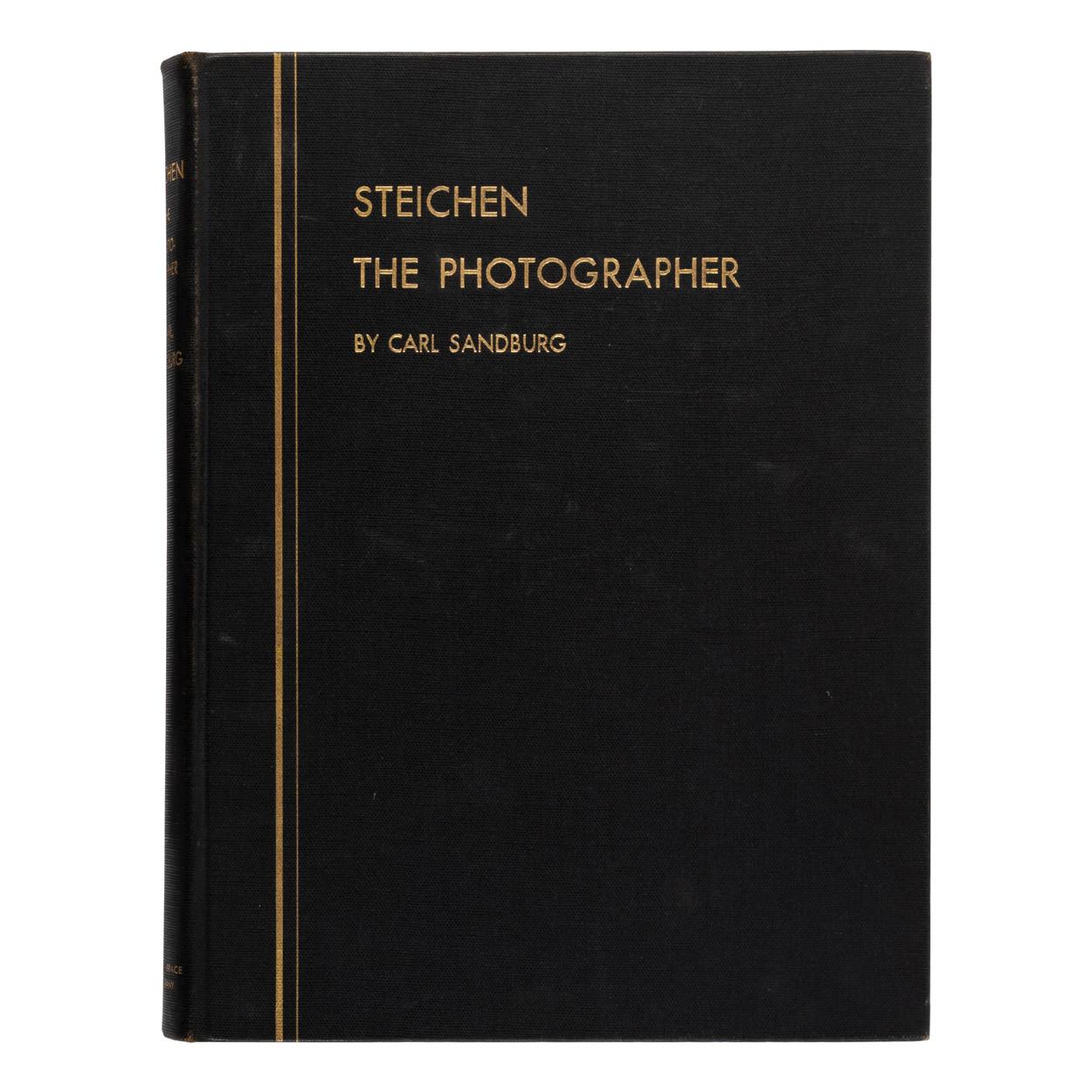
170
[Photography]. Weegee [pseudonym of Arthur Fellig (1899-1968)]. Naked Hollywood. New York: Pellegrini & Cudahy, 1953.
4to. Illustrated from photographs by Weegee. Original black buff cloth; dust jacket (wear along extremities with minor marginal losses). Provenance: Ralph Baum (1907-1984), founder of the Judaica Museum of the Hebrew Home for the Aged and Modernage Photographics (author’s inscription).
FIRST EDITION. PRESENTATION COPY INSCRIBED BY WEEGEE TO RALPH BAUM, “The photographer’s friend.”
[With:] WEEGEE. Naked City. New York: Essential Books, 1945. 4to. Illustrated from photographs by Weegee. Original grey cloth; dust jacket (creases, tape repairs). FIRST EDITION.
Arthur Fellig, or “Weegee” as he was popularly known, was a photojournalist renowned for his stark black and white photography which commonly focused on street scenes in New York City. He was known for following emergency services answering calls on the Lower East Side and then photographing their activity, often resulting in unflinchingly realistic photographs of urban life and crime scenes. When asked how he got started he simply said, “In my particular case I didn’t wait ‘til somebody gave me a job or something, I went and created a job for myself—freelance photographer. And what I did, anybody else can do... I went down to Manhattan Police Headquarters and for two years I worked without a police card or any kind of credentials. When a story came over a police teletype, I would go to it.
$800 - 1,200
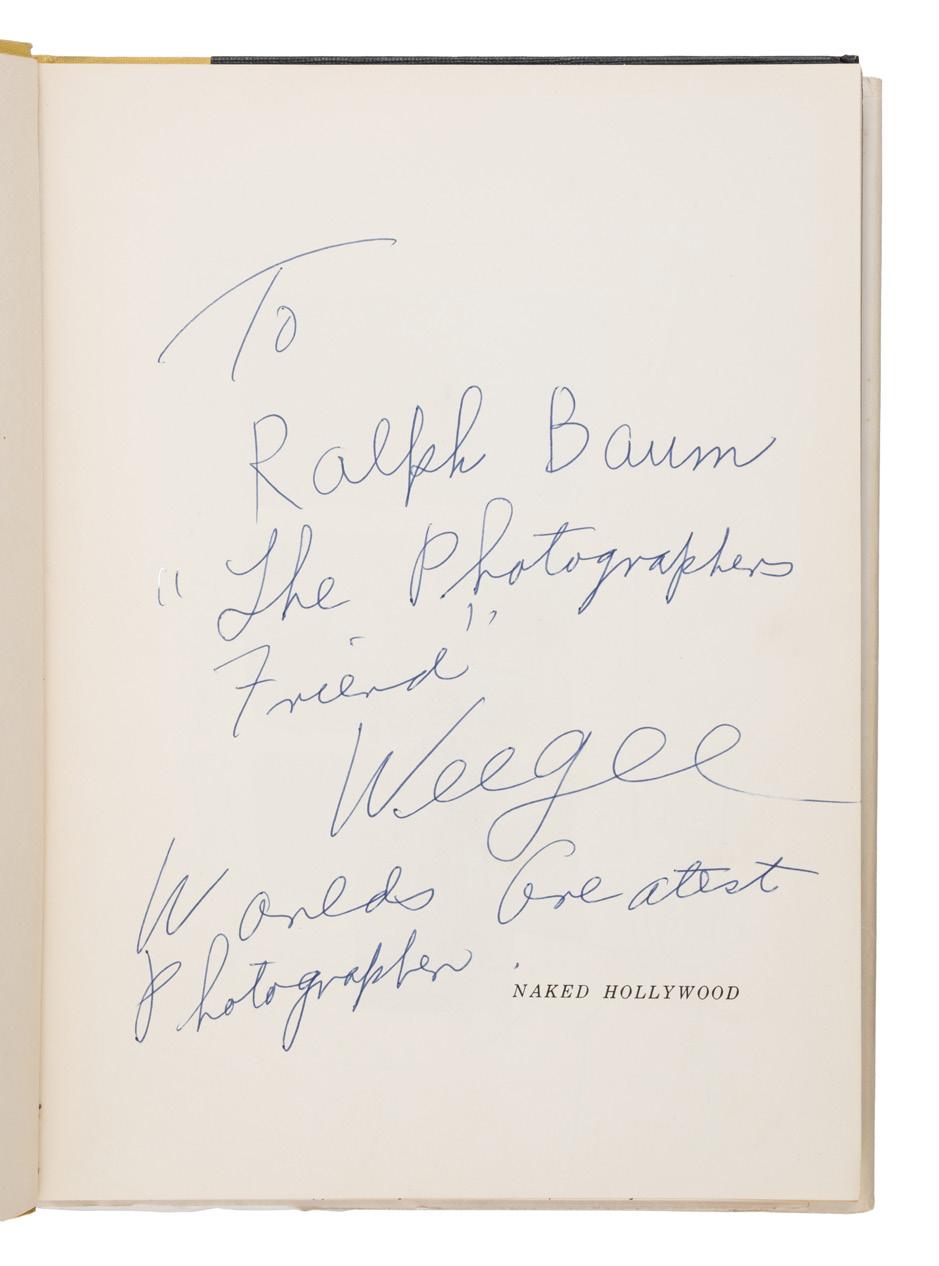
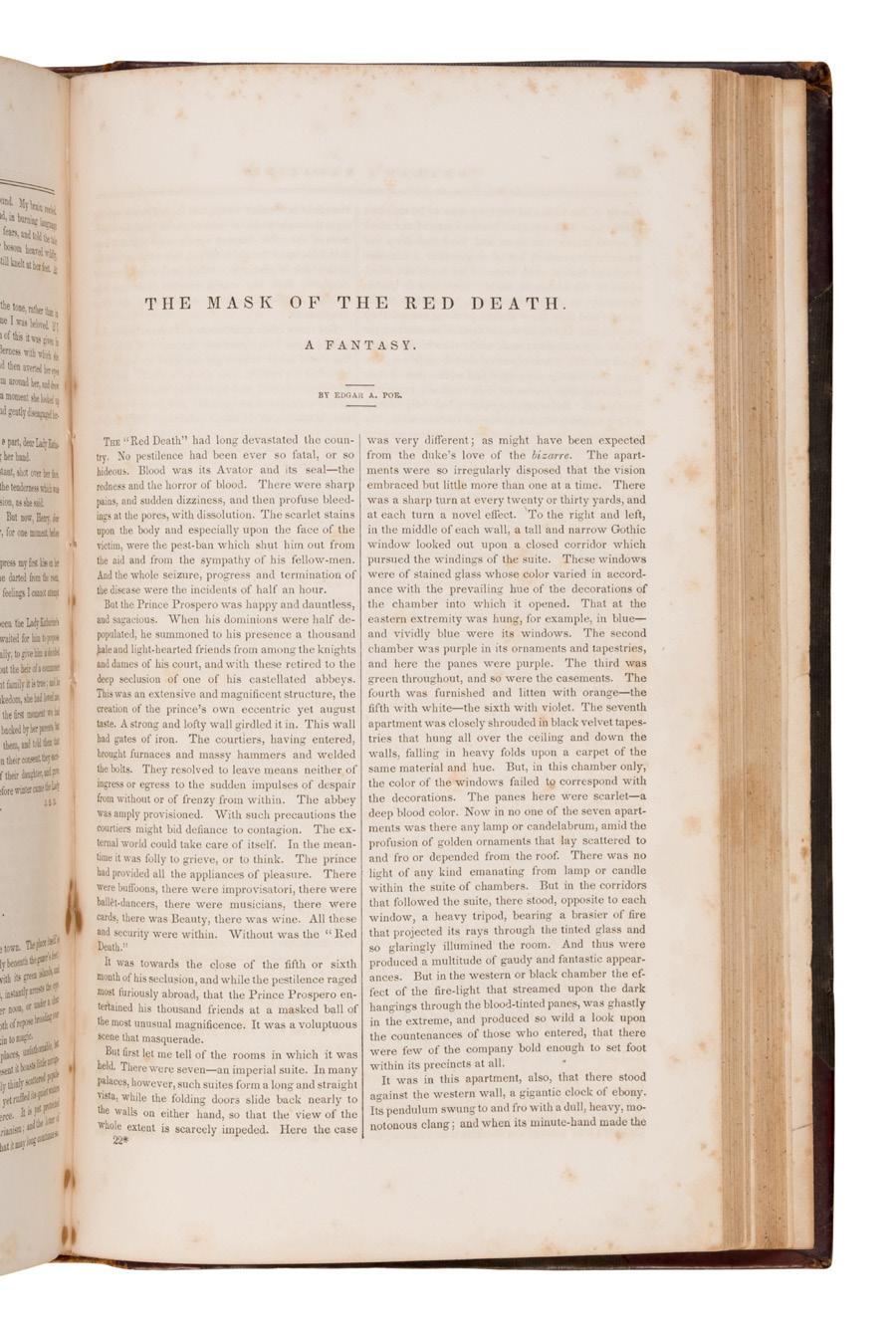
171
[Poe, Edgar Allan (1809-1849)]. “The Mask of the Red Death: A Fantasy,” and 6 other writings. In: Graham’s Lady’s and Gentleman’s Magazine, Vols. XX-XXII. Philadelphia: George R. Graham, January-June, 1842.
3 volumes, tall 8vo (251 x 146 mm). Numerous illustrations, some handcolored, and engraved plates (spotting throughout, minor dampstaining to vol. XXII). Contemporary half calf (spines rebacked, rubbing).
THE FIRST APPEARANCE OF “THE MASQUE OF THE RED DEATH.”
Graham’s Magazine was established by Philadelphia editor and publisher George Rex Graham and ran from 1840 to 1858, quickly making a name for itself with its engraved plates and artwork; it is also known as the first United States publication to copyright its contents. Edgar Allan Poe became its editor in February 1841 and quickly became notorious for scathing reviews of other writers, many of whom were friends of Poe’s rival, Rufus Wilmot Griswold. Poe remained in this position until late 1842, due in part to stress over his wife’s illness and to financial and creative disagreements with George Rex Graham. He was replaced by Griswold, whose personal dislike of Poe was so strong that he began refusing Poe’s submissions; most famously, “The Raven,” which Poe wound up publishing in the New York Evening Mirror on 29 January 1845. Following Poe’s death, Griswold was appointed Poe’s literary executor and would eventually write a biography of him in which he disparaged him as a drug addict and a lunatic.
The present volumes include five works of poetry and criticism including “An Appendix of Autographs,” “A Few Words About Brainerd,” “To One Departed,” “Life in Death,” “The Poetry of Rufus Dawes: A Retrospective Criticism,” and “The Conqueror Worm” as well as one of Poe’s most popular short stories, “The Mask of the Red Death.” For this story, Poe was paid $12, which would be about $400 today. In its original form, the title referred to the central figure of the story, who appears at a party hosted by wealthy nobles amid a devastating plague that brings death to all it encounters. When reprinted in the 19 July 1845 issue of The Broadway Journal, Poe changed the title to “The Masque of the Red Death,” placing the emphasis on the fateful masquerade ball. Heartman & Canny, p.208.
$600 - 800
172
Poe, Edgar Allan (1809-1849). “The Pit and the Pendulum.” In: The Gift Philadelphia: Carey and Hart, 1843.
8vo (184 x 121 mm). Original elaborately gilt tan roan, all edges gilt (rubbing, darkening to spine, preliminary leaves disbound but present, some soiling to rear board); slipcase.
FIRST APPEARANCE OF EDGAR ALLAN POE’S CLASSIC TALE, “THE PIT AND THE PENDULUM.”
FIRST EDITION, FIRST STATE with 1843 date on title and 1842 date on copyright (both dates removed for the second state which followed shortly thereafter). Now considered to be one of Edgar Allan Poe’s greatest works, “The Pit and the Pendulum” is a story of an unnamed narrator that endures various tortures in a terrifying prison cell, which made its first appearance in the 1843 edition of
The Gift: A Christmas and New Year’s Present MDCCCXLIII, published by Carey and Hart and edited by Eliza Leslie. Four other short stories by Poe would make their first appearances in Leslie’s annual “gift” books, including “William Wilson,” “Eleanora,” “The Purloined Letter,” and “Manuscript Found in a Bottle.” Heartman & Canny, p.69; BAL 16137.
$500 - 700
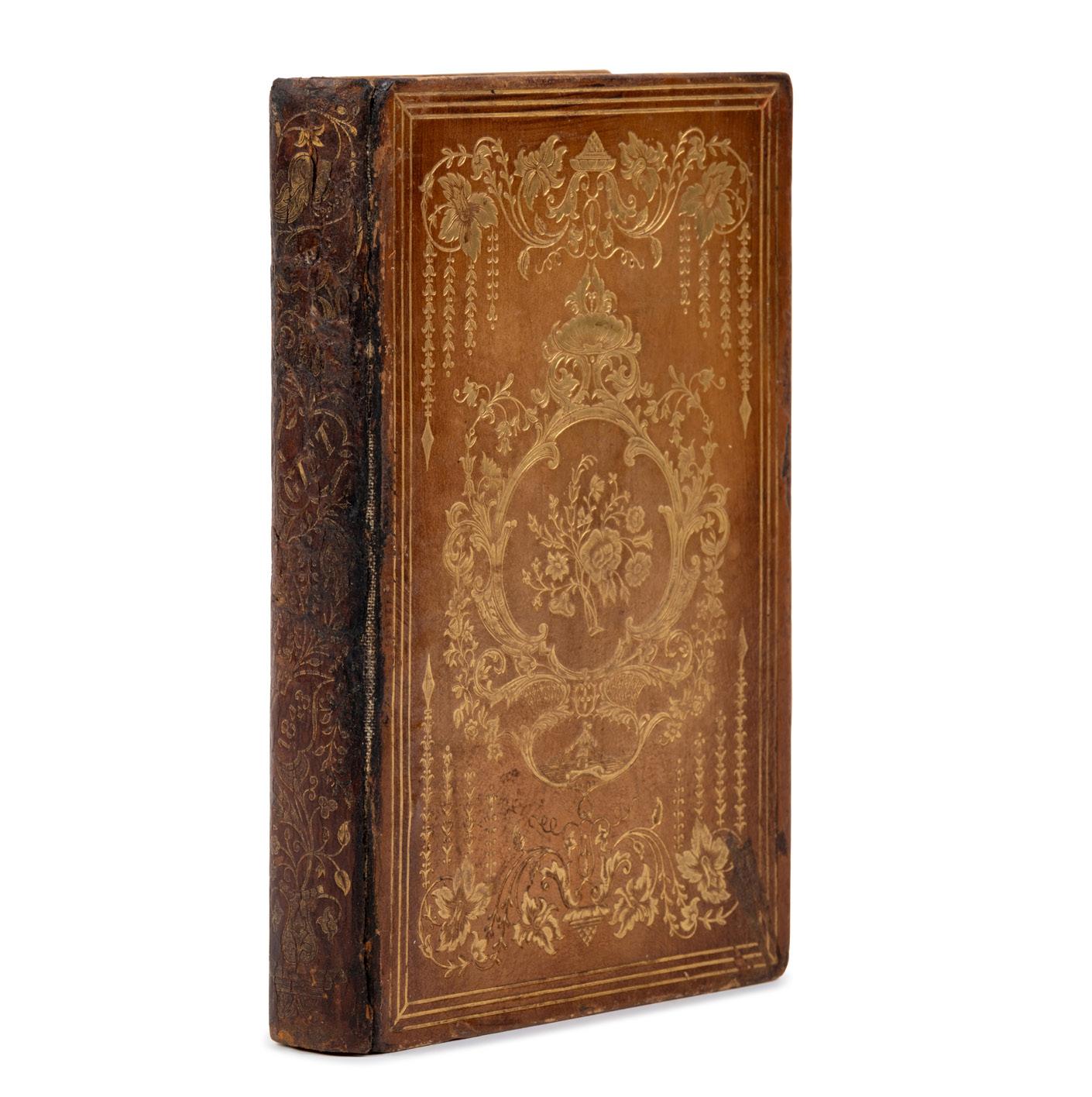
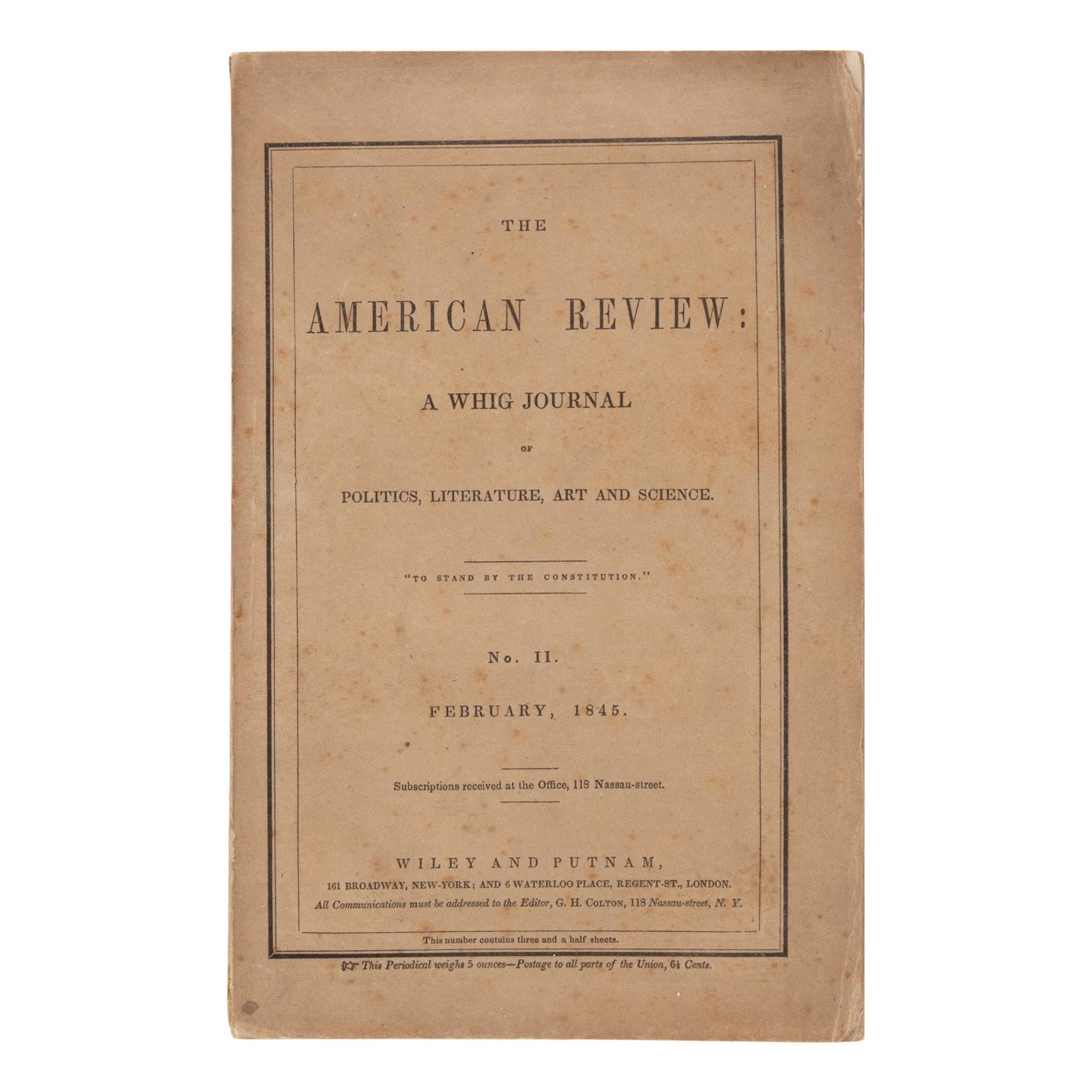
173
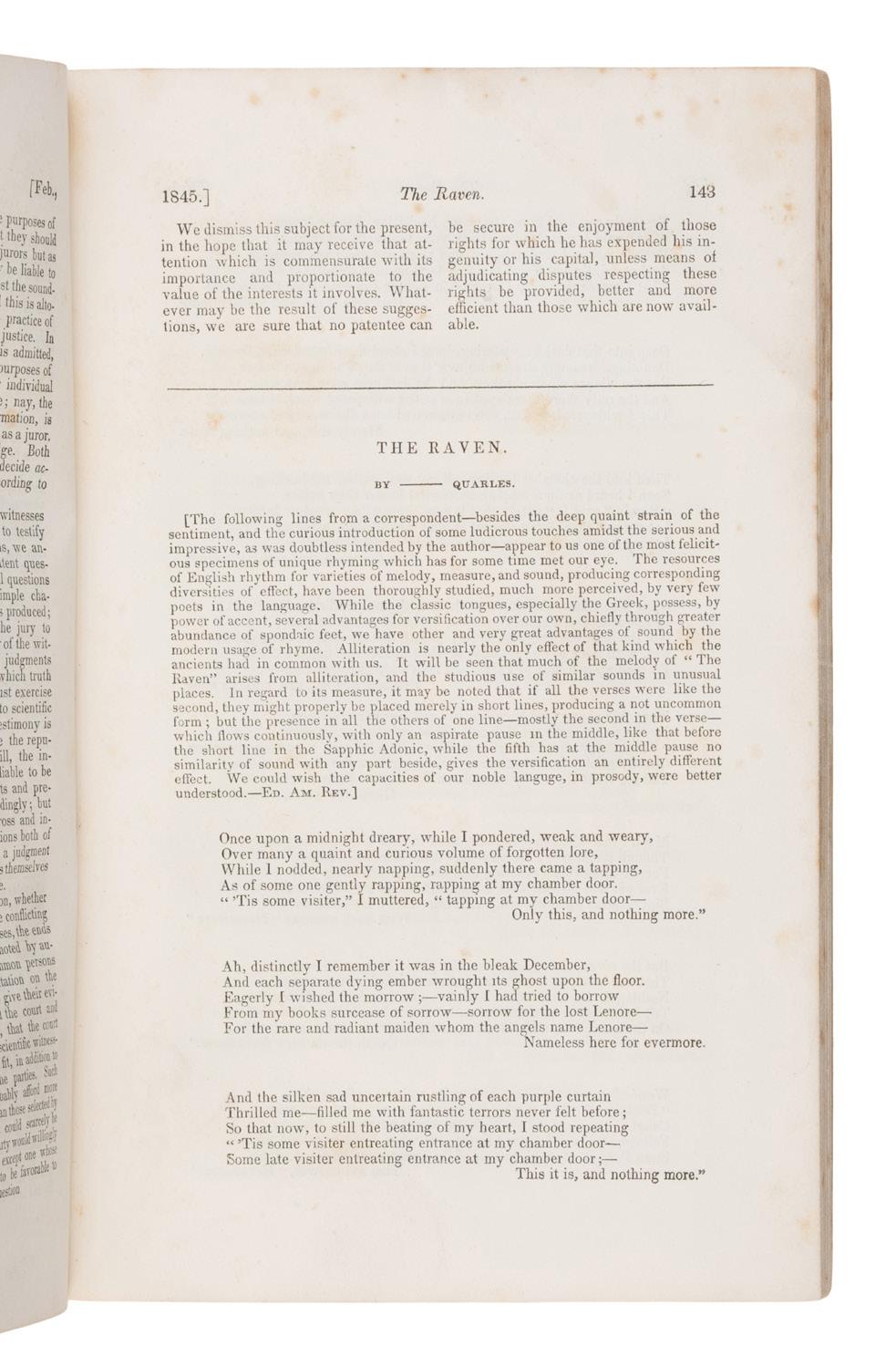
Poe, Edgar Allan (1809-1849). “The Raven” in The American Review. Volume I, number II. New York: Edward O. Jenkins for Wiley and Putnam, February 1845 [but early January].
8vo (229 x 147 mm). (Light spotting throughout, a few leaves creased at corners.) ORIGINAL PRINTED WRAPPERS (spotting to covers, light wear to upper cover fore-corners and spine ends); folding case.
“Once upon a midnight dreary, while I pondered, weak and weary,
Over many a quaint and curious volume of forgotten lore,
While I nodded, nearly napping, suddenly there came a tapping, As of someone gently rapping, rapping at my chamber door....”
THE FIRST PRINTING OF “THE RAVEN” IN ORIGINAL WRAPPERS. The poem appears anonymously on pp.143-145 as “by ——— Quarles.”
The first appearance of “The Raven” is a matter of some bibliographical dispute. Heartman and Canny consider this form to be the first printing, maintaining that the 29 January 1845 appearance in The Evening Mirror is not the first. The American Review had announced that “No. II will bear date Feb. 1845, but will be issued early in January,” thus, unless the publishers were unable to issue the work by the date promised, the present version clearly predates the late January appearance in The Evening Mirror
The Raven is Poe’s most famous and enduring poem, a masterwork of American Gothic literature whose haunting refrain—“Nevermore”— quickly entered the cultural imagination. The poem recounts a grief-stricken narrator’s midnight encounter with a mysterious raven that perches above his chamber door, gradually transforming mourning into psychological torment. Heartman & Canny, p.100; Tane Poe 177. A VERY BRIGHT COPY IN THE RARE ORIGINAL WRAPPERS.
$8,000 - 12,000
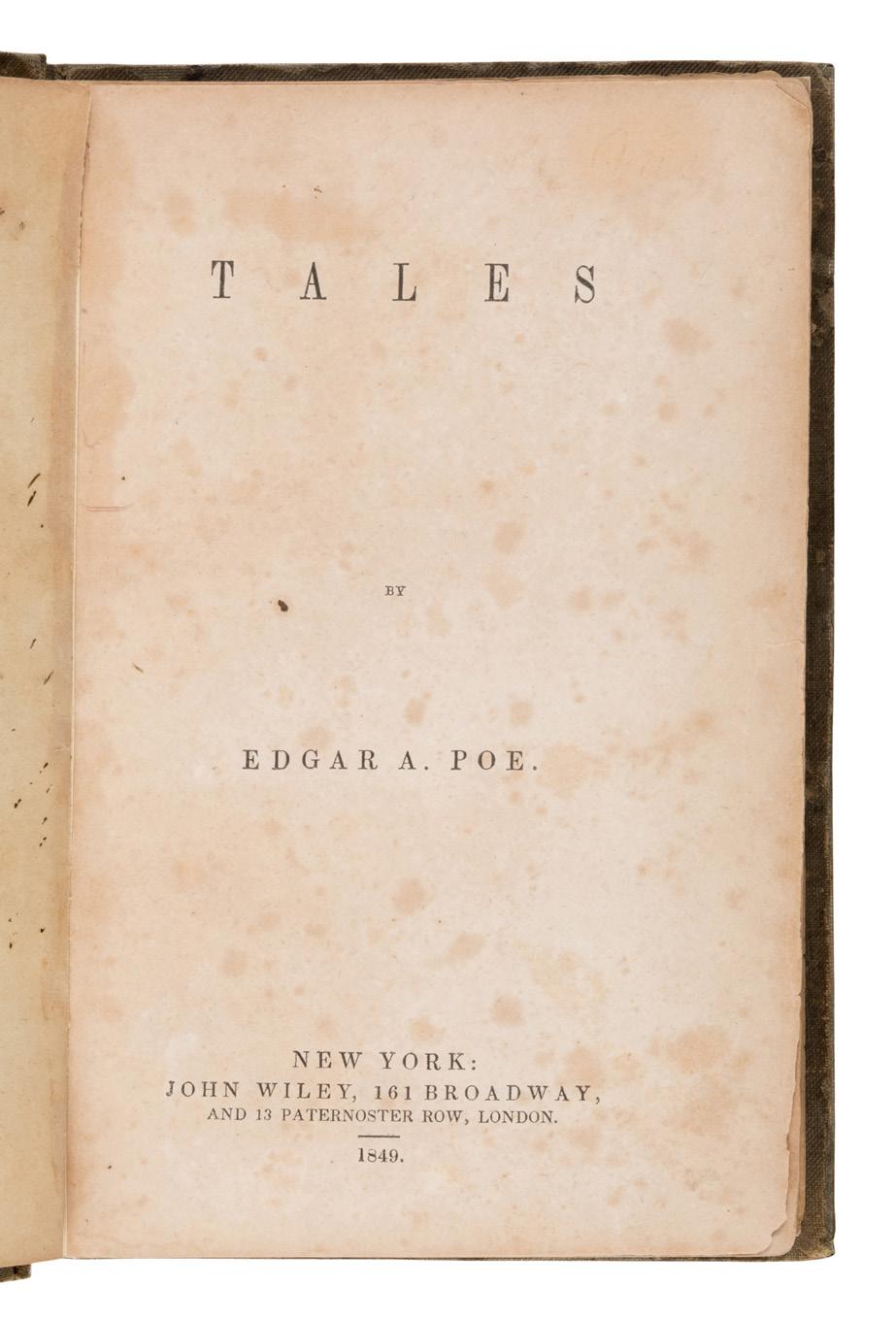
175 Poe, Edgar Allan (1809-1849). The Raven. Illustrated. New York: W. Jennings Demorest, n.d. [1870].
16mo. Wood engravings and floriated initials throughout; each page of text is enclosed by a single-rule border with filigree ornaments at the corners. Original dark plum gilt, upper cover lettered in gilt, pale blue endpapers (spine sunned, recased, spine endpapers strengthened, rubbing to extremities).
FIRST SEPARATE AMERICAN EDITION. The Raven first appeared in print in The American Review (see lot 173), published February 1845, and was first collected in The Raven and Other Poems... published by Wiley and Putnam in November 1845. BAL 16216 records the first separate edition as an 1869 Glasgow printing, though it is now understood to have been produced for the blind, printed in large color type on lilac paper. Few copies of the present printing are known; though not listed in BAL or Heartman and Canny, Sabin lists an edition from 1870 with a similar imprint as this example, “New York: W.J. Demorest. 1870. 16mo” though the title is given as “The Raven and Other Poems” (Sabin). W. Jennings Demorest published a monthly magazine in which this printing was offered as a premium to subscribers. Only a handful are known, with the text issued in both wrappers and cloth.
[With:] POE. The Raven. New York: E.P. Dutton & Company, 1887. 8vo. Illustrations by W.L. Taylor. Original half-padded calf gilt (chipping and splits to spine).
$1,000 - 1,500
174
Poe, Edgar Allan (1809-1849). Tales. New York and London: John Wiley, 1849.
8vo (184 x 127 mm). 4pp. publisher’s catalogue at end. (Browning and spotting throughout.) Original purple-gray cloth stamped in blind (rebacked preserving original endpapers, scattered soiling with a few stains to covers, color heavily faded); folding case. Provenance: C.W. Cary (bookplate, gift inscription on front free endpaper); to Debrey C. Harrison; Rev. L.G. Vass (gift inscription, ownership signature).
SECOND EDITION, bound from first edition sheets with a cancel titlepage. Almost certainly published in Poe’s lifetime (likely printed for the 1848-49 holiday season), Tales was first issued in 1845 and represents the first collected edition of Edgar Allan Poe’s short fiction published under his supervision. The volume brings together many of Poe’s most important and influential stories, including “The Gold-Bug,” “The Murders in the Rue Morgue,” and “The Fall of the House of Usher,” works that helped establish both the modern detective story and the American Gothic tradition.
VERY RARE: According to online records, we could locate only 2 copies that have appeared at auction in over a century. BAL 16146; Heartman & Canny, pp.94-96.
$1,000 - 1,500
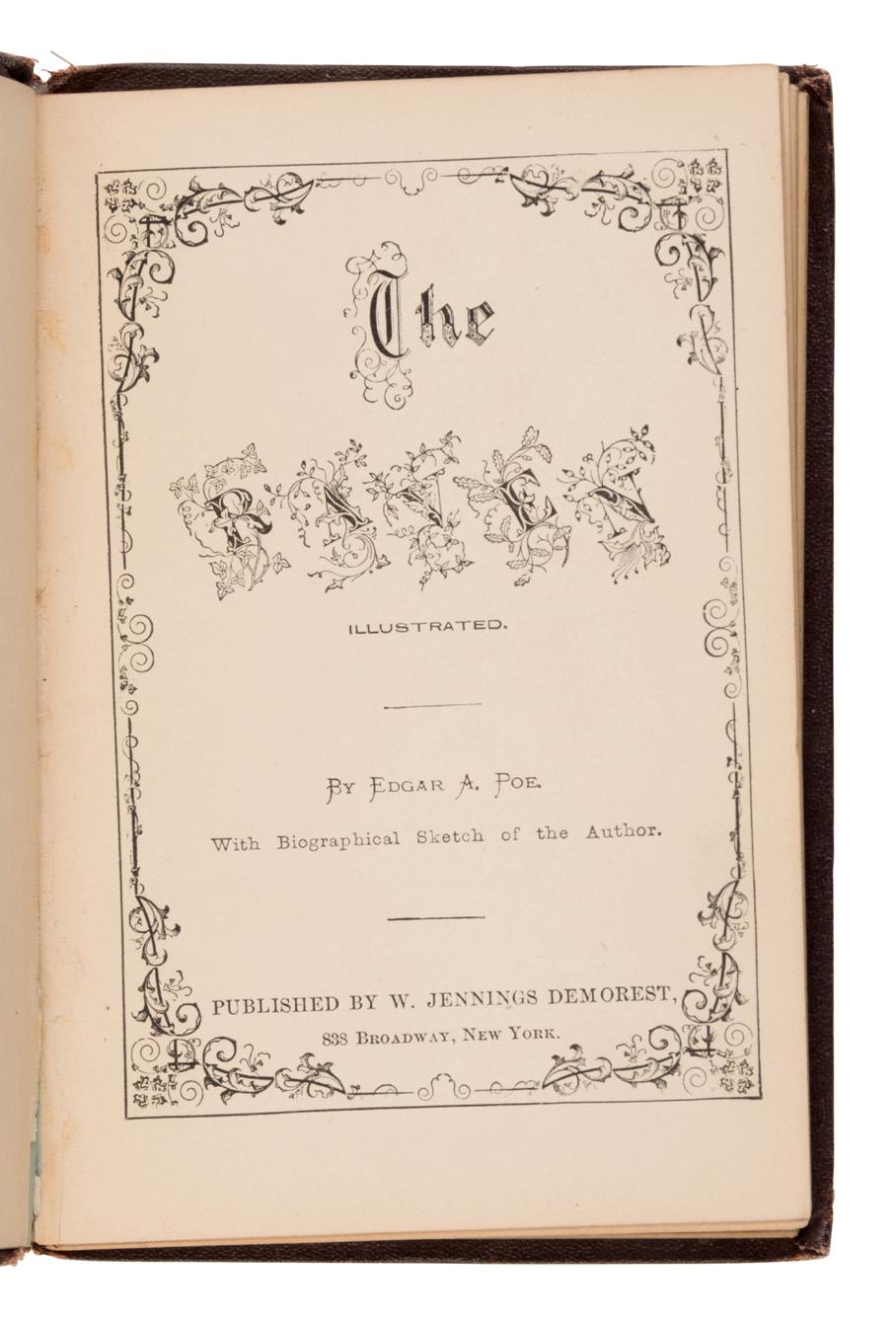



176
Pynchon, Thomas (b. 1937). Gravity’s Rainbow. New York: The Viking Press, [1973].
8vo. Original orange cloth, top edge stained orange; dust jacket; folding case
FIRST EDITION, in FIRST ISSUE DUST JACKET with publisher’s date code of “0273” on lower front flap, and ISBN printed in white on rear cover. Gravity’s Rainbow won the National Book Award in 1974. Pynchon famously refused to acknowledge the award and sent comedian “Professor” Irwin Corey in his stead; adding to the surrealism of the moment, a streaker ran across the stage during Corey’s acceptance speech.
[With:] PYNCHON. The Crying of Lot 49. Philadelphia: J.B. Lippincott Company, 1966. 8vo. Original grey and yellow cloth; dust jacket (light rubbing). FIRST EDITION.
$600 - 800
177
Queen, Ellery [pseudonyms of Frederick Dannay and Manfred Bennington]. The Chinese Orange Mystery. New York: Frederick A. Stokes, 1934.
8vo. Original red cloth stamped in black; dust jacket (very minor sunning to spine).
FIRST EDITION. Considered to be a classic of the “locked room mystery” genre, The Chinese Orange Mystery was first published in the June 1934 issue of Redbook, albeit in a highly abridged form. It was later adapted into the 1936 motion picture The Mandarin Mystery starring Eddie Quillan as Ellery Queen. A BRIGHT COPY.
$800 - 1,200
178
Rand, Ayn (1905-1982). Atlas Shrugged. New York: Random House, 1957.
8vo. Original green gilt-stamped cloth, spine stamped in black and gilt, top edge stained dark blue (lower fore-corners lightly rubbed, a very faint spots to spine and upper cover); dust jacket (very light short creases near top edge of spine panel, two tiny spots of rubbing to rear joint).
FIRST EDITION with “First Printing” statement on copyright page. In the FIRST ISSUE DUST JACKET with “10/57” at the bottom of the front flap, and lacking review blurbs. Atlas Shrugged, Rand’s fourth and final novel, is her most extensive statement of her Objectivist philosophy, depicted in a dystopian United States. A FINE COPY.
[With:] RAND. Textbook of Americanism. New York: Nathaniel Branden Institute, Inc., 1946. Original printed wrappers.
$800 - 1,200
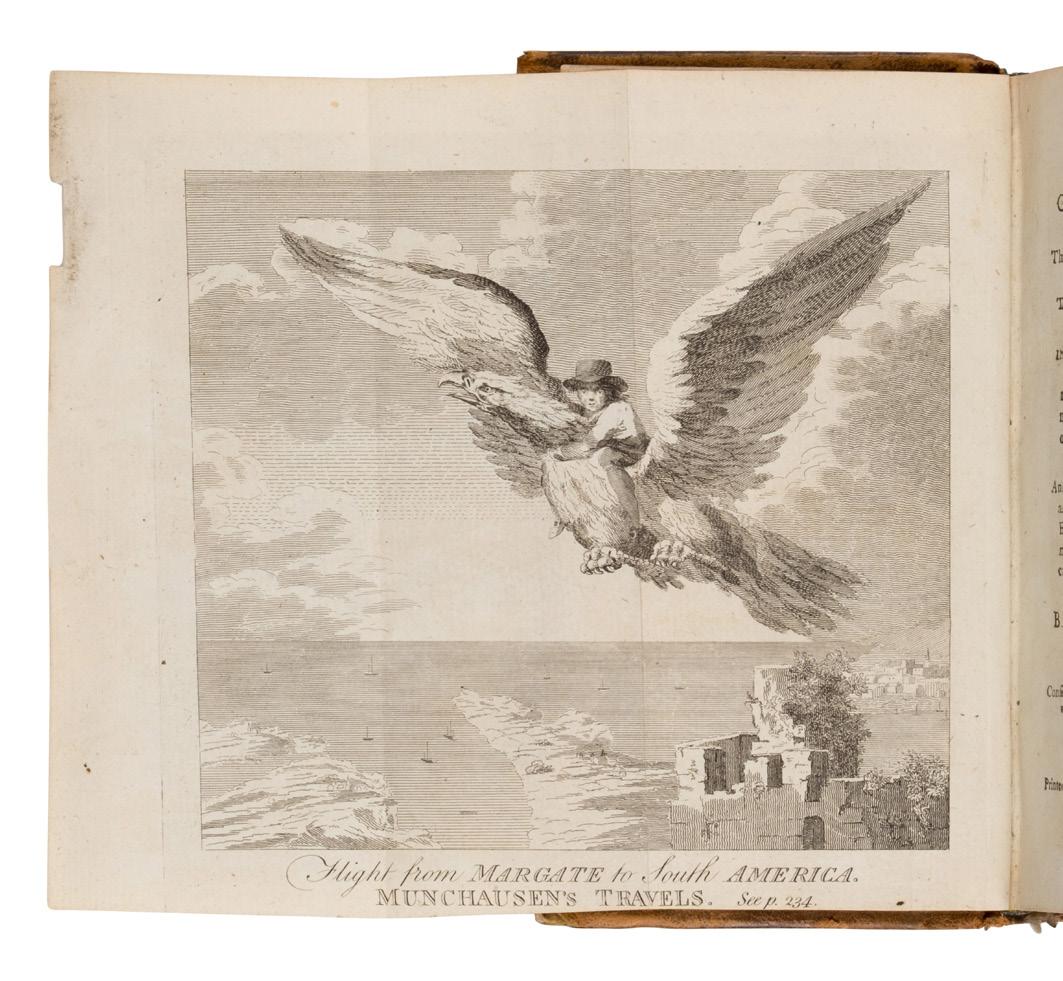
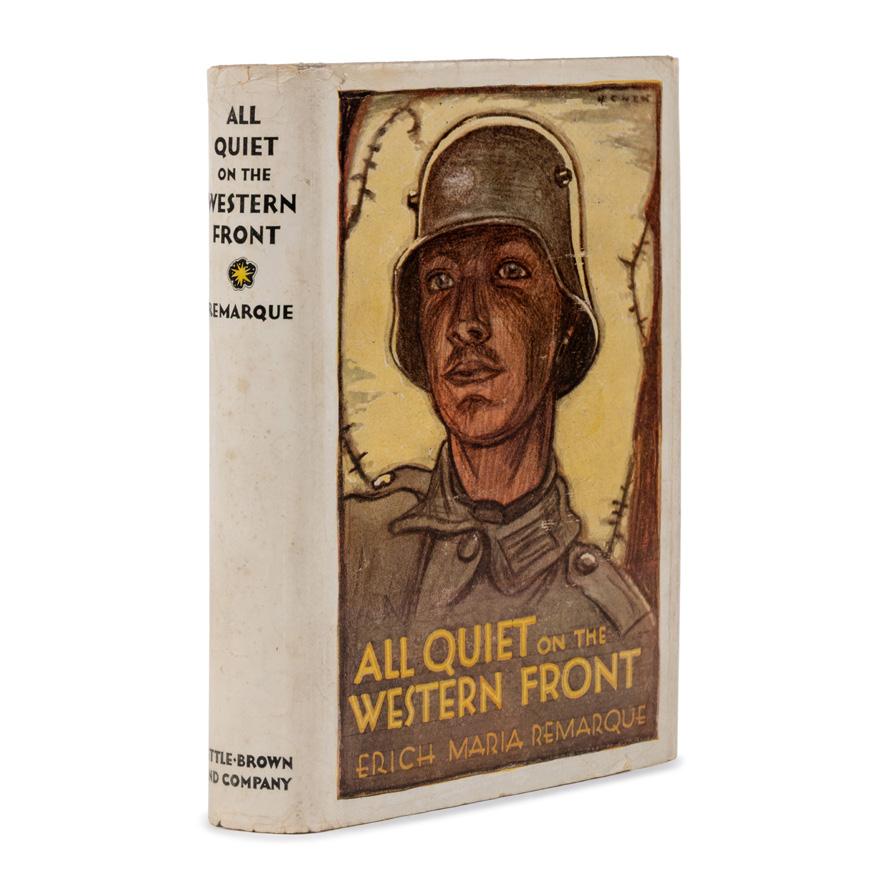
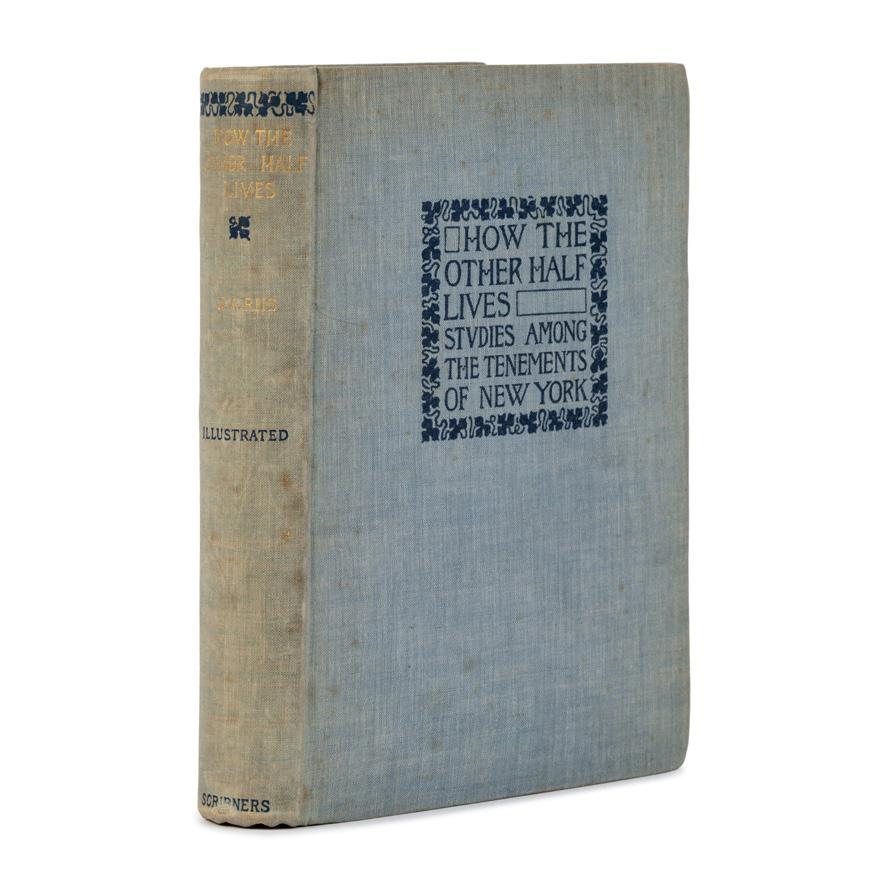
179
Raspe, Rudolph Erich (“Baron Munchausen”) (1737-1794). Gulliver revived: or, The Vice of Lying properly exposed; containing singular travels, campaigns, voyages, and adventures... London: G. Kearsley, 1789.
12mo (152 x 89 mm). Half-title; folding engraved frontispiece, 2 folding plates, 17 plates reinserted with contemporary pagination to their new designations, trimmed from the original 5 folding plates, several laid down; 10pp. publisher’s catalogue at end. Contemporary tree calf ruled in gilt, smooth gilt spine in 6 compartments, red morocco lettering-piece gilt in second (joints rubbed, head worn, small split to front joint). Provenance: Emmanuel-Joseph Quecq de Burgault (1756-1843), Councillor to the King at the royal seat of governance of the Sovereign Bailiwick of Lille (bookplate).
SIXTH EDITION. A wildly imaginative collection of exaggerated adventures recounts the fantastical exploits of the legendary German nobleman Hieronymus Karl Friedrich von Münchhausen, whose tall tales of military service and impossible feats had circulated widely in European anecdotes before being gathered in print. First published as Baron Munchausen’s narrative in 1786, the work quickly became a classic of comic fantasy, recounting such improbable adventures as journeys to the moon, rides on cannonballs, and other feats of heroic absurdity. ESTC online lists only four copies of this edition.
[With:] CRUIKSHANK, George, illustrator. -- RASPE. The Travels and Surprising Adventures of Baron Munchausen. London: William Tegg, 1869. 8vo. 5 handcolored plates after Cruikshank. Contemporary half morocco gilt (split to front joint, front free endpaper detached).
$1,500 - 2,000
180
Remarque, Erich Maria (1898-1970). All Quiet on the Western Front Boston: Little, Brown, & Company, 1929.
8vo. Original gray buckram lettered in black and red, top edge stained red; dust jacket (minor rubbing).
FIRST AMERICAN EDITION. Following its initial publication in Germany, All Quiet on the Western Front was quickly translated and published throughout the English-speaking world. The book attracted harsh criticism in its native Germany, and in particular from the rising Nazi Party, who considered its pacifist themes an insult to the Germans who had fought and died in the First World War. When the 1930 Academy Award-winning adaptation by Russian-American director Lewis Milestone was released it was met with Nazi-organized protests which often resulted in mob attacks on both theatres and moviegoers. Upon the ascension of the Nazi Party into power Remarque’s book was among the first to be declared a “degenerate” work and publicly burned. The book was additionally banned in Boston on the grounds of obscenity and U.S. Customs in Chicago seized several early printings on the same grounds (Karolides, et al., 100 Banned Books pp.3-7).
$300 - 400
181
Riis, Jacob (1849-1914). How the Other Half Lives. New York: Charles Scribner’s Sons, 1890.
8vo. 43 plates after halftone photographs. Original blue-grey cloth stamped in blue and gilt (spine lightly toned, some spotting to covers); morocco-backed folding box.
FIRST EDITION OF THIS LANDMARK WORK, in a rare variant binding and printed on thicker paper. “One of the most important photobooks ever published, ‘How the Other Half Lives’ represents the first extensive use of halftone photographic reproductions in a book. It is the beginning, not of a photographic genre, but a photographic attitude, an ethos - humanist documentary photography - in which the photographic social document is employed to bear critical witness to what is going on in the world” (Parr & Badger, The Photobook p.53).
[With:] YOCHELSON, Bonnie and Daniel CZITROM. Rediscovering Jacob Riis. Exposure Journalism and Photography in Turn-of-the-Century New York. New York: The New Press, 2007.
$600 - 800
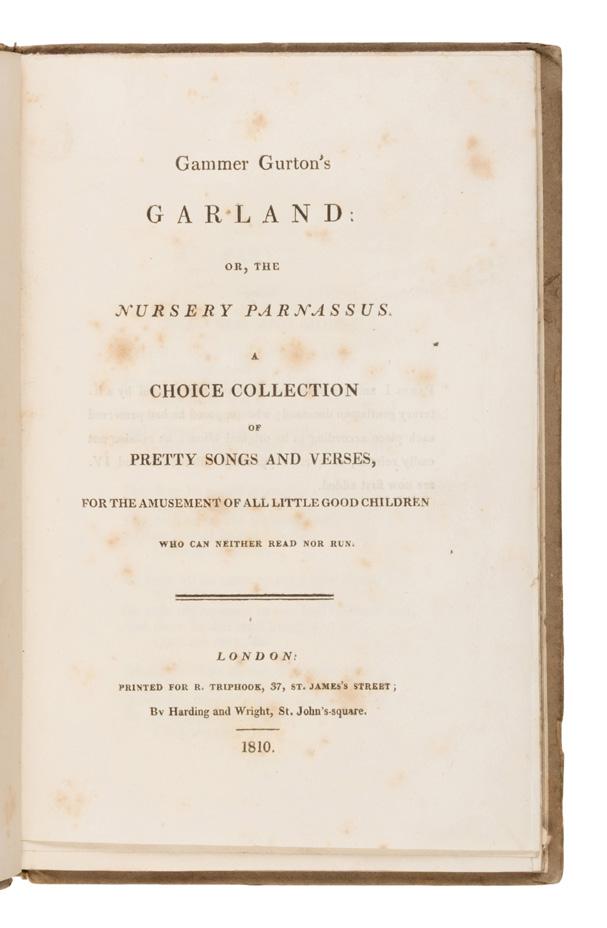
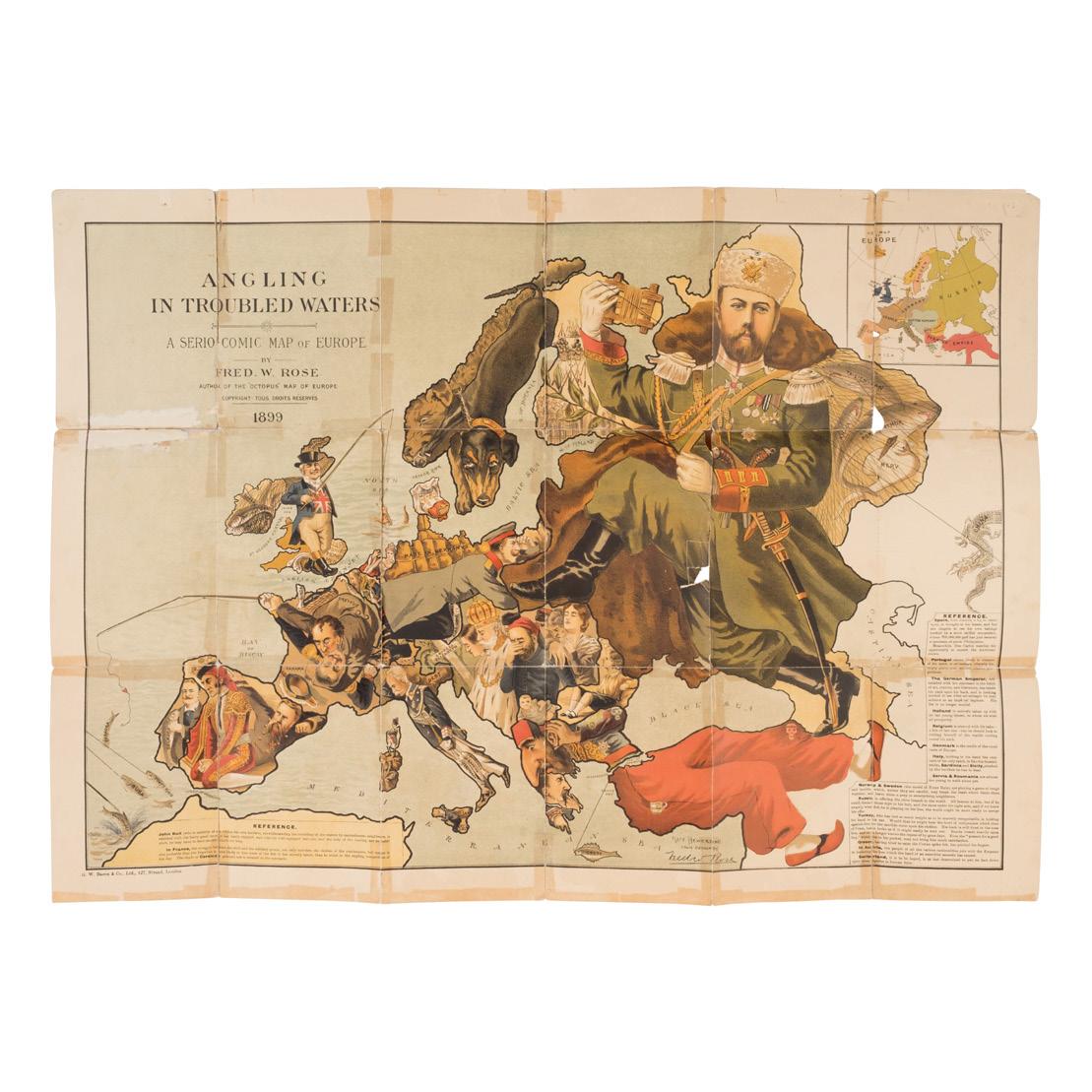
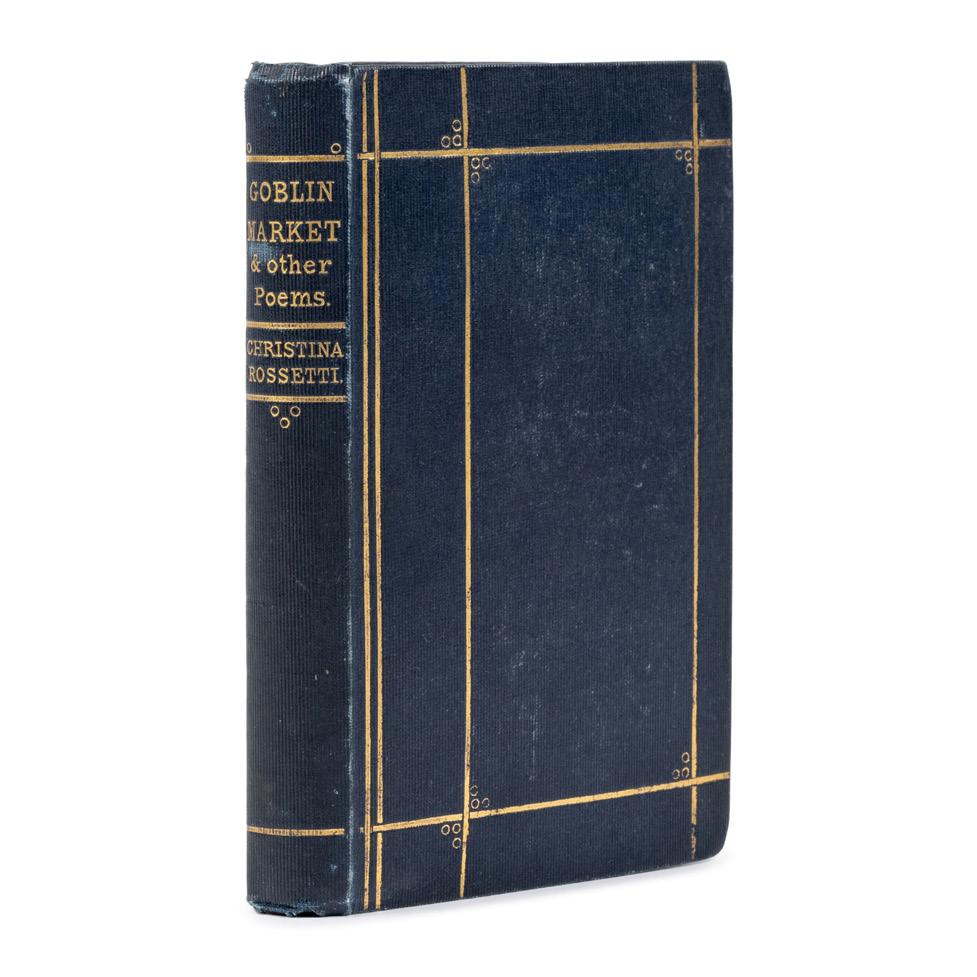
182
[Ritson, Joseph (editor, 1752-1803) and Francis Douce (compiler, 17571834). Gammer Gurton’s Garland: or, the Nursery Parnassus. London: Harding and Wright, 1810.
8vo (191 x 121 mm). (Light spotting.) Original? drab boards, uncut (light wear to extremes). Provenance: ownership signature on front free endpaper.
FIRST COMPLETE COLLECTED EDITION, the earliest known printing of “Humpty Dumpty” and “Little Bo-peep.” Parts I and II of the present edition are taken from the collections of the antiquarian and animal rights activist Joseph Ritson, best known for his 1795 edition of the Robin Hood ballads. Parts III and IV derive from the manuscript notes of Francis Douce, preserved in his annotated copy of the 1784 Garlands, and largely follow the rhyme and structure of the earlier sections. Published in 1810, this expanded edition brings together a broader range of popular verse, including several nowfamiliar nursery rhymes such as “Humpty Dumpty” and “Little Bo-Peep.” Opie, 30; Bronson, Joseph Ritson, Scholar-at-Arms, pp.756-57.
$800 - 1,200
183
Rose, Frederick W. (1849-1915). Angling in Troubled Waters. A SerioComic Map of Europe. London: G.W. Bacon & Co., 1899.
Chromolithographed pictorial map (545 x 760 mm), folding into original printed wrappers, printed label (“R. Lechner... Univ. Buchandl”) on upper cover (tears to folds, some folds split, 3 small areas of loss to image (in body of Tsar, and touching letters of “Port Arthur”), old paper adhered to blank area beside title area, old tape repair along margins and folds on verso).
A celebrated anthropomorphic comic map summarizing the political landscape and expansionist aspirations of the European powers at the end of the nineteenth century, Tsar Nicholas II of Russia looming largest.
$800 - 1,200
184
Rossetti, Christina (1830-1894). Goblin Market and Other Poems London: Macmillan, 1862.
8vo (165 x 101 mm). Frontispiece and title-vignette by Dante Gabriel Rossetti; 16pp. publisher’s ads at end. Original blue cloth gilt (light rubbing, minor bumps to rear board, spine slightly leaning).
FIRST EDITION, one of 750 copies printed. Goblin Market and Other Poems was the first poetry volume published by Christina Rossetti, and also featured illustrations and a binding design by her brother, pre-Raphaelite artist and poet Dante Gabriel Rossetti. The title poem has become one of the most revered works by a female poet of the Victorian era.
$800 - 1,200
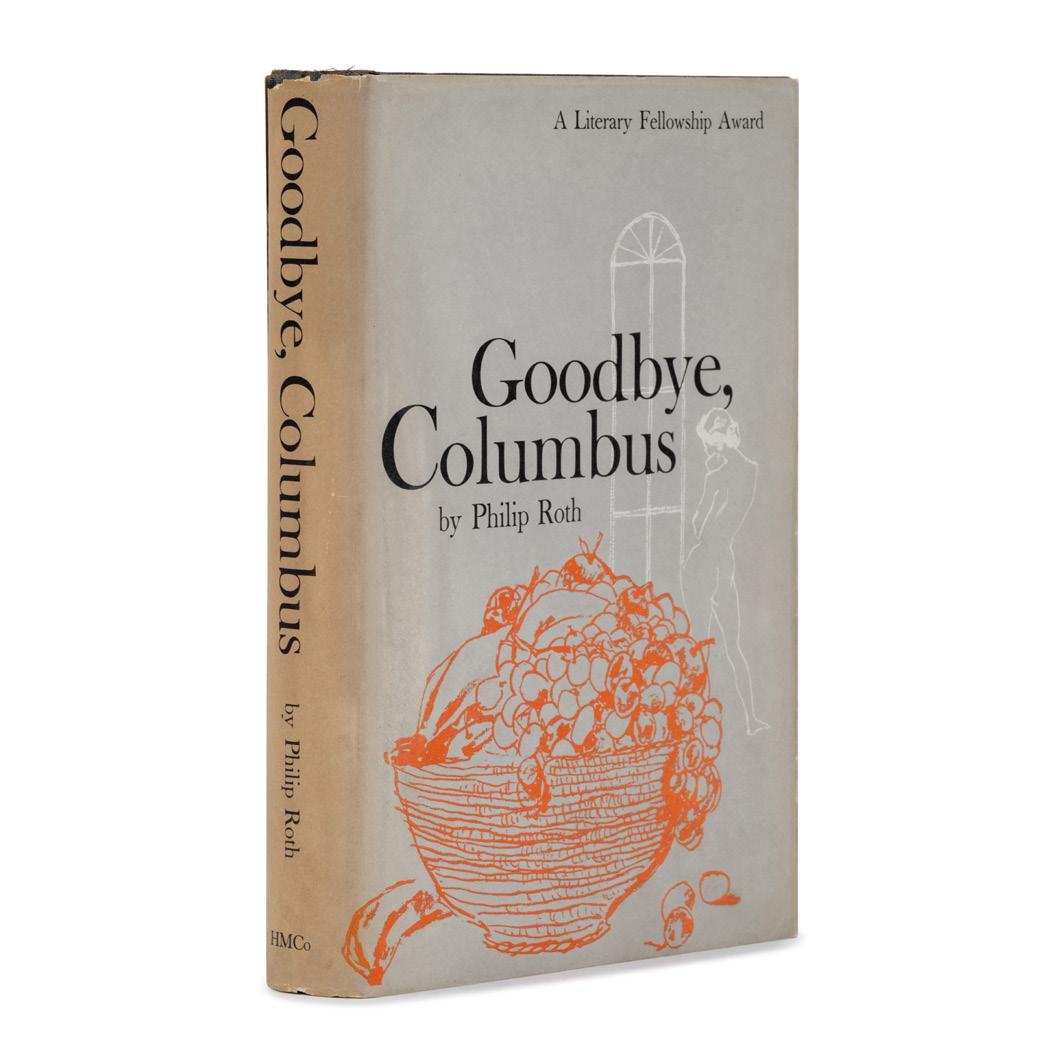
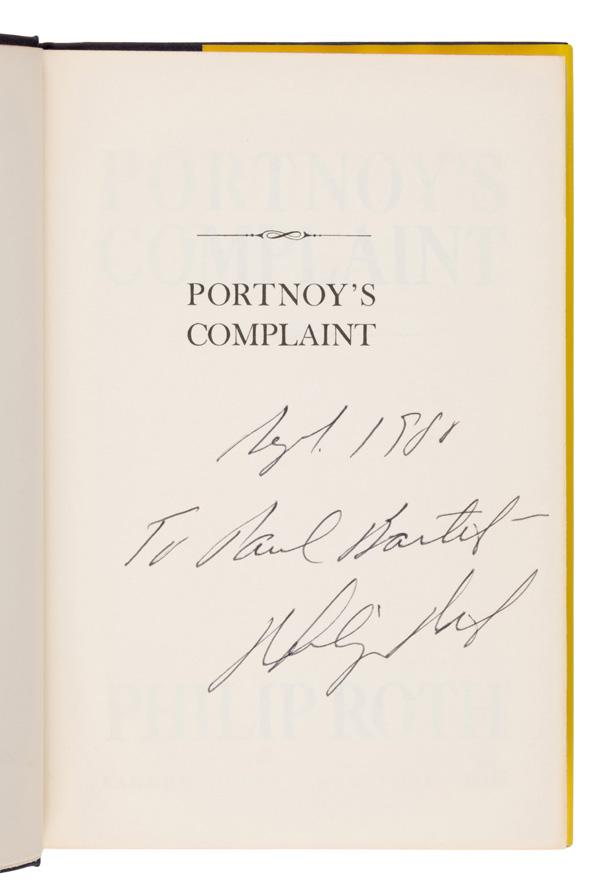
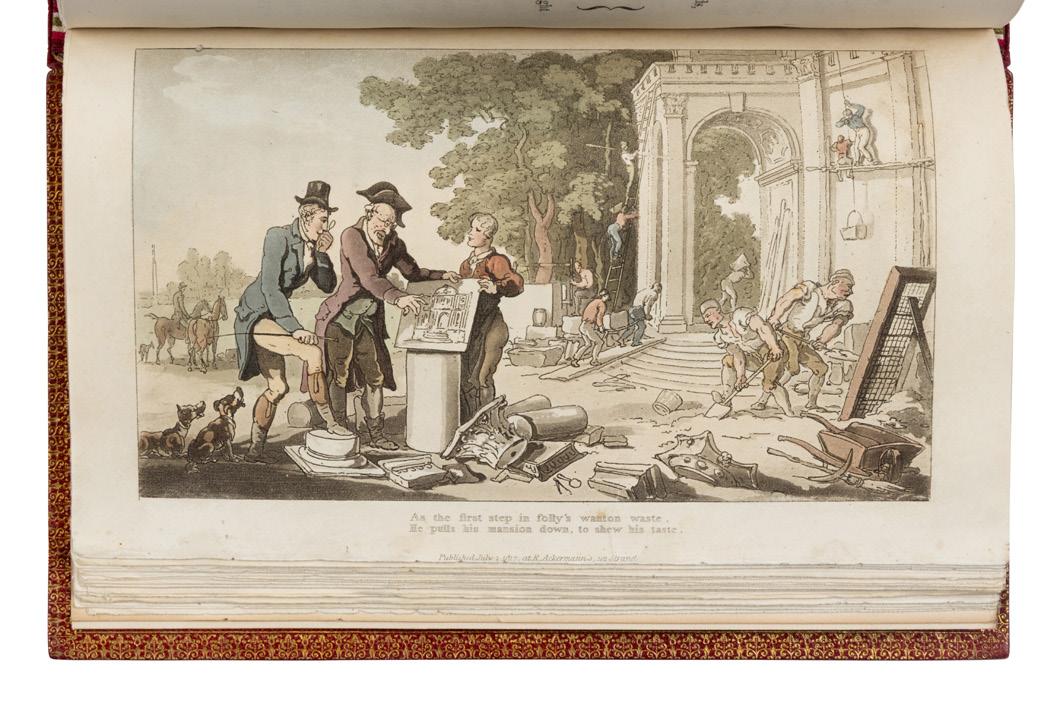
185
Roth, Philip (1933-2018). Goodbye, Columbus. Boston: Houghton Mifflin Company, Inc., 1959.
8vo. Original black cloth; dust jacket (price-clipped, mild toning to spine); folding case.
FIRST EDITION of Roth’s first book. Goodbye, Columbus was widely praised upon publication, in particular by Saul Bellow, who wrote, “Goodbye, Columbus is a first book, but it is not the book of a beginner. Unlike those of us who came howling into the world, blind and bare, Mr. Roth appears with nails, hair, and teeth, speaking coherently. At twenty-six, he is skillful, witty, and energetic, and performs like a virtuoso.” It went on to win the 1960 National Book Award for Fiction and was adapted into a 1969 motion picture of the same name starring Ali MacGraw and Richard Benjamin.
$300 - 500
186
Roth, Philip (1933-2018). Portnoy’s Complaint. New York: Random House, 1969.
8vo. Original black cloth; dust jacket. Provenance: Paul Bartel (1938-2000), American actor, writer, and director (presentation inscription on title page).
FIRST EDITION. INSCRIBED BY ROTH TO PAUL BARTEL. Philip Roth began writing Portnoy’s Complaint in 1967 but due to writer’s block was unable to complete it for over a year. Upon publication it was met with a firestorm of criticism for its frank sexual nature and for its portrait of Jewish identity. This led to a ban of the book as a “prohibited import” throughout Australia which was circumvented by Penguin Books printing their own copies and storing them in fleets of moving trucks. Following a court challenge it was removed from the Australian federal banned list in 1971, a momentous victory as this effectively ended the Australian importation ban forever.
$400 - 600
187
[Rowlandson, Thomas (1756-1827), illustrator]. -- Combe, William (1742-1823). The Dance of Life, A Poem. London: R. Ackermann, 1817.
8vo. Additional engraved title, frontispiece and 24 aquatint plates after Thomas Rowlandson. (Light offsetting to additional title, a few plates with closed tears discreetly repaired.) Early 20th century red levant gilt, spine in 6 compartments with 5 raised bands, gilt-lettering in 2, others gilt, top edge gilt, others uncut, gilt stamp-signed by Morrell.
FIRST EDITION. Abbey, Life 264; Grolier Rowlandson, 38; Tooley 410.
$300 - 500
188
Salinger, J.D. (1919-2010). The Catcher in the Rye. Boston: Little, Brown and Company, 1951.
8vo. Original black cloth, gilt-lettered spine (hinges a bit tender, faint crease to spine, a few tiny specks to text block); dust jacket (a few small stains to flap folds, some minor scuffs to rear panel).
FIRST EDITION, IN THE FIRST ISSUE DUST JACKET printed in red, black, and yellow with the cropped photograph of Salinger on rear cover, and flap priced at $3.00. The novel’s protagonist, Holden Caulfield, has entered the pantheon of American literary heroes. “The Catcher in the Rye was a symptom of a need, after a ghastly war and during a ghastly pseudo-peace, for the young to raise a voice of protest against the failures of the adult world. The young used many voices—anger, contempt, self-pity—but the quietest, that of a decent perplexed American adolescent, proved the most telling” (Anthony Burgess, 99 Novels, pp.53-54). Bixby A2a; Starosciak A30a. A VERY BRIGHT COPY.
$5,000 - 7,000
189
Salten, Felix (1869-1945). Bambi: A Life in the Woods. Translated by Whittaker Chambers. With a foreword by John Galsworthy. New York: Simon and Schuster, 1928.
8vo. Illustrations in the text after Kurt Weise. Original green cloth, giltlettered spine (spine lightly darkened, some light soiling to covers).
FIRST AMERICAN EDITION, LIMITED ISSUE, ONE OF 1000 COPIES, issued in advance of the regularly published edition, in slightly smaller format with smaller type size. On the page facing p.1 of the text is printed: “From the Inner Sanctum of Simon and Schuster... This is a first edition copy of Bambi. A thousand copies have been printed and bound. None are for sale. The Inner Sanctum thinks that Bambi will ultimately have a large sale, and hopes that a copy of this edition will not only be pleasant to read, but of possible increased value at a future time. The regular trade edition will appear in the near future. It will be printed in 12 point Caslon type (instead of 11 point, used in this edition) and will be a full 12mo in format...”
$300 - 400
190
Sanger, Margaret H. (1879-1966). What Every Girl Should Know. New York: Max N. Maisel, 1916.
8vo. (Title-page with faint horizontal crease, uneven toning.) Original printed salmon wrappers (light vertical crease to upper cover, light wear to spine ends).
“To the working girls of the world this little book is lovingly dedicated” (dedication).
FIRST EDITION. What Every Girl Should Know was first published as a series of articles by Margaret Sanger in the socialist newspaper The New York Call (1912–1913), issued as part of the paper’s effort to provide practical education to working-class readers. The series quickly attracted the attention of postal authorities under the Comstock Act, who suppressed one installment under obscenity laws for its frank discussion of venereal disease, prompting the paper to print a black column in its place. Sanger subsequently reissued the material independently as a pamphlet in 1916. Organized into chapters and parts, the text addresses sex education, human reproduction, and sexually transmitted infections. The work belongs to Sanger’s early activism, alongside her newspaper The Woman Rebel, and emerged at a time when U.S. obscenity laws severely restricted the circulation of sexual and contraceptive information. As a result, Sanger faced arrest, prosecution, and temporary exile for disseminating such materials, and the pamphlet itself was considered radical and subversive simply for presenting factual information.
$300 - 500
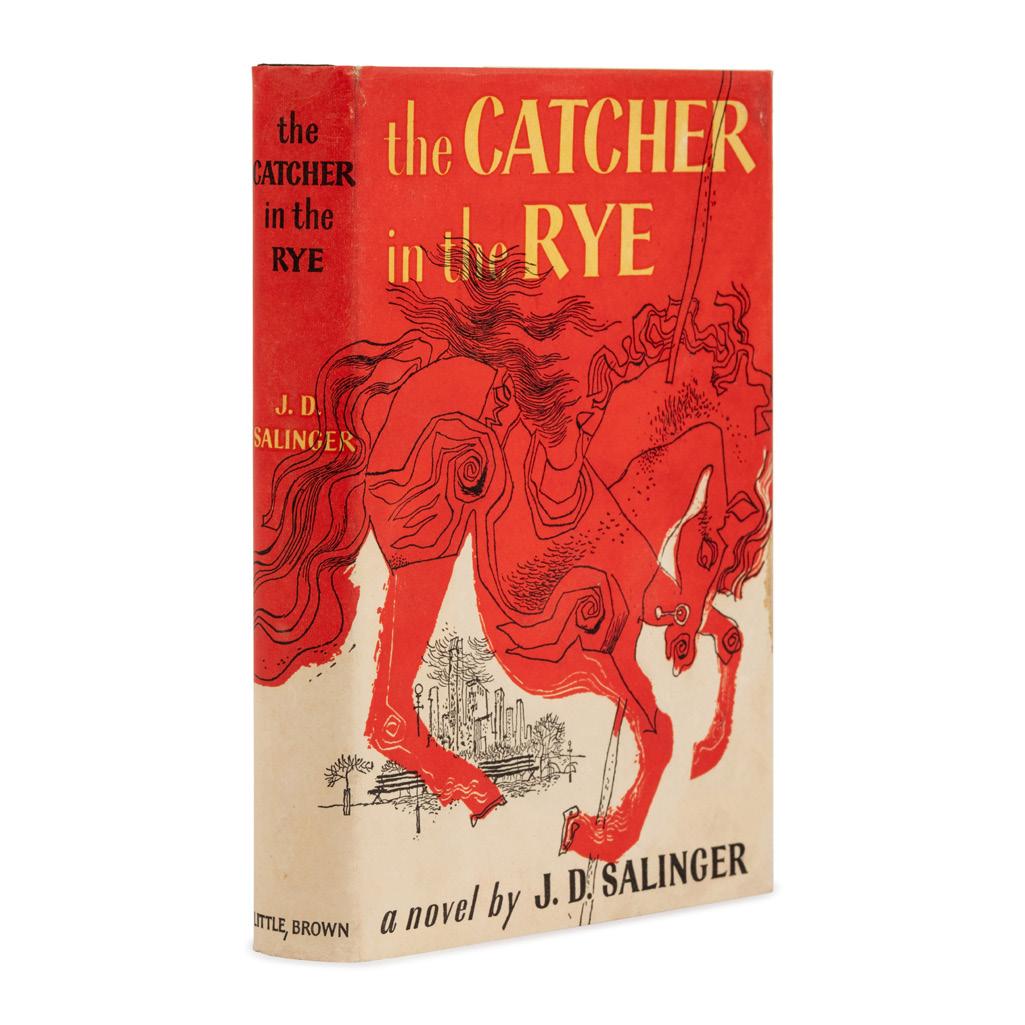
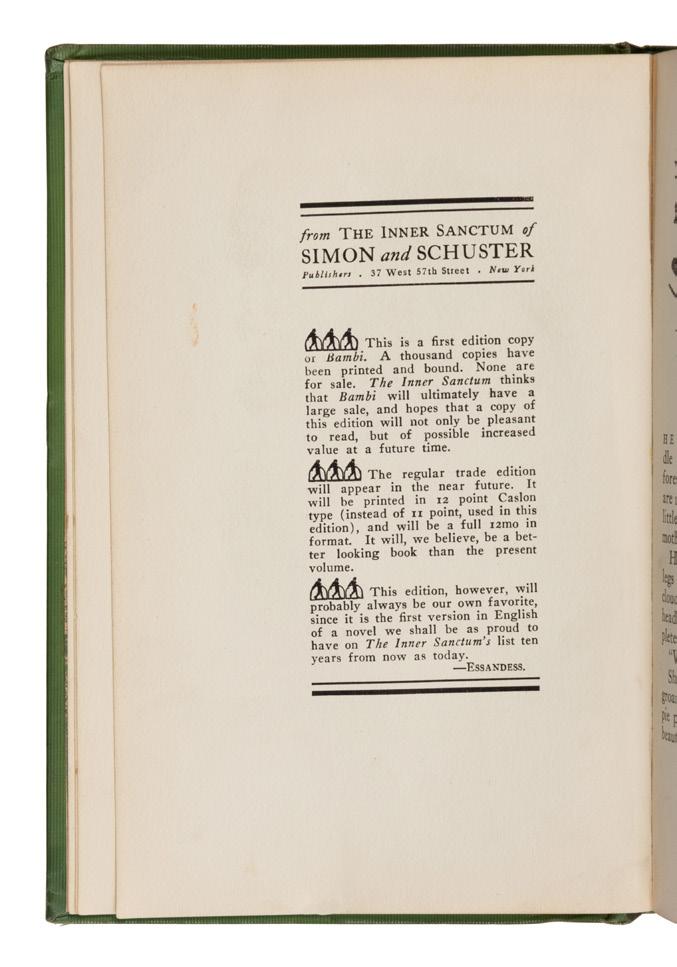
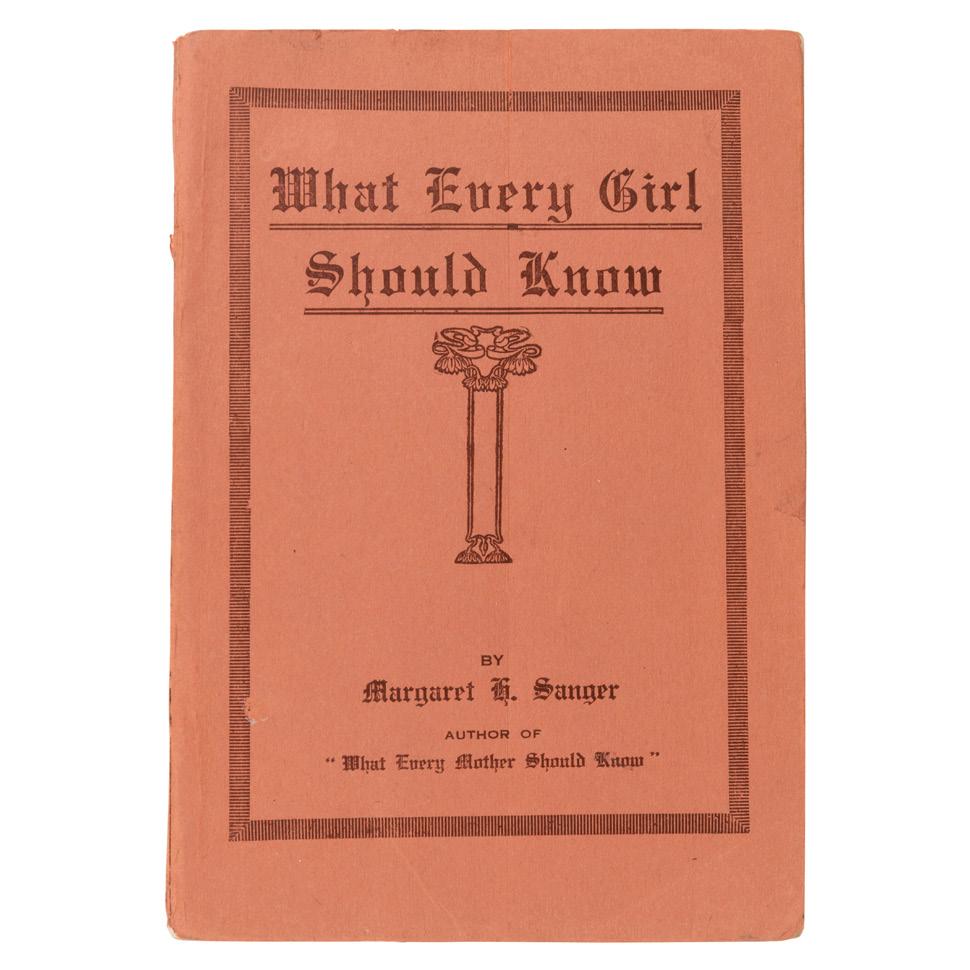
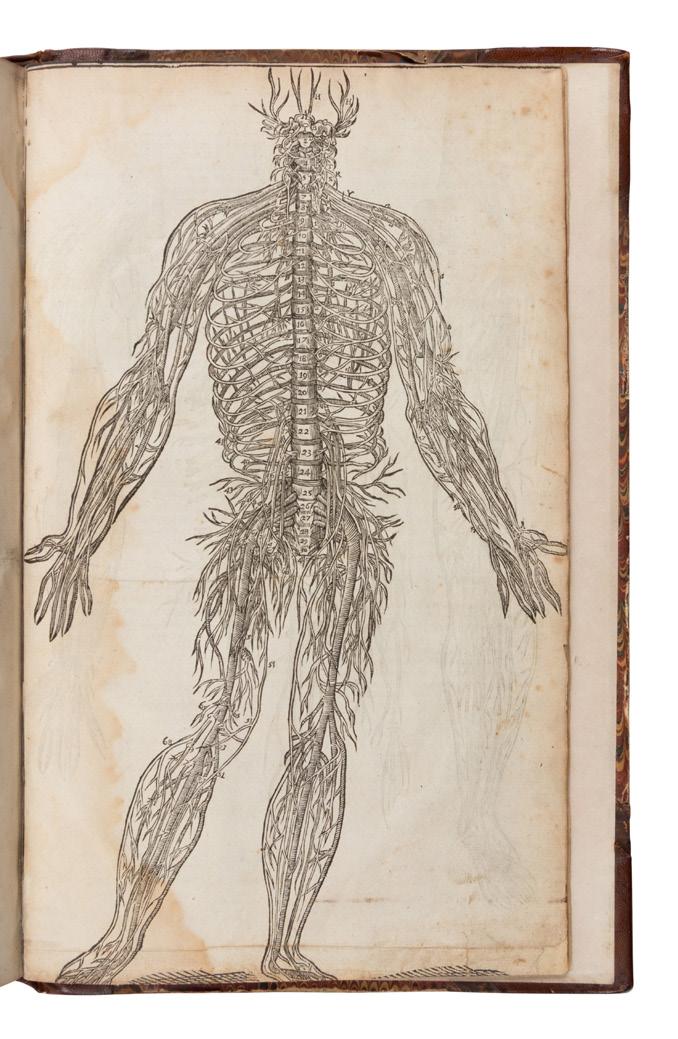
191 [Science & Medicine]. Pare, Ambroise (1510?-1590)
The Workes of that Famous Chirurgion Ambrose Parey. London: Printed by Richard Cotes and Willi: Du-gard, to be sold by John Clarke, 1649.
Folio (330 x 208 mm). Engraved title by Thomas Cecill, 3 full-page wood-engravings, numerous woodcuts in the text, woodcut, head- and tailpieces. (Title-page reinserted on stub and with some marginal repairs, a few stains near gutter; a few leaves dampstained near gutters, occasional toning.) Early half calf, smooth spine with 6 compartments, citron morocco letteringpiece gilt (rebacked, preserving original backstrip, endpapers renewed, extremes rubbed).
Second edition in English, translated by the botanist and apothecary Thomas Johnson. Ambroise Pare, who served as surgeon to four French kings and transformed surgical practice through empirical observation, pioneered surgical techniques, most notably the use of ligatures to treat wounds, replacing the traditional—and often fatal—application of boiling oil. First issued in French in 1575, his collected works were translated into English and published in London in 1634. ESTC R913; Norman 1640 (first edition); Wing P-349.
$1,500 - 2,000
192
Scott, G. Firth (1862-1935). The Last Lemurian. London: James Bowden, 1898.
8vo. Half-title, 4pp. publisher’s ads at end. (Light spotting.) Original pictorial green cloth lettered in gilt and stamped in white, red, and black (light rubbing to spine ends and fore-corners). Provenance: ownership inscription on front free endpaper (“To Lady Aya...from Uncle George, [Windsor, England], 12 July 1957”).
FIRST EDITION of this late-Victorian lost-race novel set in the Australian interior, in which the protagonist encounters the remnants of an ancient Lemurian civilization, reflecting the fin-de-siècle fascination with speculative fiction and vanished worlds at the far edges of empire.
$300 - 500
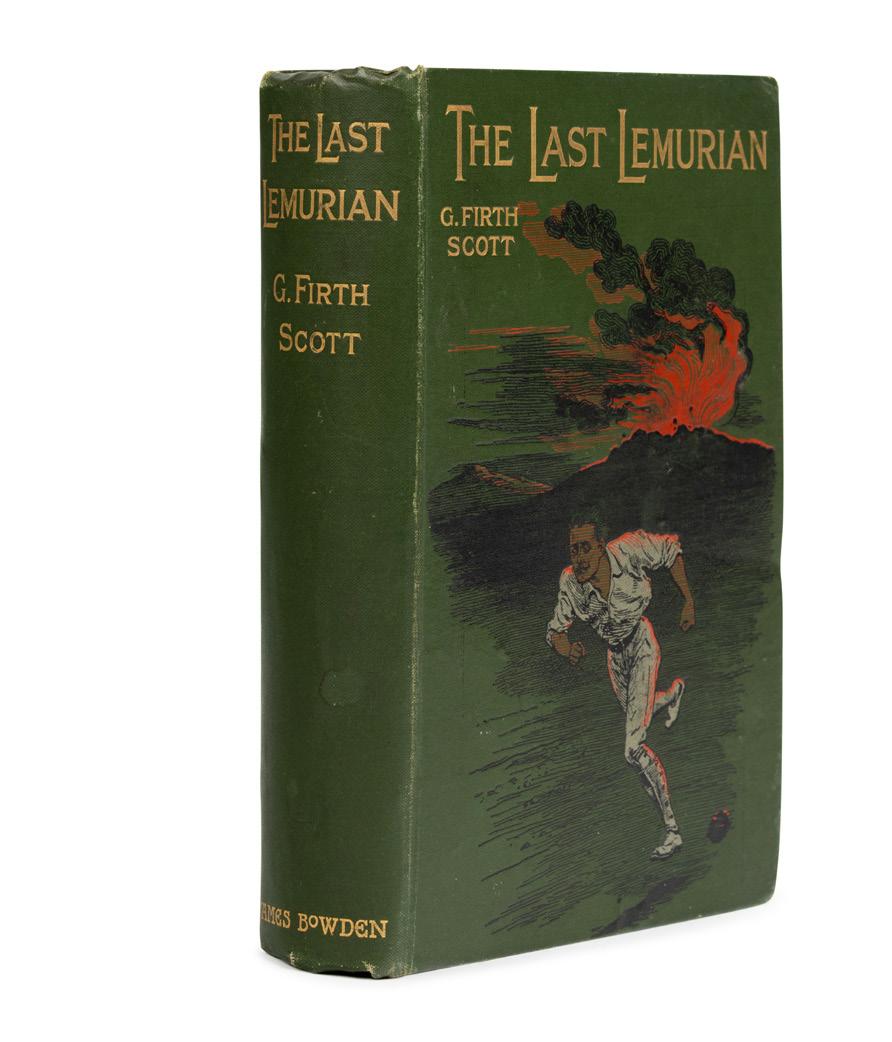
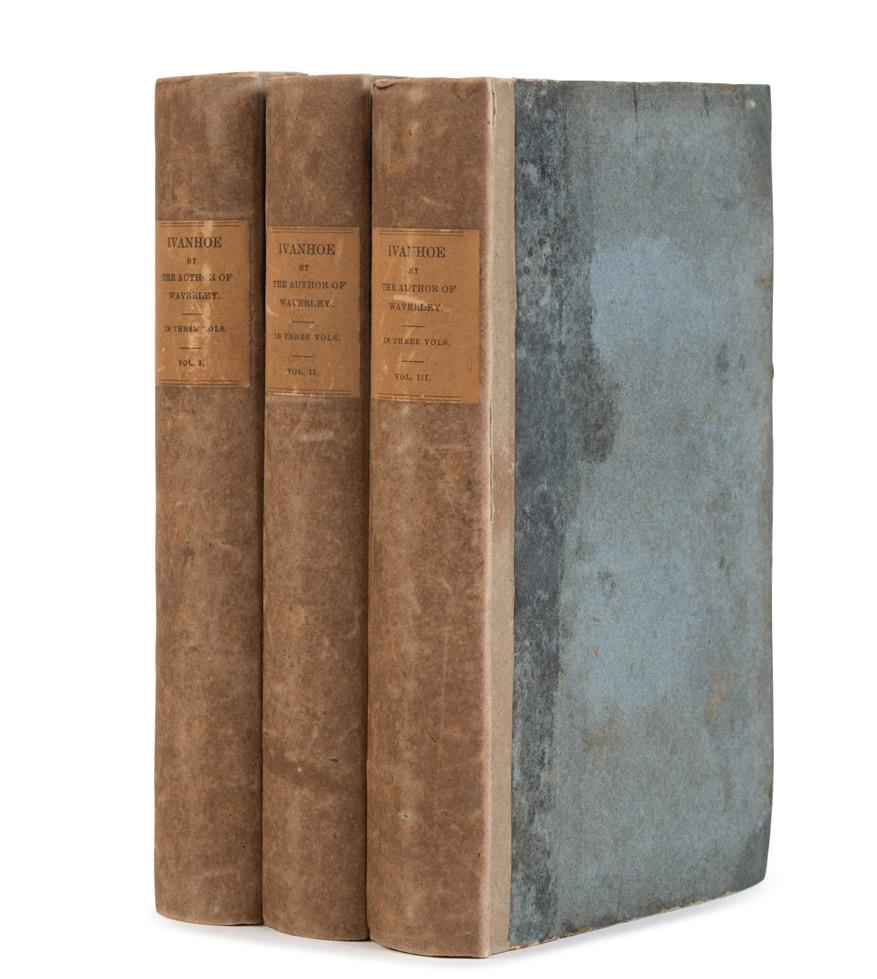
193
Scott, Walter, Sir (1771-1832). Ivanhoe: A Romance. Edinburgh: Archibald Constable & Co., 1820.
8vo (197 x 117 mm). Half-titles; 3pp. publisher’s advertisements in vol.3. (Spotting throughout.) Original drab boards (rebacked to style with new labels, soiling to covers); slipcase. Provenance: Partially illegible ownership inscription dated 16 January 1823 on inner front board of each volume.
FIRST EDITION OF SIR WALTER SCOTT’S MOST BELOVED NOVEL IN THE ORIGINAL BOARDS.
FIRST EDITION, FIRST ISSUE. Greville Worthington, in his bibliography of the Waverley novels, notes that there are two states of the first edition and provides a list of 14 points as follows: p. [iii] bears the forme–mark “9”; p. iv, line 6 the first word is “Peter”; p. v, line 12 the third word is “which”; p. v bears the forme–mark “6”; p. vi, line 14 the first word is “observed”; p. ix, line 1 there is no comma after “fought”; p. xii, line 5 there is no comma after “people”; p. xv, line 3 the sixth word is “toilsome”; p. xvi, line 20 the first word is “ton”; p. xvi there is no forme–mark; p. xix there is no forme–mark; p. xxiv there is no forme–mark; p. xxix, line 1 there is a comma after “paste” and p. xxx bears the forme–mark “12”. The present copy conforms with all these points except for Worthington’s third point: p. v, line 12 the second and fourth words are “which” and the third word is “works”.
Sir Walter Scott began work on Ivanhoe shortly after completing A Legend of Montrose in May 1820. Due to severe stomach pains Scott had been forced to dictate Montrose, The Bride of Lammermoor, and the first part of Ivanhoe to publisher John Ballantyne and poet William Laidlaw, who acted as scribes. By the time the first half of the story had been completed, however, Scott was well enough to write on his own and he completed Ivanhoe in mid-November. Although the first edition carries the publication date of 1820 the book was in fact published on 20 December 1819; as with all of the previous Waverley novels and indeed all published up to 1827, its author was not identified. Ivanhoe proved to be a massive success and remains one of Scott’s most beloved and widely-read novels. Todd & Bowden 140Aa.
$800 - 1,200
194
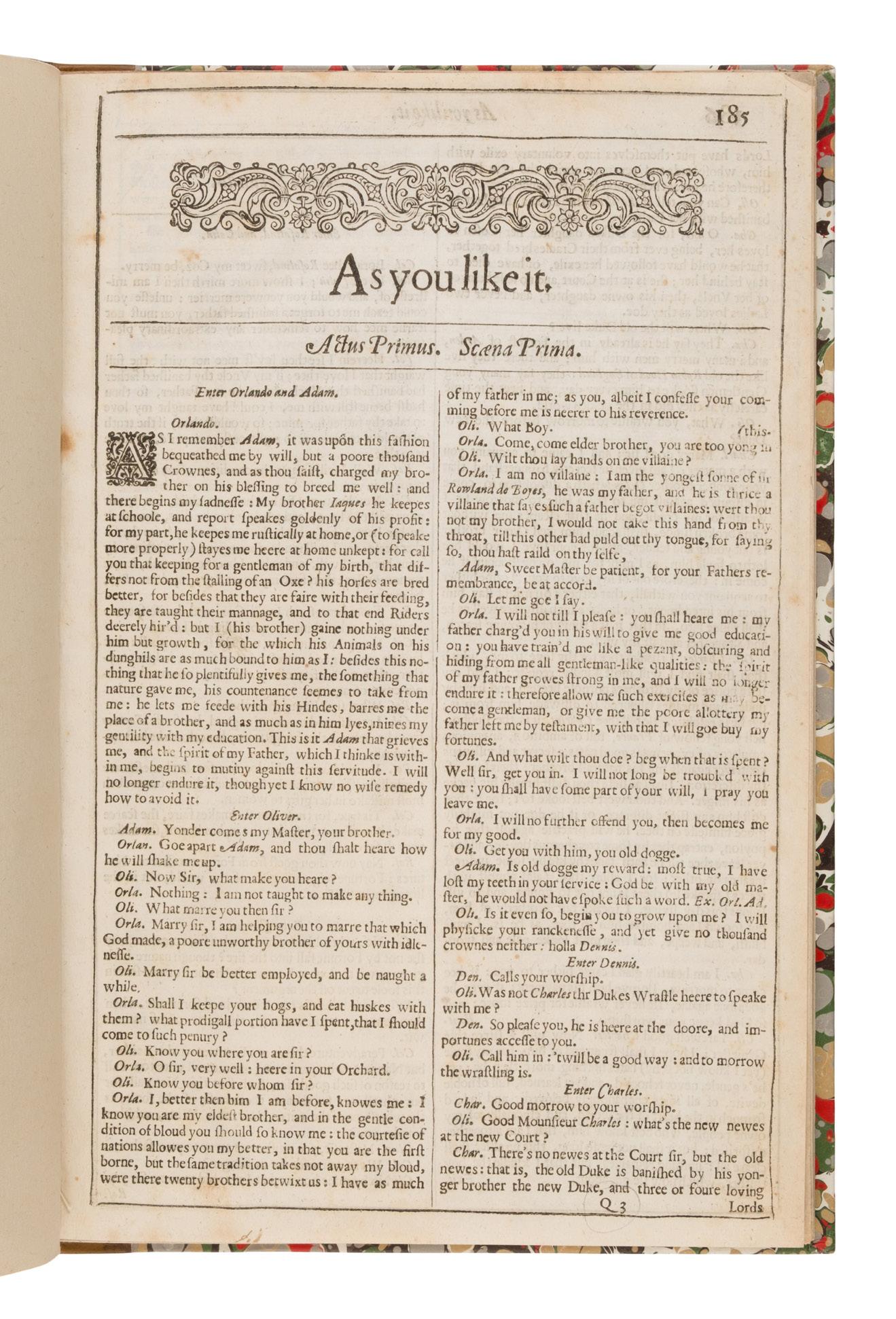
Shakespeare, William (1564-1616). As You Like It. -- The Taming of the Shrew. [Two complete plays extracted from: The First Folio]. [London: Isaac laggard and Ed. Blount, 1623].
Folio (305 x 197 mm). Comprising 46 pages (185-230) on 23 leaves (Q3-V1); opening to All’s Well that Ends Well on V1r. Woodcut head- and tail-pieces, opening initials. (Corner tear to R1 partially affecting letters, a few marginal tears repaired, marginal tears to T3-T4 affecting some letters and border, light scattered stains or soiling.) Modern quarter calf, marbled boards.
FIRST PRINTINGS OF TWO COMPLETE PLAYS FROM SHAKESPEARE’S FIRST FOLIO, BOTH PRINTED HERE FOR THE FIRST TIME.
The Taming of the Shrew, one of Shakespeare’s most popular comedies, centers on the courtship and marriage of the sharptongued Katherina and the determined Petruchio. Set in Padua, the play unfolds alongside a secondary plot involving Katherina’s younger sister Bianca, whose numerous suitors must wait until the elder sister is married. Petruchio agrees to the match and sets about “taming” Katherina through a series of calculated reversals—exaggerated behavior, feigned eccentricity, and deliberate contradictions—until she ultimately conforms to the expectations of marriage.
As You Like It remains one of the most beloved and most performed plays, and includes the famous speech by the melancholy Jacques, “All the world’s a stage, and all the men and women merely players; They have their exits and their entrances, and one man in his time plays many parts....” The play follows the banished heroine Rosalind, who disguises herself as the young man “Ganymede” while fleeing to the Forest of Arden with her cousin Celia. There she encounters Orlando, the object of her affection, along with a variety of exiles, shepherds, and courtly figures whose intertwined romances unfold in the freedom of the countryside. cf. STC 22273; Greg III pp.1109-1112; Pforzheimer 905.
$30,000 - 50,000
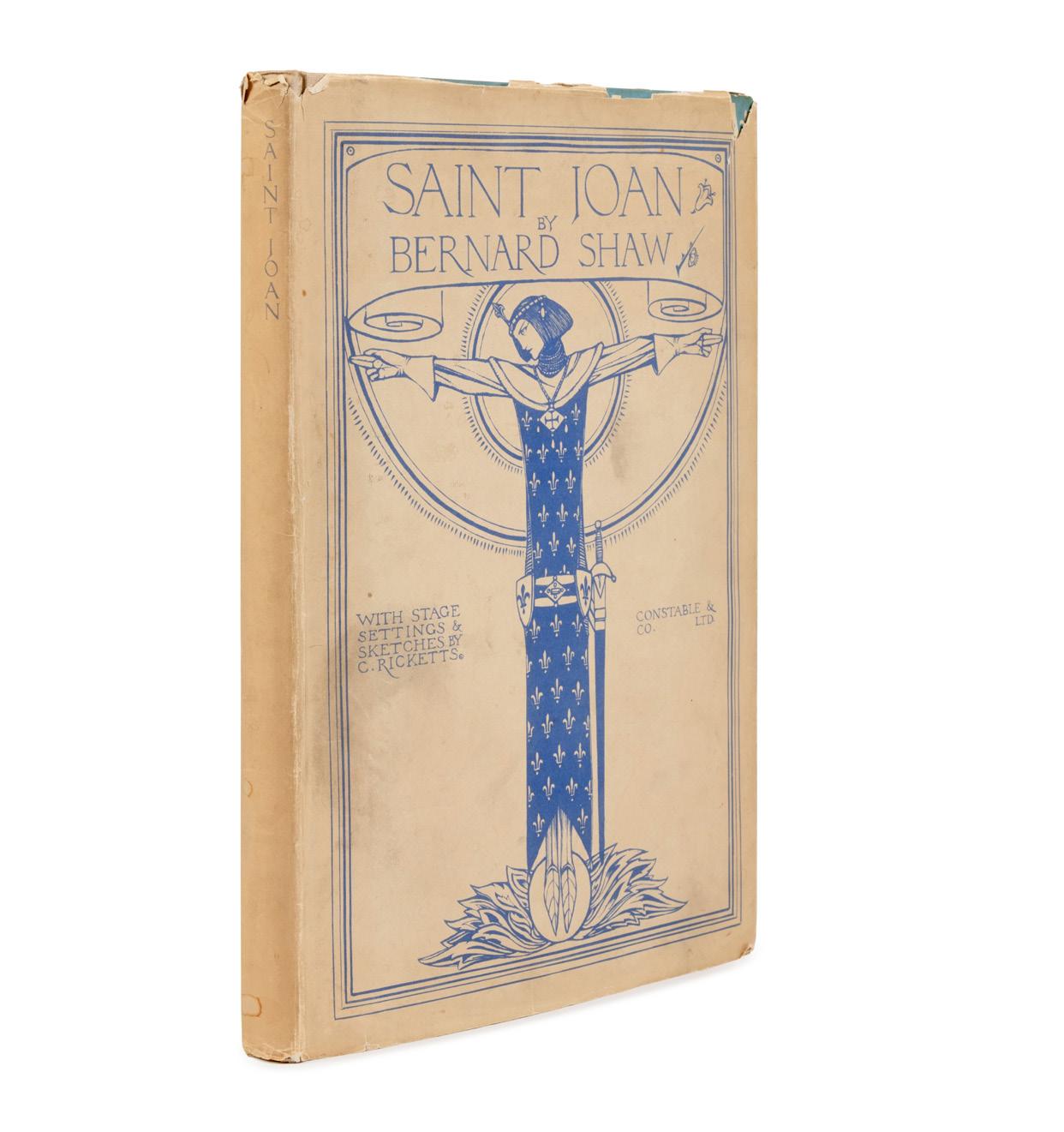
195 Shaw, George Bernard (1856-1950). Saint Joan. A Chronicle Play in Six Scenes and an Epilogue. London: Constable and Co., 1924.
Folio. 16 tipped-in color-printed plates after Charles Ricketts. Original cloth-backed decorative boards, printed spine label, top edge gilt, others uncut (some spotting to boards, fore-corners lightly rubbed); dust jacket (light chipping along top edge, some scattered surface soiling to panels).
FIRST EDITION, LIMITED ISSUE, one of 750 copies. Laurence A170a.
[With:] SHAW. Man and Superman. A Comedy and a Philosophy. Westminster: Archibald Constable & Co., 1903. 8vo. Original cloth. FIRST EDITION.
[With:] SHAW. The Doctor’s Dilemma, Getting Married, & The Shewing-up of Blank Posnet. London: Constable and Company, 1911. Original cloth; folding chemise and moroccobacked slipcase. FIRST EDITION. A FINE COPY.
$300 - 400
196 Shelley, Mary Wollstonecraft (1797-1851). Frankenstein: or, The Modern Prometheus. [Bound with:] Schiller, Friedrich (1759-1805). The Ghost-Seer! London: Henry Colburn and Richard Bentley, 1831.
2 volumes in one, 8vo (165 x 101 mm). Engraved frontispiece, additional title with engraved vignette by Theodor von Holst; 2 ad leaves at rear (very mild offsetting to engraved title). Contemporary forest green half morocco gilt (rubbing to spine); folding case.
THE FIRST DEPICTION OF FRANKENSTEIN’S CREATURE.
FIRST ILLUSTRATED EDITION, third edition overall, with Shelley’s revisions and her account of the novel’s creation. Published as no. 9 in Bentley’s Standard Novels series, conceived by publishers Richard Bentley and Henry Colburn in order to bring together in single volumes popular works of fiction that had previously been published in three-volume form. In the run-up to publication Mary Shelley performed numerous revisions to the 1818 and 1823 texts in order to remove some of the more radical elements of the two earlier editions and wrote a new introduction in which she relates for the first time the famous “ghost story contest” with Lord Byron, Percy Bysshe Shelley, and Dr. John Polidori that led to the novel’s creation. This edition was the first to depict Frankenstein’s creature and was published on October 31, 1831. Lyles B4a; Sadleir 3734a; Summers, p.330; Wolff 6205, 6280a.
$4,000 - 6,000
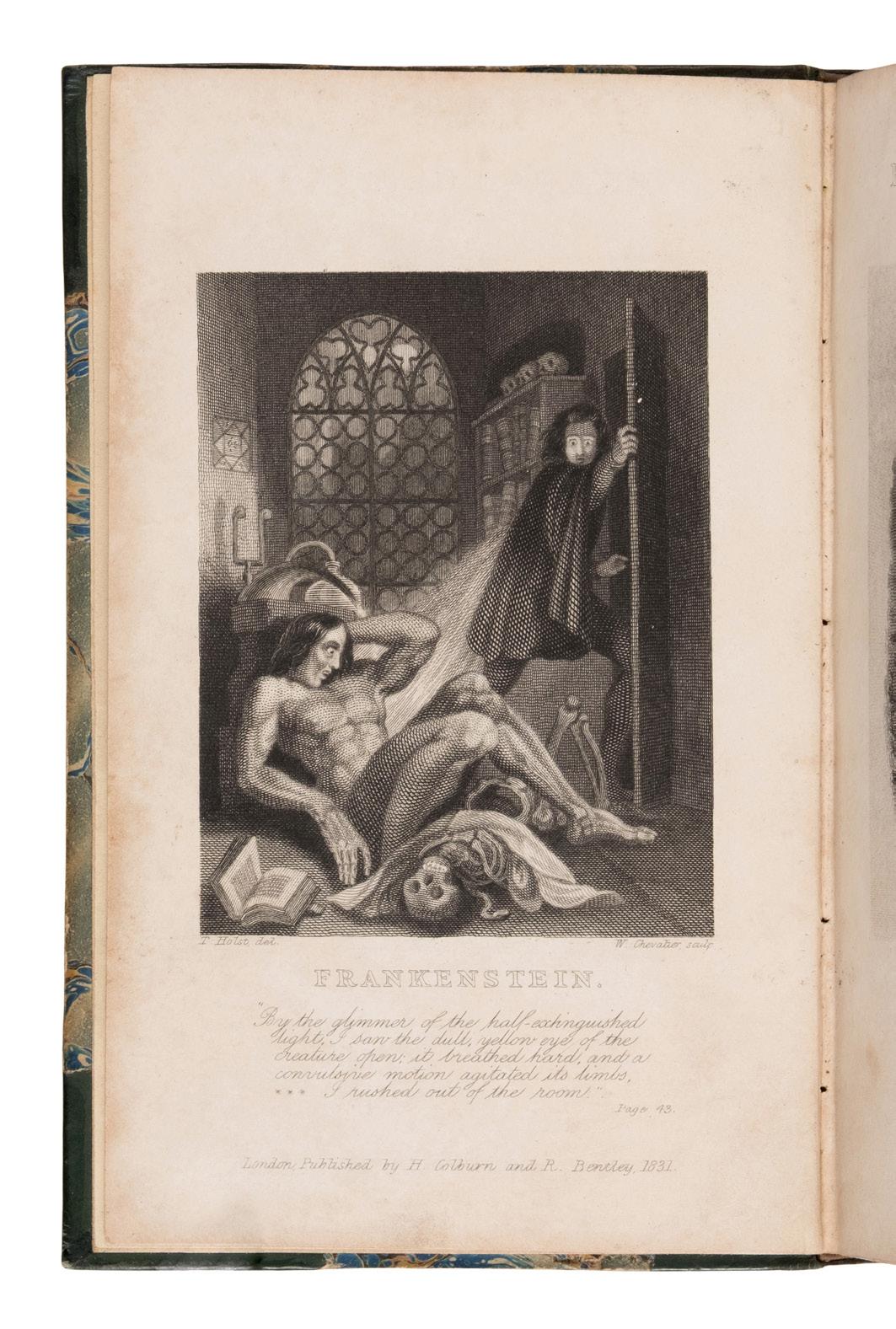



197
Solzhenitsyn, Aleksandr (1918-2008). Arkhipelag Gulag [The Gulag Archipelago]. Paris: YMCA-Press, 1973-1975.
3 volumes, 8vo. Text in Cyrillic. Original photographic wrappers (spine slightly cocked on third volume); glassine covers; modern quarter morocco folding case. Provenance: James C. Seacrest (1938-2016); previously sold Heritage Auctions, 7 March 2018, sale 6186 lot 45178.
FIRST EDITION. IN ORIGINAL WRAPPERS AND GLASSINE. The Gulag Archipelago was written following Aleksandr Solzhenitsyn’s return from exile for criticizing and plotting to overthrow the Soviet government under Joseph Stalin. Over the course of ten years he constructed his account of life in the Soviet Gulag from diary entries, newspaper accounts, internal documents, and his own experiences as a prisoner. In it, he lays responsibility for the forced labor system at the feet of Lenin and not Stalin, though makes clear that it was Stalin who vastly expanded on the framework already established. Though his life was relatively comfortable under the reign of Nikita Khrushchev, following his removal from power in 1964 Solzhenitsyn’s work was looked upon with renewed suspicion and he found himself designated a “non-person” by the Soviet government.
Despite much of his writings being seized by the KGB, Solzhenitsyn continued to work on his manuscript in secret. From 1965 to 1967 his notes were painstakingly typewritten while in hiding at the homes of friends throughout Soviet Estonia. By 1973 the manuscript was complete. Solzhenitsyn’s wish to have it published for the first time in Russia was dashed after one of the friends in whose houses the manuscript was typewritten was arrested and questioned by the KGB until she gave up the location of her copy of the finished typescript; according to Solzhenitsyn she hanged herself after being released. Because of this, the first edition was published in Paris by YMCA-Press. Translations into English and French were quickly printed and the book caused a stir throughout the western world. Following publication Solzhenitsyn was arrested, stripped of his Soviet citizenship and deported to West Germany. In the years since the fall of the Soviet Union, The Gulag Archipelago has been credited with helping to bring about its end.
$600 - 800
198 Steinbeck, John (1902-1968). The Grapes of Wrath. New York: The Viking Press, 1939.
8vo. Original beige cloth stamped with line drawings in reddish-brown, a portion of “The Battle Hymn of the Republic” printed in reddish-brown on endpapers; dust jacket with “first edition” statement printed on front flap corner (tiny closed tear near top edge of front panel).
FIRST EDITION of Steinbeck’s National Book Award and Pulitzer Prize-winning Depression-era novel that follows an Oklahoma tenant farming family, the Joads, as they are forced to leave their home and search for a better life in California. Considered one of the most influential novels of the 20th century, it is one of the most frequently challenged and censored books in public libraries. Goldstone & Payne A12a. A VERY BRIGHT COPY.
[With:] STEINBECK. Their Blood is Strong. San Francisco: Simon J. Lubin Society, 1938. 8vo. Numerous illustrations from photographs by Dorothea Lange. Original pictorial wrappers. FIRST EDITION. Originally written as a series for the San Francisco News, these articles spotlighting the plight of California migratory farm workers directly led to his writing The Grapes of Wrath
$4,000 - 6,000
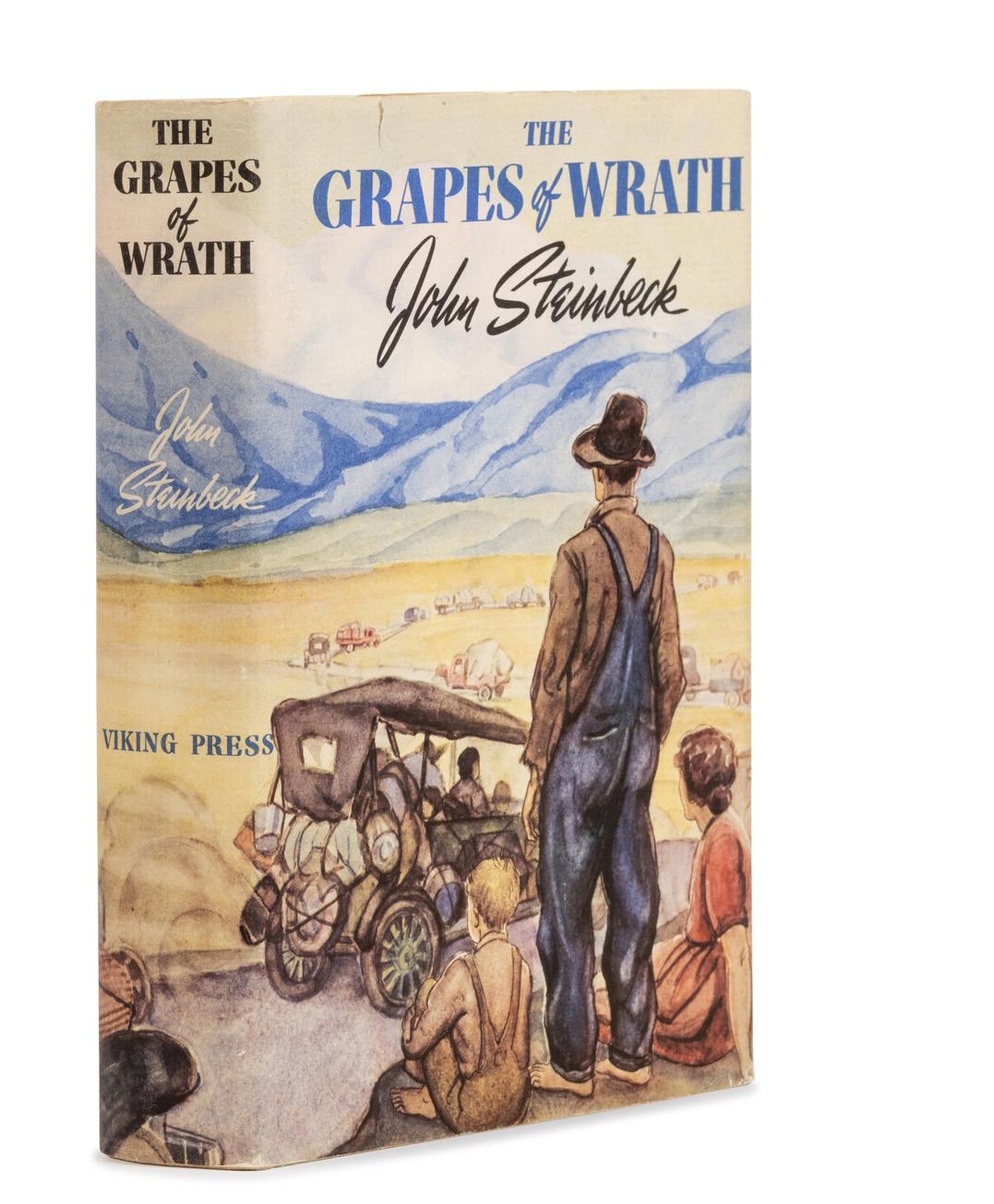
199 Stevenson, Robert Louis (1850-1894). Treasure Island. London, Paris & New York: Cassell & Company, 1883.
8vo (191 x 114 mm). Half-title; map frontispiece printed in 3 colors; 4pp. publisher’s ads at end. (Occasional spotting, some toning.) Original sage-green cloth, spine lettered in gilt, black coated endpapers (recased, endpapers renewed). Provenance: The Daily Chronicle (institutional stamp).
FIRST EDITION in book form, one of 250 copies printed on 24 November 1883 (Beinecke/McKay, 240) with the following issue points: “dead man’s chest” not capitalized on pp. 2 and 7; the “7” is stamped in on the pagination of p. 127; the full-stop is dropped from line 20 of p. 178, and 4pp. of publisher’s ads at rear bearing printer’s date 1083. Treasure Island was begun in the summer of 1881 at Stevenson’s summer home at Castleton of Braemar while trying to keep his twelve year-old stepson amused during a rainy afternoon indoors, and was completed the following winter. In the interim period Stevenson read some completed chapters to his friend and publisher Dr. Alexander Japp, who negotiated their publication in Young Folks magazine under the title The Sea Cook while Stevenson worked to complete the story, at which time it was retitled Treasure Island and published in book form by Cassell & Company. It was Stevenson’s first great critical and commercial success and has been the source of numerous radio, television, and film adaptations. Beinecke/McKay 240; Osborne 2:1030; Prideaux 11.
$1,000 - 1,500
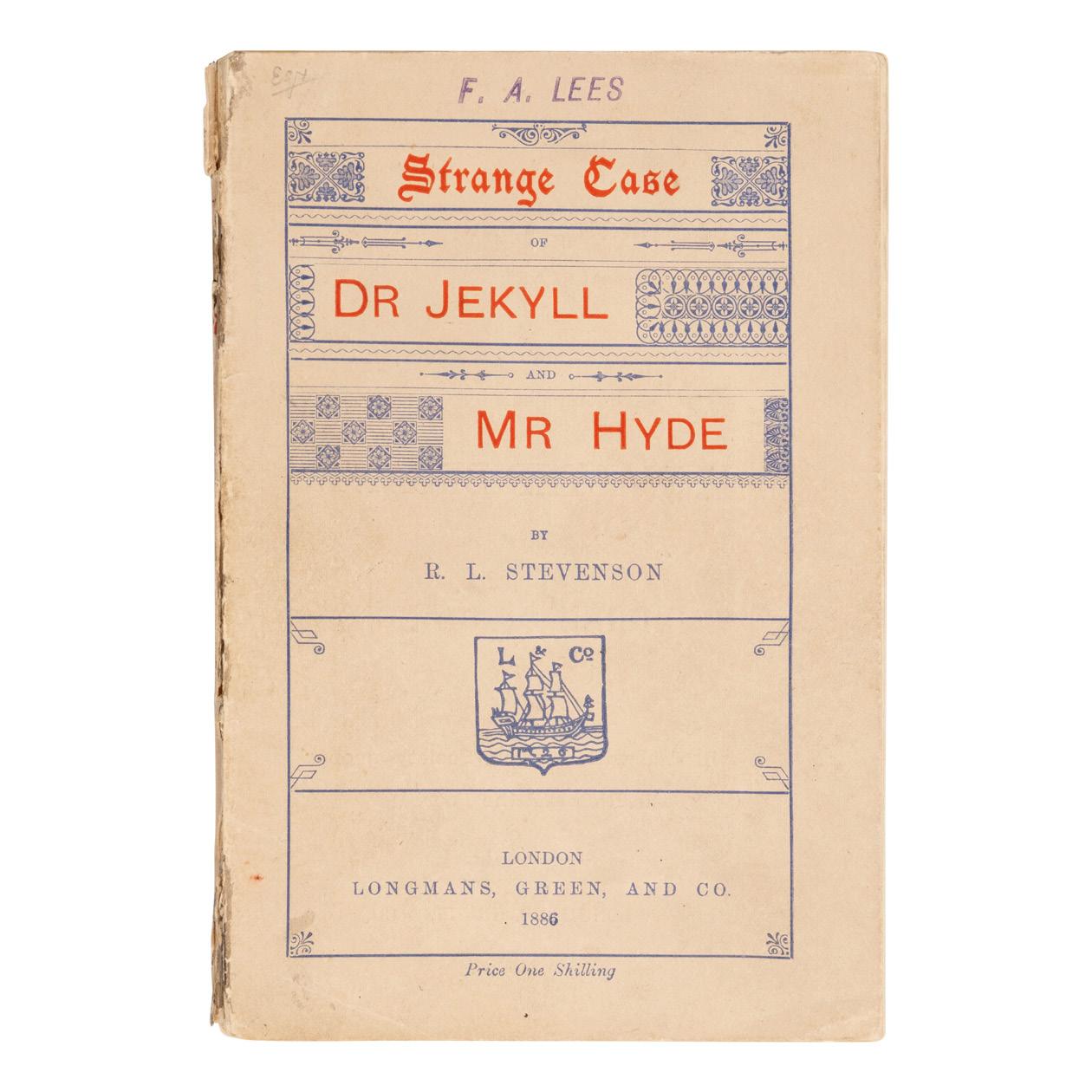
200 Stevenson, Robert Louis (1850-1894). Strange Case of Dr Jekyll and Mr Hyde. London: Longmans, Green, and Co., 1886.
Small 8vo. Original wrappers printed in blue and red, date on upper wrapper altered from 1885 to 1886 in pen, as often (spine significantly worn with losses resulting in front wrap partially detached, contemporary review pasted to inner front wrap); folding chemise and slipcase. Provenance: Dr. Frederick Arnold Lees (1847-1921), English botanist (ownership stamp on front cover).
FIRST ENGLISH EDITION, FIRST ISSUE with date on front cover hand-altered as called for. The Strange Case of Dr. Jekyll and Mr. Hyde was, according to Stevenson’s stepson Lloyd Osbourne, written in a frenzy of inspiration. Upon reading his wife’s criticisms that the story he wrote was more of an allegory than a story, Stevenson burned the first draft, thus forcing him to start from scratch. The story was rewritten in less than a week.
The printed date on the upper cover is 1885, with the intended date of publication December of that year, “but when it was ready the bookstalls were already full of Christmas numbers, etc, and the trade would not look at it...” (the publisher Charles Longman, quoted by Prideaux, p.44). Publication was therefore delayed until January 1886, with the American Scribner edition coming out a few days later. Many of the covers were altered by hand to 1886, as with the present copy. There is some controversy around publication of the first edition, as Scribner’s published the American edition four days before Longman’s issued their own in both cloth and wraps; the wrappers issue precedes the cloth. McKay 349; Prideaux 17a. A Haycraft-Queen Cornerstone.
$800 - 1,200
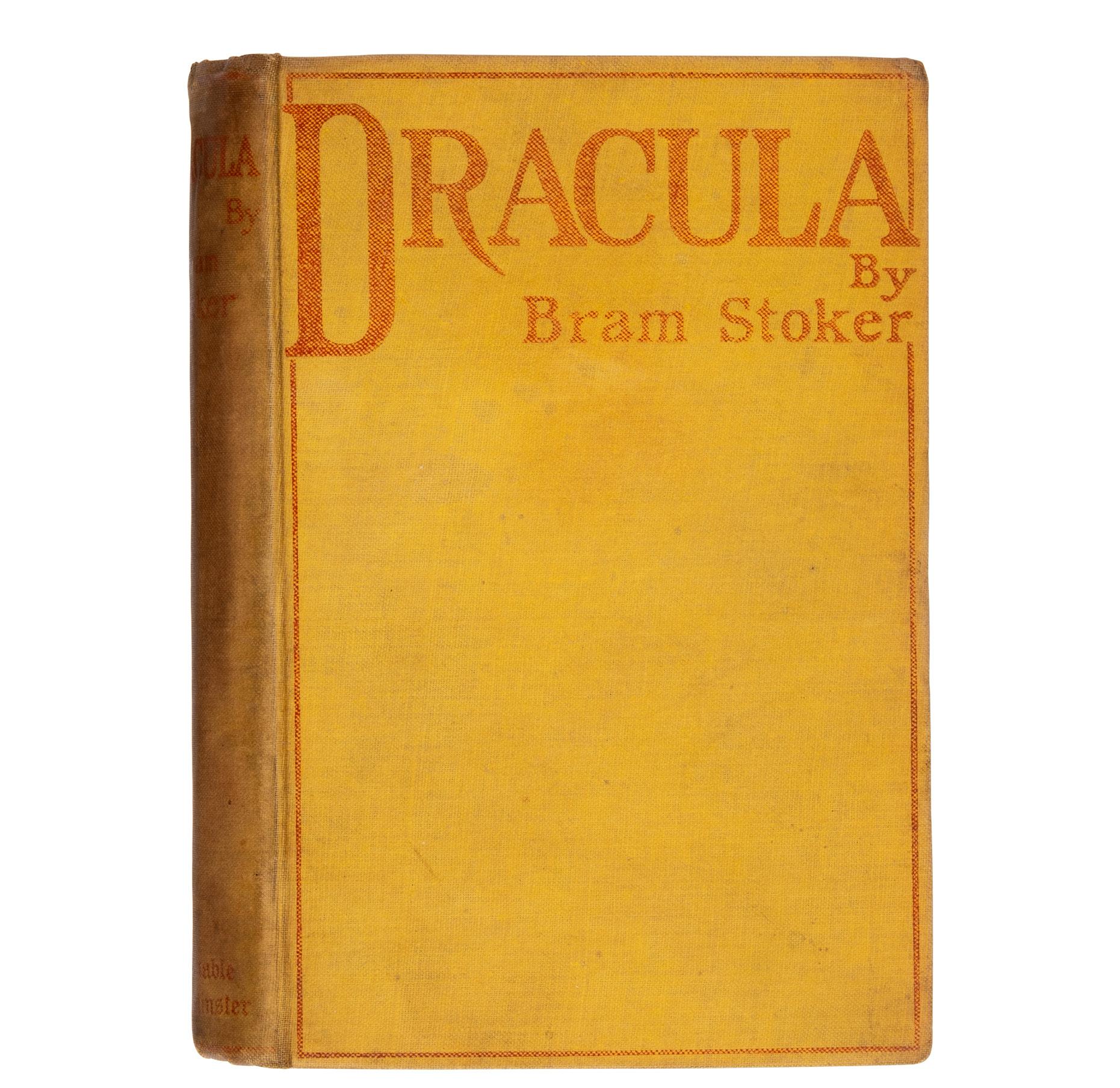
201
Stoker, Bram (1847-1912). Dracula. Westminster: Archibald Constable & Company, 1897.
8vo. (Minor spotting to preliminary leaves.) Original yellow cloth lettered in red (rubbing to extremities, darkening to spine with some leaning, spotting to text block edges, hinges touched up). Provenance: Helena Scott (ownership inscription dated July 1897); A.C. Dunn (ownership inscription); Davies & Son (booksellers’ ticket).
“The world’s most influential and enduring supernatural novel of vampirism, starring the most celebrated and evocative character in macabre literature” (Dalby).
FIRST EDITION, FIRST ISSUE without the publisher’s advertisements at the end as seen in the earliest presentation and review copies issued in May and June 1897, with the last page of text numbered 390 followed by an integral blank leaf. Prior to beginning work on Dracula, Bram Stoker compiled over a hundred pages of notes relating to vampiric folklore, the earliest of which is dated 8 May 1890 and comprises a short outline of what would become the novel’s first chapter. The story took a further two years to flesh out before Stoker began serious work on it during his summer holidays in Cruden Bay,
Scotland, from 1893 to 1896. Though well-reviewed, Dracula was not an immediate success and earned its author next to nothing in royalties, despite never having gone out of print. It has since become a cornerstone of the modern horror fiction genre and is considered the template for most future depictions of the vampire in popular fiction.
It’s binding, widely regarded as the most celebrated and instantly recognizable book bindings of the Victorian era, exemplifies “the use of a significant cover in the form of a lurid yellow cloth binding with lettering in red. To modern readers, this livery, created by an anonymous designer, is merely bold and eye-catching. For the original audience, however, it was freighted with symbolism and association. The livid red anticipates the emphasis on blood and bloodiness, but more important is the use of the colour yellow... it projected the notion of depravity by linking the text to The Yellow Book, the celebrated periodical published by John Lane in the 1890s as the organ of the Decadents. In its association... yellow...’became the colour of the hour’ and was ‘associated with all that was bizarre and queer in art and life, with all that was outrageously modern’” (Cooke, Simon. “Visualising Dracula.” In: The Book Collector, Summer 2021, pp.234-237). Barron, Horror 3-186; Bleiler, Supernatural 1546; Dalby, 10(a); Wolff 6581.
$6,000 - 8,000

202 Stoker, Bram (1847–1912). Dracula. New York: Grosset & Dunlap, [ca 1927].
8vo. (Front joint starting.) Original orange cloth stamped in black (top corners bumped); dust jacket with a list of the publisher’s Copyright Fiction printed on verso (a touch of light rubbing to front fold).
FIRST GROSSET & DUNLAP EDITION, pre-dating the 1931 film edition.
$400 - 600
203
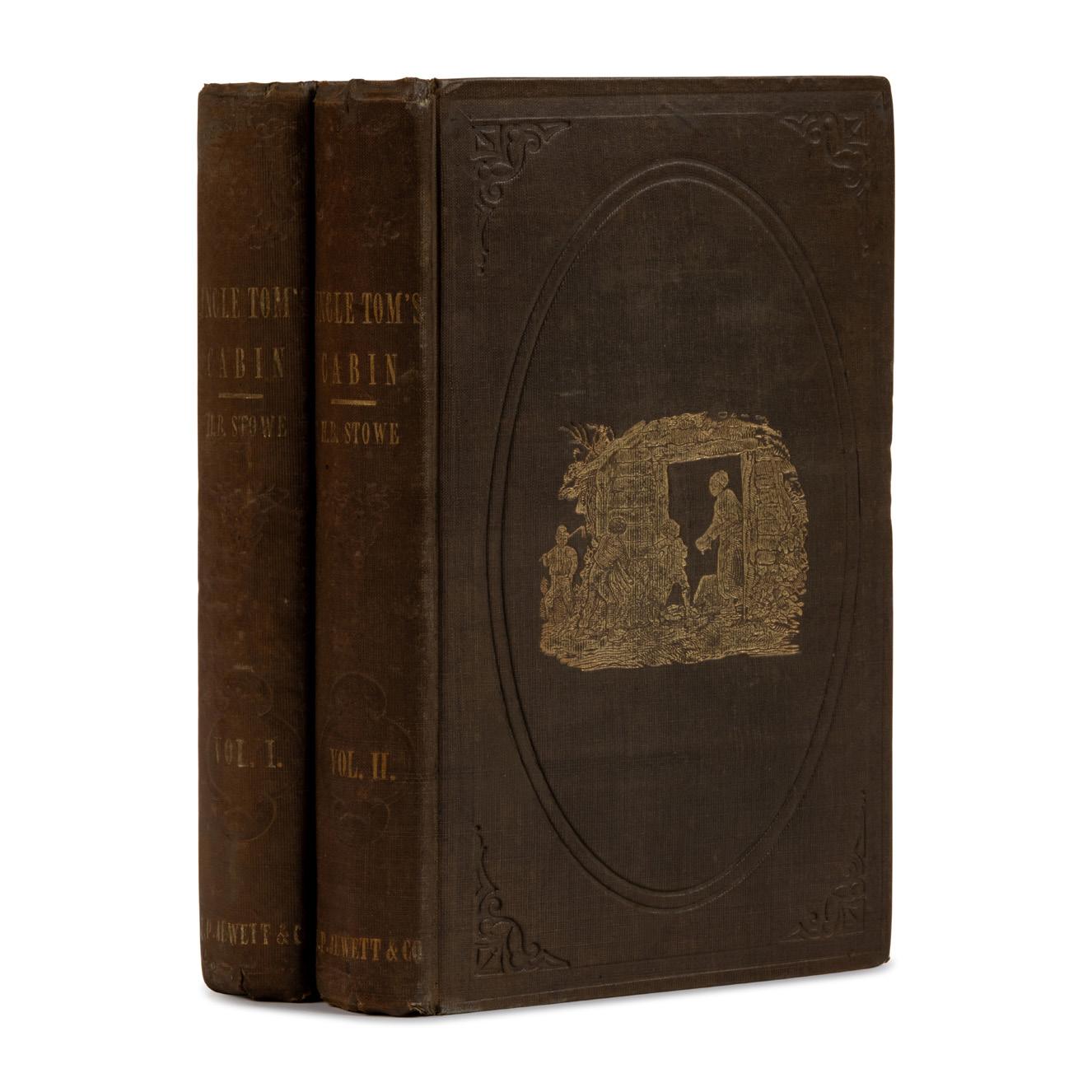
Stowe, Harriet Beecher (1811-1896). Uncle Tom’s Cabin; or, Life Among the Lowly. Boston: John P. Jewett & Company, 1852.
2 volumes, 8vo. Title vignettes, 6 wood-engraved plates probably after Hammatt Billings. (Very light and occasional spotting, tiny dampstain to upper margin corner in vol.1, affecting pp. 109-145, not touching letters.) Original brown cloth [BAL binding B, no priority established], stamped in gilt and blind, spine gilt-lettered (front endpaper in vol.2 likely renewed, slight lean to spines, a few tiny and discrete touch-ups to spine ends on vol.2, tiny flecks to text block of vol.2); morocco-backed slipcase.
FIRST EDITION, FIRST ISSUE with all points present, including: “spilt” for “spiled” in Vol. I, p. 42, line 1; “cathecism” for “catechism” in Vol. II, p. 74, line 5; and the single imprint of Hobart & Robbins on copyright.
Uncle Tom’s Cabin was first issued in serial form, with three installments published in The National Era; the book form was quickly picked up by John P. Jewett and published before the serial concluded, in response to the popularity of the abolitionist cause. Three thousand copies were sold the day of publication, and before its first anniversary, 300,000 copies were sold in America, which John Winterish points out that “on a basis of proportionate population, this would be the equivalent of more than 1,500,000 copies today” (Grolier, 100 American). “In the emotion-charged atmosphere of mid-19th century America Uncle Tom’s Cabin exploded like a bombshell. To those engaged in fighting slavery it appeared as an indictment of all the evils inherent in the system they opposed; to the pro-slavery forces it was a slanderous attack on ‘the Southern way of life’… the social impact of ‘Uncle Tom’s Cabin’ on the United States was greater than that of any book before or since” (Printing and the Mind of Man). BAL 19343; Grolier 100 American, 61; PMM 332.
$4,000 - 6,000
204
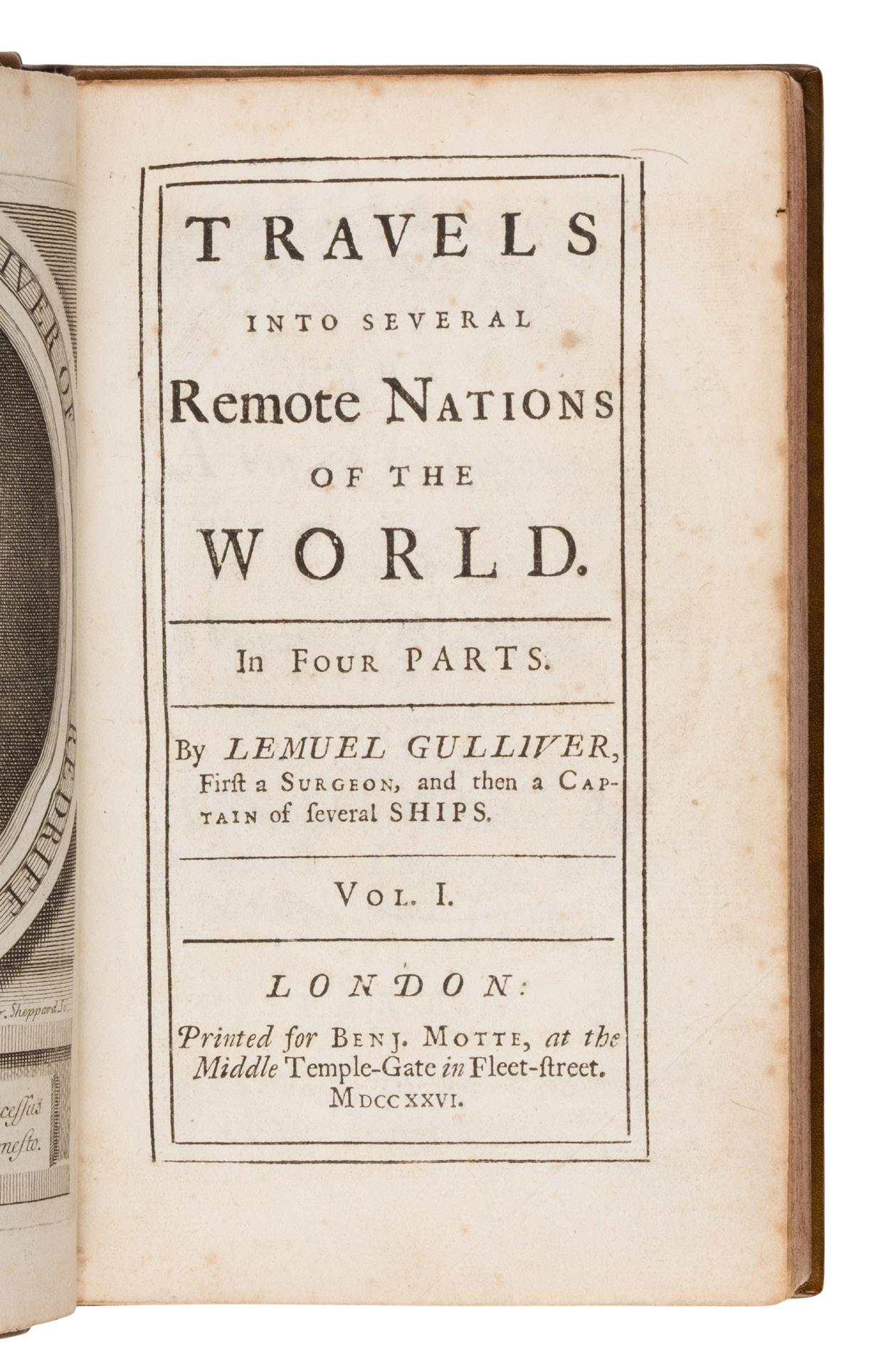
Swift, Jonathan (1667-1745). Travels Into Several Remote Nations of the World. In four parts. By Lemuel Gulliver... London: Printed for Benj. Motte, 1726.
Four parts in 2 volumes, 8vo (191 x 121 mm). Engraved portrait of Gulliver (Teerink second state), 6 plates (5 maps and one table), wood-engraved head- and tail-pieces. (Marginal spotting throughout in vol.2.) Modern paneled calf antique, red speckled edges. Provenance: some contemporary marginalia in vol.2.
FIRST EDITION OF GULLIVER’S TRAVELS, TEERINK’S “A” EDITION, one of the greatest satirical fables of the 18th century, which was published on 28 October 1726 and sold out within two weeks. “Of all the works of eighteenth-century English literature, it is probably Gulliver’s Travels that is the best-known and most widely read today” (ODNB). Swift was one of the Greatest satirists of his time, hiding behind his various noms de plume, he poked fun at the social and political issues of the day, “the Prince of pamphleteers and satirists” (PMM). An explosive satire, Gulliver’s Travels attracted both criticism and praise for its clever critiques of politics, misogyny, and the “traveller’s tales” subgenre popular during the 18th century. Teerink 289 (“A” edition); Grolier English, 42; PMM 185; Rothschild 2108.
$8,000 - 12,000
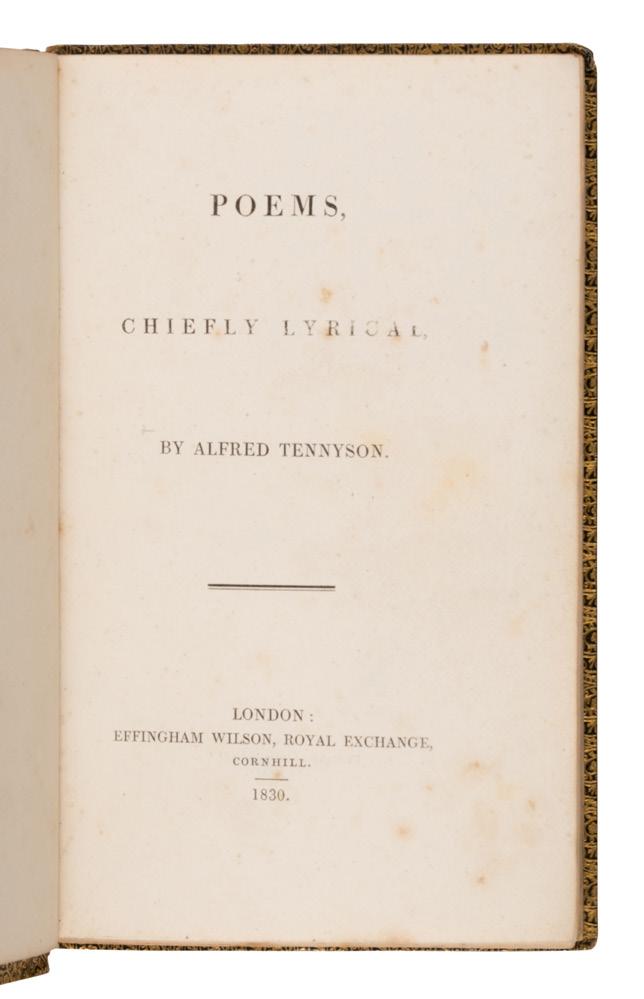
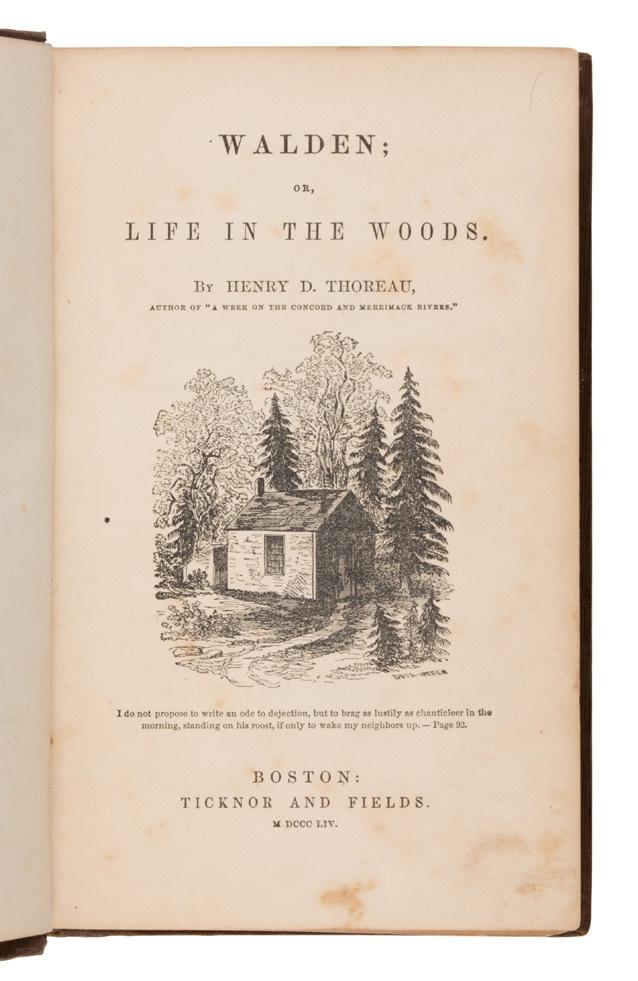
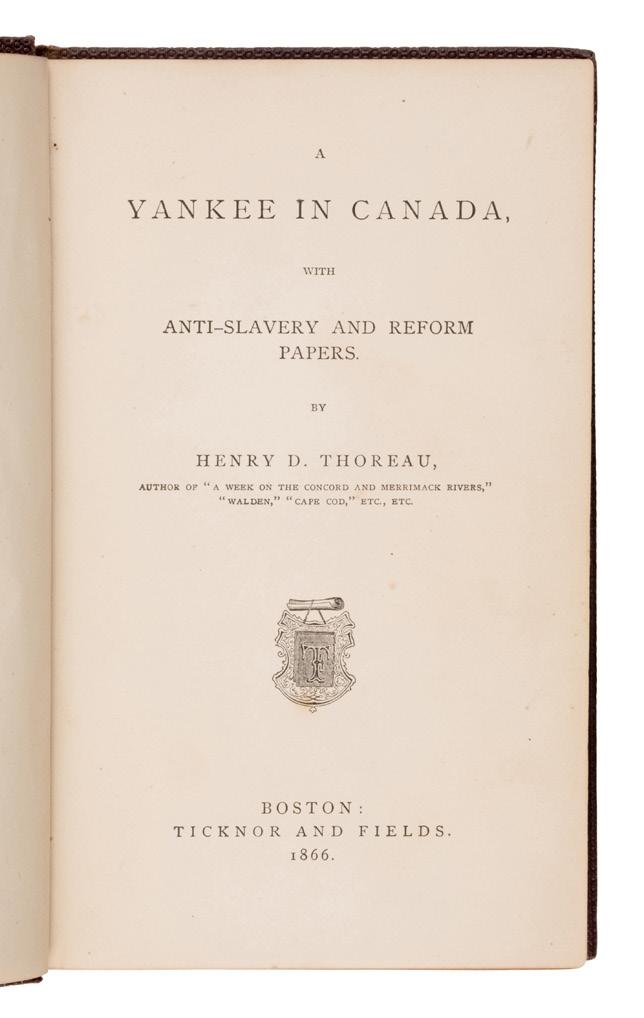
205 Tennyson, Alfred, Lord (1809-1892). Poems, Chiefly Lyrical. London: Effingham Wilson, 1830.
8vo. Late 19th century green morocco gilt (upper cover detached). Provenance: Carl Sutton (bookplate); supralibros on upper cover.
FIRST EDITION, FIRST ISSUE, with “carcanet” for “coronet” on p.72, and with p.91 numbered incorrectly as p.19. Tennyson’s first separately published book. Wise 6.
[With:] TENNYSON. Idylls of the King. London: Edward Moxon, 1859. 8vo. 8pp. publisher’s catalogue at front. Original green cloth, gilt-lettered spine (covers detached, spine toned). FIRST EDITION, FIRST ISSUE with verso of title-page blank.
$600 - 800
206 Thoreau, Henry David (1817-1862). Walden; or, Life in the Woods. Boston: Ticknor & Fields, 1854.
8vo (180 x 108 mm). Wood-engraved map of Walden Pond; 8pp. publisher’s ads at end dated “April 1854.” (Scattered spotting or browning, closed tear repaired on front free endpaper, tears with losses to last leaf of ads.) Original blind-stamped brown cloth, gilt-lettered spine (spine ends strengthened and repaired, some scuffing to covers); folding chemise and slipcase.
FIRST EDITION OF THOREAU’S AMERICAN MASTERPIECE. “... a central document of the American experience” (Thorpe, Gifts of Genius p.169). Equal parts social experiment, a treatise on self-discovery, and satire, Walden chronicles the two years, two months, and two days Thoreau spent living in a cabin he’d built near Walden Pond in Concord, Massachusetts. Over a century and a half after its initial publication John Updike would write of the work, “Walden has become such a totem of...the civil disobedience mindset...that the book risks being as revered and unread as the Bible” (Updike, “A Sage for All Seasons,” The Guardian, 25 June 2004). Borst A2.1.a; BAL 20106; Grolier, American 63.
$4,000 - 6,000
207
Thoreau, Henry David (1817-1862). A Yankee in Canada, with AntiSlavery and Reform Papers. Boston: Ticknor and Fields, 1866.
8vo (178 x 108 mm). Original blind-stamped brown cloth, spine gilt [BAL Binding A, no priority] (sunning to spine, 1 1/2 in. split to bottom front hinge); slipcase. Provenance: Robert W. Emerton (ownership bookplate).
FIRST EDITION, FIRST ISSUE, one of only 1546 copies, INCLUDING THE FIRST PUBLICATION OF “CIVIL DISOBEDIENCE” IN BOOK FORM. A Yankee in Canada was among the posthumous works edited by Thoreau’s sister Sophia and his friends William Ellery Channing and Ralph Waldo Emerson, whose essay “Prayers” was included in this collection despite Thoreau’s contribution comprising only a 14-line prayer. “Civil Disobedience” originated as a lecture delivered by Thoreau at the Concord Lyceum in 1848 and published the following year in Æsthetic Papers under the title, “Resistance to Civil Government”; the present volume represents its first appearance under the name by which it is best known. BAL 20117.
$500 - 700
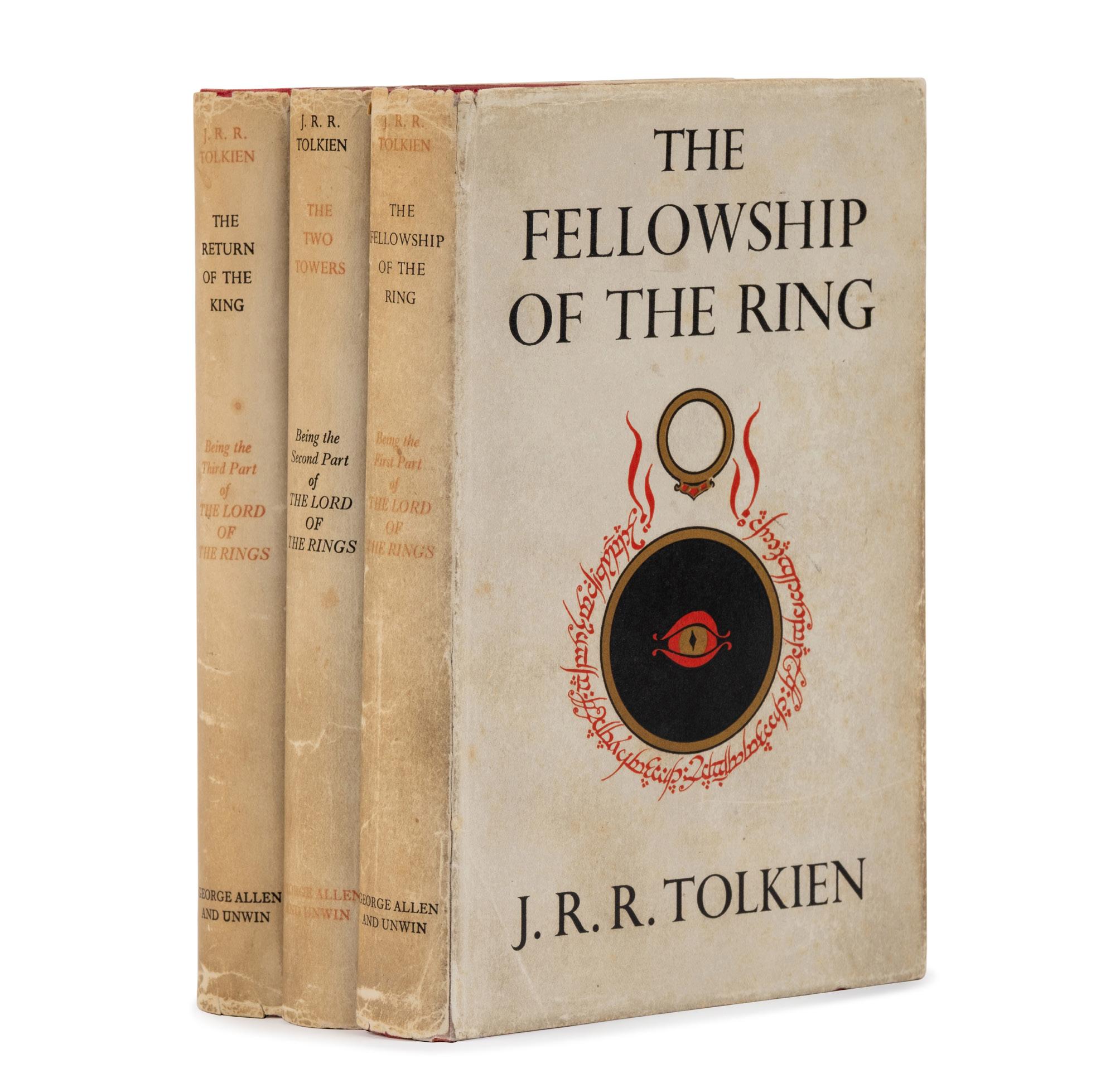
208
Tolkien, J.R.R. (1892-1973). [The Lord of the Rings trilogy:] The Fellowship of the Ring. 1954. -- The Two Towers. 1954. -- The Return of the King. 1955. All London: Allen & Unwin Ltd.
Together, 3 volumes, 8vo. Folding map tipped-in each volume, printed in red and black by Christopher Tolkien. Original red cloth, gilt-lettered spines, top edges stained red (spines leaned, light spotting to text block); dust jackets (light soiling and toning to spines and near flaps folds, splits along joints of The Fellowship of the Ring, cellotape repaired neatly on verso, tiny nicks to fore-corners); folding case. Provenance: The Times Library, London (stamp on rear pastedown of The Fellowship); Betty K. Burns (ownership signatures on pastedown near gutter).
FIRST EDITIONS, ALL FIRST IMPRESSIONS OF THE GREATEST FANTASY NOVEL EVER WRITTEN. The Return of the King has the newly corrected and accepted first issue points: on p. 49, no signature mark is present, and the lines of type are straight. In Hammond’s bibliography, it was noted that in The Return of the King, the first impression, first state, was marked by the signature mark “4” and sagging type on p. 49 but has since corrected this to say that these are indicative of the first impression, second and third states. Hammond noted this misinterpretation in Issue 11 of The Tolkien Collector (October 1995).
Considered the greatest fantasy trilogy of the modern era, C.S. Lewis wrote of it that: “no imaginary world has been projected which is at once as multifarious and so true to its own inner laws; none so seemingly objective, so disinfected from the taint of an author’s merely individual psychology; none so relevant to the actual human situation yet so free from allegory.” Tolkien, a noted scholar of Old English, conceived the idea for his tales set in “Middle Earth” while in the trenches of the First World War; its immense influence has been felt ever since.
In a new preface to the 1965 edition, Tolkien wrote: “As for any inner meaning or ‘message,’ it has in the intention of the author none. It is neither allegorical nor topical.” In his essay entitled “On Fairy-Stories,” Tolkien describes his purpose in writing about an imaginary world: “The peculiar quality of the ‘joy’ in successful Fantasy can thus be explained as a sudden glimpse of the underlying reality or truth. It is not only a ‘consolation’ for sorrow of this world, but a satisfaction, and an answer to that question, ‘Is it true?’ The answer to this question that I gave at first was (quite rightly): ‘If you have built your little world well, yes: it is true in that world.” Hammond A5a-i, ii, and iii; Bleiler, Supernatural Fiction 1606-8; Pringle, Modern Fantasy: The Hundred Best Novels 16; Cawthorn & Moorcock, Fantasy: The 100 Best Books 76.
$15,000 - 20,000
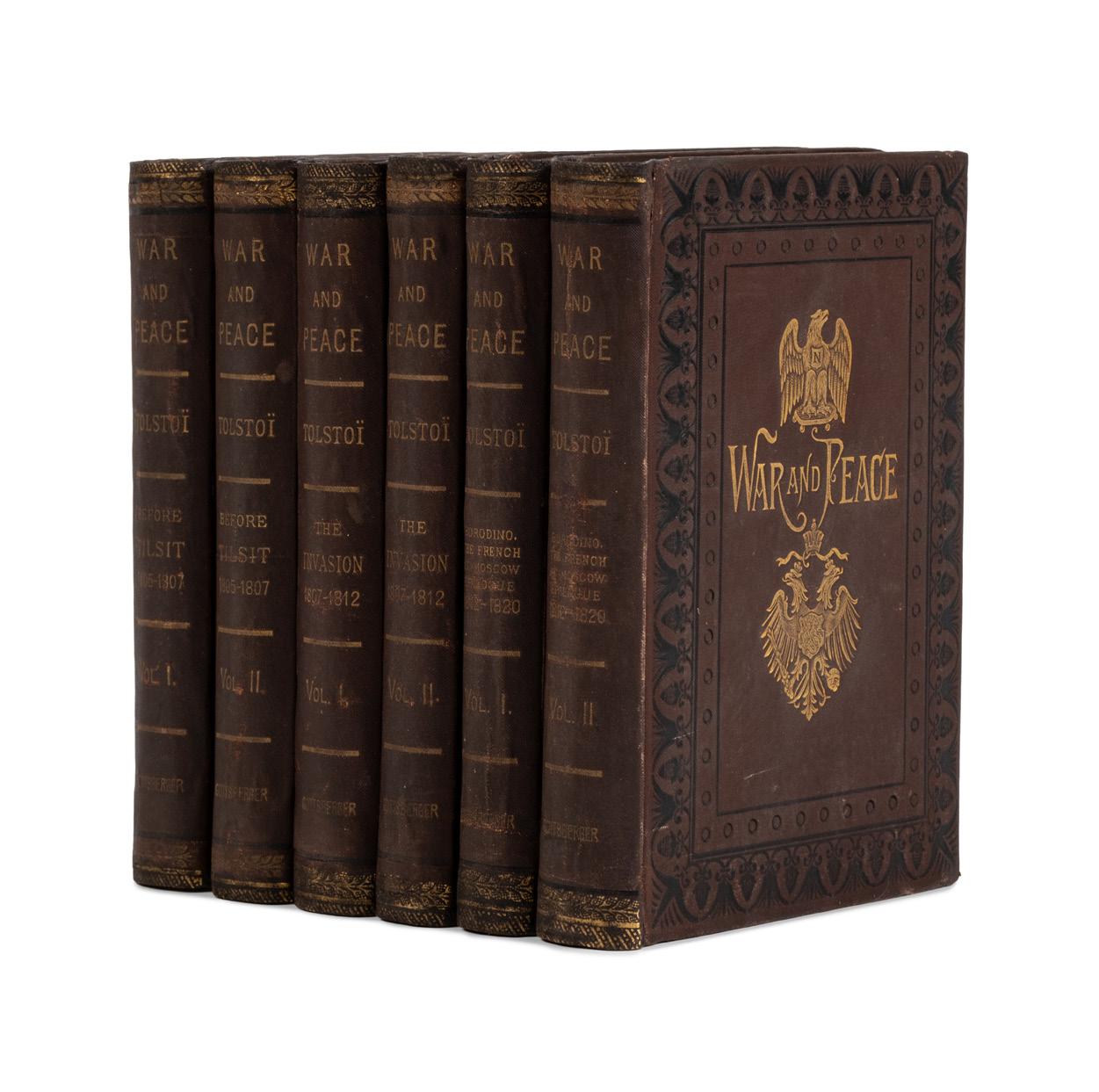
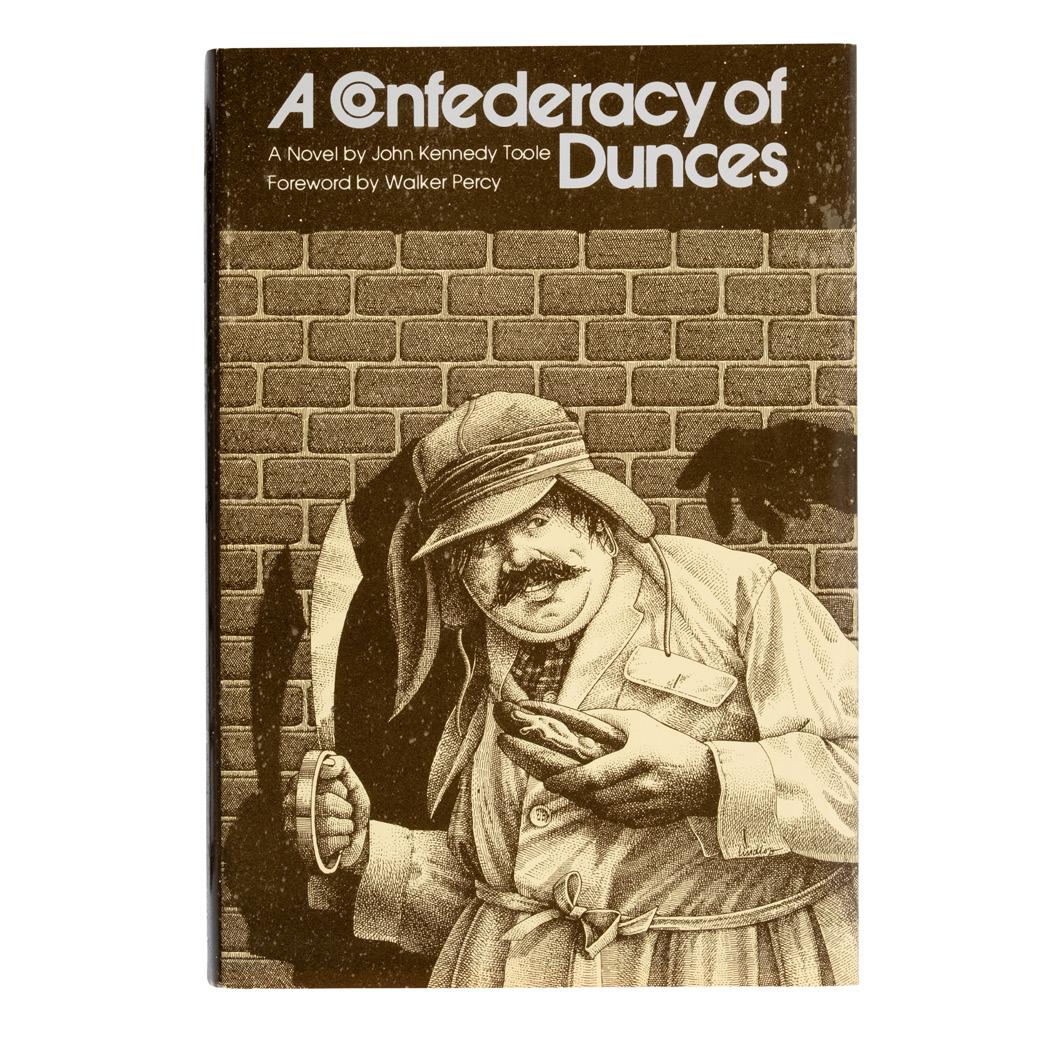
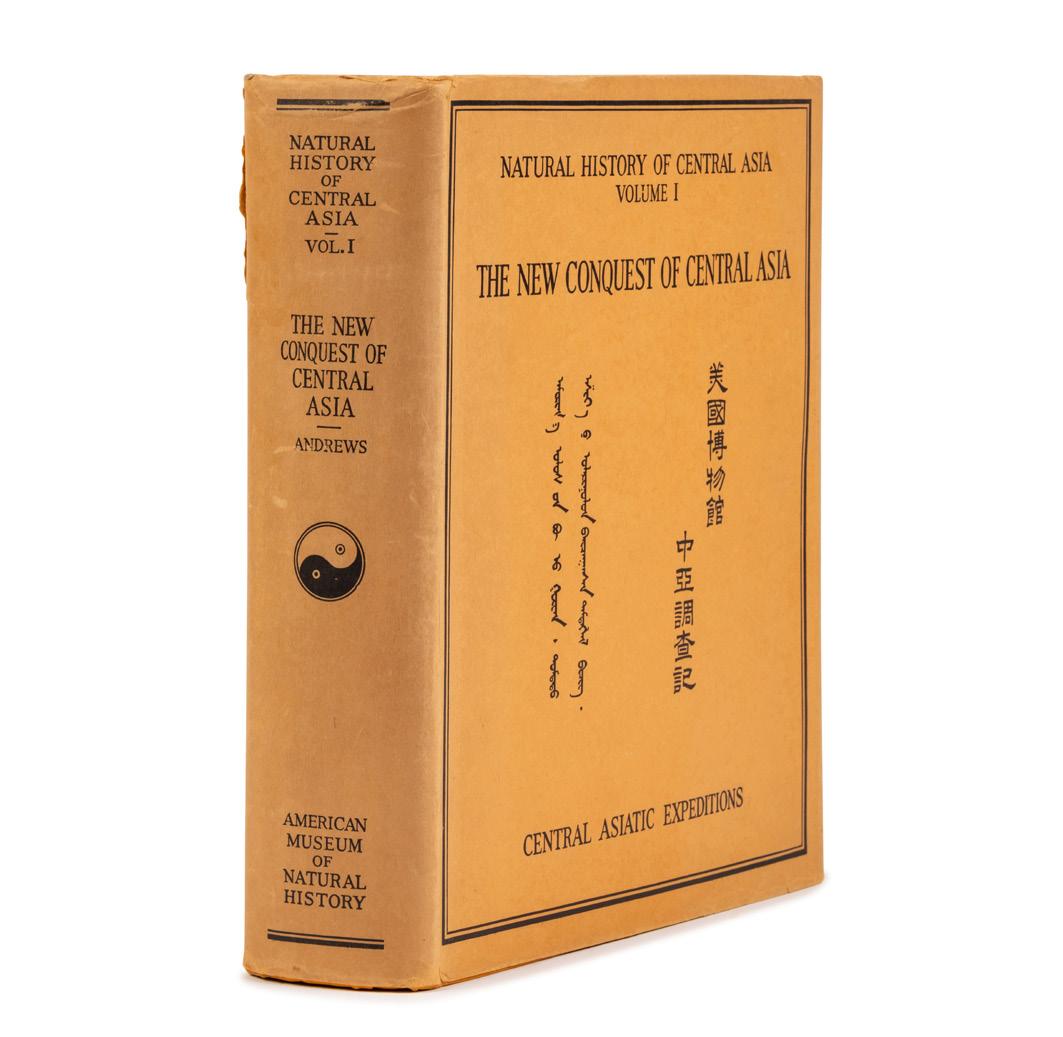
209
Tolstoy, Leo (1828-1910) and Clara Bell, translator (1835-1927). War and Peace. A Historical Novel. New York: William S. Gottsberger, 1886.
6 volumes, small 8vo. Original decorated cloth stamped in black and gilt (each volume recased, preserving original brown coated endpapers, vol.2 text block dampstained, small dampstain to vol.4 at foot of text block near spine), morocco-backed folding case. Provenance: F. Greeley, Winnetka (ownership signature on front free endpaper in vol.3).
FIRST EDITION IN ENGLISH of one of the monumental works of Russian literature. Leo Tolstoy’s epic novel follows the intertwined lives of several Russian aristocratic families against the backdrop of the Napoleonic Wars, blending intimate domestic drama with sweeping historical narrative. The work first appeared in Russia between 1865 and 1869, initially serialized in The Russian Messenger before being issued in book form in 1869. The novel later inspired the celebrated 1956 film adaptation directed by King Vidor and starring Audrey Hepburn, Henry Fonda, and Mel Ferrer.
$1,500 - 2,500
210
Toole, John Kennedy (1937-1969). A Confederacy of Dunces. Foreword by Walker Percy. Baton Rouge and London: Louisiana State University Press, 1980.
8vo. Original pale green cloth; dust jacket (light spotting to extremes, tiny closed tear to foot).
FIRST EDITION of the author’s Pulitzer Prize-winning posthumous novel and one of only 2500 copies printed. In the FIRST ISSUE dust jacket with a review by Walker Percy on the rear panel. “This novel has a sad history behind it. The author sent it to every publisher in America, all of whom rejected it. After the final rejection (by Knopf) Toole committed suicide. He was only thirty–two. His mother gave the manuscript to Walker Percy, who secured its publication by Louisiana State University Press, and it was awarded a posthumous Pulitzer Prize. Its virtues have now been universally recognized… New Orleans can be the same again after Toole’s comic masterpiece” (Burgess, 99 Novels 125).
$1,500 - 2,000
211
[Travel & Exploration]. Andrews, Roy Andrews (1884-1960). The New Conquest of Central Asia… New York: The American Museum of Natural History, 1932.
Large 4to. Color frontispiece, 128 photographic plates (many folding), 3 folding maps. Original orange cloth stamped in black; dust jacket (spine lightly sunned, 2-in. split to rear panel near joint, repaired on verso).
FIRST EDITION of the first volume of The Natural History of Central Asia by the leader of the Central Asiatic Expeditions. Andrews’ The New Conquest of Central Asia recounts the celebrated expeditions of the American Museum of Natural History across the Gobi Desert during the 1920s, combining firsthand narrative with scientific discovery. Andrews—often cited as a model for later adventure figures such as Indiana Jones—details the hardships of desert travel alongside the team’s groundbreaking finds, including some of the first scientifically recognized dinosaur eggs. Yakushi A223. IN THE RARE DUST JACKET.
$400 - 600
212
[Travel & Exploration]. Barrington, George (1755-1804). The History of New South Wales, including Botany Bay, Port Jackson, Parramatta, Sydney, and all its Dependencies... London: W. Flint for M. Jones, 1802.
8vo (205 x 125mm). Engraved title with hand-colored vignette, 20 hand-colored engraved plates, one hand-colored engraved folding map, full-page wood-engraved illustration. (Scattered light spotting, some offsetting to plates.) Contemporary half calf, marbled boards, red speckled edges (some rubbing, light wear to spine ends and corners, joints and hinges neatly repaired). Provenance: Walter Kerr Hamilton, Bishop of Salisbury (bookplate dated 1854); Frank S. Streeter (bookplate); his sale (Christie’s, 17 April 2007, lot 23).
THE FRANK S. STREETER COPY.
FIRST EDITION, second issue, with the additional plates: “A Native Family,” “Town Cove of Sydney,” “Garden Island,” “Entrance of Paramatta River,” “South View of Sydney,” “East View of Sydney,” “Pinchgut Island.” The History of New South Wales includes the first colored views of Sydney and is an important early account of the colony. The frontispiece and the two extra views of Sydney are the first colorplate Australian views, and are also among the earliest engravings to show proper settlement.
Born in Ireland, Barrington achieved notoriety for his remarkable dexterity as a thief, reputedly stealing watches and purses from fashionable crowds at theatres, races, and public gatherings while maintaining the manners and dress of a gentleman. His career brought him repeatedly before London courts, and in 1790, he was convicted at the Old Bailey and sentenced to transportation to New South Wales. There, in an ironic turn noted by early chroniclers of the colony, Barrington reformed and rose to become a respected constable at Parramatta. Abbey Travel 565; Ferguson 345; Whittell 39; Wood p.222. See Tooley 80.
$1,000 - 1,500
213
[Travel & Exploration]. Bligh, William (1754-1817). A Narrative of the Mutiny, on board His Majesty’s Ship Bounty; and the subsequent voyage of part of the crew, in the ship’s boat, from Tofoa, one of the Friendly Islands, to Timor, a Dutch Settlement in the East Indies. London: for George Nicol, 1790.
Large 4to (318 x 248 mm). Folding frontispiece, 3 maps (2 folding, 2 printed on blue paper). (Light spotting to plates, offsetting to text from plates, small marginal repair to frontispiece, marginal tear not affecting image of last plate.) ORIGINAL BOARDS, UNCUT (rebacked to style, soiling and wear to covers); folding chemise and morocco-backed slipcase. Provenance: early inscription poem on last leaf of text: “In Danger’s School both He and Bligh were taught, and from brave Cook their noble firmness caught; In naval annals all their names shall shine, and british Heroes boast of Deeds divine!”; English newspaper clipping tipped to same page titled “The Mutineers of the Bounty,” ca 10 October 1808.
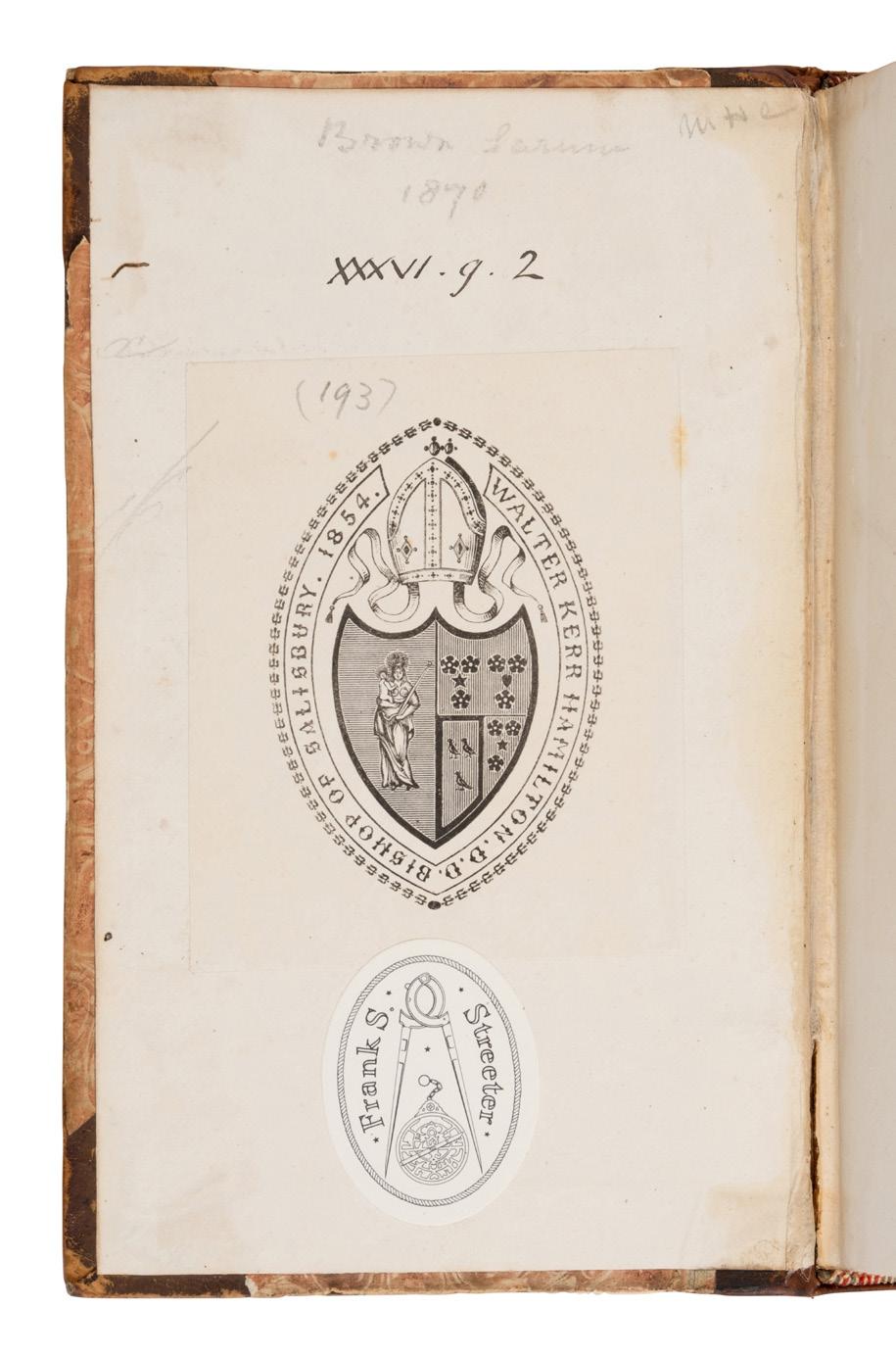
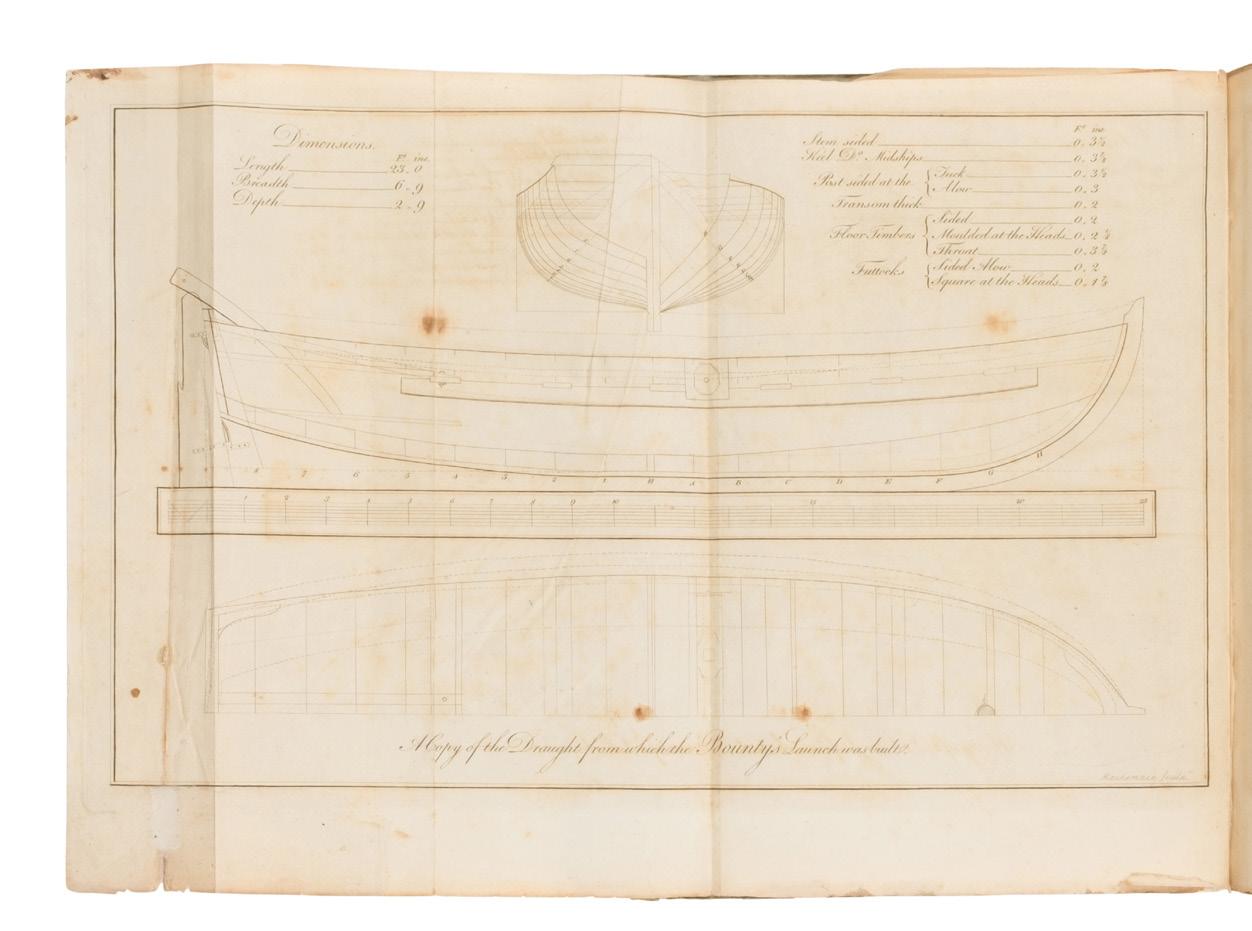
FIRST EDITION of Captain Bligh’s own account of the mutiny against him. When Fletcher Christian forced Bligh and eighteen loyal men to cast off in the ship’s launch, Bligh famously navigated over 4,000 miles of open water armed only with a compass, a quadrant, and a chronometer. This voyage of 45 days proceeded through Fiji, up the Australian coast, and through the Torres Straits to Timor, and many parts of the unknown north-east coast of New Holland were charted and named. Although Bligh returned in 1790 to face court-martial proceedings, he was acquitted along with others. Promoted to commander, he made a second attempt to transport bread-fruit trees from the Pacific to the Atlantic. Ferguson I, 71; Hill 132.
$3,000 - 4,000
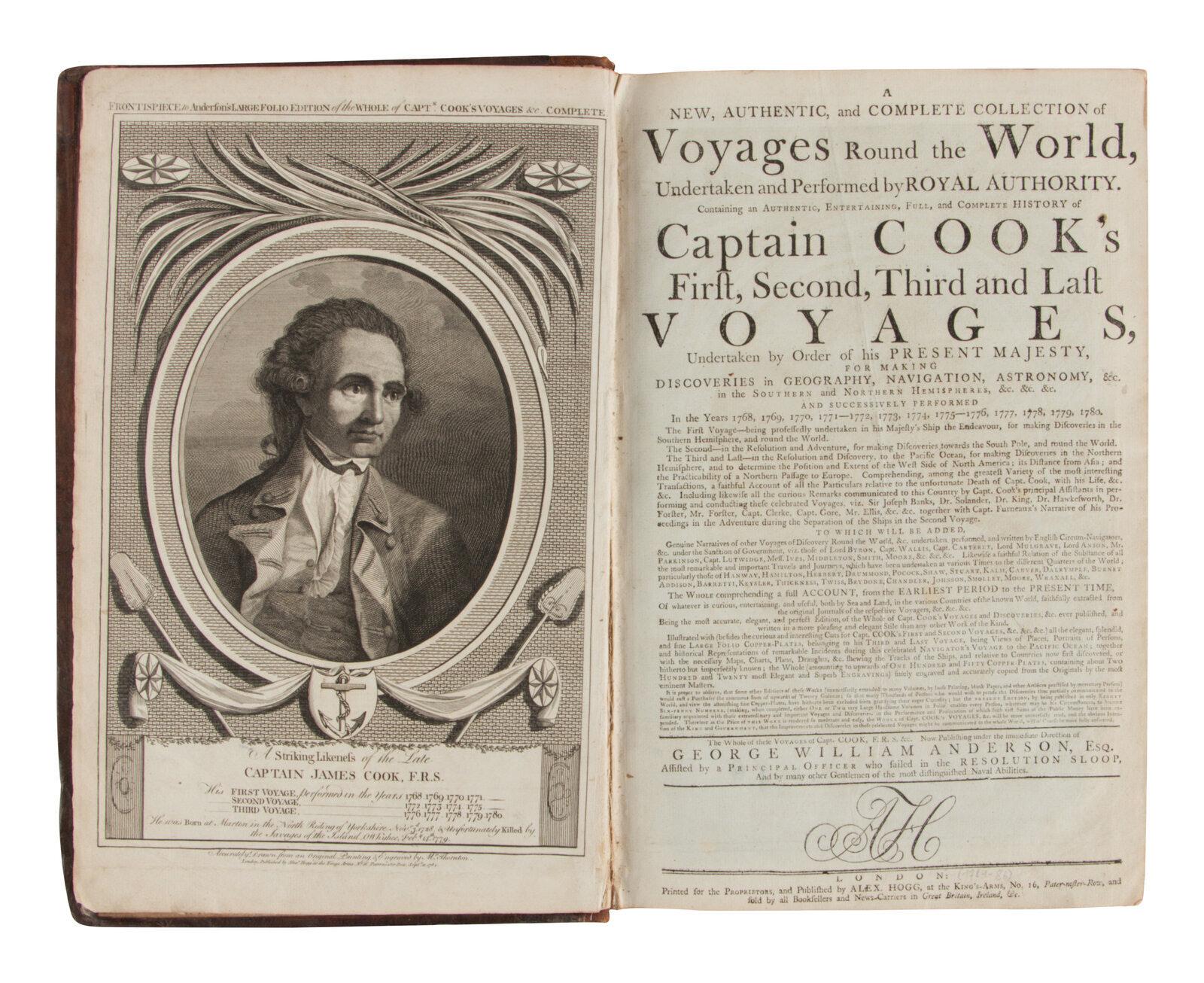
214
[Travel & Exploration]. [Cook, James, Capt. (1728-1779)]. -Anderson, George William, editor. New, Authentic, and Complete Collection of Voyages Round the World… London: for Alex Hogg, n.d. [ca 1784-1786].
Folio (381 x 241 mm). Engraved portrait frontispiece, engraved folding map, 155 engraved plates and maps (one folding); directions to the bookbinder, list of subscribers, and 2pp. ads at end. (Some offsetting from plates to text.) Contemporary tree calf (rebacked, preserving morocco lettering-piece gilt, fore-corners repaired, scattered scuffs to covers).
FIRST EDITION, mixed issue with all Forbes first state points, including “The Death of Cook” plate dated March 12, 1785, but lacking a published date on the title-page. “An important compilation of English Voyages… Anderson sometimes gives the original accounts, others are edited or abridged versions, and frequently additional materials, from other sources, are added to give scope and depth to the narrative” (Hill). Beddie 17; Forbes 61; ibid 18.
$1,000 - 1,500
215
[Travel & Exploration]. Coxe, William (1748-1828). Travels into Poland, Russia, Sweden, and Denmark. London: J. Nichols for T. Cadell, 1784.
2 volumes, 4to (286 x 216 mm). 12 engraved maps and plans by Thomas Kitchin, most folding, 11 engraved plates. (Offsetting and toning, some spotting.) Half calf antique. Provenance: Benjamin Hatley Foote (armorial bookplate).
FIRST EDITION of Coxe’s journeys through Northern and Eastern Europe while serving as tutor to a young English nobleman. Written in epistolary form, it offers detailed observations of the regions visited, with particular emphasis on Russia under Catherine the Great and the declining Polish-Lithuanian Commonwealth. Allibone 442; Brunet II, 400; Cox I, 185; Cross D28; Ebert 5395; Lowndes 543; Mill 111; Nerhood 104.
$500 - 700
216
[Travel & Exploration]. Green, John (d. 1757), editor. A New General Collection of Voyages and Travels consisting of the most esteemed relations which have hitherto been published in any language, comprehending every thing remarkable in its kind in Europe, Asia, Africa and America... London: for Thomas Astley, 1745-1747.
4 volumes, 4to (254 x 203 mm). 4 engraved frontispieces, 227 (of 228) engraved maps and plates, several folding. (Several plates toned, C3 in vol.2 corner torn with some loss to text, plate in vol.2 at p. 369 torn with losses, some closed tears to maps near gutters.) Early 20th century half calf, marbled boards, all edges stained red (light rubbing to extremes). Provenance: John Ralph Willis (1938-2007), professor in the Department of Near Eastern Studies, Princeton University (bookplate).
FIRST EDITION. The work comprises: Vol.1: First voyages of the Portuguese to the East Indies, 1418-1546; First voyage of the English to Guinea, and the East Indies, 1522-1598; First voyages of the English to the East Indies, set forth by the company of merchants, 16001620; Voyages to Africa and the islands adjacent, 1455-1721. Vol.2: Voyages and travels along the western coast of Africa, 1637-1735; Voyages and travels to Guinea and Benin, 1666-1726; Description of Guinea. Vol.3: Voyages and travels to Guinea, Benin, Kongo and Angola; Description of Loango, Kongo, Angola, Benguela, and adjacent countries; Description of the countries along the eastern coast of Africa, from Cape of Good Hope to Cape Guarda Fuy; Voyages and travels in China, 1655-1722. Vol.4: Description of China, of Korea, eastern Tartary and Tibet; Travels through Tartary, Tibet, and Bukharia, to and from China, 1246-1698. This work is often found under the publisher’s name Thomas Astley. Alden & Landis 745/153; Cordier Sinica 1947; Hill 721 (“particularly good source for Portuguese and English voyages”); Sabin 28539.
$1,500 - 2,000
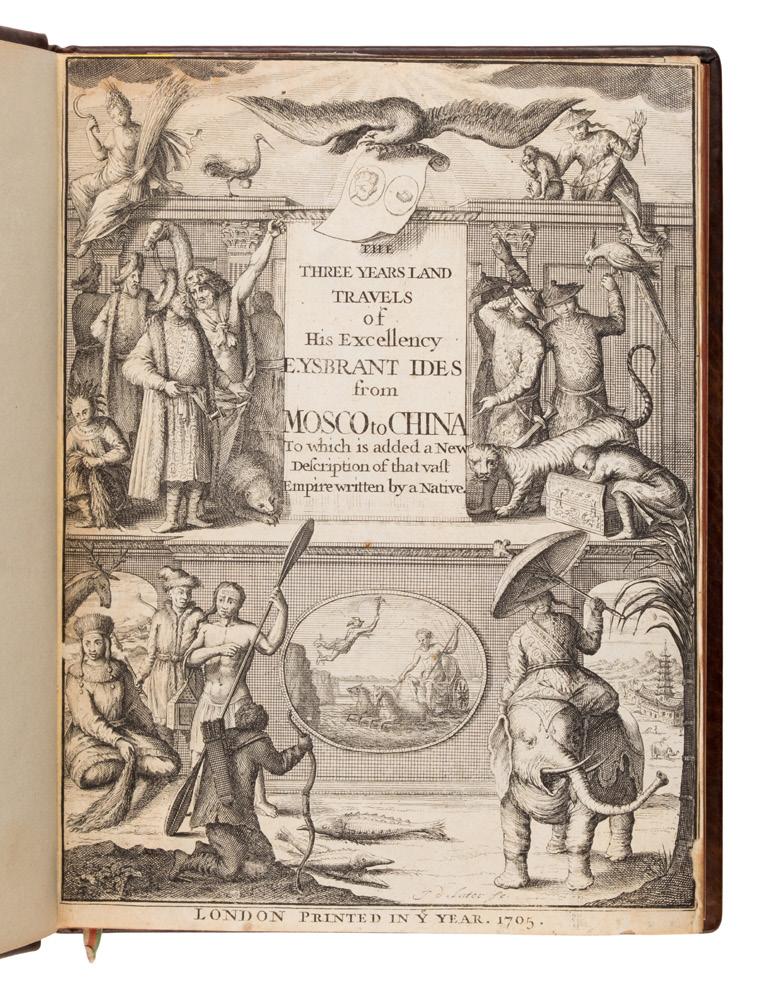
218
217 [Travel & Exploration]. Ides, Evert Ysbrants (1657-1708). Three Years Travels from Moscow Over-Land to China: Thro’ Great Ustiga, Siriana, Permia, Sibiria, Daour, Great Tartary, &c. to Peking. London: for W. Freeman, F. Walthoe, T. Newborough, and R. Parker, 1706.
Small 4to (219 x 165 mm). Engraved allegorical title-page, large engraved foldout map (laid down), 30 engraved plates, of which 8 are folding. (Some browning and spotting to plates and text, title-pages trimmed close). Modern paneled calf antique, all edges stained red.
FIRST EDITION IN ENGLISH of Ides’ travels, which was first published in Dutch in 1704. Nicolas Witsen, the translator, added 30 engravings to the original edition. The map of Russia is important as “the best of all foreign maps which were based on the Russian original sources and which have exercised a great influence on the development of Russian cartography” (Imago Mundi III p.87).
Ides, a Dutch merchant, traveled across Siberia and into Peking on behalf of Peter the Great in 1692. The primary purpose of the expedition was to conclude further commercial agreements with the Chinese. Before the Tartars became masters of China, it was almost impossible for foreigners to find admittance to the Imperial Court. Kang-hi was desirous of preventing Russian encroachments upon his territories, and the Czar was anxious to establish a regular commerce with China. The expedition added considerable geographical knowledge to the little that was known about Manchuria and China and gave vivid descriptions of the people and places seen, including the Great Wall. Cordier, Sinica I, 2468; Cox I:331; Lust 519; Lowendahl 294.
$2,000 - 3,000
[Travel & Exploration]. Keate, George (1729-1797). An Account of the Pelew Islands, situated in the western part of the Pacific Ocean. London: G. Nicol, 1788.
Small folio (292 x 229 mm). Engraved portrait frontispiece, folding map, and 15 engraved plates (several folding). (Offsetting to text from plates, spotting to frontispiece.) Contemporary tree calf (rebacked, corners renewed).
Second edition. “In 1783, the Antelope, commanded by Captain Henry Wilson, ran onto a reef near one of the Palau Islands, a previously unexplored group, and was wrecked. The entire crew managed to get safely ashore, where they were well treated by the natives and eventually managed to build a small vessel from the wreck, in which they reached Macao. They took Prince Lee Boo, one of King Abba Thulle’s sons, with them to England, where he made a good impression” (Hill). Cox II, pp.302-303; Hill 907.
$400 - 600
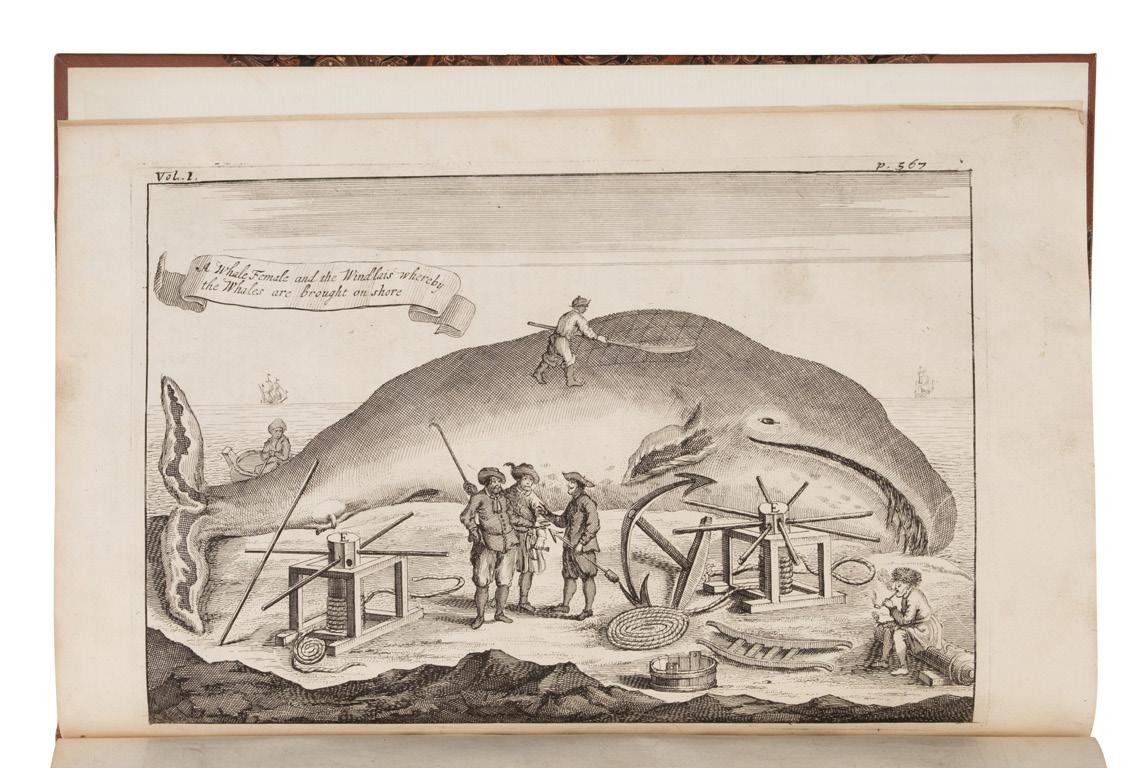
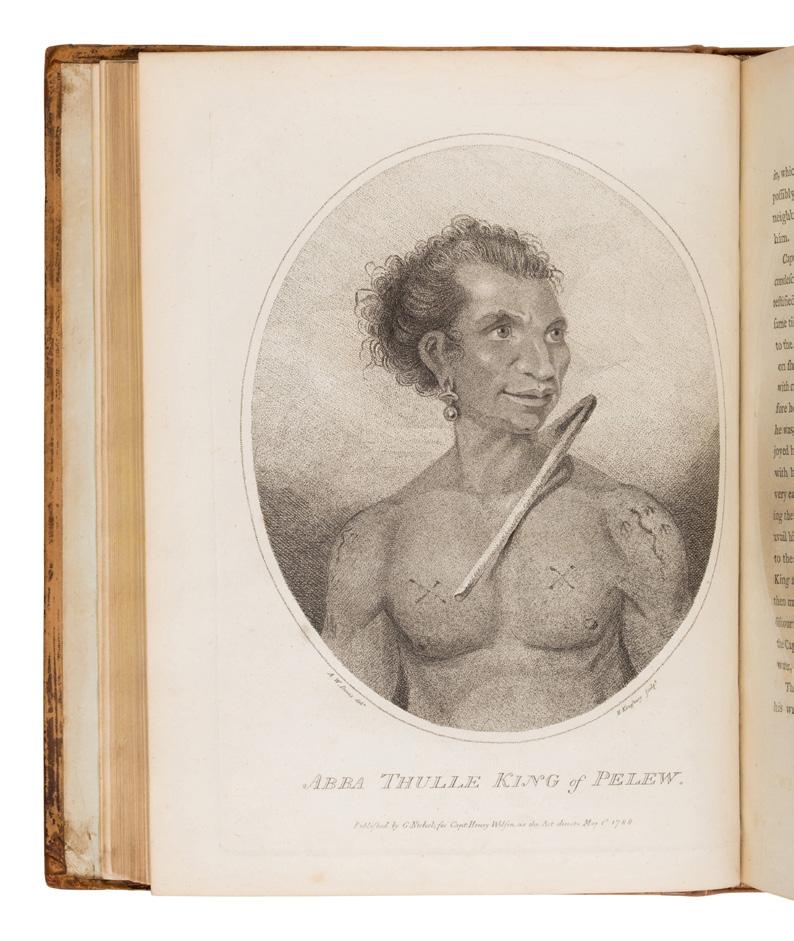
219
[Travel & Exploration]. Munk, Jens (1579-1628). An Account of a most Dangerous Voyage Perform’d by the Famous Capt. John Monck, in the Years 1619, and 1620...to Hudson’s Straits, in order to discover a Passage to that side, betwixt Greenland and America to the West-Indies... Translated from Dutch into English. Extract from: Awnsham and John Churchill. A Collection of Voyages and Travels. [London, 1732].
Folio (311 x 203 mm). 4 engraved plates, full-page engraved map of Greenland in text. (Very light dampstain in corner margin to first few leaves.) Modern half cloth, marbled boards.
FIRST EDITION IN ENGLISH. In 1609, Munk undertook an expedition sponsored by King Christian IV in search of a northeast passage. After its failure, Munk went on two other voyages, including the present of 161920, at the time when the King had turned his attention to Greenland and the search for a Northwest Passage. Munk includes information on whales and other wildlife, as well as on whaling techniques, written only ten years after the inception of the Spitsbergen whale fishery. One of the plates depicts a whaling scene off Jan Mayen Land, while another shows a whale brought ashore by a windlass and being flensed. Howgego M180; Sabin 13015 (for Churchill’s complete work) and 51336 (for the Dutch original).
$600 - 800
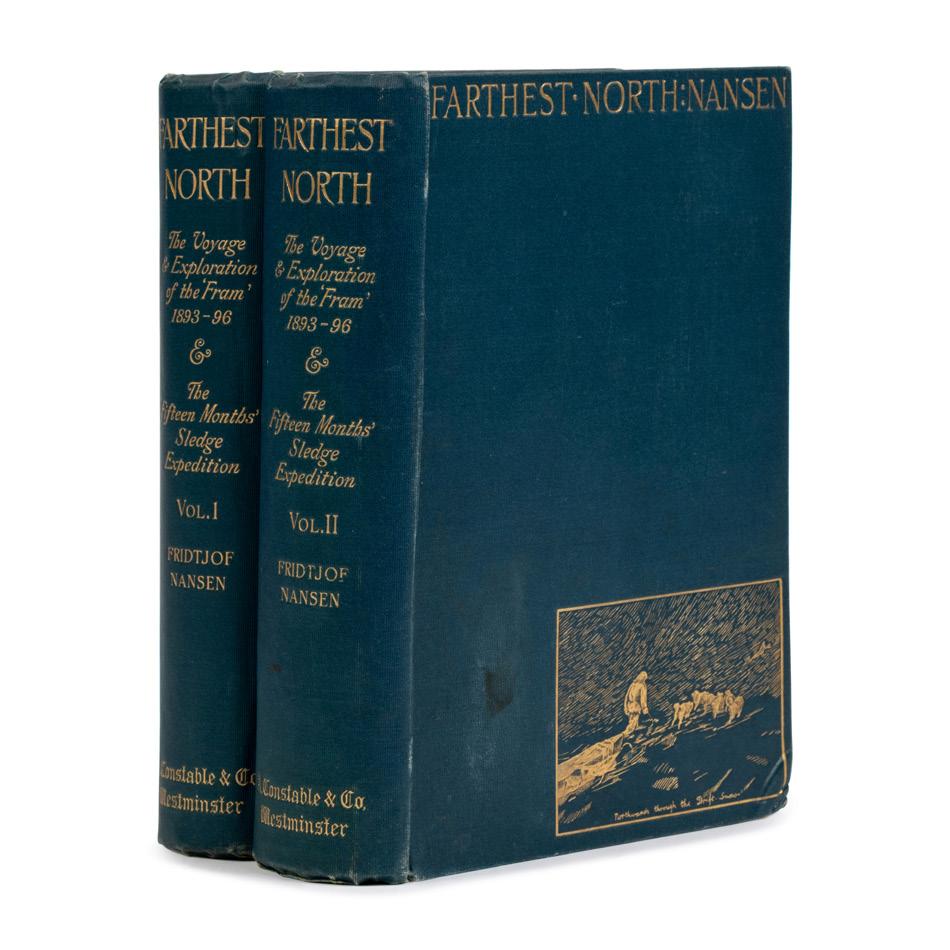
220 [Travel & Exploration]. Nansen, Fridtjof (1861-1930). Farthest North. Being the Record of a Voyage of Exploration of the Ship Fram 1893-96 and of a Fifteen Months’ Sleigh Journey by Dr. Nansen and Lieut. Johansen. With an Appendix by Otto Sverdrup, Captain of the Fram. London: Archibald Constable and Co., 1897.
2 volumes, royal 8vo (237 x 159 mm). Etched frontispiece portrait, 4 color-printed folding maps, 16 chromolithographic plates, numerous photographic illustrations; half-titles. (Light spotting throughout, tape repairs to a folding map at end of vol.1.) Original gilt-decorated blue-green ribbed cloth (lower corner bumped on vol.2, tiny stain to upper cover also). Provenance: early ownership signature on halftitles dated 1897.
FIRST EDITION IN ENGLISH. Nansen’s voyage was the first for the Fram, a ship specially designed to withstand ice pressure; after being frozen in for 3 years, the Fram emerged from the ice undamaged and went on to carry Roald Amundsen to the South Polar waters on his 1910 expedition. Though Nansen didn’t reach the North Pole during his expedition, he reached the highest latitude so far attained by man (85° 14’). Nansen’s account was an instant success and was translated into numerous languages. Arctic Bibliography 11983 (first American edition); PMM 353 (Norwegian edition, “it remains the classic story of Polar exploration”).
[With:] Another copy. First American edition.
$300 - 500
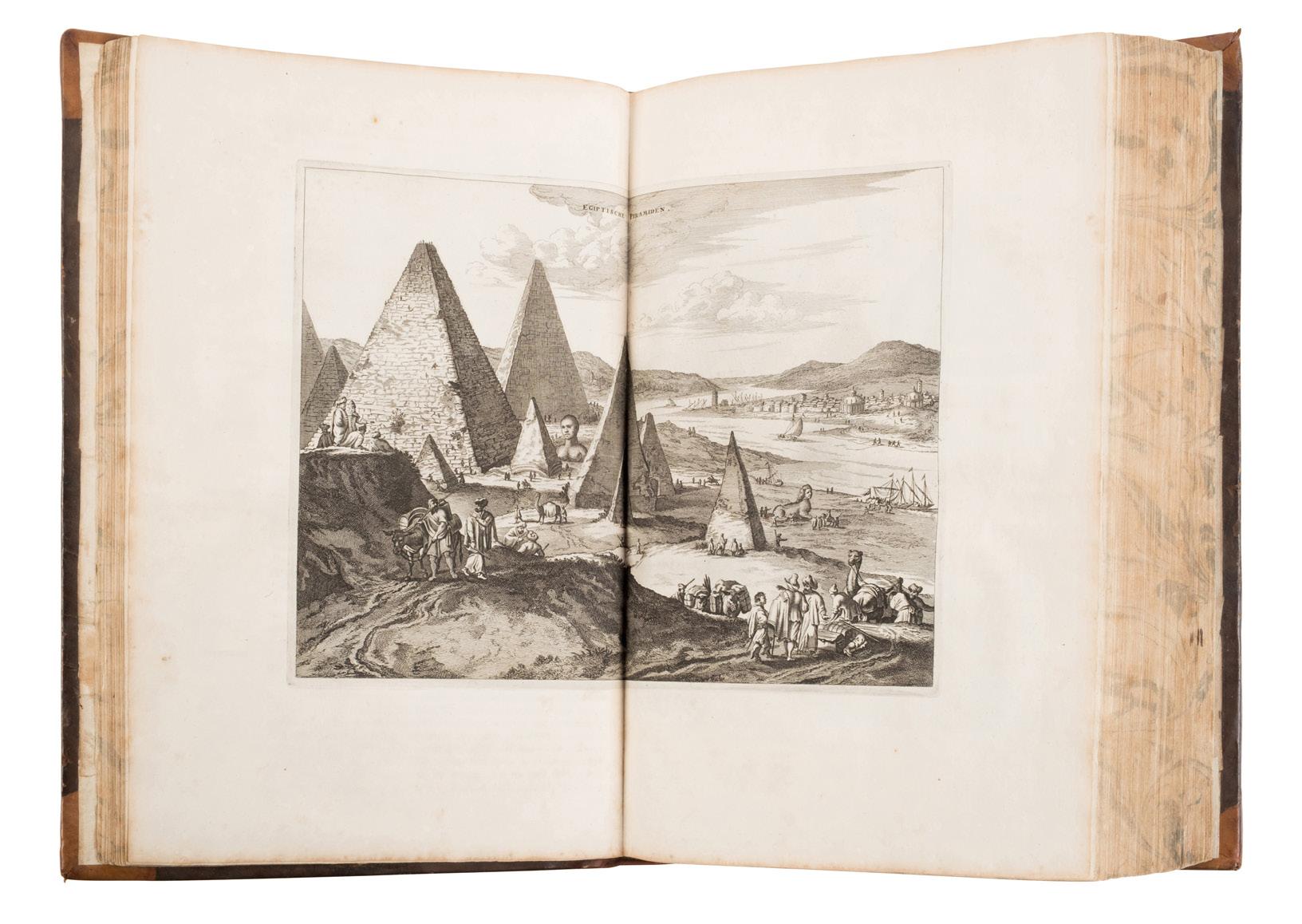
221
[Travel & Exploration]. Ogilby, John (1600-1676). Africa: Being an Accurate Description of the Regions of Aegypt, Barbary, Lybia, and Billedulgerid. London: Thomas Johnson for the author, 1670.
Folio (406 x 267 mm). HALF-TITLE (“English Atlas,/Tome the First.”, verso blank), engraved title, title-page printed in red and black; large doublepage folding map of Africa, 57 engraved maps, views, and plates (43 double-page or folding, 10 half-sheets inserted), engraved illustrations throughout the text. (Some occasional, mostly marginal dampstaining, and occasional spotting or browning, tiny wormhole in the text from Fff3 to the end, sometimes affecting a letter.) Contemporary mottled and paneled calf gilt, spine in 7 compartments with 6 raised bands, red morocco lettering-piece gilt in second, others elaborately gilt, marbled edges (rebacked, preserving original backstrip and endpapers, fore-corners renewed). Provenance: Sir James Colquhoun (armorial bookplate); Abernethy? (armorial bookplate); John Ralph Willis (1938-2007), professor of Near Eastern Studies, Princeton University (bookplate).
FIRST EDITION of the most comprehensive work in English on Africa published in the 17th-century, intended to be the first volume of Ogilby’s planned English Atlas series. The double-page maps depict Egypt, Morocco, southern and western Africa, the Congo, Madagascar, and the Cape Verde and Canary Islands. The engraved views include depictions of Alexandria and Cairo, Tangier, Tripoli, Tunis, Algiers, St. Helena, and the pyramids. “Ogilby may be considered as the English De Bry, his works are similar in their objects, compilation, and mode of illustrations” (Cox). Alden/Landis 670/48; Cox I, p.361; ESTC R22824; Hazlitt II, 432; Ibrahim-Hilmy I.155; Lowndes, p.1719; Mendelssohn (1979) III, p.571; Playfair, Algeria 151; Schuchard, Ogilby 20; Tooley, Africa 87; Wing O163 (and D241); Wolf, Negro History 4.
$3,000 - 4,000
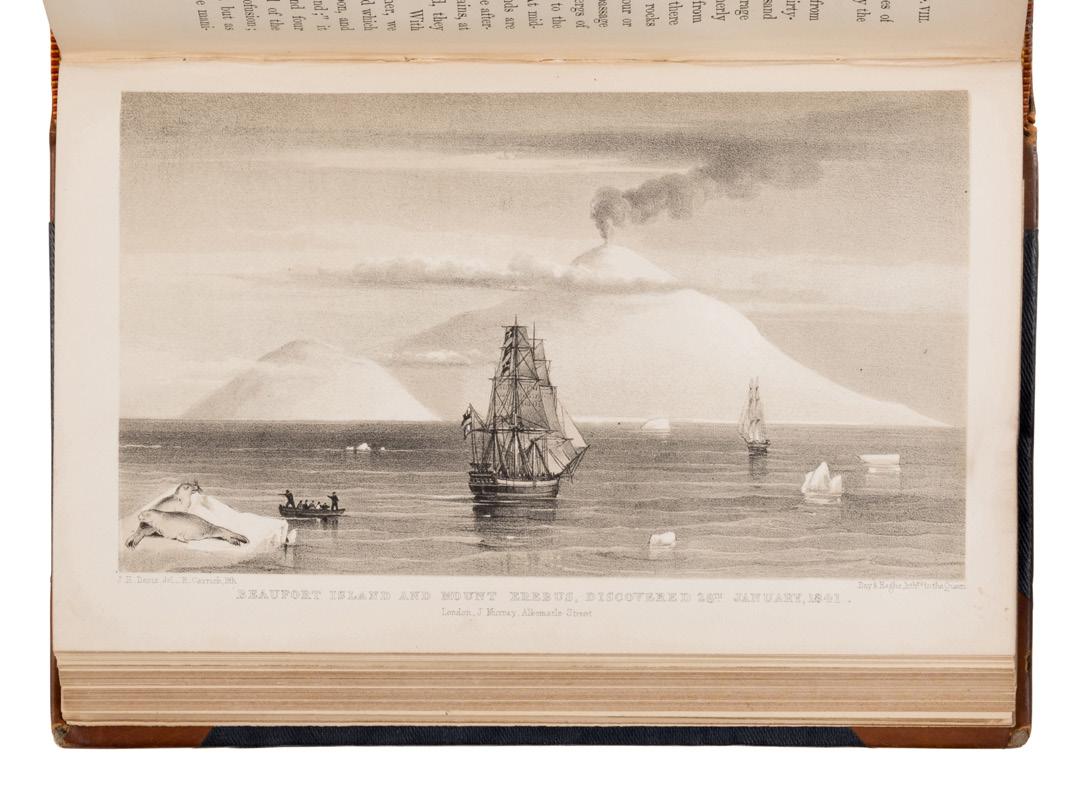
222
[Travel & Exploration]. Ross, James Clark, Sir (1800-1862). A Voyage of Discovery and Research in the Southern and Antarctic Regions, during the years 1839-43. London: John Murray, 1847.
2 volumes, 8vo (216 x 133 mm). 8 lithographed maps (3 folding), 8 lithographed plates (one folding); numerous in-text vignettes. (Title-page in vol.1 starting, frontispiece in vol.2 splitting at the gutter and with some binder’s glue stains in the lower margin.) Contemporary half calf, green morocco lettering-pieces gilt.
FIRST EDITION OF “ONE OF THE MOST IMPORTANT WORKS IN THE HISTORY OF ANTARCTIC EXPLORATION” (Hill). “The first [voyage] to enter what is known as the Ross Sea, the first to sight the Admiralty Mountains, the first to see Victoria Land, Ross Island, Mounts Erebus and Terror, and the Ross Ice Shelf, amongst other momentous discoveries. Once this account became public, no one could doubt there was a great southern continent of immense proportions to be explored” (Taurus Collection). Abbey Travel 610; Conrad, p 61; Ferguson 4636; Hill 1487; Renard 1328; Rosove 276.A1a; Sabin 73367; Spence 993; Taurus 9.
$1,000 - 1,500
223
[Travel & Exploration]. Schefferus, Johannes (1621-1674). The History of Lapland. Oxford: At the Theater, and are to be sold by George West and Amos Curtein, 1674.
Chancery folio (292 x 178 mm). Additional engraved title-page, large woodcut vignette of two Laplanders leading a reindeer on title, engraved folding map (marginal tear near gutter), numerous wood-engravings in the text. Contemporary speckled calf (upper cover detached). Provenance: George Savile (early ownership signature on both titles); armorial bookplate covered by front pastedown.
FIRST EDITION IN ENGLISH.
“Every part of the subject is described, natural history, government, habits, costume, religion, and language. Notable points are, three documents connected with the school at Uma of 1631 and 1634, a Lapp and Finnish vocabulary, and grammar, two love-songs in Lapp and English” (Madan). Ibid. 3023; Wing S851.
$600 - 800
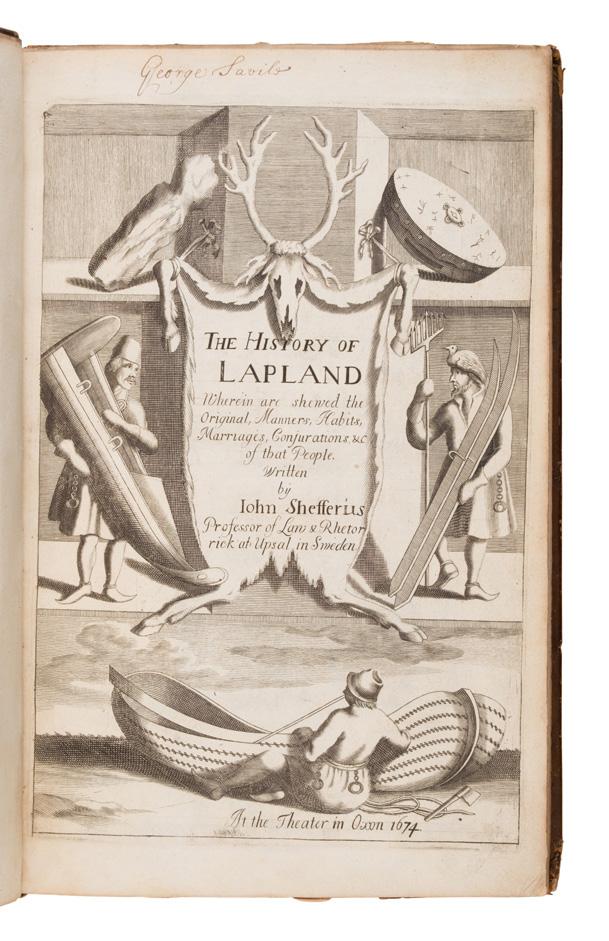
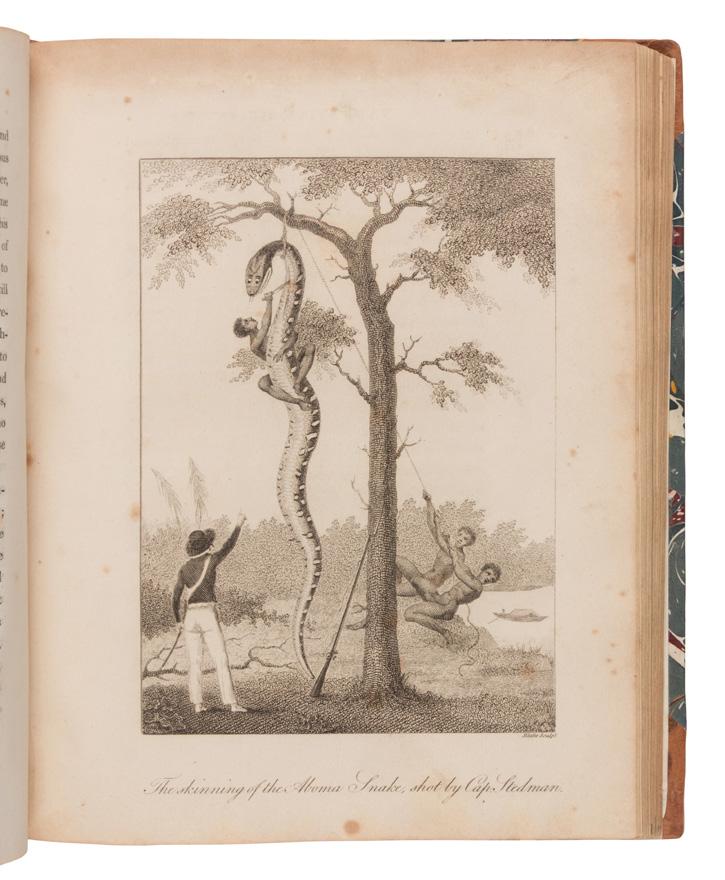
224
[Travel & Exploration]. Stedman, John Gabriel (1744-1797). Narrative, of a five years’ expedition against the revolted Negroes of Surinam in Guiana on the wild coast of South America; from the year 1772, to 1777. London: for J. Johnson, 1806.
2 volumes, 4to (256 x 203 mm). 2 engraved vignette titles, 2 folding maps, 79 engraved plates (including several folding) by William Blake (thirteen signed and three attributed), Bartolozzi and others. (Marginal toning and spotting throughout, offsetting from plates to text.) Contemporary half calf, marbled boards (rebacked, preserving original spines, endpapers renewed).
SECOND EDITION of Captain John Gabriel Stedman’s important eyewitness account of slavery and insurrection in Dutch Guiana. An officer in the Scots Brigade in Holland, Stedman volunteered for service in Suriname, where he kept a detailed journal between 1773 and 1777 that forms the basis of the present work. His narrative records not only the brutal realities of plantation slavery and its violent suppression but also offers extensive observations on the region’s flora, fauna, natural history, and the lives of its Indigenous communities.
The work is further distinguished by its engraved plates after Stedman’s own designs, including a number executed by a young William Blake. Introduced to Stedman through the publisher Joseph Johnson, Blake produced a series of engravings for the publication, of which sixteen were ultimately issued. These images—among the most powerful visual indictments of slavery of the period—helped shape the book’s reception. Though Stedman himself was not an avowed abolitionist, his vivid account provoked considerable public response and became an influential text within late 18thcentury abolitionist discourse, while also contributing to Blake’s own evolving views on slavery. Abbey, Travel 719; Bentley 499; Sabin 91075.
$1,000 - 1,500
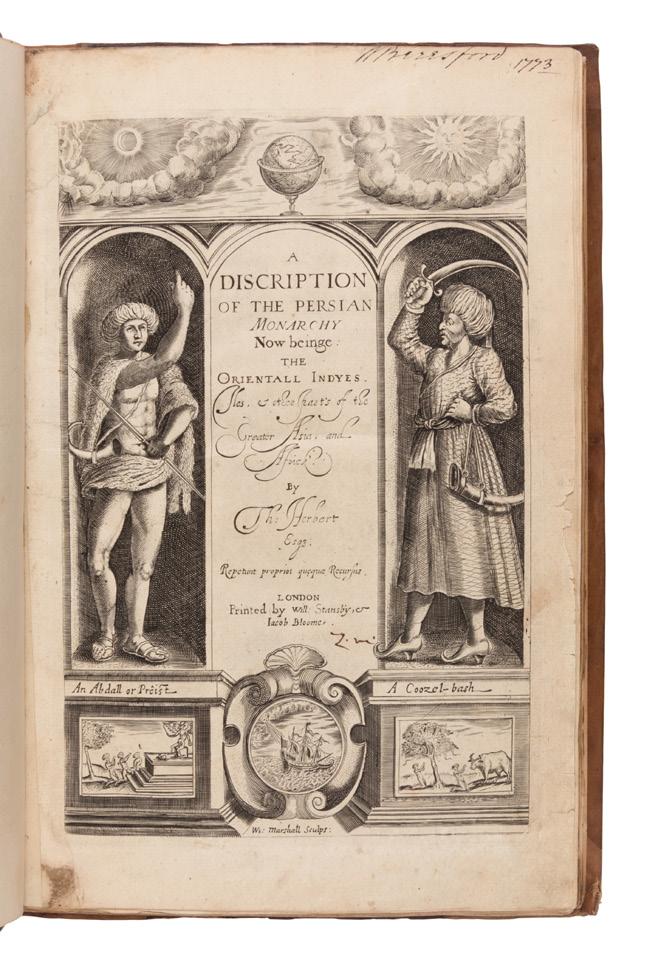
225
[Travel & Exploration]. Thomas, Herbert (1606-1682). A Relation of Some Yeares Travaile, Begunne Anno 1626. Into Afrique and the greater Asia, especially the Territories of the Persian Monarchie: and some parts of the Orientall Indies, and Iles adjacent... London: Printed by William Stansby, and Jacob Bloome, 1634.
Chancery folio (267 x 171 mm). Additional engraved title by William Marshall, 36 engraved illustrations and maps in the text, woodcut device on penultimate page. (Engraved title reinserted on stub, a few marginal stains.) Contemporary paneled calf (rebacked, fore-corners and endpapers renewed, covers worn). Provenance: early ownership signature dated 1773 on title-page.
FIRST EDITION. Herbert accompanied the mission led by Sir Dodmore Cotton to the court of the King of Persia, arriving in the Persian Gulf in January 1627-8. Cotton died in July of the same year, but Herbert continued, making an extensive tour of the kingdom and returning to England at the end of 1629. On his return, Herbert sailed close to the eastern shores of North America. His chapter “A Discourse and Proofe that Madoc ap Owen Gwynedd first found out that Continent now call’d America” is “illustrated with quotations from the early Welsh Bards in evidence of the departure of Madoc with a number of ships and men for an unknown country at the west. The analogies in language which the author gives to prove the identification of Cymric words in Mexican names is entirely fanciful.” Alden & Landis 634/68; Arents 191; Sabin 31471; STC 13190.
$1,000 - 1,500
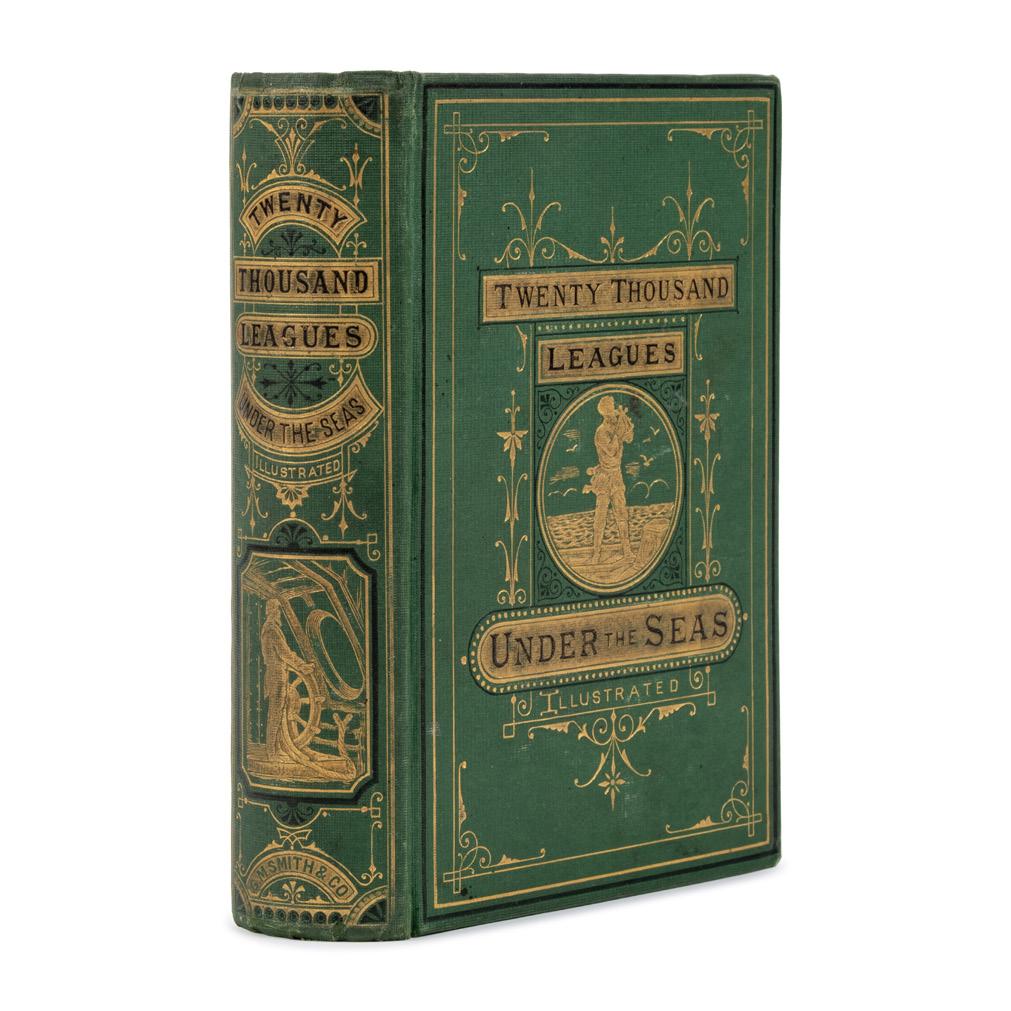
226
Verne, Jules (1828-1905). Twenty Thousand Leagues Under the Seas. Boston: Geo. M. Smith, 1873.
8vo (203 x 127 mm). Numerous wood-engraved plates. (Offsetting to title page, occasional very light spotting.) Original pictorial green cloth stamped in black and gilt (front hinge starting).
FIRST SMITH EDITION, FIRST ISSUE with “The End” in broken type on p.303, marking it as one of the last copies produced before the type was discarded altogether. Twenty Thousand Leagues Under the Seas was first translated into English from the original French by the Reverend Louis Page Mercier, who in the process cut nearly a quarter of the original text and committed numerous translation errors; debate continues as to how much of this was intentional, as Mercier was known to object to some of the political figures represented in Verne’s original work. The first American edition was published in November 1872 by the Boston publishing firm of James R. Osgood & Co., with only a handful of copies produced before the Great Boston Fire of 1872 decimated the city’s publishing industry, making the 1873 Smith edition the earliest obtainable American edition of Verne’s classic work. Myers 56.
$1,500 - 2,000
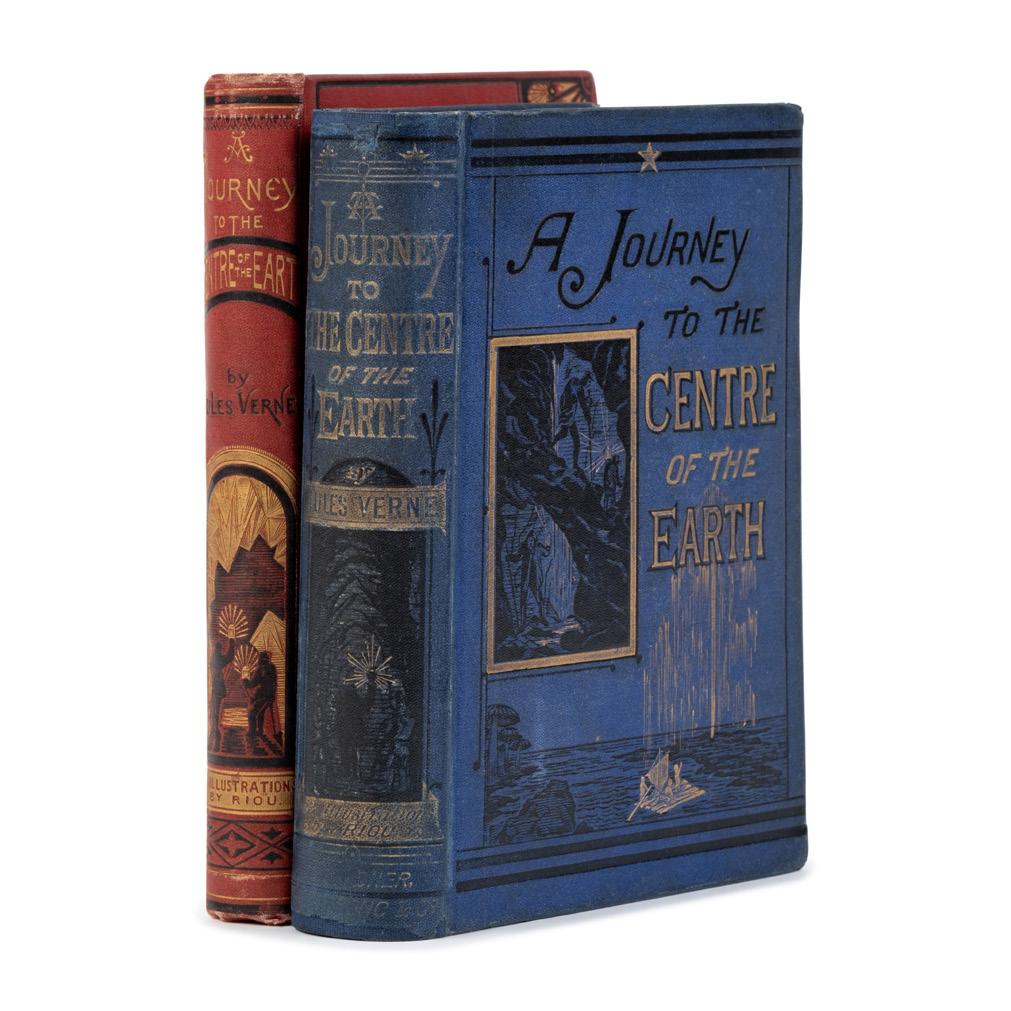
227
Verne, Jules (1828-1905). A Journey to the Centre of the Earth. New York: Scribner, Armstrong & Co., 1874.
8vo (179 x 127 mm). Numerous woodcut illustrations. Original pictorial blue cloth stamped in gilt and black (spine rebacked with some rubbing, hinges repaired). Provenance: gift inscription.
FIRST AMERICAN DELUXE EDITION, first state with “Scribner, Armstrong & Co.” on bottom of spine and printed on heavier paper. Journey to the Centre of the Earth was inspired by a 1859 visit Jules Verne made to Scotland, where he visited the extinct volcano Arthur’s Seat and many other geological features. As often happened with translations from the original French into English, the translator made numerous changes, including adding chapter titles and even entire paragraphs. Myers 35; Taves & Michaluk V002.
[With:] VERNE. A Journey to the Centre of the Earth. Boston: Henry L. Shepard, 1874. 8vo. Original pictorial red cloth stamped in black and gilt. AMERICAN PIRACY.
$2,000 - 3,000
228
Verne, Jules (1828-1905). From the Earth to the Moon Direct in NinetySeven Hours and Twenty Minutes: and a Trip Round It. New York: Scribner, Armstrong & Company, 1874.
8vo (197 x 127 mm). Numerous wood-engraved plates including frontispiece. (Very minor cracking to center spine.) Original pictorial red cloth stamped in black and gilt (light rubbing to spine tail, spine leaning).
FIRST ILLUSTRATED AMERICAN EDITION, and the first obtainable American edition, with the advertisement for A Journey to the Centre of the Earth on the title-page verso. From the Earth to the Moon was only the second of Verne’s works to be published in English. Though Verne’s method of sending human beings into orbit was very different from that eventually used during the 20th century, the rough calculations used in figuring out trajectories and force thrust proved to be remarkably accurate given the lack of empirical data on the subject that was available at the time. The present edition was preceded by the 1869 Newark edition (of which only two copies are known) and contains From the Earth to the Moon as well as its sequel, Around the Moon, which was first published in Paris in 1869. Myers 26.
$600 - 800
229
Vonnegut, Kurt (1922-2007). Player Piano. New York: Scribner’s, 1952.
8vo. Original green cloth, lettered in silver on spine; dust jacket (spine and panel edges toned).
FIRST EDITION OF VONNEGUT’S FIRST BOOK, FIRST PRINTING with “A” and Scribner’s seal on copyright page. Written during a period when automation and computing were beginning to transform American industry, the novel imagines a near-future society in which machines have largely replaced human labor, leaving most of the population economically and socially displaced. Drawing in part on Vonnegut’s experiences working at General Electric, the book blends satirical humor with sharp social criticism, anticipating later debates about technological unemployment and the human cost of mechanization.
[With:] VONNEGUT. Utopia 14. New York: Bantam Books, 1954. Original color pictorial wrappers. FIRST PAPERBACK EDITION.
$600 - 800
230
Vonnegut, Kurt (1922-2007). Slaughterhouse-Five or The Children’s Crusade. New York: A Seymour Lawrence Book / Delacorte Press, 1969.
8vo. Original turquoise cloth stamped in gilt and black (sunning to spine, light rubbing, sticker residue at upper right of front board); dust jacket (sticker residue at upper right of front dust jacket, toning to extremities). Provenance: Marvin Josephson Associates (Kurt Vonnegut’s literary agency; calling card pasted on to front free endpaper).
FIRST EDITION, FIRST PRINTING in the first state dust jacket priced $5.95 and with the correct code of 0369 at the foot of the rear flap. Based on Vonnegut’s own experiences as a POW who survived the Allied bombing of Dresden in 1945, Slaughterhouse-Five was Vonnegut’s first bestseller. Almost immediately upon publication it became one of the most frequently challenged books in the United States public school system. In a landmark 1982 ruling brought before the Supreme Court over the book’s removal from a public school, the Court declared that “local school boards may not remove books from school library shelves simply because they dislike the ideas contained in those books and seek by their removal to ‘prescribe what shall be orthodox in politics, nationalism, religion, or other matters of opinion’.” Despite this, the book remains one of the most banned books in the United States. Currey, p.504; Karolides, et al., 100 Banned Books pp.133-141.
$400 - 600
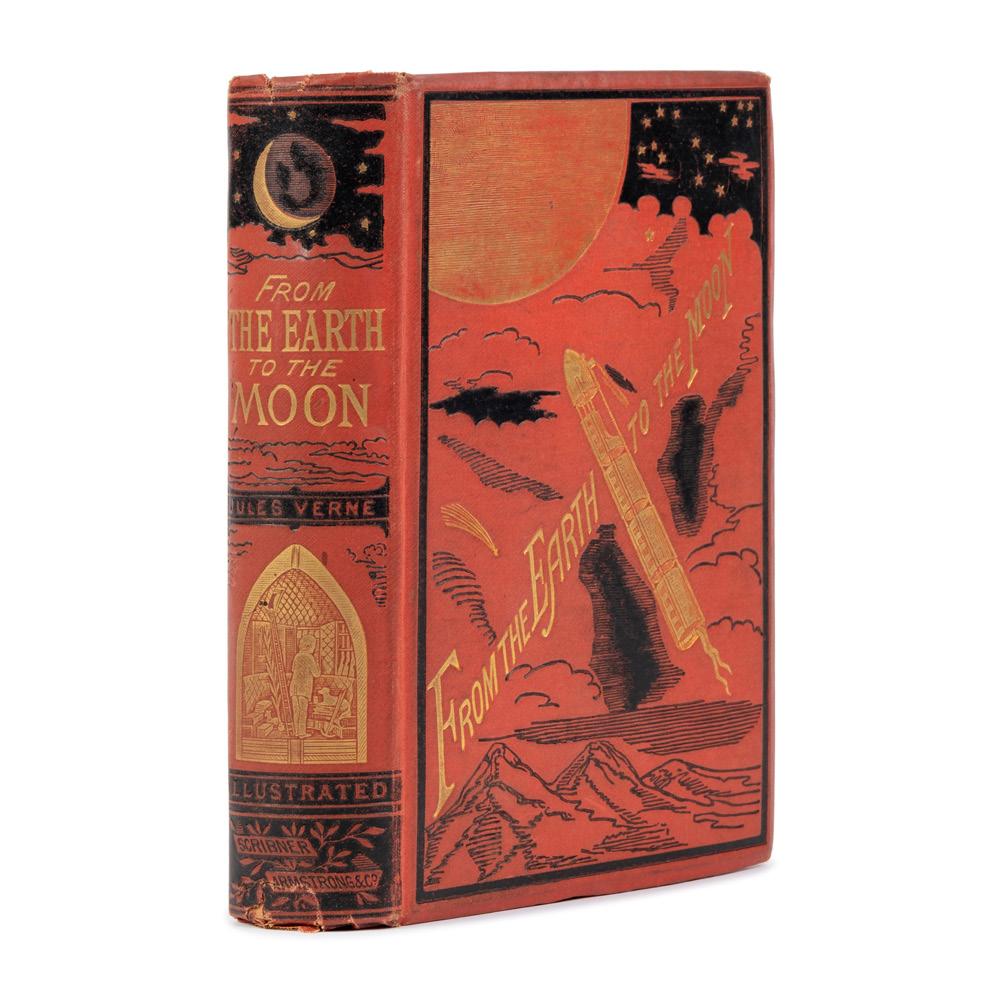
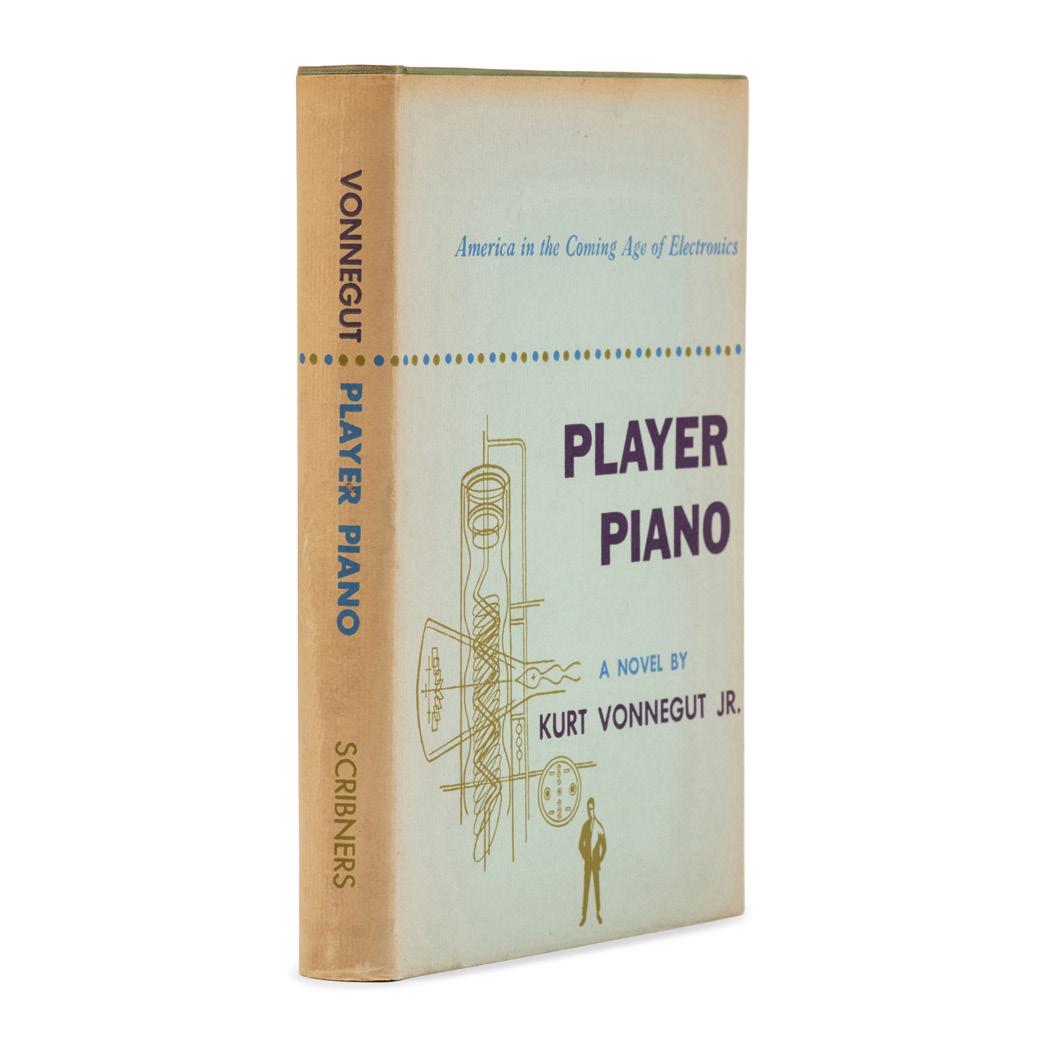


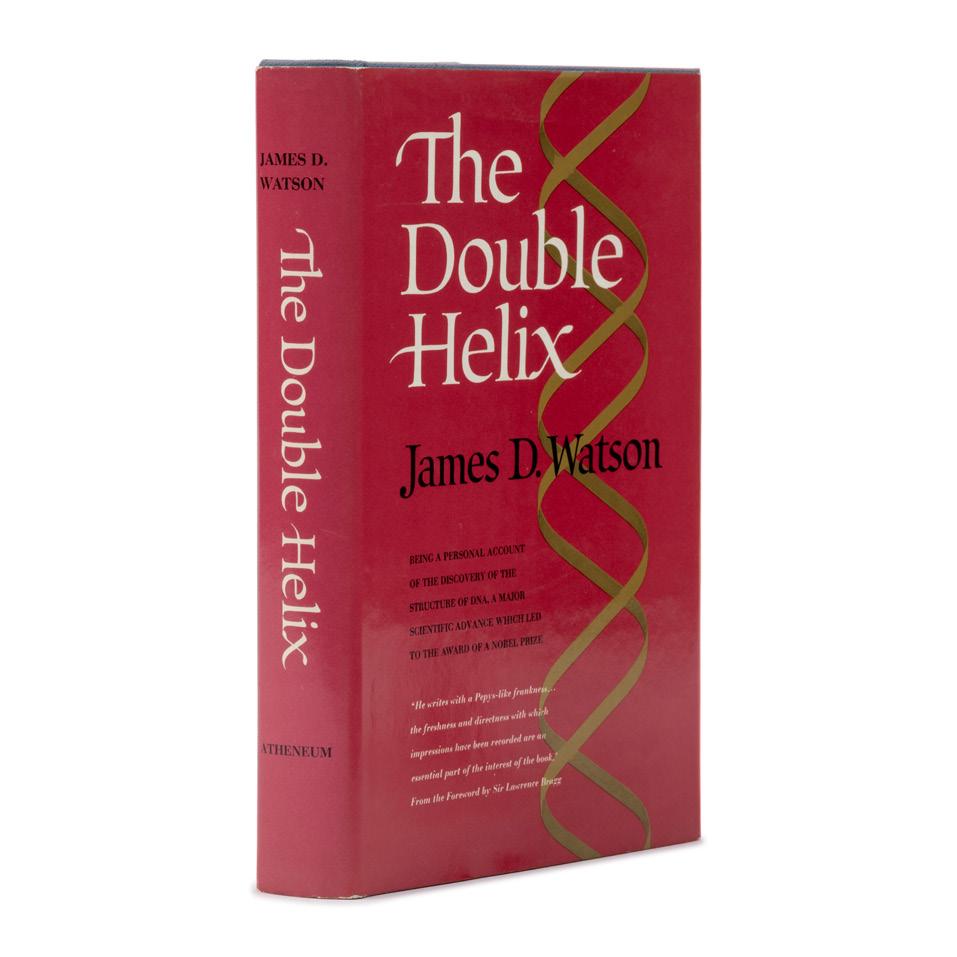
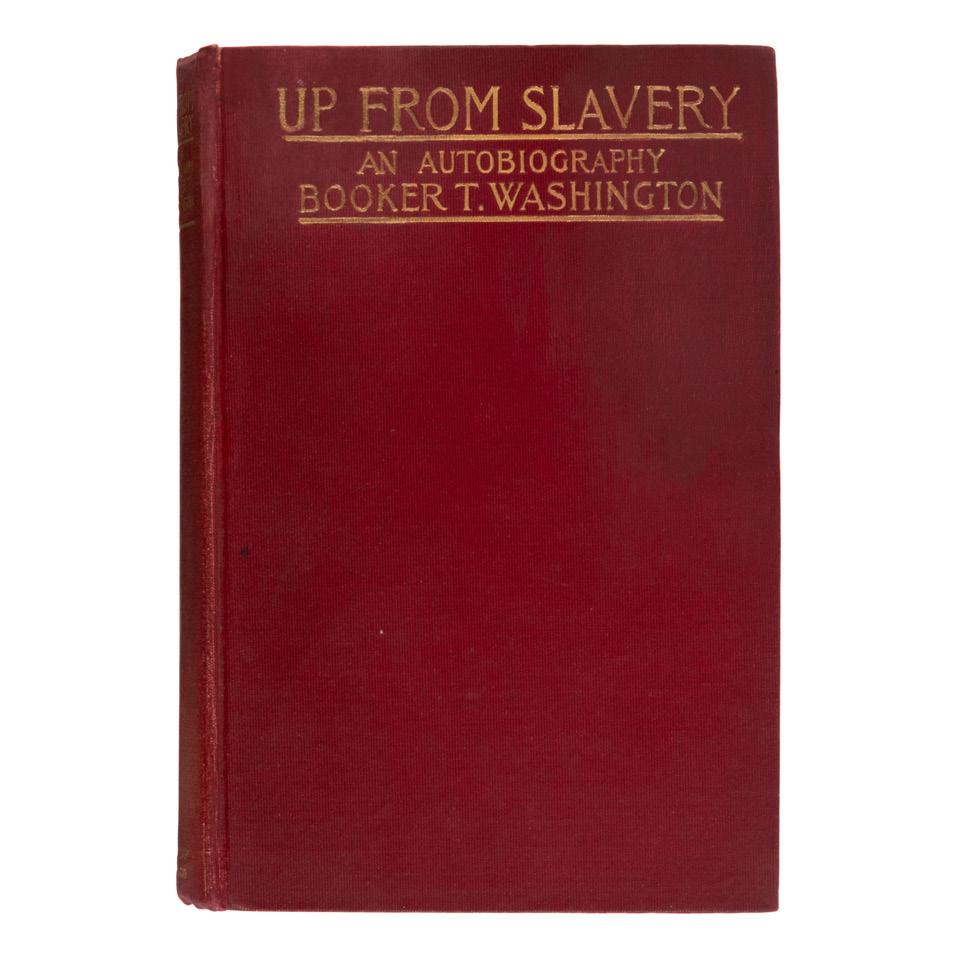
231
Walker, Alice (b. 1944). The Color Purple. New York and London: Harcourt Brace Jovanovich, 1982.
8vo. Original purple cloth-backed boards (top cover edges a bit toned); dust jacket (few tiny edge creases near head of spine).
FIRST EDITION of Walker’s Pulitzer Prize-winning novel with the correct letter code (“BCDE”) on the copyright.
$300 - 400
232
Watson, James Dewey (1928-2025). The Double Helix. A Personal Account of the Discovery of the Structure of DNA. New York: Atheneum, 1968.
8vo. Original blue cloth; dust jacket.
FIRST EDITION. Written by one of the co-discoverers of the structure of DNA, The Double Helix was a unique publication for its time in that it acts as both memoir and scientific tome. Originally set to be published by Harvard University Press (where Watson was teaching at the time), after objections were raised by co-discoverers Francis Crick and Maurice Wilkins it was agreed that the book would be published by Atheneum instead. While today considered an invaluable first-person look at one of the most significant scientific discoveries of all time, it has also attracted controversy for its seeming dismissal of contributions by English chemist Rosalind Franklin, on whose research Watson, Crick, and Wilson are today widely acknowledged to have built upon. In 2012 it was named one of “88 Books Which Shaped America” by the Library of Congress. A FINE COPY.
$300 - 400
233
Washington, Booker T. (1856-1915). Up from Slavery: An Autobiography. New York: Doubleday, Page & Co., 1901.
8vo. Photographic frontispiece portrait. Original maroon cloth gilt, top edge gilt (spine lightly sunned, gilt on upper cover touched up, slight lean). Provenance: gift inscription on front free endpaper dated 1901.
FIRST EDITION of the second of Washington’s books, published in his lifetime, which was a highly influential bestseller. Prompted by the work’s success, President Theodore Roosevelt invited Washington to be his guest at a White House dinner in October 1901, where he joined other guests. Although US presidents had previously hosted Black guests, including Frederick Douglass and Sojourner Truth, Washington’s visit drew scrutiny from the Southern press, partly because of the equal footing Roosevelt extended to Washington. The vitriolic response ensured that no other African American was invited to dinner at the White House for nearly 30 years.
$300 - 500
234
Wells, H.G. (1866-1946). The Time Machine. An Invention. London: William Heinemann, 1895.
12mo. Original printed brown wrappers [Currey binding D] with black border (light spotting to covers, a touch of wear to spine corners); folding case.
FIRST EDITION in wrappers, issued simultaneously with the first cloth edition. The initial edition comprised 5000 copies in wrappers and 1000 in cloth. “After this cloth copies were done up in hundreds or two hundreds as required, and the remaining 750 quires (sic) in a new style paper binding” (The publisher, quoted in Carter, Binding Variants, p.161).
OFTEN SAID TO BE THE FIRST TIME TRAVEL NOVEL, “The Time Machine might be considered the first work of modern science-fiction, and it is still the classic statement of an important subgenre. A remarkable work, and necessary reading” (Bleiler, Science Fiction 2325). Currey p.524. IN THE RARE VARIANT WRAPPERS.
$1,500 - 2,500
235
Wells, H.G. (1866-1946). The Island of Doctor Moreau. London: William Heinemann, 1896.
8vo. 33pp. publisher’s advertisements at end [Currey first form with p.1 headed The Maxman, priority not established]. Original pictorial tan cloth [Currey binding A, priority established], stamped in red and black (mild darkening to spine, some toning, leaning to spine).
FIRST EDITION, FIRST ISSUE with Currey’s (A) binding with monogram on rear board and 33pp. catalogue at end. The Island of Doctor Moreau was inspired in part by the 1895 trial of Oscar Wilde, who Wilde felt was unfairly persecuted for acting on his own innate desires. He would later write, “[The Island of Doctor Moreau] was the response of an imaginative mind to the reminder that humanity is but animal rough-hewn to a reasonable shape and in perpetual internal conflict between instinct and injunction. This story embodies this ideal, but apart from this embodiment it has no allegorical quality.” Hammond B3; Currey p. 520; Wells 8.
$1,500 - 2,500
236
Wells, H.G. (1866-1946). When the Sleeper Wakes. London and New York: Harper and Brothers, 1899.
8vo. Half-title, frontispiece, and 2 plates. Original red cloth, lettered in gilt on upper cover and spine (spine lightly sunned). Provenance: H.G. Wells (inscription to:); Vyvyan Holland (1886-1967); Sotheby’s (sold, 20 April 1953, lot 52); Heritage (sold, 10 April 2013, lot 36299).
PRESENTATION COPY OF THE FIRST EDITION IN BOOK FORM, INSCRIBED AND ADDITIONALLY INITIALED BY WELLS TO VYVYAN HOLLAND, with a sketch of Holland lying in bed and Wells urging him to rise, and a verse in parody of Longfellow: “Life is real & Life is earnest, Collecting paperweights is not its goal, Bric a brac thou art & to Bric a brac returnest, Was not spoken to the soul.” The author and translator Vyvyan Holland was the second son of Oscar Wilde and Constance Lloyd, who changed her surname and those of her sons following Wilde’s conviction. First published in The Graphic, this dystopian novel is an important early precursor of Orwell’s Nineteen Eighty-Four. Hammond B6; Wells 15.
$1,000 - 2,000


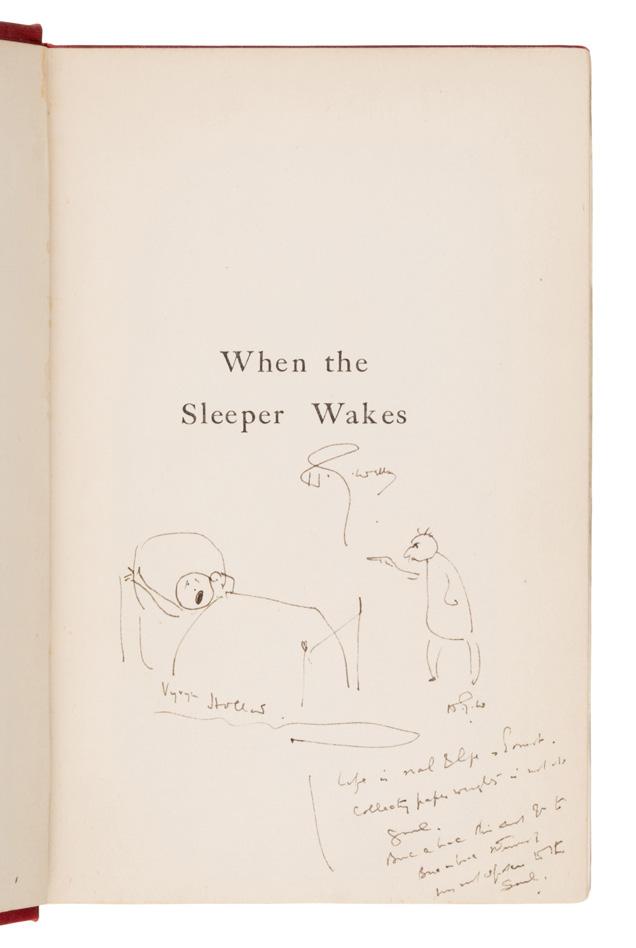
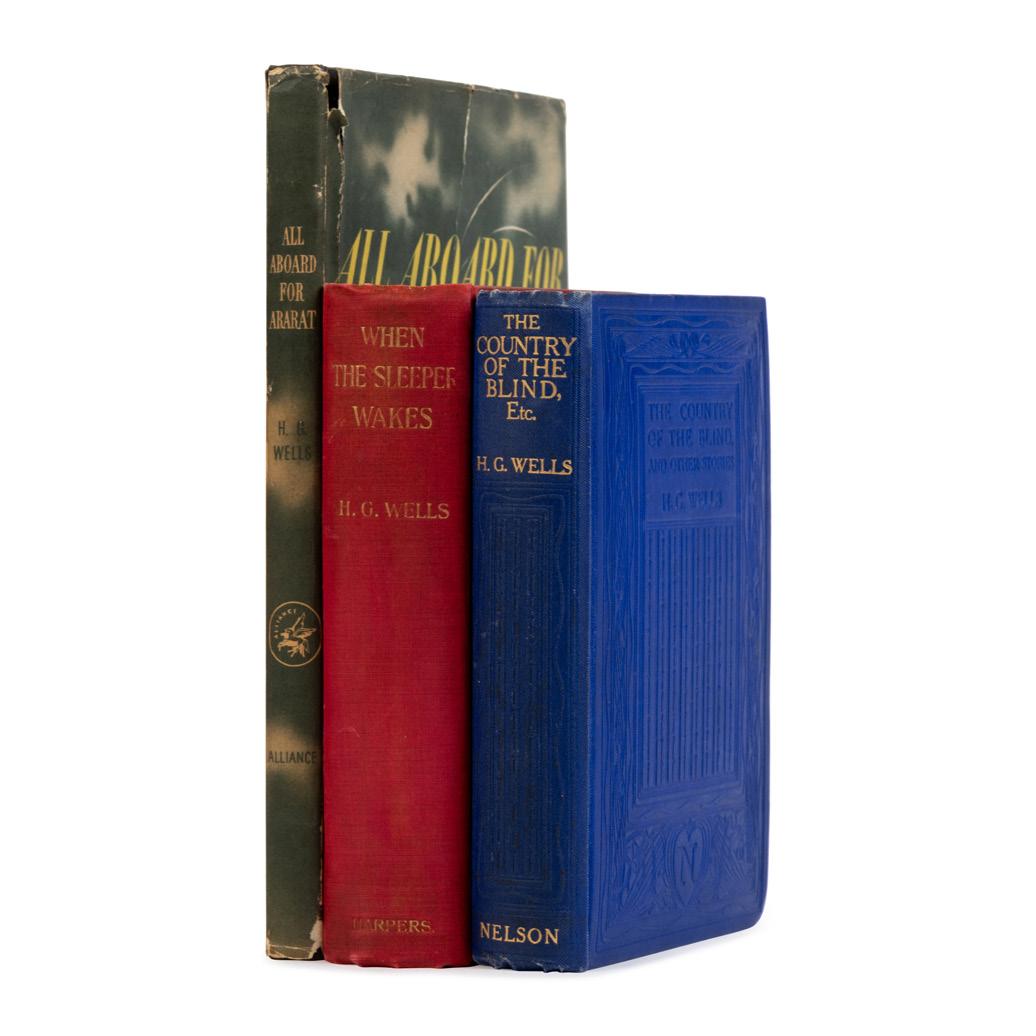
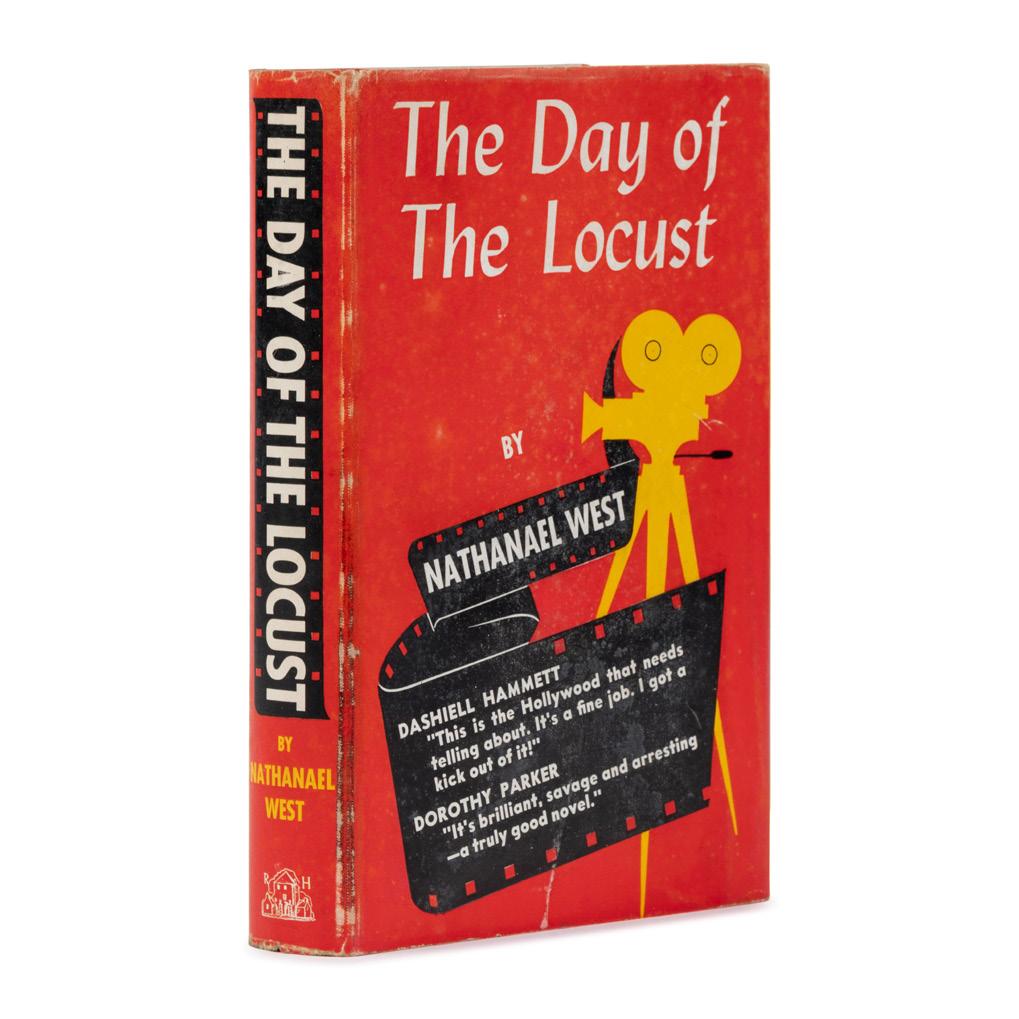
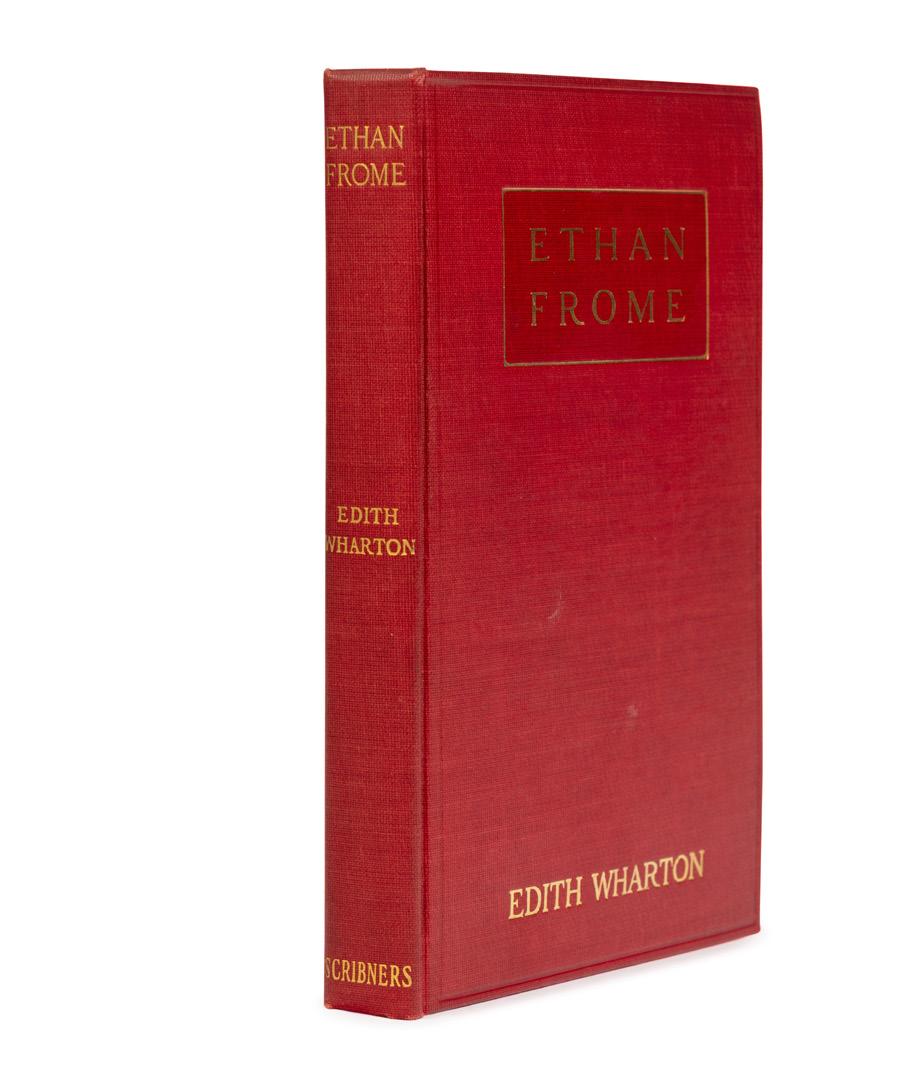
237
Wells, H.G. (1866-1946). A group of 4 first editions, comprising: When the Sleeper Wakes. London and New York: Harper & Brothers, 1899. -The Country of the Blind and Other Stories. London: Thomas Nelson and Sons, n.d. [1911]. -- The Outline of History. London: George Newnes, 1919-1920. 24 original parts. -- All Aboard for Ararat. New York: Alliance Book Corporation, 1941. REVIEW COPY with publisher’s slip tipped-in. -- Together, 4 works in 27 volumes, 8vo and 4to, all in original bindings, condition generally very good.
$400 - 600
238 West, Nathanael (1903-1940). The Day of the Locust. New York: Random House, [1939].
8vo. Original red cloth; dust jacket (light rubbing); folding case.
FIRST EDITION. The Day of the Locust was written while Nathanael West was in Hollywood working as a screenwriter, with many of the settings and incidents taken directly from things he saw while living in a hotel on Hollywood Boulevard. The Day of the Locust was a critical success, but a poor seller; only in the mid-1950s, following a critical reappraisal of West’s career, did the book gain its literary reputation. It has since been listed as one of the greatest books of the 20th century, and was adapted into a 1975 major motion picture starring Donald Sutherland and Karen Black.
$1,500 - 2,000
239 Wharton, Edith (1862-1937). Ethan Frome. New York: Charles Scribner’s Sons, 1911.
8vo. Original gilt-stamped red cloth, top edge gilt, others uncut (slight lean, a very pale spots to lower cover); folding chemise and morocco-backed slipcase. Provenance: Grace LeRoy (bookplate); Benjamin Boyle? Moore (early signature on half-title).
FIRST EDITION, FIRST ISSUE, with unbroken type in last line of p.135. An early copy: of the first edition of 6,000 copies, the first 2,500 received from the binder had the top edges gilt (as here). Garrison A19.1; Johnson, Highspots of American Literature, p. 518. A BRIGHT COPY.
$300 - 400
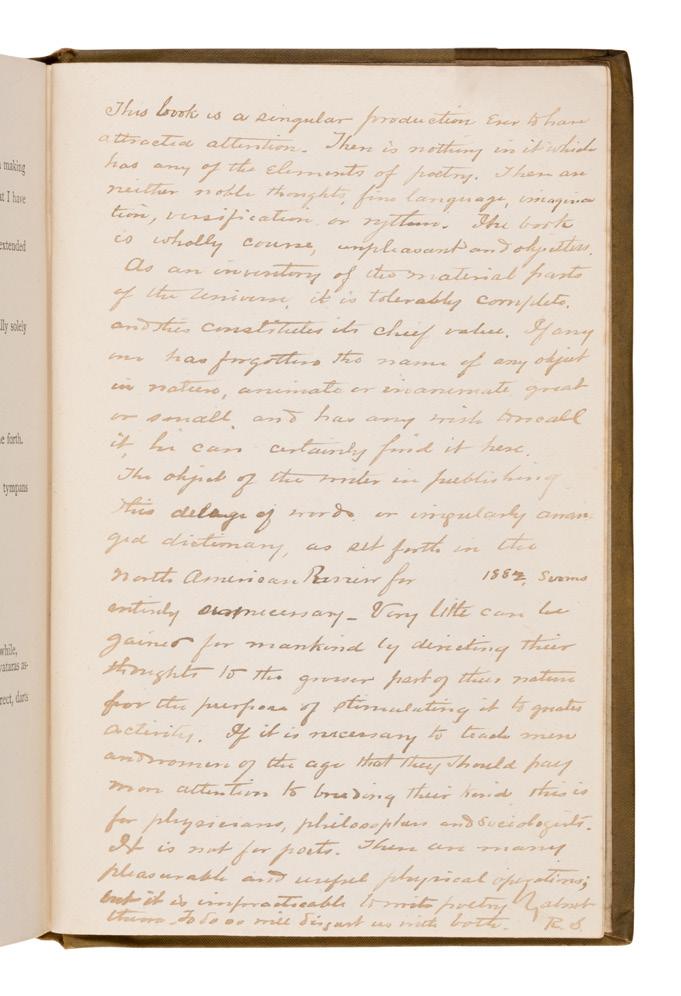
240
Whitman, Walt (1819-1892). Leaves of Grass. Philadelphia: [Sherman & Co.] for Rees Welsh & Co., 1882.
8vo. Portrait engraving. Original dark mustard cloth stamped in gilt (light darkening to extremes, some cockling to lower cover, front hinge starting). Provenance: Roger Sherman, American printer (ownership signature dated August 1882; manuscript notes on rear blank, initialed “RS”).
THE PRINTER’S COPY of the seventh (“definitive”) edition. Roger Sherman was one of the three principals of Sherman & Co., the printing house responsible for this edition. On the rear flyleaf, Sherman lambastes the book itself: “This book is a singular production ever to have attracted attention. There is nothing in it which has any of the elements of poetry. There are neither noble thoughts, fine language, imagination, versification, or rythm [sic]. The book is wholly course [sic], unpleasant, and objectless...If it necessary to teach men and women of the age that they should pay more attention to breeding their kind, this is for physicians, philosophers and sociologists. It is not for poets...”
First published in 1855, Leaves of Grass quickly became one of the most controversial works in American literature for its frank celebration of the human body and its unconventional treatment of sexuality. The controversy reached its height in 1882, when the Boston district attorney declared the work obscene under Massachusetts law and demanded that several passages be removed. Whitman refused to alter the text, prompting his Boston publisher to withdraw the edition. The resulting publicity transformed the suppression into a boon for Whitman, bringing national attention to the book and significantly increasing its sales.
$400 - 600
241 Wilde, Oscar (1854-1900). Salome. A Tragedy in One Act. London: Elkin Mathews, 1894.
Small 4to (210 x 150 mm). 10 line-block plates by Aubrey Beardsley; 16pp. publisher’s ads at end dated January 1894. (Minor marginal dampstaining to top right corners). Original pale blue cloth gilt, upper cover with central gilt device after Beardsley (some dampstaining to upper right corner, rubbing, spine ends worn).
FIRST EDITION IN ENGLISH, the first edition to include Beardsley’s illustrations, one of only 500 copies printed Oscar Wilde began writing Salome shortly after completing his first play, Lady Windermere’s Fan. Originally written in French, Wilde submitted the play to actress Sarah Bernhardt, who staged it for the first time during the 1892 season at London’s Royal English Opera House. The first English edition was translated by Wilde’s lover, Lord Alfred Douglas, with extensive rewrites by Wilde himself, while artist Aubrey Beardsley was commissioned to create the illustrations. These illustrations were a source of tension between the author and artist, as Wilde felt that Beardsley’s illustrations overshadowed his text. This tension made it into the final version of the book, as Beardsley included two illustrations openly mocking Oscar Wilde. The 1892 theatrical production would face its own issues, as officials in Lord Chamberlain’s office banned the play on the obscenity grounds. Mason 350; Ray 315A.
[With:] WILDE. Salome. London and New York: John Lane, 1907. Small 4to (216 x 165 mm). (Offsetting throughout.) Original decorative green cloth gilt (rubbing, 1 1/2 in. split to front hinge).
$1,000 - 1,500
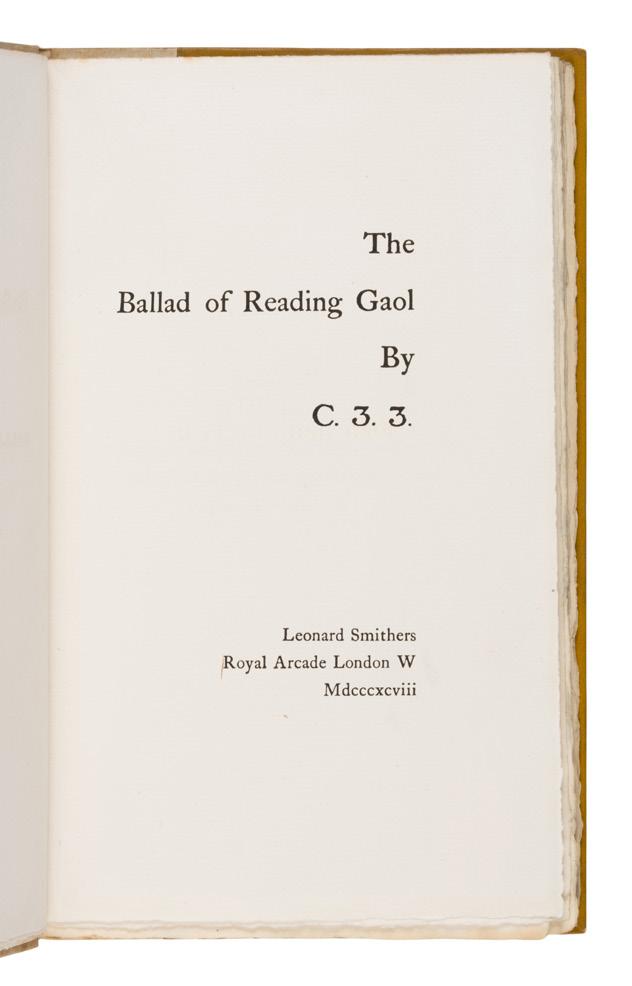
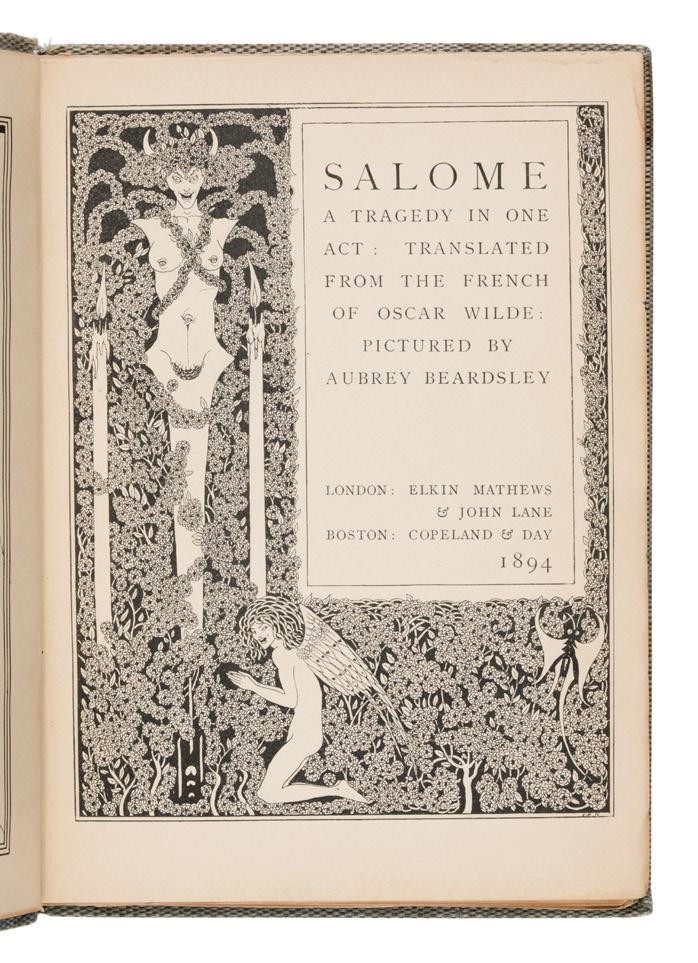
242 Wilde, Oscar (“C. 3. 3.”) (1854-1900). The Ballad of Reading Gaol. London: Leonard Smithers 1898.
8vo. (Free endpapers toned.) Original cream cloth-backed mustard cloth, gilt-lettered spine, uncut (light soiling to extremities, spotting and cockling near spine).
FIRST EDITION, LIMITED ISSUE, one of 800 copies on hand-made paper. Wilde wrote his poem in exile in Berneval-le-Grand after his release from Reading Gaol on 19 May 1897, where he was incarcerated for gross indecency. His pseudonym, “C. 3. 3.” stood for cell block C, landing 3, cell 3; his identity as the author was unknown until the seventh printing of the work in 1899. Mason 371.
$800 - 1,200
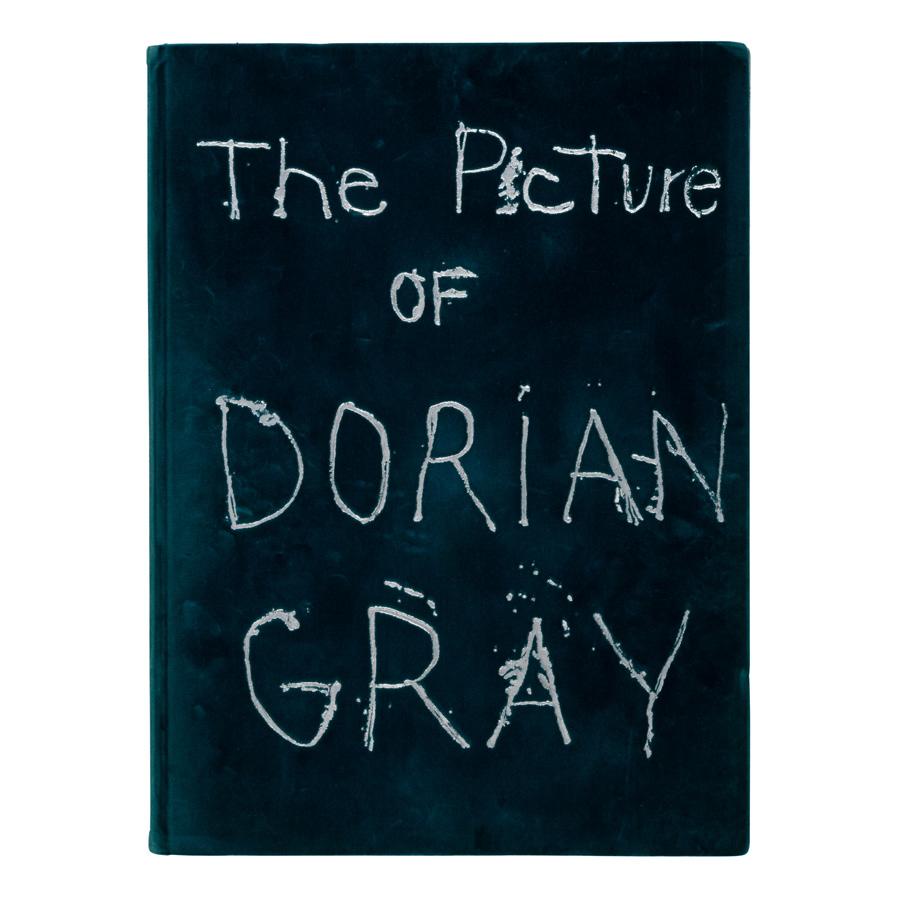
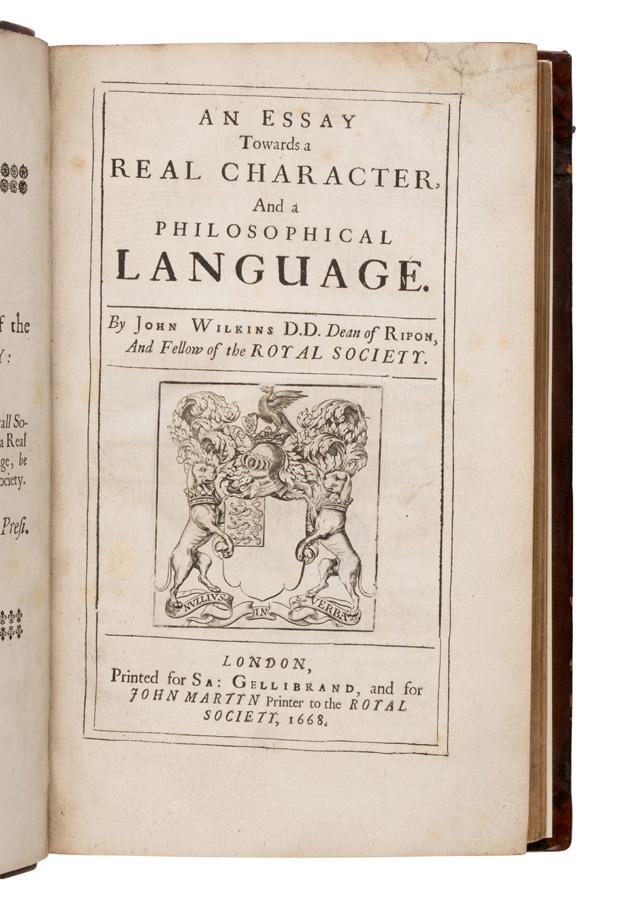
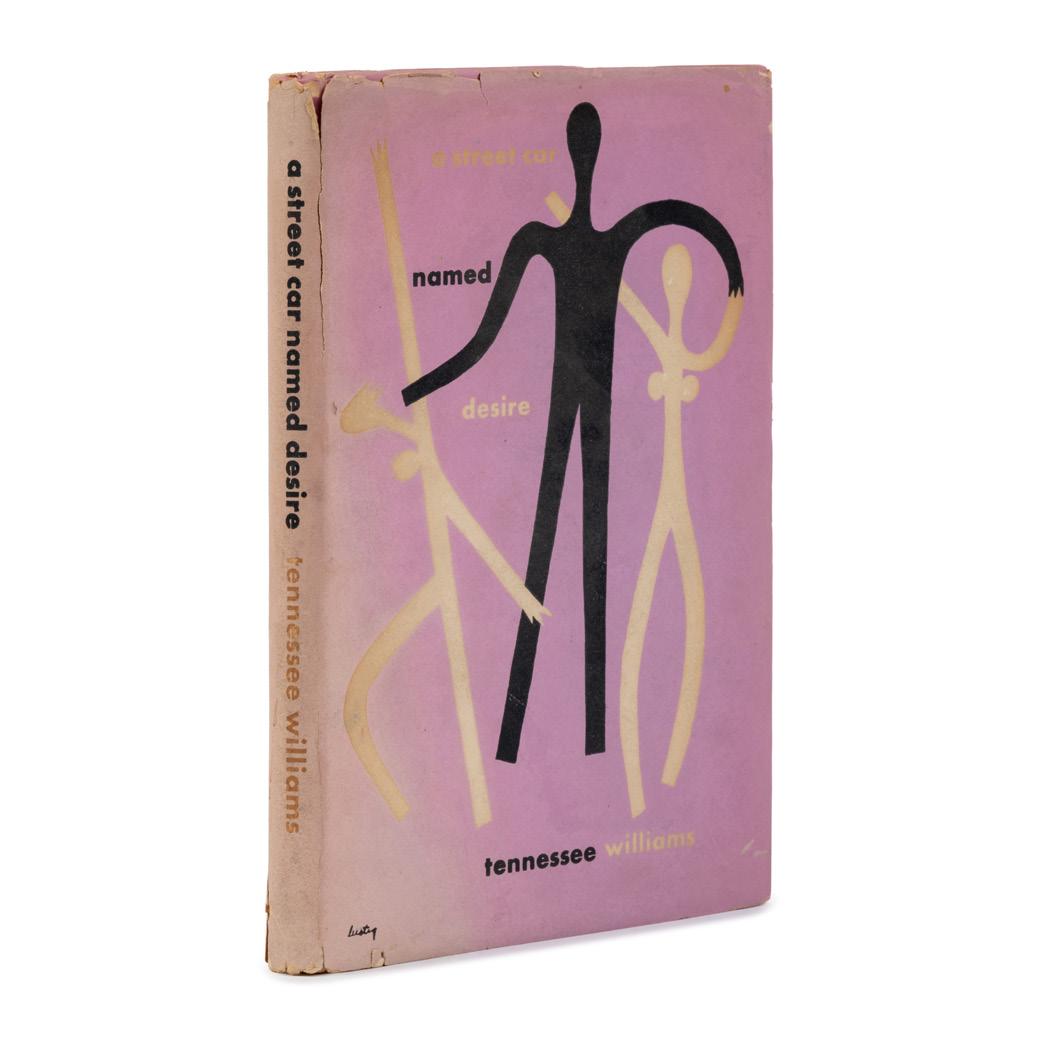
243
[Dine, Jim (b. 1935), illustrator]. -- Wilde, Oscar (1854-1900). The Pictures of Dorian Gray. A new adaptation for the stage... London: Petersburg Press, 1968.
Folio. 12 original color lithographs. Original green velvet lettered in silver; publisher’s slipcase (edgewear). Lacking the suite of 4 signed lithographs. Provenance: Stephen Lowndes (see below).
LIMITED EDITION, “EDITION B”, one of 200 copies.
[With:] DINE. Typed letter signed (“Jim Dine”), to Mr. Lowndes, London, 2 April 1968. 1p., 4to, old folds. Dine thanks Lowndes for his “technical knowledge” of the publication of this book.
[Also:] TITTLE, Grant H. Typed letter signed (“Grant”), to Mr. Lowndes, Wiltshire, 20 June 1968. 1p., 8vo, on Bath Academy of Art letterhead, old fold. Tittle also expresses his gratitude to Lowndes for the work he did on this publication. Dine thanks Tittle and the Academy on the book’s copyright page.
[Also:] publisher’s prospectus poster laid in.
$600 - 800
244
Wilkins, John (1614-1672). An Essay Towards a Real Character And a Philosophical Language. [With:] An Alphabetical Dictionary, Wherein all English Words According to their Specifications, Are either referred to their places in the Philosophical Tables, Or explained by such Words as are in those Tables. London: for Sa. Gellibrand, and for John Martin, 1668.
2 parts in one volume, folio (318 x 191 mm). Engraved title vignette, 4 engraved plates (one folding), 2 large folding tables; license leaf before title. (Minor dampstain and wormhole at upper margin of first leaves, small repair to corner of first two leaves, front black remargined, a few other minor stains and edge worming, edge tear on G3 repaired.) Contemporary paneled calf (neatly rebacked, endpapers renewed but original blanks retained, forecorners repaired). Provenance: Birkenhead Library (rubberstamp on title-page verso); contemporary notes on the work laid in.
FIRST EDITION of a key work in the history of linguistics and language. A founding member of the Royal Society, John Wilkins here proposes a system in which all knowledge is arranged into hierarchical “philosophical tables,” each concept assigned a corresponding “real character” intended to transcend spoken language. The accompanying dictionary indexes English words to this scheme, allowing them to be translated into Wilkins’s symbolic system. Wing W-2196.
$800 - 1,200
245
Williams, Tennessee (1911-1983). A Streetcar Named Desire. New York: New Directions, 1947.
8vo. Original pictorial purple boards (minor lightening and bumps to extremities); dust jacket (toning, sunning to spine, light chipping along extremities).
FIRST EDITION. A Streetcar Named Desire was written while Williams was living in a small Toulouse Street apartment in New Orleans, its title derived from the Desire streetcar line which ran half a block away. It debuted on Broadway in November 1947 with Elia Kazan directing and then-unknowns Marlon Brando as Stanley Kowalski and Jessica Tandy as Blanche DuBois. The play was hailed as “a poignant and luminous story” in the 4 December 1947 New York Times review of the debut performance by Brooks Atkinson and ran for 855 shows before closing in 1949. The play earned Tennessee Williams the 1948 Pulitzer Prize for Drama and the New York Drama Critics’ Circle Award for Best Play.
$800 - 1,200
246
[Wilson, Bill (1895-1971) and Dr. Bob Smith (1879-1950)]. Alcoholics Anonymous: The Story of How More than One Hundred Men Have Recovered From Alcoholism. New and Revised Edition. New York City: Alcoholics Anonymous Publishing, Inc., 1955.
8vo. Original blue cloth; dust jacket; publisher’s printed wrap-around band (creases to band at rear, minor rubbing, small loss at upper rear spine).
Second edition, first printing. Bill W., as Wilson preferred to be known, founded Alcoholics Anonymous along with Dr. Bob Smith in 1935 as a means of helping others to overcome their addictions to alcohol. “The Big Book,” as it came to be called, was written primarily by Bill W. with input by his right-hand man, Hank Pankhurst, and was published in 1939. This book, along with the organization founded, helped to change popular perception of alcoholism as a moral failing to one of alcoholism as a disease in and of itself. WITH THE RARE WRAP-AROUND BAND.
$300 - 400
247
Wister, Owen (1860-1938). The Virginian. A Horseman of the Plains. New York: The Macmillan Company, 1902.
8vo. Illustrations by Arthur I. Keller. Original tan pictorial cloth stamped in red, black and gilt.
FIRST EDITION of the first true fictional western that paved the way for Zane Grey and other western novelists. “Although a novel, this book probably created more impressions of what a cowboy was like – even among cowboys – than any other work, fact or fiction.” (Reese, Six Score 116). A FINE COPY.
$300 - 500
248
Woolf, Virginia (1882-1941). Orlando. A Biography. New York: Crosby Gaige, 1928.
Tall 8vo. Frontispiece. Original black cloth gilt, top edge gilt (spine lightly sunned). Provenance: A. Henderson & Mary G. Bishop (bookplate).
FIRST EDITION, LIMITED ISSUE, number 461 of 800 copies, SIGNED BY WOOLF. Orlando questions traditional conceptions of gender and is now regarded as a classic text of feminist fiction. Despite mixed reviews, Woolf’s novel was a best-seller, eventually selling 8,104 copies in England and 13,301 in the U.S. Kirkpatrick A11.
$2,000 - 3,000

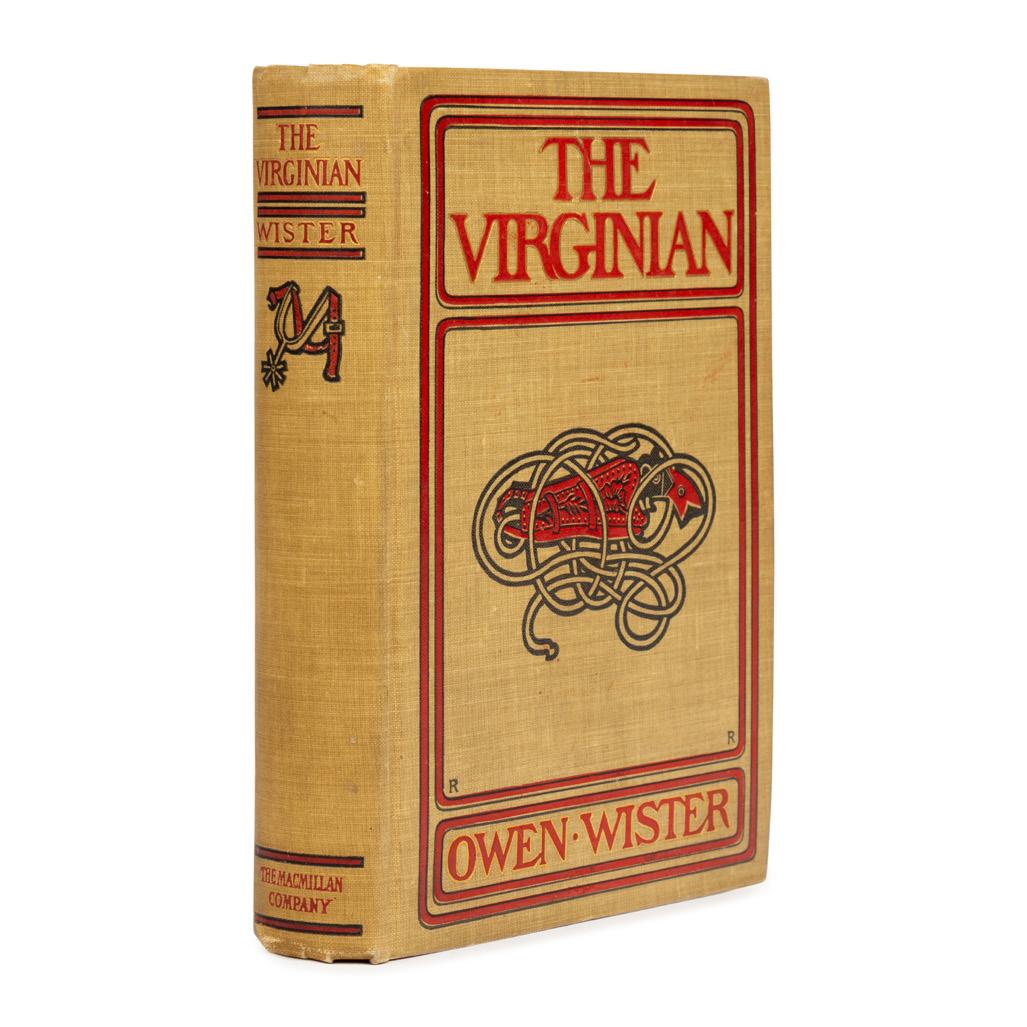
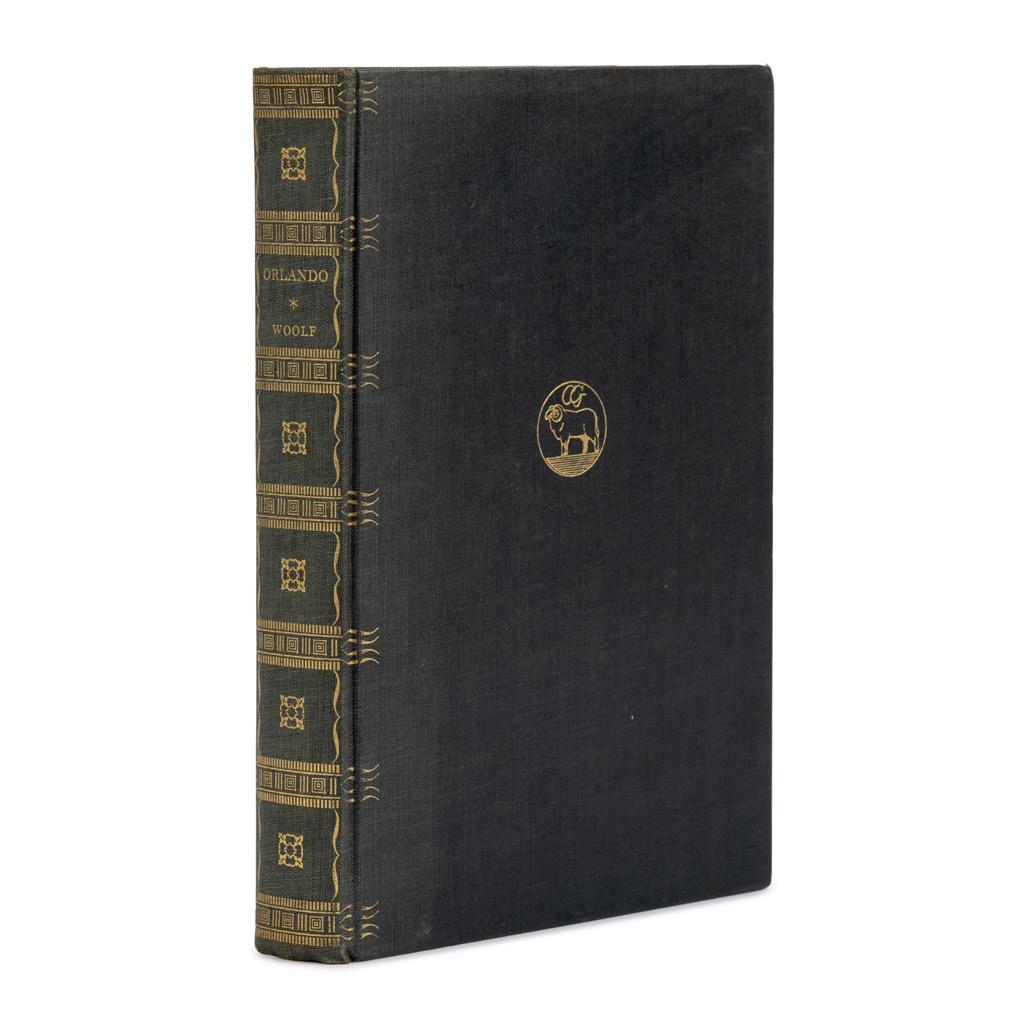
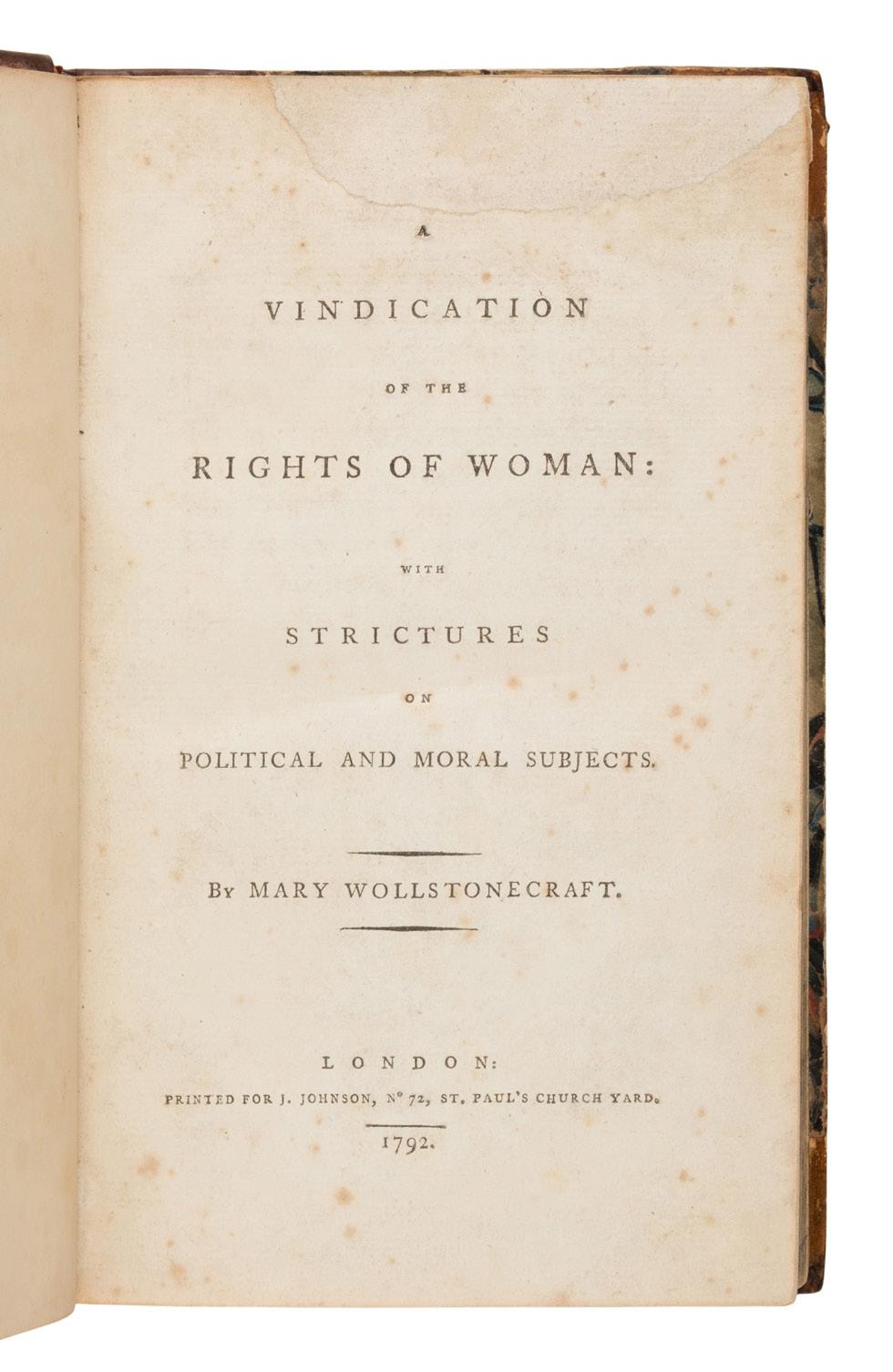
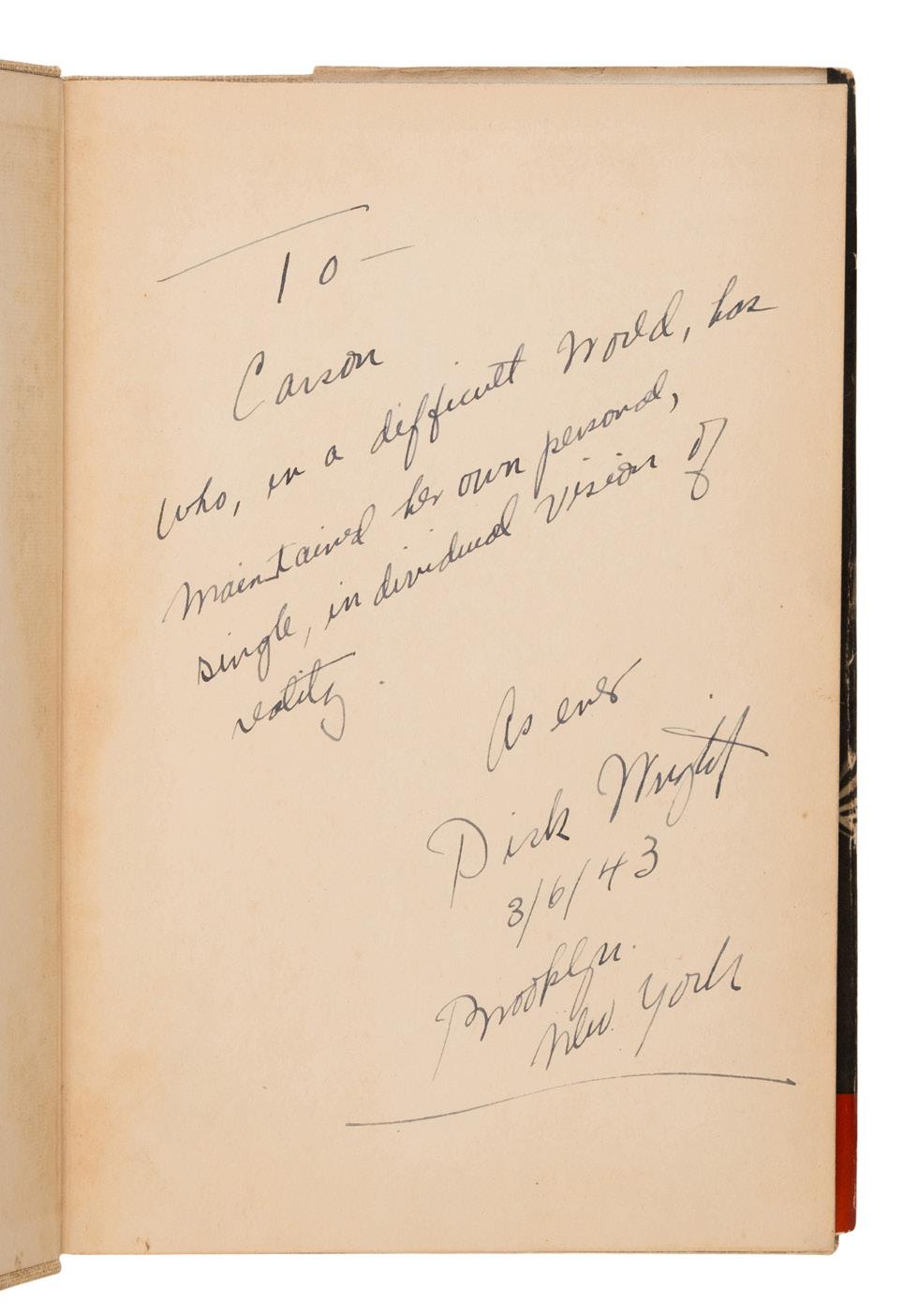
249
Wollstonecraft, Mary (1759-1797). A Vindication of the Rights of Woman: With Strictures on Political and Moral Subjects. London: J. Johnson, 1792.
8vo (210 x 127 mm). (Marginal repairs to title page, s1 and s4 not affecting text, some very light spotting throughout.) Contemporary boards and fourcorners (spine rebacked to style, light rubbing to covers).
“INDEPENDENCE I HAVE LONG CONSIDERED AS THE GRAND BLESSING OF LIFE, THE BASIS OF EVERY VIRTUE” (dedication)
FIRST EDITION with advertisement leaf (b6). Vindication of the Rights of Woman serves as a spiritual sequel to Wollstonecraft’s Vindication of the Rights of Men, written in response to Edmund Burke’s Reflections on the Revolution in France (1790). A key argument carried over across both works is that rights should be conferred because they are moral, and not due to the generosity of the state; she further argues that if natural rights are given by God, then to deny them to any person regardless of gender is a sin. The book was an immediate success, though its reputation was somewhat tattered by the publication of her husband William Godwin’s memoir, published after her death. In the late 20th century the book was reappraised and has become a foundational text in modern feminist philosophy. PMM 242; Windle A5a.
$4,000 - 6,000
250 Wright, Richard (1908-1960). 12 Million Black Voices A Folk History of the Negro in the United States. New York: The Viking Press, 1941.
Small 4to. Numerous black-and-white photographs after Edwin Rosskam. Original oatmeal cloth, spine stamped in brown, top edge stained black (extremities toned, small spot of soiling to upper cover); dust jacket (some toning and chipping to extremities). Provenance: Carson McCullers (19171967), American novelist (author’s inscription).
FIRST EDITION. PRESENTATION COPY, INSCRIBED BY WRIGHT TO CARSON McCULLERS: “To Carson who, in a difficult World, has maintained her own personal, single, individual vision of reality. As ever, Drick Wright, 3/6/43, Brooklyn, New York.”
In 1940, Wright wrote a glowing review of McCullers’ The Heart is a Lonely Hunter for the August issue of New Republic magazine, stating, in effect, that she was virtually unique in her ability to honestly portray African-American characters with as much care and sensitivity as she would characters of her own race. When editor George Davis read this review, he invited Wright to a Thanksgiving dinner to introduce him to his friend and roommate, Carson McCullers. Wright and McCullers hit it off and became fast friends, enjoying a lifelong friendship.
12 Million Black Voices is a photodocumentary book with images of African Americans taken by the Farm Security Administration and selected by Edwin Rosskam, with the text written by Richard Wright. In the foreword, Wright explains his focus: “It is not, however, to celebrate or exalt the plight of the humble folk who swim in the depths that I select the conditions of their lives as examples of normality, but rather to seize upon that which is qualitative and abiding in Negro experience, to place within full and constant view the collective humanity whose triumphs and defeats are shared by the majority, whose gains in security mark an advance in the level of consciousness attained by the broad masses in their costly and tortuous upstream journey.”
$2,000 - 3,000
251
[Abolition]. An Abstract of the Evidence delivered... for the Abolition of the Slave-Trade. London: James Phillips, 1791.
8vo (203 x 127 mm). Large folding plate, folding map. (Light marginal dampstaining in upper gutter to several leaves.) Contemporary speckled calf (neatly rebacked to style).
FIRST EDITION. Between 1790 and 1791, the British House of Commons convened a Select Committee to hear extensive testimony regarding the Atlantic slave trade as part of the growing parliamentary debate over its abolition. Witnesses—including sailors, ship surgeons, merchants, and others directly involved in the trade—were called to give first-hand accounts of the capture of Africans, the conditions aboard slave ships during the Middle Passage, and the mortality and violence inherent in the system. These hearings formed part of a broader investigation championed by leading abolitionists such as William Wilberforce and Thomas Clarkson, and the evidence presented played a significant role in shaping public opinion in Britain during the decades-long campaign that ultimately culminated in the abolition of the British slave trade in 1807.
With the rare folding plate depicting the terrible conditions of the slave ship Brooks, a variant of the iconic image which first appeared in a British pamphlet in 1789. Afro-Americana 34; Sabin 81745.
$1,000 - 1,500
252
[Abolition]. Truth, Sojourner (1797-1883, born Isabella). Narrative of Sojourner Truth, a Northern Slave, emancipated from Bodily Servitude by the State of New York, in 1828. [As narrated to Olive Gilbert.] New York: Published for the Author, 1853.
8vo (191 x 108 mm). Wood-engraved frontispiece portrait. (Closed tears in lower margin of portrait, discretely repaired on verso, light spotting and toning to frontispiece and title-page, a few corners creased, small corner tear to margin of final leaf.) Modern quarter calf, marbled boards (renewed endpapers, retaining front blank, corner repaired on recto).
“A legend in her own time, Truth’s indomitable will has won her a permanent place in American history. Her evangelic fervor and plain wit helped to advance the causes of emancipation and women’s rights” (Blockson).
SECOND EDITION. By the time the first edition appeared in 1850, Sojourner Truth had already emerged as a prominent abolitionist preacher and public speaker. Born into slavery in New York as Isabella Baumfree, she gained her freedom in 1827 and, in 1843, adopted the name Sojourner Truth after what she described as a divine calling to travel and “sojourn” the country speaking against slavery and injustice. By the mid-1840s, she had become associated with reform circles in Massachusetts, including the utopian and abolitionist Northampton Association of Education and Industry, where she met Olive Gilbert.
Inspired in part by the success of Narrative of the Life of Frederick Douglass, an American Slave, Truth resolved to publish her own life story. As she was illiterate, she dictated the narrative to Gilbert, who served as amanuensis and editor. Though written largely in the third person, contemporaries clearly understood Truth to be the author of the work, with Gilbert acting only as recorder of her recollections. The first edition was printed in 1850 by Northampton printer J. B. Yerrinton, whom Truth persuaded to undertake the project largely on credit. The book quickly became an important tool in Truth’s activism. She personally financed, distributed, and sold copies while traveling and lecturing throughout the Northeast and Midwest, often offering the volume at the conclusion of her speeches. Continued demand led to the expanded second edition of 1853. Although reset, textually, the 1853 edition is substantially the same as the first edition. BAL 19381 (but different pagination with an introduction by Harriet Beecher Stowe); Blockson 29 (first edition); Howes G-163 (erroneously ascribing authorship to Gilbert, as common).
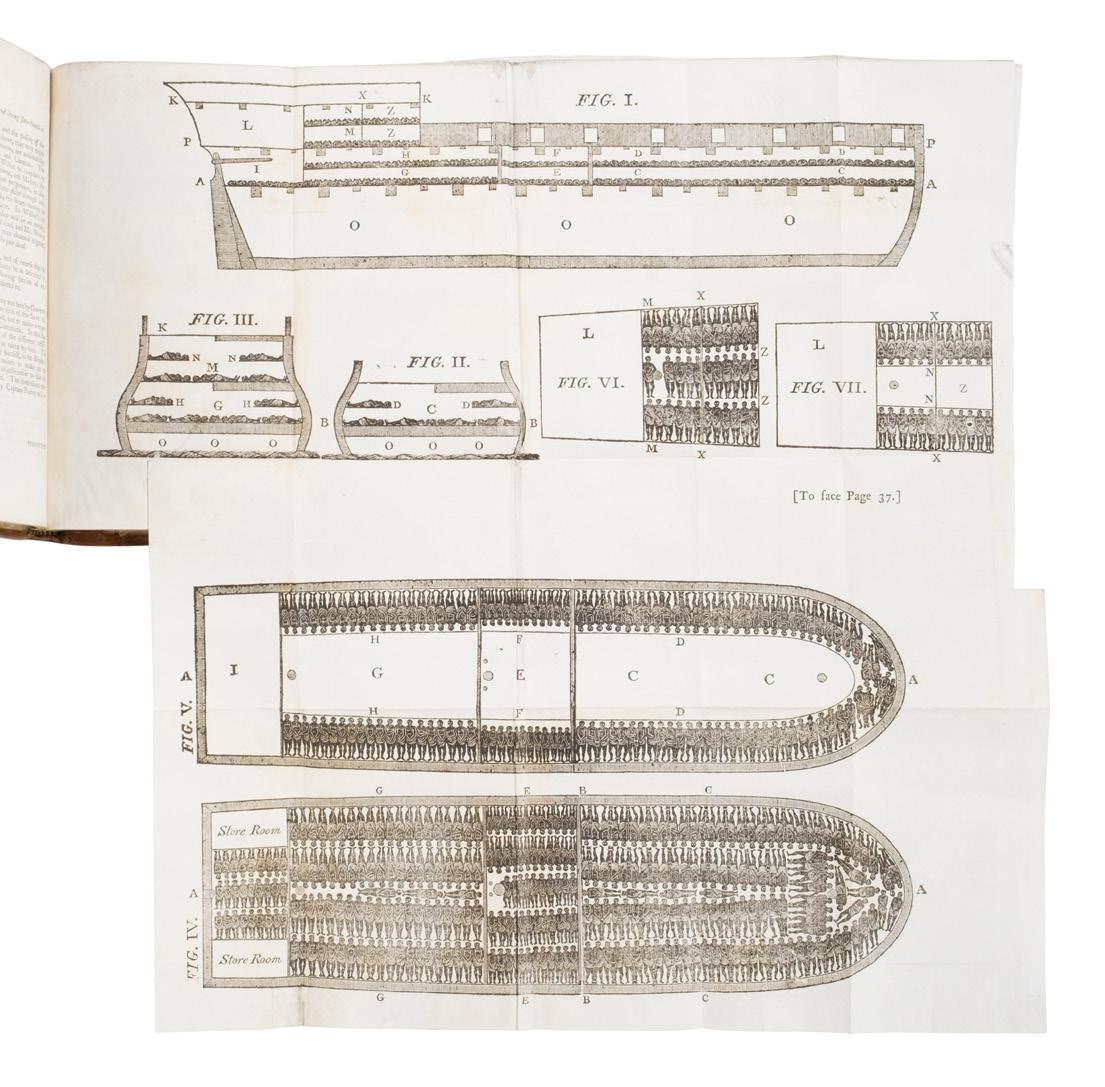
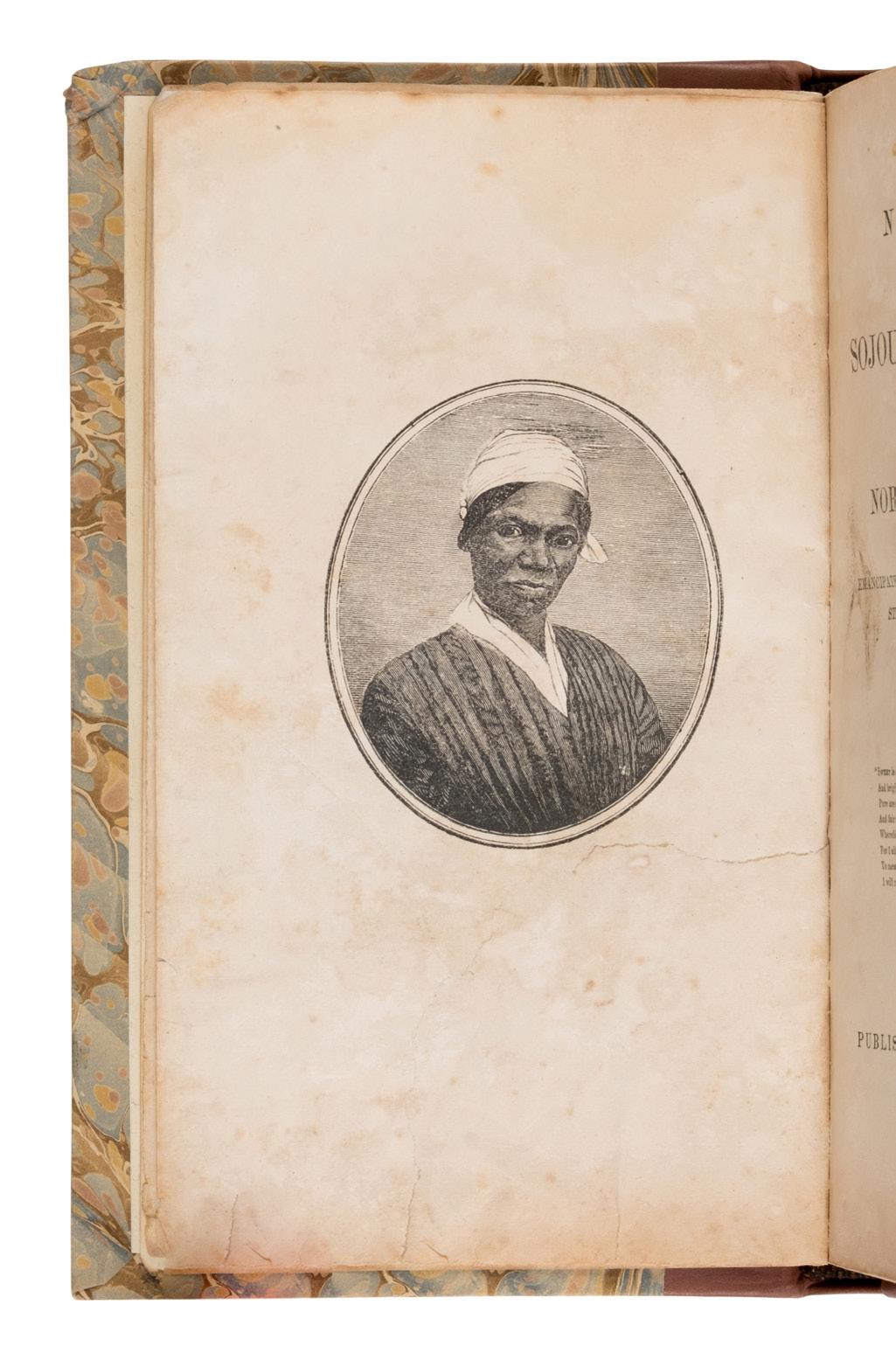
$2,000 - 3,000
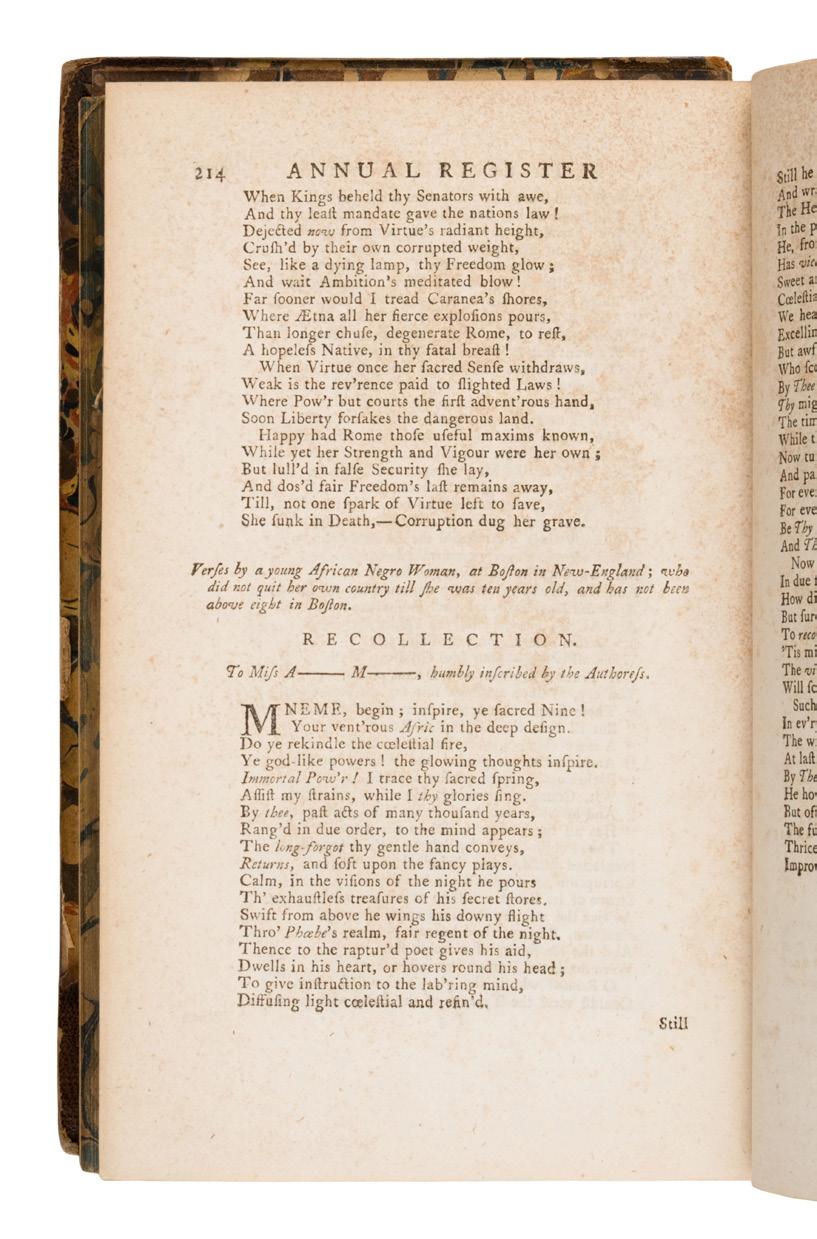
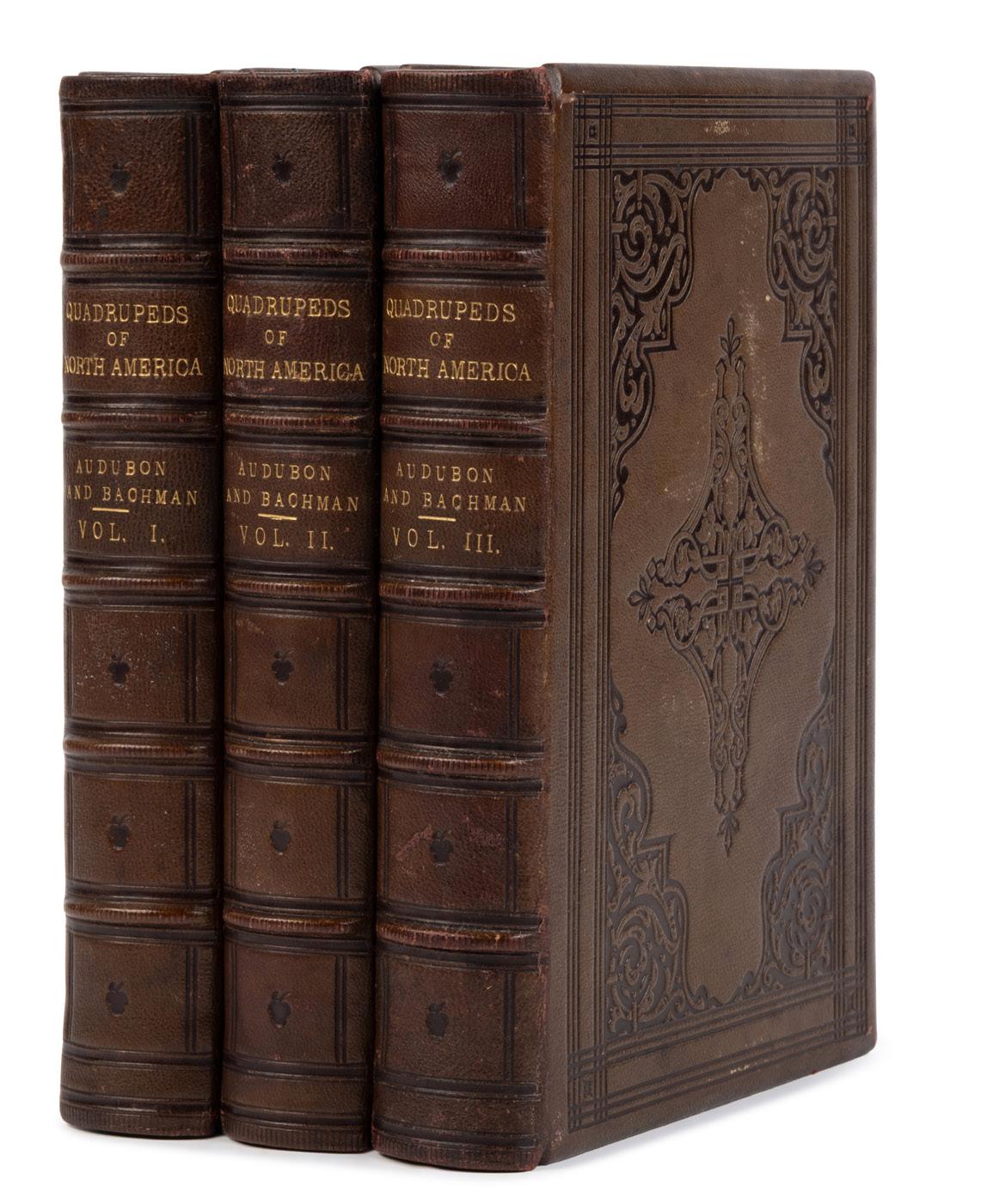
253
[African American]. -- [Wheatley, Phillis (1753-1784)]. “Recollection. To Miss A__ M__, Humbly Inscribed by the Authoress.” In: The Annual Register... for the Year 1772. London: for J. Dodsley, 1773.
8vo (209 x 133 mm). (Very light spotting throughout.) Contemporary half calf (front board detached, rubbing to boards). Provenance: Thomas Charles Smith (ownership bookplate).
PHILLIS WHEATLEY’S FOURTH PUBLISHED POEM AND HER FIRST IN A MAGAZINE.
Phillis Wheatley is believed to have been born in West Africa in 1753, likely in modern-day Senegal. At eight years old, she was sold by a chief to a visiting trader and transported to Boston aboard the slave ship Phillis, where she was then sold to wealthy merchant John Wheatley. Despite her enslaved status, the Wheatley family dedicated themselves to her education, and Phillis was able to read Greek and Latin classics in their original languages by the time she was twelve. Influenced by these works, Phillis began to write her own poetry, an endeavor supported by the Wheatley family, who steadily removed her from all domestic chores so she could focus on her writing.
By 1773, she had published four poems in various periodicals, primarily in England. That year, at Susanna Wheatley’s request, she accompanied John Wheatley to London in the hopes that she might have better luck finding a publisher for her book of poems there than she would in the colonies. With the publication of Poems on Various Subjects, Religious and Moral in September 1773, she became the first published African-American author.
$500 - 700
254
Audubon, John James (1785-1851) and John Bachman (1790-1874). The Quadrupeds of North America. New York: V.G. Audubon, 1849, 1854, 1854.
3 volumes, 8vo (260 x 168 mm). 155 hand-colored lithographed plates by W.E. Hitchcock and R. Trembly after original drawings by John James Audubon and John Wodehouse Audubon (some offsetting, spotting throughout, some tissue guards replaced, minor repair to p. 81 of third volume.) Publisher’s deluxe brown morocco elaborately decorated in blind, sides with central lozenges with title lettered in blind, spines with raised bands, gilt-lettered and decorated in blind, edges gilt (light rubbing to extremities). Provenance: C.S. Francis & Co., New York (booksellers’ ticket); Walter Phelps Bliss (1870-1924), American businessman and Katharine Baldwin Bliss (1870-1961), his wife (their joint ownership bookplate).
Mixed edition set: Volumes I and III are FIRST OCTAVO EDITIONS; volume II is a second octavo edition. Issued in response to the success of the octavo edition of The Birds of America, the first octavo edition of Quadrupeds was published shortly after the publication of the first imperial folio edition of 1845 and 1848. In addition to the 150 plates present in the 3 imperial folio volumes, the first octavo edition includes 6 additional plates and the text from the 1854 supplement, with all the plates reduced by Audubon’s sons using a camera lucida. John Woodhouse Audubon claimed credit for 18 paintings previously attributed to his father in the imperial folio edition. Bennett, p. 5; Nissen ZBI 163.
$3,000 - 4,000
255
Catlin, George (1796-1872). Letters and Notes on the Manners, Customs, and Condition of the North American Indians. London: Published by the Author, 1841.
2 volumes, 8vo (236 x 146 mm). 3 maps (one folding) with over 300 illustrations on approximately 176 leaves by Tosswill and Myers after Catlin, variously numbered as usual. (Lacking errata slip, light marginal toning with occasional spotting.) Contemporary calf gilt, spine in 5 compartments (rubbing to extremes, discrete repairs to hinges).
FIRST EDITION, FIRST ISSUE, with “Frederick” on p.104 in vol. I. Catlin’s “Indian Gallery” was exhibited in the United States, England, and France, from 1837 to 1852, when he won the esteem and friendship of numerous scientists, explorers and cultural luminaries, including Mayne Reid, Joseph Henry, Henry Clay, Benjamin Silliman, Alexander von Humboldt, F. N. Bunsen, William M. Hunt, Daniel Webster, William H. Seward, John A. Dix, Michael Faraday, and John Murray. He gave numerous speaking engagements when his exhibition opened at the Egyptian Hall in London. The first of these was given at the Royal Institution of Great Britain on February 14, 1840, to an audience of over one thousand. When Letters and Notes was published in October 1841, it was met with further acclaim and was one of the first detailed illustrated descriptions of the American West. Howes C-241; Sabin 11536; Wagner-Camp 84:1.
$1,000 - 1,500
256
Cody, William F. (“Buffalo Bill”) (1846-1917). True Tales of the Plains New York: Empire Book Company, 1908.
8vo. Original olive cloth lettered in gilt, photographic portrait of Buffalo Bill affixed to upper cover (slight lean to spine, light rubbing to extremes, hinges tender and starting in some places). Provenance: Neil Mooney (author’s inscription).
FIRST EDITION. INSCRIBED BY CODY on front free endpaper: “With the compliments of the Author, W.F. Cody, ‘Buffalo Bill’, To Neil Mooney, Cody, Wyo, March 9th 1909.” True Tales of the Plains gathers a series of semiautobiographical narratives recounting Cody’s experiences on the western frontier during the decades of westward expansion and includes accounts of other notable frontier figures, among them the famed scout and gunfighter Wild Bill Hickok. Adams, Six-Guns 456; Graff 788; Howes C-532.
$1,000 - 1,500
257
Dana, Richard Henry (1815-1882). Two Years Before the Mast. A Personal Narrative of Life at Sea. New York: Harper & Brothers, 1840.
12mo (140 x 89 mm). Contemporary half calf, marbled boards (rebacked, preserving original spine and endpapers); morocco-backed slipcase. Provenance: John Howell, San Francisco (booksellers’ ticket); Hon. Edward Towse (1905-1973), justice of the Territorial Supreme Court of Hawaii (bookplate).
FIRST EDITION, FIRST PRINTING with dotted “i” on copyright page and unbroken type in headline on p.9. “If not the most widely read book on California, certainly this ranks extremely high on such a list. The author sailed up and down the California coast, trading for hides, from January 1835 until May 1836. He possessed not only extraordinary keen powers of observation but a fine facility for expressing his ideas in writing, which makes this volume an excellent and very readable record of his experiences” (Zamorano Eighty). BAL 4434; Graff 998; Howes D49; Zamorano Eighty, 26.
$600 - 800
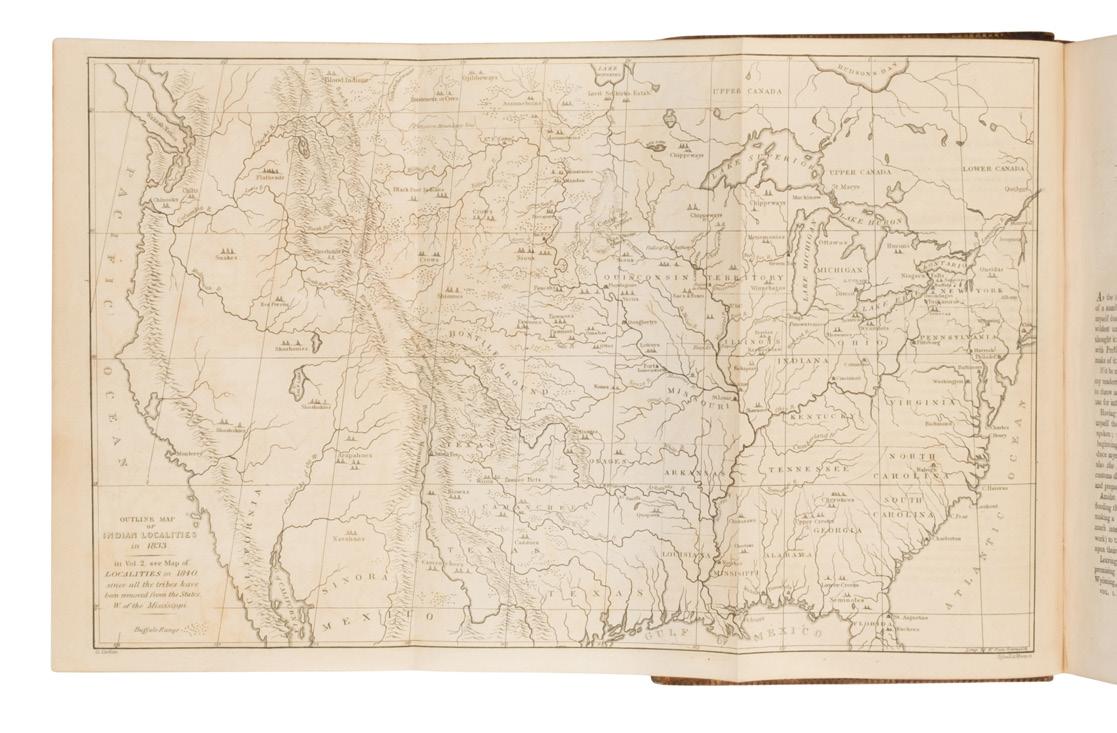
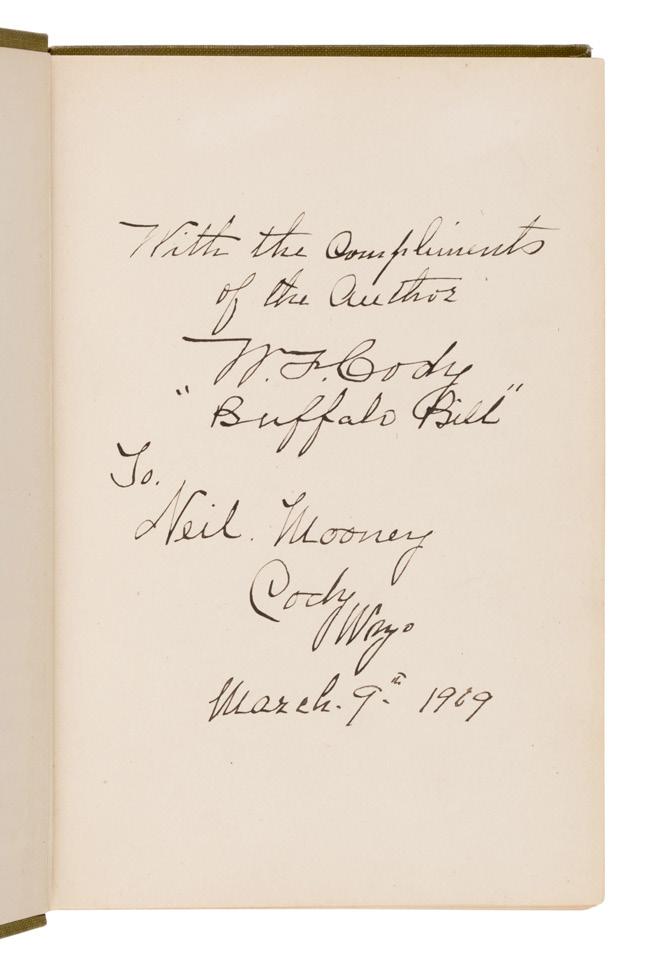
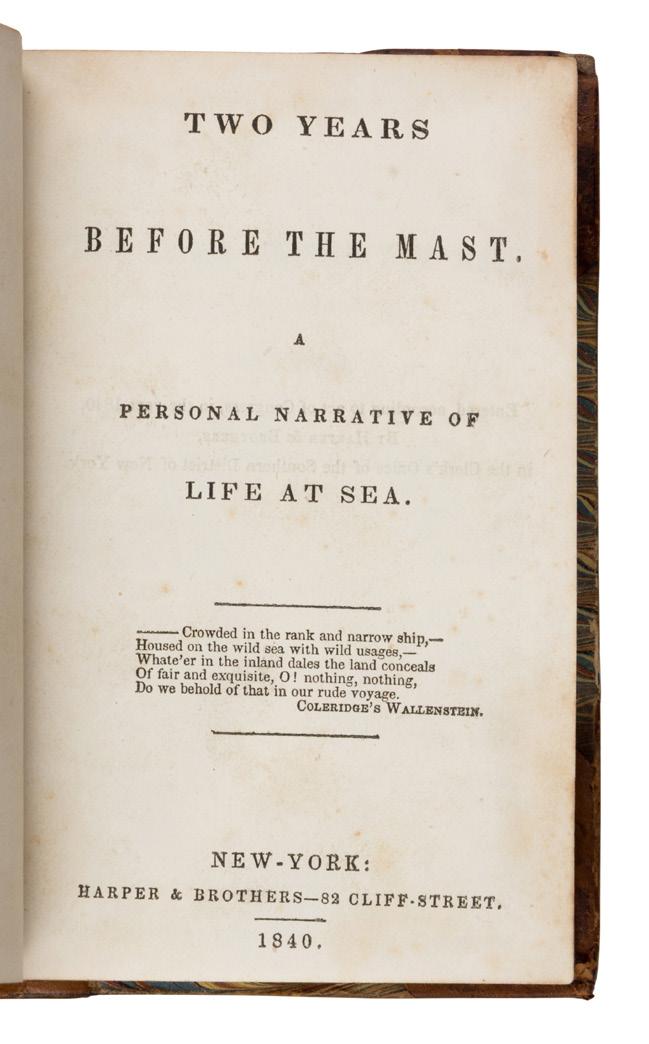
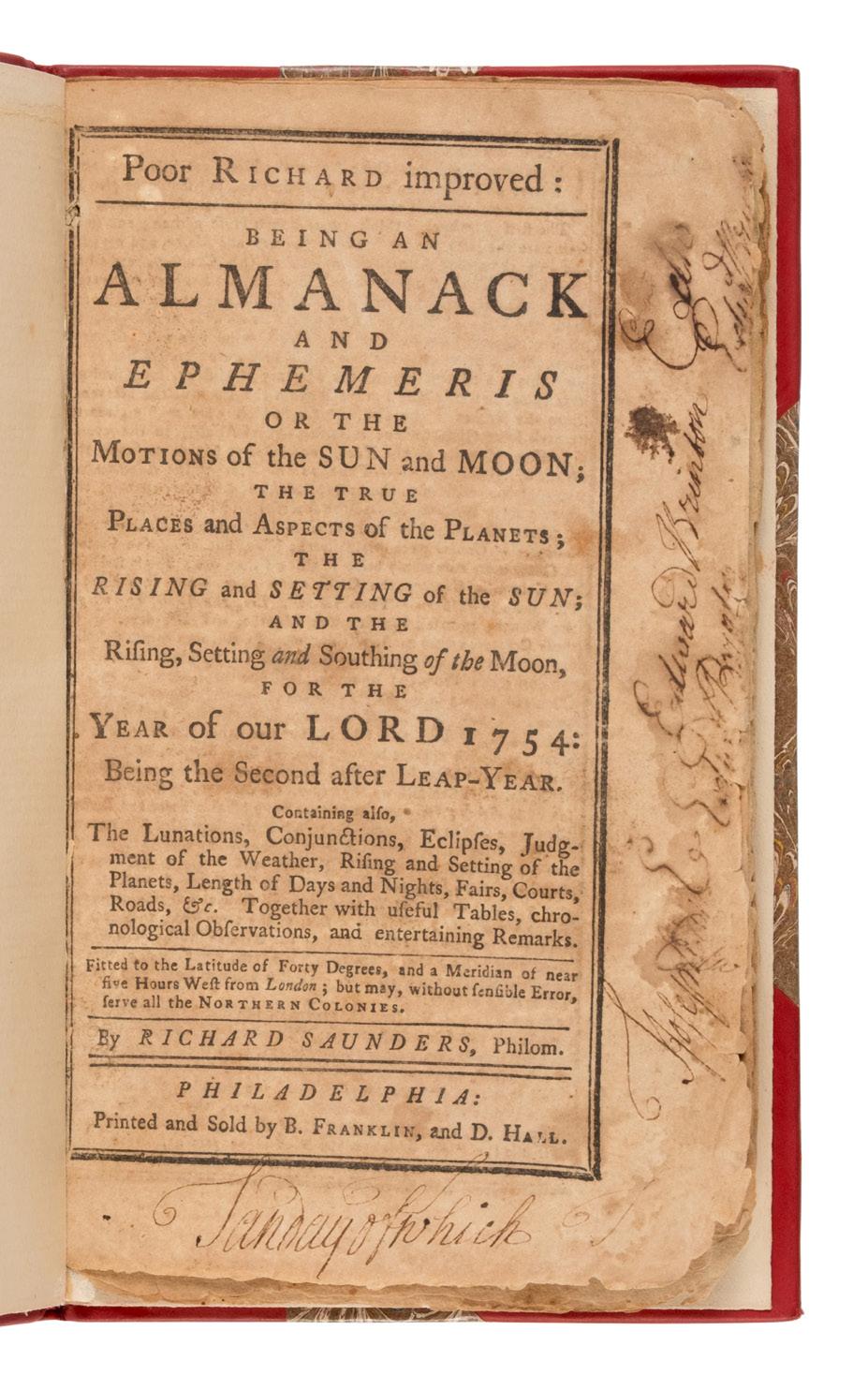
258
Franklin, Benjamin (“Richard Saunders”) (1706-1790). Poor Richard Improved: Being an Almanack and Ephemeris of the Motions of the Sun and Moon... For the Year of our Lord 1754. Philadelphia: B. Franklin and D. Hall, [1753].
12mo (178 x 102 mm). Woodcut zodiac man and monthly panels. (Lower fore-edge corner of last leaf chipped with loss to a few letters, fore-edges frayed, toning and spotting throughout.) Half modern calf, marbled boards. Provenance: Edward Brinton (1704-1779), Brinton was the son of William Brinton and an important early settler of West Chester, Pennsylvania (ownership signatures on title-page margins); unidentified inscriptions also on title; sold, Bonhams, 28 June 2005, lot 3248.
FIRST EDITION. In the preface, Franklin discusses the history of almanac makers (primarily, by his own admission, just to fill the page), followed by statistics on the population of New Jersey, a receipt for curing gammons, and astrological information. The calendar is interspersed with the conclusion of his essay “On Idea of the Creator from his Works.” The final two leaves list court days in Pennsylvania, Maryland, New Jersey, and New York, as well as post road routes and Quaker meetings. Two issues are noted: the present without the advertisement on verso of E4. Campbell 510; Drake 9756; Evans 7003; Ford 92; Hildeburn 1325; Miller 570 (21 copies identified); ESTC W22788.
$4,000 - 6,000
259
Franklin, Benjamin (1706-1790). Political, Miscellaneous, and Philosophical Pieces... London: J. Johnson 1779.
8vo (222 x 140 mm). Engraved portrait frontispiece of Franklin, 3 engraved plates (one folding); folding letterpress table. (Marginal repair on U1r, the closed partially affecting letters, light spotting.) IN ORIGINAL DRAB BLUE BOARDS, UNCUT (spine panel perished, manuscript label laid, stains and soiling to covers, fore-corners worn, rear cover partially detached, front joint discretely reinforced); morocco-backed folding case. Provenance: Henry Fletcher (early ownership signature to title-page).
FIRST EDITION, THE ONLY COLLECTED LIFETIME EDITION OF FRANKLIN’S WRITINGS PUBLISHED WITH HIS PERMISSION.
“The only edition of Franklin’s writing (other than scientific) printed during his lifetime … done with Franklin’s knowledge and acknowledgment, and contains an ‘errata’ made by him for it” (Ford). Franklin’s writings were published in London during the Revolution while he was serving as the American ambassador to France. The collection contains works on national and provincial politics, the Stamp Act, wealth, smuggling, spelling, lightning, weather and clouds, and the Aurora Borealis. ESTC T56601; Ford 342; Howes F-330; Revolutionary Hundred 56; Sabin 25565.
$4,000 - 6,000
261
260
Fremont, John Charles (1813-1890). Report of The Exploring Expedition to The Rocky Mountains in the year 1842, and to Oregon and North California in the years 1843-’44. Washington, D. C.: Printed by Order of the Senate, by Gales and Seaton, 1845.
8vo (229 x 139 mm). Large map folding in pocket at rear (discrete repairs along folds verso); 4 lithographed maps (2 folding); 22 lithographed plates. Original brown blind-stamped cloth, gilt-lettered on spine (recased, light rubbing to covers). Provenance: George Clinton Swallow (1817-1899), Missouri’s first state geology (bookplate); Intermountain Union College (embossed stamp on title-page); inked numerals in upper margin on title.
FIRST EDITION, the Senate issue, with the astronomical and meteorological observations omitted from the House issue and subsequent editions. The two reports, written with the help of Fremont’s wife Jessie Benton, “caught the public imagination: images of Fremont’s guide, the then little-known Christopher ‘Kit’ Carson, riding bareback across the prairie, and Fremont himself, raising a flag on a Rocky Mountain peak, entered the national mythology” (Pamela Herr, ANB). Graff 1436; Howes F-370; Sabin 25845; Streeter VI:3131; Wagner-Camp 115:1.
$800 - 1,200
[The Federalist Papers]. -- [Hamilton, Alexander (1739-1802), James Madison (1751-1836), and John Jay (1745-1829)]. “The Federalist,” Letters 1-6. In: The American Museum, or Repository of Ancient and Modern Fugitive Pieces, &c. Philadelphia: Mathew Carey, November and December 1787.
2 volumes, 8vo (210 x 121 mm). (Occasional marginal soiling, toning, some spotting throughout.) Modern blue paper boards. Provenance: Michael Zinman, American businessman and book collector (ownership bookplates).
The Federalist Papers were written in response to criticisms levied against the Constitution of the United States which had just been sent out for ratification by the states, the most prominent having appeared in the New York press in September and October of 1787 under the pseudonyms “Cato” and “Brutus.” Alexander Hamilton thus recruited James Madison and John Jay to join him in writing a series of letters addressed directly to the people of New York which would offer a measured and extensive defense of the Constitution. In a nod to previous criticisms, Hamilton chose to sign each letter “Publius” in reference to Publius Valerius, one of the founders of Rome. Between October 1787 and May 1788 a total of 85 letters were published, with Hamilton writing 51, Madison writing 29, and Jay writing 5. The letters were well-received and were reprinted throughout the country before New York publishing firm J & A McLean printed them in two volumes as a collected work in March and May 1788, though its authors remained anonymous until the 1792 French edition which was followed in 1802 by a new American edition (though at Hamilton’s request publisher George Hopkins who wrote which essay).
The American Museum was established by Philadelphia printer Matthew Carey courtesy of a $400 loan by the Marquis de Lafayette. It counted among its subscribers Thomas Jefferson, George Washington, Benjamin Franklin, Belinda Sutton, Noah Webster, and John Trumbull, and holds the distinction of being one of the first profitable American magazines ever published. The appearance of The Federalist within its pages likely represent their first in a publication printed in Philadelphia - the birthplace of the United States of America.
$800 - 1,200
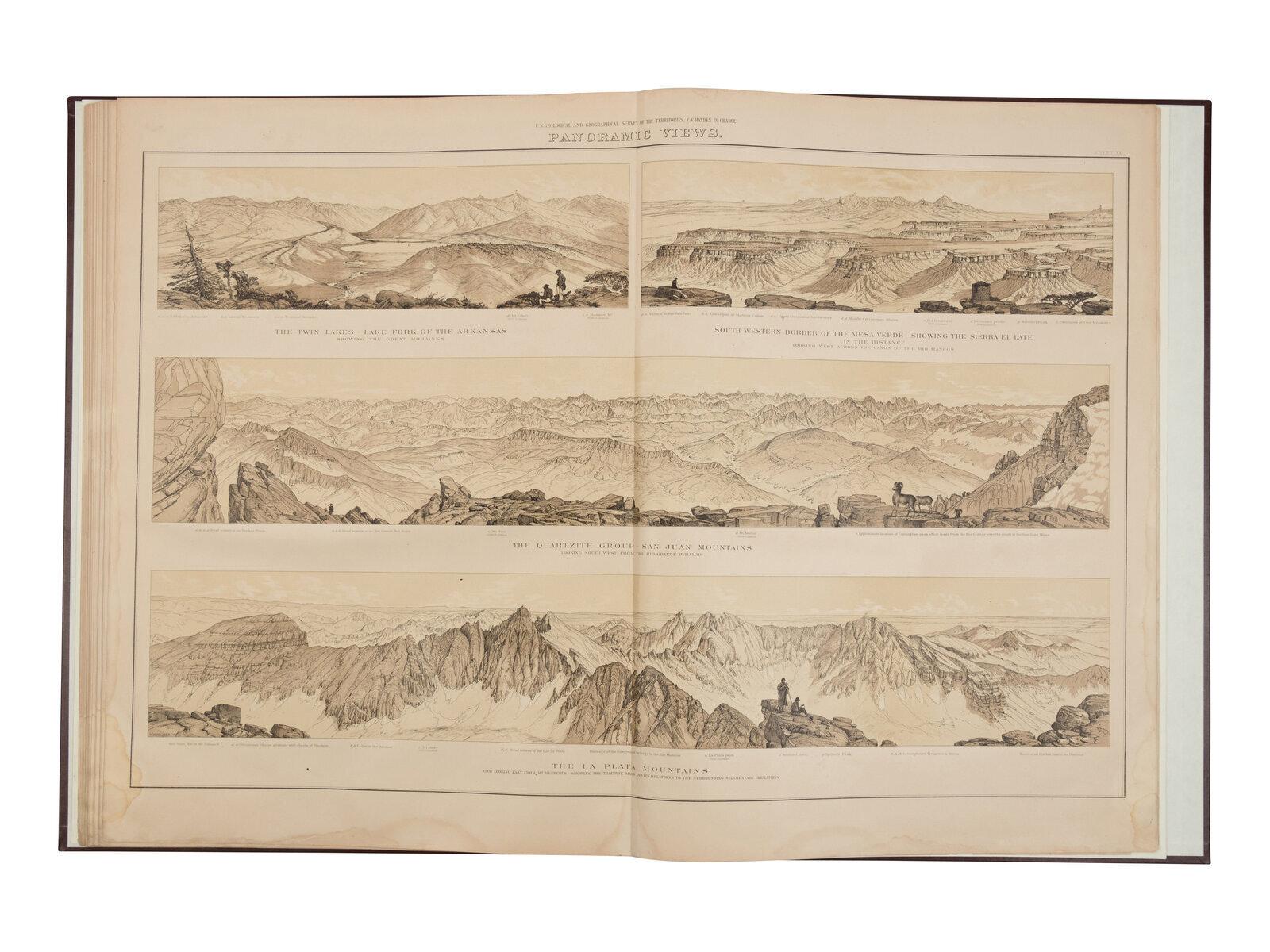
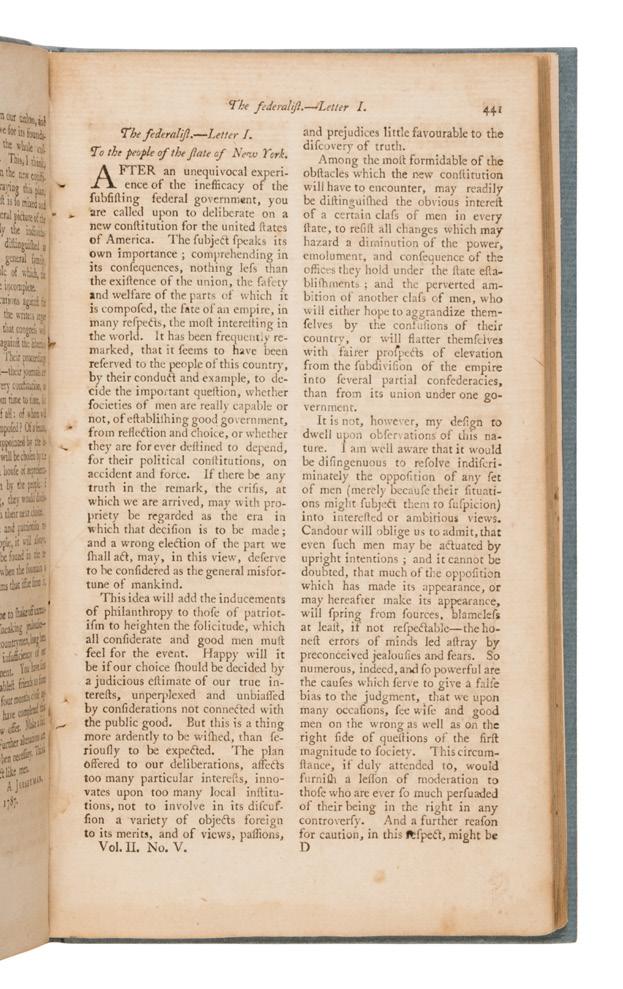
262
Hayden, Ferdinand Vandeveer (1829-1887). Geological and Geographical Atlas of Colorado and Portions of Adjacent Territory. Washington D.C. and New York: Department of the Interior United States Geographical Survey; Julius Bien & Co., 1881.
Elephant folio. Title-page, list of sheets, 20 lithograph maps, charts, and panoramic views. (Light dampstaining near margins, spotting to title-page.) Modern cloth.
Second edition, preceded by the 1877 edition. “This atlas is composed of two series of maps: the first, of four sheets, on a scale of twelve miles to one inch, each covering the whole State of Colorado; the second, of twelve sheets, (six topographical and six geological, of identical areas,) on a scale of four miles to one inch, each sheet embracing two and one-half degrees of Longitude and one and one-quarter degrees of Latitude, the whole presenting the results of the fieldwork of 1873, ‘74, ‘75 and ‘76, covering the entire state of Colorado and adjacent portions of Utah, Arizona and New Mexico” (Legend). Phillips Atlases, 1473 (1877 edition); Schwartz and Ehrenberg, The Mapping of America, p.307 (1877 edition).
$600 - 800
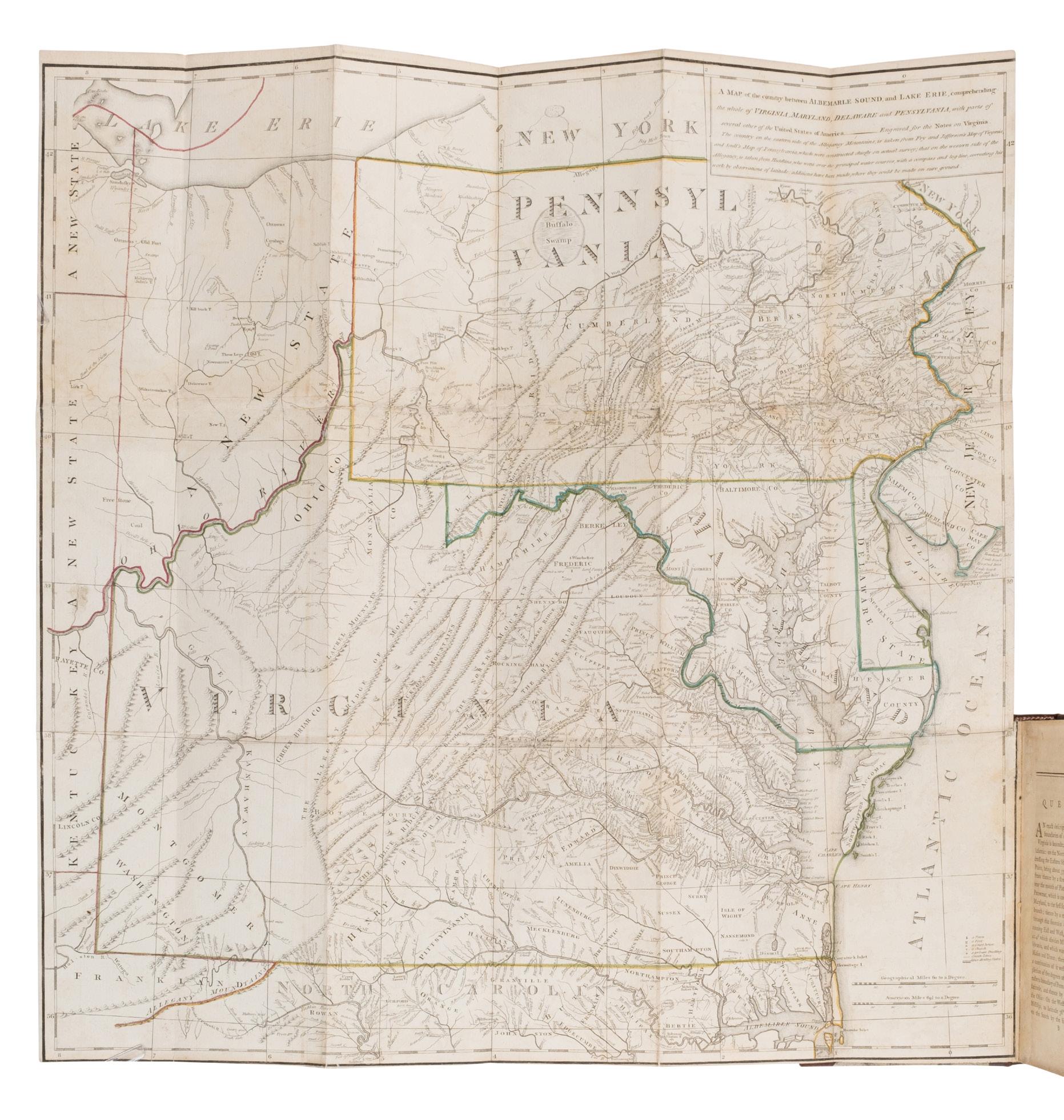
263 Jefferson, Thomas (1743-1826). Notes on the State of Virginia. London: John Stockdale, 1787.
8vo (210 x 121 mm). Full-page woodcut of “Madison’s cave” at C8v, several printed tables in the text, large folding table of Indian Tribes, large folding engraved map [see below]. (Some offsetting or toning to text, light marginal spotting.) Modern half calf antique, contemporary(?) marbled boards, preserving original endpapers and morocco lettering-piece(?).
FIRST LONDON EDITION, following the privately printed, virtually unobtainable first edition (Paris, 1782 [i.e., 1785]) and a poor French translation (Paris, 1786). This edition contains new accounts of events during and since the Revolution (when Jefferson served as Governor) and features the map engraved at Jefferson’s request to incorporate the most up-to-date topographical data on the soon-to-be-opened Ohio Valley.
Two appendices are of considerable significance; these were issued as supplements with a few copies of the original edition, but are integral to this edition. Appendix II contains the full text of THE PROPOSED VIRGINIA CONSTITUTION, prepared by Jefferson and a committee of “revisers” in the summer of 1783. It was, Jefferson proudly declared, a legal code drafted in “the plain language of common sense” (quoted in R.B. Bernstein, Are We To Be A Nation: The Making of the Constitution, p.65). Appendix III contains THE VIRGINIA ACT FOR ESTABLISHING RELIGIOUS FREEDOM passed in 1786. This act was entirely drafted by Jefferson, who “rated it as second in importance only to the Declaration of Independence in such lists of his own achievements as he afterwards drew up” (Dumas Malone, Jefferson the
Virginian, pp. 279-280). Pages 293-332 contain a bibliography of pamphlets published in Virginia relating to the controversy over taxation, plus a chronological catalogue of American state papers, largely treaties, compiled by Jefferson, certainly one of the earliest such bibliographical efforts. Church 1189 (first edition); Howes J-78; Sabin 35896; Sowerby 4, pp.101-30.
[Bound with as issued:]
A Map of the Country Between Albemarle Sound and Lake Erie, Comprehending the Whole of Virginia, Maryland, Delaware and Pensylvania Engraved for the Notes on Virginia. London: Engraved by S. J. Neele, No.352 Strand, London, Published as the Act directs July 13th, 1787 by John Stockdale. 600 x 584 mm., hand-colored in outline (discrete touch-up along upper horizontal fold verso, a few light spots of offsetting, bottom margin trimmed to neatline, cutting of engraver credits).
An important post-Revolutionary map of Virginia, first issued with the 1786 French edition of the Notes, derived from Fry and Jefferson’s key map of Virginia (1751, additions in 1755), Nicholas Scull’s of Pennsylvania, and Thomas Hitchins’ of Virginia (1778). Jefferson was quite aware of the cartographic importance of the composite map: “When Jefferson, then minister to France, decided to publish his Notes on the State of Virginia, first in a French and then in an English edition of 1787, he had the [Fry & Jefferson] map re-engraved, for the occasion, speaking of it with justifiable pride as more valuable than the book in which it was to appear” (The Eye of Thomas Jefferson, ed. W. H. Adams, p.4). Phillips, p.984.
$10,000 - 15,000
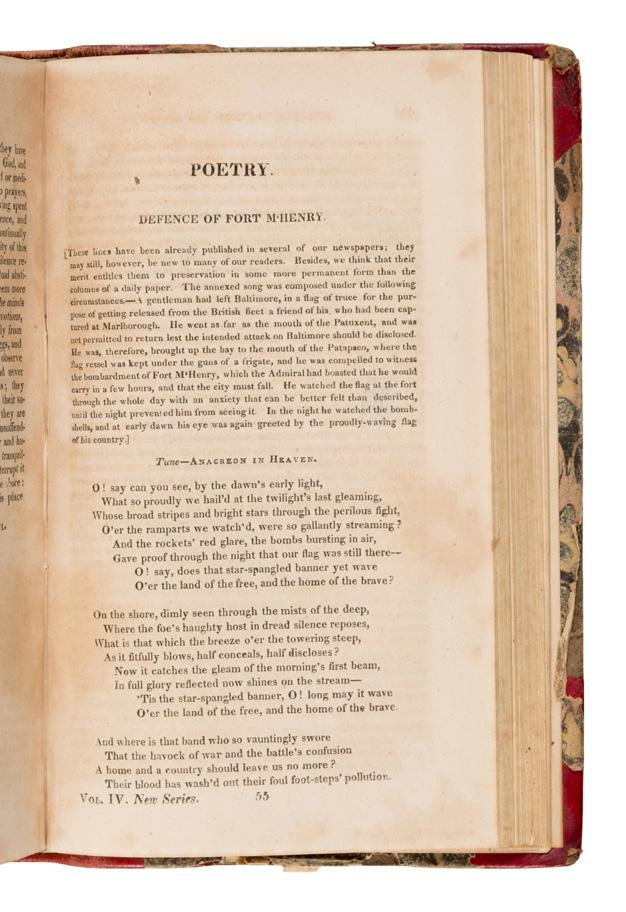
264
[Key, Francis Scott (1773-1843)]. “Defence of Fort M’Henry.” In: The Analectic Magazine, Containing Selections from Foreign Reviews and Magazines... Volume IV. Washington Irving, editor. Philadelphia: Moses Thomas, 1814.
8vo (216 x 127 mm). Engraved illustrations. (Spotting throughout, marginal toning.) Contemporary half calf (extremes rubbed).
As the sun rose on 13 September 1814, a sixteen-ship attack force began to fire on Fort McHenry, located on the southern shore of Baltimore, Maryland. For twenty-five hours, British forces would bombard the fort. Aboard one of the truce ships was a young lawyer and poet named Francis Scott Key, who watched the bombardment with ever-growing anxiety, certain that when the smoke cleared, the American stars and stripes would be replaced with the British Union Jack. It was to his great relief that, as the sun rose on a new day, not only did the American flag continue to wave over Fort McHenry, but the one that had flown over the fort the previous day had been replaced with one that was nearly twice as large. Immediately, he set to writing the poem, “The Defence of Fort M’Henry.”
Upon being released by British forces, Key had the poem printed as a broadside, which was reprinted in newspapers throughout the northeast. Eventually, its lyrics were set to the tune of a popular British melody, “The Anacreontic Song” by John Stafford Smith. The editor of the Analectic Magazine, Washington Irving, published the first appearance of Key’s poem in book form in this November 1814 issue.
$400 - 600
265
Leighly, John (1895-1986). California as an Island. San Francisco: The Book Club of California, 1972.
Folio. Hand-colored vignette on title-page, 25 plates, many folding. Publisher’s quarter calf gilt. Provenance: Albert Sperisen (1908-1999), longtime Book Club of California librarian (bookplate).
LIMITED EDITION, one of 450 copies, with prospectus and additional maps and leaves laid in. “The misconception that California was an island persisted until early in the eighteenth century, and at least 170 maps, in numerous editions, record this error. Professor Leighly’s essay is an important contribution to the history of cartography of the West Coast of North America and of the early exploration and navigation of the Pacific Slope.” ASSOCIATION COPY, PREVIOUSLY OWNED BY THE CLUB’S LIBRARIAN.
$300 - 400
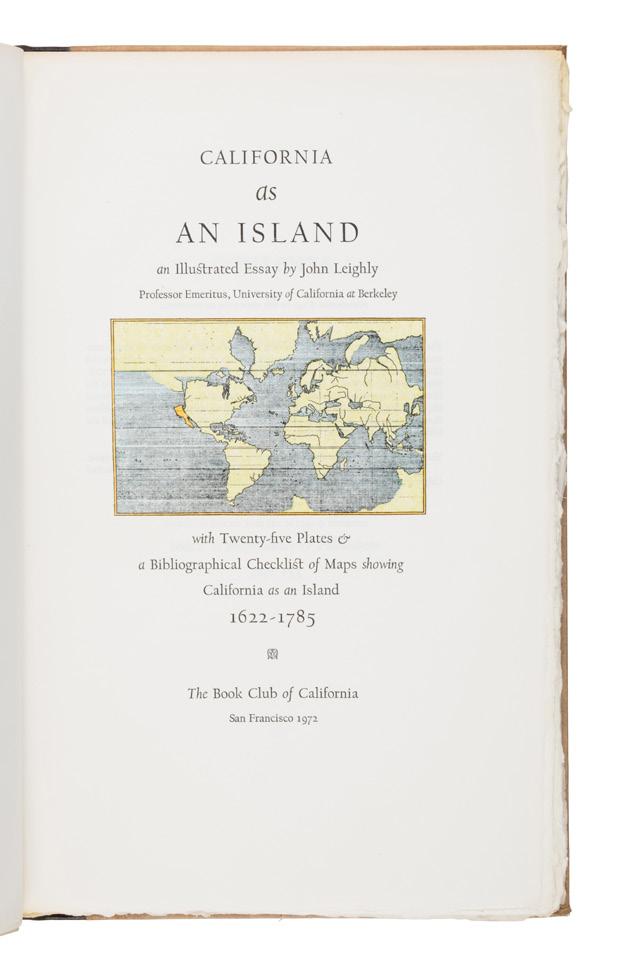
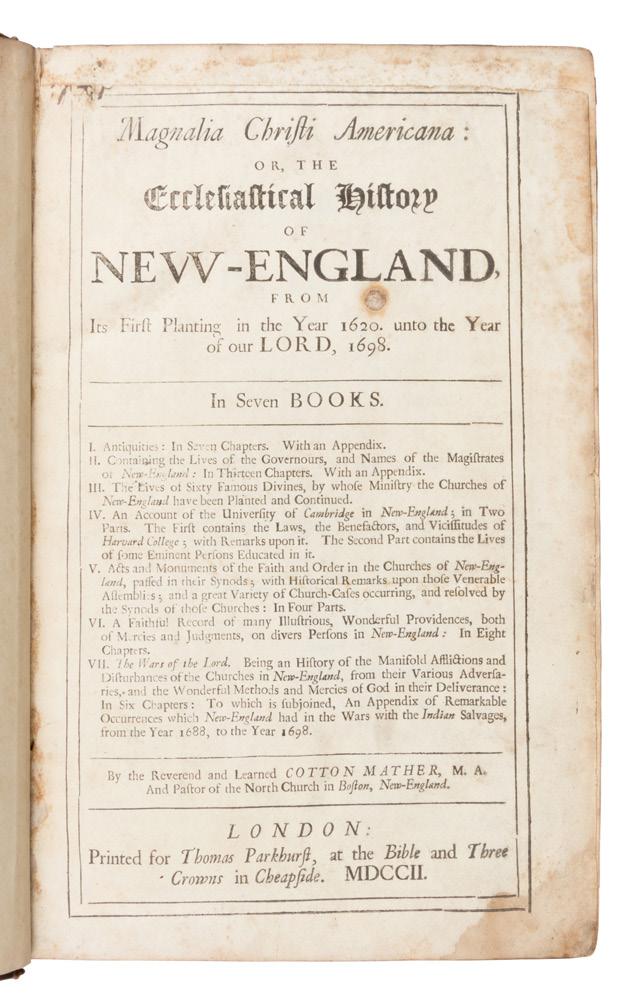
266
Mather, Cotton (1663-1728). Magnalia Christi Americana; or, The Ecclesiastical History of NewEngland, From its First Planting in the Year 1620, Unto the Year of Our Lord, 1698. London: Thomas Parkhurst, 1702.
Folio (324 x 197 mm). (Lacking map but in facsimile at end, and lacking ads; title-page trimmed at upper margin, scattered stains and spotting to first few leaves.) Early paneled calf, central supralibros gilt on both covers, spine in 6 compartments with 5 raised bands, citrus morocco lettering-pieces gilt in second (splitting to front joint, covers a bit rubbed). Provenance: Society of Writers to the Signet (supralibros, inscription on front free endpaper dated 1812).
FIRST EDITION of the greatest history of New England, a landmark in New England religion and American literature, “the most famous American book of colonial times and the indispensable source for colonial social history” (Streeter). The seven books within give accounts of the settlement and religious development of New England, and include an account of the lives of its governors and magistrates, biographies of sixty famous divines, the founding and history of Harvard College, a history of the Congregational Church of New England, and an account of the “Wars of the Lord”, regarding dissident religious sects. Also included is Mather’s description of the Salem Witch Trials and the escape of Hannah Dustin, one the most well-known captivity narratives. Church 806; Grolier American 6; Howes M-391; Sabin 46392; Streeter 658; ESTC T79039.
[With:] MATHER. The Wonders of the Invisible World. Being an Account of the Tryals of Several Witches Lately Executed in New-England. London: John Russell Smith, 1862. 8vo. Engraved frontispiece. Original dark plum cloth gilt.
$400 - 600
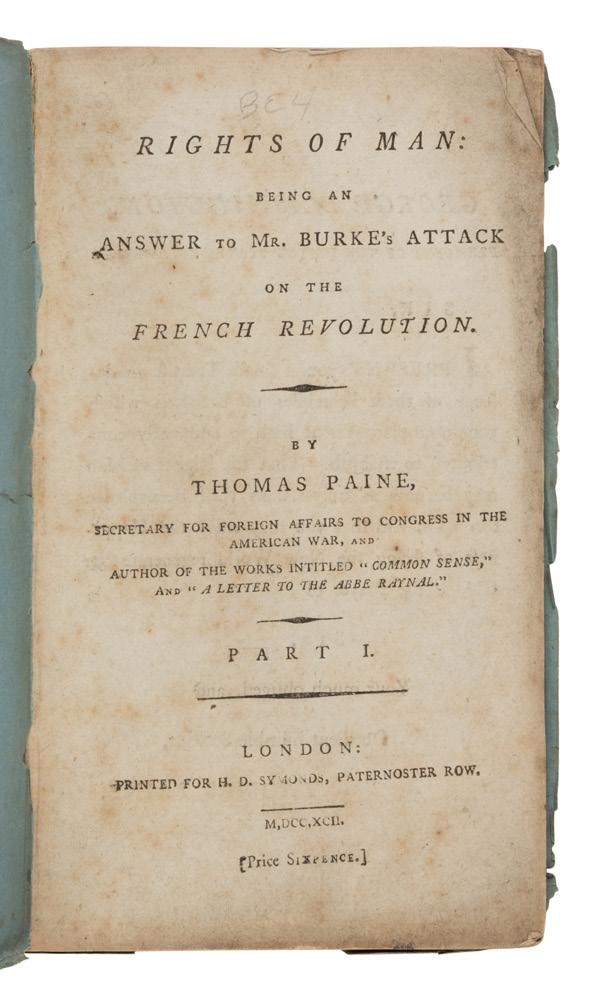
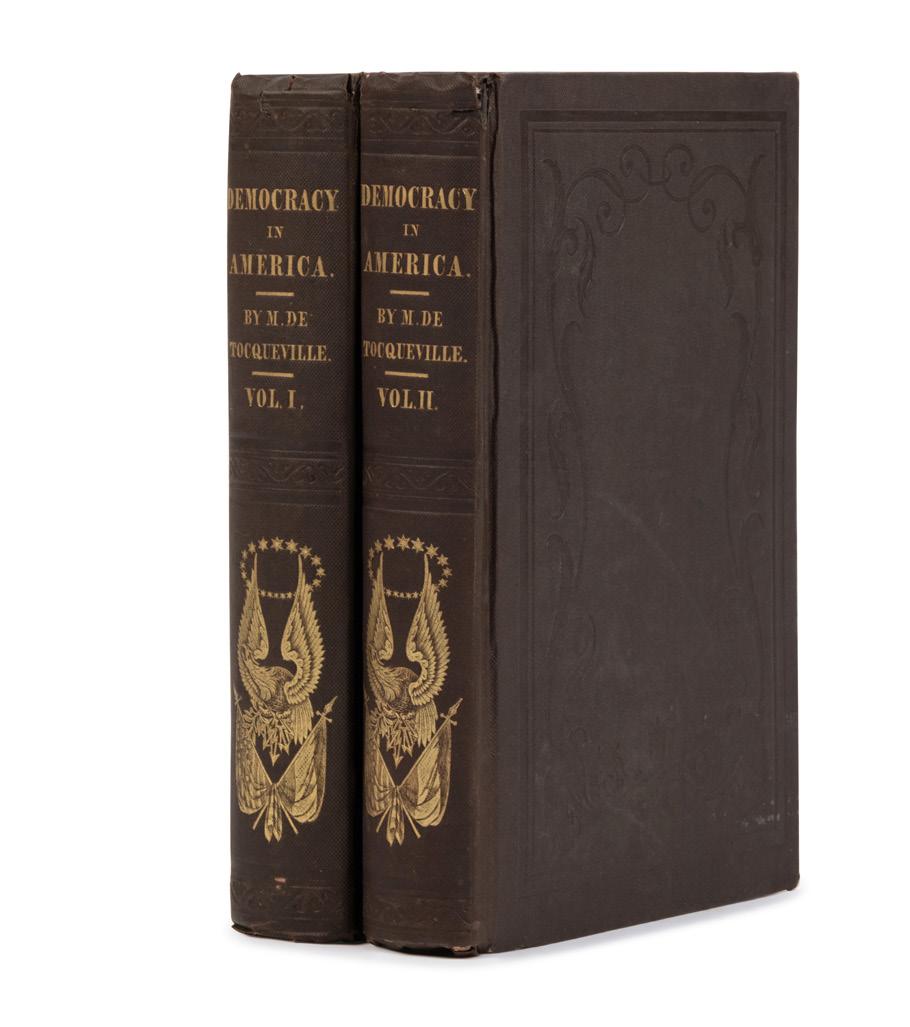
267
Paine, Thomas (1737-1809). Rights of Man: Being an Answer to Mr. Burke’s Attack on the French Revolution. Part I. London: for H.D. Symonds, 1792.
8vo (191 x 108 mm). (Light marginal soiling and spotting to title.) Contemporary (original?) wrappers (upper cover detached, extremes chipped).
Early edition. First printed in London by Joseph Johnson in March 1791, the publication was quickly taken over by J.S. Jordan, who published his own revised edition later that same year. Part two was published a year later, in February 1792. Paine’s defense of the French Revolution and republicanism in general was very controversial, and led to the text’s censorship by the Pitt government, as well as Paine’s indictment for treason. Tried in absentia, he was found guilty of seditious libel and was forced to flee to France. Despite the British government’s permanent suppression of the text, Paine’s work still reached a wide audience, going through numerous editions and translations.
$300 - 500
268
Tocqueville, Alexis de (1805-1859). Democracy in America. With an Original Preface and Notes By John C. Spencer. Henry Reeve, translator. New York: J. & H.G. Langley, 1841.
2 volumes, 8vo. Folding hand-colored map in vol.1. (Small closed tear near gutter). Original dark brown cloth, spines stamped in gilt (some flecks to upper cover of vol.1, small splits to heads of spines).
FIRST COMPLETE EDITION IN ENGLISH, fourth edition overall, of De Tocqueville’s treatise on America, “one of the most important texts on political literature” (PMM). Tocqueville’s depiction of America is both appreciative and critical - he recognizes the country’s democratic achievements while highlighting its inherent challenges and contradictions. Tocqueville believed that equality was the great political and social idea of the age, and thought that the United States offered the most advanced example of equality in action.
Democracy in America was first published in French in two parts, the first appearing in 1835 and the second in 1840. Each part was translated into English and issued separately in both England and the United States: Henry Reeve’s translation of Part I was published in London in 1835, while the first American edition of the first part followed in 1838. Part II did not appear in English translation until 1840. The present edition represents the first appearance in English of the complete work, bringing both parts together in a single publication. Howes T-278; PMM 358 (first edition); Sabin 96065. A BRIGHT SET, RARE IN THE ORIGINAL CLOTH.
$400 - 600
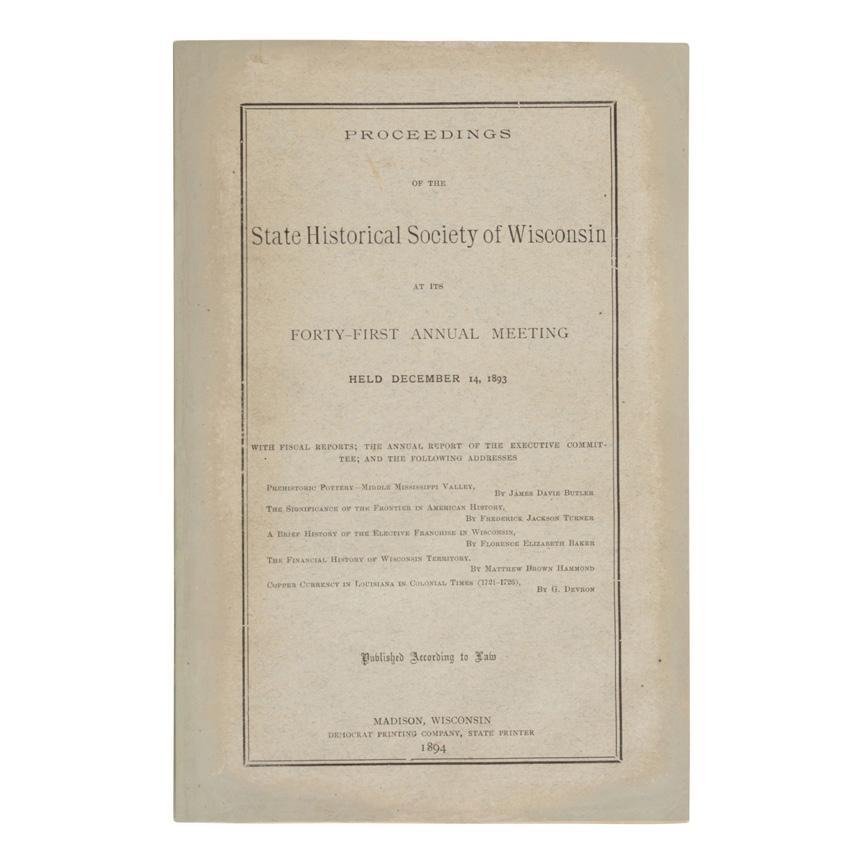
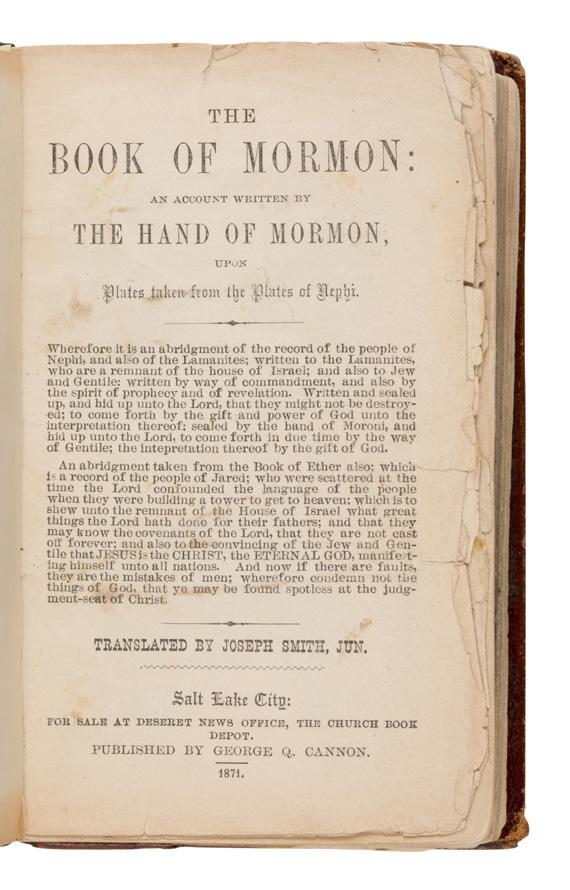
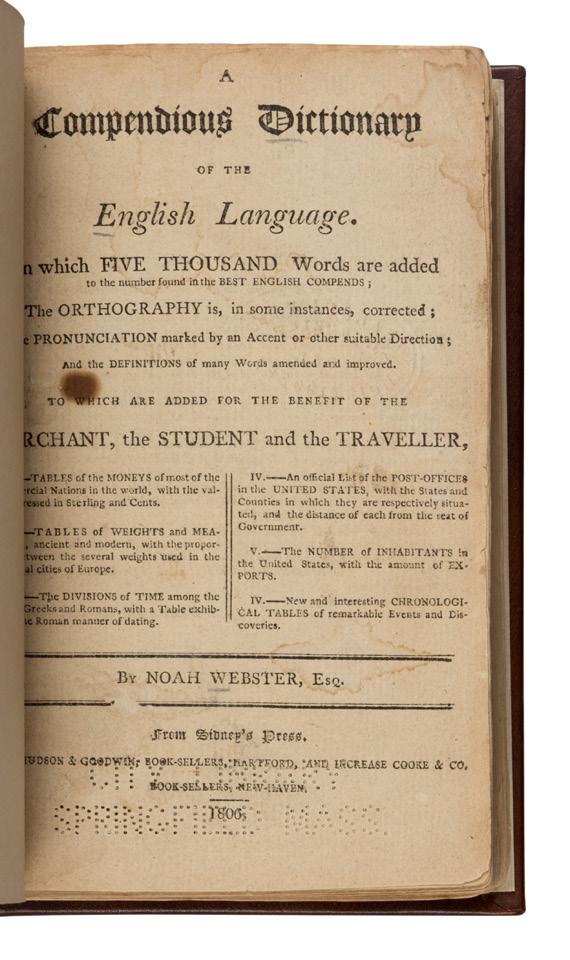
269
Turner, Frederick Jackson (1861-1932). “The Significance of the Frontier in American History.” In: Proceedings of the State Historical Society of Wisconsin at Its Forty-First Annual Meeting Held December 14, 1893. Madison: Democrat Printing Company, 1894.
8vo. Photographic frontispiece and 2 plates. Original printed wrappers (restoration to spine and cover extremes); folding case.
FIRST EDITION of this keystone paper in which Turner “put forward the theory that the uninterrupted search for ‘free land’ and its corollary, the constantly moving ‘frontier,’ ‘with its new opportunities, its continuous touch with the simplicity of primitive society, furnish the forces dominating American character.’ The trader, the rancher, the farmer, the missionary, the soldier, they all contributed to ‘this perennial rebirth, this fluidity of American life’; the necessity of setting up, again and again, new forms of administrative, judicial and governmental institutions made the ‘frontier’ a sort of political laboratory of democracy” (PMM 379). Turner’s thesis is perhaps “the most influential work of American historiography, and moved Turner into the first rank of American commentators. Its immediate effect was to focus attention on the closing of the frontier in the United States and the end of the frontier West” (Reese). Graff 4209; Grolier American 96; Howes T422; Reese, Best of the West pp.249-250; Streeter sale 4288.
$2,000 - 3,000
270
Smith, Joseph (1805-1844), translator. The Book of Mormon: An Account Written by the Hand of Mormon, Upon Plates taken from the Plates of Nephi. Salt Lake City: George Q. Cannon, for sale at Desert News Office, the Church Book Depot, 1871.
Small 8vo (152 x 95 mm). (Lacking half-title, list of contents [pp. 7-12], and A8, marginal chipping and short closed tears to the first few leaves including title, 2L7 and 2L8 with some loss to text near gutter). Contemporary straightgrain morocco (rebacked, preserving front pastedown and rear endpapers). Provenance: Ephraim Anderson, Moroni, Utah (ownership inscription on rear endpapers, initials on fore-edge of text block); Minnie B. Anderson (ownership signature on rear pastedown, dated 1909).
FIRST EDITION WITH A SALT LAKE CITY IMPRINT, from the English stereotyped plates of 1852, with the replated twenty-five pages made for the reissue of the 1866 Liverpool edition. This was the first Book of Mormon to be printed in the established headquarters of the Mormon Church, and the first to be printed by the Church of Latter-day Saints in America since the 1842 Nauvoo edition. Flake/Draper 609; Sabin 83051.
$1,000 - 1,500
271
Webster, Noah (1758-1843). A Compendious Dictionary of the English Language. New Haven, CT: Sidney’s Press for Hudson & Goodwin, 1806.
8vo (178 x 108 mm). (A few scattered stains to title-page, small marginal tear on p.167, slightly touching letters on p.168.) Modern calf antique. Provenance: City Library Springfield, MA (perforated stamp and embossed stamp on titlepage, and on p.57).
FIRST EDITION. The first appearance of Webster’s “American” spelling, which preceded his unabridged Dictionary, printed in 1828. 7,000 copies of this edition were produced at a price of $1.50. Grolier American, 36n; see PMM 291; Sabin 102347; Shaw & Shoemaker 11831; Skeel 577.
$600 - 800
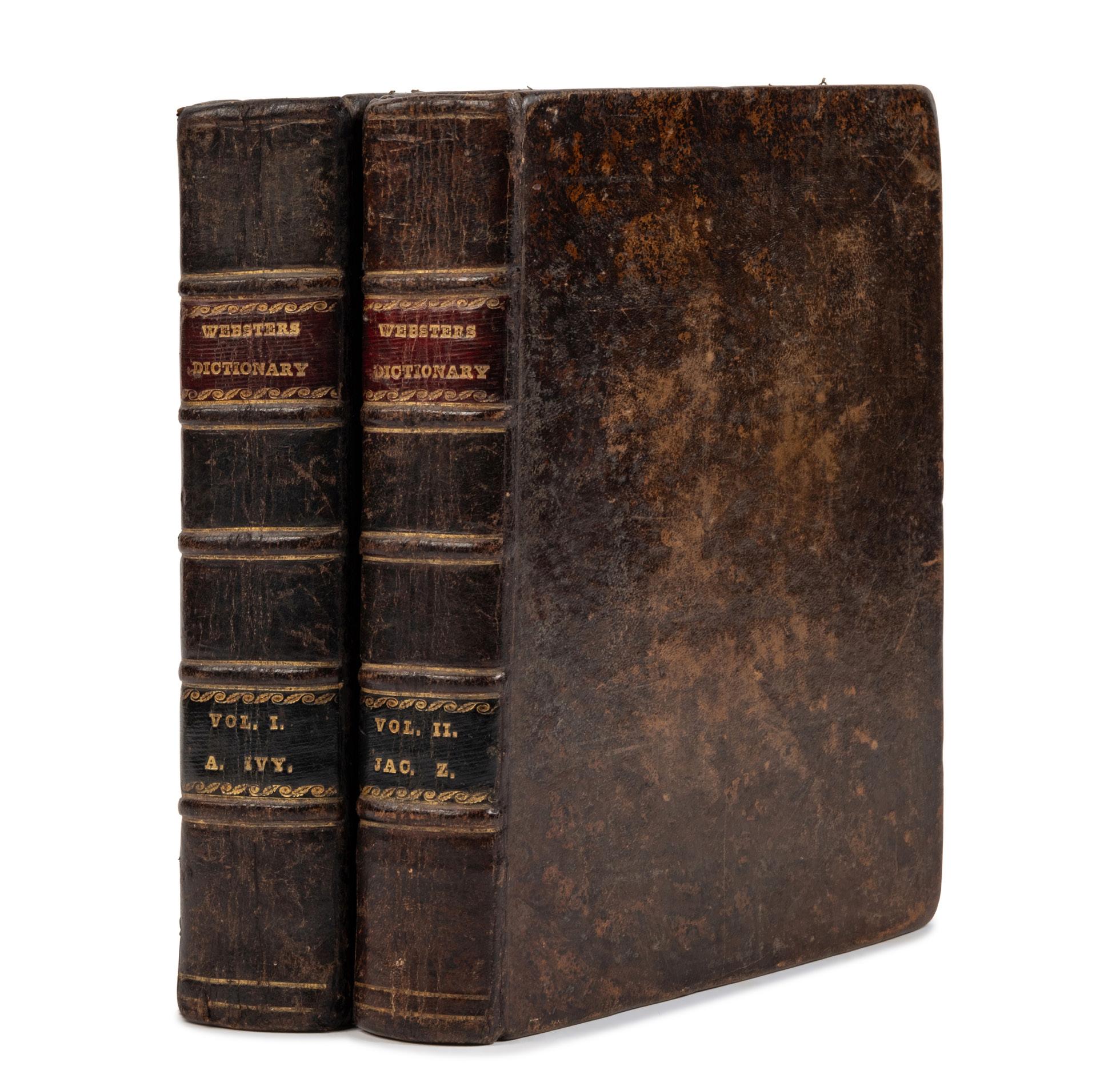
272
Webster, Noah (1758-18943). An American Dictionary of the English Language... To Which Are Prefixed, and Introductory Dissertation on the Origin, History and Connection of the Languages of Western Asia and of Europe... New York: S. Converse, 1828.
2 volumes, large 4to (279 x 222 mm). (Light marginal toning to title-pages, spotting to endpapers.) Contemporary dark calf, spine in 6 compartments with 5 raised bands, red and black straight-grain morocco lettering-pieces gilt, speckled edges (light rubbing to extremes). Provenance: J.D. Wickham (early ownership signature dated 1849 on front free endpaper); Cutler Palmer (early ownership signature on front free endpaper).
FIRST EDITION of Noah Webster’s highly important American dictionary of the English language, considered “the most ambitious publication ever undertaken, up to that time, upon American soil.” (DAB). Guided by a nationalistic desire to codify a distinctly American language, Webster began publishing spelling books, grammars, and readers for children in the 1780s. His work in lexicography began in 1800, and this unabridged dictionary was preceded by a much shorter duodecimo version in 1806, Compendious Dictionary of the English Language. With the publication of this set, “Webster set a new standard for etymological investigation, and for accuracy of definition, and included 70,000 words, as against the 58,000 of any previous dictionary” (Grolier). Grolier American 36; Skeel 583; Sabin 102335; PMM 291. A SUPERB COPY, IN A CONTEMPORARY BINDING.
$5,000 - 7,000
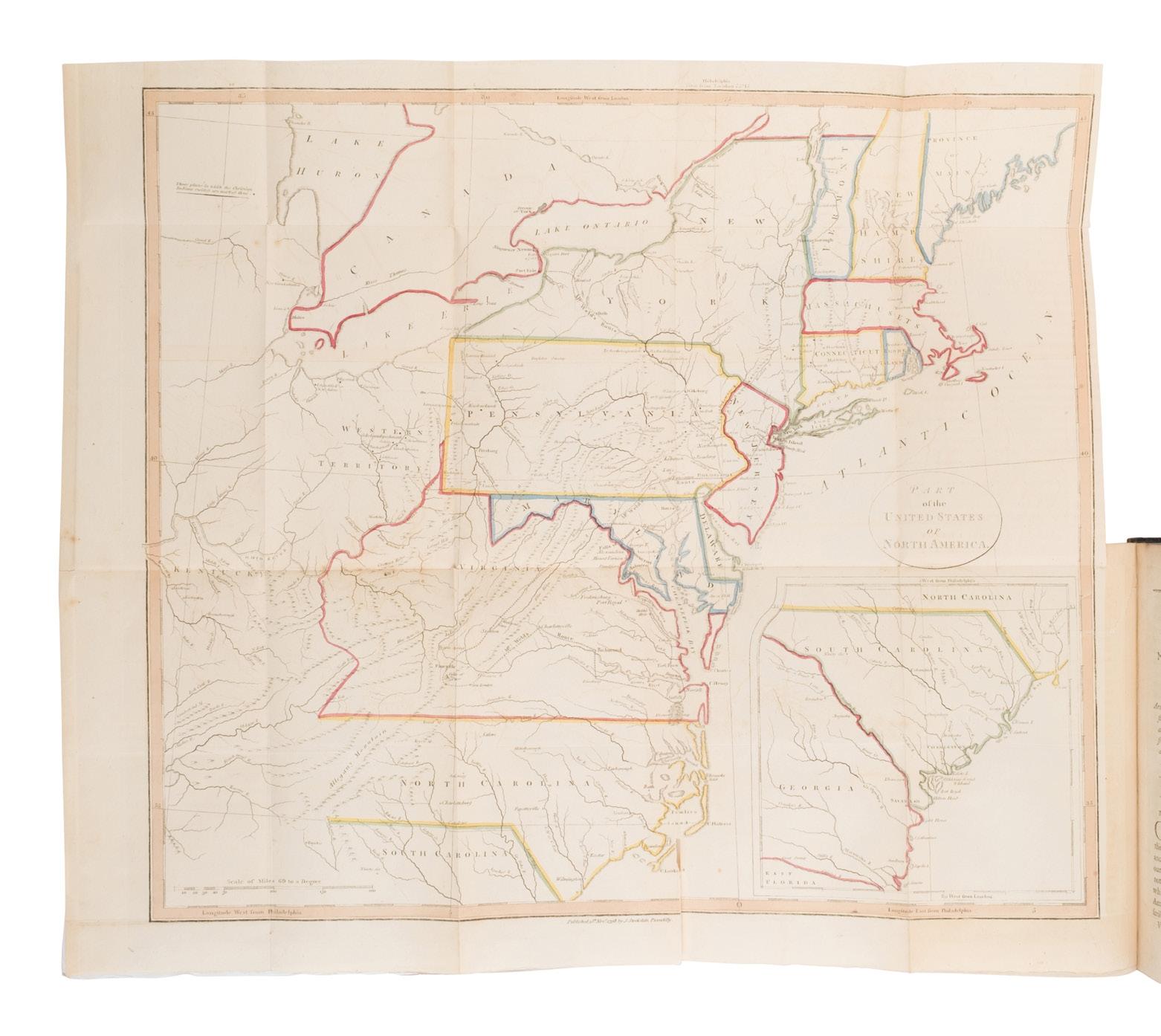
273
Weld, Isaac (1774-1856). Travels Through the States of North America. London: for John Stockdale, 1799.
2 volumes, 8vo (210 x 127 mm). 15 engraved folding plates, one engraved folding map hand-colored in outline. (Spotting to plates, some offsetting from plates to text.) Contemporary half calf, marbled boards (upper cover of vol.1 detached, joints splitting, spines worn). Provenance: John Phillips, Edstone (armorial bookplate); Francis Weld Peabody (1881-1927), American physician and professor at Harvard (bookplate).
Second edition of Weld’s account of his travels through Virginia, Pennsylvania, New York, and Canada. The engraved plates include three views of Niagara Falls and city plans of Washington and Quebec. Howes W-235; Sabin 102541.
$400 - 600
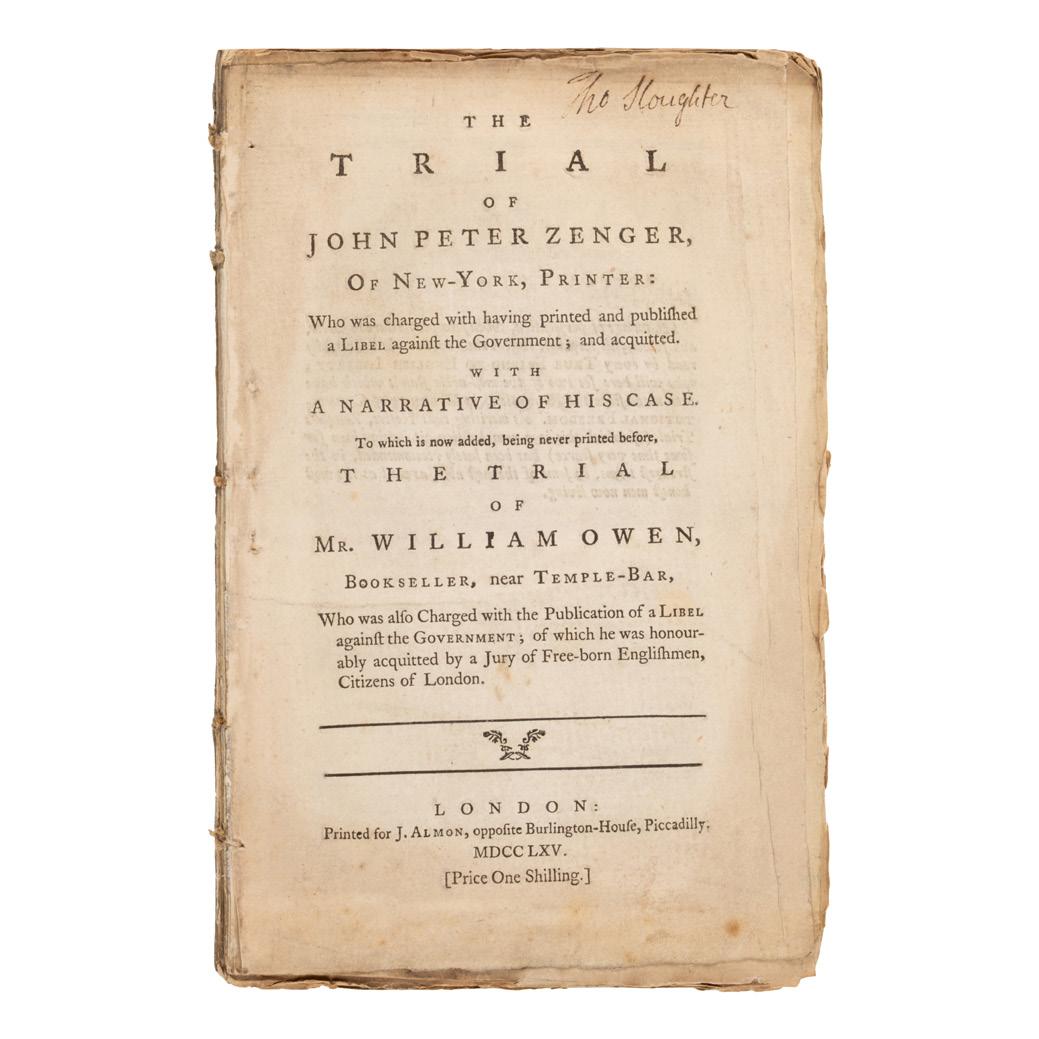
Zenger, John Peter (1697-1746). The Trial of John Peter Zenger, of New-York, Printer... To which is now added, being never printed before, The Trial of William Owen, Bookseller, near Temple-Bar... London: Printed for J. Almon, 1765.
8vo (216 x 140 mm). Disbound and uncut. (Some marginal browning.); cloth folding case and chemise. Provenance: Thomas Houghter (early ownership signature on title-page).
FIRST EDITION THUS. The account of Zenger’s trial was first published in 1736, and this later edition includes for the first time the details of a similar trial against William Owen. Owen, a bookseller in London, had published a pamphlet in defense of Alexander Murray, who was tried for misconduct during an election and refused sentencing. Owen was arrested for libel, but, as in Zenger’s trial, the jury ruled in his favor after ignoring instructions from the judge.
“One of the famous decisions in legal history, establishing the epochal doctrine of the freedom of the press; probably written by James Alexander, one of Zenger’s attorneys.” (Howes). In 1733, Zenger published an article in his New York Weekly Journal that criticized British Colonial Governor William Cosby for removing the Colony’s Chief Justice, Lewis Morris. A year later, Zenger was arrested for seditious libel and was represented by Philadelphia attorney Andrew Hamilton. At the time, under British law, truth could not be used as a defense in libel cases, but Hamilton urged the jury to strike down this unjust law in favor of his client. The jury concurred, ignored the judge’s instructions, and ruled Zenger not guilty. The case galvanized the colonies and later influenced how people thought about these topics, leading decades later to their enmeshment in the United States Constitution and Bill of Rights. Howes Z-6; Sabin 106311; ESTC T51691.
$1,000 - 1,500

CHRISTOPHER BRINK
Associate Vice President, Senior Specialist, Head of Sale, Books & Manuscripts, Chicago
312.334.4217 christopherbrink @freemansauction.com

DARREN WINSTON Senior Vice President, Head of Department, Books & Manuscripts, Philadelphia
267.414.1247 darrenwinston @freemansauction.com

JOSHUA MCCRACKEN Cataloguer, Books & Manuscripts
312.447.3287 joshuamccracken @freemansauction.com

COLIN FOLEY, Associate Specialist, Books & Manuscripts
217.414.1246 colinfoley @freemansauction.com

ADAM DIAS Cataloguer, Books & Manuscripts
267.441.6033 adamdias @freemansauction.com

JACK CARDOZA
Department Coordinator, Books & Manuscripts
jackcardoza @freemansauction.com

JAY FREDERICK KREHBIEL Executive Chairman jaykrehbiel @freemansauction.com

JARRETT ANISTRANSKI Chief Operating Officer
212.243.3000 jarrettanistranski @freemansauction.com

MOLLY MORSE LIMMER Executive Vice President, Deputy Chairman
312.447.3275 mollylimmer @freemansauction.com

MOLLY E. GRON, J.D. Managing Director
312.334.4235 mollygron @freemansauction.com

JULIA FITZGERALD Chief Marketing Officer
312.334.4213 juliafitzgerald @freemansauction.com