
The Origins of Space Travel
Toby Woodcock
The Soviet Government inherited a war torn, utterly exhausted and backwards society in 1921. Shortly after the establishment of a Soviet state, the country underwent a tragically massive civil war, stacking yet more millions of bodies on top of those killed in World War One.
The Soviet Government's initial plan for the country was to spread their ideas around the world, however, the failures of the German revolution, and socialist movements in Italy, Poland and Hungary, the Soviet government had to look inwards.
When Lenin died in 1924, Stalin took over the country and begun his plan to rapidly industrialise the Soviet Union. These plans formed the bases for Soviet development in the future, and are vitally important for our story. Without this massive mobilisation of people, and subsequent rapid infrastructure improvements, the Soviets would likely never have developed the technology to go into space. Therefore, to start our origins of space travel, it is imperative to understand how the Soviet Union came to be a power capable of achieving such a feat as sending man to space.

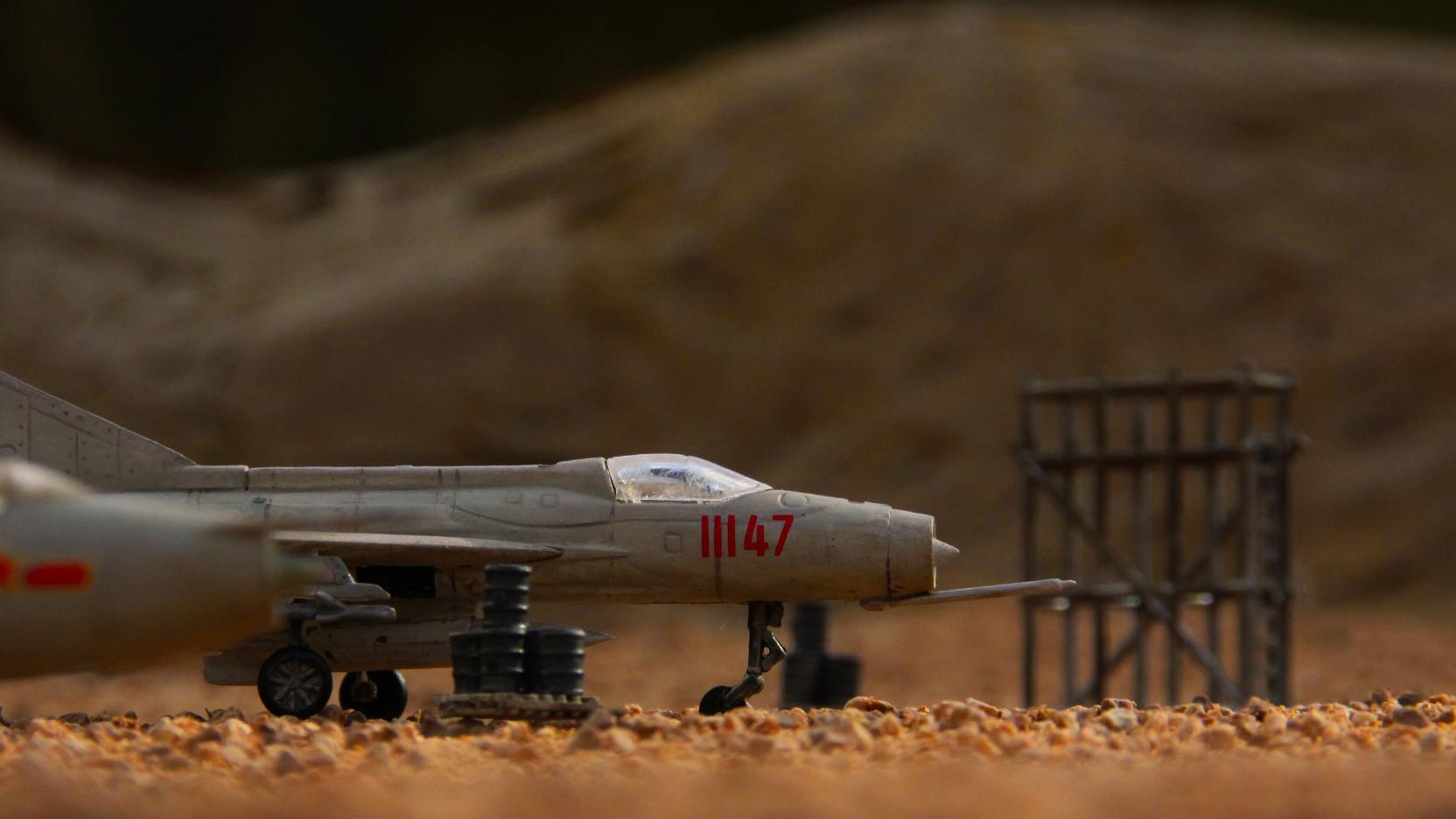
On the 19th of May 1949 the Soviet Union developed the world’s first supersonic jet. A technological marvel that would change and dominate the next epoch of human scientific progression.
The bases of the MiG 21’s engine was a liquid fuel combustion engine, which was then later modified to fit the unique job of manoeuvring a space shuttle outside of earths obit. There is no doubt that the development and application of this engine formed the material and theoretical bases for humanities journey past earth’s atmosphere.
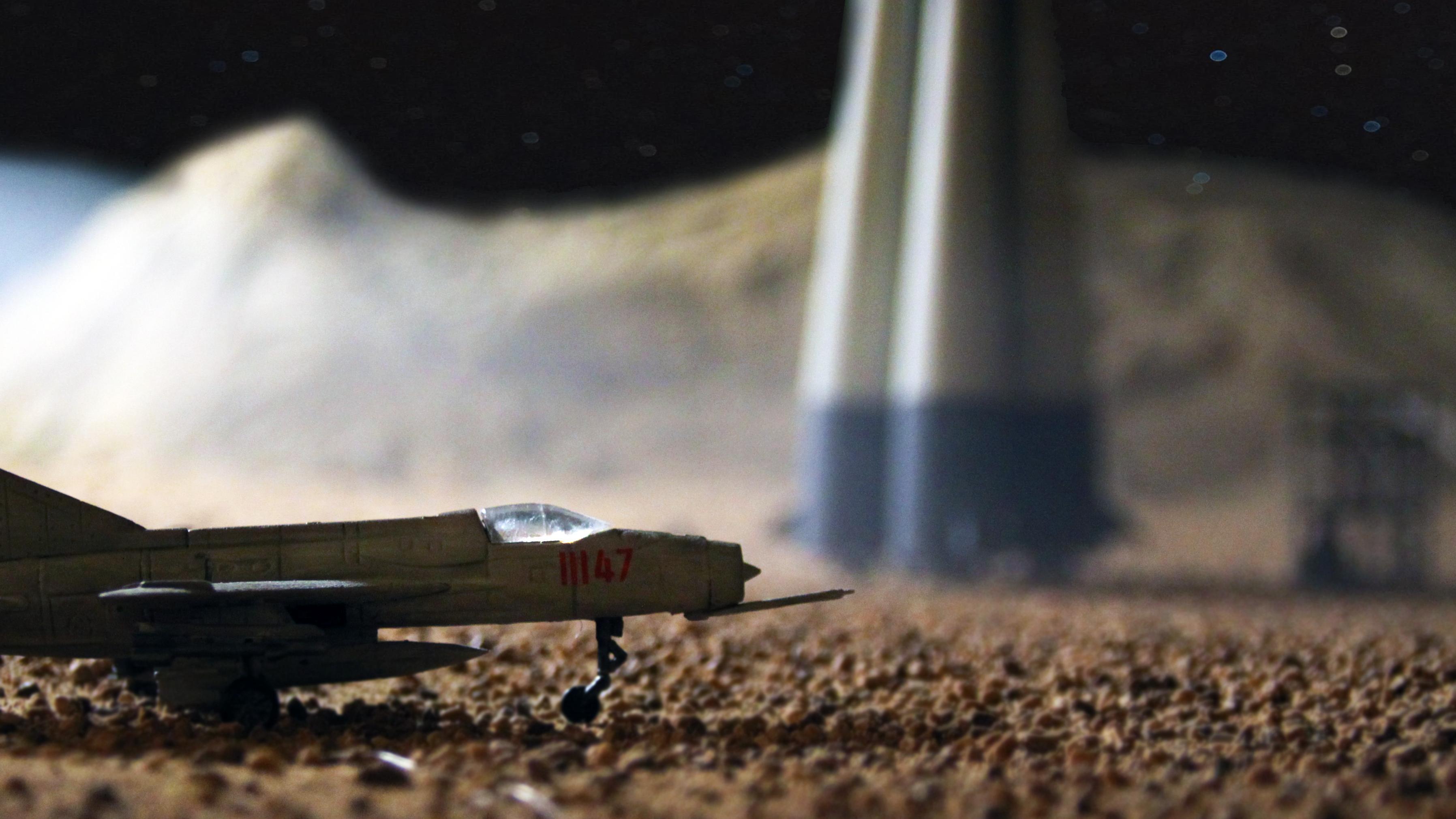
After the death of Stalin in February 1954, the Soviet Union was at risk of falling into stagnation and technological regression, the Second World War and Stalin's ‘five-year plans’ had accelerated Soviet industrial capacity and technological innovation to a remarkable degree, however with the party beginning to fragment and a provisional government being formed, the gargantuan task of solidifying the Soviet Union as a world power became increasingly pressing.
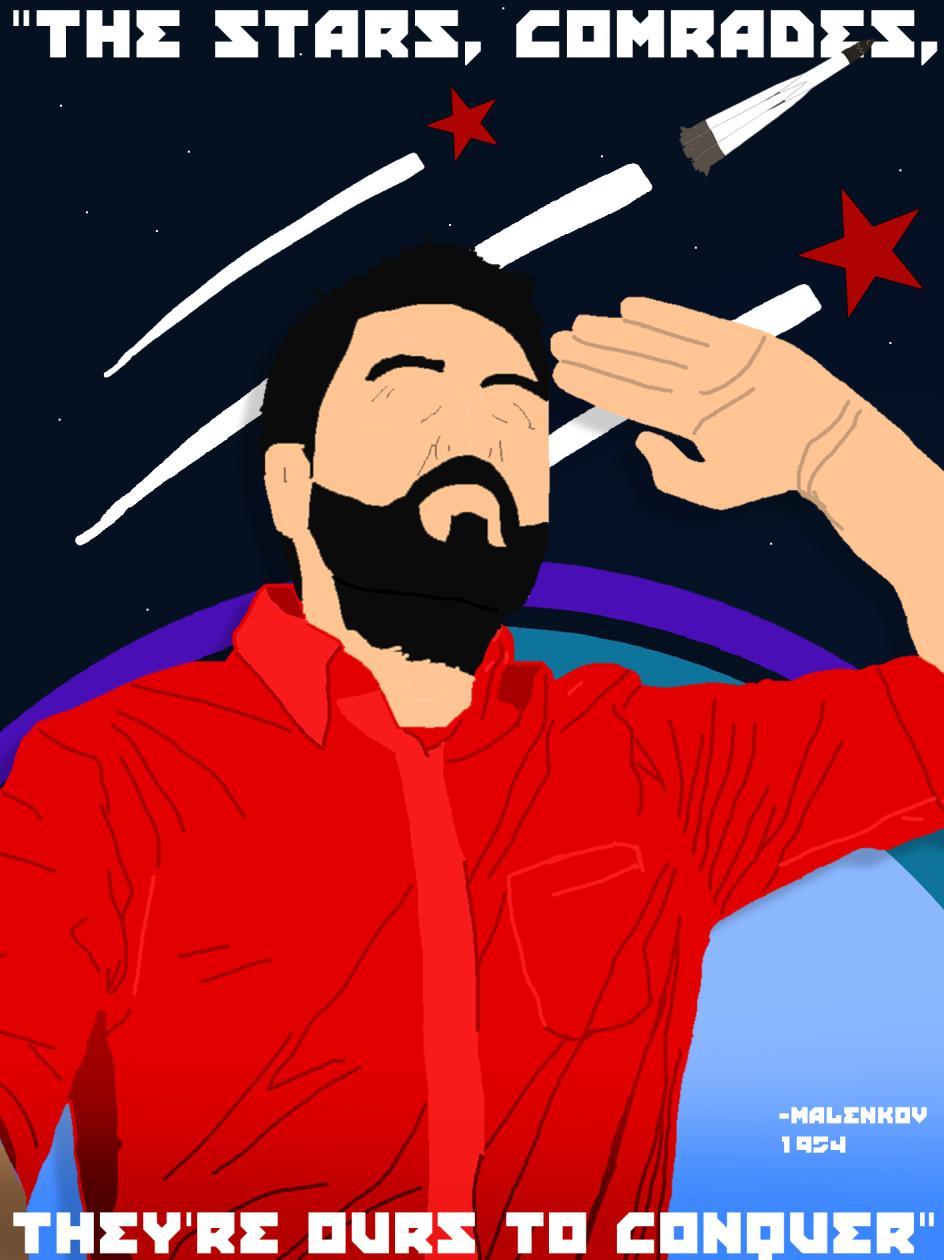
However, with Malenkov leading this new government, he made clear to his people and the party that the Soviet Union would continue its progression and would ‘conquer the stars’.
Soviet Scientists worked tirelessly to fulfil this promise and began to draft a schematic of a vehicle that, if executed properly, would be able to send man into space. So began, Vostok 1( ‘Boctok 1’ in Russian)
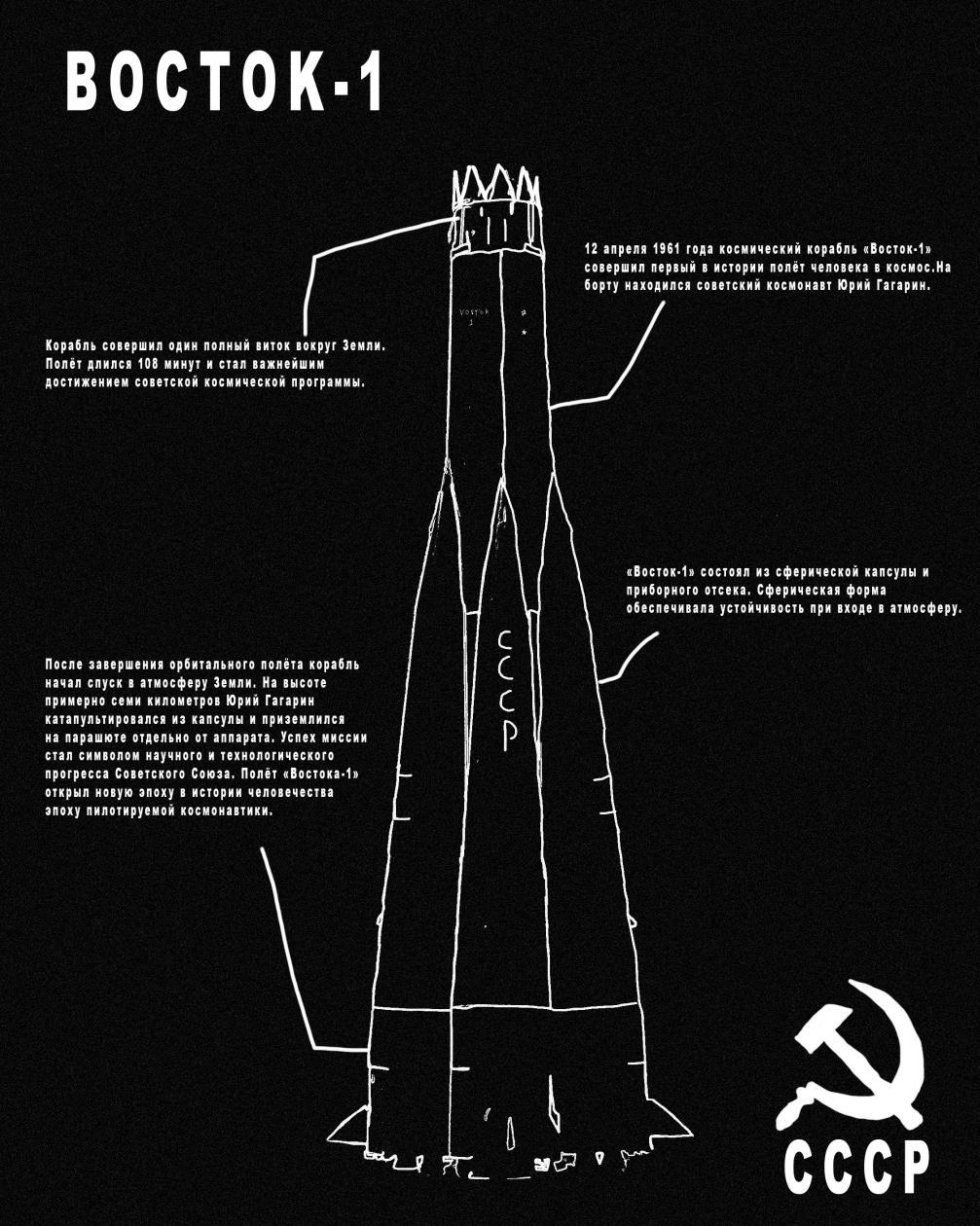
The Scientists, lead my Hernan Ilych, had struck gold with their original draft. Through continuous and veracious peer review, experiments, telegrams to Moscow and finally a green light on construction, Soviet Industrial workers began to construct the Vostok One rocket ship in the Baikonur Cosmodrome.
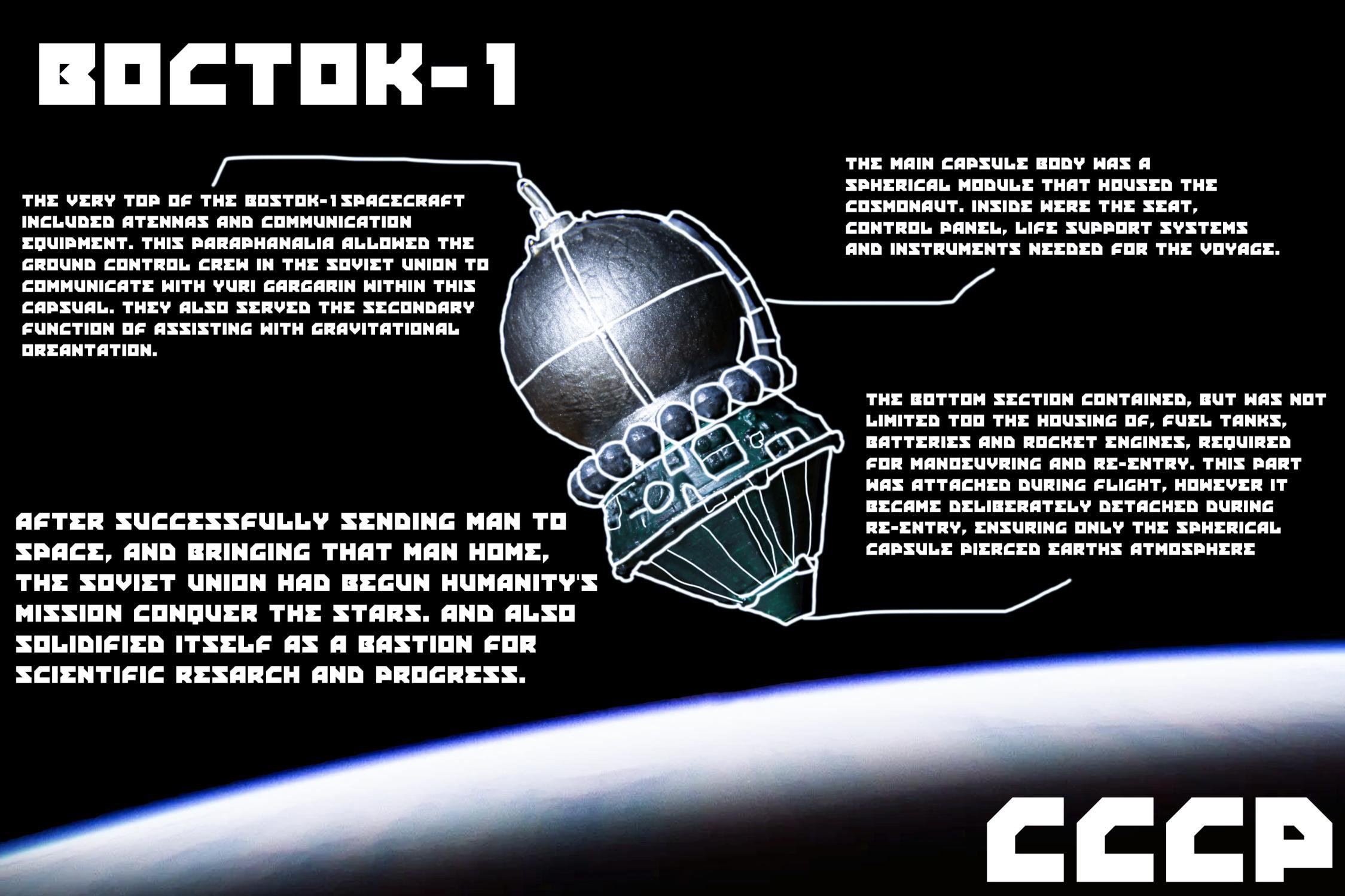
The vessel had 4 Migolorian Graverick solid fuel rocket engines attached to decoupling hardpoints, a central liquid fuel engine, and a final orbit capsule equipped with gyro motors. This gave the rocket enough ‘Delta V’ to enter into a stable orbit around the globe, and then to ‘retrospectively’ kill its speed.
Overcoming the challenge of thrust to weight ratio, and the question of how energy behaves without atmosphere, the Soviets had at long last, cracked the code to achieve not just exit, but safe and controlled re-entry.
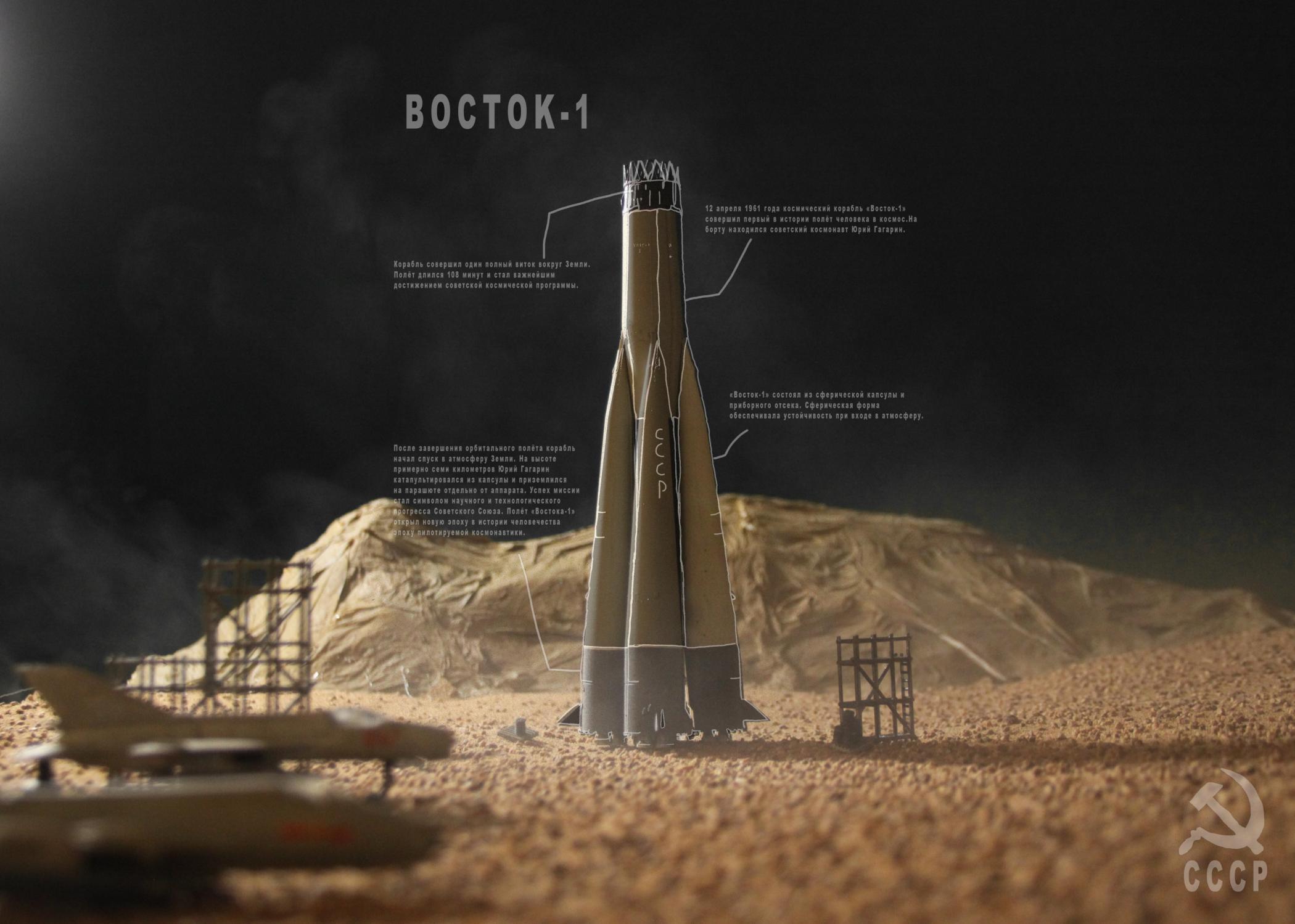
After 3 failed launches due to technical malfunctions from mission control, the brave Yuri Gagarin entered the capsule of the completed Vostok One rocket in 1961. With Khruschev as General Secretary, the Soviet scientific machine was offered a boost, much to the joy of Hernan Ilych.
On the morning of July 19th, 1961, the Soviets launched Yuri into space aboard Vostok One.
After the 4 solid fuel engines were exhausted, Yuri, under 14Gs of gravitational force, detached the engines, and began to take control of the ‘Vectoring’ liquid fuel engine.
At 80,000 meters up, and travelling at 1000 meters per second, Yuri could finally relax as the pressure of earths gravity began to pull less violently on his body, and the atmosphere began to thin. At 90,000 meters he began to bend the rocket into a stable orbit, ensuring that at 110,000 meters, the spacecraft would be parallel to the ground. Apon achieving this immediate goal, to enter orbit, the final decoupling stage was activated, and the capsule containing Yuri, began its rapid decent back to earth.
Our story ends happily, Yuri Gagarin returned safely home, and the final launch of Vostok 1 had been flawless. Yuri is an international hero and remains one of the bravest humans to ever walk the planet, or to not, perhaps.
‘I believe in nothing, nothing but the human will’ – Yuri Gagarin 1961