
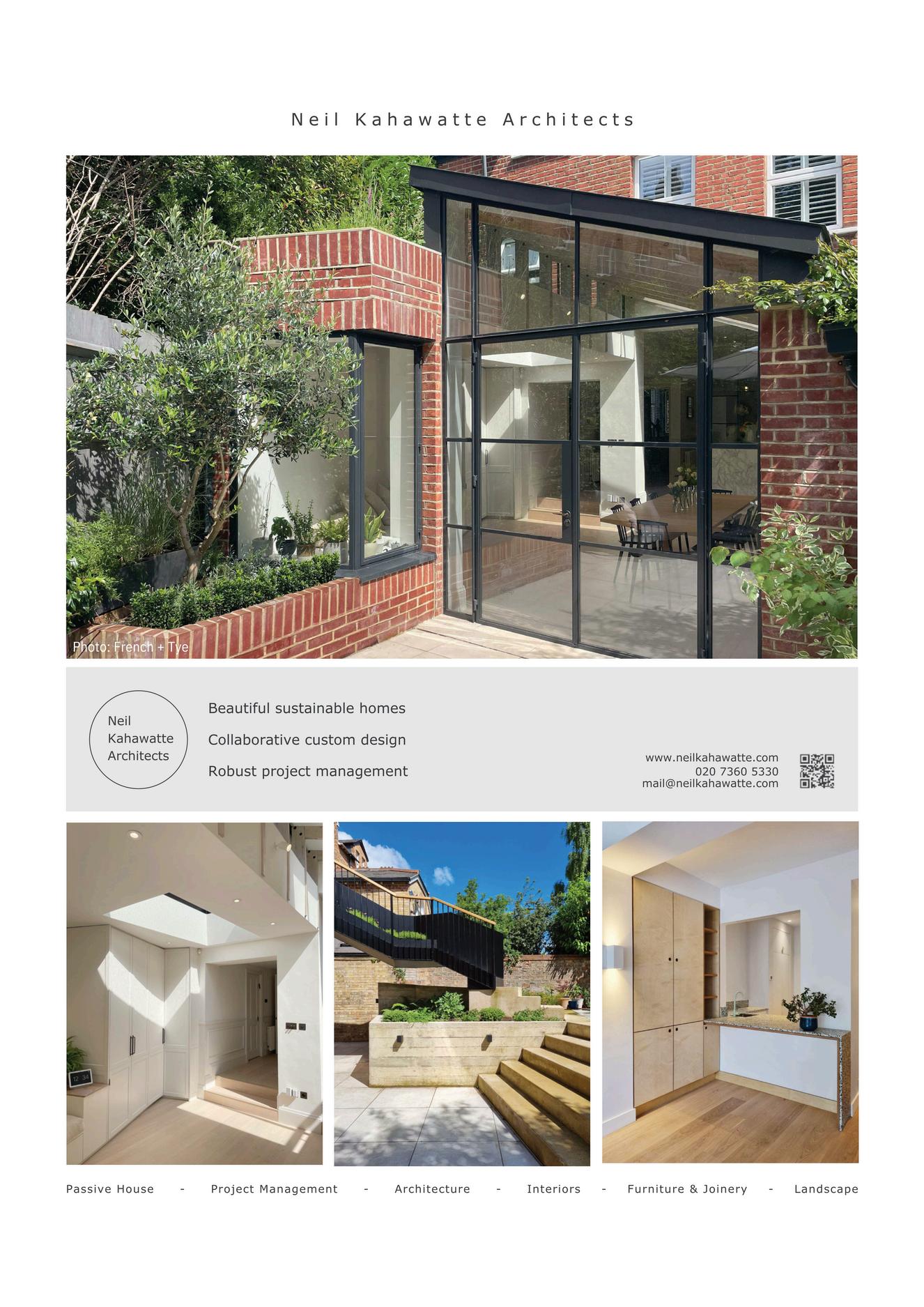





















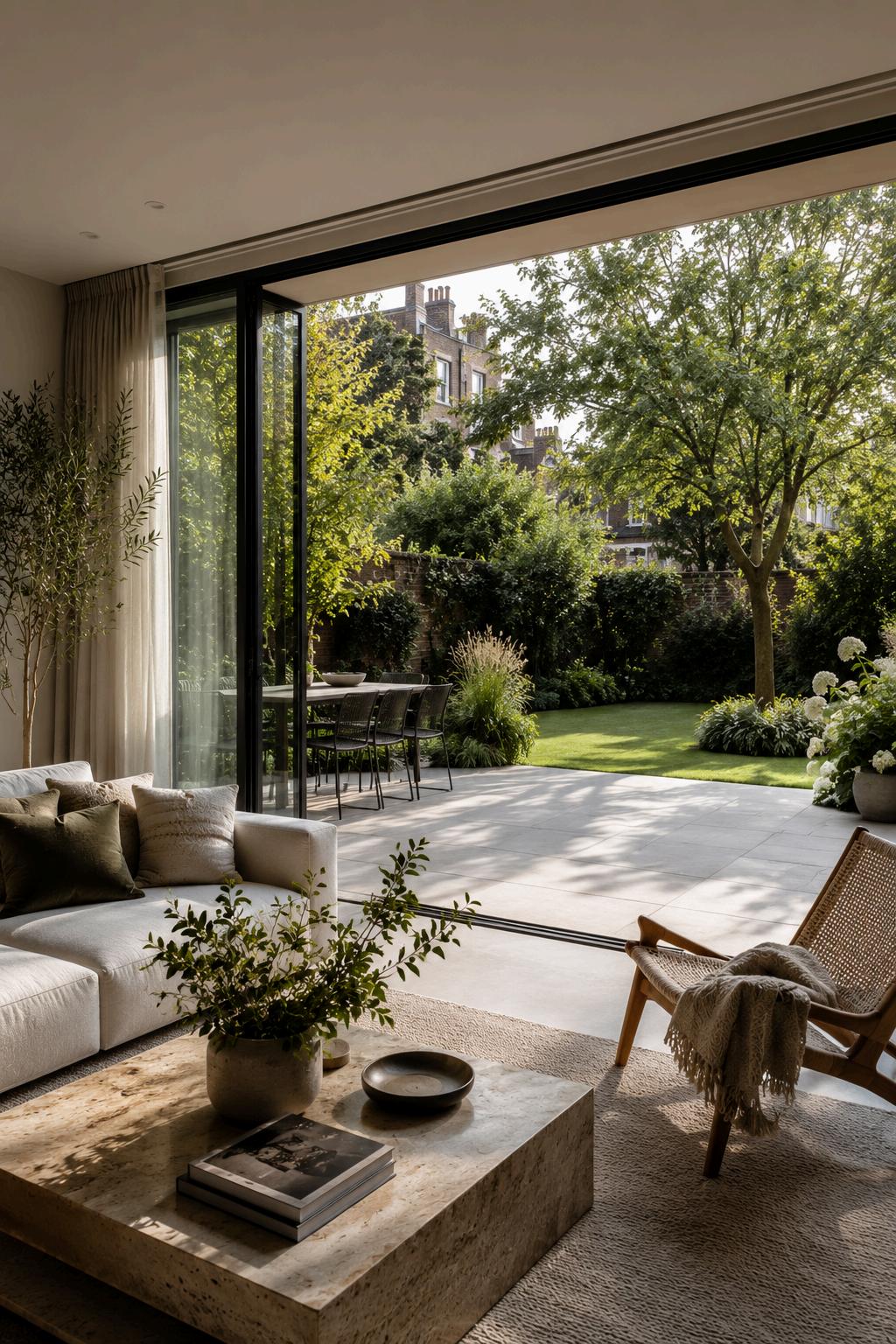
Misso agrees that a successful scheme goes beyond simply opening a door to the garden “The most successful designs create visual continuity through consistent materials, colours and design language across both spaces, ” he says “Extending flooring tones, repeating finishes, and carrying the same palette from indoors to outdoors helps blur the boundary between the two ”
Furniture and planting also play a key role “Outdoor spaces should feel like a natural extension of the interior rather than a separate zone, ” says Misso “Thoughtful lighting, layered planting, and aligned sight lines further strengthen the connection ”
Importantly, homeowners do not need large gardens or extensive glazing to achieve the look Matthews believes visual continuity can make a significant difference in even the smallest spaces “Placing planting both inside and outside near windows, keeping window treatments minimal, and using mirrors to reflect greenery and natural light deeper into the space ” can help create a stronger connection with the outdoors
She also recommends introducing “larger statement plants, outdoor lighting, and outdoor furniture, rugs and accessories in fabrics that feel just as comfortable indoors”
Misso echoes this approach “Creating an indoor-outdoor connection doesn’t require expansive glazing or a large backyard,” he says “Even small terraces, courtyards, balconies, or compact gardens can feel connected to the home when designed intentionally.”