
White Ash
Other common names:Ash,AmericanAsh,American white ash, BiltmoreAsh
Scientific name: Fraxinus americana
Conservation status: Critically Endangered


Characteristic features
Foliage:
● Dark green leaves
● Red/purple in the fall
● 8-15 inches in length
● 5-9 leaflets
● Compound leaves
Ecological Importance

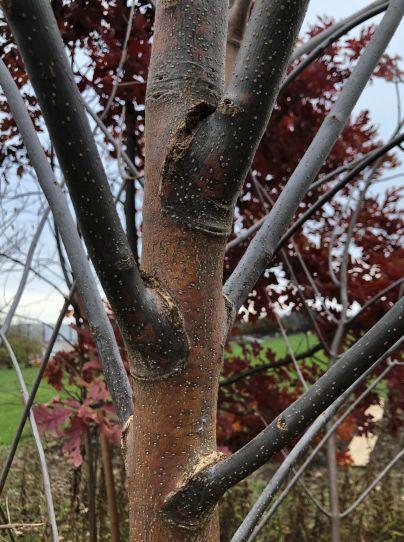

Bark:
● Diamond pattern when mature
● Branches alternate by turning 90 degrees
● Smooth bark on young trees
White ash is an excellent food source, the seeds are edible for wildlife, and the leaves are a critical food source for frogs.The tree provides lots of shade, and is a good nesting place for woodpeckers, grey squirrels and owls. White-tailed deer also like the leaves.
Importance
The white ash is famous for its use in baseball bats due to its shock- resistant properties. It is the most valuable wood of the ash species. It is also commonly used in medicine to treat dysmenorrhea, fever, arthritis, constipation and bladder problems. Wood from the white ash has been used by the Indigenous Peoples to create baskets, canoe paddles, snowshoes and firewood.


The white ash naturally grows in Southern Ontario, Cape Breton Island, Nova Scotia, Florida, Minnesota andTexas. On the HSC campus, the white ash is found in the Oak Savannah.