High Profile: Green Supplement 2025-2026

Page 1


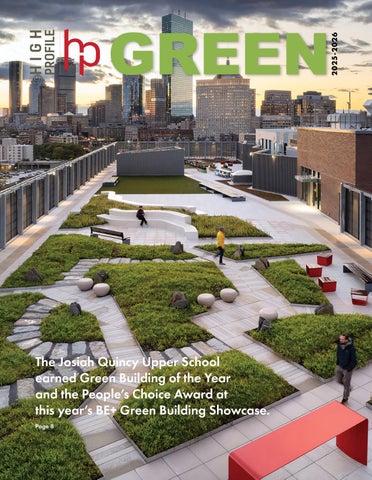
The Josiah Quincy Upper School earned Green Building of the Year and the People’s Choice Award at this year’s BE+ Green Building Showcase.

8

Ready to go electric?

As the demand for electric vehicles surges, so does the need for efficient and reliable charging infrastructure. We have the expertise and training to install and maintain the complex electrical system. By working with our contractors, you’ll

BE+ Hosts 2025 Green Building Showcase

Boston – Built Environment Plus (BE+) recently hosted its 2025 Green Building Showcase at Boston’s largest net-zero facility at One Boston Wharf Road. Over 330 people gathered to celebrate the local green building community and the accelerating progress towards sustainable and regenerative buildings across Massachusetts.

BE+ received a record of 68 award submissions this year, including nine for a new Building Decarb Intervention Award focused on smaller-scale emission reduction interventions for existing buildings. WS Development hosted the event for the third consecutive year, and a panel of national judges selected the standout projects, while local judges chose a Change Agent of the Year recognizing someone making a significant positive impact on the environment, social equity, and the economy.

“The projects at this year’s showcase signal a revolution in the building sector as things we only dreamed about at the start of my career are not only being built, but these project teams are doing it with little to no cost premium,” said BE+ executive director, Meredith Elbaum. “These projects are real. They are happening. They are energy efficient, healthy, and cost effective. They reduce greenhouse

gas emissions while saving untold millions of dollars over their lifetime. They are utilizing Mass Save incentives to generate $3 in energy cost savings for every $1 invested and they have created the new standard for building,”

According to the judges, the entries marked “a notable evolution in the caliber and focus of projects in just one year. This year’s field included a multitude of examples of well-done geothermal and mass timber solutions, renovations, and building reuse.”

An exemplary Boston Public Schools project emerged as both the fan favorite and judges’ pick for Green Building of the Year. The Josiah Quincy Upper School (JQUS), located in Boston’s historic Chinatown, was designed by HMFH Architects to meet Boston’s Green New Deal and climate action plans, support minority students in a dense urban environment, and provide all of the educational facilities of a modern high school. The all-electric facility is one of only eight schools nation-wide to receive the U.S. Green Building Council’s LEED v4.1 Platinum certification.

BE+ added the new Building Decarb Intervention Award this year to highlight impactful and replicable projects that are leading the way towards the state’s climate goals. The winner was an innovative waste-heat recovery plan submitted by GreenerU for a 27-story affordable housing apartment tower in Mission Hill’s Levinson Tower. According to the judges, “The renovation at Levinson is designed to improve the health of low-income residents, reduce heating costs, and capture wasted heat while providing significant decarbonization and compatibility with a future ground source heat pump. The jury was also impressed at the number of stakeholders engaged in the process. We need this kind of creativity and work at scale.”

Judges also selected Marty Josten, principal director of building decarbonization at New Ecology, as Change Agent of the Year. The award recognizes her significant positive impact on the environment, social equity, and the economy by creating a blueprint for how communities can build a resilient sustainable future through collaboration.

Green Building of the Year and People’s Choice Award

Josiah Quincy Upper School, submitted by HMFH Architects

Building Decarb Intervention

Roxbury Tenants of Harvard Levinson Heat Recovery, submitted by GreenerU, Inc.

Carbon & Energy

The Guild, submitted by Utile

Health & Wellness

Penn State Behrend Erie Hall Recreation and Wellness Center, submitted by Sasaki

Equity & Inclusion

The Pryde, submitted by DiMella Shaffer

Site & Landscape

J.J. Carroll Redevelopment’s Intergenerational Gardens, submitted by Stantec

Sustainable Building Operations

Jaycee Place, submitted by Aspen Air Duct

Sustainable Whole-Building Renovation

40 Thorndike, submitted by Elkus Manfredi Architects

Sustainable Construction Innovation

Stellata, submitted by Stantec

Sustainable Interior Fit-Out

Office Deconstruction & Reuse, submitted by Turner

Student Project of the Year

Terra Cura Center, submitted by Elijah Feliz, Júlia De Lima, Hunter Osborne, Berlens Badin (Boston Architectural College)

Change Agent of the Year

Marty Josten, Principal Director of Building Decarbonization, New Ecology

Marty Josten won the Change Agent of the Year award
The Josiah Quincy Upper School won Green Building of the Year Photo courtesy of BE+ and HMFH Architects
Josiah Quincy Upper School
Green Building Showcase Award Winners
The Pryde

Topping Off Held for New Home of the American Repertory Theater at Harvard

Cambridge, MA – American Repertory Theater (A.R.T.) at Harvard University, along with Harvard Capital Projects, Shawmut Design and Construction, Haworth Tompkins, ARC/Architectural Resources Cambridge, and Charcoalblue, recently marked a major construction milestone with the ceremonial topping off of the David E. and Stacey L. Goel Center for Creativity & Performance.

Located at 175 North Harvard Street in the Allston neighborhood of Boston, the new home for the A.R.T. was designed to foster groundbreaking performance, public gathering, teaching,

Rendering of David E. and Stacey L. Goel Center for Creativity & Performance and international research. The Goel Center for Creativity & Performance is designed by Haworth Tompkins (architect and design lead) and ARC/Architectural Resources Cambridge (architect of record), in collaboration with theater and acoustic consultant Charcoalblue. Shawmut Design and Construction serves as the project’s construction manager, and MEPF/IT/Security is being provided by Altieri.

Conceived through core principles of openness, artistic flexibility, collaboration, sustainability, and regenerative design, the Goel Center will provide interconnected, adaptable, multi-use spaces designed to support creativity and embrace future change. It will include two flexible performance venues—one seating 700 where large-scale productions will be produced, and a versatile and intimate 300-seat black box—as well as light-filled rehearsal studios and teaching spaces, a public lobby, a cafe, and an outdoor performance yard to host ticketed and free programming. The building will also include dressing rooms, technical shops, and administrative offices.

Keeping Campus Life Running Smoothly

At Wilkinson Mobile Boilers, we’re proud to support an esteemed university in Cambridge during a critical boiler replacement project. To ensure uninterrupted heating and domestic hot water across the campus quad, we supplied two 350 HP low-pressure steam mobile boilers, each retrofitted with the Autoflame Combustion Management System.

This advanced system helps the university reduce fuel costs and lower emissions, all while maintaining reliable steam service. With these mobile boilers in place, students, faculty, and staff can enjoy zero downtime during the upgrade — keeping campus life running smoothly.

Our work highlights how smart, temporary solutions can keep essential systems online without sacrificing efficiency, sustainability, or comfort.

A blend of peer review and scientific contributions from across Harvard University informed a rigorous design process. Members of The Harvard Healthy Buildings Academy, the Harvard Office for Sustainability, the Harvard T. H. Chan School of Health, the Arnold Arboretum, and the Harvard Graduate School of Design each contributed to the project.

The center is designed with a blend of environmental and social strategies to minimize embodied and operational carbon, maximize well-being, boost biodiversity, and enhance resiliency. This holistic approach to sustainable and regenerative design sets up the Goel Center to achieve Living Building Challenge Core accreditation from the International Living Future Institute.

A key driver of this commitment is the use of low-carbon, responsibly sourced materials. The building is constructed with laminate mass timber, reclaimed brick, and cedar cladding to minimize its

lifetime carbon budget. More than 2,000 individual mass timber components have been installed, including columns, beams, floors, walls, stairways, and elevator shafts. Among the highlights are 15 mega trusses—each 70 feet long, 10 feet high, and weighing nearly 30,000 pounds— delivered as single pieces from Canada. The structure also includes large columns weighing more than 10,000 pounds each.

The building’s chilled water, hot water, and electric utilities will be supplied by Harvard’s new lower-carbon District Energy Facility. Additional clean energy will be generated by rooftop solar panels, while natural ventilation is incorporated to reduce energy use and enhance occupant comfort. A green roof and extensive plantings were added to aid stormwater attenuation, increase biodiversity, and promote occupant well-being.

The A.R.T.’s new home has been conceived and will be programmed to center community. Construction of the David E. and Stacey L. Goel Center for Creativity & Performance will continue into 2026, with plans to welcome audiences to the center in early 2027.

Topping-off ceremony
Rendering of lobby
Construction progress

SUSTAINABLE SOLUTIONS

Fontaine has been building green long before it was a trend. As one of Massachusetts’ original advocates for sustainable construction, we’ve made it a priority to weave sustainability into every project we take on. By combining smart technology, proven green building methods, and responsible materials, we create spaces our clients are proud to own—places that conserve resources, promote health, and contribute to a more sustainable community

Evolving with Purpose: Slate School’s Campus as a Living Model for Design Excellence

Set within the wooded hills of North Haven, Connecticut, the Slate School campus—encompassing both the Lower and Upper Schools—demonstrates how intentional, mission-driven design can inspire learning, nurture well-being, and honor the environment. Guided by the AIA Framework for Design Excellence, Slate illustrates how schools can meaningfully reduce energy use and embodied carbon while creating spaces that are joyful, healthy, and equitable.

Founded by Jennifer Staple Clark and Alexander Clark, Slate School began with a vision for a nature-immersive learning environment grounded in creativity, kindness, and environmental stewardship. Completed in 2018, the Lower School for grades K–6 set an early precedent: six small buildings gathered around a bright courtyard where gardens and play areas flow seamlessly into the daily learning experience. Generous windows and doors dissolve boundaries between indoors and outdoors, allowing students to learn through direct engagement with their surroundings. Every design choice honored the site’s ecological systems—from minimizing disturbance to eliminating Red List materials and removing on-site fossil fuel use.

The opening of the Upper School in 2024 expanded this mission for grades 7–12, uniting the two campuses across a contiguous 40-acre landscape. Paths weave through playgrounds, gardens, and groves of native plantings that showcase biodiversity. A timber pedestrian bridge spans a preserved wetland valley, reflecting Slate’s commitment to natural materials and a light touch on the land. Inside, flexible environments—including the Ideas Lab, Bloom Lab, and The Alma gathering hall—support interdisciplinary, project-based learning and foster community.

Together, the two campuses function as an integrated learning ecosystem that reflects the ten principles of the AIA Framework for Design Excellence. Collaborating closely with environmental consultants and educators, the design team shaped every element to strengthen ecological health and enrich educational opportunity. Ninety percent of existing driveway paths were preserved to reduce earthwork; new road alignments improve safety while protecting sensitive wetland buffers. Across the landscape, no synthetic fertilizers, pesticides, or herbicides are used. All materials meet stringent criteria, including USDA Organic and Declare labels with full ingredient transparency.

Both campuses employ Passive House strategies to significantly reduce energy use intensity (EUI), aligning with or surpassing the 2030 Challenge target of 20 before renewable energy generation. High-performance envelopes with continuous insulation, airtight construction, and minimal thermal bridging work in tandem with all-electric

mechanical systems designed for future solar integration. With solar arrays planned to offset the entirety of campus energy use, the schools are fully Net-Zero Energy ready.

Health and wellness are central to Slate’s values. Interior environments are free of formaldehyde, VOCs, and lead, with air and water filtration meeting WELL Building Standard guidelines. Classrooms achieve 100% daylight autonomy, reducing lighting energy consumption by 60% while supporting circadian rhythms and cognitive performance. Exposed mechanical systems and visible material assemblies transform the buildings themselves into learning tools, helping students understand the mechanics and ethics of sustainable design.

The Slate campus does more than meet contemporary environmental benchmarks—it offers a new model for educational landscapes that align deeply with place, pedagogy, and purpose. Wetlands are preserved and expanded, native species encouraged to flourish, and stormwater systems incorporated as visible, functional landscape features. What began as an experiment in sustainable schooling has become a replicable approach for institutions nationwide.

By aligning architecture with mission, Slate School embodies the highest aspirations of the AIA Framework for Design Excellence: integration, performance, stewardship, community, and discovery. Here, design is not merely a backdrop—it is an active participant in the learning experience. As Slate School continues to evolve, its message is clear: When buildings and landscapes are shaped to learn alongside their communities, the result is not simply sustainability. It is lasting growth and possibility.

Paolo Campos, AIA, NOMA, NCARB is principal at Patriquin Architects.

Paolo Campos
Slate Upper School
The entrance is bright, airy, and welcoming, and functions as the school’s central social activities hub.
Views to nature abound, even in the central bridge connecting the two sides of the building. / Photos by Ian Christmann

Reviving Wright’s Mill: When Green Development Makes Economic Sense

Warren, Massachusetts is facing a challenge familiar to many communities throughout New England: how to reuse a monumental historic mill complex. To find some solutions, the Town of Warren embarked upon a recovery plan that considered community priorities and physical and financial realities to identify the most feasible path forward. If redeveloped, Wright’s Mill could generate jobs and enliven the mill village, illustrating how green development and economic vitality can align when you work with what already exists. This is what Carl Elefante, FAIA, former president of the American Institute of Architects, meant: “The greenest building is the one that already exists.”

The plan identified both opportunities and constraints at Wright’s Mill. The current owner has consistently maintained the entire campus, and it is in stable condition. The complex also sits along the Quaboag River, providing opportunities for views and physical access. The mill campus is 600,000sf with a single owner. Its size and ownership status present some challenges related to the scale of the overall project, and the ability to phase the project. In addition, Warren is a relatively rural area and not proximate to any major commercial centers.

With funding from the U.S. Economic Development Administration, the town commissioned the Wright’s Mill Master Recovery Plan to understand site constraints, evaluate existing conditions,

and test redevelopment concepts. Although it is a privately owned property, the town wanted to understand how it could leverage public resources to achieve redevelopment that would support the community and region.

What the Community Said

Residents want Wright’s Mill to bring jobs and activity back to the village of West Warren. Through public workshops and an online survey, they expressed interest in new employment, small-business space, and amenities that serve daily life. Common priorities included preserving the mill’s architecture, reopening access to the riverfront, and creating uses that connect to the village of West Warren rather than drawing activity away from it. To test potential futures, the planning team modeled redevelopment scenarios with varying mixes of residential, commercial, and industrial. The scenarios also tested preservation versus new construction.

A preferred strategy emerged to preserve the historic structures, open the riverfront, and cluster commercial, light-industrial, and residential uses within the existing footprint. Adaptive reuse of the buildings would preserve existing structural systems, materials, and

resources that have already been invested. Reusing existing buildings also avoids the manufacturing, transportation, and assembly costs of new construction and concentrates growth where infrastructure, reducing sprawl and transportation distances. The campus itself has sustainability opportunities through renewable energy potential via rooftop solar and there is a historic hydroelectric turbine in the Quaboag River which had helped power the mill.

“With more and more small to medium size rural communities facing budget challenges, getting vacant or abandon buildings back online and occupied can help mitigate some of those challenges. Communities cannot continue to ‘tax’ their way out of these challenges.”

Town Administrator, Town of Warren

Next Steps

Public investment and tools that could assist with the project’s success are federal and state historic tax credit, state and federal infrastructure, and brownfield remediation programs. Locally, the town could establish a District Improvement Financing (DIF) district to assist with future tax-increment funding for infrastructure. Wright’s Mill exemplifies how adaptive reuse projects can help towns balance heritage, sustainability, and economic growth. The Wright’s Mill Master Recovery Plan demonstrates that the most sustainable path forward is to reimagine what already exists. Conserving materials, leveraging existing infrastructure, and channeling new energy into a historic landscape can help the town achieve both economic revitalization and environmental stewardship.

Susan Mara, AICP is a team leader and Elizabeth Haney, AICP is a senior project planner in Weston & Sampson’s Urban and Environmental Planning Group in Foxborough, Mass.

Crescent Crossing Project Earns LEED Gold and PHIUS Certifications

Bridgeport, CT – Viking Construction, Inc. announces its recently completed building project, the Crescent Crossing multi-family community in Bridgeport, has earned both the LEED Gold and PHIUS certifications.

The LEED Gold certification was verified by Green Business Certification, Inc., following an evaluation of key factors including energy use, water efficiency, and indoor air quality. The PHIUS certification came after an extensive review that determined Crescent Crossing was constructed to Passive House standards using strict environmental practices and materials.

Crescent Crossing is part of a larger

revitalization effort of the 3.5-acre site that once housed the very first public housing complex in Connecticut. The new community emphasizes high energy efficiency, sustainability, and resident comfort and makes use of sustainable landscaping. Interiors include Energy Star-rated appliances, efficient lighting, triple-glazed and tempered windows, insulation, individually controlled central heating and air conditioning, ventilation, and low VOC finishes. Rooftop solar panels generate more than 72,444 kWh of electricity annually which is used to power common areas and LIFE-safety lighting.

The redevelopment of the historic Wright’s Mill illustrates how green development and economic vitality can align when you work with what already exists.
Crescent Crossing

HP Interviews Pip Lewis of HMFH Architects about the Josiah Quincy Upper School

Anastasia Barnes, publisher of HighProfile Monthly, recently caught up with Pip Lewis, AIA, LEED AP, principal at HMFH Architects, to talk about the new Josiah Quincy Upper School (JQUS) in Boston and the elements contributing to its LEED Platinum certification.

Anastasia Barnes: This project balances high sustainability goals with a small urban infill site. What design or planning decisions were most critical to achieving LEED Platinum performance without compromising educational quality or cost?

Pip Lewis: Our main design goal for the

and uplifting learning environment for its mostly minority students. Our sustainability goals were developed to support and enrich the educational goals for the school, creating an alignment rather than a competition.

The large, open student rooftop garden, for instance, was the only place where we could provide outdoor space for student learning and relaxation. While enriching the student experience with STEM classrooms, presentation areas, and meandering paths though gardens of native plants, we achieved LEED credits for outdoor space, stormwater control,

Placing the school at the juncture between Boston’s very densely settled Chinatown and the South End community made JQUS a very walkable school near two subway lines, several bus lines, and bike lanes with ample bike storage. Many aspects of this location contributed to LEED credits including the density and diversity of the surrounding area, access to mass transit and bike paths, and the reduction of parking.

AB: Health equity and indoor air quality were central to the design. How were those strategies developed? Particularly, how did the team address pollution challenges from nearby highways and rail corridors?

PL: We knew that the location adjacent to the Mass Turnpike and a major railroad corridor meant that the area suffered from significant vehicular air pollution, as described in a Tufts University study several years ago. This pollution tended to nest near to the ground and decrease with distance from the source.

All of the school’s fresh air intakes are placed as high up as practical and facing away from the turnpike/rail corridor. The small site necessitated that the school be a high-rise building, so we were able to place all standard classroom air intakes 130 feet above the street where it is aggressively filtered to ensure good indoor air quality. Additionally, an air quality monitoring system is installed in classrooms that can detect any anomalies.

AB: The school is designed as a community hub beyond school hours. What lessons do you feel other urban schools can take from this model of shared public use?

PL: Any new school project is a major investment in its municipality, and they frequently provide recreational facilities, meeting spaces, and public amenities that a community needs. It makes sense to leverage non-school hours, evenings, and weekends by allowing gyms, auditoriums, etc. to be used by the community. For this to work effectively, school designs should be developed for these spaces to allow easy but controlled public access to certain areas.

The public spaces at JQUS are located on the first two of eight levels, visually connected by an open cafeteria space. Stairs are controlled to limit access to only those floors during after-school hours. The HVAC system for the lower floors is separate from that above, allowing only those floors to be conditioned. After a year of occupancy, the school is already very popular for off-hours use of the gym, auditorium, library and other spaces.

The new LEED Platinum certified Josiah Quincy Upper School is a high-rise middle high school in Boston’s Chinatown neighborhood.
Pip Lewis
Light-filled cafeteria with a custom mural that evokes the rich culture of Chinatown
Photos by Ed Wonsek Artworks
Green roof that supports hands-on education and student well-being with a variety of accessible spaces to learn, gather, and unwind

Gardens That Unite Generations and Support Ecology: Lessons from J.J. Carroll House

In today’s fast-paced world, opportunities for meaningful interactions spanning generations are increasingly rare. Gardens, however, offer something simple yet powerful: a place to slow down, connect, and learn together. When designed with intention, they become more than green spaces; they become hubs for discovery, biodiversity, and community.

J.J. Carroll House in Brighton, Massachusetts is perhaps the best representation of this approach. The landscape, designed by Stantec’s Boston office was the recent winner of Built Environment Plus’ 2025 Green Building Showcase Award in the Site & Landscape category. The project transformed an aging public housing development for seniors owned by BPDA, into a new affordable senior housing building, now owned by 2Life Communities. The landscape that accompanies the building, designed by MASS Design, is a green oasis that supports both ecological health and social connection for its residents and the greater community.

At the heart of the design is an intergenerational play garden, the first of its kind in Brighton. This space encourages seniors and younger generations to interact through art, music, storytelling, nature play, and quiet meditation. Two landscaped terraces provide areas for exploration and shared experiences: grandparents and grandchildren playing together, neighbors meeting outdoors, and families rediscovering the joy of nature. These spaces are designed not only for passive enjoyment but for active

engagement, creating opportunities for curiosity and conversation across age groups.

Adding to this sense of community is a rooftop garden with accessible raised beds, giving residents the chance to grow their own plants. Hands-on gardening offers physical activity, mental stimulation, and a sense of purpose, while fostering social ties among neighbors. For many, tending a garden becomes a shared ritual; a simple act which sparks conversion and strengthens community bonds.

Residents also expressed a desire for “a simple walk outside,” and the design delivers with walking loops that vary in grade and experience, complete with places to pause and rest amongst the lush plantings. Native stone and repurposed wood logs serve as steppers and whimsical sculptural elements, inviting exploration and reinforcing a connection to local ecology. These details make a walk more than exercise; they create moments of

curiosity and reflection.

Sustainability is woven into every aspect of the landscape. The planting strategy includes more than 2,600 new native perennial plantings and 130 shade trees, all selected for their ability to thrive with minimal water while supporting pollinators and wildlife. Birdhouses and pollinator-friendly flowering plants provide habitats for birds and insects, restoring balance between people and humans. Permeable paving helps recharge groundwater and sustain tree health, while soil restoration techniques improve longterm resilience. These design choices turn the garden into a regenerative system where every element — from stormwater management to biodiversity — work together to serve the earth and the residents that call this place home.

The J.J. Carroll House landscape is more than a garden; it is a model for

how landscape architecture can bring generations together while supporting the environment. In a time of climate challenges and social isolation among senior populations, spaces like these remind us that sustainability in design is not only about protecting the planet; it’s about creating places for connection, learning and joy. This project inspires us to create comfort and purpose within the landscapes of public housing projects. Projects like this offer a hopeful blueprint: one where native plants, pollinator habitats, and thoughtful design create spaces that nourish both people and the planet. When we grow together across generations, we all thrive. Adam Fearing is a design manager at Stantec Planning and Landscape Architecture, and Chris Fee is a principal and landscape architect at Stantec.

A community garden with accessible raised beds fosters connection and creativity in a DIY setting.
Custom chalk panels mounted within the “robinia log forest” inspire users to create art and explore their creativity by making a “backdrop” for their story hour.
Naturalized plantings blanket the site, offering users numerous spots to explore and experience the beauty of nature through the seasons. Also, musical pieces placed throughout the garden, provide a diverse experience and offer alternatives for more creative and performance-based activities. / Photos courtesy of Stantec

Vicinity Energy Commences Construction of Industrial-Scale Heat Pump Complex

Cambridge, MA – Vicinity Energy recently announced agreements with Everllence (formerly MAN Energy Solutions) and DCO Energy.

This partnership secures the latest achievement in Vicinity’s electrification strategy that is well underway in Boston and Cambridge, locking in the installation of a 35MW river-based industrial-scale heat pump complex for steam generation with the ability to reach over 70 million sq. ft. of building space. A significant portion of the heat pump has already been secured through long-term contracts with medical and educational institutions.

The heat pump will be provided by Everllence while the installation and balance of plant modifications will be completed by DCO. A natural gas boiler will be removed to make way for the new, emissions-free heat pump, with demolition already underway in preparation for the heat pump installation at Vicinity’s Kendall Square facility by 2028. The heat pump will be collocated at the existing Kendall plant site, leveraging Kendall’s existing electrical interconnect. This technology will enable Vicinity to harness the inherent heat of the Charles River, turning it into a renewable energy resource to generate and deliver carbonfree thermal energy, known as eSteam, to its customers.

As the baseload generating equipment for the company’s electrification plans in Boston and Cambridge, the system will be the first to utilize the Charles River as a renewable resource to produce carbonfree steam. The company also plans to install thermal storage technologies to provide on-demand eSteam production from renewable electricity.

The projected net impact of the project is multifaceted: Customers gain access to carbon-free thermal energy, citizens of Boston and Cambridge breathe significantly cleaner air, local laborers

and unions gain access to quality jobs, and the Charles River ecosystem benefits from reduced temperatures.

“Execution of this project makes Vicinity’s vision of decarbonizing cities at scale a reality,” said Kevin Hagerty, CEO at Vicinity Energy. “Powered by renewable electricity to safely and efficiently harvest energy from the Charles River, this represents rapid advancement in electrification for U.S. district energy systems, demonstrating how proven heat pump technology can be deployed at scale to decarbonize cities. It enables immediate, scalable carbon reductions without the need for costly and timeintensive new electrical infrastructure in Greater Boston. We are establishing the blueprint of how to decarbonize a U.S. city and will be installing similar innovative electrification technologies at our district energy systems across 12 U.S. cities.”

The agreement with Everllence to build a river-source heat pump complex at Vicinity’s Kendall facility relies on the Charles River’s thermal energy. “The heating sector still drives a major portion of global CO2 emissions, and the energy

transition simply cannot succeed without decarbonizing heat,” said Uwe Lauber at Everllence. “District heating remains one of the most efficient and sustainable ways to deliver thermal energy to commercial and industrial users. With this latest agreement, we are taking a major step forward with Vicinity to bring our proven mega heat pump technology to the U.S. market. Together, we are demonstrating how district energy systems can shift away from fossil fuels while maintaining resilience and performance.”

“Our priority is delivering reliable, practical solutions that make economic sense,” said Gary Fromer, CEO at DCO Energy. “Vicinity’s heat pump installation is a smart investment—it reduces emissions without compromising performance, and it’s built to operate efficiently over the long term. It’s a real-world step toward sustainability that works for today and the future. This collaboration builds upon the recent success of our joint projects in Philadelphia, further strengthening our track record of delivering innovative, sustainable energy solutions together.”

Watts Water Technologies Honored

North Andover, MA – Watts Water Technologies, Inc. has been named one of America’s Greenest Companies by Newsweek magazine for the third consecutive year and is recognized among the Top 300 companies in the U.S., based on environmental sustainability.

The rankings are derived from research and analysis of public data of organizations in the U.S. that meet the minimum standards set by the European Union. The companies were evaluated and scored on more than 25 parameters, based on greenhouse gas emissions, water usage, waste generation, and sustainability data disclosure and commitments. Watts Water companies and brands offer innovative plumbing, heating, and water quality solutions to control the efficiency, safety,

and quality of water within commercial, residential, and industrial applications.

“As a leading provider of technologies and solutions designed to promote safety, energy efficiency and water conservation around the world, we are honored to receive this recognition from Newsweek for the third year in a row,” said Robert J. Pagano, Jr., CEO, president and chairperson of the board. “We’re proud to have significantly reduced water and emissions intensity across our operations, recently surpassing our first-generation footprint goals well ahead of schedule. These results are a testament to the dedication of the many teams across the Watts organization who are embedding sustainability into how we innovate, operate, and serve our customers.”

Ground Broken on Solar Projects at Connecticut Tech Schools

Manchester, CT – The Connecticut Technical Education and Career System (CTECS) and Connecticut Department of Administrative Services (DAS), along with partners the Connecticut Green Bank (Green Bank) and Verogy, recently announced the start of construction of seven solar energy projects at technical high schools across the state.

When completed, the seven solar energy projects, including rooftop and carport installations, are expected to collectively deliver 4.6 megawatts of clean, renewable energy to the schools. Additionally, CTECS is projected to save nearly $6 million in energy costs over the lifetime of the panels while reducing carbon emissions by the equivalent of approximately 2,290 metric tons annually. The projects will also incorporate a workforce development component, offering both classroom and on-site learning opportunities for students at each school where projects are underway.

CTECS Executive Director Dr. Alice Pritchard, DAS Commissioner Michelle Gilman, Connecticut Green Bank

President and CEO Bryan Garcia, and Verogy CEO Will Herchel were joined recently by state and local officials and other project partners at a ceremonial groundbreaking event for a 756.8-kilowatt (kW) carport system serving Howell

Cheney Technical High School in Manchester, one of the schools receiving the solar installation. The other schools where the new solar energy systems will be installed include:

• W.F. Kaynor Technical High School in Waterbury – 448.8 kW rooftop system

• A.I. Prince Technical High School in Hartford – 170.5 kW rooftop system

• Eli Whitney Technical High School in Hamden – 756.8 kW rooftop and

carport systems

• Emmett O’Brien Technical High School in Ansonia – 897.6 kW rooftop and carport systems

• Henry Abbott Technical High School in Danbury – 616 kW carport system

• H.H. Ellis Technical High School in Danielson – 959.2 kW roof and carport system

“This solar project represents so much more than an investment in clean energy,

it’s also an investment in our students by giving them exposure to technologies that are shaping the future of their industries,” said Pritchard. “At the same time, the energy savings generated by these systems allow us to redirect operational funds into other programmatic areas. It’s a model for how collaborative projects can advance our educational mission while supporting Connecticut’s energy goals.”

Design, Engineering & Environmental Services for Public and Private Entities

• climate resiliency

• master planning

• landscape architecture

• environmental consulting

• energy & sustainability services

• public engagement

• site/civil engineering

• facility & aquatics design

• gis & mapping

• construction services

• operations & maintenance

(l-r): CTECS Executive Director Dr. Alice Pritchard; State Representative Jason Doucette; Dennis Schain, Town of Manchester; State Representative Geoff Luxenberg; DAS Commissioner Michelle Gilman; Verogy CEO Will Herchel; Connecticut Green Bank President and CEO Bryan Garcia; and Howell Cheney Technical High School Principal David Batch

Fontaine Announces Sustainable Construction Projects throughout Massachusetts

Springfield, MA – Fontaine Bros., Inc. announced several projects across Massachusetts being constructed with a focus on sustainability.

Fontaine served as construction manager for the 127,000sf addition and renovation at David Prouty High School for the Spencer-East Brookfield Regional School District. It is the first public school in the state built with an Insulated Concrete Form (ICF) structural system.

ICF construction, widely used in the Midwest, creates a solid, air-tight wall system that performs well in both energy efficiency and sound control. While the method is familiar elsewhere, it is still emerging in New England, which called for additional training and coordination. Fontaine’s crews traveled across the country, from New Hampshire to Texas, to participate in specialized instruction to ensure the system was installed correctly and met the district’s goals for long-term performance.

Fontaine worker placing the rebar into the forms

Students arrived for their first day at the new school on Aug. 28. Fontaine, Colliers Project Leaders, and Jones Whitsett Architects are now turning toward Phase 2, which will add offices, an auditorium, a cafeteria, and media center.

In Worcester, Fontaine delivered the new Doherty Memorial High School, recently recognized as an ENR Top Project in New England. Designed to significantly reduce or eliminate the use of fossil fuels, the school features a high-efficiency HVAC system, rooftop solar PV, and a tight building envelope. Together, these systems are expected to produce a better-than-Net-Zero facility. Doherty is the first municipal building in Worcester designed to be carbon negative.

Geothermal work is also underway across several active Fontaine sites, including Agawam High School, Clinton Middle School, and Easton’s new Public

Safety and Public Works complex. By drawing on the consistent temperature of the earth to heat and cool buildings, geothermal systems are designed to reduce energy use and emissions while providing long-term operational savings for owners.

Fontaine is also celebrating its 12th year on Engineering News-Record’s Top 100 Green Builders list, a recognition the firm’s representatives say is a reflection of its long-standing commitment to projects that prioritize energy performance and environmental responsibility.

Rendering of David Prouty High School
The newly completed David Prouty High School – construction progress in October 2024
Fontaine led a series of student tours, giving them an inside look at the sustainable construction practices shaping their new high school.
Fontaine worker filling the forms with concrete

Is Urban Biodiversity Relevant? From Counting Species to Measuring and Demonstrating Community Benefits

Biodiversity–the diversity of species and ecosystems, their organization and function, and the ways this diversity enhances the productivity, resilience and richness of life is one of the greatest potential forces available to cities and communities in preparing for the challenges we face. Yet conventional approaches to assessing and managing for biodiversity may undermine our ability to elevate and sustain it as a priority for many cities and local communities. While promising frameworks are emerging that better integrate biodiversity into planning and decision-making, scaling these approaches requires acknowledging and addressing key limitations in current practices. This includes fragmented data, narrow metrics, and insufficient alignment with urban development goals. We propose a new initiative to begin to fill these gaps and identify opportunities for the co-benefit of people and nature in cities.

The Relevance Gap

Picture this scenario: a city planning meeting in Detroit, Berlin, or Bogotá. Officials are wrestling with housing crises, extreme heat, flooding, or public health emergencies. Into this room walks a biodiversity advocate proposing species surveys and native plant protection initiatives. The disconnect is immediate and profound.

Variations of this scene are playing out globally as the biodiversity movement—energized by frameworks like the Montreal Global Biodiversity Framework—struggles to engage local governments. While advocates and consultants promote measuring bird collisions and native species abundance, city officials can’t see clearly how these efforts address their communities’ urgent daily crises. The problem isn’t necessarily a lack of environmental concern. It’s that our biodiversity frameworks, developed

primarily for natural ecosystems, aren’t aligned with urban realities.

Despite these challenges, there is an enormous opportunity to advance the field and practice of urban biodiversity in ways that protect and enhance both the well-being of both communities and their surrounding ecosystems. However, doing so will require recognizing and addressing a number of key issues.

Why Traditional Approaches Fall Short

Several key issues widen the relevance gap between biodiversity-centered solutions and local government priorities. Here are some of the common challenges we encounter:

The Native Species Trap: Urban parks and urban forests often harbor more biodiversity than surrounding farmland monocultures, but much of it is “nonnative.” Is this still biodiversity? Are we measuring the wrong thing?

The Measurement Mismatch: A report showing 47 bird species in an area considered for green infrastructure development doesn’t help officials understand if that is integral to the goals of reducing flooding, cooling dangerous streets, or providing safer community spaces.

The Crisis Priority: When residents

face mosquito-borne diseases or extreme heat, abstract appeals about species extinction as part of no-pesticides appeals

can seem tone-deaf without clear evidence that biodiversity protects communities. A Different Approach: Measuring What Actually Matters

Rather than fostering a dismissal of biodiversity science as largely irrelevant to urban community issues, we need to redirect the conversation towards demonstrating the ways biodiversity is integral to addressing daily urban challenges. This means developing metrics that capture things like:

Community Health: How does biodiversity support heat reduction in vulnerable neighborhoods, air quality improvements, food access?

Economic Returns: Biodiverse green infrastructure can costs 20-50% less than conventional systems while achieving equal or greater stormwater reduction objectives.

Resilience Capacity: Diverse landscapes that are designed to buffer extreme weather and improve community self-reliance and resilience to increasingly extreme weather events.

Social Cohesion: Shared stewardship of bio-socially diverse landscapes can build community connections

and enhance cultures that support stable governance.

Leading Examples

Cities worldwide are already pioneering these integrated approaches, demonstrating that biodiversity and community needs can be mutually reinforcing.

• Singapore’s Productive Corridors: In these areas urban food production is designed to also create wildlife habitat and urban cooling.

• Detroit’s Community Transformations: Converting vacant lots into productive farms that provide food security and neighborhood economic stability is also bringing much greater biodiversity to these areas.

• Copenhagen’s Blue-Green Infrastructure: Stormwater management systems are being developed that create both recreation opportunities and wildlife habitat.

• Indigenous Urban Food Forests: Native nations are demonstrating that diverse plant systems can support both cultural practices and ecological functions.

The Bottom Line

If biodiversity is to become relevant in urban landscape management worldwide, we must demonstrate how biodiversityinformed approaches directly address the immediate challenges local communities face. To learn more, visit https://naturebasedclimate.solutions/ biodiversity-and-urban-communities.

Brett KenCairn is senior division manager at Nature-based Solutions, Boulder, Colorado and executive director at Center for Regenerative Solutions; Diana Ruiz is research associate at the Nature-Based Solutions Center, Humboldt Institute, Colombia; Kelly Baldwin Heid is expert at Biodiversity and Nature-based Solutions, ICLEI Europe; and Dr. Laura Dee is associate professor, Department of Ecology and Evolutionary Biology, University of Colorado, Boulder and co-director, Nature and People CoLab.

Community garden in Detroit / Photo from detroit.curbed.com
Rainwater channel in Copenhagen’s Enghaveparken, 2021. Øystein Leonardsen/ Copenhagen municipality. Photo from https://thebreakthrough.org
Raised walkway and stormwater storage system in Scandiagade, Copenhagen, 2021. Øystein Leonardsen/Copenhagen municipality. / Photo from https://thebreakthrough.org

What Building Owners Need to Know About LEED V5

LEED v5, launched in April, is the most significant update to the system in more than a decade. Early adopters stand to benefit from aligning with rising investor and tenant expectations around carbon reduction, resilience, and occupant wellbeing.

LEED v5 tightens standards across the board. Many practices that were optional in previous versions are now required, with half of all available points tied to carbon-related strategies. Because buildings contribute 30–40% of global carbon emissions, this emphasis reshapes design, material selection, and long-term operations, while aligning with ESG reporting frameworks.

Three assessments shape a project’s approach from the start. The carbon assessment requires evaluation of embodied and operational carbon, electrification plans, and renewable integration on the path to net zero. The climate resilience assessment asks teams to identify risks such as extreme weather, grid disruptions, and long-term climate impacts, then incorporate redundancy and durability. The human impact assessment expands the focus to indoor environmental quality, mobility patterns, and overall human experience.

To reach Platinum, projects must be fully electrified, powered by renewables, and achieve maximum energy efficiency and embodied carbon reduction while earning at least 80 points. When these additional requirements are part of the project design, projects are rewarded with maximum points, making it no longer a

Engineered for Impact

significant challenge to reach 80 points. Resilience planning also becomes more robust, reflecting increased frequency of events like pandemics and extreme weather. LEED v5 pushes teams toward integrated design, connecting embodied carbon metrics, zero-waste planning, netzero strategies, and resilience.

The update significantly expands options for HVAC and indoor air quality. The standard takes a more aggressive approach to refrigerants. LEED v5 drives HVAC systems away from refrigerants entirely, or toward refrigerants with 700 GWP (Global Warming Potential) or less.

Indoor air quality monitoring takes on a greater role. Continuous monitoring

provides a more accurate picture of air quality than one-time tests, especially since flush-outs—while recommended— often do not occur due to tight schedules.

A new alternate ventilation compliance path allows facilities to design systems that meet ventilation requirements while dramatically reducing energy loads. Some approaches can cut outdoor air needs by up to 75% while improving IAQ and supporting net-zero goals.

LEED v5 also shifts toward real performance for water use. Water calculations now include the entire facility, integrating fixture usage with cooling tower and outdoor water demands. Beyond the additional metering emphasized in v4, v5 offers leak detection sensors as an optional strategy.

Commissioning sees major hands-on updates. LEED v5 places stronger focus on monitoring-based commissioning, using data analytics and fault detection to optimize performance far beyond occupancy. Commissioning agents for projects under 20,000sf or data centers can no longer come from the design or construction team. Enhanced commissioning requires naming the CxA in predesign and involving them in design reviews at key milestones. Fundamental commissioning now includes building envelope scope and sample testing. Standards are updated across MEP and enclosure commissioning, and monitoring-based commissioning must

continue for a minimum of three years. Enhanced enclosure commissioning requires field testing for air leakage, water penetration, and infrared imaging.

Materials are evaluated based on their carbon impact, waste reduction, and responsible procurement. Environmental Product Declarations become central, offering clear comparisons across lifecycle impacts. Projects must measure embodied carbon for structural, enclosure, and hardscape elements. Materials recovered from construction sites now receive a 200% valuation, encouraging circular economy practices.

Beyond certification points, LEED v5 offers competitive advantages. Highperformance characteristics elevate user experience and portfolio performance. Operational carbon projections create clear paths toward 2050 net-zero goals, while aligning carbon reporting with greenhouse gas protocols strengthens ESG compliance. Buildings that prioritize occupant well-being and biophilic design have shown improvements in productivity, wellness, and rental rates, reinforcing the value of designing to LEED v5 standards.

Lauren Wallace, LEED Fellow, is the principal, director of sustainability at Salas O’Brien in Atlanta, and Carmen Evans, AIA, LEED AP, is associate vice president and design studio manager for Salas O’Brien in Atlanta and Savannah, Ga.

The Next Big Shift in Green Building: Geothermal Energy

In today’s rapidly evolving energy landscape, political momentum and market forces are converging around one undeniable reality: Geothermal energy is emerging as the future of sustainable building systems. While electrification initiatives and VRF (Variable Refrigerant Flow) conversions remain foundational components of green modernization, policymakers and energy strategists increasingly view geothermal as both the long-term solution and the next frontier of decarbonization.

At South Coast Improvement Company (SCIC), this shift is not a challenge—it’s an opportunity. It is the natural next step in a progression we’ve been preparing for through years of hands-on work in VRF conversions, electrification retrofits, and occupied renovations across complex environments.

Why Geothermal Is Gaining National Traction

Much of today’s federal and state policy direction is moving beyond incremental emissions reductions and toward transformative solutions. Geothermal checks every box:

• Ultra-efficient heating and cooling with dramatic operational savings

• Significant emissions reductions, supporting aggressive decarbonization targets

• Grid stability, reducing peak electrical loads

• Long-term ROI, outperforming many traditional retrofit options

• Compatibility with electrification pathways, making it the logical evolution

from VRF-based solutions

As grant programs, incentives, and regulatory frameworks continue to prioritize geothermal adoption, organizations across education, healthcare, senior living, and commercial real estate are being compelled to reevaluate their long-term energy strategies.

SCIC has already been on the front lines of the green-energy transition. We’ve delivered numerous VRF system conversions and electrification projects, often in buildings that continue operating throughout construction: schools in session, residents on site, staff at work. The shift toward geothermal is not an abandonment of VRF or electrification; it’s the next strategic step in the same movement. SCIC has successfully executed both traditional and advanced electrification and HVAC modernization projects.

Why Geothermal Gains a Strategic Advantage

Recent federal legislation has sent a clear signal: Geothermal is no longer a niche option—it’s part of the mainstream transition. With President Donald Trump’s signature on the landmark One Big Beautiful Bill Act (H.R. 1) on July 4, 2025, the U.S. energy-policy landscape shifted markedly. The law preserves full investment-tax-credit (Section 48E) and production-tax-credit (Section 45Y) eligibility for geothermal power projects that begin construction by 2033, with a gradual phase-down through 2036.

In effect, that means clients who act now—and engage an experienced partner

capable of mobilizing amidst shifting incentives—can capture a meaningful portion of these long-term benefits.

For SCIC, which has the foundational electrification and VRF-conversion experience and the agility to pivot into

geothermal, this is a strategic opportunity to align with incentive windows and policy momentum.

The Energy Transition Is Here

As policymakers push harder toward long-term carbon neutrality, geothermal is emerging as one of the most powerful tools in the green-energy toolkit. Partnering with a firm like South Coast Improvement who have the combination of experience, project sensitivity, and organizational agility needed to execute these projects effectively will ensure a successful transition into the green energy future.

Henry Quinlan is president of South Coast Improvement Company.

Turn static files into dynamic content formats.

Create a flipbook
Issuu converts static files into: digital portfolios, online yearbooks, online catalogs, digital photo albums and more. Sign up and create your flipbook.