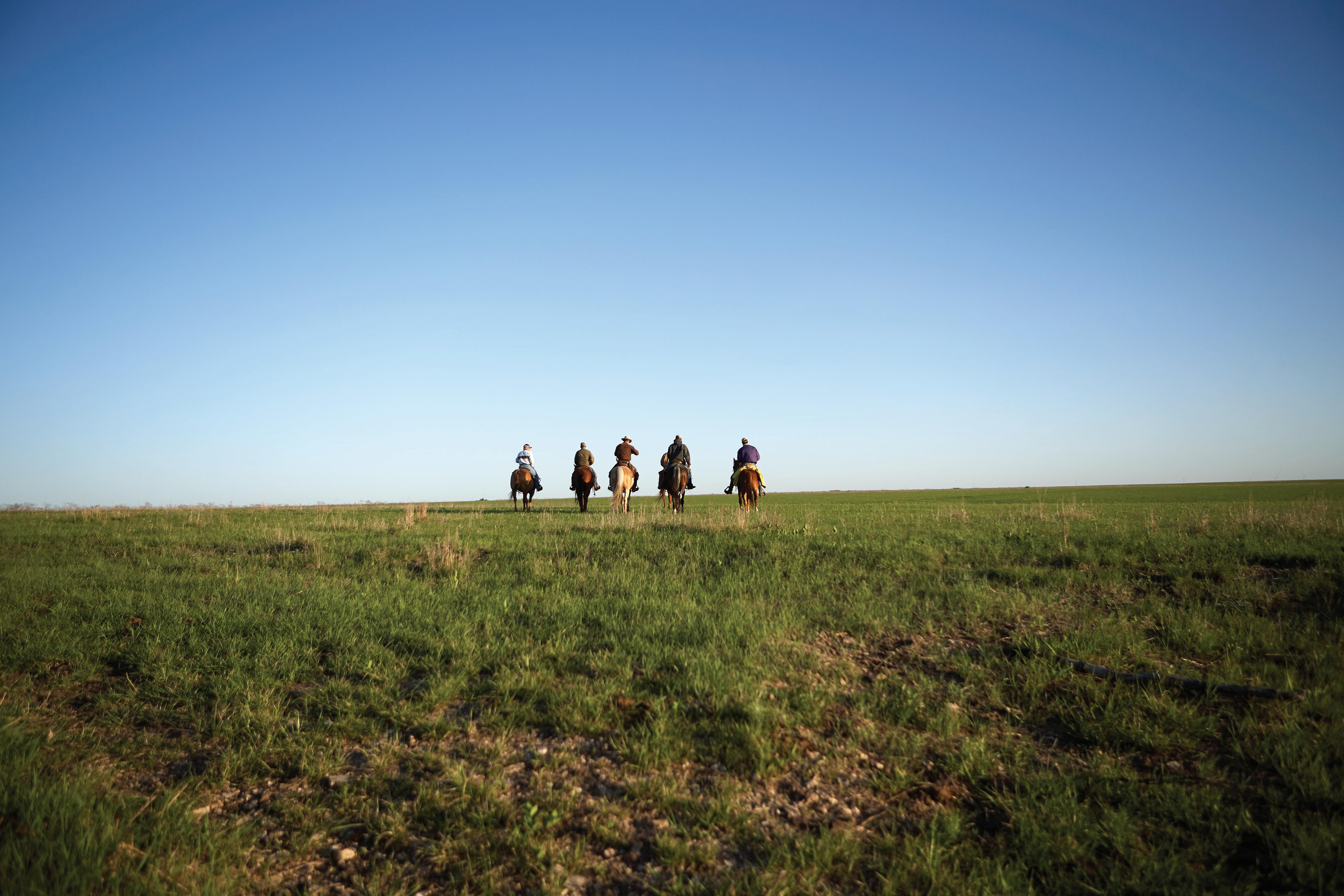
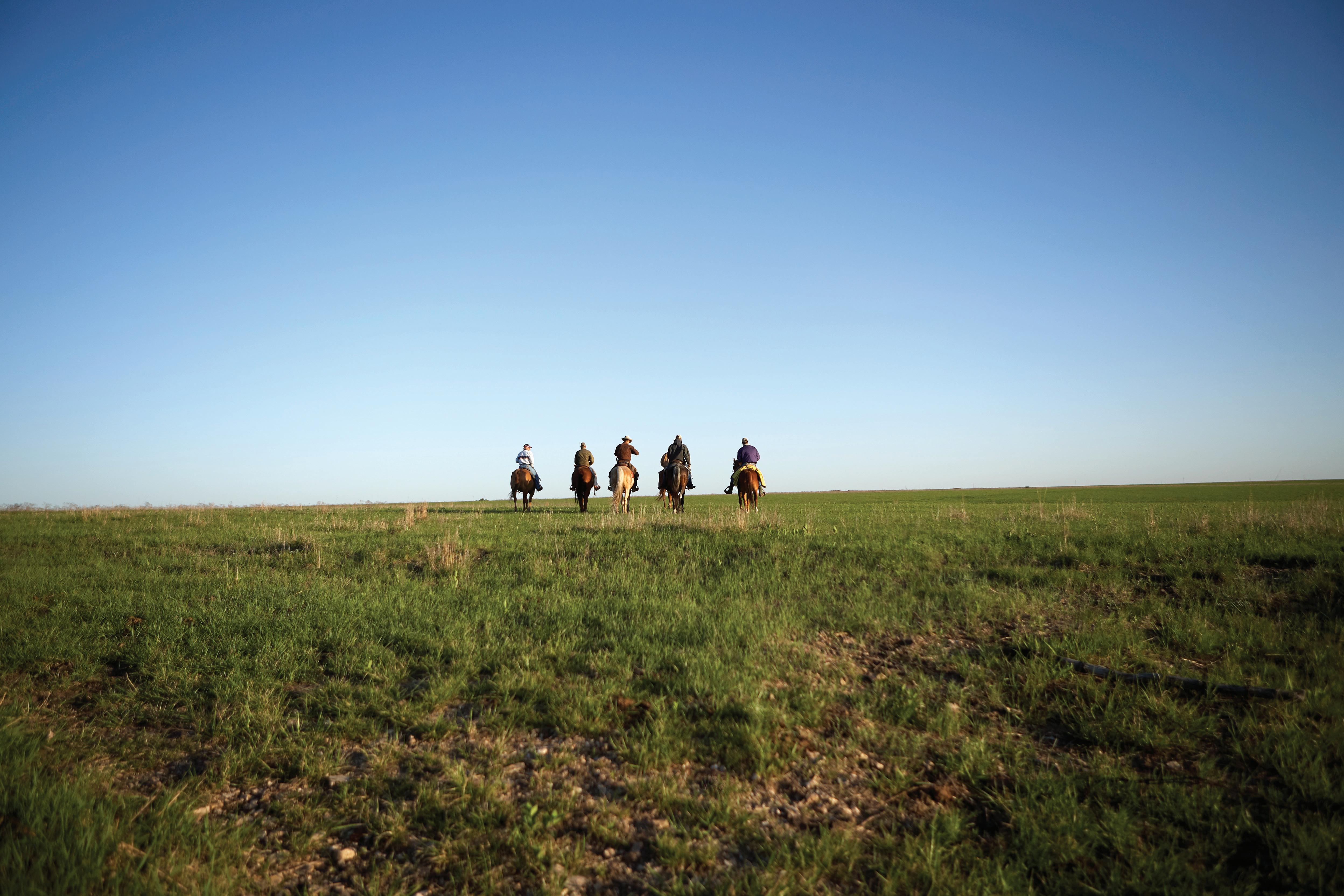

High Plains Farm Credit is one of Kansas’ leading agricultural lenders, providing financial services to farmers, ranchers, and agribusinesses.
Our focus is Kansas agriculture, serviced by an expert staff and our belief in the power of relationships over transactions.
High Plains Farm Credit supports agriculture and rural communities with reliable, consistent credit and financial services, today and tomorrow.
We proudly serve 26 counties throughout the state of Kansas, partnering with more than 4,100 farmers, ranchers, and agribusinesses throughout our territory and beyond.

25% Other Includes 12 Commodities

23% Diversified Farm Primarily Crop
19% Diversified Farm Primarily Livestock


Feedlot

Cash Grain
Food, Manufacturing, & Processing
Ag Services
$2.12 BILLION total volume
$55.6 MILLION net income
$22.1 MILLION patronage in 2025
The High Plains Farm Credit team is excited to announce another record patronage return in 2025. This year, our customer-stockholders will receive $22.1 million in cash patronage. With more than $70 million distributed to farmers and ranchers since 2022, we are excited to continue to serve as your preferred ag lender!
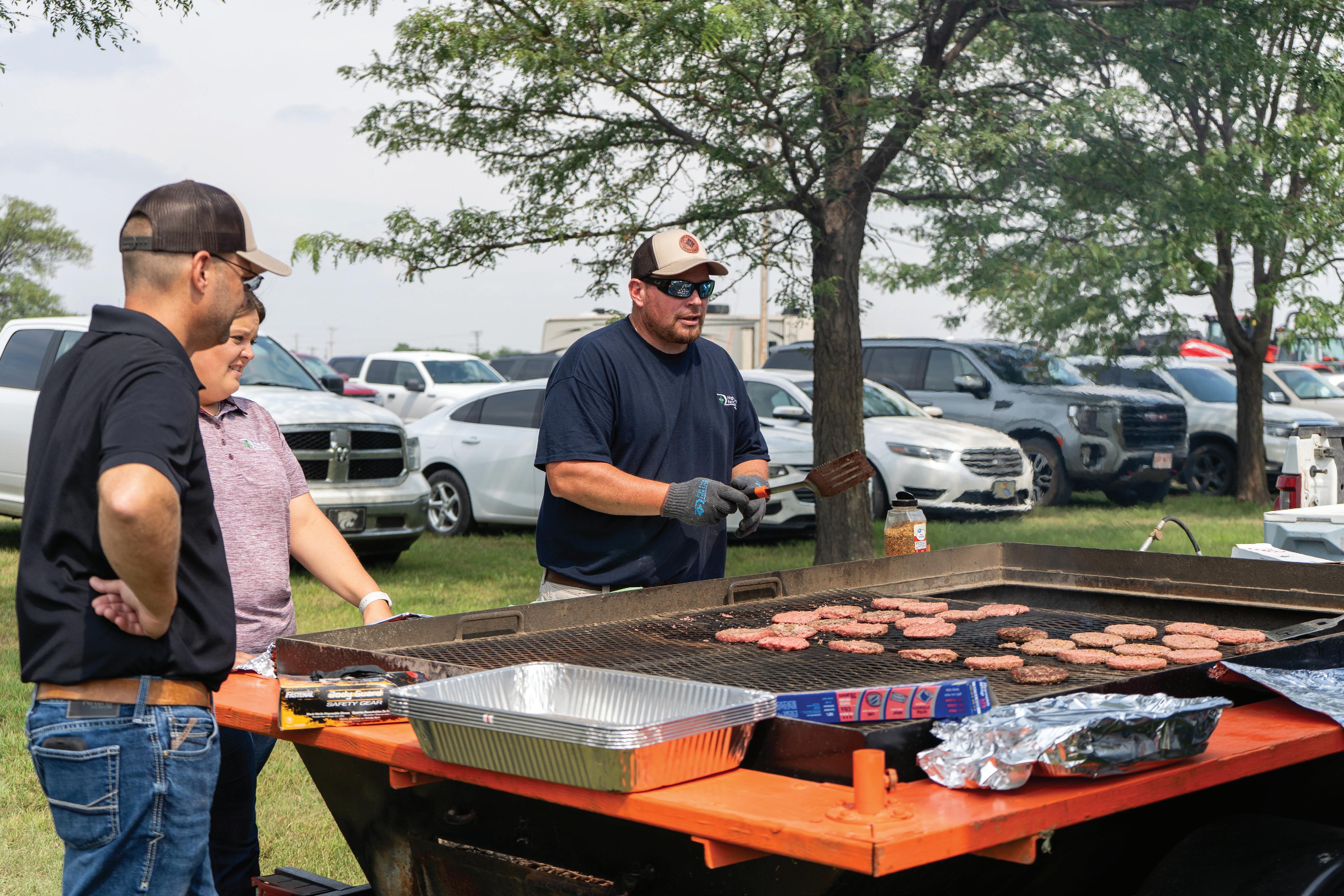
We’re also grateful to support the programs and industries that are important to our customer-stockholders. Each year, High Plains Farm Credit supports schools, agricultural organizations, county fairs, clubs, and beyond - all with the goal of contributing to the bright future of our families, neighbors, and rural America.
High Plains Farm Credit Endowment to the HaysMed Foundation
Election Ballot Donation to the Kansas 4-H Foundation
Annual Donation to More Than 50 Local FFA Chapters
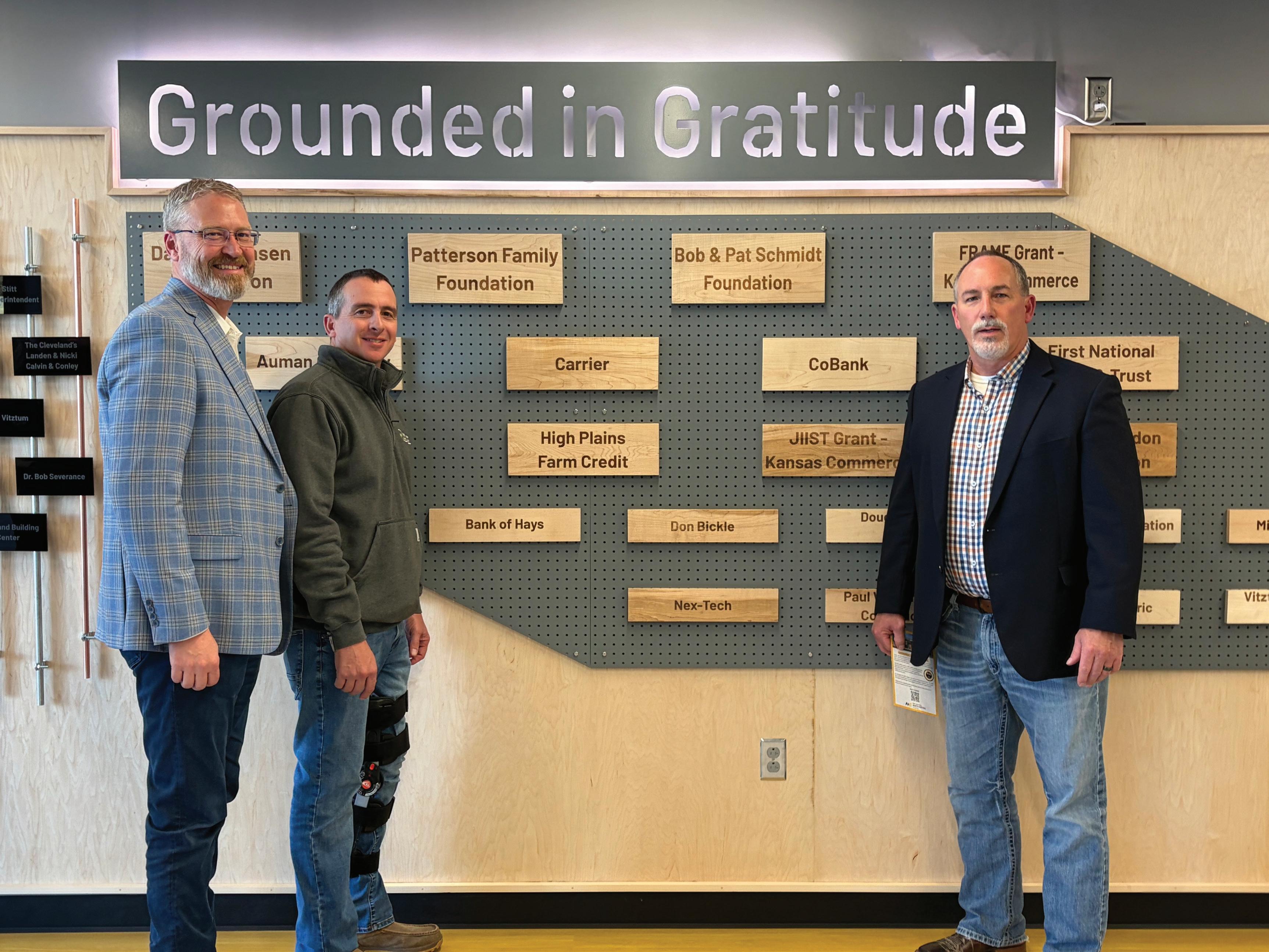
Fort Hays Tech | North Central is making a big impact for our Kansas communities and High Plains Farm Credit is excited to support them in the journey. In 2024, the association donated $50,000 to the development of the new Hansen Construction Career Center. CoBank generously matched the donation for a total of $100,000 contributed to the project.
The recent completion of the facility marks a step forward in skilled trades education, as the school can now double the number of students it serves. That means more jobs for Kansas, and more skilled tradesman in essential professions.
By: Jared Bauck, VP - Marketing
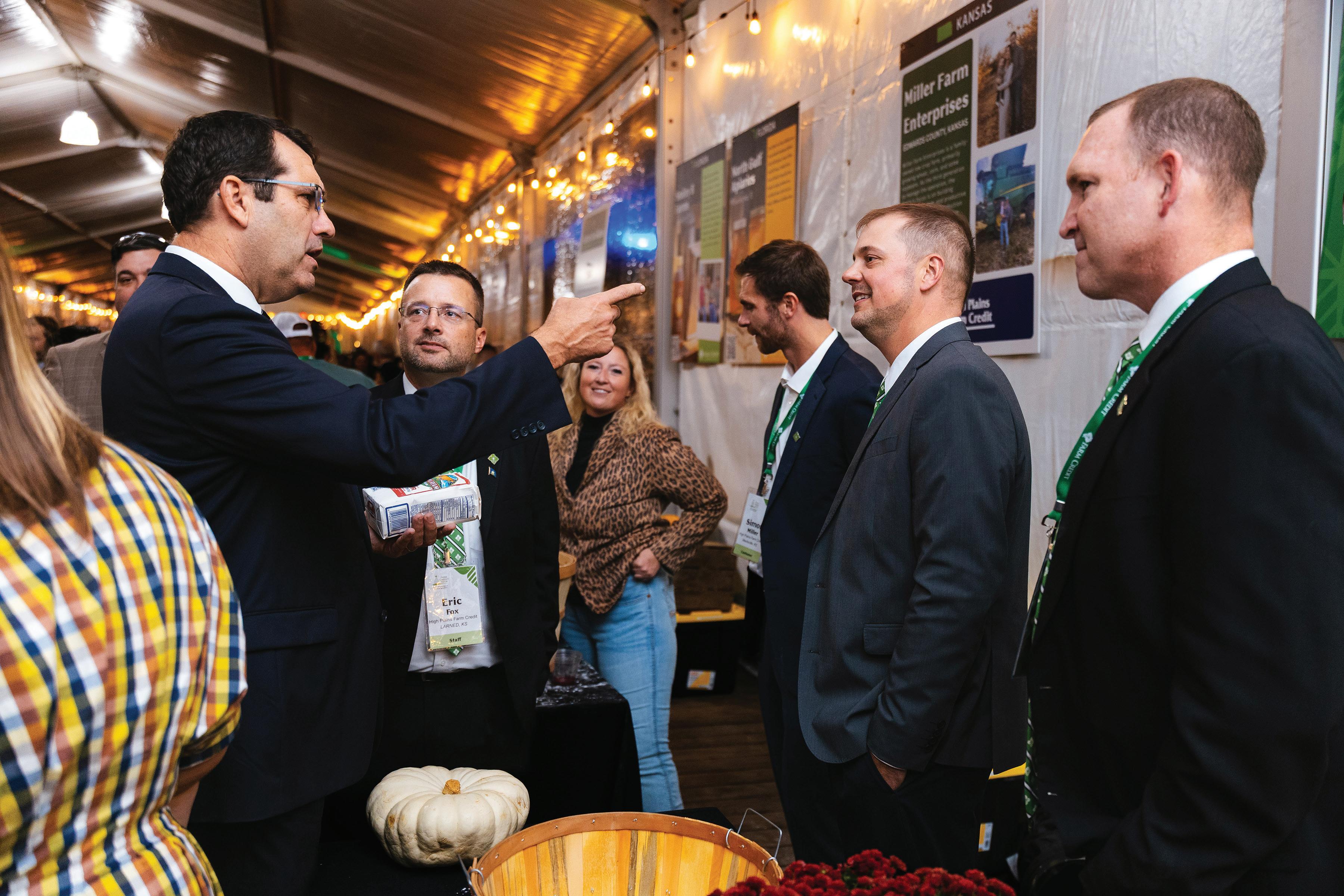
Early in November, members of the Fam Credit team joined over 800 other Farm Credit representatives at the 2025 Farm Credit Fly-In held in Washington, D.C.
This is a biennial event hosted by the Farm Credit Council in which Farm Credit staff, directors, and customers take to Capitol Hill to advocate for farmers, ranchers, and rural America.
This year, our primary discussion centered around passing a strong Farm Bill 2.0 for our farmers and ranchers. The farm bill is a package of legislation that has a tremendous impact on the livelihoods of those in agriculture. The bill connects the food on our tables, the farmers and ranchers who produce that food, and the resources needed to grow it. You do not have to be a farmer for the farm bill to affect your life.
It is important that our lawmakers are educated on the key issues farmers and ranchers face across rural America. The conversations this year were even more meaningful with one of our customers, Simon Miller, joining us to share his story. It is always more impactful for our lawmakers to hear directly from our producers.
Simon did an outstanding job of discussing the successes and challenges he is seeing in the industry, and how a farm bill and other legislation could be of benefit.
I’m thankful that Simon took time away from his family and operation to be there with us. We enjoyed meeting with our Kansas lawmakers to discuss the farm bill and other key pieces of legislation with them.
The Fly-In concluded with an event that everyone looks forward to: The Farm Credit Marketplace Reception. Farm Credit customers display their products, providing lawmakers and staff a first-hand view of the importance of agriculture.
We proudly featured well-known Hudson Cream Flour (Stafford County Flour Mills), made in Hudson, Kansas. Simon and his family help provide the wheat that goes into making this flour.
If you have a story to share about agriculture and your operation, please do not hesitate to let us know. We frequently meet with our lawmakers to advance legislative efforts that support agriculture and there is nothing more impactful than stories from our producers.

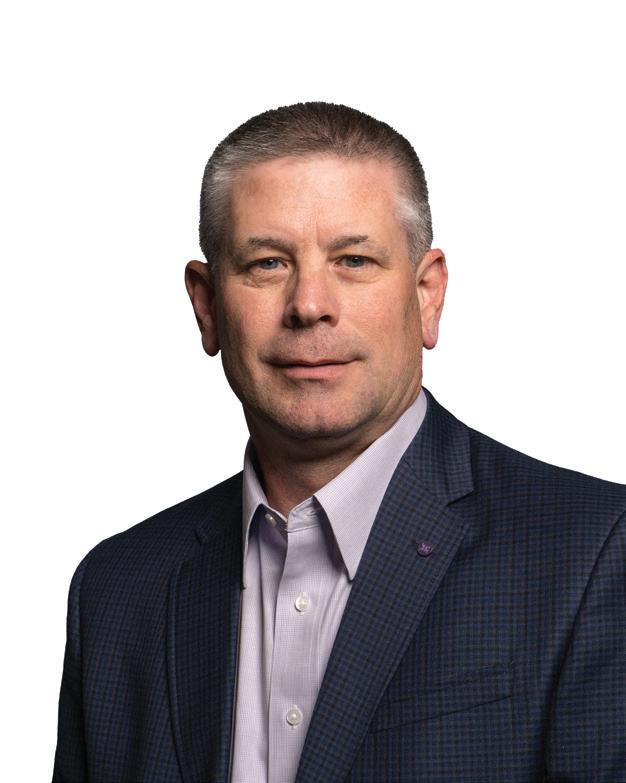

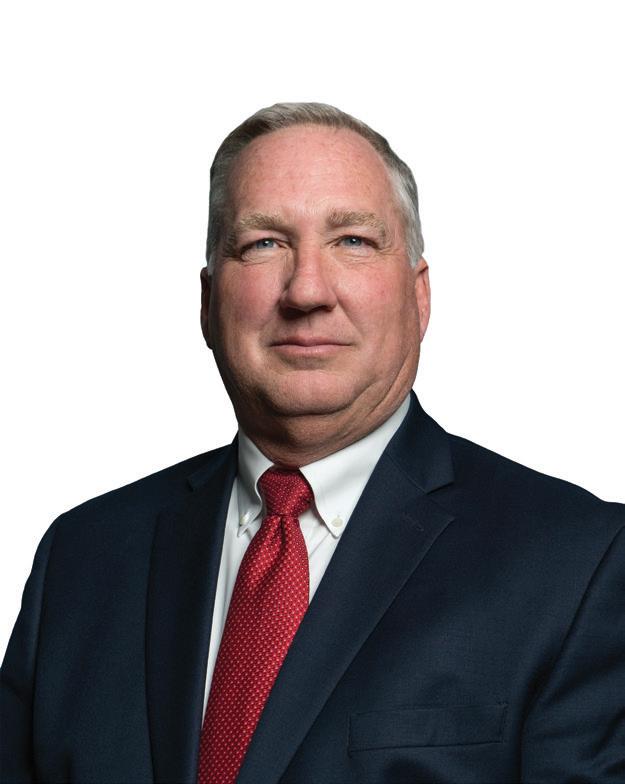
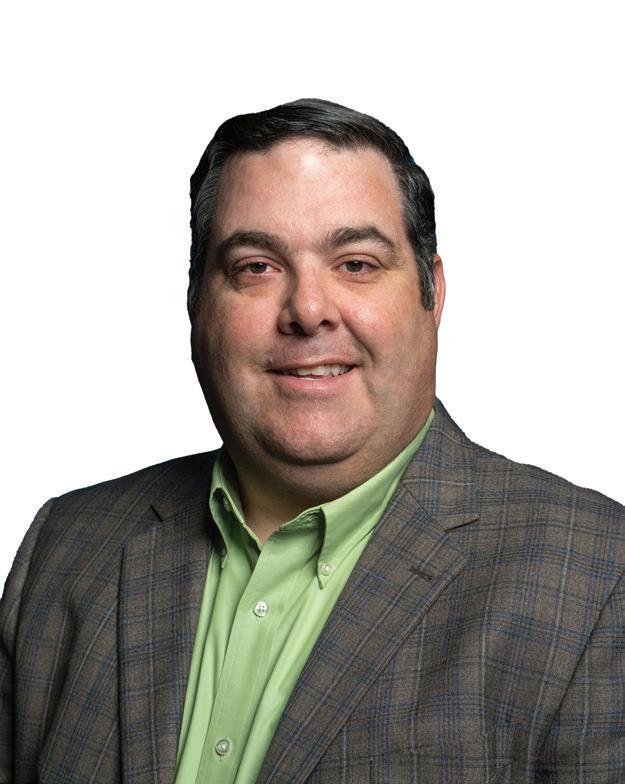
Top Row: Kevin Swayne President & Chief Executive Officer
Roger Vanlandingham, Chief Credit Officer
Middle Row: Robert DeWeese Chief Lending Officer
Travis Holdeman Chief Risk Officer
Left: John Booze Chief Financial Officer
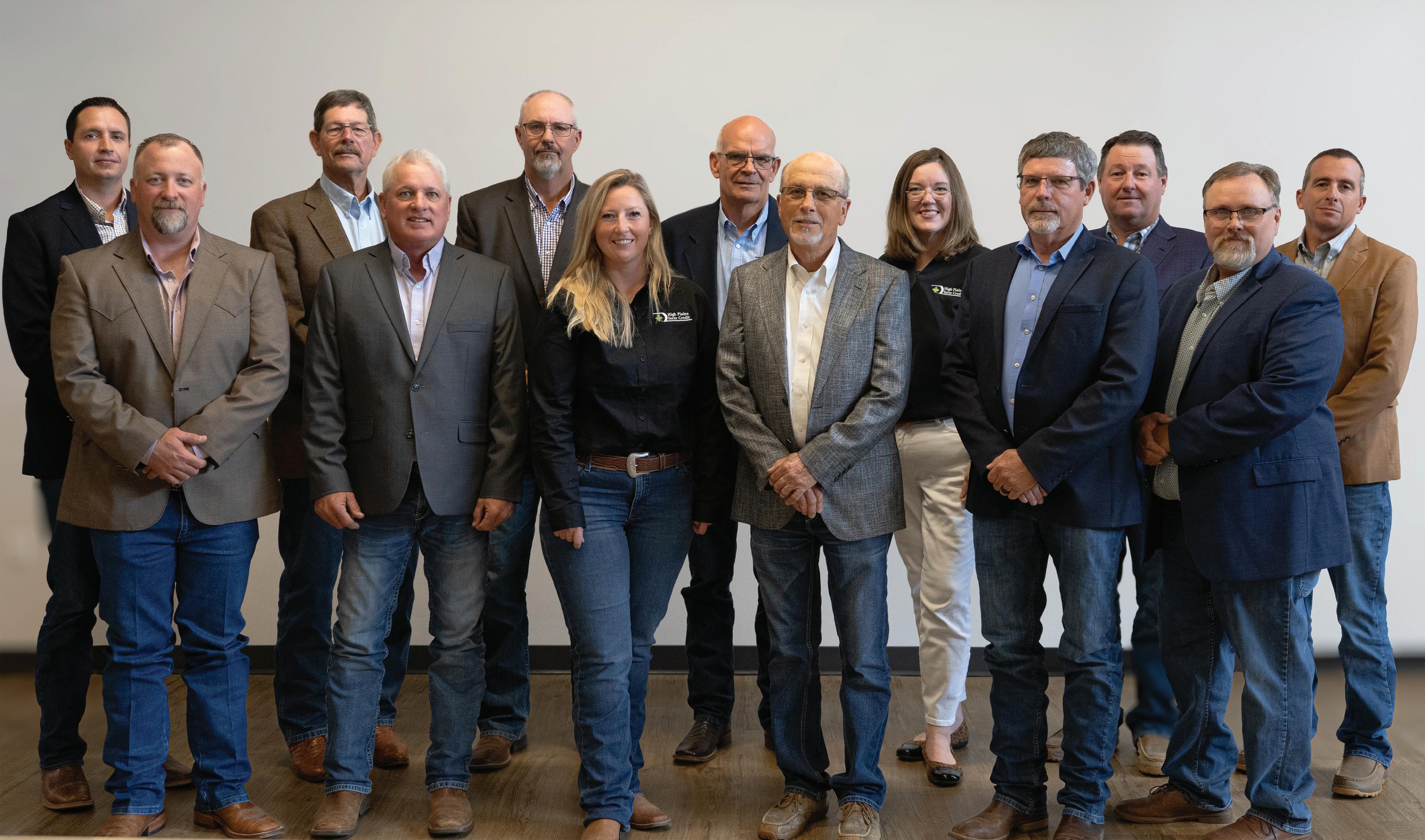
The High Plains Farm Credit Board of Directors is a group of passionate individuals elected to represent the best interests of our customer-stockholders, our association, and rural Kansas.
The group meets regularly to set policy for the association and to provide overall direction for our leadership team. Whether collaborating as a large group or within committees, these directors are dedicated to the success of High Plains Farm Credit and our customers.
The board consists of both stockholder-elected directors and board-appointed
directors that represent our service area’s two regions throughout four-year terms. Each spring, customer-stockholders can make a difference in the future of the association by participating in director elections.
Pictured above is the 2025 to 2026 High Plains Farm Credit Board of Directors. Back row includes (left to right): Brooks Hanson, Melvin Kitts, Colby Greving, Keith Kennedy, Dr. Melissa Hunsicker-Walburn, Matt Thielen, and Matt Miller. Front row includes (left to right): Daniel Cossman, Jon Herrmann, Christa Milton, Tim Benoit, Monte Thom, and John Payne.

The success of High Plains Farm Credit is directly tied to you — our valued stockholders, the farmers, ranchers, and agribusinesses who form the backbone of our rural communities. We strive to be more than a financial institution; we aim to be your trusted partner in agriculture. Every day, our mission is to stand beside you, providing reliable credit and financial services that help secure the long-term strength of agriculture across Kansas. As part of the national Farm Credit System, our vision is simple and enduring: to be the preferred source of agricultural financing.
We are proud to share the High Plains Farm Credit 2025 Annual Report, which reflects a year of strong performance for your cooperative. Our results demonstrate both the resilience of our stockholders and the Association’s commitment to serving agriculture through all economic cycles. Earnings grew to $55.6 million, up from $42.1 million in 2024, while capital strengthened from $362.7 million to $391.8 million. High Plains now holds $2.34 billion in assets, reinforcing our strong market presence and financial stability.
This financial strength enables us to fulfill the cooperative promise of returning value to our member-owners. In 2025, your Board of Directors declared a record $22.1 million in cash patronage, representing 40% of our 2025 earnings. Patronage is a hallmark of the cooperative model and a true reflection of our commitment to delivering value back to the producers we serve. Combined with competitive interest rates, this patronage distribution underscores the advantage of doing business with a member-owned cooperative.
While agriculture continues to face uncertainty — from volatile markets to shifting operating conditions — we remain optimistic about the future. You can count on High Plains Farm Credit to remain a strong, dependable lender and an active supporter of the rural communities we call home. We are committed to ensuring producers have access to reliable credit today, tomorrow, and for generations to come.
Our long-term financial strength has allowed us to invest in the people, technology, and operational capabilities needed to support your success. We continue to build a dedicated team focused on providing the expertise, service, and partnership that agriculture deserves. This unwavering commitment positions the Association for sustained success and ensures that we remain a pillar of support in rural Kansas.
As a member-owned cooperative, we take great pride in serving as your partner. Together, we have weathered challenges before, and together, we will navigate the opportunities and uncertainties that lie ahead. The future of Kansas agriculture is bright, and we look forward to strengthening our relationship and supporting your operations for years to come.
Thank you for placing your trust in High Plains Farm Credit.
Sincerely,
Tim Benoit
Kevin Swayne Chairman – Board of Directors President and Chief Executive Officer
of the Farm Credit System with offices in Dodge City, Hays, Larned, Ness City, Phillipsburg, & Pratt
(Dollars in Thousands)
Key Financial Ratios
The following discussion summarizes the financial position and results of operations of High Plains Farm Credit, ACA (Association) for the year ended December 31, 2025. Comparisons with prior years are included We have emphasized material known trends, commitments, events, or uncertainties that have impacted, or are reasonably likely to impact our financial condition and results of operations. The discussion and analysis should be read in conjunction with the accompanying consolidated financial statements, footnotes, and other sections of this report The accompanying consolidated financial statements were prepared under the oversight of our Audit Committee The Management’s Discussion and Analysis includes the following sections:
• 2025 Highlights
• Our Structure
• Economic Overview
• Loan Portfolio
• Credit Risk Management
• Results of Operations
• Liquidity
• Capital Resources
• Human Capital
• Regulatory Matters
• Governance
• Forward-Looking Information
• Critical Accounting Policies and Estimates
• Customer Privacy
Our quarterly reports to shareholders are available approximately 40 days after the calendar quarter end and annual reports are available approximately 75 days after the calendar year end. The reports may be obtained free of charge on our website, www.HighPlainsFarmCredit.com, or upon request. We are located at 605 Main, Larned, KS 675500067 or may be contacted by calling (620) 285-6978
• Loan volume increased $206.0 million, or 10.8%.
• Net income was $55.6 million.
• In December, the Board approved a $22.1 million cash patronage distribution to stockholders.
• Total shareholder’s equity increased by $29.1 million to $391.8 million after recording the liability for the $22.1 million cash patronage distribution to stockholders.
Farm Credit System Structure and Mission
As of December 31, 2025, High Plains Farm Credit, ACA is one of 55 associations in the Farm Credit System (System), which was created by Congress in 1916 and has served agricultural producers for over 100 years. The System mission is to provide sound and dependable credit to American farmers, ranchers, and producers or harvesters of aquatic products and farm-related businesses through a member-owned cooperative system. This is done by making loans and providing financial services Through its commitment and dedication to agriculture, the System continues to have the largest portfolio of agricultural loans of any lender in the United States. The Farm Credit Administration (FCA) is the System’s independent safety and soundness federal regulator and was established to supervise, examine, and regulate System institutions.
Our Structure and Focus
As a cooperative, we are owned by the members we serve. Our territory served extends across a diverse agricultural region from the Nebraska border on the north to the Oklahoma border on the south extending through Smith, Osborne, Russell, Barton, Stafford, Pratt, and Barber counties on the eastern edge and Norton, Sheridan, Gove, Lane, Hodgeman, Ford, and Meade counties on the western edge The counties in our territory are listed in Note 1 of the accompanying consolidated financial statements. We make long-term real estate mortgage loans to farmers, ranchers, rural residents, and agribusinesses, and production and intermediate-term loans for agricultural production or operating
purposes. Additionally, we provide other related services to our borrowers, such as credit life insurance, multi-peril crop and crop hail insurance, a preferred stock program, advance conditional payment accounts, leasing through Farm Credit Leasing, and fee appraisals Our success begins with our extensive agricultural experience and knowledge of the market and is dependent on the level of satisfaction we provide to our borrowers
As part of the System, we obtain the funding for our lending and operations from a Farm Credit Bank Our funding bank, CoBank, ACB (CoBank), is a cooperative of which we are a member. CoBank, its related associations, and AgVantis, Inc. (AgVantis) are referred to as the District.
We, along with the borrower’s investment in our Association, are materially affected by CoBank’s financial condition and results of operations. The CoBank quarterly and annual reports are available free of charge by accessing CoBank’s website, www.CoBank.com, or may be obtained at no charge by contacting us at 605 Main, Larned, KS 67550-0067 or by calling (620) 285-6978 Annual reports are available within 75 days after year end and quarterly reports are available within 40 days after the calendar quarter end
High Plains is the administrator of a loan participation network known as Farm Credit Capital Group (FCCG). FCCG is a collaborative effort among a group of Farm Credit associations in which loan participations are bought by High Plains and sold to other Farm Credit institutions to diversify risk and extend credit beyond individual lending limits while each institution retains full responsibility for its own credit decisions and underwriting. In line with other participation agreements, loan service fees are collected from participants to recover operating costs associated with servicing these loans.
We purchase technology and other operational services from AgVantis, which is a technology service corporation. We are a shareholder in AgVantis, along with other AgVantis customers. Farm Credit Foundations, a human resource shared service provider for several Farm Credit institutions, provides administration for our payroll and benefits and may provide related human resource offerings We are a shareholder in Foundations, along with other Foundations customers.
The cooperative structure of the System allows us to achieve economies of scale that could not be achieved by each institution individually. Our mission is to meet our stockholders’ financial needs at the best value while maintaining excellent customer service and financial stability. This, along with our vision to be the preferred source of agricultural financing, provides our team guidance and aids in our drive to provide exceptional service and value to our stockholders.
Our financial condition can be directly impacted by factors affecting the agricultural, rural, and general economies. These factors also impact the ability of farmers and ranchers to repay loans. Factors include but are not limited to the following:
• commodity prices;
• weather and disease that impact the production of agricultural products, including prolonged drought conditions that continue to affect cattle herd sizes and reduce forage availability;
• diverging input cost trends, with fertilizer and fuel easing while interest and labor costs remain aboveaverage;
• significant changes in land values;
• water availability, cost, and environmental impacts;
• availability and cost of agricultural workers;
• the impact of safety nets, including government programs and multi-peril insurance;
• significantly higher government payments and shifting federal support of the agricultural sector, including expenditures on agricultural conservation programs and biofuels;
• the relationship of demand relative to supply of agricultural commodities produced, including access to domestic and foreign markets, with several major crops currently facing oversupply;
• the demand for agricultural commodities for alternative uses, including ethanol and other biofuel production and the resulting impact on commodity prices;
• uncertainty around pending Farm Bill and related regulatory actions;
• major international events, changes in foreign economies, and heightened trade and policy uncertainty which affect the demand for agricultural products sold or the cost of production as well as changes in the relative value of the U.S. dollar; and,
• changes in the general economy that can affect interest rates and/or availability of off-farm employment for some farm households resulting in tighter credit conditions and increased carryover debt
During 2025, economic conditions in our region were similar to the previous year due to prolonged drought affecting most of our territory. Risk mitigation strategies, including crop insurance and disaster-related government payments, will remain essential in helping producers manage operational impacts. Crop commodity prices are projected to remain low over the next year as production continues to outpace consumption for many major crops, while global stockpiles and strong international competition put further pressure on markets. In contrast, beef prices are projected to remain historically elevated throughout 2026, supported by a significantly reduced national cattle herd after multiple years of drought driven liquidation and continued strong domestic demand.
Our Association continues to analyze the material effects of transition risks related to climate change that may affect our business, financial condition, and results of operations. These risks include policy and regulatory changes that could impose operational and compliance burdens, market trends that may alter business opportunities, credit risks, litigation risks, and technological changes. Agricultural producers continue to adjust to changing climate conditions and have implemented additional practices of no-till planting, minimal till practices, cover crops, and other water conservation techniques to manage reduced amounts of rainfall and to keep their farmland in a state of sustainable production. Currently, we are not aware of any specific material impacts on our business, results of operations, or financial conditions from the effects of climate change transition risks.
The U.S. economy concluded 2025 in a resilient position despite concerns surrounding high interest rates, tariffs, and a soft labor market. Inflation ended the year at 2.7% and the Federal Reserve responded by lowering interest rates to a range of 3.50% - 3.75%, with an additional rate cut expected in 2026. Real GDP increased at an annual rate of 2.2%, reflecting an increase in consumer spending and investment. Labor market conditions continued to trend downwards throughout the year as hiring slowed and the unemployment rate rose to 4.4%, reaching its highest level in four years. The farm economy rebounded sharply in 2025 despite being hindered by rising production expenses, with net cash farm income projected to increase by 28.5% in 2025 according to the USDA. This increase is largely due to higher animal/animal product receipts and direct government relief payments through the American Relief Act of 2025. Global conflicts continue to put additional pressures on commodity prices and have contributed to volatility and uncertainty in the markets.
The Agricultural Improvement Act of 2018 (Farm Bill), originally set to expire in 2023, has been extended each year, with the latest extension in November 2025 to allow the programs to continue through September 30, 2026. The Farm Bill ensures continuity of core programs such as crop insurance, commodity price support, and conservation initiatives. Earlier in July 2025, the One Big Beautiful Bill Act (OBBBA) authorized approximately $65.66 billion in new agricultural investments over ten years, enhancing safety-net programs, disaster assistance, and risk management tools for producers. These measures aim to mitigate pressures from high interest rates, declining commodity prices, and rising production costs. Additionally, the Farm Bill reaffirmed the Farm Credit System Insurance Corporation’s (FCSIC) authority to act as conservator or receiver for troubled institutions. The Farm bill also provides a range of statutory options to FCSIC including, but not limited to, marshalling and liquidating assets, satisfying claims of creditors, and using interim devices such as bridge banks. Collectively, these legislative actions strengthen the agricultural credit environment and support the stability of Farm Credit System institutions amid ongoing economic volatility
The February 2026 USDA forecast estimates 2025 farmers’ net cash income (a measure of the cash income after payment of business expenses) at $153.90 billion, up $11.10 billion from 2024. The increase is driven by a combination of strong government support and robust livestock receipts. Average prices received by farmers in December 2025 compared to average prices in December of prior years are reflected in the following chart based on USDA data:
The USDA’s February 2026 outlook for the farm economy forecasts net farm income, a broad measure of profits, at $153.40 billion in calendar year 2026, a decrease of $1.20 billion (0.7%) relative to 2025 in nominal (not adjusted for inflation) dollars. Cash receipts from the sale of agricultural commodities are forecast to decrease by $14.20 billion
(2.7%, in nominal terms) from 2025 to $514.70 billion in 2026. Total crop receipts are expected to increase by $2.80 billion (1.2%) from 2025, led by higher receipts for corn In contrast, total animal/animal product receipts are expected to decrease by $17.00 billion (5.8%). Direct Government farm payments are forecast at $44.30 billion for 2026, a $13.80 billion increase from 2025, largely driven by commodity payments that are a function of prices, while supplemental and ad hoc disaster assistance to farmers and ranchers is forecast to remain high in 2026.
Our rural territories continued to feel the effects of prolonged market instability. Producers have experienced volatile markets characterized by persistent supply shortages and elevated input costs Although supply chain disruptions eased compared to prior years, production expenses remain historically high, and commodity prices have generally not kept pace, resulting in continued margin compression across many operations. While drought conditions improved across much of the territory compared to the prior year, producers continued to experience the residual effects of prolonged dryness, including depleted soil moisture and ongoing pressure on crop and pasture conditions. The global outlook shows increased supplies for agriculture commodities as production growth continues to outpace consumption Demand for U.S. beef remained resilient in 2025.
Cash Grains: Cash grain markets remained challenging throughout 2025, influenced by ample global and domestic supplies that continued to pressure prices. Production levels generally kept pace with or exceeded demand, limiting upside despite periods of improved weather and stronger yields in some areas. Volatility persisted across commodities, but sustained input costs and elevated carryover stocks constrained margin improvement. The grain outlook reflects growing supplies and higher ending stocks. Domestic use is expected to remain steady to slightly improved for corn and soybeans, while export demand is projected to be flat to lower for wheat. Kansas farmers continue to evaluate pricing opportunities, crop rotations, water resources, and crop insurance programs to deal with varying growing options.
Hay: Hay markets in 2025 reflected steady supplies and generally slow to moderate demand, as improved moisture conditions allowed extended grazing and reduced reliance on stored forage. Pasture and range conditions improved compared to prior years; however, the lingering effects of prolonged drought continue to influence forage management and planning decisions. Overall, hay and pasture conditions are expected to remain stable, supported by improved moisture and favorable pasture ratings.
Cattle: Cattle prices remained strong in 2025 supported by resilient beef demand and historically tight cattle inventories Producers continued to manage through margin pressure driven by higher inputs and lingering drought impacts on forage availability, though improved pasture conditions later in the year provided some relief. Cattle slaughter slowed notably in 2025 compared to the prior year, reflecting tight herd inventories and supporting higher cattle prices, while heavier slaughter weights only partially offset reduced volumes and resulted in lower overall beef production. Looking ahead to 2026, cattle supplies are expected to remain limited, with demand continuing at levels similar to recent years, supporting a generally favorable cattle market environment.
Real Estate: In the past five years, our area has seen an increase in land values of around 40%. The trend in land prices for 2025 shows there is volatility in the market. Across the High Plains Farm Credit territory, the value of good upland crop ground showed a decrease of approximately 2%. The value of marginal crop ground decreased approximately 1.5%. Conservation Reserve Program (CRP) ground showed an increase of approximately 2.5% and irrigated land values showed a decrease of approximately 0.5%. The value of pasture increased approximately 7%.
Total loans outstanding were $2.12 billion at December 31, 2025, an increase of $206.0 million, or 10.8%, from loans at December 31, 2024 The increase in loans was due to increased loan demand from existing and new borrowers, as well as loan participation purchase opportunities to diversify our portfolio The types of loans outstanding at December 31 are reflected in the following table
(dollars in thousands)
Real estate mortgage loans outstanding increased from year-end 2024 to year-end 2025 primarily due to new loan originations outpacing pay-off and pay-down activity Long-term mortgage loans are primarily used to purchase, refinance, or improve real estate. These loans have maturities ranging from 5 to 40 years. Real estate mortgage loans are also made to rural homeowners. By federal regulation, a real estate mortgage loan must be secured by a first lien and may only be made in an amount up to 85% of the original appraised value of the property, or up to 97% of the appraised value, if the loan is guaranteed by certain state, federal, or other governmental agencies. Under our current underwriting standards, we lend less than the regulatory limit of 85% of the appraised value of the property.
The production and intermediate-term loans increased from year-end 2024 to year-end 2025 primarily due to increased loan demand from existing and new borrowers Production loans are used to finance the ongoing operating needs of agricultural producers and generally match the borrower’s normal production and marketing cycle, which is typically 12 months. Intermediate-term loans are generally used to finance depreciable capital assets of a farm or ranch. Intermediate-term loans are written for a specific term, 1 to 15 years, with most loans being less than 10 years. Our production and intermediate-term loan portfolio shows some seasonality. Borrowings increase throughout the planting and growing seasons to meet farmers’ operating and capital needs. These loans are normally at their lowest levels following the harvest and then increase in the spring and throughout the rest of the year as borrowers fund operating needs
The increases in agribusiness, rural infrastructure, and agricultural export finance sectors were attributable to increased loan participations purchased. The decrease in rural residential real estate loan volume was a result of loan pay-off and pay-down activity.
While we make loans and provide financially related services to qualified borrowers in agricultural and rural sectors and to certain related entities, our loan portfolio is diversified by loan participations purchased and sold, geographic locations served, commodities financed, and loan size as illustrated in the following four tables.
We purchase loan and lease participations from other System and non-System entities to generate additional earnings and diversify risk related to existing commodities financed and our geographic area served In addition, we sell a portion of certain large loans to other System and non-System entities to reduce risk and comply with lending limits we have established.
Our volume of participations purchased and sold as of December 31 follows. (dollars in
Loan participation activity increased primarily due to our involvement with FCCG The FCCG activity accounts for $2.94 billion of total purchased volume and $2.40 billion of total sold volume noted in the table above
We have no loans sold with recourse, retained subordinated participation interests in loans sold, or interests in pools of subordinated participation interests that are held in lieu of retaining a subordinated participation interest in the loans sold.
The geographic distribution of loans by Association branch at December 31 follows. As previously mentioned, we purchase loan participations outside our territory, which are included in Participations in the following table
We are party to a Territorial Approval Agreement (Agreement) with other associations in the state of Kansas. The Agreement eliminates territorial restrictions and allows associations that are a party to the Agreement to make loans in
any other association’s territory regardless of a borrower’s place of residence, location of operations, location of loan security, or location of headquarters. This Agreement can be terminated upon the earlier to occur of:
1) the time when all but one association has withdrawn as a party to the Agreement; or 2) when requested by FCA.
The following table shows the primary agricultural commodities produced by our borrowers based on the Standard Industrial Classification System (SIC) published by the federal government. This system is used to assign commodity or industry categories based on the primary business of the customer. A primary business category is assigned when the commodity or industry accounts for 50% or more of the total value of sales for a business; however, a large percentage of agricultural operations typically includes more than one commodity.
SIC Category
Our loan portfolio contains a concentration of cash grain producers, livestock producers, and ag service providers The repayment ability of our borrowers is closely related to the production and profitability of the commodities they raise. If a loan fails to perform, restructuring and/or other servicing alternatives are influenced by the underlying value of the collateral, which is impacted by industry economics. Our future performance would be negatively impacted by adverse agricultural conditions. The degree of the adverse impact would be correlated to the commodities negatively affected and the magnitude and duration of the adverse agricultural conditions to our borrowers
In addition to commodity diversification noted in the previous table, further diversification is also achieved from loans to rural residents and part-time farmers, which typically derive most of their earnings from non-agricultural sources These borrowers are less subject to agricultural cycles and would likely be more affected by weaknesses in the general economy
The loans outstanding at December 31, 2025 for loans $250 thousand or less accounted for 12.6% of loan volume and 66.0% of the number of loans Credit risk on small loans, in many instances, may be reduced by non-farm income sources. The following table details loans outstanding by dollar size at December 31 for the last three years
As of December 31, 2025, approximately 14.1% of our loans outstanding is attributable to 20 borrowers Due to their size, the loss of any of these loans or the failure of any of these loans to perform would adversely affect the portfolio and our future operating results
The credit risk of some long-term real estate loans has been reduced by entering into agreements that provide longterm standby commitments by Federal Agricultural Mortgage Corporation (Farmer Mac) to purchase the loans in the event of default. The amount of loans subject to these Farmer Mac credit enhancements was $9.3 million at December 31, 2025, $14.4 million at December 31, 2024, and $16.8 million at December 31, 2023 Included in other operating expenses, were fees paid for these Farmer Mac commitments totaling $57 thousand in 2025, $69 thousand in 2024, and $80 thousand in 2023 Under the Farmer Mac long-term standby commitment to purchase agreements, we continue to hold the loans in our portfolio, and we pay commitment fees to Farmer Mac for the right to put a loan designated in these agreements to Farmer Mac at par in the event the loan becomes significantly delinquent (typically four months past due) If the borrower cures the default, we must repurchase the loan, and the commitment remains in place. Farmer Mac long-term standby commitments to purchase agreements are further described in Note 3. Other than the contractual obligations arising from these business transactions with Farmer Mac, Farmer Mac is not liable for
any debt or obligation of ours and we are not liable for any debt or obligation of Farmer Mac. For more information on Farmer Mac, refer to their website at www.FarmerMac.com
Credit guarantees with government agencies of $6.1 million at year-end 2025, $5.5 million at year-end 2024, and $5.2 million at year-end 2023 were outstanding. Farm Service Agency (FSA) loan guarantees are utilized when appropriate to manage credit risk. Typically, we have a 90% guarantee from the FSA which would ensure that our loss on a guaranteed loan would not exceed 10% of the original loan balance in the event that we instituted foreclosure and collected the loan after liquidation of all loan collateral secured.
We may participate in financial instruments with off-balance-sheet risk to satisfy the financing needs of our borrowers These financial instruments include commitments to extend credit. The instruments involve, to varying degrees, elements of credit risk in excess of the amount recognized in our consolidated financial statements. Commitments to extend credit are agreements to lend to a borrower if there is not a violation of any condition established in the contract. Commitments and commercial letters of credit generally have fixed expiration dates or other termination clauses and may require payment of a fee by the borrower. We may also participate in standby letters of credit to satisfy the financing needs of our borrowers. These standby letters of credit are irrevocable agreements to guarantee payments of specified financial obligations. The following table summarizes the maturity distribution of unfunded credit commitments on loans at December 31, 2025
(dollars in thousands)
Since many of these commitments are expected to expire without being drawn upon, the total commitments do not necessarily represent future cash requirements. However, these credit-related financial instruments have off-balancesheet credit risk because their amounts are not reflected on the Consolidated Statement of Condition until funded or drawn upon. The credit risk associated with issuing commitments and letters of credit is substantially the same as that involved in extending loans to borrowers and we apply the same credit policies to these commitments. The amount of collateral obtained, if deemed necessary upon extension of credit, is based on our credit evaluation of the borrower. We consider potential losses related to unfunded commitments, and a reserve for unfunded commitments is included in the liabilities section of the Consolidated Statement of Condition. The related provision for the reserve for unfunded commitments is included as part of the provision for credit losses on the Consolidated Statement of Comprehensive Income
As part of the Farm Credit System, we are committed to providing sound and dependable credit and related services to young, beginning, and small (YBS) farmers and ranchers. We make a concerted and cooperative effort to finance YBS farmers, ranchers, and producers or harvesters of aquatic products to the fullest extent of their creditworthiness. We believe that new business development and new customers are critical to our future, therefore the promotion of services to the farmer segment is important to the future of the organization. The FCA regulatory definitions for YBS farmers and ranchers are shown below.
• Young Farmer: A farmer, rancher, or producer or harvester of aquatic products who was age 35 or younger as of the date the loan was originally made.
• Beginning Farmer: A farmer, rancher, or producer or harvester of aquatic products who had 10 years or less farming or ranching experience as of the date the loan was originally made.
• Small Farmer: A farmer, rancher, or producer or harvester of aquatic products who normally generated less than $350 thousand in annual gross cash farm income
In October 2023, FCA issued a final rule to revise the YBS regulations. The rule was enacted to expand the YBS activities of Associations to a diverse population of borrowers, reinforce the supervisory responsibilities of the banks that fund the Associations by requiring them to annually review and approve their YBS programs, and require each Association to enhance the strategic plan for its YBS program. The rule also changed the definition of a Small Farmer from one generating less than $250 thousand in annual gross sales to generating less than $350 thousand in annual gross cash farm income. The final rule became effective on January 1, 2024.
The following table outlines our percentage of YBS loans as a percentage of the number of loans in our loan portfolio while the USDA column represents the percent of farmers and ranchers classified as YBS within our territory per the 2022 USDA Agricultural Census, which was the most current data available at December 31, 2025 While this definition difference does exist, the information is the best comparative information available. Due to FCA regulatory definitions, a farmer/rancher may be included in multiple categories as they would be included in each category in which the definition was met.
The YBS loan counts presented include total outstanding loans at year-end and loans paid off during the current year. Only loans originated by the Association or sourced from outside the System are counted. YBS Loan volume presented is defined as current commitment, which is the dollar amount of disbursed funds plus the undisbursed commitment that is eligible to be drawn. For participated or pooled loans, the balances presented include only the volume held by the Association.
The following table provides the number of new loans and volume of new loans to YBS and non-YBS farmers made by the Association during the year
(dollars in
* The YBS category includes loans made to farmers that meet the criteria for all three categories: young, beginning, and small.
The following table provides the number of loans and volume of loans to YBS and non-YBS farmers held by the Association as of year-end.
(dollars in
* The YBS category includes loans made to farmers that meet the criteria for all three categories: young, beginning, and small.
We market our lending territory for YBS Borrowers through radio advertising, customer videos, 4-H and FFA sponsorships, scholarships, and contacts with the Ag-Departments at area colleges and high schools. We also participate in sponsoring statewide activities in conjunction with other Farm Credit offices including Women Managing the Farm Seminars, 4-H Key Awards, Kansas Livestock Association (KLA) Field Days, the KLA Breakfast at their annual meeting, and Fort Hays State University Scholarships. We are also supporters of Kansas Ag and Rural Leadership (KARL) training, Kansas State University (K-State) Management, Analysis, and Strategic Thinking (MAST-K-State) training, Ag in the Classroom, Fort Hays State University, and Kansas State University. We have provided support to the Kansas Young Farmers and Leaders Conference, Kansas Soil Conservation, Kansas High School Rodeo, Farm in Transition Seminars, and the Kansas Society of Farm Managers and Rural Appraisers.
Finally, we offer special interest rates, terms, and condition incentives on our lending products to assist qualifying YBS borrowers. To ensure that credit and services offered to our YBS farmers and ranchers are provided in a safe and sound manner and within the Association’s and the YBS borrower’s risk-bearing capacity, we utilize loan underwriting standards, loan guarantee programs, fee waiver programs, and other credit enhancement programs. Additionally, we are actively involved in developing and sponsoring educational opportunities, leadership training, business financial training, marketing meetings, and insurance services for YBS farmers and ranchers.
Quarterly reports are provided to our Board of Directors detailing the number, volume, and credit quality of our YBS customers. We have developed quantitative targets to monitor our progress.
• Percentage goals representative of the demographics of YBS farmers and ranchers in our territory; and,
• Percentage goals for loans made to new borrowers qualifying as YBS farmers and ranchers in our territory.
We strive to have 35.0% of our portfolio fall into the YBS category. The total number of YBS loans compared to total loans was 51.5% at December 31, 2025. The number of new loans made to YBS farmers and ranchers compared to our YBS goals are presented as a percentage of total loans within our territory in the following table:
* Due to FCA regulatory definitions, a farmer/rancher may be included in multiple categories as they would be included in each category in which the definition was met.
Nonperforming assets consist of nonaccrual loans, accruing loans 90 days or more past due, and other property owned. Accrued interest on all accruing loans at December 31, 2025 has been excluded from the amortized cost of loans and reported separately in the Consolidated Statement of Condition. Comparative information regarding nonperforming assets in the portfolio is as follows:
We had no other property owned for the years presented.
Total nonperforming assets decreased $3.9 million at December 31, 2025 compared with year-end 2024. The reduction in nonperforming assets was largely due to a decrease in nonaccrual loans, as well as improved credit quality within our portfolio.
Nonaccrual loans represent all loans where there is a reasonable doubt as to collection of all principal and/or interest. Nonaccrual volume decreased from December 31, 2024, largely due to the nonaccrual to accrual transfer of two loans and a charge-off of a set of loans relating to one borrower. Other contributing factors consist of classification changes in the portfolio and pay-down activity The majority of nonaccrual loan volume in 2024 was related to two participation loan complexes being transferred to nonaccrual by the lead lenders
Accruing loans 90 days past due consisted of one loan at December 31, 2023. This was a low-risk loan and payment was received shortly after year-end.
Nonperforming asset volume is anticipated to increase in the future due to the adverse conditions in the agricultural economy.
We review the credit quality of the loan portfolio on an on-going basis as part of our risk management practices. Each loan is classified according to the Uniform Classification System (UCS), which is used by all System institutions. Following are the classification definitions.
• Acceptable – Assets are expected to be fully collectible and represent the highest quality.
• Other Assets Especially Mentioned (OAEM) – Assets are currently collectible but exhibit some potential weakness.
• Substandard – Assets exhibit some serious weakness in repayment capacity, equity, and/or collateral pledged on the loan.
• Doubtful – Assets exhibit similar weaknesses as substandard assets. However, doubtful assets have additional weaknesses in existing facts that make collection in full highly questionable.
• Loss – Assets are not considered collectible.
During 2025, overall credit quality remained relatively flat. The financial position of most agricultural producers strengthened during the past decade, and most of our borrowers have maintained generally strong financial positions As such, our credit quality is anticipated to remain sound in the near term. However, agriculture remains a cyclical business that is heavily influenced by production, operating costs, and commodity prices. Each of these can be significantly impacted by uncontrollable events. If less favorable economic conditions continue, it will likely lead to weakening in the loan portfolio.
Effective January 1, 2023, we adopted Accounting Standards Update (ASU) 2016-13 “Financial Instruments – Credit Losses (Topic 326): Measurement of Credit Losses on Financial Instruments” (CECL). This guidance established a single allowance framework for all financial assets measured at amortized cost and certain off-balance sheet credit exposures, and replaced the incurred loss guidance. This framework requires that management’s estimate reflects credit losses over the asset’s remaining expected life and considers expected future changes in macroeconomic conditions. The allowance for credit losses comprises the allowance for loan losses and the allowance for unfunded commitments.
After adoption of this guidance, the allowance for credit losses takes into consideration relevant information about past events, current conditions, and macroeconomic forecasts of future conditions. An economic scenario is considered over a reasonable and supportable forecast period, after which, the framework incorporates historical loss experience. Final loss estimates also consider factors affecting credit losses not reflected in the scenario, due to the unique aspects of current conditions and expectations. These factors may include, but are not limited to, lending policies, portfolio concentrations, regulatory guidance, and/or lags in economic forecast information.
The following table provides relevant information regarding the allowance for loan losses as of December 31 for the last three fiscal years (dollars in thousands)
at beginning of year
effect of CECL adoption
The following table presents the allowance for loan losses by loan type as of December 31 for the last three fiscal years.
(dollars in thousands)
The allowance for loan losses decreased from December 31, 2024 to December 31, 2025 primarily due to total chargeoffs of $3.4 million and net reversals of $2.1 million. No charge-offs or recoveries were recorded during 2024. During 2024, our allowance for loan losses increased from 2023 primarily due to the provision for loan losses totaling $6.7 million that was recorded due to individual impairment analysis on specific loans, risk rating changes and increased loan volume Comparative allowance for loan losses coverage as a percentage of loans and certain other credit quality indicators as of December 31 are presented in the following table.
for loan losses as a percentage of:
We maintain a separate reserve for unfunded commitments, which is included in Liabilities on our Consolidated Statement of Condition. The related provision for the reserve for unfunded commitments is included as part of the provision for credit losses on the Consolidated Statement of Comprehensive Income, along with the provision for loan losses.
A summary of changes in the reserve for unfunded commitment follows
(dollars in thousands)
of)
The provision for reserve for unfunded commitments recorded in 2025 is primarily due to alignment with a lead lender on the recording of specific reserve on an unfunded letter of credit in addition to increased risk in the portfolio The reversal of reserve for unfunded commitments recorded in 2024 was primarily due to relatively stable risk profile and advances on lines of credit.
Credit risk arises from the potential failure of a borrower to meet repayment obligations that result in a financial loss to the lender. Credit risk exists in our loan portfolio and in our unfunded loan commitments and standby letters of credit Credit risk is actively managed on an individual and portfolio basis through application of sound lending and underwriting standards, policies, and procedures.
Underwriting standards are utilized to determine an applicant’s operational, financial, and managerial resources available for repaying debt within the terms of the note and loan agreement. Underwriting standards include among other things, an evaluation of:
• character – borrower integrity and credit history;
• capacity – repayment capacity of the borrower based on cash flows from operations or other sources of income;
• collateral – to protect the lender in the event of default and also serve as a secondary source of loan repayment;
• capital – ability of the operation to survive unanticipated risks; and,
• conditions – intended use of the loan funds, terms, restrictions, etc.
Processes for information gathering, balance sheet and income statement verification, loan analysis, credit approvals, disbursements of proceeds, and subsequent loan servicing actions are established and followed Underwriting standards vary by industry and are updated periodically to reflect market and industry conditions
By regulation, we cannot have loan commitments to one borrower for more than 15% of our lending and lease limit base Our Association’s lending and lease limit base is established by our total regulatory capital Additionally, we set our own lending limits to manage loan concentration risk Lending limits have been established for individual loan size, commodity type, special lending programs, and geographic concentrations. As of December 31, 2025, all individual loan commitments were below 9.5%.
We have established internal lending delegations to properly control the loan approval process. Delegations to staff are based on our risk-bearing ability, loan size, complexity, type, and risk, as well as the expertise and position of the credit staff member. Larger and more complex loans or loans perceived to have higher risk are typically approved by our loan committee with the most experienced and knowledgeable credit staff serving as members.
Most of our lending is first mortgage real estate loans, which must be secured by a first lien on real estate Production and intermediate-term lending accounts for most of the remaining volume and is typically secured by livestock, crops, and equipment. Collateral evaluations are completed in compliance with FCA and Uniform Standards of Professional Appraisal Practices requirements. All property is appraised at market value. All collateral evaluations must be performed by a qualified appraiser. Certain appraisals must be performed by individuals with a state certification or license.
We use a two-dimensional loan risk rating model (Model) based on the Farm Credit System’s Combined System Risk Rating Guidance. The Model estimates each loan’s probability of default (PD) and loss given default (LGD). PD is management’s assumption of the probability that a borrower will experience a default within twelve months from the date of determination of the risk rating. LGD is management’s estimation of the anticipated principal loss on a specific loan assuming default occurs during the remaining life of the loan. The Model uses objective and subjective criteria to identify inherent strengths, weaknesses, and risks in each loan. PDs and LGDs are utilized in loan and portfolio management processes and for allowance for credit losses estimation.
The Model’s 14-point probability of default scale provides for nine acceptable categories, one OAEM category, two substandard categories, one doubtful category, and one loss category The Model’s LGD scale provides 6 categories, A through F
Earnings Summary
In 2025, we recorded net income of $55.6 million, compared with $42.1 million in 2024 and $42.3 million in 2023 Net income increased by $13.5 million primarily due to an increase in net interest income, credit loss reversal recorded, and an increase in patronage received from Farm Credit institutions offset by an increase in noninterest expense The decrease in 2024 was primarily due to an increase in provision for credit losses, offset by increased loan volume and patronage received from Farm Credit institutions The following table presents the changes in the significant components of net income from the previous year
(dollars in thousands)
income, prior year
from changes in:
Return on average assets increased to 2.6% from 2.1% in 2024 and return on average shareholders’ equity increased to 14.3% from 11.7% in 2024, primarily as a result of the increase in net income outpacing the increases in total average assets and average shareholders’ equity Average assets increased 9.4% and average shareholders’ equity increased 7.8%, while net income increased 32.1%.
Net Interest Income
Net interest income is our principal source of earnings and is impacted by interest earning asset volume, yields on assets, and cost of debt. The increase in net interest income from year-end 2024 was primarily due to loan growth.
The following table provides an analysis of the individual components of the change in net interest income during 2025 and 2024
in net interest income from changes in:
The following table illustrates net interest margin and the average interest rates on loans and debt
and interest rate spread.
The increase in interest rate spread resulted from an 18 basis point decrease in interest rates on average loan volume outpaced by a 22 basis point decrease in interest rates on average debt. The increase in net interest margin in addition
to the change in spread was due to the Association’s management of purchased participations to diversify the loan portfolio
We monitor our loan portfolio and unfunded commitments on a regular basis to determine if any increase through provision for credit losses or decrease through a credit loss reversal in our allowance for loan losses or reserve for unfunded commitments is warranted based on our assessment of the relevant historical events, current conditions, and macroeconomic conditions. We recorded credit loss reversals of $1.2 million in 2025, compared with provision for credit losses of $6.7 million in 2024 and $585 thousand in 2023 The loan loss reversal of $2.1 million recorded during 2025 was primarily due to the pay-down and subsequent charge-off of one participation loan resulting in the reversal of the associated specific reserve. The provision for reserve for unfunded commitments of $903 thousand was recorded primarily due to alignment with a lead lender on the recording of specific reserve on an unfunded letter of credit in addition to increased risk in the portfolio
The provision for loan losses of $6.7 million recorded during 2024 was primarily due to increased loan volume and increased risk in the overall portfolio. The reversal of reserve for unfunded commitments of $62 thousand was recorded primarily due to advances on lines of credit, particularly at year-end.
The provision for loan losses recorded in 2023 was primarily due to risk ratings changes in loans and increased loan volume. The provision for reserve for unfunded commitments recorded in 2023 was primarily due to increased loan volume with related unfunded commitments and increased risk in the overall portfolio
During 2025, we recorded noninterest income of $19.7 million, compared with $16.1 million in 2024 and $14.5 million in 2023 Patronage distributions from CoBank are our primary source of noninterest income. Patronage is accrued in the year earned and then received from CoBank in the following year CoBank patronage is distributed in cash and stock The total patronage from CoBank is comprised of two sources: patronage based on our borrowing balance (direct note patronage) and patronage based on loans we originate and then sell a portion to them as a participant (sold volume patronage). Patronage earned from CoBank was $12.3 million in 2025, $11.3 million in 2024, and $9.9 million in 2023. Patronage income from CoBank includes special cash patronage distributions of $1.1 million for 2025, $1.5 million for 2024, and $1.3 million for 2023 due to CoBank’s strong capital levels and financial results
We recorded total patronage of $3.8 million in 2025 from participations sold to other Farm Credit associations. This compares to $1.3 million in 2024, and $1.1 million in 2023.
We received a patronage distribution from AgVantis in 2023 based on our services purchased from AgVantis during the year There were no such distributions in 2024 or 2025 Our total notice of allocation in 2023 was $345 thousand, which included cash patronage of $173 thousand with the remainder recorded as an investment in AgVantis and included in other assets on the Consolidated Statement of Condition.
We recorded a cash patronage of $10 thousand from Farm Credit Foundations, the organization that provides our payroll and human resource services, which will be paid in the following year This compares with $17 thousand recorded in 2024 and $14 thousand in 2023 Patronage from Farm Credit Foundations, AgVantis, CoBank, and other Farm Credit associations is included in patronage distribution from Farm Credit institutions on the Consolidated Statement of Comprehensive Income.
We received mineral income of $636 thousand during 2025, which is distributed to us quarterly by CoBank. Mineral income increased from $513 thousand in 2024 and decreased from $666 thousand in 2023. The increase in 2025 is due to additional income from 39 new wells that were completed in 2025.
We recorded FCSIC distributions of $366 thousand in 2025 and $520 thousand in 2024 These refunds represent our portion of excess funds above the secure base amount in the FCSIC Allocated Insurance Reserve Accounts. There was no FCSIC distribution received in 2023
Loan fees in 2025 were $1.7 million, an increase of $437 thousand from 2024 primarily due to an increase in letter of credit and amendment fees
Other noninterest income decreased $300 thousand from 2024 to $344 thousand at December 31, 2025 primarily due to a reduction in large, one-time fee appraisal requests. In 2023 we recognized a gain from the sale of the Dodge City building
Noninterest expense for 2025 increased $3.3 million, or 14.0%, to $27.0 million compared with 2024 and $5.5 million, or 25.4%, compared with 2023 Noninterest expense for each of the three years ended December 31 is summarized as follows:
For the year ended December 31, 2025, total operating expense increased $3.2 million, or 14.3%, compared with the year ended December 31, 2024, primarily due to increases in salaries and benefits of $1.3 million, other expenses of $818 thousand, purchased services from AgVantis of $592 thousand, and occupancy and equipment of $413 thousand. Salaries and benefits increased primarily due to the addition of new staff. Other expenses increased primarily due to a loss on the sale of the former Hays branch office and increases in other purchased services Occupancy and equipment increased primarily due to placing the new Hays branch office in service as well as increased software and computer purchases.
We recorded $157 thousand in provision for income taxes during 2025, compared with $131 thousand in 2024 and 2023 The provision for income taxes in 2025 was recorded primarily due to temporary book/tax differences related to allowance for loan losses and accrued bank patronage. Tax expense was also impacted by our patronage refund program. We operate as a Subchapter T cooperative for tax purposes and thus may deduct from taxable income certain amounts that are distributed from net earnings to borrowers. See Note 2 for additional details.
Liquidity is necessary to meet our financial obligations. Liquidity is needed to pay our note with CoBank, fund loans and other commitments, and fund business operations in a cost-effective manner Our liquidity policy is intended to manage short-term cash flow, maximize debt reduction, and liquidate nonearning assets. Our direct loan with CoBank, cash on hand, and borrower loan repayments provide adequate liquidity to fund our on-going operations and other commitments.
Our primary source of liquidity is the ability to obtain funds for our operations through a borrowing relationship with CoBank Our note payable to CoBank is collateralized by a pledge to CoBank of substantially all of our assets Substantially all cash received is applied to the note payable and all cash disbursements are drawn on the note payable The indebtedness is governed by a General Financing Agreement (GFA) with CoBank, which renews annually and matures on May 31, 2026. The annual average principal balance of the note payable to CoBank was $1.73 billion in 2025, $1.57 billion in 2024, and $1.41 billion in 2023
We plan to continue to fund lending operations through the utilization of our funding arrangement with CoBank, retained earnings from current and prior years, and from borrower stock investments. CoBank’s primary source of funds is the ability to issue Systemwide Debt Securities to investors through the Federal Farm Credit Banks Funding Corporation. This access has traditionally provided a dependable source of competitively priced debt that is critical for supporting our mission of providing credit to agriculture and rural America. Although financial markets experienced significant volatility in the last few years, we were able to obtain sufficient funding to meet the needs of our customers.
The interest rate risk inherent in our loan portfolio is substantially mitigated through our funding relationship with CoBank which allows for loans to be match-funded. Borrowings from CoBank match the pricing, maturity, and option characteristics of our loans to borrowers. CoBank manages interest rate risk through the direct loan pricing and its asset/liability management processes. Although CoBank incurs and manages the primary sources of interest rate risk,
we may still be exposed to interest rate risk through the impact of interest rate changes on earnings generated from our loanable funds. To stabilize earnings from loanable funds, we have committed excess loanable funds with CoBank pro-rata with our loan portfolio This program utilizes a percentage of our equity to fund each loan cash flow throughout the life of the loan. This program allows us to reduce our overall cost of funds with CoBank without significantly increasing our overall interest rate risk position. We perform interest rate shock sensitivities and report the results to the Board in compliance with our policy.
We offer variable, fixed, adjustable prime-based, and Secured Overnight Financing Rate (SOFR) rate loans to borrowers. Our Board of Directors determines the interest rate charged based on the following factors: 1) the interest rate charged by CoBank; 2) our existing rates and spreads; 3) the competitive rate environment; and 4) our profitability objectives.
Capital supports asset growth and provides protection for unexpected credit and operating losses. Capital is also needed for investments in new products and services. We believe a sound capital position is critical to our long-term financial success due to the volatility and cycles in agriculture. Over the past several years, we have been able to build capital primarily through net income retained after patronage. Shareholders’ equity at December 31, 2025 totaled $391.8 million, compared with $362.7 million at December 31, 2024, and $336.6 million at December 31, 2023 The increase of $29.1 million in shareholders’ equity reflects net income, partially offset by patronage distributions, dividends paid, and net stock retirements Our capital position is reflected in the following ratio comparisons.
Debt to shareholders’ equity increased and shareholders’ equity as a percent of net loans and total assets decreased from 2024. Debt to shareholders’ equity increased primarily due to an increase in the note payable to CoBank attributable to the increase in loan volume. The increase in net loan growth and total assets did not outpace the increase in shareholders’ equity for the year, leading to a decrease in the shareholders’ equity as a percent of net loans and total assets ratios.
Our retained earnings increased $32.6 million to $305.3 million at December 31, 2025 from $272.7 million at December 31, 2024 and increased $54.4 million from $250.9 million at December 31, 2023 The increase in 2025 was a result of net income of $55.6 million, partially offset by $22.1 million of patronage distributions declared.
We have a Patronage Program that allows us to distribute our available net earnings to our shareholders This program provides for the application of net earnings in the manner described in our Bylaws. In addition to determining the amount and method of patronage to be distributed, the Bylaws address increasing surplus to meet capital adequacy standards established by Regulations; increasing surplus to a level necessary to support competitive pricing at targeted earnings levels; and increasing surplus for reasonable reserves. Patronage distributions are based on business done with us during the year. We paid cash patronage of $19.2 million in 2025, $17.3 million in 2024, and $15.4 million in 2023 During 2025, we declared patronage distributions of $22.1 million to be paid in March 2026
Our capital stock decreased $15 thousand to $1.8 million at December 31, 2025, from December 31, 2024 and increased $18 thousand from December 31, 2023 The decrease during 2025 was due to $126 thousand of stock retirements, partially offset by $111 thousand of stock issuances We require a stock investment for each borrower We have a Borrower Level Stock Program which allows stock to be assigned to each borrower instead of each loan This reduces the stock requirements for borrowers with multiple loans. The current stock requirement for each borrower is the lesser of one thousand dollars or 2.00% of the collective total balance of each borrower’s loan(s).
Our common equity holders may voluntarily invest in our preferred stock program. At December 31, 2025, there was $15.3 million of preferred stock outstanding, compared with $18.8 million at December 31, 2024 and $14.5 million at
December 31, 2023 Purchases are limited to $1 million per shareholder. For a complete discussion of our stock programs, see Note 7 of the accompanying consolidated financial statements.
We had accumulated other comprehensive income of $1 thousand at year-end 2025 and accumulated other comprehensive loss of $3 thousand at year-end 2023. We had no accumulated other comprehensive income or loss at year-end 2024. Certain employees participate in a non-qualified Defined Benefit Pension Restoration Plan (Plan). Accounting guidance requires recognition of the Plan’s underfunded status and unamortized actuarial gains and losses and prior service costs or credits as a liability with an offsetting adjustment to accumulated other comprehensive loss
Our Board of Directors establishes a formal capital adequacy plan that addresses capital goals in relation to risks. The capital adequacy plan assesses the capital level necessary for financial viability and to provide for growth. Our plan is updated annually and approved by our Board of Directors. FCA regulations require the plan consider the following factors in determining optimal capital levels, including:
• Regulatory capital requirements;
• Asset quality;
• Needs of our customer base; and,
• Other risk-oriented activities, such as funding and interest rate risks, contingent and off-balance sheet liabilities, and other conditions warranting additional capital.
As shown in the following table, at December 31, 2025, our capital and leverage ratios exceeded regulatory minimums. If these capital standards are not met, the FCA can impose restrictions, including limiting our ability to pay patronage distributions, retire equities, and pay preferred stock dividends.
The minimum ratios established were not meant to be adopted as the optimum capital level, so we have established goals in excess of the regulatory minimum. As of December 31, 2025, we have exceeded our goals Our current capital position will allow us to continue retiring at-risk stock and, after consideration of reasonable reserves, continue our patronage program.
Refer to Note 7, Shareholders’ Equity, in this report for additional information on our capital and related requirements and restrictions.
FCA issued a final rule, effective January 1, 2023, to address changes to its capital regulations and certain other regulations in response to the CECL accounting standard. The regulation identifies which credit loss allowances under CECL are eligible for inclusion in a System institution’s regulatory capital. Credit loss allowances related to loans, lessor’s net investments in leases, and held-to-maturity debt securities would be included in a System institution’s tier 2 capital up to 1.25 percent of the System institution’s total risk-weighted assets. Credit loss allowances for availablefor-sale debt securities and purchased credit impaired assets would not be eligible for inclusion in a System institution’s tier 2 capital. In addition, the regulation does not include a transition phase-in period for the CECL day 1 cumulative effect adjustment to retained earnings on a System institution’s regulatory capital ratios. The regulation did not have a material impact on our regulatory capital.
High Plains Farm Credit continues to expand products and services for stockholders, which gives rise to a need for infrastructure commensurate with our current and future growth. In May 2022, the Board of Directors approved the purchase and remodeling of a building in Hays, which was completed in 2024. The project was funded primarily through the sale of the former building and financing with CoBank. In March 2025, the former Hays branch office was sold for $1.0 million.
As of December 31, 2025, we had 89 employees serving our borrowers. Our employees have an established foundation and working knowledge of agriculture and the Farm Credit System. Our workforce is approximately 36.0% male and 64.0% female.
As of December 31, 2025, we had no enforcement actions in effect and FCA took no enforcement actions on us during the year.
We are governed by a thirteen-member board that provides direction and oversees our management. Of these directors, eleven are elected by the shareholders and two are appointed by the elected directors. Our Board of Directors represents the interests of our shareholders. The Board of Directors meets regularly to perform the following functions, among others:
• selects, evaluates, and compensates the chief executive officer;
• approves the strategic plan, capital plan, financial plan, and the annual operating budget;
• oversees the lending operations;
• directs management on significant issues;
• sets and reviews policies; and,
• oversees the financial reporting process, communications with shareholders, and our legal and regulatory compliance.
All directors must exercise sound judgment in deciding matters in our interest. All our directors are independent from the perspective that none of our management or staff serves as Board members. However, we are a financial services cooperative, and the Farm Credit Act and FCA Regulations require our elected directors to have a loan relationship with us.
The elected directors, as borrowers, have a vested interest in ensuring our Association remains strong and successful. However, our borrowing relationship could be viewed as having the potential to compromise the independence of an elected director. For this reason, the Board has established independence criteria to ensure that a loan relationship does not compromise the independence of our Board. Annually, in conjunction with our independence analysis and reporting on our loans to directors, each director provides financial information and any other documentation and/or assertions needed for the Board to determine the independence of each Board member.
The Governance Committee serves to monitor significant developments in applicable law, including regulations and other legal guidance, and within the practice of corporate governance generally. The Governance Committee is composed of seven members of the Board, as appointed by the Chairperson of the Board on an annual basis. During 2025, five meetings were held. The Governance Committee responsibilities generally include, but are not limited to the following:
• General Corporate Governance
• Evaluations and Training
• Governance and Nominations
• Other General Items
Audit Committee
The Audit Committee reports to the Board of Directors. The Audit Committee is composed of seven members of the Board of Directors. During 2025, eight meetings were held. The Audit Committee responsibilities generally include, but are not limited to:
• oversight of the financial reporting risk and the accuracy of the quarterly and annual shareholder reports;
• the oversight of the system of internal controls related to the preparation of quarterly and annual shareholder reports;
• the review and assessment of the impact of accounting and auditing developments on the consolidated financial statements;
• the establishment and maintenance of procedures for the receipt, retention, and treatment of confidential and anonymous submission of concerns regarding accounting, internal accounting controls, or auditing matters; and,
• oversight of the Association’s internal audit program, the independence of the outside auditors, the adequacy of the Association’s system of internal controls and procedures, and the adequacy of management’s action with respect to recommendations arising from those auditing activities.
The Compensation Committee is responsible for the oversight of employee and director compensation. The Compensation Committee is composed of seven members of the Board of Directors. During 2025, seven meetings were held. The Committee’s responsibilities include making recommendations to the Board on the following items:
• salary and incentive compensation of the CEO and other senior management;
• salary administration plans and bonus/incentive plans for employees;
• benefits provided to employees and the related benefit plans;
• the CEO’s and any other employment agreements; and,
• compensation for the members of the Board of Directors.
The Risk Committee is responsible for assisting the Board in fulfilling its oversight responsibilities for business and enterprise-wide risk management of the Association. The Risk Committee is composed of seven members of the Board of Directors. During 2025, five meetings were held. The Risk Committee responsibilities generally include, but are not limited to:
• oversee that management has a business and enterprise risk management structure addressing at a minimum the strategic, credit, operational, regulatory, reputation, and financial organizational risks;
• review the Association’s risk appetite statement;
• review various business and enterprise risk reports to assess performance against established tolerances and parameters; and,
• monitor the Association’s risk profile in consideration of existing and emerging risks.
The Board has monitored the requirements of public companies under the Sarbanes-Oxley Act. While we are not subject to the requirements of this law, we are striving to implement steps to strengthen governance and financial reporting. We strive to maintain strong governance and financial reporting through the following actions:
• a system for the receipt and treatment of whistleblower complaints;
• a code of ethics for our President/CEO, Chief Financial Officer, and Chief Credit Officer;
• open lines of communication between the independent auditors, management, and the Audit Committee;
• “plain English” disclosures;
• officer certification of accuracy and completeness of the consolidated financial statements; and,
• information disclosure through our website.
Our directors and employees are responsible for maintaining the highest of standards in conducting our business. In that regard, we established a Code of Ethics for the Board of Directors and a Code of Ethics for the Chief Executive Officer, Chief Financial Officer, Chief Credit Officer, and other senior financial professionals who are involved, directly or indirectly, with the preparation of our financial statements and the maintenance of financial records supporting the financial statements. These Codes of Ethics supplement our Standards of Conduct Policies for Directors and Employees. Annually, each employee and director files a written and signed disclosure statement as required under the Standards of Conduct Policies. Likewise, all employees certify compliance with our Code of Ethics on an annual basis.
We maintain a program for employee complaints related to accounting, financial reporting, internal accounting controls, or auditing matters. This program allows employees to submit confidential, anonymous concerns regarding accounting, financial reporting, internal accounting controls, fraud, or auditing matters without the fear of reprisal, retaliation, or
adverse action being taken against any employee who, in good faith, reports or assists in the investigation of a violation or suspected violation, or who makes an inquiry about the appropriateness of an anticipated or actual course of action
Our discussion contains forward-looking statements. These statements are not guarantees of future performance and involve certain risks, uncertainties, and assumptions that are difficult to predict. Words such as “anticipates,” “believes,” “could,” “estimates,” “may,” “should,” and “will,” or other variations of these terms are intended to identify forwardlooking statements. These statements are based on assumptions and analyses considering experience and other historical trends, current conditions, and expected future developments. However, actual results and developments may differ materially from our expectations and predictions due to several risks and uncertainties, many of which are beyond our control. These risks and uncertainties include, but are not limited to:
• political, legal, regulatory, and economic conditions and developments in the United States and abroad;
• economic fluctuations in the agricultural, rural utility, international, and farm-related business sectors;
• weather, disease, and other adverse climatic or biological conditions that periodically occur that impact agricultural productivity and income;
• changes in United States government support of the agricultural industry and/or the Farm Credit System; and,
• actions taken by the Federal Reserve System in implementing monetary policy.
Our consolidated financial statements are based on accounting principles generally accepted in the United States of America. Our significant accounting policies are critical to the understanding of our results of operations and financial position because some accounting policies require us to make complex or subjective judgments and estimates that may affect the value of certain assets or liabilities. We consider these policies critical because we have to make judgments about matters that are inherently uncertain. For a complete discussion of significant accounting policies, see Note 2 of the accompanying consolidated financial statements. The development and selection of critical accounting policies, and the related disclosures, have been reviewed by our Audit Committee. A summary of critical policies relating to the determination of the allowance for loan losses follows.
The allowance for loan losses is our best estimate of credit losses over the remaining contractual life of the loans measured at amortized cost and certain off-balance sheet credit exposures as of the balance sheet date. The allowance for loan losses is increased through provisions for loan losses and loan recoveries and is decreased through loan loss reversals and loan charge-offs. Additionally, we provide line of credit financing to our customers. We have established a reserve for unfunded commitment to cover expected losses. This reserve is reported as a liability in our consolidated balance sheet. The reserve for unfunded commitment is increased through provision for the reserve for unfunded commitments and is decreased through reversals of the reserve for unfunded commitments. Provision for loan losses and provision for reserve for unfunded commitments are referred to as a provision for credit losses on the Consolidated Statement of Comprehensive Income. We determine the allowance for loan losses and the reserve for unfunded commitment based on relevant information about past events, current conditions, and reasonable and supportable macroeconomic forecasts of future conditions Loans are evaluated based on the borrower’s overall financial condition, resources, and payment record; the prospects for support from any financially responsible guarantor; and, if appropriate, the estimated net realizable value of any collateral.
Changes in the factors we consider in the evaluation of losses in the loan portfolio could occur for various credit related reasons and could result in a change in the allowance for loan losses, which would have a direct impact on the provision for loan losses and results of operations. See Notes 2 and 3 to the accompanying consolidated financial statements for detailed information regarding the allowance for loan losses.
FCA regulations require that borrower information be held in confidence by Farm Credit institutions, their directors, officers, and employees. FCA regulations and our Standards of Conduct Policies specifically restrict Farm Credit institution directors and employees from disclosing information not normally contained in published reports or press releases about the institution or its borrowers or members. These regulations also provide Farm Credit institutions clear guidelines for protecting their borrowers’ nonpublic information.
1100 East 43rd Street
P.O. Box 836
Hays, KS 67601
785.625.2110
Toll Free: 1.800.369.9625 Fax: 785.625.4309
The consolidated financial statements of High Plains Farm Credit, ACA (Association) are prepared by management, who is responsible for their integrity and objectivity, including amounts that must necessarily be based on judgments and estimates. The consolidated financial statements have been prepared in conformity with generally accepted accounting principles appropriate in the circumstances, and in the opinion of management, fairly present the financial condition of the Association. Other financial information included in the 2025 annual report is consistent with that in the financial statements.
To meet its responsibility for reliable financial information, management depends on the Association’s accounting and internal control systems, which have been designed to provide reasonable, but not absolute, assurance that assets are safeguarded and transactions are properly authorized and recorded. To monitor compliance, management engaged Deloitte Risk and Financial Advisory to perform audits of the accounting records, review accounting systems and internal controls, and recommend improvements as appropriate. The Association is also examined by the Farm Credit Administration.
The Audit Committee of the Board of Directors has overall responsibility for the Association’s system of internal control and financial reporting. The Audit Committee consults regularly with management and reviews the results of the examinations by the various entities named above. The independent auditors have direct access to the Audit Committee.
The undersigned certify the High Plains Farm Credit, ACA Annual Report has been reviewed and prepared in accordance with all applicable statutory or regulatory requirements, and that the information contained herein is true, accurate, and complete to the best of our knowledge and belief.

Tim Benoit

Kevin D. Swayne Chairman of the Board President and Chief Executive Officer

Melvin E. Kitts

John T. Booze Chairman of the Audit Committee Chief Financial Officer
March 5, 2026
785.625.2110 Toll Free: 1.800.369.9625 Fax: 785.625.4309
High Plains Farm Credit, ACA (Association) principal executives and principal financial officers, or persons performing similar functions, are responsible for establishing and maintaining adequate internal control over financial reporting for the Association’s consolidated financial statements. For purposes of this report, “internal control over financial reporting” is defined as a process designed by, or under the supervision of the Association’s principal executives and principal financial officers, or persons performing similar functions, and effected by its Board of Directors, management and other personnel, to provide reasonable assurance regarding the reliability of financial reporting information and the preparation of the consolidated financial statements for external purposes in accordance with accounting principles generally accepted in the United States of America and includes those policies and procedures that: (1) pertain to the maintenance of records that in reasonable detail accurately and fairly reflect the transactions and dispositions of the assets of the Association, (2) provide reasonable assurance that transactions are recorded as necessary to permit preparation of financial information in accordance with accounting principles generally accepted in the United States of America, and that receipts and expenditures are being made only in accordance with authorizations of management and directors of the Association, and (3) provide reasonable assurance regarding prevention or timely detection of unauthorized acquisition, use or disposition of the Association’s assets that could have a material effect on its consolidated financial statements.
The Association’s management has completed an assessment of the effectiveness of internal control over financial reporting as of December 31, 2025. In making the assessment, management used the framework in Internal Control— Integrated Framework (2013), promulgated by the Committee of Sponsoring Organizations of the Treadway Commission, commonly referred to as the “COSO” criteria.
Based on the assessment performed, the Association concluded that as of December 31, 2025, the internal control over financial reporting was effective based upon the COSO criteria. Additionally, based on this assessment, the Association determined that there were no material weaknesses in the internal control over financial reporting as of December 31, 2025.

Kevin D. Swayne

John T. Booze President and Chief Executive Officer Chief Financial Officer
March 5, 2026
The Audit Committee (Committee) includes 7 members from the Board of Directors of High Plains Farm Credit, ACA (Association). In 2025, 8 Committee meetings were held. The Committee oversees the scope of the Association’s internal audit program, the independence of the outside auditors, the adequacy of the Association’s system of internal controls and procedures, and the adequacy of management’s action with respect to recommendations arising from those auditing activities. The Committee’s responsibilities are described more fully in the Internal Control Policy and the Audit Committee Charter. The Committee approved the appointment of PricewaterhouseCoopers, LLP (PwC) as the Association’s independent auditors for 2025.
The fees for professional services rendered for the Association by its independent auditor, PwC, during 2025 were $115,800 for audit services and $18,594 for tax services.
The Committee reviewed the non-audit services provided by PwC and concluded these services were not incompatible with maintaining the independent auditor’s independence.
Management is responsible for the Association’s internal controls and the preparation of the consolidated financial statements in accordance with accounting principles generally accepted in the United States of America. PwC is responsible for performing an independent audit of the Association’s consolidated financial statements in accordance with auditing standards generally accepted in the United States of America and to issue a report thereon. The Committee’s responsibilities include monitoring and overseeing these processes.
In this context, the Committee reviewed and discussed the Association’s Quarterly Reports and the Association’s audited financial statements for the year ended December 31, 2025 (the “Financial Statements”) with management. The Committee also reviews with PwC the matters required to be discussed by Statements on Auditing Standards. Both PwC and the Association’s internal auditors directly provide reports on significant matters to the Committee.
Based on the foregoing review and discussions and relying thereon, the Committee recommended that the Board of Directors include the Financial Statements in the Association’s Annual Report to Shareholders for the year ended December 31, 2025 and for filing with the Farm Credit Administration.

Melvin E. Kitts, Chairman of the Audit Committee
Audit Committee Members
Colby Greving Jon Hermann
Christa Milton John Payne
Monte Thom Tim Benoit (ex-officio)
March 5, 2026
To the Board of Directors of High Plains Farm Credit, ACA Opinion
We have audited the accompanying consolidated financial statements of High Plains Farm Credit, ACA and its subsidiaries (the "Association"), which comprise the consolidated statements of condition as of December 31, 2025, 2024, and 2023 and the related consolidated statements of comprehensive income, of changes in shareholders' equity and of cash flows for the years then ended, including the related notes (collectively referred to as the "consolidated financial statements").
In our opinion, the accompanying consolidated financial statements present fairly, in all material respects, the financial position of the Association as of December 31, 2025, 2024, and 2023 and the results of its operations and its cash flows for the years then ended in accordance with accounting principles generally accepted in the United States of America.
We conducted our audit in accordance with auditing st andards generally accepted in the United States of America (US GAAS). Our responsibilities under those standards are further described in the Auditors' Responsibilities for the Audit of the Consolidated Financial Statements section of our report. We are required to be independent of the Association and to meet our other ethical responsibilities, in accordance with the relevant ethical requirements relating to our audit. We believe that the audit evidence we have obtained is sufficient and appropriate to provide a basis for our audit opinion.
As discussed in Note 2 of the consolidated financial statements, the Association changed the manner in which it accounts for the allowance for credit losses in 2023. Our opinion is not modified with respect to this matter.
Management is responsible for the preparation and fair presentation of the consolidated financial statements in accordance with accounting principles ge nerally accepted in the United States of America, and for the design, implementation, and maintenance of inte rnal control relevant to the preparation and fair presentation of consolidated financial statements that are free from material misstatement, whether due to fraud or error.
In preparing the consolidated financial statements, management is required to evaluate whether there are conditions or events, considered in the aggregate, that raise substantial doubt about the Association’s ability to continue as a going concern for one year after the date the consolidated financial statements are available to be issued.
Our objectives are to obtain reasonable assurance about whether the consolidated financial statements as a whole are free from material misstatement, whether due to fraud or error, and to issue an auditors' report that includes our opinion. Reasonable assurance is a high level of assurance but is not absolute assurance and therefore is not a guarantee that an audit conducte d in accordance with US GAAS will always detect a material misstatement when it exists. The risk of no t detecting a material misstatement resulting from fraud is higher than for one resulting from error, as fraud may involve collusion, forgery, intentional omissions, misrepresentations, or the override of internal control. Misstatements are considered material if there is a substantial likelihood that, individually or in the aggregate, they would influence the judgment made by a reasonable user based on the consolidated financial statements.
In performing an audit in accordance with US GAAS, we:
Exercise professional judgment and maintain professional skepticism throughout the audit.
Identify and assess the risks of material misstate ment of the consolidated financial statements, whether due to fraud or error, and design and perform audit procedures responsive to those risks. Such procedures include examining, on a test basis, evidence regarding the amounts and disclosures in the consolidated financial statements.
Obtain an understanding of internal control relevant to the audit in order to design audit procedures that are appropriate in the circumstances, but not for the purpose of expressing an opinion on the effectiveness of the Association's internal contro l. Accordingly, no such opinion is expressed.
Evaluate the appropriateness of accounting policies used and the reasonableness of significant accounting estimates made by management, as we ll as evaluate the overall presentation of the consolidated financial statements.
Conclude whether, in our judgment, there are conditio ns or events, considered in the aggregate, that raise substantial doubt about the Association's ability to continue as a going concern for a reasonable period of time.
We are required to communicate with those charged with governance regarding, among other matters, the planned scope and timing of the audit, significant audit findings, and certain internal control-related matters that we identified during the audit.
Management is responsible for the other information included in the annual report. The other information comprises the information included in the 2025 Annual Report, but does not include the consolidated financial statements and our auditors’ report thereon. Our opinion on the consolidated financial statements does not cover the other information, and we do not ex press an opinion or any form of assurance thereon.
In connection with our audit of the consolidated financial statements, our responsibility is to read the other information and consider whether a material inconsistency exists between the other information and the consolidated financial statements or the other information otherwise appears to be materially misstated. If, based on the work performed, we conclude that an uncorrected material misstatement of the other information exists, we are required to describe it in our report

March 5, 2026
(Dollars in Thousands)
Commitments and Contingencies (See Note 13)
SHAREHOLDERS'
The accompanying notes are an integral part of these consolidated financial statements.
(Dollars in Thousands)
The accompanying notes are an integral part of these consolidated financial statements.
(Dollars in Thousands)
The accompanying notes are an integral part of these consolidated financial statements.
(Dollars in Thousands)
to reconcile net income to net cash
by/(used in) operating activities:
stock from CoBank, ACB
patronage from AgVantis
SUPPLEMENTAL CASH INFORMATION:
AND FINANCING ACTIVITIES:
A. Organization: High Plains Farm Credit, ACA and its subsidiaries, High Plains Farm Credit, FLCA, (Federal Land Credit Association (FLCA)) and High Plains Farm Credit, PCA (Production Credit Association (PCA)), (collectively called “the Association”) are member-owned cooperatives which provide credit and credit-related services to or for the benefit of eligible borrowers/shareholders for qualified agricultural purposes in the counties of Barber, Barton, Clark, Comanche, Edwards, Ellis, Ford, Gove, Graham, Hodgeman, Kiowa, Lane, Meade, Ness, Norton, Osborne, Pawnee, Phillips, Pratt, Rooks, Rush, Russell, Sheridan, Smith, Stafford, and Trego in the state of Kansas.
The Association is a lending institution of the Farm Credit System (System), a nationwide system of cooperatively owned banks and associations, which was established by Acts of Congress to meet the credit needs of American agriculture and is subject to the provisions of the Farm Credit Act of 1971, as amended (the Farm Credit Act). At December 31, 2025, the System was comprised of three Farm Credit Banks, one Agricultural Credit Bank (System Banks), and 55 associations.
CoBank, ACB (funding bank or the “Bank”), its 16 related Agricultural Credit Associations (ACA), which each have two wholly owned subsidiaries (a FLCA and a PCA), and AgVantis, Inc. (AgVantis) are collectively referred to as the CoBank District (District). CoBank provides the funding to associations within the District and is responsible for supervising certain activities of the District Associations. AgVantis, which is owned by the entities it serves, provides technology and other operational services to certain associations and to CoBank.
ACA parent companies provide financing and related services through their FLCA and PCA subsidiaries. Generally, the FLCA makes secured long-term agricultural real estate and rural home mortgage loans and the PCA makes short- and intermediate-term loans for agricultural production or operating purposes.
The Farm Credit Administration (FCA) is delegated authority by Congress to regulate the System Banks and Associations. The FCA examines the activities of System institutions to ensure their compliance with the Farm Credit Act, FCA regulations, and safe and sound banking practices.
The Farm Credit Act established the Farm Credit System Insurance Corporation (Insurance Corporation) to administer the Farm Credit Insurance Fund (Insurance Fund). The Insurance Fund is required to be used (1) to ensure the timely payment of principal and interest on Systemwide debt obligations (Insured Debt), (2) to ensure the retirement of protected stock at par or stated value, and (3) for other specified purposes. The Insurance Fund is also available for discretionary use by the Insurance Corporation to provide assistance to certain troubled System institutions and to cover the operating expenses of the Insurance Corporation. Each System Bank has been required to pay premiums, which may be passed on to the Association, into the Insurance Fund based on its annual average adjusted outstanding insured debt until the monies in the Insurance Fund reach the “secure base amount,” which is defined in the Farm Credit Act as 2.0% of the aggregate Insured obligations (adjusted to reflect the reduced risk on loans or investments guaranteed by federal or state governments) or such other percentage of the aggregate obligations as the Insurance Corporation, at its sole discretion, determines to be actuarially sound. When the amount in the Insurance Fund exceeds the secure base amount, the Insurance Corporation is required to reduce premiums, as necessary to maintain the Insurance Fund at the 2.0% level. As required by the Farm Credit Act, as amended, the Insurance Corporation may return excess funds above the secure base amount to System institutions.
B. Operations: The Farm Credit Act sets forth the types of authorized lending activity, persons eligible to borrow, and financial services which can be offered by the Association. The Association is authorized to provide, either directly or in participation with other lenders, credit, credit commitments, and related services to eligible borrowers. Eligible borrowers include farmers, ranchers, producers or harvesters of aquatic products, their cooperatives, rural residents, and farm-related businesses.
The Association also serves as an intermediary in offering credit life insurance, multi-peril crop and crop hail insurance, preferred stock program, advance conditional payment accounts, leasing through Farm Credit leasing, and provides additional services to borrowers such as fee appraisals.
The Association’s financial condition may be impacted by factors affecting CoBank. The CoBank Annual Report is available free of charge on CoBank’s website, www.CoBank.com; or may be obtained at no charge by contacting the Association at 605 Main, Larned, Kansas 67550-0067, or may be contacted by calling (620) 285-6978. Upon request, Association shareholders will be provided with a copy of the CoBank Annual Report. The CoBank Annual Report discusses the material aspects of CoBank’s and the District’s financial condition, changes in financial
condition, and results of operations. In addition, the CoBank Annual Report identifies favorable and unfavorable trends, significant events, uncertainties, and the impact of activities of the Insurance Corporation.
In addition, the Farm Credit Council acts as a full-service federated trade association, which represents the System before Congress, the Executive Branch, and others, and provides support services to System institutions on a fee basis.
The consolidated financial statements (the “financial statements”) of the Association have been prepared in conformity with accounting principles generally accepted in the United States of America (GAAP). The consolidated financial statements include the accounts of High Plains Farm Credit, PCA and High Plains Farm Credit, FLCA and reflect the investments in and allocated earnings of the service organizations in which the Association has partial ownership interests. Inter-company transactions have been eliminated in consolidation.
The accounting and reporting policies of the Association conform to GAAP and prevailing practices within the banking industry. The preparation of financial statements in conformity with GAAP requires management to make estimates and assumptions that affect the reported amounts of assets and liabilities and disclosure of contingent liabilities at the date of the financial statements. Actual results could differ from those estimates. Material estimates that are particularly susceptible to significant change in the near term relate to the determination of the allowance for credit losses, the valuation of deferred tax assets, the determination of fair value of financial instruments, and subsequent impairment analysis.
In November 2025, the Financial Accounting Standards Board (FASB) issued Accounting Standards Update (ASU) 2025-08. The amendment simplifies accounting for purchased loans by expanding the "gross-up" method to "purchased seasoned loans" (PSLs). This eliminates the Day 1 credit loss expense for most acquired loans, improves comparability, and reduces earnings volatility by creating a more consistent accounting approach similar to that used for previously purchased credit-deteriorated (PCD) loans. The standard is effective for annual reporting periods beginning after December 15, 2026, including interim periods within those years. Early adoption is permitted. The Association is currently evaluating the potential impact of adoption on the Association’s financial condition, results of operations, and cash flows.
In September 2025, the FASB issued ASU 2025-06. The amendment introduces several key changes: (1) eliminates the stage-based rules for capitalization, (2) replaces these rules with a principles-based framework where capitalization occurs when management has authorized and committed to funding, and it is probable that the project will be completed and the software used as intended, (3) clarifies website development costs and (4) modifies the disclosure requirements for capitalized software costs. The standard is effective for annual periods starting after December 15, 2027, with early adoption permitted as of the beginning of any annual reporting period. The Association is currently evaluating the potential impact of this amendment on the Association’s financial condition, results of operations, and cash flows.
In July 2025, the FASB issued ASU 2025-05. The amendments in this update provide (1) all entities with a practical expedient and (2) entities other than public business entities with an accounting policy election when estimating expected credit losses for current accounts receivable and current contract assets arising from transactions accounted for under Topic 606. The practical expedient would allow all entities when developing reasonable and supportable forecasts as part of estimating expected credit losses to assume that current conditions as of the balance sheet date do not change for the remaining life of the asset. The accounting policy election allows an entity to consider collection activity after the balance sheet date when estimating expected credit losses. The amendments will be effective for annual reporting periods beginning after December 15, 2025, and interim periods within those annual reporting periods under a prospective approach. Early adoption is permitted for interim or annual periods in which financial statements have not yet been issued. The adoption of these amendments are not expected to have a material impact on the Association’s financial condition, results of operations, or cash flows.
In December 2023, FASB issued ASU 2023-09 – Income Taxes: Improvements to Income Tax Disclosures. The amendments in this standard require more transparency about income tax information through improvements to income tax disclosures primarily related to the rate reconciliation and income taxes paid information. The amendments require qualitative disclosure about specific categories of reconciling items and individual jurisdictions that result in a significant difference between the statutory tax rate and the effective tax rate. Income taxes paid will require disaggregated disclosure by federal, state, and foreign jurisdictions for amounts exceeding a quantitative threshold of greater than five percent of total income taxes paid. The amendments are effective for annual periods beginning after December 15, 2024. The adoption of this guidance did not have an impact on the Association’s financial condition, results of operations, or cash flows, but did impact the income tax disclosures.
A. Loans: Long-term real estate mortgage loans generally have original maturities ranging from five to 40 years. Substantially all short- and intermediate-term loans made for agricultural production or operating purposes have maturities of ten years or less. Loans are carried at their principal amount outstanding adjusted for charge-offs and deferred loan fees or costs. Loan origination fees and direct loan origination costs are capitalized, and the net fee or cost is amortized over the life of the related loan as an adjustment to yield. Interest on loans is accrued and credited to interest income based upon the daily principal amount outstanding.
A loan is considered a nonaccrual loan if there is a known risk to the collection of principal and interest according to the original contractual terms and are generally considered substandard or doubtful, which is in accordance with the loan rating model, as described in Note 3. A loan is considered contractually past due when any principal repayment or interest payment required by the loan contract is not received on or before the due date. A loan shall remain contractually past due until the terms of the loan are modified or until the entire amount past due, including principal, accrued interest, and penalty interest incurred is collected or otherwise discharged in full.
Loans are generally placed in nonaccrual status when principal or interest is delinquent for 90 days (unless adequately secured and in the process of collection), circumstances indicate that collection of principal and interest is in doubt or legal action, including foreclosure or other forms of collateral conveyance, has been initiated to collect the outstanding principal and interest. At the time a loan is placed in nonaccrual status, accrued interest that is considered uncollectible is reversed (if accrued in the current year) and/or included in the recorded nonaccrual balance (if accrued in prior years). Loans are charged-off at the time they are determined to be uncollectible.
When loans are in nonaccrual status, interest payments received in cash are generally recognized as interest income if the collectability of the loan principal is fully expected and certain other criteria are met. Otherwise, payments received on nonaccrual loans are applied against the recorded investment in the loan asset. Nonaccrual loans are returned to accrual status if all contractual principal and interest is current, the borrower is fully expected to fulfill the contractual repayments terms, and after remaining current as to principal and interest for a sustained period or have a recent repayment pattern demonstrating future repayment capacity to make on-time payments. If previously unrecognized interest income exists at the time the loan is transferred to accrual status, cash received at the time of or subsequent to the transfer should first be recorded as interest income until such time as the recorded balance equals the contractual indebtedness of the borrower.
The Association elected to continue classifying accrued interest on loans in accrued interest receivable and not as part of loans on the Consolidated Statement of Condition. The Association has also elected to not estimate an allowance on interest receivable balances because the nonaccrual policies in place provide for the accrual of interest to cease on a timely basis when all contractual amounts are not expected.
Upon the adoption of ASU 2022-02 “Financial Instruments – Credit Losses (Topic 326): Troubled Debt Restructurings and Vintage Disclosure”, creditors are required to disclose specific modifications with borrowers that are experiencing financial difficulty. With the adoption of the guidance, the Association no longer classifies loan modifications to a borrower experiencing financial difficulty as a troubled debt restructure. Loan modifications may be granted to borrowers experiencing financial difficulty. Modifications can be in the form of one or a combination of principal forgiveness, interest rate reduction, other-than-insignificant payment delay or term extension. Covenant waivers and modifications of contingent acceleration clauses are not considered term extensions.
Collateral-dependent loans are loans secured by collateral, including but not limited to agricultural real estate, crop inventory, equipment, and livestock. The Current Expected Credit Losses (CECL) guidance requires an entity to measure the expected credit losses of a collateral dependent loan based on fair value of the collateral at the reporting date when the Association determines that foreclosure is probable. Additionally, CECL allows a fair value practical expedient as a measurement approach for loans when the repayment is expected to be provided
substantially through the operation or sale of the collateral when the borrower is experiencing financial difficulties. Under the practical expedient measurement approach, the expected credit losses are based on the difference between the fair value of the collateral less estimated costs to sell and the amortized cost basis of the loan.
The Association purchases loan and lease participations from other System and non-System entities to generate additional earnings and diversify risk. Additionally, the Association sells a portion of certain large loans to other System and non-System entities to reduce risk and comply with established lending limits. Loans are sold and the sale terms comply with requirements under Accounting Standards Codification (ASC) 860 “Transfers and Servicing.”
B. Allowance for Credit Losses (ACL): Effective January 1, 2023, the Association adopted ASU 2016-13 “Financial Instruments – Credit Losses (Topic 326): Measurement of Credit Losses on Financial Instruments” and other subsequently issued ASU’s related to credit losses. This ASU replaced the incurred loss impairment methodology with a single allowance framework that estimates the current expected credit losses over the remaining contractual life for all financial assets measured at amortized cost and certain off-balance sheet credit exposures.
The ACL takes into consideration relevant information about past events, current conditions, and reasonable and supportable macroeconomic forecasts of future conditions. The contractual term excludes expected extensions, renewals, and modifications. The ACL comprises:
• the allowance for loan losses, which covers the loan portfolio and is presented separately on the Consolidated Statement of Condition and
• the reserve for unfunded commitments, which is presented separately on the Consolidated Statement of Condition.
Determining the appropriateness of the allowance is complex and requires judgment by management about the effect of matters that are inherently uncertain. Subsequent evaluations of the loan portfolio, considering macroeconomic conditions, forecasts, and other factors prevailing at the time, may result in significant changes in the allowance for loan losses in those future periods.
The allowance for loan losses represents management’s estimate of credit losses over the remaining expected life of loans. Loans are evaluated on the amortized cost basis, including premiums and discounts.
The Association employs a disciplined process and methodology to establish its allowance for loan losses that has two basic components: first, an asset-specific component involving individual loans that do not share risk characteristics with other loans and the measurement of expected credit losses for such individual loans; and second, a pooled component for estimated expected credit losses for pools of loans that share similar risk characteristics.
Asset-specific loans are generally collateral-dependent loans (including those loans for which foreclosure is probable) and nonaccrual loans. For an asset-specific loan, expected credit losses are measured as the difference between the amortized cost basis in the loan and the present value of expected future cash flows discounted at the loan’s effective interest rate except that, for collateral-dependent loans, credit loss is measured as the difference between the amortized cost basis in the loan and the fair value of the underlying collateral. The fair value of the collateral is adjusted for the estimated cost to sell if repayment or satisfaction of a loan is dependent on the sale (rather than only on the operation) of the collateral. In accordance with the Association’s appraisal policy, the fair value of collateral-dependent loans is based upon independent third-party appraisals or on collateral valuations prepared by in-house appraisers. When an updated appraisal or collateral valuation is received, management reassesses the need for adjustments to the loan’s expected credit loss measurements and, where appropriate, records an adjustment. If the calculated expected credit loss is determined to be permanent, fixed, or nonrecoverable, the credit loss portion of the loan will be charged off against the allowance for credit losses.
In estimating the pooled component of the allowance for loan losses for loan pools that share common risk characteristics, loans are evaluated collectively and segregated into loan pools considering the risk associated with the specific pool. Relevant risk characteristics include loan type, commodity, credit quality rating, delinquency category, or business segment or a combination of these classes. The allowance is determined based on a quantitative calculation of the expected life-of-loan loss percentage for each loan category by considering the probability of default and the severity of loss given default. Loss given default is determined for each pool based on the aggregate net lifetime losses incurred within that pool. A default is considered to have occurred if the lender believes the borrower will not be able to pay its obligation in full or the loan is 90 days or more past due. Due to limited loss history across the portfolio, the Association used peer data within their quantitative adjustment component for loan pools that have experienced minimal loss history.
The pooled component of the allowance for loan losses also considers factors for each loan pool to adjust for differences between the historical period used to calculate historical default and loss severity rates and expected conditions over the remaining lives of the loans in the portfolio related to:
• lending policies and procedures,
• national, regional, and local economic business conditions, and developments that affect the collectability of the portfolio, including the condition of various markets,
• the nature of the loan portfolio, including the terms of the loans,
• the experience, ability, and depth of the lending management and other relevant staff,
• the volume and severity of past due and adversely classified or graded loans and the volume of nonaccrual loans,
• the quality of the loan review and process,
• the value of underlying collateral for collateral-dependent loans,
• the existence and effect of any concentrations of credit and changes in the level of such concentrations, and,
• the effect of external factors such as competition and legal and regulatory requirements on the level of estimated credit losses in the existing portfolio.
The Association uses a single economic scenario over a reasonable and supportable forecast period of 12 months. Subsequent to the forecast period, the Association explicitly reverts to long run historical loss experience beyond the 12 months to inform the estimate of losses for the remaining contractual life of the loan portfolio.
The economic forecasts are updated on a quarterly basis and incorporate macroeconomic variables, including agricultural commodity prices, unemployment rates, Gross Domestic Product (GDP) annual growth rates, government spending to GDP, real consumer spending, United States exports, inflation, and Fed Funds rates.
In addition to the quantitative calculation, the Association considers the imprecision inherent in the process and methodology, emerging risk assessments, and other subjective factors, which may lead to a management adjustment to the modeled allowance for loan loss results. Expected credit loss estimates also include consideration of expected cash recoveries on loans previously charged-off or expected recoveries on collateraldependent loans where recovery is expected through sale of the collateral.
Prior to January 1, 2023, the allowance for loan losses was maintained at a level considered adequate to provide for probable losses existing in and inherent in the loan portfolio. The allowance was based on a periodic evaluation of the loan portfolio in which several factors are considered, including economic conditions, collateral values, borrowers’ financial conditions, loan portfolio composition, and prior loan loss experience. The allowance for loan losses encompassed various judgments, evaluations, and appraisals with respect to the loans and their underlying collateral that, by their nature, contain elements of uncertainty and imprecision. Changes in the agricultural economy and their impact on borrower repayment capacity would cause these various judgments, evaluations, and appraisals to change over time.
The Association evaluates the need for a reserve for unfunded commitments under CECL and, if required, an amount is recognized and reported separately on the Consolidated Statement of Condition. The amount of expected losses is determined by calculating a commitment usage factor over the contractual period for exposures and applying the loss factors used in the ACL methodology to the results of the usage calculation.
C. Cash: Cash, as included in the consolidated financial statements, represents cash on hand and on deposit at financial institutions. At times, cash deposits may be in excess of federally insured limits.
D. Investment in CoBank: The Association’s required investment in CoBank is in the form of Class A Stock. The minimum required investment is 3.00 percent of the prior one-year average direct loan volume. The investment in CoBank is comprised of patronage based stock and purchased stock. The requirement for capitalizing patronagebased participation loans sold to CoBank is 7.00 percent of the prior ten-year average of such participations sold to CoBank.
E. Premises and Equipment: Premises and equipment are carried at cost less accumulated depreciation. Land is carried at cost. Depreciation is provided on the straight-line method over the estimated useful lives of the assets. Gains and losses on dispositions are reflected in current operating results. Maintenance and repairs are expensed, and improvements above certain thresholds are capitalized. Long-lived assets are reviewed for impairment whenever events or circumstances indicate the carrying amount of an asset group may not be recoverable.
F. Other Assets and Other Liabilities: Other assets are comprised primarily of accounts receivable, prepaid expenses, and investment in Farm Credit institutions other than CoBank. Significant components of other liabilities primarily include accounts payable and employee benefits.
The Association purchases, as well as internally develops and customizes, certain software to enhance or perform internal business functions. Software development costs, as well as costs for software that is part of a cloud computing arrangement incurred in the preliminary and post-implementation project stages are charged to noninterest expense. Costs associated with designing software configuration, installation, coding programs, and testing systems are held in prepaid expenses and amortized over seven years.
G. Advance Conditional Payments: The Association is authorized under the Farm Credit Act to accept advance payments from borrowers. To the extent the borrower’s access to such advance payments is restricted, the advance conditional payments are netted against the borrower’s related loan balance. Unrestricted advance conditional payments are included in liabilities. Restricted advance conditional payments are primarily associated with mortgage loans, while unrestricted are primarily related to production and intermediate-term loans and insurance proceeds on mortgage loans. Advance conditional payments are not insured. Interest is generally paid by the Association on advance conditional payments.
H. Employee Benefit Plans: Substantially all employees of the Association participate in the Ninth Farm Credit District Pension Plan (Pension Plan) and/or the Farm Credit Foundations Defined Contribution/401(k) Plan (401(k) Plan). The Pension Plan is a non-contributory defined benefit plan. Benefits are based on compensation and years of service. The Association recognizes its proportional share of expense and contributes its proportional share of funding. The Pension Plan was closed to employees beginning January 1, 2007.
The 401(k) Plan has two components. Employees who do not participate in the Pension Plan may receive benefits through the Employer Contribution portion of the Defined Contribution Plan. In this plan, the Association provides a monthly contribution based on a defined percentage of the employee’s salary. Employees may also participate in a Salary Deferral Plan governed by Section 401(k) of the Internal Revenue Code. The Association matches a certain percentage of employee contributions. All defined contribution costs are expensed in the same period that participants earn employer contributions.
The Association also participates in the Farm Credit Foundations Retiree Medical Plan. These postretirement benefits (other than pensions) are provided to eligible retired employees of the Association. The anticipated costs of these benefits were accrued during the period of the employee’s active service. The authoritative accounting guidance requires the accrual of the expected cost of providing postretirement benefits during the years that the employee renders service necessary to become eligible for these benefits.
Certain eligible employees may also participate in a nonqualified deferred compensation plan where they are able to defer a portion of their compensation. The Association matches a certain percentage of employee contributions to the plan.
I. Patronage Distribution from CoBank: Patronage distributions from CoBank are accrued by the Association in the year earned and are included in Other Assets on the Consolidated Statement of Condition.
J. Income Taxes: As previously described, the Association conducts its business activities through two wholly owned subsidiaries. Long-term mortgage lending activities are operated through a wholly owned FLCA subsidiary which is exempt from federal and state income tax. Short- and intermediate-term lending activities are operated through a wholly owned PCA subsidiary. Operating expenses are allocated to each subsidiary based on estimated relative service. All significant transactions between the subsidiaries and the parent company have been eliminated in consolidation. The ACA, along with the PCA subsidiary, is subject to income taxes. The Association accounts for income taxes under the liability method. Accordingly, deferred taxes are recognized for estimated taxes ultimately payable or recoverable based on federal, state, or local laws.
The Association elected to operate as a cooperative that qualifies for tax treatment under Subchapter T of the Internal Revenue Code. Accordingly, under specified conditions, the Association can exclude from taxable income amounts distributed as qualified patronage refunds in the form of cash, stock, or allocated retained earnings. Provisions for income taxes are made only on those earnings that will not be distributed as qualified patronage distributions. Deferred taxes are recorded on the tax effect of all temporary differences based on the assumption that such temporary differences are retained by the Association and will therefore impact future tax payments. A valuation allowance is provided against deferred tax assets to the extent that it is more likely than not (over 50 percent probability), based on management's estimate, the deferred tax assets will not be realized. The consideration of valuation allowances involves various estimates and assumptions as to future taxable earnings, including the effects of the Association’s expected patronage program, which reduces taxable earnings.
Deferred income taxes have not been recorded by the Association on stock patronage distributions received from the Bank prior to January 1, 1993, the adoption date of accounting guidance on income taxes. Association management’s intent is to permanently invest these and other undistributed earnings in CoBank, or if converted to cash, to pass through any such earnings to Association borrowers through qualified patronage allocations.
The Association has not provided deferred income taxes on amounts allocated to the Association which relate to the Bank’s post-1992 earnings to the extent that such earnings will be passed through to Association borrowers through qualified patronage allocations. Additionally, deferred income taxes have not been provided on the Bank’s post-1992 unallocated earnings.
K. Other Comprehensive Income/Loss: Other comprehensive income refers to revenue, expenses, gains, and losses that under GAAP are recorded as an element of shareholders’ equity and comprehensive income but are excluded from net income. Accumulated other comprehensive income/loss refers to the balance of these transactions. The Association records other comprehensive income/loss associated with the liability under the Pension Restoration Plan. See Note 7 for further information.
L. Fair Value Measurement: Accounting guidance defines fair value, establishes a framework for measuring fair value, and expands disclosures about fair value measurements. It describes three levels of inputs that may be used to measure fair value:
Level 1 — Quoted prices in active markets for identical assets or liabilities that the reporting entity has the ability to access at the measurement date. Level 1 assets include assets held in trust funds which relate to the Association’s deferred compensation plan and supplemental retirement plan. The trust funds include investments that are actively traded and have quoted net asset values that are observable in the marketplace.
Level 2 — Observable inputs other than quoted prices included within Level 1 that are observable for the asset or liability either directly or indirectly. Level 2 inputs include the following: (a) quoted prices for similar assets or liabilities in active markets; (b) quoted prices for identical or similar assets or liabilities in markets that are not active so that they are traded less frequently than exchangetraded instruments, the prices are not current or principal market information is not released publicly; (c) inputs other than quoted prices that are observable such as interest rates and yield curves, prepayment speeds, credit risks, and default rates; and, (d) inputs derived principally from or corroborated by observable market data by correlation or other means.
Level 3 — Unobservable inputs are those that are supported by little or no market activity and that are significant to the determination of the fair value of the assets or liabilities. These unobservable inputs reflect the reporting entity’s own assumptions about factors that market participants would use in pricing the asset or liability. Level 3 assets and liabilities include financial instruments whose values are determined using pricing models, discounted cash flow methodologies, or similar techniques, as well as instruments for which the determination of fair value requires significant management judgment or estimation. Level 3 assets include loans acquired in an acquisition or merger and other property owned.
The fair value disclosures are presented in Note 14.
M. Off-balance-sheet credit exposures: Commitments to extend credit are agreements to lend to customers, generally having fixed expiration dates or other termination clauses that may require payment of a fee. Commercial letters of credit are conditional commitments issued to guarantee the performance of a customer to a third party. These letters of credit are issued to facilitate commerce and typically result in the commitment being funded when the underlying transaction is consummated between the customer and third party. The credit risk associated with commitments to extend credit and commercial letters of credit is essentially the same as that involved with extending loans to customers and is subject to normal credit policies. Collateral may be obtained based on management’s assessment of the customer’s creditworthiness.
A summary of loans follows.
The Association purchases or sells loan participations with other parties in order to diversify risk, manage loan volume, and comply with FCA regulations. Loan participation activity increased in 2023 primarily due to our involvement with the Farm Credit Capital Group (FCCG). In late 2022, High Plains Farm Credit became the FCCG administrator and expanded participation activity for the group. The following tables present information regarding participations purchased and sold:
December 31, 2025
(dollars in thousands)
December 31, 2024
December 31, 2023
(dollars
A substantial portion of the Association’s loans are collateralized. The amount of collateral obtained, if deemed necessary upon extension of credit, is based on management’s credit evaluation of the borrower. Collateral held varies, but typically includes farmland and income-producing property, such as crops and livestock, as well as receivables. Long-term real estate loans are secured by first liens on the underlying real property. Federal regulations state that
long-term real estate loans are not to exceed 85 percent (97 percent if guaranteed or enhanced by a government agency) of the property’s appraised value. However, a decline in a property’s market value subsequent to loan origination or advances, or other actions necessary to protect the financial interest of the Association in the collateral, may result in loan to value ratios in excess of the regulatory maximum.
The Association has obtained credit enhancements by entering into Standby Commitment to Purchase Agreements (Agreements) with Federal Agricultural Mortgage Corporation (Farmer Mac), covering loans with principal balance outstanding of $9.3 million, $14.4 million, and $16.8 million at December 31, 2025, 2024, and 2023, respectively. Under the Agreements, Farmer Mac agrees to purchase loans from the Association in the event of default (typically four months past due), subject to certain conditions, thereby mitigating the risk of loss from covered loans. In return, the Association pays Farmer Mac commitment fees based on the outstanding balance of loans covered by the Agreements. Such fees, totaling $57 thousand in 2025, $69 thousand in 2024, and $80 thousand in 2023 are reflected in noninterest expense.
In addition to Farmer Mac, credit enhancements with federal government agencies of $6.1 million at year-end 2025, $5.5 million at year-end 2024, and $5.2 million at year-end 2023 were outstanding. Farm Service Agency (FSA) loan guarantees are utilized when appropriate to manage credit risk. Typically, the Association has a 90 percent guarantee from the FSA which would ensure that our loss on a guaranteed loan would not exceed 10 percent of the original loan balance in the event that we instituted foreclosure and collected the loan after liquidation of all loan collateral secured.
We utilize the FCA Uniform Classification System to categorize loans into five credit quality categories. These categories are defined as follows:
• Acceptable – assets are expected to be fully collectible and represent the highest quality.
• Other assets especially mentioned (OAEM) – assets are currently collectible but exhibit some potential weakness.
• Substandard – assets exhibit some serious weakness in repayment capacity, equity, and/or collateral pledged on the loan.
• Doubtful – assets exhibit similar weaknesses to substandard assets; however, doubtful assets have additional weaknesses in existing factors, conditions, and values that make collection in full highly questionable.
• Loss – assets are considered uncollectible.
The following table shows loans classified under the FCA Uniform Loan Classification system as a percentage of total loans by loan type as of December 31.
Nonperforming assets consist of nonaccrual loans, accruing loans 90 days or more past due, and other property owned. These nonperforming assets are as follows:
The Association had no other property owned for the years presented.
The following tables provide the amortized cost for nonaccrual loans with and without a related allowance for loan losses, as well as interest income recognized on nonaccrual loans during the period:
December 31, 2025
(dollars in thousands)
(dollars in thousands) December 31, 2024
December 31, 2023
(dollars in thousands)
Accrued interest receivable of $31.8 million on loans at December 31, 2025, $30.5 million at December 31, 2024, and $28.2 million at December 31, 2023 is excluded from the amortized cost of loans and reported separately in the Consolidated Statement of Condition. The Association wrote off accrued interest of $119 thousand during 2025, $328 thousand during 2024, and none during 2023.
The following tables provide an aging analysis of past due loans at amortized cost.
(dollars in thousands)
December 31, 2025 30-89 Days Past Due
(dollars in thousands)
December 31, 2024 30-89
The following tables show the amortized cost basis at the end of the reporting period for loan modifications granted to borrowers experiencing financial difficulty during the years presented, disaggregated by loan type and type of modification granted. These balances exclude loans that were modified during the period but were paid off or sold prior to period end.
(dollars in thousands) Term Extension For the Year Ended December 31
Payment Deferral
For the Year Ended December 31
(dollars in thousands)
(dollars in thousands)
Combination – Interest Rate Reduction and Term Extension For the Year Ended December 31
Combination – Term Extension and Payment Deferral For the Year Ended December 31
(dollars in thousands)
Accrued interest receivable related to loan modifications granted to borrowers experiencing financial difficulty was $150 thousand as of December 31, 2025, $136 thousand as of December 31, 2024, and $70 thousand as of December 31, 2023.
The following tables describe the financial effect of the modifications made to borrowers experiencing financial difficulty during the years presented:
Production and Intermediate-Term
Combination – Interest Rate Reduction and Term Extension
Financial Effect of Modifications Made During 2023
Reduced weighted average interest rates from 9.98% to 9.45% and added a weighted average of 84.1 months to the life of loans
None of the loans to borrowers experiencing financial difficulty that received a payment modification during the years ended 2025, 2024, or 2023 experienced a subsequent default.
The following tables set forth an aging analysis of loans to borrowers experiencing financial difficulty that were modified during the periods presented:
December 31, 2025
Payment Status of Loans Modified in the Past Twelve Months
(dollars in thousands)
December 31, 2024
Payment Status of Loans Modified in the Past Twelve Months
(dollars in thousands)
December 31, 2023
Payment Status of Loans Modified in the Past Twelve Months
(dollars in thousands)
Additional commitments to lend to borrowers experiencing financial difficulty whose loans have been modified were $10.4 million at December 31, 2025, $7.0 million at December 31, 2024, and $11.5 million at December 31, 2023 The Association continues to evaluate the commitments extended to borrowers experiencing financial difficulty and can restrict future draws as needed.
Allowance for Credit Losses
A summary of changes in the allowance for loan losses is as follows:
(dollars in thousands)
31, 2024
(dollars in thousands)
Effective January 1, 2023, the Association adopted the CECL accounting guidance as described in Note 2 (dollars in thousands)
The Association maintains a separate reserve for unfunded commitments, which is included in Liabilities on our Consolidated Statement of Condition. The related provision for the reserve for unfunded commitments is included as part of the provision for credit losses on the Consolidated Statement of Comprehensive Income, along with the provision for loan losses.
A summary of changes in the reserve for unfunded commitments follows: (dollars in
At December 31, 2025, the Association’s investment in CoBank is in the form of Class A stock with a par value of $100.00 per share. The Association is required to own stock in CoBank to capitalize its direct loan balance and participation loans sold to CoBank. The current requirement for capitalizing the Association’s direct loan from CoBank is 3.00 percent of the prior one-year average direct loan volume. The current requirement for capitalizing patronagebased participation loans sold to CoBank is 7.00 percent of the Association’s prior ten-year average balance of such participations sold to CoBank. Under the current CoBank capital plan, patronage from CoBank related to these participations sold is paid 75 percent cash and 25 percent Class A stock. The capital plan is evaluated annually by CoBank’s board of directors and management and is subject to change.
CoBank may require the holders of its equities to subscribe for such additional capital as may be needed to meet its capital requirements for its joint and several liability under the Farm Credit Act and regulations. In making such a capital call, CoBank shall take into account the financial condition of each such holder and such other considerations, as it deems appropriate.
The Association owned approximately 1.31 percent of the outstanding common stock of CoBank at December 31, 2025, compared with 1.25 percent in 2024 and 1.20 percent in 2023
Premises and equipment consisted of the following.
The Association’s indebtedness to CoBank represents borrowings by the Association to fund its loan portfolio. This indebtedness is collateralized by a pledge of substantially all of the Association’s assets and is governed by a General Financing Agreement (GFA). According to the agreement, the aggregate outstanding amount of principal and accrued interest shall not at any time exceed the line of credit. The GFA is subject to periodic renewals in the normal course of business. The GFA will mature on May 31, 2026. The Association was in compliance with the terms and conditions of the GFA as of December 31, 2025. Substantially all borrower loans are match-funded with CoBank Payments and disbursements are made on the note payable to CoBank on the same basis the Association collects payments from and disburses on borrower loans. The interest rate may periodically be adjusted by CoBank based on the terms and conditions of the borrowing.
(dollars in thousands)
Under the Farm Credit Act, the Association is obligated to borrow only from CoBank, unless CoBank gives approval to borrow elsewhere. Other than the funding relationship with the Bank, and our advanced conditional payments, the Association has no other uninsured or insured debt. See Note 2 for additional information. CoBank, consistent with FCA regulations, has established limitations on the Association’s ability to borrow funds based on specified factors or formulas relating primarily to credit quality and financial condition. At December 31, 2025, the Association’s notes payable was within the specified limitations.
The Association has the opportunity to commit loanable funds with CoBank under a variety of programs at either fixed or variable rates for specified timeframes. Participants in the program receive a credit on the committed loanable funds balance classified as a reduction of interest expense. These committed funds are netted against the note payable to the Bank. The average committed funds as of December 31 are as follows:
(dollars in thousands)
Descriptions of the Association’s capitalization, protection mechanisms, regulatory capitalization requirements and restrictions, and equities are provided below.
In accordance with the Farm Credit Act, each borrower is required to invest in the Association as a condition of borrowing. The borrower normally acquires ownership of the stock at the time the loan is made, but usually does not make a cash investment. Generally, the aggregate par value of the stock is added to the principal amount of
the related loan obligation. The Association has a first lien on the stock owned by its borrowers. Retirement of such equities will generally be at the lower of par or book value, and repayment of a loan does not automatically result in retirement of the corresponding stock. Our bylaws generally permit stock to be retired at the discretion of the Board of Directors and in compliance with our capitalization plans, provided prescribed capital standards have been met. At December 31, 2025, we exceeded the prescribed standards. We do not anticipate any significant changes in capital that would affect the normal retirement of stock.
Capitalization bylaws allow stock requirements to range from the lesser of one thousand dollars or 2.00 percent to 10.00 percent of the borrower’s combined loan volume. The Board of Directors has the authority to change the minimum required stock level of a shareholder as long as the change is within this range. Currently, the Association has a stock requirement of the lesser of one thousand dollars or 2.00 percent of the amount of the borrower’s aggregate note amount.
The Farm Credit Administration sets minimum regulatory capital requirements for Banks and Associations. The following sets forth the regulatory capital ratio requirements and ratios at December 31.
Equity Tier 1 (CET1) Capital
Unallocated retained earnings (URE) and common cooperative equities (qualifying capital stock and allocated equity)1
Tier 1 Capital CET1 Capital and non-cumulative perpetual preferred stock
Capital
1 Capital, allowance for loan losses2, other common cooperative equities3, and term preferred stock and subordinated debt4
Tier 1 Leverage Tier 1 Capital (at least 1.5% must be URE and URE equivalents)
and URE
Permanent Capital
Retained earnings, common stock, non-cumulative perpetual preferred stock and subordinated debt, subject to certain limits
assets
1 Equities subject to a minimum redemption or revolvement period of 7 or more years
2 Capped at 1.25% of risk-weighted assets and inclusive of the reserve for unfunded commitments
3 Equities subject to a minimum redemption or revolvement period of 5 or more, but less than 7 years
4 Equities subject to a minimum redemption or revolvement period of 5 or more years
If the capital ratios fall below the total requirements, including the buffer amounts, capital distributions (equity redemptions, dividends, and patronage) and discretionary senior executive bonuses are restricted or prohibited without prior FCA approval.
An FCA regulation empowers it to direct a transfer of funds or equities by one or more System institutions to another System institution under specified circumstances. This regulation has not been utilized to date. The Association has not been called upon to initiate any transfers and is not aware of any proposed action under this regulation.
The following paragraphs describe the attributes of each class of stock authorized by the Association bylaws and indicate the number of shares outstanding at December 31, 2025. Unless otherwise indicated, all classes of stock have a par value of $5.00. All classes of stock are transferable to other customers who are eligible to hold such class of stock. Transfers of stock are only allowed as long as the Association meets the regulatory minimum capital
requirements. Refer to the Management Discussion and Analysis Capital Resources discussion for further information.
Class A Common Stock (Nonvoting, at-risk, no shares outstanding) – Issued in exchange for Class B Common Stock or Class C Common Stock; as a patronage refund; as a dividend; or in exchange for allocated surplus. Retirement is at the sole discretion of the Board of Directors.
Class B Common Stock (Voting, at-risk, 359,212 shares outstanding) – Issued solely to, and shall be acquired by, borrowers and other applicants who are farmers, ranchers, or producers or harvesters of aquatic products and who are eligible to vote. Class B Common Stock may also be held by those borrowers who exchanged one share of Class F Common Stock for one share of Class B Common Stock. Each Class B Common shareholder shall hold at least one share as long as the holder continues business with the Association. Within two years after the holder terminates its relationship with the Association, any outstanding Class B Common Stock shall be converted to Class A Common Stock. Retirement is at the sole discretion of the Board of Directors.
Class C Common Stock (Nonvoting, at-risk, 1,128 shares outstanding) – Class C Common Stock may be issued to borrowers or applicants who are: (a) rural residents, including persons eligible to hold voting stock, to capitalize rural housing loans; (b) persons or organizations furnishing farm-related services; (c) other persons or organizations who are eligible to borrow from or participate with the Association but who are not eligible to hold voting stock. Class C Common Stock may be issued to any person who is not a shareholder but who is eligible to borrow from the Association for the purpose of qualifying such person for technical assistance, financially related services, and leasing services offered by the Association. Within two years after the holder terminates its relationship with the Association, any outstanding Class C Common Stock shall be converted to Class A Common Stock. Retirement is at the sole discretion of the Board of Directors.
Class D Common Stock (Nonvoting, at-risk, no shares outstanding) – Issued to CoBank or to any person through direct sale.
Class E Preferred Stock (Nonvoting, at-risk, no shares outstanding, par value as may be determined by any agreement of financial assistance between the Association and CoBank) – Issued only to CoBank in consideration of financial assistance to the Association from CoBank. Retirement is at the sole discretion of the Board of Directors.
Class F Common Stock (Voting, protected, no shares outstanding) – Shall be issued to those individuals and entities who held the same class of stock in a predecessor to the Association. The Association shall not issue any additional Class F Common Stock. Each Class F Common shareholder shall hold at least one share as long as the holder continues business with the Association. Within two years after the holder terminates its relationship with the Association, any outstanding Class F Common Stock shall be converted to Class G Common Stock. Retirement is at the sole discretion of the Board of Directors.
Class G Common Stock (Nonvoting, protected, no shares outstanding) – Issued only to those individuals and entities who held the same class of stock in a predecessor to the Association and as necessary for conversions from Class F Common Stock. No further shares of Class G Common Stock will be issued. It must be retired upon repayment of the loan.
Class H Preferred Stock (Nonvoting, at-risk, 15,338,000 shares outstanding, par value of one dollar) – Issued to, and may be acquired only by owners of any class of Common Stock. Class H Preferred Stock is transferable only to another Class H Preferred Stockholder, who, at the time of transfer, has an outstanding loan with the Association, and then only after the transferor and transferee provide joint written notice to the Association in a form prescribed by the Association. Class H Preferred Stock does not provide any voting rights in the election of directors or any other matter other than amendments to the Bylaws that would adversely affect a preference accorded to Class H Preferred Stock. The holders of Class H Preferred Stock are entitled to receive dividends in an amount equal to a specified percentage (“Dividend Rate”) as declared by the Board of Directors. The Dividend Rate is a per annum rate that may change monthly at the discretion of the Board, but is limited to 8.0 percent per annum. Dividends will accrue daily and will accumulate until declared and paid in the form of cash on a semi-annual basis. The Association may redeem shares of Preferred Stock annually on the dividend payment date in July of each year. Such redemption requests must be in the form approved by the Association and submitted no later than the preceding May 31. At December 31, 2025, the Dividend Rate was 4.75% percent.
The changes in the number of shares of capital stock outstanding during 2025 are summarized in the following table.
Shares in whole numbers)
Dividends may be declared or patronage distributions allocated to holders of Class A, B, C, F, G, and H Stock out of the whole or any part of net earnings which remain at the end of the fiscal year, as the Board of Directors may determine, in accordance with the regulations for banks and associations of the System. However, distributions and retirements are precluded by regulation until the minimum capital adequacy standards have been attained. Amounts not distributed are retained as unallocated retained earnings. The Association made a cash patronage distribution of $19.2 million in 2025, $17.3 million in 2024, and $15.4 million in 2023. The Association declared a $22.1 million cash patronage distribution in 2025 to be paid in 2026.
In the event of liquidation or dissolution of the Association, any assets of the Association remaining after payment or retirement of all liabilities shall be distributed to retire stock in the following order of priority: first, pro rata to holders of Class H preferred stock; second, pro rata to all other classes of preferred stock; third, pro rata to all classes of common stock; fourth, to the holders of allocated surplus evidenced by qualified written notices of allocation, in the order of year of issuance and pro rata by year of issuance; fifth, to the holders of allocated surplus evidenced by non-qualified written notices of allocation, in the order of year of issuance and pro rata by year of issuance. Any remaining assets of the Association after such distributions shall be distributed to present and former patrons on a patronage basis, to the extent practicable.
At each year end, the Board of Directors evaluates whether to retain the Association’s net income to strengthen its capital position or to distribute a portion of the net income to customers by declaring a qualified/cash patronage refund. For 2025, the Association allocated 39.63% percent of its patronage-sourced net income to its patrons.
The Association reports accumulated other comprehensive income/loss in its Consolidated Statement of Changes in Shareholders’ Equity. As more fully described in Note 2, accumulated other comprehensive income/loss results from the recognition of the Pension Restoration Plan’s net unamortized gains and losses and prior service costs or credits. The Association has accumulated other comprehensive income of $1 thousand in 2025 and loss of $3 thousand in 2023. There was no accumulated other comprehensive income/loss in 2024 There were no other items affecting comprehensive income or loss.
The following table presents activity in the accumulated other comprehensive income/(loss), net of tax by component:
in thousands)
Patronage income recognized from Farm Credit institutions to the Association follows.
Patronage distributed from CoBank was in cash and stock. The amount earned in 2025 was accrued and will be paid by CoBank in March 2026. The Association received additional patronage distributions from CoBank of $1.1 million in 2025, $1.5 million in 2024, and $1.3 million in 2023 due to CoBank’s strong capital levels and financial results. The amounts earned and accrued in 2024 and 2023 were paid by CoBank in March of the following year.
In 2023, patronage distribution from AgVantis was in the form of a notice of allocation. In 2023, 50 percent was distributed in cash with the remainder recorded as an investment in AgVantis and included in other assets on the Consolidated Statement of Condition. There was no patronage distribution in 2024 or 2025
Patronage distributed by Farm Credit Foundations was accrued at the end of the year and will be paid in March 2026 Farm Credit Foundations, a human resource service provider for several Farm Credit institutions, provides our payroll and human resource services.
Patronage distributions were received from other Farm Credit entities to which the Association sold participation loans.
The provision for/(benefit from) income taxes follows.
The Association had no income taxes paid for the years ending December 31, 2025, 2024, or 2023.
The provision for/(benefit from) income tax differs from the amount of income tax determined by applying the applicable U.S. statutory federal income tax rate to pretax income as follows.
The Association’s effective tax rate for 2025 was 0.3%, compared to the U.S. federal statutory rate of 21.0%. The difference was primarily due to income earned through the Association’s non-taxable FLCA subsidiary and qualified patronage refunds to borrowers.
Deferred tax assets and liabilities are comprised of the following. (dollars in
The calculation of deferred tax assets and liabilities involves various management estimates and assumptions as to future taxable earnings, including the amount of non-patronage income and patronage income retained. The expected future tax rates are based upon enacted tax laws.
The Association recorded no valuation allowance in 2025, 2024, or 2023. The Association will continue to evaluate the realizability of the deferred tax assets and adjust the valuation allowance accordingly.
The Association has no uncertain tax positions as of December 31, 2025, 2024, or 2023. The Association recognizes interest and penalties related to unrecognized tax positions as an adjustment to income tax expense. The tax years that remain open for federal and major state income tax jurisdictions are 2022 and forward.
Certain employees participate in the Ninth Retirement Plan, a multi-employer defined benefit retirement plan. The Department of Labor has determined the plan to be a governmental plan; therefore, the plan is not subject to the provisions of the Employee Retirement Income Security Act of 1974, as amended (ERISA). As the plan is not subject to ERISA, the plan’s benefits are not insured by the Pension Benefit Guaranty Corporation. Accordingly, the amount of accumulated benefits that participants would receive in the event of the plan’s termination is contingent on the sufficiency of the plan’s net assets to provide benefits at that time. This Plan is noncontributory and covers eligible employees. The assets, liabilities, and costs of the plan are not segregated by participating entities. As such, plan assets are available for any of the participating employers’ retirees at any point in time. Additionally, if a participating employer stops contributing to the plan, the unfunded obligations of the plan may be borne by the remaining participating employers. Further, if the Association chooses to stop participating in the plan, the Association may be required to pay an amount based on the underfunded status of the plan, referred to as a withdrawal liability. Because of the multi-employer nature of the plan, any individual employer is not able to unilaterally change the provisions of the plan. If an employee moves to another employer within the same plan, the employee benefits under the plan transfer. Benefits are based on salary and years of service. There is no collective bargaining agreement in place as part of this plan.
The defined benefit pension plan reflects a funded asset totaling $26.4 million at December 31, 2025. The pension benefits funding status reflects the net of the fair value of the plan assets and the projected benefit obligation at the date of these consolidated financial statements. The projected benefit obligation is the actuarial present value of all benefits attributed by the pension benefit formula to employee service rendered prior to the measurement date based on assumed future compensation levels.
The projected benefit obligation and fair value of plan assets at December 31 are as follows: (dollars
The amount of the pension benefits funding status is subject to many variables including performance of plan assets and interest rate levels. Therefore, changes in assumptions could significantly affect these estimates.
Costs are determined for each individual employer based on costs directly related to its current employees as well as an allocation of the remaining costs based proportionately on the estimated projected liability of the employer under this plan. The Association recognizes its proportional share of expense and contributes a proportional share of funding.
Costs and contributions for the plan at December 31 are as follows:
(included in
While the plan is a governmental plan and is not subject to minimum funding requirements, the employers contribute amounts necessary on an actuarial basis to provide the plan with sufficient assets to meet the benefits to be paid to participants. There are no employer contributions expected to be paid into the pension plans during 2026. The amount ultimately to be contributed and the amount ultimately recognized as expense as well as the timing of those contributions and expenses, are subject to many variables including performance of plan assets and interest rate levels. These variables could result in actual contributions and expenses being greater than or less than anticipated.
Postretirement benefits other than pensions are also provided through the Farm Credit Foundations Retiree Medical Plan to eligible current and retired employees of the Association. Benefits provided are determined on a graduated scale, based on years of service. The anticipated costs of these benefits are accrued during the period of the employee’s active service. Postretirement benefits (primarily health care benefits) included in salaries and employee benefits resulted in income of $2 thousand in 2025, compared with expenses of $3 thousand in 2024 and $1 thousand in 2023. The Association made cash contributions of $10 thousand in 2025, and $9 thousand in 2024 and 2023.
The Association also participates in the Farm Credit Foundations Defined Contribution/401(k) Plan. Employees who do not participate in the Pension Plan may receive benefits through the Employer Contribution portion of the Contribution Plan. In this plan, the Association provides a monthly contribution based on a defined percentage of the employee’s salary. Employees may also participate in a Salary Deferral Plan governed by Section 401(k) of the Internal Revenue Code. The Association matches a certain percentage of employee contributions to the plan. Employer contributions to the Contribution Plan were $946 thousand in 2025, $830 thousand in 2024, and $689 thousand in 2023
In the ordinary course of business, the Association enters into loan transactions with officers and directors of the Association, their immediate families, and other organizations with which such persons may be associated. Such loans are subject to special approval requirements contained in the FCA regulations and are made on the same terms, including interest rates, amortization schedules, and collateral, as those prevailing at the time for comparable transactions with unrelated borrowers.
The Association has a policy that loans to directors and senior officers must be maintained at an Acceptable or OAEM credit classification. If the loan falls below the OAEM credit classification, corrective action must be taken and the loan brought back to either Acceptable or OAEM within a year. If not, the director or senior officer must resign from the Board of Directors or employment. Loan information to related parties for the years ended December 31 is shown below.
(dollars
1 Represents loans that were once considered related party, but are no longer considered related party, or loans that were not related party that subsequently became related party loans.
In the opinion of management, none of the loans outstanding to officers and directors at December 31, 2025 involved more than a normal risk of collectability.
The Association also has business relationships with certain other System entities. The Association paid $4.5 million in 2025, $3.9 million in 2024, and $3.0 million in 2023 to AgVantis for technology services and $131 thousand in 2025, $111 thousand in 2024, and $77 thousand in 2023 to CoBank for operational services. One Association officer serves
as an AgVantis director. The Association paid $252 thousand in 2025, $238 thousand in 2024, and $188 thousand in 2023 to Foundations for human resource services.
As of December 31, 2025, there were no enforcement actions in effect for the Association and FCA took no enforcement on the Association during the year.
The Association has various commitments outstanding and contingent liabilities. With regard to contingent liabilities, there are no actions pending against the Association in which claims for monetary damages are asserted.
The Association may participate in financial instruments with off-balance sheet risk to satisfy the financing needs of its borrowers and to manage their exposure to interest-rate risk. These financial instruments include commitments to extend credit and commercial letters of credit. The instruments involve, to varying degrees, elements of credit risk in excess of the amount recognized in the consolidated financial statements. Commitments to extend credit are agreements to lend to a borrower as long as there is not a violation of any condition established in the contract. Commercial letters of credit are agreements to pay a beneficiary under conditions specified in the letter of credit. Commitments and letters of credit generally have fixed expiration dates or other termination clauses and may require payment of a fee by the borrower. At December 31, 2025, $582.1 million of commitments to extend credit and $1.1 million of commercial letters of credit were outstanding.
Since many of these commitments are expected to expire without being drawn upon, the total commitments do not necessarily represent future cash requirements. However, these credit-related financial instruments have off-balancesheet credit risk because their amounts are not reflected on the Consolidated Statement of Condition until funded or drawn upon. The credit risk associated with issuing commitments and letters of credit is substantially the same as that involved in extending loans to borrowers and management applies the same credit policies to these commitments. Upon fully funding these commitments, the credit risk amounts are equal to the contract amounts, assuming that borrowers fail completely to meet their obligations and the collateral or other security is of no value. The amount of collateral obtained, if deemed necessary upon extension of credit, is based on management’s credit evaluation of the borrower.
The Association also participates in standby letters of credits to satisfy the financing needs of its borrowers. These letters of credit are irrevocable agreements to guarantee payments of specified financial obligations. At December 31, 2025, $28.4 million of standby letters of credit were outstanding with a nominal fair value. Outstanding standby letters of credit have expiration dates ranging from 2026 to 2045. The maximum potential amount of future payments the Association is required to make under the guarantees is $28.4 million.
Accounting guidance defines fair value as the exchange price that would be received for an asset or paid to transfer a liability in an orderly transaction between market participants in the principal or most advantageous market for the asset or liability. The fair value measurement is not an indication of liquidity. See Note 2 for additional information.
Assets measured at fair value on a recurring basis at December 31 for each of the fair value hierarchy values are summarized as follows:
(dollars in thousands)
The Association has loans measured at fair value on a non-recurring basis that are determined to be Level 3 of $7.9 million at December 31, 2025, $12.3 million at December 31, 2024, and $331 thousand at December 31, 2023
The Association has no liabilities measured at fair value on a recurring or non-recurring basis for the periods presented. During the three years presented, the Association recorded no transfers in or out of Level 3 and no purchases or issuances.
As more fully discussed in Note 2, accounting guidance establishes a fair value hierarchy, which requires an entity to maximize the use of observable inputs and minimize the use of unobservable inputs when measuring fair value. Fair values of financial instruments represent the estimated amount to be received to sell an asset or paid to transfer or extinguish a liability in active markets among willing participants at the reporting date. Due to the uncertainty of expected cash flows resulting from financial instruments, the use of different assumptions and valuation methodologies could significantly affect the estimated fair value amounts. Accordingly, the estimated fair values may not be indicative of the amounts for which the financial instruments could be exchanged in a current or future market transaction. The following presents a brief summary of the valuation techniques used by the Association for assets and liabilities subject to fair value measurement:
Assets held in trust funds related to deferred compensation and supplemental retirement plans are classified within Level 1. The trust funds include investments that are actively traded and have quoted net asset values that are observable in the marketplace.
For impaired loans measured on a non-recurring basis, the fair value is based upon the underlying collateral since the loans are collateral-dependent loans. The fair value measurement process uses independent appraisals and other market-based information, but in many cases it also requires significant input based on management’s knowledge of and judgment about current market conditions, specific issues relating to the collateral, and other matters. These loans have fair value measurements that fall within Level 3 of the fair value hierarchy. When the value of the collateral, less estimated costs to sell, is less than the principal balance of the loan, a specific reserve is established.
The Association has evaluated subsequent events through March 5, 2026, which is the date the financial statements were available to be issued, and no material subsequent events were identified.
(Amounts in Whole Dollars)
The description of the territory served, persons eligible to borrow, types of lending activities engaged in and financial services offered, and related Farm Credit organizations required to be disclosed in this section is incorporated herein by reference from Note 1 to the financial statements, “Organization and Operations,” included in this annual report to shareholders.
The description of significant developments that had or could have a material impact on earnings or interest rates to borrowers, acquisitions or dispositions of material assets, material changes in the manner of conducting the business, seasonal characteristics, and concentrations of assets, if any, required to be disclosed in this section, is incorporated herein by reference from “Management’s Discussion and Analysis” (MD&A) included in this annual report to shareholders.
The following table sets forth certain information regarding the properties of the Association:
605 Main
Larned, Kansas
477 F Street
Phillipsburg, Kansas
290 NE State Road 61
Pratt, Kansas
101 Eagle Drive
Ness City, Kansas
408 West Frontview Street
Dodge City, Kansas
1100 East 43rd Street
Hays, Kansas
Office Building & Lot
Office Building & Lot
Office Building & Lot
Office Building & Lot Owned
Office Building & Lot Owned
Office Building & Lot Owned
Information required to be disclosed in this section is incorporated herein by reference from Note 12 to the financial statements, “Regulatory Enforcement Matters,” and Note 13 to the financial statements, “Commitments and Contingencies,” included in this annual report to shareholders.
Information required to be disclosed in this section is incorporated herein by reference from Note 7 to the financial statements, “Shareholders’ Equity,” included in this annual report to shareholders.
The description of debt outstanding required to be disclosed in this section is incorporated herein by reference from Note 6 to the financial statements, “Note Payable to CoBank,” included in this annual report to shareholders.
The description of advance conditional payments is incorporated herein by reference to Note 2 to the financial statements, “Summary of Significant Accounting Policies,” included in this annual report to shareholders.
The description of contingent liabilities required to be disclosed in this section is incorporated herein by reference from Note 13 to the financial statements, “Commitments and Contingencies,” included in this annual report to shareholders.
The selected financial data for the five years ended December 31, 2025, required to be disclosed in this section is incorporated herein by reference from the “Five-Year Summary of Selected Consolidated Financial Data,” included in this annual report to shareholders.
“Management’s Discussion and Analysis,” which appears within this annual report to shareholders and is required to be disclosed in this section, is incorporated herein by reference.
The following represents certain information regarding the directors and senior officers of the Association.
Tim Benoit Chairman. Three-year term expires in 2026. Mr. Benoit serves as a member of the Executive Committee. Mr. Benoit also serves as ex-officio member of the Audit, Compensation, Governance, and Risk Committees. He has been a farmer/rancher for five years or more with principal enterprises of dry land crops and a cow/calf operation. Mr. Benoit has a degree in Construction from Salina Area Technical College and holds a B.S. in Agricultural Science from Fort Hays State University.
Daniel Cossman Vice Chairman. Four-year term expires in 2029. Mr. Cossman serves as Chairman of the Compensation Committee. Mr. Cossman is also a member of the Executive, Governance, and Risk Committees and serves as an alternate on the Audit Executive Committee. He has been engaged in farming for five years or more and has ownership in Daniel and Gary Cossman Farms. He also conducts custom harvesting and farming operations. He is a member of the Kalvesta Methodist Church. Mr. Cossman holds an Associate’s degree in Agriculture from Garden City Community College and is a graduate of Kansas State University with a degree in Animal Science with a Business Option.
Colby Greving Director. Four-year term expires in 2029. Mr. Greving serves as Vice Chairman of the Audit Committee. Mr. Greving also serves as an alternate on the Compensation, Executive, Governance, and Risk Committees, and is the District Farm Credit Council representative. He has been a farmer/rancher for five years or more with principal enterprises of corn, milo, wheat and feed, and runs a cow/calf operation and small feedlot. He is a stockholder and part owner of Greving Farms, Inc., a diversified farming and ranching operation.
Brooks Hanson Director. Four-year term expires in 2028. Mr. Hanson serves as Chairman of the Governance Committee. Mr. Hanson is also a member of the Compensation and Risk Committees and serves as an alternate on the Audit and Executive Committees. He has been engaged in farming for five years or more. Mr. Hanson, along with his parents, operate Hanson Farming Co, a diversified farming and cattle feeding operation in Pawnee and Barton counties. He came back to the farm full-time in May 2021. Prior to that, he spent nine years with Bartlett Grain Co as a grain merchandiser.
Jon Herrmann Director. Four-year term expires in 2028. Mr. Herrmann serves as a member of the Audit Committee and serves as an alternate on the Compensation, Executive, Governance, and Risk Committees. He has been a farmer/rancher for five years or more with principal enterprises of dry land milo, wheat, alfalfa, and a cow/calf herd.
Keith Kennedy Director. Four-year term expires in 2027. Mr. Kennedy serves as Vice Chairman of the Compensation Committee. He is also a member of the Governance and Risk Committees and serves as an alternate for the Audit and Executive Committees. He holds a B.S. in Accounting from Fort Hays State University. Mr. Kennedy has been a farmer and stockman for five years or more.
Melvin Kitts
Appointed Director. Four-year term expires in 2029. Mr. Kitts serves as Chairman of the Audit Committee and serves as an alternate on the Compensation, Executive, Governance, and Risk Committees. He owns and serves as President for MSHK, Inc., a
Matt Miller
Christa Milton
John Payne
Matt Thielen
cattle operation. Mr. Kitts retired in 2013 from a certified public accounting and consulting firm where he was an employee/owner for more than 40 years. Mr. Kitts holds a B.S. in Business Administration with an emphasis in accounting from Fort Hays State University.
Director. Four-year term expires in 2028. Mr. Miller serves as Vice Chairman of the Risk Committee. He is also a member of the Compensation and Governance Committees and serves as an alternate on the Audit and Executive Committees. Mr. Miller has been a farmer/rancher for five years or more. He is the owner/operator of Sand Creek Enterprise Inc, a cow/calf and stocker cattle ranch and farming operation in Grove, Lane, and Ness counties
Director. Three-year term expires in 2027. Ms. Milton serves as a member of the Audit Committee and an alternate on the Compensation, Executive, Governance, and Risk Committees. Ms. Milton is an agronomist, farmer, and rancher. She is a 5th generation farmer and has farm ground in Stafford and Barton counties as well as a cow/calf operation. She holds a B.S. in Agronomy from Fort Hays State University with a Master’s in Agribusiness from Kansas State University.
Director. Four-year term expires in 2027. Mr. Payne serves as a member of the Audit Committee and an alternate on the Compensation, Executive, Governance, and Risk Committees. Mr. Payne has been a farmer and stockman for five years or more and is actively involved in the daily operations of his family-owned farm, Osgood Farms. He holds a B.S. in Agriculture from Fort Hays State University.
Director Four-year term expires in 2029. Mr. Thielen serves as Vice Chairman of the Governance Committee. Mr. Thielen also serves as a member of the Compensation and Risk Committees and serves as an alternate on the Audit and Executive Committees. He has been engaged in farming for five years or more. His principal enterprises include wheat, milo, backgrounding cattle, and a cow/calf operation. He is a partner and owns a controlling interest in JP Sons, LLC, a farm/ranch/feedlot enterprise. Mr. Thielen also has a financial interest in J. Thielen Family Trust, a land ownership enterprise. Mr. Thielen is a graduate of Kansas State University and holds a B.S. in Agricultural Business with a Master’s of Business Administration.
Monte Thom Director. Three-year term expires in 2026. Mr. Thom serves as a member of the Audit Committee and an alternate on the Compensation, Executive, Governance, and Risk Committees. He has been engaged in a full-time, diversified farming operation for five years or more. His principal enterprises include both irrigated and dry land crops which include cotton, corn, and wheat. He is a stockholder and owns a controlling interest in Thom Land and Cattle, Inc., a farming and stocker cattle enterprise and serves as president. Mr. Thom also has an interest in Spring Hills Ranch, LLC, a family-owned ranch operation. Mr. Thom is a graduate of Kansas State University and holds a B.S. in Agricultural Economics.
Melissa Hunsicker-Walburn Appointed Director. Four-year term expires in 2028. Dr. Walburn serves as the Chairman of the Risk Committee and a member of the Compensation and Governance Committees. She also serves as an alternate on the Audit and Executive Committees. She is currently Dean for the Robbin’s College of Business and Entrepreneurship at Fort Hays State University, as well as a tenured Associate Professor in Informatics. She has taught regulation, policy, law, and ethics courses related to technology and cybersecurity for over 20 years. She earned a bachelor’s degree in political science from Fort Hays State University, a juris doctorate degree from Washburn University School of Law, and is a licensed attorney in the state of Kansas.
Kevin Swayne President/Chief Executive Officer (CEO) – Mr. Swayne was appointed CEO effective January 2017. He has been with the Farm Credit System for the past 30 years and was previously Chief Financial Officer for High Plains. Mr. Swayne held numerous positions in the Finance Division at the former U.S. AgBank from 1995 to 2011. He serves as Chairman of the Board of Directors and Audit Committee for AgVantis, Inc. and serves as a member of the Farm Credit Foundations Trust Committee. He is also involved in a farming operation in Northwest Kansas.
John Booze
Robert DeWeese
Travis Holdeman
Roger Vanlandingham
Chief Financial Officer (CFO) – Mr. Booze serves as CFO and has been in this capacity since February 2021. Mr. Booze has been with the Association since December 2017 serving as Controller through January 2021. He is a Certified Public Accountant and has three years of public accounting experience prior to joining High Plains.
Chief Lending Officer (CLO) – Mr. DeWeese serves as CLO and has been with the Farm Credit System for the past 32 years. He has served as Vice President since August 2000 and Chief Lending Officer since 2017. Mr. DeWeese is involved in a farming and ranching operation in South Central Kansas.
Chief Risk Officer (CRO) – Mr. Holdeman serves as CRO. He has been with the Farm Credit System for the past 17 years and has held various positions with the Association since September 2011. Prior to 2011, Mr. Holdeman held numerous positions in the Treasury Division at the former U.S. AgBank from 2008 to 2011.
Chief Credit Officer (CCO) – Mr. Vanlandingham has been with the Farm Credit System for the past 41 years and has been the Senior Vice President of Credit for High Plains since August 2000 and Chief Credit Officer since 2016. Mr. Vanlandingham is involved in a farming and ranching operation in South Central Kansas.
Jeff Carr
Chief Strategy Officer (CSO) – Mr. Carr served as CSO from May 2024 until March 2025. He has been with the Farm Credit System for 27 years, working mostly in Finance and Treasury. Prior to joining High Plains Farm Credit, Mr. Carr spent the previous nine years serving in various leadership roles in Farm Credit.
Per the Association’s Director Honoraria policy, during 2025, directors of the Association were compensated for services on a per diem basis at the rate of $1,000 per day for approved activities. Approved activities included regular board meetings, special board meetings, and other meetings, conferences, and activities that were authorized by board action. The Board Chairman was compensated an additional $400 per regular board meeting. For regular board meetings only, all directors were reimbursed for actual mileage and compensated a travel time per diem calculated using actual mileage divided by 50 multiplied by 50 dollars. While on official business, directors were reimbursed actual miles traveled at the rate of 70 cents per mile during 2025.
The Audit, Compensation, Governance, and Risk Committee Chairpersons were each compensated $200 per meeting. All Committee members, including Chairpersons, were each compensated on a per diem basis at a rate of $200 for committee meetings held in conjunction with regular board meetings. Furthermore, directors and committee members were compensated for conference calls on a per diem basis at a rate of $200 per conference call. Board or Committee Chairs may request board approval for additional per diem for longer/more extensive conference calls.
Additional information for each director follows
Directors and officers are reimbursed for travel, subsistence, and other expenses related to Association business according to Association policy. A copy of this policy is available to shareholders upon request. Aggregate reimbursements to directors for travel, subsistence, and other related expenses were $103,619 in 2025, $158,867 in 2024, and $160,070 in 2023. There was no non-cash compensation paid to directors as a group during 2025
The following table shows information related to preferred stock holdings of Association directors:
Tim Benoit
High Plains Farm Credit has a comprehensive policy dealing with the equitable issuance and retirement of its Class H Preferred Stock. The average preferred stock dividend rate for 2025 was 5.15% for all preferred stockholders. High Plains Farm Credit preferred stock policy prohibits ownership of preferred stock by Association employees.
The Annual Meeting Information Statement is available for public inspection at the Association office. Required senior officer compensation information is included in the Association’s Annual Meeting Information Statement mailed to all stockholders. Disclosure of information on the total compensation paid during the last fiscal year to any senior officer, or to any other officer included, is available to shareholders by appointment.
The Association’s policies on loans to and transactions with its officers and directors, required to be disclosed in this section are incorporated herein by reference from Note 11 to the financial statements, “Related Party Transactions,” included in this annual report to shareholders.
There were no matters which came to the attention of management or the Board of Directors regarding involvement of senior officers or current directors in specified legal proceedings which are required to be disclosed in this section.
Since 1972, Farm Credit Administration (FCA) regulations have forbidden the directors and employees of Farm Credit institutions from disclosing personal borrower information to others without borrower consent. The Association does not sell or trade customers’ personal information to marketing companies or information brokers. Additional information regarding FCA rules governing the disclosure of customer information can be obtained by contacting the Association.
The Association is materially affected by CoBank’s financial condition and results of operations.
The Association’s statutory obligation to borrow from CoBank is discussed in Note 6 to the financial statements. Financial assistance agreements between the Association and CoBank are discussed in Note 7 to the financial statements. Association requirement to invest in CoBank and CoBank’s ability to access capital of the Association is discussed in Note 4 to the financial statements, “Investment in CoBank,” included in this annual report to shareholders. CoBank’s role in mitigating the Association’s exposure to interest rate risk is discussed in the MD&A section – Liquidity.
CoBank is required to distribute its Annual Report to shareholders of the Association if the bank experiences a significant event that has a material effect on the Association as defined by FCA regulations.
The Association’s information required to be disclosed in this section is incorporated herein by reference from the “Young, Beginning, and Small Farmers and Ranchers Program” section of the Management’s Discussion and Analysis, included in this annual report to shareholders.
There were no changes in independent auditors since the prior annual report to shareholders and there were no material disagreements with our independent auditors on any matter of accounting principles or financial statement disclosure during this period.
The financial statements, together with the report thereon of PricewaterhouseCoopers LLP dated March 5, 2026, and the Report of Management, appearing as part of this annual report to shareholders, are incorporated herein by reference.
The shareholders’ investment in the Association is materially affected by the financial condition and results of operations of CoBank. Consequently, the Association’s annual and quarterly reports should be read in conjunction with CoBank’s 2025 Annual and Quarterly Reports to Shareholders. Quarterly reports are available approximately 40 days after the calendar quarter end and annual reports are available approximately 75 days after the calendar year end. A copy of these reports may be obtained free upon request from the Association. The Association is located at 605 Main, Larned, Kansas 67550-0067, or may be contacted by calling (620) 285-6978. The reports may also be obtained free of charge by visiting CoBank’s website at www.CoBank.com.