
BY LANDON MAYER


$12,500,000 $11,500,000 $4,000,000



Jack Tallon & Frank Martin
Landon Mayer
EDITORIAL
Frank Martin, Managing Editor frank@hcamagazine.com
Landon Mayer, Editorial Consultant Ruthie Martin, Editor
Brian La Rue, Sales & Marketing brian@hcamagazine.com Direct: ( 720) 202-9600
Mark Shulman, Ad Sales Cell: (303) 668-2591 mark@hcamagazine.com
David Martin, Creative Director & Graphic Designer
Frank Martin, Landon Mayer, Brian LaRue, Angus Drummond
Frank Martin, Landon Mayer, Brian LaRue, Joel Evans, David Nickum, John Nickum, Peter Stitcher
Copyright 2017, High Country Angler, a division of High Country Publications, LLC. All rights reserved. Reprinting of any content or photos without expressed written consent of publisher is prohibited. Published four (4) times per year.
To add your shop or business to our distribution list, contact Frank Martin at frank@hcamagazine.com.
Distributed by High Country Publications, LLC 730 Popes Valley Drive Colorado Springs, Colorado 80919 FAX 719-593-0040
Published in cooperation with Colorado Trout Unlimited 1536 Wynkoop Street, Suite 320 Denver, CO 80202 www.coloradotu.org
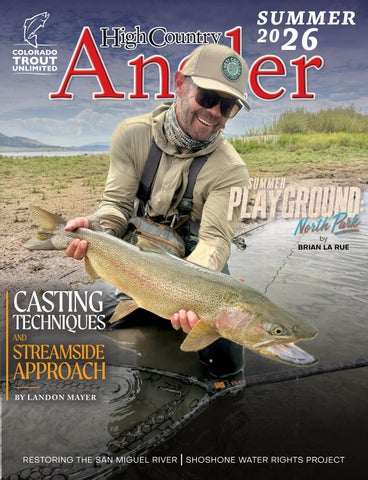
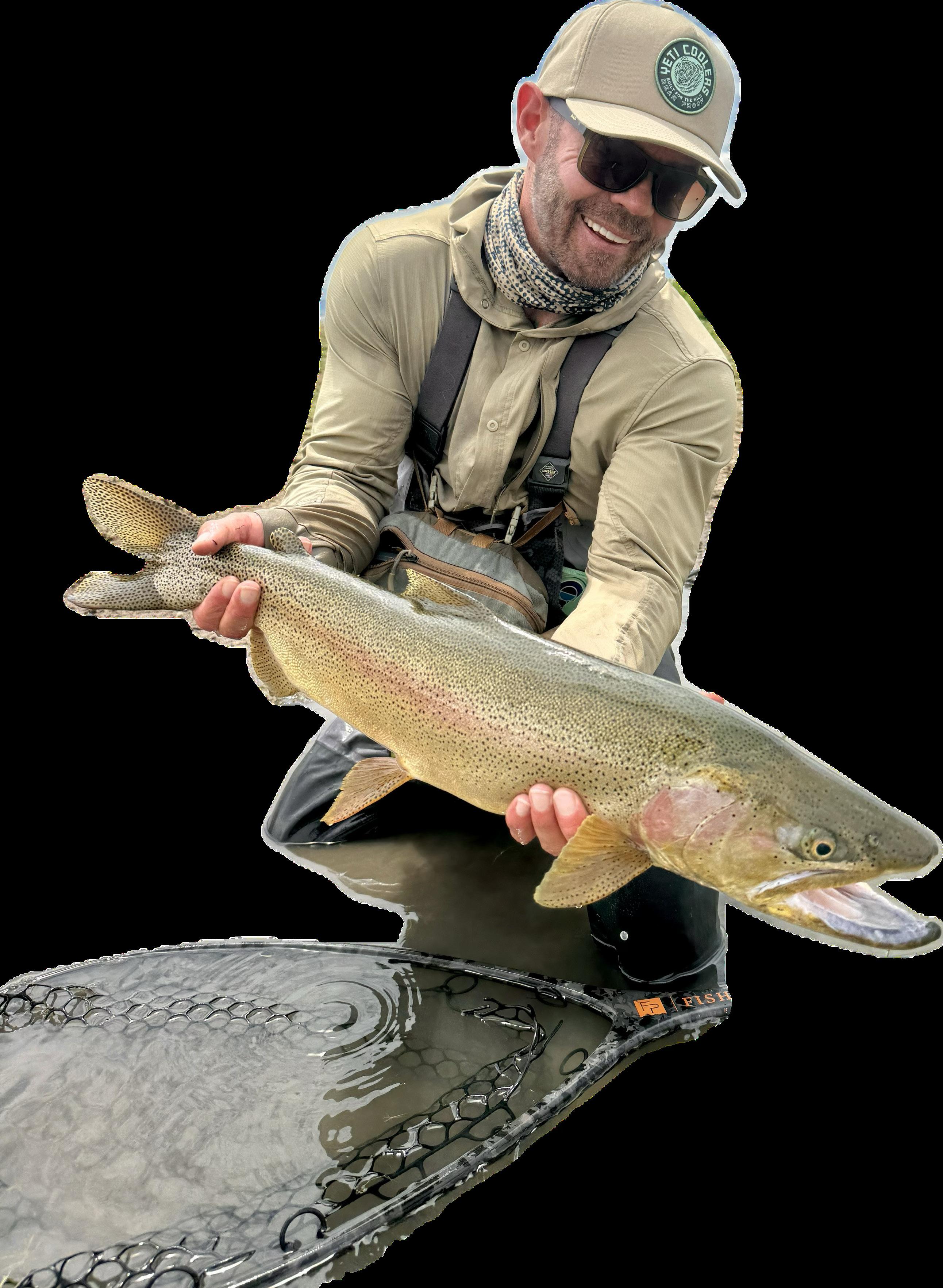
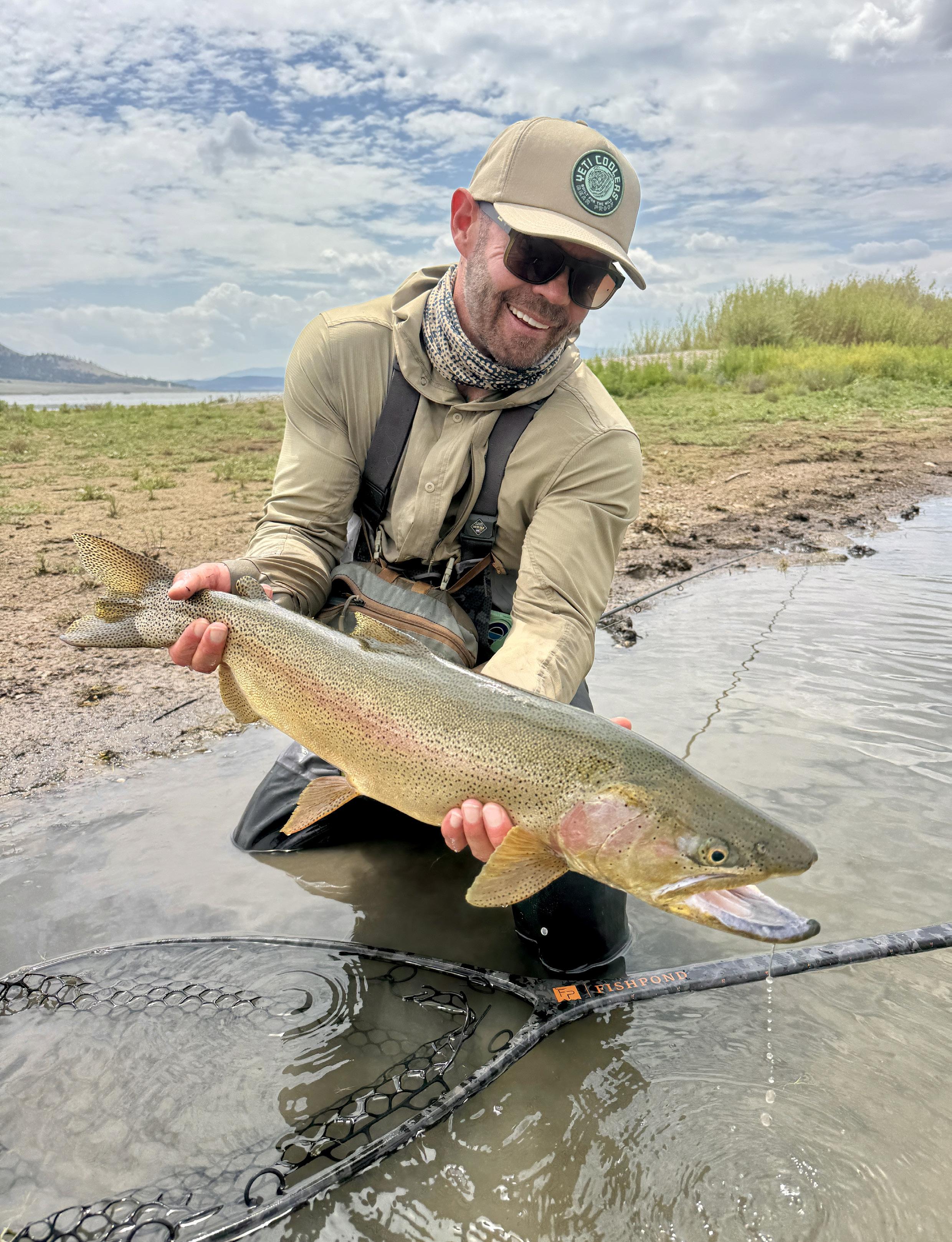
ON THE COVER
Landon Mayer , PHOTO BY

BY LANDON MAYER
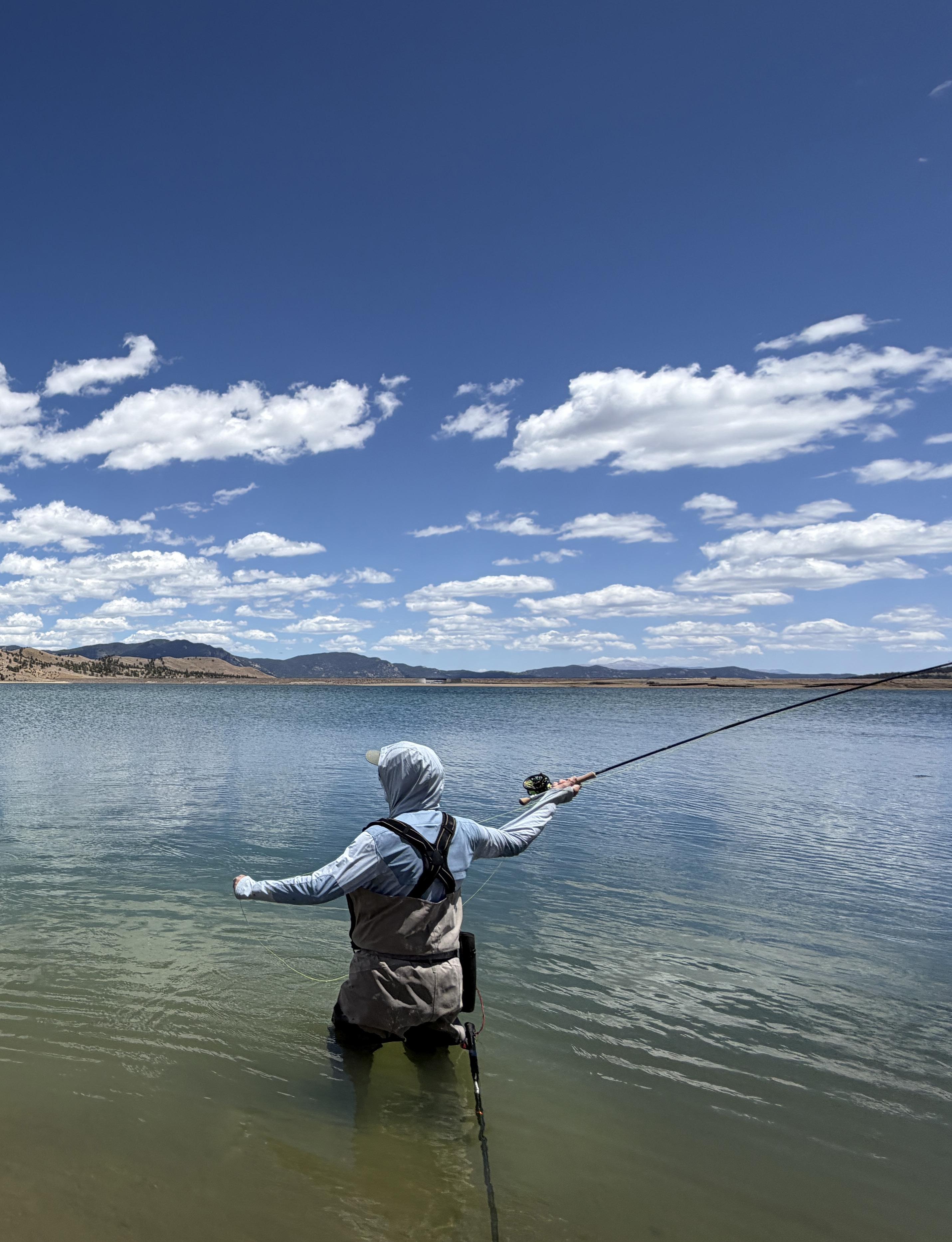
One of the things I enjoy the most about trophy trout fishing is the thrill of the hunt. I love the suspense of wondering what’s around the next bend and how big that fish might be. Even after you’ve fooled the giant to take your fly, you still have the battle with him as he fights for his life and the satisfactory moment when he slides into your net. And then there’s the shared victory— your sense of accomplishment, and that fish swimming away to fight another day. It doesn’t get any better.
Pursuing large trout is both exciting and challenging. At the moment you sight your trophy in the water, you will have multiple streamside obstacles and river situations still to overcome. Because you must face these challenges while simultaneously casting to a fish, being prepared to deal with and adjust to each situation can determine your success.
Having the ability to choose from several different casts when presented with a streamside challenge allows you the best opportunity to make a quality cast, resulting in an excellent drift and—with a little luck—a successful hook-up. The purpose of this chapter is to review casting fundamentals and discuss practical casts that I use routinely in a variety of real fishing situations. My four trusted casts in my tactical arsenal for trophy trout include:
• Conventional cast
• Steeple cast
• Roll cast
• Tension cast
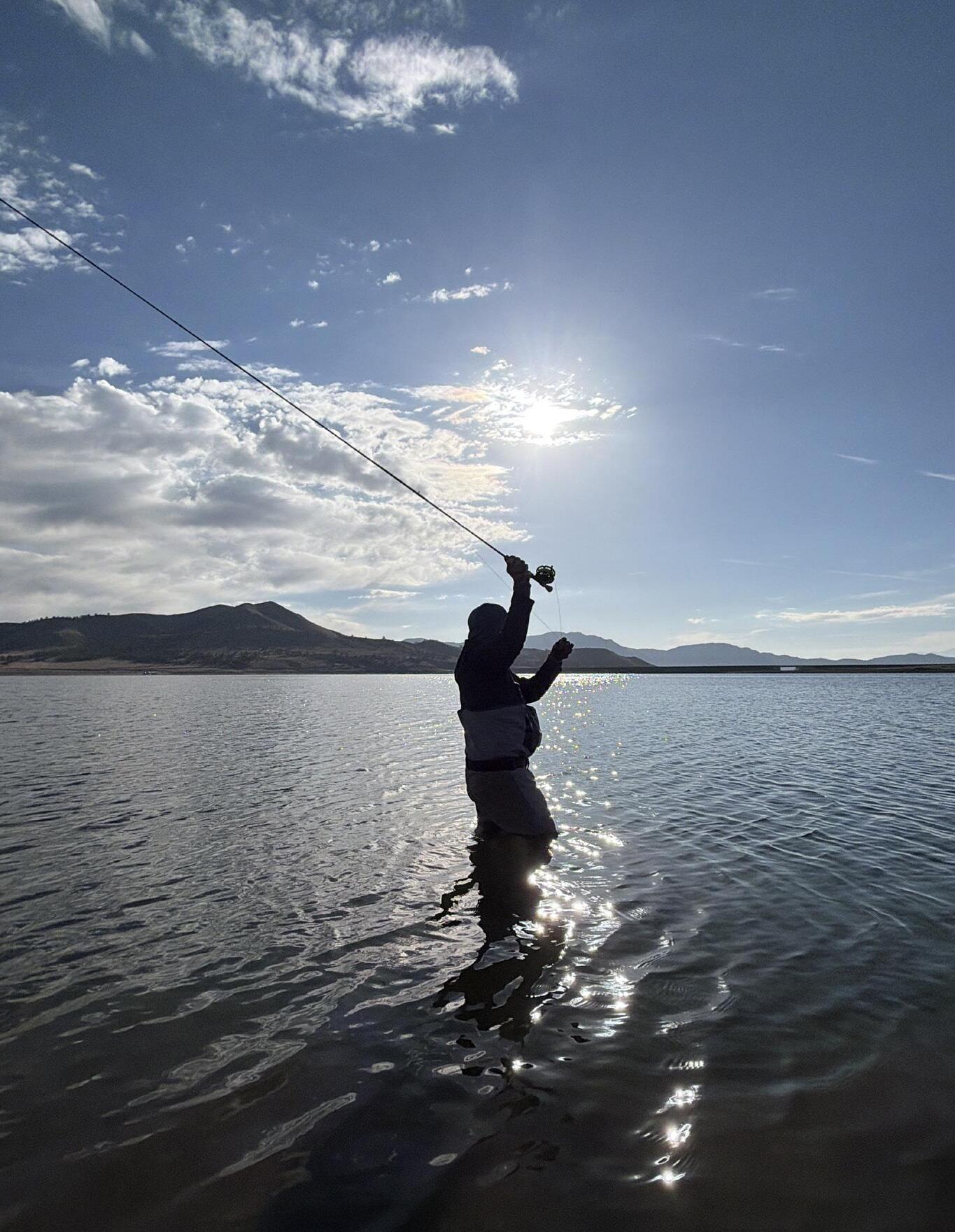
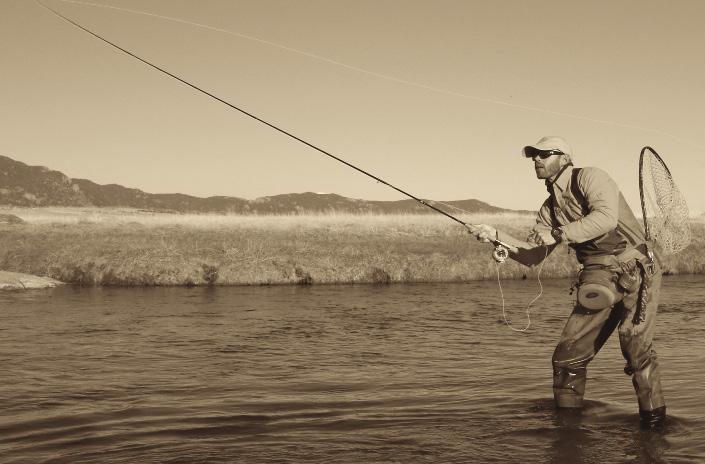
no obstructions on the river. The conventional cast is often used because it the best way to achieve accuracy, maximum power and distance with each cast. Because no adjustments to the cast are necessary, you can perform a normal casting stroke within the 10 and 2 o’clock position. I’ve found that for the majority of people, this casting stroke is the most comfortable to perform.
The conventional cast is a traditional casting stroke consisting of a stop at the 2 o’clock position on the back cast and a stop at the 10 o’clock position on the front cast. The cast can be performed when there are
While you can achieve accuracy, power and distance with this cast, because the line is elevated above the water during the front and back part of the cast you must also contend with the increased risk of fish detecting and being spooked. If you use this cast, be sure to position yourself low and in a place on the water where the fish is less likely to see you and the line (preferably parallel with, or just behind the fish). The cast consists of five steps:
1. The first portion of this cast is the pickup. The
pickup of the cast will load the energy in your rod, allowing you to start the false casting sequence. With your line in the water in front of you, slightly elevate your rod and then proceed back with smooth acceleration and an abrupt stop at the two o’clock position.
2. Pause at the two o’clock position, allowing your line to straighten out behind you. This pause will place a bend in your fly rod from the weight of your fly line and will also give you the energy and power to perform the second step in the casting sequence, the forward casting stroke.
3. From the two o’clock position, smoothly accelerate your rod forward, making another abrupt stop at the 10 o’clock position.
4. Pause at the 10 o’clock position, and then start the back cast again. While performing this cast, it is imperative that you keep the rod traveling on a straight plane. This uniformity allows your line to perform tights loops and utilizes the maximum amount of energy from your fly rod. Continue the false casting sequence until you have the desired distance and accuracy.
5. When you are ready to present the fly to the
fish, simply stop the rod on the forward cast at the 10 o’clock position, allowing your line to unroll and land accurately and naturally on the water.
The steeple cast is most effective when a tall structure or objects behind you on the river prevent a normal back cast. This stroke allows you to perform a back cast that properly loads your rod and shoots the line forward 20 to 30 feet with minimal effort.
1. Start with the rod at the normal casting position and then lift upward to the 2 o’clock position, making an abrupt stop at the 12 o’clock position. This back cast is designed to stop high, allowing the fly line to straighten out behind you without getting caught up in the obstacle preventing you from executing a traditional cast.
2. Pause briefly at the 12 o’clock position and then accelerate forward smoothly, stopping abruptly at the 10 o’clock position in front.
3. Follow-through with your rod to the surface of

the water to finish the cast. The line will shoot out of the rod in an accurate and straight form. Once the line lands, make the appropriate mend (if needed) and watch as the fly naturally drifts toward the fish.
I have used this casting technique in countless encounters with large trout. Streamside vegetation or high banks along many rivers in many situations around the world often make a normal back cast impossible. In addition to these natural barriers to the back cast, there are also bodily limitations. I am commonly stuck in a small cove in a crouched position, afraid to move and risk spooking a giant trout in the water right in front of me. These tight spots on the water get even smaller when you’re creeping into position to cast to a trophy trout.
It’s no coincidence that these tight spots often hold the largest trout! Those big ones are counting on the protection those small spaces afford. The steeple cast is the solution for getting your fly to these fish. The
trick is to deliver the cast without causing a disruptive splash. Even a relatively minor disturbance can be enough to spook the fish that could be the catch of a lifetime.
Practice the cast in non-fishing situations when there is no pressure or stress to do it right the first time. Find a large expanse of grass in a park or a neighborhood pond in which to perfect your technique. I like to practice the cast on the river, picking a rock or structure as my target. This preparation has definitely helped me stay on top of my game, and it gives me the confidence to make the right presentation when it really counts.
When I’m out on the river, I most commonly employ the roll cast. The steps of performing the roll cast are easy to understand and perform, and the cast is efficient and effective. This cast can be used successfully in a variety of situations presented when casting to trophy trout, partly because the line spends less time in the air and thus has less chance of spooking wary fish.
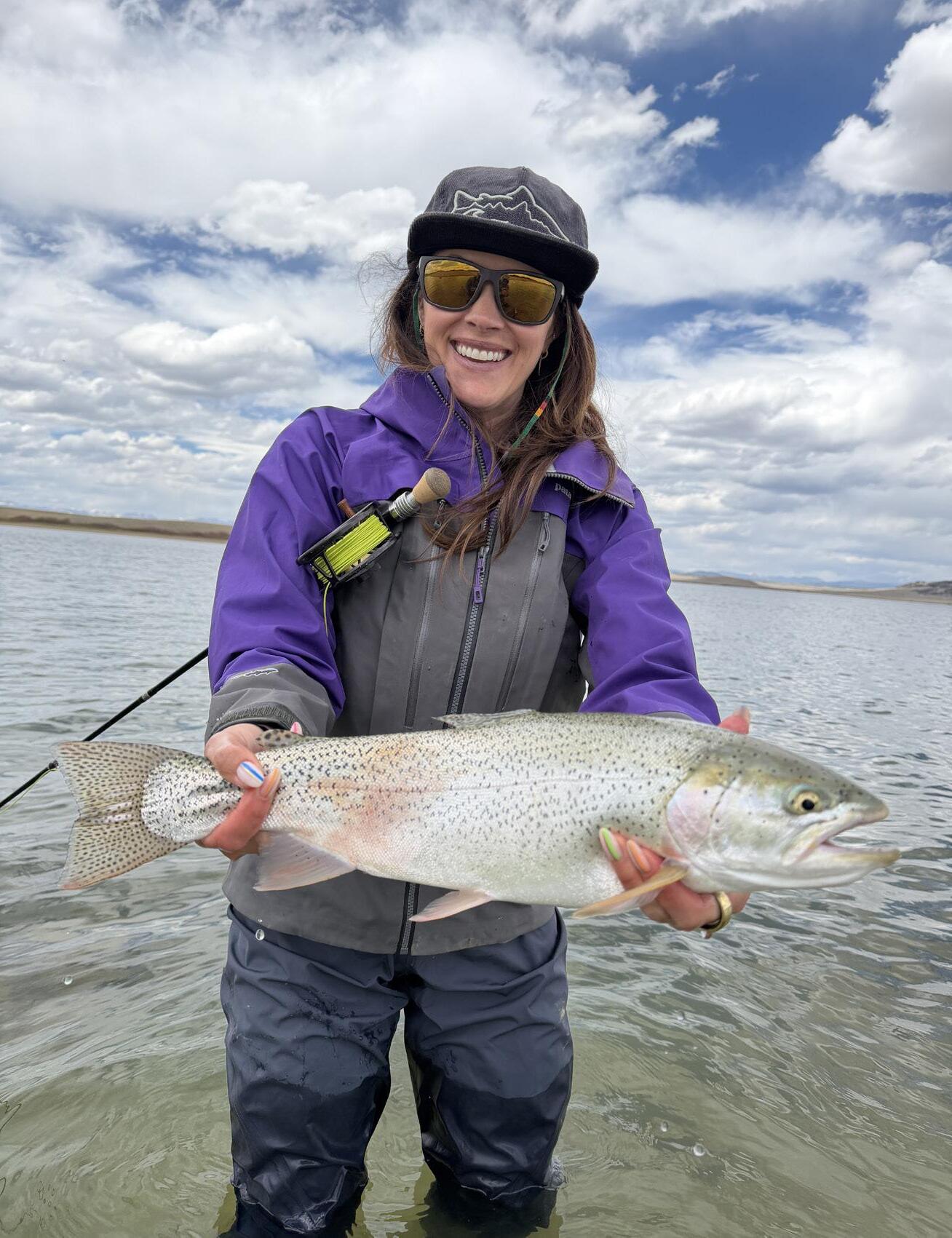
I always point out to my clients the fact that this cast is not named for a rolling motion of the arm. The name is derived from the motion of the line rolling over itself in the air when it lifts off of the water’s surface. The rolling of the line is vitally important when casting to the trout of a lifetime. If you make the mistake of rolling your arm, the rod tip will drop down to the water’s surface. This drop will cause a disturbing splash resulting from your fly line rolling off of the river (instead of the air) all the way to the trout. This bad habit will spook any trophy fish you might have the chance of catching.
TIP: Think of the roll cast as a forward motion of a normal casting stroke. This will stop your rod at the 10 o’clock position at the end of the cast, shooting your line up and forward and allowing it to lift and lay down gently, giving you a natural presentation of your fly.
The low profile of this cast also allows you to be exceptionally accurate when presenting the fly. In addition to the steeple cast, this is another effective cast when there are obstacles behind you. There is no back cast when performing this casting stroke. The rod loads with energy from the tension of the fly line on the water. The cast is broken down into three basic steps:
1. Start with your fly line in the water in front of you at a downstream angle. Gradually lift the rod from a horizontal position to a vertical 1 o’clock position, keeping the fly line in the water while performing the gradual lift.
2. Pause for a moment at the 1 o’clock position, and then tilt the rod tip at a slight angle away from your body. During this pause, you are creating tension on the fly line as it pulls in the water. This resistance will load your rod for the forward portion of your cast.
3. Begin the forward casting stroke with smooth acceleration, making an abrupt stop high at the 10 o’clock position. This stop shoots the line up and forward, completing the cast. The secret is to stop high. This enables you to perform the cast correctly and get
the most power and accuracy out of the cast.
Remember that the term “roll” in roll cast refers to the line rolling over itself—not to the rolling of your arm to perform the cast. It is hard to overcome the urge to drop your rod tip low on the forward part of this casting stroke. As the day grows long, the arm tends to get lazy from so many casts. But, if the rod stops at a low position, the line still lies out in front of you and right in front of the target fish. Keep yourself disciplined by stopping the rod high at the 10 o’clock position when you come forward. When performed correctly, the fish will have no idea that you are anywhere in that area. Performing this cast correctly is like fishing in stealth mode—what a great cast!
The tension cast is designed for speed and effectiveness. This cast allows you to cover water quickly and to make more presentations of the fly to a fish. The key to this cast is the placement of your rod tip when presenting the fly. The move consists of lifting the rod to a vertical position, pausing and then redirecting the rod upstream to make the cast. The tension cast gives you an advantage due to fewer steps involved compared with other casts. Because there is
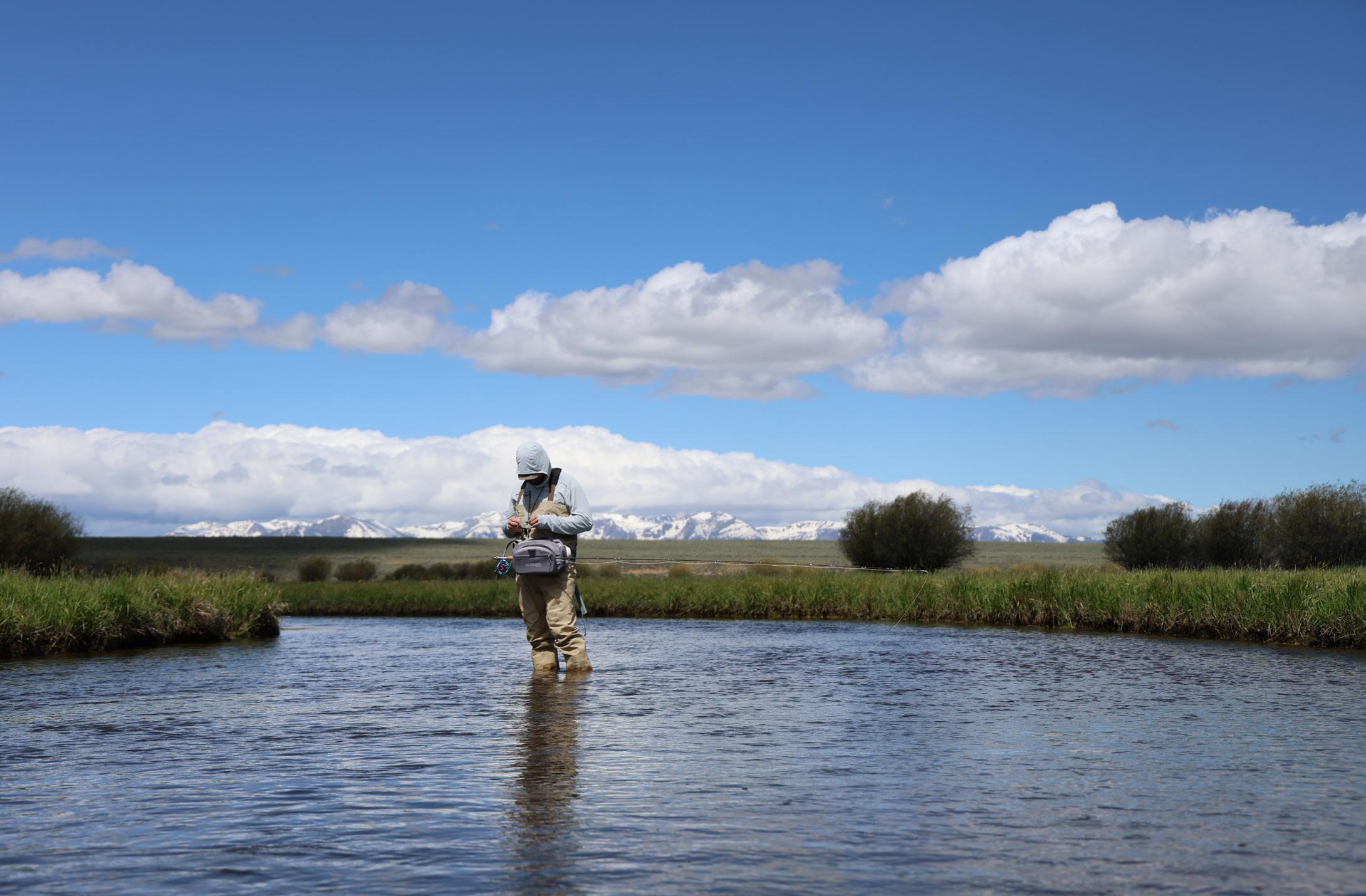

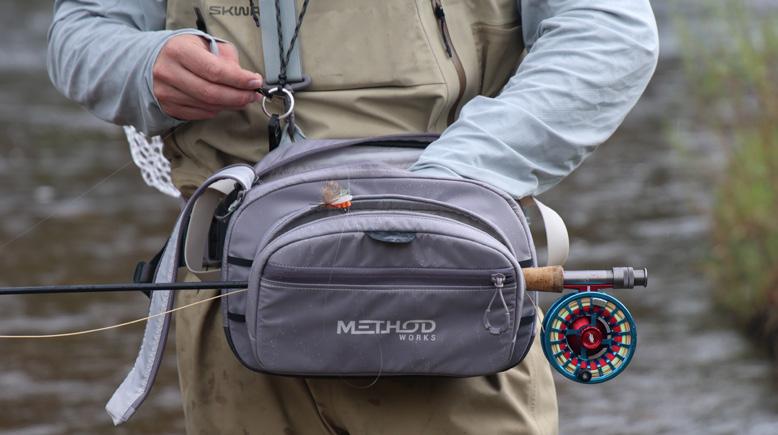
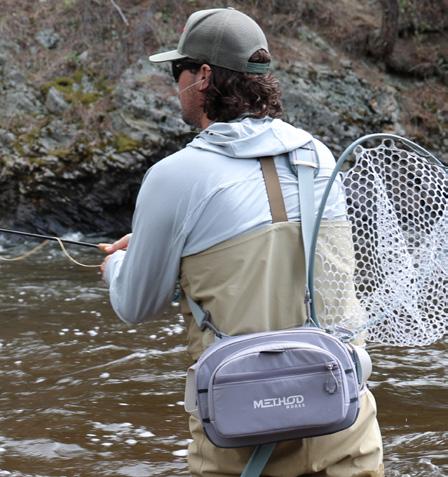
no false casting involved, your line spends less time in the air, decreasing the chance of spooking the fish.
Truly, this is one of the ugliest casts on the planet, but it does get the job done. I’m sure that many of my clients with experience see this cast and think, “How lazy do you have to be to cast like that?” It is true that there is no real skill involved when performing this flipping motion. But once my clients see this cast in action on the water, they adopt it immediately as their new go-to cast. I always advise using the casting stroke that is most effective for the specific situation on the water. Not every cast is aesthetically pleasing and some break the mold of the fundamental casting stroke, but I’m not out there to look pretty! I am ready to catch huge trout and this method adds to my success.
Remember, the presentation of the tension cast allows you to get more casts to the fish quickly and with less effort. The measure of success is in the accuracy of your presentation. Because tension from the line in the water loads the rod, it is important to point your rod tip where you want the fly line and fly to go. Don’t get lazy with your casting stroke and simply transfer your rod directly upstream from you. This kind of lazy transfer will cause your line to collapse, and you’ll miss your target and the fish. The tension cast consists of two steps:
1. Starting with the fly line in the water downstream, lift your rod vertically to a 45-degree angle, pause for a second or two, and then find your target area.
2. Redirect the rod tip downward toward your target area in the water, stopping as the rod nears the horizontal position. This motion will shoot your line to the target, presenting the fly properly.
I try to stay away from using the tension cast in shallow water because the fly lands on the surface and tends to make a mini explosion. But, when it comes to deeper water and to moving through runs quickly in the hopes of finding trophy fish, this cast is
most helpful.
Along with every aspect within the sport of fly fishing, casting has excited my passion. For the last five years, I have had the privilege of teaching anglers the basic and detailed techniques of the casting stroke in private lessons. Through experience, I have found that many seasoned anglers who have been fly fishing leisurely throughout the years have created bad habits in the basics of the casting stroke that can affect their accuracy. Like any sport that involves proper form, trying to break these habits can be difficult and can sometimes feel overwhelming. So, as the saying goes, “Practice makes perfect.” Always give yourself a refresher, and go back to the basics to insure you are getting all you can out of each cast.
Once you have spotted that trophy trout, your next challenge will be getting into position to start casting. When you are approaching the fish, the most factor of positioning is to keeping a low profile. Often, the
Thousands of anglers, guides, lodges, and shops served since 1999.



Colorado Family and Veteran owned and operated.
excitement of seeing a giant trout in the waters will rattle any angler’s nerves. This excitement makes it difficult to keep your cool and to patiently observe the area in order to find the best position for casting to the fish. By keeping a low profile you reduce the chance that the trout may detect you and get spooked. If you rush the situation and spook the fish, you lose the chance to cast to a feeding fish.
Those who know me and have fished with me know that when I pursue trophy trout, my mantra is always, “Get down! Get down!” Whenever I see a trophy fish, I repeat this to myself and automatically stop in my tracks and drop down to one knee. I do this because it makes me think about the situation at hand and reduces the chance of spooking the trout. This pause also gives me the chance to catch my breath and relish the moment at hand. Even as I write, I can reminisce about all the monsters of the past that I contemplated while pausing in that moment on my knee.
TIP: Wear clothing that is dull in color and matches your surroundings. You want to become somewhat camouflaged when you’re on the water. Remember that bright bold colors give the trout a better chance of detecting you.
When large trout are spooked, they can take up to five minutes to settle down and return to a feeding lane. By staying low and keeping yourself out of the trout’s line of sight, you will get the chance to cast to a happy, stress-free fish. It is critical that while trying to keep a low profile, you are also trying to keep and maintain a constant visual of the fish. This will give you the advantage of being able to adjust should the fish move while you are getting into position. Keeping a visual on the fish gives you the added benefit of ob-
serving its behavior and watching that fabulous moment when the fish take your fly. Most importantly, by knowing where the fish is in the water, you will be able to find the best position to approach and cast to the fish.
As a fly fishing guide, I have the advantage of learning at a faster rate than if I were fishing on the river.

When I am guiding anglers, I’m not just focusing on the fish and the best technique for catching them. In addition to the fish and the technique, a guide must also observe everything surrounding and including the client. With each trip, I learn something new.
One trip in particular stands out to me as providing an amazing wealth of knowledge. I have been fly fishing since I was a kid, but this was only my third trip as a guide. My client was a 72-year-old man who was a true professional. He and I had fished with good success for four hours in the morning, and with the chit chat in between casting strokes, we began building a rapport and learning about each other’s lives. While we took a break for lunch and refueled for the afternoon fishing, he popped the question that would change my way of approaching trout for the rest of my life.
My client asked me if I knew my ABC’s, and I looked at him with a smile of confusion as to what he meant. I thought to myself, “There is no way that he means what I think he does.” Thank God, he didn’t. He proceeded to tell me about a method of approaching weary trout which I am passing on to you in a revised form. He made a point of mentioning how easy this technique was and that the simplicity shied many anglers away from using it. “I think anglers generally try to make this sport too hard,” he said. “They overthink everything at hand. Like knowing your ABC’s, sometimes knowing the small things makes the big difference.”
Words of wisdom coming from a wise and deep rooted angler—what more is there to say? That afternoon, my client took the time to guide me, showing me how to get into position to make a cast. I feel fortunate share with other like-minded anglers in such a simple concept that yields such great results. I am forever thankful to that client for revealing to me this store of knowledge from what, I am sure, was a lifetime of many awesome fishing adventures. I am also indebted to him for revealing to me the beauty of generously sharing angler “secrets.” This spirit of comradery is what enhances our sport and causes it to become greater with every season.
I have been guilty of rushing
things when I see a big fish. The sight of the fish of a lifetime generates an amazing eagerness to present the fly. This impatience can be hard to overcome. The fight against the effects of this enthusiasm in my own fishing led me to adopt this system for effectively approaching the trophy fish in those heart thumping situations.
When you first spot a trophy fish, it is imperative that you stop and immediately observe your surroundings. Plan your strategy of moving into position for casting. At the same time, scan the water and get an idea of what to expect should the fish run and you be required to follow it up and down stream.
The ABC technique consists of choosing three possible areas to approach the fish and get you into position when it is time to cast. Mentally mark each spot with a letter: A, B, and C. This delineation forces you to consider more than one casting position while also affording you the time to think over the situation at hand. By thinking about possible casting positions, you will prepare yourself to make a more logical (and oftentimes, more effective) decision. This mental marking may also help you find an area that wasn’t your first choice but could present itself as the most successful choice.
Ideally, your casting position should be in an area that keeps you as undetectable as possible, allows you to maintain a constant visual, and insures a proper presentation. Once you have determined your position, stay low and cautious. By knowing the surroundings and taking time to find your spot, you will learn more from each experience and become more effective when casting to trophy fish. Try these methods the next time you are on the water and discover the visual advantage you gain over the trout.
Happy hunting!
Landon Mayer is a veteran Colorado guide and author of several books. His newest book, Guide Flies: Easyto-Tie Patterns for Tough Trout , can be purchased on his website at www.landonmayerflyfishing.com. You can follow Landon on Instagram at @landonmayerflyfishing.

by

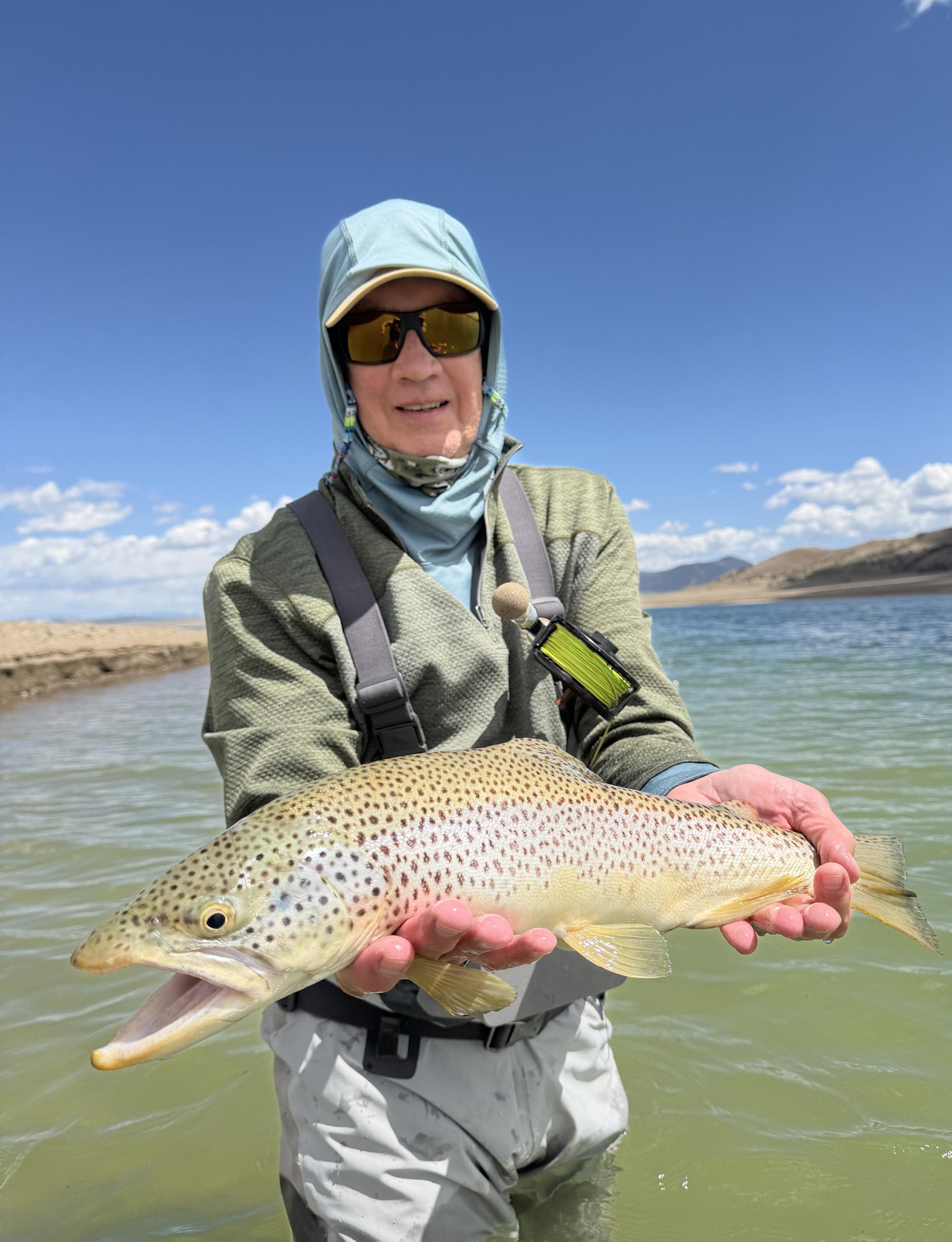
Summer fun is on my mind this issue, and instead of highlighting a single fishery, I thought I would highlight your next base camp. Think of it as a hub from which you can tackle all kinds of waters and capitalize on big fish from 24 to 30 inches in all kinds of settings. Yes, you heard me right! But be forewarned: you’ll need at least a week to scratch the surface and explore all the meadow streams and tributaries, not to mention the stillwaters you’ll find in North Park.
With the perfect balance of wild trout and big trout opportunities, it’s time to make some memories before the days grow short again. We all know about the North Platte River, and I’ve written about it with the help of the guys at North Park Anglers, so I reached out to our friend Scott Graham for this story as well. I will focus on both still and moving waters.
Picking just a few smaller rivers is tough when you consider the lineup. You have Michigan, Illi-
nois, North Fork, Beaver, Big Creek, Norris, and the Roaring Fork, all of which hold large populations of wild trout and chances of trout over 20 inches. But if you can only choose a couple, why not leave it up to the experts? I asked Scott what he would advise.
Scott’s two choices are the Roaring Fork and the Michigan River. Starting on the Roaring Fork because it is more of a standard trout river offering good fishing all summer and fall, Graham says it is home to brookies, rainbows and browns.
“The Roaring Fork is a higher-gradient stream but still offers meandering bends and pools with current,” said Graham, seasoned North Park veteran fly angler and shop manager. “It offers a basic insect hatch, including mayflies and caddis, and a higher quantity of fish to target. With that said, big browns are still caught here regularly. Park and hike at the Manville State Wildlife Area for best access.”
If you want more technical fishing with slower bends, meanders and huge trout, then Graham sug-
gests anglers should wait for September and October and try the Michigan River.
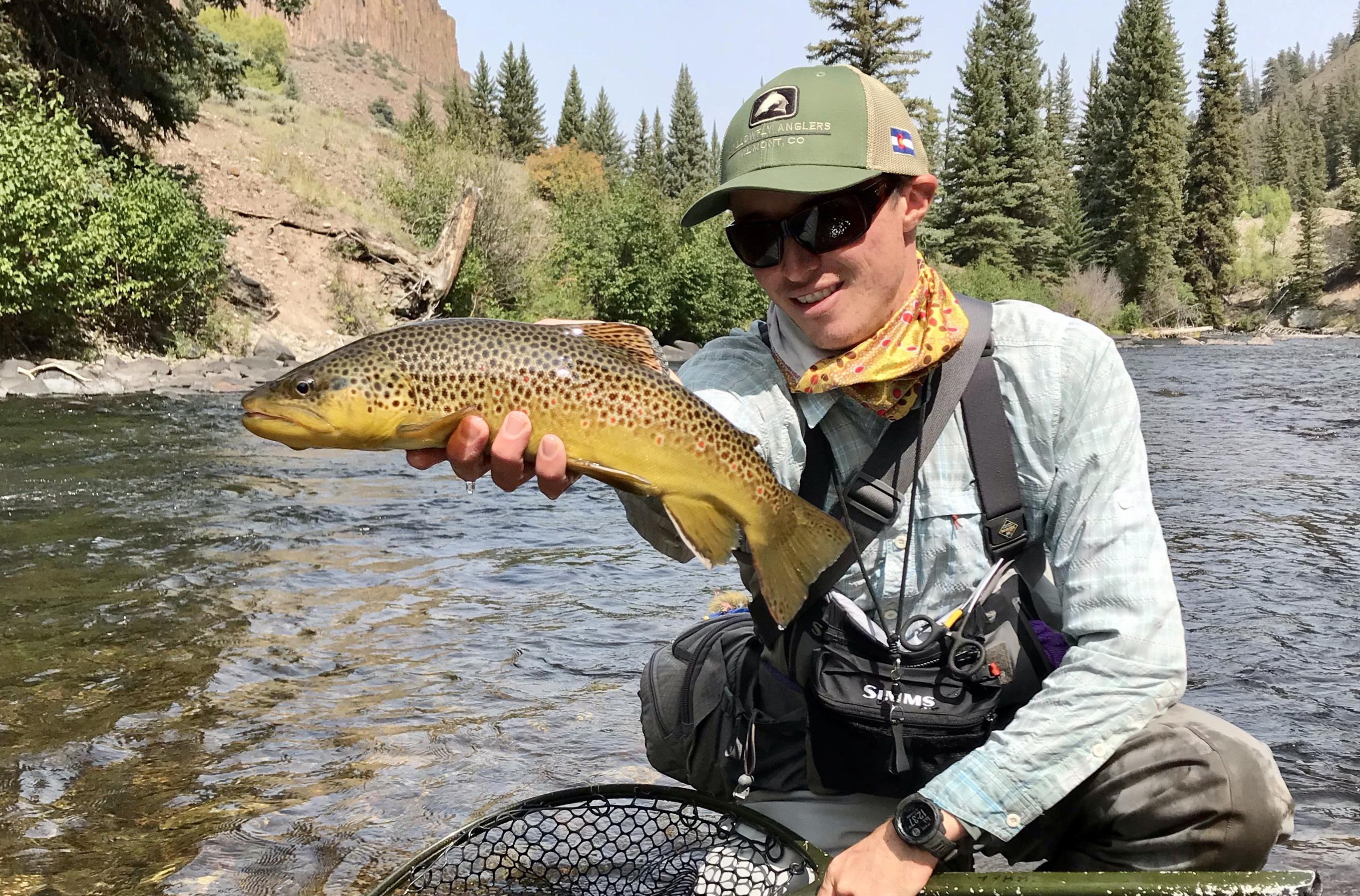
“There are two distinct sections of the Michigan,” added Graham. “The valley section in and around town, and the meadow stretches cutting through the hayfields. Don’t expect big numbers of fish here but expect a respectable shot at browns in the 24- to 26-inch range, and we’ve seen fish to 30 inches.”
Well, a shot at 24- to 30-inch trout not only sounds respectable, but a reason to plan a trip to North Park, right?
“These bigger fish will require a more technical approach and anglers to cover a lot of ground. But don’t think small bugs. Think big terrestrials and streamers,” said Graham. “Spring and fall are best, as summer gets tougher on the Michigan. Just be prepared to cover miles of water and make a lot of casts from stealthy positions.”
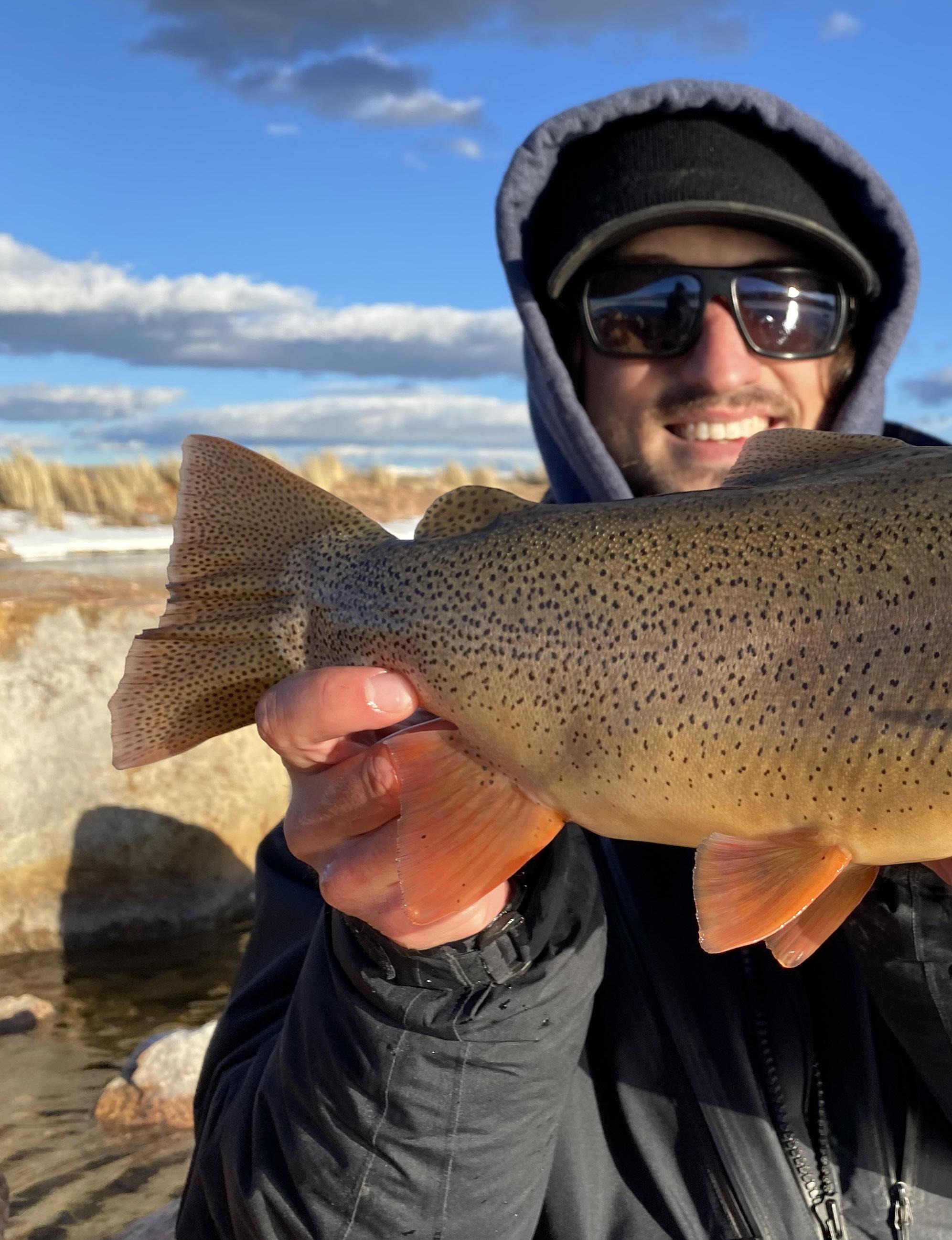
Just when you think you’re ready to plan a trip and get into the area’s creeks and smaller tributaries for trout from 20 to 30 inches, there’s more! Yes, I mentioned the area’s prized stillwaters as well. Again, there’s a long list of lakes to choose from, but let’s talk about Delaney Buttes. Big trout producers North, South and East Delaney will live up to their reputations as trophy trout factories. North Delaney is so good, (that’s your cue, “how good is it?”) that Colorado often collects brown trout eggs for the state stocking programs. Enough said.
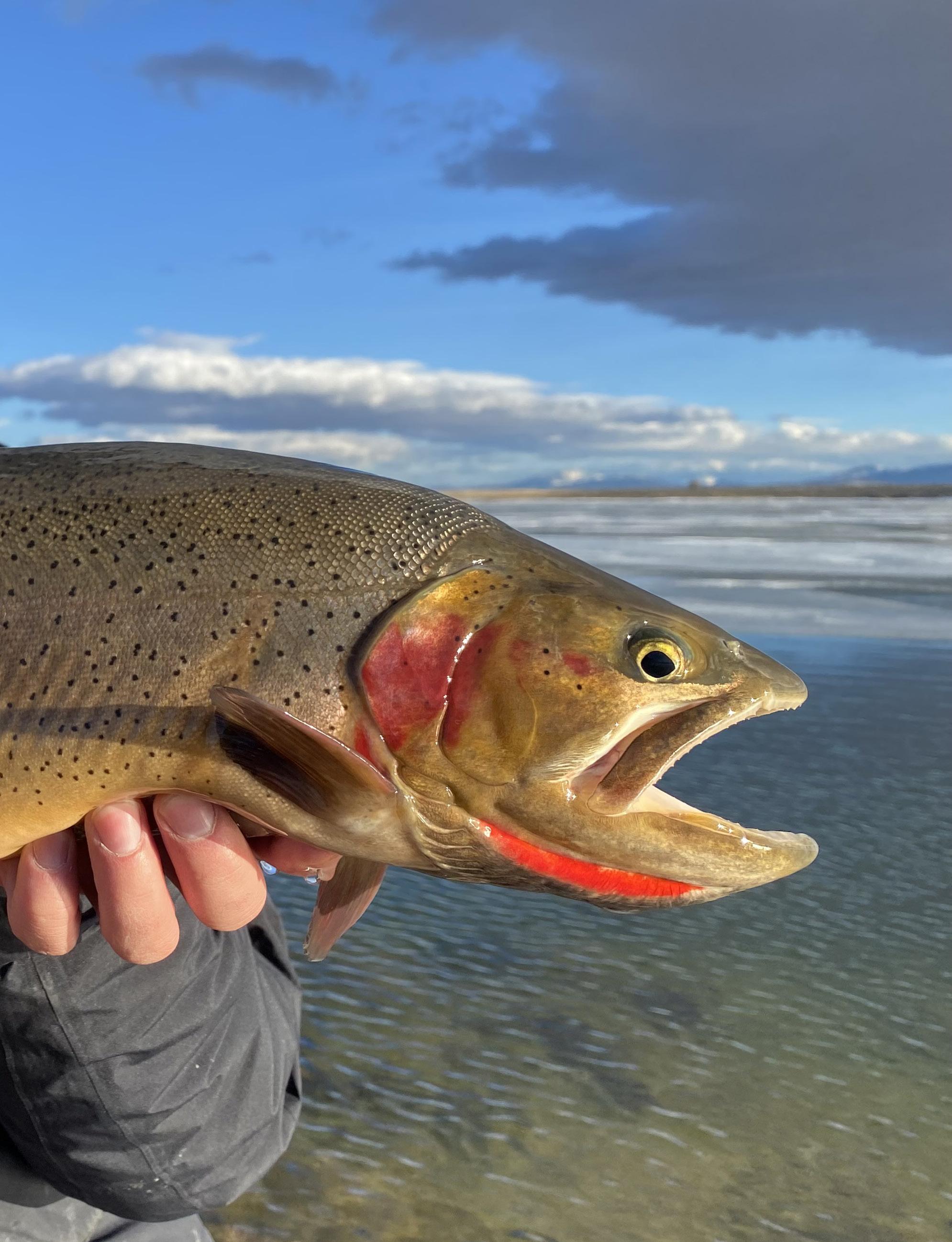
South and East Delaney are loaded with big Snake River cutthroat and rainbows. When it comes to bug selection on these lakes, Graham says the insect life is quite varied, but you can always count on chironomids, as well as scuds. With such an abundant food source, the trout are fat, hard fighting and often exhibit
amazing colors. That translates to smiles on angler faces and photographic evidence to back up your fish story.
“South and East Delaney will also produce on sedge caddis and lots of terrestrials,” added Graham. “Also use leeches and baitfish imitations that look like stickleback minnows. Your best bet is to have some kind of watercraft to get outside the weed lines, or wake up early or stay out late into the evening and stalk trout along the shoreline. You’ll connect with a healthy supply of 14- to 17-inch rainbows and Snake River cutts, but there’s no shortage of 24-inchers in there.
“Another fishery we guide on that has been amazing right now is Lake John,” continued Graham. “John has been awesome with rainbows and Snake River cutts from 24 to 30 inches. In fact, all the lakes I mentioned are fishing well, so join us for a day on the water or come by the shop and get all the latest patterns that will improve your odds of

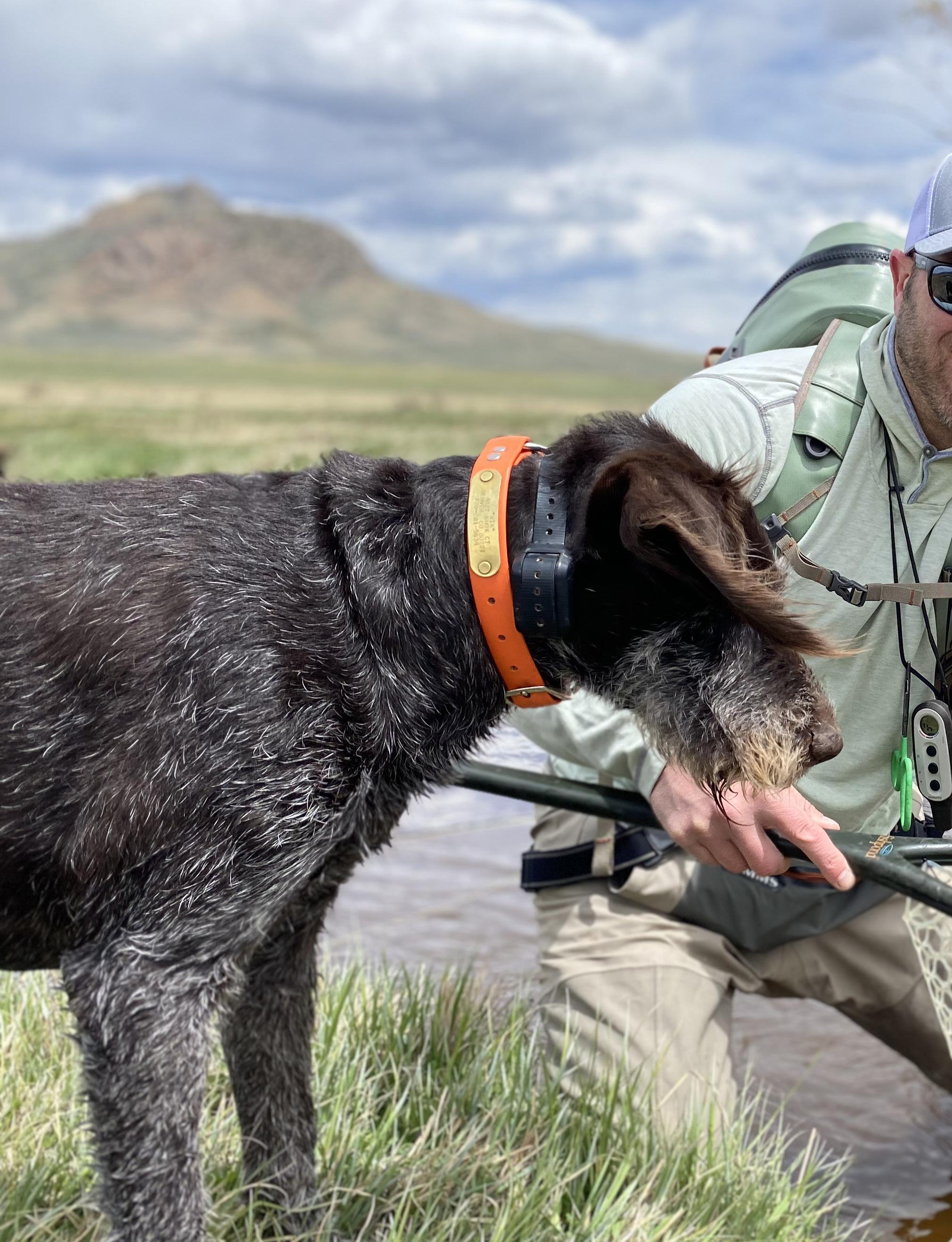
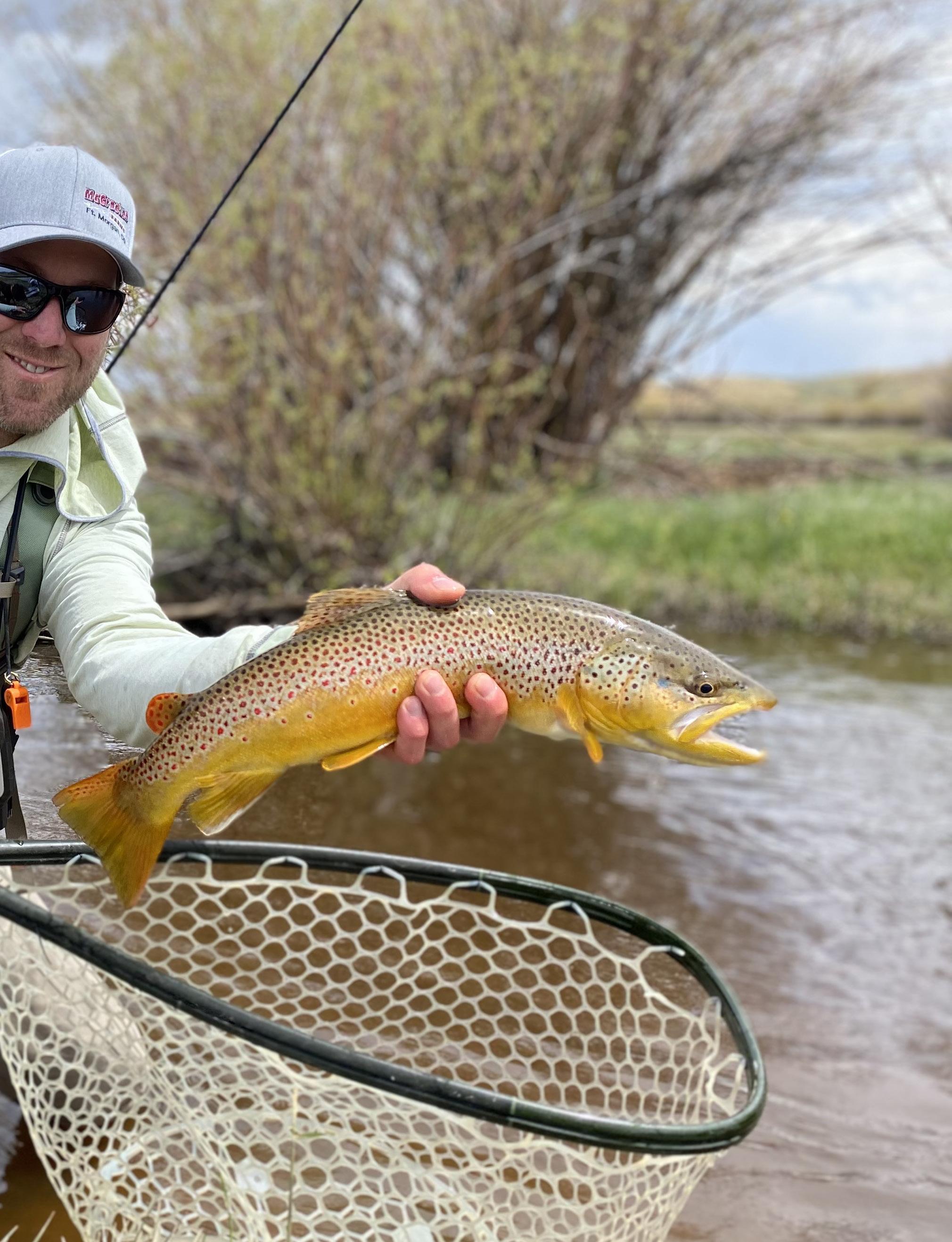
catching big fish.”
Bonus time! With all these waters to choose from, it would be easy to forget the backcountry options as well. Five distinct mountain ranges surround North Park, so if you are willing to hike less-traveled trails, you can find some virtually untouched fisheries, both small creeks and lakes. Big trout call these alpine waters home with even lake trout and the occasional grayling in the mix. Take a hike, call a tent home for a couple of nights and explore. The guys at North Park Anglers can give you some intel!
“We sell our area and business based on the solitude you will find in North Park and the amazing wild trout opportunities the area offers,” said Graham. “The waters around here are not only full of big
trout, but you might have a mile to yourself.”
The waters around North Park and their beautiful trout will take your breath away. Plan a trip. Fishing in early summer will probably be best this year given the snowpack, so have some fun before water temperatures begin to climb. And tell them I sent you!
High Country Angler contributor Brian La Rue enjoys giving fly fishers ideas of where to go for an adventure. Feel free to reach out to Brian at Brian@hcamagazine.com if you want your lodge or guide service featured in an upcoming promotional marketing plan.
The first thing relegated to the superfluous pile was my cell phone, switched off as soon as we left town. Twenty years ago, we all led so-called unconnected lives, and somehow the world continued to spin comfortably on its axis. Nowadays, people feel uneasy when they glance at their smartphone and see the “No Service” icon. Not me. I live for the places where the damn things don’t work.
Next to go was my watch, stuffed into the nether reaches of the glove compartment along with the phone. For the next five days, when hungry I’ll eat, when thirsty I’ll drink, when the mood takes me, I’ll fish, and when tired, I’ll sleep. No timepiece required. When you wake up and can’t remember exactly what day it is, you know it’s a good vacation. It was early June, often marginally soon for a high country fishing trip, but it was the only time myself and my fishing buddy could both put together the time. Anyone who thinks guides fish for a living hasn’t been one, at least not a busy one. We spend our days wishing we were fishing, weeks on the water watching others fish, sometimes cringing, often laughing, occasionally applauding and always chomping at the bit to be the one with the rod in their hand. Guiding is equal parts babysitter, scape-
goat, and therapist, and occasionally it’s really about fishing.
While summer had only just begun, strangely it would be over in the blink of an eye, as time is wont to do the older you get. Already, March—the spring season—seemed another lifetime ago. And we were looking forward to this trip. Five days of nothing to do but eat, drink, sleep, and fish, with as little human interaction as possible. This was a window of opportunity to let off steam before the hordes of fish-hungry tourists would descend on town. We’d decided to stay relatively close to home, exploring the headwaters of some nearby drainages, thin blue lines coursing through contour lines that stacked tightly on the map.
Cresting the first pass, the San Luis Valley spread before us like a vast arrowhead, its shaft the highway cutting through its heart away to the south. In the days before nations and boundaries, rivers and mountain ranges were the true, natural borders. The San Luis is the largest alpine valley in the world, covering some 8000 square miles, stretching from south-central Colorado 125 miles into New Mexico—once upon a recent time, Old Mexico. Landscapes make a mockery of our need to claim and define. People have lived in this valley for centuries, scratching a living from the dusty earth, and still do. Their roots run deep, empires have risen and crumbled, yet still they endure.
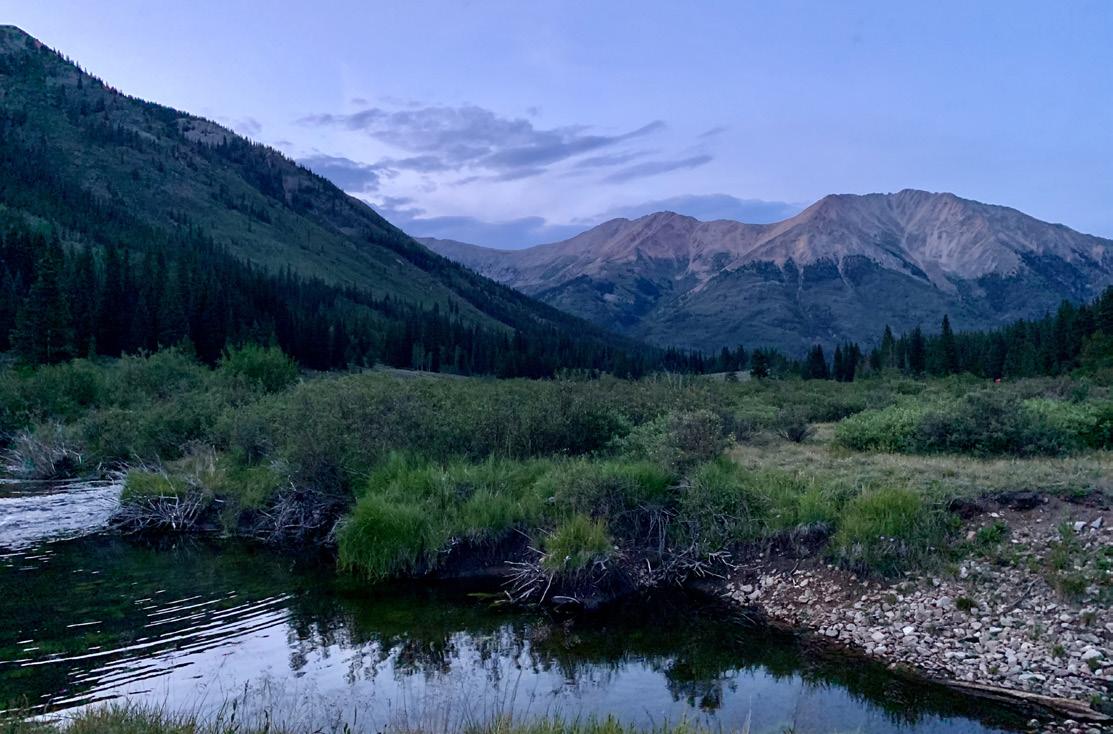
As the valley sped by through the windshield, here and there stands of cottonwood and circles of lush green punctuated the miles and miles of greasewood, each green denoting a homestead, irrigation pivot, water course, or wetland. The late evening sun sunk low over the mountains to the west, the cradle of the Rio Grande, our destination. Clouds hugged the peaks, infusing the dusk with brooding hues of orange, purple and red. We drove on as evening gave way to night, the line delineating earth and sky blurring to black, lit up from time to time by a dis-
tant flicker of lightning.
The San Luis has presence, what some might call juju. It’s been the scene of many a recorded paranormal event—UFOs, strange lights at night, places where the earth vibrates beneath your feet, rumors of secret underground bases, of aliens and crystals. Dating back to its original inhabitants, many regard it as a place of great energy, of close interface between worlds seen and unseen. I’m not discounting that kind of thing, but I’ve yet to personally see anything extraordinary, save the natural, wide-open beauty of the place. I do know there’s a little store along the way that sells burritos that make the two hour drive from home worth it in its own right, and the valley is gateway to some magical, understated fishing.
It was late by the time we made camp high in the San Juans. The map said close to 10,000 feet, the stars cold and clear, the earth still damp from the storm we’d witnessed driving in, the clouds long since moved out. The air was crisp and clean, each inhale tracing its way into my lungs, each exhale releasing the tension in my shoulders. From the gorge below, the sound of a river rose up through the darkness. A whiskey bottle warmed in place of a fire. We spun tales of danger and youthful bravado, of beaver ponds and brookies, of barracuda and rodbusting browns. The temperature was dropping quickly, and would
no doubt dip below freezing during the night. Sometime I guess around midnight, I curled up snug in my bag, gazing up at the stars, the river softly singing its lullaby below. Tomorrow I’d sleep til sun hit camp, then rise, eat, and fish.
Hayden Mellsop is an expat New Zealander living in the mountain town of Salida, Colorado, on the banks of the Arkansas River. As well as being a semi-retired fly fishing guide, he juggles helping his wife raise two teenage daughters, along with a career in real estate.

Hayden Mellsop
Fly fishing guide. Real Estate guide.
Recreation, residential, retirement, investment.

by Colorado TU Staff
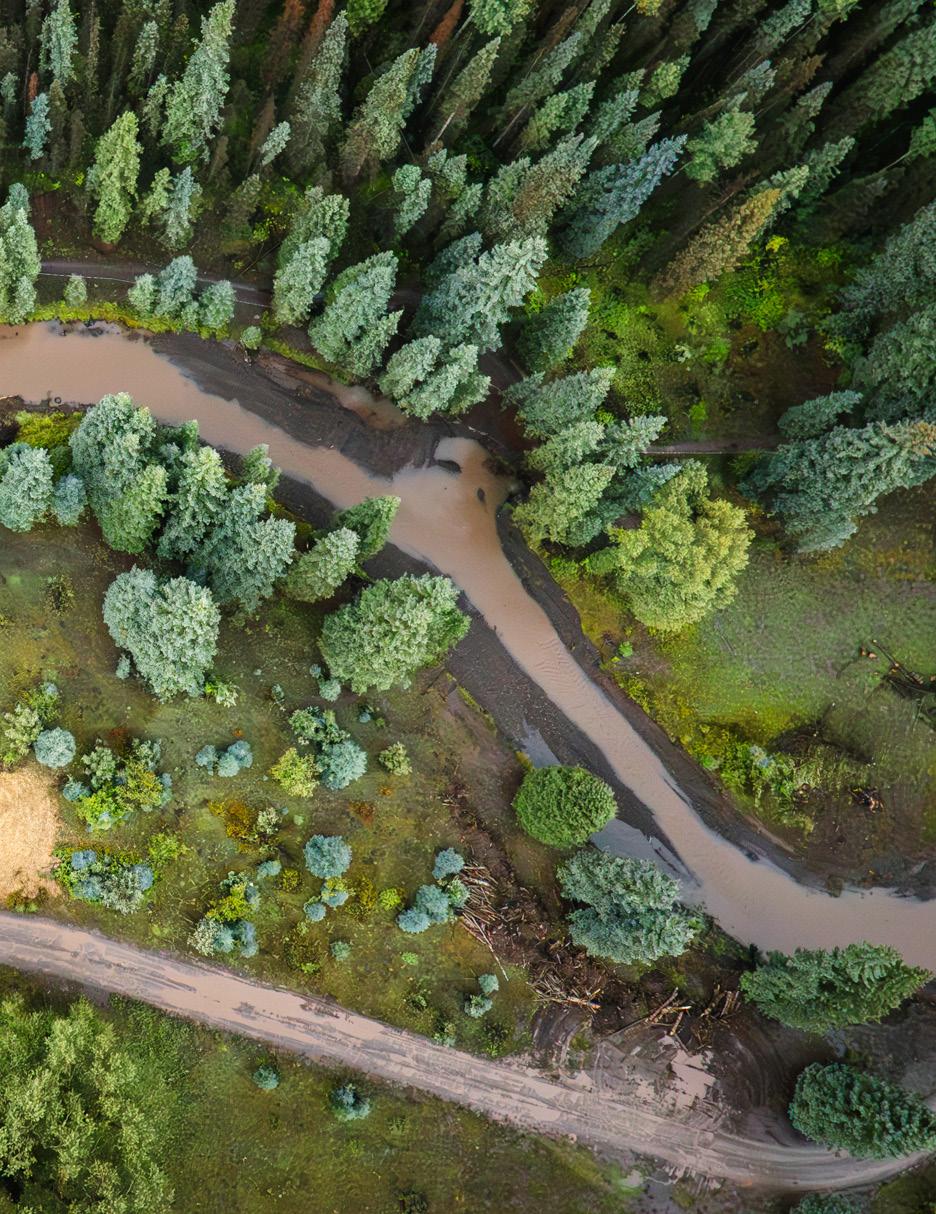
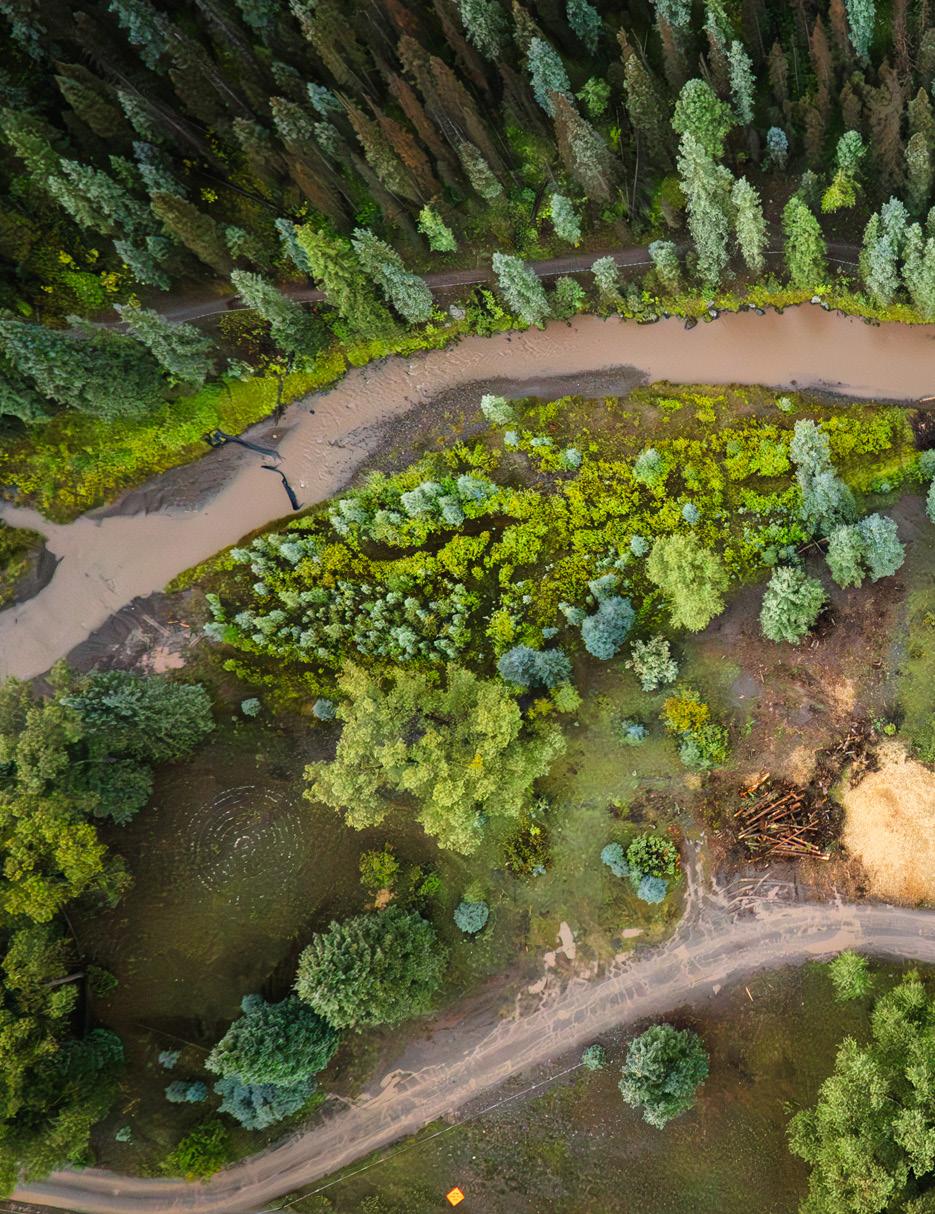
Near Telluride, a major river restoration effort is bringing new life to the San Miguel River corridor, showing how clean water, healthy forests, local leadership, and strong partnerships all connect.
The Telluride Valley Floor project is revitalizing a 23-acre project area along the San Miguel River downstream of the Valley Floor open space. Led through a partnership between Trout Unlimited, the U.S. Forest Service, the Town of Telluride, and other partners, the project builds on years of work to restore a river corridor shaped by historic mining impacts, channel changes, and a lack of natural habitat complexity.
For Colorado Trout Unlimited and our local Gunnison Gorge Anglers chapter, this project is also a reminder of what local conservation can make possible. Local chapters are often the force that helps important river projects move from idea to impact. On the San Miguel River, Gunnison Gorge Anglers has helped champion this work alongside partner Telluride Outside, supporting a project that benefits
the river, the surrounding landscape, and the broader Telluride community.
The foundation for this work began with major mine reclamation. Between 2020 and 2022, the Environmental Protection Agency removed approximately 60,000 cubic yards of mine tailings contaminated with arsenic and lead from the site. That cleanup created the opportunity for the next phase: restoring the San Miguel River itself.
In 2024, Trout Unlimited and the U.S. Forest Service also reconstructed Boomerang Bridge, reducing constriction on the river and tripling the bridge’s capacity to handle high flows. That improvement helps the river move more naturally through the corridor while better protecting local access and infrastructure.
Together, these efforts are helping shift the Valley Floor from a legacy impact site toward a healthier, more resilient river landscape.
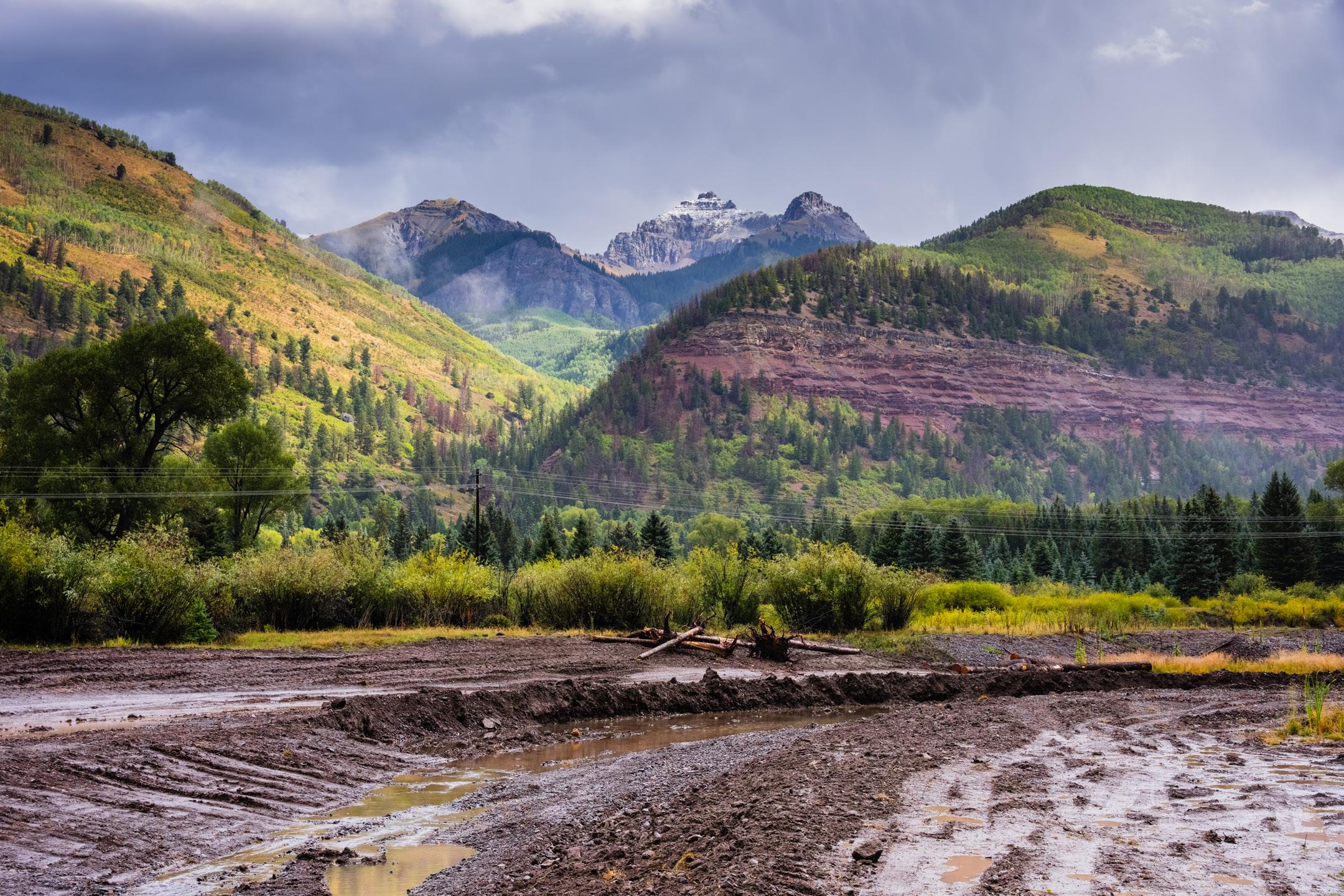
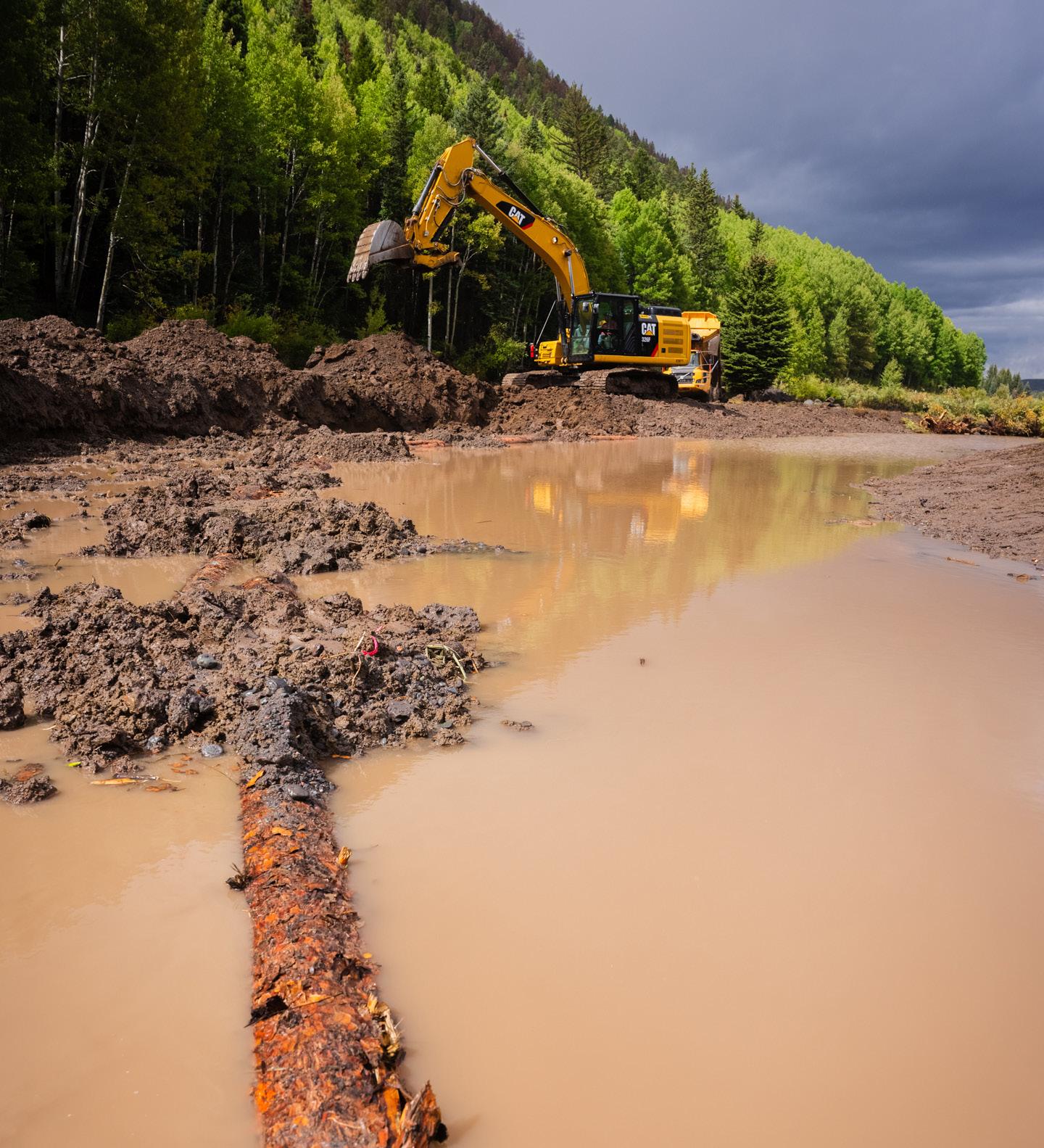
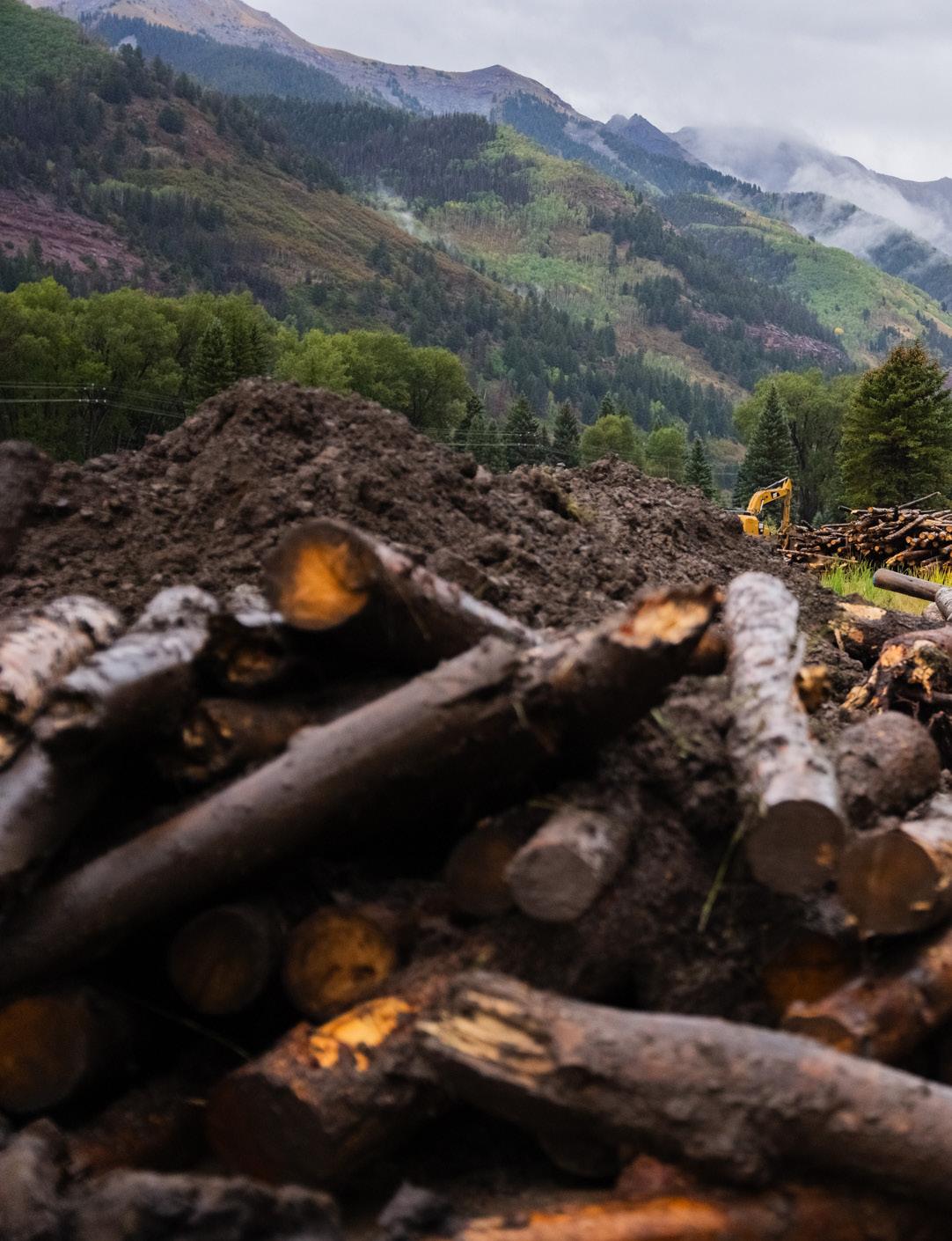
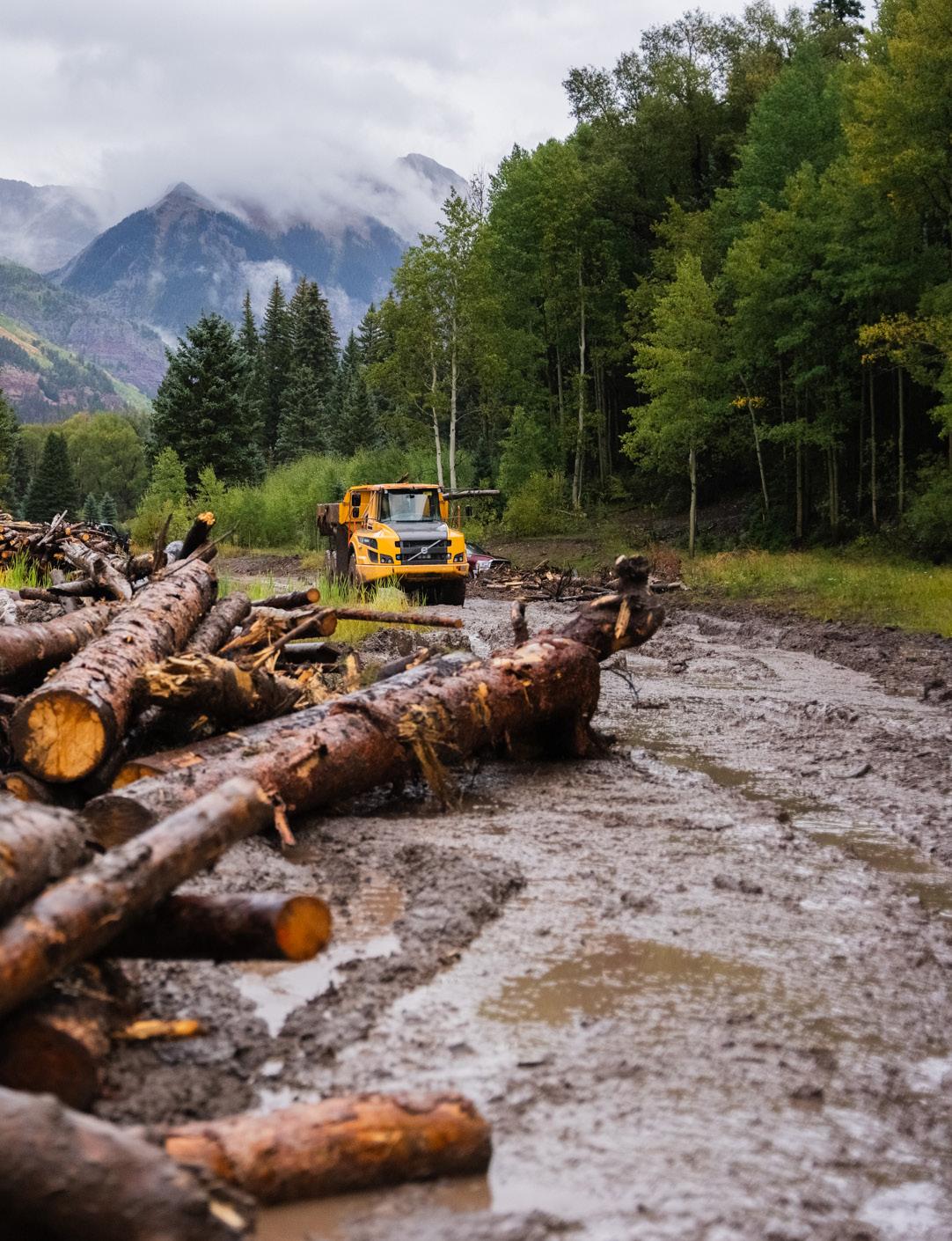
A key part of the restoration is bringing natural wood back into the river and floodplain.
Nearly 2,000 logs, sourced from forest health and fuels reduction work on adjacent mountain slopes, were hauled to the site by helicopter over a field season. Those logs are being used for bank stabilization, instream habitat, and floodplain roughness, helping rebuild the kind of structure that a healthy river system needs.
In a natural stream, wood slows water, creates pools and riffles, improves cover for fish and wildlife, reconnects floodplains, and helps a river hold onto moisture. In the San Miguel corridor, those improvements will help create more complex habitat and a more resilient stream channel.
The project also connects river restoration with forest health. The logs come from thinning work that reduces wildfire risk by clearing diseased and overcrowded forest stands, improving forest conditions, and creating defensible space around the community. That same work helps protect long-term water quality by reducing the risk of severe wildfire impacts to the watershed and nearby infrastructure.
Restoration does not end with the stream channel. More than 41,000 native plants will also be installed throughout the project area. Thousands of those
plants were grown from seed collected on National Forest System lands, then sewn by local and regional nurseries and planted by local contractors and volunteers.
Those plantings will help stabilize the corridor, improve riparian habitat, and support the long-term recovery of the river’s natural processes. They will also help encourage beavers to recolonize a reach that currently lacks enough vegetation to support them.
Beavers are a keystone species because their dams and ponds can improve water storage, create wetlands, reconnect floodplains, and provide habitat for fish, birds, amphibians, and other wildlife. Encouraging their return is one more way this project is helping rebuild a healthier, more self-sustaining river corridor.
When complete in October 2026, the Telluride Valley Floor project will create 1,320 linear feet of new meandering river channel downstream of the Valley Floor open space. The restored corridor will improve habitat, support cleaner water, help protect critical infrastructure from wildfire risk, and create a more resilient San Miguel River for the community and wildlife that depend on it.
The project area is accessible from Boomerang Road and by trails from the Town of Telluride, giving the community a direct connection to the restoration taking place in its backyard.
This is connected conservation in action: healthier forests, safer communities, stronger river habitat, cleaner water, and a more resilient future for the San Miguel River.
Colorado TU is grateful to Gunnison Gorge Anglers, Telluride Outside, the U.S. Forest Service, the Town of Telluride, the Town of Mountain Village, the Environmental Protection Agency, local contractors, volunteers, and all partners helping bring this work to life.
To learn more about this and other stories, visit coloradotu.org
WITH $40 MILLION FEDERAL FUNDING RELEASE
by Colorado TU Staff
Amajor step forward for the Colorado River is now in motion.
On May 22, the Department of the Interior released $40 million in federal funding to the Colorado River District for the Shoshone Water Rights Preservation Project. The funding brings the River District to $97 million of the $99 million needed to purchase and permanently protect the water rights tied to the Shoshone Hydropower Plant in Glenwood Canyon.
For Colorado’s rivers, Western Slope communities, agricultural producers, recreation economies, and everyone who depends on the Colorado River, this is a significant milestone. The Shoshone water rights are some of the largest and most senior nonconsumptive water rights on the Colorado River. They include senior 1902 and junior 1929 rights that have long helped maintain flows in the Colorado River headwaters down through Glenwood Canyon and on to downstream communities.
The Shoshone water rights are some of the largest and most senior non-consumptive water rights on the Colorado River. They include senior 1902 and junior 1929 rights that have long helped maintain flows from the Colorado River headwaters through Glenwood Canyon and on to downstream communities. Because
the water used for hydropower returns to the river, the rights have supported river flows that benefit agriculture, local economies, recreation, aquatic habitat, and the coldwater conditions wild and native trout need.
Colorado Trout Unlimited has long supported the effort to permanently protect the Shoshone water rights because this project is about more than one stretch of river. It is about long-term water security for Colorado’s namesake river and the communities, ecosystems, and future generations that rely on it.
In 2023, the Colorado River District entered into an agreement with Public Service Company of Colorado, a subsidiary of Xcel Energy, to purchase the Shoshone water rights for $99 million. One of the major conditions of that agreement was securing the funding needed to complete the purchase. With the release of this federal award, that goal is now nearly complete.
Another major step came in November 2025, when the Colorado Water Conservation Board unanimously approved accepting the Shoshone water rights into the state’s instream flow program. That approval was a critical milestone in the broader effort to allow the rights to continue supporting hydropower production while also protecting flows in the Colorado River.
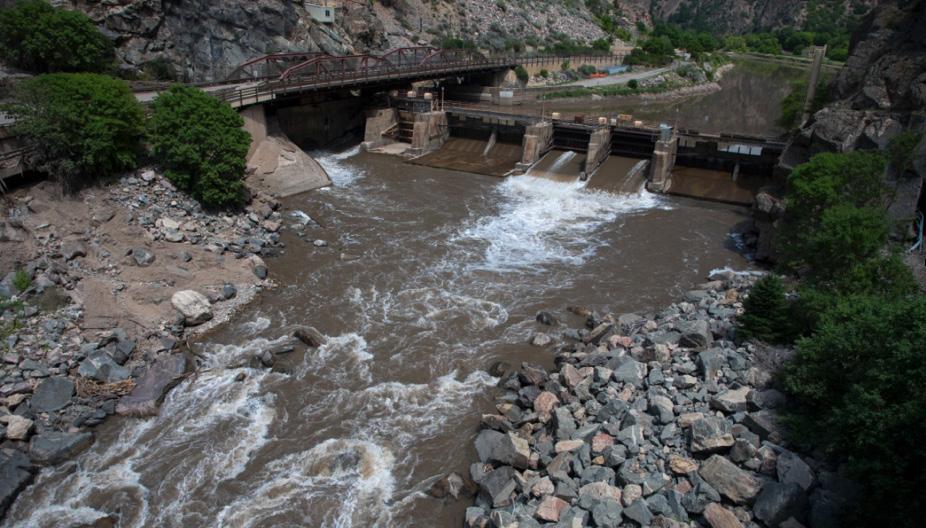
Shoshone Dam, seen here on August 13, 2021, near Glenwood Springs, generates electricity through its turbines on the Colorado River. The dam and power plant near the Hanging Lake parking area was constructed in the early 1900s. (Hugh Carey, The Colorado Sun)
Important work remains. The project now moves into the contracting phase, where the Colorado River District will work with the Bureau of Reclamation to finalize the terms of the federal award. The River District, the Colorado Water Conservation Board, and Public Service Company of Colorado have also filed in Colorado water court for a change of water rights that would add instream flow use to the Shoshone rights while allowing continued hydropower production. The transaction must also receive approval from the Colorado Public Utilities Commission before it can close.
The Shoshone Water Rights Preservation Coalition includes more than 100 water providers, local governments, regional entities, conservation groups, the State of Colorado, and bipartisan elected officials. That broad support reflects what makes this project so important: it brings together diverse interests around a shared commitment to the future of the Colorado River.
Protecting Shoshone is one of the most meaningful river conservation opportunities in Colorado. It helps preserve historic flows, strengthens resilience in a changing climate, and supports the health of the Colorado River from the Western Slope downstream.
For Colorado TU, this moment is a reminder that durable conservation takes partnership, persistence, and a shared belief that healthy rivers matter to all of us.

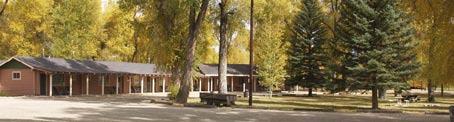

Ilive in western Colorado. More so than people traveling from eastern Colorado to western Colorado, people on the west side frequently do travel to the east side, mainly the Denver area of course, for a multitude of reasons.
That journey can be made via I-70 or US 285. Either way, there is a lot of fishing between my hometown of Montrose and a Denver area destination. Several major river basins. Multiple primary waters and their tributaries from streams to creeks to diminutive high-country headwaters.
In my occasional such travels from west to east and back again during the spring thru fall fishing season, I often fish those waters. Even if only for a few hours or a half day before I continue my road trip. Including
a few stillwaters. Always public access. But you don’t know what you don’t know. Meaning with a large swath of land at hand, there is always some water you only today found out about. Valholl Ranch.
Traveling Highway 285 in the vicinity of Fairplay and Como, Valholl Ranch is close, very close to the highway, only a few miles down a county road from the highway. But out of sight. What’s out of sight is Tarryall Ranch Reservoir #1. A private 35 acre lake, not to be confused with the nearby public Tarryall Reservoir.
Valholl Ranch and its private lake are open to the public. Now, knowing what I previously didn’t, I recently made it a destination. I met up with owner
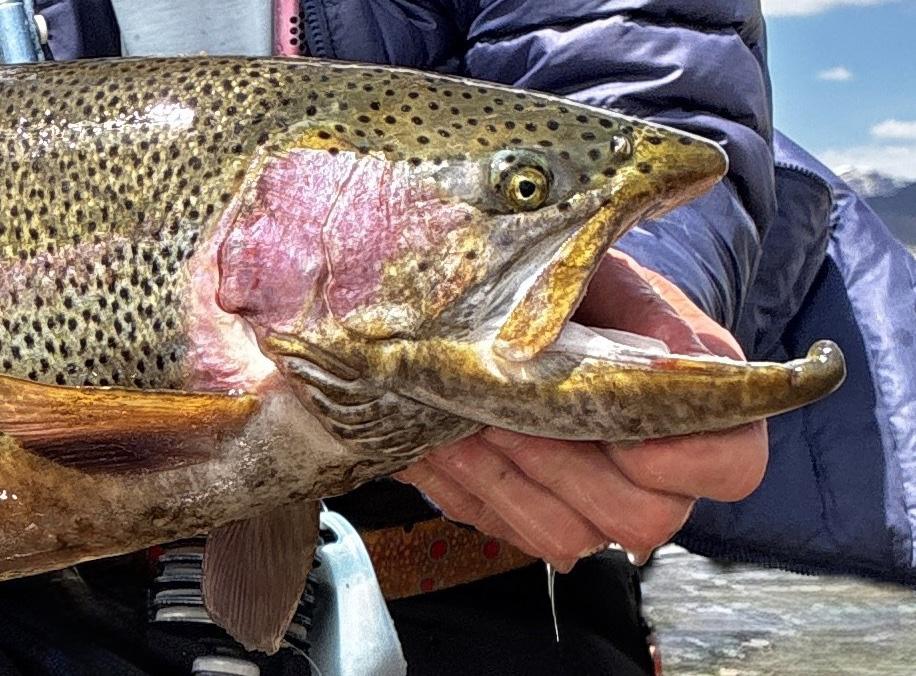
Erik Carlson to get the fishing scoop and a tour of the ranch. Eric is on site daily with a welcoming cup of coffee at hand.
For a daily access fee of $150 per rod, self-guided, the over-sized trout can be your fishing goal from early to late. Seems to me to be a very reasonable cost for a chance on private water for a trout described in pounds. A punch pass is also available for repeat trips, which lowers the per visit cost to $100. I did the self-guided option. Valholl also is available via Valholl guides and local fly shop guides. One can fish entirely from shore, or use a small boat, either your own boat or provided by Valholl.
Cruising the lake’s near clear water are rainbow, brown, brook, and tiger trout. Portly 18 inchers of several pounds mark the subordinate end, with 10 pounders over 30 inches on the zenith end. These fish feed and grow naturally, no pellets. Now let’s get the suspense over regarding my day. While I can’t report
landing one of those double-digit cruisers, I did net several fish much larger than my typical public water outing.
That’s important to take note of. Yes, I love a small stream on free public water, with an abundance of eager fish, pitching a common attractor dry fly, and not needing a net to release safely. But for a relatively inexpensive opportunity for the opposite experience, at a drive-to location, potentially all to myself – yeah, I’m good with that too.
Colorado has several geological “parks”, massive expanses of open land, typically unforested rolling hills surrounded by serious mountains. South Park is that. The town of Fairplay within South Park is that. Valholl near Fairplay is that. The reservoir can’t be seen from a public road. But just a scooch over the crest of a small hill, accessed by a short private dirt road, the reservoir lies within a small basin. 14,000foot snowcapped mountains chain the horizon, but


with sparse trees and structures across the Park’s expanse, the white mountain tips seem to touch your nose.
Valholl Ranch is also a frequent day trip for Project Healing Waters veterans. For 18 years, PHW groups have fished at the reservoir. The reservoir shores are very walk-wade friendly. The treeless, grassy shores are a gentle slope to the water, continuing into a waist deep wade that is weed and rock free.
For me, that meant I could focus on casting from a stable footing base, with a tangle free backcast. Moderate casts, even short casts get you in the target zone. Being a lake and fish are of course cruising, the target zone only means the fish are likely there and likely often seeing your fly. It doesn’t mean they inhale with abandon. I experimented with various setups including buoyant streamers, weighted streamers, dry fly only, dry fly with dropper, a mouse dry fly, and strike indicator with a dropper. I had takes on each method, but no one way seemed to be the magic choice. A long-handled net is highly beneficial when that pounder does decide to inhale.
Being an open expanse of land, wind can be a factor. For certain methods that can actually be advantageous. The strike indicator method means that the bobbing indicator imparts some action to the fly a few feet below. As well when fishing the mouse, the wind chop gives action to the floating deer hair, plus imparts a wiggle to the mouse tail.
If youth or beginners are among your fishing partners, Valholl has a smaller 1/3 acre pond at a nearby location on the ranch that is used exclusively for the small or beginning fly fishing angler.
I’m a senior citizen, having chased Colorado trout for decades. A number of those excur-
sions required a young man’s physique. As a country song says, “I’m not as good as I once was, but I’m as good, once, as I ever was.” Well maybe not entirely true, but big fish at a drive-to location – I’ll be back.
Joel Evans lives in Montrose in western Colorado. He combines decades of fly fishing, guiding, and fly tying with photography and outdoor writing. He is a pro team member with several companies, is active in Trout Unlimited and Fly Fishers International, including the FFI Fly Tying Group.

While the fishing is my personal here and now, other activities include target shooting and horseback riding. The target shooting isn’t just random, but a designed range with benches and backstops, from pistol shooting to shotgun to rifle targets. And long distance setups of 1,000 yards to a mile and a half. Good thing I don’t need to cast a fly that far!
A cadre of horses roam free, casually feeding on the over 7,000 acre ranch. So horseback riding is not your typical mountain resort town experience where horses can’t wait to gallop back to the stable. You also can roam free, in a small group of just a few to a dozen friends or family gazing at the mountains.
Future plans include on-site lodging with a restaurant. A main lodge will house a family or corporate business group, or individual cabins for small parties. Being a working cattle ranch, farm to table pastured beef will supply the chef. This will also be available in winter for ski lodging. Plans include an amphitheater, complete with stage and sound systems for concerts.
Valholl Ranch is located southwest of Denver, less than a two hour drive from Denver or Colorado Springs. Breckenridge is only one-half hour away. Their website is www.valhollranch.com. Contact Erik via email at admin@valhollranch.com or 303-204-1010.
by David Nickum, CTU Executive Director
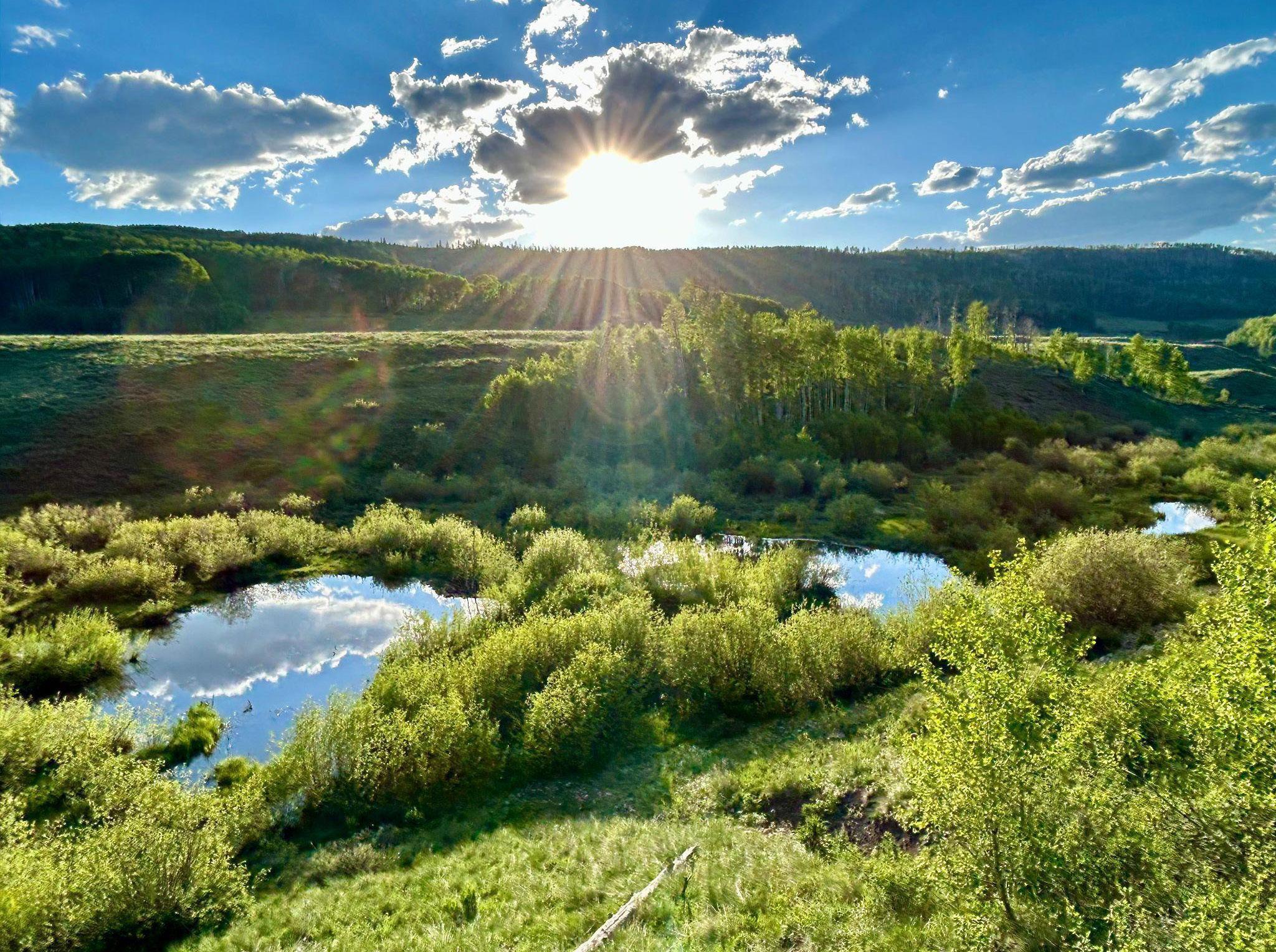
After a winter of record-low snowfall, Colorado and the west face severe drought – a condition that changing climate may make more frequent and severe in the years ahead. Many restoration specialists have identified a potential powerful ally in helping improve stream flows, habitat, and water supplies: the beaver. Watersheds with strong beaver dam complexes generally have higher water tables, more consistent flows, and improved water quality
as the beaver-maintained features help stabilize flow and filter out sediment and pollutants. They also provide more resilience in the face of wildfires – both helping to capture runoff from burned areas, and providing natural fire breaks to help contain fires.
The idea of promoting beavers to help restore watersheds is gaining more traction currently, but it is far from a new concept. Charles W. Harris, Colorado game and fish commissioner, called for widespread restoration of beavers back in 1902, highlighting the value they could provide to water supplies:
“The beaver is an indefatigable dam builder. With trees and stones and mud he throws a barrier across a stream, which will resist the floods of spring, and all through the summer holds suspended several thousand gallons of water. This water is slowly seeping out through the bottom of the stream, under the dam, keeping the flow- constant all through the summer. All summer, too, the beaver is at work, making the dam thicker and higher and stronger. Now, if you have 1,000 beavers at work in a stream, building dams, the amount of water which will be stored altogether will
be enormous. And in the dry season, all this water goes down the stream. A small trickle may be coming down at the head of a chain of beaver dams, or there may be no water at all, but below the chain of ponds you will find a strong flow of water. Years ago there were millions of beaver in the mountains of Colorado, and no one ever complained of a shortage of water then …”
Thinking about my personal experiences, I remember well the drought of 2001-02. A ranch owner I knew in South Park had a fishing club, and along his stretch of the river there were numerous beaver ponds. In the years prior, some of his members grumbled about the difficulty of wading around the muck and fishing those ponds and wished for an unobstructed stream reach to fish – but in that severe drought year, they were grateful when the section of the stream on his ranch was the only one that didn’t run dry!
The value of beaver-supported habitat to watersheds and to trout populations is why Colorado TU joined other conservationists in urging CPW to develop a statewide beaver management plan to help increase their numbers across Colorado. In 2025, CPW issued its new Beaver Conservation and Management Strategy with an overarching goal to “increase beaver populations and beaver-occupied wetland habitats in Colorado until social or ecological carrying capacity is reached.”
The strategy includes five core areas of activity:
• Population and Habitat Status and Monitoring. Through various survey efforts CPW aims to improve knowledge of beaver wetland habitat and beaver populations in Colorado at both broad and more localized scales.
• Harvest Management. Recreational (“avocational”) beaver harvest in Colorado has been greatly limited – at levels due to a longstanding ban on lethal leghold traps. As part of sciencebased management, CPW will require more reporting – including specific locations of take – to allow additional restrictions if and where needed to ensure sustainability not only statewide but within specific watersheds.
• Restoration Opportunities. CPW plans to identify strategic opportunities for re-establishment of beaver in ecologically and socially suitable historical, but currently unoccupied, beaver habitats.
• Non-lethal Conflict Resolution. Apart from
avocational harvest, many beavers are removed yearly due to conflicts with landowners and infrastructure – through “vocational” harvest, which is specifically authorized under state law. CPW plans to promote more widespread adoption of non-lethal solutions to common beaver conflicts, encouraging co-existence rather than beaver removal.
• Translocation Policy and Protocol. Translocation of beaver to new suitable habitats can help with restoration, but also raises risks of spreading diseases and aquatic nuisance species. CPW will work to optimize translocation as a restoration tool by providing a standard process that maximizes translocation success while reducing those risks.
In addition to CPW’s science-based, sustainable strategy for beaver management, TU is learning from beavers and conducting “process-based” restoration efforts to improve tributary stream habitats. This includes installation of beaver dam analogs – humaninstalled structures that mimic beaver dams and can provide some of the same ecological benefits. The Dolores River Anglers chapter installed such structures on some tributaries to the Dolores to provide more resilient habitats for cutthroat trout – and will be installing more this summer. In some areas, beaver dam analogs are taken over by beavers and converted into ongoing beaver dam complexes – the ideal low-cost maintenance program for those restored areas!
While conservation and active water management programs will play a role in addressing drought and climate variability, we should not lose sight of nature’s original engineers. Beavers sustained vibrant, healthy watersheds for long ages prior to European settlement, and given the chance they will be among our most important partners in restoring and sustaining Colorado’s rivers and wetlands far into the future.
David Nickum is Executive Director of Colorado Trout Unlimited. You can reach him via the CTU website at www. cotrout.org.

BY DAVE HAEUSLER • COLORADO TU CHAIR
This is my first “Last Cast” column as the new Chair of the Colorado Trout Unlimited Board of Directors, and I look forward to this column being an ongoing conversation with you on my thoughts regarding to Colorado TU.
First, let me introduce myself. I developed leadership and development experience through many years of volunteering with Trout Unlimited. I was raised in Michigan and was active with Trout Unlimited as a Scout volunteer while learning how to fly fish on the “Holy Waters” around Grayling. I continued my love of fishing and the environment while graduating from CU with a degree in Environmental Biology. More recently, I was a Board Member and Volunteer Coordinator for the Guadalupe River Chapter of Texas (the only chapter in Texas and the largest in the US). When I relocated to Fort Collins for work, I became very involved with Rocky Mountain Flycasters as their Education Chair. I eventually became the President of the Chapter. I am very proud to have served as the State Council Vice Chair with Barbara Luneau. I am honored to have had her as a mentor and partner for the last two years. Even though I am an “old” guy, she taught me a lot.
Before talking about going forward, I would like to recognize Barbara for her tireless leadership of Colorado TU. In her time as Council
Chair, we created a Colorado TU strategy and five-year Operations Plan. Her work on identifying and amplifying our cultural strengths that highlighted our fundamental Grassroots focus set a tone for us going forward. Barbara emphasized leadership development and community engagement to strengthen our state’s chapters and facilitate continued growth and vitality. Of course, Barbara is not riding off into the sunset - that is not her. She will continue serving this community by leading the State Council’s leadership development group and through many of our Youth Education programs. Her many years as the Colorado TU River Conservation and Fly Fishing Camp Director will thankfully continue. She had and will continue to have a significant impact on many young anglers and future leaders. Thank you Barbara!
Over the last two years plus, we have updated and adjusted our bylaws and processes. We have revisited our founding charter to get back to our roots and why the Colorado TU Council exists. We have strengthened our organizational foundation and culture. Going forward we can build on this base and make it ingrained in our organizational DNA.
Our Council efforts and focus is directed at supporting our 22, soon to be 23, chapters, providing services that they need and facilitating communication between chapters and with Na-
tional TU. The priorities of the Council must be driven by those Chapters, the grassroots. We must not forget who is the supporter and who is the supported. It is very easy to lose sight of this we don’t ask ourselves every day; how does “this” help Colorado chapters? Active participation from the Chapter leadership in setting priorities and decisions at the Council level is necessary to maintain the correct perspective.
In the next few years, we will continue to support and grow our ability to have positive impacts on our watersheds and communities. We will strengthen Colorado TU’s and chapters’ organization base, grow our “everybody is included” culture, and establish strong community relationships. Chapter support and collaboration is key to the success of Trout Unlimited. We have a spectrum of leadership, capacity, and capabilities across our chapters. We can be stronger together if chapters seek and accept help with skills, and capacity and mentorship from other chapters who are having successes in areas that can be leveraged statewide. The Council Regional Vice Presidents can facilitate that collaboration and identify opportunities for help where it is wanted and needed. We can identify efficiencies and help eliminate redundant efforts and costs. It makes us all better.
Communication has always been a two-way street, and we’ll strengthen that as we go forward on this journey. We will ensure that the grassroots voice is communicated throughout the Colorado TU Council and passed on to National TU. We will also take National TU’s communications and translate that into actions and messages that Chapters can take to their local communities. We are all different, and the messages need to be adjusted for each respective community. To understand our communities, we should reach out and attend community events to engage and become visible as a partner.
I am very optimistic that we can carry on the great work that Barbara started and grow it further. I am honored and humbled to be your new Council Chair and look forward to getting to know you and work with you - and maybe do some fishing. I am reminded by a bit of advice that was given to me early in my career: To be successful, it is not how good you are but how good you are at surrounding yourself with people who are as good if not better and who are different! I believe that describes our members and leaders.
Catch you on the stream, Dave
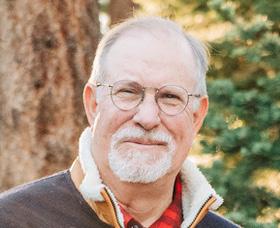
After retiring from a military and then corporate career, Dave Haeusler has dedicated volunteer time as an active TU member and leader in Texas and then in Colorado. Having previously served as the president of the Rocky Mountain Flycasters chapter, Dave is now the Chair of the Colorado Council.

PRESENTED BY: PRESENTED BY: