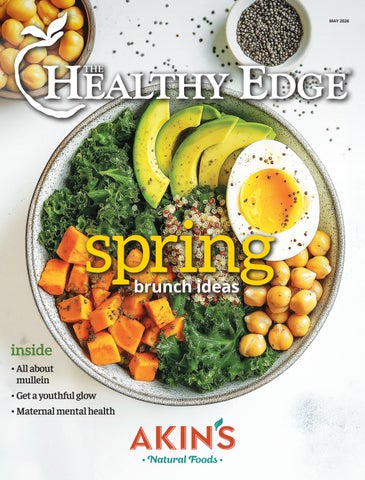
spring
brunch ideas

• All about mullein
• Get a youthful glow
• Maternal mental health inside
![]()

• All about mullein
• Get a youthful glow
• Maternal mental health inside
Although treated as a vegetable, artichokes are actually the flower bud of the artichoke plant, and hail from the same family as dandelions and sunflowers. They are native to the Mediterranean region but also grown in other parts of the world, including California.
Artichokes are not just a pretty plant—they also offer a host of health benefits. Artichokes may help to regulate blood pressure, reducing the risk of heart disease and stroke. They have also been linked to modest reductions in cholesterol levels. Preliminary research suggests that artichokes may help to improve liver function. Rich in antioxidants, artichokes are also a good source of folate, magnesium, potassium, vitamin C, and fiber. Artichokes contain prebiotics, important nutrients found in fruit, vegetables, and whole grains that support the helpful bacteria in your gut. One whole, medium-sized artichoke has just 60 calories.

Artichokes can be purchased fresh and prepared at home. They are also available, ready-to-eat, in cans and jars. Artichokes can be used in a variety of recipes including dips and pasta dishes. ●
SELECTED SOURCES “10 health benefits of artichokes,” Cleveland Clinic Health Essentials, https://health.clevelandclinic.org, 2/23/24 • “The amazing antioxidants in artichokes,” National Foundation for Cancer Research, www.ncfr.org, 2017 • “Bioactive compounds, health benefits and food applications of artichoke (Cynara scolymus l.) and artichoke by-products: A review” by P. Ayuso et al., Applied Sciences, 2024

a festive brunch
Sweet and savory recipes to share.


5 market gourmet
Apricot-Chicken Salad with Chickpeas and Cashews
6 health front
Mix up your exercise • Oatmeal improves cholesterol • Sunlight supports glucose control • More
12 a festive brunch
Blueberry Cheesecake Pancakes
• Carrot Cake Breakfast Muffins
• Kale Salad with Roasted Sweet Potatoes and Quinoa • Make-ItYours Veggie and Egg Breakfast Burrito
16 mullein: a herb for every season
Learn about this versatile plant.
18 quick tips
Explore the link between sleep and longevity.
20 healthy strategies
Get relief from spring allergy symptoms.
22 mom’s mental health
Nutrients to support a healthy mood.
24 ingredients for youngerlooking skin
Get a healthy glow, naturally.
26 cook-at-home
Build a better salad.
28 celiac disease awareness
Tips for going gluten free.

It feels as though it’s been a long time coming. And we’re ready to celebrate Cinco de Mayo and Mother’s Day in style. How about brunch?
It’s the favorite meal of many, and for good reason: Brunch comes early in the day and is easy to prepare, so you can enjoy your guests. Our recipes for a festive meal begin on page 12.
If spring allergies are interfering with your enjoyment of time spent outdoors, look to the herb mullein for relief. Its polyphenols provide anti-inflammatory and antioxidant benefits; see page 16 to learn what mullein can do for you. Our Healthy Strategies department on page 20 also features help against allergy symptoms this month.
Have trouble sleeping? Check out our Quick Tips on page 18 for help. This month is devoted to celiac disease awareness, which we cover in the Wellness department on page 28. And if you’re a new mom who’s struggling with fitting a new baby into your life, read the health feature on maternal mental health on page 22.
Salads are the focus of Cook-at-Home this month (page 26), and the beautiful, delicious, healthful apricot takes center stage on page 5 in the Market Gourmet Department.
What do antioxidants, collagen, essential fatty acids, hyaluronic acid, silicon, and plain old water have In common? They all contribute to younger-looking skin. See page 24 to begin your skin-saving journey.
Wishing you happy outdoor frolics—
Mary Ann O’Dell, MS, RDN

Contributing Writers
Mary Ann O’Dell MS, RDN
Sally Karlovitz CN
Chief Content Officer and Strategist Lynn Tryba (Lynn.Tryba@TasteforLife.com)
Contributing Editors
Lisa Fabian, Rich Wallace
Associate Editor Kelli Ann Wilson
Creative Director
Michelle Knapp
Production/Graphic Designer
Brian Jenkins
Chief Operating Officer
Amy Pierce
Customer Service 800-677-8847
CustomerService@TasteforLife.com
Client Services Director - Retail Judy Gagne (x128)
Client Services Director - Advertising & Digital Ashley Dunk (x190)
Vice President – Retail Sales and Strategic Partnerships
Anna Johnston (Anna.Johnston@TasteforLife.com)
Chairman and Founder T. James Connell
Taste for Life® (ISSN 1521-2904) is published monthly by CCI, 155 Washington Street, Keene NH 03431, 603-283-0034 (fax 603-676-7941); © 2026 Connell Communications, Inc. All rights reserved. Subscription rates: $49.95. This magazine is not intended to provide medical advice on personal health conditions, nor to replace recommendations made by health professionals. The opinions expressed by contributors and sources quoted in articles are not necessarily those of the editor or the publisher. Advertisers and advertising agencies assume liability for all content of advertising and for any claims arising therefrom. Information appearing in Taste for Life may not be reproduced in whole or in part without express permission of the publisher.
Creative and Sales Offices
155 Washington Street, Keene NH 03431 603-283-0034


a note on recipes Nutritional analysis from Edamam. Nutritional values vary depending on portion size, freshness of ingredients,
and
30 min prep time serves 4
From the Taste for Life test kitchen
Dressing
1 shallot, minced
2 lemons, juiced
2 Tbsp extra-virgin olive oil
1 Tbsp honey
½ tsp ground cumin
½ tsp ground coriander
½ tsp paprika
Salt and freshly ground black pepper
Chicken Salad
1 Tbsp oil
1 lb boneless, skinless chicken breast, cut into bite-size pieces
1 c dried apricots, chopped in half
1 (15 oz) can chickpeas, drained
2 c salad greens
¼ c chopped parsley
½ c chopped cashews
1. Make dressing: whisk together shallot, lemon juice, the 2 tablespoons of oil, honey, cumin, coriander, and paprika. Season to taste with salt and pepper. Set dressing aside.
2. Heat the 1 tablespoon of oil in a pan over medium heat. Add chicken to pan. Season with salt and sauté until cooked through. Set chicken aside.


3. In a large bowl, gently toss together apricots, chickpeas, salad greens, parsley, cashews, and cooked chicken.
4. Drizzle salad with dressing. Gently toss and serve.
Per serving: 622 Calories, 41 g Protein, 83 mg Cholesterol, 67 g Carbohydrates, 30 g Total sugars (4 g Added sugars), 13 g Fiber, 24 g Total fat (4 g sat), 617 mg Sodium, ★★★★★ Vitamin B3 (niacin), B6, K, Folate, ★★★★ Phosphorus, Potassium, ★★★ Vitamin C, Iron, Magnesium, Zinc, ★★ Vitamin B1 (thiamine), B2 (riboflavin), E, ★ Vitamin A, B12
Mixing different types of physical activity may be the best exercise plan for longer life, according to a new assessment.
Researchers examined the results of two large studies that spanned more than 30 years apiece, including more than 100,000 participants. They evaluated time spent on activities such as walking, jogging, running, cycling, lap swimming, rowing, racket sports, weight training, yoga, and vigorous outdoor work. Most of those exercises were associated with a lower risk of death, and engaging in a greater variety produced even better results.
SELECTED SOURCES “Mix of different types of physical activity may be best for longer life,” BMJ Group, 1/20/26 • “Physical activity types, variety, and mortality: Results from two prospective cohort studies” by H. Han et al, BMJ Medicine, 1/20/26


There aren’t many quick fixes when it comes to health, but a few servings of oatmeal might be an exception. Adults with metabolic syndrome ate little but oatmeal for two days and saw considerable positive changes in cholesterol levels.
Participants ate about 10 ounces of oatmeal on each of the two days, along with small amounts of fruit or vegetables, resulting in about half the calories they normally would have consumed. LDL cholesterol dropped by about 10 percent. Positive effects were still seen six weeks later.
The researchers described metabolic syndrome as “a combination of high body weight, high blood pressure, and elevated blood glucose and blood lipid levels.”
SELECTED SOURCES “Cholesterol-lowering effects of oats induced by microbially produced phenolic metabolites in metabolic syndrome: A randomized controlled trial” by L. Klümpen et al., Nature Communications, 1/14/26 • “Two days of oatmeal reduce cholesterol level,” University of Bonn, 1/23/26

People with Type 2 diabetes fared better in natural daylight compared to artificial light in an interesting new study.
Individuals were exposed to natural sunlight facilitated through windows, or constant artificial lighting, during work hours for 4.5 consecutive days. Continuous monitoring of blood sugar levels showed that participants exposed to natural light spent more time in the normal glucose range.
The authors noted that metabolic diseases are often “driven by a sedentary lifestyle coupled with circadian misalignment--a desynchrony between our intrinsic biological clocks and environmental signals.” They asserted that most people spend nearly 90 percent of their time indoors, “with a very limited exposure to natural daylight.”
SELECTED SOURCES “Exposure to natural light improves metabolic health,” Université de Genève, 1/7/26 • “Natural daylight during office hours improves glucose control and whole-body substrate metabolism” by J-F Harmsen et al., Cell Metabolism, 1/6/26
“When teens learn healthy cooking skills at home, they'll be better prepared to plan balanced meals and make their own food choices after they leave home,” write the experts at the Academy of Nutrition and Dietetics. They advise showing teens how to grill, bake, or broil lean protein options such as marinated chicken, fish, or beef. “Or, demonstrate how to sauté ground chicken or turkey, tempeh or tofu to add to spaghetti sauce, chili or tacos. Before you know it, your teen will be telling you what’s for dinner.”
SOURCE “7 kitchen staples for teen-friendly meals” by K. Ansel, Academy of Nutrition and Dietetics, www.EatRight.org, 11/3/25


Real soda, with real benefits. This good for the gut soda contains prebiotics, probiotics, and postbiotics.* Coming in at less than 40 calories and only 5 grams of sugar, it’s a smart soda switch that is deliciously carbonated and undeniably refreshing.


Organic Protective Diaper Balm offers a zinc alternative for a breathable, protective barrier gentle enough for daily use, with soothing calendula and evening primrose oil. Organic Eczema Healing Balm provides soothing botanicals and protective nourishing oils for eczemaprone, very dry, reactive skin.

Roll on the rich hydration of 100% coldpressed castor oil. Known for its highly hydrating, self-care properties, you can now effortlessly apply castor oil using this no-mess, roll-on applicator. Soothes and softens skin.

Made with Creavitalis, a premium form of micronized creatine monohydrate produced in Germany, this supplement offers optimal purity and taste. Creatine is known to help support brain and cognitive health, exercise and muscle performance, cardio and glucose management, and immune function.*.


Enjoy functional and snackable goodness. These low sugar fruit snacks have a bold flavor and just the right consistency, with added amla fruit, elderberry and chamomile that are good for your mind, body, and soul. Vegan and gluten free.
Designed for an active lifestyle, this formula provides what you need to build muscles, support cognition, and help with recovery.* It contains plant-based protein with a wellresearched 5g daily dose of creatine to support daily strength, power, and performance.*

This high-absorption liquid collagen formula is designed to support skin elasticity, hair and nail strength, and comfortable joint movement.* It contains hydrolyzed collagen enhanced with hyaluronic acid, biotin, and essential vitamins for full spectrum benefits. No blending or preparation required!

Protect, nourish, and defend your vision with this AREDS 2–based supplement.* The advanced blend of antioxidants, lutein, and meso-zeaxanthin helps protect retinal health, combat oxidative stress, and provide advanced blue light protection from digital strain.* Supports visual preservation and overall eye health.*

Support NAD levels, healthy mitochondrial function, and enhanced cellular health.* Formulated with NAD3, containing tea theacrine, wasabi, and copper, this supplement works to help mitigate the biochemical damage inflicted by the aging process and to amplify stress-resistant longevity genes in the body.*

Unlock the secret to enhanced digestive well-being with this powerful blend of enzymes and naturally occurring bile acids and salts.*
Formulated with ox bile, pancreatin, and support enzymes, this blend supports the digestive system, particularly benefiting individuals in need of bile acid support.*
Unlock the secret to enhanced digestive well-being with this powerful blend of enzymes and naturally occurring bile acids and salts.* Formulated with ox bile, pancreatin, and support enzymes, this blend supports the digestive system, particularly benefiting individuals in need of bile acid support.*


Like a menopausal adaptogen, this flax lignan extract can help tackle the secondary effects of menopause.* Preliminary human trials show that lignan can support breast and hormonal health in post-menopausal women, plus support heart health and blood sugar health.* Soy free!
Some foods can cause your blood sugar to spike, leaving you feeling out of balance. This formula combines herbal power with an essential mineral for healthy glucose support.* This blend delivers 1000 mg Ceylon cinnamon + 200 mcg chromium to help support healthy glucose metabolism.*


For joint comfort you can feel, PEA Phytosome offers effective results for those sensitive to turmeric or traditional NSAID medicines.* PEA is a good option for those who experience chronic pain, nerve, joint or back pain.* This effective ingredient is safe for daily and long-term use.

For joint comfort you can feel, PEA Phytosome offers effective results for those sensitive to turmeric or traditional NSAID medicines.* PEA is a good option for those who experience chronic pain, nerve, joint or back pain.* This effective ingredient is safe for daily and long-term use.
Support hydration + power with this blend of electrolytes + creatine. The zero sugar formula combines essential electrolytes and a balanced mineral profile with 5 g of creatine to fuel lean muscle, power, and recovery.* It dissolves instantly and won’t leave you feeling bloated.

Nourish your brain with essential DHA omega-3. This formula supplies 200 mg of DHA from algae, supporting brain health, focus, and memory.* It adds blue spirulina to provide antioxidant compounds that help protect neurons from oxidative stress.* This plantbased omega gives you the benefits of omega-3 with no fishy burps or aftertaste.

This system combines clinically studied Creavitalis Creatine and Peak ATP to deliver quick energy, enhanced blood flow, and full body support.* This advanced blend fuels energy production, strength, cognitive function, and recovery to help you perform at your best.* Berry flavor.


“Regularly add collagen to your diet.” Why?
When it comes to feeling good and looking good, I am going to share my secret weapon… it is called Total Body Collagen™. Collagen hydrates our skin, reducing wrinkles and giving us that plump youthful glow. It also supports healthy hair.
– JULIE REIL , MD and Beauty Expert


From Pull Up a Chair by Martha Collison ($32.99, Kyle Books, 2025)
2 large eggs
9 oz ricotta cheese
4 fl oz semi-skimmed milk
1 Tbsp caster sugar
3½ oz plain flour
1 tsp baking powder
3½ oz blueberries, plus extra to serve

Vegetable oil, for frying
To serve
Maple syrup, for drizzling
2 digestive biscuits, crumbled Greek yogurt
1. Separate eggs, placing yolks into a large bowl and whites into a smaller bowl. Add ricotta and milk to egg yolks and whisk until smooth.
2. Whip whites in a separate bowl until they form soft peaks (use an electric whisk or be vigorous with a balloon whisk). Add sugar and whisk again until thick and glossy; mixture should be similar to a meringue mixture.
3. Combine flour and baking powder in a third bowl and then sift over top of egg and ricotta mixture. Use a whisk to combine and then swap to a spatula and carefully fold egg whites through mixture. Try not to over mix: you want batter to be light and airy. Add blueberries and fold again.
4. Place a large frying pan over medium heat and brush with oil. Dollop a few tablespoons of batter into pan and nudge into a circle—depending on size of pan, you should be able cook a few pancakes at a time. Cook for 2–3 minutes on each side until golden brown and cooked through. Repeat with remaining batter. Keep pancakes warm in a low oven.
5. Serve piled high, drizzled with maple syrup and topped with crushed biscuits, with yogurt and extra berries on side.
Kitchen Note: Cooking blueberries concentrates their flavor and transforms them into something vibrant. These ricotta pancakes are light yet rich, with a flavor reminiscent of blueberry cheesecake, especially when topped with crumbled digestive biscuits! Any leftover pancakes will freeze well and can be reheated from frozen in a frying pan or in the toaster.
Per serving (2 pancakes; topped with 2 tablespoons maple syrup, 2 digestive biscuits, and 1/4 cup Greek yogurt): 598 Calories, 20 g Protein, 138 mg Cholesterol, 80 g Carbohydrates, 34 g Total sugars (27 g Added sugars), 1 g Fiber, 23 g Total fat (11 g sat), 254 mg Sodium, ★★★★★ Vitamin B2 (riboflavin), ★★★ Vitamin B12, ★★ Vitamin A, Calcium, ★ Vitamin B1 (thiamine), Magnesium, Phosphorus, Potassium, Zinc
40 min prep time makes 8 pancakes
It’s not breakfast and it’s not lunch. Brunch masterfully combines two meals into one satisfying event to share with family and friends. Host a brunch to remember with the following healthy and satisfying dishes.

35 min prep time makes 12 muffins
From Sync & Savor by Paige Lindgren ($32, Ten Speed Press, 2026)
1¼ c almond flour
²⁄³ c oat flour
¾ tsp baking soda
¾ tsp ground cinnamon
¹⁄³ tsp grated nutmeg
3 large eggs
¹⁄³ c pure maple syrup
¹⁄³ c unsweetened applesauce
1¼ c grated carrots
¹⁄³ c chopped walnuts or pecans
1. Preheat oven to 350°. Line a 12cup muffin tin with paper liners.
2. In a medium bowl, whisk together almond flour, oat flour, baking soda, cinnamon, and nutmeg.
3. In another medium bowl, whisk eggs, maple syrup, and applesauce until smooth. Gradually add wet ingredients to dry ingredients, stirring until just combined. Fold in grated carrots and chopped nuts.
4. Divide batter evenly among muffin cups and bake for 20 to 22 minutes, or until a toothpick inserted into center of a muffin comes out clean.
5. Let muffins cool slightly before turning out onto a rack to cool completely before serving.
Kitchen Note: Naturally sweetened, these muffins are gentle on your blood sugar and give you lasting energy while satisfying your sweet tooth. Add them to a yogurt bowl in the morning for extra protein!
Per serving (1 muffin; made with walnuts): 160 Calories, 5 g Protein, 40 mg Cholesterol, 15 g Carbohydrates, 7 g Total sugars (5 g Added sugars), 2 g Fiber, 10 g Total fat (1 g sat), 105 mg Sodium, ★ Vitamin A, B2 (riboflavin), Phosphorus
60 min prep time serves 6
From the Taste for Life test kitchen
Dressing
¼ c extra-virgin olive oil
¼ c balsamic vinegar
1 lemon, juiced
1 Tbsp Dijon mustard
1 Tbsp honey
Salt
Salad
2 large sweet potatoes, peeled and chopped into ½-inch chunks
2 Tbsp avocado oil
½ tsp paprika
½ tsp ground cumin
½ tsp garlic powder

Salt and freshly ground black pepper
1 c quinoa
2 heads kale
1 (14.5 oz) can chickpeas, drained
3 avocados, peeled, pitted and sliced into wedges
3 hard-boiled eggs, peeled and halved
1. Make dressing: whisk together olive oil, balsamic vinegar, lemon juice, mustard, honey, and salt to taste. Set aside.
2. Preheat oven to 425°.
3. Toss chopped sweet potatoes with avocado oil, paprika, cumin, garlic powder, and salt and pepper to taste. Place in a baking pan and roast for about 25 minutes
until fork-tender, flipping halfway through cooking time.
4. Meanwhile, cook quinoa according to package directions. Set aside.
5. Remove ribs from kale and discard or save for another use. Chop leaves into small pieces.
6. Divide equal amounts of sweet potatoes, quinoa, kale, chickpeas, avocados, and eggs between six plates or bowls. Drizzle dressing over before serving.
Per serving: 568 Calories, 18 g Protein, 80 mg Cholesterol, 69 g Carbohydrates, 11 g Total sugars (3 g Added sugars), 18 g Fiber, 27 g Total fat (4 g sat), 355 mg Sodium, ★★★★★ Vitamin A, C, K, Folate, ★★★★ Vitamin B2 (riboflavin), B6, ★★★ Iron, Magnesium, Phosphorus, Potassium, ★★ Vitamin B1 (thiamine), B3 (niacin), E, Zinc, ★ Calcium
20 min prep time serves 1

From Sync & Savor by Paige Lindgren ($32, Ten Speed Press, 2026)
1 Tbsp olive oil
¼ c diced bell pepper
¼ c fresh baby spinach
2 large eggs
1 whole-wheat or gluten-free burritosize tortilla
¼ avocado, pitted and sliced
1 Tbsp salsa of your choice
Salt and freshly ground black pepper
1. Place a large skillet over medium heat and add oil. Add bell pepper and sauté until softened, about 3 minutes.
2. Add spinach and cook just until wilted.
3. Lightly whisk eggs in a small bowl and then pour into pan. Scramble and cook with veggies for 3 minutes, until firm.
4. Spoon egg-and-veggie mixture into tortilla, and top with avocado slices. Spoon salsa over top and season to taste with salt and pepper.
5. Fold in sides of tortilla and roll burrito up snugly. Enjoy warm.
*Feel free to double or triple this recipe when serving for brunch. You may want to slice the burritos into halves for a brunch option, especially when other items are being served.
Kitchen Note: The eggs in this breakfast burrito provide a solid protein and choline boost, while the sautéed veggies and creamy avocado offer healthy fats, fiber, and antioxidants to keep energy steady and focused. It’s quick, filling, and adaptable to whatever veggies are on hand, like cooked broccoli, tomato, or zucchini. It also makes for a great meal-prep option. Just wrap the prepared burrito in foil, store it in the freezer, and reheat it when you wake up craving flavor and fuel!
Per serving (made with a whole-wheat tortilla): 485 Calories, 17 g Protein, 320 mg Cholesterol, 33 g Carbohydrates, 4 g Total sugars (0 g Added sugars), 6 g Fiber, 33 g Total fat (6 g sat), 625 mg Sodium, ★★★★★ Vitamin C, K, Folate, ★★★★ Vitamin B2 (riboflavin), ★★★ Vitamin B12, E, ★★ Vitamin A, B1 (thiamine), B3 (niacin), B6, Iron, Phosphorus, ★ Calcium, Magnesium, Potassium, Zinc
BY MARY ANN O’DELL, MS, RDN

Spring allergies, summer colds, fall congestion, winter challenges . . . mullein is an herb that works in every season. Its many names, including velvet dock, shepherd’s staff, and golden rod, all give clues to its appearance. Out of a base of fuzzy green leaves grows a fuzzy stalk that blooms with yellow flowers. This common plant may be considered a weed, flourishing on roadsides and off hiking trails, but this weed has some powerful plant compounds that make it helpful as a medicinal herb. Traditional use, dating back as far as 40 AD with Greek physician Dioscorides, gives us a clue of mullein’s storied history as a valuable herb that has benefits tested over centuries of use, both orally and topically.
Mullein contains a variety of polyphenols, which provide antioxidant and anti-inflammatory benefits. Mullein also contains mucilage, a polysaccharide

Paragon Plus™
Mull-Ear™ Mullein
Garlic Oil
Topical ear oil that soothes aches and promotes comfort.* For adults and children. With mullein, garlic and arnica.
compound that coats and soothes both digestive and respiratory tract linings. With these actions, mullein is commonly used orally for its support of respiratory tract health. It soothes the throat and coats respiratory linings for healthy mucus membrane support. For this reason, it is a popular herb for everything from allergies to sore throat to coughs and congestion. Historical use also shows mullein being used for digestive and GI disturbances, cramps, and pain. Mullein can also be used externally to help with pain and inflammation, found in salves, botanical oils, and ear oils.
While mullein may grow wild as a plant, it is conveniently available as a tea, liquid extract, or capsule. It is also found as an ingredient in several cough and congestion syrups for its soothing and expectorant properties. ●

Bio Nutrition
Mullein Leaf Tea
Enjoy the soothing benefits of mullein leaf in this herbal tea.
Steep in hot water and sip on the sweet herbal flavor. Mullein contains nervine and respiratory support compounds.*

Come discover wellness support for every stage of life, because women’s health is whole-body health.
From vitamins and minerals to hormone support and self-care essentials, find what your body needs to feel its best — every day, every stage.
Questions on what's right for you? Come visit with our knowledgeable friendly sta . We're here to help you find the right products for you.
Your path to wellness starts here. strong. balanced. you.
help your body rest and restore


A bad night’s sleep can leave you feeling groggy, but if poor sleep becomes an ongoing issue, it can lead to a host of health problems.
While you engage in restorative slumber, your immune system works on injuries and sore muscles; fluid flushes the brain of toxins, and the body secretes hormones. And studies show that sleep consistency (going to bed and arising at the same time over consecutive days) may be more important than duration in predicting quality of life, including biological aging, depression, and negative cardiometabolic outcomes. More regular sleep is associated with lower mortality risk.
High-quality sleep depends on five factors:
• Seven to eight hours of sleep per night
• Not using sleep medication
• Feeling well rested at least five days per week
• Trouble falling asleep no more than twice a week
• Difficulty staying asleep no more than twice a week

notes in a sleep diary for a week or two before your appointment. Log when you get up every morning and when you go to bed, along with your best guess for how much sleep you got; the number of times you woke up in the night; and any medications, supplements, or alcoholic beverages you used the night before. Also add how much time you napped during the day and whether you experienced daytime fatigue.

If you’re one of the 12 percent of Americans who say they have been diagnosed with chronic insomnia, you may already know the daytime sleepiness or fatigue it causes, along with its contribution to risks for anxiety, depression, Alzheimer’s disease, and Type 2 diabetes. It may be time to consult a healthcare provider. Take
Increase both socializing and the amount of physical activity you do every day; stick to a consistent bedtime and wake-up schedule; try to eliminate napping in the daytime; and limit smoking, drinking alcoholic beverages and those with caffeine, and eating heavy meals before bed. ●
SELECTED SOURCES “Getting good sleep could add years to your life” by N. Napoli, American College of Cardiology, www.acc.org, 2/23/23 • “Imbalanced sleep increases mortality risk by 14–34%: A meta-analysis” by Z. Ungvari et al., GeroScience, 3/12/25 • “‘May’ you sleep better for health and longevity” by S. Molony, National Council on Aging, www.ncoa.org, 5/13/25 • “Minimum combined sleep, physical activity, and nutrition variations associated with lifeSPAN and healthSPAN improvements: A population cohort study” by N.A. Koemel et al., eClinical Medicine, www.thelancet.com, 1/13/26 • “Sleep and longevity: How quality sleep impacts your life span” by A. Bowman, MCPress. MayoClinic.org, 1/19/24 • “Sleep regularity is a stronger predictor of mortality risk than sleep duration: A prospective cohort study” by D.P. Windred et al., Sleep, 1/24 • “Survey shows 12% of Americans have been diagnosed with chronic insomnia, American Academy of Sleep Medicine, aasm.org, 6/14/4


A study presented in 2023 suggested that about 8 percent “of deaths from any cause could be attributed to poor sleep patterns,” according to an American College of Cardiology news release. Coauthor of the study, Frank Qian, MD, of Beth Israel Deaconess Medical Center and Harvard Medical School, noted that “just getting enough hours of sleep isn’t sufficient. You really have to have restful sleep and not have much trouble falling and staying asleep.”
• A Mayo Clinic study showed that study participants ate 350 calories more than usual the day after getting only four hours of sleep, which

shows up as “inflammation-producing visceral fat deep in their abdomens,” said Dr. Somers.
• Lack of sleep also contributes to a rise in blood pressure, possibly leading to faster aging of the heart and blood vessels.
• Insulin resistance and a higher risk of Type 2 diabetes are further ill effects of sleep deprivation.
• There’s not enough time in a shortened sleep cycle for the brain to flush away accumulated toxins, which increases the risk of developing Alzheimer’s disease.


Allergy season is here. Early spring is when pollen emerges from the trees. Late spring and summer add grass and weed pollen to the mix. For many, pollen causes congestion, sneezing, runny noses, and more.
Some allergic reactions are impossible to avoid, so it’s good to have on hand some natural remedies that can help minimize allergy symptoms when they strike. Saline sprays work well to flush out pollen and other allergens from your nasal passages, alleviating congestion and easing inflammation of mucous membranes. Sprays with xylitol also offer relief.
Consider the following supplements, which can help relieve symptoms without some of the side effects, like fatigue, that can be caused by over-the-counter allergy medications. Be sure to consult with your healthcare provider about possible interactions with other medications.
Vitamin C is a natural antihistamine.
Bromelain is an enzyme derived from pineapples that helps reduce inflammatory responses.
Garlic contains a high amount of quercetin and can help ease sinus inflammation. (Both bromelain and garlic are natural blood thinners, so use caution if you take blood-thinning medications or have a bleeding disorder.)
Curcumin, an active compound in the spice turmeric, helps decrease inflammation and reduce congestion, runny nose, and sneezing. Turmeric can interfere with blood thinners, stomach acid reducers, and diabetes medications. ●
SELECTED SOURCES “Allergy facts and figures,” Asthma and Allergy Foundation of America, www.AAFA.org • Body into Balance: An Herbal Guide to Holistic Self Care ($24.95, Storey Publishing, 2016); Grow Your Own Herbal Remedies ($24.95, Storey Publishing, 2019) by Maria Noël Groves • “Probiotics (Lactobacillus gasseri KS-13, Bifidobacterium bifidum G9-1, and Bifidobacterium longum MM-2) improve rhinoconjunctivitis-specific quality of life in individuals with seasonal allergies . . .” by J.C. Dennis-Wall et al., American Journal of Clinical Nutrition, 3/17 • “Quercetin a promising functional food additive against allergic Diseases: A comprehensive and mechanistic review” by N.N. Najafi et al., Journal of Functional Foods, 5/24 • “The role of diet and nutrition in allergic diseases” by P. Zhang, Nutrients, 8/22/23
Experts agree that the best way to prevent allergy symptoms is to avoid coming in contact with the things that trigger an allergic response. While you can’t eradicate pollen from the air outside, there are ways to minimize the likelihood of allergy attacks inside your home. Keeping doors and windows closed during pollen season whenever possible is a good start.
High-efficiency particulate air (HEPA) filters work well to reduce airborne allergy triggers including pollen. Regular cleaning with a HEPA vacuum can reduce allergens in the environment without circulating the particles back into the air.
Try to avoid outdoor activities when pollen counts are high, usually between 5 a.m. and 10 a.m.
By the time May rolls around, allergy-causing pollen is already plentiful, so it’s a little late to engage in preseason prep. But hayfever season (caused by ragweed) is still months away. Taking certain supplements before ragweed pollen becomes abundant may lead to better outcomes.
Quercetin, for example, appears to work best when initiated a few weeks before allergens fill the air. It may help reduce the release of histamine, which triggers allergic reactions. Quercetin can also be found in plant foods like asparagus, green tea, onion, and tomatoes. Taking a probiotic supplement may also strengthen the body’s immune response. Fermented foods—like kimchi, sauerkraut, and yogurt—are also good sources of probiotic bacteria.
Always consult with your healthcare practitioner before adding any new supplements to your regimen.


A wide variety of herbal teas can ease seasonal allergy symptoms.
• Rooibos, a red tea from South Africa, has components that naturally block the release of histamines. Rooibos is thought to help allergy-sensitive systems metabolize the irritants.
• Ginger tea is a natural antihistamine that helps reduce nasal inflammation.
• Peppermint tea is a natural decongestant that can slow the production of histamines and the symptoms that go with them.
• Green tea has a pigmentation that helps block the body’s reaction to allergens like pollen, dust, and animal hair.

Women are about twice as likely as men to develop major depression—biological or hormonal makeup may be partly to blame. And there are certain periods during their lives when women are more susceptible to depression, like before menstruation or after pregnancy.
Some types of depression are specific to women, including Premenstrual dysphoric disorder (PMDD). This disorder can occur a week or two before a woman’s period starts. “PMDD is a serious condition with disabling symptoms such as irritability, anger, depressed mood, sadness, suicidal thoughts, appetite changes, bloating, breast tenderness, and joint or muscle pain,” according to the National Institute of Mental Health.
Perinatal depression. “Perinatal depression is depression during or after (postpartum) pregnancy,” reports the National Institutes of Health (NIH). “The feelings of extreme sadness, anxiety, and exhaustion that accompany perinatal depression may make it difficult to complete daily care activities for a new mom and/or her baby.” Perinatal depression is a common medical complication during pregnancy and the postpartum period, affecting one in seven women.
Perimenopausal depression. “Perimenopause (the transition into menopause) is a normal phase in a woman’s life that can sometimes be challenging,” according to the NIH. “If you are going through perimenopause, you might experience abnormal periods, problems sleeping, mood swings, and hot flashes.” Perimenopausal depression may be caused by changes in hormone levels such as estrogen.
Several nutrients show promise in supporting women’s mental health. Many of these can be obtained through a proper diet and/or supplementation (with medical supervision).
Magnesium. Research has shown an improvement in the severity of symptoms of depression when study participants were given 125 to 300 milligrams (mg) of magnesium with each meal and at bedtime. Foods rich in magnesium include spinach, pumpkin seeds, yogurt, kefir, almonds, black beans, avocados, figs, dark chocolate, and bananas.
Chromium. Many studies have assessed the benefits of chromium picolinate in depression. One showed that 70 percent of those who took 600 micrograms (mcg) of chromium picolinate had improvement in their depressive symptoms, including emotional stability. Foods high in chromium include broccoli, free-range eggs, sweet potatoes, corn, oats, and grass-fed beef.
Iron. Decreased levels of iron can result in apathy, depression, and fatigue. Iron is also important for oxygenation of the brain and necessary for all its functions. Women tend to have a higher chance of iron deficiency due to losing blood during their menstrual cycles. Iron-rich foods include red meat, pork, poultry, seafood, beans, spinach and other leafy greens, peas, cherimoya fruit, and iron-fortified cereals.
Selenium. Depression due to selenium deficiency has been established in several studies. Depression may be the result of oxidative stress, which is why selenium may be helpful. Selenium is a powerful antioxidant. Numerous studies done on different populations and age groups suffering from depression found improvement in mood and anxiety from selenium. Foods high in selenium include Brazil nuts, yellowfin tuna, halibut, sardines, and chicken.
Zinc. This mineral is involved in more than 300 reactions in the body and is abundant in the brain. Zinc levels are generally low in those with major depression. Zinc supplementation along with antidepressant therapy has been studied and has shown benefits. You can eat lamb, pumpkin seeds, grass-fed beef, mushrooms, chickpeas, spinach, and chicken to get more zinc in your diet.
Copper. Another important mineral, copper helps your brain make chemicals that control stress, mood, and alertness. These chemicals are linked to conditions like anxiety and depression. Copper-rich foods include sunflower seeds, lentils, almonds, dark chocolate, beef liver, and asparagus.
B Vitamins. Deficiencies in various vitamins, including the Bs, are reported to have a negative effect on the brain. The Bs are found in a wide range of foods, but vegans and vegetarians need to be especially proactive to get enough B12, which is mainly found in animal foods.
Vitamin C. Studies have suggested that depression can be a consequence of inadequate levels of vitamin C. It can be found in a variety of fruits and vegetables such as oranges, watermelon, green and red peppers, grapefruit, tomatoes, spinach, papaya, Brussels sprouts, and cabbage. C is widely available in supplement forms.
To get a better idea of your nutritional status, take a comprehensive nutritional test and talk with your healthcare provider about your results. If nutritional imbalances are found, then work with a healthcare professional to make dietary changes and/or take quality nutritional supplements. ●

Joy Stephenson-Laws, JD, is the founder of Proactive Health Labs, a national nonprofit health information company that provides education and tools needed to achieve optimal health. She also is founding and managing partner of Stephenson Acquisto & Colman, a healthcare law firm.
SELECTED SOURCES “Depression in women: 5 things you should know,” National Institutes of Health, www.nimh.nih.gov, 2020 • “Depression in women: Understanding the gender gap,” www.MayoClinic.org, 1/29/19 • “Effectiveness of chromium in atypical depression” by J.R.T. Davidson et al., Biological Psychiatry • “Rapid recovery from major depression using magnesium treatment” by G.A. Eby and K.L. Eby, Medical Hypotheses • “The role of selenium in depression: A systematic review and meta-analysis of human observational and interventional studies” by S.S. Sajjadi et al., Scientific Reports, 1/20/22 • “Staying up to date with evolving postpartum depression pathophysiology and treatment research,” by K.M. Deligiannidis and R. Vaughn, Journal of Clinical Psychiatry, 8/14/23 • “The neuropsychiatric effects of vitamin C deficiency: A systematic review” by D. Plevin and C. Galletly, BMC Psychiatry, 6/18/20 • “Zinc in depression: From development to treatment: A comparative/ dose response meta-analysis of observational studies and randomized controlled trials” by S. Yosaee et al., General Hospital Psychiatry, 1–2/22

Women of all ages desire for their skin to look young. No one wants to look their age as they get older, as is evidenced by the increase in plastic surgery and Botox procedures. Wrinkles and dryness are seen as enemies in the fight for younger-looking skin. In addition to lifestyle factors, including quitting smoking and adding exercise, nature has provided some effective ingredients in the fight against wrinkles, dryness, and sagging skin. Here are just a few:
✔ Antioxidants. Some experts believe that signs of aging are related to the oxidation and breakdown of skin cells. Antioxidants, including vitamins A, C and E, help protect our cells against oxidative damage. Consuming a

Zammex Multi Collagen Protein
5-Type hydrolyzed collagen peptides for women.*
Combines collagen with 18 amino acids, hyaluronic acid, and chondroitin sulfate.
Rich chocolate coconut flavor— mix in coffee, smoothie, or baked goods.
variety of colorful fruits and vegetables supplies essential antioxidants that can help protect the skin.
✔ Collagen. Collagen is a critical structural protein in the body. In fact, it is the most abundant protein in the body. It is the most integral part of the skin’s fabric, giving skin youthfulness and tautness so many desire. As we age, collagen production decreases, which can be seen in the form of sagging skin, wrinkles, and thinning hair. Oral consumption of collagen has been found to help support the body’s production of collagen, improving overall skin health and counteracting signs of aging.
✔ Essential Fatty Acids. Topically, natural oils and butters, like jojoba, shea, and coconut, help provide fatty

Sip your way to vibrant health.* Supplies 11g grass-fed bovine collagen per serving.
Convenient and delicious. Zero sugar.

acids and vitamins directly to the skin through topical application. These beneficial fats help promote softer skin by helping to maintain cellular integrity and moisture in the skin. Essential fatty acids can also be taken orally in the form of oils like olive or avocado, chia or hemp seeds, or evening primrose or flax oil in supplement form.
✔ Hyaluronic Acid. Hyaluronic acid is a compound naturally present in the body in joints and collagen. Hyaluronic acid helps with collagen production and moisture retention in the skin.
✔ Silicon. Organic silicon is a mineral found throughout the connective tissues in the body, including skin and hair. Much like collagen, this trace mineral starts

Your daily dose of beauty and protein.*
Supports healthy hair, skin, nails, collagen formation and protection.*
Supplies patented ch-OSA complex for clinically proven beauty benefits + 20 g vegan yeast protein.
Gentle on your gut.
to decline in our bodies as early as age 20. A patented ch-OSA active silicon complex is available that supports your body’s own ability to protect and generate collagen, keratin and elastin. This complex helps prevent collagen loss and helps to activate cells to generate more collagen. Over time, this can translate into fresher looking skin with less wrinkles.
✔ Water. Yes, water is an essential nutrient for beautiful skin. Water is involved in many functions in the body, including flushing out toxins, maintaining hydration and supporting circulation, all functions that support healthy skin as well as overall health. ●

Nature’s Answer
Women’s 100
Multivitamin
Fuel your foundation and stay vibrant every day with this women’s complete multivitamin.*
Provides well-being, immune and stress support.*
Made from real food sourced ingredients.
The perfect canvas to showcase other healthy ingredients, a salad adds color, crunch, and flavor to a plate or bowl. Read on to learn how to prepare a balanced and flavorful salad.
Iceberg, romaine, chicory, arugula, watercress, baby spinach, radicchio, endive: which of these is your favorite leafy green? Whichever you choose, be sure it’s fresh. Rinse and dry greens well before preparing a salad, or the dressing will have trouble adhering to damp leaves.
Most dressings combine a fat and an acid along with seasonings (salt, herbs, spices), and sometimes a sweetener. Let’s start with the fat. For ultimate flavor and nutritional benefits, reach for extra-virgin olive oil. This variety ranges in flavor from mild and fruity to robust and peppery. If you want a more neutral taste, choose vegetable or sunflower oil. For something unique, look for sesame, walnut, macadamia, or hazelnut oil.
Next comes the acid. Vinegars are the top choice for their sharp and bright flavors, which enhance other salad ingredients when dressed. Balsamic vinegar is by far the most popular pick. But red wine, white wine, rice, sherry, malt, and cider vinegars are excellent choices too.
A healthy, acidic alternative to vinegar is citrus juice. Lemon, lime, orange, or grapefruit juice adds

freshness and brightness to a dressing.
When making a vinaigrette, the standard ratio is typically 3 parts oil to 1 part vinegar. Using this high amount of oil is a tasty way to showcase a premium extra-virgin olive oil. But if you prefer a less oily and sharper-tasting dressing, aim for a 2 to 1 ratio or even a 1 to 1 ratio.
Here are some other factors to consider when composing a salad.
To balance the savory taste in a salad, toss in fresh fruits (berries, pineapple, grapes, apples, pears) or dried fruits (apricots, raisins, cranberries, dates).
Another way to add sweetness to a salad is through the dressing. Whisk in maple syrup, agave syrup, honey, molasses, jams, jellies, fruit purées, or fruit juices to taste.
Pickled foods add a bright and slightly sour taste to salads. Try pickled beets, eggs, jalapeños, or onions. Other tangy options include olives, capers, cornichons, kimchi, and sprinkles of citrus zest (lemon, lime, orange, or grapefruit).
Mustard can be whisked into

vinaigrettes for added tanginess. This also helps emulsify the oil and vinegar into a smooth dressing. Try the following mustard varieties: English, wholegrain, Dijon, honey Dijon, and American (yellow).
Raw veggies offer nutritious crunch to salads. For even more crunchiness, consider chopped nuts (almonds, walnuts, cashews); raw or toasted seeds (pumpkin, chia, sunflower); croutons; fried shallots; pickles; roasted chickpeas; edamame; tortilla strips; granola; Parmesan crisps; or pita chips.
Small amounts of plain yogurt, sour cream, or buttermilk blended into a dressing add a creamy consistency. For dairy-free options, try whisking in mayonnaise or puréeing in peeled and pitted avocado chunks.
Flat-leaf parsley, mint, oregano, basil, cilantro, Thai basil, tarragon, chives, rosemary, and dill: these herbs add pops of freshness, color, flavor, and aroma to a plate of leafy greens. ●
SOURCE Sprout & Co. Saladology by Theo Kirwan ($26.99, Mitchell Beazley, 2024)
20 min prep time serves 2

From Quick Wins by Ella Mills ($30, Yellow Kite, 2025)
For the dressing
2 Tbsp apple cider vinegar
Grated zest and juice of ½ lemon
Extra-virgin olive oil
Sea salt and black pepper
For the salad
1 small fennel bulb, finely sliced into thick match sticks (you can also thinly slice it using a mandoline)
1 zucchini, shaved into ribbons (leaving inner part with seeds)
²⁄³ c frozen peas
2 slices bread (sourdough works well)
1 garlic clove, peeled
1 avocado, diced
2-3 Tbsp chives, finely chopped
1. To make dressing: in a large salad bowl, whisk together vinegar, lemon zest, lemon juice, 2 tablespoons of the oil, pinch of salt, and lots of black pepper. Add fennel and zucchini, and set aside to marinate while you prep rest of salad.
2. To defrost peas, simply put them into a small saucepan of boiling water and cook for 1 to 2 minutes. Drain and let them cool while you make croutons.
3. Toast bread, and then rub slices with garlic clove for extra flavor. Tear into bite-sized croutons.
4. Finally add peas, avocado, chives, and croutons to your salad bowl and gently mix.
Kitchen Note: This salad is packed with vibrant greens. If you’re unsure about fennel, definitely give it a try—the apple cider vinegar and lemon really bring it to life, softening the aniseed flavor. Its crunch balances perfectly with the creamy avocado, sweet peas, and garlicky croutons for the most delicious mix of textures. Swap the fennel for thinly sliced celery if preferred for a milder crunch. Capers are such a great addition for more tang! Leave out the croutons for a light salad, or swap them for canned beans, lentils, or chickpeas.
Per serving (made with 2 tablespoons extra-virgin olive oil and 2 slices sourdough bread): 761 Calories, 23 g Protein, 0 mg Cholesterol, 102 g Carbohydrates, 18 g Total sugars (0 g Added sugars), 18 g Fiber, 33 g Total fat (5 g sat), 1,292 mg Sodium, ★★★★★ Vitamin B1 (thiamine), B2 (riboflavin), B3 (niacin), C, K, Folate, ★★★★ Vitamin B6, Iron, Potassium, ★★★ Vitamin E, Magnesium, Zinc, ★★ Phosphorus, ★ Vitamin A, Calcium
Celiac disease is an autoimmune disorder that damages the small intestine and interferes with nutrient absorption. It’s triggered when susceptible people eat gluten, the general name for proteins found in wheat, rye, barley, and triticale (a hybrid of wheat and rye). Experts believe that 2 million Americans have the disease, although many remain undiagnosed.
Celiac disease is associated with an increased risk of osteoporosis, multiple sclerosis, and other diseases. It often presents with GI symptoms including diarrhea, constipation, gas, bloating, and abdominal pain. Some people remain asymptomatic but suffer from nutritional deficiencies. Others believe they have celiac disease, but testing shows no signs of intestinal damage. These people may be diagnosed with non-celiac gluten sensitivity (NCGS).
Getting started with a gluten-free lifestyle
Currently no medication exists to treat celiac disease, so maintaining a strict gluten-free diet is necessary. Here are some important things to remember about going gluten free. It’s not enough to look for the word “wheat” in ingredients

lists. Gluten can hide in items like maltodextrin, dextrin, malt, malt flavoring, hydrolyzed vegetable protein, and modified food starch.
Manufacturers can change ingredients at any time, so read product labels each time to be sure an item is still gluten free.
Mills that process oats may handle gluten-containing grains. Always buy oats certified as gluten free. A small subset of celiac patients experience inflammatory reactions to pure oats and must avoid even certified gluten-free oats as a result.
Popular gluten-free flour options include almond flour, buckwheat flour, chickpea (garbanzo bean) flour, rice (brown and white) flour, and sorghum flour. Starches such as arrowroot, cornstarch, potato starch, and tapioca starch are also gluten free and frequently used in flour blends.

Keep in mind that none of the above starches or flours on their own can serve as an allpurpose gluten-free flour. Each must be blended with others in various combinations to mimic the properties of wheat flour. For best results, buy an all-purpose glutenfree flour blend, or make your own from a trusted recipe source. Most store-bought gluten-free breads benefit from toasting in a toaster or a toaster oven. It may take time to find your favorite glutenfree recipes and food products. Don’t give up. It’s worth it. ●
SELECTED SOURCES “Definition & facts for celiac disease,” National Institute of Diabetes and Digestive and Kidney Diseases, www.niddk. nih.gov • “Non-celiac gluten sensitivity;” “A small subset of those with celiac disease react to the protein in oat, study confirms,” www. BeyondCeliac.org
40 min prep time serves 4

From Ohana Style: Food From Hawai’i, for Your Family by Sheldon Simeon with Garrett Snyder ($35, Clarkson Potter Publishers, 2026)
3 c chilled leftover cooked short-grain rice
1 (13 oz) can full-fat coconut milk, divided
3 tsp cornstarch, divided
1 tsp baking powder
1 Tbsp sugar
½ tsp kosher salt, plus more as needed
3 Tbsp maple syrup
1 tsp vanilla extract
1 Tbsp margarine, plus more for greasing waffle iron
2 ripe mangoes, sliced
1. Place rice in a microwave-safe medium bowl. Microwave for 1 to 2 minutes, stirring once, until it’s hot (not just warm) throughout.
2. Shake can of coconut milk well before opening. Pour half the coconut milk over cooked rice. Add 1 teaspoon of the cornstarch, the baking powder, sugar, and salt. Stir until well combined and warm rice has absorbed coconut milk. Set aside.
3. In a small saucepan, combine remaining coconut milk, the maple syrup, vanilla, and a pinch of salt. Bring to boil over medium heat.
4. Meanwhile, in a small bowl, whisk together remaining 2 teaspoons cornstarch with 2 teaspoons water until smooth to form a slurry. Once coconut sauce starts to boil, reduce heat to low and stir in slurry. Continue stirring until mixture has thickened, another 2 to 3 minutes. Remove from heat and stir in the 1 tablespoon of margarine until it’s melted. Keep warm.
5. Preheat oven to 200° if you’d like to keep finished waffles warm.
6. Preheat waffle iron. Brush it liberally with some margarine. For a regular-size waffle maker, measure out 1 firmly packed cup of the rice mixture (try not to overload it). Cook until golden brown and crispy, 4 to 5 minutes. If you’re using the oven to keep waffles warm, transfer them directly to an oven rack. Repeat until you have waffled all the sticky rice.
7. Serve waffles topped with mango slices and warm coconut syrup.
Kitchen Note: This recipe is a breakfast-friendly version of mango sticky rice. Cooked short-grain rice is mixed with cornstarch, so that it mimics the consistency of sticky rice. The rice is then used as a coconutty waffle batter that’s dairy free and gluten free. Be patient and allow the waffles time to crisp and brown. The fat in the coconut milk and the brush of the margarine on the waffle iron will prevent sticking. Once the waffle reaches optimum crisping, it should release easily.
Per serving: 524 Calories, 6 g Protein, 0 mg Cholesterol, 77 g Carbohydrates, 35 g Total sugars (12 g Added sugars), 3 g Fiber, 23 g Total fat (18 g sat), 422 mg Sodium, ★★★★★ Vitamin C, Folate, ★★ Vitamin B1 (thiamine), B2 (riboflavin), B3 (niacin), B6, Iron, Phosphorus, ★ Vitamin A, E, Calcium, Magnesium, Potassium, Zinc
Vitamin D plays an important role in supporting the skeletal system and immune health, making it an essential nutrient for everyday wellness.
Michael’s Health D3 combines Vitamin D3 with Vitamin K2 to provide convenient daily support in a delicious natural apricot flavor.
Skeletal system support
Immune system support
Chewable apricot-flavored tablets
With Vitamin D3 + Vitamin K2


Discover D3 with Vitamin K2


Promotes cardiovascular, bone, and immune health.*
Supplies over 1400 mg Omega-3 from sustainably sourced fish oil. Plus 50 mcg (2,000 IU) D3 and 90 mcg K2 as MK-7.
Natural Lemon flavor.

Real fruit juice + fizzy water = juicy, tangy, and just sweet enough.
Everything you love about blackberries, only better.
Just 70 calories per canno added sugar or artificial sweeteners.

Topical healing silver gel.
Quickly heals minor skin infections, wounds and burns. Eases inflammation and reduces topical pain.

Get long-lasting moisture from this organic castor oil.
Cold-pressed from organic castor seed, hexane free.
Perfect for massage, skin care and hair care.

A tropical loaf with just the right balance of sweet and sour.
Hearth baked in small batches for artisanal quality.
With sourdough cultures for balanced gut health.

Choc Zero Keto Bark
Dark Chocolate Almond
Premium 55% cacao dark chocolate with roasted almonds sprinkled with a light dusting of sea salt.
No added sugar - sweetened exclusively with monk fruit. Vegan, keto friendly, and gluten free.

Equal parts all-purpose ointment and moisturizing miracle salve.
Handcrafted balm made with organic herbs including calendula. Perfect for all skin types, including sensitive skin.

Uplifting and luxurious scent. Works to balance, calm, and repair skin by encouraging blood flow and providing hydration.
Use as a toner, a makeup-setting spray, or a cooling and refreshing mid-day mist.

100% smiles, 0% pesticides
From the shelves of our Fresh Produce department to our Deli and Juice Bar, you can rest easy knowing all of our fruits and veggies are certified organic.


Akin’s Organic Moringa 600mg
Nutritional superfood.*
Source of naturally occurring vitamins, minerals, amino acids, and other phytocompounds.* Supports healthy adaptogenic function when under stress.*