Heritage New Zealand
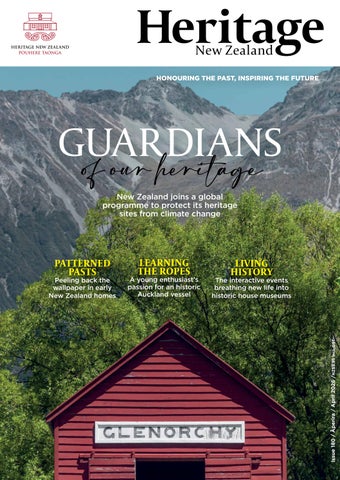
New Zealand joins a global programme to protect its heritage sites from climate change
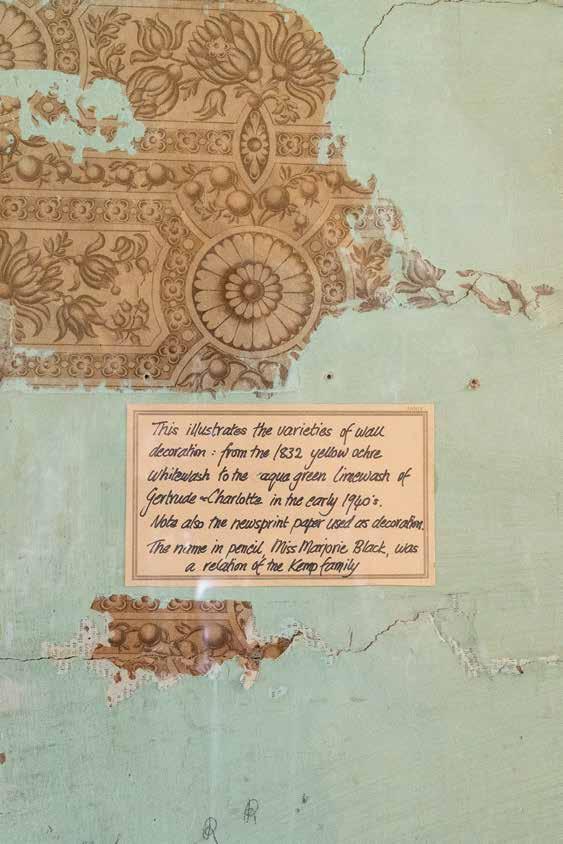
Peeling back the wallpaper in early New Zealand homes
A young enthusiast’s passion for an historic Auckland vessel
The interactive events breathing new life into historic house museums

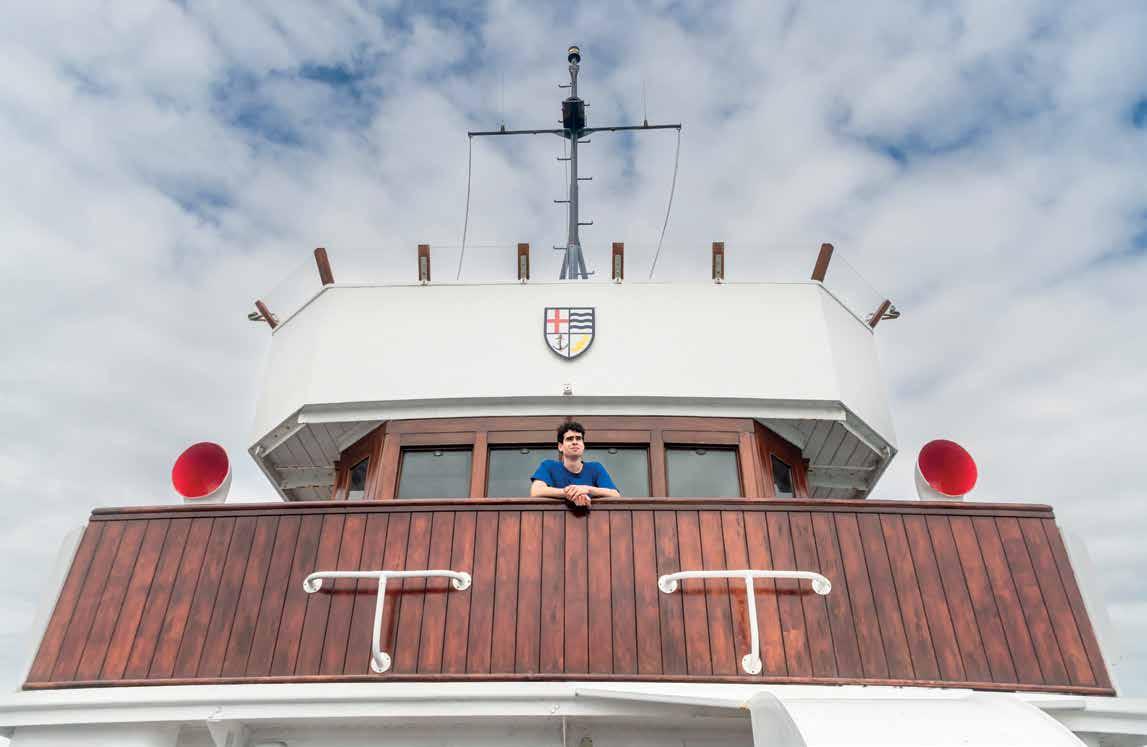
Meet Rory Bloom, a young enthusiast whose dedication is breathing new life into one of Auckland’s most historic vessels
An abandoned building on Christchurch’s historic High Street has been reimagined into a flexible office hub 22 Carved in stone
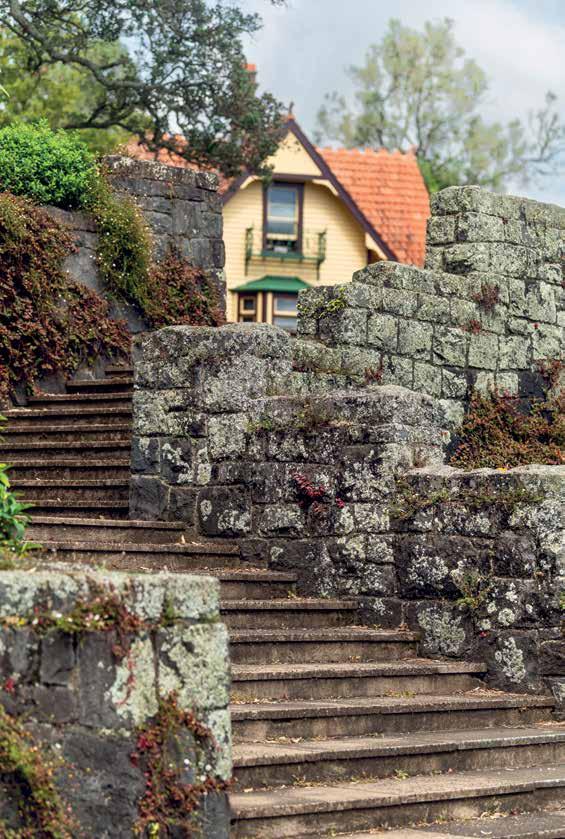
Cornwall Park’s historic stone walls are a unique record of Auckland past and present
28 Guardians of our heritage
Two New Zealand heritage sites have joined a global initiative to help protect important places and practices from climate change impacts
Interactive tours and events breathe new life into historic house museums, keeping the past alive while drawing in new audiences
Patterned pasts
Beneath layers of 19th-century wallpaper lie stories that show how early New Zealanders shaped their homes
The historic buildings at Massey University have now been recognised for their role in shaping New Zealand’s agricultural landscape
Spearheaded by a committed couple and widely supported by locals, a major restoration has given new life to a valued community church
We are very grateful to those supporters who have recently made donations. Whilst some are kindly acknowledged below, many more have chosen to give anonymously.
Mr Luka Tomic
Mrs Tracey Rowan
Mr Roger and Mrs Clare Hynd
Ms Mary Nixon and David Nisbet
Mr Greg Vossler
Mr David and Mrs Sue Sweet
Lady Barbara Stewart
Mr Kevin Tonks
Ms Heather Rae and Graham Cook
Mr Basil Newland
Mrs Eleanor and Mr James Leckie
Mr Ron Pynenburg
Mrs Mary and Mr Alan Dean
Mr David and Mrs Val Dittmer
Mr Brian and Mrs Rosemary Hedge
Mr Michael Reaburn
Mrs Sandra and Mr Bruce Greenfield
Mr Paul and Mrs Kerry Heath
Mr Brian and Mrs Margaret Hall
Mr Gerald and Mrs Shirley Reive
Mrs Elizabeth and Mr Kevin Andrew
Mr Ross and Mrs Rhona Bell
Mrs Bernadette and Mr Nick Heaphy
Ms Anna Bidwill
Mrs Anne and Mr Bob Flynn
Mr George and Mrs Dorothy Richardson
Mrs Elizabeth Clark
Mrs Anne and Mr John Bruce Clegg
Mr Warren and Mrs Sandra Cant
Mr Bruce and Mrs Mary Mccallum
Mr Robert Hill
Dr Berwick and Mrs Anne Taylor
Mr Wouter De Maat and Mrs Wendy De Maat
Mrs Paula Robinson
Ms Kim Smith
Mr John and Mrs Helen Hawkins
For Kemp House in Kerikeri
Mr Paul and Mrs Natalie Hickson
heritage.org.nz | visitheritage.co.nz
Help protect heritage today and see your name on this page
With costs continuing to rise, and government funding reducing, the need for support is more palpable than ever before. Membership fees really only cover the cost of delivering your membership benefits, so to do more for heritage, we need your help.
A donation of $100 or more will provide much-needed funds towards the upkeep and care of the almost fifty amazing places we care for on behalf of all New Zealanders. What’s more, we’ll acknowledge you by name in the next edition of our magazine.
If you are able, please consider donating today by scanning the QR code below or by visiting www.heritage.org.nz/donate
Issue 180 Ngahuru • Autumn 2026
ISSN 1175-9615 (Print)
ISSN 2253-5330 (Online)
Cover image: Guardians of our heritage by Mike Heydon
Editor Anna Dunlop, Sugar Bag Publishing
Sub-editor
Trish Heketa, Sugar Bag Publishing
Art director
Amanda Trayes, Sugar Bag Publishing
Publisher
Heritage New Zealand magazine is published by Heritage New Zealand Pouhere Taonga. The magazine had a circulation of 8198 as at 31 December 2025.
The views expressed in the articles are those of the contributors and do not necessarily reflect the views of Heritage New Zealand Pouhere Taonga.
Advertising
For advertising enquiries, please contact Tony Leggett, Advertising Sales Manager. Phone: 027 474 6093
Email: tony.leggett@nzfarmlife.co.nz
Subscriptions/Membership
Heritage New Zealand magazine is sent to all members of Heritage New Zealand Pouhere Taonga. Call 0800 802 010 to find out more.
At Heritage New Zealand magazine we enjoy feedback about any of the articles in this issue or heritage-related matters.
Email: The Editor at heritagenz@gmail.com
Post: The Editor, c/- Heritage New Zealand Pouhere Taonga, PO Box 2629, Wellington 6140
Feature articles: Note that articles are usually commissioned, so please contact the Editor for guidance regarding a story proposal before proceeding. All manuscripts accepted for publication in Heritage New Zealand magazine are subject to editing at the discretion of the Editor and Heritage New Zealand Pouhere Taonga.
Online: Subscription and advertising details can be found under the Resources section on the Heritage New Zealand Pouhere Taonga website heritage.org.nz
HERITAGE NEW ZEALAND POUHERE TAONGA
National Office
PO Box 2629, Wellington 6140
Antrim House, 63 Boulcott Street Wellington 6011 (04) 472 4341 information@heritage.org.nz

eritage New Zealand magazine has had so many fantastic guest editorials recently that it’s been a while since I wrote one.
In my first editorial as editor (Spring 2024), I discussed the West Coast mining town of Blackball and its community-led heritage projects and, coincidentally, I’ve just returned from a trip to that area, where I walked the Paparoa Track, New Zealand’s 10th Great Walk.
The Paparoa Track runs from the Blackball area to Punakaiki through Paparoa National Park and was created as a memorial to the 29 miners who died in the Pike River Mine disaster in 2010. The first section follows the historic Croesus Track, dotted with remnants of its mining past, to the alpine ridgeline of the Paparoa Range (where it intersects with the recently opened Pike29 Memorial Track) before descending to the Pororari River and finishing at the coast. The walk was very wet, very wild, and very, very beautiful.
Before the walk, I had the opportunity to stop at Blackball and explore the progress of the projects I wrote about nearly two years ago. The aerial ropeway tower reinstallation is complete, and the five replica miners’ huts are an excellent addition to Mahi Tupuna –Blackball Museum of Working Class History, which showcases the 1908 miners’ strike and the birth of the Labour Party. It was great to see a community so proudly telling its own stories.
Community is an important theme in several features in this issue of the magazine.
One is the story on Preserving Legacies, a global organisation led by National Geographic explorer Victoria Herrmann, which aims to protect the world’s natural and cultural heritage from the impacts of climate change by empowering change makers in local communities.
Last year, two New Zealand sites – Tāhuna Glenorchy and Tūranganui-a-Kiwa Poverty Bay – were added to the programme, and, over the next three years, two ‘custodians’ from each site will gain the knowledge, tools and connections needed to adapt their heritage places and practices.
Another story explores the dynamic interactive events happening within New Zealand’s historic house museums – often in collaboration with local artists, writers and groups – and how they can transform these static spaces into stages that highlight diverse perspectives, drive inclusivity and create community connection.
As you will see on page 8, there are some changes afoot with your membership this year. We’re moving to a digital-first supporter programme from 1 July, aimed at providing you with more choice and flexibility. Importantly, you will need to opt in if you want to continue to receive this magazine (a digital and/or printed version) – and I very much hope you do.
While we will be publishing three issues a year, rather than four (which you will receive in April, August and December), we intend to continue bringing you compelling, carefully curated stories that explore, celebrate and challenge our understanding of heritage in Aotearoa New Zealand.
Ngā mihi nui Anna
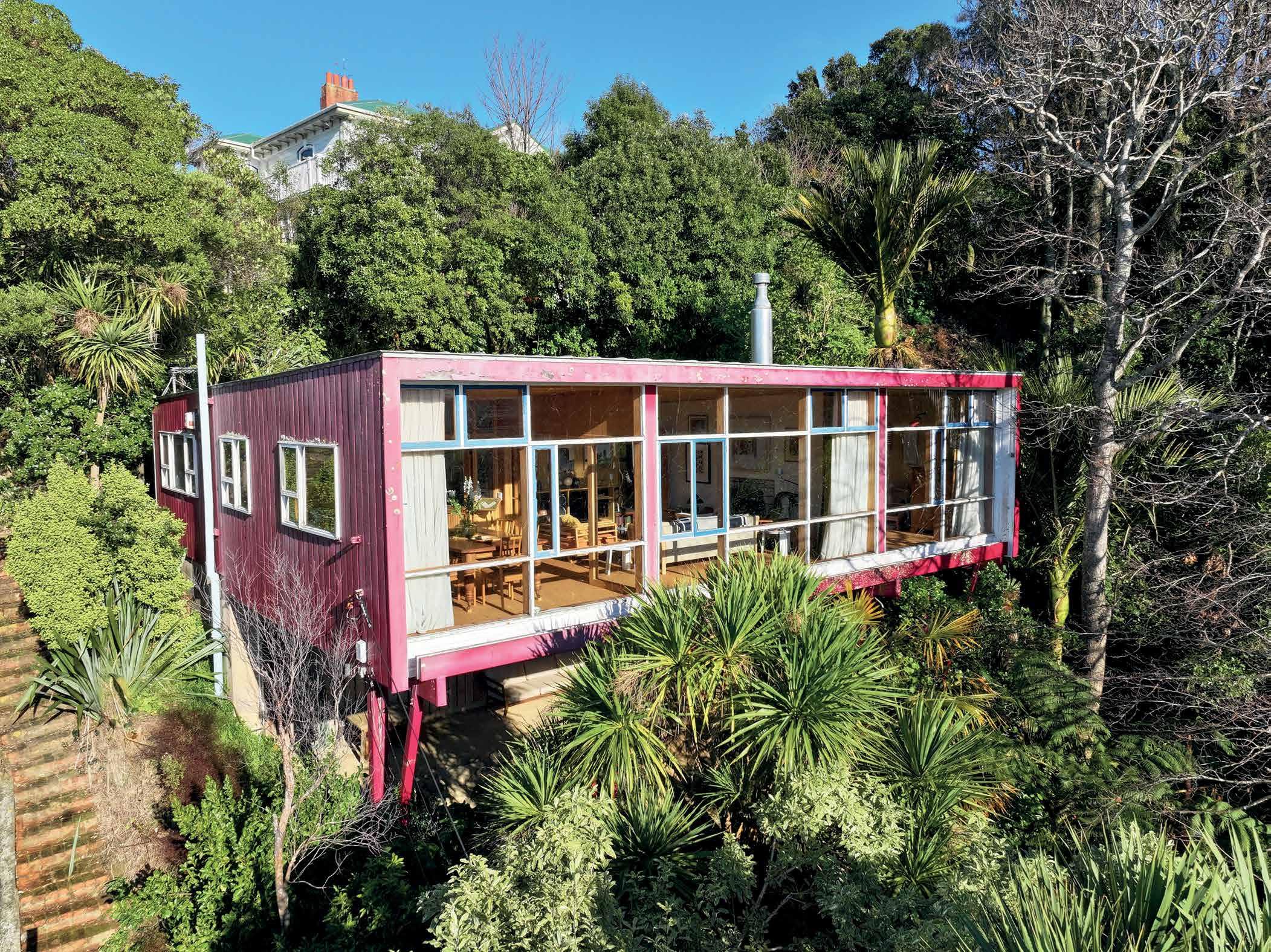
Everyone has one of them: a mysterious house that catches your eye from a skyline or a far-off section. You may never see the house up close; you probably don’t know who lives there. But there’s something about it. A certain aspect that draws your attention every time you go past.
For many residents of Mount Cook in Te Whanganui-a-Tara Wellington, their mystery house can be found on a sloping section on Hankey Street. It’s visible only at a distance – a sharp red corner jutting out among the trees. But even this glimpse lets you know it’s something special.
In October 2025 we featured this property on our social media channels after it was recognised as a Category 2 historic place – so stop reading now if you’d prefer to maintain the mystery!
The property is Dobson House, an early work of Modernist architects Bill Toomath and Derek Wilson that was constructed in the late 1950s.
In many ways Dobson House is an extrovert of a building: bright red cladding, sharp right angles and a strange sense that it’s floating. However, even when seen clearly, the house retains a sense of privacy.
Bush surrounds it; its floor-to-ceiling windows orient away towards the city.
As noted in the listing report, Dobson House is “an elegant and fine example of a mid-century modern house, pared back to its essential elements”.
Wellingtonians agreed. Our Dobson House posts had tens of thousands of views, and many comments.
One commenter stated, “I can see a glimpse of this home perched on the hillside from my apartment. It’s gorgeous – I’m obsessed with it and really hoping there’ll be an open day sometime!”
We heartily agree.
You can find out more about Dobson House via its listing on the New Zealand Heritage List/Rārangi Kōrero: heritage.org.nz/ list-details/9874/DobsonHouse

@heritage-new-zealand -pouhere-taonga Ngā Taonga i tēnei Marama, Heritage this Month –scan to subscribe Keep up to date with heritage happenings with our free e-newsletter Ngā Taonga i tēnei Marama, Heritage this Month.
PouhereTaonga
@Pouhere_Taonga
Nobody likes moving house – but what if your house is the oldest building in the country with a collection of irreplaceable artefacts spanning 200 years? Who do you call?
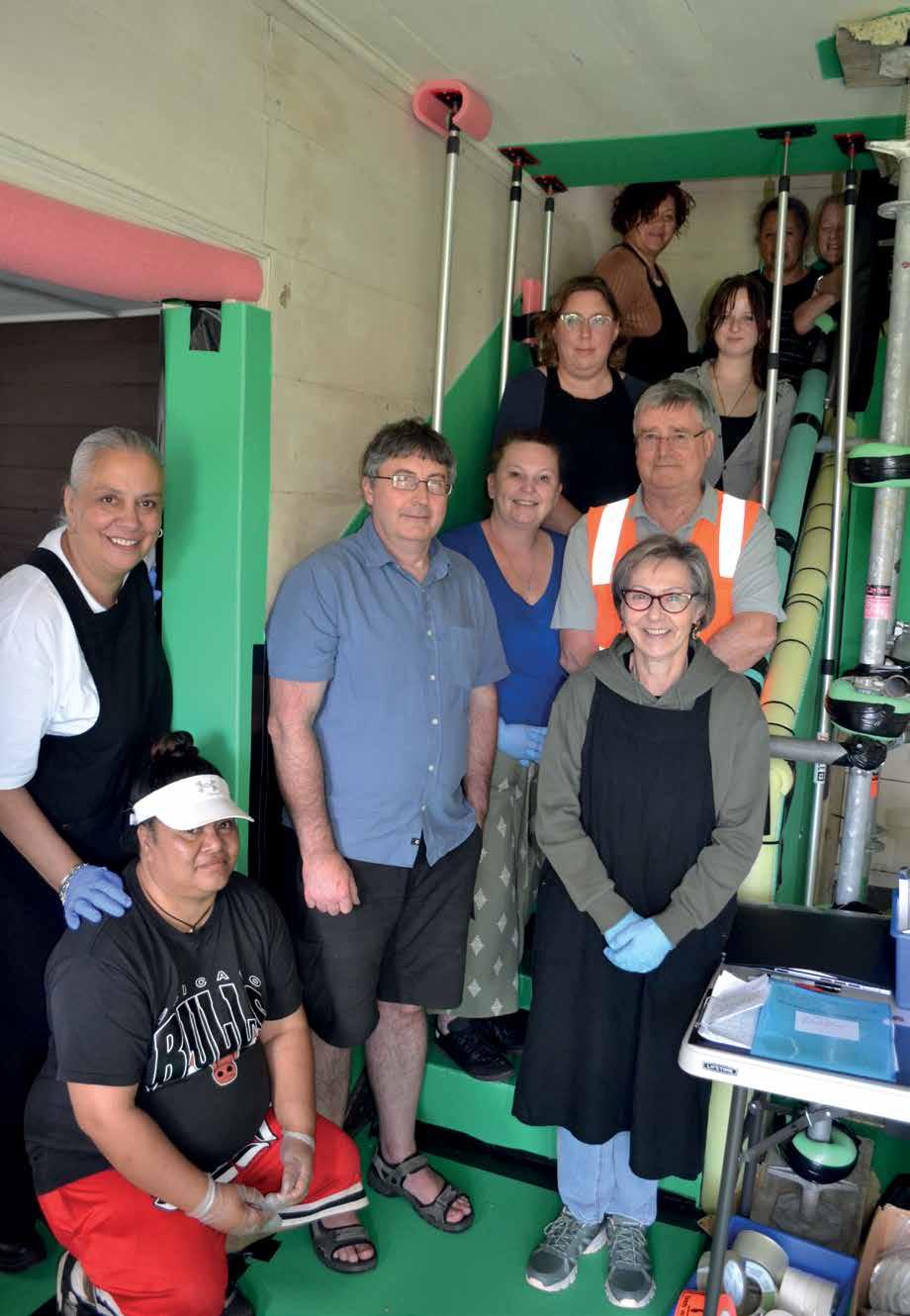
That’s the question Belinda Maingay, Senior Collections Advisor for Heritage New Zealand Pouhere Taonga, faced recently as work began to replace the timber-shingled roof of Kemp House – and the challenge of moving hundreds of collection items out of the house became a reality.
Auckland-based collections care advisor Andor Vince immediately sprang to mind. His expertise in heritage conservation and emergency planning has included international experience in the UK and Europe.
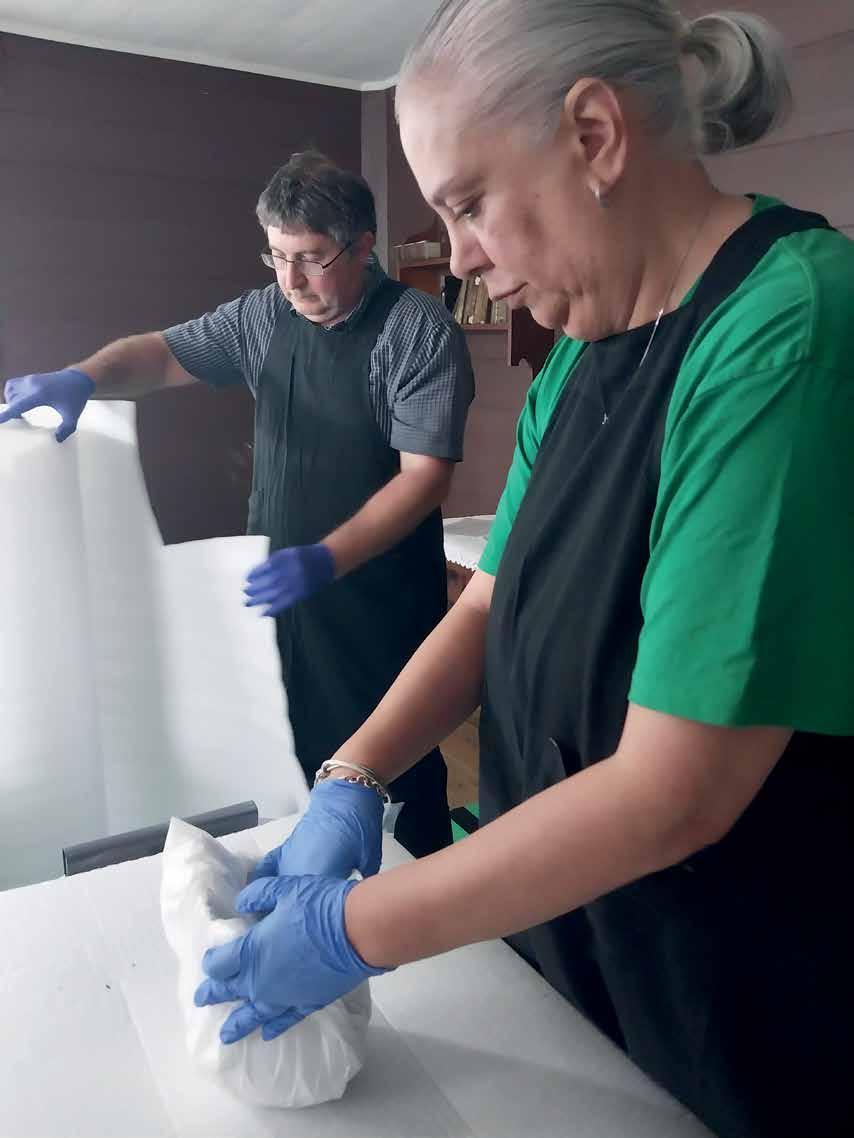
“Andor is also a great teacher,” says Belinda. “He has the perfect skillset needed to train our team of staff and volunteers, who had the job of carefully packing collection items, relocating them, and recording information about each one.”
For Andor, the team’s enthusiasm for learning during a twoday workshop he led reflected their strong sense of stewardship.
“People asked thoughtful questions, worked carefully through the practical exercises, and approached every task with care and respect for the collection,” he says.
“They learned how to lift, support and move objects safely, how to choose and apply the right packing materials, and how to follow clear, step-by-step methods for packing fragile,
heavy or unusually shaped items – and how to document and track each object.”
For most of us, moving house means getting some banana boxes and wrapping fragile items in newspaper. Packing heritage items, however, requires specialist skills.
“The objects come in all shapes, sizes, materials and conditions, so each needs a different approach. Techniques included soft-packing items with acid-free tissue, using Tyvek and safe conservation foams to create protective padding, while items were secured inside boxes so they wouldn’t shift,” says Andor.
“We also created custom support pieces for items that were especially fragile or awkwardly shaped. Others were more delicate or complex, requiring more creativity and skill to pack. It was wonderful to see the staff confidently handling these after just two days of training.”
Kemp House presents some unique complexities.
“We needed to work carefully within tight heritage spaces. Many objects are made from mixed materials, which means they react differently to handling, packing and changes in the environment – all of which had to be taken into account,” says Andor.
“Managing such a collection requires a careful balance between efficiency and conservation ethics. The complexity level is high, but the team handled the task really well.”
Find us ... Go to heritage.org.nz for details of offices or visitheritage.co.nz to see historic places around New Zealand that are cared for by Heritage New Zealand Pouhere Taonga.
A selection of the wonderful heritage attractions available around the country over the next four months

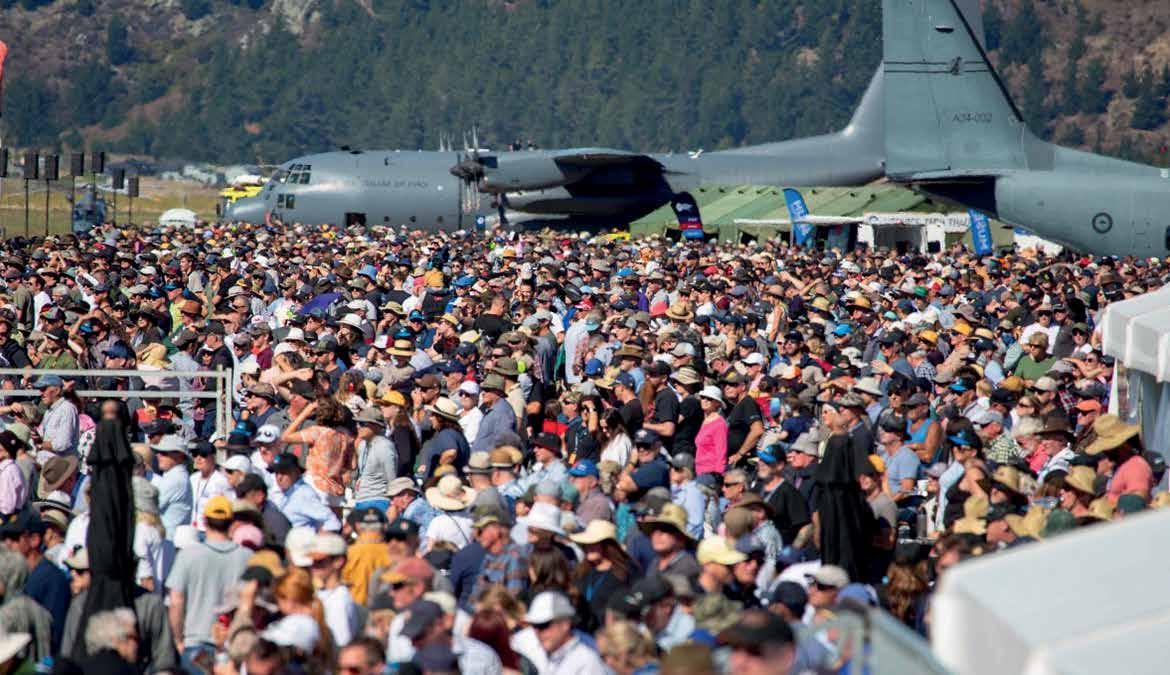
Warbirds over Wānaka (3-5 April)
Aviation enthusiasts should not miss this international airshow, which provides three days of high-octane excitement in the skies over beautiful Wānaka. Alongside a first-time visit by one of the world’s most impressive fighter jets – the F-22 Raptor – this year’s Air Force Heritage Flight of New Zealand will be represented by the Supermarine Spitfire, P-51 Mustang and Grumman Avenger. There will also be appearances by the De Havilland Chipmunk, the Douglas DC-3 and New Zealand’s only airworthy World War II Vought F4U Corsair.
warbirdsoverwanaka.com
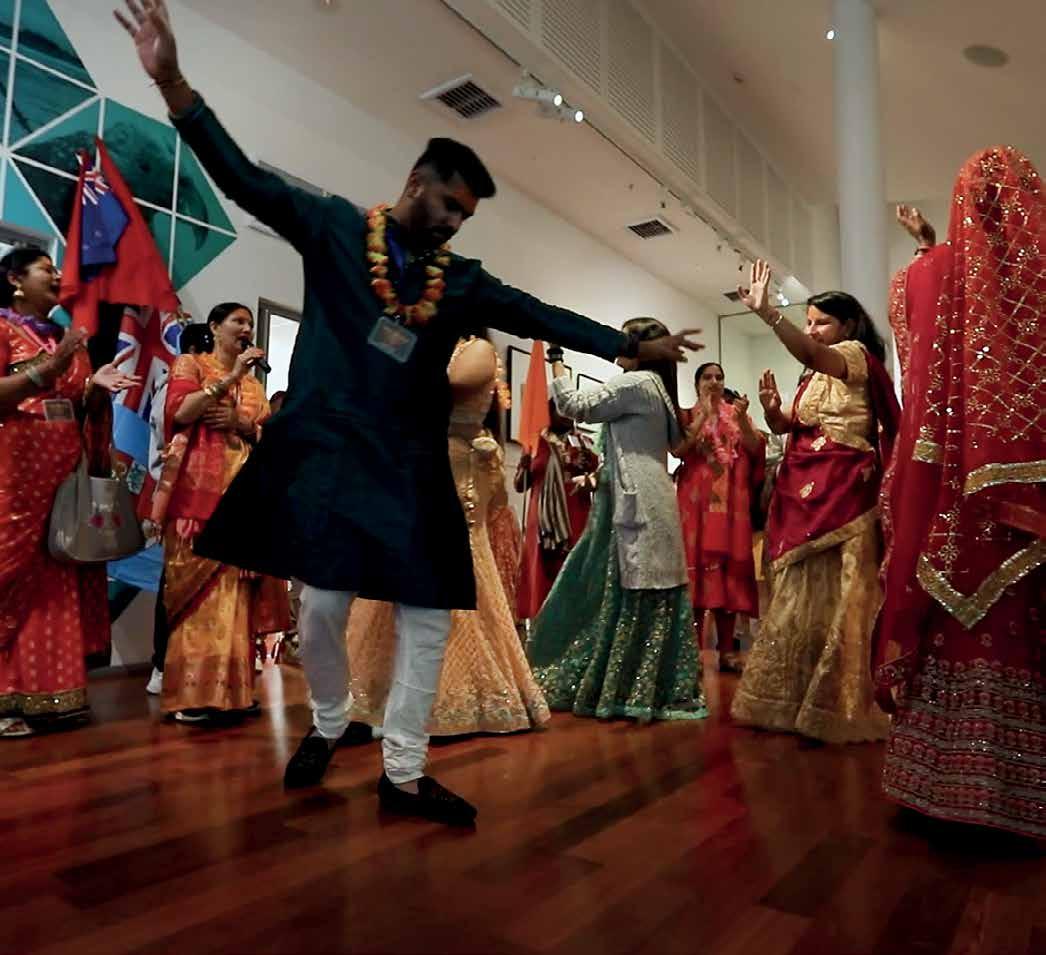
Tuku 26 Whakatū, Nelson (21 March-3 May)
This six-week-long, community-owned festival celebrates Whakatū Nelson’s rich heritage and shares the stories of its people and places. Expect events including multicultural festivals, historical building and garden tours, arts and crafts and woodworking workshops, and various exhibitions. There’s also plenty of family fun.
tukuwhakatu.nz
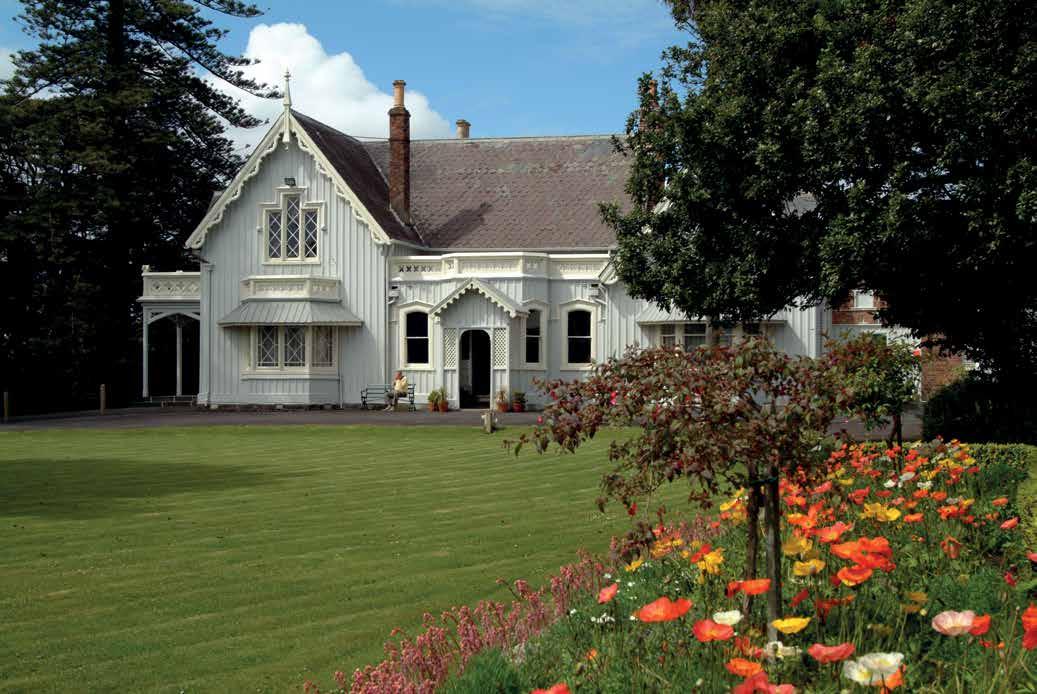
Documenting Our Heritage photography exhibition, Highwic (4-19 April)
Following the Heritage New Zealand Pouhere Taonga Documenting Our Heritage photography competition, which asked you to get snapping and send in your photographs of Tāmaki Makaurau Auckland’s most significant historic places, the shortlisted photos will be exhibited at Highwic (Category 1). While you’re there, explore this beautifully preserved Carpenter Gothic mansion, built in 1863 for one of the wealthiest landowners in the region.
visitheritage.co.nz
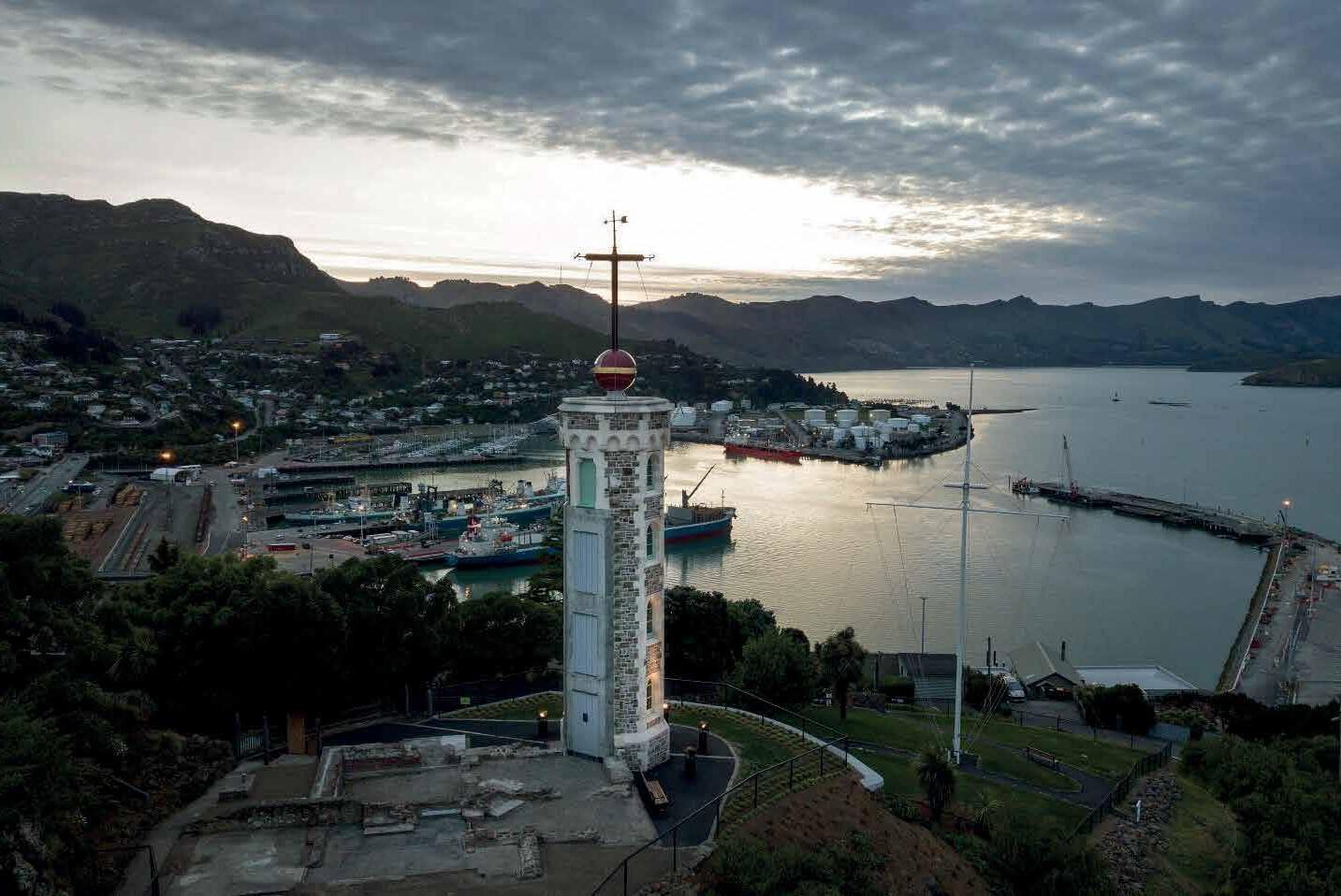
Open Christchurch returns for its sixth year, with 51 buildings, four guided walks and a range of special activities. This year’s heritage buildings include the Lyttelton Timeball, College House (Category 1), Santa Barbara and the Maisonettes (both Category 2), Old Government Building (Category 1), several architecturally significant residential homes, and various buildings of the recently Category 1-listed Te Matatiki Toi Ora The Arts Centre. openchch.nz
This year’s national broadcast for Matariki will take place in Tāmaki Makaurau Auckland, hosted by Ngāti Whātua Ōrākei, with the theme of Matariki Herenga Waka – For Everyone. There will be other celebrations taking place up and down the country, including Puaka Matariki Festival in Ōtepoti Dunedin (4-25 July), Matariki Ahi Kā in Te Whanganui-a-Tara Wellington (dates TBC at the time of writing) and Puanga Matariki Festival in Whangārei (15 June-17 July). Keep an eye out for other events at the website below:
matariki.com
Whether you’ve been a member of Heritage New Zealand Pouhere Taonga for many years or you’ve only recently joined us, we have some exciting news to share.
From 1 July your membership programme is evolving – and we’re bringing you along with us every step of the way.
These changes are designed to strengthen our supporter community, support our mission to protect and share Aotearoa New Zealand’s heritage, and give you more choice and flexibility than ever before.
We’re moving to a digital-first supporter programme.
When we say digital-first, we simply mean that behind the scenes we’re upgrading our systems to give you a better, more personalised experience. This will make your support easier to manage, more flexible, and better tailored to suit you – whether you prefer to keep things simple or enjoy having more choice.
These new systems will help us to stay in touch with you more easily, share news and updates that match your interests, and offer access to exclusive supporter information with stories, content and special offers.
You’ll also be able to view and manage your own details online and choose only the benefits that matter to you – such as free entry to heritage places here and overseas, a printed or digital copy of this award-winning magazine, or other optional extras. You can have as much or as little as you like, and pay only for what you choose.
Moving to digital-first also means we can begin to step away from physical membership cards – one less thing to carry, and one less thing to lose.
Just as importantly, a digital-first approach helps us to grow a larger community of people who care about heritage. A stronger supporter base allows us to better recognise long-term loyalty and to protect, share and celebrate the places that matter to all of us.
We know that many of you have supported us for years – decades even – and we want to recognise that.
Our new community includes five supporter tiers, which allow us to acknowledge and reward long-term commitment. These tiers help to build a connected heritage community, starting with a free entry-level option and growing upwards from there.
» Local news and info
» Opportunities to get involved (volunteer, donate etc)
» Unlimited entry to our properties
» Access add-on benefits
Add-on benefits | costs apply
• Physical card
• International visitor pass
• Digital magazine
• Printed magazine
» Loyalty rewarded by progression through tiers
» Bronze Silver Gold
Recognition over time
• Priority booking
• Supporter-only events
• Premium content
• Larger discounts
• Badge (Gold only)
All current members up to 30 June 2026 will be automatically upgraded to one of our Bronze, Silver or Gold supporter tiers when the programme launches. This means you won’t be starting from the beginning – your loyalty already counts (so please don’t let your membership lapse before the changeover!).
As we get closer to the 1 July launch date, we’ll email you with more details, including how to access your supporter portal and where you’ll be able to view and manage your relationship with us.
In the meantime, please make sure we have your current email address and cellphone number – especially your email address, as this will be our main way of keeping in touch with you.
You can provide your updated details via our simple online contact form, which can be found on our membership webpage – visit heritage.org.nz/membership. Or contact us through our usual phone or email channels and we’ll be happy to help.
These changes are about building a bigger, stronger community of people who care deeply about heritage places and experiences – and ensuring your relationship with us continues to support the work you believe in.
Thank you for being part of the journey.

To find out all about the new programme features and benefits, visit our information page at qrs.ly/Changes or scan the QR code above to take you directly to the page.
While your membership is going digital-first, you won’t be left to figure things out on your own.
We’ll provide clear instructions, friendly support, and familiar ways to get in touch if you need help. You’ll still be able to speak to our team and ask questions at any stage.
You can contact us by
» emailing us at membership@heritage.org.nz or
» phoning us to chat during office hours on 0800 802 010.
The historic buildings at Massey University Te Kunenga ki Pūrehuroa have recently been recognised for their role in shaping New Zealand’s agricultural landscape
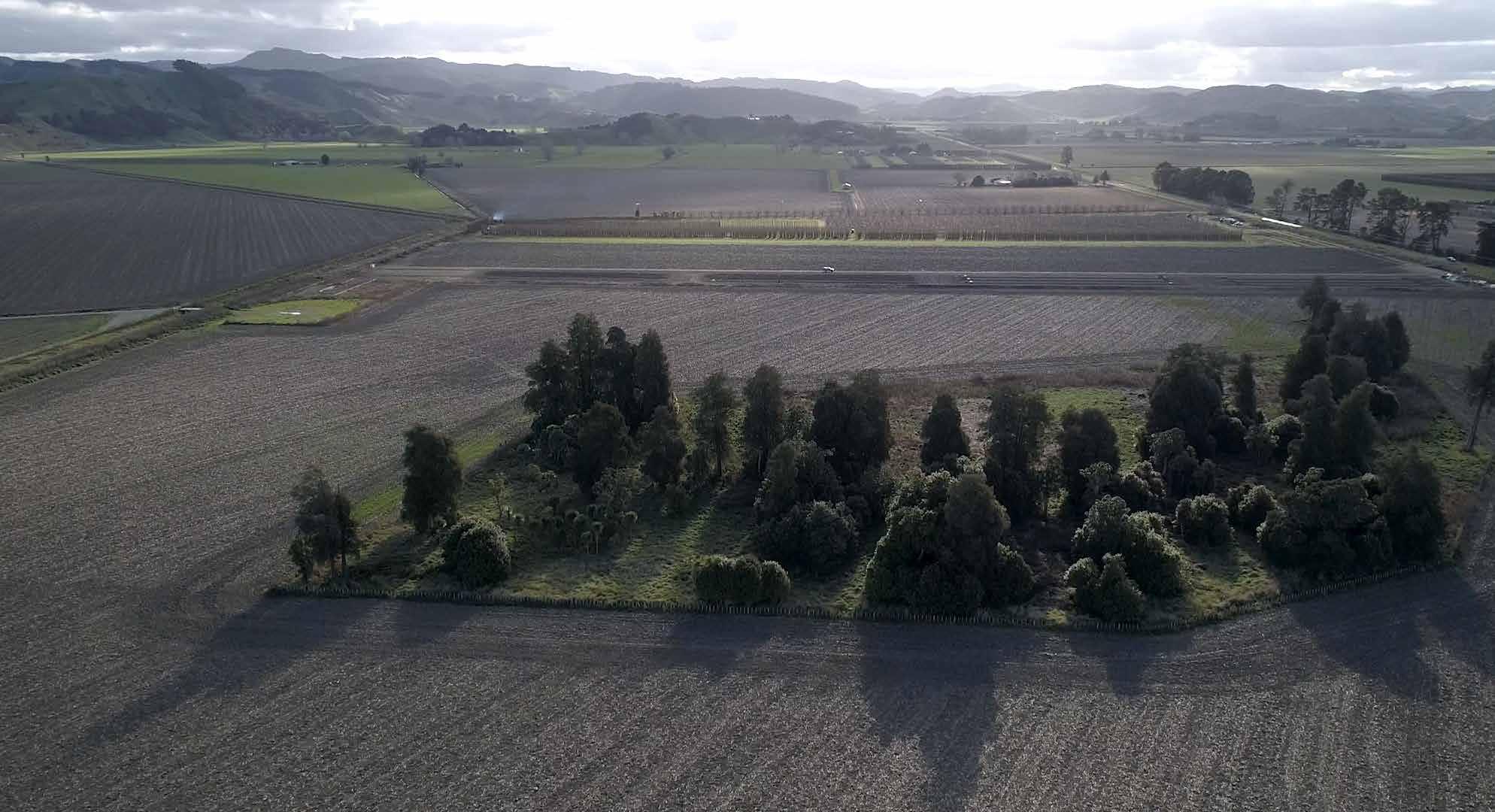
WORDS: KAYLA CAMPBELL / IMAGERY: MIKE HEYDON
First established as the Massey Agricultural College in 1927, Massey University’s Palmerston North campus boasts a number of heritage buildings. It was named the Turitea Historic Area in 2023 when the Palmerston North City Council (PNCC) implemented a District Plan change to protect the heritage of the site. In 2024 the heart of the campus was recognised as an historic place on the New Zealand Heritage List/Rārangi Kōrero.
“It’s the original site of the college, of the university’s
The Manawatū River, its tributaries such as the Turitea Stream, and the mauri that flows through them in the area that became Palmerston North are of immense cultural, spiritual, historical and traditional significance to Rangitāne o Manawatū. For centuries, the west side of the river held many large pā and kāinga of Rangitāne, while the east side held strategic kāinga such as Te Motu o Poutoa and Turitea. Together with Mokomoko they were known as Te Kuripaka, and formed part of the 101,171-hectare Te Ahuaturanga Block.
Paramount chief Te Hirawanui Kaimokopuna led the negotiation of the Te Ahuaturanga Block, and land was transferred to the Crown in 1864, excluding large native reserves.
birth. Some of the buildings around it that are covered in the historic area were the original buildings,” says Massey University Head Archivist Louis Changuion.
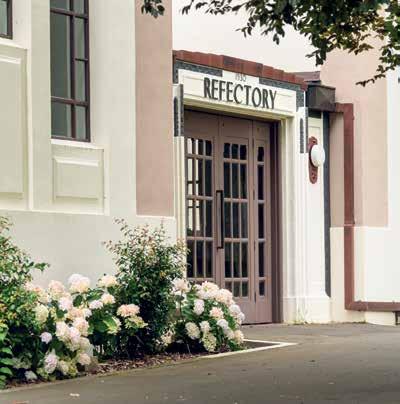
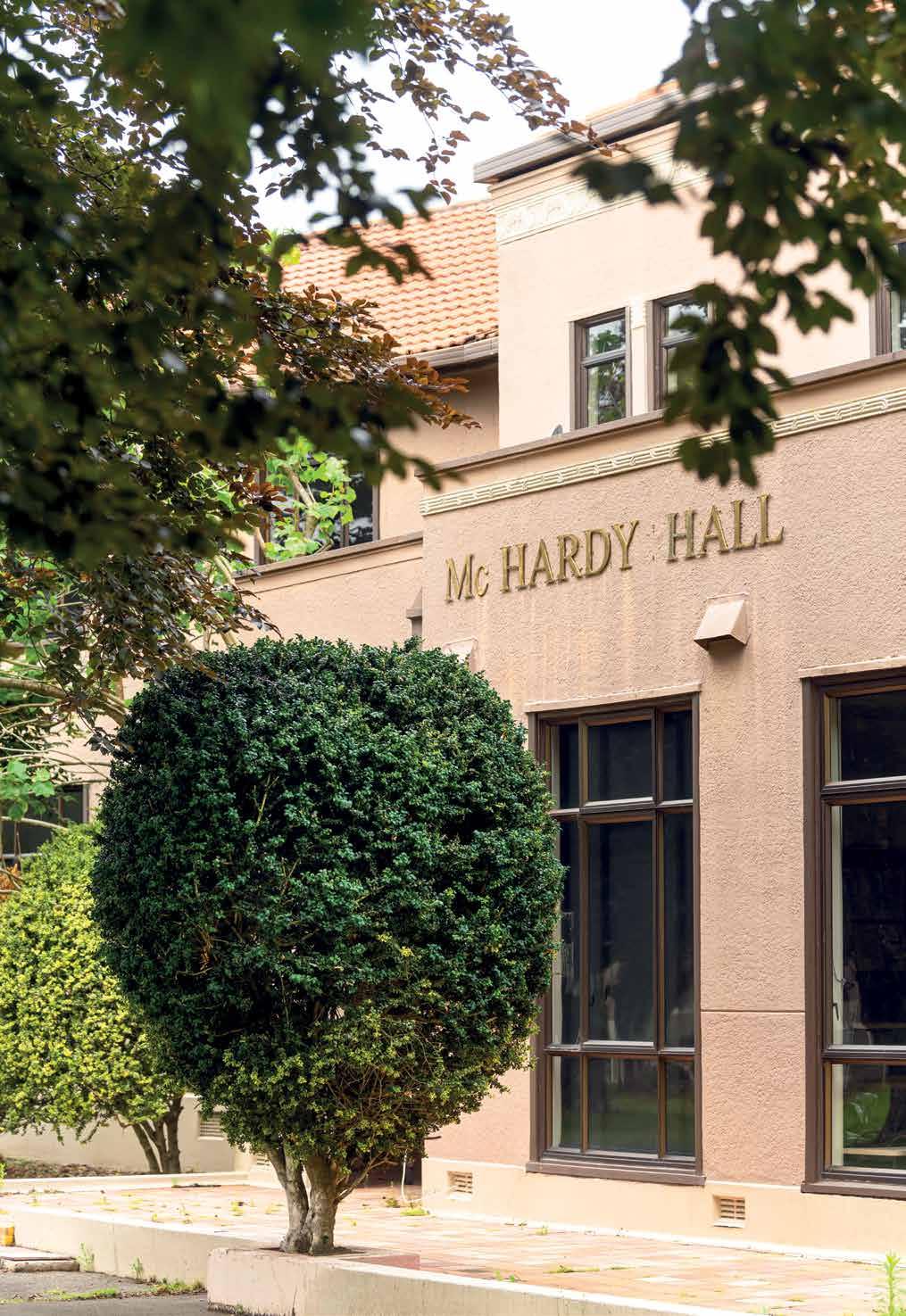
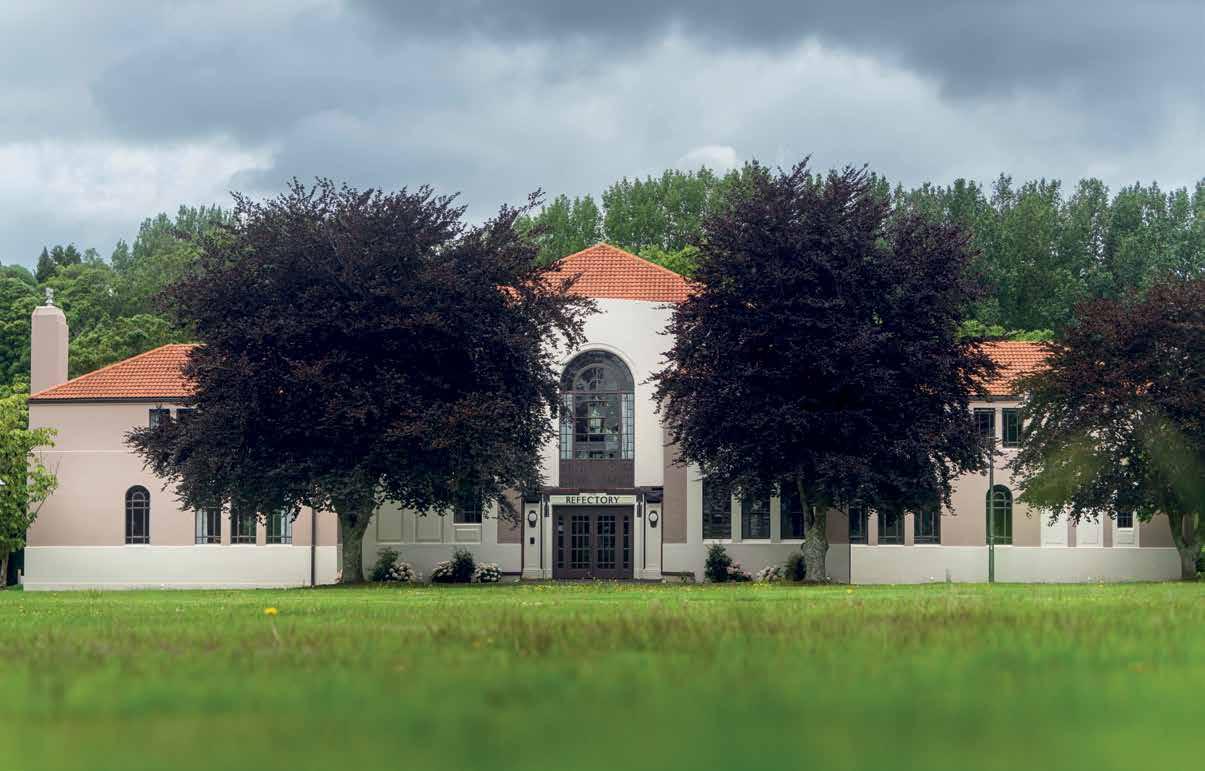
The site encompasses an open green space known as the Oval, including significant trees and plantings, which is circled by eight buildings of historic value: namely Tiritea House, the Old Registry, the Refectory (Category 2), the Sir Geoffrey Peren Building (Category 1), McHardy Hall, the Student Centre, Business Studies West and Business Studies Central.
Palmerston North developed on the west side of the Manawatū River and the community of Fitzherbert developed on the east side, the latter beginning with the farms of James Prendergast in 1871 (known as Tiritea Estate) and John Batchelar in 1880.
In the late 19th century demand grew for a specialist agricultural college to be established to serve the growing farming community in the North Island.
In 1926 the New Zealand Agricultural College Act was passed, and Batchelar’s land was acquired for the campus site. The Palmerston North Borough Council bought the
Palmerston North lies approximately 150km north of Wellington and 74km southeast of Whanganui.
nearby McHardy homestead (built on the Tiritea Estate, sold by Prendergast in 1900, and owned at the time of purchase by Percy McHardy) and gifted it to the college. It was then split in two to form Tiritea House (the principal’s residence) and the Old Registry (an administration and teaching space).
The iconic circular span of the Oval, now with cricket pitch in the middle, was the centre of university life in the earliest decades of the institution, and today creates striking aesthetic relationships between the buildings.
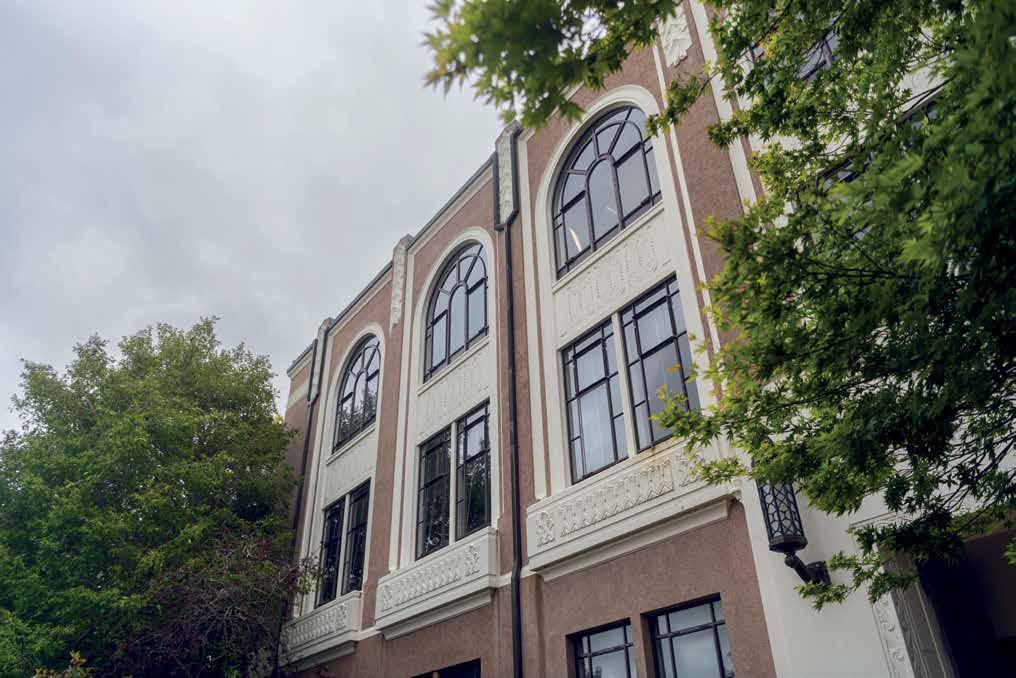
The first purpose-built buildings on the campus, the Refectory and the Agricultural Science Building, were designed by architect Roy Lippincott; elements of
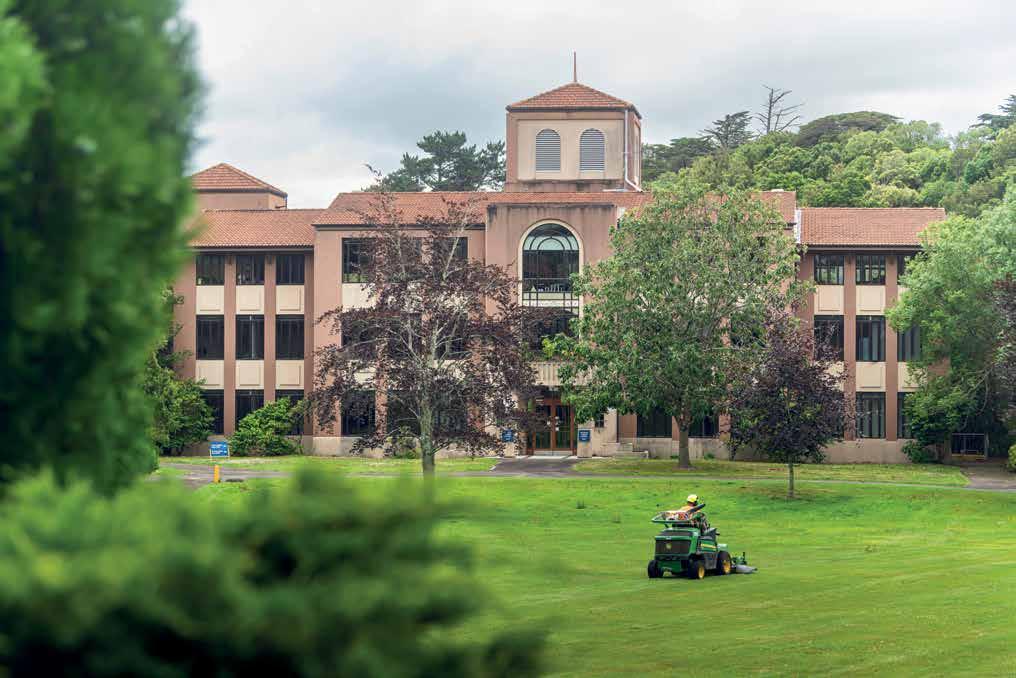
the Spanish Mission style, ornamented with Māori motifs and native flora and fauna, were mimicked in the later buildings to create the cohesion across the site that exists today.
The Agricultural Science Building was renamed the Sir Geoffrey Peren Building in 2010, in honour of the first principal of the college.
“They wanted to recognise his contribution to Massey’s history and development,” says Louis.
Peren, who had been Chair of Agriculture at Victoria University College, played a leading role in choosing the site for the campus. Today a recreation of his office can be viewed on the ground floor of Tiritea House, his old residence.
In Massey’s first annual report in 1927, Peren wrote that, although the college had been established as a teaching institution, “the more I come
in contact with the farming community, the more I am convinced that this institution must undertake research if it is fully to justify itself in the eyes of the industry”.
The development of agricultural science globally was a major impetus for the establishment of the college.
Research into soil, cheese starters, mastitis control, wool and flax directly addressed problems facing New Zealand farmers. Peren’s own research through the 1930s led notably to the development of the ‘Perendale’ breed of sheep, suited to North Island hillcountry farming.
The outbreak of World War II would transform the college, as well as the campus itself. In 1941 the Army Staff College was established on the site for the training of officers, and many of the buildings were taken over for this purpose.
“In aerial photos from around the time, you’ll see the little army huts, in dotted lines on the Oval,” says Louis.
McHardy Hall was constructed by the Public Works Department as a mess hall for army personnel. It then became a hostel when the college took it back over in 1944.
In 1968 the Student Centre was completed. This Brutalist Warren & Mahoney-designed building was constructed in response to a boom in demand for tertiary education; Massey Agricultural College became Massey University in 1964. Business Studies West and Business Studies Central were designed by Dennis Quinn and completed in 1987 and 1988 respectively.
It became apparent by the late 1990s that the Sir Geoffrey Peren Building required seismic strengthening, and in 2010, conservation architect Chris Cochran produced a conservation plan for the building. The restoration was completed in 2015.
“They decided to restore it to its original glory,” says Louis. “It was stripped back – for some areas of the building they removed all the internal walls that were added later on.”
The auditorium underwent a particularly dramatic transformation.
“In the 1960s they added a sloped floor to make it a lecture hall, so that was removed,” says Louis. A fantail frieze was among the decorative elements that were destroyed during the 1960s renovations but recreated during the restoration.
Restoration of the Refectory was also carried out and completed in 2022. The refurbishment was made possible by fundraising, with more than 1400 donors showing their support. It is
now also a venue for meetings and functions, serving the wider Palmerston North public.
Historian Margaret Tennant, PNCC Heritage Reference Group Chair, explains that the relationship between Massey and the wider community was even stronger in the past.
“The campus was used by the Palmerston North community for various gatherings, private and public, and members of the community would go out there for public lectures, conferences and sports gatherings,” she says.
“People, especially past students, have memories of those buildings and that area,” says Louis. “There were a lot of activities on the Oval, from garden parties back in the early days to college activities and, of course, cricket.”
Although the historic area has undergone a substantial transformation throughout the last century, it continues to be a site of memory for members of the community and for the thousands of students who study at Massey every year.
“As the heart of the historic campus of a significant place in Aotearoa’s history, the Turitea Historic Area is a fitting entry on the List,” says Blyss Wagstaff, Senior Heritage Assessment Advisor for Heritage New Zealand Pouhere Taonga.
“It was a real pleasure to work on this project with a community who appreciates and cares so well for this heritage.”
Search the listing number at heritage.org.nz/places to read more.
kāinga: villages mauri: life force pā: fortified settlement
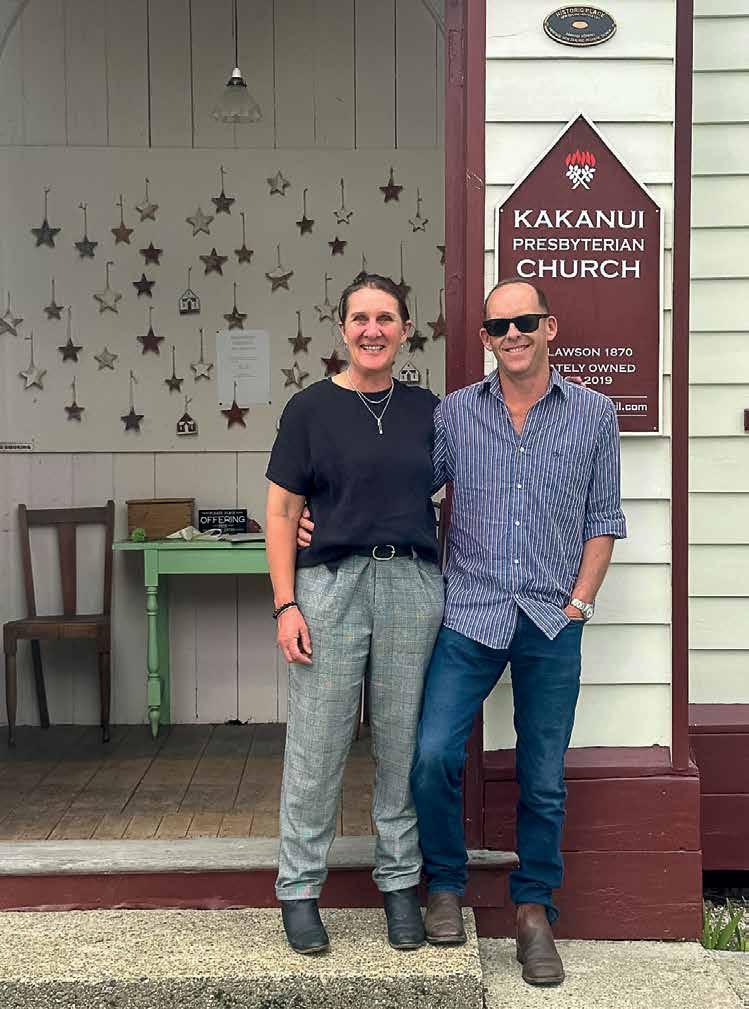
Waimate couple Michael Simpson and Anna Miles both lead busy lives running their thoroughbred horse agistment and breeding farm but, as they say, if you want something done, ask a busy person. Despite living almost an hour north of Kakanui, when Anna and Michael first saw the small Gothic-style church in the tiny seaside village, they knew they had to purchase it and breathe some much-needed life back into the historic site.
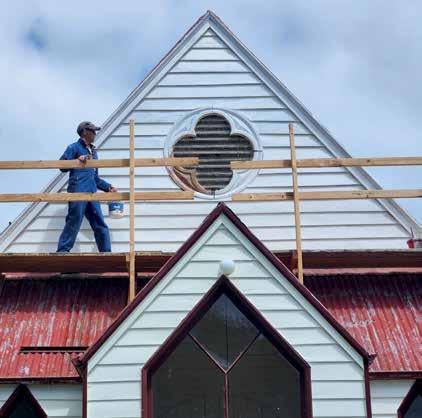
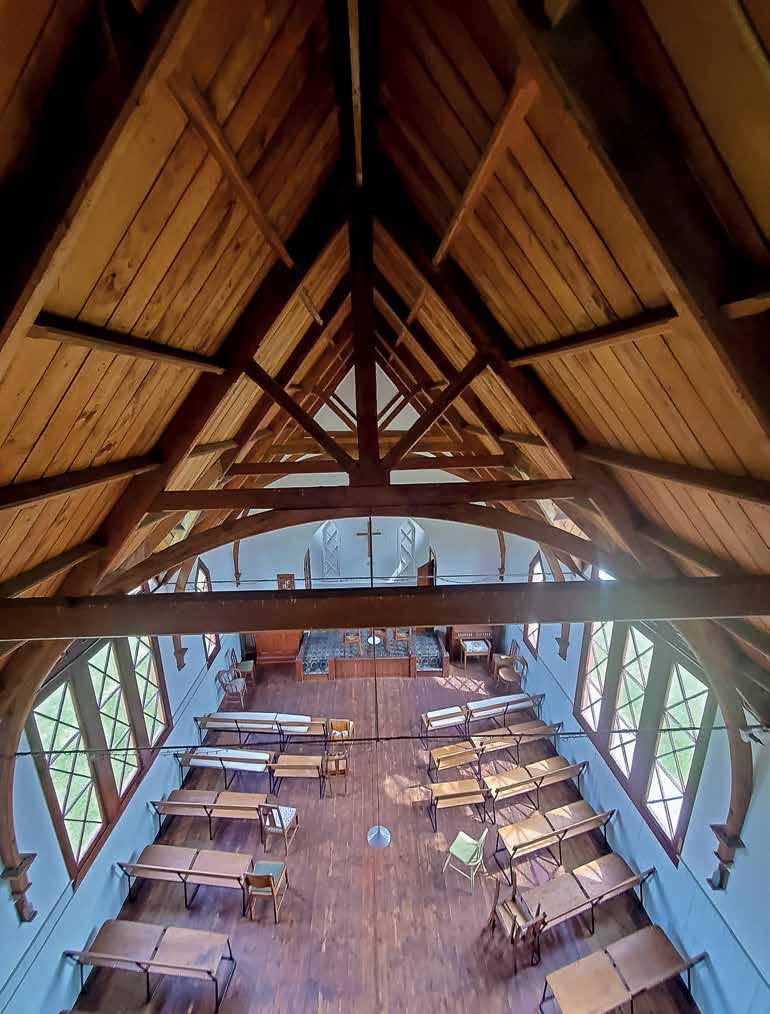
Built in 1870, the Kakanui Church is one of just two surviving Presbyterian timber churches in New Zealand designed by prominent 19thcentury Scottish-born architect Robert Arthur (RA) Lawson. It is clad in weatherboard, with a corrugated iron roof (which
A major restoration, spearheaded by a committed couple and widely supported by locals, has given new life to a valued community church
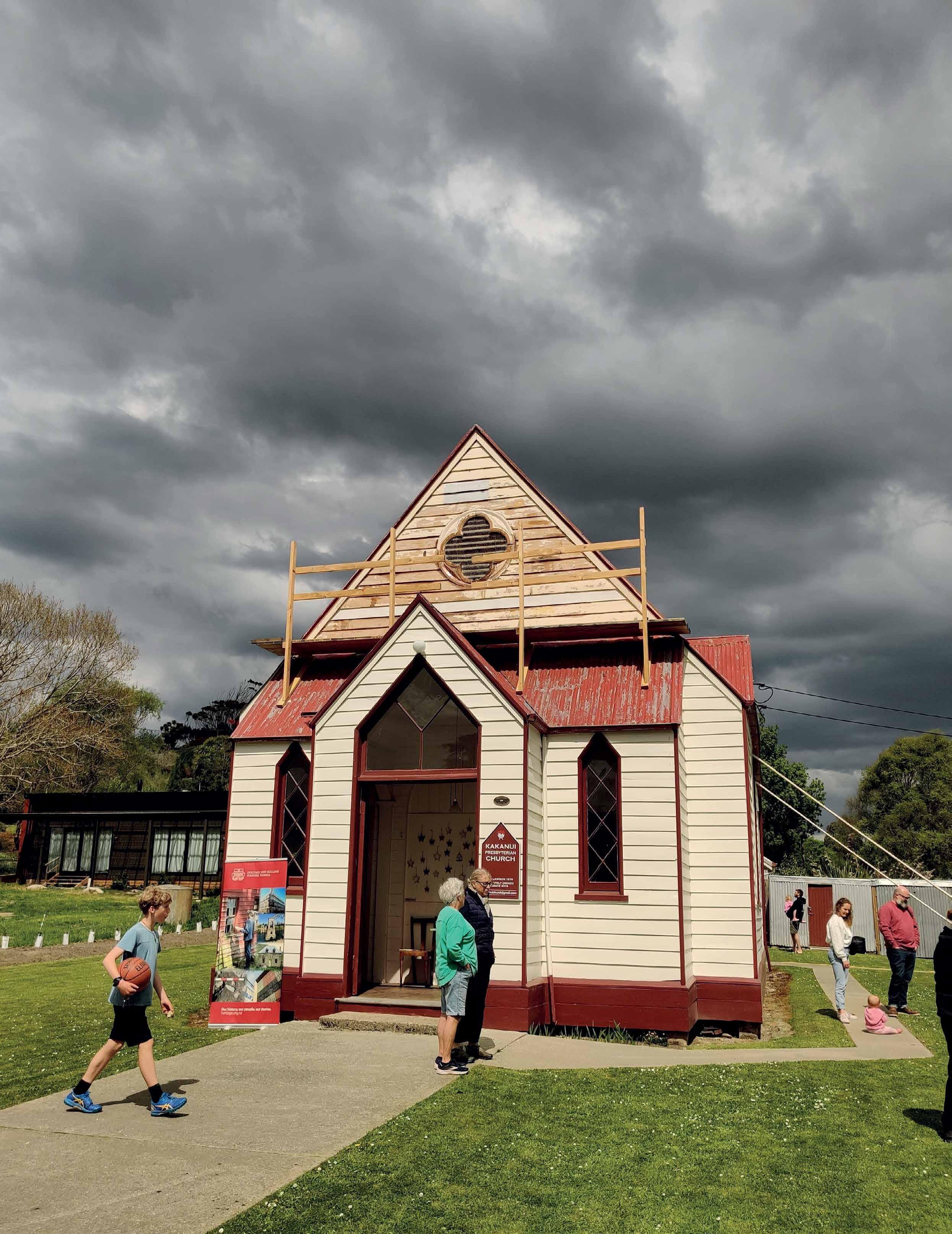
replaced the original shingle roof in 1890).
A prolific architect in the Otago region, Lawson was responsible for designing more than 40 churches in New Zealand, including the First Church of Otago in Dunedin, the East Taieri Presbyterian Church, and the Gore Presbyterian Church (Former). Larnach Castle is another of his most notable design feats.
The site at Kakanui immediately appealed to Michael and Anna as a project they could really get stuck into. After purchasing it in 2019, the pair have poured their heart and soul into its restoration whenever they have had the opportunity.
“Michael has a particular interest in historic architecture, so already knew a lot of Lawson’s work,” says Anna.
“We could see that its restoration would need a lot of love and dedication, and while we had no plans for it other than restoring it, we thought we could, so we should.”
The pair say they went into the project with their eyes wide open. They uncovered no unpleasant surprises – things were as bad as they appeared at face value – although they did find a beautiful putty knife that had been dropped into the wall at the time of construction back in 1870, along with a rustic chisel.
Michael’s background as a builder has been key to the success of the restoration, given the amount of work required to bring it up to its present standard.
“Structurally, the best part of the building was the piles,” he says. “Everything else has needed attention to some degree, from replacing rotten framing, sills and weatherboards to rebuilding damaged windows and replacing leaking valleys.
“The most difficult part was the sub-floor framing repairs, as there is very little room, and the ground was still very damp at the time as we hadn’t rediscovered the stormwater drains at that stage.”
Michael says general drainage had obviously been a long-term problem as the bearer under the back wall of the altar had rotted and slumped onto the ground before the Sunday school (one of two outbuildings on the site; the other is the workers’ hut) was added in 1933.
The Gothic-style church has played a prominent role in the social life of the Kakanui community for more than 150 years: first as a place of worship until its last service in November 2019, and in later years as a community events venue, hosting weddings, music gigs and other
social gatherings, including Christmas carol concerts.
While the project still has a way to go before it is completed (the external painting has yet to be done), it is already being used again by locals. It’s this sense of community that Anna and Michael both value, and it’s the community that was behind the building being added to the New Zealand Heritage List/Rārangi Kōrero as a Category 1 historic place in July 2025.
“We love to share the space with others, and the support we got from our community blew us away when the submission period opened –the Kakanui community has been so supportive of the restoration project.”
The community was involved in a celebration of the building’s heritage status in October last year, and many turned out to show their support. The church’s Facebook page continues to amass followers keen to keep abreast of the restoration progress.
Alison Breese, Heritage Assessment Advisor for Heritage New Zealand
Pouhere Taonga, worked on the listing and says it was a pleasure seeing the love and hard work that Anna and Michael put into it.
“One of the most important and enduring values of the Kakanui Church is its value to the community in the past through to today,” she says.
“It's been wonderful to work with owners who love the building and the community. Through their hard mahi they have brought the church back to life as a hub of the community once again.”
As well as the structural work needed on the church, aesthetic work has included repainting the interior and removing the carpet from the pulpit, which revealed the church’s original linoleum. Work yet to be completed includes reintroducing original dark-red-oxide paint to the elements that originally had it, which is one of the more enjoyable jobs on the cards for keen painter Michael.
Without doubt, however, the most rewarding aspect for both Michael and Anna is that they have been able to give the buildings a new lease of life, and a reason
Kakanui is a small coastal town located approximately 14km south of Ōamaru.
for the church to continue to be preserved long after they are gone. “Part of this journey has been the discovery of how wonderful it is to have the building full of life again,” says Anna.
“We are staying open to opportunities to let this happen, which will also give the building more of a purpose over time.”
Search the listing number at heritage.org.nz/places to read more.
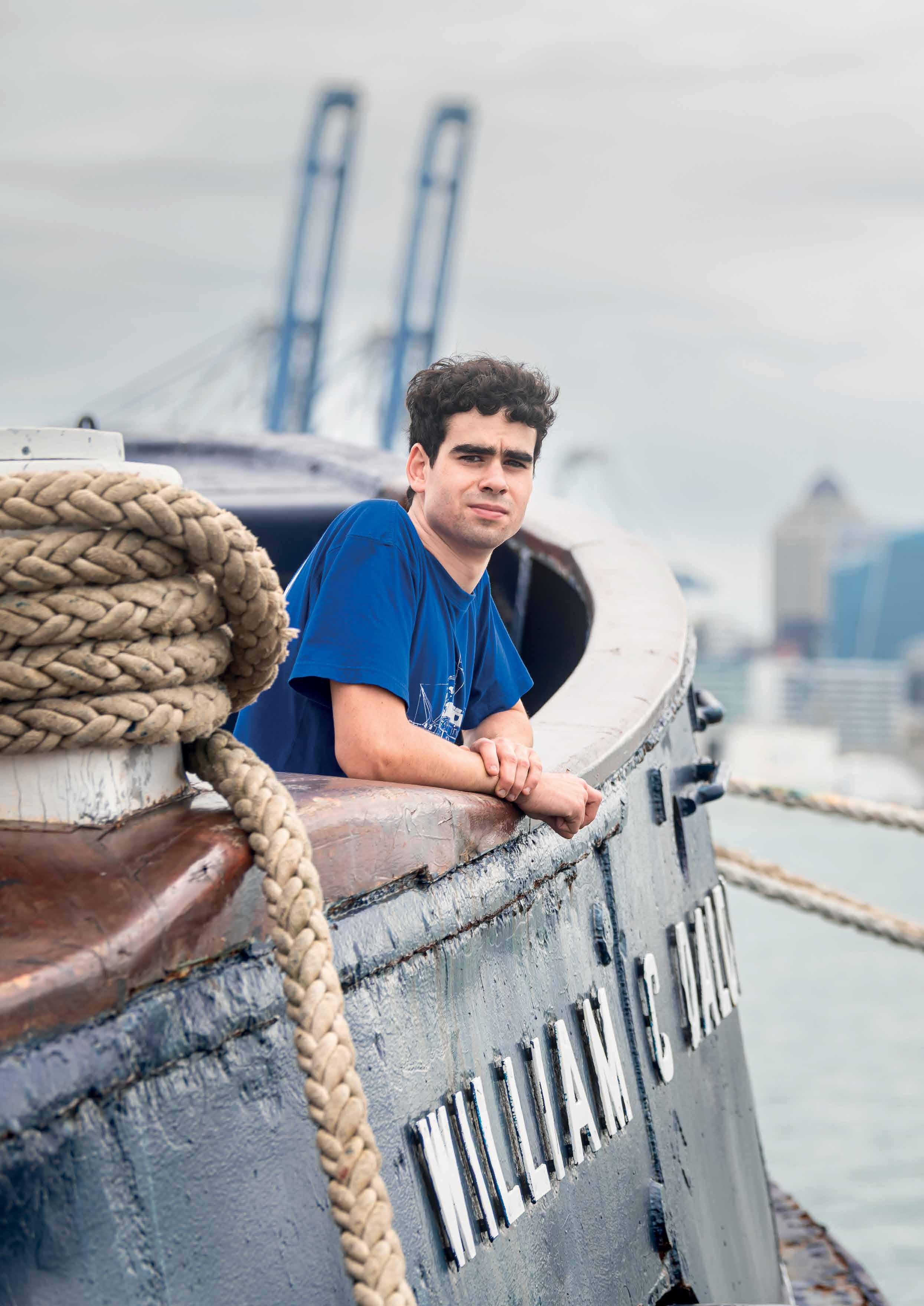
Meet Rory Bloom, a young enthusiast whose dedication is breathing new life into one of Auckland’s most historic vessels
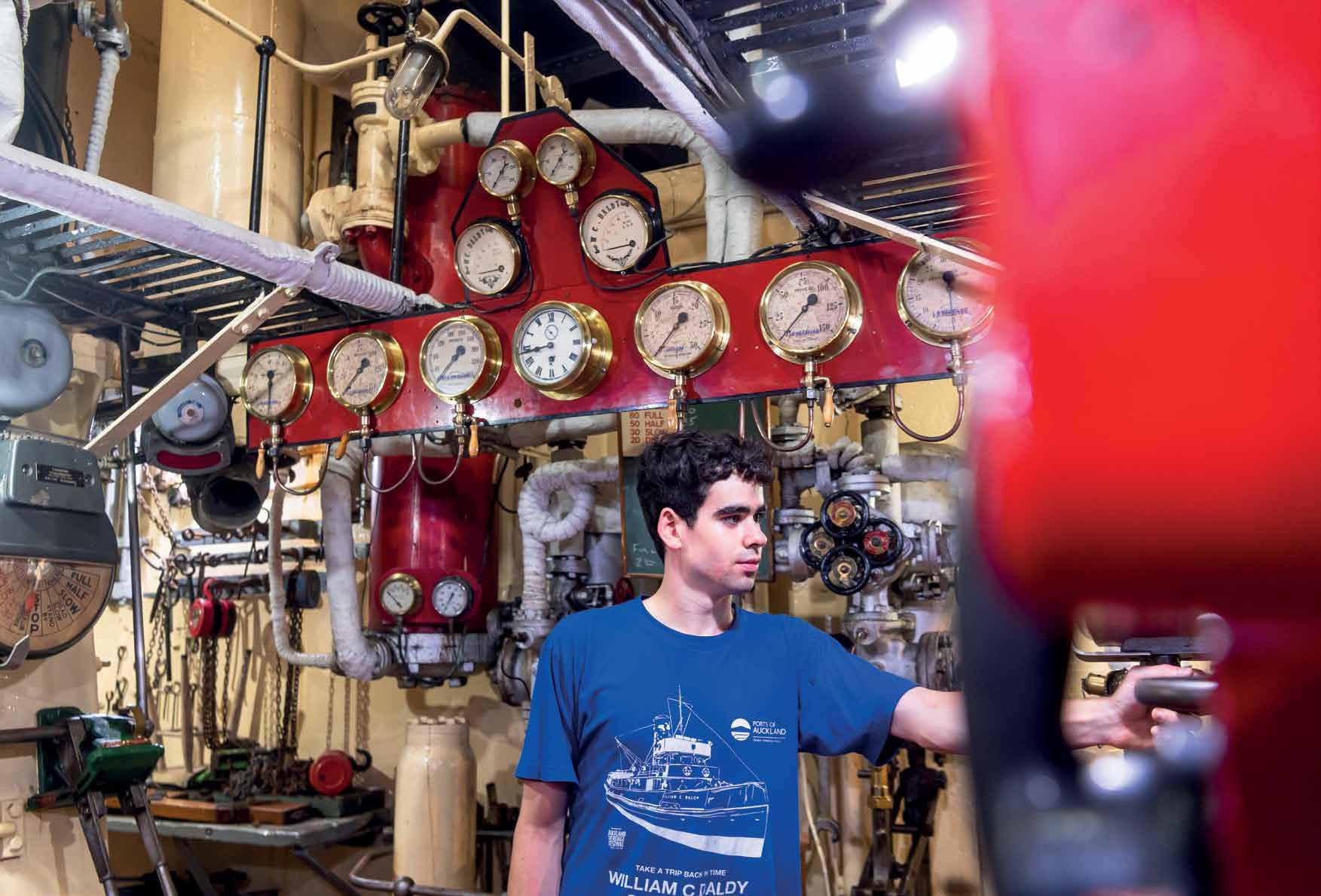
We’re about 20 minutes into our tour of the steam tugboat William C Daldy when our guide, 18-yearold deckhand Rory Bloom, decides we’re ready to visit the boiler room.
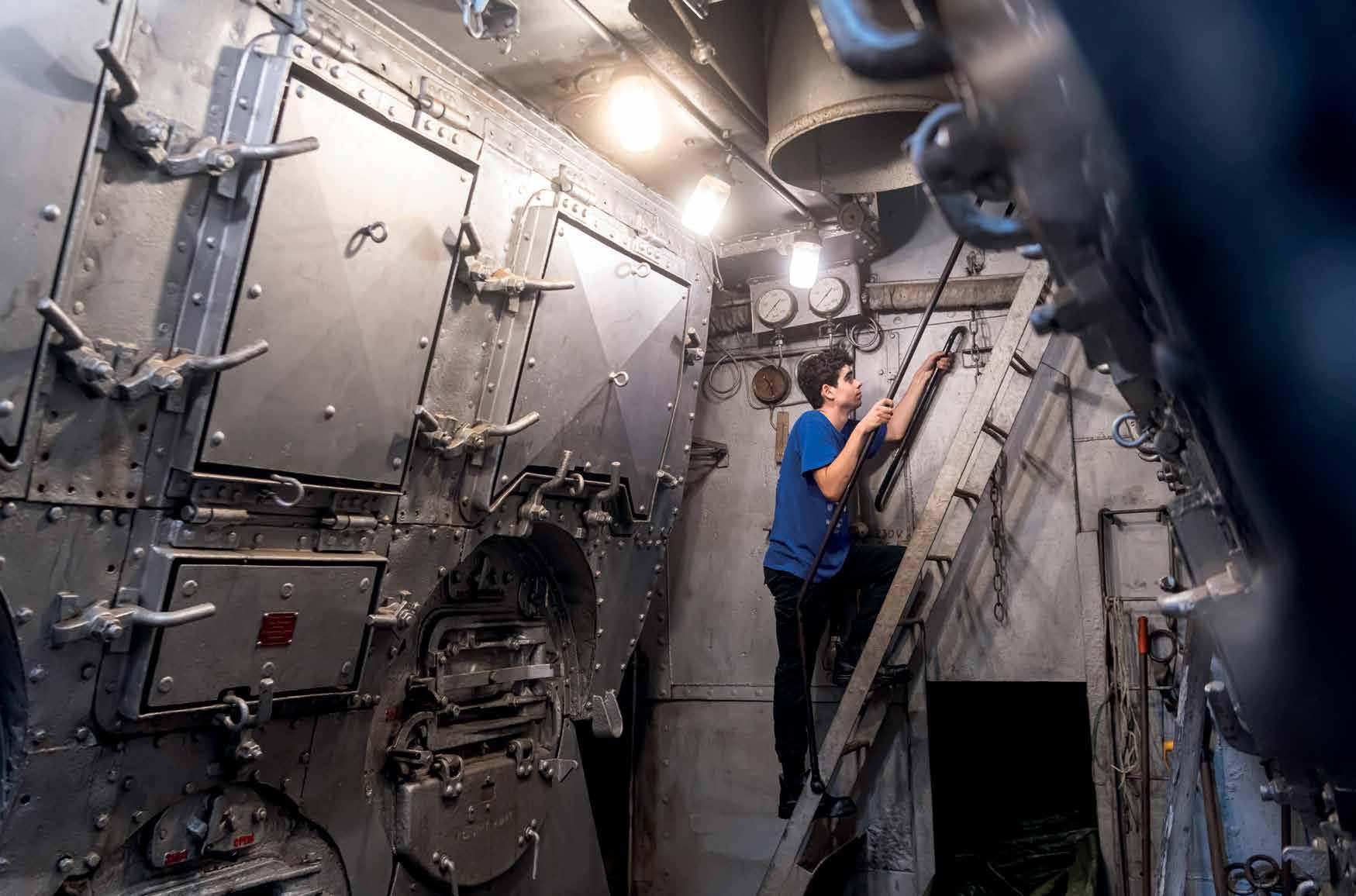
Entry is via a low doorway onto a grill floor. From there we climb down an alarmingly steep ladder until we’re below the water line.


The room itself is remarkable: six heavy furnaces, a pair of huge vertical extractor pipes and wall-to-wall steel. Briquettes (reconstituted waste products), which has replaced coal as the ship’s fuel, is stacked nearby, while a clock counts down the stokers’ 30-minute shifts.
It’s at once a claustrophobic and exhilarating space.
Once we’ve found our footing, Rory describes what life would have been like as a stoker. The constant shovelling; the blazing heat; the buckets of ash. His stories, told on the ship itself, quickly transport you back in time. You get a sense of the physicality of life on the Daldy, and how this contrasts with the contemporary world onshore.
“It’s a tactile, visceral experience, being on a steam ship,” Rory explains. “It’s a different form of learning.”
The Daldy featured early in Rory’s life, first catching his eye as a child thanks to its canary-yellow funnel. It’s just one of several striking aspects of the 90-year-old vessel, which is today moored at Victoria Wharf in Devonport, Tāmaki Makaurau Auckland. Another is its size: at almost 40 metres, it is longer than any of the tugboats currently operating in the Waitematā.
The tug’s career was brought to an end in 1977, but such was the love for the Daldy that a community meeting was organised to work out how to save it, leading to the formation of the William C Daldy Preservation Society.
In 1980 the Daldy began its new role running passenger excursions to raise revenue for maintenance and other costs. It’s been doing so ever since.
Despite Rory’s lifelong interest in ships and ocean liners, his first chance to volunteer wasn’t until May 2024, when he was invited onboard by a friend.
“I initially just did odd jobs for things, so helped with doing the wicks for the oil, or painting, or doing the lines,” he says.
This involvement quickly developed into something more serious. Rory was studying at Te Aho o Te Kura Pounamu (formerly The Correspondence School) and while his classes were intellectually stimulating, they lacked a physical component.
That’s where the crew came in. “After the first sailing I was on, it was suggested by the other crew that we needed more QDCs [qualified deck crew], and I thought, well, I like the deck work,” explains Rory.
The qualification, which includes ropes, lines and first aid, allowed Rory to take on greater responsibilities.
Highlights included repainting the bulwarks and scuppers – not an insignificant job on a vessel the size of the Daldy – and being at the helm during the departure from New Zealand of the Queen Anne on her maiden visit in early 2025 as part of her world voyage.
These experiences also gave Rory an awareness of the connection between the crew and the vessel.
“There is a sense that ships feel alive,” he says. “I can feel the fact that this is hand-built by people and then crewed. You know, this is a space people lived in, but also something that people built.”
Despite the commitment and passion from volunteers such as Rory, a steam tugboat like the Daldy is not a simple vessel to care for, even in the best of times. The ship needs a crew of at least 15 people to sail. Without enough volunteers, harbour excursions become increasingly difficult to organise.
“When I started volunteering here, it was mostly older hands,” Rory explains. “And that was because we had lost a lot of volunteers over the years. Particularly over lockdown, we had a very tough period.”
The headlines generated during this time weren’t always ideal either.
“There is a sense that ships feel alive … this is a space people lived in, but also something that people built”
“There’s lots of articles online where it says, ‘William C Daldy to be scrapped’.”
Thankfully, reports of the ship’s demise were greatly exaggerated, but the society did face a dilemma: how to let the public know the ship was still very much operational – and looking for a new generation of supporters?
For Rory, one solution was public tours.
“It started off with me just asking people on the wharf, ‘Hey, do you want to have a look around?’ And it eventually moved up to me refining it, getting the donation box out.”
During the Auckland Heritage Festival, Rory put out signs on the wharf, drawing up to 60 people a day. Other volunteers brought in similar numbers. This increased public exposure also allowed them to keep an eye out for potential volunteers.
“I’m trying to persuade people to join. The people who get tours, sometimes they’re interested.”
It’s hard not to be interested once you’re on board.
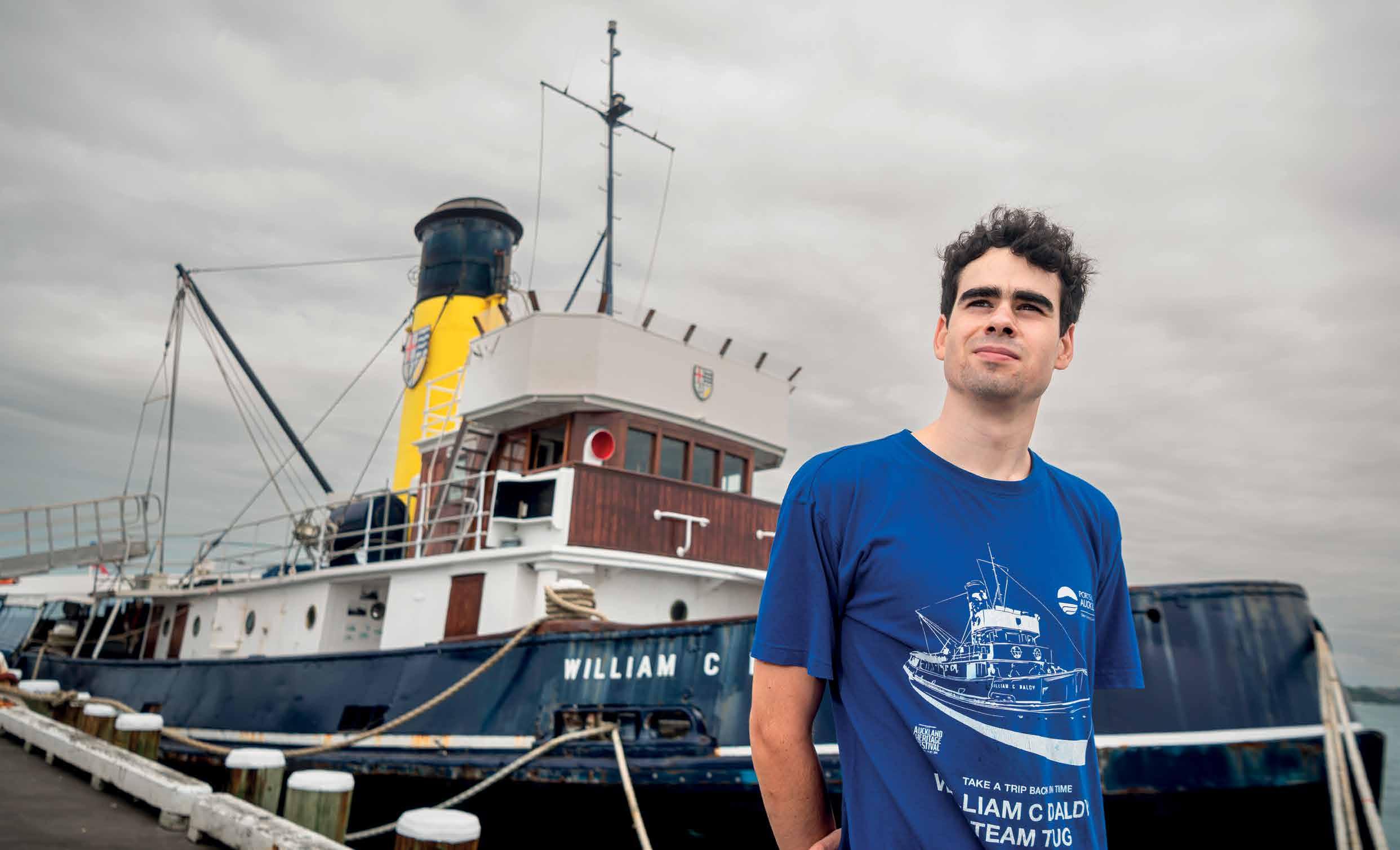
Rory’s extensive knowledge is imparted with obvious enthusiasm. He traverses narrow ladders with a professional fearlessness.
“I really like learning and I really like sharing my knowledge, and that’s why I like the tours.”
The society’s outreach has recently borne fruit, with several new volunteers, including Rory’s former classmate, 15-year-old Will Cunningham.
On Will’s first excursion, he was conscripted as a stoker.
“There was a moment I was down in the boiler room where I felt like, ‘I’m actually feeding a tugboat’,” says Will.
“I’m here on the weekend; I’m not watching my favourite TV show or anything; I’m on a boat shovelling this wood into a bloody furnace.”
As it has for Rory, the Daldy has quickly become an important part of Will’s life.
“After doing a week of school, just doing straight work, like pen and paper,
it’s just a really good thing to look forward to,” he says.
“Instead of using just your mind, you have to use your whole body… It kind of makes you live.”
Following the tour, we descend to the officers’ quarters – a comparatively quiet space on a ship filled with creaking, singing and loud voices.
Rory explains that there’s still an uncertainty about the future – both that of the Daldy and therefore his own as a volunteer. But what keeps him committed is the connection between himself, the ship and those who have cared for it in the past.
“People put this together. People riveted it. People have been maintaining it, and people have been crewing it.”
He’s going to say more, but then there’s a call from up on deck. Someone’s looking for Rory; they’ve got a question for him. So we make our way out, say our goodbyes and get back to work.
When the Daldy is tied up at Victoria Wharf, it looks west, directly towards the Auckland Harbour Bridge. It’s an appropriate sight, especially given the ship’s role in the bridge’s construction – and survival.
The year was 1958. The bridge’s installation had reached a pivotal moment: the manoeuvring of a 1090-tonne, 176-metre span into position in the middle of the harbour. The behemoth span was ready to go; however, there was an issue. Wind. A lot of it. With the span tied up at a mooring overnight, there were fears it could start to yaw (twist or oscillate).
Luckily, the project manager, Mr Cardno, had a plan. At 4am he contacted the crew of the Daldy. They’d agreed to sleep onboard overnight, with the vessel steamed up and ready to go if needed.
The Daldy, one of a number of tugboats that were used to secure the bridge during the ‘pick-a-back’ operation, burnt through no less than 40 tonnes of South Island coal during a single, 36-hour-long shift (for a comparison, the Daldy usually burnt about 34 tonnes a week).
There are many other stories of the Daldy’s feats –several of them taking place within sight of Victoria Wharf. But to hear those tales, you’ll have to join Rory on one of his tours. n
An abandoned building on Christchurch’s historic High Street has been reimagined into a layered, light-filled flexible office hub that blends heritage and hospitality
Following the 2010 and 2011 Christchurch earthquakes, the early-1900s Hunters and Collectors building was on Christchurch City Council’s ‘Dirty 30’ list. It was believed to be hindering the city’s rebuild. Destined for demolition, it was viewed as an eyesore, uninhabited and without confirmed plans for its future. That is, until new owners stepped in.
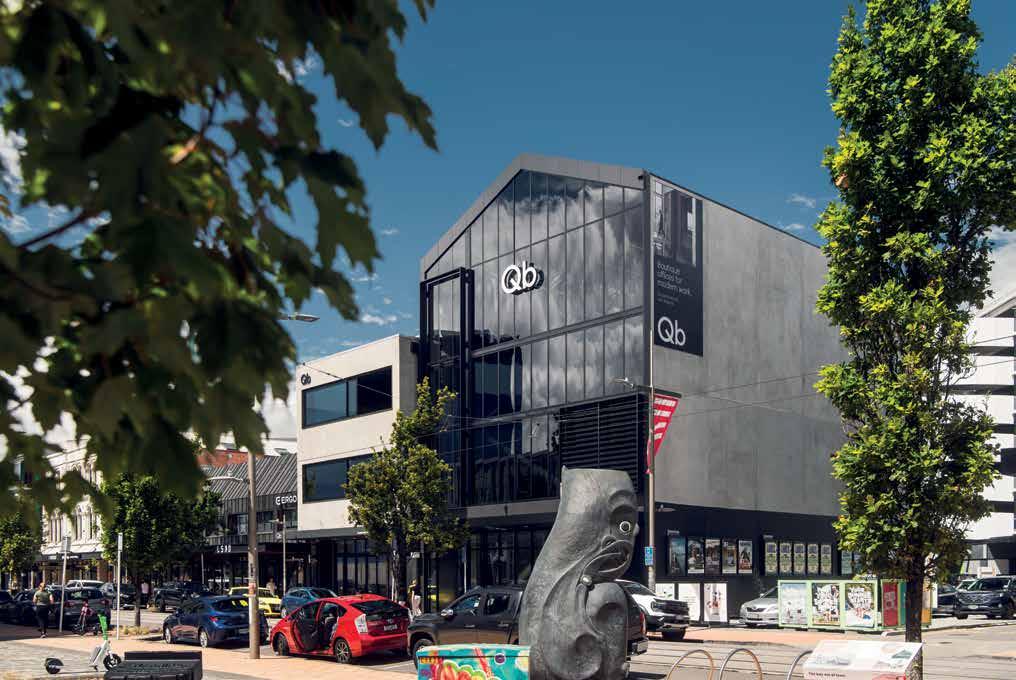
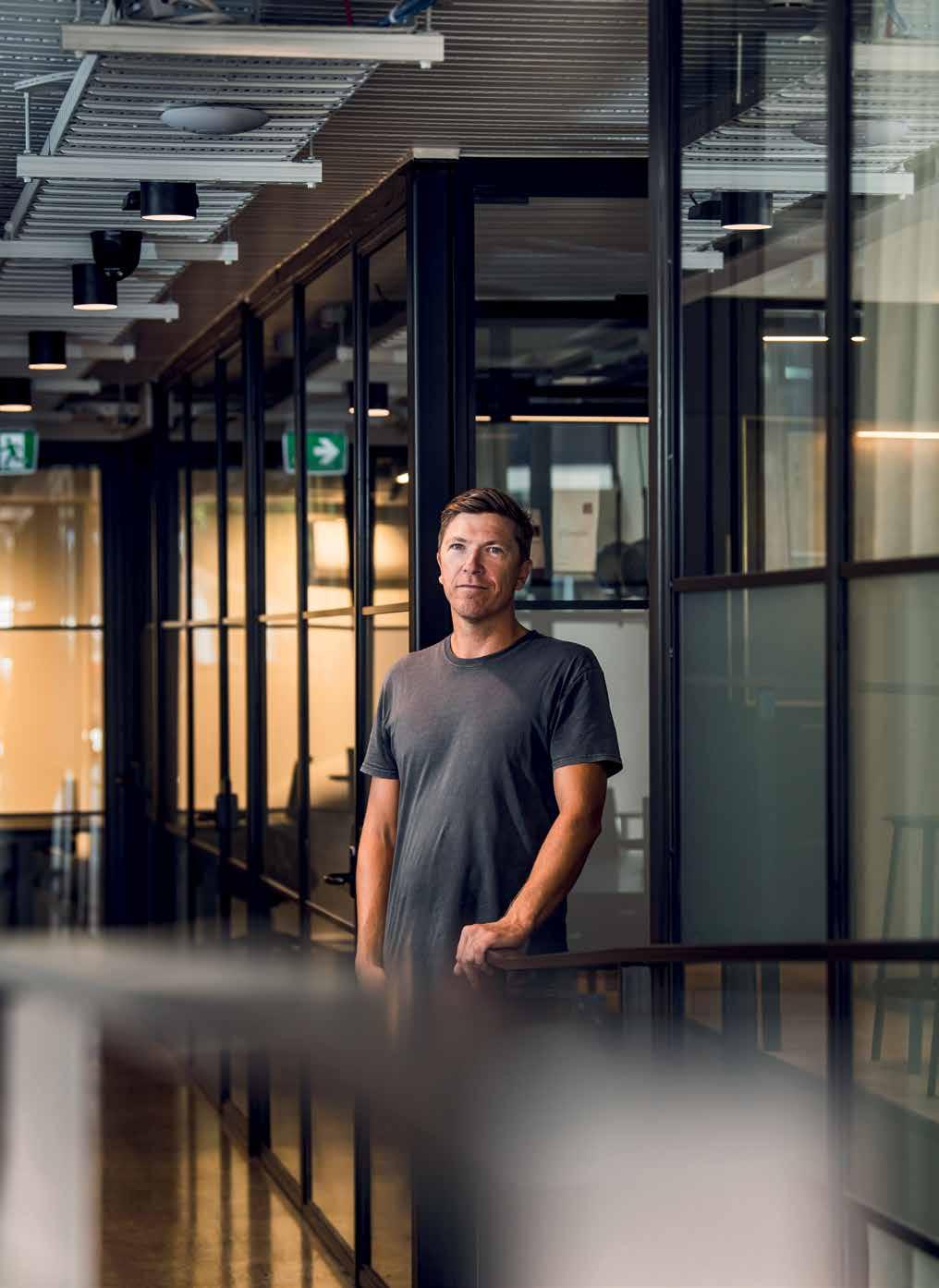
“It was certainly of significance to us that we were acquiring a piece of the city’s architectural memory,” says Mike Fisher, one of the three directors of Qb Studios who purchased the building in 2021. Their plan was to turn it into the South Island’s largest purpose-built flexible workspace.
“It was one of the few character buildings still standing, and we took that very seriously.”
Despite the previous owner of the four-storey building having begun seismic strengthening work prior to the earthquakes, the project had come to a halt and remained dormant for a decade before Mike, Alex Brennan and Tom Harding came to its rescue.
The three owners brought impressive credentials to the challenge. Mike Fisher is a fifth-generation fine art dealer, Alex Brennan is a registered barrister, and Tom Harding is a former professional rugby player. An unlikely group on paper, the three met in 2011 on a beach in Brazil, where they conceived the idea of creating modular workspaces back in New Zealand.
“Since returning to Christchurch we’ve worked together on several projects, including transforming an abandoned car wreckers’ yard in Addington [into office space]. We’ve replicated this philosophy of repurposing forgotten spaces in Auckland as well,” says Mike.
The High Street building didn’t have an historic heritage overlay, which requires a planning permit for changes like demolition and external alterations. Regardless, the team made the choice early on to preserve as much as they could, while envisioning a modern tone.
“We didn’t want to surrender the threads connecting the structure to its own history, but we did want to create flexible office spaces that were design-led and community-focused,” says Mike.
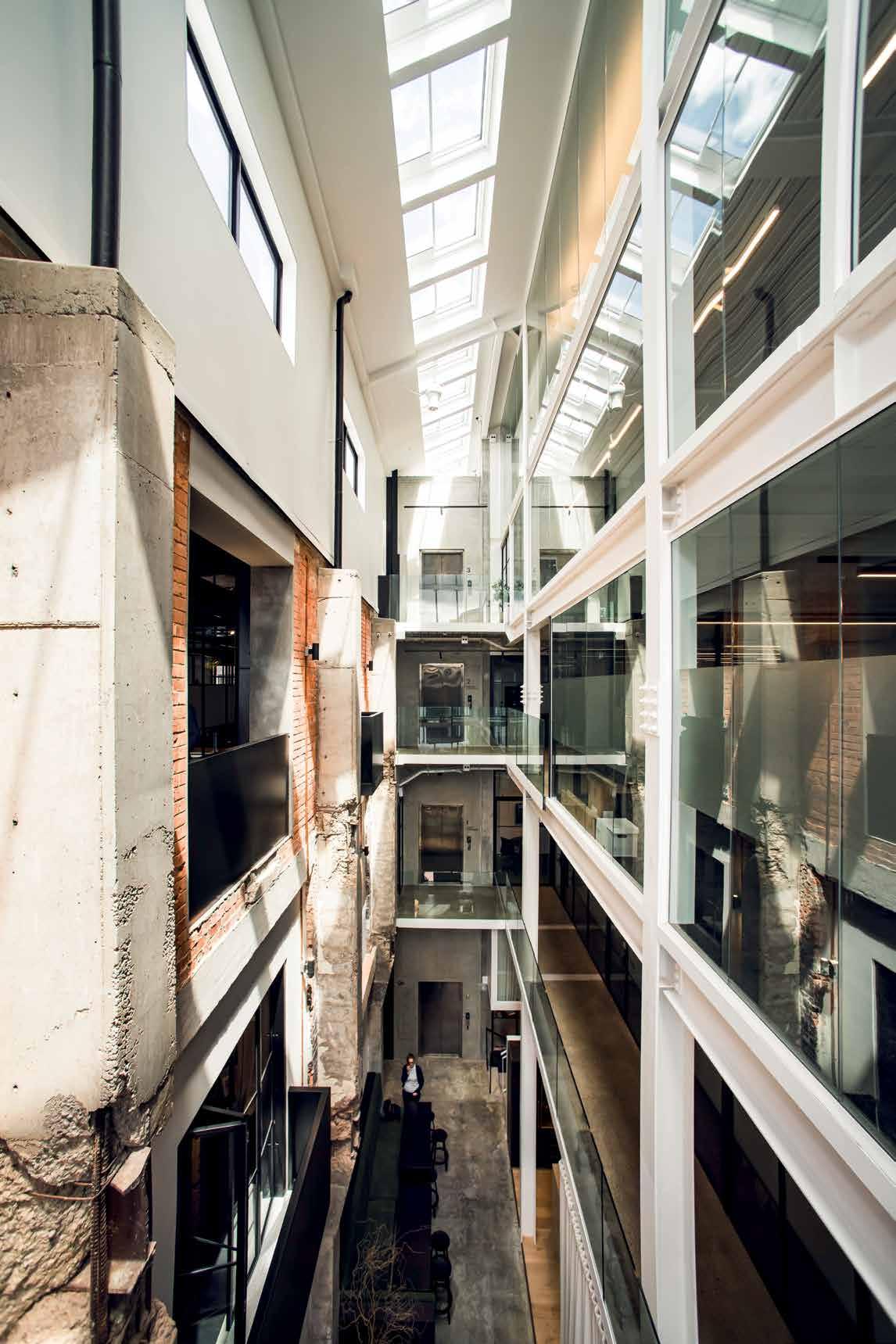
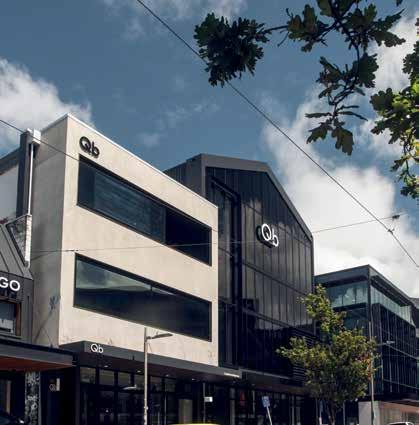
1. The blend of old and new works seamlessly as a flexible office hub in this High Street building. 2. The original brick and masonry has been revealed alongside the new steel and glass of the adjoining section. 3. With much architectural complexity involved, the existing four-storey building has been restored and strengthened.
3
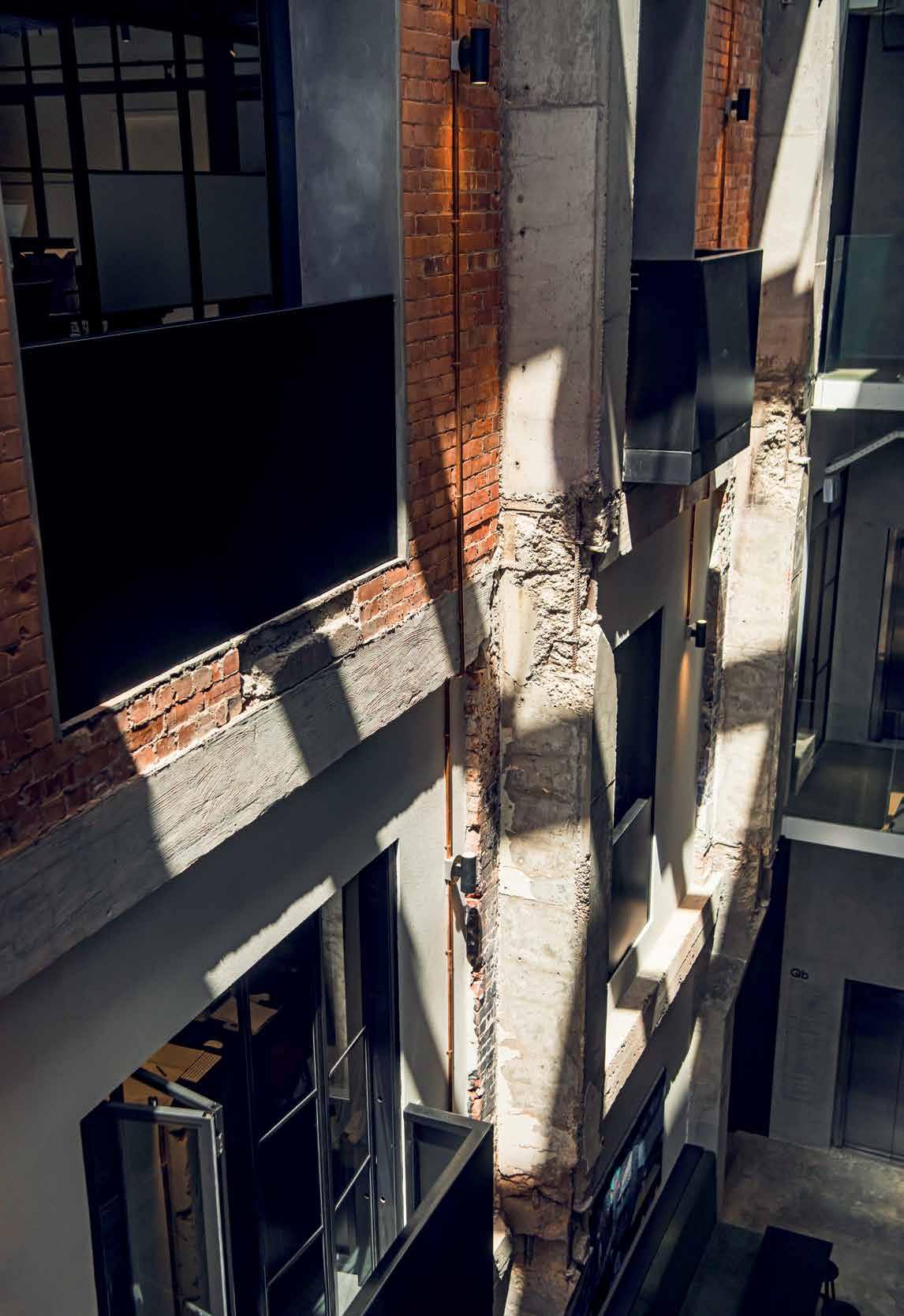
But there were problems aplenty. For example, upon purchase, every floor of the existing building was covered in a thick layer of pigeon droppings. There was mould from leaking temporary roof coverings and partially rotten floors. Both the roof structures and the rear exterior brick wall, which supported the intermediate floors, were structurally unstable.
Richard McNeill, a director at Architecture Studio, admits this was one of the most technically challenging projects the practice had undertaken in the past 20 years.
“One of my primary concerns, apart from the obvious health and safety risks, was how do we possibly site measure this building with some form of accuracy with all these obstructions and uneven floors and walls?” says Richard.
The brief to Richard and his team was to design a boutique hotel sensibility within a commercial workplace. Office spaces were to range from intimate two-person suites for start-ups to multi-floor tenancies, all supported by shared lounges, meeting rooms, and a central members’ bar.
“A street-level café was also planned to soften the interface with the city and to invite activity into the space,” says Richard.
By chance, the adjacent empty section at 237 High Street was also for sale. This presented an opportunity for the amalgamation of the two properties, where half the building honoured accumulated history and half embraced contemporary design. The question then became how to create and join two such fundamentally different entities without one dominating or cheapening the other.
“We didn’t want to surrender the threads connecting the structure to its own history, but we did want to create flexible office spaces that were design-led and communityfocused”
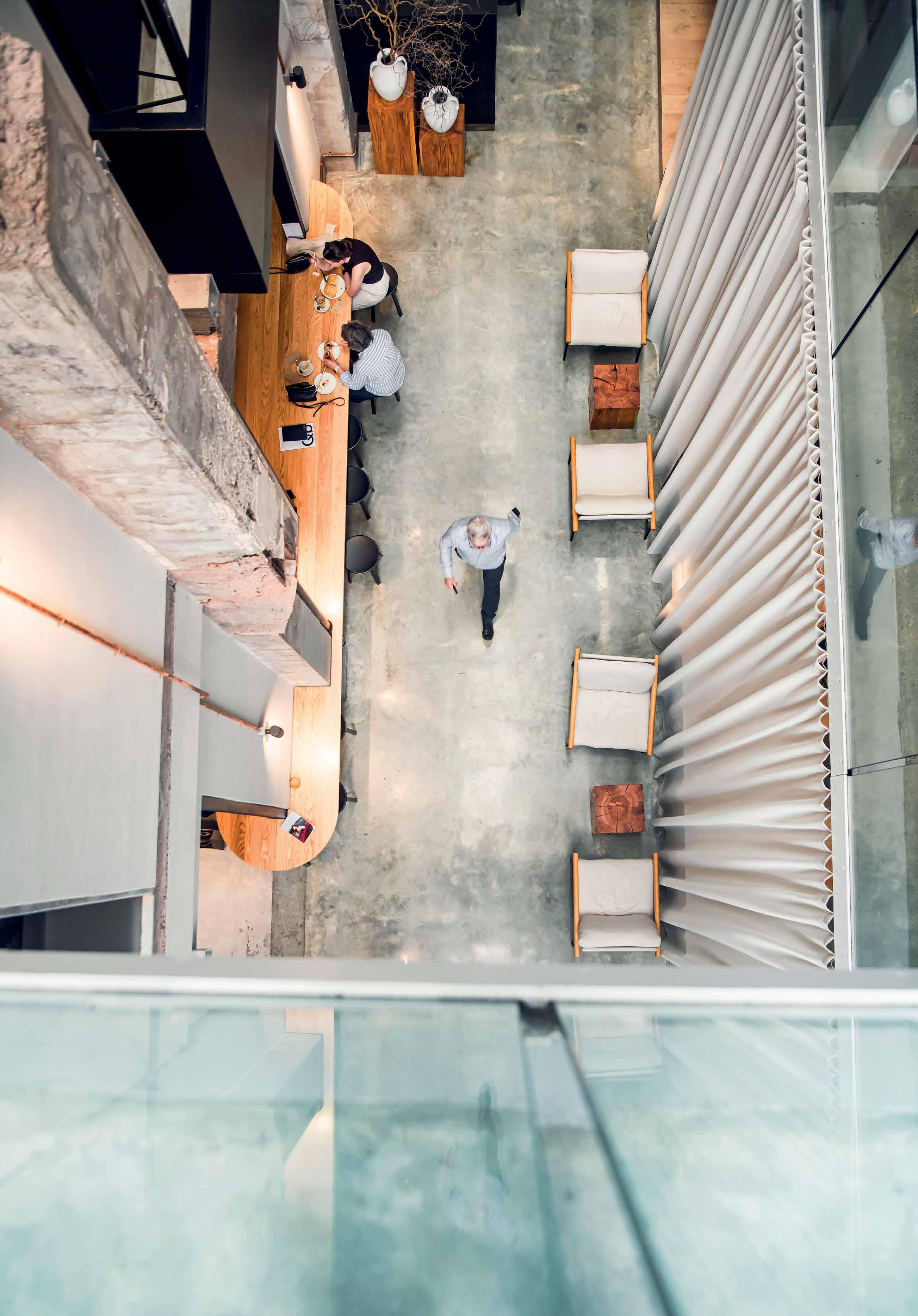
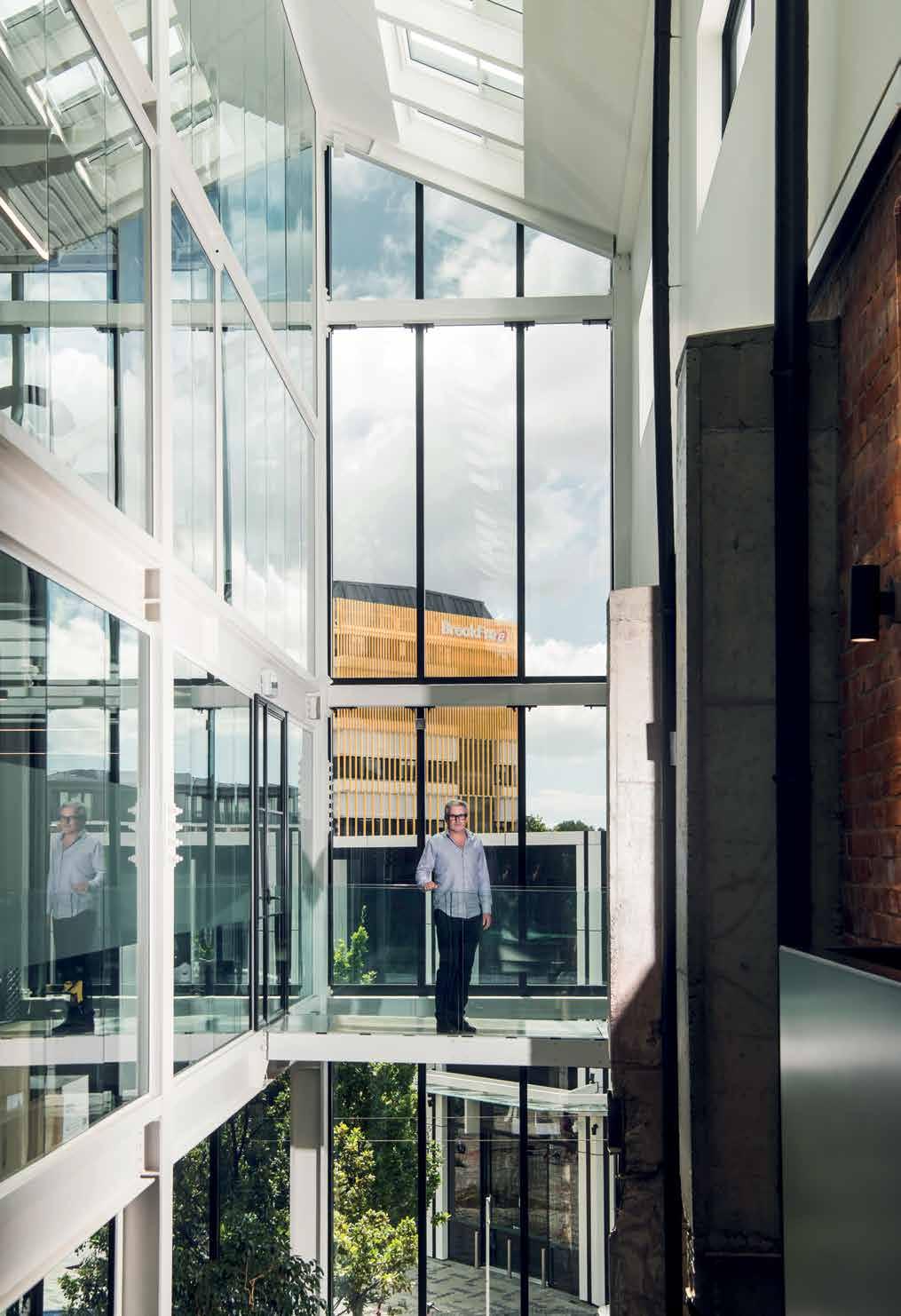
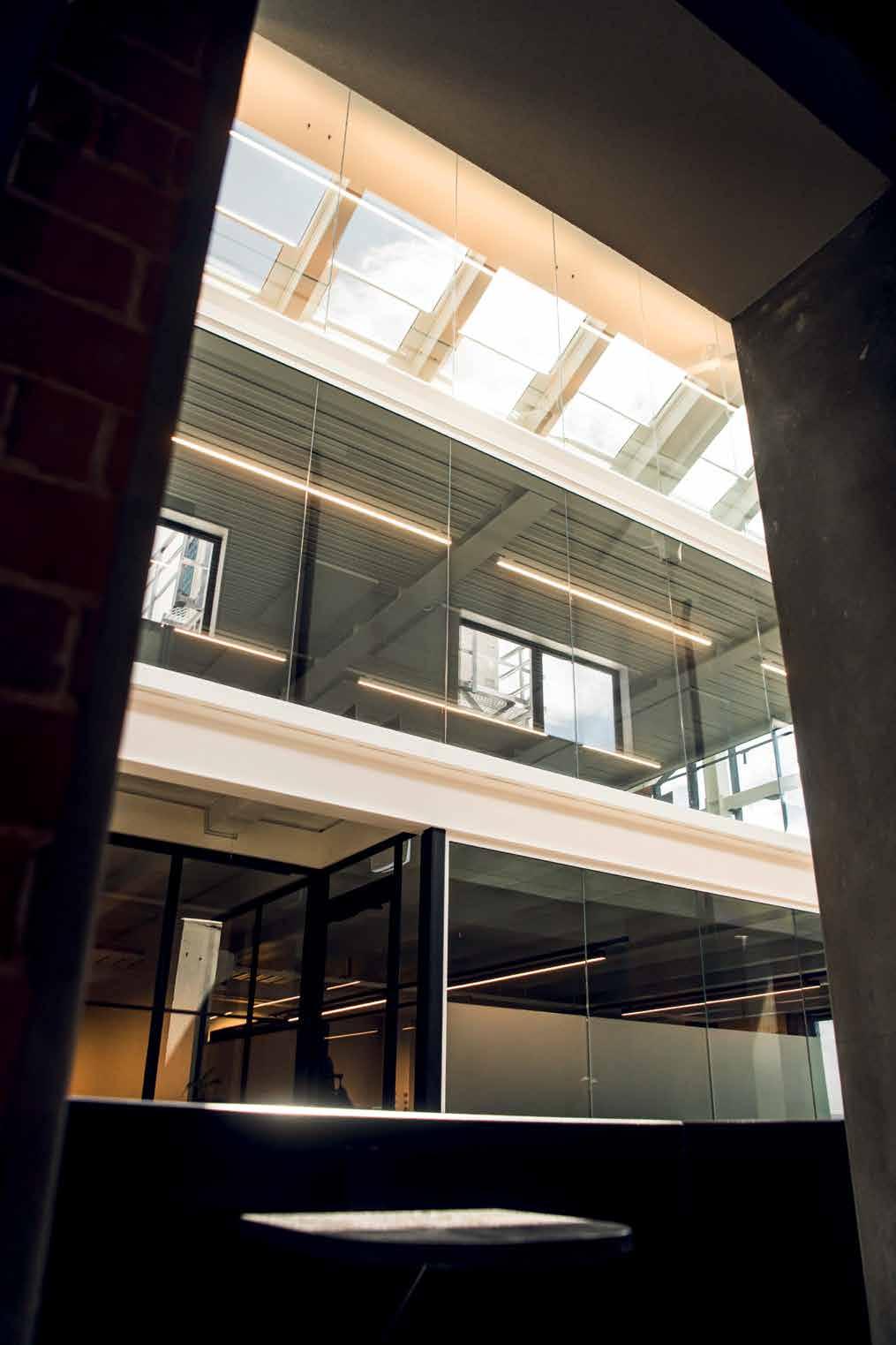
The answer was to build a five-storey atrium on the empty section; light-filled and deliberately positioned as what Mike calls “the beating heart of the building”. This atrium reveals the scarred party wall as a central architectural feature – preserved, framed and made public.
“The central atrium that brings these two spaces together was really important to creating this atmosphere,” Mike says. “Smelling the coffee and creating a space with lots of natural light has been a great way to show how architecture can shape human connection.” For example, the extensive glazing creates an aesthetic that Mike describes as evoking “New York or Melbourne or Auckland”: cosmopolitan, contemporary and sophisticated.
But the journey to get there was complex.
“The technical challenges of this particular project involved resolving historic building consents with council, retaining heritage features where possible, while meeting current building compliance and adaptation of complex fire engineering solutions,” says Richard.
Regarding the retention of heritage features, Richard notes that the structural engineer, Alex Loye at Tetrad Consulting, was very accommodating.
“Existing triple-skin brick walls were revealed and preserved with structural braces,” says Richard. “These were thoughtfully positioned and concealed behind walls and ceiling linings, where practical.” This retention of the brick walls also added colour and warmth to the building, connecting it to its original construction methods.
In order to delineate where the original and new structures connected, new cantilever precast concrete street facades and rear (rebuilt) walls were carefully aligned with the existing brick. Ornate cast-iron central columns were also retained and preserved, where practical. “These were sandblasted back to original with a new application of intumescent paint to meet fire code requirements,” says Richard.
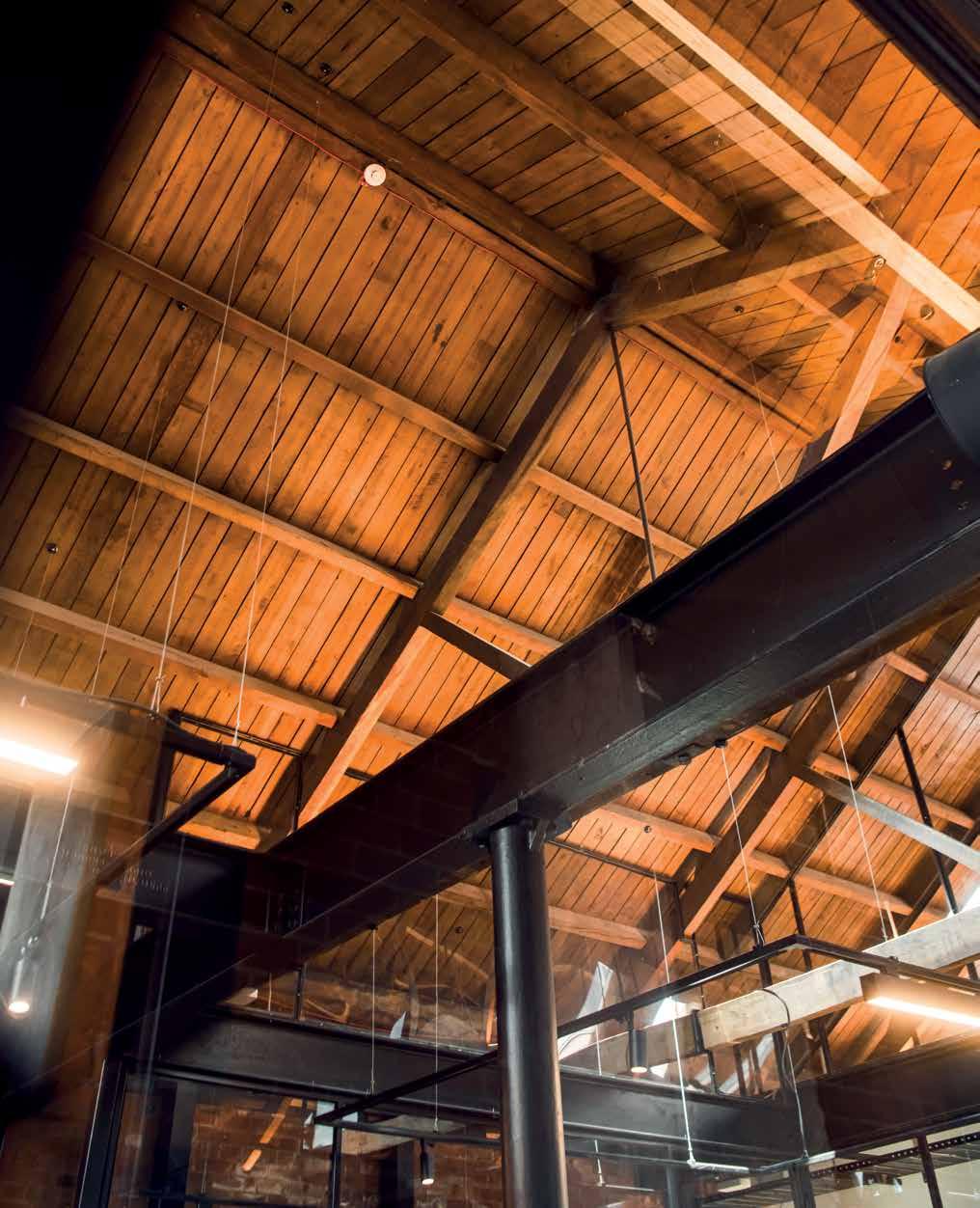
The exposed kauri roof structure trusses and sarking were other ‘must-saves’ for the team. “Fortunately, this part of the building was retained during earthquake emergency repairs,” says Richard.
Sadly, not everything could be saved. The ground-floor rimu tongue-and-groove flooring and supporting structure were beyond repair; instead, what remaining boards could be salvaged were repurposed for the upper floors.
“It would have been ideal to have some of the original street facade elements retained, but they were demolished and disposed of off-site during earthquake temporary repairs,” says Richard.
During excavations for the rebuild, Dr Angel Trendafilov of Angel’s Archaeology, operating under a Heritage New Zealand Pouhere Taonga archaeological authority, discovered various artefacts in a well. These included bottles, drinking glasses, plates, smoking pipes and floor tiles. These items were boxed and catalogued, and Mike and his team plan to select and frame half a dozen items, giving them a permanent display in the building.
“These items likely date from between the 1850s and the 1880s and may be linked to one of Christchurch’s first hotels, owned by Michael B Hart, who was elected mayor in 1874,” says Angel.
Despite the challenges and the additional 20 percent spend that Mike says he’s had to absorb by retaining the heritage features, the team is delighted with the result and says it was worth it. As Richard says: “The easier solution would have been to demolish the existing building and build a new building with every floor the same, but by preserving the old building we retain a connection to the past that is something of a rarity in central Christchurch now.”
The Designers Institute of New Zealand agrees, with the project picking up two Gold Awards (in the Repurposed Spaces/Adaptive Reuse and Workplace Environments categories) in the institute’s Best Design Awards last year. The judges commented on the “beautiful contrast between the new and the old”.
With the Riverside Market and The Crossing retail hub just around the corner, this project supports the economic and social regeneration of the city, bringing activity back to a longdormant site. The building now operates not only as a workspace but also as a quiet landmark: restorative, spatially generous and unmistakably local.
1. Richard McNeill, Director at Architecture Studio, was responsible for the architectural redesign of this challenging project. 2. Looking from the old building through the scarred party wall to the new five-storey atrium that now adjoins it. 3. The exposed kauri ceiling was retained during earthquake repairs and still stands today. 4. Qb Studios in central Christchurch has brought activity back to a long-dormant site. 5. Mike Fisher, one of the three directors of Qb Studios, is delighted to reconnect the structure to its history.
Cornwall Park’s historic stone walls are a unique record of Auckland past and present
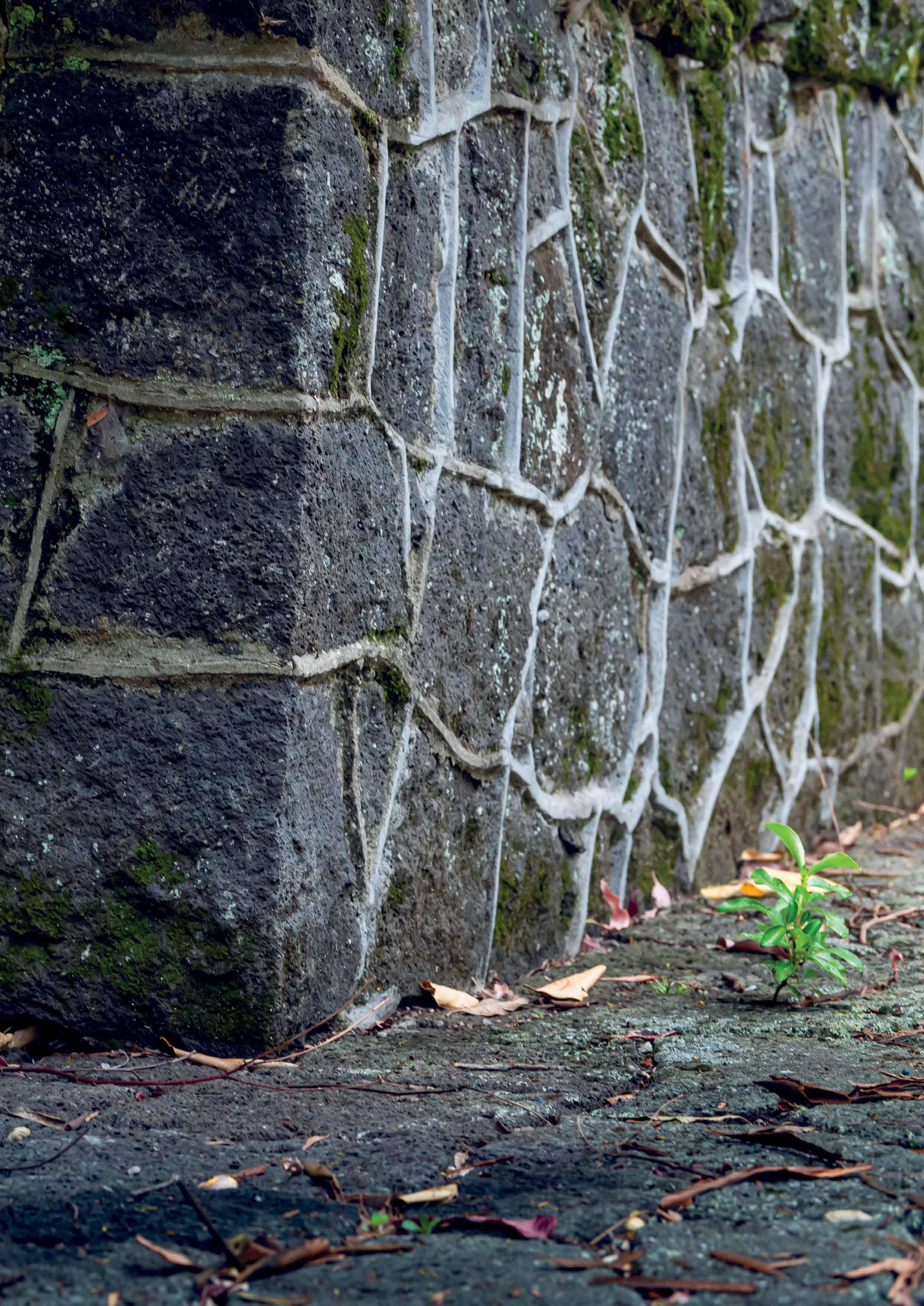
The stone walls that run around and through Auckland’s Cornwall Park are so much more than simply a showcase for the dark and dramatic volcanic basalt and scoria that erupted out of Maungakiekie
One Tree Hill 67,000 years ago.
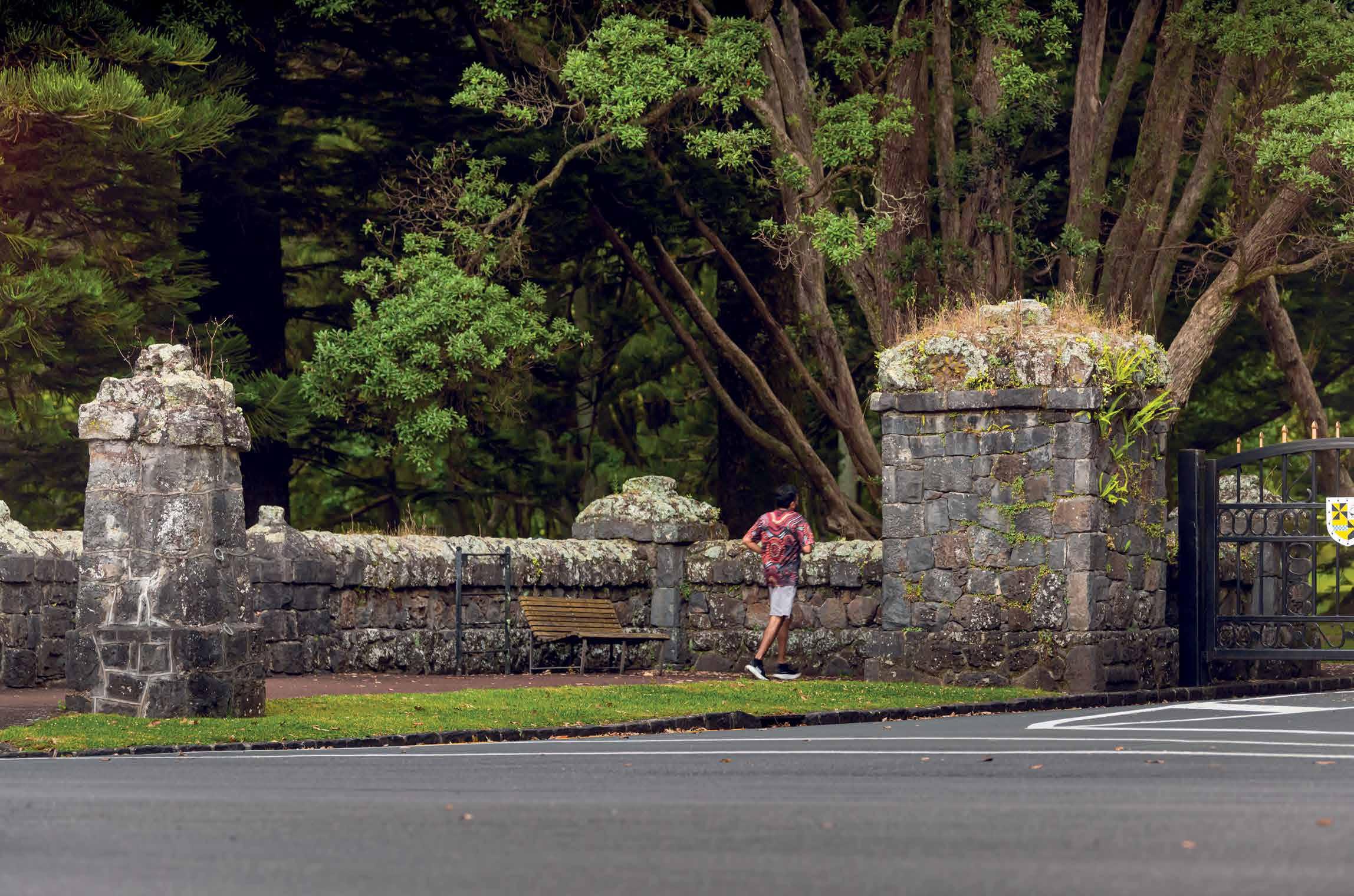
Studied through different lenses, the walls, sections of which are scheduled in Auckland Council’s Unitary Plan and listed as a Category 2 historic place on the New Zealand Heritage List/Rārangi Kōrero, form a unique record of Auckland’s cultural and ecological history.
For Ngā Mana Whenua o Tāmaki Makaurau (the Māori tribes of Auckland), the tūpuna maunga –particularly the slopes – were ideal locations for the development of pā. The fertile volcanic soils were also ideal for agriculture.
“The tūpuna maunga of Tāmaki hold a paramount place in the historical, spiritual, ancestral and cultural identity of the 13 iwi and hapū of Ngā Mana Whenua o Tāmaki Makaurau collective,” says Paul Majurey, Chair of the Tūpuna Maunga Authority, which administers Maungakiekie One Tree Hill and Maungawhau Mount Eden.
“They were significant areas of settlement, agriculture, battles, marriages, births and burials.”
At one point, settlements around the maunga made up the largest man-made earth fort in the Southern Hemisphere, home to as many as 5000 people.
Ngarimu Blair, Deputy Chair of the Ngāti Whātua Ōrākei Trust, says the large settlement included a large network of māra kai across the lower slopes of the maunga, reaching as far afield as what is now
Ellerslie Racecourse. Within the settlement, the plentiful black volcanic rock was used as boundary markers and fences.
“There were large rocks that looked like they’d been placed by humans because they stood up. They would have been boundary markers so people could point to where their tribal boundary was,” says Ngarimu.
Beyond marking boundaries, Māori harnessed the thermal properties of the black rock, using it to warm the soil for more successful crops of kūmara and taro.
“They quickly worked out if you put the rocks in a mound, with compost and then the tubers, it would heat the soil so you could grow those more tropical crops.”
The basalt and scoria were also used for the purpose of defence, either directly as missiles thrown during conflicts, as hand-held weapons, or, around other pā such as Te Tātua a Riukiuta Three Kings, in the form of slabs strategically placed to make slopes steeper and therefore improve fortifications and deter enemies.
With the arrival of Europeans on the land around Maungakiekie One Tree Hill, much of the stone was redistributed and reused on new boundary walls, first perhaps by the original land purchaser Thomas Henry, and later by John Logan Campbell, who used it to fence the private landholding he named One Tree Hill Estate. The estate was later gifted to the public to become what is now Cornwall Park.
Cornwall Park Visitor Experience Manager Elise Goodge says the oldest walls still standing are those built by Campbell in the 1870s inside the park, which are the original boundary walls of One Tree Hill Estate.

learn more about the Cornwall Park rock walls, view our video story here:
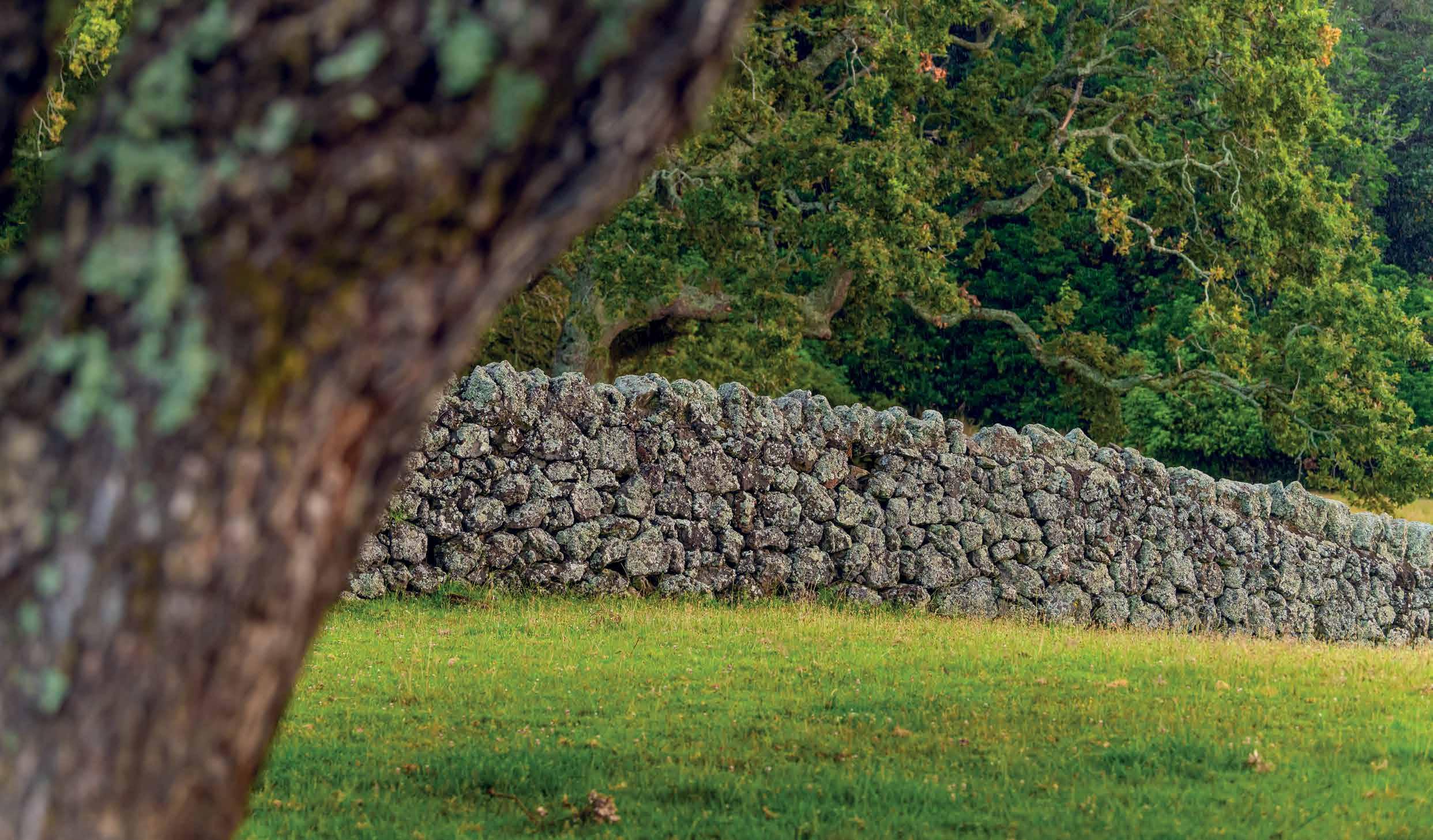
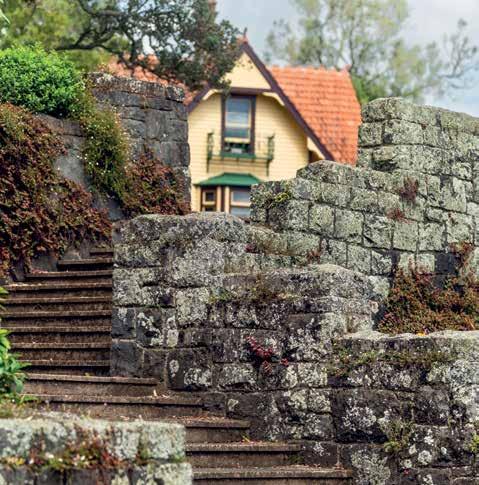
“Most of the walls have been moved or added to over the years. Other stone walls have been built and stairways added, while the memorial steps were installed in the 1950s,” says Elise.
The Cornwall Park Trust Board, which manages the park, makes repairs and builds new sections of wall with stone from the mountain where possible.
“We also encourage people from the local area who might be removing stone from their property to bring it back to the park,” says Elise.
When it’s not possible to use stone from within the park, the board works closely with local stonemasons to ensure any new stone used is aged to match existing walls.
Some of those stonemasons have long-standing connections with Cornwall Park, and the walls also serve as an unofficial tribute to Croatian immigrants who came to New Zealand at various stages of the 20th century.
Ant and Daniel Franich, directors of urban fence construction company Moro Bros, have worked on the walls in Cornwall Park, following in the footsteps of their father Mate, who also built and repaired many of the park’s walls after arriving in Auckland from Croatia in the 1960s.
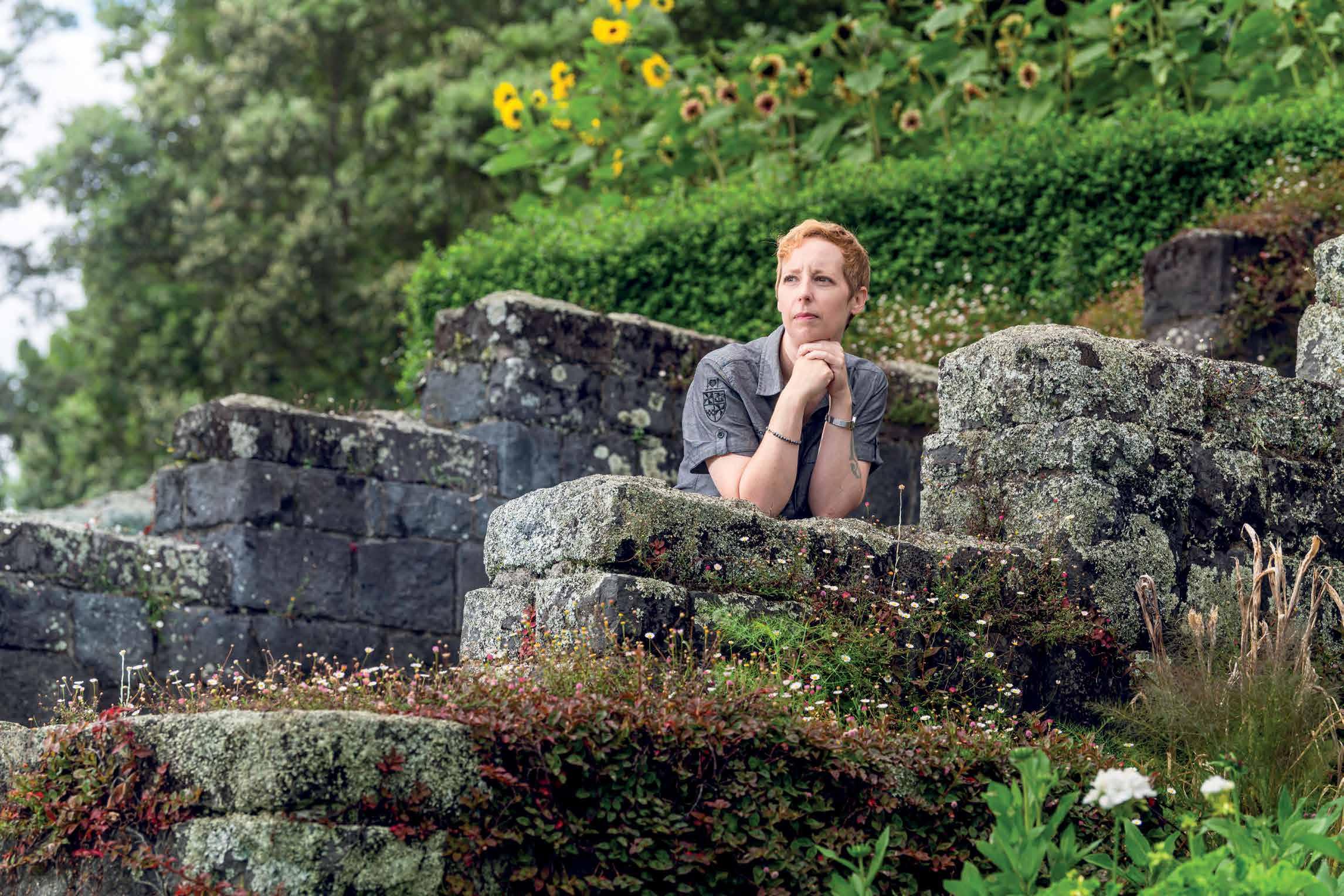
“My father spent about 25 years working on the stone in the park,” says Ant. “A lot of the work was repairing the walls because the cows liked to scratch their backs on them, or the macrocarpa trees fell down on them.
“I think there’ve been three main contractors doing the work over the years, and they’ve all been Croatian. In Croatia, stonemasonry is one of the oldest trades and when Croatians came here looking for a new life after the war, they brought those skills with them.”
The park’s current stonemason, Len Lavas from Auckland Stonemasons, is also Croatian, from Korčula Island, just off the Dalmatian Coast.
“It’s well known in Croatia that the best stonemasons come from Korčula Island,” says Len.
Len is the third generation of his family to work as a stonemason in Auckland, following on from his grandfather Ivan Lavas, who brought his trade here in 1927.
“It’s a great privilege to work in Cornwall Park. I’ve worked there off and on since the 1970s, and we’ve probably pulled down and rebuilt around 25 percent of all the old farm walls, and built some new ones,” says Len.
“The beauty of stone walls is, if they’re done right, they’ll be there forever.”
The durability of the stone walls also makes them home to a unique range of flora and fauna.
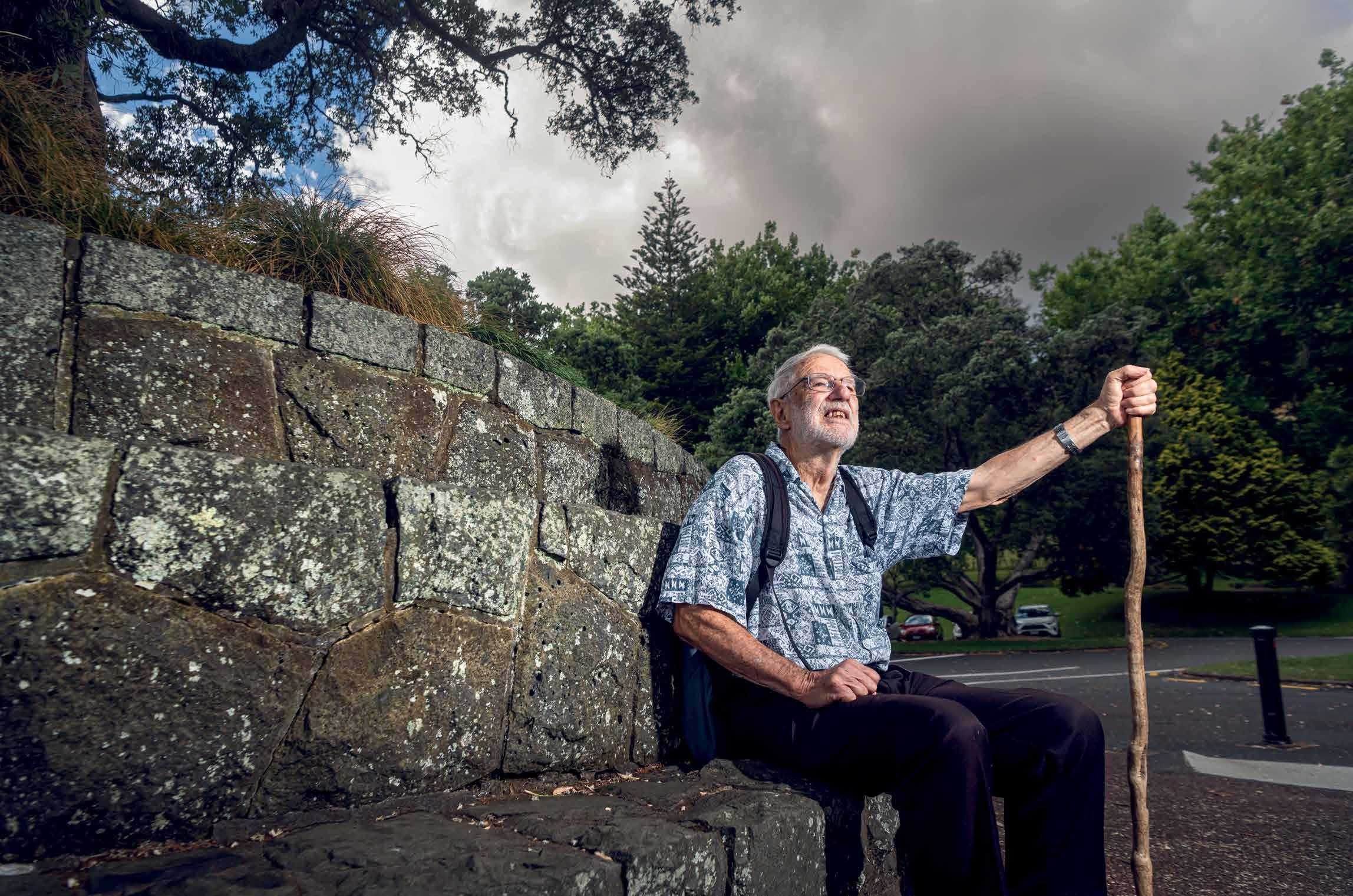
Long-time Auckland Botanical Society member Dr Mike Wilcox says the nooks and crannies of the volcanic rock create the perfect conditions for lichens and many other plant species, from mosses through to ferns, succulents and even a native orchid.
“One of the wonderful things about the walls is they host a diversity of lichens, which are the primary colonisers. Over time they tend to build up nutrients and form humus and eventually soil, which sets the substrate for plants,” says Mike, who co-authored Nature in the City: Botany of Auckland’s Cornwall Park and Maungakiekie/One Tree Hill Domain
For Mike, the “number one wall” is the stretch of stone wall running parallel to the northern side of Green Lane West Road. The wall is heritage listed and dates back to at least the 1920s.
“That’s the most extensive, flora-rich wall. It’s old and broad, which gives plants room to colonise the top. It also has the benefit of shade from trees behind it and faces south. So while it started as a dry, hostile habitat, it’s developed a good diversity of wild plants.”
Common there and on other old rock walls in Auckland is the ivy-leafed toadflax, a trailing vine originally from the Mediterranean region, which only grows in wall crevices.
“It doesn’t grow much anywhere else, just nestled in the crevices between rocks.”
There are plenty of native plants to be found along the walls too, Mike says. “The one that delights me the most is a colony of native orchids, Earina mucronata. That’s the crowning glory of that number one wall.
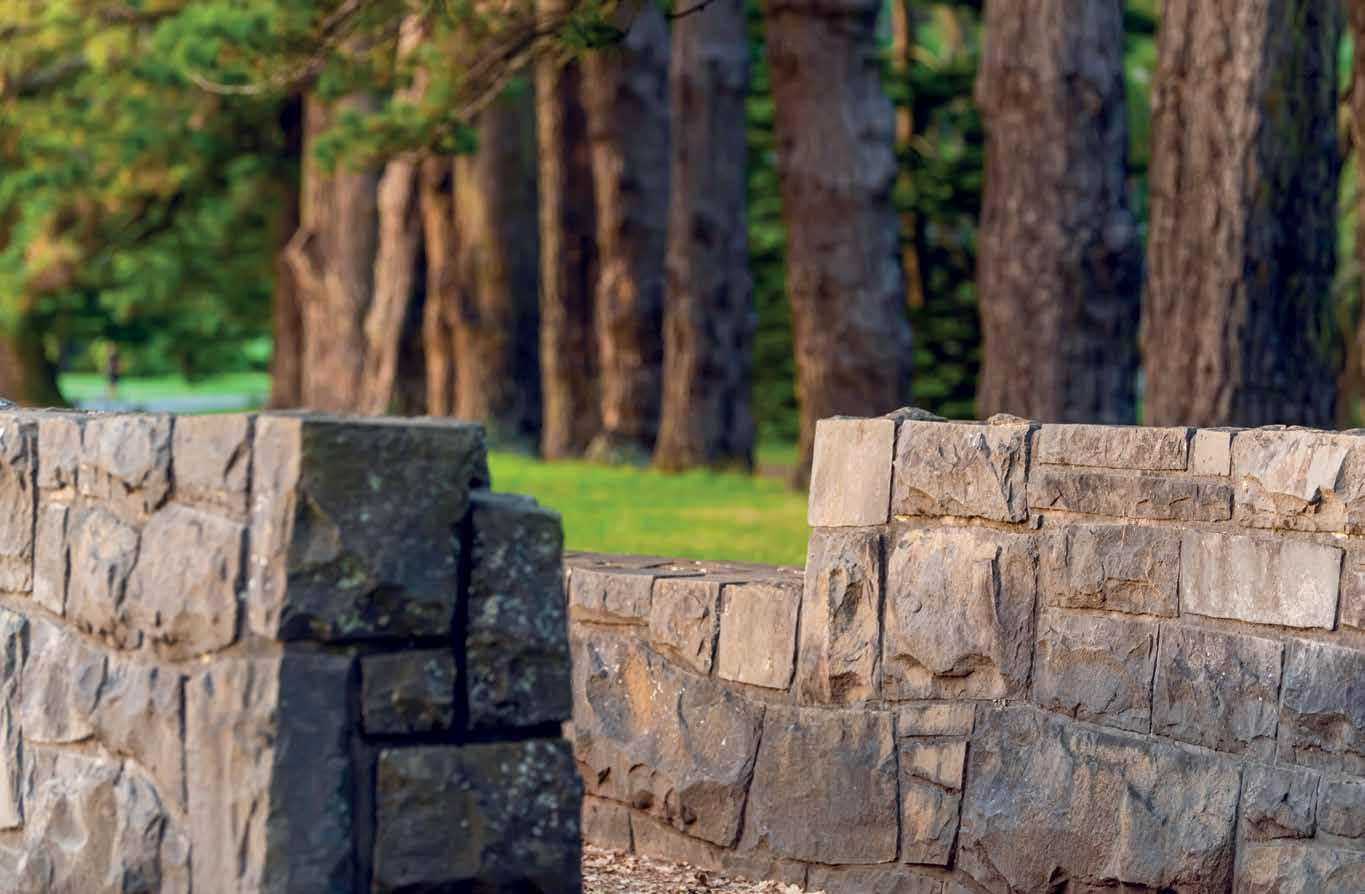
1.
“The beauty of stone walls is, if they’re done right, they’ll be there forever”
2. The walls need to be protected, says Visitor Experience Manager Elise Goodge.
3. Different-aged walls help to educate on the evolution of wall construction.
4. Stonemason Len Lavas has worked on the walls on and off since the 1970s.
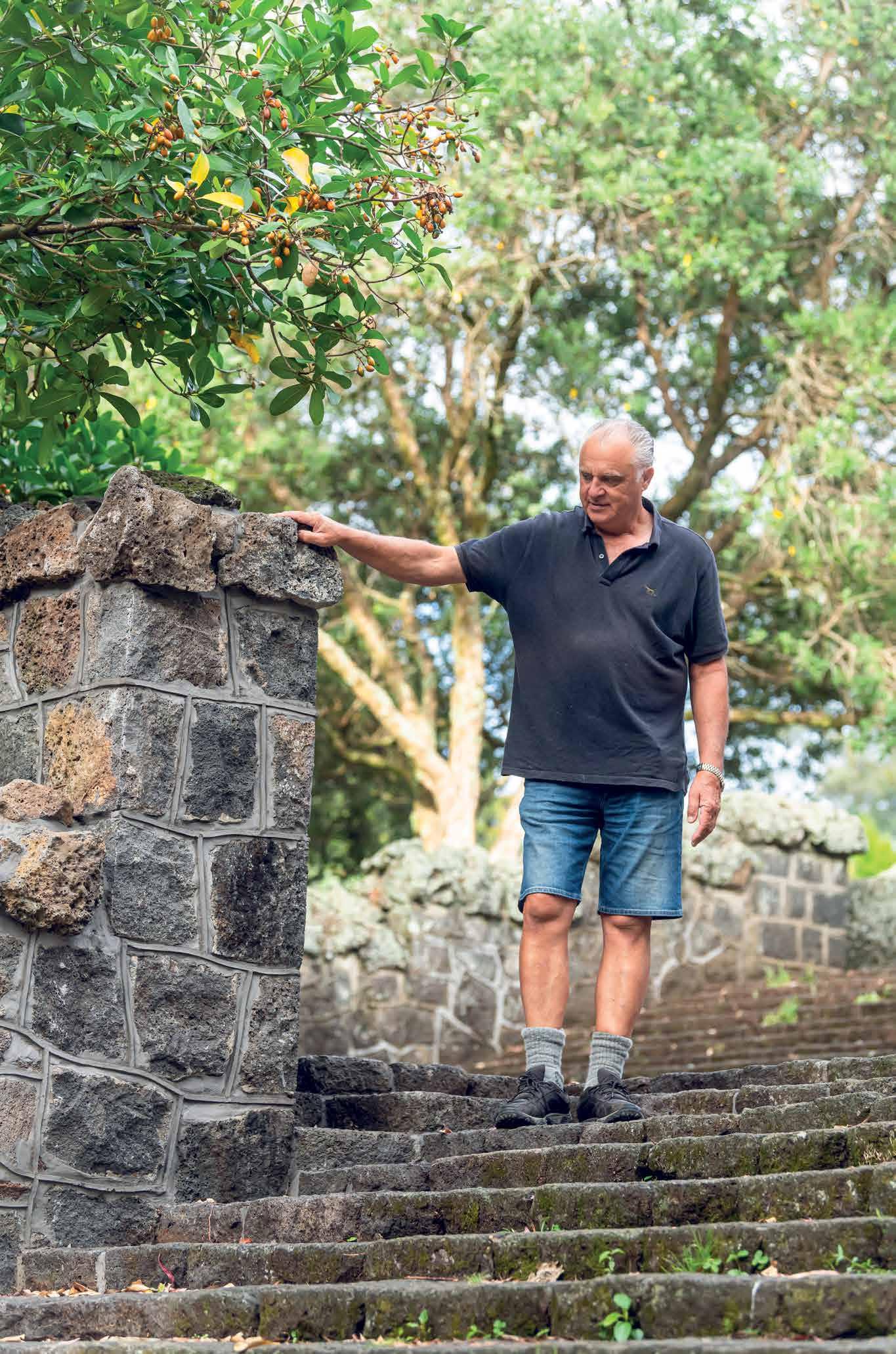
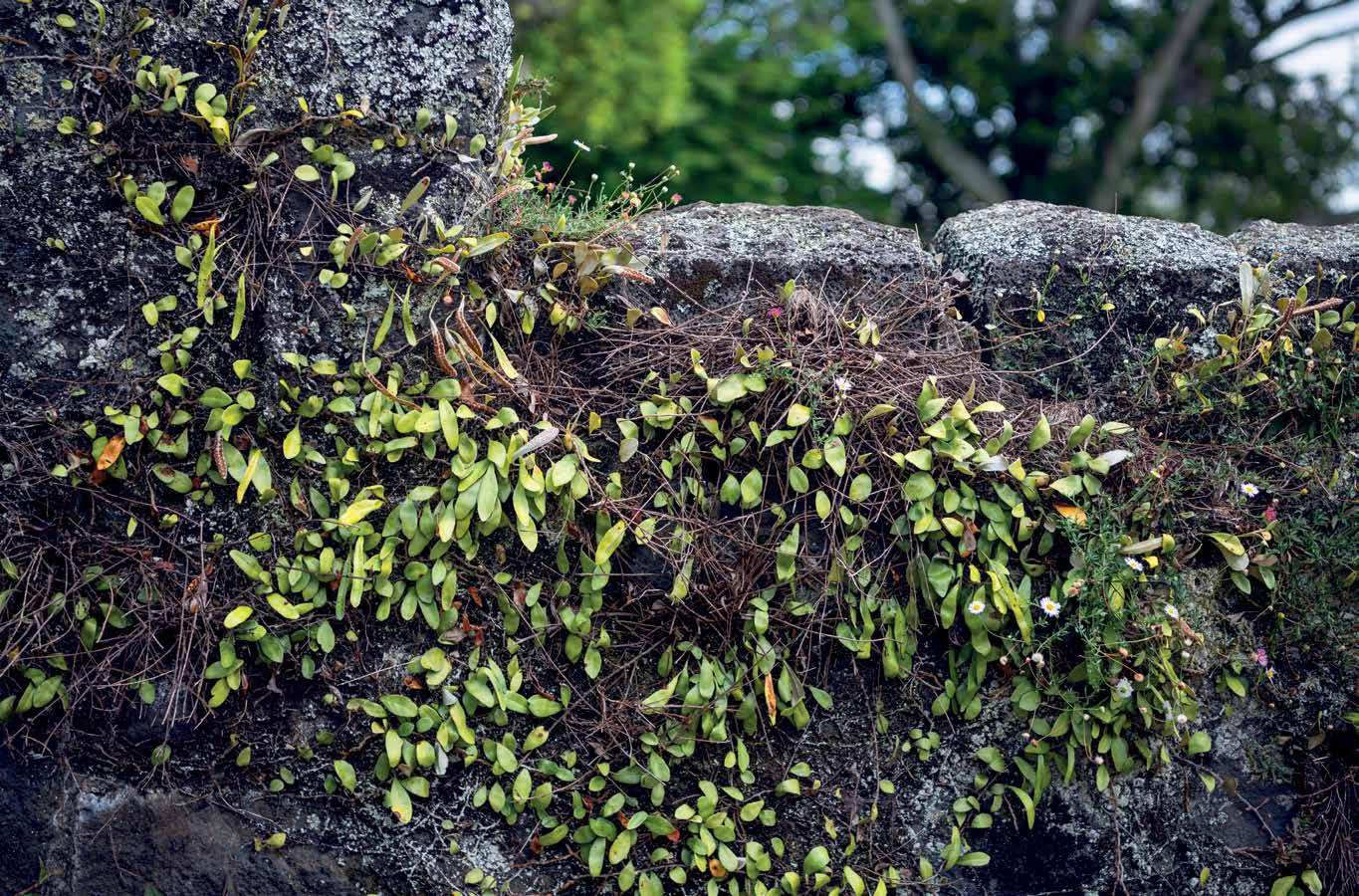
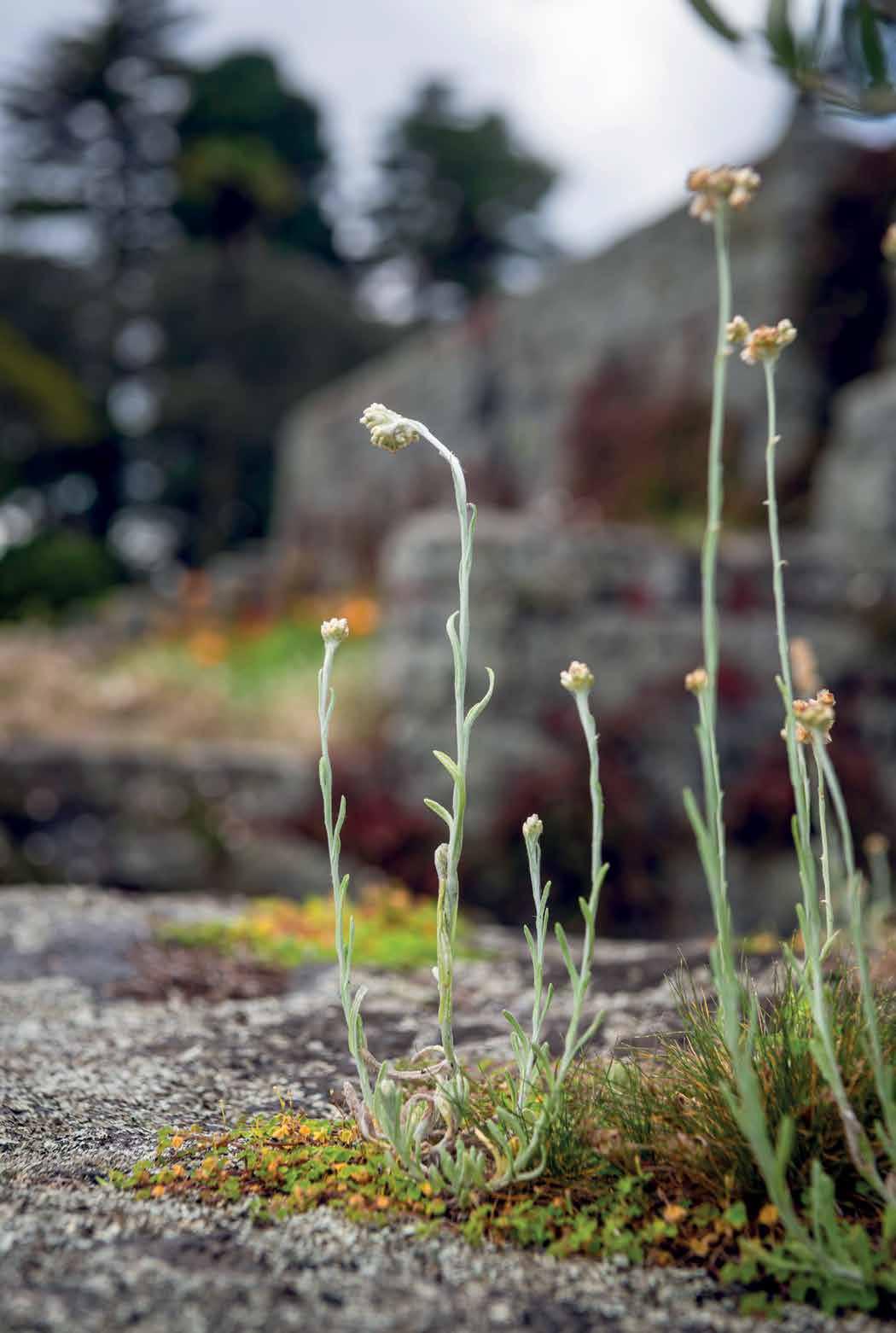
“There are also two species of native Crassula succulents growing on top of the walls, which is very exciting.”
Other highlights for botany enthusiasts include about 20 species of moss, several liverworts, the native necklace fern, leather leaf fern, and varieties of fumitory, geraniums and grasses, as well as the everpresent lichens.
1, 2 & 4. Plants along the walls include lichens, mosses, liverworts, fumitory, geraniums and grasses.
3. Botanist Dr Mike Wilcox says the volcanic rock creates the right conditions for a surprising variety of plant species.
“There are at least 20 kinds of lichen, including the fruticose lichens that are quite upright and branchy. Of course, as the ecosystem builds up, it starts to attract all kinds of tiny invertebrates as well.”
Elise says there is currently a research project underway studying the small population of native copper skinks that make the walls home.
“There are also native spider species and all sorts of insects living on the walls. We try to lean into that in our education programmes, encouraging kids and their parents to go and explore them,” she says.
Martin Jones, Senior Heritage Assessment Advisor for Heritage New Zealand Pouhere Taonga, says the stone walls continue to form an important part of the unique character and history of Cornwall Park, directly reflecting its evolution from an intensively settled and gardened Māori landscape to a rural farm estate and a major recreational park in the centre of urban Auckland.
“Walls of varying dates and periods can provide evidence of changing (or maintained) traditions of wall
construction and use, and the cultural perspectives that underpin them. In this sense, the existence of a variety of wall types and periods at Cornwall Park is of considerable value in understanding the evolution of stone walls – including their changing function and meaning – in an Auckland context,” says Martin.
He adds: “Cornwall Park’s basalt walls not only draw on European precedents and traditions but also form a continuity in redefined form of aspects of earlier Māori cultural practice. In some cases, they may also incorporate physical material reused from traditional Māori activity in the landscape.”
Ngarimu says Ngāti Whātua Ōrākei would like to see greater representation of Māori and the settlement that first used the stones on the maunga in both Cornwall Park and One Tree Hill Domain.
“Like almost every ancestral mountain, Maungakiekie has been quarried so people can have stone walls in the houses and suburbs that survive today. That came at a great cost to Māori.”
1350: Māori arrive in Tāmaki Makaurau Auckland and Maungakiekie becomes a central pā.
1840s: Thomas Henry acquires 400 hectares of Maungakiekie land through a Crown grant taken during the Fitzroy Waiver period, a time when sites sacred to Māori were supposed to be protected. He names it Mount Prospect Estate. It is believed Henry built some of the first walls in the park from stone repurposed from preEuropean gardens.
1847: Part of Mount Prospect Estate becomes a government domain and is quarried.
1901: Campbell gifts the estate land to the people of New Zealand.
1903: The land officially opens to the public as Cornwall Park.
1920s-30s: Further walls and entranceways are constructed.
1940: The Obelisk is constructed on Maungakiekie One Tree Hill.
1956: Memorial Steps and other steps are constructed.
1980s: New steps and walls are built after the removal of the National Women’s Hospital from the site.
Today: The land around Maungakiekie is divided into two parks: Cornwall Park, run by the Cornwall Park Trust, and Maungakiekie One Tree Hill Domain, jointly governed by Ngā Mana Whenua o Tāmaki Makaurau and Auckland Council Te Kaunihera o Tāmaki Makaurau. n 4
In its current and future plans for the park, the Cornwall Park Trust Board is operating with sensitivity to the concerns of local iwi, says Elise.
“While we can’t undo any of the past history that dates from when the park was created, what we can do is make sure that we protect what’s still here.”
māra kai: food garden pā: fortified settlement rangatira: chief tūpuna maunga: ancestral mountains
1853: John Logan Campbell purchases Mount Prospect Estate and renames it One Tree Hill Estate.
1870s: Campbell commissions stone walls for One Tree Hill Estate.
1900s: Park boundary walls and ornate entrance ways are constructed along Green Lane.
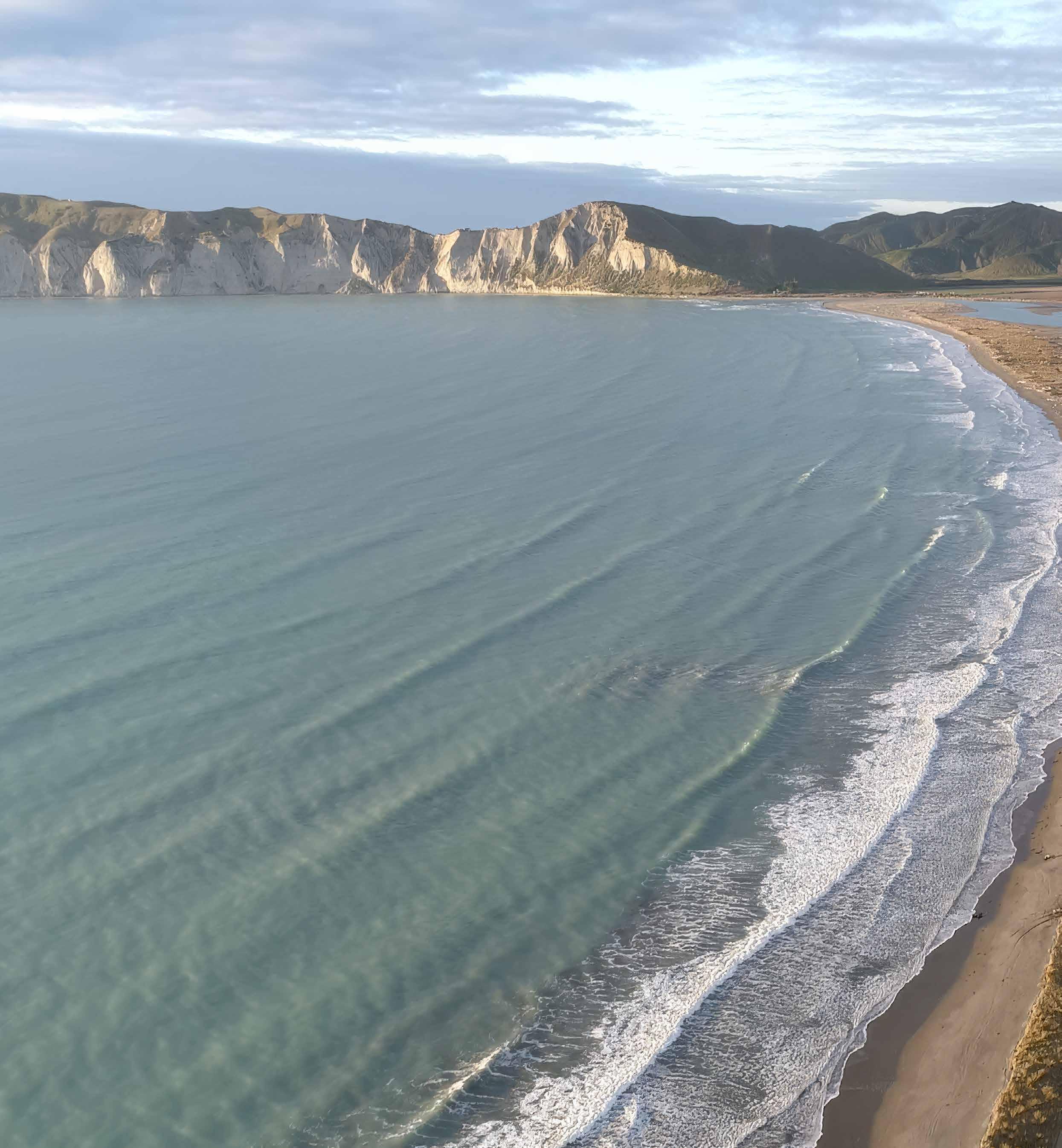
Two heritage sites in Aotearoa have joined a global programme aimed at protecting the most important cultural places and practices from the impacts of climate change
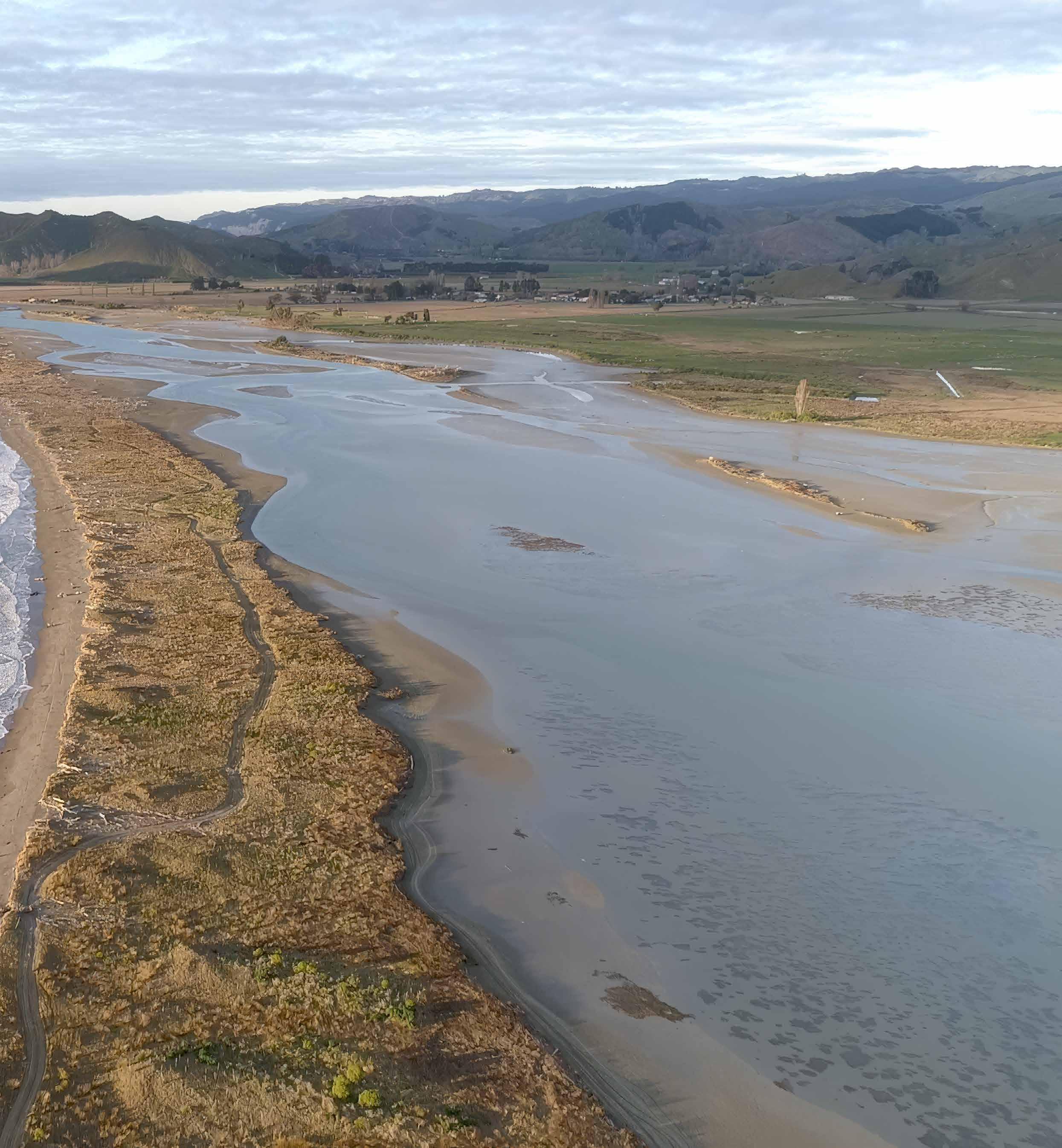
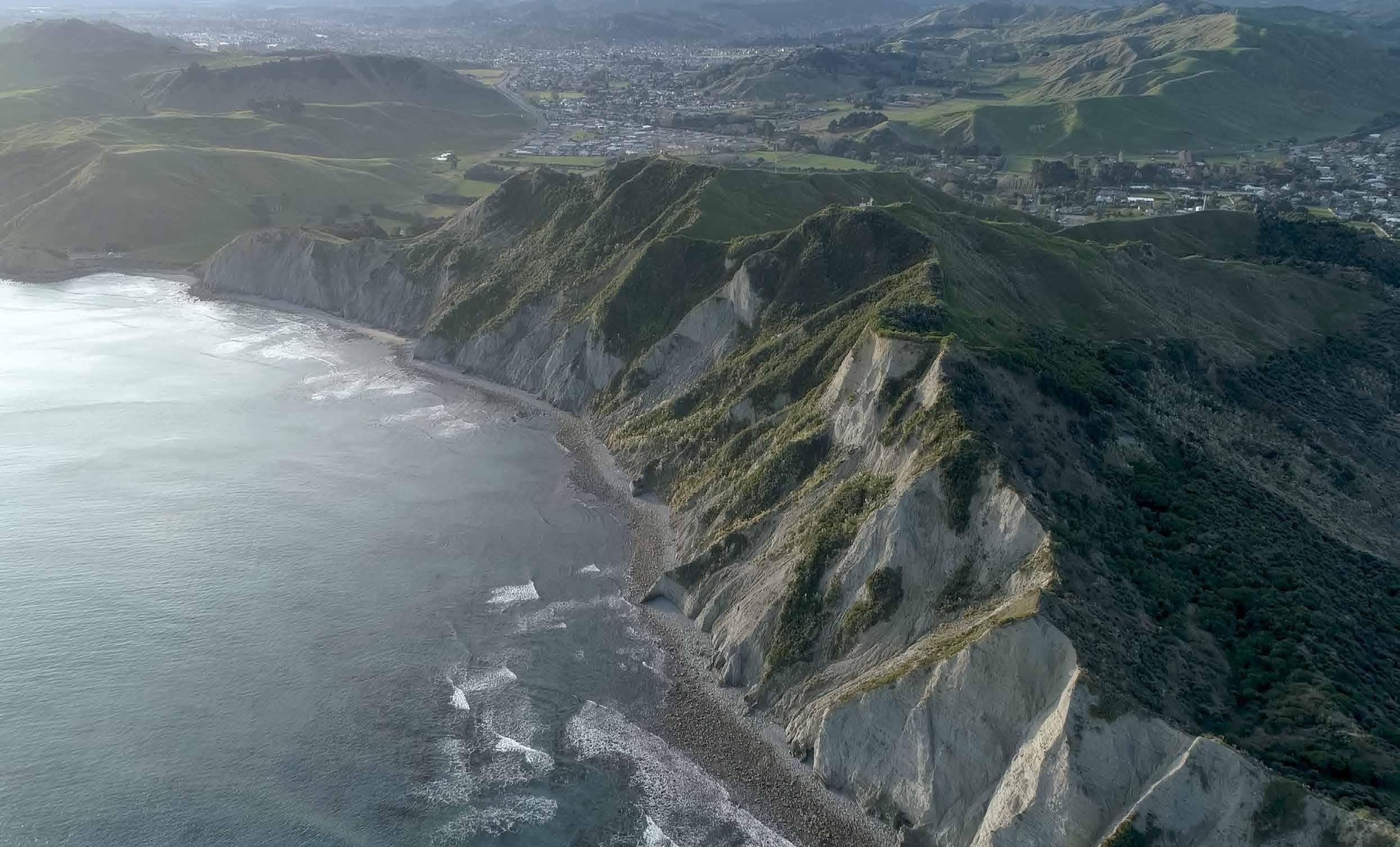
When Cyclone Gabrielle hit the North Island in early 2023, one East Coast iwi immediately mobilised to lead the community’s response.
“We’ve always been focused on the environment and climate resilience, but the destruction caused by Gabrielle reminded us of our role and forced us to take it a step further,” says Teina Moetara, Rongowhakaata Iwi Trust Chief Executive.
Striking the North Island’s East Coast on 14 February 2023, Cyclone Gabrielle killed 11 people, destroyed thousands of homes and is considered one of the worst storms in New Zealand history.
Research published in August 2025 by Earth Sciences New Zealand shows Cyclone Gabrielle, which caused more than 800,000 landslides when it hit, is on record as one of the worst landslip-causing events in world history. In addition, flooding distributed forestry slash throughout the region’s rivers and ecosystems, exacerbating the widespread destruction.
“Straightaway we stood up and took a district-wide leadership role for Tūranganui-a-Kiwa, our rohe and tribal lands,” says Teina, reflecting on that time.
That meant leading community engagement and working with government, council officials and other iwi to deliver a coordinated civil defence response during the event.
In its aftermath, the iwi doubled down on its commitment to te taiao by increasing investment in a native plant nursery, and other initiatives that nurture te taiao.
In the long term, addressing the range of factors that made such a climate disaster possible is important, says Teina.
“I’m talking about the landscape and cultural degradation caused by colonisation, the forestry slash created by industry, and the broken policy and regulatory systems of local and central government. This is the reality we have to face as an iwi and as a community.”
Rongowhakaata are mana whenua of Tūranganuia-Kiwa within the Gisborne region. Iwi tribal lands extend from Te Wherowhero Lagoon and the headwaters of Te Ārai to Te Reinga, Gisborne city, Pouawa and Te Toka-a-Ahuru. Approximately 10,000 people of Ngāti Maru, Ngā Tāwhiri and Ngāti Kaipoho descent affiliate to the coastal iwi.
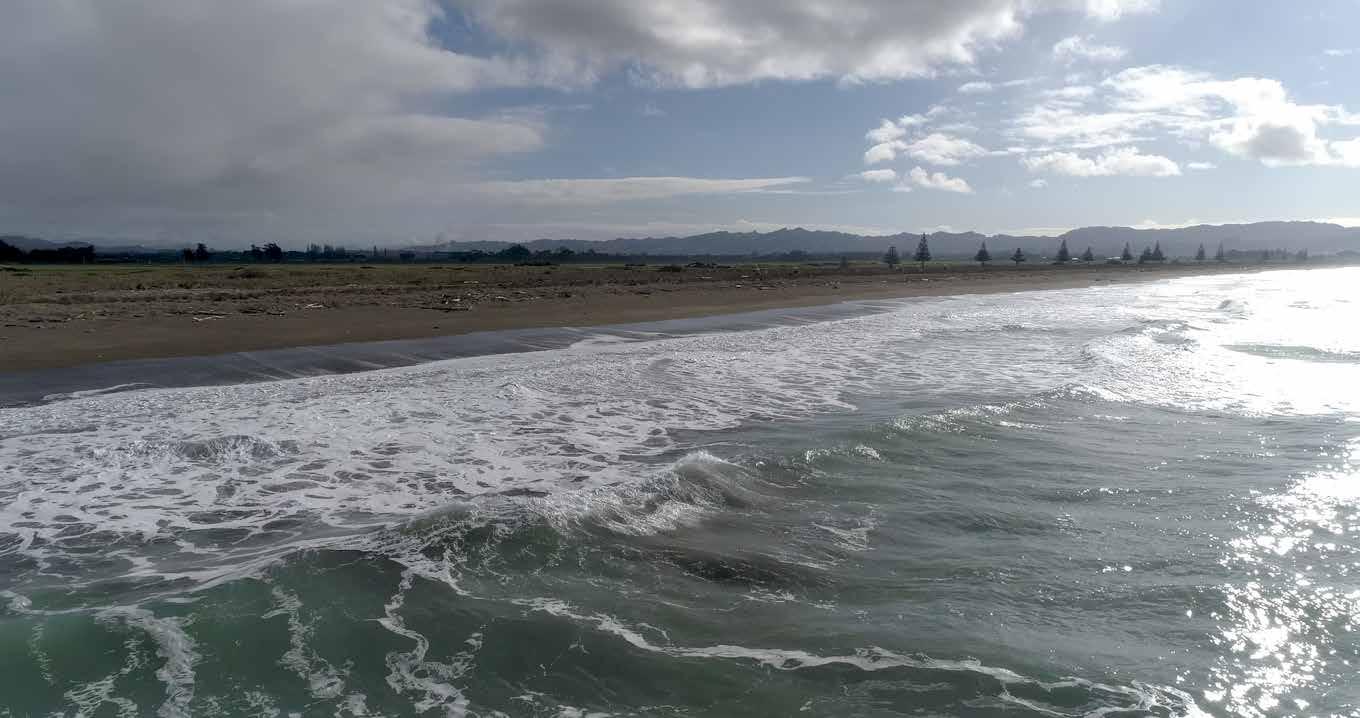
Today, Rongowhakaata is one of two iwi involved in an international climate change adaptation programme called Preserving Legacies, launched in 2023. Alongside a group of three Ngāi Tahu rūnanga overseen by Ngāi Tahu and Rongowhakaata descendant Darren Rewi, they joined Preserving Legacies in March as the first New Zealand participants in the US-led programme.
Funded by the National Geographic Society and endorsed by ICOMOS (International Council on Monuments and Sites) and the Climate Change Heritage Network, the programme has two parts. The first is the four-year community custodian cohort initiative open to 10 groups a year. The other is an open-access community networking and resource platform, aimed partly at those who miss out on joining Preserving Legacies as community custodians.
“Preserving Legacies began as a bottom-up programme to show that heritage is critical infrastructure,” says Executive Director Victoria Herrmann, “and, as such, should be safeguarded against climate change in the same way you might work to protect a road or a school building.”
It followed research, also led by Victoria, documenting what community leaders were doing in response to climate change.
“I found people – policy- and decision-makers in particular – weren’t thinking about heritage when it came to climate adaptation – and not just in the US but across the world,” she says.
Preserving Legacies was designed to address that gap. Since its launch in 2023, 60 people from 30 countries have joined the programme as community custodians. To qualify, applicants have to identify a heritage place at risk of climate change, select two volunteers from their community (a storyteller and a scientist), and take part in an online interview.
Once accepted, participants spend a year training and attending international workshops. In year two, community engagement and a risk assessment of their chosen heritage site begin. Years three and four focus on the development and implementation of a climate change adaptation action plan.
Heritage sites included in the programme vary widely, from lesser-known indigenous seed propagation sites in northern New Mexico to Petra, the 2000-year-old world heritage site in Jordan.
“The Preserving Legacies programme gives us an opportunity to work at both the local and global levels to create a korowai of protection around the world’s heritage places”
In 1963 a flash flood at Petra killed dozens of locals and tourists. Today, rainfall in the region is estimated to increase by 40 percent by 2050.
A new global study published by UNESCO has found Petra isn’t alone: 80 percent of the world’s heritage sites face climate stress.
By carrying out a risk assessment of the site, community custodians Haifa Abdelhaleem and Taher Falahat found that Petra’s primary climate threats were flash flooding, drought and sandstorms. To lessen the impact, Haifa and Taher recommended reinforcing traditional flood control systems, integrating heritage conservation into urban planning and monitoring the site more often.
Staff training, a flood evacuation drill system and a new digital warning system have since been implemented at the site by Petra management.
In addition, Falahat has set up a community-led cleaning and repair initiative to reduce the build-up of mud and rocks in Petra’s ancient terraces and dams during the winter rainy season.
“The Petra work is a sort of pilot project to show how adapting and responding to climate change can make a big difference to heritage sites,” reported National Geographic contributor Andrew Curry in April last year.
A report released by Preserving Legacies that same month rated the risks to Petra in the years to follow as moderate, in large part because the community and authorities had found creative ways to adapt and respond, he wrote.
For Darren Rewi, a Māori cultural consultant and Ngāi Tahu ki Murihiku representative in the Otago Regional Council’s Integrated Catchment
Group, joining the programme has opened up a whole new world.
“It’s been eye-opening to learn how heritage worldwide is being impacted by climate change and that it’s such a significant problem.”
Working with Darren is Leslie Van Gelder, a US-born archaeologist, educationalist and writer living in Rees Valley. Like their Rongowhakaata counterparts Chrissy Moetara and Day Whaanga, the pair has selected a natural landscape of significant cultural heritage for inclusion in the programme.
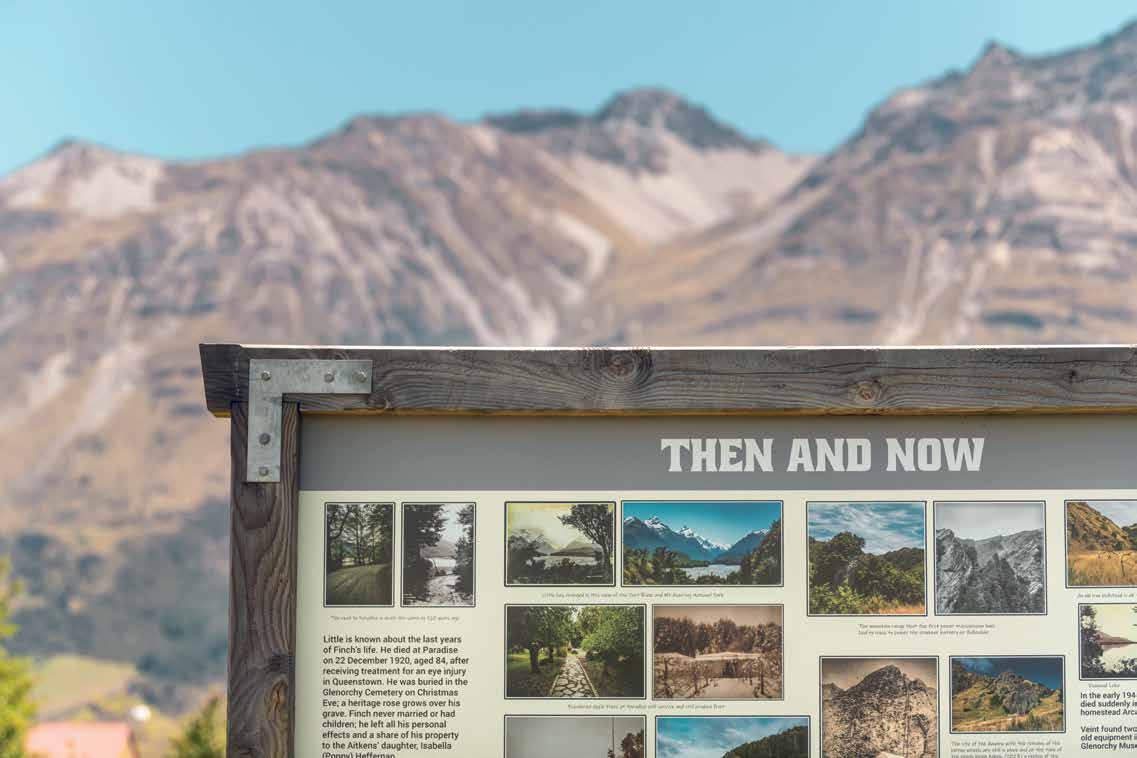
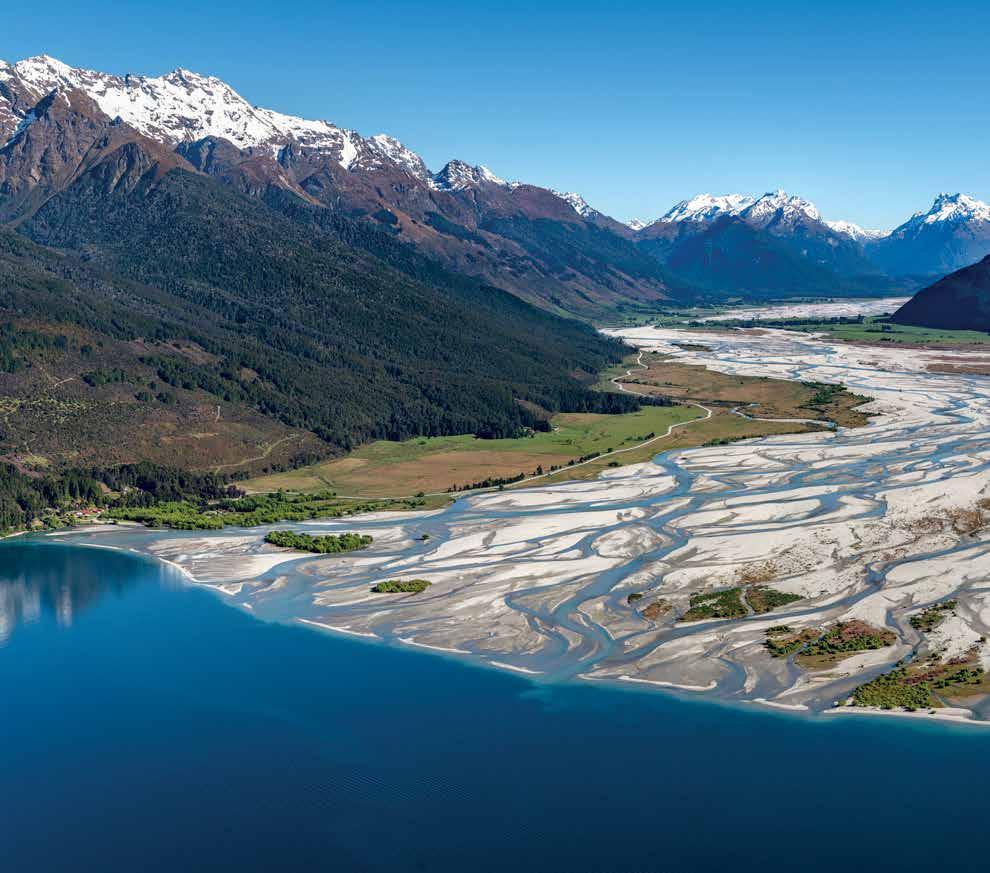
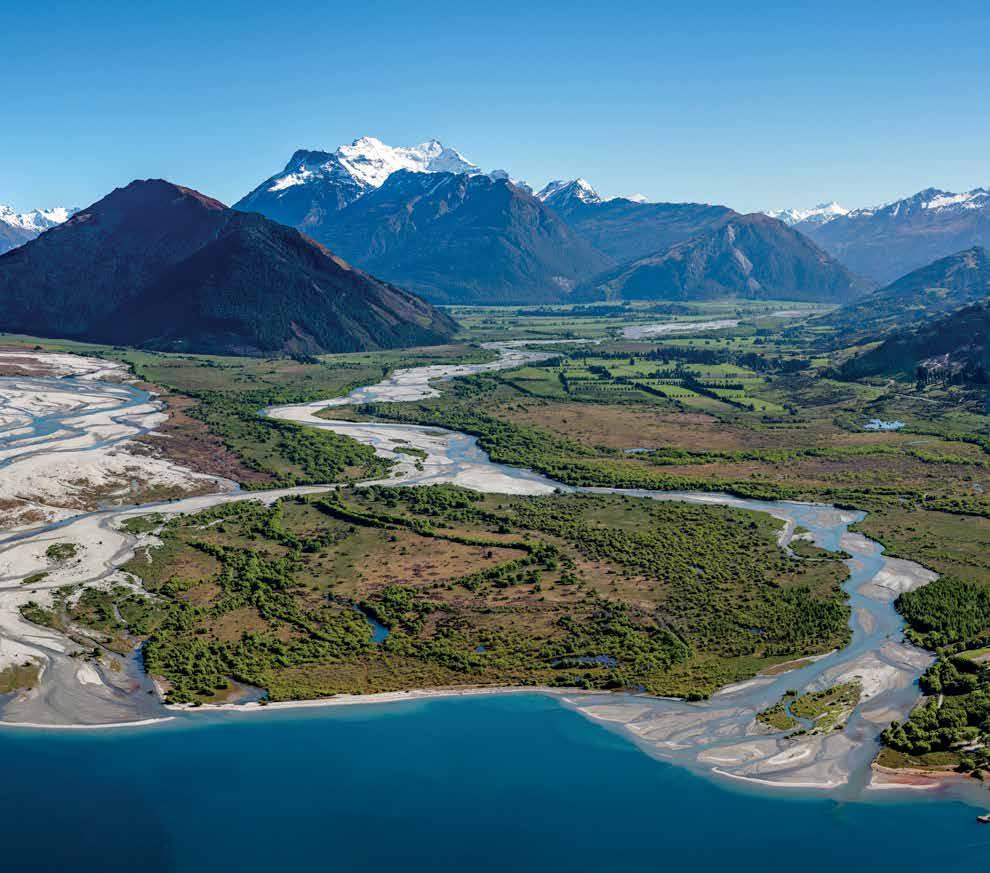
Darren and Leslie’s site, Tāhuna Glenorchy, extends from the village to the headwaters of Lake Wakatipu and includes the entrance of the UNESCO-protected Te Wāhipounamu World Heritage Area and Mount Aspiring National Park.
“It’s been eye-opening to learn how heritage worldwide is being impacted by climate change and that it’s such a significant problem”
kawa: cultural protocols korowai: cloak mana whenua: tribal authority pounamu: greenstone rohe: territory rūnanga: tribal councils te taiao: the environment tikanga: values/customs
“Ultimately, our ambition is to demonstrate how to build a thriving, intergenerational future where people, taiao and culture flourish together”
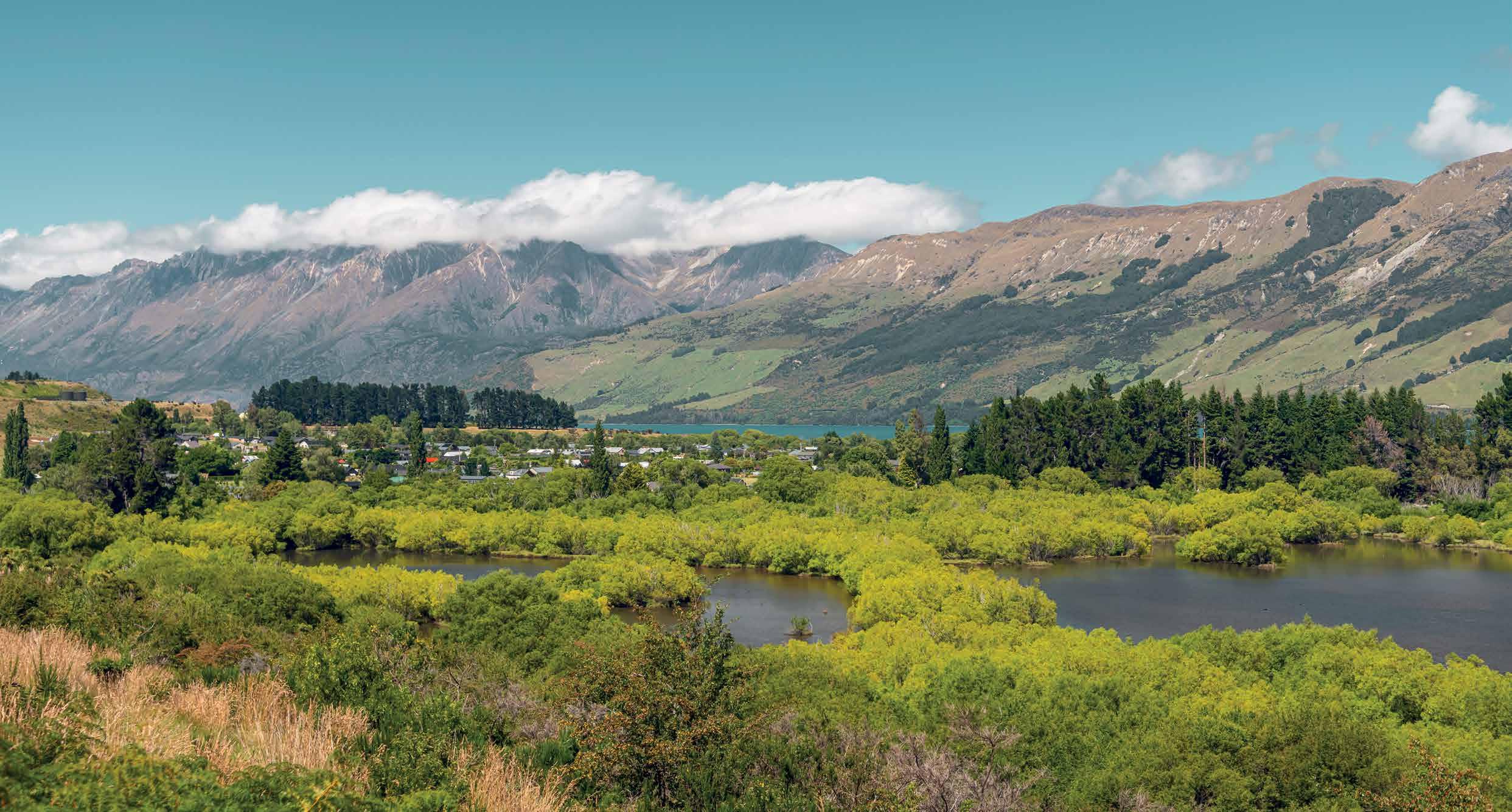
A source of food and pounamu and a popular thoroughfare for seven Ngāi Tahu rūnanga since the 1100s, and a European settlement area from the mid-1860s, it is becoming progressively more prone to flooding caused by seasonal changes and melting glaciers, says Darren.
“Farmers are having to cope with increasing and more intense periods of drought and rainfall,” he says. “Our conservation community is having to work much harder to combat growing numbers of predator populations, which, in turn, threaten our native wildlife and plant species.
“Data shows that once-in-a-century floods are almost annual occurrences now. Recently, a plan to build a hotel on the lakefront was axed in light of these findings.”
Darren says he and Leslie look forward to bringing the community together next year to better understand how their site is changing and what the community can do to protect it.
Right now, for example, Tāhuna Glenorchy is protected as the first inland mountain International Dark Sky Sanctuary. It is also listed in the Queenstown Lakes District Council's Climate and Biodiversity Plan (2025-2028) as a Preserving Legacies site, with full backing from the local council.
In time, says Darren, he and Leslie hope to see Tāhuna Glenorchy incorporated into Ngāi Tahu’s climate adaptation strategy and listed as a UNESCO wetland of international importance.
“To me, the Preserving Legacies programme gives us an opportunity to work at both the local and global levels to create a korowai of protection around the world’s heritage places – Tāhuna Glenorchy included,” says Darren.
Day Whaanga, Rongowhakaata Iwi Trust Taiao Lead, says he’s excited to be part of Preserving Legacies alongside Chrissy with her strength in cultural knowledge, particularly Rongowhakaata’s tikanga, kawa and identity.
“Preserving Legacies strongly aligns with our iwi’s long-term aspirations and my role as the trust’s taiao lead. Chrissy’s participation grounds our work culturally and means we can place heritage preservation within a broader iwi context.”
“This work, for us, isn’t just about managing the impact of climate change on our heritage sites,” says Chrissy. “It’s about showing leadership in our community, highlighted by climate events like Cyclone Gabrielle.
“We are focused on weaving our indigenous knowledge systems with climate science, and we see it as a necessary step for coming up with sustainable adaptation strategies in response to the impacts that climate change poses.” Day agrees.
“Ultimately, our ambition is to demonstrate how to build a thriving, intergenerational future where people, taiao and culture flourish together.”
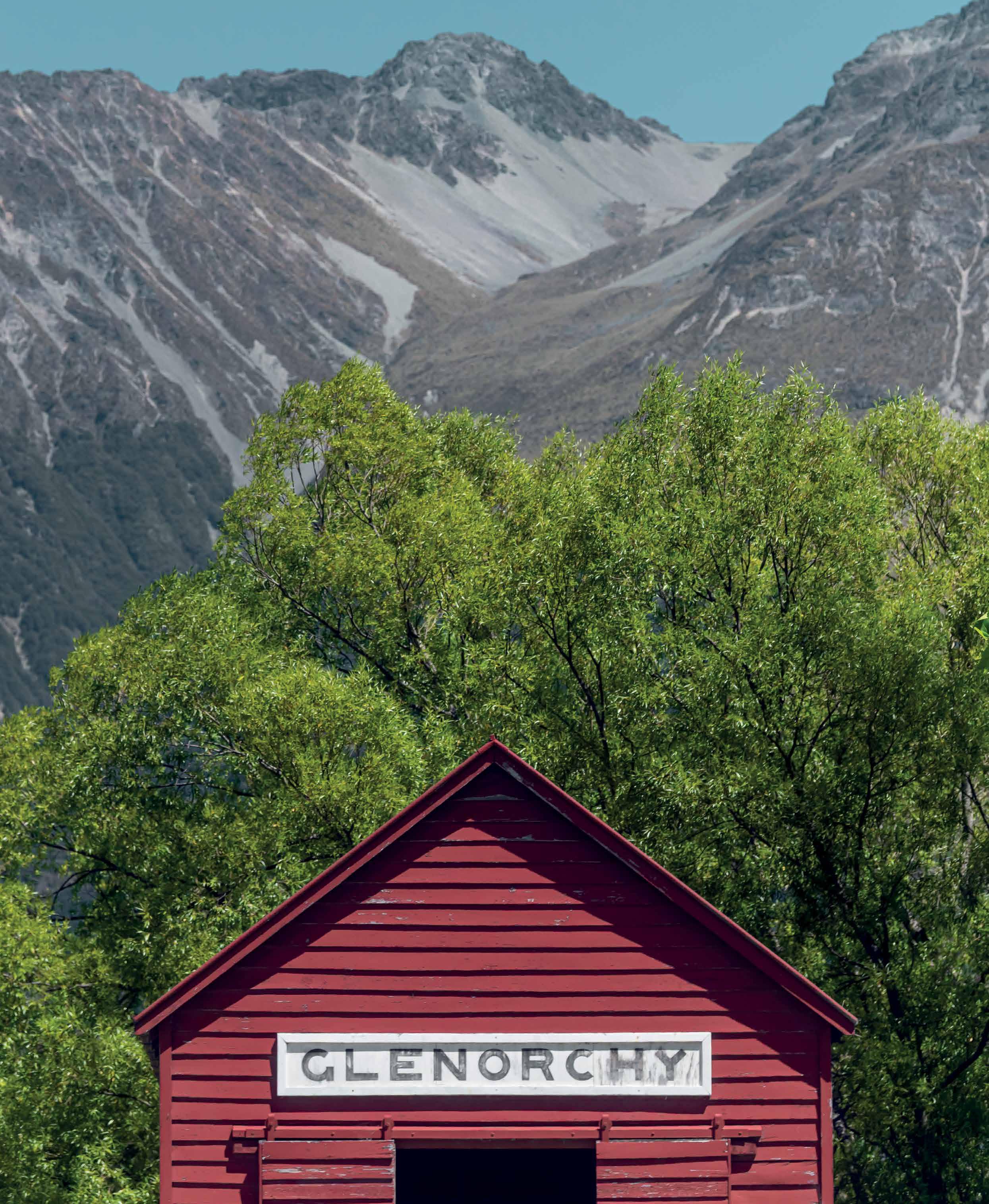
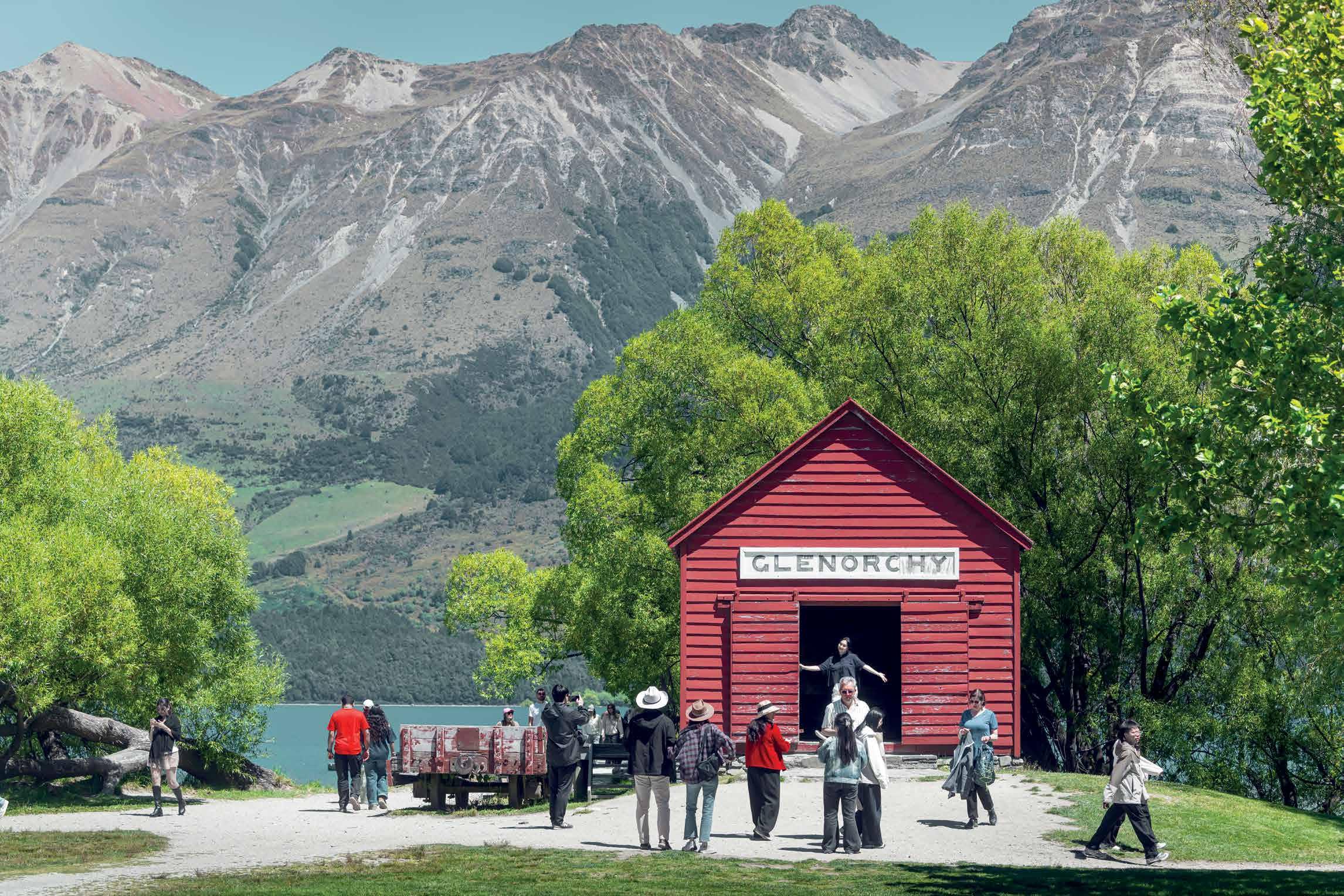
1. Glenorchy’s historic red shed, on the shore of Lake Wakatipu.
2. Tāhuna Glenorchy extends from the village to the headwaters of Lake Wakatipu.
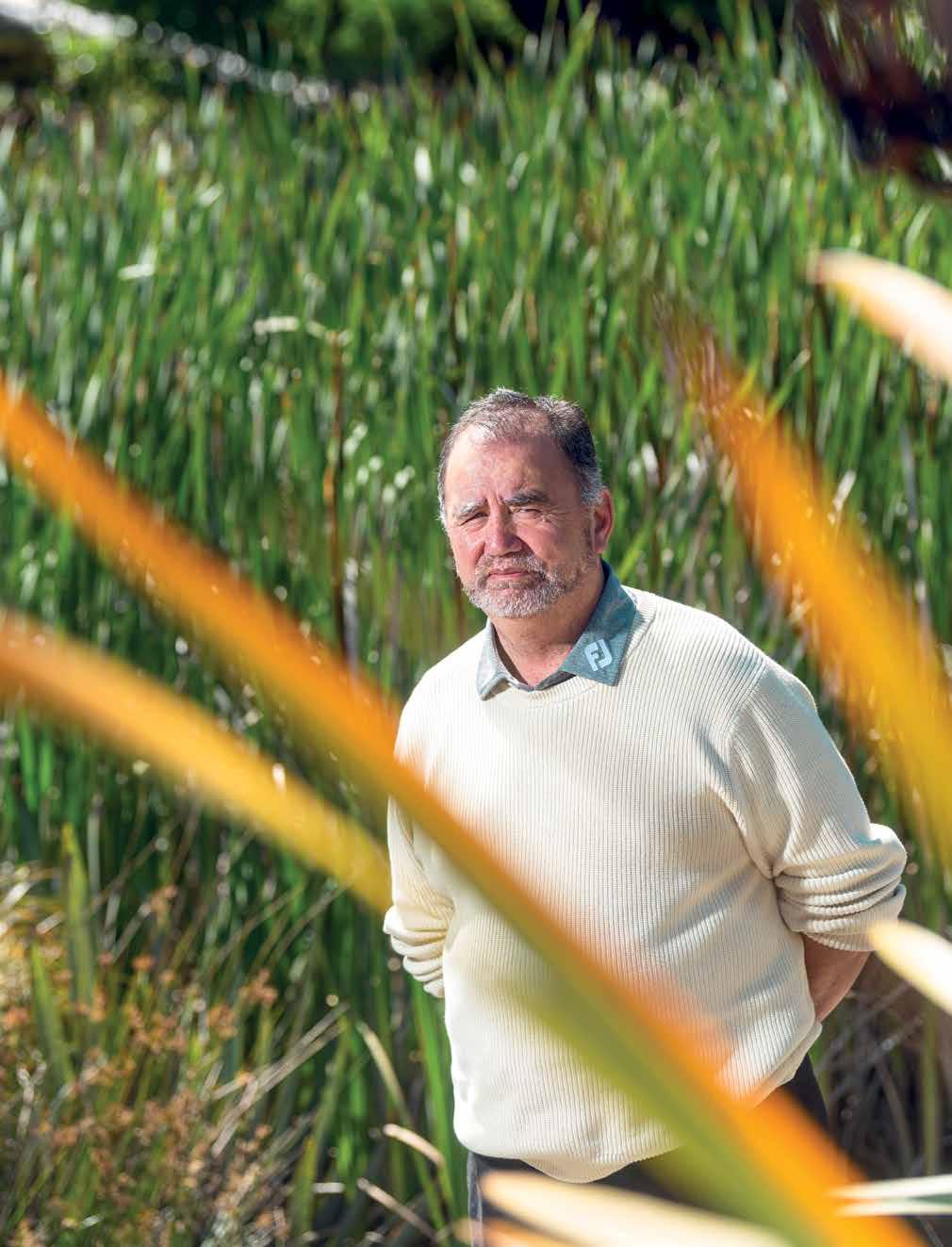
3. Cultural consultant Darren Rewi (Ngāi Tahu).
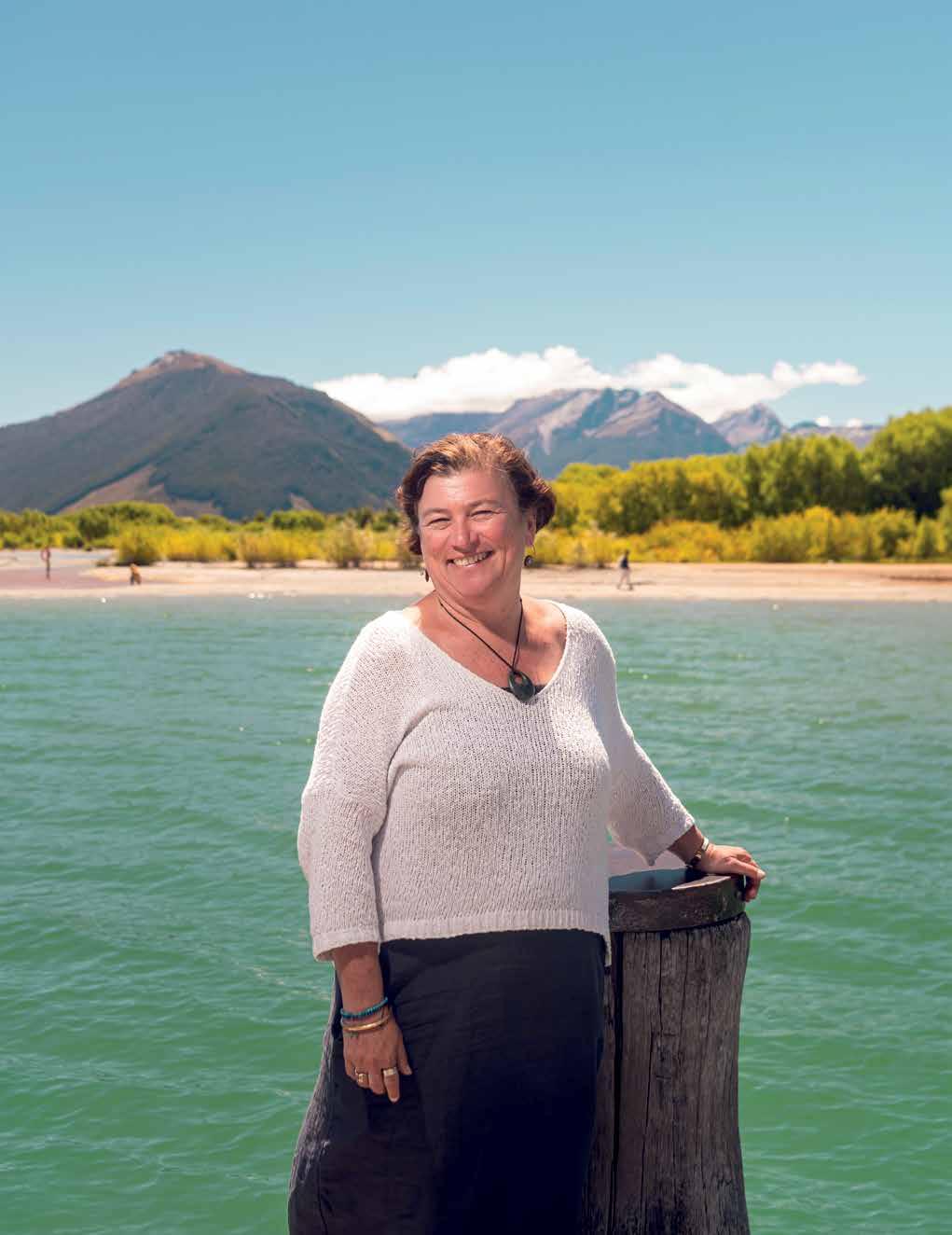
4. Archaeologist and educationalist Leslie Van Gelder. Imagery: Mike Heydon
Interactive tours, performances and pop-up events breathe new life into historic house museums, keeping the past alive while drawing in new audiences and connecting communities
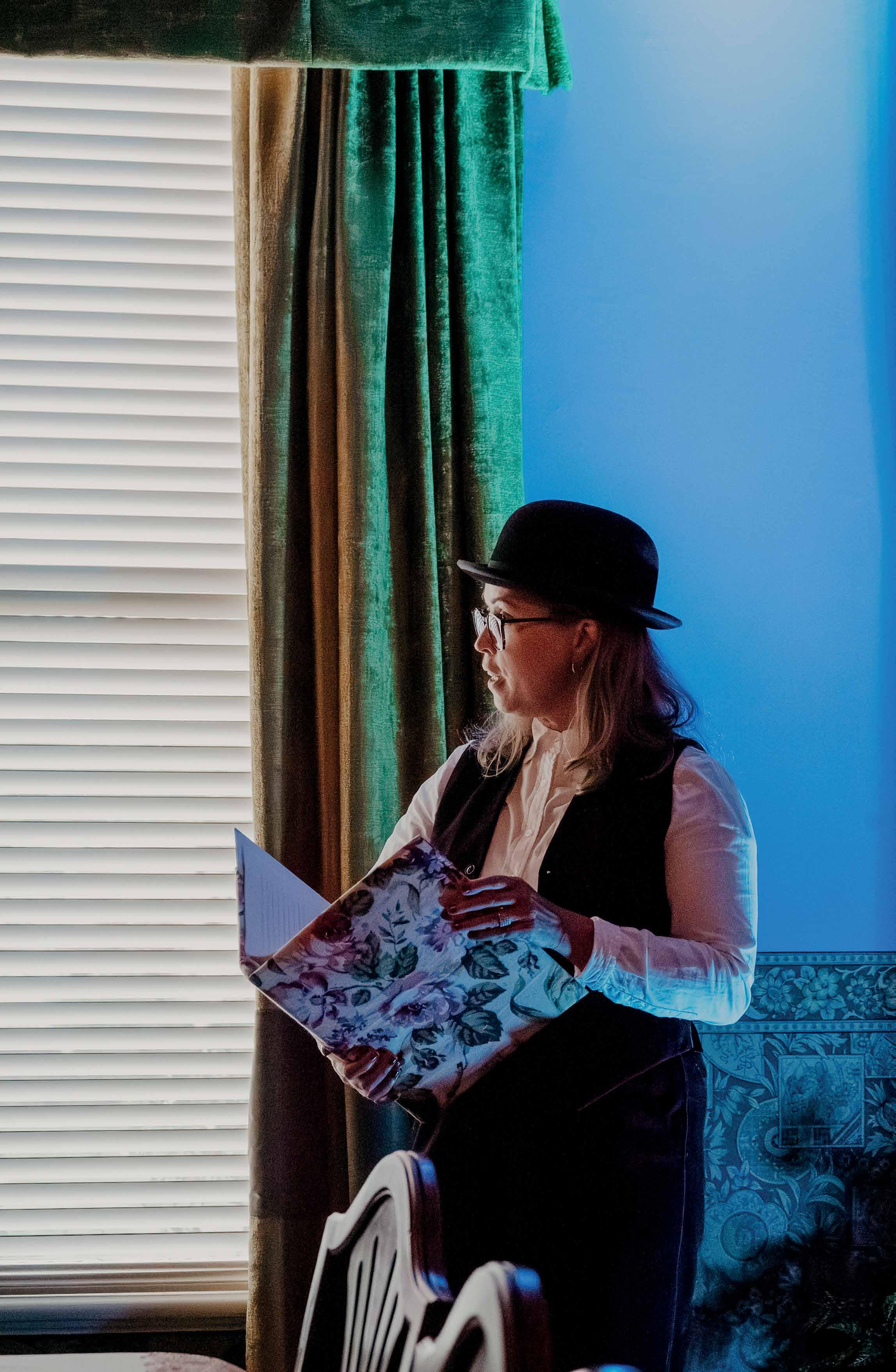
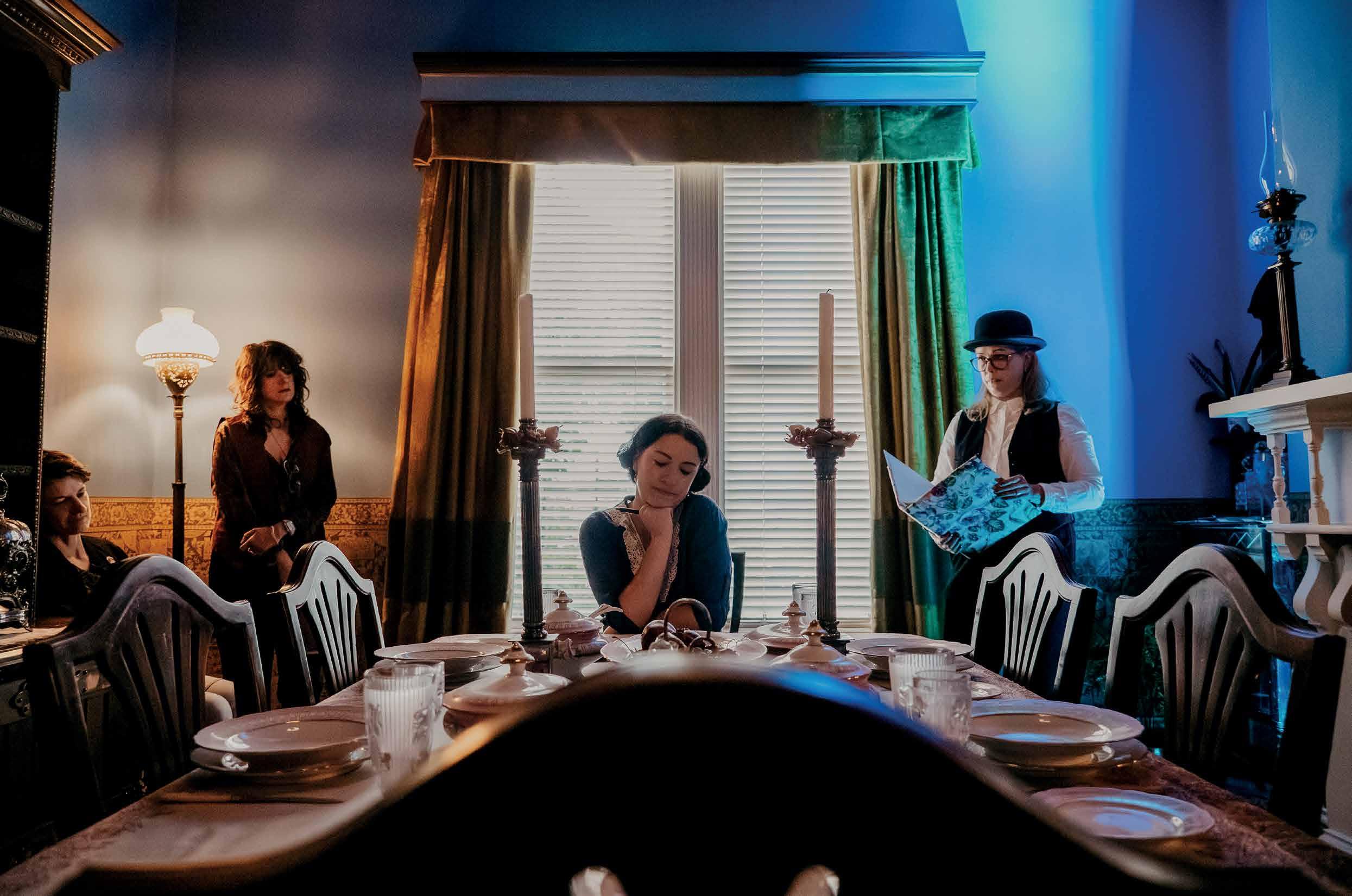
“Thank you for weaving together history, performance, place, music and queer pride into such a special, moving [and] beautiful experience … it was unforgettable,” noted one audience member.
Performing a play to sell-out audiences in Wellington, show narrator Kerryn Pollock was surprised when an unscripted cast member entered the stage.
“I found there were actually four characters, not three, in our story,” she says.
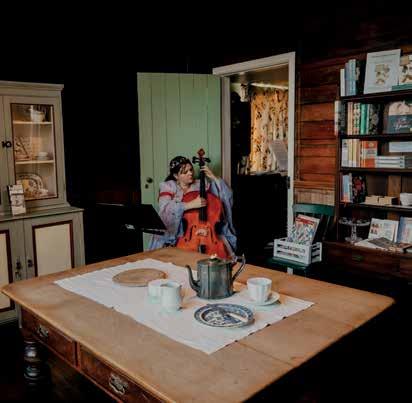
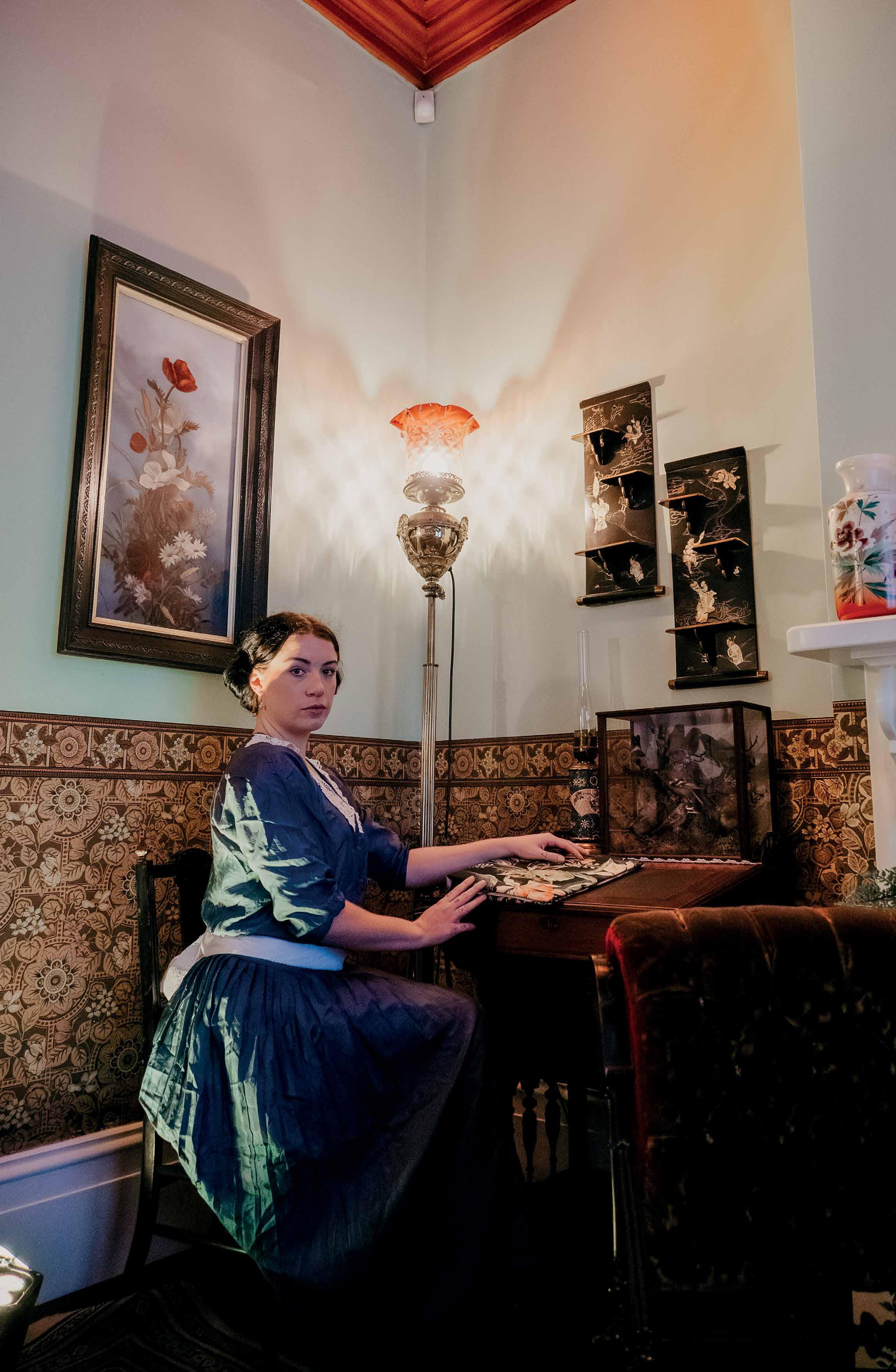
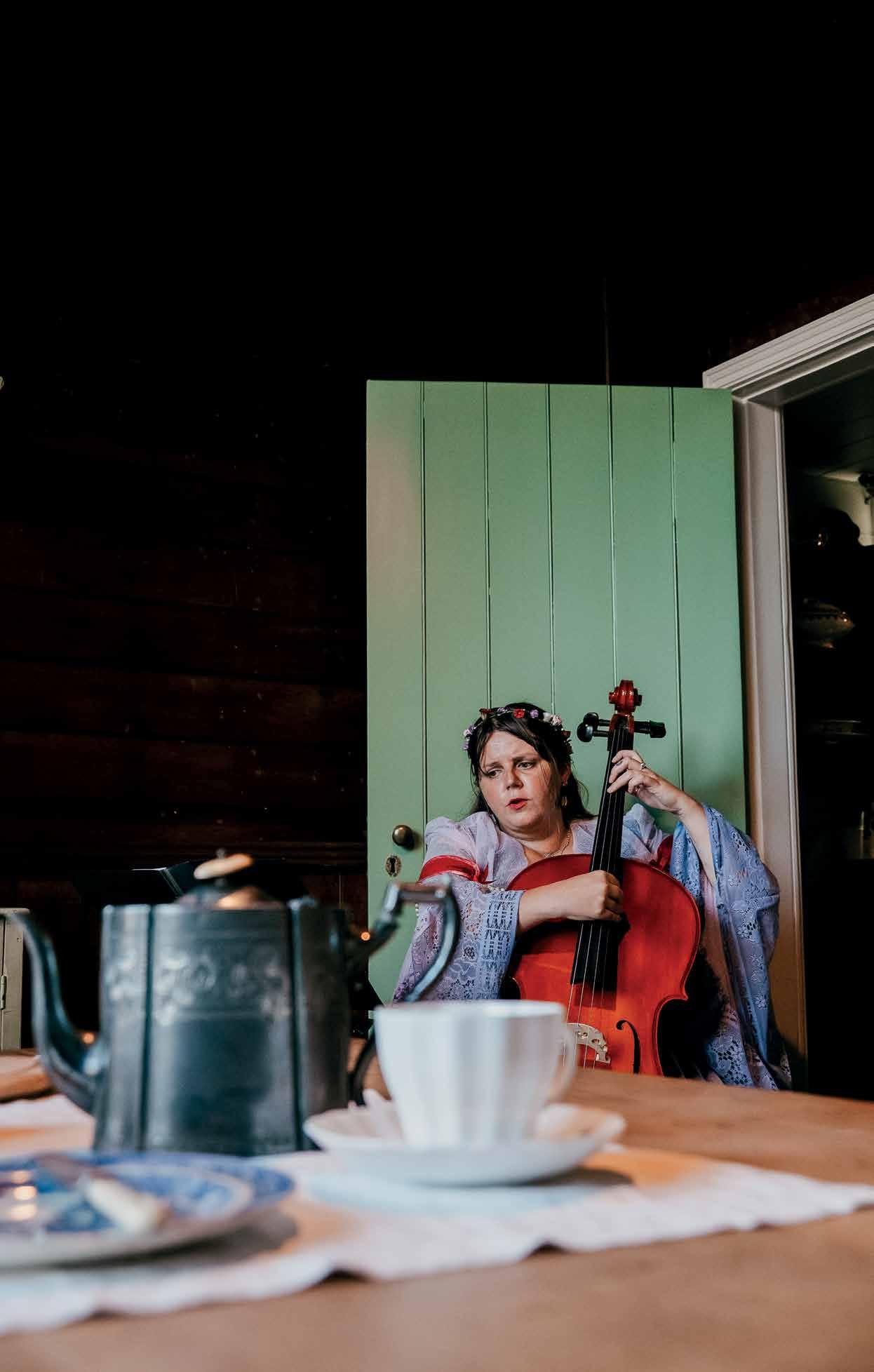
“There was Katherine Mansfield, played by Vixen Temple, musician Vicky Weeds on cello, myself as narrator and, as I came to realise, a fourth character: Katherine Mansfield’s childhood home in Thorndon,” says Kerryn, Area Manager Central Region and Senior Heritage Assessment Advisor for Heritage New Zealand Pouhere Taonga.
In March 2025 Kerryn debuted the 45-minute play, called The Magic of Her Body: Readings of Katherine Mansfield’s Queer Writing, at Katherine Mansfield’s House & Garden, a heritage-listed property in Thorndon.
The play, written by Kerryn and Vixen for the 2025 Wellington Pride Festival, explores the lesbian experiences and writings of one of New Zealand’s most famous expat authors, Katherine Mansfield.
It puts Katherine Mansfield’s rainbow identity front and centre.
“We could have performed in a more traditional theatre environment. But choosing a house museum that’s also Katherine Mansfield’s birthplace was absolutely crucial to its success,” says Kerryn of the Category 1 historic place on Tinakori Road.
She says while historic house museums are often seen as static places because the furnishings and room arrangements don’t change, that overlooks the dynamic, interactive events that take place within their walls.
“This show was evidence that heritage sites themselves influence how someone feels about an event. People are often wowed by these spaces, but to attend a live performance within one makes that performance so much better.”
At Northland’s Te Waimate Mission, the visitor services team received similar praise for their Night at the Museum tour series.
“Such a lovely, educational, funny and charming event – we really enjoyed [the tour] from start to finish,” wrote one attendee.
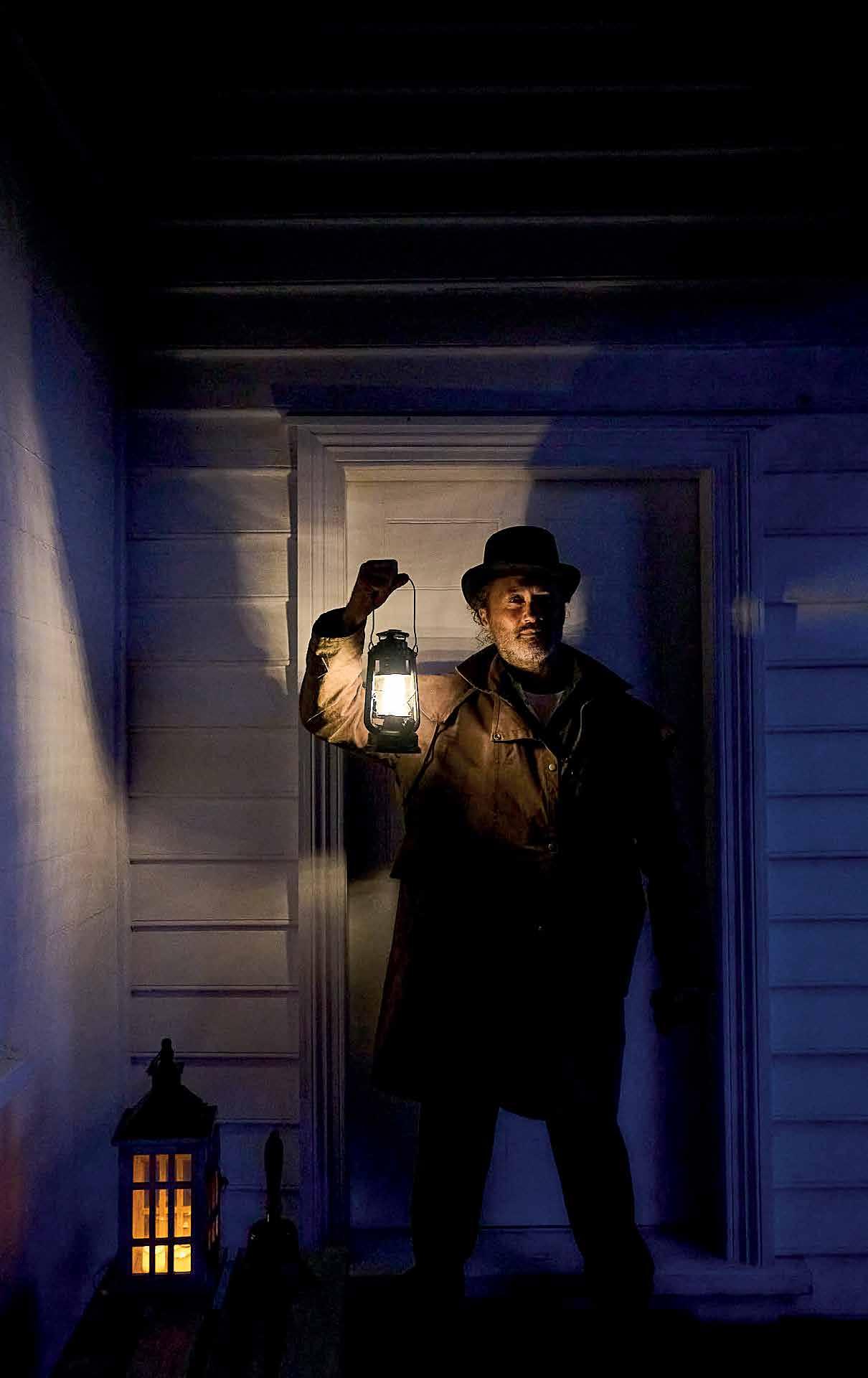
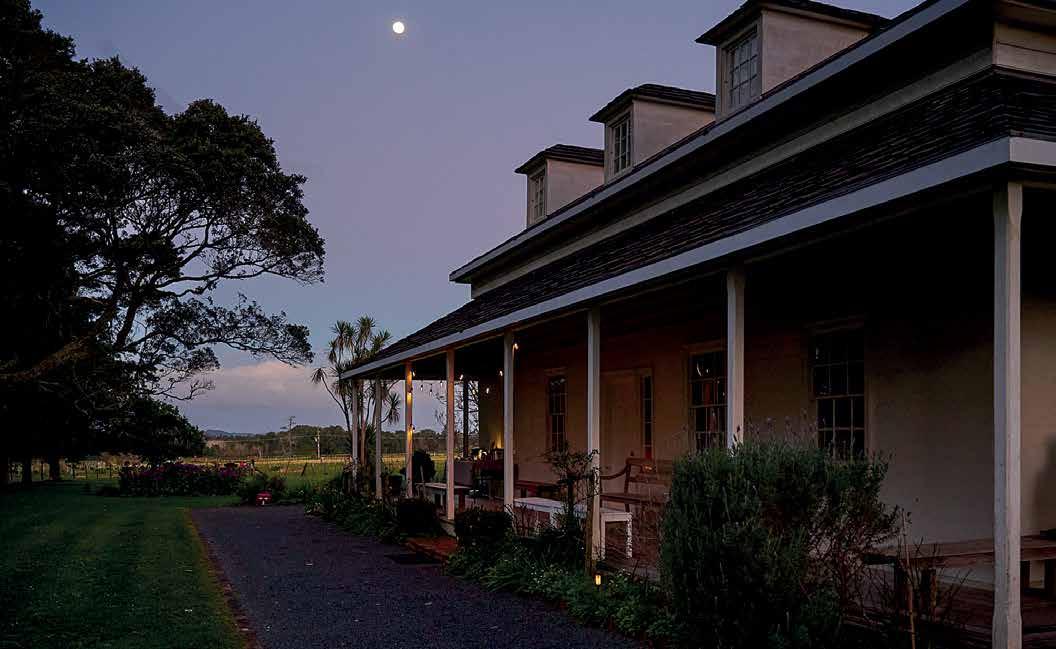
Held annually in September, three separate nighttime tours tell the stories of people who once lived in the Category 1-listed house or nearby Mission Station and the surrounding village.
As the country’s first European-style farm, the site reflects an ambitious attempt by settler
missionaries to introduce a food culture from the other side of the world to New Zealand. Today, the site’s original two-storey homestead is New Zealand’s second-oldest surviving building.
“Accuracy is paramount when you’re writing tour narratives that involve real history and people”
1.
2. Show cellist Vicky Weeds.
3.
“Accuracy is paramount when you’re writing tour narratives that involve real history and people,” says Lindis Capper-Starr, Te Waimate Mission Property Lead. Under the protection of successive Ngāpuhi chiefs, the mission was established in the 1830s by the Church Missionary Society.
“To develop our nighttime tour series, we drew on historical sources such as first-person journals, which we read aloud to bring the story together and make it authentic,” she says.
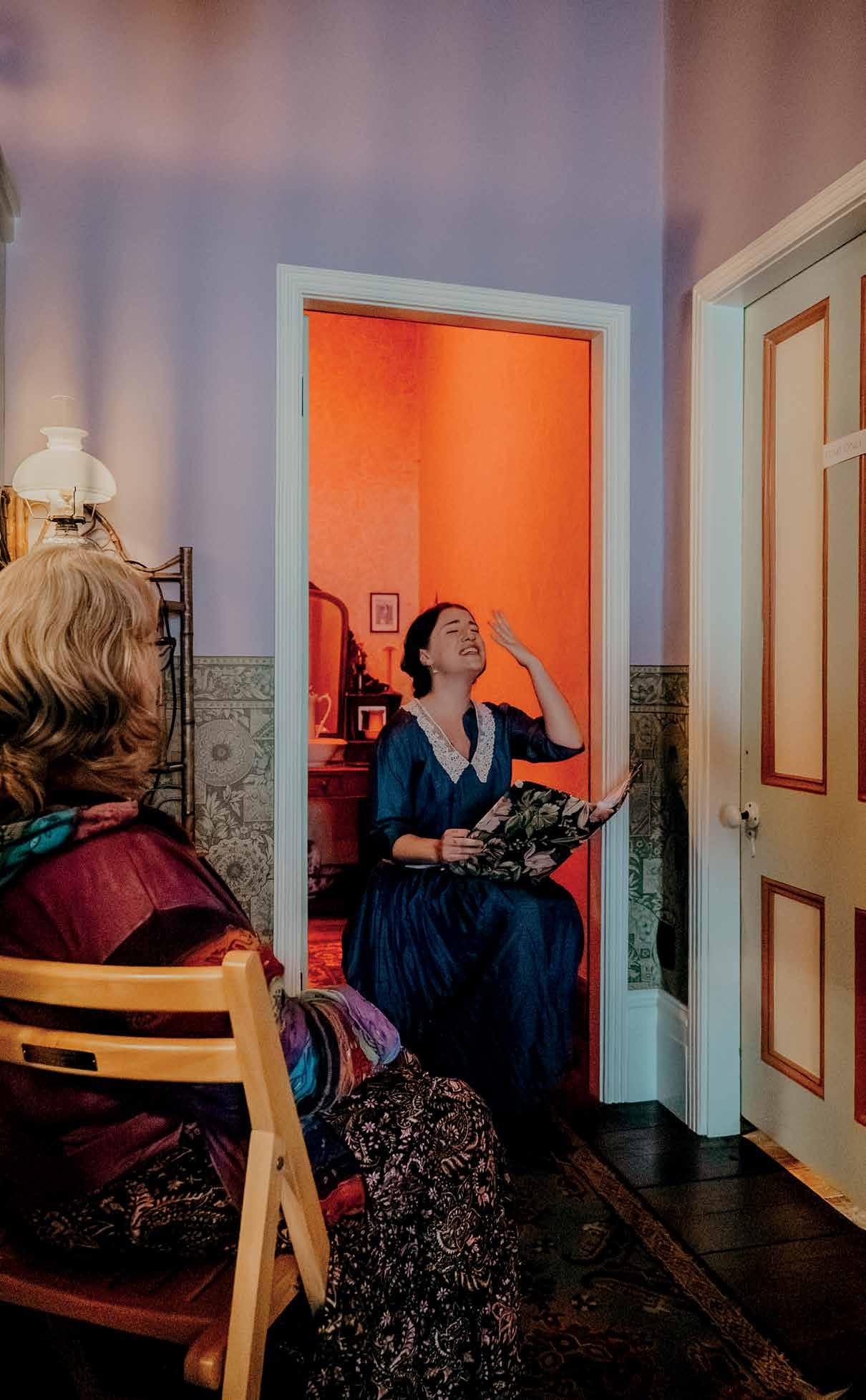
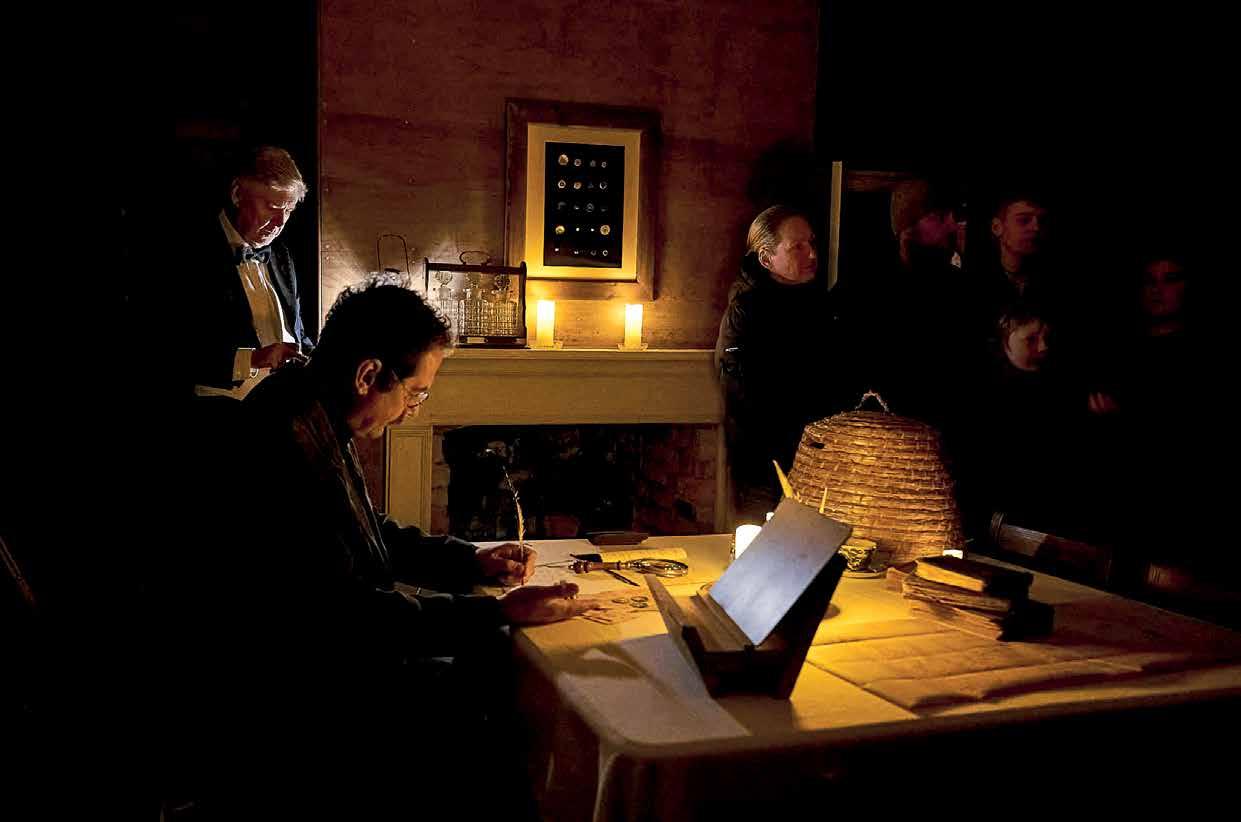
During each show, an emotive drama unfolds as guests are led inside the mission house by visitor hosts and two or three central characters played by local historical acting group The Time Travellers.
“We thought the house would look very atmospheric lit by mock candlelight, but we weren’t prepared for how beautiful it was and how it felt so right,” says Jo Danilo, Te Waimate Mission Visitor Services Coordinator, who researched, wrote and organised the nighttime tours with the visitor host team.
Northlanders, particularly children and families, are among those targeted by the show’s ongoing marketing.
“We’re a popular summertime destination for international visitors in Northland on cruise ship holidays,” says Jo. “But with these
hour-long, after-dark tours, we wanted to attract a local audience: Northlanders keen to learn about the region’s fascinating heritage in a less conventional and more creative way.”
“Like many visitor services teams, we’re trying to do new things on limited budgets, while also telling the story of a very special heritage property”
All three tours sold out soon after tickets went on sale, with dozens of people left on waiting lists.
Popular Māori actor Willi Henley, who features in the tour about beekeeper and Anglican missionary Reverend William Charles Cotton, brought star power to the 2025 season.
“Having Willi on the billing in our second year was a wonderful bonus. Raising awareness that we’re here doing interesting things is one of the positive spin-offs of having talent like his fronting our tours,” says Lindis.
Highwic Property Lead Tanya Wilkinson says establishing a programme of regular events is vital for ongoing and repeat visits to a large house museum like theirs.
“I’m just a year into my role, but I’d say events are what generate the largest number of visitors. It’s an absolute driver.”
While big earners like weddings, film shoots and venue hire help boost overall visitor numbers, Highwic also runs a range of public events such as Mother’s Day high teas, market
days and tours. A well-planned and marketed event can bump up daily visitor numbers from a handful to 50 or more, she says.
This year, her team is running a guided tour of Highwic on the last Thursday of every month. Tours tell the story of businessman Alfred Buckland and his family who lived in the private mansion, built in 1862 in the Carpenter Gothic architectural style.
Once a month (on the first Wednesday), the coal range in Highwic’s kitchen is lit and used by volunteers to bake treats for visitors. Coming up in autumn are workshops on how to preserve fruit and distill gin. This winter, for the first time, the billiards table will be available for bookable sessions.
Throughout the year, Highwic will exhibit different aspects of the property’s collection, such as a curated range of pressed ferns from the 1800s.
Visitor Services Coordinator Grace Pooley, who organises Highwic’s event programme, says: “Like many visitor services teams, we’re trying to do new things on limited budgets, while also telling the story of a very special heritage property.”
This year’s Sweetpea Festival and Plant Fair, to be held in late November, is on track to become one of Highwic’s biggest annual events. Last year 700 people visited the site to buy plants and heritage sweetpeas, tour Highwic’s gardens with a local expert, and
attend plant-pressing workshops run by Auckland Museum’s botany team.
“More than 100 people were converted into paying house visitors, which was an incredible conversion rate for us. I think it showed that the event suits our heritage identity and connected well with our target audiences who, we think, are now more likely to return to Highwic. The high turnout made all the hard work worthwhile,” says Grace.
When it comes to assessing the merits of a single event, the three house museum teams agree it’s about more than simply looking at the metrics.
Cherie Jacobson, Katherine Mansfield House & Garden Director, explains: “For a few years, I’d wanted to do something highlighting the LGBTQIA+ element of Mansfield’s identity, but I wanted to make sure it was done authentically.
“When Kerryn approached me, I was like, yes, this is awesome. Getting to work with the queer community to present the information in a fun, creative way, for me, has been really exciting.”

With more than 25 years’ experience,
by an expert Botanical Guide.
1.
2. Te Waimate
3. Actors performing in Night at the Museum. Imagery: Claire Gordon
4. Sweetpea Festival and Plant Fair, Highwic, Auckland Image: Grace Pooley
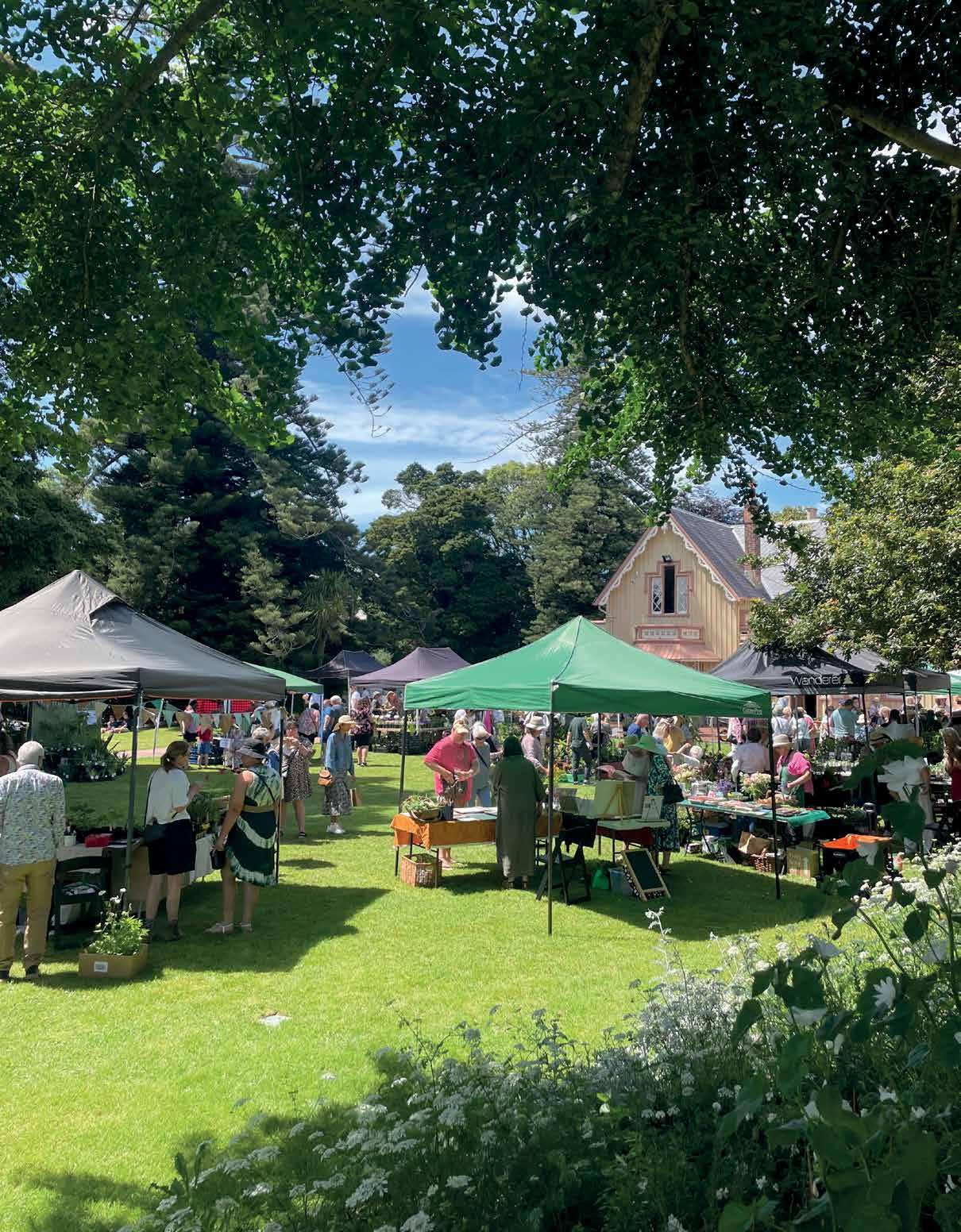
Order a copy of our new 2026 & 2027 brochure today!
Explore Japan during autumn, travelling by bullet train to enjoy cultural experiences, visit temples and admire art. See the acclaimed gardens of Kenroku-en and Koraku-en, as well as the Zen garden, Ryoan-ji. Visit Byodo-in Temple and the impressive ‘Golden Pavilion’, Kinkaku-ji. Discover the renowned cities of Tokyo, Kyoto and Kanazawa and learn about their history and culture. This itinerary suits both returning and first-time travellers who want to see Japan during this magical season.
12 Days, Tokyo to Osaka 3 November 2026
Western Australia’s Wildflowers, Private Gardens & Natural Phenomena
Discover the beauty of Western Australia during spring. Guided by our local experts, we search for the state’s wondrous wildflowers, as we travel from Perth to Geraldton. In nearby Mullewa, witness remarkable wreath flowers lining the road. Search for rare orchids and see the natural spectacle of the Pinnacles. Visit some of the state’s finest private gardens, explore Margaret River and Fremantle, and witness a spectacular display of wildflowers within Kings Park.
10 Days, Perth return 5 September 2026
From $8,595* pp, twin share
From $10,995* solo traveller
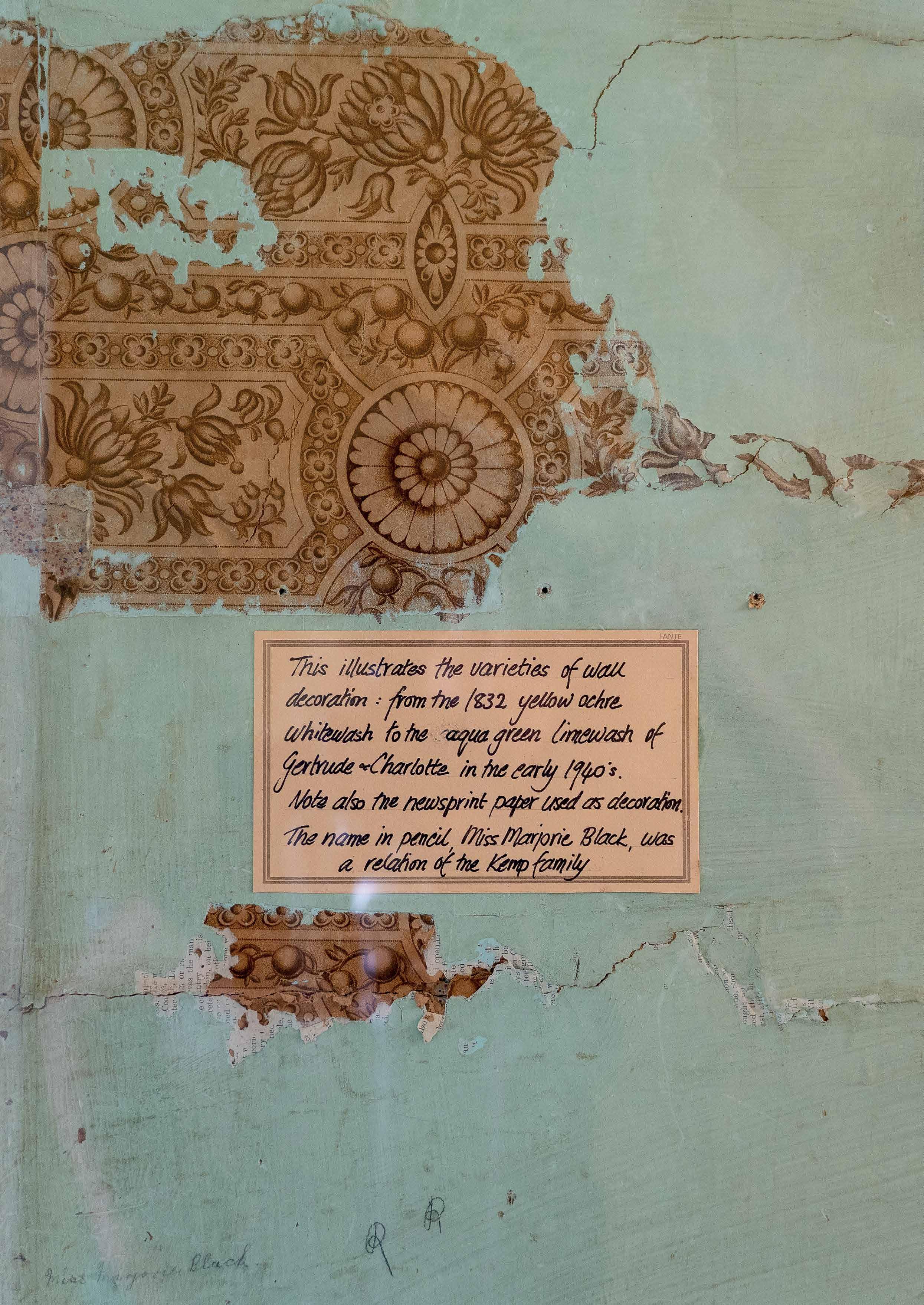
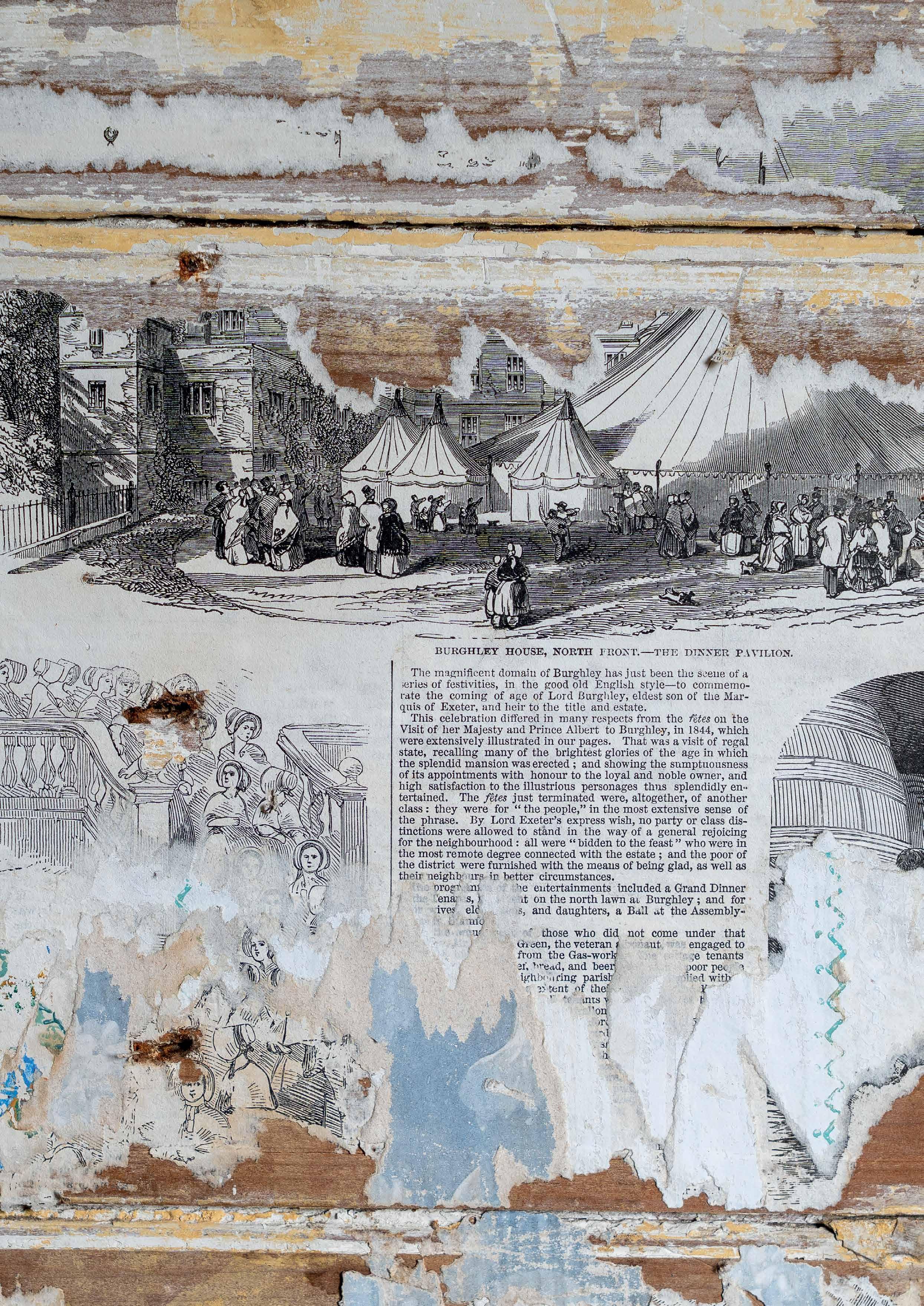

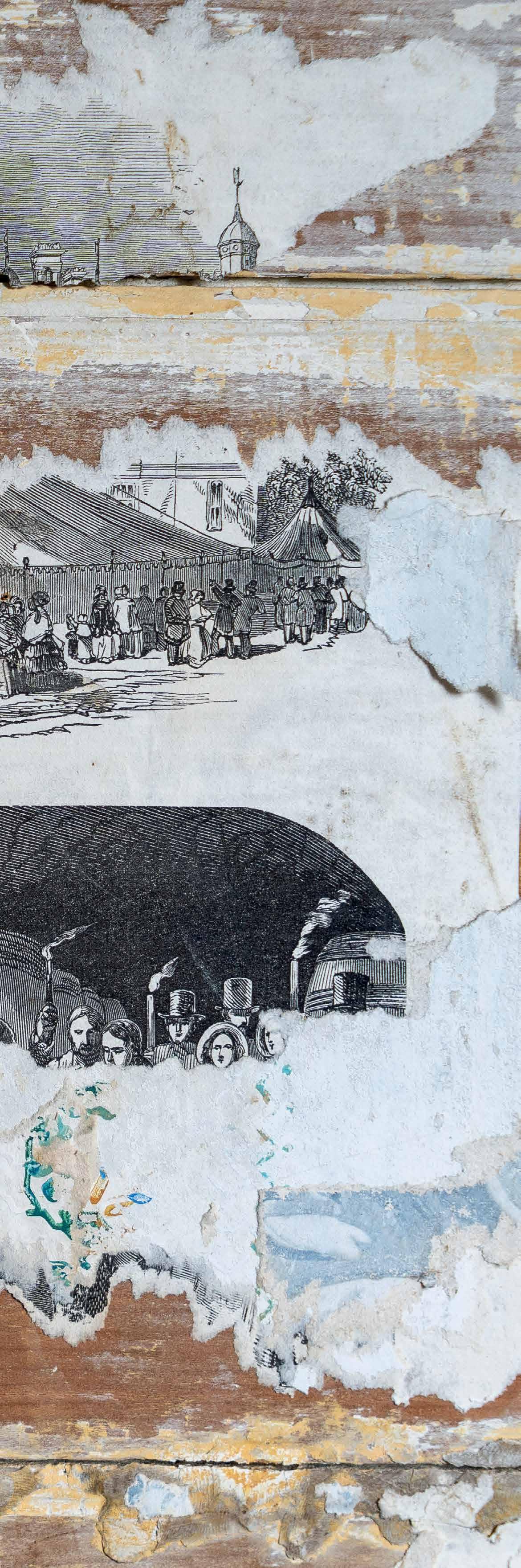
I1. Pages from an 1859 edition of The Illustrated London News line the walls of a bedroom in Kemp House. Image: Jess Burges
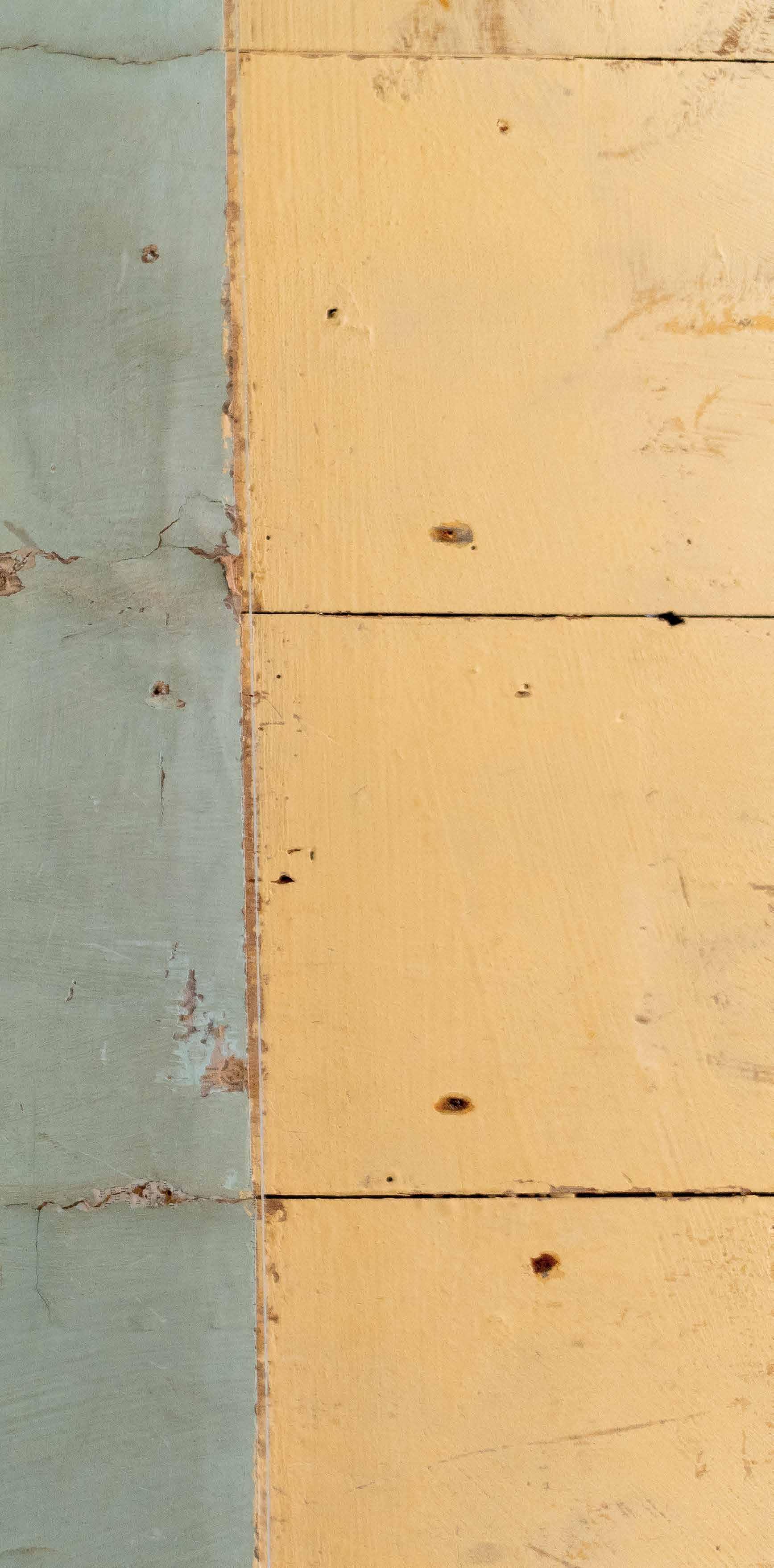
n March 1981 a flood inundated Kemp House at Kerikeri Mission Station in the Bay of Islands. The water reached windowsill level on the ground floor, causing extensive damage to the inside of New Zealand’s oldest standing building.
Afterwards, as post-flood salvage began on the Category 1 historic place and restorers stripped out the interiors, they made an interesting find. Behind the top wallcovering in one of the upstairs bedrooms were layers of earlier wallpapers, including pages of a religious text written in te reo Māori.
Fast forward to 2023, and this discovery caught the attention of Eva Forster-Garbutt, Area Manager Otago/Southland for Heritage New Zealand Pouhere Taonga, during research for her thesis on the importation, trade and use of wallpaper in 19th-century New Zealand. Eva contacted Clare Knowles, Translations Coordinator at the Bible Society New Zealand, who has a particular interest in te reo Māori.
Clare identified the pages to be from a book of catechisms printed in nearby Paihia on William Colenso’s printing press in 1840 – meaning the wallpaper must have been applied sometime after that. “It’s not one of the oldest but is certainly an early printing of a biblical text in te reo Māori,” says Clare.
Liz Bigwood, Kerikeri Mission Station Senior Property Lead, says that the removal of the damaged wallpaper was like peeling back layers of time.
“On top there was wallpaper with tiny flowers on it, then underneath was paper with a blue and green floral pattern. Underneath that was the te reo Māori text, and finally there was whitewash, which was the first wall treatment to be applied.”
She adds that other parts of Kemp House also have interesting text papered on the walls. “One of the walls in the upstairs back bedroom is lined with an edition of The Illustrated London News from 1859.”
Eva says it’s not unusual to find newspapers or book pages used as an underlay to wallpaper, and sometimes even as a final finish for a room.

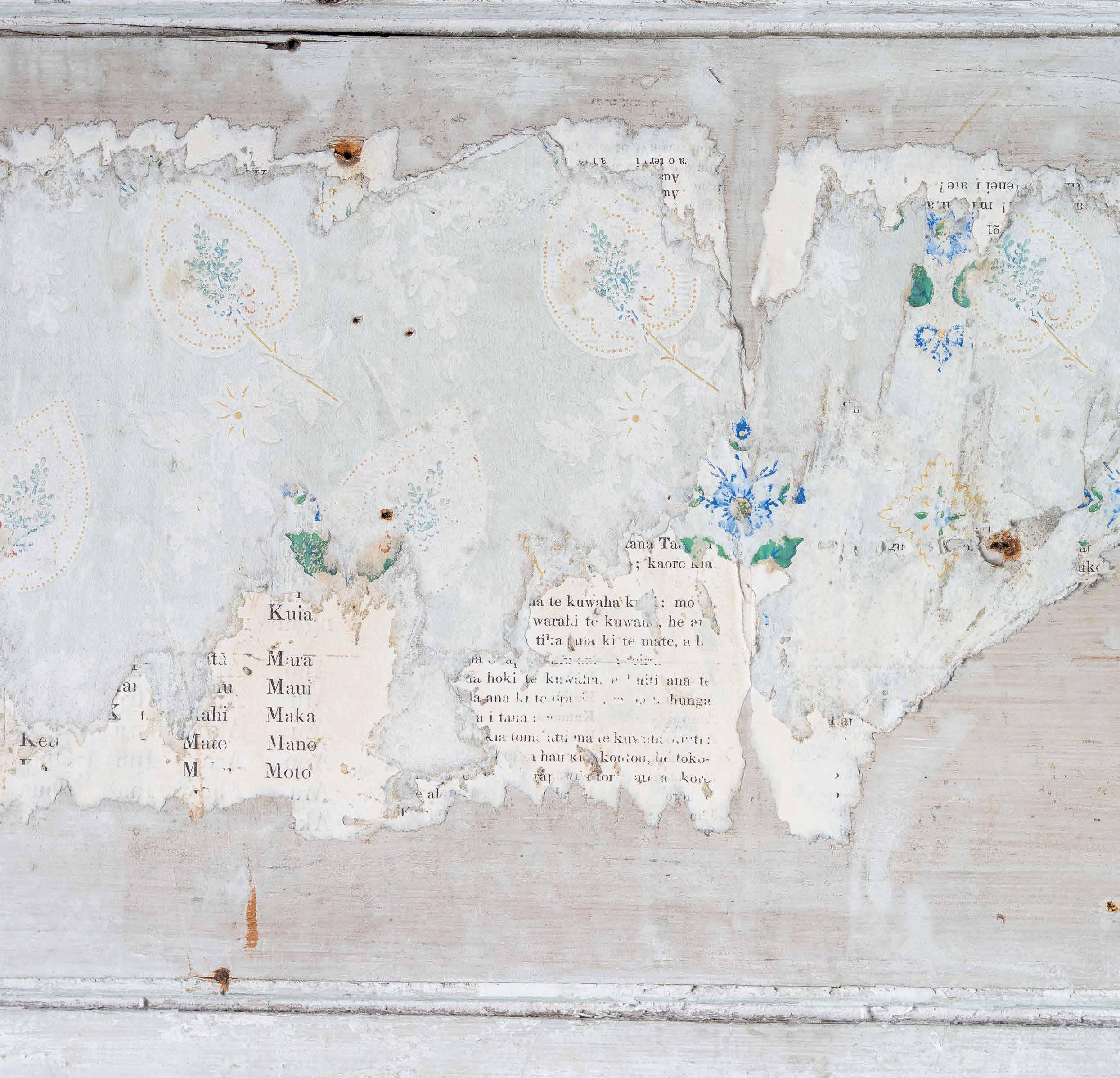
At Grubb Cottage in Lyttelton (a Category 2 historic place built circa 1851), pages from The Young Ladies’ Journal, printed in England, were used to create a decorative dado (the lower part of a wall) in the kitchen, while a cottage in Wellington built around 1877 featured pages of women’s fashion from the same publication, which were used to cover gaps in timber.
“Wallpapers, or illustrated newspapers and magazines, also fulfilled a very practical function in New Zealand homes,” she says.
Many early buildings were timber framed, with weatherboard on the outside and sarked (timber-lined) interior walls, which meant that wind and dust could get in through gaps. Wallpaper provided not only decoration but also protection against draughts. Since timber tends to warp with time, cracks frequently appeared in wall coverings, necessitating frequent rewallpapering.
“It’s amazing to think that some got on ships bound for their new homes half a world away with everything they needed to furnish a house –including rolls of wallpaper”

“It was common for old buildings to have layer upon layer of wallpaper lining the walls, and I found several examples of these wallpaper ‘sandwiches’ during my research. For example, at Howick Historical Village, cottages relocated there from the Panmure Fencibles settlement revealed multiple layers of wallpaper.
“It’s not what I was expecting to find,” she continues. “I think people think of wallpaper as this precious, expensive thing, used primarily for decorating, but after wallpaper was machinemade from the 1840s onwards, making it cheaper, and more available in New Zealand, many people used
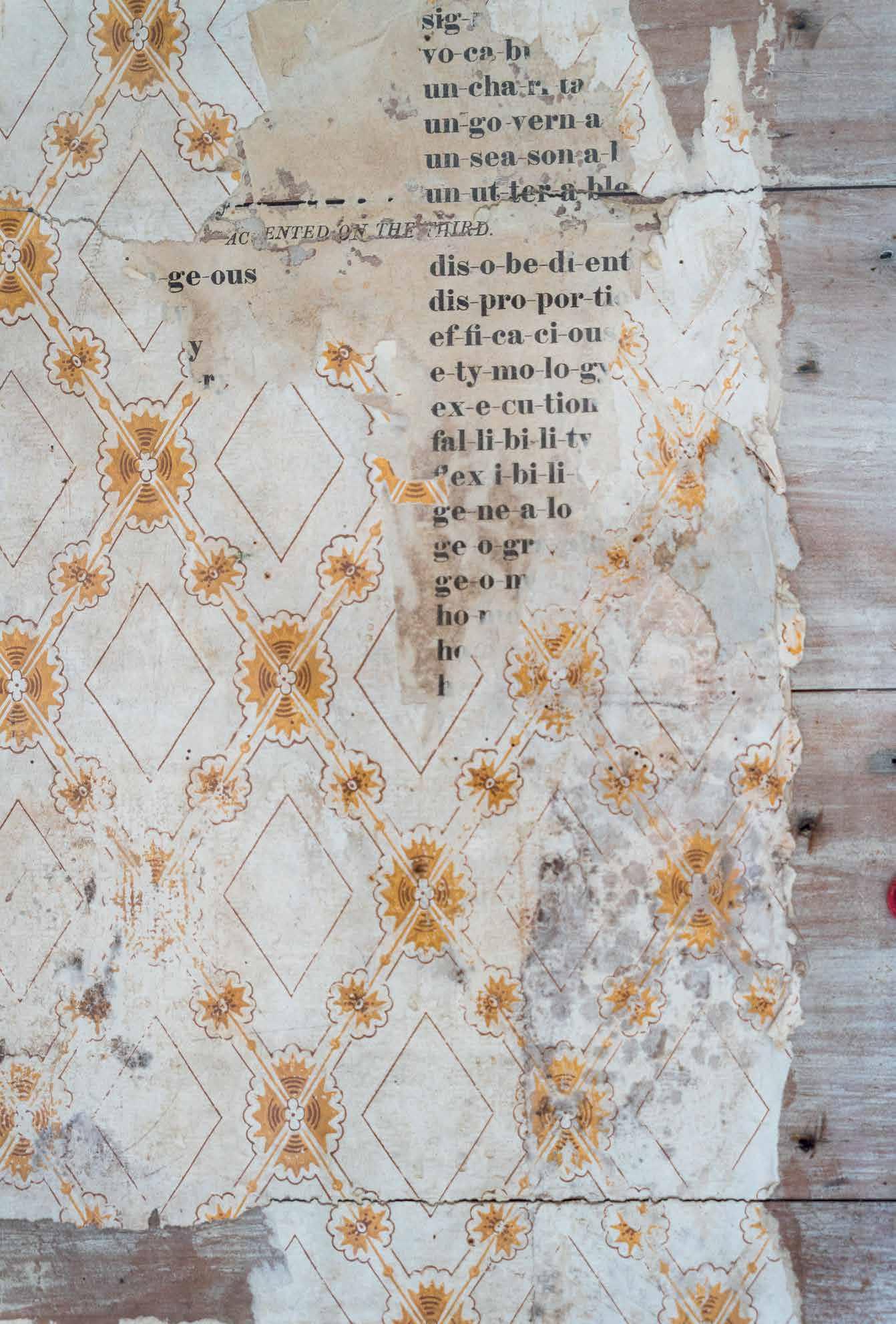
it for practical purposes in their homes – to cover dirty walls and cracks and to stop wind and dust getting in.”
Eva began her thesis in 2021 and completed it in September last year. Her choice of topic, she says, was partly because of the dearth of information available on domestic interiors – especially fixed linings such as wallpaper – in colonial New Zealand, but also because she is “really interested in what our early interiors used to look like and where the items within these came from”. She adds that while her thesis is obviously academic, she also hopes it will be used practically.
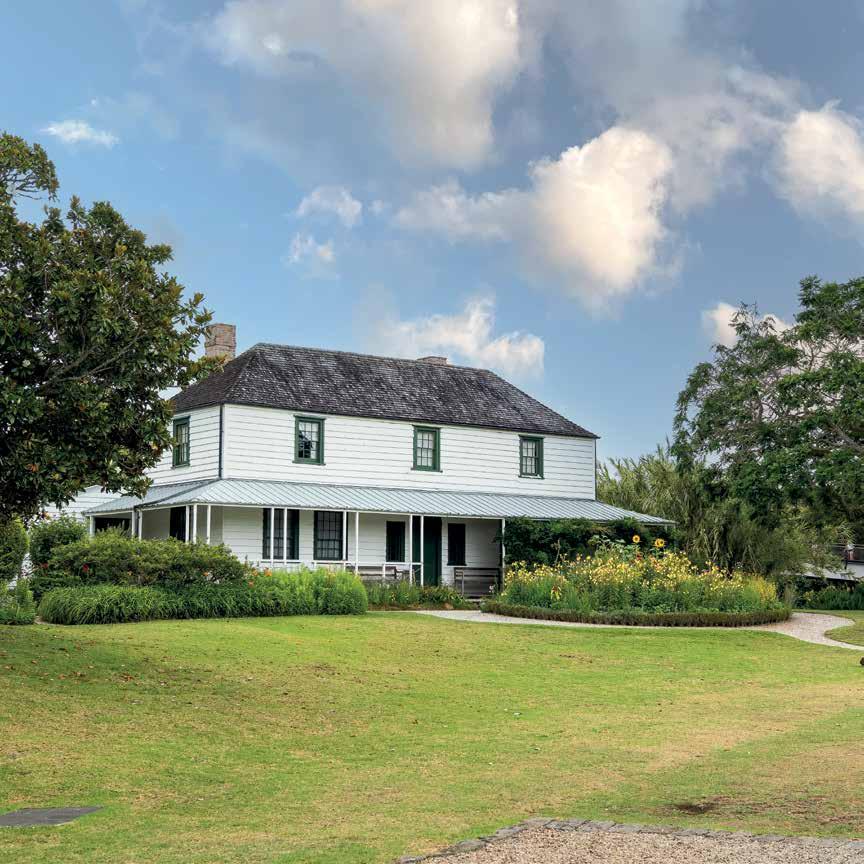
“I want it to be useful for archaeologists recording buildings, conservation architects, or even homeowners who want to do a sympathetic restoration of a private home or listed building. Hopefully, now they have a resource to go to.”
Prior to the 1960s, when local manufacture began, all wallpaper in New Zealand was imported, mainly from the UK, but also Australia (which also imported it, primarily from the UK and the US).
“The earliest evidence of the arrival of wallpaper in New Zealand is from Northland, where the import of one bag of wallpaper into Russell is recorded in the Blue Book [an official statistics report] in 1841,” says Eva.
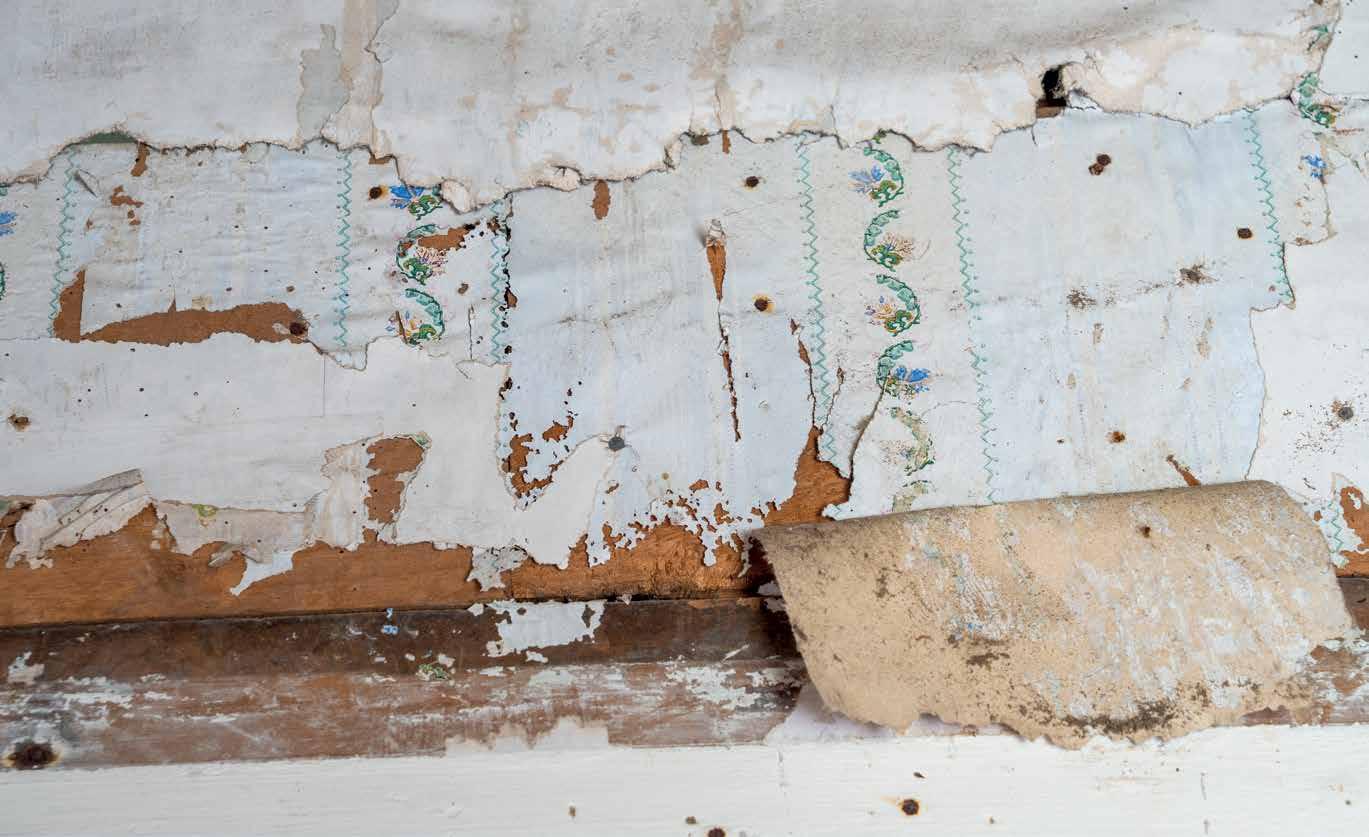
1. Restoration work on Kemp House uncovered pages of a religious text written in te reo Māori...
2. ... and pages from a school book showing words broken into syllables.
3. It’s not uncommon for old buildings to have several layers of wallpaper lining the walls.
4. A decal of a unicorn uncovered in the kitchen of Kemp House.
5. Kemp House has some of the oldest in-situ wallpaper in New Zealand. Imagery: Jess Burges

“Since we know the Kemp House wallpaper was applied around this time and given that James and Charlotte Kemp [who occupied the house from 1832] operated a general store, it’s intriguing to speculate whether that bag of wallpaper was intended for their shop – including the wallpaper that ended up on the walls of their home.”
Eva says that other records of wallpaper importation or use start to pop up from the 1840s in or near port settlements in Northland, Auckland, Wellington, Nelson and Dunedin. However, that’s not to say it wasn’t sought after before this.
A letter written in August 1830 by Henry Williams of the Church Missionary Society to his mother from his house in Paihia describes his vision for his new home. In it, he writes:
“I want [my research] to be useful for archaeologists recording buildings, conservation architects, or even homeowners who want to do a sympathetic restoration of a private home or listed building”
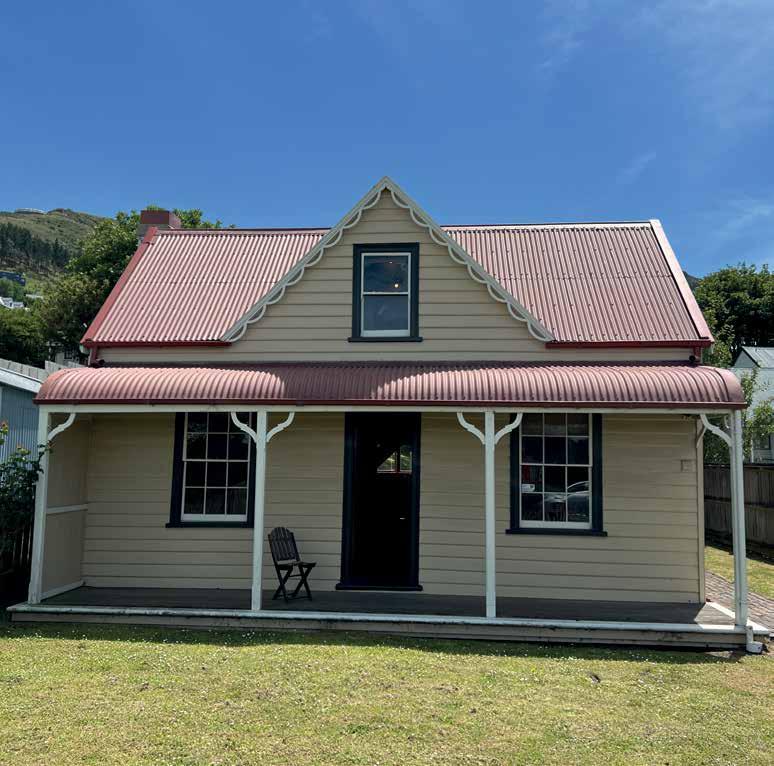
“In some respects, I wish my house to be furnished a little after the English fashion… I intend in the process of time to paper some of the rooms, which will be a novel thing in this region of the Earth.”
This letter offers a glimpse into ideas of home for New Zealand’s early colonists. “There appears to have been an innate desire to transplant the physical and emotional components of home,” says Eva.
Eva was also surprised to find written evidence that some wealthy early settlers brought wallpaper with them.
“It’s amazing to think that some got on ships bound for their new homes half a world away with everything they needed to furnish a house – including rolls of wallpaper. It was mainly the well-to-do, who had enough luggage allowance.”
One of these people was Jane Deans, who came to New Zealand from Scotland in 1853 to live with her husband John

1. & 2. Pages from The Young Ladies’ Journal were used to create a decorative dado in Lyttelton’s Grubb Cottage.
3. & 4. A wallpaper ‘sandwich’ in the Maher-Gallagher Cottage, now at Howick Historical Village. Imagery: Eva Forster-Garbutt
(in what is now Deans Cottage, Category 1) on his Christchurch farm. After he died the following year, she remained on the farm and had a homestead – Riccarton House (Category 1) – built in 1856.
“In her memoir, Jane remarks that they brought with them ‘every requisite for a house except kitchen utensils’ – and that included wallpaper,” says Eva. “One of the wallpapers – a rococo-patterned flock wallpaper applied to the walls of the study around 1857 – still exists and is on display at Riccarton House.”
Despite its initial scarcity, demand for wallpaper quickly grew as transport networks improved in the early 1860s and the Otago and West Coast gold rushes hit the South Island. By the late-19th century, wallpaper was widely available and had become a firmly established feature within New Zealand’s buildings.
As the availability of wallpaper grew, so did the range of designs.
“Our patterns and styles closely mirrored trends in Australia, which in turn reflected mainly British influences,” says Eva.
In the early and mid-19th century, conservative designs were preferred – think rococo, French floral and arabesque. “Perhaps early colonists preferred more old-fashioned styles reminiscent of the homes they had left behind,” says Eva.
“High-end wallpapers featuring embossed patterns, gilding and flock [a raised pattern of soft material] appeared in New Zealand from the mid-1850s,” she continues. “These were used mostly in public rooms of the house, with more conservative designs and cheaper wallpaper relegated to private rooms, such as bedrooms.”
The later decades saw more modern and artistic wallpapers, such as those featuring Asiatic designs or flowing floral patterns, as New Zealanders became more conscious of keeping up with the latest trends – particularly in the 1880s and 1890s when the Arts & Crafts movement took hold.
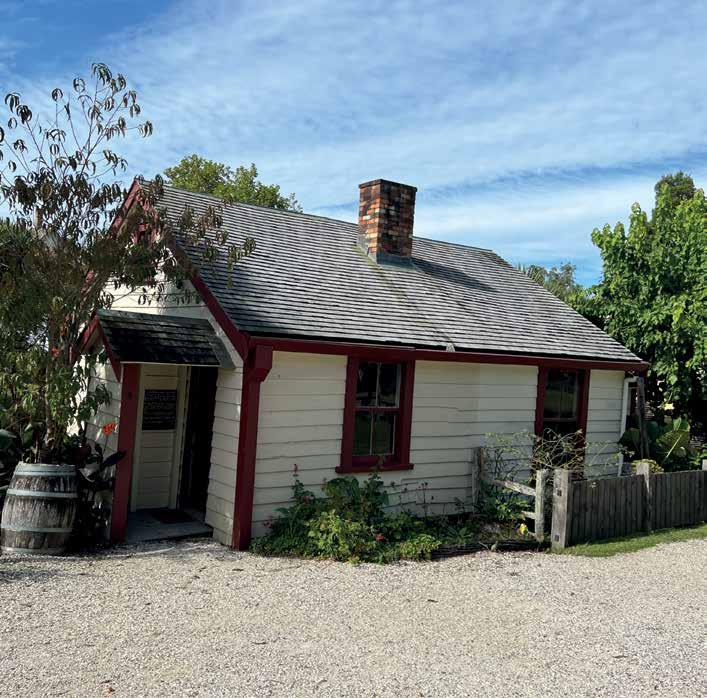
Pouhere Taonga. “This reflects a time when wallpaper was becoming more readily accessible due to new production techniques and wallpaper becoming cheaper.”
She adds that the collection traces the history of methods of production and technological developments, changing styles and domestic tastes, and social, economic and architectural developments.
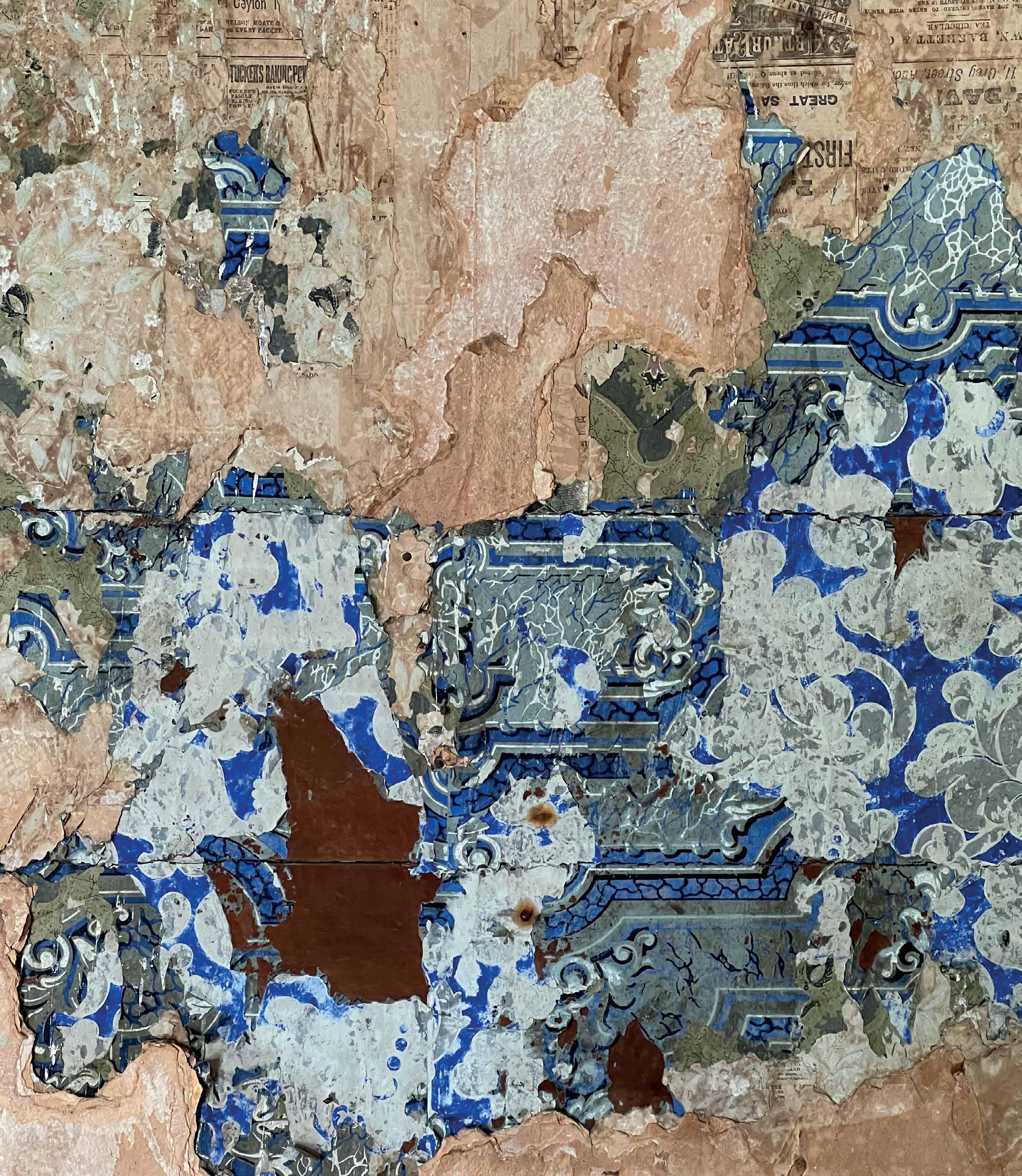
Many of these patterns can be seen in the Heritage New Zealand Pouhere Taonga wallpaper collection (collection.heritage.org.nz), which consists of 1800 samples in the forms of rolls, encapsulated sheets and fragments, with 25 pattern books adding another 1600 or so samples – making it one of the largest of its kind in the Southern Hemisphere.
“Samples range from the 1840s to the 1970s, with the majority from the late 1800s to the early 1900s,” says Belinda Maingay, Senior Collections Advisor for Heritage New Zealand

“It’s a hugely significant collection and, given its size, breadth and New Zealand origins, it has considerable heritage value.”
Eva’s thesis is available at the Victoria University of Wellington Open Access Research Library: openaccess.wgtn.ac.nz/articles/thesis/_/30631403
WORDS AND IMAGERY: CLAUDIA BABIRAT
Heritage New Zealand magazine follows in the elusive footsteps of Butch Cassidy and the Sundance Kid in Argentina
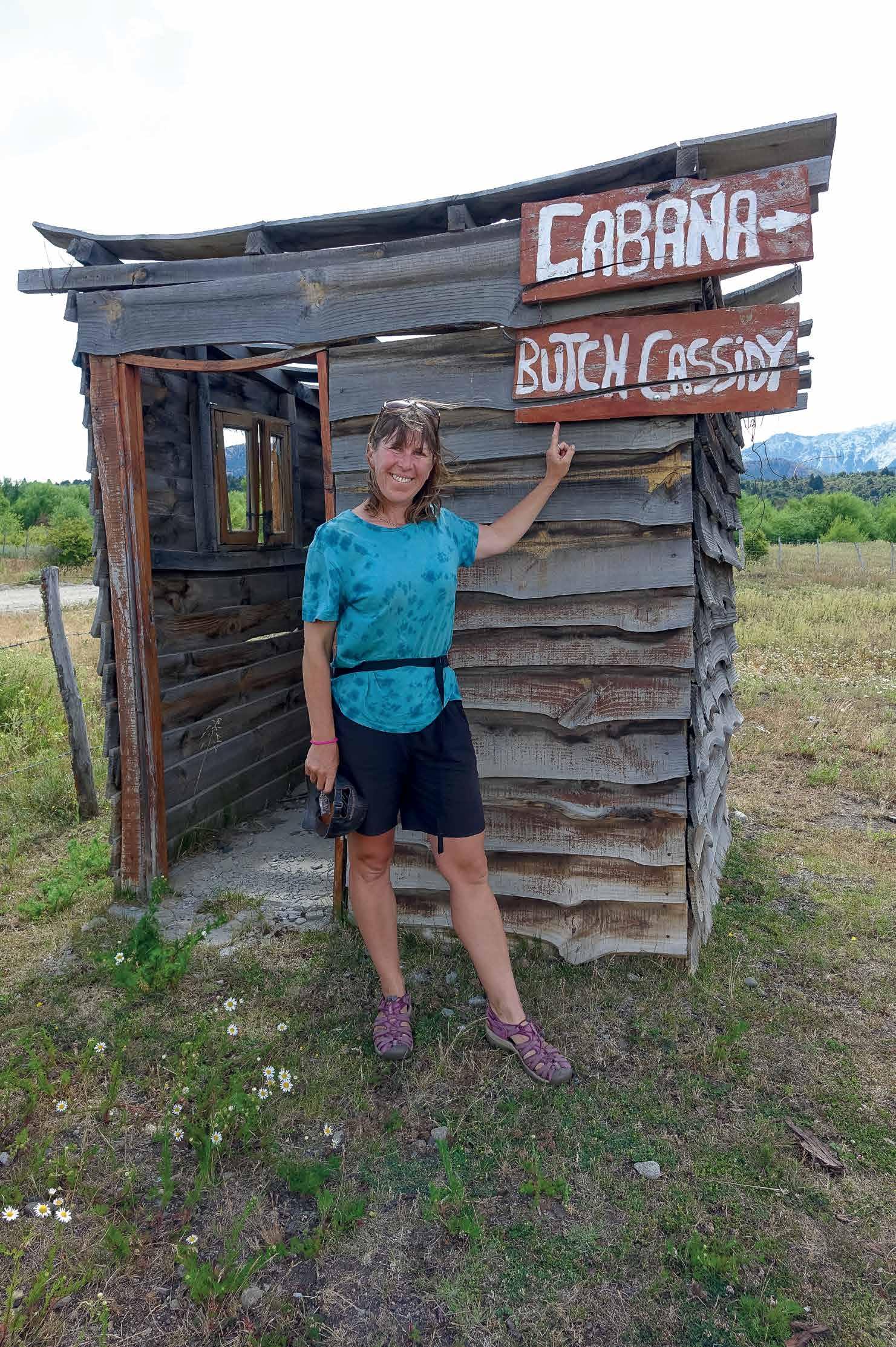
We almost missed it. The cabin wasn’t visible from the main road. The two signs, which we saw only once we’d turned down a gravel lane, were small and handpainted. Accustomed to the sleek, branded signage that draws attention to heritage places in New Zealand, we were perhaps expecting something more officiallooking. After all, we were about to visit the one-time home of two fabled 19th-century Wild West outlaws.
Immortalised in the film Butch Cassidy and the Sundance Kid starring Paul Newman and Robert Redford, the story of these outlaws has captivated generations. Based loosely on fact, the film tells of affable Wild Bunch gang leader Robert LeRoy Parker (Butch) and his partner Harry Longabaugh (Sundance Kid), who were on the run following a string of train and bank robberies in the American West.
In the film, the pair and Sundance’s lover Ethel (Etta) Place flee to Bolivia. But in the real-life version, the trio escaped first to Buenos Aires, Argentina, in 1901.
Although the city was experiencing a boom in European immigration, the banditos felt too exposed in the big city and eventually made their way to a tiny town called Cholila in the remote Chubut province on the Argentinian frontier.
After purchasing a 60.7-square-kilometre ranch (50,000 acres), the duo built a Wyomingstyle cabin made of mud-chinked logs. It still stands today, unattended but open to those who want to take a peek inside. Devoid of furniture, the cabin’s four rooms feel spacious, sporting wooden floors and thickly framed windows.
Outside we explored among several matching outbuildings and sheds. The whole compound is flanked by the Rio Blanco, and beyond that a vast expanse of sparsely populated cattle country, leading to snowcapped mountains in the distance.
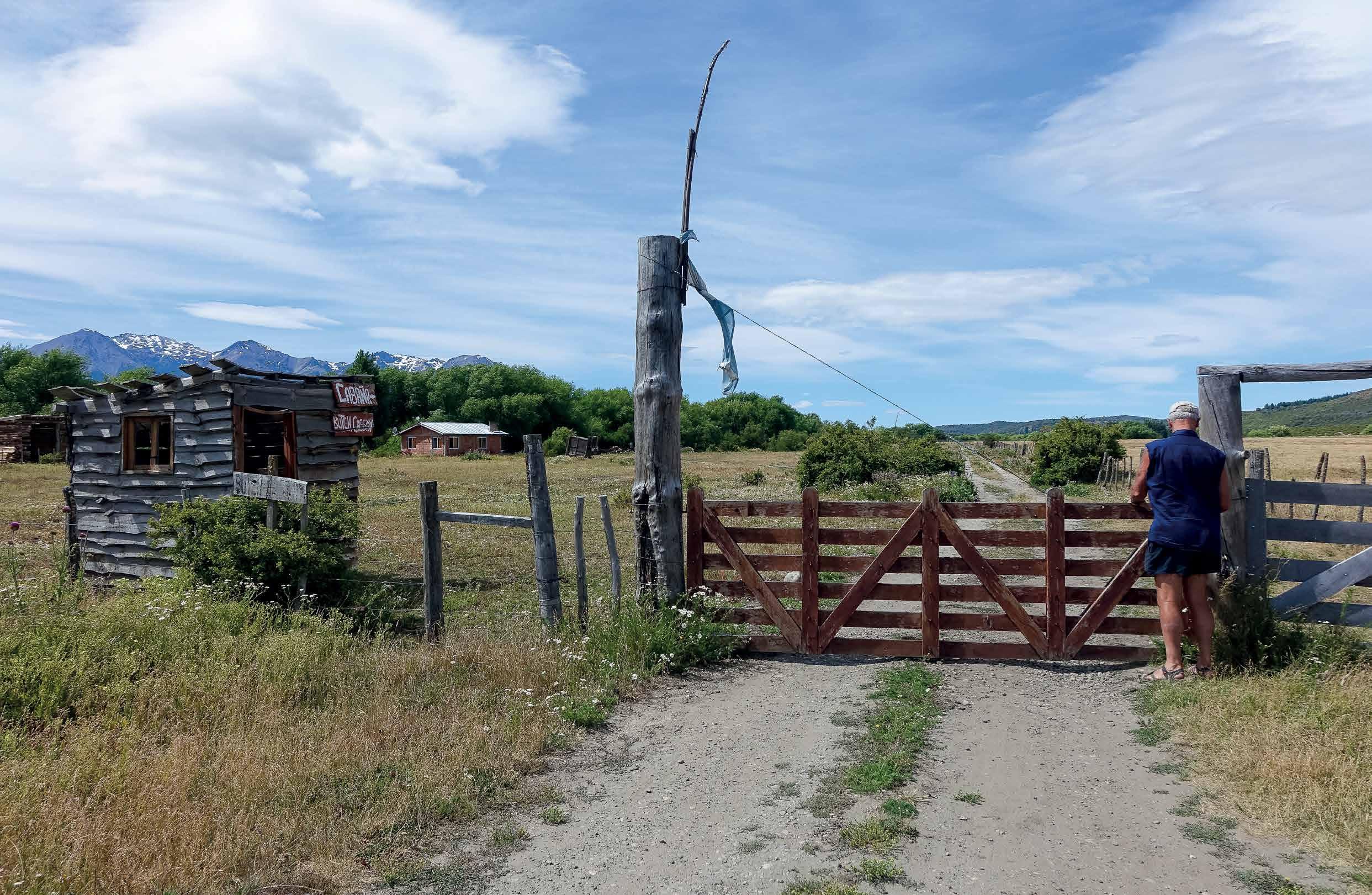
3.
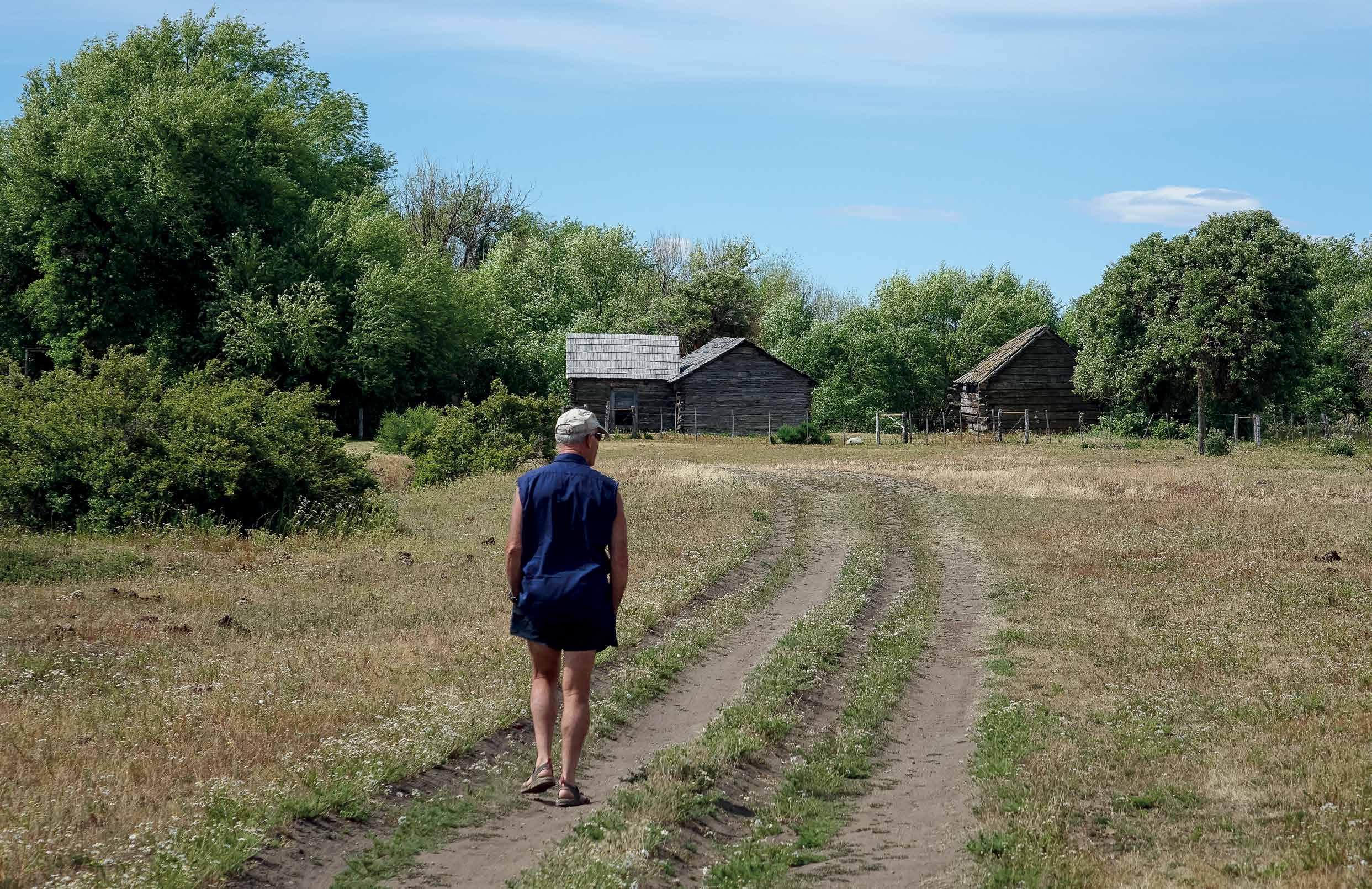
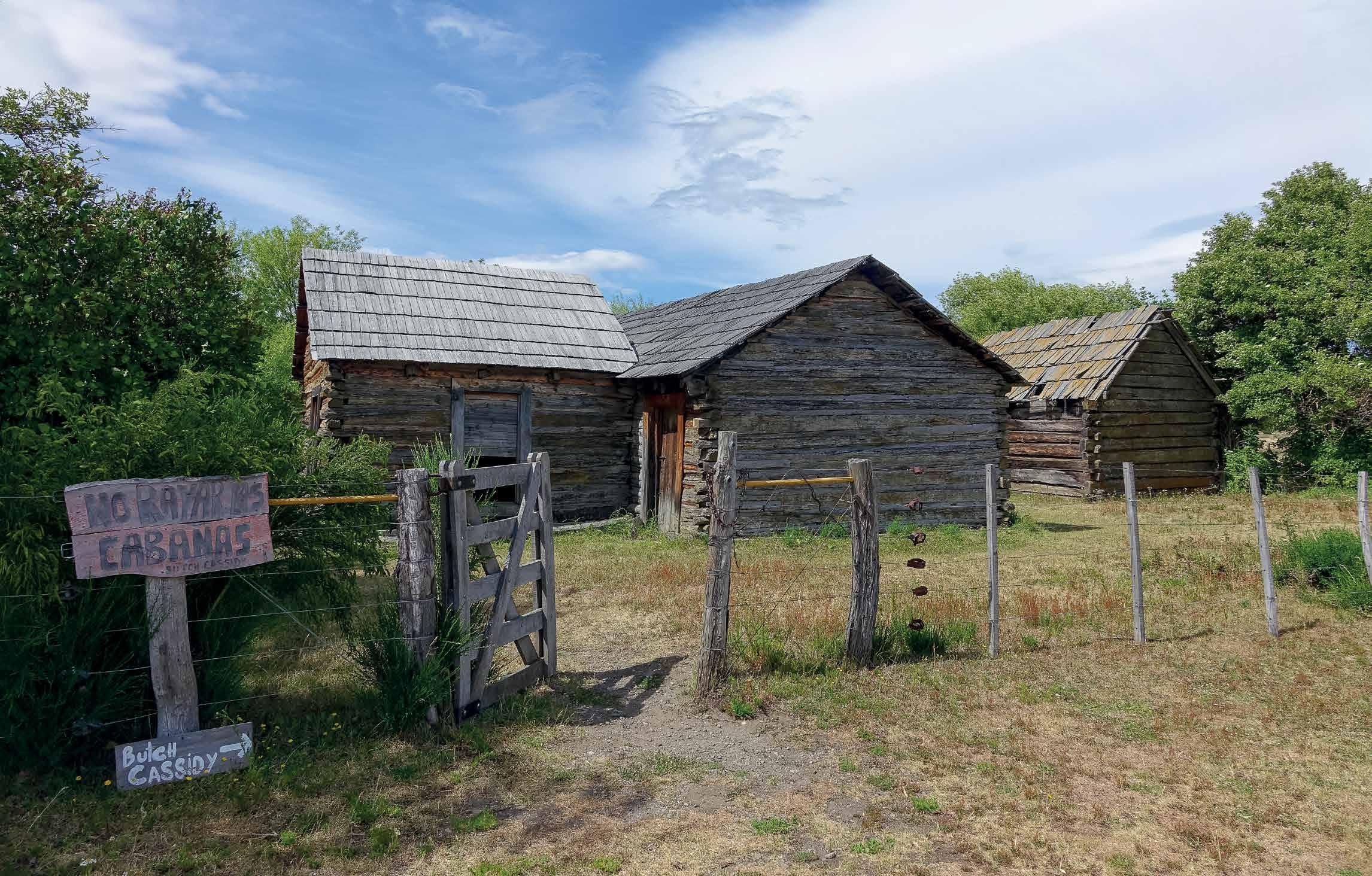
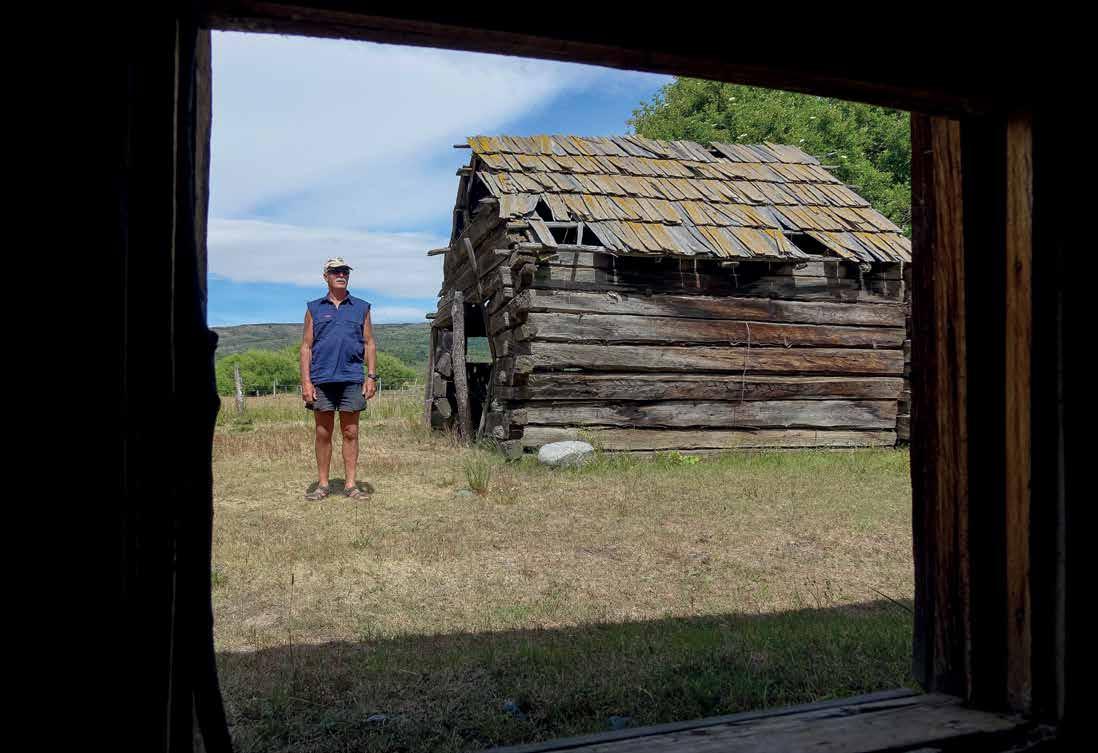
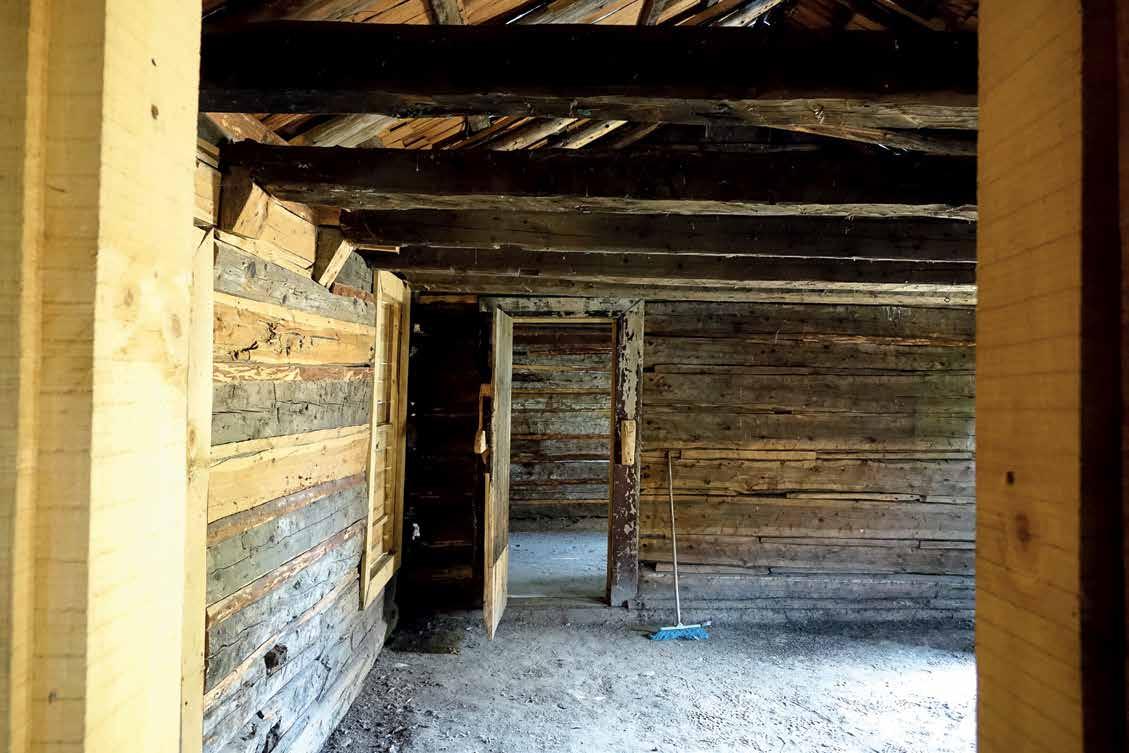
The area would no doubt have reminded Butch and Sundance of their home in the American Southwest. Having travelled for several months through Patagonia, we were unsurprised that there were no information panels of any kind at the cabin. Our only clue was a fellow visitor’s entry on a travel app. It recommended that we stop in at the nearby café museum Museo Bar La Legal, known as La Legal. Here we met Carolina Ruiz and her mother Nora Jalil, who operate the small café museum. To our amazement and delight, we quickly learned that they have a strong connection with New Zealand, acting as the Argentinian representatives for the New Zealand company Obo, which supplies the majority of the world’s field hockey goalie equipment. Carolina lived in Palmerston North for several months to play the sport.
Over a dulce de leche latte, Carolina told us that the land on which Butch and Sundance’s cabin is located is private, owned by the Daher family since 1910 (Butch and Sundance had sold it in 1905, just four years after they moved to the area).
The cabin was eventually leased to Chubut province, which in 2003 designated the site as Interes Provincial (Provincial Interest). Although she was unsure of the technicalities of the designation, Carolina noted that “after this declaration the government repaired the cabin, as it was about to fall down”. It was opened as a tourist venture a year later.
“We always loved that building,” Carolina continued. “It’s very close to our house and tourist cabins, so we always went there with visitors.” But, like us, they got frustrated at the lack of onsite information.
1. The cabin was built using mud-chinked logs, a technique not commonly seen in Patagonia.
2. Several other buildings were used for storage and animal shelter.
3. Built in 1901, the four-room cabin is still remarkably intact.
“We started reading books, watched videos, contacted historians, and made the museum with all the history we could collect.” La Legal has been a treasure trove of memorabilia since 2017, including a replica of what Etta’s room might have looked like.
Carolina estimated that in peak season they get between 50 and 60 visitors per day, about 70 percent from Argentina and the rest from across the globe.
“Some people know the story of the Wild Bunch, so they come to see the museum. And some others, they just run across the sign ‘museo’; they come inside and get to know the story.”
While they were in Cholila, Butch Cassidy and his two accomplices (under assumed names) lived as upstanding citizens. They registered a brand and grew their herd of cattle and sheep, building a mostly honest new life. Their definition of lying low was perhaps a little loose, spending their ill-gotten gains on glorious living, including tango parties and cabin concerts at which a governor and even lawmen charged with arresting them were honoured guests. Despite both having $10,000 bounties on their heads, they managed to elude the US-based Pinkerton National Detective Agency, which was still searching for them.
But they eventually slid back into a life of crime –and several locations throughout Patagonia mark the journey to their eventual downfall.
The first of these heritage places we found on our way south was La Leona. The large roadhouse was built by a Danish family in 1894 in an equally desolate spot on the Patagonian steppe. In 1905 the trio spent a month hiding out here en route to Chile, after robbing the Banco de Tarapacá y Argentino in Rio Gallegos, 1100 kilometres south of their Cholila ranch. The walls of La Leona are now a basic but informative makeshift museum, and you can drink coffee in the same place Butch did more than a century ago.
Although we never found the Rio Gallegos bank that the trio robbed, further north along Argentina’s east coast we came across one of the outlaws’ earlier haunts, the Hotel Touring Club in Trelew. Built in 1888, the building stands out with its English-style architecture that evokes the charm of the Victorian era and is on Argentina’s registry of historic buildings.
It boasts a string of colourful guests including a president, writers, and a representative of Germany’s Third Reich. A room on the main courtyard has been converted into a miniature museum, recreating how it perhaps looked when Butch and Sundance stayed here in 1901.
For us, following in the footsteps of the banditos was an adventure, but not an easy one. The only references we found to guide us were brief entries on our large-scale travel map, and blogs from fellow travellers. Despite an abundance of heritage places and local pride for them, the surprising lack of ‘official’ information available to travellers was ubiquitous, as was the absence of onsite information panels.
As a science and heritage communication specialist, I returned home with a renewed appreciation for the
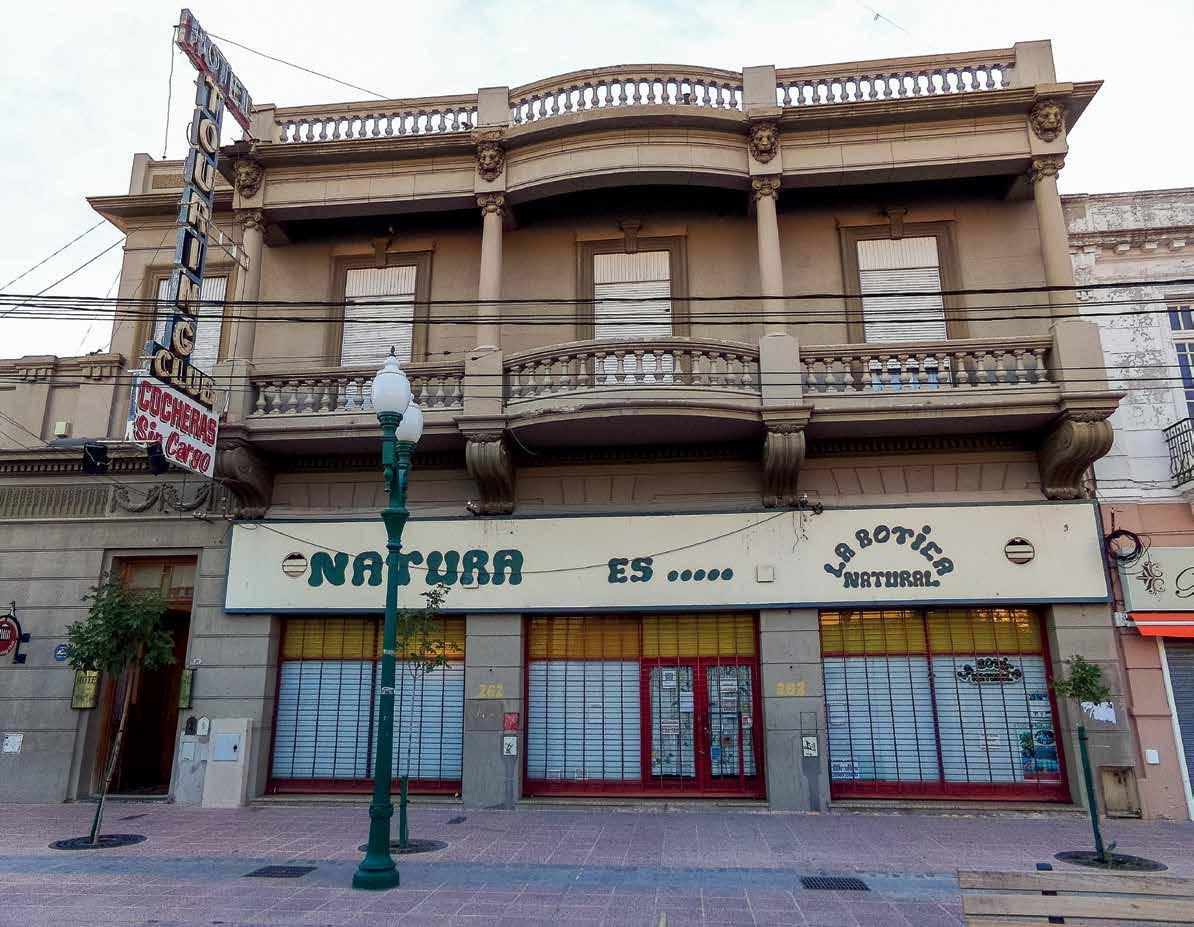
“We started reading books, watched videos, contacted historians, and made the museum with all the history we could collect”
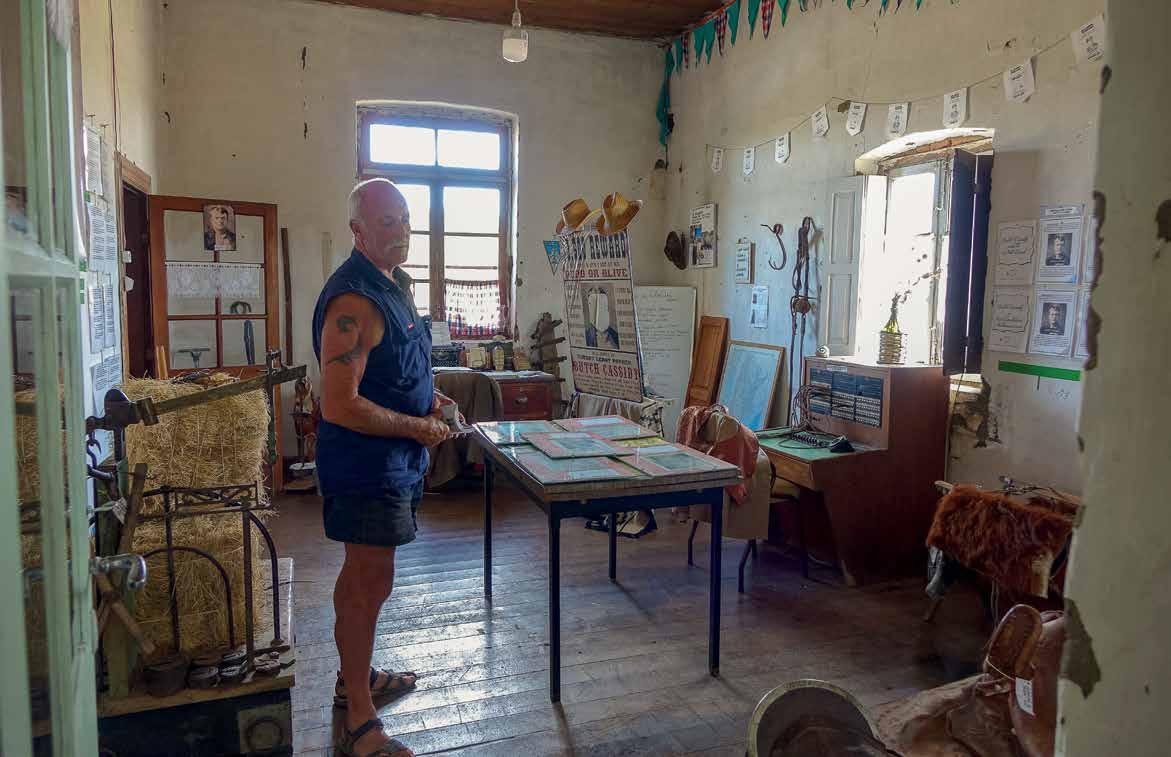
reliable visitor resources and guides that we take for granted here in New Zealand, including websites such as NZ History and Te Ara, and brochures and online visitor information provided by Heritage New Zealand Pouhere Taonga, the Department of Conservation Te Papa Atawhai, and Tohu Whenua.
What ultimately happened to Butch and Sundance after they left Chile is still something of a mystery. While Etta Place returned to the US, most evidence suggests that the outlaws headed north to Bolivia, where they allegedly stole the payroll from a silver mine and were eventually killed in a shoot-out. Others claim that one or both men survived and escaped back to the US.
What is certain is their cabin near Cholila – it’s still there and open to visitors… if they can find it.
4. Butch Cassidy is said to have stayed at the Hotel Touring Club in Trelew, a Welsh settlement in the eastern part of Chubut province. Image: Gastón Cuello
5. The nearby café museum Museo Bar La Legal provides the interpretation lacking at the homestead site.
(and reminding us of) the limits of any individual source or approach. Part one is largely a narrative treatment of three centuries of Ngāi Tahu traditional history, while part two takes a closer look at the iwi during the first half of the 1800s, in which Ngāi Tahu land was alienated and colonised by Pākehā.
Atholl Anderson
RRP: $69.99 (Bridget Williams Books)
The first edition of The Welcome of Strangers: A History of Southern Māori was published in 1998, having been commissioned by the Dunedin City Council to mark the 150th anniversary of the Otago Association’s settlement of the region. This new edition, co-published with Te Rūnanga o Ngāi Tahu, brings together that original scholarship, new research and insights gathered over the past 27 years with a profusion of maps, illustrations and photographs to create a compelling, visually rich take on this complex, fascinating history. And it is complex. Anderson’s ethnohistorical approach draws from a range of methodologies, while always acknowledging
Felicity Jones and Mark Smith
RRP: $85 (Massey University Press)
If we are asked to imagine a frame, I think most of us picture the same sort of thing. Maybe it’s rectangular, or wooden. Maybe it’s hanging in an art gallery. Mostly, it’s defined by what it isn’t: it’s the thing that isn’t the artwork. Without getting into controversial French philosopher Jacques Derrida’s theory of deconstruction, Felicity Jones and Mark Smith disrupt this notion of the frame with their lucid, articulate and beautiful series of collaborative artworks that form the spine of Case Studies: A Story of Plant Travel
This second section is organised more thematically than chronologically, covering the region’s political and social dynamics, economy, mahinga kai, and devastating Ngāi Tahu population decline in the 1850s, before bringing the book to a close with a retrospective on the ways that the iwi has continually evolved and adapted over time. With a great deal of rigour and integrity, this book pays loving attention to both close details and larger patterns of social and cultural impact.
Anderson sits us close enough to see the variation in the weave of fishing nets, and in the next breath sweeps us across centuries of warfare, resource management and cultural evolution. It’s a text that makes you constantly aware of the scale of the project, of the myriad intricacies that make up a history, and the immense impact that occurs in the precise moment that land and people meet.
“[It] really began as an image in my head, a box of romantic ‘English’ cottage flowers on a path in the 19th-century New Zealand bush,” says Jones. This mental image is recreated in the book, using flowers sourced from a Victorian ship’s log, but the most striking element of the image is the titular ‘case’.
A riff on a 19th-century design by Dr Nathaniel Bagshaw Ward, the rectangular, glass-panelled case holds the flowers and focuses the composition in a literal sense, but it also suggests a variety of readings on containment, colonisation, conservation, and a history of art and aesthetics. If there is an ontological line dividing frame and artwork, it is challenged thoroughly in these images.
The original ‘Wardian case’ was used to transport plant specimens over long distances, which simultaneously revolutionised botany and incited centuries of ecological consequence in Aotearoa. Invasive species in the ecosystem, the marginalisation of indigenous environmental knowledge, and also conservation and reclamation of native species like the ngutu kākā can all, in some sense, be traced back to this single invention.
This lens of the Wardian case focuses the topics of the essays and responses from writers such as Gregory O’Brien, Huhana Smith and Dame Anne Salmond as they explore the social, scientific and cultural consequences of plant travel. And as with any frame, you become conscious of what is and isn’t inside it. A fascinating and beautiful book.
We have one copy of The Welcome of Strangers: A History of Southern Māori to give away. To enter the draw, send your name and address on the back of an envelope to Book Giveaways, Heritage New Zealand, PO Box 2629, Wellington 6140, before 30 April 2026.
The winner of last issue’s book giveaway (Untold Intimacies: A History of Sex Work in Aotearoa, 1978–2008) was Mrs C M Ryan of Timaru.
Dinah Priestley
RRP:
Charles Ferrall
RRP: $50 (Te Herenga Waka University Press)
$55 (Mary Egan Publishing)
An Eccentric History in Batik: The Art of Dinah Priestley and Tony Burton opens with the ancient Egyptian god of the dead, Anubis, rendered in electric blue batik, signed ‘Dinah & Tony’; an unexpected image to open a book so firmly rooted in the Aotearoa of the ’70s and ’80s. But then, there is something unexpected in just about every corner of An Eccentric History in Batik, which simultaneously manages to be an artist’s statement, an illustrated memoir, and an elegy to Dinah Priestley’s late partner and collaborator, Tony Burton.
Priestley’s prose is lively and irreverent, almost reluctant. “I do not trust myself to write about art. I fear my own pomposity,” she writes, which might seem like an odd claim from the author of a book about art, but what this turns out to mean is that Priestley writes about her art practice with an uncompromising lack of pretension. She details her process, reckonings, activism and art commentary with the same personable tone you’d find across a dinner table or in a bar with your mates. “I’ve been arguing with my editor,” she confesses. “‘This chapter doesn’t need words!’ sez me. ‘It does!’ sez he.”
And you can see why she suspects that the context is unnecessary, given the bold nature of the batiks. Character leaps from the page in every image. Seeing the work all together like this, it strikes me how thoroughly the figures communicate their internality with a cartoonist’s concision for shape, line and gesture.
But the most vivid character is Tony Burton, portrayed lovingly and repeatedly by Priestley through mediums: anecdotes of their home, their shared art practice, and all the painted glory of Tony’s moustaches. It’s a moving tribute to a remarkable collaboration. The book closes with a final image of Anubis, this one signed only ‘Dinah’.
mahinga kai: food gathering and/or cultivation places ngutu kākā: kākābeak rangatira: chiefs whakapapa: genealogy
South by South: New Zealand and the Heroic Age of Antarctic Exploration tells the story of New Zealand’s role in ‘the Heroic Age’, that wave of exploration beginning at the end of the 19th century in which men set out to traverse the continent of Antarctica. The book brings to light many letters, newspaper articles and pieces of official correspondence during the five expeditions of 1901-16 using the ships Discovery, Nimrod, Terra Nova, Aurora and Endurance
Jane Ussher and John Walsh
RRP: $85 (Massey University Press) Olveston is one of New Zealand’s most remarkable and beautiful heritage homes. Built in 1907 by David Theomin, its opulence reflects the economic power that was concentrated in Dunedin at the start of the 20th century. Olveston: Portrait of a Home, evocatively photographed by Jane Ussher, documents its exquisite rooms full of treasures.
Justine Olsen
RRP: $165 (Oratia)
Ethnologist Elsdon Best spent many years documenting the culture, beliefs, customs and whakapapa of the Ngāi Tūhoe people, whom he described as ‘the children of the mist’. This monumental two-volume work comes back into print with the guidance of Dr Rapata Wiri (Ngāi Tūhoe, Ngāti Ruapani). Now in its fifth edition, Tuhoe: The Children of the Mist ranks as one of the greatest tribal histories of New Zealand.
Mr Ward’s Map: Victorian Wellington Street by Street
Elizabeth Cox
RRP: $90 (Massey University Press)
In 1891 a remarkable map of Wellington was made by surveyor
Thomas Ward. It recorded the footprint of every building, from Thorndon in the north and across the teeming, inner-city slums of Te Aro to Berhampore in the south. Luxuriously packaged with a cloth case and fold-out jacket, Mr Ward’s Map: Victorian Wellington Street by Street uses this giant map and historic images to tell marvellous stories about a vital capital city, its neighbourhoods and its people at the turn of the 20th century.
Brian Stoddart
RRP: $35 (Quentin Wilson Publishing)
A soldier and a bigamist, a family man and a fraudster, Etienne Jean Brocher led an extraordinary life in 19th-century France, North Africa and New Zealand. Along the way he collected aliases, prison sentences and enemies as he slipped from town to town, escaping debts and family duties. Drawing on French military archives, family records, and newspaper reports from across colonial New Zealand, as well as Brocher’s own handwritten account, this absorbing biography untangles the complex trails Brocher left behind him in colonial towns and in the public imagination.
Isaac Featherston ‘Petatone’: A Colonial Life
John E Martin
RRP: $60 (Te Herenga Waka University Press)
Isaac Featherston was at the heart of some of the most significant developments in New Zealand, from the 1840s colonisation by the New Zealand Company to the abolition of the provinces in 1876. Known amongst Māori as ‘Petatone’ and with a reputation for directness and honesty, he was at the very centre of Pākehā-Māori relations, and in his 1857 official portrait is depicted alongside leading Te Āti Awa rangatira Honiana Te Puni and Wī Tako Ngātata. n
A lifelong interest and an accomplished career in landscape architecture and environmental planning began for Di Lucas with her childhood in Bendigo, Central Otago
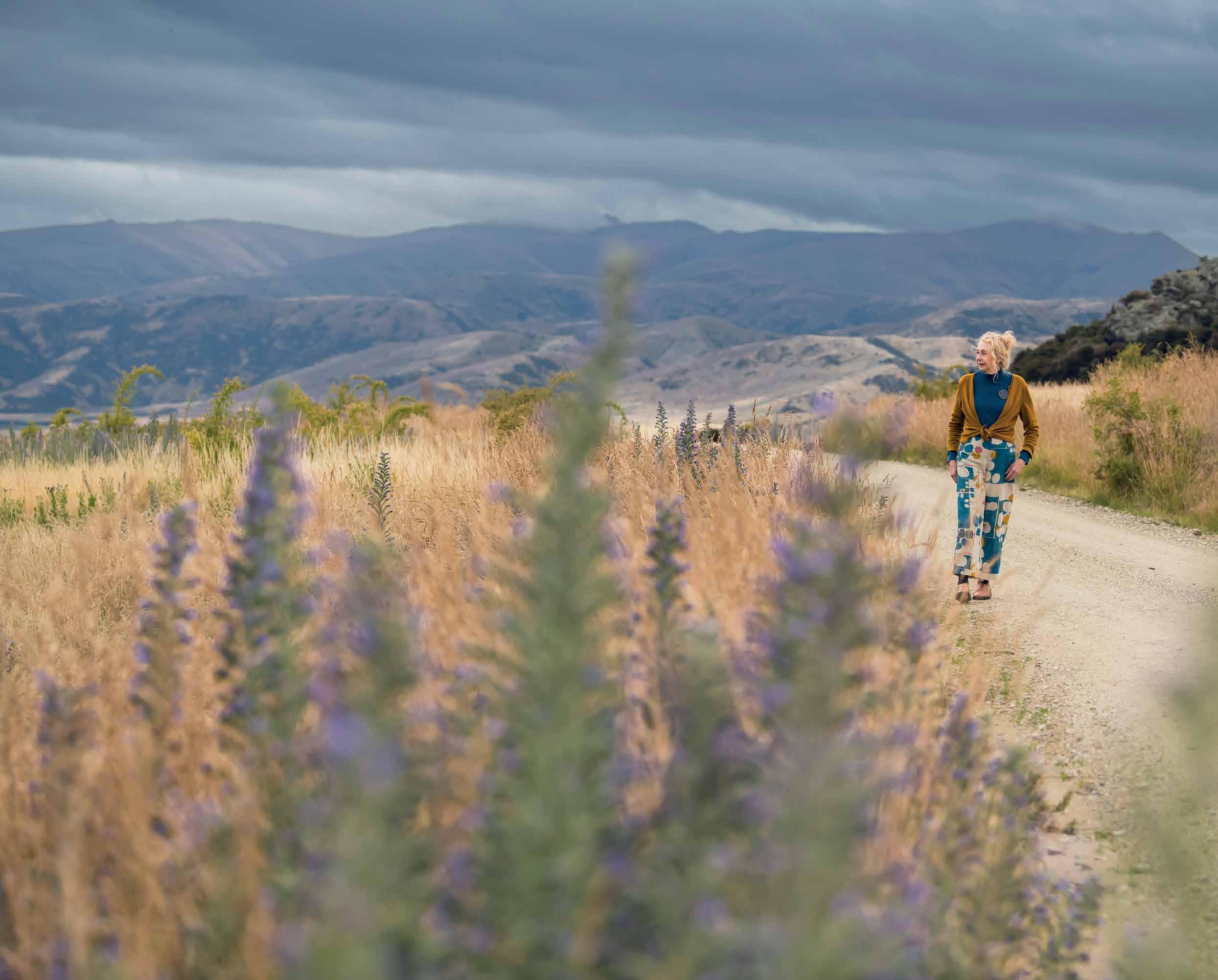
Igrew up on Bendigo Station in Central Otago, which my father and uncle bought in 1947 to farm sheep. The area is well known for goldmining in quartz-rich schist bedrock. I spent my childhood playing in caves and rocky outcrops, and among the stacked schist buildings, walls and dams, as well as the mullock heaps, stamper batteries, adits and mine shafts of what is now the Bendigo Historic Reserve [part of the Bendigo Quartz Reefs Historic Area].
My father told me there were around 150 mine shafts on the station – small holes in the ground, just a few metres across, but varyingly deep. I had to keep my pony away from them. My parents once lowered me down into one of the shallower ones so I could rescue a sheep that was stuck at the bottom. My father was an excellent farmer and produced the best merino wool in New Zealand. My mother’s stepmother grew up on the Bendigo [Historic Reserve], near the Blue Mine, where her father was an engineer.
That was a deep mine – we’d drop a rock in and could count to 14 seconds before it hit the bottom. She used to take us along the old roadway worn in the schist to go and sit on what had been the front doorsteps of their house under a schist overhang. She’d tell us stories about living there, and how they walked down over the rocks to go to school each day.
That natural and historic heritage was just part of my life when I was young. There were many moa bones, which were fascinating, as well as an old pounamu trail near the north boundary, and hāngi pits down by the flats.
There is also significant Chinese goldmining and food production heritage in the area. My father always sought to retain the biodiversity of the tussock grasslands and supported research on this. He had a firm policy of not ploughing any land that had not been ploughed before.
My mother was also very interested in the alpine flora and fauna, and I inherited that
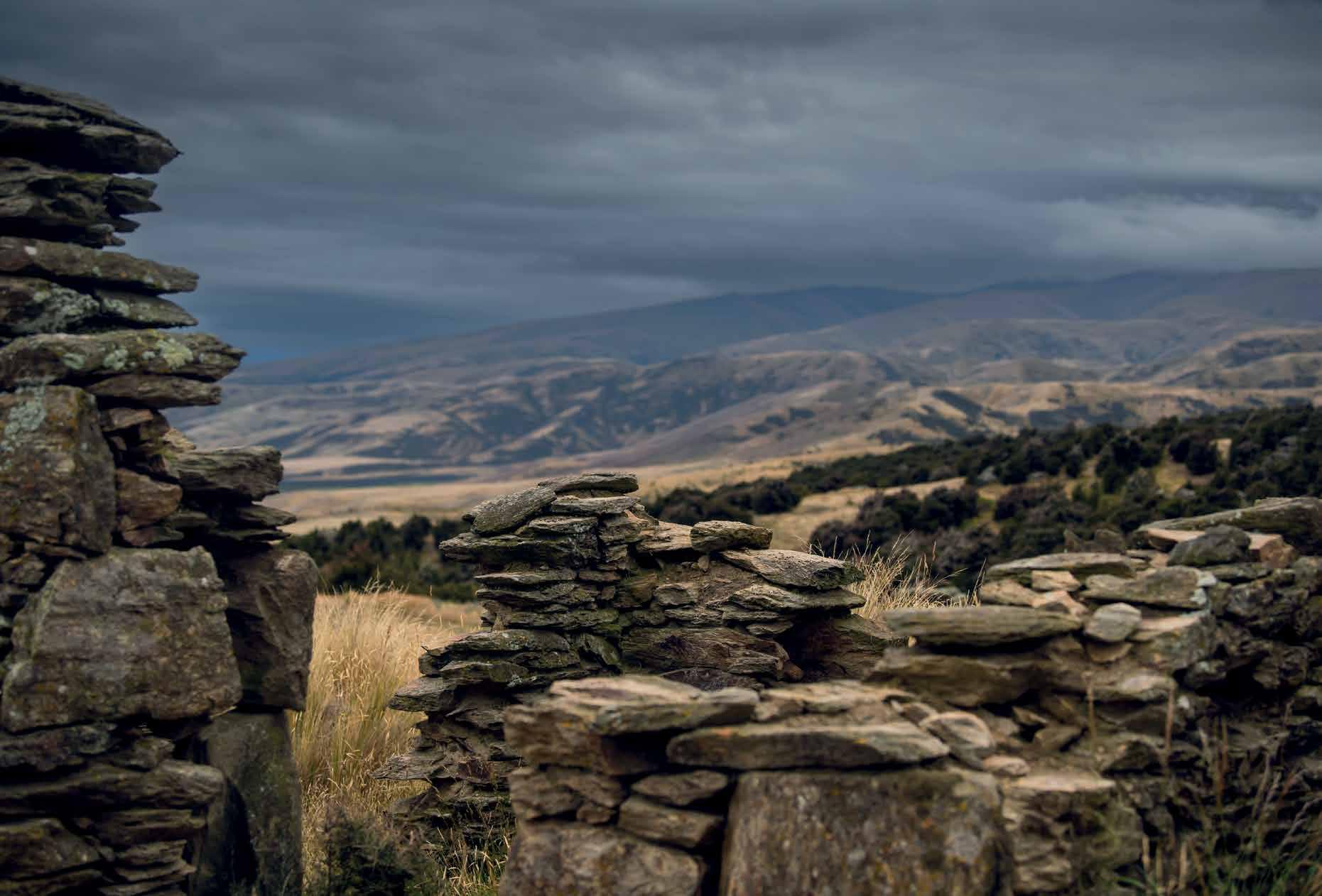
interest – I used to be called ‘Skink’ at school. The incredible landscape – the schist outcrops, subalpine tussock and shrublands of the beautiful Dunstan Mountains and the terraces below, sculpted and deposited by the Lindis Glacier – definitely influenced my career choice.
First I studied botany, zoology and geology at the University of Otago Ōtākou Whakaihu Waka, then I pursued a post-graduate degree in landscape architecture at Lincoln University Te Whare Wānaka o Aoraki. Landscape architecture is a cool profession as it interweaves nature and culture and the past, present and future.
My father sold the station in 1979 but kept ownership of one of the properties, Top House. It was built close to the Clutha River Mata-Au in 1926 for the previous owners of the station, the Begg family. Constructed of mudbrick, with a hip roof and verandahs on all four sides, it is well designed for Central Otago. The verandahs keep the strong sun off the windows, except in the winter when the sun is low, and the mudbrick provides great insulation. The verandahs were also designed to sleep on, which was considered healthier back then, and the dressing rooms and bathrooms open onto the verandahs.
It’s just lovely, unchanged, and I still visit and stay four or five times a year. There’s nowhere else like it.
The views expressed in this article are those of the interviewee and do not necessarily reflect the views of Heritage New Zealand Pouhere Taonga.
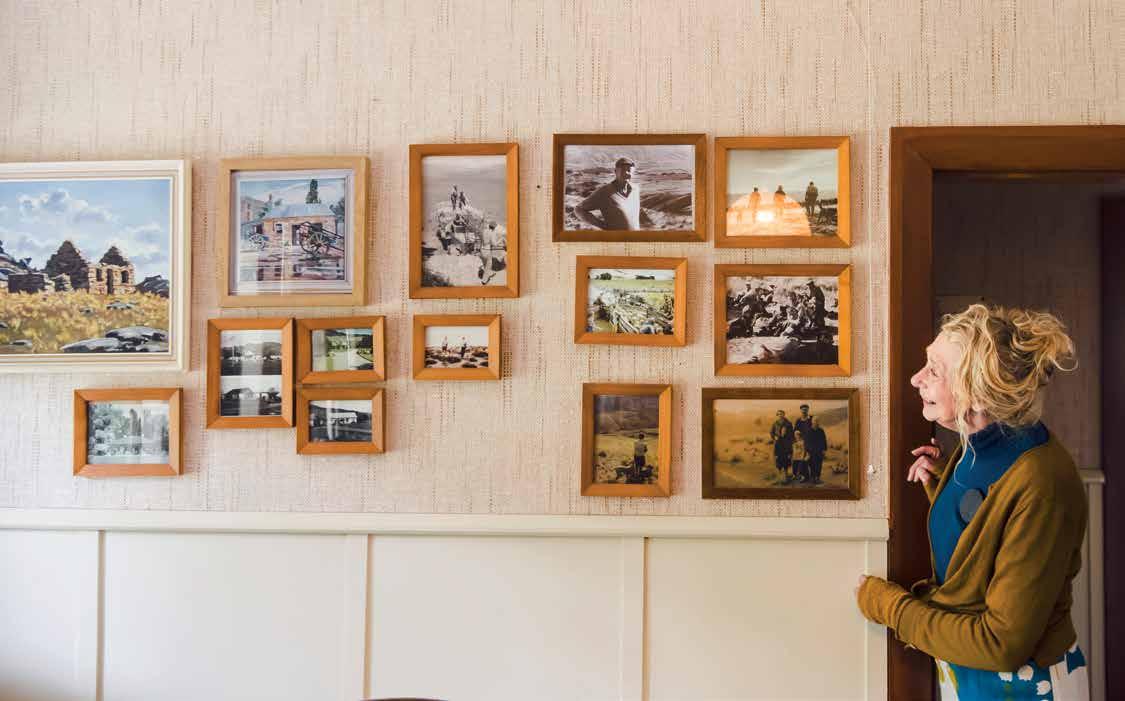
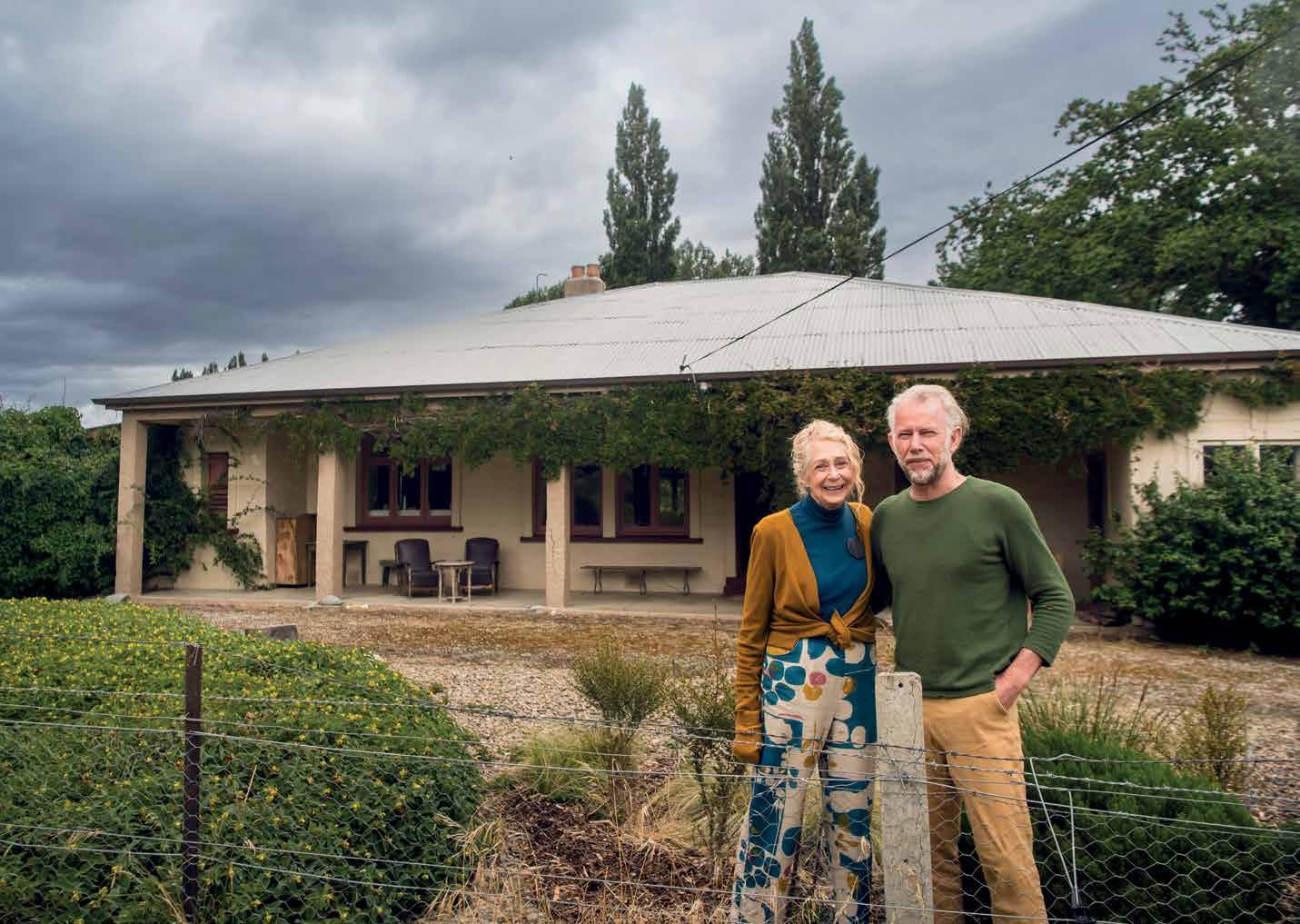

“Respect for the past is a key to the future”
Established in 1854 the School has a colourful history.
View student records, Collegians, old boys’ war medals and letters, photos, uniforms, cups and trophies, newsletters and programmes.
GROUP TOURS
Up to 10 people. Can be arranged by contacting Richard Bourne 0274 812 324 or email museum@ collegiate.school.nz
Email museum@collegiate.school.nz
Visit us at ehive.com/collections/3324 Whanganui Collegiate School, Liverpool St, Whanganui

Dealers in Maps and Prints of the Pacific
Dealers in Ancient Coins and Antiquities
www.antiquarius.co.nz antiquarius@xtra.co.nz 09 575 8039
APPLICATION TO SPONSOR A WINDOW IN THE ŌTAKI ROTUNDA
Sponsorship cost is $500.00 To be paid on confirmation of acceptance
Name of applicant:
Email:
Phone:
Name/s to be printed on window sill plaque:
BANK ACCOUNT: Friends of the Otaki Rotunda 38 9020 0450771 00 Open to all individuals, families, organisations and businesses.
Email form to admin@otakirotunda.org.nz or phone 027 683 0213 for more information

www.otakirotunda.org.nz
Registered Charity: N0. CC56810 IRD 129 767 308
Call Tony on 027 4746 093 for a