0 5 / F O L K L O R E O F E C C L E S C A K E 0 6 / W H A
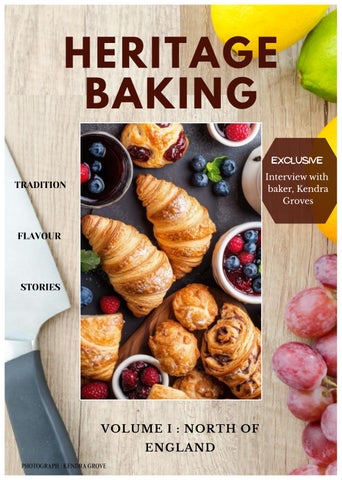
7 - 1 0 / I N T R O D U C I N G
K E N D R A G R O V E S
1 1 / C O N T A C T
I N F O R M A T I O N
FROM THE EDITOR
I assumed that my time at Manchester Metropolitan University would be devoted to lectures, assignments, and deadlines when I had first arrived What I didn’t expect was that the city , with its g rey sky, crowded streets, and surprising warmth, would open my eyes to an entirely different world of stor ies shared through baked goods rather than books.
Manchester is famous for its art, music, sporting events, and industrial history, but I quickly learn ed of its other layers, such as the famously made sourdoughs in Ancoats, the Eccles cakes hidden in tiny shops, and the delicious Manchester tarts serv ed in quaint cafés. Desserts became a regular part of my schedule, offering tiny glimpses into the culture o f my new hometown, soothing rewards, and moments of connection among classroom discussions and nights out exploring the Northern Quarter.
Despite Britain's fascination with baking, I observ ed something surprising while exploring the food media landscape: there was not a single publication focus ed exclusively to baking heritage. Recipes and trends were covered by fancy names, but no one appeared to be preserving the backstories. I was inspired by that gap.
This culminated in the creation of Heritage Baking: Volume One, The North of England.
This issue combines storytelling, flavor and herita ge. In addition to featuring voices like baker and food vlogger Kendra Groves and Dhwani Ruparel, whose journey from Oregon to Manchester proves how baking transcends cultural boundaries, it delves de ep into the pastries that define Manchester. I've met incredible individuals, explored new cafés, and com e to realize that food is more than simply food—it's identity, memories, and belonging.
I hope this magazine invites you to view pastries a s living stories of connection and culture
MAHEK SAXENA EDITOR IN CHIEF
THE SPIRIT OF NORTHERN BAKING
WORDS BY MAHEK SAXENA
I n the North of England, heritage baking is more than just food; it's a dynamic representation of local identity, culture, and creativity. For generations, common ingredients have been fashioned into cherished pies, breads, and tarts that evoke the flavors of communities of laborers, farming villages, and industrial towns. The people of that time and for generations have united to mold these recipes with love and fondness. Every bake is rooted in memories and inspired by ingenuity, rendering it both poetic and beneficial.
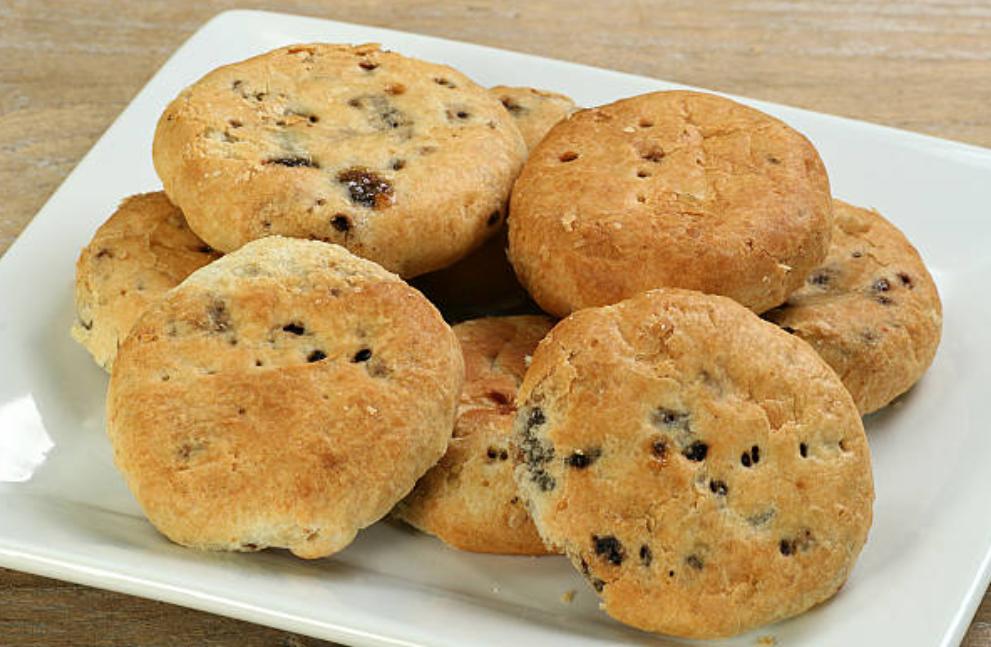
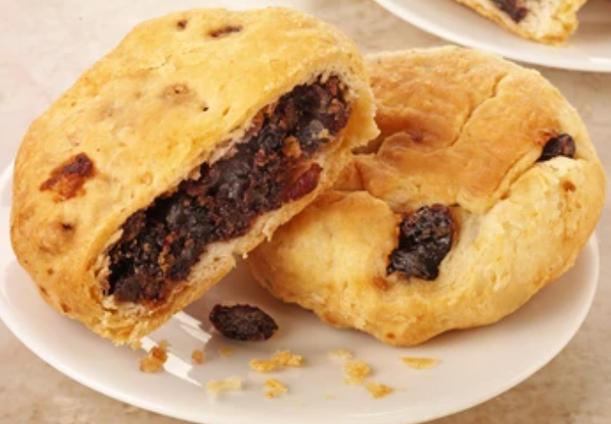
The Eccles cake, a crispy pastry bursting with cherries that has spread far beyond Lancashire, is one of the region's glories. James Birch began selling it successfully in the early 1700s, and its delicate flavor and portability made it a favorite in tea parties, school lunch boxes, and even globally, where it remains to bring back fond memories of Britain.The Yorkshire curd tart, which originated from dairy culture, has a connection with the region.
Local farmers made a meal that combines both economy and rural resourcefulness by transforming excess curd into a dessert with eggs and butter that is lightly sweetened. It is a culinary representation of life on farms, rather than just a dessert.
Then there exists the Chorley cake, which is often thought of as the less elegant relative of the Eccles cake. Made with simple dough and cherries, it lacks of sugar that is added but exudes warmth and friendliness. It represents a sense of sharing and togetherness and is usually given at Lancashire celebrations.
These pastries act as passed down as culinary legacies. Today, local festivals and artisan bakers are reviving centuries-old traditions, honoring the North's culinary legacy while strengthening neighborhood bonds and drawing tourists.
PHOTO STOCK.IMAGE
S T S T O
M A N C H E S T E R ’ S C A K E S
Dhwani Ruparel, 23, spent her childhood roaming the streets of Portland, Oregon, always looking for her next adventure. Often enjoying the aesthetics of sun and rain, she has always loved travelling, hiking and eating foods from different cultures. She received a degree in Chemistry from Oregon State University, but considering her research and studies due to her major and the continuous lab hours till late night she spent her free time exploring and enjoying.
Her safe houses included St. Honoré Boulangerie, Tula Bakery, and Ken’s Artisan Bakery. Dhwani recalls, “I would take out a cardamom roll or a matcha red bean pain suisse and just sit outside, observing people, talking to friends, feeling like my hometown was alive in a very personal way.”
Food was more than just survival; it was a flaky pastry that represented creativity, comfort, and connection. Dhwani relocated to Manchester in 2022 to take care of her grandmother. It was a painful shift. The initial weeks were lonesome, but the city was bustling with activity and had its own unique beauty. “Manchester’s streets are vibrant but the weather here gets dark so early,” she continues, her voice waning. “I miss Portland’s sunshine.”
There, even wet days feel bright. The chilly evenings here started to make me feel down. I often forced myself to even step outside the house and explore around. At first, she found Manchester’s weather difficult, with its long, dreary winters and early sunsets.
She acknowledges that “I felt the blues creeping in during November. I missed the sunlight in Portland.” The light felt warmer there, even in the rain. The darkness struck her more forcefully than she had anticipated. She had been accustomed to Oregon’s long summer evenings, which were filled with golden light that lasted deep into the night. By four o’clock, darkness had already engulfed Manchester’s streets.
Dhwani struggled at first. Sitting beside her grandmother’s window, she would browse Netflix and cozy up to old shows she had binge-watched while in college. She claims that on certain days, she hardly wanted to leave the house. “To kill time, I would rewatch Stranger Things or Gilmore Girls.” She created processes as a result. Not the only anchor, but a sort of one, was going to bakeries.
She would put a book in her bag, usually a used copy from Blackwell’s or Chapter One, and go to the city center on days when the rain seemed to go on forever. “It was magical to sit in the John Rylands Library,” she remembers. It was like entering another century. I felt better just being there, even when I wasn’t reading.
Weekends provided a chance to explore. She spent time at the Whitworth, strolled through Platt Fields Park when the weather permitted, and explored the Manchester Art Gallery with a few new people. Dhwani muses, “The parks here have their own quiet beauty, but it wasn’t the same as walking the trails back in Oregon.” Every little routine, like having croissants at Pollen, spending an afternoon at a gallery, or burying herself in a book, assisted her in redefining the city. She claims that Manchester will never be Portland, but that’s okay. I’m discovering new ways to find light.
Her therapy was exploration. Dhwani embraced Manchester’s bakeries as her new home, and she approached each one like a researcher, taking in the flavors, scents, and ingredients with the same feeling of wonder she had experienced when discovering Portland. Ancoats’ Pollen Bakery was her first destination. Their pastries were delicious, buttery, flaky, and perfectly baked. After that, she went to The Flat Baker, which is famous for its creative pastries. “I wouldn’t have anticipated the lavender and lemon undertones in their “Surprise Me” croissant in Portland. Yet it worked flawlessly”
Design : Mahek Saxena
Photo : Mahek Saxena
“Even when it’s grey outside, a perfect pastry can make everything feel lighter.”
She made new friends in the city who were as passionate about eating as she was. She met Sara and Jamie, who were similarly charmed by Manchester’s blend of history, nightlife, and culinary discovery, at a relaxed brunch at Foundation Coffee House. Together they have even explored the night markets and clubs or the plays at Palace theatre.
Dhwani eventually discovered how to find a balance between curiosity and nostalgia. She made her grandmother some of her favorite Portland dishes, like cardamom buns and sourdough rolls, but she also happily embraced Manchester customs, like Manchester tarts and Chorley cakes. “We attempted making Eccles cakes from scratch when I once had Sara and Jamie there. We also made a tiktok but it was so chaotic we thought we might get banned. While messy, it was an incredible amount of fun”.
Dhwani considers how her experience has influenced what she believes. “Food is creativity, identity, and memory.” Portland taught me to try new things and have enjoyable times while Manchester’s bakeries taught me to value my time and appreciate the good old days. Even though I miss the famous streets of my hometown, combining both of them has helped me feel rooted.
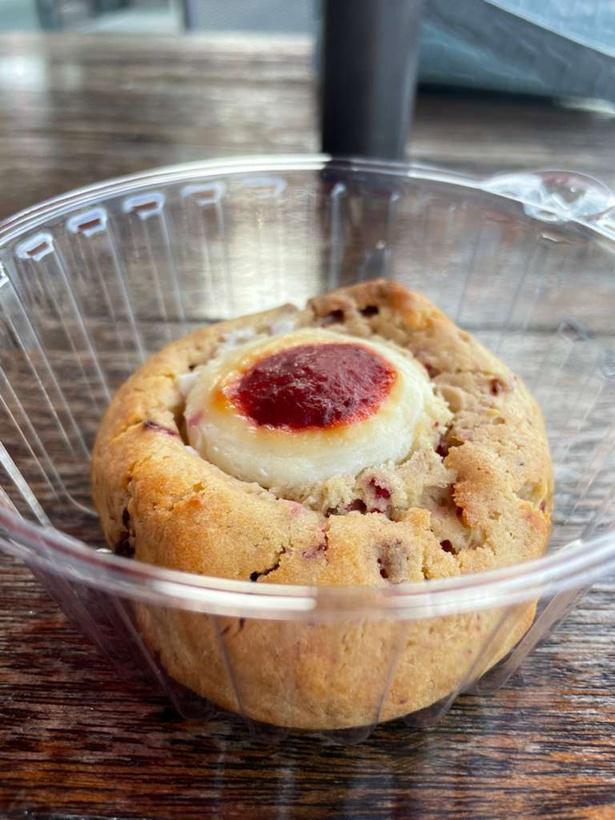
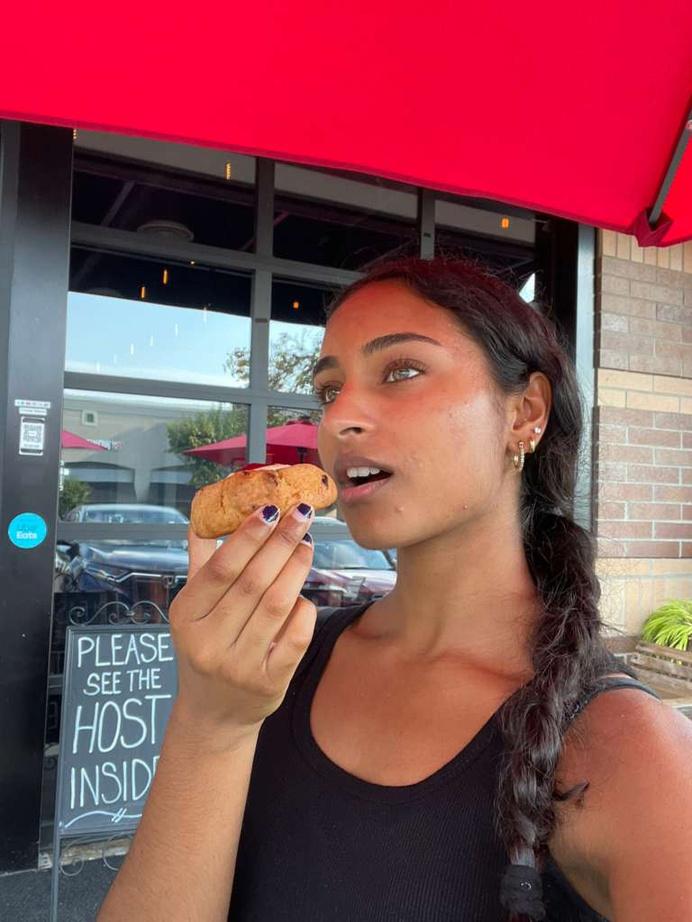
“These days, every trip to the bakery is a meditation and a thrilling experience”. Her everyday existence is connected with the pleasant aromas, flavors, and history of Manchester and its pastries. She holds a freshly purchased Chorley cake from another cafe she came upon and smiles. She claims that each bite tells a tale. “It’s friends, experiments, discoveries, the past, and the present. I’m learning patience, tradition, and happiness in the little things from Manchester. And I’ll take that lesson with me wherever I go”.
Her old notebook where she used to take notes is now full of memories: friends laughing over late-night takeout, afternoons spent in libraries when it rained nonstop, and mornings when a simple treat made her feel better. “I see more than food when I go back and read it again,” she says. “I envision a path of discovering how to fit in.”
She has learned perseverance from Manchester, with its many paradoxes, including its gray sky, vibrant nightlife, industrial grit, and flaky croissants. Portland, the city of light and new beginnings, is still home. However, Manchester has evolved into a different city where she made friends, learned about art, and found happiness in little pleasures. According to Dhwani, “it’s not about replacing one with the other. Knowing that you can incorporate both into your story is important.”
The Haunting of the Eccles Cake
Despite its seemingly innocent appearance—flaky pastry folded over a rich center of spice and currants—the history of the Eccles cake is filled with unusual tales. Today, it is a beloved northern staple that has been relished at tea tables all over Britain, transported abroad, and complimented by bakers. Beneath its exterior, however, is a more sinister past of prohibitions, superstition, and eerie rumors that continue to permeate Lancashire mythology.
The story starts with Puritans rather than bakers. Under Oliver Cromwell’s leadership, England experienced extensive social improvements in the middle of the 17th century. Puritan leaders, who were notorious for their mistrust of pleasure, prohibited what they considered to be “sinful indulgences.” Food was scrutinized in addition to theater, dance, and Christmas celebrations. Eccles cakes are loaded with fruit, sugar, and butter. However, tradition claims that not everyone followed orders.
According to one story, a widow continued to bake Eccles cakes in secret from her cottage. She sold her pastries to hungry workers and tourists for pennies, earning her a reputation as a giving person in the community. But according to the account, she paid a price for her disobedience.
It started with little setbacks. Once reliable, but her oven became unpredictable, with doughs collapsing and flames flaring. Even when she bought them fresh, her currants soon became sour overnight. After dusk, the neighbors became concerned when they heard odd pounding noises coming from her chimney.
Some people insisted it was just wind in the chimney. Others claimed it was the devil himself, who had come to get the widow’s money for indulging in sinful pleasures.
Following Cromwell’s death, the Puritan ban was overturned, and Eccles cakes were once again widely available on tables and in bakeries. According to mythology, the hauntings vanished abruptly. After the town’s commerce revived, James Birch of Eccles started selling the cakes on a business basis around the beginning of the 18th century. Their notoriety then expanded throughout Britain and eventually abroad.
However, certain superstitions held on obstinately. The widow’s account was echoed by older residents who said that throwing away an unfinished Eccles cake was unlucky. Some cautioned against baking the cakes on Sundays because they thought it would bring bad luck.
Whether true or not, the widow’s story captures the apprehension of the era: fear of punishment, dread of starvation, and fear of defying rigid moral standards. A currant-filled pastry served as both a symbol and a scapegoat in this instance, as folklore frequently transforms everyday life into a fable.
Therefore, take a moment to think before you bite into an Eccles cake. There is a history of defiance, gossip, and tenacity hidden behind the sticky currants and buttery flakes. Additionally, don’t worry if you hear a knock on the window while you’re eating; it’s most likely just the wind.
Photo: Adobe Stock Design: Mahek Saxena
SAYS ABOUT YOU SAYS ABOUT YOU WHAT YOUR PASTRY WHAT YOUR PASTRY
Classic and dependable, but with hidden depths not everyone notices.
Sweet and fun, but you tend to leave a bit of a mess behind.
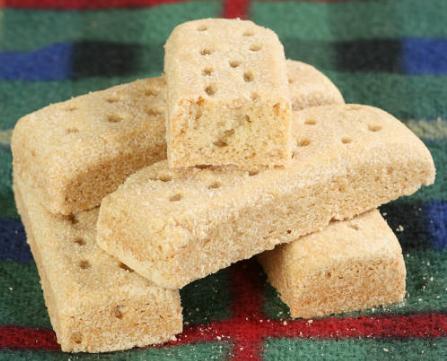
SHORTBREAD
Simple, steady, and timeless—never flashy, but always loved.
Loved by all, though some say you’re a little too much sometimes.
Effortlessly stylish— though a touch flaky when things get tough.
CUPCAKES
Cheerful and colourful, though a little too sweet for some tastes.
ECCLES CAKE BROWNIE
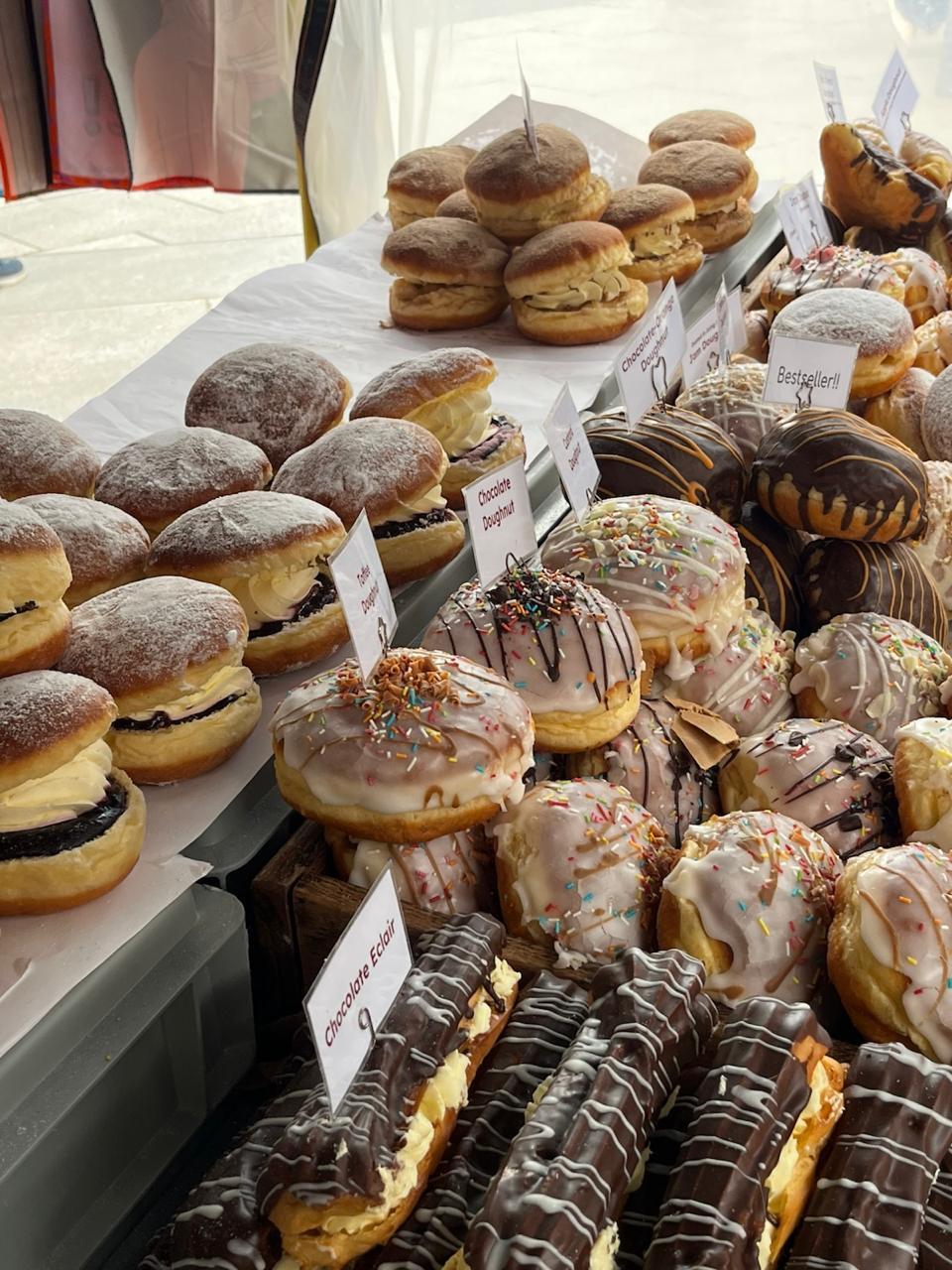
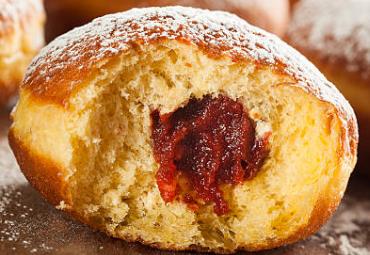
JAM DONUT CROISSANT
photos: adobe Stock
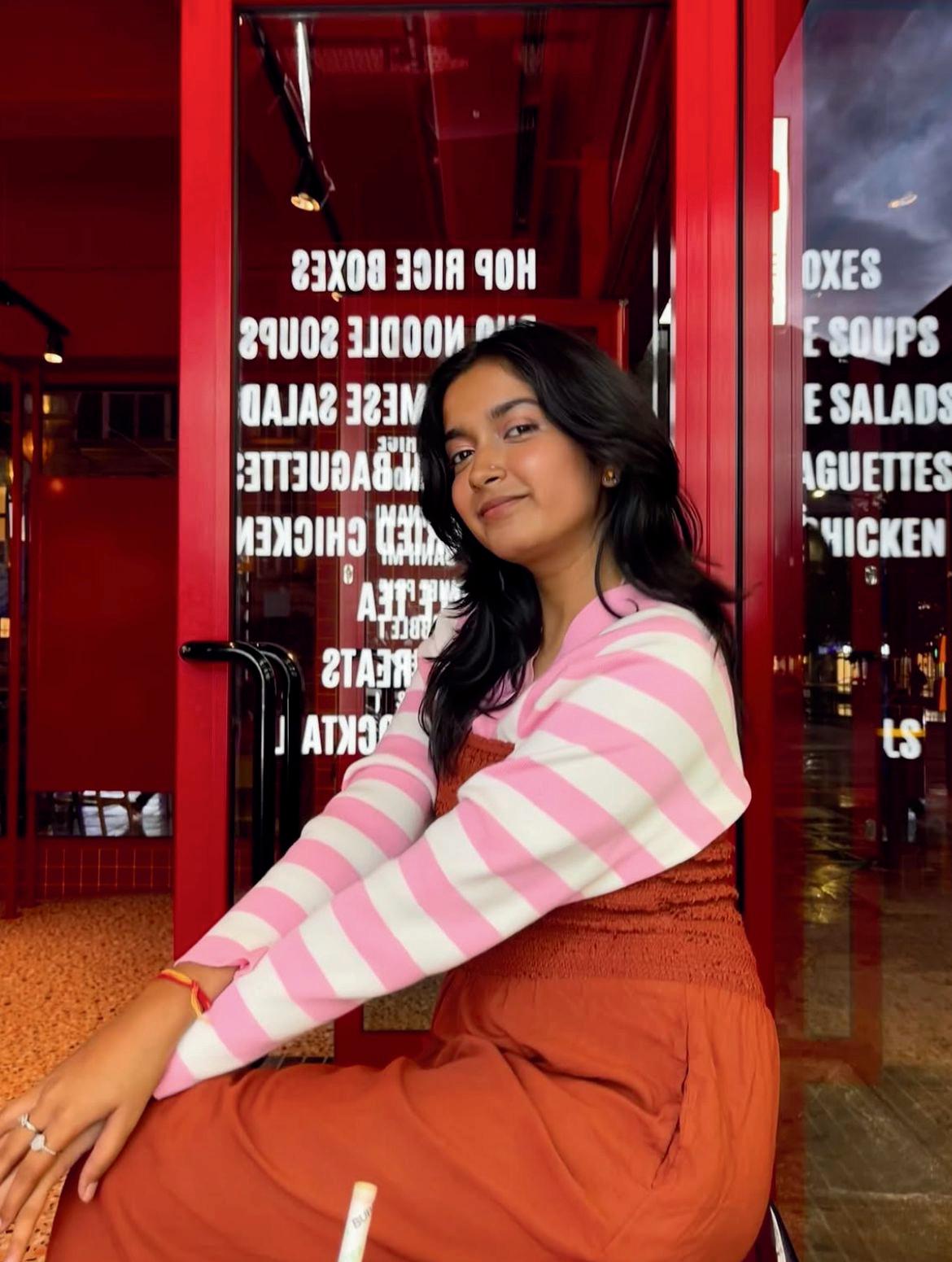
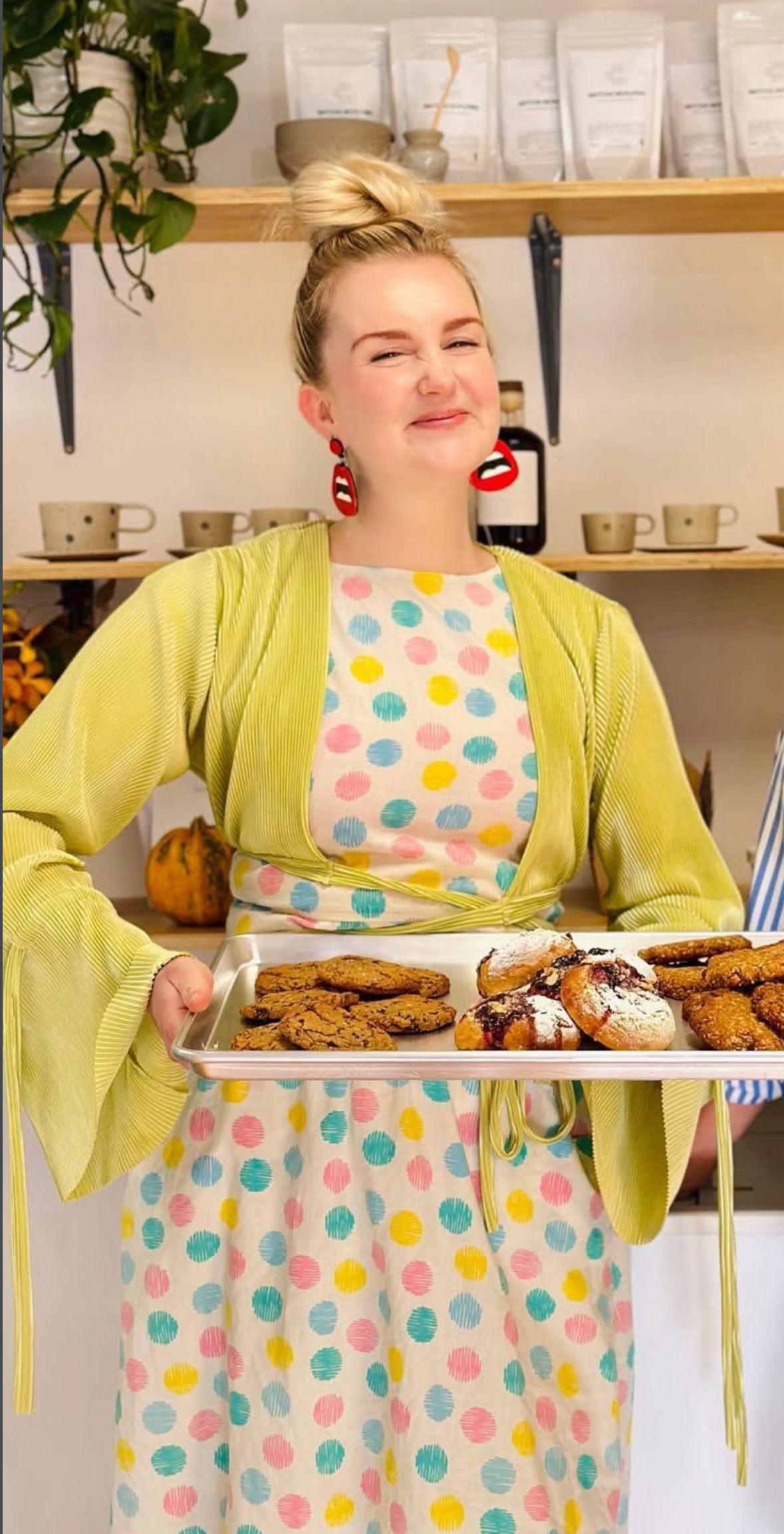
For Kendra Groves, food has always been more than sustenance -it has been a stage, a canvas, and sometimes, a lifeline. Her journey into Manchester’s food world didn’t begin in a classroom but thousands of miles away in Australia, where she worked as one of the country’s leading cake decorators.
Today we sat with her to learn how a baker from Australia found footing in Manchester again. “I was in Australia, working as a cake decorator—it was one of the biggest gigs you could get,” she recalls. “When I moved to Manchester, I couldn’t find the same kind of role, so I started baking instead.”
Her first step into the city’s food scene was at Black Milk in the Northern Quarter, where she honed her craft as a baker. The transition wasn’t easy, but it opened doors. Within two years, she was running her own spot—Factory Bake, a small but wildly popular bakery that quickly developed a cult following. “We sold out every day, usually by midday,” she says, smiling at the memory.
Every morning, Kendra and her co-founder made fresh breads, cakes, and pies because they put their all into it. The promise of straightforward, traditional baked goods drew customers into the line early. However, the bakery’s prosperity was fleeting.
Due to the building’s listed status, there were issues: “At first, we got cheap rent, which was perfect because we had no financial backing,” says Kendra. However, the landlords attempted to treble it after six months. We simply were unable to keep up.,
we had no financial backing,” says Kendra. However, the landlords attempted to treble it after six months. We simply were unable to keep up. Factory Bake’s closure was devastating. “It was nine of the most rewarding and challenging months of my life.” I gave it my all. I felt like I was losing a piece of me when it shut down.
Kendra Groves tiktok vlogger food
Kendra turned around rather than completely avoiding meals. She started working as a freelance recipe developer for Get Baked before focusing on her long-standing, covert hobby of publishing food-related content on Instagram. She states, “I’ve had my page for about ten years.” Initially, it consisted solely of amusing postings, baking samples, and items from my kitchen. However, as I began visiting restaurants and writing about them, the reviews and videos gradually gained popularity.
Kendra demands sincerity, in contrast to many influencers. “I have never received payment for writing a review. It defeats the purpose, in my opinion. I usually pay since I want the authentic experience, but occasionally I get invited to eat for free, which is lovely.
Her ethos has struck a chord. One of her videos for Hong Kong Café went viral, helping the restaurant attract new customers. “They gave me way too much food, I had to ask them to stop feeding me! But I wanted to make the best video possible. When it blew up, it felt so good to give back.”
Championing the Underdogs
Kendra has since built a reputation as someone who champions overlooked spots in Manchester. While big-name influencers often focus on collaborations or sponsored posts, she seeks out smaller, independent businesses. “A lot of places are shutting down—it’s brutal,” she says. “If my video can help even a little, it’s worth it.”
Her freelance work now spans around seven clients, including Cardinal Rule, a soulful Texan couple running a Southern food restaurant. “They were my first clients and I adore them,” she says warmly. “They’re doing something so special, and I just want more people to see it.”
Social media, she argues, is essential for survival. “It’s free advertising, but not everyone knows how to use it properly. Some owners are cooking, running front of house, doing everything—they don’t have time to shoot and edit videos. That’s where I come in.”
Changes in her life
Kendra’s Australian roots shaped her food philosophy. “In Australia, bakeries are everywhere— every town has them. Meat pies, Lamingtons, melting moments… it’s cultural.” Her eyes light up when she describes a Lamington: “It’s just sponge cake with cream and jam, dipped in chocolate glaze and rolled in coconut. Simple but perfect.”
She sighs when comparing this to the UK. “Manchester has amazing patisseries—Pollen, Flat Baker, all incredible—but there aren’t enough traditional bakeries left. Greggs is everywhere, and while I love a Greggs sausage roll, it’s not the same as a local shop baking fresh every morning.”
9
Photos: Mahek Saxena
That nostalgia drives her ambitions. “If I open another bakery, I’d want it to be playful, nostalgic—like Get Baked, with bold flavours and a bit of weirdness. Something fun.”
The happiness of Feeding Others
Despite her baking background, Kendra laughs when asked if she bakes much at home. “Honestly? I rarely eat what I make. I love feeding other people more than anything. I’ll take cakes to my clients or friends. I’m 100% the mum of the group, shoving cake into everyone’s faces.”
Her favourite bake is the Canelé, a French custard-based pastry. “It’s tiny, caramelised on the outside, soft on the inside. You bake it in copper moulds lined with beeswax. It’s such a labour of love.” She once featured it in a video that hit a million views. “I still get nervous pronouncing it after people dragged me online for saying it wrong,” she admits with a laugh.
Finding Her Place in Manchester
It was difficult to settle in Manchester. Finding housing as an international immigrant was difficult, rent was exorbitant, and positions in the hotel industry rarely paid well. But the city eventually became
Design: Mahek Saxena
“I’ve never been paid to write a review. I think it ruins the point… I want the real experience.”
“I currently reside in the heart of the city. Even though it’s costly, I can’t force myself to leave. Here, I’ve established a life, complete with friends, clients, and my neighborhood coffee shop. She chuckles, “It’s my place even though the shady bikes get stolen.”
Looking ahead, she dreams of opening another bakery—but this time on her own terms. “When it happens, I’ll know what to do differently. For now, I’m happy championing others, feeding people, and telling stories through food.”