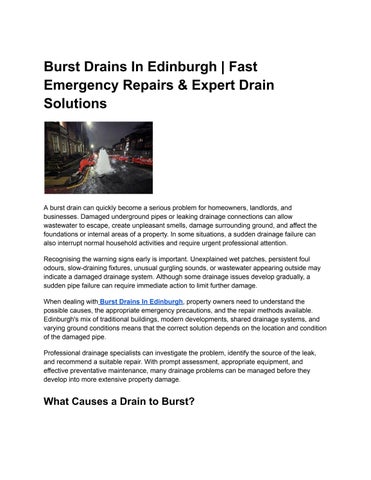
Burst Drains In Edinburgh | Fast Emergency Repairs & Expert Drain Solutions
A burst drain can quickly become a serious problem for homeowners, landlords, and businesses. Damaged underground pipes or leaking drainage connections can allow wastewater to escape, create unpleasant smells, damage surrounding ground, and affect the foundations or internal areas of a property. In some situations, a sudden drainage failure can also interrupt normal household activities and require urgent professional attention. Recognising the warning signs early is important. Unexplained wet patches, persistent foul odours, slow-draining fixtures, unusual gurgling sounds, or wastewater appearing outside may indicate a damaged drainage system. Although some drainage issues develop gradually, a sudden pipe failure can require immediate action to limit further damage. When dealing with Burst Drains In Edinburgh, property owners need to understand the possible causes, the appropriate emergency precautions, and the repair methods available. Edinburgh's mix of traditional buildings, modern developments, shared drainage systems, and varying ground conditions means that the correct solution depends on the location and condition of the damaged pipe. Professional drainage specialists can investigate the problem, identify the source of the leak, and recommend a suitable repair. With prompt assessment, appropriate equipment, and effective preventative maintenance, many drainage problems can be managed before they develop into more extensive property damage.
What Causes a Drain to Burst?
Drainage pipes can fail for several reasons. Some problems develop gradually through wear and deterioration, while others occur suddenly because of pressure, ground movement, or physical damage.
Ageing and Deteriorating Drain Pipes Older drainage systems may contain clay, cast iron, concrete, or other materials that deteriorate over time. Repeated exposure to wastewater, changing ground conditions, and normal wear can weaken pipe walls and joints. Cracks may initially allow small amounts of water to escape. If the damage progresses, the pipe can lose its structural integrity and develop a larger leak or collapse. Regular inspections can help identify deterioration before a complete failure occurs. However, the appropriate inspection frequency depends on the pipe's age, material, previous repair history, and observed condition.
Tree Root Intrusion Tree roots naturally seek moisture and can enter drainage systems through existing cracks, loose joints, or damaged connections. Once inside a pipe, roots may continue growing and obstruct wastewater flow. Root intrusion does not always cause a pipe to burst immediately. Nevertheless, it can increase pressure, worsen existing cracks, and contribute to repeated blockages or structural damage. Specialist root removal and pipe inspection can establish whether the problem is limited to an obstruction or whether the pipe itself also requires repair.
Ground Movement and Heavy Loads Changes in soil conditions can place stress on underground drainage pipes. Ground settlement, erosion, nearby excavation, and construction work may cause pipes to shift or joints to separate. Heavy vehicles or machinery passing over inadequately protected pipes can also contribute to damage. The risk depends on the depth, pipe material, surrounding ground, and the loads applied above it. Where ground movement is suspected, repairing the visible leak may not be sufficient. The underlying cause should also be investigated to reduce the risk of recurring damage.
Blockages and Excessive Pressure
Grease, wet wipes, sanitary products, food waste, and other unsuitable materials can restrict drainage flow. Although many blockages cause slow drainage rather than a burst pipe, a severe obstruction may contribute to leaks or failure when combined with an already weakened system. Household drains should only receive appropriate wastewater and toilet paper. Cooking grease should be allowed to cool and disposed of properly rather than poured into sinks. If several fixtures begin draining slowly at the same time, or wastewater backs up repeatedly, a professional inspection can help determine whether the blockage is in a local pipe or a wider drainage connection.
Warning Signs of a Burst Drain Recognising the symptoms early can help property owners respond before the damage becomes more extensive.
Unexplained Wet Patches and Pooling Water Persistent wet ground near a drainage route, unusually soft soil, or standing water without an obvious source may indicate an underground leak. If the affected water has an unpleasant smell or appears contaminated, avoid contact and keep people and pets away. Not every wet patch is caused by a burst drain. Leaking water supplies, surface-water problems, and poor drainage can produce similar symptoms. Proper investigation is needed to establish the source.
Foul Odours Around the Property A damaged drainage pipe may release unpleasant smells into gardens, yards, basements, or other areas near the leak. Odours may become stronger after heavy use of sinks, showers, toilets, or washing machines. Persistent smells should not simply be covered with air fresheners or cleaning products. They may indicate a drainage defect, a dried-out trap, a blockage, or another plumbing problem that requires diagnosis.
Slow Drains and Repeated Blockages A single slow sink may have a local blockage. However, several affected fixtures can suggest a problem in a shared waste pipe or the property's main drainage system. Repeated blockages are particularly important because they may indicate pipe deformation, root intrusion, displaced joints, or other structural defects. Clearing the obstruction without examining the underlying cause may lead to the same issue returning.
Cracks, Subsidence, or Damp Areas In some cases, escaping water can affect the ground around a property. New cracks, localised settlement, or dampness near lower walls may warrant further investigation, particularly when accompanied by drainage symptoms. These signs can have other causes, so homeowners should avoid assuming that a damaged drain is responsible without an appropriate assessment.
What to Do During a Drain Emergency Taking sensible precautions can reduce exposure to wastewater and help prevent further damage while professional assistance is arranged.
Protect People and Avoid Contaminated Water Keep children and pets away from affected areas, especially where sewage or wastewater may be present. Avoid touching standing water if its source is uncertain, and do not attempt to handle damaged pipes or contaminated materials without suitable protection. If wastewater has entered a home or business, avoid using affected rooms until they can be assessed and cleaned appropriately.
Reduce Water Use Where Safe If a damaged drain is suspected, reduce unnecessary use of toilets, sinks, showers, and appliances that discharge into the affected system. Continued water use may increase the amount escaping from the damaged pipe. Do not enter excavations or attempt to dig around an underground leak without appropriate equipment and knowledge. Underground utilities may be present, and unsupported excavations can collapse.
Contact a Suitable Drainage Professional Explain the symptoms, when they began, whether multiple fixtures are affected, and whether water is entering the property. Photographs taken from a safe distance may help the contractor understand the situation before arrival. If the leak may involve a public sewer, shared drainage, or infrastructure outside your responsibility, contact the relevant water or sewerage provider as well. Responsibility depends on the pipe's location, ownership, and the applicable arrangements.
How Professional Drain Repair Works
A reliable repair process begins with identifying the source and extent of the damage. The correct method depends on the pipe's location, accessibility, material, and structural condition.
Step One: Drainage Inspection A drainage specialist will assess the reported symptoms and determine which sections of the system need investigation. This may involve checking accessible inspection chambers, testing drainage flow, or using specialist equipment. The aim is to establish whether the problem involves a blockage, a leaking joint, a crack, a collapsed section, or a combination of defects.
Step Two: CCTV Drain Surveys Closed-circuit television (CCTV) equipment allows a technician to inspect the inside of accessible drainage pipes. A camera can reveal cracks, displaced joints, root intrusion, obstructions, and other visible defects without immediately excavating the entire pipe. A CCTV survey can help identify the location and likely severity of a problem. However, the findings depend on access and pipe conditions, and a camera inspection may need to be combined with other tests when the source of the leak remains uncertain.
Step Three: Selecting the Repair Method Once the defect has been identified, the specialist can explain the available options. A localised joint repair may be sufficient for limited damage, while a severely cracked or collapsed pipe may need replacement. Where the pipe is accessible and suitable for a trenchless technique, a specialist may recommend a repair method that reduces excavation. Not every damaged drain is suitable for these approaches, so the decision should be based on the actual condition of the pipe.
Step Four: Testing and Final Checks After the repair, the drainage system should be checked to confirm that wastewater flows as intended and that the repaired section performs correctly. Depending on the nature of the work, this may involve flow testing, a further camera inspection, or other appropriate checks. Ask for an explanation of the completed work and retain relevant reports, photographs, invoices, and guarantees.
Drain Repair Methods for Different Types of Damage
Different faults require different solutions. Understanding the main options can help property owners discuss the work with a contractor.
Localised Pipe and Joint Repairs If the damage is limited to a particular connection or short section, a targeted repair may be possible. The specialist will need to confirm that the surrounding pipe remains structurally sound. Correct alignment and secure connections are important because poorly fitted joints can continue leaking or allow roots to enter.
Excavation and Pipe Replacement A severely damaged, collapsed, or badly deformed drain may require excavation and replacement. This approach allows direct access to the affected section and may be the most practical solution where other repair methods are unsuitable. Excavation can disturb paving, landscaping, driveways, and other surfaces. The quotation should explain what reinstatement work is included and whether any additional permissions or utility checks are required.
Trenchless Drain Repair Certain damaged pipes can be repaired using trenchless methods, such as specialist lining systems. These techniques may reduce the need for extensive excavation, making them useful where the pipe runs beneath a driveway, landscaped area, or other difficult-to-access location. Suitability depends on the pipe's condition, shape, diameter, access points, and the type of damage. A collapsed or severely deformed section may need excavation before any lining work can be considered.
Clearing Obstructions and Removing Roots If a blockage or root intrusion is contributing to the problem, suitable equipment may be used to restore flow. However, clearing roots does not necessarily repair the cracks through which they entered. A thorough assessment should establish whether the pipe needs further structural work after the obstruction has been removed.
Why Prompt Drain Repairs Matter in Edinburgh
Edinburgh's varied building stock means that drainage systems can differ considerably from one property to another. Traditional homes, tenement buildings, commercial premises, and newer developments may have different pipe materials, layouts, and maintenance responsibilities.
Protecting Buildings and Surrounding Ground Escaping wastewater can damage internal finishes, contaminate soil, and affect nearby structures. The extent of the risk depends on the amount of water escaping, how long the leak continues, and the location of the damaged pipe. Prompt assessment can help establish the appropriate response and limit further deterioration.
Managing Shared and Older Drainage Systems In flats and tenement properties, drainage arrangements may serve multiple households. A fault can therefore affect more than one property, and the responsibility for arranging repairs may depend on ownership, access arrangements, and the location of the defective section. Before authorising major work, clarify who is responsible for the affected pipe and whether the property factor, landlord, neighbouring owners, or relevant utility provider needs to be involved.
Considering Weather and Ground Conditions Heavy rainfall can expose weaknesses in drainage systems or make existing drainage problems more noticeable. Ground conditions and seasonal changes may also affect the surroundings of underground pipes. A professional assessment should distinguish between a damaged wastewater drain, a surface-water drainage issue, and a leaking water supply. Each requires a different response.
Preventing Future Drainage Problems Although not every pipe failure can be prevented, regular care and early investigation can reduce the likelihood of avoidable problems.
Dispose of Waste Correctly Avoid flushing wet wipes, sanitary products, cotton buds, nappies, and other unsuitable materials. Do not pour cooking oil or grease down kitchen sinks, as these substances can accumulate and contribute to blockages. Use appropriate waste containers and follow local guidance for disposing of fats, oils, and household chemicals.
Arrange Inspections When Problems Recur If blockages, odours, or slow drainage keep returning, consider arranging a professional inspection rather than repeatedly using chemical drain cleaners. Recurring symptoms may indicate a structural defect that needs attention. Identifying the cause early can help prevent repeated call-outs and unnecessary treatments.
Protect Pipes During Building Work Before excavation, landscaping, driveway replacement, or other groundworks, establish the location of underground services and drainage routes. Use suitable professionals to assess risks and avoid placing excessive loads over vulnerable pipes. If tree roots are suspected, seek advice about both the drainage defect and the surrounding planting. Removing the roots alone may not prevent them from returning if entry points remain open.
Choosing a Reliable Drain Repair Specialist When comparing drainage contractors, look for clear communication, relevant experience, and a practical explanation of the proposed work.
Check Experience and Inspection Options Ask whether the contractor can investigate the reported symptoms and provide evidence of the identified defect. For underground drainage problems, a CCTV survey or other suitable diagnostic method may help establish the location of the damage. A good assessment should explain the likely cause, the repair options, and any limitations in the available evidence.
Request a Detailed Written Quote A written quotation should describe the work, the expected timescale, the repair method, and any exclusions. If excavation is required, check whether waste removal and reinstatement of paving or landscaping are included. Also ask about call-out charges, guarantees, payment terms, and how additional work will be approved if further damage is discovered.
Understand Emergency Availability
Drainage failures do not always occur during normal working hours. If immediate assistance may be needed, confirm the contractor's actual emergency availability, expected response arrangements, and any out-of-hours charges. Do not assume that a service is available around the clock unless the provider confirms it directly. Edinburgh Drain Repair is a provider homeowners and property managers may research when comparing drainage services. Before making a booking, confirm the scope of service, the inspection process, and the terms of any proposed repair.
Conclusion A damaged drain can cause unpleasant odours, persistent leaks, wastewater contamination, and potential damage to the surrounding property. Recognising early warning signs, reducing water use where appropriate, and keeping people away from contaminated areas are important first steps. Professional inspection can identify whether the problem involves a blockage, a leaking joint, root intrusion, or a more serious structural failure. When dealing with Burst Drains In Edinburgh, choose a repair approach based on the actual condition of the pipe, and confirm responsibilities, costs, and any required permissions before major work begins. With suitable inspection, timely repairs, and sensible preventative maintenance, Edinburgh Drain Repair can be one option to consider when researching ways to restore drainage performance and protect your property.