As we delve into the findings of NAPIC’s Property Market Report for 2025 (page 2), one thing
is clear, the Malaysian property sector continues to demonstrate remarkable resilience and adaptability.
In a landscape often characterised by shifting trends, much like the rapid repurposing of real estate we have witnessed in recent years to accommodate emerging demands from pickleball to data centres, the numbers for 2025 tell a compelling story. Malaysia’s overall value of transactions surged to RM241.87 billion, marking a 4.1% increase from the previous year and regarded as a decade-high milestone. While the overall transaction volume eased by 1% to 416,413 units, this trajectory suggests a maturing market where strategic assets have continued driving sustainable growth.
From a corporate real estate perspective, the undisputed star of 2025 was the industrial sub-sector. Supported by robust manufacturing fundamentals, its value of transactions leapt by 21.3%. Selangor maintained its position as a key logistics hub with a near 11% rise in transaction value, led by terraced warehouses (33.3%), vacant plots (27.1%) and semi-detached factories (21.8%).
The commercial segment also showed unexpected fortitude. Purpose-built offices and shopping complexes remained relatively stable, with most states securing office occupancy rates above 80%. But with significant new supply looming in Klang Valley and Johor, the market may face rising vacancy rates and downward pressure on rentals if demand does not keep pace with the influx of space.
In the residential segment, performance was decidedly a mixed bag. Whilst overall transaction values generated a modest 1.3% gain, volumes contracted slightly. Selangor retained its share as the largest contributor by volume while Penang and Perak saw declines in both its volume and value of transactions, indicating a shift in buyer focus.
Beyond the broader national overview, this edition also brings statistics of the new residential launches in Klang Valley between 2024 and 2025 (page 12). Together with our commentary on JPPH’s report, it should give us a better understanding of how the market has transpired from 2024 to 2025.
In this edition also, we have with us directors from our Pahang, Sabah and Negeri Sembilan offices (page 5-11) as they each share what brought them to the Henry Butcher Malaysia Group
and how their journey has been like since then. It will also be interesting to see behind the formalities of their namecards and letterheads, the areas they are most conversant with in their respective markets and off the beaten track - what they get up to after work.
Speaking of after work, it is time for Henry Butcher’s Art Auction again and this time, mark your calendar for 26 April 2026. Sneak previews of the art pieces planned for the auction are on page 16.
To the keen eyes, you might have also noticed a facelifted front cover of this newsletter. This is done in conjunction with our newly designed website which was soft launched earlier in 2026. Our refreshed website promises a better digital experience for our visitors and a platform robust enough to support our timely delivery of valuable contents to the market. If you haven’t yet, please visit www.henrybutcher.com.my and bookmark us for your next visit. Don’t forget to also follow us on all our social media touchpoints.
Looking ahead, the broader geopolitical landscape, particularly the conflicts in the Middle East that has disrupted global supply chains and driven up energy costs, calls for everyone to be vigilant. If not contained, a bearish sentiment may creep further into the global markets than it already is. On that note, it is my hope that the war will cease completely so that it will allow the markets to get back on track and continue on its progressive momentum in 2026.
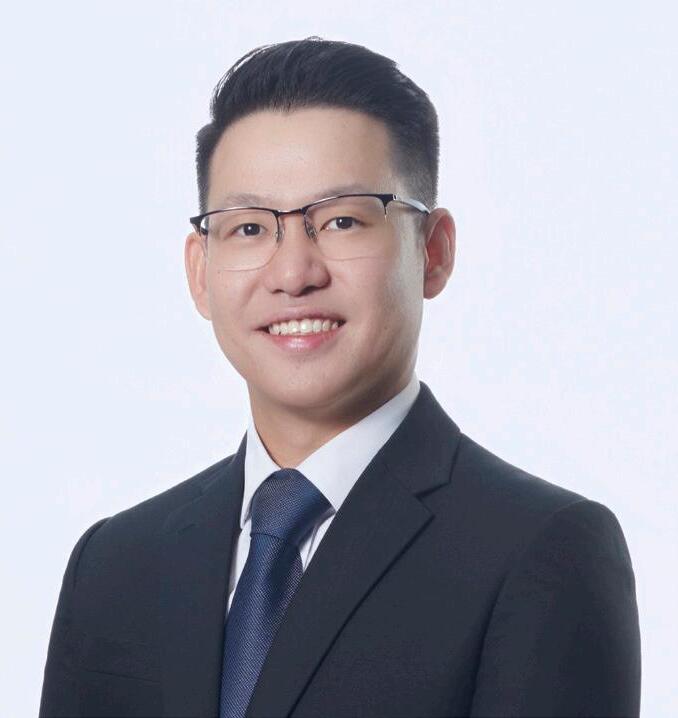
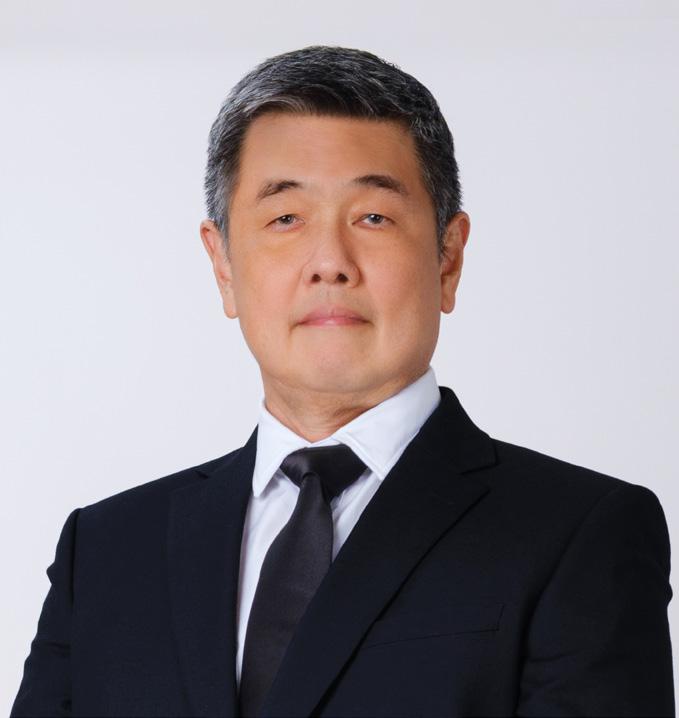
Long Shi Chuen Director, Corporate Real Estate
- June 2026
by Henry Butcher Malaysia
Publisher
Henry Butcher Malaysia Sdn Bhd 25, Jalan Yap Ah Shak, 50300 Kuala Lumpur. T 603-2694 2212
E admin@henrybutcher.com.my W www.henrybutcher.com.my
SEMBILAN | Seremban | MALACCA | Melaka | JOHOR | Johor Bahru • Muar
• Kluang • Pontian | PAHANG | Kuantan
| TERENGGANU | Kuala Terengganu | KELANTAN I Kota Bharu | SABAH | Kota Kinabalu • Tawau • Sandakan | SARAWAK
| Kuching • Miri
Publishing Agency
Rightwiz Sdn Bhd
Printer
Percetakan CL Wong Sdn Bhd
AS-84, Jalan Hang Tuah 4, Taman Salak Selatan, Cheras, 57100 Kuala Lumpur.
A RARE FREEHOLD SANCTUARY WHERE
NATURE SHAPES
THE
FUTURE
As the residential market increasingly shifts towards value-driven, sustainable
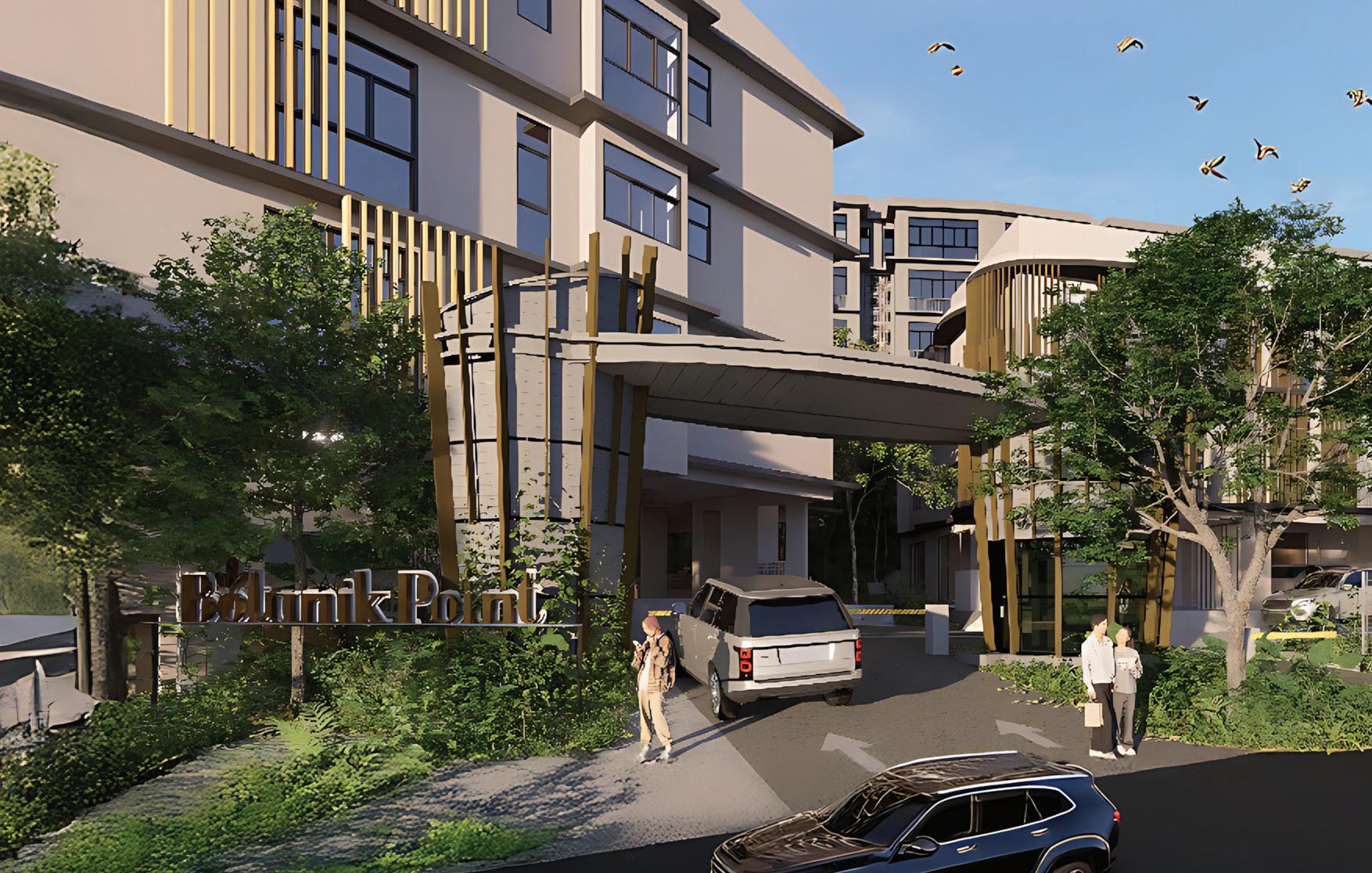
living, Urban Hallmark Properties Sdn Bhd is setting a new benchmark with Botanik Point in Ampang.
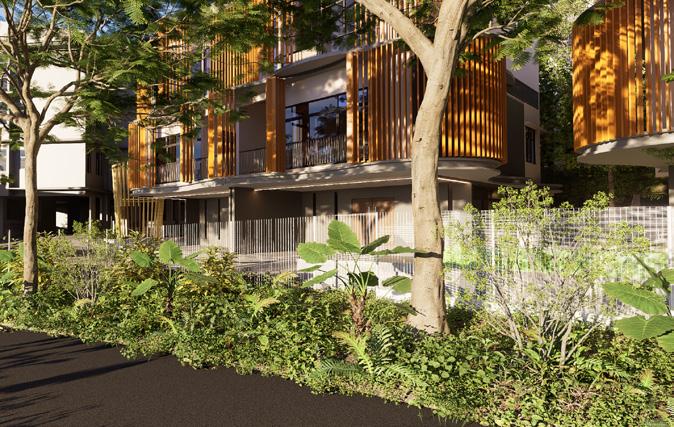
Rather than replacing the land’s natural character with postconstruction landscaping, this boutique development is uniquely designed around a preserved nature reserve, which occupies about 30% of the site. Founder Datuk Jeffrey Ng notes that every design choice is highly intentional, aiming to maximise functionality and harmonise with the environment.
Nestled at the edge of the Titiwangsa Range, Botanik Point is a gated-andguarded freehold sanctuary deliberately limited to just 46 homes, despite having the approval to build up to 108 units. This low-density approach ensures unparalleled privacy, liveability and exclusivity.
The development features four semidetached houses exceeding 5,500 sq ft boasting private lifts and senior-friendly ground-floor suites ideal for multigenerational living. Complementing these are 42 ‘low rise’ or ‘hybrid’ Townvillas that seamlessly combine landed characteristics with strata conveniences, featuring lift access shared by only two units.
Touched By Nature
Living up to its credo, “Touched By Nature”, the development retains the site’s natural topography, offering residents access to trekking paths within their very own untouched forest.
The homes are thoughtfully crafted with passive design strategies like expansive glass façades, skylights, and airwells to maximise natural light and crossventilation, fully complemented by solar energy systems, rainwater harvesting and EV charging provisions.
Despite its tranquil setting, Botanik Point enjoys superb urban connectivity. It is only 400 metres to the MRR2 which conveniently connects to DUKE and AKLEH. Established amenities
like Melawati Mall, KL East Mall, Giant Taman Permata, international schools and specialist medical centres are also within a short driving distance away.
Set to officially launch this June, Botanik Point’s completion is expected in 36 months.
For more information, visit the sales gallery or call 03-4161 6703 or 0111-0886862.
Sales Gallery Lot 1019, Jalan Kasawari, Taman Ulu Kelang, Ampang.
Henry Butcher Malaysia is the Exclusive Marketing Agent for Botanik Point.
quiet street in the neighbourhood that promises harmonious living.
A gathering space for anytime when there’s a BBQ pit to enliven the atmosphere.
A
Enjoy a game or two with nature just right next to you.
REVIEW & OBSERVATIONS OF JPPH’S PROPERTY MARKET REPORT FOR 2025
In our commentary on JPPH’s Property Market Report for 2024 last March, we mentioned that
the volume and value of transactions recorded in 2024 were the highest in the past decade, driven by robust activities across all sub-sectors. The momentum and trend appear to have continued into 2025 as the value of transactions have in fact surpassed that of 2024, hitting a new decade high of RM241.87 billion, an increase of 4.1% over that of the previous year even though the volume of transactions eased slightly by 1% to 416,413 transactions.
The Southern region contributed the largest share of transactions at 26.1% of the total number of transactions whilst the northern region had a share of 25.1%. Although the Central region only came in third at 23.9%, in terms of value, the region contributed the largest share of 44.3% (RM107.09bil) vs 28.5% (RM69.05bil) for the Southern region and only 15.4% (RM37.36bil) for the Northern region. This indicates that property values in the Central region are very much higher than those in both the northern as well as Southern regions.
By state, only four (Kuala Lumpur, Negri Sembilan, Kedah, Kelantan) recorded increases in both volume as well as value of overall transactions. All other states registered either an increase or decline in volume but the reverse in overall value of transactions. Incidentally, Negri Sembilan was the only state in 2025 which recorded positive growth in both volume as well as value of transactions for all subsectors.
All sub-sectors recorded year-on-year growth in the volume of transactions except for the residential (-1.5%) and agriculture (-2.7%) sub-sectors. In terms of value of transactions, all sub-sectors recorded an increase except for the agriculture sub-sector. The industrial sub-sector recorded the highest rate of increase at 21.3% whilst the residential and commercial sub-sectors recorded more modest increases of 1.3% and 1.1% respectively.
By state, Selangor was the largest contributor in terms of number of transactions in 2025 with 74,249 transactions, although the number was down 4.5% from 77,713 transactions in 2024 whilst Johor placed second with 65,379 transactions, a marginal decline
from 66,894 transactions the previous year. Perak was again third with 44,416 transactions compared to 46,438 transactions in 2024 (down 4.4%) whilst Penang went up by one rung to sixth recording a 3.9% drop in the number of transactions. Kedah (+2.5%), Negri Sembilan (+11.2%), Kuala Lumpur (+14.2%), Kelantan (+6.2%) and Sabah (+4.1%) were the only states which recorded a rise in the volume of transactions.
The residential sub-sector, as in past years, provided the largest contribution to the volume of transactions with 61.6% (similar to last year) but in terms of value, its contribution came up to only 44.8%, down slightly from the 46% achieved in 2024 and 51.3% for 2023. Although commercial properties made up only 11.2% of the total number of transactions, they contributed a 24.3% share in terms of value (down marginally from 25% in 2024 but up from 19.5% in 2023). Industrial properties on the other hand made up only 2.1% of the volume of transactions but contributed 14.0% of the value of transactions.
Residential Sub-Sector
The residential sub-sector recorded a marginal decline of 1.5% in the volume of transactions in 2025 but managed
to chalk up a 1.3% rise in the value of transactions. This suggests that the market has turned slightly softer but at the same time, the average price of the residential properties transacted for the year was marginally higher. The small 1% drop in the volume of residential transactions does not seem to be a major concern at the moment unless the decline persists and worsen in 2026.
Increase / Decrease in Volume & Value of Residential Transactions 2025 vs 2024
Four states (Kuala Lumpur, Negri Sembilan, Kedah, Sabah) registered increases in both volume as well as value of residential transactions whilst six states (Selangor, Penang, Perak, Pahang, Terengganu, Sarawak) recorded declines in both volume as well as value of residential transactions.
As expected, affordable houses priced at RM300,000 and below continued to see strong demand, making up 52.3% of total residential transactions (similar to last year) whilst the RM300,001 to RM500,000 sub-segment ranked second at 24.9%, followed by the RM500,001 to RM1 million category at 16.9%. Houses priced over RM1 million contributed a share of only 5.9%. Nevertheless, this segment recorded the highest growth at 6.5%, while residences in the other price ranges showed a declining trend.
By type, demand was the strongest for terraced houses, which accounted for 41.3% of total residential transactions followed by vacant plots at 18.1%. High-rise units (14.3%), low-cost
houses/flats (10.6%), semi-detached houses (7.3%) and other property types made up the balance. The proportionate share of the different types of houses was fairly similar to that in 2024. It also reconfirms the preference of Malaysians for landed residences, if they can afford them and where they are available, not too far from their workplaces in the cities/ towns.
We also noted that the secondary market (sub-sales) continued to contribute the largest share of transactions with 84.5% (83% for 2024). The performance of the primary market appeared to have softened.
In 2025, a total 64,487 residential units were launched, down nearly 15% from 75,784 units in 2024. Sales also declined to 35.5% compared to 37.3% for 2024, leading to a more cautious approach adopted by developers especially in the face of more challenging global economic conditions.
Selangor led in the number of new launches in 2025, accounting for 22.3% of the national total (up from 19.6% the previous year), and registering a sales take-up of 32.3%, slightly down from the 35.1% recorded in 2024. Johor followed closely with 17.3% (18.7% previously) and a better sales performance of 55.3% (53.2% in 2024) whilst Perak overtook Kuala Lumpur to come in at third place with a 11% share in new launches and a sales performance of 28.7%.
Terraced houses continued to be the dominant property type in new launches. Single storey and two to three storey terraces collectively made up 51.9% of the total units launched, with the majority located in Johor. Condominium/apartment units meanwhile came in second, contributing another 33.5%, up from 31.7% the previous year and located mostly in Kuala Lumpur and Selangor.
The number of unsold residential units have risen in 2025, indicating slower absorption in the primary market. Perak (12.9%), Johor (12.1%) and Selangor (11.6%) topped the list in terms of number of unsold completed residential units.
As in previous years, condominiums and apartments accounted for the largest share of the national unsold completed stock, accounting for 47.1% followed by terraced houses, (30.5%). As for unsold residential units which were still under construction, most of the unsold stock were located in
Selangor (20.5%), Perak (12.7%), Johor (11.2%) and Penang (10.8%) whilst the unsold not constructed units were located mainly in Selangor (28.4%) and Kuala Lumpur (21.1%).
By price range, houses in the affordable price range of below RM300,000 contributed the largest share of 37.7% to the total residential overhang whilst houses within the price range of between RM300,001 and RM500,000 came in second, accounting for 27.5%. Meanwhile, those houses within the price range of RM500,001 to RM1 million contributed another 24.3%, followed by those priced above RM1 million (10.5%). In comparison, for 2023, the price category of RM500,001 to RM1 million came in second whilst houses priced between RM300,001 and RM500,000 placed third.
The Malaysian House Price Index (MHPI) continued to record a moderate annual growth of 2.6% with all states experiencing modest growth of between 0.8% and 6.9%. All house types saw positive growth, with terraced houses recording the highest increase at 3.3% followed by semidetached houses (2.6%), detached houses (2.4%) and high-rises (0.6%).
Commercial Sub-Sector
The commercial sub-sector recorded a marginal 1.4% and 1.1% increase in the volume and value of transactions respectively in 2025 compared to 13.6% and 51.6% the year before, indicating a slowdown in the pace of increase.
Only four states (Negri Sembilan, Terengganu, Sabah, Sarawak) recorded positive growth in both volume as well as value of commercial transactions whilst three states (Penang, Perak, Kedah) recorded declines in both volume and value of transactions.
The major part of the commercial property transactions in 2025 were contributed by shophouses and service apartments. Shop transactions (largely 2 & 2.5 storey shops) contributed 41.9% of the commercial transaction volume and 33.8% of the transaction value. Service apartments on the other hand, contributed 32% and 22% of the commercial property transaction volume and value respectively. Transactions of service apartments were largely concentrated in the key urban markets of Kuala Lumpur, Selangor and Johor.
Increase / Decrease in Volume & Value of Commercial Transactions (2025 vs 2024)
Source: NAPIC
Shopping Complexes & Office Buildings
The performance of shopping complexes continued to improve in 2025, with occupancy rates rising from 78.8% the year before to 78.9%. Six states, down from seven in 2024, achieved occupancy rates exceeding 80.0% whilst Perlis recorded the lowest occupancy rates in the country at below 50.0%.
Overall, rentals of retail space were generally stable, with popular and well patronised complexes in the Klang Valley, Penang and Johor managed to push up their rentals. This indicates that the retail sector, supported by stable consumer confidence, is still resilient.
The office segment has, contrary to earlier expectations, shown a high degree of resilience with all states securing higher occupancy rates of more than 80% except for Selangor, Kuala Lumpur and Johor. These states will see a more significant rise in new office supply in the coming years.
The national average occupancy rate for privately-owned purpose-built office buildings was maintained at 71.9%. Whilst Terengganu secured a higher occupancy rate at 92.5%, Kuala Lumpur and Johor recorded lower occupancy rates at 70.8% and 55.1% respectively.
Industrial Sub-Sector
The national industrial sub-sector registered a lower 1.4% increase in the volume (7.7% in the previous year) but a higher 21.3% rise in the value of transactions in 2025 (16.4% in 2024), supported by strong fundamentals in the manufacturing sector.
Kuala Lumpur recorded a double digit growth of above 12% in volume but a more than 20% decline in the value of industrial transactions. Selangor on the other hand chalked up a decent growth of nearly 9% in the volume of transactions as well as a close to 11% rise in the value of transactions. Transactions of terraced warehouses made up 33.3% of total industrial property transactions whilst vacant plots contributed 27.1% and semidetached factories 21.8%.
In terms of state, Selangor continued to lead the market, accounting for 35.7% (33.3% in 2024) of the national volume, followed by Johor at 18.1%, the same as the previous year. It is interesting to note that non-traditional industrial states like Kelantan and Terengganu chalked up hefty increases in the value of industrial transactions in 2025 and so did Johor and Negri Sembilan whilst traditional industrial powerhouses like Selangor and Penang registered more moderate increases.
The completed industrial property overhang situation moderated in 2025, going up by a marginal 2.4% in volume
and 12.8% in value whilst under the unsold under construction category, the industrial overhang rose by 27.1%. On the other hand, the unsold, not constructed category showed an improvement, as the numbers declined by 34.7%.
Six states (Selangor, Johor, Negri Sembilan, Terengganu, Kelantan, Sarawak) achieved positive growth in both volume as well as value of industrial transactions whilst there was not a single state which recorded declines in both volume and value of industrial transactions simultaneously. Overall, nine out of the thirteen states recorded an increase in the volume of industrial transactions whilst ten states recorded positive growth in the value of transactions.
Observations & Conclusions
Malaysia’s property market achieved another new high in 2025, with the value of transactions surpassing last year’s RM240 billion, the highest in a decade. Nevertheless, there were signs of a more cautious mood emerging, with new launches of residential projects as well as sales performance declining. The increase in the number as well as value of the residential property overhang is another indicator that the market is, although stable, beginning to decelerate in its pace of growth and this has led to developers becoming less aggressive in embarking on and launching new projects.
Johor recorded satisfactory levels of transactions but appeared to be outdone in terms of percentage increase in the value of transactions by non-traditional states like Terengganu and Kelantan due to the low base effect as the transaction values which these states recorded in 2024 were very low compared to what they managed to achieve in 2025, causing the percentage increase to be more significant even though the actual figures may not be very substantial.
The world has seen a seismic shift in geopolitical and economic stability over the past thirty-over days since the conflict in the Middle East started, involving the United States and Israel on one side and Iran on the other. The conflict has not shown any signs of reduction in intensity although there was unconfirmed and unsubstantiated news of deals being done to bring the conflict to a close.
The strategic closure of the Straits of Hormuz by Iran has resulted in the global supply of crude oil and gas being curtailed, leading to the skyrocketing of the prices of these and other commodities. Manufacturing operations of countries throughout the world have been impacted and some countries have started fuel rationing as pumps at gas stations run dry, causing inconvenience as well as serious disruptions to daily life. Prices of food, essential goods and services have risen as a result and stock markets worldwide have been hit hard. Investors have become more cautious and ultimately global property markets including that of Malaysia, will encounter more bearish sentiments.
12.87 -20.51 Selangor 8.76 10.98
Johor 1.38 44.05
Penang -2.00 5.15
Perak -33.66 11.47
Negeri
Sembilan 12.22 151.91
Melaka 6.10 -14.36
Kedah 12.02 -27.23
Pahang -15.33 16.99
Terengganu 6.06 50.94
Kelantan 27.78 62.54
Sabah -3.20 2.67
Sarawak 4.54 18.57
Malaysia 1.45 21.32
We note that the office and shopping complex sub-sectors have continued to be resilient in 2025 with occupancy rates being maintained or even registering small increases in the key markets. Nevertheless, we note that the supply of shopping malls as well as office buildings in main urban centres like Kuala Lumpur and Johor Bahru could see a significant increase in supply in the coming years if all the projects under construction are carried out and completed as planned. Unless demand can be raised significantly through the adoption of effective policies and actions by the government and relevant stakeholders, there will come a time when the increase in supply of space, especially in the office sub-sector, will cause the equilibrium to tilt and this will result in the occupancy rate registering a decline and in turn put pressure on rental rates.
Overall, the industrial sub-sector was stable, with the national volume of transactions inching up 1.4% whilst the value of the transactions rose by double digits (21%). Traditional industrial powerhouses like Selangor, Penang and
Nevertheless, Malaysia is a net energy exporter and appears to be relatively less impacted than other non-oil producing countries. The country also seems to be benefitting from an increase in tourist arrivals as travellers avoid the conflict zone in the Gulf and replan their travels to somewhere safe and away from the conflict zone.
Malaysia’s economy has so far appeared to hold up well and is expected to continue to register positive growth in 2026.
By and large, barring any turn for the worse in the conflict in the Middle East and the global economic situation, the Malaysian property market in 2026 is expected to continue to be generally stable, albeit on a more subdued note and registering a slower rate, if any, in growth.
NB: All the tables in this article have been reconstructed based on the original charts/graphs and data in JPPH’s Property Market Report 2025.
A VALUABLE
PLAYMAKER
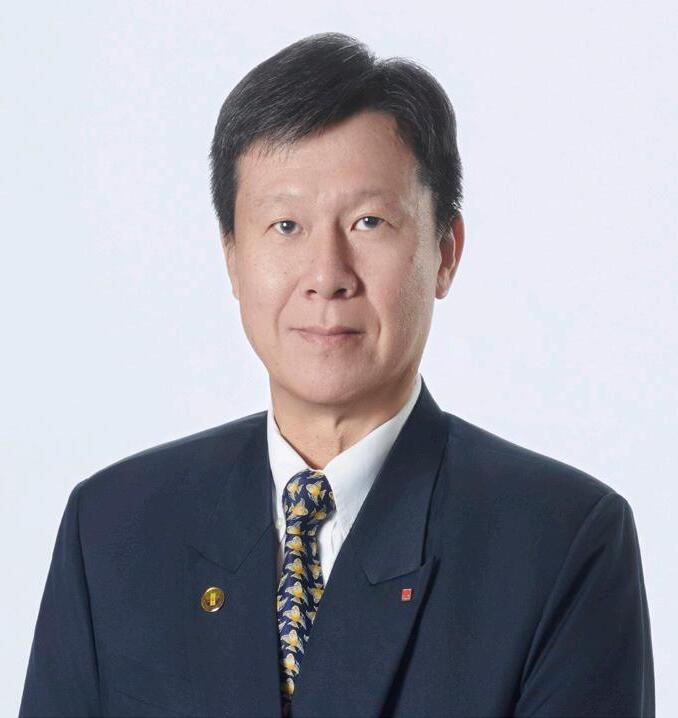
His name is Kow Lay Seng and if he was born with a herculeanbuilt, he may have been a
spiker, not a setter, in his favourite game of volleyball. He likens the sport to a great team building exercise where instead of just focusing on beating the opponents, one has to decide in a split second what your team mates’ next move will be in order to get the ball across the net and not touching the ground on your side of the court.
“I like basketball too but to me volleyball is better at cultivating team spirit. You need to know whether to set a fast or slow ball instantly so it’ll complement what your fellow spiker is preparing to do at that very moment.”
The ability to synchronise in nanoseconds during interactive play is probably akin to the time when he had to decide about his tertiary education. Although not quite in nano time frame, the market was experiencing a recession and this coincided with him graduating from secondary school in Bahau, Negeri Sembilan in 1987.
“As a science student, I had wanted to pursue engineering but seeing that our Form Teacher who was also a science student ended up becoming a teacher, I feared going down the same path. That’s when I started considering something related to business or commerce.”
Like most of his contemporaries at Henry Butcher Malaysia and also industry-wide across the country, he ended up studying for a Surveying degree (Saujana Muda Ukur) at Universiti Teknologi Malaysia (UTM) in Skudai, Johor; the only university offering such a course at that time. This was when he first encountered subjects like property and asset management, property valuation and so on. It was also through the course that he later learnt valuation was the anchor of the discipline.
Thankfully, he grew a liking towards the subjects and it turned out to be a fitting decision, especially having earlier presumed as a young adult that a growing Malaysian economy would certainly have an incremental pool of assets to manage. His presumption did not go wrong and completing the degree eased his transition into the professional world even when the economy was still recovering from the battering bloodbath.
Setting Up
Upon graduation, he moved to Kuala Lumpur to join a property consulting firm and spent a good 11 years there. It was during this formative years in the industry that saw him registered as a valuer with The Board of Valuers, Appraisers, Estate Agents and Property Managers. Then in 2003, he joined Henry Butcher Malaysia in what would be only his second company but his assignment this time was different ie. as the designated Resident Director or Manager to set up the Group’s maiden Pahang office in Kuantan.
To ensure he could carry the company’s branding like a seasoned executive, Sr Kow underwent a quick acclimitisation period at the headquarters in Kuala Lumpur, much like an intensive bootcamp, to familiarise with the administrative side of the business, its internal workings and also the corporate culture of the Henry Butcher Malaysia Group.
“When I first got to Kuantan, I had to start looking for office space, get our phone lines registered and do the hiring as well.
“We even had to slog it out early on because shortly after we started operations, our Kuala Lumpur office had a big Securities Commission assignment which needed our office to participate in. It was a grueling exercise because back then, we were still getting ourselves ready as a valuation firm and lacked adequate in-house resources to shoulder such a huge task.
“So what did we do? We called up our friends in the industry to borrow stuff like the RSS (Revenue Survey Sheets). Although we were competitors, they didn’t hesitate to help us because they knew the importance of the job at hand.”
The challenging period lasted less than six months but towards the final fortnight closer to the deadline, Sr Kow and his team were working almost day and night, returning home at 2am, if not the usual 8pm to 10pm during this marathon, due to the number of site visits and paper work they had to go through.
“We only had emails back then and the internet was not as sophisticated as it is today.”
This to him was the most memorable time in the history of Henry Butcher Malaysia (Kuantan) Sdn Bhd as it tested everyone’s endurance and aptitude at the job. Things went back to normal
Henry Butcher Malaysia (Kuantan) Sdn Bhd
Add: 11A, 1st & 2nd Floor (China Town), Jalan Putra Square 3, Putra Square, 25200 Kuantan, Pahang.
after that and since then, they would call it a day at more sanely hours with his office also better equipped to take on a higher volume and more diverse assignments from the market.
Serving
Speaking of assignments, Sr Kow’s Kuantan office serves up a complete range of property consulting solutions to meet the needs of the market and this include valuation, estate agency, auctions and consultancy for the banks and corporations located in the state of Pahang, with an anomaly only in Genting Highlands.
“Genting Highlands sits at a unique place because it is near the border of Klang Valley and players from Kuala Lumpur or Selangor would tend to come and do the job at the request or preference of the clients.”
Other than the renowned hilltop resort, the rest of Pahang are within the service-jurisdiction of Sr Kow’s office and one that he opines is a stable market ever since he landed in Kuantan. Based on his observation, the property market grew more organically courtesy of the local community’s demand than from speculative activities like in Kuala Lumpur, Penang and Johor Bahru.
Take for example a single storey terrace home in Kuantan, measuring about 20’ x 80’ or 20’ x 70’, the going price
Sr Kow Lay Seng, Director of Henry Butcher Malaysia (Kuantan) Sdn Bhd
in 2003 was slightly above RM100,000 and today, it is about RM250,000. Highrises on the other hand appreciated by about 50% over the same period. Despite the steep increase, Sr Kow attests that the escalation is primarily driven by inflation and cost-push factors like the rise in cost of goods and services rather than outright capital appreciation. He also attributed this to the smaller population size in Kuantan and Pahang.
To put into perspective, statistics by the Department of Statistics Malaysia shows that Kuantan’s population grew from 358,261 in 2000 to 565,900 in 2023 whilst the state-wide population increased from 1.3 million to 1.6 million over the same period. Given the relatively small numbers, he says Pahang can do with more catalytic projects like the East Coast Rail Link (ECRL) to induce a greater multiplier effect into the economy and draw more attention to the state.
Other silver linings in Pahang include the steel and the talk-of-town “rare earth” industries, and when combined with other economic sectors like tourism, hospitality etc, have led to only a select group of talent remaining in the state with most energetic youngsters lured away to the bigger cities. To this, and not quite unlike other states, Sr Kow, or also known as Kenneth or Ken to his immediate circle of friends, shares that Pahang suffers from a talent deficit predicament. Hiring good and fresh young talent as such can be tricky to many enterprises in the state.
Pointed Spike
Extrapolating this into the valuation profession, he discloses that it is one of those professional vocations that builds over time and thrives on stacking up different permutations of asset classes (eg. hotels, airports, golf courses etc) into one’s resume. This is what attracts most young valuation entrants away from the state given the larger portfolio at play elsewhere. To convince them to go to a place like Kuantan, it’s a tall order that must commensurate with a unique opportunity that promises something credible in their career runway.
“Property valuation is a good line to be in due to the exposure, experience and knowledge that comes with the job. Having a good grasp of these will also help them move easily into other sectors like construction and property development if they choose to do so later in their career.”
“Also, don’t just look at the short term because the market can change after some years. So look at the middle to long term as well as your interest and passion.”
The best satisfaction from the job ultimately rests on the sentiments of a customer on whether they would return with heaps of praises and with that, referrals in tow.
“If they do, it is evidence that we’ve done a good job.
“At Henry Butcher Malaysia, we try to understand our client’s needs and the problems they face. Whether it is to get a loan, to sell, to buy or to undergo a corporate exercise, it is our job then to
advise the next best course of action. This is consultancy and we can only do well when we strive to understand our clients thoroughly.”
Looking ahead to the rest of 2026 and also 2027, Sr Kow shares that it is imperative now to tighten the finances due to the US-Iran war but like a game on court, his outfit would nevertheless still keep both eyes open for any opportunities that may arise and when the situation permits, score more jobs from the field and grow the firm in the process.
Q: What motivates or drives you at work?
A: Job satisfaction based on clients’ response because it is based on their genuine warm human touch.
Q: What do you enjoy outside of work?
A: Sports like hiking, trekking, golf, badminton, pickleball, ping pong etc and I do it 3 to 5 times a week. I could do hiking in the late afternoons or early evenings, badminton & pickleball at night and golf on the weekends.
Q: If not as a valuer, what would you have done professionally?
A: A mechanical or civil engineer.
More than just a sport, volleyball is a team building training ground.
A FERTILE FOUNDATION OF TRUST & GROWTH
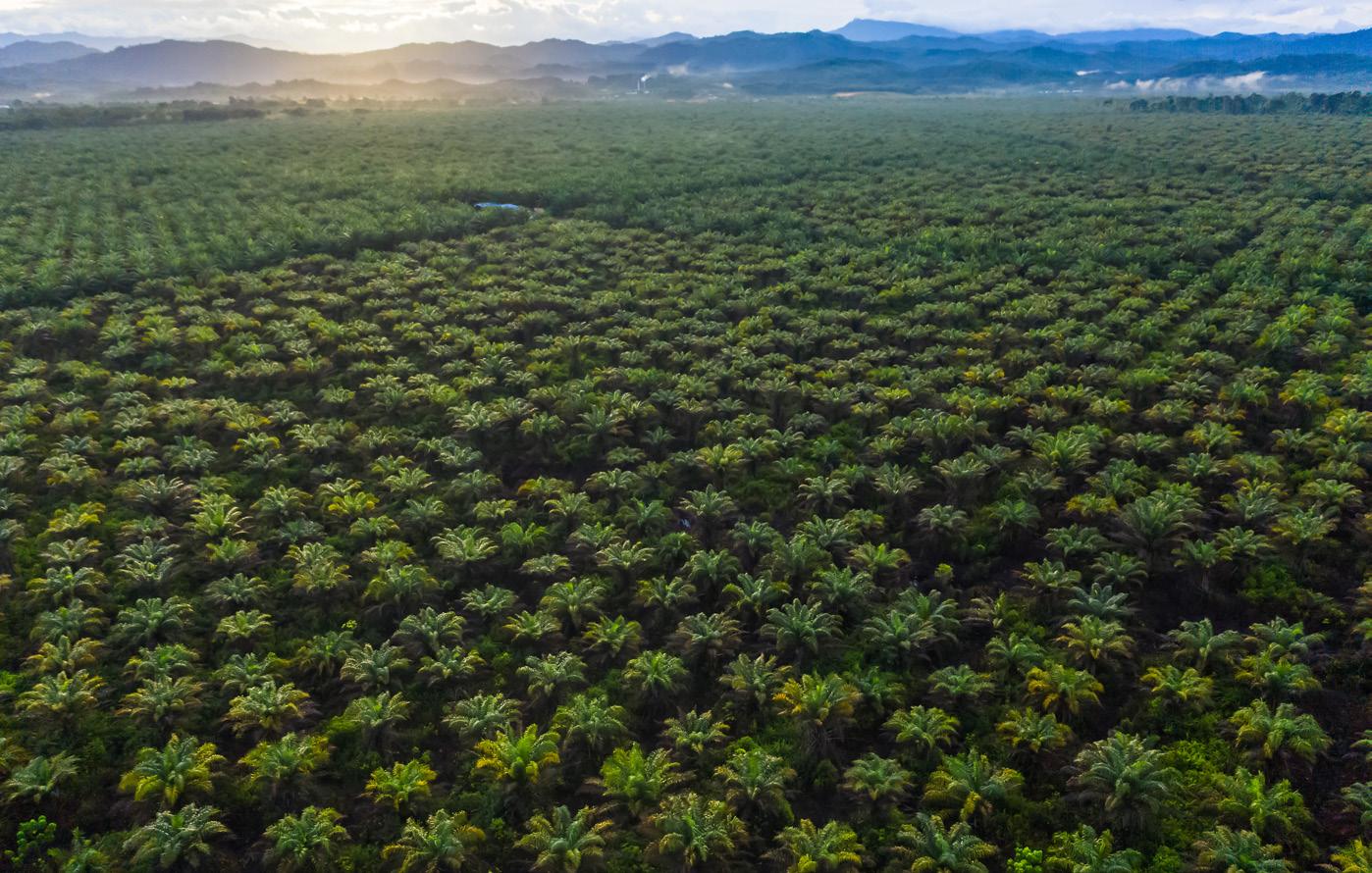
From the towering Mount Kinabalu to the expanses of oil palm plantations and
the rapidly modernising skyline of Kota Kinabalu, real estate in Sabah operates on its own distinct rhythm. To successfully navigate this multifaceted environment requires a combination of technical mastery, profound local insight and an uncompromising commitment to professional ethics. Spearheading Henry Butcher Malaysia’s presence in this territory is a dedicated leadership team comprising Sr Paul Liew Shun Thyam, Sr James Lo Thau Phin and Sr Lee Eden Abraham.
The roots of Henry Butcher Malaysia’s footprint in Sabah are traced back to 1995. At the time, the region was undergoing a period of economic maturation. It was during this pivotal era that Sr Paul and Sr James made the bold decision to leave the comfort of their secure employment to establish a new firm. Their respective journeys to that momentous decision however were forged in distinctly different fires.
Sr Paul embarked on his professional path shortly after graduating from one of the world’s top ranked universities ie. the National University of Singapore in 1987 with a Bachelor of Science in Estate Management. Guided by a relative already established in the surveying profession, he developed a keen interest in the field after experiencing first hand what professional life is like at a property consulting firm. This led him to spend eight formative years at his first job in Sabah, meticulously building his foundation in the practice before partnering James to launch Henry Butcher Malaysia’s first office in Sabah.
For Sr James, the entry into real estate was an exercise in sheer perseverance during one of the most challenging eras. He graduated from university in 1986 when the economy was mired in a severe recession and Sabah had just weathered a major political upheaval. Introduced to the property field by his eldest brother who was in banking, he had to start from the ground level after graduating with a Bachelor’s Degree in Business majoring in Valuation & Land Economics from Curtin University of Technology in Western Australia.
His baby steps started first as an Assistant Estate Agent/Managing Agent at a property consultancy firm, “Meaning helping the negotiators and managing the agents’ work in whatever they needed doing.” He also had to roll up his sleeves and handle the day-today realities of the business including putting up “For Sale” and “For Rent” signages, photocopying rental agreements and as foreign as it may sound in the 21st century, collecting rent from tenants who paid in cash or by cheque. He eventually rose to become the Estate Agency Manager.
Almost 30 years later, the firm’s legacy of mentorship paved the way for Sr Abraham to join them as a fellow Director in 2024. But different from his seniors, he started first in architecture following in his father’s footsteps who is a practising architect and a former property developer, “His exposure to the property industry gave me an early understanding of the field and encouraged me to pursue valuation professionally.”
After one year in the course, the young lad however realised his true calling lay elsewhere and that prompted his father to recommend an internship at a valuation firm as an alternative. Divine or otherwise, it lit the fire in his heart and he decisively switched to Estate Management instead. By the time he graduated, his passion had earned him a prestigious First-Class Honours BSc (Hons) in Estate Management and also the Best Dissertation Award from Northumbria University in the UK.
Returning to Malaysia, he joined Henry Butcher Malaysia in 2013 as a Probationary Valuer and Valuation Executive Assistant. Under the supportive tutelage of both Sr Paul and Sr James, he eventually secured his licence as a Registered Valuer, cementing his place in the firm’s leadership.
Terrains
Today, Henry Butcher Malaysia Sabah is represented by three offices with the first in Kota Kinabalu followed by Tawau and Sandakan to cover the vast geographical area including the Federal Territory of Labuan. The Sabah offices also collectively boast a comprehensive suite of services, spanning valuation, estate agency, land acquisition advisory, market research & development feasibility studies, share unit/service charge studies, auctions and property consultancy & advisory services.
Q: What motivates or drives you at work?
A: The motivation to work is the self-satisfaction of undertaking an assignment and producing an excellent outcome with the highest quality. Every case provides an added opportunity to learn new things and to meet another person.
Q: What do you enjoy outside of work?
A: I enjoy planning self-drive travel itineraries and travelling. It is amazing to look back and see how “courageous” we were in the earlier years during the pre-digital, pre-GPS era, navigating overseas countries with the benefit of physical map printouts only.
Q: If not as a valuer, what would you have done professionally?
A: I could have been a tour leader as “exploration” for new things fascinates me. That is why I thrive with new challenges instead of being intimidated by it.
The firm is also proficient in the highly specialised areas such as being called as expert witness during litigation, corporate advisory and compulsory land acquisitions & consultancy where it involves the full gamut of consulting such as negotiations for compensation settlements to landowners by the authorities, conversion of land use, subdivision of land, extension of leasehold tenure, taxation advice etc.
Sr Paul has himself also carved out a reputation for handling complex, cross-border consultancy work with memorable assignments extending to Indonesia, Australia, India, the Solomon Islands and as far as Africa. One standout case required him to appear
Sr Paul Liew Shun Thyam, Director of Henry Butcher Malaysia in Sabah.
in the Family Court of Perth, Western Australia, acting as an expert witness for the husband in a highly explosive divorce case that hinged on the equitable distribution of matrimonial assets located in Sabah.
In another, he travelled to Karnataka, India, for a Malaysian public listed company which was granted the exclusive concession to build a palm oil mill, complete with the rights to collect the fresh fruit bunches, process and sell the oil within a designated zone. The work involved understanding India’s oil palm industry that had a different pricing and tax structures compared to Malaysia. Sr Paul’s ability to decipher the tricky parameters underscores his and the firm’s elite analytical capabilities.
For Sr James, and reflecting on his early days of collecting cash rentals, instilled a deep appreciation for human relations in real estate. He fondly recounts his very first successful sale, which earned him a commission of RM6,000. For a young professional in a recovering economy, it was a staggering sum. He wasted no time from the bewildered emotions to hand RM1,000 to his mother, “It was a lot of money for me then and I felt really good to be able to give my mother that sum of money.”
Today, Sr James focuses on valuations for compulsory land acquisitions across Sabah. He leans into this niche segment by utilising his intimate familiarity with Sabah’s unique land laws, which differ significantly from Peninsular Malaysia, to advocate effectively for the clients. It’s his deliberate move to work on challenging acquisitions so he can put
his skills and experience to good use in assisting landowners to secure a justified and reasonable compensation from the authorities.
Sr Abraham meanwhile thrives from the firm’s commitment to long-term client relationships and its wide array of corporate and private assignments. In fact, it is from the most unassuming and routine transactions that he often finds the greatest triumphs. Case in point, the successful sale of a warehouse for a high-net-worth individual. The client was so impressed by his meticulous service that a genuine friendship blossomed, leading the client to entrust him with his entire property portfolio and further introduced him to his network of business associates.
Aside from agency work, “I have been involved in many interesting and complex cases including valuations for court matters, foreclosures, tax appeals, compensation claims and government-related acquisitions. The most memorable cases are those where our work facilitated the clients to successfully resolve their disputes or win appeals,” shares Sr Abraham.
Integrity
Operating in Sabah requires an acute awareness of its evolving landscape. “Kota Kinabalu for example has developed rapidly over the last 10 to 15 years, with high-density multi-storey developments increasingly dominating the skyline,” explains Sr James. “As Sabah is a state of big fertile land mass, we are also active in the oil palm plantation sector.”
Q: What motivates or drives you at work?
A: Real estate is very fulfilling. I look for acquisition cases that are more challenging where we can assist landowners to get reasonable compensation. Seeing the smiles on their faces is very satisfying.
Q: What do you enjoy outside of work?
A: Hiking and watching my favourite detective shows.
Q: If not as a valuer, what would you have done professionally?
A: Either a lawyer or a Catholic priest.
“Real estate consultancy is very much intertwined with the overall economy and financial market,” says Sr Paul. “Over the recent years, property consultancy has moved towards a greater inclination for financial analysis. Those with strengths and stronger understanding of the real estate market in the context of the overall financial market, rate of returns from alternative investments, cash flow analysis etc, will be in a better position to face the many challenges in the industry.”
Sr Abraham further elaborates that the firm’s valuation aims to mirror accurately with market conditions. “When the market is strong, our valuations reflect the property’s full potential and saleability. When the market is slower, our valuations reflect realistic buyer expectations, demand levels and achievable transaction prices.”
“We are also buyers, vendors, investors in our personal capacity,” adds Sr Paul. “When we sign off on a valuation, it is backed by a concurrent personal conviction that the figures are realistic
Sr James Lo Thau Phin, Director of Henry Butcher Malaysia in Sabah.
Oil palm estates is a big part of Sabah’s economy and contributes as one of the main economic sectors in Henry Butcher Malaysia Sabah’s business.
within the context of the local market rather than being merely a derived outcome of a detached academic exercise.”
Henceforth, the pride of the reports rest on “maintaining objectivity and independence thereby making them reliable for the banks, corporations, government agencies and private clients,” says Sr Abraham.
But whether the report inclines to prevailing market norms or developed according to professional standards, the most important determinant for a client is the trust they have in Henry Butcher Malaysia Sabah. “I believe we have the ‘personal touch’ and know our clients’ needs better,” discloses Sr James. This is further acknowledged by Sr Abraham as a “witness” of the firm’s own credibility being the youngest among the trio, “The experience, knowledge, expertise and solutions brought by Sr Paul and Sr James in their consultancy work are invaluable which have assisted many clients in solving their property and investment issues.” Completion of the job is further supported by his colleagues in the office, many who have been with the firm for many years.
Backed by the principled foundation laid by Sr Paul and Sr James, achieving accuracy may yet still be tempered with the hurdles of the digital era and although technology has advanced to the stage of artificial intelligence, Sr Paul admits that one still cannot deny the importance of local integration, joking that in smaller towns, frequent visits to the local “kopitiam” for coffee breaks could prove to be the fastest and most reliable news source regarding recent property transactions.
Another challenge besetting the industry is the mounting compliance in terms of government regulatory requirements. To overcome this, adequate staff training and timely adaptation to market demands are necessary and fortunately, this is something everyone is acquainted with in the Sabah offices.
“We are proud to say that we have assisted corporate and individual clients in acquiring and disposing of major assets such as development land, hotels, warehouses and commercial buildings. Many clients continue to engage us repeatedly, which reflects their confidence in our services,” Sr Abraham points out. “We are also proud to be involved in numerous development feasibility studies and market reports for developers. It gives us great satisfaction to know that our
Henry Butcher Malaysia (Sabah) Sdn Bhd
Add: Suite 326, 3rd Floor, Wisma Sabah, 88000 Kota Kinabalu, Sabah.
advice has contributed to the successful financing and completion of their development projects.”
He further adds that Sr Paul and Sr James have also resolved complicated property and land title issues for the clients and every successful case has found its way to add to the company’s good name, raising the profile and brand positioning of the firm as a specialist real estate consulting company, one that is worthy of the young aspirants to join as a choice career destination.
Taking a page from Sr Abraham’s experience, Sr James advises, “Look for firms with bosses or superiors that can mentor you properly. Over the years, I have seen the results of both good and bad mentorship.”
“This profession requires patience, integrity and the ability to solve problems under pressure,” acknowledging that the journey is fraught with challenges but for those who truly enjoy the property industry and are prepared to work hard, Sr Abraham says it remains an incredibly rewarding career.
Taking a macro approach, Sr Paul urges them to “learn the trade in the context of the overall market and economy,” encouraging young valuers to also read extensively and understand contemporary financial issues so they can think several steps ahead and pre-
Q: What motivates or drives you at work?
A: I enjoy being involved in different aspects of the property industry including valuation, investment, development, law and consultancy. What motivates me most is being able to help clients solve problems, complete assignments to a high standard and build long term professional relationships.
Q: What do you enjoy outside of work?
A: Whenever I am off work, I enjoy spending time with my family. I also enjoy swimming, travelling, reading and occasionally gaming and watching movies if I have the time.
Q: If not as a valuer, what would you have done professionally?
A: Given my interest in the property industry, I believe I would most likely have worked in property development as it is closely related to valuation and consultancy work.
empt problems as an indication that they understand the matters at hand.
As the Sabah office looks toward the horizon of 2026 and 2027, the directors share a unified vision to continually uphold the highest standards of professional service, strengthen their consulting practice and resolutely maintain Henry Butcher Malaysia Sabah’s status as among, if not the most trusted property advisory firm in the region.
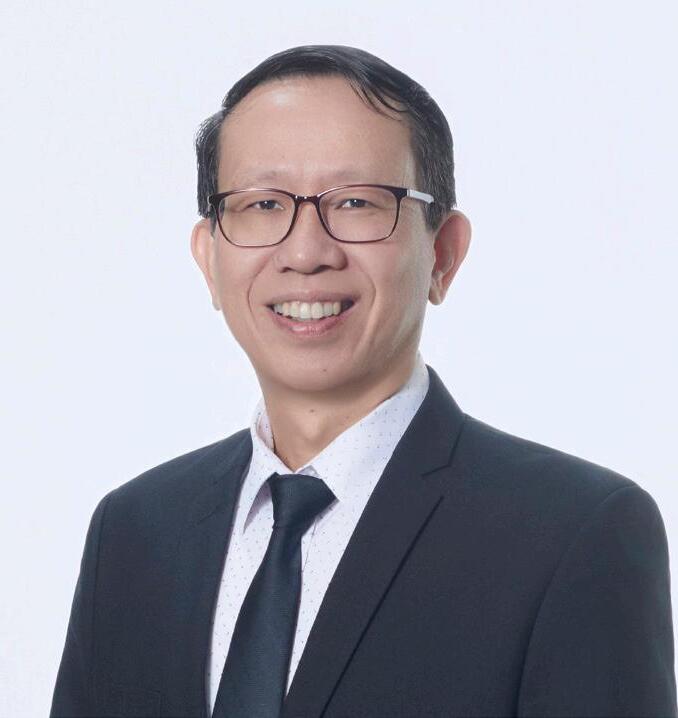
Sr Lee Eden Abraham, Director of Henry Butcher Malaysia in Sabah.
A VALUER’S MERIDIAN COMPASS
In the wellness practice of Qigong, mastering the flow of energy requires focus,
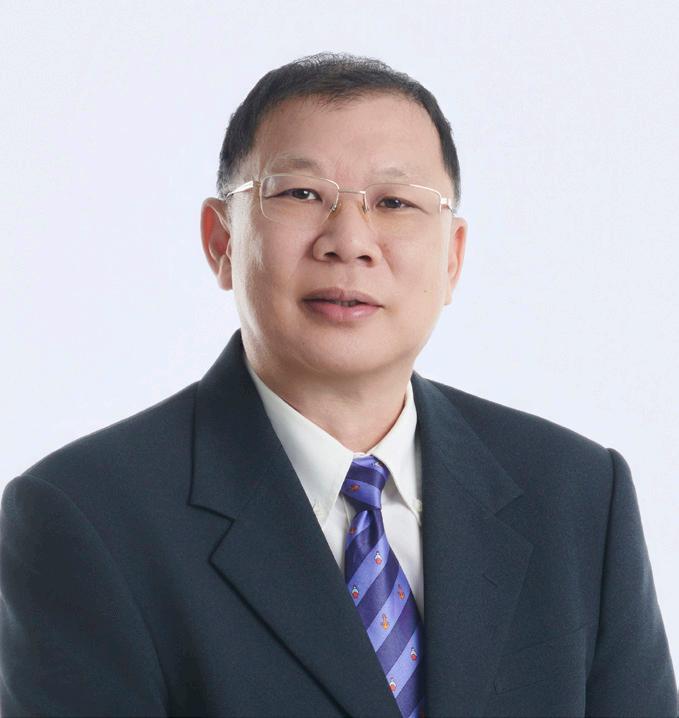
discipline and an unwavering sense of balance. For Sr Siew Weng Hong, Director of Henry Butcher Malaysia’s Negeri Sembilan office, these same principles apply not only to his personal life but to navigating the ever-shifting currents of the property market.
Just as Qigong relies on steady, deliberate movements to build strength, Sr Siew’s quarter-century tenure in Seremban is a testament to the power of measured decisions. While he may have spent the last 23 years perfecting his Qigong, his journey into the valuation profession was equally grounded in the pursuit of a better and more balanced posture.
Sr Siew began his footsteps with a degree in Property Management from Universiti Teknologi Malaysia (UTM) in Johor, at a time when it was the sole local institution offering the syllabus in the country. The course was however first recommended by his eldest brother, who is a lawyer, to their third brother but fate somehow chanelled the younger sibling down that path two years later.
Following his graduation, he spent six formative years working on a diverse portfolio encompassing valuation, plant & machinery and marketing of special properties at another firm. Equipped with the robust experience, including the valuation of an 8,000 acres estate in Indonesia and assignments in Thailand, Vietnam and Taiwan, Sr Siew was subsequently approached by his senior at university Datuk Sr Desmond Tew, Director of Henry Butcher Malaysia’s Selangor office, to spearhead the firm’s expansion into Negeri Sembilan.
The Seremban Leap
When he first accepted the challenge in early 2001, he endured the gruelling distance of approximately 76km from Setapak in Kuala Lumpur to Seremban in the first six to seven months, leaving home as early as 6am before returning back after 8pm. The time spent on the road didn’t deter him initially because even in KL, he was already waking up at 5am to beat the traffic crawls but driving
interstate on a daily basis eventually proved exhausting and upon realising this was unsustainable, he uprooted his family and relocated entirely to Seremban in 2002.
Arriving in Negeri Sembilan also invited another kind of challenge when his friends warned him about the low property values and stiff competition from the existing players in the market. Case in point, singlestorey terrace houses were valued at a modest RM80,000 whereas the double storey homes were about RM140,000. Fast forward 25 years later, the landscape has transformed entirely. Driven by inflation as well as a significant “spillover effect” from Klang Valley residents seeking larger homes and did not mind the commute to KL metropolis even if it was via the KTM Komuter train, new single-storey launches today easily command RM300,000 to RM400,000 whilst double-storey homes reach up to RM600,000 to RM800,000.
To put it simply, his persistence to remain in the new territory paid off and Henry Butcher Malaysia (NS) Sdn Bhd has since been recognised as one of the more active firms in Negeri Sembilan. This also grew in tandem with the positive dynamism of the state’s progressive market, which when traced against the performance of his office, is evidently supported by a track record of completing upwards of 16,000 valuation cases to date and counts an initial public offering (IPO) valuation assignment as the pinnacle of his outfit’s achievement. This stems from the client’s impressive growth ie. from a market capitalisation of RM600 million upon listing in 2012 to RM1.2 billion in 2026.
His more than two decades presence in the market has also earned the firm a solid reputation for its speedy response to valuation inquiries and this did not just come from his contemporaries in the industry but also from the banks where Henry Butcher Malaysia is a panel of. Such efficiency rides on a highly systematic data collection which has been meticulously maintained, complete with comparable data, floor plans and land specifications. This explains the quick turnaround and why they are often the go-to office for such information.
Aside from valuation covering all property types, Siew’s office was once also an active auction house that handled Loan Agreement Cum Assignment (LACA) and High Court
Henry Butcher Malaysia (NS) Sdn Bhd
Add: No. 11, Ground Floor, Jalan Tunku Hassan, 70000 Seremban, Negeri Sembilan.
Tel: +606 - 761 8681
Fax: +606 - 761 8687
Email: hbns@henrybutcher.com.my
auctions for the major banks. The same is today done selectively, as are its estate agency business due to the changing market conditions. But regardless of how Negeri Sembilan’s property market has evolved, Sr Siew maintained the firm’s position through professional and neutral conservatism, a typical hallmark of the Henry Butcher Malaysia Group, and further complemented by a level of unparalleled service. He adds that one should also not forget about branding, marketing and social media to remain relevant in the 21st century.
North Star
Interestingly, Sr Siew’s valuation practice is inherently bolstered by a lifelong interest in Geography. Since primary school, he has possessed the unique ability to draw the world and also individual country’s maps from memory. He could even memorise names of the capital cities, rivers and mountains at a young age.
“Geography affects human life, the way we live and the way we dress,” he shares. This spatial awareness directly translates to his daily work where his geographical intuition allows him to easily interpret complex terrain, property orientation, sun direction and local climate patterns, granting him a deeper and a more holistic understanding of a property’s intrinsic value.
Sr Siew Weng Hong, Director of Henry Butcher Malaysia (NS) Sdn Bhd
When asked what advice he would impart to young professionals entering the valuation field today, he stresses the critical importance of language proficiency where a good command of English is still very important, urging young valuers to read extensively to improve their vocabulary and ensure the professional standard of their valuation reports remains high.
Beyond linguistic skills, he highlights the necessity of being resilient and be willing to learn, open to feedback and not fall prey to complacency, “There is no such thing as a free lunch,” emphasising that hard work is nonnegotiable, especially for the ladies because valuation is quite a masculine profession.
Finally, Sr Siew describes the valuation profession as a relationship-driven business and that success requires nothing short of self-initiative.
“You must go out and meet people,” encouraging young professionals to engage in social and sporting activities like badminton or pickleball to actively build their network, cultivate trust and organically grow their presence.
Looking back to when he first started in Negeri Sembilan, trading the mindless commute for a 20-minute short drive has really proven to be life-changing. Not only did his quality of life improve, his children were also able to learn in a less congested and more conducive environment.
The handsome amount of time on his hands has indeed been put to good
use too as he has been able to pick up Qigong and one that has over time allowed him to volunteer meaningfully as one of ten instructors teaching about 100 students on a weekly basis. To this energetically harmonious pursuit, he accepts no payment and views the recreational endeavour as a necessary counterbalance to his corporate responsibilities because to him “life is not all just about work only.”
Q: What motivates or drives you at work?
A: Customer satisfaction is my number one driver. Knowing that my customers are happy signifies a job well done.
Q: What do you enjoy outside of work?
A: I have been practising Qigong for 23 years and now volunteer as an instructor. I teach two-hour classes every Monday and Friday night to about 100 students at a local primary school hall.
Q: If not as a valuer, what would you have done professionally?
A: A geography teacher.
Efficient data mining is essential to long term sustenance and success at Henry Butcher Malaysia Negeri Sembilan.
LESS NEW LAUNCHES IN KLANG VALLEY IN 2025
• There were 13 less projects launched into the market in 2025 with 66 projects compared to 2024 with 79 projects, registering a drop of 16.5% year-on-year.
• Selangor contributed a larger share in 2025 with 71% of the projects in the market while Kuala Lumpur generated the balance 29%. In 2024, the market share was 65% against 35%.
• By the number of units, the reduction was more significant between the two years, reducing from 45,422 to 27,660 units, translating to a decline of 39.1%.
• Both Selangor and Kuala Lumpur contributed an equal share of 50% of the stock to the market in 2025, compared to Selangor with 46% and Kuala Lumpur with 54% in 2024.
• The most active months of 2025 were April and August with 10 launches each followed by July and May with 8 and 7 launches respectively. In 2024, November registered the highest number of launches with 11 new projects followed by March, May and August with 9 projects each.
• By project types, the serviced residences/apartments continued dominating the market in 2025 followed by the terrace/super link homes and condominiums with 20, 17 and 10 projects respectively. The trend was similar to 2024.
• There were more semi-detached homes launched into the market in 2025 with 10 projects, the same number of projects as condominiums.
• Consistent with the serviced residence/ apartment statistics, high-rises dominated the new launches with 54% of the market share over landed properties (46%) in 2025; a trend that sustained from 2024 (65% vs 35%).
Kuala Lumpur
1) Bangsar = 1 Project
Highrise = RM1,200 - RM1,300psf
2) Bukit Jalil = 2 Projects
Highrise = RM700 - RM1,200psf
3) Cheras = 4 Projects
Highrise = RM700 - RM1,200psf
Landed = RM550 - RM650psf
4) KLCC = 2 Projects
Highrise = RM1,500 - RM3,600psf
5) KL Sentral = 1 Project
Highrise = RM400 - RM450psf
6) Mont Kiara = 1 Project
Highrise = RM800 - RM850psf
7) Old Klang Road = 1 Project
Highrise = RM800 - RM900psf
8) Segambut = 2 Projects
Highrise = RM600 - RM800psf
9) Sentul = 2 Projects
Highrise = RM600 - RM700psf
10) Setapak = 1 Project
Highrise = RM600 - RM650psf
11) Sungai Besi = 1 Project
Highrise = RM450 - RM550psf
12) Titiwangsa = 1 Project
Highrise = RM700 - RM750psf
• Up to 89% of the units launched were from the high-rises segment in 2025. By quantum however, it reduced by 16,914 units or 40.6%.
• In terms of built-up, the 601 to 1,500 sq ft configuration were seen in the most number of projects in 2025, almost similar to the trend in 2024. The only unique occurrence is that units measuring above 2,000 sq ft were more prominently available across 49% of the projects in 2025, compared to 2024 where the 801 to 1,000 sq ft had a similar dominant market presence.
• More projects were sold in the higher pricing tiers in 2025 compared to 2024. Projects with units sold at more than RM1 million were also seen in 57% of the projects in the market, the highest across all pricing brackets under observation. In 2024, the RM401,000
Kuala Lumpur
to RM600,000 was the most popular where 47% of the projects had units at this price point.
• By price per sq ft, the trend from 2024 sustained into 2025 with the RM501 to RM750 per sq ft the most widely available across 46% of the projects followed by the below RM500 per sq ft (31%) and the RM751 to RM1,000 per sq ft (29%).
• Shah Alam with 12 project launches had a significantly higher number of projects introduced to the market in 2025 compared to the rest of Klang Valley. This is followed by Cheras with 5 projects and 4 each in Klang, Petaling Jaya and Rawang. In 2024, Puchong led the market with 12 projects followed by Shah Alam and Sungai Buloh with 4 each.
NB: The percentages shown in the table are based on our analysis of the projects that we surveyed but they are not computed based on the number of units within those projects. The way to read this table is as follows eg. based on the projects that we analysed, 56% of them included units of above 2,000 sq ft in size. It however does not mean that 56% of all the units are above 2,000 sq ft. Each project will probably only have very few units of above 2,000 sq ft in size.
BUSINESS VALUATION IN THE CONTEXT
OF M&A (PART 1)
Business Valuation: What You Need to Know Before an M&A Deal
- By Garima Prajapati & Dr. Adie Gupta hc
If you are preparing for a merger, acquisition, or any significant ownership change, one of the first
and most critical steps is getting a business valuation that is practical, balanced and defensible. In today’s competitive and regulated deal environment, understanding what your company is truly worth is not just a formality. It is the foundation on which every negotiation, every deal structure, and ultimately every outcome rests.
Yet, despite how central it is to the M&A process, business valuation remains one of the most misunderstood areas for business owners and even some investors. Numbers on financial statements do not tell the full story and experienced dealmakers know this well.
Why Business Valuation Matters in M&A Landscape
Malaysia sees both domestic and cross-border M&A transactions as well as private equity activity. The country’s stable regulatory framework, transparent legal system, and strategic location in Southeast Asia make it a natural venue for businesses looking to grow through acquisitions or company owners selling/partially selling their businesses.
Within this context, company valuation is not a one-size-fits-all exercise. Whether you are a founder preparing
to sell, a private equity firm evaluating a target, or a strategic buyer assessing synergies, the valuation process needs to be tailored to the specific characteristics of the business, the industry it operates in, and the deal objectives at hand. Getting the valuation wrong in either direction can derail a transaction entirely. Overvalue a company and you risk overpaying, eroding post-deal returns. Undervalue it and you leave money on the table or, worse, signal to counterparties that due diligence was not thorough enough.
Common Approaches to M&A Valuation
There is no single method that works universally. In practice, business valuers typically rely on a combination of approaches, cross-checking results to arrive at a defensible and marketaligned valuation range. The most commonly used methods include:
• Discounted Cash Flow (DCF): This forward-looking method projects the future free cash flows of a business and discounts them back to present value. It is particularly useful when a company has predictable revenue streams or a strong growth trajectory that is not yet reflected in current earnings.
• Comparable Company Analysis (Comps): This involves benchmarking
the target business against publicly listed or recently transacted companies in the same sector. For M&A valuation, this requires a solid understanding of regional market multiples, which can differ meaningfully from Western benchmarks.
• Precedent Transactions: Looking at historical deals in similar industries gives a real-world view of what acquirers have been willing to pay. This method is especially valuable in sectors with active deal activity across Southeast Asia.
• Asset-Based Valuation: More common in asset-heavy industries or distressed situations, this approach values the company based on the net worth of its tangible and intangible assets. It is often used as a floor value in negotiations.
A credible valuation for M&A does not simply pick one method and run with it. It uses several, understands where they converge, and explains where they diverge. That triangulation is what gives a valuation report weight in a room full of sceptical counterparties or their lawyers.
What Makes Business Valuation in M&A Transactions Unique
Many businesses often operate across multiple jurisdictions in the region. A company might be headquartered in Malaysia but may also derive its revenue from Indonesia, Vietnam, or Singapore as an example. This regional complexity adds layers to the valuation process including currency risk, regulatory differences, and varying growth dynamics across markets all need to be factored in. Beyond geography, sector nuances matter enormously. A technology company, a manufacturing firm, and a financial services business each carry different risk profiles, margin structures, and growth expectations. Applying the same valuation lens to all three would produce results that are, at best, misleading.
There is also the matter of intangible value. In today’s deal environment, much of a company’s worth lies in its brand, customer relationships, proprietary technology, or talent pool none of which are visible on a balance sheet. A robust company valuation must grapple soundly with these intangibles, even when they are difficult to quantify.
Timing & Preparation: Getting Ready for Valuation
One thing experienced M&A practitioners consistently observe is that companies which prepare early for a valuation exercise tend to achieve significantly better outcomes. This does not mean inflating the numbers, it means ensuring the business is presenting itself in the most accurate and favourable light possible.
Before engaging a business valuer, it helps to:
• Clean up your financial records and ensure at least three years of audited accounts are available.
• Resolve any pending legal disputes, outstanding tax matters, or offbalance-sheet liabilities that could become red flags during due diligence.
• Document key customer contracts and supplier agreements — recurring revenue and long-term relationships add meaningful value.
• Articulate a clear and credible growth narrative supported by facts and data, not just optimism.
The more organised and transparent a business is going into the valuation process, the more confident a buyer or investor will feel, and confidence translates directly into valuation multiples or perception of both risk and the opportunity.
The Role of a Business Valuer in an M&A Transaction
While there are tools and formulas involved, business valuation for M&A is ultimately a professional judgement exercise. The right business valuer brings not just technical expertise but also deep market knowledge,
deal experience, and the credibility to defend a valuation position when challenged.
In M&A deals, where subject businesses may involve more than one jurisdiction, complex ownership structures, and sophisticated counterparties, working with a business valuer who understands local and regional dynamics is particularly important. They can identify value drivers that a generic analysis might miss, flag risks before they become deal-breakers, and help position the business or the offer in a way that resonates with the other side of the table.
Ultimately, the goal of any M&A valuation is not just to arrive at a figure. It is to tell a clear, coherent, and compelling story about what a business is worth and why. That is what separates a deal that closes from one that falls apart.
This article is written by Ms. Garima Prajapati and Dr. Adie Gupta hc, Senior Analyst and Managing Director respectively, of Spring Galaxy, an Associate of Henry Butcher Malaysia. Spring Galaxy is a corporate advisory firm specialising in business valuations and transaction support services. For more information, please visit www.springgalaxy.com
A BUYER’S MARKET BECKONS
Henry Butcher (HB) Malaysian and Southeast Asian Art Auction will be taking place
on 26 April 2026 at Menara Ken TTDI. This auction presents collectors with the opportunity to acquire outstanding works by renowned Malaysian artists.
A selection of works by Malaysia’s modern masters Abdul Latiff Mohidin, Datuk Syed Ahmad Jamal and Datuk Ibrahim Hussein are offered in the upcoming sale. In the HB January 2026 auction, works by Latiff Mohidin and Datuk Ibrahim Hussein achieved strong prices, successfully establishing new auction records for their respective sizes.
The upcoming April auction features masterpieces by top Malaysian artist Latiff Mohidin, an acclaimed Malaysian artist whose works draw from his experiences with nature. Painted in an expressive style, the highlights of the auction were created by Latiff Mohidin between the late 1980s and 2000s, reflecting the artist’s enduring fascination with nature. Three compelling paintings by Latiff Mohidin are offered in this sale: Landscape, early 2000s (estimate RM200,000 – RM400,000); Voyage Series, c. 2002-2005 (estimate RM200,000 – RM400,000), and Gelombang Landscape, 1986 (estimate RM250,000 – RM450,000).
“It’s the best time to buy now, it’s the Buyer’s Market, and quality works like these are hard to come by, don’t miss the opportunity to acquire the masterpieces, especially the bids are starting at very attractive level!” said Sim Polenn, Director of Henry Butcher Art Auctioneers.
Another highlight of the sale is a poetic work with vibrant colours painted by Datuk Syed Ahmad Jamal titled Ruang Hijau, 2007 (estimate RM200,000 –RM350,000). Also featured in the sale are 3 refined pieces by Datuk Ibrahim Hussein: About The Andaman, 1999 (estimate RM300,000 – RM500,000); Untitled, 1997 (estimate RM100,000 – RM180,000); and Xenobiosis, 1969 (estimate RM400,000 – RM600,000), respectively. “These are rare masterpieces of absolute quality, painted by the legendary Malaysian artists,” Sim Polenn said.
Auction Day: Sunday, 26 April 2026, 1PM - 4PM
Preview Day: 18 - 25 April 2026, 10AM - 6PM daily
Venue: Menara Ken TTDI, Level M, Hall 1-3 37, Jalan Burhanuddin Helmi, Taman Tun Dr Ismail, 60000 Kuala Lumpur.
For enquiries, kindly contact Sim Polenn at +6016-2733628 or browse the auction catalogue at www.hbart.com.my
Ibrahim Hussein, Datuk, Untitled, 1997
Acrylic on canvas, 32 x 45cm
Estimate RM100,000 – RM180,000
Syed Ahmad Jamal, Datuk, Ruang Hijau, 2007
Acrylic on canvas, 125 x 100cm
Estimate RM200,000 – RM350,000
Ibrahim Hussein, Datuk, About The Andaman, 1999
Acrylic on canvas, 69 x 86cm
Estimate RM300,000 – RM500,000
The previous sale in January also saw Khoo Sui Hoe achieved a new record (RM95,200) when a 1977 painting exceeded three times its low estimate. This round, another charming piece of the same year 1977 painted by Khoo Sui Hoe, titled Crescent Moon (estimate RM30,000 – RM60,000) is offered in this sale, alongside The Wedding, 1980 (estimate RM30,000 – RM55,000) and To Catch A Bird, 1981-2006 (estimate RM26,000 – RM50,000). “These pieces are anticipated to fetch good prices,” Sim continued.
The auction also presents two exquisite pieces from the Essence Of Culture (E.O.C.) series painted by respected artist Awang Damit Ahmad, titled PunPun dated 1988 (estimate RM80,000 – RM130,000) and Sea Harvest dated 1993 (estimate RM58,000 – RM88,000) respectively.
“The E.O.C. series (1985 - 1995) is well sought after by collectors. We are confident to sell the Awang Damit artworks despite the looming uncertainty affecting the current economic atmosphere triggered by the oil crisis,” Sim said.
RM80,000
Mixed media on canvas, 135
Estimate RM400,000 – RM600,000
Awang Damit Ahmad, Essence Of Culture (E.O.C.) Pun-Pun, 1988
Mixed media on canvas, 100 x 80cm
Estimate
– RM130,000
Awang Damit Ahmad, EstetikaJambatanWaktu,2020
Mixed media on canvas, 122 x 122cm
Yusof Ghani, Dato’, Siri Segerak - Midnight Calls, 2003
Mixed media on canvas, 132 x 101cm
Sharifah Fatimah Syed Zubir, Dato’, Awal Muharram, 1997
Acrylic on canvas, 153 x 153cm
Jolly Koh, Tanneleon Revisited, IV, 1996 Acrylic on canvas, 137 x 77cm
Chuah Thean Teng, Dato’, Lullaby, 1986
Batik dye on cloth, 90 x 59cm
Ibrahim Hussein, Datuk, Xenobiosis, 1969
x 90cm
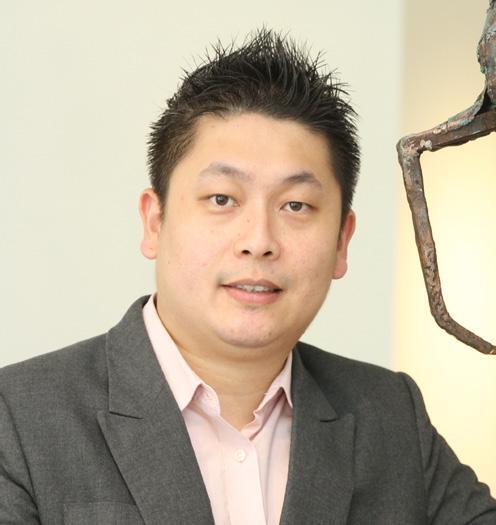
Sim Polenn
Director of Henry Butcher Art Auctioneers
Malaysian & Southeast Asian Art Auction
26 APRIL 2026, 1PM
Venue: Menara KEN TTDI, Level M, Hall 1-3
37, Jalan Burhanuddin Helmi, Taman Tun Dr Ismail, 60000 Kuala Lumpur
l i z a b e t h Wo n g S i on C ha n g
info@hbart.com.my S i m Po l e n n
016 273 3628 013 355 6578 017 7 7 7 0035
18 – 25 April 2026 10am – 6pm daily
KEN TTDI, Level M, Hall 1-3
Voyage Series
c. 2002 - 2005, oil on canvas, 91 x 111cm estimate RM200,000 - 400,000
Gelombang Landscape 1986, oil on canvas, 40 x 199cm estimate RM250,000 - 500,000
Landscape early 2000s, oil on canvas, 92 x 122cm estimate RM200,000 - 400,000
ART AUCTION HIGHLIGHTS including artworks by ABDUL LATIFF MOHIDIN: