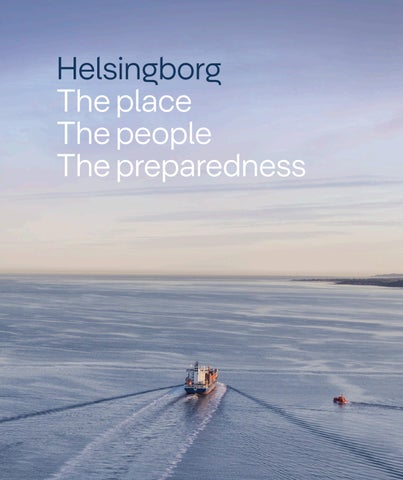

Helsingborg The place The people The preparedness

Helsingborg, a growing hub for Sweden’s total defence.
A story of the place, the people and the preparedness.
Stockholm
Gothenburg
Oslo
Copenhagen
Helsingborg


Helsingborg – where opportunities
become reality
In an age where preparedness and civil defence have become major issues concerning the future of our world, Helsingborg is leading the way as one of Europe’s most prominent driving forces behind resilience, crisis preparedness and robust value chains. The city sets the pace and drives development. Enterprises establish themselves not just to grow, but also to take part in building systems that remain resilient when it really matters. Through close partnerships between industry, the public sector, academia and civil society, solutions are developed and tested in real flows. With Lund University and Campus Helsingborg as pivotal driving forces, through initiatives such as LUPREP and REAL, research is converted directly into applications – swiftly, precisely and with visible effects in socially critical systems.


Helsingborg is a strategic intersection in the Öresund Region and one of Northern Europe’s most resilient hubs for logistics and transport flows. Here, port, railway lines and roads are bound together in a system that does not just streamline flows, but also strengthens them. The combination of location, infrastructure and collaboration makes the city a natural platform for investments in the preparedness, logistics and socially critical functions of the future. Together with a strong entrepreneurial culture, an ecosystem is created where innovation and preparedness lie in the same direction.
Helsingborg’s strength is both structural and human in nature – where trust, collaboration and initiative are converted into actual capabilities and long-term resilience.
It is here that the story starts – in a city that does not reflect the demands of the future regarding resilience, but shapes them.

1 Logistics – at the heart of resilience
Effective civil preparedness and efficient logistics are crucial in keeping the wheels of society turning, both in normal times and during a crisis. It is vital to safeguard flows of essential goods such as food and medicines, facilitate efficient distribution and be able to rapidly mobilise resources where and when they are needed. In a time of heightened uncertainty, logistics expertise has become a strategic competitive advantage – for both society and business. It is here that, thanks to its strong position within freight transport, goods flows and connections with the rest of Europe, Helsingborg has the potential to play a leading role.
Over the years, Helsingborg has emerged to become one of Europe’s most attractive logistics hubs. From here, businesses can reach a market of over ten million people within just a few hours, facilitating growth and development. The city is home to more than 3,200 enterprises within logistics, trade and third-party logistics. Together, they form a strong cluster where e-commerce,
grocery supply chains and temperaturecontrolled distribution and logistics take centre stage. With modern and often automated storage solutions, an environment is created where efficiency and new ideas go hand-in-hand.
Helsingborg is seamlessly integrated into the Öresund region, with close links to both the STRING megaregion, which spans four countries and around 14 million inhabitants, and the Danish-Swedish transnational partnership of Greater Copenhagen with a total of 4.5 million inhabitants. The impending Fehmarn Belt Fixed Link is also set to make journeys between Scandinavia and the continent both faster and easier – and strengthen Helsingborg’s role as a key hub in European flows. Thanks to its location, infrastructure and strong industrial base, Helsingborg is continuing to grow as an important hub where goods, ideas and people come together and the logistics and supply preparedness of the future are developed.


World-class capacity
The Port of Helsingborg is one of Northern Europe’s most important logistics nodes and handles over seven million tonnes of goods every year. The port is also Sweden’s second-largest container port. Here, sea, road and rail traffic meet in an efficient system which offers fast and reliable access to both national and international markets. The port also plays a vital role in safeguarding Sweden’s national security and defence interests, along with the country’s engagement in NATO.
"An important part of our mission is to ensure that we are able to continue operating in the event of a crisis or a war. The prevailing security situation and Sweden’s membership of NATO make these issues of particular relevance. Our interaction with the Swedish Armed
Forces has been intensified and is now continuous, with a focus on how the port can be utilised in different scenarios,” said Bart Steijaert, Managing Director of the Port of Helsingborg.
"The planning process encompasses the handling of large volumes of goods such as food products, clothing and necessities, in addition to the scope to rapidly upscale logistics. In parallel, a close collaboration is under way with other authorities aimed at strengthening both preparedness and civil defence,” he continued.
To meet increasing demands relating to security and efficiency, the Port of Helsingborg is investing SEK 55 million in a new customs building in Västhamnen. Plans are also being drawn up to relocate and

A chain of know-how
expand the container port in order to increase and modernise capacity. The new facility is expected to be completed around 2033 and entails an investment of approximately SEK 3.5 billion.
“Our container operations have expanded five-fold in terms of volume since the 1990s, and the initiative to relocate and expand the container port is incredibly
important in ensuring that we have the robust infrastructure that will be needed to handle the logistics flows of the future. It will also better enable us to operate as a complement to other Swedish ports in the event of the loss of capacity. We believe in long-term investments in security and preparedness, in order to meet the needs of both today and tomorrow,” concluded Bart Steijaert.
Nowaste Logistics is an innovative logistics partner with strong local roots which is continually challenging the sector through advanced automation solutions, among other things. The company possesses broad experience within a wide range of segments. As a subsidiary of Everfresh AB, the company is part of the Dole Plc Group, the world’s largest player within fresh fruit and vegetables, with a turnover of in excess of EUR 10 billion. As a leading logistics player in the city, Nowaste is well aware of the importance of logistics to societal resilience.
“The logistics chain is incredibly important during crises, such as pandemics, natural disasters, civil demonstrations, protests and riots. Effective infrastructure is essential in safeguarding Sweden’s supply capacity and ensuring that vital services and systems in society can continue to function. As and when necessary, we also have the capacity to restructure our
operations according to a range of scenarios and to expand our partnership with the city and other players,” said Johan Kallin, CEO of Nowaste Logistics.
As one of the Nordic region’s largest thirdparty logistics providers, with customers in the telecom, pharmaceutical and other sectors, PostNord TPL and its terminals in Helsingborg play a vital role in societal preparedness. In the event of a crisis, such as a pandemic or heightened preparedness, the company helps to safeguard vital goods flows across the country. The company is also a subsidiary of stateowned PostNord, whose mission is to distribute post and parcels across Sweden, thereby giving it a pivotal role in ensuring that society continues to function in every conceivable situation.
“Our national warehousing structure, which draws on facilities across Sweden, enables us to utilise decentralised warehousing,
Logistics – at the heart of resilience | 15 14 | Logistics. At the heart of resilience.


creating redundancy and increasing our resilience with respect to disruption in the supply chain. This makes the operation less vulnerable and enhances our ability to deliver in difficult circumstances. Thanks to our flexible organisation, strong logistics and robust IT infrastructure, we have the capacity to meet sudden needs as regards staffing, goods flows and technical
systems. There is also a strong sense of pride throughout the Group in being part of this socially important function: ensuring that goods, services and information reach the right recipient on time and with the right quality,” said Martin Nyberg, Regional Manager for Region South at PostNord TPL.
E-commerce that delivers
E-commerce plays a vital role in total defence and goods supply by making it easy and more flexible to obtain essential goods. In the event of a crisis or war, it can even become the safest trade route, particularly if people need to avoid public gatherings or stay at home. This is because, thanks to smart storage solutions and flexible deliveries, e-commerce can continue to function even if certain areas become difficult to reach. As one of Sweden’s most important e-commerce hubs, on which a high proportion of the country’s goods flows, warehouses and distribution capacity is concentrated, Helsingborg is a pivotal driving force in the country’s supply systems, both in everyday life and in more challenging situations.
“At a time when rapid adaptation, robust supply chains and dependable access to goods are business-critical factors,
Helsingborg offers a unique competitive advantage. The city is home to welldeveloped capacity which can be rapidly scaled up as and when necessary, without long lead-times or major investments. The result is greater flexibility, higher delivery dependability and strong commercial resilience,” said Karsten Deppert, founder of the E-commerce Park of Scandinavia hub.
“The E-commerce Park of Scandinavia will be a hub for e-commerce development and strengthen the sector’s robustness through innovation, systems development and collaboration. The park is home to enterprises from a wide range of sectors which are able to network, share knowledge and grow together, encompassing everything from startups and established businesses to global e-commerce players and leading experts,” continued Karsten.


2 Positioned to feed a nation

Most of us take being able to buy milk, bread and other staples from our nearest shop for granted. However, in the event of a major crisis, the shelves can rapidly become empty. If grocery flows in Helsingborg grind to a halt, access to fresh produce across the whole of Sweden will be affected within a matter of days. Without strong domestic production, we risk losing control over our own supplies too. For this reason, we need a strong agricultural industry and high-quality facilities for storing food products, as disruption caused by electricity outages, extreme weather or conflicts can rapidly impact on production. Local farmers and food producers make us less vulnerable when global supply chains are disrupted. Today, Helsingborg and Skåne account for around a third of the country’s total food production, and the proportion is even higher for fruit, vegetables and berries. At the same time, we depend on efficient import flows and the Port of Helsingborg is a high-profile example. Around 90 percent of Sweden’s fruit and vegetables pass through the port, making it a key player in our food supply network.
When businesses are able to continue operating, they also help to strengthen the resilience of society as a whole. Ultimately, the supply chain has not been secured until the food has actually reached the consumer. This requires the entire chain to function – from production and processing to storage, transport, distribution and serving. Effective preparedness is underpinned by a number of cornerstones – viable businesses, efficient logistics and the storage of important goods. The entire chain can be found in Helsingborg, from fertile agricultural land to advanced processing and exports around the world. Together, these players form a strong hub for our food preparedness. The city, region, trade and industry and civil society need to work together – and food products need to have as axiomatic a place in the development of the city as energy, water, transport and care. A sustainable and innovative food system creates not only security, but also more jobs, new business opportunities and increased exports.


The start of a safe journey
Helsingborg is home to many of the players and central warehouses that supply many of Sweden’s grocery stores. One example is Everfresh, one of Sweden’s leading wholesalers and distributors within the fruit and vegetable sector, which acts as a central link in the food supply chain by importing and distributing fresh produce to the Swedish market. Another is ICA Gruppen, whose warehouse at Långeberga in Helsingborg is one of the Group’s largest and a central hub for
distribution across southern Sweden.
The facility, which is highly automated and covers an area of approximately 105,000 square metres, supplies around 700 stores with grocery products and frozen goods daily.
“We see ourselves as a socially important player with a clear responsibility to ensure that the food supply chain functions efficiently under any circumstances. With a strong presence across virtually
the whole of the country and a considerable share of the grocery trade, we play a vital role in keeping flows moving. We fulfil this responsibility both internally and in close collaboration with other players in the grocery trade, authorities and regional partners. Together, we work to strengthen preparedness, clarify roles and build long-term relations,” said Emma Lindström, Logistics Director at ICA Sverige AB.
Meeting the challenges of the future will also require flexibility and adaptability. It is vital that we broaden the supplier base, safeguard alternative transport routes and reduce our dependency on individual
energy sources. It will also require investments in redundancy, such as backup power sources and robust infrastructure, to ensure that we can continue operating in the event of disruption.
“Helsingborg plays a key role as a logistics hub, where both the port itself and strategically located warehouses enable efficient flows into the country. A further important aspect of the work is to strengthen domestic production and promote the consumption of Swedish produce, which in turn will contribute to a more robust food supply chain,” concluded Emma Lindström.


Close to the source
Another pivotal player in the food supply chain is the Lantmännen agricultural cooperative, who operate one of Sweden’s largest grain terminals at the Port of Helsingborg, with a storage capacity of approximately 240,000 tonnes. Here, efforts are actively being made to strengthen Swedish civil preparedness, with a particular focus on food supply chains and robustness in the agricultural sector. Per Germundsson, Director of Grain Business at Lantmännen, highlights strong domestic production in peace time as a vital factor in being well-equipped to face up to crises and contribute to a better trade balance.
“During the high season, we handle large volumes of grain in Helsingborg, and around 6 million tonnes are produced
nationally, of which approximately 75% remains in Sweden. Drying the grain enables it to be stored for up to a year – or up to five years if the water content is lower –making it an important resource in the work to build up robust food preparedness. The silo facilities are fully utilised during the harvest season, but have spare capacity during the rest of the year, which could be used to create future preparedness stocks,” explained Per Germundsson.
“Stable domestic agricultural and food production in peace time is the best investment for increasing Swedish preparedness in times of crisis. In addition to grain, society also needs to build up stocks of input materials such as fuel, fertiliser and plant protection products in order to safeguard agricultural production

in the event of disruption. Politicians and authorities have an important responsibility in this regard and we can now see studies being turned into practical actions. Those of us working in the sector must do what we can to contribute to strong preparedness,” continued Per.
“Helsingborg plays a pivotal role in Sweden’s food supply chain as regards both imports and exports. Large volumes of goods pass through the city – from grain via Lantmännen’s terminal to fruit,
vegetables, meat and everything from rice to spices. The port has a particular strength in its capacity to handle temperature-controlled chains, with provision to connect up to 450 refrigerated and freezer containers simultaneously.
To further strengthen robustness in times of crisis, the development of various backup solutions is also underway, including battery- and generator-based backup power sources,” concluded Bart Steijaert, Managing Director at the Port of Helsingborg.


Technology to secure production
JBT Marel is a global player within technology, equipment and software for the food industry, with some of its operations based in Helsingborg. The company possesses considerable expertise within industrial freezing, as well as within processes such as boiling, deep frying, breading and frying. It is estimated that half of the world’s industrially frozen food passes through their technology. The company’s domestic customers include well-known Swedish food companies such as Dafgård, Lantmännen and Polarbröd. With service technicians around the world, the company is able to provide its customers with rapid support. During the covid pandemic, the company managed, despite the restrictions that were in force at the time, to continue serving its customers and help food production to continue. Clear
evidence of the company’s robustness, even in a crisis.
“Our contribution to the food supply chain – both locally and nationally – is to supply the equipment that is needed to produce food in Sweden. Many of the processes involved also contribute to greater sustainability through longer shelf-lives, better storage facilities and reduced food waste, which is particularly important in crisis situations. Freezing is an obvious example and is used for everything from vegetables and meat to ready meals and bakery products. In addition to equipment, JBT Marel also offers service and spare parts, which are vital in securing long-term, stable production,” concluded Anders Lassing, Senior Vice President & General Manager Prepared Foods EMEA at JBT Marel.

3
Where preparedness is heading

The boundary between civil and military technology is gradually being erased. In an increasingly uncertain world, ‘dual-use’ innovations, which can be used in both civil and military contexts, are becoming ever more important. Technology is often developed in fast-moving, commercial environments. It can then also take on a vital role for national security. In Helsingborg, this development is very apparent. Over the past decade, the city’s tech sector has grown rapidly to become a dynamic environment where established companies and startups work closely together. Here, innovation, entrepreneurship and industrial expertise meet at a tempo that reflects the broader development that is taking place across Europe.
At the same time, the defence-related industry finds itself in a period of strong growth. Increased investments, rising demand and a changed security landscape
are driving development forward. Sweden’s membership of NATO has further strengthened the need for technical development and deeper collaboration. However, it is no longer the traditional defence players that are setting the course. Today, startups, tech companies, universities and research environments are playing an increasingly important role in shaping next-generation solutions. This innovation is taking place in a broad ecosystem where ideas rapidly shift between civil and military applications. Helsingborg already has the structures that are needed to facilitate this type of interaction, and it is at this frontier that much of the competitiveness of the future is taking shape. The ability to rapidly convert new ideas into functioning solutions – sometimes in a very short space of time – will be vital as regards both defence capability and the economy.
Rugged IT for global preparedness
Over the past thirty years, the defence technology company MilDef in Helsingborg has established itself as one of the Nordic region’s strongest players within rugged IT for the defence domain. Today, the company has operations in some ten countries and contributes to the datadriven defence infrastructure across the Nordic region, Europe, the UK and the USA in particular. MilDef finds itself in a strong growth phase in step with increasing defence budgets and the rapid digitalisation of defence capabilities. The focus is placed solely on defence technology, and the company describes itself as a global systems integrator within tactical IT, spanning hardware, software and services. Much of this growth is being driven by the ongoing process of digitalisation that is taking place within the defence sector, with ground-based systems in particular now being modernised at a rapid pace.
“Our development is closely linked to what is happening in the outside world. Defence budgets are expanding, digitalisation is proceeding at a rapid pace and the need for
robust, secure IT systems in demanding environments has never been greater. We can also see that the technology is changing fundamentally – what used to be visions of the future are now part of our everyday reality. Airborne and marine systems have already long been digitalised, but ground defence systems are now undergoing extensive digitalisation and modernisation. We see a marked need to build up and strengthen technical infrastructure in this area,” said Daniel Ljunggren, President/CEO at MilDef Group.
“We specialise in supplying IT systems and solutions that protect critical information flows. It is ultimately about ensuring that everything works when it really matters – where the error margins are zero and the consequences can be decisive. The sector is changing rapidly, considerable new expertise is being brought in, and the level of interest in defence technology has increased markedly. At the same time, complexity is increasing – not least within cybersecurity, AI and connectivity – which means that we constantly have to be


at the cutting edge and work closely with customers and partners to drive development forward,” continued Daniel.
In recent years, MilDef had expanded hugely across the Nordics and Europe, partly through acquisitions and establishments in Germany and the United Kingdom.
As a result of technology, geopolitics and digitalisation, MilDef expects the strong demand for the company’s products and services to continue going forward too.
In the middle of this global expansion, Helsingborg remains the heart and soul of the company.
“MilDef has grown rapidly internationally, not least through our recent acquisition in
Germany, where we are continually helping to strengthen defence capabilities. At the same time, we are continuing to grow in the Nordics and other European markets, which means that today we have a considerably broader presence than in the past. However, we have for many years also been a strategic partner to the Swedish Armed Forces and the Swedish Defence Materiel Administration (FMV), and their equivalents in the Nordics.
“We feel a strong sense of affiliation to Helsingborg and it is here that our origins lie. We have also recently taken the decision to invest in a major expansion in Helsingborg over the coming years in order to expand our production here,” concluded Daniel.
Where
Collaboration builds total defence
Combitech is a tech, solution and consultancy partner which, together with customers and business partners, is challenging the boundaries of technology, in order to contribute to a smart and resilient society. The company has operations in Sweden and Finland, in addition to a development centre in India. In Skåne, the company also has offices in Helsingborg, Kristianstad, Lund, Hässleholm and Ljungbyhed. The company’s core comprises 2,700 experts and the business is wholly owned by Saab.
“By combining experience from the defence and industrial sectors with knowledge from the public sector and academia, we create solutions that are sustainable in the long term. This enables us to help businesses stand strong in the face of the challenges of the future, regardless of whether it concerns digital development, artificial intelligence, the streamlining of processes or the protection of assets. Both private and public sector operators have a growing need to strengthen their capabilities and technology given the global situation, in order to be sustainable, secure and competitive,” said Anders
Wendel, Delivery and Operational Manager at Combitech.
Civil defence needs to be strengthened
Every year, Combitech publishes the Total Defence Report, which measures how decision-makers in Swedish industry see preparedness and total defence. The report indicates that resilience is increasing, albeit slowly, and that many enterprises are seeking more knowledge concerning how they can contribute.
Anders believes that, while the armed forces have a stable basis, there is a strong need to develop civil defence.
“We need to bring together not only state, public authorities, regions, municipalities and industry, but also academia and voluntary organisations around a shared vision. It is about both short-term measures and long-term strategies. Of particular importance is collaboration within areas such as energy, water, IT and other critical social infrastructure. It is only when all the various components work together than we will be able to build a smart and resilient society,” concluded Anders Wendel.


Fresh air – pure resilience
The environmental technology company Nederman was founded in Helsingborg just over 80 years ago. Since then, the company has grown to become a leading global supplier with its head office in Helsingborg and many subsidiaries and offices around the world. The company develops solutions within industrial air filtration which protects people, the environment and production from harmful particles, fumes and dust. Nederman’s systems for air filtration and dust and
fume extraction are also used in defencerelated contexts. These include production environments, workshops, vessels, vehicles and maintenance facilities.
“We operate as a supplier to industry. Our customers operate within a wide range of sectors such as metal processing, vehicle maintenance, chemicals, recycling, food products and defence-related production. At the same time, we also contribute on a broader level to civil defence and societal
preparedness by safeguarding health, safety and operational reliability. Clean air is vital in enabling people to work safely and production to continue even when under pressure,” said Sven Kristensson, CEO at Nederman.
Nederman’s innovation centre in Helsingborg is a global hub for the development of the air filtration solutions of the future, where expertise and tests are converted into solutions that meet the needs of industry. Through its expertise, the company is contributing to more robust industries with reduced vulnerability to downtime, environmental problems and high energy costs. With a global organisa-
tion, flexible production and strong engineering know-how, Nederman is also well-equipped to adapt to changed circumstances.
“Our systems deal with airborne risks such as welding fumes, particles and flammable and explosive dust in challenging industrial environments. In the event of a societal crisis, we can, in dialogue with affected parties, prioritise resources and initiatives which support socially important functions. Contributing expertise and collaboration in exposed situations is a natural part of Nederman’s corporate social responsibility,” concluded Sven Kristensson.
Future accelerated
The startup and tech hub Helsingborg Tech House (HETCH) was founded in 2019 by David Nilsson Sträng and has rapidly become a thriving meeting place for entrepreneurs, innovators and scaleups in Helsingborg. In the new district of Oceanhamnen, startups, established companies and creators come together around new ideas and the business transactions of the future – with the ambition of positioning northwestern Skåne as a hub for tech companies and innovation in southern Sweden. With its strong links to industry, capital, education and research, HETCH is creating the right conditions for new technical innovations which can strengthen both civil and military defence.
“We are a startup factory within tech and linking this to dual-use and resilience makes for a powerful engine for rapid innovation. We strongly believe there is huge untapped potential in areas such as AI, information security, infrastructure and drone technology. That is why we offer accelerator and incubator programmes, advice, expert networks and contact with investors – all to help companies to grow locally and reach out globally. We work
with both startups and existing, established companies that are looking to test spinoffs and business ideas,” said David Sträng Nilsson, founder and CEO at HETCH.
Today, the hub supports more than 110 startups. Many of these already operate within civil preparedness or supply the defence sector, and interest is growing rapidly as Europe accelerates its initiatives within defence and resilience.
“We can see that players like us often act as a hub for this type of innovation, such as Uppsala Innovation Centre, Amyna and Defense Hub Sweden in Linköping. For us, it is a natural step to also take a clearer role within civil defence and dual-use, where technology can be used for both civil and military purposes. The combination of our strategic location, the proximity to the port, Campus Helsingborg, test environments such as the city and Ljungbyhed Park, the local energy company Öresundskraft and the link to Denmark creates extremely favourable conditions. It is an environment in which we can move forward at an even faster pace,” continued David Sträng Nilsson.


Clean water – resilience tapped
To ensure that it is prepared when it really matters, Helsingborg is investing heavily in the future safety and security of drinking water. With investments of around SEK 15 million, robust preparedness infrastructure is being constructed with a focus on smart solutions. This infrastructure includes two mobile mini-treatment works which can convert both wastewater and seawater into drinking water, along with large water tanks which can rapidly be mobilised in the event of disruption. As a co-owner of the regional water company NSVA, the city is actively working to safeguard drinking water supply and wastewater treatment – including in the event of crises and heightened preparedness. Helsingborg is also one of thirteen municipalities to take the lead in developing new models for strong water preparedness.
Clean water is often taken for granted in everyday life – but in a crisis it becomes a vital resource. Here lies one of the strengths in that the systems are local: disruption can often be limited, even if it can have a major impact wherever it occurs. At the same time, water supply is dependent on other important systems, such as electricity and chemical deliveries. In an uncertain global situation, preparedness is also about the ability to adapt. Chemical production may need to be stepped up rapidly in order to supply everything from disinfectants to water treatment solutions. This requires flexibility, innovation and a close interaction between industry and society – something that Helsingborg is actively building for the future.


H2O – everyday chemistry
Kemira Kemi AB in Helsingborg is part of the Finnish chemical group Kemira – a global leader within sustainable chemical solutions for water-intensive industries. The company has been a pivotal part of Helsingborg’s industrial development for 150 years and offers products and technical solutions that optimise water treatment processes, reduce energy consumption and contribute to high water quality. Kemira was also an active partici-
pant in the initiative to improve the water quality of the Seine ahead of the Olympic Games in Paris in 2024.
“Consumers may not see what we do on a daily basis, but we are still there the whole time – through the treatment of drinking water, cleaner wastewater and softer paper products. Kemira is a world leader within chemical water treatment and drinking water supply is one of society’s most
critical functions from a preparedness perspective, and it is here that we have an important role to play. We may be a prestigious company with large-scale production, but it is also apparent that there is a strong progressive mindset here and a desire to lead the way as regards developments within the sector,” said Björn Linde, CEO at Kemira Kemi AB.
Kemira is currently in full swing planning the construction of the Nordic region’s first regeneration facility for active carbon. This facility is expected to provide substantial new capacity in order to reactivate carbon for the Nordic market for drinking water.
“Active carbon is used for a variety of purposes, including the removal of PFAS from drinking water, which can have negative health effects. As there is currently no facility of this type in the Nordics, spent carbon has to be sent abroad, which is neither sustainable nor economic. Instead, we will now be able to reactivate the carbon within the country by receiving carbon from other treatment works for processing. This is an extremely exciting project and the facility is expected to become operational during the second half of 2027,” concluded Björn Linde.
When thirst turns into emergency
Aqua Nobel, a company based outside Helsingborg, is a pivotal player within emergency drinking water supply and societal preparedness. The company supplies drinking water to public sector organisations, including healthcare enterprises, the rescue services, municipal enterprises and water supply enterprises. In 2024, the company won a contract with the Swedish Armed Forces and also collaborates with the City of Helsingborg with the aim of strengthening emergency drinking water preparedness in the event of a crisis.
“For us, this type of partnership represents another step towards our ambition of contributing to stronger national preparedness. By combining dedicated production, innovative solutions and long-term partnerships, we will help to build a more robust drinking water system – both on an everyday basis and when it really matters. These agreements show how the public and private sectors can work together to find solutions that benefit the whole of society. As an organisation with access to a large water source, we take responsibility for society’s development and challenges,” said Pontus Klenell, CEO at Aqua Nobel.
Aqua Nobel’s inhouse-developed concept for emergency drinking water goes by the name of WAAS (Water As A Service).
This concept enables customers to subscribe to water and ensure that emergency stocks are replenished at all times. The solution is designed to meet demand in times of both crisis and war, and includes innovations relating to logistics and packaging – e.g. the possibility of reusing, stacking or integrating packaging into logistics solutions.
“More than 30 percent of Sweden’s municipalities have no emergency drinking water plan and there is a substantial maintenance backlog in the water and sewerage systems which makes them vulnerable to disruption and sabotage. That is why we have developed a concept which makes it possible to safeguard water supplies in a cost-effective manner for both public and private sector players, not just in Sweden, but across Europe too. Combined with smart packaging, it gives our customers a flexible and robust resource which can help to overcome disruption in the water supply network, particularly during the critical early days of a crisis,” concluded Pontus Klenell.


Solutions for a safer everyday life
Clemondo is a Swedish manufacturing company with its roots in the chemical industry, an industry that has undergone a marked shift towards more sustainable solutions. During the covid pandemic, the company contributed to social supply by rapidly scaling up Swedish production and securing access to important products at a critical time.
“We increased production in record time, worked round the clock and focussed entirely on safeguarding deliveries to the Swedish healthcare sector. It was never a matter of profit, but of taking responsibility. Our trucks were ready to travel directly to hospitals and healthcare facilities. It was a strong team effort. In a crisis, this is exactly what is needed – local production, access to raw materials and the agility to rapidly adapt. We know how to adapt rapidly, as we have already done it once,” said Mathias Andersson, COO at Clemondo.
Today, Clemondo is a leading producer of hygiene and cleaning products for the healthcare sector, the automotive industry and other industrial enterprises. Their
cleaning, disinfection and hygiene products are a natural part of everyday life and are extensively used in healthcare settings across the country. All production is concentrated in Helsingborg, with agreements in place in a number of regions, and the company is continuing to grow across both Sweden and the rest of the Nordic region.
“In step with the expansion of the civil defence sector, stricter requirements are now also being imposed on preparedness stockpiles and national supply capacity. In this area, Clemondo has a clear role to play, through both its Swedish production and its breadth – from disinfection products for the healthcare sector to cleaning and maintenance solutions which keep vehicles and industrial enterprises moving, even during periods of disruption. We are flourishing in Helsingborg, which has both drive and a forward-looking mindset. We see major opportunities to expand further, develop new products and make new acquisitions, too,” continued Mathias Andersson.

Powering resilience
Helsingborg is taking a clear lead in developing the energy systems of the future – where preparedness, sustainability and competitiveness are integrated right from the start. Here, solutions are developed not just to meet the needs of today, but also to cope with the stresses of tomorrow. As part of this work, the city has, through innovative companies such as Öresundskraft and Pingday, established a strong position where energy and digital infrastructure interact in an integrated system of electricity, district heating, gas and communication. Robust, flexible and
scalable solutions are built with a clear system perspective – ready to function, including when it matters most.
Energy supply is a cornerstone in Sweden’s total defence. When electricity and heating function, society functions too. When they fail, everything stops. That is why the task is about more than just delivery – it is also about safeguarding systems, preventing vulnerabilities and building resilience and the capacity to rapidly recover in an increasingly uncertain world.


From local production to national asset
Öresundskraft and its subsidiary Pingday are driving the development of Helsingborg’s energy and communication infrastructure through a business model that combines innovation, customer value and social value. The core is formed by what is known as the ‘resilience chain’, where waste, electricity and gas are linked together in circular flows. Helsingborg residents’ own residual waste is converted into electricity and district heat in a circular process that both strengthens local energy supplies and reduces dependency on imported fuels. Local biogas production converts waste food into fuel and biofertilizer and increases the region’s selfsufficiency. The district heating network is a strategic resource that reduces the strain imposed on the electricity supply system and frees up capacity for socially critical functions. Waste heat from local industries is captured and turned into district heat in an industrial partnership that has been going on for more than 50 years. Links to neighbouring municipalities create redundancy and robustness.
“As the Swedish energy system is deeply integrated in both national and international electricity supply networks, preparedness is about not just generation, but also the ability to maintain and rapidly restart the system in the event of an power outage. A vital strategic capacity is ‘black start’ – the ability to restart generation in a completely electrically dead grid. It is a critical function in the event of a widespread electrical outage and a key part of Sweden’s energy preparedness. Through a combination of fast-start resources and local cogeneration production, we have an important role to play in being able to restart the electricity system and thereby strengthen national resilience,” said Jenny Gustavsson, Director Digitalisation and Business Development at Öresundskraft.
The energy preparedness of the future will be based on a mix of local generation from solar and wind, energy storage and greater flexibility in the system. At Öresundskraft, tests are also under way to see whether vehicle batteries from electric cars can be


used to feed electricity back to the system in order to create new redundancy and back-up power.
“The electrification that is taking place in society is increasing flexibility and reducing fossil dependency, with electric ferries and electrified transport contributing to greater energy self-sufficiency and reduced dependency on geopolitically uncertain supply chains,” concluded Jenny Gustavsson.
Öresundskraft is now also investing in a world-leading carbon capture and storage
(CCS) facility at Filbornaverket, which will capture around 200,000 tonnes of carbon dioxide per year. The initiative is an international statement which shows that Helsingborg is taking a leading role in the European climate transition. Together with initiatives within electrification, charging infrastructure and new energy solutions, a future-proof energy system is being developed which combines innovation, climate benefits and operational robustness.
“There is currently no large-scale CCS facility in operation in Sweden, which
makes the planned initiative in Helsingborg one of the first anywhere in the world to link carbon capture to a waste-fired cogeneration plant. This marks an important technological transition where electricity and district heating can become climateneutral without compromising supply security. The project is part of Sweden’s journey towards net zero and shows that it is possible to combine waste incineration with substantial emission reductions. The ambition is to act as a role model on the international stage and drive a broader transition within the sector,” said Stefan Håkansson, CEO of Öresundskraft.
Cost, security and preparedness have become increasingly important in energy planning. Today, national and regional collaboration arenas are developing energy preparedness with a focus on electricity, emergency water supplies and crisis management. At the same time, the preparedness must be dimensioned for both physical attacks and cyber threats.
Digital backbone of a robust society
Pingday is a leading player within smart connection that is developing and driving robust digital infrastructure and communication solutions in Helsingborg. With over 30 years’ experience in the sector, the company has contributed to the development of Swedish fibre infrastructure and the production of the “Robust fibre” sector standard, which today lies behind the high level of operational reliability nationally. Through a pivotal role in national partnerships and the regional Southern Link (Sydlänk) – in which eight city networks are collaborating – connection is secured which functions locally, regionally and across southern Sweden, even in the event of a crisis.
In addition to the fibre network, Pingday also operates Stadshubben (“City Hub”), an IoT infrastructure for smart city solutions, and Stadshubsalliansen (“City Hub Alliance”) where city networks collaborate nationally. Collectively, a decentralised, but standardised digital infrastructure is created where local control is combined with national coordination, which in turn
leads to a high level of robustness and resilience in the digital society. The robust infrastructure provides both a stable foundation for current needs and an open platform for the innovations of the future.
“Pingday is driving development towards a smarter and more connected Helsingborg. Communications infrastructure is a socially criterial function which is vital for everything from energy supply to healthcare, schools and care. We are therefore actively working to strengthen crisis and war capacity in the network, including the integration of fibre and back-up communication in shelters and the development of local solutions for crisis information. The task also includes the development of a national crisis organisation within telecommunications cooperation, with common equipment, backup systems, training and regular exercises. The aim is to ensure operational robustness and that the same players that build networks as part of their day-to-day operations can also maintain them in a crisis,” said Johan Nyström, Preparedness Coordinator at Pingday.


6 In control – when it matters the most
In Helsingborg, civil preparedness is being strengthened through a coordinated long-term effort to increase the city’s resilience in everyday life, crises and, ultimately, war. The aim is to ensure that socially important functions can also be maintained in the event of disruption, and that the city is able to rapidly adjust to altered circumstances. A key part of these efforts is the development of more robust and flexible systems within the areas of water, wastewater, energy, waste and food supply. Integrating redundancy, local capacity and alternative solutions strengthens the continuity in socially critical flows.
Circular solutions are an important tool in this transition. By recycling and reusing
resources such as water, energy and nutrients, we will reduce our dependency on external supply chains and imported input materials. This makes us more selfsufficient and reduces the vulnerability of the systems in the event of global disruption, price changes and logistics issues. Through the municipal authority that exists among the city’s own companies, combined with the close collaboration between the public sector, industry and academia, strong local capacity is being built up to plan, execute and further develop these systems. This affords Helsingborg a particular strength in the efforts being made to boost civil preparedness.


Developing the resilient water solutions of the future
As the water and wastewater company for eight municipalities in northwestern Skåne, Nordvästra Skånes Vatten och Avlopp (NSVA) is a pivotal part of the region’s socially important infrastructure. The company works systematically to enhance its preparedness and civil defence to ensure that drinking water supplies and wastewater treatment infrastructure will continue to function in the event of a crisis or heightened preparedness. This task encompasses the provision of a robust water supply, testing using a test bed facility, long-term investment planning, the protection of water/wastewater infrastructure and measures to manage disruption, pollution and the loss of critical resources.
“The work relating to emergency water supplies and crisis preparedness is a key part of our operation. The organisation has the capacity to both maintain and strengthen preparedness in the event of disruption and can, if necessary, rapidly mobilise emergency water supplies. With around 280 employees, the organisation is robust and dimensioned to cope with protracted crisis situations. It is for
example able to procure materials in large volumes at short notice. In the event of a crisis, an established crisis organisation is vital, with municipalities, customers and other socially important operations often being dependent on each other. Providing emergency water supplies and carrying out other essential measures in the event of a crisis requires planning, coordination and exercises, so that society as a whole can function as well as possible,” said Dan Lilja, CEO at NSVA.
A pivotal part of the development of the water and wastewater solutions of the future is RecoLab at Oceanhamnen, a groundbreaking test bed facility and exhibition hall where new circular water solutions are being developed and demonstrated in a close partnership between the city, academia and industry. At the facility, black water, grey water and wastewater are separated in various systems before being fed into the facility, enabling the advanced testing of more resource-efficient and selfsufficient water and wastewater systems.
Helsingborg’s water and wastewater systems are built to be robust, with large

water reservoirs and two water towers providing reserve capacity in the event of disruption. The treatment works uses biological processes and is therefore less dependent on chemicals, which contributes to a stable and modern operating environment.
“RecoLab produces drinking water, nutrient products and biogas in a virtually circular process. In some ways, the solution is the only one of its kind anywhere in the world and can reduce water consumption by up to a third compared with traditional systems, while at the same time maintaining high levels of availability and operational reliability. In the water and wastewater systems of the future, water
and wastewater systems will increasingly come to be seen as a resource. They will be able to contribute water, energy and key nutrients such as phosphorous and nitrogen, reducing our dependency on both untreated water and imported input materials such as mineral fertiliser. The development of the city’s water and wastewater systems is currently continuing in areas such as Östra Ramlösa, where new technical solutions are being tested in step with the development of the city. Here, the aim is to combine innovation and robustness through the use of more decentralised systems in new city districts, reducing vulnerability in the event that parts of the infrastructure are compromised,” concluded Dan Lilja.
From residual waste to positive force in society
The municipal waste and recycling company NSR (Nordvästra Skånes Renhållnings AB) and its development arm RecoPark are actively working on circular systems for waste and resource management in order to strengthen the city’s robustness and self-sufficiency. Switching from linear flows to a cyclic approach improves resource efficiency and reduces the need for new raw materials and makes society more resilient.
“Collectively, the circular systems contribute to a more resilient society where waste is seen as a resource and local cycles boost preparedness, climate benefits and selfsufficiency. Local cycles are, for example, created where biogas is used as a fuel in vehicle fleets and waste products can be reclaimed for use as fertiliser, which will also strengthen self-sufficiency in the event of a crisis. The robustness of society is enhanced through local production and alternative uses of materials, e.g. the reuse of demolition materials and spoil for use in the construction of flood defences or the reinstatement of infrastructure in the event of a crisis,” said Thomas Falkstrand, CEO at NSR.
Waste management is a fundamental part of a functioning society. When collection, transport and processing function as they should, important social functions can be maintained and both human health and the environment protected. This becomes even clearer in the event of a crisis or heightened preparedness, as disruption in the waste chain can rapidly have serious consequences.
“If waste is not managed correctly, it can entail risks for both health and the environment. It can also lead to disruption in energy generation if waste does not reach incineration or biogas plants and impact important social functions such as food supply and healthcare. Moreover, accessibility can also be adversely affected. We work with continuity plans and prioritise household waste in order to protect public health and prevent sanitary risks. During the covid pandemic and other periods of disruption, our systems showed that they can continue to function even when under pressure,” concluded Thomas Falkstrand.
NSR also has a well-established collaboration with the local energy company
72 | In control – when it matters the most
In control – when it matters the most


Öresundskraft, where residual waste from households and businesses is incinerated at the Filbornaverket waste-to-energy plant. This waste is then converted to district heat, which is used to heat around 14,500 customers in Helsingborg and Ängelholm and generate electricity locally.
“Our collaboration with Öresundskraft is based around a local cycle where waste from households and businesses is
incinerated at the Filbornaverket plant and converted into district heat and electricity. The plant has technical capabilities such as black start and island operation, which means that it can continue to generate electricity locally even when the national grid fails. This strengthens resilience as regards critical societal functions such as hospitals, healthcare centres and grocery stores in the event of a crisis,” said Thomas Falkstrand.
In control – when it matters the most

7 From camp to campus
Many Swedish universities and university colleges are intensifying their efforts relating to education and research within the field of total defence, and new environments and partnerships are emerging in close cooperation with public authorities and the defence and public sectors. During spring 2025, Lund University took the initiative to establish a centre for preparedness and resilience at the university’s Campus Helsingborg. The Lund University Centre for Preparedness and Resilience (LUPREP) will bring together and further develop research within preparedness and strengthen interdisciplinary cooperation. The initiative will create a cross-university platform for research, education and cooperation within total defence, with the aim of strengthening society’s crisis preparedness and long-term resilience. At the same time, the venture represents an investment in the future supply of expertise to meet the
needs that exist within both industry and the public sector and strengthen the foundations for further development in Helsingborg.
Campus Helsingborg was already home to REAL – Center for Retail and Logistics, which positions itself within sustainability, digitalisation and future skill needs. The centre is internationally recognised and drives knowledge development within trade and logistics, with a clear link to socially critical functions. Another initiative at Lund University is the advanced drone course run by the Department of Aviation and Aeronautical Sciences (LUPREP) in Ljungbyhed, which is aimed at the professional use of unmanned aerial systems. The course is one of Europe’s most comprehensive courses for civilian pilots of unmanned aerial systems and has strengthened the department’s position as a leading player within advanced drone technology.


Training the preparedness experts of the future
The initiative at LUPREP, which involves a total investment of almost SEK 70 million, will also boost Lund University’s presence at Campus Helsingborg, with the research school as a pivotal component. In the long term, the ambition is to bring together at least 20 PhD students. Parallel to this, two new Master’s courses will be established. One of these courses will focus on Swedish total defence and civil preparedness and be aimed at both students and professionals. The other will cover total defence and international security policy and be taught in English. Together, these courses will offer around 60 places per year, with enrolment to the first programme already underway.
“Helsingborg is a place where social preparedness becomes very specific. The port, railway lines and motorways all meet here. There is also a broad crosssection of industry here and much of the country’s flows pass through the city, making the area a strategically important
hub. However, Lund University also has a presence here, with a strong interdisciplinary breadth spanning everything from supply preparedness and critical flows to democratic resilience and ‘willto-defend’. This makes Helsingborg an excellent hub for initiatives relating to civil preparedness and total defence, not to mention the obvious location for an initiative like LUPREP,” said Charlotta Johnsson, Dean of Campus Helsingborg.
“The first Master’s programme is now accepting students and is set to start in the 2026 autumn term. The programme is aimed at individuals from a variety of academic backgrounds – covering everything from nurses and engineers to media and communication specialists – with at least a Bachelor’s degree. The aim is to train preparedness experts who will then be able to work within municipalities, authorities, county councils and industry wherever there is a strong need for expertise,” continued Charlotta.

Research that strengthens both industry and national security
Campus Helsingborg is already home to strong research communities within fields such as psychological defence, strategic communication and the Helsingborg Safety Hub – a research lab focussing on safety and security. These projects will help to further strengthen the research school and broaden the research being conducted within preparedness and resilience.
“Lund University has long been conducting research within these issues and we possess world-leading expertise within many areas. We are now taking the next step by bringing it all together under a single umbrella. This will strengthen both our own organisation and our contribution to preparedness within society. LUPREP is also taking part in the national initiative entitled ‘Campus Total Defence’, a

strategic collaboration between Swedish higher education institutions, including the Swedish Defence University, aimed at strengthening Sweden’s total defence through education and research. We are also collaborating with industry, including prestigious players such as Saab, and see opportunities for both contract-based teaching and other forms of collaboration. Bringing together academia, public authorities, industry and civil society will open up new opportunities for collaboration and knowledge dissemination, both nationally and internationally,” said Johan Bergström, Director at LUPREP.
“It will no doubt be 5-10 years before we reach a good level again as regards our
total defence and preparedness. However, we have now reached a point where the players involved have stopped waiting for someone else to act. It is essential that both private and public sector players show drive and determination. As the old rule-based world order crumbles away, we are left with a focus on Europe’s need to build up its own capabilities and capacity. We possess considerable expertise concerning the concept of total defence in Sweden, and it is a concept that we now want to revive in order to strengthen the resilience of society as a whole,” concluded Johan Bergström.

8 Strength in common ground
Preparedness and civil defence are about more than just infrastructure, technology and energy. They are just as much about people – they are about trust, community and the will to act together, too. Social resilience is vital in sticking together in a crisis and strengthening society’s ability to make decisions and take appropriate action. By strengthening welfare, participation and local engagement, a society is built up which sticks together over time. Culture and meeting places play an important role in creating cohesion and belief in the future. Strong total defence is shaped in everyday life, through democracy, trust and responsibility between people.
Helsingborg has established overarching crisis preparedness which encompasses the entire structure, where schools and health and social care are an integral part
of ensuring continuity in socially important functions. At the same time, the city is accelerating its efforts relating to security. Camera surveillance, smart technology and close collaboration between the city, police and other players are strengthening security in the public space. As part of the
‘A Safer Helsingborg’ (Tryggare Helsingborg) initiative, the experiences of local residents are placed in focus through swift, coordinated initiatives based on an up-to-date situational picture. The results are clear. Safety and security have reached their highest levels in ten years and more and more residents are feeling secure in their everyday lives. Helsingborg is taking the lead and showing how social cohesion and operational strength are together building a city that is both attractive and resilient.


Participation shaping the district of the future
A clear example of how urban development can strengthen civil preparedness and social resilience is Drottninghög in Helsingborg. Since 2011, the developments taking place as part of the DrottningH initiative (a collaboration between the City of Helsingborg and Helsingborgshem) are largely based around the local residents themselves. The core of this initiative lies in the social fabric, trust, community and local networks which mean that people support each other and act as a collective in times of change or crisis. At the same time, the physical environment is also being enhanced to facilitate meetings and reduce barriers between people. The result is a neighbourhood with mixed housing forms and lower physical barriers where the participation of people is a focus.
“Much of the work relating to Drottninghög revolves around building participation and trust in areas where engagement has previously been low. By involving local
residents at an early stage, listening to their needs and working closely with local players, we have been able to strengthen relationships and reduce scepticism. We are now also seeing clear results – more people are in work, fewer are dependent on income support, and local initiatives have increased both activity levels and community spirit. Although challenges remain, the area has become more socially robust over time,” said Mikaela Åberg, Project Manager Urban Development at Helsingborgshem.
The development is not just about the physical environment either. It also aims to strengthen security, participation and opportunities relating to work, education and a meaningful future. Through the collaboration between the city, associations and other local players, activities and meeting places are being created which are helping to strengthen community spirit. Drottninghög is a thriving example of how urban development can be a shared
journey – where the engagement of local residents acts as a driving force in shaping the sustainable neighbourhood of the future.
“When we began the work relating to Drottninghög, it revolved around both the implementation of physical enhancements and the building of security and community spirit. Through an urban farm, meeting places and Safegrowth (a method of neighbourhood development which focuses on resident involvement), residents have been able to meet, contribute ideas and influence developments. When people are heard, their engagement grows. Today, we see a strong sense of unity and security in the area,” said Saul Sagnia, former project leader and urban developer at the City of Helsingborg.
“I have lived here for many years and can see a marked change – today, we meet people from different countries and
cultures and have a stronger sense of community. In the past, many people used to keep themselves to themselves and people hardly knew their neighbours. The urban farm has become an important meeting place too, particularly during the summer months, and the area’s reputation has greatly improved. Activities for children and adolescents are also important, as they create engagement and belief in the future, particularly at a time of unrest and uncertainty in the outside world. Through SafeGrowth, we have gained access to premises and a meeting place where we can create activities together. Several groups often meet there at the same time, making for a vibrant community centre with opportunities to meet new people from groups spanning everything from cooking to studying and help with homework,” continued Faduma Ibrahim Muhidin, a participant in SafeGrowth at Drottninghög.

Local community builders with a strong presence
Stadsdelsmammor Helsingborg is a non-profit association that is helping to strengthen families, promote human rights and contribute to a more equal society. Through its work, the association aims to reduce isolation and alienation and create better conditions for physical and mental health for people of all ages. The association consists of women who work as local community builders with a strong presence in their respective areas. The women identify everyday needs and contribute to support, development and change – both for individuals and for society at large. The initiative is a successful example of how collaboration between players can create local engagement and long-term societal benefits.
“Stadsdelsmammor Helsingborg began as a labour market initiative, inspired by similar programmes in Germany and Denmark. In 2022, it was decided to set up a non-profit association to develop the
concept further and build up a long-term operation. Together with Studiefrämjandet study association, an application for funding was submitted to the Swedish Gender Equality Agency (Jämställdhetsmyndigheten) for a two-year project which has recently been concluded. The project particularly focused on providing support to parents and organising targeted activities, based around clear plans and needs in the area. A central goal was to create an organisation that would be able to stand on its own two feet once the project had been concluded and continue to develop in the long term,” said Åsa Holmqvist, who was project manager for Stadsdelsmammor during the two-year project.
The basic premise is that mothers often play a pivotal role in the social context of families. Drawing on their experience and skills, the Community Mothers (Stadsdelsmammorna) reach out to local residents


and help people to become part of the community. Their work can be described as “help for self-help” – support which strengthens the ability of the individual to bring about change in their life. The association has considerable trust capital and reaches people in a way that is often difficult for other players to do. They also continued to work actively during the covid pandemic.
“When I first came to Sweden, there were a lot of things I didn’t know and I didn’t even know where to turn. I joined the Community Mothers way back in 2014, and I know for myself just how it feels to arrive in a new country with a new language and new ways of doing things. What I’m doing today will help others and help them become part of society and find work. We act like a bridge between people and society, with different backgrounds and languages, and it’s very rewarding to see people grow and create something today,” said Fatmeh Khashan.
“A good example of how we can help reach out to people was when we continued to work in the most exposed districts during the covid pandemic to spread information about the importance of vaccination. We set up a helpline for particularly vulnerable
areas, issued ongoing recommendations and gave digital talks to reach out across a broad front. The work involved many meetings with people who had been alienated from society for a long time and who felt anxious, isolated and insecure. Through the provision of clear and accessible information, we were able to help them feel more secure and calm in a difficult situation,” continued Fatmeh.
“For me personally, it has become a place where I can work with both my brain and my heart. The most important thing for me is to be able to help other people. We have built up a strong network and considerable trust capital, where people trust the information we give out. An important strength is that we can reach out to people in many different languages. In these difficult times, many people are feeling anxious, not least as a result of the war in Ukraine and other conflicts around the world. Although the project has now been concluded, the initiative lives on, with activities booked in every week. The focus is on parenthood and family support, and the network is continually expanding – we now have 67 members, with 23 added during the project period alone,” concluded Dailam Alanji.

Printed by: Ljungbergs Grafiska, 2026 For
Production
© Helsingborgs stad
Editorial staff: Helsingborgs stad and Spenner Media
Photo cover: Teddy Strandqvist Studio-e (Helsingborg Hamn)
Photo: Teddy Strandqvist (2, 6, 12, 45, 46, 96) Lotta Wittinger (Cover 2, 29, 56, 66, 84, 94) Richard Walch (3) Visit Copenhagen (11) Studio E (8, 11, 14, 74, 75) iStockphoto (11, 26, 32, 49, 59, 69, 87) Johan Lilja (16, 22) Postnord (17) Jessica Gow (20) Ica (24, 25) Lantmännen (26, 28) Mattias Södermark (26) Mårten Svensson (26) JBT Marel (30) Anders Ebefeldt (34) jann@lipka.se (37, 38, 39) Peter Karlsson (41) Anna W Thorbjörnsson (5, 19, 42) Nederman (43) Hetch (45) Christian Kalse (50) Kemira (51) Aqua Nobel (53) Thomas Madsen (54) Öresundskraft (60, 63) Kristoffer Andersson (62) Kit Leong (65) Fritz Schibli (70) Leon, ACME-gruppen AB (72) BBDO (76) Ole Jais (79) Lunds Universitet (80) Martin Sörbo (80) Rickard Johnsson (82, 83, 88, 93) Helsingborgs stad (91)
