Helsingborg – a strategic route to better growth

Helsingborg – a natural place to grow
Helsingborg is a city of change – but above all, a city leading change. This is where ideas are born, businesses are built, and the future comes to life. Helsingborg is where driven people realise their ambitions, and where the pursuit of long-term personal and business growth is second-nature.
This is a place that spends more time creating opportunities than talking about them. A city large enough to create momentum, yet small enough to move quickly. And a community where quality of life is defined as much by the vibrant city core and proximity to nature and the sea, as it is by the innovation, business and educational prospects on offer.
Our ambition is for Helsingborg to be one of the best places in Sweden to start, run and grow a business. If you’re already here, thank you. If you’re considering establishing or investing here, welcome – we will create the future of Helsingborg together.
We’ve produced this document to showcase stats, facts and insights about the city – not least of which are the five strongest reasons to be here, starting on the next page. After that you’ll find everything you need to know if you’re planning to expand, invest or establish a presence here. Happy reading!

Five strong reasons to choose Helsingborg

1. A strategic location with built-in stability
Helsingborg’s location isn’t just strategic – it sits at the centre of Sweden’s most important trade and logistics flows. With international reach, robust infrastructure, strong accessibility and high resilience, businesses gain solid market access, a well-integrated labour market, and stable conditions for long-term growth.
2. Stronger growth through strategic collaboration
In Helsingborg, collaboration is a strategic asset that turns into real business, innovation and new ventures. Opportunities are created through networks, collaboration platforms and expertise, driven by structured partnerships at local, regional and international levels.
3. Reliable talent supply through academia, education and research
In Helsingborg, an integrated education system, world-leading universities and strong research environments ensure a talent pipeline aligned with business needs. Academia, industry and the public sector come together to support business growth, drive innovation and enable long-term development.
4. One of Europe’s most innovative cities
In Helsingborg, innovation is part of how we drive development – it’s a way of working, not a project. Through long-term investment, we’ve built the infrastructure, capabilities and partnerships needed to move quickly from idea to pilot to market. You’ll find an established innovation district and a proven model for turning innovation into growth.
5. The right conditions to adapt and grow sustainably
Helsingborg leads the way. Here, the green transition is a driver of growth, innovation, collaboration and long-term responsibility.

1. A strategic location with built-in stability
Helsingborg’s location isn’t just strategic – it sits at the centre of Sweden’s most important trade and logistics flows. With international reach, robust infrastructure, strong accessibility and high resilience, businesses gain solid market access, a well-integrated labour market, and stable conditions for long-term growth.
• Helsingborg sits in the heart of the Öresund region, with direct access to the E4, E6, rail and ferry connections.
• Around 1.3 million people are within 50 minutes’ reach of the city, and four airports within one hour.
• Copenhagen Airport, the largest in the Nordics, has seen passenger growth four times higher than Stockholm Arlanda airport since 2015 – highlighting its importance for companies with international links.
• The Port of Helsingborg is Sweden’s secondlargest container port and a strategic hub in the national supply system across sea, road and rail.
• More than 90% of all fruit and vegetables imported into Sweden pass through the port, which handles over seven million tonnes of goods each year.
• Nearly half of Sweden’s e-commerce has a critical link to the Helsingborg region.
• The Fehmarn Belt connection, due to open in the early 2030s, will bring Helsingborg closer to Germany and Central Europe, creating a new megaregion of around 14 million people. Travel time between Helsingborg and Hamburg will be around four hours by train.
• Preparedness and civil defence are emerging as a growth cluster, with the establishment of LUPREP – Lund University’s centre for preparedness and resilience – further strengthening the city’s position.
• The city offers a complete food supply chain, from farm to table, and plays a central role as a logistics hub for global distribution.
2. Stronger growth through strategic collaboration
In Helsingborg, collaboration is a strategic asset that turns into real business, innovation and new ventures. Opportunities are created through networks, collaboration platforms and
• Two strong local collaboration platforms – Helsingborg Innovation District and the Helsingborg Declaration – bring together the business community, academia and the public sector to drive joint development.
• Through Greater Copenhagen, companies gain access to the Nordic region’s largest integrated labour market, with 4.4 million people and around 22,500 daily cross-border commuters.
• Helsingborg is part of Family Helsingborg – 11 municipalities with more than 350,000 residents and over 35,000 companies.
• Helsingborg is also part of STRING, a green European megaregion stretching from Hamburg to Oslo, with 14 million people. The OECD ranks the region among the world’s top 20 hotspots for green innovation and technology.
• The City of Helsingborg and Lund University work closely together through a strategic partnership focused on interdisciplinary research, high-quality education and accelerated innovation.
• This collaboration is supported by a strong ecosystem including Tillväxt Helsingborg, IUC Syd, Region Skåne, Ung Företagsamhet, Exportcenter Syd, Almi and Nyföretagarcentrum.
3. Reliable talent supply through academia, education and research
I Helsingborg säkras en behovsstyrd kompetensförsörjning genom en sammanhållen utbildningskedja, världsledande universitet och forskningsmiljöer. Här möts akademi, företag och offentlig sektor i ett gemensamt arbete som stärker etableringar, driver innovation och möjliggör långsiktig tillväxt.
• Access to Lund University – one of the world’s top-ranked universities, ranked number one globally for sustainability in 2025 – with 40,000 students and 8,000 researchers.
• Through research environments at Lund University, Campus Helsingborg – including REAL (retail and logistics) and LUPREP (preparedness and resilience) – companies have access to internationally leading research and the business opportunities, growth and innovation it can lead to.
• A coherent educational path – from Science Center, upper secondary and apprenticeship programmes to adult education, vocational training and university – is developed in close collaboration with the business community to ensure long-term access to relevant skills.
• Strategic planning aligns education, reskilling and recruitment with real labour market needs.
• Regional collaboration within Family Helsingborg broadens and strengthens education across municipal boundaries, improving the effectiveness of adult education and higher vocational training.
• R&D investments and strong business networks shorten the timelines between education, research and recruitment, enabling faster skills matching and strengthened competitiveness.
• Since 20210, the number of students at Campus Helsingborg has grown by 25%, and the share of the workforce with post-secondary education by 23%, strengthening the local skills base.
4. One of Europe’s most innovative cities
In Helsingborg, innovation is part of how we drive development – it’s a way of working, not a project. Through long-term investment, we’ve built the infrastructure, capabilities and partnerships needed to move quickly from idea to pilot to market.
• Helsingborg sees innovation as part of the solution to future welfare challenges. Close collaboration between academia and the business community strengthens the city’s innovation capacity and creates new business opportunities.
• Helsingborg Innovation District – driving innovation across the region – brings together more than 350 organisations, over 5,800 employees and 4,000 students.
• The city offers several testbeds and living labs where companies can test solutions in real-world environments.
• Tech and data-driven innovation is one of the city’s fastest-growing sectors, driving development in logistics, retail, industry, food and public services.
• Helsingborg attracts startups, scaleups and growing companies looking for a dynamic place to develop and grow.
• Helsingborg ranks among Sweden’s top municipalities for new business creation. More than 1,000 new companies are established each year, and over 76% are still active after five years.
5. The right conditions to adapt and grow sustainably
Helsingborg leads the way. Here, the green transition is a driver of growth, innovation, collaboration and long-term responsibility.
• Helsingborg aims to be climate neutral by 2030 and has been awarded the EU Commission’s Mission Label, confirming the city’s climate and innovation strategy is realistic and investment-ready.
• Large-scale transition initiatives are underway, including Carbon Capture and Storage (CCS), electrification of the port and charging infrastructure for heavy transport – measures that will play a key role in the climate transition.
• Innovative solutions help industry’s green transition, including EU projects such as HYDROSYM-2030, which focuses on how cities can support that change.
• Circular transition is used as a business opportunity through initiatives such as RecoLab (circular solutions for water, waste and energy) and RecoPark (transforming waste streams into new resources).
• The Helsingborg Declaration and the Climate Agreement are collaboration initiatives driving the green transition with the business community. The ambition is for Family Helsingborg to become Europe’s most agile and sustainable logistics hub.
• The city provides a local environment where innovation, technology and business models can be tested in real conditions – without companies taking on the full risk.
• Testbeds and living labs enable new solutions to be developed and tested in collaboration with the city and academia.
Growth in Helsingborg since 2010
Increase in employment 23 %
Increase in share of workforce with postsecondary education 23 %
Population has grown 18 % till 152,000

Number of guest nights increased 58 % Increase in commuting from surrounding municipalities 33 %
Number of students at Lund University, Campus Helsingborg increased by 25 %
Increase in productivity (GRP per employee) 38 % Increase in business turnover 68 % to SEK 180 billion
Increase of real wage growth per employee 40 %
Number of companies increased by 23 %
Figures reflect developments from 2010 to the most recent available year (2023 or 2024).
Growth in Familjen Helsingborg and Greater Copenhagen since 2010
Familjen Helsingborg – 1 region, 11 municipalities
Number of companies increased 22 %
increased 23 % Population growth of 14 % to 371,000 Business turnover increased 67 % to SEK 319 billion Productivity (GRP per employee) increased 28 % Real wage growth per employee increased 44 %

Greater Copenhagen – 4 regions, 85 municipalities
Population growth of 12 % to 4.5 million
Familjen Helsingborg is a collaboration between eleven municipalities in north-west Skåne: Bjuv, Båstad, Helsingborg, Höganäs, Klippan, Landskrona, Perstorp, Svalöv, Åstorp, Ängelholm and Örkelljunga.
Source: Bolagsverket, Statistics Sweden (SCB), Statistics Denmark
Helsingborg’s business community
The city’s business community is broad and diverse, ranging from strong small businesses to growth companies and global corporations.
Helsingborg is Sweden’s tenth-largest labour market, with approximately 15,500 companies, of which 5,500 have employees totalling around 80,000 people. Some 74% of the workforce is employed in the private sector – higher than the national average.
Together, these companies generate annual turnover of SEK 180 billion. Trade and logistics account for more than half of this, while industry and manufacturing form the second-largest sector, with close to SEK 18 billion in turnover. These companies provide many jobs, build on a strong tradition of entrepreneurship in Helsingborg and form an important part of the city’s core sectors.
The built environment sector – covering construction, civil engineering and real estate – generates more than SEK 22 billion in turnover and is a key driver of the city’s long-term development.
Around 1,000 new companies are established each year, making Helsingborg one of Sweden’s most enterprising municipalities. More than three quarters of these remain active locally after five years.
Companies operate across 615 different sectors, representing around 75 per cent of all sectors in Sweden. This breadth, together with 1,800 exporting companies and 700 foreign-owned companies, creates a resilient business community – well positioned to manage external fluctuations through stronger competitiveness, broader market exposure and better access to capital.
Helsingborg’s core sectors also include logistics and trade, hospitality and tourism, tech and food. Two fast-growing areas – preparedness and civil defence, as well as life science – are also gaining strength.

Largest private employers in Helsingborg
Looking at the largest private employers in Helsingborg, most operate in trade, logistics or at the intersection of the two. The food group ICA is the city’s largest private employer, followed by IKEA and Dole, which operates across logistics and trade.
Source: Statistics Sweden (SCB)
Turnover
The total turnover of Helsingborg’s business community is SEK 180 billion. It has increased by 68% since 2010. Trade accounts for close to half of the total. Manufacturing, construction, business services and logistics together account for a further third, while other sectors make up the remaining fifth.
Source: Statistics Sweden (SCB)
Companies headquartered in Helsingborg
Many companies choose to locate their headquarters in Helsingborg. This means local decisionmaking, a strong presence in the city and stable employment. It strengthens the business base, attracts talent and supports growth in areas where Helsingborg already has clear advantages. Most established headquarters are linked to the city’s core sectors, emerging growth areas, as well as industry and manufacturing and the construction and real estate sector. Many operate in business services, a sector that typically employs large numbers of people, the largest of which (measured by number of employees) is 55Plus AB.
Mildef Products AB
and civil defence
Sverigeråd SeaU AB Hospitality and tourism
Öresundslinjen Helsingborg AB Hospitality and tourism
Aktiebolaget Ph. Nederman & Co Manufacturing
Alufluor AB Manufacturing
Ecolean AB Manufacturing 220
Elcowire AB Manufacturing 190
John Bean Technologies AB Manufacturing 250
Kemira Kemi AB Manufacturing 325
LK Armatur AB Manufacturing
Maria Nila AB Manufacturing
Nederman Distribution Sales AB Manufacturing 230
Solenis Sweden AB Manufacturing
Springhill Textile AB Manufacturing
McNeil AB Life Science 575
Occlutech International AB Life Science 50-99
Carlssons Livs i Helsingborg AB Food 175
Bama Fresh Cuts AB
Ewerman AB
Helsingborgs Stormarknad AB
Nestlé Sverige AB
Salico AB
AB Stenströms Skjortfabrik Logistics and trade
Boxon AB Logistics and trade 50-99
Börje Jönsson Åkeri AB Logistics and trade 50-99
Falkenklev Logistik i Helsingborg AB Logistics and trade 50-99
Frigoscandia Åkeri AB Logistics and trade
LN Transport AB Logistics and trade
Nowaste Logistics AB Logistics and trade
Sydlog AB Logistics and trade
Tretorn Sweden AB Logistics and trade
Byggmästar'n i Skåne AB Construction and real estate
Concentrix CVG International Nordic AB Tech
IKEA Svenska Försäljnings AB Tech
Resurs Bank AB Tech
The list presents a selection of headquarters, grouped by sector and linked to the city’s core sectors, emerging growth areas, as well as industry and manufacturing and the construction and real estate sector. Source: Statistics Sweden (SCB)
Sectors
Helsingborg’s business community includes global companies, small businesses and specialised clusters with distinct expertise. Trade and logistics are closely linked and have a long shared history in the city. Together employ around a quarter of the workforce – approximately 18,000 people.
Business services is a fast-growing sector, with employment increasing by around 1,700 since 2010. Manufacturing remains an important part of Helsingborg’s economy, employing just over 6,300 people.
Table description: Share of employment locally, regionally and nationally by sector, 2024
Source: Statistics Sweden (SCB)
Companies by size
Helsingborg has around 5,500 workplaces with employees, most of which have between 1 and 49 employees. The distribution across micro, small, medium-sized and large companies reflects the breadth of the business community: many smaller companies form the foundation, while a smaller number of larger companies account for a significant share of employment and economic value.
In Statistics Sweden’s data, “workplace” refers to a local unit.
Turnover
Since 2010, total turnover in Helsingborg’s business community has increased by 68% to SEK 180 billion
Helsingborg Skåne
Sweden
Number of companies in Helsingborg by number of employees

Did you know...
Helsingborg has 15 kilometres of beaches

Where investment meets momentum
Across Helsingborg, various investments aredemonstrating why the city is a natural place for long-term growth.
Each location highlighted on the map (page 17) represents capital invested with confidence in Helsingborg’s location, market, infrastructure and capacity to grow. These include new businesses setting up in the city, investments in facilities and urban development, and expansions that support continued growth for companies already operating here. Here is a selection.
Investments
• Aira is expanding with a new development centre, creating around 40 qualified roles
• BrandEye is establishing production and office space totalling 1,200 m²
• Bravida is launching GreenHub, a sustainabilitydriven service concept for major Nordic cities
• Bring is establishing a shared services accounting centre with around 30 new roles, focused on automation and AI
• Catena is expanding its portfolio with a 41,800 m² logistics facility, valued at SEK 398 million
• Ekeri Sweden is relocating its headquarters and workshop to Helsingborg
• Elcowire, in partnership with Meva Energy, is investing SEK 500 million to enable the world’s first fossil-free copper production
• The City of Helsingborg is investing SEK 380 million in infrastructure and a new communications network linked to upgraded street lighting (30,000 light points)
• Port of Helsingborg and the Swedish Customs Authority are investing SEK 55 million in a new customs facility to support efficient and resilient logistics
• The Port of Helsingborg is planning a major relocation project, with an investment of SEK 2.6 billion – one of the city’s largest development initiatives
• Helsingborgshem is investing close to SEK 500 million in Drottninghög, including a new healthcare block and further redevelopment
• Catena is developing three logistics facilities totalling 77,000 m², with Nowaste and ICA Fastigheter as tenants
• JBT FoodTech is expanding with a new headquarters and production facility
• Kemira is building the Nordic region’s first activated carbon regeneration plant – an investment with the potential to reshape water treatment
• Mildef is expanding with 50 new employees and additional investment in facilities
• After 80 years in the city, Nederman is consolidating its headquarters, production, warehouse and innovation centre in a new facility in southern Helsingborg
• Nowaste is expanding by an additional 6,200 m²
• The City of Helsingborg is investing SEK 80 million in Oceanhamnsbadet, a new public swimming and recreation facility
• The police are planning new facilities, including a station and evidence centre, in southern Helsingborg by 2035
• Ragn-Sells is establishing a facility for sustainable phosphorus recovery, with a capacity of 30,000 tonnes per year
• Region Skåne is investing SEK 14.3 billion in a new emergency hospita – one of Sweden’s largest ongoing healthcare projects
• South Bay is investing around SEK 1 billion in a new 65,000 m² logistics facility
• The City of Helsingborg is investing SEK 300 million in the redevelopment and expansion of the city library
• The City of Helsingborg is investing SEK 25 million in safety infrastructure, including cameras and a security centre for real-time monitoring
• The City of Helsingborg and Öresundskraft are investing SEK 3 billion in a full-scale carbon capture and storage (CCS) facility – the first of its kind in Sweden and Europe linked to a combined heat and power plant
• With three electric ferries operating between Sweden and Denmark, Öresundslinjen runs the world’s first green shipping corridor
The map shows a selection of investments taking place in Helsingborg over the coming years.
Maria station
Helsingborg C
Ramlösa station
Strategic focus areas
Helsingborg’s strategic sectors are those where the city has clear competitive advantages today and strong potential for future growth. Together with industry and manufacturing, and the construction and real estate sector, they form the foundation of Helsingborg’s business community. These sectors bring together established clusters, specialist expertise, startups, scaleups and companies with international reach to drive development forward. Together, they form the backbone of a dynamic environment for innovation and sustainable growth in the region.
Industry and manufacturing provide many jobs and build on a long tradition of entrepreneurship. The construction and real estate sector is also strong in Helsingborg and plays an important role in the city’s long-term development. Both sectors contribute significantly to growth and are closely linked to all strategic sectors.

Logistics and trade
Helsingborg is one of Sweden’s leading logistics hubs, and the Öresund region is one of the strongest logistics regions in the Nordics. From here, more than ten million people are within a few hours’ reach. The Fehmarn Belt tunnel will further strengthen connections to continental Europe.
Helsingborg’s logistics and trade cluster is one of the largest in Sweden, with more than 3,200 logistics companies, wholesalers and third-party logistics providers operating across millions of square metres of space. The city has a strong concentration of expertise in third-party logistics, grocery logistics, fast-moving consumer goods, e-commerce and temperature-controlled transport. Familjen Helsingborg is also home to some of the country’s most advanced and automated warehouse solutions, giving Helsingborg a strong position both nationally and internationally.
Helsingborg is also at the forefront of sustainable logistics and acts as a testbed for innovation across the entire logistics chain. Solutions are tested here in areas ranging from electrified transport and charging infrastructure to digital logistics, last-mile delivery and circular flows. The Port of Helsingborg, Sweden’s second-largest container port, provides direct access to global value chains and robust infrastructure for imports and exports.
Through the Helsingborg Declaration, more than 60 companies across the logistics chain work together with academia and the public sector to identify new business opportunities and drive the green transition. The ambition is for Familjen Helsingborg to become Europe’s most agile and sustainable logistics hub.
Helsingborg also has a strong skills, education and training base in logistics:
• Lund University, Campus Helsingborg, with 4,000 students and the REAL (Retail and Logistics) research platform
• Higher vocational programmes focused on logistics and trade
• More than 34,000 people working in logistics and trade across the region
• A testbed for innovative logistics and transport solutions
Helsingborg is one of Sweden’s leading e-commerce hubs, with more e-commerce companies per capita than any other municipality in the country. Nearly half of Sweden’s total e-commerce turnover has critical links to Familjen Helsingborg, reinforcing the city’s importance both nationally and internationally.
The city is also a strong location for last-mile delivery. Major e-commerce companies use the region as a fast delivery hub, supported by a large number of highly automated warehouses. Initiatives such as E-commerce Park play a central role, providing access to research, networks, education,
partnerships, innovation and capital – creating the conditions for continued development and growth.
The combination of logistics, trade, e-commerce platforms, technology development, packaging, payment solutions, marketing and a major container port makes Helsingborg one of the few places in the Nordics where the entire value chain for trade is concentrated in one location.
Number of companies in Helsingborg: 3,200
Number of employees in Helsingborg: 18,700
Number of companies in
Familjen Helsingborg 7,100
Number of employees in Familjen Helsingborg 34,300
Top 5 companies in Helsingborg
Hospitality and tourism
In Helsingborg, hospitality and tourism contribute strongly to turnover, employment and the city’s overall appeal. The sector also plays an important indirect role in the city’s ability to attract talent, investment and new residents.
In 2025, the number of guest nights exceeded 921,000 – the highest level ever recorded in Helsingborg. Around 80% are domestic visitors, with the remaining 20% international. Since 2010, guest nights have increased by 66 %. These are spread across around 2,000 beds in the city. The largest international markets are Denmark, Germany and the United States, with day visitors from Denmark playing a particularly important role for retail and restaurants.
Hotels and restaurants generate around SEK 3 billion annually. In addition, there are clear spillover effects across retail, transport, culture, real estate and services. According to the Swedish Agency for Economic and Regional Growth, inbound tourism generates consumption of just over SEK 6 billion each year. Taken together, this makes hospitality and tourism an important part of the city’s overall business base and growth.
The sector also plays an important role in the labour market by providing many entry-level jobs. In Helsingborg,
it employs close to 4,000 people, and helps people enter the labour market, build experience and move on to other parts of the business community over time.
Helsingborg offers education and training linked to hospitality and tourism at several levels – from upper secondary hotel and tourism programmes to higher education and research in Service Management at Lund University, Campus Helsingborg. This provides a stable local long-term skills base.
Helsingborg also has a long tradition of hosting national and international sporting and cultural events, as well as major meetings and exhibitions. A strong offer of culture, events, restaurants and experiences makes the city more attractive to both businesses and individuals. Hospitality and tourism not only supports its own development, but also acts as a strategic enabler for labour market entry, talent attraction and long-term growth across Helsingborg’s business community.
Number of companies in Helsingborg: 600
Number of employees in Helsingborg: 3,780
Number of companies in Familjen Helsingborg: 1,410
Number of employees in Familjen Helsingborg: 9,140
Top 5 companies in Helsingborg Scandic Winn Hotel Group SSRS Marina AB Hotel Mollberg Sverigeråd SeaU
(Companies classified under hotel and restaurant SNI codes)
Tech
Tech is one of Helsingborg’s most dynamic sectors, with strong growth potential. The city brings together established companies and innovative startups, creating an environment where innovation moves quickly.
Since 2010, the sector has grown significantly, with turnover up 275 per cent (SEK 3.3 billion) and employment up 191 per cent. These figures compare well nationally and point to strong export potential.
As AI reshapes the labour market and how companies operate, new opportunities are emerging for sectors that can apply the technology effectively. This makes Helsingborg’s strong tech profile and growing skills base increasingly important. As digital maturity becomes more critical across both private and public sectors, tech
is becoming a key driver of innovation, transition and competitiveness across the wider business community.
Tech and data-driven innovation act as a driver across the economy. The sector enables many of Helsingborg’s established strengths – logistics, trade, manufacturing, environmental technology and hospitality and tourism – which are now undergoing both green and digital transitions and are creating demand for new, smarter solutions. Initiatives such as Hetch and Helsingborg Tech Hub play a central role by giving startups access to networks, capital and tools for growth.
Helsingborg offers an open, growing and internationally oriented tech environment, with strong innovation capacity, close collaboration through Helsingborg Innovation District and good opportunities to develop and scale new businesses.
Number of companies in Helsingborg 730
Number of employees in Helsingborg 2,930
Number of companies in Familjen Helsingborg 1,420
Number of employees in Familjen Helsingborg 4,280
Top 5 companies in Helsingborg IKEA IT Capgemini Concentrix Visma Atea
Food and agriculture
Around 30% of everything consumed in Sweden originates in Skåne, which is also home to some of the world’s most productive agricultural land. Structural change – towards more efficient and knowledge-intensive production – is moving faster here than in the rest of the country. Larger land areas and increased use of technology support high productivity, while livestock farming is becoming more specialised. Agriculture also plays an important role in the climate transition.
With its long tradition, strategic location and strong concentration of food companies, Helsingborg has developed into a modern hub where established strengths meet future innovation. Solutions developed here support both local and global food supply.
At a time when food supply is a strategic issue for climate, health and security, Helsingborg is taking a leadership role. The city offers a complete value chain from farm to fork, including sustainable agriculture, advanced processing and a central logistics role as a hub for global distribution. This makes Helsingborg an important player in building a resilient and climate-smart food system.
Helsingborg is also a growing centre for food tech and innovation. Several of Sweden’s most innovative companies are based here, and international players continue to invest in advanced production, automation and technology. Within Familjen Helsingborg, Origon Park is emerging as a modern hub for the food industry, bringing together companies of different sizes across production, processing, sustainability and innovation.
Helsingborg is also one of the Nordic region’s leading locations for refrigeration technology. The city hosts a concentrated cluster of logistics companies handling temperature-controlled goods, alongside some of Sweden’s largest fresh produce traders. This capacity is critical for climate-smart cold chains, food safety and efficient distribution.
Water supply is another strategic issue for climate, health and security, and businesses in Helsingborg play an important role. Companies here develop and deliver advanced treatment technologies, energy-efficient systems and digital monitoring solutions that strengthen both sustainability and supply resilience. Robust supplier chains for pumps, filters, chemicals and critical services help ensure continuity, even during disruptions.
Food supply has become a strategic issue for the future, and several of the Nordic region’s leading food companies have established key nodes in their supply chains in Helsingborg. This makes the city central to Sweden’s ability to manage disruptions in global supply chains. Helsingborg’s strength lies in the combination of long experience, modern infrastructure, strategic location and ongoing innovation.
Number of companies in Helsingborg 1,300
Number of employees in Helsingborg 8,600
Number of companies in Familjen Helsingborg 4,700
Number of employees in Familjen Helsingborg 19,000
Top 5 companies in Helsingbor ICA Dole Greenfood Axel Johnsongruppen Nestlé
Emerging growth clusters
Beyond the city’s established strengths, opportunities are emerging in sectors where Helsingborg is taking new positions in both national and international markets. These areas are defined by strong innovation, new business models that respond to global needs, and high future potential.
Civil defence and preparedness
Civil defence and preparedness are emerging as a strategic growth area across Europe. A changing security landscape is increasing demand for robust supply chains, secure access to critical resources and resilient systems. This is driving demand for solutions that combine security, operational reliability and commercial scalability. For companies and investors, this is not about crisis response – it’s about securing long-term markets for stability, continuity and resilience. Helsingborg is well placed to play a leading role in this development.
There’s a growing cluster of companies in Helsingborg with direct roles in the preparedness sector. They operate in areas such as security technology, advanced and temperature-controlled logistics, energy, water, food supply, medical preparedness, communications and digital infrastructure. The city is also home to one of Sweden’s largest listed defence technology companies. Several companies develop technologies with both civilian and military applications.
Helsingborg’s strategic location as a national logistics and supply hub gives this cluster a strong operational base. Port, road, rail and international flows come together in an environment where access, redundancy and continuity are critical. This allows companies to develop, test and run solutions in real-world conditions – a clear competitive advantage for businesses working with critical systems.
The knowledge and innovation base is strengthened through Lund University, Campus Helsingborg, the LUPREP (Lund University Centre for Preparedness and Resilience) centre, and the REAL (Retail and Logistics) research platform, where academia, industry and the public sector work together on future preparedness and resilience. Helsingborg’s role has also gained national and international visibility as Sweden’s first formal NATO meeting is being held here.
Helsingborg brings together civilian and military uses of infrastructure, logistics and industrial capability, making it well suited to companies working with civil preparedness. Its location and existing systems allow solutions to be developed, tested and deployed in real conditions, with clear potential to scale internationally as demand grows.

Life science
Life sciences is one of Helsingborg’s most internationally competitive growth areas. The city’s strength lies in a rare combination of industrial experience, clinically relevant research and direct access to global markets. Established companies in pharmaceuticals, medical technology and diagnostics sit alongside new ventures across healthcare, technology and production.
Helsingborg is part of Medicon Valley, one of Europe’s leading life sciences clusters, with close links to Lund University and a growing base of life sciences companies. It complements the research strength of Lund and Copenhagen with industrial capacity, advanced production, public-sector testbeds and international logistics – helping companies move faster from research to commercialisation and to scale globally.
Across Familjen Helsingborg, around 60 life sciences companies employ approximately 1,800 people. Exports account for around 65% – the highest share among the city’s strategic sectors. Close collaboration between industry, Helsingborg Hospital and Lund University supports work in areas such as cardiology, neurology, diagnostics and digital health.
The planned development around the new hospital area in Östra Ramlösa will support further cluster growth and expand opportunities for patient-centred research. At the same time, initiatives within Helsingborg Innovation District are driving growth in health tech, AI and data-driven healthcare, particularly for scaleups.
Overall, Helsingborg offers a life sciences environment where industry, clinical practice and innovation come together, with clear opportunities for companies to establish, expand and grow internationally.
Did you know…..
Helsingborg is an established meetings and events city, with inbound tourism generating over SEK 6 billion each year and supporting growth across the business community
Opportunities for growth

Strategic location
Helsingborg is one of the best-connected locations in northern Europe, at the centre of one of the continent’s most dynamic growth regions. From here, the Nordics and mainland Europe are closely linked through direct access to the E4 and E6, the Öresund Bridge, an expanding rail network, ferry connections to Helsingør and shipping via Sweden’s second-largest container port. This provides fast and reliable access to both Swedish and international markets
• Four airports are within one hour: Copenhagen Airport, the largest in the Nordics, as well as Ängelholm/Helsingborg, Malmö and Halmstad.
• The Helsingborg – Helsingør ferry route is a key link for long-distance road transport and provides access to the Danish labour market.
• Around 40,000 people pass through Helsingborg Central Station each day, where ferry, bus and rail services meet.
• Inbound commuting has increased by 33% and outbound commuting by 44% since 2010.
• Helsingborg has ten regional rail stations – the highest number in Sweden – with development focused around them to support sustainable growth. Strong commuting links include Ängelholm, Höganäs, Landskrona, Bjuv, Åstorp, Malmö and Lund. Around 1.3 million people can access the city within 50 minutes.
The port – a strategic hub for sea, road and rail
The Port of Helsingborg is one of the most important logistics centres in northern Europe and underpins the city’s position as a leading logistics hub in the Nordics. Sea, road and rail transport come together here in an integrated system that gives companies fast and reliable access to both national and international markets.
The port is one of Sweden’s largest ferry ports, specialising in container handling for shipping lines, transport operators and logistics providers. It provides efficient connections seven days a week, year-round.
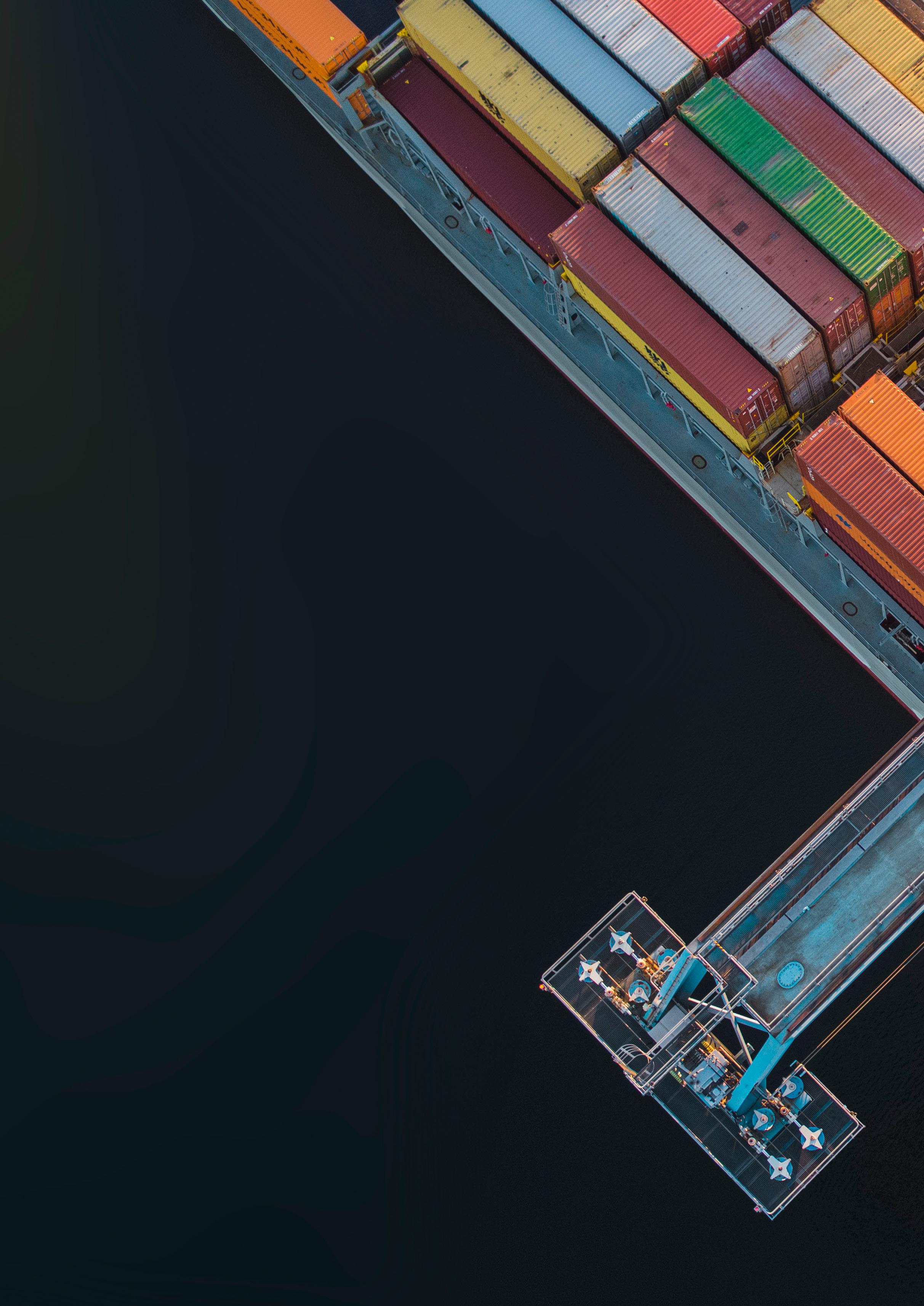
Maritime transport accounts for eight out of ten goods imported into Sweden, and the Port of Helsingborg plays a vital role in keeping those flows moving. From here, goods move quickly across Europe and out into the world. Each year, more than seven million tonnes of cargo are handled using four cranes, around 70 terminal tractors and 48 handling machines.
The port has installed Sweden’s first charging station for heavy vehicles, with an automated booking system, and is electrifying its fleet, aiming for 75% by year-end. In 2026, it will become the first port in Scandinavia to offer shore power to container
vessels. Together, these investments reduce emissions and make the port more attractive to shipping companies with high sustainability ambitions.
Fehmarn Belt – a shorter route to a wider market
When the Fehmarn Belt tunnel is completed in the early 2030s, it will reshape travel, labour markets and freight flows in northern Europe. The new link will significantly improve access to Germany and central Europe, reducing travel times, lowering transport costs and opening up larger markets.
Rail travel between Helsingborg and Hamburg will take less than four hours, compared with around six today –strengthening export opportunities and competitiveness.
The connection will also create a more integrated labour market across southern Sweden, Denmark and northern Germany. Improved accessibility will make it easier to recruit and retain talent, both in advanced roles and practical occupations, and enable commutes that are not possible today.
The economic impact will be significant. More efficient transport, lower costs and more reliable logistics strengthen trade and create better conditions for new investment across the Öresund region. The Fehmarn Belt link will also contribute to a new megaregion of around 14 million people and form part of the green transport corridor between Oslo and Hamburg. For Helsingborg, this means closer links to continental Europe, better conditions for logistics and trade, and a stronger position in an increasingly connected European market.
A future fixed link between Helsingborg and Helsingør (HH)
A fixed HH link would create a larger and more integrated labour market in the northern Öresund region. It would give companies better access to talent and make it easier to establish and grow, with greater mobility, shorter travel times and improved accessibility.
There is broad agreement within the Greater Copenhagen partnership that construction on the HH link should begin as soon as possible. Capacity, redundancy and resilience assessments were done in 2025, and the next step is to examine possible route options. The fixed link would reduce travel time to Copenhagen by rail
to around 40 minutes, strengthening both business competitiveness and regional attractiveness.
With around seven million passengers and more than 1.7 million vehicles travelling annually between Helsingborg and Helsingør, an HH link would also increase capacity and resilience in the Öresund transport system, It would connect labour markets and residential areas not currently covered by the Öresund Bridge or ferry services. From a European perspective, the link would be key to the Oslo–Hamburg green corridor and the STRING megaregion, strengthening accessibility and competitiveness across northern Europe.
40% of Swedes have Copenhagen Airport as their nearest major international airport.
Stockholm
Oslo
Gothenburg
Halmstad E6
Malmö
Helsingborg
Helsingør
Copenhagen
Hamburg
Lund
E4
Fehmarn Belt
Trelleborg
Strategic urban development that drives growth
Helsingborg is growing, with new areas opening up for business establishment, investment and expansion. New developments are planned and under way in key locations, including Väla Södra and Djurhagen. At the same time, major urban development projects such as Östra Ramlösa and Södra Staden are reshaping the city and creating new opportunities for business over the long term.

Väla Södra, phase 4 – a growing zone with a sustainable outlook
Väla Södra has expanded steadily in recent years, with a clear focus on warehouses and offices. The area is now entering a fourth phase on around 22.5 hectares, offering flexible opportunities for industrial use and other operations (excluding bulky retail).
The new site lies just south of the E4 and north of the existing business area. A new wetland is also being created nearby, adding greenery and recreation space.
Area: 22.5 ha
Land sales: Expected 20288
Djurhagen – a new business zone with strong connections
Djurhagen is one of Helsingborg’s upcoming business zones, located south-east of Väla shopping centre with direct access to the E4, E6 and E20. A highly visible location, it will form the northern gateway to the city.
Around 41 hectares of business land are planned, primarily for warehousing and logistics. The area is designed to meet growing demand for modern, well-located business space in the region, with a focus on sustainability, quality and future-ready solutions.
The land is jointly owned by Skanska and the City of Helsingborg.
Area: 4 1 ha
Land sales: Expected 2029
Östra Ramlösa and the new hospital – testbed for innovative and sustainable urban development
Östra Ramlösa is one of Helsingborg’s largest urban development projects and will open up new residential and business opportunities over the next 10–15 years. The area covers around 200 hectares, five kilometres from the city centre.
The ambition is to create Sweden’s best district for families. Work is underway on the first detailed plan, which includes around 1,500 homes, a primary school, two preschools, local services and a sports hall.
A new emergency hospital is planned for the southern part of the area – an investment of regional importance led by Region
Skåne. The hospital is scheduled for completion in 2035. The area will emphasise reuse, shared services and local energy systems based on solar and wind. Water will be managed through innovative circular solutions, making Östra Ramlösa a testbed for forward-looking urban development.
Total area:
200 ha (38.5 ha for the new hospital)
Plots for detached homes: From 2028
Commercial land sales: Ongoing
The current hospital site – strategic location for a future district
Region Skåne and the City of Helsingborg are developing a long-term plan for the current hospital site once healthcare services move to the new facility in 2035. The site sits in one of the city’s most central locations and offers strong potential for new development, businesses, workplaces and public services.
Planning is still at an early stage, but the area is expected to play a key role in Helsingborg’s long-term development.
Area: 10 ha
New container port – strengthening competitiveness and sustainability
To meet future demand, a new container port is planned for Södra staden, with completion targeted for the early 2030s. Relocating and rebuilding the port will double capacity while modernising operations through electrification, improved energy efficiency and more sustainable logistics. The new port will also accommodate larger vessels of up to 300 metres, strengthening both competitiveness and environmental performance.
As the port moves, around 50 hectares of attractive land in the current harbour area will be freed up. Over time, this could be transformed into a new district, likely from around 2040 onwards.
Oceanhamnen
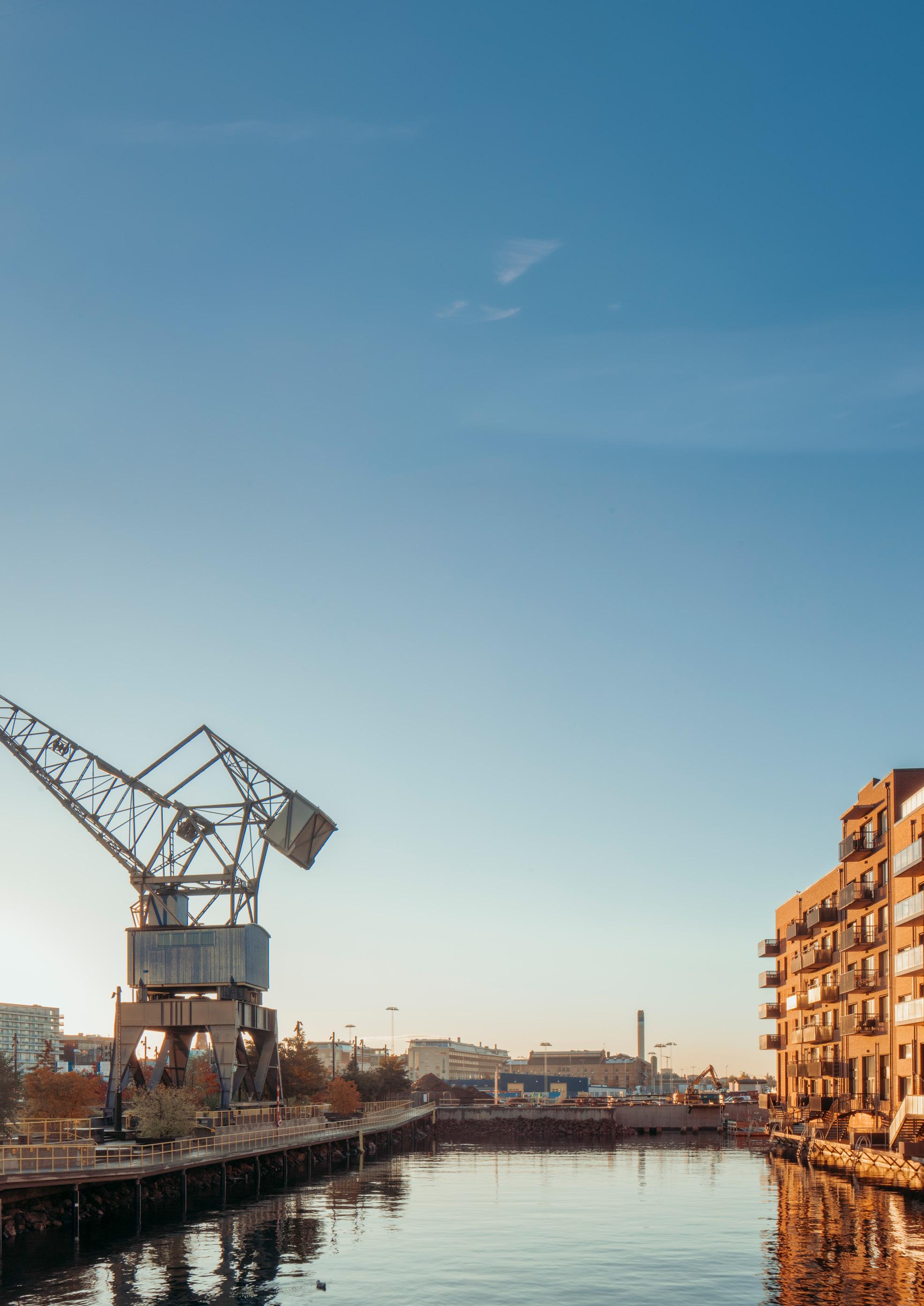
– urban innovation by the sea Oceanhamnen, located by the Öresund, continues to develop as Helsingborg’s main waterfront district. It is home to Helsingborg Innovation District and serves as a living lab for climate-smart solutions. Development is taking place in phases and includes a new swimming facility with a 50-metre pool, sea bathing, green spaces and improved links to the city centre. Oceanhamnen is evolving into a mixed district for living, recreation and business, and plays an important role in the wider transformation of southern Helsingborg. Phase one opened in 2022 and phase two began in 2023. Phase three will include more housing and a new public bath, Oceanhamnsbadet. Phase four will introduce the artificial island, Oceanön.
Södra staden – connected, modern and climate-resilient
Södra staden includes Helsingborg C, Oceanhamnen, Västhamnen, the Port of Helsingborg, the university area, Husarområdet, Gåsebäck, Ramlösa station, Planteringen and Miatorp. It brings together established neighbourhoods and areas already undergoing transformation, including the H+ project. The district is also home to Campus Helsingborg, Helsingborg Innovation District, business zones and the existing port. Plans include relocating the container port further south, upgrading existing neighbourhoods and establishing new districts. Development is already underway and will continue in phases over the next 25 years.
Area:
750 ha

Did you know…..
With Denmark just a 20 minute ferry ride away, locals regularly “tura” across the Sound for a short return trip

Business zones
Helsingborg offers a wide range of established and growing business areas, each with distinct strengths and locations. From central, mixed-use environments to specialised clusters in logistics, industry, retail and knowledge-based sectors, companies can find the right place to establish, expand and grow.

Ramlösa – central, diverse
and growing
Located in southern Helsingborg, Ramlösa combines housing, offices, retail, warehousing and production. Its proximity to the E6 and strong public transport – centred around Ramlösa station –make it easy to reach for both employees and customers.
Companies in logistics, wholesale, food and office-based sectors operate here, creating a diverse business environment with both local and international players. Ramlösa continues to grow. Nederman has recently established its headquarters here, and South Bay is developing a 65,000 m² logistics park in phases. JBT FoodTech will locate its new headquarters within the park. The Swedish Police Authority is also planning new facilities in the area.
Established companies include Nowaste, Occlutech, Elcowire, PostNord and JK Rostfria.
The area covers the stretch from Sydhamnsgatan in the north to Rausvägen in the south, bounded by Landskronavägen to the west and the rail corridor to the east.
Berga – strong accessibility, broad expertise
Berga is Helsingborg’s largest business area, home to hundreds of small and medium-sized companies across a wide range of industries. The area offers strong connectivity, with Maria station providing rail and bus links, and fast access to both the E4 and E6 via Ängelholmsleden. It suits businesses that depend on efficient logistics and regional reach.
Manufacturing plays a key role here, supported by strong development and innovation capabilities. Companies include Bildeve, Evidensia Djursjukhus, Nitator, Mildef, Murrelektronik, Aira, Binab, Camp Pro and Automationspartner. Berga has significant development potential. Opportunities for densification, stronger links to the station and improved visibility from the motorway support future growth in offices, services and knowledge-based businesses.
Väla Norra – one of Sweden’s strongest retail clusters
Väla Norra sits seven kilometres northeast of central Helsingborg, at the junction of the E4 and E6. The area is anchored by Väla, Sweden’s fourthlargest shopping centre by turnover, alongside extensive retail parks and an IKEA store.
A wide mix of large and mid-sized retailers, together with restaurants and services, creates a complete and accessible retail environment.
Companies include ILVA, Resurs Bank, Börjessons Bil, Spisa, IKEA, Väla and Åhléns Outlet.
Stattena – a strong, well-connected business mix with high visibility
Stattena is one of Helsingborg’s most visible and strategically-located business corridors, with direct exposure to the E4 and excellent connections to the rest of the city.
The area brings together a wide mix of businesses – from public services to retail, services and industry – creating a distinctive and active environment. Ongoing development aims to strengthen links to the city centre and improve conditions for business to establish and grow.
Companies include Kenvue, Zoégas, Peab, Tropikariet and Lakritsfabriken, illustrating the breadth of business types in the area.
Hamncity – dynamic growth close to the port and key transport routes
Hamncity forms part of the Södra staden development area in southern Helsingborg. The relocation of the container port will open up new opportunities. The area runs from Kemira in the south to Sydhamnsgatan in the north, placing businesses close to the port, logistics flows and the motorway network.
A mix of housing, offices, retail, warehousing and production creates a flexible, business-friendly environment. The area offers fast access to the E6 and strong commuting options. It suits both small businesses and larger companies.
Companies include Brandeye, Springhill, Bostik, Flora Food, Kemira, Honeywell Safety Products Sweden and FedEx.
I det här området har vi räknat in verksamheter från Kemira i söder upp till Sydhamnsgatan.
(The area includes businesses from Berga interchange to Stattena centre.)
Ättekulla – a well-established logistics hub
Ättekulla business zone is located just south of Helsingborg, strategically positioned between Österleden and the E6. Established in the 1960s, it has grown into a strong business environment shaped by transport companies, contractors and wholesale operations. Its location provides direct access to the E6, making it particularly attractive for businesses dependent on efficient logistics.
Today, it is one of Helsingborg’s most logistically-important locations.
Companies based here include Börje Jönsson Åkeri, Stena Recycling, Bama Fresh Cuts AB, GDL, RKW Sweden and Respice Sweden, reflecting the strength and diversity of the area.
Companies: 160 Employees: 1,890 Area: 140 ha
Väla Södra – expanding and well-connected
Väla Södra has developed steadily since the 1970s and is now entering a new phase of expansion, adding around 22.5 hectares in phase 4. This will make it Helsingborg’s largest business zone. Today, the area offers a mix of offices, retail, logistics and light industrial space, supporting a diverse and dynamic business environment.
Located near Road 111 and Ängelholmsleden, with direct access to both the E4 and E6, Väla Södra provides excellent logistics and easy access for both customers and employees.
Companies based here include Hornbach, Maria Nila, Sluta Gräv, Boxon, PlatinumCars, Porsche and Tonys Budbil. Land is available for sale through the City of Helsingborg and Skanska.
Långeberga – critical logistics and production hub
Långeberga is a strategically located business zone just west of the E6. It has developed into one of Sweden’s most important areas for logistics, production and food handling, with operations spanning the full food supply chain and transport sector. Its location directly alongside the motorway supports efficient regional and national distribution, particularly for heavy goods.
Development began in the late 1980s and has continued in line with business demand. Companies based here include ICA, Greenfood, Everfresh, Nowaste, Klimat Transport, SydGrönt, Swedlog, NTEX and Grönsaksmästarna. The City of Helsingborg will invest over SEK 38 million in the area in the coming years to improve traffic flow and support continued development.
Companies: 100 Employees: 4,100 Area: 150 ha
Centrum – compact, connected and dynamic
Helsingborg’s city centre stretches from the ridge in the east to the waterfront in the west, with Denmark just four kilometres away. It offers a compact, active urban environment with a mix of retail, restaurants, culture, offices and services. The area also includes Oceanhamnen, home to Helsingborg Innovation District and Campus Helsingborg.
The combination of students, businesses and urban life makes Centrum an attractive location for investment and growth.
Key property owners and companies include Wihlborgs, Castellum, Tyréns, WSP, Genetor, IKEA, Clas Ohlson, Blue Tuna Group and Öresundslinjen.
Tostarp – a modern, sustainable logistics cluster
Tostarp business zone, located just outside Helsingborg, has developed into a modern logistics cluster with strong visibility directly from the E6. Its proximity to the motorway makes it attractive for companies requiring fast flows and efficient regional distribution. Detailed planning is under way to create additional development land in the area. Catena owns land within Tostarp, while a further 17 hectares is planned at nearby Vasatorp, owned by Skanska.
The area has a clear sustainability profile, with new buildings designed and certified to meet future requirements for resource-efficient logistics.
Companies based here include PostNord, Nowaste Logistics, Frigoscandia and Plantagen, underlining its role in logistics, food distribution and warehousing
Employees: 730 Area: 67 ha (+ 35 ha planned)
Stadsutveckling Tillväxtlägen
Tostarp
Djurhagen
Väla Norra
Berga
Stattena
Långeberga
Östra Ramlösa / New Hospital
Ättekulla
Centrum
Hamncity
Ramlösa
Väla Södra
Helsingborg Hospital
Södra staden
Maria station
Helsingborg C
Ramlösa station
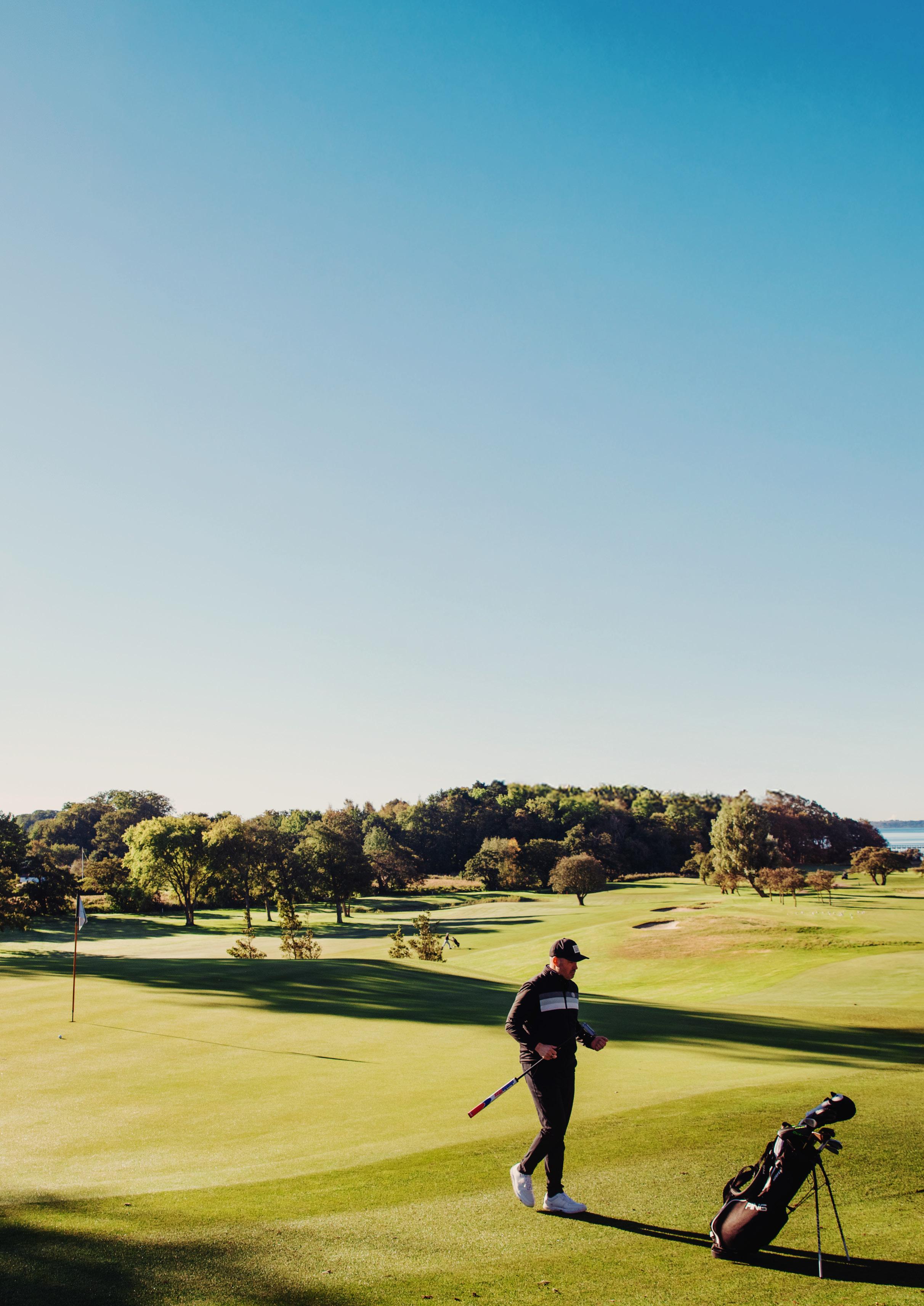
Did you know..…
The Familjen Helsinborg region has more golf courses than anywhere else in Sweden
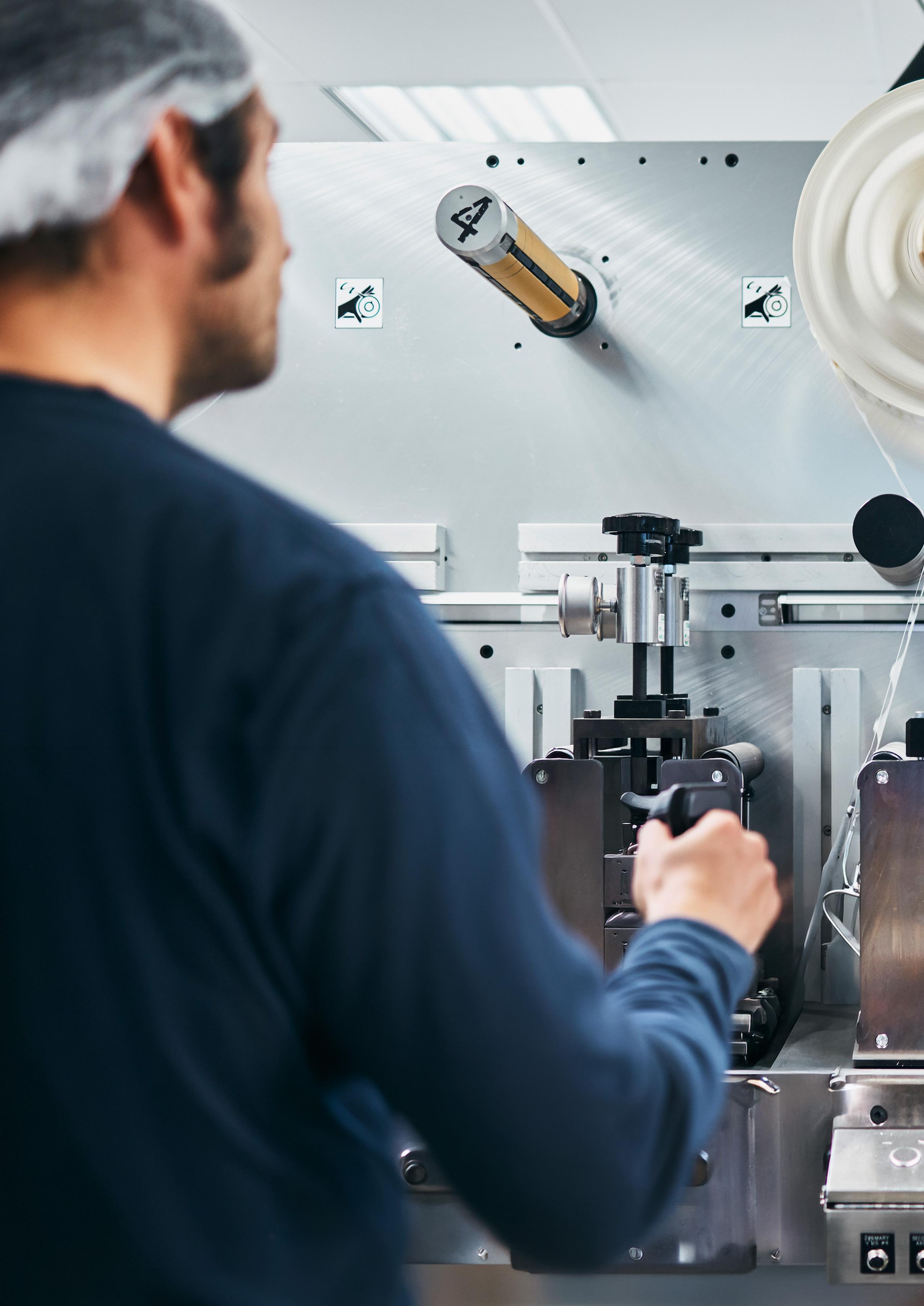
Entrepreneurship,
innovation and collaboration
Innovation in Helsingborg is not a standalone initiative – it is a way of working that underpins the city’s development. The city has a long history and tradition of entrepreneurship. More than 1,000 new businesses are launched each year, and 76% remain active after five years.
Innovation and entrepreneurship are used to address real-world challenges through testbeds, data-driven development and new business models in live environments. It is through collaboration between academia, industry and the city that Helsingborg’s innovation capacity and drive takes shape.

Helsingborg Innovation District
At the heart of Helsingborg’s innovation ecosystem is Helsingborg Innovation District (HID). The district drives growth and supports the city’s wider business community. Centred in Oceanhamnen, HID brings together more than 350 organisations, over 5,800 employees and 4,000 students. It’s a concentrated environment of knowledge-intensive businesses with strong innovation capacity. The district is home to a network of connected hubs, including the City of Helsingborg’s Parken, Lund University (Campus Helsingborg), HETCH, Mindpark, RecoLab and E-commerce Park.
Across Helsingborg, additional business zones with a critical mass of companies and innovation capacity feed into the district and strengthen its reach. Together, they form a platform where startups, established companies, researchers, entrepreneurs and the public sector collaborate to develop, test and scale new solutions.
Testbeds and ways of working that deliver business value
Helsingborg has been recognised by the European Commission as one of Europe’s most innovative cities. For years, the city has taken a strategic approach to building a smarter, more sustainable and more resilient urban environment.
Innovation is used as a practical tool to address real-world challenges. A key strength is access to testbeds and living labs, where companies can develop and validate products, services and processes in real environments – often in close collaboration with the city and academia. This reduces risk, shortens development cycles and speeds up time to market.
RecoLab enables full-scale testing of circular solutions in water, waste and energy. By separating wastewater and food waste at source, it supports nutrient recovery, increased biogas production and the return of clean water to the city.
RecoPark is a development centre where organic waste streams can be converted into biochar. It offers access to full-scale facilities, technology and expertise for testing circular processes with clear climate benefits.
Transport and logistics testbeds support innovation across electrified transport, charging infrastructure, digital logistics, last-mile delivery and circular flows.
Living labs across the city allow solutions to be developed and tested with users in real-life settings. Services, digital solutions and new ways of working can be validated early, reducing risk and improving market fit. In Oceanhamnen, projects focus on climate-neutral construction and circular systems. In Östra Ramlösa, future test environments will explore sustainable building, mobility, energy and circular economy solutions
AI Sweden’s National City Lab. Helsingborg is home to Sweden’s first municipal data testbed, This gives companies access to real urban data to develop and test AI-driven and data-based solutions in a live city environment.
A strong support system for growth
Helsingborg offers a well-developed support system for businesses at every stage. Regional and international partnerships provide access to larger markets, broader expertise and stronger innovation environments.
For startups and early-stage companies, local actors such as HETCH and E-commerce Park offer business advice, investor networks, test environments and strong communities – closely aligned with the city’s strengths in tech and e-commerce. Other key organisations include Ung Företagsamhet and Nyföretagarcentrum.
As companies grow, organisations such as Tillväxt Helsingborg, IUC Syd and Region Skåne provide strategic support, networks and recruitment assistance.
For international expansion, Exportcenter Syd acts as a single entry point, connecting businesses to regional, national and European networks, including EU funding. Exportcenter Syd is a collaboration between Region Skåne, Almi, Business Sweden, Enterprise Europe Network and the South Swedish Chamber of Commerce.
Innovation in a wider context
Helsingborg’s innovation capacity is strengthened by its location in one of Europe’s most innovative regions. Skåne is home to strong clusters such as Medicon Valley Alliance, Mobile Heights, Packbridge and Sustainable Business Hub, where collaboration between business, academia and the public sector drives growth and international competitiveness. Sweden consistently ranks among the world’s most innovative countries.
In the Global Innovation Index (2025), Sweden ranked second out of 139 countries, with strong performance in patents, high-tech exports and innovation outputs. For businesses, this provides access to research, capital and international collaboration – combined with shorter paths from idea to implementation.
Transition as a business opportunity
Helsingborg’s transition to climate neutrality by 2030 is creating new markets and business opportunities. As energy, transport and resource systems evolve, demand is growing for new solutions in industry, logistics, construction, circular flows and energy systems. The city provides an environment where solutions can be developed, tested and scaled in collaboration with business, academia and the public sector.
Helsingborg is one of 112 EU Mission Cities working towards climate neutrality, giving companies access to a real-world environment where investments, technologies and business models can be tested without carrying the full risk alone.
Testbeds and pilot environments such as RecoLab and RecoPark enable practical development of circular solutions, resource recovery and new technologies. EU-funded projects such as HYDROSYM-2030 and CoBuild NetZero focus on industrial transition, skills development and climate-smart construction. Collaborative initiatives such as Helsingborgsdeklarationen and Klimatavtalet bring companies together to identify new business opportunities and accelerate the green transition.
The city’s work is also connected to national and European platforms such as Climate City Capital Hub and Viable Cities, providing access to knowledge, networks and funding.
Helsingborg has been awarded the EU Mission Label, recognising its credible and investable pathway to climate neutrality by 2030.
For businesses, this creates new opportunities – for example, Öresundskraft’s investment in carbon capture (CCS), enabling climate-neutral district heating and negative emissions certificates, and Nordion Energi’s transition to a fully renewable gas network by 2030.
Through initiatives such as Viable Cities and EU platforms like NetZeroCities, companies in Helsingborg gain access to testbeds across 112 cities, joint procurement opportunities and EU funding programmes such as Horizon Europe and the Innovation Fund. Solutions developed here can scale across Europe’s Mission Cities, opening up significant market potential.
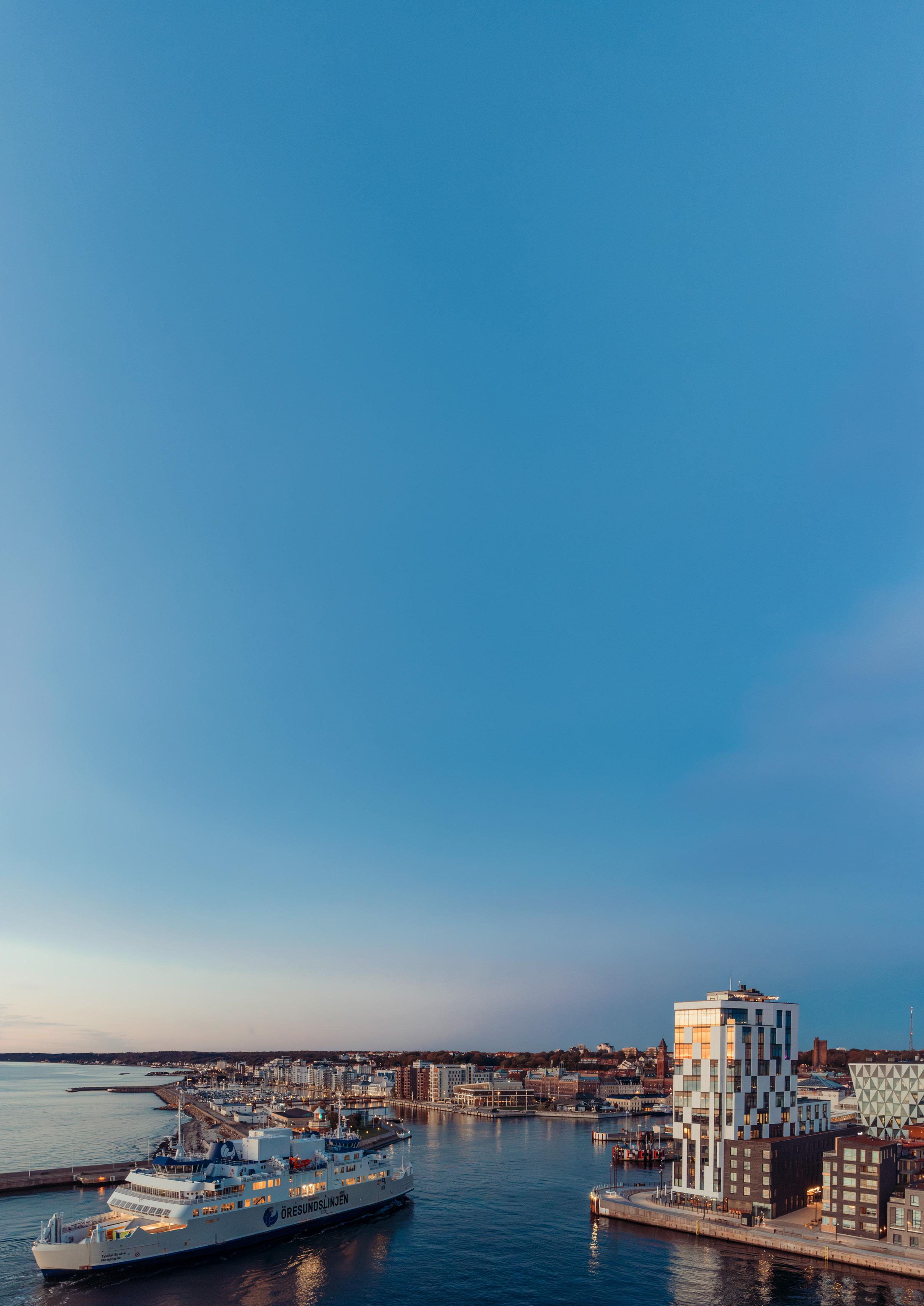
Did you know….. Helsingborg is at the forefront of charging infrastructure for electric ferries and heavy transport
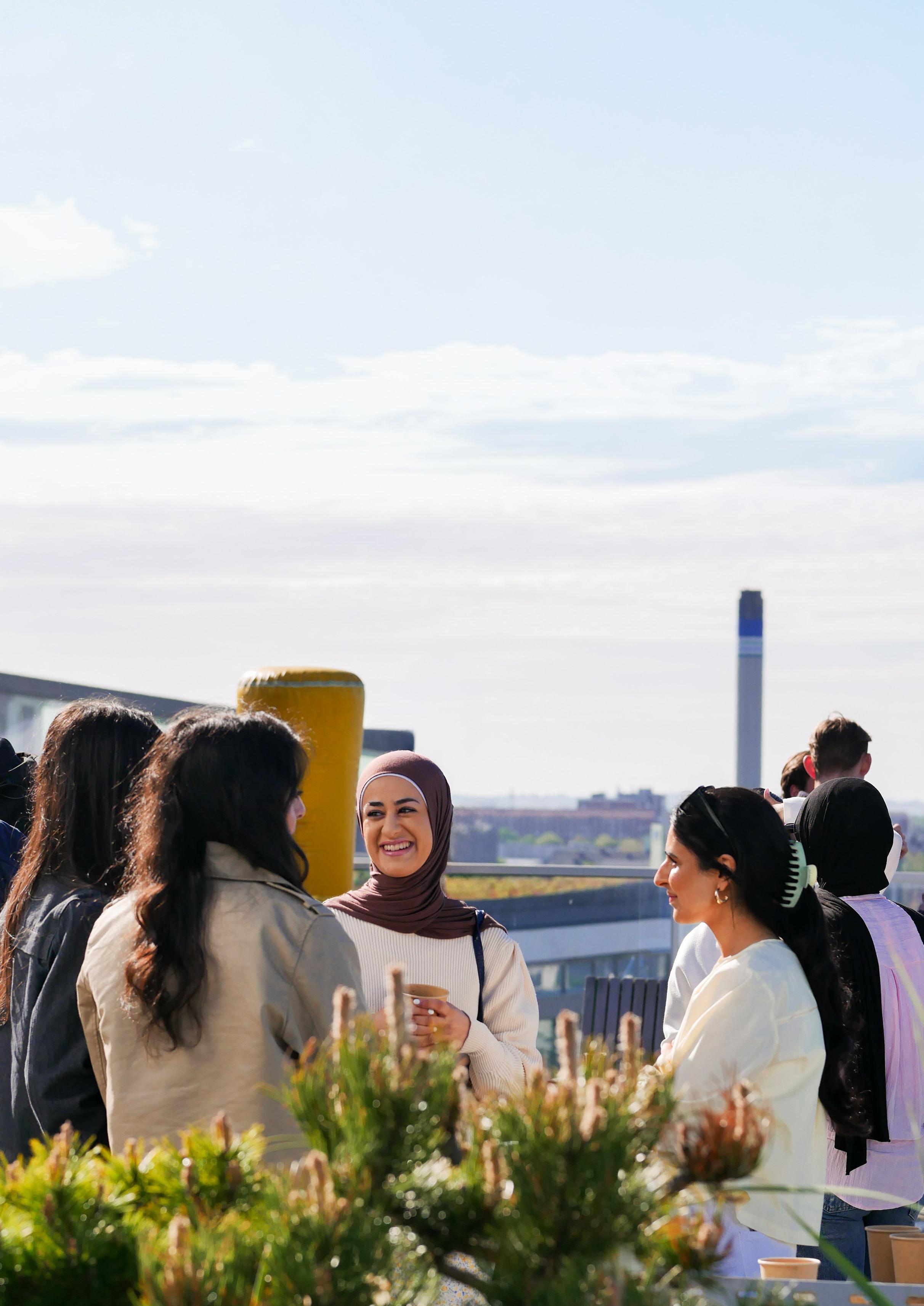
Education, research and talent driving growth
Access to the right skills, research and innovation environments is a key factor in growth, investment and long-term development. In Helsingborg, talent development is a strategic priority, with close collaboration between business, education providers and the public sector to develop skills, test ideas and turn knowledge into practical solutions.
The city’s strength lies in how this system is organised. Ongoing dialogue with businesses, targeted skills planning and regional collaboration ensure that education evolves in line with real demand. At the same time, social sustainability is built into the city’s approach to growth. In the face of demographic challenges, Helsingborg works actively to bring more people into the labour market. Through targeted initiatives, reskilling programmes, fast-track pathways and tailored education – such as commissioned courses delivered by Lund University – companies gain access to a broader talent pool while strengthening the city’s long-term competitiveness.
Lund University – Campus Helsingborg
In Helsingborg, businesses have direct access to Lund University – one of the world’s top-ranked universities. In 2025, it was ranked number one globally for sustainability, the highest position ever achieved by a Nordic university. With 40,000 students and 8,000 researchers, Lund University offers access to world-class research and expertise.
Campus Helsingborg, established in 2000, is home to around 4,000 Swedish and international students, several international research centres and a broad academic offering. Located in Oceanhamnen, at the heart of Helsingborg Innovation District, the campus focuses on education and research closely aligned with market needs.
A strategic partnership between the City of Helsingborg and Lund University aims to further strengthen the campus and position Helsingborg as a leading university and research city, with a focus on interdisciplinary research, high-quality education and closer collaboration between academia, business and the public sector.
Source: QS World University Rankings 2025
Research that builds competitive advantage
Research environments at Campus Helsingborg are closely linked to the city’s established and emerging sectors, creating valuable expertise and development capacity for local businesses.
REAL (Centre for Retail and Logistics) provides a direct link between research and industry, addressing challenges such as digitalisation, climate impact and supply chain resilience. Projects focus on areas including circular retail, e-commerce, packaging, traceability and material efficiency.
Through LUPREP, companies gain access to current research, doctoral environments and education that can be translated into new services, ways of working and solutions for a more resilient society and business environment. Projects include areas such as the use of drones in healthcare crisis response and communication strategies that strengthen societal resilience.
Helsingborg Safety Hub complements the ecosystem as an advanced research infrastructure for safety and security, with expertise in fire safety engineering, transport systems and epidemiological studies. Technologies such as simulation, virtual reality and data analysis are used to develop and test solutions.
The city further supports research collaboration through targeted R&D funding, including an annual fund for research projects at Campus Helsingborg.
Networks
Networks such as Campus Vänner connect students at Campus Helsingborg with companies through mentorship programmes, scholarships, networking events and collaboration. For businesses, this creates early access to future talent and the opportunity to engage with potential employees during their studies.
Helsingborg International Connections (HIC) supports the integration of accompanying partners of international talent through networks, events and practical support – making it
Lund University was ranked highest in Sweden by QS World University Rankings 2026
A connected education pathway
Helsingborg offers a strong and connected education pipeline from early interest in science and technology to higher education and demand-led vocational training. Close collaboration between businesses, education providers and the public sector ensures that programmes are shaped by real skills needs. This gives companies access to a flexible, relevant and scalable talent base, supporting both existing businesses and new investment.
Science Center Helsingborg
Science Center Helsingborg provides an interactive environment where children and young people can explore science, technology and innovation in an engaging way. By sparking early interest in STEM subjects – science, technology, engineering and mathematics – it contributes to the region’s long-term skills base. The initiative is a collaboration between Lund University, the City of Helsingborg, Wihlborgs, Navet Analytics and Helsingborgs Handelsförening, with active involvement from the business community.
Helsingborg is taking a more coordinated approach to STEM across the entire education pipeline, helping to broaden the future talent base in tech and life sciences – areas with strong grow
Adult education and vocational training for demand-led skill s
Helsingborg is at the forefront of adult education and higher vocational training. Close collaboration across the municipalities of Familjen Helsingborg provides a broad and flexible range of programmes, with joint admissions and a clear link to labour market needs.
For businesses, this means access to a larger and more available talent base, with strong opportunities for upskilling existing employees, reskilling when needs change and faster matching to roles in shortage areas.
Higher vocational education plays a central role, with many programmes developed in direct
dialogue with industry and aligned with the city’s skills planning. Through the YH-Collection network, providers collaborate across the region, leading to high quality, strong relevance and above-average approval rates at both regional and national levels.
Adult education also plays a key role in bringing more people into the workforce. Through targeted initiatives and tailored training, pathways are created into skilled roles for those currently outside the labour market – strengthening both companies’ access to talent and the city’s long-term resilience.
From practical training to university preparation
Helsingborg offers a broad range of upper secondary schools, both public and independent, with programmes spanning vocational training and academic pathways. Apprenticeship programmes allow students to combine studies with work placements, strengthening the link between education and working life from an early stage. Schools work closely with businesses through programme advisory boards and workplace-based learning, ensuring that course content evolves in line with labour market needs. This helps build future skills from the ground up.
Skills strategies aligned with industry
The City of Helsingborg works systematically and long-term with skills planning in priority sectors, supporting both established and emerging areas of strength. Plans are developed in close dialogue with businesses and education providers, creating a shared view of future skills needs, recruitment challenges and required training and reskilling.
This approach minimises delays between need, decision and programme start – helping companies fill roles faster and plan ahead with greater confidence.
Manufacturing and industry – Helsingborg’s second-largest sector – is being strengthened through the development of a dedicated industrial hub, designed to secure future skills and support long-term competitiveness and growth.
Regional and international collaboration
Through the Family Helsingborg partnership, eleven municipalities in north-west Skåne work together on business development, skills, place development and innovation. The region includes more than 350,000 residents and over 35,000 registered companies, making it one of Sweden’s most business-dense subregions. For companies, this means a larger local market, stronger networks and the ability to grow within a connected region where collaboration is part of how things get done.
Helsingborg is in Skåne, one of the EU’s most innovative regions and a key driver of the Swedish economy. The region accounts for around 12% of Sweden’s GDP, has more than 1.4 million residents and a highly exportoriented business base. Its strengths – life sciences, tech, food, smart sustainable cities and advanced materials – align closely with Helsingborg’s own areas of focus.
Establishing in Helsingborg means access to one of the Nordics’ most innovative regions, with worldleading research facilities such as ESS and MAX IV, an

international labour market and a strategic position within Greater Copenhagen. Through Greater Copenhagen, companies gain access to the Nordic region’s largest integrated labour market, with 4.4 million people. More than 22,500 people commute across the Öresund each day, creating a genuinely cross-border region.
Helsingborg is also part of STRING, a cross-border megaregion stretching from Hamburg to Oslo. With around 14 million people, it focuses on green growth, sustainable infrastructure and international competitiveness. The OECD identifies the region as a potential global hub for green technology exports. For companies, this means proximity to new markets, stronger political coordination and growing opportunities in logistics, industry and sustainable technology. A key development within STRING is the upcoming Fehmarn Belt link, which will further strengthen connections across Northern Europe.
Quality of life that works
Helsingborg is more than a place to work or study – it’s a place to live well. Everyday life is simpler, with work, home and everything in between close by. Along the coastline, across neighbourhoods and in the spaces between, the city offers a quality of life that supports both people and business. Short distances, access to nature and a strong sense of community make Helsingborg a place where people choose to stay – and where companies grow alongside them.
The 20-minute city
In Helsingborg, most things are within 20 minutes – work, school, childcare, gyms, beaches, nature, and even Denmark. Whether you walk, cycle or use public transport, getting around is easy. With Copenhagen just a short train ride away and several international airports within reach, the city combines everyday convenience with strong regional and global connectivity.
Children grow up close to nature, with forests, parks and safe play environments throughout the city. Education options are broad and high-quality, from local and independent schools to international schools teaching partly or fully in English. Helsingborg also offers education at every level – from vocational training to academic programmes through Lund University, Campus Helsingborg. It’s no coincidence that Helsingborg ranks ninth in Sweden as a preferred place for future talent to live and work¹.
Helsingborg has a strong network of clubs and associations, with opportunities for all ages and levels – from grassroots to elite. Sports such as football, tennis, athletics, swimming and golf are widely available, and there’s a good selection of modern facilities, cultural schools, parkour halls and skateparks.
More home for your money
Housing costs are below the national average, making it easier to live well and close to everything the city offers. A typical house costs around SEK 4.8 million, and an apartment around SEK 2.1 million. The municipal housing company, Helsingborgshem, offers a wide range of housing across the city – from townhouses and student
apartments to larger homes. Average rent is around SEK 1,530 per square metre (annually), with good availability.
From dining to everyday life by the sea
Helsingborg has one of Sweden’s highest concentrations of restaurants and ranks among the top five cities in the country for dining. Award-winning restaurants sit alongside neighbourhood favourites, rooftop bars, cafés and seafront dining. And you’re never far from a place to stop for a coffee.
Cultural experiences year-round
The city offers a rich and accessible cultural life. Helsingborg City Theatre, the Concert Hall with its symphony orchestra, Helsingborg Arena and Dunkers Kulturhus host performances, exhibitions and major events throughout the year. In summer, Sofiero Palace hosts open-air concerts, Fredriksdal offers theatre and gardens, and the city’s music scene comes alive. A short ferry ride to Helsingør adds even more cultural options.
Events play a key role in bringing the city together. From Helsingborg Marathon, Pride and Eskilscupen to cold-water bathing week, international golf tournaments and summer concerts, the calendar is active year-round – strengthening both the city’s identity and its sense of community.
¹ Talent City Index 2025 ² Survey Resa i Sverige, 2025

Did you know…..
In Helsingborg, you’ll see bathrobes all year round – but maybe a little thicker in winter
Comparing costs with other Nordic cities
Average meal cost
Maximum preschool fee (including meals)
Office rent
Average price of an apartment in the city centre
Oslo
240 SEK
2,200 SEK
6,000 SEK/m2
97,000 SEK/m2
Copenhagen
220 SEK
5,900SEK
3,300 SEK/m2
84,500 SEK/m2
Gothenburg
130 SEK
1,800SEK
4,200 SEK/m2
62,000 SEK/m2
Helsingborg
150 SEK
1 300 SEK
2,625 SEK/m2
30,500 SEK/m2
Stockholm
150 SEK
1 800 SEK
9,500 SEK/m2
110,000 SEK/m2
Helsinki
180 SEK
3,400 SEK
5,600 SEK/m2
85,000 SEK/m2
Source: Objektvision/Svefa 2024, Numbeo dec 2025

Did you know in Helsingborg... the locally-famous “bulle med bulle” – pastry filled with a pastry – was invented both Ramlösa and Zoégas were founded you could spot wild tuna and porpoises from the shoreline has the only liquorice farm in northern Europe is where galoshes were invented
Together, we’re making Helsingborg one of the best places in Sweden to start, run and grow a business. It’s easy to invest, establish and expand here. Find out more about shaping the future of Helsingborg with us. Get in touch: naringsliv@helsingborg.se