Diploma
KTH 2024
Housing Studio
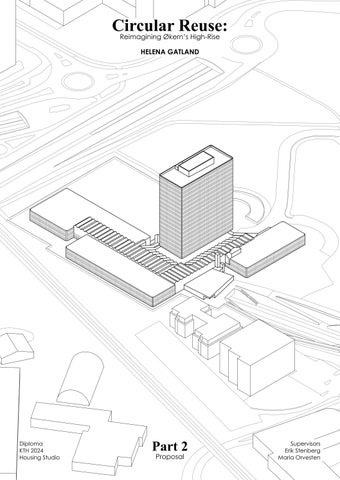
Diploma
KTH 2024
Housing Studio
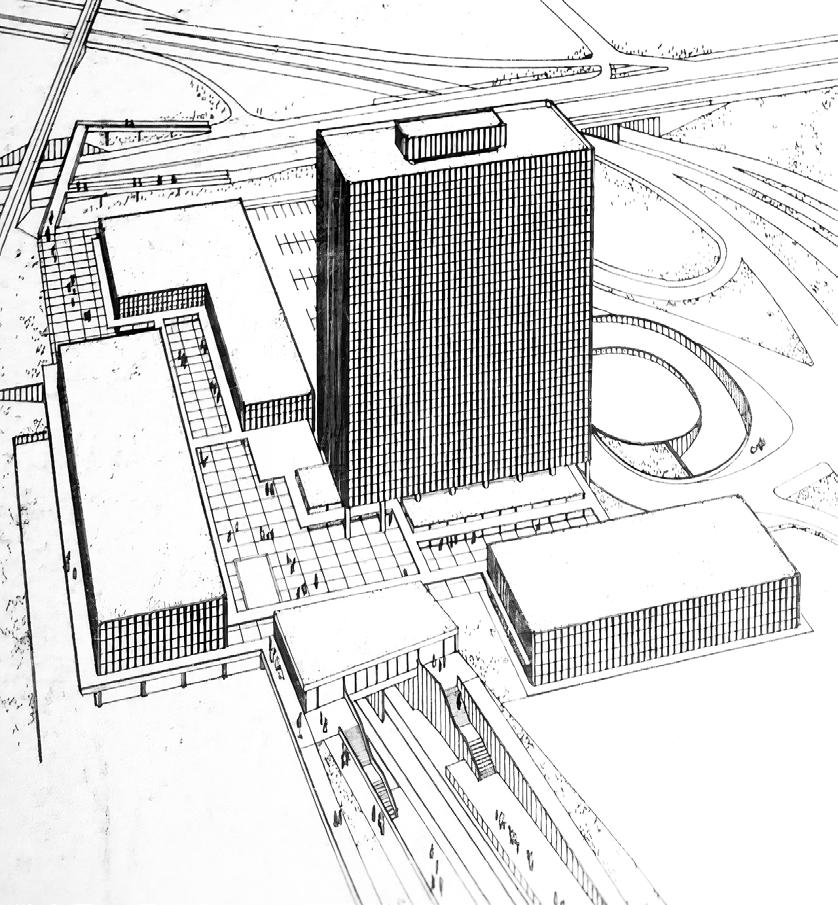 01 Drawing of the Økern Centre, by H. Mjelva and P. Norseng
This project presents a proposal for Økern’s high-rise with an approach of promoting the preservation of the historical and architectural significance of the building. The current detail plan for the development is followed to a great extent in terms of building height and program, as well as keeping within the extents of the existing high-rise. The primary objective has been to achieve a significantly higher degree of preservation and reuse of existing materials compared to the developers’ proposal for the high rise. Other focus points are on the conversion from offices to housing and the rehabilitation process.
It is widely observed that the prevailing mentality in the industry prioritises new construction, which subsequently slows down the progress of the reuse industry. This project aims to serve as a demonstrative example of reuse, with the intention of normalising and promoting this practice within the field.
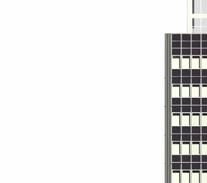
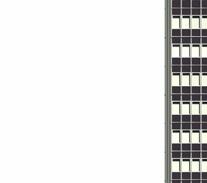
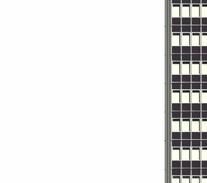
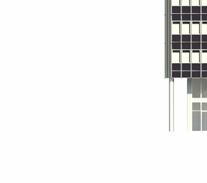
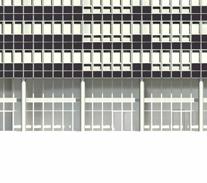
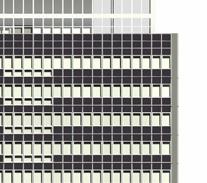
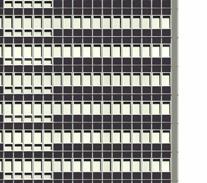
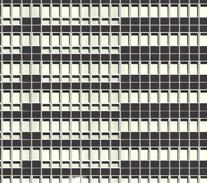
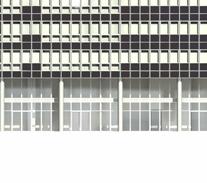
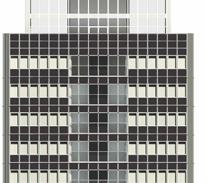
The external design strategy emphasises the preservation of the existing facades while integrating interventions that align with the original facade grid. Specifically, these include the incorporation of balconies on the short facades and the replacement of coloured glass panels with windows on the long sides to allow for additional natural light to new apartments. Existing facade materials that were removed as part of these interventions have been relocated to the proposed top extension to create a continuous facade, and a thorough relocation strategy with detailed calculations was produced as part of this process.
Additionally, the proposal includes the incorporation of timber and glass structures at both the top and bottom of the building, however the intention is for the existing facades to remain the focal point.

EXTENSION

4 floors
EXTENSION 4 floors

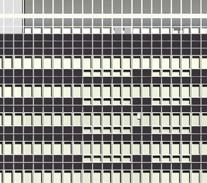
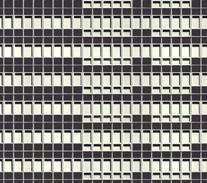
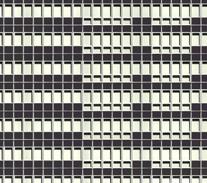
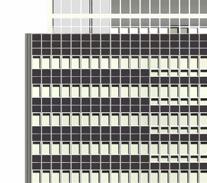
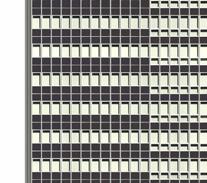
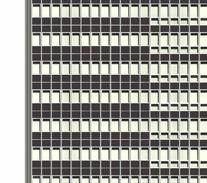
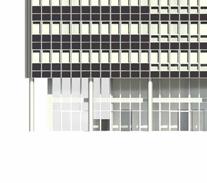
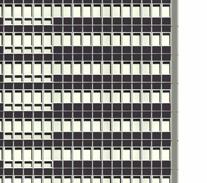
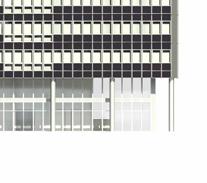

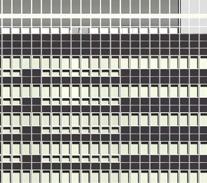
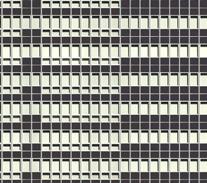

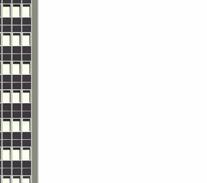
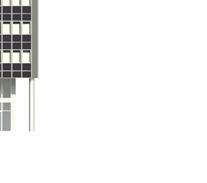

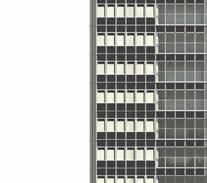
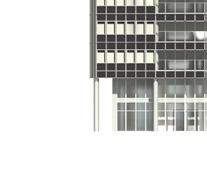
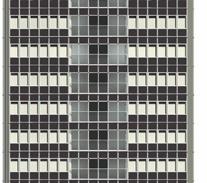
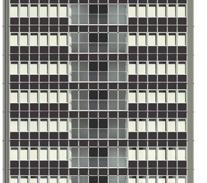
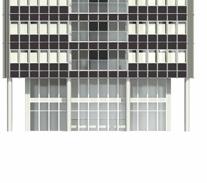

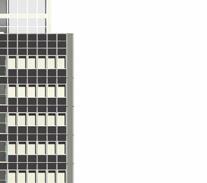
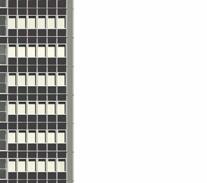
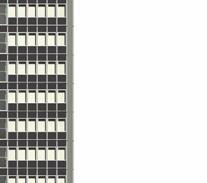
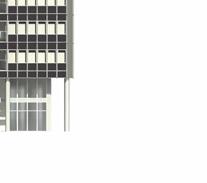
To preserve the existing facades, rehabilitation will happen from the inside.
1. Existing Asbestolux boards are carefully removed.
2. Existing vapour barrier is removed.
3. Existing glasswatt insulation is inspected for mould and gaps, and replaced/filled in accordingly.
4. New layers are added.
To break the cold bridge created from the slab’s external exposure, 50 mm PIR insulation boards are used for the flooring base layer, while vacuum insulation panels are used below the slab.
100 x 100 mm Steel I-beams
20 mm Eternit Glassal board
25 mm Battens
10 mm Iternit board
Breather membrane
100 mm Wooden frame and glasswatt insulation
120 mm Wooden frame and insulation
Vapour barrier
45 mm insulation and battens
13 mm Gypsum board
15 mm Protect F (fire-resistant plasterboard)
16 mm Wood floor finish
22 mm Chipboard with heating
50 mm PIR insulation board
200 / 350 mm Concrete slab
20 mm Vacuum insulation panels
13 mm Gypsum board
15 mm Protect F (fire-resistant plasterboard) PROPOSED
Scale 1:15
Scale 1:20
The proposed extention has a timber structure, utilising the Trä8 structural system, a glulam based system developed by Moelven. The system allows for creating spans up to 8 meters. CLT is used for the central core.
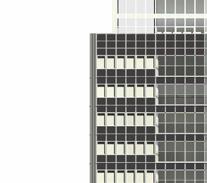
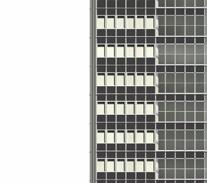
The extension design puts effort in creating a continous facade, by utilising existing facade materials and relocating them to the top extension. Two types of components are needed to do this: glass panels and steel I-beams. A detailed study and strategy for how this is accomplished is provided on the following page.
Consultation with structural engineer for solution to allow for minimum 2400 mm floor-to-ceiling height.
100 x 100 mm Steel I-beams
20 mm Eternit Glassal board
25 mm Battens
10 mm Iternit board
Breather membrane
215 mm Glulam and insulation
Vapour barrier
45 mm insulation and battens
13 mm Gypsum board
15 mm Protect F (fire-resistant plasterboard)
14 mm Wood floor finish
40 mm Leveling compound with heating
17 mm Rigid insulation
50 LVL board
300 mm Glulam beams and insulation
50 mm LVL board
25 mm Gyproc AP 25
13 mm Gypsum board
15 mm Protect F (fire-resistant plasterboard) PROPOSED
Scale 1:15
Coloured glass panels are relocated from the interventions proposed in the high-rise itself, while the steel I-beams primarily come from the centre planned to be demolished.
Existing Proposed
Data gathered from: Resirqel. 2022. Ombrukskartlegging Økern Sentrum.
CO2 equivalency calculated using figures from https://www.materialepyramiden.dk/
Extension reuse: Available materials and relocation strategy
Extension reuse: Available materials and relocation strategy
Location: Coloured glass panels: Steel I-beams:
Top floor: 120 124 (type 3)
Location: Coloured glass panels: Steel I-beams:
Top floor: 120
(type 3)
Balconies: 216 80 (cut-outs, 1308 mm)
Duplexes:
Balconies: 216
Duplexes: 288
(cut-outs, 1308 mm)
Centre: 0 290 (7000 mm)
French balconies: 252
Spare: 60 0
Spare:
Total availability: 936
(7000 mm)
Total availability: 936 124 (type 3) (840 x 660 mm) 290 (7000 mm - from centre) 80 (cut-outs, 1308 mm)
(type 3) (840 x 660 mm)
Required for 3 floors: 804
Required for 3 floors: 804
(7000 mm - from centre)
(cut-outs, 1308 mm)
124 (type 2) (840 x 660 mm) 124 (type 3)
(type 2) (840 x 660 mm)
124 (type 2/2)
(type 3)
(type 2/2)
Relocation Strategy: 804 pcs: Type 2:
Relocated to top floors.
Relocation Strategy: 804 pcs: Type 2:
(7000 mm from centre - cut to size)
Relocated to top floors. 124 (7000 mm from centre - cut to size)
114 pcs: Type 3: all relocated to new top floor Used for replacement. Type 2/2:
18 pcs: Stored.
114 pcs: Type 3: all relocated to new top floor Used for replacement. Type 2/2: 18 pcs: Stored. 62 (7000 mm from centre - cut to size and in half)
Steel I-beams types: Lenght:
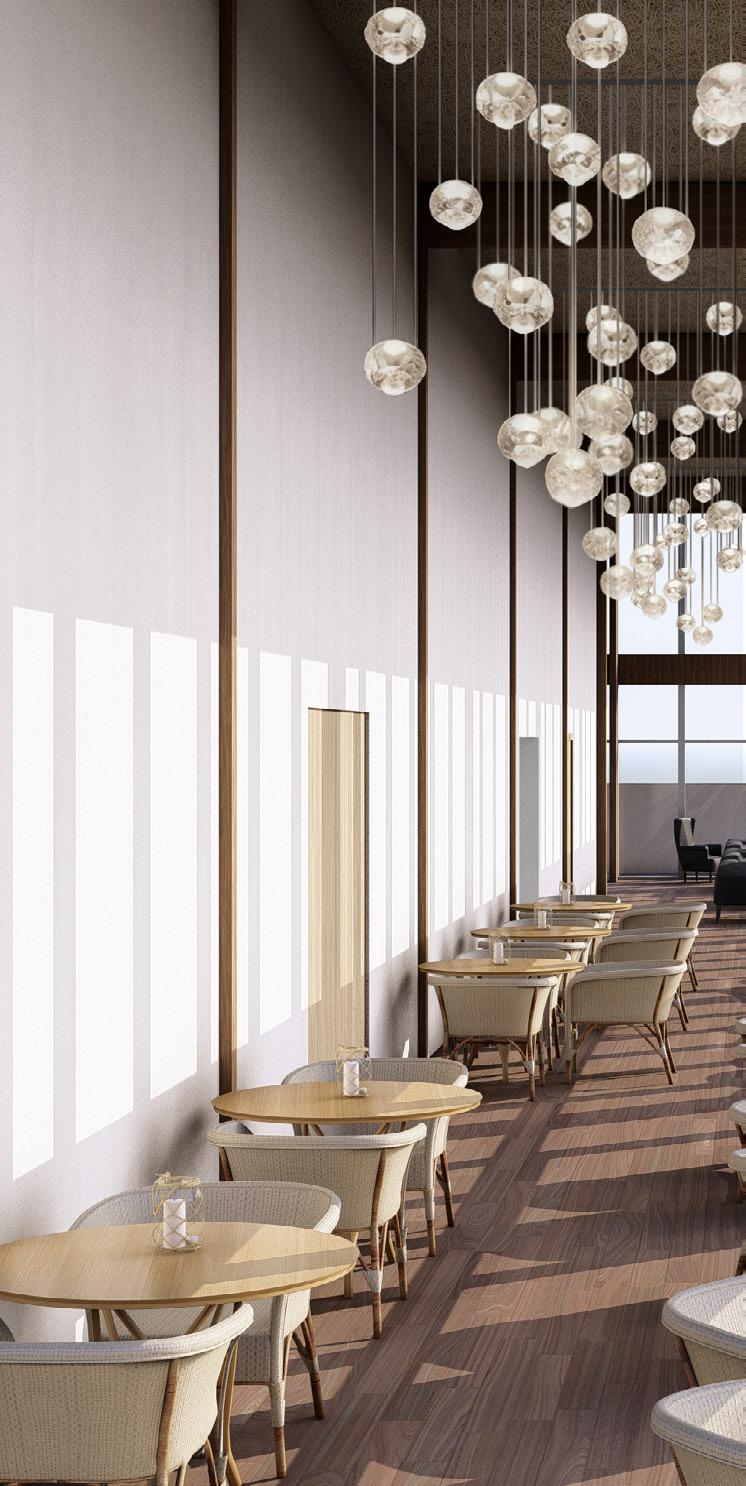
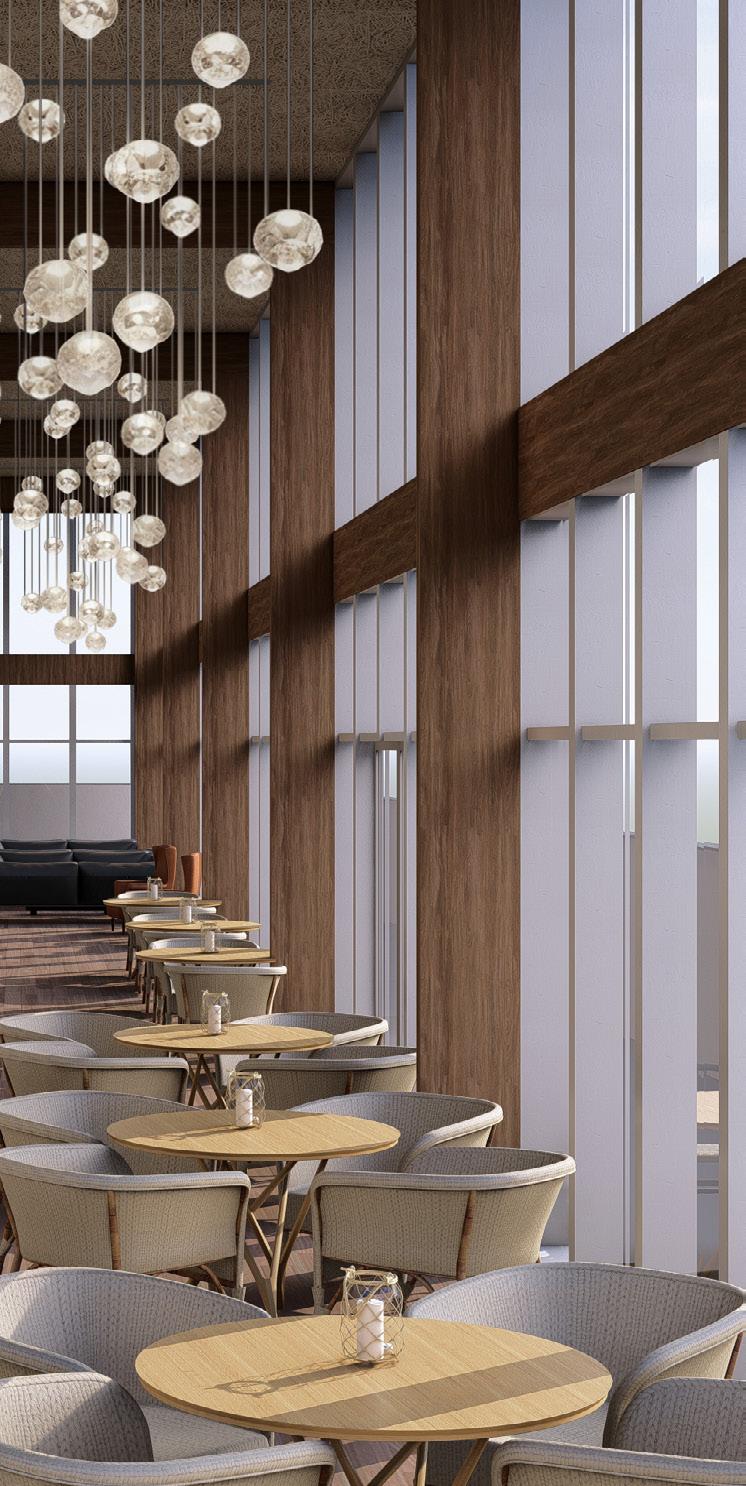
Decisions regarding the proposed program are based on the current detail plan for the development, with one exception. Although the top floor originally is designated for housing, a decision was made to make this space public and accessible to the wider community in this Thesis proposal, due to the building’s significance and it being the tallest building in the area. Public functions can also be found on the ground floor, alongside programs for residents.
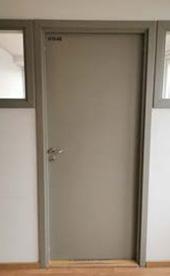
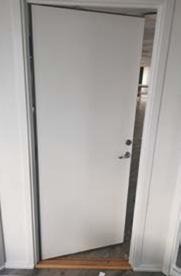
The remaining 20 floors consist of apartments of various sizes and for diverse target groups. Emphasis is placed on flexibility within the units, allowing for the adjustment of interior partitions to better meet the specific needs and preferences of residents. Furthermore, existing components found in the high-rise allow for three floors with reused components in the apartments, potentially in exchange for a reduced rent.
Lastly, the building core is preserved on all 18 existing floors to better facilitate potential future changes in the use of one or more floors.
EXTENSION 4 floors
PROGRAM SECTION
Scale 1:600
PROPOSED BUILDING
Housing
Reuse apartments
Commercial
Housing SITE
Commercial
Parking & commercial storage
TOP FLOOR
1 floor
20 floors
3 floors
Suggestion: reduced rent
1 floor + mezzanine
2 floors
• Car parking
• Bicycle storage
• Commercial storage
Scale 1:150
Program: Public:
• Restaurant, 177 m²
• Café, 75 m²
Private:
• Student hub, 84,6 m²
• Workshop, 24 m²
• Bicycle storage, 34 m²
• Laundry room, 11,2 m²
• Recycling room, 11,2 m²
• Entrance hall, 25,7 m² + 16 m²
Scale 1:150
Program: Public:
• Café mezzanine, 24,4 m²
Private:
• Student hub mezzanine, 47,2 m²
• Laundry room, 11,2 m²
NB: Possibility to fill in floors as necessary for extension of functions and/or new functions.
PR. ID: 46220
PR. ID: 46220
Scale 1:150
Program:
• Restaurant, 336,6 m²
• Bar, 105 m²
• Toilets, 25,6 m²
• Terrace, 229,4 m²
Scale 1:150
Apartment types A-D
Number of apartments per floor: 8
Total number of apartments: 140-160
Number of residents per floor: 23-25
Total number of residents: 460-500
7 8
TYPE A
• 9 rooms (co-housing), 213,8 m²
• On each floor: 1
• Total: 20
TYPE B
• Studio, 25 m²
• On each floor: 3
• Total: 60
APARTMENT TYPES
Scale 1:100
• 2 rooms, 54 m²
• On each floor: 0-2
• Total: max. 40
C
• 4 rooms, 105,4 m²
• On each floor: 2
• Total: 40
TYPE D1 - 1st floor
• 4 rooms (duplex), 104,2 m²
• On each floor: 0-2
• Total: max. 20
D1 - 2nd floor
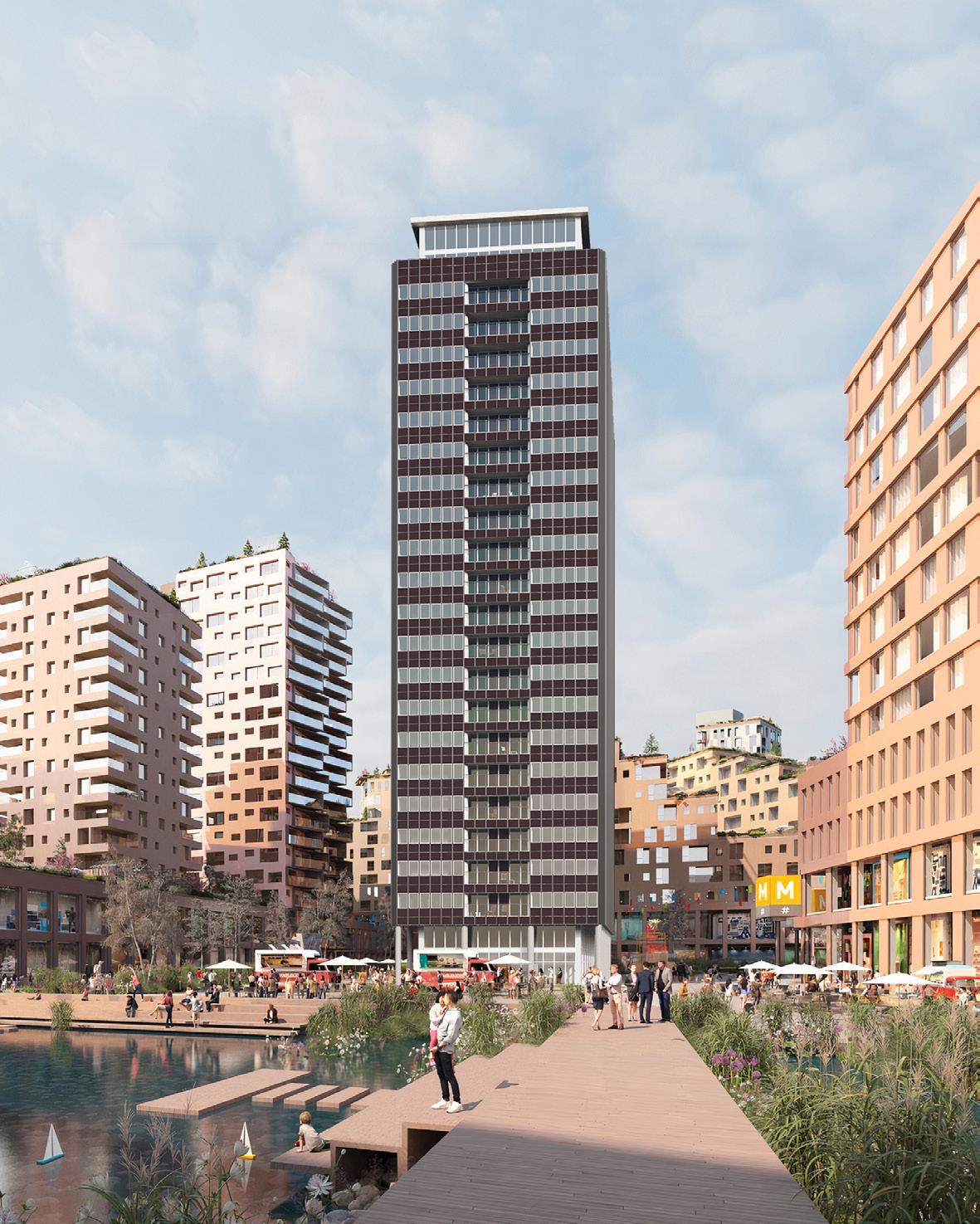
PROPOSED EXTERIOR VIEW
From central square
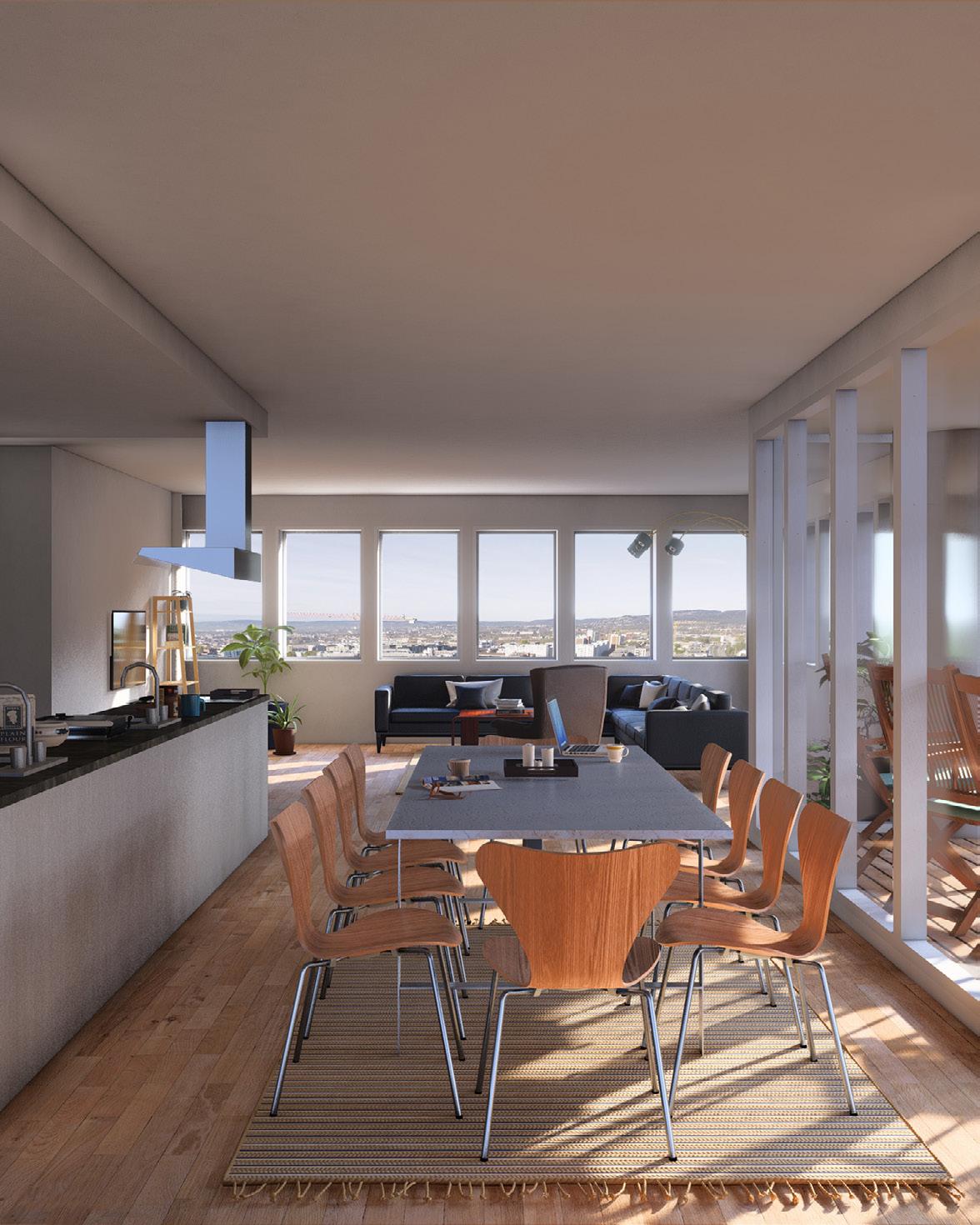
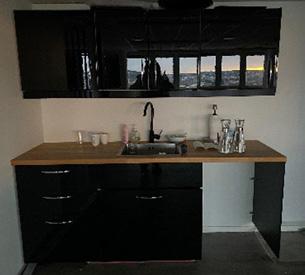
APARTMENT VIEW
Type A (9 rooms, co-housing)
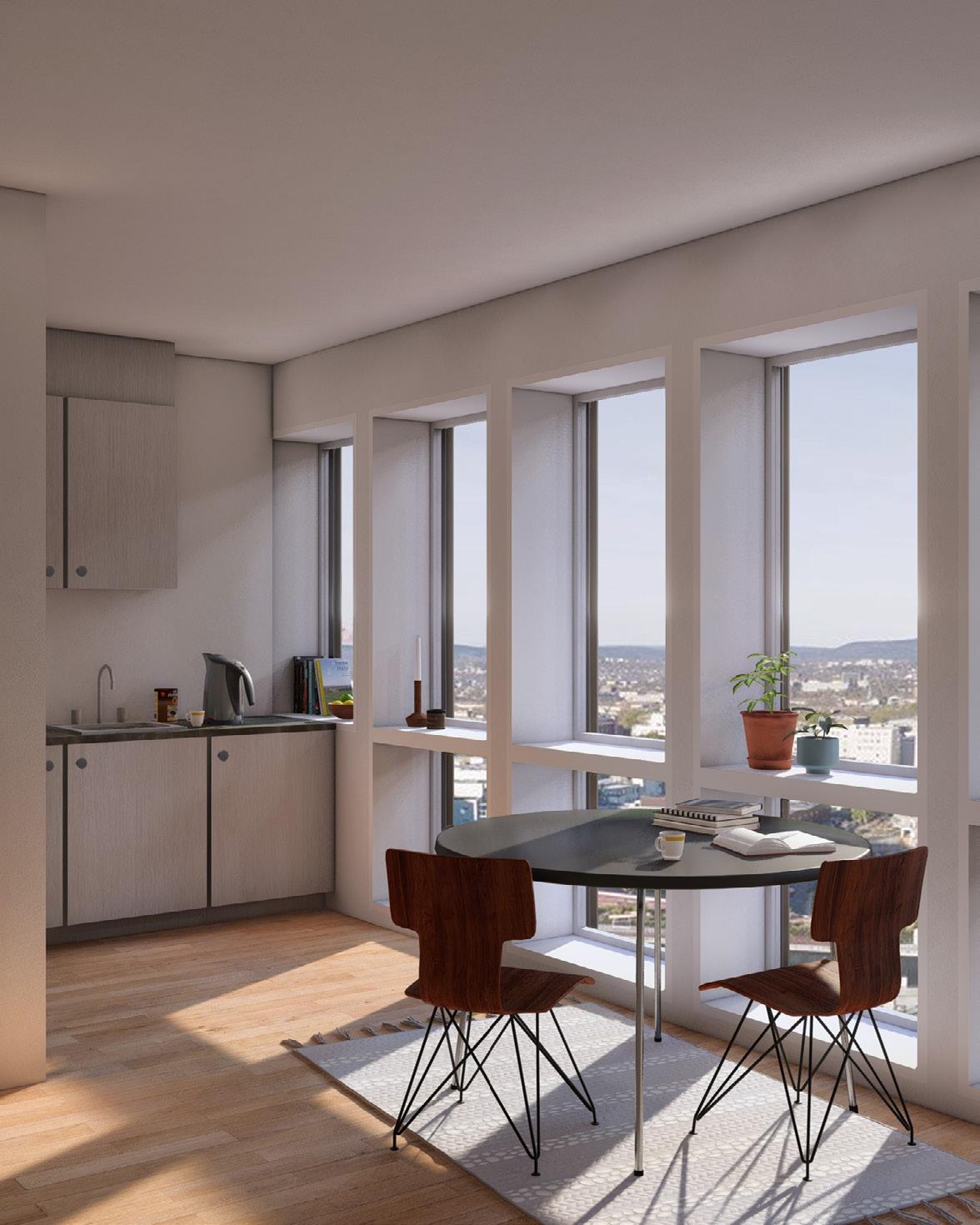
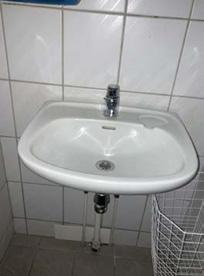
VIEW
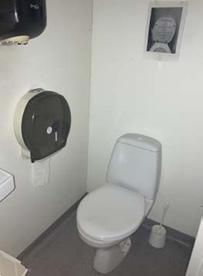
Type B (studio)
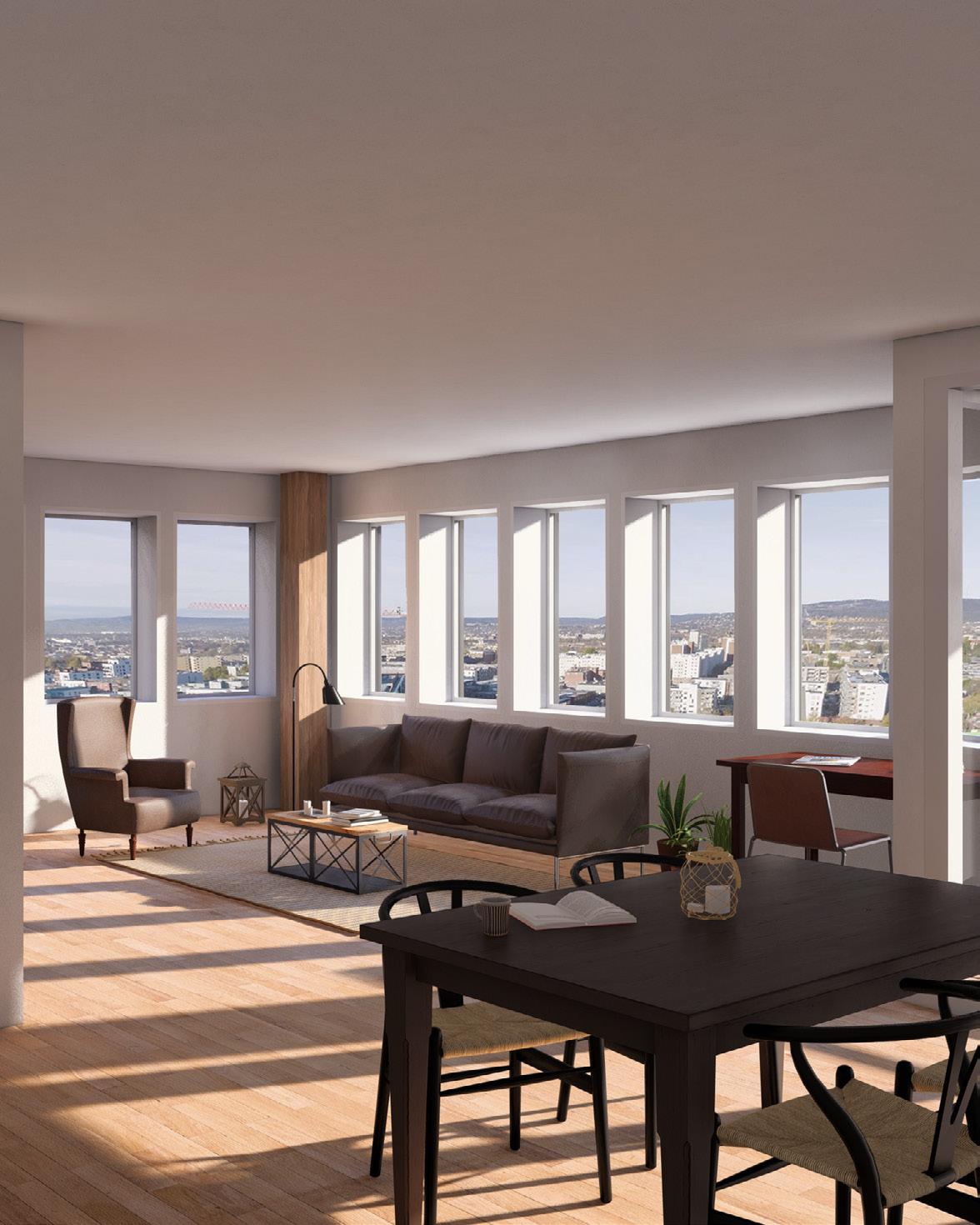
APARTMENT VIEW
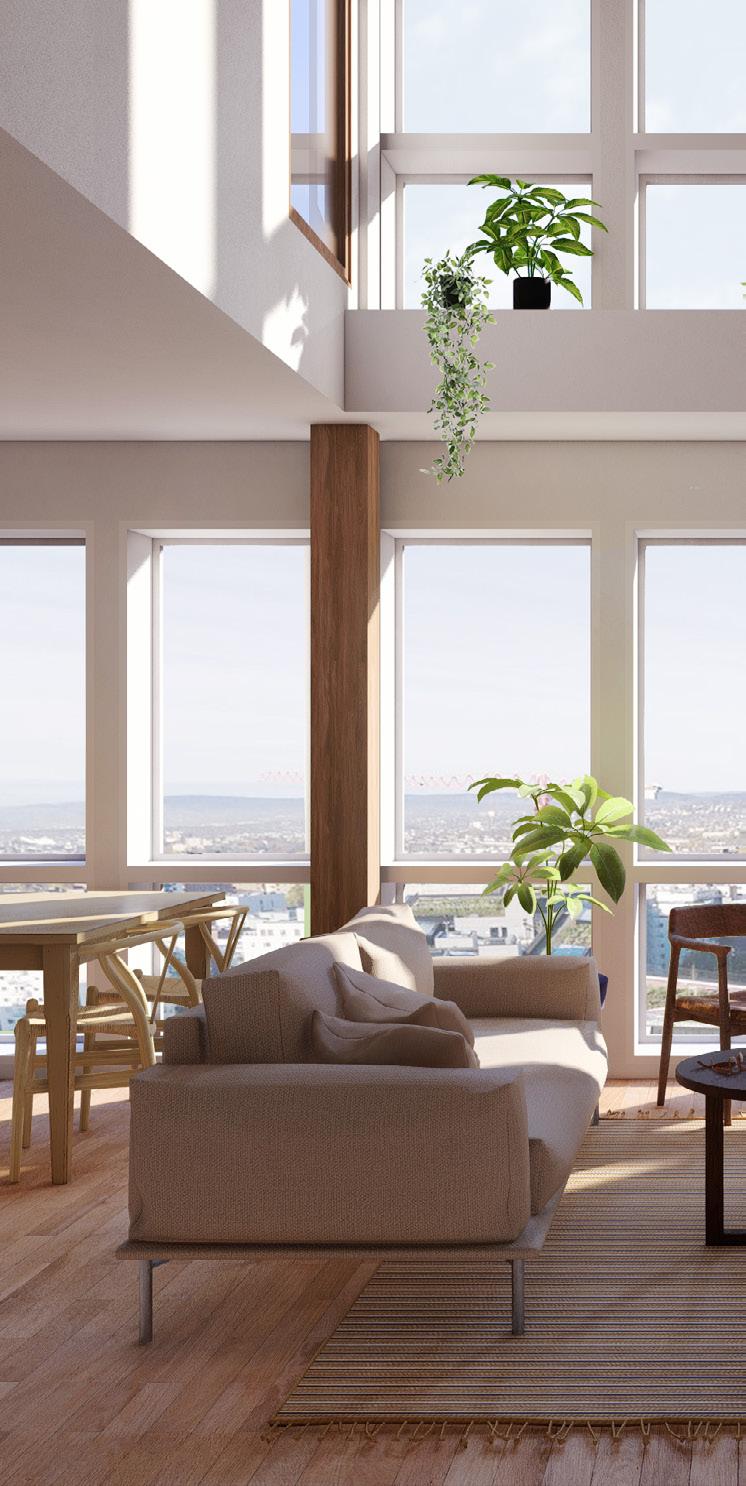
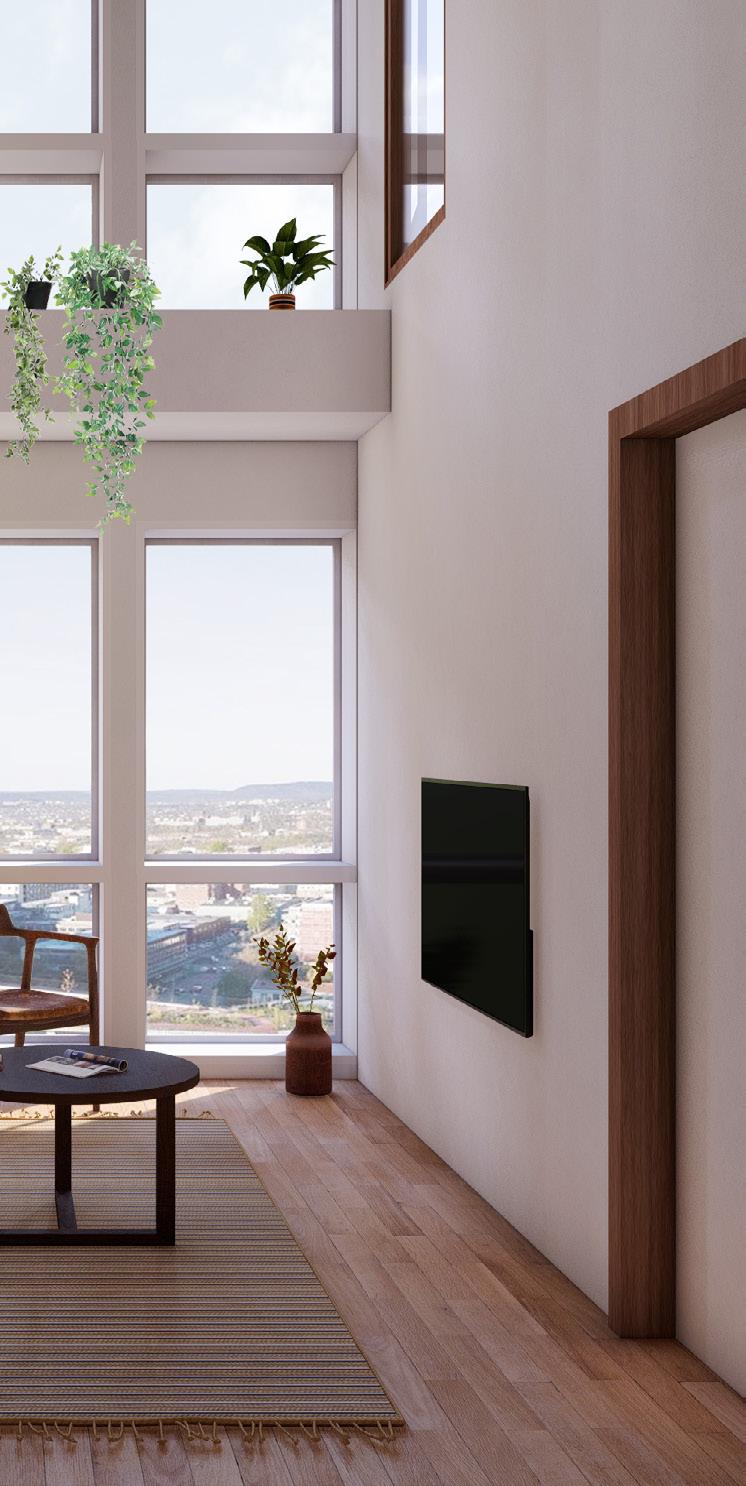
Scale 1:200
PER FLOOR
Total area: 824 m²
Scale 1:200
PER FLOOR
Non-habitable space: 119,8
Approximate number of residents:
residents: 22-26
MY PROPOSED TYPICAL PLAN
Scale 1:200
PER FLOOR
Non-habitable space: 126,7 m²
Approximate number of residents: 23-25
While achieving a similar number of tenants and livable space per floor, my aim was to introduce greater variety and flexibility in apartment types to accommodate a more diverse tenant profile.
Further on, the thesis proposal achieves a higher degree of preservation by reusing the facades, the core, and other materials listed in the schedules. This approach results in total CO2 savings of approximately 530 tons, excluding the concrete primary structure which the developers also plan to reuse.
Instead of working against the existing and making drastic changes to fit a specific set of apartments, this thesis proposal seeks to work with and around the existing, and find ways to complement the existing building features.
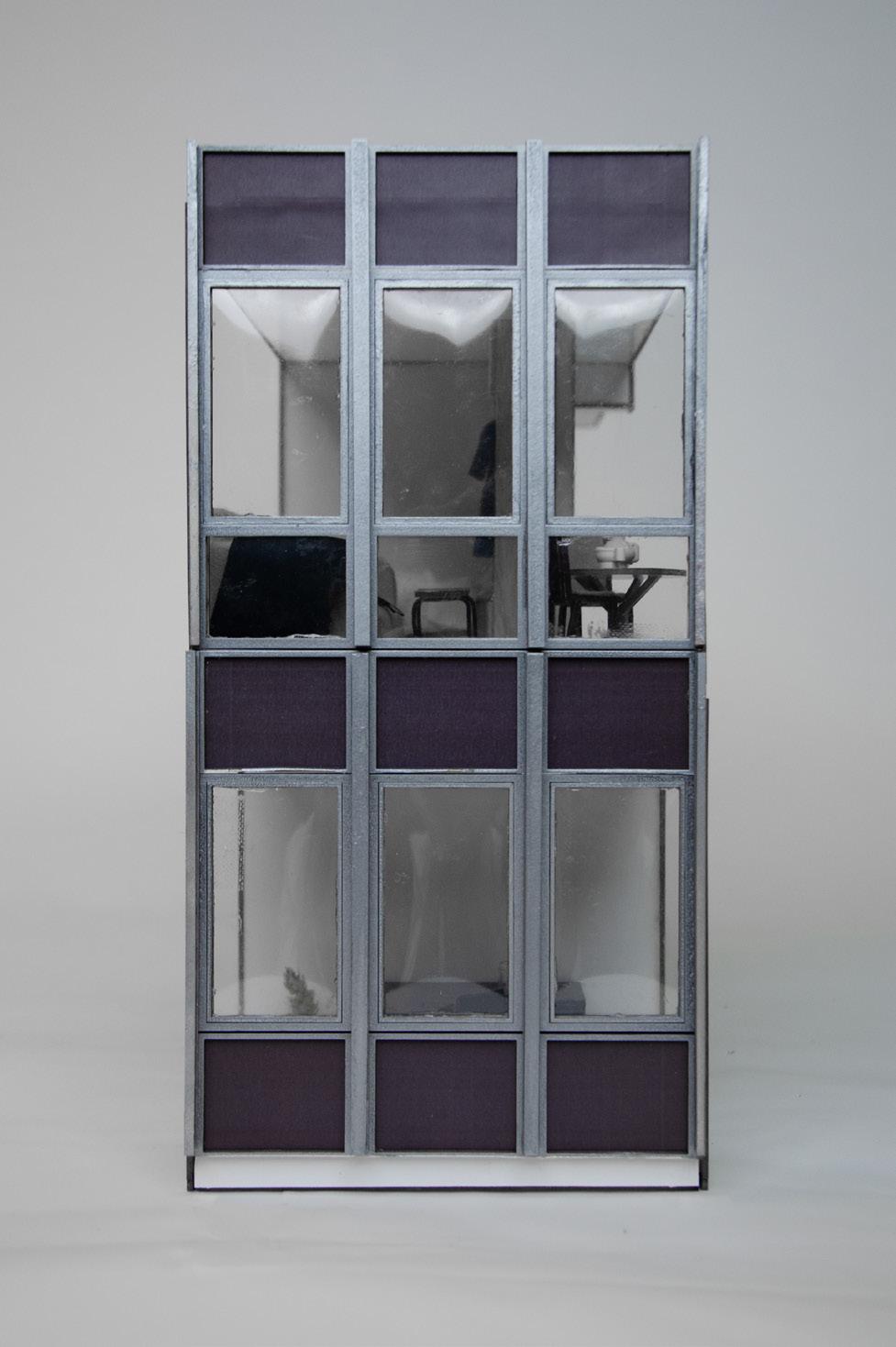
detail: replacement of glass panels
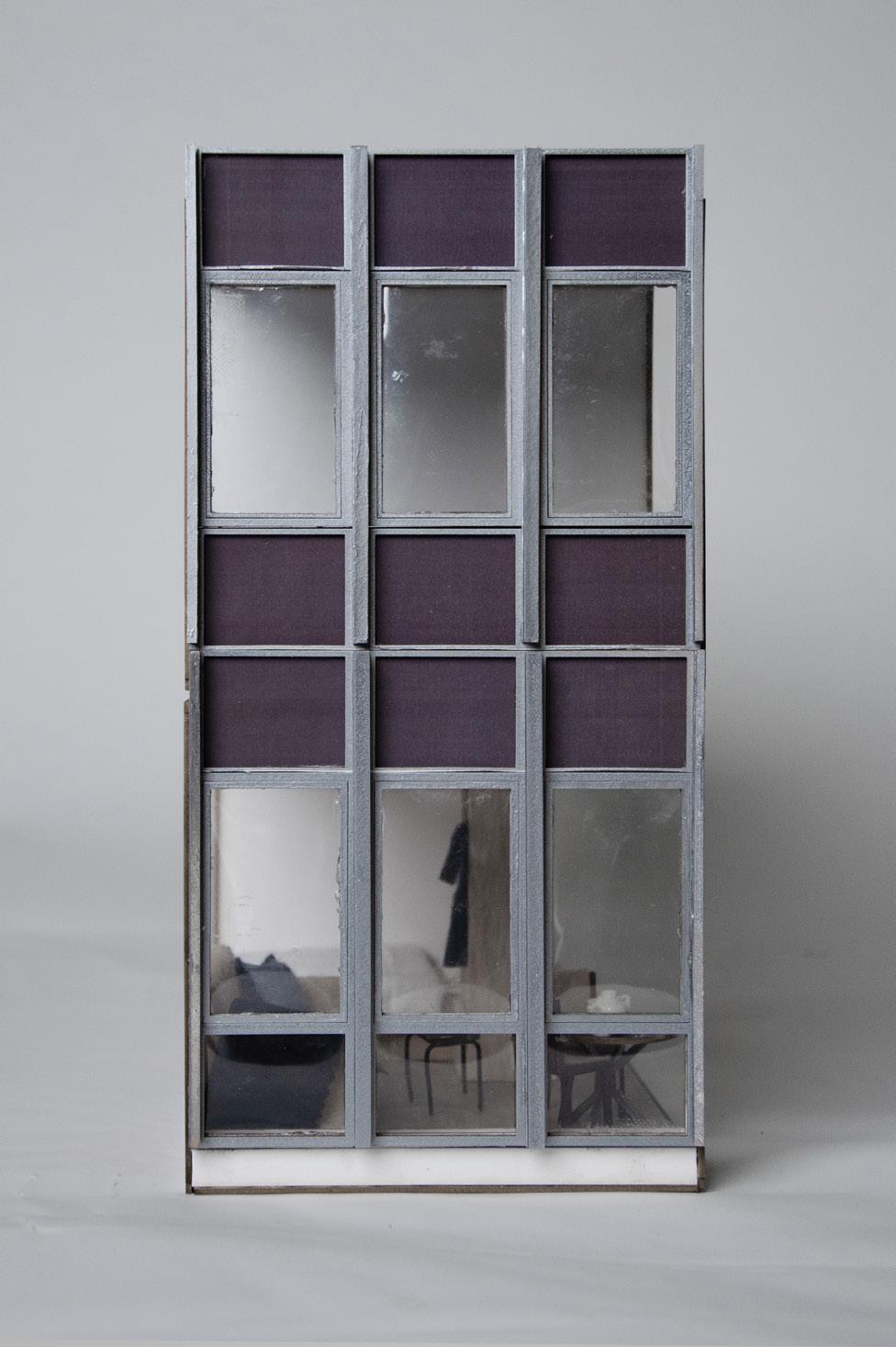
Scale 1:20
Comparison of existing and new: wall and floor thicknesses
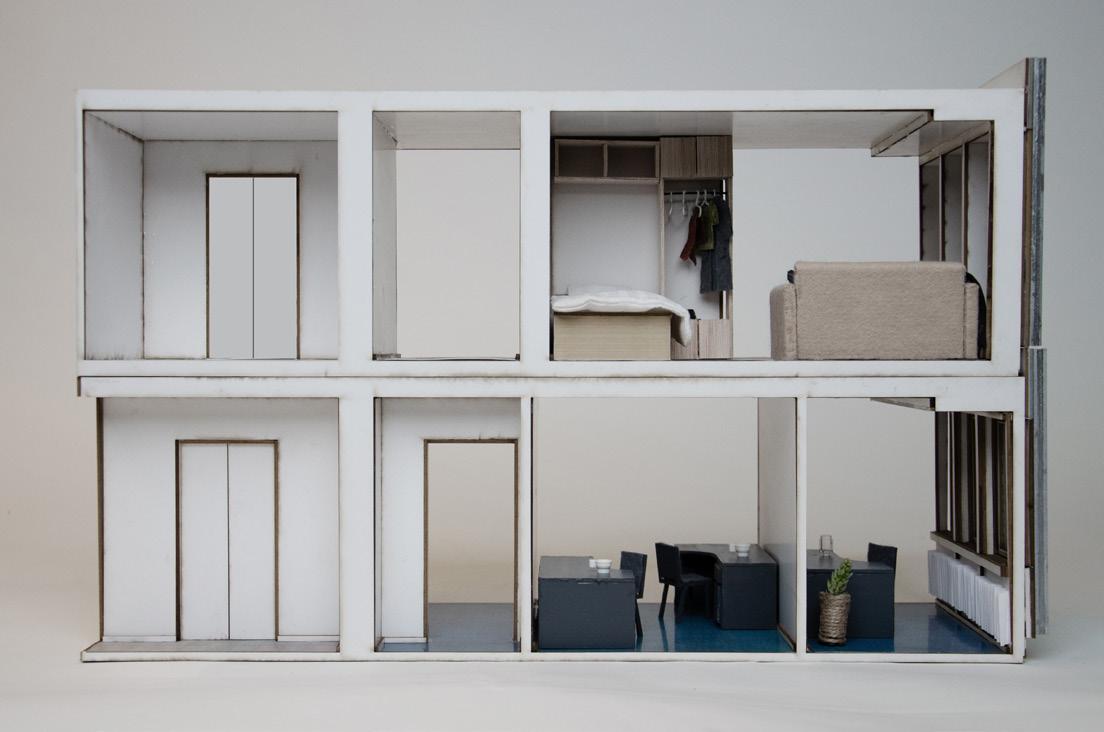
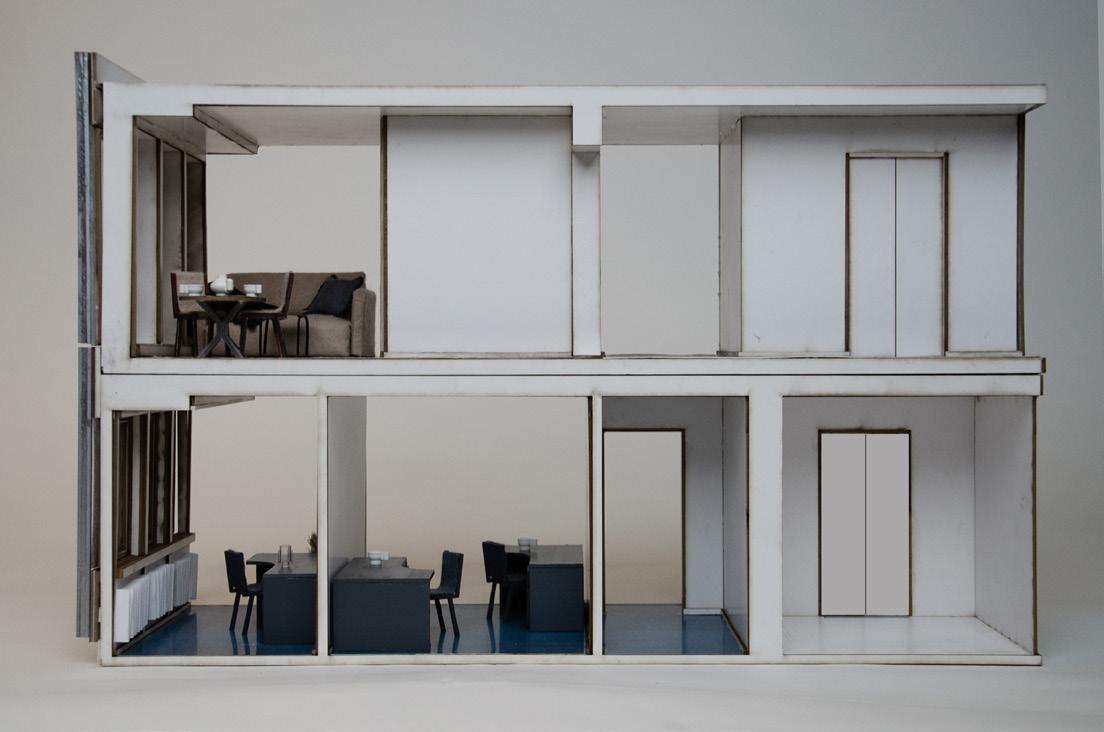
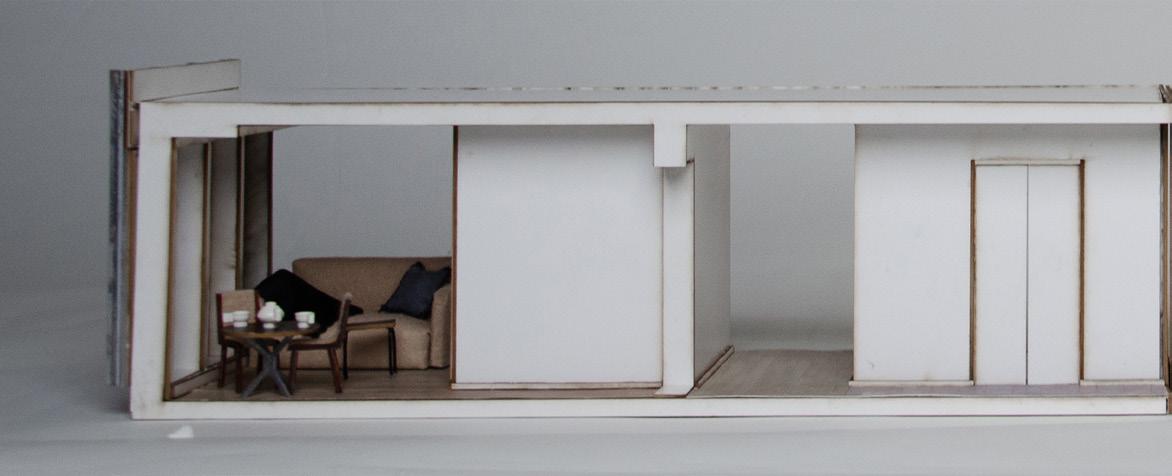
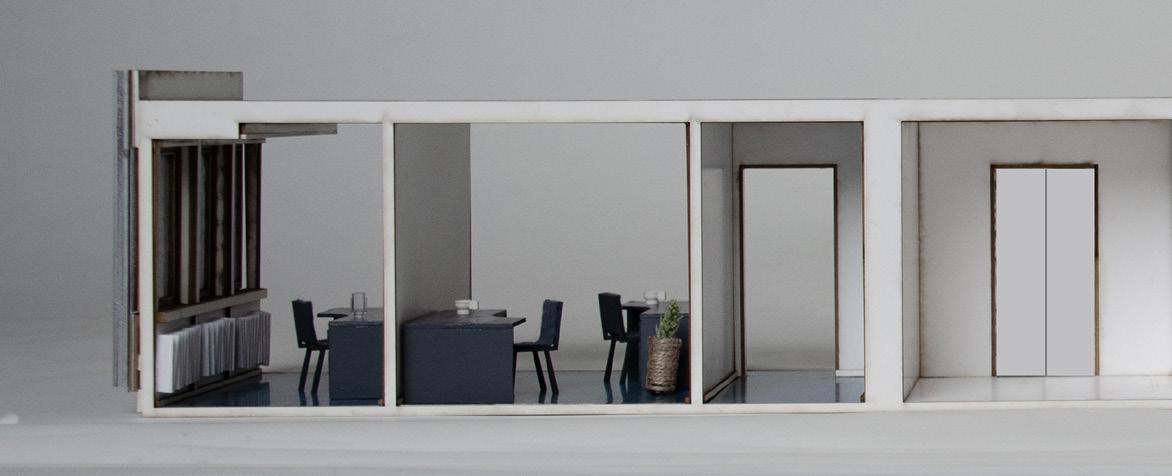
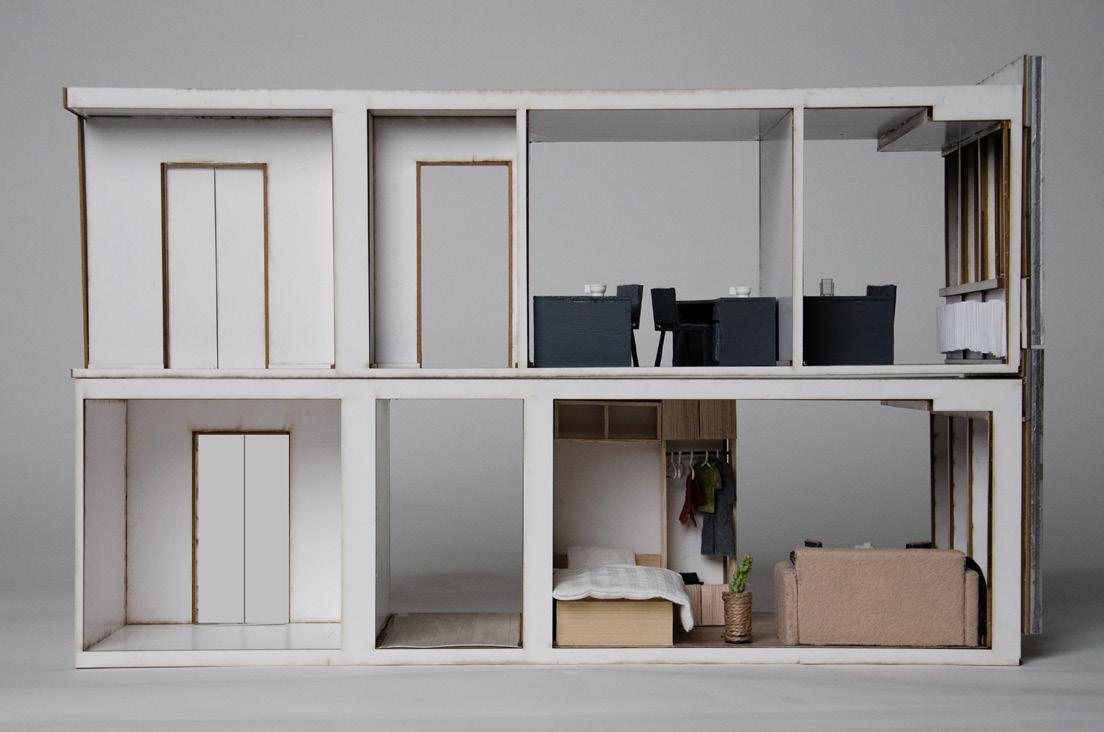
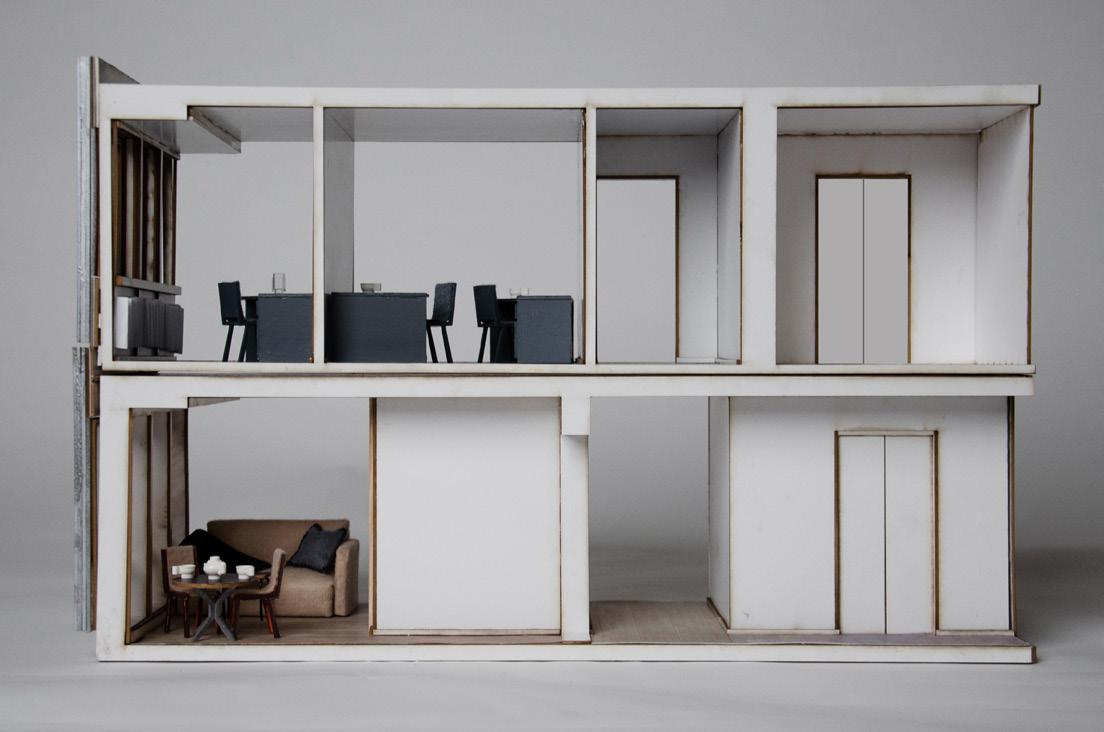
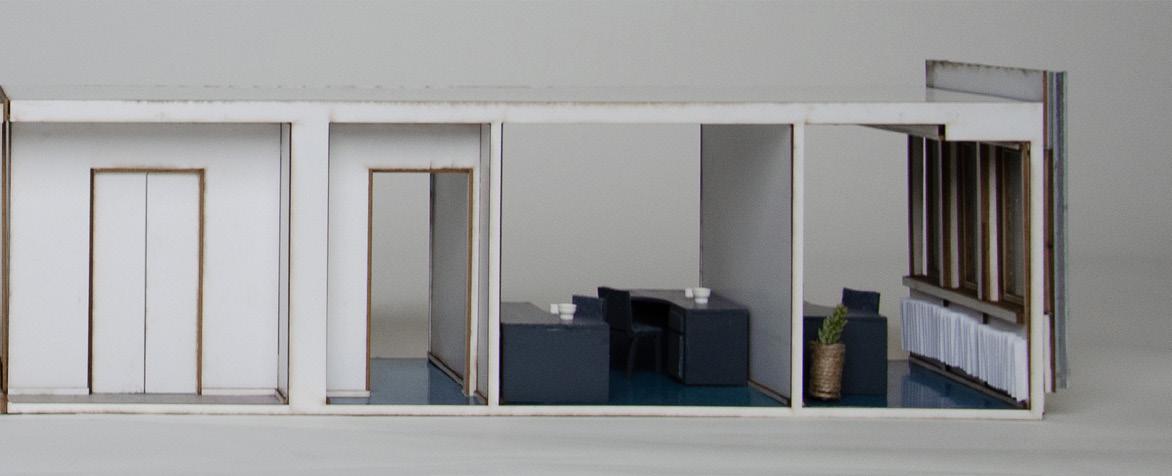
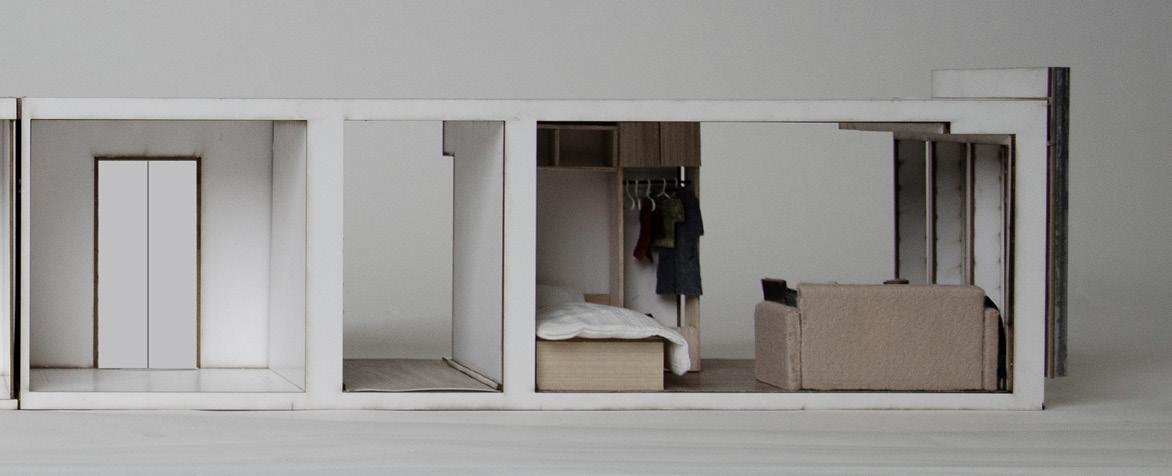
Placing the model components in this position gives the building’s width to scale
ON ADAPTIVE REUSE AND ALTERATION
Anstey, Tim, and Catharina Gabrielsson, eds. 2012. ”Alteration” In Nordic Journal of Architecture, no. 3, vol. 2, winter 2012.
Grafe, Christoph, and Tim Rieniets, eds. 2020. Umbaukultur: The Architecture of Altering.
Wong, Liliane. 2016. Adaptive Reuse: Extending the Lives of Buildings. ON REUSE
Sintef. 2022. Reuse of Building Materials: Guide to the Documentation of Performance.
Sirktre. n.d. https://www.sirktre.no/.
Sirkulær Ressurssentral. n.d. https://www.ressurssentral.no/.
ON ØKERN
A-Lab. n.d. «Økern». https://a-lab.no/projects/okern. Finansavisen. n.d. «Snuoperasjonen på Oslo Øst». https:// www.finansavisen.no/lordag/reportasje/2020/08/28/7560956/ snuoperasjonen-pa-oslo-ost?zephr_sso_ott=z4QXsX.
Haugholt, Wasberg, Iversen. 1975. Hasle-Økern gjennom titusen år. Økern Løren. n.d. https://www.okernloren.no/.
Økern Sentrum. N.d. «Om prosjektet: Den nye hovedstaden øst i Oslo». https://www.okernsentrum.no/om-prosjektet.
Økern Sentrum. n.d. «Økern Magazine». https://www.okernsentrum. no/en/okern-magazine.
OSLO MUNICIPALITY
Oslo Kommune. 2014. Løren og Økern: Veiledende plan for det offentlige rom.
Oslo Kommune. 2018. Strategisk plan for Hovinbyen.
Oslo Kommune. 2021. Planprogram for kommuneplanens arealdel.
Oslo Kommune. 2023. Kommuneplanens arealdel: Oslo mot 2040.
Oslo Kommune. n.d. “Planinnsyn». https://od2.pbe.oslo.kommune. no/kart/.
Oslo Kommune. n.d. «Boligdashbord». https://oslokommune.maps. arcgis.com/apps/dashboards/2a2aa3dbcff14af3a3e115fcca519451.
Oslo Kommune. n.d. Hovinbyen: The New Fringe City of Oslo.
OTHER PLANNING DOCUMENTS
Steen og Strøm, Storebrand. 2023. Økern Sentrum: Revidert Planforslag.
Sweco. 2021. Kulturminnerapport.
PHOTO ARCHIVE
Oslo Byarkiv. n.d. https://digitaltmuseum.no/.
Drawing of the Økern Centre by H. Mjelva and P. Norseng. Sweco. 2021. Kulturminnerapport, p. 14.
Lacaton & Vassal, Transformation of 530 Dwellings in Bordeaux, France.
AEX. 2017. Copenhagen Architecture Festival 2017. Available at: https://www.architecture-exhibitions.com/en/ copenhagen-architecture-festival-2017/never-demolish.
Økern, 1970
Digitalt Museum. 2018. https://digitaltmuseum. no/021017760019/okernkrysset-flyfoto-desember-1970.
Hovinbyen, looking towards Oslo city centre Natural State. 2018. https://naturalstate.no/projects/ hovinbyen.
Images of the Økern Centre. Nasjonaltheatret. 2022. https://www.mynewsdesk.com/no/ nationaltheatret/images/oekernsenteret-2561893. Wikipedia. 2021. https://no.wikipedia.org/wiki/%C3%98kernsenteret. Wikimedia. 2013. https://commons.wikimedia.org/wiki/File:%C3%98kernsenteret_01.jpg.
Compiled material. Plan- og bygningsetaten. 1963. https://innsyn.pbe.oslo.kommune.no/saksinnsyn/casedet.asp?caseno=196302381&wfl=T&Dateparam=09/14/2023&sti=.
Økern torg, 1962.
Oslo Byarkiv (n.d.). Økern torg 1962.
Økern Centre, 1972. Oslo Byarkiv (n.d.). Økernsenteret 1972.
Mies Van Der Rohe, Seagram Building, New York, 1958. Divisare. 2018. https://divisare.com/projects/382675-ludwigmies-van-der-rohe-inaki-bergera-seagram-building.
Økern proposal, 2017. Benoy, Hille Melbye Arkitekter, and Arkitektkontoret Nils Tveit AS (2017). Illustrations.
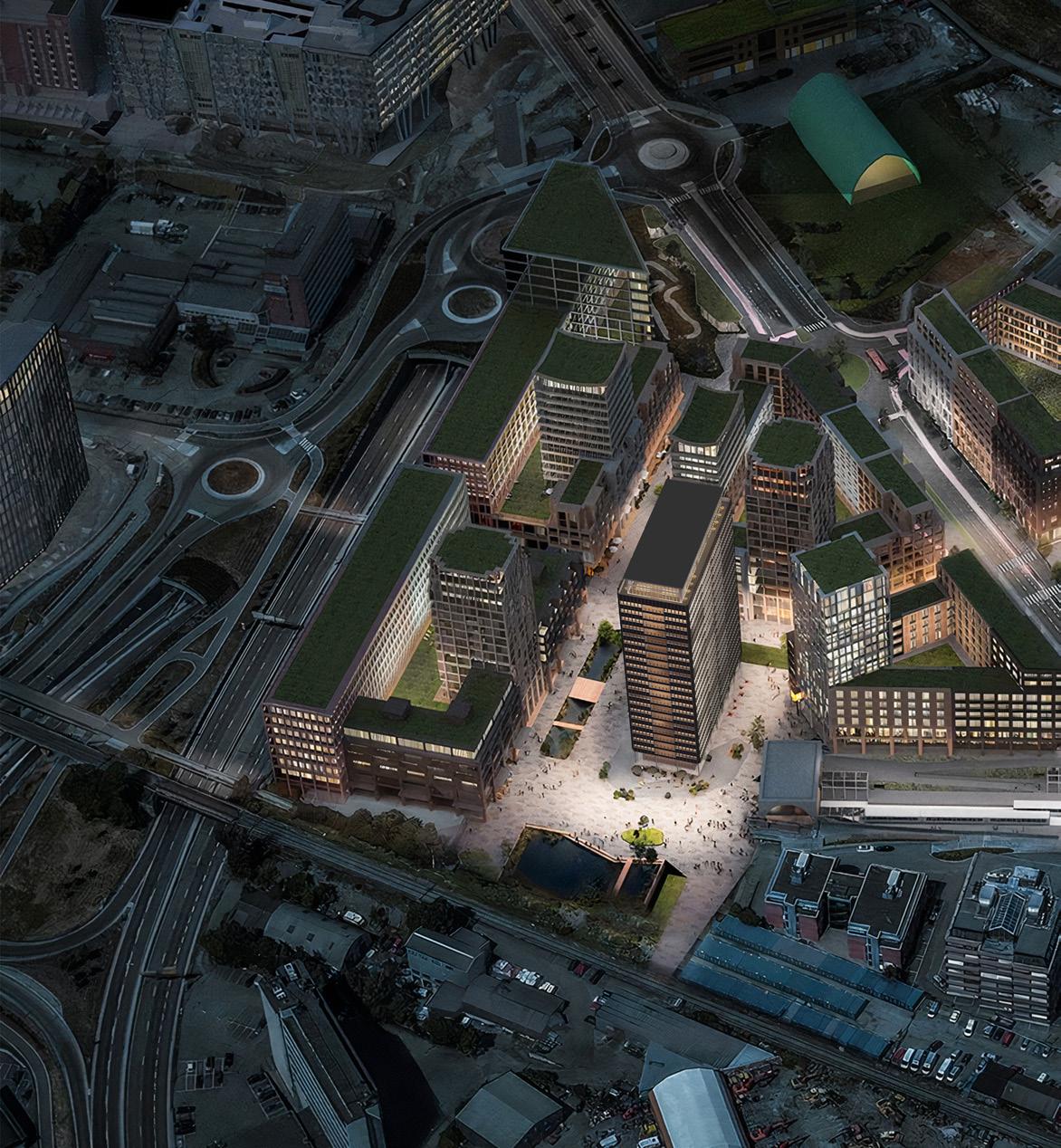
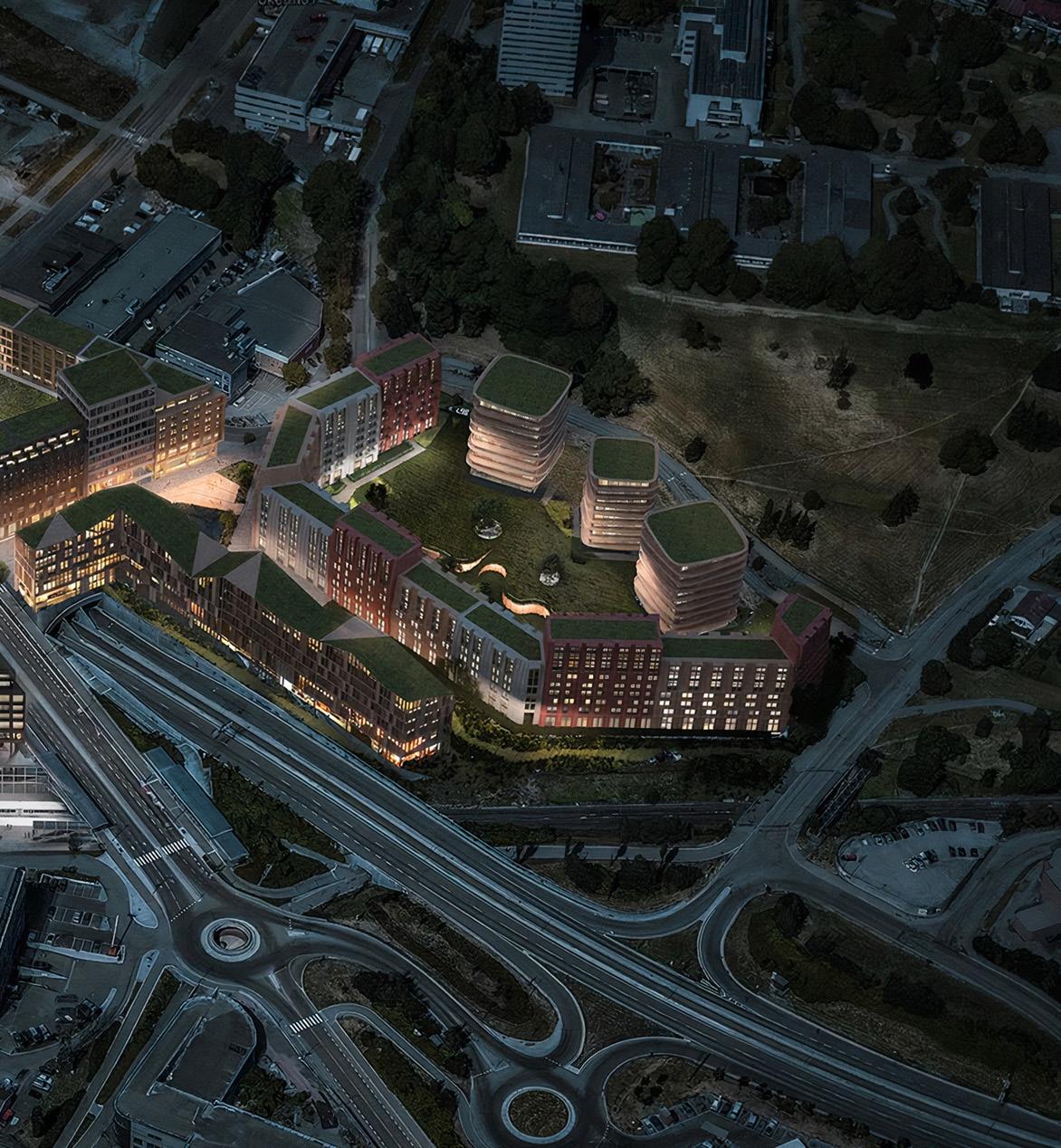
Økern proposal, 2024. A-LAB and Økern Sentrum Ans (2024). Illustrations.