Diploma
KTH 2024
Housing Studio
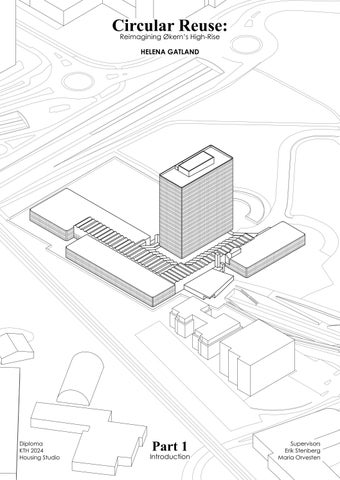
Diploma
KTH 2024
Housing Studio
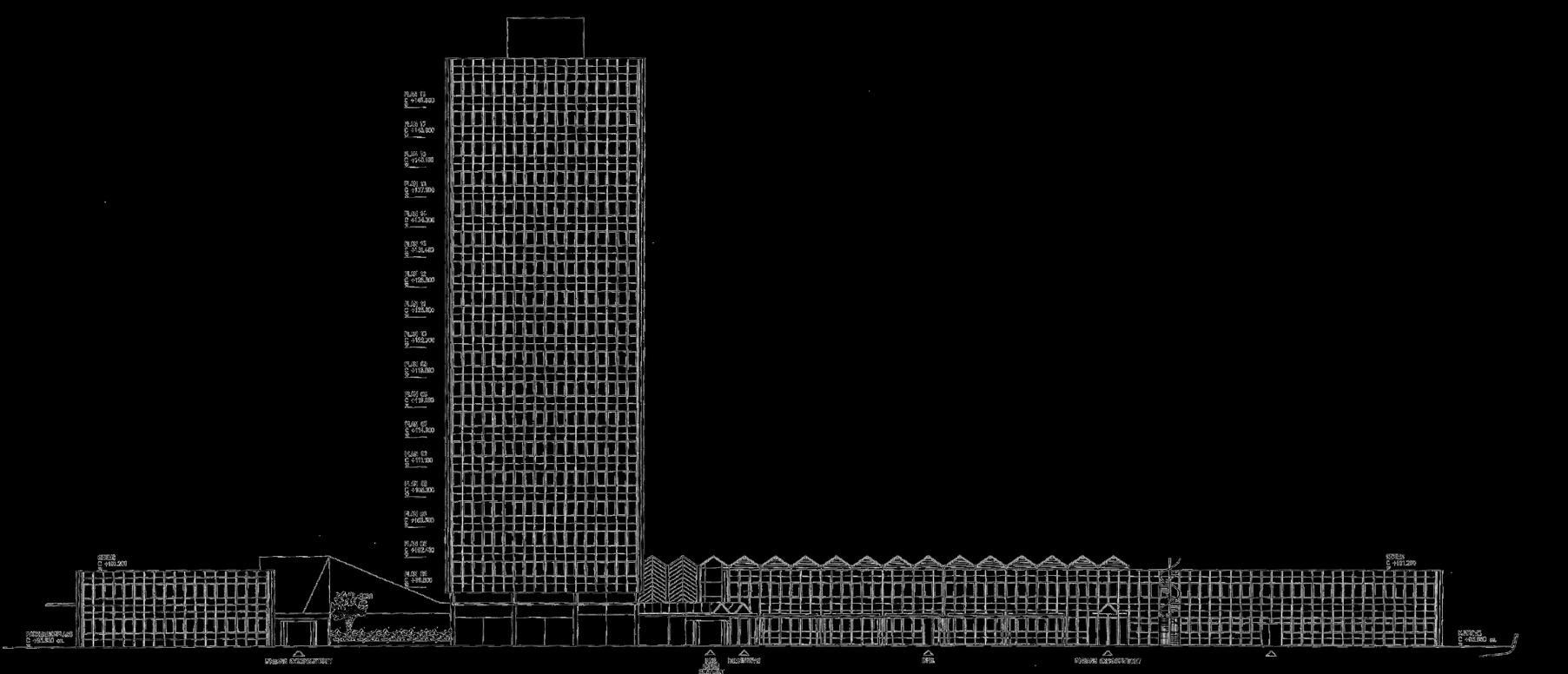
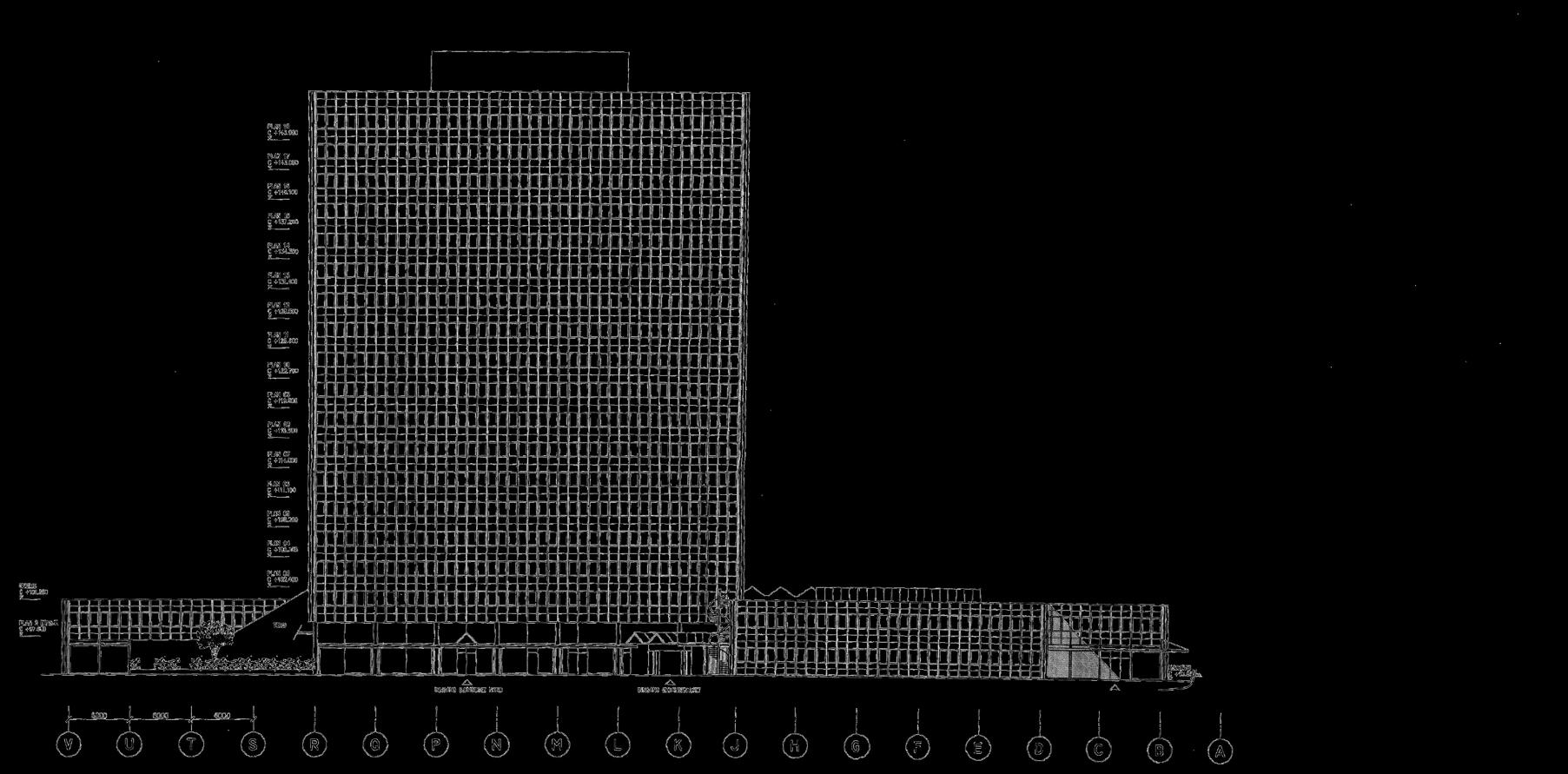
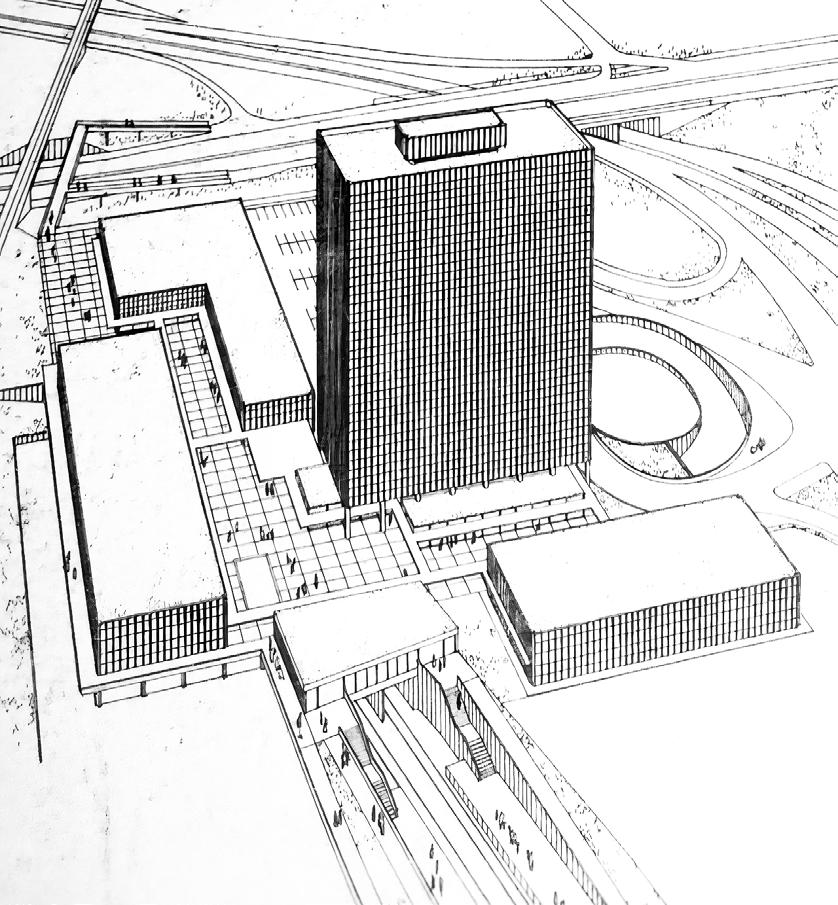 01 Drawing of the Økern Centre, by H. Mjelva and P. Norseng
The construction sector plays a significant role in global emissions and material consumption. While many industries have made environmental and climate protection a top priority, the construction industry persists in its extensive resource utilisation and inadequate efforts to mitigate escalating waste production.
The practice of adapting, extending, and repurposing existing building stock was prevalent prior to the 19th century, as built structures embodied valuable resources and many hours of work. In Norway, the tradition of reusing buildings, either in fragments or as complete assemblies, dates back to the 6th century. Houses and their materials were particularly valuable, fostering a culture of repair, refurbishment, and reuse of resources. These practices started to change with the onset of industrialisation; supply had to meet the increasing demand, and construction methods became more efficient and fast-paced with new technology. Profitability and efficiency outvalued quality and longevity. Essentially, this shift put an end to the practice of repairing cities and their building stock.
Today, the prevailing perception regards buildings as disposable entities. Demolition has become a default solution once a building is no longer needed or outdated, and alteration is rarely considered. The resistance towards adaptation stems from various concerns, largely centred around the uncertainties and potential increases in time and cost.
While acknowledging the complexities of the practice of reuse, embracing the existing building stock and materials can result in remarkable projects. Utilising existing structures and materials more efficiently and prolonging their lifecycle within the supply chain presents a viable strategy for emissions reduction and optimal resource utilisation. Moreover, transforming existing structures for new purposes not only promotes sustainable development but also preserves their historical and cultural value. Rehabilitation and reuse allow for the integration of modern amenities while retaining the character of the original building and the collective memory and identity of communities.
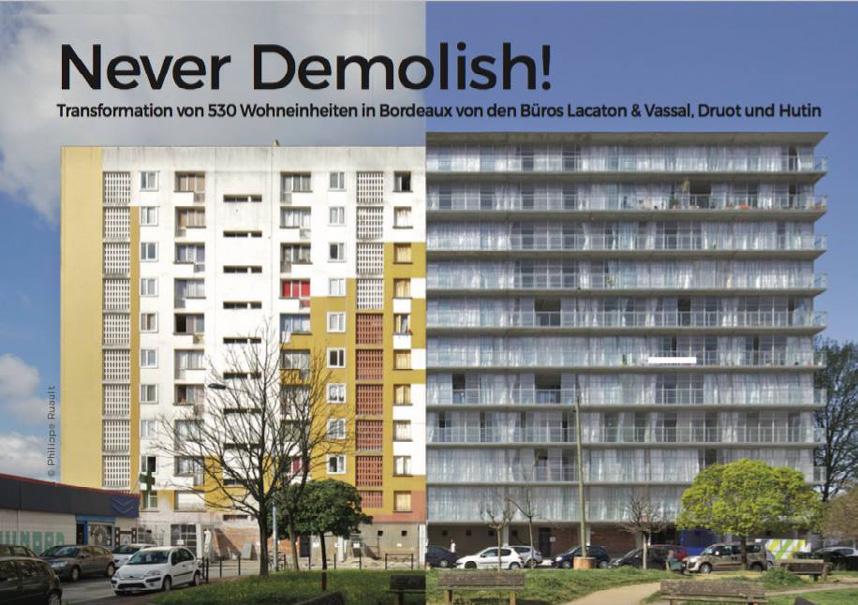
Given the current prominent housing challenges in Oslo and the urgent need for the building industry to adopt more sustainable ways to deal with existing structures, it is crucial to address both social and environmental aspects in this Thesis proposal.
Post-war modernist architecture from the 1950s to the 1970s, though often underappreciated by the general public, constitutes a significant portion of the building stock in most developed countries. Despite their lack of widespread admiration, these buildings represent a valuable resource due to their simple structural systems and inherent flexibility, offering great potential for adaptive reuse and sustainable redevelopment.
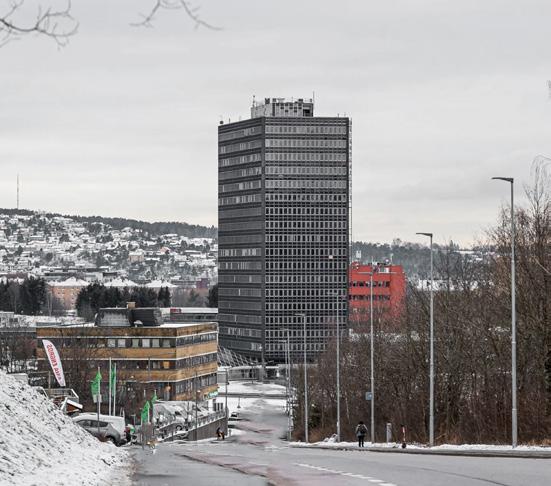
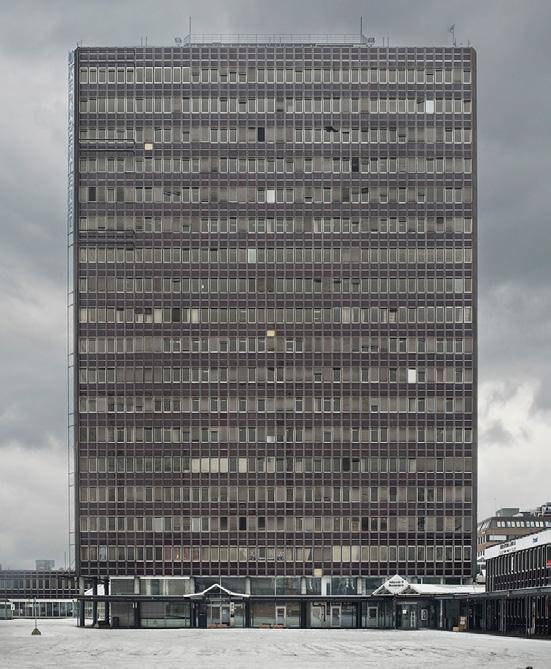
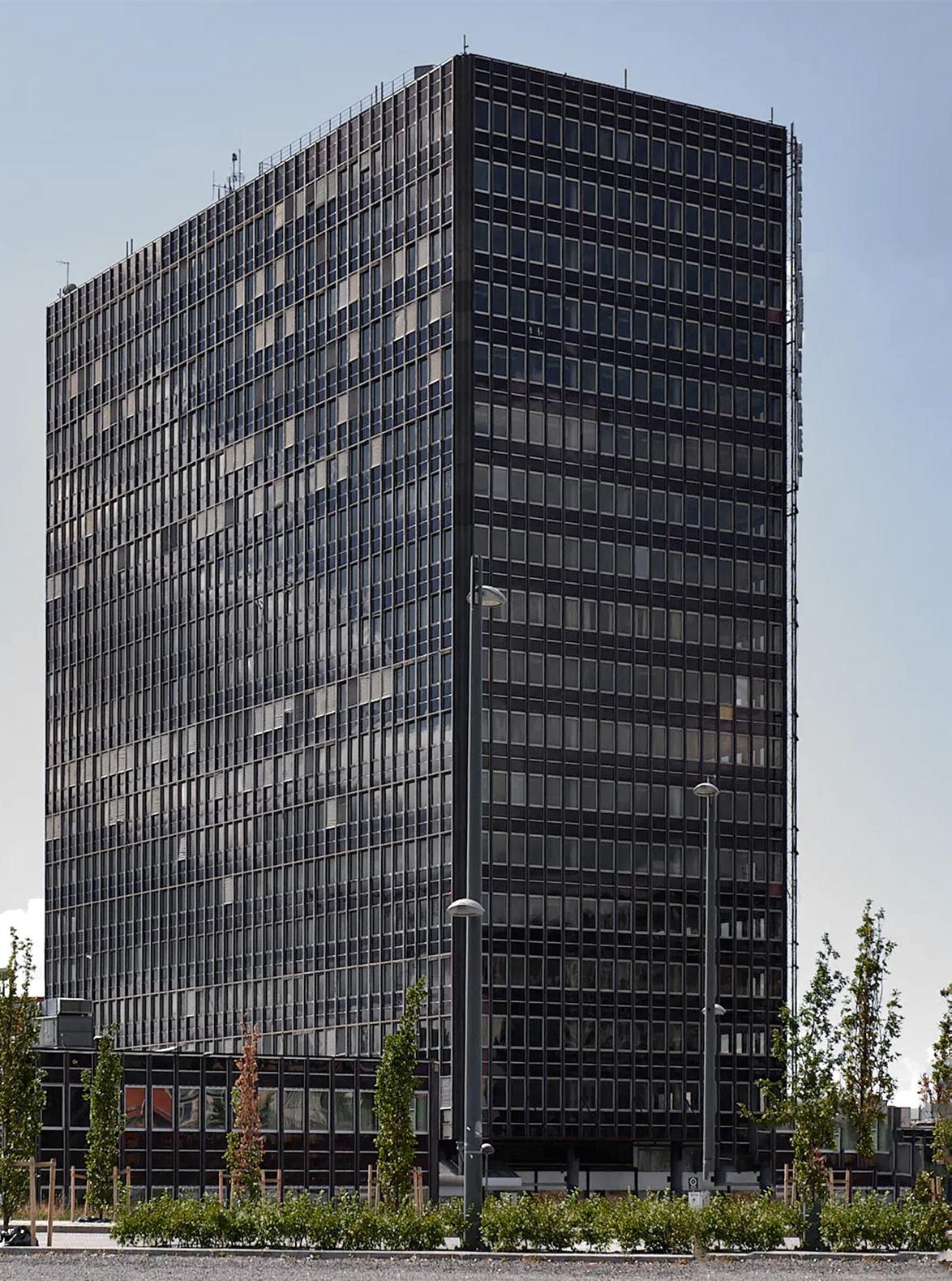
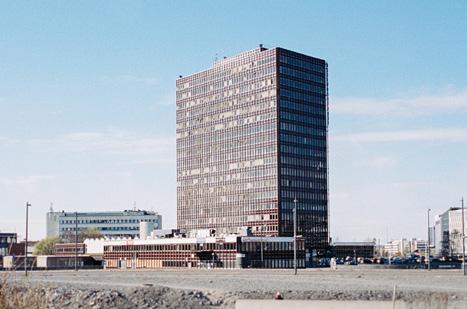
Moreover, the Økern centre holds significant historical and architectural importance. When the Økern high-rise was constructed in 1969, it became Norway’s tallest business and office building. Situated in an area with few prominent orientation points, the high rise has served as a crucial landmark for travellers navigating the area. Its presence has established Økern as a symbolic centre within a landscape dominated by infrastructure.
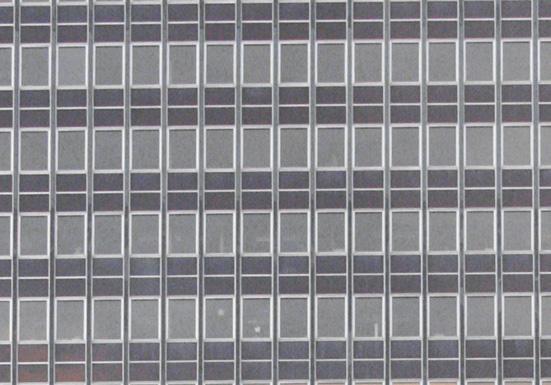
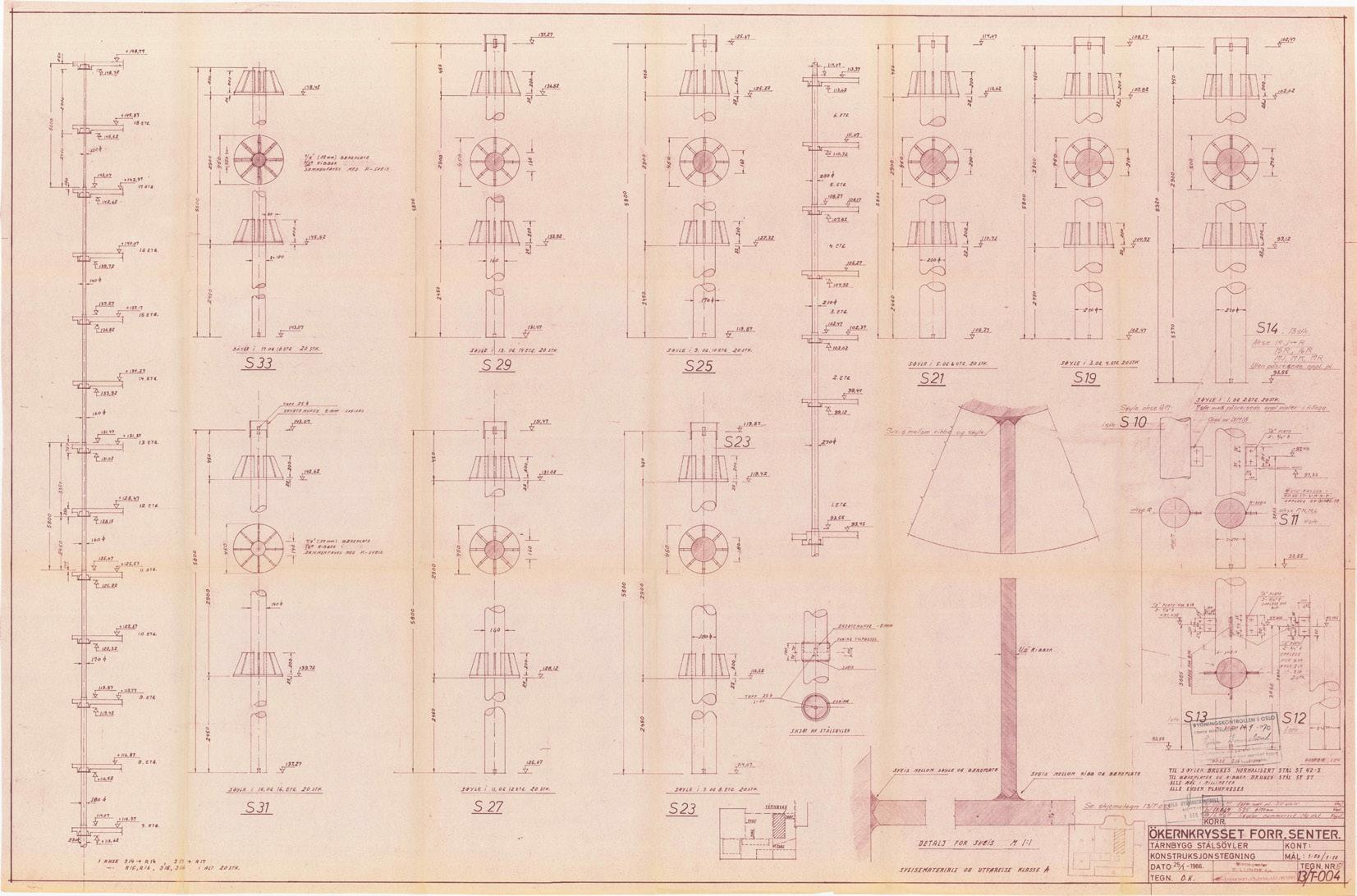
The high-rise further reflects international influences of its time, characterised by its curtain wall facades and simple structural system, and remains a notable example of post-war modernism in Oslo.
Considering the urgency for more sustainable building practices globally, and increasing interest and facilitation of reuse in building projects in Norway, the reuse of building materials at Økern can play a vital and intriguing role, both in terms of sustainability and the preservation of the building.
The production of small apartments is a notable trend in Oslo today. This trend is driven by the high demand for housing in the city, where space is limited and property prices are high.
In large-scale urban developments, this trend can lead to a lack of variety in housing types. Introducing shared living concepts in such a development can add diversity to the housing stock, and address some of the social, environmental, and economic challenges associated with modern urban living.
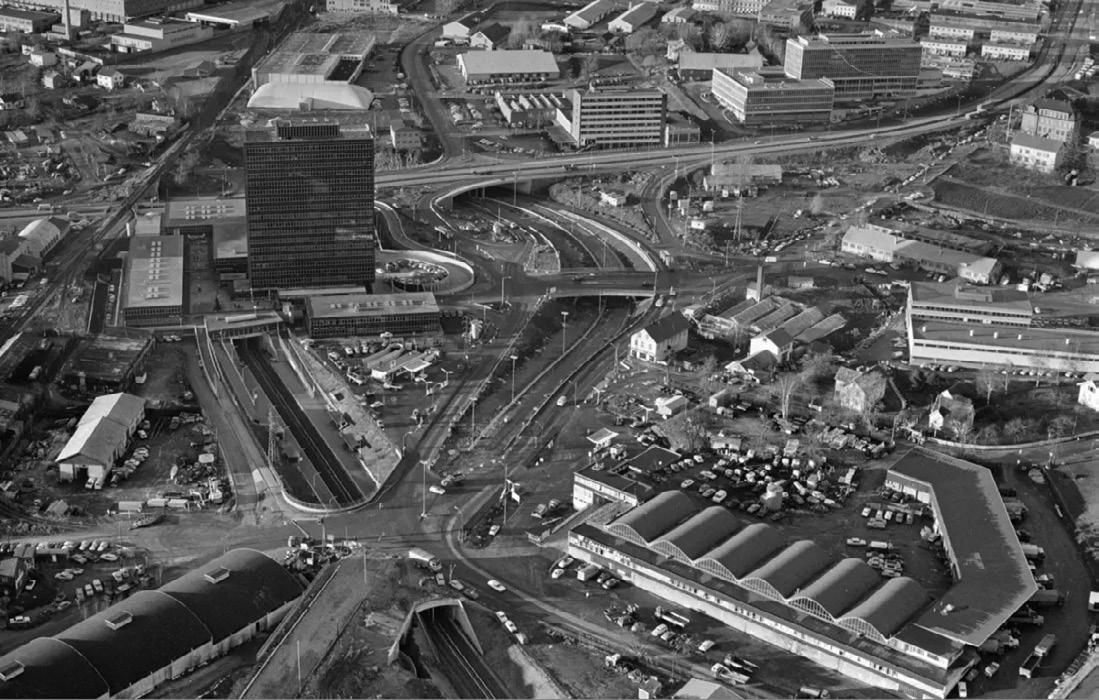
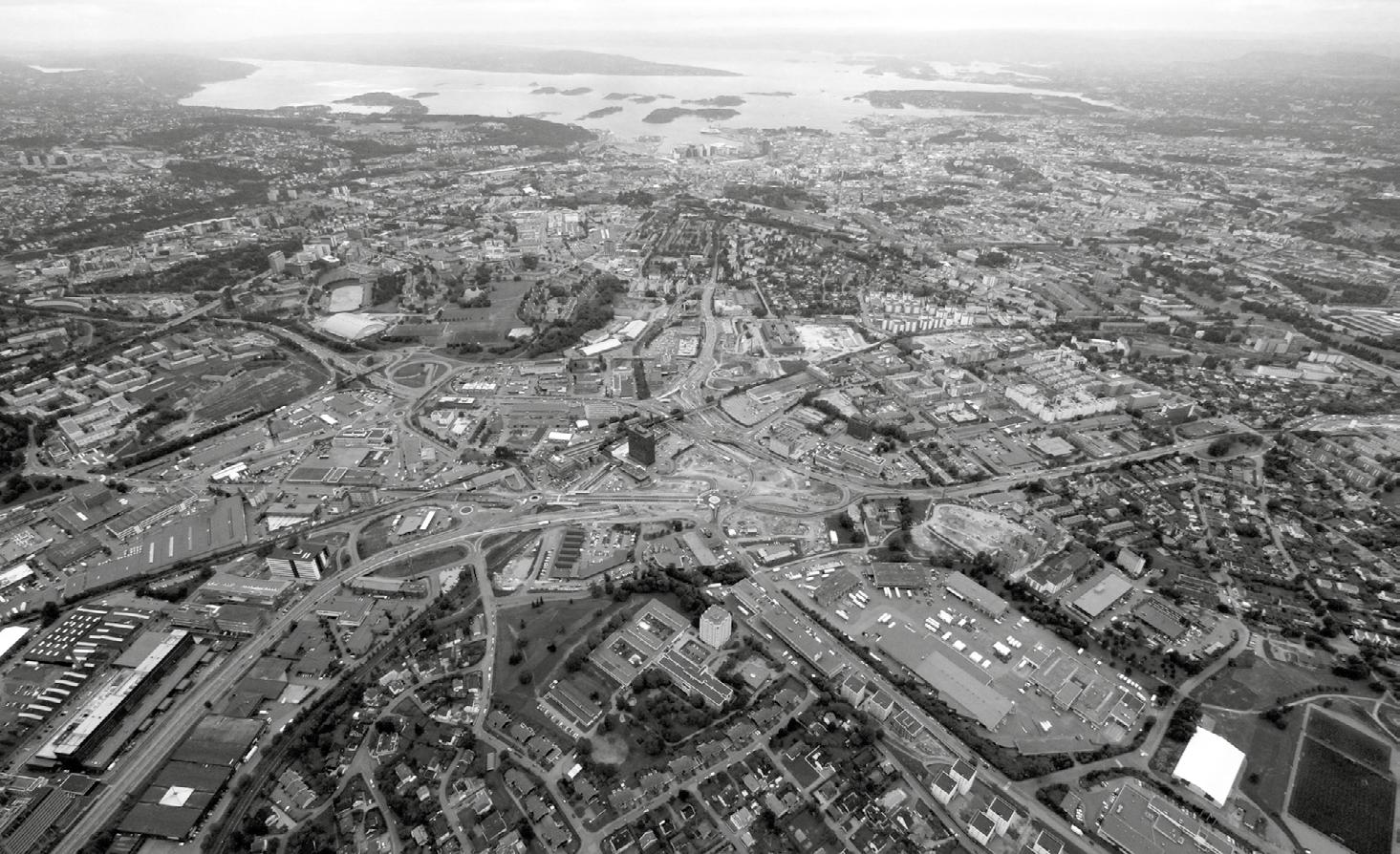
The trafficked and industrial area of Økern is located in Oslo east, just outside the inner city boundary. The area’s history as a busy hub can be traced back to the 1950s; Økern became Oslo’s largest marketplace for agricultural products shortly after the Second World War and quickly established itself as a meeting place and an important hub with good opportunities for businesses.
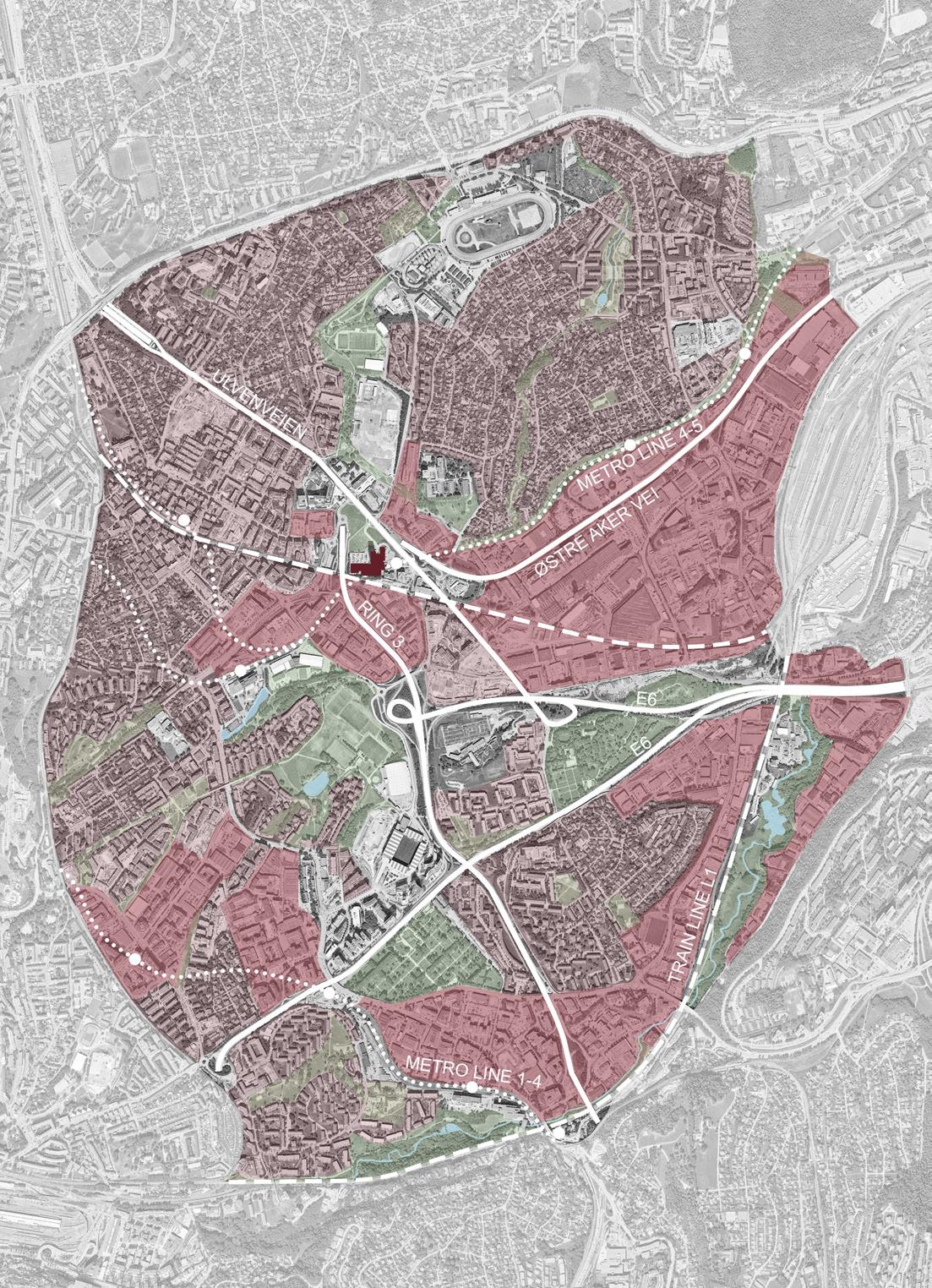
Today, Økern is best known as a traffic hub due to its strategic location at the intersection of several key transport arteries. These include a bus station located next to the centre with 90 bus departures per hour, an integrated metro station with departures every three minutes, and multiple main roads passing through the area. This feature, together with Økern’s proximity to the city centre, highlights the area’s potential to become a new urban hub.
Over the years, Oslo city centre has been surrounded by various new urban centres, contributing to the city’s expansion. These areas include Skøyen, Majorstuen, and Nydalen. Økern, often referred to as ’the missing link,’ has been identified as the new centre in the east of the city as part of Oslo’s largest and most ambitious urban development plan, Hovinbyen.
Hovinbyen has been targeted as a site for mixed-use development, and several areas are currently undergoing rapid transformations from industrial to residential, commercial, and office spaces. Currently being the home of approximately 175,000 residents, the Hovinbyen urban development plan aims to accommodate an additional 70,000 people by creating 30,000 to 40,000 new residences. Around 1,350 of the new homes are part of the current proposal for the Økern Centre development. Additionally, the plan involves adding 2.5 million square meters of commercial space, which is expected to generate between 50,000 to 100,000 new job opportunities.
Scale 1:100 000 Økern
10 minute travel to the city centre by metro
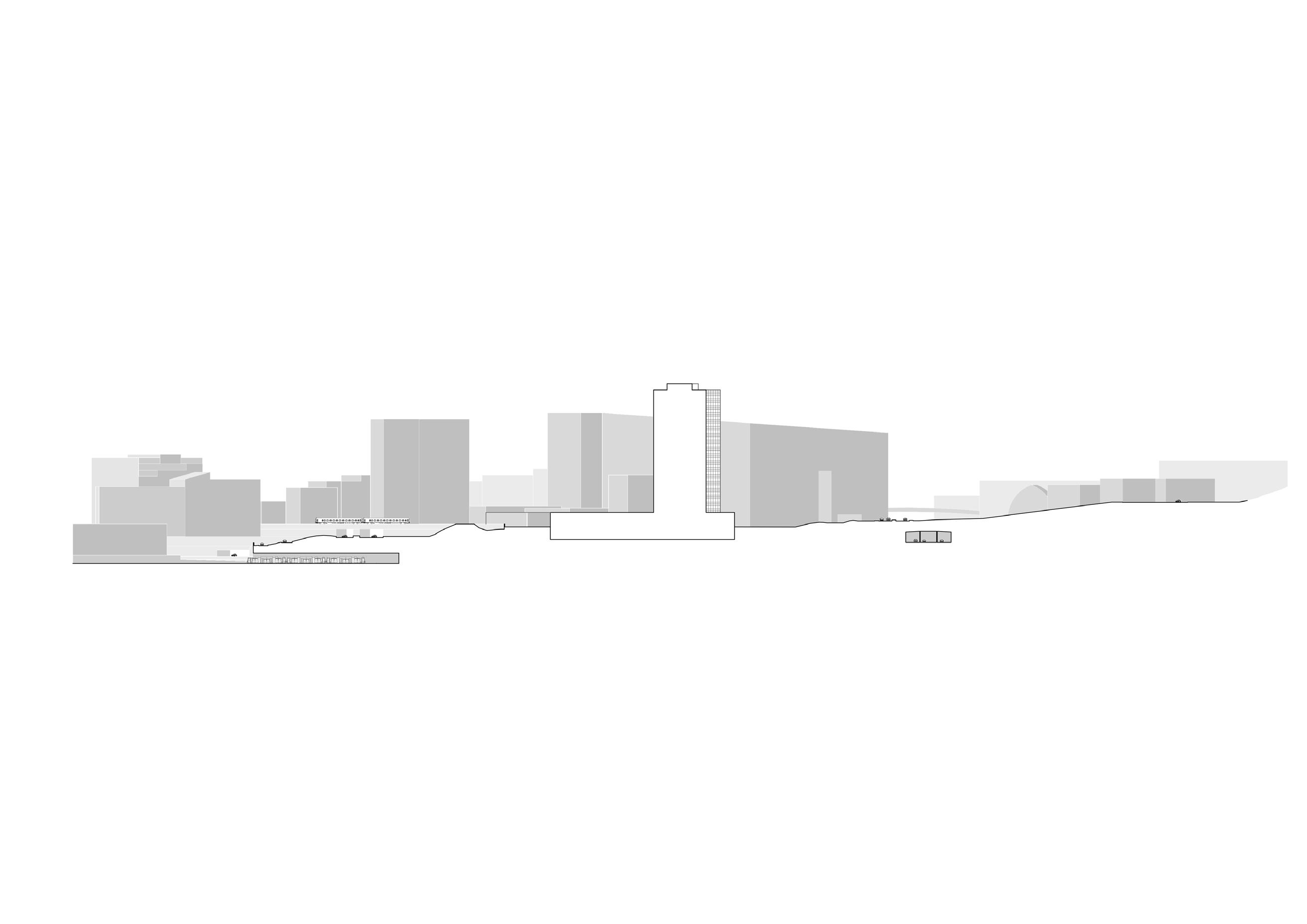
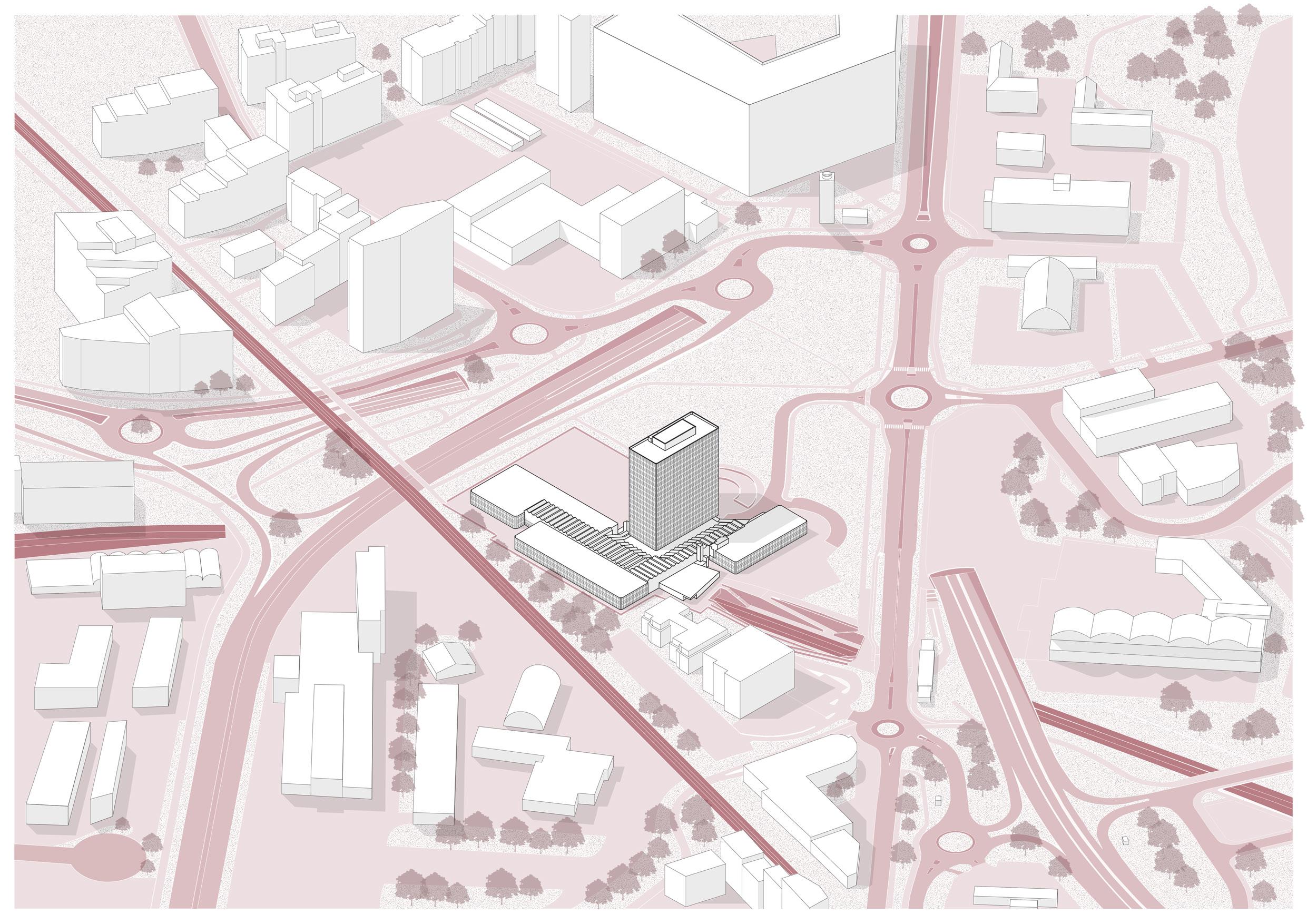
Scale 1:1500
Plan 02.
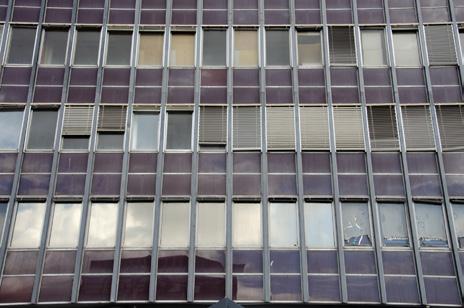
Exterior photographs
photographs
 Interior
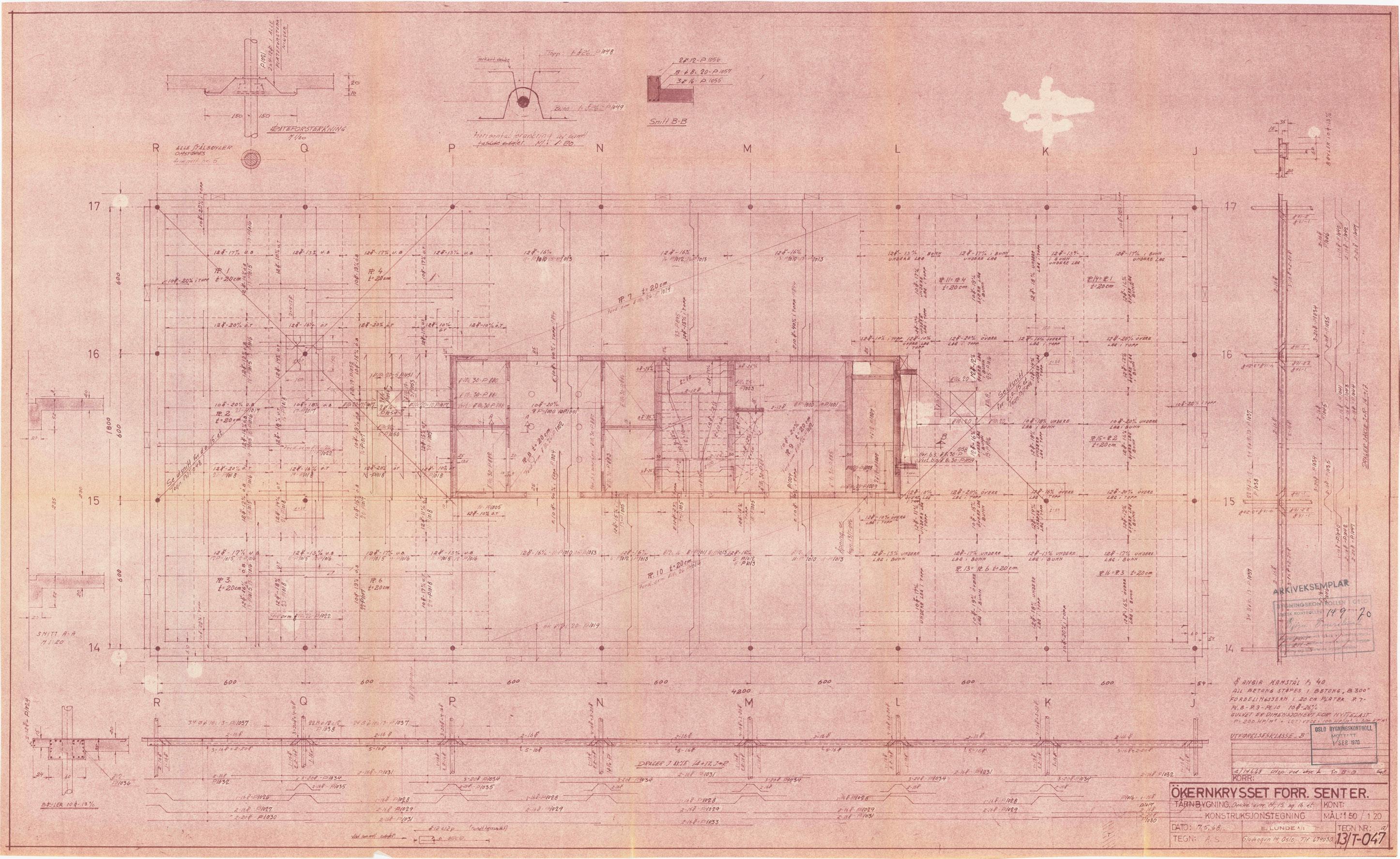
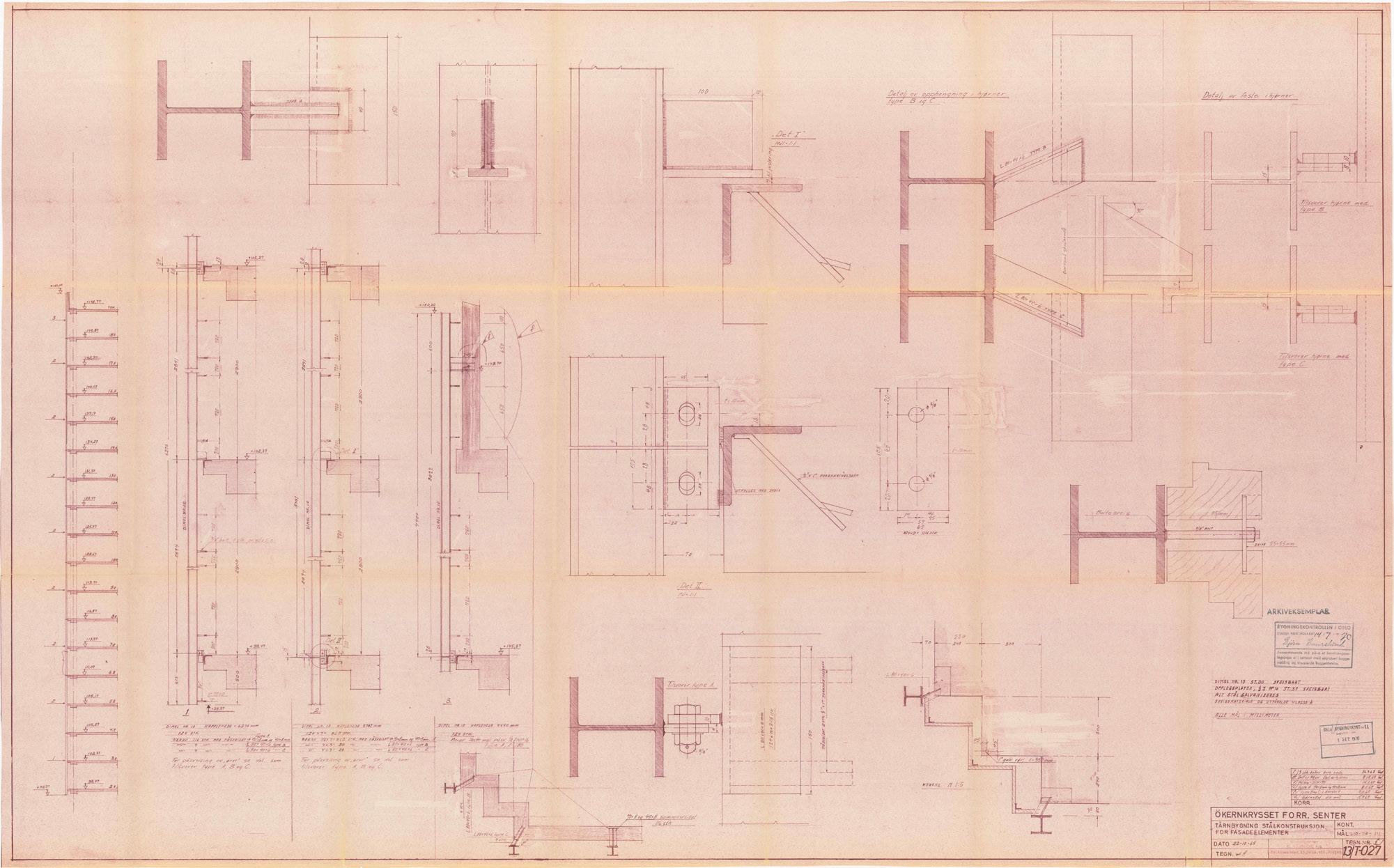
EXISTING TYPICAL CROSS SECTION
Scale 1:15
100 x 100 mm Steel I-beams
20 mm Eternit Glassal board
25 mm Battens
10 mm Iternit board
Breather membrane
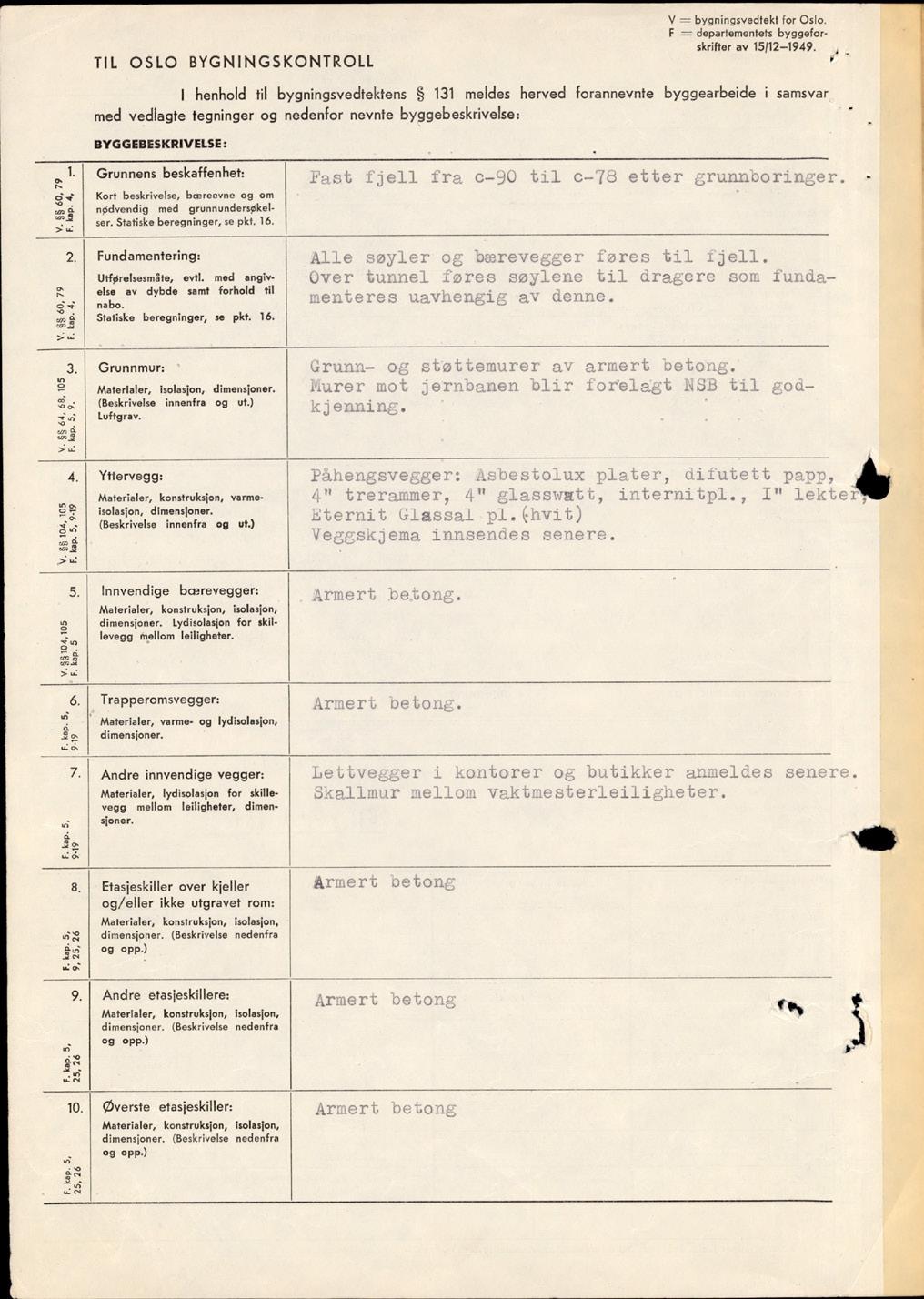
100 mm Wooden frame and glasswatt insulation
Vapour barrier
20 mm Asbestolux board
Økern became Oslo’s largest marketplace for agricultural products shortly after the Second World War and quickly established itself as a meeting place and an important hub with good opportunities for businesses.
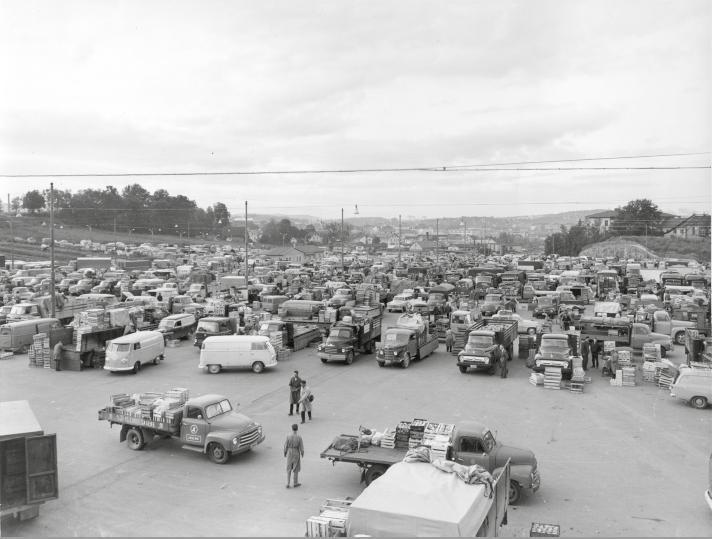
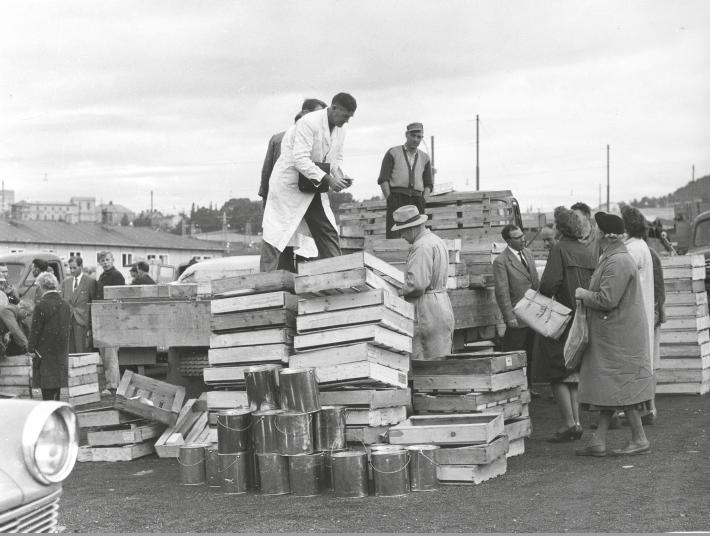
An 18-floor office high-rise and a two-storey shopping centre were built on the Økern marketplace plot, designed by architects Håkon Mjelva and Per Norseng. The high-rise became Norway’s tallest business and office building, and reflects international architectural influences at the time. The high-rise as a typology is often interpreted as a symbol of future optimism and the reconstruction after the war, and the Økern high-rise remains a notable example of post-war modernism in Oslo.
In the Norwegian context, shopping centres gathering multiple shops and services under one roof were a new typology, and the Økern Centre marks the beginning of an important period in national commercial history. The centre became an important meeting place for a large section of the population.
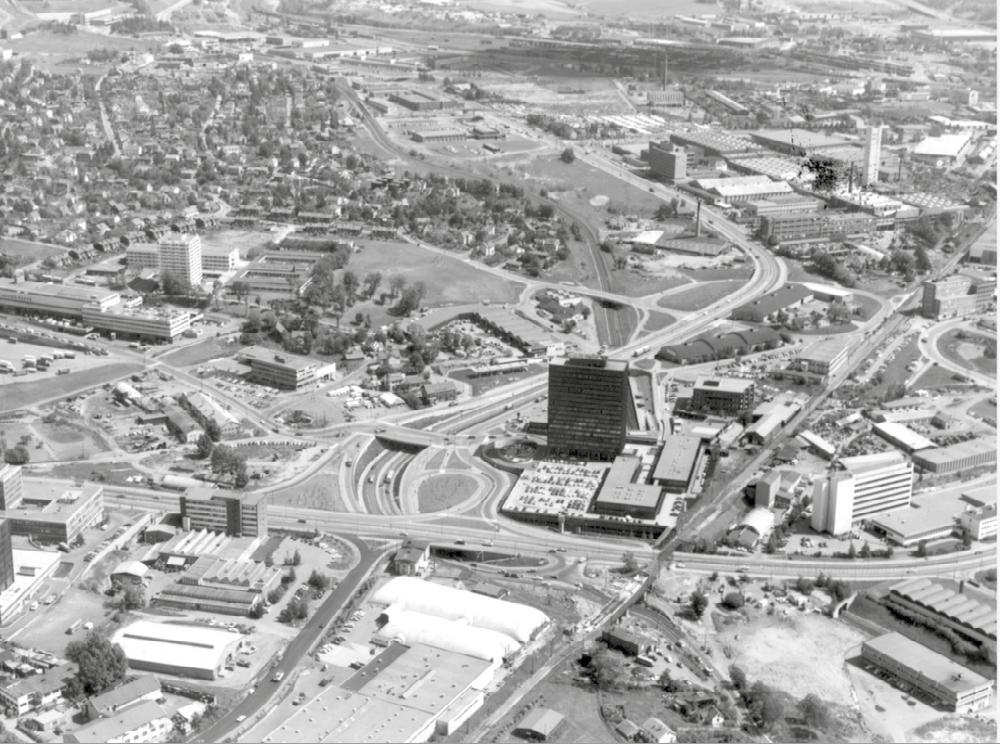
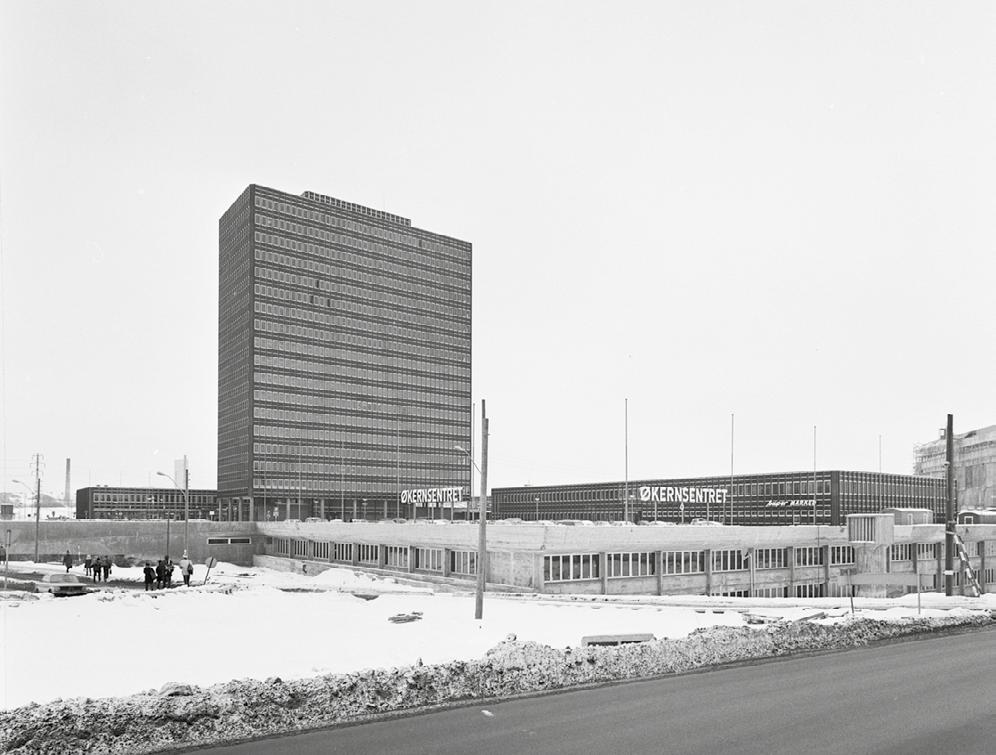
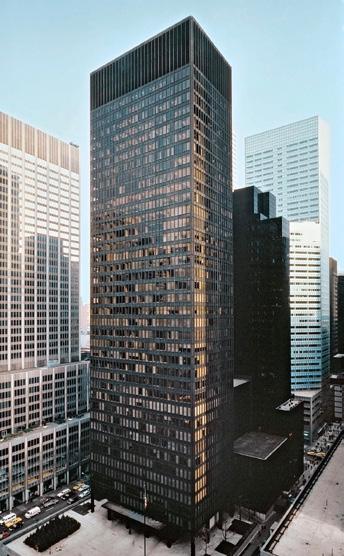
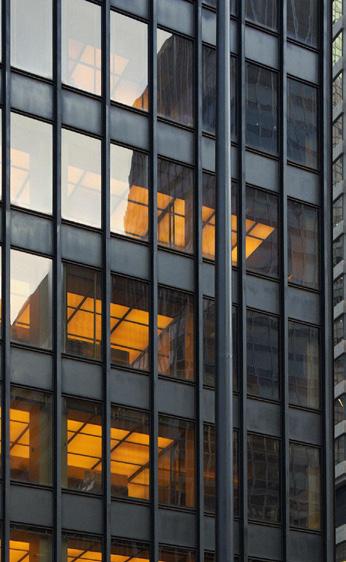
2006: Økern Centrum was bought by developer companies Steen & Strøm and Storebrand. The same year, the demolition of the centre and the construction of a large-scale shopping centre on the plot was announced.
2015: Tenant after tenant moved out and Økern eventually stood empty.
2017: A framework permit was granted, however the proposal was reconsidered. Oslo expanded and grew with 125 000 inhabitants between 2006-2017, and the development was no longer suitable for the site.
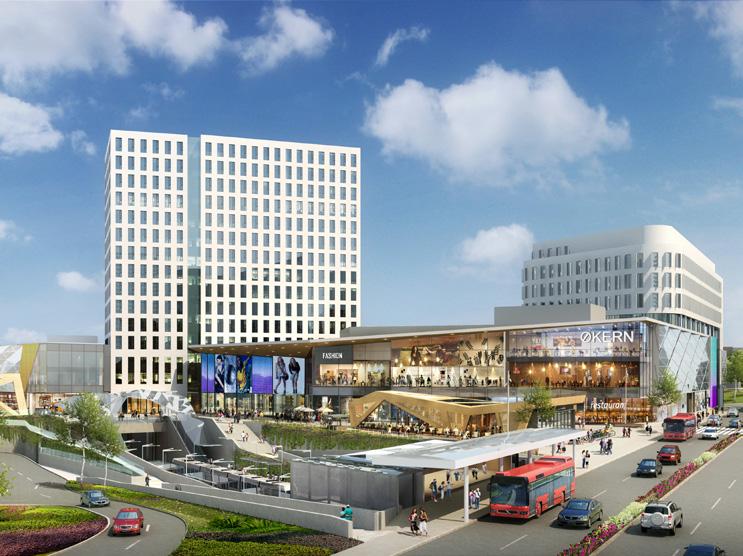
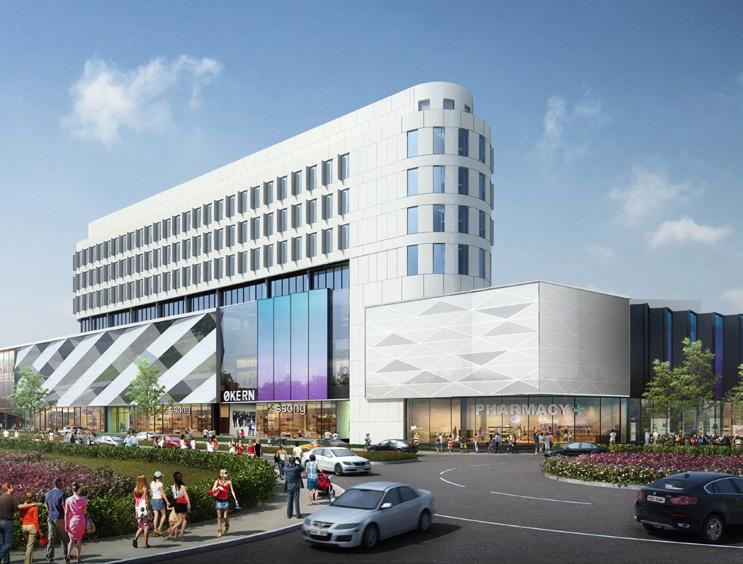
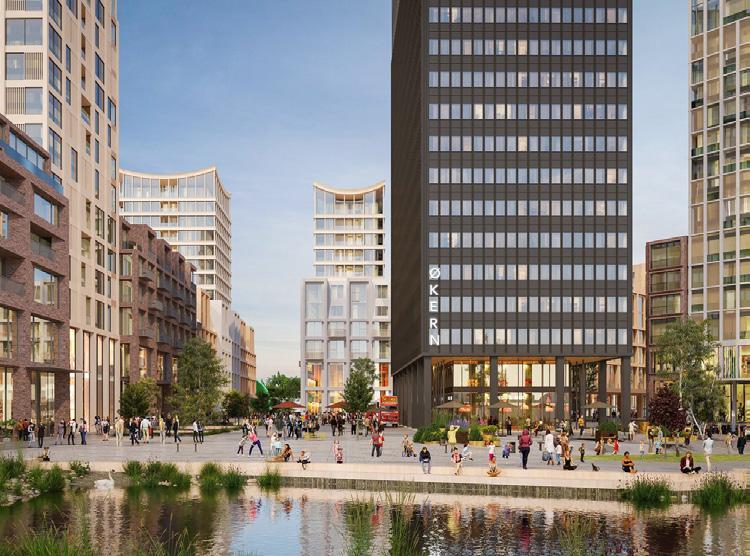
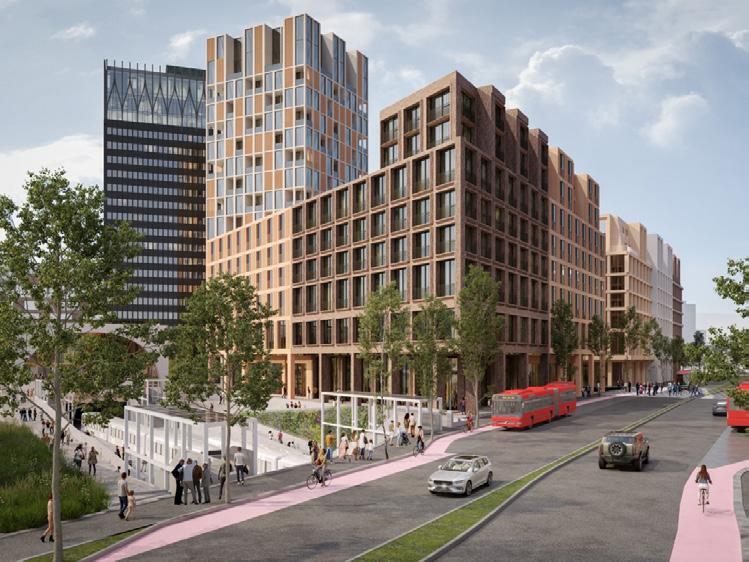
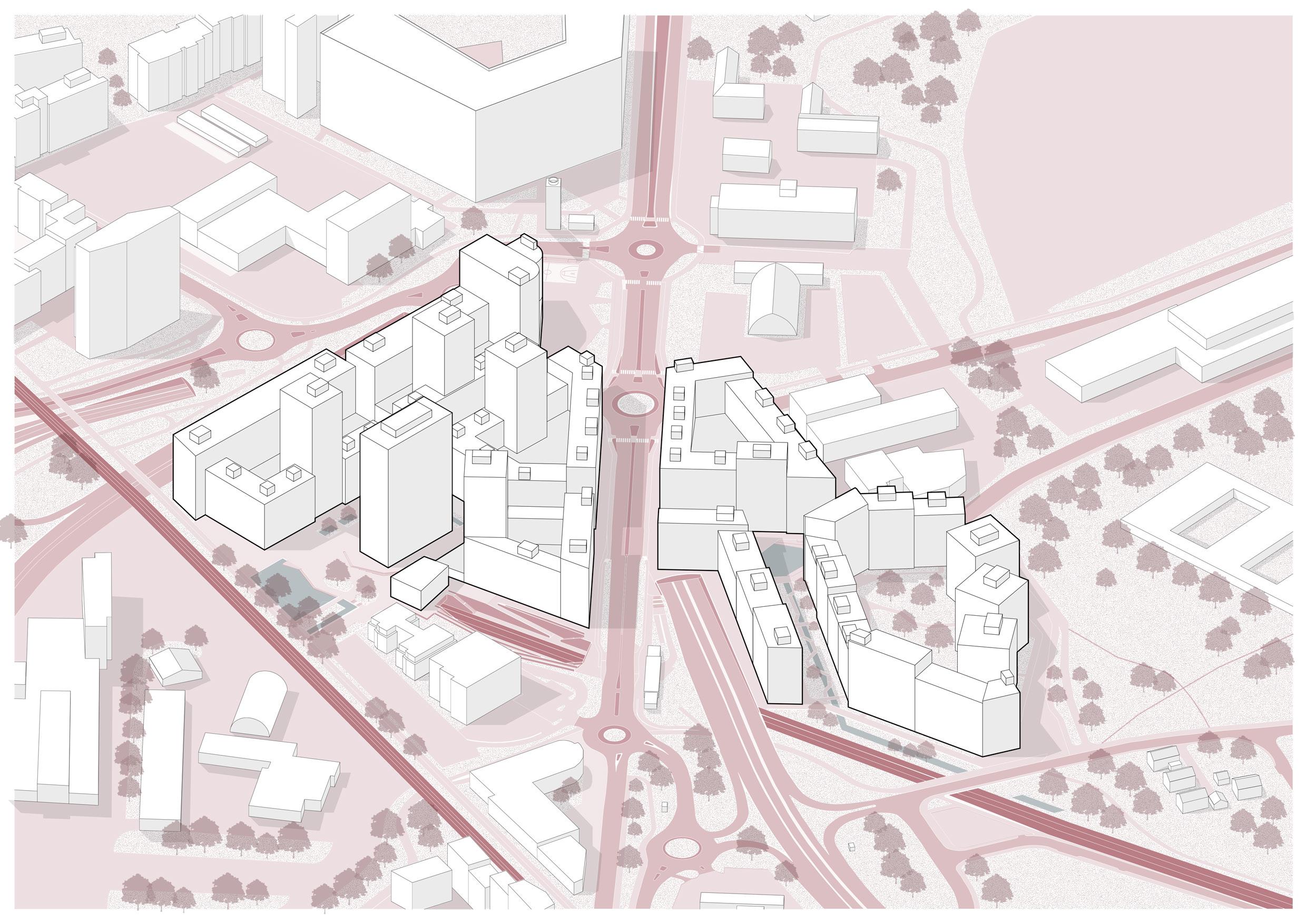
The development of a more suitable proposal began. The new proposal puts focus on creating a mixeduse and vibrant urban centre at Økern. The proposal comprises meeting places, cultural experiences and activities, housing, and offices. A decision was made to preserve the high-rise for its historical significance and to remain the focal point for the new Økern.
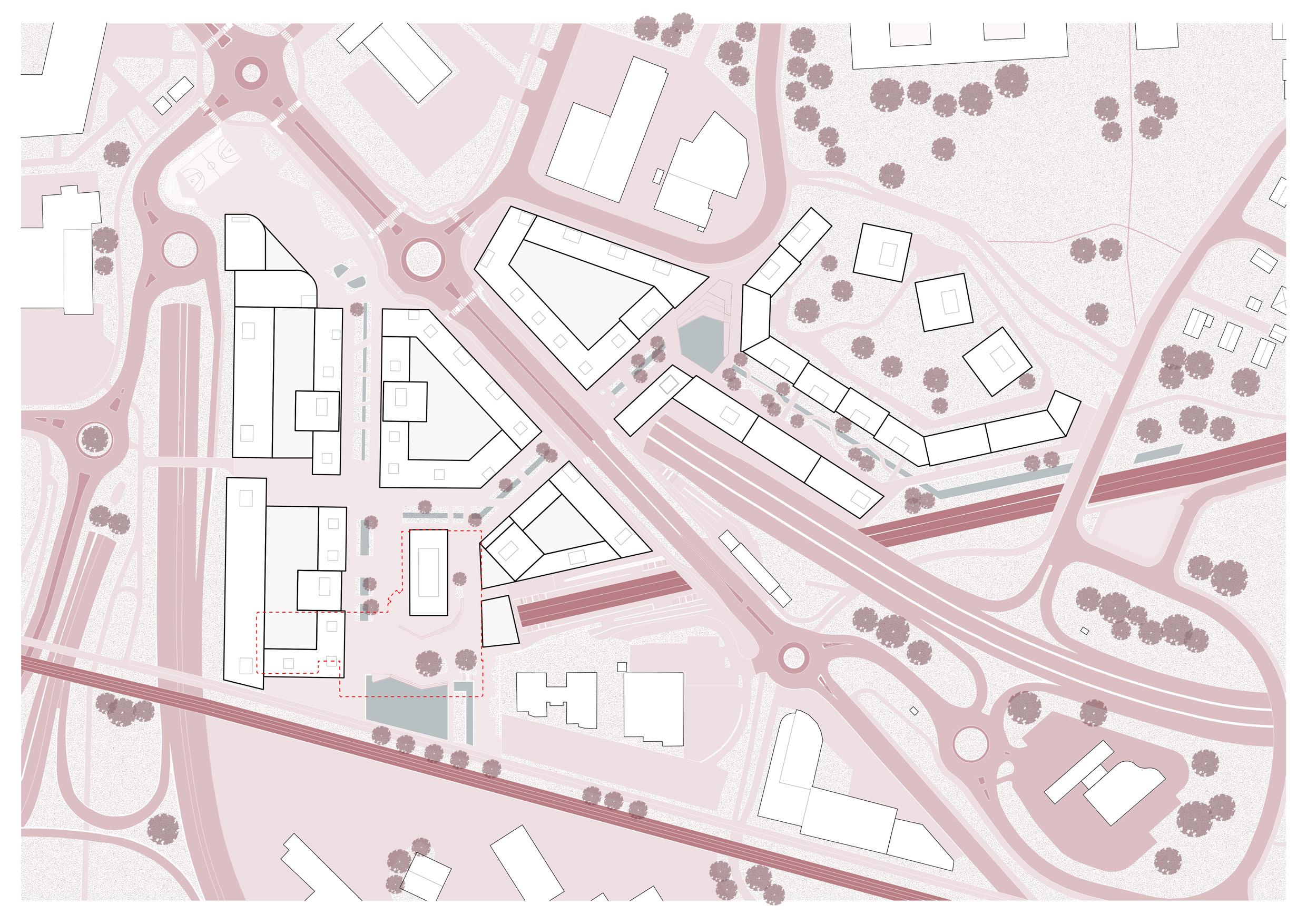 Existing building footprint
Scale 1:1500
Scale 1:1500
DEVELOPERS’ PROPOSED TYPICAL FLOOR PLAN (HIGH RISE)
Source: Økern Sentrum Ans. 2024. Økern Sentrum Planforslag. Annotated by author.