
The Gary Bell Collection

Page 1


Heffel Gallery Limited

Additionally herein referred to as “Heffel” or “Auction House”

cont A ct

Toll Free 1-888-818-6505

mail@heffel.com, www.heffel.com

Please send all physical mail to our Vancouver address

t oronto

Main Yorkville Reception

13 Hazelton Avenue, Toronto, ON M 5 R 2 E 1 Telephone 416-961-6505, Fax 416-961-4245

15 Hazelton Avenue, Unit 200, Toronto, ON M 5 R 2 E 1

135 Yorkville Avenue, Unit 401, Toronto, ON M 5 R 3 W 5 via main reception

155 Yorkville Avenue, 2nd Floor, Toronto, ON M 5 R 1 C 4 via main reception

m ontre A l

1840 rue Sherbrooke Ouest, Montreal, QC H 3 H 1 E 4 Telephone 514-939-6505

V A ncou V er

2247 Granville Street, Vancouver, BC V 6 H 3 G 1 Telephone 604-732-6505

north V A ncou V er

2455 Dollarton Highway, Unit 108 North Vancouver, BC V 7 H 0 A 2

Telephone 604-732-6505 ext. 150 by appointment

cA lg A ry

220 Manning Road NE , Unit 1080, Calgary, AB T 2 E 8 K 4 Telephone 403-238-6505 by appointment

c orpor A te bA nk

Royal Bank of Canada, 2735 Granville Street Vancouver, BC V 6 H 3 J 1

Telephone 604-665-5700

Incoming wires are required to be sent in Canadian funds and must include: Heffel Gallery Limited, 2247 Granville Street, Vancouver, British Columbia V 6 H 3 G 1 as beneficiary.

b o A rd of d irectors

Chairman In Memoriam—Kenneth Grant Heffel

President—David Kenneth John Heffel

Auctioneer License T 83-3364318 and #26-155436

Vice-President—Robert Campbell Scott Heffel

Auctioneer License T 83-3365303 and #26-155435

Heffel com Departments consignments consignments@heffel.com

Appr A is A ls appraisals@heffel.com

Absentee, t elephone & online b idding bids@heffel.com

s hipping shipping@heffel.com

s ubscriptions subscriptions@heffel.com

c opyright

No part of this publication may be reproduced, stored in retrieval systems or transmitted in any form or by any means, digital, photocopy, electronic, mechanical, recorded or otherwise, without the prior written consent of Heffel Gallery Limited.

All photographic representations and other illustrations depicted are solely for guidance and are not to be relied upon in terms of tone or colour.

Follow us:

Printed in Canada by Friesens

ISBN : 978-1-927031-81-0

online A uction d et A ils

Bidding

Heffel hosts monthly online auctions where hundreds of artworks are offered, divided into themed specialty sessions. Bidders are able to compete for works of interest by submitting bids in the specified increments through our online auction platform.

In order to bid in our online auctions, please register at www. heffel.com. Once your registration has been processed, you will receive a Heffel online auction paddle number that can be used across all of our online sales. We do our best to process registrations as they are received, however, please be mindful of our business hours, which will affect processing times. We encourage new bidders to review our FAQ s to learn more about the online auction platform.

You will be notified by e-mail and SMS if and when you have been outbid on a Lot. It’s important to keep a close eye on the online auction as the sale closes and ensure that you do not rely solely on outbid notifications. Each session has a different closing time, which are specified on the online auction homepage. All closing times are noted in Eastern Time (ET ).

As the auction closes, you may find that sessions will go into overtime, as a bidding extension of 1 1/2 minutes will be added to the entire auction session, if a bid is submitted on any Lot within the last 1 1/2 minutes on the bidding clock. These time extensions will continue to be added until no bids are received for a full 1 1/2 minutes on any Lot in the entire session. If you would like to have one of Heffel’s specialists bid on your behalf, please feel free to contact us.

Autobid

You also have the option to leave an Autobid, or maximum bid, on a Lot you are interested in. Autobids in an online auction function similar to absentee bids in a live auction. Bidders will indicate the maximum amount they would like to bid, and Heffel.com will bid up to this amount against other bidders as necessary, until this maximum is exceeded. If there are no bids submitted against your Autobid, it will remain at the lowest amount.

Buying at Auction

All items that are offered and sold by Heffel are subject to our published Terms and Conditions of Business, our Catalogue Terms and any announcements made during the course of our sale. Heffel charges a Buyer’s Premium calculated on the Hammer Price as follows: a rate of twenty-five percent (25%) of the Hammer Price of the Lot up to and including $ 25,000; plus twenty percent (20%) on the part of the Hammer Price over $ 25,000, plus applicable Sales Tax.

Payment must be made by: a) Bank Wire direct to the Auction House’s account, b) Certified Cheque or Bank Draft, c) a Personal or Corporate Cheque, d) Debit Card and Credit Card only by Visa, Mastercard, UnionPay and American Express or e) Interac e-Transfer. Bank Wire payments should be made to the Royal Bank of Canada as per the account transit details provided on your invoice. All Certified Cheques, Bank Drafts and Personal or Corporate Cheques must be verified and cleared by the Auction House’s bank prior to all purchases being released. Credit Card payments are subject to our acceptance and approval and to a maximum of $ 5,000 if the Buyer is providing their Credit Card details by fax or to a maximum of $ 25,000 per Lot purchased if paying online or if the Credit Card is presented in person with valid identification. A two percent (2.00%) Convenience Fee will apply to all Credit Card payments. In all circumstances, the Auction House prefers payment by Bank Wire.

General Bidding Increments

Bidding typically begins below the low estimate and generally advances in the following bid increments:

$ 50 – 300

$ 25 increments

$ 300 – 500 $ 50

$ 500 – 2,000 $ 100

$ 2,000–5,000

$ 5,000–10,000

$ 250

$ 500

$ 10,000–20,000 $ 1,000

$ 20,000–50,000

$ 2,500

$ 50,000–100,000 $ 5,000

$ 100,000–300,000 $ 10,000

$ 300,000–1,000,000 $ 25,000

$ 1,000,000–2,000,000 $ 50,000

$ 2,000,000–3,000,000

$ 3,000,000–5,000,000

$ 5,000,000–10,000,000

$ 10,000,000+

$ 100,000

$ 250,000

$ 500,000

$ 1,000,000

the g A ry bell collection:

m A sterworks of n orthwest

co A st A rt

catalogue

online Auction

February 5 – 26, 2026

Anticipated closing time:

Thursday, February 26, 2026 | 2:00 pM ET

p re V iew

Heffel Gallery, Vancouver 2247 Granville Street

Monday through Friday | 10 AM to 5 p M p T

G AR y B E ll IS not someone you would describe as reclusive, though for a man whose collection is spoken about quietly and reverently in the art community, he remains a notably private individual. When Vancouver-based photographer Christos Dikeakos began developing his portrait series The Collectors for Griffin Art Projects, North Vancouver, where it showed in fall 2025, Bell was the first person he approached. “It took me years to convince him to take the photo,” Dikeakos recalls.

The resulting image, The Collector (2017), shows Bell seated, reading, in his modest-size apartment, surrounded by some of his significant collection of historical Northwest Coast Indigenous artworks and ceremonial objects. Bell’s collection—now regarded as one of the most important privately held assemblies of Northwest Coast art—is the product of decades of passionate pursuit, rigorous study, and an unwavering commitment to excellence. In Bell’s own words, “If I wanted it, I would get it.” A lifelong collector, Bell first immersed himself in the world of Pop Art, building and eventually selling a substantial collection before redirecting his focus towards Indigenous Northwest Coast works. That shift was sparked by his friendship with the late John Livingston, the master carver and adopted member of the Hunt clan.

Bell’s living room was a meeting place for academics, artists and those people passionate about Northwest Coast art. Bill McLennan, curator at the Museum of Anthropology for decades, was a close personal friend of his and catalogued his collection. His purchases were highly considered and done in consultation with several of the leading experts in Northwest Coast Art— a method of collecting done in the old salon style.

Beyond collecting, Bell has played a meaningful role in cultural stewardship. He has worked extensively to repatriate significant objects to institutions such as the Museum of Anthropology at the University of British Columbia, the Haida Gwaii Museum and the U’mista Cultural Centre in Alert Bay. His efforts reflect a deep respect for the communities whose artistic traditions he so passionately champions. In a world where collectors often seek visibility, Gary Bell stands apart. His influence is felt not through self-promotion but through the quiet, steadfast care he brings to the artworks and histories he has spent decades honouring and preserving.

c hristos d ike A kos
The Collector (2017) archival pigment inks printed on Epson lustre paper 63 × 77 in, 160 × 195.6 cm
Courtesy of Christos Dikeakos
Not for sale with this lot.

102 Early Gitxsan Artist

19th Century

Monumental Gitxsan Feast Ladle

hardwood, circa 1870

27 × 7 1/2 × 4 in, 68.6 × 19.1 × 10.2 cm

p ro V en A nce

Collected by Reverend Proctor before 1903 Francis and Kay Reif Collection, Vancouver

Trotta-Bono American Indian Art, New York, March 22, 2006

Acquired from the above by Gary Bell, Vancouver

l iter A ture

Audrey Hawthorn, Kwakiutl Art, 1979, a similar large ladle reproduced page 183

lA dl ES OF THIS size are very rare in Northwest Coast Indigenous art and correspond to the scale of great feast dishes reserved for significant ceremonial usage. The ladle is deep and well proportioned. A small carving of a frog adorns the handle. It has been suggested that the animal figure at the top end of the handle is not a bird, but a mosquito. This was the clan symbol of a chief (Xamloxyeltxuv) from Kitwancool (Gitanyow). The suggestion that this is a mosquito is an additional touch of rarity to this impressive object.

This ladle comes from the prestigious Reif collection. Francis and Kay Reif collected widely and acquired many exceptional Northwest Coast works which they donated to various museums. These works included an outstanding argillite collection now at the Royal BC Museum, which included examples of every style and time period.

e stim A te: $ 15,000 – 20,000

103 Early Northwest Coast Artist

19th Century

Large Northern Northwest Coast Ladle

hardwood

27 3/8 × 7 1/8 × 2 1/2 in, 69.5 × 18.1 × 6.3 cm

p ro V en A nce

Woodbury Auction, Connecticut, March 8, 2015

Acquired from the above by Gary Bell, Vancouver

T HIS E l EGANT, SMOOTH ladle has excellent proportions and is well carved for such an unusually large spoon. This would have been an impressive ladle used at a feast, its size denoting the largesse of its owner in providing food for the community. While the ladle is not adorned with much decoration, its beauty lies in its simplicity and is derived from its functionality. There is no trace of engraving on it, with the confidence of the craftsman demontrated in the perfection of its form.

Bill McLennan notes that the origin is of an unknown Northwest Coast artist, possibly Gitxsan.

e stim A te: $ 5,000 – 7,000

104 Early Haida Artist

19th Century

Haida Carved Grease Bowl

hardwood, circa 1800 – 1840

3 × 4 3/4 × 5 1/4 in, 7.6 × 12.1 × 13.3 cm

p ro V en A nce

Paul Rabut Collection, Westport American Indian & Ethnographic Art, Skinner Auctions, Boston, January 24, 2009, lot 257

Acquired from the above by Gary Bell, Vancouver

l iter A ture

Bill Holm, The Box of Daylight: Northwest Coast Indian Art, Seattle Art Museum, 1983, similar examples reproduced page 76, catalogue #121 and 122

S MA ll, BEA u TIF ully MA d E bowls like this one are a classic example of how Northwest Coast artists play with visual expectations. Bowls carved in this traditional shape and decorated with similar two-dimensional designs are often quite large, sometimes reaching 35 to 38 centimetres across. This one, however, is a compact and elegant miniature, roughly the size of an average human hand. Its surface has turned almost black after long exposure to eulachon oil.

Eulachon oil has always been an important food and trade item to the Indigenous people of the Pacific Northwest. Eulachon, also called candlefish, are small fish similar to smelt that spend most of the year in deep ocean waters. In early spring they move into the tidal parts of mainland rivers to spawn, where they are usually caught in nets.

Eulachon are eaten fresh, are smoked and dried for storage, or processed into oil. To make the oil, the fish are left to ferment in shallow wood-lined pits for 10 to 12 days, then heated in large containers of water until they break apart and release their oil. After this outdoor rendering, the notoriously pungent fish oil is skimmed from the surface, strained and stored.

Carvers made special grease bowls for serving the pale and flavourful eulachon oil. Some of these were large enough for groups of guests, while smaller bowls like this one were intended for personal use during everyday meals of dried fish or roots.

This particular personal grease bowl is an exceptional example. The bowl is well shaped, with smoothly rounded edges, its wood deeply saturated with oil. The balanced design and the precision of the relief carving show the work of a highly skilled artist. The engraved designs are simple but remain clear despite heavy wear from long use. Grooves run along the inner rim and up the flared ends. The sharp and angular character of what appears to be a face design suggests an early date, possibly reaching back to the late eighteenth century.

e stim A te: $ 6,000 – 8,000

105 Early Northwest Coast Artist

19th Century

Oil Bowl

wood, circa 1850

2 × 4 1/2 × 6 1/4 in, 5.1 × 11.4 × 15.9 cm

p ro V en A nce

Grimmer Roche, Santa Fe, New Mexico

Acquired from the above by Gary Bell, Vancouver, August 17, 2006

B I ll M ClENNAN NOTES : “An elegant example of classic NWC sculptural style with a deep penetration of oil accumulated through many years of use. Although identified as Haida it could have been made by any of the northern First Nations.”

The elegance of this bowl comes from the undulating curved lines and the flare of the outer rims. The additional detail of the rimmed lip in the centre demonstrates the skill of this craftsman.

e stim A te: $ 4,000 – 6,000

106 Early Tlingit Artist

19th Century

Frog Oil Bowl

hardwood, circa 1800 – 1840

2 × 3 3/4 × 4 3/5 in, 5.1 × 9.5 × 11.7 cm

p ro V en A nce

Richard Bahnman, Vancouver

Acquired from the above by Gary Bell, Vancouver, January 2007

T HIS COM pACT, RO u N d E d bowl has darkened to a rich black through deep oil penetration and is carved in the form of a frog. Its gently projecting head features a broad mouth and prominent,

concerned expressive eyes, emerging seamlessly from the vessel’s smooth, full body. The bowl was clearly appreciated, admired and well handled as the surface has been worn smooth. The inside is well hollowed out, forming a large cavity and contributing to its light weight. A series of fine grooves encircles the upper rim, and the subtle swelling beneath the frog’s throat evokes a sense of breath and vitality, giving the piece an animated presence. The style of this bowl is unusual, with few obvious comparisons to draw from.

Bill McLennan dated this work to the early nineteenth century.

e stim A te: $ 12,000 – 15,000

19th Century

Gitxsan Eagle Frontlet

wood, paint, abalone shell, fabric, feather quills, circa 1880

7 1/8 × 9 × 9 1/2 in, 18.1 × 22.9 × 24.1 cm

p ro V en A nce

Douglas Reynolds Gallery, Vancouver

Acquired from the above by Gary Bell, Vancouver, September 2008

l iter A ture

Bill Holm, The Box of Daylight: Northwest Coast Indian Art, Seattle Art Museum, 1983, page 19

F RONT l ETS ARE SMA ll carvings fixed to the front of a headdress. The most common type of frontlet is made for what is called the Peace Dance, which is part of the summer ceremonial. According to Bill Holm, the dance and its regalia spread throughout the nineteenth century from the northern coast to the south. For the dance, the frontlet headdress is adorned with flicker feathers and a cage of sea lion whiskers or whale baleen encircling the top of the head, within which is placed eagle down. When the Chief dances, briskly imitating a bird, the eagle down wafts out, blessing the attendants. The dancer holds one or two raven rattles and is attired with either a Chilkat blanket or button blanket. Hanging down the back of the dancer would be a train of ermine skins. In some versions of the dance, the dancer is interrupted by an imitator. The Chief then leaves the room and a dancer wearing the mask of a family crest or treasure comes in.

The bird on this frontlet has six limbs: arms, legs and wings. There is one other frontlet with all these elements in the American Museum of Natural History. The frontlet in this sale, however, has the arms held atop the wings, which turns them into a kind of vest. The idea of animal skin as a sort of garment is very common on the Northwest Coast, and in fact throughout North America. Oral Traditions tell of animals shedding their skin to appear in human form. There is also a solid corpus of Northwest Coast regalia shaped like animal skins that transforms a human wearer into the animal. Here, the ridge in the centre of the face is similar to some other masks of the Tsimshian group (Gitxsan, Nisga’a and Coast Tsimshian).

A similar example of a frontlet, although catalogued as Haida, is in the collection of the American Museum of Natural History, #16/253.

We thank Alexander Baile for his assistance in researching this lot and for contributing the above essay.

e stim A te: $ 50,000 – 60,000

108 Early Haida Artist

19th Century

Haida Horn Bowl

mountain sheep horn, circa 1840 – 1860

5 3/8 × 5 × 8 1/4 in, 13.7 × 12.7 × 21 cm

p ro V en A nce

Taylor Museum, Colorado Springs, catalogue #4977

Charles and Valerie Diker Collection, New York

Donald Ellis Gallery, New York

Acquired from the above by Gary Bell, Vancouver, January 2007

l iter A ture

John P. O’Neill et al., Native Paths: American Indian Art from the Collection of Charles and Valerie Diker, Metropolitan Museum of Art, 1998, reproduced page 114

Bruce Bernstein and Gerald McMaster, First American Art: The Charles and Valerie Diker Collection of American Indian Art, National Museum of the American Indian, 2004, reproduced page 235

Sarah Milroy and Ian Dejardin, editors, From the Forest to the Sea: Emily Carr in British Columbia, Art Gallery of Ontario and Dulwich Picture Gallery, 2014, reproduced page 92 and listed page 301

“Metropolitan Museum of Art Reclassifies Status of Native American Art for New Exhibition,” The Art Newspaper, October 2, 2018

e xhibited

Metropolitan Museum of Art, New York, Native Paths: American Indian Art from the Collection of Charles and Valerie Diker, May 7, 1998 – January 2, 2000, catalogue #128

National Museum of the American Indian, Smithsonian, New York, First American Art: The Charles and Valerie Diker Collection of American Art, April 24, 2004 – May 29, 2006, catalogue #185

Art Gallery of Ontario, Toronto, From the Forest to the Sea: Emily Carr in British Columbia, April 11 – August 9, 2015

M A d E TO BE aesthetic as well as functional, mountain sheep horn bowls are highly prized objects. They were used at feasts by Chiefs or nobility. Pieces carved in high relief with formline and figures are especially prestigious and valued. The material requires a lengthy chemical bath and boiling to soften the horn. The horn is cut lengthwise in order to be opened, hollowed and shaped.

This design with two beaked faces is also found on Tlingit sheep horn bowls. Of note is that it is very similar to the design found on the belly of raven rattles. Because they are extremely difficult to shape and carve, and also are made of a material not found on Haida Gwaii, Haida sheep horn bowls are special objects that are highly sought after.

Charles and Valerie Diker, previous collectors of this work, assembled one of the greatest collections of Native American art in private hands. The Metropolitan Museum in New York has mounted multiple exhibitions of their collection, while also continuing a long-term exhibition of their donated and loaned works in the Met’s American Wing, where the Dikers wished that Native American art “would be presented as American art rather than tribal art,” hoping to “re-contextualize what we define as American culture.” The Dikers also served as co-chairs of the board of directors of the George Gustav Heye Center in New York City, a branch of the Smithsonian’s National Museum of the American Indian, where a ground-floor exhibition space is dedicated as the Diker Pavilion. Charles Diker led a distinguished career in business and has been trustee and vice-president of the Solomon R. Guggenheim Foundation.

We thank Alexander Baile for his assistance in researching this lot and for contributing the above essay.

e stim A te: $ 80,000 – 100,000

109 Early Nuxalk Artist

19th Century

Frontlet

wood, paint, abalone, circa 1880

8 × 6 1/2 × 4 1/2 in, 20.3 × 16.5 × 11.4 cm

p ro V en A nce

Private Collection, California

Donald Ellis Gallery

Acquired from the above by Gary Bell, Vancouver, April 2009

l iter A ture

Bill Holm, The Box of Daylight: Northwest Coast Indian Art, Seattle Art Museum, 1983, page 19

Nux A l K FACE CARVINGS are characterized by a v-cut on the outside corner of the eyes, but it is often missing on Nuxalk frontlets. Given the shape of the beak here, the carving clearly represents a bird of prey, likely an eagle or hawk.

Bill Holm writes in The Box of Daylight, introducing dancing headdress frontlets:

From the farthest northwestern reach of Tlingit country at Yakutat Bay, southward along the coast to the middle of Vancouver Island, dancing chiefs wore crowns as elegant as rich material and sculptor’s skill could make. Traditions of the tribes assign various places of origin to the dancing headdress, but, whichever is correct, it must have been somewhere in the north The features of the headdress are the same wherever it is worn: a cylindrical frame—often made of strips of whale baleen and covered with cloth—from the back of which hangs a long panel covered with rows of white ermine skins; an upstanding circlet of the long, springy whiskers of the Steller’s sea lion; and a spectacular plaque carved of hardwood, painted and inlaid with abalone shell on the forehead. This plaque, or frontlet, is carved to represent a crest or a mythical character. The figure in the center is surrounded by a flange that is usually covered with inset plates of brilliantly iridescent abalone shell. Inlays of the same shell flash from the eyes, teeth, and joints.

We thank Alexander Baile for his assistance in researching this lot and for contributing the above essay.

e stim A te: $ 50,000 – 60,000

110 Early Haida Artist

19th Century

Bentwood Bowl

hardwood sides, red cedar base, paint

5 1/4 × 10 × 11 in, 13.3 × 25.4 × 27.9 cm

p ro V en A nce

Douglas Reynolds Gallery, Vancouver

Acquired from the above by Gary Bell, Vancouver, May 2005

A d EFINING FEAT u RE of bowls from the Northwest Coast is their wavelike rim, rising at the ends and dipping along the sides. The exact origin of this form is not certain, though it may come from the natural distortion that happens when the sides of a hollow object are forced outward, much like the shape changes seen in horn bowls or canoes expanded through steam bending. Regardless of how it developed, this undulating rim is so distinctive that it immediately signals a bowl, no matter what other traits the vessel has.

Northwest Coast artisans mastered sophisticated wood-joining methods, using pegs, lacing, lashing, and various types of tenons and scarf joints. Even so, they preferred to avoid the painstaking work of fitting joints in boxes and bowls by bending the corners instead. Achieving this required a specialized process: carving unique grooves to thin the plank forming the sides, then steaming the wood until it became pliable enough to shape.

This example is a finely painted small bent-wood dish, well preserved with its original pigments. Several comparable small bowls exist with similar proportions and painted designs. The imagery suggests feathers and a stylized mouth. The vessel features rounded sides and a pegged base and joints.

Bill McLennan suggested that this work dates to the midnineteenth century.

e stim A te: $ 20,000 – 30,000

111 Early Northwest Coast Artist

19th Century

Bent-Corner Bowl

hardwood sides, cedar base, brass tacks, circa 1850

7 × 8 1/2 × 12 in, 17.8 × 21.6 × 30.5 cm

p ro V en A nce

Royal BC Museum, Victoria

Michael Johnson, Seattle

Alan Backstrom Collection

Private Collection, Seattle

Anthropos Gallery, Laguna Beach, California

Acquired from the above by Gary Bell, Vancouver, March 2007

l iter A ture

Bill Holm, The Box of Daylight: Northwest Coast Indian Art, Seattle Art Museum, 1983, page 73, reproduced page 73

e xhibited

Seattle Art Museum, The Box of Daylight: Northwest Coast Indian Art, September 15, 1983 – January 8, 1984, catalogue #114

B I ll H O l M IN The Box of Daylight exhibition catalogue writes of this bowl:

Bent-corner bowls differ from boxes in that the sides are carved into more or less convex form. This old northern bowl shows this convexity well. It is amplified by the sheen of the surface patination, partly the result of the infusion of oil that typifies Northwest Coast bowls. The bending process reverts the bulging sides to flat surfaces at the corners. Most bowls, including this one, were probably painted at one time, but the oily wood forms a poor bond with native salmon-egg tempera, and generally the bowls have come down to us richly patinated but without paint.

The design follows the same principles as those governing the painting on boxes and chests, but without color the positive-negative relationships of forms are much harder to see. In this particular piece the formlines are especially hard to recognize because they are so massive. Narrow, recessed relief slits define the edges of the wide formlines. Beveled and hollowed tertiary areas appear to float on a plain background, which is in fact the grid of primary formlines that defines the body parts of an animal. The creature is a bird,

with head represented on one end; shoulder joints, wing feathers, and hips on the sides; and feet, joints of the tail, and tail feathers on the other end. The head and tail ends are bilaterally symmetrical, while the sides are asymmetrical, mirror images. Invariably, the corner on which the ends of the bent plank meet and are joined is on the tail end. Bowls like this suggest that the artist always chose the end with a bent corner on each side for the head. If this concept can be transferred to boxes, it means that the painted side without a joined corner must be seen as the front of the box, and, perhaps, represents the front end of the represented animal.

Previous collector Michael Johnson reputedly exchanged an Echo Mask for this bowl with the Royal BC Museum. Bill Holm thought this bowl might be of Tlingit origin. Bill McLennan speculated it might be either Tlingit or Tsimshian, and dated it as circa 1850 or earlier.

e stim A te: $ 60,000 – 80,000

19th Century

Tlingit End-Carved Bowl

hardwood, paint, opercula, circa 1850

3 1/4 × 6 1/4 × 7 1/4 in, 8.3 × 15.9 × 18.4 cm

p ro V en A nce

American Indian Art, Sotheby’s New York, May 8, 2006, lot 33

Acquired from the above by Gary Bell, Vancouver

l iter A ture

Bill Holm, The Box of Daylight: Northwest Coast Indian Art, Seattle Art Museum, 1983, a similar example reproduced page 75, catalogue #118

B I ll M ClENNAN NOTE d about this work that it is a well-made, finely detailed and very much used oil bowl. Some pigment is still adhering to the surface of the bowl, indicating the classic use of red and black paint in the composition. An animal’s face is depicted at the ends, with broad spacing and a simple but elegant formline design. The sides are bulging, with a scooped rim and intact operculum shells.

The two arched ends of the bowl feature painted and carved formline faces arranged in perfect bilateral symmetry, hallmarks of northern coastal design. Alongside these familiar motifs, however, are additional surface elements that initially appear unusual but become more recognizable upon closer study. At each end of the lower side walls, a set of vertical, parallel grooves terminates in a thin, slanting line that meets the corner. Far upriver, Dené communities make birchbark vessels, including rectangular bowls with undulating rims. Folded from a single sheet of bark, these containers form triangular corner pleats, the same locations marked by carved grooves on alder bowls. This recurring detail suggests a skeuomorph: a decorative trace of an earlier structural feature. The carved bowls likely descend from these folded birchbark forms. This pattern appears consistently on northern coastal square bowls. Although visually pleasing, it stands apart from the region’s typical artistic conventions.

In all other respects, these bowls share the same characteristics: gently flaring, slightly bowed sides; outward-slanting, rounded corners; and rims that rise and dip in the customary flanged style.

e stim A te: $ 8,000 – 12,000

113 Attributed to Captain Richard (Du’klwayella) Carpenter

1841 – 1931

Large Heiltsuk Steam-Bent Feast Bowl

hardwood sides, red cedar base, paint, circa 1860

9 1/4 × 30 × 20 1/2 in, 23.5 × 76.2 × 52.1 cm

p ro V en A nce

Michael Johnson, Seattle

Acquired from the above by Howard Roloff, Victoria, 1970s

Douglas Reynolds Gallery, Vancouver

Acquired from the above by Gary Bell, Vancouver, November 2005

T HO u GH THIS WORK does not have a formal attribution, Bill McLennan noted that the bowl features many characteristics of Captain Richard Carpenter’s work, in particular the composition of the human hand, which has been compared to other confirmed works by the artist. The formline designs would appear to show a human face while the designs on the side are too general to be identifiable. The very thin formlines in parts of the face, small inner ovoids in the hands and small eye forms are all characteristic of Carpenter’s style. McLennan dated the manufacture of this bowl to circa 1860. It is possible that the bowl was made and later painted by Captain Carpenter. (For more on Carpenter, please see lot 116.)

The work features the classic arched ends and bulging hardwood sides found in steam-bent corner construction as well as a red cedar base. It is notable for its very large and impressive size. The bowl shows wear commensurate with its age and use as a centrepiece dish for ceremonies and gatherings.

e stim A te: $ 20,000 – 30,000

114 Early Tlingit Artist

19th Century

Northern End-Carved Bowl

hardwood, paint, opercula, circa 1890

6 × 14 3/4 × 18 1/2 in, 15.2 × 37.5 × 47 cm

p ro V en A nce

Curtright & Son Tribal Art, Tacoma, Washington

Acquired from the above by Gary Bell, Vancouver, June 2011

T HIS BOW l IS an exceptional, large example of the northern Northwest Coast square-form type. Each end of the low side walls features a set of vertical, parallel grooves, their lower edges meeting a thin diagonal groove that angles towards the corner—a layout consistently seen in square bowls from the northern coast. Farther inland, along river systems leading to the plateau, Dené

makers produce birchbark vessels, including rectangular bowls with comparably wavy rims. These are fashioned from a single sheet of bark, folded so that triangular pleats form at the corners, the same locations where alder bowls show carved grooves. The continued presence of this motif suggests it may be a skeuomorph, a decorative remnant of what was once a structural necessity. Carved wooden bowls may therefore descend from these earlier folded bark prototypes.

The bowl’s sides flare slightly upward and outward, with corners that tilt and curve away from the centre. Its rim follows the typical undulating, flanged profile. This particular piece includes painted and carved end panels featuring a bold, symmetrical formline composition that may represent an animal face.

e stim A te: $ 15,000 – 20,000

115 Early Northwest Coast Artist

19th Century

Grooved Kwakwaka’wakw or Heiltsuk Feast Bowl cedar, circa 1880

5 3/8 × 7 × 7 3/4 in, 13.7 × 17.8 × 19.7 cm

p ro V en A nce

American Indian Art, Sotheby’s New York, May 8, 2006, lot 34 Acquired from the above by Gary Bell, Vancouver

A T FIRST G l ANCE , this small, unassuming bowl appears to be a simple object, however, its maker was a highly skilled craftsperson. Upon picking it up, the first thing one notices is how lightweight it is and a distinct bulge on the sides of the bowl.

The undulating curvature of the ends and sides has a natural and smooth flow, while the lip is carved out on the underside— a technique that sheds weight from the bowl.

Bill McLennan noted that this bowl is finely made and the textured surface gives it the impression of a woven basket. The carefully etched surface was possibly scored using beaver teeth, an ingenious way to add texture to an otherwise unadorned surface.

e stim A te: $ 6,000 – 8,000

116 Captain Richard (Du’klwayella)

Carpenter

1841 – 1931

Captain Carpenter Steam-Bent Box

red cedar, paint, circa 1910 – 1920

21 1/4 × 19 × 15 1/2 in, 54 × 48.3 × 39.4 cm

p ro V en A nce

Curtright & Son Tribal Art, Tacoma, Washington Acquired from the above by Gary Bell, Vancouver, November 2004

l iter A ture

Bill McLennan and Karen Duffek, The Transforming Image: Painted Arts of Northwest Coast First Nations, Museum of Anthropology at u BC , 2000, page 220, a comparable eagle design on the lid found on page 230

e xhibited

Vancouver Museum, Totems to Turquoise, October 27, 2006 –March 25, 2007

C A p TAIN R ICHAR d C AR p ENTER stands as one of the most influential Heiltsuk artists of the late nineteenth and early twentieth centuries. Born in 1841 in the village of ’Qvúzvai, on the central coast of what became British Columbia, Carpenter belonged to the ’Qvuqvayaitxv tribe and the Blackfish Clan. He carried the hereditary right to represent his family’s crest, Eagle over Killer Whale, in carved and painted form.

A master canoe builder, painter and carver, Carpenter developed a distinctive visual language. His works, ranging from monumental chief’s seats to elaborately painted bentwood chests and ceremonial regalia, embody the sophistication of Heiltsuk design and the deep cultural knowledge embedded within it. Although he rarely signed his pieces, the bold formline, powerful proportions and refined surface treatment distinctive to his works mark him as one of the most prolific Heiltsuk artists of his era. Interestingly, Carpenter also served as the first lighthouse keeper at Dryad Point, near Bella Bella.

Carpenter’s creations were central to the ceremonial and political life of his community. His monumental chief’s seat, carved circa 1900 and used in potlatch ceremonies, exemplifies the authority and ancestral presence conveyed through his work; this seat remained in the Royal BC Museum’s collection for over a century before its repatriation to the Heiltsuk Nation in 2024. Another chief’s seat attributed to Carpenter, commissioned from “the most renowned wood-carver among the Bella Bella” (circa 1881, collection of the Ethnologisches Museum Berlin), is reproduced in The Transforming Image (Museum of Anthropology at u BC ), which accompanied a 2000 exhibition. Carpenter’s artworks are found in major museum collections worldwide and continue to serve as touchstones of Heiltsuk identity, artistry and resilience.

Martha Black, Indigenous art curator at the Royal BC Museum, confirmed this work is by Captain Richard (Du’klwayella) Carpenter, August 7, 2009.

e stim A te: $ 15,000 – 20,000

117 Early Tsimshian Artist

19th Century

Tsimshian Steam-Bent Corner Box

red cedar, paint

23 1/4 × 17 × 19 5/8 in, 59.1 × 43.2 × 49.8 cm

p ro V en A nce

Acquired by the Hanna Family, in Kispiox, 1910

By descent to Christopher Hanna, Victoria Acquired from the above by Gary Bell, Vancouver, 2014

l iter A ture

Bill Holm, The Box of Daylight: Northwest Coast Indian Art, Seattle Art Museum, 1983, page 65

T HIS BEA u TIF ul BENTWOO d box is characterized by a rich deep tone and a brilliantly executed formline design. The proportion of the shapes and the flow of the symmetrical designs are classically northern in style and expertly rendered.

Discussing boxes and chests, Bill Holm writes: “If any single object can characterize the culture of the Northwest Coast it must be the remarkable container called the bent-corner box.”

These boxes were used for the storage of food, clothing, regalia and tools, among other purposes. A fine Tsimshian bentwood box painted with crest motifs such as this would have been used for storage of ceremonial regalia and personal effects. The Northwest Coast people were master artisans, and the technical accomplishment of making these boxes without the use of nails was considerable. Yellow or red straightgrained cedar wood would be split using wooden or antler wedges into thin, flat slabs, whose thickness and smoothness would be refined using adzes and knives. After cutting bending grooves (also called kerfs) in the plank, the maker would then steam and bend it to create sides. Writes Holm: “The final, joining corner was fitted with great skill and fastened with pegs or lacing through drilled holes. A fitted bottom was similarly fastened, and a lid was matched to the upper edges. In the end, the box was watertight, oil-tight, and vermin-proof, suitable for the storage of preserved food, or the regalia of a chief.”

John Livingston noted about this piece that the lid is made from the bottom of an old box. Bill McLennan dates this work to the late nineteenth century.

e stim A te: $ 8,000 – 12,000

118 Early Tlingit Artist

19th Century

Tlingit Rope-Tied Bentwood Box

red cedar, paint, rope, circa 1850 – 1870 16 1/4 × 12 × 12 1/2 in, 41.3 × 30.5 × 31.8 cm

p ro V en A nce

Douglas Reynolds Gallery, Vancouver

Acquired from the above by Gary Bell, Vancouver, January 2006

e xhibited

Bill Reid Gallery of Northwest Coast Art, Bill Reid and the Haida Canoe, June 22, 2011 – March 24, 2012

A N u N u S u A l ST yl E found on northern boxes uses formline designs that wrap around all four sides. At first, these patterns look very different from those on boxes with only two painted sides, but they follow the same basic structure. The usual arrangement of head, body, forelimb panels and lower joints is still present, but it is stretched sideways so that the centre of the symmetrical design sits on a corner and spans two adjoining sides. The ovoid joint elements are shifted outward to frame the body, and an extended part of the head design may surround the forelimbs or form a side view of the body. The painted formline pattern continues across the corners, so the full effect of the design can only be seen when the box is viewed at an angle. This corner-oriented layout is rarely seen in bentwood boxes.

Rope was tied to this box to serve as a handle, making the box more suitable for transport. There is an example of a bentwood box in the Canadian Museum of History with a rope tied around it in a similar fashion, object #VII -B-929. Bill McLennan dated this object to the mid-nineteenth century.

e stim A te: $ 15,000 – 20,000

19th Century

Tlingit Painted Storage Box

red and yellow cedar, paint, circa 1860 – 1870 14 1/4 × 12 × 11 in, 36.2 × 30.5 × 27.9 cm

p ro V en A nce

Walter C. Waters, The Bear Store, Wrangell, Alaska

Brant Mackley, Hershey, Pennsylvania

Acquired from the above by Gary Bell, Vancouver, July 2013

l iter A ture

Bill Holm, The Box of Daylight: Northwest Coast Indian Art, Seattle Art Museum, 1983, a similar work reproduced page 71, catalogue #111

B I ll H O l M d ESCRIBES in The Box of Daylight how these smaller storage boxes were often trimmed at the upper edge of the undulating rim and given a fitted lid. This one has been left alone at the top, as we can see the design is intact and the rim demonstrates the natural arch that was achieved by the bentwood process.

Bill McLennan notes that this type of container originally had a woven cedar cover that slid down over the sides, covering and protecting the painting. The understanding is that this type of container was used to store items used in the potlach, such as the various forms of carved spoons. This example is symmetrically painted on all sides with well-composed designs of feathers and animal heads. The sides are composed of yellow cedar while the base is red cedar.

The original collector of this piece, Walter C. Waters, owner and operator of The Bear Store in Wrangell, Alaska, was a central figure in the world of Northwest Coast art dealing. Upon his passing his collection was dispersed, with many examples ending up in museums across the United States.

e stim A te: $ 20,000 – 30,000

120 Early Tlingit Artist

19th Century

Shaman’s Drinking Cup

marine ivory (walrus tusk), circa 1840 – 1860

3 1/2 × 1 3/4 × 1 3/4 in, 9 × 4.5 × 4.5 cm

p ro V en A nce

Francis and Kay Reif Collection, Vancouver

Ron Forrest, British Columbia Acquired from the above by Gary Bell, Vancouver, April 2010

l iter A ture

Allen Wardell, Tangible Visions: Northwest Coast Shamanism and Its Art, 1996, for an explanation of shaman cups see page 207 Sarah Milroy and Ian Dejardin, editors, From the Forest to the Sea: Emily Carr in British Columbia, Art Gallery of Ontario and Dulwich Picture Gallery, 2014, reproduced page 82, listed page 301

e xhibited

Art Gallery of Ontario, Toronto, From the Forest to the Sea: Emily Carr in British Columbia, April 11 – August 9, 2015

S HAMAN ’ S C up S S u CH as the two in the current sale are truly rare objects, with less than 10 examples known in museum and private collections. They were used to drink sea water but also to prepare plant mixtures such as devil’s club so are sometimes called mortars. They were decorated with figures fitting the individual shaman and their spiritual aides.

These cups come from the Reif Collection. Francis and Kay Reif collected widely and acquired many exceptional Northwest Coast works which they donated to various museums. These included the argillite collection now at the Royal BC Museum, which was illustrated in The Magic Leaves, a history of Haida argillite carving by Peter Macnair and Alan Hoover.

At first glance, the main figure on this piece looks like a beaver, with two large teeth in the centre of the main face. However, the artist is tricking the viewer. A closer look shows that the animal is in fact a bear with a human figure crouching in its mouth. The human’s feet run across the upper gum of the bear. Another mammal or bird is carved above, and on the back is a third face with a beak recurving into the mouth, likely a bird. Please see the online catalogue for this lot for a visual analysis by Peter Macnair.

For comparable examples to this work and lot 121 in our sale, see two Haida pieces in the collection of the Canadian Museum of History, #58986 and #60681.

We thank Alexander Baile for his assistance in researching this lot and for contributing the above essay.

pl EASE NOTE THAT THIS WORK IS FOR d OMESTIC

pu RCHASE ON ly IN CANA d A ; Heffel will not ship this work internationally. Please be advised that this lot contains organic material that is protected under the Convention on International Trade in Endangered Species of Wild Fauna and Flora (CITES ).

e stim A te: $ 40,000 – 60,000

121 Early Tlingit Artist

19th Century

Shaman’s Drinking Cup

marine ivory (walrus tusk), circa 1840 – 1860

2 1/2 × 1 3/4 × 1 3/4 in, 6.5 × 4.5 × 4.5 cm

p ro V en A nce

Francis and Kay Reif Collection, Vancouver

Ron Forrest, Kelowna

Acquired from the above by Gary Bell, Vancouver, April 2010

l iter A ture

Allen Wardell, Tangible Visions: Northwest Coast Shamanism and Its Art, 1996, for an explanation of shaman cups see page 207

Sarah Milroy and Ian Dejardin, editors, From the Forest to the Sea: Emily Carr in British Columbia, Art Gallery of Ontario and Dulwich Picture Gallery, 2014, reproduced page 82, listed page 301

e xhibited

Art Gallery of Ontario, Toronto, From the Forest to the Sea: Emily Carr in British Columbia, April 11 – August 9, 2015

S HAMAN ’ S C up S S u CH as the two in the current sale are truly rare objects, with less than 10 examples known in museum and private collections. They were used to drink sea water but also to prepare plant mixtures such as devil’s club so are sometimes called mortars. They were decorated with figures fitting the individual shaman and their spiritual aides.

These cups come from the Reif Collection. Francis and Kay Reif collected widely and acquired many exceptional Northwest Coast works which they donated to various museums. These included the argillite collection now at the Royal BC Museum, which was illustrated in The Magic Leaves, a history of Haida argillite carving by Peter Macnair and Alan Hoover.

The main creature featured on the front of this piece could be any number of animals but is certainly a quadriped with claws. Some elements on the cup are reminiscent of feathers. Please see the online catalogue for this lot for a visual analysis by Peter Macnair.

For comparable examples to this work and lot 120 in our sale, see two Haida pieces in the collection of the Canadian Museum of History, #58986 and #60681.

We thank Alexander Baile for his assistance in researching this lot and for contributing the above essay.

pl EASE NOTE THAT THIS WORK IS FOR d OMESTIC

pu RCHASE ON ly IN CANA d A ; Heffel will not ship this work internationally. Please be advised that this lot contains organic material that is protected under the Convention on International Trade in Endangered Species of Wild Fauna and Flora (CITES ).

e stim A te: $ 40,000 – 60,000

122 Early Northwest Coast Artist

19th Century

Bird Rattle

myrtlewood, paint, twine, circa 1850

2 × 3 3/4 × 10 3/8 in, 5.1 × 9.5 × 26.4 cm

p ro V en A nce

Collected by Edie Cross

By descent through the Cross Family Collection, Victoria Out of the Mist Gallery, Victoria

Acquired from the above by Gary Bell, Vancouver

T HIS IS AN exceptional and rare example of a ceremonial bird rattle which Bill McLennan attributes to being either Nuu-chahnulth or Salish in origin. The single piece of myrtlewood has been split, carved out inside, filled with pebbles, and rejoined to form the body of the rattle. The curved beak and aggressive diving wing posture suggest that this rattle represents a hawk or eagle, though rattles of the period often incorporate exaggerated or supernatural elements, like the pronounced feathery crown around the bird’s face.

Faint traces of red pigment can be seen under the wings and on the face, while the tops of the wings show more obvious signs of painted design. The bird’s neck has a carved band with a patina distinct from the rest of the rattle, which could be evidence that a leather or fabric collar protecting this area is no longer attached. An original piece of string wrapped around the base of the handle remains intact. The rattle, while resembling other more minimal Northwest Coast bird rattle designs, remains unique amongst available examples. Its graphic wing design, charming and stoic face, and aerodynamic shape make this rattle a singular example of its kind and of Pacific Northwest Coast carving.

e stim A te: $ 8,000 – 12,000

123 Early Northwest Coast Artist

19th Century

Raven Rattle

wood, paint

3 3/4 × 2 7/8 × 11 1/2 in, 9.5 × 7.2 × 29.2 cm

p ro V en A nce

Ronald Normandeau, Laguna Beach, California

Acquired from the above by Gary Bell, Vancouver

l iter A ture

Bill Holm and Bill Reid, Indian Art of the Northwest Coast: A Dialogue on Craftsmanship and Aesthetics, 1975, a related example reproduced as #77, pages 190 – 191 and 192 – 193

T HE ARCHET ypA l RAVEN rattle exemplifies the ability of Northwest Coast artists to encapsulate complex histories and spiritual concepts within a compact symbolic form. These finely detailed objects intertwine potent images in a graceful arrangement, serving both as ceremonial instruments and as sculptural expressions of cultural identity.

This rattle displays flowing sculptural lines from the raven’s upturned beak to its wing tips, with a reclining human figure positioned on the bird’s back. The human’s mask-like face, rendered in an archaic northern style, suggests Tsimshian workmanship. The human figure’s tongue is held in the frog’s mouth, symbolizing intimate spiritual contact and the transfer of esoteric knowledge. Frogs were seen as emblems of a shaman’s power to move between the physical and spirit realms, mirroring the way frogs exist in both water and on land. The tail is developed as a backwards-facing kingfisher with a human-like visage that echoes the reclining human figure’s features.

When used in ceremony, the rattle is held with the bird’s beak pointing downward. It was shaken in a circling, whirring rhythm during a peace dance, while the dancer wore a headdress trimmed with ermine and featuring a carved frontlet. Pebbles enclosed within the body produce a gentle sound that enhances the sensorial experience of movement and ritual. The imagery may also reference Raven the Creator’s self-creation, particularly the myth of Nass-shaki-yeil (“Raven-at-the-head-of-the-Nass”), keeper of the world’s light. In this narrative, Raven enters the body of Nass-shaki-yeil’s daughter disguised as a hemlock needle, is reborn as her raven/human child, and later steals and releases the light to the world. The recurved beak seen on nearly all raven rattles may represent this mythological figure, a high-ranking crest among the Gaanax.ádi Tlingit and certain Tsimshian-speaking groups.

Bill McLennan attributes this work to being of either Haida or Tsimshian origin and dated the piece to the late nineteenth century.

e stim A te: $ 30,000 – 50,000

19th Century

Gitxsan Grouse Rattle

wood, paint, sinew, fibre

4 7/8 × 3 1/2 × 12 5/8 in, 12.6 × 8.8 × 32.2 cm

p ro V en A nce

American Indian Art, Sotheby’s New York, May 8, 2006, lot 47

Acquired from the above by Gary Bell, Vancouver

l iter A ture

Bill Holm, The Box of Daylight: Northwest Coast Indian Art, Seattle Art Museum, 1983, a similar example reproduced page 31

A MONG THE BIR d- SHA p E d ceremonial rattles of the Northwest Coast, one of the forms is the rounded, streamlined type often identified with the grouse. This is a lesser seen type of rattle and typically quite plain, with decoration limited to the head and neck. Its visual appeal lies in the contrast between the flattened chest and the swelling, globular body, which together suggest the plump form of a bird with a small head stretched forward in a grouse-like pose, as if surveying its surroundings.

While some examples feature bead-inset eyes and sharp, angular crests, this particular rattle is unadorned, its silhouette recalling the keen prow of a Nuu-chah-nulth canoe. Initially sold at Sotheby’s as a Nuu-chah-nulth ceremonial rattle, the Gitxsan identification of this object was later done by anthropologist Peter Macnair and gallerist Howard Roloff.

Steven C. Brown, former curator of Native American art at the Seattle Art Museum, writes about this piece in 2006:

The rattle clearly imitates the head and body proportions of the common ruffed grouse, which can be found on the Northwest Coast from Washington State to Alaska. Grouse rattles were made primarily by the Nuu-chah-nulth of Vancouver Island’s west coast, though bird rattles of similar form were also made by the Coast Salish peoples of southern British Columbia and Puget Sound in Washington State.

Small pebbles inside the hollowed body cavity produce the characteristic sound of the instrument. The Nuu-chah-nulth name for this type of rattle is kookhmin, “makes noise,” and its soft, swishing sound would be used to assemble and calm the spirits of ancestors who were called to witness and support the ritual endeavours of the living.1

1. Catalogue essay for lot 47, Sotheby’s New York, May 8, 2006.

e stim A te: $ 15,000 – 20,000

125 Early Nuu-chah-nulth Artist

19th Century

Nuu-chah-nulth Wolf’s Head Rattle

wood, fibre, circa 1850

3 1/2 × 3 1/2 × 11 in, 8.9 × 8.9 × 27.9 cm

p ro V en A nce

Douglas Reynolds Gallery, Vancouver

Acquired from the above by Gary Bell, Vancouver

l iter A ture

Bill Holm, The Box of Daylight: Northwest Coast Indian Art, Seattle Art Museum, 1983, a similar rattle reproduced page 31

A CROSS N ORTH A MERICA , Indigenous ceremonial practices are closely tied to the use of rattles, and First Peoples of the Pacific Northwest Coast are known for producing some of the most diverse and intricately crafted rattles on the continent. Despite their varied styles and materials, Northwest Coast rattles are

all based on just two structural principles: either a hollow form filled with small hard pieces, or groups of resonant elements suspended so they collide when shaken.

This uncommon bulbous wood rattle is an excellent early example of the first type, with a smooth handle and the curved join between its two parts visible. It bears comparison to another rattle, lot 124, but here the end of the rattle is topped by the finely carved head of a wolf, rather than a bird.

The sound these rattles create is understood as a pathway to the supernatural realm. Throughout the coastal territories, shamans rely on rattles to heal the sick and to call upon their spirit helpers. And while rattles function as musical instruments, often accompanying songs, their presence always signals a connection to spiritual power, even in dances that primarily express social status.

e stim A te: $ 8,000 – 12,000

19th Century

Grooved Steam-Bent Box

red cedar, circa 1870 – 1890

22 × 21 × 15 1/2 in, 55.9 × 53.3 × 39.4 cm

p ro V en A nce

The Legacy, Seattle Acquired from the above by Gary Bell, Vancouver, May 2003

T HE FINE ly GROOVE d surface of this chest reflects an ancient decorative technique once widespread across the Northwest Coast. Archaeological evidence suggests that this treatment predates, or at least coincides with, the earliest incised designs applied to wooden containers. A similar example was recovered at Ozette village, on the Olympic Peninsula, buried by a mudslide 300 to 500 years ago. That chest front has incised motifs with the remainder of the panel covered in parallel grooves running vertically. These grooves represent the careful knife or chisel strokes used to smooth split planks, producing a refined finish.

Boxes with this surface treatment are relatively uncommon and are mostly from the Nuu-chah-nulth region. The lid includes a flange, typical of this grooved box type. This box seems to have an early repair: a separate piece of wood was attached to the outside to cover the mouse-chewed hole.

Comparable texturing appears on early northern carved and bent-corner bowls, often combined with formline designs. Some examples feature a vertical grooved band below the rim, varying in width, while certain Kwakwaka’wakw bowls display this treatment across the entire surface. It is possible that at one time, nearly all Northwest Coast containers were finished in this manner.

Bill McLennan thought this work may be Salish in origin, though it could possibly be Nuu-chah-nulth or Kwakwaka’wakw as well.

e stim A te: $ 8,000 – 12,000

127 Unidentified Nuu-chah-nulth Artist

20th Century

Lightning Snake Dance Rattle

red cedar, paint, glass beads, circa 1900 – 1920

45 1/2 × 3 1/3 × 3 1/3 in, 115.6 × 8.5 × 8.5 cm

p ro V en A nce

Native American Art, Bonhams, San Francisco, June 3, 2013, lot 5165

Acquired from the above by Gary Bell, Vancouver

C EREMONIES ACROSS N ORTH America are accompanied by rattles, and the Northwest Coast is no different. In fact, the region surpasses the rest of the continent in both the range of rattle forms and the intricacy of their designs.

The sound of rattles serves as a link to the supernatural realm. Throughout the coast, shamans use them to heal the sick and to call upon spirit helpers. While rattles are musical instruments whose sound often supports songs, their presence always signals supernatural power, even in dances that appear mainly focused on expressing social status.

Bill McLennan observed about this work: “Inset glass bead for the eye. There are two square areas cut out of the wood at either end. The rattle may have originally been part of a rocking frame. Two lightning snakes coil around the rattle. The heads are very bird like.”

e stim A te: $ 4,000 – 6,000

128 Unidentified

Kwakwaka’wakw (Kwakiutl) Artist

20th Century

Three Kwakwaka’wakw Hamatsa

Cradle Rattles

red cedar, paint, circa 1900 – 1920

26 × 2 1/2 × 2 1/2 in, 66 × 6.3 × 6.3 cm

p ro V en A nce

Agnes Alfred Flora Sewid (wife of Jimmy Sewid)

Elizabeth Alfred

Judy Henley

Out of the Mist Gallery, Victoria

Acquired from the above by Gary Bell, Vancouver

T HESE THREE pAINTE d cedar rattles were used in Hamatsa dance rituals by the Kwakwaka’wakw people of the Pacific Northwest Coast. These ceremonies, sometimes known as Cannibal Dances, have many variations, most famously observed and recorded by the German anthropologist Franz Boas in his 1897 book The Social Organization and the Secret Societies of the Kwakiutl Indian. The rituals typically revolve around an initiate who departs into the woods, or realm of the Man Eater, and returns to be tamed by song, dance and masked performance. They often involve dramatic staging, sets, tricks and special effects.

According to Thomas Stark, director of Out of the Mist Gallery in Victoria, “They are used in the baby Hamatsa dance, where a cradle is suspended from the ceiling of the big house and through sleight of hand the baby is made to be upset and agitated. The rattles are used to calm the baby, with up to 20 rattles used at one time.”

These long slender rattles, one pair and one unique, are carved from single pieces of wood, split down the middle, carved out, filled with pebbles, rejoined and painted. The rattle pair are decorated with red and green stripes with variations of wave, x, triangle and point designs, while the unique rattle has been painted with intricate red and black zoomorphic formline design.

Please note: the dimensions listed are for each rattle. The rattles are approximately uniform in size.

e stim A te: $ 10,000 – 15,000

129 Early Kwakwaka’wakw Artist

19th Century

Kwakwaka’wakw Cradle

red cedar, paint, circa 1880 – 1890

13 1/4 × 13 × 42 in, 33.7 × 33 × 106.7 cm

p ro V en A nce

Possibly collected by George Hunt for Franz Boas

Cadwadaller Collection

American Indian and Western Art, Cowan’s Auction, September 18 – 19, 2004, lot 888

Taylor Dale, Santa Fe

Acquired from the above by Gary Bell, Vancouver, March 2016

e xhibited

World’s Columbian Exposition, Chicago, May 1 –

October 30, 1893

Cabin Crafts, Vancouver, 1963

T HIS CRA dl E FOR a child, with painted designs on it, was made with the same techniques used for boxes. Often cradles are left unpainted and solely intended for practical use. The painted versions were intended to be ceremonial, used only by nobility, and decorated with the crest designs belonging to the child they were made for. This example features a charming painting of a killer whale on one end and a partially intact image of perhaps a bird on the other.

This piece was possibly collected by George Hunt on behalf of Franz Boas, the German-born anthropologist who is considered the father of American anthropology. At the 1893 World’s Columbian Exposition in Chicago, Boas organized the Northwest Coast exhibition. This was envisioned as a live exhibit, a replicated space where Kwakwaka’wakw people could live under “normal” conditions in their natural habitation during six months in Chicago. During their stay in Chicago, the Kwakwaka’wakw lived in cedar plank houses built in the Northwest Coast style and brought in from British Columbia. The organizers also transported cedar canoes, cedar-bark blankets and headrings, masks and totem poles to Chicago, as well as purportedly this cradle.

There is a Kwakiutl cradle in the collection of the American Museum of Natural History that also came through Canadian ethnologist George Hunt and the collection of Franz Boas. For a similar example, see object A 8388 in the Museum of Anthropology at u BC . For an unpainted version, the Royal BC Museum has an example, catalogue #1258.

e stim A te: $ 15,000 – 20,000

130 Early Kwakwaka’wakw Artist

19th Century

Kwakwaka’wakw Female Figure wood, circa 1850

10 × 3 3/8 × 3 in, 25.4 × 8.6 × 7.6 cm

p ro V en A nce

Donald Ellis Gallery

Acquired from the above by Gary Bell, Vancouver, July 2006

l iter A ture

Bill Holm, Crooked Beak of Heaven: Masks and Other Ceremonial Art of the Northwest Coast, Thomas Burke Memorial Washington State Museum, 1972, a similar example reproduced page 62

T HE pu R p OSE OF small carved human figures like this one is not clearly understood. Many examples exist in museum and private collections, and some were likely produced specifically for sale to early non-Indigenous buyers. This piece portrays a seated woman with her knees drawn up, a posture commonly associated with Kwakwaka’wakw (Kwakiutl) women in earlier times. The position is both culturally characteristic and naturally suited to wood carving. Her head is shown as an elongated, gently tapered cone. While this shape could suggest a woven hat, it more likely reflects the form of intentional cranial shaping that was widespread among Kwakwaka’wakw women at the time of first European contact.

Head shaping was practised by several Indigenous nations along the Northwest Coast, including communities culturally connected to the Kwakwaka’wakw, and followed the broader regional techniques described in ethnographic accounts. Mothers placed infants on cradle-boards fitted with a firm forehead board that applied steady pressure, gradually producing a smooth, flattened forehead. This process began shortly after birth, when the skull was still soft, and continued for many months until the desired shape was reached. Within Northwest Coast societies, a broad, even forehead was associated with beauty, refinement and high social standing, and the practice expressed cultural identity and aesthetic values rather than harm or coercion.

The carving itself is strong, streamlined and confident in execution. Although it shows no traces of paint, the surface has developed a deep brown patina. Its age is further suggested by the presence of powderpost beetle damage in the wood. This piece has been identified as Kwakwaka’wakw, and Peter Macnair, curator of ethnology at the Royal BC Museum for over 30 years, suggests the carving may have originated from Quatsino Sound, on northwest Vancouver Island.

e stim A te: $ 10,000 – 15,000

131 Early Haida Artist

19th Century

Haida Frog Bowl

yew wood, paint

1 1/2 × 2 3/8 × 5 1/4 in, 3.8 × 6 × 13.3 cm

p ro V en A nce

Native Art and Artifacts Auction, Seahawk Auctions, June 26, 2016, lot 175

Acquired from the above by Gary Bell, Vancouver

B OW l S OF THIS style are a well-established tradition in nineteenth-century Haida carving, typically characterized by their rounded bodies, sculptural contours, and the prominent frog motif associated with transformation, renewal and clan identity. While many surviving examples follow a consistent overall type, miniature versions are uncommon. This bowl stands out for its unusually small scale, which highlights the carver’s precision and the adaptability of the form. Its diminutive size not only distinguishes it within the broader tradition but also underscores the skill required to translate a familiar shape into a rare, finely crafted miniature.

e stim A te: $ 3,000 – 5,000

132 Early Northwest Coast Artist

19th Century

Horn Ladle in the Form of a Bird mountain sheep horn

6 1/2 × 4 1/4 × 9 in, 16.5 × 10.8 × 22.9 cm

p ro V en A nce

Howard Roloff, Victoria

Acquired from the above by Gary Bell, July 2016

T HE TO u GH , TRANS lu CENT horn of the mountain sheep is a prized material for Northwest Coast Indigenous artists. Softened and shaped by boiling and steaming, embellished by intricate

designs, mountain sheep horn was transformed into feast spoons and ladles both practical and ceremonial. The shape of this large spoon is economical, flowing in a smooth curve from end to end. On its handle the carver depicts the head of a bird, which Bill McLennan speculated could be that of a puffin. On the underside is an attractive traditional formline design. Freshly carved sheep horn has a light, creamy tone, but with continued handling its colour deepens into rich shades of amber and umber. Aged to a deep brown and showing signs of long use, this spoon appears to be from the nineteenth century.

e stim A te: $ 4,000 – 6,000

134 Early Nuu-chah-nulth Artist

19th Century

Sea Serpent and Seal Club

yew wood, nails

2 × 2 × 22 3/8 in, 5.1 × 5.1 × 56.8 cm

p ro V en A nce

u S Children’s Museum of the 19th Century Native American Art, Bonhams, San Francisco, June 6, 2016, lot 175

Acquired from the above by Gary Bell, Vancouver

T HIS CARVE d H u NTING club reflects the long-standing traditions of pelagic seal hunting among the Nuu-chah-nulth and Makah peoples of the Northwest Coast. For centuries, hunters ventured far offshore in dugout cedar canoes to intercept migrating fur seals, whose pelts, meat and blubber were highly valued. Clubs such as this were not only functional implements but also ceremonial objects, often adorned with imagery that honoured the spirits of the animals pursued.

The present example portrays a dramatic composition: a seal grasped within the jaws of a sea serpent, whose scaly body encircles the shaft. Both the serpent and the seal are distinguished by inset nails serving as eyes. The serpent’s body is further articulated with incised cross-hatching, evoking the texture of scales.

The club’s darkened patina and early stylistic elements reinforce the impression of its age, which Bill McLennan dated to some time in the late nineteenth century. The imagery itself embodies the dual themes of prey and predator, hunter and hunted. As with other decorated clubs, the carvings serve as homage to the spiritual power of the creatures represented and pay tribute to them, linking the practical act of the hunt to a broader cosmological framework.

e stim A te: $ 7,000 – 9,000

135 Willie Seaweed

1873 – 1967

Sisiutl Wall Panel

wood, paint

8 × 14 × 5/8 in, 20.3 × 35.6 × 1.6 cm

p ro V en A nce

Douglas Reynolds Gallery, Vancouver

Acquired from the above by Gary Bell, Vancouver

l iter A ture

Bill Holm, Smoky-Top: The Art and Times of Billie Seaweed, 1983

W I ll IE S EAWEE d ( 1873 – 1967) was a ’Nak’waxda’xw (Kwakwaka’wakw) chief and carver who lived and worked in Ba’as (Blunden Harbour), an isolated and traditional village on the mainland side of Queen Charlotte Strait, British Columbia. He lived through major political, technological and cultural changes, including the banning of potlatch ceremonies and the introduction of residential schools. Seaweed remained committed to leading cultural preservation and to carving imaginative and complex cultural objects, including masks, headdresses, poles, house fronts, panels, and wall hangers such as this one.

This rare painted wood relief shows a Sisiutl, a supernatural two-headed serpent creature with curled horns and outstretched tongues, found across Indigenous cultures in the Pacific Northwest, most commonly in Kwakwaka’wakw art and Oral Traditions. The symmetrical snake-like heads are sometimes depicted with a third humanoid figure in the centre, as seen here. The legendary being is said to be able to transform into a human, animal or a canoe, and turn onlookers to stone. The Sisiutl is held in the highest regard among Kwakwaka’wakw people and appears on the clothing of warriors, on canoes, and on homes as a symbol of power, transformation and protection.

Although Seaweed was known to almost never sign his work, his remaining examples of fewer than 150 pieces possess signature elements that allow art historians to reliably attribute objects to him. For example, the distinctive black five-sided ovoid shapes that stand in for the creature’s irises can be found in Seaweed’s own Killer Whale and Ravens Headdress that he was photographed wearing, as well as in a Thunderbird and Sisiutl Headdress that renders the teeth, scales, tongue and horns of the Sisiutl with formline design matching this relief.

Please note: the frame size measures 12 1/2 × 19 × 1 3/4 inches.

e stim A te: $ 12,000 – 15,000

136 Unidentified Gitxsan Artist

20th Century

Gitxsan Speaker’s Staff

birchwood

34 5/8 × 2 × 1 5/8 in, 87.9 × 5.1 × 4.1 cm

p ro V en A nce

Curtright & Son Tribal Art, Tacoma, Washington

Acquired from the above by Gary Bell, Vancouver, February 2003

T HE S p EAKER’ S STAFF, or talking stick, is a carved wooden staff used during community gatherings to faciliate a respectful and structured form of communication wherein the opportunity to speak is reserved by the holder of the staff.

This is a fine early example, very smooth to the touch, depicting animal figures on the top and bottom, while in the middle the staff is flanked by fish and bird figures.

Bill McLennan dated this work to the early twentieth century.

e stim A te: $ 3,000 – 5,000

137 Unidentified Tlingit Artist

20th Century

Tlingit Red Corner Box

cedar, paint, circa 1900 – 1920 12 7/8 × 11 3/4 × 11 3/4 in, 32.7 × 29.8 × 29.8 cm

p ro V en A nce

John Livingston

Acquired from the above by Gary Bell, Vancouver

l iter A ture

Bill Holm and Bill Reid, Indian Art of the Northwest Coast: A Dialogue on Craftsmanship and Aesthetics, 1975, a similar box discussed and reproduced pages 136 and 137

A C l ASSIC N ORTHWEST Coast Tlingit bentwood storage box featuring the characteristic red-painted corners. These boxes were intended for everyday use. Crafting a bentwood box required exceptional skill: a single plank of cedar was kerfed, steamed, and bent into shape, with the final seam secured by pegs or nails. A grooved base was then attached with pegs, and a precisely fitted lid made the container watertight and highly functional.

e stim A te: $ 2,000 – 3,000

f ine Art s peci A lists

With the largest and most experienced team of fine art specialists in Canada, it is our mission to provide transparent and superior client service to sellers and buyers of fine art globally.

montre A l
Jasmin D a igle Manager of Imaging, Montreal
m arie-Hélène busque Director of Montreal Office, Co-Director of Online Auctions
r ania C H a DD a D Senior Administrator, Consignment Specialist
r obert C. s . Heffel Vice-President
Davi D K.J. Heffel President
toronto Ju D it H sC olni K Past Director a n D ers o inonen Art Handler
l in D say Ja CK son Director of Appraisals, Eastern Division, Consignment Specialist
m artie g iefert Director of Imaging, Collector Motorcycle Specialist
Kristian m artin Senior Administrator, Consignment Specialist
m elina r ymberg Manager of Toronto Office, Consignment Specialist
rebe CC a r y K iss National Director, Brand and Communications, Consignment Specialist
Daniel g allay National Director of Sales, Consignment Specialist
wo JC ie CH ole J ni K Art Handler
ant H ony wu Asian Art Specialist
ro CH elle K onn Consignment Specialist ale C K err Manager of Online Auctions, Toronto, Consignment Specialist
gor D on butler Director of Art Handling and Storage Facilities
D amon H oge Art Handler
tH omas tang Art Handler
P ril yin Client Services and Administration, Asian Art Specialist
m arie-Jo Paquet Director of Business Development, Consignment Specialist
Jo H n m a C lean Manager of Facilities, Montreal, Art Handler
m i CH ael Deibert Client Services and Administration
Kevin o e H en Client Services and Administration
Patsy Kim Heffel Corporate Director
l auren Kratzer National Director of Consignments, Co-Director of Vancouver Office
g oran u rosevi C Director of Information Services
Jare D t iller Co-Director of Calgary Office, Consignment Specialist
D eir D re H ofer Consignment and Appraisal Specialist
K irbi Pitt Director of Marketing, Consignment Specialist
m olly t on K en Co-Director of Calgary Office, Consignment Specialist
D ouglas watt Art Handler
m ere D it H longri D ge Senior Finance Manager
Clara w ong Director of Operations, Consignment Specialist
n orth VA ncou V er
s H erry wang Client Services and Administration, Luxury Handbag Specialist
Jos H Heffel Art Handler
VA ncou V er
w ar D b astian Manager of Imaging, Manager of Facilities, Vancouver
m artin b urian Chief Financial Officer
t H ibault bennett Co-Director of Online Auctions, Consignment Specialist
ainsley H effel Director of Appraisals, Western Division, Consignment Specialist
s et H m en D oza Art Handler
Cynt H ia tai Client Services and Administration
ryan H effel Art Handler
b ran D on Prin C e Digital Imaging, Art Handler
Justin s om J en Art Handler

T HESE Terms and Condi T ions of Business represent the terms upon which the Auction House contracts with the Consignor and, acting in its capacity as agent on behalf of the Consignor, contracts with the Buyer. These Terms and Conditions of Business shall apply to the sale of the Lot by the Auction House to the Buyer on behalf of the Consignor, and shall supersede and take precedence over any previously agreed Terms and Conditions of Business. These Terms and Conditions of Business and the Heffel Privacy Policy are hereby incorporated into and form part of the Consignment Agreement entered into by the Auction House and the Consignor.

A . d efined t erms

1. Auction House

The Auction House is Heffel Gallery Limited, or an affiliated entity;

2. Consignor

The Consignor is the person or entity named in the Consignment Agreement as the source from which the Property or Lot has been received for auction;

3. Seller’s Commission

The Seller’s Commission is the amount paid by the Consignor to the Auction House on the sale of a Lot, which is calculated on the Hammer Price, at the rates specified in writing by the Consignor and the Auction House on the Consignment Agreement Form, plus applicable Sales Tax and Expenses;

4. Property

The Property is any Property delivered by the Consignor to the Auction House to be placed in the auction sale held by the Auction House on its premises, online or elsewhere and, specifically, that Property described by Lot number in the Auction House catalogue for the auction sale. The Auction House will have the authority to partition the Property into Lots (the “Lots” or “Lot”);

5. Reserve

The Reserve is a confidential minimum price for the sale of the Lot, agreed to between the Consignor and the Auction House. The Reserve will not exceed the low estimate;

6. Knocked Down

Knocked Down means the conclusion of the sale of the Lot being auctioned by the Auctioneer;

7. Expenses

Expenses shall include all costs incurred, directly or indirectly, in relation to the consignment and sale of the Lot;

8. Hammer Price

The Hammer Price is the price at which the Auctioneer has Knocked Down the Lot to the Buyer;

9. Buyer

The Buyer is the person, corporation or other entity or such entity’s agent who bids successfully on the Lot at the auction sale;

10. Purchase Price

The Purchase Price is the Hammer Price and the Buyer’s Premium, applicable Sales Tax and additional charges and Expenses, including expenses due from a defaulting Buyer;

11. Buyer’s Premium

The Buyer’s Premium is the amount paid by the Buyer to the Auction House on the purchase of a Lot, which is calculated on the Hammer Price as follows: a rate of twenty-five percent (25%) of the Hammer Price of the Lot up to and including $ 25,000; plus twenty percent (20%) on the part of the Hammer Price over $ 25,000, plus applicable Sales Tax;

12. Sales Tax

Sales Tax means Federal and Provincial sales, excise and other taxes applicable to the sale of the Lot, applied using place of supply rules required by Canadian taxation authorities. QST will be levied on all purchases collected in Quebec or shipped to Quebec;

13. Registered Bidder

A Registered Bidder is a bidder who has fully completed the registration process, provided the required information to the Auction House and has been assigned a unique paddle number for the purpose of bidding on Lots in the auction;

14. Proceeds of Sale

The Proceeds of Sale are the net amount due to the Consignor from the Auction House, which shall be the Hammer Price less Seller’s Commission at the Published Rates, Expenses, Sales Tax and any other amounts due to the Auction House or associated companies;

15. Live and Online Auctions

These Terms and Conditions of Business apply to all live and online auction sales conducted by the Auction House. For the purposes of online auctions, all references to the Auctioneer shall mean the Auction House and Knocked Down is a literal reference defining the close of the auction sale.

b . t he b uyer

1. The Auction House

The Auction House acts solely as agent for the Consignor, except as otherwise provided herein.

2. The Buyer

a) The Buyer is the highest Registered Bidder acknowledged by the Auctioneer as the highest bidder at the time the Lot is Knocked Down;

b) The Auctioneer has the right, at their sole discretion, to reopen a Lot if they have inadvertently missed a Bid, or if a

Registered Bidder, immediately at the close of a Lot, notifies the Auctioneer of their intent to Bid;

c) The Auctioneer shall have the right to regulate and control the bidding and to advance the bids in whatever intervals they consider appropriate for the Lot in question;

d) The Auction House shall have absolute discretion in settling any dispute in determining the successful bidder;

e) The Buyer acknowledges that invoices generated during the sale or shortly after may not be error free, and therefore are subject to review;

f) Every Registered Bidder shall be deemed to act as principal unless the Auction House has acknowledged in writing at least two (2) business days prior to the date of the auction that the Registered Bidder is acting as an agent on behalf of a disclosed principal and such agency relationship is acceptable to the Auction House;

g) In order to become a Registered Bidder, the registration process shall be completed in full, and the required information shall be provided to the Auction House. Every Registered Bidder will be assigned a unique paddle number (the “Paddle”) for the purpose of bidding on Lots in the auction. Those interested in bidding in the live auction via telephone bid, absentee bid or through the Digital Saleroom shall register at least two (2) business days in advance of the auction. For online auctions, a password will be created for use only in current and future online auctions. This online registration procedure does not allow for participation in the live auction and may require up to two (2) business days to complete;

h) Every Registered Bidder acknowledges that once a bid is made with their Paddle, or Paddle and password, as the case may be, it may not be withdrawn without the consent of the Auctioneer, who, in their sole discretion, may refuse such consent; and

i) Every Registered Bidder agrees that if a Lot is Knocked Down on their bid, they are bound to purchase the Lot for the Purchase Price.

3. Buyer’s Price

The Buyer shall pay the Purchase Price (inclusive of the Buyer’s Premium) and applicable Sales Tax to the Auction House. The Buyer acknowledges and agrees that the Auction House may also receive a Seller’s Commission.

4. Sales Tax Exemption

All or part of the Sales Tax may be exempt in certain circumstances if the Lot is delivered outside of the jurisdiction of sale of the Lot. It is the Buyer’s obligation to demonstrate, to the satisfaction of the Auction House, that such delivery or removal results in an exemption from the relevant Sales Tax legislation. Shipments out of the jurisdiction of sale of the Lot(s) shall only be eligible for exemption from Sales Tax if shipped directly from the Auction House with shipping contracted by the Auction House. All claims for Sales Tax exemption must be made prior to or at the time of payment of the Purchase Price. Sales Tax will not be refunded once the Auction House has released the Lot. The Buyer agrees and shall fully indemnify the Auction House for any amount claimed by any taxing authority due as Sales Tax upon the sale of the Lot, including any related costs, legal fees, interest and penalties.

5. Payment of the Purchase Price

a) The Buyer shall:

(i) unless they have already done so, provide the Auction House with their name, address and banking or other suitable references as may be required by the Auction House; and

(ii) make payment by 4:30 p.m. on the seventh (7th) day following the auction by: a) Bank Wire direct to the Auction House’s account, b) Certified Cheque or Bank Draft, c) Personal or Corporate Cheque, d) Debit Card and Credit Card only by Visa, Mastercard or UnionPay or e) Interac e-Transfer. Bank Wire payments should be made to the Royal Bank of Canada as per the account transit details provided on the invoice. All Certified Cheques, Bank Drafts and Personal or Corporate Cheques must be verified and cleared by the Auction House’s bank prior to all purchases being released. Credit Card payments are subject to our acceptance and approval and to a maximum of $ 5,000 if the Buyer is providing their Credit Card details by telephone or to a maximum of $ 25,000 per Lot purchased if paying online or if the Credit Card is presented in person with valid identification. A two percent (2.00%) Convenience Fee will apply to all Credit Card payments. In all circumstances, the Auction House prefers payment by Bank Wire.

b) Title shall pass, and release and/or delivery of the Lot shall occur, only upon payment of the Purchase Price by the Buyer and receipt of cleared funds by the Auction House.

6. Descriptions of Lot

a) All representations or statements made by the Auction House, or in the Consignment Agreement, or in the catalogue or other publication or report as to the authorship, origin, date, age, size, medium, attribution, genuineness, provenance, condition or estimated selling price of the Lot are statements of opinion only. The Buyer agrees that the Auction House shall not be liable for any errors or omissions in the catalogue or any supplementary material produced by the Auction House;

b) All photographic representations and other illustrations presented in the catalogue are solely for guidance and are not to be relied upon in terms of tone or colour or necessarily to reveal any imperfections in the Lot;

c) Many Lots are of an age or nature which precludes them from being in pristine condition. Some descriptions in the catalogue or given by way of condition report make reference to damage and/or restoration. Such information is given for guidance only and the absence of such a reference does not imply that a Lot is free from defects, nor does any reference to particular defects imply the absence of others;

d) The prospective Buyer must satisfy themselves as to all matters referred to in a), b) and c) of this paragraph by inspection, other investigation or otherwise prior to the sale of the Lot. The Buyer acknowledges that the Buyer has not relied on the Auction House, its statements or descriptions in regard to determining whether or not to purchase a Lot. The Buyer understands it is incumbent upon the Buyer to inspect the Lot and hire any necessary experts to make the determination as to the nature, authenticity, quality and condition of any Lot. If the prospective Buyer is unable to personally view any Lot, the Auction House may, upon request, e-mail or fax a condition report describing the Lot to the prospective Buyer. Although the Auction House takes great care in executing such condition

reports in both written and verbal format, condition reports are only matters of opinion, are non-exhaustive, and the Buyer agrees that the Auction House shall not be held responsible for any errors or omissions contained within. The Buyer shall be responsible for ascertaining the condition of the Lot; and

e) The Auction House makes no representations or warranties to the Buyer that the Buyer of a Lot will acquire any copyright or other reproduction right in any purchased Lot.

7. Purchased Lot

a) The Buyer shall collect the Lot from the Auction House by 4:30 p.m. on the seventh (7th) day following the date of the auction sale, after which date the Buyer shall be responsible for all Expenses until the date the Lot is removed from the offices of the Auction House;

b) All packing, handling and shipping of any Lot by the Auction House is undertaken solely as a courtesy service to the Buyer, and will only be undertaken at the discretion of the Auction House and at the Buyer’s risk. Prior to all packing and shipping, the Auction House must receive a fully completed and signed Shipping Authorization Form for Property and payment in full of all purchases; and

c) The Auction House shall not be liable for any damage to glass or frames of the Lot and shall not be liable for any errors or omissions or damage caused by packers and shippers, whether or not such agent was recommended by the Auction House.

8. Risk

a) The purchased Lot shall be at the Consignor’s risk in all respects for seven (7) days after the auction sale, after which the Lot will be at the Buyer’s risk. The Buyer may arrange insurance coverage through the Auction House at the then prevailing rates and subject to the then existing policy; and

b) Neither the Auction House nor its employees nor its agents shall be liable for any loss or damage of any kind to the Lot, whether caused by negligence or otherwise, while any Lot is in or under the custody or control of the Auction House. Proceeds received from the insurance shall be the extent of the Auction House’s liability for any loss, damage or diminution in value.

9. Non-payment and Failure to Collect Lot(s)

If the Buyer fails either to pay for or to take away any Lot by 4:30 p.m. on the seventh (7th) day following the date of the auction sale, the Auction House may in its absolute discretion be entitled to one or more of the following remedies without providing further notice to the Buyer and without prejudice to any other rights or remedies that the Auction House or the Consignor may have:

a) To issue judicial proceedings against the Buyer for damages for breach of contract together with the costs of such proceedings on a full indemnity basis;

b) To rescind the sale of that or any other Lot(s) sold to the Buyer;

c) To resell the Lot or cause it to be resold by public or private sale, or by way of live or online auction, with any deficiency to be claimed from the Buyer and any surplus, after Expenses, to be delivered to the Buyer;

d) To store the Lot on the premises of the Auction House or third-party storage facilities with Expenses accruing to the account of the Buyer, and to release the Lot to the Buyer only

after payment of the Purchase Price and Expenses to the Auction House;

e) To charge interest on the Purchase Price at the rate of five percent (5%) per month above the Royal Bank of Canada base rate at the time of the auction sale and adjusted month to month thereafter;

f) To retain that or any other Lot sold to or consigned by the Buyer at the same or any other auction and release the same only after payment of the aggregate outstanding Purchase Price;

g) To apply any Proceeds of Sale of any Lot then due or at any time thereafter becoming due to the Buyer towards settlement of the Purchase Price, and the Auction House shall be entitled to a lien on any other property of the Buyer that is in the Auction House’s possession for any purpose;

h) To apply any payments made by the Buyer to the Auction House towards any sums owing from the Buyer to the Auction House without regard to any directions received from the Buyer or their agent, whether express or implied;

i) In the absolute discretion of the Auction House, to refuse or revoke the Buyer’s registration in any future auctions held by the Auction House; and

j) All the above rights and remedies granted to the Auction House may be assigned to the Consignor at the Auction House’s discretion. Further, the Auction House may disclose to the Consignor the Buyer’s identity, contact information and other such information as the Consignor may need in order to maintain a claim against the Buyer for non-payment.

10. No Warranty

The Auction House, its employees and agents shall not be responsible for the correctness of any statement as to the authorship, origin, date, age, size, medium, attribution, genuineness or provenance of any Lot or for any other errors of description or for any faults or defects in any Lot, and no warranty whatsoever is given by the Auction House, its employees or agents in respect of any Lot, and any express or implied conditions or warranties are hereby excluded.

11. Attendance by Buyer

a) Prospective Buyers are advised to inspect the Lot(s) before the sale, and to satisfy themselves as to the description, attribution and condition of each Lot. The Auction House will arrange suitable viewing conditions during the preview preceding the sale, or by private appointment;

b) If prospective Buyers are unable to personally attend the live auction, telephone bid, or bid in the Digital Saleroom, the Auction House will execute bids on their behalf subject to completion of the proper Absentee Bid Form, duly signed and delivered to the Auction House two (2) business days before the start of the auction sale. The Auction House shall not be responsible or liable in the making of any such bid by its employees or agents;

c) In the event that the Auction House has received more than one Absentee Bid Form on a Lot for an identical amount and at auction those absentee bids are the highest bids for that Lot, the Lot shall be Knocked Down to the person whose Absentee Bid Form was received first; and

d) At the discretion of the Auction House, the Auction House

may execute bids in the live auction, if appropriately instructed by telephone or through Heffel’s Digital Saleroom, on behalf of the prospective Buyer, and the prospective Buyer hereby agrees that neither the Auction House nor its employees nor agents shall be liable to either the Buyer or the Consignor for any neglect or default in making such a bid.

12. Export Permits

Without limitation, the Buyer acknowledges that certain property of Canadian cultural importance sold by the Auction House may be subject to the provisions of the Cultural Property Export and Import Act (Canada), and that compliance with the provisions of the said act is the sole responsibility of the Buyer. Failure by the Buyer to obtain any necessary export license shall not affect the finality of the sale of the Lot or the obligations of the Buyer.

c the consignor

1. The Auction House

a) The Auction House shall have absolute discretion as to whether the Lot is suitable for sale, the particular auction sale for the Lot, the date of the auction sale, the manner in which the auction sale is conducted, the catalogue descriptions of the Lot, and any other matters related to the sale of the Lot at the auction sale;

b) The Auction House reserves the right to withdraw any Lot at any time prior to the auction sale if, in the sole discretion of the Auction House:

(i) there is doubt as to its authenticity;

(ii) there is doubt as to the accuracy of any of the Consignor’s representations or warranties;

(iii) the Consignor has breached or is about to breach any provisions of the Consignment Agreement; or

(iv) any other just cause exists.

c) In the event of a withdrawal pursuant to Conditions C.1.b (ii) or (iii), the Consignor shall pay a charge to the Auction House, as provided in Condition C.8.

2. Warranties and Indemnities

a) The Consignor warrants to the Auction House and to the Buyer that the Consignor has and shall be able to deliver unencumbered title to the Lot, free and clear of all claims. You, as the Consignor, are the owner of the Lot or a joint owner of the Lot acting with the express permission of all of the other co-owners, or, if you are not the owner of the Lot:

(i) You have the permission of the owners to sell the property under the terms of this Agreement and the Buyer’s Agreement;

(ii) You will disclose to the owner(s) all material facts in relation to the sale of the Lot;

(iii) You are irrevocably authorized to receive the proceeds of sale on behalf of the owner(s) of the Lot;

(iv) You have or will obtain the consent of the owner(s) before you deduct any commission, costs or other amounts from the proceeds of sale you receive from the Auction House;

(v) You have conducted appropriate customer due diligence on the owner(s) of the Lot in accordance with any and all applicable anti– money laundering and sanctions laws, consent to us relying on this due diligence and will retain for a period

of not less than five (5) years the documentation and records evidencing the due diligence;

(vi) You will make such documentation and records (including originals, if available) evidencing your due diligence promptly available for immediate inspection by an independent thirdparty auditor upon our written request to do so. The Auction House will not disclose such documentation and records to any third parties unless (1) it is already in the public domain, (2) it is required to be disclosed by law, or (3) it is in accordance with anti–money laundering laws; and

(vii) You and your principal (if any) are not aware of, nor are you knowingly engaged in any activity designed to facilitate tax evasion or tax fraud.

b) At the time of handing over the Property to us, you have met all import and export requirements of all applicable law. You are not aware that anyone else has failed to meet these requirements;

c) The Property and any proceeds of sale paid to you pursuant to this Agreement will not be used for any unlawful purpose and are not connected with any unlawful activity;

d) The Consignor shall indemnify the Auction House, its employees and agents and the Buyer for breach of its representations, warranties and obligations set forth herein and against all claims made or proceedings brought by persons entitled or purporting to be entitled to the Lot;

e) The Consignor shall indemnify the Auction House, its employees and agents and the Buyer against all claims made or proceedings brought due to any default of the Consignor in complying with any applicable legislation, regulations and these Terms and Conditions of Business; and

f) The Consignor shall reimburse the Auction House in full and on demand for all costs, Expenses, judgment, award, settlement, or any other loss or damage whatsoever made, including reasonable legal fees incurred or suffered as a result of any breach or alleged breach by the Consignor of Conditions or its obligations as set forth in this Agreement.

3. Reserves

The Auction House is authorized by the Consignor to Knock Down a Lot at less than the Reserve, provided that, for the purposes of calculating the Proceeds of Sale due to the Consignor, the Hammer Price shall be deemed to be the full amount of the agreed Reserve established by the Auction House and the Consignor.

4. Commission and Expenses

a) The Consignor authorizes the Auction House to deduct the Seller’s Commission and Expenses from the Hammer Price and, notwithstanding that the Auction House is the Consignor’s agent, acknowledges that the Auction House shall charge and retain the Buyer’s Premium;

b) The Consignor shall pay and authorizes the Auction House to deduct all Expenses incurred on behalf of the Consignor, together with any Sales Tax thereon including but not limited to:

(i) the costs of packing the Lot and transporting it to the Auction House, including any customs, export or import duties and charges;

(ii) if the Lot is unsold, the costs of packing it and returning it to the Consignor, including any customs, export or import duties and charges;

(iii) the costs of any restoration to the Lot that has been agreed by the Consignor in advance;

(iv) the costs of any framing and/or unframing, and any mounting, unmounting and/or remounting, if applicable for the Lot;

(v) the costs of any third-party expert opinions or certificates that the Auction House believes are appropriate for the Lot;

(vi) the costs of any physically non-invasive tests or analyses that the Auction House believes need to be carried out to decide the quality of the Lot, its artist or that it is authentic; and (vii) the costs of photographing the Lots for use in the catalogue and/or promoting the sale of the Lot or auction.

c) The Auction House retains all rights to photographic and printing material and the right of reproduction of such photographs.

5. Insurance

a) Lots are only covered by insurance under the Fine Arts Insurance Policy of the Auction House if the Consignor so authorizes;

b) The rate of insurance premium payable by the Consignor is $ 15 per $ 1,000 (1.5%) of the greater value of the high estimate value of the Lot or the realized Hammer Price or for the alternative amount as specified in the Consignment Receipt;

c) If the Consignor instructs the Auction House not to insure a Lot, THE AuCTION HOuSE SHAll HAVE NO lIABIlIT y OF ANy KINd FOR ANy lOSS, THEFT, dAMAGE, dIMINISHEd VAluE TO THE lOT WHIlE IN ITS CARE, CuSTOdy OR CONTROl, and the Lot shall at all times remain at the risk of the Consignor, who hereby undertakes to:

(i) indemnify the Auction House against all claims made or proceedings brought against the Auction House in respect of loss or damage to the Lot of whatever nature, howsoever and wheresoever occurred, and in any circumstances even where negligence is alleged or proven;

(ii) reimburse the Auction House for all Expenses incurred by the Auction House. Any payment which the Auction House shall make in respect of such loss or damage or Expenses shall be binding upon the Consignor and shall be accepted by the Consignor as conclusive evidence that the Auction House was liable to make such payment; and

(iii) notify any insurer of the existence of the indemnity contained in these Terms and Conditions of Business

d) The Auction House does not accept responsibility for Lots damaged by changes in atmospheric conditions and the Auction House shall not be liable for such damage nor for any other damage to picture frames or to glass in picture frames; and

e) The value for which a Lot is insured under the Fine Arts Insurance Policy of the Auction House in accordance with Condition C.5.b above shall be the total amount due to the Consignor in the event of a successful claim being made against the Auction House. The actual proceeds received from the Auction House’s insurance shall be and shall represent the sole liability of the Auction House for any damages, loss, theft or diminished value of the Lot. Under no circumstances shall the Auction House be liable for any special,

consequential, incidental or indirect damages of any kind or lost profits or potential lost profits.

6. Payment of Proceeds of Sale

a) The Auction House shall pay the Proceeds of Sale to the Consignor thirty-five (35) days after the date of sale, if the Auction House has been paid the Purchase Price in full by the Buyer;

b) If the Auction House has not received the Purchase Price from the Buyer within the time period specified, then the Auction House will pay the Proceeds of Sale within seven (7) working days following receipt of the Purchase Price from the Buyer; and

c) If before the Purchase Price is paid in full by the Buyer, the Auction House pays the Consignor an amount equal to the Proceeds of Sale, title to the property in the Lot shall pass to the Auction House.

7. Collection of the Purchase Price

If the Buyer fails to pay to the Auction House the Purchase Price within thirty (30) days after the date of sale, the Auction House will endeavour to take the Consignor’s instructions as to the appropriate course of action to be taken and, so far as in the Auction House’s opinion such instructions are practicable, will assist the Consignor in recovering the Purchase Price from the Buyer, save that the Auction House shall not be obligated to issue judicial proceedings against the Buyer in its own name. Notwithstanding the foregoing, the Auction House reserves the right and is hereby authorized at the Consignor’s expense, and in each case at the absolute discretion of the Auction House, to agree to special terms for payment of the Purchase Price, to remove, store and insure the Lot sold, to settle claims made by or against the Buyer on such terms as the Auction House shall think fit, to take such steps as are necessary to collect monies from the Buyer to the Consignor and, if appropriate, to set aside the sale and refund money to the Buyer.

8.

Charges for Withdrawn Lots

The Consignor may not withdraw a Lot prior to the auction sale without the consent of the Auction House. In the event that such consent is given, or in the event of a withdrawal pursuant to Condition C.1.b (ii) or (iii), a charge of twenty-five percent (25%) of the high presale estimate, together with any applicable Sales Tax and Expenses, is immediately payable to the Auction House, prior to any release of the Property.

9.

Unsold Lots

a) Unsold Lots must be collected at the Consignor’s expense within the period of ninety (90) days after receipt by the Consignor of notice from the Auction House that the Lots are to be collected (the “Collection Notice”). Should the Consignor fail to collect the Lot from the Auction House within ninety (90) days from the receipt of the Collection Notice, the Auction House shall have the right to place such Lots in the Auction House’s storage facilities or third-party storage facilities, with Expenses accruing to the account of the Consignor. The Auction House shall also have the right to sell such Lots by public or private sale and on such terms

as the Auction House shall alone determine, and shall deduct from the Proceeds of Sale any sum owing to the Auction House or to any associated company of the Auction House including Expenses, before remitting the balance to the Consignor. If the incurred Expenses by the Auction House exceed the sums received from the sale of the Lot, the Buyer shall be liable for the difference between the sums received and the Expenses. If the Consignor cannot be traced, the Auction House shall place the funds in a bank account in the name of the Auction House for the Consignor. In this condition the expression “Proceeds of Sale” shall have the same meaning in relation to a private sale as it has in relation to a sale by auction;

b) Lots returned at the Consignor’s request shall be returned at the Consignor’s risk and expense and will not be insured in transit unless the Auction House is otherwise instructed by the Consignor at the Consignor’s expense; and

c) If any Lot is unsold by auction, the Auction House is authorized as the exclusive agent for the Consignor for a period of ninety (90) days following the auction to sell such Lot by private sale or auction sale for a price that will result in a payment to the Consignor of not less than the net amount (i.e., after deduction of the Seller’s Commission and Expenses) to which the Consignor would have been entitled had the Lot been sold at a price equal to the agreed Reserve, or for such lesser amount as the Auction House and the Consignor shall agree. In such event, the Consignor’s obligations to the Auction House hereunder with respect to such a Lot are the same as if it had been sold at auction. The Auction House shall continue to have the exclusive right to sell any unsold Lots after the said period of ninety (90) days, until such time as the Auction House is notified in writing by the Consignor that such right is terminated.

10. Consignor’s Sales Tax Status

The Consignor shall give to the Auction House all relevant information as to their Sales Tax status with regard to the Lot to be sold, which the Consignor warrants is and will be correct and upon which the Auction House shall be entitled to rely.

11. Photographs and Illustrations

In consideration of the Auction House’s services to the Consignor, the Consignor hereby warrants and represents to the Auction House that the Consignor has the right to grant to the Auction House, and the Consignor does hereby grant to the Auction House, a non-exclusive, perpetual, fully paid up, royalty-free and non-revocable right and permission to:

a) reproduce (by illustration, photograph, electronic reproduction, or any other form or medium whether presently known or hereinafter devised) any work within any Lot given to the Auction House for sale by the Consignor; and

b) use and publish such illustration, photograph or other reproduction in connection with the public exhibition, promotion and sale of the Lot in question and otherwise in connection with the operation of the Auction House’s business, including without limitation by including the illustration, photograph or other reproduction in promotional catalogues, compilations, the Auction House’s Art Index, and other publications

and materials distributed to the public, and by communicating the illustration, photograph or other reproduction to the public by telecommunication via an Internet website operated by or affiliated with the Auction House (“Permission”). Moreover, the Consignor makes the same warranty and representation and grants the same Permission to the Auction House in respect of any illustrations, photographs or other reproductions of any work provided to the Auction House by the Consignor. The Consignor agrees to fully indemnify the Auction House and hold it harmless from any damages caused to the Auction House by reason of any breach by the Consignor of this warranty and representation.

d . gener A l conditions

1. The Auction House as agent for the Consignor is not responsible for any act, omission or default by the Consignor or the Buyer.

2. The Auction House shall have the right at its absolute discretion to refuse admission to its premises or attendance at its auctions by any person.

3. The Auction House has the right at its absolute discretion to refuse any bid, to advance the bidding as it may decide, to withdraw or divide any Lot, to combine any two or more Lots and, in the case of dispute, to put up any Lot for auction again. At no time shall a Registered Bidder retract or withdraw their bid.

4. The Auctioneer may open the bidding on any Lot below the Reserve by placing a bid on behalf of the Auction House. The Auctioneer, on behalf of the Auction House, may continue to bid up to the amount of the Reserve, either by placing consecutive bids or by placing bids in response to other bidders.

5. For advertising and promotional purposes, the Consignor acknowledges and agrees that the Auction House shall, in relation to any sale of the Lot, make reference to the aggregate Purchase Price of the Lot, inclusive of the Buyer’s Premium, notwithstanding that the Seller’s Commission is calculated on the Hammer Price.

6. Any indemnity hereunder shall extend to all actions, proceedings, costs, claims and demands whatsoever incurred or suffered by the person for whose benefit the indemnity is given, and the Auction House shall hold any indemnity on trust for its employees and agents where it is expressed to be for their benefit.

7. Any notice given hereunder shall be in writing and if given by post shall be deemed to have been duly received by the addressee within three (3) business days delivered by a recognized overnight delivery service with a signature required.

8. The copyright for all illustrations and written matter relating to the Lots shall be and will remain at all times the absolute property of the Auction House and shall not, without the prior written consent of the Auction House, be used by any other person.

9. The Auction House will not accept any liability for any failure or errors that may occur in the operation of any online, telephonic, video or digital representations produced and/or broadcasted during an auction sale.

10. This Agreement shall be governed by and construed in accordance with British Columbia Law and the laws of Canada

applicable therein. Any dispute, controversy or claim arising out of, relating to, or in connection with this Agreement, or the breach, termination, or validity thereof (“Dispute”), shall be submitted for mediation in Vancouver, British Columbia, Canada. If the Dispute is not settled by mediation within sixty (60) days from the date when mediation is initiated, then the Dispute shall be submitted for final and binding arbitration to the British Columbia International Commercial Arbitration Centre, with such Dispute to be resolved pursuant to its Rules and procedure. The arbitration shall be conducted by one arbitrator, who shall be appointed within thirty (30) days after the initiation of the arbitration. The language used in the arbitration proceedings will be English. The arbitration shall be confidential, except to the extent necessary to enforce a judgment or where disclosure is required by law. The arbitration award shall be final and binding on all parties involved. Judgment upon the award may be entered by any court having jurisdiction thereof or having jurisdiction over the relevant party or its assets.

11. Unless otherwise provided for herein, all monetary amounts referred to herein shall refer to the lawful money of Canada.

12. All words importing the singular number shall include the plural and vice versa, and words importing the use of any gender shall include the masculine, feminine and neuter genders and the word “person” shall include an individual, a trust, a partnership, a body corporate, an association or other incorporated or unincorporated organization or entity.

13. If any provision of this Agreement or the application thereof to any circumstances shall be held to be invalid or unenforceable, the remaining provisions of this Agreement, or the application thereof to other circumstances, shall not be affected thereby and shall be held valid to the full extent permitted by law.

14. In the event of any discrepancy or conflict between the English and French versions of these Terms and Conditions of Business, the English version will prevail.

The Buyer and the Consignor are hereby advised to read fully the Agreement which sets out and establishes the rights and obligations of the Auction House, the Buyer and the Consignor and the terms by which the Auction House shall conduct the sale and handle other related matters.

H EFFE l G A ll ER y lIMITE d maintains a strict Property Collection Notice policy that governs the Property collection terms between the Auction House and the Consignor, Buyer and Clients being provided professional services from the Auction House. The Collection Notice is pursuant to the Auction House’s published Terms and Conditions of Business with specific reference to Conditions B.7, B.9, B.12, C.5, C.9 and D.6.

A

.

property collection re Q uirement

1. Buyer

a) Sold Property must be collected or have a completed and signed Shipping Authorization Form for Property submitted to the Auction House within seven (7) days post auction sale date and a shipping dispatch date not greater than thirty (30) days post auction sale date;

2. Consignor

a) Unsold Property must be collected by the Consignor within ninety (90) days post auction sale date;

3. Client being provided additional professional services

a) Property delivered and deposited with the Auction House by the Client for the purpose of appraisal, assessment, research, consultancy, photography, framing, conservation or for other purpose must be collected within thirty (30) days after delivery receipt of the Property to the Auction House.

b tre Atment of property collection notice defA ult A nd of uncl A imed property

1. All Property in default to the Property Collection Notice, as defined in Condition A, will be resolved as follows:

a) Property in default of the Property Collection Notice will require a completed and signed Auction House or third party Storage Agreement for Property submitted to the Auction House within seven (7) days of default;

b) Property listed in the signed and completed Storage Agreement for Property may be moved off-site from the Auction House offices or preview galleries to warehouse storage at the Property Owner’s expense;

c) Remaining unclaimed Property will be subject to the Unclaimed Property Act (British Columbia) [SBC 1999] 199948-19 to 32 and consequential amendments and repeal.

These Property Collection Notice terms shall supersede and take precedence over any previously agreed terms.

These catalogue terms are provided for your guidance:

c ornelius dAV id k rieghoff

In our best judgment, a work by the artist.

Attributed to c ornelius dAV id k rieghoff

In our best judgment, a work possibly executed in whole or in part by the named artist.

s tudio of c ornelius dAV id k rieghoff

In our best judgment, a work by an unknown hand in the studio of the artist, possibly executed under the supervision of the named artist.

c ircle of c ornelius dAV id k rieghoff

In our best judgment, a work of the period of the artist, closely related to the style of the named artist.

mA nner of c ornelius dAV id k rieghoff

In our best judgment, a work in the style of the named artist and of a later date.

After c ornelius dAV id k rieghoff

In our best judgment, a copy of a known work of the named artist.

nA tion A lity

Unless otherwise noted, all artists are Canadian.

s igned / t itled / dA ted

In our best judgment, the work has been signed/titled/dated by the artist. If we state “dated 1856” then the artist has inscribed the date when the work was produced. If the artist has not inscribed the date and we state “1856”, then it is known the work was produced in 1856, based on independent research. If the artist has not inscribed the date and there is no independent date reference, then the use of “circa” approximates the date based on style and period.

b e A rs s ign A ture / b e A rs dA te

In our best judgment, the signature/date is by a hand other than that of the artist.

d imensions

Measurements are given height before width in both inches and centimetres.

p ro V en A nce

Is intended to indicate previous collections or owners.

c ertific A tes / l iter A ture / e xhibited

Any reference to certificates, literature or exhibition history represents the best judgment of the authority or authors named. Literature citations may be to references cited in our Lot essay. These references may also pertain to generic statements and may not be direct literary references to the Lot being sold.

e stim A te

Our Estimates are intended as a statement of our best judgment only, and represent a conservative appraisal of the expected Hammer Price.

h effel’s c ode of b usiness

c onduct, e thics A nd p r A ctices

H EFFE l TAKES GREAT pride in being the leader in the Canadian fine art auction industry and has an unparalleled track record. We are proud to have been the dominant auction house in the Canadian art market from 2004 to the present. Our firm’s growth and success has been built on hard work and innovation, our commitment to our Clients and our deep respect for the fine art we offer. At Heffel we treat our consignments with great care and respect, and consider it an honour to have them pass through our hands. We are fully cognizant of the historical value of the works we handle and their place in art history.

Heffel, to further define its distinction in the Canadian art auction industry, has taken the following initiative. David and Robert Heffel, second-generation art dealers of the Company’s founding Heffel family, have personally crafted the foundation documents (as published on our website www.heffel.com): Heffel’s Corporate Constitutional Values and Heffel’s Code of Business Conduct, Ethics and Practices. We believe the values and ethics set out in these documents will lay in stone our moral compass. Heffel has flourished through more than four decades of change, since 1978, proof that our hard work, commitment, philosophy, honour and ethics in all that we do serve our Clients well.

Heffel’s Employees and Shareholders are committed to Heffel’s Code of Business Conduct, Ethics and Practices, together with Heffel’s Corporate Constitutional Values, our Terms and Conditions of Business and related corporate policies, all as amended from time to time, with respect to our Clients, and look forward to continued shared success in this auction season and ongoing.

h effel gA llery l imited

David K.J. Heffel

(through Heffel Investments Ltd.)

Robert C S Heffel Vice-President, Director and Shareholder (through R.C.S.H. Investments Ltd.)

Heffel recommends submitting your Absentee Bid Form via e-mail to bids@heffel.com for expedited service. Should you wish to participate in French, please complete the French version of this form.

If you are bidding as a corporation (and not as an individual), please provide the Registered Business Name and Address of the corporation.

Please view our General Bidding Increments as published by Heffel.

I request Heffel Gallery Limited (“Heffel”) to enter bids on my behalf for the following Lots, up to the maximum Hammer Price I have indicated for each Lot. I understand that if my bid is successful, the purchase price shall be the Hammer Price plus the Buyer’s Premium calculated at a rate of twenty-five percent (25%) of the Hammer Price of the Lot up to and including $ 25,000; plus twenty percent (20%) on the part of the Hammer Price over $ 25,000, plus applicable Sales Tax. I understand that Heffel executes Absentee Bids as a convenience for its clients and is not responsible for inadvertently failing to execute bids or for errors relating to their execution of my bids. On my behalf, Heffel will try to purchase these Lots for the lowest possible price, taking into account the Reserve and other bids. If identical Absentee Bids are received, Heffel will give precedence to the Absentee Bid Form received first. I understand and acknowledge all successful bids are subject to the Terms and Conditions of Business, including any amendments in the Priority Special Terms & Conditions of Business and Saleroom Announcements, as printed in the Heffel catalogues and published on Heffel.com.

To be sure that bids will be accepted and delivery of the Lot(s) is/are not delayed, bidders not yet known to Heffel must supply a bank reference letter at least two (2) business days before the time of the auction. All Absentee Bidders must supply a valid Visa, Mastercard, UnionPay and American Express number, expiry date and CVV number.

d igit A l c ommunic A tion c onsent I agree to receive e-mails and SMS notifications from Heffel.

eXpIRy Date cvv NUMBeR

I authorize the above financial institution to release information to Heffel and to discuss with them particulars of my financial condition and typical transactions conducted.

SIGN at UR e Date

To allow time for processing, Absentee Bids should be received at least two (2) business days before the sale begins. Heffel will confirm by telephone or e-mail all bids received. If you have not received our confirmation within two (2) business days, please re-submit your bids or contact us at:

h effel gA llery l imited 13 Hazelton Avenue Toronto, ON , Canada M 5 R 2 E 1 Tel 416-961-6505 · Fax 416-961-4245 bids@heffel.com · www.heffel.com

Heffel recommends submitting your Telephone Bid Form via e-mail to bids@heffel.com for expedited service. Should you wish to participate in French, please complete the French version of this form.

If you are bidding as a corporation (and not as an individual), please provide the Registered Business Name and Address of the corporation.

Please view our General Bidding Increments as published by Heffel.

I request Heffel Gallery Limited (“Heffel”) to enter bids on my behalf for the following Lots, up to the maximum Hammer Price I have indicated for each Lot. I understand that if my bid is successful, the purchase price shall be the Hammer Price plus the Buyer’s Premium calculated at a rate of twenty-five percent (25%) of the Hammer Price of the Lot up to and including $ 25,000; plus twenty percent (20%) on the part of the Hammer Price over $ 25,000, plus applicable Sales Tax. I understand that Heffel executes Telephone/Absentee Bids as a convenience for its clients and is not responsible for inadvertently failing to execute bids or for errors relating to their execution of my bids. On my behalf, Heffel will try to purchase these Lots for the lowest possible price, taking into account the Reserve and other bids. I am aware that all telephone bid lines may be recorded.I understand and acknowledge all successful bids are subject to the Terms and Conditions of Business, including any amendments in the Priority Special Terms & Conditions of Business and Saleroom Announcements, as printed in the Heffel catalogues and published on Heffel.com.

To be sure that bids will be accepted and delivery of the Lot(s) is/are not delayed, bidders not yet known to Heffel must supply a bank reference letter at least two (2) business days before the time of the auction. All Telephone Bidders must supply a valid Visa, Mastercard, UnionPay and American Express number, expiry date and CVV number.

d igit A l c ommunic A tion c onsent I agree to receive e-mails and SMS notifications from Heffel.

I authorize the above financial institution to release information to Heffel and to discuss with them particulars of my financial condition and typical transactions conducted.

SIGN at UR e Date

To allow time for processing, Telephone/Absentee Bids should be received at least two (2) business days before the sale begins. Heffel will confirm by telephone or e-mail all bids received. If you have not received our confirmation within two (2) business days, please re-submit your bids or contact us at:

h effel gA llery l imited 13 Hazelton Avenue Toronto, ON , Canada M 5 R 2 E 1 Tel 416-961-6505 · Fax 416-961-4245 bids@heffel.com · www.heffel.com

To ensure that your registration will be accepted without delay, bidders not yet known to Heffel must supply a bank reference.

■ I authorize the above financial institution to release information to Heffel and to discuss with them particulars of my financial condition and typical transactions conducted.

All items that are offered and sold by Heffel.com Online Auction are subject to our published Terms and Conditions of Business and our Catalogue Terms. Our registration process can take up to two business days. Upon completion, Heffel.com will contact you with your Paddle Number and Password confirmation. If my bid is successful, the purchase price shall be the Hammer Price plus the Buyer’s Premium calculated at a rate of twenty-five percent (25%) of the Hammer Price of the Lot up to and including $ 25,000; plus twenty percent (20%) on the part of the Hammer Price over $ 25,000, plus applicable Sales Tax. By submitting this form, I am indicating that I understand and acknowledge all successful Bids are subject to the Terms and Conditions of Business as published on www.heffel.com.

Artists of Particular Interest in Purchasing

Artists of Particular Interest in Selling

d igitA l c ommunic Ation c onsent

The Client agrees to receive e-mails and SMS notifications from Heffel.

s hipping Authoriz A tion f orm for p roperty

Heffel recommends submitting shipping authorization and payment by logging in at heffel.com for expedited service. Alternatively, please sign and return this form via e-mail to shipping@heffel.com. Please contact the Shipping Department at 1-888-818-6505 for questions.

s hipping m ethod ( c hoose o ption A , b or c )

Option A

Consolidated ground shipment (when available) to destination Heffel Gallery:

■ Heffel Vancouver ■ Heffel Calgary ■ Heffel Montreal ■ Heffel Toronto

pA cking m ethod

■ Soft packed (Cardboard) ■ Hard packed (Custom crate)

Option B

Direct shipment to address below via Heffel approved third-party carrier:

p roperty i nform Ation

order artist / title

pA cking m ethod

■ Soft packed (Cardboard) ■ Hard packed (Custom crate)

Heffel’s insurance does not cover Fedex shipments with glass. Framed works will be shipped without glass.

All customs duties, import taxes and related charges are the sole responsibility of the buyer. Heffel is not liable for any such fees or delays related to international shipping or customs clearance.

Your Property will be insured under Heffel’s insurance policy at a rate of 1.5% of the value. Heffel does not insure ceramics, frames or glass. Please review Section 3 of Heffel’s Terms and Conditions for Shipping for further information regarding insurance coverage.

■ Please DO NOT insure my Property while in transit. I accept full responsibility for any loss or damage to my Property while in transit.

pAyment i nform Ation

Shipping costs will be provided for approval prior to shipment unless authorized below to proceed. A two percent (2.00%) Convenience Fee will apply to all Credit Card payments.

■ No shipping quotation necessary, please forward my Property as indicated above

s ign Ature

Signed with agreement to the above, Heffel’s Terms and Conditions of Business and Heffel’s Terms and Conditions for Shipping

Option C

I do not require packing/shipping services provided by Heffel. I have reviewed Section B.4 of Heffel’s Terms and Conditions of Business and accept all consumer tax liabilities. I authorize for my Property to be retrieved on my behalf by:

aU t HORI ze D tHIRD pa Rty’S F U ll Na M e

www.heffel.com

Heffel Gallery Limited (“Heffel” or “Auction House”) provides professional guidance and assistance to have Property packed, insured and forwarded at the Property Owner’s expense and risk pursuant to Heffel’s Terms and Conditions of Business and Property Collection Notice, as published in the auction sale catalogue and online. The Property Owner is aware and accepts that Heffel does not operate a full-service fine art packing business and shall provide such assistance for the convenience only of the Property Owner.

Heffel agrees to ship your Property (the “Property”), as described by sale and Lot number or such other designation on the front side of this Shipping Authorization Form for Property, subject to the following terms and conditions:

1. If the Property has been purchased at an auction or private sale conducted by Heffel, Heffel will not pack and ship, or release the Property, until payment in full of the purchase price for the Property, including the Buyer’s Premium and any applicable sales tax has been received in funds cleared by Heffel.

2. All packing and shipping services offered by Heffel must be preceded by a completed and signed Shipping Authorization Form for Property which releases Heffel from any liability that may result from damage sustained by the Property during packing and shipping.

3. The Property Owner agrees that Heffel’s liability for any loss or damage to the Property shall be limited according to the following terms:

a) Lots are only covered by insurance under the Terms and Conditions of the Fine Arts Insurance Policy provided to Heffel if the Property Owner so authorizes;

b) The rate of the insurance premium payable by the Property Owner is $ 15 per $ 1,000 (1.5% of the value). The value of insurance is determined by the High Estimate value, or Purchase Price, or Appraised Value or for the alternative amount as listed and defined under Insured Value while in transit as specified in the Shipping Authorization Form for Property. Heffel will charge a flat rate fee of $ 40 should the value be less than $ 2,500;

c) The value for which a Lot is insured under the Fine Arts Insurance Policy provided to Heffel in accordance with Condition 3.b above shall be the total amount due to the Property Owner in the event of a successful claim being made against the Auction House;

d) With regard to loss or damage, however caused, not covered by Heffel’s Insurance Underwriters, the Property Owner hereby releases Heffel, its employees, agents and contractors with respect to such damage;

e) Heffel does not accept responsibility for Lots damaged by changes in atmospheric conditions and Heffel shall not be liable for such damage nor for any other damage to picture frames or to glass in picture frames;

f) In no event will Heffel be liable for damage to glass, frames or ceramics;

g) If your Property is damaged in transit, please contact the Shipping Department promptly and provide photographs of the damage, retain the shipping box and materials and gather all relevant information;

h) If the Property Owner instructs Heffel not to insure a Lot, it shall at all times remain at the risk of the Property Owner, who hereby undertakes to:

(i) Indemnify Heffel against all claims made or proceedings brought against Heffel in respect of loss or damage to the Lot of whatever nature, howsoever and wheresoever occurred, and in any circumstances even where negligence is alleged or proven;

(ii) Reimburse Heffel for all Expenses incurred by Heffel. Any payment which Heffel shall make in respect of such loss or damage or Expenses shall be binding upon the Property Owner and shall be accepted by the Property Owner as conclusive evidence that Heffel was liable to make such payment; and

(iii) Notify any insurer of the existence of the indemnity contained in these Terms and Conditions for Shipping

4. All such works are packed at the Property Owner’s risk and then must be transported by a Heffel approved third-party carrier. Prior to export, works may be subject to the Cultural Property Export and Import Act (Canada), and compliance with the provisions of the said act is the sole responsibility of the Property Owner.

5. Heffel shall have the right to subcontract other parties in order to fulfill its obligation under these Terms and Conditions for Shipping.

6. As per section B.4 of Heffel’s Terms and Conditions of Business, all or part of the Sales Tax may be exempt in certain circumstances if the Lot is delivered outside of the jurisdiction of sale of the Lot. Shipments out of the jurisdiction of sale of the Lot(s) shall only be eligible for exemption from Sales Tax if shipped directly from the Auction House with shipping contracted by the Auction House. All claims for Sales Tax exemption must be made prior to or at the time of payment of the Purchase Price. Sales Tax will not be refunded once the Auction House has released the Lot. The Buyer agrees and shall fully indemnify the Auction House for any amount claimed by any taxing authority due as Sales Tax upon the sale of the Lot, including any related costs, legal fees, interest and penalties.

7. All customs duties, import taxes and related charges are the sole responsibility of the buyer. Heffel is not liable for any such fees or delays related to international shipping or customs clearance.

pA cking o ptions

Soft packed

Works will be glass taped, plastic wrapped, cardboard wrapped and labeled. All fees are exclusive of applicable taxes.

• Works up to 40 united inches (height + width + depth = united inches) — $30 per work

• Works 41 to 75 united inches — $ 50 per work

• Works 76 to 150 united inches — $ 100 per work

• Works 151 to 250 united inches — minimum $ 150 per work

Hard packed (Custom Crate)

Custom crates are available when required or upon request. Works will be glass taped, plastic wrapped, cardboard wrapped, or divided foam packed in a custom wooden crate and labeled. All fees are exclusive of applicable taxes.

• Works up to 40 united inches (height + width + depth = united inches) — $150 per crate

• Works 41 to 75 united inches — $ 300 – $ 500 per crate

• Works 76 to 150 united inches — $ 500 – $ 750 per crate

• Works 151 to 250 united inches — minimum $ 750 per crate

International shipments as per international wooden packing restrictions may require ISpM 15 rules certified crating material to be used. Additional minimum $200 per crate.

s hipping t r A nsport A tion cA rrier o ptions

Heffel may periodically offer consolidated ground shipments between Heffel’s offices in Vancouver, Calgary, Toronto and Montreal. Consolidated rates, in addition to the Packing Options outlined above, between our offices are as follows. All fees are exclusive of applicable taxes.

Regional (maximum range of two provinces)

• Works up to 40 united inches (height + width + depth = united inches) — $35 per work

• Works 41 to 75 united inches — $50 per work

• Works 76 to 150 united inches — $ 100 per work

• Works 151 to 250 united inches — minimum $ 150 per work

National

• Works up to 40 united inches (height + width + depth = united inches) — $35 per work

• Works 41 to 75 united inches — $ 75 per work

• Works 76 to 150 united inches — $ 150 per work

• Works 151 to 250 united inches — minimum $ 250 per work

A – G

Carpenter, Captain Richard (Du’klwayella) 113 (attrib.), 116

Gitxsan Artist, Early 102, 107, 124

Gitxsan Artist, Unidentified 136

H – M

Haida Artist, Early 104, 108, 110, 131 Kwakwaka'wakw Artist, Early 129, 130 Kwakwaka'wakw Artist, Unidentified 128

N – R

Northwest Coast Artist, Early 103, 105, 111, 115, 122, 123, 126, 132

Nuu-chah-nulth Artist, Unidentified 127

Nuu-chah-nulth Artist, Early 125, 134 Nuxalk Artist, Early 109

S – Z

Seaweed, Willie 135

Tlingit Artist, Early 106, 112, 114, 118, 119, 120, 121

Tlingit Artist, Unidentified 137

Tsimshian Artist, Early 117

Turn static files into dynamic content formats.
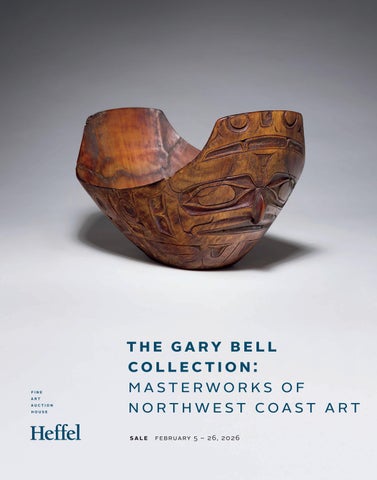
Create a flipbook