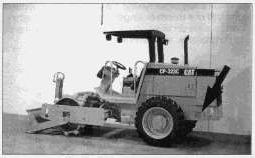
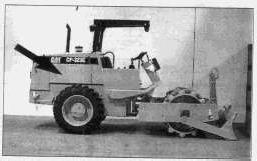
CS-323C VIBRATORY COMPACTOR
Product: VIBRATORY COMPACTOR
Model: CS-323C VIBRATORY COMPACTOR 1EN
Configuration: CP-323C CS-323C Vibratory Compactor 1EN00001-UP (MACHINE) POWERED BY 3054 Engine
Operation
and Maintenance Manual
CP-323C, CS-323C VIBRATORY COMPACTOR
Media Number -KEBU6878-00 Publication Date -20/02/1996
Date Updated -10/10/2001
Product Identification and Serial Number Locations
The Product Identification Number (PIN) will be used to identify a powered machine that is designed for an operator to ride.
Caterpillar products such as engines, transmissions, and major attachments, etc., not designed for an operator to ride are identified by Serial Numbers.
For quick reference, record the identification numbers in the spaces provided below the illustration
Machine PIN ____________________
Service Information Number Plate (SIN) ____________________
Engine Serial Number ____________________ Fri Feb 2 00:08:29 UTC+0530 2024
This is the sample of the manual click on the download link for complete manual
DOWNLOAD LINK
For some reason if link does not work download this pdf and then click
Product: VIBRATORY COMPACTOR
Model: CS-323C VIBRATORY COMPACTOR 1EN
Configuration: CP-323C CS-323C Vibratory Compactor 1EN00001-UP (MACHINE) POWERED BY 3054 Engine
Operation and Maintenance Manual
CP-323C, CS-323C VIBRATORY COMPACTOR
Media Number -KEBU6878-00
Publication Date -20/02/1996
Specifications and Model Views
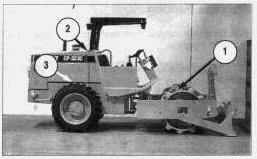
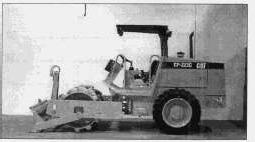
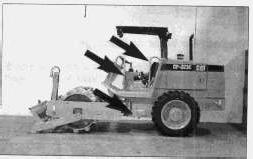
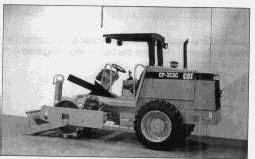
Vibratory drum (1), hydraulic tank (2) and fuel tank (3).
Date Updated -10/10/2001
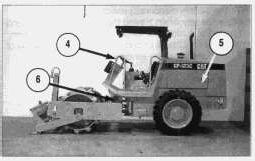
Operator's compartment (4), engine compartment (5) and center steer pivot area (6).
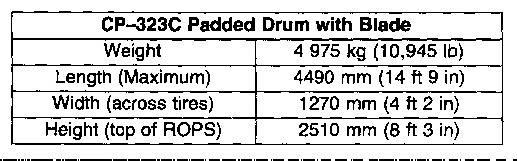
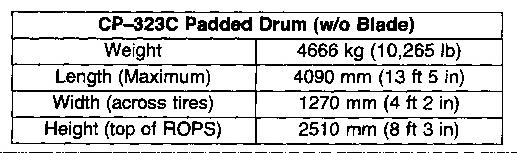
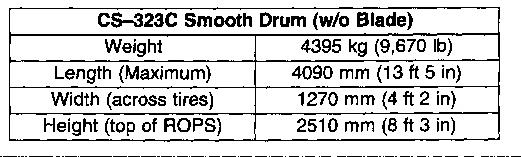
Basic machine shipping specifications are listed below.
Product: VIBRATORY COMPACTOR
Model: CS-323C VIBRATORY COMPACTOR 1EN
Configuration: CP-323C CS-323C Vibratory Compactor 1EN00001-UP (MACHINE) POWERED BY 3054 Engine
Operation and Maintenance Manual
CP-323C, CS-323C VIBRATORY COMPACTOR
Media Number -KEBU6878-00 Publication Date -20/02/1996 Date Updated -10/10/2001
Foreword
Literature Information
The operation and maintenance manual should be stored in the operator's compartment in the literature holder or seat back literature storage area.
The operation and maintenance manual contains safety, operation, transportation, lubrication and maintenance information.
Some photographs or illustrations in the operation and maintenance manual show details or attachments that can be different from your machine. Guards and covers might have been removed for illustrative purposes.
Continuing improvement and advancement of product design might have caused changes to your machine which are not included in the operation and maintenance manual. Read, study and keep the operation and maintenance manual with the machine.
Whenever a question arises regarding the machine, or the operation and maintenance manual, please consult any Caterpillar dealer for the latest available information.
Safety
The Safety Section lists basic safety precautions. In addition, this section identifies the text and locations of warning signs and labels used on the machine.
Read and understand the basic precautions listed in the Safety Section before operating or performing lubrication, maintenance and repair on this machine.
Operation
The Operation Section is a reference for the new operator and a refresher for the experienced one. This section includes a discussion of gauges, switches, machine controls, attachment controls, transportation and towing information.
Photographs and illustrations guide the operator through correct procedures of checking, starting, operating and stopping the machine.
Operating techniques outlined in this publication are basic. Skill and techniques develop as the operator gains knowledge of the machine and its capabilities.
Maintenance
The Maintenance Section is a guide to equipment care. The illustrated, step-by-step instructions are grouped by servicing intervals. Items without specific intervals are listed under When Required topics. Items in the Maintenance Intervals chart are referenced to detailed instructions that follow.
Maintenance Intervals
Use the service hour meter to determine servicing intervals. Calendar intervals shown (daily, weekly, monthly, etc.) can be used instead of service hour meter intervals if they provide more convenient servicing schedules and approximate the indicated service hour meter reading. Recommended service should always be performed at the interval that occurs first.
Under extremely severe, dusty or wet operating conditions, more frequent lubrication than is specified in the Maintenance Intervals chart might be necessary.
Perform service on items at multiples of the original requirement. For example, at Every 500 Service Hours or 3 Months, also service those items listed under Every 250 Service Hours or Monthly and Every 10 Service Hours or Daily.
Machine Description
This machine is equipped with a Caterpillar 3054 diesel engine.
California
Proposition 65 Warning
Diesel engine exhaust and some of its constituents are known to the state of California to cause cancer, birth defects, and other reproductive harm.
Copyright 1993 - 2024 Caterpillar Inc. All Rights Reserved. Fri Feb 2 00:05:43 UTC+0530 2024
Product: VIBRATORY COMPACTOR
Model: CS-323C VIBRATORY COMPACTOR 1EN
Configuration: CP-323C CS-323C Vibratory Compactor 1EN00001-UP (MACHINE) POWERED BY 3054 Engine
Operation and Maintenance Manual
CP-323C, CS-323C VIBRATORY COMPACTOR
Reference Materials
Caterpillar Reference Material
The following literature can be obtained through any Caterpillar dealer.
Oil
SEBD0640 Oil and Your Engine
SEBU5898 Cold Weather Recommendations Operation and Maintenance Manual
SEBU6310 EMA Engine Oil Data Book
PEHP6001 How to Take a Good Oil Sample
SEHS7392 Storage of Diesel Engines
PEHP7504 Cat Engine Oil Spec Sheets
PEHP7505 Cat Diesel Engine Oil Spec Sheets
PEHP1020 Product Data Sheet for Cat Diesel Engine (CF-4) (N. America & Selected Int'l)
PEHP1026 Product Data Sheet for Cat Diesel Engine Oil (CF-4)(International Only)
PEHP1027 Product Data Sheet for Cat Diesel Engine Oil (CD)
PEHP0002 Product Data Sheet for Cat Molybdenum Grease (MPGM)
PEHP0003 Product Data Sheet for Cat Lithium Grease (MPGL)
PEHP0017 Product Data Sheet for Cat Special Purpose Grease (SPG)
PEWP9733 Cat Fluids Selector
Fuel
SEBD0717 Diesel Fuels and Your Engine
SEHS7067 Fuels for Caterpillar Diesel Engines
Coolant
SEBD0518 Know Your Cooling System
SEBD0970 Coolant and Your Engine
Miscellaneous
SEBF8062 Guideline for Reusable Parts Cleaning and Inspection of Air Filters
SEHS9031 Storage Procedure for Caterpillar Products
SEBU5614 Safety Manual
All of the above publications are available through your Caterpillar dealer.
Additional Reference Material
ASTM D2896 TBN Measurements
ASTM D217-68 Worked Penetration
ASTM D2982B
ASTM D3828A
ASTM D445 Kinematic Viscosity Testing
ASTM D893
ASTM 4985-89 GM-6038M Specification
ASTM Specs can normally be obtained from your local technological society, library or college.
SAE J313 Diesel Fuels
SAE J754 Nomenclature
SAE J183 Classification
Society of Automotive Engineers (SAE) Specs can be found in your SAE handbook or can be obtained from your local library, college or technological society.
* SAE handbooks can be obtained directly from:
400 Commonwealth Drive Warrandale, PA USA 15096-0001
Copyright 1993 - 2024 Caterpillar Inc. All Rights Reserved. Private Network For SIS Licensees. Fri Feb 2 00:08:50 UTC+0530 2024
Product: VIBRATORY COMPACTOR
Model: CS-323C VIBRATORY COMPACTOR 1EN
Configuration: CP-323C CS-323C Vibratory Compactor 1EN00001-UP (MACHINE) POWERED BY 3054 Engine
Operation and Maintenance Manual
CP-323C, CS-323C VIBRATORY COMPACTOR
Cooling System Specifications
Coolant Information
The proper coolant mixture is important in today's diesel engines. Diesel engine operating temperatures have increased to improve engine efficiency. This also means proper cooling system maintenance is especially important. Overheating, excessive cooling, component pitting, cavitation erosion, piston seizures and plugged heat exchangers are results of cooling system failures.
Proper coolant is critical, as is the quality of fuel and lubricating oil. Maintenance practices may need to be re-evaluated to properly maintain the engine's cooling system. It is important that this section be read carefully.
NOTICE
Never operate without a thermostat in the cooling system. The thermostats maintain the engine coolant at the proper operating temperature.
Never add coolant or water to an overheated engine, engine damage can result. Allow the engine to cool first. Filling at over 5 U.S. gallon (20 L) per minute can cause air pockets in the cooling system.
Caterpillar does not recommend the use of cooling system solutions that are intended to stop leaks. Use of these products may result in engine damage.
Caterpillar recommends that the coolant mixture contain a minimum of 30% Caterpillar Antifreeze, or equivalent.
The cooling system should be protected with a minimum of 3% concentration of liquid supplemental coolant additive at all times, regardless of the concentration of antifreeze.
If the engine is to be stored in, or shipped to, an area with freezing temperatures, the cooling system must be protected to the lowest expected outside (ambient) temperature.
Coolant Mixture for Caterpillar Engines
Proper engine coolant is a combination of water, antifreeze and supplemental coolant additive. Each ingredient of the mixture must meet specific guidelines for the engine coolant to perform properly. The coolant mixture used in Caterpillar engines must provide the following functions.
* Adequate heat transfer.
* Cavitation erosion protection.
* Freeze & boil protection.
* Sludge & scale protection.
* Corrosion protection.
* Compatibility with system hoses & seals.
Water (Coolant)
All water is corrosive at engine operating temperature. Distilled or deionized water is recommended because of less mineral drop out than hard or tap water. Tap water, even artificially softened with salt, is not recommended for use in your engine's cooling system.
Calcium, magnesium, chlorides and sulfates are all minerals that make up the dissolved solids in the water. Excessive amounts of these minerals (in hard water) can combine with supplemental coolant additives (silicates and phosphates) to form sludge or scale deposits. The mineral deposits (silicates, phosphates, calcium and magnesium) reduce the effectiveness of the cooling system, especially after a number of heating and cooling cycles. They may collect on hot internal engine surfaces and in the cooling system to reduce the effectiveness of the cooling system.
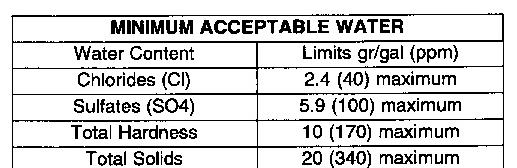
If distilled or de-ionized water is NOT available, use water that meets the minimum acceptable requirements in the chart. To determine your water characteristics, contact the local water department, agricultural agent or an independent laboratory to perform the testing service.
Antifreeze
NOTE: Some applications have elected to run with supplemental coolant additive treated water without glycol. Do not mix coolant additive treated water in the cooling system with Caterpillar Antifreeze. This incompatibility could cause cooling system damage because the coolant will have an excessive concentration of coolant additive. Follow the instructions provided by the antifreeze supplier.
NOTICE
Caterpillar recommends that the coolant mixture contain a minimum of 30% Caterpillar Antifreeze (or equivalent) with 70% distilled or deionized water to maintain an adequate cavitation temperature for efficient water pump performance. Antifreeze concentration should be selected to provide protection to the lowest expected outside (ambient) temperature.
Check the specific gravity of the antifreeze solution frequently in cold weather to ensure adequate freeze protection. Premix coolant solution to provide protection to the lowest expected outside (ambient) temperature. Pure undiluted antifreeze will freeze at -10°F (-23°C).
Antifreeze concentrations above 60% antifreeze to 40% water are NOT recommended because the higher concentrations limit the ability of the coolant mixture to absorb supplemental coolant additive.
Use Caterpillar Antifreeze or any low silicate (ethylene or propylene glycol) antifreeze that meets ASTM D4985-89 (GM Specification 6038-M) requirements. Most commercial antifreezes are formulated for gasoline engine applications and have high silicate content. Caterpillar Antifreeze is formulated with a low silicate content and the proper coolant additives for heavy duty diesel engines.
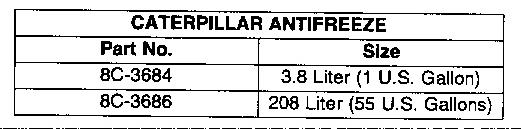
Caterpillar Antifreeze is available through your Caterpillar dealer in quantities that follow.
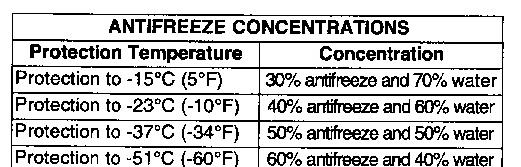
Adding pure undiluted antifreeze as a makeup solution for cooling system top-off is an unacceptable practice. Add antifreeze premixed with acceptable water to the same freeze protection as your cooling system. Use the Antifreeze Concentration chart to assist in determining the concentration of Caterpillar Antifreeze to use.
Check the coolant solution frequently in cold weather for glycol concentration with the 5P-0957 or 5P -3514 Coolant Tester (for Caterpillar products) to ensure adequate freeze protection. The testers are identical except temperature scales (°C or °F) and give immediate accurate readings for antifreeze/coolants that contain ethylene or propylene glycol. Both testers are available at your Caterpillar dealer.
NOTICE
If propylene glycol based antifreeze is used, DO NOT allow concentration greater than a 50/50 antifreeze to water mixture. The measurement of freeze protection must be made with a refractive-type tester (5P-0957 or 5P-3514) rather than the hydrometer-type tester commercially available. The hydrometer-type tester can be used to test ethylene glycol based antifreeze.
Supplemental Coolant Additive
The cooling system MUST contain supplemental coolant additives (SCA) (conditioner or inhibitor) to control corrosion, cavitation and deposits. It is also necessary to prevent rust, scale, pitting and/or corrosion of engine parts contacted by coolant. The cooling system should be protected with a minimum of 3% concentration at all times, regardless of the concentration of antifreeze. Use supplemental coolant additive liquid OR an element (if equipped) to maintain a 3-6% concentration in the cooling system.
NOTICE
Never use antifreeze/water coolant only, in Caterpillar engines without supplemental coolant additive regardless of antifreeze concentration. Caterpillar or other manufacturer's products can be used as the supplemental coolant additive. Do not mix Caterpillar Supplemental Coolant Additive (Conditioner) liquid or elements with the other
commercial products available; select a cooling system treatment and use it exclusively.
Excessive concentration of supplemental coolant additive can form deposits which may cause engine damage, reduce the engine's heat transfer characteristics and could also accelerate water pump seal wear.
Use the 8T-5296 Test Kit to check and monitor the SCA concentration for antifreeze/water coolant mixture. The Caterpillar 8T-5296 Test Kit checks for concentration of nitrates in the coolant solution.
NOTE: Some other manufacturers' supplemental coolant additive (SCA) are phosphate based and the 8T-5296 Test Kit will not provide accurate results. Caterpillar recommends that their test kit be used to check coolant solution concentration.
If other than Caterpillar products are used as the supplemental coolant additive, follow the manufacturers' recommendation for cooling system treatment and test evaluation. Commercial supplemental coolant additive products must contain silicates and a minimum of 70 gr/U.S. gallon (1200 ppm) nitrites.
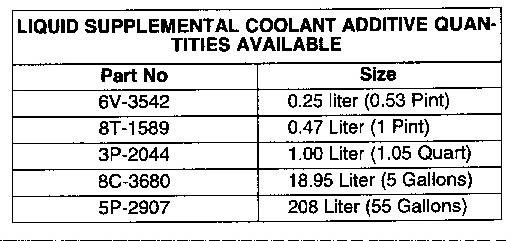
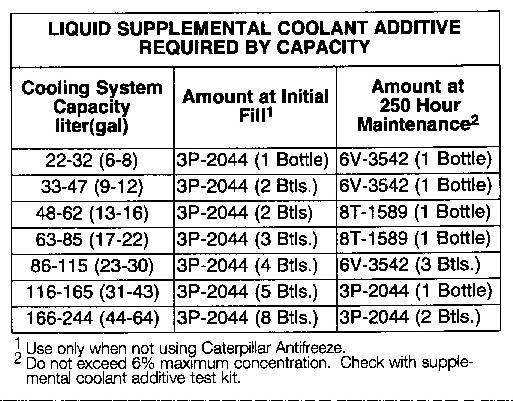
Caterpillar liquid supplemental coolant additive (Conditioner) is available through your Caterpillar dealer in quantities that follow.
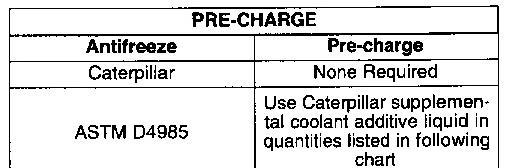
Pre-charge
Caterpillar Antifreeze DOES NOT require supplemental coolant additive added at initial fill, however additive is required on a maintenance basis. For systems equipped with supplemental coolant additive elements, the last MAINTENANCE element should not be replaced at FLUSH & FILL or Overhaul until the next 250 hour interval.
Water-Only Coolant
Although Caterpillar recommends a minimum concentration of 30% antifreeze, a coolant mixture of acceptable water and Supplemental Coolant Additive (SCA) can be used in applications where conditions do not require freeze protection (or where antifreeze is not available).
A coolant mixture of water and SCA will cool and provide some protection to engine components, however, it will not provide normal engine service life. Antifreeze/water mixtures provide better performance life than water-only coolant.
If the engine cooling system is filled with water ONLY, supplemental coolant additive (Conditioner) concentration should be maintained at 6 to 8 percent maximum. Do not exceed 8% maximum concentration. Check with supplemental coolant additive test kit.
Maintenance of the water-only coolant is the same as maintenance of the antifreeze/water coolant. The 8T-5296 Test Kit can be used to evaluate the SCA concentration of water-only coolant with the following modifications to Step 3 and Step 5.
3 Add tap water to the vial up to the 20 ml mark. STEP 5 - With the defined procedure, the 6% to 8% concentration will yield a 20 to 27 drop range. Less drops will indicate under concentration of SCA and more drops will indicate over concentration. Adjust the concentration accordingly to maintain the proper concentration.
NOTE: If the SCA concentration is greater than the maximum of 8%, drain some of the coolant and refill with acceptable water, then retest the concentration level.
Cooling System Cleaning
Clean the system according to the Maintenance Interval schedule or sooner if the coolant is contaminated, if the engine overheats or if foaming is observed in the radiator. Disregard for the proper maintenance of the cooling system can cause engine overheating problems that could result in severe damage to the engine and its components. If testing and proper maintenance of antifreeze and/or SCA concentrations are not performed as recommended in the Maintenance Interval schedule, the system drain interval must be shortened.
Coolant should be drained, the system cleaned and new coolant added by the fuel consumption interval, Every 3000 Hours or Two Years, whichever comes first for the engine being maintained. If not using Caterpillar Antifreeze and supplemental coolant additive as recommended, the drain period must be shortened to Every 1500 Hours or One Year.
When you drain, clean, flush and replace the coolant, small particles, undesirable chemicals, scale and other deposit formations are removed. These deposits reduce the necessary heat transfer characteristics of the cooling system and accelerate wear to the water pump seal. Refer to the Cooling System (Clean/Flush Coolant) topic in the Maintenance Section of this manual.
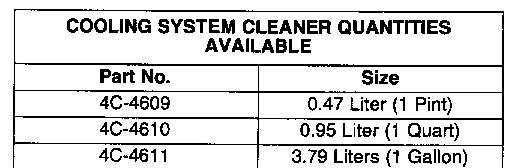
Caterpillar Cooling System Cleaners are designed to clean the system of harmful scale and corrosion. It dissolves mineral scale, corrosion products, light oil contamination and sludge. Cooling system cleaners are available from your Caterpillar dealer in the quantities listed. Follow the label directions for proper usage.
Product: VIBRATORY COMPACTOR
Model: CS-323C VIBRATORY COMPACTOR 1EN
Configuration: CP-323C CS-323C Vibratory Compactor 1EN00001-UP (MACHINE) POWERED BY 3054 Engine
Operation and Maintenance Manual
CP-323C, CS-323C VIBRATORY COMPACTOR
Media Number -KEBU6878-00
Publication Date -20/02/1996
Every 10 Service Hours or Daily
Date Updated -10/10/2001
You must read and understand the warnings and instructions contained in the Safety section of this manual before performing any operation or maintenance procedures.
Walk-Around Inspection
Inspect Machine
1. Inspect and replace lights, broken bulbs and lenses.
2. Inspect and remove any trash build-up in and around the engine.
3. Inspect and repair any cooling system or engine component leaks.
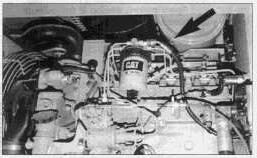
4. Check the fuel filters for water.
5. Inspect steps and handholds for condition and cleanliness. Repair or clean if necessary.
6. Inspect the hydraulic system for leaks. Inspect the tank, hoses, tubes, plugs, joints and fittings. Correct any leaks.
7. Be sure covers and guards are firmly in place. Inspect for damage.
8. Inspect operator's compartment for cleanliness and remove all trash.
9. Inspect and repair the instrument panel when broken gauges and lights are found.
10. Inspect hydraulic motors for leaks.
11. Inspect the rubber isolation blocks, between the vibratory drum and the machine frame for damage, cracking or splitting. Refer to the Service Manual or your Caterpillar dealer for the complete isolation block replacement procedure.
Seat Belt
Inspect for Wear or Damage
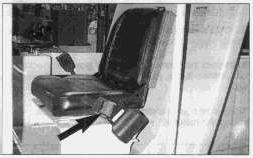
Always check condition of seat belt and mounting hardware before operating machine. Replace any damaged or worn parts.
Replace the seat belt after three years of usage, regardless of appearance.
Seat belt and mounting hardware must be inspected for wear or damage. Replace the belt or mounting hardware if worn or damaged.
Engine Air Intake System
NOTICE
Never service the air cleaner with the engine running since this will allow dirt to enter the engine.
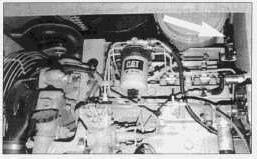
A service indicator is mounted on the air cleaner or in a remote location. A colored piston showing in the window indicates the need for servicing the air cleaner. Observe the air cleaner service indicator. Clean or replace the air cleaner when the green diaphragm enters the red zone or the red piston locks in the visible position. If the air cleaner indicator shows red at any time, clean the filter element or install a new air cleaner element.
Remove and Install Air Cleaner Elements
1. Open the right access cover.
2. Release the cover fasteners and remove the end cover on the air cleaner housing. Remove and empty the dust collector cup.
3. Remove the air cleaner cover and element, and cover the air inlet.
4. Clean the inside of the air cleaner cover and body with a clean, dry cloth. Inspect seals between the lower body and the dust collector cup. Inspect seals between the lower and upper bodies and install new seals if necessary.
5. Inspect the replacement element for damage, dirt or debris. Remove the covering from the air inlet and install the new or cleaned, undamaged element. Install lower body to upper body and tighten retaining clamp(s).
6. Install dust cup and tighten retaining clamp. Reset the service indicator.
Heavy Duty Air Cleaners Only
Service the air cleaner using the air cleaner indicator as the basis for determining the condition of the elements.
If the air cleaner element becomes plugged, but does not split, engine performance will deteriorate and output power will be reduced.
Keep spare filter elements on hand for replacement.
For the procedure to clean or replace the optional heavy duty air cleaner elements, refer to the topic Cleaning Air Cleaner Elements.
Cleaning Air Cleaner Elements
NOTICE
Do not clean the filter elements by bumping or tapping them. Engine damage could result.
Do not use filter elements with damaged pleats, gaskets or seals.
NOTE: Most air cleaner filter elements can be cleaned with air, water or detergent. Have spare elements on hand to use while cleaning used elements.
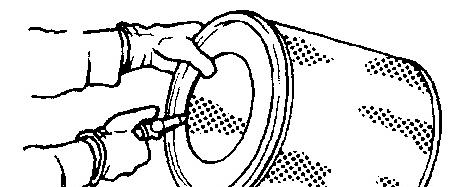
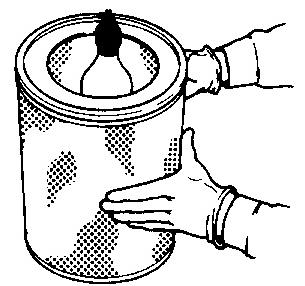
Filter elements can be cleaned with pressure air - 205 kPa (30 psi) maximum, pressure water - 280 kPa (40 psi) maximum, or detergent washing.
1. Direct air or water along the pleats inside and outside of filter element.
The element can be washed in warm water and non-sudsing household detergent. Rinse inside and outside the pleats and air dry fully.
2. Inspect the filter elements after cleaning. Do not use a filter element with damaged pleats, gaskets or seals.
3. Wrap and store the clean filter elements in a clean, dry place.
4. Reset the service indicator.
For more information on air cleaner element cleaning, refer to your Caterpillar dealer or OEM manufacturer.
Check Precleaner
Check the precleaner for accumulation of dirt and debris. Remove any dirt and debris as needed.
NOTE: More frequent cleaning will be required in dusty applications.
Remove the wing nut and top cover of the precleaner and check for an accumulation of dirt and debris. Clean if necessary.
After cleaning, install the cover and wing nut.
Engine Crankcase
NOTICE
Make sure you read and understand the information in the Lubricant Specifications section of this manual before you proceed with maintenance of the crankcase lube oil system.
Check Oil Level
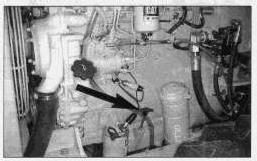
1. Check the oil level with the engine stopped. DO NOT check the oil level with the engine running.
NOTE: Refer to the Refill Capacities chart and Lubricant Specifications to show the proper amount and quality of oil to be used at oil change time, and to determine the correct level on the dipstick for your application.
2. Maintain the oil level between the ADD (MIN) and FULL (MAX) marks on the dipstick. Ensure that the engine oil level is not above the FULL (MAX) mark on the dipstick.
NOTE: Operating your engine when the oil level is above the FULL (MAX) mark could cause your crankshaft to dip into the oil. If this happens, the air bubbles created from the crankshaft dipping into the oil will reduce the lubricating characteristics of your oil and could result in the loss of power.
If the dipstick does not have a FULL (MAX) mark, refer to calibrating the oil level gauge by consulting your Caterpillar dealer before operating the engine.
3. Remove the oil filler cap and add oil if necessary. The minimum capacity (ADD oil mark) is 5.6 liter (5.9 U.S. quart) for the 3054 engine. See Refill Capacities and Lubricant Specifications for the size of your engine crankcase and recommended oil to use.
NOTE: Remote mounted or auxiliary oil filters will require more oil than what the Refill Capacities chart states. For all information pertaining to auxiliary oil filters, refer to the OEM filter manufacturer's instructions.
Hydraulic Oil System
Check Charge Pressure Indicator
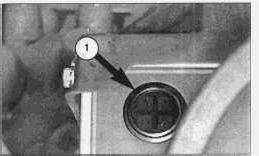
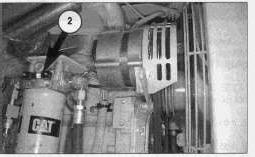
Verify the hydraulic charge pressure. With the engine warmed up and running at HIGH IDLE, observe charge pressure indicator (1). If charge pressure indicator (1) is on and the horn blows, check indicator (2) on the hydraulic filter. If indicator (2) is in the red zone, replace the filter. Refer to Hydraulic Oil System, Every 500 Service Hours or 6 Months.
This is the sample of the manual click on the download link for complete manual
DOWNLOAD LINK
For some reason if link does not work download this pdf and then click