

Product:MARINEENGINE
Model:C280-16MARINEENGINENKB
Configuration:C280-16MARINENKB00001-UP
OperationandMaintenanceManual
3600andC280DieselEngineFluidsRecommendations
MediaNumber-SEBU7003-06PublicationDate-01/11/2020DateUpdated-08/02/2019
Foreword
LiteratureInformation
Thismanualshouldbestoredintheliteraturestoragearea.
Theinformationcontainedinthisdocumentisthemostcurrentinformationavailableforcoolants, fuels,andlubricants.RefertotheOperationandMaintenanceManualforanyspeciallubrication requirementsforyourengine.
Wheneveraquestionarisesregardingtheengine,thispublication,ortheOperationand MaintenanceManual,pleaseconsultanyCatdealerforthelatestavailableinformation.
Safety
RefertotheOperationandMaintenanceManualforyourengineforallsafetyinformation.Read andunderstandthebasicsafetyprecautionslistedintheSafetySection.Inadditiontosafety precautions,thissectionidentifiesthetextandlocationsofsafetysignsusedontheengine.
ReadandunderstandthebasicprecautionslistedintheSafetySectionbeforeoperatingor performinglubrication,maintenanceandrepaironthisengine.
Maintenance
RefertotheOperationandMaintenanceManualforyourenginetodetermineallmaintenance requirements.
MaintenanceIntervals
UsetheMaintenanceIntervalScheduleintheOperationandMaintenanceManualforyourengine todetermineservicingintervals.Theactualoperatingenvironmentoftheenginealsogovernsthe maintenanceintervalschedule.Therefore,underextremelysevere,dusty,wetorfreezingcold operatingconditions,morefrequentlubricationandmaintenancethanisspecifiedinthe MaintenanceIntervalSchedulemaybenecessary.
ExtendedEngineOilDrainsandWarranty
FailuresthatresultfromextendedoildrainperiodsarenotCaterpillarfactorydefectsandtherefore arenotcoveredbyCaterpillar'swarranty.Inaddition,failuresthatresultfromnotusingthe recommendedoiltypearenotCaterpillarfactorydefectsandthereforearenotcoveredby Caterpillar'swarranty.
RefertotheapplicableOperationandMaintenanceManualforstandardoildrainperiodsandto theMaintenanceSection,"LubricantSpecifications"ofthispublicationforengineoiltypeand viscositygraderecommendations.
Toreducethepotentialriskoffailuresassociatedwithextendedoildrainperiods;itis recommendedthatoildrainintervalsonlybeextendedbasedonoilanalysis,andsubsequent engineinspections.Oilanalysisalonedoesnotprovideanindicationoftherateofformationof lacquer,varnishand/orcarbononpistonsandotherenginesurfaces.Theonlyaccuratewayto evaluatespecificoilperformanceinaspecificengineandapplicationthatutilizesextendedoil drainperiodsistoobservetheeffectsontheenginecomponents.Thisinvolvestear-down inspectionsofenginesthathaveruntotheirnormaloverhaulperiodwithextendedoildrain intervals.Followingthisrecommendationwillhelpensurethatexcessivecomponentweardoes nottakeplaceinagivenapplication.
NOTICE
Lightloads,lowhouraccumulation,andexcessiveidlingtimecan contributetoexcessivewaterinthecrankcaseoil.Corrosivedamage, pistondepositsandincreasedoilconsumptioncanalsoresult.Ifoil analysisisnotdoneortheresultsareignored,thepotentialfor corrosivedamageandpistondepositsincreases.Refertothe appropriateOperationandMaintenanceManualforguidance.
Note:Failuresthatresultfromextendedoildrainperiodsarenotwarrantablefailures,regardless ofuseofthisrecommendedprocedure.Failuresthatresultfromextendedengineoildrainperiods areconsideredimproperuseunderthewarranty.
AftermarketProductsandWarranty
NOTICE
Whenauxiliarydevices,accessoriesorconsumables(filters,oil, additives,catalysts,fuel,etc.)madebyothermanufacturersareused onCaterpillarproducts,theCaterpillarwarrantyisnotaffected simplybecauseofsuchuse.Failuresthatresultfromtheinstallationor usageofothermanufacturersauxiliarydevices,accessoriesor consumables,however,arenotCaterpillarfactorydefectsand thereforeareNOTcoveredbyCaterpillar'swarranty.
Caterpillarisnotinapositiontoevaluatethemanyauxiliarydevices, accessoriesorconsumablespromotedbyothermanufacturersand
theireffectonCaterpillarproducts.Installationoruseofsuchitemsis atthediscretionofthecustomerwhoassumesALLrisksfortheeffects thatresultfromthisusage.
Furthermore,Caterpillardoesnotauthorizetheuseofitstradename, trademark,orlogoinamannerwhichimpliesourendorsementof theseaftermarketproducts.
Copyright1993-2025CaterpillarInc. AllRightsReserved. PrivateNetworkForSISLicensees.
WedAug601:38:25UTC+05302025
This is the sample of the manual if you need complete manual Click Here to download
Product:MARINEENGINE
Model:C280-16MARINEENGINENKB
Configuration:C280-16MARINENKB00001-UP
OperationandMaintenanceManual
3600andC280DieselEngineFluidsRecommendations
MediaNumber-SEBU7003-06PublicationDate-01/11/2020DateUpdated-08/02/2019 i07999507
AftermarketOilAdditives
SMCS-1300;1348;7581
Caterpillardoesnotrecommendtheuseofaftermarketadditivesinoil.Itisnotnecessarytouse aftermarketadditivesinordertoachievethemachine'smaximumservicelifeorrated performance.Fullyformulated,finishedoilsconsistofbaseoilsandofcommercialadditive packages.Theseadditivepackagesareblendedintothebaseoilsatprecisepercentagesinorderto helpprovidefinishedoilswithperformancecharacteristicsthatmeetindustrystandards.
Therearenoindustrystandardteststhatevaluatetheperformanceorthecompatibilityof aftermarketadditivesinfinishedoil.Aftermarketadditivesmaynotbecompatiblewiththe finishedoil'sadditivepackage,whichcouldlowertheperformanceofthefinishedoil.The aftermarketadditivecouldfailtomixwiththefinishedoil.Thiscouldproducesludge.Caterpillar discouragestheuseofaftermarketadditivesinfinishedoils.
ToachievethebestperformancefromCaterpillarmachines,conformtothefollowingguidelines:
•SelecttheproperCaterpillaroilorselectcommercialoilthatmeetsthespecifications designatedbyCaterpillarforthecompartment.
•Seetheappropriate“LubricantViscositiesforAmbientTemperatures”tableinthis publicationinordertofindthecorrectoilviscositygradeforthemachinecompartment.
•Atthespecifiedinterval,servicetheengineorservicetheothermachinecompartments.Use appropriatenewoilandinstallanappropriatenewoilfilter.
•PerformmaintenanceattheintervalsthatarespecifiedintheOperationandMaintenance Manual,"MaintenanceIntervalSchedule".
Copyright1993-2025CaterpillarInc. AllRightsReserved. PrivateNetworkForSISLicensees.
WedAug601:42:38UTC+05302025
Product:MARINEENGINE
Model:C280-16MARINEENGINENKB
Configuration:C280-16MARINENKB00001-UP
OperationandMaintenanceManual
3600andC280DieselEngineFluidsRecommendations
MediaNumber-SEBU7003-06PublicationDate-01/11/2020DateUpdated-08/02/2019 i05423977
Biodiesel
SMCS-1280
Theserecommendationsaresubjecttochangewithoutnotice.Consult yourlocalCatdealerforthemostuptodaterecommendations.
Biodieselisafuelthatcanbemadefromvariousrenewableresourcesthatincludevegetableoils, animalfat,andwastecookingoil.Soybeanoilandrapeseedoilaretheprimaryvegetableoil sources.Therawoilsoranimalfatsarechemicallyprocessed(esterified)toformafattyacid methylester(referredtoasFAME).Theesterifiedproduct(FAME)isbiodieselfuelthatcanbe usedincompressionignitionengines.Withoutthechemicalprocessingreferredtoas esterification,theoilsorfatsarenotsuitableforuseasfuelincompressionignitionengines.To useanyoftheoilsorfatslistedaboveasfuel,theoilorfatmustbeesterifiedandthewaterand contaminantsremoved.
Fuelmadeof100percentFAMEisreferredtoasB100biodieselorneatbiodiesel.
Biodieselcanbeblendedwithdistillatedieselfuel.Theblendscanbeusedasfuel.Themost commonlyavailablebiodieselblendsareB5,whichis5percentbiodieseland95percentdistillate dieselfuel,andB20,whichis20percentbiodieseland80percentdistillatedieselfuel.Notethe percentagesarevolume-based.
U.S.distillatedieselfuelspecification"ASTMD975-09a"includesuptoB5(5percent)biodiesel. Currently,anydieselfuelintheU.S.maycontainuptoB5biodieselfuel.
Europeandistillatedieselfuelspecification"EN590"includesuptoB5(5percent)andinsome regionsuptoB7(7percent)biodiesel.AnydieselfuelinEuropemaycontainuptoB5orinsome regionsuptoB7biodieselfuel.
Note:Theuseroftheenginehastheresponsibilityofusingthecorrectfuelthatisrecommended bythemanufacturer.ThefuelmustbeallowedbytheU.S.EPAandotherappropriateregulatory agencies.
Catisnotinapositiontoevaluatethemanyvariationsofbiodieselandthelong-termeffectson performance,durability,orcompliancetoemissionsstandardsforCatproducts.
Note:InordertoalignCatrecommendationswiththelatestrevisionof"ASTMD7467" specificationforB6-B20blendsandtoensurethatbiodieselfuelmeetsdefinedqualitystandards, CatrecommendationsforacceptablebiodieselblendformostengineshavebeenchangedtoB20. Detailsontheuseofhigherblendsaregiveninthis“Biodiesel”sectionofthisSpecial Publication.
NOTICE
InNorthAmerica,theuseofbiodieselfrom"BQ-9000"accredited producersand"BQ-9000"certifiedmarketersisrequired.Refertothe “Recommendations”sectionfordetails.
NOTICE
FailuresthatresultfromtheuseofanyfuelarenotCaterpillarfactory defects.Therefore,thecostofrepairwouldNOTbecoveredbythe Caterpillarwarrantyformaterialsand/orthewarrantyfor workmanship.
RecommendationsfortheUseofBiodieselinCatNonroad Engines
Refertotable2and3tothedetailsprovidedinthissectionforbiodieselfuelrequirements.
Inordertobeacceptableforblending,thebiodieselconstituentmustmeettherequirementsthat arelistedin“CatSpecificationforBiodieselFuel”inthisSpecialPublication,thelatesteditionof "ASTMD6751",and/orthelatesteditionof"EN14214".
BiodieselblendsofuptoB5mustmeettherequirementsforthedistillatedieselfuelthatarelisted inthe“CatSpecificationforDistillateDieselFuelforOn-HighwayEngines”inthisSpecial Publication,thelatesteditionof"ASTMD975",and/orthelatesteditionof"EN590".
BiodieselblendsofB6toB20mustmeettherequirementslistedinthelatesteditionof"ASTM D7467"(B6toB20)andmustbeofanAPIgravityof30-45.
Distillatedieselfuelsthatmeettherequirementsof“CatSpecificationforDistillateDieselFuel forOn-HighwayEngines”inthisSpecialPublication,the"NationalConferenceonWeightsand Measures"(NCWM)PremiumDieseldefinition,thelatesteditionof"ASTMD975S15"
designation,and/orthelatesteditionof"EN590",sulfurfreedesignation.No.1-DandNo.2-D areexamplesoffuelsthatareacceptableforcreatingbiodieselblends.
ForTier4applicationsintheU.S.,thedieselfuelportionofthefinalblendmustmeetthe requirementsofS15fuels(15ppmsulfur)designationsinthelatesteditionof"ASTMD975" specification.ForStageIIIBandlaterapplicationsinEU,thedieselfuelportionofthefinalblend mustmeettherequirementsforsulfurfree(10ppmsulfur)designationinthelatesteditionof"EN 590".Thefinalblendmusthave15ppmsulfur.
Table1
RecommendationsforbiodieselfuelapplicationinCatOff-Highwayengines
Production year/Tier/Stage
Tier2/StageIIor earlierEmissions
Regulations
Tier4Interim/Stage IIIa(without aftertreatment)
Tier4Interim/Stage IIIb(withaftertreatment devices)
Tier4Interim/Stage IIIbandbeyond(with aftertreatmentdevices)
AllyearspostTier 2/StageII
3003-3034,3044,3046,3054,3056,3064, and3066,3054C(mechanical),3054E (electronic)and3056E(electronic).
C0.5,C0.7,C1.1,C1.5,C1.6,C2.2,C3.4, C2.6,C3.3B.CertainC4.4(S/N4440000104303),CertainC6.6(S/NCE60000114623(Machines)andS/N6660000109015(Industrial))
C1.8,C2.4,C3.3B,C3.4
C3.8
ACERTengines:C3.4B,C4.4,C6.6,C7.1, C9.3,C13,C15,C18,C27,andC32
C0.5throughC2.2(2)
CertainC4.4ACERT(S/NC4E05524-Up (Machines)and44404304-Up(Industrial)), C4.4(Mechanical),C6.4,andcertainC6.6 ACERT(S/NCE614624-Up(Machines) and66609016-Up(Industrial))UptoB20(Foruseof higherblendlevelsup toB100,consultyour Catdealer)
Allyears 3114,3116,3126,3176,3196,3208,3306 3406,3408,3412,3456,3406E,3408E, 3412E,3500Series,and3600Series C-9,C10,C-12,C-15,C-16,C-18,C280 Series,CM20,CM25,andCM32ACERT engines(1)sure C7,C9,C9.3,C11,C13,C15,C18,C27, C32,andC175
(1)UptoB7canbeusedintheseengines.B7hastobeperCatdistillatedieselfuelspecification,"ASTMD975or EN590".
(2)Modelswithoutaftertreatmentonly
Table2
FuelRecommendationsforCatNonroadEngines
BiodieselBlendStock FinalBlend
Catbiodieselspecification, (1)"ASTMD6751"or "EN14214"
B5:Catdistillatedieselfuel specification,(2)"ASTMD975" or"EN590"
B20:"ASTMD7467"and "API"gravity30-45
(1)RefertoTable4intheBiodieselsectionofthisSpecialPublication.
DistillateDieselFuelusedfor blending
Catdistillatedieselfuel specification,"ASTMD975" or"EN590"
(2)Referto“CatSpecificationforDistillateDieselFuelforOn-HighwayEngines”intheFuelsectionofthisSpecial Publication.
Note:ForTier4certified/StageIIIBandnewerenginemodelsthatareequippedwith aftertreatmentdevices,useonlythebiodieselblendlevelsthatarerecommendedin “RecommendationsforbiodieselfuelapplicationinCatNonroadEngines”inthisSpecial Publication,table1.Useofbiodieselblendlevelshigherthantherecommendationsprovidedin table1canadverselyaffectengineandaftertreatmentcomponentsduetocontaminants.Therepair ofanyengineoraftertreatmentcomponentsduetosuchcontaminationorduetootherbiodiesel impactswouldnotbecoveredundertheCatwarranty.Referto“AdditionalMaintenance Requirements”topicinthisSpecialPublication,"Biodiesel"article.
Note:For2006andolderenginemodels,foruseofblendsofbiodieselaboveB20(20percent), referto“Guidelinesandpotentialimpactsassociatedwiththeuseofbiodieselandbiodiesel blends”table3inthisSpecialPublicationfortheguidelinesandimpactsofusinghighbiodiesel blends.ConsultyourCatdealerforguidance.UsetheCatS·O·SServicesoilanalysisprogram whenbiodieselorblendsofbiodieselthatareB20(20percent)oraboveareused.
Either"ASTMD7371"-“TestMethodforDeterminationofBiodiesel(FattyAcidMethylEsters) ContentinDieselFuelOilUsingMidInfraredSpectroscopy(FTIR-ATR-PLSMethod)”or"EN 14078"“-LiquidPetroleumProducts-Determinationoffattyacidmethylesters(FAME)in middledistillates-Infraredspectroscopymethod”canbeusedfordeterminingthevolumepercent biodieselinabiodieselblend.
Forapplicationsrunningbiodieselorbiodieselblends,therecommendationistouseeitherCat DieselFuelSystemCleaner(Partnumber343-6210)orCatDieselFuelConditioner(Partnumber 256-4968).CatDieselFuelSystemCleaner,usedasneededoronanon-goingbasis,ismost effectiveatcleaningandpreventingtheformationoffuel-relateddeposits.CatDieselFuel Conditionercanbeusedtoimprovefuelstabilityandcanhelppreventtheformationoffuelrelateddeposits.
Additionalmaintenancerequirements
Whenbiodieselfuelisused,crankcaseoilandaftertreatmentsystemsmaybeinfluenced.This influenceisduetothechemicalcompositionandcharacteristicsofbiodieselfuelsuchasdensity andvolatility.Chemicalcontaminantscanbepresentinthisfuel,suchasphosphorous,alkali,and alkalinemetals(sodium,potassium,calcium,andmagnesium).
•Crankcaseoilfueldilutioncanbehigherwhenbiodieseland/orbiodieselblendsareused. Thisincreasedleveloffueldilutionwhenusingbiodieseland/orbiodieselblendsisrelated tothetypicallylowervolatilityofbiodiesel.In-cylinderemissionscontrolstrategiesutilized inmanyofthelatestenginedesignsmayleadtoahigherlevelofbiodieselconcentrationin thesump.Thelong-termeffectofbiodieselconcentrationincrankcaseoiliscurrently unknown.TheuseofCatS·O·SServicesoilanalysisisrecommendedwhenuptoB20 (20percent)andlowerbiodieselblendsareused.Analysisisrequiredwhenusing biodiesel/biodieselblendsthatareB20orabove.Whenrequestingoilanalysis,besureto notethelevelofbiodieselbeingused(B5,B20,andsoon).
•Biodieselfuelcontainsmetalcontaminants(phosphorous,sodium,potassium,calcium, and/ormagnesium)thatformashproductsuponcombustioninthedieselengine.Theash canaffectthelifeandperformanceofaftertreatmentemissionscontroldevicesandcan accumulateinDieselParticulateFilters(DPF).Theashaccumulationmaycausetheneed formorefrequentashserviceintervalsand/orcauselossofperformance.
FuelSystemDeposits
Biodieselandbiodieselblendsareknowntocauseanincreaseinfuelsystemdeposits,most significantofwhicharedepositswithinthefuelinjector.Thesedepositscancausealossinpower duetorestrictedormodifiedfuelinjectionorcauseotherfunctionalissuesassociatedwiththese deposits.CatDieselFuelSystemCleaner(partnumber343-6210)ismosteffectiveincleaning andpreventingtheformationofdeposits.CatDieselFuelConditioner(partnumber256-4968) helpstolimitdepositissuesbyimprovingthestabilityofbiodieselandbiodieselblends.The productionofnewdepositsisalsoinhibited.Therefore,theuseofCatDieselFuelSystem Cleanerand/orCatDieselFuelConditionerisrecommendedwhenrunninganybiodieselor biodieselblends.RefertothisSpecialPublication,"DistillateDieselFuel",article,“CatDiesel FuelConditioner”and“CatDieselFuelSystemCleaner”topicsinthisSpecialPublication, "DistillateDieselFuel"foradditionalinformation.
ConsultyourCatdealerforavailabilityofCatDieselFuelSystemCleanerandCatDieselFuel Conditioner.
Guidelines
Biodieselthatmeetstherequirementsthatarelistedinthe“CatSpecificationforBiodieselFuel”, thelatesteditionof"ASTMD6751",orthelatesteditionof"EN14214"isnotexpectedtopose majorproblemswhenblendedwithanacceptabledistillatedieselfuelatthemaximumstated percentages.However,thefollowingrecommendationsshouldbefollowed:
Note:Fortheserecommendations,thecautions,guidelines,andrecommendationsapplicableto biodiesel(B100)arealsoapplicabletobiodieselblends(B2,B5,B20,andsoon).Theimpactsof biodieselblendshigherthanB20are,ingeneral,moreseverethantheimpactsofbiodieselblends ofB20orlower.RefertoTable3ofthisBiodieselsectionformoredetails.
Note:Fuelstoragetanksneedtobecleanedthoroughlybeforeconvertingtobiodiesel/biodiesel blends.Conversiontobiodiesel/biodieselblendscanloosenfuelsystemandfuelstoragetank deposits.Alltankfiltersandenginefiltersmustshortenthechangeintervalsforanextendedtime inordertoallowforthiscleaningeffect.
InNorthAmerica,theuseofbiodieselfrom"BQ-9000"accreditedproducersandmarketersis required.Lookforthe"BQ-9000"biodieselqualityaccreditationprogramcertificationlogothatis
availabletodistributorsthatmeettherequirementsof"BQ-9000".Formoreinformationonthe "BQ-9000"program,goto“www.BQ-9000.org”.
Inotherareasoftheworld,theuseofbiodieselthatis"BQ-9000"accreditedandcertified,orthat isaccreditedandcertifiedbyacomparablebiodieselqualitybodytomeetsimilarbiodieselquality controlstandards,isrequired.
Informationprovidedinthistablereferstobiodieselandbiodieselblendsthatfullycomplywith theappropriatespecificationsasdescribedinthe“Biodiesel”sectionofthisSpecialPublication andtohandlingandmaintenanceproceduresthatfollowrecommendedguidelines.
Table3
RisksandGuidelinesassociatedwiththeuseofbiodieselandbiodieselblends(1)
Paragraph referenceRisk/RecommendationB5
1Riskofreductionofoilchange interval NegligibleLowMedium
2 Riskoffuelfilters compatibilityNegligibleLowMedium
3Riskofreductionoffuelfilter changeintervalNegligibleMediumHigh
4Bulkfiltrationofbiodieselabsoluteabsoluteabsolute
5EnergycontentofbiodieselSimilarto Diesel Minorlossof1 -2percent Detectableloss of5-8percent
6CompatibilitywithelastomersLowLow-MediumHigh 7 Riskoflowambient temperatureproblemsforboth storageandoperation. MediumMedium-HighHigh 8 FeedstockimpactMediumMediumHigh
9Riskofoxidationstabilityand InjectordepositsLowMediumHigh
10Oxidationstability-Duration ofstorage Similarto Dieselfuel8months(2)4months(3)
11Useinengineswithlimited operationaltime Maximum allowedUnacceptableUnacceptable 12 Riskofmicrobial contaminationandgrowthMediumHighHigh 13NeedforwaterremovalMediumHighHigh
14Oil-sidesealincompatibilityNegligibleMediumHigh
(1)RefertotheparagraphreferencenumberfordetailsofeachlistedRisk/Recommendation.
(2)TestingofB20blendsisrecommendedat4monthsofstorageandonamonthlybasisthereafter.Testsshould includeoxidation,acidnumber,viscosity,andsediments.
(3)B100storedforover2monthsshouldbetestedevery2weekstoensurethatthefuelisnotdegraded.Testsshould includeoxidation,acidnumber,viscosity,andsediments.TheuseofappropriateadditivesisrequiredifB100is storedmorethan4months.Consultyourfuelsupplierformoreinformation.Inaddition,B100shouldbestoredat temperaturesof3degreesCto6degreesC(5degreesFto10degreesF)abovethecloudpoint.
Thefollowingaretheparagraphreferencenumbers:
1.Theoilchangeintervalcanbenegativelyaffectedbytheuseofbiodiesel.UseS·O·S Servicesoilanalysisinordertomonitortheconditionoftheengineoil.S·O·SServicesoil analysiswillalsohelpdeterminetheoilchangeintervalthatisoptimum.
2.Confirmwiththefiltermanufacturerthatthefuelfilter/filterstobeusedarecompatiblewith biodiesel.Fuelwaterseparatorsarepreferredwhenbiodieselisused.
Note:CatfuelfiltersandCatfuelwaterseparatorsarecompatiblewithbiodieselfuel.
3.Conversiontobiodieselcanloosenfuelsystemdeposits.Fuelfilterchangeintervalsmustbe shortenedforanextendedtimeinordertoallowforthiscleaningeffect.Filterchange intervalof50hoursorlessisrecommendedfollowingtheinitialconversiontoB20 biodieselblend.
4.Filterbiodieselandbiodieselblendsthroughafuelfilterwitharatingoffourmicrons(c) absoluteorless.Filtersshouldbelocatedonthedevicethatdispensesthefueltothefuel tankfortheengine.Filtersshouldbelocatedonthedevicethatdispensesfuelfromthebulk storagetank.Seriesfiltrationisrecommended.
5.Inacomparisonofdistillatefuelstobiodiesel,neatbiodiesel(B100)typicallyprovidesless energypergallonby5percentto8percent.DoNOTattempttochangetheengineratingin ordertocompensateforthepowerloss.Engineproblemsmayoccurwhentheengineis convertedbackto100percentdistillatedieselfuel.Anyadjustmentstotheengineto compensateforthepowerlossmayresultinviolationofemissionsregulationssuchasthe U.S.EPAanti-tamperingprovisions.
6.Compatibilityoftheelastomerswithbiodieseliscurrentlybeingmonitored.Thecondition ofsealsandhosesshouldbemonitoredregularly.Biodieselmaysoften,degrade,orleak fromsometypesofelastomersusedinsealsandhoses.Thehigherbiodieselblendhasa greatertheriskofelastomer-relatedissues.
a.Ingeneral,Catenginesbuiltearlytomid90suseVitonsealsandVitonO-ringsinthe fuelsystem.Vitoniscompatiblewithbiodiesel.
b.Nitrilehosestypicallyusedinsomefueltransferlinesarenotcompatiblewith biodiesel.Monitortheconditionofthehosesandconfirmwiththehosemanufacturer thatthehosesarecompatiblewiththebiodieselblendused.Ifnecessary,replacewith hosesofcompatiblematerials.
7.Biodieselmayposelowambienttemperatureproblemsforbothstorageandoperation.At lowambienttemperatures,biodieselfuelmayneedtobestoredinaheatedbuildingora heatedstoragetank.Thefuelsystemmayrequireheatedfuellines,filters,andtanks.Filters
mayplugandfuelinthetankmaysolidifyatlowambienttemperaturesifprecautionsare nottaken.Consultyourbiodieselsupplierforassistanceintheblendingandattainingofthe propercloudpointforthefuel.
Note:Theperformanceofcoldflowimproverscanbereducedinthepresenceofbiodiesel fuel.Consultthefuelsupplierforappropriatecoldflowimproversifneeded.
8.Biodieselcanbeproducedusingvariousrenewablesources.Thesourceusedcanaffect productperformance.Twoofthefuelcharacteristicsaffectedarecoldflowandoxidation stability.Coldflowaffectsfilterpluggingandoxidationstabilityaffectsdepositformation andbiodieselfuelstoragedurationandlife.Consultyourfuelsupplierforguidance.
9.Biodieselhaspooroxidationstability,whichmayacceleratefueloxidationinthefuel system.Engineswithanelectronicfuelsystemoperateathighertemperatures,whichmay acceleratefueloxidation.Oxidizedfuelcanformdepositsinfuelinjectionsystemsandin fuelsystemsingeneral.RefertothisSpecialPublication,"DistillateDieselFuel"article, “AftermarketFuelAdditives”,“CatDieselFuelConditioner”,and“CatDieselFuelSystem Cleaner”topicsforinformationconcerningoxidationstabilityandotherfueladditives.
10.Pooroxidationstabilityofbiodieselcanresultinlong-termstorageproblems.Biodiesel shouldbeusedwithinalimitedtimefromproduction.Inordertoensureappropriatestorage duration,testingofthestoredbiodieselisrecommended.Testsshouldincludeoxidation, acidnumber,viscosity,andsediments.Testsshouldbeconductedperiodicallytoensurethat biodieselisperspecification.Antioxidantsarerecommendedtoimprovestabilityof biodiesel.CatDieselFuelConditioner,partnumber256-4968,orappropriatecommercial additivesarerecommended.Consultyourfuelsupplierformoreinformation.
a.B20biodieselblendcangenerallybestoredupto8months.TestingofB20blendsis recommendedat4monthsofstorageandonamonthlybasisthereaftertoensurethat thefuelhasnotdegraded.
b.B100biodieselcangenerallybestoredupto4months.TestingofB100is recommendedat2monthsofstorageandeverytwoweeksthereaftertoensurethat thefuelhasnotdegraded.TheuseofappropriateadditivesisrequiredifB100is storedmorethan4months.Consultyourfuelsupplierformoreinformation.
c.B100shouldbestoredattemperaturesof3degreesCto6degreesC(5degreesFto 10degreesF)abovethecloudpoint.
11.Duetopooroxidationstabilityandotherpotentialissues,Catrecommendsthatengineswith limitedoperationaltime(suchasseasonaluseorstandbypowergeneration)eithernotuse biodiesel/biodieselblendsor,whileacceptingsomerisk,limitbiodieseltoamaximumof B5.Examplesofapplicationsthatshouldlimittheuseofbiodieselarethefollowing: StandbyGeneratorsetsandcertainemergencyvehicles.Formoreinformation,refertothe “SeaconalOperation”section.
a.AdditionofCatDieselFuelConditioner,partnumber256-4968,oranappropriate commercialadditivecontainingantioxidants/oxidationstabilityimprovers,is recommendedforstandbygeneratorsetsandemergencyvehiclesusing biodiesel/biodieselblends.Theconditionershouldbeaddedwhentheengineisfueled orasearlyaspossiblewhenthefuelisdeliveredandstored.Preferably,the conditioneroradditiveshouldbeaddedassoonaspossibleafterthefuelisproduced.
b.Forstandbygeneratorsetsandemergencyvehiclesthatusebiodiesel,samplethefuel intheenginetankmonthly.Testthefuelforacidnumberandoxidationstability.If thetestresultsshowthatthefuelisdegradedandthatthefuelisnotperthe appropriatespecifications(providedinTable4inthis“Biodiesel”section),drainthe tank,flushtheenginebyrunningusinghigh-qualityfuel.Repeattheprocessuntilthe systemisclean.Refillwithhigh-qualityfuelfollowingtherecommendations providedinthis“Fuel”section
c.Forstandbygeneratorsetsandemergencyvehiclesthatusebiodiesel,Cat recommendsthatthefueloxidationstabilityis10hoursormoreper"EN14112"test method.
12.Biodieselisanexcellentmediumformicrobialcontaminationandgrowth.Microbial contaminationandgrowthcancausecorrosioninthefuelsystemandprematurepluggingof thefuelfilter.Consultyoursupplieroffuelandadditiveforassistanceinselecting appropriateanti-microbialadditives.
13.Caremustbetakeninordertoremovewaterfromfueltanks.Wateracceleratesmicrobial contaminationandgrowth.Whenbiodieseliscomparedtodistillatefuels,waterisnaturally morelikelytoexistinthebiodiesel.
14.Biodieseldilutionofengineoilmayresultinoilsideleaksduetoincompatibilityofthe sealsthataretypicallyusedontheoilside.Linersealsandoilcoolersealsmaybeaffected bybiodieseldilution.MonitortheconditionoftheoilsidesealsandconsultyourCatdealer forappropriatereplacementifneeded.
15.Biodieselisnotcompatiblewithsomemetals.BiodieselofblendshigherthanB20will oxidizeandformsedimentsuponlong-termcontactwithlead,zinc,tin,copper,andcopper alloyssuchasbrassandbronze.Consultyourdealerformoreinformation.
Note:TheuseofbiodieselataB2levelimprovesthelubricityofthefinalblendbyanestimated 66percent.IncreasingtheblendlevelhigherthanB2doesnotimprovethelubricityanyfurther.
SeasonalOperation
Catrecommendsthatseasonallyoperatedengineshavethefuelsystems,includingfueltanks, flushedwithconventionaldieselfuelbeforeprolongedshutdownperiods.Applicationsthatshould seasonallyflushthefuelsystemincludeschoolbuses(U.S.)andfarmmachinery.
Performthefollowingprocessbeforeshuttingdowntheengineforprolongedperiods:
1.Operatetheengineuntilthefuellevelinthetankislow.
2.Refillthefueltankwithhighqualityconventionaldistillatedieselfuel.
3.Repeatsteps1and2aminimumoftwotimesbeforetheengineisshutdownforprolonged periods.
Ifdistillatefuelisnotavailabletooperatetheengineasdescribedabove,whileacceptingsome risk,limitbiodieseltoamaximumofB5.Followtherecommendationsprovidedinthissection andtheguidelinesgivenbelowtoreducetherisk:
•AdditionofCatDieselFuelConditioner,partnumber256-4968,oranappropriate commercialadditivecontainingantioxidants/oxidationstabilityimprovers,isrecommended
priortoengineshutdownforprolongedperiods.Theconditionershouldbeaddedwhenthe engineisfueled.Preferably,theconditionerisaddedtothefuelassoonaspossibleafterthe fuelproduction.
•AdditionofCatDieselFuelSystemCleaner,partnumber343-6210,oranappropriate commercialcleanerisrecommendedwhentheengineisfirstoperatedaftertheprolonged shutdownperiodandpreferablyforatotaloftwotanksoffuel.Followthe recommendationsprovidedintheCatDieselFuelSystemCleanersectioninthe“Fuel” articleinthisSpecialPublication.
ConsultyourCatdealerfortheavailabilityofCatDieselFuelConditionerandCatDieselFuel SystemCleaner.
BiodieselSpecification
Biodieselfuelusedthatisusedforblendingmustmeettherequirementsinthefollowingtable.
Thefinalblendofbiodieselasusedintheenginemustmeettherequirementsthatarestatedin table2this“Biodiesel”article.
B100intendedforblendingintodieselfuelthatisexpectedtogivesatisfactoryvehicle filterabilitylimitof200secondsmaximum.Passingthe"ASTMD6751"200secondsColdSoak Filterabilitytestlimitdoesnotguaranteecoldperformanceforallbiodieselblendsatallpossible fueltemperatures,butbiodieselthatfailsthisColdSoakFilterabilitytestrequirementwillproduce (10.4°F).
CatSpecificationforBiodieselFuel
SulfurContent"ASTM D5453" "ISO20846" "ISO20884" percentweight0.0015maximum
Distillation -10percent
Evaporation -90percent
Evaporation "ASTM D1160" °C ToBeDetermined 360
CarbonResidue, Conradson(CCR) "ASTM D4530""ISO10370"percentweight0.05maximum
CetaneNumber"ASTMD613""ISO5165" 45minimum
SulfatedAsh"ASTMD874""ISO3987"percentweight0.02maximum
Water/Sediment Content "ASTM D2709""ISO12937"percent volume0.05maximum
CopperCorrosion"ASTMD130""ISO2160" No.1
OxidationStability"EN14112""EN14112"hours3minimum
Esterification"EN 14103""EN14103"percent volume97.5minimum
AcidValue"ASTMD664""EN14104"mgKOH/g0.5maximum
MethanolContent"EN14110""EN14110"percentweight0.2maximum
Monoglycerides"ASTMD6584""EN14105"percentweight0.8maximum
Diglycerides"ASTMD6584""EN14105"percentweight0.2maximum
Triglycerides"ASTMD6584""EN14105"percentweight0.2maximum
FreeGlycerin"ASTMD6584""EN14105"percentweight0.02maximum
TotalGlycerin"ASTMD6584""EN14105"percentweight0.240maximum
PhosphorusContent"ASTMD4951""EN14107"percentweight0.001
Calciumand Magnesium combined "EN 14538""EN14538"ppm5maximum
Sodiumand Potassiumcombined "EN 14538" "EN14538"ppm5maximum
Filterability "ASTM D7501"--seconds360maximum
Cleanliness"ASTMD7619""ISO4406"-- (1)
(1)Recommendedcleanlinesslevelforfuelasdispensedintomachineorenginefueltankis"ISO18/16/13"or cleanerper"ISO4406"or"ASTMD7619".Refertothe“ContaminationControl”sectioninthisSpecial Publication.
Note:Fuelsthatmeetthemostcurrentrevisionlevelof"ASTMD6751"or"EN14214"maybe usedforblendingwithanacceptabledistillatefuel.Theconditions,recommendations,andlimits thatarenotedinthisBiodieselsectionapply.
ReferencedDocuments
Refertothe“ReferenceMaterial-Fuel”sectionofthisSpecialPublicationforthereference materialfortheinformationinthissection.
Copyright1993-2025CaterpillarInc. AllRightsReserved. PrivateNetworkForSISLicensees.
WedAug601:45:53UTC+05302025
Product:MARINEENGINE
Model:C280-16MARINEENGINENKB
Configuration:C280-16MARINENKB00001-UP
OperationandMaintenanceManual
3600andC280DieselEngineFluidsRecommendations
MediaNumber-SEBU7003-06PublicationDate-01/11/2020DateUpdated-08/02/2019
CharacteristicsofDieselFuel
SMCS-1250;1280
Viscosity
i08031044
Theviscosityofthefuelissignificantbecausethefuelservesasalubricantforfuelsystem components.Fuelsneedtohavesufficientviscosity.Thefuelmustlubricatethefuelsystemin bothextremelycoldandinextremelyhottemperatures.
Fuelsofimproperviscosityresultinpooratomizationandspraypatternwheninjected,which causepoorcombustionandlossofperformance.Ifthekinematicviscosityofthefuelislowerthan 1.4cStassuppliedtothefuelinjectionpumportotheunitinjectors,excessivescuffingand seizurecanoccur.Ifthefuelviscosityistoohigh,thefuelmaycausehighfuelpumpresistance, negativelyimpacttheinjectorspraypattern,andmaycausefilterdamage.
Fordistillatefuelconfiguredengines,Caterpillarrecommendsafuelviscosityasdeliveredto rotaryfuelinjectionpumpsofbetween1.4cStand4.5cSt,andbetween1.4cStand20cStforall otherfuelinjectionpumps.
Ifafuelwithalowviscosityisused,coolingofthefuelmayberequiredtomaintain1.4cStor greaterviscosityatthefuelinjectionpump.Fuelswithahighviscositymightrequireheatersto lowertheviscositytoeither4.5cStorlessforrotaryfuelinjectionpumpsor20cStorlessforall otherfuelinjectionpumps.
CetaneNumber
Thecetanenumberofthefueleffectstheabilityoftheenginetostart.Also,thecetanenumber effectstheintervaloftimebeforetheenginerunssmoothly.Fuelsofhighcetaneratingareeasier toignite.Thestartingtemperaturecanbeimprovedapproximately7to8°C(12to15°F)forevery increaseofteninthecetanenumber.Aftertheenginereachesthenormaloperatingtemperature,a changeinthecetanefrom40to50willhaveaminimaleffectonengineperformance.
Mostfuelsthathaveacetanenumberabove40willpermitacceptableenginestartsinwarmer outsidetemperatures.Theenginewillstartsatisfactorilywiththisfuelwhentheengineiskept
warm.Theenginecanbekeptwarmbyusingeitheraheatedenclosureoraproperlysizedcoolant heater.
Duringaveragestartingconditions,directinjectiondieselenginesrequireaminimumcetane numberof40.Ahighercetanevaluemayberequiredforoperationinhighaltitudesorforcoldweatheroperation.Theminimumfuelcetanenumberthatisrequiredfortheprecombustion chamber(PC)dieselengineis35.
ModifyingtheCetaneNumber
Thecetanenumberofafuelcanbechangedifthefuelismixedwithafuelthathasadifferent cetanenumber.Generally,thecetanenumberofthemixturewillbeindirectrelationtotheratioof thefuelsthatweremixed.Yourfuelsuppliercanprovidetheinformationaboutthecetanenumber ofaparticularfuel.
Additivescanalsobeusedtoimprovethecetanenumberofafuel.Additivesareevaluated throughtestinginspecialtestengines.However,thecharacteristicsoffuelswithnaturalcetane numbercanbedifferentthanthosecharacteristicsofafueladdetizedtoreachthesamecetane number.Whilebothfuelsmayberatedashavingthesamecetanenumber,startingmaybe different.
CloudPoint
Thecloudpointofafuelisdifferentfromthepourpoint.Thecloudpointisthetemperaturethat allowssomeoftheheaviercomponentsinthewaxtosolidifyinthefuel.Thiswaxisnota contaminantinthefuel.ThewaxisanimportantelementofNo.2dieselfuel.Thewaxhasahigh fuelenergycontentandthewaxhasaveryhighcetanevalue.Removaloftheheavierwaxlowers thecloudpointofthefuel.Removalofthewaxalsoincreasesthecostbecauselessfuelcanbe madefromthesameamountofcrudeoil.Basically,aNo.1dieselfuelisformulatedbyremoving thewaxfromaNo.2dieselfuel.
Thecloudpointofthefuelisimportantbecausethecloudpointcanlimittheperformanceofthe fuelfilter.Thewaxcanalterthefuelcharacteristicsincoldweather.Solidwaxcanfillthefuel filters.Thesolidifiedwaxwillcausefilterplugging.Pluggedfilterscannotremovecontaminants fromthefuelandhencecannotprotectthefuelinjectionsystems.Sincefuelmustflowthroughthe filters,installingafuelheateristhemostpracticalwaytopreventtheproblem.Afuelheaterwill keepthefuelabovethecloudpointasthefuelflowsthroughthefuelsystem.Thefuelheaterwill permitthewaxtoflowthroughthefilterswiththefuel.
ModifyingtheCloudPoint
Youcanlowerthecloudpointofadieselfuelbymixingthedieselfuelwithadifferentfuelthat hasalowercloudpoint.No.1dieselfuelorkerosenemaybeusedtolowerthecloudpointofa dieselfuel.Theefficiencyofthismethodisnotgood,becausetheratioofthemixturedoesnot haveadirectrelationtotheimprovementincloudpoint.Theamountoffuelwithlowcloudpoint thatisrequiredmakestheprocesslesspreferabletouse.
Thefuelsuppliermustbeconsultedtoprovidethepropermixoffuelsthatofferstheappropriate cloudpoint.
Anotherapproachtomodifythecloudpointistousecoldflowimprovementadditives.The manufacturerofthefuelcanaddcoldflowimproverstothefuel.Coldflowimproversmodifythe
waxcrystalsinthefuels.Thecoldflowimproversdonotchangethecloudpointofthefuel. However,thecoldflowimproverskeepthewaxcrystalssmallenoughtopassthroughstandard fuelfilters.Formixingprecautions,seethesection"PourPoint".
Generally,themostpracticalmethodthatisusedtopreventproblemsthatarecausedbyfuelcloud pointatlowtemperaturesistheuseoffuelheaters.Inmostapplications,fuelheaterscanbeused atalowercostthanfuelmixtures.
Thecommonstandardmethodsthatareusedtotestthecloudpointofdieselfuelsare:
•"ASTMD2500"TestMethodforCloudPointofPetroleumProducts
•"ASTMD5771"TestMethodforCloudPointofPetroleumProducts(OpticalDetection SteppedCoolingMethod)
•"ASTMD5772"TestMethodforCloudPointofPetroleumProducts(LinearCoolingRate Method)
•"ASTMD5773"TestMethodforCloudPointofPetroleumProducts(ConstantCooling RateMethod)
PourPoint
Thefuel'spourpointisatemperaturebelowthecloudpointofthefuel.Fuelstopsflowingbelow thepourpoint.Thepourpointisthetemperaturewhichlimitsmovementofthefuelinsidethe pumps.
Tomeasurethepourpoint,thefueltemperatureisloweredbelowthecloudpointinstepsof3°C (5°F)atatime.Thetemperatureislowereduntilthefueldoesnotflow.Thepourpointisthelast temperaturethatisshownbeforetheflowstops.Atthepourpoint,thewaxhassolidifiedoutof thefuel.Thistemperaturemakesthefuelmoresolidthanliquid.Thepourpointofthefuelcanbe improved.Thisimprovementdoesnotrequiretheremovalofimportantelements.Thisprocessis thesameprocessthatisusedtoimprovethecloudpointofafuel.
Afuel'spourpointshouldbeatleast6°C(10°F)belowthelowestambienttemperaturethatis requiredforenginestart-upandforengineoperation.Tooperatetheengineinextremelycold weather,No.1fuelorNo.1-Dfuelmaybenecessarybecauseofthesefuels'lowerpourpoints.
ModifyingthePourPoint
Youcanlowerthefuel'spourpointbyusingadditives.Youcanalsolowerthepourpointofa dieselfuelbymixingthedieselfuelwithadifferentfuelthathasalowerpourpoint.No.1diesel fuelorkerosenemaybeusedtolowerthepourpointofadieselfuel.Theamountoffuelwithlow pourpointthatisrequiredmakestheprocesslesspreferabletouse.
Thefollowingillustrationcontainsatablethatcanbeusedtofindthenecessarymixturefortwo fuelswithdifferentpourpoints.Thistableistrueonlyifthefuelsdonothaveadditiveswhich changethepourpoint.ThistablemaynotapplytoUltraLowSulfurdieselfuelsandshouldbe usedonlyasageneralguide.Tousethetable,youmustknowtheexactpourpointofeachfuel. Thisspecificationcanchangefromonepurchaseoffueltothenextpurchaseoffuel.This specificationisnormallyavailablefrompersonnelatthesourceofthefuelsupply.Whenfuelsthat havealowerpourpointarenotavailable,thismethodcannotbeused.
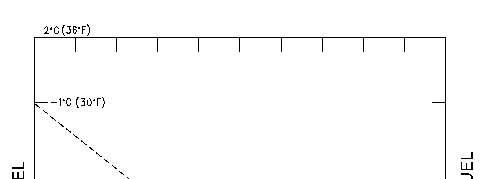
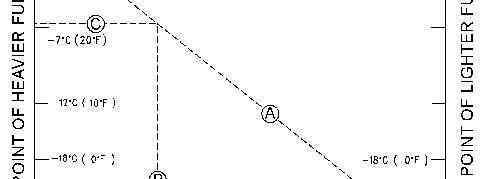
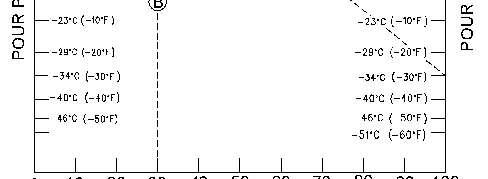

Illustration1g01180699
Pourpointoffuelmixtures
Tocalculatetheamountoflighterfuelthatisrequiredtobeblendedwiththeheavierfuel,perform thefollowingsteps:
1.Obtainthespecificationforthecloudpointorthepourpointofbothfuelsfromyourfuel supplier.
2.Locatethecloudpointorthepourpointoftheheavierfuelontheleftsideofthetable.Mark thepointonthetable.
3.Locatethecloudpointorthepourpointofthelighterfuelontherightsideofthetable. Markthepointonthetable.
4.Drawalinebetweenthetwopointsthatwereestablished.Labelthisline"A".
5.Determinethelowestoutsidetemperatureformachineoperation.Findthispointontheleft sideofthetable.Markthispoint.Drawahorizontallinefromthispoint.Stopthelineatthe intersectionofline"A".Labelthisnewline"C".
6.Line"C"andline"A"intersect.Markthispoint.Drawaverticallinefromthispoint.Stop thelineatthebottomofthetable.Labelthisline"B".Thepointatthebottomofline"B" revealsthepercentageoflighterfuelthatisrequiredtomodifythecloudpointorthepour point.
Theaboveexampleshowsthattheblendingwillrequirea30percentmixtureoflighterfuel.
Additivesareagoodmethodtousetolowerthepourpointofafuel.Theseadditivesareknown bythefollowingnames:pourpointdepressants,coldflowimprovers,andwaxmodifiers.When theadditivesareusedintheproperconcentration,thefuelwillflowthroughpumps,lines,and hoses.
Note:Theseadditivesmustbethoroughlymixedintothefuelattemperaturesthatareabovethe cloudpoint.Thefuelsuppliershouldbecontactedtoblendthefuelwiththeadditives.The blendedfuelcanbedeliveredtoyourfueltanks.
Thestandardmethodstomeasurethepourpointofthefuelsare:
•"ASTMD4539"TestMethodforFilterabilityofDieselFuelsbyLow-TemperatureFlow Test(LTFT)
•"ASTMD6371"TestMethodforColdFilterPluggingPointofDieselandHeatingFuels
LubricityandLowSulfurDiesel(LSD)andUltraLowSulfur Diesel(ULSD)Fuel
Thelubricityofthefluiddescribestheabilityofthefluidtoreducethefrictionbetweensurfaces thatareunderload.Thisabilityreducesthedamagethatiscausedbyfriction.Fuelinjection systemsrelyonthelubricatingpropertiesofthefuel.
Note:Thefuellubricityisimportant.Thelubricityofthefuelshouldbeconsideredwheneveryou operatetheequipmentintemperatureextremes,whetherextremelyhotorextremelycold.Also, youshouldconsiderthefuellubricitywheneveryouusefuelsthatarelowerinviscosityorthat havebeenhydro-treated.Therearemanyaftermarketadditivesthatareavailabletotreatfuel.If thelubricityofthefuelisanissue,consultyourfuelsupplierforproperrecommendations regardingfueladditives.Also,refertothisSpecialPublication,"DistillateDieselFuel"article, “AftermarketFuelAdditives”and“DieselFuelConditioner”topics.
ThefinishedfuelsasdescribedbyCaterpillarDieselFuelSpecification,"ASTMD975"or"EN 690"areattherecommendedlubricitylevels.Todeterminethelubricityofthefuel,usethe "ASTMD6079HighFrequencyReciprocatingRig(HFRR)"test.Themaximumallowablewear scaris0.52mm(0.0205inch)at60°C(140°F).Ifthelubricityofafueldoesnotmeetthe minimumrequirements,consultyourfuelsupplier.Donottreatthefuelwithoutconsultingthe fuelsupplier.Someadditivesarenotcompatible.Theseadditivescancauseproblemsinthefuel system.
Theprocessthatismostcommonlyusedtoremovesulfurfromfueliscalledhydro-treatment. Thisprocessisalsothemosteconomicalprocess.Eachsourceofcrudeoilcontainsdifferent
amountsofsulfur.Crudeoilstypicallyrequirehydro-treatmenttoobtainthe0.0015percent maximumsulfurlimit.Crudeoilswithhighsulfurrequireamoreseveretreatment.
Thehydro-treatmentremovesthesulfurandothercomponentsfromthefuel.Thetreatment removesnitrogencompounds,polarmaterials,bicyclicaromatics,polycyclicaromatics,and oxygencompounds.Whiletheremovalofsulfurhasshownnodetrimentaleffectstotheengine, theremovalofothercompoundshaveloweredthelubricityofthefuel.Asaresultofthelowered lubricity,thefuelislesstolerantofcontaminationbywateranddirt.Thelowerfuellubricitycan beseenasabrasivewearoffuelsystemcomponents.Fuelsthathavealowlubricitymaynot provideadequatelubricationtoplungers,tobarrels,andtoinjectors.Thisproblemmaybe compoundedinareasthatrequirewinterblendsoffuel.Thelighterwinterfuelblendhasthe followingcharacteristics:lowerviscosity,lowercloudpointandlowerpourpoint.
Thefinishedfuelsthatarepertherecommendedspecificationsshouldhavethecorrectlubricity. However,ifrequired,thelubricityofthefuelmaybeenhancedwithadditives.Manyfuel supplierstreatthefuelwiththeseadditives.Donotuseafuellubricityadditivebeforeyouconsult thefuelsupplier.Someaftermarketadditivesmaynotbecompatiblewiththeadditivesthatare alreadyinthefuel,andsomemaydamageemissioncontrolsystems.Someadditivepackagesthat aresuppliedbytheaftermarketmanufacturermaynotbecompatiblewiththesealsthatareusedin fuelsystemsofsomedieselengines.Otheradditivepackagesthataresuppliedbyaftermarket manufacturerscannotprovideproperperformanceinhightemperatureconditions.Theseadditives mayleavedepositsbecauseofthehightemperaturesthatexistinthefuelsystemsofdiesel engines.
Maximumlifeofthefuelsystemcanbeachievedbyperformingthefollowingtasks:usinga preferreddistillatedieselfuel(refertothe“FuelRecommendations”articleinthisSpecial Publication),usingareliablefuelsupplierandperformingpropermaintenanceofthefuelsystem. CaterpillarAdvancedEfficiencyfuelfiltersarerequiredfordieselenginesthatrunondieselfuel toprovidemaximumlifetothefuelsystem.
Note:Lighterfuelsarefrequentlyusedinarctictemperatures.Lighterfuelsmayincludethe followingfuels:JetA,JetA-1,JP-8,JP-5,andkerosene.Thespecificationsthatapplytothese fuelsdonotincludeaminimumlubricityrequirement.Donotassumethatafuelmeetsthe minimumCaterpillarspecification.Contactthefuelsupplierforproperrecommendationsonfuel lubricityadditives.
Note:ThesulfurlevelsforJetA,JetA-1,JP-8,JP-5,andkerosenefuelstypicallyfarexceed15 ppm,theU.S.ULSDfuel,andthesulfurlevelsforthesefuelstypicallyfarexceed50ppm,theEU lowsulfurfuel.
Note:Forbestresults,yourfuelsuppliershouldtreatthefuelwhenadditivesarerequired.
RefertothisSpecialPublication,"DistillateDieselFuel"article,“AftermarketFuelAdditives”, “DieselFuelConditioner”,and“AlternativeFuels-ArcticApplications”topicsforguidance.
Fuelvolatility
Fuelvolatilityismeasuredandcontrolledbythefueldistillationcurve.Theoptimalfuelvolatility requiredforvariousenginesdependsontheengineapplication,design,loads,speeds,ambient temperatures,andotherfactors.Lowvolatilityfuelsmayhaveahigherenergycontent(heating value).Ontheotherhand,fuelsofhighinitialvolatilitymayimprovethestartabilityandwarmup processandreducesmoke.High-performancefuelshavetherightbalanceofvolatility.
Thefueldistillationcurvedescribestheamountoffuelthatevaporatesatvarioustemperatures.Of thesetemperatures,theheavyendischaracterizedbytheT90,thetemperaturewhere90percentof thefuelevaporates.IftheT90exceedsthemaximumlimitsgiveninthe"CatSpecificationfor DistillateFuelforNonroadDieselEngines"Table,inthe"DistillateDieselFuel"section,thefuel mayincreasesmoke,deposits,soot,andparticulatematteremissions.Thelowerendorlow distillationtemperaturesarenotspecifiedinthe"CatSpecificationforDistillateFuelforNonroad DieselEngines"Table,norin"ASTMD975"orsimilarspecifications.However,verylow distillationtemperaturesmaycausethefueltobecomevolatileatlowtemperaturesandmaycause cavitationoffuelpumpsorfuelsystemcomponents.
DieselFuelSulfur
Sulfurisanaturalcomponentofdieselfuels.Highsulfurinthefuelcanbereducedthrough refiningtechnologies.
Sulfurlevelsinthefuelaffectthedurabilityofenginecomponentsandalsoaffectengineexhaust emissions.ModernCatdieselenginesaredesignedtomeetmandatedgaseousemissions requirements.Tomeettheseemissionsrequirements,theenginesaretestedanddevelopedwith specificsulfurlevelsinthedieselfuel.
Themaximumallowablefuelsulfurleveliscontrolledbyvariousemissionslaws,regulations,and mandates.Consultfederal,state,andlocalauthoritiesforguidanceonfuelrequirementsforyour area.
Thelistbelowprovidesaquickreferenceforacceptablesulfurlevelsfordieselfuelthatwillbe usedinCatmachinedieselenginesbutthecontrollingdocumentsaretheengineOperationand MaintenanceManuals,thespecificaftertreatmentdevicedocumentation,andtheapplicable emissionslaws,regulations,andmandates.
• usingfuelsensitivetechnologiessuchasSCRsystemsandparticulatefilters.Fuelsother thanULSDcancausedamageinthoseenginesandshouldnotbeused.ConsulttheU.S. EPAforfuelsulfurregulationsandfortheULSDpointofsalesrequireddatesforvarious nonroadapplications.
•Europeansulfurfreefuel,0.0010percent(=10mg/kg)sulfur,fuelisrequiredbyregulation foruseinenginescertifiedtoEUnonroadStageIIIBandnewerstandardsandthatare equippedwithexhaustaftertreatmentsystems.
•Certaingovernments/localitiesand/orapplicationsMAYrequiretheuseofULSDfuel. Consultfederal,state,andlocalauthoritiesforguidanceonfuelrequirementsforyourarea.
•Themaximumallowablefuelsulfurlevelformostpre-Tier4enginesthatareequippedwith DOC(DieselOxidationCatalyst)is0.05percent(500ppm(mg/kg)).SomeDOCequipped enginesrequiretheuseoffuelwithamaximumof0.005%(50ppm(mg/kg))fuelsulfur. Refertotheengine/machineOperationandMaintenanceManualandrefertothe aftertreatmentdevice-specificdocumentationforguidance.
•Formachinedieselenginesthatareretrofittedwithanaftertreatmentdevice,refertothe aftertreatmentdevice-specificdocumentation.
TypicalaftertreatmentsystemsincludeDieselParticulateFilters(DPF),DieselOxidation Catalysts(DOC),SelectiveCatalyticReduction(SCR)and/orLeanNOxTraps(LNT).Other systemsmayapply.
Inadditiontotheemissionregulations,factorsthataffectmaximumallowedand/oracceptable fuelsulfurlevelinclude:
•Enginemodel/design
•Engineapplication
•Overallfuelquality
•Usingrecommendedfluids,includingbutnotlimitedtoengineoilquality
•Exhaustaftertreatmentdevicetype
•Environmentalfactorsandothersite-specificoperatingconditions
•Fuelcostsversusriskofshortenedengine/enginecomponentlife
•Fuelcostsversusshortenedoildrainintervals
•Maintenanceintervalsandothermaintenancepractices
Ultra-LowSulfurDiesel(ULSD)
TheUnitedStates(U.S.)EnvironmentalProtectionAgency(EPA)definesUltra-LowSulfur Diesel(ULSD-S15)asaU.S.dieselfuelwithasulfurcontentnottoexceed15partspermillion (ppm(mg/kg))or0.0015percentbyweight.
ULSDwasintroducedfortheU.S.on-highwaydieselenginemarketinOctober2006.ULSDis availablesinceDecember2010fornonroaddieselenginesandmachines.RefertotheU.S.EPA fortherequiredULSDpointofsalesdatesforvariousnonroadapplications.
EnginescertifiedtononroadTier4standards(StageIVinEurope)andareequippedwithfuel sulfursensitiveexhaustaftertreatmentsystemsaredesignedtorunonULSDonly.UseofLSDor fuelshigherthan15ppm(mg/kg)sulfurintheseengineswillreduceengineefficiencyandengine durabilityandwilldamageemissionscontrolsystemsand/orshortentheserviceinterval.Failures thatresultformtheuseoffuelsarenotCatfactorydefects.Thereforethecostofrepairswouldnot becoveredbyaCatwarranty.
ULSDfuelcanbeusedinanyenginedesignedtorunondieselfuel.Catdoesnotrequiretheuse ofULSDinnonroadandmachineapplicationsthatarenotTier4/StageIIIB/StageIVcertified enginesandarenotequippedwithaftertreatmentdevices.ForTier4/StageIIIB/StageIVcertified engines,alwaysfollowoperatinginstructionsandfueltankinletlabels,ifavailable,toinsurethe correctfuelsareused.
Note:TheremovalofsulfurandothercompoundsinUltraLowSulfurDiesel(ULSD)fuel decreasestheconductivityofULSDandincreasestheabilityofthefueltostorestaticcharge. Refineriesmayhavetreatedthefuelwithastaticdissipatingadditive.However,therearemany factorsthatcanreducetheeffectivenessoftheadditiveovertime.Staticchargescanbuildupin ULSDfuelwhilethefuelisflowingthroughfueldeliverysystems.Staticelectricitydischarge whencombustiblevaporsarepresentcouldresultinafireorexplosion.Therefore,ensuringthat
theentiresystemusedtorefuelyourmachine(fuelsupplytank,transferpump,transferhose, nozzle,andothers)isproperlygroundedandbondedisimportant.Consultwithyourfuelorfuel systemsuppliertoensurethatthedeliverysystemisincompliancewithfuelingstandardsfor propergroundingandbondingpractices.
Thestandardmethodsfortestingconductivityofdieselfuelare:
•"ASTMD2624"TestMethodsforElectricalConductivityofAviationandDistillateFuels
•"ASTMD4308"TestMethodforElectricalConductivityofLiquidHydrocarbonsby PrecisionMeter
Sulfur-freeDieselFuel
InEurope,ultralowsulfurdieselfuelwillhaveamaximumof0.0010percent(10ppm(mg/kg)) sulfurandistypicallyreferredtoas“sulfur-free”.Thissulfurlevelisdefinedin"European StandardEN590:2004".
LowSulfurDiesel(LSD)
LowSulfurDiesel(LSD-S500)isdefinedbytheU.S.EPAasaU.S.dieselfuelwithsulfur contentnottoexceed500ppmor0.05percentbyweight.
Note:BothULSDandLSDmustmeetthefuelrequirementsoutlinedinthemostcurrentrevision levelof"ASTMD975".
DieselFuelSulfurImpacts
Sulfurinthefuelresultsintheformationofsulfurdioxide(SO2)andsulfurtrioxide(SO3)gases duringthecombustionprocess.WhencombinedwithwaterintheexhaustgasSO2andSO3can formacids.Theacidscanimpactenginecomponentsandenginelubricants.
Sulfurintheexhaustgascaninterferewiththeoperationofaftertreatmentdevicescausinglossof passiveregenerationperformance,reducedgaseousemissionconversionefficiency,andincreased particulatematteremissions.
TypicalaftertreatmentsystemsincludeDieselParticulateFilters(DPF),DieselOxidation Catalysts(DOC),SelectiveCatalyticReduction(SCR)and/orLeanNOxTraps(LNT).Other systemsmayapply.
Useoffuelswithhigherthanrecommendedand/ormaximumallowedfuelsulfurlevelscanand/or will:
•Increasewearofenginecomponents
•Increasecorrosionofenginecomponents
•Increasedeposits
•Increasesootformation
•Shortenthetimeperiodbetweenoildrainintervals(causetheneedformorefrequentoil drainintervals)
This is the sample of the manual if you need complete manual Click Here to download