DOWNLOAD LINK
For some reason if link does not work download this pdf and then click
Product: INDUSTRIAL ENGINE
Model: C-16 INDUSTRIAL ENGINE BFM
Configuration: C-16 Industrial Engine BFM00001-UP
Operation and Maintenance Manual
C-15 and C-16 Industrial Engines
Aftercooler Core - Clean/Test - Air-To-Air Aftercooler
SMCS - 1064-070; 1064-081
Note: Adjust the frequency of cleaning according to the effects of the operating environment.
Inspect the aftercooler for these items: damaged fins, corrosion, dirt, grease, insects, leaves, oil and other debris. Clean the aftercooler, if necessary.
For air-to-air aftercoolers, use the same methods that are used for cleaning radiators.
Personal injury can result from air pressure.
Personal injury can result without following proper procedure. When using pressure air, wear a protective face shield and protective clothing.
Maximum air pressure at the nozzle must be less than 205 kPa (30 psi) for cleaning purposes.
Pressurized air is the preferred method for removing loose debris. Direct the air in the opposite direction of the fan's air flow. Hold the nozzle approximately 6 mm (0.25 inch) away from the fins. The maximum air pressure for cleaning purposes must be below 205 kPa (30 psi) when the air nozzle is deadheaded. Slowly move the air nozzle in a direction that is parallel with the tubes. This will remove debris that is between the tubes.
Pressurized water may also be used for cleaning. The maximum water pressure for cleaning purposes must be less than 275 kPa (40 psi). Use pressurized water in order to soften mud. Clean the core from both sides.
Use a degreaser and steam for removal of oil and grease. Clean both sides of the core. Wash the core with detergent and hot water. Thoroughly rinse the core with clean water.
After cleaning, start the engine and accelerate the engine to high idle rpm. This will help in the removal of debris and drying of the core. Stop the engine. Use a light bulb behind the core in order to inspect the core for cleanliness. Repeat the cleaning, if necessary.
Inspect the fins for damage. Bent fins may be opened with a "comb".
Note: If parts of the aftercooler system are repaired or replaced, a leak test is highly recommended.
Inspect these items for good condition: welds, mounting brackets, air lines, connections, clamps and seals. Make repairs, if necessary.
For more detailed information on cleaning and inspection, see Special Publication, SEBD0518, "Know Your Cooling System".
Copyright 1993 - 2025 Caterpillar Inc. All Rights Reserved. Private Network For SIS Licensees. Wed Jan 8 04:08:01 UTC+0530 2025
Product: INDUSTRIAL ENGINE
Model: C-16 INDUSTRIAL ENGINE BFM
Configuration: C-16 Industrial Engine BFM00001-UP
Operation and Maintenance Manual
C-15 and C-16 Industrial Engines
Aftercooler Core - Clean/Test
SMCS - 1064-070; 1064-081
1. Remove the core. Refer to the Service Manual for the procedure.
2. Turn the aftercooler core upside-down in order to remove debris.
NOTICE
Do not use a high concentration of caustic cleaner to clean the core. A high concentration of caustic cleaner can attack the internal metals of the core and cause leakage. Only use the recommended concentration of cleaner.
3. Back flush the core with cleaner.
Caterpillar recommends the use of Hydrosolv liquid cleaner. Table 1 lists Hydrosolv liquid cleaners that are available from your Caterpillar dealer.
Table 1
Hydrosolv Liquid Cleaners(1)
Part
1U-5490
174-6854
Hydrosolv 4165 19 L (5 US gallon)
Hydrosolv 100 19 L (5 US gallon)
(1) Use a two to five percent concentration of the cleaner at temperatures up to 93°C (200°F). Refer to Application Guide, NEHS0526 or consult your Caterpillar dealer for more information.
4. Steam clean the core in order to remove any residue. Flush the fins of the aftercooler core. Remove any other trapped debris.
5. Wash the core with hot, soapy water. Rinse the core thoroughly with clean water.
Personal injury can result from air pressure.
Personal injury can result without following proper procedure. When using pressure air, wear a protective face shield and protective clothing.
Maximum air pressure at the nozzle must be less than 205 kPa (30 psi) for cleaning purposes.
6. Dry the core with compressed air. Direct the air in the reverse direction of the normal flow.
7. Inspect the core in order to ensure cleanliness. Pressure test the core. Many shops that service radiators are equipped to perform pressure tests. If necessary, repair the core.
8. Install the core. Refer to the Service Manual for the procedure.
For more information on cleaning the core, consult your Caterpillar dealer.
Copyright 1993 - 2025 Caterpillar Inc. All Rights Reserved. Private Network For SIS Licensees.
Wed Jan 8 04:08:09 UTC+0530 2025
Product: INDUSTRIAL ENGINE
Model: C-16 INDUSTRIAL ENGINE BFM
Configuration: C-16 Industrial Engine BFM00001-UP
Operation and Maintenance Manual
C-15 and C-16 Industrial Engines
Aftermarket Oil Additives
SMCS - 1300; 1348; 7581
Caterpillar does not recommend the use of aftermarket additives in oil. It is not necessary to use aftermarket additives in order to achieve the engine's maximum service life or rated performance. Fully formulated, finished oils consist of base oils and of commercial additive packages. These additive packages are blended into the base oils at precise percentages in order to help provide finished oils with performance characteristics that meet industry standards.
There are no industry standard tests that evaluate the performance or the compatibility of aftermarket additives in finished oil. Aftermarket additives may not be compatible with the finished oil's additive package, which could lower the performance of the finished oil. The aftermarket additive could fail to mix with the finished oil. This could produce sludge in the crankcase. Caterpillar discourages the use of aftermarket additives in finished oils.
To achieve the best performance from a Caterpillar engine, conform to the following guidelines:
• Select the proper Caterpillar oil or a commercial oil that meets the Caterpillar recommendations.
• See the appropriate "Lubricant Viscosities" table in order to find the correct oil viscosity grade for your engine.
• At the specified interval, service the engine compartment. Use new oil and install a new oil filter.
• Perform maintenance at the intervals that are specified in the Operation and Maintenance Manual, "Maintenance Interval Schedule".
Copyright 1993 - 2025 Caterpillar Inc. All Rights Reserved. Private Network For SIS Licensees. Wed Jan 8 04:04:20 UTC+0530 2025
Product: INDUSTRIAL ENGINE
Model: C-16 INDUSTRIAL ENGINE BFM
Configuration: C-16 Industrial Engine BFM00001-UP
Operation and Maintenance Manual
C-15 and C-16 Industrial Engines
Air Compressor - Inspect
SMCS - 1803-040
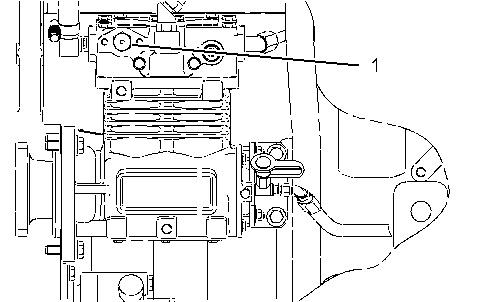
Do not disconnect the air line from the air compressor governor without purging the air brake and the auxiliary air systems. Failure to purge the air brake and the auxiliary air systems before removing the air compressor and/or the air lines could cause personal injury. Illustration 1
i02113479
(1) Pressure relief valve
If the air compressor pressure relief valve that is mounted in the air compressor cylinder head is bypassing compressed air, there is a malfunction in the air system, possibly ice blockage. Under these conditions, your engine may have insufficient air for normal brake operation.
Do not operate the engine until the reason for the air bypass is identified and corrected. Failure to heed this warning could lead to property damage, personal injury, or death to the operator or bystanders.
The function of the pressure relief valve is to bypass air when there is a malfunction in the air compressor system.
The pressure relief valve releases air at 1723 kPa (250 psi). Do not stand near the pressure relief valve. Compressed air may be released without warning. All personnel should also stay clear of the air compressor when the engine is operating and the air compressor is exposed.
Refer to the Service Manual or refer to the OEM specifications in order to find information concerning the air compressor. Consult your Caterpillar dealer for assistance.
1993 - 2025 Caterpillar Inc.
Wed Jan 8 04:08:23 UTC+0530 2025
Product: INDUSTRIAL ENGINE
Model: C-16 INDUSTRIAL ENGINE BFM
Configuration: C-16 Industrial Engine BFM00001-UP
Operation and Maintenance Manual
C-15 and C-16 Industrial Engines
Air Compressor Filter - Clean/Replace
SMCS - 1803-070; 1803-510
One of the single most important aspects of preventive maintenance for the air compressor is the induction of clean air. The type of maintenance that is required for the air compressor and the maintenance interval depends on the type of air induction system that is used. Operating conditions (dust, dirt and debris) may require more frequent service.
Refer to the Service Manual for the type of air compressor that is installed on the engine. Follow the maintenance recommendations that are provided by the OEM of the air compressor. Some engines use boost air pressure so the engine air cleaner will require servicing.
Copyright 1993 - 2025 Caterpillar Inc. All Rights Reserved. Private Network For SIS Licensees.
Wed Jan 8 04:08:36 UTC+0530 2025
i01491325
Product: INDUSTRIAL ENGINE
Model: C-16 INDUSTRIAL ENGINE BFM
Configuration: C-16 Industrial Engine BFM00001-UP
Operation and Maintenance Manual
C-15 and C-16 Industrial Engines Media
Air Starting Motor Lubricator Oil Level - Check - If
Equipped
SMCS - 1451-535
NOTICE
Never allow the lubricator bowl to become empty. The air starting motor will be damaged by a lack of lubrication. Ensure that sufficient oil is in the lubricator bowl.
i00805129
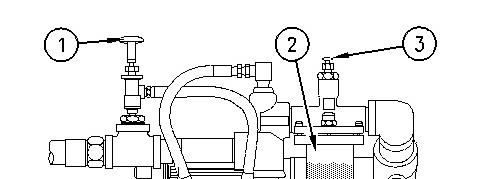
(1) Air valve
(2) Lubricator bowl
(3) Adjustment knob
1. The vanes of the air starting motor are lubricated with a fine mist of oil from the air starting motor lubricator. Check the level of oil in lubricator bowl (2). If the oil level is less than 1/2, add oil to the lubricator bowl.
2. Ensure that the air supply to the lubricator is OFF.
3. Remove the plug. Pour oil into lubricator bowl (2). Use "10W" oil for temperatures that are greater than 0° C (32° F). Use air tool oil for temperatures that are below 0° C (32° F).
4. Install the plug.
Oiler Feed Adjustment
If necessary, adjust the lubricator in order to release approximately two drops of fluid per 30 seconds into the starting motor air stream.
1. Ensure that the fuel supply to the engine is OFF.
2. Turn adjustment knob (3) clockwise until the adjustment knob locks.
3. Turn adjustment knob (3) counterclockwise for 1/4 turns.
NOTICE
Do not crank the engine continuously for more than 30 seconds. Allow the starting motor to cool for two minutes before cranking the engine again.
4. Crank the starting motor for ten seconds and observe the exhaust air from the mufflers of the starting motor. Look for oil mist. A slight oil mist should be barely visible.
If no mist is observed, or if the mist is excessive, rotate adjustment knob (3) in increments of 1/16 in order to increase or decrease the oil mist. Repeat the starting motor cranking and observe until the mist is satisfactory.
Note: Drip rates should only be made under an average steady flow condition. Once a steady flow condition is established, the lubricator will automatically adjust the drip rate in proportion to the variations in air flow.
Copyright 1993 - 2025 Caterpillar Inc. All Rights Reserved.
Network For SIS Licensees.
Wed Jan 8 04:08:46 UTC+0530 2025
Product: INDUSTRIAL ENGINE
Model: C-16 INDUSTRIAL ENGINE BFM
Configuration: C-16 Industrial Engine BFM00001-UP
Operation and Maintenance Manual
C-15 and C-16 Industrial Engines
Air Tank Moisture and Sediment - Drain - If Equipped
SMCS - 1466-543-M&S
Moisture and sediment in the air starting system can cause the following conditions:
• Freezing
• Corrosion of internal parts
• Malfunction of the air starting system
When opening the drain valve, wear protective gloves, a protective face shield, protective clothing, and protective shoes. Pressurized air could cause debris to be blown and result in personal injury.
1. Open the drain valve that is on the bottom of the air tank. Allow the moisture and sediment to drain.
2. Close the drain valve.
3. Check the air supply pressure. The air starting motor requires a minimum of 620 kPa (90 psi) of air pressure to operate properly. The maximum air pressure must not exceed 1550 kPa (225 psi). The normal air pressure will be 758 to 965 kPa (110 to 140 psi).
Copyright 1993 - 2025 Caterpillar Inc. All Rights Reserved.
Private Network For SIS Licensees. Wed Jan 8 04:08:57 UTC+0530 2025
Product: INDUSTRIAL ENGINE
Model: C-16 INDUSTRIAL ENGINE BFM
Configuration: C-16 Industrial Engine BFM00001-UP
Operation and Maintenance Manual
C-15 and C-16 Industrial Engines
Media Number -SEBU7517-01
Alternator - Inspect
SMCS - 1405-040
-01/08/2001
-09/10/2001
Caterpillar recommends a scheduled inspection of the alternator. Inspect the alternator for loose connections and proper battery charging. Inspect the ammeter (if equipped) during engine operation in order to ensure proper battery performance and/or proper performance of the electrical system. Make repairs, as required.
Check the alternator and the battery charger for proper operation. If the batteries are properly charged, the ammeter reading should be very near zero. All batteries should be kept charged. The batteries should be kept warm because temperature affects the cranking power. If the battery is too cold, the battery will not crank the engine. The battery will not crank the engine, even if the engine is warm. When the engine is not run for long periods of time or if the engine is run for short periods, the batteries may not fully charge. A battery with a low charge will freeze more easily than a battery with a full charge.
Copyright 1993 - 2025 Caterpillar Inc. All Rights Reserved. Private Network For SIS Licensees.
Wed Jan 8 04:09:07 UTC+0530 2025
i02676048
Product: INDUSTRIAL ENGINE
Model: C-16 INDUSTRIAL ENGINE BFM
Configuration: C-16 Industrial Engine BFM00001-UP
Operation and Maintenance Manual
C-15 and C-16 Industrial Engines
Battery - Replace
SMCS - 1401-510
Batteries give off combustible gases which can explode. A spark can cause the combustible gases to ignite. This can result in severe personal injury or death.
Ensure proper ventilation for batteries that are in an enclosure. Follow the proper procedures in order to help prevent electrical arcs and/or sparks near batteries. Do not smoke when batteries are serviced.
The battery cables or the batteries should not be removed with the battery cover in place. The battery cover should be removed before any servicing is attempted.
Removing the battery cables or the batteries with the cover in place may cause a battery explosion resulting in personal injury.
Note: Always recycle a battery. Never discard a battery. Return used batteries to an appropriate recycling facility.
1. Turn the key start switch to the OFF position. Remove the key and all electrical loads.
2. Turn OFF the battery charger. Disconnect the charger.
i06738473
3. Turn battery isolator switch to OFF position.
4. The NEGATIVE "-" cable connects the NEGATIVE "-" battery terminal to the ground plane. Disconnect the cable from the NEGATIVE "-" battery terminal.
5. The POSITIVE "+" cable connects the POSITIVE "+" battery terminal to the starting motor. Disconnect the cable from the POSITIVE "+" battery terminal.
Note: Always recycle a battery. Never discard a battery. Return used batteries to an appropriate recycling facility.
6. Remove the used battery.
7. Install the new battery.
Note: Before the cables are connected, ensure that the key start switch is OFF.
8. Connect the cable from the starting motor to the POSITIVE "+" battery terminal.
9. Connect the cable from the ground plane to the NEGATIVE "-" battery terminal.
Wed Jan 8 04:09:25 UTC+0530 2025
Product: INDUSTRIAL ENGINE
Model: C-16 INDUSTRIAL ENGINE BFM
Configuration: C-16 Industrial Engine BFM00001-UP
Operation and Maintenance Manual
C-15 and C-16 Industrial Engines
Battery Electrolyte Level - Check
SMCS - 1401-535
When the engine has not run for long or short periods of time, the batteries may not fully recharge. Ensure a full charge to help prevent the battery from freezing.
In warmer climates, check the electrolyte level more frequently.
Ensure that the electrolyte level is 13 mm (0.5 inch) above the top of the separators.
All lead-acid batteries contain sulfuric acid which can burn the skin and clothing. Always wear a face shield and protective clothing when working on or near batteries.
1. Remove the filler caps. Maintain the electrolyte level to the "FULL" mark on the battery.
If the addition of water is necessary, use distilled water. If distilled water is not available, use clean water that is low in minerals. Do not use artificially softened water.
2. Check the condition of the electrolyte with the 245-5829 Coolant Battery Tester Refractometer.
3. Keep the batteries clean.
Clean the battery case with one of the following cleaning solutions:
A mixture of 0.1 kg (0.2 lb) of baking soda and 1 L (1 qt) of clean water
A mixture of 0.1 L (0.11 qt) of ammonia and 1 L (1 qt) of clean water
Thoroughly rinse the battery case with clean water.
i07185134
Use the 1U-9921 Battery Service Tool to clean the battery terminals. Use a wire brush to clean the cable clamps. Clean the items until the surfaces are bright or shiny. DO NOT remove material excessively. Excessive removal of material can cause the clamps to fit improperly. Coat the clamps and the terminals with 5N-5561 Silicone Lubricant, petroleum jelly or MPGM.
Copyright 1993 - 2025 Caterpillar Inc. All Rights Reserved. Private Network For SIS Licensees.
Wed Jan 8 04:09:41 UTC+0530 2025
Product: INDUSTRIAL ENGINE
Model: C-16 INDUSTRIAL ENGINE BFM
Configuration: C-16 Industrial Engine BFM00001-UP
Operation and Maintenance Manual
C-15 and C-16 Industrial Engines
Battery or Battery Cable - Disconnect
SMCS - 1402-029
The battery cables or the batteries should not be removed with the battery cover in place. The battery cover should be removed before any servicing is attempted.
Removing the battery cables or the batteries with the cover in place may cause a battery explosion resulting in personal injury.
1. Turn the start switch to the OFF position. Turn the ignition switch (if equipped) to the OFF position and remove the key and all electrical loads.
2. Disconnect the negative battery terminal at the battery that goes to the start switch. Ensure that the cable cannot contact the terminal. When four 12 volt batteries are involved, the negative side of two batteries must be disconnected.
3. Tape the leads in order to help prevent accidental starting.
4. Proceed with necessary system repairs. Reverse the steps in order to reconnect all of the cables.
Copyright 1993 - 2025 Caterpillar Inc. All Rights Reserved. Private Network For SIS Licensees. Wed Jan 8 04:10:03 UTC+0530 2025
Product: INDUSTRIAL ENGINE
Model: C-16 INDUSTRIAL ENGINE BFM
Configuration: C-16 Industrial Engine BFM00001-UP
Operation and Maintenance Manual
C-15 and C-16 Industrial Engines
Belt - Inspect
SMCS - 1357-040; 1357; 1397-040; 1397
Inspection
Belt tension should be checked initially between the first 20 to 40 hours of engine operation.
After the initial check, the belt tension should be checked at Every PM Level 1 or Three Months.
To maximize the engine performance, inspect the belts for wear and for cracking. Replace belts that are worn or damaged.
For applications that require multiple drive belts, replace the belts in matched sets. Replacing only one belt of a matched set will cause the new belt to carry more load because the older belt is stretched. The additional load on the new belt could cause the new belt to break.
If the belts are too loose, vibration causes unnecessary wear on the belts and pulleys. Loose belts may slip enough to cause overheating.
If the belts are too tight, unnecessary stresses are placed on the pulley bearings and on the belts. This may shorten the service life of the components.
Remove the belt guard. Inspect the condition and adjustment of the alternator belts and accessory drive belts (if equipped).
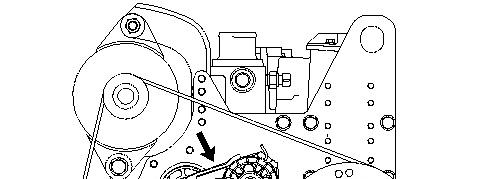
To check the belt tension, apply 110 N (25 lb ft) of force midway between the pulleys. A correctly adjusted belt will deflect 9 mm (0.35 inch) to 15 mm (0.59 inch).
If the belt does not require replacement or adjustment, install the belt guard. If the belt requires adjustment or replacement, perform the following procedure to adjust the belt tension.
• If the engine is equipped with a refrigerant compressor (air conditioner), the belt for the fan drive, the alternator, and the accessories will have an automatic belt tensioner.
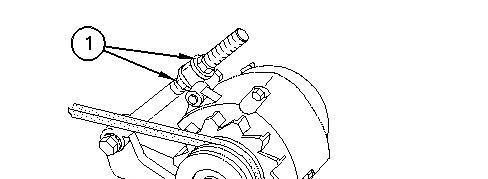
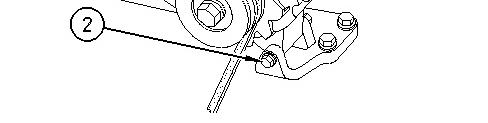
• If the engine is not equipped with a refrigerant compressor, the alternator is used to adjust the belt tension.
i02126625