

CAT + Caterpillar 992K Wheel Loader Operation & Maintenance Manual

Page 1


Product: WHEEL LOADER

Model: 992K WHEEL LOADER ZMX

Configuration: 992K Wheel Loader ZMX00001-UP (MACHINE) POWERED BY C32 Engine

Operation and Maintenance Manual

992K Wheel Loader

Media Number -SEBU8651-08 Publication Date -01/08/2015 Date Updated -12/09/2019

Operator Station

SMCS - 7000

Any modifications to the inside of the operator station should not project into the operator space or into the space for the companion seat (if equipped). The addition of a radio, fire extinguisher, and other equipment must be installed so that the defined operator space and the space for the companion seat (if equipped) is maintained. Any item that is brought into the cab should not project into the defined operator space or the space for the companion seat (if equipped). A lunch box or other loose items must be secured. Objects must not pose an impact hazard in rough terrain or in the event of a rollover.

Copyright 1993 - 2024 Caterpillar Inc. All Rights Reserved. Private Network For SIS Licensees.

Wed May 29 09:18:18 UTC+0530 2024

i07746362

Product: WHEEL LOADER

Model: 992K WHEEL LOADER ZMX

Configuration: 992K Wheel Loader ZMX00001-UP (MACHINE) POWERED BY C32 Engine

Operation and Maintenance Manual

992K Wheel Loader

Media Number -SEBU8651-08

Sound Information and Vibration Information

SMCS - 7000

Sound Level Information

The operator Equivalent Sound Pressure Level (Leq) is 72 dB(A) when "ANSI/SAE J1166 FEB2008" is used to measure the value for an enclosed cab. This is a work cycle sound exposure level. The cab was properly installed and maintained. The test was conducted with the cab doors and the cab windows closed.

The declared sound levels listed above include both measurement uncertainty and uncertainty due to production variation.

Hearing protection may be needed when the machine is operated with a cab that is not properly maintained or when the doors or windows are open for extended periods or in a noisy environment.

The average exterior sound pressure level is 83 dB(A) when the "SAE J88 FEB2006 - Constant Speed Moving Test" procedure is used to measure the value for the standard machine. The measurement was conducted under the following conditions: distance of 15 m (49.2 ft) and “the machine moving forward in an intermediate gear ratio”.

Sound Level Information for Machines in European Union Countries and in Countries that Adopt the "EU Directives"

The dynamic operator sound pressure level is 70 dB(A) when "ISO 6396:2008" is used to measure the value for an enclosed cab. The measurement was conducted at 70% of the maximum engine cooling fan speed. The sound level may vary at different engine cooling fan speeds. The cab was properly installed and maintained. The measurement was conducted with the cab doors and windows closed.

The declared exterior sound power level LWA is 113 dB(A) when the value is measured according to the dynamic test procedures and the conditions that are specified in "ISO 6395:2008". The

i07776270

This is the sample of the manual click on the download link for complete manual

DOWNLOAD LINK

For some reason if link does not work download this pdf and then click

measurement was conducted at 70 % of the maximum engine cooling fan speed. The sound level may vary at different engine cooling fan speeds.

The declared sound levels listed above include both measurement uncertainty and uncertainty due to production variation.

Sound Level Information for Machines in Eurasian Economic Union Countries

The declared dynamic operator sound pressure level is 71 dB(A) when "ISO 6396:2008" is used to measure the value for an enclosed cab. The measurement was conducted at 70 % of the maximum engine cooling fan speed. The sound level may vary at different engine cooling fan speeds. The measurement was conducted with the cab doors and the cab windows closed.

The declared exterior sound power level LWA is 116 dB(A) when the value is measured according to the dynamic test procedures and the conditions that are specified in "ISO 6395:2008". The measurement was conducted at 70 % of the maximum engine cooling fan speed. The sound level may vary at different engine cooling fan speeds.

The declared sound levels listed above include both measurement uncertainty and uncertainty due to production variation.

"The European Union Physical Agents (Vibration) Directive 2002/44/EC"

Vibration Data for Wheel Loaders

Information Concerning Hand/Arm Vibration Level

When the machine is operated according to the intended use, the hand/arm vibration of this machine is below 2.5 meter per second squared.

Information Concerning Whole Body Vibration Level

This section provides vibration data and a method for estimating the vibration level for wheel loaders.

Note: V)bration levels are influenced by many different parameters. Many items are listed below.

• Operator training, behavior, mode, and stress

• Job site organization, preparation, environment, weather, and material

• Machine type, quality of the seat, quality of the suspension system, attachments, and condition of the equipment

It is not possible to get precise vibration levels for this machine. The expected vibration levels can be estimated with the information in Table 1 to calculate the daily vibration exposure. A simple evaluation of the machine application can be used.

Estimate the vibration levels for the three vibration directions. For typical operating conditions, use the average vibration levels as the estimated level. With an experienced operator and smooth terrain, subtract the Scenario Factors from the average vibration level to obtain the estimated vibration level. For aggressive operations and severe terrain, add the Scenario Factors to the average vibration level to obtain the estimated vibration level.

Note: All vibration levels are in meter per second squared.

Table 1

"ISO Reference Table A - Equivalent vibration levels of whole body vibration emission for earthmoving equipment."

Machine

Wheel Loader

(1) Loading at the face

(2) Travel at high speed on the job site or on public roads

(3) Loading a truck in short cycles

Note: Refer to "ISO/TR 25398 Mechanical Vibration - Guideline for the assessment of exposure to whole body vibration of ride on operated earthmoving machines" for more information about vibration. This publication uses data that is measured by international institutes, organizations, and manufacturers. This document provides information about the whole body exposure of operators of earthmoving equipment. Refer to Operation and Maintenance Manual, SEBU8257, "The European Union Physical Agents (Vibration) Directive 2002/44/EC" for more information about machine vibration levels.

The Caterpillar suspension seat meets the criteria of "ISO 7096". This represents vertical vibration level under severe operating conditions. This seat is tested with the input "spectral class EM3". The seat has a transmissibility factor of “SEAT<1.0”.

The whole body vibration level of the machine varies. There is a range of values. The low value is 0.5 meter per second squared. The machine meets the short-term level for the design of the seat in "ISO 7096". The value is 1.13 meter per second squared for this machine.

Guidelines for Reducing Vibration Levels on Earthmoving Equipment

Properly adjust machines. Properly maintain machines. Operate machines smoothly. Maintain the conditions of the terrain. The following guidelines can help reduce the whole body vibration level:

1. Use the right type and size of machine, equipment, and attachments.

2. Maintain machines according to the manufacturer's recommendations.

a. Tire pressures

b. Brake and steering systems

c. Controls, hydraulic system, and linkages

3. Keep the terrain in good condition.

a. Remove any large rocks or obstacles.

b. Fill any ditches and holes.

c. Provide machines and schedule time to maintain the conditions of the terrain.

4. Use a seat that meets "ISO 7096". Keep the seat maintained and adjusted.

a. Adjust the seat and suspension for the weight and the size of the operator.

b. Inspect and maintain the seat suspension and adjustment mechanisms.

5. Perform the following operations smoothly.

a. Steer

b. Brake

c. Accelerate.

d. Shift the gears.

6. Move the attachments smoothly.

7. Adjust the machine speed and the route to minimize the vibration level.

a. Drive around obstacles and rough terrain.

b. Slow down when it is necessary to go over rough terrain.

8. Minimize vibrations for a long work cycle or a long travel distance.

a. Use machines that are equipped with suspension systems.

b. Use the ride control system on wheel loaders.

c. If no ride control system is available, reduce speed to prevent bounce.

d. Haul the machines between workplaces.

9. Less operator comfort may be caused by other risk factors. The following guidelines can be effective to provide better operator comfort:

a. Adjust the seat and adjust the controls to achieve good posture.

b. Adjust the mirrors to minimize twisted posture.

c. Provide breaks to reduce long periods of sitting.

d. Avoid jumping from the cab.

e. Minimize repeated handling of loads and lifting of loads.

f. Minimize any shocks and impacts during sports and leisure activities.

Sources

The vibration information and calculation procedure is based on "ISO/TR 25398 Mechanical Vibration - Guideline for the assessment of exposure to whole body vibration of ride on operated earthmoving machines". Harmonized data is measured by international institutes, organizations, and manufacturers.

This literature provides information about assessing the whole body vibration exposure of operators of earthmoving equipment. The method is based on measured vibration emission under real working conditions for all machines.

You should check the original directive. This document summarizes part of the content of the applicable law. This document is not meant to substitute the original sources. Other parts of these documents are based on information from the United Kingdom Health and Safety Executive.

Refer to Operation and Maintenance Manual, SEBU8257, "The European Union Physical Agents (Vibration) Directive 2002/44/EC" for more information about vibration.

Consult your local Caterpillar dealer for more information about machine features that minimize vibration levels. Consult your local Caterpillar dealer about safe machine operation.

Use the following web site to find your local dealer: Caterpillar, Inc. www.cat.com Copyright 1993 - 2024 Caterpillar Inc. All Rights Reserved. Private Network For SIS Licensees. Wed May 29 09:18:01 UTC+0530 2024

Product: WHEEL LOADER

Model: 992K WHEEL LOADER ZMX

Configuration: 992K Wheel Loader ZMX00001-UP (MACHINE) POWERED BY C32 Engine

Operation and Maintenance Manual

992K Wheel Loader

Media Number -SEBU8651-08

Publication Date -01/08/2015 Date Updated -12/09/2019

Equipment Lowering with Engine Stopped

SMCS - 7000

Before lowering any equipment with the engine stopped, clear the area around the equipment of all personnel. The procedure to use will vary with the type of equipment to be lowered. Keep in mind most systems use a high pressure fluid or air to raise or lower equipment. The procedure will cause high pressure air, hydraulic, or some other media to be released in order to lower the equipment. Wear appropriate personal protective equipment and follow the established procedure in the Operation and Maintenance Manual, "Equipment Lowering with Engine Stopped" in the Operation Section of the manual.

Copyright 1993 - 2024 Caterpillar Inc. All Rights Reserved. Private Network For SIS Licensees.

Wed May 29 09:17:44 UTC+0530 2024

i08229294

Product: WHEEL LOADER

Model: 992K WHEEL LOADER ZMX

Configuration: 992K Wheel Loader ZMX00001-UP (MACHINE) POWERED BY C32 Engine

Operation and Maintenance Manual

992K Wheel Loader

Media Number -SEBU8651-08

Slope Operation

SMCS - 7000

-12/09/2019

Machines that are operating safely in various applications depend on these criteria: the machine model, configuration, machine maintenance, operating speed of the machine, conditions of the terrain, fluid levels, and tire inflation pressures. The most important criteria are the skill and judgment of the operator.

A well trained operator that follows the instructions in the Operation and Maintenance Manual has the greatest impact on stability. Operator training provides a person with the following abilities: observation of working and environmental conditions, feel for the machine, identification of potential hazards and operating the machine safely by making appropriate decisions.

When you work on side hills and when you work on slopes, consider the following important points:

Speed of travel - At higher speeds, forces of inertia tend to make the machine less stable.

Roughness of terrain or surface - The machine may be less stable with uneven terrain.

Direction of travel - Avoid operating the machine across the slope. When possible, operate the machine up the slopes and operate the machine down the slopes. Place the heaviest end of the machine uphill when you are working on an incline.

Mounted equipment - Balance of the machine may be impeded by the following components: equipment that is mounted on the machine, machine configuration, weights, and counterweights.

Nature of surface - Ground that has been newly filled with earth may collapse from the weight of the machine.

Surface material - Rocks and moisture of the surface material may drastically affect the machine's traction and machine's stability. Rocky surfaces may promote side slipping of the machine.

Slippage due to excessive loads - This may cause downhill tracks or downhill tires to dig into the ground, which will increase the angle of the machine.

i07746366

Width of tracks or tires - Narrower tracks or narrower tires further increase the digging into the ground which causes the machine to be less stable.

Implements attached to the drawbar - This may decrease the weight on the uphill tracks. This may also decrease the weight on the uphill tires. The decreased weight will cause the machine to be less stable.

Height of the working load of the machine - When the working loads are in higher positions, the stability of the machine is reduced.

Operated equipment - Be aware of performance features of the equipment in operation and the effects on machine stability.

Operating techniques - Keep all attachments or pulled loads low to the ground for optimum stability.

Machine systems have limitations on slopes - Slopes can affect the proper function and operation of the various machine systems. These machine systems are needed for machine control.

Note: Operators with lots of experience and proper equipment for specific applications are also required. Safe operation on steep slopes may also require special machine maintenance. Refer to Lubricant Viscosities and Refill Capacities in this manual for the proper fluid level requirements and intended machine use. Fluids must be at the correct levels to ensure that systems will operate properly on a slope.

Wed May 29 09:17:28 UTC+0530 2024

Product: WHEEL LOADER

Model: 992K WHEEL LOADER ZMX

Configuration: 992K Wheel Loader ZMX00001-UP (MACHINE) POWERED BY C32 Engine

Operation and Maintenance Manual

992K Wheel Loader

Media Number -SEBU8651-08 Publication Date -01/08/2015 Date Updated -12/09/2019

Parking

SMCS - 7000

i03907830

Park the machine on a level surface. If you must park the machine on a downgrade, block the tires.

Apply the service brake in order to stop the machine. Move the transmission control to the NEUTRAL position.

Engage the parking brake.

Lower all work tools to the ground. Activate any control locks.

Stop the engine.

Turn the engine start switch to the OFF position and remove the key.

Always turn the battery disconnect switch to the OFF position before leaving the machine.

If the machine will not be operated for a month or more, remove the battery disconnect switch key.

Copyright 1993 - 2024 Caterpillar Inc. All Rights Reserved. Private Network For SIS Licensees.

Wed May 29 09:17:13 UTC+0530 2024

Product: WHEEL LOADER

Model: 992K WHEEL LOADER ZMX

Configuration: 992K Wheel Loader ZMX00001-UP (MACHINE) POWERED BY C32 Engine

Operation and Maintenance Manual

992K Wheel Loader

Media Number -SEBU8651-08 Publication Date -01/08/2015 Date Updated -12/09/2019

Engine Stopping

SMCS - 1000; 7000

Do not stop the engine immediately after the machine has been operated under load. Stopping the engine immediately can cause overheating and accelerated wear of engine components.

After the machine is parked and the parking brake is engaged, allow the engine to run at low idle for 5 minutes before shutdown. Running the engine allows hot areas of the engine to cool gradually.

Copyright 1993 - 2024 Caterpillar Inc. All Rights Reserved. Private Network For SIS Licensees. Wed May 29 09:16:57 UTC+0530 2024

i06299648

Product: WHEEL LOADER

Model: 992K WHEEL LOADER ZMX

Configuration: 992K Wheel Loader ZMX00001-UP (MACHINE) POWERED BY C32 Engine

Operation and Maintenance Manual

992K Wheel Loader

Media Number -SEBU8651-08

Operation

SMCS - 7000

-01/08/2015

-12/09/2019

Only operate the machine while you are sitting in a seat. The seat belt must be fastened while you operate the machine. Only operate the controls while the engine is running.

While you operate the machine slowly in an open area, check for proper operation of all controls and all protective devices.

Before you move the machine, make sure that no one will be endangered.

Do not allow riders on the machine unless the machine has an additional seat with a seat belt. The rider must be seated and the seat belt must be fastened.

Never use the work tool for a work platform.

Note any needed repairs during machine operation. Report any needed repairs.

Carry work tools at approximately 40 cm (15 inches) above ground level.

Do not go close to the edge of a cliff, an excavation, or an overhang.

Avoid operating the machine across the slope. When possible, operate the machine up the slopes and down the slopes. If the machine begins to sideslip on a downgrade, immediately remove the load and turn the machine downhill.

Avoid any conditions that can lead to tipping the machine. The machine can tip when you work on hills, on banks, and on slopes. Also, the machine can tip when you cross ditches, ridges, or other unexpected obstructions.

Maintain control of the machine. Do not overload the machine beyond the machine capacity.

Never straddle a wire cable. Never allow other personnel to straddle a wire cable.

Know the maximum dimensions of your machine.

Always keep the Rollover Protective Structure (ROPS) installed during machine operation.
i08246407

Machine Operating Temperature Range

available. Consult your Catdealer for additional information on special configurations of your machine.

Fueling Machine

Ultra Low Sulfur Diesel (ULSD) poses a greater static ignition hazard than earlier diesel formulations, with a higher Sulfur content, which may result in a fire or explosion. Consult with your fuel or fuel system supplier for details on proper grounding and bonding practices.

To avoid possible injury or death, do not smoke while in an area that contains flammable liquids.

All fuels, most lubricants, and some coolants are flammable.

Keep all fuels and lubricants stored in properly marked containers and away from unauthorized persons.

Fuel leaked or spilled onto hot surfaces or electrical components can cause a fire.

Store all oily rags or other flammable materials in a protective container in a safe place.

Remove all flammable materials such as fuel, oil, and other debris before they accumulate on the machine.

Do not expose the machine to flames, burning brush, etc., if at all possible.

Locate fuel fill on machine, and remove the fuel cap. When fueling the machine is complete, replace the fuel cap and lock into place.

Fuel cap may be hot. To avoid injury, use personal protective equipment. Allow the cap to cool before fueling the machine.

Limiting Conditions and Criteria

Limiting conditions are immediate issues with this machine that must be addressed prior to continuing operation.

The Operation and Maintenance Manual, Safety Section describes limiting condition criteria for replacing items such as safety messages, seat belt and mounting hardware, lines, tubes, hoses, battery cables and related parts, electrical wires, and repairing any fluid leak.

The Operation and Maintenance Manual, Maintenance Interval Schedule describes limiting condition criteria that require repair or replacement for items (if equipped) such as alarms, horns, braking system, steering system, and rollover protective structures.

The Operation and Maintenance Manual, Monitoring System (if equipped) provides information on limiting condition criteria, including a Warning Category 3 that requires immediate shutdown of the engine.

Critical Failures

The following table provides summary information on several limiting conditions found in this Operation and Maintenance Manual. The table provides criteria and required action for the limiting conditions listed. Each System or Component in this table, together with the respective limiting condition, describes a potential critical failure that must be addressed. Not addressing limiting conditions with required actions may, along with other factors or circumstances, result in a risk of personal injury or death. If an accident occurs, notify emergency personnel and provide location and description of accident.

Table 1

System or Component Name

Line, tubes, and hoses

End fittings are damaged or leaking. Outer coverings are chafed or cut. Wires are exposed. Outer coverings are swelling or ballooning. Flexible parts of the hoses are kinked. Outer covers have exposed embedded armoring. End fittings are displaced.

Electrical Wiring

Battery cable (s)

Signs of fraying, abrasion, cracking, discoloration, cuts on the insulation

Signs of fraying, abrasion, cracking, discoloration, cuts on the

Visible corrosion, loose, or damaged lines, tubes, or hoses. Visible fluid leaks.

Visible damage to electrical wiring

Visible damage to battery cable(s)

Immediately repair any lines, tubes, or hoses that are corroded, loose, or damaged. Immediately repair any leaks as these may provide fuel for fires.

Immediately replace damaged wiring

Immediately replace damaged battery cables

Operator Protective Structure

insulation of the cable, fouling, corroded terminals, damaged terminals, and loose terminals

Structures that are bent, cracked, or loose. Loose, missing, or damaged bolts.

Visible damage to structure. Loose, missing, or damaged bolts.

Seat Belt

Worn or damaged seat belt or mounting hardware

Seat Belt Age of seat belt

Safety Messages Appearance of safety message

Audible

Warning Device(s) (if equipped)

Camera(s) (if equipped)

Cab Windows (if equipped)

Sound level of audible warning

Dirt or debris on camera lens

Dirt, debris, or damaged windows

Mirrors (if equipped)

Dirt, debris, or damaged mirror

Do not operate machine with damaged structure or loose, missing, or damaged bolts. Contact your Cat dealer for inspection and repair or replacement options.

Visible wear or damage Immediately replace parts that are worn or damaged.

Three years after date of installation

Damage to safety messages making them illegible

Reduced or no audible warning present

Dirt or debris obstructing camera view

Dirt or debris obstructing operator visibility. Any damaged windows.

Dirt or debris obstructing operator visibility. Any damaged mirrors.

Braking System Inadequate braking performance System does not pass Braking System - Test(s) included in Maintenance Section or in the Testing and Adjusting Manual

Replace seat belt three years after date of installation

Replace the illustrations if illegible.

Immediately repair or replace audible warning devices not working properly.

Clean camera before operating machine.

Clean windows before operating machine. Repair or replace damaged windows before operating machine.

Clean mirrors before operating machine. Repair or replace damaged mirrors before operating machine.

Contact your Cat dealer to inspect and, if necessary, repair the brake system.

Cooling System The coolant temperature is too high.

Engine Oil System

Engine system

Fuel System

A problem has been detected with the engine oil pressure.

An engine fault has been detected by the engine ECM.

A problem has been detected with the fuel system.

Hydraulic Oil System The hydraulic oil temperature is too high.

Monitoring System displays Warning Category 3

Steering System

Monitoring System displays Warning Category 3

Monitoring System displays Warning Category 3

Monitoring System displays Warning Category 3

Monitoring System displays Warning Category 3

A problem has been detected with the steering system. (If equipped with steering system monitoring.)

Overall Machine Machine service is required.

Monitoring System displays Warning Category 3

Monitoring System displays Warning Category 3

Stop the engine immediately. Check the coolant level and check the radiator for debris. Refer to Operation and Maintenance Manual, Cooling System Coolant Level - Check. Check the fan drive belts for the water pump. Refer to Operation and Maintenance Manual, Belts - Inspect/Adjust/ Replace. Make any necessary repairs.

If the warning stays on during low idle, stop the engine and check the engine oil level. Perform any necessary repairs as soon as possible.

Stop the engine immediately. Contact your Cat dealer for service.

Stop the engine. Determine the cause of the fault and perform any necessary repairs.

Stop the engine immediately. Check the hydraulic oil level and check the hydraulic oil cooler for debris. Perform any necessary repairs as soon as possible.

Move machine to a safe location and stop the engine immediately. Contact your Cat dealer to inspect and, if necessary, repair the steering system.

Stop the engine immediately. Contact your Cat dealer for service. Copyright 1993 - 2024 Caterpillar Inc.

Rights Reserved.

Network For SIS Licensees. Wed May 29 09:16:40 UTC+0530 2024

Product: WHEEL LOADER

Model: 992K WHEEL LOADER ZMX

Configuration: 992K Wheel Loader ZMX00001-UP (MACHINE) POWERED BY C32 Engine

Operation and Maintenance Manual

992K Wheel Loader

Media Number -SEBU8651-08 Publication Date -01/08/2015 Date Updated -12/09/2019

Before Operation

SMCS - 7000

Make sure that there are no personnel on the machine or in the area around the machine. Clear all obstacles from the path of the machine. Beware of hazards such as wires, ditches, etc.

Make sure that all windows, displays (if equipped), and cameras (if equipped) are clean. Secure the doors and the windows in the open position or in the shut position.

Adjust the rear view mirrors (if equipped) for the best vision of the area near the machine.

Ensure that the horn, the backup alarm (if equipped), quick coupler alarm (if equipped), and all other warning devices are working properly.

Fasten the seat belt securely.

Copyright 1993 - 2024 Caterpillar Inc. All Rights Reserved. Private Network For SIS Licensees. Wed May 29 09:16:18 UTC+0530 2024

i07747294

Product: WHEEL LOADER

Model: 992K WHEEL LOADER ZMX

Configuration: 992K Wheel Loader ZMX00001-UP (MACHINE) POWERED BY C32 Engine

Operation and Maintenance Manual

992K Wheel Loader

Media Number -SEBU8651-08

Engine Starting

SMCS - 1000; 7000

Date -01/08/2015 Date Updated -12/09/2019

i03690423

If a warning tag is attached to the engine start switch or to the controls, do not start the engine and do not move any controls.

Move all hydraulic controls to the HOLD position before you start the engine.

Move the transmission control to the NEUTRAL position.

Engage the parking brake.

Diesel engine exhaust contains products of combustion which can be harmful to your health. Always operate the engine in a well ventilated area. If you are in an enclosed area, vent the exhaust to the outside.

Briefly sound the horn before you start the engine.

Check for the presence of personnel. Ensure that all personnel are clear of the machine.

Copyright 1993 - 2024 Caterpillar Inc. All Rights Reserved. Private Network For SIS Licensees. Wed May 29 09:16:04 UTC+0530 2024

Product: WHEEL LOADER

Model: 992K WHEEL LOADER ZMX

Configuration: 992K Wheel Loader ZMX00001-UP (MACHINE) POWERED BY C32 Engine

Operation and Maintenance Manual

992K Wheel Loader

Media Number -SEBU8651-08

Restricted Visibility

SMCS - 7000

-01/08/2015

-12/09/2019

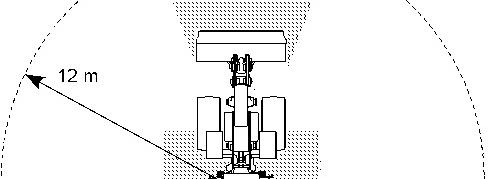
The size and the configuration of this machine may result in areas that can not be seen when the operator is seated. Illustration 1 provides an approximate visual indication of areas of significant restricted visibility. Illustration 1 indicates restricted visibility areas at ground level inside a radius of 12 m (40 ft) from the operator on a machine without the use of optional visual aids. This illustration does not provide areas of restricted visibility for distances outside a radius of 12 m (40 ft).

This machine may be equipped with optional visual aids that may provide visibility to some of the restricted visibility areas. Refer to this Operation and Maintenance Manual, "Mirror" for more information on additional visibility. If your machine is equipped with cameras, refer to this Operation and Maintenance Manual, "Camera" for more information on additional visibility. For areas that are not covered by the optional visual aids, the job site organization must be utilized to minimize hazards of this restricted visibility. For more information regarding job site organization refer to Operation and Maintenance Manual, "Visibility Information".

i03258403

Illustration 1 g01660074

Top view of the machine

Note: The shaded areas indicate the approximate location of areas with significant restricted visibility.

Copyright 1993 - 2024 Caterpillar Inc. All Rights Reserved. Private Network For SIS Licensees.

Wed May 29 09:15:47 UTC+0530 2024

Product: WHEEL LOADER

Model: 992K WHEEL LOADER ZMX

Configuration: 992K Wheel Loader ZMX00001-UP (MACHINE) POWERED BY C32 Engine

Operation and Maintenance Manual

992K Wheel Loader

Media Number -SEBU8651-08

Visibility Information

SMCS - 7000

-01/08/2015

-12/09/2019

Before you start the machine, perform a walk-around inspection in order to ensure that there are no hazards around the machine.

While the machine is in operation, constantly survey the area around the machine in order to identify potential hazards as hazards become visible around the machine.

Your machine may be equipped with visual aids. Some examples of visual aids are Closed Circuit Television (CCTV) and mirrors. Before operating the machine, ensure that the visual aids are in proper working condition and that the visual aids are clean. Adjust the visual aids using the procedures that are located in this Operation and Maintenance Manual. If equipped, the Work Area Vision System shall be adjusted according to Operation and Maintenance Manual, SEBU8157, "Work Area Vision System". If equipped, the Cat Detect Object Detection shall be adjusted according to the Operation and Maintenance Manual, "Cat Detect Object Detection" for your machine.

It may not be possible to provide direct visibility on large machines to all areas around the machine. Appropriate job site organization is required in order to minimize hazards that are caused by restricted visibility. Job site organization is a collection of rules and procedures that coordinates machines and people that work together in the same area. Examples of job site organization include the following:

• Safety instructions

• Controlled patterns of machine movement and vehicle movement

• Workers that direct safe movement of traffic

• Restricted areas

• Operator training

• Warning symbols or warning signs on machines or on vehicles

• A system of communication

i07746368

• Communication between workers and operators prior to approaching the machine

Modifications of the machine configuration by the user that result in a restriction of visibility shall be evaluated.

Copyright 1993 - 2024 Caterpillar Inc. All Rights Reserved. Private Network For SIS Licensees.

Wed May 29 09:15:30 UTC+0530 2024

Product: WHEEL LOADER

Model: 992K WHEEL LOADER ZMX

Configuration: 992K Wheel Loader ZMX00001-UP (MACHINE) POWERED BY C32 Engine

Operation and Maintenance Manual

992K Wheel Loader

Media Number -SEBU8651-08

Before Starting Engine

SMCS - 1000; 7000

Date -01/08/2015 Date Updated -12/09/2019

The steering frame lock must be in the unlocked position in order to steer the machine.

Start the engine only from the operator compartment. Never short across the starter terminals or across the batteries. Shorting could bypass the engine neutral start system. Shorting could also damage the electrical system.

Inspect the condition of the seat belt and the condition of mounting hardware. Replace any parts that are worn or damaged. Regardless of the appearance, replace the seat belt after three years of use. Do not use a seat belt extension on a retractable seat belt.

Adjust the seat so that there is full pedal travel while the operator's back is against the back of the seat.

Make sure that the machine is equipped with a lighting system that is adequate for the job conditions. Make sure that all lights are working properly.

Before you start the engine or before you move the machine, make sure that no one is on the machine, underneath the machine, or around the machine. Make sure that there are no personnel in the area.

Copyright 1993 - 2024 Caterpillar Inc. All Rights Reserved.

Private Network For SIS Licensees.

Wed May 29 09:15:15 UTC+0530 2024

i00934890

Product: WHEEL LOADER

Model: 992K WHEEL LOADER ZMX

Configuration: 992K Wheel Loader ZMX00001-UP (MACHINE) POWERED BY C32 Engine

Operation and Maintenance Manual

992K Wheel Loader

Media Number -SEBU8651-08

Date -01/08/2015 Date Updated -12/09/2019

Electrical Storm Injury Prevention

SMCS - 7000

i01122596

When lightning is striking in the vicinity of the machine, the operator should never attempt the following procedures:

• Mount the machine.

• Dismount the machine.

If you are in the operator's station during an electrical storm, stay in the operator's station. If you are on the ground during an electrical storm, stay away from the vicinity of the machine.

Wed May 29 09:15:00 UTC+0530 2024

Product: WHEEL LOADER

Model: 992K WHEEL LOADER ZMX

Configuration: 992K Wheel Loader ZMX00001-UP (MACHINE) POWERED BY C32 Engine

Operation and Maintenance Manual

992K Wheel Loader

Media Number -SEBU8651-08

Tire Information

SMCS - 7000

-01/08/2015

Updated -12/09/2019

i06164462

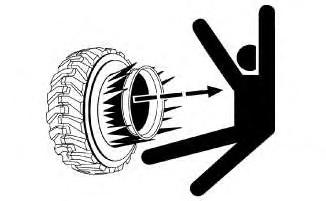
Explosions of air inflated tires have resulted from heat-induced gas combustion inside the tires. Explosions can be caused by heat that is generated by welding, by heating rim components, by external fire, or by excessive use of brakes.

A tire explosion is much more violent than a blowout. The explosion can propel the tire, the rim components, and the axle components from the machine. Stay out of the trajectory path. Both the force of the explosion and the flying debris can cause property damage, personal injury, or death.

Illustration 1

Typical example of tire is shown

g02166933

Do not approach a hot or an apparently damaged tire.

Caterpillar recommends against using water or calcium as a ballast for the tires except in machines designed for this additional mass. For those applicable machines, the maintenance section will contain instructions on the correct tire inflation and filling procedures. Ballast, such as fluid in the tires, increases overall machine weight and may affect braking, steering, power train components, or the certification of the protective structure such as the ROPS. The use of tire/rim rust preventatives or other liquid additives is not required.

Proper nitrogen inflation equipment, and training in using the equipment, are necessary to avoid over inflation. A tire blowout or rim failure can result from improper or misused equipment and personal injury or death can occur.

A tire blowout and/or rim failure can occur if the inflation equipment is not used correctly, due to the fact that a fully charged nitrogen cylinder's pressure is approximately 15000 kPa (2200 psi).

Dry nitrogen gas is recommended for inflation of tires. If the tires were originally inflated with air, nitrogen is still preferred for adjusting the pressure. Nitrogen mixes properly with air.

Nitrogen inflated tires reduce the potential of a tire explosion because nitrogen does not aid combustion. Nitrogen helps to prevent oxidation of the rubber, deterioration of rubber, and corrosion of rim components.

To avoid overinflation, proper nitrogen inflation equipment and training in the usage of the equipment are necessary. A tire blowout or a rim failure can result from improper equipment or from misused equipment.

When you inflate a tire, stand behind the tread and use a self-attaching chuck.

Servicing tires and rims can be dangerous. Only trained personnel that use proper tools and proper procedures should perform this maintenance. If correct procedures are not used for servicing tires and rims, the assemblies could burst with explosive force. This explosive force can cause serious personal injury or death. Carefully obey the specific instructions from your tire dealer. Copyright 1993 - 2024 Caterpillar Inc.

Rights Reserved.

Wed May 29 09:14:42 UTC+0530 2024

This is the sample of the manual click on the download link for complete manual

DOWNLOAD LINK

For some reason if link does not work download this pdf and then click

Turn static files into dynamic content formats.

Create a flipbook
CAT + Caterpillar 992K Wheel Loader Operation & Maintenance Manual by Heavy Equipment Manual - Issuu