


Product: EXCAVATOR
Model: 374 EXCAVATOR JGP
Configuration: 374 Excavator JGP00001-UP (MACHINE) POWERED BY C15 Engine
Disassembly and Assembly
374 Hydraulic Excavator Machine Systems
Accumulator (Hydraulic Pilot) - Remove and Install
SMCS - 5077-012-PS; 5077-011-PS
Removal Procedure
Personal injury can result from hydraulic oil pressure and hot oil.
Hydraulic oil pressure can remain in the hydraulic system after the engine has been stopped. Serious injury can be caused if this pressure is not released before any service is done on the hydraulic system.
Make sure all of the work tools have been lowered to the ground, and the oil is cool before removing any components or lines. Remove the oil filler cap only when the engine is stopped, and the filler cap is cool enough to touch with your bare hand.
Pressurized System!
Hydraulic accumulators contain gas and oil under high pressure. DO NOT disconnect lines or disassemble any component of a pressurized accumulator. All gas pre-charge must be removed from the accumulator as instructed by the service manual before servicing or disposing of the accumulator or any accumulator component.
Failure to follow the instructions and warnings could result in personal injury or death.
Only use dry nitrogen gas to recharge accumulators. See your Cat dealer for special equipment and detailed information for accumulator service and charging.
NOTICE
Care must be taken to ensure that fluids are contained during performance of inspection, maintenance, testing, adjusting, and repair of the product. Be prepared to collect the fluid with suitable containers before opening any compartment or disassembling any component containing fluids.
Refer to Special Publication, PERJ1017, "Dealer Service Tool Catalog" for tools and supplies suitable to collect and contain fluids on Cat® products.
Dispose of all fluids according to local regulations and mandates.
1. Release the system pressure. Refer to Operation and Maintenance Manual, "System Pressure Release" for the correct procedure.
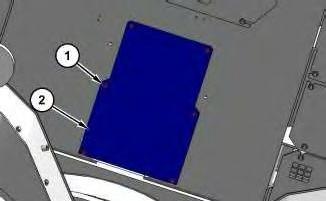
g06556038 Bottom view of the machine.
2. Remove bolts (1) and cover (2).
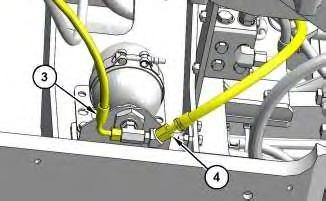
Illustration 2
3. Disconnect hose assemblies (3) and (4).
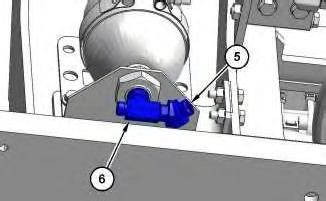
Illustration 3
4. Remove adapter assemblies (5), (6), and the O-ring seals.
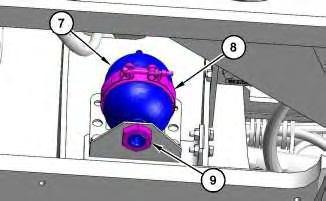
Illustration 4
5. Loosen clamp (8). Remove nut (9) and accumulator (7).
Installation Procedure
1. Install accumulator (7) in the reverse order of removal.
a. Tighten nut (9) to a torque of 100 ± 20 N.m (74 ± 15 lb ft).
b. Tighten hose assembly (4) to a torque of 76 ± 4 N.m (56 ± 3 lb ft).
Copyright 1993 - 2024 Caterpillar Inc. All Rights Reserved. Private Network For SIS Licensees. Tue May 21 13:22:12 UTC+0530 2024
Product: EXCAVATOR
Model: 374 EXCAVATOR JGP
Configuration: 374 Excavator JGP00001-UP (MACHINE) POWERED BY C15 Engine
Disassembly and Assembly
374 Hydraulic Excavator Machine Systems
Media
i08157733
Antenna (GPS) - Remove and Install
SMCS - 733B-010
Removal Procedure
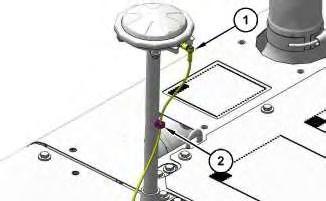
Illustration 1
g06569946
1. Remove cable strap (2) and disconnect harness assembly (1).
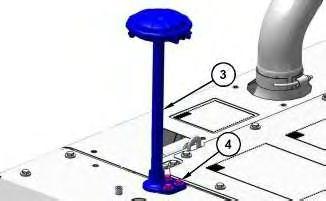
Illustration 2 g06569948
2. Remove bolts (4) and antenna support assembly (3).
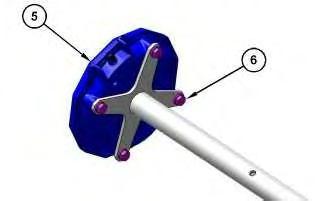
Illustration 3 g06569949
3. Remove bolts (6) and antenna (5).
4. Repeat Step 1 through Step 3 for the other antenna.
Installation Procedure
1. Install antenna (5) in the reverse order of removal.
a. Tighten bolts (6) to a torque of 15 ± 3 N.m (133 ± 27 lb in).
Copyright 1993 - 2024 Caterpillar Inc. All Rights Reserved. Private Network For SIS Licensees. Tue May 21 12:45:28 UTC+0530 2024
Product: EXCAVATOR
Model: 374 EXCAVATOR JGP
Configuration: 374 Excavator JGP00001-UP (MACHINE) POWERED BY C15 Engine
Disassembly and Assembly
374 Hydraulic Excavator Machine Systems
Boom - Remove and Install
SMCS - 6501-010
Removal Procedure Table 1 Required Tools
- 3% Moly Grease
Start By:
a. Remove the stick. Refer to "Stick - Remove and Install".
Personal injury can result from hydraulic oil pressure and hot oil.
Hydraulic oil pressure can remain in the hydraulic system after the engine has been stopped. Serious injury can be caused if this pressure is not released before any service is done on the hydraulic system.
Make sure all of the work tools have been lowered to the ground, and the oil is cool before removing any components or lines. Remove the oil filler cap only when the engine is stopped, and the filler cap is cool enough to touch with your bare hand.
Cylinders equipped with lock valves can remain pressurized for very long periods of time, even with the hoses removed.
Failure to relieve pressure before removing a lock valve or disassembling a cylinder can result in personal injury or death.
Ensure all pressure is relieved before removing a lock valve or disassembling a cylinder.
When you are using hydraulic cylinders and puller studs, always ensure that the rated capacity of the puller stud meets or exceeds the rated capacity of the hydraulic cylinder. If the puller stud does not meet or exceed the rated capacity of the hydraulic cylinder, a sudden failure of
the puller stud could occur. The sudden failure of the puller stud could result in personal injury or death.
NOTICE
Care must be taken to ensure that fluids are contained during performance of inspection, maintenance, testing, adjusting, and repair of the product. Be prepared to collect the fluid with suitable containers before opening any compartment or disassembling any component containing fluids.
Refer to Special Publication, PERJ1017, "Dealer Service Tool Catalog" for tools and supplies suitable to collect and contain fluids on Cat® products.
Dispose of all fluids according to local regulations and mandates.
Note: Do not use threaded rods that have not been hardened as tooling with hydraulic cylinders. The maximum rated tonnage should be stamped on one end of the puller studs. Do not use threaded rods that have not been stamped with the rated tonnage.
Note: Plug all lines, hoses, and tubes. This helps to prevent fluid loss and to keep contaminants from entering the system.
1. Lower the boom to the ground.
2. Release the system pressure. Refer to Operation and Maintenance Manual, "System Pressure Release" for the correct procedure.
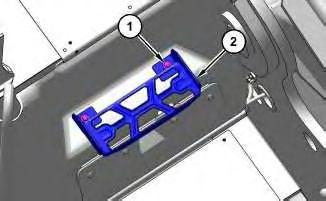
3.
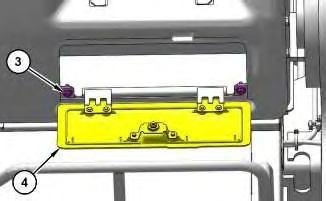
2
4. Open cover (4) to access bolts (3). Remove bolts (3).
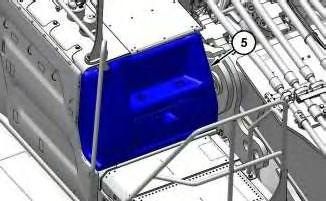
Illustration 3
5. Remove cover assembly (5).
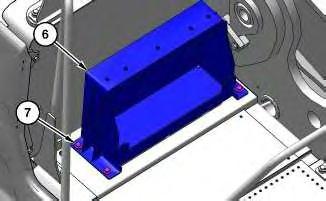
Illustration 4
g06573629
6. Use two people to remove support assembly (6). The weight of support assembly (6) is approximately 21 kg (46 lb).
7. Remove bolts (7) and support assembly (6).
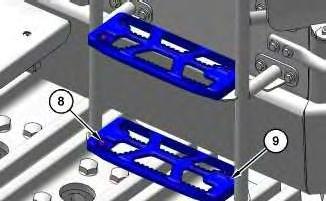
Illustration 5
8. Remove bolts (8) and step assemblies (9).
g06573630
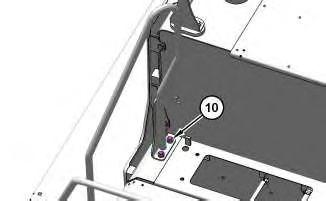
Illustration 6
g06573632
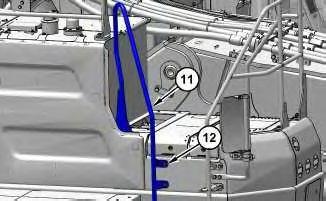
Illustration 7
g06573633
9. Remove bolts (10), (12), and handrail assembly (11).
8
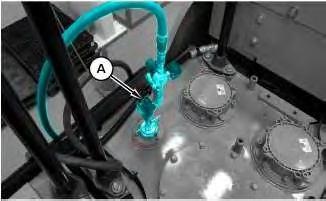
10. Install Tooling (A) onto the hydraulic tank. Apply 276 to 414 kPa (40 to 60 psi) of air. This procedure will pull vacuum on the hydraulic system.
9
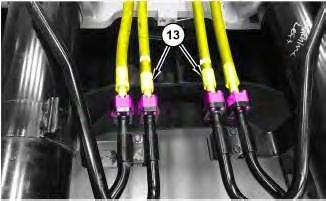
11. Disconnect hose assemblies (13).
10
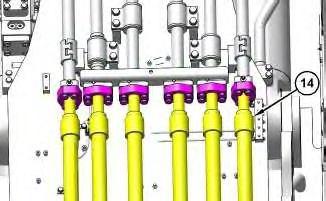
12. Disconnect hose assemblies (14).
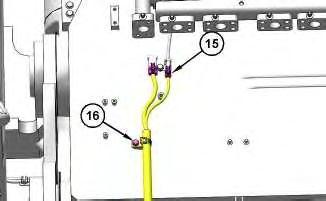
Illustration 11
13. Remove bolt (16) and disconnect harness assembly (15).
12
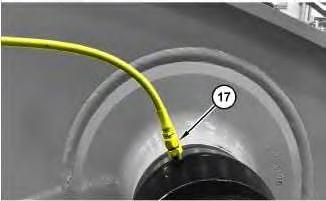
14. Disconnect hose assembly (17).
13
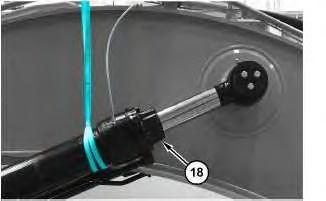
15. Attach a suitable lifting device to boom cylinder (18). The weight of boom cylinder (18) is approximately 734 kg (1618 lb).
14
g06573645
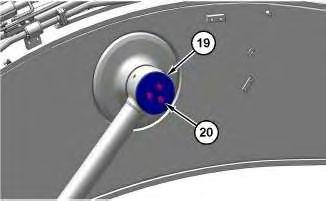
16. Remove bolts (20), plate (19), and the spacer. Repeat for the other side.
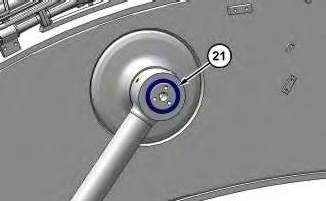
Illustration 15
g06573647
17. Remove seal (21). Repeat for the other side.
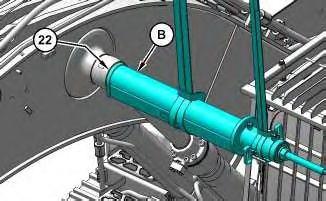
Illustration 16
g06573648 Typical Example.
17
18. Attach a suitable lifting device to Tooling (B). The weight of Tooling (B) is approximately 143 kg (315 lb).
19. Attach Tooling (B) to pin assembly (22). The combined weight of Tooling (B) and pin assembly (22) is approximately 277 kg (611 lb).
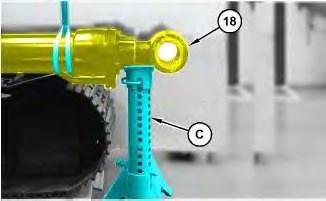
20. Pull pin assembly (22) partially and lower boom cylinder (18) on Tooling (C).
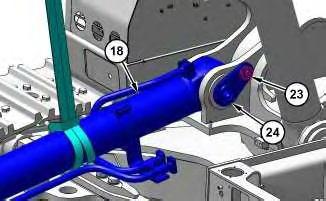
Illustration 18
g06573656
Some components are hidden for photographic purposes.
21. Attach a suitable lifting device to boom cylinder (18).
22. Remove bolt (23) and the washers.
23. Partially pull pin assembly (24) and attach a suitable lifting device (not shown) to pin assembly (24). The weight of pin assembly (24) is approximately 41 kg (90 lb).
24. Remove pin assembly (24) and boom cylinder (18).
25. Repeat Steps 14 through Steps 24 for the other boom cylinder.

Illustration 19
26. Position pin assembly (22).
27. Install plate (19) and bolts (20). Repeat for the other side.
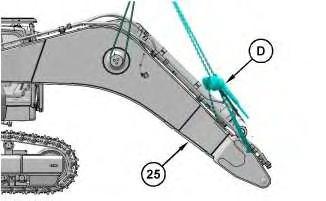
Illustration 20
g06573660
28. Attach Tooling (D) and a suitable lifting device to boom (25). The weight of boom (25) is approximately 6501 kg (14332 lb).
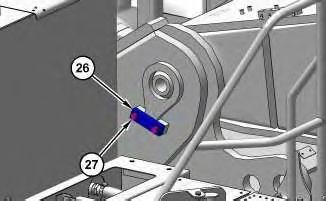
Illustration 21
29. Remove bolts (27) and plate (26).
g06573662
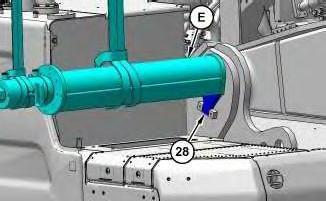
Illustration 22
g06573663
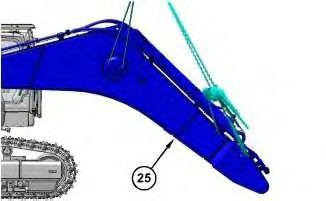
Illustration 23
g06573664
30. Attach a suitable lifting device to Tooling (E). The weight of Tooling (E) is approximately 75 kg (165 lb).
31. Attach Tooling (E) to pin assembly (28). The combined weight of Tooling (E) and pin assembly (28) is approximately 236 kg (520 lb).
32. Remove pin assembly (28) and boom (25).
Installation Procedure
1. Install boom (25) in the reverse order of removal.
a. Apply Tooling (F) to the bores of pin assembly (28).
b. Apply Tooling (F) to the bores of pin assembly (24).
c. Slide boom cylinder (18) to one side until boom cylinder (18) contacts the frame. Measure the total clearance between boom cylinder (18) and the frame at the pin bore. The total clearance must not be more than 1.0 mm (0.04 inch). If the total clearance is more than 1.0 mm (0.04 inch) add the correct thickness of the shims to obtain the necessary clearance.
d. Tighten bolt (23) to a torque of 425 ± 50 N.m (313 ± 37 lb ft).
Copyright 1993 - 2024 Caterpillar Inc. All Rights Reserved.
Network For SIS Licensees.
Tue May 21 12:46:22 UTC+0530 2024
Product: EXCAVATOR
Model: 374 EXCAVATOR JGP
Configuration: 374 Excavator JGP00001-UP (MACHINE) POWERED BY C15 Engine
Disassembly and Assembly 374 Hydraulic Excavator Machine Systems
Boom Bearings and Seals - Remove and Install
SMCS - 6501-010-SA; 6501-010-BD
Removal Procedure Table 1 Required Tools
Start By:
a. Remove the boom. Refer to "Boom - Remove and Install".
When you are using hydraulic cylinders and puller studs, always ensure that the rated capacity of the puller stud meets or exceeds the rated capacity of the hydraulic cylinder. If the puller stud does not meet or exceed the rated capacity of the hydraulic cylinder, a sudden failure of the puller stud could occur. The sudden failure of the puller stud could result in personal injury or death.
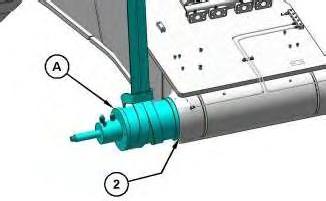
2. Attach a suitable lifting device to Tooling (A). The weight of Tooling (A) is approximately 40 kg (88 lb).
3. Use Tooling (A) to remove sleeve bearing (2). Remove sleeve bearing (2).
4. Repeat Steps 1 through Steps 3 for the other side.
Installation Procedure
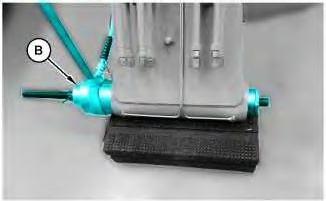
Illustration 3
Typical Example.
g06574199
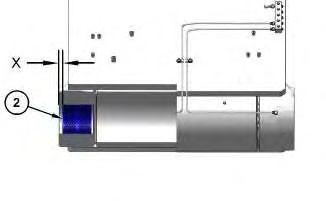
Illustration 4
g06574148
1. Lower the temperature of sleeve bearing (2).
2. Attach a suitable lifting device to Tooling (B). The weight of Tooling (B) is approximately 26 kg (57 lb).
3. Use Tooling (B) to install sleeve bearing (2) in the boom. Install sleeve bearing (2) until Dimension (X) is 9.5 ± 0.8 mm (0.37 ± 0.03 inch).
4. Apply Tooling (C) to the bores of sleeve bearing (2).
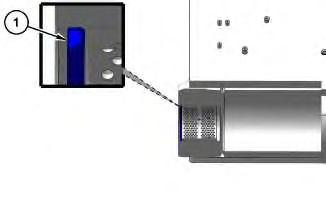
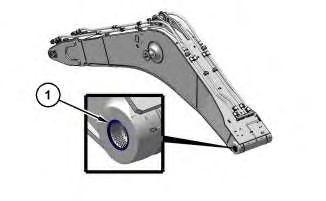
Illustration 5 g06574217 Orientation of the seal.
5. Use Tooling (D) to install seal (1). Install seal (1).
6. Apply Tooling (C) to seal (1).
7. Repeat Steps 1 through Steps 6 for the other side. Copyright 1993 - 2024 Caterpillar Inc. All Rights Reserved. Private Network For SIS Licensees. Tue May 21 12:46:43 UTC+0530 2024
Product: EXCAVATOR
Model: 374 EXCAVATOR JGP
Configuration: 374 Excavator JGP00001-UP (MACHINE) POWERED BY C15 Engine
Disassembly and Assembly
374 Hydraulic Excavator Machine Systems
Boom Cylinder - Assemble
SMCS - 5456-016
Assembly Procedure
Table 1
Required Tools
B 589-7437 Link Bracket As
C - Loctite 638
- Hydraulic Oil SAE 10W
Note: Cleanliness is an important factor. Before assembly, all parts should be thoroughly cleaned in cleaning fluid. Allow the parts to air dry. Do not use Wiping cloths or rags to dry parts. Lint may be deposited on the parts which may cause later trouble. Inspect all parts. If any parts are worn or damaged, use new parts for replacement. All disassembly and all assembly procedures must be performed on a clean work surface and in a clean hydraulic area. Keep cleaned parts covered and protected.
Note: Check all the seals for wear or for damage. Replace the seals, if necessary.
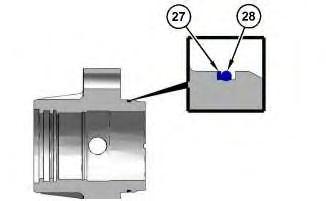
Illustration 1
g06568852
1. Install backup ring (27) and O-ring seal (28).
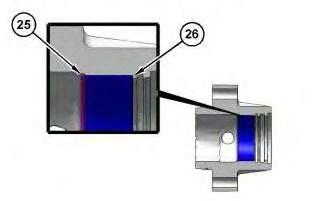
Illustration 2
g06568855
2. Install sleeve bearing (26) and retaining ring (25).
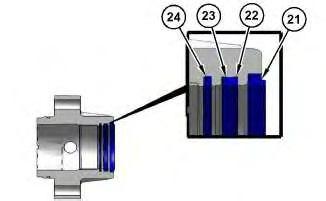
Illustration 3
Orientation of the seals.
g06568856
3. Install seals (24), (23), and backup ring (22).
4. Apply Tooling (C) to the groove of wiper seal (21). Install wiper seal (21).