DOWNLOAD LINK
For some reason if link does not work download this pdf and then click
Product: TRUCK ENGINE
Model: 3406B TRUCK ENGINE 3ZJ
Configuration: 3406C Truck Engine 3ZJ16182-60112
Operation and Maintenance Manual
3406B DIESEL TRUCK ENGINE Media
Engine Information
SMCS - 1000; 1250; 1450; 1453; 1456; 1900
The engine can be turbocharged and jacket water aftercooled (TA), or turbocharged and air-to-air aftercooled (ATAAC) with direct fuel injection.
A full range hydramechanical governor controls the fuel injection pump output to maintain the engine rpm selected by the operator.
Individual injection pumps, one for each cylinder, meter and pump fuel under high pressure to an injection valve for each cylinder. Automatic timing advance provides the best fuel injection timing over the full range of engine speed.
The cooling system consists of a gear driven centrifugal pump, with one thermostat which regulates the engine coolant temperature, an oil cooler and a radiator incorporating a shunt system.
The engine lubricating oil, which is both cooled and filtered, is supplied by a gear-type pump. Bypass valves provide unrestricted flow of lubrication oil to the engine parts when oil viscosity is high, or if either the oil cooler or the oil filter elements should become plugged.
Engine efficiency, efficiency of emission controls and engine performance depend on adherence to proper operation and maintenance recommendations, and the use of recommended fuels and lubrication oils.
Follow the recommended Maintenance Management Schedule with emphasis on emission related components, air cleaner, oil, oil filter, fuel and fuel filter maintenance found in this publication.
Engine Identification
Caterpillar engines are identified with serial numbers, OT (fuel system settings) numbers and arrangement numbers. In some cases modification numbers are also used. These numbers are shown on the serial number plate mounted on the engine.
Caterpillar dealers need all of these numbers to determine which components were included on the engine when it was assembled at the factory. This permits accurate identification of replacement part numbers.
Copyright 1993 - 2024 Caterpillar Inc. All Rights Reserved. Thu Nov 21 03:39:42 UTC+0530 2024
Product: TRUCK ENGINE
Model: 3406B TRUCK ENGINE 3ZJ
Configuration: 3406C Truck Engine 3ZJ16182-60112
Operation and Maintenance Manual
3406B DIESEL TRUCK ENGINE
Media Number -SEBU6312-02
-01/11/1990
-11/10/2001
Serial Number, Information Plate and Reference Numbers
SMCS - 1000; 1250; 1450; 1453; 1456; 1900
Serial Number Plate
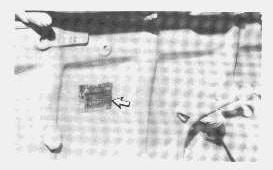
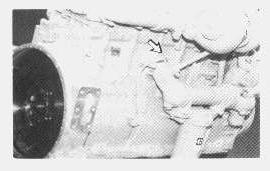
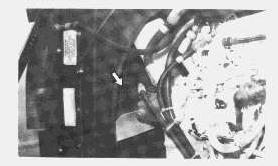
Located on the right rear side of the cylinder block.
Information Plate
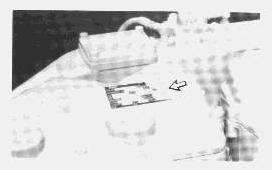
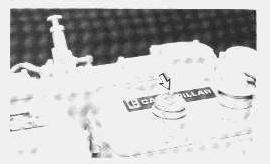
Located on the valve cover.
Reference Numbers
Chassis Serial No.____________________
Engine Model____________________
Engine Serial No.____________________
Performance Specification No.____________________
Fuel Filter No.____________________
Lubrication Oil Filter Element No.____________________
Auxiliary Oil Filter Element No.____________________
Supplemental Coolant Additive Maintenance Element No.____________________
Supplemental Coolant Additive Precharge Element No.____________________
Air Cleaner Element No.____________________
Fan Belt No.____________________
Alternator Belt No.____________________
Ordering Parts
Quality Caterpillar replacement parts are available from Caterpillar dealers throughout North America and the world. Their parts stocks are up to date and include all parts normally required to protect your investment in Caterpillar engines.
When ordering parts, your order should specify the quantity, part number, part name and serial number, arrangement number and modification number of the engine for which the parts are needed. If in doubt about the part number, please provide your dealer with a complete description of the needed item.
When service is needed for your Caterpillar engine, be prepared to give the dealer all the information that is provided on the 9L6531 Information Plate located on the valve cover.
Discuss the problem with the dealer, such as; when it occurs, what happens, etc. This will help the dealer in troubleshooting and solving the problem faster.
Thu Nov 21 03:40:00 UTC+0530 2024
Product: TRUCK ENGINE
Model: 3406B TRUCK ENGINE 3ZJ
Configuration: 3406C Truck Engine 3ZJ16182-60112
Operation and Maintenance Manual
3406B DIESEL TRUCK ENGINE
Media Number -SEBU6312-02
Specifications And Model Views
SMCS - 1000; 1250; 1450; 1453; 1456; 1900
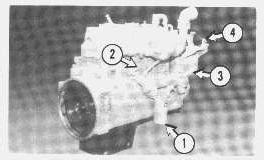
3406B Truck Engine
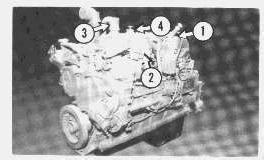
3406B ATAAC Truck Engine
Oil Filter (1), Oil Level Gage (2), Water Pump (3), Alternator Bracket (4)
Fuel Filter and Priming Pump (1), Compressor (2), Crankcase Breather (3), Oil Filler (4)
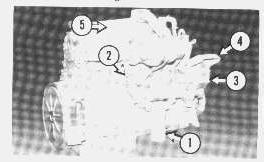
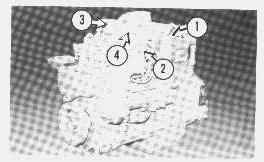
3406B TA Truck Engine
Specifications
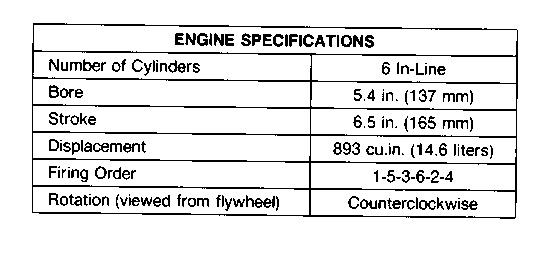
The Caterpillar 3406B Truck Engine is an 893 cu. in. (14.6 liters) displacement, 5.4 in. (137 mm) bore, 6.5 in. (165 mm) stroke, four stroke cycle, 6 cylinder engine. The firing order is 1-5-3-6-2-4 and the direction of rotation is counterclockwise, as viewed from the flywheel.
Copyright 1993 - 2024 Caterpillar Inc. All Rights Reserved. Private Network For SIS Licensees.
Thu Nov 21 03:39:31 UTC+0530 2024
Oil Filter (1), Oil Level Gage (2), Water Pump (3), Alternator Bracket (4), Oil Filler (5)
Fuel Filter and Priming Pump (1), Compressor (2), Crankcase Breather (3), Aftercooler (4)
Product: TRUCK ENGINE
Model: 3406B TRUCK ENGINE 3ZJ
Configuration: 3406C Truck Engine 3ZJ16182-60112
Operation and Maintenance Manual
3406B DIESEL TRUCK ENGINE
Reference Materials
SMCS - 1000; 1250; 1450; 1453; 1456; 1900
Caterpillar Reference Material
SEBD0518 Know Your Cooling System
SEBD0970 Coolant and Your Engine
SEHS7067 Fuels for Caterpillar Diesel Engines
LEDT5092 Driving Techniques For Maximum Fuel Economy
LEBT8121 Truck Engine Application and Installation Guide
LEGT5087 Truck Engine Application and Installation Guide
LEKQ3363 Caterpillar Engine Data Sheet 60.1 - "Fuels Recommended For Use In Caterpillar Truck Engines"
SEBU5898 Cold Weather Recommendations Operation and Maintenance Manual
SEBU6310 EMA Engine Oil Data Book
SEBD0640 Oil and Your Engine
SEBD0717 Diesel Fuels and Your Engine
SEHS7808 Special Instruction-6V3060 Low Emission System Tester
SEHS8622 Using the FT1984 Air-To-Air Aftercooler Leak Test Group
SELF5052 Emission Related Components Warranty
SEHS9031 Storage Procedure for Caterpillar Products
SEBR0544 3406B Service Manual
SEBR0514 Low Emission System
SEBF8029 Index to Guidelines for Reusable Parts and Salvage Operations
SEBF8062 Guideline for Reusable Parts - Cleaning and Inspection of Air Filters
SEBD0794 3400 Engine-Major Component Performance Guide
PEDP7105 Scheduled Oil Sampling
PEDP7122 Question & Answer Booklet
PEHP6001 How to Take a Good Oil Sample
PEHP7504 CAT Engine Oil Spec Sheets
PEHP7505 CAT Diesel Engine Oil Spec Sheets
All of the above publications are available through your Caterpillar dealer.
Additional Reference Material
ASTM D217-68 - Worked Penetration
ASTM D2896 TBN Measurements
ASTM Specs can normally be obtained from your local technological society, library or college.
SAE J313 Diesel Fuels
SAE J754 Nomenclature
SAE J183 Classification
SAE Specs can be found in your SAE handbook or can be obtained from your local library, college or technological society. Copyright 1993 - 2024 Caterpillar Inc. All Rights Reserved.
Product: TRUCK ENGINE
Model: 3406B TRUCK ENGINE 3ZJ
Configuration: 3406C Truck Engine 3ZJ16182-60112
Operation and Maintenance Manual
3406B DIESEL TRUCK ENGINE
BrakeSaver Maintenance (If Equipped)
SMCS - 1000; 1250; 1450; 1453; 1456; 1900
Make a frequent check of coolant and oil lines for leakage and deterioration of hoses. If an oil or water leak develops, do not operate the engine until proper repairs can be made.
Scheduled maintenance on the BrakeSaver, or additional engine maintenance, is not required except for the following recommendation.
Lube Oil Change-BrakeSaver
When changing the engine crankcase lubricating oil, it is also recommended to drain the oil from the oil cooler and BrakeSaver control valve.
Remove the 1 1/8-12 drain plug and gasket located on the bottom of the BrakeSaver control valve.
At oil change intervals, fill the crankcase to the proper level. Operate the engine until it reaches operating temperature.
Stop the engine and allow oil to return to the sump. Then check the engine oil level.
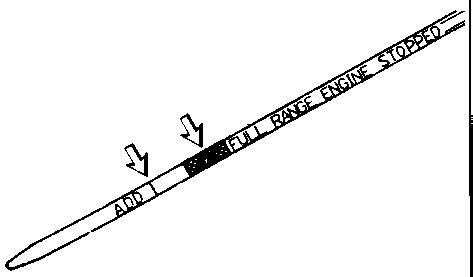
Check the engine oil level on the "ENGINE STOPPED" side of the dipstick.
Be sure it is at the FULL RANGE mark in the FULL RANGE zone on the dipstick. Add oil if necessary.
NOTE: Refer to the Dipsticks Calibration section and the Refill Capacities chart of this publication to be sure of the correct level of oil for a BrakeSaver engine.
Copyright 1993 - 2024 Caterpillar Inc. All Rights Reserved. Private Network For SIS Licensees. Thu Nov 21 03:48:09 UTC+0530 2024
Product: TRUCK ENGINE
Model: 3406B TRUCK ENGINE 3ZJ
Configuration: 3406C Truck Engine 3ZJ16182-60112
Operation and Maintenance Manual
3406B DIESEL TRUCK ENGINE
Cooling System Specifications
SMCS - 1000; 1250; 1450; 1453; 1456; 1900
Coolant Information
Diesel engine operating temperatures have increased to improve engine efficiency. This means proper cooling system maintenance is especially important. Overheating, overcooling, pitting, cavitation erosion, cracked heads, piston seizures and plugged radiators are classic cooling system failures. In fact, coolant is as important as the quality of fuel and lubricating oil.
NOTICE
Caterpillar recommends that the coolant mixture contain a minimum of 30% Caterpillar Antifreeze, or equivalent. Liquid supplemental coolant additive must be added, when not using Caterpillar Antifreeze, which contains the proper additive.
Never add coolant to an overheated engine, engine damage can result. Allow the engine to cool first.
All water is corrosive at engine operating temperature. The cooling system should be protected with a 3% to 6% concentration of liquid supplemental coolant additive at all times, regardless of the concentration of antifreeze.
Excessive supplemental coolant additive greater than the recommended 6%, together with concentrations of antifreeze greater than 60% can cause deposits to form and can result in radiator tube blockage, overheating, and/or water pump seal damage.
DO NOT use Dowtherm 209 Full-Fill coolant.
Do not use liquid supplemental coolant additive or elements or antifreeze with Dowtherm 209 Full-Fill coolant. Dowtherm 209 FullFill coolant is not compatible with other antifreeze and coolant mixtures.
If the engine is to be stored in, or shipped to, an area with freezing temperatures, the cooling system must be protected to the lowest expected outside (ambient) temperature.
The engine cooling system is normally protected to -20°F (-28°C) with Caterpillar Antifreeze, when shipped from the factory unless special requirements are defined.
Check the specific gravity of the antifreeze solution frequently in cold weather to ensure adequate freeze protection.
Clean the cooling system if it is contaminated, if the engine overheats, or if foaming is observed in the radiator.
Coolant should be drained, the system cleaned and new coolant added at PM Level 2 (every 3000 service hours or two years). When not using Caterpillar Antifreeze and supplemental coolant additive as recommended, the drain period must be shortened to 1500 service hours or one year.
Filling at over 5 U.S. gal (20 L) per minute can cause air pockets in the cooling system.
After draining and refilling the cooling system, operate the engine with the radiator cap removed until the coolant reaches normal operating temperature and the coolant level stabilizes. Add coolant as necessary to fill the system to the proper level.
Never operate without a thermostat in the cooling system. Cooling system problems can arise without a thermostat.
Refer to "Know Your Cooling System," form SEBD0518 and "Coolant and Your Engine" form SEBD0970, for more detailed specifications.
Coolant Water
Hard water, or water with high levels of calcium and magnesium ions, encourages the formation of insoluble chemical compounds by combining with cooling system additives such as silicates and phosphates.
The tendency of silicates and phosphates to precipitate out-of-solution increases with increasing water hardness. Hard water, or water with high levels of calcium and magnesium ions encourages the formation of insoluble chemicals, especially after a number of heating and cooling cycles.
Caterpillar prefers the use of distilled water or deionized water to reduce the potential and severity of chemical insolubility.
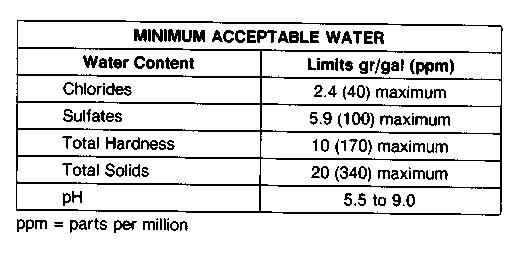
Using water that meets the minimum acceptable water requirement may not prevent drop-out of these chemical compounds totally, but should minimize the rate to acceptable levels.
To determine water characteristics, contact local water department, agricultural agent or an independent laboratory to perform the testing service. Two companies are listed below. However, there are others who are qualified to provide this service.
L.O.C.C. Corp.
905 Bayshore Drive
Coos Bay, OR 97420
Ph. (503) 267-4904
NALCO Chemical Co.
Naperville Technical Center One Nalco Center
Naperville, IL 60566
Attn: Sample Receiving
Ph. (312) 961-9500
Antifreeze
NOTICE
Caterpillar recommends that the coolant mix contain a minimum of 30% Caterpillar Antifreeze, or equivalent and acceptable water to maintain an adequate water pump cavitation temperature for efficient water pump performance.
Premix coolant solution to provide protection to the lowest expected outside (ambient) temperature. Pure undiluted antifreeze will freeze at -10°F (-23°C).
Only use a greater concentration (above 30%) of Caterpillar Antifreeze as needed for anticipated outside (ambient) temperatures. Do not exceed a coolant mixture of 60% antifreeze to water since a concentration above 60% antifreeze will reduce the engine's freeze
protection and increase the possibility of deposit formation in the cooling system.
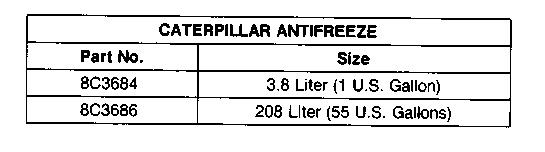
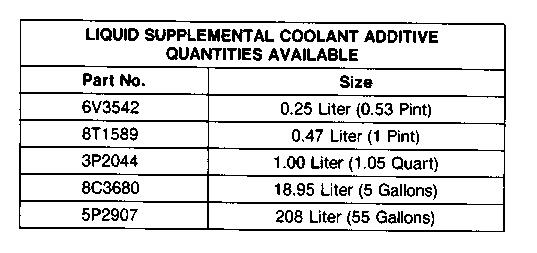
Use Caterpillar Antifreeze or ASTM D4985-89 (GM Specification 6038-M) Antifreeze. Caterpillar Antifreeze is available through your Caterpillar dealer in quantities that follow.
Most commercial antifreezes are formulated for gasoline engine applications and will, therefore, have high silicate content. Caterpillar Antifreeze is formulated with a low silicate content and the proper coolant additives for heavy duty diesel engines.
ASTM D4985-89 (GM Specification 6038-M) is a low silicate antifreeze, but supplemental coolant additive must be added.
The major advantages of Caterpillar Antifreeze are:
* Significantly reduces water pump seal leakage problems caused by excessive concentration of chemical additives.
* There is no need to add supplemental coolant additive on initial fill which must be done with current commercially available antifreezes.
* High silicate antifreezes used with a supplemental coolant additive can cause a build-up of solids over a period of time which can cause plugging, loss of heat transfer, and water pump seal damage.
Make proper antifreeze additions.
Adding pure antifreeze as a makeup solution for cooling system top-up is an unacceptable practice. It increases the concentration of antifreeze in the cooling system which increases the concentration of dissolved solids and undissolved chemical inhibitors in the cooling system. Add antifreeze mixed with water to the same freeze protection as your cooling system.
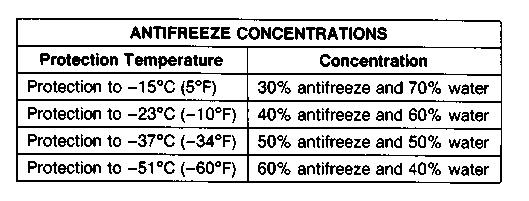
Use the chart below to assist in determining the concentration of Caterpillar Antifreeze to use.
5P0957 Coolant Tester (°F) or 5P3514 Coolant Tester (°C)
Both are available at your Caterpillar dealer.
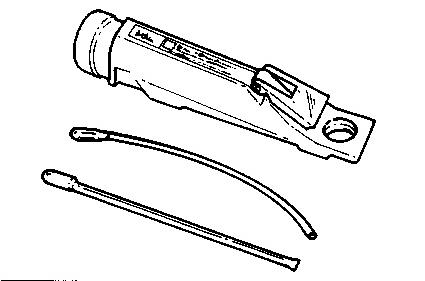
Check the coolant solution frequently in cold weather for glycol concentration with the 5P0957 or 5P3514 Coolant Tester to ensure adequate protection. Both testers are identical except temperature scale. They give immediate, accurate readings and can be used for antifreeze/coolants that contain ethylene or propylene glycol.
If propylene glycol based antifreeze is used, DO NOT allow concentration greater than a 50/50 antifreeze to water mixture. The measurement of freeze protection must be made with a refractivetype tester (Cat 5P0957 or 5P3514) rather than a hydrometer-type, which can be used to test ethylene glycol based antifreeze.
Supplemental Coolant Additive
Supplemental coolant additive is necessary to prevent rust, scale, pitting and/or corrosion of engine parts that coolant comes in contact with. Most antifreeze solutions DO NOT contain sufficient supplemental coolant additive.
NOTE: If other than Caterpillar products are used as the supplemental coolant additive, follow the manufacturers' recommendation for cooling system treatment and test evaluation.
DO NOT mix Caterpillar Supplemental Coolant Additive or supplemental coolant additive elements with the other products available; select a cooling system treatment and use it exclusively.
Liquid supplemental coolant additive can be purchased from your Caterpillar dealer. Follow the instructions on the container.
NOTICE
Always add supplemental coolant additive or equivalent to the coolant, or install a Caterpillar supplemental coolant additive element (if equipped). Never use coolant only, except if Caterpillar Antifreeze is being used. No supplemental coolant additive is needed on initial fill, but is necessary on a maintenance basis.
Use supplemental coolant additive or a supplemental coolant additive el%ment (if equipped) to maintain a 3% to 6% concentration in the cooling system to help prevent corrosion.
To prevent over inhibiting the engine's cooling system, never use both the liquid supplemental coolant additive and the supplemental coolant additive element (if equipped) at the same time. The use of these additives together could result in excessive concentration that would exceed the Caterpillar recommended maximum of 6%.
Excessive concentration of an additive can form deposits on the higher temperature surfaces of the cooling system and create a barrier that reduces the engine's heat transfer characteristics. Reduced heat transfer could cause cracking of the cylinder head and other high temperature components. Excessive concentrations of additive could also accelerate water pump seal wear.
Supplemental coolant additive is required when not using Caterpillar Antifreeze for premixed coolant solution.
Precharge
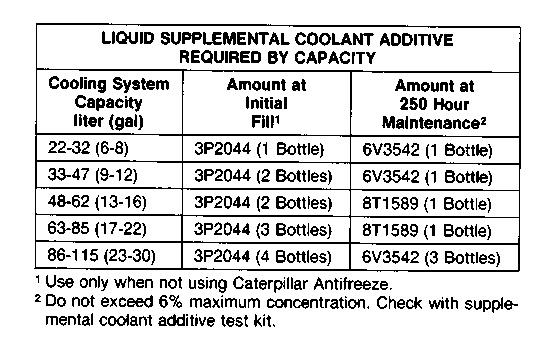
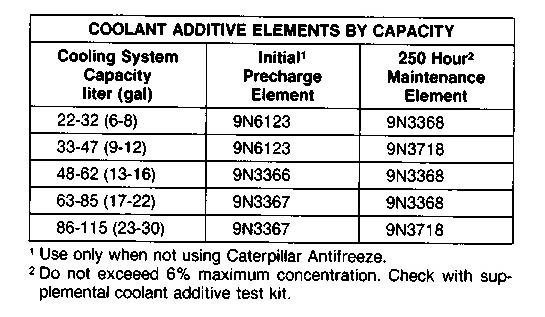
On initial fill (precharge) of a new or reconditioned engine: if Caterpillar Antifreeze is not used, add 1 L (1 quart) of supplemental coolant additive, or equivalent, for each 30 L (8 U.S. gallons) so that the cooling system will have a 3% to 6% concentration of supplemental coolant additive.
Maintenance
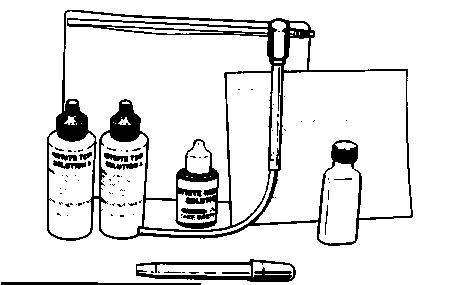
8T5296 SCA Test Kit
NOTE: The Caterpillar 8T5296 Test Kit checks for concentration of nitrates in the coolant solution. Some other manufacturers' coolant additive (SCA) is phosphate based and the 8T5296 Test Kit will provide inaccurate results. If non-Caterpillar coolant additives (SCA) is used, Caterpillar recommends that their test kit be used to check for coolant solution concentration.
For maintenance of a 3% to 6% concentration of additive, add coolant additive or install a maintenance coolant additive element (if equipped), every 250 service hours or oil change, whichever occurs first.
If the engine is not equipped with spin-on element, add .25 L (1/2 pint) of supplemental coolant additive for each 38 L (10 U.S. gallons) of coolant capacity to maintain the 3% to 6% concentration of additive.
Cooling System Cleaning
Our recommended intervals for performing maintenance on the cooling system are based on experience and gathered data relative to the performance characteristics of this engine and its components. Performing maintenance on the cooling system is important because the cooling system has a direct effect on the operation and service life of the engine.
Improper maintenance can result in a variety of problems that could shorten the engine's service life or result in poor engine performance.
When you drain, clean, flush and replace the coolant, small particles, undesirable chemicals, scale and other deposit formations are removed. These deposits reduce the necessary heat transfer characteristics of the cooling system.
Failure to clean and change the coolant as recommended will reduce the efficiency of the cooling system and, in some cases, result in an increase in fuel consumption.
Disregard for performing maintenance on the cooling system can eventually cause engine overheating problems that could result in severe damage to the engine and its components.
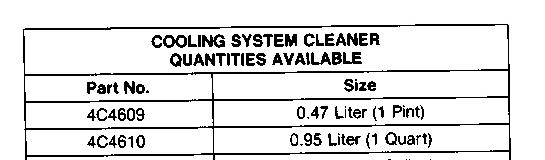
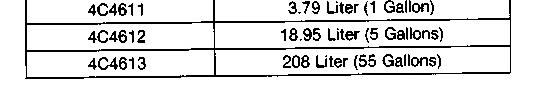
Caterpillar Cooling System Cleaners are designed to clean the system of harmful scale and corrosion. It dissolves mineral scale, corrosion products, light oil contamination and sludge.
Clean the system according to the maintenance interval chart, or whenever the coolant is dirty or foaming.
Cooling system cleaners are available from your Caterpillar dealer in the quantities listed below. Follow the label directions for proper usage.
Product: TRUCK ENGINE
Model: 3406B TRUCK ENGINE 3ZJ
Configuration: 3406C Truck Engine 3ZJ16182-60112
Operation and Maintenance Manual
3406B DIESEL TRUCK ENGINE
Media Number -SEBU6312-02
Crankshaft Bearing Maintenance
SMCS - 1000; 1250; 1450; 1453; 1456; 1900
The level of maintenance an engine receives is crucial to the life of crankshaft bearings. Other major factors affecting crankshaft bearing life are operating rpm and bearing loads.
Since the levels of maintenance and operating conditions experienced by the wide spectrum of owners is so varied, our recommendations for the 3406B crankshaft bearing maintenance are as follows:
Connecting Rod Bearing Inspection And Replacement
* Engines should be inspected between 250,000 and 300,000 miles (400 000 and 480 000 km). See the Maintenance Management Schedule for your engine. This inspection consists of removing connecting rod bearings only and inspecting them for any sign of dirt and debris having been passed from the main bearings.
* If connecting rod bearings do not show any of these signs, Caterpillar recommends that the main bearings be left alone and only connecting rod bearings be replaced.
Caterpillar believes that crankshaft bearing maintenance as outlined above, and offered by many dealers, is relatively inexpensive and a good value. In addition, the new connecting rod bearings have a one year parts warranty.
NOTE: See the Maintenance Management Schedules in this publication for the proper intervals of the specific power rating for your engine.
Copyright 1993 - 2024 Caterpillar Inc. All Rights Reserved. Private Network For SIS Licensees. Thu Nov 21 03:49:25 UTC+0530 2024
Product: TRUCK ENGINE
Model: 3406B TRUCK ENGINE 3ZJ
Configuration: 3406C Truck Engine 3ZJ16182-60112
Operation and Maintenance Manual
3406B DIESEL TRUCK ENGINE
Media Number -SEBU6312-02
Daily
SMCS - 1000; 1250; 1450; 1453; 1456; 1900
-01/11/1990
-11/10/2001
You must read and understand the warnings and instructions contained in the Safety section of this manual before performing any operation or maintenance procedures.
Engine Crankcase
NOTICE
Make sure you read and understand the information in the Lubricant Specifications section of this manual before you proceed with maintenance of the oil system.
Check Oil Level
NOTICE
The vehicle must be parked on a level surface to perform this maintenance procedure.
1. Check the oil level with the engine stopped.
2. Maintain the oil level between the ADD and FULL marks in the FULL RANGE zone on the ENGINE STOPPED side of the dipstick. Do not fill the crankcase above the FULL RANGE zone.
NOTE: Operating your engine when the oil level is above the FULL RANGE zone could cause your crankshaft to dip into the oil. If this happens, the air bubbles created from the crankshaft dipping into the oil will reduce the lubricating characteristics of your oil and would result in the loss of power.
If the dipstick does not have a FULL mark in the FULL RANGE zone, refer to calibrating the oil level gauge in the Dipsticks section of this manual or consult your Caterpillar dealer before operating the engine.
3. Add oil if necessary. See Refill Capacities and Lubricant Specifications for the size of your engine crankcase and proper oil to use.
NOTE: Remote mounted or auxiliary filters require additional oil. For all information pertaining to auxiliary filters, refer to the OEM or manufacturer's instructions.
Leaks and Loose Connections
Inspect the Engine
For maximum service life of your truck engine, make a thorough under the hood inspection before starting the engine. Look for such items as oil or coolant leaks, loose bolts, worn fan belts, loose connections and trash build-up. Remove trash build-up and have repairs made as needed.
Keep a close watch for leaks. If leaking is observed, find the source and correct the leak. If leaking is suspected, check the fluid levels more frequently than the recommended intervals prescribed in this publication. Continue monitoring fluid levels until a leak is found and fixed, or until the suspicion for a leak has been proven to be unwarranted.
* Wipe all fittings, caps and plugs before servicing.
* Inspect the radiator for leaks and trash build-up.
* Inspect the radiator hoses for cracks and loose clamps.
* Inspect the fan and accessory drive belts for cracks, breaks or other damage.
Belts for multiple groove pulleys must be replaced as matched sets. If only one belt of a 2 or 3 belt set is replaced, it will carry more of a load than the belts not replaced since the older belts are stretched. The additional load on the new belt could cause it to break.