Sharing your health journey: A guide to navigating difficult emotions
What you’ll find inside:
• Recognize and understand the emotions that can arise when you share your experience of a stroke, heart event or diagnosis.
• Explore practical strategies to support coping, healing and emotional well-being.
• Learn how to access trusted resources, supportive communities and helpful tools.
Introduction
Sharing your health journey can be empowering, but it can also feel challenging. By telling your story — whether in a personal or public setting — you help others understand your experience, build empathy and advocate for yourself and others. Your voice can influence support and even help shape the future of our health system.
This guide is here to help you as you navigate the process of sharing. Use it at your own pace: Explore the sections that resonate with you and reach out for support whenever you need it.
Understanding your emotions
It’s common to experience a wide range of emotions after a stroke, heart event or diagnosis. Adjusting to your ‘new normal’ takes a while, but your feelings are likely to shift, especially as your health changes. Even if things feel easier now that time has passed, emotions may resurface when you talk about your story. Telling people about your experiences or responding to questions can bring up all kinds of feelings:
• relief
• anxiety
• sadness
• gratitude
• stress
• grief
Sharing your story can be a meaningful part of your healing process — it can strengthen your resilience, create a sense of belonging and help you connect with a supportive community. Storytelling can also reduce stigma and foster understanding in other people without lived experience.
You can share your experience with Heart & Stroke, healthcare professionals or patient relations teams at your local health authority to help improve care systems. Revisiting aspects of your health experience may bring up unexpected feelings, and that’s okay. There are strategies you can use to help you feel prepared to share your story and care for yourself as these emotions arise.
“I’ve found comfort and, even strength, in sharing my story with others. At first, I thought it was for their benefit. But now I see that sharing has allowed me to connect with other people, people who also have a chronic disease.”
— Woman living with heart disease
Preparing to share
There’s no ‘right’ way to share your story. Only you can decide when it feels appropriate and comfortable — your story is personal and belongs to you. You have the right to choose when, with whom and how much to share at any given time. You may decide to share your full story or just parts of it to maintain your boundaries.
Chances are, you’ve already shared your story many times — with doctors, nurses and other healthcare professionals — as part of receiving the care and support you need. You may also find yourself sharing with friends, family or others in your community, or answering questions at social gatherings. When planning to share, consider your audience, the key messages you want to convey and what aspects of your experience will be most impactful.
Before sharing, pause and ask yourself:
• How am I feeling right now?
• Am I prepared for the different responses I may receive?
• What are the potential impacts or risks of sharing my experience in this situation?
Taking time to reflect on these questions can help you assess your emotional readiness and protect your well-being.
Tips for preparation:
• Decide in advance what you’re comfortable sharing.
• Have a brief summary ready for conversations and practice it ahead of time to help put you at ease.
• Be ready to reinforce boundaries if needed and prepare some simple go-to lines to use. For example, you might say: “I understand you’re curious, but I’m not comfortable discussing those details.”
Navigating difficult emotions
Sharing can feel positive and empowering, but it can also make you feel vulnerable and might trigger strong emotional responses.
• Feelings you may experience throughout your health journey.
• Tips for dealing with your emotions.
• Mental processes after stroke: You may experience emotions differently, and the energy you have for difficult conversations may change after your stroke.
Helpful links
Managing anxiety
You may notice anxiety increasing when friends, family or healthcare professionals ask about your diagnosis or medical history. Sharing your story might trigger a range of anxious reactions — from mild discomfort to prolonged or severe distress. Your body may also express anxiety in physical ways, such as restlessness, muscle tension, trouble concentrating, sleep disturbances or gastrointestinal issues, including nausea or indigestion.
Tip: Take a few deep breaths before a conversation to help calm your body and mind.
• Learn more about recognizing and managing anxiety
Managing irritability or anger
Whether you’ve had a stroke or heart event or been diagnosed with a new health condition, you may experience feelings of irritability or anger as you adjust to your new circumstances. Sharing your story can sometimes bring these emotions to the surface. They may be directed toward yourself, your situation or other people. Managing these emotions in the moment is important but also recognizing that sharing your story may trigger irritability can help you plan long-term strategies for emotional regulation.
Tip: If you feel irritability rising when sharing your story, pause and take a moment to identify what may have prompted it before deciding how to respond.
• Recognizing and managing anger
• Feeling Angry (Canadian Mental Health Association).
“It is sometimes harder to deal with the invisible deficits, such as depression, emotional changes and problem solving, as they are not apparent to the outside world.” — Person living with stroke
Managing guilt or shame
Feelings of guilt or shame can sometimes accompany health challenges and navigating these emotions can be part of the recovery journey. Sharing your story may bring these feelings to the surface — especially if others ask about sensitive topics or respond to your story with misinformation or assumptions. Talking openly to others about your health journey can help reduce shame and foster understanding.
Managing stress
Stress is a normal part of daily life and can have both positive and negative effects. It often arises from significant events, experiences or life transitions — and can be triggered when you share your health journey. While stress can sometimes be inspiring or motivating, it can also feel exhausting or overwhelming. Too much stress can negatively impact your health. Be compassionate with yourself when these feelings arise and take time to learn what coping strategies work best for you.
• Learn more about recognizing stress reactions and developing coping strategies to manage them.
Helpful links
Tip:
If guilt or shame comes up, pause and remind yourself that your condition doesn’t define you. Gently question whether the beliefs behind these feelings are true and move toward self-compassion
Tip:
When you feel stress building, try taking a short break, even a minute or two, to ground yourself before continuing the conversation
Managing grief
Grief is the experience of loss and can occur after any significant change that affects your life, such as a medical event, diagnosis or change in your health. Grief can bring thoughts and feelings like shock, sadness, denial, anger, fear or anxiety.
You may also notice physical or behavioural changes associated with grief, such as trouble concentrating, changes in eating or sleeping patterns or withdrawing from usual activities. Conflicting emotions, such as depression and acceptance, are common.
It’s normal to feel sad once in a while but important to notice if this sadness becomes ongoing. Sadness that doesn’t go away may be a sign of clinical depression, which is a treatable health condition.
• Coping with loss and grief CAMH (Centre for Addiction and Mental Health)
• Depression after a stroke.
• Depression after a heart event.
Tip:
If grief surfaces while you’re sharing your story, give yourself permission to slow down or step away and return to the conversation only when you feel ready.
Note:
Heart & Stroke is a health charity and these wellness resources are not a substitute for medical advice. Contact your healthcare provider with any health concerns or for mental health support.
Helpful links
Responding to other people’s reactions
People may respond differently when you share your health journey. Some will listen with empathy and offer support; others may react in ways that feel unexpected, confusing or even hurtful. Remember, you can control how and when you share your story, but not how others respond. Sometimes, reactions may include myths, misinformation or stigmatizing beliefs, often rooted in personal experiences or gaps in understanding.
Tips for handling reactions:
• Prepare for a range of reactions and responses to help you feel more grounded.
• Correct inaccurate information politely, for example: “People go through things differently, so my experience might not be the same as what you’ve heard.”
• Step away or cut the conversation short if needed, for example say: “I’m not ready to talk about my health right now” or “I’d prefer to keep that private for now.”
• Debrief with someone you trust after challenging conversations.
Coping tools and techniques
There are many tools and techniques to help you manage your feelings after sharing your story. Below are some that can help with anxiety, stress or grief. Remember, these strategies do not replace professional mental health care in cases where there is prolonged or severe distress. If you feel overwhelmed, reach out for support and connect with crisis services.
• Call 8-1-1 or your provincial health information line to speak with a registered nurse about mental health concerns or learn about mental health services in your region.
• Find a mental health crisis line in your region.
• Call or text 9-8-8 if you are thinking about suicide
Deep breathing
Deep breathing techniques can help reduce anxiety or other symptoms of emotional distress by calming your body, quieting your mind and grounding you.
• Quick Tips to Reduce Anxiety (Mental Health Commission of Canada)
Helpful links
Mindfulness
Mindfulness is a skill you can learn and use when you’re feeling distressed or overwhelmed. It means slowing down and paying attention to the present moment. Research shows that it can help improve your overall well-being, physical health and quality of life, while reducing stress and anxiety.
• Mindfulness brochure (Canadian Mental Health Association)
• Mindfulness for a healthier heart
Peer support
“I keep a journal of one positive thing that happens every day, so when I am down it shows me that there are good parts in my life.” — Person living with depression
Helpful links
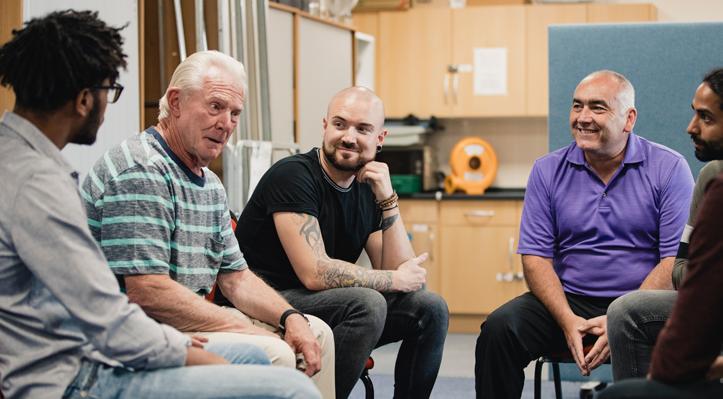
Connecting with others who share similar experiences can provide support and learning opportunities. Heart & Stroke offers two online peer communities which are private, closed and operated through Facebook:
• Community of Survivors is for people with lived experience of stroke or heart conditions.
• Care Supporters’ Community is for caregivers. Both groups are member-led with Heart & Stroke moderation. You can join through the links on the Heart & Stroke website.
Faith and spirituality
Reaching out to a spiritual care provider or faith leader can bring guidance and support for healing.
“The ‘magic’ of this group happens if we talk about our experiences and our journey, so we all can learn from each other and get inspired, empowered to keep going and growing. Those who can fully understand our journey are the ones on the same road.” — Heart & Stroke community member
When to seek additional support
Heart & Stroke provides information on situations or signs for which you or your caregiver may need extra support, such as:
• Intrusive thoughts or re-living the event: Memories may return unexpectedly, triggered by sight, smell, touch or taste. These memories may cause you to feel the same feelings you did when the event happened experiences.
• Feeling triggered by people, places or things that remind you of the event: You may avoid people, places or activities linked to the event — such as healthcare providers, hospitals or taking medications — which can make recovery harder.
• Increased nervousness or feeling on edge: Irritability, anger, trouble sleeping or difficulty managing pain can signal emotional distress.
Additional mental health supports
• Speak to your healthcare provider about supports in your community.
• Call 8-1-1 or your provincial health information line to speak with a registered nurse about mental health concerns or learn about mental health services in your region.
• Call or text 2-1-1, or visit 211.ca to learn about community and social services, including support for mental health, older adults, crisis needs and more.
• Find a mental health crisis line in your region.
• Call or text 9-8-8 if you are in crisis or thinking about suicide.
• Access medical and social services by phone.
• Learn more about heart disease, stroke and your mental health in this podcast
• Call the Canadian Mental Health Association crisis line
• Find resources on the Health Canada Mental Health and Wellness Services page.
• Contact a caregiver support organization in your region.
• Visit Health Canada to learn about positive mental health and how you can help promote it.
Engagement opportunities
Heart & Stroke is here for you throughout your recovery journey. If you have any questions or want to get involved further, reach out to engagement@heartandstroke.ca
Even sharing your experience in small ways, whether that’s talking to someone you trust or answering a question from another person with lived experience, can help raise awareness and help other people on similar journeys.
Thank you to the individuals with lived experience who generously shared their time, knowledge and perspectives. Their feedback contributed valuable insights into the empowering and complex process of sharing one’s health journey.