Altonwillcelebrate America’s 250thanniversary with a three-day “250onthe Mississippi” festivalbringing music, family activities,and fireworks tothreemajor riverfront locationsfrom July 2 through July 4. The event highlights Alton’s longidentityasa MississippiRiver town and anchorsthesemiquincentennialinthe city’s parks andpublic spaces.
Festivitiesbegin July2 at Haskell Park, 1211 Henry St., where children’s events startthecelebration. A kids’ bike parade begins at 5 p.m.,followed by donut-eatingcontests at 6 p.m.forkidsand7 p.m.for adults. Live musicfrom Sheafor& Simes runs 4-8 p.m., roundingoutthefirst evening.
On July 3,thecelebrationmoves downtownto AltonGodfrey Rotary Park, 110 E. Third St., with activities from 4 to7 p.m.
Familiescanmeet Uncle SamandLady Libertyon stilts,andthe American Jackalswill performthroughoutthe evening.
The festival concludes July 4 at the AltonAmphitheater, 1 Riverfront Drive,wherethe U.S. Army Bandand LustreLights perform from 5-10 p.m. The night ends with a large fireworks display over the MississippiRiver at 9:30
EVENTS America250celebrations plannedinAlton
A flyer forDowntownAlton’s“250on the Mississippi”celebration.
p.m.,expectedtodraw thousandstotheriverfront.
City officialssay the event is designedtohonor boththenation’s milestoneandAlton’s own history— a river city shaped by migration, industry, abolitionist struggle, and reinvention. By spreadingthe celebration acrossthree days and threelocations,
organizershopeto showcasethecommunity’s past andpresent along the river that has defined it.
Moreinformationon the 250onthe Mississippi events inAltonis availablethrough Great Riversand Routes.
Here’s a list ofthe eventsplannedfor America’s 250thCelebrationinourarea:
• 250 onthe Mississippi Downtown Alton Celebration: 4-8 p.m., Haskell Park, 1211 Henry St.,Alton
• KidsBike Parade— 250 onthe Mississippi:5 p.m., Haskell Park, 1211 Henry St.,Alton
• KidsDonut Hole EatingContest 250on the Mississippi: 6 p.m., Haskell Park, 1211 Henry St.,Alton
• AdultDonut Eating Contest— 250 on the Mississippi: 7 p.m., Haskell Park, 1211 Henry St., Alton
• Live Music: Sheafor &Simes 250on the Mississippi: 4-8 p.m., Haskell Park, 1211 Henry St.,Alton
CourtesyofGreatRiversand Routes
• 250on the Mississippi Rotary Park Celebration: 4-7 p.m.,Alton Godfrey Rotary Park, 110 E. 3rd St.,Alton
• Meet Uncle Sam& Lady Liberty on Stilts— 250 onthe Mississippi: 4-7 p.m.,Alton Godfrey Rotary Park, 110 E. Third St.,Alton
• Live Music:American Jackals 250on the Mississippi: 4-7 p.m., Alton Godfrey Rotary Park, 110 E. Third St., Alton
• “1776”movie showingon June30,the Wildey Theatre, 252 N. Main Street, Edwardsville
• MusicalOdeto Americawith The Edwardsville Municipal Band at 7:30p.m. July2 inCity Park.
• Stars, Stripes& SpokesContestand Pa-
rade at TheLandof GoshenCommunity Market aroundCity Park beginning at 10 a.m. July 4.
• Fourthof July festivalandfireworks at EdwardsvilleAmerican Legion Post 199 beginningaroundnoonon Saturday, July 4,with fireworks at 9 p.m.
• Musicinthe Park— America250Celebration: 6p.m.,BethaltoCentral Park, 213 N. Prairie St., Bethalto
• GreatRiversChoral Society—America250 Performance:6p.m., BethaltoCentral Park, 213 N. Prairie St.,Bethalto
• BoeingEmployees ConcertBand—America
250 Performance:6 p.m., BethaltoCentral Park, 213 N. Prairie St.,Bethalto
• Grafton Fireworks ontheRiverfront— America250:9:30p.m., GraftonRiverfront, 215 W. Main St., Grafton.
YourFinancialFreedom
Stafffilephoto
Fireworkson the Mississippi—Illinois250 Finalewill go off at 9:30p.m. July 4, AltonAmphitheater, 1 Riverfront Drive.
LOOKING BACK
JohnBadman/Alton Telegraph
Just 25milesnorthof the Gateway to the West, Altonhasacomplicated history that mirrors thecountry’s own.
Alton’shistory mirrorsAmerican story
By Ivy Lyons STAFFWRITER
Altonhasalways been acity shaped by movement by theriver that carved its bluffs, by the people who crossed it, and by the long struggles that unfoldedalong its banks. Just 25milesnorth of the Gateway tothe West, Alton’s history mirrorsthecountry’s own: settlement and displacement,racialconflict and resistance, reinventionandcommunity.
For America’s 250th birthday, The Telegraph reviewed archives,spoke withlocalhistorians, and examinedoral histories to understandhow this river cityreflectsthe largerAmerican story.
Before Alton:
Indigenous worlds, painted bluffs
Long beforeAlton was
platted,theregion’s Native Americancommunities shapedand stewarded theland. The city sitswithinthe cultural orbit ofCahokia Mounds and thehomelands of the Illini —a deep Indigenoushistory often referencedbut rarely examinedwith care.
“So we’ve got the IndigenousAmerican history that comes before this that I think we much like therest ofthe country— like touse for our own benefit without maybe examining if we’re being accurate tothe real story,” said Hayner Public Library Local Historian Lacy S. McDonald.
The PiasaBird isone of the clearest examples. Early European explorers recordedpaintedfigures on thebluffs,but the version most people know camefrom John Russell, a Shurtleff Col-
lege professor who published a sensationaltale in 1836.
“John Russel wrotethe story ofthe Piasabird that we allknow as, like, the Native American myth,” McDonald said. “He made itup…a white guy making itup, and then saying that it wasa Native American story.”
Russell likely drew loosely from Underwater Pantherand Thunderbirdtraditions, blending them into a story that reflected 19th-century expectationsmorethan Indigenous belief. For manyNative familiesand experts, the Piasa story has longbeen understood as a distortionofcultural memory.
“I love thePiasa Bird,” McDonald said, “as long as we look at it as a fabricationthat we can enjoy… callingout where
callingoutis due.”
Borderlandsof slaveryindivided nation
Alton’s geography—a free-statebluff facinga slave-state shore— shaped everything that followed.
“Theriver, evenallthe stuffthat isn’t the river, is relatedtotheriver,” McDonald said.“We’rea river town right across from a slave state.”
That bordermade Alton a flashpoint. Elijah Lovejoy, the abolitionist editor, printedhisAlton Observer at thenonabolitionist Telegraph officebecause its owners defendedfreedomofthe press. His murderin 1837 shocked thenation.
“Lovejoy’s murder was
absolutely huge,” McDonald said.“It really made peoplerealizethat [slavery] wasn’t just ‘aSouthern problem’ anymore.”
Historian Thomas B. Littlewood,inCoals of Fire, described Lovejoy’s death as a turningpoint in Americanpressfreedom andnational awarenessof slavery.
Resistancealsotook quieterforms.One story preserved inlocalmemory involves a youngenslaved womanbrought from Kentucky and threatened by a slave catcher.
“ThecitizensofAlton, Black and white, raise enough moneytobuy her freedom,” McDonald said.“Sometimes thisis seenasAltontryingto make up for Lovejoy.”
Hope, secrecy, and Underground Railroad
Altonplayed a role in the UndergroundRailroad, though the historicalrecord is uneven. Rocky Fork and several churches, including Union Baptist,areconfirmed sites.
“We have Isaac Kelly… who hosted Frederick Douglass … who was on the UndergroundRailroad,” McDonaldsaid.
But secrecy leaves gaps.Coalcellars, tunnels, and the Enos Apartments have allbeen labeled Underground Railroad siteswithout firm evidence.
“There’s a kernel of truth, and thenmaybe myths around it,” McDonald said.
Military documentarian Diana Maul Halstead sees a similar patternin other overlooked histories.
“One aspect of Alton’s history that I believe is
frequently overlooked is its military heritage,” Halstead said. “There are veteransfrom every branch of service whose stories have never been fully documented or preserved.”
She has interviewed three World War II POWs with deeptiesto Alton just a fraction of the military history connectedtothe region.
“Every veteran’s story is a pieceofourlocal history and a piece of the largerAmerican story,” she said. “Oncethose voices are gone, we cannot replacethem.”
Quiet resistanceand social change
AftertheCivil War, Alton nearly lost its library. Founded in 1852 as asubscription library, the collection dwindled when soldiers checked out books and never returned them.Quincy’s library attemptedtobuy the entirecollection. Alton womenraisedthemoney to save it, though they could not legally bid themselves;themayor submittedthebid on theirbehalf.
“The women of Alton bandedtogether and raisedenough moneyto win the auction,” McDonald said.
Whenthemen added to the library board stopped attendingmeetings, the women voted in 1868tomake the board women-only. It remained so until 1952.
Monticello Female Seminary reinforcedthat pattern. It was among the first institutions offering rigorous subjects includingphysics rather thanfinishing-school polish.
women in his life could actually geta real education.”
Schools, race, and reinvention
Alton’s schoolhistory reflects nationaltensions over race andbelonging. In the 1870s,Charles Newton excelled at the Black school and was allowed tograduate with the white Alton High class, deliveringthe main speech.
“He gave the valedictorian speech; he wasn’t even a student,” McDonald said.“He’s still consideredthe first Black graduate.”
That progress reversed in 1897 the same year the Lovejoy Monument was completed when the city opened Lovejoy and Douglas schools for Black students.
“They made thosethe Black schools,” McDonald said.
The Scott Bibbcase challengedthe new system. Though theIllinois SupremeCourt ruled against segregation,the city allowed only thetwo Bibb childrento attend— and only inthegrades they had left years earlier.
“So now, we’ve gota 16-year-old in third grade,” McDonald said. “They shamedthe Bibb family into leaving after the court case was won.”
FormerIllinois state Sen. William“Bill” Haine rememberedthe contradictions of mid-century Alton.
Alton, Godfrey, and Foster Township sharea single school district.
Whose stories survive?
Even in death, inequality persists. The citysexton estimatesthat halfthe peopleburied in the cemetery lack stones,disproportionately Black residents.Charles Newton’s grave was unmarked until Vintage Voicesand partners raised fundsfor amarker.
“There are a lot of people who don’t have stone,” McDonald said. “So then you’re being erased in a different way.” Vintage Voices’October walkingtoursbring some of these storiesback intopublic view.
“One of thepeoplethat we portrayed was Charles Newton,” McDonald said. “He didn’t have a stone, so we got him one.”
Halstead seesthe same urgency in preserving military and architectural history.
“Once a significant building is lost, a piece of the community’s story is lost with it,” she said. “Preservingthese structures is aboutpreserving the physical evidence of the people who built Alton.”
“It was a women’s college that was teaching real subjects,” McDonald said.“BenjaminGodfrey wantedtomake surethe
“Late 40s, early 50s… the schools were segregated,” Haine said in an oral history interview. “We had AfricanAmerican children in our school in every grade. No one thought a thing about it.”
Gradual reintegration camethrough theCorridor Program anddistrict consolidation. Today,
From Indigenous worldsto abolitionist presses, from industrial migrationtoschoolbattles,Alton’s story follows the currents of American history. The river remains the through-line shaping who came, who stayed, who resisted, and who rebuilt.
As the nation marks 250 years,Alton’s layered story suggeststhat the next chapter of reinventionwill depend on how fully and honestly the community chooses to remember its past just beyondthe river.
By SteveWhitworth STAFFWRITER
As the United States preparestocelebratethe 250thanniversary ofthe signingoftheDeclaration of Independenceon July 4, Americans still debate the meaningof ourfoundingprinciples.
We asked people around The Telegraph areatorespondtothe following questions:
• What doesfreedom meanto you?
• What does democracy meanto you?
• What is it aboutour
REFLECTIONS Area residents reflect onfreedom, democracy
areathat you think the rest ofthe country should know?
• What should our areapreserve for the next 250 years?
Hereare their answers:
Carol Hood, 74, of Roxana Freedomis a precious thing.I mean,our country right now isso divided. It’s hard to think that we’re celebrating 250 yearslike this. It’s reallya difficult time, I think. But freedom,tome, is just what I’ve enjoyed my wholelife. That’s allI
know, not like some people who don’t have any of that. What does democracy mean to me? That’s a more difficult question, becauseI always thought we lived in a democracy, but sometimes I wonder. Things happeningin Washington, D.C.,and justeverything going around the world… do we stillhave a democracy?I
don’t know theanswer to that question.
Ididn’t really grow up here.I grew up inGermantown, Illinois, about an hour’s drive fromhere. But it’s similar. The people arenice They’re friendly, they’reoutgoing. They’llhelp you ina heartbeat if you need it. All of thosethings are true forthisarea, I think, too.
We’re hard workers, that’s for sure. We don’t give up, and I thinkallof those things combined help make the country stronger.
Lori Hammonds, 75, of Roxana
Freedom, to me, means that I’m able to do whatI want to do without stipulations,withoutpolitical things holding me back. Freedom to me is just, you know, freedom. It’s no hands tied.
Democracy is very, very important. Our country right now is in turmoil. It has been declining for a longtime.
I’m very mucha Trump supporter, and I’m hoping that, in time, he can get things turned around, andprices get
back to where they should be. Like I said, it has been declining for a long time, and it needs change. And I’m hoping that this time around,hewill do that.
Ihaven’t really lived here that long I’ve only beenheresix years. I’m from up north, by Wisconsin. Illinois sucks,in plain terms. I’m sorry. I
ReflectcontinuesonH8
Carol Hood Lori Hammonds
grew up ontheSouth Side ofChicago.I loved it when I was younger. As soonasPritzkertook over, it hasturnedintoa sewer. Andthis whole state isturningthat way becauseofhim. He needs to bebootedtothecurb. He’s justa horrible governor. And I’ve lived througha lotof governors,andhetakesthe cake.
And Chicago’s mayors are nobetter.I never liked Daleyfrom way back, buthe at leastwas for thecity of Chicago. EversinceDaleydiedand his sontook over, it has been declining The city of Chicago right now isa dangerousareatobein.I love that city;I always will. I grew up onthe SouthSide. And I still go
back tovisit every now and then,just for the food. But it needs to change. The Democrats are tearingthiscity, the cities, apart; they’re tearing this country apart. We need to unify. What we needtopreserve for the next 250 years, I believe, is unification,less divisiveness. Overall, just humanity.
Wiley Davis, 75, of Godfrey
Ithinkoffreedomas liberties, the libertiesthat we have in thiscountry tobe ableto do what we want and pursuethe things that we want to pursue.I thinkthat’s important.I thinkfreedom,tome,
equateswith liberties.
Democracy means that the majorityofthe people get to vote for something. We’re thehomeof Robert Wadlow, who’s the tallest maninthe world, still. We have beautiful weather, and it’s a good place tolive.
Ithink democracyisa very important partof where we areand what we need to preserve. And if we are goingtocontinue, democracyisprobably themost important thing. Government by the people.
Carolyn Thompson, 68, ofAlton
Freedom means a great deal to me, especially beingofAfrican-American descent. My AfricanAmericanancestors went from slavery andprogressuntiltoday. Freedom means a lot. Democracy, to me,
means that Ihavea say-so abouthow our country is run, becauseof voting. Again, it goes back to African-Americans fighting forthe right to vote. Andright now, it seemslike they’re trying to take that away fromus. So it means thatI havea voiceandinputinto how our country is run.
Altonis a small city, but it’s a very involved city Our citizens, we come together to helpout each other. We believe in helpingouteach other. Ithink that peoplein other placesandother cities would be surprised by how much history that Altonhas. I mean, we’re the birthplaceof Miles Davisandso much more
history.
Ithink the quaintness of the city needs to be preserved. I’m for progress, but you stillneed thissmall-town feel. It’sa great place to raise your kids, family, andto have your church involved, the church community That down-home feel.
Steve Lange, 69, of St. Louis
Ithink what freedom means to me is that you have the opportunity to live your life and to pursue things without somebody telling you how to do it But there are still responsibilities. Freedom is notsomething where you get to do
whatever you want. Freedom means that you live within an area where everybody elsehas those same freedoms. So you need to be aware ofthat and be responsible to them, as well as to yourself. So in my opinion, freedom is not freerein. It’s a group freedom,a societal freedom. It’s not individual freedom in the sense that you can go ahead and take whatever you want and do whatever you want, andthe rest of the world be damned. That’s not fairorall right, and that’s not freedom. Democracy is flexible. It has been massaged over the years. It has changed, yet it stillhasa core meaning for people. It’s from the ground up, or it’s meant to be that.I don’t know that it always lives up to that anymore. But it’s meant to be from
ReflectcontinuesonH9
Wiley Davis
Carolyn Thompson
Steve Lange
the ground up.
I’d like toknow thelast time a person who was just an average, everyday Joe served inourleadership positions at thenationallevel. I wouldreally becurious.
Ijust work hereoccasionally aspartof my job, butI live inthe St. Louis area,soI’m not far away. By andlarge,I thinkthe Midwest istheheart of the country. And I don’t meanthat geographically. We’re notperfect by any means, butI thinkthere’s alittlebit more common senseand a littlebit more realityoutside ofthe huge cities. That’s justa general representationof Midwest life.I thinkpeople who comeherefrom otherpartsofthecountry findthat it’s surprisingly
friendly, surprisingly civil.
That doesn’t mean we don’t have unrest, of course But thoseare qualitiesthat are higher and more common than we tend to findin some of the more populous areas, what we call the coastal areas.And you know, you can go anywhere and findthat. But it seems to be anunderlying fabricof the Midwest,and that’s whyI say it’s the heart of the country, if you ask me, because it represents more what we’re about.
I’m not worried about the next250 years.I’m thinking more about the nextfive or 10 years.
Ilive and work in St. Louisprimarily, although I’m up hereonce a week, at least. I think that the re-energizingof our cities …like, I’m over here at AltonSquare, and Alton Square is almost empty,
you know? But whether that’s right orwrong, there’s a lotofresponsibility to figureoutour leadership’s partall over the country. What needs to be doneinorder to make usmove forward withsome pride in where we’re at and what we offer.
Jazmyn Graham, 23, of Alton
Freedom to me means just living yourlife freely without thinking about what otherpeoplethink about you. You know, just living your truth and doing what makes you happy. That’s freedom.
To me, democracyisthat we all geta say inhow things go
and how things are running, and we all get to vote We all get to voice our opinionandnothave consequences for it So that’s democracy.
Ithink we have a good communityhere. Just the people, we have a lotof good people We havea lot ofsmall businesses, goodsmall businesses. We have a lotofbusiness ownershere. People supporteach other, and I feel like it’s a pretty tight-knit community.
There’s a lotofhistory here,a lotof good things to do,a lotofsights tosee here It’s really pretty here.
Iwouldsay theland needs to be preserved, the historicalsites, the bluffs, the river. DowntownAlton, that historicalarea. Really just preserving the natural beauty from hundredsof years ago, when this
place started. The Blue Pool, the PiasaBird, all the caves and the waterfalls back there. There’sa lot ofhidden stuff that should be preserved.
Sarah Ware, 65, of Alton
Freedom, to me, means being able to livemy life without fear. That means being able to livemy life without baggage from different politicians and social conditions and such And Iwish everyone had the sameopportunities in the States that someof the more fortunateones do.
Democracy meansa true vote, that every vote counts. The United States doesn’t have a true de-
mocracy, the way Switzerland does, where everyonehas to read the referendums. Everything’s a referendum, and you have to read it, you have to study it. You have to vote, or you get fined.I don’t know if I would go for that. But every vote counts.
The Alton areahas such an eclectic mix of people. I chose Alton as my home about eight years ago. I’ve lived on the East Coast, andI’ve lived abroad and just had great opportunities that way. But what I love about Alton is thehistory. My gosh, it’s got such adeephistory. So like an onion, you keep peeling back layers anddiscovering somethingnew. Its history needs to be preserved, for sure, and someofthe more iconic buildings andsites, and
ReflectcontinuesonH10
Sarah Ware
people’s senseofsmalltownidentityandcommunity, whichI cherish here. There are notracks in Alton where you live on the right side orthe wrongside.It’s justa cool mix ofpeople That’s what I’ve observed.
Guy Schell, 64, of Alton
Freedomhas to do withcivil rights. In our current administration, as wellasotherentities, they’re shaving away thoserights. The rights of freespeech, therightsto yourpersonarebeing shaved away, not gradually, but dramatically. Freedom alsocomes with an understanding of respectfor the human individual. That’s why communities,forexample like Godfrey, aresoimportant,because you have to live with yourneighbors. You can’t or don’t want tobedisrespectful in that sense.
Our democracy has faded dramatically. You’ve certainly read abouttheelectionsand the accusationsthat there have beenonfederal elections, that therehas beenfunny business goingon.
There are two kindsof democracy. Oneisrepresentative democracy, where you voteforsomeone, andtheyrepresent you. The otheroneis participatory. Right now, our country is shifting fromjust being a representative to thepopulation startingtobecomemoreparticipatory, which is a goodthing.
Becausethey’re seeing theircivil rightsandjust their general legal rights being shaved away. So democracymeans that people work together and live together fora commoncause One of the most important things about a country is that it’s ableto survive, and that’s what wewould like tosee happen.
Ithinkthe majority of people in thecountry
would like to see less foreign interventions.
We’ve gota lotof beautifulhistoricandcontemporary artand music that’s happening every day here. We would love to be ableto keepthat So Iwouldencourage people who are outofthe River Bendareato at least come a few times within their lifetimeand see what we’ve got going on. If I was tocome, andI
was from outofthearea, one ofthe places I would visit wouldbethe historic library that we have downtown, which hasall the documentationto show that Abraham Lincoln literally walked these steps downtown and practiced law here, as wellasother famous individuals. So there’s art, music, contemporary, constantly changingandcreative,
of thepeople that have comefrom here. Whatever they callfreedom, that it is preserved. Andthat we continue to create an environment where they feel as though theircreative ability is being enhanced and encouraged. And that includes not only the arts, but it includes just their everyday lives. I think I would like to see that we continue to create an atmosphere where peoplecan practice their artistic ability and theircreative ability.
Sherman Damper
stock.adobe.com
beautifully creative musicians and artists and excellent writers that have comeoutofthis area and are still being produced today So we would love to keep it that way. And it’s important that we do become participatory citizens in our democracy.
We’re going through some dramatic changes. What I would like tosee preserved is the integrity
Sherman Damper, 79, of Godfrey Freedommeans a lot to me, you know, the ability to go where I want to go when I want to do it, provided I have thefinancialmeans to do it. Democracy, tome, means that I’m living ina government that doesn’t discriminate, that’s freeof total government control. The country should know that the Midwest isa great place to live. We have higher taxes in Illinois, but it’s stilla great place to live. It’s quiet and peaceful with plenty of recreation, the arts and things to do. The entertainment is great. Ithink all theparks in this area need to be preservedfor the next 250 years. Iwas looking at a documentary about Cahokia Mounds. I thinkthey shouldrelease that government money sothey could go ahead andcontinue tofix it up. My heart sortof goes out to Cahokia Mounds, because I was oneofthe workers that cleared all those trees and snakes out back in 1971.
Guy Schell
By ScottCousins STAFFWRITER
Fromthe famoustothe infamous,Altonandthe Riverbendareahave hosted a large numberof famousand important people.
Whilesome wereborn hereandthenmoved away, othersspent much of theirlives intheRiverbend.
Thislist isneitherconclusive norin a particular order.
Miles Davis
BorninAlton on May
PEOPLE YOU KNOW Alton/Riverbend residents leave along legacy
26, 1926, as a musician, bandleader and composer his career spanned five decades and he is consideredamong the most influential musiciansof the 20thCentury.
Davis died in 1991 and was inductedintothe Rock and Roll Hallof Famein2006. The annual Miles Davis Jazz Festival is heldannually inAlton.
Elijah Parrish Lovejoy
An abolitionist minister and newspaperpublisher, he was drivenout of St. Louis by pro-slavery supporters,andrelocated
to Alton in 1836.
On Nov.7, 1837, Lovejoy was shotandkilled bya mob seekingto destroy the warehouse housing his printingpressand abolitionist materials.
In his death, Lovejoy became a martyrfor both the abolitionist movement and thefreepress.
James Earl Ray
BorninAltonon
March 10, 1928, Ray wasa small-timethief until he was accused ofthe assassinationofcivilrights leader the Rev. Dr. Martin LutherKing Jr. at a Ten-
nesseemotelon April4, 1968.
He was apprehendedin London,andpleaded guiltyand was sentenced to 99 yearsinprisonfor King’s assassination,but laterrecantedand spent his remaining years attemptingtoprove his innocence.
He diedinprisonon April 23, 1998.
PhyllisSchlafly
Aprominent andoften controversialconservative social activist, Schlafly lived inthe Fairmont neighborhoodof what is
now Godfreyformany years.
Alawyer, author and Republican activist, she most notably opposed the EqualRights Amendment and founded theEagle Forum.
Schlafly diedin 2015 at the age of 92, shortly after endorsing Donald Trump for president in the 2016 election.
Paul Tibbits
Agraduate of Western Military Academy, as an Army Air Corps bomber pilot during World War II, he pilotedthe “Enola
Gay,” the B-29 Superfortress that dropped the atomic bomb “Little Boy” on Hiroshima.
Tibbits and his family moved to Alton in the late 1920s.
After World War II he remained in the Air Corps, which became the Air Force, eventually retiring as a brigadier general.
He continued to strongly support the dropping of the atomic bombs on Japan, and diedin November 2007 at his Ohio home.
PeoplecontinuesonH12
Lyman Trumbull
Along-timeIllinois politician, Trumbulllived in Alton from 1849to 1863.
In the U.S. Senate, Trumbullplayeda major roleinPresident Abraham Lincoln’s issuingth Emancipation Proclamation;andco-authoredthe ThirteenthAmendment, which abolished slavery and involuntary servitude in the U.S.
His home, the Lyman Trumbull Homeinthe 1100block of Henry Street, is a National Historic Landmark. He diedin 1896inChicago.
Robert Wadlow
Born Feb. 22inAlton, he suffered from hypertrophy of hispituitary glandand was taller than his father at age 8.
After graduating from Alton High School in 1936, he became a celebrity after touringwiththe RinglingBrothersCircus. He was known asbeing soft-spoken and dignified in his personal appearances.
He diedin July 1940 in Michiganafter a blister developedintoaninfection. He is buriedin OakwoodCemetery in Alton, hisgrave raisedto showcase hisheight.
Mary Beth Hughes
several yearslater. Whileperformingin stage productions asa child, she was spotted by atheatercompany owner, eventually movingto Hollywoodin 1938.
One of her most famousroles was as Henry Fonda’s former girlfriend in “The Ox-Bow Incident.” She also appeared in two moviesparodied on “Mystery Science Theater3000,” “I Accuse My Parents” and“Last ofthe Wild Horses.”
She diedin August 1995 in Los Angeles.
Harry Gallatin
at SIUCarbondale, forthe NBA’s Knicks and St. Louis Hawks, thenlater at SIUE. He was NBA Coach ofthe Yearin 1963 withthe St.Louis Hawks. Gallatinpassed away in 2015 at the age of88.
Howard Keel
Astage and screen star, he was most notably famousforMGM musicals,including“Seven Bridesfor Seven Brothers,” “AnnieGet Your Gun,”“Show Boat”and “Calamity Jane.”
was in “AnnieGet Your Gun,” and it established him as a star.
He continued to work in film and on stage, then in 1980 was poised to leave acting, but joined “Dallas.”
He diedin November 2007, six weeks after being diagnosed with coloncancer.
Russell Dunham
Born Feb. 23, 1920 in Brighton, Dunham wasa platoon leader when his Army unit was pinned down near Kaysersberg, Franceon Jan.8, 1945.
He lived with his family on a small farm near Jerseyvilleformore than 30 years. He died at age 89 in April 2009 in his sleep at hisGodfrey home.
Benjamin Godfrey
Known asAlton’s “Gentle Giant,” at 8 feet 11.1 inchestall,he claimsthe titleofthetallest person in history.
Afilm, stage and television actress known mostly for her appearancein “B” movies from 1939 to 1974, Hughes was born in Alton in 1919, but moved to Washington D.C. when her parentsdivorced
A1944 Roxana High graduate, Gallatin went on toplay at Northwest Missouri State University. He thenplayed inthe NBA,and was a seventimeAll-Starandplayed for the New York Knicks and Detroit Pistons. He later served as head coach
Bornin Gillespiein 1919, his family moved to Californiaafter his father’s death in 1930.
After his landlady heard him singing, she encouraged Keeltotake vocallessons.
Dunhamcrawled toward the enemy, then attacked.
He was wounded, but eliminated severalmachine gunnests,killing nineGermans, wounding seven andcapturing two.
His Broadway debut was in 1945,andcontinued to appearon stage and in some filmroles. His musicalfilm debut
He was awarded the Medalof Honor and multipleothercitations.
Amerchant and philanthropist, he settled near Alton in 1832 aftera career as a seacaptain and business owner. He continued in business, and allowed Elijah ParishLovejoy to hide his press in oneofhist warehouses, leading to Lovejoy’s death in 1837.
The next yearGodfrey founded Monticello Female Seminary, which later became Monticello Collage, as two-year women’s college now the home of Lewis and Clark Community College.
He diedin August 1862. The village ofGodfrey,
Frompage H11 PeoplecontinuesonH13
incorporated in 1991, is namedafterhim.
Raphael Tracy
Bornin Gillespiein
February 1904,he wasa midfielder who played for the United Statesinthe 1930 World Cup in Uraguay. He played inallthree games,but was sidelined in thesecondhalfofthe semifinal against Argentina aftera kneeinjury. He died in March 1975, and was posthumously inducted intothe National Soccer Hallof Famein 1986.
Christina Romer
An Altonnative anda notedeconomist and professor, she chairedthe Councilof Economic Advisors, which advises
the president on economic policy, from January 2009 to September 2010, and was part of the team workingonthe Obama administration’s recovery plan for the 2008recession.
She is a professor emeritus at the University of California Berkeley.
Clint Walker
Born Norman Eugene Walkerin Hartford, accordingtoIMBD he “almost single-handedly started the western craze on TVin the 1950s as CheyenneBodie.”
Before becoming an actor, he bouncedaround avarietyof jobs, before workingas a security officer at the Sands Hotel in Las Vegas, where show business people told him he should go to Hollywood.
Known for westerns and war movies,includ-
ing “The Dirty Dozen,” he was an active actor through the 1970s,and his last role was as Nick Nitro (voice) in 1998’s “Small Soldiers.”
He hasa staronthe Hollywood Walkof Fame, and was inductedintothe HallofGreat Western Performers at the National Cowboy & Western Heritage Museum in OklahomaCity, Oklahoma.
He diedon May 21, 2018 of congestive heart failure, he was 90.
Paula Simms
Convictedof murdering her 6-week-olddaughter, Heather, in 1989 inAlton, she also acknowledged killing her first daughter, Loralei,in 1986inBrighton.
The case createda mediacircus, and was laterthe subject of a book and televisionmovie
“Precious Victims.” Sentencedtolifein prison, she was paroled by Gov. JBPritzker in October 2021 after serving morethan30 years. She now lives inAlabama, according tocourt documents.
EuniceSmith
The daughterofAlton industrialist WilliamEliot Smith, she donated 75 acresoflandin Upper Altonfor what eventually becameAlton Memorial Hospital,as wellas 75 acresthat becamethe startof Rock Spring Park. She was alsoknownfor her giftstothe Hayner Library, YWCA, and Family Serviceand Visitign Nurse Association; in addition she provided shoesand clothing for needy childrenfor many years,and helpedfinance the educationofmany Altonresidents.
Anursing homeon the hospitalcampus bears her name, along with anelementary school in Alton.
Known as “Miss Eunice,” she died in 1955.
Capts. Meriwether Lewisand William Clark
As leadersofthe Lewis and Clark Expedition, officially the Corpsof Discovery, the two lived for a short time near the confluenceofthe Mississippi and Missouri rivers as theexpedition prepared to move west.
While their time here was short, according to historians it was vital to the successoftheexpedition, which eventually reached the Pacific before returning to St Louis.
James Killion Jr.
Acommunity activist, Killion was born May 25, 2018, in Alton.
Killion was educated at Shurtleff College, the UniversityofIllinois and Universityof Missouri, He served in World War II and the Korean War. Letters sent home to his wife, Hazel, were compiled into a book, “A Black Soldier’s Letters Home, World War II 1943-1945.”
Killion was the first Black man hired at Laclede Steel and worked there until his retirement in 1983, and was also the first Black elected union official.
He was active in church and other activities. He also pushedfor the annexationofthe Oakwood area into Alton, as well as fought for the complete desegregationofthe Alton School District. He diedin 1997 Salu Park was renamed James H. Killion Park in his honor.
BACKINTHE
DAY
A look at theIllinois of yesteryear
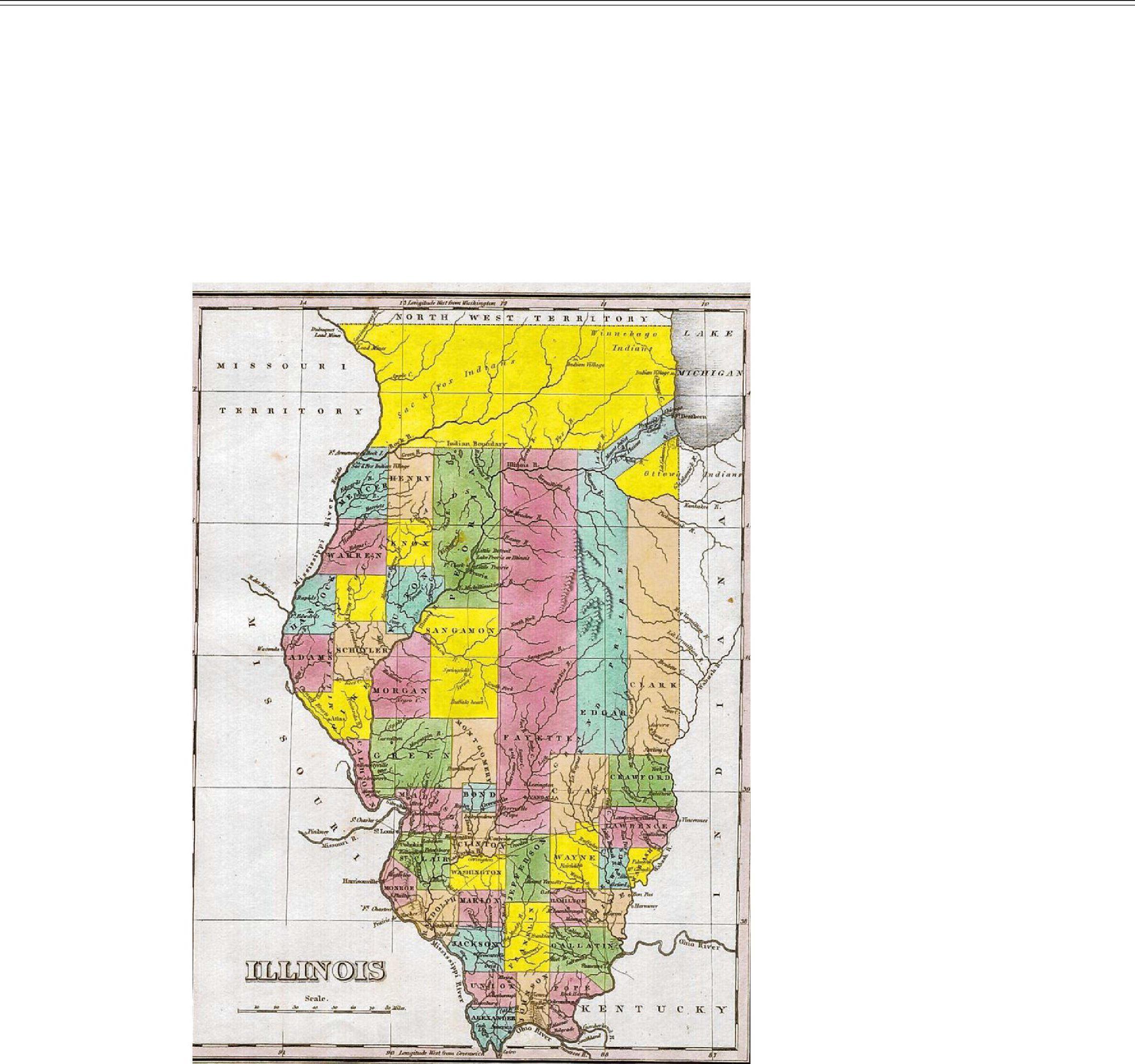
The statehometoAlton, Springfield, Chicago was mightydifferent 250 years ago
By MadelynSinclair CONTRIBUTINGWRITER
Whenthe 1783 Treaty of Parissaw the United Statesformally released fromthe British Empire, colonists fromtheeast coast swarmed inlandto newly acquiredterritory west ofthe Appalachian Mountains. American homesteadersandmarket speculatorshad been outraged two decades prior by Crowneffortsto designatethe areaas Indian Reserve and restrictexpansioninto it; now, evenasthenew government struggledto assemble andfund itself, they were eager tobegin staking claims.
outposts and establishing frontiercolonies. To this day, some roadsremain that originally were paved-over paths carved by hoof.
The expansive prairies hinted at what would come to be a defining characteristic ofthe region: flat, fertile land with deep soil and ideal climateconditionsfor growing a variety of essentialcrops. While many Southerncolonists made theirfortunesestablishing slave plantations to produce highvalue cotton and tobacco, those in the north and west found that grain and livestock could flourish here. Bit by bit, native grasslands and meadows were shaved down to make way forendless fields of grain, bison were slaughtered in droves to be replaced by imported European livestock, and patchwork homesteads came to comprise the bulk of theregional landscape.
acted as a sturdy backboneforrapid population growth;from 1770 to 1870, the population ofthe United States nearly doubled every 20 years, and it continues to grow to this day.
At thetime, what we today call Illinois looked remarkably different. Priortocolonization,the vast plains ofthe North American interior werea sea ofprairie grasses. Thosegrasses, awash with wildlife and sometimes up to 8 feettall, made navigationtricky for humans butprovideda smorgasbordfor native bison, which both grazedonand hid within thosegrasses whilemigrating acrossthe continent The wandering herdsfollowed paths routineenough that Native locals learnedto use the trample-trails left in their wake as corridors for travel and hunting; later, Europeans would follow theirexample when buildingtrade
Today, Illinois produces upwards of $17 billion annually in agricultural goods(mostly corn and soybean). Farmland makes up around 70% to 75% of the state by land area,making it notonlya major producer ofgrain for the United States but also a major exporter to countries around the world. The massive surpluses produced by Illinois and neighboring states historically have
Of course, all that grain needs some way to move from farm to table. At the dawn of U.S. independence, steam locomotives hadn’t yet been invented; it would be several decades before the nation’s railroad boom. With the dense prairie and broad Appalachian range making it difficult to return eastwardonfoot, moving large quantities offood over long distances would be no easy feat. To this end, the MississippiRiver becamea lifeline.
Life in the North American interior, in fact, has dependedonthe MississippiRiver and its many tributariesfor as long as humans have lived here. For humans throughout the majority of history— from the “Mound Builder” cultures whose pre-colonial urbancentersrivaled Europeancontemporaries in population to the more nomadic tribes that moved throughout the region as resource availability fluctuated, and from the early Spanish and French colonists who sought to extract the land’s resources to the subsequent wave of Unit-
ILLINOIS
Frompage H14
ed Statescolonists who sought toreshapethe landscape itselffor commercialbenefit— lifein thisregionmeant clinging tovital waterways for travel,trade, war and communicationalike.
Thismade Illinois’ position withthe MississippiRiver tothe west; its largest tributary, the OhioRiver, tothesouth, and Lake Michiganto the northeast—a very useful one tobein.
Early on,these waterways still were far from accessible, unless you happenedto live right alongthe shore. Most colonists who came to live throughout the Great Lakes regioninitially survivedthrough subsistence farming and local trade, much like the area’s Indigenous inhabitants.Scatteredgatherings ofindividual homesteads wouldbejoined together by centralmarketplaces, where locals wouldexchange their goodswithoneanother or withtravelingmerchantsseekingtomove them fartherafield. With no locomotives or automobiles available, travel was limitedtomoving by foot,soany essential resourcesorservicesa personmight need had to be within walkingdistance.
WhenIllinois was admittedas a state in 1818, its colonialpopulation was somewherearound 35,000 technically too few peopleto becomea state, butthe initial census had errors that inflatedthe number. Most of its residents lived in the southendof the state, closetothejunction of the Ohioand Mississippi rivers,making it relatively easy totravel to
nearbySt. Louis by ferry. It still wouldbesome timebeforethe northeast rosetotheprominence it now holds;Chicago was littlemorethan anold fur-tradingoutpost with perhaps a hundredpeople livingaround it.
This would change quickly: The ErieCanal’s opening in 1825connected the upperGreat Lakesto the AtlanticOcean,bringing with it a sharp uptick in importsof bothpeople and goodsto thecoastal Midwest.Areasalongthe lakes’ shoresalmost immediately beganto see steady population growth. What truly broke the dam,however, was the opening23 years later of the Illinois and Michigan Canal. This canal linkedLake Michigan directly tothe Mississippi River byway of Chicago, instantly placing itat the center of trade between the AtlanticOceanto the east, the Gulfof Mexico to the south,the Missouri River tothe west, and Canadatothenorth.
Practically overnight, Chicago becameaneconomicpowerhouse. Industry andcommerce boomedand,asrailroads criss-crossed Illinois,that newfoundprosperity in the northeast helpedfuel the industrializationof the rest ofthe state, as well. The coal, steeland rail industriestook off; so too did labor organization withinthose industries.
Overthe years, numerous strikesand subsequent backlashes shaped relationsbetween workers,employersand government officialsin the region,with striking workers often facing imprisonment orphysical violence in retaliationfor interruptingproduction. Local labor organizing efforts eventually culminated in theformation of Industrial Workersofthe
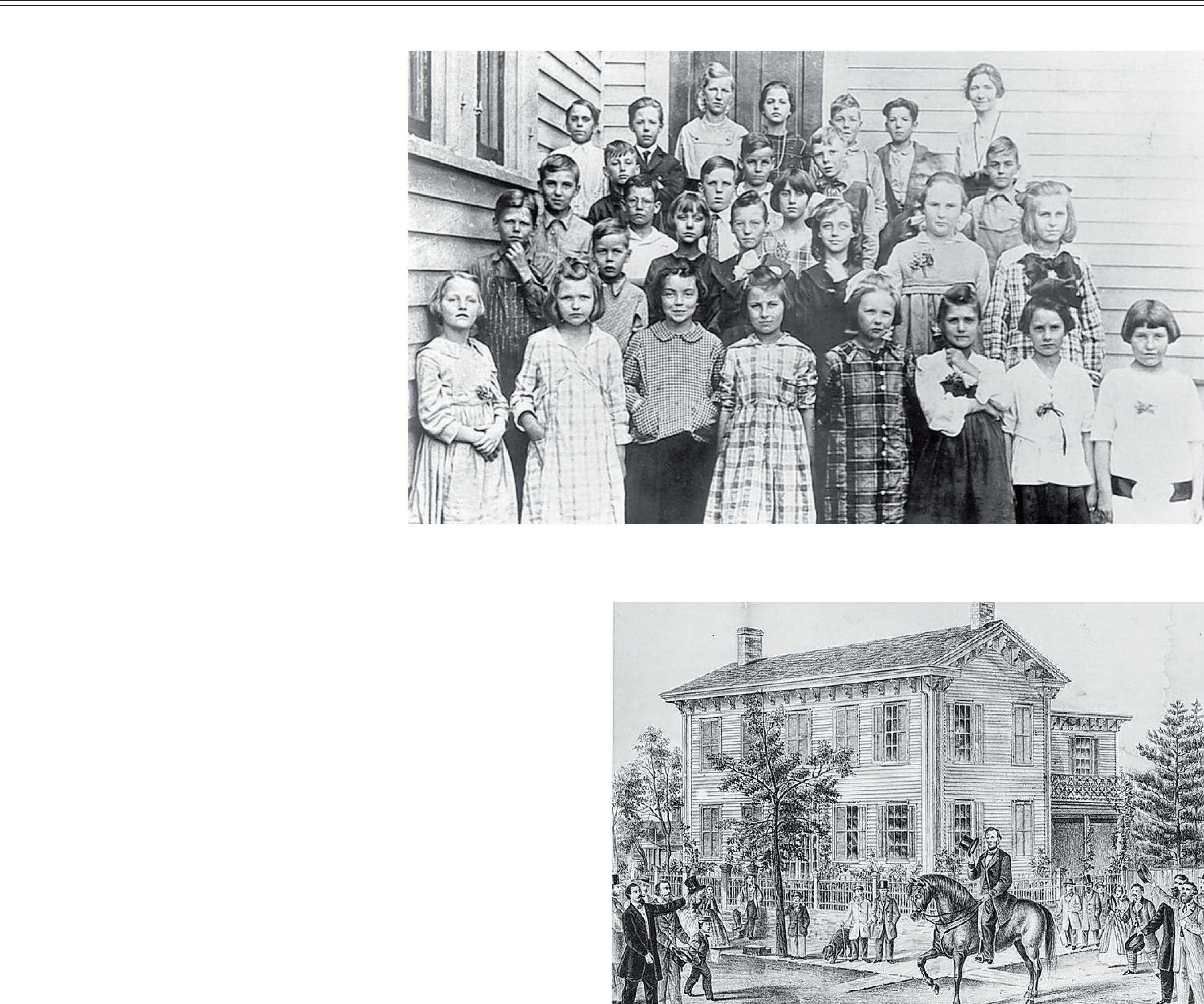
Illinoisnative Ronald Reagan at 8 years old withhis third-grade classin
on theleft in thesecond row.
World, a merger ofexisting coaland rail unions foundedwiththe goal of buildingand uniting unions in every varietyof trade nationwide.
The industrialboom proved lessexplosive and less long-lasting outside the Windy City, though. Shifts in the freight market over timecausedthe prosperity downstream of Chicago’s shippingand productionmarket to fade, sending some riverside towns into steady decline Meanwhile, agriculture —a moreconsistent economic foundation —remains dominant through much ofthe state to thisday.
WhileIllinoismay not have quite as flashya reputationas states like New York andCalifornia, it is undoubtedly just as essential —a beating heart at thecore ofthe nation, steadily carrying on day by day.
It’s difficulttoimagine the United States looking
Anengravedscene depictsPresident AbrahamLincolnon horseback, surrounded by localpeople at his old residencein Springfieldin
the samewithout sucha crucialcenter oftransportationenabling easy travel, or withoutthe excess of foodprovided by thisand otherbreadbasket states. As the
nationrings in its 250th anniversary, onehas to wonder what this land betweenriversmight look like given another few decades of development and social change. With any luck, those marking the nation’s 300th year will be able to look back on today and feel satisfied with how things have shaken out.
Historical/CorbisviaGetty Images
Tampico. Reagan is the first child
Kean Collection/GettyImages
1858.
REVOLUTIONARY WAR Battle marked war’s onlyclash west of the Mississippi St.
Louissiteof westernmost 1780battle; defeat forBritish and Indians
By SteveWhitworth STAFFWRITER
The main sourcefor this information isanarticle written by Stephen L. Kling Jr thatappearson the website of the Missouri SocietySonsof theAmerican Revolution.
Although most Revolutionary War battles werefought intheoriginal 13 American colonies, one notable skirmish duringtheconflictoccurredjusta few miles downriver from Alton.
The Battleof St Louis, alsoknownasthe Battle of FortSanCarlos,took place on May 26, 1780, pitting Native Americans alliedwith theBritish againsta hodge-podge of French andSpanish colonists defending the youngcity It was the only Revolutionary War battletooccur west of the MississippiRiver.
St. Louis was founded in 1764 by French colonists who came up the Mississippifrom New Orleans. The French settledin a numberof spotsonboth sides of the river, includingCape Girardeau and Ste. Genevieve in Missouri,as well as KaskaskiaandCahokia inIllinois.
But in 1762, theSpanish tookcontrolofthe vast area that the French had named Louisiana under thetermsofa treatythat endedthe Seven Years’ War. The
CourtesyofTHGC Publishing
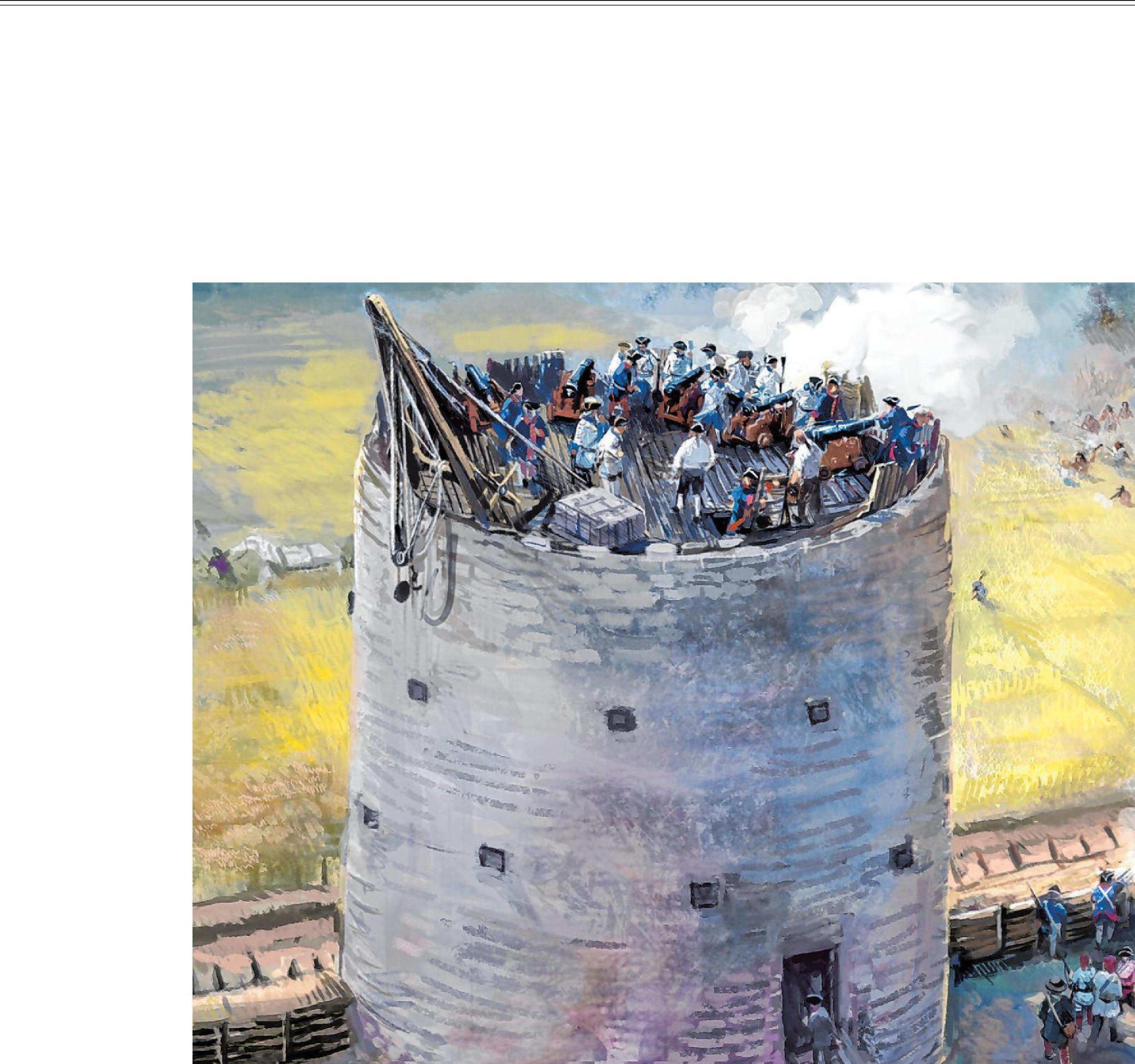
This painting by Mitchell Nolte, which appearsin thebook “TheAmerican Revolutionary War in the West,”edited by Stephen L. Kling Jr., depicts FortSanCarlos during theBattleof St. Louison May26, 1780.The fort stood at the site of the present-day Ballpark Village in downtown St. Louis. WarcontinuesonH20
Frompage H18
Spanish establishedtheir authorityin St. Louisin the late 1760s.
Shortly afterthe Revolutionary War broke out in 1775 inandaround Boston,the French and Spanish beganaidingthe Americancolonistsin their struggle against the British,longtime adversariesofboth France and Spain. France’s contributionstotheAmericancauseare wellknown,especially the effortsofthe Marquis de Lafayette, butSpain’s roleinthe war getslittle publicity.
MississippiRiver marked war’s western frontier
In 1778, AmericanGen. GeorgeRogersClark of Virginiaopenedthe war
in the West by attacking and capturingthe British fort at Kaskaskia. In early 1779, Clark led an expeditionfrom Kaskaskia acrossSouthern Illinoistocapture another British fortnear present-day Vincennes, Indiana.
Those defeatsalerted British leaders to the importance ofcontrolling what then was the westernfrontier of America.Soin 1780, Patrick Sinclair, the military governor at Fort Michilimackinac inpresent-day Michigan,urged Loyalist furtraders to organize Native Americantribesfor an expedition against St. Louis. Abouttwo dozen fur tradersandanestimated 750 to 1,000 Indian warriorsleftPrairie du Chienin Wisconsin on May 2, 1780, under the command of Emanuel
Hesse, a former militia captain turned fur trader.
About200Sioux warriors made up the largest contingent from one tribe, but fighters from the Ojibwe, Menonimee and Ho-Chunknations also came alongunder the leadership of the Ojibwe chief Matchekewis as the force made its way in canoes downthe Mississippi. At Rock Island, they were joined by about250 men from the Sauk and Meskwaki nations.
The village of St. Louis was governed by Lt. Gov. Fernando de Leyba,a captain in theSpanish army, who was warned by a fur trader about the British plan to attack. With little timeto prepare, he oversaw the construction of a round tower, about30to 40feet high, that gave a com-
manding view of the area outside the village. It was named FortSan Carlos.
Trenches were dug to form a defensive perimeter. Five heavy cannons wereset up in the tower, withsmaller cannons and swivelguns distributed in the trenches. Leyba had 310 men under his command, most of them militia.
At the same time, George Rogers Clark and asmall company from his Illinois Regiment of Virginia fortified the French village of Cahokia, a few miles east of St. Louis,repairinga large stone building at the mission that was called Fort Bowman. Clark himself arrived there a few days before the attack; he was able to meetwith Leyba to discuss their strategy.
WarcontinuesonH21
CourtesyofTHGC Publishing/ Readerscanlearnmore about thebattleof St. Louis and the attackonCahokiain “The American Revolutionary Warin the West,”edited by Douglas Kling Jr.,and availableonAmazon.
Fortproves
decisive in defeat ofBritish, Indianallies
The British and Indians landedtheircanoes on May 25near what now wouldbetheBremen neighborhoodof North St. Louis. Hesse decidedto attack the followingday. About 750 of theIndians would attack FortSanCarlos, whilesome200 warriors,mostly Chippewa, would attack Cahokia.
The battlebegan about 1p.m.on May 26, with the British and Indians charging the entrenchments around St. Louis. They weremet by cannon firefromthetower andmusketfirefrom the earthworks. Free Black inhabitantsofthe town assistedinthe defense.A
numberoftownspeople were caught intheir farm fieldsoutside of the defenses whenthe attack began, and they made up the majorityofthecasualties.
After abouttwo hours of fighting, the Indians retreated,effectively ending the battle. The cannonfirefromthe tower, in particular, apparentlysurprisedand intimidatedthe Indian attackers. Theylater referredto FortSan Carlos as the “Houseof Thunder.”
Leyba tallied 21 dead and six wounded, with 25 peopletaken prisoner.
Another 46 people were capturedalongthe MississippiRiver before and after the attack.The British and Indians reportedlysuffered fewer than 10 casualties overall. Leyba himself, who had been severely ill during
Although the Battleof St.Louis was relatively smallcompared to the major battles along the Atlantic Coast, iteffectivelydenied theBritish controlover the Mississippi River Valley, paving the way for the Americanstomove westward after the war’send. Fort San Carlos was located at thepresent-daycornerof Fourth and Walnutstreets in downtown St.Louis, where a plaque was placed bythe Sonsof the American Revolutionto commemorate the battle.
the battle, diedthe next month.
At Cahokia,the attackers also failedtobreach thedefenses.Clark’s men and themilitia, numbering about200to250, were assisted by some45
Kaskaskia warriors. The British reportedthey had killedfour of the defenders andtakenfive prisoners.
Battle secures westernfrontier for
Americans
The British forces retreated up the Mississippithe next day, taking about 70 prisoners with them, and destroyingcrops and killing livestock along the way. Militiacavalrymenfrom St Louis and Cahokia pursued the Indians up the Mississippi and also up the IllinoisRiver to thevicinity of present-day Chicago. The combined French, Spanish and Americanforces, in turn, attacked and burned some Indianvillages, especially those belonging to the Sac and Fox tribes.
Chastened by their defeat, a number of Sac and Fox chiefs later returned to St. Louis to surrender their British peace medals and flags; they accepted Spanish medalsand flags in their
place to signify their new allegiance to Britain’s enemies. Almost all of the captives werereturned to St Louis by the end of the war in 1783.
Although the Battle of St. Louis was relatively smallcompared to the major battlesalong the Atlantic Coast, it effectivelydenied the British control over the MississippiRiver Valley, paving the way for the Americans to move westward afterthe war’s end.
Fort SanCarlos was located at the presentday corner of Fourth and Walnut streets in downtown St. Louis, wherea plaque was placed by the Sons of the American Revolution to commemorate the battle. The remains of the tower underlie the present-day Ballpark Village adjacent to Busch Stadium.
By SteveWhitworth STAFFWRITER
The Altonareais dotted with thefinal resting placesof a numberof soldiers who served inthe Revolutionary War. But accordingtothe Gen.George Rogers Clark ChapteroftheSonsofthe American Revolution, thereareno Revolutionary War veteransburied in Alton.
Restingplaces of veterans dot region
The closest oneisburied inGodfreyCemetery, just a few steps away from the grave ofBenjamin Godfrey, thefounder and namesake ofthevillage. JabezTurner was born in 1756inBristol, Pennsylvania,theeldest of 11 children. He enlistedin the ConnecticutLine, which eventually had 27 infantry regiments assignedto it, in May 1775. In 1775, Turnerand the
Connecticut Line were partoftheforcethat capturedtheCanadian strongholdsof Fort St. John’s and Montrealunder BrigadierGen. Richard Montgomery. Turner also was withhis regiment under the overall commandofGen.George Washington when it retreatedfrom LongIsland, New York, in 1776.
Afterthe war, Turner lived in Massachusetts
beforecoming totheGodfreyareasometimebefore 1838. He andhis wife, Rebecca, who had marriedin 1778 in New Haven, Connecticut,cameto Godfreytolive with their son, Timothy, who was the postmasterofthenew settlement. Ten students who were attending MonticelloSeminary inGodfreyalsolived at Timothy Turner’s home.
JabezTurner was one of theoriginalfounders of the CommunityCongregationalChurch andGodfreyCemetery, where he was buriedafterhis death in December 1846 at the age of90. The Gen. George Rogers Clark Chapterofthe SAR installed a marker onTurner’s grave honoringhimas aRevolutionary War patriotinSeptember 2000.
South Roxana’s Wanda Cemeteryhas five patriotgraves
Four Revolutionary War veteransfromthe same family are buried in WandaCemetery inSouth Roxana.
The GGRC Chapterof the SAR writes aboutthe members ofthe Gillham family: “Seldom do we read ofso remarkablea family recordforthe enthusiasticpatrioticservice as the war recordofthe Gillham family.”
Americafrom Ireland in 1730, first settling in Virginia and later in South Carolina. He espoused the Revolutionary cause early in the hostilities,serving as an officer along with his seven sons andtwo sons-in-law. Five of Thomas Gillham’s sons latermoved to Madison County, andfourofthem are buried at Wanda Cemetery: Issac, James, John and Thomas Jr. Only John was buried there at the timeofhis death; the others were allburiedon their family farms in Madison County before eventually being reinterred at Wanda.
Issac Gillhamfought in the battlesof Rocky Mount and Fishing Creek, both in South Carolina. James, John and Thomas Gillham Jr. also served in South Carolina. The GGRCC-SAR placedmemorial plaquesfor all four in Wanda Cemetery in 1989.
Anotherofthe Gillham brothers, William,moved to Jersey County after seeing action in and around Charleston, South Carolina, during the war. He died in 1825 and is buried at the East Newbern Cemetery near Dow. The Daughtersofthe American Revolution placed a plaque onhis tombstone.
Cemetery. Born in 1757 in Bucks County, Pennsylvania,heserved in 1782 under George Rogers Clark himself, who was suppressing Indian raids in theareaofthe Falls of the Ohio River, now in Lincoln County, Kentucky, but then part of Virginia’s Kentucky County. Brown was living in Madison County whenhe appliedfor and receiveda pensionforhismilitary service in 1833. The exact yearofhis death isunknown. The GGRCC-SAR honoredhim with a stone at Wanda Cemetery in 2003.
Three Revolution soldiers rest in Wood River
The family patriarch, Thomas Gillham,cameto
DanielBrown is another Revolutionary War veteran buried in Wanda
Three Revolutionary War veterans are buried in Wood River’s Vaughn Cemetery: John Cornelison (alsospelled Carnelison), Anthony Alexander Harrison and John Rattan (alsospelled Rotton). Cornelisonfought in the Battle of Stono Ferry near Charleston, South Carolina, in 1779. He later lived between present-day Alton and Bethalto. The exact locationofhis grave is unknown, butthe GGRCC-SAR notes Vaughn Cemetery isa suitablecommemorative site to honorhim. Harrisonfought against the British at Petersburg, Virginia. His sonmarried
FrompageH22
awomannamed Vaughn, and their farm was just northof Vaughn Cemetery, wherethe McDonald’s restaurant stands today. Anthony Harrison is presumedtohave died thereinthewinterof 1842-1843,andthe SAR alsoconsiders Vaughn Cemeterya suitable commemorative siteforhim.
Two patriots buried in Bethalto andnearby Two cemeteriesinor nearBethaltoalso contain the graves of Revolutionary War veterans.
The PruittCemetery is locatedonthepropertyof what isnow St Louis RegionalAirport. The only patriotburiedthere is MartinPruitt (also spelledPreuitt), who was bornin Virginiain 1752.
He served as a sergeant and a spy, apparently in NorthCarolina,from 1778 to 1780.
In 1806, Pruittsettled on a farmin Foster Township. His family was caughtup inthe events surroundingtheinfamous WoodRiver Massacrein 1814, when a woman and six children were killed by membersofeitherthe Kickapooor Potawatomi tribes. Two ofPruitt’s sonspursuedthe Indians and killedoneofthem. The guntakenfromthe slain Indianisondisplay at the MadisonCounty Historical Museumin Edwardsville. MartinPruittdiedin Edwardsvillein 1844. The Paddock Cemetery is locatedeast ofBethalto and west of Holiday Shores,neartheintersectionofIllinois Route 159 and Moro Road. The only patriotburiedthereis
Gaius Paddock, bornin Plymouth, Massachusetts, in 1757 He enlistedon Jan. 1, 1776, andfought insome of thebiggest battles ofthe Revolutionary War, includingthe evacuationof New York City, bothofthe battlesof Trentonin New Jersey, andalsotheBattle of Princetoninthat state. At least onesourceplaces Paddock at Valley Forge withGeorge Washington. Paddock arrived in MadisonCountyfrom Vermont in 1817 afterbeing granted 160 acres ofland fromthe government for his Revolutionary War service His tract was called Paddock Woodand included thelandthat containsthecemetery bearinghisname.
“Formany years after that event, a goldmedallionofthe Marquis de Lafayette, a souvenirof his visit to St. Louis, was keptonthe white mantel
in thelivingroomofthe Paddock home,”the SAR says.
Gaius Paddock diedin 1831. The GGRCC-SAR honoredhimin 1991. Abronzetablethonoringtheseandallthe other Revolutionary War soldiersburiedin Madison Countyisdisplayed in the lobby oftheCounty Courthousein Edwardsville.
Jersey Countyhas eight patriotgraves
Along with William Gillham,seven other documented veteransof the war are buried in JerseyCounty.
Joshua Armstrongis buriedinArmstrong Cemetery in English Township.
WilliamBatesoriginally was buriedinElsah Township. His marker is locatedonthe Lockhaven GolfCourseinGodfrey.
Joseph Chandler is buried in Noble Cemetery in Otter Creek Township.
Jonathon Cooper, who served as a drummer boy, is buried in Falkner Cemetery in English Township, as is James Falkner, known tohave served in Virginia.
Silas Crain is buriedin Lax Cemetery in English Township.
Josiah Cummings, who servedunder two prominentgenerals in theContinental Army, Anthony Wayne and Arthur St. Clair (for whom St Clair County in Illinois is named), is believed to be buried in theunmarked Cummings Cemetery in Mississippi Township.
Macoupin County boasts nearly 30 patriot graves
At least 18 documented Revolutionary War soldiers are buriedin Macoupin County. They include: Huriah Gilmore; William Kirk, buried in Scottsville Cemetery; William Gillespie, buried in Old Gillespie Cemetery, Chesterfield Township; John Peebles, buriedin Peebles Cemetery; William Gaty, buried in Piasa Cemetery in Girard; Philip Hupp, also buriedin Piasa Cemetery; Anthony Eldrige, buried in Brighton Cemetery in Bunker Hill; and SamuelBrown, who was pensioned and resided in Macoupin County.
Amonument honoring Revolutionary War veterans standsonthenorthwest cornerofthe Macoupin County Courthouse lawn in Carlinville, where it was dedicatedonOct. 19, 1981, tocommemorate the 200th anniversary of the Americanvictory at the Battle of Yorktown, Virginia, that effectively ended the war.
AMERICA AT 250
HowIllinois helped shapeAmerican music,freedomand women’s rights
Most Americans associate “folk music”with ruralAmerica,someplace vaguely Southern, where white musicianspick, bow, and sing witha twang.A few may recall AfricanAmerican musicians,rootedinthe South, who fashioned bent-notemelodiesinto gospelandblues. Media and scholarsoffereda similarperspective, with an occasionalnod to songs oftheAmerican West.
That IllinoisandChicago playeda key role was never considered.
Not that Illinoisfolk music was overlooked. IllinoisansCarl Sandburg, Charles Neely, and David McIntosh publishedcollectionsfeaturing Illinoissongs. Irish immigrant andone-time Chicago police chief Francis O’Neillcollectedthousandsof Irish folksongs
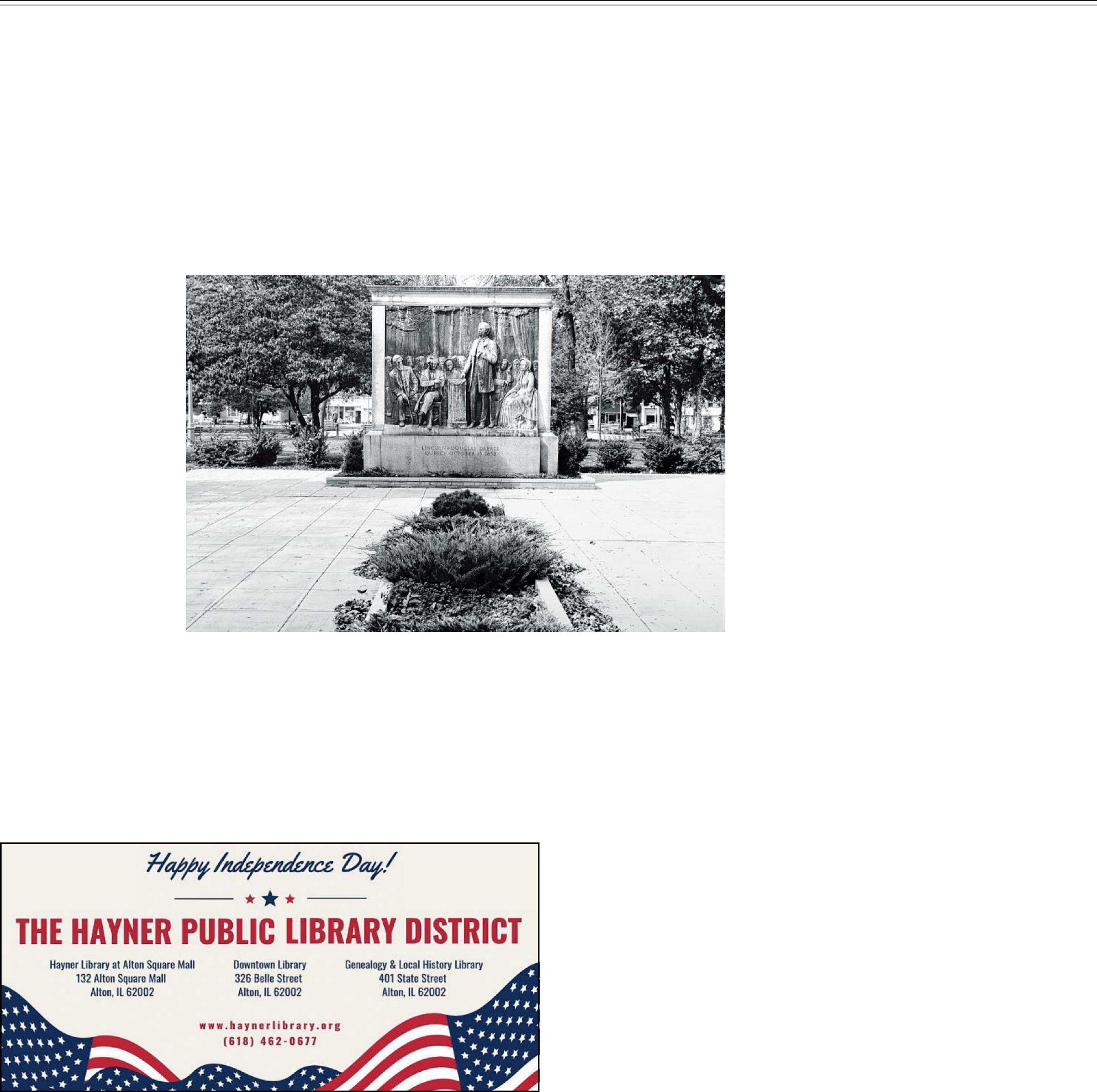
Aviewof theLincoln/DouglasDebate monument in Quincyin 1858.
in theearly twentieth century. Decades later, old-timefiddler Garry Harrison documented regionalfiddletraditions in Illinois,andhis valuablecollectionishoused at EasternIllinois University. Othersitesaround
the state holdfieldrecordings andrelated documents as well. Blues and gospel have alsobeen recorded and documented. AfricanAmericans resided inIllinois since its beginning, and as the Great Migration ad-
BettmannArchive
vanced,their music caught the attention of record companies, journalists, andscholars. The Rev. Thomas Dorsey, the Staples Singer, Muddy Waters, Koko Taylor, Junior Wells, Big Bill Broonzy, Howlin’ Wolf, and Buddy Guy became stars and established Chicago as the vitalcenter of gospel and blues,a position it maintains today.
reachedwider audiences. Chicago’s WLS began broadcasting in 1924 and launchedthe National Barn Dance, a live broadcast featuringprominent “country and western” artists.
The program’s audience skyrocketed as WLS’s power increasedto 50,000 wattsandNBC broadcast the show nationwide. Chicago emerged asthe capital of country music, a position it retained for nearly thirty years. Patsy Montana, Gene Autry, Bill Monroe, Smiley Burnett (of Summon),the Girls of the Golden West (of Mount Carmel), Lulu Belle andScotty, bluegrass legend Jethro Burns, and guitar icon Les Pauldid stints on Barn Dance.
Even as theprogram declined, country music maintained a substantial audience in Illinois. Chicago’s WJJD broadcast as an “all country” station in the ’60s,the only one outside Nashville, and Barn Dance-styleprograms flourished on stations such asWDZ in Tuscola and WHO in Clinton.“Hillbilly Heaven,” Chicago’s Uptown neighborhood, declined as a rural migrant locale, but “country,” “alt country,” and “Americana” stillprosper in Chicago and all of Illinois.
1930s,people from Makandato Waukegan campaignedto“preserve” all kinds of folk music. Asa national revival took hold in the 1950s,the movement garnered momentum. Folk clubs and festivals sprang up across Illinois. The most ambitious effort came in 1957 withthe establishment of the Old Town Schoolof Folk Music by Frank Hamilton, DawnGreening, and Win Stracke, with help fromBig Bill Broonzy and Studs Terkel.
Still in operation,the nationally renowned school offers a range of classes and concerts, and it utilizes an inclusive definition of folk music. As the revival continued intothe ’60s and ’70sthe spotlight of stardom shone on singer-songwriters too, notably John Prine and Steve Goodman.
Turningtocountry music, we can see more clearly how Chicago and Illinoisplayeda pivotal role in folk music and how the conventional paradigm limits ourunderstanding. Withthe rise of radio and recording inthe 1920s, music
The music of thegreat “folk revival” also advanced. Beginning in the
At the very least,the “folk music” outlined above shouldpersuade someto acknowledge LincolnLand’s key role in the genre What happens, however, if we considera less restrictive definition of folk music, one less Anglo-centric, onethat encompassesthe music of all Illinoisans and Americans? Shouldn’t “folk music”beinclusive instead of applying immigration quotas and segregationtothe model? America has always been
STORIES
adynamic, multi-ethnic, multi-racialmassand nowherehasthat mass created a more vital musicalhomethaninIllinois and Chicago.
Indeed,aninclusive model demonstrates Illinois’premierroleas torchbearerforthenation’s folk musicwith Chicagoatits core.
dant waterways, canals, coalmines,andexpanding railroads quickly established The Prairie State asthenation’s trade center. Peoria, Moline, Decatur, and EastSt. Louisemerged asurban centersandChicago soaredas a majorindustrialandmanufacturing center, theheartofthe nation’s steel,railroad, livestock, andmeatpacking sectors.
As the demand for workers surged, internal migrants, Black and white, poured into the state, asdid Irish and Germanimmigrants.
GaryGershoff/Getty Images
We shouldhardly be surprised.Oncehometo alarge, Indigenouspopulation,Illinoisbecame an outpost for French imperialaspirationsand emerged as a key agriculturalproducer duringthe early republicanda crossroad forpeopleand trade goods. White migrantssettledthe state, as did AfricanAmericans, though some were brought as slaves. Abun-
Gilded Age immigrants, including Jewsfleeing pogroms,arrived from Poland, Norway, Italy, Greece, Sicily, theBalkans, Sweden, Russia, Czechoslovakia,and otherpartsof Europe. After World War I,IllinoiswitnessedtheGreat
Rockmusician Dave Peverett, fromleft,of the group Foghat and Americanblues musicians Johnny Winterand Muddy Waters play electric guitars as they performonstage during the Foghat Blues Tributeconcertin 1977.
Migration of African Americanstothe North, followed by Mexicans and MexicanAmericans, alongwithpeople from China, Japan, India,the Pacific Islands, South America, and Africa. Thisdiverse assemblage transformed Illinois society and folk music, bringing and co-mingling
ingredientsthat gave rise to bluegrass, country, ballads, minstrelsy, labor protest songs, gospel, light opera, sentimental airs, and country and urbanblues. Polka,tamburitza, worker anthems, Irish reels and céilí, comedicdialect songs, corrido, klezmer, Indian drum circles, Greek kalamatiano, and Japanese taiko, emanated from socialgatherings,taverns, theaters, radioandtelevision. Record companies took notice by the 1920s, recording acts such as Silvano Ramos andDaniel Ramirez, Franciszek Dukli, Julius Siik, the Kotsaka Concertina Quartette, the Moser Brothers, Eleanor Kane Neary, andthe Polish Mountaineers.
Folklorist Jim Leary assertsthe need for “a more inclusive, fluid notion of American folk
music, onethat exchanges ethnic hierarchy for egalitarianism, one that stresses process over pedigree” and “where consistently rootsy, constantly evolving, and wildly combinatory musical experiences constitutetheAmerican folk musical norm.” Clearly, “folk music” includes a range of music and nowhere was that music more vibrant and reveredthan in Illinois and Chicago.
Bucky Halkeris a historian, song writer, and folksinger with more than 15 recordingstohis credit, including “Coal,” a solo acoustic recordingfearing songs by coal miners. He alsoproduced “Folksongs of Illinois,” a five-CD anthology of historic recordings of Illinoisfolksongs. This articleisfrom the Journal of the Illinois State Historical
FrompageH24 StoriescontinuesonH26
STORIES
FrompageH25
Society Copyright 2026by the Board of Trustees of the Universityof Illinois. Used with permissionof the Universityof IllinoisPress.
Illinoisand the saving of the American republic
By Theodore J. Karamanski
It was inthe years 1860 to 1865 that Illinoisplayed its greatest roleinAmericanhistory. Whenthe sectionaldispute over the extensionof slavery tothe westernterritoriesresulted intreasonand secession,Illinoisansplayeda determinative rolein savingthecountry and giving it a new birthof freedom.
MPI/Getty Images
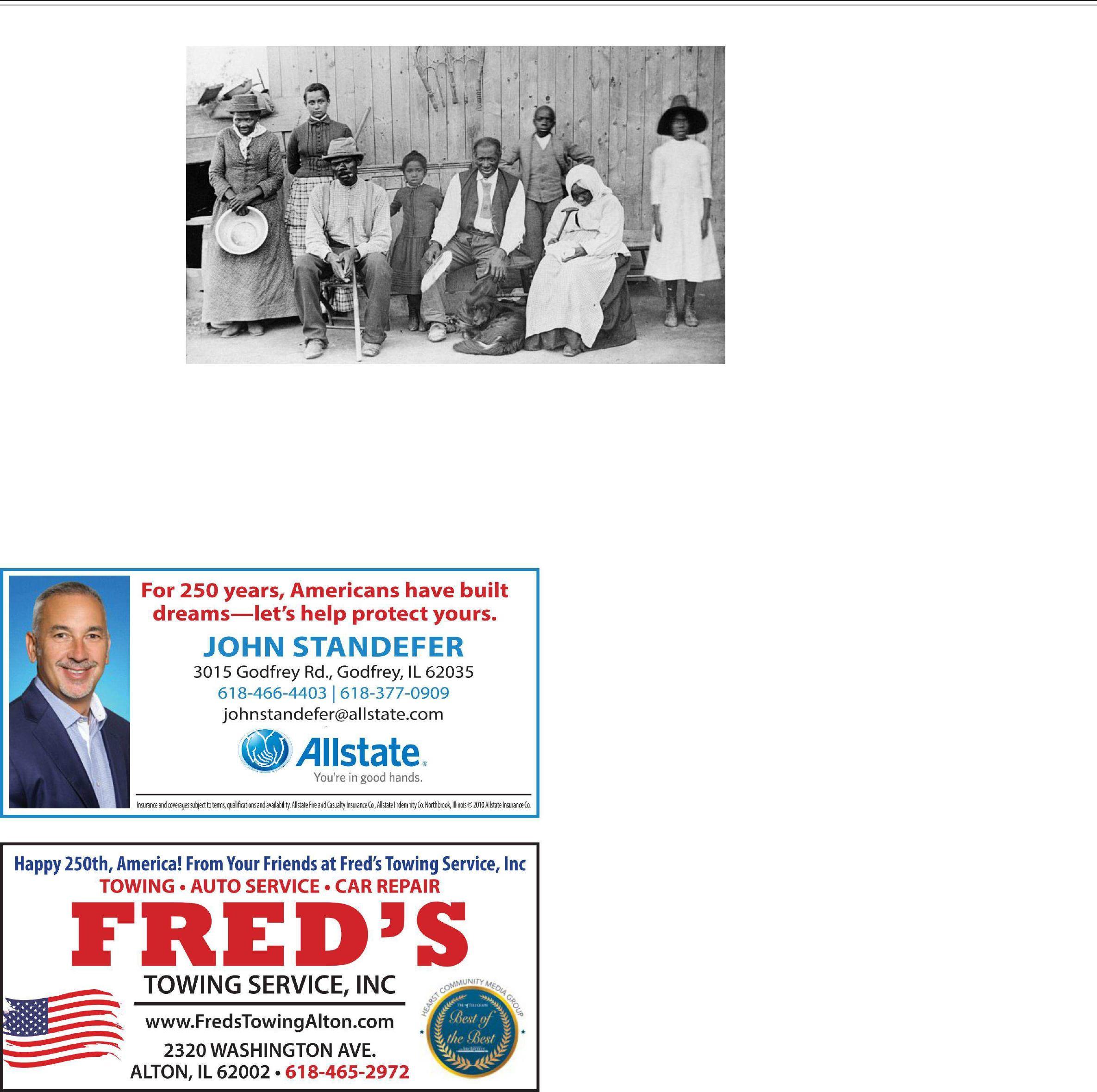
Abolitionist HarrietTubman(left)withfamilyandfriends:her adopted daughterGertie Davis (fromleft)and husband Nelson Davis, LeeCheney, John “Pop”Alexander, WalterGreen,“Blind Aunty” Sarah Walker,DoraStewart.
MemorialstotheCivil War arefound acrossthe Prairie State, inthecourthousesquaresofcounty seats,in ruralcemeteries, under Springfield’s marble rotunda,andinChicago’s lakefront parks. Fittingly, AbrahamLincoln is featuredprominently, and Ulysses S. Grant is not neglected. What is most touching, however, are themodest granite gravestones and monuments that mark the sacrifice of the ordinary people who put aside the pursuits of peacetofrustrate the slaveholder’s rebellion.
For Illinois,the conflict over slavery was a people’s war. Virtually the entirepopulation was engaged inthe struggle, although not always on the same side. Powerful ideological currents surgedthrough the farms,towns, and cities of the state, sweeping aside past political orthodoxies and legal strictures. The Civil War was America’s secondrevolution, and Illinoisans were as centraltothat struggle as the Virginians Thomas Jefferson and George Washington weretothe breakwithBritain.
beforethe war, nonetheless maintained a cordial and respectful relationship. In the race, Douglas broke with convention and openly campaigned for thepresidency. His nationwide travelsbroke his health as he vainly triedtobeat back the secessionists who had sundered his beloved Democratic Party. When the divisive election concluded,Lincoln’s victory was made possible only by northern votes. In defeat, Douglas showed his character when he supportedLincoln’s effortstoholdthe nation intact. In the wake ofthe firing on Fort Sumter, Douglas hurriedtoIllinois, andin a series of rousing speeches, he helpedtounitethe state’s Democrats and Republicans when he thundered, “There can beno neutrals in this war: only patriots andtraitors.”
Douglas was no Lincoln,but few politicians everdid more thanthe “Little Giant”tobuild Illinois. It seemsposterity has been hard onhis legacy, especially the recent removal of his name frompublic facilities andthebanishment of his statue fromthe state capitol.
before Fort Sumter, Congress crafted, and Lincoln sent tothe states forconsideration, a vastly different ThirteenthAmendment, which proposedto enshrine in the ConstitutionAmerican slavery in perpetuity. A great leader grows in office, is flexible, and finds a way to successfully appealtothe people’s “better angles.” It is a testament toLincoln’s role in leading Illinois and the nationtosocial justicethat hebrought the majority of Union men to acceptthe end of slavery. In 1865, Illinois was the first state to ratify the 13thAmendment, and it revoked theinfamous Black Codesthat fora generation had denied AfricanAmericans.
The 1860presidential electiontriggeredthe creation of the Southern Confederacy The key figures in that race were the Illinoisans StephenA. Douglas forthe Democrats and AbrahamLincoln of the upstart Republican Party. In contrast to contemporary political leaders,thesemen, who wererivals for decades
Lincoln was the central figure in the four-year strugglethat followed. His greatness was demonstrated not by any clear-sighted vision of how the country couldbe saved,but rather by his flexible, pragmatic, but always principled ability to evolve to meetthe escalating challenges of civil war. The 13th Amendment tothe Constitution,passed in 1865, that ended slavery is often seen as hisgreatest accomplishment. That accomplishment is more noteworthy when it is rememberedthat in 1861,
Overthe years,both professional historians and thepublic have not wavered in their admiration of Lincoln’s leadership. Ulysses Grant, the George Washington of the Civil War, has hada rougherpassage through the nation’s historical imagination. His contemporaries lauded hisgreatness andtwice elected him chief-of-state, butthe textbooks of later generationstendedtodiminish his military reputation. This was thepernicious influence of the Southern “Lost Cause” school of history that lauded Robert E. Lee as a military genius and necessarily had todismiss Grant asa bloody butcher who only won by overwhelming resources.
The reality, of course, was quite different. Lee’s rash attacks ledtomany more casualtiesthan Grant’s operations. Grant supervised military campaignsthat spanned half the continent, and which included complex combined arms operations, while Lee never won a
battleoutside hishome state of Virginia. Three timesintheconflictGrant forcedthecomplete surrenderoftherebelarmies he faced Inadditionto thesemajor accomplishments,Grant’s calmselfconfidence, unostentatious demeanor, andresilienceinthe faceofsetbacks endearedhimtohis fellow Midwesterners.
Grant beganhisCivil War careerasthe obscure coloneloftheunruly Twenty-First Illinois Infantry. As heroseto prominence,a special bond was builtwith volunteertroopsfrom Illinois. At Shiloh,Grant commandedmorethan 30 Illinois units. His brilliant operationsinthe Vicksburg campaign included thirty-sixthou-
sandIllinoisans. It isusefultoremember as we approach the 250thanniversary ofthe American Revolutionthat Grant andhisfellow Illinoissoldiers went to war very much in defense of theidealsof 1776. One volunteermirroredthe sentiment ofthousands of comrades when he wrote, “Freedomisjust as dear to usnow as it was toour forefathersinrevolutionary times.”
Soldiersenduredgreat hardships for yearson end to keepthe democraticandunitedrepublic bequeathed by thefounders. To that endmore than250,000Illinoismen put theirlives ontheline and 34,834gave the “last fullmeasureof devotion” to that cause. The men and womenofCivil War Illinoisrecognizedand acted against theSoutherner’s threat tothecon-
stitutional order. They appreciated Benjamin Franklin’s answer tothe question of what type of government had come out of the 1787 constitutional convention: “A republic if you can keep it.”
The Civil War generation’s appreciationthat republican government required civicvigilance is reflected in themonument the state erected on the Shiloh battlefield.On the site, where in 1862the state’s soldiersendured 3,957 casualties, isa bronzefemale figure representing Illinois facing “enemy territory to the south.”
In herhand is a partially sheathed sword held in readiness shouldthe republic againbethreatened.
Theodore J. Karamanskiis aprofessoremeritusat Loyola University Chicago.
He is the authorof twelve books, including “Civil War Chicago: Eyewitnessto History” (with Eileen M. McMahon)and most recently “GreatLake: An Unnatural History ofLake Michigan.” Thisarticleisfrom the Journal of the Illinois State Historical Society. Copyright 2026 by the Board of Trustees of the Universityof Illinois. Used with permissionof the Universityof IllinoisPress.
The journeys of freedomseekers in Illinois
By Caroline M. Kisiel Journeys
of the Underground Railroad— whereescapingenslaved individuals traveled precariousroutesoutof bondage toward freedom—arenotones we typically associate with the state of Illinois. Harriet Tubman, the Underground Railroad’s cele-
brated champion, isa story to commemorate as the nation celebrates250 years.
But this is also an appropriate timeto recognizeunderrepresented journeys of the varietyof freedomseekers who traveled to and through and lived lives within the state of Illinois.
While established asa free state in 1818, Illinois was largely hostile toward the enslaved who sought to change their circumstances, as well as to indenturedservants and free African Americans. This is due to the legacyof slavery in the Illinois Country under the French inherited by those living in the Illinois Territory (1809–1818) and carriedon by Americans into the early yearsof statehood. Although Illinois passed its constitution as a free state,
many early Illinois leaders were pro-slavery and sought to expand slavery in the state, believing this would support land development and economic growth. The harsh Illinois Black Codes in effect from 1819 to 1865 restricted the rights andmovement of enslaved, indentured, and free African Americans who lived in or sought residenceorpassage through Illinois. This context complicates the 21st century narrative ofIllinois asa beaconoffreedom the first state to ratifythe 13th Amendment that fully abolished slavery after the Civil War, and the homeof AbrahamLincoln and other champions of freedom. Yet this complexhistory means that the storiesofindividual African Americans and communities who perse-
StoriescontinuesonH28
STORIES
FrompageH27
vered despitethehostile environment in Illinois are evenmorecrucialto elevate.
Thanks inlarge partto the historicalresearch of Glennette TilleyTurner and Larry McClellan, we know that there were many ways individualsin bondage sought freedom via Illinois.Somesaw Illinoisas a destination for settlement,others wereinbondage inIllinoispriorto statehood, some werefreeand struggledtomaintaintheir freedominIllinois,and otherstraveledthrough on their way toCanada. Although scholarship aboutfreedomseekersin Illinoishasblossomed, becauseoftheillegalityof escaping slavery and UndergroundRailroad
activity both for those seekingfreedomand anyoneassistingthem— records of activitiesof freedomseekersare challengingtofind.
Yet the stories we know concerningIllinois are worthy ofnote.
Fleeingfrombondage occurredsincethedawn of slavery acrossthe nation,but activityincreasedinnineteenthcentury Illinoisas abolitionsentiment grew, particularly inthe wake of the murderofAlton abolitionist andnewspaper editorElijah Lovejoy in 1837 The examples chosen herecenteronthe early statehoodperiod, illuminating a variety of journeys taken by freedom seekers. These storiesarenotexhaustive but illustrative, and readers willbe directedto sourcesforfurtherdiscovery.
Fotosearch/2010 Getty Images Apaintingof President AbrahamLincoln's debate with StephenDouglasin 1856.
Many towns acrossthe state becameknown as safe harbors Alton, Africa in Williamson County, Brooklyn, Cairo, Chester, Jacksonville, MillerGrove, and Rocky
Fork, to name a few. Some weretownsfounded by free Black people, others werepredominantly white, withresidents who developed antipathy toward slavery
and provided shelter, and yet others were biracial communities. Black churches were established acrossthe state and served as safespaces for those fleeingbondage. Chicago became a hub for abolitionists. Free Black John Jones and hiswife, Mary Richardson Jones, were knowntoharbor freedom seekers in their Chicago home, and Jones was instrumental in gettingthe Illinois Black Codes repealed in 1865.
Nearthe city, Jan and Aagje Ton’s farm in the Calumet region in south Chicago, Avis andIsrael Blodgett’s home in Downers Grove, Sheldon Peck’s home in Lombard, and Wheaton College were all known havens. The presence of these towns andlocales across the state andthe activity we know of illuminates not only the magnitude of
freedom seekers who journeyed toandthrough all parts of the state but alsothose who lived their lives intheseplaces and took considerable risks to assist them. The geography of Illinois also played a role, with river borders near slave states and Indiantrails and internal rivers serving as routestraveled by freedom seekers.
The community at New Philadelphia in Pike County illustrates many facets of the quest for freedom.“Free” Frank McWorter, as he was known, an enslaved man from Kentucky, industriously used his earnings in the saltpeterbusinessto purchase freedom for his wife, Lucy, in 1817, ensuring his children wouldbe born free Purchasing his own freedom in 1819 and his son’s in 1829, they
StoriescontinuesonH29
STORIES
moved toIllinoisin 1830 and beganpurchasing landin 1835. “In total, Free Frankfreed 16 ofhis relatives (includinghimself), at a combinedcost of $14,000 (about $500,000in2023 dollars). Afterhis death in 1854, Free Frank’s sons continued this effort.”Anearly biracialtownontheIllinoisfrontier where white and Black residents workedtogether, New Philadelphia wasa haven for freedomseekers,and an example of Black entrepreneurialismand generational wealthbuildinginIllinois.
indicating she had not agreedto thecontract.
Following multiple appeals over 13 years, she eventually won her suit whentheIllinois supreme court declaredher causejust in 1841. Defended by AbrahamLincoln, this rulingmeant the three children she then had,now allliving in Pekin,alsobecamefree.
Nance’s longlegaljourney set a precedent for others,endingindentured servitude inIllinois.
Gilbert BurresofAlbion illustrateshow free Black peoplesought to assertandmaintaintheir freedom,andhelpothers.
“never while I havea drop of bloodto defend her.”
Nance Legins-Costley was anindenturedservant originally from Kaskaskia who, at age thirteen,tookthebold stepof suingherindenturer,
FreeAfricanAmericans wererequiredtocarry Certificatesof Freedom at all timesandregister themselves at theirlocal courthouse Burrescompliedwiththeserestrictions,registering himself and his family members
regularly overthe course of 36 years.Albion was in southeastern Illinois, wherepro-slavery sentiment and kidnappings were a constant threat. In arare, publishedexample from 1824 demonstrating
Burres’s character and actions, we have documentationthat he defended anotherAfrican American in the communityfromkidnappers, reportedly declaring he would notgive up Sally,
CarolineQuarlls,a 16-year-old enslaved girl from St. Louis, embarked on a remarkable solo journey via the Mississippi River northwardto Milwaukee, through Will and McHenry counties and Chicago, aided by local families, abolitionists, and free African Americans. Eventually reaching Canada via Detroit, she settled in freedom. Documentation of her journey exemplifies her courage andpersistence, andthe supportof white and Black abolitionists and sympathizers.
FreeAfricanAmericansbuilding and defending communities and aidingthose journeying toward freedom, indentured servants usingthe law to secure freedom,
and enslaved individuals finding help and guidance in their quests for freedom these stories are representative of many others in Illinois and show agency and tenacity amongAfrican Americans. Despite hostility in Illinois, Black and biracial communities were establishedand grew, and actively supportedthe causeof countless freedom seekers. While Illinois does have a complicatedpast connectedto slavery and hostilitytowardAfrican Americans, as the United States celebrates250 years,the stories of Illinois freedom seekers add to the rich tapestry of resilience worthy of celebration in our state.
Caroline Kisiel is an associate professor inthe School of Continuing and Profes-
FrompageH28 StoriescontinuesonH30
ThreeLions/Getty Images
Escaped slaves,including women and children,ona routeusing the Underground Railroad.
STORIES
sional StudiesatDePaul Universityandan Illinois Humanities RoadScholar. She writesand teaches aboutslavery andabolition in early Illinois,iscompletinga bookon the antislavery effortsof early Albion and recentlypublished “On the Brink ofSlavery and Freedom:Two Hundred Years After the 1823-1824 IllinoisConstitutional ConventionControversy” inthe Journal of the IllinoisState Historical Society. This articleisfrom the Journal of the IllinoisState Historical Society. Copyright 2026by the Board of Trustees of the Universityof Illinois. Used with permissionof the Universityof IllinoisPress.
1934fair brings the world to Illinois
By Cate LiaBraaten
torical storytelling at the world’s fair.
The American Associationfor State and Local History haspublisheda useful “field guide” for the Americansemiquincentennial, with suggested guiding themesfor commemoratingAmerica’s 250thanniversary. One ofthesethemesis “Doing History,” andthe associationhas suggested that, much like the 1975 bicentennial,thisanniversary might provide an opportunityforprofessionalhistorianstotalk aboutour work witha publicthat has a renewed interest intheAmerican past. Ofcourse, thereisa history tohow Americans have “donehistory,” especially inrelationtothe Revolutionary era. This has played outin a variety of venues,including the 1934seasonofthe Century ofProgressExpositioninChicago.
The year 1934 was the secondseasonofthe World’s Fair, andfeatured updatesbasedonthe
successesofthefirst season. The Century of Progress World’s Fair itself was managed bya group ofprominent white men,businessmenand politicians,mostly from Chicago’s northern suburbs. The exhibits and concessions werecontracted by a variety of businessesand groups. Although the fair’s themeofficially focused on technologicalprogress, there were multiplevisionsofthepast ondisplay, includingsome Illinois-specific stories, like a replicaof FortDearborn, a replicaof Jean Baptiste Point du Sable’s cabin,andofcourse, plentyofLincolnania. There was also a space dedicatedtoAmerica’s colonialand Revolutionary past knownasthe Colonial Village. The Colonial Village wasa portionofthe fairgrounds wherevisitorscould imaginethemselves steppingback intimeto the
period of the United States’founding It wasa bit of a hodgepodge: it included a BetsyRoss house,a replica of the Old North Church Tower,a “pilgrim settlement,” and more. The most preeminent building was a replica of George Washington’s home, Mount Vernon.
This Mount Vernon wasa space of conflict when it cameto “doing history.” Two different groups wantedto claim the space and manage it—that is,two different groups wantedtoberesponsiblefortellingthe story oftheAmerican Revolutionary era. Two patriotic women’s groups came intoconflict over the management ofthe replica Mount Vernon: the Illinois Daughters of the American Revolution, and the Mount Vernon Ladies’ Association. Both of these organizations hada vested interest in the Revolutionary era,
andboth were interested in the publicitythat the world’s fair would bring them. Additionally, both groupsfelt that they had aright totell the story of George Washington’s home:the DAR by virtue of their general interest and bloodline connectionstotheAmerican Revolution, as well as the factthat fair organizers invitedthem, and the Mount VernonLadies’ Associationbecausethey werethe longtime owners and managers of the actual Mount Vernon sitein Virginia.
The heart of the conflict was historical authority as well as commercialism. The two groupseach believed they had the authoritytotell this historical story toa massive public millions of visitorsfrom Illinois and beyond. They also disagreed on the appropriate level of commercialism and historical accuracyfor a space that
recreated a historicbuilding but was not the actual building itself. The Mount VernonLadies’ Associationbelieved in a strictly accurate historical interpretationbased on the work theydid at Mount Vernon, Virginia, as well as minimal souvenir selling. They were also concernedthat DAR operation of the replica would lead toconfusioninthe public, andpeople would assumethe DAR ran the historic sitein Virginia as well. The Illinois DAR hopedthe space could be afundraising opportunity for their organization.
Bothgroups agreed that American Revolutionary history was important to show visitors from Illinois andaround the world andthat it wouldpromoteAmerican values. In the end,the Daughters of theAmerican Revolution were the caretakers of the site, responsible for someof the most prominent his-
The story ofthesetwo Depression-era women’s groups coming into conflict over ownership of the past is a good reminder that the Revolutionary era has longbeen contested This is not necessarily abad thing: Many people are interested and deeply invested in the stories of the founding of the United States. Perhaps this meansthat many people are interested in doing the work of history or at least learning how the work is done. The interpretations of thepast at theCentury of Progress Exposition were different than how professional historians would share those same storiestoday—Washington himself was venerated uncritically, for example—and sometimes people feel like their world view hasbeen destabilized whenthey learnthat history isa dynamic field and nota static one. America’s semiquincentennialwill hopefully provide many opportunities for historians to communicatewith public audiencesthe ways we “do history”—how we interpret evidence, use sources, and seek to share ever more perspectives and stories aboutthe past.
Cate LiaBraaten is an assistantprofessor of history at Austin Peay State University, where she teaches U.S. history, American women’s history and public history courses. She earned her Ph.D. at Loyola University Chicago. This articleis from the Journal of the Illinois State Historical Society. Copyright 2026 by the Board of Trustees of the University of Illinois. Used with permission of the University of IllinoisPress.
Nextrecord Archives
A souvenirphotopostcardpublished in 1934 depicts the vibrant landscape of theChicago World's Fair of 1934, called theCenturyof Progress World Exposition.