

Health













































What to know about seniors and vaccines
Parents know that vaccination is a big part of caring for young children. The American Academy of Pediatrics advises parents to vaccinate children against a host of diseases and conditions in the first 12 to 18 months of a child’s life. The AAP notes that early immunization helps children build immunity at the best time — before they’re exposed to germs that can make them very sick.
The effectiveness of vaccines in relation to protecting young children is well documented, but what about seniors and vaccines? Are immunizations still a vital part of a wellness routine when adults reach their golden years? The National Institute on Aging advises older adults to speak with their doctors or pharmacists about the vaccines they need, which may help to prevent or reduce the severity of various diseases.
COVID-19
The NIA notes that age is a risk factor for serious illness from COVID-19. Due to the relative infancy of COVID-19, researchers are still learning about the effectiveness of vaccines against new variants of the virus. But older adults are more likely to get seriously ill from COVID-19 than younger people, so it’s imperative seniors discuss immunization against the virus with their physicians.
INFLUENZA
The World Health Organization notes that the flu kills as many as 650,000 people across the globe each year. A 2009 study published in the journal Influenza and Other Respiratory Viruses indicated that most deaths associated with influenza in industrialized countries occur among seniors age 65 and older. The flu is easily transmitted from one person to another and the NIA advises everyone age six months and older to get an annual flu vaccine. While the protection
from a flu vaccine can lessen over time, particularly in older adults, a flu shot still reduces the likelihood of serious illness and/or hospitalization. The Centers for Disease Control and Prevention recommends that seniors age 65 and older receive a higherdose flu vaccine or an adjuvanted flu vaccine, the latter of which helps to create a stronger immune response than a normal flu shot. Seniors are urged to speak with their physicians about which flu shot is right for them.
RESPIRATORY SYNCYTIAL VIRUS (RSV)
The NIA indicates that RSV is a common virus that often produces mild, cold-like symptoms. But older adults should know that they are at higher risk of developing severe symptoms if they are infected with RSV. The NIA notes RSV can be particularly dangerous for older adults with chronic diseases or weakened immune systems. Hospitalization or even death can occur after severe RSV symptoms develop. RSV vaccines can prevent serious health problems, and the CDC urges seniors to speak with their physicians regarding immunization. Doing so prior to peak RSV infection season, which is fall and winter, is ideal.
PNEUMOCOCCAL DISEASE
The CDC advises that all adults age 50 and older get pneumococcal vaccination. Pneumococcal disease is a serious infection that the NIA notes often causes pneumonia in the lungs. The risk of getting very sick and even dying from pneumococcal disease is higher among older adults than younger people. There are different forms of the pneumococcal vaccine, and seniors can speak to their physicians about which one is best for them.
Immunization schedules begin shortly after birth, and seniors still have much to gain from being vaccinated.


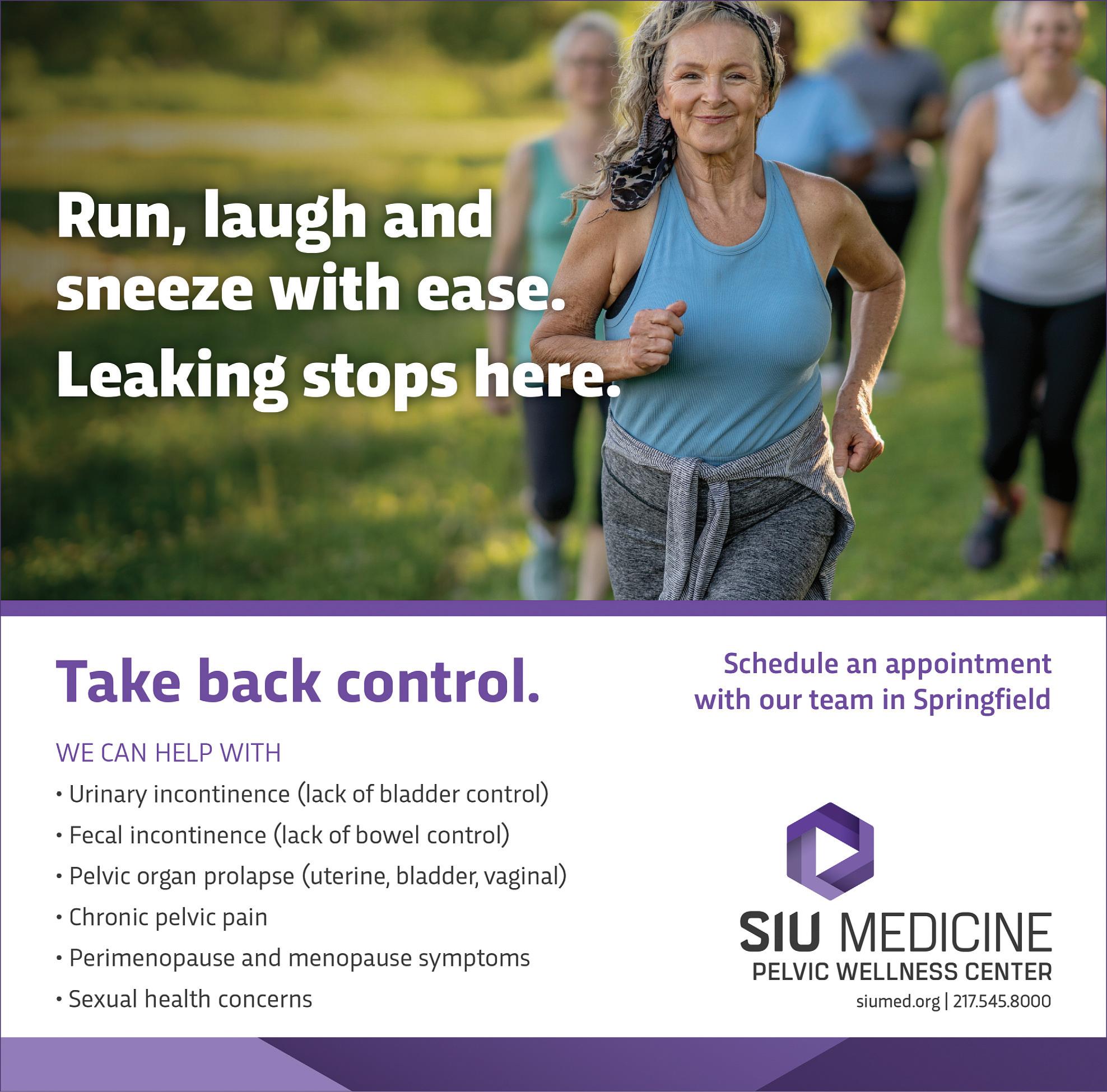
Menopause doesn’t have to be something you just live with
From hot ashes to hormone therapy, SIU Medicine specialists share what every woman should know about managing menopause symptoms
B
y: ReBecca Budde
SIu MedIcIne
If you have searched online for information about perimenopause or menopause, you’ve probably found no shortage of advice. Unfortunately, not all of it is accurate.
Health experts say misinformation about menopause — especially hormone replacement therapy — can make it difficult for women to know what to believe. That’s why they encourage women to discuss symptoms and
treatment options with qualified health care providers.
Perimenopause is the transition leading up to menopause and can begin several years before menstrual periods stop. Symptoms vary from person to person and may include hot flashes, sleep problems, mood changes, bladder concerns, vaginal dryness and changes in sexual health.
“There has been a lot of mixed messaging over the years,” said Loralee Donnelly, a board-certified nurse

practitioner at SIU Medicine’s Pelvic Wellness Center in Springfield. “Some information is outdated, and some comes from sources that are not based in medical evidence.”
HORMONE THERAPY ISN’T ONESIZE-FITS-ALL
Hormone replacement therapy (HRT) has become a common topic on social media, in online forums and through direct-to-consumer advertising. While it can be an effective treatment for many women, experts say decisions about hormone therapy should always be individualized.
“Patients often come in unsure of what to believe,” Donnelly said. “Our role is to provide clear, evidence-based guidance so they can make informed decisions about what is right for them.”
Treatment recommendations should
consider symptoms, medical history, lifestyle and personal goals.
“When it comes to hormone therapy, the source of your information matters,” she said. “Care should always be based on your individual needs.”
PERIMENOPAUSE AND MENOPAUSE CAN AFFECT MORE THAN REPRODUCTIVE HEALTH
Many women are surprised to learn that menopause can affect bladder function, pelvic and urinary health in addition to causing those pesky hot flashes and night sweats.
“Urologists are increasingly involved in conversations about hormone therapy, especially as it relates to urinary and pelvic health,” said Dr. Samuel Grampsas, a board-certified urologist at SIU Medicine. “We are looking at the whole picture. That includes how symptoms

a ect daily life, not just one part of the body.”
LOCAL EXPERTS OFFER SPECIALIZED MENOPAUSE CARE
Women in central and southern Illinois have access to providers with advanced training in menopause care.
Dr. Je rey Olejnik, an obstetriciangynecologist who cares for patients in Jacksonville, is a certiÊed menopause specialist. In addition to Donnelly, Mary Hitt, director of the SIU Medicine Pelvic Wellness Center in SpringÊeld, also holds certiÊcation as a menopause specialist. Their advanced training helps ensure women receive evidence-based care tailored to their individual needs.
FINDING TRUSTWORTHY INFORMATION
Healthcare providers recommend that women:
• Look for information from established medical organizations or academic health systems.
• Be cautious of products or programs that promise
quick Êxes.
• Talk with a licensed healthcare provider about symptoms, medical history and treatment goals before starting any treatment plan.
WHEN SHOULD YOU SEEK HELP?
Many women assume menopause symptoms are simply something they have to live with. Experts say that’s not the case.
“If symptoms are a ecting your daily life, it’s time to have a conversation with your healthcare provider,”
Donnelly said. “There are options. The most important step is getting accurate information and Ênding the approach that’s right for you.”
Whether symptoms are mild or signiÊcantly a ecting quality of life, personalized treatment may include lifestyle changes, nonhormonal therapies, hormone therapy or a combination of approaches based on each woman’s needs.





Shining light on sunscreen use
The sun is vital for life on Earth. But the sun also poses a threat to human beings, particularly when they don’t prioritize sun protection. Ultraviolet rays of the sun can cause damage to the skin, eyes and more, leading to premature aging, sunburn and even cancer.
Wearing sunglasses while in the sun and routinely applying sunscreen are some simple ways people can protect themselves from sun damage. Johns Hopkins Medicine says proper sunscreen use helps prevent most of the poor effects of sun exposure. Sunscreen needs to become a part of one’s daily routine rather than just something to apply before a visit to the beach. The American Academy of Dermatology Association offers these tips from board-certified dermatologists regarding the proper use of sunscreen.
• Use SPF 30 or higher. Choose a sunscreen that has a sun protection factor (SPF) of 30 or higher, and look for one that is water-resistant and provides broad-spectrum coverage, which handles UVA and UVB rays.
• Try tinted iron oxide. Sunscreens that are tinted with iron oxide offer better protection for the skin against the development of dark spots. Iron oxide protects the skin from the sun’s visible light.
• Apply ahead of time. It takes
approximately 15 minutes for the skin to absorb sunscreen and provide protection. Therefore, it’s best to apply it well before heading outdoors.
• Don’t be stingy. It’s important to use enough sunscreen. Most adults need about one ounce, at a minimum, of sunscreen. That’s about enough to fill a shot glass. This will help fully cover skin that is not protected by clothing. When applying sunscreen to the face, at least one teaspoon is needed. Always rub sunscreen thoroughly into the skin to ensure it is absorbed and evenly distributed.
• Recognize order doesn’t matter. As long as the sunscreen is at least SPF 30, water-resistant and broad-spectrum, the order it is applied does not matt. It can be applied before or after other skin care products and makeup. It’s best for a person to figure out what works for their routine.
• Know that most ingredients work. Sunscreens are often grouped into two categories: chemical and mineral. Chemical sunscreens use ingredients like octisalate or homosalate to work, while mineral sunscreens use either zinc oxide or titanium dioxide. Both chemical

and mineral sunscreens are effective, but people with sensitive skin may want to go with mineral sunscreens, which often leave a noticeable white cast on the skin.
• Reapply frequently. It’s important to reapply sunscreen every two hours, and immediately after swimming or sweating. People who get sunburned often use too little sunscreen or didn’t reapply the product enough.
• Check the expiration date. Sunscreen expires and can become ineffective. If the sunscreen has been sitting around for awhile, it’s probably best to toss it and buy a new bottle.
Skin is exposed to harmful UV rays every time a person goes outside — even on cloudy days and in winter. It is essential to make sunscreen application part of a daily wellness routine.
Treating sunburn
Sunburnisaninflammatoryreactiontoultravioletradiationdamagetotheskin’soutermostlayers,saystheSkinCancer Foundation. It is estimated that roughly one-third of the adult population in the United States suffers sunburn annually. Young adults between the ages of 18 and 29 have the highest incidence rate for sunburn, while people age 66 and up have the lowest rates of sunburn. The National Cancer Institute says repeatedly suffering sunburn, particularly at a younger age, puts people at a higher risk for squamous cell carcinoma and melanoma later in life. All sunburns are harmful, and sunburn can occur when people do not apply sunblock thoroughly or repeatedly. When this occurs, people may wonder how to find relief. There are some steps to take, courtesy of the American Academy of Dermatology. It’s important to stay hydrated and avoid further sun exposure until completely healed. Taking a cool bath or shower can relieve the skin. Over-the-counter anti-inflammatory drugs like ibuprofen or acetaminophen can reduce redness or pain in the first few hours. Soothing aloe vera gel or soy-based lotions may help. Also, if blisters form, they should not be popped. Blisters serve as a natural bandage to protect the underlying skin from infection. If sunburn is severe and very painful, speak with a health care professional.
Summertime hydration strategies
Summer is a season to spend outdoors soaking up some sun. But all that time outdoors can pose some health risks if people are not careful. The dangers of overexposure to the sun are welldocumented. Sunburn is one such threat that can not only lead to discomfort, but also increase a person’s risk for skin cancer. But sunburn is easily prevented with the use of sunscreen, and that’s not the only summertime threat that’s easily avoided.
Dehydration occurs when the body loses more fluids than it takes in. Come the dog days of summer, it’s easy to lose fluids when spending time outdoors. Sweating is one way to lose fluid on a hot day, but there are myriad ways to avoid dehydration once the hot weather kicks in.
• Don’t wait until you’re thirsty to drink water. According to NHS Inform, the national health information service of Scotland, thirst is typically the brain’s way
of warning individuals that they are dehydrated. So it’s unwise to wait until you’re thirsty to drink water. A proactive approach can help to prevent dehydration, especially when spending time outdoors on hot days.
• Take breaks for water. A midmorning coffee break or a midafternoon snack break are part of many people’s daily routines. You also can incorporate drinking water into your daily routine. When pouring your morning coffee or tea, pour yourself a glass of water as well. When reaching for a mid-afternoon snack, pour yourself another glass of water.
• Keep a water journal. Documenting your daily water intake is one way to overcome forgetfulness in relation to remaining hydrated. Smartphone apps like Water Reminder and Plant Nanny can help people


remember to drink water throughout the day. For those who prefer a more traditional approach to journaling, keep a small notebook near your desk or in your pocket when going outdoors so you can always know when your most recent water break occurred.
• Look to foods to stay hydrated. Drinking water isn’t the only way to ensure you stay hydrated. Various foods are loaded with water. Henry Ford Health® notes that watermelon, berries, bell peppers, and grapes are water-rich foods that can help you stay hydrated.
Dehydration can creep up on hot summer days and put people in serious jeopardy. That’s why it’s imperative that people make a concerted effort to hydrate and do not wait until they’re thirsty to enjoy a glass of water on a hot summer day.