






























What if a fertility treatment for women with polycystic ovary syndrome (PCOS) could be available at no cost, even without insurance?
For women in central and southern Illinois living with PCOS, those questions are no longer hypothetical. A new clinical trial at SIU is now recruiting participants.
The REBALANCE Study is testing a minimally invasive procedure designed to help women with PCOS ovulate more regularly, and it represents a new chapter in fertility research for this region.
Polycystic ovary syndrome, or PCOS, is the most common hormone disorder affecting women of reproductive age. It can cause irregular or absent periods, excess hair growth, weight gain and difficulty ovulating. Many women with PCOS struggle to become pregnant.
Traditional treatment often starts with medications that stimulate ovulation. Some women respond well. Others do not. Some treatments also carry a higher risk of multiple pregnancies. In addition, many insurance plans do not cover fertility treatment.
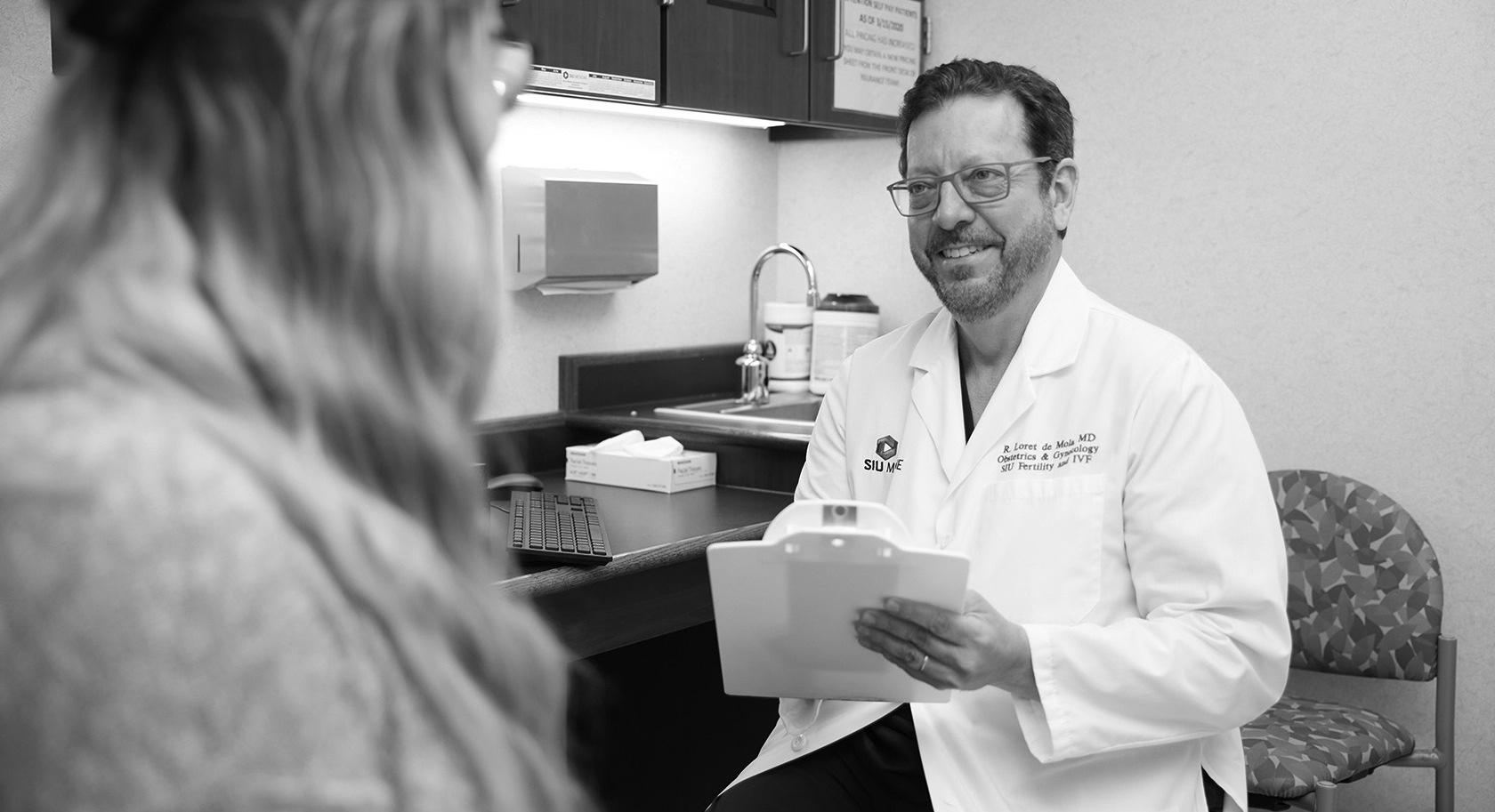
“Some patients don’t respond to medications,” said J. Ricardo Loret de Mola, MD, professor of obstetrics and gynecology at SIU School of Medicine and principal investigator of the study. “And many never even come in because they assume nothing will be covered.”
The REBALANCE Study is a national clinical trial taking place at several medical centers across the country, including SIU.
In simple terms, that means:
• Prospective: Researchers follow participants forward in time
• Multicenter: Multiple medical centers across the country are involved
• Randomized: Participants are assigned by chance to one of two groups (all receiving eventual treatment)
• Pivotal: The study is aimed at becoming the first FDA-approved treatment for PCOS
The goal is to evaluate a minimally invasive procedure designed to help women with PCOS ovulate more
regularly.
Decades ago, surgeons performed a procedure called ovarian drilling to reduce excess hormone production in the ovaries. It required abdominal surgery and recovery time. The REBALANCE procedure adapts that idea using newer technology. Instead of abdominal surgery, physicians use ultrasound guidance to place a thin needle through the vaginal wall to reach the ovary. No abdominal incisions are required.
The procedure is performed under anesthesia at a local outpatient surgery center. It typically takes approximately an hour. Patients plan to go home the same day.
By reducing a small amount of hormone-producing tissue in the ovary, the procedure aims to “REBALANCE” the hormonal environment and restore ovulation.
“We have decades of data on similar procedures showing they are safe,” Dr. Loret de Mola said. “This is an adaptation designed to make it easier for patients.”
The study is open to women ages 18 to 40 who have been diagnosed with PCOS, have not succeeded with firstline treatment and are actively trying to become pregnant.
Participants do not need to be patients at SIU. They will establish care as part of the screening process.
The study includes two groups:
• One group receives the procedure within the first month
• One group is monitored for three months before choosing whether to proceed with the procedure
This design ensures that every participant has access to the procedure if they choose.
The first three months are the most intensive. Participants should expect:
• Weekly blood draws to monitor hormone levels
• A few in-person clinic visits
• Regular check-ins by phone
After that, monitoring becomes
less frequent. The overall study commitment is up to three years, so researchers can track ovulation, pregnancy and birth outcomes. Most in-person activity occurs within the first three to six months.
Because this is an investigational procedure, participants complete a thorough informed consent process. All risks and expectations are clearly explained.
One of the most important aspects of the REBALANCE Study is access.
The study sponsor covers the cost of study-related visits, monitoring and the procedure itself for eligible participants. That means there is no cost to participants for the investigational procedure and the required follow-up visits.
Women without insurance coverage for fertility treatment may especially benefit from the opportunity.
“This is really aimed at patients who may not have access to fertility treatment,” Dr. Loret de Mola said. “Many women assume there’s nothing available to them.”
Women with insurance may also qualify and are encouraged to learn more.
By offering research-driven care locally, SIU helps ensure that women in central Illinois do not need to travel to larger cities to participate in advanced fertility research.
The REBALANCE Study is one example of a growing research portfolio within obstetrics and gynecology at SIU.
Today, women in central and southern Illinois can participate in studies aimed at:
• Early detection of ovarian and endometrial cancers
• Determining the role of the microbiome in endometriosis, inflammation and hormone metabolism
• New treatments for gynecologic cancers
• Pregnancy complications such as preeclampsia
• The effects of vitamin D and bone health during pregnancy
These studies are led by physicians and scientists who also care for patients in SIU clinics, an approach that helps bring new discoveries directly into patient care.
Women interested in the REBALANCE Study must:
• Be between the ages 18 to 40
• Have a confirmed diagnosis of PCOS
• Have not succeeded with initial fertility treatment
• Be actively trying to conceive
To learn more about eligibility or begin the screening process, contact the SIU obstetrics and gynecology research team:
Emily Eschenbaum 217.545.7822
eeschenbaum21@siumed.edu


Waking up after a good night’s sleep can prepare people to take on a new day and all the challenges it has to offer. On the opposite end of the spectrum, a poor night’s sleep can contribute to physical and mental fatigue, and even have an adverse effect on the immune system, making people more vulnerable to illness. Perhaps that’s one reason why the National Institute of Neurological Disorders and Stroke contends sleep is as important to a person’s survival as food and water.
Anyone who has had a good night’s rest and a bad night’s sleep need not be reminded how differently their minds and bodies felt after each night. But they might not realize why their minds and bodies felt much better after a good night’s rest than the night when they battled insomnia. According to the NINDS, sleep plays a vital role in brain function, including affecting how nerve cells communicate with one another. The NINDS also notes that recent research suggests a particularly important task is performed while a person is asleep, as it’s during rest when toxins that build up in the brain while you’re awake are removed. That could be one reason why the health-related effects of chronic lack of sleep are so profound. Such effects include an increased risk for a number of health problems, including high blood pressure, cardiovascular disease, diabetes, depression, and obesity. If left untreated, each of those conditions can adversely affect quality of life and may even contribute to a reduction in life expectancy.
So now that some of the more notable effects of consistent and sufficient sleep have been noted, how can anyone go about ensuring a better night’s rest? The NINDS recommends people looking to get better sleep take the following advice to heart.
• Establish a consistent sleep schedule by going to bed and waking up at the same time each day.

• Avoid a sedentary lifestyle. Make a concerted effort to exercise for at least 30 minutes most days of the week, but avoid doing so within a few hours of bedtime. Advice regarding when to exercise to ensure a good night’s rest is mixed. The National Sleep Foundation notes that research indicates some people considered “night owls” sleep well after exercising at night, while “early birds” may struggle to fall asleep if they work out too close to bedtime. In addition, the NSF notes that research has found moderateintensity exercise does not have a detrimental effect on sleep so long as a workout concludes at least 90 minutes before bedtime.
• Relax before bed. This tip is connected to the rule of thumb regarding exercising too closely to bedtime. Just like ramping up right before bed may adversely affect sleep, winding down with a warm bath, cuddling up with a good book, or engaging in another relaxing routine may set the body up to fall asleep when a head hits the pillow.
• Avoid caffeine and nicotine late in the day and alcoholic drinks before bed. Even if a nightcap helps you fall asleep more quickly, alcohol may lead to interruptions in sleep shortly after it begins. And once awake, falling back asleep can be difficult.
• Create a sound sleep environment. A good sleeping environment has no bright lights and loud sounds, is kept at a comfortable temperature, and is device-free (which includes televisions, tablets and smartphones).
• Don’t lie in bed awake. If sleep proves elusive after your head hits the pillow, try engaging in a relaxing routine, like reading a book or listening to calming music, until you feel tired.
A good night’s rest is perhaps more beneficial than many people realize, which is why it can be so vital for people to establish and maintain a sound bedtime routine.
The arrival of warm weather can be a welcome relief for those who experience a winter’s worth of snow, ice and subfreezing temperatures. While a spring thaw may usher in the return of flowers and more time spent outdoors, warmer seasons also mark the return of pests that can cause illnesses.
Ticks are prevalent in many parts of the country and their territories are expanding due to climate change. The Centers for Disease Control and Prevention says tick territories are rapidly expanding into higher altitudes, and even stretching into Canada. Milder winters and increased wildlife hosts are two reasons. This has led to a surge in Lyme disease in recent years.
The Illinois Department of Public Health says ticks are commonly thought of as insects, but they actually are arachnids like spiders. With two sets of
four legs and sharp mouth parts that cut into the skin, ticks are parasites that feed on blood. Ticks are opportunistic feeders, and will attach to pets, wild animals and people. They do not jump or fly, but rather “quest;” waiting on vegetation to latch onto a passing host.
Ticks survive winter by living underground. As soon as the weather warms to 46 F (8 C), they become active again and start looking for food hosts. Ticks are usually active from March to November, says the National Institute of Health. When a person or animal brushes up against tall grass or shrubs, the tick will grab on. They don’t normally bite right away, but seek areas of soft skin. Then the tick uses its mouth parts to cut into the skin and insert a feeding tube, which also serves as an anchor. It then feeds until it is full, often swelling up several sizes in the process. The NIH says sometimes a tick can stay latched on for up to two weeks if it isn’t found and removed.


Ticks are major vectors of disease. Unlike mosquitoes, ticks don’t bite and then move on. When they bury their heads into the skin they can pass on illnesses; ticks can transmit bacteria, viruses and parasites into the blood. Several illnesses can be traced back to ticks, including Alpha-Gal syndrome, Anaplasmosis, Colorado Tick Fever, and Ehrlichiosis. However, most people are familiar with the connection between ticks and Lyme disease. The CDC says Lyme disease is almost exclusively transmitted through the bite of an infected black-legged (deer) tick. There is no credible scientific evidence that Lyme disease spreads between humans via sexual contact, kissing or pregnancy.
Wearing long pants outdoors and inspecting the body for ticks can reduce the risk of being bitten by a tick. It’s also important to check pets and use repellents, as companion animals can


track ticks indoors where they can end up on people, too. Making backyards less hospitable to ticks also can help. Keeping the lawn short, removing brush and leaf litter, and creating a three-foot barrier of wood chips, gravel or mulch between wooded areas and lawns can keep ticks at bay.


The cramps were sharp, relentless waves of pain that made it hard to move. Sometimes the pain came with nausea. Sometimes it came with heavy bleeding. Even pulling on a pair of jeans could hurt.
School would have to wait. Again.
Plans with friends were canceled. Again.
On some mornings, Annie Miller knew before she even got out of bed that the day wasn’t going to happen.
The symptoms began when Annie
got her first period at age 10. For the next several years, the pain quietly shaped her life. Instead of sitting in class with friends in Greenview, Illinois, Annie often spent those days at home, trying to tolerate pain that felt far worse than what most people describe as “bad cramps.”
Her mother, Jessica Miller, watched it unfold.
“It was heartbreaking to see her in that much pain,” Jessica said. “She would miss school and things with her friends. As a parent, you want to fix it, but sometimes all you can do is support them and keep searching for answers.”
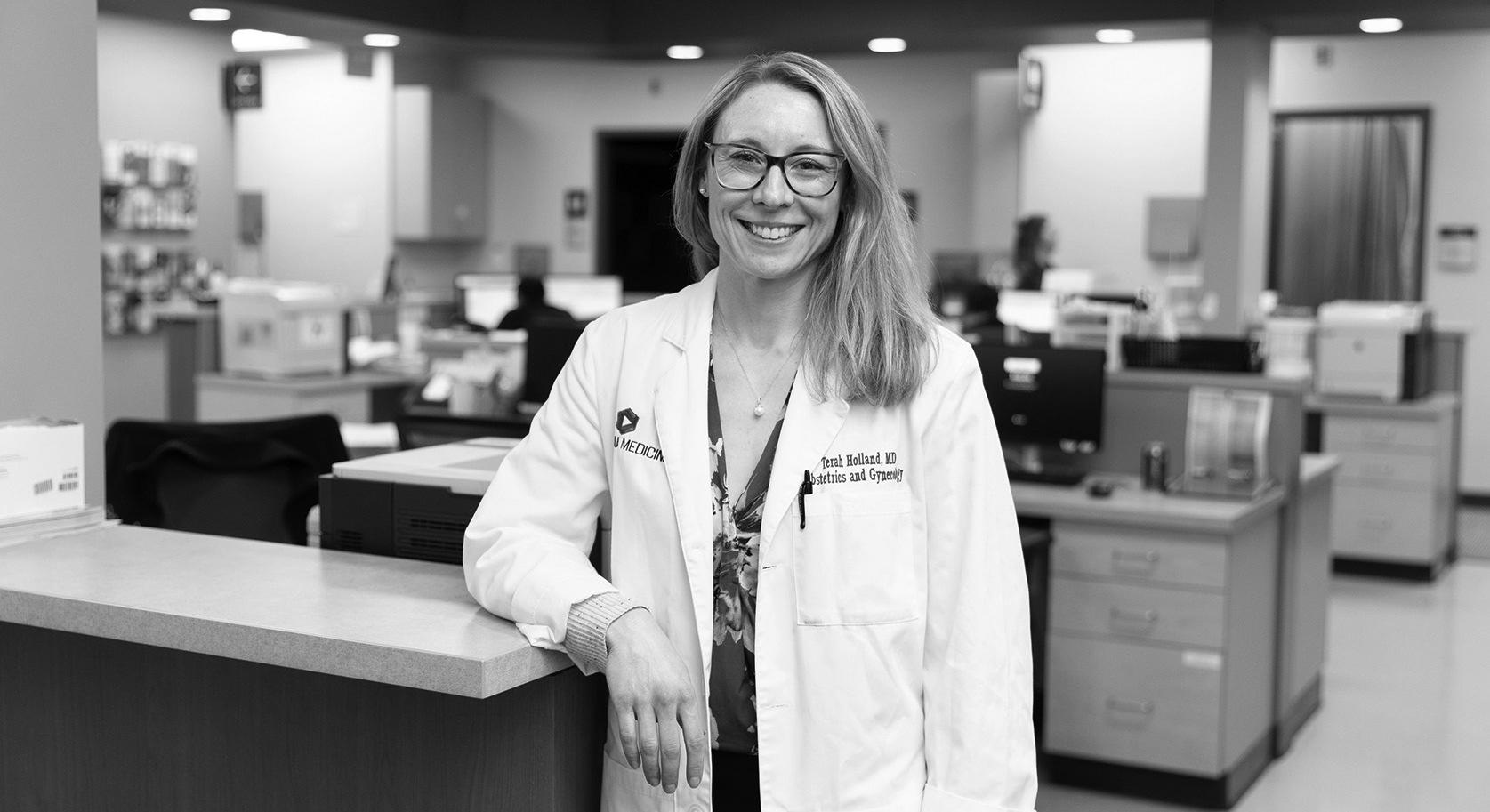
Eventually, the answer came from Dr. Terah Holland, an OBGYN physician at SIU Medicine: endometriosis.
The diagnosis finally put a name to what Annie had been experiencing for much of her adolescence and proved something she had known all along. The pain wasn’t normal.
Endometriosis occurs when tissue similar to the lining of the uterus grows outside the uterus, most often in the pelvis. Each month, that tissue responds to hormonal changes, triggering inflammation, pain and
sometimes creates scar tissue.
Researchers estimate the condition affects about 1 in 10 women of reproductive age worldwide, according to the World Health Organization.
Despite how common it is, diagnosis often takes years.
Part of the challenge is that endometriosis is rarely visible on imaging tests such as ultrasound or MRI, especially in the early stages. In many cases, doctors can confirm the condition only through a minimally invasive procedure called laparoscopy, which allows them to view and biopsy suspicious tissue.
“Endometriosis can be difficult to diagnose because there are many causes of abdominal and pelvic pain,” said Dr. Holland. “We usually begin with medications before considering surgery.”
For adolescents with chronic pelvic pain, studies show that endometriosis is found in nearly two-thirds of patients who undergo laparoscopy.
Painful periods are common among teenagers, but doctors say certain symptoms signal that something more serious may be happening.
Missing school because of menstrual pain is one of the biggest red flags. Other warning signs include severe nausea, painful bowel movements or urination during periods, and pain that does not improve with medications such as ibuprofen or hormonal birth control.
For Annie, the symptoms started almost immediately after her first period. Over time, the pain intensified. She sometimes had multiple periods in a single month.
“She had severe pelvic pain even after trying birth control pills and other treatments,” Dr. Holland said. “She was also experiencing significant nausea, which suggested her pain was more severe than usual.”
Doctors initially treated Annie’s symptoms with several medical therapies, including different forms of birth control designed to regulate hormones and reduce inflammation. When those treatments failed to control the pain, surgery became the next step.
During the procedure, surgeons confirmed the diagnosis and removed visible endometriosis tissue. For Annie and her family, the moment brought both answers and reassurance.
“I felt validated,” Annie said. “Finally, there was a reason for what I had been feeling.”
For many people with endometriosis, the journey to
diagnosis includes years of symptoms being minimized or dismissed.
Doctors say believing patients, especially adolescents, is critical.
“When young patients feel like their pain isn’t taken seriously, it can affect how they view the health care system and themselves,” Dr. Holland said. “That emotional impact can add to the stress they’re already experiencing from chronic pain.”
Jessica said Annie’s care team helped ease those concerns.
“Dr. Holland listened,” Jessica said. “She explained the options and made sure Annie understood what was happening.”
That sense of validation made a lasting difference.
Endometriosis does more than cause pain.
Over time, inflammation can cause scar tissue that affects the ovaries, fallopian tubes and surrounding organs. In some cases, that scarring impacts fertility.
“Scar tissue can involve the reproductive organs, the bowel and other structures,” said Ricardo Loret de Mola, MD, a reproductive endocrinologist at SIU School of Medicine whose research focuses on endometriosis. “If the disease progresses unchecked, fertility can be affected.”
For that reason, early treatment is important.
One common approach for adolescents is menstrual suppression, which uses hormonal therapies such as birth control pills or hormonereleasing IUDs to reduce or eliminate periods.
“For patients with endometriosis, menstruation fuels the disease,” Dr. Loret de Mola said. “Suppressing periods can significantly reduce symptoms and slow its progression.”
Research suggests that when menstrual suppression works, many adolescents experience significant improvement in pain, according to Holland.
Surgery, when needed, can remove
endometriosis tissue and help confirm the diagnosis.
Researchers continue working to better understand why endometriosis develops and how to treat it more effectively.
Scientists once searched for a single “endometriosis gene,” but evidence now suggests the condition likely involves multiple genetic and environmental factors.
New research is exploring the role of the microbiome — the community of microorganisms living in the body — to see whether it differs in people with endometriosis. Advances in artificial intelligence may also help scientists analyze large datasets to identify patterns linked to the disease.
“There’s an enormous amount of data emerging,” Dr. Loret de Mola said. “New tools may help researchers connect the dots and move us closer to better treatments.”
Since her surgery, Annie’s symptoms have improved.
An intrauterine device now helps control bleeding and reduce inflammation.
She still experiences occasional discomfort, but the severe pain that once dominated her life has eased.
“I can do more things now,” Annie said. “It’s a lot better than it used to be.”
Jessica says the difference is noticeable.
“She’s able to focus on school and activities again,” she said. “That’s something we didn’t take for granted.”
Today, Annie hopes sharing her story will encourage others to seek help if severe menstrual pain interferes with daily life.
“People sometimes think really painful periods are normal,” she said. “But if something feels wrong, it’s important to speak up.”
For Annie, speaking up helped lead to the answers she needed — and the chance to reclaim the parts of life that pain once interrupted.