



































































By Colin Merry STAFF WRITER
As America prepares to celebrate its 250th birthday, Manistee’s history reflects the story of many American communities, evolving from a lumber town into a modern tourism destination through generations of reinvention.
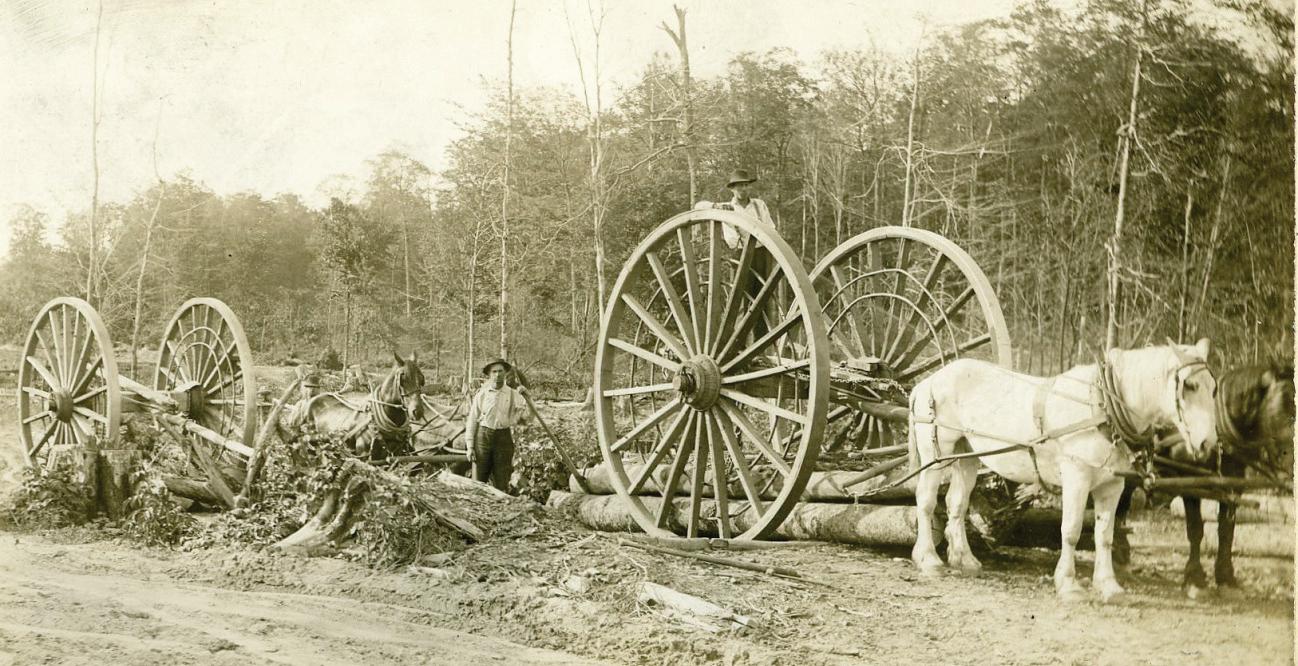
Manistee got its start in the 1840s, when vast white pine forests and easy access to the Manistee River and Lake Michigan made the area an ideal location for America’s booming lumber industry.
Manistee County Historical Museum executive director Mark Fedder said the Stronach family first came to what would later become Manistee to scout the area for a potential logging location in 1840. They returned the next year to set up a steampowered sawmill on Manistee Lake.
“After they set it up, people started coming here on word of mouth,” Fedder said. “There were lots of logging opportunities available in the Manistee County area.”
Fedder said it was a combination of vast forests and easy access to water to transport logs that made Manistee a prime location for
logging.
“Ships could navigate Manistee Lake, loading up with lumber, then going down river into Lake Michigan,” he said.
“From there, they went to places like Chicago and Milwaukee. That’s where a lot of the lumber ended up.”
He said other sawmills soon started popping up alongside Manistee Lake and nearer Lake Michigan. With those sawmills came people looking to work and invest in the industry, creating a logging town with the basic infrastructure of a city. The early community had churches, businesses and schools.
By the time Manistee officially became an incorporated city in 1869, there were a dozen or more mills processing millions of board feet of lumber every year.
“By then there was a deep amount of infrastructure and a couple thousand people living here,” Fedder said.
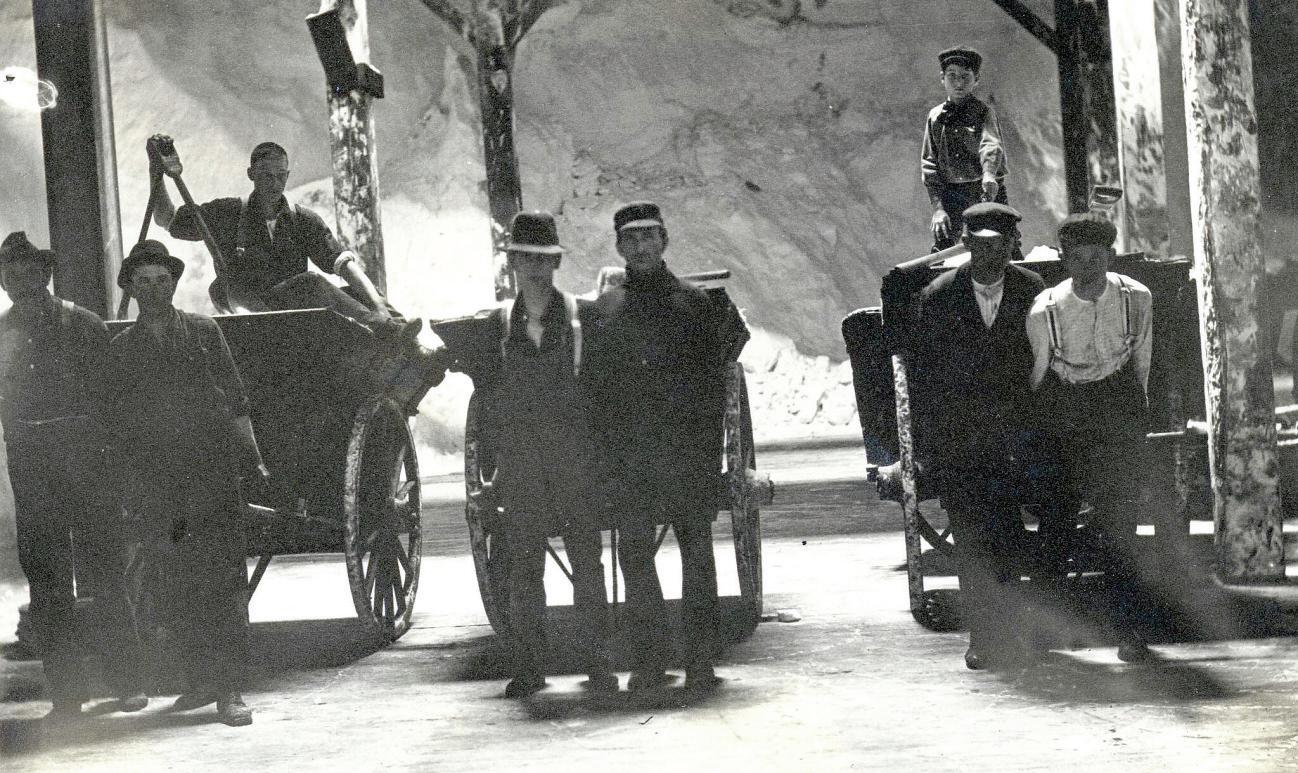
The discovery of salt, created by the natural forces that shaped the land, created a secondary industry.
“This area ended up having massive salt deposits and the lumber companies took advantage of that and began mining salt
Continued from pg. 3
as well,” Fedder said. “Who could blame them? It was the perfect combination of geology and geography.”
During this time, other industries built around logging appeared, including sawmills, shingle mills, lathe mills and foundries to help supply metal for logging equipment. There also were furniture factories and a small manufacturing industry.
However, the logging industry began to decline with the trees it depended on in the 1920s, according to Fedder.
“The lumber industry was all but done,” he said. “The city joined forces with the board of commerce to try and keep people here, and they succeeded to a certain degree despite seeing a population decrease.”
Smaller industries, including garment factories, the Century Boat Company, a violin factory and the Filer fiber factory, filled some of the industry gaps.
Morton Salt remained, and later, the fiber factory became the Packaging Corporation of America.
“There was the Century Boat Company, building wooden boats, and there was the Manistee Drop Forge factory and a bit of an auto industry,” Fedder said.
Many of these businesses began closing their doors in the 1980s.
This is when the city began investing in and promoting its natural resources as a tourist destination.
“They had opened up a road to the beaches in the 1920s and had always done some promotion for tourism,” Fedder said. “They tried to make Manistee a tourist destination throughout the years, but when the factories left the community, tourism became more of a mainstay.”
The growth of the tourism industry in Manistee is tied to the city’s “cycles of reinvention,” according to Sammie Lukaskiewicz, executive director of the Manistee Tourism Authority.
“What began as a lumber boom town in the 1800s gradually evolved into one of Michigan’s quieter, but increasingly distinctive, Lake Michigan tourism destinations,” Lukaskiewicz said. “The original visitor economy here wasn’t tourism in the modern sense, it was really about industrial prosperity.”
She said unlike other port cities along Lake Michigan’s shores, several different tourism pillars emerged in Manistee over the years.
“One is the Victorian heritage,” Lukaskiewicz said. “We’ve got beautiful Victorian architecture here, and that really became a defining asset for us. That Victorian port city brand emerged from the preservation of the architecture and remains central to our
identity today.”
She said access to natural features eventually became the strongest tourist driver, including beaches, fishing, hiking, biking and river recreation.
The Manistee National Forest also became a major draw to the area.
Lukaskiewicz said what Manistee does not do is just as important as what it does, as other towns struggle with “overtourism” and loss of identity.
She said this restraint has become an advantage for Manistee.
Lukaskiewicz said as America celebrates its 250th anniversary, Manistee also is celebrating multiple milestones.
“This year is the 90th anniversary of the Forest Festival,” she said. “The lighthouse will be celebrating 100 years next year, and will be (open) for tours for the first time this year.”
“Unlike a lot of Lake Michigan destinations, Manistee feels less commercialized and more authentic,” she said. “It’s more affordable and typically less crowded than some of the other beach towns. That’s becoming increasingly valuable to people.”
The Manistee
Country Club will celebrate its 125th anniversary in 2026.
“There are a lot of generational anniversaries happening throughout Manistee,” she said. “Our community also has 150 historic sites throughout the county. To be able to celebrate not only the 250th anniversary of our country, but to be able to check out the amazing things we have that tell the story of Manistee along the way, including the world’s oldest continuously operating firehouse.”
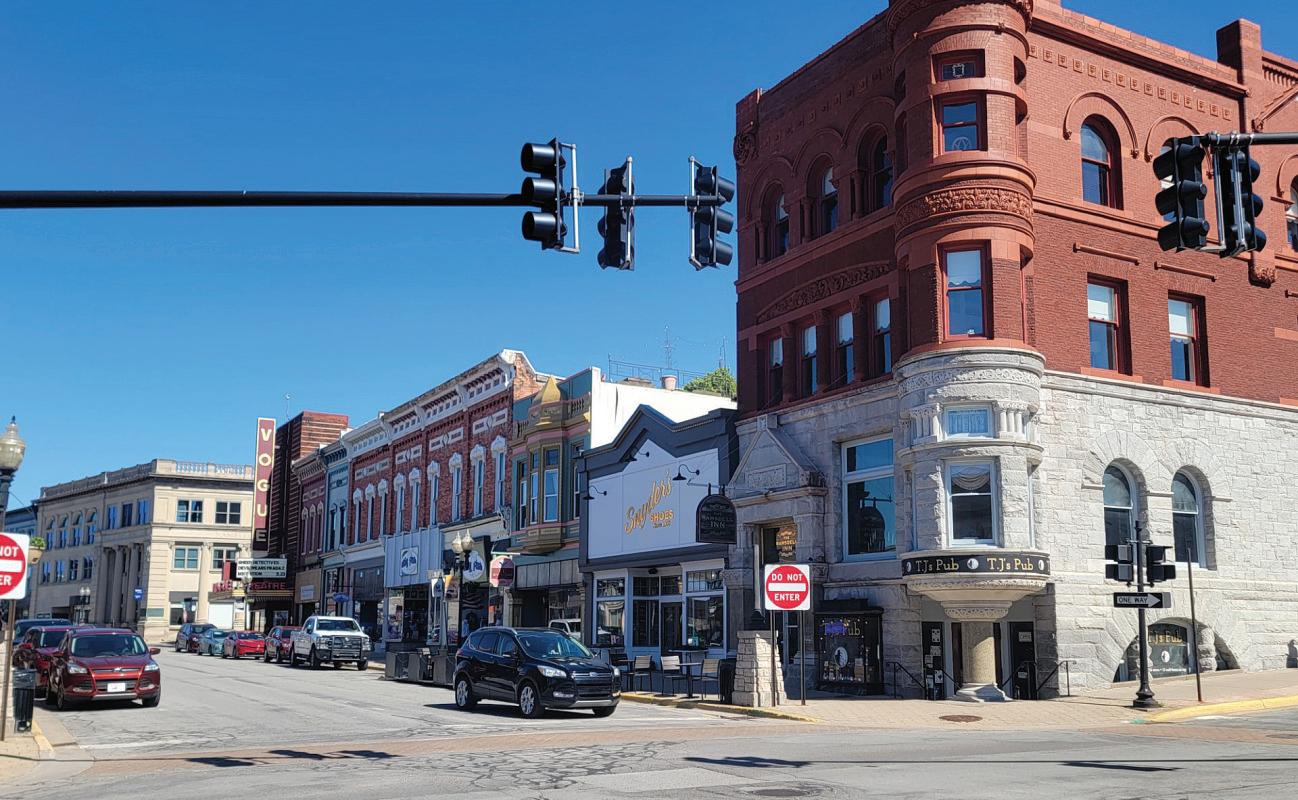
She said River Street itself is on the National Register of Historic Places because many of the buildings along it are stone structures from
the 1800s rebuilt after a fire destroyed most of the wooden buildings.
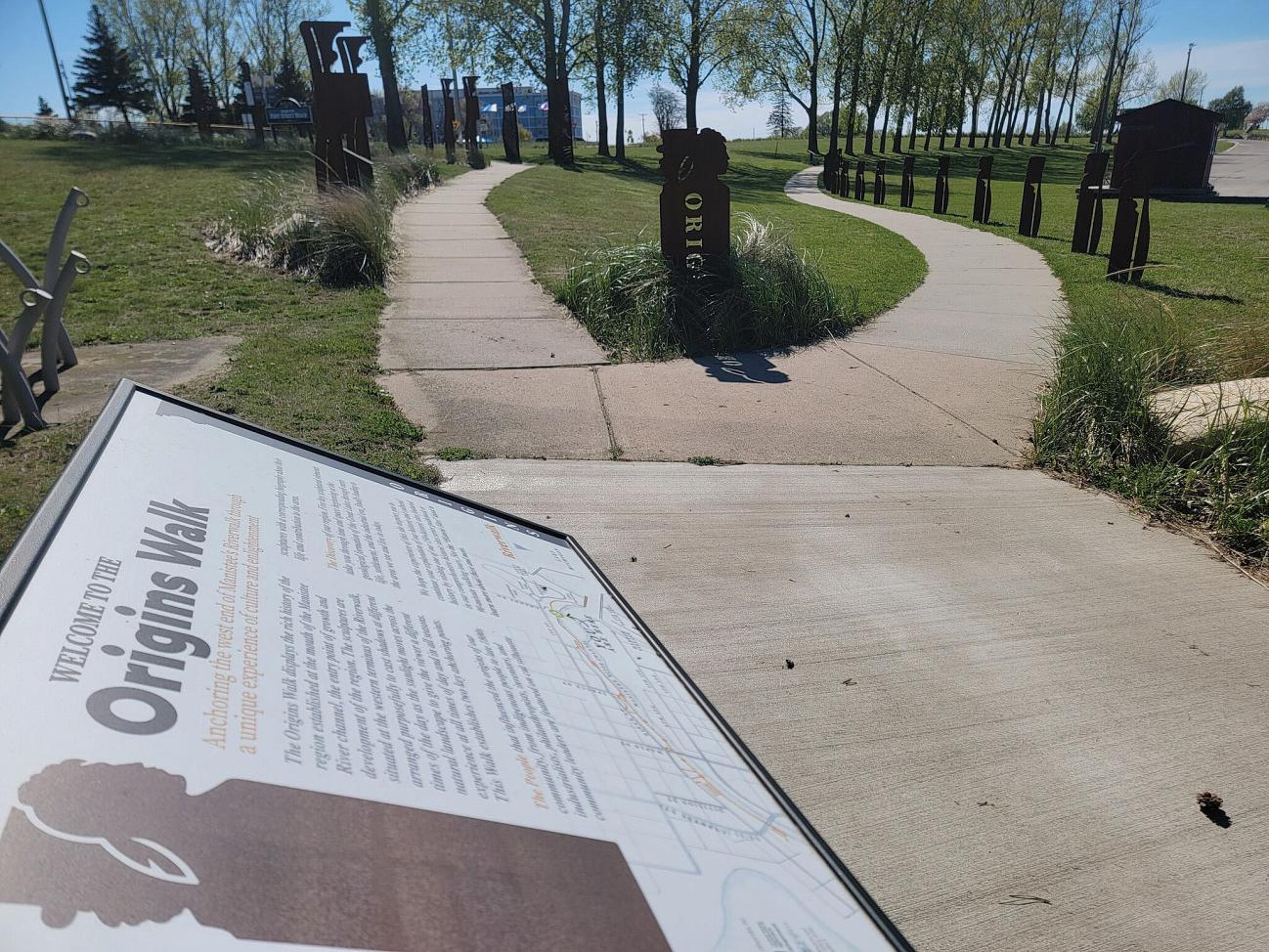
Lukaskiewicz said the focus on historical sites is probably one of the city’s biggest accomplishments, including the city’s Riverwalk and interpretive sculpture projects.
“Manistee’s greatest tourism strength is how it still feels real,” she said. “Most of the successful tourism communities become polished versions of themselves. We have a working waterfront, local culture, industry, and that authenticity you feel while here is becoming increasingly rare.”

By Abigale Racine STAFF WRITER
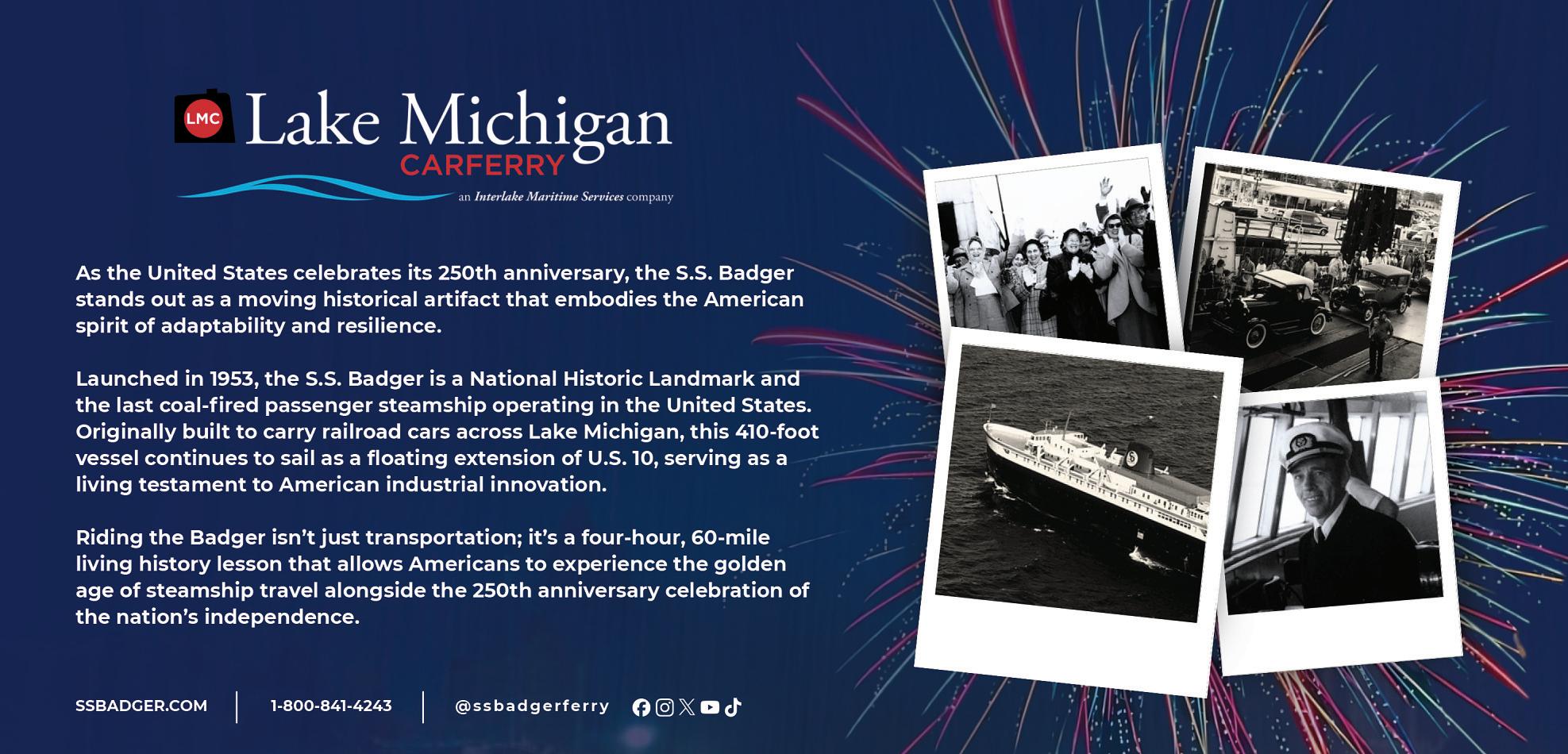
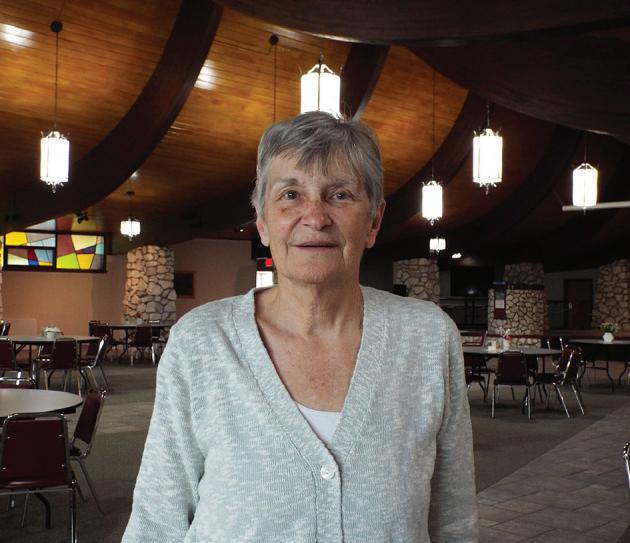
With the nation’s 250th birthday approaching, the News Advocate sat down with four individuals at the Manistee County Council on Aging to discuss how the country has changed during their lifetimes.
Staff writer Abigale Racine sat down with Marlene McBride, 84; Dawn McLamb, 88; Frances Wallace, 76; and Al Hovatter, 76.
Each participant was asked the same question: “What do you love about America?” Conversations evolved from there.
MARLENE MCBRIDE
McBride was born in rural Maryland but moved to Manistee in 1951 when she was around 9 years old.
McBride said what she loves most about America is the opportunity it offers.
“I love the freedom
to live where you want to, to practice your own religion, to go to your own schools,” McBride said. “Many people have died to give you that privilege to do your own thing and say whatever you feel.”
She said she values education and health care.
“I grew up and went to school and could go to the school I wanted, go to college,” McBride said. “We have great
healthcare. We have great things here that you would never have living somewhere else.”
She shared how the polio outbreak impacted her childhood.
“We had the polio and (it) scared everybody,” McBride said. “We had to line up and get little cubes of sugar.”
The oral polio vaccine was administered on sugar cubes to make vaccination easier for







TheMortonSaltfactoryin Manistee,Michigan,opened in1930.Thecompany purchasedtheexistingRuggles andRademakersaltplant (locatedontheformer BuckleyandDouglassawmill propertyonFifthStreet) atauctionthatyearand hascontinuedtooperate fromthatsamelocation.



children.
Her father and uncle served in World War II, and she said that while in school, she and her classmates practiced bomb drills by crouching under desks.
During that time, “Everything was rationed,” McBride said.
She said her aunt didn’t drink coffee and would give her coffee ration stamps to McBride’s mother.
When her family members returned home from the war, they planted a garden, something she was proud of.
McBride spoke about how shopping has evolved during her lifetime.
“My mother was
waiting for a refrigerator forever,” she said. “We had the old ice box, and the guy came with the horse with the ice.”
“We never had storebought nothing, how times have changed with that,” McBride continued. “The amount of choices for groceries and shopping ... I remember downstate when they opened up the mall and that was something to go there. Now they’re so obsolete, everyone orders everything on Amazon.”
She said that there is always hope, but she isn’t without anxiety.
“There’s always hope, if we could all stop arguing and blaming each other for things and work together to help build a better life for everyone here. That
would be a big step in the right direction,” McBride said. “I worry about the future for my great-grandkids and what kind of world they’re going to be living in.”
Dawn McLamb was born in Manistee but wasn’t always proud to call it home.
In fact, as soon as she graduated from high school in 1955, she enlisted in the U.S. Navy and left town as quickly as possible.
“I had to get out of Manistee, I hated it here,” McLamb said. “I took my basic training in Maryland. I moved to Chicago, then I lived in California three times, and then I lived in Virginia, South



Carolina, Connecticut, Newfoundland (and) Japan ... I got to see the stuff I would never have seen if I lived in this town.”
Eventually, her husband convinced her to move back home to be closer to her family and be near Lake Michigan.
She said what she treasures most about the United States is the variety of landscapes.
“Each state has its own beauty,” McLamb said. “But Michigan I think is the prettiest state, because we got all sorts of different things.”
She also values her independence.
“I can have my own religion; I can have my freedom,” McLamb said. “I can do what I what without people looking
at me. Freedom of speech too ... You can go to another church, and we can still be friends.”
She said what has changed most during her lifetime is the population surge and pace of life.
“Too much traffic, too much fast-paced. We’re always in a fast car, right?” McLamb said. “And overcrowded. I mean, they’re using the farmlands and cutting down the trees ... I mean, c’mon keep the trees, we need food and we need more farmers.”
She is an active volunteer for Feeding America and enjoys being able to help others.
“It’s better to give than it is to receive,” McLamb said.
She said she wants


future generations to remember how to respect each other.
To Frances Wallace, being American means having “the opportunity to define yourself.”
Wallace said she has reflected on what the U.S. semiquincentennial means.
“At the age of 76, to think about this as the 250th anniversary, so I’ve been alive for almost a third of U.S. history, if you think about it,” Wallace said.
She said that growing up during the civil rights movement left an impression on her.
“I think that the civil
Continued on pg. 8






rights movement was a big impact on my generation, regardless of a person’s racial identity,” Wallace said. “I think it made a lot of things possible.”
She spoke about her activism while she lived in Kansas City during the 1970s.
“I was active with a group in Kansas who managed to get enough signatures to ratify the Equal Rights Amendment,” Wallace said. “There’s still some controversy about whether it’s in effect or not. To see those changes eroded now, it’s very painful and I don’t think it’s good for us as a society.”
“I was 23, I was working and married,” Wallace said. “I got married when I was 22 and it was very difficult to get credit in one’s own name 50 some years ago. I applied for an American Express card and I was able to get credit in my own name. So, I’ve clung onto that card all these years.”
She is cautiously optimistic about the future.
“It doesn’t just work itself out, we have to work it out,” Wallace said. “I think there’s been a period of time where we kind of felt that someone was coming to save us, but we have to save ourselves. I think the U.S. has been able to do
She shared a landmark moment when she applied for and received her first credit card.
that, but it’s a process.”
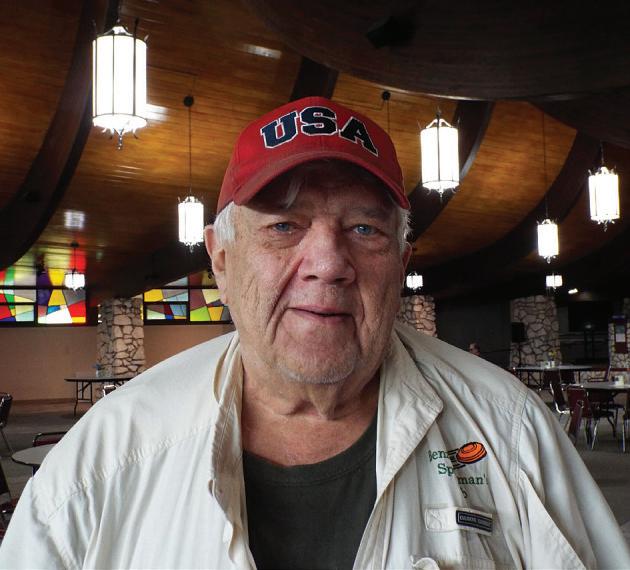
Al Hovatter can’t imagine life without identifying as an American.
“I was born here, so it’s hard to give a perspective on why I like it. I’ve never lived in another country, it’s just home,” he said.
To Hovatter, being American means having freedom and resources.
“We have so many freedoms here,” he said. “We have abundant food and material goods. You can buy anything.”
Originally from Ann Arbor, an employment opportunity at the Oaks Correctional Facility brought him to Manistee.




Hovatter shared he was grateful to be able to retire from that job.
“I’m really grateful for my retirement,” he said. “Back when I was a younger man working, myself and everyone I worked with, we all agreed that we’ll never see retirement.”
Hovatter advised that young people place as much money as they can into a 401(k).
He shared what it was like to live through the Vietnam War.
“The Vietnam War was kind of stressful,” Hovatter said. “When I was in high school and graduating, you were worried about being drafted. That’s basically the reason I went to college. ... I always felt bad about that because
of the guys coming back, the guys that had to go. I always felt kind of; I let those guys down ... they didn’t propagate this war.”
He said that he was proud of his generation for enacting the Clean Air Act and Clean Water Act.
“We’re the ones that started getting the companies more responsible for what they were doing to the environment,” Hovatter said. “We were the ones



that got the laws enacted and tried to straighten them boys out. We got close.”
However, enacting these laws did have consequences, he said.
“We kind of shot ourselves in the foot because that’s why all the jobs left in the ‘80s because the core companies could leave Michigan and go to Tennessee, Kentucky, Texas, where they had
half the laws,” Hovatter said. “It impacted the state greatly but at the same time, we were fighting for something that was protecting the state.”
He said he is hopeful for the country’s future, but he has avoided watching the news for the last year and a half to manage his stress.













By Luke Morey STAFF WRITER
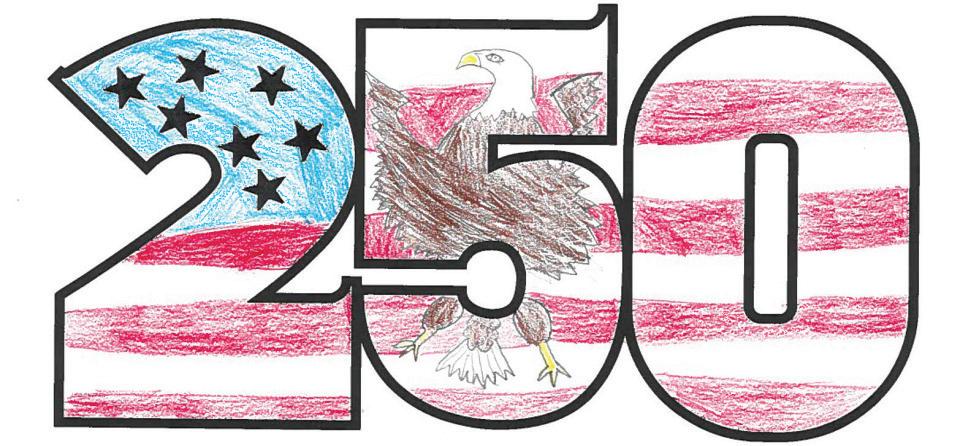
To celebrate the 250th anniversary of the signing of the Declaration of Independence, we wanted to hear from Manistee County youth.
Students from Onekama Consolidated Schools and Trinity Lutheran School forecasted what the United States will look like in the next 50 years.
Third grade students from Bear Lake Schools completed assignments discussing America’s history.
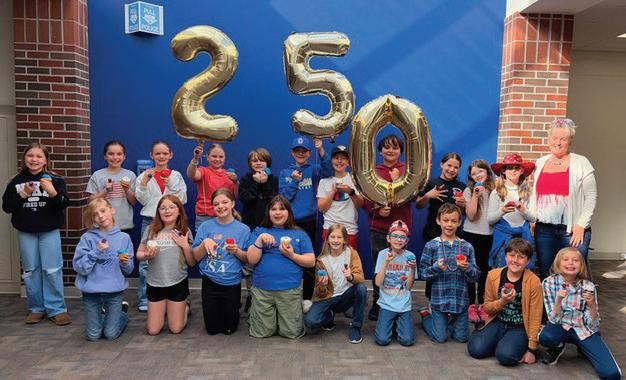
“Having learned about the Declaration of Independence, with its utmost importance to the founding of the United States of America and its signing on July 4, 1776, Onekama’s fourth graders recently celebrated the upcoming semiquincentennial anniversary,” fourth grade teacher Tracy Bennett said. “Students dressed in patriotic colors and enjoyed festive red, white and blue treats while reflecting on the historic 1776 document and the freedoms it provides Americans today.”
Below are some thoughts from the students.
Fourth grade Onekama students gave their answers to the question, “what do you hope America looks like in 50 years at the 300th anniversary of the United States?”
Answers were compiled by Bennett.
Caroline Waltrip: I love that America is a free country, and I really hope it remains that way 50 years from now and beyond!
Emmy Brown: I hope on the 300th anniversary of our country that there are no robots and that things stay exactly the way they are right now.
Elden Chinnock: I would love for the future of the United States of America to welcome all races with kindness. Also, I hope that there will be a gigantic celebration for the 300th anniversary of America!
Waylon O’RorkeStedman: I hope the United States of America looks peaceful, and I’m hopeful for a bright future!
Jessie Swisher: I hope there will be no more trash polluting America.
I also hope that there is only one kind of cell phone where people can only be on it for one hour a day, so then all people will be more active with each other and not be on their phones.
Beau Fogarty: I hope that America looks nice, clean, happy, and mostly the same but easier for everyone.
Maddie Fennell: I hope America’s people will be safer and healthier by the 300th anniversary of the country.
Gil Wegner: I hope the United States of America will be the same in fifty years!
Camille Blossingham: I hope that America looks like it changed a lot with new phones, laptops, and just new stuff.
Anna Ferwerda: I hope America looks more beautiful than now because of people growing more trees, plants, and flowers that make our environment amazing!
Bella Homan: I’m hoping that the grass and trees are beautiful in 50 years, because people take good care of them.
Liam Grimm: I hope that in the future that
America’s people aren’t in wars and are nice, helpful, and everybody gets along.
Carter Simpson: I think the USA will look the same if not better. I hope gas prices go down, wars will be over, and our country will be free forever.
Mason Slonecki: I think the United States of America for its 300th anniversary will have tons of flying cars and big tall buildings.
Silas Buckner: I hope the USA is very bright, and I think robots will be taking over our country.
Ava Swiatlowski: I hope America looks
exactly the same as it does right now in 50 years.
Kynnlie Beavers: In 50 years, on America’s 300th Anniversary, I think there will be flying cars and that fireworks will have lots of words when they go off.
Ariel Fessenden: In 50 years I hope the USA is full of more colors than it is today making the world a more beautiful place.
Ayva Wright: I hope America has less pollution with trash and traffic.
Lauren Benson: I hope the United States of America looks as good as it does now!
Trinity Lutheran students gave their answers to the question, “What do you hope America looks like in 50 years at the 300th anniversary of the United States?”
The answers were compiled by Trinity Lutheran principal Ashlea Weston.
“The sun would explode because it’d be a really long time, and the sun is a star and stars explode. The planet won’t be here anymore.” Magnolia, age 6
“We won’t be in kindergarten anymore.
We might be really old like Grandma and Grandpa.” Aurora, age 5
“Houses that belong to people will camouflage back into the ground and vines. Plants will be very big since it will be a very long time.” Harley, age 6
“The president and some armies might be dead.” Claire, age 5
“There won’t be a lot of flowers, maybe.” River, age 5
“There will be trash everywhere if garbage cans get too full.” Oscar, age 6
“There will be a lot of old houses.” Carter, age 5
“There will be a lot of plants.” Chase, age 6
“There will be a lot
of flowers.” Madeline, age 6
“I think the world would be worse.” Madee, age 8
“I think in 50 years America will be more advanced. Some things I think will happen is they will walk on the moon again, and there will be 12 new presidents.” Eli, age 11
“I think there will be lots of new technology like flying cars.” Mikayla, age 9
“We own Canada. Robots happened, and we got 15 new states.” Macy, age 10
“In 50 years of America, we will probably have been to a new planet like Saturn, and there’s probably like 20 new water species and probably
some land animals that are now extinct. We probably have new technology like TVs being as thin as paper.” Mackenzie, age 11
“I think there might possibly be flying cars or actually hovering hover boards. It could have a lot more satellites and maybe even have the first man on Mars. I think it would be interesting to have a man on Mars.”
Cedar, age 9
Valkyrie Fruk:
“There are six branches of the military: Army, Marines, Navy, Air Force, Space Force and Coast Guard. Today I will tell you about the U.S. Army and what they do to serve our country. They use


things like guns and tanks such as the M1 Abrams to protect our country. Helicopters are important to the army too. They help transport soldiers where they need to land. The AH-64 Apache is the best combat helicopter because it comes with missiles. The weapons the Army uses are kind of cool, like the grenade, rocket launchers, and
the M4 carbine which is a kind of gun. I hope you learned a lot about the US Army and how they work together to protect our country.”
Rafa Hathaway:

“Mount Rushmore is my topic for the 250th birthday of the United States. Mount Rushmore started getting carved in 1927. Did you know that? There are lots of reasons these four heads were carved. First George Washington is the farthest head to the left. He was carved because he was the first president. Thomas Jefferson was carved because he made the country grow. After him was Theodore Roosevelt. He was there because he helped the
Continued on pg. 12






As we prepare to mark the 250th anniversary of the signing of the Declaration of Independence, it’s also important to look at the history of the area prior to that.
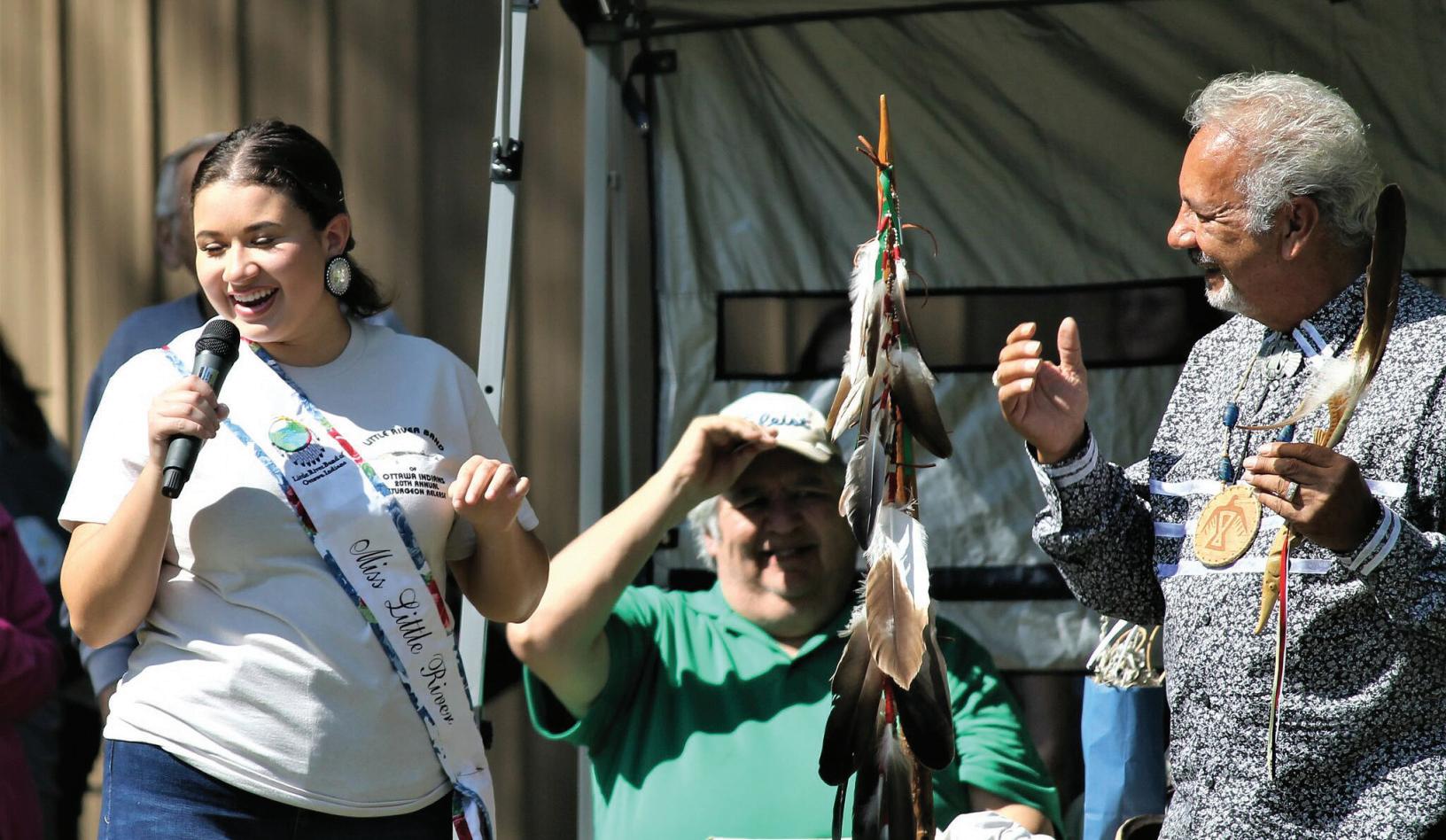
In 2022, the late Jonnie Sam talked with the News Advocate about the history of the Little River Band of Ottawa Indians. He said that people in the Great Lakes region date back as far as 1000 A.D. and in Michigan as far back as 1400 A.D.
Sam, the director of the Historic Preservation Department for the Little River Band of Ottawa Indians, died in 2025.
Sam told the News Advocate that it is not known when the tribe fully lived in the Manistee County area, which is known to the tribe as Naaminitigong, meaning land under the trees. Sam detailed some of the history of the tribe and its relationship with Manistee.
“There are varied stories about when the people entered the Great Lakes region. One of the versions found in the Mishoomis book is the Great Migration. The migration was the result of a vision while the Anishinaabek lived on the east coast of the need to move to a safer area,” Sam said.
He said according to some stories, the route follows where other Anishinaabek had traveled or were living. The Anishinaabek refers to many of the tribes that live in and are indigenous to the Great Lakes region including the LRBOI, and others such as the Grand Traverse Band of Ottawa and Chippewa Indians.
“Our history — from the book ‘Our People Our Journey’ — also has the Ottawa that are LRBOI moving into Michigan around 1400-1500 with first European contact being around 1615 A.D.,” Sam said. “Even in this history, there is talk of older habitation.”
Sam noted that there are other accounts that differ from what he described.
“Still, others believe that the Anishinaabek were always here, and the mound builders and ‘Paleo-Indians’ merely evolved into Anishinaabek (now known as the Ottawa). The M-231 project’s archeological discovery supports the transitional story as cache pits were found that had been in continual use from BC to the ‘modern’ Anishinaabek along the Grand River,” Sam noted.
In 2011 and 2012, the Michigan Department

Continued from pg. 14
of Transportation found artifacts dating between 800 and 350 years ago when excavating sites in Ottawa County in order to build the M-231 bridge.
The ancestors of the Anishinaabek people created the sites, according to MDOT.
“The excavations revealed evidence of several occupations dating approximately between the years 1000 and 1500. Artifacts found include pottery shards, arrowheads, chipped stone tools and the debris from making tools. Animal bones and seeds representing food remains also were recovered,” a news release from MDOT in 2015 read in part.
Sam said one of the Little River Band of Ottawa Indians creation myths says the tribe has always been in Manistee.
According to the creation story, Sam said that the tribe was situated on the Great Lakes. He said that the LRBOI was not the only tribe in Manistee, and that were many others.
“There were other tribes in the Great Lakes/Manistee region. The Mascouten were in the area — more notable for the Pere Marquette River — as were Huron, Potawatomie and Chippewa — both of whom are also Anishinaabek and named as a misunderstanding,” Sam said.
He said that much of life for the Native Americans prior to U.S. colonization depended
on the season of the year.
“A day in the life of the Anishinaabek would depend on the time of year. The tribe would be in wigwam-style homes in the winter for trapping and hunting in smaller villages,” Sam wrote.
He said that winter was a time for stories and traditions, as well as some early winter sports and contests.
“Once winter snows start, the people would listen to stories from their elders… and lessons on traditional topics — seven grandfather/ mother teachings. Dried food from the gathering, fishing and crops would be prepared for meals.
Occasionally newer meats from trapping and hunting would
be added,” Sam said. “Clothing and other items would be repaired. For recreation there would be snowshoe races and dances, snow snake games would be held. There were also sleds and cross country skis to pass the time or visit other villages.”
According to an informational packet provided by the tribe, in 1836 the Little River Band of Ottawa Indians was approached by the federal government to sign a treaty recognizing the tribe. It was reluctantly signed.
The treaty was important to the United States because of the need for land in order to move Michigan from a territory to a state. The
reservation that was created was located on the Manistee River, in order to provide a home that gave the LRBOI access to traditional hunting and trapping territories along the Manistee River system.
A renegotiation of the treaty occurred in 1855, according to the packet from the LRBOI. A clause in the treaty required the Ottawa Chippewa tribe to disband. Attempts at reaffirmation with the federal government failed, because of the disbanding clause.
The Little River Band of Ottawa Indians is actually the political successor of nine of 19 historic bands of the Grand River Ottawa
people. The Grand River bands were originally located on the Thornapple River, Grand River, White River, Pere Marquette River and the Big and Little Manistee rivers.
After the 1855 treaty, the Grand River Bands were removed from villages in Muskegon, Oceana and Mason counties. The nine bands which make up the LRBOI established a settlement in what is now Mason County. The other 10 bands settled along the Pentwater River in Oceana County.
In 1936, 1948 and the 1970s attempts were made by the tribe to reaffirm their relationship with the federal government.
The LRBOI received reaffirmation of its relationship with the federal government on Sept. 21, 1994, under a law that passed that year.
In 2022 there were around 4,000 members enrolled in the LRBOI according to tribal ogema Larry Romanelli. Ogema comes from the Anishinaabemowin word ogimaa meaning chief.
2010 data from the tribe shows 1,775 tribal citizens living in a ninecounty service area: Kent, Lake, Manistee, Mason, Muskegon, Newaygo, Oceana, Ottawa and Wexford counties. As of 2010, the tribe has 2,748 members living in Michigan.