

![]()


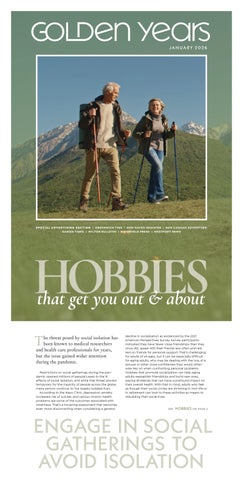
The threat posed by social isolation has been known to medical researchers and health care professionals for years, but the issue gained wider attention during the pandemic.
Restrictions on social gatherings during the pandemic opened millions of people’s eyes to the ill effects of social isolation, and while that threat proved temporary for the majority of people across the globe, many seniors continue to live largely isolated lives.
According to the Mayo Clinic, depression, anxiety increased risk of suicide, and various chronic health problems are some of the outcomes associated with loneliness. That’s a troubling assessment that becomes even more disconcerting when considering a general

decline in socialization as evidenced by the 2021 American Perspectives Survey Survey participants indicated they have fewer close friendships than they once did, speak with their friends less often and rely less on friends for personal support. That’s challenging for adults of all ages, but it can be especially difficult for aging adults, who may be dealing with the loss of a spouse or other close confidantes they would otherwise rely on when confronting personal problems
Hobbies that promote socialization can help aging adults reestablish friendships and build new ones, paying dividends that can have a profound impact on their overall health. With that in mind, adults who feel as though their social circles are shrinking in mid-life or in retirement can look to these activities as means to rebuilding their social lives.


hysical changes associated with aging, such as graying hair or reduced muscle mass, may garner the most attention But personal relationships also can change as people age.
As a person ages, interests could change and home base may not be what it once was. People move after retirement, and friends you might once have seen with frequency may no longer be as close by Children are older, and the friends you made from these early parenthood relationships may change as well.
Psychology Today reports that a strong social network reduces the risk of early death by around 45 percent. Recent data even indicates that loneliness is as great a health risk as smoking half a pack of cigarettes per day. Starting fresh and making friends at 50 or older might seem challenging. Although making new friends after 50 may take more effort than it did when you were younger it is certainly not impossible. Here are some tips for making friends after 50
■ Join a networking group Networking isn’t just for advancing your career Networking groups that focus on friendships can help individuals meet one another Perhaps there is a neighborhood group in which people from a particular housing development or several streets in town get together? Shared interests can include the place where you live.
■ Consider other generations. Friends need not be the same age and from the same generation. Keep an open mind that friends can come in all ages and from all walks of life.
■ Organize a get-together Sometimes making friends involves effort on your part. You might need to step out of your comfort zone and initiate first contact with others. Maybe there is a person at a store you run into frequently, or someone whose path you cross regularly that can be asked out to a get-together?
■ Get involved with activities. A church group or a volunteer activity can be a great place to meet new people. In fact, volunteers often get involved for the express purpose of getting to know others and to be integral members of the community
MAKING FRIENDS AFTER 50 REQUIRES SOME EFFORT, BUT A SIZABLE SOCIAL NETWORK CAN BENEFIT INDIVIDUAL WELL-BEING INTO ONE’S GOLDEN YEARS. LP262616

IT IS IMPORTANT TO HAVE A SOLID GROUP OF FRIENDS.

Travel can provide another means for aging adults to make friends Group tours to foreign countries, day trips to local attractions arranged by township recreational offices or even overseas trips with friends you’ve fallen out of touch with can be a great means to build new friendships and reinvigorate old ones, all the while getting you out of the house
Sports
Sports provide another avenue to socialize with like-minded individuals. Golf is not a team sport, but it is typically played in groups of two or four, making it an ideal activity for adults with free time on their hands to get out and about and meet other people. Leagues for softball, bowling and pickleball also provide opportunities to socialize, and many adults are participating in such leagues for that very reason. A CivicScience study re-
leased in 2025 found that 49 percent of adults who planned to participate in adult recreational sports leagues were doing so for social interaction and the chance to make friends.
A book club offers multiple benefits to adults Book clubs are inherently social and tend to bring like-minded individuals together which can help build new and lasting friendships that extend beyond weekly discussions. A 2021 study published in the journal Neurology also linked regular reading to a lower risk of developing dementia.
THESE ARE JUST SOME WAYS FOR MEN AND WOMEN TO GET OUT OF THE HOUSE AND SOCIALIZE WITH OTHERS THEIR AGE, A WORTHY ENDEAVOR THAT CAN BE HIGHLY BENEFICIAL TO ADULTS’ OVERALL HEALTH. LP262620


The day a child leaves home can be bittersweet for parents. Although a son or daughter being successful and mature enough to move on to new opportunities can be a source of pride, parents typically lament the quiet that comes from empty rooms and a change to the daily routine they’d grown accustomed to when the kids were around. After some time, some couples decide to downsize to a home more befitting the empty nester lifestyle.
Downsizing presents an option for homeowners whose kids have left the nest. New analysis from a survey of 2,500 empty nesters commissioned by Regency Living found that 30 percent of empty nesters choose to downsize and move from their original family homes. When retirement is just around the corner many professionals shift focus to how they want to live and where. Moving to a new home presents plenty of opportunities for older adults, including a chance to choose a home based on what’s right for them in this stage of life. There are questions homeowners can ask themselves as they ponder if downsizing is right for them.
1. How much upkeep can I handle?
A lifelong family home may be well-loved, but chances are it requires significant upkeep and repairs. Empty nesters may choose to move on to a home that offers lifestyle benefits like less maintenance. Homes in lifestyle communities or those overseen by a homeowners’ association tend to have certain maintenance built into a monthly fee.
2. Is this layout still a fit?
Many empty nesters may not immediately feel the effects of aging, but before selecting a next home, individuals should think about aging in place and any unique needs they may have Opting for a single-level home, or at least one with the owner’s suite on the main level, can be advantageous.
3. Can I make due with less square footage?
A cavernous home with many rooms often isn’t desirable for empty nesters. All of that square footage requires heating, cooling and maintenance. Rattling around inside a big, empty house may precipitate the decision to downsize Downsizing also can free up home equity which can be used to fund retirement needs.
4. Which features do you desire?
Many empty nesters want the next home to focus on some luxury items they may have bypassed in the first home when priorities lay elsewhere. Upscale environments like gourmet kitchens, spa-like bathrooms and outdoor living spaces may be in the budget when moving into a home with a smaller footprint.
5. Will my home be secure while I travel?
Empty nesters might want to choose homes in gated communities or condominium complexes for safety reasons. Should they opt to spend a portion of time at a vacation rental or second home as snowbirds, secure communities enable residents to leave their primary residence with the peace of mind that those homes will be less vulnerable to thieves.
6. Does this home have enough light?
The American Optometric Association says many adults start to have problems seeing clearly beginning at age 40 Homes with more light from large windows and artificial lighting can reduce accident risk.
MOVING TO A SMALLER HOME IS A CONSIDERATION FOR MANY EMPTY NESTERS. VARIOUS FEATURES OFFER BENEFITS TO ADULTS WHO WANT TO AGE IN PLACE. LP262621


BY BRANDPOINT
Connie Thomas, a 77-year-old woman from Altamont, Illinois, has navigated a long journey with her mental health. Decades ago, Thomas was diagnosed with breast cancer Living with her diagnosis and its results was not only physically challenging but it also brought mental struggles, including depression She managed her mental health with medication for many years. But after retirement and feeling a loss of purpose, Thomas once again experienced symptoms of depression.
It's not unusual for older adults like Thomas to struggle with mental health issues. In fact, according to the National Council on Aging, 20% of people aged 55 and older suffer from some kind of mental health concern. After a lifetime of caring for families raising children and serving their communities, many seniors put their own needs last, including their mental health. This can mean suffering in silence, sometimes for years.
Thomas knew better. She knew from her experience how important it is to talk about mental health, whether it's with friends, family or your doctor That conversation can open the door to new options. In Connie's case, her primary care clinician offered her the GeneSight® test, a genetic test that provides additional insights into how her genes may affect medication outcomes with certain mental health medications. These results gave her clinician more information to consider when developing her treatment plan.
It's fairly common for medications that once worked to manage mental health issues like depression to stop working
Finding a medication for depression or anxiety that works can be a frustrating game of trial and
error Medications work differently for everyone, and there are many reasons why one may be effective for some but not for others. Your genes may hold a clue, as they can play a role in affecting medication outcomes. A simple cheek swab can help clinicians understand which medications may require dose adjustments, be less likely to work, or have an increased risk of side effects based on your genetics.
That's why resources like the GeneSight Æ test are so important. The GeneSight test is a genetic test that shows health care providers how your genes may affect your outcomes with certain mental health medications, including medications that treat depression and anxiety This information may help clinicians make more informed decisions about medication selection or dosing.
Thomas' GeneSight test results helped her doctor decide that a lower dose of her medication may be helpful. With that adjustment, she says she is feeling better than she has in many years.
Thomas shares that in her older adult community, she sees many people struggling with depression and yet unable to talk about their mental health.
"I see how unhappy they are, inwardly and outwardly," she says "I try to reach out, to acknowledge that they are suffering and to encourage them to talk to someone."
She hopes telling her story will encourage others like her to talk about their mental health and then take the next step in reaching out to a health care provider As Thomas learned, any prescribing clinician treating mental health, like her primary care clinician, can order the GeneSight test
TO LEARN MORE ABOUT THE TEST, TALK WITH YOUR CLINICIAN OR VISIT WWW.GENESIGHT.COM


Ourthoughtfullydesignedcommunities offer awiderange of living optionsand services,so youcan find theperfect fitfor your lifestyle andneeds.
From cottagesand villastocozyapartmentsand inviting spaces,there’s aMasonicarefor everyone.
Backed by theaward-winning Masonicare continuumofcareyou canenjoy peaceofmind knowingthatnomatterwhatthe future brings, we’vegot youcovered.
BecauseatMasonicare, exceptionalcareand serviceisn’t just provided. It’s apromise.