What Activities Can Help Keep Your Mind Active as You Age?
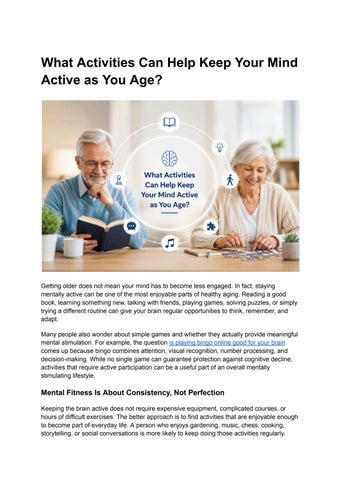
Getting older does not mean your mind has to become less engaged. In fact, staying mentally active can be one of the most enjoyable parts of healthy aging. Reading a good book, learning something new, talking with friends, playing games, solving puzzles, or simply trying a different routine can give your brain regular opportunities to think, remember, and adapt. Many people also wonder about simple games and whether they actually provide meaningful mental stimulation. For example, the question is playing bingo online good for your brain comes up because bingo combines attention, visual recognition, number processing, and decision-making. While no single game can guarantee protection against cognitive decline, activities that require active participation can be a useful part of an overall mentally stimulating lifestyle.
Mental Fitness Is About Consistency, Not Perfection Keeping the brain active does not require expensive equipment, complicated courses, or hours of difficult exercises. The better approach is to find activities that are enjoyable enough to become part of everyday life. A person who enjoys gardening, music, chess, cooking, storytelling, or social conversations is more likely to keep doing those activities regularly.
The goal is not to prove how smart you are. It is to keep your mind involved, curious, and connected with the world around you.
Read Regularly and Explore New Subjects Reading is a simple activity that can fit into almost any routine. Newspapers, novels, biographies, magazines, history books, and online educational material all expose the brain to new information and ideas. Reading also encourages attention and comprehension. Instead of simply watching content passively, reading asks you to follow a story, understand meaning, remember details, and connect one idea with another. Even 15 to 30 minutes of enjoyable reading can make your day more mentally engaging.
Learn Something You Have Never Tried Before Learning does not have an age limit. You could learn basic computer skills, a new language, photography, painting, cooking techniques, music, or even how to use a smartphone feature you have always avoided. Learning something unfamiliar is particularly useful because it takes concentration. You have to make mistakes, remember instructions, and gradually improve. That process keeps the brain challenged in a way that repeating the same familiar routine may not. For older adults in India, technology can be a particularly useful learning opportunity. Learning digital payments, video calling, online banking safety, digital photography, or smartphone settings can provide practical benefits while keeping the mind engaged.
Play Games That Require Attention Games can be an enjoyable way to introduce mental stimulation into your day. Crossword puzzles, Sudoku, chess, card games, memory games, word games, and number-based games can all require concentration and active thinking. Online versions can add convenience because they can be played from home. Bingo, for example, requires players to pay attention to numbers and respond quickly. However, variety is important. Instead of relying on one game as a supposed brain-health solution, treat games as one enjoyable component of a broader active lifestyle.
Stay Social and Keep Conversations Going Social interaction is sometimes overlooked when people talk about brain health. Regular conversations require you to listen, remember information, understand emotions, respond appropriately, and share your own thoughts. Spending time with family members, friends, neighbours, community groups, or hobby groups can therefore provide both social and mental stimulation. Even a regular phone call can be meaningful when meeting someone in person is difficult.
For older adults who live alone, maintaining social connections can also make daily life feel more purposeful. A weekly family gathering, religious or community activity, book discussion, or hobby group can turn mental stimulation into something enjoyable rather than something that feels like homework.
Keep Your Body Moving A healthy mind and a healthy body are closely connected. Physical activity increases blood flow throughout the body and supports overall cardiovascular health, which is important for brain health as well. Walking is an especially practical option because it requires little equipment. Gardening, gentle stretching, dancing, cycling, swimming, or other activities suited to your fitness level can also help you remain physically and mentally engaged. The important point is to choose movement that is appropriate for your age and health circumstances. If you have health concerns or have been inactive for a long period, speaking with a healthcare professional before starting a new exercise routine can be sensible.
Use Creative Activities to Challenge Your Brain Creativity is another excellent way to keep your mind involved. Drawing, painting, singing, playing an instrument, photography, knitting, writing, cooking, and crafts all require planning and attention. Creative hobbies also give you something to work toward. You might learn a new song, try a different recipe, complete a painting, or make something for a family member. That combination of concentration and satisfaction can make the activity easier to maintain over time.
Make Everyday Tasks More Mentally Engaging You do not always need a formal brain-training activity. Everyday tasks can become opportunities to think differently. Cooking a new recipe requires you to remember ingredients and follow instructions. Planning a trip involves organisation and decision-making. Gardening involves observation and problem-solving. Managing household finances requires attention to numbers and planning. The idea is simple: instead of doing everything automatically, occasionally introduce something new or challenging into your normal routine.
Stay Independent While Knowing When You Need Support Mental activity is valuable, but older adults may sometimes need assistance with daily living. Family members and professional caregivers can provide support while still encouraging independence wherever appropriate.
Understanding caregiver responsibilities can also prevent confusion. Questions such as what are home health aides not allowed to do are important because home health aides have defined responsibilities and limitations that can vary depending on their role, training, employer, and local regulations. Good support should make it easier for an older person to continue participating in activities they enjoy rather than taking away every opportunity to make decisions independently.
Protect Sleep and Give Your Brain Time to Recover Mental stimulation is only one part of healthy aging. Rest matters too. Poor sleep can affect attention, concentration, mood, and memory during the day. A consistent sleep schedule, a comfortable bedroom, reduced screen exposure before bedtime, and a relaxing nighttime routine may support better sleep habits. If persistent sleep problems interfere with daily life, discussing them with a healthcare professional is worthwhile.
Keep Your Mind Curious Curiosity is one of the easiest habits to maintain. Ask questions. Try a different route during your morning walk. Learn why something works. Listen to music from another decade. Watch an educational program and discuss it with someone afterward. These small experiences give your brain new information to process. You do not need to turn every day into a mental workout. A curious attitude can naturally create opportunities for learning throughout your routine.
Do Not Depend on One “Brain-Boosting” Activity There is a lot of marketing around products, apps, supplements, and games claiming to improve brain performance. It is important to be realistic. No single product or activity should be treated as a guaranteed way to prevent dementia or other age-related cognitive conditions. A better approach is to combine mentally stimulating activities with physical movement, social connection, good sleep, nutritious food, regular healthcare, and management of conditions that can affect overall health. If you notice significant or progressive changes in memory, thinking, communication, behaviour, or your ability to manage normal daily activities, do not simply assume that aging is the cause. Speaking with a healthcare professional can help determine whether further assessment is appropriate.
Conclusion Keeping your mind active as you age does not have to feel difficult or expensive. Reading, learning new skills, playing mentally engaging games, staying socially connected, exercising,
pursuing creative hobbies, and approaching everyday tasks with curiosity can all make life more stimulating. The biggest advantage comes from consistency. Choose activities you genuinely enjoy and make them part of your normal routine. A crossword puzzle one day, a walk with a friend the next, a new recipe on the weekend, and learning a new skill over several weeks can create a lifestyle that keeps both your mind and your days more engaged.