The business journal for doctors in private practice
In this issue
The Good, the Bad & the Ugly of the NHS Pension Scheme
Accountant James Gransby sums up doctors’ difficult choices P14
App cuts Covid risk of ops A digital health app that steered private hospitals through the pandemic helps elective patients get ‘surgery-ready’ P20
Becoming an expert witness
Uniting in a post-Covid world
Despite private doctors being able to restart their businesses, unprecedented times look to remain part of our lives P44
A plan for resumption
By Robin Stride
An eight-point plan has been unveiled by the London Consultants Association (LCA) to help independent practitioners get back to business following breakthrough talks between private hospital representatives and the NHS.
As reported on our website last month, private practice for thousands of doctors is being kickstarted again from Monday 7 September.
Nearly all private providers in London will be removed from an NHS contract from this date – as will some other facilities outside the capital.
There will be 30%-40% capacity of private patients allowed in independent hospitals in the Southeast and a minimum of 25% of normal working hours capacity for private patients in the remainder of England.
The LCA suggests this check list below to help consultants restart their private practice:
1 Contact your hospital directors now to find out what capacity will be available and emphasise your own availability.
2 Ask for reduced consulting rooms fees during the ramp-up period.
We broke the news of the get-backto-work deal on our website
3 Request hospital support in advertising your services and availability, and to drive referrals.
4 Be prepared to participate in virtual GP education sessions to ensure it becomes widely known that your practice is open for business.
5 Establish the current Covid screening requirements for your patients. Ensure
you are clear who has the responsibility to inform your patients of these requirements – you or the hospital?
6 Clarify with your defence body or insurer what is your personal position if a patient contracts Covid during treatment by you.
7 Contact private medical insurers and ask to be treated ‘fairly’ because of overheads and reduced efficiency due to Covid regulations such as increased consultation time. Note that virtual consultations require the same level of medical expertise and time as face-to-face ones.
8 Prepare for a rise in selfpaying patients due to the anticipated increase in NHS waiting times. Be prepared to open clinics and offer face-to-face consultations as soon as possible.
LCA chairman Dr Mark Vanderpump warned that many consultants’ independent practices continued to suffer: ‘As of late August 2020, the situation with respect to private practice remains grave.
‘The London Consultants’ Association are of the strong opinion
that a kick start process needs to be developed to allow the market to recover.
‘This would bring back private patients and, in so doing, assist private hospitals to return to revenues and build profitably once again. The NHS-private provider emergency contract ends in early September and consultants need additional support to restart their private practice.’
In this issue of Independent Practitioner Today (see p44), Independent Healthcare Providers Network chief executive David Hare says the agreement on further guaranteed capacity for private activity, for those hospitals that remained on the national contract, was ‘great news’ for independent practitioners, insured and self-pay patients.
Both the NHS and private hospital representatives have set 31 December 2020 as the strict deadline for when the current deal must end.
Mr Hare explained: ‘After this point, more localised agreements will be put in place to secure longerterm support from the sector to deal with what are likely to be NHS waiting lists of over 10 million by the calendar year-end and to clear a backlog which has already led to a staggering 50,000 NHS patients waiting over one year for routine treatment – compared with less than 2,000 earlier in the year.’
See page 44
TELL US YOUR NEWS. Contact editorial director Robin Stride
Getting your team on board
Jane Braithwaite continues her series on delivering great patient experience in private practice by showing how to get your team to share your vision P16
ADVERTISE WITH US. To advertise in the journal or our website business and lifestyle directories, contact advertising manager Margaret Floate at margifloate@btinternet.com.
Phone: 01483 824094
GET A SUBSCRIPTION DISCOUNT
£90 independent practitioners. £210 organisations. £90 GPs and practice managers (private & NHS).
Save £15 paying by direct debit: individuals £75 (organisations £180).
TO SUBSCRIBE
Email karen@marketingcentre.co.uk Or phone 01752 312140 Or go to the ‘Subscribe’ page of our website www.independent-practitioner-today.co.uk
Chief sub-editor: Vincent Dawe
Head of design: Jonathan Anstee
Publisher: Gillian Nineham at gill@ip-today.co.uk Phone: 07767 353897
EDITORIAL COMMENT
Getting back to business
Just as the schools finally go back, there is a ray of autumn sunshine.
More than five long months since lockdown started, the news we waited for has arrived and private practice is set to be kickstarted back into business from Monday 7 September (see page 1).
The London Consultants Assoc iation’s (LCA’s) suggestions are useful, and we know many consultants have been ‘on the case’.
There should be a welcome return to pre-Covid arrangements, according to the chairman of the Federation of Independent Practitioner Organisations, but as we put the finishing touches to this issue, the situation in private practice is still considered ‘grave’ by his opposite number at the LCA.
What this all boils down to, we shall have to see and we look forward to reporting the progress being made in private hospitals all over the country.
Do let us know what is happening in the hospitals where you have practising privileges –and tell us how this is helping or hindering your move to more private practice normality.
So many exciting plans for doctors’ private practices have been put on hold this year and hospital developments have been hit by Covid-19 too, probably none more so than the under-construction 184-bed Cleveland Clinic at 33 Grosvenor Place, London.
It was planned to open for outpatients this year and inpatients early next. But now the revised building completion date is September 2021 and the hospital now expects to open in early 2022, with outpatients opening at 24 Portland Place next autumn.
Competitors will welcome this, while some doctors may find the delay gives them the time to reassess their views on applying for a salaried post.
Dealing with a patient’s grip
Just when you were having a good day, you get a complaint. Dr Greg Dollman advises on the rules and your options when this happens P22
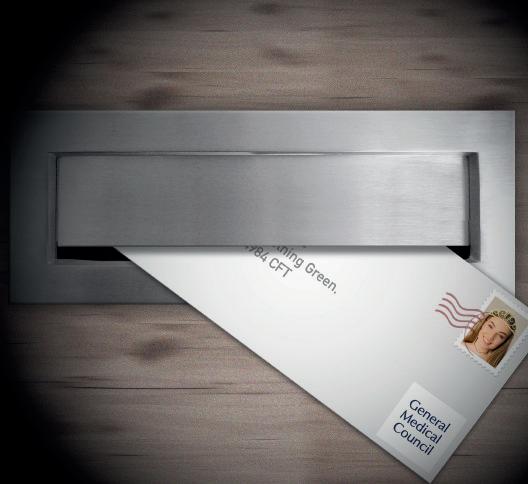
When the GMC receives a complaint Medico-legal expert Dr Ellie Mein explains that although undergoing a GMC investigation is stressful, it is a survivable experience P24
Beware of becoming a cartel In the wake of Spire’s £1.2m fine by the watchdog, solicitor Michael Rourke draws attention to the competition law implications for private doctors P30
Add a new stream to your earning Simon Brignall discusses the billing challenges faced by consultants considering adding medico-legal services to their practice portfolio P32
Don’t just rely on big names What is the impact of the ‘Big Five’ on the long-term investor? Dr Benjamin Holdsworth shows why winners do not usually keep on winning P36
PLUS OUR REGULAR COLUMNS
Doctor on the Road: An electric car to rival Tesla’s whizz
Our motoring correspondent Dr Tony Rimmer gets to rave about the Porsche Taycan P40
Start a private practice: Plan your practice’s life cycle
We are in tough times, but Ian Tongue believes we’ll see a surge in demand for private practice P42
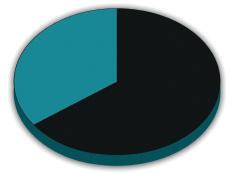
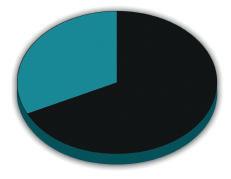
Profits Focus: Cardiology remains up-beat
Our unique benchmarking series looks at the financial fortunes of cardiologists P45
Circulation figures verified by the Audit Bureau of Circulations
More detail emerges on pensions remedy
By Edie Bourne
Doctors confused by the 2015 NHS Pension Scheme consultation – see our front-page story last month –have been given more detail on how the remedy against the deemed age discrimination might work.
When this scheme was introduced, older members – those within ten years of scheme retirement age – were allowed to continue with their final salary schemes in the 1995 or 2008 sections.
This has now been deemed discriminatory against younger members and the Government is seeking to redress the situation across all public sector pension schemes.
Doctors who have been impacted will need to choose which set of back-dated scheme benefits they
would prefer for the ‘remedy period’, which is between 1 April 2015 to 31 March 2022.
Patrick Convey, technical director for specialist financial planners Cavendish Medical, told Independent Practitioner Today: ‘Essentially, this a choice between opting for the old scheme, where pensions are linked to final salary with a lower normal retirement age (60/65), or the revised scheme, which is based on their average salary with a later retirement age linked to their state pension age.
‘The major reason for the consultation is to decide when members will be able to make this choice –immediately after the remedy period in 2022 or at retirement.
‘This could be a boost for many, but with the caveat that there are many computations to consider first. Doctors could benefit from seven extra years of their advanta-
DEADLINE FOR APPLYING FOR A STAY IN PENSION TAX CHARGE IS EXTENDED AGAIN
It has also been announced that doctors facing large tax bills caused by breaching annual pension savings limits in 2018-19 will now have longer to apply for help to pay charges.
The voluntary ‘scheme pays’ application deadline has been extended for a second time. Earlier this year, it was pushed back from 31 July to 31 October 2020 and will now be the end of March 2021.
Patrick Convey continued: ‘Every month the rules and regulations surrounding pay, pensions and taxation change. It is challenging for those working purely in this field, let alone medics with a very busy day job. It is all too easy to get caught out by the very complex situation doctors find themselves in.’
geous legacy scheme, but would need to carefully consider the impact on the annual allowance calculations for that same period.
‘Upon the introduction of the 2008 Scheme, the NHS Pensions Agency outlined generic guidance on the choice available and we
assume it will do so again in due course.
‘Sadly, we still see new clients now who financially made the wrong decision back then, so it is important to seek expert help and not rely on one-size-fits-all solutions.’
Patients tolerate service lapse due to Covid
Thousands of independent practitioners have been extremely frustrated in recent months at not being able to provide a service –but their patients appear to have accepted the situation.
The Independent Sector Complaints Advisory Service (ISCAS) has revealed it has not received any complaints about private doctors
being unable to see patients because hospitals have been utilised by the NHS.
ISCAS director Sally Taber told Independent Practitioner Today : ‘Current patients and potential patients appear to have taken on board that the Covid-19 situation has been necessary and have understood the need for the lock-
down situation and what that means.’
She welcomed the NHS ‘variation to contract’ in the majority of hospitals (see page 1 and our website stories on 25 August) permitting more independent sector activity, calling it ‘great news for patients, the hospitals and consultants’.
But she advised doctors working
Doctors turn to legal work to raise cash
Independent practitioners financially hit by Covid-19 are planning medico-legal work to boost their incomes.
One business adviser tells Independent Practitioner Today this month he has received many calls from consultants who are considering the move.
But Simon Brignall, director of
business development at Medical Billing and Collection, advises: ‘Due to the multitude of potential clients available to independent practitioners, it is crucial that your practice is prepared correctly to manage a commercial relationship with them right from the very first contact.’
Having proper terms and an adequate fee and payment structure is essential, he says. One consultant had outstanding debts of over £400k before MBC sorted it out.
See page 32 and our new series on setting up a medico-legal business on page 26
privately to ensure that the organisations where they worked were subscribers to ISCAS.
Mrs Taber said: ‘In the absence of an organisational process for escalation of complaints, there is a potential that private patients will escalate complaints through other systems such as the professional regulator, namely the GMC.’
Lawyers are warning private doctors not to discuss their self-pay rates with others with a view to establishing a common price.
The advice follows a recent case where a hospital group and consultants were heavily fined for breaking competition law.
See a lawyer’s advice on page 30
Patrick Convey
24- hour clinic is seeking doctors
By Olive Carterton
GPs are being recruited to work in a new private London clinic offering patients round-the-clock access through a membership deal.
Called med24, it is planned to open later this autumn in a 7,000ft 2 facility on Eastbourne Terrace, Paddington, next to the new Crossrail station.
The premises are currently undergoing a £1m fit-out with ‘the very latest in medical technology and services from around the world’.
There will be five consulting rooms, two procedure and treatment rooms and space to accommodate additional services.
Bosses say their ‘first’ clinic will be at the centre of one of London’s most dynamic and rapidly expanding business districts. They aim to attract customers from companies such as Microsoft, Vodafone and Nokia, who are all within five minutes’ walk.
Covid-19 has resulted in thousands of staff in London working
from home, but the company told Independent Practitioner Today it was ‘very confident’ of attracting customers.
med24 bills itself as ‘the UK’s first membership-based health service’ and has raised over £5m in a seed financing round. Members are likely to pay a range of prices depending on whether their appointment is face-to-face or virtual.
Investors in the business are said to be all private individuals, including one of Ireland’s richest men, Dermot Desmond, and individuals occupying senior roles at private equity firms including The Capital Partnership, Round Hill Capital, EFM Asset Management and Stirling Square Capital Partners.
GPs who will work in the clinic –‘the first in the UK to offer full primary care services 24 hours a day and 365 days a week’ – are expected to be part-timers in private practice who also work in the NHS. There are already a number of established private GPs working full-time in the area.
The company said it planned to offer the fullest possible service, so rather than referring people on, it would try to meet all their needs at one time. So facilities would include an X-ray room, minor treatment services, diagnostics, physiotherapy and well-being programmes ‘providing a premium experience for all users’.
Its goal is to provide flexible access to these services, offering minimal waiting times and on a 24-hour, 365-day-a-year basis.
Jonathan Kron, co-founder and chief executive, said: ‘We are delighted to have reached this key milestone. Healthcare provision was changing rapidly before Covid-19; that change is now accelerating further.
‘We believe people will demand a better designed health system in the future, with consultations, diagnosis and treatment in one physical location backed up and interchangeable with on-demand virtual care, where appropriate.’
Co-founder and director Mr
Ahmed Aya Al-Hamad said: ‘Our fundraising was significantly oversubscribed. We have been overwhelmed by the interest from investors.
‘We completed the fundraising far quicker than we expected and with fewer individuals. We believe the high level of interest from investors demonstrates the level of demand there is for this kind of world-class medical facility in London.’
The company pointed out that private clinics offering both primary and urgent care are now an established and successful part of the US medical market. In January this year, Life Healthcare Inc, the company behind ‘convenience’ primary healthcare provider One Medical, raised $250m by listing on Nasdaq.
Warning on ‘ruinous’ negligence rate change
Defence body the MDU has warned that proposals by the Northern Ireland Executive to change the way compensation claims are calculated could have a potentially ruinous impact on private doctors, NHS finances and GPs.
Dr Matthew Lee, its professional services director, warned that a lowering of the Personal Injury Discount Rate (PIDR) used to calculate sums awarded for long-term care in clinical negligence claims could have a dramatic impact on independent practitioners.
He told Independent Practitioner Today: ‘If Northern Ireland implements a similar way of setting the PIDR as exists in England and Wales or Scotland, compensation
paid in high-value claims could double or even treble in value.
‘Claims involving independent practitioners in certain specialties such as obstetrics and spinal surgery can already settle for many millions of pounds because of the potential for patients to have neurological harm and life-long care needs.
‘It is these cases where any lowering of the PIDR is likely to have the most dramatic impact.’
When the rate in England and Wales changed from 2.5% to -0.25% – at one point going as low as -0.75% – a claim from a teenage patient for brain injury that was valued at approximately £4.5m at the previous rate actually settled for £10.6m.
Said Dr Lee: ‘The Northern Ireland Executive should not go ahead with these proposals, which would have a devastating impact on independent practitioners and the wider NHS in Northern Ireland.
‘Research is urgently needed into how compensation awards are invested and what returns are achieved and this should inform Government policy.
‘We urge the Executive not to adopt a methodology which relies on unsubstantiated guesswork about investment returns.
‘A low PIDR has a drastic effect on NHS finances, and so the way it is set should be based on solid evidence about how awards are invested in practice.’
Dr Matthew Lee of the MDU
Jonathan Kron, med24 co-founder
Activity is going back up
By Douglas Shepherd
Hopes are high that latest figures will confirm escalating growth in private healthcare activity levels over recent weeks, ahead of the wider return to work of independent practitioners this month.
An important milestone was passed for the first time since the pandemic with the UK’s official clearing organisation for private medical bills reporting insurer-funded healthcare reached 58% of 2019 activity levels in July. This compared with 47% in June and only 29% in May as more patients were able to access the investigations and treatment they needed.
Healthcode has been monitoring data on behalf of the independent healthcare sector to track the recovery in activity levels after provid-
COUNTRIES AND REGIONS
In July 2020, England operated at 59% the level of 2019, while Scotland reached 44% and Wales 32%.
By contrast, the equivalent figures in June 2020 were 48% for England, 31% for Scotland and 20% in Wales. Northern Ireland bounced back strongly in July with activity of 82% compared with 2019, up from 51% in June.
Private providers in the West Midlands achieved an activity level of 65% of 2019 in July, matching the figure for June. This July level was equalled by London, which advanced from 55% in June, while the East Midlands and the North-west were close behind (63%).
The remaining English regions have rallied to over 50% of their 2019 activity level with the exception of Yorkshire and Humber, which started from the lowest base in May (17%) and reached 45% in July.
ers were given the green light to resume face-toface consultations.
It has now charted continued growth throughout the UK over the last three months with several regions operating at two-thirds the percentage they realised in 2019.
There has also been a positive trend in activity level across the top ten specialties, although there remain variations in the rate of growth.
The headlines from Healthcode’s July analysis are shown in the boxes below.
Healthcode managing director Peter Connor
HOSPITAL SPECIALTIES
Oncology fell back slightly to 83% in July after hitting the heights of 99% the previous month. However, there was a positive trend in all the other top ten specialties since May.
All but three of the top ten specialties passed 50% of 2019 activity levels in July. The exceptions were orthopaedics and trauma (49%), ENT (41%) and physiotherapy (29%).
But this is still an advance on June when the equivalent levels were 25%, 19% and 23%.
The positive trend in insured activity is reason to be optimistic that the private healthcare sector recovery will build momentum
said: ‘The positive trend in insured activity is reason to be optimistic that the private healthcare sector recovery will build momentum over this quarter after hitting the key halfway point.
‘Millions of tests and routine procedures were cancelled nationally because of the pandemic and there is now a backlog of patients needing to be seen.
‘A strong private sector has a vital role to play in delivering care to insured and self-funded patients and provides a safety valve for the NHS when capacity is under strain.’
CARE SETTING
Hospital activity now stood at 56% of 2019 levels, compared with 40% in June and just 23% in May.
Within hospital settings, outpatient activity continued its strong recovery, rebounding to 58% of expected level in July compared with 42% in June.
As Healthcode had predicted, admitted care has been gaining ground on its 2019 activity level, reaching 46% in July compared with 32% in June and 21% in May.
BMA poll shows extent of virus toll on doctors
More than 1,000 doctors working in England and Wales say they have, or may have, caught Covid-19.
A survey of 4,120 doctors revealed a total of 487 tested positive for the virus while a further 575 doctors who thought they had suffered from it were not tested. Data released as part of an ongoing BMA study of doctors during the pandemic found that symptoms most commonly reported in doctors and patients included chronic fatigue, reduced exercise
capacity, muscle weakness, memory loss, concentration difficulties and loss of sense of smell.
Questioned about their experiences over the previous two weeks, almost a third had seen or treated patients with symptoms they believe are a longer-term effect of the patient having had Covid-19.
Dr David Strain, BMA medical academic staff committee cochairman, said increasing evidence that Covid-19 patients can suffer long-lasting symptoms, irre-
spective of the severity of the initial infection, required detailed study to understand what optimum treatment would be and, preferably, how to prevent it occurring in the first place.
He called for the Government and the NHS to do more to protect the medical community from infection.
Dr Strain added: ‘We cannot afford more failures of quality and supply in PPE. Risk assessments should be available to all working in
the NHS and appropriate steps should be put in place to mitigate the risk of catching the virus, even in those that have a low risk of a bad outcome from the initial infection.
‘Doctors who have been shielding, either due to their own risks or due to the vulnerability of people they care for, and have now been asked to return to work must be presented with evidence of the safety measures that are being put in place to make workplaces Covid19-safe.’
Doctors dejected by Covid response
By Olive Carterton
Surgeons have revealed what changes they are making in the way they work in response to the pandemic.
Two-thirds said they would be reducing face-to-face contact with patients;
Nearly one in five stated they were altering their practice, such as by avoiding aerosol-generating procedures;
Seven per cent would leave;
One per cent would switch specialty.
Surgeons’ views were collected in a survey by the Confederation of British Surgery (CBS), the UK’s only trade union representing surgeons across all specialties, and anaesthetists. It warned of a possible mass exodus of nearly 1,200 surgeons from the NHS.
Leading member, consultant plastic surgeon Mr Mark Henley, said it was most likely that consultants would take early retirement because of disillusionment with the health service brought about by various factors, including pensions changes.
He thought younger doctors might simply go abroad or change careers, although orthopaedic or plastic surgeons could make their living in the UK private sector.
Around 650 seasoned surgeons were polled from a wide range of specialist disciplines with the majority hailing from general surgery, trauma and orthopaedics,
plastic surgery, and obstetrics and gynaecology.
CBS president and consultant colorectal surgeon Prof John MacFie said: ‘As representatives of the surgical community, it was imperative that we “take its temperature” and identify its most widespread views on the pandemic.
were asked by their employers to stop discussing PPE.
‘While many might not find some of their experiences and opinions on the subjects of – for example –personal protective equipment (PPE) guidance and provision to be shocking, it has still been jarring to find that a third found their concerns ignored when they were raised, and more than a tenth were directed outright to drop the subject.
‘The level of dissatisfaction with the lack of preparation for the crisis and perceived disregard for healthcare workers’ safety was such that one in 12 of all respondents are considering changing their discipline or leaving the field of surgery altogether. That, in fact, is a figure that should be horrifying to all.’
A third of respondents asserted PPE provision was inadequate at their hospital, 40% raised concerns with their line managers, 30% said these were not addressed, or not effectively, and one in ten
When asked whether the actual guidance for PPE usage by public health authorities in the UK was adequate, a narrow majority (52%) said yes – but of those who disagreed, by far the biggest issue was inconsistency, with nearly half (45%) of respondents citing this as the most pressing problem; with recommendations changing daily/weekly, from trust to trust and even hospital to hospital.
Consultant plastic surgeon Mr Nigel Mercer said: ‘There is significant concern that the multiple changes made to guidance about Covid testing, combined with the reluctance to regularly test NHS staff, significantly impact on maintaining “Covid-lite” pathways, which are essential to ensuring maximum safety for patients and staff.
‘Combined with ongoing concerns about PPE and a potential second wave of Covid in the autumn, it is clear that both patients and staff remain very concerned about post-surgery Covid security.
‘Maximising new technology and especially testing and track and trace are essential for safety in perioperative care.’
TOP TEN COMMONEST THEMES AMONG ALL RESPONDENTS WERE IN DESCENDING ORDER OF POPULARITY:
1
Lack of preventative measures – urgent need for better preparation in the future
2 The importance of embracing/accepting technology
3 Strong criticism of the Government, and a (vociferous) call for clinical/ scientific leadership, rather than political
4 The need for successful short-term, emergency measures that have proven successful to be implemented long-term
5 The crucial issue of PPE, including less reliance on imported equipment
6 Critical need for wide investment – such as modernising IT and other chronically underfunded areas
7 The urgency of reliable testing, track and tracing –seen as woefully inadequate
8 Significance of learning from other countries –rather than British from ‘exceptionalism’
9 Clear and consistent communications based on evidence, which have been lacking
10 A newly-found appreciation for the value of teamwork, across departments and specialties
Defence body fields surge in help calls
advice on areas such as remote consultations and death certificates.
wanted to adjust their subscription fees because their work circumstances had changed.
At the height of the pandemic, the Medical Defence Union (MDU) saw a 57% increase in doctors visiting its website for medico-legal
Its membership team dealt with almost 40,000 calls and 46,000 emails from members between April and July.
Many were from doctors who
Chief executive Dr Christine Tomkins said innovations such as the shift to remote consultations have happened virtually overnight and it was no wonder doctors needed advice on the medicolegal implications of this and all the other issues arising from the pandemic.
Record numbers of doctors have been seeking support and advice from their defence body during Covid-19.
Prof John MacFie
Dr Christine Tomkins
Nuffield launches Covid rehab trial
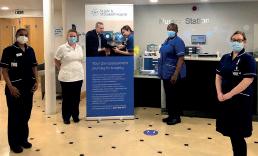
The UK’s first specialist rehabilitation programme to support patients in their recovery after they are treated for Covid-19 is being developed by Nuffield Health.
Its programme, blending physical therapy and mental health support, is being piloted in NHS trusts across the UK, before running nationally.
The first launches this month with Royal Stoke University Hospital and runs for 12 weeks.
The charity said patients are currently discharged from hospital with no formal recovery plan,
which could result in a longer recovery process and prolonged side-effects.
Patients will work with a rehabilitation specialist to design their individual plan consisting of at home exercises before moving to a Nuffield Health fitness and wellbeing centre.
They will also receive access to on-demand workouts, weekly emotional support calls and access to a community of participants, where they can share their experiences.
Dr Davina Deniszczyc, charity and medical director at Nuffield
Health, said: ‘We are in a unique position among the fitness sector to utilise our broad range of expertise, across clinical, fitness and mental health to develop a programme to support the nation as it recovers from Covid-19.
‘We will be capturing data throughout the programme, specifically at weeks 0, 6 and 12, to enable outcomes to be measured and evaluate the success of the programme. We will use these learnings to build and develop a national programme, sharing the data with the NHS and other healthcare providers.’
Vein clinic’s global accolade
A UK treatment centre for venous conditions, The Whiteley Clinic, has been awarded Best for Varicose Vein Treatments at the 2020 Global Excellence Awards, an annual programme launched by GHP Magazine
The award aims to celebrate a handful of leading professionals who have gone above and beyond to maintain leadership in their industry, innovate and achieve outstanding results compared to their peers.
Five judges decide on the winners based on a variety of factors includ-
ing the growth of their business, the significance of their innovations, feedback from their patients and contributions to their healthcare sector, plus global healthcare.
The Whiteley Clinic was acknowledged for its ‘outstanding success rates, contribution to varicose vein research, and innovation of multiple new treatments – including the development of a first-of-its-kind 100% non-invasive technique to treat varicose veins, called echotherapy treatment with SONOVEIN ’.
It is the only venous clinic to
have received a Global Excellence Award.
Delighted company founder Prof Mark Whiteley said: ‘My vision has always been to create safe, successful and results driven treatments at The Whiteley Clinic, carried out by highly trained and qualified staff. To have our work recognised on a global level is a credit to all my colleagues who have worked tirelessly to turn this vision into a reality.
‘I am very proud to have such a dedicated team and look forward to building on this success with them in the years to come.’
Warning on increasing CV fraud
Doctor employers are being warned to watch out for potential CV fraud as they take on any new staff or associates in the next few months. Background screening and preemployment verification has always been an integral part of the hiring process, but a provider of Primary Source Verification services believes increased pressures of the pandemic on firms and individuals is likely to encourage fraud.
René Seifert, co-head of TrueProfile.io, said: ‘The current job market is fiercer than ever due to the aftershocks of the Covid-19 pandemic and is only set to become more competitive. Sadly, many individuals have already lost their jobs and it’s thought that once the Government furlough scheme comes to a close, unemployment will rise even further.
‘This will result in more candi -
Rutherford’s fourth cancer centre opens
for patients
Patients are now being treated at the new Rutherford Cancer Centre North West, in Liverpool – the company’s fourth development.
The site is initially offering Systemic Anti-Cancer Therapy (SACT) services including chemotherapy, immunotherapy, targeted therapies symptom control, blood tests, oncology nurse consultation and supportive therapies.
Based in the Knowledge Quarter in Paddington Village, the facility will eventually offer comprehensive cancer services with plans to expand services later this year to include radiotherapy, MR Linac, mammography and ultrasound with highenergy proton beam therapy coming online early next year.
The Liverpool centre said it would be the first in the UK to use an MR Linac machine, which combines an MRI scanner and a linear accelerator, manufactured by Elekta. This delivers targeted radiotherapy that can treat hardto-reach tumours. The centre is the fourth in the Rutherford Health network of centres.
Rutherford Health chief executive Mike Moran said: ‘The Covid19 pandemic has wreaked havoc on cancer care services across the UK and we believe that this centre will be an important development in the fight against cancer.’
Aspen appoints medical director
dates applying for available roles and in this type of climate, the temptation to tweak one’s experience, qualifications or degree to land a dream job can be all too appealing.’
She said as this year had been a tough time for businesses - both financially and operationally – getting the right person on board the first time around was more important than ever.
Aspen Healthcare has appointed physician Dr Zoltan Varga as its new chief medical officer. He joins from Bupa where he most recently was director of medical policy and health services utilisation.
PPU WATCH
Patient complaints – best practice for PPUs
Private patients in the NHS continue to say that they do not understand how to escalate complaints, writes Philip Housden.
The Patients Association has just facilitated a focus group with patients who had received private and NHS funded healthcare and had complained about their treatment.
It concluded that ‘it would not be clear to the person on the street’ that private patient complaints cannot be escalated to the Parliamentary and Health Service Ombudsman (PHSO).
In England, patients receiving NHS-funded care can escalate complaints to the PHSO, whether the treatment is delivered in the NHS or the independent sector.
However, private patients treated
in the independent sector or in NHS private patient units/beds cannot access the PHSO.
Therefore, private patients treated in NHS locations in England who complain and remain dissatisfied must be signposted by the provider to an independent appropriate body such as the Independent Sector Complaints Adjudication Service (ISCAS).
This is in line with Care Quality Commission requirements and recommendations from recent independent reviews.
Further information about ISCAS can be found on the website https://iscas.cedr.com
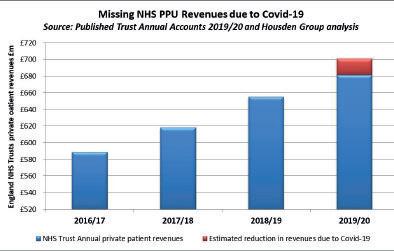
Philip Housden is director of Housden Group. See his feature on page 34 on the early financial results of private patient units
News round-up
In case you missed it – here’s a round-up of just some of the extra news stories on our website since last month’s issue
ADVICE ON CHAPERONE IN REMOTE CONSULTS
Doctors conducting virtual consultations during Covid-19 have been inundating their defence body with questions about the need for chaperones during physical examinations.
The MDDUS has received ‘numerous calls’ about it and points to GMC guidance stating: ‘When you carry out an intimate examination, you should offer the patient the option of having an impartial observer (a chaperone) present wherever possible. This applies whether or not you are the same gender as the patient.’
MDDUS risk adviser Kay Louise Grant, writing in MDDUS emonthly, advised: ‘The GMC has recognised that doctors may need to depart from established procedures during the pandemic and, with that in mind, there may be a stronger argument for undertaking an intimate examination remotely during the current climate than would ordinarily be the case.’
She said in view of the practical difficulties in arranging for an effective chaperone for remote intimate examinations, the union generally recommended doctors consider a face-to-face consultation instead.
But in some circumstances it was in the patient’s best interests to have a remote intimate examination. She suggested doctors develop a robust protocol in advance, ensuring both they and the patient felt comfortable with the consultation.
The MDDUS advised:
Follow GMC guidance on intimate examinations and chaperones;
Remote examination may be the most appropriate action if delay could potentially cause further harm to the patient;
Document any discussion
about chaperones and the out come in the patient’s medical record. If a chaperone is present, you should record their identity; If a physical examination in person is required, chaperones –like clinicians – should follow upto-date PPE guidance.
NOVEL PRIVATE CARE PARTNERSHIP SPLITS UP
The ‘Mayo Clinic Healthcare in partnership with Oxford University Clinic’, launched only last year to offer screening and diagnostic services at 15 Portland Place, London, has split.
Oxford said that following a detailed review of the business plan it concluded ‘its aims and risk appetite as a public sector entity were no longer closely aligned with the partnership’. Both sides were said to have jointly agreed on the move.
CAMPAIGN TO PUBLISH DOCTORS’ FEES FALTERS
Ambitious plans to make all pri vate consultants’ fees available for patients to see on the Private Healthcare Information Network (PHIN) website are taking longer than hoped and now more effort will be need to be expended to get specialists to participate.
Chief executive Matt James said over 6,000 consultants had signed up to provide their fees, and nearly 3,000 having signed up for performance measures but there was ‘an awfully long way to go.’
Kay Louise Grant of the MDDUS
Expertly different Protection as unique as you are
With the world’s largest medicolegal team and the greatest reserves of any defence organisation, we’re here to protect both your finances and reputation.
Medical Protection membership benefits include:
• Discretionary support that has the flexibility to ask, ‘How can we help?’
• Support in GMC investigations and representation at hearings
• The right to request assistance with criminal investigations
• Access to a free counselling service as part of your membership for stress or anxiety that you feel could impact your practice
• Free access to the Croner advice line which provides support with tax and VAT, company law and health and safety support
A look back through our journal’s archives of ten years ago reveals that although times change, some
A trawl through the archives: what made the news in 2010
PMI outlook
‘looking up’
The worst of the recession’s negative impact on private medical insurance numbers was over, according to an economist.
Philip Blackburn, author of the Laing and Buisson’s annual health cover report, said that although the market could stay ‘subdued’ for some time, new opportunities were likely to emerge for insurers if the NHS’s performance faltered under financial pressure.
Patient numbers covered by PMI and self-insured medical expenses schemes were 7,238,000 at the start of 2010 – 11.7% of the UK population.
Beware of restrictive covenants
Independent practitioners were warned to ensure they had restrictive covenants and that these were really worth the paper they were written on.
Solicitor Michael Rourke, now of Hempsons, told Independent Practitioner Today: ‘Every business has information that is valuable to its success. In the case of private practices, your most valuable assets may well be your patients and your patient list.
‘Without any restriction, a practice could find itself in the unenviable position of seeing a former member, or even the seller of the original practice, open in
very close proximity providing services to the patients that may be considered patients of the practice rather than the clinician.
‘This can be extremely damaging to an existing business, but amounts to lawful competition.’
He said unless the restrictive covenant was carefully considered and drafted, there was a strong risk that a practice would not be able to enforce it.
Act now for NHS bonus
Independent practitioners were being advised to gear up to take full advantage of new earning opportunities arising from a Government White Paper: Equity and Excellence: Liberating the NHS
The controversial document outlined plans to encourage competition, give patients more choice of consultant-led teams, and put GPs in charge of health service cash with freedom to buy in private sector care.
A tandem consultation on the removal of the NHS pay-beds earning cap was also predicted to result in additional income for specialists.
Doctors’ business advisers predicted that the shake-up would force NHS GPs to work in commissioning consortia and would spark a surge in specialist groups formed to attract contracts.
Consultants were advised to build relationships with GP consortia at an early stage.
Simplifying tax slated
Doctors were warned they could be worse off under the Government’s new Office of Tax Simplification than they had been before.
One accountant warned: ‘The trouble with a simpler tax system is that it almost inevitably leads to greater unfairness, as often the complexities are brought about by the drive to introduce fairness. The jury is out.’
EU working time limit hits patients
Surgeons warned that NHS hospital patients were much less safe than the previous year.
European law brought in to improve patient safety and doctors’ working lives had ‘failed spectacularly’, according to a Royal College of Surgeons survey.
Eighty per cent of consultant
surgeons and two-thirds of surgical trainees said patient care had deteriorated since European Working Time Regulations limited doctors to 48 hours a week.
Nearly three-quarters of trainees and two-thirds of consultants were consistently working over permitted hours. Sixty-one per cent of consultants said they more frequently operated without trainee assistance since the regulations came in.
One consultant surgeon said: ‘We are raising a generation of demotivated, demoralised and poorly trained surgeons.’
Cheers to an alternative investment
We reported that doctors spent an average of £2,000 a year on wine, according to a financial adviser.
‘One consultant bought two cases of Mouton Rothschild 2008 in 2009, under what is known as En Primeur, for £1,700 a case. He has just sold both at £4,500 a case – giving him enough profit to finance his everyday drinking for some years to come.’
TELL US YOUR NEWS
Share your experience of what has and has not worked in your private practice. Even if it’s bad news, let us know and we can spread the word to prevent other independent practitioners falling into the same pitfalls. Contact editorial director Robin Stride at robin@ip-today.co.uk
ACCOUNTANT’S CLINIC: THE BUILDING BLOCKS OF ACCOUNTANCY
to of top tips
is for the
‘new normal’
Julia Burn continues with her A-Z of issues affecting your accounts. This month, she turns to the letter ‘N’
IN THESE strange times, the phrase we all are hearing is the ‘new normal’, but what does that mean for independent practitioners and their finances? Here are some relevant points to consider.
Managing staff
Practices will have had to adapt their day-to-day functions, including their general running as well as considering the well-being of staff. This could include dealing with employees who do not want to return to the office environment, additional training requirements required to satisfy the new regulations and adapting the physical workplace to ensure social distancing is adhered to.
Other issues for practices will include managing annual leave due to increased leave being taken in the second half of the year where people have been restricted from taking their usual holidays, or who have just not wanted to travel in the current climate.
On a practical note, the Government has implemented steps to help businesses throughout the pandemic such as the Coronavirus Job Retention Scheme (CJRS). This has been operational since 1 March 2020 and, as I write, will continue to be available until 31 October 2020.
From 1 July, the Government also allowed employees to remain on furlough for part of the time but return to work part-time. Last month (August), businesses were asked to cover the employer’s
National Insurance contributions and pension costs.
For September, businesses also have to cover 10% of the employee’s pay and for October this increases to 20% of the worker’s pay.
There are complex calculations of CJRS with part-time working. If that affects your practice, it is recommended you seek advice from your payroll provider/accountant to ensure the calculations and claims are correctly processed.
The Government has also introduced a CJRS bonus of £1,000 per employee for employees who were furloughed but still remain employed at the end of January 2021.
Cash flow management
As we know, lockdown has caused a variety of cash pressures for private practices and there will have been a need to manage and reduce costs were possible.
One of the areas where costs can be managed, as mentioned in my article last month, is to arrange to defer payments to HM Revenue and Customs. But this needs to be carefully considered, as the
amounts will still be payable in the future and may be due at a time when funds are still tight.
Deferring payments could, in effect, be deferring the issue to a later date when the true effects of cash reductions, due to issues created by a reduction in fees over lockdown, will be truly felt.
The Government has introduced some loan schemes which are available to businesses such as the Bounce Back loan and Coronavirus Busi ness Interrup tion Loan Scheme (CBILS).
It may be worth exploring these with your accountant to see if they are available and appropriate for your practice to assist with any cash management issues that you may encounter before the schemes end.
CBILS is scheduled to close on 30 September and the bounce back on 4 November.
Virtual working
With face-to-face consultations having become more difficult due to the restrictions in place, we have, of course, seen more practices in the private sector – and
NHS – have moved towards more virtual consultations.
This can have some time-saving benefits because rooms do not need to be deep cleaned between appointments. But many doctors feel it takes the personal touch out of the appointment and it is obviously more difficult to examine a patient when you are not physically with them.
There is also likely to be some financial outlay to ensure that the practice and the patients have the correct technology to enable the virtual consultations to be held securely, ensuring all data protection regulations are being maintained.
Where virtual appointments are not considered appropriate, there is likely to be additional financial outlay to buy the necessary personal protective equipment (PPE), as well as ensuring that cleaning practices are appropriately updated to follow current guidance.
Some doctors are passing on the extra cost of PPE to their patients. This may be worth considering in some cases.
There could also be a reduction in the number of available appointments during the day or an increase in the hours worked in a day due to having to thoroughly clean between appointments.
The future
The next stage to consider is how to adapt your business and plan to cope with a potential second lockdown if the pandemic enters a second wave.
It is important to identify the issues that your practice encountered in the initial lockdown.
Hindsight is a wonderful thing. But consideration of what could have been done or approached differently in the initial stages could make all the difference for successfully managing a second lockdown. And this should help you ensure you remain focused on your primary objective while protecting your interests to ensure the business itself remains healthy.
Julia Burn is a senior manager at Blick Rothenberg and part of the team that advises medical practitioners
THE
GOOD BAD UGLY
THE AND THE
OF THE NHS PENSION SCHEME
‘You may run the risks, my friend, but I do the cutting. If we cut down my percentage… who knows? It might just interfere with my aim.’
Have you felt like Clint Eastwood recently? NHS Pensions changes can feel like your ‘percentage’ is being cut. James Gransby reports on the Good, the Bad and the Ugly of the NHS pension scheme
James Gransby in Clint Eastwood mode
The Good
The NHS Pension is still likely to be the best pension you can access.
Despite the complexity and possibility of punitive tax charges, the scheme is Government-backed, index-linked in retirement, with a spouse entitlement on death and comes with ill health and deathin-service benefits for active members.
This makes it to top spot in what is good about the NHS pension.
The Budget in March 2020 favoured several people. The Chancellor raised the ‘threshold income’ for paying tax – the point at which point ‘annual allowance’ tapering is tested – from £110k to £200k, saving some people up to £13,500 in tax each year.
The result of the judges’ and firefighters’ pensions age discrimination case – see the front page coverage in our August issue – could mean that your pension will be larger at retirement. The worst-case scenario is that you will be in a neutral position compared to where you are now. If you are recently retired, then you may also be able to benefit from the changes if your circumstances fit.
The outcome of the discrimination consultation could also mean the prospect of clawing back some of the tax charges which you may have paid in recent years for breaching the annual allowance.
The consultation also suggests that if making the decision to switch at retirement means that a large annual allowance growth figure occurs, then they will compensate you for the difference in your annual allowance charge liability.
At the end of last year, the Government introduced a mechanism by which any annual allowance tax charges for 2019-20 will be covered – by recompensing the difference in retirement as a routine payment made alongside your pension – as long as you submit a ‘scheme pays’ election by 31 July 2021 for the tax owed.
The ‘scheme pays’ election deadline date for the vol-
untary element of the 2018-19 tax year was extended from 31 July 2020 to 31 October 2020, so do not miss it.
While NHS Pensions are being more flexible now than in the past over belated ‘scheme pays’ elections where there is a good excuse for having missed the deadline, this should not be relied upon.
The restriction on only being allowed to work 16 hours per week for the month following 24-hour retirement for those in the 1995 scheme has been lifted temporarily with the passing of the Coronavirus Act 2020 and so those wishing to retire and return during this period can now benefit from the lifting of this rule.
Also, some members who would have otherwise been caught by pension abatement have also been given a reprieve at this time for the same reason.
The Bad
The scheme is becoming increasingly expensive for its members, particularly in the form of tax charges, both annually and also at retirement, in terms of the lifetime allowance based on deemed pot size.
The Budget in March 2020 worsened the position for some.
Those earning over £300k a year will now be worse off, as the minimum annual allowance can fall to as low as £4,000 instead of £10,000 for the highest earners. So someone with ‘adjusted income’ over £312,000 would pay an additional £2,700 tax charge at 45% based on the £6,000 drop.
This is where the use of a limited company for private fee work can sometimes assist in being able to control taxable income more efficiently by restricting dividends declared.
The complexity surrounding the NHS Pension scheme makes it so that most members who are contributing to it need to pay for expert advice just to understand their options and their position.
Surely this is undesirable due to the fees involved and often the
choice comes back to the member themselves to make based on their own appetite for risk and how they see the future panning out for them.
So the final decision always rests with the member anyway, as each person’s circumstances are unique.
Some people think that the changes made to the tapering rules in the Budget fixes the tax charge. Sadly not. This may mean that pension members attract tax charges which they are not aware of and, at worst, may incur penalties for an incorrect tax return.
The Ugly
As reported by the Office of Tax Simplification in October 2019, the existence of annual allowance tax charges in defined benefit schemes creates ‘significant complexities’. I would go further and say that the tax is not fit for purpose. This makes the calculations for those making pensions decisions rather ugly.
The pension scheme appears to me to be largely misunderstood by Government, as some of the solutions put forward to remedy issues around punitive tax charges are not correcting the issue for sufficient numbers of its members, although it may dampen the effect to an extent.
The NHS Pensions Saving Statements continue to be released at a late stage, in some cases after the relevant deadlines have passed to adopt ‘scheme pays’.
When they do arrive, they may also contain errors which would need checking before being relied upon. This may mean that people have under- or overpaid tax over the years.
This is obviously undesirable and creates unnecessary professional fees in checking something that should be expected to be correct in the first instance. For some, tax charges may be being built up without their knowledge. Ugly.
September 2020’s Consumer Price Index (CPI) is likely to be low if recent trends are followed, mainly due to lower
spending on transport, clothing and household goods.
This has a knock-on effect to the 2021-22 pension growth figures, as the brought-forward deemed pension pot for annual allowance calculation purposes is uplifted by CPI inflation each year as part of the calculations.
Where CPI inflation is low, it can have ugly results, for example:
A consultant earning £100,000 with 35 years’ service in the 1995 Scheme would have a deemed pot of: 35/80 x £100,000 = £43,750 pension plus £131,250 lump sum.
The deemed pot size therefore being 16 x £43,750 plus lump sum = £831,250.
At 3% inflation, this deemed pot would be uplifted into the 2020-21 tax year by £24,937, which supresses the growth figure by this amount.
At 1% inflation, this is a mere £8,313.
As such, in this example, the £16,624 difference could increase tax by as much as 45% of this figure, being £7,481 in this case.
This is not the most extreme example and shows how the interplay between CPI inflation and the annual allowance works and how low inflation can produce some ugly results.
Once the judges’ and firefighters’ discrimination consultation ends (11 October), it looks likely that those choosing the ‘immediate choice’ route would have their annual allowance growth recalculated for multiple tax years.
To the extent that this tax charge is over four tax years old, then there would be no tax to pay on that older element as a result, but HM Revenue and Customs will honour all tax refunds no matter how far they go back.
This may be good news for some, bad news for others and generally ugly for all concerned in terms of revisiting the figures.
The showdown
As ever, taking advice to fit your personal circumstances is the key to making the right decisions.
‘Every gun makes its own tune’ as Clint would say.
James Gransby is a partner at RSM UK Tax and Accounting Ltd
Getting your team on board
Every single interaction with your patient has an impact on their experience of your practice, either positive or negative. It is vital that every member of your team who interacts with your patients is engaged and motivated to care for them in the manner that you believe delivers the most positive patient experience. But how do you ensure that everyone shares your vision, enthusiasm, passion and motivation? How do you communicate your goals to your team?
In the fourth article in her series, Jane Braithwaite (right) explores the engagement of your team in delivering the most positive patient experience for your patients
WHEN YOU are aiming to ensure that every patient experience is of the highest quality, you need to ensure that you identify and engage everyone that interacts with your patients and consider them as part of your patient team.
This may well be a much wider team than you have considered previously.
For example, your receptionist, who is the first physical point of contact for your patients and greets them as they anxiously arrive for their first appointment, is part of your team, but may well be employed by a hospital or clinic and not directly accountable to you.
Your team also includes those responsible for your marketing, including the design and development of your website, which plays a key role in communicating and interacting with your patients. If you are running a hospital or a large clinic, then every employee needs to feel engaged with your patient experience strategy.
Every encounter matters
Every single encounter a patient has with your practice matters and forms the overall patient experience. Delivering a positive patient experience requires a strong foundation across all aspects of your company or practice and a consistently good and disciplined performance.
Earlier in this series regarding patient experience, we described how to create your patient experience strategy and how to create your vision, which clearly states what and who you want to be. Your vision statement becomes your roadmap.
As part of your strategy, you will also have set goals and objectives which you need to achieve to deliver your vision. Your vision and objectives guide you and your team members in your decision making.
It obviously follows that every member of your team needs to know your vision and objectives. For your patient experience strategy to be effective, every member of your team needs to understand, believe and engage with your strategy. You need to ensure that you take time to communicate your strategy to everyone on your team and, for them to be truly engaged, you need to create an open culture
where your team members can contribute to the strategy, critiquing and questioning it to aid understanding and adding their own ideas of how to achieve the objectives.
Clearly, this requires an investment of time in communication and team-building, but the return on this investment will be the improvement in patient experience that follows.
To bring the strategy to life for members of your team, it is helpful to agree a set of values. The beauty of values is that they are easier for people to engage with from an emotional perspective and to apply in day-to-day work.
Values can move us away from the rational to the emotional and this is important when coming together as a team. It is often less about what we say and rather how it is said.
A good example is London’s King Edward VII’s hospital, which clearly states its vision, core values and philosophy, and makes it widely available to patients and employees via its website.
VISION: To be the leading private hospital in the UK and to support an increased number of veterans through our charitable network.
Core values and traditions
Exceptional nursing care – with one of the lowest patient-to-nurse ratios in the UK.
A commitment to the services –including their much-loved wives and husbands.
A spirit of charity and giving –underpinned by our network of 25,000 Friends and our charitable subsidies and grants.
Our Royal patronage – from King Edward VII in 1901 to Her Majesty the Queen today.
Our philosophy of care is to:
Provide personalised patientcentred care with respect, dignity and empathy in a kind and compassionate environment.
To listen and enable people to give their own views and opinions about their care, valuing the importance of their perspectives.
Work in partnership with patients’ families and carers to provide kindness and care that exceeds their expectations.
Respect all religious and cultural beliefs through recognising diversity and individual choice.
Ensure the highest standards of good governance throughout the hospital.
To promote a culture of openness and transparency.
Maintain the highest quality care at all times. We maintain these standards through continuing audit of patient care and through continuous learning and training.
Provide services that meet the needs of people that require additional support.
To empower our teams and encourage safe collaborative working.
The statements made by the King Edward VII gives patients a very clear view of what they can expect from the hospital and gives employees an equally clear view of what is expected from them.
The values and the philosophy of care become a common purpose for
every member of the hospital team and ensure a consistent approach.
The words used to describe the values and principles of care, such as ‘exceptional’ and ‘much-loved’ are more emotive and engender a passion in the team.
Clear statements
Having clear statements such as these is especially important, but so is communicating them in a way that inspires and motivates everyone.
When creating your strategy including your values, you will inevitably be driven by your own personal values and this is appropriate. You want your strategy to be authentic and a true representation of your beliefs and your expectations of the care you offer your patients.
This is true in a small practice or a big hospital where the leadership style of the consultant or chief executive will clearly shape the
strategy and values of the organisation.
But while the values of the leader or main consultant are vitally important, the final values will be developed ideally in collaboration with the wider team, which helps to create the right culture and improve ownership and engagement.
A team is more likely to be engaged in a shared purpose if each person feels they have contributed to the creation of that purpose. Being part of the discussions and early stage decisions ensures buy-in and creates a sense of ownership.
One approach would be to bring all key team members together to discuss and debate your values in the form of a one-day workshop. Larger companies often undertake this activity under the guidance and direction of a consulting company, although it is perfectly possible to self-manage the process.
For many of us involved in private healthcare, the prospect of dedicating one full day to this kind of activity is not possible and it may be better to break the activity down into a series of mini discussions or workshops.
Video conferencing
Also, in the current climate, where the prospect of a face-to-face workshop and extensive travel may not be too appealing, these discussions can take place by video conferencing.
We all know that discussions via video conferencing are not as natural as meeting in person and so it is wiser to prepare in advance to help build the flow of conversation. You may take the approach of sending out an agenda with specific areas for discussion so that everyone can prepare their thoughts.
If, for example, you feel clear about your personal values, you may choose to share these by
NO WIN NO FEE
App cuts Covid risk from elective ops
Digital
health app LifeBox has steered private hospitals through the choppy waters of Covid-19 and is now being used
to ensure patients are ‘surgery-ready’ for when elective cases pick up. Leslie Berry finds out more
THE COVID crisis has forced medical practitioners to embrace digital health technology like never before. Resistance to change was dispelled as teams quickly adapted so they could keep patients safe.
For the consultants and technical specialists behind the LifeBox software, they witnessed the adoption of their innovative app move forward by two years within a matter of weeks.
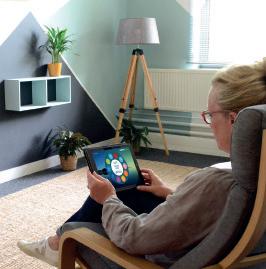
As the first interactive digital patient pre-operative assessment tool, it enables patients to complete their assessment questionnaire from the comfort and safety of their home. It supports the medical teams in deciding whether the patient needs to come back into hospital prior to surgery for further assessment and tests.
Up until lockdown, the app was already embedded in six private and two NHS hospitals, and 35,000 patients already benefitted from its remote management of their pre-surgical care. It had also been selected as one of just 11 small to medium-sized enterprises for the DigitalHealth. London’s ‘accelerator’ programme which supports companies and hospitals to speed up the adoption of technology in London’s NHS.
Complete journey
On the eve of the Covid crisis, Secure Virtual Consultation software (SVC) was added to the LifeBox family. This is more than just video consultation, as it replicates a face-to-face consultation.
Medical files, scans, patient pho-
tos and videos can be uploaded and exchanged between patient and hospital staff for consultations and the entire pre- and post-op care –and the makers say it is completely secure, providing a complete endto-end journey for the patient.
But then, in March, elective surgeries stopped overnight as private hospitals became emergency ‘Covid hubs’ for the NHS.
Rosie Scott, co-founder and medical director of parent company Definition Health, says: ‘The need for our app to support elective surgery reduced dramatically, but then two of our hospitals became cancer Covid centres for the NHS.
‘Their staff and patients were understandably frightened of face-to-face contact, so LifeBox
HOW DOES IT WORK?
LifeBox has three key components: an interactive digital health questionnaire, audio-visual tools for enhanced patient education and specific outcome tools to measure success of procedures.
The health questionnaire generates more patient-specific questions to fully identify each patient’s individual level of risk and are a balance between medical and lay terminology. It takes between 15 to 25 minutes to complete and patients can dip in or out when they want. All they need is an email address and a mobile number, and the app can be used on their phone, tablet or computer. This increases the chance of getting better information, as patients can ask a family member if they cannot remember details.
Once they have completed the questionnaire, it is passed digitally and securely to the hospital, where nurses begin the triage process. Based on the answers, patients can be fasttracked or identified to come in for scans or advised when to stop certain medication prior to surgery.
The app also provides patientfriendly information about the surgery and gives advice on what to do beforehand, such as stop smoking and increase exercise.
A patient feedback portal allows direct questions to be asked by patients to the medical staff. As their health changes in the future, their individual LifeBox can be updated.
was used to assess the requirement for a hospital visit prior to surgery.’
At The Montefiore Hospital in Hove, West Sussex, LifeBox had already digitised its entire patient pre-operative assessment service.
At the start of the crisis, it had a high number of cancer patients needing elective surgery and/or treatment. Using the app, staff could assess the need for them to come in prior to surgery, alleviating the need for 70% of visits.
Safe pre-assessment
At St John and St Elizabeth Hospital (HJE), London, it really came into its own at the height of the pandemic, recalls Claire Manley, outpatient services manager, by providing benefits in safe patient pre-assessment as it began orthopaedic, trauma and some renal surgery for its buddy hospital NHS Imperial Trust.
‘We aim to pre-assess patients 14 days before their surgery and call them up to three times during that period to triage them and ensure they are fit for surgery.
‘We monitor any changes, all recorded on LifeBox,’ explains Claire. ‘Three days before, the patient has their Covid swab and they are called the day before surgery for the final screening – again, all recorded.
‘Since Covid, staff are interacting with this technology more than ever, and it ensures the pre-assessment process is as smooth and seamless as possible which, in turn, improves the quality of care and reduces risk to our patients.’
Now, as the acute effects of the virus lessen, LifeBox has become pivotal in helping hospitals resume elective surgery for their private patients. By triaging patients through the app, consult-
ants can have patients ‘surgeryready’ in the system for when they are able to come back into hospital
When it was first developed two years ago, the aim was to have a digital health technology which increased patient safety for surgery. The Coronavirus has been the ultimate test of its abilities.
What the consultants say
Consultant anaesthetist Dr Georges Iskandar, was involved at HJE from the start.
He says: ‘I can see all the preassessment of the patient, including information that you wouldn’t get from a paper version. There is medical history, medication, BMI, Covid results, ECG and blood results.
‘LifeBox also gives the patient a voice, as they can talk about their lifestyle and what makes them anxious. We can even find out if
CASE STUDY: ST JOHN AND ST ELIZABETH HOSPITAL, ST JOHN’S WOOD, LONDON
Until October 2019, the hospital had a paper system for its patient pre-operative assessment service. After training with the LifeBox team, the hospital phased in the digital health software, starting with orthopaedics.
‘We decided to phase it in, as we wanted to get it right with a smaller amount of people before we rolled it out,’ explains HJE’s outpatient services manager, Claire Manley (right). ‘For the first three months, it was hard, as we were working with two systems in the hospital.’
to pre-assessment nurses and theatre staff.
Ward nurses were encouraged to be involved in pre-assessment so they could understand the challenges the pre-assessment nurses faced.
Previously, face-to-face assessments were taking an average two hours per patient. With approximately 500 patients a month, HJE initially hoped LifeBox would make the process more efficient.
The biggest challenge was getting everyone to have the confidence to use it. Training and communication were key to overcoming this hurdle. There were regular meetings with heads of department and training given to separate teams, from administration
The pandemic quickened the acceptance of LifeBox because all assessments had to be done online, as the hospital became the hub for orthopaedic, trauma and some renal surgery for NHS Imperial Trust.
In June, the hospital re-started elective surgery and now 90% of pre-assessments, both private and NHS, are done through LifeBox. Staff are now digital assistants offering help via the phone for patients with any difficulties filling in the questionnaire.
‘One of the huge benefits is that it’s all there in black and white and questions can’t be skipped,’ adds Claire. ‘Everything is really clear. You can see patients moving through the stages and once they have completed, the nurses are ready to triage them.’
Dr Georges Iskandar, consultant anaesthetist, and Mr David Redfern, consultant orthopaedic and trauma
they snore, which is especially important for an anaesthetist.
‘It’s a complete record and helps us greatly to reduce risk and reduce cancellations on the day of surgery. It also increases safety during the operation, as you can tailor the anaesthetic drugs to the patient’s needs. Ahead of the operation, I can also see if a patient is frail and can recommend post-operative care such as ICU or HDU.
‘And all the notes are legible –something you don’t often get with the paper assessment.’
Mr David Redfern, consultant orthopaedic and trauma surgeon at the London Foot and Ankle Centre, located at HJE, says: ‘The biggest benefit of LifeBox is it increases patient safety. It gives me confidence because all patients undergo a full pre-assessment, and it gives the patient confidence that we take their well-being seriously.
‘It’s great that all the information is so easily accessed by all who need it and in advance of their admission. It really feels like we’ve dotted the i’s and crossed the t’s for every case, with no unwanted surprises on the day. Patients arrive fully informed and ready to go ahead with their treatment.’
Definition Health, the team behind LifeBox. Pictured at the front are co-founders, orthopaedic surgeon Sandeep Chauhan and radiologist Rosie Scott (right) with (left to right) Ben Scott-Stacey, implementation manager; Allan Smith, commercial manager; and Angela Bourn, account manager
The pre-assessment nurses of St John and St Elizabeth Hospital, St John’s Wood, London, now using LifeBox in 90% of cases
surgeon
Dissatisfiedpati
Dealing with a patient’s gripe
Just when you were having a good day –you get a complaint. Dr Greg Dollman advises on the rules and the options when this happens in private practice
COMPLAINTS AGAINST doctors are now more common. Social media and a greater public awareness of complaints procedures may be contributing factors.
Sometimes there is a basis to the concern, sometimes not. Complaints against independent practitioners include concerns about the clinical care provided, a perceived breakdown in communication or they are related to administrative matters.
It is widely accepted that any expression of dissatisfaction about the provision of healthcare should be considered to be a complaint, and investigated and responded to accordingly.
A patient who has paid for their medical care will expect prompt resolution of their concerns.
As well as seeking a detailed response to a complaint, they may request:
A refund of money paid;
Reimbursement for the costs of a second opinion;
Make a claim for financial compensation – or damages – for loss or injury arising from the care provided.
Understandably, a private doctor will wish to resolve such dissatisfaction at the earliest opportunity.
Doctors, of course, know that they must make the care of a patient their first concern and that they must treat patients politely and considerately.
But how should you deal with a complaint and how do you manage a complainant’s expectations?
A patient complains: What next?
If you are named in a complaint, you must engage with its investigation. The GMC expects doctors to cooperate with complaints procedures and ‘respond promptly, fully and honestly to complaints and apologise when appropriate’.1
Doctors who work within the NHS will be aware of the NHS Complaints Procedure. While the specific requirements vary between England, Scotland, Wales and Northern Ireland, the procedure aims for local resolution, requiring careful investigation of the concerns by an appropriate individual/s cognisant of the relevant process.
The complainant must be informed about the process being followed and kept updated on its progress. This procedure provides helpful direction to those wishing to learn more about complaint
handling within the healthcare setting.
An MDDUS article ‘Core Principles of Handling NHS Complaints’ provides a helpful summary, and can be found in the ‘advice and support’ section of our website. The article contains the links to the NHS Complaints Procedures of the various home countries.
In private practice, you should follow the complaints procedure of any independent healthcare provider where you work. If you are a lone practitioner, you must ensure that you have an appropriate complaints procedure in place. The absence, in the private care setting, of a second tier of the complaint process to allow for independent adjudication of a concern may prompt a complainant to escalate their concerns to the GMC.
Complaints in private sector
The second tier of the NHS Complaints Procedure involves consideration of the complaint by the relevant Ombudsman. There is no secondtier complaint review process within the independent sector.
The Independent Sector Complaints Adjudication Service (ISCAS) can assist its subscribers with complaint resolution, via a three stage process:
Local response;
Internal review;
Independent adjudication.
A number of independent healthcare providers are registered with this organisatioin.
ISCAS has developed working relations, to varying degrees, with the healthcare regulators in the home countries: the Care Quality Commission in England, Healthcare Improvement Scotland (HIS), Healthcare Inspect orate Wales (HIW) and Regulation and Quality Improvement Authority (RQIA) in Northern Ireland.
While the regulators tend not to investigate individual patient complaints about an independent practitioner or providers, they reserve the right to do so.
Doctors who are asked to engage with this complaints process may wish also to contact their defence organisation for advice and assistance. See https://iscas.cedr.com.
Communication remains paramount when seeking to resolve
concerns. A patient who has complained about their care should be kept updated on the progress of the investigation of their complaint.
The letter of response should be conciliatory and appropriately detailed, and typically include an explanation of how the concerns have been investigated, a chronology of the facts and the conclusions reached.
You may wish to include any relevant reflections and advise of learning points along with changes to practice; this is particularly helpful to demonstrate your insightful review of the concerns.
When someone else drafts the substantive letter of response, you should request opportunity to review and approve it before it is sent.
A meeting to discuss any outstanding concerns may help to resolve the matter in a timely manner.
Patients should be reassured that raising a complaint will not affect the care or treatment you provide or arrange.
Offer an apology Saying sorry is not an admission of liability. 2 An early apology or acknowledgement of a patient’s dissatisfaction may help to resolve the matter at the outset. This may include an expression of regret when something has gone wrong.
The GMC reminds doctors that they must be open and honest if things go wrong.
If a patient under your care has suffered harm or distress, you should:
a) Put matters right, if possible;
b) Offer an apology;
c) Explain fully and promptly what has happened and the likely shortterm and longterm effects.3
A patient seeks recompense: What next?
A patient who has paid for any consultations or procedures may seek a refund of treatment costs when making a complaint. Some practitioners may choose to follow the established complaints procedure in the first instance, before deciding about their response to this.
Others may consider that an early refund, without an admission of liability along with a written explanation of the reasons for payment, may help conclude the
CASE STUDY: A REFUND IS DEMANDED
Ms P is dissatisfied with the outcome of a surgical procedure performed by Mr S. She asks him for a refund of his fees.
He believes that the pre-, peri- and post-operative clinical care provided was appropriate and spends an hour discussing Ms P’s concerns.
Mr S advises Ms P of the local complaints procedure. Ms P remains dissatisfied and states that she will post a ‘terrible review’ on social media if Mr S does not provide a refund.
The surgeon discusses the matter with his colleagues and seeks advice from his defence organisation. He decides to follow his local complaints procedure and makes contact with Ms P to advise her accordingly.
He reassures her that he wishes to resolve her concerns amicably and asks that if she wishes to formalise her complaint, she can do so through the recognised complaints process rather than social media, as this would limit the response he would be able to make.
Mr S considers that he has provided a good standard of care and chooses not to offer a refund in the first instance. He is concerned about the harm that a negative review may cause and agrees to pay the fees of a surgeon Ms P has identified for a second opinion, by way of a compromise.
The GMC reminds doctors that they should end a professional relationship with a patient only when there has been a breakdown of trust, such that the doctor can no longer provide good clinical care to the patient. The fact that a complaint has been made is, of itself, not ordinarily enough to justify termination of the doctor/patient relationship.4
References:
1. Good medical practice, GMC (2013), Paragraph 61.
2. Good medical practice, GMC (2013), Paragraph 55.
3. Openness and honesty when things go wrong: the professional duty of candour, NMC and GMC (2015), Paragraph 14.
4. Ending your professional relationship with a patient, GMC (2013).
Other resources: https://fipo.org/
The Federation of Independent Practitioner Organisations seeks to promote and support independent practitioners in the UK
complaint promptly and reduce any risk to their reputation. It is important to consider whether the independent practitioner’s complaints procedure addresses this point.
Ultimately, it may be a matter for the practitioner’s own discretion. It is important to note that any refund made as a ‘gesture of goodwill’ does not prevent the patient from pursuing a formal legal claim in due course.
In addition, a practitioner should consider whether the patient is, in fact, pursuing a claim for compensation as part of their complaint.
Practitioners should be live to
the fact that some patients will pursue such a claim in tandem with the complaints process, without the assistance of a solicitor – as a litigant in person/party litigant. If the patient does seek financial compensation in respect of the care provided or if the patient’s intentions in this regard are unclear, you should seek the early advice of your medical defence organisation.
Dealing with a GMC complaint, see page 24
Dr Greg Dollman (right) is a medicolegal adviser with the MDDUS
In the first of two articles, Dr Ellie Mein (below) explains that although undergoing a GMC investigation is stressful, it is a survivable experience
What happens when the GMC receives a complaint about
RECEIVING A LETTER from the GMC confirming they have received a complaint about you can cause a great deal of stress and anxiety.
Bear in mind, however, that only a minority of cases reach a formal hearing. For instance, in 2019, 86% of GMC cases handled by MDU in-house lawyers were resolved without a formal hearing. Nevertheless, understanding what to expect from the process can help reduce the fear you may be feeling.
In this article, I will look at some of the steps involved in the GMC’s fitness-to-practise (FTP) procedures, so that if you are ever involved in a GMC investigation, you know what to expect.
Being notified of an investigation
The GMC receives several thousand concerns annually and around 80% of those are closed without an investigation.
Often the doctor in question will not be made aware that a complaint has been made at all.
If you are notified of an investigation by the GMC, it is vital to contact your medical defence representatives before making any comment.
Initial contact from the GMC usually falls into three types of notification:
1
The GMC has received a complaint which it is not investigating. However, it is sharing the concern with you and your Responsible Officer (RO) so that it can be reflected on as part of your appraisal process.
2
The GMC has received a complaint and will undertake a provisional inquiry and gather further information before deciding whether to investigate. I look at this process in more detail below.
3
The GMC has received a complaint which it needs to investigate.
If the GMC is investigating, or carrying out a provisional inquiry, you will also need to complete a form telling it about your employer – if you have one – or other work you do in a medical capacity.
in 2019, 86% of GMC cases handled by MDU in-house lawyers were resolved without a formal hearing
Provisional inquiries
Provisional inquiries can be made quickly, as the GMC needs only a few pieces of information to help it decide whether to close a complaint or open a full investigation. Around 70% of cases are closed without a full investigation at this triage stage.
The process usually involves the GMC seeking information to check whether there are any other concerns about a doctor’s practice, obtaining patients’ medical records and the opinion of a suitably qualified expert.
Complaints being investigated
If a complaint is to be investigated about you, the GMC will write to you with a copy of the complaint. At this stage, you have an opportunity to respond, but you do not need to do so.
Your defence representatives can advise you whether to respond at this stage. It may be better not to comment until the GMC has done its preliminary investigation so that any comments can be focused on the issues the GMC wishes to take forward, if any.
Following this letter, the GMC investigator will gather information such as medical records and witness statements, and may obtain an expert report.
It also has the power to order an assessment of your performance, health or knowledge of English.
Interim orders tribunal
A case that raises serious concerns about safety of patients or others can be referred to the interim orders tribunal (IOT) at any stage.
The Medical Practitioners Tribunal Service (MPTS) is a separate body from the GMC and is responsible for both IOT and FTP hearings.
If your case is referred to the IOT, it may decide to suspend you or that conditions should be imposed on your registration on
an interim basis in order to protect patients or in your interests or the public interest. IOT hearings are held in private.
There may be very short notice of a decision to refer a case to an IOT, so it is vital you tell your defence representatives immediately if you are being referred.
Review by case examiners
Once the necessary information has been collated, the investigating officer will refer the case to two case examiners, one medical and one non-medical, for a decision on how to proceed.
The case examiners will consider all the evidence, including any response you have provided, and decide whether further investigation is needed.
Further investigation and formal allegations
If the case examiners believe there may be a case for you to answer, the GMC will set out the allegations it believes it needs to investigate further in what is referred to as a Rule 7 letter.
If this happens, you have 28 days to respond by commenting on the allegations and providing any additional information. Your response at this stage is then put back to the case examiners.
Decision by case examiners
Once the case examiners are satisfied that there has been sufficient investigation, they will apply the ‘realistic prospect’ legal test. That means that only cases with a realistic prospect of establishing your fitness-to-practise is sufficiently impaired to justify action on regis-
tration will be referred to an FTP tribunal hearing.
They can decide to:
Take no further action and close the case;
Close the case but with a letter of advice;
Offer a warning – where conduct is judged to have significantly departed from good practice but below the threshold for impaired practice;
Refer the case to adjudication before an FTP tribunal;
Offer undertakings – where an assessment of health or performance has been carried out.
Getting support
While there is no denying that being the subject of a fitness-to-practise investigation is a stressful experience, you are certainly not alone.
Your medical defence organisation can support you throughout the process, so be sure you send requested information promptly so it can represent you effectively. It is also worth remembering that, in 2018, fewer than 2% of fitness-to-practise cases resulted in action on a doctor’s registration.
You will find it useful if your defence body appoints a medicolegal adviser to oversee your case and provide ongoing advice, support and specialist legal representation. It can make all the difference to the outcome.
Next month: A look at what can happen if the GMC issues a warning or undertaking and what happens if a case reaches a fitness-to-practise hearing
Dr Ellie Mein is an MDU medico-legal adviser
It’s not about undermining other doctors
Caren Scott addresses the myths about the role of the expert witness and emphasises the need for experienced clinicians with a current practice to provide impartial opinion to the court to ensure justice for claimants and defendants
EXPERT WITNESSES are key players in the administration of justice. The evidence of an expert is relied upon by both parties to narrow the issues being disputed in a case and informs the judge in reaching their decision.
In medical negligence litigation, the court is likely to hear expert evidence about the standard of care the claimant should have received and did receive and the impact of this on their condition and prognosis.
It may come as a surprise to learn that judges are not experienced in every area of the law. So, when a clinical negligence or personal injury case goes to court, it is essential to have reliable, independent clinical experts who can explain to the judge exactly what the key medical issues in the case are and to give their unbiased opinion regarding these issues.
Isn’t it disloyal to criticise colleagues in court?
Some medical professionals feel there is a stigma attached to participating in the litigation process; perhaps a fear that others will see them as being out to undermine the practice of colleagues.
On the contrary, the role is crucial in determining the reasonable
Caren Scott of inspiremedilaw.co.uk
standard of care which should be afforded to patients. It is of value for the profession and the public to ensure that doctors guide the courts in defining a reasonable standard of care, not just lawyers.
Clinical negligence litigation is utilised to compensate a claimant who has suffered harm in the care of their medical provider. They may seek compensation for something that was ‘done’ to them, known as a negligent act, or for something that was not done, known as a negligent omission.
Harm suffered by the claimant must be quantifiable. Putting a value on the effect of negligence on an individual can be a complex process.
Solicitors will instruct medical and other professionals to help them quantify various elements to the claim: the injury or loss itself and a range of associated costs. These may include costs of care and/or living aids that would not have otherwise been required, and past and predicted loss of earnings.
The medical expert plays a key role in establishing whether the individual, or their family, has a claim in negligence.
Regardless of whether the expert is instructed by the claimant or the defendant, they are required to give an objective opinion.
The expert’s evidence can result in the discontinuation of an investigation into alleged negligence or it may provide the foundation for a successful claim or for the successful defence of a claim.
Duty of care
A ‘breach of duty’ expert should have proven clinical experience in the specific area of medicine being investigated and should have been in practice at the time of the alleged negligence.
They will set out the reasonable standard of care the claimant should have expected, given the circumstances, and comment on the care afforded to them.
Medical experts will be asked to comment on causation. This requires the expert to look at the failures in the care provided, the outcome for the patient and discuss the relationship between the two.
The current condition of, and prognosis for, the claimant is a key element of the claim.
Regardless of whether the expert is instructed by the claimant or the defendant, they are required to give an objective opinion
Often the expert will be asked to assess the claimant, to review medical records and relevant witness statements, and provide a report on their current state of health and the likely development of any conditions caused or affected by the alleged negligence.
This forms the basis for further reports from allied health professionals and other experts, such as forensic accountants or employment experts, to build a picture of the financial impact the alleged negligence has had, and will have, for the claimant and/or their dependents.
Should a medico-legal expert have a legal qualification?
There’s a common myth that a good medico-legal expert should have a legal qualification. This is absolutely not the case.
Lawyers are primarily looking for someone with clinical expertise and are not seeking legally qualified medical experts. The court requires a medical expert to give their opinion first and foremost as an experienced clinician, regardless of legal experience.
The role calls for a good eye for detail, a flair for reviewing and questioning evidence and relevant research, and the ability to form and communicate a reasoned opinion.
Specific legal tests must be applied when investigating breach of duty and causation. These
should be set out in the letter of instruction from the solicitor, and the expert must know and apply the tests in their report.
Expert witness training can help cement the expert’s understanding of these legal tests and offers the opportunity to discuss the practical application of these tests with medical lawyers as well as fellow medico-legal experts.
Often the most daunting element of the process is being faced with the evidence of one’s opposing expert.
It is crucial for the expert to remember that the court is not necessarily persuaded by the eminence of the experts involved. What is far more important is the clarity, logic and persuasiveness of their opinions.
Medical experts will find that their opinion is tested and disputed during the litigation process, not just in the witness box, but from the early stages of an investigation when the legal team must build a robust case. The expert must be ready to respond to criticism, differing viewpoints and detailed questioning. It is an intellectually challenging role and this is a real attraction for many.
If you are thinking of venturing into medico-legal practice, it is helpful to talk it through with someone already in the role. They can offer a balanced view of what is really involved.
There are benefits…
An obvious reason to take on this work is the remuneration. Medical experts are very well paid for their time and expertise, and rightly so. In return, though, they work hard.
Considerable investment of time is needed to read through medical records and witness statements in order to become familiar with a case. The report-writing process requires a methodical approach and some time must be spent refining the report to ensure that the terminology has been explained and the opinion is clear and well-reasoned.
It has often been said that acting as a medico-legal expert witness brings a fresh perspective to one’s own clinical practice. Many experts comment that they have developed and improved their clinical practice as a result of something they have seen in, or learnt from, a case they have worked on.
Acting as a medical expert broadens a clinician’s understanding of the medico-legal processes intrinsically woven into the provision of healthcare.
This is invaluable for senior clinicians, especially those involved in the investigation of serious adverse incidents, complaints and similar.
For many in the profession, the opportunity to utilise their years of expertise to secure justice for individuals and healthcare professionals alike is a significant attraction in itself.
Next month: Developing a successful medico-legal practice, resources, marketing, medico-legal CV, terms and conditions, and getting paid
See ‘Add a new stream to your earnings’, page 32
Caren Scott is managing director at inspiremedilaw.co.uk
At the heart of medical finance
The Association of Independent Specialist Medical Accountants is a national network of firms advising over 3,700 medical practices across the UK. For some of the best advice available on accounting, taxation and pensions, visit our website and find your nearest AISMA accountant. aisma.org.uk
IMPRISONED FOR MANSLAUGHTER
It’s not a good place to be if you’re unwell
Surgeon Mr David Sellu (right), convicted for gross negligence manslaughter of a patient – overturned on appeal after a 30-month prison sentence –continues the story of his incarceration from last month
Adapted from Did He Save Lives?
A Surgeon’s Story, £9.99, Sweetcroft Publishing ISBN 9781912892327 from Amazon. His story continues in Indepen dent Pract itioner Today next month
OVERALL, I WAS disturbed by what I saw and experienced in terms of available healthcare in closed prisons.
Prison was clearly a poor place for the elderly and infirm. These Victorian buildings with their labyrinthine corridors, multiple doors and gates, narrow staircases and landings were unsuitable for people with complex social, cognitive and psychological needs, alongside their physical ones, in an overburdened system. I could see the difficulties facing the service.
The prisoners, many from low socio-economic backgrounds, put unnecessary pressure on clinic staff. I knew of inmates demanding painkillers, and it was doubtful whether most of the recipients used these medications for pain management.
All inmates knew that stronger painkillers – Co-codamol and Tramadol – were opiate drugs in the same class as morphine and heroin. Those who could obtain these drugs did a brisk trade in them, exchanging them for tobacco, cannabis and other items. A problem for prison doctors was deciding when an inmate’s pain was genuine and when it was being used to obtain opiate-based painkillers.
Officers were inadequately trained in general healthcare and this meant that inmates
with genuine physical and mental health disorders were not identified effectively. It took a long time for officers on my wing to take my swollen leg seriously; at that stage, it was impossible to rule out a DVT.
The unit officers never cared about my welfare during the times I attended the A&E department. Their role was containment – to keep prisoners restrained and behind bars and to impose discipline. I got the feeling that a good day for some of them was a day in which no one escaped and there were no riots; any additional care was of secondary importance.
Poor screening
There was an outreach screening service for all the prisoners, but, from my observations, these were not well organised. The number of inmates targeted was limited and the screening comprised checking blood pressure, pulse, weight and height and taking blood for cholesterol.
The scope could be increased to include more – and younger – prisoners and blood tests could include checking blood count and kidney and liver function. Screening for bowel cancer using the faecal occult blood test should be a part of this programme for prisoners older than 60.
The need for security meant that even a visit for a simple blood pressure check took over two hours. Many inmates found this a huge impediment.
The waiting rooms smelling of tobacco smoke could be policed better and made more pleasant. There were notices warning that smoking within the healthcare complex, or indeed anywhere outside cells, was a punishable offence, but they were ignored.
I found the attitudes of some of the healthcare staff unfriendly and insensitive and many inmates felt they were looked down upon. I certainly felt that way. Of course, officers were also required to enforce discipline and security, but I do not believe this duty was in any way at variance with being humane.
Being paraded in handcuffs in hospital was a powerful hindrance to a visit to the health centre when an inmate felt that a hospital visit might be need.
It is difficult to see how this can be circumvented, but it should be
A problem for prison doctors was deciding when an inmate’s pain was genuine and when it was being used to obtain opiatebased painkillers
easier to provide privacy during hospital consultations and tests. Parading inmates in handcuffs in public was the ultimate humiliation for me and I could not help feeling demeaned as a black prisoner in rural East Anglia when I was treated in this way.
I was surprised that nurses provided most or all of the on-call service at Highpoint. As far as I could figure out, these were general nurses who had no specialist training to deliver such service.
Inmates I spoke to resented the fact that when the doctor was needed for an urgent problem, they could only see a nurse while the doctor was at the end of the phone. I was not impressed by my encounters with the nurse whom I saw when I presented with a possible DVT.
Risk of infections
The concentration of a large number of highly vulnerable individuals in a confined space posed enormous risks for the spread of infections such as tuberculosis and for the dissemination of drugs.
It also provided opportunities for health promotion and the uptake of healthcare facilities. The distance to the health centre was much shorter than for a comparable group of vulnerable people in the general population.
It should be possible for staff to improve prisoners’ access to health care without compromising security by getting inmates to and from the centre more quickly and reducing the physical barriers that existed.
Initiatives could be introduced by allocating a classroom for education and encouraging each prisoner to attend perhaps once every six months to learn about diseases such as hypertension, HIV, diabetes, prostate cancer and substance and alcohol abuse, and to offer appropriate screening tests. Those
who attend could be given certificates and rewards, and suitable inmates could be trained to act as mentors on such courses.
Re-inforcement materials such as posters and DVDs could be disseminated after the courses and prisoners could be encouraged to produce these materials.
I must add that I encountered a few doctors and a small number of nurses who worked hard and showed compassion. I thank them for all their care.
I was transferred to an open prison, Hollesley Bay, on the East Suffolk coast, some 120 miles from my home in Uxbridge, Middlesex. There were no perimeter fences and prisoners were allowed to roam freely.
There was even a main road running through the compound. The most striking features were the large number of cameras mounted on almost every lamp post and on top of buildings and large signs which read ‘Remember keys’, reminding staff not to take prison keys home.
Once the officers at the reception desk had finished going through my possessions and completed his paperwork, I was ordered into a small clinical room at the far end of the corridor.
The nurse introduced herself and took a brief medical history from me, inquiring specifically about any serious illnesses and the medications I was currently on. I told her about my trip to the West Suffolk A&E department and the conclusion that the swelling in my left leg was not due to a DVT.
Medical history
‘So why are you in prison?’ the nurse inquired. I gave her a summary of my case and told her I had worked as a consultant surgeon.
‘That explains why you know your medical history and your medications so well.’
She advised me to go to the healthcare centre to have my blood pressure checked as soon as possible and she handed me a sheet of paper with the times I could call in during the day. Visits to the centre outside of these times were for emergencies only or planned appointments.
I was allocated my own room on the ground floor. The communal
area of the unit had a dining room adjacent to the hotplate and when I collected my meal that evening, I sat at a table with other inmates and we had conversations about various aspects of prison life. This was the first time I had not been forced to eat in my cell or room.
Roll call was at 7.30am. I was reminded that this was a working prison and I had to register for a job within the unit. The options were few and included cleaning the floors, sweeping the areas around the building and operating the machines to launder other inmates’ clothes. I was allocated an outside sweeping job.
Harvesting crops
I was later accepted onto an enhanced unit, the best in the prison, within four weeks of leaving the induction unit. The building had 15 single rooms, shower rooms, a kitchen with a microwave oven and a washing machine, a room with a phone and a storeroom for cleaning equipment.
There was a large garden divided into allotments with ample facilities to grow a wide variety of vegetables. A firm donated equipment, seeds and plants and inmates were allowed to harvest the crops and cook them in the microwave for personal consumption.
Cleaning the unit included the showers and the toilets. This was a step down from being a consultant colorectal surgeon, but the job kept me physically active and did not involve travelling anywhere. I spent the afternoons writing and working on my languages. Whenever necessary, I would go along to the health centre for my health checks, a ten-minute walk.
Inmates there kept disappearing into the room further down the corridor and it took me some time to realise they were collecting controlled medications such as Tramadol and Methadone.
These medications can only be given one dose at a time and nurses had to ensure each tablet was taken with water in a small plastic cup. Inmates would come out of the room, take the tablets out of their mouths and wrap them in a piece of tissue paper and walk out. I was told that each pill could be exchanged for other drugs or tobacco even after they had been in someone else’s mouth.
KEEP IT LEGAL: COMPETITION LAW
Beware of becoming
a cartel
In the wake of Spire’s £1.2m fine by the Competition and Markets Authority, Michael Rourke (right) draws attention to the competition law implications for independent practitioners
THE RECENT significant fines levied by the Competition and Markets Authority (CMA) on hospital group Spire and some of its consultants brings the need to avoid anti-competitive practices in the healthcare sector into sharp focus.
If you work as a medical practitioner, you will be used to the potential of oversight investigation from several potential regulators. But the CMA announcement of a £1.2m fine on Spire Healthcare Limited and Spire Healthcare Group plc (Spire) is a reminder to the sector that it is not just health regulators that can bring enforcement action.
The CMA is concerned with upholding competition law in the UK and there are a number of rules which apply to healthcare, just as with any other sector of the economy.
This is the second fine imposed by the CMA on ophthalmologists, but investigations and sanctions against private practitioners remain a rare occurrence.
The majority of CMA investigations, reviews and sanctions have been concerned with the pharmaceutical sector. However, this recent case shows that the compe-
tition watchdog can, and will, investigate private providers and individual practitioners. It was not only Spire that received a fine. Six ophthalmologists also received personal penalties. Of the seven doctors alleged to be involved in the price fixing, six received fines of £2,978, £1,186, £2,312, £2,193, £3,859 and £642.
The seventh practitioner was not fined, as they had brought the activity to the CMA’s attention. It should be noted that the CMA discounted each of the fines by 20% to reflect that they all admitted to the illegal arrangement and agreed to co-operate with the inquiry.
Contentious investigation
Independent practitioners who have been in private practice for a number of years will remember the long-running and contentious CMA investigation into private healthcare, reported regularly by Independent Practitioner Today
The investigation eventually led to the Private Healthcare Market Investigation Order 2014, which eventually fully came into force after appeals to the courts. This Order led to some changes in the operation of the commercial
arrangements in the private healthcare sector.
The Order introduced a prohibition on incentives being paid to clinicians for referring patients to the private hospital operator (PHO).
The Order makes unlawful any arrangement which is – or could be reasonably regarded as – an incentive between a referring clinician and PHO to induce a clinician to refer a patient for treatment or tests at a facility within the PHO group.
The prohibition applies both to the clinician and the PHO, so the legal obligation to comply is on both sides.
It is deliberately widely drafted so as to catch any arrangement, whether legally enforceable or not, which might be seen to affect the choices doctors make or suggest to their patients about further treatment, including diagnostic tests.
Reward schemes
An example of the ban was the disappearance of any reward schemes made by a PHO to consultants in relation to the number of patients referred to a hospital.
This restriction means that PHOs have to charge clinicians for the services that are provided to them at fair market rates. While the provision of a number of services such as training, tea and coffee, and general marketing are exempted, other high-value services – charges for consulting rooms and secretarial services, for example – are caught. Where lowvalue services are provided, details of these must be published.
Another important aspect of the Order for private practitioners was the new limitations on whether directly or indirectly they may:
Own shares or have a financial interest in a PHO or in a facility owned or operated by a PHO in which they hold practising privileges;
Be involved in any partnership or venture with a PHO to offer private healthcare services;
Have a share in diagnostic equipment or equipment for treating patients.
The issue of owning shares also includes those held by close family members.
There are exemptions for this based on the date of ownership, for general practice and on small shareholding of 5% or less. But even with the smaller shareholdings, there remain a number of additional rules to be followed.
Fee transparency
The Order also sought to remedy what the CMA determined was a lack of information about private healthcare and private treatment fees available to the public.
The Private Healthcare Information Network (PHIN) began publishing the fees of over 4,500 UK consultants on its website last year.
Under the CMA Order, all consultants providing services to private patients should submit their self-pay patient fees for consultations and procedures to PHIN, particularly those consultants who admit patients for procedures on a day case or inpatient basis.
This requirement for fee transparency has led some to question the sanctions imposed on Spire and the practitioners. However, this growing requirement for price transparency does not authorise the setting or fixing of prices by practitioners.
The intention of price transparency in the Order is to drive down prices through open competition. The recent fine was imposed due to practitioners agreeing over dinner to fix a minimum fee and then the Spire helping this to be implemented.
While competition law does not prohibit all collaboration or information sharing by private providers, there are key restrictions. These are, broadly, bans on:
Co-ordinating to keep prices at a certain minimum level;
Agreeing a fixed price or a mechanism for setting prices;
Agreeing to share or divide markets – such as particular places – or patients between you and your competitors;
Agreeing future commercial plans.
Insurers anomaly
A number of questions have been raised by consultants confused about how the Spire decision sits comfortably with insurance companies offering a set of maximum fees that they will pay to practitioners for procedures.
These rates effectively set the price for a procedure for insured patients. Insurance companies are subject to the same competition law requirements as practitioners.
The CMA and the Financial Conduct Authority have concurrent functions to enforce competition law infringements in the financial services.
If evidence of collusion between insurers over fees payable to consultants were to be established, enforcement action by the CMA
and others would almost certainly follow.
Practitioners can choose to agree to the terms offered by the insurers, or to refuse these and accept only self-pay patients or opt to be included on the lists of potentially higher-paying insurance companies.
However, while it is an infringement of competition law for practitioners to seek to agree minimum prices for self-pay patients, it has never been held to be an infringement for hospitals to offer-fixed packages of care to patients with set rates for consultants or for insurers to offer fixed sums to consultants.
In practice, the competition between hospitals and insurers are in the prices they charge to the patients, not the sums they pay to consultants.
The competition between independent consultants is the charge to the patients themselves.
Michael Rourke is a partner at Hempsons
HOW TO AVOID PROSECUTION
The Private Healthcare Market Investigation Order 2014 introduced a prohibition on incentives being paid to clinicians for referring patients to the private hospital operator
The CMA is committed to tackling features of the markets for privately funded healthcare services that have an adverse effect on competition. Here are some potential pitfalls to avoid:
☛ Do not discuss your specific self-pay rates with other independent providers with a view to establishing a common price.
There may be a temptation to connect with others, particularly on social media, to set rates and to advise each other of what rates to charge.
The rules make it tricky for practitioners to know what the going rate is and how they should set their rates in order to be competitive. However, the intention for PHIN to publish such data in future will mean this should be more available than perhaps previously.
Remember, you can break the law if you have an informal agreement over prices.
☛ Be mindful not to seek to divide up the areas of work with other practitioners. You cannot agree with others to only work in certain areas – for example, in order to increase your fees. This is particularly important for those working in much sought-after specialties.
☛ Do not engage in arrangements that induce you to refer private patients to, or treat private patients at, the facilities of a particular private hospital operator.
The Spire story prompted Michael Rourke to issue a warning in July
MEDICO-LEGAL WORK
Add a new stream to your earnings
As consultants seek alternative revenue streams, is it time to consider adding medico-legal to the services your practice provides? Simon Brignall (right) from Medical Billing & Collection discusses the billing challenges you will face
THE CURRENT economic climate has highlighted why it is important that many businesses have diversified revenue streams.
This diversification can be accomplished in many ways and often may be as simple as adding a new practice location with a different patient demographic. For example, adding a central London location will likely increase your exposure to international self-pay and embassy patients.
Medical Billing and Collection data shows that the amount of private medical-insured invoicing we do for our clients has dropped from 66% to 55% over the past decade.
The 45% of the invoices we now raise that are not billed to insurance companies include self-pay (see my article last month) and a range of other sectors that have seen an increase in activity such as medico-legal, embassy and work for the NHS.
I have received many calls from consultants who are now either considering adding medico-legal work to their practice or they already have and find it challenging. So I will focus on this area and explain what you need to know from a billing perspective.
The first thing to understand is that the medico-legal sector is extremely fragmented, with thousands of solicitors working in this field either independently or as part of a group. Work also comes in via a range of medico-legal agencies.
Due to the multitude of potential clients available to private doctors, it is crucial that your practice is prepared correctly to manage a commercial relationship with them right from the very first contact.
In our 28-years of experience in this sector, many consultants begin medico-legal work without ensuring they have adequate terms and conditions in place or giving due consideration to their fee structure and payment terms.
And what often happens is that they then find out later – after the work has been completed – that the case they have been working on is on a ‘no win, no fee’ basis, which can mean that they end up waiting years for their money.
Delayed payments
These difficulties around delayed or deferred payments obviously lead to a negative impact on the cash flow of the practice. The biggest and most common problem, often overlooked, is that once the invoice is raised, you have created a tax liability for yourself. Bad news! Until you collect the money owed, you are actually paying to do the medico-legal work.
For those who have a large medico-legal practice and have to charge VAT, the situation is even worse, because you would have had to pay VAT to the taxman every quarter. That increases your overall debt and exacerbates your cash flow predicament.
Of course, there are many factors to consider before taking on medico-legal cases, but I will focus on the billing and collection issues.
Ensure you have clear and precise terms and conditions, agreed by your client, when they engage you. These should cover the following areas:
Fees
How much do you want to charge for your standard medico-legal report? This should be based upon the length of time taken to review a standard amount of medical records and any interview or examination of the client, including all dictation and preparation of documents.
You should also quote an additional cost per hour to provide some flexibility for cases that take longer to review, particularly where there are a large amount of
medical records to review or where the case is very complex.
For court cases where you are required to attend court, you should have a fee schedule per day. Due to the nature of court cases, your fee should be for a minimum charge and not related to the amount of time you have to appear.
This is due to the impact on your schedule and your availability to do other work. You should also charge for travelling expenses as well as any other expenses you incur.
Supplementary work should also be quoted using an hourly rate. This is to cover any further reviews and additional work relating to the case. This work can then be invoiced at your hourly rate and, typically, can be broken down into 15-minute increments.
You need to define your DNA rules. These cover cases where the patient does not attend without prior cancellation within a set time frame or where your court appearance is cancelled within a given notice period. You need to decide what your charges will be in these instances and make sure they are clear. Some practices have time stipulations that may result in your fee being invoiced either in full or a percentage thereof depending on what notice was provided.
Payment
You will need to decide what your standard payment terms are going to be for your medico-legal reports.
These will need to be balanced according to the sector you are operating in and terms that you are prepared to enforce. These can include penalty clauses for late payment.
You should have different payment terms for any court appearance, and these should also be applicable to any charges you enforce when the court appearance is cancelled within your penalty period.
Once you have formulated your terms and conditions, the next key step is to ensure you have a robust system to reconcile and chase up outstanding invoices.
The most important step is to always make sure your fees and terms and conditions are accepted up front before taking on any case.
Once you have raised the invoice and sent it, you need to follow it up with a phone call to ensure it has been accepted and has been put on the solicitors’/agency system with the correct payment terms.
Even when all the above is done, you will still need a system in place to chase outstanding invoices on a continual basis to ensure payment is made in a timely manner.
It is critical that you have visibility of your aged debt, because if you have issues collecting payment with a particular solicitor/agency, then you need to think long and hard about taking on other cases from the same company – or you could end up making the problem worse and paying to work for them.
As both your reputation and workload increase in this field, you can then choose to make decisions about how you prioritise your availability and whom you work with. This will be based on many factors including their speed of payment.
Chasing money owed on a continual basis is the hardest part of this whole administrative process, as most practices are not geared up for this specific aspect or they find the task intimidating. It is only through the routine application of a rigorous chase process that aged debt is kept to a minimum and cash flow not compromised.
In my experience in dealing with practices that engage in medicolegal work, this is often something they find time-consuming and requires a specific skill set.
I rarely find a practice with the time to chase these invoices on a continual basis. Even rarer are the in-house skills to do this, especially when medico-legal work is only one component of the numerous tasks managed by a busy practice.
Often the best option is to use a professional billing company with experience in this field. Ideally, this will be before you start doing medico-legal work.
But if you have been in the sector for some time and have experienced some of the problems I have covered here and feel you want to gain control over the situation, we would be happy to hear from you.
Simon Brignall is director of business development at Medical Billing and Collection
Free legal advice for Independent Practitioner Today readers
Independent Practitioner Today has joined forces with leading healthcare lawyers Hempsons to offer readers a free legal advice service.
We aim to help you navigate the ever more complex legal and regulatory issues involved in running and developing your private practice – and your lives.
Hempsons’ specialist lawyers have a long track-record of advising doctors – and an unrivalled understanding of the healthcare system as a whole.
Call Hempsons on 020 7839 0278 between 9am and 5pm Monday to Friday for your ten minutes’ of free legal advice.
Advice is available on:
Business structures (including partnerships)
Commercial contracts
Disputes and litigation
HR/employment
Premises
Regulatory requirements and investigations
Early results show scars caused by Coronavirus
Philip Housden takes a peak at the first PPU annual accounts coming through for 2019-20 and estimates that the loss of NHS private beds due to Covid-19 is costing it £40m-£50m each month
AT THE time of writing, only 44 (29%) of NHS trusts had published their annual reports and so our rolling regional review of yearly private patient unit (PPU) performance will recommence once all trusts have published.
But I thought it would be interesting to see what can be learned from the information currently available – and, of course, how Covid-19 has impacted on the sector.
What a difference the pandemic has made.
It was only on 12 March that the national NHS PPU Conference was held in wave of optimism. As reported in Independent Practitioner Today , the first annual NHS PPU Barometer survey had shown that 48% of responding trusts expected revenue to be at least 5% up on 2018-19 and growth prospects could have been as high as 9%.
Just days later, on 16 March, lockdown began and on 23 March the contract started with the independent sector, designed to increase NHS capacity through the crisis.
All capacity in trusts’ private patient units were essentially redirected to NHS services from that date as well, although many trusts
TOP TEN NHS TRUSTS BY PRIVATE PATIENT REVENUES (£K)
had already reduced private activity earlier in the month.
The Barometer forecast was that, overall, NHS private patient revenues for 2019-20 would grow by around £50m to reach over £700m for the first time – in 2018-19 the total was £655m.
Annual accounts published so far do show that growth has been depressed by March trading, as expected.
Our revised forecast is now for year-on-year growth of £25m and a total for England NHS trusts of £680m in 2019-20.
This represents growth of between 4% and 4.5%, down on the six-year average of 5.8%, but still showing continued strength in the sector.
What this means is that our estimate of the impact of Covid-19 on
private patient revenues for NHS trusts in England just for the last half of March was at least £20m, and maybe more, given that this month is traditionally a busy one for private practice.
Underlying trends
We can already see from the table above that underlying trends from recent years do seem to have continued.
The top ten largest private patient earning trusts are all in London and, of these, the top four have reported their results. These four trusts averaged growth of 7.1% last year, again above the sector average (4.4%) as they took London market share from private hospital competition.
Outside London, it is likely that final figures will be flat against last
year, a decline from the 1.1% growth in 2018-19.
Notable trusts from differing regions are showing the way to growth outside the capital:
Oxford University Hospitals, up £1.2M and 16% to £8.1m;
Wrightington, Wigan and Leigh up 25% and £700k to a new record of £3.8m;
Norfolk and Norwich up 42% and £600k to £2m
East Sussex Healthcare which reported growth of 42% and £800k to reach £3m revenues for the first time.
Although some NHS trust PPUs are re-opening – see PPU Watch on page 6 in August – including the market-leading Royal Marsden and Royal Free Hospitals, we can expect that the first quarter results for April to June will be signifi -
Top of the league: The Royal Marsden’s Chelsea hospital
cantly down, with only limited growth in quarter two also.
Looking forward for 2020-21, we therefore estimate that the loss of income to the NHS from re-directing the vast majority of trust’s private patient capacity of 1,100 dedicated inpatient beds to NHS care is running at around £4050m income per month.
The future
Will the sector recover? And how will the present extended local contracting arrangements with the independent sector impact on PPU re-openings?
Will there be a renewed interest in partnership PPUs with private hospital groups, which would reverse the trend of recent years? These are themes we will explore in future articles.
Philip Housden is managing director of Housden Group, www.housdengroup.co.uk
Don’t just rely on big names
What is the impact of the
‘Big Five’
on the long-term investor?
Dr Benjamin Holdsworth on why winners do not usually keep on winning
INVESTORS LOVE good stories. In recent years, many of these stories have centred around innovations that have fundamentally changed the way we live our lives.
Some examples might include the release of the original Apple iPhone in 2007, the delivery of Tesla’s first electric cars in 2012 and the launch of Amazon Prime’s same-day delivery service in 2015.
No doubt, many of you will have had conversations with friends and family around the successes, failures and prospects of some of the world’s largest firms and the goods and services they offer.
But what is the significance of the ‘Big Five’ tech companies –Amazon, Apple, Alphabet (Google), Facebook and Microsoft – in terms of the long-term investor?
In what has been a turbulent year thus far, some larger firms have come through the first – and hopefully last – wave of the on going pandemic relatively unscathed. Those investors putting their nest eggs entirely in any combination of the ‘Big Five’ would appear to have done astonishingly well relative to something sensible like the MSCI All-Country World Index, which constitutes 3,000 of the world’s largest firms. At time of writing, Amazon’s share price has fared best, increasing 75% since the beginning of the year.
These types of firms tend to struggle to stay out of the headlines for one reason or another. Perhaps as a result, many of the investment funds found in ‘top buy’ lists – such as the one on AJ Bell’s Youinvest platform – have overweight positions in one or more of these stocks. Many of today’s most popular funds are making big bets on one or more of these companies, anticipating that the past will repeat itself moving forwards.
Stick to the long-term view
The challenge for these managers, and others making similarly large bets, is that these are portfolios that will be needed to meet the needs of individuals over lifelong investment horizons, which, for the vast majority of people, means decades, not years. With the benefit of hindsight, managers who have placed their faith in these
Those who can block out the noise of good stories and jumping on bandwagons are usually rewarded in this game
firms have stellar track records since Facebook’s initial public offering in 2012.
However, an interesting exercise would be to investigate the outcomes of these firms over a longer period of time; for example, 30 years seems more prudent. This is somewhat difficult given that 30-years ago, three of these firms did not exist, Mark Zuckerberg was six years old, Apple came in at 96th on Fortune’s 500 list of America’s largest firms and Microsoft had just launched Microsoft Office.
A partial solution to this problem is to perform the exercise from the perspective of an investor in 1996, which is the start of the Financial Times’s public market capitalisation record. The ‘Class of 96 Big Five’ consisted of General Electric, Royal Dutch Shell, CocaCola, Nippon Telegraph and Telephone and Exxon Mobil. A hypothetical investor with their assets invested in any one of these five firms would have underperformed the market over this period – although no investor would want to stomach the roller-coaster ride they would have been on in any one of these single-stock portfolios.
The winners do not necessarily keep winning
The beauty of a diversified approach is that judgemental calls such as these are left to the aggregate view of all investors in the marketplace.
No firm is immune to the risks and rewards of capitalism; be it competition from Costco or Walmart taking some of Amazon’s market share, publishing laws causing Facebook to apply heavy restrictions on its users or some breakthrough smartphone entering the marketplace that is years ahead of Apple – remember Nokia?
Rather than supposing that firms who have done well recently will continue to do well, systematic investors can rest easy knowing that they will participate in the upside of the next ‘Big Five’, the ‘Big Five’ after that and each subsequent ‘Big Five’. Those who can block out the noise of good stories and jumping on bandwagons are usually rewarded in this game.
But the problem that people misunderstand is that active managers, almost by definition, have to be poorly diversified. Otherwise, they are not really active. They have to make bets. What that means is there is a huge dispersion of outcomes that are totally consistent with chance. It is just good luck or bad luck.
Dr Benjamin Holdsworth (right)is director of Cavendish Medical, specialist financial planners helping consultants in private practice and the NHS
The content of this article is for information only and must not be considered as financial advice. Cavendish Medical always recommends that you seek independent financial advice before making any financial decisions.
Levels, bases of and reliefs from taxation may be subject to change and their value depends on the individual circumstances of the investor. The value of investments and the income from them can fluctuate and investors may get back less than the amount invested.
Assessing child’s rash via a video
ital area, but is otherwise very well.
The mother has asked me to see the child by video, as she is not currently staying at their home address. However, I am concerned about carrying out a video consultation of the rash, as this would include having to view the genital area.
Would it be better to ask the mother to send a photograph of the rash to my professional email account, which could then be stored in the clinical records, followed by a telephone consultation?
AIt is important to ensure that you are familiar with the GMC guidance on making and using visual and audio recordings of patients and any policy your private hospital has regarding remote consultations.
New sessions are available for independent private practice on Saturdays.
Fully CQC-registered clinic
Appontment-making
Billing service
Nursing support
Secretarial support
In-house pharmacy
We are a leading private outpatient clinic and we are inviting new applications for practising privileges for our extended opening hours on Saturdays.
The rise in video consultations raises an issue about the storing of digital images in medical records. Dr Kathryn Leask (right) responds
Dilemma 1 Can I ask mother to send a photo?
QI am a private paediatrician and have increased the number of video consultations I do following the coronavirus outbreak.
Before the pandemic, I had a child under my care who had allergies and eczema. I have been contacted by the child’s mother who is concerned about a rash the child has recently developed over her body including the gen-
It is also important to consider carefully whether a remote consultation in this case is the best approach and to weigh up the risks of a remote consultation versus the infection risk due to Coronavirus.
While images of patients must be handled securely in accordance with data protection legislation and the appropriate consent sought to send and store the image in the patient’s records, there are particular concerns about the need for the image to include the patient’s genitalia, particularly as this was a child.
No criminal offence would be committed if an adult patient were to send a photograph of their own genitals to a doctor, but an offence would be committed where an adult sent indecent images of a child to another adult.
Such an image can be considered to be indecent regardless of the circumstances in which the photo was taken or the motives behind it.
However, having taken the photograph in a medical context would be a defence to any criminal offence. In order for consent to be fully informed, you would need to explain to the mother that sending such a photograph could put her at risk of committing a criminal offence.
Dr Kathryn Leask is a medico-legal adviser at the MDU
Power of attorney poser
A possible remote consultation for a private GP asked to act as a
provides an unexpected challenge. Dr Kathryn Leask gives her
Dilemma 2 Can I help using a video consult?
QI have been asked by the son of one of my elderly patients to act as a certificate provider so that he can help his father set up a Lasting Power of Attorney, allowing him to deal with his financial affairs.
I have been self-isolating and carrying out phone and video consultations due to the pandemic and I am aware the residential home where the patient has lived for the past four years has not been allowing visitors, unless for urgent medical care.
The patient has mild dementia but has capacity to make day-today decisions about his care and daily activities. I have known the patient for a long time but haven’t seen him for a number of months, as there has been no clinical need to do so. I am aware there is also a daughter whom the son doesn’t get on with.
I would like to help the patient, as I imagine he is finding it difficult to manage his affairs himself under the current conditions. Am I able to act as a certificate provider if I speak to him by phone or video?
ALasting Power of Attorney
(LPA) allows a patient to delegate powers to an attorney (his son) to deal with their financial and property affairs.
Once registered, the attorney can do so with the donor’s permission, even before they lose capacity to make decisions for themselves. This is in contrast to an LPA for health and welfare, where the attorney can only make decisions on behalf of the donor once the donor is no longer able to make decisions for themselves.
The certificate provider has an
important role in ensuring that the donor has the necessary mental capacity to arrange the LPA and is not just witnessing the donor’s signature. And the certificate provider must be satisfied that the donor is not being coerced in any way and understands the implications of delegating powers to an attorney and what this will entail.
While the guidance provided to certificate providers by the Office of the Public Guardian does not specifically state that assessments must be carried out during a face-to-face meeting, you must be able to properly fulfil the role of acting as a certificate provider and this may prove difficult if done remotely.
A remote consultation may be challenging with a patient with any form of communication difficulty or limits to their understanding. It may not be possible to be absolutely sure there is no one else in the room with the patient, who could potentially be coercing them.
Other forms and methods of communicating with a patient may not be possible.
If you signed the forms to confirm that the patient had the necessary capacity, and concerns were raised about this later, it may be difficult to defend your decision if you did not meet the patient.
As the patient has lived in the residential home for four years, it is possible that a member of staff or another resident could act as a certificate provider. A person who has known the patient for at least two years can act as a certificate provider, such as a friend, colleague or neighbour.
If you do decide to go ahead with the assessment remotely, it is important to record a detailed account of your discussion with the patient so you can rely on this later, if your decision is challenged. Similarly, if you decline to act as a certificate provider, you should make a note of your reasons for not doing so.
It may not be possible [via video] to be absolutely sure there is no one else in the room with the patient who could potentially be coercing them
Upright
• Completely open scanner that is well tolerated by claustrophobic patients
• Weight-bearing scans for spine and joints enable a more precise diagnosis
• Patients who are large or cannot lie down can be accommodated
For more information go online at: www.trulyopenmri.com or call: 020 7370 6003 0161 434 8039
DOCTOR ON THE ROAD: PORSCHE TAYCAN
An electric car to rival Tesla’s whizz
Due to lockdown, we were not allowed in the car with him, so our motoring correspondent Dr Tony Rimmer (right) got this car to rave about all to himself
of
Composed
two terms of Turkic origin, the word Taycan can be roughly translated as ‘soul of a spirited young horse’, perhaps referencing Porsche’s badge
AS MEDICS, we spend our working lives balancing risk. Every clinical decision we make is based on the prevailing evidence-based science. But every patient is an individual with a unique set of circumstances and there is no single solution to any presenting problem.
Running a business as an independent practitioner is also risky. Investment as an early adopter of new technology and procedures or big premises investment can make or break a private practice. If a high risk pays off though, the rewards can be great.
In the automotive world, a certain risk-taker invested heavily in the future of electric vehicles. He stood against all the huge established manufacturers and put most of his own wealth on the line. His name is Elon Musk and his gamble seems to have been rewarded.
Tesla is a hugely successful car company and the Model S, launched in the UK in 2014, remains the definitive premium all-electric saloon that all mainstream car makers are trying to emulate. It has also become popular, quite rightly, with many independent practitioners.
There has been no car, at this upper level of the market, that has been able to compete with the Model S. Until now.
Porsche has launched its eagerly awaited all-electric Taycan model – pronounced Tie-can. As you would suspect from a company like Porsche, the Taycan has been thoroughly developed over the
last few years to be a superbly engineered, well built, good-looking four-door coupé that drives like a sports car.
There are three versions to choose from: 4S, Turbo and Turbo S. All have four-wheel drive from two electric motors and offer 206 to 280 miles of range. Prices range from £83,367 to £138,826 and I tested the mid-range £115,858 Turbo model.
In the flesh, the Taycan looks smart and stylish and still, undeniably, a Porsche.
Difficult design problem
It is a difficult problem for car makers to tackle. If they make their electric cars look too futuristic, they will put off conservative buyers. If they make them look too ordinary, they blend into the background. I think, for a recognisable sporty Porsche, the Stuttgart designers have got it about right.
The Turbo moniker is a distraction, as you cannot turbocharge an electric motor, but this Taycan has a massive 617bhp at its disposal with an extra 50bhp available on launch control. This means that it is an unbelievably fast sprinter with a 0-60mph time of 3.2 seconds; comparable to a £95,800 Tesla Model S Performance.
However, that is where the similarity ends. Porsche’s build quality is superlative and it extends to the interior where the extensive digital driver display fits beautifully with the leather trim and sports seats.
does not – quite. It comes pretty close, though, and compared to a sports car weighing three-quarters of a tonne less, that is very impressive.
With all electric cars, available range is a compromise, as it is directly related to the size of the (heavy) batteries and the performance envelope. Often, the quoted range bears little relationship to the real-world figure. My test Taycan Turbo arrived fully charged with 279 miles on the dial.
I drove 210 hard miles on various road types and mostly rapidly. The dial was still showing 60 miles at the end. Very impressive.
As the driver, you sit low with a perfect steering wheel position and all the major controls only a fingertip away. Passenger space is pretty good too. I could sit comfortably behind ‘myself’ with adequate legroom and headroom. The rear boot would benefit from being a hatch, but the available space is on a par with a Ford Focus if you include the front boot too.
Magnificent job
It is out on the road, though, that you realise what a magnificent job the Porsche engineers have done. The driving dynamics are superb with great handling and accurate steering full of feel.
Only occasionally, on mid-corner bumps, did I feel the effects of the 2.3 tonne mass being hustled at a very swift pace.
Does it feel as sporty as the latest 911 (as tested in Independent Practitioner Today, October 2019)? No it
If you want to take it easy, the Taycan does that really well too. With the air-suspension in Comfort mode, it cruises in quiet ease like any premium saloon.
Regenerative braking
Most other electric cars have powerful regenerative braking that means that they can be driven on the accelerator pedal alone for most of the time. Porsche has deliberately made the Taycan a ‘two-pedal’ car so the default mode has little braking when you lift off. There is a steering wheel button to increase this, but it is still quite gentle.
Porsche has done a remarkable job with the Taycan. It is currently the best-handling electric car on the market and it is one of the fastest. This obviously comes at a cost, but if you want to raise your green credentials and still enjoy all aspects of driving, then there is nothing like it.
Dr Tony Rimmer is a former NHS GP practising in Guildford, Surrey
PORSCHE TAYCAN TURBO
Body: Five-door coupé
It is currently the besthandling electric car on the market and it is one of the fastest
Engine: Two electric motors – one front and one rear axle
Power: 617bhp and 667bhp on launch control overboost
Torque: 850Nm
Top speed: 161mph
Acceleration: 0-62mph in 3.2 seconds with launch control
Claimed range: 272 miles
CO2 emissions: 0g/km
On-the-road price: £115,858
The Taycan’s extensive digital driver display fits beautifully with the leather trim and sports seats
A
PRIVATE
PRACTICE
– Our series for doctors embarking on the independent journey
Plan your practice’s
We are in tough times for private practice, but when private hospitals are released from NHS control, we will see a surge in demand for private medicine, believes Ian Tongue (right)
life cycle
IT WILL take time, but the private medical market will revert to normal. When it does, the more conventional stages of private practice are likely to restore.
But no doubt there will be some permanent changes to the delivery of some services.
Here are the typical stages that an independent practitioner carrying out private work will go through during their career in non-Covid-19 times.
STARTING OUT
Deciding to carry out private work is a significant commitment of your time and effort and therefore ensuring you run your private practice well from the start is the key to success.
It may sound obvious, but when carrying out private work, you are running a business and it can be surprising how difficult the responsibilities felt towards patients are when you are charging for your services.
Taking advice at the start provides you with a significant head start. Speaking to colleagues is normally the starting point to assessing the market for your specialty in the area you work.
Most are happy to discuss things, as they will recall being in the same position themselves, but you need to appreciate that you may be additional competition for them, particularly in the postCovid world.
For most doctors, they have little or no financial training and running a business is alien to them. Taking the advice of a specialist medical accountant is invaluable, because not only will they be able to advise you on the accounting and tax aspects but they will offer practical guidance and business advice.
It is never too early to have that conversation and the best timing can often be before you start.
CONSOLIDATING PHASE
Your middle phase is where you are running your practice efficiently and it has become an integral part of your working life.
The most common area that is changed during this phase from an accounting and taxation perspective is trading structure.
Many start out with the simplest way of operating your business, which is self-employment, but this can be less tax-efficient. The most common structure now is a limited company due to the dreaded pension annual allowance charges, but a partnership with your spouse can also be tax-efficient.
Timing of trading structure changes can be important to not accelerate tax. And factors such as a spouse reducing their earnings or giving up work can also present significant tax planning opportunities. Also, as your children become older, there are options to involve them in the business.
With additional activity and profits, you may be able to re-invest some of the money generated on medical equipment, marketing or perhaps software systems that help you run the practice. Anything that saves you time can be a worthwhile investment, whether you use that to balance work and home life or to carry out more work.
It is important to meet or speak with your accountant periodically to advise them of any changes to your circumstances in order that any opportunities are considered at the earliest point.
At this stage, you will be starting to think of the longer-term strategy for the private practice and, for those using limited companies, this can turn attention to building up some profits in the company. Historically, this has been an effective way of deferring taxation and eventually paying taxes on the profits at lower rates upon the cessation of your practice. This
Many doctors start out with the simplest way of operating your business, which is selfemployment, but this can be less tax-efficient
KEY CONSIDERATIONS AT THE START ARE:
Taking sound advice
Appointing a good secretary
Availability of work and private hospitals in your area
Working alone or with colleagues
Getting your name out there and being available to carry out the work
Appointing a medical accountant
Structuring yourself efficiently for tax and your current circumstances
Keeping robust and adequate records.
Ensuring you get paid for the work undertaken
Review your position regularly
type of planning does come with some pitfalls to avoid, so it is important that such a strategy is planned carefully.
Pricing is often a difficult subject, with the insurers wielding so much power over rates paid for procedures. For self-paying patients, however, pricing is more under your control and as your reputation and practice grow, it is important that, where possible, you increase your prices. In some pricing models, you can increase prices and earn the same money for doing less work.
You should also consider any opportunities for earning more money from working with colleagues or perhaps a new avenue such as medico-legal work.
THE HOME STRAIGHT TO RETIREMENT
The run-in to retirement should be about actioning the plans that have been made. As tax or personal circumstances can change, it is important you have regular meetings with your accountant to ensure that everything is on track and there are no legislation changes or proposals that may affect you.
Few consultants carrying out private work retain any commercial value in the private practice business because the goodwill built up is personal to the consultant.
There are exceptions to this and certain specialties such as ophthalmology or cardiology can often result in a practice being bought by another consultant. Often, they are buying the patient list for those requiring ongoing treatment and it usually comes with working with that person for a period.
Once the decision to cease the private work is reached, a cessation date will be required for accounting purposes, but it is common for transactions to continue for a period as debts are collected. This can last for a significant period where medico-legal work is carried out.
For those trading as partnerships or the self-employed, the closedown of the business should be relatively straightforward. For those trading through limited companies, the closedown is more involved, as the company is liquidated, but often the tax benefits of this strategy can be significant.
If you employ any staff, including spouses or children, at cessation they will be entitled to redundancy pay. Within certain limits, this is tax-free in their hands and taxdeductible for the company, so it is definitely worth discussing this with your accountant.
If you are considering taking your NHS Pension at the same time, you should discuss matters with your accountant and independent financial adviser to ensure that the timing does not create additional taxes.
Your private practice evolves over its lifespan and it is important that you plan and review your circumstances along the way to ensure that you run it as efficiently as possible and minimise the taxation payable on that hard-earned income. As always, ensure that you discuss your circumstances regularly with a medical accountant.
Next month: Tax-efficient profit extraction from your firm
Ian Tongue is a partner with Sandison Easson accountants
GETTING BACK TO WORK
Uniting in a post-Covid world
Recent weeks have brought good news for the business side of some consultants’ practices but ‘unprecedented’ times look to remain part of our lives, says David Hare (left)
THE LAST few months have been challenging for everybody working in the independent healthcare sector, not least for independent doctors.
They have been impacted by the temporary suspension of routine elective care and the reduced availability of private hospital capacity resulting from the block-booked deal with the NHS announced in March.
‘Unprecedented’ may be an overused word, but it certainly fits the bill this year. The unprecedented deal between the NHS and independent sector hospitals enabled, in just a few short months, hundreds of thousands of NHS patients to continue to access urgent care and treatment.
This is particularly so with cancer care for which over half of all independent hospital beds have been used. So many lives have undoubtedly been saved as a result of this agreement and the sector has been proud to work hand in hand with the NHS during this incredibly challenging time.
Providers of independent diagnostics, primary and community care have had to take unprecedented steps to adapt to a world in lockdown.
Huge efforts have been made to move services online to ensure patients can still get the care and support they need, demonstrating the agility and can-do attitude of practitioners working in the sector.
As we know, there has been an impact on the availability of capacity for private patients during this time, but things have been steadily improving over recent
weeks. Latest figures from Healthcode (see page 5) already show private hospital activity bouncing back in July, with insurer-funded activity reaching 58% of 2019 levels in July. And we are pleased that the NHS’s deal with the majority of independent sector hospitals has evolved.
Great news
In August, further guaranteed capacity for private activity was agreed for those hospitals that remain on the national contract.
This is great news for those insured and self-pay patients that need and expect rapid access to care as well as independent practitioners themselves – with both sides setting 31 December 2020 as the strict deadline for when the current deal must end.
After this point, more localised agreements will be put in place to secure longer-term support from the sector to deal with what are likely to be NHS waiting lists of over 10 million by the calendar year-end. These agreements will also be needed to clear a backlog which has already led to a staggering 50,000 NHS patients waiting over one year for routine treatment – compared with less than 2,000 earlier in the year.
Individual providers and those working in the sector will be looking to balance their NHS, self-pay and private medical insurance patient groups in the next few months, but the one thing that seems certain is that domestic demand for healthcare is likely to be strong as we head towards 2021.
As I have set out in previous columns, providers and practitioners
will also need to grapple with the new operational challenges that the post-Covid climate poses.
Until a vaccination is found, the sector can expect to be living with restrictions for some time and the numerous Infection Prevention and Control (IPC) measures laid out by NHS England, NICE and other bodies – PPE changes, deep cleans, testing and social distancing – will have a significant effect on throughput and efficiency of providers.
This is something we as a sector will be looking at more closely in the months ahead, putting ‘Covid-19 value’ at the heart of what we do.
Changed public attidude
Likewise, while the demand for care from patients may still be there, the attitudes of the public in accessing health services have undoubtedly changed.
The Independent Healthcare Providers Network (IHPN) commissioned polling which found that while the vast majority of people are content to go into a
Covid-free healthcare setting and are comfortable with testing and self-isolation measures, a significant minority would still favour waiting until the pandemic has completed passed before accessing care.
Safety is clearly a top priority and all of us in the independent healthcare sector and those that work in it need to play a part in reassuring the public that we take these responsibilities seriously in order to maintain confidence in the sector.
So while in some ways the next few months can be seen as a return to a degree of normality, with uncertainty over what winter will bring and the impact a UK recession will have on us all, such ‘unprecedented’ times seem likely to continue as we move towards the end of 2020.
It is therefore incumbent on providers, insurers and consultants working together to build a positive future for UK private healthcare.
David Hare is chief executive of IHPN
PROFITS FOCUS: CARDIOLOGISTS
Cardiology stays upbeat
Profits for cardiologists in our latest unique benchmarking survey rose little and were cushioned by a significant cut in expenses. Ray Stanbridge reports
OUR HEADLINE figures show that there was a slight fall of 3% in gross private practice earnings for consultant cardiologists, going down from £161,000 in 2017 to £156,000 in 2018.
But the good thing is that costs showed a drop of 10% on average between the two years, going down from £56,000 to £50,000 and, as a result, taxable profits showed a modest rise of about 1% from £105,000 to £106,000. Net margin showed a slightly higher increase from 65.2% to 67.9%.
We were a little surprised to see this small fall in gross incomes.
Sadly, some consultants suffered in the year from insurance companies’ pressure on fees and others increased their Choose and Book activity at lower per unit fees. However, we did see further continued growth in self-pay. It seems as if the negative impact of the first two phenomenon outweighed the positive impact of the latter.
Cost changes
On costs, medical supplies/assistant fees fell from £3,000 to £2,000, on average, for reasons we cannot fully explain.
Staff costs also showed a very
minor fall. In some cases, such costs were incorporated into hospital room hire charges.
Consulting room hire costs, however, also showed a modest fall; again for reasons that are not immediately obvious.
Interestingly, professional indemnity costs fell from £11,000 to £9,000 on average.
A strong note of caution is necessary interpreting these figures. Such costs are often computed in arrears. However, we did notice a small but discernible move away from traditional providers to cheaper alternatives. We have yet to see the long-term impact of these moves.
Other costs have remained broadly constant. Those actually defined as ‘other’ – primarily marketing and IT – showed a modest decrease as some consultants spent less on marketing and promotion than they had done previously.
Continuing prosperity
When we looked at this specialty last year, we wrote that: ‘Early evidence from 2018 returns suggests that cardiologists continue to prosper’.
All in all, it looks as if there is continuing prosperity for consultants in cardiology in private prac-
tice, although 12 months ago we were a little too optimistic.
We are seeing further interest in the development of groups, often encouraged by some of the leading hospitals.
Some consultants are currently showing interest in the various partnership/co-investment models being offered by various operators. As these trends grow, it will become even more difficult to effect year-on-year comparisons.
However, our initial view of figures to April 2019 suggests that cardiologists continued to do reasonably well.
Surprising results
A superficial view of some of the limited figures available to April 2020 suggest ongoing growth early in the financial year, but then, of course, this specialty was hit by the impact of the pandemic. As data unfolds, there are going to be some remarkably interesting and even surprising results to come.
Although our sample is not statistically significant, it does represent a picture of what a typical cardiologist might expect to earn and spend in his or her practice.
There are increasing difficulties of preparing year-to-year comparisons in accounts. We have seen, for
HOW ARE YOU DOING?
example, the growth of Choose and Book, which is particularly important to some practices. Equally, the growth in self-pay, particularly in London, has been important to others. This is par-
ticularly so where insurers have actively been squeezing fees.
The growth of groups, offering a range of services and diagnostic tests may have also distorted trends. In addition, practitioners
now trade increasingly through the vehicle of a limited liability company or limited liability partnership. All these developments have made it more difficult to make realistic comparisons on a year to year basis.
Having said all this, we have retained our survey criteria as it has always been. Our sample includes consultants who:
Have had at least five years’ pri vate practice experience;
Have held or currently hold either a maximum part-time or a new consultant contract in the NHS – that is to say, they are not completely private;
Are seriously interested in pro moting private practice as a busi ness;
Earn at least £5,000 in the private sector including Choose and Book work not paid through PAYE;
May or may not have incorporated or be a member of a group.
Next month: ENT surgeons
Ray Stanbridge is a partner with accountancy, finance and tax advisory medical specialists, Stanbridge Associates Ltd
Years ending 5 April
Source: Stanbridge Associates Ltd
Innovative industry online solutions at the heart of the healthcare community
By industry for industry, Healthcode are the experts in information technology focussing solely on solutions for the healthcare sector. Trusted by leading hospitals, independent practitioners and insurers to deliver high quality, secure, cost effective IT systems that connect key stakeholders to seamlessly enable transparency within the sector and enhance patient safety.
• Circa 20k clinician accounts
• Over 300 private hospitals
• All major private medical insurers
• Process and clear an average of 28k bills daily worth £3bn
22k practitioner accounts £3.3bn
Coming in our October issue:
Recent recommendations could lead to far more information being published about individual practitioners’ areas of clinical accreditation and financial interests, a leading lawyer warns.
Baroness Cumberlege’s report ‘First Do No Harm’, published in the summer, examined the safety of independent medicines and medical devices. Her overall conclusions are summarised bluntly:
‘The healthcare system – in which I include the NHS, private providers, the regulators and professional bodies, pharmaceutical and devices manufacturers and policy-makers … is disjointed, siloed, unresponsive and defensive.’
This report, coming after the publication of the Paterson Inquiry earlier this year, has highlighted a number of failings in healthcare
Hempsons solicitor Michael Rourke tells Independent Practitioner Today that these two publications, together with the repercussions from the Covid-19 pandemic, may place both private and NHS healthcare reform higher on the agenda than usual
Does your practice have a tax-efficient way of profit extraction?
A private consultant requests an urgent letter stating that, due to his condition, he is unable to wear a face covering at work. But the specialist tells our Business Dilemmas expert he feels uncomfortable about writing this because he does not feel the patient’s condition prevents the use of a face covering. What should he do?
Our A-Z in Accountant’s Clinic turns to the letter ‘O’, for Organisation and Organic growth
INDEPENDENT PRACTITIONER
TODAY
Published by The Independent Practitioner Ltd. Independent Practitioner
Today is editorially independent and thanks Bupa for its assistance with distribution.
Printed by Pepper Communications Ltd Material is governed by copyright. No part of this publication may be reproduced, stored in a retrieval system or transmitted in any form without permission, unless for the purposes of reference and comment. Editorial layout is the copyright of the publishers. If you wish to use it for promotional purposes on websites or for reprints, we would be happy to discuss licensing the copyright to you.
Registered office: 7 Lindum Terrace, Lincoln LN2 5RP
Write to Independent Practitioner Today 7 Lindum Terrace, Lincoln LN2 5RP
TELL US YOUR NEWS
Robin Stride, editorial director
Email: robin@ip-today.co.uk
Phone: 07909 997340
@robinstride
ADVERTISE WITH US
In part five of our guide to delivering a superior private practice, Jane Braithwaite shows how to measure patient experience
ENT surgeons come under the spotlight in Ray Stanbridge’s Profits Focus benchmarking series
Undergoing a GMC investigation. The second in our two-parter looks at what can happen if the council issues a warning or undertaking –and what happens if a case reaches a fitness-to-practise hearing
Setting up a medico-legal practice. Caren Scott’s series continues with advice on developing a successful medico-legal practice –resources, marketing, medico-legal CV, terms and conditions and, most importantly, getting paid
Ten ways to damage your brand! For independent practitioners, building a strong brand in healthcare has never been more important. A brand that has been nurtured and taken care of can make the difference between a successful healthcare business and one that is struggling. You need to know how you can be your own worst enemy
Our motoring correspondent Dr Tony Rimmer has been seen with a wide grin lately – it happens every time he gets behind the wheel of the Honda Civic Type R
Plus our other regular features and news
Don’t forget to check our website home, news and features section every week for breaking news and information
ADVERTISERS: The deadline for booking adverts in our October issue is 25 September
To advertise in the journal or our website business and lifestyle directories, contact Margaret Floate, advertising manager
£90 independent practitioners. £90 GPs and practice managers (private & NHS). £210 organisations. Save £15 paying by direct debit: individuals £75 (organisations £180).
TO SUBSCRIBE
Email karen@marketingcentre.co.uk or phone 01752 312140 or go to the ‘Subscribe’ page of our website www. independent-practitioner-today.co.uk
Publisher Gillian Nineham
Phone: 07767 353897.
Email: gill@ip-today.co.uk
SAVE £15 WITH DIRECT DEBIT!
Guarantee delivery of your next copy of Independent Practitioner Today. Take out a subscription and you will get full access to our news, features and previous issues on our website. See details on the left.
BACK ISSUES: £12.50 including post & packaging
Phone 01752 312140 or Email karen@marketingcentre.co.uk
Circulation figures verified by the Audit Bureau of Circulations
The business journal for doctors in private practice