INDEPENDENT PRACTITIONER
THE BUSINESS MAGAZINE FOR DOCTORS WITH A PRIVATE PRACTICE
In this issue
Show value of your practice
Find out about the network that can help you meet requirements to publish your fees P14


Show value of your practice
Find out about the network that can help you meet requirements to publish your fees P14
Embassy charging affairs
Helpful billing and collection advice for those providing services to embassies P25
By Robin Stride
Many independent practitioners will face intensified verbal grilling from both patients and the press following the launch of a campaign to get the public to probe the true value of new product claims and procedures.
Surgeons themselves called in national journalists to their annual scientific meeting in London to brief them on what they and their readers should look for to try and ensure treatment transparency.
The British Association of Aesthetic Plastic Surgeons also warned of possible financial or conflicts of interest among those involved in some clinical businesses.
Consultant plastic surgeon and new BAAPS president Mr Michael Cadier said new so called ‘clinicallyproven’ treatments promising unbelievable results were launched almost daily. ‘We believe that asking the right questions, doing a bit of research and engaging in a dose of scepticism is the
In association with

healthiest approach for the public.’
Outgoing president Mr Rajiv Grover described a huge rise in media reporting of aesthetic treatments, but he urged the press and patients to ‘cut into bombastic claims – even from surgeons’.
He said consumer press journalists had their work cut out keeping pace with many issues in the sector. ‘I don’t envy the challenges of reporting credible developments from such a murky field, but that doesn’t mean the cosmetic surgery sector should be allowed to stitch people up.’
BAAPS is calling for the media and public to use a measuring system similar to those used in surgical journals which ‘grade’ the levels of evidence behind new procedures and claims.
Prestonbased consultant plastic surgeon Mr Reza Nassab, who conducted studies presented at the conference entitled ‘EvidenceBased Hype’ and ‘Cosmetic Surgery in the Press’, called the evidence supporting many new devices ‘lowlevel’.


‘If insurers, hospital operators and privately practising doctors worked together on better developing and demonstrating the quality of care to patients, jointly creating new services and delivering better value for money, spending on the private health care sector could return to growth.’ n See booklet inside
Pulling in the patients

Independent practitioners could do more to make themselves a magnet to patients P31

He said increased education was needed to ensure people understood treatments might not be as effective as portrayed in their marketing materials.
His evaluation of high profile noninvasive liposuction technologies showed the number of patients studied varied wildly: from just two cases to a few hundred. Only 16% involved more than 100, and more than half involved under 50. All but one were based on under six months’ followup.
Only one trial followed patients – just two people – for five years.
BAAPS said 36% of authors disclosed a financial or conflict of interest, ‘which means the device company either made a payment, provided the equipment or the author has a financial interest in the business’.
BAAPS said media reports of complications and regulation in cos
metic surgery rose by over 17,000% and 20,000% respectively since 1991. Threequarters of consumer press coverage involved publicity driven by a commercial provider or practitioner offering the treatment and 15% involved celebrity endorsements.
Mr Grover said in the clinical world a widespread use of ‘tiers’ allowed determination of how much research actually backed the findings, thus enabling informed decisions based on evidence that went further than just skindeep. But without a similar filter for cosmetic devices, there were pitfalls for those who might be swayed by weak data, manipulated photos or paidfor celebrity endorsements. ‘There urgently needs to be a traffic light or warning system for new devices and techniques promoted to the public,’ he said.
➱ continued on page 8


October 2014
www.independent-practitioner-today.co.uk



is selling a practice devoid of goodwill? accountants argue that the taxman has to recognise goodwill in practice sales P10
Transparency of perks and fees private doctors are being told to be more transparent. What does that mean? P12
Fall-out of early retirement our accounting guru advises on a smooth break-up due to early retirement P16 your old folks at home advice on how best to make decisions for the care of your elderly loved-ones P18
a recipe for defensive practice a new criminal offence for doctors, ‘wilful neglect’, will soon affect your practice P34 button it!
be careful what you say to your staff or it could cost you thousands of pounds P36
Plus our regular columns starting a private practice: tax and ‘green’ cars P42 Business Dilemmas: ethical issues on genetic testing P46

ediTorial commenT
Shameless! That’s what leaders of the British Association of Aesthetic Plastic Surgeons (BAAPS) have branded the so-called science behind some of the claims made in the cosmetic arena about products and techniques promoted to the public.
A good number have few, if any, scientific articles behind them and, as our front-page story reports, trials are littered with conflicts of interests.
BAAPS’s campaign message to the public, ‘Don’t let cosmetic surgery stitch you up’, is a clever and timely one that’s hit the headlines.
A by-product, as the Comp-
etition and Markets Authority forces through greater private sector transparency on consultants’ fees and rewards, will inevitably be deeper questioning about everything independent practitioners offer.
Patients and consumer journalists clearly need to ask deeper questions about many devices, products and procedures.
The suggested evidence pyramid is a valuable contribution to help people cut through bombastic claims. All credit to BAAPS for launching the campaign. And the fact surgeons were left to do it, not a regulatory body? Shameless!
Tell us your news Editorial director Robin Stride at robin@ip-today.co.uk
Phone: 07909 997340 @robinstride
To adverTise Contact advertising manager Margaret Floate at margifloate@btinternet.com Phone: 01483 824094
To subscribe lisa@marketingcentre.co.uk Phone 01752 312140

Publisher: Gillian Nineham at gill@ip-today.co.uk Phone: 07767 353897
Head of design: Jonathan Anstee chief sub-editor: Vincent Dawe 12,000 circulation figures verified by the Audit Bureau of Circulations
by leslie berry
Independent Practitioner Today readers who have received letters from the NHS Pensions Agency detailing their annual pension savings for the tax year 2013-14 could be in for a shock.
They may be puzzled to find they have saved substantially more than the applicable annual allowance cap of £50,000.
Simon Bruce, managing director of financial planners Caven dish Medical, said: ‘The figures will come as a surprise to many because the HM Revenue and Customs’ calculations for pensions’ contributions are based on the deemed growth of the pension in the year and bear little resemblance to the amount a doctor has actually paid into their pot.’
And he warned independent practitioners that many of the letters his clients had received had been found to be wrong – mainly down to the NHS Pensions Agency allocating a back-dated award to the wrong tax year.
Mr Bruce advised: ‘It is imperative to check the calculations carefully to avoid generating an unnecessary tax bill.’
If doctors have breached the annual allowance limit, they may
be able to use ‘carry forward’ from the previous three tax years. If there is still any excess, this will be added to their income and taxed at their marginal rate.
Mr Bruce said: ‘The difficulty is that these letters are received long after the 2013-14 tax year has closed, so there is little that can be done retrospectively.
‘Planning ahead in terms of managing contributions to your private pensions as well as your NHS pot is crucial to avoid future mistakes.’
Cavendish Medical said any resultant tax charge has to be paid via self-assessment by amending the previously filed tax return or choosing to use ‘Scheme Pays’, if the tax sum is greater than £2,000. To apply for the NHS Pension Scheme to pay the tax charge for 2013-14 in return for reduced eventual retirement benefits, the ‘Scheme Pays’ nomination must be made to the NHS Pension Agency by 31 July 2015.
Doctors are being advised to avoid waiting until next year to organise their pensions’ savings.
Pensions’ advisers warned this problem could occur again, as the newly reduced annual allowance figure of £40,000 would now apply.
The Medical Defence Union is calling for the repeal of a 1948 law which means compensation must be calculated to pay for private, rather than NHS care.
In a renewed attack on the spiralling costs of compensation awards against doctors, it warned everyone would suffer if nothing was done to reform the system where huge damages payments are common.
Chief executive Dr Christine Tom-
kins said damages awards in England were now higher than most countries, even many US states.
With compensation inflation rising 10% a year, the MDU wants caps on the level of damages for future care and damages for loss of earnings to be capped at three times the national average salary per year to ‘reduce large awards for lost future earnings which can run into millions of pounds’.
The number of subscribers to private medical insurance (PMI) schemes between 2009 and 2013 dropped 5.9% from 3.2m to just over 3m.
These latest figures on the state of private care are published by market intelligence provider Key Note in its Medical Insurance 2014
It reports the number of subscribers to corporate schemes did not fall to as great a degree as the total number of subscribers over this period, going down by 3.7%, from 2.24m to 2.16m.
The number of personal subscribers fell by 1%, from 971,000 subscribers in 2009 to 864,000 in 2013.
Market research in the report reveals that around one third of adults had less confidence in the NHS than they did in the past.
It said around a quarter of adults felt that PMI premiums were good value or money. But it added that insurance was a luxury product that both corporate and personal subscribers tended to turn their backs on at hard times, knowing they can fall back on the NHS for their healthcare needs.
by leslie berry
Doctors are facing beefed-up scrutiny by Care Quality Commission (CQC) inspectors in private facilities where they work.
This will include unannounced visits at nights and weekends when the watchdog claims people can experience poor care.
A new regime began this month and, from April next year, all providers will be awarded ratings –outstanding, good, requires improvement and inadequate.
The new-style inspections, starting with eight named hospitals, are welcomed by the Association of Independent Healthcare Organisations (AIHO).
It said visits would judge if care was safe, caring, effective, well-led and responsive to people’s needs. And generated data would be crucial to help patients make informed decisions about their care.
Chief executive Fiona Booth told Independent Practitioner Today: ‘We believe that so much more can be achieved if the independ -
ent and public health sectors work together, are held to the same standards and publish data in the same way. This new inspection framework is an important step towards that goal.
‘The independent sector puts the patient at the heart of everything it does. So we welcome anything that helps patients make informed choices about their care.’
individuals delivering singlespecialty services.
Inspection teams include clinicians from the NHS and the independent sector, CQC inspectors and members of the public who are ‘experts by experience’.

Prof Sir Mike Richards, CQC chief inspector of hospitals, said: ‘We need to hold the independent sector to the same standard as the NHS.
‘As we have seen in the NHS, these new-style inspections will allow us to get under the skin of the organisation to give us a much more detailed picture of independent hospital care in England than ever before.’
The independent sector covers large hospitals, which operate under a single corporation with multiple locations, to single specialties such as cosmetic surgery clinics or dialysis centres and
The first eight to be inspected are the Lister Hospital, London; The London Welbeck Hospital; Baddow Hospital, Essex; Spire Southampton Hospital; BMI Mt Alvernia, Guildford, Surrey; Peninsula NHS Treatment Centre, Devon; Oaklands Hospital, Salford; and Nuffield Health Tees hospital, Co Durham.
AIHO said members would continue working with the CQC to ensure useful results for patients, staff and the regulator. The sector wanted quality data from independent units published in an equivalent format to NHS hospitals to aid patients make more informed choices about their care. Private hospitals should be judged by the same standards as in the NHS.
The Competition and Markets Authority’s (CMA) final order following its private healthcare market investigation puts into force some changes it now requires.
These include a crackdown on benefits and incentive schemes provided to referring clinicians by private hospital operators, and better information for patients, from April 2015.
The CMA’s full plans to increase the availability of information to patients on consultant fees are subject to the findings of an appeal hearing at the Competition Appeal Tribunal next January.
From the beginning of this
month, the CMA adopted powers to review future arrangements where private hospital operators team up with NHS private patient units (PPUs) and ban any where it is considered they might substantially lessen competition.
The CMA said its decision to require HCA to sell one or two of its London hospitals, also being challenged at next January’s hearing, will be subject to a separate order.
In the authority’s final order, signed by its group chairman Roger Witcomb, he spells out the intention on fees, subject to the result of January’s appeal.
This would kick in by 1 December 2016, requiring consultants to publish:
Outpatient consultation fees, which may be expressed as either a fixed fee or an hourly rate;
The standard procedure fee for the 50 types of procedure most frequently undertaken by the consultant;
Standard terms and conditions, plus any exclusions or caveats, expressed in a standard form – yet to be determined.
Before an outpatient consultation, specialists would have to supply patients with information including:
l The estimated cost of the outpatient consultation or consultations, which may be expressed as a range, as long as factors determining the actual cost within the range are explained;
l Details of a consultant’s financial interests, of any kind, in the medical facilities and equipment used at the premises;
l A list of all insurers who recognise the consultant;
l A statement that insured patients should check with their insurer the terms of their policy, with particular reference to the level and type of outpatient cover they have.
➱ continued on page 4
By Robin Stride
Independent practitioners working in BMI hospitals are to be invited to give their input into the shaping of the business.
New chief executive-to-be Jill Watts told Independent Practitioner Today: ‘The relationships BMI Healthcare has with doctors are fundamental to BMI’s future and, once I am in post, I will be seeking the views of both clinicians and the wider medical community about how best to work together.’
She is moving across from her post as chief executive of Ramsay Health Care (UK) next month to the rival hospital chain General Healthcare Group (GHG), which operates as BMI Hospitals.
Ms Watts will take over from
A new outpatient clinic celebrated its opening with a launch party at its newly designed premises attended by over 150 consultants, allied health professionals, staff and private healthcare affiliates.
London Claremont Clinic (LCC), at 50-52 New Cavendish Street, offers adult and paediatric care in over 15 specialties including ophthalmology, endocrinology, dermatology, oncology, cardiology, gynaecology and rheumatology.
In addition, a range of tests and services are available, including a full range of ophthalmic tests including OCT and biometry, ultrasound and complex blood and endocrine tests.
Chief executive Lana Kopanja said: ‘We have brought top consultant specialists together from
Stephen Collier, who leaves the position at the end of the year (Independent Practitioner Today , June 2014).
Mr Collier said his successor would bring ‘a powerful combination of operational knowledge, experience and strategic insight’ to the group.
He said: ‘Jill already has an impressive track-record during over 30 years in the private hospital industry, where she has held several senior operational and executive positions in both Australia and the UK.
‘With her passion for delivering quality healthcare, I am extremely pleased at the appointment and am confident that Jill will make a real contribution to the next stage of the company’s growth.’

across London to offer a unique, patient-centred, one-stop-type of clinic. We have over 35 consultants on our team now and are planning to expand to 50.’
She worked with consultant ophthalmologists Mr Lyndon da Cruz and Mr Tom Williamson, and clinical operations manager Hannah Ward, to pave the way for the facility. It opened just 18 months after discussions began.
Mr da Cruz said consultants were attracted by the idea of collective ownership and management by staff and clinicians. He believed this was reflected in the quality of care.
Guests were offered tours of the three-story premises, which has eight consulting rooms, seven procedure rooms, a clean procedure room and two eye laser rooms.
Ms Watts, who was Ramsay’s boss for six years, added: ‘BMI has an excellent reputation for delivering high-quality care and I am looking forward to working with the senior team to identify new opportunities for growth and improvement of the business.’
After qualifying in the UK as a nurse, she attained numerous leadership and healthcare administration and related qualifications during her career. She is recognised as a leader in the UK’s health sector, having been voted the most influential leader in the private healthcare sector and as one of the most inspirational women within the health sector overall.
She has served on the boards of several industry and commercial

associations across various sectors, including the NHS Partners Network.
Ramsay said she had helped to guide the company ‘to the strong position it is in today’.
The company has announced that the new chief executive of Ramsay UK will be Mark Page, whose previous job was chief executive of Greenslopes Private Hospital in Brisbane, Queensland, Australia. He takes up his new role in the UK in December.
➱ continued from page 3
The Competition and Markets Authority has ruled that, before further tests and treatment, a consultant would be required to give:
m The reason for the relevant further tests or treatment;
m An estimate of the cumulative consultant cost of the treatment pathway which has been recommended.
The order says: ‘This should either include all consultant fees that will be charged separately from the hospital fee or should include contact details for any other consultants whose fees are not included in the quote or, where applicable for self-pay patients, the total package price for treatment, where the consultant has agreed this with the operator of the relevant private healthcare facility’;
m A statement of any services not included in the estimate – for example, arising from unforeseeable complications.
The order says that where alternative treatments were available but the appropriate treatment can only be decided during surgery, the estimate should set out the relevant options and associated fees. It states that for tests or treatment given on the same day as the consultation, the information may be given verbally rather than in writing.
Hospitals would be required to get privately-funded admitted patients to sign a form confirming consultants have given them the information required.
Check our website www.independent-practitioner-today. co.uk for further developments
See feature on page 12
By Charles King
Consultants’ involvement in private treatment delivery needs to change if private healthcare is to become more affordable, an industry commentator claims.
Private Healthcare UK managing editor Keith Pollard claimed costs needed to be curtailed by doctors delegating some care to nurses.
He pointed to some NHS services which are moving to delivery by nurse practitioners – at lower cost – under the guidance of a supervising consultant.
He said: ‘“Old school” consultants may see these changes as a major threat to their autonomy, but the newer consultants coming into private practice may be more open minded and view such
changes as an opportunity to grow their private practice income quickly.’
Mr Pollard said affordable private healthcare options will be essential for future private healthcare sector growth.
He was speaking at the launch of The Affordable Private Healthcare Guide , which aims to help patients understand the complex private healthcare market, find information about price and quality, and make an informed decision about any medical treatment or cosmetic procedure.

for a 15% cut in charges in the private healthcare sector (Independent Practitioner Today, May 2014) saying the cut was needed.
He said: ‘People are living longer, creating greater demand for healthcare and making more use of private medical insurance. More use means higher premiums but personal and corporate purchasers baulk at the steep increase in premiums, so we’re seeing a fall in the number of people covered by private medical insurance, which is now at its lowest level in 20 years.’
minimally invasive surgical procedures have helped to reduce costs, reducing the length of stay and associated care costs.’
Mr Pollard said the guide was needed now more than ever. ‘The options for private healthcare are enormous, from the treatments available to the sheer number of hospitals and doctors offering them.
The guide looks at the pros and cons of going private, how to choose a hospital or doctor and how to get a better deal.
Mr Pollard backed Bupa’s call
Another challenge was healthcare costs. ‘New and effective treatments often cost more than existing ones. Thus the “cost per case” often goes up, although new
Independent practitioners and their managers should be prepared for possible changes to the way holiday entitlement is calculated for staff who work overtime.
A number of practice managers have been seeking advice on whether staff working overtime should receive additional holiday pay.
Statutory holiday pay is currently based on an employee’s basic pay, but, according to defence body employment law advisers, a couple of recent employment tribunal cases have ruled that holiday pay should reflect all elements of pay received by the employee including allowances and overtime.
MDDUS employment law adviser Janice Sibbald said: ‘Annual leave, overtime and holiday pay are particularly complicated, ever-changing and contentious areas of employment law.
‘We are currently advising practices that there is no need to alter
internal policies at present, although this may change as a result of the two tribunal cases, one of which is under appeal.
‘We do advise that practices with a high amount of overtime may wish to think about contingency planning and set aside some budget for this.’
In the recent case involving Neal v Freightliner Ltd, the Birmingham tribunal held that a freight worker was entitled to have overtime payments and shift premiums counted towards the calculation of his holiday pay, not just basic pay as previously thought.
Ms Sibbald said: ‘It was commented that the payments were “intrinsically linked” to the performance of the tasks he was required to carry out under his contract of employment and consequently should be taken into account when calculating his holiday pay.’
Another recent case, Lock v
British Gas Trading Ltd, was heard at the European Court of Justice. This ruled that Lock’s right to paid annual leave under the Working Time Directive (WTD) was infringed, as his future salary was reduced because he was unable to generate commission while on holiday.
It was claimed that these financial implications might deter him from taking annual leave, contrary to the purpose of WTD. And it was argued that the commission was directly linked to the claimant’s work and should therefore form part of his holiday pay calculations.
Ms Sibbald added: ‘Practices may wish to advise employees that they are aware of the issue concerning whether or not statutory holiday pay should reflect all elements of their pay and will monitor the consequences of the appeal. There has been no guidance so far as to back-payments attached to this ruling.’
‘While treatment choices should never be based purely on price, it’s essential that patients have an independent guide telling them how to do their research and make the decision that’s right for them – without paying over the odds.’
The guide can be found at http://issuu.com/johnnyfdesigns/ docs/aphg_digital?e=13000637/ 8877996

Initial building work has now completed on a new medical facility at No.1 Penny Lane for Spire Hospital Liverpool, to which it is linked via a glass corridor.
The centre will house nine consultation rooms, two treatments rooms, a dermatology and cosmetic unit, the Liverpool Eye Centre – a major new facility –and a private GP service led by TV doctor Dr Arun Ghosh.
The London Clinic has donated 23 defibrillators to South Mid Sussex Community First Responders, a charity of trained volunteers who respond to 999 calls within a three-mile radius of their home.
Emergency care support worker
Lee Carr said the independent non-profit hospital had provided ‘a fantastic opportunity to save lives’.
By a staff reporter
Independent healthcare providers have been urged to take inspiration from other business sectors and help patients to make more of an informed choice.
According to the boss of online solutions specialist Healthcode, the sector’s lack of investment in information technology makes it difficult to collect meaningful information about available services, prices, quality and outcomes.
Managing director Peter Connor told LaingBuisson’s Independent Healthcare Forum the dearth of data risked undermining the strong case for private healthcare.
He said: ‘I think we all know instinctively that the quality of care in the independent sector is top-class. The problem is that we still don’t have the tools to prove it.
‘And that’s because the information resources, which should be supporting our excellent medical technology and facilities, are still in the dark ages.’
Mr Connor referred to service encounters in other industries such as booking airline flights, car servicing and restaurants.
‘The consumer now expects to be able to use their tablets, mobile phones or laptops to find, choose, book and pay for services when it is most convenient for them. They can do this for virtually everything else. So why should healthcare be different?
‘The independent health sector’s approach to information technology should be shaped by what we already understand about the needs and preferences of consumers.’
The company is providing data processing services to the Private
Southend’s Spire Wellesley Hospital has selected Bourn Hall Clinic’s Colchester wing to be its fertility service provider.
Consultant in obstetrics and gynaecology Mr Jitendra Jadhav explained that patients will have the convenience of their initial consultations, scans and investigations at Wellesley and then go to Bourn Hall for the egg collection and embryo transfer.
Wellesley hospital director Roger Lye said the collaboration would ensure patients could access some of the best treatments for infertility without the need to constantly travel out of the Essex area for their appointments.
Bourn Hall Clinic was established by the IVF pioneers Steptoe and Edwards after their success with the world’s first ‘test-tube baby’ Louise Brown.

Chief executive Dr Mike Macnamee said: ‘The agreement with Spire will allow continuity of care. Treatment for infertility is improving all the time and we were delighted to announce our best results to date earlier this year.’
Bourn Hall’s latest figures show a 55.8% clinical pregnancy rate for women 37 or under. This is, according to the Human Fertilisation and Embryology Authority, ‘above the national average at a statistically significant rate’.
Healthcare Information Network, which enables it to produce and publish hospital episode statistics.
However, Mr Connor stressed that the NHS was already offering patients more information and services online, however imperfectly, and the pressure was on the private sector to up its game.
He concluded: ‘I hope independent healthcare providers and insurers will accept the challenge of investing in the information technology necessary to collect and process information which assists patient choice and access.
‘Otherwise we will be open to criticism, not just from the Competition and Markets Authority, but from our most important audience: the consumer. Healthcode is ready to work with industry stakeholders to ensure our information supports patient choice.’
healthcode has set out the different types of information it claims should be available to potential patients:
Care and treatment costs, including charges for selfpaying patients, confirmation of whether the treatment is covered by the patient’s medical insurance policy and top-up fees if applicable
Clear and meaningful quality and outcomes information, which can be compared with the alternatives, including the nhs
a basic directory of services showing who does what, where and for whom and the available appointment slots
a common and understandable language to describe the available services
patient reviews of their experiences with that provider, that treatment and that facility
harley street Fertility Clinic (hsFC) has invested £1.4m in new premises at no.134, enabling it to offer all diagnostic tests, services and treatments under one roof.
Founder dr Geetha venkat (pictured right) said the practice had grown significantly since she set it up in 2010. the new venture will enable it to treat more patients.
supported by a team of consultants in the fields of fertility, gynaecology, obstetrics and urology, the clinic offers a comprehensive range of treatments covering all aspects of fertility, including gynaecology, endoscopic surgery, urology, assisted conception and male infertility management.
hsFC said it aimed to give a particular emphasis on continuity

of care and a comprehensive holistic approach. treatments include egg/embryo freezing, follicular tracking, intrauterine insemination (iui), ivF, intra-cytoplasmic sperm injection (iCsi), surrogacy ivF treatments, surgical sperm retrieval, noninvasive prenatal testing and time-lapse imaging of embryos.
By Edie Bourne
Doctors are being ‘reminded’ by a defence body to respect patient autonomy and share decisionmaking where possible.
The MDDUS acted following recent stories in the media – relating to the NHS – highlighting the issues of consent and decisionmaking where there is a dispute between doctor and patient concerning the best course of medical care.
But it said the issue was as relevant to doctors working in the private sector as it was to the NHS.
The union cited cases where doctors have disagreed with a decision made by the parents of a child regarding its care. In other instances, there was disagreement with the decision made by a com-
petent patient regarding their own care.
Whenever these situations arise, doctors are faced with an ethical dilemma of balancing their duty of care with the patient’s right to autonomy.
MDDUS medical adviser Dr Naeem Nazem said the risks of facing conflicts in healthcare decisions could be minimised by working in partnership with patients, wherever possible, to enable them to make informed decisions about their care.
He said: ‘Nowadays, patients and their relatives have greater access to health information and seek to play a more active role in decisions about their care.
‘In the vast majority of cases, doctors and patients work together in a partnership based on
mutual respect. A shared decision, complete with a full and frank discussion of risks and benefits, is more likely to ensure a positive patient experience and outcome.’
But if no agreement could be reached, doctors needed to consider whether a competent patient was making a choice about their own care or an adult was making the decision on behalf of a child or under a power of attorney.
He said: ‘Doctors have a duty to raise concerns if they believe a parent is not acting in a child’s best interests. However, when it comes to a decision made by a competent patient, doctors must respect a patient’s autonomy and right to decide, even if they disagree.’
Dr Nazem said while doctors cannot force a patient to follow their advice, they are entitled not
BMI’s The Alexandra Hospital, Cheadle, Cheshire, has announced it is the first private provider in the UK to invest in the Toshiba Aquilion ONE Next Generation 320-slice CT scanner.
Philip Oehley, executive director of the 170-bed unit near Stockport, Greater Manchester, said: ‘The scanner will put us at the forefront of imaging and diagnostics services, enabling us to provide our patients with the most advanced clinical technology available.’
Manchester is currently seeing huge investment in private practice facilities, including a new Spire Healthcare private hospital and a Manchester Metropolitan University and Nuffield Health partnership ( Independent Practitioner Today, July/August).
The scanner is part of the Alexandra Hospital’s continued commitment to invest, which has seen £15m for new services over the last four years, including a £1.2m radiology unit, paediatric unit, urgent care centre, cancer unit and physiotherapy department.

Key patient benefits of the new 320-slice CT scanner include:
Minimal radiation dose: optimal imaging quality is produced at the lowest possible dose;
The super-fast scanning capabilities reduce the scanning time to seconds, minimising the length of time patients are required to hold their breath and be on the scanning table;
Exceptional 4D diagnostic imaging which can capture the whole head in one rotation and can record a moment in time or over multiple moments to image dynamic blood flow or the mechanics of joint movement;
The scanner width will also help reduce claustrophobia and anxiety, and be more comfortable for larger and bariatric patients.
to provide treatment requested by a patient that they do not believe is in their best interests.
‘In these situations, doctors must explain their reasons to the patient and the other options available – including the right to seek a second opinion.’
He said the union had dealt with many cases where patients had requested unlicensed or specialist medicines from their doctors following their own research on the internet. But doctors had an ethical duty to work within the field of their own knowledge and expertise, he said.
‘While patients are entitled to request medicines from their doctors, it is ultimately a doctor’s decision to consider whether any treatment or intervention is in the best interests of their patient.’
The growth in obesity is fuelling a new range of couches to help private doctors meet handling guidelines and minimise the risk of client and staff injuries.
Bariatric treatment couches and chairs developed by Plinth 2000 aim to ensure safe manual handling guidelines are observed.
It is offering two-, three- and four-section heavy-duty couches, a divided leg trolley, podiatry chair and the first fully-rated 50st (320kg) tilt table, as well as a bariatric leg ulcer package with an uprated treatment chair.
A bariatric gynaecology couch is also about to be launched for ‘plus size’ pregnant mums, while in development is a heavy-duty dialysis chair.
Managing director Niall Dyer said the firm was keen to engineer further bariatric designs, providing there was customer demand.
By a staff reporter
London Medical claims its new personalised Diabetes Care Plan looks set to revolutionise the diabetes care market and improve the standard of care available for patients.
The aim of the new programme from the Marylebone-based clinic is to offer ‘affordable and accessible’ care packages as an alternative to the current NHS offering, which is under pressure due to the alarming rise in the condition in the UK.
It provides a different approach to the management and care of diabetes, with personalised treatment plans individually tailored to each patient’s needs – not defined by Government or central guidelines.
The continuous care scheme offers patients constant support in managing their diabetes, as well as access to the latest in education and technological developments in diabetes and obesity management.
A dedicated expert team has been brought on board at London Diabetes to support patients taking part, headed up by consultant diabetologist and lipid specialist Dr Eva Palik.
Patients will benefit from complete care within a single location, with access to a wider in-house team including dieticians, diabetes specialist nurses, podiatrist, psychologists, cardiologists and ophthalmologists.
The deal is available at London Diabetes, a specialised diabetes centre based within the clinic.
It has designed a patient ‘route map’ outlining a number of options for people to access the plan, including a primary entry point for initial assessments and medical tests to assess risks, and a secondary entry point for those with an existing diagnosis to gain a second opinion.
Depending on the results of these initial assessments, patients may be invited to join the care plan.
London Medical said the objective is to provide affordable pricing and payment options, with no hidden costs. There will be two options for payment, either a oneoff payment of £2,000 or a monthly payment plan with a cost of £100 for 17 months and a
joining fee of £500 (£2,200 total).
A new survey commissioned by London Diabetes to explore the needs of Type 2 diabetes patients found that two-thirds (66%) of Type 2 diabetes patients feel there is room for improvement in the management and understanding of their condition.
Eighty-three per cent of patients surveyed would like to have contact more than once a year with a health care professional to help manage their condition. And 33% would be prepared to pay for an improved level of care.
Clinic general manager David Briggs said: ‘The Diabetes Care Plan is a totally new concept, offering access to the highest level of care for a minimal cost. We have researched this launch very carefully, taking into considera -
the care plan offers:
annual consultation with a consultant diabetologist (foot check included) with goal-setting
one teaching course a year
regular updates and internet teaching modules and news
Biochemistry analysis
annual fundus examination with report and eye pressure measurements

annual consultation with the diabetes team member to be used for education, support or treatment changes
a carotid ultrasound (once every two years) if over 35 years old
free download of glucose meter readings three times a year
Discounted continuous glucose monitoring, if needed
10% discount on medication bought from london Medical pharmacy
two follow-up phone calls a year from a member of the diabetes team
Medicines review consultation with pharmacist
tion factors such as the pressure faced by the NHS from the UK’s ageing population and the associated rise in conditions such as diabetes and the lack of cover for chronic conditions from PMIs.
‘As a result, it was clear that a gap exists in the market to introduce a well-designed, care plan solution for patients, similar to the successful dental market model. We have ambitious plans for the programme and have designed a scalable model that can be rolled out nationally and internationally.’
He said private healthcare had long been perceived as exclusive and expensive, and this was an exciting opportunity for an independent provider to lead the way in creating a new type of service for patients.
Medical director Dr Ralph Abraham said: ‘We have a strong heritage in diabetes at London Medical, having pioneered and delivered personalised expert care for over 20 years.’
Dr Palik said: ‘Type 2 diabetes is a complex condition and patients face a number challenges in managing it and minimising the impact on their quality of life. It’s exciting to be involved in an initiative that offers such a supportive and comprehensive care package.
‘By offering patients more regular contact with the care team, in terms of both practical advice, education and support, we’re confident that we will help people achieve better outcomes for their health.’
➱ continued from front page
The British Association of Aesthetic and Plastic Surgeons (BAAPS) has devised a template to help press and public gauge the truth behind claims for cosmetic ops.
BAAPS is promoting use of an evidence pyramid shown below to stimulate questions such as:
When was the treatment launched?
How many people were involved in trials?
For how long were they followed?
Where has the data been published/presented?
Was it sponsored (paid for)?
Top tier: Has been studied for more than five years, easily researchable with over 50 nonsponsored studies in medical/scientific journals. Examples include botulinum toxin and cohesive gel implants.
Second tier: Studied two to five
years and has over 20 non-sponsored studies in medical/scientific journals. Examples include the CoolSculpt (fat freezing) device and surgical facial treatment ‘Silhouette Lift’
Third tier: Studied at least a year with a minimum of five non-sponsored papers in medical/scientific journals. Examples include novel fat transfer technique ‘nano-grafting’ and body-contouring filler Macrolane – taken off the market
after being promoted for use in the breast.
Below Surface level: Studied under a year and may be based on a single case study. Information on the treatment is found almost exclusively via promotional channels rather than presented to peers via scientific conferences or publications. Includes vague claims ‘Boob Job Serum’, ‘Electrode Facelift’, ‘[Celebrity Name] Lift’, ‘Fat dissolving/melting/zapping’.






There’s a 1-in-4 chance of someone developing shingles during their lifetime.1 The risk increases with age, as does the likelihood of complications. 2



ABRIDGED PRESCRIBING INFORMATION
ZOSTAVAX® powder and solvent for suspension for injection in a pre-fi lled syringe [shingles (herpes zoster)vaccine (live)] Refer to Summary of Product Characteristics for full product information.
Presentation: Vial containing a lyophilised preparation of live attenuated varicella-zoster virus (Oka/Merck strain) and a prefi lled syringe containing water for injections. After reconstitution, one dose contains no less than 19400 PFU (Plaque-forming units) varicella-zoster virus (Oka/Merck strain). Indications: Active immunisation for the prevention of herpes zoster (“zoster” or shingles) and herpes zoster-related post-herpetic neuralgia (PHN) in individuals 50 years of age or older. Dosage and administration: Individuals should receive a single dose (0.65 ml) administered subcutaneously, preferably in the deltoid region. Do not inject intravascularly. It is recommended that the vaccine be administered immediately after reconstitution, to minimize loss of potency. Discard reconstituted vaccine if it is not used within 30 minutes. Contraindications: Hypersensitivity to the vaccine or any of its components (including neomycin). Individuals receiving immunosuppressive therapy (including
Year 2 of the national shingles immunisation programme started on 1st September 2014* for eligible patients. For full programme details and support items visit www.shinglesaware.co.uk

Help prevent shingles disrupting peoples’ lives
*Programme details may vary for each country. Please refer to local guidelines.
high-dose corticosteroids) or who have a primary or acquired immunodefi ciency. Individuals with active untreated tuberculosis. Pregnancy. Warnings and precautions: Appropriate facilities and medication should be available in the rare event of anaphylaxis. Zostavax ® is not indicated for the treatment of Zoster or PHN. Deferral of vaccination should be considered in the presence of fever. In clinical trials with Zostavax ®, transmission of the vaccine virus has not been reported. However, post-marketing experience with varicella vaccines suggest that transmission of vaccine virus may occur rarely between vaccinees who develop a varicella-like rash and susceptible contacts (for example, VZV-susceptible infant grandchildren). Transmission of vaccine virus from varicella vaccine recipients who do not develop a varicella-like rash has also been reported. This is a theoretical risk for vaccination with Zostavax ®. The risk of transmitting the attenuated vaccine virus from a vaccinee to a susceptible contact should be weighed against the risk of developing natural zoster and potentially transmitting wild-type VZV to a susceptible contact. As with any vaccine, vaccination with Zostavax ® may not result in protection in all vaccine recipients. Zostavax ® and 23-valent pneumococcal polysaccharide vaccine should not be
given concomitantly because concomitant use in a clinical trial resulted in reduced immunogenicity of Zostavax ® Pregnancy and lactation: Zostavax ® is not intended to be administered to pregnant women. Pregnancy should be avoided for one month following vaccination. Caution should be exercised if Zostavax ® is administered to a breast-feeding woman. Undesirable effects: Very common side effects: Pain/tenderness, erythema, swelling and pruritus at the injection site. Common side effects: Warmth, haematoma and induration at the injection site, pain in extremity, and headache. Other reported side effects that may potentially be serious include hypersensitivity reactions including anaphylactic reactions, arthralgia, myalgia, lymphadenopathy, rash and at the injection site, urticaria, pyrexia and rash. For a complete list of undesirable effects please refer to the Summary of Product Characteristics. Package quantities and basic cost: Vial and pre-fi lled syringe with two separate needles. The cost of this vaccine is £99.96. Supplier: Sanofi Pasteur MSD Ltd., Mallards Reach, Bridge Avenue, Maidenhead, Berkshire, SL6 1QP Marketing authorisation number: EU/1/06/341/011
Legal category: POM ® Registered trademark Date of last review: 25 April 2014


References 1. Miller E, Marshall R, Vudien J. Epidemiology, outcome and control of varicella-zoster infection. Rev Med Microbiol. 1993;4: 222-230 2. Gauthier A, Breuer J, Carrington D et al. Epidemiology and cost of herpes zoster and post-herpetic neuralgia in the United Kingdom. Epidemiol Infect. 2008; 137(1): 38-47
Adverse events should be reported. Reporting forms and information can be found at www.mhra.gov.uk/yellowcard Adverse events should also be reported to Sanofi Pasteur MSD, telephone number 01628 785291.
Ray Stanbridge and Vanessa Sanders (below) give an update after delving deep into the historical records to argue that the taxman has to recognise the sale of medical practice goodwill by consultants

The ongoing debate between the accountancy profession and h M Revenue and Customs (hMRC) regarding goodwill continues, with no clear sign of a resolution at present.
o ne view, expressed by some members of hMRC, is that medical practice goodwill has never existed. And there is an alternative Revenue view that even if it does exist, it is purely personal and cannot be transferred.
There is no statutory definition, and it is generally agreed that goodwill is a difficult concept to define, as each business is unique.
in the old case of iRC v Muller & Co Margarine Limited [1901] AC 217, Lord Mac n aughton said: ‘ g oodwill is the benefit and advantage of the good name, reputation and connections in the business. it is the attractive force which brings in customers. i t is the one thing which distinguishes an old business from a new business.’
he went on to say that goodwill comprised of a variety of elements. it differed in the composition of different trades and of different businesses in the same trade.
in the same case, Lord Lindley stated: ‘ g oodwill regarded as property has no meaning except in connection with some trade or calling. in that context, i understand the terms to include matters attributing to a business by reason of situation, name and reputation, connections, introductions to old customers and agreed absence from competition.’


Lord Lindley could be describing many professional practices.
History demonstrates that medical practice goodwill has indeed existed for many years – and continues to do so
Before the Second World War, there was a substantial market in the purchase and sale of medical practices. The situation was summarised by S. M. h erbert in his 1939 Penguin Special on Britain’s Health
substantial debt
herbert wrote: ‘entry into gP practices (1) by purchase of goodwill –the usual price being 1½ times annual income. gPs started with a substantial debt. on average, about 1,000 national insurance patients generated about £400-£500pa (sic) – an income boosted by the care of patients who were not covered by national insurance.’
n egotiations to establish the nh S, headed up by Aneurin Bevan (Minister of h e alth between 1945-46 and 1946-48) were focused heavily on the question of medical practice goodwill.
The BMA, for example, issued a resolution in 1946 stating: ‘As
essential to the freedom of patients and the profession is the right to buy and sell practices as at present.’
After considerable negotiation, it was agreed that consultants could retain private patients and have the right to private beds in nhS hospitals.
in addition, Bevan agreed that gPs could retain the freedom to run their practices as small businesses.
There was considerable discussion on the elements of compensation to be paid to doctors for the right to give up their goodwill.
A circular issued to medical practitioners by the Medical Practitioners Union in 1948, entitled You must decide, stated that figures for compensation had been agreed between the profession and the government.
The circular went on to say: ‘The government will pay a fair market value for your proprietary interest, a rate of remuneration which, if not generous, is reason-
able and sure, and a pensionable right which protects not only yourself but your wife.’
i t was estimated that Aneurin Bevan agreed to pay the medical profession £66m for the right to abolish the sale of practices in the state sector. This was followed by alleged claims that Bevan persuaded doctors and consultants to join the nh S by ‘stuffing their mouths with gold’.
Legislation introduced in 1948 prohibited gPs from selling their practices. There were never any restrictions on consultants.
This status quo was maintained for many years, until 2004, when the Primary Medical Services Regulations (Sale of goodwill and Restrictions on Sub-Contractors) were introduced. These regulations maintained the ban on sale of ‘essential services’, but relented on the sale of enhanced, out-ofhours and additional services.
These regulations demonstrated quite clearly that there was never any intention by legislation to ban sale of consultant goodwill –or indeed non-essential g P services. history therefore demonstrates that medical practice goodwill has indeed existed for many years – and continues to do so. goodwill is recognised as both an accounting and legal concept. The law envisages the transfer of medical practice goodwill by defining what cannot be transferred (essential services). other statute allows the transfer of professional goodwill in general.
For example, the 2007 income Tax Act s784 states: ‘This section applies if a capital amount is obtained from the disposal . . . of assets (including goodwill) of a profession or vocation.’
Case law also establishes the point that goodwill does exist in many businesses. indeed, as early as 1880, judges have acknowl -
edged that a professional can transfer goodwill as a matter of common law.
See for example Jessel M.R. in ginesi v Cooper (1880) 14 Ch.D. 596 to 599 – which takes the example of a solicitor or surgeondentist. The judge accepts that in those businesses the personal connection is a very large element of their success, but that nevertheless it is possible to sell the benefit of that goodwill.
The real problem is in determining an appropriate market value.
Two recent cases are particularly illustrative in this respect.
i n the 2006 case of Balloon Promotions Ltd v Wilson spc 524 (2006) STC (SLD) 267, the court ruled that goodwill was inseparable from the business from which it is generated. Thus if the business passed to another party, then the goodwill followed.
Yet another recent case concerned a sole trader accountant. in
this case of Wildin v h MRC TC03586 2014, hMRC accepted:
A sole practitioner business did have a goodwill value, notwithstanding that it was a one-man band;
A capital gain would result from a transfer of goodwill of this ‘oneman band’ to a limited company which continued the same professional business – albeit it as a trade of the company carried out by professional employees.
The court said that the method of valuation was important and relevant to agreeing a ‘market value’ on transfer and referred to the importance of using professional experts.
An even more recent case considering the transfer of business for a specific capital gains tax relief, was that of Roelich v hMRC TC03704 2014. in this case, they considered what was actually capable of transfer and came to a very interesting yet sensible conclusion:
‘We can see that many busi -
nesses might be started by one individual whose skill and contacts are particularly important at the beginning, but unless the nature of the business is such that no other person can learn those skills, this does not prevent the business being transferrable.
‘ i t might have been different if the appellant had been a portrait painter or a singer, but he was not. Most activities can be learned by others even if it takes time.
‘For example, an accountant may start in business on his own and use his experience and contacts to create a successful business, but there is no reason why he cannot transfer that business to another practice, particularly if he works in the new business for a period after the merger so as to facilitate the success of the merged activity.’
With more than 40,000 hospital consultants operating in the UK and a finely tuned training ground, we can assume that the skills of medicine can be learned and therefore passed on.
So where then are we? i t is agreed by all that medical practice goodwill is a difficult concept to define and measure.
h istory, the law and reality show that medical practice goodwill continues to exist.
And statute and case law confirms that it is capable of transfer. Case law and professional opinion confirms that goodwill generally exists in all business and is capable of transfer, even from ‘one-man bands’.
h opefully, these arguments will, at some point, be sufficient to convince the doubters in hMRC. The real difficulty lies in how to measure it.
Ray Stanbridge and Vanessa Sanders are directors of Stanbridge Associates, specialist medical accountants
Consultants in private practice are being ordered to be more transparent. So what will that mean in practice? Leslie Berry gives the low-down
Back in the Spring, the competition and Markets a uthority (cMa) published its final report into the private healthcare sector ( Independent Practitioner Today , april 2014).
This included a range of ‘remedies’ to alter the market to put right the ‘adverse effects on competition’ the authority said it found.
in reality, that was not the end of the impact on the industry, but the end of the beginning. n ow the hard work continues to consider how to effect the changes that the cMa requires.
Everyone is still working out what the report really means in reality. But, for our new readers and any who missed the c M a’s report, it looks set to affect consultants in the following ways.
There are four key areas where specialists will need to adapt their practices to ensure they comply:
1 Transparent publication of consultants’ financial interests in facilities;
2 Transparency of consultant fee information;
3 Transparency of clinical performance information;
4 Restriction on certain benefits and incentive schemes.
1
Transparent publication of consultants’ financial interests in facilities a s and when the order takes effect, hospitals will need to publish on the hospital website a list of all consultants who have a financial interest in either the hospital or specific equipment in that hospital.
2 Transparency of doctors’ fee information in order to allow patients to make informed choices about their treatment, the doctors that they will be treated by and the hospitals where their treatment will take place, the c M a requires transparency of quality and price data.
The changes will mean that consultants will be required to provide patients with written confirmation of:
The cost of outpatient consultation – either a fixed fee or hourly rate and maybe a range;
Details of their financial interests in the facility where treatment takes place;
a list of all insurers which recognise that consultant;
a note advising insured patients to check terms of their policy with their insurer;
after the outpatient consultation, a written quote and confir
The Competition and Markets Authority’s report included a range of ‘remedies’ to alter the market to put right the ‘adverse effects on competition’
mation of diagnoses in advance of further treatment or tests – but not if this will take place on the same day.
in its current form, the cMa’s obligation requires that consultants must comply with the above as a condition of being granted practising privileges.
Transparency of clinical performance information
From September 2016, private hospital operators will need to provide patient episode data to an information organisation – most likely the Private Healthcare information network (see feature on page 14).
The reported metrics include:
Volume of procedures undertaken;
average length of stay;
c linical indicators (infection rates, readmission rates, revision rates, mortality rates, hospital transfers and adverse event rates);
Patient satisfaction/feedback;
GMc number of consultant;
nHS number of patient;
Diagnostic coding.
4
Restriction on certain benefits and incentive schemes
To ensure that competition for patients is based on quality of care without perverse financial incen
tives, this remedy aims to remove what are considered inappropriate incentives to clinicians.
High-value services:
Hospital operators who provide services such as consulting rooms, secretarial and admin services to consultants will be required to do so at full open market value.
Where consultants provide services such as consultancy or advisory services to private hospitals for a fee – such as chairing a committee or being a medical director – the fee must be reasonable and proportionate, and may also be required to be disclosed on the hospital’s website.
low-value services:
after comment from a number of industry players, hospital groups have convinced the c M a that some lowvalue services should be allowed, such as:
a) Ser vices intended to ensure
clinical safety – for example, relevant training;
b) Workplace basics such as free tea/coffee/snacks while working, stationery and free parking – as long as also available to all staff;
c) General marketing of the hospital, such as general promotional events and consultant directories; d) corporate hospitality not tied to referrals. if over £500, it must be published on the hospital’s website. Hospitals must disclose on their websites if they provide these ‘de minimus’ services to consultants.
Consultant equity participation:
c onsultant equity participation in hospitals or joint ventures (JVs) for facilities or equipment will be prohibited.
But some exemptions will be made on the following basis:
a) The consultant subscribes to a fair market value and pays up front for equity in the hospital or
Hospital operators who provide services such as consulting rooms, secretarial and admin services to consultants will be required to do so at full open market value
JV (this provision will not have retrospective effect);
b) The consultant owns 5% or less of the equity;
c) There is no requirement on the consultant to practise at the facility or to refer patients or to use specific equipment;
d) Dividends/profits must be shared on a pro rata basis in proportion to consultant’s stake;
e) n o non compete clauses are enacted;
f) Details of the consultants’ financial interests are disclosed on the hospital website.
The final cMa order out earlier this month has at least made some of the remaining uncertainties clearer. Independent Practitioner Today will be keeping you up to date with developments and their implications for private practice.
The role of the Private Healthcare Information Net work in helping you meet new requirements, see page 14

An easy to use software system, which fully supports the clinician and office staff and makes the whole process of running a busy Practice a lot easier.
Call now for a chat and ask about a free, no obligation demonstration of our comprehensive system that has been designed to save your Practice time and money.
pUblishing hEAlThcARE dATA
Consultants in private practice will also soon be legally required to publish information to demonstrate their own quality standards – and they will need to publish their fees. Matt James outlines the role of the Private Healthcare Information Network in helping them to do so

If you work in private practice, you’re probably well aware of how quick the press is to throw mud at private healthcare. you will also have seen how readily the public seems to accept, largely uncritically, that any allegations made are probably true.
This week, as I write, the national press ran stories of relatively small numbers of cataract patients suffering unspecified complications in one hospital, and suggested that the coming election should be fought on the issue of the privatisation of the NHS. That’s quite an extrapolation.
Similarly, last week I found myself doing interviews for BBC television and radio to defend the interests of the sector from criticism raised by a hitherto unknown thinktank that had investigated the standards of information available to private patients.
Happily, the BBC was sensible enough to listen to our views and present the facts in a balanced fashion, but we couldn’t prevent others, disappointingly including The Daily Telegraph, from falling for some headlinebaiting nonsense statistics. Some elements of the original report, I should concede, were fair (see September’s Independent Practitioner Today, page 18).
If there is a silver lining to this cloud, it is that such attention presents us with an opportunity to make our own case, and we must take it. unfortunately, private healthcare has historically been poorly equipped to defend itself with information.
Critics – for that’s what we have, where the NHS has ‘critical friends’ – are free to throw numbers at us that are pretty hard to bat back, along with general allegations of
‘not comparable to the NHS’ and ‘poor standards of reporting’.
Part of the problem is that we have not used or collected information in the same way as the NHS, using different coding standards and different processing routes. The NHS has also shown very little interest in better understanding private treatment, usually ignoring it completely when designing information flows.
The Private Healthcare Information Network (PHIN) aims to change all that.
In case you’ve not heard of us, we’re a not-for-profit organisation set up two years ago with the backing of the private hospital operators to collect and publish their data in a way that would be comparable with the NHS and meaningful for patients.
The need for independence
The hospitals wanted a way to convincingly demonstrate their high standards of care, but, importantly, they also recognised that if PHIN is going to be of any use in improving the public image of private healthcare, then it needs to be credible, and for that it needs to be independent and transparent.
As such, they encouraged us to set up at arms length with an independent board and objectives focused on patient and public benefit, not on sector promotion. They’re not always thrilled when we demonstrate our independence, but both they and we are learning how to manage that.
The private sector is not used to having critical friends, you see, as noted above. But that’s partly what PHIN must be.
We will not criticise clinical standards, as that’s not within our remit nor expertise, but we will point out where care providers are failing to produce the information required to prove the quality of care, and we will produce information that others can use to draw their own conclusions. u nlike other critical friends, however, we’ll actually give care providers the tools and encouragement they need to improve.
What this all means is that we will help to equip private healthcare with the material that it needs to make its case compel -
lingly, but we will first make sure that the facts are available and demonstrably fair.
The keen-eyed among you may have noticed that I used the term ‘care providers’ above, rather than ‘hospitals’.
That’s because consultants in private practice will also soon be legally required to publish information to demonstrate their own quality standards and, indeed, they’ll need to publish their fees.
PHIN’s role is to help them do so.
In case you missed lots of previous issues of Independent Practitioner Today , one of the main results of the recently concluded investigation into private healthcare by the Competition and Markets Authority – formerly the Competition Commission (CMA) – were requirements for far greater publication of quality performance information for hospitals and consultants, and of consultants’ fees, and the establishment of an Information o rganisation to manage all that.
PHIN expects to be approved by the CMA as that Information o r gan i sation later this month, with a five-year remit to make the required changes.
So yes, we’ll be helping to make that move toward publishing information about individual consultants, because that’s what patients really care about.
don’t panic
But please don’t panic. We understand that producing information about consultants is new, difficult, imperfect and probably in many cases just not achievable. Consultants are not shy in telling us this.
And we will do our utmost to ensure that information is fair, complete and appropriately presented.
Consultants will not be required to make information available to publish until September 2016, and we’re not obliged to publish it until April 2017.
That’s plenty of time for us to work with specialist bodies, national clinical registries and, of course, hospital groups, to collect, understand, improve and prepare information. Which means that we can, and will, do this right.
o ur commitment to you is to ensure that every consultant has
We’ll be helping to make that move toward publishing information about individual consultants, because that’s what patients really care about
ample opportunity and the means to see, use, review, challenge and improve their data long before it is published.
In the final analysis, the legal duty to publish falls on consultants, not on the Information organisation, so you will be able to withhold your consent to publish if you so wish. And no, we will not be naming and shaming – although I can’t make such promises on behalf of the CMA.
This article will inevitably leave readers with questions, and the truth is that we won’t have all the answers. However, if the editor will permit (oh yes! – Ed), and if there is interest, I’ll be happy to give you more detail and guidance as it emerges from conversations with your colleagues over the coming months.
Matt James (right) is chief executive of the Private Healthcare Information Network


Question: ‘i’ve been running a private practice with my business partner for more than 15 years. but now he has decided to take an early retirement next year and move abroad.
‘What’s your advice to ensure the split goes as smoothly as possible?’

ConsUlTAnTs’ ACCoUnTAnT sUsAn HUTTER sAys: It’s best to ensure that there is some planning in advance of, and also during, the changeover.
Nowadays, more consultants work in groups, either by way of partnership or a more formal structure like limited liability partnerships (LLPs) and limited companies, as opposed to the traditional sole trader model.
In these cases, it is vital to have an agreement of either partner -
ship, members or shareholders, depending on the structure of the practice.
The agreement should be drawn up when everything is operating on a ‘friendly’ basis, as it is far easier to make an agreement before you have a disagreement.
In this context, the main areas that the partnership agreement should cover are:
Profit-sharing arrangements; Expense sharing;
Capital contributions;
What happens to patients if one of the principals leave?
What happens to the goodwill of the retiring principal?
Notice period.
Two main scenarios
The exact circumstances of the retirement of the principal will have an important bearing on how the matter is handled. The two main scenarios are retiring from the profession completely, or moving on to new pastures.
In the former case, one would expect that a reasonable notice period would be given and, hopefully, this is catered for in the agreement.
This would then mean there would be time to hand over patients, ‘know how’ – where applicable – and relevant administrative information.
In the case of a principal who is leaving to go either to join another practice or to set up on their own, the way this is handled
will very much depend on the agreement and the circumstances of the retirement – for example, is it on a friendly or hostile basis?
Either way, one cannot really force patients to stay with a doctor that they do not want to be with and one has to look at this in a practical manner.
If there is no partnership agreement governing the terms of a retirement, then it is important to behave as sensibly as possible, otherwise the issues will turn into a heated dispute and, in these circumstances, only the lawyers get rich.
One of the sticking points tends to be the valuation of the practice and whether or not the outgoing partner is entitled to be paid for their goodwill.
Incidentally, this is also relevant if they are retiring from the profession completely, as some may feel they are entitled to a pay out when they leave.
Many practices agree that on retirement, for whatever reason, the retiree would only be entitled to undrawn profits and nothing further.
This is the simplest way of dealing with the situation and at least everyone knows where they are.
You may be in a practice that has valuable tangible assets, such as laser machines or MRI scanners.
If these assets have a residual market value, then there may be scope in the agreement for them to be valued and the outgoing partner to receive a payment in lieu of their share.
However, it should be borne in mind that most assets depreciate at quite an alarming rate and therefore the valuations tend to be quite paltry after a few years. If the practice does have an agreement, it is important that all partners understand it.
There have been cases where the principals merely sign the agreement only to find that they have never really understood it and when it comes to the retirement of a partner, things do not pan out the way that was originally envisaged.
Therefore, it is wise to meet with the lawyers so that they can explain the agreement before it is signed.
In any event, you will need to take advice, from the legal and accountancy professions. In order to keep professional fees as low as possible, it is sensible to try and iron out any disputes prior to meeting with the professionals and do not allow personal emotions to get in the way of making business decisions.
Subsequent to the retirement of the partner, the remaining partners will need to look at the ongoing practice and agree the way forward.
Look at whether or not the expense base is still justified in the light of the partner retiring. If the patient numbers are unlikely to change, you may not need to adjust expenditure.
However, if the retiring partner was quite ‘expensive’ to service, it may be worthwhile looking at cost-cutting and potential redundancies. Once again, you will need to take advice.
Planning is key. And I cannot emphasise enough that the time to look into these issues is when your practice is in a ‘happy state’ to ensure that all the proper arrangements are in place.
Susan Hutter (right) is a partner at Shelley Stock Hutter, specialist medical accountants


A new concept providing real benefits to patients
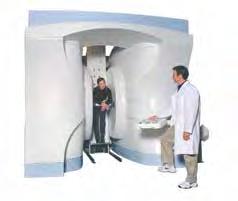
• Weight-bearing scans and variable patient positioning enables a more precise diagnosis
• Truly open system is a solution for claustrophobic patients without compromise in image quality

Accusations of treating your parent as a ‘doctor’ rather than a son or daughter can lead to disharmony and frustration by all parties
The task of helping parents or other close relatives make decisions about their care is likely to come to many of us and, for doctors, this challenge can be far greater.
In the first of a series of three for Independent Practitioner Today, Penny Hibberd guides you through some options for consideration
In the UK, there are currently 10m people who are over 65 years old. The latest projections are that there will be 5.5m more elderly people in 20 years’ time and the number will have nearly doubled to around 19m by 2050.
Within this total, the number of very old people grows even faster. There are currently 3m people aged over 80 and this number is projected to almost double by 2030 and reach 8m by 2050. While one in six of the UK population is currently aged 65 and over, by 2050 one in four will be over 80.
The challenge of helping parents or other close relatives make decisions about their care is likely to come to many of us and, for those who are healthcare profes-
sionals, this challenge can be far greater.
Some assume that because they are a healthcare professional, the process of accessing care and meeting a loved-one’s needs should be simple.
Certainly, it can be easier with some knowledge of the services and processes within health and social care. But do take into account the emotional and relational tensions that arise from juggling a busy professional life and your own emotions.
Accusations of treating your parent as a ‘doctor’ rather than a son or daughter can lead to disharmony and frustration by all parties.
➱ p20

is continuously updated based on the latest medical research to bring you current evidence-based recommendations.
Our unparalleled team of physicians and editors places new research in the context of the existing body of medical knowledge using their professional expertise and first-hand clinical experience.
This combination of Evidence & Experience is invaluable in crafting point-of-care recommendations trusted by more than 850,000 clinicians worldwide.
To learn more or to subscribe risk-free, visit learn.uptodate.com/EXPERIENCE or call +1-800-998-6374 | +1-781-392-2000.
These tensions can exacerbate when the person’s condition deteriorates and their needs are compounded by pain, non-compliance to medication, multiple loss and isolation. Many people find it very hard to know where to start. When introducing care to a family member or friend, it is critical that they feel in control and are reassured that they will be able to maintain their independence.
‘We never feel old inside’ Where someone is showing signs of struggling with the challenges associated with day-to-day living, care can be introduced through short interventions. These consist of a companion or personal assistant visiting for a few hours a week to help with everyday tasks such as meal preparation, simple administration, making phone calls, accompanying on appointments to hospital or other services.
Organisations such as Age UK (www.ageuk.org.uk/about-us/ local-partners), Crossroads Care (www.carers.org/carers-services/ find-your-local-service) and the University of the Third Age (www. u3a.org.uk) can provide advice on introducing support at home and/or activities outside the home.
Not everyone likes group activities or group living and this should be kept in mind when talking about options for support and help.
It is also very difficult to accept help when a person has always led an independent life or feels that they are coping admirably already and does not understand what all the fuss is about.
For those who enjoy group living, assisted living in a residential care home may be the right option for them. For some people, this type of living introduces a new phase to their lives, enabling
them to make new friends and be part of a structured, orderly environment.
However, introducing them to a care home environment may not be the right initial option, as it can lead to disorientation, a feeling of being abandoned and a high level of anxiety. This is especially pertinent if the person has a cognitive impairment.
Between hourly care and care homes, there is a preferred but lesser-known option of 24-hour live-in care in your own home.
When asked, most people say their preferred place of care is in their own home, but then they do little to explore care at home until there is an accident or emergency and are then forced into a kneejerk reaction.
latory status, whether it is a fully managed service or an agency which recruits carers but provides little, if any, supervision of the care being delivered.
Patients and family members are too often hurried into a decision about future care at the point of discharge from an acute setting. The decision as to the route you take might, in part, be determined by the care needs of the person being looked after.
At The Good Care Group (www. thegoodcaregroup.com), a fully managed 24/7 live-in care service is offered where a professional, highly-trained care team provides one-to-one consistent care. Its carers can help to meet a range of needs, from daily domestic and personal needs to more complex care needs requiring medical support, with the aim of improving an individual’s health, well-being and lifestyle.
However, like all services, you need to understand the quality of the home care provision, its regu- ➱ p22
Free EMR wireless integration software.
• Ready for use in 15 minutes.
• Transmit measurements directly into your electronic medical records (EMR) without any programming.
• Compatible with all EMR’s such as emis, systmone, vision and others.
• Without any special technical know-how.
• Saves time and reduces data entry errors.


Mrs d has a diagnosis of chronic obstructive pulmonary disease and arthritis. she lives alone with family supporting her from a distance of about 25 miles. Her husband of 50 years had died three months previously.
Her family members work full-time and have their own family responsibilities. Mrs d is self-funding and, until her admission to hospital with a urinary tract infection, was managing at home with one twohourly midday call each day, put in place after the death of her husband.
during her admission, Mrs d was very confused and disorientated. she fell while trying to make her own way to the toilet (no injuries sustained) and she became abusive on a number of occasions when being assisted with a shower.
At the ward round on the Friday morning, Mrs d was declared physically fit to be discharged and her family was advised that she would require residential care due to her behavioural changes and risk of falls.
Mrs d was very distressed about not returning to her home of 50 years and her family were left in a quandary, feeling they should take professional advice over their mother’s wishes. there was no Health and Welfare Power of Attorney in place.
Her behaviour escalation would have been due to the infection and sudden changes in her environment. Her behaviour towards nursing staff could have been for a number of reasons: she did not recognise the person who was undressing her, she had never showered before and/or she was being outpaced by the person leading the intervention.
But with good 24-hour live-in care at the point of discharge, Mrs d was supported to live in her own home. she received one-to-one care with a consistent care team in her own environment.
Her nutritional and hydration needs were adequately met and a risk assessment completed regarding the risk to falls within that environment. the necessary adaptation and equipment was arranged by working collaboratively with the GP, occupational therapist and physiotherapist.
A care plan was developed with Mrs d and her family to ensure she received the level of care that met her needs and that she was engaged with her local community, friends and family.
Once home, Mrs d settled into her new care and support, making new and firm relationships with her care team of four carers. After taking legal advice, Mrs d’s family accompanied her to the solicitors to set up a financial and health and welfare power of attorney (she had maintained her mental capacity at this time).
the care organisation is supporting the family in ensuring that plans for the future are being discussed and documented. these include:
Getting to know the person being cared for so that their wishes are prioritised as far as possible;
Being aware of what alternative care is available – residential or nursing care homes;
end-of-life decisions – for example, do-not-resuscitate decisions and funeral plans.

“MidexPro thinks like a doctor, not a computer expert”
All you need to run your private practice including document management, diary, clinical data, even test ordering and lab reports from TDL.
From paper billing (incl. VAT) to electronic billing (EDI) to management of bulk purchase contracts
Grow seamlessly from a small solo practice through to a large group practice, remote access network system
MidexPro is the cost effective practice management system with support second to none.
Free download of the full working package (30 day limited) from www.midexpro.com or call for a CD.
Try it for yourself with no sales pressure. “MidexPro
Careful matching of the right carers with each client is important and ensures that strong relationships are developed and a level of trust and confidence is established.
The care service is designed to facilitate someone’s life, not to dictate or take control; it leaves the client in charge of their own way of life.
A ‘respite break’ of two or more weeks can ‘test’ 24-hour live-in care, especially where a couple wish to remain at home together or the person is being discharged from hospital.
The family carer does not need to leave the home during the respite break, but can enjoy some time relaxing with their partner/ relative, relinquish some of the day-to-day chores like housework, shopping and meal preparation and have some free time to attend appointments and visit friends and family.
In the case of being discharged home, the person’s primary carer can be assisted with the care, thus giving time for a decision about future care needs and assistance with day-to-day living for the primary carer. In addition, with livein care, couples with different co-morbidities can invariably be cared for at home, ensuring that they remain together for as long as possible.
Statistically, a hospital admission is likely to be due to a fall, infection or complication of a long-term condition. Hospital admission can be avoided by planning ahead. Discussing care options in advance and being well informed about the option for care, especially in an emergency, is key.
For example, Mrs D’s admission (see case history on page 21) was avoidable if measures had been taken to prevent a urinary tract infection.
This may have included better training for the hourly care staff, an increased package of care, a medication review, the introduction of assistive technology, an assessment of how she managed activities of daily living when alone – for example, the ability to make a drink and snack independently – and/or introducing Mrs D
see the BAPen website for more information and its five step Must screening tool: www.bapen.org.uk
Assistive technology can also help people with dementia to live more independently. see www.atdementia.org. uk and http://localmobility.co.uk for specialised crockery, cutlery and other aids to daily living. ready meals are easily accessible in supermarkets but are not always nutritionally balanced for the dietary needs of an older person. Another source for ready meals is Wiltshire Farm Foods (www.wiltshirefarmfoods.com) who will deliver nutritionally-based frozen meals or a hot meal to the door and assist with unpacking. Making some changes to the home environment and planning ahead can make daily living safer and easier for the person. A care organisation can work collaboratively to facilitate adaptations and introduce equipment with the assistance of an occupational therapist or specialist nurse and, if necessary, builders and decorators. this type of facilitation can remove pressures from the family and support the person, giving them choice and control. there are a variety of helpful websites and organisations that offer useful information for elderly people. For example, the university of stirling has practical advice on safe and well positioned lighting, use of the right colours and managing outside spaces. see http://dementia.stir.ac.uk/information/design-resource-centre
Attention to footwear and walking aids can also be helpful. see http://localmobility.co.uk/walking-aids.html It is advisable to request a mobility assessment from an occupational therapist before supplying a walking aid or fitting aids around the home.
For footwear, see www.cosyfeet.com. Its footwear is available in some retail outlets and online; it also has a catalogue to enable browsing.
Advice and support can also be given on the use of assisted technology which can work well alongside community care. the website www.atdementia.org.uk is aimed at dementia, but is extremely useful for all. discussions about end-of-life care can be difficult and are often ignored until the point of crisis or when the family are asked for a decision about care. 24-hour live-in care can offer a peaceful death at home within familiar surroundings.
’do not attempt resuscitation’ decisions are particularly difficult at times of crisis and emotional distress, and are better made in advance. see www.resus.org.uk/pages/dnarrstd.htm.
Having these documents in place can prevent unnecessary invasive procedures being carried out with a frail elderly person and sometimes prevent an unnecessary admission to hospital. these documents should be kept in a visible and/or safe place and travel with the person at all times. see www.medicalert.org/services/ everybody/advance-directive-storagednr-orders
Finding care for a partner, parent or oneself is never an easy decision. But the best advice is to start planning at an early stage, involve everyone in the decision-making process and take action before an emergency or accident.
Malnutrition can be an insidious process, making it very difficult to spot in the early stages, especially when the person is close to us
to a local lunch or coffee group. 24-hour live-in care can be introduced to alleviate an emergency and adjusted to meet need as a recovery occurs.
Malnutrition’s role
A contributing factor to hospital admission is malnutrition. This can be an insidious process, making it very difficult to spot in the early stages, especially when the person is close to us.
Some of the symptoms and signs to watch out for include:
Loss of appetite;
Weight loss – clothes, rings, jewellery, dentures may become loose;
Tiredness, loss of energy;
Reduced ability to perform normal tasks;
Reduced physical performance
– for example, not being able to walk as far or as fast as usual;
Altered mood – malnutrition can be associated with lethargy and depression;
Poor concentration.
The risk increases when a person is away from their familiar environment; for example, in hospital or a care home.
Ageing can also impact on physical factors such as a painful mouth or teeth, swallowing may be more difficult (a stroke can affect swallowing), losing the sense of smell or taste and being unable to cook. Also, limited mobility or lack of transport may make it difficult to get food.
Next month: Zoe Elkins from The Good Care Group looks at providing the right type of care for people with dementia
Dr Penny Hibberd is a specialist nurse with The Good Care Group, London

www.medbc.co.uk
Come and join the hundreds of other consultants who use MBC and experience the following benefits:
• Bad debts of less than 0.5%
• Increase in net income by up to 25%
• Freedom for the consultant and secretary to focus on the medical side of the practice
• 24/7 online access to both your financial and practice management data
• Having a service tailored to your needs with your own Account Manager
• Our fees are only charged on the money that we collect for the practice and NOT on what we invoice which means we share the same objectives
Special offer:
To celebrate our 22nd year in business we are for a limited period of time offering all new clients an introductory discount of 20%*
Further information:
Please visit www.medbc.co.uk for more detailed information or phone 01494 763999 and speak to Garry Chapman to establish how we may assist your practice.
Dear Reader,
Subscribing to Independent Practitioner Today is the only way you can be sure you will see every issue. Don’t risk missing out. Our personal subscription for doctors and managers is only £75 a year and £200 for organisations. But you can cut this to just £60 (only £36 after tax for higher-rate payers) and £175 respectively if you pay by direct debit. So take advantage of this offer now for our unique business magazine dedicated to supporting you in your private practice. We’re confident your subscription will repay itself many times over!

Editorial director
a cheque for
Name and full address of your bank/Building Society
* indicates this item must be filled in Doctors, please give GMC No. (See rates listed above)

Name(s) of account holders Branch sort code
banks and building Societies may not accept direct debit instructions for some types of account Signature(s)
Banks and Building Societies may not accept Direct Debit instructions for some types of account To: The Manager
post your application (no postage required – UK only) to: independent practitioner today Subscriptions department, FreepoSt, po box 36, plymouth, pL1 1br
to your Bank or Building Society to pay Direct Debits Name and full address of your bank/Building Society Banks and Building Societies may not accept Direct Debit instructions for some types of account To: The Manager Bank/Building Society Address Postcode Ref. No. (Do not complete)
Please post to: Proact Ltd Subscriptions Dept., 12 Mary Seacole Road, The Millfields, PLYMOUTH PL1
phone: 01752 312140 Fax: 01752 313162 email: lisa@marketingcentre.co.uk or subscribe online at www.independent-practitioner-today.co.uk if you want to pay by card

If you are thinking of expanding your private work to provide services for embassies, then there are some essential billing and collection matters you need to be aware of, warns Garry Chapman (left)

With the increasing number of consultants entering the private sector, many are looking at alternative ways of increasing the size of their private practice. it certainly makes good sense to review your practice on a regular basis and there are many areas outside of the traditional private medical insurance (PM i ) sector where a consultant can operate and generate additional revenue. this is important for a variety of reasons, but the main one is the same for any business: diversification. it is important for any business to have revenue streams from a variety of sources so that if a par-
ticular source of income tails off the effect on the business is minimised. t hat, in turn, makes the practice more robust.
When an analysis was made of the invoices we raised over the past 12 months, it showed that the PM i market only accounted for 55% of the total amount.
t he remaining 45% was split between other organisations such as:
embassies;
hospitals;
Solicitors (for medico-legal work)
Other commer cial organisations.
here i will focus on embassies and what you need to know from a billing and collection perspective if you are thinking of expanding into this sector.
t he embassies are mainly in London and therefore you will have to operate within this geographical location in order to take advantage of this sector.
While there are over 50 embassies within London, the majority of the patients come from the big four which are Kuwait h ealth, Kuwait Military, United Arab emirates Medical and Qatar.
complex conditions
there are some important things you need to consider before deciding to enter this arena. typically the embassy patients that you will see will have complex conditionss and this is one of the main reasons why they travel to this country.
When you see the patients for the initial consultation, they will normally be accompanied by an interpreter. So that fact, combined with the probability of dealing with a complex case, means that the consultation is likely to take longer than normal. So you do need to allow more time.
Before seeing the patient, it is absolutely crucial that you obtain a LOG, which stands for a letter of guarantee.
t his document will authorise treatment for the patient and must be in your name. Without this document, it is very unlikely that you will get paid for any treatment that is carried out.
t he final important point to note is that with the embassies, payment can take a long time. t hat is therefore an important factor for consideration, particularly in terms of cash flow.
Due to all these factors, it is absolutely crucial that you get your practice prepared correctly from the very first contact with these embassies.
Otherwise you could end up doing a lot of work and either not get paid at all or end up waiting a long time for payment which could have an adverse effect on your practice.
Garry Chapman is managing director at Medical Billing and Collection
before seeing the patient, it is absolutley crucial that you obtain a loG, which stands for a letter of guarantee
unfortunately, in our experience, many consultants start seeing embassy patients without due consideration to the points that i have highlighted below:
it is absolutely vital that a letter of guarantee (loG) is obtained prior to any treatment that is carried out; this document will vary slightly depending upon the embassy that is issuing the document.
it will typically specify the patient’s demographic details along with the appointment date(s) and the reason for the treatment as well as specifying the consultant and the location.
there is normally a set of terms and conditions covering the loG and you must always submit this document in conjunction with your invoice to the embassy in a timely manner to ensure the best possible chance of receiving payment.
some embassies also require a medical report along with the invoice and loG. if this process is not followed, then you run a much greater risk of working without getting paid.
how much do you want to charge for your treatment needs careful consideration. your fees could be for consultations such as initials and follow-ups, inpatient care, inpatient consultations and intensive care.
it could also be for any CCsd codes that you are going to perform and, in particular, when you carry out a complex procedure or operation which is not accurately described by a CCsd code.
your fees should take into account all the points previously mentioned and whatever you decide, it needs to be clearly articulated to the embassies before you start to see their patients to avoid any misunderstanding after the treatment has been carried out – and to avoid dealing with disputed invoices.
you will need to be prepared for extended payment cycles and allow for this within your practice, particularly where you are likely to be paying tax to the hm revenue and Customs (hmrC), even if you have not collected payment.
this could have a devastating effect on your cash flow if you haven’t planned accordingly.
even when all the above is done, you will still need a robust system in place to chase for payment on a continual basis to ensure that your money is collected.
the embassies are always busy, particularly the ones mentioned above, and it is not uncommon for them to have a backlog of invoices waiting to be paid.
the reasons for this vary. but, ultimately, it is down to the sheer volume of patients that they have to deal with. and if you are not constantly chasing them, it is likely that your invoice will slip down to the bottom of the pile.
should you continue to have issues collecting payment with a particular embassy, then you need to think long and hard about taking on other cases from them or you could end up effectively paying the hmrC to do work for the embassy.
Chasing the money on a continual basis is the hardest part of this whole process, as most practices are not geared up for this specific aspect.
it is both time-consuming and requires a specific skill set; it is rare to find a practice which has the time to chase these invoices on a continual basis, even rarer that they have the skills in house.
the alternative is to use a professional billing agency to gain control of this crucial aspect.






When consultants initially look to growing their private practices, one of the first things they think of – other than holding yet more GP meetings – is advertising.
But advertising in this context, while it can be very effective, can also easily be an expensive mistake unless carefully thought through. there are many pitfalls for the unwary.
piTFAll 1: lack of clarity one of the most important aspects of promoting your private practice is considering – and answering –the question: Whose attention am I trying to attract here?
t he answer, of course, is ‘patients with XYZ condition, who either have private medical insurance or are willing to pay for private care’.
so far, so good. clinical condition + desire to pay for treatment. the next question is how can you reach out to these people?
s ure, you can advertise, but where? o nline? o ffline? Direct mail, flyer, magazine, newspaper, radio, tV?
piTFAll 2: choosing the wrong medium to advertise in critically, you need to advertise in a medium that is frequented by your potential patients so they can actually see your advert, and so respond to it. this may sound silly, but is a common mistake. If you are looking for patients with erectile dysfunction, then a magazine aimed at men 50+ might be a good bet – as might a magazine for middle-aged women, of course.
on the other hand, an advert in a magazine aimed at extreme sports enthusiasts or young mums is likely to be a waste of time. Furthermore, advertising needs to be cost-effective, which would likely rule out television and national newspapers.
piTFAll 3: interruption vs. search-based advertising
Broadly speaking, there are two ‘types’ of advertising: interruption-based and search-based. the two are fundamentally quite different.
Interruption advertising is where you place your advert in a medium with the idea that someone who happens to have that condition sees your ad. an example might be a cosmetic surgeon advertising in Woman’s Own magazine and hoping that one of the readers desires a breast enlargement or other cosmetic procedure.
search-based advertising is predominantly – but not exclusively – online. In short, people do not see your advert unless they are specifically looking for information on that topic.
In this respect, they are fundamentally different to people in the ‘interruption’ category. In the
olden days, the classic example of this was the Yellow Pages – people don’t see adverts for cosmetic surgery unless they look up ‘cosmetic surgery’ in the listings. online search-based advertising over the last few years has become extremely powerful and refined.
piTFAll 4: ignorance of the numbers
Below are examples of advertising in three different ways which I hope will clarify some of the above points in a meaningful and practical way.
advertising
Magazine advertising is a common starting point for doctors wishing to grow their private practice, particularly for cosmetic surgeons.
let’s say you were to decide to advertise in a weekly magazine for women, costing £20,000 for a full page.
now let’s say that 0.5% of the demographic are actually interested in having a breast enlargement. t hat means 1,125 people are potentially interested in seeing a cosmetic surgeon for the procedure.
h o wever, of those 1,125 who are ‘interested’ in a breast enlargement, only 10% are serious enough to consult someone about having it done – which brings the number down to about 113 people.
But only 30% of people read the magazine cover to cover and so see your advert, which brings the number of potential patients now down to 37 – assuming everyone who sees your ad actually makes an appointment, which clearly they do not.
If you run a quarter-page advert which costs, let’s say £5,000, then dividing the price of the advert by the number of people that actu-
Advertising, while it can be very effective, can also easily be an expensive mistake unless carefully thought through ➱ p30
ally make an appointment to see you gives the ‘price per lead’ and will give you an indication as to whether advertising in that magazine was worthwhile or not.
You are in effect ‘carpet-bombing’ the readership hoping to find someone interested in the procedure you are offering.
Facebook advertising advertising on Facebook is almost totally ignored by consultants but is incredibly powerful for reasons that will become clear.
again, it is interruption advertising, but there are two big differences I want to look at compared to advertising in traditional media:
1
You can target your ads so that they are only seen by people who are likely to be interested in what you do.
2 Your advert is free. You only pay anything if somebody clicks on it to be taken to your website – in other words, expresses an interest in what you do.
s uccess in advertising on the Facebook platform relies upon you knowing as much as possible about the patients you want to find. First and foremost, they need to use Facebook, which, in general, means the under-55s.
s e condly, the more you know about your typical patient, the better you can target your ads.
For example, say you are an orthopaedic surgeon who is looking for people with knee trauma such as anterior cruciate injuries.
Because you happen to know that these injuries are more common in the 18-35 age group, particularly in people involved in football/rugby/skiing/gymnastics and affects both sexes, you can tell Facebook to only show your advert to people based upon those criteria.
It is possible to narrow things much, much more according to sex, hobbies, occupation and so on, too – the more precisely you can describe your patient, the more targeted will be your ads.
When you factor in that each ‘click’ your ad gets represents someone who is a potential patient and that each click only costs you a few pence, with your advert free until somebody actually does click on it – well, I hope you can see that not only is this

phenomenally powerful, but your ads can be incredibly targeted and almost laughably cheap.
consider also that your ads are not carpet-bombing the readership of Facebook, but only being seen by people who are statistically far more likely to need/want your services and expertise.
I’ll be coming back to Facebook advertising in a forthcoming feature, as it really deserves a piece all on its own.
hopefully, you can see how much more precise Facebook adverts are for reaching patients than, say, advertising on a website or in a magazine where your ad is seen by all and sundry.
Yet, how about if there were a way to show your ad only to people who were interested in what you do, in seeing someone in your specialty?
not only is this possible, this is precisely what search-based advert ising does. a nd searchbased advertising is the reason Google is worth billions upon billions of dollars.
In the uK, the vast majority of online searches (85%+) are done using Google, so I will talk only about Google here – but the principle is the same with the other search engines such as Bing and Yahoo.
When you search online, there are two sets of results that come up. these comprise:
A‘Organic’ search results –which are web pages indexed and ranked by Google according to relevance – the
actual algorithm Google uses is a closely guarded secret.
When you consider that there are 1,010,000 pages competing for top spot for the search term ‘hernia surgery’, you will appreciate that it can be very tough indeed to have your website come up on page one of an organic Google search.
BPaid adverts. t hese are located at the top – also sometimes the bottom – and down the right-hand side of the page when you perform a search.
Paid adverts like this are again based on the ‘pay-per-click’ model, so it is free to place your advert and you only pay when someone ‘clicks’ on your ad to be taken to your website.
Search-based advertising, such as with Google AdWords, is one of the most powerful ways of finding patients
t he price per click varies depending upon the competitiveness of the keyword you have chosen as a trigger for your advert but usually is around the pence to a few pounds mark.
search-based advertising, such as with Google adWords, is one of the most powerful ways of finding patients. In many cases, it is the only practical and affordable way of targeting patients with certain clinical conditions.
t hink about it: you can tell Google to present your advert only to people who are searching for ‘private hernia repair surrey’, if that is what you want.
Patients searching for that particular phrase clearly have a private consultation in mind, and can be directed to your website where you can give them more information to persuade them of the desirability of consulting with you rather than a competitor in your region.
targeting is the absolute key to success in advertising your private practice. lack of focus in targeting will almost guarantee failure when it comes to advertising your practice – because advertising costs money.

after all, even the greatest salesman in the world is going to struggle selling pork sausages to vegetarians.
Dev Lall (left) is an upper-GI surgeon and runs a specialist private practice consultancy www.PrivatePractice Expert.co.uk
Get positive! Catherine Harriss believes many independent practitioners could do more to be a magnet to patients. Last month, she outlined the huge and growing potential to attract people online and by smartphone. This month, she gives more advice to get yourself known
Your online profile
You are in control of your online profile and so everything that you want to say should be available. You should check that:
What you have to say about your service is up to date;
What involvement do you or the service that you provide have in social media?
could people find you easily?
h ow much do you want your private practice to grow?
You need to market yourself. traditionally, this was done through press releases by your local private hospital PR person or by the occasional newspaper article or advertisement (see ‘Reaching potential patients’, page 28). But today’s marketing involves all online media so that your information is spread widely and for all to see. We have seen significant wider community involvement in our consultants’ information.
o ur consultants’ patients talk
about transparency of information, accessibility and being found everywhere – all key aspects of successful self-pay private practice.
What’s the relevance?
a r ecent study by Social Media Examiner of internet marketers’ activities found that marketing to social networks improved exposure by 92% and visitor traffic by 80%.
marketing? marketing is not about just selling so if you look at the definition of m arketing (according to the american Marketing association), marketing is the activity, set of institutions and processes for creating, communicating, delivering and exchanging offerings that have value for customers, clients, partners and society at large. selling is marketing, but marketing is not selling.
For your practice, this means that you provide information and
conversation about you, what you do and how people benefit in addition to talking about other things that they might find interesting, and make it grow and be meaningful.
With internet usage being so easy to access and be used, people are joining conversations everywhere. a n influential marketer,
seth Godin, describes the formation of ‘tribes’. In order to be successful, we need to be the leader of a tribe and provide the information that they need.
Tribe communication
Becoming a leader of your tribe is important. You are developing a ➱ p32

way of business whereby you actively provide information about what you do and how you can help.
With increasing amounts of information provided, more people find you or you become more accessible and, over a period of time, you are seen and perceived to be knowledgable, interested, concerned and helpful.
You are supplying information that people want to find, that cannot be found elsewhere. But you are also showing your humanity and your realness, which, in turn, makes people want to come to you.
It is time-consuming and needs correct management so that you are seen as a leader and seen to be more knowledgeable than your peers in the same specialty.
s o the dissemination of information online makes you easier to be found and for those seeking information, they can rapidly find you online.
By making yourself more accessible through online methods, your online status rises and you are soon seen as the person to go to.
Are others using social media?
a recent study by Harvard Business Review identified that only 12% of companies surveyed used social media effectively. t herefore, if you can, social media will quickly set you apart from the others.
In the same survey, around 30% of people thought that there was no value for social media in their business, another 21% thought
1
Create a high-quality, informative website which commands respect. this is such an important point and one that many people seem to overlook. too often i find that people have the ‘that will do’ attitude. if you think that, your future patients will think that too and be turned away. they are seeking engaging information about their problem together with clear information about how you can help.
2
Create a social media presence to disseminate information about your service, your results and other relevant information. through these avenues, valuable insights of what people are looking for will be obtained.
3
Write a blog of regular information and advice. information is king on the internet. this helps to disseminate what you can do further and can be used to link up with your social media presence.
4
Commission skilled advertising to draw in visitors. While this is always a paid-for service, there is much to be gained from a ‘spend some to get many’ attitude. Google, facebook and twitter –among many social media sites – all have targeted ‘pay-per-click’ advertising programmes, whereas larger portal sites charge annual fees.
5
Pay for local marketing on and offline. Local search engine optimisation (Seo) will focus on your immediate neighbourhood and can dramatically assist in getting you found.
that the tools for social media were not appropriate. eleven per cent thought that it was a passing fad.
Perhaps this rings bells with your way of thinking. h owever, the same 12% of people who use social media had staff dedicated to social media activities. they understand that they need to keep the conversation going about themselves to make themselves heard and noticed. In MultiWorks Marketing, we manage consultants’ conversations online so they can get on with treating their patients: we manage your tribe.
Remember that people are looking for help and advice and they will reach out to those who speak a language they can engage with. Whether it be factors related to their problem or results relating to their problem, they all help in generating conversation about you and your service that you can provide.
It does mean, though, that the conversation needs to be continued on a very regular basis, not just occasionally. unlike your best friend, where you can pick up your conversation where you left it, this one needs to be nurtured
By making yourself more accessible through online methods, your online status rises and you are soon seen as the person to go to
daily. We focus on daily conversations that increase the access points for those seeking help.
conversation domination
Doctors were never trained to be running businesses, but private medicine today is a real business that needs nurturing. this means that each and every aspect of your workplace and the information you provide needs to be analysed and consistently reviewed to see if there is room for improvement. none of the chain of events that takes place after someone has contacted you or your secretary can occur if they cannot find you. there are five key ways that you can dominate your conversation and these are set out in the box on the left.
Your private practice can’t grow any more than you allow it to. Where you are now is a direct response to what you have done and what you have not done. People are using smartphones and tablets, as well as other computers to access information far more than ever before. It is expected that they will find the information they seek and a solution to their problem will be apparent.
More and more people are going to use this vehicle to seek the information they need. o ur clients to date have made the commitment and redeemed the benefit. Your role is to examine where you are in this market and actively do something about it if you want change.
References
www.ons.gov.uk/ons/dcp171778_ 322713.pdf
www.weareapps.com/digitalreport.pdf
http://media.ofcom.org.uk/ 2011/08/04/ a-nation-addicted-to-smartphones/
Catherine Harriss (below) is the founder of MultiWorksMarketing. co.uk specialising in medical private practice marketing and management

A new criminal offence for doctors, ‘wilful neglect’, has moved a step closer. Dr Nick Clements and Dr Marika Davies (pictured below) assess how it might affect you



A new crimin A l offence for doctors moved a step closer in June, when the charge of ‘wilful neglect’ was added to the criminal Justice and courts Bill.
i f this proposed legislation passes into law, it will have significant consequences for all healthcare workers, including private doctors.
in its current form, the legislation will:
make it an offence for healthcare workers to ‘ill-treat or to wilfully neglect’ someone in their care;
create an offence for the organis ations that employ healthcare workers that ill-treat or neglect someone, if the organisations are not managed in such a way that could have prevented it;
create penalties for healthcare workers of up to five years in prison and a fine.
The medical Protection Society (mPS) has been lobbying government and parliamentarians to ensure the law is clear and does not unreasonably affect the everyday decisions of healthcare professionals.
Defensive medicine amid a climate of fear is a practice that mPS has frequently raised concerns about in the past. Typical features of defensive medicine are order-
ing more tests than are medically necessary, avoiding treating certain conditions or performing particular procedures and over-treating –for example by prescribing antibiotics – ‘just in case’. Although it is right that unacceptable conduct by a medical professional receives tough sanctions, adding a criminal element to these sanctions risks making healthcare professionals less willing to be open about genuine errors, placing both patients and senior managers in the dark.
This is in no one’s interests and would, of course, be in direct conflict with the Government’s new ‘duty of candour’ for organisations and their employees.
As the proposed legislation stands, there is a risk that almost any decision – whether it involves the allocation of resources, triaging patients or deciding on one course of treatment over another – could potentially be investigated for wilful neglect. This is of particular concern at a time when resources are under pressure. The Government is relying on prosecutors exercising their discretion not to investigate or prosecute reasonable clinical judgements, but this could create uncertainty and fear among healthcare professionals, unsure about whether their actions could be later deemed criminal.
The mPS believes that the current regulatory, disciplinary and criminal framework is already up to the job of censuring unprofessional behaviour.
we have called for the legislation to be amended so that the offence of wilful neglect clearly deals with only the most serious incidents and does not spread fear about police investigating care decisions.
Unforeseen ramifications
This criminal sanction could have a significant impact on the professional lives of doctors in all sorts of ways that have not been adequately addressed by the Government and need further consideration.
The Government has been focusing far too much on penalties for healthcare professionals, and not enough on providing the support that can bring about genuine change.
i t is essential that there is an open and transparent learning culture where healthcare professionals feel able to report accidents and near misses so they can learn from mistakes.
To achieve this, the Government needs to focus on the development of mentoring, training and leadership programmes and not on new penalties for doctors and other healthcare workers.
next steps
it is important that the Government provides more clarity about how the offence of wilful neglect will apply to the actions of health care professionals, and limit the impact on reasonable everyday decision-making.
in July, the mPS hosted a breakfast seminar, with attendees from across the health sector representing doctors, nurses and the organisations that employ them. There was broad consensus about the potential risks created by the law.
we have already lobbied parliamentarians to put down amendments and are now beginning work with other key stakeholders to continue our efforts.
Dr Nick Clements is head of medical services and Dr Marika Davies is a medico-legal adviser at the Medical Protection Society
The following are based on real cases and are designed to illustrate our concerns about how the sanctions for wilful neglect –as they stand – may or may not be applied in practice.
A 12-month-old child was seen privately by a paediatrician with severe chickenpox.
The child later returned with cellulitis and swelling of the right ankle; the paediatrician was concerned about secondary bacterial infection, but – given unusual bruising on the leg – she requested an X-ray to exclude a fracture first.
No fracture was noted and the child was admitted to a private ward where he began to deteriorate. No observations were taken, as the consultant was busy in clinic and there was a limited number of nursing staff on the ward.
When the consultant eventually attended the child, he was extremely unwell and required resuscitation.
The child was transferred to a paediatric intensive care unit with a diagnosis of necrotising fasciitis; he survived after extensive debridement.
In this case, there were identifiable failings in care, involving inaction by healthcare professionals. However, it is unclear how a wilful neglect offence would apply and how appropriate this would be.
For example, would the clinical decision to delay antibiotics to rule out fracture first be classed as wilful neglect? If so, is it only the consultation that is liable? Will the organisation be liable for the staffing issues?
A consultant general surgeon was in clinic in the morning, followed by a colonoscopy list in the afternoon. Mid-morning, a patient was re-admitted with a possible leak after an anterior resection. The consultant requested a CT scan.
The consultant’s clinic overran by an hour and he went straight to the endoscopy unit, with no time to go via the ward.
He was then in theatre most of the night with an emergency case. Meanwhile, the patient was deteriorating and in a lot of pain. He was not seen by the consultant until the next morning and then taken to theatre for an emergency laparotomy. The patient fully recovered and was discharged some weeks later.
It was a deliberate act by the consultant to go straight to the endoscopy list and not review the patient. Will this constitute wilful neglect? No harm came to the patient, but it seems possible the offence could apply and so there could be a police investigation, potentially leading to a prosecution.
A private gp saw a patient with shortness of breath, tachycardia and low blood pressure, pyrexia, slightly raised C-reactive protein & erythrocyte sedimentation rate. She was unsure of the diagnosis, as her examination of the chest and heart was normal, so she requested a second opinion from a respiratory physician. He advised antibiotics and an outpatient appointment the following day. The gp had reservations but followed this advice and the patient went home. That night the patient deteriorated with sepsis shock. The case was referred to the gMC.
DISCUSSIoN
It is not uncommon for the advice of specialists to be sought and relied upon and, in most instances, the advice is noncontentious. While this seems to be an appropriate case for the gMC to consider, it raises questions of professional responsibility and whether following the advice of others could be vulnerable to a charge of wilful neglect. Is the respiratory physician also possibly liable?




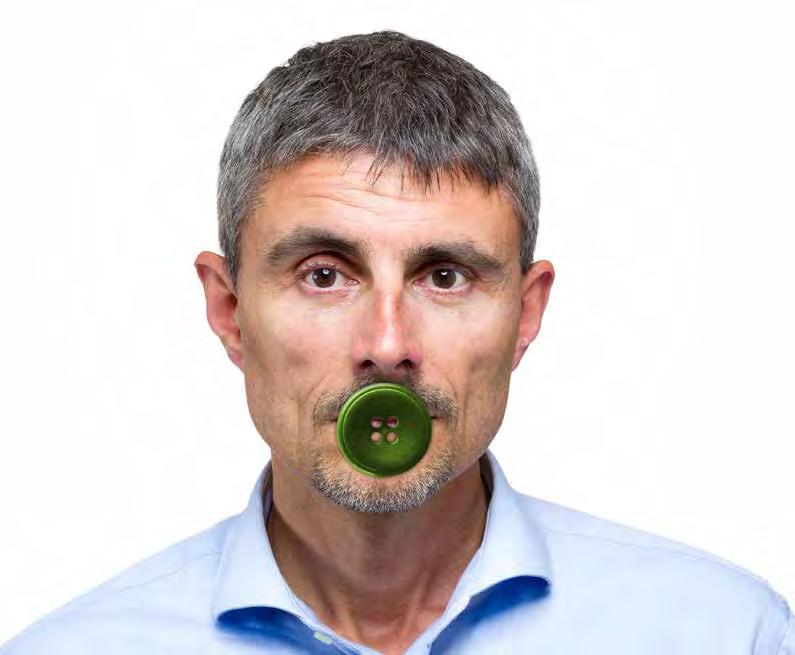
When you talk to members of your staff, do you watch what you say? Did you know that you could be making contractually binding commitments?
A recent judgment has reaffirmed that commitments that you might make as a doctor employer to one of your employees on behalf of your practice or organisation can be contractually binding. So do be careful what you say. In your practice, you may think you have very clear parameters about who is responsible for staff pay and conditions and who can make key decisions about them. But if one of your employees believes they have been promised something by someone in a senior or managerial role, they may argue that they have a contractual right to what has been offered to them.
They may be right. It is very important to watch what you say to your staff, as your position and the
nature of the employment relationship may mean that what you committed to is something which the organisation is legally required to honour.
That may be the case even if you don’t have the proper authority to make that commitment, where – due to your position – you would appear to do so.
The risk that what is said to employees can be held to be contractually binding has been reinforced by a recent decision of the employment Appeal Tribunal.
That case of hershaw v Sheffield City Council involved an h R consultant working for the council who heard some internal grievances.
there is one glimmer of hope for employers which is also addressed in this judgment. that is that if something is genuinely a mistake, then it is not contractually binding.
However, the law defines ‘mistake’ for these purposes very narrowly. to be a mistake – and thus not legally binding – a commitment must not only be made in error, but it must also be obvious as an error.
this may be reassuring to anyone who has mistyped a financial offer. A clear example is where a letter to a member of practice staff who previously earned £400 per month, gives them a pay rise which increases their pay to £4,500 per month, rather than £450.
in that situation, the employee would know that was simply an error and, as a result, it would not be legally binding.
The grievances were about the level of pay received by a particular group of staff. In the outcome of the grievance, the hR consultant decided that those staff should be paid at grade 5 under the council’s pay structure instead of grade 3.
The council itself thought that this decision was wrong and that, at most, the employees should only have been paid the salary for grade 4.
When the council refused to pay, the employees brought a claim against the council for breach of contract and unlawful deduction from wages relying upon what they had been promised by the hR consultant, which they said was contractually binding on the employer.
What the employment Appeal Tribunal has decided is that the employees were able to enforce the grievance outcome, as it was contractually binding on the council, based upon what they were told by the hR consultant.
The decision was contractually binding when the commitment was made, the employees did not need to do anything to make it enforceable. The h R consultant ➱ p38
While you must hope that you never find yourself relying upon this, it may be reassuring that if your secretary types too many noughts in a figure, and that is something which is genuinely and obviously a mistake, that is not a binding contract.


was acting on behalf of the employer in her role and was not acting in a personal capacity.
The council had tried to argue that she was not someone who had the authority to increase employees’ pay and could not make such decisions for the council under the council’s rules.
h owever, the e mployment Appeal Tribunal did not agree with this. As she was someone who appeared able to give an authoritative outcome, what she stated was legally binding.
What is particularly concerning about this judgment is that sometimes people do make commitments when they have not got the authority to do so.
If it appears to the employee that they do have such authority, then the commitment is legally binding.
For example, a practice manager
may have been told that they do not have the authority to make decisions about employees’ pay and benefits, but those employees will still be able to rely upon a practice manager’s statements if it is reasonable for them to do so –as it usually will be.
Similarly, staff may rely upon what is said by a partner in the practice and argue that what they were told is legally binding, even where the partners between themselves may have previously agreed that the individual partner should not make such decisions.
doesn’t an employee have to accept for it to be binding?
The usual rule in a contract is that if someone offers something, the other person needs to accept it before it is binding.
This applies to the initial offer of an employment contract, which can be withdrawn if it has not yet been accepted.
employees do not have to actively do something to accept commitments made to them on their employer’s behalf. continuing to work is enough
however, once the employment relationship starts, the requirement for acceptance works a little differently. In this case, one of the things the employer argued the e mployment Appeal Tribunal should do was find that the statement was not contractually binding because the employees had not overtly accepted what had been offered.
In their decision, the e AT are quite clear: employees do not have to actively do something to accept commitments made to them on their employer’s behalf. Continuing to work is enough. While this makes sense for some offers, it can give employers particular problems if commitments are made to staff which only come into play at a later date. e xamples would be commitments made about sick pay, overtime or even what will be paid if someone is redundant or loses their job.
An independent firm offering one to one meetings anywhere in the UK giving advice and help with:
• how to start in private practice
• how to maximise private practice income
• ways to reduce tax payments
• setting up in Chambers/Groups
• limited companies and LLP’s
• financial planning
• record keeping

• computer software
• tax and financial advice re: car purchases
• pensions: NHS, personal and employee schemes
• purchase of consulting rooms and surgeries
• inheritance tax and capital gains tax planning
• VAT
For more information please contact us by: Wilmslow
Phone: 01625 527351 Fax: 01625 539315
Harley Street
Phone: 020 7307 8759 Fax: 01625 539315
Email: info@sandisoneasson.co.uk
Website: www.sandisoneasson.co.uk
do involve the real decision-makers in hearing grievances and in conducting meetings to consider issues around complaints and pay. delegating the difficult discussions and hearings to junior staff does take the risk that those junior employees may inadvertently make commitments which are legally binding.
follow up discussions in writing, particularly if you think there is a possibility that what was said may, with hindsight, be misinterpreted or misunderstood. While you cannot renege on a binding commitment, the letter or email which confirms what it was that was intended to be said can reframe the commitment or at least flush out if there is a potential problem.
ensure you have good and clear contractual documentation in the first place. A well written employment contract can help with the risk of misinterpretation. you can also narrow risk in the words used. for example, make clear that any bonus scheme or overtime arrangement can be varied in the future – and therefore can be changed even if an erroneous commitment made may have short-term implications.
However, what is most important is that, when talking to employees, you remember you can contractually bind the organisation. so be careful what you say.
A maverick colleague or manager needs to be told not to make commitments; for if they do so, there is no way legally to get back from them
Staff may well be able to rely upon historic promises in arguing about what they are entitled to now. Sometimes disproving – or even sometimes remembering –what was promised a long time ago can be difficult.
is there anything i can do to reduce these risks?
The problem is that those in roles which, by their very nature, are able to make commitments for the practice or organisation will be able to do so.
So a maverick colleague or practice manager needs to be told not to make commitments; for if they do so, there is no way legally to get back from them.
h owever, the box on the left show what you can do to reduce risk.
Phil Allen (right) is a partner in the employment and pensions team at the law firm Weightmans LLP


Reduction in labour costs and with manual paper filing
Initial data capture of archived patient files, including ongoing processing of live files/data Consultants have remote access to patient data when and wherever they need it
when and wherever they need it
Complies with the national initiatives

What should you consider when drawing your private pension? Simon Bruce examines the benefits and pitfalls ahead of next year’s increased flexibility
In h I s ‘Big Bang’ Budget, the Chancellor George Osborne announced new measures coming into force next year that will give greater flexibility to those drawing their private pension.
The first 25% drawn will remain tax-free. But instead of turning the balance into a guaranteed lifetime income in the form of an annuity, senior doctors aged over 55 and their spouses will have complete access to their pension savings –subject to their marginal rate of income tax in that year.
From April 2015, savers will have three main choices:
Withdraw all their pension money;
Keep it invested and take income when required;
Buy an annuity.
The Government says the latest changes will offer greater freedom so savers ‘can take it how they want’, with The Chancellor adding that ‘it was time to end the patronising view that the state
knows best how people should spend their money’.
The media was quick to celebrate the changes, citing that, in recent years, savers have been frustrated by poor annuity rates and an inability to access their own hard-earned pension.
Reports focused on the perceived lack of clarity regarding retirement options, which resulted in many individuals being financially ‘worse off’ than they could be.
An annuity is simply an insurance product, which means you buy it to reduce risk.
By converting your retirement savings, you guarantee income for the remainder of your lifetime or possibly longer.
however, rates have tumbled in recent years as the Bank of England’s quantitative easing (QE) programme has pushed down returns on the Government bonds

that are the basis of annuity income.
Many people retiring in the last few years would have been able to get a comparable return from a high-interest bank account.

One of the main problems with annuities is that individuals make decisions about their income for the next 20 or 30 years based only on immediate implications such as the best rate at the time. s o once you have chosen the annuity, you generally cannot change your mind later.
The Financial Conduct Authority (FCA) undertook its own review last year. Despite the fact
that the option to shop around has been in existence for nearly 40 years, the FCA found that 60% of annuities were purchased from the pension provider with whom the individual had saved.
30 years out of date
More than 79% of annuity purchasers could have been better off had they shopped around, but most simply trust their existing pension provider or do not realise they have a choice.
The pensions minister s teve Webb has stated that ‘the annuity market is 30 years out of date’. But before we assume annuities
Do you need to be certain of how much income you will have in retirement or are you prepared to accept a degree of risk in exchange for greater flexibility?
cal concerns or lifestyle choices such as a ‘20-a-day’ habit will earn a better annuity rate, boosting your income by up to 40%.
As the insurance industry scrambles to adjust to the blow dealt by the new pension freedoms, we are likely to see a raft of new annuity products designed to keep savers interested.
The new super-I s A has been launched, but will a super-annuity follow?
We could witness annuities with variable income profiles –taking into account that income needs are often greater at the start of retirement than at the end –but such flexibility will be factored into the cost for buyers and the rates offered at the outset.
You could consider ‘income drawdown’ which lets you draw an income from your pension pot while leaving the remainder invested. You choose how much lump sum or income to take and where the fund will be invested.
Doctors drawing their nhs
not exhaust your funds before time. This requires careful management as the art and science of sustainable investment fund husbandry come into play.
An alternative is ‘phased retirement’ where your pension savings are split into segments, giving you control of which segments you want to turn into an income and when. This is very useful if you don’t want to retire completely.
Your cash flow can then be shaped to reflect your circumstances at that time; for example, less income at the start if still working part-time.
This also has a benefit if you die, as the balance of the fund segments that have not been accessed can be passed on to loved-ones outside of your estate.
One key consideration when taking your pension is tax.
Making large withdrawals will lead to substantial income tax payments. As savers access more of their pensions, the amount of extra tax collected by h M Revenue and Customs is expected to rise from £320m in 2015-16 to £1.2bn in 2018-19.
To shield more of your retirement fund, you may need to consider staging your withdrawals carefully.
At present, if you die without exhausting your pension funds, your inheritance to your children or grandchildren can be taxed at up to 55%.
in line with the 40% inheritance tax rate.
This will make it much more attractive to keep pension funds invested, living on the interest alone and passing these on to family members in the future.
Like most important things in life, one size will not fit all. Do you need to be certain of how much income you will have in retirement or are you prepared to accept a degree of risk in exchange for greater flexibility?
It is essential to find out which route offers the best outcome for you and your family as part of a long-term retirement strategy.
And it is a significant decision, because your standard of living in retirement could be restricted by the choices you make now.
For many, speaking with an adviser with experience of guiding others in similar situations will give useful context and hopefully the very best peace of mind.
Simon Bruce is managing director of Cavendish Medical, specialist financial planners helping senior consultants in private practice and the NHS
The content of this article is for information only and must not be considered as financial advice.
Cavendish Medical always recommends you seek independent financial advice before making any financial decisions.
will now become obsolete, it is important to note that they still might be useful for certain savers. As always with financial decisions, it is unwise to make kneejerk decisions on the basis of media counsel alone.
There are good reasons why you may prefer the traditional route. Firstly, you will know exactly what your income will be for the rest of your life with little effort required.
Without an annuity, you will need the discipline to make your pension pot last for maybe 20 or 30 years.
secondly, any prevailing medi-
Pensions have already had more access to their personal pension pots than the general public due to their qualification for the ‘minimum income requirement’.
This means that as long as you have a pension income of at least £12,000 a year from your finalsalary pension, there is no limit to the income you can draw from your private fund.
not only will you keep control of your capital, you will have increased flexibility should economic or personal circumstances change.
You will need to transfer your pension fund to a scheme that permits flexible draw-down, as not all do.
The onus is then on you and your adviser to ensure that you do
George Osborne is expected to announce in his Autumn s tatement that this threshold will fall
Levels, bases of and reliefs from taxation may be subject to change and their value depends on the individual circumstances of the investor. The value of investments and the income from them can fluctuate and investors may get back less than the amount invested.

Are the much-vaunted tax breaks for low-emission cars all they’re cracked up to be? It all depends on your circumstances, explains Ian Tongue (left)
You cannot escape the push towards reducing our carbon footprint, and cars are no exception due to the negative publicity they receive concerning emissions.
With manufacturers having tough targets to reach, a raft of new low-emission cars are available thanks to new technology. to encourage businesses and company car drivers to buy them, much is said about the tax relief available on such cars.
But can this push for greener vehicles translate into genuine tax savings for a consultant or is it a smoke screen that will leave you feeling blue?
The basics
t h ere are three main options in relation to having a vehicle for most nHS consultants, which are:
1. u sing your privately owned vehicle for your self-employed business or limited company;
2. Having a ‘company car’ if you trade as a limited company;
3. Driving an nHS Fleet car. a person’s individual circumstances may favour one over the other, but this article looks at the typical consultant. as always, you should discuss your individual circumstances with your accountant before committing.
Privately owned vehicles
a privately owned vehicle for the pur poses of calculating its running costs for tax reasons will be any car owned outright or with
finance or rented in one’s name. However, distinctions in ownership arise on leased cars for the purposes of capital allowances.
a s many readers will know, motor and travel expenses have been under much scrutiny by HM Revenue and customs (HMRc) of late and have culminated in a case that went to appeal in January 2014. the case was won by HMRc and it provides a general framework for what is an acceptable ‘business’ journey.
the case is complex, but, on the whole, the majority of business travel is deemed to be between private hospitals rather than travel to the private hospital from your nHS base or home and vice versa.
the implications for many consultants is that the allowable ‘business use’ percentage of a privately owned car is likely to be relatively modest. Everyone’s circumstances are different, but, for the purposes of the calculations in this article only, it is assumed to be 15%.
For a self-employed consultant, any tax relief will be restricted to the business element only.
cars with emissions of 99g/Km or less attract a 100% first-year allowance for capital allowances which, on the face of it, sounds great, as the car can be expensed in one year for tax purposes. this allowance is, however, restricted to the business use only. So, for a
car with a list price of £20,000, instead of receiving a £20,000 tax deduction, you would only receive £3,000 based on the 15% usage above. It also leaves the car with a £0 value for tax purposes and so, if you sold the car for £10,000 in three years’ time, you would have to pay back £1,500 of the £3,000 initially given.
c rucially, for the purposes of capital allowances, a privately owned vehicle is treated separately from other business assets and this results in an allowance on disposal that effectively unwinds the differential in capital allowances between a lower-emission car and a normal or even high-emission car.
For example, if a different car costing £20,000 had higher emissions, it would not receive the 100% allowance, but would receive smaller capital allowances each year and, on disposal, would receive more capital allowances based on the true cost to you over the ownership period – that is to say, the original cost less selling price on disposal.
So if its residual value was also £10,000, you would still receive £1,500 in capital allowances over its life, which is the same as the low-emission car.
t herefore, this treatment in allowances carries a potential nasty sting in the tail for those unaware and therefore this ‘generous’ 100% first allowance on low-emission cars is nothing
more than a timing difference for those self-employed individuals owning their own business.
For those who trade as a limited company, you could use your privately owned car for business travel and receive a mileage allowance (currently 45p for the first 10,000 miles and 25p thereafter) or have the company provide you with a car as part of your ‘remuneration package’.
the allowance per mile quoted above for your private vehicle is the maximum that can be paid tax-free. Some nHS trusts pay in excess of the figure, but the difference is a taxable benefit.
a company could purchase or, more commonly, lease a car on your behalf and the running costs would be treated as a tax-deductible expense. this can include private fuel, but the costs of this as a ‘benefit in kind’ are often prohibitive (see below).
any car provided to a director is treated as a taxable benefit or benefit in kind. t he terminology is basically saying that you are receiving something other than a salary by way of your employment and therefore HMRc wants to tax this benefit.
the benefit in kind is calculated by reference to the vehicle’s list price and emissions, ranging from 5% to 35% of the list price including options. therefore, a car with a list price of £30,000 and higher
emissions could be as high as a £10,500 benefit in kind per year. For a 40% taxpayer, this would cost £4,200 a year in income tax.
In addition to the income tax suffered outside of the company, the company itself will pay n ational Insurance (currently 13.8%) on the benefit in kind. as the company in question is your own business, you must balance out the tax relief gained in the company against income tax suffered outside of it and also the effective tax rate from your current profit extraction model to see if this is more or less than paying for the car privately.
o f ten, having a company car for the business owner is more expensive than financing it personally, as most do not want a small, ultra-low-emission car. But if a spouse is involved in your business, it is worth considering whether they should receive a car as part of their package, as the

position will be more favourable if they are on a lower marginal rate of tax.
t his is an option open to most full-time nHS staff under a permanent employment contract and allows one to sacrifice salary in exchange for a car, normally on a fully maintained basis. the scheme works by calculating the cost for a vehicle required based on model and annual mileage and stating this as a monthly deduction from gross pay. t he benefit of this is that you save on income tax, n ational Insur anc e and superannuation contributions on the sacrificed element. However, as a result of these savings and a switch in the composition of your package, you are required to treat the provision of the vehicle as a benefit in kind. as mentioned above, a benefit in kind is calculated based on list
price and emissions. Most n HS consultants will be higher-rate or additional-rate taxpayers and so the tax on having the vehicle can vary significantly. unsurprisingly, the combination of high price and emissions will cost a lot in income tax.
a lso, when considering such arrangements, be mindful that there is a large marketplace for fully maintained and non-maintained vehicles that can be leased personally. a maintained vehicle may suit one person but not another, depending on driving style and who is to drive the car.
the key thing is to establish if the salary sacrifice amount is reasonable as a start point, otherwise the ‘saving’ may not be real. a lways obtain a detailed quote before committing, do your homework on comparable prices and speak with your accountant. also, as the salary is reduced, so is the superannuable profit and
this could have an impact on your final pension, depending on your career stage and which superannuation scheme you currently belong to, together with the forthcoming further changes. as you can see, the decision on whether to buy a low emission vehicle for tax savings as well as easing your conscience is a complex one without a right or wrong answer. Given the variations in tax relief, it is most likely that savings will come from ongoing running costs, but be aware of expected residual values especially for those with battery packs with a finite lifetime, as some of those savings may be short-lived. Involve your accountant from the outset who will be able to advise you on the best course of action based on the vehicle you actually want to own and drive.
Ian Tongue is a partner with Sandison Easson & Co chartered accountants

Topics for discussion could be:
• What were the key decisions you made in growing your private practice?
• What’s the biggest mistake you’ve made?
• What do you wish you’d known when you were starting out?
• How have you been affected by/responded to the recent changes in private medical insurance?


Calling any petrolhead medic who lives in the real world where practicality and family needs figure highly – check this beauty out, says Independent Practitioner
Today motoring correspondent Dr Tony Rimmer
In our medical practice, we are constantly striving to optimise treatments, both medical and surgical, to fulfill the health requirements of our patients.
To get the right balance is challenging, because there is never a single therapy or piece of advice that works for all situations. Some degree of compromise is inevitable.
And it is no different when having to choose your new car. Go completely sporting and the stylish low-slung two-seater is great to drive but uncomfortable and impractical.
Go utilitarian and the large, roomy and comfortable off-roader
just doesn’t cut it as a driver’s car. So is there a vehicle out there that can fulfill both roles and optimise our diverse needs? Well, there may be now.
When Porsche launched the big Cayenne sports utility vehicle (SuV) in 2002, everyone thought that this sports-car manufacturer had made a big mistake.
It had lost its way and was pandering to market forces. Well, it may have been the smartest thing that Porsche has ever done because, globally, the Cayenne is Porsche’s biggest profit-maker and allows investment in newer and ever-


improved classic 911, Cayman and Boxster models.
However, the Cayenne is a big car and rivals the range rover in size and price. Most of us in Europe and the uK want smaller cars that are more suited to our more compact roads.
Porsche’s answer is the new Macan. Built on the same platform as the Audi Q5 but with lots of applied Stuttgart magic, it claims it to be the first truly sporty medium-sized SuV on the market.
There are three important variants at the car’s launch this year with different engine options.
The S model comes with either a 335bhp 3.0litre twin-turbo V6 petrol, allowing 32.5mpg, or a 254bhp 3.0litre V6 turbo diesel with 46.3mpg and both models cost the same: £43,300.
Top of the range is the turbo with a 3.6litre V6 twin-turbo and produces 394bhp and does 31.7mpg, but costs £59,300.
I have driven all variants on road and the track at Goodwood and have been spending a further week testing what is likely to be the biggest-selling version, the S diesel.
The Macan is instantly recognisable as a Porsche and I think
The steering wheel, controls and silver trim are pure ‘family Porsche’ and the driving position is spot-on
the smaller size works much better for the shape than the bigger Cayenne.
It is the smartest-looking S u V out there. Step inside and you could be in a Cayman or even a 911.
The steering wheel, controls and silver trim are pure ‘family Porsche’ and the driving position is spoton. Trim materials are, as you would expect, very high quality.
There is space for five adults and all their luggage, which is on par with a BMW 3 series Touring and more spacious than a range rover Evoque.
Although parking sensors and an electric tailgate are standard, you have to pay extra for cruise control and satnav – that’s a bit disappointing.
Starting the diesel engine causes the first surprise. Instead of the usual diesel clatter, the unit is really quiet and, on the move, the smoothness impresses to the extent that I really had to check that it was the diesel version I was driving.
Power is plentiful and the broad spread of torque works superbly with the brilliant seven-speed PDK (Porsche doppelkupplung) dual-clutch automatic transmission that comes as standard.
The second surprise becomes
It is the smartestlooking SUV out there. Step inside and you could be in a Cayman or even a 911
obvious on the road. This S u V drives and handles like a sports saloon. The steering is perfectly weighted and accurate. The handling is athletic and rewarding.
The Macan is great fun to drive. With the standard steel-spring suspension, the Macan rides well but is firm.
My advice would be to opt for the adaptive suspension (PASM) for £785 which gives the choice of damper settings to be dialed up on the move. Even better, go for the £1,789 air suspension with PASM which allows a range from super-firm track mode to supersoft limousine mode.
So does the Macan succeed as the perfect all-rounder? Does it fit the bill for a busy medical professional who hasn’t got a fleet of cars for all occasions?
Well, I think it does, and it passes the test with honours. This is a car to satisfy the petrolhead medic who lives in the real world where practicality and family needs figure highly.
The diesel S does everything you need it to do and has excellent fuel economy as a bonus. It also carries that special Porsche badge and can wear it proudly.
Dr Rimmer is a GP practising in Guildford, Surrey
Body: Five-seat hatchback SUV engine: 3.0 litre V6 turbo-diesel Power: 254bhp
Torque: 580nm
Top speed: 142mph acceleration: 0-62mph in 6.3 secs
Claimed economy: (Combined) 46.3mpg on-the-road price: £43,300

Dr Carol Chu (below), an MDU medico-legal adviser who previously practised as a consultant clinical geneticist, considers the ethical issues that can arise when treating patients with inherited conditions


QI am a neurologist and I have just seen a 40-yearold woman who presented after experiencing memory lapses and uncontrolled arm movements.
She had noticed this becoming progressively worse over the previous year, and also reported poor concentration and feeling tired, irritable and depressed. She has no family history, but I suspect she has Huntington’s disease.
When I explained the possible diagnosis to the patient, she became extremely agitated. She was particularly anxious about her career, as she had just been appointed department head at an independent school.
She was adamant that no one should be informed and was reluctant to be tested unless she could use a false name. The patient has several children, one of whom has recently got married. Should I go along with this?
AConfidentiality underpins the relationship of trust between you and the patient, so any decision to disclose information should only be made in exceptional circumstances. At this stage, the patient’s diagnosis has not been confirmed and so it is impossible to make an informed decision about the risks facing her children.
Before patients are tested for genetic conditions, they are often referred for genetic counselling to help them understand the risks, benefits and limitations of genetic testing and what implications the results could have for her and her family members.
The patient is not obliged to consent to the referral and should not be pressured, but you need to ensure she is aware of the implications for her health and treatment if her condition remains undiagnosed.
You should answer any questions she may have, including the difficulties of arranging a genetic test under a pseudonym. It would also be helpful to give her information to take away and consider
in her own time. Ultimately, if the patient refuses to be tested, this should not prevent you from offering treatment to alleviate her symptoms.
If the patient consents to be tested and this diagnosis is confirmed, she will probably require further counselling to help her make an informed decision about the implications for her and her family.
Generally, when patients are aware that the genetic diagnosis they have received may also affect other family members, they are happy to allow their doctor to disclose the information to at-risk relatives, especially if screening and treatment can be offered or if the condition is one that may influence a decision to have children.
However, if the patient refuses to contemplate informing her family, the GMC states that disclosure might be justified in the public interest (paragraph 69, Confidentiality, 2009).
It continues: ’You need to balance your duty to make the care of your patient your first concern against your duty to help protect the other person from serious
If you decide to breach confidentiality, the patient should be told what you intend to do and why
harm’. In doing so, bear in mind the number of people who might be at risk of this diagnosis, the seriousness of the condition and the fact that screening, including pre-implantation genetic diagnosis, is available.
This is a difficult decision that you do not need to make alone. We strongly advise that you consult with a genetic specialist and seek further medico-legal advice. If you decide to breach confidentiality, the patient should be told what you intend to do and why. This may be enough to persuade her to change her mind. Whatever happens, you must keep a detailed note of all the discussions with the patient and all the steps taken to reach your decision.
QI am a breast surgeon. A woman in her early 20s has approached me seeking a double mastectomy after two aunts on her father’s side of the family were recently diagnosed with the breast cancer in their 50s.
The patient has no symptoms and her GP has apparently told her she has nothing to worry about and a genetic test is not justified.
However, she confided that she can’t sleep at night and cries continually because she is convinced she has inherited the breast cancer gene. She was very distressed and demanded I carry out the procedure which her father is financing. What should I do?
APatients have a right to make decisions about their health and clinical care but the GMC says that ‘the law does not require doctors to provide treatments or procedures that they have assessed as not being clinically appropriate or not of overall benefit to the patient’ (paragraph 6, Personal beliefs and medical practice, GMC, 2013).
The patient’s extreme distress casts doubt on her capacity to give her consent for such radical surgery – that is to say, her ability to understand and weigh up the risks and benefits of the procedure and the alternatives.
If she changed her mind or came to regret her decision at a later date, you could be vulnerable to criticism, even if she had signed a consent form.
Bear in mind that there is no evidence that the patient even has a mutation in a BRCA gene and that genetic testing offers an alternative way to put the patient’s mind at ease which is less restrictive of her future choices.
Even a positive result would provide the information she needs to reach a considered decision with appropriate support.
If you decide on this course, you should recognise the limits of your expertise and be prepared to refer the patient to a suitable specialist in breast cancer or genetics where she can be offered counselling.
You will need to obtain the patient’s consent to this referral in the usual way.










HMRC tax investigations and disputes create difficult and stressful times.
As an award winning firm of tax experts, our highly experienced partners specialise in resolving problems relating to tax investigations and disputes with HMRC.
To find out, in confidence, how we can help call 0800 734 3333.
‘Here to help. Not to judge.’


Expenses
continue to rise for consultant cardiologists in private practice, but their income has gone up enough to enable their profits to increase too, reports Ray Stanbridge. Additional material by Martin Murray
It was reported recently that 75% of us are going to die from cancer or heart problems. so it is perhaps no wonder that cardiologists in private practice have continued to do well.
we reported in the October 2013 edition of Independent Practitioner Today that we were surprised at the growth in income of cardiologists in private practice between 2010 and 2011.
Back then, we felt there would be a correction, possibly as a result of the introduction of restricted
fees by insurers. However, we were wrong, and cardiologists’ incomes have continued to grow.
Our headline figures for our latest survey are that cardiologists’ gross incomes have risen on average by 4.5%, from £132,000 to £138,000.
Costs have gone up by about 6.5% from £46,000 to £49,000. a s a result, taxable profits have risen by 3.5%, from £86,000 to £89,000. Net margins have fallen slightly from 65.1% to 64.5%.
Before we go any further, we
aveRage iNcoMe aNd eXPeNdituRe oF a coNSultaNt caRdiologiSt With aN eStaBliShed PRivate PRactice
should stress that our survey is not statistically significant. Rather it is a representative selection of incomes and spending incurred by cardiologists working through the country.
Results are biased towards London and the s outh west, where incomes are traditionally higher. we should also point out the increasing difficulty of effecting meaningful comparisons in a changing market.
this is because of the growth in groups and the effect that incorporation has on the incomes of some consultants. we have to make more and more adjustments and readers should be aware of these increasingly difficult problems.
One of our eligibility criteria (see box below) in this survey is that we restrict it to cardiologists
with at least five years’ experience. Historically, this reduced the bias of the low incomes of those starting their practice – but there are clearly changes in the market. Younger consultants are now acquiring a patient base at a faster rate than their predecessors. this is because they are obtaining patients through the open referral system operated by insurers, while at the same time they are also taking on an increasing amount of NH s work. we may have to revise our criteria/selection in the future to maintain an accurate assessment as possible about what is going on.
Now back to the figures themselves. Despite pressures on fees, cardiologists’ incomes seem to be continuing to rise, for reasons we
Who ouR caRdiologiStS aRe
as with other specialties in this series, our survey is restricted to those consultant cardiologists who are not in full-time private practice. they: have had at least five years’ private practice experience
have held either a maximum part-time or a ‘new’ consultant contract in the NhS
are seriously interested in private practice as a business
earn at least £5,000 in the private sector including choose & Book
May or may not be incorporated or be a member of a group
Year ending 5 April. Figures rounded to nearest £1,000 (percentage is also rounded up)
Source: Stanbridge Associates Ltd. Additional information: Sandison Easson and Co
Established in 1885
Over 70% of claims successfully defended* 24-hour medico-legal helpline




do not totally understand at this point, apart from the general ageing of the population.
Costs have risen in a number of areas. Firstly, staff costs have shown an upward trend. w h ere cardiologists employ family members, there is a loose correlation between salary paid and the level of the personal allowance. t his has been increased significantly by the coalition Government over the past few years.
secondly, subscriptions/professional indemnity costs have continued to rise. Our view is that the rate of increase is showing some decline. t here are new players in the
market, particularly for consultants with lowrisk practices, and this does seem to be having some kind of check on cost growth.
Marketing expenditure t h irdly, accounting/legal costs have risen slightly. this seems to be just an inflationary pressure.
Other costs – primarily marketing, advertising and business development – have remained constant at about £6,000, on average. However, a significant number of consultants now incur some form of marketing expenditure, particularly on websites. what is going to happen in the
future? we note that, while references were made to cardiology groups in the recent Competition and Markets a uthority (CM a ) report, nothing particularly adverse was commented on.
It may be that with the recent a X a PPP appeal ( Independent Practitioner Today, June 2014, p4) against group concentrations of power, there could be more interest. we must wait and see.
as we have reported previously, those consultants working through groups, with subspecialisation possibilities, tend to be doing rather better than individual generalists.
Historically, we have been seeing interest among cardiologists to set up their own diagnostic centres. But such interest seems to have dampened in recent months, probably the result of the CM a f indings on consultants having business interests in ventures to which they send patients.
Looking at more recent figures, it does seem that cardiologists have continued to do reasonably well. we are still expecting some sort of check, but do not know when this is likely to happen. next edition: orthopaedic surgeons
Ray Stanbridge runs an accountancy, finance and tax advisory service specialising in the medical profession. Martin Murray is a partner at Sandison Easson & Co, specialist medical accountants
Use
years ending 5 april
Source: Stanbridge Associates Ltd
Make sure you don’t miss our next issue, published on 27 November. only subscribers to the magazine are guaranteed to receive every copy and we don’t think anybody who is serious about continuing private practice in the future, when there is so much happening that will affect them, can afford to miss any issue.
coming up next month:
how testimonials can damage or improve your private practice
the challenges of dementia – a briefing for independent practitioners from the good care group
accountant’s clinic looks at planning for retirement so you reap the benefits of what you have built up
the Mdu’s dr Beth durrell considers two psychiatry scenarios where important medico-legal principles are at stake
So are you making the best of a pension for your spouse? accountant
James gransby has some smart advice
Knocking on a door near you soon –cQc inspectors. the new inspection protocol will judge whether independent hospitals, like their NhS counterparts, are safe, caring, effective, well-led and responsive to people’s needs – clear indicators which will help clinicians, regulators and the public understand the quality of care being offered.


Published by The Independent Practitioner Ltd. Independent Practitioner
Today is editorially independent and thanks Bupa for its assistance with distribution.
Printed by Williams Press Material is governed by copyright. No part of this publication may be reproduced, stored in a retrieval system or transmitted in any form without permission, unless for the purposes of reference and comment. Editorial layout is the copyright of the publishers. If you wish to use it for promotional purposes on websites or for reprints, we would be happy to discuss licensing the copyright to you.
© The Independent Practitioner Ltd 2014
Registered office: 7 Lindum Terrace, Lincoln LN2 5RP
Write to Independent Practitioner Today
doctor on the Road’s dr tony Rimmer gets to grips with the BMW 4 series gran coupe
Profits Focus looks at the latest results for orthopaedic surgeons
the critical points in the life of a medical professional when important financial planning decisions should typically be made
We visit the ‘financial hospital’ where specialists go to have their medical billing and collection woes cured
drive people back to your website! Surgeon Mr dev lall argues it’s time to start cyberstalking – officially known as ‘remarketing’
how to avoid investment scams – cavendish Medical has some valuable words of warning for independent practitioners
how the Private healthcare information Network’s plans will affect you and your obligation to provide pricing information for patients
and if you are starting out in private practice – don’t miss more in our eponymous series designed to help you
adveRtiSeRS: the deadline for booking advertising for our November issue is 31 october

editoRial iNQuiRieS
Robin Stride, editorial director
Email: robin@ip-today.co.uk
Tel: 07909 997340
adveRtiSiNg iNQuiRieS
Margaret Floate, advertising manager
Email: margifloate@btinternet.com Tel: 01483 824094
Publisher Gillian Nineham Tel: 07767 353897.
Email: gill@ip-today.co.uk
SuBScRiPtioNS
£75 independent practitioners.
£75 GPs and practice managers (private & NHS). £200 organisations.
But if you pay by direct debit, individuals pay only £60, and organisations £175
Call Proact Ltd on 01752 312140
Email: lisa@marketingcentre.co.uk

to guarantee your copy of independent Practitioner today by taking out a subscription (at the rates shown on the left), phone 01752 312140 or send off a subscription form on page 24 or email lisa@marketingcentre.co.uk or go to the ‘about’ page of our website www.independent-practitioner-today.co.uk
if you pay by direct debit, individuals pay only £60 for a subscription – just £36 after tax. Just fill in the form on page 24 and send it to the Freepost address shown at the bottom of the form.
BacK iSSueS: £10 including post & packaging chaNgiNg addReSS oR SuBScRiPtioN detailS?
Phone 01752 312140 or email lisa@marketingcentre.co.uk

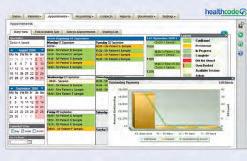

Client management and financial control is the lifeblood of any enterprise. The latest Healthcode online ePractice management tool is the professional’s choice for practice management, giving you the control you need wherever you are. Our ePractice management solution meets the needs of a range of healthcare providers, from independent practitioners to large enterprise organisations. Our different service levels mean that ePractice will grow with your practice.
Access your patient details, appointments, bills and financial status from anywhere, any time.
The diary management feature on ePractice manager means I can focus on treating patients, while my PA is able to coordinate my appointments remotely.
Mr Barlow-Kearsley, Founder, Total Footcare Solutions
We use Healthcode’s ePractice manager system for all our invoicing, which streamlines everything for us. Roughly 75% of our invoices are submitted electronically, payments are now made much more quickly, which is good for the cash-flow.
John Morgan, Accounts Director, Jenny Morgan Secretariat




Call us today to arrange a demo and to discuss your requirements on 01784 263 150 quoting: IPT. For further information visit: www.healthcode.co.uk/ipt