The business journal for doctors in private practice
Special report
Keeping patient data safe
Advice on how to conform with the Data Protection Act when sharing patients’ information P10
Groups: a whole bunch of trouble The billing and collection problems of being part of a group P36
Pensions tax chaos
By Robin Stride
Independent practitioners are being alerted to gear up for far bigger tax payments than expected from January 2018 following new pension rules.
Changes in the pension savings annual allowance rules in the 2016-17 tax year mean many will face an additional hit of £11,000 –and some nearly double that.
And specialist medical accountants warn that more consultants, and some private GPs, will be caught by the revised regulations in future years.
One accountant told Independent Practitioner Today: ‘Our concern is that, for many consultants, this problem is off their radar and many will be unprepared for the potential problem.
‘We would therefore recommend they take action early and speak to their accountants and independent financial advisers.
‘This is further compounded by the fact that, in many cases, NHS Pensions will not be providing information to enable an accurate assessment of this at an early stage.’
Des Liddy, director at accountants Hall Liddy in Manchester,
added: ‘The new rules will catch many consultants who will no longer have the fall-back of the NHS Pension Scheme being able to pay the liability.’
He explained that the problem, raised at the Association of Independent Specialist Medical Accountants’ annual conference last month, was twofold.
Firstly, the 2016-17 tax year saw a change in the pension savings annual allowance rules. NHS consultants could previously rely on a £40,000 allowance to cover the notional growth in their pension benefits in any year.
With the exception of years where they had increases in their pensionable pay, the allowance was usually sufficient to cover the growth.
But, since April 2016, the allowance is tapered down based on ‘deemed’ earnings and could be cut to as little as £10,000. The problem lies in what deemed earnings represent, where a taxpayer has taxable income over £110,000.
If a consultant’s taxable income exceeds £110,000, then deemed earnings are based on the actual taxable income plus a calculation of the benefits of the pension growth.
Superannuation is losing its ‘super’ How you can beat the Government changes that are trying to quash your plans for later life P40
Mr Liddy said if, for example, a consultant had NHS income of £100,000, private practice income of £40,000, rental income of £10,000 and a notional pension growth of £30,000, in the past there would be no further tax to pay, as the pension growth was below the £40,000 limit.
But under the new rules, the combined notional income is now £180,000 and, as a result, the tapered allowance is cut to £20,000. As this is below the deemed pension growth of £30,000, then tax is chargeable on the excess of £10,000; in this case at 45%, meaning £4,500 of additional tax.
The second issue is who can pay the tax. Mr Liddy said: ‘In the past, if a consultant had an annual allowance tax charge, they always had the option for the NHS Scheme to pay it on their behalf if they did not have the funds to pay it.
‘However, the current rules only allow for the scheme to pay any tax due on growth in excess of the £40,000 allowance.’
Therefore, in the above example, as the growth is below £40,000, the scheme is unable to pay the tax and the consultant must pay it.
If this charge fell within the 201617 tax year, then the tax is due in January 2018. To make things worse, it also impacts in the payment on account due in January for the 2017-18 tax year. So, in this case, the additional payment in January 2018 will be £6,750.
Mr Liddy said NHS Pensions was only obliged to provide information to a consultant where they have breached pension growth levels of £40,000 in any one year. So if the pension growth is only £30,000, it will not automatically calculate the amount even though there could still be a tax charge due.
➱ continued on page 7
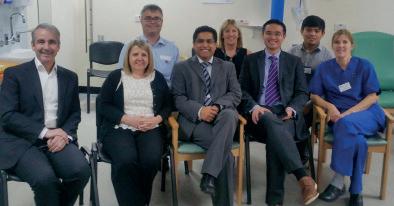
ORThO-pedaliSTS: New group Total Orthopaedics, based at highgate private hospital, launched with a london to Brighton team cycle ride alongside friends for cancer research. Mr pinak Ray (2nd from left), Mr Joyti Saksena (3rd from left), Mr Rajiv Bajekal (4th from left), Mr Simon Mellor (2nd from right), Mr Bob Chatterjee (far right). See their group formation story next month
How to guard patients’ data a lawyer gives some in-depth advice on data protection in private practice P14
a new age of consent a surgeon reveals his innovative project that helps with new consent law P20
make your party go with a swing tips on organising a social event that can be a big investment in your business P24
Between dvla and the deep blue sea a medico-legal adviser examines how the fitness-to-drive rules affect doctors P28
what makes a good PPU? advice on how to boost both custom and performance at private patient units P30
the goods can get bad and ugly the product liability issues doctors must look out for when selling equipment P34
If
too good to be true
With interest rates failing to beat inflation, normally riskaverse investors can find their attentions turning to riskier alternatives. But sophisticated fraudsters are out there.
Doctors could be tempted to try something offering a defined or high return with a minimum level of risk.
But history is littered with examples of where this has backfired and now specialist financial advisers Cavendish Medical are warning to be wary of rising scams (see story right). Watch out if the phone line sounds cheap, the caller chats to break down resistance and
gives a sales line such as ‘I’ve been given the green light to release the investment to selected investors’.
Be on your guard if they say the investment is so good they have put their own money in it or they promise to post or email details but this never arrives so they have a reason to call you again to reinforce the message.
Always phone the company on the switchboard number, check its credentials with the FCA register or Companies House, review its website – is there a real street address? Refuse to be rushed and take financial advice before proceeding.
tell US yoUr newS Editorial director Robin Stride at robin@ip-today.co.uk Phone: 07909 997340 @robinstride to advertiSe Contact advertising manager Margaret Floate at margifloate@btinternet.com Phone: 01483 824094
to SUBScriBe lisa@marketingcentre.co.uk Phone 01752 312140
Publisher: Gillian Nineham at gill@ip-today.co.uk Phone: 07767 353897
Head of design: Jonathan Anstee chief sub-editor: Vincent Dawe Circulation figures verified by the Audit Bureau of Circulations
Guard against pension fraud
By leslie Berry
Doctors are being warned to protect themselves against fraudsters using ‘pension liberation’ stings encouraging victims to cash in their private pensions before they reach 55.
The scams offer to help investors release pension cash, claiming it is simply ‘borrowing money’ from their own pension fund.
But doing so before the investor turns 55 will generate a tax bill of 55% of the amount accessed, unless you are suffering from illhealth.
The tax bill rises with a penalty to 70% of the amount claimed in cash if undeclared to HM Revenue and Customs.
Specialist financial planners Cavendish Medical said liberation schemes were long established but the number of cases, and more exotic-sounding schemes, had risen since new pensions freedom reforms were introduced.
fraudulent company – often based abroad. The fee for doing so was up to 30%, rarely recoverable, and left-over funds could be minimal.
Even if advised by a seemingly reputable UK-based company, there could still be issues. There was still evidence of doctors suffering financial losses after investing in illiquid funds or assets held in Self Invested Personal Pensions (SIPPs).
These investments were often high-risk and unregulated, usually connected to UK or overseas property development but also forestry, solar power or new technologies.
cavendish medical boss, Simon Bruce
Confusion over what people can and cannot do with their pensions played into fraudsters’ hands.
Chief executive Simon Bruce said victims agreed to transfer their pension from a legitimate scheme to a new one set up by the
Mr Bruce added: ‘Sadly the investments are unlikely to be suitable for consultants, who should be classified as “retail clients”.
‘Individuals should be wary of any adviser trying to record them as a “highnet-worth” or “sophisticated investors” – even if they consider they are or meet the criteria presented by the adviser.
‘This flattery is not just part of the sales pitch – it means the adviser is able to sell unregulated investments to you and will result in less protection from the regulator when the time comes to complain.’
Insurers’ pact queried
AXA-PPP’s management of private medical insurance claims on behalf of The Exeter insurance company has been questioned by an Independent Practitioner Today subscriber.
The consultant said this meant the big insurer’s healthcare fee schedule and billing principals now applied to Exeter patients and expressed surprise this could happen as they were separate organisations and in competition with each other.
An Exeter spokesman responded: ‘The Exeter remain an independent provider in the UK health insurance market. The agreement with AXA-PPP Bristol provides our members with an improved claims management service, with improved opening hours and an increased number of medical experts who are on call to help manage claims.
‘The Exeter does not hold contracts with any consultants that provide services to our members.’
Insurance tax rise battle intensifies
By olive carterton
A campaign to fight any further rises in insurance premium tax on private health insurance was set to be resumed as we went to press.
The Association of Medical Insurance Intermediaries (AMII) launched a petition against any increase in insurance premium tax ( Independent Practitioner Today , April 2017) with the aim of securing 100,000 signatures within six months so the whole issue can be debated in Parliament.
But the snap General Election meant it had to put the petition on ice until the new Parliament.
AMII chairman Stuart Scullion warned: ‘We are not going to stand back and watch any political party wreak havoc with the
Performance body to ‘out’ late-comers
Private hospitals and units are set to be ‘named and shamed’ for continuing to fail to provide their data to the Private Healthcare Information Network (PHIN).
Most of those said to be dragging their feet are smaller independent units and dozens of NHS private patient units (PPUs).
Over 230 units have provided information on basic performance measures: activity volumes, length of stay and patient feedback.
The target date for official PHIN publication of consultant-level performance measures had to be scrapped last January to give slow hospitals more time to complete their data.
Publication of consultant performance measures is due next April, with consultant fees to be published on the PHIN website a year later.
healthcare industry by the unreasonable increase in insurance premium tax in the interests of the consumer. Healthcare spend should be tax-exempt, as it is across much of Europe.’
Labour plans to increase the rate of insurance premium tax to 20% for private healthcare insurance to fund free parking at NHS England hospitals have been attacked by insurers and private hospitals.
Mr Scullion said: ‘Private medical insurance (PMI) is not some executive perk for the wealthy. It is purchased by almost four million working- and middle-class people who want to take a responsibility for their own health and well-being. Increasing insurance premium tax will simply force those who are willing and able to
buy PMI back into an already overstretched NHS.’
Insurance premium tax has rocketed under the Conservatives, rising from 6% to 9.5% in November 2015 and to 10% last November. This month it increased to 12% – a move condemned widely in the industry by doctors, Bupa, and other insurers.
Mr Scullion said: ‘There are just under one million consumer purchasers of PMI, including many older citizens, who are going to be forced back into using NHS services if the cost of their PMI becomes unsustainable.
‘How does that benefit the NHS? I would be keen to see how the Labour Party has costed its plans whereby they can be confident of a net benefit to the NHS and its
users through the removal of hospital parking charges.’
He said a more creative approach would be to look at how the capability of the private sector could be harnessed to reduce the strain on the NHS, operationally, financially and by reducing waiting lists.
Fiona Booth, chief executive of the Association of Independent Healthcare Organisations, also hit out at Labour’s proposal, saying it would hurt rather than help the NHS and discourage people from taking out PMI – leading to longer waits for all patients.
☛ Add your signature to the campaign at amii.org.uk/iptpetition
Gastroenterology centre opens
HCA Healthcare UK has launched a new centre of excellence for gastro enterology, giving a range of services at The Princess Grace Hospital.
The London Digestive Centre, a purpose-built 12,000 square foot facility, brings all of the hospital’s clinical expertise together under one roof in a specialised outpatient centre.
There are 17 consulting rooms at the 41 Welbeck Street site in Mary lebone and 40 consultants have practising privileges
Private GP appointments will also be available at the facility, and ENT appointments.
Medical director and consultant general surgeon Prof Ameet Patel said: ‘With this integrated approach to digestive healthcare, we’re able to ensure patients get the care they need as soon as possible.
‘Consultants can cross-refer to each other when appropriate and being in one location means we can liaise with each other efficiently.
‘The equipment at London Digestive Centre has been tailored specially to the needs of digestive, liver and pancreatic services, meaning that we can provide the best possible care for our patients.’
The centre will enable patients to benefit from innovations and expertise from across the HCA Healthcare UK group.
Chief executive Charlotte Temp-
est called the centre ‘a real asset’ for the hospital.
She said: ‘The centre will enable us to continue providing worldclass care to our patients in purpose-built, state-of-the-art facilities, with staff working as part of multidisciplinary teams, as well as using live-streaming technology to engage with specialists from around the globe.’
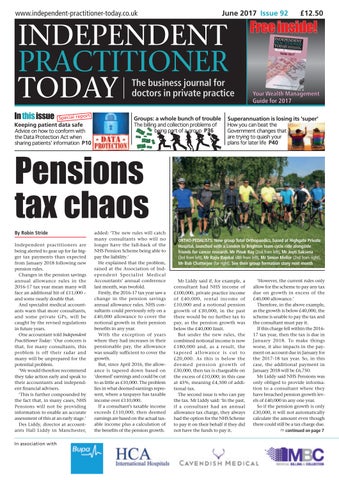
charlotte tempest, chief executive of the Princess grace Hospital, and Prof ameet Patel, medical director, at the digestive centre’s opening ceremony
Stuart Scullion, amii chairman
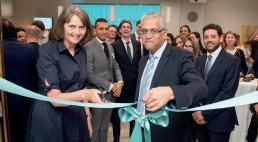
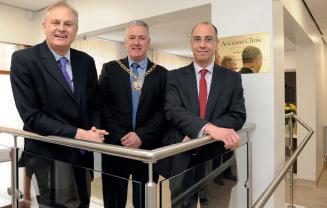
from left to right: stewart Jackson MP, the Mayor of Peterborough Cllr david sanders and the founder of Avicenna Clinic dr hany elmadbouh
Poll reveals extent of patients’ doctor angst
Nearly a quarter of patients in Britain fear the doctor’s waiting room, according to new research.
A survey of 2,000 adults found 24% were anxious about visiting their GP surgery.
Eight in ten of those who admit to these fears hesitate to seek medical advice from doctors, dentists and opticians regularly as a result.
One-stop clinic opened
A new consultant-led private healthcare clinic in Peterborough has been officially opened by the city’s mayor, councillor David Sanders, and MP Stewart Jackson.
Avicenna Clinic is offering a range of services including diagnostics and imaging, private GP services and minimally invasive surgery.
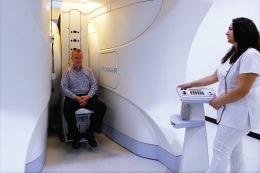
Doctors at the purpose-built clinic in the town centre said it was the first in the area to have an open MRI scanner.
Radiologist and founder Dr Hany Elmadbouh said this was ideal for claustrophobic patients,
as it did not have the ‘tunnel-like’ scanning area associated with conventional MRI machines. Larger patients could also benefit from the less confined space.
He added: ‘Our investment in such technology also allows us to offer a one-stop service where diagnosis and initiation of treatment can be undertaken in a single visit rather than a series of appointments.
‘This means a much more flexible and convenient service for patients designed to lessen the overall waiting times and stress related to waiting for results that
can often stretch over several days or weeks.
‘More important than the equipment, of course, is the people. Our services and treatments are practised by a growing team of consultants – all of whom are among the most experienced in their fields of medicine. It is our aim to provide more choice for patients in this area, who would otherwise have to travel far and wide to seek the best available treatment.’
The clinic’s building was recently renovated to accommodate the practice operating over three floors.
A fear of the unknown or finding a previously unknown health problem (69%) was the number one reason for these kinds of fears.
A phobia of medical equipment, such as needles, the dentist’s drill and eye examination equipment, was the source of worry for 52%.
A bad experience during childhood (45%) was the third most popular reason for disliking the doctors, while a more recent bad experience was the source of anxiety for more than a fifth (22%).
Having a potentially painful experience during an appointment was a worry for 14%.
The survey was released by medical negligence specialists Fletchers Solicitors.
Offer to cut NHS waiting
By a staff reporter
Independent hospitals are calling on the NHS to take advantage of their capacity to treat patients and avoid major delays to elective surgery waiting lists.
Recently leaked documents have revealed the number of NHS patients waiting longer than 18 weeks for operations such as hip, knee and cataract surgery could more than double in two years, after NHS England removed the target in its Next Steps on the NHS Five Year Forward View report.
The Association of Independent Healthcare Organisations (AIHO) said the NHS should continue to refer NHS-funded patients to independent hospitals for treatment, using the sector’s extra capacity to keep waiting times low.
Disa Young, AIHO external affairs manager, said: ‘The independent sector has additional capacity to help NHS trusts meet the 18-week target, at a cost set by the NHS.
‘Longer waiting lists mean more people waiting in pain and knockon effects on the wider economy
disa young of the Association of Independent Healthcare Organisations
due to increased sick leave, absenteeism and lower work productivity.
‘We know providing timely operations is in everyone’s best interest. For example, timely hip
and knee operations carried out by the independent sector contributes an estimated £540m-£692m to the UK economy each year through reduced sick days, improved business productivity, welfare and benefit savings, and savings to the NHS.
‘The independent sector provides safe and high-quality care in the same regulated environment as the NHS and is working to help people return to their daily lives as soon as possible.’
See more on AIHO’s collaborative working on page 26
Fear of cyber attack rife
By Leslie Berry
Fears of an attack on medical devices are rife among both their users and manufacturers, a survey reveals.
As many as 67% of medical device manufacturers and 56% of healthcare delivery organisations (HDOs) believe an attack on a medical device built or in use by their organisation is likely over the next 12 months.
The global study also found:
Only 9% of manufacturers and 5% of HDOs say they test medical devices at least once a year;
But 53% of HDOs and 43% of manufacturers do not test devices at all;
Only 51% of device makers and 44% of HDOs follow US regulator the Food and Drugs Admin istration’s guidance – or equivalent – to mitigate or reduce inherent security risks in medical devices.
The study by software company Synopsys – called ‘Medical Device Security: An Industry Under Attack and Unprepared to Defend’ – also found that roughly onethird of device makers and HDOs are aware of potential adverse effects to patients due to an insecure medical device.
But despite the risk, only 17% of device makers and 15% of HDOs are taking significant steps to prevent such attacks.
The survey was conducted by
Self-pay to be priority for BMI’s new signing
BMI Healthcare’s newly appointed director of market engagement will concentrate primarily on growing and improving the company’s self-pay service.
Richard Gregory, who has a background in healthcare, insurance and international medical assistance, said: ‘BMI Healthcare
the Ponemon Institute, a leading IT security research organisation, aimed to see if device makers and HDOs are in alignment about the need to address cybersecurity risks.
The study surveyed around 550 individuals from manufacturers and HDOs, whose roles involve the security of medical devices, including implantable devices, radiation equipment, diagnostic and monitoring equipment and robots, as well as networking equipment designed specifically for medical devices and mobile medical apps.
Ponemon Institute chairman Dr Larry Ponemon said: ‘The security of medical devices is truly a lifeor-death issue for both device manufacturers and healthcare delivery organisations.
‘According to the findings of the research, attacks on devices are likely and can put patients at risk. Consequently, it is urgent that the medical device industry makes the security of its devices a high priority.’
Mike Ahmadi, global director of critical systems security for Synopsys’ Software Integrity Group, said: ‘These findings underscore the cybersecurity gaps that the healthcare industry desperately needs to address to safeguard the well-being of patients in an increasingly connected and software-driven world.’
has some unique aspects to the service it provides for patients, such as a central patient contact centre and its BMI Card which offers patients the chance to spread the cost of their healthcare.
‘I will be working closely with our key internal and external stakeholders to continue and enhance our efforts in providing a high-quality experience to our patients who choose to pay for themselves.’
Group chief executive Jill Watts said Mr Gregory’s extensive experience in strategic healthcare management and business development would be an asset to the organisation.
He said the healthcare industry continued to struggle with software security.
‘The industry needs to undergo a fundamental shift, building
security into the software development lifecycle and across the software supply chain to ensure medical devices are not only safe, but also secure.’
Other key findings frOM the study
Building secure devices is challenging. 80% of device makers and hdOs report that medical devices are very difficult to secure. the top reasons cited for why devices remain vulnerable include accidental coding errors, lack of knowledge/training on secure coding practices and pressure on development teams to meet product deadlines.
Lack of accountability. While 41% of hdOs believe they are primarily responsible for the security of medical devices, almost onethird of both device makers and hdOs say no one person or function in their organisations is primarily responsible.
Doctors worried by poor online ratings
Doctors are becoming increasingly concerned by negative reviews published on online ratings sites.
A Medical Defence Union (MDU) survey found 100% of hospital doctors and foundation year or training grade professionals, and 64% of GPs, were worried about being sued following a negative review.
Most GPs found negative reviews were based on customer
service issues such as appointments running late or an ineffective booking system.
Consultants, in comparison, found that poor reviews were based on either a delay or failure to diagnose or a competence issue.
The MDU found members in such circumstances were more likely to seek advice from colleagues (79%) or family and friends (36%) than their medical defence organisation (7%).
Majority of healthcare organisations say a cyber attack is likely in next year
Private care gets its own trade fair
By Robin Stride
A new international annual event next year is set to be a showcase for doctor entrepreneurs and private clinics.
The Private Healthcare Show 2018 will run at Earl’s Court Olympia on 13-14 March and focus on commercial opportunities for the sector.
A secondary focus of the event is to provide networking opportunities for governments and health professionals for possible co-operation on a variety of healthcare issues.
Organisers say the show will bring together health professionals, industry leaders, sources of funding, and manufacturers and suppliers of products and services.
Event director Dawn BarclayRoss told Independent Practitioner
Today: ‘We have had an unprecedented response to the launch and support for the show in its inaugural year has been overwhelming.
‘For entrepreneurial doctors with clinics and practices in the private sector, exhibiting is a must and you can expect to see a very pleasing return on investment as a result of our international hosted buyer programme.’
She said the show looked forward to welcoming health professionals from all sectors of the industry. Many had already preregistered for a free ticket to attend the international exhibition.
A free tandem forum will have a live panel debate and there will be excellence, innovation and
Doctors flock to new private unit
Nottingham’s newest hospital has announced it has secured the services of many of the region’s top consultants.
Spire Nottingham Hospital, in Tollerton, said 112 consultants had been given practising privileges and it was aiming for this to rise to 200 by the end of this year.
It opened its door to patients after a two-year building project costing almost £60m.
The 58-bed hospital contains five theatres along with the latest in MRI scanning and robotic imaging technology.
As the hospital prepared to open, director Will Pressley said: ‘This is a great day for healthcare services, not just in Nottinghamshire, but throughout the East Midlands.
‘I am very proud of the services we can offer and I have also been
impressed with the engagement and interest shown to us by the medical community as a whole.’
One of the features at the unit is the ‘hybrid theatre’ containing the Siemens Artis Zeego unique robotic imaging technology.
Costing £1.5m, it will help surgeons in in a range of specialties, including heart and chest operations, brain surgery, joint replacements and complex spinal surgery.
It is expected the hospital will eventually create 300 new jobs and positions are still open for a variety of posts.
Hospital facilities include:
42 inpatient ensuite bedrooms;
11 day-care pods;
Five critical care beds (level 2 and 3) including one isolation room;
achievement awards to ‘shine a light on the movers and shakers in private healthcare and celebrate the highest achievers, innovators, leaders, trailblazers and champions in the sector.’
Ms Barclay-Ross said: ‘As governments and other stakeholders strive to deliver effective, efficient and equitable care with less budget, they do so in an ecosystem that is undergoing a dramatic and fundamental shift.
‘There is a clear need for an international trade exhibition in the UK dedicated to the private healthcare market. This innovative show will open up the current UK healthcare system for world trade.’
Delegates, including senior decision-makers from government
bodies, health professionals, executives from leading organisations and members of various associations and institutes, are being promised the opportunity to participate in debates, keynote speeches, presentations and panel discussions on a range of healthrelated business issues.
Organisers said the show would provide an ideal opportunity to network and build relationships on an international scale, share healthcare priorities and discuss ways to co-operate.
open for business: Hospital director will pressley and staff at Spire Nottingham get ready to welcome the first patients
Five theatres – four with laminar flow. This includes one minor ops theatre on the ground floor within the outpatients department and one hybrid theatre with integral imaging;
Endoscopy suite;
Outpatients department with
20 consulting rooms – including pre-assessment and treatment rooms;
Oncology suite;
Radiology department – 3T MRI, CT and X-ray; Pharmacy and physiotherapy services.
Dawn Barclay-Ross, director of the private Healthcare Show at earl’s Court olympia in March 2018
Support service backed
By Charles King
A contract for a free service offering confidential emotional support for doctors involved in fitness-topractise cases has been extended by the GMC for another 12 months.
The council first commissioned the BMA to run the Doctor Support Service after a successful pilot in 2012. Since then, it has provided assistance to hundreds of doctors and the contract has now been extended until at least April 2018.
It is run on behalf of the GMC by the BMA Doctors for Doctors Unit – doctors trained and experienced in providing peer support.
The GMC stressed the service was ‘totally separate’ from the regulator, which does not get informed if a doctor uses the service.
Users do not have to be BMA members to access it. As well as fitness to practise, it can also support doctors going through a GMC process to withdraw their licence to practise.
GMC chief executive Charlie Massey said: ‘Many doctors will be the subject of a complaint at some point in their career, and the GMC has a legal obligation to investigate any allegations which suggest patients could be at risk as a result of a doctor breaching our standards.
‘We know an investigation can be stressful for everyone involved and we are doing what we can to lessen the stress both on doctors and complainants.’
More than 500 doctors have used the service since it launched, and anonymised feedback to the GMC from the BMA is that doc-
Pension tax problem
➱ continued from front page
Accountant Des Liddy warned that the complexity of the new rules left consultants open to HMRC investigations for non-declaration of tax even though they had never received information to assess their position.
‘We would recommend that all consultants request a Pensions Savings Statement for the 2013-14 to 2016-17 tax years from NHS Pensions now in advance of preparing their 2016-17 tax data. NHS Pensions is likely to have a significant number of requests leading to delays in the provision of information.’
There may be some degree of protection, as consultants can utilise any unused allowance from previous tax years, which could dampen down the impact.
But each case would need to be reviewed on its own merits, as the tax charge will vary depending on a consultant’s total income and any NHS pay rises in the past four years.
Mr Liddy warned: ‘Unless there is a change in the pension tax
relief rules under the new Government, it will be a problem in future tax years. The charge will increasingly catch more consultants year on year. This is not a problem for the few – it is now one for the many.’
Consultants therefore needed to prepare early and start to expect higher tax payments ahead, in addition to their tax bills due next month.
Simon Bruce, chief executive of Cavendish Medical financial advisers, predicted some January tax bills could be as much as £20,000 more than expected.
He said: ‘The problem has been brewing with the much-reduced annual allowance and, for many consultants, they will have run out of spare capacity in their pension funding and this will hit their payments on account in January 2018.
‘It’s great that accountants are also making a noise about this because it’s something we’ve been banging the drum on for a number of years.’
See page 40 and 44
tors find it very helpful and reassuring to be able to talk in confidence to other doctors.
Mr Massey said: ‘Fellow doctors are uniquely placed to understand the type of pressure users of the service are under, which is what makes the service so important.’
The head of the BMA Doctors for Doctors Unit, Dr Michael Peters, said: ‘The Doctor Support Service has emotionally supported many doctors during their fitnessto-practise cases – what could be described as one of the most difficult points in their careers.
‘What makes this service unique is the confidential peer-to-peer advice we offer from someone who can truly understand what callers are going through, allowing us to best look after doctors so they can best look after patients.
‘Investigations into a doctor’s
How to get Help
Doctors can call the Doctor Support Service on 020 7383 6707 between 9am and 5pm Monday to Friday, or email them at doctorsupportservice@bma. org.uk
As well as the phone service for doctors, the gMC also commissions a free, confidential emotional support service for patients and members of the public involved in the investigation process. It is run by the charity Victim Support and can be accessed by calling 0161 200 1956.
practice can be extremely stressful regardless of the outcome and so it’s important to help doctors to cope with this process.’
west Midlands unit opens after revamp
Spire parkway private hospital in Solihull, near Birmingham, has finished a two-year £9m development programme. this includes the opening of a Specialist Care Centre for cancer treatment, a new operating theatre, an endoscopy suite, and a stand-alone pre-operative assessment unit.
It has also seen the total refurbishment of the hospital’s 39 bedrooms, day-care unit, wards and nursing stations.
the Spire Specialist Care Centre, recently awarded the Macmillan Quality environment Mark, offers chemotherapy and supportive treatments with consultants now running their clinics from the new centre. A Rapid Access Breast Clinic together with haemato-oncology treatments are also part of the service.
Hospital director tony Yates said it had been ‘tremendous’ to see how the hospital had developed and great to see the new elements working on a daily basis.
Give staff a slice of the action
Incentivising staff, particularly key members of your practice, is crucial if you want to ensure they stay for a long time. Could you be providing more when it comes to rewards and benefits? Susan Hutter gives some useful pointers
Share optionS are available to consultants who trade as limited companies.
it’s a great way to both incentivise and tie in key employees – for example, the chief operations officer, practice manager, finance director or even a financial controller who knows your business inside and out.
r emember, your staff are the most important asset and they go home every night. however, if you gift shares to a staff member, they will end up having a personal tax liability and very few staff will want to pay that.
therefore, set up a formal share option scheme instead, which gives employees the option to buy shares at a later date at the price set at the point of the grant of the option.
For example, let’s say the shares you offer a staff member, set at date of option by agreement with hMrC, are worth £10,000, then let’s say you decide to sell the company in five years’ time and the company has doubled in value. at the date of completion of the sale, the staff member’s shares will be worth £20,000. as the shares have gone up, the option holder will exercise their option and receive the £20,000. t hey will then pay the original
£10,000. t he profit for them is £10,000 and this will be taxable.
Setting up share option agreements does involve getting advice and help from advisers including lawyers and accountants – so do factor in the cost of fees of setting it up.
that said, even if you are only giving one employee share options, they could be a key player in your business and you will reap the benefits of them staying as long as possible in your business.
t he formal title of the agreement is e nterprise Management incentives (eMi). only eMis give favourable tax treatment on exit.
if one of your staff is, say, a junior surgeon or any other type of medic and they are an employee of your company, then they can be part of eMi.
h owever, if they are selfemployed, they can still be given an option or gifted shares. t he issue here is that the shares have to be valued and also taxed at the date of gift by h M r C at income tax rates.
Growth Shares
Growth shares are deemed to have no value at the date of gift. this avoids the income tax issues explained under the share option scheme. You would have to value
your company at the date the growth shares were gifted to the staff member.
Let’s say the value comes to £1m. You then give a key staff member, say, 20% of the business; but not 20% of the original shares, only 20% of the value going forward.
So you would issue them with a different class of share – the growth shares. Let’s say the business sells in a few year’s time for £2m; you would receive 100% of the original £1m and 80% of the increase, £1m. this obviously means that the staff member would receive 20% of £1m. this would be subject to capital gains tax.
Cash bonuses
You may want to incentivise your staff by giving cash bonuses for extra special work such as successful debt collection or any other specific targets reached.
But staff will have to pay tax for any cash bonus, so you need to factor this in when deciding on the amount.
Other benefits
Private medical insurance
Giving staff members private medical insurance – even if you have a good network of contacts working in different areas of medicine – is a
taxable benefit worth its weight in gold. it goes a long way to ensure your employee does not have to unnecessarily linger or mean they take extended sickness leave. i f you have a secretary who needs a hip replacement, you want to ensure they won’t have to wait too long for treatment, so they can return to work sooner rather than later.
Season ticket loan
i f you have staff that commute from outside the town or city where you work, do factor in that the price of transport can be high and the cost of an annual season ticket can be a hefty sum for staff to pay up front.
For a trusted and long-term staff member, you could pay for their season ticket and then the staff member pays back out of net salary over, say, a 12-month period. But do factor whether their net monthly salary could recoup costs in case the employee leaves before the 12 month period. You don’t want to be left high and dry.
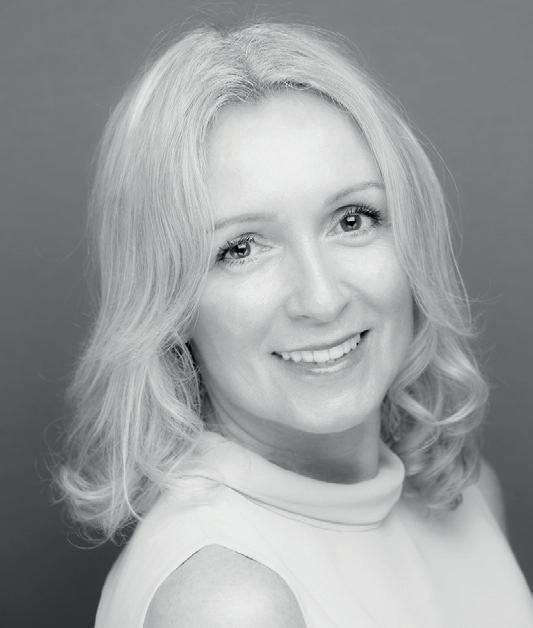
Susan Hutter (pictured right) is a specialist medical accountant and a partner at Shelley Stock Hutter
Keeping data safe
It is often necessary to share patient data with others involved in providing or funding their care, but how can you be sure this sensitive information will reach the correct person quickly and be safe from prying eyes?
As Healthcode’s Peter Connor (right) explains, technology holds the key to secure communication, provided you have appropriate safeguards in place
7
safe when sharing
EffEctivE clinical care is not provided in isolation. in order to do the best for your private patients, you may need to confer with members of the multidisciplinary care team and the hospital where they are to undergo a procedure, plus contact their insurer.
But, as with any precious cargo, when you dispatch personal healthcare data to another person, it becomes vulnerable. as an independent practitioner, the loss of patient data ‘in transit’ has the potential to undermine your relationship with the patient and seriously damage your reputation.
You can be heavily fined for serious breaches of the Data Protection act (DPa) and, of course, the GMc may investigate the fitness to practise of those who fail to meet its confidentiality standards.
i n fact, the regulator’s new Confidentiality guidance1 says that doctors responsible for managing patient information must make sure it is transferred in line with data protection law. it adds: ‘You should make use of professional expertise when selecting and developing systems to record, access and send electronic data.’
Taking risks
With so much at stake, it is perhaps surprising that the health sector is consistently the ‘worst offender’ in the data security incident trends produced by the i nformation c ommissioner’s Office ( ic O), the UK’s personal data watchdog.
i n fairness, such incidents are routinely reported in the n HS, which is not necessarily the case in other sectors. However, given the likely sensitivity of the information, it’s still worrying that there were 221 data incidents in
When you dispatch personal healthcare data to another person, it becomes vulnerable
healthcare settings between October and December 2016.
interestingly, the icO’s figures dispel the common misconception about data security, which is that electronic data is most susceptible to loss or theft.
i n fact, the most common reported incident in the latest statistics was ‘loss/theft of paperwork’ (52 cases), while another 46 cases involved data being ‘faxed or posted to the incorrect recipient’.2
the reality is that physical doc
Reconnecting Women’s Health
The 18th-century Dumfries House Estate provides a unique setting for a developing new education facility and the first in a series of joint education programmes with partners. The programme includes:
Understanding the physiology of the menstrual cycle and what can go wrong
Exploring the meaning of integrated care
Understanding the importance of a holistic approach to women’s health
Understanding how different conditions can be treated
Developing a good in-depth understanding of care in a logical way
Having time to cross-pollinate and share ideas.
Seven hours of CPD. Fees: Full conference rate: £175
Day rate: £100
Half-day rate: £75
Discounted rates available for all students/trainees/complementary therapists. Evening dinner will be an additional charge of £50 per person. Accommodation is not included in full conference rate fee.
A two-day conference, open to all healthcare professionals, designed to provide a logical understanding of an integrated approach to comprehensive women’s health.
FIvE-POInT PlAn FOR SECURE COMMUnICATIOn
Encryption is an important part of secure communication, but it should not be considered in isolation. Your practice also needs to consider a range of measures to safeguard data when it is on the move.
Bear in mind that the GMC expects doctors to make information readily available to their patients, explaining how their information is processed.
It’s therefore important to have credible arrangements for ensuring their privacy, which should be reviewed at regular intervals.
We think these should be a priority:
Practice policies and procedures: Your practice’s information security policy must include a clear guidelines for secure communication and the appropriate use of email (Healthcode still receives emails which include screenshots of invoices with unredacted patient information). For example, there should be a requirement to ensure personal information is transmitted securely, restrictions on the use of personal devices and unsecure personal email accounts; checks to ensure new recipients’ arrangements are secure before messages are sent; and disabling email functions such as auto-complete addresses that can lead to personal information being sent to the wrong person.
Staff training and supervision: There should be a senior, designated member of staff accountable for data protection to ensure staff are properly supervised and receive induction and regular refresher training in data protection. It should be clear in staff contracts that disciplinary action may be taken for employees who fail to comply with data protection rules and procedures – for instance, by sharing passwords. Staff should have access only to the information
uments can easily go astray. this is borne out by the recent revelation that more than 700,000 items of medical correspondence – including test results and treatment details – had not been delivered to general practices by the n HS’s internal post service, but had instead been left in a warehouse for up to five years.3
What is more, hard copies are often harder to track down once lost and there is nothing to prevent the documents being read by anyone who finds them, whether they are honest or have criminal intentions.
By contrast, electronic documents can be effectively protected from loss or misuse when sent to others, provided you implement the appropriate processes and technology within your practice. for the avoidance of doubt, regular email is inherently insecure and should never be used to send invoices or identifiable patient information.
Data scrambling the surest way to protect patient data is by ensuring it can only be
read by those with authorised access. t his is achieved by encrypting the document.
Put simply, this means converting plain text information into unintelligible code before it is stored or sent to another person. Only authorised users with the correct password or key will be able to unscramble and read the contents.
Encryption adds an extra layer of protection when sharing data, as it means that even when a document has fallen into the wrong hands, it is virtually impossible to break the code.
a s you might expect, it is strongly recommended by the icO which says: ‘When transmitting personal data over the internet, particularly sensitive personal data, data controllers should use an encrypted communication protocol (e.g. the latest version of tlS) ‘ t his also applies when transmitting any data over a wireless communication network (e.g wifi) or when the data will pass through an untrusted network.’4 to emphasise the point, the icO also says that where personal data
they need to do their job. For example, your receptionist may need a patient’s address but not their full medical history.
Arrangements with third-party contractors: Ensure you have confidentiality agreements in place with service providers – from IT providers to cleaning companies. If you send information to others to process on your behalf, such as billing services or cloud-based data storage, the Information Commissioners Office expects you to:
l Choose a company ‘that provides sufficient guarantees about its security measures to protect the processing it will do for you’;
l Take reasonable steps to check that those security measures are being put into practice;
l Ensure the terms and conditions or contract comply with data protection laws. Healthcode’s Information Security Management System complies with the latest BSI standard (ISO/IEC 27001:2013).
Up-to-date software: Ensure you are using the latest software, as older versions may no longer be supported and are less secure. For example, Healthcode has warned practices not to access our services through Internet Explorer 7 and Internet Explorer 8 after Microsoft ended its support for these internet browsers.
IT security: If your practice computers are being used to send and receive information – even if it is encrypted – you should take steps to protect them from viruses and other malware that allow criminals to access, corrupt or steal data, most obviously through malicious emails. We’ll discuss this in more detail next time, but, as a bare minimum, you need a reputable anti-virus software and separate log-in and passwords to authenticate users.
has been stolen, lost or subjected to unauthorised access ‘and where encryption software has not been used to protect the data, regulatory action may be pursued’.
sending data securely as an independent practitioner, there are a number of possibilities when it comes to sending encrypted data, which i have outlined below.
However, it’s best to seek specific advice from an it specialist to ensure the solution you use adheres to the latest encryption standards and is workable in your practice.
➲DVDs and USB devices: Encrypted personal data can be stored on a physical format and sent by post or courier, provided you have the time.
a lthough encryption protects the data, you still need to assess the risk of the D v D or device being lost in transit. Recorded, signfor delivery will help.
in addition, you would need to ensure that the authorised recipient had the necessary software to decrypt the information and that
the password was sent separately to them.
When it comes to USB storage, you are also reliant on the recipient to securely wipe the device before it is reused so that data cannot be retrieved by someone else.
➲ Secure Email: a s an independent practitioner, you are unlikely to have access to a secure email system, such as n HSMail, but it is possible to encrypt email messages and attachments.
However, be aware that some encrypted email systems require the sender and recipient to have compatible systems to encrypt and decrypt data, which can cause practical difficulties if you are sending information to someone for the first time. there may also be limits on the size of encrypted attachment, which might restrict you from sending images. and again, you would need a secure and separate way of communicating the password/decryption key to the message recipient.
➲ Online file-sharing applications: this allows you to
store the data on a server where you can access it or share it with an authorised person.
Some it companies offer this solution, but there may be filesize restrictions and it is important to check that your data is encrypted and not publicly accessible. So users should be authenticated with individual log in identifications and passwords.
i f data is being stored on the cloud, you need to ensure that the service provider is using data centres located within the European Economic area or a territory with ‘an adequate level of protection’. the icO has produced guidance on this complex area.5
Ultimately, you may find it more reassuring to stick to providers that hold data only on private secure servers within the UK. f or example, Healthcode’s secure messaging service, which is freely available to practitioners through t he Private Practice
By using technology appropriately, you can mount a robust line of defence against the risk of data breaches
Register, enables you to securely share sensitive and confidential files with individuals or specifically created contact groups on our global directory of private hospitals, private medical insurers and practitioner users.
Data is held in a secure UK location and is only accessible via encrypted network connections, while backups are separately and securely stored, also in line with icO recommendations.
a lthough you will regularly have to share patient information to ensure they receive the best service, there is a danger that this aspect of independent practice could become your data protection achilles heel.
On the other hand, by using technology appropriately, you can mount a robust line of defence against the risk of data breaches.
Next month – protect your practice from cyber criminals
“ Kay looks after calls when our team is busy. The result? More appointments, outstanding service levels.”
Moneypenny client since 2015
Moneypenny will support your existing team by looking after overflow calls whenever you need – sending detailed messages back to your practice.
References
1. Confidentiality: good practice in handling patient information; GMC, January 2017 (paragraph 128). www.gmc-uk.org/ guidance/ethical_guidance/30623.asp.
2. Data security incidents trends; ICO, 3 February 2017. https://ico.org.uk/actionweve-taken/data-security-incidenttrends/
3. ‘NHS accused of covering up huge data loss that put thousands at risk’; Guardian, 27 February 2017. www.theguardian. com/society/2017/feb/26/nhs-accused-ofcovering-up-huge-data-loss-that-putthousands-at-risk.
4. Encryption; ICO, March 2016. https:// ico.org.uk/for-organisations/guideto-data-protection/encryption/
5. Sending personal data outside the European Economic Area; ICO, accessed 3 March 2017. https://ico.org.uk/for-organisations/guide-to-data-protection/principle-8-international/
➥ Special Report, part 2: What you need to know to protect patients’ data, see page 14
Kay, Moneypenny Receptionist.
sPEciAl REPoRT 2: DATA PRoTEcTion
What you must know to guard patients’ data
Chris Alderson gives some in-depth advice on data protection in private practice
The way in which services are accessed has been transformed by advances in technology over the past decade and these developments present exciting opportunities for transforming how healthcare can be delivered.
However, when seeking to develop new opportunities, it is essential that independent practitioner entrepreneurs have a clear understanding of the law governing the use of data and ensure that these considerations are incorporated into any project from the outset.
The Information Commissioner (ICO), the UK regulator for matters of data protection, refers to this as ‘privacy by design’.
There can be few things more frustrating for the entrepreneurial doctor than realising a project subsequently has to be reworked because the appropriate data protection considerations were not built into the development of the project from the outset.
The current law governing the use of personal data in the UK is the Data Protection a ct 1998 (DPa). But the law will change on 25 May 2018 when the european General Data Protection r egulation [ e U r egulation 2016/679] (GDPr) will come into effect.
Irrespective of any form of Brexit, the UK Government at the time of going to press has made it clear that UK law will align with european law on this issue.
and this means that some matters that are currently recommendations of good practice – for example, ‘privacy by design’ – will become legal requirements.
Privacy and data security a ny healthcare business will be aware that in order to operate within this field, ensuring confidentiality and the security of data is an essential requirement.
The 7th Data Protection Principle in the DPa states ‘appropriate technical and organisational measures shall be taken against unauthorised or unlawful process of personal data and against accidental loss or destruction of, or damage to persona data.’ In addition, there is supplementary guidance within Schedule 1 of the act including:
Ø The level of security must be appropriate to the harm that could result from the breach of security and the nature of the data to be protected.
Given the nature of healthcare businesses and the potential harm that could result from misuse of health records, it follows that data controllers will need to demonstrate a high level of security and healthcare businesses will need to keep themselves up to date as to the industry standard guidance for security levels appropriate to healthcare data.
Ø The data controller must gain reasonable assurance that employees with access to the data are reliable.
Businesses in the area will need to undertake due diligence checks
Any healthcare business will be aware that in order to operate within this field, ensuring confidentiality and the security of data is an essential requirement
on their staff with access to healthcare data.
Ø Where processing is undertaken by a subcontractor, the data controller must choose a subcontractor who offers sufficient guarantees regarding security and must take reasonable steps to ensure compliance with this.
Ø Where the data controller is contracting out data processing activities, it is necessary for processing to be carried out under a contract made or evidenced in writing under which the data processor can only act on instruction from the data controller and the data processor is placed under equivalent security obligations to those that apply to the data controller.
When a data controller is contracting some of its data processing activities to a data processor, it is essential that there is appropriate due diligence of the data processor’s suitability to be undertaking the task in question. and data controllers must ensure that there is appropriate evidence of this and that the position is reflected in a contract with the data processor.
n ot doing this properly can incur a monetary penalty from the Information commissioner’s Office (I c O). One hospital was fined after audio recordings of doctors’
outpatient letters due to be transcribed by a third party were found to be accessible online.
The data processor used an unsecured server to store the recordings and send the transcripts back to the hospital. The server did not have an authentication process to control access to the transcripts.
In 2015, a patient informed the hospital that transcripts of consultations were accessible via an internet search. The controller took immediate steps to remedy the problem and reported itself to the IcO.
The IcO investigated and found a number of failings by the controller in ensuring the security of personal data. In particular:
The emailing of the recordings to the data processor was unencrypted;
The controller had no guarantee that the processor would use a secure server to store the record
ings and send transcripts to the hospital;
The controller had no guarantee that the processor would erase the recordings after they had been transcribed;
The controller failed to monitor the data processor in relation to any security measures taken and did not have a DPa compliant contract with the processor in relation to the processing.
Bearing in mind the sensitivity of the data – the consultations related to fertility problems requiring discussion of the most intimate aspects of the patients’ lives – the IcO was satisfied that the failure to secure the data was likely to cause the subjects substantial distress.
It also found that the controller should have been aware of the risk, bearing in mind that its policies required encryption of emails and a secure service to be used.
Recognised as a leading provider of private practice support, KMS Professionals can make your life easier, whatever stage you are in your practice life. KMS provides you with stress-free time to treat your patients, whilst the multi-skilled team manage your practice, in a growing and competitive market.
Dedicated and knowledgeable practice teams:
• calls answered in your name
• diary and clinic management
• prompt invoicing
• integrated transcription service
Credit control:
• excellent record of recovering debt
• relationships with insurance companies and embassies
• book keeping service
Extra support for your practice:
• transcription typing service
• phone answering or overflow service
• billing and collection service
Do you ever find you need a little bit of extra help? KMS also provides cover during busy periods, annual leave or unplanned absence: Whatever your requirements, KMS have the experience, resilience and knowledge to provide a solution that’s just right for you, your practice and your patients.
• medico legal service
• website and social media assistance
• scanning paper records
UK Top 20 accountants specialising in the healthcare sector
• AISMA member (Maidstone and Leicester offices)
• 15 offices including London City
• Tax structures for Hospital Consultants - dispelling myths
• Surgeon groups and consortia
• GP Practices including mergers and federations
• Solvent liquidations (for companies at the end of their lives)
For more information please contact:
South East
James Gransby FCA
E: james.gransby@mhllp.co.uk
T: +44 (0)1622 754033
M: +44 (0)7712321899
East Midlands General email: healthcare@mhllp.co.uk www.macintyrehudson.co.uk
Robert Nelson DChA FCA
E: robert.nelson@mhllp.co.uk
T: +44 (0)1162 894289
M: +44 (0)7814009160
But despite the controller being able to demonstrate significant mitigating factors, including a voluntary report to the IcO, full co operation with the I c O’s investigation and substantial remedial action, the IcO imposed a penalty of £200,000 in light of the failing identified.
When planning an online healthcare service, there must be a clear understanding of where data will be processed and stored
and this is on top of the significant damage to the controller’s reputation that had already occurred.
While the maximum penalty for breaches of the DPa is cur rently £500,000, once the GDPr comes into force, the maximum penalty for a data protection breach will be €20m or 4% of global turnover, whichever is the higher.
It should also be noted that while reporting data protection breaches to the regulator is cur rently voluntary, reporting will become mandatory under the GDP r unless the breach is of a nature where risk to the rights of individuals is unlikely.
The power to use personal data
consent of the patient may seem a straightforward and therefore attractive option.
The DPa requires certain conditions to be met before personal data can be used, and in the case of sensitive personal data – which includes health data – there are further conditions that need to be satisfied.
In the case of personal data, the conditions include:
The consent of the data subject;
Processing only what is necessary for the performance of a contract with the data subject or taking steps only at the request of the data subject with a view to entering into a contract;
Processing only what is necessary for the legitimate interests of the data controller or those to whom the data is disclosed, except where this is unwarranted in light of the data subject’s interests.
For sensitive personal data, the justifications include:
The explicit consent of the data subject;
That processing is necessary for medical purposes and is undertaken by persons under an obligation of confidence equivalent to that owed by health professionals.
For a business supplying healthcare services under a contract, the
h owever, it must be borne in mind that once given, consent can be revoked – and if consent is to be used as the justification for processing, the business model must be able to cope with the immediate cessation of data processing in the event consent is later withdrawn.
In practice, while ‘consent’ will be an important part of ensuring that the usage of data is fair and transparent, it is unlikely to be as useful as a ‘justification’ for the processing undertaken.
Under the GDPr, the justifications for processing data will be similar, but the requirements to be able to demonstrate consent will be much more stringent. aside from the need to satisfy the conditions for processing, data controllers are under an obligation to ensure that processing is ‘fair and lawful’ and that appropriate information is given to data subjects as to how their data is to be used.
This is commonly in the form of a subject information notice, sometimes called a privacy notice. Such notices should demonstrate transparency as to how the data is used to ensure that there are no surprises to the data subject as to
Six StepS to A SuCCeSSful online heAlthCAre ServiCe
1
At the outset, map your data flows. identify what information you will need to collect and process, where it is intended that data will flow to, for what purposes and under what safeguards
2
A privacy impact assessment should be undertaken, assessing whether it is necessary for the data to be used in that way, the risks to the data and how those risks will be controlled
3 the outcome of this exercise should give you a clear idea of what further steps will need to be put into place to ensure project success
4
You will need to check that each stage of the project provides appropriate assurance that you are complying with your data protection obligations
5 if you will be using external contractors for data processing, they must be able to commit to the contract terms you have in place. What assurance do you have that a contractor will meet or comply with the contract terms you have in place? if it is not feasible for you to assess their safeguards, are they audited by a reputable independent auditor and will their audit reports be made available to you?
6 for new businesses, it will be cost-effective to build in compliance with the european General Data protection regulation now
how their data is to be used and shared.
Data controllers will be expected to explain in straightforward language:
What data relating to the data subject will be collected;
how it will be used;
The purposes for which it will be used;
how their data may be shared.
secondary uses
If a business providing healthcare services is proposing to use the data it collects for purposes other than the direct delivery of the agreed service to the patient, any secondary uses of the data should be clearly explained and the data subject should be given the opportunity to opt out of such secondary uses.
For example, if the data controller intends to undertake additional analysis of data unconnected with their care, then it will be necessary to either obtain the patient’s consent to this use of their data or to ensure that any such analysis is undertaken on effectively anonymised data. a gain, under the GDP r , the requirements as to the information to be given to data subjects will be more extensive.
If it is anticipated that the online healthcare service is to link into a
patient’s nhS services directly, it is important to be aware that the nhS has its own internal information governance rules and requirements for linkage with external service providers.
If this is a planned function of the service, then the service should be designed with the nhS requirements in mind.
early liaison with nhS Digital, which has responsibility for providing the nhS with information governance guidance, will ensure that the plans for a service are realistic and compliant, thereby enabling any necessary link up with nhS services to proceed.
international transfers of data
When planning an online healthcare service, there must be a clear understanding of where data will be processed and stored. In this context, it is important to bear in mind where personal data may be accessed.
For example, if patient data is stored on a server within the UK, but technical support is supplied via remote access by a technician based in the US, the fact that the data will be accessed in the US means that that element of processing involves an export of personal data to the US.
The 8th Data Protection Principle prohibits the transfer of personal data outside the european economic area unless the recipient is in a country or territory that ensures an adequate level of protection to data subjects in relation to the processing of personal data.
There are certain exceptions to this prohibition:
➫ The european commission has made a decision that the receiving country has an adequate level of protections for personal data. however, at present, the list is limited to a very small number of countries – a ndorra, a rgentina, canada, Faroe Islands, Guernsey, Isle of Man, Israel, Jersey, n ew Zealand, Switzerland, Uruguay.
➫ The recipient must participate in the scheme recognised by the european commission as provid ing an appropriate level of protec tion.
In the US, the ‘Safe harbor’ (sic) Scheme was formerly recognised
the 8th Data protection principle prohibits the transfer of personal data outside the european economic Area unless the recipient is in a country that ensures an adequate level of protection to data subjects
as providing appropriate protection, but following a e uropean court of Justice decision in 2015, it was found that the Safe harbor Scheme was not providing adequate protection. This has now been replaced by the Privacy Shield Scheme.
➫ If the recipient is outside the list of recognised countries and is not a member of the Privacy Shield Scheme, then the main method of ensuring appropriate protection for personal data exported outside the eea is the adoption of the ec model contract clauses governing the processing of such data.
These are template contract terms governing the use of data and the rights of data subjects in relation to that data.
These clauses must be incorporated in any contract the data controller enters into with the overseas data recipient in order to provide appropriate protection.
➫ It is possible for an organisation to have its own internal rules and arrangements recognised by the european commission as providing appropriate protection, as recently occurred with Google cloud. however, for smaller operations, this may not be feasible.
Chris Alderson (below) is a partner and information law specialist at Hempsons Solicitors. Email him at: c.alderson@hempsons.co.uk
Dear Reader,
Subscribing to Independent Practitioner Today is the only way you can be sure you will see every issue and have the option of reading us online using our special page-turnable edition. Don’t risk missing out. Our personal subscription for doctors and managers is only £90 a year and £210 for organisations. But you can cut this to just £75 and £180 respectively if you pay by direct debit. So take advantage of this offer now for our unique business journal dedicated to supporting you in your private practice. We’re confident your subscription will repay itself many times over!
Editorial director
APPlicATion FoR sUbscRiPTion
Instructions to your Bank or Building Society to pay Direct Debits Name and full address of your
Banks and Building Societies may not accept direct debit instructions for some types of
post your application (no postage required – uK only) to: independent practitioner today Subscriptions department, FreepoSt, po Box 36, plymouth, pL1 1Br
pay Direct Debits Name and full address of your bank/Building Society Banks and Building Societies may not accept Direct Debit instructions for some types of account
phone: 01752 312140 Fax: 01752 313162 email: lisa@marketingcentre.co.uk or subscribe online at www.independent-practitioner-today.co.uk if you want to pay by
from your branch of the amount paid.
You can cancel a Direct Debit at any time, by writing to your Bank or Building Society. Please also send a copy of your letter to us.
After reading Independent Practitioner Today’s article entitled ‘So, did you know the law has changed?’ on the Montgomery v Lanarkshire Health Board case and its impact, Mr Paul Y. F. Lee (below) wrote in to tell us about an innovative project he is involved with
Doctors launche D the c onsent Plus initiative to improve the consent process and encourage better dialogue between patients and doctors.
c urrently, c onsent Plus is in use for hip and knee arthroplasty and has received great feedback from patients and healthcare professionals.
t he free service at www. consentplus.com, now in version 3, has been used by over 500 patients and can be used by anyone that wants to learn about surgery.
In england and Wales, there are approximately 160,000 total hip and knee replacement procedures performed each year.
analysis of patient feedback at a national audit revealed that many patients couldn’t remember or fully understand half the risks and complications of surgery.
A new age of consent
A surgical team from the Princess of Wales Hospital in Bridgend has been awarded £75,000 by the Independent Health Foundation to make an animated film to help patients decide if they want to go ahead with knee and hip ops
More than half of the patients have impractical understanding or expectations of the impact of these risks despite having received written information and attended patient educational clinics. this identified that the current consent process for surgery is inconsistent and may be deficient according to the latest uK law.
In the current consent process, patients focus on signing the consent form, rather than actually understanding the risks of surgery and alternative treatment options.
information overload t hey are often overloaded with written information that they don’t understand.
Our article in March assessed the impact of the Montgomery v Lanarkshire Health Board two years after the judgment changed the nature of consent
Information given to patients is subjective and has high variations according to the quality of the communication between doctors and patients.
Furthermore, there are no inbuilt mechanisms to check and document patients’ understanding during this process.
Many patients feel that a form of interactive assessment and animation graphic explanation would help them engage with the process and better understand these surgical risks.
During the consent process, information should be presented in a way that the patient can understand and in a place and at a time that suits them, which will later facilitate discussion.
Patients should also be able to communicate their understanding and decision by any means. In the
➱ p22
Delivering Solutions in Healthcare Property
Individual rooms from 200 sq. ft to 200,000 sq. ft. C2/D1 medical space to let/ for sale in new major medical development, available upon application.
“During the last two years we have let or acquired over 100,000 sq. ft. of D1 accommodation in the Harley Street Medical Area (HSMA) and advised on over 1,000,000 sq. ft. of C2 and D1 accommodation throughout the UK.”
uK healthcare system, this responsibility is on the healthcare team to prove that patients have understood the risks prior to surgery.
Providing an information leaflet to the patient and witnessing a signature on the consent form is not sufficient to ensure and demonstrate understanding.
In order to facilitate information delivered, the GMc has recommended the use of other members of the healthcare team, patient information leaflets, advocacy services and expert patient programmes or support groups.
although these suggestions are good in theory, they may not be possible in a resource-limited world.
Due to the turnover in medical staffing, logistical difficulty and funding support, the standard of information delivery to patients varies between teams, hospitals and trusts.
currently, there are no check-
points to ensure patients understand the consent process.
t he case of Montgomery vs l anarkshire h ealth Board 2015 reinforces the need for doctors to document and demonstrate pat-
Left: The brochure for Consent Plus, which says the programme frees up time for discussion in consultations
ients’ understanding and knowledge about the material risks of the treatment option.
Without such proof, patients’ consent could be invalidated and all surgical procedures could be considered as a criminal offence with legal implications.
More importantly, it is a significant quality issue, widely relevant to u K healthcare and for which potential improvements are needed.
What is consent PLUs?
c onsent P lus is an easy-to-use web-based program which introduces a documented checkpoint to the consent process.
It also enables reproducible highquality, bite-sized information to be delivered to patients and their families in an optimal environ -
ment. It utilises the ‘flipped classroom’ principle – based on patients doing ‘their homework’ – to aid dialogue between doctors and patients.
How will it impact care?
c onsent P lus uses computerbased animation videos and interactive checkpoint tests for patients to explain the common risks of surgery.
It will also generate physical documentation to show patients’ knowledge and understanding of the risks; this will help discussions with doctors when completing the consent form.
consent Plus is a tool designed to enhance the consent process, not to replace the consent forms.
How will it help patients?
consent Plus is an simple online system, providing information to patients and their families to stimulate discussion in a place and at a
time when they are best able to understand and retain it.
It will empower patients and their families to understand the risks of surgery and make informed decisions. It will also help patients to raise their material risks with their doctors.
How will it help consultants?
consent Plus enhances the consent process and improves communication as well as creating a checkpoint to the process.
It is designed to engage and document patients’ understanding of the risks and implications of surgery. consent Plus can reduce the consent process from 20 minutes to six minutes.
What will it achieve?
Improved patient and family understanding of the risks and implications of surgery;
e arly recognition of common post-operative complications;
reduce cancellations on the day of surgery;
Increased patient compliance to pre- and post-op care;
Documented checkpoint in the consent process;
reduce the overall complaints.
Work flow:
➫ Patient considers having surgery after conservative management;
➫ Visit GP, physio, MsK doctors;
➫ Given consent Plus card;
➫ Visit www.consentplus.com;
➫ r egister and log into the website;
➫ learn about the benefits and risks of surgery;
➫ Discuss with family and watch consent Plus with the family;
➫ Write down points that they would like to discuss with surgeon or doctor;
➫ consent Plus check list;
➫ Print out certificate or write down the certificate code;
➫ Visit clinic;
➫ Present the certificate or use certificate code to recall certificate online;
➫ show understanding of basic knowledge;
➫ Discussion with surgeon about material risks and concerns;
➫ Informed decision and consent for surgery.
Who sets it up?
c onsent P lus is designed by a team of orthopaedic surgeons led by myself. c urrently, c onsent Plus is at version three. Video and check list development is supported from more than 600 patients and healthcare professionals in the uK.
the website www.consentplus. com is completely free to use and it is currently funded by the health Foundation.
the quotes below are based on the feedback from exeter, london, cardiff, Bridgend and oswestry.
comments from preassessment clinic staff
➲ ‘Patients will have more of an idea of the complications before having a pre-op assessment and their consent done, so when you’re explaining it, they do know and they can visualise it in their heads, because they have seen it on the video.’
➲ ‘I think the quality of discussion with the patient will improve.’
➲ ‘It’s more meaningful. You will know the patient understands when you use consent. It has a meaning rather just sitting there, working through that consent list – tick, tick, tick, tick.’
➲ ‘I think consent Plus is good for the family as well, so they can sit and watch it and know what to expect when the patient comes home.’
Mr Paul Y. F. Lee is a consultant orthopaedic surgeon and chief executive of Consent PLUS
plAnning A pRomoTionAl
Make your party
Promoting your practice’s services through a big event can be an important investment in your business. Jane Braithwaite (below) details everything you need to know to ensure this – or any other event –goes smoothly
In ToDAY’s event-centric society, it has become increasingly important to host a well balanced, well organised gettogether.
From a small intimate gathering of ten people for a presentation and a private dinner through to a large-scale conference for 250 people, we have come to expect a certain level of execution from any and all events.
Every event, whether personal or professional, will have a driving reason behind it, be it to launch your product or service and develop awareness, build relation-
ships with key colleagues and/or patients, a timely thankyou to staff and colleagues or education events and conferences. or perhaps events are an overall part of your business plan and you intend to profit from them. This will ultimately underpin most of the decision-making for your occasion – target audience, venue and overall theme. s o, remember to remain clear on what you’re trying to achieve throughout the planning and execution stages.
In the tandem driving seat is the budget; often smaller events start
with no clear monetary specification in place.
Shop around
Gathering several quotes for the venue and catering will give you an estimate of what you need to spend per head. Costs can differ greatly from venue to venue, which is why it’s essential to shop around.
Even if the budget is small and you are keeping costs very low, the investment in time and attention will be significant. Keep track of the budget and review after the event so you develop a better
understanding of the actual investment you are making and can consider the return and budget for future events.
The content of your event is obviously of utmost importance. If you are presenting personally and asking others to present, it is important to plan early.
Each presentation should be driven by your objectives for the event so that you achieve what you set out to do.
Arrange a briefing meeting early in the planning process and ask for presentations to be submitted, allowing time for changes to be
party go with a swing
made, if necessary. Ideally, you would also hold a rehearsal and, while this is time-consuming, it will make an enormous difference to the flow at the actual event.
Clear communication
Clear communication with guests is paramount. The earlier you can send a ‘save the date’ warning, the better. The remaining details can be offered in a more formal invitation when you have finalised things. Don’t be afraid to include specific details, specify start and finish times, dress code.
The internet is awash with good ways to notify your guests: Eventbrite is a favourite with most and will enable you to track who is coming to your event so you can finalise a guest list, confirm goody bag numbers and follow up with thank-you notes after the event. Paperless Post is another good option.
For more business-specific events, marketing your event can help to maximise guest attendance and will give you coverage and impact beyond those attending on the day.
scheduling the day of the event clearly with a timeline is a great way to guide you ‘mentally’ through the event and will allow you to envisage any logistical problems you may encounter. Imagine the event. Imagine being there. What will it feel like? Who will be there? How will it end? Run through the schedule with your team – if you have one – and ask for their feedback. Always bank on guests arriving early and plan for this.
If you are working with a team, be clear on what each person’s role is and discuss collectively on a regular basis to ensure that nothing has been missed, overlapped or misunderstood.
A good venue or events company will take care of most of the details for you and will ensure you
haven’t overlooked anything in your planning.
They will also be in a position to advise ‘what has worked before’ and how you can overcome any problems you might be facing. Don’t be afraid to ask for advice or help; you might find it’s more productive than taking on the events ‘burden’ yourself.
Work through the details including coat and bag check, extra glasses and crockery, guest check-in; in fact, everything. And always have twice as many glasses as you need. People put their glass down and pick up a fresh one. You do not want to be washing up on the night.
You may wish to give each guest a ‘thank-you’ gift, which could include collateral about you and your practice. You may choose to hand this out in a goody bag on the night.
Personally, I prefer to send something the next day, which acts as a reminder of the event and helps to secure your messages in your guests’ minds.
Follow up
The follow-up after the event is equally important. Video the presentations by your guest speakers and take photos.
Both videos and photos are great to post on your website, YouTube and social media channels. Take the time to send a thank-you message to all your attenders and use this to suggest a follow-up action, whether it’s a request for a follow-up meeting on a more personal basis or a request to refer patients to you.
And finally, plan an enjoyable event. Your guests probably attend lots of functions and you want them to remember yours favourably, so they come along next time too.
Jane Braithwaite is managing director of Designated Medical
Ten Tips
Clarify your objectives and constantly refer to them
Write a brief detailing objectives/outcome/audience
Formalise your budget
Venue/catering: choose carefully and engage them in the planning
speakers and presentations: ensure they are well briefed at an early stage to ensure you meet your objectives
Use an invitation management system such as eventbrite or paperless post
send a ‘save the date’ message: invite guests early to secure the date in their diary
Follow up with a formal invitation giving clear details
send a reminder on the day including directions and timings prompt
Thank your guests for coming and ask for a follow-up action
Good boss, good care
A new partnership of two influential organisations is to develop clinical leaders in independent healthcare, the target being improved patient care. Disa Young reports
ROBUST ClINICAl leadership is a crucial component of effective, safe and high-quality healthcare.
Clinical leadership development is an area where the independent healthcare sector can co-operate rather than compete and the Association of Independent Healthcare Organisations (AIHO) aims to maximise the synergies that benefit the sector as a whole.
There are fantastic examples of effective clinical leadership within the independent healthcare sector, but there are challenges when it comes to fostering collaboration and sharing leadership skills and learning across the sector.
AIHO recognises the unique role it can play in fostering collaboration across its member hospitals to develop clinical leadership.
As well as increasing employee engagement and improving standards of care, better leadership provides a multitude of benefits to the patients we serve.
So this is why we are partnering with The King’s Fund to deliver a clinical leadership programme specifically for independent units.
Drawing on The Kings Fund’s considerable experience of providing innovative, effective leadership development interventions and a proven track record of working with NHS leaders, this initiative will help address the specific challenges the sector faces.
Further context for the programme is the Well-led framework put in place by the Care Quality Commission (CQC) in 2014.
Promote open culture
The framework assesses healthcare providers on the extent to which an organisation’s leadership, management and governance assures the delivery of high-quality person-centered care, supports learning and innovation and promotes an open and fair culture.
At the end of 2016, the CQC reported that its inspections have demonstrated good leadership is critical to ensuring people receive safe and high-quality care, as well as in driving improvement.
The Well-led framework forms a central part of the CQC’s ‘Next Phase’ of regulation for all health services, with an assessment of
providers’ leadership being one of the watchdog’s key proposals.
Our joint-badged programme is aimed at directors of clinical services or equivalent – for example, matrons or directors of nursing –in AIHO-member hospitals.
The director of clinical services in an independent hospital is hugely important and often provides stability within the hospital.
The role has a high level of autonomy and responsibility and post-holders require an appropriate leadership skill set. The position is generally held by a nurse and less frequently by an allied health professional.
Given the size of independent hospitals, the director of clinical services can be isolated and lack a clear and accessible peer group.
Peer networks
Crucially, the King’s Fund programme, supported by AIHO initiatives, will enable clinical services leads to build up senior peer networks to the benefit of the sector.
Key relationships for the director of clinical services are those with the hospital manager and the medical director, both of which will be explored through the programme.
AIHO members have been actively involved in developing the programme content and have identified developmental needs of clinical services leads that will form the basis of the programme.
These include:
Strategic thinking;
Gaining greater awareness of the healthcare policy context and horizon-scanning;
Understanding of the financial drivers underpinning independent healthcare organisations;
The regulatory regime;
Revisiting professionalism;
what’s involveD the programme starts in october 2017 and consists of three modules over five months. to apply for a place or to arrange an informal chat with one of the programme team, please contact lysette Kabeya on 020 7307 2609 or email l.kabeya@ kingsfund.org.uk
Engaging with and valuing team members;
Recruitment and development of clinical roles.
Given the events of the recent case of disgraced surgeon Ian Paterson, it is timely that the programme will address how to create open and transparent cultures. Candidates will also learn how to develop more collaborative relationships with patients, as partners, to improve patient experience.
AIHO is delighted the King’s Fund Board is supportive of the programme and has recognised the importance of fostering clinical leadership in the independent healthcare sector.
Significantly, a recent King’s Fund article set out its position: ‘Provided that patients receive care that it is timely and free at the point of use, our view is the provider of a service is less important than the quality and efficiency of the care they deliver.
‘More positively, the NHS can benefit from partnerships and joint ventures with the private sector to deliver some clinical and non-clinical services.’
Disa Young (right) is AIHO’s external affairs and communications manager
Between DVLA and
the deep blue sea
In the third article about the GMC’s new confidentiality guidance,1 Dr Nicola Lennard (right) looks at the fitness-to-drive guidance and how it impacts on medical professionals
In 2016, the Driver and Vehicle Licensing Agency (DVLA) published Assessing Fitness to Drive: A Guide for Medical Professionals , helping medical professionals make an informed decision when talking to patients about conditions which may affect their ability to drive.
The guide includes symbols against each condition clearly indicating whether the patient:
Must not drive;
Might be allowed to drive subject to medical advice and/or notifying the DVLA;
May drive and need not notify the DVLA.
The DVLA stated that medical professionals should:
Advise the individual on the impact of their medical condition for safe driving ability;
Advise the individual on their legal requirement to notify the DVLA of any relevant condition;
Treat, manage and monitor the individual’s condition with ongoing consideration of their fitness to drive;
notify the DVLA when fitness to drive requires notification but an individual cannot or will not notify the DVLA themselves.
The GMC has also issued guidance on disclosing information or reporting concerns to the DVLA, which clearly states the steps that a doctor should take if they believe a patient may pose a risk to others by continuing to drive.
doctor’s responsibility
It is the responsibility of the doctor to explain to the patient that they have a medical condition or will be receiving treatment that may affect their ability to drive and that they have a legal obligation to inform the DVLA and to stop driving.
It is the driver’s legal responsibility to inform the authorities of this advice and it is a criminal offence for the driver to fail to do so.
The patient can make this notification online via GOV.UK in England, Scotland and Wales or nidirect.gov.uk in n orthern Ireland.
Bear in mind that the decision on whether the patient’s licence will be withdrawn rests with the DVLA and not the doctor
Keep RecoRDs
It is not unusual for patients to sometimes complain when a disclosure has been made and, in some cases, these complaints have been referred to the GMc
If you are uncertain whether the condition does reach the threshold, you can discuss the case anonymously with a DVLA medical adviser on their helpline 01792 782337 or by emailing medadviser@dvla.gsi.gov.uk. Bear in mind that the decision on whether the patient’s licence will be withdrawn rests with the DVLA and not the doctor. You should also tell the patient that you may be obliged to disclose relevant medical information to the DVLA if they continue to drive against your advice.
It may be the case that the patient is reluctant to follow your advice and does not inform the DVLA. People may be concerned that they will lose their independence or even livelihood and/or income. Despite this, you must give clear advice that the patient must stop driving if required. If they disagree with you and believe that they are fit to drive, then you can suggest they seek a second opinion.
However, you should make it clear to the patient that they must refrain from driving while the second opinion is obtained. If, however, the patient does not have the capacity to understand your advice – for example, because of dementia – you should inform the DVLA straight away.
Risky patient
If you discover that the patient has continued to drive against your advice, then you need to consider whether their refusal to stop driving leaves others exposed to a risk of death or serious harm. If you believe this to be the case, you should then contact the DVLA promptly. Ideally, inform the patient of your intention to disclose information prior to doing so. If the patient objects to the disclosure, you should consider any reasons they give for objecting.
If this happens, having clear and comprehensive records about what you discussed with the patient before the disclosure and whether you warned them prior to disclosing the information can help you provide a robust response and demonstrate that you have followed the proper process.
Your medical defence organisation can help to ensure you follow the GMc’s and DVLA’s guidance and we recommend that you consult your defence organisation at an early stage.
If disclosure remains appropriate, then you should write to the patient afterwards to inform them what information you have disclosed and to whom.
You only need to disclose the minimum amount of information necessary to the DVLA, just enough so that they can identify the patient.
After the DVLA is notified, they will begin to make inquiries into the person’s medical condition, including from the driver and from healthcare professionals.
Unfortunately, this process can often be lengthy and it is for the patient to assure themselves during this period if they are fit to drive.
If a patient seeks advice about their fitness to drive during this time, then the DVLA advises to use the information contained within the guide Assessing Fitness to Drive: A Guide for Medical Professionals to explain the likely outcome and whether or not it is safe for them to continue to drive while the medical inquiries are carried out.
References:
1. Confidentiality: good practice in handling patient information; GMC, 2017. www.gmc-uk.org/Confidentiality2017. pdf_69037815.pdf
Dr Nicola Lennard is a MDU medico-legal adviser
PROBLEMS WITH THE TAX MAN?
HMRC tax investigations and disputes create difficult and stressful times.
As an award winning firm of tax experts, our highly experienced partners specialise in resolving problems relating to tax investigations and disputes with HMRC.
To find out, in confidence, how we can help call 0800 734 3333.
‘Here to help. Not to judge.’
GETTING THE BEST OUT OF YOUR PPU
In Independent Practitioner Today’s series over the last year, Philip Housden has considered the challenges faced by NHS private patient units (PPUs). He has offered insights through the annual cycle to help PPUs make the most of the many opportunities the market presents – and deliver increasingly improved services for private patients and better financial returns for trusts. Now he summarises the series through an A-Z guide, aimed as an aid to local consultants and managers as they work together to drive forward private patient activity. This month: J to Q
What makes a good PPU?
Junior doctors
Many, but not all, consultants rate junior doctor support as a prerequisite for practising out of a PPU. But how can this be achieved in a cost-effective way?
There are options for providing junior doctor input to a PPU. The best solution depends on a number of factors, not least of these being size.
The larger PPUs provide resident medical officer (RMO) cover 24/7 that mirrors the practice in inde-
pendent hospitals. These RMOs may, in fact, be trust juniors that are engaged on an additional roster or they could be provided separately by a specialist provider as an agency would.
Some trusts have pro-actively sought to utilise the home-grown local junior resources. One option is to engage a separate roster of juniors directly on PPU payroll, often using academic post-holders who are not otherwise required for on-call work.
A further option, probably the most cost- and time-effective for a small PPU ward, is to have an agreement with the junior doctors mess or equivalent for ad hoc emergency and out-of-hours cover.
To work well, this needs to be a tripartite agreement: endorsement by the trust medical director and medical advisory committee and agreement by the juniors as a group. The juniors offer occasional support to private patients
on the PPU and only through request of lead consultant and, in return, the PPU pays a monthly stipend in to the mess.
KitMost typically, NHS PPUs cater for the activities that independent hospitals cannot support: the most complex, the (semi) urgent and the techniques dependent on specific equipment and staff skills.
Consultants will know which site has the best interventional radiology suite, the latest MRI or CT and the robot in theatres. This added-value work is what PPUs do best and, therefore, this is not generally a market of commoditised high-volume, lowermargin cases, but the reverse: lower volume and higher margin. And this suits busy NHS hospitals, of course, as they are already managing high and variable demand in their day job and the ‘(1%) PPU tail cannot wag the (99%) NHS dog’.
Because of this opportunity, business cases for new and replacement specialist kit should, therefore, always consider private patient revenues.
Leadership
PPUs, however large or small, will only thrive when someone is in clearly charge.
The most crucial factor of all is that consultants know whom to go to and the manager has their confidence. What works best is when the PPU management team has commercial and clinical leadership.
This reflects the balance required between the operational and the strategic, as well as between the clinical and the nonclinical.
Larger PPUs have the resources to build a team that covers all these bases: manager, nursing lead, financial and separate administrative support too.
But a smaller, typically out-ofLondon trust will find this more challenging and the compromise may well be to combine the role of nursing and administration management. This is a sensible starting compromise before growth leads to further appointments.
Medical society & MAC
All those that practise privately in the trust should be able to ‘opt-in’ – rather than have to apply – to a trust PPU medical society, as their contractual status with the trust delivers automatic eligibility, provided appropriate indemnity insurance details are shared, of course.
There needs to be a medical advisory committee (MAC) with representation from key specialties to act as an effective channel for two-way communication with trust management.
The MAC and chairman need to be able to act at sufficiently armslength from line management, while also being ‘plugged into’ the medical director and the best of the trust’s infrastructure.
NHS
The key brand the NHS offers to private patients and consultants is the NHS itself. The 24/7 back-up and the patient safety culture is what drives the complex activity towards PPUs.
The best of the NHS is trusted by all patients, insured or not, and consultants can persuade insured patients that the PPU is best for them. But, working inside a trust means managing the inevitable peaks and troughs of NHS patient activity – the winter pressures that last all year.
How can empty PPU beds be justified on a ‘just-in-case’ basis? Through forward planning of admissions and close working relationships with the rest of the trust operational teams, it is perfectly possible to aim for a symbiotic arrangement.
Outside of priorities for private patients, PPU occupancy should be actively ‘topped-up’ with NHS patients ‘pulled in’ to the ward to achieve close to 100% occupancy.
This works especially well with identified pathways for short-stay, high-turnover patients. Opening or defending a private patient unit is not part of the problem of bed capacity pressures of the trust – it is actually a key part of the solution to those pressures.
It is time for NHS PPUs to become a full part of proactive bed planning for the NHS.
Outpatients
Let’s start with the question of private outpatients and their place in a PPU.
The patient journey usually starts with a referral from their GP or consultant colleague and the patient is then offered an appointment in an outpatient clinic.
To meet this demand, independent hospitals offer a comprehensive outpatient service – but PPUs generally much less so. Why is this?
For independent hospitals, the outpatients’ offer to consultants is the place of ‘capture’ of the private patient and the outpatient pool is the source of the inpatient, mainly surgical, activity that drives the use of theatres and – at least traditionally – is the ‘engine of the hospital’.
Consultants expect, and independent hospitals generally require – at least tacitly, that patients seen in outpatients on campus are then admitted to that same hospital in due course. So, when thinking about starting up PPU outpatients on a NHS campus, consider the ‘earnings per car
parking visit’ from the trust’s perspective – that can be a high hurdle for day-time clinics.
Patient safety
There are limits to the range of treatments and the level of clinical risk that the typical private sector hospitals will treat.
Patients with complex needs, co-morbidities and the rare and the difficult conditions are often inappropriate for independent hospitals.
Of course, there are some exceptions, but generally a non-metropolitan private hospital does not have critical care cover, is some distance away from the local NHS trust and is really set up for fast throughput of a limited range of procedures and treatments.
The patient safety risk is assessed by the clinician and increasingly the trend is for surgeons and anaesthetists to feel more comfortable when they have the 24/7 backing of the trust infrastructure. This precautionary principle is driving private patient growth across the NHS PPU sector.
Quality
Quality is often a perception. And this perception, at least for patients, will be less on the clinical skills and more on the look and feel of the physical space, the welcome they get, the administration processes they work through, the room they stay in and the food they eat.
And what patients tell their consultant makes a great difference to the attitude of the consultant towards their choice of private provider – be that the local independent hospital or the PPU. It is this feedback that influences the decisions of many consultants whether to try, or keep using, their local PPU.
So, what is private patient quality? PPUs should ensure they get feedback from consultants and from patients and their relatives –then act to both change the things perceived as not working and of poor quality and reinforce those perceptions identified of quality and that give out reassurance.
Philip Housden is a director of Housden Group, a management consultancy specialising in commercial support in the healthcare sector
Key to a good witness
What makes an excellent expert witness? Michael R. Young
gives his dozen top tips
I hope my ongoing series describing the work of an expert witness has not put you off. It is always a very exacting role and it can be very varied. It can be enjoyable and it is always intellectually challenging. So what makes an excellent expert? I believe the key elements are:
1 Being aware of your own limitations.
2 Applying the right standard and applying it consistently.
3 Being balanced in your assessment. Whatever side you are instructed by, remember you are not a hired gun.
4 Not playing judge. Leave that to the lawyers.
5 Being open-minded. Train yourself to see all sides of an argument.
6 Answering the questions. you won’t win friends by waffling.
7 Not changing your mind. But if you do, then do it for a good reason.
8 Keeping to time-scales. you will be in trouble with the court if you do not.
9 Learning to express yourself clearly and concisely on paper and verbally.
10 Being good in conference. Don’t come across as unsure or overconfident. And never behave in a supercilious manner.
11 Not confusing ‘possible’, which means ‘capable of existing, happening, of being done or used’, with ‘probable’, which means ‘likely to happen or be true’.
12 Finally, you must be very well organised, a good time-keeper and, at all times, effective and efficient in everything you do.
my reflections about the role at the end of my career as an expert were that it was certainly financially rewarding. But that is not the reason I went into it.
It definitely improved my clinical knowledge and how I practised. I became more aware of what could go wrong and more attuned to the problems my colleagues faced on a day-to-day basis.
you could say I became more sympathetic towards those I was being asked to ‘judge’.
I began to keep even better records and clinical notes than I had ever done, noting everything, including why something wasn’t 100%.
expert work helped relieve the tedium of clinical practice. The work was very challenging and is definitely intellectually stimulating.
I am sure that, in the end, it made me a more rounded professional. my conclusion: it is not something doctors should enter into if they are not prepared to justify their opinions to non-clinicians.
If you thought finals were tough, believe me, that was easy compared to having to explain things to lawyers.
This ongoing series in Independent Practitioner Today is adapted from The Effective and Efficient
spEcial offER! BuY ThE Book and savE £20
The book costs £60, but independent practitioner Today has secured discount of a third off for readers, so you pay only £40. listen to the audio content which accompanies the book at this website: www.otmoorpublishing.com/audio. for more information and to order, email stephen.bonner@ otmoorpublishing.com, quoting reference ‘Young/ipT’.
MIAD DELIVERS TRAINING TO YOUR DOORSTEP
Our regional days are held in central loca�ons across the country. Current topics include:
New Appraiser Training - 1 day blended programme for All Doctors
10 CPD Points £225.00 + VAT
CESR -1 day blended programme for SAS Doctors
18 CPD Points £225.00 + VAT
Appraisal Refresher Modular - 1 day programme for Appraisers
8 CPD Points £225.00 + VAT
Train The Trainer - 1 day programme
10 CPD Points £225.00 +VAT
Appraisal Lead Training - 1 day programme
6 CPD Points £225.00 + VAT
AoME Accredited Educa�onal & Clinical Supervision - 2 day
12 CPD Points £350.00 + VAT Resilience and Mindfulness - 1 day programme
6 CPD Points £225.00 + VAT
Medical Law and Ethics - 1 day programme
6 CPD Points £250.00 + VAT
Serious Incident Inves�ga�on- 1 day programme
11 CPD Points £225.00 + VAT
q CPD Accreditation for all educational content
q Live Demonstrations of fillers, toxins, thread lifting, peels and more!
q Live Debates on the most topical and controversial issues
q Practice Management Conference covering practical business guidance
q Getting Started in Aesthetics sessions on how to set up a successful practice
q Nurses Advice Clinic for expert guidance on how to improve your services
q +200 Suppliers showcasing the latest innovations
q Networking Drinks Reception for all attendees And much more!
pRodUcT liAbiliTy
Doctors strive to give their patients the best care possible, using their skills and expertise to deliver an outcome the patient is satisfied with. However, there are occasions when the patient may believe the care provided is substandard and this could result in a clinical negligence claim.
The matter of who is at fault may get more complicated when the claim involves a product, such as drugs, prostheses, dressings and devices.
Dr Dan Kremer and Sarah Bryant look at how a patient can claim compensation in such a situation and how it can impact on the clinician
Goods can get bad and ugly
Under prodUct liability law, a claim can be made against the supplier of a product if it is of substandard quality, by poor design, manufacture or otherwise.
A product might be found to be substandard if it does not fulfil either claims made by the manufacturer or the reasonable expectations of a consumer.
‘Supplier’ includes the person who, effectively, sold the product to the patient, but also the manufacturer and any intermediate distributor.
Some doctors might feel this is a niche legal issue that does not apply to them, but whenever the
ownership of a product passes from the doctor to the patient, it becomes relevant.
For example, in the specialist private sector where the clinician owns a stock of prostheses or devices that are passed to patients.
A claim for a faulty product can usually be passed by the provider back to the manufacturer, who should have insurance to deal with such an issue. However, there are pitfalls where the doctor might be personally vulnerable.
consent not informed p roducts may have an intrinsic imperfection which could lead to
Doctors could be liable if they were found to be supplying substandard products
problems for patients, though not considered a defect in law. For example, breast implants may rupture or leak even when in their optimum undamaged state at implantation.
Failure to warn of risks that might be important to the patient could lead to a claim in negligence if the risk eventuated, rather than a claim under product liability law. the judgment in the Montgomery case1 means doctors need to be careful to discuss the patient’s particular concerns (see Independent Practitioner Today , March 2017, page 12).
Not used for expected purpose
Manufacturers market products and consumers use the products with a reasonable expectation as to what they will be used for.
If a doctor uses a product for a purpose that lies outside that normal expectation, then a claim might be pursued if the product fails and harm ensues.
For example, the femoral component of a hip prosthesis might be designed to work with a particular acetabular component.
If a different acetabular component is used, the prosthesis fails and the patient suffers harm as a result, the manufacturer might well try to defend a product liability claim against them.
t his is on the basis that the product was not used for its intended purpose, in the hope that they can pass any liability to the clinician.
creation of a new product
Similarly, if a product is altered before it is used, the manufacturer might say it is no longer their product.
this might happen where, for example, two topical creams are mixed before dispensing or where the integrity of a slow-release medication device is altered – a patch cut or a tablet crushed.
If the new product causes any harm, the original manufacturer might claim that the person who created the ‘new’ product is liable, as they altered the original product.
Manufacturer in liquidation
It hit the headlines when p I p breast implants were found to be made to a poor standard and surgeons who owned the prostheses before effectively selling them to patients were caught up in the product liability litigation.
However, where the surgeon merely implanted prostheses that were sold by a clinic or hospital, they were outside the chain of product liability and the manufacturer was successfully prosecuted and went into liquidation.
doctors beware d octors need to be aware about the pitfalls in the use of medical products and that they could be liable if they were found to be supplying substandard products.
Modifying a product before use, using a product for a purpose for which it was not designed and using components together to form a new product might mean the doctor is seen by some to be ‘stepping into the shoes of the manufacturer’ of the product and, if so, liability for a problem in the product might not be passed up any supply chain.
p ractices should ensure they have adequate cover for product liability, which is unlikely to be one of the benefits of medical defence organisation membership.
Any doctors subject to a claim should contact their defence organisation as well as their insurers.
Dr Dan Kremer (below left) is a medico- legal adviser and Sarah Bryant (below right) is a litigation solicitor, both at Medical Protection
Billing And collEcTion
A bunch of trouble
As forming group practices becomes increasingly popular among independent practitioners, Gary Nials (below) reflects on the billing issues which can lead to administrative chaos if not properly understood and effectively managed
We HAve seen a large rise in the number of consultants forming groups during the last few years.
This growth covers many specialties and it makes a lot of sense because consultants can benefit from economies of scale by sharing the overheads, including secretaries.
It can also assist the quality of service provided to the patient by having several consultants working together within the same specialty but with each doctor having expertise within a subspecialty.
This can provide many benefits for everyone involved. But unless a close eye is kept on the administration side of the practice, it can very quickly escalate out of control.
We have dealt with group practices for many years and have more than 20 groups as part of our client base.
During that time, we have seen many of the same problems occurring in groups. I highlight the main ones to watch out for below:
Volume
From our experience, coping with the volume of activity within the
group is the single biggest issue that they have to deal with and the more successful the group, the bigger the issues can become.
Most underestimate the level of administrative activity they can expect from consultants working together.
This covers all aspects, particularly the volume of phone calls from patients, private medical insurers, clinics and hospitals.
We have been inside an office of one group practice where they were receiving so many phone calls that it occupied two full-time secretaries all day.
The level of activity typically results in the billing being delayed as the patient takes priority. This delay in the billing being sent out then results in greater debt, as not only does the billing go out late, but the practice runs out of time to chase outstanding invoices.
This situation can then escalate very quickly, as the busier the group practice becomes, the less time is spent on the billing, resulting in a backlog of work which has either not been billed or not collected.
In many cases, this can actually
result in consultants earning less money than they did before they formed or joined a group practice.
To give this some context, it is not unusual for a group practice to join us with a backlog of unpaid bills that is in six figures. Indeed, we have had one group practice joining us that had been established for less than a year with a backlog of outstanding invoices amounting to over £250,000.
Billing/Pricing
Another administrative problem groups can experience is dealing with the multiple price structures that can exist with consultants charging different insurance companies for both consultations and codes set by the Clinical Coding and Schedule Development (CCSD) group (see page 38).
This has become more prevalent in the last few years with the everincreasing complexities imposed by the insurers. For instance, it is quite common for new consultants to join groups as a way of moving into private practice.
When this happens, to gain recognition with the two major insurers, consultants have to sign
an agreement agreeing to adhere to the schedule of fees for both consultations and the CCSD codes for Bupa and AXA.
On top of this, each established consultant can have their own fee schedule, which can be set to match insurers’ guidelines or they can set their own fee tariff.
All of the above can result in the group practice having to maintain a separate price structure for each consultant for each insurer, resulting in additional administration overheads to ensure that the billing is done accurately to reflect all of the complexities.
On top of this, someone has to spend the time to keep up to date with the ongoing changes that occur within each insurer’s schedule and the changes in the CCSD schedule to ensure the practice bills correctly for each consultant.
Payment
Dealing with all the various payments from companies such as the insurers, foreign embassies and other commercial organisations is another major issue.
With the insurers, if the group practice has its own provider code and everything is billed under that practice code, then the process should be relatively easy.
However, quite often, the consultants who work within the group also practise outside of the group. The administrative problem you can get in this scenario is where the insurance companies pay the wrong invoice to the wrong provider code or they end
up paying the consultant and not the practice, or vice versa.
In this scenario, you will then need to get the amount recouped by the insurer and then paid to the correct provider code.
Over the past few years, it has also become very difficult to obtain a provider code for a group practice from the insurers, so it has become quite common for groups to have to bill for each consultant under their individual provider code.
If the practice then has consultants working outside the group, this becomes extremely onerous on both the group and the individual consultants. This is because the remittance advice will only go to one designated location and one designated bank account, which results in extra communication between the two parties to identify what belongs where.
Bank accounts
Someone within the group has to ensure that, taking into account all the issues highlighted above, the financial process is extremely robust and conforms with the financial agreement that has been put in place for each consultant within the group.
This ensures that all the money received ends up in the right bank account in a timely manner and can be audited, if necessary, which is particularly important from a tax perspective.
A complication is caused by the way that most insurers will only pay into one nominated bank
account and some will not pay into a third-party account.
So, whether a consultant works only inside a group or has his or her own practice outside the group, there are likely to be multiple bank accounts involved.
This can then become a problem for both the group and the consultant’s individual practice in trying to identify where the payment has gone and what particular invoices that payment relates to so that the correct amount can be transferred to the correct account.
Self-pay patients
This is complicated further by dealing with the payments of the self-pay element of the practice.
As taking payment by credit card or debit card becomes increasingly common, trying to identify the reconciliation of individual invoices against the payments is onerous enough.
But, as these payments taken
will be posted into one bank account, making sure that the correct amount gets transferred to the correct consultant/bank account is vital when dealing with the financial statements.
An example of the problems that can occur is epitomised in a group practice we took on.
As part of our service, we took on the reconciliation of the group accounts and, during this process, we identified there was a payment missing from a major insurer.
After investigation, we found the insurer was paying into the consultant’s old bank account, as it had never been changed when the consultant joined the group. This had been going on for 18 months, so the group was naturally delighted to get its missing money.
See Code Buster! page 38
Gary Nials is managing director at Medical Billing and Collection
l British company comprising experienced specialist medical and medico-legal report transcribers.
l Information Governance and Patient Confidentiality adhered to at all times.
l Familiar with DGL/PMMS/Mosaiq as well as bespoke template provision.
l Set up an OutSec account today and have total flexibility with no contract or monthly fees.
SSL secure data transfer (as used by all the major online banks).
Record and send your audio files using an iPhone, Android or digital dictaphone from anywhere in the world.
Same lead typist with back-up always available.
Your own dedicated Medical Account Manager.
Private medical insurance
work in Private Practice is big business, so let Code Buster!
keeP you in the know every month, the clinical coding and schedule development group (ccsd) reviews its 2,000-plus procedure codes, and more than 3,000-plus diagnostic codes, that form the basis of private medical insurance. it is crucial for independent practitioners and their practices to know these codes, so they bill correctly. if they don’t, then it could cost them money
Crack the codes to get your money
CODE BUSTER!
ThERE ARE FOUR nEw PROCEDURE CODES
Q2231 – Oophorectomy and salpingectomy, +/- biopsy e.g. omentum, peritoneum, lymph node (as sole procedure) – unilateral; H6840 – Flexible pouchoscopy +/biopsy and/or removal of polyp(s); S5320 – Intralesional immunotherapy injections for treating unresectable, metastatic melanoma +/- image guidance; T3920 – Multivisceral resection of retroperitoneal sarcoma.
three narrative Changes Q2230, 25120, V3300.
ThERE iS OnE UnACCEPTABlE COmBinATiOn (AlSO knOwn AS UnBUnDling) M4780 added with M4510
There is one declined request for narrative change of T4130 to: Relief of intestinal obstruction for adhesions, acute or chronic. Reason: The suggested new narrative is too restrictive, as there will be other instances for use of this code, not just intestinal obstruction.
ThERE ARE AlSO Six nEw DiAgnOSTiC TESTS CODES
4198B – HIS Multi Gene panel (BRAF, EGFR, KRAS and NRAS); 5000B – Group and Save; 5001B – 16s PCR; 5002B – ENAP Profile; 5003B – Galactomannan Ag Elisa; 5004B – One-step nucleic acid amplification (ONSA).
OF SPECiAl nOTE ThiS mOnTh
They have changed the narrative of code Q2230 from ‘Oophor -
ectomy and salpingectomy, +/biopsy eg. omentum, peritoneum, lymph node (as sole procedure) (including bilateral)’ to ‘oophorectomy and salpingectomy, +/biopsy eg. omentum, peritoneum, lymph node (as sole procedure) –bilateral’, therefore making it ‘bilateral only’ and have activated a new code Q2231 for the same procedure for ‘unilateral only’. Also, following our inquiries on the inactivation of popular codes S5210 and S5240, which was in last month’s article, the CCSD Working Group has advised that these codes are not required. An injection into subcutaneous tissue would be a local anaesthetic, in which case they have advised to use AC100
If it is a trigger point injection, use code T7290 or if multiple trigger point injections, use code T7292
Please remember, however, that codes are not mandatory for the insurers.
In other words, the inclusion of procedure codes within the Clinical Coding and Schedule Development Group list does not indicate the automatic agreement of individual insurers to provide benefit for this procedure.
You need to contact each insurer directly to find out whether benefit is provided.
DGL PM Online Just Got Better
We are delighted to announce we have completed our multi-million pound investment in the DGL PM Online platform, creating a more dynamic and innovative product. DGL PM Online offers anytime/anywhere access as well as a host of other benefits such as:
• Increased Speed – Delivering a faster, superior service.
• Increased Security – Two highly secure data centers, one operating as the primary data center and the other solely for disaster recovery. Ensuring your data is always safe and secure.
• Improved Technology – Using the latest technology from Microsoft and Dell, DGL PM Online is not only scalable but adaptive to new hardware developments.
• Support – Improved monitoring and managed services ensures that possible issues are identified before they even occur.
• Reliability – With no single point of failure anywhere in the system, DGL PM Online is the most resilient practice management software offering on the market.
DGL Practice Manager is used by 1 in 3 Consultants
Along with an array of new benefits, DGL PM Online still offers a number of unique core features which is the reason why it is used by 1 in 3 consultants across the United Kingdom.
Key Features include:
• Anytime, anywhere access to your system
• Patient account management with automatic debt reminders
• Electronic patient records with optional electronic lab results
• SMS patient reminders
• Optimal scheduling – fill cancelled appointment slots with automatic tracking of patients who have requested short notice appointments
• Comprehensive online form library (auto completion of hospital forms)
For more information please Visit our website www.dglpm.co.uk Call us on 08450 664 600 Email us at dglsales@clanwilliamgroup.com
RETiREmEnT plAnning
Superannuation is getting less ‘super’
Searching for dignity in retirement? Simon Bruce (right) shows how you can beat the Government changes that are trying to quash your plans for later life
The acclaimed neurosurgeon m r h enry m arsh has recently published his second book: admissions: life in Brain Surgery i am sure the book will become a bestseller like its excellent forerunner: do No harm in the current volume, henry depicts his dream of finding not dignity in dying but ‘dignity in retirement’.
The book opens with his impending departure from the NhS and the quest for a new life that will provide him with the
intensity of his surgical career. h e describes a ‘desperate search’ for a retirement project which we later learn is a derelict cottage in Oxford.
h enry is not alone in his desire to live a fulfilling fruitsof your labour retirement. Time and again, our clients discuss their hopes and aspirations for life after medicine.
m any of them report being even busier once away from the demands of the NhS – perhaps enjoying not only reduced
hours private practice or medico legal work, but also a plethora of recreational pursuits and a very full social diary.
Fascinating pastimes
Indeed, one of the most enjoyable parts of our work is hearing about the fascinating nonmedical pastimes of our clients, whether leisurely endeavours or fullthrottle escapism.
Of course, to have the option of a full life when clinical practice ends, you must first make
credible and realistic plans that will ensure you meet your financial objectives and secure your future lifestyle.
We are often asked ‘how much is enough?’ h ow much will secure a contented retirement? The challenge is that the goalposts are always changing. every new piece of legislation, every change to the N h S Pension Scheme, every aboutturn on tax relief can make it difficult to calculate if you are still on the right path.
The new £1m lifetime pensions savings limit is one such obstacle, which makes long-term planning challenging.
Senior doctors are discouraged from boosting their retirement fund beyond the lifetime allowance because doing so will attract harsh tax penalties of up to 55% on excess savings.
Stealth tax
We have already seen the impact of this – clients considering retiring earlier than anticipated because the goalposts have moved too far to fully commit to the NHS. At a time when the ageing population will require more healthcare, senior staff are effectively being ‘encouraged’ to leave the profession by what has been described as a ‘stealth tax on success’.
This measure will influence the choice of doctors who might otherwise prefer to work in the NHS
Senior doctors are discouraged from boosting their retirement fund beyond the lifetime allowance because doing so will attract harsh tax penalties of up to 55% on excess savings
and the continual reduction in the lifetime allowance figure, which stood at £1.8m in 2011, means early retirement planning is now essential rather than something to be considered a few months before your 60th birthday.
pension protection schemes
full-time, imparting their vast knowledge to a younger generation already facing challenges in their careers and enjoying the respect earned from a long and distinguished career.
The £1m figure may sound like a considerable sum, but many middle-earning medical personnel will be hit by the new measure simply because of the way the threshold is assessed for definedbenefit pension schemes.
The calculations are complex
There are many HM Revenue and Customs’ pension ‘protection schemes’ in place, which can restore previous higher lifetime allowances. These are complicated, time-bound and require expert help to determine which one is suitable for your situation.
Cavendish Medical was founded on a belief that we could cut through the complexities of a doctor’s finances and present their best way forward. This is a conviction we still hold today.
When the inevitable next round of pensions and tax relief ‘tweaks’ are announced, will your finances be in the right shape? Do you
really know ‘your number’ and are you well on the way to making it happen?
If you, too, are searching for ‘dignity in retirement’, now could be an ideal time to make some changes.
See ‘a curb to pensions’, page 44
Simon Bruce is chief executive of Cavendish Medical, specialist financial planners helping senior consultants in private practice and the NHS
The content of this article is for information only and must not be considered as financial advice. Cavendish Medical always recommends that you seek independent financial advice before making any financial decisions.
Levels, bases of and reliefs from taxation may be subject to change and their value depends on the individual circumstances of the investor. The value of investments and the income from them can fluctuate and investors may get back less than the amount invested.
• how to start in private practice
• how to maximise private practice income
• computer software
An independent firm offering one to one meetings anywhere in the UK giving advice and help with:
• tax and financial advice re: car purchases
• how to start in private practice
• ways to reduce tax payments
• computer software
• how to maximise private practice income
• setting up in Chambers/Groups
• ways to reduce tax payments
• limited companies and LLP’s
• setting up in Chambers/Groups
• financial planning
• record keeping
• limited companies and LLP’s
• tax and financial advice re: car purchases
• pensions: NHS, personal and employee schemes
• pensions: NHS, personal and employee schemes
• purchase of consulting rooms and surgeries
• inheritance tax and capital gains tax planning
• purchase of consulting rooms and surgeries
• VAT
• inheritance tax and capital gains tax planning
• VAT
For more information please contact us by: Wilmslow
thing to delegate nor should obtaining consent be left to the day of surgery.
Mr Jerard Ross (right), a medico-legal adviser at the MDU who previously worked as a surgeon, advises a cosmetic surgeon on how to deal with a patient dissatisfied with their look
Dilemma 1 My patient wants yet more surgery
QI am a consultant cosmetic surgeon and recently had a consultation with a patient who had requested cheek augmentation surgery.
This patient has already had a number of plastic surgery procedures, including the insertion of malar implants, but they remain dissatisfied with their look.
While cheek augmentation surgery is feasible, I am concerned about the physical and psychological impact of further surgery. How should I proceed?
ASociety’s perception of beauty has changed a lot over the last 25 years, fuelled by the cult of celebrity and the rise of the internet and social media. Naturally, this has increased patients’ expectations of what can be achieved by cosmetic surgery.
With this in mind, it is imperative you ensure the procedure is appropriate and that the patient knows what to expect and fully understands the risks involved.
In this particular case, you may wish to consider the role of psychological assessment pre-operatively. If appropriate, advise the patient that the procedure is not in their best interests and suggest they seek a second opinion.
If you are happy that the procedure is appropriate, some of the issues to consider when obtaining the patient’s informed consent for a procedure such as this include: Seeking the patient’s consent yourself: this is clearly not some-
Undertake a staged consent procedure with written information about risks and benefits as well as opportunities, clearly offering to the patient to discuss any concerns he or she might have. The patient must be told about other treatment options, perhaps by other clinicians and the option to not treat.
Seek consent to share information about the consultation and the proposed procedure with the patient’s GP and get a full medical history prior to listing the patient.
Warn the patient about the risks of all major adverse outcomes and all commonly occurring minor adverse outcomes.
Consider what risks a reasonable person might need or want to know and what risks this particular patient might need or want to know.
Be careful not to gloss over the risks or encourage a patient into agreeing to a procedure.
Ensure the patient has understood the risks you have explained.
Ensure an independent translator is present if the patient doesn’t speak your language. In these circumstances, it is it imperative to check understanding. Using a relative may not be appropriate.
Document your discussions in as much detail as possible in the clinical record and in your clinic letters, copying in the patient, if wanted.
Ensure any advertising literature you publish does not create unrealistic expectations. By ensuring the patient understands the risks and benefits of any procedure, you may be able to avoid the risk of the patient being unhappy with the outcome, which can result in a complaint or a claim for compensation.
Blowing the whistle
Dr Udvitha Nandasoma (right), MDU medico-legal adviser, looks
at the
concerns around reporting a senior colleague’s and his substandard work
Dilemma 2
Old colleague’s work is not right
QI’ve recently qualified as a consultant anaesthetist and have accepted a role in a hospital.
Since starting this role, I’ve become concerned about the clinical practice of one of my senior colleagues and feel that the standard of care they are providing to patients is a cause for concern.
They are also giving treatment which is now considered out of date. Last week, a patient was seen, who – in my opinion – was admitted due to a sub-optimal treatment plan implemented by my colleague.
How I should deal with this situation? Although I’m very concerned, I don’t wish for the situation to become awkward, especially as it is an issue regarding a senior colleague.
AAll medical treatment has associated risks and the fact that a colleague has had a complication or re-admission does not necessarily mean bad practice. The usual arrangements for clinical governance would be the appropriate route to assess most routine complications or readmissions
But the doctor here has had cause to have concerns since starting the post and is clearly concerned that the practice of his colleague is putting patients at risk. In some circumstances, the doctor might feel able to talk directly to their colleague to assess the situation further, but there may be circumstances where that may indeed be awkward or met with resistance.
In its guidance, Raising and acting on concerns about patient safety
The
GMC states that all doctors have a duty to act when they believe that patient safety is at risk or that patient care or dignity is being compromised
(2012) , the GMC states that all doctors have a duty to act when they believe that patient safety is at risk or that patient care or dignity is being compromised. This duty overrides personal or professional loyalties.
The guidance goes on to explain that if the doctor is unable to resolve the matter, then they should raise the concern with an appropriate person in the employing organisation.
The doctor does not necessarily need to wait for proof and justify raising a concern if it is done honestly, on the basis of reasonable belief and via the appropriate channels, even if the doctor is subsequently found to be mistaken.
We would suggest that you discuss your concerns with the clinical or medical director without delay and that you are clear, open and honest about your concerns, keeping the focus on the safety of patients.
It is also wise to keep a comprehensive record of all the steps you have taken in raising the matter. And it is important that you are careful to lodge this complaint through the proper channels in an unbiased way. Contact your medical defence body for advice on how to ensure that any actions taken in raising your concerns will not be subjected to criticism at a later date.
• Completely open scanner that is well tolerated by claustrophobic patients
• Weight-bearing scans for spine and joints enable a more precise diagnosis
• Patients who are large or cannot lie down can be accommodated
For more information go online at:
A curb to pensions
For many years, there has been a maximum allowance for tax relief that you can put into a pension – more recently, this has been called the ‘annual allowance’.
But despite successive governments encouraging pension saving, we are now in a position where many consultants may be exposed to tax liabilities from their pensions which could come as a shock to them. Ian Tongue (right) recaps on these issues and other areas for consideration
The headline annual allowance is £40,000, but, unfortunately, during the summer 2015 Budget, this was reduced from 6 april 2016 for those with earnings in excess of £150,000.
This reduction is referred to as ‘annual allowance tapering’ and is basically a reduction of your £40,000 allowance down to as low as £10,000 for those with earnings in excess of £210,000.
Where the limit has been exceeded, you can look back three years and bring forward any unused allowance to help reduce or mitigate the excess.
This will certainly help many consultants in 2016-17, but looking ahead to 2017-18 and beyond, the effect of these changes could be significant, as the amount of unused allowance available will be depleted, possibly zero.
QI earn less than £150,000. Am I affected? d espite the headline earnings level of £150,000, you can be
affected with earnings below this level.
There are two levels of income to consider:
Threshold income of £110,000;
adjusted income of £150,000 or more.
To make things more confusing, neither of the above figures is likely to equate to your taxable income as per your tax return, although the threshold income may be similar.
anyone with threshold income in excess of £110,000 needs to be considered for annual allowance tapering. if your threshold income is below this level, you are not subject to annual allowance tapering.
While not exhaustive, the threshold income for most will be the following:
nhS salaried earnings – before pension contributions;
Private practice income – if selfemployed;
dividend income;
Other savings income.
From the above, you would be able to deduct any pension contributions made and certain other qualifying deductions; for example, Gift aid.
Example:
l nh S earnings before pension contributions: £110,000
l Self-employed private earnings: £30,000
l Pension contributions: £15,950
i n the above example, the threshold income would be £124,050. Therefore, despite being less than £150,000, this person would move onto the next stage, which is to consider whether their adjusted income exceeded £150,000.
The nh S Pension Scheme is a special type of scheme known as a defined-benefit scheme.
Cutting through the jargon, this largely means that the physical contributions that you pay into the scheme are not proportional to what you get out of it on
retirement, unlike other types of pension scheme.
The nh S Pension Schemes all have set rules to work out what a member will receive on retirement.
h owever, h M Revenue and Customs (hMRC) uses a different calculation to determine the value of the increase in your pension from one year to the next and this is deemed to be your savings (growth) and is compared against the pension annual allowance. This figure is calculated by nhS Pensions using h MRC’s formula and the amount calculated is factored into the adjusted earnings calculation.
e xtending the previous example, the person in question received an annual savings certificate from nhS Pensions indicating pension growth of £50,000. To work out adjusted income, you would add the £50,000 to the threshold income figure which would result in a figure of £174,050.
Effect on annual allowance
a s the annual allowance is removed (tapered) by £1 for every £2 within the band £150,000£210,000, this person would have an annual allowance of £27,975 instead of £40,000.
as the pension growth per the annual savings certificate is £50,000, this individual would have excess pension saving of £22,025.
d epending on the amount available, unused relief from the three previous years may extinguish this excess, so possibly no tax consequences. i n the above example, if, when looking back three years, there is at least £22,025 of unused relief, this would extinguish the excess and no tax charge would arise. if, however, there is no unused relief from the three previous years, a tax charge would arise at their marginal rate of tax, usually 40% or 45%. i n the example
given, the tax charge would be £8,810 if no unused relief from earlier years is available.
‘Scheme Pays’ to the rescue?
One of the mechanisms in place to provide an alternative to paying any tax due out of your own pocket is for the nh S Pension Scheme to pay the tax due and for this to be deducted against the benefits on retirement.
This has worked well over the years for those exceeding the annual allowance, but nh S Pensions’ stance at present is that it will not accept an application for the pension scheme to pay the income tax due where the excess is within the tapered band.
This means that if you had a tapered annual allowance of £10,000 and growth of £50,000, nhS Pensions would only pay the tax on the amount above £40,000, leaving the taxpayer having to find up to £13,500 personally.
What affects my growth figure?
The pension growth figure is a complicated calculation which varies between hospital doctors and GPs and also by reference to which nhS Pension Scheme you are a member of.
For those in the new 2015 scheme, the calculations are more predictable, as the growth is largely based on 1/54 th of your pensionable earnings together with adjustments in relation to inflation factors.
For those in the 1995 or 2008 pension schemes, your growth is affected by pensionable pay, length of service and inflation factors, making the calculation more difficult.
There will also be those who transition from the 1995/2008 pension scheme into the 2015 pension scheme over the coming years and there are special rules for those calculations.
if you are paying into personal pensions, these also need to be considered for your pension annual allowance.
it is important you liaise with your accountant to obtain accurate growth figures in relation to your pension(s) each year.
Clearly, the pension annual allowance is a complicated area and it is important you also liaise with your accountant in relation to your individual circumstances. Plans can often be made to reduce or mitigate tax payable from excess pension saving, but these would need to be considered on a case-by-case basis. Contact your accountant to discuss your individual circumstances and ensure you are best placed to manage your annual allowance.
Next month: VAT – the importance of record-keeping
Ian Tongue is a partner with Sandison Easson accountants
This sparky car really
The headline-grabbing feature is the supercar-like ‘falcon-winged’ rear doors that open dramatically upward and outward creating superb access
Wow! There’s nothing on the road to touch this, says our motoring correspondent Dr Tony Rimmer (right)
With our science-based medical training and generally inquiring minds, most of us tend to be interested in and attracted to new high-tech products.
As a professional group, independent practitioners are early adopters of, for instance, the latest smartphones and tablets.
We love the technological advances in medical equipment that make our lives easier and provide more consistent and better results for our patients. And we try hard to find ways to justify the high cost of brand-new technology.
these traits extend to our personal lives too. o ver the years, whenever i have been invited to the homes of colleagues, i am usu-
ally shown their latest purchase of music equipment, big-screen tV or high-tech kitchen appliance.
My host or hostess then demonstrates them enthusiastically before we even sit down.
t his applies to car purchases too, and is particularly prevalent among those who are early adopters of hybrid or battery-powered vehicles.
one particular name will always come up in any discussion about eco-friendly high-tech electric cars: tesla. t he large executive hatchback Model S is currently the Californian maker’s main and biggest selling product and i was suitably impressed when i tested one for Independent Practitioner Today two years ago (May 2015).
o wners, not only the medical ones, are remarkably passionate about their cars and will take any opportunity to talk animatedly about how wonderful their life with a tesla really is.
to remind myself whether all this fervent support is justified, i have spent several days living with tesla’s latest car that extends the model range with broader family appeal: the Model X SuV (sports utility vehicle). Basically, a roomier SuV body on the under-
pinnings of a four-wheel-drive Model S allows the new car to offer up to seven forward-facing seats and plenty of luggage space.
Aerodynamic styling
Packaged within smooth aerodynamic styling, the car’s pièce de résistance and headline-grabbing feature is the supercar-like ‘falconwinged’ rear doors that open dramatically upward and outward. they certainly provide wonderful theatre in any car park and all children and most adults love them.
What i am not quite so sure about is the rather blank design of the car’s nose, a feature also carried over to the latest versions of the Model S.
Darker body colours do a better job of disguising this rather plain feature. Fortunately, the interior is just what it should be in a futuristic high-tech car: dramatic. As in the Model S, the dash is dominated by a massive 17” touchscreen that controls everything from the sat-nav and airconditioning to the seats and even the suspension height. 3G internet is standard, as is a Spotify account, so you can play whatever music you fancy. there is a great sense of bright-
really does have wings
ness and airiness that is helped by the massive windscreen that continues without break to form part of the sunroof. t he seats are all leather, very comfortable and the two rearmost seats are big enough for children and teenagers.
Family-friendly space
Access is, not surprisingly given the winged doors, superb for all passengers. Build quality is certainly up to Mercedes standards. Because there is a boot at the front as well as a large boot at the rear, the Model X has great useable family-friendly space.
Like the Model S, there are three main power options, all with differing performance and range. the 75D has 328bhp-equivalent electric motors and a range of up to 250 miles. the 90D has 417bhp and a range of up to 300 miles. the range-topping 100D has 611bhp and a range of up to 351 miles. i n ‘ludicrous’ mode, this top model can do the 0-60mph dash in 2.9 seconds. this is Ferrari or McLaren supercar pace in an SuV. But do not expect the range to be great if you use this feature very often.
Charging is easy. At home, it will charge fully overnight and,
out and about, it takes 30 minutes at a tesla-only supercharger to get 170 miles of charge. Self-driving autopilot software is fitted to every car made, although there is a £5,000 option to have it activated at any time.
Surgeons among you will be particularly impressed by the standard Bioweapon Defense Mode, which filters the air to a level cleaner than most operating theatres.
Silent progress
Driving the Model X never fails to impress both the driver and passengers alike. the swift and silent progress makes you feel you are in a science-fiction movie and the huge torque provided by the electric motors is instantly available at any speed with a gentle squeeze of the throttle.
Due to the batteries, this is a heavy vehicle and it will never handle like a sports car. Fortunately, because the centre of gravity is really low, is makes a good show of it with direct steering and well controlled body movement. ride is firm but smooth, helped by airsuspension.
those of you in the market for this tesla will probably be looking at competitors such as the
everything, including the
£60,455 Volvo XC90 t8 hybrid, the £64,567 Porsche Cayenne E-hybrid or the £66,000 Audi Q7 e-tron hybrid.
these are all expensive cars and even the cheapest tesla Model X costs more at £75,400. however, with its super-green credentials, cutting-edge technology and dramatic falcon-wing doors, there is just nothing on the road to touch this big all-electric SuV. the future is here, today.
Dr Tony Rimmer is a former NHS GP practising in Guildford, Surrey
Tesla moDel x
Body: six- or seven-seat hatchback sUV engine: Two electric motors
Power: 328bhp (75D) up to 611bhp (100D)
Top speed: 155mph
acceleration: 0-60mph in 6.0 secs (75D). 0-60mph in 2.9 secs (100D)
Claimed range: 250 miles (75D) to 351 miles (100D) on-the-road price: £75,400 (75D) £84,800 (90D)
There is boot at the front and a large boot at the rear. The dash is dominated by a massive 17” touchscreen that controls
sat-nav
pRoFiTs FoCUs: dERmATologisTs
Skins have it covered
Dermatologists and oncologists have achieved an above-inflation profits rise in our latest benchmarking survey, reports Ray Stanbridge
Headline figures suggest that dermatologists private practice incomes have increased by 5.7% between 2014 to 2015 from £122,000 to £129,000.
Costs on average have risen by 9.5% from £42,000 to £46,000. as a result, taxable profits have increased by 3.7% from £80,000 to £83,000.
However, we do note that margins have fallen significantly from 65.6% to 64.3%.
The principal reasons for the growth in incomes nationally seems to be the result of the ‘ditching’ of some dermatology services from the n H s and the growth in self-pay.
Costs
s ome costs have shown an increase. staff costs have shown a modest rise – again this reflects in our view the growth in personal allowances.
Consulting room hire costs
have shown some modest increase – again anticipated in the Competition and Markets authority order that became effective in april 2015.
There was also a modest increase in professional indemnity costs and also an element of bad debt write offs apparent in our accounts review. Other costs remain fairly constant.
all in all, our figures suggest a very solid professional base, based on the performance from dermatologists with a private practice. i nitial evidence suggests that 2016 performance has continued to be strong – reflecting the fact that many individuals are prepared to pay themselves for dermatology services.
Our view of the prospects are generally very bright.
Ray Stanbridge runs an accountancy, finance and tax advisory service specialising in the medical profession
onCologisTs
Growth in cancer
A rise in self-pay patients has resulted in growth of oncologists’ private practice incomes, reports Ray Stanbridge
Our Headline figures are that gross incomes for oncologists rose by 8.1% from £124,000 in 2014 to £134,000 in 2015.
Costs rose by about 10% on average from £39,000 to £43,000. as a result, taxable profit rose by 7.1% from £85,000 to £91,000 between 2014 and 2015.
as we reported in 2014, there is still a strong growth in self-pay which has resulted in growth of oncologists private practice incomes. However, medical insurance cover is still a primary source of payments for private oncology. There has been modest increases in costs over the year. There has been modest growth in medical supplies/assistants fees for reasons which are not totally clear. s taff costs have shown a modest increase, again the result of the ongoing increases in taxable allowances.
There has been some increase in consulting room hire costs in ‘other’. This relates to expenditure and marketing promotion.
positive factor
The outlook for oncologists from private practice still looks to be very positive. The one potential cloud in the sky however is insurers who are seeking to debate whether or not some cancers are ‘chronic’ illnesses rather than ‘critical’.
g iven the high cost of cancer drugs, we may expect this to become an issue over the next few years.
However, if the Tories have achieved a significant election result this month, there may be the courage to provide some tax incentives for private medical insurance and self-pay treatments.
This could well be a positive factor in what, as stated above, generally looks to be an encouraging
picture for oncologists in private practice.
We have reported and previewed in previous editions of Independent Practitioner Today the increasing practical problems of trying to measure trends in income and expenditure of specialists. in recent years, there has been a significant growth in Choose and Book work undertaken by many. g roups have grown in number particularly in oncology but we are now seeing an increase in activity in dermatology. The trading formats of consult-
How ARE yoU doing?
ants are changing. There are more who trade as limited liability companies and this again has made data comparison more difficult.
We are also in the early stages of a growth in so-called ‘employment’ models which will again affect our ability to prepare sensible comparisons.
Our surveys here are an indication of typical earnings/expenditures from consultants engaged in private oncology and dermatology.
next time: general surgeons
➱ tables and graphs,
how dERmAtologIStS And oncologIStS StAck uP
AvERAgE IncomE And ExPEndItuRE of A conSultAnt
Year ending 5 April. Figures rounded to nearest £1,000 (percentage is also rounded up)
Source: Stanbridge Associates Ltd.
Year ending 5 April. Figures rounded to nearest £1,000 (percentage is also rounded up)
Source: Stanbridge Associates Ltd.
what’s coming in our JulY-august issue
make sure you don’t miss our next issue, published on 27 July. You may not receive every issue if you have not yet subscribed to the journal. don’t forget: subscribers can also read Independent Practitioner today as a page-turnable version on our website. don’t risk missing out on vital topics we tackle next month, including:
ten ways to grow your private practice. marketing guru dhiraj mighlani, who specialises in helping private healthcare businesses grow, shares his wisdom
Reports from the Private healthcare Summit in westminster and the inaugural Independent doctors federation london healthcare conference
group formation – consultants in north london get on the road with their new orthopaedic/sports injury service
medical billing and collection’s garry chapman looks at the changing face of the private medical insurance market and how it affects consultants and clinics
dr kartik modha, the co-founder of myhealthSpecialist.com, is listed in the top 50 most influential gPs in the uk for the last four years and is passionate about using technology to improve patient care. he explains how he is connecting specialists, who have also been recommended by doctors, with patients looking for a specialist referral.
EdItoRIAl InquIRIES
working in partnership with your medical secretary
how to deal with a difficult patient
Your ethical obligations when writing a reference for a colleague.
most patients who visit a private doctor will return to the care of their gP following a procedure. Information-sharing between independent practitioners and practices is therefore vital, but what if patients object to their information being disclosed? dr Sissy frank looks at how the gmc’s revamped confidentiality guidance applies
PPus – Philip housden completes his A-Z guide
make sure you are using the right code or it could cost you money. code buster! brings you the latest changes
Ensure you are not missing out on accumulating more funds for you and your business. our Accountant’s clinic has some useful advice
our series for new entrants to private practice demonstrates the importance of record-keeping for those practices who charge vAt
Profits focus investigates the incomes of general surgeons
doctor on the Road: dr tony Rimmer takes the bmw x1 for a spin
AdvERtISERS: the deadline for booking advertising for our combined July-August issue falls on 30 June
Robin Stride, editorial director
Email: robin@ip-today.co.uk
Tel: 07909 997340
AdvERtISIng InquIRIES
Margaret Floate, advertising manager
Published by The Independent Practitioner Ltd. Independent Practitioner Today is editorially independent and thanks Bupa for its assistance with distribution.
Printed by Pepper communications ltd Material is governed by copyright. No part of this publication may be reproduced, stored in a retrieval system or transmitted in any form without permission, unless for the purposes of reference and comment. Editorial layout is the copyright of the publishers. If you wish to use it for promotional purposes on websites or for reprints, we would be happy to discuss licensing the copyright to you.
£90 GPs and practice managers (private & NHS). £210 organisations.
But if you pay by direct debit, individuals pay only £75, and organisations £180
Call Proact Ltd on 01752 312140
Email: lisa@marketingcentre.co.uk
SAvE £15 wIth dIREct dEbIt!
guarantee you get the next copy of Independent Practitioner today. take out a subscription (at the rates shown on the left) by phoning 01752 312140 or by sending off a subscription form on page 19 or by emailing us at admin@independent-practitioner-today.co.uk. or go to the ‘Subscribe’ page of our website www.independent-practitioner-today.co.uk
If you subscribe by direct debit, individuals pay only £75. Just fill in the form on page 19 and send it to the freepost address shown at the bottom of the form.
Robin Stride, editorial director @robinstride
bAck ISSuES: £12.50 including post & packaging chAngIng AddRESS oR
SubScRIPtIon dEtAIlS?
Phone 01752 312140 or Email lisa@marketingcentre.co.uk
circulation figures verified by the Audit Bureau of Circulations
the business journal for doctors in private practice
When we established our medical billing service, an e-billing capability was essential. Healthcode’s system has all the benefits: ease-of-use, efficiency and minimising our postage costs.
”
Rebecca Deering, Nuada Group
Securely manage your patient billing
As the UK’s official medical bill clearing company, Healthcode’s ePractice solution incorporates electronic billing to all major insurers and paper billing for self-pay patients, allowing you to have both paper and electronic bills under one system.
Using ePractice to bill, you can:
• Raise electronic or paper invoices
• Receive payment quicker for ebills
• Improve cash flow
• Ensure fewer errors
• Confirm your ebill is with the insurer
Healthcode’s ePractice solution offers:
Patient Billing
Patient Management
Payment Tracking & Financial Reporting
Appointments
Membership Enquiry
Complimentary ePractice App
Experts in Online Solutions for Smarter Healthcare... ‘code for success.