The business journal for doctors in private practice
Why 50% sink Comfort and complacency are the entrepreneur’s worst enemy, so avoid average P16
Bawling out your wares
The last in our Practice Builder series examines key issues facing doctors building their practice P23
A GMC letter of complaint... ... isn’t the end of the world. An expert runs through the stages in an investigation P42
Action to thwart fraud
By Robin Stride
Medical accountants are launching a drive to help doctor business owners protect themselves from growing numbers of fraud attacks.
Private consultants and GPs will be warned to safeguard themselves both from fraudsters outside and inside their practices.
The ‘fight fraud’ campaign swung underway after members of the Association of Independent Specialist Medical Accountants (AISMA) were presented with a dossier of fraud case histories from a top practice management consultant and a healthcare banking boss.
Their annual conference heard of eight cases where practice managers had stolen huge sums from their employer doctors – many of the victims blissfully unaware of the attacks until it was too late and they had lost six-figure sums.
One manager stole £100,000, another was jailed after a £150,000
fraud, one was imprisoned for a £250,000 theft, another for a £270,000 swindle and another was locked up for stealing £300,000.
Fiona Dalziel, of DL Practice Management Consultancy, cited instances of a manager paying herself overtime while on holidays, another signing cheques to false suppliers, and a doctor who kept payments which should have gone to all partners.
There were also cases of internal fraud where doctors decided not to go to the police because they were embarrassed, she said.
She warned that fraud was often fed by doctors’ preoccupation being focused on patients and the relief doctors felt to have someone working with them who they thought would take care of the business side of things.
Accountants were also alerted by Ian Crompton of Lloyds Bank to new types of fraud threats from outside the practice.
Mr Crompton, UK head of health care banking services at Lloyds, told Independent Practitioner Today: ‘As with many other sectors, medical practices need to maintain a high level of vigilance in order to spot fraudsters who continue to develop new, increasingly sophisticated tactics to steal their funds.
‘This is particularly the case with cyber fraud attacks where criminals can easily hide their identity from unsuspecting victims. “Ransomware” and “cyber extortion” are both relatively recent types of fraud seen targeting medical practices.’
Ransomware blocks or restricts access to the infected computer system. Fraudsters usually infect a victim’s PC by encrypting files on the system’s hard drive and then threaten to deny access to their data again unless a ransom is paid.
The files will be almost impossible to decrypt without paying the ransom for the encryption key and this forces many victims into pay-
ing the fraudster, usually in bitcoins which are difficult to trace.
Cyber extortion occurs when a fraudster issues a threat via online methods to a potential victim. As with Ransomware, the demand is usually aimed at forcing a payment to the fraudster in bitcoins or they will carry out their threat.
AISMA chairman Bob Senior said accountants were concerned their clients working in private practice could be hit by fraud if they failed to have proper financial controls. He said: ‘Busy doctors under severe time pressure must resist the temptation to hand over responsibility for their business finances to a third party and simply let them get on with it.’
The body’s guide to fraud protection will include a risk management check list and model fraud policy to share with staff.
n Next month: How to protect yourself against new methods targeting medical practices
Surgery’s new dawn
A leading orthopaedic surgeon explains the benefits of robotic surgery P20
Ring-fence your PPU beds
Our series on private patient units shows how to strengthen your offering P26
How to protect your brand
A lawyer outlines the pitfalls to beware of when designing your clinic’s brand P28
A very taxing time
Our financial advisers give an update on tax changes affecting your practice P36
Is it a good idea to be a company?
A medical accountant answers the question hundreds of private doctors are asking P38
Riches of the Riviera
Now is the perfect time to look for a pied-à-terre on the French Riviera P46
PLUS OUR REGULAR COLUMNS
EDITORIAL COMMENT
Be alert against fraud
It’s your business – so do you really know what is going on?
A lot of practice owners don’t and, as our front page story this month shows, they can pay a big price for being too trusting.
Fighting fraud is set to be a continuing battle and independent practitioners are perhaps more vulnerable than other businesses because of their trusting nature and lack of business training.
Doctors must now be alert both inside and outside the practice.
Often they are understandably only too pleased to hand over the administrative and
managerial side of things to someone else.
But it is important to still keep a close eye on what is going on and to build in antifraud measures across all areas.
Independent Practitioner Today warned last September: ‘Fraudsters’ target is YOU’. But the story has moved on fast since then, with bankers now identifying new threats from ‘ransomware’ and cyber extortion that have been aimed at medical practices.
Doctors should ask for, and welcome, any help accountants can give them to help them beef up their financial controls.
TELL US YOUR NEWS Editorial director Robin Stride at robin@ip-today.co.uk Phone: 07909 997340 @robinstride
TO ADVERTISE Contact advertising manager Margaret Floate at margifloate@btinternet.com Phone: 01483 824094
TO SUBSCRIBE lisa@marketingcentre.co.uk Phone 01752 312140
Publisher: Gillian Nineham at gill@ip-today.co.uk Phone: 07767 353897
Head of design: Jonathan Anstee Chief sub-editor: Vincent Dawe 11,648 circulation figures verified by the Audit Bureau of Circulations
NHS pay rise costs doctors pension pain
By Edie Bourne
Doctors with a private practice and who also have NHS jobs have been warned to watch out for a costly sting in the tail of their latest salary increase.
From last April, NHS consultants in the UK received a 1% per cent pay rise following Doctors’ and Dentists’ Review Body recommendations last autumn. Clinical Excellence Awards went up by the same amount.
But financial advisers say although any pay increase is a positive step, senior doctors should be aware that their annual pension allowance could be impacted as a result.
They warned this month that the very nature of the NHS pension – a salary-related defined benefit scheme – means it is all too easy for small increases in pensionable pay to significantly increase pension savings beyond annual limits. And that can result in hefty tax charges.
The annual allowance – the total sum which can be paid into a pension each year while still benefitting from tax relief – is now just £40,000.
But if an individual has an
‘adjusted income’ of over £150,000, the annual allowance will be reduced by £1 for every £2 of income with a maximum reduction of £30,000 for those earning £210,000 or more.
Adjusted income includes not only NHS salary but benefits in kind and pension contributions as well as taxable income from other sources such as private practice, dividends and rental income. As many successful doctors have a combined income of over £150,000, they will be subject to reduced tax-free pension savings, possibly reaching the lowest allowance of just £10,000 a year. Guy Beck, financial planner with specialists Cavendish Medical, said: ‘For annual allowance purposes, private pension contributions are measured differently than savings made into the NHS Pension Scheme. Any input into a money-purchase pension is taken at face value.
‘But for a defined benefit scheme such as the NHS, the accrued benefits are measured at the start of the input period and again at the end. An allowance for inflation is made and the difference between the start and end values are deemed the “input” for the year.’
HOW MIGHT THIS AFFECT YOU?
Patrick Convey, technical director at Cavendish Medical, writes: ‘It is difficult to give a figure on what consultants may be hit by, as it really is individual – for example, what pay scale they are on, what award they may have received and how much “carry forward” they have.
‘Excess pensions’ savings above the annual allowance are taxed at the individual’s rate of tax so this could possibly be 40 or 45%.
‘The 1% pay rise from April won’t be fully pensionable until April 17 and they won’t receive notification of any annual allowance breaches until Summer 2017.
‘As such, they may not be aware of an issue until more than a year from now, by which time it is too late to take any action. For example, if they are also paying in to private pensions, they could stop contributions now if there is likely to be an issue.’
Price of cover steepens
By a staff reporter
Private patients’ health insurance costs are tipped to grow by 6.5% this year, the largest increase in five years.
Willis Towers Watson’s 2016 Global Medical Trends report warns that high claim volumes mean health insurance costs are rising annually at one of the highest rates in Europe.
France and Spain are expected to have modest increases of 3.5% and 1.2%, Italy (0.8%), Portugal (2.1%), Greece (4.7%) and Belgium (5%).
But, according to the report, the UK did not suffer Europe’s largest price rises. Nordic countries such as Norway (10%) and Sweden (8%) will experience higher cost
Warning on increase in fake drugs
Doctors have been alerted to a huge increase in the amount of fake drugs on the market.
Stuart Fuller, director of commercial operations for the online brand protection specialist NetNames warned that the issue of counterfeiting was rife in the pharmaceutical industry, with fraudsters exploiting the growing trend of consumers buying medicines online and now holding up to a third of the potential market. He said an estimated 10-30% of prescribed medicines in global circulation were fake – with Viagra particularly susceptible to online counterfeiting, given that it is only available legitimately via prescription.
The Medicines and Healthcare products Regulatory Agency (MHRA) is believed to have £25m worth of fake medicine collected over the past few years in its lockup.
Mr Fuller said: ‘The internet is a vast, relatively unregulated space
increases and Russia tops the European table for the second year running with 15% cost increases.
Globally, the average health insurance price increase for 2016 is estimated to be 9.1%, up from 8% last year and 7.5% in 2014. The report says European cost increases are therefore ‘relatively modest’ compared to other continents.
In the Middle East and Africa, health insurance inflation rose from 10.3% in 2014 to 12.6% in 2015, and is expected to continue to rise.
Jeremy Hill, director in Willis Towers Watson’s Global Services and Solutions business, said: ‘Health insurance remains a key employee benefit in the UK, but the effect of ageing workforces,
where counterfeiters are able to set up convincing fake websites, social media profiles and listings on marketplace sites.
‘Many consumers are unknowingly purchasing discounted medicines, without realising they may end up obtaining a substandard or even dangerous product that may have been produced in unhygienic and unregulated environments.’
He said counterfeit prescription drugs were worth $200bn annually, but the issue was not just one of lost revenue for brand-holders. Up to a million people were dying each year from counterfeit pharmaceuticals.
costly and complex treatments and technological advancements is that health insurance inflation in the UK is higher than in most of Europe.
‘Employers continue to keep health costs under review, with many looking at cost-sharing mechanisms to contain cost, as well as looking at health and wellbeing approaches to improve the underlying health of employees.
‘At the same time, UK providers are attempting to curtail these annual price increases. As both the provider market and insurers have consolidated, insurers are using their size to leverage more favourable pricing agreements with key hospital groups and service providers.’
He said some smaller insurers
were forming independent healthcare purchasing alliances to procure competitively priced hospital treatment for their members.
The report says the annual rise in UK health insurance prices has been between 5.1% and 6.4% in the last five years – ‘a period of relative stability’ compared to 2007 to 2011 when UK prices spiked by between 8% and 9.6% each year.
But the cost increases have risen steadily in the last three years, from 5.1% in 2013 to 6.4% last year and predicted to hit 6.5% this year.
Mr Hill added: ‘In the last ten years, the cost of health insurance in the UK has almost doubled, putting enormous pressure on budgets.’
Rise in apps leads to vigilance plea
Doctors are being urged to be aware of the risks associated with healthcare apps and to help minimise them.
A medico-legal adviser said apps could bring doctors and patients benefits – but how did they know an app was accurate and reliable?
Dr Ellie Mein, of the Medical Def ence Union, said: ‘Although apps that meet the definition of a medical device must comply with the requirements of the relevant medical device directive and will fall under the regulatory responsibility of the Medicines and Healthcare products Regulatory Agency (MHRA), in reality, it can be difficult to regulate such apps due to the sheer volume and diversity of those available.’
In the latest issue of the MDU’s digital journal, she advises doctors who wish to recommend apps to patients that:
It would be prudent to suggest an NHS-endorsed app so that there is some reassurance about its quality;
If a patient attends a consultation with information derived from an app, make sure you listen to their concerns as you would if the information came from any other source;
If you encounter a situation where a patient has come to harm due to using an app that may be classified as a medical device, it is advisable to contact the MHRA.
An estimated that 165,000 healthcare apps are now available to download.
Fraudsters exploit the rising trend of patients buying medicines online
An estimated 165,000 healthcare apps are now available to download
Quality data pilot starts
By a staff reporter
Two-hundred volunteer private consultants are now working with the Private Healthcare Information Network (PHIN) to ensure information to be published soon for private patients is complete and accurate.
With less than a year until the Competition and Markets Authority’s (CMA) deadline for publishing performance measures in private healthcare, the doctors last month began logging into a secure online portal to check and validate their data from selected hospitals.
It is hoped that feedback from
the pilot will help the organisation refine the process as it looks ahead to a full roll-out later this year.
PHIN said it was essential for independent practitioners to be given a genuine opportunity to shape its work to help it produce meaningful and accurate information and provide real value for doctors.
An important part of this is providing access to review the base data which will drive the performance measures to be published on its website from April 2017.
The online portal enables consultants to review the data submitted by hospitals. But to successfully
engage consultants, it needed to be simple and easy to use.
PHIN said it anticipated opening the portal for all consultants to review their data in the autumn.
In preparation for wider roll-out to all 17,000 consultants, PHIN and the CMA are writing to consultants to bring them up to speed with progress towards publication and the impact this will have on them.
PHIN chief executive Matt James said: ‘This is an important first step in publishing accurate and meaningful information that will be a powerful tool for consultants, as well as patients.
‘Data on privately funded care
has not been shared in this way before, which is why it’s crucial to engage consultants at this early stage.
‘While we expect some teething problems during the pilot, this will be the first time they will have at their fingertips an independently evidenced report demonstrating the wealth and breadth of their practice.’
PHIN is an independent not-for profit organisation with a legal mandate from the CMA to collect and publish vital quality indicators on privately funded care. These include mortality rates, readmission rates and patient feedback.
Get ready for ‘D’-day
Letter to consultants working in private healthcare from Matt James (below) Re: Competition and Markets Authority
Private Healthcare Market Investigation
Order 2014
WE ARE writing to make you aware of progress with implementing the Competition and Markets Authority (CMA) Order, which creates new legal obligations affecting all consultants in private practice.
The Order requires the publication of specified performance measures about consultants and private hospitals from April 2017, with the aim of helping patients make informed choices of private care providers.
This letter is only for information, but these changes will have an impact on your practice and you will need to take action before publication.
The Private Healthcare Information Network (PHIN) is the information organisation approved by the CMA to implement this part of the Order. PHIN is working closely with the GMC, Care Quality Commission and other public and professional bodies across the UK.
Publishing information for patients in the private sector
The CMA’s investigation reported
a number of concerns with the way private healthcare works for patients.
You will remember that, last year, part of the Order came into force which prohibits private hospitals from offering incentives to consultants to direct patients to them.
The CMA also expressed a serious concern over the ‘lack of independent, publicly available performance and fee information’ to inform patients’ choice of private care provider.
Its remedy was to require all private hospitals to supply data to PHIN to support publication of 11 performance measures at hospital and consultant level.
These include procedure numbers, re-admission rates, unplanned transfers and measures of health improvement (PROMs) for private patients. As far as possible, these measures and the data collections to support them are aligned with the NHS to aid comparison.
The Order applies to all providers of privately-funded care across the UK, including NHS hospitals
offering any private treatment, and providers in Scotland, Wales and Northern Ireland.
Clinics that undertake only outpatient consultations and diagnostic tests do not need to participate. PHIN is an independent, not-for-profit organisation, the role of which is to facilitate this process. We would like to see this become a real opportunity for consultants and hospitals to demonstrate to patients the quality of their services.
Where will the data come from?
The legal duty to supply data falls on hospitals, and consultants should not need to undertake any new data collection. However, the hospitals at which you practise may need your support in providing adequately detailed records, and you will want to check all data held about you thoroughly. Hospitals must supply records of care using NHS coding standards for every admission (day case or inpatient). In some cases, data may come from central sources such as the HES data held by NHS
Independent Practitioner Today has published regular reports on the work of the Private Healthcare Information Network
Digital (HSCIC) in England, in lieu of direct submission.
We will republish existing performance measures from national clinical audits and registries wherever possible. Finally, some measures such as PROMs, adverse events and patient satisfaction (the Friends and Family Test), which should mostly be familiar from NHS practice, are being extended to cover private patients. We will approach each measure with due caution and appropriate professional engagement, aiming for fairness and accuracy in all circumstances. It may not be possible to have all performance measures available for publication by April 2017, but it is essential that all consultants and hospitals are engaged and working towards publication on as broad a basis as possible.
The CMA and other regulators have enforcement powers available where required, but PHIN’s aim is to support all participants with compliance so that those enforcement powers are rarely needed.
Checking the data
This is the first attempt at collecting comprehensive data about private healthcare, and it will take time and effort to get right. We anticipate finding significant data errors and omissions that will need to be addressed. PHIN will invite you to check the data supplied about you prior to publication.
For most consultants, you will be invited to access our secure online portal toward the end of 2016, allowing time for checking and correction of data prior to
planned publication in April 2017. Most issues with the data will be fixed at source, by the hospitals that supplied it.
Hospitals should have been collecting data to our specifications since the start of 2016, and are required to begin submitting compliant data no later than 1 September this year. Your activity will not be fairly and fully reflected unless all hospitals at which you practise are compliant and submitting data, and you may want to check now that they are progressing toward submission.
PHIN aims to provide a wholepractice view for each consultant, including records of activity conducted in the NHS. The intention is to give a fair and complete picture of a consultant’s practice, even where only a minority is privately funded.
Data covering episodes of care funded by the NHS and conducted in NHS hospitals will be taken from central sources including HES data supplied by NHS Digital (England). We are aware of significant concerns over both the quality of that data and the limited potential to correct errors; we will need to evaluate the extent of those concerns in use and your feedback will be vital to that.
Portal pilot: Testing the data collection and reporting process
Prior to the general roll-out of our online portal later this year, around 200 consultants at participating hospitals across the UK have volunteered to test the portal during May and June.
Their input will help PHIN and the hospitals to assess data quality, data presentation and communication, and refine the whole process to ensure it is as intuitive and straightforward as possible. The pilot will be the beginning of a substantial effort to ensure that treatment delivered privately to patients is accurately recorded.
Professional engagement to ensure fairness and accuracy
PHIN is engaging with a wide range of professional representatives and stakeholder organisations to ensure that the information that we collect and publish, and the way that we do it, is accurate and fair to all parties.
Professional advice and input is being co-ordinated by The Federation of Independent Practitioner Organisations (FIPO), the members of which includes a large number of specialty associations and representative consultant groups.
FIPO has convened a Clinical Outcomes Advisory Group (FIPOCOAG) which is supported by, among other groups, the Federation of Surgical Specialty Associations (FSSA), which makes recommendations to PHIN on the use of information from registries and clinical audits and also advises on PROMs and adverse events.
We are working closely with the GMC to try to ensure that we are reaching all 14,000 or so consultants subject to the Order and that they understand these new obligations. The GMC is interested in the clear potential for consultants to use the data that PHIN makes
available through its portal for revalidation and appraisal.
We recently met with the chairman of the BMA Private Practice Committee and will keep them informed. We also have significant professional representation on our board of directors.
Publication of private treatment fees
Article 22 of the CMA’s Order concerns the publication of consultants’ fees. As you may know, that article remains subject to a legal appeal brought by FIPO, and is not yet in force. We understand that the CMA will provide an update in due course.
Next steps
If you have not been asked to participate in PHIN’s pilot, then you will receive your invitation to the portal later this year. Your portal credentials will be sent to your ‘GMC Online’ email address, so we recommend you check that it is up to date.
You may also wish to speak with the hospitals at which you practise privately to ensure that they are engaging with PHIN and preparing data appropriately. During the year, you may receive further information from PHIN, your hospitals, the GMC or your specialist and membership organisations. For more information, visit www.portal.phin.org.uk
Yours sincerely,
Matt James Chief executive, Private Healthcare Information Network
Bupa eye scheme cuts out shortfalls
By a staff reporter
Bupa has launched a ‘full pathway option’ for cataract surgery, which it says means consultants and hospitals can work together to deliver fixed-price care so patients need not worry about shortfalls.
The insurer said the option gave specialists at ophthalmic network hospitals more flexibility in the care they delivered, provided this met Royal College of Ophthalmologists’ guidelines.
Bupa developed the option following a review of the college’s guidance on the delivery of cataract surgery, which enables involvement of a wider skill mix in the care pathway. It means ophthalmologists can work with optometrists to deliver cataract care.
Dr Steve Iley, Bupa UK’s medical director for insurance, said the cataract pathway had been tested
with some hospitals, whose assistance he praised for helping its development. Dr Iley said: ‘We’ve now launched it to all approved ophthalmology network facilities and the consultants who practise in them as part of the network renewal.
‘We’re really pleased that so many ophthalmologists and hospitals have signed up. Consultants can use the skills of the clinical staff available within the network facility where they practise to shape the cataract care pathway for their Bupa patients.
‘While they usually deliver the entire pathway, they can use optometrists to perform pre- and post-operative elements such as biometry and post-surgery visual tests, creating more time for them, which could be used to carry out surgery for other patients.’
He said 90% of Bupa customers
More proton beam centres required
A leading cancer specialist has reported a rapid expansion in global demand for proton beam therapy.
Speaking at the opening of a new proton beam therapy centre at the Centre Antoine-Lacassagne (CAL) in Nice, France, Prof Karol Sikora highlighted ongoing research to determine which patients will benefit most from proton beam therapy.
The CAL has installed an IBA Proteus One machine – the same machine that will be installed in the three proton beam therapy centres to be opened by Proton Partners International in Newport, Northumbria and west London.
Prof Sikora, chief medical officer of Proton Partners International,
said: ‘The biggest challenge that all healthcare systems have is deciding what proportion of radical radiotherapy is best delivered by proton. Clearly, only certain patients will really gain and we need to identify them.
‘An analysis of recent studies demonstrates that between 10-20% of patients would benefit from proton beam therapy by having significantly less longterm side-effects.
‘In Britain, this would mean a requirement for 18 centres – far more than the two currently planned by the NHS. Most European countries are now planning for at least 10% of radiotherapy to be delivered by protons.’
now lived within 45 minutes’ drive of a hospital offering the cataract full pathway.
‘Not only does it mean more freedom for consultants and hospitals, but also greater certainty on costs for patients.’
Surgeons practising at almost two-thirds of network hospitals now offer the cataract full pathway to Bupa customers.
Three-quarters of customers who took part in a Bupa survey last year said they expected their health insurer to ensure highquality care was delivered and that costs are managed.
Consultants and hospitals offering the full pathway option are promoted on www.finder.bupa. co.uk, the insurer’s directory of consultants, therapists and hospitals, and supported by the Bupa’s eye care team when customers call about treatment.
He said his firm’s three centres being built in the UK would address this global gap and would treat a variety of patients – selfpay, insured and NHS.
Prof Sikora added: ‘Over a thousand clinical studies are in progress and it’s likely that further data on long-term toxicity will support a major expansion in this area.
‘If the UK doesn’t make the right decisions today, we will again fall behind in the quality of cancer treatment we will be able to offer cancer patients in the future.’
Commonest complaints
Alleged missed or delayed diagnosis of cancer is the most common recurring high-value clinical conditions complaint against a defence body’s doctors.
A Medical Protection Society (MPS) review of its negligence claims opened in the UK last year found the disease stated in 16% of high value claims. Next came: Cauda equina syndrome (13%); Meningitis and encephalitis (8%); Peripheral ischaemia (7%).
Missed or delayed diagnosis was the most common reason for highvalue claims. Deficiencies in chronic disease management also made up 11% of the high-value claims.
MPS head of underwriting policy Dr Nick Clements said: ‘It is important for doctors to consider the possibility of malignancy, especially if a patient is not responding to a treatment as expected or continues to experience symptoms despite a presumed less serious diagnosis.
‘In many cases of failure to diagnose a cancer, a thorough examination was not performed. Even if the patient has been previously examined, doctors should undertake subsequent examinations if symptoms persist, as subtle signs may otherwise be missed.’
NHS bosses say quality is sliding
Nearly two-thirds of NHS trust finance directors and over half of clinical commissioning groups (CCG) finance chiefs say the quality of patient care in their area has deteriorated over the past year. Their fears are recorded in the latest quarterly monitoring report from The King’s Fund.
Only 2% of trust finance directors and 12% of CCG finance leads said patient care had improved over the past 12 months.
The report highlights deteriorating performance in 2015-16 with those waiting for hospital treatment estimated to have risen to 3.7m, an increase of 17% (almost 500,000 patients) over the year and the highest number since 2007.
Prof Karol Sikora
Help for CQC inspections
By Robin Stride
Private doctor members of the Independent Doctors Federation (IDF) should soon be able to call on help to prepare for Care Quality Commission (CQC) inspections.
IDF regulation committee chairman Dr James MacKay told Independent Practitioner Today that the independent consultant and GPs’ body had been working closely with the regulator on the assessment framework for independent doctors.
Now it was hoped the document would soon be published so the IDF could then advise members how to effectively prepare for future inspections as they continued to develop innovative ways
to deliver care to their patients.
Dr MacKay said the remit of independent doctors was forever evolving and, like the CQC, the IDF had seen a rise in the number of doctors offering non-face-toface and virtual consultations.
The CQC’s new fiveyear strategy Shaping the Future , launched last month, refers to digital health providers, but the inspection body has yet to publish an assessment framework for providers who offer remote consultations via Skype, Facetime and other online platforms.
rigorous registration process and, for services rated good or outstanding, there may be up to five years between inspections.
New providers will have to talk through their business plan with the registration inspector. However, independent doctors are not currently rated.
Shaping the Future explains how the new provider will have a more
The IDF said with the CQC assessment framework still awaited, it was not easy to comment on what the strategy will mean for the sector.
It expressed reservations about having to disclose detailed financial records, but agreed that preparing a clear, detailed application to register
New theatres for Harley Street
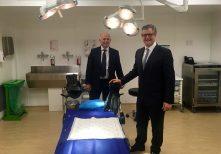
Nuada Group has opened two operating theatres and completed a full day case centre at 19 Harley Street, London. The centre was designed with some challenging building constraints and has maximised light and space. It will support the company’s urology and gynaecology practices. Ray Kattar (right), programme director for Europtima, Nuada’s partners in the development of 19 Harley Street, described the project as entirely patient-centric. He said: ‘The patient experience was at the core of our approach to safety, services and facility design. Infection control, ventilation and optimal instrument flow are embedded in the safety protocol, while a fluid patient flow is central to the service design – maximising privacy and comfort in both clinical and non-clinical experiences.’
would help a doctor to focus on all aspects of running a private practice, not just patient care.
And it welcomed the move for healthcare services to show they are well led at corporate level.
IDF independent CQC adviser Martha Walker said many of the strategy’s generic points, such as a more robust registration interview for both the registered manager and the nominated individual, were now commonplace.
CQC boss David Behan said the inspection body would get more and better information from the public and providers and use it alongside inspections to provide ‘a trusted, responsive, independent view of quality’ that would be invaluable to service providers.
Consultant announces new venture
The Imaging Clinic has renewed its joint venture with BMI Mount Alvernia Hospital, Guildford, for seven more years.
Founder and director consultant radiologist Dr Tony Lopez said he planned to instal a fixed-facility PET CT scanner. The new venture would be owned and operated in partnership with 12 consultants.
Dr Lopez resigned his practising privileges at the Surrey hospital in response to the strict ownership rules imposed by the Competition and Markets Authority’s private healthcare inquiry ( Independent Practitioner Today, May 2016).
Sheffield unit wins award
Aspen’s Claremont Private Hospital, Sheffield, has won a national Top Hospitals Award 2016 for data quality excellence. The accolade was given by healthcare intelligence and quality improvement services provider CHKS.
ABOVE: Nuada’s chief executive Brian Lynch (left) and Mark Aichroth, chief operating officer, in Operating Theatre 1
Cosmetic guide raises standards
COSMETIC TREATMENTS used to be a niche area of healthcare in the UK, accessible mainly to the rich and famous, but in recent years it has grown significantly, with more and more people able to consider a nip here, a tuck there or a quick injection of filler.
But with that greater accessibility has come increased risks to more people, which is why the GMC’s newly-published standards for doctors involved in cosmetic practices is a real watershed in patient and public protection.
Cosmetic practice is a broad term, covering a wide and growing range of ‘lifestyle’ treatments and interventions to alter a person’s appearance; everything from fillers to face lifts, and from laser eye surgery to liposuction.
The need for our new guidance was firmly made by the work of Sir Bruce Keogh’s advisory group following the PIP scandal, when a manufacturer was found to be using industrial-grade silicon for breast implants.
Poor practices
Sir Bruce’s review found evidence of a range of poor practices –patients being hurried or influenced into making hasty decisions on procedures, misleading advertising, poor discussion of the risks involved, little understanding of or appropriate support for patients with psychological problems, and very poor continuity of care or support if something went wrong.
I was shocked by many of the stories that came to light, although I was also heartened by the professionalism of many doctors working in this field and their determination to raise standards across the sector.
This new guidance seeks to address the issues and, by doing so, it will raise standards. It provides practitioners with clarity on what the GMC expects of them.
For us as a regulator, it’s a new departure. It is the first time we have addressed a specific area of practice, rather than produce guidance applicable to all doctors in all specialties.
BY DR JUDITH HULF, Senior medical
adviser at the GMC. She chaired the group behind the newly-published guidance for doctors carrying out cosmetic procedures
We reported on the GMC’s new rules last month
We have worked very closely with the Royal College of Surgeons of England, and their new professional guidance, published at the same time, complements ours, expanding on the specific issues relevant to surgeons.
This summer, they are also introducing a new certification system to ensure surgical practitioners in this area are fit to practise, something that will also raise standards and provide increased assurance for the public.
Personal consent
It was important for our new guidance to cover all procedures, not just the most major ones, because ethical and safety issues arise right across this sector, just as the experience of people undergoing cosmetic procedures varies enormously.
For people seeking cosmetic interventions, our new standards will help improve the experience they can expect. For example, doctors must seek their consent themselves and not delegate to sales staff or anyone else.
They must give people time to reflect, in effect a ‘cooling-off’ period, take particular care if a person is aged under 18, and they
This new guidance seeks to address the issues and, by doing so, it will raise standards. It provides practitioners with clarity on what the GMC expects of them
must consider whether individuals have psychological needs or are vulnerable in any way.
Doctors must also market their services responsibly: no offers of procedures as competition prizes or packaged into ‘buy one get one free’ deals.
They must make sure people have the right information, including explaining any medicines or implants used. Furthermore, as in all fields of practice, it is vital that they work within their competence, with appropriate supervision, and that they share information on outcomes and safety with colleagues and the appropriate regulatory authorities.
Relevant to all carers
Of course, it is not only doctors who are carrying out cosmetic interventions. As the doctors’ regulator, we can only produce guidance that applies to them, but the principles are relevant to everyone caring for people who seek cosmetic interventions.
We hope other professional groups will find it useful, and that it will play a role in raising standards across the sector.
The guidance comes into force this month and we are producing a short guide for anyone considering a cosmetic procedure about what they should look for from their doctor and what they should expect during and after their procedure.
We are also developing case studies to illustrate in more detail how the principles of the guidance apply in particular circumstances. If you have views on areas to cover or resources that would be helpful, do get in touch at standards@gmc-uk.org.
I would urge everyone involved in any type of cosmetic practice –and anyone considering becoming involved – to study our guidance in full, to reflect on any improvements they may need to make to their own practice, to discuss with colleagues how best to improve information and care for people and to take action to ensure they are ready. n
PRACTiCeS MAde PeRFeCT
Are you really doing the job you do best? That you enjoy most?
For 18 years we’ve helped large and small healthcare organisations across the world transform, grow, and improve the way they manage their businesses. Making your life better. And your patients.
While you concentrate on caring for your patients, our role is to help remove the yoke of management.
Not just the day-to-day logistics, but strategically, short and long term. Over the years we’ve transformed and grown countless practices and business. Planning and developing medical facilities. Marketing your healthcare services professionally, by knowing and employing the technology and media that deliver results.
Our teams are tailored to your needs. And if those needs change, so does our team. We have crisis management experts available 24 x 7. We combine clinical expertise with commercial sense and experience. We see the full picture, providing support when and where you need it most.
We work with both public and private sector healthcare providers. Our case histories in operations management, clinical advice, consultancy and development are outstanding.
To give it a thorough examination, call Peter Goddard on +44 (0)203 356 9699 or mobile +44 (0)780 314 4954
www.worldwidehealthcare.co.uk
Charles Rifkind Property
Neil Huband Communications
Peter Goddard Performance
Keith Hague CEO
Howard Ware Medical
Dr.Danny McGuigan Leadership
Scott Hague Technology
The private sector pulls its weight
A BMA REPORT published last April called for the independent sector to be subject to the same robust standards as NHS providers.
However, independent hospitals are already subject to these standards.
As the trade association for independent and charitable acute hospitals, the Association of Independent Healthcare Organisations (AIHO) is clear that patient safety, outcomes and quality are the highest priority for the sector; just as they are in the NHS.
The BMA has made a number of recommendations to Government around transparency of patient safety incidents and performance, as well as ensuring a standardised inspection approach by the Care Quality Commission (CQC). It also argues the sector should contribute to the education and training of the NHS workforce.
However, independent hospitals are already subject to the same CQC inspection and regulation regime, just like NHS hospitals.
If the CQC found any serious care failing in an independent hospital, it would apply the appropriate enforcement measures in the same way that it does for NHS hospitals.
The independent sector has also been working with the National Reporting and Learning System (NRLS). The NRLS is a comprehensive database of patient safety
FIONA BOOTH, Chief executive, Association of Independent Healthcare Organisations (AIHO)
information and will enable the independent sector to report incidents in the same way NHS hospitals do.
AIHO is keen for this to move forward at pace and for it to be given greater priority.
Comparable to NHS
AIHO acknowledges that the sector should publish data in a way that is comparable to NHS data.
As such, the sector has established an independent body, the Private Healthcare Information Network (PHIN), to help collect a wide range of data. This will allow
It is disappointing that the BMA has taken this view and is reluctant to see the independent sector as a valued partner to the NHS
patients to make informed choices about their care and will also demonstrate the sector’s high standards.
The independent sector also invests significant funds each year on training and development for staff. It employs more than 60,000 clinical staff and is committed to enhancing training and professional development opportunities for all of them.
This includes funding degrees and diplomas for people already working in the sector as well as those looking to work in healthcare from other industries, including offering practice placements for those training to become allied health professionals.
Disappointing view
It is disappointing that the BMA has taken this view and is reluctant to see the independent sector as a valued partner to the NHS. The BMA acknowledges in the report that private sector involvement in the NHS is relatively small at less than 6% of the overall health budget. Within this 6%, the sector supports the delivery of a range of highquality services to patients at a tariff set by the NHS.
UK independent hospitals have significant additional capacity which can help reduce pressure on NHS front line services and reduce waiting times.
Furthermore, with comparable data on performance and safety, patients can make informed decisions about where to receive treatment.
Choice drives patient empowerment and improves outcomes and should be welcomed by the BMA and the healthcare industry more widely. n
ESMYA® (ULIPRISTAL ACETATE) TRANSFORMS THE MANAGEMENT OF UTERINE FIBROIDS
ESMYA® is the first medical treatment for the long-term management of moderate to severe symptoms of uterine fibroids.1
O Licensed for intermittent use1
O Fast, reliable and sustained control of bleeding2
O Significant and sustained reductions in fibroid volume from baseline2
O Improved quality of life compared to baseline2 O Well-tolerated2
PRESCRIBING INFORMATION
Esmya (ulipristal acetate) Please refer to the SmPC before prescribing. Presentation: 5mg tablet. Indication: Pre-operative or intermittent treatment of moderate to severe symptoms of uterine fibroids in adult women of reproductive age. Dose and administration: One tablet of 5mg to be taken orally once a day for a maximum of 3 months, starting during first week of menstrual cycle. This 3 month treatment course can be repeated. Re-treatment courses should start at the earliest during the first week of the second menstruation following the previous treatment course completion. Each treatment course should not exceed 3 months. Treatment free intervals are required between courses. Repeated intermittent treatment has been studied for up to 4 intermittent treatment courses. Please refer to SmPC for missed dose information. Patients with renal or hepatic impairment: No dose adjustment in mild to moderate renal impairment or mild hepatic impairment. Not recommended for patients with severe renal impairment and moderate or severe hepatic impairment unless patient is closely monitored. Children and adolescent under 18 years: No relevant use. Contraindications: Pregnancy, Breastfeeding, Genital bleeding of unknown aetiology. Uterine, Cervical, Ovarian or Breast cancer. Hypersensitivity to active substance or any excipients. Pregnancy and lactation: Contraindicated during pregnancy and lactation. Warnings and Precautions: Should only be prescribed after careful diagnosis and pregnancy should be precluded prior to treatment. Use in women with severe asthma insufficiently controlled by oral glucocorticoids is not recommended. Concomitant use of hormonal contraceptives are not recommended hence a non-hormonal contraceptive method should be used. Reversible histological changes of the endometrium: ‘Progesterone Receptor Modulator Associated Endometrial Changes’ (PAEC) may be observed in patients. Also, reversible thickening of the
endometrium may occur during treatment. If it persists beyond 3 months following the end of treatment and return of menstruations, and/or an altered bleeding pattern is noted, this may need to be investigated as per usual clinical practice. Please refer to SmPC for further details on endometrial changes and management of the same. In case of repeated intermittent treatment, periodic monitoring of the endometrium is recommended. This includes an annual ultrasound to be performed after resumption of menstruation during off-treatment period. Treatment leads to significant reduction in menstrual blood loss within 10 days and patients should notify their physician if heavy bleeding persists. Drug interactions: Hormonal contraceptives and progestogens are likely to reduce the efficacy of ulipristal acetate by competitive action on progesterone receptors, hence co-administration is not recommended. Not recommended for patients receiving moderate or potent CYP3A4 inhibitors or potent CYP3A4 inducers (e.g. rifampicin, carbamazepine, phenytoin, St John’s wort). Co-administration of P-gp substrates (e.g. dabigatran etexilate, digoxin) should be separated in time by at least 1.5 hours. Undesirable effects: The following adverse reactions have been reported during first treatment courses: Very Common (>1/10) Amenorrhea, Endometrial thickening; Common (>1/100 to <1/10) Headache, Vertigo, Abdominal pain, Nausea, Acne, Musculoskeletal pain, Hot flush, Pelvic pain, Ovarian cyst, Breast tenderness/pain, Fatigue, Weight gain.; Uncommon (>1/1000 to <1/100) Anxiety, Emotional disorder, Dizziness, Dry mouth, Constipation, Alopecia, Dry skin, Hyperhidrosis, Back pain, Urinary incontinence, Uterine haemorrhage, Metrorrhagia, Genital discharge, Breast discomfort, Oedema, Asthenia, Increase in cholesterol level Increased triglycerides, Rare (≥1/10,000 to <1/1,000) Epistaxis, Dyspepsia, Flatulence, Rupture of ovarian cyst, Breast swelling. When comparing repeated treatment courses, overall adverse reaction rates were less frequent in subsequent
treatment courses than during the first one and each adverse reaction was less frequent or remained in the same frequency category (except dyspepsia which was classified as uncommon). Overdose: Limited experience. Single doses of up to 200mg and daily doses of 50mg for 10 consecutive days administered to a limited number of subjects, and no severe or serious adverse reactions were reported. Special precautions for storage: Keep the blisters in the outer carton to protect from light. Legal Category: POM Basic UK NHS cost: £114.13 per pack of 28 tabs. Marketing Authorisation Numbers: EU/1/12/750/001, EU/1/12/750/002, EU/1/12/750/003, EU/1/12/750/004, EU/1/12/750/005. Marketing Authorisation Holder: Gedeon Richter Plc., Gyömrői út 19-21., 1103 Budapest, Hungary. Further information is available from: Gedeon Richter UK Ltd, 127 Shirland Road, London W9 2EP. Tel: 0207 604 8800. Email: info.uk@gedeonrichter.eu Date of Authorisation: 27th of May 2015. Date of Preparation: 16th of June 2015.
Adverse events should be reported. Reporting forms and information can be found at www.mhra.gov.uk/yellowcard. Adverse events should also be reported to Women’s Health Division of Gedeon Richter (UK) Ltd on 0207 604 8806 or drugsafety.uk@gedeonrichter.eu
References 1. ESMYA® SmPC. May 2015. 2. Donnez, J; Hudecek, R; Donnez, 0, et al. Efficacy and safety of repeated use of ulipristal acetate in uterine fibroids. Fertil Steril 2015; 103(2):519-27.
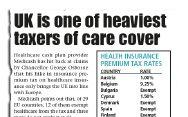
CAMPAIGN AGAINST TAX HIKE ON HEALTH COVER
We shouldn’t tax health insurance
The boss of health cash plan provider Medicash, Sue Weir (right), argues the doubling of the premium tax on health insurance is counter-productive as subscribers are put off and revert to the NHS
ONE THING that different types of health insurance have in common is that they incur insurance premium tax. So, in the same way that some goods and services costs are increased by VAT at 20%, most aspects of insurance suffer this tax – a relatively new one that did not exist until 1994.
Since then, it has been at 4%, 5%, then 6% – until last November when it jumped by 58% to 9.5% following the Chancellor’s Budget. We know that, following the latest Budget in March, it is increasing again later this year, up to 10%.
Insurance premium tax is currently a very low-profile tax, hardly ever talked about and rarely on the public and media’s radar.
How many people actually know of its existence, let alone what it is? Yet this tax affects most individuals, families and businesses in the UK.
It has been raising over £3bn for HM Treasury each year prior to last year’s hike, which the Government estimates will raise an additional £1.75bn of revenue a year.
However, its estimates will prove to be a lot less if businesses and families opt to stop paying for their private healthcare altogether. Economically, the tax on healthcare insurance makes no sense. The sums just do not add up.
Speaking to colleagues in other health cash plans and those in the
private medical insurance sector, we know that health insurance is very price-sensitive.
At Medicash, we dealt with the passing on of the increase as sensitively as we could – choosing to pass it on to our business customers at the annual review date, rather than increasing it across the board last November.
With hindsight, this was absolutely the right thing to do, as it helped brokers. They did not have to have an additional conversation mid-term with customers. And it also helped our companies to align with their budgeting process rather than having an unbudgeted price increase.
Inflicted on the sector
We have seen the vast majority of customers accepting the extra cost as they understand that it has been inflicted on the sector.
The Chancellor assured us that we should be grateful that the UK rate of insurance premium tax will be only 10% rather than the 20% that exists within much of Europe. But this is misleading, as, while the headline tax rate varies within the European Union, health insurance in the major economies of Europe is exempt from insurance premium tax – putting Britain at a disadvantage.
At the very time when monetary pressure on the NHS is growing, the Chancellor has increased
insurance premium tax on health insurance. At best, this action will deter companies and individuals from taking out health insurance. At its worst, it will cause health insurance to be cancelled.
Medicash is a small business; our turnover is £25m, but even our business is taking pressure off the NHS. Looking at the claims that we have paid over the last year, there would have been extra demand of around £10m on the NHS if we did not exist, as we cover private healthcare treatments such as physiotherapy.
If we multiply this across the health insurance sector, the detrimental impact on our NHS is likely to be far greater than the income that the Government will generate from the extra 4% of taxation on health insurance.
The Government is looking to improve productivity rates within businesses, so this seems to be a complete anomaly. Businesses should be encouraged to offer healthcare insurance to their employees, not put off from doing so by adding a tax uplift.
Business productivity across the UK will be affected as absenteeism increases due to health issues, resulting in a negative impact on the long-term economic wellbeing of the nation.
I fully appreciate that the Government needs to generate extra revenues to enable it to
move from deficit to surplus. But I strongly believe that the health insurance sector being impacted by the increase in insurance premium tax is an unintended consequence of health insurance being classed under the general insurance umbrella.
It’s deeply disappointing, as the Government has brought in some really intelligent initiatives encouraging firms to look after the health and well-being of their staff.
Real business benefit
This theme also resonates with businesses. Recently, we worked with the CBI to produce its Getting Better: Workplace Health as a Business Issue report, highlighting how investing in the well-being of employees has real business benefits.
I am therefore calling on the Chancellor to exempt health insurance from insurance premium tax in the same way that life insurance, critical illness and income protection insurance remain exempt.
Making healthcare exempt will help all of us to provide health insurance for our staff and customers and make our businesses more productive. It will also support our NHS by reducing demand on it and offer preventive care as well as treatment. And, finally, it will help us to enjoy healthier lives.
I have written to the Chancellor setting out the logic for making health insurance exempt for insurance premium tax purposes.
I have met with the Treasury. But the overriding requirement to deal with the deficit appears to sit above sense at the moment.
In the response from the Treasury, they stated that the increase is not an extra cost for the customer, but for the insurance company. This is like saying that we do not pay VAT on restaurant meals – the restaurant meets the cost.
It demonstrates a lack of appreciation of the insurance sector.
•
With VAT, you can set it against any VAT that you pay, but with insurance premium tax, it is not possible to reclaim the tax paid. It is met in full by the customer. I am encouraged that others in the health plan sector are aligning with our campaign. We will be circulating further news about our joint campaign shortly.
Adapted from a speech given to the Association of Medical Insurers and Intermediaries
An independent firm offering one to one meetings anywhere in the UK giving advice and help with:
• how to maximise private practice
• computer software
• tax and financial advice re: car purchases
• how to start in private practice
• ways to reduce tax payments
• computer software
• how to maximise private practice income
• setting up in Chambers/Groups
• ways to reduce tax payments
• limited companies and LLP’s
• setting up in Chambers/Groups
• financial planning
• record keeping
• limited companies and LLP’s
• tax and financial advice re: car purchases
• pensions: NHS, personal and employee schemes
• pensions: NHS, personal and employee schemes
• purchase of consulting rooms and surgeries
• inheritance tax and capital gains tax planning
• purchase of consulting rooms and surgeries
• VAT
• inheritance tax and capital gains tax planning
• VAT
For more information please contact us by: Wilmslow
For more information please contact us by:
Wilmslow
Phone: 01625 527351 Fax: 01625 539315
Phone: 01625 527351
Harley Street
Phone: 020 7307 8759 Fax: 01625 539315
Phone: 020 7307 8759
Email: info@sandisoneasson.co.uk
Fax: 01625 539315
Fax: 01625 539315
www.sandisoneasson.co.uk
Email: info@sandisoneasson.co.uk
Website: www.sandisoneasson.co.uk
ACCOUNTANT’S CLINIC: SELLING YOUR PRACTICE
Thinking of selling
Some consultants are thinking about retiring and selling their practice in the next few years and effectively quitting the rat race. But there is more than one route ‘out of market’ and Susan Hutter explains the options and also what you should be doing
DEPENDING ON the size of your practice and personnel, you may have suitable prospective purchasers who already work with/ for you in your own practice. Eventually, one or more of them may wish to group together and carry out a management buy-out.
If this is the case, it is a good idea to start the ball rolling sooner rather than later, as you will need to ‘train’ the upcoming proprietor and also slowly start to encourage patients to see them and pass them over.
The longer the hand-over period, the more chance there is of the hand-over being a smooth one – as long as it is not too drawnout. Also, the longer hand-over lends itself to the consultant receiving the best price for their practice by dint of more patients going across.
Alternatively, if the consultant does not have suitable in-house staff/colleagues, they could start looking outside the practice for consultants in the same field. This is with a view to them joining the practice and carrying out a management buy-out in the next few years.
For consultants that are think-
ing of retiring but not for five years or so, it is probably not too early to start looking, as these things do take time.
the consultant in these cir cumstances would also need to introduce their patients to the new incumbents to ensure a smooth hand-over.
Centres of excellence
Many consultant practices are now operating as centres of excellence whereby they provide a one-stop shop for their specialty and complementary services; for example, a spinal specialist and physiotherapist working with orthopaedic surgeons.
These practices are often looking to expand and also take over a patient list from an eminent consultant. They may have the cash flow and/or the means of raising capital in order to buy out a consultant’s practice.
In most cases, the purchaser will want the consultant to work in the centre for a short period, such as up to a year, to help transfer the patient list to them.
The arrangements are varied, but sometimes the seller would
sell their practice for an agreed lump sum with an extra potential ‘earn out’ – depending on the profits or turnover of the practice in the earn-out period.
Large medical companies
Increasingly, the trend is for practices to sell to large medical companies, particularly international companies.
These firms are in the market to buy up and build their own centres of excellence, so that the consultants in them will not only generate profits for the purchaser but also provide the buyer with patients who will use their facilities such as scans and hospital beds.
In these cases, the practice is normally bought out on day one, sometimes with an ‘earn out’ and sometimes not.
But, mostly, the vendor would be expected to join the larger practice for a period of time, usually on a salary – once again, to ensure the smooth hand-over of their practice.
Who is available to advise you?
This is a complex matter and, in all cases, expert advice should be taken. Firstly, doctors will need to speak to an accountant who understands about buying and selling practices.
However, if they would like help in seeking a buyer for their practice, apart from approaching the larger medical companies directly, they could use a corporate financier who specialises in acting for the medical profession. S/he will offer advice and also,
selling up?
In most cases, the purchaser will want the consultant to work in the centre for a short period, such as up to a year, to help transfer the patient list to them
in some cases, will be able to introduce doctors to potential purchasers. They will then help broker the deal going forward.
Susan Hutter (right) is a specialist accountant for the medical profession and a partner at Shelley Stock Hutter
WHAT TO BEAR IN MIND WHEN SELLING
To obtain the best sale value, the practice will need to show strong accounts for at least two to three years prior to the date of sale. Valuations are usually based on turnover or net profit and sometimes a combination of the two.
If the latest set of accounts for the practice are more than six months old, it is advisable to ask the practice’s accountants to prepare up-to-date figures so that the potential purchaser can see that nothing radical has happened since the last set of accounts.
As soon as the decision is made to sell, advice should be taken regarding pension schemes, including the NHS Superannuation Scheme, and also any private pension schemes. The legislation is extremely complex and it may be important to act sooner rather than later.
Practitioners should speak to their professional indemnity insurer in order to discuss run-off insurance and potential continuing exposure after the sale.
The tax treatment of the profit on a sale is beneficial. For doctors who trade as a company, it is important to sell the shares in the company as opposed to the assets of the company. If the doctor sells the shares, then Entrepreneurs Relief is likely to apply, which means that the rate of capital gains tax will effectively be at 10%.
For those who trade as a sole trader or partnership, they will need to sell their goodwill to the purchaser and, in most cases, this will also qualify for Entrepreneurs Relief.
BREAKING INTO THE AESTHETICS BUSINESS
Why 50% sink
AS MY series draws to a close, I am intrigued to find out how useful you have found the articles and what difference it has made in your journey.
If you were thinking of ‘dipping your toe’ into the aesthetics market to see if its something you will enjoy and may wish to pursue further, have I given you enough food for thought?
Or maybe you are later down the line and realise that it wasn’t as easy as you first thought, the structure you were used to in the NHS is missing and you are won-
dering how on earth you are going to get off the hamster wheel for long enough to put all of these strategies and tips in place?
Sudden change
Perhaps you are happy ‘bumbling along’? – unfortunately, I hear that term used quite often. In other words, there is enough business to keep the wolf from the door and you think you are quite happy with the job you have built for yourself
But one thing I can guarantee is that no matter what stage of the
journey you are at or how you are feeling today, there is one thing that all business owners need to be very aware of: things can rapidly change tomorrow.
Your rent could be doubled. I heard an example of that just happening this week.
Your best practitioner could leave, you could fall ill (heaven forbid), a swanky new competitor could open up right opposite your clinic or, worse, a price-cutting cowboy could steal your patients.
Rest assured, none of us can
Comfort and complacency are the entrepreneur’s worst enemy, warns Pam Underdown (below). Who wants average? ➱ p18
Don’t ignore the threats that can sink you
afford to bumble, getting too comfortable as we settle for an average existence.
Comfort and complacency are the entrepreneur’s worst enemy. Who wants average? An average income, an average amount of time off, an average lifestyle –because if we do, then it really is all over for us.
If you are sick and tired of being sick and tired and it’s just too hard to do anything more than just survive – that’s not only really sad but very dangerous as a business owner.
In the UK today, we too often hear people say: ‘I just want to be comfortable.’ This is very risky. Such a comfort mentality is what sets entrepreneurs and businesses apart. Look at all the businesses that were once great companies that settled into complacency and no longer exist (Woolworths, BHS).
Speedier change
Playing it safe is a dying strategy. Nothing is safe anymore. Change really is the new normal. Many medical aesthetic practices are contending with the economic downturn, changes to legislation (Scotland), public scrutiny, changing consumer behaviours and many new competitor initiatives.
And, to make it more interesting, the pace of change seems to be ever-quickening. For those business owners who wish to not only survive but thrive, then there is no option to ignore change, to hope that what has been done in the past will be sufficient to cope in the future.
How can businesses thrive when faced with these challenges? Certainly not by doing nothing or ‘playing’ at change. The world has turned upsidedown, you can’t hide and you can’t keep doing the same things you’ve been doing and expect a decent outcome. A change on its own is insufficient; it is transformation that is needed.
Research shows that 50% of new businesses will fail in the first year and an astonishing 80% fail within five years.
Most businesses shut down for pretty predictable reasons. Owners retire, companies are sold, competitors take over or they can’t adapt to a changing
If you take the time to address the common reasons for failure up front, you will be much less likely to fall victim to them yourself
market or really get going in an existing one.
It’s a natural cycle of birth and death. Most of these businesses shut down quietly and their owners and employees move on to pastures new.
I understand that when you are starting a new business, the last thing you want to focus on is failure. However, if you take the time to address the common reasons for failure up front, you’ll be much less likely to fall victim to them yourself.
Here are the top nine reasons why businesses fail – and tips for avoiding them:
1
A lack of a business and marketing plan and the right skills to implement it are the biggest contributors to business failure especially among small businesses. It is critical for all businesses to have a business plan that is realistic and based on accurate, current information and educated projections for the future.
2
Insufficient cash flow. A common fatal mistake is for business owners to underestimate how much money is needed to start a new business, grow it and live at the same time.
They have an unrealistic expectation of how much money they are going to make and how quickly they will make it. Many overspend on fancy décor and expensive equipment and ultimately they end up running out of cash – so they are forced to close before they even have had a fair chance to succeed.
They also don’t realise that many businesses can take a year or two to break-even and start making a profit. They have given up their day job and it’s too late to realise there isn’t enough to pay the bills.
3
The business was started for the wrong reasons. Perhaps the owner just wanted to make a lot of money? Or perhaps they thought they would have a lot more time off? Or maybe it was the thought of not answering to anyone else that was appealing for some?
If this is you, you’d better think again, as the reality is that won’t be
It’s not the knowing ‘how to’ that will make you successful. It’s taking action and stopping the excuses that will truly bring you success
the case. On the other hand, if you start your business for these following reasons, you’ll have a better chance at entrepreneurial success:
➲ You love what you do and strongly believe – after a lot of market research and educated investigation – that your treatments and services will fulfil a real need in the marketplace and you have a competitive advantage that no other clinic or practitioner has.
➲ You are healthy and well and you possess the much-needed mental stamina to withstand potential challenges. This area is often overlooked by any new business owner. However, bad health has been responsible for more than a few bankruptcies.
➲ You have a positive can-do attitude, combined with the drive, determination and patience to succeed – no matter what challenges are thrown at you.
➲ You won’t allow any failures to defeat you. You learn from your mistakes and use these lessons to succeed the next time around.
➲ You thrive on getting things done. You are very strict with your time and only focus on doing what you are good at. You know how to delegate appropriately.
➲ You love what you do, you are passionate about your patients and the aesthetic marketplace and show this in your honesty, integrity and interactions with others. You love people and get along with all different types of individuals.
4
Poor Management. The majority of new business owners simply don’t have the relevant business and management expertise in areas such as finance, marketing, selling, administration and managing employees. Unless they recognise that they need help, many may soon face disaster.
5
Neglecting a business, becoming complacent and getting too comfortable can also lead to business downfall. This is particularly a problem if a business owner has an initial surge of success as they open up one of the only clinics in their area. This can soon change when a competitor comes onto the scene or regulatory changes occur.
LEARN MORE
If you found this series really useful and want to learn more about breaking into aesthetics in the right way, then Pam has many resources and training modules available in the free area of her online membership site. If you want to access this, please contact Pam Underdown by email at info@aesthetic-bt.com
6
The right location is critical to the success of your business. A good business location may be able to help a struggling business survive and thrive. However, a bad location can equal disaster for many well-run businesses.
The main factors to consider are accessibility, parking, competitors, business rates and opening up in an area where you know there is a need for your services. The key here is to carry out very thorough research.
7
Trying to do too much too soon. A leading cause of business failure is overexpansion. This often happens when business owners confuse success with how fast they can expand their business.
A focus on slow and steady growth is the best way forward. Many bankruptcies have been caused by rapidly expanding companies.
8
Poor marketing. In today’s competitive aesthetics industry, you need to spend time, money and effort marketing your services.
At the very least, you should have a professional-looking and well-designed website along with engaging content, videos and interactive social media profiles to enable prospective patients to find out more about you and have a compelling enough reason to pick up the phone. (See ‘Bawling out your wares’, page 23).
9 Taking responsibility and being accountable. When it comes to the success of any new business, the business owner is ultimately the ‘secret’ to its success.
For many successful business owners, failure was never an option for them. They have the drive, determination, and resilience to view any setback as only an opportunity to learn and grow. While the majority of self-made millionaires have average intelligence, what sets them apart is their curiosity, their openness to new knowledge and their willingness to do whatever it takes to succeed.
Ultimately, it’s not the knowing ‘how to’ that will make you successful – that’s actually the easy part. It’s taking action and stopping the excuses that will truly bring you success.
We all know that business success doesn’t happen overnight; it requires hard work, tears and time, lots of time.
If it was easy, everyone would be doing it. If you don’t see fantastic results straight away, don’t worry. Just keep on doing what you do best: be consistent, learn, adapt, grow but don’t give up. As Winston Churchill once said: ‘If you’re going through hell, keep going.’
I wish you every happiness and success.
Pam Underdown is chief executive at Aesthetic Business Transformations
UK Top 20 accountants specialising in the healthcare sector
National firm of the Year 2013
• AISMA member (Maidstone and Leicester offices)
12 offices including London City
Tax Structures for Hospital Consultants - dispelling myths
Surgeon groups and consortia
GP Practices including mergers and federations
Solvent liquidations (for companies at the end of their lives)
For more information please contact:
South East
James Gransby FCA
E: james.gransby@mhllp.co.uk
T: +44 (0)1622 754033
M: +44 (0)7712321899 East Midlands
Robert Nelson DChA FCA
E: robert.nelson@mhllp.co.uk
T: +44 (0)1162 894289
M: +44 (0)7814009160
General email: healthcare@mhllp.co.uk www.macintyrehudson.co.uk
Free legal advice for Independent Practitioner Today readers
Independent Practitioner Today has joined forces with leading niche healthcare lawyers Hempsons to offer readers a free legal advice service.
We aim to help you navigate the ever more complex legal and regulatory issues involved in running and developing your private practice – and your lives.
Hempsons’ specialist lawyers have a long track-record of advising doctors – and an unrivalled understanding of the healthcare system as a whole.
Call Hempsons on 020 7839 0278 between 9am and 5pm Monday to Friday for your ten minutes’ of free legal advice.
Advice is available on:
Business structures – Ian Hempseed
Commercial contracts – Faisal Dhalla
Disputes – Hilary King
HR/employment – Fiona McLellan
Premises – Lynne Abbess
ROBOTIC
Surgery’s new
HCA’s The Princess Grace Hospital in London has become the first UK private hospital to use the Stryker MAKO robot – the latest innovation in hip and knee surgery. Prof Fares S. Haddad, a leading
orthopaedic surgeon specialising in the treatment of lower-limb conditions, reveals the role of robotic technology in surgery
THE NEED for orthopaedic intervention continues to rise exponentially as patients are increasingly active and demanding of their joints into an older age and are no longer willing to accept pain and disability.
We have created remarkable procedures in partial and total knee replacement and hip resurfacing and replacement, but nevertheless we need to aim higher in order to give our patients normal function and allow them to continue being active and sporty throughout their lives.
Technology and innovation have moved on in every aspect of our day-to-day lives, including communication and transport –and that, too, is the case in orthopaedic surgery.
We now have a far greater understanding of each patient’s physiology, their biomechanics and their joint function. We have better ways of measuring that with three-dimensional imaging, particularly using CT and MRI scans.
And we also have improved interventions, particularly with partial joint replacements that can allow patients a return to a
much higher level of activity than previous surgical procedures could deliver.
We have studied the outcomes of hip and knee surgery in great detail for the last two decades and have unravelled many factors that contribute both to excellent outcomes and also to dissatisfaction.
Some of these are patient-based, some of these are surgeon-based and some of these are implant and procedure-based.
Minimise risk
Our current methodologies now try and minimise the risk of malalignment and failure of implants, and include careful pre-operative evaluation and planning using both standing X-rays and CT scans, and planning and performing a virtual procedure before the surgery is undertaken.
The key innovation that we have just introduced has been the application of the Stryker MAKO robotic technology to hip and knee arthroplasty.
This allows us to plan the optimal position and implant for each individual patient, but more importantly, to then deliver that in that optimal position exactly
new dawn
and with very limited trauma on the day of surgery.
This technology allows us to restore the ideal alignment for each patient, give them the biomechanics and kinematics that they need, preserving the function of their soft tissues and muscles.
In simple terms, using the robot allows us to plan the surgery and rehearse it in advance and then hit the sweet spot on the day of surgery so that we can give our patients the best recovery and outcome.
We now use this sort of technology in our day-to-day lives when driving a car or travelling in a plane on a routine basis.
More precise
It has now arrived for hip and knee surgery and will both allow us to minimise the trauma and insult of surgery, and to ensure that it is both more precise and more accurate.
In the short term, we are able to use current implant technologies in a better way. In the medium term, having this technology will allow us to study lesser interventions to achieve the same goal,
and will allow us to deliver bespoke implants in a novel way and improve ultimate outcomes.
The challenge at present is ensuring that we deliver the right operation for the right patient at the right time to ensure both a long-term positive result, but also excellent short-term satisfaction in function.
Our access to robotic technology, allied with three dimensional imaging and pre-operative planning software has really facilitated that and moved hip and knee surgery into the next generation.
Robotic surgery allows improved precision and accuracy for arthroplasty surgery. We can hit the right target on a patient-specific basis. It allows us to deliver better outcomes in the short term, and in future will allow new designs to be applied in a very patient-specific function.
Our goal remains good function and high-level satisfaction, and we believe that robotic surgery will allow us to achieve that.
For more information about The Princess Grace Hospital’s orthopaedic services and for inquiries about robotic surgery, see www.orthopaediccentrelondon.co.uk/robotic-surgery
PROBLEMS WITH THE TAX MAN?
HMRC tax investigations and disputes create difficult and stressful times.
As an award winning firm of tax experts, our highly experienced partners specialise in resolving problems relating to tax investigations and disputes with HMRC.
To find out, in confidence, how we can help call 0800 734 3333.
‘Here to help. Not to judge.’
Gilbert Tax Consultants LLP | Offi ces in London, Leeds and Newcastle T: 0800 734 3333 | E: enquiries@gilberttax.co.uk www.gilberttax.co.uk
Prof Fares S. Haddad: ‘Using the robot allows us to hit the sweet spot...’
SUBSCRIBE TO GET EVERY ISSUE!
Dear Reader,
Subscribing to Independent Practitioner Today is the only way you can be sure you will see every issue and have the option of reading us online. Don’t risk missing out. Our personal subscription for doctors and managers is only £90 a year and £210 for organisations. But you can cut this to just £75 and £180 respectively if you pay by direct debit.
So take advantage of this offer now for our unique business journal dedicated to supporting you in your private practice. We’re confident your subscription will repay itself many times over!
Editorial director
APPLICATION FOR SUBSCRIPTION
Name and full address of your bank/Building Society
Banks and Building Societies may not accept Direct Debit instructions for some types of account To: The Manager
of account holders
Post your application (No postage required – UK only) to:
Please post to: Proact Ltd Subscriptions Dept., 12 Mary Seacole Road, The Millfields, PLYMOUTH PL1
In a four-part series for Independent Practitioner Today, Malcolm McCoskery examines key issues facing consultants as they look to build their practice
In our March, April and May issues, Malcolm McCoskery (pictured below) covered teamwork, choosing a private hospital and branding. Here he looks to bring it all together by looking at what is loosely called ‘the marketing mix’. Each article is aimed at consultants who may be at different stages of their career. Whether taking their first steps in private practice or wishing to take their business a stage further, either by themselves or as part of a group, the next step should be to review their marketing both in terms of strategy and implementation
YOUR MARKETING strategy should always start with a plan and at the outset you should complete an audit.
This should define where you are now, including analyses of strengths, weaknesses, opportunities and threats (SWOT) and of outside influence covering political/economic/social/technological factors (PEST).
For most doctors, in my view, the SWOT analysis is more important. I think most people understand what this acronym covers, but do they follow through into a plan?
The idea, of course, is to protect and develop your strengths and opportunities, but also to convert weaknesses into strengths and threats into opportunities.
These results should be translated into your goals and then the plan can take shape. Most importantly, if you are part of a team, all parties must sign up to the plan.
Each of the headings in the box on the opposite page will take time and effort to consider and evaluate, but a good marketing plan will help you as you take your practice forward.
For the purposes of this article, I shall mainly concentrate on the promotional tactics of the plan and evaluation.
Promotional tactics 1 – What you should consider A website presence that has been search engine optimised (SEO) is of the utmost importance. In time, you want to be on the first page of Google for any relevant phrases that your customers/ referrers would use.
The site should be well designed and structured. It is important that this job is done professionally, as it is a vital part of the team’s marketing armoury.
You want the site to look totally professional, of course, but the size and complexity of the site will have cost implications. Some of the best healthcare websites, however, are the ones that are less complicated in terms of copy and the number of pages.
Creative design in conjunction with your brand values is equally important. You have to be happy with the site, as it will represent you as a person or your team.
Good design and structure will also incorporate the SEO and also make it easy for an inquiry to be made. This is ultimately what you want the website to achieve.
You need to think strongly about website content at the outset. Are you wanting to sell your service succinctly or do you want to be a healthcare reference source?
There are, I would argue, plenty of sites that fulfil the latter. There is a marketing slogan ‘content is king’, which is as true today as it always has been. However, there is another saying ‘less is more’, which is equally apposite.
The production of good SEO content, in my experience, is the most difficult item to acquire. Consultants, who have the knowledge, are time poor and, in
many cases, are too elaborate. You also need consistency in writing style, and good healthcare copywriters are not easy to find.
The use of video – again professionally created – will also enhance any website. A picture paints a thousand words but video does more, as it also increases the user’s emotional involvement.
A well-crafted video including a patient case study with testimonials is very powerful. It also makes interested people stay on your site for longer. Google likes the moving image and its search engine and algorithms actively seeks video when assessing websites.
Websites should be able to be viewed in tablet/mobile formats, as this now accounts for over 50% of hits.
Your shop window
The key thing to remember about a website is that it is your ‘shop window’; it is an ever-changing thing. In fact, the more it changes, the more you are rewarded by Google. Don’t look at a website in the same way you would a brochure. A website needs to evolve over time with new content and latest technologies.
A small general brochure should also be prepared. The importance of the brochure has certainly diminished in recent years with the increase in online activity, but websites still need PDF format brochures and an introductory leaflet to be sent out to GPs/referrers can be beneficial.
You will also need to think about PDFs for the types of treatment that you offer, both for the
A well-crafted video including a patient case study with testimonials is very powerful. It also makes interested people stay on your site for longer
at an off-site seminar – are excellent ways in which to impart information.
They are usually very well received and are seen as win-win situations. The GP liaison teams at private hospital(s) with which you are associated should be able to help you here.
Social media continues to rapidly expand. Some areas are more important to consultants than others.
website and for your patient information library. Most people have access to computers these days and if they do not, your secretary can always print one off for patients, if necessary.
Which brings me on to databases. These can be bought by postcode or by email, but do not forget that if you and your team members have an existing private practice, you already have a host of GP names that you already communicate with.
Existing referrers – who are easily the best to approach – should always at least read your letters/ emails.
A number of practices still write separately to the GP to thank them for the referral and to encourage any feedback, positive or negative, about the process. How nice is this? And if by email, it does not even cost you a penny. Do not forget your consultant colleagues who may be in associated disciplines. Tertiary referrals, especially in the more complex specialities, can be even more relevant to your practice than those from primary care.
Each target audience – for example, existing referrers, GP database, consultant colleagues –should be treated slightly differently in your cover letter or email. Just think how you yourself would like to receive communications from either people you know or those that you are not in regular contact with.
Educational meetings
GP continuing professional development (CPD) educational meetings – whether at their practice or
A LinkedIn presence for the team of doctors is definitely recommended. Tweeting is quite nice, creates noise and in some circumstances can increase knowledge of what doctors do. But it should only be used when you have something important to say.
Facebook can be useful in international markets, especially the Middle East where it is widely used.
But to use Facebook extensively takes much time and effort and, for the UK market, it is not widely used in private healthcare. Also, if you are aiming for that lucrative international market, you will need to pay for a translator.
Public relations can be such a powerful tool, but the mantra is always ‘case studies’, which are not easy to obtain. Plus, the treatment or diagnostic test behind the story usually has to be something fairly ground-breaking. If the news is not a ‘first in the UK’, then it would still need to be something really special or have a first rate human interest story to gain interest from the journalist.
Promotional tactics 2 – What you might not want to do Advertising rarely works for consultants although some forms of digital publicity can succeed in certain circumstances. Successful private healthcare is still mostly about relationships, not just with patients and GPs but also with hospital staff and management, insurance companies and other consultant groups.
The trouble with advertising is that it is notoriously difficult to monitor its effectiveness. This is not a new challenge; as William Lever, who founded Unilever, famously said: ‘I know half my advertising isn’t working. I just don’t know which half.’
I would not always recommend
GOOD MARKETING PLAN
A good marketing plan includes the following headings:
Analysis of your current situation – PEST / SWOT
Objectives and goals of your practice
Who are your customers and who are you targeting? These may differ
– for instance, patients/doctors/general awareness
Your brand – discussed in the May edition
Marketing your service
Defining the product or service you are selling
Pricing
Geography – where are you promoting yourself?
Promotional tactics
Budget
Implementation – who does what, when and how. Is training needed?
Evaluation. Do you have any metrics in place?
pay-per-click Google advertising unless the service is completely new and the words or phrases being bought are extremely cheap.
Launch/drinks parties do not work either. Your principal referrers are usually as busy as you are and unless there are CPD points available, a drinks party with canapés is unlikely to succeed.
Evaluation of how your marketing is progressing is not always done, but it should be and there are plenty of ways in which this can be achieved both simply and effectively, such as:
Google analytics will give you good information about your website performance. It is not just about hits; you can glean geographical data and which pages are being visited most and time spent on the site;
Your SEO company should also give you regular feedback about the key words and whether they are working;
Social media can be measured by likes/followers/re-tweets and so on;
Mailings can be measured by
responses or new referrals from new sources identified;
Email inquiries from new patients;
Phone-calls following a campaign;
New referrals.
If you really want to know how your marketing is working, though, you just need to ask some basic questions to new patients. Why did they choose you and where did they come across your details?
This is so rarely done, as some healthcare practitioners still find it vaguely embarrassing to ask. But these are the people who have arrived on the other side of your desk and whether it is about you, your team, your branding or your marketing, it is incumbent on you to know how well your business is progressing.
See ‘Patients need to find you’ on page 40
Malcolm McCoskery is a consultant in marketing, whose 20-year private hospital career included senior management posts at four different private hospitals/groups. Email him at: m.mccoskery@yahoo.co.uk
MANAGING YOUR PPU
Ring-fence
your PPU beds
Our series looking at a year in the life of a NHS private patient unit (PPU) continues with a plea from Philip Housden to use the weeks ahead to strengthen the offering
SO ‘WINTER bed pressures’ are a dim and distant memory? Happy days for the PPU! If the beds in your NHS trust’s private patient ward are not fully available to consultants now, when can they be?
The stark fact is that PPU beds need to be ring-fenced.
Moving to an increased level of protection can be uncomfortable for trusts that have not agreed to run things that way before, but June is as good a time as any to make that change.
Although this can seem to be a ‘statement of faith’, taking the plunge and protecting private beds should increase – rather than decrease – funded NHS capacity in the trust.
This is because higher private patient earnings will more than
pay for the private bed capacity to be staffed and open, and those surpluses can also fund the NHS care that should be slotted-in to unused private beds.
In a future article, I will be exploring the wider benefits of finding those NHS patients in the trust who actually hold private healthcare insurance, many of whom never use it.
In Independent Practitioner Today last month, I suggested that a spring-clean audit and review of business relationships with consultants and insurers, among others, was good practice, as this maximises the positive impact of any changes in the NHS financial year.
Making this happen and building the crucial confidence of consultants and other stakeholders is
best achieved with a clear management leadership team.
PPUs, however large or small, will only thrive when someone is clearly in charge.
Many guises
A manager for private patient services can come in many guises and the role varies between trusts in line with size, range of services, level of separateness, growth aspirations and many other factors.
The most crucial factor of all is that consultants know whom to go to and the manager has their confidence.
What works best is when the PPU management team has commercial and clinical leadership. This reflects the balance required between the operational and the
strategic, as well as between the clinical and the non-clinical.
Larger PPUs have the resources to build a team that covers all these bases: manager, nursing lead, financial and separate administrative support too.
But a smaller – typically out-ofLondon – trust will find this more challenging and the compromise may well be to combine the role of nursing and administration management. This is a sensible starting compromise before growth leads to further appointments.
These special people do exist: someone who can ensure excellence in patient safety, build a sense of customer service and have business acumen.
But they are not always easy to seek out.
I BELIEVE IN PPUs
Following my 2014 Independent Practitioner Today series on PPUs, I have continued to work with many NHS trusts to help develop and grow profitable private patient services.
This has enabled a real insight into the day-to-day challenges of delivering a private service within a public sector environment.
I am passionate about how PPUs can be part of the answer to the strategic and financial challenges that the NHS faces and so, in these articles, I plan to share learned, practical insights and also comment on how PPUs can best respond to changing policy issues and healthcare current affairs.
Some trusts fail to find the leadership they need because the PPU manager role is graded inappropriately. Agenda for Change and the management pay spine would suggest that a PPU with a turnover measured at a few million pounds and a low number of beds does not measure up to the size of even a moderate NHS directorate service centre.
But this misses the point – all PPUs need to build their business
based on delivering confidence and have to manage uncertainty in both demand and costs, unlike many NHS services which are principally cost centres.
The evidence from many PPUs is that investment in experienced, dedicated, management is a basic building block for growth and funding this at a commercial market rate has a short payback period. As I write, we are in the run-up to the referendum on Britain’s
continued membership of the European Union. Will this have any impact on NHS private patient services?
I believe life will go on, especially in healthcare and so, in the short term, I think the referendum outcome will be neutral.
Overseas recruitment
There are claims that perhaps future challenges to migration will create barriers to the overseas recruitment of nurses and other clinical staff. But this is uncertain, given the likelihood that a possible introduction of work permits will be focused on areas of talent and supporting vital public services.
Would Brexit have an impact on PPU growth in London? Fully half of all NHS private patient revenues are earned by London trusts and much of this is as a result of overseas patients travelling to the UK for healthcare.
The ‘Harley Street’ brand pulls in demand from across the globe and a majority of this is non-EU citizens. For this reason, the specialist services that underpin the London hospital brands are likely to be resilient enough to withstand short-term uncertainty.
And, similarly, a vote to Remain is unlikely to lead to an instant boost to health tourism growth either.
Next month, my thoughts on the impact of the junior doctors’ strikes on NHS PPUs and the options for the local PPU management team for the provision of medical support
Philip Housden (right) is a director of Housden Group, a management consultancy specialising in commercial support in the healthcare sector
LEGAL BRIEFING: TRADE MARKS
How to protect your
BRAND
Oops! Lots of independent practitioners are developing brands. But they have to be careful. Gill Hall (right) outlines ten legal pitfall areas to beware of when designing your brand
THERE IS a growing trend and, in some cases, pressure for practitioners to consolidate and come together to create new partnerships and coalitions to deliver consultant services.
This movement towards formal collaboration between practitioners is heralded as creating many opportunities; from reaping the benefits of shared services to becoming a more robust entity able to withstand more commercial competition.
One other opportunity which tends to be secondary on most practitioners’ ‘reasons to do this’ list is the ability to create a brand for the new venture, whatever legal form it may take.
A brand can significantly enhance a business’s value and can become a substantial business asset.
The right brand can reach out and touch your marketplace and convey whatever message you want; for example, that your services are professional, high-quality and have integrity. Brand loyalty can transform a business.
Ideally, the ‘consumer’ will form an allegiance to your brand and the broader entity it represents in addition to the individuals that make up the whole.
The proportion that a consultant’s value may increase by
A brand can significantly enhance a business’s value and can become a substantial business asset
having an over-arching brand is estimated to be as much as 15%, according to specialist accountants Stanbridge Associates – a significant increase.
But you need to get your branding right to maximise the potential value it brings and there are legal and commercial issues to consider.
1
Choosing the right brand.
When setting up a new business, you have the luxury of starting with a blank page for brand development. You are not having to re-engineer something that is already in place.
But choosing a brand that accurately reflects your business can be tricky. You may need to undertake market research or engage a marketing expert to understand properly what your brand could, and should, represent and how it should be developed.
Sometimes the most successful brands are those that are simple; for example, the Nike ‘Swoosh’.
Single, meaningless words can also be very effective: think ‘Persil’ or ‘Kleenex’. Be careful you do not choose a name that has a hidden or inappropriate meaning in another language or when used in a different context.
2
Brands have become increasingly sophisticated and are not restricted to logos, names and slogans. Designs, shapes of items, colours, smells, sounds and gestures can all be registered as trademarks in the UK.
Heinz has registered its distinctive colour green in relation to baked beans and a tyre manufacturer has registered the smell of roses in relation to vehicle tyres! So think broadly and creatively.
3
If you use a freelance designer or a brand development company, it is important that there is a written contract which transfers all intellectual property in the brand created to the business. It is not enough simply for the designer to have been paid for their work: a written ‘assignment’ of rights is required, otherwise you may end up with, at best, permission to use the work, but you will not own it.
If employees of your business create a brand in the course of their ordinary duties, then you ➱ p30
Delivering excellence in heart and lung care
In July, Royal Brompton & Harefield Hospitals Specialist Care will extend its services into London’s Harley Street Medical Area.
This new centre-of-excellence will bring together our world-leading consultants with on-site rapid diagnostics, offering private and international patients greater access to our services in heart and lung care.
Same-day or short-notice appointments will be available six days per week for the below services:
For more information visit www.rbhh-specialistcare.co.uk/77-wimpole-street
Royal Brompton & Harefield Hospitals
RB&HH Specialist Care
Outpatients and Diagnostics
77 Wimpole Street
London, W1G 9RU
Phone 02031 315 918 or email
privatepatients@rbht.nhs.uk Opening
Designs, shapes of items, colours, smells, sounds and gestures can all be registered as trademarks in the UK
take legal action against those who infringe your rights by using the brand without your consent.
You can also generate income by licensing your brand to allow others to use it – for example, if you have ancillary services provided by third parties under your brand – or you can sell it.
Without a trademark registration, you must rely on trying to enforce your rights through copyright – if any exists – or challenging any ‘passing off’ if your brand is misappropriated by others.
These are notoriously complicated, time-consuming and expensive legal remedies. Passing off, for example, relies on you being able to show that you have an established reputation under your brand and that confusion is being caused by its misuse. It is harder than you might think to prove that the public are confused.
top-level domains – for example, .net, .com – as is commercially practical.
This can help to stop others from using your brand online and mitigate the risk of you becoming a victim of ‘cybersquatting’, whereby you are held to ransom by the owner of a domain name that is relevant to your business.
9
If you are incorporating as an LLP or a limited company, then in the course of creating your business, you will also register a business name at Companies House.
This does not need to be the same as your brand. It is also worth bearing in mind that registering a name at Companies House does not give you any rights over that name other than preventing anyone else from registering another company or LLP with an identical name.
can relax. An employer owns those rights created by its employees automatically.
4
Don’t assume that just because you have never seen your chosen brand before, that someone else does not already own it.
It is far more cost-effective to carry out investigations at the start that enable you to avoid problematic brands than it is to sort out a messy intellectual property dispute when you have already rebranded the whole business.
Basic checks online and of business directories can give an instant feel of who else might have an interest in short-listed brands and give an indication of those from which it is best to steer clear.
One of the most effective ways of ascertaining whether your chosen brand may infringe someone else’s rights is to carry out a search of the trademark register at the UK Intellectual Property Office.
Professional ‘clearance’ searches will give you a full risk profile, and indicate whether you are free to operate under your chosen brand, but you can carry out basic searches yourself to get an overview and rule out non-starters at www.gov.uk.
5 Protect your investment. Once you have settled on
your brand, consider registering it as a trademark.
In simple terms, a trademark is a sign used to differentiate one organisation’s goods and services from those of others.
Trademarks must be registered in relation to the goods and services with which you use them, so registrations for consultant businesses will usually be in class 44, which covers medical services.
It may be that there are other areas into which your practice ventures from time to time that may also be worth covering –training and education services is a common one.
The UK application process is relatively straight-forward and an application can be made online.
Once submitted, your application is examined by the registry and third parties will also have an opportunity to oppose it – for example, if they believe they have an earlier registration which conflicts with your brand.
If, as in the majority of cases, no one objects, then the process usually takes around four months and your registration, once granted, is valid for ten years and can be renewed indefinitely.
Once registered, you have a monopoly over the use of that trademark in relation to the goods and services for which it is registered. This means that you can
6
Once registered as a trademark in the UK, you can use the ® with your brand in the UK. Do not do so before the registration is complete, as this is a criminal offence.
Until the brand is registered, you can use ‘TM’ to show it is an unregistered brand over which you are claiming ownership. You can also use TM in relation to other brands which you do not intend to register in order to put others on notice that they are also your property.
7 It is important, particularly if your brand is registered as a trademark or is licensed out to others, that your brand is used consistently in all media.
Brand guidelines can help by prescribing the precise colour, dimensions, placing, font and other characteristics of your brand to ensure it retains its integrity and continues to be enforceable as a trademark.
On a number of occasions, we have found that a brand owner has used a brand in a completely different way to the form in which it is registered. This is dangerous and can result in the loss of a trademark registration.
8 Consider registering internet domain names that include your brand. Register as many connotations with as many different
10
Achieving brand success and brand loyalty requires investment. Gaining appropriate intellectual property protection is one way of protecting your investment, but if your rights are challenged or infringed, you should also be prepared to defend them. Intellectual property (IP) litigation can be expensive and is a distraction from your core business and so obtaining IP insurance is something you should consider.
Having insurance can give you the comfort that if you do end up in a contentious situation, you will be able to deal with it with the appropriate expertise and financial backing. After all, why invest in creating enhanced value through your brand if you are not able to maintain it.
Hopefully, your branding exercise will be a success. You will have a distinctive brand which is instantly recognisable by NHS trusts and other ‘customers’. It will be effective in conveying the message that you want and positively reflect the organisation you have become. But unless you protect it properly from the outset, you could suffer the frustration – and financial loss – of all your hard work being picked up by someone else.
Gill Hall is a partner and head of IT/ IP at Hempsons solicitors
TROUBLESHOOTING YOUR PRACTICE
You are motoring but you want more
So your practice has grown over the months and years – but you’re still not happy. Surgeon Mr Dev Lall (right) looks at what you should do when you have made a lot of effort marketing and promoting your practice – but find you are still not earning as much as you would like
IT’S BAD enough if you think you are not earning as much as you should.
And even worse when it seems there are other consultants in the same specialty in your region who are doing better than you are –and seemingly without too much effort.
How on earth can this be, after all you’ve done to grow your practice and market it?
Just how can that other guy be doing better than you, yet make less marketing effort?
First of all, beware assumptions.
In any practice, there is always more going on under the surface than it appears.
And, as someone outside the practice, you don’t actually know how much your competitor is earning. It can only be educated guesswork at best.
Similarly, you don’t know what efforts they are making to promote themselves, whether there are any ‘affiliations’ between the practice and other referral sources, or how much actual time he spends in private practice.
The consultant may also be see-
ing patients in other units elsewhere that you are unaware of. Furthermore, they may be earning significant sums through medicolegal reports and so on.
So be careful about jumping to conclusions. My advice is to always watch what your colleagues are doing – of all specialties, not just your own – so you can learn from them.
Learn what they do well and model it. Learn what they do badly and don’t make the same mistakes.
But beware of jealousy. Your
concern should not be ‘who is doing the best?’ but what could you be doing better? That’s a far healthier position to take.
Assessing the problem
The first thing, of course, is to identify and define the problem. Ask yourself:
Are your profits lower than you would expect? Do you have unfilled gaps in your clinics?
Are patients starting out privately with you then transferring elsewhere to another consultant or to the NHS?
Are you promoting your practice but not seeing a decent return on investment?
Are you running around like crazy spending a disproportionate amount of time in your practice compared to your income?
Until you precisely define the problem, you will not know how best to investigate it, to make a ‘diagnosis’. And, of course, the correct treatment demands the correct diagnosis in the first place.
Common problems
The most common problem in private practice occurs in all businesses: not keeping a sharp enough eye on the bottom line. So your income may rise, but so do your costs and that negatively impacts on your profit.
Some cost increases are unavoidable – such as increased indemnity costs because you have a bigger practice. Some of these can be managed; for example, the cost of rooms.
It may be possible to negotiate lower costs because you are bringing more business in to the unit, or you may be able to reduce costs
But don’t forget that simply being seen is not enough. You need to appeal to the particular patients you want, to be seen by them as the preferred choice
by sharing the facility with other colleagues.
You may decide to enter a partnership with other consultants or even buy your own rooms with the added bonus that they are a future investment.
Yet some costs are due to poor decision-making. For example, you may have created a profitsharing scheme with certain members of your staff.
In my opinion, this is seldom a wise idea. Should XYZ member of staff really earn more because the practice is earning more? In certain circumstances, maybe. But usually not. There are other ways to motivate people than money.
And are you employing people when a part-time position or even outsourcing the work might be a better idea?
The cost of marketing Marketing can only be considered effective if it is bringing in more income than it costs. In this respect, it should be considered an investment, not a ‘cost’. So many people struggle with this very important point.
Think of it like buying shares. You don’t worry about the cost of the shares per se, you concern yourself with the likelihood of the shares appreciating in value so you can sell them at a later date and make a profit.
And the same thing applies to your marketing spend. You should not worry overmuch what it costs to ‘do’ the marketing, but only concern yourself with the end result of getting a return on investment – earning more money by treating the patients you’ve attracted than you spent getting the patients in through the door. That should be your over-riding concern.
For this reason, you need to do your utmost to track the results of all your marketing. Ideally, you should be able to say ‘these ten patients consulted with me because they saw my advert in XYZ magazine and their care generated X amount of income’. If the income generated exceeds the cost of advertising, you know you’re onto a winner.
Yes, I do bang on about it. But I do so for the same reason we bang on at our patients to stop smoking. Because it’s important.
Cutting your marketing costs
This is often pretty easy to do. One way is to be careful of the conditions you choose to target (see case-mix below).
Another is to fine-tune your marketing so it is more effective –so it generates more patients at lower cost. Another is to reduce the actual cost of the advertising itself.
For example, paper advertising costs are never cast in stone; often you can negotiate a lower price.
The cost of AdWords/Facebook advertising is easy to bring down by tweaking the keywords, adverts and landing pages you send traffic to.
This is why no marketing strategy should ever be launched into the world and forgotten about. They all need to be constantly tweaked and adjusted.
Is your marketing working in the first place?
Can you easily be found online when patients search for information about the conditions you treat? Patients refer to Google, Yahoo and Bing as much if not more than their local GP. Can you be found when they do?
Are you ‘front of mind’ of GPs and other people who could refer you patients: other consultants, physiotherapists and so on? Do they think of you when it comes to referrals?
And don’t forget that not just patients but GPs also look for information online. If your name keeps popping when they do, that can only be a good thing.
Are there other, potentially better, ways of marketing your practice?
There are over 100 proven ways to grow your private practice. It is highly likely that if you try other strategies in addition to what you are doing, you will see positive results.
Remember, when it comes to marketing, the overall result is almost always greater than the sum of the individual approaches you take. (Sorry, Aristotle).
Case-mix
You will be well aware that certain clinical conditions generate more income than others and an easy way of increasing profitability is
to target the higher-value medical conditions.
In fact, I strongly believe that the only time you should ever accept ‘all-comers’ to your practice is when you are just starting out and you need to get your income greater than the costs quickly.
As soon as you reach that stage, I advise you narrow your focus and pick and choose the conditions that are most profitable and that you most want to treat.
The peril of uniformity
This is a subtle but important point. Think, for example, of the different supermarkets out there: Waitrose, Tesco, Sainsbury’s, Aldi and the rest.
They all sell pretty much the same stuff, but each is tailored to appeal to different types of people. And you need to do the same thing.
The fact is that, in any specialty, there are always a number of different consultants a patient can go and see.
Not only that, he or she can also choose to be seen in the NHS or even to do nothing at all: to ignore the problem – for the time being at least. The purpose of marketing is to be seen by the people you could help – your potential patients.
But don’t forget that simply being seen – while way better than not being seen – is not enough. You need to appeal to the particular patients you want, to be seen by them as the preferred choice.
And to do that, you need to differentiate yourself from your colleagues, because it is by differentiating yourself that you give patients a reason why they should choose you.
So in all your marketing efforts, seek not only to be seen but also to stand out from the crowd.
Because the last thing you want to go through the mind of a patient you could help are the invariably fatal two words: ‘So what?’
See ‘Patients need to find you’, page 40
Mr Dev Lall is a an upper-GI surgeon who runs a specialist private practice consultancy www.PrivatePracticeExpert.co.uk
BREAKING INTO MEDICO-LEGAL WORK
A thorough exam
‘I will pay this only once!’ There’s no second fee for the clinical negligence clinical examination. So get it all sorted first time, says Michael R. Young
YOUR YEARS of experience as a clinician will have enabled you to hone and speed up the way you carry out a patient’s clinical examination.
But you now have to go back to basics, slow down, take your time and not miss anything out.
The solicitor will only pay you
once for carrying out a clinical examination, so if you realise that you have forgotten to look at and record some details after the patient has left your practice or surgery, you will be recalling and re-examining the patient at your own expense.
I was very thorough with my
TAX ADVICE AND PLANNING FOR DOCTORS
• Tax consultancy
• Self-employed and company accounts
• Property investment structuring
• Payroll and VAT services
Contact: Nick Brecker. Tel: 020 7253 0030
Email: nbrecker@caldwellandbraham.co.uk
Web: www.caldwellandbraham.co.uk
clinical examinations as part of my day-to-day clinical practice, but whenever I examined a clinical negligence patient I made doubly sure I recorded absolutely everything that could be recorded, irrespective of it being an obvious part of the claim.
Human nature
A word of warning about what you say to someone you are examining. It is human nature for the person to think that he or she has a very strong case and that you are working on his or her side.
But say nothing to the person that gives him or her an unfounded belief that their claim is a cast-iron certainty.
If I was asked about the strength of a claim by a patient, I tactfully said that until I had considered all of the evidence, including that from the examination, I was not in a position to offer my opinion.
Then I would add that, in any event, the correct way to proceed was for me to put my opinion in writing to the patient’s solicitor, who would then pass it on to the patient. This worked every time.
Demanding patient
Once the patient has left your surgery or practice, do not engage in any further dialogue.
I remember a case where I had examined the patient and sent my findings off to the solicitor, who, after conferring with the barrister, decided the claim was not strong enough to pursue.
The patient phoned my practice demanding to speak to me because they wanted to know what I had said to make the solicitor drop the case.
Well, I declined to speak to the patient and I told the solicitor about the patient phoning me. I never heard anything more from the patient.
I had to examine several claimants who were in prison. If you are asked to do this, you must put aside any prejudices you may have about why they are in prison. Their punishment is being in prison, but they are still entitled to receive the same standard of treatment and case inside as they would expect to receive outside. If they think their treatment and care is substandard, they are perfectly entitled to lodge a civil claim.
Next month: The current condition and prognosis report
Adapted from The Effective and Efficient Clinical Negligence Expert Witness , by Michael R. Young, price £60 from Otmoor Publishing
SPECIAL OFFER! BUY THE BOOK AND SAVE £20
The book costs £60, but Independent Practitioner Today has secured discount of a third off for readers, so you pay only £40.
Listen to the audio content which accompanies the book at this website: www.otmoorpublishing.com/audio. For more information and to order, email stephen.bonner@ otmoorpublishing.com, quoting reference ‘Young/IPT’.
CHECKING TAX CHANGES
A very taxing time
As a high-achieving doctor, you face major changes to your pension, tax and trading structure, warns Patrick Convey. Isn’t it time you took stock of your current situation?
SINCE APRIL, a raft of regulatory changes mean that, as a senior doctor, your financial landscape could be looking very different.
You can no longer shield as much of your pension free of tax, you face major changes to the way you can draw dividends from your practice and the new consultant contract has still not been confirmed.
What do you need to consider now?
Pensions
There has been a decade of transformation for pensions, ironically since the idea of ‘pensions simplification’ came into force in 2006.
Now the lifetime allowance has been cut again to just £1m from a high of £1.8m five years ago. This is the total amount you can save in your pension without triggering an extra tax charge.
Almost every senior doctor will be affected by this reduced limit because of the very nature of paying into the NHS Pension over such a long period of time.
Any excess savings you make above this figure could generate a tax charge of up to 55% unless you can protect your pension.
Protection schemes
Applications are now open for valuable protection schemes that can help you to safeguard your pension from lifetime allowance tax charges. Each protection scheme has different criteria – and will not be suitable for all – but can restore a higher overall allowance.
Fixed Protection 2016 (FP2016) is available to those who do not already hold a previous version of fixed, enhanced or primary protection. This will allow you to retain a £1.25m lifetime allowance limit as long as all benefit accrual has been suspended from 5 April.
If not, you may be in a position to apply for Individual Protection 2016 (IP2016), which is available for those that have pension savings in excess of £1m as at 5 April.
Pension savers with this protection are able to carry on contributing to their pension. The previous version, Individual Protection
2014 (IP14) is also still available for those who had more than £1.25m in pensions as at April 2014. The deadline for IP14 applications is 5 April 2017.
Annual allowance
The annual allowance – the total sum which can be paid into a pension each year while still benefitting from tax relief – is now just £40,000.
If you breach your allowance in any one year, you are allowed to ‘carry forward’ any unused allowances from the three previous tax years. If there is still an excess sum, this will be added to your income for the tax year and taxed at your marginal rate of income tax.
However, if you have an ‘adjusted income’ of more than £150,000, your annual allowance could be reduced to just £10,000 a year. The allowance figure is
reduced by £1 for every £2 of income, with a maximum reduction of £30,000 for those earning £210,000 or more.
Adjusted income includes not only salary but bonuses, benefits in kind and pension contributions. To add to the complexity, contributions are calculated differently for the NHS and any private pensions.
Remember, the onus is on the individual to tell HMRC if you are liable for the charge.
Pay rises
While recognition of your hard work is always welcome, even small increases in your pensionable pay can generate a tax liability. In April, the Government announced a one per cent pay increase for all NHS consultants in the UK, following recommendations from the Doctors’ and Dentists’ Review Body in the
autumn. As the pay rise is pensionable, your annual allowance could be impacted.
In a similar way, if you have recently received a Clinical Excellence Award (CEA), you will need to check that your reward does not cause you to unwittingly breach the annual taxfree savings limit.
Please be aware that any new CEA will be backdated to April 2016. Unfortunately, this means that, without careful calculation, award holders may only find out they are liable for a tax charge after the end of the tax year. The NHS Pensions Agency will probably not write to those breaching the annual allowance cap until this autumn – and, sadly, little can then be done retrospectively.
Tax
April also saw some substantial changes to the taxation of company dividends, which could
While recognition of your hard work is always welcome, even small increases in your pensionable pay can generate a tax liability
increase the tax liability of directors and shareholders of limited companies. If you pay yourself dividends from the profits of a company you own, then you could be significantly affected.
The Government has removed the 10% dividend tax credit and replaced it with a flat £5,000 taxfree Dividend Allowance.
Individuals who receive more than £5,000 from company dividends held outside tax efficient plans such as ISAs could pay more tax.
Higherrate taxpayers will pay 32.5% tax and those who pay the additional rate will face 38.1% tax – on top of the 20% paid by their company.
You may wish to consider whether the trading structure of your practice is still taxefficient.
Year on year, new rules and regulations rise up to challenge your financial security. As a busy professional, you will find it difficult
to keep up to date with every aboutturn.
For complete peace of mind, seek independent advice that can help you navigate the pitfalls, maximise economic opportunities and achieve your financial objectives.
Patrick Convey (left) is technical director of Cavendish Medical, specialist financial planners helping senior consultants in private practice and the NHS
The content of this article is for information only and must not be considered as financial advice. Cavendish Medical always recommends that you seek independent financial advice before making any financial decisions.
Levels, bases of and reliefs from taxation may be subject to change and their value depends on the individual circumstances of the investor. The value of investments and the income from them can fluctuate and investors may get back less than the amount invested.
YOUR TRADING STRUCTURE
In the first of two articles, top medical accountant Vanessa Sanders gives her advice on the question hundreds of independent practitioners are asking
Is it a good idea to be a company?
A GOVERNMENT ATTACK on small businesses and the entrepreneurs running them started in December 2014.
It is a fiscal assault on those of us who work hard in the UK to generate our own profits and provide employment and training for our staff.
For some independent practitioners, it began with the removal of the lower tax rates available on the transfer of goodwill from their sole trade when they made the bold move to incorporate their business.
And it has continued in 2016 with the introduction of an effective 7.5% increase in personal
A company is a third person and, as such, is completely separate to you for tax purposes
income taxes – an action hitting business owners directly.
On top of this comes a restriction on saving for the future as tax relief on pension contributions is restricted. For every £2 in excess of adjusted £150,000 of taxable income, you will lose £1 of the tax relief.
Unexpected tax bill
This means that by the time you reach £210,000 of adjusted income, you will only be allowed £10,000 of tax relief on your pension contribution. Many doctors will be affected by this and will face an unexpected tax bill in January 2018.
So does employing the use of a company still make sense? Or should you just swallow these measures and remain as a sole trader or in partnership?
The answer, as ever, depends on your own individual circumstances and the anticipated life of your business.
The one thing a company gives you is control of your money. A company is a third person and, as such, is completely separate to you for tax purposes. It can retain its profit reserves until such time as is opportune to distribute them.
This allows control over when you, as the owner manager of
your business, decide to pay your personal taxes on these profits.
Taking the step to incorporate is not just about a knee-jerk reaction to a tax change – business strategy should never be based on tax.
Tax rates and laws can change overnight and any business decision you make has to be based on sound commercial principles, as it should be for long-term growth.
Growth may mean an increase in income, but it may also mean an increase in asset wealth, and a company allows such wealth to be created in a lower-taxed environment.
Corporation tax rates are traditionally lower than the higher rates of personal income taxes and they are more stable overall. This is because Britain is a global market for business, whereas, as individuals, we – in the main –have to be resident in the UK to pay taxes here.
For example, we already know that corporation tax is reducing from 20% to 17% by 2020. But, with possible general elections and a different economic outlook, we have no idea what tweaks there will be to tax or rates we shall pay personally in four years’ time.
The litmus test
The first question I would ask a doctor considering what trading vehicle to use for his or her private practice would be: do you need all of your income for living expenses – such as school fees, mortgages or car leases?
If the answer is ‘Yes, I spend every penny’, then incorporation may not be for you at this stage. But if the response is ‘No, I can save for a proposed residential property purchase and investment in shares for retirement. I don’t need all of my income for living’, then you should consider using a company.
If you have been trading for at least three years, then there remains the option to incorporate and consider if you have goodwill in your business and whether that goodwill has any value. If it does, then it can be transferred and a gain will arise.
This gain, admittedly, is no longer at the attractive entrepreneurs’ relief rate of 10%, but even at the highest rates, it is now 20%.
Taking the step to incorporate is not just about a knee-jerk reaction to a tax change –business strategy should never be based on tax
This is lower than the 47% income tax and National Insurance that you would ordinarily pay. Valuing your goodwill remains a requirement when you transfer your business as a gift to a third person.
Your business can provide salaries for the many jobs which have to be done and you can choose who performs these tasks.
For example, you may have a spouse as a director or you may employ your teenage children –just like MPs – to research, check the internet for articles, maintain records, shred confidential paperwork. The list is endless.
Provided the salary package you pay is commercially justifiable, you can pay whomever you like to work for you.
The ‘arm’s length’ rule
Commercial justification means that the reward the employee receives is at arm’s length – meaning you would be happy to pay the same for someone unconnected to you for the same job and that it is not merely to provide you with a tax advantage.
This can cause issues if you are employing a spouse and, when you consider their dividend, they are taking out more than you as the main contributor from the business.
Case law and the general antiavoidance rules provide guidance on this subject.
For example, you may decide as directors that the business can afford a pension contribution for the spouse, but it is unnecessary for you, as your provision is adequate with your NHS pension.
Ensure that you have appropriately considered whether this contribution is driven by tax advantage rather than commercial justification.
The question, in my view, is: why are you, as the main contributor to the business, happy paying more to a third person than to yourself?
If the answer is because they are connected to you and you will benefit, I would suggest thinking again. However, you can consider equalising your own salary package with the use of benefits in kind.
As a director of a company, you too can be classed as an employee and receive a salary or benefits. And it may be worth the higher tax hit on you to provide a pension payment for a working spouse.
The new dividend taxes have increased the rates of tax payable on dividends by approximately 7.5%. But they have also introduced a tax-free amount of £5,000 for everyone.
If you have others in your family for whom you have to provide funds, then you could look at the possibility of these people owning part of your profitable company and making it a family business. Next month: Dividends, shares, your family – and retirement
Vanessa Sanders (right) is a partner at specialist medical accountants Stanbridge Associates
TAPPING INTO SELF-PAY
Patients need to find you
Self-paying patients are on the increase – but as the Independent Doctors Federation annual meeting heard recently, many consultants have been slow to capitalise on the opportunity. Gary Nials gives some tips on increasing your market share
THE SELF-PAY sector includes UK and overseas patients and is typically the largest – or second largest – payment source that the private consultant’s practice deals with.
If the practice is looking to develop this side of the business, then you need to consider the points outlined below.
Specialty
• Completely open scanner that is well tolerated by claustrophobic patients
• Weight-bearing scans for spine and joints enable a more precise diagnosis
• Patients who are large or cannot lie down can be accommodated
more information go online at: www.mri-london.com or call 020 7370 6003
As the patient may not be referred by a GP, they will typically look online for a consultant.
So the single biggest thing any practice can do to be certain that they are in prime position to take advantage of this growing sector is to ensure that they have a strong online presence.
To do this, consultants need to make sure they have a website that covers the following points:
Biography
This should be an overview of the practice and the individual consultant(s) as a person, preferably with a picture published.
It should also include their key experience, where they studied and a list of all the qualifications obtained and any material published. This is to reassure the patient that they are dealing with someone who is knowledgeable and experienced.
This section should also include when the clinics are, and, where appropriate, where they operate.
This should be the main focus, and include any qualifications the consultant has obtained, also covering any subspecialty. In this section, there should be a simple explanation ‘in plain English’ explaining exactly what this specialty is, what it covers and how it is done. But do not overelaborate on medical terminology. If possible, this should include pictures and video with a step-bystep guide in order to connect with the patient and make them feel that you understand their problem.
Testimonials
Any testimonials received should be published on a separate page –with the individual’s permission. This is vital in giving other potential patients a feeling of comfort that other people in their position have been helped by the consultant. If the consultant has had any press publications, then these should also be published here as well.
FAQs
It is a good idea to provide a list of frequently-asked questions and answers on the main areas that the consultant treats.
This allows the patient to obtain information in their own time
and at their own pace without taking up the valuable time of the practice staff.
Contact
It is recommended that this process be as simple as possible, with communication being accessible by a variety of means.
This should include phone numbers, email address and postal address as well as a webbased contact form which the patient can fill in, which would automatically get emailed to the practice staff so that they can respond accordingly.
Location
This page should be a list of all locations that the consultant works from, with contact details of each location. You should also include directions to each location using each mode of public transport as well as a detailed map.
Terms and conditions
This should include all the relevant terms and conditions of the practice as well as a price list of all the consultation fees and, where possible, a price list of the common procedures carried out.
If this is not possible, then state that after an initial consultation a quotation of any treatment required will be provided before any treatment commences. When compiling all of the above information, I suggest consultants should engage with a web developer. They will not only be able to assist the consultant in designing the website, but also in making sure that the vital area of ‘Key Words’ are stored, so that when the patient is searching online, the consultant’s website is one of those that are found first in any search.
Gary Nials is the managing director of Medical Billing and Collection
DEALING WITH A COMPLAINT
A letter from GMC is not end of the world
Receiving a letter of complaint from the GMC is a stressful experience for any doctor. However, there is no reason for immediate panic. Dr Mary Peddie (below) runs through the stages in an investigation
OFTEN THE first we hear of a GMC complaint is an anguished telephone call from a member to say a letter has arrived from the regulator.
And, of course, they are worried that they will be struck off and crucified in the tabloid press with friends, family and colleagues reading all about what a terrible doctor they are.
While it might be understandable to worry, in our experience, very few GMC cases make it beyond written correspondence. The first task as an adviser –after having calmed the member down – is to try to establish the type of letter received. Is it the first notification the
doctor has had stating that the GMC will be investigating a complaint – or is it a letter to say that a complaint has been received but it does not require a formal investigation to be opened at that stage?
Desperate to tell
In either case, the member will need to complete a work details form which should be sent back to the GMC as soon as possible and definitely by the date on the covering letter, usually a week after the date of the notification letter.
Details of all medical work should be included, whether paid or unpaid. Normally, we advise
that no other information or comment should be provided at this stage.
Members are often desperate to tell the GMC their side of the complaint, especially if they have been unaware of any dissatisfaction by the patient or the family of a deceased patient.
Sometimes it may be apparent that the complainant has misinterpreted a situation or has only partial information.
It can be difficult to persuade a member that the best course of action is not to fire off a response in the heat of the moment. Anything sent in response at this stage will be copied to the complainant who will then have another opportunity to provide critical comments or to refute the doctor’s explanation.
No obligation to respond
Sometimes we advise against sending any initial response at all, as there is no obligation to do so. This is particularly the case when it is unclear what issues the complainant has with the doctor or when there are multiple allegations of poor performance or a referral by the doctor’s employer or contractor.
The onus is on the GMC to investigate and decide whether the issues raised in a complaint are such that there is a reasonable prospect that a doctor’s fitness to practise may be impaired. In some cases, it may not be obvious why a particular doctor is being investigated.
In these situations, although it may be tempting to send off detailed comments, it is unlikely, in our experience, to end the complaint. Furthermore, without a specific issue to focus on, the
member runs the risk of saying something which opens up another avenue of investigation for the GMC.
It is often better to wait for a further written stage when the GMC will provide more specific allegations, sometimes based on an expert report; these are often easier to answer.
Before making any detailed response, we will advise the member to send a copy of all – the emphasis is on ‘all’ – of the documentation provided to them by the GMC, along with the covering letter, as this gives the case reference and contact details of the GMC’s investigation officer.
Documentation should be sent as soon as possible so we can set up a file and consider the substance of the complaint.
At the MDDUS, we will also ask the member to provide a report on the events giving rise to the complaint, together with the doctor’s proposed response, a brief summary of their career to date and copies of the relevant medical records.
Drafting a response
We will use all this information as the basis for a response to the GMC. It will take time to draft a response and may involve our legal team; hence the need for all relevant documentation to be sent as soon as possible.
On receipt, we will write back to the member with our standard letter of agreement (LOA) for signature.
A case reference will be included on the letter and this should be quoted thereafter when making contact or sending further documentation. We require the signed LOA as confirmation that the member wishes us to assist and that we can liaise with the GMC about the complaint on their behalf.
Any draft response to the GMC will be sent to the member for careful review to ensure not only that you are happy with what has been written on your behalf but also that it is accurate and adequately reflects the sequence of events. Any contradictory details arising later in the case may reflect adversely.
There is no compulsory timescale for responding at this initial
While it might be understandable to worry, in our experience, very few GMC cases make it beyond written correspondence
stage, but we usually try to do so within four weeks. Hence the reason again for requesting that information is sent to us promptly.
In clinical complaints, the GMC will now invariably seek an expert view from a relevant specialist of the care provided to the patient who is the focus of the complaint. It can sometimes be helpful for the member to provide detailed comments in the response, as this will assist the expert when compiling their report.
Any personal reflections from the doctor on the care provided can also be helpful, especially if it is a situation where this has been less than adequate in some way.
Lessons learned
This might also include any remediation, lessons learned and continuing professional development that might help reassure the GMC that there are no ongoing concerns about fitness to practise.
The expert report will be provided to the member once available and, if appropriate, further comment can be made.
The documentation will then be passed to two case examiners, one medical and one lay, who will review the case and decide whether any additional information is required or whether the investigation can be concluded.
At this stage, the vast majority of complaints conclude with no further action. Sometimes the doctor will be sent a ‘letter of advice’ to reflect on particular sections of Good Medical Practice relevant to the complaint, but no further action is required and no detail of the complaint is recorded on the GMC website.
Cases can also be concluded at this stage with a ‘warning’.
This is considered appropriate for less serious departures from Good Medical Practice and is not an action against registration.
However, it will be published on the GMC website for five years and must be declared in any job application. While it is possible to challenge the proposal to issue a warning, this requires attendance at an Investigation Committee hearing in Manchester.
In complaints not concluded at this stage, there is another written stage in which a letter detailing specific allegations – often based
The whole process of a GMC complaint can sometimes take many months and we recognise that it is very stressful for the doctor involved
on the conclusions of the expert report – is sent to the doctor.
A response must be sent to the GMC within four weeks and our legal department will, at this stage, be involved in reviewing the correspondence and considering the terms of any response. Normally, we will meet with the member in person to consider all the issues in detail before submitting a response.
GMC case examiners will again review the papers and may decide to conclude the case with no further action or a letter of advice, or they may issue a warning. They may also decide, in certain types of case, to offer undertakings to be agreed by the member.
However, the GMC case examiners may decide that the case requires further investigation and may refer the doctor to the Medical Practitioners Tribunal Service (MPTS). The MPTS runs all Medical Practitioners Tribunals (MPTs), previously known as Fitness to Practise Panels.
MPTs have the power to impose conditions or to remove or suspend a doctor from the medical register.
If the GMC case examiners consider that there is a potential patient safety issue – or indeed a threat to the public interest or a concern for the doctor’s own safety – which may require urgent action while a concern is fully investigated, they can also refer to an Interim Orders Tribunal, also run by the MPTS, which has the power to place interim conditions or suspension on a doctor’s registration while the investigation is being undertaken.
Earlier this year, the GMC was also given new powers to appeal decisions by the MPTS that it feels are too lenient and do not ‘adequately protect patients’.
The whole process of a GMC complaint can sometimes take many months and we recognise that it is very stressful for the doctor involved. The medical adviser and solicitor allocated to the file are there to offer support through all of the steps of an investigation, and to the – hopefully – successful conclusion.
Dr Mary Peddie is a medical adviser at the Medical and Dental Defence Union of Scotland (MDDUS)
BUSINESS DILEMMAS
Fear of complaint lurks in the mind
With clinical negligence claims on the rise, to what extent should your decision-making be influenced by the medico-legal climate?
Dr Nicola Lennard (below) considers two contrasting scenarios
Dilemma 1 Do I give in to a plea for a scan ?
QA patient with persistent indigestion returned to my practice this week asking me to refer him for an abdominal CT scan.
The patient has not lost weight and has already had an endoscopy and blood tests, which were normal.
I did not think a CT scan was justified at the time, but, a couple of years ago, I was sued because of a delay in diagnosing a patient’s pancreatic cancer. I am worried that history might repeat itself. What should I do?
AIt is important that your decision as to whether you refer any patient is based on whether the investigation is likely to be of overall benefit to them.
In this case, this is likely to mean weighing up the potential for a CT scan to reveal the cause of the patient’s symptoms against the risk posed by exposure to radiation or the chances of an allergic reaction to contrast dye.
The fact that the patient has requested a CT scan does not mean that you are obliged to refer him. In its consent guidance, the GMC states: ‘If the patient asks for a treatment that the doctor considers would not be of overall benefit to them, the doctor should discuss the issues with the patient and explore the reasons for their request.’1
You should talk to the patient about the potential health risks of having an unnecessary CT scan and take the opportunity to ask him again about his health.
The patient has a right to be involved in decisions about his care and it may help you decide what treatment options will help resolve his concerns.
However, if you continue to believe that a CT scan would not be of overall benefit, you should explain your reasons to the patient and explain any other options that are available, including the option to seek a second opinion. It is also important to address your underlying anxiety about legal action if there is a danger it could impair your decisionmaking.
In fact, many doctors find the experience of receiving a claim very upsetting, even if the claimant is unsuccessful, and this can cast a long shadow.
In a 2015 MDU member survey, for example, half of the 138 respondents said they worry more about claims complaints or practise differently as a result of being sued or investigated by the GMC.2 It can be difficult not to take a negligence claim personally, but there are ways to reduce the impact on your life, well-being and performance.
For example, the Royal Medical Benevolent Fund (RMBF) has recently produced Vital Signs , a really helpful guide for doctors who are struggling to cope with pressures in their working lives, which can be found on the RMBF website (www.rmbf.org).3
Many doctors find the experience of receiving a claim very upsetting, even if the claimant is unsuccessful, and this can cast a long shadow
Dilemma 2 Do I warn him of possible harm?
QA patient who is a director in a marketing company, requires a right thyroid lobectomy after an ultrasound and fine-needle aspiration biopsy revealed a suspicious nodule.
We have discussed the procedure and he has given his consent. However, I now understand that he has to deliver an important business pitch two days after the procedure has been scheduled.
Am I obliged to go back and warn him of the risk that his voice may be temporarily affected?
AIt is important to discuss this issue with the patient and give him the opportunity to decide whether to go ahead with the procedure or make arrangements with his work colleagues.
Although the patient has agreed to the procedure, it is better to think of obtaining consent as a process that involves providing information, answering the patient’s questions and, where circumstances allow, giving the patient time to consider their decision to undergo the procedure or treatment.
Not only is this approach in line with the GMC’s guidance but it also reflects a recent legal landmark.
The Supreme Court decision in Montgomery v Lanarkshire Health Board [2015 UKSC 11] made clear that a doctor is under a duty to take reasonable care to ensure that the patient is aware of any material risks involved in proposed treatment and of reasonable alternatives.
Significantly, the concept of consent is now judged from the patient’s, rather than the doctor’s, perspective. The court ruled that a risk is ‘material’ if a reasonable person in the patient’s position would be likely to attach significance to it, or if the doctor is or should reasonably be aware that their particular patient would be likely to attach significance to it.
The court made three further points:
1. The assessment of whether risk is material is no longer an issue of a percentage possibility of it arising. The significance of a risk to a particular patient reflects, for example, the nature of the risk, the effect it would have on the life of the patient if it were to happen, the importance to the patient of the benefits of the treatment, and alternative treatments and the risks associated with them.
2. The doctor’s role is to talk to the patient to ensure the patient understands the seriousness of the condition, the anticipated benefits of the proposed treatment and the risks it carries, and any reasonable alternatives.
Information provided to the patient must be comprehensive, but not so technical that the patient could not reasonably be expected to understand it and would therefore not be properly informed.
3. There is a therapeutic exception to providing comprehensive
information when the information would be seriously detrimental to the patient’s health, or when treatment is required in circumstances of necessity. This is a limited exception and should not be abused, the court warned. Bear in mind that detailed records of what information you give to, and discuss with, the patient is likely to be even more important in view of the judgment.
References
1. Para 5, Consent guidance: patients and doctors making decisions together; GMC, June 2008.
2. Half of doctors practise differently after being sued or complained about, MDU survey finds; MDU, 24 November 2015.
3. Vital Signs; The RMBF, 22 March 2016. The guide can be accessed at www.rmbf. org/pages/the-vital-signs.html.
Dr Nicola Lennard is a medico-legal adviser at the MDU
A doctor is under a duty to take reasonable care to ensure that the patient is aware of any material risks involved in proposed treatment and of reasonable alternatives
INVESTING IN PROPERTY
Riches of the
Now is the perfect time to look for a pied-à-terre on the French Riviera.
Dylan Mitchell shows what’s on offer
THE COTE D’AZUR , or French Riviera, includes Monaco and extends from the Italian border near Menton, westward past St Tropez as far as Toulon.
This area has been attracting people for thousands of years. It was where Julius Caesar’s Roman generals would retire. In the 18th century, it was the playground for Europe’s monarchy and elite.
And in the first half of the 20th century, it was frequented by some of the world’s most famous artists including Pablo Picasso, Henri Matisse and Vincent Van Gogh, to name a few.
In post-war Europe, the area was revived by celebrities such as Brigitte Bardot, and business conventions such as the Cannes Film Festival, which was launched in 1946. The Riviera is now a major destination for tourists from around the world, on average attracting 14 million visitors a year, enjoying the warm climate, rosé wine and French way of life.
Now seems to be a good time to invest in property. The French economy has been slow to recover from the recession and although prices in the Alps and Paris have increased significantly over the past three years, the Riviera is only now starting to show signs of recovery. That, combined with the lowest mortgage rates since World War II, makes the French Riviera an attractive opportunity.
Investment Properties
If your focus is property investment, then Nice and Cannes offer the best opportunities. Cannes has a very busy summer season, but is also a major destination from business conventions, which will attract tenants in the quiet season. A few of the key conventions in 2016 were the MIPIM property expo, 15-18 March; Cannes Film Festival, 11-22 May; and Cannes Lions, 18-25 June.
Nice is also busy in the summer and has its own convention centre, which provides a steady
supply of visitors. Nice also has a number of universities and colleges, which attract students from around the world. It would be possible to let your apartment to students for nine months, and then to tourists in the summer.
TIP: To attract visitors in the summer season, you need to ensure your property has summer attractions like a swimming pool, large terrace or is near the beach.
If your focus is to have a second home in the South of France, or possibly your main home, then there are a lot of beautiful areas to consider.
Getting there
Nice is the main airport, although you can also fly to Toulon if you are heading to the western part of the Riviera. The motorway travels along the coastline, so you can easily get to most destinations within 30 minutes from the airport, as far as Mandelieu la Napoule or inland to Grasse. For Frejus and areas in the Var, you will most likely be looking at 45 minutes to an hour.
Riviera
A selection of some of the most popular developments currently available:
Villa Adriana – Nice
Located within the historical district of Cimiez, in Nice. Although not a tourist area, Cimiez is one of the best neighbourhoods in Nice. The one- and two-bedroom apartments all come with balconies with fantastic views over the city and Mediterranean.
Prices start at €229,000
The area of Golfe Juan and Juanles-Pins is largely overlooked by international buyers who are unfamiliar with the Riviera, which is a mistake. The crescent moon-shaped bay has white sandy beaches, unlike Nice and Cannes, which have pebble beaches.
There are plenty of restaurants and cafés to choose from, and Juan-les-Pins is one of the most popular night spots in the summer, famous for its music festivals and where it seems that almost every bar has a live band.
Being located between Antibes and Cannes makes it very easy to visit both these coastal towns and with easy reach of the A8 motorway, Nice is only 25 minutes away.
Villa Vega – Juan-les-Pins
Only 100 metres from the beach, Villa Vega is made up of two buildings, each with eight apartments, including two penthouses. Each one- and two-bedroom apartment comes with a large terrace and underground parking.
Prices start at €242,000
Bay Side – Juan-les-Pins
This development has the enviable position of being across the road from the beach. The sea-facing apartments have an unobstructed view of the sandy beach and the bay of Juan-les-Pins.
Studios, one, two and three bedroom apartments are available, all with balconies.
Prices start at €180,000
Eden Cannes
This is without doubt the most prestigious development on the French Riviera for many years. This private estate of 11,000m 2 , set in the hills of Cannes California, includes 15 superluxury three- to four-bedroom apartments, including three penthouses.
Each apartment has a large private terrace with views over the Mediterranean from Cap Antibes to the Lérins Islands.
The estate also includes a superb infinity pool and pool house within the gardens, which also offers incredible sea views, private entrance and secure parking and a concierge service.
Prices start from €3.45m
Monte Coast View Beausoleil – Monaco
This complex consists of 51 luxury apartments set in the hills of Beausoleil overlooking Monaco and the Mediterranean Sea. The apartments have large terraces, ranging from studios for €285,833 up to five bedrooms for €2,916,667 .
There is also a spill-over cascade heated swimming pool, secure underground parking and a concierge service.
Le Cap Azur in St Mandrier
If you are happy to look a little further afield, then Le Cap Azur on the small peninsula of St Mandrier is definitely worth considering.
Ownership is structured on a leaseback basis, which is extremely tax-efficient for both French and UK investors, and also means that the property is fully managed. The guaranteed rental income starts at
4.20% pa (inflation linked), which will go a long way to covering the mortgage repayments.
Apart from an ideal location right on the beach, facilities also include indoor and outdoor swimming pools, a luxury spa with sauna and jacuzzi, a gym and a restaurant and bar. There are also a number of restaurants and a dive centre within a couple of minutes walk.
Speaking personally...
On a personal note, as someone who has lived on the Riviera for the past couple of years, not only is this a warm and beautiful place to live but it also offers a fun and vibrant lifestyle.
There is a large and welcoming expat community, which has attracted interesting people from all over the world. With a nonstop calendar of festivals, events and Provençal markets to visit, there is always somewhere to go or something to do.
In the winter, the nearest ski slopes are less than an hour away and if you feel like a change, it’s just a short drive to the Italian Riviera and London is only a short flight away.
Dylan Mitchell (right) is the director of FrenchRealtyCo. com
Le Cap Azur in St Mandrier
The two apartment blocks of Villa Vega in Juan-les-Pins are near the beach
Eden Cannes
DOCTOR ON THE ROAD: MAZDA MX-5
Prepare to be
Now that the sun is out more, Independent Practitioner
Today motoring correspondent Dr Tony Rimmer (below) has just loved his latest open-top test car –and he finds the price is right too
amazed
THE REALITY of working as an independent practitioner is that decent profits take a while to appear.
It does take a while to establish a position and reputation in the local private health economy.
So what is the keen petrolhead medic to do when funds wont stretch to get behind the wheel of a best-in-class open-topped sportscar like the Porsche Boxster?
The second-hand route is an option, but there are risks involved with regard to any older car’s history and high service costs are inevitable.
Is there a viable alternative that can be bought new but offers a similar driving experience for a lower and more reasonable outlay?
You could go all out and buy a Caterham, but you could not reasonably live with it as a daily drive. The Lotus range is attractive, but too pricey and the ageing BMW Z4 just doesn’t cut the mustard any more.
But what about Mazda’s diminutive MX-5? Well, up to about 12 months ago, I would have advised you to dismiss the idea. The third generation car was still fun to drive but had gained weight, had a dated, cramped interior and had lost a lot of the purity of the original 1989 car.
Real sports car
I recall testing that car when new and remember being blown away by it. Here was a car that was a lot of fun to drive, likely to be reliable and was great value too. It was a real sports car that could blow away the cobwebs and stress of a busy day in the practice just on the drive home. I almost bought one.
The second-generation car appeared in 1998 and, like the 2005 third-generation MX-5, was generally a less satisfying product.
Thankfully, Mazda has been fully aware of the subtle erosion to some of the attributes that made the first MX-5 so ground-
breaking. It has released the fourth-generation car with a promise that it has ‘gone back to basics’.
The new car is physically smaller, weighs 100kg less than the outgoing model, has a modern stylish body and is safer and more economical.
It is available with a peppy and high-revving 1.5 litre four-cylinder engine producing 129bhp or a 2.0 litre version of the same unit producing 158bhp and more mid-range torque. There are five trim levels available and prices start at a very reasonable £18,495.
A lot of kit
My test car was the range-topping 2.0 litre Sport Nav model which has standard heated leather seats, keyless entry, a lane departure warning system, a premium Bose sound system, light-sensitive adaptive lighting, an excellent SatNav via a seven-inch touchscreen, side air-bags, rear parking
sensors, climate control and cruise control. In other words; an awful lot of kit for £23,295.
I was really looking forward to driving the new car and had my fingers crossed that all the initial positive reports would be borne out behind the wheel. I need not have worried.
Before this latest MX-5 turned a wheel, it was winning me over. The interior is now right up to date and roomier too. The controls all feel really close to hand as they should be in a real sports car and the driving position is low and racy.
Body colour trim on the doortops works well and the multimedia touchscreen takes centre stage on the dashboard.
A lovely roary exhaust note accompanied the start-up and the real clincher for me was lowering the fabric hood. With one hand I undid the central lever, pulled back the fabric cover and in less than five seconds had it soundly clipped in place behind my head.
It makes all heavy electric mechanisms redundant at a single stroke. I was now ready to test the performance and handling on my favourite roads.
Accelerating through the gears makes a few things immediately clear: 158bhp is plenty for a car this light and although the midrange pulling power is greater in the 2.0 litre model, the 129bhp 1.5 litre engine would be almost as good – and it revs higher to 7,500rpm.
True delights
The six-speed gearbox is a true delight. A deliberate in-built mechanical feel and the short throw shift makes you feel like a racing driver.
Powerful brakes and sharp direct steering allow accurate placement through corners and the rear-drive MX-5 really connects you with the road.
It is great fun to drive, the ride is supple and you do not need to be
going at licence-threatening speeds to enjoy it.
A Porsche Boxster may be faster and more polished, but it is a lot more expensive to buy and run. Also it now has a four-cylinder engine; just like the MX-5.
The only real rival to the Mazda is the Fiat 124 Spider, which shares its chassis and underpinnings. If you really want a folding hardtop, wait for the MX-5 RF (Retractable Fastback) which has an electric roof.
So is this a car able to satisfy keen driving medics? It is well built, practical enough to be a daily driver, great value and cheap to run.
Mazda has done a brilliant job to recreate the original formula and should be congratulated. If I was currently in the market for a two-seater convertible, I would probably buy one.
Dr Tony Rimmer is a former NHS GP practising in Guildford, Surrey
Back to basics: The controls all feel really close to hand as they should be in a real sports car and the driving position is low and racy
MAZDA MX-5 160PS SPORT NAV
Body: Two-seat convertible. Rear-wheel drive
Engine: 2.0 litre four-cylinder petrol
Power: 158bhp
Torque: 200Nm
Top speed: 133mph
Acceleration: 0-62mph in 7.3 secs
Claimed economy: Combined 40.9mpg
CO2 emissions: 161g/km
On-the-road price: £23,295
STARTING A PRIVATE PRACTICE
Ensure your group is not seen as a cartel
Working in a group can be a great way of increasing income, sharing costs and providing you with important support. Ian Tongue continues his monthly series for specialists at the start of their private practice career
GROUPS CAN be simple cost-sharing arrangements or more complicated income-sharing ventures.
However, important changes following a Competition and Markets Authority (CMA) ruling and changes to the taxation of limited liability partnerships makes the waters increasingly choppy to navigate.
Common types of groups
For many years, specialists shared costs such as a secretary or rooms and this still makes perfect sense, as you can both save money on duplicated services. This type of arrangement is commonly referred to as ‘chambers’ and replicates the model used by barristers.
For those who want to collaborate with each other, working more closely to share income and expenses can work extremely well. The key advantages of working in a group are:
Creating economies of scale;
Exploiting opportunities;
Spreading workload and risk;
Providing cover and support;
Expanding flexibility;
Increasing bargaining power.
Competition
Competition is the cornerstone of any free market and the CMA is the body that ensures a marketplace is acting competitively.
In 2014, it opened a case into the Consultant Eye Surgeons Partnership (CESP) Ltd, which then represented the interests of 37 limited liability partnerships (LLPs) with 200 consultant members.
Unfortunately, the CMA’s findings after reviewing the activities of the group concluded that several practices being adopted infringed competition law.
These included recommending that members did not accept lower prices, sharing current price lists
for procedures and acting collectively for future business decisions and pricing.
In the CMA’s view, this all led to making it harder for insurers and patients to obtain lower fees, thus infringing competition law. The fine was £500,000 reduced to £382,500 for ongoing co-operation from CESP Ltd.
Once the dust had settled, December 2015 saw the CMA issue an open letter to all private medical practitioners warning them about working in groups and how this could also infringe competition laws ( Independent Practitioner Today, December 2015January 2016).
Naturally, this has many consultants concerned and it is a good time to review your circumstances if you are operating in a group.
The open letter is publicly available here: www.gov.uk/government/uploads/system/uploads/
The letter has naturally raised cause for concern and one of the key issues being highlighted is that medical practitioners providing similar services in the same geographic location are each other’s competitors.
Knock-on effect
One of the key knock-on effects from this is that if you provide services in the same market as a sole trader and through a group, this could be anti-competitive behaviour. One of the key assumptions is that you will have access to the group’s pricing structure when setting your own prices.
It is not difficult to see how this could be a problem, but there is no mention of insured work and how it is the insurers who largely dictate the price through the tariff rates.
Some flexibility on consultation fees is there but, in my experience, the prices are down to seniority and reputation rather than price fixing.
So where does this leave a group of consultants working together? Clearly, a review of working practices would be sensible and, if in doubt, so would obtaining the views of a solicitor, who can give a view on competition law.
Some groups of consultants have taken the decision to pool all private work, the result being that you can say that you are acting as a single entity, which should allow you to make key decisions such as pricing collectively without infringing competition law.
Changes to taxation of LLPs
An LLP arrangement has long been the trading vehicle of choice for consultants working in groups, as it provides flexibility on the allocation of profit as well
as a degree of limited liability usually reserved for companies.
Due to the flexibility of these arrangements, there has been widespread manipulation of profits to avoid tax, mainly outside of the medical profession. This lead HM Revenue and Customs (HMRC) to issue new anti-avoidance legislation to prevent manipulation of profits and, in particular, the use of partners who are individuals and those that are companies, known as corporate partners.
HMRC regards a partnership with both individuals and companies as a ‘mixed partnership’ and the new rules target such arrangements. As the legislation is new, it is untested for a group of consultants working together within an LLP with a mixture of individual members and limited companies. In some cases, changes will be required to how these groups operate to ensure that the risk of challenge by HMRC is reduced. As
always, you should seek the advice of an accountant.
Success of a group
Assuming the above factors can be overcome, working in a group can be a very successful and satisfying way of carrying out private work. When groups are in the infancy, there will be many obstacles to avoid, such as:
Existing private practices;
Differing levels of private practice;
The size of the group;
Clash of personalities;
Establishing the ground rules;
Finding time to deal with issues. There are a number of key factors for success which include:
l Getting the structure and practical operations right;
l Making sure everyone has their roles that are suited to their skills;
l Ensuring everyone is committed and not paying lip service to the arrangement;
l Developing a plan of action; l Seeking a financial commitment;
l Ensuring you have a members’ agreement to set out the rules.
Group-working can be financially and professionally rewarding. Care must be taken to ensure the group is set up correctly from a financial and tax perspective and, with the new attention from the CMA, the group must not infringe competition law.
As always, seek professional advice to ensure you are not carrying out any activities that may attract unwanted attention from the authorities.
Next month: Running a PAYE scheme
Ian Tongue (right) is a partner with accountants
Sandison Easson & Co
“Kay and her team provide a seamless outsourced switchboard service. The result? More enquiries, outstanding service levels.”
Moneypenny will support your existing team by looking after overflow calls, or by providing a fully outsourced switchboard facility. moneypenny.co.uk 0333 202 1005
Kay, Moneypenny Receptionist
In association with
The earning gap widens
Ray Stanbridge reports on the varying fortunes of dermatologists and oncologists in our latest benchmark survey
AS REPORTED in Independent Practitioner Today (May 2015), we are seeing an increasingly wide disparity in earnings between those consultant dermatologists and oncologists who are serious about developing their practices and those who consider private practice work as essentially parttime.
But we are noting growth in these specialties, despite ongoing problems with insurers.
As with other specialties, trying to report a consistent trend in earnings has been made more difficult due to a number of factors, such as the growth in Choose and
Book activity for many consultants and the development of stronger consultant groups, particularly in oncology.
Some consultants are looking to work through the medium of limited liability companies and some are members of both a group and a limited liability company.
New look
All of these factors make it extremely difficult to show any consistency of approach and so we will be giving Profits Focus a new look later in the year with a design make-over.
Note that our criteria for select-
AVERAGE INCOME AND EXPENDITURE OF A CONSULTANT DERMATOLOGIST WITH AN ESTABLISHED PRIVATE PRACTICE
ing consultants for this survey are that they:
Must have had at least five years’ experience in the private sector;
Have earned at least £5,000 a year gross in the private sector for the year to 5 April 2014;
Hold, or have held, an old-style
NHS maximum part-time contract or a ‘new’ contract;
Be interested in preserving private practice as a business;
Work either as a sole trader, through a limited liability partnership or group or through the medium of a limited liability company.
Year ending 5 April. Figures rounded to nearest £1,000 (percentage is also rounded up)
Source: Stanbridge Associates Ltd.
Year ending 5 April. Figures rounded to nearest £1,000 (percentage is also rounded up)
Source: Stanbridge Associates Ltd.
DERMATOLOGISTS
Dermatologists’ profits have fallen
A £3,000 fall is a disappointing result in a market which many expected would see growth
OUR HEADLINE figures show that incomes have risen by about 0.8% from £121,000 to £122,000 between 2013 and 2014.
Costs have gone up by 10.5% between the two years.
As a result, taxable profit seems to have fallen by 3.6% from £83,000 to £80,000.
This is a surprising result, given the overall growth in the private dermatology market and the ditching of many dermatology services around the country by the NHS.
What seems to have happened is that a significant growth in the market has been in lower-margin Choose and Book business between 2013-14. As a result, there has been greater activity, but at lower unit cost.
We are hearing that many dermatologists have experienced growth in higher-margin self-pay in recent years.
So we would expect gross incomes to rise in 2015. Perhaps what we are seeing is a delayed reaction to changing phenomenon.
There has been some growth in medical supplies used by dermatologists in their practices, suggesting that some drug treatments are incorporated in overall price changes.
Staff costs have shown a small increase – again reflecting trends described above.
There has been a modest increase in consulting room hire costs for dermatologists. Generally, they offer lower-margin returns to private hospitals than other specialties.
We have also seen some growth
in ‘other’ expenditure, particularly on marketing.
In certain practices, the margins and barriers between conventional medicine and cosmetic dermatology are becoming increasingly blurred.
Advertising has been proved to stimulate the cosmetic and marginal market, and many derma -
HOW ARE YOU DOING?
tologists have chosen to follow this approach.
Overall, we were disappointed in the actual figures that resulted in 2014. We thought that results would be better. The expectation is that in 2015 figures will improve as we see long-term growth in the private dermatology sector.
Orthopaedic
Years ending 5 April
Source: Stanbridge Associates Ltd
Oncology’s ray of hope
Oncologists have managed to grow their profit by an average 6.3%
BASED ON the assumptions in our survey, we believe average pre-tax incomes of consultant oncologists in private practice rose by 6.9% from £116,000 to £124,000 in the year to 5 April 2014.
Average costs went up by 8.3% from £36,000 to £39,000. As a result, pre-tax profits rose, on average by 6.3% from £80,000 to £85,000.
Our survey suggests that there was growth around the country, although particularly in London and the South-east.
We are noticing an increase in income from self-pay patients, even where drug and treatment costs are heavy. It seems many wealthy patients now look to their own resources to pay for treatment.
There appears to have been little, if any, growth in Choose and Book treatment in oncology, in short contrast to the situation in dermatology.
Costs have shown some growth in certain areas. Staff costs have shown a modest increase.
This is particularly a function of the growth in tax-free private allowances, where family members are employed in businesses. It also reflects the growth in size of average oncology practices requiring additional secretarial and administrative support.
Surprisingly, consulting room hire costs have shown no increase, but our data still relates to periods prior to the implementation of the CMA’s rulings.
There has been a small growth in professional indemnity costs. We are noticing that a small number of oncologists with large practices and good claims records are now looking for new sources of insurance, notably the Lloyds market. Other costs have remained much the same, bar a modest rise in accounting/legal costs as oncologists’ financial affairs become more complicated.
Overall, the picture for oncologists looks encouraging. There are principal groups developing, offering highly innovative or modern services. This alone is sufficient to increase demand, particularly where there is high self-pay or embassy element.
Ray Stanbridge runs an accountancy, finance and tax advisory service specialising in the medical profession
RANGE OF GROSS INCOMES FOR ONCOLOGISTS BY
WHAT’S COMING IN OUR JULY-AUGUST ISSUE
Make sure you don’t miss our next issue, published on 21 July. You may not receive every issue if you have not yet subscribed to the journal.
Don’t forget: subscribers can also read Independent Practitioner Today as a page-turnable version on our website. Don’t risk missing out on vital topics we tackle next month, including:
‘The fee for putting you to sleep was only five guineas; the other 45 were for waking you up.’ We bring you the first in a series from Dr Michael O’Donnell’s extraordinary new book Medicine’s Strangest Cases
Consultants in private practice continue to lose money – it’s time to take a hard look at your billing processes, says Medical Billing and Collection’s Garry Chapman
The patient who seeks treatment in the private sector can sometimes be very demanding and challenging. In these situations, you might need to think about changing your consultation style. Dr Beryl De Souza says using the health coaching approach in consultations is an excellent way to support decision-making
How to handle a claim against you
Should I still be a company? Vanessa Sanders continues her advice on the big question so many independent practitioners are asking
Lloyd’s Bank’s Ian Crompton discusses the new types of fraud threatening medical practices – and how to protect yourself
Investment dilemmas: Cavendish Medical has some timely advice
What now for the Independent Doctors Federation? Its new interim chief executive Sue Smith (right) tells Independent Practitioner Today of her plans
Our legal briefing shows what practitioners who are involved in management of employees need to know about the risks of vicarious liability
New to private practice? Our regular series looks at setting up a PAYE scheme
A consultant diagnoses the problems with other specialists’ websites
Our series on private patient units (PPUs) suggests some of the options for providing junior doctor input
Independent Practitioner Today’s motoring correspondent Dr Tony Rimmer checks out the new VW Tiguan
ADVERTISERS: The deadline for booking advertising for our combined July-August issue falls on 24 June
Published by The Independent Practitioner Ltd. Independent Practitioner
Today is editorially independent and thanks Bupa for its assistance with distribution.
Printed by Pepper Communications Ltd
Material is governed by copyright. No part of this publication may be reproduced, stored in a retrieval system or transmitted in any form without permission, unless for the purposes of reference and comment. Editorial layout is the copyright of the publishers. If you wish to use it for promotional purposes on websites or for reprints, we would be happy to discuss licensing the copyright to you.
£90 GPs and practice managers (private & NHS). £210 organisations.
But if you pay by direct debit, individuals pay only £75, and organisations £180. Call Proact Ltd on 01752 312140
Email: lisa@marketingcentre.co.uk
To guarantee your copy of Independent Practitioner Today by taking out a subscription (at the rates shown on the left), phone 01752 312140 or send off a subscription form on page 22 or email lisa@marketingcentre.co.uk or go to the ‘About’ page of our website www.independent-practitioner-today.co.uk
If you pay by direct debit, individuals pay only £75 for a subscription. Just fill in the form on page 22 and send it to the Freepost address shown at the bottom of the form. BACK ISSUES: £12.50 including post & packaging
Phone 01752 312140 or Email lisa@marketingcentre.co.uk
Robin Stride, editorial director
11,648 circulation figures verified by the Audit Bureau of Circulations
The business journal for doctors in private practice
Membership enquiry is one of my favourite features and a real time-saver. By quickly checking patients’ insurance details online, I can ensure my invoices are correct and avoid delays.
Kate Wilkinson, Medical Secretary
Securely confirm your patients’ membership details online
Healthcode’s ePractice solution allows you to verify patient’s insurer membership and demographic details quickly and securely online. You are able to ensure the information you hold against an insured patient is correct and accurate.
Using Membership Enquiry within ePractice, you can:
• Confirm a patient’s membership details
• Confirm if a patient’s policy is active*
• Increase first time pass rates
• Ensure bills submitted are accurate and eliminate payment delays