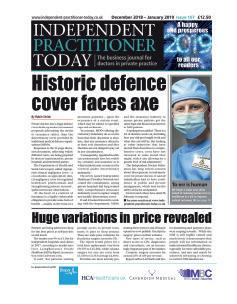
The business journal for doctors in private practice
In this issue
Internal vs external dilemma
A look at options for resourcing your practice to ensure it is managed cost-effectively P16
Virtual is the new reality Digital transformation of your website can help you to manage your patients’ expectations P42
your billing It’s time to examine the way your practice’s billing and collection is working P50
Get patients’ feedback . . .
. . . too many won’t tell you
By Robin Stride
The assessment of patient satisfaction with their private doctors, hospitals and clinics needs a re-think following new Care Quality Commission (CQC) research showing a widespread reluctance of people to complain.
Its study of NHS and private patients found nearly 7m people in England who accessed health or social care services in the last five years had concerns about their care but never raised them.
Independent practitioners are now being urged by the pressure group the Private Patients’ Forum (PPF) to do more to encourage people to give feedback, good or bad.
With 58% expressing regret about not complaining, the CQC has also launched a ‘Declare Your Care’ campaign encouraging people to share their experiences with the watchdog to inform future inspections.
The most common reasons for not raising a concern were:
N ot knowing how (20%) or whom (33%) to raise it with;
N ot wanting to be seen as a ‘troublemaker’ (33%);
Worries about not being taken seriously (28%).
More than a third of people (37%) felt nothing would change as a
result of complaining. But when patients did so, two-thirds found their issue was resolved quickly. And the CQC said this helped the service to improve and people were happy with the outcome.
The PPF said: ‘This is a small survey – 2002 people – but if its conclusions really are representative of the private sector nationwide, then there is clearly much to be done to encourage more patient feedback.
‘British patients are notoriously reticent to comment or complain, particularly older patients, but, happily, this is changing, albeit slowly. More patient feedback will help to improve and maintain consistently high standards.
‘Independent practitioners, who are trusted and held in high esteem by their patients, can play a vital role by encouraging patients to voice their opinions, both good and not so good.
‘It is so important to resolve issues quickly before they can escalate and doctors have enormous influence over patient behaviour.’
The PPF added it was important to put the report into context and remember that the vast majority of private patients received excellent standards of care and service. But only a few complaints were too many.
A spokesman said: ‘Patients are still
Independent practitioners are being urged to do more to encourage patients to give their frank views in a bid to improve services
telling us the system is disjointed and things fall between the cracks. Doctors need to play a bigger role in ensuring a simple clear system and then patients might feel better disposed to offer more feedback.’
David Hare, chief executive of the Independent Healthcare Providers Network, said the ‘Declare Your Care’ campaign would help drive improvements in standards across the whole of the health sector.
He told Independent Practitioner Today: ‘Last year’s State of Care report by the CQC into independent acute hospitals highlighted the very high levels of responsiveness in the sector, with over 90% of hospitals rated good or outstanding in this area and providers having a clear track record in swiftly making any necessary improvements in care following inspection, including through proactively seeking the views of patients to improve the patient journey.
‘The sector is not complacent, however, and we look forward to working with the CQC and others on this much-welcomed campaign to encourage more patients to speak up with concerns and further embed a culture of learning in independent healthcare providers.’
The Independent Sector Complaints Adjudication Service (ISCAS) also welcomed the CQC initiative. It will share the research with its subscribers – most of the independent healthcare providers in England.
Director Sally Taber said: ‘The question that needs to be asked is whether there is accessible information for patients to share their experiences, positive or negative.
‘Independent healthcare facilities should encourage staff to review that information is available in reception areas and consulting rooms.’
TELL US YOUR NEWS Contact editorial director Robin Stride
Email: robin@ip-today.co.uk Phone: 07909 997340
@robinstride
TO ADVERTISE Contact advertising manager Margaret Floate at margifloate@btinternet.com Phone: 01483 824094
SUBSCRIPTION RATES
£90 independent practitioners.
£90 GPs and practice managers (private & NHS).
£210 organisations.
Save £15 paying by direct debit: individuals £75 (organisations £180).
TO SUBSCRIBE – USE SUBSCRIPTION FORM ON PAGE 21 or EMAIL:
lisa@marketingcentre.co.uk Or phone 01752 312140. Or go to the ‘Subscribe’ page of our website www.independent-practitioner-today.co.uk
Chief sub-editor: Vincent Dawe
Head of design: Jonathan Anstee
Publisher: Gillian Nineham at gill@ip-today.co.uk
Phone: 07767 353897
EDITORIAL COMMENT
Honest feedback is vital
The Care Quality Commission (CQC) has not extrapolated how many private patients took part in its ‘reluctance to complain’ survey (see page one), but even if the numbers not speaking are low, then they would be too many.
Its findings are a useful reminder that the private route, often offered as the best available treatment and service, does not mean every customer is as happy as they may seem.
The challenge is to find a way of encouraging honest feedback that can be addressed and learned from to pave the way for a smoother journey in future.
Private units need to ensure patients have easy access to information about making complaints, suggesting improvements and sharing good experiences.
In the light of the CQC’s new ‘Declare Your Care’ campaign aimed at getting people to share their experiences with the
watchdog – and it will take these up during future inspections –doctors can expect more on this aspect of transparency both inside and outside the NHS.
The biggest gripes behind the raising, or wanting to raise a concern, were delays to a service or appointment, lack of information and poor patient care.
It seems most people raising a concern or complaint were motivated by a desire to make sure that care improved for others.
This included wanting to improve the care they or a loved one had received (61%) and improve care for everyone using the service (55%), with a smaller number also hoping for an apology or explanation (26%).
Any good service appreciates feedback and makes positive changes when needed, as the CQC research shows. It is important these outcomes are shared when they can have a wider benefit.
Make yourself tax-efficient
A new tax year begins next month, so accountant Susan Hutter gives her advice on what preparations doctors should make now P14
Repeating back stops mistakes
The latest in our series on tackling the disease of error in healthcare looks at how bad the medical system is at basic communication, unlike other sectors P22
On course for a paperless world . . . . . . or at least in the office. Going paperless – is it really possible? It’s not yet happened in private practice, but the direction of travel is clear P40
Don’t let your cash be eaten
Costs really do matter. Patrick Convey shows how high charges can affect your investment returns. So ensure you know how fees impact on your portfolios P44
Doctors reluctant to look in mirror
More people are open about their own mental health. That is, it seems, for everyone but doctors. We look at the law and the help available P48
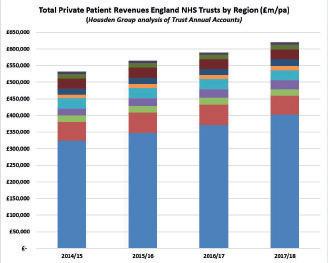
Stats show PPUs are on the up NHS private patient units enjoyed record income last year. Philip Housden analyses the PPUs’ figures to present his annual review for the journal P54
PLUS OUR REGULAR COLUMNS
Start a Private Practice: What you need to know at the outset
Accountant Ian Tongue looks at the areas of private practice that newcomers need to get right P56
Doctor on the Road: Most impressive of its class
Motoring correspondent Dr Tony Rimmer finds the Volvo XC40 a refreshing alternative to German brands P58
Profits Focus: In radiant good health
Our unique benchmarking series looks at the financial fortunes of radiologists P60
Harsh pension tax rules hit go-it-alone doctors
By Edie Bourne
Independent practitioners who fail to seek expert help are falling foul of harsh pension savings limits because the essential calculations are too confusing, according to specialist financial planners.
They warned this month that complex calculations are forcing some doctors to pay tens of thousands of pounds in tax charges.
The annual restriction on the amount you can contribute to your pension – the ‘tapered annual allowance’ – has been cut substantially in recent years. This drops the standard annual allowance of £40,000 to as low as £10,000 a year for high-earning doctors.
Excess pensions savings above this allowance may trigger a tax bill. In 2016-17, the year that the ‘taper’ was introduced, the average tax bill for breaching the allowance was £29,635. with some individuals paying much more.
This figure was released by HM Revenue and Customs (HMRC) after a Freedom of Information Act request in January this year.
Patrick Convey, technical director at specialist financial planners
Cavendish Medical, explains: ‘The annual allowance is particularly complicated before we take into account the rules surrounding the new “tapered” version.
‘Part of the problem is that doctors must first establish their “threshold income”, which is their income from all sources – not just NHS salary – and includes items such as private practice earnings, dividends from investments and buy-to-let property income.’
If this totals more than £110,000, doctors must then calculate their ‘adjusted income’ which is their threshold sum plus their NHS pension input. If this totals £150,000 or more, they will be liable for a reduced annual allowance on a sliding scale.
Mr Convey said: ‘As we have advised previously, working out pension contributions for a defined-benefit scheme such as the NHS is difficult. It is not based on the amount that you and your employer have physically paid into your NHS pension but on the deemed “growth” in the year.
‘You will not know your NHS
input until the end of the tax year and may not gain the required information in time, as the statement may arrive many months after your tax return has been submitted. We have also found many statements to contain computer errors.
‘In the last 12 months, we have carried out many rescue missions with new clients who had previously struggled to get on top of the allowance calculations. Most high-achieving professionals will have scarce time to ensure they are not walking blindly into large tax payments.’
He advised Independent Practitioner Today readers: ‘Make sure that you have your own situation checked well ahead of time to avoid writing a cheque for the taxman for thousands of pounds.’ HMRC announced revenue from annual allowance breaches of £517m in 2016-17 – a sharp rise from £143m the previous year.
Doctors quit NHS for private practice
Private practice is the aim of increasing numbers of senior doctors, who say they plan to leave the NHS early.
Research by the Hospital Consultants and Specialists Association (HCSA) found over a quarter (27.85%) of 833 respondents had made definite plans to leave the NHS, with destinations including retirement (30.26%), private practice (34.65%) and locum work (14.47%).
Of those who had made definite plans to leave the NHS, 75.97% said they were going earlier than previously planned.
The trade union said: ‘This figure – those with definite plans to leave the NHS, and also leaving earlier than previously planned – represents one in five of all respondents (20.65%).’
In evidence to the NHS’s pay board, the Doctors and Dentists Review Body (DDRB), the HCSA warned that tax changes, low morale and high stress levels were fuelling doctors’ exodus plans.
The association, which has put in a pay claim for 5.1% across all grades, noted DDRB concern last year about senior doctors’ retention due to pension tax rule changes.
It said although a task force had been suggested to look at reforms that could address this potential problem, nothing had happened.
The union added: ‘Our own research suggests that changes to pensions Lifetime and Annual Allowances are affecting the behaviour of particularly senior doctors in two ways – in disincenti-
vising additional shifts which are effectively unpaid and in incentivising early retirement and retirement plans.’
The HCSA voiced concern last year at the paucity of accurate data around retirement and early retirement.
It told the DDRB this year: ‘We also proposed in our last submission a joint task force, involving the NHS and Department of Health and the HCSA/BMA, to explore and seek better evidence around early retirement, and also those at the start of their careers who may be seeking to depart earlier than expected. We reiterate our call for such a taskforce.’
The HCSA reported another survey aimed at understanding the impact of pension tax changes on
doctors’ behaviour. It sought to separate aspiration from firm intention. Of 857 respondents, 41.67% said pension tax changes had led them to change their plans to now retire earlier. 13.29% said they would now retire later.
Patrick Convey of Cavendish Medical
Salary consultant group expands
By Robin Stride
The new ‘salaried consultant’ private hospital hit the ground running at its official opening last month, following up with three more launches.
Schoen announced two more outlets offering consultants its preferred salaried employment and set up a ski injury service at its main London clinic.
Now the company will shortly open a clinic in Chelsea to treat adults, adolescents and children with eating disorders, anxiety and depression.
The group has also acquired a 15-bed eating disorder unit and eight-bed complex trauma/personality disorder unit in York.
It told Independent Practitioner Today its Chelsea outlet also aimed to employ most of its consultants on a full- or part-time basis.
A spokesperson said: ‘This stems from the belief that the highest possible standards are best achieved with a dedicated team that is part of one organisation working towards the same values and culture.’
Chelsea’s purpose-built clinic has six consulting and individual therapy rooms, three group therapy rooms, including movement
and art, large patient lounge and relaxation area, training kitchen and dining area.
Schoen Clinic Chelsea will offer a range of care pathways aiming to support patients across all stages of recovery in mental health.
Starting with an individual outpatient assessment, treatment can range from outpatient consultation and therapy to structured fulland half-day programmes.
The clinic has taken on consultant psychiatrists, clinical psychologists, therapists, dieticians and specialist nurses and said it would have a specific focus on the behav-
iours, emotions and family elements of a mental health condition.
Example individual sessions include psycho-education, applied relaxation, cognitive behaviour therapy, art/drama, mindfulness, interpersonal therapy, relapse prevention, social issues, self-esteem/ resilience, family/couple work, depression coping skills, body image, burn-out coping skills, over-exercising, anxiety exposure and food preparation/cooking.
Since being founded by the Schoen family in 1985, the group has focused on the medical
Major new hospital enlarges
New private hospital the Cleveland Clinic London has agreed the lease of 28,841ft 2 of office space in the award-winning 4ORTY building, located at 40 Grosvenor Place.
The new administrative office is located opposite the hospital site at 33 Grosvenor Place – a six-storey, 324,000ft2 building currently under construction.
Scheduled to open in early 2021, it is set to provide new jobs and
employment opportunities for a variety of clinical and non-clinical employees.
The hospital will be Cleveland Clinic’s first facility in London, adding another international location to a portfolio including a 165acre main campus near downtown Cleveland, Ohio.
It also has nine regional hospitals throughout northeast Ohio, and facilities in Weston, Florida; Las Vegas, Nevada; Toronto,
THE SCHOEN CLINIC SKI INJURY SERVICE
allows people to:
Call from abroad and arrange to be picked up from the airport
Be taken to the hospital for a review and to determine the right specialist
Have an assessment with the specialist consultant, with rapid reporting allowing for sameday, onestop appointments
Receive a detailed diagnosis and personalised treatment plan
Go through rehabilitation and aftercare all under the same roof
specialties of mental health, orthopaedics and neurology.
It claims a unique award-winning approach to outcome measurement involving rigorous collection and analysis of patient outcome data to drive the continuous improvement of care and services.
As an example, it cited a 40% increase in the average weight gained per week by its patients since revising its treatment standards for eating disorders in 2013 as a result of a ‘Quality Empowered by Documentation’ system.
Schoen Clinic York’s two inpatient units were from The Retreat York, a charitable, not-for-profit provider of specialist mental health care. The company employs two consultants there: Dr Andrea Brown and Dr Melanie Temple. In London, the company plans to launch services around running/foot injuries, back pain and joint replacements in 2019 and more larger ventures in future.
Canada; and Abu Dhabi, United Arab Emirates.
Cleveland Clinic London will have 185 inpatient beds, eight operating rooms, an imaging suite, endoscopy and catheterisation labs, day case rooms for surgery, and a neurological suite with rehabilitation.
The facility will offer specialty services focusing on general surgery, cardiology, orthopaedics and neurology.
Independent practitioners with a VAT-able business are being urged to prepare for the imminent introduction of Making Tax Digital. Specialist medical accountant James Gransby, partner and head of healthcare at MHA MacIntyre Hudson, said: ‘This only affects people with VAT-able turnover in excess of £85k, which would typically be just those with medico-legal work, but I would advise doctors to check with their accountants.’
The Schoen Clinic staff at their Wigmore Street hospital, London
Training new consultants and sharing knowledge are key aims for The London Clinic Centre for Robotics
New robotic centre
The London Clinic on Harley Street has announced it is the first UK private hospital to launch a specialist robotic surgery centre. It supports cross-specialty surgery including urology, orthopaedics, hepatobiliary, colorectal, ENT and gynaecology with supporting services such as on-site pathology laboratories, 3T MRI, CT scanners and pain control.
Chief executive Al Russell said the leadership team were committed to supporting consultants and working with them in partnership to be at the front line of robotics.
He added: ‘Our hospital was the first private hospital in the UK to offer robotic surgery to patients in 2005. Now many other hospitals have followed this example. This new centre is an important part of our strategic plan and a good example of The London Clinic’s charitable purpose of advancing healthcare and sharing expertise.’
It aims to train the next generation of robotic surgeons, use a multidisciplinary approach, commission new technologies and share outcomes within the wider healthcare community.
GP contract opportunities
By Douglas Shepherd
Private providers are ready for any new business arising from a revised NHS GPs’ contract in England. That is the message from the sector’s trade body the Independent Healthcare Providers Network (IHPN).
The new five-year contract for GPs will see the development of Primary Care Networks (PCNs) and these have been welcomed by IHPN chief executive David Hare. He said the primary and community sector had for too long not had the funding or focus it deserved.
But he believes these new networks will now help foster more joined-up working between local services and ensure patients get
Meeting to discuss sector’s interests
Existing and would-be private consultants and GPs will be given business advice and tips at the BMA’s private practice conference in London next month on 5 April.
Speakers include:
Dr Shree Datta, chairman of t he BMA private practice committee, on the relationship with private medical insurers;
Keith Pollard, executive chairman at Lainguisson Inter national, who will discuss the changing landscape of private practice;
Prof Ursula Gallagher, Care Quality Commission (CQC) deputy chief inspector of primary medical services and integrated care, who will give a presentation on registration ;
Dr Neil Haughton, president of Independent Doctors Federation, on the interface between primary and secondary care (see his article on the shake-up in indemnity cover on page 12).
LaingBuisson’s Keith Pollard
Topics include strategies to grow, indemnity, group practice, finances, practising privileges and accounting.
Parallel sessions will cater for established consultants and GPs, and specialists starting in private practice.
The annual event is an opportunity for doctors to discuss issues affecting them in their day-to-day work.
Register your interest by emailing confunit@bma.org.uk
MORE ‘ONSCREEN’ GPs AS RESULT OF NEW CONTRACT
the right care, at the right time, in the right setting.
Mr Hare said: ‘Independent sector providers, including those in the voluntary and social enterprise sector, play a key role in delivering high-quality, innovative and patient-centred care in the community, with around 40% of NHS community provision coming from independent providers.
‘It is therefore vital that emerging PCNs are fully inclusive of all providers in the sector, with the additional resource used to invest in the best and most innovative models of care, regardless of who provides them, with clear quality and outcomes metrics developed to ensure PCNs are delivering value for money for the public and patients alike.’
GP practices in England will receive almost £1bn across five years under the new NHS contract, with another £1.8bn to help set up Primary Care Networks (PCNs).
Practices will work together to provide care to patients across a wider geographic area, with PCNs typically covering 30,000 to 50,000 patients and led by a GP clinical director.
PCNs have been promised full recurrent funding to employ social prescribers and 70% for clinical pharmacists this year, and the same for physiotherapists, physician associates and paramedics as they are introduced.
GPs will also be given resources to set up online and video consultations, and improved evening and weekend access.
It is envisaged that PCNs will carry out some of the NHS’s ‘LongTerm Plan’ commitments, such as
support for care home residents and earlier identification of patients with cancer or cardiovascular disease
Niall Dickson, chief executive of the NHS Confederation – which represents organisations across the healthcare sector – said: ‘This investment in primary care and the creation of networks with different health and care staff working together for the benefit of patients is a fantastic opportunity to support overstretched general practice as well as other hardpressed services in the community.
‘This builds on the considerable work over recent years to develop more integrated primary and community services. It is the right approach, but we have needed this increased investment and focus to have a chance of making it a reality throughout the country.’
Boom for eye surgeons
By Robin Stride
The best ‘young’ eye surgeons in private practice can expect a rising tide of patients for many years to come due to severe shortages in the specialty and the growing number of the elderly.
A Royal College of Ophthal mologists (RCOphth) census warns of recruitment and workforce planning gaps amid a predicted 40% increase in NHS demand over the next 20 years.
It says over the next two years an extra 230 NHS consultant and 204 staff and associate specialist (SAS) posts are needed.
Around seven in ten hospital eye units use locums to fill consultant posts, 85% run waiting list initiatives to try to manage demand, and one in four of the current workforce is nearing retirement.
Morale among doctors working in an ever-stretched NHS is clearly very low and demand cannot be
satisfied with the number of surgeons coming through, according to leading consultant ophthalmic surgeon Mr Stephen Lash.
Speaking as medical director at eye health care hospital group Optegra, he said: ‘We are increasingly seeing surgeons who are choosing to reduce their NHS commitments and work more in the private sector for a variety of reasons beyond remuneration.
‘In addition, other surgeons are approaching Optegra to deliver NHS services within our hospitals as well as local hospital trusts and clinical commissioning groups, contracting directly with Optegra.’
Independent Practitioner Today reported in its Profits Focus column (December 2018-January 2019) that consultant ophthalmologists – whose profits rose 6.9% in 2017 – were looking at the options of being employed by private hospitals.
Mr Lash said Optegra, with nine
hospitals in England, was not planning a fully employed consultant salaried model ‘at present’ and would prefer to work with ‘best in class’ surgeons through mutually beneficial arrangements.
The significant rise in ‘Baby Boomers’ had resulted in an increase in the number of adults aged over 70 years by two to three times in the past five years.
He forecasted: ‘This age group will increasingly access healthcare and specifically ophthalmology over the next ten years and new ways of working will be required which may include the increased use of private facilities to deliver NHS care.
‘In this environment, the best surgeons will be in high demand and we hope to attract these surgeons to work with Optegra.’
The RCOphth also highlighted a severe shortage of clinic space to cope with a continuing increase in demand caused by an ageing popu-
lation and welcomed new treatments for previously untreatable conditions.
Ophthalmology is now the busiest NHS outpatient specialty, with a predicted increase in demand of 30-40% over the next 20 years.
The current training places available each year will fall far short of the 230 extra consultant posts required over the next two years.
In 2017, the RCOphth and British Ophthalmological Surveillance Unit found patients suffering permanent and severe visual loss due to health service-initiated delays.
Melanie Hingorani, chairman of the RCOphth Professional Standards Committee, said: ‘Our patients deserve better. Policy makers, NHS leaders and commissioners must recognise and understand the significance of eye conditions and sight loss and give ophthalmology the priority it deserves – before hundreds more patients suffer permanent and avoidable loss of sight.’
Medical cannabis firm launches in UK
Australian medicinal cannabis company Althea has launched in the UK following changes allowing specialist doctors to prescribe cannabis-based products for medicinal use to certain patients from 1 November 2018.
Chief executive Josh Fegan said: ‘The UK Government’s positive regulatory change represents another major milestone in the
advancement of medical cannabis around the world.
‘We look forward to collaborating with UK health authorities and healthcare professionals to share our extensive experience in providing cannabis-based products for medicinal use to tackle unmet medical needs across a range of conditions and disease areas.’
The Department of Health and Social Care has asked the National Institute for Health and Care Excellence to produce a clinical guideline on the prescribing of cannabis-based products for medicinal use, expected by October 2019. Althea will provide medical education resources for doctors and guidance on how to access products.
PPU WATCH
Compiled
by
Philip Housden
NHS PPUs now lead London market growth
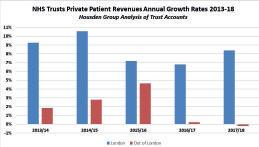
For the first time, private patient unit (PPU) revenues have grown at a faster rate than the capital’s independent sector hospitals.
LaingBuisson’s fifth edition report, Private Acute Healthcare Central London, highlights that it is NHS PPUs that are now the engine of growth in the London private hospital market.
The total London private market was valued at nearly £1.6bn in 2017 against £1.47bn the previous year – equivalent to around 40% of the UK market for private patient revenues, according to the report.
But this small revenue increase was driven by strong growth in NHS PPUs and disguises a decline in independent hospital revenue.
The strongest-performing PPUs are carving out niches in specialties such as oncology and paediatrics, where regulation and safety issues are increasingly influencing consultant choice of where to practise.
This, in turn, may be a factor supporting the ability of NHS PPUs to continue attracting overseas embassy patients at a time when many independent hospitals are reporting a decline.
Report author Ted Townsend said: ‘Competition from PPUs is getting stronger. Patients are attracted by their keen pricing and the reputation for specialties remains strong.
‘Also, as self-paying patients become a larger group, if they are planning to mix and match their care between the NHS and private sector, there is the potential attraction of continuity of care as they move between sectors.’
NHS to restrict its own PPU activity?
A recently published document proposes limiting NHS PPU commercial activity from April.
Evidence-Based Interventions:
Response to the public consultation and next steps – published in January by NHS England in partnership with NHS Clinical Commissioners, the Academy of Medical Royal Colleges, NHS Improvement and the National Institute for Health and Care Excellence – sets out the following guidance (section 36, page 53):
‘We are also aware that some patients may seek to get access to these treatments privately even if they are not appropriate. To limit the 17 interventions set out in this document from being offered inappropriately, we do not expect NHS providers to offer these inter-
ventions privately. We have agreed with the Care Quality Commission (CQC) that this will be monitored through regional assurance processes and CQC inspections.’
As this guidance does not require independent sector hospitals to be subject to the same restrictions in relation to evidence-based interventions, it appears to put NHS PPUs at a competitive disadvantage.
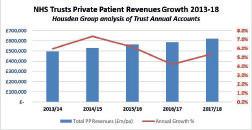
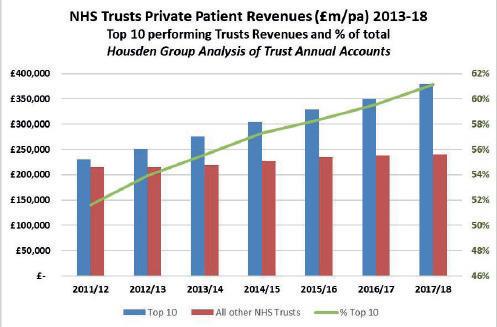
It remains to be seen if this new guidance slows the growth of PPUs over recent years, including record revenues of over £600m in 2017-18
CMA new guidance on PPU tie-ups with private operators
The Competition and Markets Auth ority (CMA) has published new guidance on how it will review PPU arrangements under the Private Healthcare Market Investigation Order 2014.
That is arrangements for a private hospital operator to operate, manage or otherwise provide privately-funded health care services at a PPU in England, Wales, Northern Ireland or Scotland.
The PPU scheme set out in the Order complements the merger control regime that applies to all market sectors. Thus, PPU arrangements which constitute ‘relevant merger situations’ have been subject to review.
Birmingham service eases overseas patients’ stress
Consultants’ patients from overseas are being helped on their travels to Edgbaston Medical Quarter, Birmingham, by medical concierge companies Lexihealth and Medical VIP International.
Launched at Arab Health 2019, the service aims to ease patients’ stress by helping them choose the right consultant, arrange travel logistics and accommodation for family or companions, rehabilitation and repatriation.
The service also includes lifestyle requests such as schooling, booking restaurants, organising translators, chauffeurs and city guides.
Lexihealth chief executive Annabelle Neame said patients were
offered help with the often complex healthcare journey, from appointment negotiation to all the administration associated with treatment and invoicing.
There is a single point of contact with dedicated patient liaison managers appointed to each case and with appointments, screenings and treatments at times and in locations to suit the patient.
Dr Mahnaz Hashmi, co-founder of Medical VIP International, said it could be difficult for patients overseas to choose the right independent practitioner.
Regulation and pricing structures could also confuse, but the concierge service guided people
This impacts, for example, where a private hospital operator already present in the local market seeks to invest in or work more closely with an NHS trust in that area to develop private patient services.
The most recent CMA reviews of this type were the 2017 assessments of HCA’s investment in University Hospitals Birmingham and Nuffield Health’s with St Bartholomew’s.
However, this guidance extends similar review powers to all NHS PPUs, as it is concerned with arrangements even where these do not constitute relevant merger situations under the Act.
This will require NHS trusts and independent hospital operators to put an additional review process into any proposed partnerships, including investment in facilities with or without operational management contracts.
The practical impact may be to improve the relative attractiveness of keeping operational control of PPUs in-house.
But this leaves the challenge for many trusts seeking to open or extend PPUs with finding sources of investment capital given the constraints on NHS finance.
Philip Housden is a director of Housden Group. Read his feature article on page 54
Are you ready for workplace pension rise?
each step of the way from medical sourcing to a hassle-free billing service and a personal concierge service.
Mark Lee, chief executive of Calthorpe Estates – which is home to Edgbaston Medical Quarter –said: ‘Launching the patient pathway provides referrers and international patients with access to some of the best healthcare treatment centres in the world, offering choice and making the whole process stress-free.
‘We see this as an important part of our enhanced service to support both patients and our world-class hospitals, specialist healthcare centres and eminent clinicians.’
Private doctors with employees are reminded to provide for the rise in minimum contributions they and their staff pay into the automatic enrolment workplace pension scheme from 6 April.
The employer rate rises from 2% to 3%, while the employee contribution goes up from 3% to 5%, bringing the total minimum contribution to 8%.
Accountants said all employers with staff in a pension scheme for automatic enrolment must act to ensure at least the minimum amounts are being paid into their pension scheme.
More details www.thepensionsregulator.gov.uk
In defence of discretionary
Defence bodies have hit back against Government plans advocating the merits of insurance rather than discretionary cover that they offer
MPS chief executive Simon Kayll
‘The Government admits in their consultation document that they are only aware of a limited number of cases where current arrangements have caused problems for patients or healthcare professionals and the few examples referenced do not relate to the actions of MPS.
‘We are particularly concerned that the proposals would mean doctors have to pay additional costs – including the cost of insurance premium tax – at a time when the rising cost of clinical negligence is becoming increasingly unaffordable.
‘We are also concerned that some insurance products offered may include limits and exclusions which do not adequately protect doctors against a claim; discretionary indemnity does not have such limits or exclusions.
‘As an alternative, we advocate introducing a mandatory Code of Conduct for the discretionary providers, which, among other things, would set out agreed principles for financial transparency and an independent complaints function.
‘It is also vital that the Government progresses its long awaited strategy for controlling the rising cost of clinical negligence. Urgent
action is needed to ensure that the cost of clinical negligence is balanced with society’s ability to pay.’
MDU chief executive Dr Christine Tomkins
‘Ours is a service from a not forprofit mutual fund, subscribed by members, which can respond to requests for assistance however long after the clinical event the claim comes in.
‘It does not impose financial caps and exclusions and, apart from NHS indemnity, is the only proven way of ensuring doctors and dentists are indemnified and patients are compensated for clinical negligence whenever the claim is made.’
The MDU was assisting a consultant with a claim notified in 2018 from an incident in the early 1980s. She said clinical negligence claims were often made years after the incident and, to compensate patients, the indemnity had to respond fully at the time the claim is made.
‘If the cover was required to extend to unlimited indemnity, without exclusions and conditions, it would be unaffordable. But this is what doctors and patients need to meet claims which can arise many years after the clinical event.’
The union warns: ‘Thousands of
doctors would be affected by the proposed changes which would apply to any healthcare practitioner doing non NHS indemnified clinical work.
‘The consultation mentions only NHS dental practitioners and independent private practitioners, but it will apply to hospital doctors and GPs doing private work such as writing reports, medico legal work and professional attendance at charity and sporting events – whether paid or voluntary – and to every other healthcare practitioner doing this type of work.
‘Making doctors have insured indemnity will increase the costs substantially, while there is no evidence this will increase protection for patients. This is bound to have an impact on doctors’ ability and/ or willingness to undertake such work to the detriment of everyone.
‘The MDU has been defending doctors for over 130 years. In contrast to the longevity of medical defence organisations, there are all too many examples of insurer’s failures and insolvencies.
‘The document fails to mention the most notable example within the clinical negligence market: the surprise withdrawal in 2001 of the insurer the St Paul from the clinical negligence indemnity market.
‘This left thousands of UK GPs and dentists without indemnity for claims notified after the policy ended. They had to make arrangements with the medical defence organisations to be able to access compensation for their patients.
‘Regulation of indemnity does not tackle the root cause of the claims crisis – legal reform is the only answer to tackle spiralling claims costs.’
How we reported the defence shake-up two months ago
MDDUS chief executive Chris Kenny
‘Our discretionary indemnity provides us with greater flexibility to assist our members and at the same time ensure proper compensation for patients harmed as a result of clinical negligence.
‘We support regulation where there is a need, but not regulation for the sake of it. Patients will not be better protected as a result of these proposals. This consultation provides no evidence of shortcomings in the current discretionary model and no evidence that regulation will better protect patients.
‘The case for change simply hasn’t been made. And the document, as our response shows, falls far short of the standards Government has set itself for considering change on this scale.
‘Indeed, instead of proposing concrete actions on legal reform that make a real difference, Government is seeking to impose a cost increase on healthcare professionals by moving to an insurancebased model that will attract a 12% insupremium tax. Only the Chancellor benefits from that change.
‘This consultation is yet another missed opportunity to tackle the real issues that are driving rising costs for healthcare professionals.’ See the case for insurance, p12
THE BATTLE FOR YOUR DEFENCE
Milestone for IT company
By Robin Stride
Private practice management system MidexPRO is celebrating its 25th anniversary with the launch of some new features for independent practitioners.
Managing director Gary Parker said these included Xero – ahead of HM Revenue and Customs’ Making Tax Digital requirements – a new way for multiple practices to communicate with each other and software to fully analyse entered data. Continued improvements suggested by user practices included the ability to do clinical drawings directly through the system, payment of invoices through MidexPRO and a paperless system for data entry.
He added that the firm’s recently expanded software team was now able to fast track suggested enhancements more quickly, making it easier for users to adapt their version of MidexPRO.
The business was set up in 1994 when married couple Rodney and Jayne Howlett formed the opinion that there was not a suitable management system platform for consultants running private practices.
They ran the business from their own home and then employed Mr Parker in 2007 to run their support line. He was offered the opportu
nity to take over the company in 2014 when the couple retired., They knew that to move with the times and ensure the firm continued to provide a secure system, Mr Parker would need to invest in providing a cloudbased solution. They say although some major changes have been made to the original version, the ethos has stayed the same: keep listening to the users, implement new features that help with functionality and keep it a userfriendly tool.
The company’s team held an informal canapé and drinks reception in London to mark their quarter of a century in business and invited new clients, and some of their oldest, to help them celebrate this milestone.
Doctors need to give next lot of fees data
Over 3,000 private consultants had supplied fee information to the Private Health Information Network (PHIN) by the beginning of March. Fee publication is due on its portal by the end of April 2019. Data required now from specialists are the fees charged to selfpay patients for initial and follow up consultations and procedures they perform routinely.
PHIN consultant relationship
manager Anne Coyne said: ‘Many consultants have package price arrangements in place with hospitals that incorporates their fees as well as hospital costs and we also require these prices.
‘Where these arrangements are in place, we have asked hospitals to provide this information.’.
Contact PHIN Monday to Friday on 0203 143 3177 for advice or email consultants@phin.org.uk.
The MLU can help you.
We are specialists in administering appraisals and revalidation and can help to simplify and streamline the process for you and save you money at the same time.
How do we do this? Our dedicated administration team will support and guide you through the process by:
➢ Reducing existing costs by supporting you in the process of finding a designated body;
➢ By administering your appraisals;
➢ Appointing an experienced Responsible Officer and a select team of medical, qualified appraisers;
➢ Providing a robust system of clinical governance in line with regulatory requirements.
We can also help private practices/clinics/hospitals to become a designated body. The process is simple and we provide cost-effective solutions which include policies and procedures and quality audits for each designated body.
Celebrating: Boss Gary Parker with founders Jayne and Rodney Howlett
A look back through our journal’s archives of ten years ago reveals that although times change, some issues are not so new
A trawl through the archives: what made the news in 2009
How different – and not so different – things were a decade ago before the Competition and Markets Authority’s long-running investigation into private healthcare
service specialties such as anaesthetics – that any external body, be it hospital, insurer or broker who sets their fees will ultimately profit from this.
‘All these schemes break the contract between the patient and the consultant, which we consider paramount.’
Pay row for radiologists
A hospital group’s bid to slash radiologists’ pay by 20% sparked warnings for other specialists to beware of new attempts to cut their private fees.
BMI’s policy, which had been revealed by Independent Practitioner Today the previous August, provoked anger as it was implemented nationally following a ten-hospital trial.
In a joint statement, the chairs of the Association of Independent Radiologists and the Federation of Independent Practitioner Organisations called it the first time a major hospital group had tried to control consultant fees. They complained: ‘This tactic serves as a warning to all consultants who value their independence – particularly, but not exclusively, to those in other
92-year-old specialist sells clinic
Consultant physician Dr Paul Sherwood, who opened his practice in the Harley Street area before most Independent Practitioner Today readers were even born, finally decided to sell up – at the age of 92.
The back pain specialist was then still putting in a 45-hour week at his Devonshire Place practice and told us he vowed to continue part-time in an advisory capacity to the buyer of his practice. [He died a year later at the age of 93].
Taxing time for deadline
An estimated 5% of consultants in private practice had put themselves at risk of a tax investigation after failing to hit their tax deadlines.
One in 20 either forgot to
submit their tax return and January payment by the end of the month or were just so busy they ran out of time to complete the paperwork.
Independent Practitioner Today warned: ‘...far more costly in time and money will be the new series of tax investigations that doctors face because their deadline failures have made them sitting targets for HM Revenue and Customs.’
Freebies face the axe
Free gifts to doctors from drug companies were likely to be banned, we reported, following recommendations from a working party convened by the Royal College of Physicians.
The proposal, which included food and travel, was among a number put forward following a ban by the US pharmaceutical trade association on reps giving doctors out-of-office entertainment, notepads, mugs and pens.
It was proposed that any honorarium or fee, commercial or otherwise, paid to a doctor should be declared on a publicly accessible database.
If the work being remunerated was completed in NHS time, then that fee should be paid to the doctor’s host institution to reinvest in the NHS, our report said, adding: ‘If in private time, this payment should be made transparent.’
BMA seeks private voice
The chairman of the annual UK Consultants Conference urged doctors to stand up and speak out to help protect their ‘fragile’ careers in the private sector.
Orthopaedic surgeon Mr Richard Rawlins told Independent Practitioner Today: ‘If your readers do have concerns about developments in the independent and private sector – get organised; identify a representative of your local group, put forward motions and press for a change in policy.’
the GMC
urged private doctors to have their say ‘on the biggest change to medical regulation in 150 years’. He was referring to the imminent requirement meaning any doctor wishing to practise in the UK would have to hold a new licence to practise in addition to registration.
SUBSCRIBE TODAY
Don’t miss out on what we report and advise in the future. Sign up for a £75 subscription today –consultants, GPs and practice managers can save £15 with a direct debit. See page 20
GMC chairman Sir Graeme Catto
is the only clinical decision support resource associated with improved outcomes. More than 80 research studies demonstrate its impact on improved patient care and over 1.7 million clinicians worldwide trust it to make the best care decisions.
98% would recommend UpToDate to a colleague 98% trust UpToDate as a point-of-care clinical information resource 96% say UpToDate improves the quality of care they provide
MEDICAL DEFENCE REFORMS
Indemnity must be based on insurance
The Independent Doctors Federation is backing the forthcoming big shake-up in indemnity. Presidentelect and treasurer Dr Neil Haughton (right) gives his views to Independent Practitioner Today
YOU MAY be aware that indemnity cover for all doctors will be changing and the Independent Doctors’ Federation (IDF) has been asked to take part in the Department of Health’s (DoH’s) consultation process on this issue.
The DoH is concerned that the current ‘discretionary’ cover provided by all the major defence organisations (MDOs) does not protect the public or doctors adequately.
There have been high profile cases where an MDO refused to pay, as the doctor’s activity was either not legal or it just decided not to;
it’s their choice at present.
The IDF welcomes this consultation and will be advocating the introduction of more insurancebased schemes.
We have our own IDF indemnity cover in place, which is insurancebased in order to give our members more choice and invariably with a significant financial saving. Such schemes are also underwritten by large global insurers, so the risk of them failing is minimal. The main MDOs only deal in one product, remember, so are vulnerable to such proposed legislative changes.
The proposed shake-up in medical indemnity was our lead story in our December-January issue
We have our own IDF indemnity cover in place, which is insurancebased to give our members more choice and invariably with significant financial saving
Under new legislation, their main cover will be provided by Crown Indemnity as in NHS hospitals; a huge loss to the MDOs. Crown Indemnity, however, only covers ‘bodily harm’ and not ‘personal conduct’, so the GPs still require external insurance.
PROBLEMS WITH THE TAX MAN?
Disadvantages of insurance
But there can be disadvantages, of course; an insurance scheme is like your house buildings’ insurance, so there is a limit on how much money they will pay out. If they agree to £10m and the claim against you is for £11m, then you will need to find the extra. Also, if you are deemed risky or have had numerous claims already against you, then your premium will be higher.
However, such ‘risky’ specialties are sometimes uninsurable in any other way. The insurance based schemes are also more closely regulated and are covered by the Insolvency Act to minimise the risk to policyholders.
GPs’ cover
There are also changes coming to NHS general practitioners, who have traditionally used the usual MDOs, as they are contracted by the NHS rather than employed directly.
The MDOs are understandably reluctant to provide ‘runoff’ cover after losing so much business, so the situation remains complex and unresolved at present.
Clearly, change had to come, as the standard product has become expensive and vulnerable, and some doctors – my colleagues included – questioned the quality of advice provided. The MDO route also penalised private doctors.
My GP cover was 50% higher than NHS GPs, for no proven reason. I was told we had more ‘litigious’ patients and were more likely to practise risky medicine; unlikely in our highly regulated Care Quality Commission world.
The IDF represents the interests of its members, but also will champion any change that will improve the security of independent practice to protect doctors and the public.
We welcome choice and feel the move towards insurance based indemnity schemes will provide that security.
Dr Neil Haughton is a private GP in London
HMRC tax investigations and disputes create difficult and stressful times.
As an award winning firm of tax experts, our highly experienced partners specialise in resolving problems relating to tax investigations and disputes with HMRC.
To find out, in confidence, how we can help call 0800 734 3333.
‘Here to help. Not to judge.’
Make yourself tax-efficient
Next month marks the beginning of a new tax year and for many consultants and GPs in private practice, a new ‘trading year’.
Most unincorporated independent practitioners tend to prepare their practice accounts more or less in line with the tax year – to 31 March – and many who trade as companies do so too. Susan Hutter (right) gives her advice on what preparations to make now
Personal
INDIVIDUAL SAVINGS ACCOUNTS (ISAs)
You and your spouse can pay £20,000 each year into an ISA. The main types of ISAs are cash, and stocks and shares, and you can mix and match.
The tax advantage is that interest and income – i.e. dividends –are free from UK tax.
Interest rates are fairly low at the moment and therefore, although safe, cash ISAs are not that exciting.
Also, you may be concerned at the current volatility in the Stock Market. Even if you had the lump sum available, you may be wary about putting the whole of the allowance into the Stock Market in one go.
An alternative to paying a lump sum is to pay monthly into a stocks and shares ISA over the tax year, which spreads the risk, as you are buying units at different prices. As always, you should take the advice of a qualified adviser.
PENSIONS
Most doctors have at some point been involved in the NHS Pension Scheme, even if they have opted out or retired from the NHS while retaining their private practice.
Many will also have a personal pension scheme under which they have been offsetting the premiums against private practice income in order to obtain the tax relief.
However, the maximum that can be invested, known as the Annual Allowance, has been eroded over the years. The annual advance for those with total income of less than £150,000, is £40,000.
This is reduced by £1 for every £2 of income over £150,000. So, when total income exceeds £210,000, the annual allowance is reduced to £10,000. If you pay more than this into your pension, the excess will be subject to tax.
The tax charge will be at your marginal rate of tax. In many cases, this can be paid by the pension scheme directly, not you, but it will come out of your funds.
If you have been paying a monthly premium, you will need to take advice as to whether or not you have exceeded the annual allowance and what you can do about it.
The good news is that if you have overpaid premiums, for 2019-20, you can set any unused annual allowances from the previous three years against the excess.
If you are concerned you may be breaching the limits, then you should take advice sooner rather than later.
TRANSFER INCOME-EARNING ASSETS TO LOWER-EARNING SPOUSE
If you have a lower-earning spouse, and their lower-rate tax bands and possibly the personal allowances are not being utilised in full, consider transferring income-earning assets to them.
Currently, there is no tax charge for transfers of assets between spouses – for capital gains tax and inheritance tax – and therefore it is fairly easy to transfer assets such as bank and building society deposit accounts and also stocks and shares.
For those of you who have rental income, you can actually transfer the asset into your lower-earning spouse’s name, in whole or in part, which could be worthwhile if you are paying tax at 40% or 45% and your spouse is paying tax at 20%.
The earlier you deal with this in the tax year, the better.
DIVIDENDS AND SALARY
Those trading as a limited company are probably aware that the only way they can draw money
from the company is via a dividend or salary.
It used to be far more tax advantageous to draw a dividend, but the favourable tax rates on dividends have been eroded over the years. Therefore, it is not a huge advantage nowadays.
For 2019-20, each shareholder can draw a dividend of up to £2,000 tax free. It is worth ensuring that you have done this.
In addition, you can draw a salary from your company of £8,632 a year without the company having to pay employer’s National Insurance.
However, there will still be income tax on this figure. Employer’s National Insurance is charged at 13.8%. Furthermore, unlike a dividend, the salary can be deducted from company profits and reduce the corporation tax bill.
Those who trade either as a partnership or as a sole trader will be taxed on the profit of the practice whether they draw it or not.
But if a spouse and/or children over the age of 16 work in the practice, then the practice can pay them a salary as long as it is commensurate with the work carried out.
HM Revenue and Customs will look carefully into this and therefore it is important to be sensible.
Practice
CASH-FLOW PLANNING
At all stages, it is important to ensure that your cash flow planning is in order.
It is recommended that you keep
If a spouse and/or children over the age of 16 work in the practice, then the practice can pay them a salary as long as it is commensurate with the work carried out
do if the investment is for a relatively long term, you could look at investing the company’s cash in property and/or a Stock Market portfolio.
It should be noted that if the company purchases property, unless this is let to non-related third parties at market rate, there will be a penal tax charge. You will need to take specialist advice about this.
PERSONAL TAX RETURN AND PRACTICE ACCOUNTS
three months’ working capital in the practice bank account to cover such things as salaries, including your drawings, premises expenses and office expenses.
However you trade – sole trader, partnership or limited company –it is vital to put enough money aside to pay the corporation tax/ income tax bill.
INVESTMENT OF COMPANY CASH
For those who trade as limited companies, you may have built up cash reserves in the practice that you do not need for business purposes.
Under current legislation, you can invest within the company. You do not have to draw the money out and pay income tax rates on the drawings. Interest rates on bank deposits are still relatively low, although this is a safe haven for your money.
If you are prepared to take more of a risk, which you may be able to
Sadly, it is quite rare for most consultants and GPs to provide their accountants with either their personal tax return information or their practice accounts information much earlier than a month before the filing deadline date. It is easy to understand why, as most people have a million things they would rather do than put their finances in order. However, if you start doing this now, you will be ahead of the game.
If your accountant has everything required for the tax return and accounts by, say, the end of June, they will be able to calculate all the tax liabilities, and advise of any last-minute planning that can be done, well before your summer holiday.
If you have not put enough money aside to pay your tax bill, you will have longer than usual to do so.
Before proceeding with any of the above ideas it is imperative to take professional advice.
Susan Hutter is a partner at Blick Rothenberg and part of the team that advises medical practitioners
BUILDING A PRACTICE TEAM
The vs dilemma internal external
During this mini-series on ‘practice management made perfect’, Jane Braithwaite (right) has covered the various activities that constitute good practice management. Here she brings this all together by exploring the different options for resourcing your practice or clinic to ensure everything is managed professionally and cost-effectively
MANAGING ALL aspects of a private medical practice requires a broad range of skills and expertise and therefore depends upon a team of people with the right talents.
The team will need a ‘leader’ to help focus and manage them to work effectively together. Most doctors are incredibly busy and need a support team they can delegate responsibility to, trusting in that team’s ability to deliver effectively.
In earlier articles, I have determined that the areas to consider when building the team are:
Choosing systems and establishing solid processes to follow
These both need to be reviewed regularly to ensure they continue to be fit for purpose after changes, such as in legislation and data protection.
The systems must ensure that patient data is held securely, com-
munications are secure and that legislation from organisations such as the Competition and Mar kets Authority (CMA) is adhered to in all day-to day activities.
At the end of the day, in the event of a problem, the business ‘leader’ will be held accountable.
Patient experience
All aspects of the patient experience must be managed, from answering phone calls in a reliable
manner through to booking appointments, typing and communicating results, booking surgery and finally invoicing.
Patients’ satisfaction
This needs to be collected, measured, monitored and enhanced and any patient’s concerns need handling in a professional way to ensure that each individual patient is satisfied – and also to protect the practice’s reputation.
➱ p18
FOR YOUR PATIENTS WITH HR+, HER2–, NODE-NEGATIVE,
Clear on Chemotherapy
The Oncotype DX Breast Recurrence Score® test provides clarity for adjuvant treatment decisions1,2
Recurrence Score® result
0–25
Vast majority of patients do not benefit from receiving chemotherapy*1,3
Only the Oncotype DX Breast Recurrence Score® test:
• is developed and validated for prediction of chemotherapy benefit3-5
26–100
Important minority receiving potentially life-saving benefit1,3
• has consistent results from prospective clinical trials and real-world evidence (>96,000 patients)1,2,6-8
• has now been used in over 850,000 early-stage breast cancer patients worldwide9
The Oncotype DX® test: Identifying the right treatment for the right patient1,3-5
The Oncotype DX® test is the only assay recognised by NCCN Guidelines to predict adjuvant chemotherapy benefit, and is recognised as the “preferred” multigene assay10
The Oncotype DX test is recommended by NICE for use in the UK to tailor chemotherapy treatment decisions11
*The vast majority of women with hormone receptor (HR)-positive, HER2-negative, axillary lymph node-negative, early breast cancer do not benefit from chemotherapy.1,2
References: 1. Sparano et al. N Engl J Med. 2018. 2. Sparano et al. N Engl J Med. 2015. 3. Sparano and Paik. J Clin Oncol. 2008. 4. Paik et al. J Clin Oncol. 2006. 5. Geyer et al. npj Breast Cancer. 2018. 6. Nitz et al. Breast Cancer Res Treat. 2017. 7. Hortobagyi et al. SABCS 2018. Poster P3-11-05. 8. Stemmer et al. npj Breast Cancer. 2017;3:32 and 2017;3:33. 9. Genomic Health®. 2018. Data on file. 10. NCCN Clinical Practice Guidelines in Oncology. Version 2.2018. 11. NICE Diagnostic Guidance 10.2013.
For a practice to grow and develop, there needs to be a strong focus on business development and marketing.
Business development and marketing is as important to a completely new private practice or clinic as it is to ensure the longterm success of an established practice.
It is vital to have support from experts who can manage this for you and to choose a team which really understands your practice and the patients you want to attract.
Equally important is a partner who can deliver the right results in a cost-effective manner.
Invoicing and credit control
Invoicing and credit control are the area that, in my experience, is most often overlooked, leading to situations where significant
amounts of money are owed to the clinic or, worse still, patients not being billed at all.
Invoicing correctly is a skilled job requiring a good knowledge of insurance company codes and strong attention to detail.
Credit control requires strong project management skills, but needs to be handled by someone who is confident to call patients and chase them for payment.
For many people, this is not a nice job and probably that is why it is often not done, with the result that aged debt is a problem for many private practices.
Most medical secretaries choose this career because they enjoy dealing with patients and providing them with good care. It is often a very uncomfortable experience for them to call those same patients to chase for payment and so run the risk of subsequently damaging those relationships vital to the patient experience.
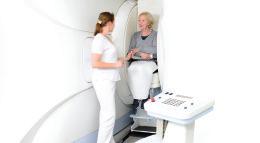
Upright Positional MRI Centre inLocations ManchesterLondon&
• Completely open scanner that is well tolerated by claustrophobic patients
• Weight-bearing scans for spine and joints enable a more precise diagnosis
• Patients who are large or cannot lie down can be accommodated
For more information go online at: www.trulyopenmri.com or call: 020 7370 6003 0161 434 8039
Choosing the resources
So how do we achieve all of this while ensuring a profitable operation?
There are many ways to resource a practice but largely the decision is whether to handle the work internally, by recruiting a team to support you, or by outsourcing the work to service providers. Of course, a mixture of both approaches may be the best solution.
There are pros and cons of each approach. Building your own team gives you a greater sense of control and may feel easier to manage. You may also feel more in control of the costs associated.
Outsourcing to specialist service providers can relieve you of the responsibility of managing staff and it reduces the pressure of keeping abreast of changes to legislation, because a good service provider will manage this for you.
Recruiting and employing individuals within your team can be a rewarding experience, providing a sense of building something significant together. Leading and managing a team is a role that many aspire to and fully embrace, developing a strong culture of loyalty and team work.
If you do employ permanent staff, you need to provide a contract of employment, set up a payroll function and ensure you manage all your responsibilities in terms of salary, National Insurance and pension contributions.
At the recruitment stage, always remember to obtain references. You will need at least two references to satisfy the Care Quality Commission, but I would recommend that this is good practice regardless.
I also recommend that you engage a human resources specialist to help you create your employment contract. There are numerous contract templates on the internet but investing some money in expert advice at this stage could avoid costly mistakes down the line.
When recruiting new team members, we always envisage that everything will work well, but occasionally there are issues and these will need to be addressed. It is important to be clear from day one how issues will be managed, and your employment contract should be clear about this.
Your team members will be entitled to paid holiday and sick leave and you will be well advised to set up a formal appraisal process. Your accountant will be able to advise you on the financial aspects. Remember that you will need to make your own arrangements for holiday cover.
The obvious person to recruit would be a practice manager or medical secretary who can take responsibility for many aspects of managing your practice, particularly managing the patient experience.
In the early days of your private practice, you may not warrant a full-time employee and this can be a challenging time.
You want to provide your patients with support from 9am to 5pm every working day, but the cost of this level of support is prohibitive.
It is quite common for a small group of independent consultants to share a medical secretary, which can be beneficial from a cost perspective, but it is important to have complete clarity from day one on issues such as line management and workload priorities to avoid longer-term problems.
Practice manager
As your team grows, you may choose to employ a practice manager, who may well take on broader responsibilities including managing others in the team.
All aspects of practice management can be delivered by service providers. There are companies specialising in the provision of medical secretary support, invoicing and credit management and others focus purely on a distinct area such as typing.
Some of these companies, such as my company Designated Medical, will provide a broader range of services for the medical practitioner, including medical secretary support through to finance and marketing.
Choosing a service provider should be viewed as choosing a business partner, as ideally it will be a long-term relationship and your chosen partner will be driven by your own objectives.
Choosing the right partner should take time and it is vital to do due diligence to ensure you make the right decision.
TIPS FOR SUCCESS
1
Be clear that the management of your practice is ultimately your responsibility, however you decide to resource it and do everything possible to protect yourself by working with professionals
2
Systems and processes are key. Regardless of how you resource your practice, you need to be certain they are fit for purpose and regularly reviewed
3
Ensure that patient satisfaction is measured and reviewed regularly. Your reputation depends on it
4
Allow time for management activities and for leadership of the team. Be honest with yourself about your strengths and weaknesses as a leader/manager and make allowances for these by looking for support
5 As part of your recruitment process, always obtain two references. This can be timeconsuming, but it is essential
6
Have an employment contract with every employee. Engage a human resources professional to help you create your employment contracts. It is better to spend money at this stage to prevent issues longer term with contracts that are not adequate to protect you. A clear contract will benefit you and your team members but could also save you in the event of any issues
7
Equally, have clear contracts with service providers that protect you and provide clarity on how issues will be dealt with
8
9
Take advice from your accountant on payroll, National Insurance and pension contributions
Perform thorough due diligence when choosing a service provider. Remember point 1 above
10
View the choice of a service provider as a long-term partnership. Invest time and effort into developing this relationship to pay dividends longer term
11 Focus on invoicing and credit control. Aged debt is a horrible problem
12 Remember that the best solution for you may be a mix of approaches
All aspects of practice management can be delivered by service providers
The early weeks and months of working together will require a substantial investment of time and energy from you and your chosen partner to establish the best ways of working.
It is well worth spending a lot of time during the investigatory stage to avoiding going down this route with the wrong partner.
Your due diligence should include checking the security and robustness of systems and processes used. While they are the responsibility of the service provider – and you will benefit from this – any security breach may affect your patients and reputation, as ultimately you remain responsible.
You should also investigate the company’s recruitment procedures, how long the staff tend to stay and what training they receive. Systems and processes are only as effective as the individuals using them, so you need to satisfy yourself that their team has been
well trained on important issues such as the General Data Protection Regulations and security.
Even with the best team in the world, the team leader, manager, director or often consultant will need to acknowledge that a proportion of their own time will need to be dedicated to leading and managing that team.
Depending on the size of the practice or clinic, an amount of time must be allocated each week for this activity.
Thank you for your engagement and feedback during this series of articles. Our new series starting next month will focus on the fascinating world of marketing in private practice.
Jane Braithwaite is managing director of Designated Medical, which offers business services for private consultants, including medical secretary support, book-keeping and digital marketing
SUBSCRIBE TODAY TO GET OUR TEN ISSUES A YEAR – AND READ US ONLINE
Dear Reader,
Subscribing to Independent Practitioner Today is the only way you can be sure you will see every issue and have the option of reading us online using our special page-turnable edition. Don’t risk missing out. Our personal subscription for doctors and managers is only £90 a year and £210 for organisations. But you can cut this to just £75 and £180 respectively if you pay by direct debit.
So take advantage of this offer now for our unique business journal dedicated to supporting you in your private practice. We’re confident your subscription will repay itself many times over!
Editorial director
APPLICATION FOR SUBSCRIPTION
Instructions to your Bank or Building Society to pay Direct Debits
Name and full address of your bank/Building Society
To: The Manager Bank/Building Society Address Postcode Ref. No.
Banks and Building Societies may not accept Direct Debit instructions for some types of account
a copy of your letter to us.
TACKLING THE DISEASE OF ERROR IN HEALTHCARE
Repeating back stops mistakes repeating
On UK railways, a classic example of a highreliability organisation, several studies have shown that about 70% of all adverse events are caused wholly or in part by miscommunications
Our trio of writers – two doctors and an airline pilot – are co-founders of a business on a mission to improve patient outcomes by helping healthcare professionals understand why errors occur.
John Reynard, Tim Kane and Peter Stevenson’s third article in their major series hones in on communication failure and outlines simple tools to reduce communication errors in your practice.
Here they focus on just one aspect of the High Reliability Organisation approach to error reduction and the development of a safety culture – the training of front-line staff using story-telling and, in so doing, providing a system for genuine learning from previous mistakes
‘RESEARCH ON learning from failures in healthcare is relatively sparse, yet the evidence from other areas of activity – and in particular from industry – reveals a rich seam of valuable knowledge about the nature of failure and of learning, which is as relevant to health care as to any other area of human activity.’
The Department of Health report An organisation with a memory , published by the Chief Medical Officer Sir Liam Donaldson in 2000, acknowledged that such an approach had an important role to play in reducing errors, but no systematic approach to this human factors training – training in the psychology of error – has been adopted in healthcare [Department of Health 2000].
On the UK railway system, a classic example of a highreliability organisation (HRO), several studies have shown that about 70% of all adverse events are
One of our junior doctors told us that the one and only time she had ever received formal training in the importance of read-back and summarising plans was during a holiday job . . . in Pizza Hut!
they identified safety people failing to stick to the rules on communication, ‘failures of mutual understanding’ – two people thinking they are talking about the same thing when they are not – and the fundamental ambiguity of human language to be major components in communication failure [Rail Safety & Standards Board 2006].
phrases and the avoidance of certain words and phrases which have been shown to be preventable elements in error chains.
Communication failure represents the single most frequently occurring element in adverse events that harm patients.
caused wholly or in part by miscommunications.
Key causes
Sexton and Helmreich concluded that ‘issues related to interpersonal communication have been implicated in approximately 70% to 80% of all aviation accidents over the past 20 years’ [Sexton and Helmreich 2003].
In the knowledge that communication failure is a significant cause of errors, many HROs focus on training their staff in Safety Critical Communications protocols.
This is well established: ‘Since 1995, the Joint Commis ion on Accreditation of Healthcare Organizations [in the US] has reviewed 2,455 sentinel events. Communication problems are consistently implicated as a leading factor in patient deaths and serious injuries.’ [Brown 2004].
And yet there seems to be very limited awareness of this issue among doctors and nurses.
Limited knowledge
Track maintenance work has been found to have about half of its incidents involving a miscommunication. By comparison, around one third of Signals Passed at Danger (SPADs) incidents have a miscommunication component. Among a number of key causes, ➱ p24
Specifically, they reinforce the importance of briefings, readback and summarising plans, opening
Much talk is given to better communication in healthcare, but knowledge on how to communicate better – safer – seems to be lim
ited, although clear advice on how to safely communicate is available, if one looks for it [Brown 2004].
It could be argued that the weakest – and therefore the easiest to break – links of an error chain are communication failures and poor checking behaviours, because a few moments’ thought on the part of the individuals involved in the communication could be all that is required to avert a disaster.
If that sounds too simplistic, then consider the following story.
Vincristine and methotrexate are chemotherapeutic agents used for the treatment of leukaemia and lymphoma. Vincristine is administered intravenously. Methotrexate is administered intrathecally to ‘mop up’ malignant cells that reside in the cerebrospinal fluid.
If administered intrathecally, vincristine invariably causes a fatal arachnoiditis. Safety systems have been developed to avoid the two
drugs being dispensed on the same day or being in operation at the same time.
Despite these safety systems, intrathecal vincristine has been administered on 15 occasions causing 15 deaths in young people, otherwise destined to be cured of their leukaemias or lymphomas.
Medical manslaughter
In the highprofile Richie William case at Great Ormond Street Hospital, the two doctors at the end of the error chain were charged with medical manslaughter – the classic blame approach to error prevention.
The charges were dropped, but not before the case had proceeded all the way to the Old Bailey, the Central Criminal Court. The judge decided that the hospital should bear the brunt of criticism for a failure to address systemic problems which occurred upstream of the events immediately preceding
Human beings, while mistake-prone, are only a link in the error chain
the administration of the intrathecal vincristine.
That was not before the haematologist registrar and anaesthetic registrar, being the sole ‘representatives’ of the hospital, had appeared at the Central Criminal Court.
It became clear in their statements that the two doctors had used certain words in their final communication immediately prior to injection of the vincristine, the avoidance of which would have broken the error chain leading to the fatal injection.
On the fateful day, Dr L had never administered intrathecal chemotherapy before – though, as an anaesthetic registrar, he was capable, from a technical perspective, of administering spinal injections – and, unfortunately, he did not know the dangers of intrathecal vincristine.
In answer to Dr L’s question ‘Who’s going to give the injection?’, Dr M, the haematology specialist registrar, answered: ‘I thought you were. Have pharmacy sent it up?’
Dr L replied: ‘It’s here’ and Dr M followed: ‘Well, just give it intrathecally. It’s a straightforward proce
Having served healthcare professionals since its inception in 1993, Tax-Link, chartered tax advisers and accountants in Wimbledon, has built a wealth of knowledge and experience in dealing with taxation issues faced by doctors in private practice. Our focus is on tax planning and compliance.
l Tax structuring to suit personal circumstances (LLP, limited companies)
l Solvent liquidations
l Consultant groups and consortia
l Assessment of pension contributions in light of tapering annual allowances
l Ad hoc assistance with HMRC investigations and reviews.
dure. You can do that, can’t you.’ One final error occurred. Under pressure, Dr L failed to read the label which stated – albeit in a very small font – that vincristine was ‘Fatal if given intrathecally’.
Perilous pronoun
The holes in the Swiss cheese model of error had now aligned perfectly – the boy’s fate was sealed. Of course, Dr L should have read the label, but an analysis of error using a psychological approach explains why he did not – he was under pressure and when humans are under pressure, checking behaviour can go awry.
The problem was that, by ‘it’, Dr M meant methotrexate and, by ‘it’, Dr L meant vincristine. A high reliability organisation would say that the two doctors did not share the same mental model of what was going on and at the heart of that failed sharing of knowledge, was the use of that tiny word ‘it’ – the perilous and ambiguous pronoun.
Despite years of medical education and training in top medical schools and hospitals and despite working at the worldfamous institute of Great Ormond Street Hospital, neither doctor had ever received any training in the psychology of error or in the way in which errors of communication can have disastrous effects. That represents a systems failure.
The high reliability organisation approach is different. High reliability organisations appreciate the value of story telling and they invest time and money in developing training material – often in video form – and in delivering that training.
We have been told on many occasions that our staff are too busy looking after wards of sick patients to be sitting in classrooms being trained.
The HRO approach, which has been so effective in reducing error, looks at the problem in another way: we are too busy and working in too hazardous an environment not to take time out in the classroom to make us safer and more efficient.
HROs also adopt a very simple, but highly effective safe communication protocol. They mandate the use of readback and of summarising plans.
So effective
Continuing the theme developed in our intrathecal vincristine story, an example of read back and instruction and thereby summarising understanding would be for Dr L to have replied to Dr M in the following way: ‘OK. Just to confirm; I’m going to give the vincristine intrathecally to Richie William’. To which, Dr M would, no doubt, have replied: ‘What! You’re about to inject vincristine intrathecally?! STOP.’
So simple and so effective. It is so simple and so effective that pizza home delivery services mandate the use of readback and summarising plans to ensure customers don’t get the wrong pizza toppings.
One of our junior doctors, while attending a human factors training day, told us that the one and only time she had ever received formal training in the importance of read back and summarising plans was during a holiday job... in Pizza Hut!
We are not aware of any randomised trial comparing pizza topping disasters when readback is used versus no readback.
But Pizza Hut and HROs don’t feel the need for such rigorous evidence because they regard readback and summarising plans as so obviously sensible and so obviously effective in reducing communication errors that they do not feel the need to prove that it works.
Error rate fell
But if proof is needed that the use of readback reduces errors in communicating the results of abnormal laboratory results, then it exists in Barenfanger’s study [2004].
In 822 outgoing calls from the lab, mistranscription errors by the requesting physician occurred in 29 of these messages (3.5%), a significant proportion of which had the potential to endanger a patient.
When readback was introduced, the error rate instantly fell to 0% at a cost of an average extra time of 12.8 seconds.
In the US, the Joint Commission on Accreditation of Healthcare Organizations has concluded ‘Consistent use of…[readback]…. assists us in avoiding or limiting errors that result from miscommunication in many aspects of clinical care and decisionmaking, as it has in aviation and other industries’ [Brown 2004].
Fifteen years on, it is our perception that readback continues to be used infrequently in situations where it should be.
Pilots and train drivers are expected to use readback throughout their communications and our airline pilot friends express surprise that doctors and nurses receive no or little training in it and use it so infrequently or not at all.
There remains much work to be done in convincing healthcare staff that readback makes healthcare safer.
Next month: We look at the HRO approach to crisis management, an area which in healthcare is not managed effectively.
John Reynard, Tim Kane, and Peter Stevenson are co-founders of Practical Patient Safety Solutions.
John Reynard is a consultant urological surgeon and senior lecturer in the Nuffield Department of Surgical Sciences at the University of Oxford. He is an honorary consultant urologist to The National Spinal Injuries Centre at Stoke Mandeville Hospital. He holds a masters degree in Medical Law and Ethics.
Peter Stevenson has been a pilot and human factors instructor for over 30 years. He flies Airbus A330 airliners on intercontinental routes for a major UK airline.
Tim Kane is a consultant trauma and orthopaedic surgeon at Spire Portsmouth Hospital and the city’s Queen Alexandra Hospital.
References
Department of Health (DoH). An organisation with a memory: learning from adverse events in the NHS. The Stationary Office, London 2000.
The role of communication errors in incident causation. Rail Safety & Standards Board 2006, Gregory Harland Ltd and Detica Ltd, Surrey Research Park, Guildford GU2 7YG.
Sexton JB, Helmreich RL. Using language in the cockpit: relationships with workload and performance. In Dietrich R (Ed) Communication in High Risk Environments, Buske Verlag, Germany, 2003.
Dickinson C. 2008, Improving Railway Safety Critical CommunicationContemporary Ergonomics, Proceedings of the International Conference on Contemporary Ergonomics, Ed: Bust, P.D, Taylor & Francis, 511-16.
Dyer C. Doctors cleared of manslaughter. BMJ, 1999; 318: 148.
Barenfanger J, Sautter R.L, Lang D.L. et al. Improving patient safety by repeating (Read-back) telephone reports of critical information. Am J Clin Pathol 2004; 121: 801-803.
Runciman W.B, Sellen A, Webb R.K. et al. The Australian incident monitoring study: errors, incidents and accidents in anaesthesia practice. Anaesth Intensive Care 1993; 21: 506-19.
Brown JP. Closing the communication loop: using readback/hearback to support patient safety. Joint Commission. J Qual Patient Saf 2004; 30: 460-4.
TRACING OUR ROOTS
NHS reforms embed
Where we are today in private healthcare owes much to events in the NHS. Dr Ellen Welch (right) continues her series with the key milestones from the 1990s
1990 NHS reorganisation –
The National Health Service Community Care Act receives Royal assent, pushing through the proposals of the 1989 Working for Patients paper to split the provision and purchasing – or commissioning – of healthcare.
The act allows the Health Secretary to establish NHS trusts by order. These assumed responsibility for the ownership and management of hospitals previously managed by the regional or district health authorities.
New GP contracts see greater external management of general practice and established financial incentives for GPs to become more involved in health promotion. GPs get paid for collating information such as the height, weight and blood pressure of patients.
The next year, GP fundholding allows some GPs to take on responsibilities for commissioning services for patients, becoming more involved with the wider health system. This brings criticism that a twotier system has been created, in which patients in practices with GP fundholders are able to access care more rapidly.
NHS Confederation is founded out of the National Association of Health Authorities and Trusts. It claims to represent the whole NHS.
1991 The Patients’ Charter sets out patients’ rights within the NHS and the service they can expect to receive. The charter sets out targets for waiting times for hospital treatment.
1992 The Health of the Nation White Paper identifies coronary heart disease, cancer, mental health, HIV care, sexual health and accidents as areas for improvement. There is an empha
sis on individual responsibility for health.
The Internet starts to take off in the UK as dialup internet access is introduced.
1994 The NHS Organ Donor Register is set up following a campaign by parents John and Rosemary Cox, whose son Peter died of a brain tumour and wanted to donate his organs to help others.
NHS Reorganisation – the number of regional health authorities is reduced to eight.
The Channel Tunnel opens.
1996 National Screening Committee established.
1997 Labour Government elected.
The New NHS: Modern, Dependable is a White Paper from the new Government which leads to further NHS reorganisation. It aims to replace the internal market with a more integrated system, but still retains the purchaserprovider split introduced by the Conservatives.
GP fundholding is abolished due to concerns of a twotier system.
Dolly the sheep – first mammalian clone – is born.
1998 MMR Scandal begins with the publication of a paper by Dr Andrew Wakefield in The Lancet suggesting a link between the mumps measles, rubella vaccination and autism. Parents across the world avoid vaccinating their children due to a fear of autism.
Measles outbreaks and deaths in 2008 and 2009 are attributed to not vaccinating. Scientists published many more studies proving no link. Wakefield is investigated and found to be guilty of deliberate fraud and is struck off the medical register.
His study was funded by antivaccine lawyers and found to be full of ethical violations. He picked data that supported his argument and ignored data that didn’t, and he deliberately falsified facts for financial gain. The Lancet subsequently withdrew his paper.
The National Institute for Health and Care Excellence (NICE) is established as a special health authority to provide national guidance on quality and reduce variation in the availability and quality of NHS treatments –the socalled postcode lottery.
NICE is also responsible for developing the Quality Outcomes Framework (QOF) – a voluntary incentive scheme for all GP practices in the UK, which rewards them financially for how well they care for patients. Under the scheme, GP practices score points according to their level of achievement against a series of indicators, such as the percentage of patients with a new diagnosis of a disease who are referred for certain tests.
As part of the Health and Social Care Act 2012, NICE became established in legislation as a nondepartmental public body (NDPB) accountable to the Department of Health, but operationally independent. NICE attempts to assess the cost effectiveness of NHS expenditures to determine whether or not they represent value for money.
New treatments are analysed relative to the next best treatment currently in use using qualityadjusted life years (QALY) to quantify the expected health benefits.
NHS Direct is set up as a 24hour phone advice line staffed by nurses, aiming to provide people with fast advice and information about health and NHS services at home. This closed in 2014 due to financial problems and was
replaced by NHS 111, an ‘urgent but not life threatening’ advice line staffed by phone operators, to complement the long running 999 emergency number.
The European Working Time Directive (EWTD) takes effect in UK law in October 1998 to protect the health and safety of workers in the EU. It dictates minimum requirements regarding working hours, annual leave and rest periods. Doctors in training were exempt from the EWTD until August 2004.
Its implementation was examined in a report commissioned by Medical Education England – now Health Education England – which found it had impacted training opportunities.
1999 NHS Reorganisation. After the abolition of GP fundholding, 481 primary care groups are created to replace it – technically subcommittees of the district health authorities.
These later become primary care trusts in 2000. A BMJ editorial comments that this reorganisation is ‘universalising fundholding, while repudiating the concept’.
The Euro is introduced.
☛ Adapted from The NHS At 70 – A Living History, by Dr Ellen Welch, a cruise ship doctor and GP in West London. £12.99 from www.pen-and-sword.co.uk
SPECIAL OFFER!
Independent Practitioner Today readers can get 25% off 'The NHS at 70', plus free UK p&p.
Quote NHS70 at www. pen-and-sword.co.uk
On course to a paperless world
(well, office)
Going paperless – is it really possible? It’s not yet happened in private practice, but the direction of travel is clear, says Kingsley Hollis
AN ARTICLE in Business Week in 1975 predicted that the ‘office of the future’ would be paperless.1
With a personal computer on every desk, companies would have no need to generate reams of paper because they could automate, process and store documents in digital form.
But more than 40 years on, this prophecy has yet to materialise, particularly in the healthcare sector.
Despite being surrounded by information and communications technology, many of us are still regularly printing documents, using paper diaries and corresponding by mail.
In fact, a recent poll of NHS
trusts by the Royal College of Surgeons found there were almost 9,000 fax machines still in use across the country.2
Healthcare providers in both the public and independent sectors are rightly investing in technology such as robotic assisted surgery or medical imaging equipment with the potential to transform patient treatment outcomes.
However, when it comes to our own practices, nothing radical has changed. Our continued paperpushing may be a case of ‘old habits die hard’, but perhaps it is also because we need to be clearer about benefits and also the challenges of going digital.
The clearest benefit is financial.
To take one obvious example, creating and submitting invoices online rather than printing and posting them enables practices to make savings (printing, postage and administrative costs).
Improving cash flow
It also improves practice cash flow because electronic bills (e-bills) are validated according to the relevant private medical insurer rules when they are submitted through Healthcode’s medical bill clearing system, so they reach the insurer ready for processing and payment. At the same time, automating routine processes and activities typically improves efficiency and productivity.
Investing in practice management technology puts you in control of essential tasks, from recording patients’ details and organising appointments to managing payments and financial reporting.
There is no need to spend precious time rifling through paper documents or looking back through appointment books for information when the answer is at your fingertips. And that leaves you with more time and energy to devote to patients and growing your practice.
The big question, though, is whether going paperless is achievable. One concern is data security. We are all aware of cases where
companies’ defences have been breached by cybercriminals who have then stolen sensitive customer data.
Most notoriously, in 2017, NHS systems were infected with ransomware which demanded payment for the release of computer files.
The WannaCry attack had serious consequences for the NHS and its patients. During a week of disruption, affected hospitals were forced to cancel planned operations and routine appointments, while some were forced to divert ambulances from accident and emergency departments.
Protecting data
And yet in many ways, paper-held information represents an even bigger data protection challenge.
According to the Inform ation Commissioner’s Office (ICO),3 in the 2017-18 financial year, there were 1,214 data security incidents in the health sector.
However, the two most common types of breach were ‘data posted or faxed to the incorrect recipient’ (225 cases) and ‘loss or theft of paperwork’ (183 cases).
The point is that it is relatively straightforward to implement systems and procedures to protect your digital files; such protection ranges from anti-virus software and firewalls to individual passwords and device encryption.
By contrast, if a letter or fax goes astray, there is nothing to prevent others reading the contents. The Information Commissioner’s Office (ICO) has said it is more likely to act against organisations where it believes there have been serious failures to protect personal data.
A more substantial obstacle is that you need to respect the wishes of patients who still prefer to receive information about appointments or test results by letter.
The GMC says that doctors ‘must give patients the information they want or need to know in a way they can understand. You should make sure that arrangements are made, wherever possible, to meet patients’ language and communication needs.’4
However, we are approaching a time when more people will expect to interact with healthcare services through their computer
or mobile device, much as they do other transactions such as banking.
Or, as the chief executive of NHS Digital recently said: ‘We are entering the era of self-service and mobility of data.’5
All healthcare providers will need to adapt to meet the needs of this patient population by digitising information and enabling them to contact you in the way that is most convenient to them.
Do you really want to ask someone who wants to see their health records to come to the practice to view a hard copy?
Ultimately, the paperless office of the future has not yet materialised, but the direction of travel is clear.
The technology exists to help us move on from outdated and timeconsuming administrative processes, eliminate unnecessary costs and focus on delivering care in a way that suits an increasing number of patients, all without compromising on data security.
Next time – Secrets of a thriving independent practice
References
1. The Office of the Future, Business Week, 30 June 1975
2. NHS fax machines still gleaming: RCS finds over 8,000 owned by hospitals, RCS, 12 July 2018.www.rcseng.ac.uk/newsand-events/media-centre/press-releases/ nhs-fax-machines/
3. 2017-18 financial year round-up, ICO, 14 May 2018. https://ico.org.uk/media/ 2014675/data-security-trends-pdf.pdf
4. Paragraph 32, Good Medical Practice, GMC, 2013
5. NHS Digital CEO says healthcare is ‘entering the self-service era’, Digital Health, 25 September 2018. www.digitalhealth.net/2018/09/nhs-digital-ceo-selfservice-era/
Kingsley Hollis (below) is head of business development (ePractice) at Healthcode
Virtual is the new reality
Managing patients’ expectations is key to private practice and as people get more tech-savvy they expect more. Grant Brookes shows how digital transformation can help
DIGITAL TRANSFORMATION
may seem like another buzzword from the marketing world, but it is something that is getting harder for independent practitioners to ignore.
The term refers to the integration of digital technologies into all areas of business, and in healthcare, it is revolutionising the way things work and, crucially, what patients expect.
Our healthcare sector landscape is becoming increasingly digitised and any independent practitioner or practice manager wanting to maintain their patient numbers and deliver the best service must respond to this.
Rapid advances in technology give us a chance to experiment and get creative in what we can offer patients.
They have come to expect at least a basic level of digital literacy from all their service providers, and this includes medical professionals.
The problems that patients consider the most important are those that practitioners should be working hardest to solve. Below is a look at some key patient problems and their digital solutions:
Information access
Patients want to know everything and happily ask ‘Dr Google’. They are hungry for answers, solutions and instant help and this access to some genuine – and some not –healthcare information can give doctors even more questions to answer.
The solution to this is building a strong and reliable reputation online and offline for your practice so your patients turn to your resources first.
They want the information in the clearest, most understandable way and doctors will benefit from utilising digital strategies with a stream of reliable, understandable and clear content allowing patients to learn about conditions, treatments, the doctors involved in their treatment and any other pertinent information.
Waiting times are less of a problem in private practice, but the latest digital methods allow for what’s known as ‘telemedicine’ to be easily incorporated. Investing in the right systems allows doctors to offer 24/7 remote monitoring options, fast feedback and better
support for patients in less accessible areas such as those based in rural and remote areas.
Enhancing users’ experience
The idea of referring to patients as users may seem a step too far, but the digitisation of society means this is how they are seen from a data perspective. Doctor-topatient communications face to face may be your practice’s forte, but patients may expect more.
Ensuring it is easy for them to be kept up to date is really appreciated. Simple things like online registration and repeat prescription forms can add a level of convenience patients benefit from.
Other additional perks such as online appointment reminders, mobile payments and the use of quick response (QR) codes to allow quick access to their treatment record and schedule online can help build stronger, more appreciative relationships.
Building and maintaining your online presence
Private practitioners need to commit to their online presence for many reasons. Not investing in your online presence allows competitors to get ahead and gives patients an easy reason to look to other practices.
You need a strong online presence because:
You need to match the rapid pace of healthcare. A single source of bringing patients into your practice simply isn’t enough anymore. The speed of change in healthcare means the more channels you have access to, the quicker you can adapt.
A strong internet presence means you can expand your referral stream for new clients and maintain your existing stream too.
Your patients are looking for you. Patients use the internet for due diligence as standard now, so you need to be found.
More than this, you need to be in control of what they find, ensuring that content you produce about yourself and your practice comes first.
Having only a small online presence, or none, instantly convinces patients to look elsewhere for those they can examine in more depth.
Other professionals are looking for you. Referrals from other doctors can be a key stream of patients for many independent practitioners and doctors increasingly look online to see who is active and highly recommended in their area.
Online invisibility means you are much less likely to be firstchoice referral, as other professionals cannot suggest their patients explore your individual or site practice in advance.
You have control of how you are seen. Choosing to avoid the internet or to have a small online presence allows for other opinions
of you and your practice to be seen first.
While it is unlikely you will be hit with hundreds of negative opinions online, even one will stand out if you have no positive and professional content of your own to stand against it.
Your professional story is heavily influenced by what people see online and if there is nothing there, it can be seen as a negative.
Embracing digital marketing
The savvy practitioner wants their practice to be in demand, patients to be satisfied and their reputation highly regarded. Embracing the online world and accepting the digital transformation of the healthcare sector is key to this.
Grant Brookes (right) is managing director of The Web Surgery. See his website at www. thewebsurgery.com
EXPERT ADVICE YOU CAN TRUST
ADVICE YOU CAN TRUST
EXPERT ADVICE YOU CAN TRUST
SPECIALIST MEDICAL ACCOUNTANTS
SPECIALIST MEDICAL ACCOUNTANTS
Since starting in the mid 1970’s Sandison Easson has continued to grow and is one of the largest independent medical specialist accountants in the UK.
Since starting in the mid 1970’s Sandison Easson has continued to grow and is one of the largest independent medical specialist accountants in the UK.
Since starting in the mid 1970’s Sandison Easson has continued to grow and is one of the largest independent medical specialist accountants in the UK.
Sandison Easson acts for medical professionals throughout all stages of their career and has clients in almost every town in England, Scotland and Wales.
Sandison Easson acts for medical professionals throughout all stages of their career and has clients in almost every town in England, Scotland and Wales.
Sandison Easson acts for medical professionals throughout all stages of their career and has clients in almost every town in England, Scotland and Wales.
We provide the usual services you would expect from an accountant such as preparation of your accounts and tax declarations but offer so much more including advice on:
We provide the usual services you would expect from an accountant such as preparation of your accounts and tax declarations but offer so much more including advice on:
We provide the usual services you would expect from an accountant such as preparation of your accounts and tax declarations but offer so much more including advice on:
• Setting up in Private Practice
• Setting up in Private Practice
• Setting up in Private Practice
• Developing your Private Practice
• Developing your Private Practice
• Developing your Private Practice
• Tapering of the Annual Allowance
• Tapering of the Annual Allowance
• Tapering of the Annual Allowance
• Lifetime Allowance planning
• Lifetime Allowance planning
• Lifetime Allowance planning
• Personal Allowance planning
• Personal Allowance planning
• Personal Allowance planning
• Reviewing your PAYE Coding Notices SPECIALIST
• Expenses that you can claim and those you cannot
• Expenses that you can claim and those you cannot
• Expenses that you can claim and those you cannot
• Minimising your tax bills
• Minimising your tax bills
• Minimising your tax bills
• Reviewing your PAYE Coding Notices
• Reviewing your PAYE Coding Notices
T
E info@sandisoneasson.co.uk
W www.sandisoneasson.co.uk
T 01625 527 351 E info@sandisoneasson.co.uk W www.sandisoneasson.co.uk
A Rex Buildings, Wilmslow,
THE CORROSION OF COSTS
Don’t let your cash be eaten
Costs really do matter. Patrick Convey on how high charges can impact your investment returns. Ensure you are aware of the effect of investment fees on your own portfolios
HUMAN BEINGS are poorly wired to be good investors. We have many deep-seated biases and behaviours that, while once useful to survive in the wild, do us a great disservice when investing.
One area of weakness is our poor grasp of the exponential impact of compounding that can work both for and against us.
Imagine three different portfolios that deliver returns of one, three and five per cent per year after inflation – but before other costs – over a period of 30 years: £100,000 invested in each would result in a growth of purchasing power to around £135,000, £240,000 and £430,000 respectively.
Seemingly small differences in the compound rates of return turn into large differences in terms of financial outcomes. That is one of the great positives of a disciplined and patient approach to investing – small returns turn into big numbers, given time.
On the other side of the coin, costs, when compounded over time, eat away at these market returns to a far greater degree than many investors imagine.
Severe deductions
For example, take two managers who deliver 3% gross (before fees) above inflation, where manager A has costs of 0.25% and manager B has costs of 1%.
Here costs matter a great deal. Over a 30-year period, an investor in manager B’s fund is more than £40,000 worse off than an investor with manager A’s fund.
Unfortunately, investors fail to consider the severe deductions from long-term wealth of the costs they suffer.
A pound of costs saved is no different to a pound of market performance in monetary terms, yet it is far more valuable due to its consistency over time and the fact that it is achieved without taking any more risk.
Minimising costs in an investment programme can have significant benefits, through the effects of compounding, over time.
Legendary investment guru Jack Bogle said: ‘In investing, you get what you don’t pay for.’
Multiple research sources identify the fact that low costs drive higher performance outcomes.
Investors fail to consider the severe deductions from longterm wealth of the costs they suffer
The use of low-cost products to implement an investment strategy provides a meaningful performance advantage over higher-cost alternatives.
It would be worthwhile paying higher fees to invest in a fund managed by a uniquely talented manager who can deliver returns above the market after all costs – if we can be certain that their performance is due to skill and not luck. You need around 20 years of track record to split one from the other and to be confident that they will consistently deliver market-beating returns into the future.
Unfortunately those are big ‘ifs’ with little supporting data. In the absence of that level of certainty, focusing on managing investment costs as tightly as possible makes good sense.
Investing in a systematic lowcost manner, where product providers have due regard to the costs that investors suffer, is very effective. Ensure that you are aware of the effect of investment fees on your own portfolios.
Patrick Convey (right) is technical director of Cavendish Medical, specialist financial planners helping consultants in private practice and the NHS
The content of this article is for information only and must not be considered as financial advice. Cavendish Medical always recommends that you seek independent financial advice before making any financial decisions. Levels, bases of and reliefs from taxation may be subject to change and their value depends on the individual circumstances of the investor. The value of investments and the income from them can fluctuate and investors may get back less than the amount invested.
‘BUPA BY YOU’ HEALTH
SAVING
For knowing you need support too
You’re there for your patients every day, and we’re here for you and your family
MOVING FROM doctor to patient isn’t something you expect to happen. But if you did find yourself in the patient’s shoes, you need to be confident that you can access prompt treatment at a time and place that suits you.
With Bupa health insurance, you’ll have the support you need to access diagnosis and treatment fast to help you get back to caring for your patients again.
Cancer care that helps you get there
A cancer diagnosis can be truly lifechanging and can make people feel out of touch, as though they’ve lost their identity. If you were to find yourself in this position, the Bupa Oncology team can help you at every step with information and support, including confidential emotional counselling.
Bupa’s full cancer cover gives you access to any cancer drug in the UK that’s licensed for the condition and there’s no time limit. The Bupa medical team also considers requests from oncologists to use breakthrough trial drugs before they’re licensed. They covered 95% of requests in 2017, usually within 24 hours.1
The Bupa Cancer Direct Access service helps to fast-track people from recognising symptoms to obtaining expert diagnosis without waiting to see a GP. 2 For breast and bowel cancer, the average number of days between calling Direct Access and starting treatment is 22 days and 27 days, respectively. These figures compare favourably with the published national target of 62 days. Depending on the symptoms and
health insurance cover, a specialist adviser will offer information about what to do next and can help you find the right consultant for your needs, then pre-authorise your appointment there and then.2
Bupa is now working with HCA Healthcare UK to develop specialist centres for breast cancer in Manchester and London, before expanding to other areas of the UK in the future.
These centres have committed to giving you the all-clear or all your initial diagnostic tests, within two working days of first calling Bupa about your symptoms. This provides fast reassurance for the majority of patients and access to treatment within 31 days for those diagnosed with cancer.
The partnership also makes it easier for Bupa health insurance patients to access diagnosis and treatment in line with clinical best practice, and without needing to arrange multiple authorisations for any tests and treatment they need.
Caring how cancer affects you personally
Yes, the big things matter – receiving the right drugs in the right place at the right time – but it’s also the little things that can help. Like a friendly word with a Bupa oncology nurse or clear directions to your appointment.
Anna, 3 a Bupa patient who is recovering from breast cancer, recalls her experience: ‘I knew the Bupa oncology nurses were there if I needed them. Sometimes I did want to talk, and sometimes I didn’t, but I knew they were there. She added: ‘Speaking to them
actually cheered me up and we often had a giggle’ – a sign that Anna was starting to feel like herself again after making the first phone call to Bupa 11 months previously.
This is one reason why customers rate Bupa ‘Great’ for customer experience on the independent review website Trustpilot.4
More than health insurance
Bupa cares, which is why it’s offering 15% off* Bupa By You health insurance for GMC registered doctors and any family members who are on the policy too.
Further savings are available to Bupa customers through their rewards programme. 5 Sign up to save at Wyevale Garden Centres, ASICS sports, Simba mattresses and more.
Call Bupa for an insurance quote: 0808 231 3702
Lines are open 8am-8pm Monday to Friday and 9am-12.30pm Saturday. Bupa may record calls.
* Terms and conditions: Doctors 15% off ‘Bupa By You’ insurance saving
A 15% saving applies to customers who are registered with the General Medical Council (GMC) and are able to provide their reference number. Bupa reserves the right to withdraw the 15% saving where this information is not provided. The doctor must be the main member on the policy, but the saving will also apply to all dependants covered on the policy. Savings only apply to a new Bupa By You health insurance policy.
Bupa reserve the right to amend or withdraw the doctors’ rate at renewal. If this happens, we will write to you to let you know in advance. For full terms and conditions, visit bupa.co.uk/15discount
REFERENCES
1. Applies to eligible cancer drugs and treatment covered by your policy. Figures based on internal customer data regarding claims for cancer during 2017.
2. Direct Access telephone services are available as long as the symptoms are covered under the policy. If your cover excludes conditions you had before your policy started, we’ll ask you to provide evidence from your GP that your symptoms are not preexisting for a period of up to two years from policy start date (or five years in the case of mental health) before we can refer you to a consultant or therapist through the Direct Access service.
For rolling moratorium underwritten members, we will ask for evidence each time you claim for a condition not claimed for before. Always call us first to check your eligibility.
Hospitals must meet Bupa’s strict quality criteria, including meeting a Care Quality Commission rating of ‘good’ or ‘outstanding’.
3.This quote reflects the specific experience of one Bupa customer (as told on November 2018). The cover you choose will be subject to specific terms and conditions that may apply to your policy.
4. Bupa UK is rated ‘Great’ on Trustpilot as of February 2019. Source: uk.trustpilot.com/review/ bupa.co.uk
5. All offers are subject to the provider’s terms and conditions that can be found at bupa.co.uk/rewards. Bupa Rewards are not regulated by the Financial Conduct Authority and the Prudential Regulation Authority.
Bupa Health Insurance is provided by Bupa Insurance Limited. Registered in England and Wales No. 3956433. Bupa Insurance Limited is authorised by the Prudential Regulation Authority and regulated by the Financial Conduct Authority. Arranged and administered by Bupa Insurance Services Limited, which is authorised and regulated by the Financial Conduct Authority. Registered in England and Wales No. 382985. Registered office: 1 Angel Court, London EC2R 7HJ
Private sector set to be safer
The new Consultant Oversight Framework will act as a strong benchmark for all independent hospital operators to meet, says David Hare, chief executive of the Independent Healthcare Providers Network
Independent Practitioner
Today reported the launch of the framework in last month’s issue
IMPROVING PATIENT safety has risen to the top of the health agenda in the past few years.
Everyone from the World Health Organisation through to former Health Secretary Jeremy Hunt has been calling on health services to do more to raise safety standards.
Hunt himself declared it his mission to make the NHS ‘the safest healthcare system in the world’.
And for the independent sector, too, safety has been a key focus with much work taking place to drive continuous improvement.
For example, after much lobbying, independent providers are now submitting vital patient safety data to the National Reporting and Learning System (NRLS) – the world’s largest national incident management system set up to identify trends to help improve levels of patient safety.
Safety investigations
Overall, in its State of care in independent acute hospitals report released in April 2018, the CQC found over 60% of independent acute hospitals to be good or outstanding for safety, which compares very favourably to the wider health system.
The sector also plays host to Nuffield Brentwood and HCA’s Christie Clinic, the only two acute hospitals – whether NHS or independent – to be rated as ‘outstanding’ for safety.
But, for all of those that work in the independent acute sector, this must not be taken as a cue to sit back and relax.
Problems, particularly around consistent application of the kind of excellence found in some parts of the sector, undoubtedly persist and nobody should be in any doubt that the sector is under considerable scrutiny.
There are, of course, many ways to tackle poor and unsafe care.
Accessing data
Improving transparency and ensuring that patients and the health system as a whole can access comparable data on the quality and outcomes of both the NHS and independent sector will be key to driving up safety standards.
Equally, the move away from the current system of discretionary protection to fully comprehensive insurance indemnity cover would help ensure that no patient would ever lose out if affected by poor care in the independent hospital sector.
The Independent Healthcare Providers Network (IHPN ) was also successful in ensuring that the remit of the proposed Health Service Safety Investigations Body (HSSIB) should extend to all healthcare provision in England, including privately-funded care, to enable the learning and best practice from any safety investigations to be shared on a systemwide basis.
And the Care Quality Commission (CQC), having inspected and rated over 200 independent acute hospitals for their safety and leadership, has been largely positive in its assessment of the safety of care delivered in the sector, despite some media commentary suggesting otherwise.
We are therefore delighted that this is a priority for the Government, and we are working closely with the Department of Health to ensure that any new indemnity arrangements work for patients, providers and practitioners alike.
And, as the CQC noted in its State of care report, there is more work to be done to ensure that monitoring of medical governance processes are ‘more consistently robust’.
This encompasses a number of key areas, including improving whole-practice appraisals by ensuring a two-way flow of information between the NHS and independent sector providers so that any concerns relating to consultants can be identified and dealt with.
It is also about improving the functioning of medical advisory committees (MACs) and the account ability of the MAC chairman and representatives’ roles at the local hospital level.
The IHPN recognises that delivering the consistency that is required is deliverable only where providers and consultants work together.
Spreading best practice
At the end of last year, we were therefore delighted to announce that Sir Bruce Keogh, former national medical director at NHS England, will be leading on the development of a ‘Consultant Oversight Framework’, which will apply to consultants engaged on both practising privileges and employed arrangements.
The framework is supported by an expert reference group made up of key figures across the medical profession, including the president
of the Royal College of Surgeons, the CQC deputy chief inspector of hospitals, the director of registration and revalidation at the GMC, and Federation of Ind ependent Practitioner Organisations’ (FIPO) chairman Mr Richard Packard.
It will enable individual providers to apply best practice in the way that best suits their culture and practice.
And it will cover a number of key areas including:
Governance around medical practitioners;
Whole-practice appraisal and revalidation;
Sharing of information across and within the sector;
Monitoring scope of practice;
Supported decision-making;
Multidisciplinary team-working. By dint of it being principlesbased and non-mandatory, the document will act as a strong benchmark for all operators to meet, whether small, stand-alone
The IHPN recognises that delivering the consistency that is required is deliverable only where providers and consultants work together
local independent hospitals or those part of large international group hospital chains.
And in drawing on existing good practice, we strongly believe that this is the best way to improve the consistency of clinical governance around medical practitioners across the sector and to raise the bar in medical leadership.
As health secretary Matt Hancock recently argued, to ensure the safest possible care for patients, ‘there is no room for complacency . . . we need a culture of humility, openness and learning’.
Working with Sir Bruce Keogh, we believe the development of the Consultant Oversight Framework clearly demonstrates the sector’s commitment to quality and safety in the sector, building on the excellent care we know is already delivered and spreading this to ensure ever more patients can benefit.
Doctors reluctant to look in the mirror
Awareness of mental health issues has significantly increased in recent years and more people are open about their own mental health than ever before. That is, it seems, for everyone but medical professionals. Amie Roadnight reports
MANY LAY people forget that doctors and dentists are, in fact, human themselves.
Despite being medically or dentally trained and having a breadth of knowledge on medicine and/or dentistry, this does not prevent medical professionals from experiencing mental health issues and requiring treatment.
There remains a stigma among medical professionals themselves in respect of their own mental health which may prevent them from seeking the help that they provide to other people.
When working in private practice or the NHS, you should be aware of the possibility that a colleague, or even yourself, may experience symptoms of mental illness at some point during your career.
It has been suggested that the heavy workload and long hours of doctors and dentists can impact a medical professional’s mental health, not forgetting the scrutiny of their work by their own regulator and the possible experience of being involved in a clinical negligence claim.
Doctors’ and dentists’ mental health has not previously been taken as seriously as it should have been, and it may not come as a surprise that a staggering number of medical professionals experience mental health issues at some point during their career.
It might be stress, burnout, anxiety, depression or even suicidal thoughts. Mental health does not discriminate: it can affect anyone.
The stigma needs to be broken
and it’s time for medical professionals’ own mental health to be taken seriously. Doctors’ mental health appears to have finally been recognised by the NHS in October 2018 when the NHS chief excutive Simon Stevens announced a new mental health support scheme for doctors working in the NHS.
It appears the NHS has recognised the need to prioritise doctors’ mental health and that doctors are not immune to the pressures of everyday life.
It is important that this message is shared in private practice as well. Doctors and dentists being open about their own mental health will be a major step forward in eradicating the stigma entirely.
Playing your part
You can play your part in your capacity as a colleague or employer. Talking is so important. As a doctor, you have a professional obligation to consider the impact a colleague’s – or your own –health could have on patient care and patient safety.
If the GMC becomes aware of possible patient safety concerns, it may consider it appropriate that the registrant’s fitness to practise is considered in respect of the concerns raised about the practitioner’s health.
This may involve, if necessary, a health assessment undertaken by the GMC. If the GMC remains concerned, it may hold an Interim Orders Tribunal to consider whether any action should be taken against the practitioner’s registration on grounds of their health while their health is fully investigated and considered by a Medical Practitioner Tribunal Service. A similar procedure exists for the General Dental Council.
Good Medical Practice states at paragraph 25: ‘If you have concerns that a colleague may not be fit to practise and may be putting patients at risk, you must ask for advice from a colleague, your defence body or us. If you are still concerned, you must report this, in line with our guidance and your workplace policy, and make a record of the steps you have taken.’
At paragraph 28 it says: ‘If you know or suspect that you have a serious condition that you could pass on to patients, or if your
WHAT TO DO IF YOU’RE WORRIED
If you are concerned about your own mental health, seek help early on. If you are concerned about the mental health of a colleague, you may want to consider the following steps:
1
You should try to raise your concerns with your colleague at an appropriate moment and advise them to talk to someone as soon as possible to seek help
2
If you have done so but remain concerned, you may wish to speak with your indemnity provider/ insurer about what further steps you should take
3
You may also want to consider whether it is necessary to inform the appropriate regulatory body of your concerns about your colleague’s health
As a doctor, you have a professional obligation to consider the impact a colleague’s – or your own – health could have on patient care and patient safety
doctors and their families in times of need.
➤ BMA Counselling: Confidential counselling service for doctors and medical students.
➤ British Doctors and Dentists Group: For recovering alcoholic and drug dependent doctors, dentists and students.
judgement or performance could be affected by a condition or its treatment, you must consult a suitably qualified colleague. You must follow their advice about any changes to your practice they consider necessary. You must not rely on your own assessment of the risk to patients.’
Where to find help
There are a number of support groups specifically focused on assisting medical professionals. Other support groups open to the general public should not be underestimated and you should also consider these as another avenue for support.
Set out below is a list of support groups specifically focused on medical professionals, which may be of assistance. It should be noted that this is not an exhaustive list and there is undoubtedly further support available – this is just a starting point.
➤ BDA Benevolent Fund / Royal Medical Benevolent Fund: Assisting dentists – both past and present – doctors, medical students and their families in times or need or crisis.
➤ BMA Charities: A group which has been established to assist all
➤ Dentists Health Support Programme. Advice and support for dental professionals affected by health issues, including alcohol and drugs.
➤ Doctors’ Support Network: Confidential selfhelp service for doctors concerned about their mental health.
➤ Indemnity organisations: Your indemnity organisation may offer a free counselling service or support and advice in times of need.
➤ NHS Practitioner Health Programme: Confidential and free for doctors and dentists who have mental or physical health concerns, especially where this may be affecting work.
Confidential in the London area –elsewhere you may require a referral from your GP to access the service.
➤ Royal Medical Foundation: assisting UK medical practitioners and their dependants in financial hardship.
➤ Sick Doctors Trust: For doctors, dentists and students with alcohol or drug dependencies. The help is out there –don’t be afraid to use it.
Amie Roadnight (right) is a solicitor at Hempsons
GETTING THE MONEY IN
Attack your billing
With yet more big changes on the way in the next few months for consultants in private practice, Garry Chapman (below) suggests it is time to take stock of the way your practice’s billing and collection is working
THERE ARE ten main billing issues to address in many private practices. I’ll deal with the first five in this issue of Independent Practitioner Today and the remainder in April.
1 INFRASTRUCTURE
It may seem strange in this day and age but there are still a lot of consultants working in private practice who operate their billing process either manually or on a word processing and spreadsheet platform that are not even linked together.
Only last year, our company MBC had a new consultant client and the handover consisted of a few supermarket carrier bags stuffed with paper. These consisted of typed invoices, unbilled clinic lists and unreconciled insurance remittances.
Even when these practices use some form of software programme to control their billing system, the frightening thing we see is that these software programmes are
typically being run on laptops/ notebooks/PCs which are never backed up.
This means if the device is either lost or the software becomes corrupt or the hardware fails, then the consultant’s finances are put at risk from both a monetary and tax perspective – a tax inspectors’ idea of heaven.
When going into private practice, one of the first things consultants should do is ensure they set up its running on a sound financial basis with the correct infrastructure.
This would involve having a robust auditable system in order to facilitate the financial elements of the practice, including the ability to raise invoices and reconcile payments, combined with the facility to chase the outstanding invoices in a robust manner by phone and letter.
Whatever system is selected, they would also need to ensure this is backed up daily to ensure financial integrity.
If you are already in private practice but currently do not have the infrastructure in place, then I recommend you put it at the top of your list of action points, because the risk you run grows on a daily basis.
2
TERMS AND CONDITIONS
This has always been an important area but is very rarely addressed correctly within a private practice. But with the advent of the Competition and Markets Authority stipulations regarding pricing and the new General Data Pro tection Regulations (GDPR), this is now of paramount importance.
You need to have the terms and conditions written down and presented to the patient prior to any treatment taking place. This would typically take place on a ‘patient registration form’ and cover areas such as pricing, insurance shortfalls and any payment terms applicable, including where the patient failed to attend.
It is important for consultants not to forget that although they are treating the patient medically in the same way as they do in the NHS, the key difference is that it is being done privately and therefore the patient should be liable for any costs irrespective of what insurance policy they hold.
If the T&Cs are clear, it helps both the practice and the patient.
3 PRICING
Over the past 27 years, I find this has always been the area that appears to give the consultant the most stress. The reason for this is that it is a very difficult area both within the insurance market as well as the selfpay sector.
The consultant has to decide if they are going to adhere to each insurance company’s price schedule and, if they do, they have to know the price schedule for each one, as they all have their own specific prices for each code provided by the Clinical Coding and Schedule
Development group, (CCSD) which can differ by up to 100%.
On top of this, they have to decide what rate they are going to charge for their consultation fees. In some cases, the contract the consultant has signed with the insurer will dictate what they can charge for both the CCSD codes and the consultation fees.
Where the contract does not, then they need to decide what to charge and this also includes the selfpay sector for both consultations and CCSD codes. Specialists must typically make these decisions in a vacuum. Their peers will share medical knowledge, but, for obvious reasons, this does not apply to commercial information. If the consultant gets this area wrong, it can lead to being incorrectly priced within the market and so they lose patients because the pricing is too high or they lose thousands of pounds due to the pricing being too low.
Our experience is that consultants typically do not charge correctly because they have either not done enough research when initially setting the pricing or they have not reviewed the pricing regularly. In many cases, it can be years since the pricing was last reviewed.
4
CCSD
Once consultants have decided on the practice’s pricing policy, they will need to make sure they keep abreast of all the CCSD changes for the codes they use in their specialty.
These changes can occur on a monthly basis. There can be replacement codes, new codes, change of description and the use of multiple codes billed together. All this can also have an impact on what can be charged for each insurer. Lack of knowledge in this area can often lead to undercharging for procedures.
The practice should set the goal of billing within 24 hours of any treatment carried out, which will ensure good cash flow and minimise bad debts
5 SPEED
Once everything above has been addressed,the practice then needs to raise the invoices promptly. But it is not uncommon for the practice to be many weeks behind on this.
The longest we have on record is a practice that had not raised an invoice for two years.
So why does invoicing fall behind? It is typically due to the pressure of other work or where the consultant has not got around to doing it themselves.
That should be classified as a criminal offence, as it actually puts the practice at risk particularly from a cash flow perspective. And the longer time left before the invoice is raised also increases the risk of having bad debts.
There is now a real risk of actually carrying out treatments free of charge, as some insurers now impose invoicing time limits of between three and six months.
The practice should set the goal of billing within 24 hours of any treatment carried out, which will ensure good cash flow and minimise bad debts.
Before I cover the remaining five billing topics, either start addressing any of these billing apects in your practice or contact a medical billing and collection company to assist in solving these issues.
Garry Chapman is executive chairman of Medical Billing and Collection
Free legal advice for Independent Practitioner Today readers
Independent Practitioner Today has joined forces with leading healthcare lawyers Hempsons to offer readers a free legal advice service.
We aim to help you navigate the ever more complex legal and regulatory issues involved in running and developing your private practice – and your lives.
Hempsons’ specialist lawyers have a long track-record of advising doctors – and an unrivalled understanding of the healthcare system as a whole.
Call Hempsons on 020 7839 0278 between 9am and 5pm Monday to Friday for your ten minutes’ of free legal advice.
Advice is available on:
Business structures (including partnerships)
Commercial contracts
Disputes and litigation
HR/employment
Premises
Regulatory requirements and investigations
Patient is fixated with royal family
A
Dilemma 1 Must I reveal my patient’s data?
QI am a psychiatrist and have been contacted by the Fixed Threat Assessment Centre in London. They have forwarded letters to me that a patient of mine has been sending to a member of the royal family.
These letters are not threatening but they do suggest the patient has an unnatural fixation and I can understand why there is concern about the content. I am aware the patient does have some mental health problems, but I do not believe he is a physical danger to anyone.
He appears to be sending letters at least once a week. They have asked me for information about my patient’s mental health.
In view of the nature of the letters and the importance of the recipient, am I obliged to disclose information without the patient’s consent?
AThe Fixed Threat Assessment Centre (FTAC) is a joint NHS and police unit based in London. Its role is to assess and
manage risks that may be posed to prominent individuals, such as members of the Royal Family and politicians, by people who suffer from serious mental health conditions.
Some of these people may not be known to medical services and therefore one aim of the organisation is to help people get the care they need and in doing so, reduce the risk to others.
The trust between a doctor and patient is extremely important in order to establish an appropriate therapeutic relationship. However, there may be times when you have to consider breaching a patient’s confidentiality.
One of those times may be when it is in the public interest to do so. This may be to protect individuals or society from harm, such as serious crime.
You do not have an obligation to disclose sensitive information to the FTAC and you would need to be able to justify breaching the patient’s confidentiality, if you did not have their consent.
Unless it would put you or others at risk, you could arrange a con-
Buckingham Palace: to where a patient has
sultation with the patient to discuss the contact you have had from the FTAC and explain their concerns while assessing the patient’s clinical status and needs. If the patient agrees, you could then let the FTAC know that you have had a consultation with him and what action you have taken as a result of this. If the patient refuses to consent to you disclosing information about him, you could simply reassure the FTAC that matters are in hand.
If you do believe the patient poses a threat to any prominent individuals or the public in general and you can justify disclosure in the public interest, you do not need to ask for the patient’s consent.
But, unless there is a risk associated with doing so, you should let the patient know that you intend to disclose personal information about them and to whom. You should document your discussion and any decisions you make carefully.
Dr Kathryn Leask is a medico-legal adviser at the MDU
Request for a letter
A patient’s asking for a doctor’s letter raises difficulties. Dr Phil Zack (right) advises on what should be done
Dilemma 2 I’m uneasy with this odd request
QA woman attended my private practice with her tenyear-old daughter for the first time.
The mother explained that her daughter suffers from allergic reactions to certain foods and asked for a letter supporting her application for the daughter to attend an over-subscribed secondary school near her house.
The mother stated that this was because she needed to be within a reasonable distance of the school if called in because her daughter had an allergic reaction.
I am not comfortable with writing the letter to the school. What do you suggest?
AIn deciding whether to write a letter, bear in mind the GMC’s guidance on writing reports and other documents which states that doctors ‘. . . must make sure that any documents you write or sign are not false or misleading’ and ‘. . . must take reasonable steps to check the information is correct. . . ’.
If you have concerns about the child’s diagnosis, you should explain to the patient’s mother that you need to be satisfied that the diagnosis is correct and arrange appropriate investigations and/or follow-up. If you feel that you need information from other clinicians involved in the patient’s care – such as her own GP – you should also explain this to the mother and seek consent to contact them.
If the patient does have allergies, then your priority should be ensuring she receives appropriate support and treatment.
It may also be worth exploring further why the mother wants her
child to attend the particular school – for example, whether they have a policy not to allow relevant allergens, such as nuts, into school – and ask about the views of others involved in the child’s care, such as her father.
If, having further assessed the patient, you have good reason to believe that she has specific medical needs, you could write a letter setting these out in objective, factual terms.
You should ensure that any opinions you express are justifiable and do not fall outside your area of expertise; for example, by
expressing opinions about educational matters.
If you agree to draft a letter, you should complete it without unreasonable delay and seek consent to share a copy with the child’s GP.
In this situation, it would be prudent to keep a detailed record of your interactions with the patient and her mother. This will be useful if you refuse her request and she makes a complaint or if you agree to write a letter and are later asked to justify your actions.
Dr Phil Zack is a medico-legal adviser for the MDU
groups and consortia
GP practices, including mergers and federations • Solvent liquidations
PRIVATE PATIENT UNITS
Annual stats show PPUs are on the up
NHS PPUs enjoyed record income last year. Philip Housden (right) presents his annual review for Independent Practitioner Today
NHS TRUSTS have again achieved record incomes from private patients, as shown through Housden Group analysis of the 2017-18 Annual Accounts.
Last year’s summary highlighted some marked trends apparent from the data, and these and further insights are shared below.
Total revenues were up £32m to a high of £619m for NHS trusts in England (£588m in 2016-17), an increase of 5.2% – previous year 4.2%.
This is a return towards the growth rate of over 6% enjoyed in the previous three years (see Figure 1). The total represents a marginal increase to 1.09% of total NHS trust patient-related revenues, up from 1.07% in 2016-17.
Revenues for 22 trusts within London climbed to £402m, up from £371m the previous year. The trend for the capital to be the engine of growth for the NHS continued, with incomes out of London essentially flat at £217m, down £0.4m on the year before.
The extent to which growth continues to be skewed between London and the rest is shown in Figure 2.
Again, all the top ten trusts by revenue were all in the capital, with Royal Marsden at £104m and Great Ormond Street Hospitals at £57m earning 26% of all England NHS trust incomes between them, a rise from 25% the year before.
Indeed, the top ten trusts increased their market share from 59.6% to over 61.1% of all private
patient earnings. Growth outside of the top ten central London specialist trusts was only 0.4%.
Through the past year, this column has reviewed the private patient revenues performance of NHS trusts in England, region by region, and the comparative performance is shown in Figure 4.
Missing out
Although this illustrates the dominance of London, with growth of 8.4% last year, the aggregate totals mask both the remaining opportunity for many trusts in London, several of which are perhaps missing out on the revenue streams enjoyed by the top ten. It also masks the progress made by a number of trusts, particularly in East Anglia, West Midlands and the North East, where growth has also been greater than 8%.
A review of the top five fastestgrowing trusts outside of London – those increasing by more than 10% last year and also with growth in excess of £100k revenues –
BIGGEST FALLERS 2017-18
Maidstone and Tunbridge Wells, Kent
Royal Brompton and Harefield, Middlesex
St George’s University Hospitals, Tooting, London
Western Sussex Hospitals, Chichester and Shoreham
North Bristol (Southmead and Frenchay Hospitals)
Papworth Hospital, Cambridge
Oxford University Hospital
Ashford and St Peter’s Hospital, Chertsey
Queen Elizabeth, King’s Lynn, Norfolk
East Kent Hospitals (Canterbury, Ashford and Margate)
Figure 1
Figure 2
shines a light on good practice and the positive steps trusts can take to develop private patient revenues in support of core NHS services.
By contrast, a number of trusts declined by over £0.5m private patient revenues in 2017-18. Of the ten biggest revenue fallers, three are in London: Brompton, St George’s and Ashford and St Peter’s.
However, Maidstone and Tunbridge Wells top the list, having experienced a long-term declining trend as local competition opened, particularly in Maidstone, plus local action to redirect ring-fenced beds at Pembury to NHS capacity.
Future articles will update previous analysis of NHS private patient performance by region, using these and other case studies to showcase good practice.
Philip Housden is a director of Housden Group
TOP 5 OUTSIDE LONDON
A
PRIVATE PRACTICE – Our series for doctors considering the independent journey
What you need to know at the outset
Your private practice is a business and you should run it as such from day one to ensure success. Key financial aspects considered here by Ian Tongue will help ensure you are best placed to maximise the return on your hard efforts
Before you start
Prior to the commencement of trading, it is important to carry out some groundwork. Speaking to colleagues, obtaining professional advice and ensuring you know what you are getting yourself into are all essential.
Once you are up and running, you will be even more time poor, so spending hours getting everything lined up will really pay off, as you can concentrate on building your private practice.
NHS vs Private
Reaching a successful work-life balance can be difficult, as there are often many opportunities to earn more money as a consultant, whether from additional NHS work or private practice.
Additional NHS work such as waiting list initiatives can often be a fast way of earning some extra money, as the patient is provided to you and very little admin or costs are suffered.
The flip side is usually a lower fee and less tax-planning opportunities, because, more often than not, waiting list incentives are paid under PAYE when performed for the NHS directly.
Care must be taken when increasing income streams that are superannuable, particularly if they are short-term roles, as they can spike pension growth in the 1995 NHS pension scheme and generate a tax charge.
Unfortunately, the tax system has created a situation in its taxing of excess pension saving where you can be heavily penalised for working harder.
At a time when services are so stretched, this can only add further problems until the disin-
Significant changes to the tax system are on the horizon and therefore adopting some form of electronic record-keeping is a good idea to avoid being on the back foot later
you should consider your choice of accountant, as this is a big risk area for consultants.
Record-keeping
As you can imagine, running any business carries responsibilities to the tax authorities and penalties can arise if you don’t keep adequate records. Significant changes to the tax system are on the horizon and therefore adopting some form of electronic record-keeping is a good idea to avoid being on the back foot later.
centive to take on additional superannuable income is addressed. I recommend that you speak with your accountant if your role is going to materially change.
Consider trading structure
From a taxation perspective, your trading structure will be one of the more important decisions you make. It can often be difficult to predict the size of your private practice early on and therefore whatever trading structure you adopt initially may change, so keep your accountant informed regularly.
The main structures for trading are self-employment, limited company or partnership. Historically, self-employment was the popular choice, but with more and more adverse taxation issues affecting higher earners, a limited company is in many cases the most flexible and tax-efficient structure. But this depends on your individual circumstances.
Consider pension position
Pensions are a complex area with possible tax charges for rapidly growing pensions and on the overall size of the pension itself. Even consultants with no private earnings can be significantly affected when they often assume they are ‘safe’.
The pension savings annual allowance is the key problem area to suffer an unexpected tax charge, particularly for those with taxable earnings of more than £110,000 from all sources. Your accountant should be able to discuss this with you, but if they can’t or defer the tax discussion to an independent financial adviser,
There are many software packages to help run your practice and most will link into an accounting package in anticipation of the changes to the taxation system tentatively scheduled for April 2020 for most private practices.
Other taxes
Depending on the type of work you perform and whether you employ anyone, you may have higher obligations to HM Revenue and Customs (HMRC).
In relation to VAT, the main work affected is medico-legal work, as this is not regarded as ‘medical’. Clinical work that is for the health of a patient is exempt from VAT and therefore the majority of private practices are not VATregistered.
For those carrying out non-medical work, you need to be doing more than £85,000 on a 12-month rolling basis to be forced to register for VAT. If you think you might be affected, speak to your accountant, as the penalties of not registering can be severe.
Grey areas exist for certain cosmetic work, but your accountant should be able to advise you further if they are medical specialists. If you employ a secretary or spouse, you are likely to need a PAYE scheme and therefore getting this up and running is important and is usually done through your accountant.
You will need to collect tax and National Insurance from your employees to pass on to HMRC and you will also pay National Insurance as the employer.
Depending on the levels of salary paid and status of the employee, you may have pension obligations under the auto enrolment scheme,
which is there to force employers to provide a pension scheme.
Indemnity
Indemnity insurance can be a problem area, as you often don’t know how much you will be earning and different income streams carry different risk premiums.
It is important if you are aware that you under-declared the size or composition of your income to your defence body that you contact them to pay the additional premium. It is a false economy to underpay your premiums, as you could find yourself under-insured if there were a claim.
Practical aspects
Having a quality secretary can often be the difference between a smooth-running practice and one with problems.
Often consultants share the services of a secretary, so take advice from colleagues, as often secretaries are looking for additional work and a personal recommendation goes a long way. Ideally, your secretary will actively chase outstanding fees and ensure you minimise bad debts, as this equates to working for free.
All consultants carrying out private work should have a highquality website. Depending on your specialty, you may need to spend a significant amount of time and money on marketing, advertising and social media.
Getting an expert to do this can be expensive but is more effective than trying to do this yourself.
Planning your private practice business and keeping it under review is really important to ensure that you have a successful private practice and help avoid any nasty tax surprises later on.
As always, keep in contact with your accountant who should be able to advise you at the various life cycles of your private practice. Next month:
Annual allowance tapering three years on
Ian Tongue (right) is a partner with Sandison Easson accountants
DOCTOR ON THE ROAD: VOLVO XC40
Most impressive of
Our tester Dr Tony Rimmer (right) finds the Volvo XC40 a refreshing alternative to the German brands
AS WELL-EDUCATED and respected professionals, most of us – of course – resist the temptation to be ostentatious in our habits. We usually buy things to improve the lives of ourselves and our families that are modest, of good quality and tasteful.
Our car-buying habits reflect this and if we need a practical family vehicle and don’t require excessive interior space, an unobtrusive medium-sized SUV would seem to fit the bill.
The compact premium SUV market has grown immensely over the last few years and car-makers recognise that we medical professionals are part of the target audience.
The usual players – BMW, Audi and Mercedes – are well-established brands who have had appropriate models on offer for some years. However, buyers are open to a bit of a change and new entrants to this sector are naturally trying to capture new customers.
Probably the most significant new player is Volvo. With the help of Chinese owner Geely, who has invested huge amounts in product
I was impressed by the quality and, more importantly, it felt like fun to drive
development, its revitalised model range now includes the XC40. This BMW X1-sized car may well turn out to be their most significant model so far. It is available with a range of engines and transmissions.
There is a 2.0 litre diesel engine with 150 (D3) or 190 bhp (D4) and two petrol engines: a 1.5 litre three-cylinder producing 156bhp (T3) and two versions of a 2.0 litre four-cylinder unit producing 190 bhp (T4) and 247 bhp (T5).
There are six main trim levels ranging from the basic Momentum, through Momentum Pro, R-Design and R-Design Pro to the rangetopping Inscription and Inscription Pro models.
Smart and chunky
Drive is to the front wheels only on the D3 and T3 versions and allwheel drive in all others. I have been testing a T3 R-Design Pro. This front-wheel drive manual version has features that include a nine-inch sat-nav and infotainment screen, a digital dash, autonomous braking, parking sensors, LED lights and half-leather trim. Strangely, a power tailgate is a
The chunky XC40 is immediately recognisable as a Volvo, with trademark ‘Thor’s hammer’ running lights at the front and tall light clusters at the rear
its class
£375 option. However, the price is competitive at £30,160.
The XC40 has a smart and chunky appearance. It is immediately recognisable as a Volvo, with trademark ‘Thor’s hammer’ running lights at the front and tall light clusters at the rear.
The interior takes all the best design features from its bigger XC60 and XC90 siblings, both of which have impressed me in the past.
The driver’s environment feels classy and I particularly like Volvo’s approach to the central console with its touchscreen in portrait rather than landscape orientation.
Voice-activated controls
There is plenty of leg- and headroom for passengers and the boot is 460 litres, which is average for the class and bigger than a typical hatchback like the VW Golf, which has 380 litres.
Overall, the interior feels well put together and conveys a comfortable and quality feel. Tech features such as Apple Car-Play are easy to use and I particularly like the voice-activated control system
that has been a standard feature of Volvos for a few years now.
Modern three-cylinder petrol engines are really impressive. They combine power with economy and manage to imbue a degree of sportiness to the driving experience, especially with a manual gearbox.
The T3’s engine does just that; it feels lively and, allied to the reasonably slick gearbox and light clutch, makes nipping through an urban environment a treat rather than a trial.
Potholes absorbed
This is helped, of course, by the compact dimensions of this class of SUV; it is just right for the roads of Britain. Probably more important is the ease of parking in our increasingly cramped car-parks; a situation not unknown in most private clinics and hospitals.
I was particularly impressed by the ride of the XC40. Despite the big 20-inch wheels of this R-Design Pro model, it is smooth and composed. Potholes are absorbed without drama and motorway driving is as comfortable as any premium saloon.
The handling is agile and fun, helped by the quick and direct steering; another pleasant surprise.
As it is an important market sector, there are new compact premium SUVs on the horizon. BMW’s updated X1 is now on sale and Audi’s revamped Q3 is soon to hit UK roads.
Currently, though, the XC40 is the most impressive and most rounded example available. It feels like a quality product without being too flash. I was impressed by the quality and, more importantly, it felt like fun to drive.
It is a refreshing alternative to the usual German brands and fits well with independent practitioners as an intelligent choice.
Dr Tony Rimmer is a former NHS GP practising in Guildford, Surrey
VOLVO XC40 T3 R-Design PRo
Body: Five-seat hatchback, front-wheel-drive SUV
Engine: 1.5 litre three-cylinder
turbo-petrol
Power: 156bhp
Torgue: 265Nm
Top speed: 124mph
Acceleration: 0-60mph in 9.0 seconds
Claimed economy: 45.6mpg combined cycle
CO2 emissions: 144g/km
On the road price: £31,360
The 460-litre boot is bigger than a typical hatchback like the VW Golf’s 380L
The touchscreen console is portrait rather than landscape orientated
All you need to know about accountancy for private practitioners
In radiant good health
It’s a tough market out there for many consultants, but our unique benchmarking survey by Ray Stanbridge finds this specialty is achieving decent results
IN OUR analysis in Independent Practitioner Today last March, I stated that the future prospects of radiologists remains rosy. Well, nothing has happened over the past year or so that has caused me to doubt this view.
Headline figures show that radiologists’ private practice gross incomes rose by 4.6% between 2016 and 2017, from £130,000 to £136,000.
Costs increased by 2.9% from £35,000 to £36,000. As a result, taxable profits increased by 5.3% from £95,000 to £100,000. These
are good figures in a difficult market.
I reported in 2018 that there were an increasing number of opportunities for radiologists, particularly those specialising in intervention work. Fee growth reflects this generally positive business state.
Indemnity costs have increased slightly from £7,000 to £8,000 following a significant fall in previous years. This represents inflationary pressure.
Use of home costs have risen slightly. This is because an increasing number of radiologists have
AVERAGE INCOME AND EXPENDITURE
Year ending 5 April. Figures rounded to nearest £1,000 (percentage is also rounded up)
Source: Stanbridge Associates Ltd.
Use of home costs have risen slightly. This is because an increasing number of radiologists have invested in equipment and are now reporting from home
invested in equipment and are now reporting from home.
Accounting/legal costs have shown a small increase, representing general inflationary pressures.
Some costs have fallen between 2016 and 2017, notably staff costs, from £14,000 to £12,000. We cannot find a particular reason for this fall, save that most radiologists do not necessarily need significant secretarial support.
‘Other’ costs have also fallen slightly. For most practices, these represent marketing, website and computer costs. Again, there is not an obvious explanation.
What of the future?
As reported above, we continue to see a bright future for radiologists in private practice – notwithstanding the attempts by some insurers and hospitals to aggressively reduce fees.
There is some correlation between growth in radiology fees and growth in day case work. This relationship may become clearer in years to come.
It is becoming increasingly difficult to make year comparisons of data we collect.
This is because of the growth in the number of radiology groups and the changing ways in which
radiologists in private practice conduct their business.
Increasingly, as we reported last year, they are remunerated through hospitals or ‘preferred’ suppliers, and this can lead to significant income changes.
More and more radiologists are
also trading through their own limited liability companies, which in some cases have reduced taxation liabilities significantly.
We are, however, shortly to see how the impact of a more severe interpretation of IR35 tax legislation, when radiologists are con -
tracted to public hospitals. More of this next year.
Some consultants are already experiencing the effect of IR35. This is where they effectively work for one employer who, under the new rules, treats them as employed rather than self-employed and deducts tax accordingly.
To qualify for our survey, consultant radiologists must:
Have at least five years’ experience in the private sector;
Earn at least £5,000 gross from private practice;
Be seriously interested in private practice as a business. This condition affectively excludes most small earners who look to their practice as primarily to meet school fees and holiday costs;
Hold an old-style NHS maximum part-time or a new consultant contract;
Work as a sole trader, through a formal or informal partnership, limited liability partnership, group or a limited company.
Next month: Urologists
Ray Stanbridge is a partner with accountancy, finance and tax advisory medical specialists, Stanbridge Associates Limited
HOW ARE YOU DOING?
Use
Years ending 5 April
WHAT’S COMING IN OUR APRIL ISSUE...
Make sure you don’t miss our next issue, published on 18 April. You may not receive every issue if you have not yet subscribed to the journal. Don’t risk missing out on vital topics we tackle next time:
The Private Practice Growth Guide, our new series from Jane Braithwaite, is designed to give medical practitioners the knowledge and tools they need to develop their private practice. Whether you are experienced or new to private practice, this series serves as a helpful guide to the sometimes confusing world of healthcare marketing
Will you join the thousands caught out by the ‘taper’? Cavendish Medical’s Dr Benjamin Holdsworth gives you the essential steps needed to check your pensions tax position
Moving to fees transparency: Anne Coyne, consultant relationship manager for the Private Healthcare Information Network, talks about what specialists need to do next
Technology in practice: Healthcode’s Kingsley Hollis presents the big features of thriving practices
Record-keeping – how to avoid criticism by a critical eye. Recordkeeping is the subject of much advice and guidance, but doctors regularly get it wrong. Amie Roadnight has five suggestions to help
Analysis of a number of high-profile medical errors has demonstrated poor crisis management. In the fourth and final article in their series on ‘Tackling The Disease Of Error in Healthcare’, John Reynard, Tim Kane and Peter Stevenson discuss a classic example of poor crisis management and analyse it according to the principles of a high-reliability organisation
INDEPENDENT PRACTITIONER
Published by The Independent Practitioner Ltd. Independent Practitioner Today is editorially independent and thanks Bupa for its assistance with distribution.
Printed by Pepper Communications Ltd Material is governed by copyright. No part of this publication may be reproduced, stored in a retrieval system or transmitted in any form without permission, unless for the purposes of reference and comment. Editorial layout is the copyright of the publishers. If you wish to use it for promotional purposes on websites or for reprints, we would be happy to discuss licensing the copyright to you.
Registered office: 7 Lindum Terrace, Lincoln LN2 5RP Write to
Practitioner Today PO Box 198, Cranleigh GU6 9BB
EDITORIAL INQUIRIES
Robin Stride, editorial director
Email: robin@ip-today.co.uk
Phone: 07909 997340
@robinstride
A consultant has been receiving an increasing number of requests for copies of medical records, costing his practice time and money. New regulations mean that, normally, a fee cannot be charged when a subject access request is made – but are there exceptions to this?
Get to grips with five more billing issues to address – part 2 is on its way from Medical Billing and Collection’s Garry Chapman
Hold tight! Our motoring
correspondent Dr Tony Rimmer drives in the car with ‘Doctor’ on it: the Porsche Panamera Sport Turismo e-Hybrid
A doctor takes on a 19,000-mile round-the-world trip – by bike – turning an eight-month career break into an extreme challenge in support of medical colleagues under pressure
Accountant Susan Hutter reveals the most common mistakes doctors make with their finances and business management
Why we choose to be salaried private consultants. Specialists employed by the new Schoen Clinic talk about the attraction of their salaried jobs
Profits Focus examines the latest income levels of urologists
Plus reports from the BMA’s expert witness conference and all the latest news and views
ADVERTISERS: The deadline for booking adverts in our April issue is 22 March
ADVERTISING INQUIRIES
Margaret Floate, advertising manager Email: margifloate@btinternet.com Phone: 01483 824094
SUBSCRIPTION RATES
£90 independent practitioners. £90 GPs and practice managers (private & NHS). £210 organisations. Save £15 paying by direct debit: individuals £75 (organisations £180).
TO SUBSCRIBE – USE SUBSCRIPTION FORM ON PAGE 21 or EMAIL: lisa@marketingcentre.co.uk or phone 01752 312140 or go to the ‘Subscribe’ page of our website www. independent-practitioner-today.co.uk
Guarantee delivery of your next copy of Independent Practitioner Today. Take out a subscription and you will get full access to our news, features and previous issues on our website. See details on the left.
BACK ISSUES: £12.50 including post & packaging
Electronic Billing
Remove printing, posting and admin costs
Payment Tracking
Ensure you have been paid for the bills you submit
Financial Reporting
Keep track of your practices’ performance
Complimentary App
Free Apple and Android app available
Appointments and Diary
Manage your schedule and send appointment letters
Membership Enquiry
Real-time online checks for patient membership number
Pre-populated Invoices
Which contain the information you require to submit bills
Shortfall Reminders and Letters
Automated prompts to keep you on top of any shortfalls