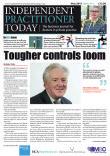
Ensure your website is an asset and not a liability P18
The business journal for doctors in private practice
When practice staff go rogue Vin Pandha shows how staff are able to defraud their own practice P34
Stay down to earth when investing Why taking a more pragmatic approach will help you in the end P42
Outcomes published
By Robin Stride
New data on outcomes of consultants’ treatments in private practice, due next month, will help the sector identify possible trends and areas for improvement.
It will cover the quarter JulySeptember 2019 and follows publication late last year of the first batch of ground-breaking information released by the Private Healthcare Information Network (PHIN).
This greater transparency should enable patients to have more informed conversations with their consultant and hospital about their likely outcomes, according to the PHIN’s chairman.
Dr Andrew Vallance-Owen said the information so far, available for the first time in the UK and covering over 100 independent hospitals and NHS private patient units (PPUs), would also help evaluate potential infection risks at 282 venues.
He added: ‘I’m particularly delighted that we are starting to see clearer evidence of the positive impact of treatment for private patients.
‘Patient-reported outcome measures (PROMs) not only provide reassurance about the quality of services, but also help specialists to confirm what matters to their patients before treatment and measure how treatment has met those needs following treatment.’
PHIN’s first publication last December, somewhat submerged by General Election publicity, revealed 98.8% of private patients seen in an independent hospital or PPU reported improved health following hip surgery. 95.3% of private patients said they had better health following private knee surgery.
Infection risk data draws on information from an estimated 85% of privately-funded admitted patients across the UK.
PHIN said: ‘While it is not yet possible to draw meaningful comparison between individual hospitals, PHIN has published a guide to help patients understand what infection rates at different hospitals could mean for their care, along with questions they should ask their provider before treatment.’
The infections data, covering the period 1 July 2018 to 30 June 2019, shows:
305 reported healthcare associated infections (HCAI) in the year across 1.4m ‘bed days’ of care – the basis of comparison used by NHS authorities. These are serious infections such as MRSA bacteraemia;
E.coli is the most common healthcare-associated infection reported in private healthcare, with an overall rate of 9.3 in 100,000 bed days;
58 reported surgical site infections (SSIs) across 28,900 patients
undergoing hip and knee replacement procedures;
Privately funded patients having hip or knee replacement surgery had a 0.2% risk of developing an SSI.
The Care Quality Commission’s chief inspector of hospitals, Prof Ted Baker, said: ‘It is important that all clinical services monitor their outcomes and compare them with what should be expected.
‘Patients should have access to this information so that they can make informed choices about their care and treatment and we welcome the increased transparency that this data provides.’
Xxxxx
Data publication follows a 2014 investigation by the Competition and Markets Authority (CMA), which criticised a lack of informa-
tion about quality, safety and price for patients considering private treatment in the UK.
CMA director Susannah Meeke called the new statistics ‘useful information about the quality of services’.
She added: ‘This is an important step towards what the CMA required following its market study, which found that people needed easily accessible information online to weigh up the performance of hospitals against the cost of treatment.’
David Hare, chief executive of the Independent Healthcare Providers Network, said the figures demonstrated the high-quality care found across the independent hospital sector, with providers delivering excellent outcomes for patients.
The Private Healthcare Information Network says the data will allow patients to have more informed conversations with their consultant
TELL US YOUR NEWS Contact editorial director Robin Stride
Ensure your cookies don’t catch fire
A key consideration for all website owners is their cookie policy. We show you how to stay ahead of stringent new data protection legislation P14
ADVERTISE WITH US Contact advertising manager Margaret Floate at margifloate@btinternet.com Phone: 01483 824094
GET A SUBSCRIPTION DISCOUNT
£90 independent practitioners.
£90 GPs and practice managers (private & NHS). £210 organisations.
Save £15 paying by direct debit: individuals £75 (organisations £180).
TO SUBSCRIBE – USE SUBSCRIPTION FORM ON PAGE 25
Or email karen@marketingcentre.co.uk Or phone 01752 312140.
Or go to the ‘Subscribe’ page of our website www.independent-practitioner-today.co.uk
Chief sub-editor: Vincent Dawe
Head of design: Jonathan Anstee
Circulation
Publisher: Gillian Nineham at gill@ip-today.co.uk Phone: 07767 353897
PUBLISHER’S ANNOUNCEMENT
A vital new resource for you and your practice staff
Independent Practitioner Today is responding to readership demand by developing its website further to complement its news and feature articles by providing a realtime advertising directory.
So if doctors and their staff need to search for the premier supplier options across the wide range of business support services that they use, then they will be able to find answers at their fingertips.
We aim to give you a comprehensive easy-to-use directory providing all the information you need to know about the ever-increasing number of companies now being taken on by independent practitioners.
This will be split into ‘business’ and ‘lifestyle’ directories reflecting the busy lives of our core readership and the importance of having everything available in one place.
Independent Practitioner Today is ABC audited and distributed
to 7,000+ consultants, GPs and other doctors working in private practice. As each issue is published, we email an additional 14,500 private doctors to give them access to our monthly page-turn digital edition.
So the directory will be a vital shop window for suppliers and organisations too. They will have their own page in a relevant directory section such as accountancy, billing and collection, clinics/medical services, conferences, consulting rooms, insurance, IT, investments, legal, management, secretarial/business support and tax.
And they will be able to profile themselves, including company logo, description and contact details with a hyperlink to our general website or personalised landing page as required – and enjoy exclusive brand opportunities. Look out for further information soon.
A boost to my life and my patients’
Dr Sibel Peck says setting up a private GP practice has been the most rewarding in her career. But warns against mixing it with NHS work P20
Grilled to exhaustion by the police
Surgeon Mr David Sellu, convicted for gross negligence manslaughter of a patient – overturned on appeal after a prison stay – continues his story P26
Why doctors fail to get top billing
Hundreds of consultants’ practices share common management problems when it comes to billing. We highlight some of the most worrying P32
Avoid property pain
Dr Lafina Diamandis rounds off her series for doctors investing in property by describing the pitfalls and how to dodge them P36
Contracts to use when taking on staff
Solicitor Julia Gray addresses the most common question independent practitioners ask about employment status when taking on new staff P40
PLUS OUR REGULAR COLUMNS
Start a private practice: Which structure suits you best?
Ian Tongue gives a round-up of the different types of trading structures private doctors adopt P48
Doctor on the Road: Ultimate stealth car
Electrifying! Dr Tony Rimmer finds the new Tesla model heads a class of one P50
Profits Focus: Gynaecologists do well
Our unique benchmarking series looks at the financial fortunes of gynaecologists P52
By Edie Bourne
Doctors are pinning hopes on Treasury indications that substantial tax reform will be announced in the Budget to alleviate punitive tax charges on their NHS pensions.
Unions say tinkering just won’t work Experts look to Budget to fix pension tax fiasco
The outcome of the Government’s consultation into pension flexibilities and review of the tapered annual allowance is expected to be published in the Budget on 11 March. New tax relief rules would then be in place from the start of the next tax year in April.
A Treasury spokesperson said: ‘We want to make sure that doctors spend as much time as possible treating patients. That’s why we are urgently reviewing the pensions taper to ensure doctors aren’t turning down extra shifts for fear of high tax bills.’
In the Conservative manifesto, the Government pledged to review the tapered annual allowance within 30 days of being in office.
Patrick Convey, technical director of specialist financial planners Cavendish Medical, labelled the Government’s surprise December announcement to pay current tax year charges of clinicians caught out by the taper merely a ‘sticking plaster’ on a complex issue. He said: ‘Now the Government must put a more thorough procedure in place to ensure doctors are
not unfairly punished for their working practices.
‘At the end of last year, Health and Social Care Secretary Matt Hancock said he was in talks with the Treasury about removing the pensions tax allowance taper.
‘This has not been confirmed and it is possible that smaller changes will be brought into play. However, the Government’s own advisers have argued for wide -
spread change to pension tax relief.’
Meanwhile it has been revealed that many pension savers are not informing HMRC about breaching the annual allowance.
The Treasury has warned that individuals using the Scheme Pays option, where the NHS Pension Scheme pays tax charges resulting for excess savings in return for reduced future benefits, must still
Hospital Consultants and Specialists Association pensions spokesman Dr John West said doctors emerged from talks with Treasury and health ministers last month believing there was little evidence of an effective way forward.
He added: ‘While pre-Budget leaks suggest the Treasury is considering raising the income threshold to £150,000, this would still act as an arbitrary ceiling and a huge disincentive to consultant staff taking on greater responsibilities such as waiting list initiatives, teaching or research.’
The cleanest and simplest way of sorting the problem was to scrap the annual allowance taper on 11 March and move on to a review of allowances including an evidence-based probe into the impact on NHS workforces.
Dr West warned that ill-thought-out quick fixes or tinkering round the edges would not end the crisis: ‘Only two things are currently certain: the Government has wasted a year through Treasury inaction and it will require serious steps to reverse the huge behavioural impact of annual allowance thresholds and the taper on hospital doctors.’
BMA pensions committee chairman Dr Vishal
declare this on their tax return or face further financial complications.
Mr Convey warned: ‘Doctors were told the NHS would pay their pension tax for 2019-20 via the Scheme Pays option, but if they do not inform HMRC that they have breached the annual allowance, at whatever rate is applicable to them, they can still be liable for a tax charge.’
Sharma said the Government pledged to ‘address the taper problem’, but its £150,000 proposal would do no such thing.
The annual allowance was completely unsuitable for defined-benefit schemes and simply raising the threshold income would not remove any of the complexity of the taper, nor the threat of doctors facing a ‘tax cliff’ when their income increases through promotion or taking on additional work.
He added: ‘And due to the complexity of the way pension growth is calculated, with a final figure only known at the end of the tax year, even those who earn well below this increased threshold would still likely limit their work to ensure they’re not hit with unexpected charges.
‘We’ve had a year of inaction. Doctors and our patients desperately need an immediate solution that is simple and solves the problem completely; the NHS cannot cope with further half-measures.
‘The BMA firmly believes that scrapping the annual allowance and tapered annual allowance in definedbenefit schemes – as suggested by the Government’s own advisers, the Office of Tax Simplification – is the only viable solution.’
Paterson probe headlines BMA meeting
Implications for the private sector of the Paterson inquiry will be examined at the 2020 BMA private practice conference by a leading litigation lawyer and a representative from the Federation of Independent Practitioner Organisations (FIPO).
This year’s event on 24 April at
BMA House, London, begins at 9.30am and caters as usual with parallel presentations for established independent practitioners working in general practice and private hospitals, and doctors who are setting up and developing their business. Topics include registration with the CQC, revalidation and apprais-
als in the independent sector, featuring Dr Alexandra Harkins, Responsible Officer at the Independent Doctors Federation, accounting and the work of the Private Healthcare Information Network. Dr Luke James, medical director at BUPA Global & UK Insurance, will give tips on working with med-
ical insurers, HCA’s The Lister Hospital boss Suzy Canham will talk on practising privileges and working in partnership with hospitals, and there will be advice on protecting pensions in the current climate. £170.00 for members; non-members £220.00. Register interest by emailing confunit@bma.org.uk.
Mental health provider Cygnet Health Care Ltd has responded to watchdog calls for action in some of its locations after a BBC Panorama TV programme last May identified ‘significant concerns’ about the safety and culture of its Whorlton Hall unit in County Durham, now non-operational.
The Care Quality Commission (CQC) carried out a review of Cygnet Health Care between 2 July and 2 August 2019 and expressed strong
BMI’s new owner injects finance Mental health provider acts on failures
By Olive Carterton
Circle Health, buyers of the UK’s largest hospital group BMI, hope to pour money into improving services for consultants and their patients.
The company’s director of hospitals, consultant orthopaedic surgeon Mr Paul Manning, told Ind ep endent Practitioner Today : ‘Our aim is to be the most supportive place for consultants to base their private practices, backed by a major investment programme.
‘We want consultants and patients to benefit from the best equipment and data, so that we continue to drive quality and patient outcomes.’
Circle Health agreed to acquire BMI Healthcare from Hospital Topco Limited (HTL) late last year – as forecast by this journal – in a deal to deliver ‘a new generation of best-in-class hospitals’.
In a separate transaction, Medical Properties Trust Inc (MPT) will acquire from HTL affiliates the real estate interests of 30 hospitals leased and managed by BMI.
MPT already owns one hospital leased and managed by BMI and two leased and managed by Circle Health. These transactions follow the acquisition and recapitalisation of BMI by HTL and an earlier
unease about governance and leadership and the impact of this on the quality of care provided to vulnerable people in some services.
Cygnet, which runs over 140 services, said the regulator’s report highlighted that most of its services had been rated as good and some outstanding and, since the inspection, ratings had been upgraded in some areas and improvements were being made.
But it could not stress enough
that it was ‘horrified and shocked’ by the Panorama footage: ‘We have a zero-tolerance approach to abusive behaviour and took immediate steps to minimise any risk across our portfolio well in advance of this review, including transferring residents to appropriate alternative placements, closing the facility and co-operating fully with external agencies, which we continue to do.’
Before the CQC report, it had
already appointed external advisors to review the group’s governance structures and identify opportunities for these to be strengthened and was implementing the recommended outcomes.
‘At Cygnet, we treat some of the most acute patients that other providers may not be able or willing to support. We always aim to de-escalate and advocate least restrictive practices in line with current good practice guidelines.’
Professional salaries are due to rise
Professional salaries in the UK are expected to rise by at least 3% in 2020, following two years of pay freezes.
acquisition of a portfolio of BMI hospital properties by HTL.
The 2018 recapitalisation was sponsored by a consortium of existing shareholders and creditors of HTL and its subsidiaries led by Centerbridge Partners LP, a private investment management firm.
It delivered a significant rent reduction and enabled the commencement of a four-year £250m capital investment programme, due to continue under Circle Health, which has independent hospitals in the UK and China,
Circle chief executive Paolo Pieri said: ‘BMI Healthcare is wellknown for its highly-skilled staff and clinicians, and together we believe we can set new standards on quality in our sector.
‘We plan to invest in cuttingedge technology and the latest
‘Our aim is to be the most supportive place for consultants to base their private practices’
MR PAUL MANNING (left), Circle Health’s director of hospitals
medical treatments to help us transform care in our hospitals.’
BMI chief executive Dr Karen Prins said: ‘This partnership will build on the steps we have taken to secure the long-term future of the business and will support our aspirations to provide ever higher standards of care for our patients.’
In line with its usual practice, the Competition and Markets Authority (CMA) has imposed an initial enforcement order requiring Circle Health and BMI to continue operating as independent businesses until the CMA has concluded its investigation.
Circle Health operates hospitals in Bath and Reading, with a third due to open in Birmingham. It also runs various integrated care programmes and rehabilitation services.
With over half of UK professionals believing their pay is an inaccurate reflection of the work they do, news of salary increases above inflation – which is currently under 2% – will be warmly welcomed. While business confidence returns to most regions within the UK, London will experience the slowest growth in salaries at +2.15%. That is less than half of the increase expected in the Midlands, according to findings from global recruitment constancy Robert Walters.
Our legal experts get even bigger
Law firm Hempsons, who give free legal advice to Independent Practitioner Today readers (020 7839 0278) and write our ‘Keep It Legal’ series, has merged with Eastwoods to create a new force in regulatory, disciplinary and criminal law.
The nine-strong Eastwoods team join the Hempsons London office to bring a wealth of experience defending regulatory, disciplinary, criminal, clinical negligence and personal injury cases, as well as in employment claims, sports law, judicial review, appeals and representation at inquests.
Cyber attacks affect 67% of health outfits
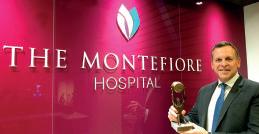
Full-time private orthopaedic surgeon Mr David Redfern has won a European-wide honour recognising pioneering work developing minimally invasive surgery for foot and ankle disorders.
He collected his award at a Paris ceremony to mark the 2019 European Awards in Medicine.
On introducing the idea of doing keyhole surgery for foot disorders like bunions in 2009, he was told it was ‘crazy’. But he revolutionised foot surgery, correcting painful foot disorders from bunions to arthritis, sports injuries to trauma.
He has also helped develop tiny surgical instruments and has trained more than 500 consult -
ants worldwide in minimally invasive techniques.
Mr Redfern said: ‘Bunions are one of the most common foot problems, but so many people put off having them corrected, as they have heard how painful the surgery can be.
‘Minimally invasive surgery drastically reduces pain after the operation – the vast majority of patients have said they haven’t needed to use painkillers and recovery is quicker.’
He practises at HCA’s The Lister Hospital, London, The London Foot and Ankle Centre, based at St John and Elizabeth Hospital, and Spire’s The Montefiore Hospital, Hove, Sussex.
Bupa recognises addiction service Award for surgeon
Addiction treatment firm UKAT has received official recognition with insurer Bupa as the rate of ‘employed’ addicts seeking treatment rises.
Addicts can now fund private residential rehabilitation treatment for all types of addictions and dependencies, including drug, alcohol, sex, internet and social media.
The collaboration is set to support ‘functioning addicts’; those still in employment but who are struggling everyday with a hidden addiction.
UKAT’s Nuno Albuquerque said it had treated professionals ranging from doctors, teachers and chief executives: ‘Hopefully, those
who are currently suffering in silence at work can now get the expert help they need.’
The firm increasingly treats patients for addictions stemming from ‘stressful working lives’, most of them still working.
Bupa said: ‘Our purpose is longer, healthier, happier lives and we achieve this by recognising established healthcare providers like UKAT.
‘Addiction is a crippling illness and one that is treatable with the right expert help and support.’
Those seeking help from UKAT through their Bupa insurance plan will be treated by Dr Mateen Durrani at its Essex-based rehabilitation centre, Sanctuary Lodge.
By Leslie Berry
New research underlines the need for independent practitioners to ensure they and their staff stay alert for cyber security issues.
As many as 67% of healthcare organisations have experienced a cyber security incident in the past year, highlighting the serious threat posed by data breaches and malicious attacks to health-related data held by private doctors.
The study, which surveyed senior business decision-makers in UK healthcare organisations, found 48% of incidents occurred due to introduction of viruses or malware from third-party devices – including internet of things (IoT) devices and universal serial bus (USB) sticks.
Data security provider Clearswift revealed other cyber security incidents in the healthcare sector included staff sharing information with unauthorised recipients (39%), users not following protocol/data protection policies (37%), and malicious links in emails and on social media (28%).
Due to a rising number of cyber security incidents in doctors’ practices, Independent Practitioner Today has been running a series to help independent practitioners fight fraud (see page 34).
Subscribers can also check out all previous articles in this series, by Lloyds Banking Group’ commercial fraud manager Vin Pandha, at
www.independent-practitionertoday.co.uk.
Clearswift’s Alyn Hockey, called it ‘alarming’ to see such high numbers of security incidents, adding: ‘The healthcare sector needs to securely share data across departments and organisations in order to facilitate excellent patient care.
‘With the proliferation of thirdparty devices in this process, it’s more important than ever that the industry bolsters its cyber security efforts to reduce the risk of everything from unwanted data loss to malicious attacks and focuses on keeping patient data safe and secure.’
The firm found only 24% of respondents had what it considered was an adequate level of budget allocated to cyber security.
Mr Hockey said: ‘Understanding what is threatening the safety of the critical data you hold is the first step in mitigating the risk. Therefore, cyber security strategies across healthcare organisations need to rapidly evolve to account for new threats against the sector.
‘While many aspects of staying secure come from keeping employees trained to recognise threats, technology should play a key role in helping reduce the risks that come with innovation.
‘It’s not a case of “if”, but “when” an incident occurs, so investment is required to ensure healthcare organisations are prepared for any type of threat.’
WHAT THE DATA SECURITY SURVEY FOUND
48% of incidents resulted from introduction of viruses/malware by third-party devices
Key causes of security incidents included employees sharing information with unauthorised recipients (39%), users not following protocol/data protection policies (37%), malicious links in emails and on social media (28%)
Foot surgeon Mr David Redfern with his award
Authorities get tougher on Botox ads
By Olive Carterton
Doctors and others have been warned they will be referred to the GMC and Care Quality Commission (CQC) if they flout new rules banning them from advertising botulinum toxins.
From this month, the ban covers advertising botulinum toxin injections (like Botox) on social media, paidfor ads, nonpaidfor marketing posts and influencer marketing.
The instruction comes from the Committee of Advertising Practice (CAP) and the Medicines and Healthcare products Regulatory Agency (MHRA).
The Joint Council for Cosmetic Practitioners (JCCP) said many concerns had been expressed about misleading and exaggerated claims and strategies used to advertise cosmetic treatments including the explicit promotion of prescription only medicines (POMs) such as botulinum toxin.
JCCP trustee Sally Taber has been working closely with CAP and the Advertising Stand ards Authority (ASA) to strengthen and reinforce advertising standards and codes within the aesthetics sector.
ral to the MHRA or a relevant professional regulatory body, namely the GMC and the CQC where organisations that doctors work in are registered.’
CAP is using ‘new monitoring technology’ to discover problem ads on social media and flagging these posts for removal as part of ongoing work with Facebook. The monitoring tools allow CAP to identify posts that break rules by tracking problems.
Mrs Taber said CAP would also be running a targeted ad campaign across Facebook to raise awareness of the issue. ‘This is the furthestreaching enforcement notice ever issued by CAP, targeting over 130,000 of the wideranging businesses within the cosmetics services industry. This will include many doctors.’
She warned that action would result if independent practitioners failed to comply. ‘Doctors must take care not to directly or indirectly promote Botox to the public when promoting the treatment services they offer on social media,’ she said.
‘The CAP Compliance team will take targeted enforcement action after Friday 31 January to ensure a level playing field.
‘Where advertisers are unwilling to comply, this may include refer
Orthopaedic surgeon
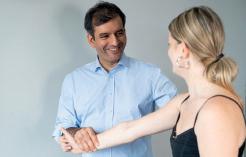
Mr Ali Noorani examines a patient
She advised them to take care not to directly or indirectly promote Botox to the public when promoting the treatment services they offer on social media. They should remove direct references to Botox or POMs, including references in images and hashtags like #botox, and be aware the ruling covers all promotional marketing, such as offering ‘Botox treatment’ as a competition prize or in a sale package.
Doctors must also make sure not to substitute direct references to POMs with indirect phrases that can only refer to a POM such as ‘wrinklerelaxing injections’.
She continued: ‘This is indirect promotion of a POM and just as much of a problem. Be aware the ASA considers that a reference to ‘antiwrinkle injections’ alongside a price that relates to a POM, will be seen as an ad for that POM.’
Regenerative clinic offers training in MSK ultrasound
Applicants are being invited for new trainee and visiting fellowships at The Regenerative Clinic, Queen Anne Street, London. They will be offered training in regenerative medicine, musculoskeletal (MSK) medicine and MSK ultrasound, and ultrasoundguided MSK interventions.
Course directors are Mr Suresh Sudula, consultant physiotherapist in MSK ultrasound and MSK medicine, and Mr Ali Noorani, clinic founder and upperlimb orthopaedic surgeon.
Mr Sudula said it was a good opportunity for clinicians with relevant specialties to get practical experience in exciting medical breakthroughs. He said: ‘We are collecting vast amounts of data on the thousands of patients we are treating and using this to refine and improve treatments, to create entirely new patient pathways for increased mobility and pain reduction. We look forward to welcoming talent into our energetic clinic environment to continue to pioneer these regenerative treatments.’
He said the primary focus for the fellowship was to provide mentoring for clinicians who wished to develop advanced skills in regenerative medicine and MSK ultrasound.
Group launches clinic for memory disorders
A memory clinic, helping to support early diagnosis of dementia and other memoryrelated conditions, has been opened by Phoenix Hospital Group.
Dr Soumit Singhai, geriatrician and physician specialising in cognitive and neuropsychiatric problems, said there were often delays in obtaining a diagnosis of memory problems so doctors were delighted to launch a fast service.
An indepth consultation with a consultant is followed usually by a same day comprehensive cognitive assessment.
A blood test and MRI brain scan then follow; after which a feedback assessment is arranged where clinical diagnosis and management strategies are discussed with patients and relatives.
Dr Singhai, who is based at at the clinic at 25 Harley Street, said key priorities were to provide support and advice on strategies for a brainhealthy lifestyle, plus advice and support with issues related to forwardplanning once a dementia diagnosis was made ‘so that quality of life can be maintained and improved’.
Dr Soumit Singhai
Sally Taber warned that those flouting rules could be referred to the GMC
Health ‘needs focus on social aspects’
By a staff reporter
Private specialists travelled from as far as Wiltshire and Leicestershire for a wellattended London Consultants Association (LCA) dinner to hear Sir Michael Marmot speak passionately about the impact of social determinants on longterm health.
The professor of epidemiology at University College London discussed how life expectancy in England has improved ‘about one year every four years since the end of World War One’, but improvement stopped in 2011.
Doctors heard that most people in poverty are in a household where at least one adult is working. There has been a rise in mortality from what he described as ‘deaths of despair’.
Sir Michael used the Royal Borough of Kensington and Chelsea, which has one of the widest inequalities in income, to illustrate his point.
There is a 14 year difference in average lifespan between the highest and lowestincome families in
PPU WATCH
Valentine’s Day date for trust’s take-over of ex-BMI Hospital Mid Cheshire Hospitals NHS Foundation Trust, Macclesfield, announced a year ago it intended to acquire BMI’s South Cheshire Private Hospital in Crewe.
The trust has now confirmed it is set to complete the deal on Friday 14 February.
Capital spend of £1.2m has been reported to the trust board to enable improvement works to be carried out at the private hospital after the deal completes.
The proposed operating model is to be discussed in the private session of the trust board and, if agreed, will then be communicated to the
this borough. Childhood deprivation has a long term effect not only on lifespan but also on attainment and productivity.
Sir Michael said successive governments focus on care delivery at the expense of social care funding and have contributed to an unequal society where choices are dictated by social circumstance.
A social determinant approach to prevention was needed to allow for a more equal and meritorious society.
Sir Michael set up and led a string of longitudinal cohort studies including the Whitehall Studies of British Civil Servants investigating explanations for the striking inverse social gradient in morbidity and mortality.
In 2000, he was knighted for services to epidemiology and the understanding of health inequalities. In 2010, he undertook a strategic review of health inequalities for the government, producing the landmark study Fair Society, Healthy Lives.
An expert panel of the Royal Society for Public Health selected
wider trust and private hospital staff.
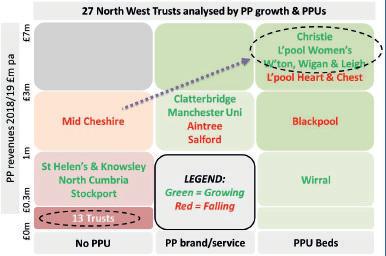
It is not yet clear how the trust intends to use the two additional theatres and extra 32 beds for private patients, but can be expected to significantly increase on the flat £1.5m revenues reported in 201819.
Mulberry Suite at Hinchingbrooke Hospital to close
The North West Anglia Foundation Trust, which manages the 304bed Hinchingbrooke Hospital, Huntingdon, has said it will not be taking on new admissions at the Mulberry Suite in an effort to ensure space at the hospital is used ‘in the best way’.
The Mulberry Suite was opened in 1994, refurbished in 2018, relaunching as Mulberry Private Healthcare with seven private ensuite bedrooms.
In 2016 17 – the last available
the 2010 Marmot review as the third greatest UK public health achievement of the 21st century after the ban on smoking in public spaces and workplaces, and the sugar levy on soft drinks.
A lively question and answer session followed, where it was argued there should be destigmatisation of privately funded healthcare, allowing for publicly funded resources to be deployed to those in greater need.
trust accounts before merger with Peterborough – Hinchingbrooke reported private patient income of £1,191,000, an increase of £202,000 (34%) on the previous year. At 1.2% of total turnover, this was well above the outofLondon NHS trust average of 0.5%.
Latest merged trust accounts suggest that a further £0.5m private patient income is achieved from Peterborough and Stamford Hospitals, making £1.75m in total.
The trust has just received a Care Quality Commission rating of ‘requires improvement’, is reporting a financial deficit of at least £5m for 2019 20 and also faces NHS waiting time and demand pressures.
It is not yet clear how the trust intends to redeploy the Mulberry Suite capacity and staff to make up
More private doctors aim to train in aesthetics
2020 could see the largest growth in the number of medical professionals taking steps to broaden their career horizons and train for new roles in the aesthetics industry.
That is the view of one of the UK’s leading medical aesthetics training companies, Interface Aesthetics Training.
It reports a healthy increase in the number of delegates signing up for its courses as more doctors – and nurses, dentists and pharmacists too – look to build on their medical training and move into the aesthetics industry.
There’s a growing interest in the foundation and advanced courses as well as a new flagship course – the Level 7 Certificate in Injectables.
Training lead Dr James Olding said: ‘Medical professionals who may have been in the current role for a number of years are attracted to the potential to build on their qualifications and take advantage of the opportunity to broaden their careers by moving into the lucrative aesthetics industry.’
for the lost private patient income. Graham Wilde, chief operating officer for the trust, said: ‘As a trust, we have been looking at the space around our hospital site, including Mulberry Ward, to ensure that we use it in the best possible way, especially over the busy winter period to provide additional capacity.’
Biggest ever PPU conference
A record number of NHS trusts are attending the national conference on 12 March at St Thomas’ Hospital, London, demonstrating the vitality and renewed interest in the PPU sector. A full report will be shared in a future issue of Independent Practitioner Today.
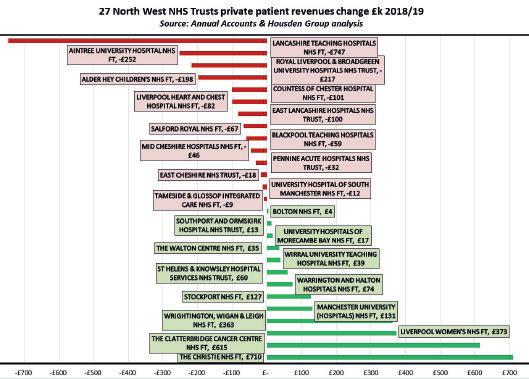
Philip Housden is a director of Housden Group. See his feature article on PPUs in the Northwest on page 44
Compiled by Philip Housden
Epidemiologist Sir Michael Marmot, guest speaker at the LCA dinner
App gives access to a doctor 24/7
By Robin Stride
A private medical group and founder of the UK’s first private doctor visiting service has launched a new app, granting 24/7 access to a doctor across the whole of London.
Doctorcall members can access ‘affordable’ medical cover, with the benefit of guaranteed, prioritised coverage and home visits, discounts on consultations and health screens, and round-theclock access at a push of a button.
Founder GP Dr Charles Levinson said: ‘With the everyday constraints of modern life, it is not always easy to take the muchneeded time out to look after your health, especially when it comes to booking an appointment with a doctor – and then carving out the time to make the trek to your GP.
‘The NHS is great for major emergencies, but does not cater for situations where medical attention is required to enable something to go ahead.
‘Advances in technology such as virtual consultations help to
The app gives members access to home visits as well as virtual consultations
address the stress on demand – but cannot grant the unbeatable care that access to personal visits affords.
‘Our app presents a unique combination of the two – merging atthe-fingertip technology with quick access to personal visits and medical care.’
The company now has a virtual call centre, replacing call handlers, designed to eliminate human error and delay. Patients can view important information including estimated time of arrival and doctor-tracking.
Members also benefit from an exclusive 30% discount on all GP
consultations and health screens at Doctorcall’s London clinics.
Dr Levinson said: ‘Our membership provides a considerably less expensive way of making sure that your health remains priority and care can always remain a push of a button away. We are excited to be entering 2020 by announcing the launch of our brand-new app, the first of its kind, granting Londoners access to a doctor 24/7.’
Doctorcall’s membership service can be accessed via the app, now available for download on all smartphone devices, and is available at £20 a month.
Summit on growth of self-pay
The growth of self-pay – ‘private patients’ or ‘consumers’? – is one of the big topics being considered at this summer’s Private Health Summit.
Run by LaingBuisson on 23 June at the QEII Centre, London, the theme will be the transformation of private healthcare in a decade of change.
LaingBuisson’s Keith Pollard said: ‘We’ll be aiming to apply 2020 vision to what is going to be a decade of significant change in private healthcare. Breakthroughs in artificial intelligence and digital health, the consumerisation of private healthcare, a drive for improved outcomes and pressure on costs will all impact the role of the private GP and the private consultant.
‘We’re inviting thought-leaders from the industry and from private practice to tell us how they intend to respond to a decade of change.’
‘For private practitioners, the coming years will be a challenge. They will need to be ahead of the game and seize the opportunities to stay ahead of the competition in their specialty.’
https://summit2020.privatehealthcare.co.uk/
Bupa opens flagship clinic in Manchester
Bupa has shown its commitment to investing in the city of Manchester by opening a new flagship health clinic.
The £1m development on Marble Street includes features such as Wattbikes, which were recently introduced into health assessments and are also used by the Manchester United and Manchester City football clubs for training.
It was officially opened by rugby league side the Salford Red Devils, with a ribbon-cutting and evening event to celebrate the new facilities.
The centre has been created to look similar to the insurer’s £65m headquarters, Bupa Place, which
opened in Salford Quays 2018 and houses over 2,000 employees.
Manager Joanne Hall and director of Bupa health clinics Sarah Melia (both centre) open the Marble Street clinic with Salford Red Devils rugby players Joey Lussick, Ryan Lannon and Chris Atkin
health advice and signpost customers to services available.
Centre manager Joanne Hall said: ‘The new clinic is in a fantastic location for us and is easily accessible to our customers. The clinic is incredibly modern and will allow us to continue delivering a first-class service.’
Bupa Health Services director Sarah Melia added: ‘Bupa has been a part of Manchester for the last 70 years – we built our first regional office here in 1948 – so it felt right for us to launch our flagship clinic here.’
The ground-floor space will have digital screens both in and outside of the clinic, which will offer
A medical team who used to be based in the former Piccadilly centre have made the move to Marble Street and are continuing to provide their health assessments, GP services, musculoskeletal and physiotherapy services.
She said the centre was a perfect example of what the firm wanted its clinics to look like in the future.
‘Seamless heart journey’
By Robin Stride
Consultants working at a new cardiovascular centre scheduled to open in Harley Street on 1 April will operate on a practising privileges basis.
Harley Street Medical Centre (HSMC), part of United Medical Enterprises Group (UME), said it planned to offer ‘a wealth of expertise across cardiology, hypertension and respiratory medicine in one location’.
It told Independent Practitioner Today the cardiovascular consultant team was rapidly expanding with both individual specialists and independent consultant partnerships.
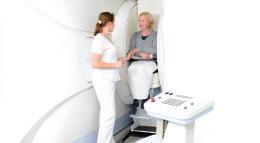
Alongside echocardiography and other technologies, diagnostics will include the Philips 3 Tesla Elition X MRI with compressed SENSE technology that reduces scan time while maintaining image quality, and GE’s Revolution CT scanner capable of capturing the whole heart in a single beat.
Eye surgeon starts oneday cataract service
A consultant celebrated ten years of business at his East Grinstead’s Centre for Sight hospital by launching a simplified ‘One-Day Cataract Service’ providing patients with an investigation and surgery during a single visit.
The company, running for over 23 years, was founded by Mr Sheraz Daya, previously the director and ophthalmic consultant at the Corneoplastic Unit and Eye Bank at the town’s Queen Victoria Hospital. It also has hospitals in Oxshott, Surrey, and Queen Anne Street, London.
Centre for Sight has developed international reputation, drawing in patients including presidents,
The centre will also house an autonomic function testing (AFT) laboratory, allowing a non-invasive means of seeing if the autonomic nervous system is correctly regulating cardiovascular control.
Prof Melvin D. Lobo, clinical hypertension specialist consultant in cardiovascular medicine, said: ‘I am very pleased to be moving to the state-of-the-art clinic at 17 Harley Street where we will have a first-class clinical facility in a patient-friendly environment.
‘The opportunity to offer full cardiovascular diagnostics, including routine cardiac testing and advanced cardiac imaging, as well as tilt testing with full autonomic function assessment in the UK’s first dedicated autonomic laboratory in the private sector, is an enormous advantage.
‘Allied to the fact that cardiovascular specialists across the breadth of specialised cardiology practice will be grouped under one roof should make for a seamless and expertly managed patient journey.’
Ophthalmic surgeon Mr Sheraz Daya
prime ministers, bishops and abbots along with serving the more local communities.
Its energy-efficient and sustainable building in East Sussex was designed by renowned Toh Shimazaki Architects and purposebuilt as a specialty eye hospital.
It received an Architectural Design Award from Mid Sussex Council in 2012. The overall design serves as a reference for other ophthalmologists wishing to establish their own centres.
The facility, which will offer patients concierge support, has links to UME’s healthcare facilities in Dubai, Riyadh and Muscat. It was among 17 world-leading clinics and hospital groups joining the Harley Medical Street Area stand to showcase London’s medical excellence at the Arab Health expo last month.
Cardiologists practising with HSMC include :
Prof Pier David Lambiase, specialising in the treatment of heart rhythm disorders and pacemaker implantation;
Dr Ravi Assomull, cardiovascular imaging and coronary intervention;
Dr Fakhar Khan, heart rhythm disorders;
Dr Sayan Sen, coronary and structural intervention;
Dr Oliver Guttman, cardiomyopathy and interventional cardiology;
Dr Francesco Lo Monaco, cardiac CT/MRI and general cardiology;
Dr Graham Cole, heart failure and cardiac imaging;
Mr Usman Jaffer, vascular surgeon specialising in varicose veins and arterial problems.
HCA launches Middle East marketing drive
HCA Healthcare UK headed to Arab Health 2020 last month with members of its newly formed International Services Group, dedicated to developing the company’s strong presence in the international market.
Joining forces with the Harley Street Medical Area, the services group president Nikesh Davda and team showcased the ‘personalised, expert and high-quality complex care’ available at HCA hospitals.
HCA UK works in partnership with more than 2,000 consultants and its offering includes stem cell transplants, cancer care including immunotherapy and CAR-T cell therapy, trans-oral robotic surgery for hard-to-reach head and neck tumours, coronary care and the UK’s only wholly private hospital for women and children.
It offers tailored services for international patients including a VIP personal medical concierge service, on-site interpreters and dedicated assistance with the admissions process.
Mr Davda said working with the Harley Street Medical Area at Arab Health, the largest healthcare event in the Middle East, was a great opportunity to showcase what the HCA group could offer.
HCA UK’s network of six flagship hospitals are The Harley Street Clinic, The Portland Hospital, The Princess Grace Hospital, The Wellington Hospital, London Bridge Hospital and The Lister Hospital.
It also has two joint ventures with NHS trusts: University College London Hospitals and The Christie in Manchester.
Prof Melvin Lobo (inset) and the Philips MRI scanner that reduces scan time
A look back through our journal’s archives of ten years ago reveals that although times change, some issues are not so new
A trawl through the archives: what made the news in 2010
HMRC closes for the kill
HM Revenue and Customs (HMRC) claimed its net was closing fast on private doctor targets who were thought to owe tax on undeclared income.
But we reported that whether it knew as much as it said it did was being questioned by some accountants and doctors.
They suspected its initiative, known as the Tax Health Plan, was ‘shaking the tree to see what fell out’, in the words of the then GP chairman of the Independent Doctors Federation, Dr Jack Edmonds.
Tax sources claimed 800 doctors had, for instance, not declared their Bupa practice award. But some leading accountancy firms reported that the taxman could not know, as they did not separately identify this income source.
The tax inspectors’ approach of ‘we know who you are, so cough up now and we will go easy’ caused widespread concern amoung innocent independent practitioners who featured they could be on a hit-list.
One HMRC director told Independent Practitioner Today that there had been a strong response from doctors.
He added: ‘I urge anyone who has undeclared income, and therefore an undeclared tax liability, to take this straightforward opportunity to tell us about it and limit the penalty they have to pay to 10%.
‘You can expect to pay a much
larger penalty if we investigate and find undeclared income after 31 March.’
Inspectors also claimed they knew ‘profit-sharing arrangements’ from hospital groups were gong undeclared.
GMC is no longer judge and jury
We announced plans for adjudication of fitness-to-practise cases involving doctors would transfer from the GMC to a new body called the Office of the Health Professions Adjudicator (OHPA).
This was being created in April of the following year to ensure clear separation between the investigation of fitness-to-practise cases and the process of determining whether a professional’s fitness to practise was impaired.
Check junior has cover for indemnity
Consultants were warned that junior doctors in NHS hospitals who were asked to assist with a private patient would not necessarily be covered by health service indemnity.
Increase in bariatric op claims spurs advice
Private consultants performing bariatric surgery were issued with risk management advice following a dramatic rise in claims against them.
MDU chief executive Dr Christine Tomkins said bariatric surgery was likely to rise in popularity, so she wanted to help surgeons avoid common problems.
Some relief for high tax-payers
Higher-rate tax-payers such as doctors were missing out on more than £250m of tax relief on their charitable donations, the Charities Aid Foundation estimated. It found around half of all higher-rate taxpayers were unaware they could reclaim 20% personal tax relief on their charitable donations in their selfassessment tax return.
Maintain a register of gifts
Private practices were advised to keep a register of any gifts they were given by patients or others. Keeping a register of gifts valued at over £100 was a relatively new contractual requirement for NHS GPs, but defence bosses advised them to log all presents and said it was sensible for independent practitioners to do the same.
SUBSCRIBE TODAY
Don’t miss out on what we report and advise in the future. Sign up for a £75 subscription today –consultants, GPs and practice managers can save £15 with a direct debit.
See page 24
The MDU’s Dr Christine Tomkins
ACCOUNTANT’S CLINIC: THE BUILDING BLOCKS OF ACCOUNTANCY
Our A-Z of essential matters that consultants and GPs need to consider to run their private practices efficiently continues, this month with the letter ‘G’. Susan Hutter (right) reports
to of is for Growth top tips
NOT SO long ago, nearly all consultants traded as sole practitioners, often with the support of one or two administrative assistants.
This simple model did, and still can, work well. This is especially true if the consultant is combining a private practice with a busy NHS appointment. Many consultants are satisfied for their private practice income to supplement their NHS salary.
But a growing number of consultants now want more from their private practice, and the momentum is moving them towards expansion. What are the options for growth?
Organic
growth
Most small businesses grow organically; for example, by recruiting and training ‘junior’ staff in the same, or a complementary, specialism to their own.
It is not always easy for newly qualified consultants to begin on the private practice ladder and many are quite keen to team up with more experienced consult -
ants with a view to partnership or similar.
Many consultants also employ others in complementary practices, such as orthopaedic consultants employing physiotherapists. This allows the practice to offer its patients a wider service. This can help to share the workload burden.
Merger/acquisition
If you are looking to work with other consultants at a similar level to yourself, you could consider merging or acquiring a similar practice to your own. It may be that you have spare surgery/office space or that you would like to extend your practice to more than one location so that you can grow geographically.
Some practitioners are starting to buy out others as part of a retirement plan, with a view to taking over their practice completely in say, three to five years. You will need an accountant to help you value the practice you are buying and this is likely to involve taking legal advice too.
There are now a fair amount of ‘centres of excellence’ that include all the specialties relating to one particular area of medicine under one roof. Often, this includes facilities for minor operations and overnight cases.
But expansion brings another issue. You will need to decide on the type of trading vehicle that is best for a growing business. In many cases, a limited company is the chosen route. But you could also trade as a partnership, including limited liability partnerships.
Expansion will usually make your life more complicated and it is only worth doing this if the rewards are going to justify it
The more complex the structure, the more costs are involved. The style of trading depends on various factors including the level of income and the flexibility required regarding division of profits. There are also tax aspects to consider. As usual, advice should be taken.
Downside of growth
As with most business decisions, there can be a downside that needs to be considered. Expansion will usually make your life more
complicated and it is only worth doing this if the rewards are going to justify it.
Expansion means you will have to take on more responsibility, including legal responsibilities; for instance, with staff and associates. The practice overheads are likely to increase and so there may be more pressure to cover costs. A larger turnover does not necessarily mean a larger profit.
is for Goodwill
This follows on nicely from Growth. For doctors who are going to grow their practice by buying other practices, they will be interested to know that in certain cases, where they pay for goodwill as part of the purchase price, it may be deductible for corporation tax purposes.
At the time of writing, where a company directly or indirectly acquires goodwill and customerrelated assets on or after 1 April 2019 from an unrelated third party, the company can claim tax relief on the lower of a fixed rate of 6.5% of the cost of the asset and six times the cost of any qualifying intellectual property acquired as part of the business.
However, the relief is only available where the goodwill or customer-related asset is acquired as part of a business and there is also an acquisition of other qualifying intellectual property assets.
There is no relief where the goodwill or customer-related assets are
not acquired with qualifying intellectual property or with a business
However, on or after 1 April 2019, where a company directly or indirectly acquires relevant assets from an individual who is related to the company – for example, transfer of business to a limited company – or from a partnership or any individual partner who is related to the company, the company is not permitted to obtain relief for goodwill arising in respect of such relevant assets.
There may be partial relief, if the related party had itself acquired the relevant asset from a third party. Note this does not apply to acquisitions which took place between 8 July 2015 and 31 March 2019.
The rules for goodwill relief are complex and I strongly advise you to take professional advice.
Susan Hutter is a partner at Blick Rothenberg and part of the team advising medical practitioners
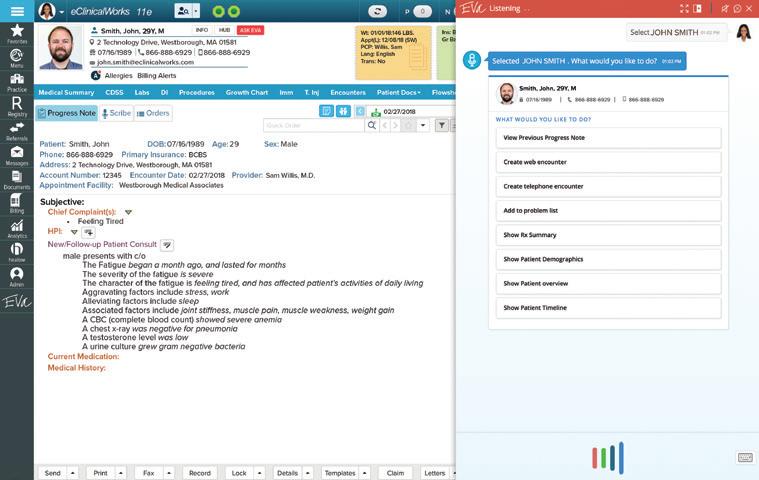
Cloud-Based Electronic Patient Records and Patient Portal
eClinicalWorks is a leader among independent, ambulatory practices, covering primary care and more than 50 specialities.
• Integrated Electronic Patient Record (EPR) and Clinic Management
• Comprehensive documentation of patient encounters
• Data analytics to deepen your understanding of your patients
• Streamlined workflows improve the provider and patient experience
A key consideration for all website owners is their cookie policy. Jane Braithwaite and Karen Heaton show what you need to know
YOUR WEBSITE is your online window to your private practice, and it offers a valuable way to communicate with existing and potential patients.
Most consultants spend considerable time choosing the look and feel of their website, the content and the images that are used. Quite understandably, they want to ensure that their website is a professional reflection of who they are and the services they offer their patients.
But when planning a website, it can be easy to overlook whether it is compliant with data protection regulations. In fact, it is often an after-thought once the site is up and running or not even considered at all.
As we have explained in our series so far, non-compliance with data protection regulations can come with costly fines and reputational damage. Your duty as a private practice or clinic is to comply with the regulations.
And a key consideration for all website owners is their cookie policy and ensuring your website is compliant with data protection guidelines.
Pieces of code
Cookies are small pieces of code stored on your device which do a number of jobs, including improving user experience and monitoring user behaviour.
Similar technologies like pixel tags, social media plugins, MAC (media access control) addresses and device fingerprints refer to functions which operate in the same way a cookie would. It is likely you come across these multiple times while browsing websites without even realising it.
Computer cookies are not physical objects. A cookie is a piece of information that is created when you visit a website. When you look at a website, a cookie is created by the website and sent to your computer. Your computer stores the
cookie in a file located inside your web browser.
Why, we ask? Why do we need cookies? The cookie’s role is to keep track of your visits and activity on the website you are viewing. I appreciate this sounds a tad sinister, but it isn’t always a bad thing.
For example, many online retailers use cookies to keep your items in your shopping cart as you explore their website. Without the cookie doing its job, your shopping cart would reset to empty every time you moved to a new page of the website. Imagine trying to book flights or do your weekly shopping in those circumstances. It would be impossible.
A cookie will also keep a record of your login information. Most people find this useful so they can easily and quickly log into websites that they use regularly.
The cookie stores information about you, so you need protection to ensure it is stored and used appropriately and that is why all
website providers are required to have a cookie policy.
You will be familiar with the cookie pop-up that appears when you look at a website and the need to consent to it. In this article, we aim to describe what a website owner’s responsibilities are and how consent can be managed for private medical practices.
What new guidance on the use of cookies means for you Navigating the increasingly complex world of cookies, pixels, plugins and similar online tracking tools can be a full-time job for privacy professionals.
For medical practice staff who already have a busy practice to run, just keeping up with regulatory changes and guidance can take time which is obviously better used looking after patients.
In the process of writing this article, we had a quick look at ten random websites and cookie poli➱ p16
cies of private medical practices. We reviewed their pop-up banners, cookie policies and how they managed users’ cookie consent choices.
Ignoring guidelines
Of the ten websites, none of them followed the Information Commissioner’s Office (ICO) guidelines on cookies and other technologies, which were released in July 2019.
None of the websites offered a choice to either opt in or out of cookies being used on their websites.
One website confirmed by phone that they do not use any cookies, but there was no information in their Privacy Notice about this – cookies were not mentioned at all. This is unusual.
Therefore, of the ten websites checked, none were compliant with the regulations.
The current law on cookies and similar technologies in the UK is the Privacy and Electronic Communications (EU Directive) Regulations 2003 – known as PECR.
PECR sits alongside the UK Data Protection Act 2018 and the EU’s General Data Protection Protection Regulation (GDPR). PECR takes precedence for cookies and similar technologies. But GDPR applies when personal data from cookies is processed and consent is required for this processing. The consent must be of a GDPR standard.
This can be confusing for businesses, so the ICO issued a set of detailed guidelines in July 2019.
What the ICO says
Website owners are responsible for all the cookies and similar technologies running on their websites. If you are reading this and thinking, ‘I have no idea what is running on my website’, then skip to the solutions section below. For those of you still with us, let’s take a closer look at these cookies.
What should I know about types of cookies?
There are first- and third-party cookies.
First-party cookies are those that you, the website owner, sets for your own purposes. Third-party cookies are those that you set on your website to connect with other companies – such as advertising companies or social media platforms.
As a website owner, you are responsible for all cookies and similar technologies running on your website. This means you are responsible for providing information about first- and third-party cookies which are operating on your website. You must also give users the option to opt in or out of those cookies, unless they are exempt.
What the ICO guidance usefully clarified last July is which types of cookies require consent from users.
You may be surprised and dismayed to learn that all cookies, except for strictly necessary ones, which are exempt, require consent. The next question, of course, is: How do we obtain and manage consent?
Website owners are responsible for all the cookies and similar technologies running on their websites
Does your website already have a cookie pop-up banner?
Your site may have a pop-up banner but may not be compliant. This depends on what your banner says, how it functions and whether users are given a choice about which cookies they can accept or not.
Statements like ‘by continuing to use this website, you consent to our cookies’ are unlikely to be compliant.
Many organisations have not thought about how consent will be obtained and managed. They may also be unsure about what constitutes a ‘strictly necessary cookie’ and which types of cookies require consent.
It is no longer enough to say, in your cookie policy, that users can manage their cookie preferences from browser-level settings. The ICO guidance explicitly states that this technology is not currently good enough for the GDPR standard of consent.
So, it is likely that a change to your existing cookie policy will be required, as many organisations rely on this statement for consent to capture data using cookies.
If you have no idea which cookies or similar technologies are running on your website, either because another company hosts and updates it or you have not spoken to your website developer recently, please don’t panic.
There are some easy solutions to find out what you have running on your website and what you need to do to comply with the regulations. There are software tools available which will scan your website and produce a report containing all the cookies and other technologies which run on it. These are often referred to as consent management tools or platforms (CMT or CMP) and offer free versions for sites with less than 100 pages.
Or you can speak to your website developer and ask them what is running on your site.
Once you have a list of the cookies on your site, you need to understand which of those are:
First- or third-party cookies;
Whether you are providing sufficient information on the cookies;
How long they store data for, how they are categorised and whether you can justify this;
Whether yours have analytical cookies and who uses the analytical data;
Cookies or similar technologies you have no knowledge of.
Next, work out which changes need to be made to your cookie policy based on the cookies and similar technologies which are being used on your website. Then, consider whether you need a consent management tool to record and manage user consent for the cookies you are collecting. There are some easy solutions to find out what you have running on your website and what you need to do to comply with regulations
Speak to a data protection specialist if you are unsure about what changes need to be made to your cookie policy or whether you even understand what is running on your website.
How much of an issue might this actually be for you? The recent ICO guidance is designed to give businesses enough information to be able to review their current website and data collection activities using cookies. Website owners are then expected to take the appropriate steps to ensure they are compliant.
To summarise, it is important to highlight that the ICO has announced that cookie compliance will be an increasing regulatory priority for action.
Given this announcement, we can reasonably assume that fair notice of upcoming regulatory scrutiny and action has been given and we must take action to ensure compliance.
In next month’s article, we discuss common data handling mistakes and how to avoid them
Jane Braithwaite (left) is managing director of Designated Medical, which offers business services for private consultants, including medical secretary support, book-keeping and marketing.
Karen Heaton (left) is the founder of Data Protection 4 Business, which offers consultancy services to design and implement GDPR-compliant solutions, as well as online training, outsourced data protection officers and specialised software to support data protection compliance.
Together, Designated Medical and Data Protection 4 Business offer consultancy services, support and training to help private practices design and embed a data protection compliance culture into their organisations
See feature on developing your website, page18 If you only go to one vein conference next year… This is the one to go to!
The aim of the CoP IVM 2020 is to bring excellence in Phlebology at the forefront of clinical practice. We will be showcasing the best and most revolutionary techniques in live cases, and the audience will be able to question the operators directly during the procedures.
• See LIVE showcasing of the noninvasive Echotherapy treatment (HIFU – SONOVEIN)
• See LIVE Endovenous Microwave Ablation as popularised by Chris Evans of Virgin Radio UK
• See LIVE Ambulatory Pelvic Vein Embolisation of gonadal and internal iliac veins
• CPD Accredited
16th-17th April 2020 • Cavendish Conference Venue, London
Relevant to Phlebologists, Vascular Surgeons, Vascular Technologists, General Practitioners, Nurses and Medical Nursing Students.
Registration open now: www.collegeofphlebology.com/college-of-phlebology-international-veins-meeting-2020/ Discounted Rates end in February 2020 For more information email IVM2020@collegeofphlebology.com
DEVELOPING YOUR WEBSITE
Make your window to the world transparent
Effective marketing starts with a good practice website that attracts new patients and shows why you are the right doctor to help them. Jason Ellis (right), explains how to ensure your website is an asset and not a liability
ANY DOCTOR setting up in private practice will probably have a website on their to-do list. But in a competitive field, a simple site displaying contact details and a profile is unlikely to stand out from the crowd and help your business grow.
Equally, the internet is a fastpaced environment, so even if your practice website was state-of-theart when it was launched a few years ago, it may well need an update to reflect changing tastes and technology.
For example, it is increasingly important – for users and for search engine rankings – that websites can be viewed from a mobile device as well as a traditional desktop.
This article is not an in-depth guide to digital marketing – a subject that could fill several books –but I will set out some of the basic questions you need to consider when planning and maintaining your practice website, including the ethical and legal aspects.
What do I want to achieve?
There is still a place for traditional marketing methods like print advertising, but one of the biggest benefits of digital marketing is that it provides an opportunity to
engage with your potential patients.
Rather than pushing messages that may interest them – but are just as likely to be ignored – the objective of your website and other online marketing is to ‘pull in’ your target audience with high-quality content.
If someone searching the web is motivated to click through to your website, then you are already on the way to converting them into a patient.
How do I go about setting up a practice website?
Use a web agency if you have the budget and feel you need technical expertise. However, it’s important to provide a clear brief and meet with developers.
You should also get a few quotes. Alternatively, you can create a site yourself using a website builder, such as WordPress. Some are free, but costs can vary and you may have to pay for additional modules such as a gallery.
In any case, it’s a good idea to start small and build up your site, rather than giving yourself too much to do to maintain the content.
You will also need to buy a web-
site address – known as domain name – for your site, which entails an annual fee. Ideally, this should be something short, relevant and without hyphens or numbers.
This might be included with your website building package or you can seek advice from your website developer. Most domain providers include personalised email in their service, so take advantage of this rather than using a generic webmail address.
➠ Medico-legal memo: As with any third-party supplier, you should have a signed, written contract with your web developer, which sets out your confidentiality requirements.
What sort of content should I include?
The most successful practice websites have the right content and keywords to make them visible to patients searching for information or advice about a health concern.
If all you have is a simple ‘landing page’ with your name and a profile, patients are unlikely to find your site at all, unless they happen to know the web address.
When it comes to content, it’s a good idea to look at popular health provider websites to see what they
do well. The NHS website is not primarily a marketing tool but it has a lot of useful information for the public about health conditions and treatments, which is written and displayed in an accessible way for users.
Of course, your independent practice won’t have the resources to match the NHS, but the basic principle is the same. To ensure your website can be seen by your target audience, the content needs to be search engine-friendly.
Much depends on what is practical for your business, but here are a few pointers to make your site patient- and search enginefriendly:
➲ Be helpful – think about the questions your patients typically have during appointments and try to answer them. A ‘frequently asked questions’ section works well.
➲ Write in a language they can understand and avoid jargon.
➲ Break up text into readable chunks, as a page of densely written copy is unlikely to be read.
➲ Highlight your unique selling points – for instance: location, innovative diagnostic techniques or procedures, your experience and qualifications.
➲ Watch image sizes – slow page loading – caused by large file sizes – is frustrating for users and can hamper search engine rankings.
➲ Consider different types of content: articles, blogs, Q&As and even videos will help broaden your appeal.
➲ Think keywords – what are the most relevant search terms and phrases for your target audience? What will they be searching for? If you decide to do any paid advertising – for example, Google Ads – you will need to list these keywords.
➲ Provide clear menus and links to other pages on your site to aid navigation.
➲
Make sure the site is mobilefriendly – known as responsive. Test this during the build phase.
➲ Ensure the meta descriptions for each page include relevant keywords. Ask your website developer.
➠ Medico-legal memo: If you offer general medical information on your website, you should include a statement that it is gen-
eral advice only and should not be used as a substitute for face-to-face consultations. If you link your website to others, you should inform patients you cannot guarantee that another website is secure and you do not necessarily endorse the contents of the site.
How do I comply with ethical standards?
A website is a promotional tool, but you still need to be mindful of the GMC’s guidance on communicating information in Good Medical Practice (paragraphs 68-71), which say you must ‘be honest and trustworthy in all your communication with patients and colleagues’ and that ‘when advertising your services, you must make sure the information you publish is factual and can be checked, and does not exploit patients’ vulnerability or lack of medical knowledge’.
Even if you have delegated the content to someone else, it is up to you to ensure information on the site is accurate and avoid making claims for your services that could be misleading, especially for cosmetic treatments.
Inaccurate or misleading content could lead to a GMC investigation and action by the Advertising Standards Authority, which regulates advertising claims on websites, and could damage your practice’s reputation.
➠ Medico-legal memo: Don’t use identifiable patient material on your site and obtain explicit consent if you want to use patient testimonials and anonymised before-and-after photographs.
Patients need to understand precisely what information is being published, where and when, who will see it and the likely consequences. Let the patient know that they can withdraw their consent at any time.
What else do I need to include?
Websites should include the following policies and information:
☛ A privacy policy in line with data protection law, which sets out what personal data you collect, the lawful basis for collection, how data is processed and stored and patients’ rights;
☛ A cookie policy explaining
what cookies you use and what they do. You must get consent before you place cookies, unless they are strictly necessary for the site to work. The Information Commissioners Office has specific guidance on this (See page 14);
☛ Terms and conditions covering visitors’ use of the site; for example, copyright notices and disclaimers for third-party links; ☛ Practice complaints policy; ☛ CQC registration.
What next?
Once your practice website is online, it’s important to monitor the content to ensure it is accurate and up to date.
It is also important to monitor the performance of your site or you could be wasting your time and money. You can get free analytical tools for this, so ask your web developer for help.
It’s also a good idea to seek feedback from patients about their experience of using the site to see what you can improve.
Jason Ellis is digital manager at the MDU
REFLECTIONS OF A PRIVATE GP
A boost to my life and my patients’
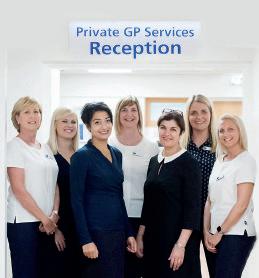
Setting up a private GP practice has been the most rewarding time since Dr Sibel Peck (right) qualified. But she advises not to try and juggle the job with being an NHS GP too. Read her story here
HERE’S HOW I would summarise my life as a private GP: I have been able to enjoy a good work-life balance. I have been able to offer clinical care that is patient-centred. I have been able to assert more of my ideas when it comes to our business development.
Private GP work was always on my radar because my father worked as a private GP in his lunch breaks and evenings when practising full-time as an NHS GP in Tottenham back in the 1970s.
I completed my GP training scheme in 1993 and then worked as a GP locum while having a family.
For five years, I worked on the GP retainer scheme and considered what I wanted to do next professionally. Some of my medical school friends had already joined as partners in NHS practices and they regretted it. These were red flags for me.
Spinning plates
I was also getting frustrated with the quality of care I was trying to deliver in seven-minute consultations.
Consequently, my clinics always over-ran and that further frustrated me. I always seemed to be
trying to spin multiple plates and helping patients to manage crises as they awaited referrals, scans or other test results.
By the time I was ready to return to work on a more full-time basis, I had relocated to Essex as a result of my husband’s new consultant post.
In October 2000, I approached the local private hospital and met with the general manager to inquire whether they would consider a private GP practice. This was a novel idea at the time and had not been done before in this hospital, so the manager was rather sceptical.
I had also met with another local GP, Anne Squire, who was looking for a new challenge from her NHS role as a GP principal and tutor.
We had been set up as a ‘blind
I always seemed to be trying to spin multiple plates and helping patients to manage crises as they awaited referrals, scans or other test results
date’ by our husbands, who had been chatting in the operating theatre together. When we met over an egg sandwich and a cup of tea, we realised we had the same aspirations and goals in providing a patient-centred service. We immediately set to work.
It took about six months from our first meeting to open our private GP practice.
In this period, we made some big decisions that we have stuck with until the present time.
Paperless practice
We decided we would be a paperless practice and took out a contract with Egton hardware and EMIS software to hold our patient records; we currently use EMIS web.
Our business name would be very simple – Private GP Services –and we bought the www.privategpservices.co.uk domain name. We designed our practice leaflet and had it distributed within the hospital, informing patients throughout the waiting room areas that our practice would soon be opening.
Adverts were placed in the local press and we arranged leaflet drops in a ten-mile radius.
Our website was also designed
Jo Josson McConnell and Dr Sibel Peck (centre front) with their reception staff and nurses at their practice
by us and so was our own headed paper. We arranged a direct phone number through to the GP appointment line and the hospital dedicated a receptionist to support our service.
Initially, the hospital dedicated a single consulting room for us and we ran a Monday-Friday service with the two of us job-sharing a full-time role.
First day
On our first day, 5 March 2001; we saw three patients.
Fast forward to 2020 and we now have our own dedicated GP area within the hospital with a dedicated waiting area, two full-time consulting rooms and administrative rooms. We have a team of two GP partners, six reception staff, six GP associates and one travel vaccination nurse.
There are now over 50,000 patients on our database, with appointments offered Monday to Friday from 8am-8pm. We can provide same-day appointments, so have so far avoided offering weekend appointments.
We advertise very little and most of our referrals are from word of mouth recommendations.
Back in 2001 we started with a budget of £5,000 which we spent
PROBLEMS WITH THE TAX MAN?
on our PCs and software contract. There were no other private GP practices in our area, so we dominated the market early on.
Commit full-time
In the last ten years, other private practices have begun to open – and close – in our 20-mile radius.
Many of them have folded because the GPs have tried to work in both the NHS and private sectors. Ours has survived because we were able to commit full time to private practice.
We could offer same- or nextday appointments and we could offer minimum 15-minute consultations.
Initially, many of the local GP NHS practices were sceptical and wary of us. But now, after 19 years
We have a team of two GP partners, six reception staff, six GP associates and one travel vaccination nurse ➱ p22
HMRC tax investigations and disputes create difficult and stressful times.
As an award winning firm of tax experts, our highly experienced partners specialise in resolving problems relating to tax investigations and disputes with HMRC.
To find out, in confidence, how we can help call 0800 734 3333.
‘Here to help. Not to judge.’
Dr
Families are increasingly using their savings for private health instead of paying the rising costs of private health insurance subscriptions
of our practice demonstrating clinical excellence and building a good reputation, they refer patients to us for services they cannot provide.
Manpower shortages
Our business has taken off in a locality where NHS practices are struggling due to manpower shortages. Over 50% of the current GPs in mid-Essex will be retiring in the next five years. Waiting times for a routine GP appointment are around six weeks in many of the local practices.
Chelmsford and the surrounding areas are expanding at an incredible rate. The City Council/ Borough Council has been granting planning permission for housing with 7,880 new dwellings built in Chelmsford alone from 20012016. The current proposed building rate of dwellings is 850 homes a year until 2030.
There are also a high number of commuters into London. The selfpay market is expanding and families are increasingly using their savings for private health instead of paying the rising costs of private health insurance subscriptions.
Around 25% of our appointments are new clients. We have a high loyal customer base and can continue to offer same- or nextday appointments.
Patients choose the length of their consultations. Our registered patients can request repeat prescriptions for three month supplies in most instances.
Last year, after deciding to apply for our own Care Quality Commission (CQC) registration, we
I have been able to enjoy a good worklife balance and offer clinical care that is patientcentred
had to dig deep to prepare for an imminent inspection that finally occurred in March 2019.
The team worked hard in preparation and thankfully it went well, although the CQC inspectors were not awarding gradings at this time.
We are now looking ahead to a follow-up inspection, which we have been advised will take place in the next two years, but now gradings will be awarded to the five key lines of inquiry: safe, effective, caring, responsive and wellled.
Sophisticated marketing
GPs starting out now in private practice should be considering platforms that allow video consultations, online bookings and online payments.
These are areas we have yet to move into. Marketing is now more sophisticated especially with social media and practices will increasingly most likely have a presence on Facebook, Instagram and Twitter. Encouraging patient reviews on Doctify, Google and other platforms will also enhance patient numbers.
So what advice would I give to someone thinking about private general practice?
I would say have a GP colleague to start in practice with because it can be isolating to work alone and a team works far better.
Have a robust system for patient records and invoicing; we used EMIS as we were already proficient in it from our NHS days. There are
now many more patient/practice management packages out there now.
Commit 100% to private GP practice; don’t try to balance this with working as a GP in the NHS. You need to be available to offer daily appointments, as most of our patients book within 48 hours of their consultation.
Rewarding time
I have found the last 19 years in private GP practice the most rewarding of my time as a doctor. I have been able to enjoy a good work-life balance and offer clinical care that is patient-centred. I have been able to assert more of my ideas when it comes to our business development.
I was blessed to meet a GP partner, Anne Squire, who retired late last year. We had 19 years of a happy ‘marriage’ and achieved a lot from our small and humble beginnings.
My partner, Dr Jo Josson McConnell, who joined us six years ago, brought her own skill set to our practice and spearheaded our success in the CQC inspection. We have a loyal team that has become a tight-knit family. Many of our admin staff have been with us for over 15 years, our practice has grown with GP associates numbers who have joined and stayed.
You would have to ask them, but hopefully it’s a testament to the fact that, they too, find their work in private practice rewarding.
Dr Sibel Peck with her GP partner Dr Jo Josson McConnell
SCHOOLING EXPERT WITNESSES
Let juniors be witnesses
DR ROB HENDRY, medical director of the Medical Protection Society, in his intervention reported by the BMJ last year 1 makes the case for medico-legal training to be available to all doctors so they can all act as expert witnesses.
He went on to say that changes to their contracts of employment are necessary for doctors to be able to discharge their role.
I believe Dr Hendry’s views to be timely and worthy of serious consideration.
However, I would go further and say that every trainee should be an expert witness.
Spiralling costs of litigation, the often-poor quality of medical evidence, unacceptably long waiting times and above all a system that is rigged in favour of established professional experts – often untrained
– suggests that the current medico-legal system is not fit for purpose.
As a scheme tutor for a large psychiatric rotation in south
London, I have in the past introduced medico-legal education in the job description of higher psychiatric trainees with a reasonable degree of success.
A significant number of trainees practised privately as expert witnesses once appointed as a consultant later in their career; some even becoming medical members of the First Tier Tribunal (Mental Health).
It is clear, therefore, that if adequately supervised, trainees are not only able to provide excellent and affordable evidence to the courts, but that they are also able to retain an interest in medicolegal practice in the longer term.
Medico-legal services compared to other medical services receive relatively little attention by policymakers, NHS employers and the
like, as they are thought to be remote from mainstream practice and usually provided by the private sector.
But it is clear from the evidence available, however limited, that there is no reason for the medicolegal services in this country to continue to be based on the outdated view that, by definition, the expert witness must be a consultant or other senior equivalent.
It is indeed clear from any of the above that in certain circumstances, and provided they are adequately supervised, trainees can provide a suitable and costeffective alternative.
References
1. More doctors need to train as expert witnesses, say MPS. BMJ 2019: 364, 1682
BY DR GIUSEPPE SPOTO Consultant psychiatrist, London
SUBSCRIBE TODAY
TO GET EVERY ISSUE, PLUS FULL WEBSITE ACCESS, PREVIOUS PUBLICATIONS AND OUR DIGITAL PAGE-TURN EDITION
Dear Reader,
Subscribing to Independent Practitioner Today is the only way you can be sure you will see every issue and have the option of reading us online using our special page-turnable edition. Don’t risk missing out. Our personal subscription for doctors and managers is only £90 a year and £210 for organisations. But you can cut this to just £75 and £180 respectively if you pay by direct debit.
So take advantage of this offer now for our unique business journal dedicated to supporting you in your private practice. We’re confident your subscription will repay itself many times over!
Editorial director
APPLICATION FOR SUBSCRIPTION
Instructions to your Bank or Building Society to pay Direct Debits
Name and full address of your bank/Building Society
To: The Manager Bank/Building Society Address Postcode Ref.
Banks and Building Societies may not accept Direct Debit instructions for some types of account
also send a copy of your letter to us.
ON TRIAL FOR MANSLAUGHTER
Grilled by police to point of exhaustion
Surgeon Mr David Sellu (below), convicted for gross negligence manslaughter of
a patient –overturned on appeal after a 30-month prison sentence –continues his story from our last issue
30 November 2010
A MONTH AFTER the inquest, in the light of the coroner’s decision to refer my case to the Crown Prosecution Service (CPS), I was summoned to appear again in front of the GMC, in Manchester.
My wife Catherine and I arrived and took the lift to the seventh floor. While we waited, I Googled to see who was appearing in front of the regulator that day: all were doctors like myself, with foreign names.
The accusation that a larger proportion of ethnic doctors was being investigated by the GMC was one I had heard levelled for years; nothing seemed to have changed.
At least an acknowledgment by the GMC that this disparity existed and was causing disquiet among foreign doctors would have gone some way to address the concerns, but none had been made. As before, the GMC was still acting as accuser and judge, something that was set to change in the course of time.
We were now forced to wait twoand-a-half hours until my case was called. GMC rules clearly state that no expert should make a judgment on a case based on the conclusions by others and he must refer to original notes on which to base his conclusions. In spite of this, the
GMC now accepted a general surgeon’s opinion on this case and proceeded to put conditions on my licence preventing me from doing any private work.
Under supervision
I could do NHS work only at Ealing Hospital under supervision by my medical director.
This decision would be reviewed every three months and further determinations considered as the case unfolded. They would notify me of future hearings. The hospital was happy for me to continue to perform all my NHS work, including taking part in on-call duties
and managing emergency admissions.
The police now decided to interview me, not as a witness, but as a potential defendant.
Of all the professional bodies to which I belonged, my indemnity body, the MPS, would provide me with the most support. I would now make several visits to it for advice. I was naive enough to believe that the other organisations to which I was a fully paid-up member, including the Royal Colleges of Surgeons and the BMA, would offer assistance at this time of need.
UpToDate is the premier clinical decision support resource that helps physicians and other medical professionals worldwide drive effective, high-quality patient care. It is a widely used resource with over 1.7 million users across more than 190 countries , including the UK.
With UpToDate you can access:
✓ 11,600+ evidence-based topics in over 25 specialties
✓ Relevant “What’s New” and “Practice Changing Updates” to complement NICE guidelines
✓ Unlimited clinical content from your computer, mobile device, or tablet with our mobile apps
UpToDate®— access current, comprehensive clinical content you can trust Visit GO.UPTODATE.COM/UK20 or Scan the QR Code to learn more or subscribe.
“ Well written by experts, succinct but comprehensive, excellent graphics and well referenced.”
ALAN MCGREGOR, MD — UK
I did not expect them to get involved in the legal process, nor did I think it was their place to do so, but I was hoping for psychological support.
One morning, I rang the switchboard of the Royal College of Surgeons of England. When the woman at the switchboard answered the phone, I explained briefly that a patient had died under my care and I was undergoing difficult investigations that were completely new to me. I had surmised that someone in the college or known to the college would help.
‘As far as I’m aware, there’s no dedicated department or individual for handling such issues, but I’ll put you through to someone who can get more details and perhaps find a fellow who could advise you,’ she said.
I waited about five minutes and when I did speak to someone, it was a man who asked me detailed questions about my patient and the events leading to his death. Then he started asking a series of questions.
As the questions continued, I told him this was not what I was looking for and I would appreciate it if I could talk to a surgeon who had knowledge of legal issues to help with writing medical reports and advise on how to participate in police interviews. I also informed him that I needed pastoral and psychological help.
He sighed and asked me to hang on and he would talk to another person who could offer assistance. Another five minutes passed while I listened to a piece of classical music. The next man proceeded to initiate a similar conversation with me. By the time I got through to the third person, it was clear I was not going to get the help I was looking for.
I was in a mess, it was serious and had nothing to do with the college, was the college’s attitude. I tried the Royal College of Surgeons of Edinburgh, of which I was a fellow, and the BMA, of which I was a member, and they did no better.
But the MPS appointed a firm of solicitors to handle my case and the solicitor assigned to help me accompanied me to Harrow Police Station. It was now nearly 11 months since the inquest and almost ten months from my
appearance before GMC, but even in this time I was constantly reminded about this case.
Nonetheless, the details of the events over the time I cared for Mr Hughes, the patient who had died, had begun to fade.
Harrow Police Station, 20 and 26 September 2011
We were shown into an interview room where a tape recorder had been set up. I was cautioned that I did not have to say anything, but anything I did say would be taken down and used in evidence in the event of a trial. If there was anything that I would later depend on in my defence, which I did not mention in this interview, it would be discounted.
One detective interviewing me made me repeat this caution to ensure I understood it. This was not an invitation to take tea with the police officers but involved questioning me to the point of near breakdown.
It was also an opportunity for the interrogators to enhance their careers: a successful prosecution could see a detective constable conducting an interview like this promoted to a higher rank.
The officers were more than aggressive; they were downright hostile. The tone of their voices and their body language made it clear to me this was not going to be an easy environment in which to present my case.
I have since discovered that it is best not to commit to an oral interview. Under the stress of the occasion, and unable to consult notes and previous records, a person is liable to make statements that could prove inaccurate.
Instead, it’s best to get the police
to provide written questions to which a person can provide written answers, enabling them to check every word for accuracy and seek legal advice before finally submitting a report.
It transpired that I did make mistakes in some of the answers I gave during nearly nine hours of interrogation. The entire transcript would be read in court and analysed forensically to make a case that I was a liar.
Over the course of the next two days, over which the interview was conducted, I would discover that I was being investigated for perjury as well as manslaughter. The alleged perjury related to a statement I had made during the coroner’s inquest regarding the timing of my viewing of the CT scan result.
Prolonged questioning
The interview went on well into the night. It was only when the solicitor accompanying me raised objections by pointing out that evidence obtained after such prolonged questioning might not be admissible that the officers saw fit to terminate proceedings and to arrange for me to come back six days later.
‘They should prosecute, if that is their intention, not persecute,’ said a senior lawyer friend of mine, an eminent barrister from Nigeria whom I would call up later for advice.
By now it was clear to me that the prospects of my case proceeding to prosecution were far greater than at the start. A defendant facing a manslaughter charge as well as perjury will be charged as a liar; every word they utter will be scrutinised for accuracy. Moreover,
This was not an invitation to take tea with the police officers but involved questioning me to the point of near breakdown
perjury can carry more severe punishment than involuntary manslaughter.
Saturday 22 October 2011, 9am
It was four weeks now since my interview by the police. I was getting ready to go and do my ward round at Ealing Hospital when the doorbell rang. Catherine was out shopping. I was alone in the house and still in my dressing gown. I opened the door expecting the postman, who sometimes delivered mail at this time on a Saturday.
‘Are you David Sellu?’ A smartly dressed woman in her forties, looking slightly the worse for wear, shoved a recording device at me.
‘Er. Yes,’ I said.
‘ Sunday Mirror . I’ve been informed that you have been interviewed by the police on a possible charge of manslaughter. I would like to invite your comments on this.’
I stared at her in horror. What now hit me was a combination of intense rage and bewilderment. How did she know about my case, and who had given her my address? What right did she have to confront me in my own house at a time like this?
‘I do not wish to talk to you about this case or anything else,’ I managed before slamming the door and locking it.
‘I take it you do not wish to comment on this matter?’ was her parting shot.
In the sitting room, I collapsed onto the settee and found myself next looking at my watch an hour later, feeling numb, as I tried to take in the significance of the
encounter. Unable to go to the hospital that morning, I postponed my ward round until the afternoon.
That Sunday, a story appeared in the Sunday Mirror in which it was reported that I had been interviewed by the police on suspicion of manslaughter. Was it coincidental that my interview papers and all the results of the witness interviews relating to this case were submitted to the CPS just two days later?
Someone, somewhere, was passing confidential information to the press. Nobody seemed to have any information, words of advice or reassurance. Even the lawyers were not forthcoming on what to expect.
My family were very supportive, but these were anxious times. My children visited us more frequently and encouraged me to stay strong. Catherine took me for long walks and made sure I was eating well and getting adequate sleep.
None of my colleagues at work really understood the trauma. Perhaps I should have taken some time off work, but I knew I would spend it worrying about the outcome of the case and so I decided to continue to work.
I would start a major operation wondering what would happen if something went wrong, even the things that go wrong in the hands of all surgeons at the best of times. This was not a good time for me. If a patient of mine suffered a complication, would this too be held against me and used in a trial, if there was one?
I had read that doctors facing investigation by the GMC were at high risk of taking their own lives. I imagine that those who, in addition, were under police scrutiny are even more vulnerable. I have never considered taking my own life, for I feel this would break my family, but I can understand easily the pressures that drive those who did die by their own hands over the edge.
I consulted a colleague, a consultant clinical psychologist, who was enormously kind and helpful. He taught me relaxation exercises and how to access the right frame of mind to confront the anxious months ahead.
Rather than try and forget these
Escorted along a dimly lit corridor past dingy police cells, I glanced at the solicitor, whose expression told me to expect the worst
problems, it was better to face them in small doses in order to reduce the traumatic stress.
Easier said than done. Playing in the back of my mind were the events following the patient’s death, the police interviews and my suspension from the private Clementine Churchill Hospital, Harrow – after several years’ unblemished service.
July 2012
I received a call from my solicitor to inform me that the CPS had now considered all the evidence gained from the extensive investigations they had carried out and were asking the police to give me a verdict. Unsettled by the uncertainties that lay ahead, I had been warned by my solicitor that at this juncture, if I was charged, I could be arrested.
She was unsure what that would entail and whether I would be placed in a police cell until being bailed or possibly remanded in custody. The medical director at Ealing Hospital had previously let it be known that, in the event of a charge, the trust board had no option but to apply the customary sanction, which was to suspend me from work until the outcome of the trial.
On the appointed day, I arrived back at Harrow Police Station accompanied by my solicitor, my wife and two of our children. Escorted along a dimly lit corridor past dingy police cells, I glanced at the solicitor, whose expression told me to expect the worst.
A male junior detective and his more senior female colleague met us. The atmosphere and their approach was everything I had been trained not to bring to bear
when giving bad news to my patients. Their body language and the silence made me feel they had no concern for my feelings or psychological well-being. When they gave me the news, there was no preamble
‘The CPS have asked me to charge you on two counts: the manslaughter of Mr Hughes on 14 February 2010 and perjury in a coroner’s court on 18 October 2010. You don’t have to say anything…’ the male detective said without emotion.
I looked at my solicitor for what to do and she signalled to me to say nothing.
‘Is Mr Sellu going to be arrested?’ she asked.
‘No, he is not, but he will be required to attend Hendon Magistrates’ Court for a formal charge. We will not place any conditions on him at the moment, but if he does not show up or if he fails to comply with any of our requests, we know where he will be and we will go and get him,’ said the senior detective.
Nothing in my life could have prepared me for this moment, despite past traumatic events in my life. In 1991, brutal civil war broke out in Sierra Leone, lasting 11 years. My father died, mercifully, before it started, but my mother and the rest of my family were caught up in it.
Some of them were killed and some severely injured, with no functioning medical service. They were forced to live in the bush to escape marauding rebels bent on killing, maiming, raping and destroying property.
I had done the best I could to send them money to ease some of their physical suffering, but I could do nothing about the psychological scars they had endured. For many years, I, too, suffered post-traumatic stress on account of my powerlessness and guilt. My mother died of a stroke shortly after the war was over and my family believed it was probably a result of the trauma inflicted on her during the strife.
I had surmounted these and other difficulties in life, but there was nothing I could remember that matched this. Manslaughter, I was informed, carried a maximum sentence of life in prison and if it was compounded with a con-
viction of perjury, I could remain in prison for the rest of my days. I had trained to be a doctor, devoted myself to studying and working hard to specialise as a surgeon. I had made it against all the odds. My motivation was to help people.
Some of my patients would come back to tell me how they owed their lives to my skills and these expressions of gratitude had meant a great deal to me. However, none of these could compensate for the hurt I was now going through.
The medical director at my NHS hospital had warned me that if I were to be charged, I would certainly be suspended from work, but would that mean I would lose my job? I didn’t think so.
After all, I had not been found guilty of any crime. What would happen to my wife and children in such an eventuality? We had a mortgage on our house and there were other bills to pay.
There was so much we took for granted in life. Our children were still struggling to find their feet in the prevailing job market and we had been doing our best to support them, not just financially but psychologically, as they went through the difficult times.
Who was going to look after them? Who would care for my patients in Ealing Hospital? I had long given up work at the private hospital and written to all the patients undergoing treatment under me to tell them I was transferring their care to other colleagues if they wanted.
They were free to seek help from other surgeons of their choice, of course. I had promised them I would be back, but I knew deep down that even if I was cleared of this charge, it was going to be difficult for me to get back into private medicine.
I had built up a big practice over the years. Now it was crumbling.
Adapted from Did He Save Lives? A Surgeon’s Story, £9.99, Sweetcroft Publishing ISBN 9781912892327 from Amazon. His story continues in Independent Practitioner Today next month
The year that NHS and private align?
The next few months will bring some big issues for the independent healthcare sector to consider. David Hare (right) reports
2019 PROVED to be a busy year for the independent healthcare sector with a big focus on patient safety and the further improvement of the medical governance model in the sector.
And, for the next few months, this work looks set to continue. Here are the big issues to look out for in the coming 12 months.
Just as Independent Practitioner Today went to press we received the long awaited Bishop of Norwich’s report on the Ian Paterson case (see our special report at www.
independent-practitioner-today. co.uk).
This horrific case, which saw hundreds of people in both NHS and independent hospitals being treated unnecessarily, has brought to light significant failings in how the NHS and the independent sector work together and share concerns on safety issues.
Data alignment
One of the key themes arising from the report is around ensuring greater transparency and data
alignment between the independent sector and NHS.
This is something IHPN has long been calling for and, as part of this, we expect to see a system akin to IHPN’s proposed Consultant Information Sharing System, which would ensure for the first time that there is one single definitive view of all doctors working in independent healthcare providers.
The review has also put a focus on independent sector provider contributions to national audits and registries, support for the
IHPN’s proposed Consultant Information Sharing System . . . would ensure for the first time that there is one single definitive view of all doctors working in independent healthcare providers
ADAPt (Acute Data Alignment Programme) and independent sector contributions to national learning and reporting systems.
Sharing of learning
As I have written in previous columns, IHPN is delighted to be working with HQIP (the Healthcare Improvement Quality Partnership) on a pilot study to enable independent providers to contribute to audits relating to breast cancer in older people and cataract surgery.
The results of this are expected this summer and should pave the way for further sector involvement and sharing of learning between the two spheres. Developed partly in response to the issues raised by the Paterson
The Government is expected to consult further on potential models around fully comprehensive insurance indemnity cover so that no patient would ever lose out if affected by negligent care in the independent healthcare sector
expected to consult further on potential models around fully comprehensive insurance indemnity cover so that no patient would ever lose out if affected by negligent care in the independent healthcare sector.
Of course, we are clear that this can only be achieved if doctors across the independent health sector are fully engaged in this work and we look forward to working with healthcare professionals across the sector as this policy agenda moves forward and ensuring that professionals are not treated unfairly or left unaware of their level of cover.
Inquiry, IHPN’s Medical Practitioners Assurance Framework will be moving to its implementation phase this year.
Launched in autumn 2019 by former NHS national medical director Sir Bruce Keogh, the framework re-inforces the key principles around good clinical governance, monitoring patient safety and clinical quality, supporting whole-practice appraisal and raising and responding to concerns.
Good governance
Thirty acute independent providers, representing over 200 individual sites, have already signed up to implement the framework and the Care Quality Commission (CQC) has committed to considering the effective and robust implementation of the framework’s principles as evidence of good governance and will inform the judgement it makes about how well led a service is.
IHPN will therefore be working hard in 2020 to ensure the principles are fully understood and implemented by providers, consultant groups and CQC inspectors, providing face-to-face and online training and other supporting materials across the country. 2020 will also see further progress being made on the reform of medical indemnity, another issue that was raised by the Paterson Inquiry and which demonstrates the current risk that private patients face of not being compensated when things go wrong.
Following its initial consultation on this issue at the beginning of 2019, the Government is
New safety body
Following the election at the end of 2019, IHPN has begun working with Parliamentarians on patient safety legislation, particularly with regards to the new Health Service Safety Investigations Bill (HSSIB), which will establish a new independent healthcare safety investigation body to improve patient safety and help ensure best practice and learning is shared.
In line with the recommendations of a Joint Parliamentary Committee which scrutinised the draft Bill, IHPN is calling for the remit of this new investigations body to cover all healthcare, including privately-funded provision, to ensure that all patients and healthcare professionals can benefit from the learning generated by the HSSIB investigations.
Equally, the Bill contains proposals for new Medical Examiners, who IHPN would like to see have oversight of all deaths in their areas, including in the independent sector, something the recent NHS Patient Safety Strategy has committed to as part of its ‘wholesystems approach’ to safety.
2020 will, no doubt, be another busy year for the sector, but we know that continuous improvement is the ethos that clinicians working in the independent health sector live by and IHPN is committed to supporting all those working in the sector to ensure patients get the best possible care.
David
Hare is chief executive of the Independent Healthcare Providers Network (IHPN)
Why doctors fail to get top billing
Hundreds of consultants’ practices share common management problems when it comes to billing and collection. In the first of a two-part feature, Simon Brignall highlights some of the most worrying
OVER THE last five years, I have met hundreds of consultants and so I have been exposed to a wide range of themes relating to their billing and collection challenges.
As I came from a finance background, I was surprised at what I came across, but soon found they were not isolated cases.
I thought it would be useful to share some of the main issues that are far more common than might be expected.
Key person dependency
This is when one of your employees is solely responsible for something and there is no back-up plan for the impact this key individual’s loss would have on your business.
Understandably for most practices, there is one person who is responsible for everything relating to administration matters. This is typically the practice manager or secretary/PA. In my opinion, to expect one person to cope with all the patient-related work as well as all the billing and collection administration is unsustainable as the practice grows.
As the practice expands, so then does the risk of all the work being channelled through one resource. From my experience, when the workload gets too much, the first thing to suffer are the finance aspects of the practice, as the patients’ demands, rightly, always come first.
I often visit consultants where the medical secretary who has been with them for years either retires or leaves and all the knowledge around their billing and collection then seems to disappear with them.
There may even have been a
handover to the new replacement secretary, but often the information ends up getting lost to the practice.
Issues arising from the decline in the competence and expertise around the billing process is a recurring problem that I see time and time again.
I remember one consultant requested I meet with a colleague who had concerns around the practice’s billing. During the meeting, his medical secretary, who had been with him for many years, was kind enough to ask what refreshments we wanted. She said that she would go to the coffee shop and, after leaving the room, she never came back!
We subsequently discovered that all the invoices she had raised on the practice software had not been sent out for over nine months.
They had been put in a filing cabinet, as she had not got around to sending them to the appropriate payee. The amount of these invoices was more than £200,000, which obviously caused the practice lots of cash flow issues until we recovered the money for the doctors.
Pricing policy
One of the first things that struck me when I started to meet with consultants was how many of them did not know their fee structure or specific billing arrangements for the range of patient types the practice treated.
This is not surprising when you appreciate how busy most consultants are, quite often running both an NHS and private practice and managing all the demands this entails.
A common problem is that this information is not always available in a simple format for referring to if required.
Fees for consultations and procedures often vary between each private medical insurer and so you can appreciate that making sure the correct fee is used when billing is crucial.
Some insurance companies allow for an extended consultation to be billed at a different rate in specific circumstances and one major insurer recently updated its consultation fees across one specialty by as much as 40%. If a practice is not on top of changes like this, then they could be losing
money every single time they see a patient.
It is also important to make sure that your practice keeps up to date with the latest Clinical Coding and Schedule Development (CCSD) changes for your specialty and how the respective insurers have chosen to deal with these.
These are updated on a monthly basis and changes can include:
Rules on which codes can be billed together and those which cannot – known as ‘unbundling’;
The narrative against a specific code;
Replacement codes;
Discontinued codes;
New codes.
Most insurers publish a price list detailing what they will pay for each CCSD code. It is important to realise that these prices can vary by as much as 100% and so you should always check you are billing to the appropriate tarif.
If you are not, then you could be losing money every time a procedure is carried out.
Over the years, I have met with a few practices where they have only ever billed their procedures using the Bupa price list. In some instances, this was the only information they had. Some practices did not know that each insurer had its own schedule and even when they did, they did not realise by how much this could impact their income.
One good example of this was where a consultant assumed that because one major insurance company did not allow charging for a local anaesthetic with the most common procedure codes, then this was the same with all insurers.
As a result, the practice had not invoiced for the local anaesthetic procedures over many years – creating a loss of tens of thousands of pounds.
I have come across many consultants who have had issues in relation to incorrect billing with the various insurers. For some, this meant payments they have received being recouped, fewer patient referrals and, in some extreme cases, derecognition by the insurer.
Delays in invoicing
It is extremely important to make sure your work is invoiced in a timely manner. This ensures that
you have consistent cash flow and will assist with your debt reduction.
The additional benefit is that any billing issues picked up quickly increase the likelihood they can be swiftly resolved. Remember, the invoicing process reflects on the professionalism of your practice.
Raising an invoice is the first step in the billing process, so adherence to this simple rule results in benefits across the whole invoicing and chasing process. I meet with many practices where this simple rule is not being followed and this can be for a range of reasons.
Here are just a few:
The consultant has been doing the billing but no longer has the time due to an increase in practice size and workload;
The practice has fallen behind on its billing and is daunted by the size of the problem;
The insurers’ requirement to raise electronic billing.
The adoption by a couple of the major insurance companies of time limits, such as the three- and six-month rule for when an invoice needs to be presented, has highlighted the need to invoice quickly.
With overseas self-pay patients, it is often preferable to collect payment before treatment or at the very least to have chased for the money before the patient returns home and collecting payment proves a problem.
Depending upon the specialty, there can also be a requirement to raise and collect payment up front for UK-based self-pay patients.
We had one practice joining us over five years ago that had 59% of the practice turnover outstanding because the patients were predominately self-funding.
This was a result of delaying sending invoices out and totalled around £280,000 going back over many years. Much of this debt was with the same patients who kept coming to the practice but were billed well after the treatment took place and never bothered to pay.
We changed the entire way the practice operated from a financial perspective and it started invoicing the patients in advance of treatment and chasing the old outstanding cash.
Today, it has doubled its turnover and the amount overdue at any one time is around 5%, with bad debts running at less than 0.5% over the five years.
These examples show the frightening potential to lose money or have cash flow issues.
Next month, I will discuss problems with electronic billing, reconciling and chasing payments and ensuring you have adequate infrastructure.
If you feel that your practice is weak in any of the areas I have outlined, then you need to decide what action to take and consider whether you should outsource this vital element of your practice to a professional billing company instead.
Simon Brignall (right) is director of Business Development at Medical Billing and Collection
FIGHTING FRAUD
When your staff go rogue
This month, Vin Pandha (below) continues her popular series by showing how medical practices are targeted with fraud committed by their own employees. There are many ways a dishonest employee can defraud their employer and here she focuses on the methods used to obtain the practice’s money
PRACTICES FACE other types of employee dishonesty risks, of course – for example, theft of assets such as drugs and equipment or accepting bribes to break practice rules and, not least, the misuse and sale of data.
These risks also need to be considered and managed.
Employee fraud, sometimes referred to as insider fraud, tends to be less common than fraud committed by an external fraudster.
But, if an employee does commit fraud, the amounts lost can be significant, particularly if the fraud has gone undetected for some
time. And, of course, these events can be distressing and have a devastating impact on morale at the practice.
Despite most employees being totally honest, it is often someone who is seen as a ‘trusted employee’ who commits fraud.
They might have been with the practice for many years and a change of circumstances might have caused a sudden need to commit fraud or they just see an opportunity and take it. The key is to manage the size of the risk appropriately for your practice.
Common employee frauds cur-
rently target monetary funds belonging to medical practices
Online access
Online banking will be used by almost every medical practice in one form or another and the ability to view bank transactions online and make immediate payments is considered a necessity. Dishonest employees, however, might use their online access to make fraudulent online payments to their own bank account or that of an accomplice.
In some instances, an employee may not have been formally pro -
rogue
vided with online access themselves; however, another employee has disclosed their own passwords to allow cover during absence or to allow someone else to check a statement.
Online passwords could also be stolen without anyone being aware, if a dishonest employee sees passwords being entered or stored somewhere by another employee.
Cheque fraud
Employees with access to a cheque book might fill out and forge the signature on a cheque payable to themselves.
TIPS TO GUARD AGAINST EMPLOYEE FRAUD
Ensure there is appropriate supervision and oversight of employees, particularly those who deal with practice finances and their activities are regularly monitored by senior colleagues
If an employee is to be provided with online access, apply for this correctly through the bank. Existing online users should not share their security credentials with anyone, including other employees
Most online banking services used by businesses have the facility to implement dual authorisation of payments and variable limits to a user’s payment authority. The use of these is strongly recommended
Review access to systems and carefully assess the level of access required for the job role
Regularly check bank statements and activity to ensure transactions are in line with expectations
Investigate any abnormalities which could suggest employee fraud; for example, an unexpected increase in costs
Treat cheque books and cards with the same level of security as you would treat cash. Never cut corners such as signing blank cheques
Have a robust recruitment process, including criminal record and character checks for applicants
Have a clear practice policy of zero tolerance of employee fraud
Have open conversations with employees – publicising the steps taken against internal fraudsters
helps send a clear message that fraud is not tolerated
Implement a whistleblowing line for employees to report anything suspicious or any wrongdoing
Know your employees and be alert to signs of sudden and unexpected wealth, such as the flashy sports car in the car park
Report employee fraud to your bank and the police
They could even obtain a genuine cheque already completed and signed and alter the payee or, if they are in collusion with the genuine payee, increase the amount of the cheque.
Card fraud
Bank cards and credit cards are an easy way to provide employees with the means to cover expenses or buy items or services for the practice.
Dishonest employees may, however, see this as an opportunity to obtain funds fraudulently; for example, to buy items for their home, meals out or pay for private motoring.
Fraudulent invoices
An employee might raise a fake invoice for items or services which have not been provided to the practice, submitting it for payment with a fake explanation.
The invoice might look genuine, but the bank account to be paid will be that of the employee or an accomplice.
Alternatively, a genuine invoice already paid may be submitted for payment again, this time with the bank account details altered to those of the employee.
Vin Pandha is commercial fraud manager at Lloyds Banking Group
• Completely open scanner that is well tolerated by claustrophobic patients
• Weight-bearing scans for spine and joints enable a more precise diagnosis
• Patients who are large or cannot lie down can be accommodated Upright
For more information go online at: www.trulyopenmri.com or call: 020 7370 6003 0161 434 8039
INVESTING IN PROPERTY
Dr Lafina Diamandis rounds off her series for doctors investing in properties by describing the pitfalls of property investing – and how to dodge them
Avoid property pain
Not doing enough due diligence
One of the most common mistakes people make when investing in property is not doing enough due diligence.
Even when a professional property sourcer sends me a deal, I still do my own due diligence on the property to investigate whether the deal meets my personal requirements and to verify that the information about the deal being sold to me is accurate.
This is a vital part of the process and corners should never be cut. Spending a little more time and money during this part of the process can save you thousands compared to making a bad investment decision, which could cost you a lot of money after it’s too late.
TOP TIP
Create a due diligence form or spreadsheet to help you adequately assess every deal that comes under your nose.
Not having finance ready
Many investors overlook the importance of having funds in place for a property purchase or underestimate the time it can take to obtain mortgage finance.
Although I know several investors who find deals and then go looking for the cash to fund them, I don’t recommend this approach unless you have a network of contacts that can help you secure finance under pressure.
This is particularly important in markets where you face fierce competition from cash buyers and developers who may be able to move faster than you, offering a faster sale to the vendor. It pays off to be organised and appear ready and committed to buy.
The process for obtaining mortgage finance has become much more complicated in the current economic climate and far more detailed information and checks are required from borrowers by the lenders.
As a result, mortgage applications can take significantly longer, sometimes up to six weeks before obtaining a formal offer. This exposes you to being dropped by the vendor or gazumped by someone who can move faster or make a higher offer.
Speed and certainty can be vital in competitive markets or in situations of urgency – for example, when dealing with vendors who need to sell fast. If you’re not able to provide this speed and certainty, you may lose a good deal. It pays to be organised when it comes to financing your transaction.
TOP TIP
If using mortgage finance, try to have the following documents available when you start viewing properties:
Proof of deposit funds (POF) letter from your bank/solicitor/ accountant;
Decision in principle (DIP) formal mortgage offer from your lender
for the type of property you want to buy;
Letter from your mortgage broker supporting your position to purchase.
If using private finance – e.g. funds from a joint venture partner – you will just need a POF letter.
Overpaying on a property due to buyer’s psychology
Buying a property can be an emotional process and until you learn to view property investment as a business transaction, it is easy to react to competition by increasing your bid until you ‘win’.
This is common in auction rooms where the seemingly cool-as a-cucumber bidder becomes increasingly competitive and emotional over losing the prospective ownership of ‘their’ property, which they have become increasingly attached to throughout the bidding process. How can we protect ourselves against this?
A crucial part of the due diligence process is evaluating what the property is worth and whether it fits with your strategy. If so, you must decide prior to making your first offer what the absolute maximum price you can afford to pay is – having budgeted for stamp duty, legal fees and any refurbishment work.
Once you’ve calculated your maximum price, never make an offer over this amount. Having clear rules and criteria to stick to will make your purchase decisions and property business easier and more successful in the long term.
The great thing about property is that there is always another deal around the corner, so be strict with your criteria and be patient. It’s a numbers game and you will eventually find the deal you are looking for. Persistence is key here.
TOP TIP
Decide on your maximum price you are willing to pay before you start the offer or bidding process and never go over this
Buying without viewing There may be exceptions to this rule when you become an experienced investor or know your market and area inside out.
However, until you reach this level, never, EVER buy a property without viewing it. This may seem obvious, but I’ve heard of plenty of people buying properties without having viewed them and getting a nasty shock once they discover they’ve bought a lemon.
Clever photography and elaborate descriptions can help to disguise problem properties. For example, a property may be across the road from a noisy railway line, suffer from structural problems, be inhabited by squatters or a regulated tenant – who have the legal right to remain in the property paying an extremely low rent – or any number of nightmarish situations you may not be aware of unless you physically view a place. You can discover a great deal about a property by speaking to the owners, neighbours and locals, and the information gathered can be invaluable, not to mention the rapport you should develop with the agent who may become one of your key contacts in future.
TOP TIP
Decide on your maximum price you are willing to pay before you start the offer or bidding process and never go over this
Buying
off plan/abroad/new build
Although many investors successfully buy off plan/new builds or buy properties abroad, to date I have never done so and following several discussions with experienced investors about the matter, I would err on the side of caution for the reasons set out below.
Please note that if you are interested in building or developing new-build properties, this is something completely different. What we are discussing here is buying an apartment off plan or buying a property in a new building, that is to say, a property less than ten years old, for example.
Buying new builds
Although I do know people who have bought new build properties and have experienced an increase in the value of their properties, this does seem to be area-dependent.
For example, many investors who bought in east London around the time of Olympics have benefited from the significant development and improvements to the area since then.
Property is in high demand in London and average prices have risen. However, I recently reviewed a property my friend was considering buying in Greenwich in London. The flat was in a beautiful new building, brand new and with fantastic views.
However, looking at the price history of the flats in the building, we could see that the prices hadn’t moved in over five years.
The reason for this could be a lack of demand driving prices down or the prices being overinflated at the launch of the new build development and being sold over market value (OMV), hence no evidence of market increase or a decrease in house prices over a fiveyear period followed by increase causing prices to appear the same.
With new builds, it’s often hard to find comparables that help you to understand the real and projected market value of new-build properties, since they are new to the market, with no historical
sales data. This is risky because comparable data may not exist. It’s more challenging to assess what you’re buying and you may need to make assumptions.
It’s also worth bearing in mind that developers build and sell properties for a profit, therefore these properties are rarely cheap or below market value (BMV). A common strategy is for developers to inflate prices and offer them to buyers at a ‘discount’, which may not be a discount at all.
Another consideration is that, in most cases, there are fewer or, in some cases, zero opportunities to add value to new builds and in so doing increase the value of the property. Why should this matter? Well, if you are buying a property to let and hold or use long-term, it may not matter at all; it depends on your personal investment strategy.
However, if you like to keep your options open, you may want to be able to sell for profit or refinance some equity out of the property in the future.
Some people who buy new builds are not able to do this, as they may have bought an overpriced property to start with, the market growth may have been slower than predicted or the property market may be experiencing a dip. Depending on their circumstances, they may be unable to sell for a profit for a long time – with cash locked up in the property – or be forced to sell at a loss.
Buying off-plan property
Off-plan builds have not yet been built or may not yet be completed. This means the cash you provide for a deposit or purchase will be tied up and inaccessible for a potentially long time, meaning you will miss out on leveraging it elsewhere.
You must also accept that while waiting for your property to be built, the property market may change and you may be exposed in some way – for example, face a decline in tenants looking to rent or a decline in buyers.
Recent property tax changes, Brexit and immigration policies are a good example of how external factors can affect the property market.
Always make sure you have several back-up plans to protect your investment. On the flip side, buy-
Recent property tax changes, Brexit and immigration policies are a good example of how external factors can affect the property market
ing off-plan properties in the right market can be an extraordinarily good way to leverage your cash and generate great profits.
For example, it’s possible to pay a small deposit for a property and sell the property on to another buyer without ever completing on the purchase or paying any stamp duty yourself.
This is done using what is called an assignable contract and allows you to benefit from any capital appreciation during a rising market.
You must also consider the track record of the developers and what other projects they have completed, whether they were completed on time and whether they kept to budget or ran into debts. The last thing you want is to invest money in a development and find that the contractor has gone bust.
Buying abroad
Buying abroad can be as good an investment as buying at home, but only if you know the market and local area and you have a clear investment plan. Perhaps you want to invest abroad to have a holiday home you can rent or own for personal use. Whatever the reason, be aware that you may have to factor in:
Currency exchange rates and how changes in the strength of Sterling against your local currency may affect your investment;
Foreign currency mortgages – if applicable;
Service charges, letting fees, management fees, cleaning fees;
Travel expenses if you need to travel to visit the property;
The general hassle factor if you don’t have someone you can trust to look after the property while you’re not there
With foreign properties, you may not have adequate local knowledge of the property market to fully assess the investment. It can be tedious and expensive and stressful
to manage a property in another town/city let alone another country, considering factors such as language barriers and differences in property laws. Naturally, there are ways around this, but it’s worth thinking twice before jumping on this bandwagon.
TOP TIPS
If you’re buying a new build/ off plan/foreign property, you can minimise your risk by ensuring you:
1
Know which part of the property market cycle you are in: rising or falling?
2
Have local knowledge of the area – or access to it from a trustworthy source;
3
Know what the property will be worth after it is built. What are market predictions for house prices for the next few years;
4 Know what strategy you are using. Are you buying to flip, use as an HMO or other?
5
Know your exit strategies. Would you be able to sell at a profit, to another investor or hold long-term if required?
6
Get several opinions/valuations from different agents;
7 Ideally, always buy at a true discount to have a buffer against any losses. Have decent comparables or multiple opinions from different agents before going ahead. It may well be that you buy off plan at the right time and benefit from the increase in value of the build due to being in a rising market. For example, you may expect property values to be increasing by 5% annually.
Several friends of mine have been lucky enough to buy in good areas and benefit from an immediate uplift in value. But I also know people who lost out and had to sell either at a loss or just break even.
Buying a bargain at auction
Buying at auction can be a great way to find excellent investment properties. But be warned; auction properties appear cheap for many reasons.
Properties at auction usually have some sort of problem such as dilapidation, a short lease or sitting tenants or building work may have been undertaken without planning permission.
If you want to buy a property at auction, do so with caution and
make sure you visit the property, read the legal pack provided and obtain legal advice before purchase. Take care not to get sucked into a bidding war in the auction room, as the auctioneer will encourage you to keep bidding to achieve the highest price for the vendor.
TOP TIP
Legal packs for auction properties are often not released until a week or two before the date of the auction. If buying at auction, ensure you have an experienced solicitor ready to quickly and economically assess the legal pack of any potential properties and make you aware of any risks. This will give you the confidence and certainty you require to place bids in the auction room.
Not planning your exit Property is a secure investment. However, you should always plan for the worst and have an action plan you can follow if things go wrong.
For each property investment or project, you should have three exit strategies. This is even more important if you are working with a joint venture partner who finances the project and who may want their cash back in the future.
For example, if you’re buying a property using joint venture finance and your partner later wants to get their funds back out, your three exit scenarios may be as follows:
1
Refinance investor cash out. This may be possible if you are adding value to the property and can remortgage based on the increased value of the property;
2 Replace the investor’s funds with that of another investor;
3 Sell the property.
TOP TIP
Look after the downside and the upside will take care of itself. Always plan for the worst-case scenario and ask yourself what you will do if your No.1 plan for the property investment fails.
Giving up too early
This is extremely common. Most people give up before they have even started because they don’t have the sufficient knowledge,
network, support or access to funds. They remain in what design thinkers call the ideation phase, forever thinking about doing something without ever acting and implementing it. Some people will go years before they make their first brave step into the world of property.
Also, while successfully investing does not take long – from 30 days to 12 months is realistic, depending on your strategy – it is not get rich quick and while you may be excited and impatient to get started, you need to give it some time before you can reap the fruits of your labour.
TOP TIP
Get connected to your main reasons or motivations for investing. If it’s important enough to you, be decisive and make it an absolute priority to take action regularly and consistently. This may be in baby steps such as listening to one
webinar or audiobook a week or you may give it your all, viewing up to 40 properties a week. Get educated, surround yourself with like-minded people who inspire you and share the same interest or vision, get help and support from people who are more experienced than you and start to broaden your network.
Adapted from Property Investing for Doctors, by Dr Lafina Diamandis. She is is co-founder of Eurekadoc, a start-up helping doctors to realise their full potential through diverse medical education and careers curation and is passionate about helping doctors to become financially independent through property even with limited time, funds or experience
What contract to use when taking on staff
Are you considering taking on staff – including doctors – but remain unsure about the basis on which to engage them? Should you opt for a freelancer or offer an employment contract? Julia Gray (right) addresses the most common questions independent practitioners ask about employment status
EMPLOYMENT
Engaging staff as employees gives your practice the most control over how they operate.
It also affords staff the most rights; for example, rights relating to unfair dismissal and statutory redundancy. An employer is obliged to provide work and an employee is obliged to accept it. Employers are sometimes seduced by the idea of using fixedterm employment contracts as a mechanism for reducing employment risks.
However, these should be used with caution, because a fixed term does not necessarily mean the employee can easily be dismissed at the end of it. They still have all the usual employment rights, including in relation to redundancy payments.
WORKER
A worker is someone who works under a contract to do work or services personally for a reward.
A worker has fewer rights than an employee, but they are still entitled to some employment protection, for example:
Statutory maternity pay;
National minimum wage;
Paid holiday;
Rest periods and other limits on working time;
Not to suffer detriment under whistle-blowing legislation.
The term ‘casual worker’ includes several different types of working arrangement, but commonly includes bank staff, seasonal workers and individuals working on zero-hours contracts.
SELF-EMPLOYMENT
Someone who is genuinely selfemployed falls outside the definition of ‘employee’ and ‘worker’. In practice, it can be difficult to determine employment status, but set out below are the key factors that are considered.
Self-employed contractors have the freedom to accept or reject work and to substitute another person to do their work. Selfemployed contractors generally provide their own uniform and equipment and can choose when and how they perform the services.
Rather than being paid a fixed
salary, they are typically required to raise invoices.
Compared to workers and employees, the self-employed are usually expected to take a degree of financial risk in the practice –for example, by investing their own capital and incurring personal liability for losses arising from their work.
They are also more likely to have an opportunity to profit from its success – for example, they might be paid based on what they bring into the practice.
Generally, the more control your practice seeks to exert over staff, the more likely they are to be deemed by HM Revenue and Customs or an employment tribunal to be workers or employees, regardless of what their contract says.
Doctors who are independent contractors typically arrange their own professional defence cover, but market conditions in the sector mean that providing it for
them can be useful as an incentive to join.
Independent practitioners are often attracted to the perceived tax benefits of self-employed status, but the tax position is complicated. An individual can, for example, be self-employed for tax purposes but be a worker for employment status purposes.
Individuals who contract through an intermediary such as a service company may be subject to IR35, which can impose a deemed PAYE income tax charge.
There has been a rise in the prevalence of self-employment status in the labour market over the last few years, sometimes referred to as the ‘gig economy’. Several legal challenges have resulted; for example, cases involving Uber and Deliveroo.
In considering these cases, the courts look behind the wording of a contract and consider the relationship between the parties in practice.
Ultimately, your choice of which model to adopt will depend on factors such as:
How well the parties know/trust each other;
The appetite for risk of each party;
Cash flow;
The nature of the work, including the desired degree of autonomy;
The importance of consistency across the practice;
Labour market conditions.
For a growing practice, flexibility is likely to be key. You may need to review and adapt your model as your business grows. You might start out using independent contractors and later offer employment contracts as your cash flow improves and consistency in your workforce becomes more important.
Julia Gray is a solicitor with Hempsons
Free legal advice for Independent Practitioner Today readers
Independent Practitioner Today has joined forces with leading healthcare lawyers Hempsons to offer readers a free legal advice service.
We aim to help you navigate the ever more complex legal and regulatory issues involved in running and developing your private practice – and your lives.
Hempsons’ specialist lawyers have a long track-record of advising doctors – and an unrivalled understanding of the healthcare system as a whole.
Call Hempsons on 020 7839 0278 between 9am and 5pm Monday to Friday for your ten minutes’ of free legal advice.
Advice is available on:
Business structures (including partnerships)
Commercial contracts
Disputes and litigation
HR/employment
Premises
Regulatory requirements and investigations
Michael Rourke Tania Francis m.rourke@hempsons.co.uk
INVESTMENT STRATEGIES
‘Up like a rocket, down like a stick’ is a commonly used expression in the investment industry. Dr Benjamin Holdsworth (below) explains why taking a more pragmatic approach will lead to a better investment experience
PERSISTENTLY SKILLED fund managers are a very rare commodity, difficult to identify in advance and hard to live with over time. Anecdotes and examples of great managers are often used to justify ‘active management’, yet even some of the truly ‘great’ managers have failed to live up to their billing.
With active management, a professional fund manager uses his/ her judgement to guess which assets will perform better than average.
Paying for this decision-making can involve high costs and high turnover, which eat into returns. Index or passive management, on the other hand, is simply tracking an index, market or asset class with significantly lower costs and turnover.
The risks of active funds – as evidenced by the demise of fund manager Neil Woodford – are very real and unnecessary. Today, investors have the luxury of selecting well-
diversified, low-cost funds that are structured to take rational market risks in the pursuit of sensible market returns and ignoring the blinding light of the brightest ‘star’ manager.
It is human nature to be attracted to talented and seemingly skilful people hoping that a little of their stardust will rub off. That is no less the case when selecting investment funds.
Mouth-watering soundbites
The marketing departments of active fund houses and the investment press push mouth-watering sound bites such as: ‘If you had put £10,000 into this fund when it launched, it would now be worth £1.55m’ or ‘this is the best performing fund in its sector over the past five years’.
It is understandable to feel tempted. Unfortunately, academic research and hard data suggest that true, persistent market-beating skill is a very rare commodity.
Stay down to earth when investing
In part that is because markets work pretty well and the cost hurdles that active managers set themselves usually absorb any excess return above the market that their skill delivers.
Before the credit crisis hit the world’s markets in 2007 to 2009, there were several star fund managers and fund groups, who were regularly splashed across the investment pages of newspapers and investing magazines.
In the US, Bill Miller of Legg Mason outperformed the S&P 500 fund 15 years in a row from 1991 to 2005. (The S&P 500 is a stock market index that measures the performance of 500 large companies listed on stock exchanges in the US.)
His fund returned just over 16% a year, which compared well to the S&P 500 index fund’s return of a little over 11%.
Yet it is worth noting that the average investor in his fund only achieved a return during that
period of just over an annual 11% themselves. This was due to the timing and magnitude of fund flows from investors into and out of the fund.
Behaviour gap
Investors tend to invest in a fund once they have seen its good performance and sell out when the fund goes through a period of underperformance. This is sometimes referred to as the ‘behaviour gap’ – that is to say, how much wealth they lose because of their bad timing behaviour.
Roll on to today and the story is very different. Bill Miller had a disaster during the credit crisis, after changing strategy and investing the fund heavily in bank shares. He lost around 70% of the value of the fund in three years.
In the UK, Anthony Bolton of Fidelity was a darling of the investment press. Bolton was a highly respected active fund manager who, particularly after the tech -
nology stock boom of the late 1990s, delivered very strong broad market-beating returns, in part due to the company size and value characteristics of his portfolio.
He beat the FTSE All Share index by 11% a year from January 2000 to December 2007, which seems a remarkable achievement.
It is, however, worth noting that the Dimensional UK Small Value Index also achieved the same outperformance of 11% above the market across the same time period – without the high costs.
Humiliating demise
Neil Woodford – as anyone who has been reading the paper lately would know – has suffered a humiliating and effectively careerending demise, as liquidity problems associated with holding privately-held companies in his Woodford Equity Income fund spiralled out of control. He and his business partner are estimated to have taken dividends from the firm of around £100m.
Warren Buffett does not escape comment. Over the past ten years to 2018, Berkshire Hathaway –
SALUTARY LESSONS FOR INVESTORS
Don’t listen to the siren songs of adverts and article headlines. They are highly selective and usually focused on short-term performance
Short-term outperformance is a very noisy signal and luck plays a very substantial role in the performance differences between actively managed funds in the same investment category
Some managers will do well simply by chance, perhaps over a prolonged period. Three per cent of coinflippers will call it right five times in a row
You need around 16 years of data to be able to discern skill from luck with any degree of confidence. Using three- to five-year fund performance to pick funds is guessing
‘Good’ long-term track records may be due to a manager’s style – e.g.focusing on smaller value stocks as Anthony Bolton did. Today, it is possible to capture these styles using lower-cost, highly diversified index funds
Even the few ‘stars’ of the past seem prone to fade or implode. Bad luck, poor judgement, an out-of-favour style, ego and greed all play their part. Over a 15-year period, around six in ten funds cease to exist. Although there may well be some skilled managers to invest with, they are few and far between
Owning an actively managed fund is challenging, even if it has a good past track record. Periods of underperformance are an inevitable and unavoidable consequence of owning a fund that tries to beat the market
Buffett’s holding company – has turned $10,000 into $32,350 whereas the S&P 500 index delivered $34,225. Even the ‘best of the best’ can struggle against the relentless market.
These outcomes provide some salutary lessons for investors – see the box above.
In today’s investment space, taking these risks is unnecessary, stressful and the odds of them paying off
are low. If you stick to sensible market risks captured by indexed funds, then sensible longer-term returns should follow.
Dr Benjamin Holdsworth is director of Cavendish Medical, specialist financial planners helping consultants in private practice and the NHS
The content of this article is for information only and must not be
considered as financial advice. Cavendish Medical always recommends that you seek independent financial advice before making any financial decisions. Levels, bases of and reliefs from taxation may be subject to change and their value depends on the individual circumstances of the investor. The value of investments and the income from them can fluctuate and investors may get back less than the amount invested.
PRIVATE PATIENT UNITS
All it needs is just a little marketing
Our monthly analysis of private patient revenue growth turns to the 27 NHS acute trusts across the North-west region, covering the conurbations of Greater Manchester and Liverpool, and the counties of Cheshire, Lancashire and Cumbria. Philip Housden (right) reports
FIGURES FROM the 2018-19 annual accounts for this regional group of trusts show that total private patient revenues rose by 3.2%, an increase on the previous year’s growth of 2.4%.
Total revenues are stated as £30.7m, up £946,000 from £29.7m in 2017-18. This level of income represents a small decline from 0.35% to 0.34% of these trusts’ total patient-related activity revenues. This remains below the combined national average outside of London of 0.5%.
The year-on-year private patient revenues performance of these trusts varied significantly (Figure 1). For the following analysis, the trusts have been grouped together according to whether or not they have a dedicated private patient service and only 14 of the trusts are shown, as the remaining 13 have revenues below £300,000 a year.
Top earner
The regional top earner remains The Christie Hospital at £6.8m, up £710,000 year on year (11.4%), also the largest revenue gain in the region last year.
It remains well in the top ten earning trusts outside of London by revenue. This is now 2.4% of the trust’s revenues, which, despite the growth, is a gradually declining figure from 3.51% in 2013-14.
The trust’s long-term partnership with HCA Healthcare,
branded The Christie Private Clinic, is a joint venture started in 2009 and resulting in investment in new capacity. The Christie Clinic includes a dedicated outpatient suite and day-care unit, oncology wards with 34 beds and a haematology transplant unit.
Of the other trusts with dedicated private patient facilities, Liverpool Women’s Hospital showed growth of 13%, up from £2.9m to £3.25m, a reverse of recent trends which have seen
incomes slide from nearly £4m and 4% of total revenues a few years ago.
The trust’s seven-bed Catharine Suite, located on the Crown Street site, supports a range of private gynaecology and cosmetic surgery procedures plus a range of nonsurgical cosmetic procedures.
Sharp decline
By contrast, Liverpool Heart and Chest’s revenues fell back slightly by 2.5% and £82,000 last year
through the trust’s six-bed Maple Suite.
A much sharper decline was experienced in north Liverpool. Aintree’s private patient earnings fell £252,000 (16%) last year through its 19-bed Sefton Suite.
The Royal Liverpool and Broadgreen also declined last year by 42% to under £300,000. The two hospitals merged from October 2019 and it is to be seen whether they choose to invest in private patient incomes.
Figure 1
Clatterbridge Private Clinic, a joint venture between The Clatterbridge Cancer Centre and Mater from Ireland, increased private revenues by 35% and £615,000 last year.
The trust is one of the largest networked cancer centres in the UK, providing chemotherapy and radiotherapy and highly specialised treatments including proton Papillion therapies to local, regional and international patients. Also growing is Wrightington, Wigan and Leigh’s 16-bed John Charnley Wing, which has increased private patient revenues to over £3.1m last year, up £353,000 and 13% on 2017-18 and now 1.1% of total revenues.
No private beds
Manchester University Hospitals’ Private Patient Centre at the Manchester Royal Eye Hospital delivers the majority of trust earnings, as there are no dedicated private patient beds.
The trust achieves a modest 0.16% of turnover at £2.4m revenues last year, up £131,000 and 5.7%. These earnings are also achieved through paediatrics and to a lesser extent dental.
Salford Royal offers dedicated services for private day-case and ambulatory services and achieved £1m revenues last year, a decline of 6% and £67,000.
Across the city, the private patient services continue to grow at St Helen’s and Knowsley, where the trust increased revenues by 9% and £60,000 last year to £720,000, the seventh year of growth. Also growing is Stockport; up 52% to reach over £300,000 for the first time in three years. The trust is well situated in south Manchester’s ‘golden triangle’ where medical insurance rates are relatively high and self-pay demand is strong. However, the trust has so far not managed to find dedicated capacity to exploit this opportunity.
In Macclesfield, Mid Cheshire
Hospital now has the capacity to offer services to this market. The trust has recently completed the purchase from BMI of the South Cheshire Hospital at Crewe, on the Leighton Hospital NHS campus. The trust will now benefit from two additional theatres and 32 beds and will hope to significantly increase on the flat £1.5m revenues in 2018-19.
Recent declines reversed
Two other trusts in the North-west have small dedicated inpatient facilities for private patients.
On the Wirral, the trust has an eight-bed PPU, the Park Suite, where it reversed recent declines to record a modest £39,000 revenue growth to £388,000 last year – now 0.15% of turnover.
The other trust is Blackpool, where earnings from Victoria Hospital’s six-bed Lancashire Suite were £1.8m last year, showing a small 3.6% drop.
Of the remaining trusts, none
have a dedicated PPU and only North Cumbria was over £300,000 revenues, though the trust almost doubled incomes from £352,000 to £677,000 in 2018-19 – up 92%.
The region is a large one geographically, by population and number of NHS trusts. Performance from a private patient earnings viewpoint is patchy and, as expected, it is those trusts with dedicated capacity and branding that are achieving the highest incomes.
Looking to the future, perhaps more trusts will consider entering the market if only to capture the inpatient activity presently lost and charged to the NHS where there is no dedicated capacity. As several trusts have shown, the capacity required can be as little as six to eight beds to make a difference.
Next month: the North-east
Philip Housden is a director of Housden Group
Dilemma 1
Do I report son’s abusive nature?
QI have an elderly patient whose son often attends
Vulnerable adults
A doctor has concerns over how a vulnerable adult is being treated at home. Dr Sissy Frank advises
appointments with her, as he is her carer.
During a recent appointment, I overheard the son use abusive language towards the patient and threaten to also physically harm her. What should I do?
ADoctors have a legal duty to raise concerns if you suspect a vulnerable adult patient is being abused or neglected.
All safeguarding legislation highlights the need for healthcare providers to raise concerns about adults at risk of harm and for effective co-operation and informationsharing between local agencies. However, different parts of the UK have different legislation relating to safeguarding.
The Care Act 2014 (England) establishes a framework for information-sharing and co-operation to safeguard adults from abuse or neglect. Accompanying statutory guidance is available on the government website.
Duty to inform
The Social Services and Well-being (Wales) Act 2014 imposes a duty on local health boards and NHS trusts to inform local authorities if they have reasonable cause to suspect an adult is at risk. The Welsh Government has also produced a brief guide for the NHS in Wales.
The Adult Support and Protection (Scotland) Act 2007 requires health boards to report to local authorities if they know or believe that an individual is an ‘adult at risk’ of harm and action needs to be taken to protect them. There is also a code of practice and guidance for GPs on their role in multiagency protection.
Adult Safeguarding: Prevention and Protection in Partnership sets out the safeguarding policy for Northern Ireland.
Additionally, the Mental Capacity Act 2005 makes ill-treatment and wilful neglect of adults without capacity a criminal
If the patient has capacity, you should usually seek their consent before acting. A vulnerable patient may have difficulty in understanding or in expressing their wishes, but the GMC expects you to involve the patient in decisions about their care and protection.
If the patient has capacity but declines to give consent, you should usually respect this, unless
disclosure is required by law or can be justified in the public interest.
The GMC’s Confidentiality guidance states: ‘When victims of violence refuse police assistance, disclosure may still be justified if others remain at risk.’
If possible and appropriate, you should tell the patient if you intend to disclose information, unless this would undermine the purpose.
Suffering neglect
If you deem that the patient lacks capacity and you believe that they may be suffering neglect or physical, sexual or emotional abuse, you must inform an appropriate responsible person or statutory agency in line with local arrangements.
You may also need to consider reporting to the police if you believe a criminal offence may have been committed. Concerns may be raised with your local Safeguarding Adults Board (or equivalent), but contact your local safeguarding lead, health board or your medical defence organisation if you are unsure whether or how to raise concerns.
If the authorities request information about a vulnerable adult patient, you can share relevant information with the patient’s consent, in line with local information-sharing protocols. If information is shared against the patient’s wishes – for example, to protect others at risk – the rationale for decision-making should be recorded.
It is also worth ensuring that your practice meets safeguarding obligations. These should include regular mandatory staff training in safeguarding, having a named adult safeguarding lead, having effective safeguarding policies –including a chaperone policy –and working with other agencies to protect adults at risk.
Dr Sissy Frank (right) is a medicolegal adviser with the MDU
Can you stop a troublesome assistance dog from attending a consultation? Dr Sally Old (right) gives her view
Dilemma 2 Can I ban unruly assistance dog?
QA patient recently brought a large, energetic dog to a consultation as their assistance dog.
During her visit, it jumped up at an assistant who was frightened of dogs.
I do not want my staff to be frightened and consequently am wondering whether we can refuse entry to the animal based on hygiene or patient safety?
AThe term ‘assistance dogs’ most commonly refers to guide or hearing dogs for blind or deaf people, but it can also mean service dogs for those with health conditions not related to vision or hearing. While many of these receive specific training, it should be noted that some assistance dogs can be owner-selected and trained.
Under the Equality Act 2010, and the Disability Discrimination Act (DDA) 1995 in Northern Ireland, medical treatment facilities should be accommodating of assistance dogs.
Hospital and medical professionals have a duty to make reasonable adjustments to enable disabled users to access services. This would extend to changing any ‘no dogs’ policy to allow assistance dogs.
This duty is owed to a disabled person regardless of who the dog was trained by. Additionally, staff cannot discriminate against the owner due to their impairment. The Equality and Human Rights Commission has also produced a
When a dog gets too boisterous
guide for businesses on assistance dogs.
It is the responsibility of the practice to take reasonable steps to minimise the exposure of staff who have a phobia or are allergic to dogs. However, neither are valid reasons for denying an assistance dog entry to the practice.
Failing to allow the patient to bring an assistance dog with them into consultations could result in a complaint or a claim of disability discrimination, which could involve financial compensation.
The ‘reasonable’ element of the duty owed under the relevant legislation means that any adjustment should be made only when it is reasonable to do so. This is an objective test and one which the courts will apply to the facts of each specific case.
As such, if it was obvious that the dog was poorly trained, the court would factor this in when deciding whether it was reasonable to allow the dog into the practice.
Given the incident with an assistant, it would seem reasonable to ask the patient to try to ensure the dog is well behaved when on the premises.
Dr Sally Old is a medico legal adviser with the MDU
Which structure suits you best?
One of the most important decisions to make when engaging in private practice is the type of trading structure to adopt. Ian Tongue (right) gives a round-up of possibilities
THERE IS no one-size-fits-all approach and it is important to consider your personal circumstances to ensure you are optimised for tax.
Aside from more complex structures for working in groups, the main choices are:
Sole trader;
Partnership;
Limited company.
Each of these can have their merits. In some cases, there can be little between them and therefore your personal strategy and overall tax savings need to be considered. The key factors to consider that will shape your choice of structure are:
Size of private practice;
Requirements for cash;
Spouse’s tax status;
Pension position;
Retirement strategy.
Sole trader
This is the default position for an individual trading in their own name and receiving payments personally. It can be the path of least resistance when it comes to accounting, tax and access to the profits.
Profits are assessed under the tax self-assessment system by completing the self-employment pages of your tax return.
Historically, it was common for doctors to commence their private practices with self-employment and as the practice grew, to consider other alternatives. But the pension annual allowance charge has seen many independent practitioners think about their most tax efficient options from the outset.
The day-to-day running of the practice is largely the same between trading structures and if a spouse is
involved, there is nothing to stop you employing them.
Employing a spouse can be particularly tax-efficient if they pay tax at a lower rate than you do, but their salary must be in line with what they do for the practice.
Partnership
A partnership with your spouse can be tax-efficient, particularly if they are very involved in the business, as they can receive a reasonable percentage of the profits.
Partnership is still regarded as selfemployment and the business operates largely the same as in being a sole trader, but the profits are carved up between the partners in a predetermined ratio. The profit-sharing mechanism and the partnership structure itself are reinforced with a partnership agreement.
Under this structure, the partnership pays no tax itself as a business. The individual partners report their share of the taxable profits on the partnership pages of their annual self-assessment tax return.
Limited company
This type of structure was historically the most tax-efficient. The combination of corporation tax rates falling, and income tax rates on dividends being lower, created increasing levels of savings as the practice grew.
However, with the changes to the dividend tax rates made in recent years, the tax efficiency has been somewhat eroded. Those with large practices who need to extract the majority of the funds could find themselves paying more tax when compared to other structures.
SOLE
DOCTOR ON THE ROAD: TESLA MODEL 3
Ultimate stealth car
Electrifying! Dr Tony Rimmer (below) finds the new Tesla heads a class of one
THERE COMES a time in any private medical practice following significant investment of effort and money that a critical point will be reached. For the business to survive, there needs to be positive payback.
This is also true for any car business, particularly if it is involved in cutting-edge technology like Tesla.
The Model 3 is Tesla’s longawaited make-or-break car. Priced significantly lower than its Model S and Model X siblings, it is being produced in much larger numbers and is now available in the UK. So, has it been worth the wait and will it appeal to independent practitioners?
There are three versions available.
The entry-level £39,499 Standard Range Plus has one 252bhp electric motor powering the rear wheels and WLTP range of 254 miles.
The £47,990 Long Range has dual electric motors producing a combined 346bhp, four-wheel drive and a range of 348 miles. The £52,990 flagship Performance model has bigger dual motors producing 444bhp, four-wheel drive and a range of 329 miles. It was the Performance version that I tested.
All Model 3s share a full and impressive set of standard features, the dominant one being Tesla’s unique in-car technology controlled via a huge and dominant 15-inch touchscreen.
Almost every feature of the car’s controls is operated via this screen, including the electric rear-view mirrors and the adjustable steering wheel. There are no instruments, digital or otherwise, directly in front of the driver.
Open-plan feel
The standard interior is all black ‘vegan’ leather, but, for an extra £1,000, you can opt for the white and black interior as on my test car. The full-length sunroof is also standard and, with the minimalist fascia, certainly gives the interior an ‘open-plan’ feel.
Autopilot and autosteer functions also feature on all models with full autonomous driving elements available in the future
You enter the Model 3 using an electronic card, which you swipe against the B pillar of the driver’s door.
Owners are encouraged to use the Tesla smartphone App, when
Owners are encouraged to use the Tesla smartphone App, when you can use your phone as a key instead
you can use your phone as a key instead.
Because the batteries are carried so low in the chassis, you slide into the driving seat as you would in a sports saloon. Tesla has made the most of the packaging benefits afforded by the electric drive, so the interior has plenty of space for all passengers.
The boot, although hampered by the lack of a hatchback, is large and there is a front boot that can take a couple of soft bags.
As I engaged drive and set off, the instantaneous torque and minimal noise really impressed me. The Model 3, because it is lighter and more compact than its bigger siblings, feels sprightlier.
The Performance model has a ‘Chill’ mode to restrict the amount of power used, so, as this would be more akin to the available performance in the lesser models, I tried it first.
Stream of acceleration
You get up to speed quickly with one long uninterrupted stream of acceleration. The car feels solid with no squeaks or rattles, but the suspension feels firm and a little unsettled when dealing with urban potholes at low speeds.
The steering is very direct and contributes to an almost go-cart feel in town; welcome when threading through busy traffic. The compact size of the Model 3 also helps in this area, with autopilot an added bonus.
Out on the open road, the Tesla continues to impress. The ride settles with increasing speed and the handling feels well sorted. This is helped by the low centre of gravity, but also aided by the sophisticated suspension.
Mid-range performance is strong and the instantaneous flow of power for overtaking is immensely confidence-boosting. Remember, this is in ‘Chill’ mode; it was time to try ‘Sport’ mode.
The Tesla 3’s modest exterior belies blistering acceleration from its dual electric engines
A quick on-screen sweep of my forefinger to engage the faster mode and the difference became obvious with firmer pressure on the throttle: this Model 3 Performance version is very fast. With four-wheel drive and a silent powertrain, you don’t really appreciate how quick it is until you take off from traffic lights only to realise that all other traffic has disappeared in the rear-view mirror.
No drama
There is no drama apart from the theme-park-ride shifting of your internal organs. Die-hard petrolheads will miss any associated combustive noise, but I loved it.
Cross-country A- and B-road travel can be achieved as swiftly and as smoothly as in any sports car. Consider again that this is in a medium-sized innocuous looking saloon car.
The only other comparable car that I have driven is the Audi RS3, which delivers a lot more noise and theatre. This Model 3 is the ultimate stealthy Q-car.
TESLA MODEL 3 performance
Body: Five-seat saloon
Engine: Dual electric motors. All-wheel drive
Power: 444bhp
Torque: 660Nm
Top speed: 162mph
Acceleration: 0-60mph in 3.2 seconds
WLTP range: 329 miles
CO2 emissions: 0g/km
On-the-road price: £52,990
Tempting though it is to drive the Tesla using all its performance capability, there is an obvious downside: the range will decrease notably.
Having said that, the claimed optimum range of 329 miles is plenty to play with and a real-world range of 200 to 250 miles should be easily achievable. Also, being a Tesla, it has access to the exclusive
Supercharger network with 430 UK sites and 3,600 in mainland Europe. For full charging flexibility, all Model 3s come with a built-in combined charging system (CCS) Charge Port so can use third-party fast-charging networks too.
The Model 3 delivers its promise. It is priced above all-electric cars like the Renault Zoe and the Nissan Leaf, but is faster, has greater range
and is a more premium package. It is also significantly cheaper than Jaguar’s iPace. It is good to drive, benefits from Tesla-only charging and, in Performance model form, is a true sports saloon and great fun. Presently, it heads a class of one.
Dr Tony Rimmer is a former NHS GP practising in Guildford, Surrey
The Tesla is the ultimate Q-car: high performance in an unassuming exterior
Almost every feature of the car’s controls is operated via 15-inch touchscreen, including the electric rear-view mirrors and the adjustable steering wheel
you need to know about accountancy for private practitioners
PROFITS FOCUS: GYNAECOLOGISTS
Gynaecologists do well
The political landscape is likely to create new opportunities for gynaecologists, believes Ray Stanbridge. He reports here on their performance in his latest unique benchmarking analysis
ONLY TWO years ago in this column, I was pessimistic about the future for gynaecologists in private practice.
As it turns out, I was wrong and they have performed well.
Our headline figures suggest that gross income from private practice on average for gynaecologists has increased by 7% from £129,000 in 2017 to £138,000 in 2018.
Costs have, however, shown an increase of 12.2%, rising from £57,000 to £64,000. This seems to be relatively high. As a result, prof-
AVERAGE INCOME AND
its have increased by 2.8% on average, going up from £72,000 to £74,000.
We have continued to notice pressure from insurers on consultants’ fees. A number have been singled out for alleged ‘over-treatments’ and their accreditation discontinued.
Continuing growth
This has affected fee income. On the other hand, we have noticed continuing growth for gynaecologists in consultation and minor procedure self-pay patients, par-
ticularly those covering more rural areas of the country.
There have been one or two noticeable increases in costs.
Firstly, medical supplies/assistant fees have increased on average from £3,000 to £5,000. As far as we can see, this reflects a little more activity.
Staff costs have also gone up, from £17,000 to £20,000 on average. Where staff are employed by hospitals and used by consultants, they have to be charged at market rates under Competition and Markets Authority rules.
There appears to have been some market correction here. In addition, for those who employ spouses, there seems to have been an increase in salary costs in line with growth of income tax personal allowances.
Professional indemnity
There has been a modest increase in professional indemnity costs, up from £15,000 to £16,000 on average.
Perhaps surprisingly, most gynaecologists seem to have stuck by the major defence organisations rather than seek ‘new deals’ from cheaper insurance entrants in the marketplace.
Travel and conference costs
We have continued to notice pressure from insurers on consultants’ fees. A number have been singled out for alleged ‘overtreatments’ and their accreditation discontinued
seem to have increased a little. Gynaecologists, it seems, enjoy conferences in exotic places. On the other hand, office rental costs and most other costs have remained constant.
The only fall we have noticed is for ‘other costs’, primarily marketing. As we have commented in other reports on a range of specialties, the days of large investment in websites seem to be over.
What then is the future for gynaecologists in private practice? There seems to be growing interest in the whole concept of women’s health and we expect those in this specialty to benefit.
In addition, the election of a Conservative Government with a
large a majority is likely to create new opportunities. Steady growth is our forecast.
As in previous reports, our figures are an average of how a typical
gynaecologist in private practice is doing.
We have commented previously on the increasing difficulties in effecting year-on-year compari -
son. Some consultants have incorporated, others have formed groups and yet others have changed the nature of their practice by focusing on Choose and Book work and/or eliminating any obstetrics or high-risk gynaecology work.
Our survey is restricted to those consultant gynaecologists who are not in full-time private practice.
They:
Hold either a new-style or oldstyle NHS contract;
Have at least five years’ experience in the private sector;
Are seriously interested in private practice as a business;
Earn at least £5,000 a year from private practice;
Work as a sole trader, a member of a formal or informal group, or are members of a partnership or limited liability company or have incorporated.
Next month: Radiologists
Ray Stanbridge is a partner with accountancy, finance and tax advisory medical specialists, Stanbridge Associates Limited
HOW ARE YOU DOING?
Use
benchmarks to compare your financial performance with others
Years ending 5 April
WHAT’S COMING IN OUR MARCH ISSUE
Subscribing for just £75 direct debit to Independent Practitioner Today – and it’s tax deductible! – will keep you abreast of all the big private practice changes affecting you in 2020 and help the business side of your practice to stay ahead of the curve. See subscription information below. Coming in our March issue, published on 19 March:
Watch out for more details about Independent Practitioner Today’s vital new resource for you and your practice staff – the business directory, available at www.independent-practitioner-today.co.uk (see publisher’s announcement on page 2)
Fees freeze? How fairly are clinics, hospitals and doctors being treated over the fees they will have to pay? Tell us what you think; email robin@ip-today.co.uk
The last in our popular series on fraud looks at what steps medical practices should take to ensure their IT is protected from criminals
How do independent practitioners and their staff minimise the chance of a data breach in general and particularly those caused by human error? Jane Braithwaite and Karen Heaton give excellent advice
Are you and your partner on the same retirement path? Dr Benjamin Holdsworth on the conversations you should definitely be having now
That’s the way the money goes…Simon Brignall presents the second part of his feature on how private consultants are losing money unnecessarily in the billing and collection process
A private GP asks for advice after a pregnant patient confides that her partner is subjecting her to abuse
INDEPENDENT PRACTITIONER TODAY
Published by The Independent Practitioner Ltd. Independent Practitioner Today is editorially independent and thanks Bupa for its assistance with distribution. Printed by Pepper Communications Ltd Material is governed by copyright. No part of this publication may be reproduced, stored in a retrieval system or transmitted in any form without permission, unless for the purposes of reference and comment. Editorial layout is the copyright of the publishers. If you wish to use it for promotional purposes on websites or for reprints, we would be happy to discuss licensing the copyright to you.
Registered office: 7 Lindum Terrace, Lincoln LN2 5RP
Write to Independent Practitioner Today PO Box 198, Cranleigh GU6 9BB
TELL US YOUR NEWS
Robin Stride, editorial director
Email: robin@ip-today.co.uk
Phone: 07909 997340
ADVERTISE WITH US
It’s no joke when a consultant plastic surgeon’s face lift for a well-known comedian is initially liked and then complained about to a journalist. With the surgeon very concerned about how this interview will impact upon his reputation, what can he do?
If you work in the North-east, don’t miss Philip Housden’s regional review of how its private patient units are faring
Dr Gabrielle Pendlebury, medico-legal consultant at Medical Protection, explores the tricky subject of amorous advances from patients and how to handle these delicate situations
Keep It Legal – navigating the ins and outs of starting a new business
Start A Private Practice – Top tips for book-keeping and accounting
Profits Focus examines the latest financial trends for radiologists
The day I was found guilty of manslaughter of a patient. Surgeon Mr David Sellu continues his story
Doctor On The Road – Dr Tony Rimmer reviews the new Nissan Juke
Plus all the latest news and views affecting you in private practice
ADVERTISERS: The deadline for booking adverts in our March issue is 21 February
Margaret Floate, advertising manager Email: margifloate@btinternet.com Phone: 01483 824094
GET A SUBSCRIPTION DISCOUNT! £90 independent practitioners. £90 GPs and practice managers (private & NHS). £210 organisations. Save £15 paying by direct debit: individuals £75 (organisations £180).
TO SUBSCRIBE – USE SUBSCRIPTION FORM ON PAGE 25 or EMAIL: karen@marketingcentre.co.uk or phone 01752 312140 or go to the ‘Subscribe’ page of our website www. independent-practitioner-today.co.uk
Guarantee delivery of your next copy of Independent Practitioner Today. Take out a subscription and you will get full access to our news, features and previous issues on our website. See details on the left.
BACK ISSUES: £12.50 including post & packaging
Phone 01752 312140 or
Giving voice to the private sector
INDEPENDENT PRACTITIONER
Thanks to Healthcode for helping us to reduce the use of plastic
The new president of the Independent Doctors Federation, private GP Dr Neil Haughton, reveals his plans and hopes for the organisation in the years ahead n See page 18
business journal for doctors in private practice
Make access to self-pay easy
The private healthcare sector needs to do much more to make it easier for patients to access. And clearing up price confusion would be a good place to start, argues Keith Pollard n See page 21
What are you doing to attract patients
ADDRESS LABEL
Jane Braithwaite shows you how to choose the right marketing strategy to attract new patients and grow your practice
n See page 26
If undelivered, please return to: The Marketing Centre, 12 Mary Seacole Road, The Millfields, Plymouth, PL1 3JY
What are you doing sector
Integrated online solutions on one platform built to give customers time efficiency, compliance, robust data security and ability to connect seamlessly
Your financial and practice management on one secure platform
Improve:
• cash flow
• operational efficiency
Peace of mind knowing:
• your data is held securely and backed up
• your data is hosted in the UK
• no additional back office costs
A cost-effective integrated toolkit on one platform that:
• is scalable
return to: The Marketing Centre, 12 Mary Seacole Road, The Millfields, Plymouth, PL1 3JY
• includes key tools to manage both your financial and administrative tasks and processes
• allows you to manage your practice bookings for one or multiple locations
• maintains and manages your patient records and their associated transactions
• gives you the ability to communicate securely with other organisations such as hospitals and insurers
For more information and a demo of the system: ( 01784 263 150