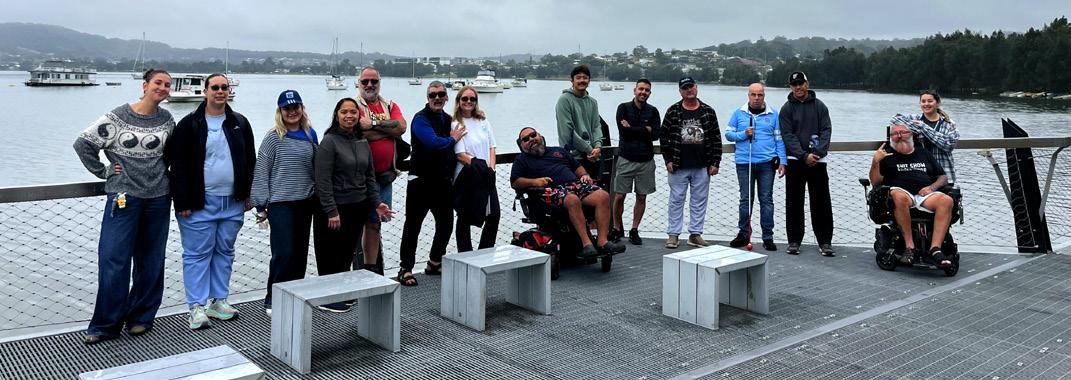
Headstart Acquired Brain Injury Services commenced in 1987 and is recognised as a premier provider of specialist services for people with an ABI in the Hunter and Central Coast region. Headstart provides individually tailored services across community access, in home support, life skills, social, leisure and recreational services, case coordination, and community information and education.
95 Turnbull Street, Hamilton NSW 2303
P 02 4965 4420
F 02 4965 4424
E info@headstart-abi.com.au
W www.headstart-abi.com.au
ABN 75057986026 I CFN 13046
Headstart ABI Services is a registered provider under the National Disability Insurance Scheme (NDIS). NDIS provider number 4050000082
Our Vision
For people living with brain injury to have opportunities that strengthen and enrich their lives.
Our Purpose
To make a difference in the lives of people touched by brain injury by providing opportunities and inspiring hope.
Leadership Team
Executive Director: Sue McHattie
Manager Service and Supports: Kesley Skippen
Services Team Lead: Lynette Aitken
Operations Manager: Alicia Richardson
Finance Manager: Douglas Walton
HR Lead: Katherine Fitzgerald
Quality Lead: Mitch Rixon
Learning & Development Lead: Sean Jordan
Now you can read NewsLink online with Issuu! If you aren’t on our email list then let us know. What kind of stories or information would you like to see in NewsLink? Do you have some great stories or photos? We’d love to hear from you! Email Andy, our Marketing & Communications Lead at our office: comms@headstart-abi.com.au
Notice & Nominate a staff member for outstanding achievement
We continue to recognise the work of our staff who have gone above and beyond in any capacity to support our consumers in their daily lives. Please help us thank and encourage our workers! To make a nomination please contact us or email: info@headstart-abi.com.au
Check us out on Facebook and Instagram
For all the latest news, stories and rec activities search for headstart ABI Services
From the ED’s Desk
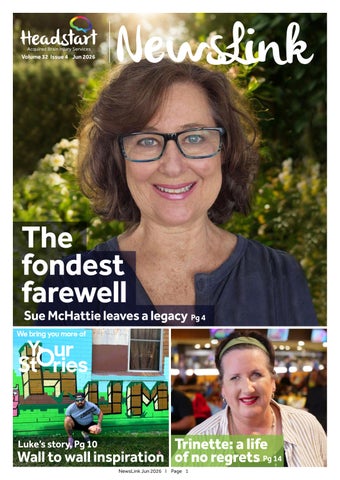
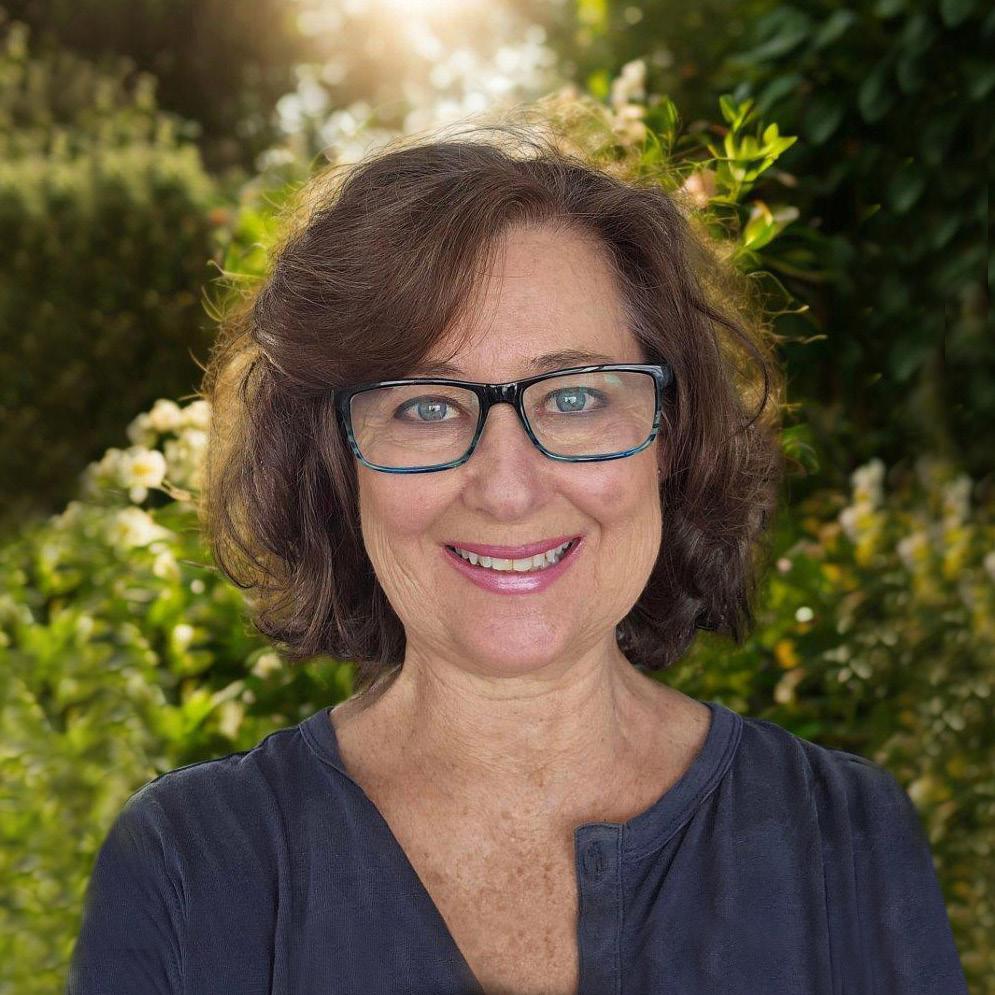
Hi everyone. After an incredible 39 years as CEO of Headstart, the time has come for me to take my next step in life – retirement! My last day being Friday 7 August. With this being my final column for NewsLink, I take this opportunity to sincerely thank all of you for your support, trust and confidence.
Much of my working life has been with Headstart as I started in February 1987, and it has taught me patience, collaboration, acceptance and most importantly to always find the strengths in people and situations. These 39 years have given me the opportunity to build relationships with so many of you and you have been such a big part of my journey.
Our organisation has strong leadership with the Board of Directors, our Chair Deb Hodgson, Interim CEO Alicia Richardson, all of the Leadership Team, Care Coordinators, HR, Quality, Finance, Rostering, Recreation, Training, Marketing and Reception, our amazing CSWs and our talented Ambassadors in the Headstart Community Education Team.
The future will always bring challenges but with many talented people in place taking us forward and with a strong financial position, Headstart will weather any storms ahead.
So, here is my last update - I am so very pleased to announce a new position within the service team of a Clinical Care Coordinator (Registered Nurse) to oversight distinct training for our CSWs in the clinical, complex needs of our consumers. This is a significant move ahead in the development of our model of service delivery as it enhances and diversifies our support options.
We have also employed an additional Care Coordinator, please welcome Quinn Watson, who moves into the role on 29 June after many years as a CSW. Also we have just established a working party, from our Yarn Up meet to generate ways to increase our awareness and understanding of Aboriginal and Torres Strait Islander cultures in our organisation. Stay tuned for a new initiative ‘Culture Corner” in the next edition of NewsLink.
As I sign off, I truly appreciate the camaraderie, humour and fun times along the way. Thank you for inviting me to be a part of your lives and thank you for your trust.
With my heartfelt appreciation and gratitude.
Farewell Sue X
Culture Corner
Coming soon in our next Sept NewsLink and beyond. Also check out our socials as we pay respect to the traditions and stories of our Aboriginal and Torres Strait Islander cultures, consumers and staff.
Headstart Association Membership Invitation
Becoming a member is simple and costs only $5.50 annually. We’d appreciate your ongoing support as we in turn continue to support people with ABI.
By officially “joining” Headstart as a member you are actively being involved in our organisation at a deeper level. Membership is open to consumers, family members, Carers, CSW’s, industry professionals and the general public.
You will have the opportunity to vote at the yearly AGM and vote on important topics and decisions.
Simply complete the enclosed membership form or contact our office on 4965 4420.
Connections that count
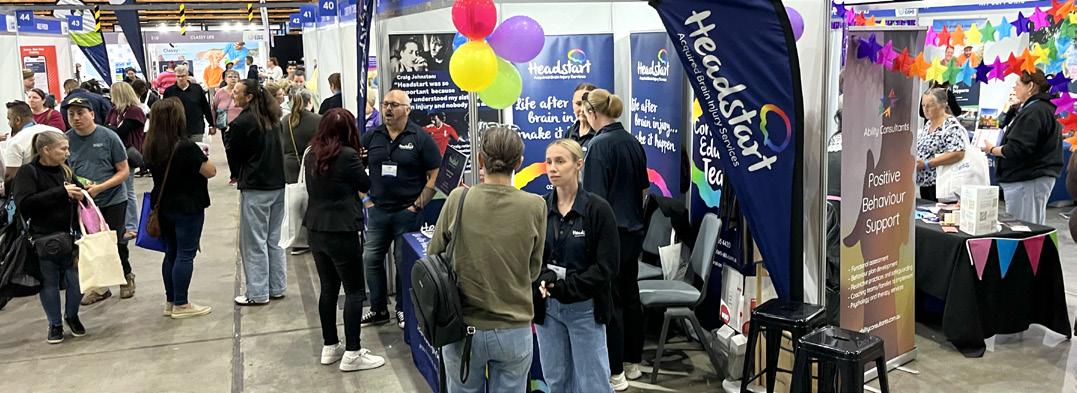
Thousands connect at the region’s premier disability event - the 2026 Hunter Disability Expo
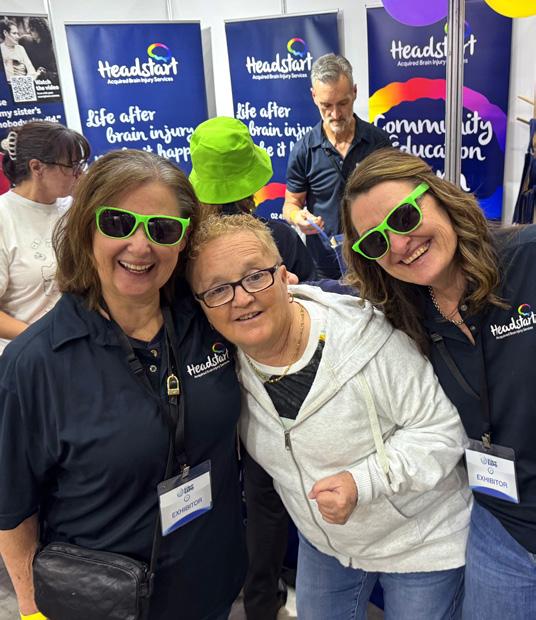
Another year, another successful Hunter Disability Expo at the Newcastle Entertainment Centre (8/9 May 2026). We love to connect with our community as well as other like-minded supports and services here in our region. It gives us the amazing opportunity to share our knowledge of acquired brain injury and promote our Community Education Team.
This years Expo was another great success, with just over 4,000 people over the two days which was on par with the 2025 expo.
• 73% were people with a disability, their carers or family members
• 27% were industry professionals, including allied health professionals, educators, government representatives and sector workers.
The four top reasons cited for attending the Expo were:
• To connect with service providers
• Network with providers
• Find employment services
• Discover assistive technologies & apps
• Discover local leisure, social or performing arts groups catering to people with disability.
We’ll see you there again next year!
Sue, Lyn and Kesley
Looking back over the years, Sue reflects that while so much has changed, in many ways the essence of the organisation remains exactly the same.
Headstart began as a six-week initiative in December 1986 under the Hunter Region Rehabilitation Service (HRRS).
I joined the Brain Injury Team in February 1987 after returning to Newcastle from several years overseas, taking up a role as a Social Worker.
Prior to this, I had worked in a number of Sydney hospitals, building extensive experience in rehabilitation and family support.
My role focused on providing behaviour support and family therapy, helping people with brain injury and their families understand and manage the often-complex impacts of brain injury. This included supporting individuals to navigate changes in behaviour, relationships and identity, while helping families learn how to adjust and rebuild their lives following what was often a devastating and life-changing event. It quickly became clear that both individuals and families required far more than shortterm intervention. They needed ongoing support to manage the lasting impacts, barriers and challenges associated with brain injury. One of the greatest difficulties was maintaining relationships while coping with changes in personality, shifts in family roles, grief, loss and the uncertainty that often accompanied recovery. Families and individuals alike needed access to support,
understanding, and opportunities in life and time apart to maintain their own wellbeing.
In the mid-1980s, there was very little recognition or understanding of brain injury and its unique, often invisible, impacts. People with brain injury were typically expected to fit within existing community based disability services, such as those designed for people with intellectual disability or spinal cord injury. They were not designed to address the specific needs and challenges associated with brain injury. It became evident that a different approach was needed. Services had to be more than simply providing “something to do.”
They needed to be meaningful, ageappropriate and purposeful, helping people continue moving forward, solving problems, building skills and maintaining hope. The focus was on recognising that progress— even when small—was important and worthy of celebration.
With the support of three volunteers— Pat Turner (who remains a Community Support Worker with Headstart today), Ann and Betty—the journey began.
The first gatherings were held one day a week at Rankin Park before relocating to Darby Street, now the home of the Hunter Brain Injury Service.
At the time, it was a large, unused building, complete with a spacious yard, tennis court and swimming pool. We made the most of those facilities! The service moved through
a succession of locations including Bean Street, Wallsend; Karoola Road, Lambton; a Scout Hall in Georgetown; and Elder Street, Lambton, before finally finding a permanent home in Turnbull Street. Special thanks are owed to the Motor Accidents Authority (MAA), whose seed funding supported the purchase of the property, and to Kay Little, who located the site.
We moved into Turnbull Street in 1996 which was a huge milestone in stability.
The frequent relocations reflected the reality of those early years. Funding was non-existent and there were no dedicated resources within the health system for permanent premises. While challenging, these experiences also reinforced strengths in resilience, adaptability and determination. Despite the disruptions, the support model continued to evolve and grow, ultimately becoming the foundation of the organisation we know today.
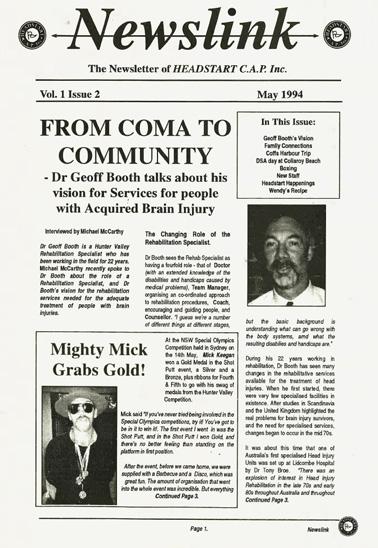
There were many champions along the way. We particularly acknowledge Dr Geoff Booth, Brain Injury Rehabilitation Specialist with HRRS—known to many as “Dr Geoff” from the surfing magazine Tracks.
Dr Booth was a strong supporter of both the activities and, importantly, the underlying philosophy and purpose that drove Headstart’s development.
From the outset, Headstart was envisioned as a bridge between formal rehabilitation and community life. The goal was to ensure that people with brain injury had opportunities to continue rebuilding their lives, developing skills and pursuing meaningful goals.
After years of advocacy and numerous funding submissions, the next significant milestone was achieved in 1992 when Headstart secured a two-year funding commitment from the Motor Accidents Authority. This was followed in 1995 by block funding from the Department of Ageing, Disability and Home Care (ADHC), further strengthening the organisation’s capacity to deliver specialised supports. Through local advocacy alongside the work of the Brain Injury Association of NSW, brain injury gradually gained greater recognition requiring a specialised and distinct approach. This shift in understanding was led by two amazing ADHC project workers Sandy and Gaye, and helped pave the way for further service development and incremental funding. The next major turning point came in 2013 with the introduction of the National Disability Insurance Scheme (NDIS), which provided individualised funding, enabling people to choose the service providers best suited to their needs and goals.
Today, while the size of the organisation, the number of people supported and the funding landscape have all changed dramatically, the core philosophy remains the same as it was in those early years: believing in people’s potential, focusing on possibilities rather than limitations, and providing the support needed to help people with brain injury live meaningful and fulfilling lives.
With the two-year funding secured in 1992, the Headstart service framework was able to grow and mature. We employed two Care Coordinators and three Community Support Workers, creating a more structured and responsive support model alongside the small group recreational pursuits.
A key component of this framework was recognising the needs of families. We understood that families were doing their very best in circumstances that could be challenging, overwhelming and, at times, devastating. Brain injury affects not only
the individual but also those closest to them. The Care Coordinator role provided a consistent point of contact—someone who understood the person’s needs, family circumstances and hopes for the future, and who could support everyone involved to navigate the journey ahead.
Headstart has always offered something more than a service—it has provided a place of understanding.
Many of the original 15 participants who joined in 1987 came from vastly different backgrounds, just as people do today. Yet there was enormous value in connecting with others who shared similar experiences. Consumers found understanding and encouragement through mutual support.
At the heart of this is the concept of reciprocity—the opportunity to both give and receive. We all need both. Following a brain injury, many people experience the loss of valued roles and can feel they no longer have anything to contribute. Helping people rediscover their strengths, share their experiences and make meaningful contributions has always been central to our approach. Activities and projects that foster reciprocity have been, and should continue to be, a cornerstone of how we deliver services and develop new initiatives. This philosophy led to the establishment of the Headstart Community Education Team (CET) in 1987. The CET was created to educate the broader community about acquired brain injury, but also to provide presenters with an opportunity to use their experiences to give back. Through sharing their stories, team members developed confidence, purpose and a renewed sense of capability. Their presentations were powerful because they were authentic—
personal experiences delivered in a direct and uncomplicated way that left a lasting impact on audiences.
Similarly, the Headstart Circles of Support project operated for over three years and fostered many enduring friendships. These relationships were built on mutual respect, shared experiences and genuine reciprocity, often continuing long after the project ended.
Over the years there have been countless memorable activities and projects, all guided by a common goal: helping people feel more connected, valued and included within the wider community.
Some standout initiatives included:
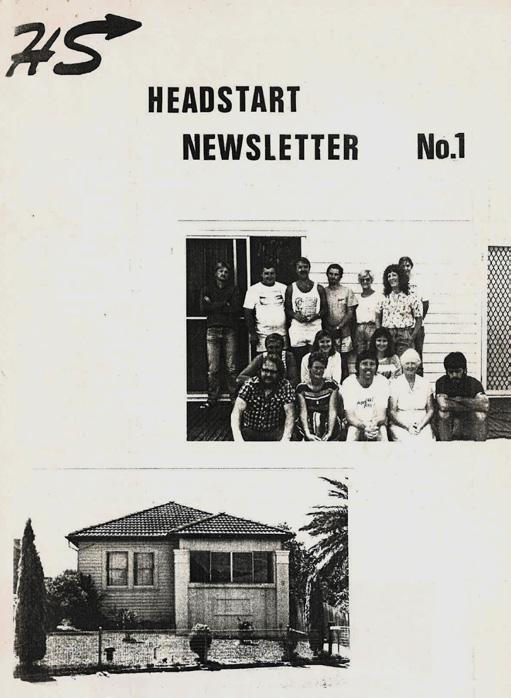
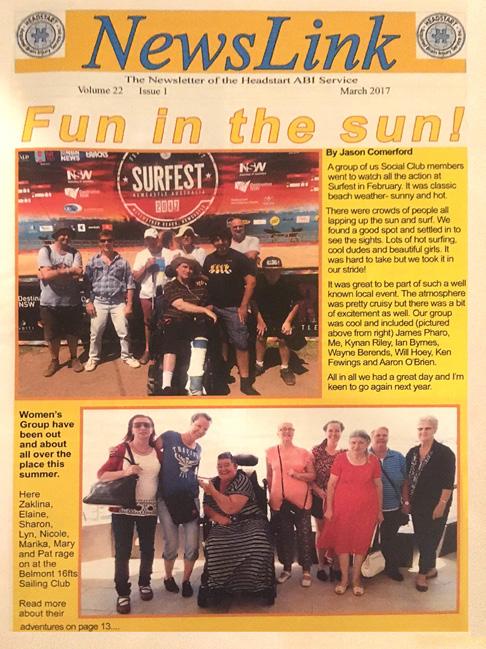
• The production of the first NewsLink newsletter in 1987, providing a platform for information sharing, storytelling and connection.
• The establishment of Karate classes in 1992 with Peter Oberekar at his Hamilton dojo. Remarkably, these sessions continue today. Peter’s commitment over more than three decades is deeply appreciated. Karate initially emerged as a constructive outlet for many young men struggling with anger and aggression following their injuries. It provided a disciplined environment where physical energy and frustration could be channelled positively, while teaching respect and self-control.
• The creation of the Headstart Song, written by consumers who, with support from CSWs with musical backgrounds, learned to sing and play instruments again. The project encouraged people to reconnect with previous interests, relearn lost skills, try new instruments or simply participate by following a rhythm. It demonstrated the power of creativity, achievement and shared experiences.
• Two Art and Photographic exhibitions held in partnership with local photographer Eddie Cross at the Community Arts Centre. These exhibitions were a culmination of a series of courses for consumers to gain photography skills. Their creative and artistic talents were definitely on show!
• The development of the play Does This Bus Go to Lambton? in collaboration with Brian Joyce from Freewheels Theatre. The play was inspired by the real experience of a consumer (hi Wayne P!) being refused entry to a public bus because the driver mistakenly believed he was intoxicated when, in fact, he was experiencing balance difficulties. The Troupe was called the Second Chance Theatre Company and performed over three nights at the University, each with a full house. The production challenged community assumptions.
• The success of the play also created opportunities for the Headstart Community Education Team to deliver presentations to Newcastle Buses staff, helping improve understanding of acquired brain injury among drivers.
• As a direct outcome of this advocacy work, Headstart developed an in-house identification card for consumers that outlined common effects of acquired brain injury to assist in community interactions.
• The formation of the “Accidental Singers”, a singing group that performed regularly at local nursing homes. Their performances brought enjoyment to residents and demonstrated the talents, capabilities and contributions of people living with disability.
These projects may have differed in style and purpose, but they shared a common thread. They were about creating opportunities for participation, contribution, connection and belonging. They demonstrated that rehabilitation is not simply about recovering skills; it is about rebuilding identity, restoring confidence and finding meaningful ways to contribute to the community.
• Sailing regularly on a 14 foot skiff with Kevin Buxton on Lake Macquarie, who later contributed to Sailability coming to Newcastle. Sailing with Kevin taught our crews courage, communication and the joy of achievement.
Looking back, these initiatives helped shape the culture and philosophy that continue to define Headstart today—an organisation that believes in people’s strengths, values lived experience and creates opportunities for everyone to contribute, grow and belong.
Very early in our history, we coined phrases that helped our staff connect with our purpose. These phrases captured how we needed to do our jobs: “Work ourselves out of a job” and “Do with, not for.” They reflected our belief that our role is to support people to grow in independence, confidence and capability. Our hope has always been that, over time, people will need fewer supports as they achieve their goals and build the skills to live the lives they choose.
We are reminded that our purpose is to create opportunities, build capacity and celebrate growth. If we are not recognising and cheering for a person’s increasing independence, skills and confidence, then we need to challenge ourselves about our purpose and the impact we are striving to achieve. We focus on possibility rather than limitation, always believing in people’s potential to achieve more than they may have imagined
So much has changed over the past 40 years. Our services have grown, the number of consumers has increased, our workforce has expanded, and we have continually evolved and improved the way we deliver support. What has remained unchanged is the heart of our organisation.
I want to extend my deepest appreciation to all employees, past and present, and the then Boards of Management over the years, who have helped shape the organisation and services we deliver today and who have embraced our values and approaches. Consumers and families have consistently shared their insights, feedback and experiences, partnering with us so that our services and organisation can continue to learn and develop.
The recent milestone of the strategic purchase of Darling Street will enable greater possibilities for future development and creating different service options.
The foundations laid 40 years ago have truly stood the test of time and the need for specialist brain injury services is just as important today as it was then. We remain clear about our reason for being and resolute in our commitment to “making it happen” for every person with a brain injury who invites us to join in their life journey.
Thank you for your dedication, passion and belief in what we do.
I wish everyone the very best for the future and look forward to having the opportunity to say farewell to all of you in person on 22 July.
I leave you with a quote from writer Mark Twain: Explore, Dream, Discover. - Sue x
Ed: On behalf of all connected with Headstart - past, present and futureTHANK YOU for all you have done!
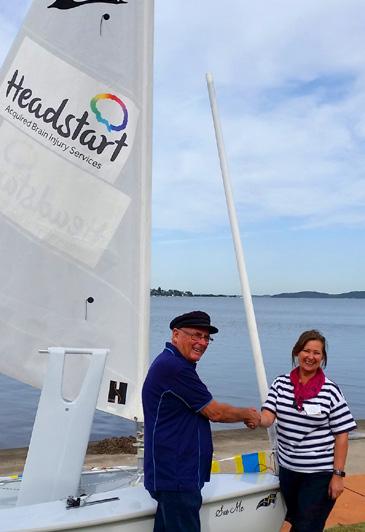
4 May 2018 - the day we launched a new logo for Headstart ABI Services and we also launched the "Sue Mc" at Belmont Sailability. A great day for all involved, with the Board surprising Sue in the naming!
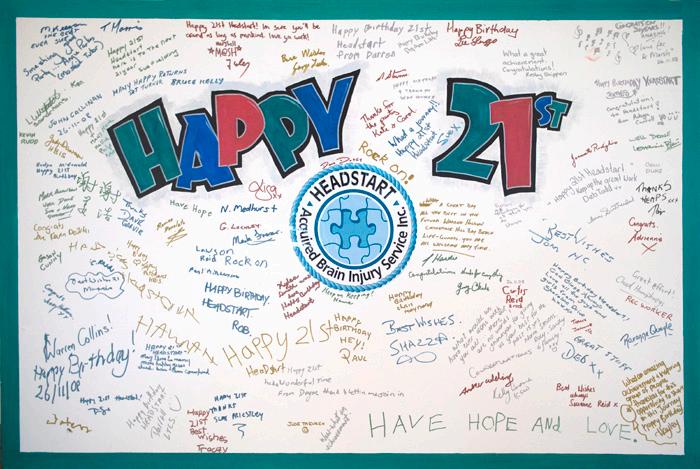
from just 9 years ago! Times change.
Our former logo - and a long gone milestone.
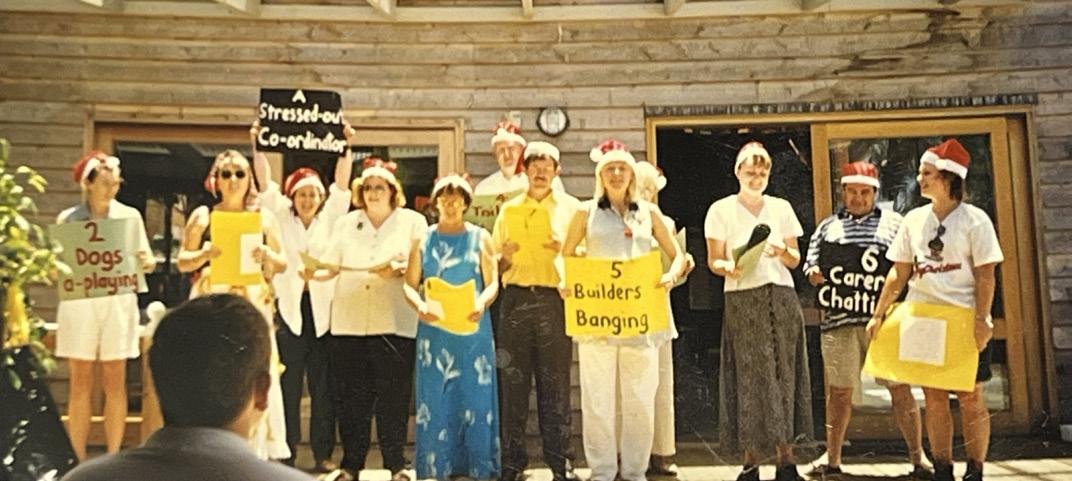
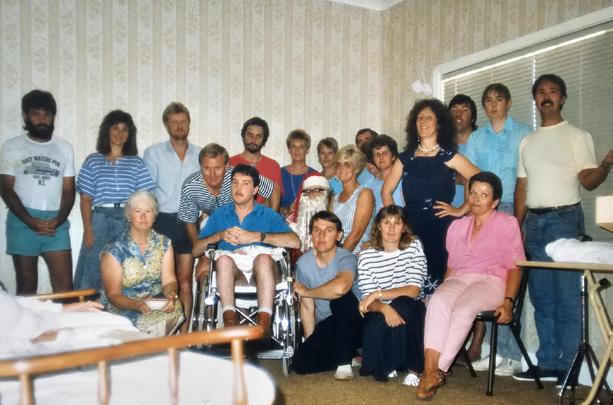
Christmas 1997 with all the original guys at a house I had to find in Bean St, Wallsend for free. NewsLink
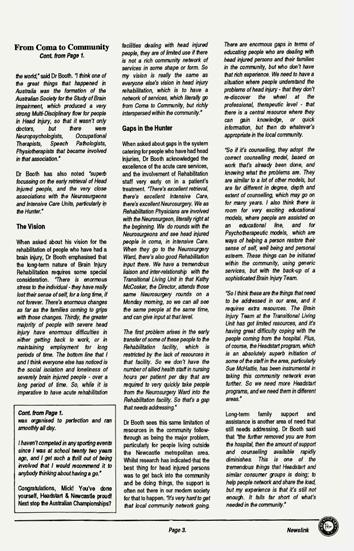
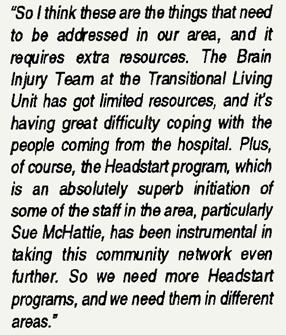
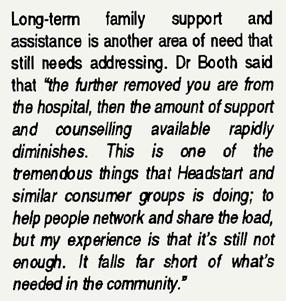
Dr Geoff Booth article excerpt, 1994
Sue’s special connection with Faye began in 1988 and continues to this day
“Hello, I am Faye Johnston's brother, Craig.
My mother Dorothy, and my father Colin, who is no longer with us, would say — and we feel — that we are probably Sue McHattie's biggest ever admirers.
That is a very big statement to make, but when it comes to our family's hardest chapter, and how Sue responded to help us over the years, it's 100% the truth… which is why we are so proud to say it out loud.
In 1987, when my sister Faye sustained a brain injury, Headstart was the only real help we found. Sue built that organisation, and led it for 40 years.
She wasn't Faye's hands-on carer — but she made sure, without fail, that someone always was. That's the mark of a true leader and change maker: building something so solid that families like ours never had to wonder if the support would be there.
I know this is also true for a lot of other families, who needed help
over the years, and only what Sue built was there to deliver it, when nobody else would or could. This farewell for Sue is an emotional time for all the people her work has touched… and sometimes the less you say, the better it is.
So thank you, Sue.
Thank you for your love, your leadership and your support, which helped Faye and our family get through our very darkest days…
And every day since… to this day. We all wish you lots of love for your retirement going forward — not just from our family, but from all the people and families you have helped to heal over the decades.
Lots of love from Faye and the Johnston family… xxx”
- Craig Johnston
A legend and an Ambassador
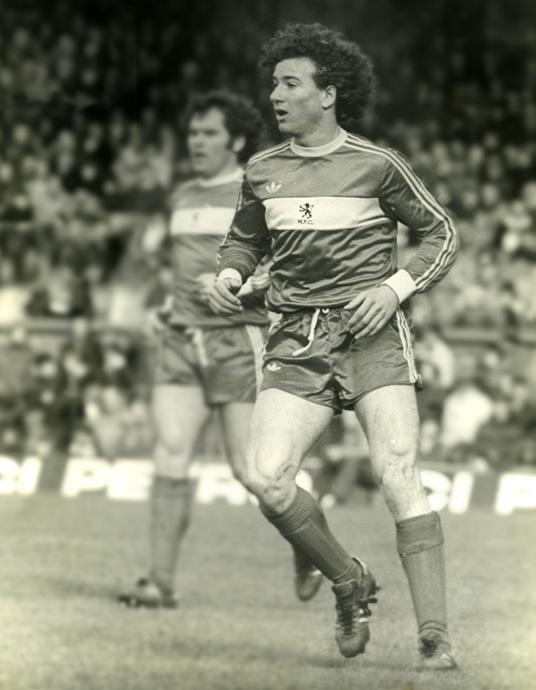
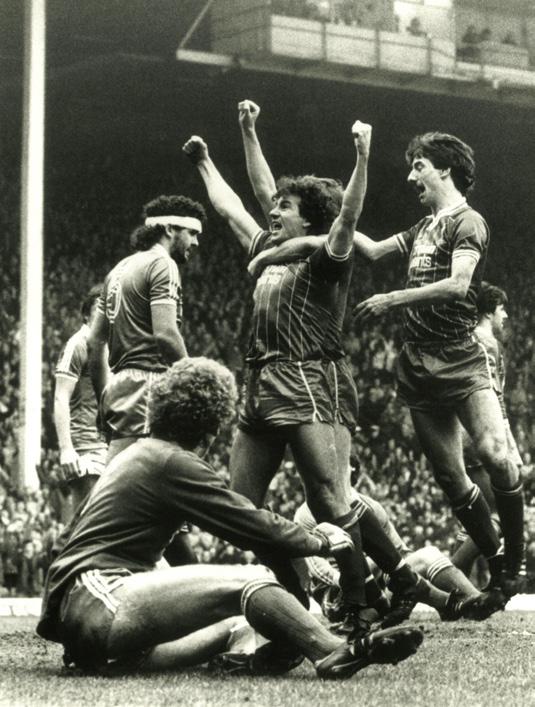
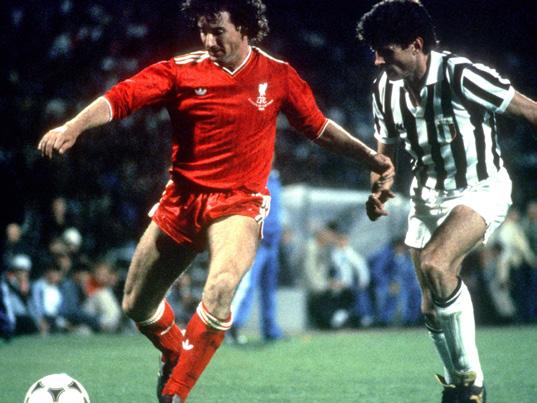
Local soccer star Craig Johnston played for Liverpool FC in their heyday of the 80’s. Craig was getting ready to go to the club Christmas party when he received a phone call from his Mum Dorothy. The words “Your sister’s had a dreadful accident” became the catalyst for Craig’s premature retirement form international football.
Faye lives in Wallsend and is still supported by Headstart 38 years later.
Watch Craig’s video as he shares about sister Faye’s brain injury
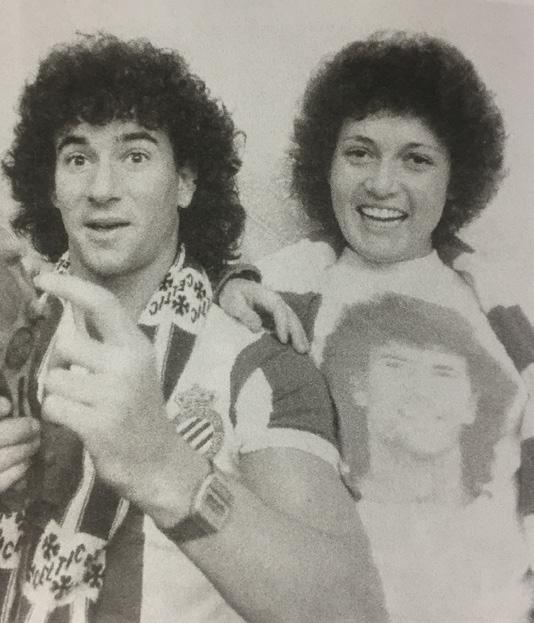
Faye and her brother Craig before her brain injury
“A boy from Lake Macquarie scored at Wembley. That, in itself, might inspire others with seemingly unattainable dreams to reach their own goals.”
- Craig Johnston
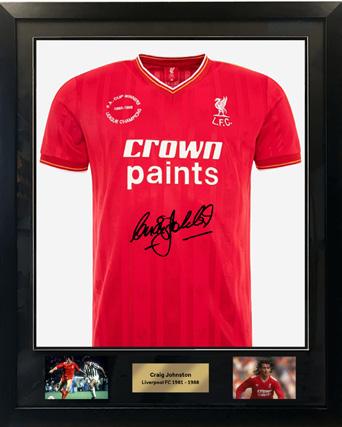
Win a signed and framed Craig Johnston Liverpool jersey! See back page for raffle details.
Craig as a 17 year old playing for Middlesborough, his first UK club, 1977
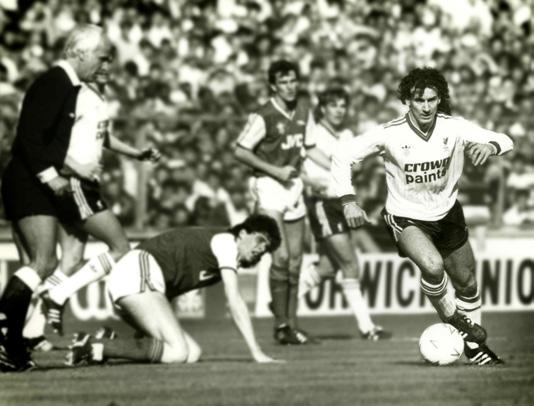
League Cup final v Arsenal Wembley Stadium, 1987
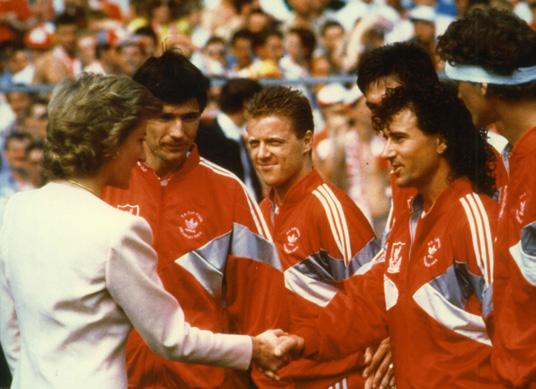
Meeting Lady Diana, Wembley Stadium 1986
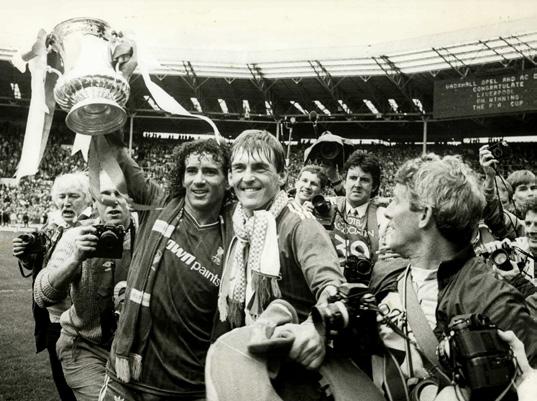
Craig and Kenny Dalglish with the FA Cup, Wembley Stadium, 1986 Goal for Liverpool FC v Brighton, FA Cup, 1983
Finding purpose through paint
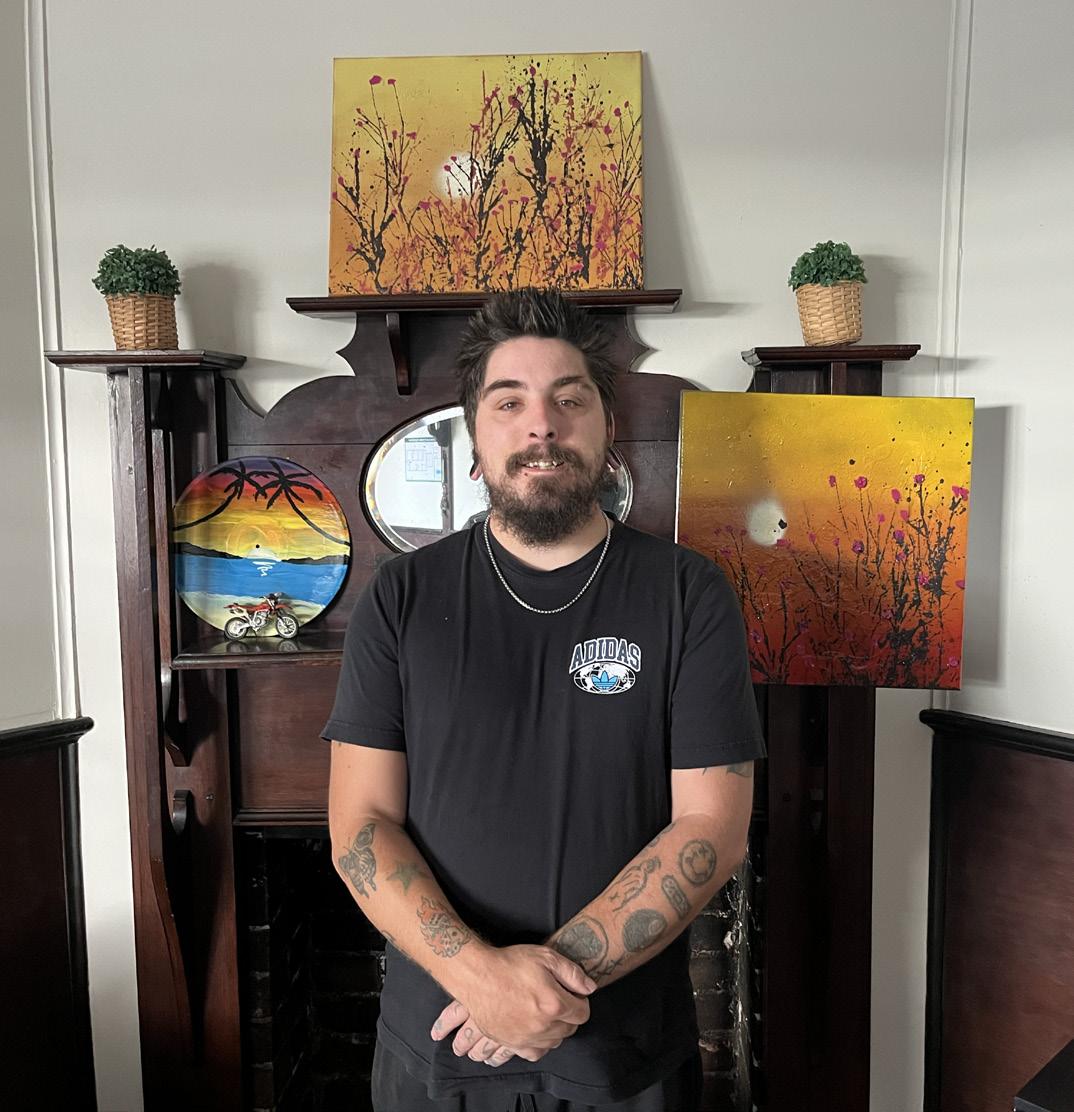
Luke is a practical joker with a great sense of humour.
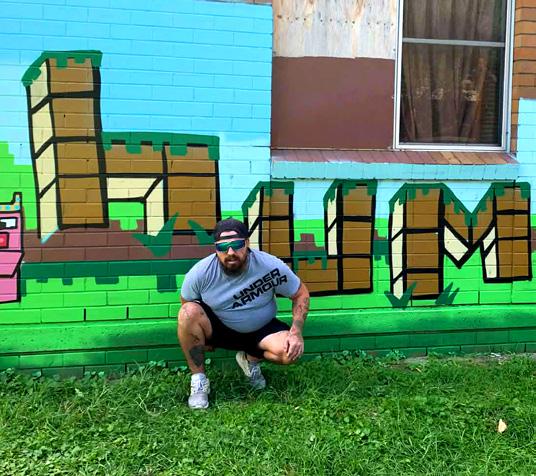
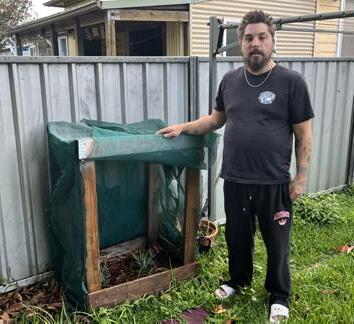
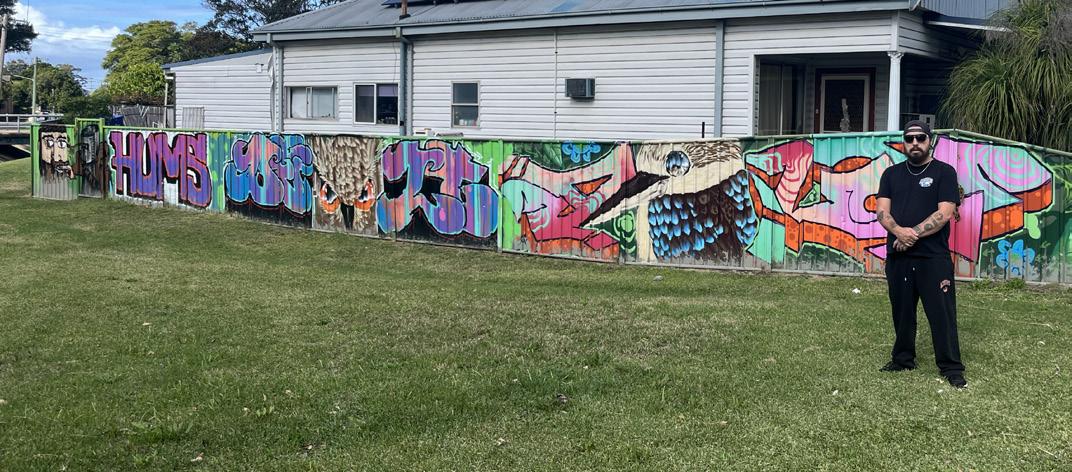
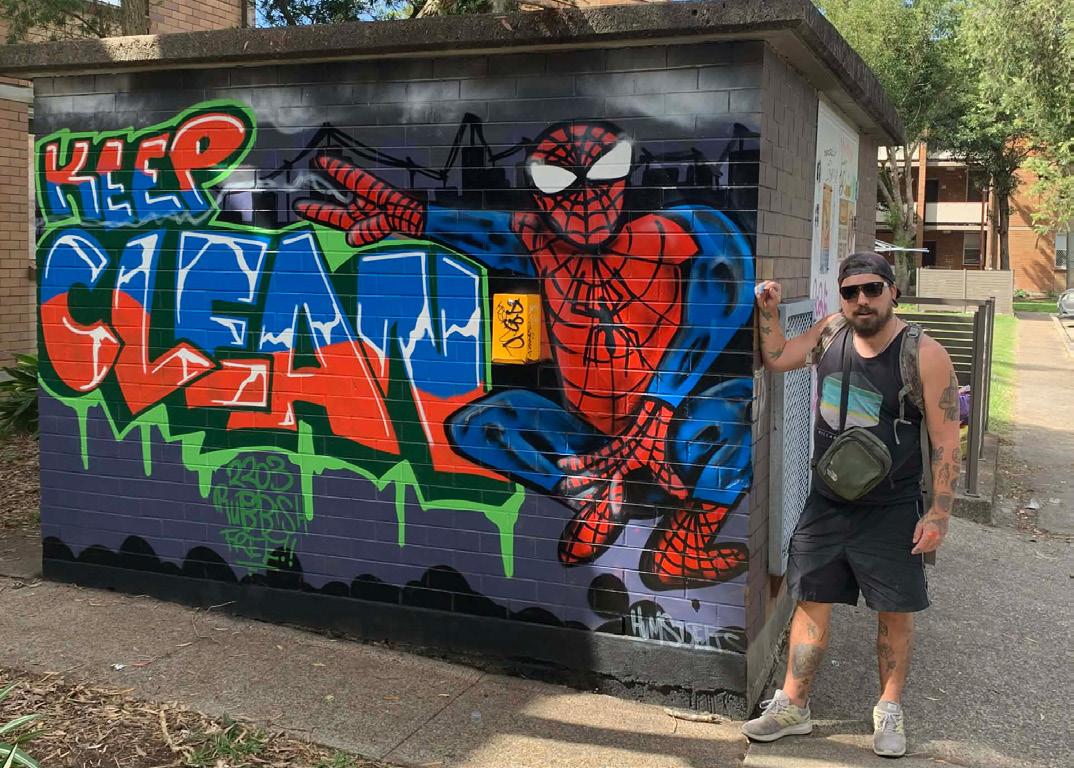
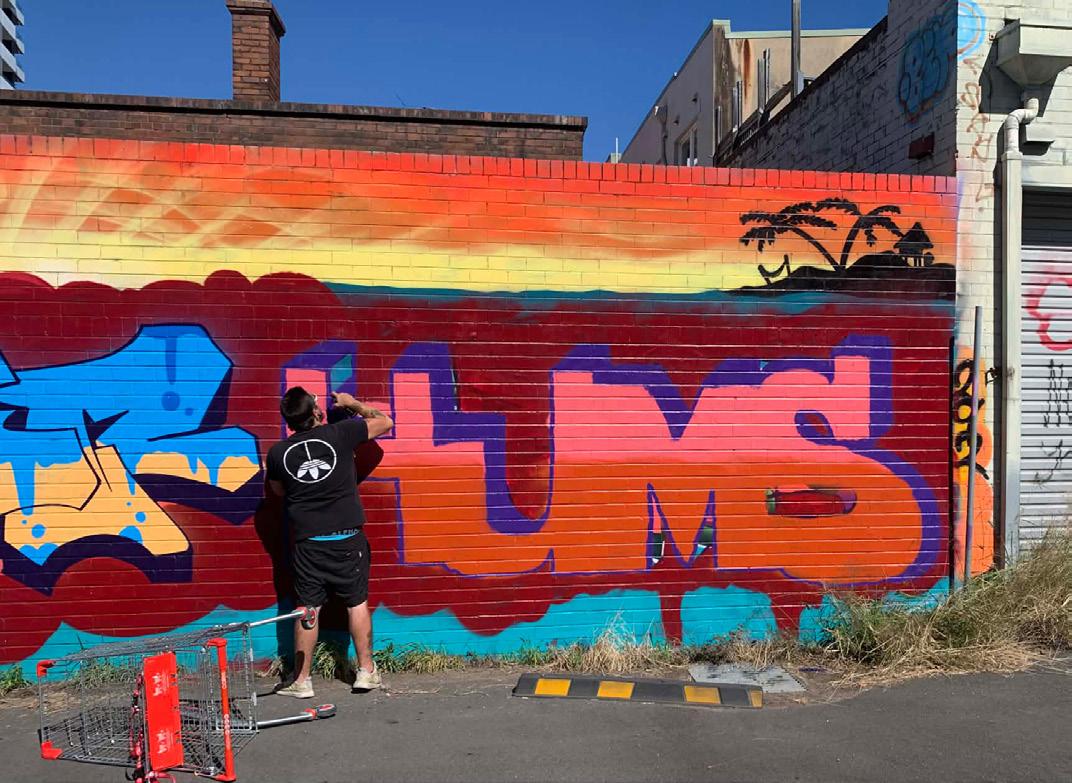
Living in a SIL home in Mayfield, he has left a colourful mark on his own four walls and also the local streets through graffiti art.
“It’s just me here,” says Luke. “Jack (Dandelion house worker) is like family to me. I’ve got family in Kurri Kurri but don’t see them much, apart from my Nan in Weston. My Headstart support workers help take me to see my Nan once a week. We also go to the beaches which I enjoy. I like doing art, woodwork and some bike riding.”
“My motorbike accident was in Weston in 2012 when I was 19. A two-tonne work ute reversed into the road in front of my bike . I had a lot of injuries - broken bones and dislocations, internal bleeding and a swollen brain.”
It’s been a long journey and I’m still recovering from it. I had to teach myself how to walk, talk, eat, ride a push bike all over again. My whole way of living.
“So many people have helped me with recovery. I just learned how to do everything all over again. There are still certain things that I can’t do that I used to do before my accident, I can’t jump on a trampoline, for example. I’m still doing physio every fortnight to help with my back and my knee. Also occupational therapy, behaviour supports and social work are regular therapies for me.”
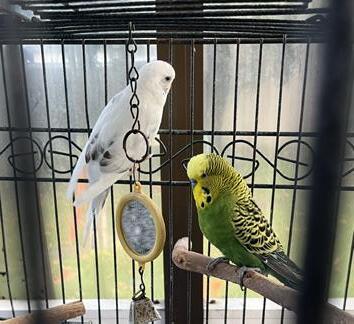
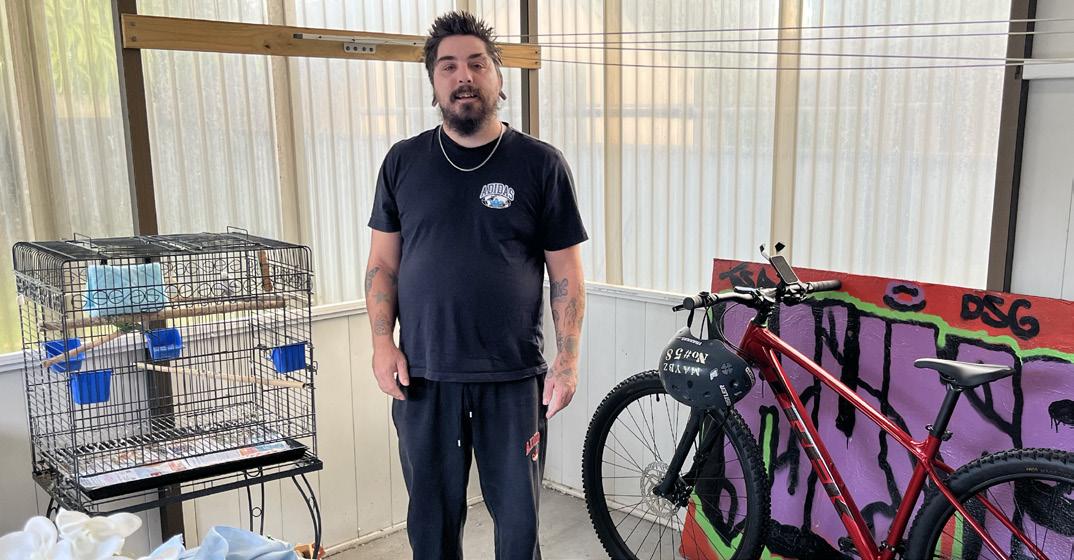
“I like animals - dogs, cats and birds. I’ve got two budgies, Snow and Max. Their personalities are great. They’ve got good characters and they’re funny! Snow is more ‘fancy’ while Max is just laid back and chill.”
“With my woodwork I build chairs, picnic tables, coffee tables, bedside tables and garden beds. I’ve always enjoyed with woodwork. I learned it at school and was automatically good with it.”
“Before my accident I was never really into art. But afterwards it was my escape away from bad people. I started drawing. I was really good at drawing and people started noticing, they said, “Why don’t you try acrylic paint? So I went from drawing to acrylic paint. I was good at that. Then people said “Why don’t you go bigger?” and so I went on to spray paint. I was good at that too.”
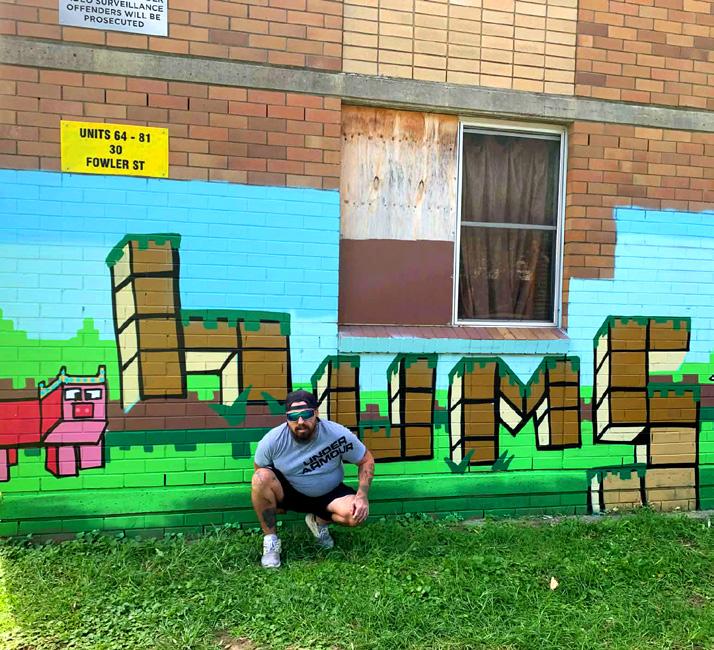
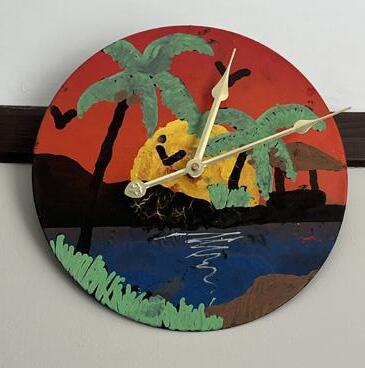
Now I enjoy spray painting. I’ve got a few spots that I go to do my graffiti. I’ll redo it sometimes every couple of months. I’ll repaint it with something else. Up the road there’s a fence that the owners let me paint. I’m happy with it. “I do my art when I’m in the mood. I’m good at palm trees, and I have done them on some canvases - and even a clock.
My goal with painting is to become a muralist and do requests. I want to get a job out of it or earn some money. If people tell me what they want on their wall I’ll paint it for them. I’m open to commissions!
“With all my work I make sure to get permission to do certain spots, like this fence (see pg 12). It had a couple of illegal graffiti tags on it and so we ask for permission to clean it up and do something that looks good. So it’s all legal work instead of getting me out and doing illegal stuff. It shows me the right way to do it instead of going about it the wrong way.”
“I’ve got no girlfriends, they’re too much work! Things I enjoy are watching movies. I taught myself to play the guitar. I like a good coffee - ice mocha, ice latte, long black, just to mix it up. With four shots, sometimes - the stronger the better!”
“At one stage I got myself in trouble and had to go to court, and so I decided no more drinking. That’s helped me move forwards in life.”
“I like cooking and one my favourite things is quesadillas. I like Mexican food. Some things aren’t easy but I get there in the end even if it’s challenging. I can do some
Luke’s graffiti regularly features HUMS ’Humanity Under the Main System’
things in the kitchen by myself but I need a bit of hand with others.”
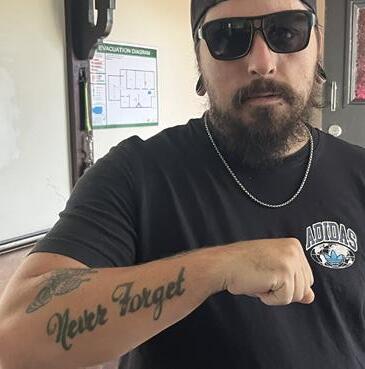
My motto is to never forget, which is a tattoo on my arm. It relates to my accident, plus all the things that I’ve had happen in life. Things that I’ll never forget, even though I may want to forget some of them.
“When it comes to goals, I want to get a dog, a little Jack Russell. I’d also like to go on a holiday. Not sure where, maybe Port Macquarie or somewhere near the beach. I like relaxing and listening to the waves.”
Watch a short video of Luke explaining one of his many murals. Scan the QR code with your smartphone or go to www.vimeo.com/1199648482
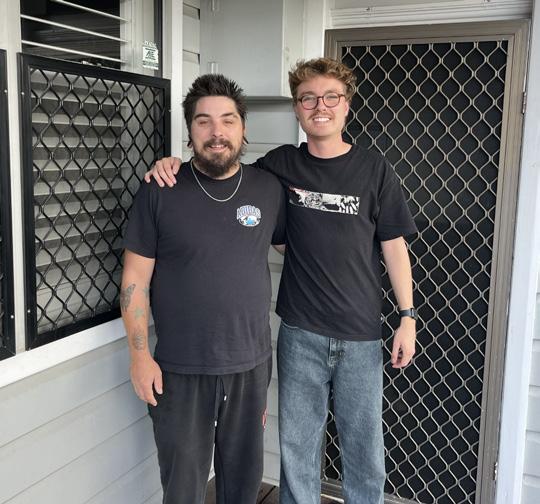
Luke’s been living in his SIL home in Mayfield for nearly three years, supported by Jack (Dandelion House).
“Luke’s made a big improvement. He’s a different bloke from when I first started 3 years ago.
Luke’s getting out and about, being more social and doing a bit of physical activity. He’s starting to live a bit of a more structured life, which is good. Making healthy decisions, getting better at eating and drinking plenty of water.
Luke’s on top of his health now, with sobriety for 300 days now. It’s a big deal for Luke to be sober for this long. The longest for many years so he’s done very well!
A couple days a week Luke’s Headstart support workers take him to his Nan and do a few things. They get him out into the community, which is good for him.”
- Jack
Luke with SIL worker Jack
Luke’s graffiti regularly features HUMS ’Humanity Under the Main System’
A new lease on life: living without regrets
Despite having a significant vision impairment, Trinette chooses to see the positive side of life post brain injury.
“G’day I’m Trin. Please let me tell you the story of my rebirth that began in January 2011 when I survived a brain aneurism.
I don’t remember the exact date and I don’t need to know as it’s not important.
I was in my late 40's, I was a single mum with a daughter who was aged 24 at the time.
I was working two jobs. One full time at Telstra as a debt collector and I was also a casual waitress. I pretty much worked 20 hours a day I was more focused on the money and how much I could spend.
While working at Telstra I was sitting at my desk when I collapsed.
I was in a position in the office where I could not be easily seen as we had partitions between us.
I have no memory of this happening at all The only reason they checked on me was my calls were going through too quickly (I wasn’t answering). I was unconscious.
I was the first aid officer on that floor where I worked in Brisbane and so they had to get the 6th floor first aid officer to take me to the hospital .
It was at the hospital that I had the aneurism whilst in the MRI machine.
From ICU to the Brain Injury Rehabilitation Unit (BIRU) was a total of 12 months. A gap year I didn’t choose but forever grateful for.
I don’t have much memory when I was in the hospital. When I was at the hospital someone from work bought me in a pack of winny blues and I put it on the bedside table and forgot about them.
When my mum came in she got angry and said "where did you get these from?"
I had forgotten that I smoked. I wouldn’t recommend giving up the way I did, but it worked!
They told me I used to smoke but after brain injury it was gone and I find the smell disgusting. Whatever happened in the aneurism flicked a switch in my brain. I was reset. So good.
I know that my mum never gave up. Her exact words she said was “I raised her once and I’ll raise her again”.
Weekly Morning Melodies with CSW Deb ...and CSW Guy
She was my mumma bear and with her commitment and encouragement I relearnt what I needed to do. I truly was like a new born baby.
I loved the time at the brain injury unit. It was about starting again, a new chapter and I met some really amazing people going through what I was going through.
There is one fond memory I have. There was a man in the rehab who suffered a brutal bashing that left him brain injured and in a wheelchair. His wife disowned him and refused to let him see his children. I felt for him and I would look after him when I could. I’d say hi and sit with him at meal times. His brothers would come visit every day and that was lovely to see. The greatest was when I heard a little voice call out “daddy” and it was his daughter that one of his brothers bought in to see him. The look on his face was priceless.
As a result of my brain aneurism I lost my vision and I have a brain injury. Despite this I'm thankful for everything I experienced in this time.
I had to do the exercises and therapies to learn to walk again. The hardest thing was not being able to drive and the loss of that independence. It was something that was out of my control and acceptance was the key.
At first I forgot some memories like my dad passed away 2 years before. When I was having visitors I couldn’t understand why my dad had not come until mum explained and I had to be told many times before I remembered.
I'm here today to share my story, and I am thankful for that. I have had another chance where many people don't survive.
I had to rediscover who I was. Would I have liked the Trin of old back? No way. She didn’t have time for anybody. But I sure like the reborn Trin, who I am now. “I’m bloody awesome now!”
Post brain injury my mum took over my care which I’m very thankful for. However that unfortunately gave my daughter the ok to move on with her life. We have been estranged since January 2025 and for my mental health I have come to a place of acceptance. Seeing my psychologist has been so helpful.
I can’t remember why they stopped their communication with me. To protect my sanity and my heart I have put this all in a box wrapped in an ugly bow and don’t think about it.
With the passing of my mum just two years ago I’ve been encouraged to survive independently with limited vision.
I can’t read properly anymore, but I have a machine that enlarges things for me. I get audiobooks which I love.
I live on my own and my home is set up where I know where everything is and I have carers 6 days a week for a few hours so I can go out shopping, to appointments, be social and meet new people.
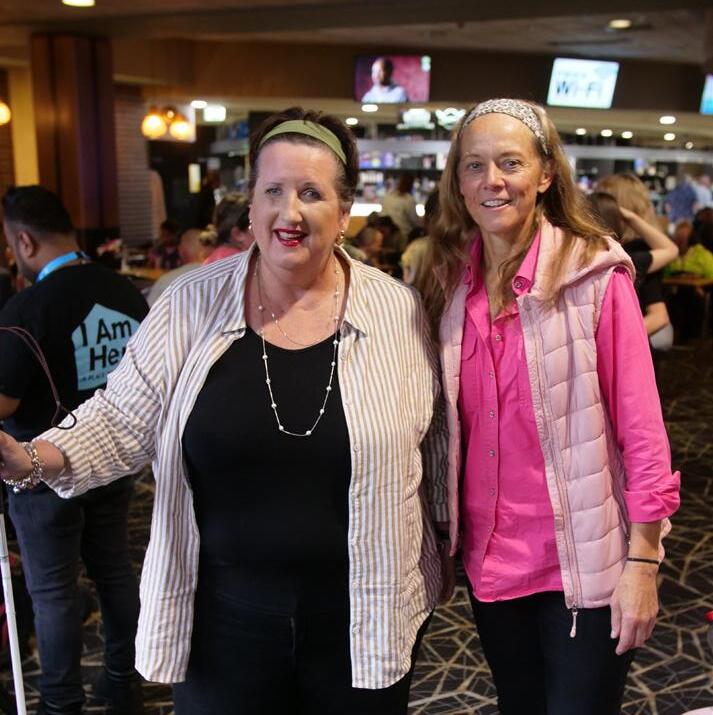
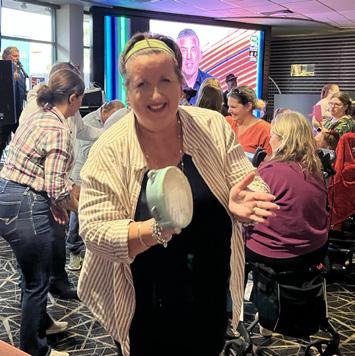
I really enjoy attending the Headstart Rec group like morning melodies, outdoor gatherings and lunches. I get to meet others who also have a brain injury and the support workers. On Saturdays I belong to a disability bowling league at Dullboys Warners and our team is called “The Incredibowls”. I look forward to it every Saturday and we have so much fun.
Chrissie party with CSW Ash
At the moment I don’t have many family close by. I do have a younger brother who lives with his family in Italy and we are very close. He likes me!
What I do have are people in my life like carers that are like family to me.
I would never want to go back to the life I lived before the brain injury. I didn’t have time for others and didn’t look after myself. I was too interested in earning and spending money that didn’t bring happiness.
A wise woman quoted “the love of money is the root of evil”. I am a happy person… no chemical intervention required!
I don’t have regrets instead I am awake. It took a near death experience to wake me up and value my life and others.
My main goal right now is just to live life. I’ve made a decision and I’ve had a chat with the bloke upstairs. I said I’m going to live to 103 and then we’ll have a chat.
Before the brain injury I was blind to others around me, everything. Here I am now “blind” but I have my eyes open to this wonderful world around me and such empathy for all people.
Life is great, too short to throw it away. Take every chance given and make the most of it. My brain injury gave me my life back.
Before that of there was 24 hours in the day I’d work 20 of them. Now I haven’t got time for work, I’m busy!
I’m working through my bucket list. I’ve been to Paris. Don’t sweat the small stuff, that’s my motto.
Embrace and believe in what you have.
Thank you for taking the time to read my story.
- Trinette
“Supporting Trin is always a joy. She is a positive lady who sees life through a bright lense. I see her compassion for others and kindness that is remarkable to see. Helping Trin to write her story adds to my appreciation of every consumer who has an incredible story of survival.”
- Deb, CSW
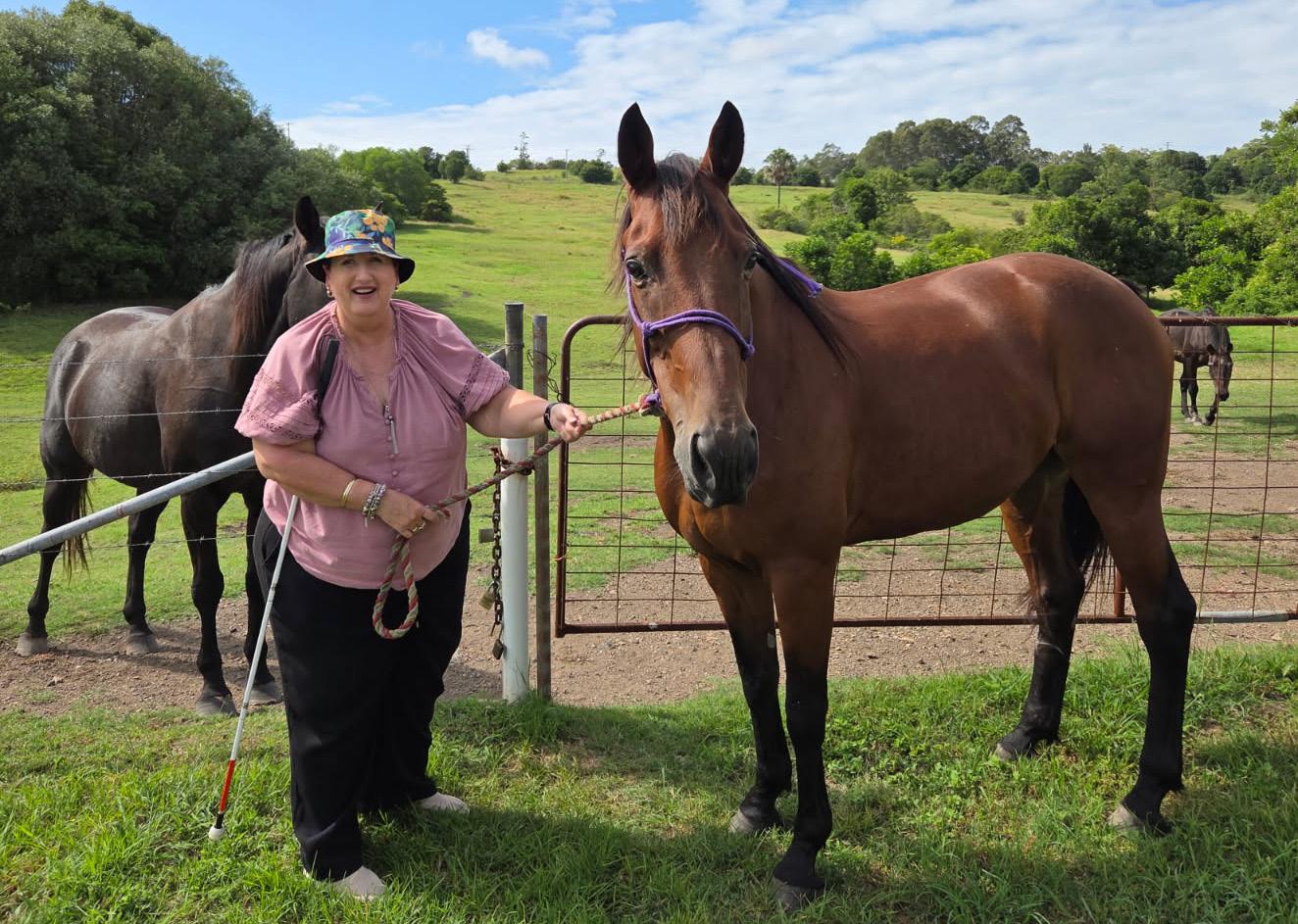
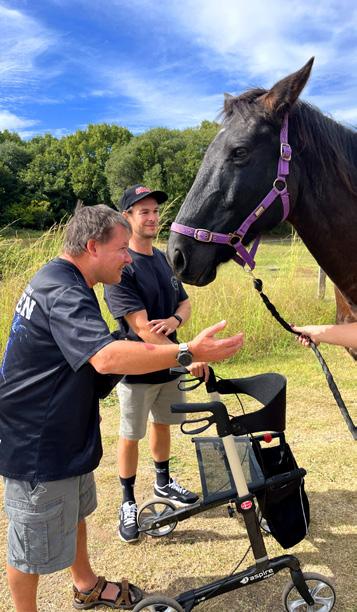
I love being with horses and the black one Stormy really liked me. I feel very comfortable with horses.
-
Trin
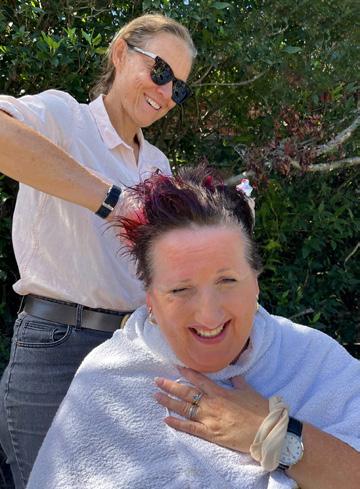
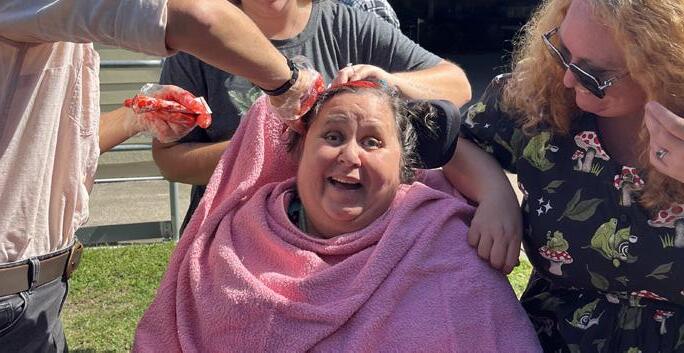
World’s Greatest Shave” fundraiser hair colouring with CSW Deb
Enjoying CSW Deb’s horses in Minmi
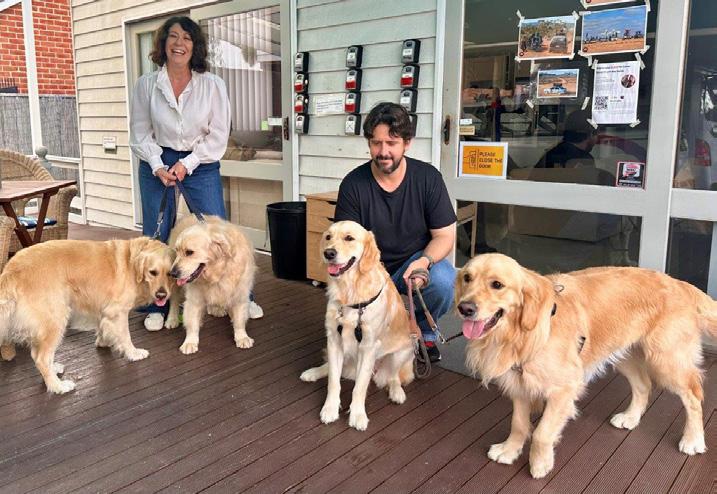
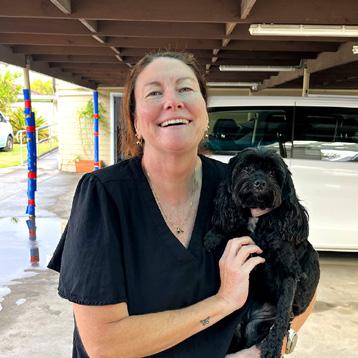
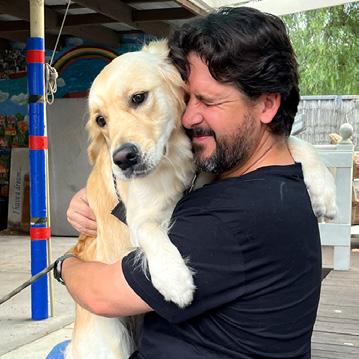
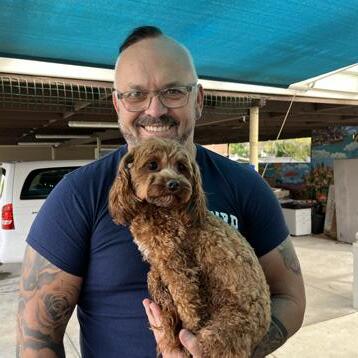
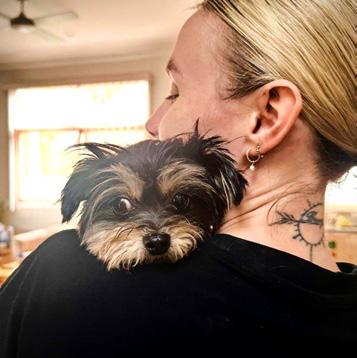
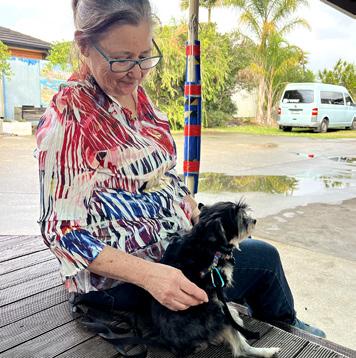
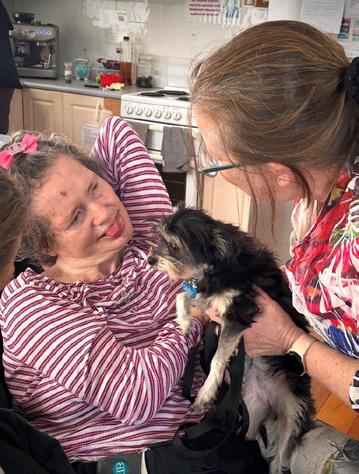
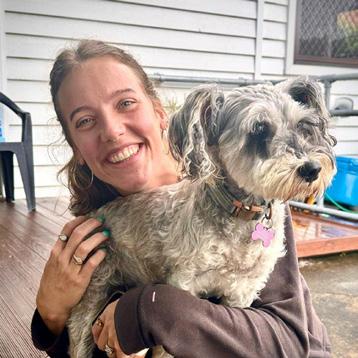
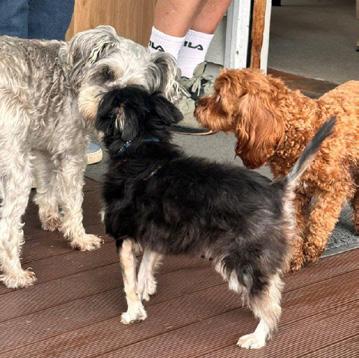
Staff doggie day
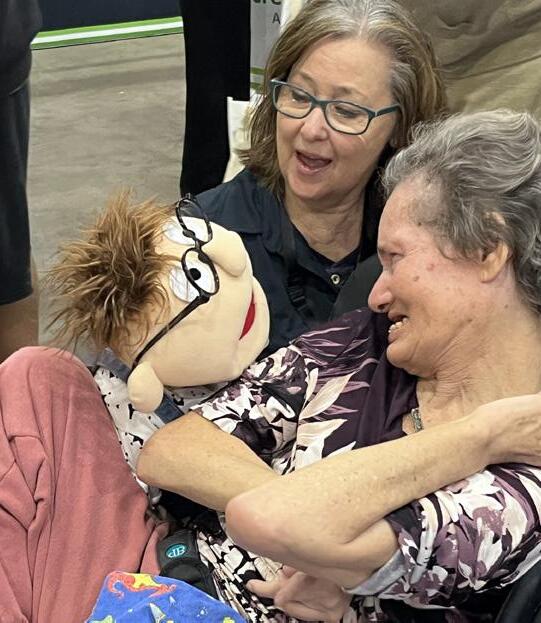
You’ve heard the saying “every dog has it’s day”. Well at Headstart that day happens once a year and gives our dedicated team a moment to share their fur babies with one another. This time we loved having consumers Faye and Mary join in the fun.
From wagging tails to lots of pats and cuddles, the dogs brought smiles, laughter, and a calm happy vibe to everyone.
“Dogs are so relaxing to be around,” says Mary.
We’d love to see your pet photos (it doesn’t have to be a dog!) Send Andy an email to comms@headstart-abi.com.au and we’ll feature it in our next NewsLink!
Sue with Munchkin
Faye having fun
Services Team Lead Lynette with Willow Care Coordinator Dave with another Willow Rec Coordinator Aleisha with Ziggy
CSW Christina with Lennie and Arlo, L&D Lead Sean with Stella and Ralph
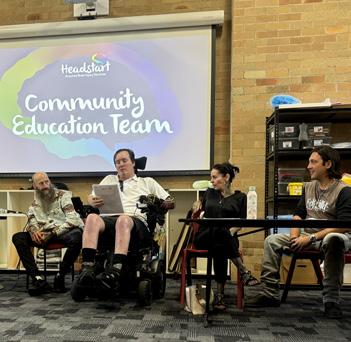
Community Education Team news
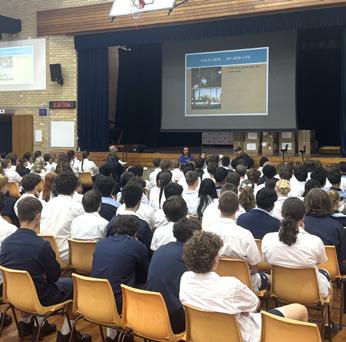
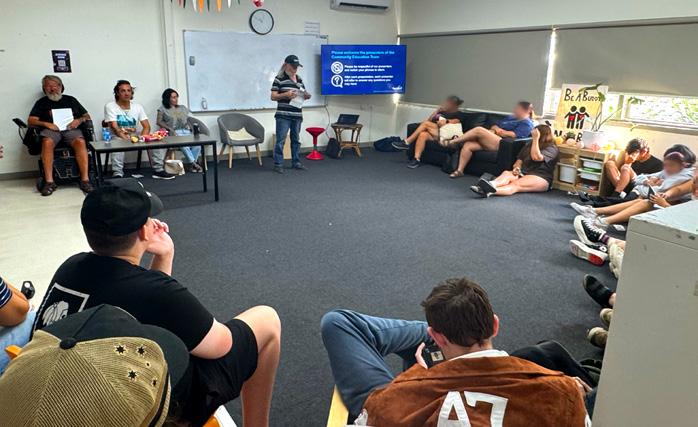
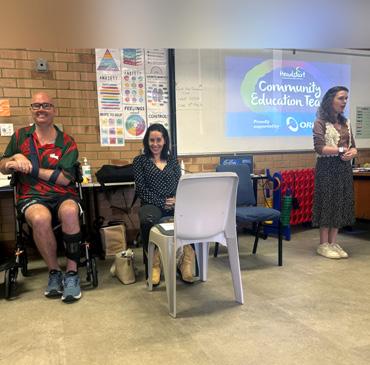
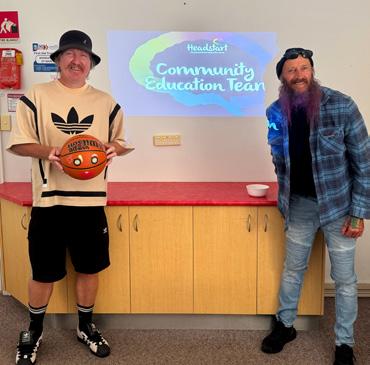
CET has been keeping busy throughout March – June. We have had another 12 presentations within the last few months, with some wonderful feedback from audience members. We have a few new members in the pipeline and have also recently updated some of our existing member’s speeches/ presentations.
If anyone is interested in joining the team please feel free to reach out!
But for now, I will let some of our feedback quotes give you the context of how much impact our team makes.
- Heather Burrows
CET Coordinator
“Powerful and impactful. The presenters were wonderful. Real-life stories told with humour and heart. A hard subject presented in an accessible, insightful, and enjoyable way.”
“It was inspiring and so great to hear from people who have acquired brain injuries and the vast differences with their journeys. Everyone was so open to sharing which was lovely. There were also lots of laughs.”
– JHH School
“It was so so inspiring and heart felt- this presentation was really really touching, I felt really moved. The laughs were awesome also!”
– Tafe NSW
“Insightful and impacting presentation hearing these experiences from people who have been impacted by a brain acquired injury.”
– Reach for Training
We provide training, support and an encouraging team environment. Potential sponsors also welcome to please get in touch!
To find out more call Heather on (02)
or email: cet@headstart-abi.com.au
Merewether High School
Alesco College, Charlestown
Alesco College, Abermain
Tasty teamwork
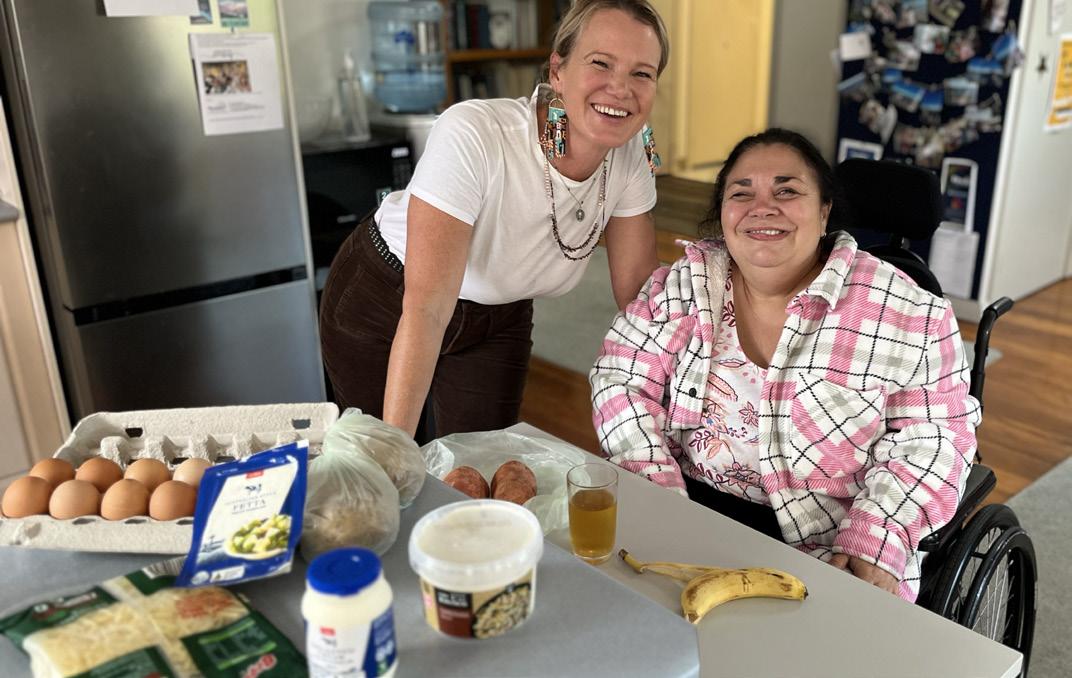
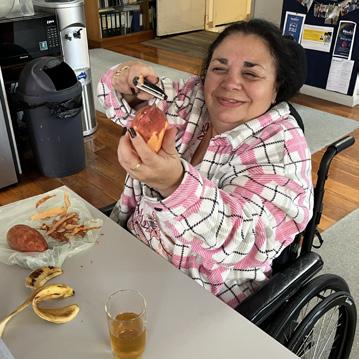
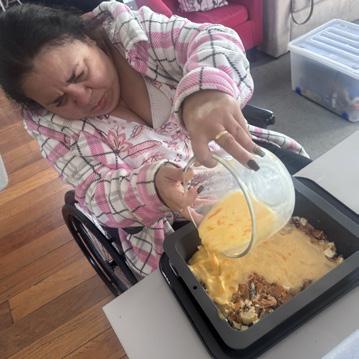
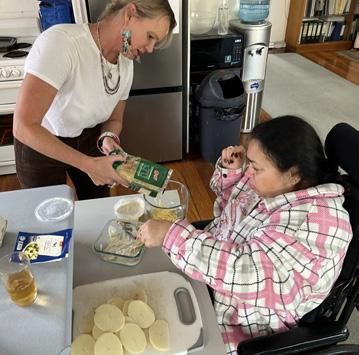
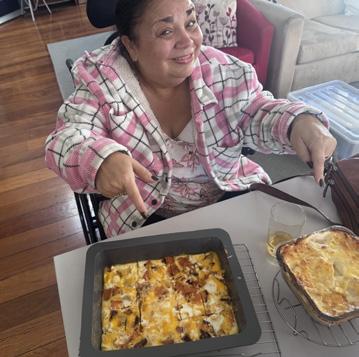
Two people regularly cooking up a storm at Headstart HQ are Celia and CSW Melinda.
As part of her ongoing support, Celia has been actively involved in developing meal plans that reflect her cultural back ground, personal preferences, and nutritional needs. Recognising the important role that food plays in culture, identity, and wellbeing, Celia has worked closely with her support worker, Melinda, to create meal options that are both meaningful and practical. Melinda and Celia have explored culturally relevant recipes, identify preferred ingredients, and incorporate traditional foods into her weekly meal planning. This process has encouraged greater independence in meal preparation while ensur-ing that meals remain familiar, enjoyable, and aligned with Celia's personal values and traditions.
By focusing on culturally appropriate food choices, the meal planning process has strengthened Celia's connection to her culture, increased her engagement with healthy eating, and promoted positive wellbeing outcomes. The collaborative approach between Celia and Melinda demonstrates the value of person-centred support that respects individual identity, choice, and cultural diversity.
This ongoing work continues to support Celia in achieving her goals of greater independence, healthier eating habits, and increased confidence in making food choices. Through regular meal planning and the inclusion of culturally significant foods, Celia has strengthened her connection to her cultural identity, enjoyed greater participation in preparing meals, and experienced improvements in her overall wellbeing and sense of belonging.
Just one of the meals Celia and Mel have made is a delicous variation on sweet potato and Greek feta frittata. A wonderful way to celebrate Celia’s Greek cultural heritage!
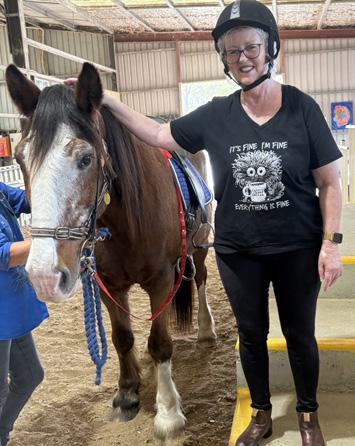
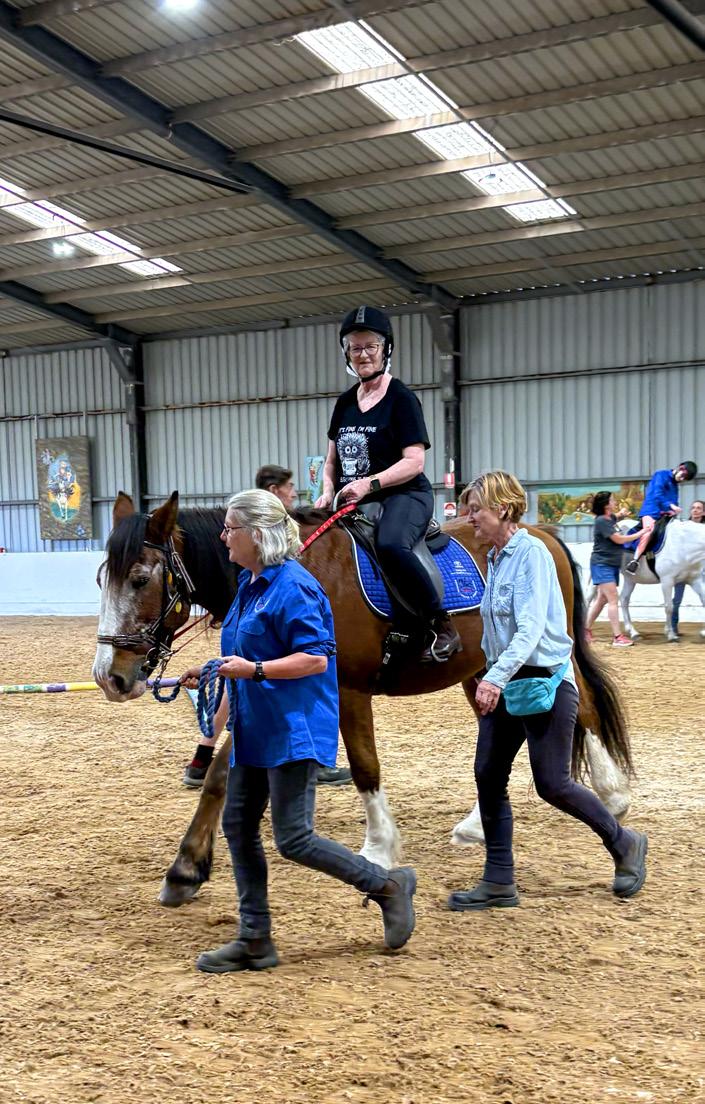
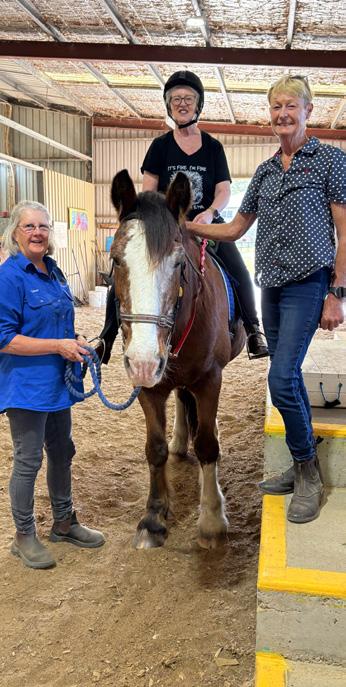
Stroke survivor Sharon has been ‘back on the horse’ at Riding for the Disabled since October last year.
“I hadn’t ridden a horse in 45 years and it became a bucket list thing for me,” says Sharon.
I grew up with horses in New Lambton. My family owned three horses, and my father shoed them for me. He was a farm boy. Then I got married and didn’t ride for a long time.
I was hoping muscle memory came back. Thankfully it has. It’s helped me straighten up a lot, and I’m stronger than I look which has surprised me.
Riding high
But I didn’t think I’d have forgotten as many things about riding and I have to admit that it’s pulled me back into line. You don’t think you’re as clever as you thought you once were. I really thought I would be able to get on the horse and just ride.
I’m going to RDA every week. The staff and volunteers are amazing. All such nice people, and I’m probably one of the oldest riding - let’s be realistic. You have three people holding you at once, just in case. The lady that runs all the riding lessons out there is an occupational therapist. A lot of physios seem to be working there as volunteers and it appears that they’re getting a lot out of it too.
They actually let me trot on the horse the other day. Because I’m one of the biggest people they’ve got me a draught horse. (A work horse, cart horse or large horse bred to pull heavy loads). He’s a lovely horse, ready to have a go at anything. His name is Schooner and apparently his previously owner used ride him to the pub. You can’t get busted for drink riding can you?
Since riding again I’ve got more movement in my arm and it’s strengthening my back. I can even unsaddle the horse if I want.
Some of the Sakura staff came out one day to have a look, and they were horrified at the size of the horses. Some of them are ex race horses and pretty big!
Initially I had to build up strength. Before going riding for the first time again I had to sit on a 44 gallon drum for a week to help stretch ligaments that you were going to use. The drum helps to get people loosened up before you can get on the horse. In fact blokes have it harder than the women.
I have a great time and put in so much effort during the one hour riding lesson that I’m usually asleep in the car before I hit Raymond Terrace on the way back. I’ll keep on riding as long as I’ve got funding. I’ll be there! Even if I’ve got to go back to work to keep it up, I would.
Another thing that’s really good is they do a lot of work with autistic children. The things I see and the difference in their behaviours each week is amazing! - Sharon
“Since her stroke in 2021, Sharon has shown remarkable determination in her rehabilitation journey. I have been seeing Sharon for physiotherapy for the last 2 years and a key and much-loved part of her progress has been returning to horse riding, a passion she enjoyed when she was younger and prior to her stroke. Through the Riding for the Disabled program, Sharon is not only reconnecting with an activity she loves, but she is also gaining significant therapeutic benefits. Horse riding challenges her balance, strengthens her core and leg muscles and improves her coordination, all of which are essential for reducing her risk of falls and supporting her mobility. The activity also challenges Sharon to use both sides of her body, directly addressing her left-sided weakness in a motivating and practical way.
Importantly, horse riding gives Sharon the chance to participate in the community and enjoy a meaningful, familiar pastime. It’s a highlight of her week and a powerful reminder of what can be achieved in the midst of adversity.
I am so proud to support Sharon as she continues to make progress, both in the clinic and back in the saddle, where she belongs!”
Tracy Taljaard, Physiotherapist
Sakura Allied Health
Riding for the disabled
Raymond Terrace & Lower Hunter
RDA provide an opportunity for people with disabilities to use horse related activities for recreational and therapeutic purposes. As stated on RAD’s website, horses provide a unique stimulus for these purposes.
Horse riders gain the following benefits:
• Physical benefits including balance, muscle strength and co-ordination.
• Psychological benefits including self-confidence, a sense of well-being and patience.
• Social benefits including new friendships, a respect and love for animals and enjoyment.
• Educational benefits including reading/writing improvement, sequencing and planning eye/hand co-ordination.
The aim of RAD’s programs is to develop in a rider’s physical and social skills through the enjoyment of horses. www.rdaraymondterrace.org.au
Support group for carers of people with an ABI: an invitation
An informal — but long-standing —support group that has been meeting locally for more than 37 years welcomes anyone connected with Headstart as well as new attendees.
Whether you’re a carer, family member, or friend of a person with an acquired brain injury, you’ll find a friendly, open space to share experiences and support one another.
Where: Central Leagues Club (8 Bula Street, Charlestown)
When: First Tuesday of each month, 11:30am
Who: Anyone is welcome to come for a chat, buy refreshments or lunch, and stay as long as they wish.
Kim shares: “Carers need support and a time to share knowledge, which has really helped me in caring for my husband. Having someone in the same shoes as you is incredibly valuable. We want to see the group continue to support others.”
If you have any questions, please contact the Headstart office on 4965 4420 and we’ll connect you with one of the group leaders.
Come along and connect with people who understand the challenges and rewards of caring for someone with an acquired brain injury. Privacy is always respected—no one is ever expected to share more than they choose to.
Don’t do it alone. Connect with others, share, learn and grow
Anger after brain injury
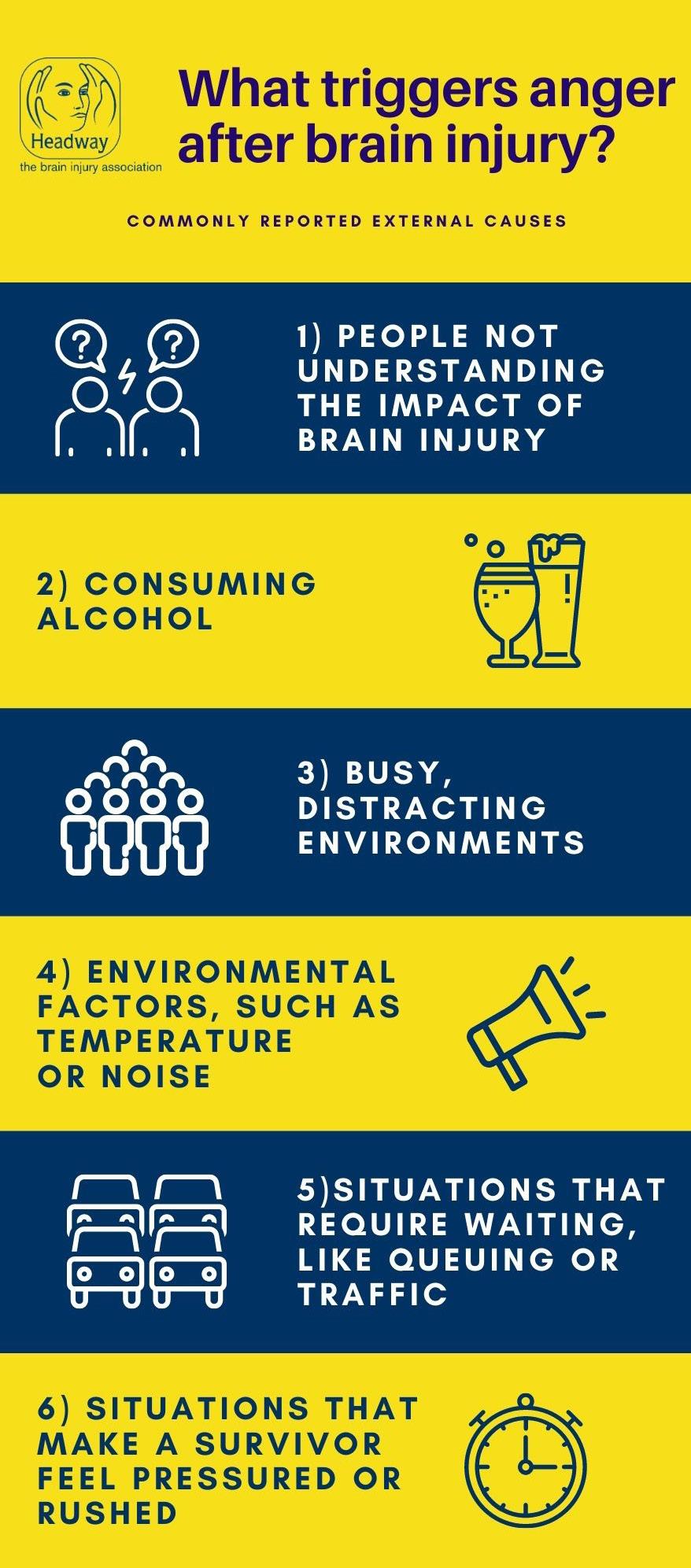
What triggers anger after brain injury?
In order to manage anger, it is important to be able to identify what is causing it. Difficulties with managing anger are a common effect of brain injury. In order to manage anger, it is important to be able to identify what is causing it. In some instances, there is an external cause or trigger, and removing this can help to reduce or remove the survivor’s anger. Headway UK asked their online community what their greatest triggers for frustration and anger were after brain injury. Here, they share some of the top triggers reported by brain injury survivors as well as offering a few tips on how to cope with them.
Top tips for coping with triggers Discuss
Discuss your triggers with family, friends and colleagues so that they are also aware of the situations in which you may start to feel angry.
Withdraw
Remove yourself from the situation that is causing you to feel angry, for instance leaving the room or ending a conversation. If you are with someone, explain that you are leaving because you need time to calm down and will return when you feel better.
Modify your environment
Being uncomfortable with the environment can cause irritation, which can gradually build up to anger. Examples include feeling too hot or too cold, loud noises, bright lights, being in a crowded place or being stuck in traffic. If possible, try to modify the environment to help with calming yourself down.
Get enough sleep
Try to have a regular sleep routine so that are getting enough sleep every night. Being tired can make people feel irritable, which can turn into anger if you get too tired through the day.
Manage alcohol intake
Drinking alcohol after brain injury is discouraged because it can affect a survivor more than it did before their injury. They may be more likely to get into fights or feel angry at the impact of their injury under the influence of alcohol. For further information and advice on managing alcohol intake after brain injury, download the factsheet Alcohol after brain injury below.
Avoid information overload
Some people find that their anger can be triggered by things they read on the news or on social media. Limit the amount of time you spend online or watching the news and try to be selective about what information you view. Try to avoid getting into arguments online as they may cause unnecessary frustration.
Source: Headway - The Brain Injury Association, UK
For more information on Living with brain injury visit Brain Injury And Me: www.headway.org.uk/about-braininjury/individuals/brain-injury-and-me/
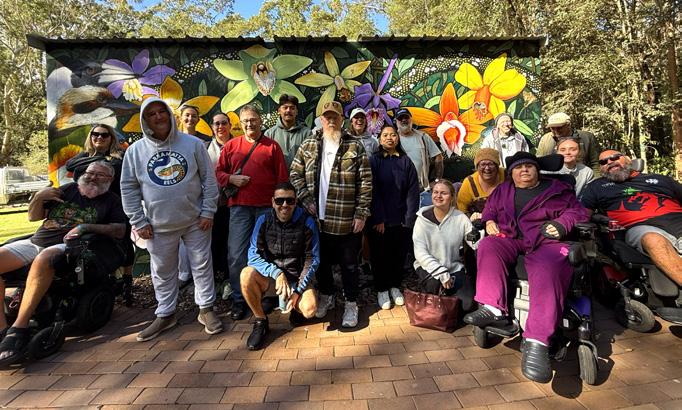
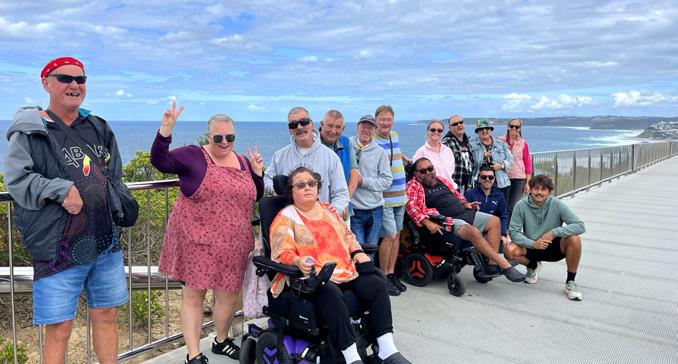
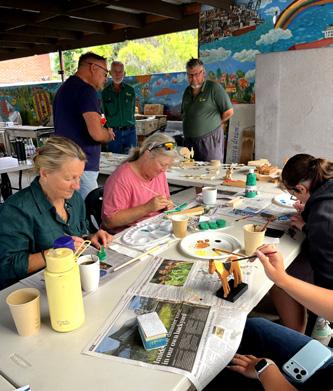
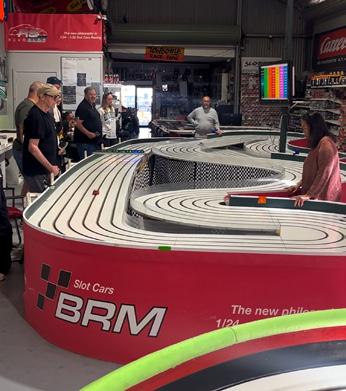
Rec group adventures
Get in touch if you’re interested in Rec.
“I find the history really interesting.” - Gary.
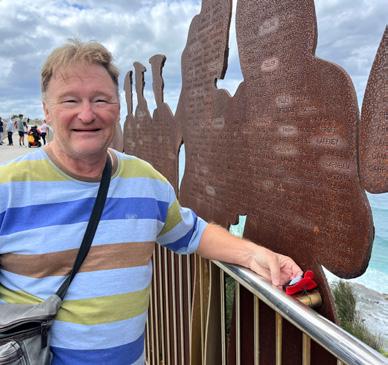
“I like reading all the plaque names.” - Phil (below)
Eleebana walking track
Dobell workshop at Lake Mac Art Museum
Hunter Botanical Gardens
Strezleicki Lookout
Woodwork crafts with Men’s Shed Slot car racing at Lemon Tree Passage
Phil at Anzac Memorial Walk
Horsing around
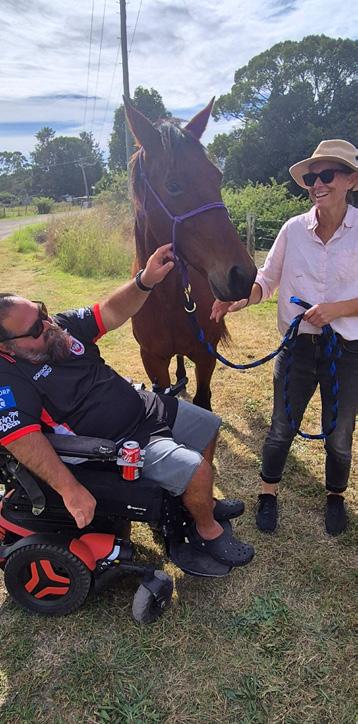
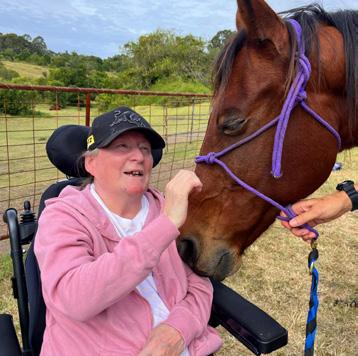
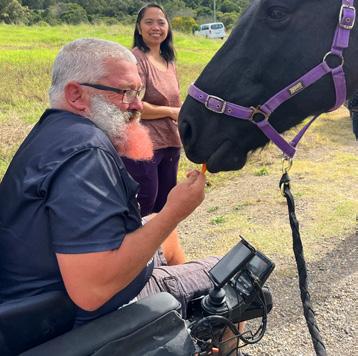
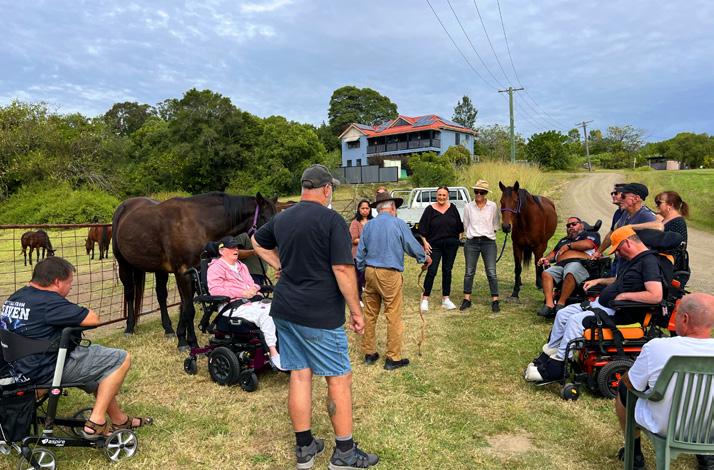
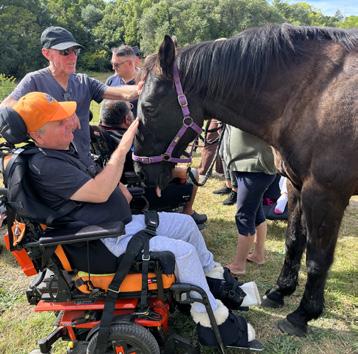
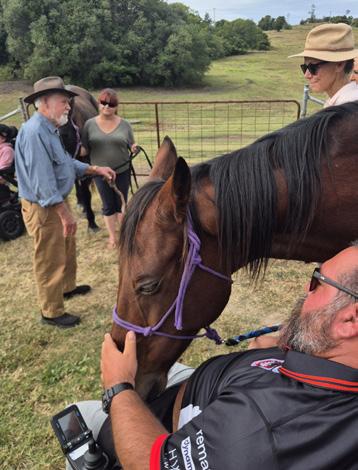
What a wonderfully wholesome day down at Minmi with Deb’s beautiful horses!
We spent time patting, brushing, and feeding them — such a lovely experience.
We even had a special visit from Bob Skelton, the Minmi Magster, who treated us to some of his bush poetry — making the day even more memorable. Read more about Bob on pg 22-23.
A truly special day all around - thank you so much, Deb!
“The horses are gorgeous!” – Wayne
“I loved it!” – Wendy
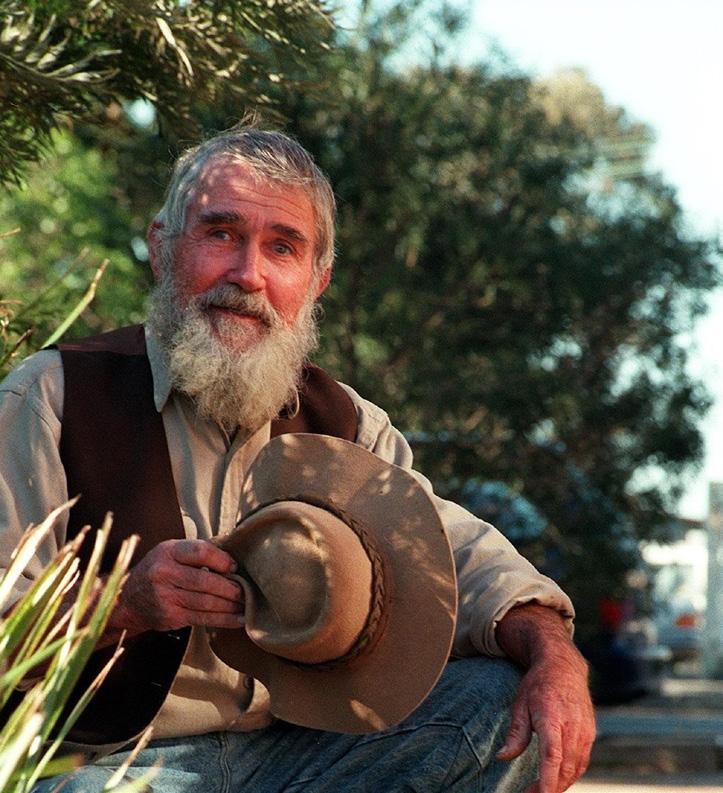
Special guest Hunter bush poet Bob Skelton, aka the Minmi Magster
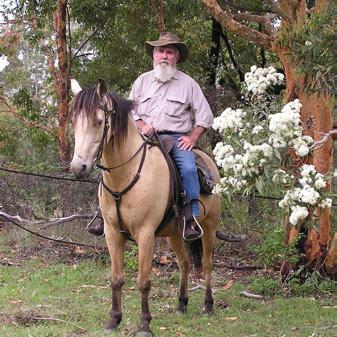
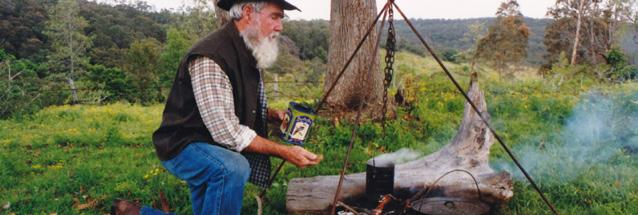
87 year old Bob Skelton is a renowned Hunter bush poet and international award winner, known as the ‘Minmi Magster.’
Author of 7 books of poems and yarns, as well as numerous albums and CD’s, Bob is inspired by Henry Lawson, Banjo Patterson and Will Ogilvie to name a few.
The Hunter storyteller paid a visit to Headstart’s Rec Group recently, where many of us discovered a remarkable man who we want to acknowledge.
I’ve lived in Minmi for 60 odd years on a farm property on the old school land. I used to have cattle but now I’ve got horses. I’ve always had horses, and I love horseriding.
I call myself an Australian and international award-winning poet and there’s quite a story relating to that so I always say “the power of poetry”.
I once wrote a poem on President Clinton which led to me being invited to tour the USA doing poetry.
In America, they introduced me to what they call cowboy poets, which is similar bush poets, but that’s what they call them. I ended up in a big national cowboy poetry competition up in Utah, which wasn’t originally my intention. They said I should go in the competition, and I had to pay a fee but I won myself $1,000 for my efforts! Besides the fat cheque, but the main thing I got was pride of achievement, and that’s something money can’t buy.
I couldn’t believe I had won as the compere had said at the start, “Folks, this is not a national poetry comp this year but an international competition as we have poets from Canada, Mexico and Australia.”
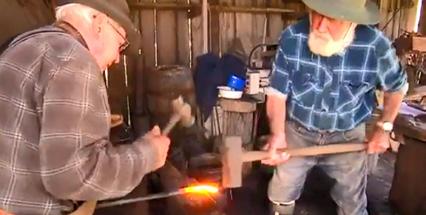
Magster is an abbreviation of magniloquent, which describes someone who probably talks too bloody much! I’ve been called that ever since I was a young kid by my Dad. He had a blacksmiths shop in the old days in Waratah. He always used to say my brother was the best on the tools and I was the best magster.
Fellas had come down from the country to get jobs at the BHP. When they retired the blacksmith shop was like a magnet to them. They used to all congregate around the blacksmith shop and a lot of had yarns and stories, and that's how I actually got into the poetry.
So I started entertaining in the kitchen at about nine or ten year old. I’d recite Henry Lawson and Benjamin Patterson, I knew them off by heart.
I got into the building trade which is where I spent most of my working life. I was awarded the Golden Trowel by Rockcote in New Lambton for 50 years service. I remember once reciting poetry to the engineers at BHP’s office while working as a contractor for them!
They put me on a bus with the other winners and drivers around parts of the USA for a few days and I got an opportunity to shake hands with Clint Eastwood. We went to some big venues to do the poems. I enjoyed that!
It was great to join Headstarts Rec group. One of the ladies is involved in that, Deb, has a horse down there in the paddock, and she rang me up to invite me down and talk to her. From there we went down and had a meal at the Minmi pub.
It was a lovely pleasant day and I shared a few poems. One was “I think I'll go down to the pub today”.
I think I'll go down to the pub today The old pub in Minmi town. There I could yarn with the locals or anybody else that’s around… It goes on.
Thank you. It’s always a pleasure.
- Bob.
On pg 23 are the poems that won Bob first place in the 2012 National Cowboy Poetry Performance competition in the USA >
On the corner of Smart and Alfred Striker the faithful old grey
‘Oh the years have flown the proverbial coop Places and times have altered Since when we worked in Dad’s blacksmith shop On the corner of Smart and Alfred.
Yet often when I reminisce My thoughts to those days go winging I fancy I see the old blacksmith shop And hear the anvil ringing.
I see the hand hewn hardwood posts
The old bellows that made the fire roar And the rusty roof that leaked and dripped
Shallow pools on the rough flagstone floor.
I see the glow of the fiery forge And feel its warmth and heat
As a shoe was formed, on the anvils horn
To the hammers rhythmic beat.
And there’s old Dad in a flannel shirt Tongs grasped in his hand
As he skilfully welds a calabash link By the ancient craft of fire and sand. And me with my sleeves rolled up My physical strength applying Swinging the sledge’ at lightning speed As white hot sparks went flying.
I now see the rough faces gathered ‘round Of those old men who are no more Who came to watch that fiery show And to share their yarns galore.
And oh’ what tales and stories they told From the Hunter to Timbuktu
And ya’ know most of the tellers always swore That those yarns they spun were true.
But alas those days have long since gone For progress has played its hand
Where the old shop once lived and breathed
Now rows of town houses stand.
And although designed, on architectural lines
To suite a suburban block
‘Tween you and me, wouldn’t ya’ sooner see
An old time blacksmith shop.
Yes the years have flown the proverbial coop
Places and times have altered
Yet in my dreams, nothing has changed it seems On the corner of Smart and Alfred.
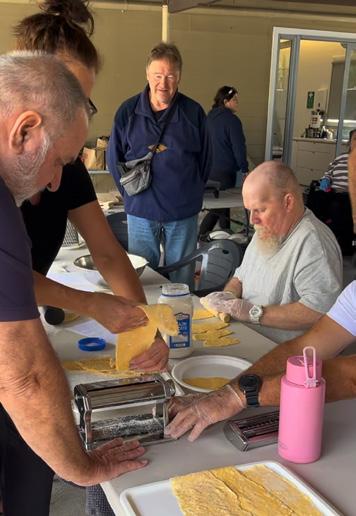
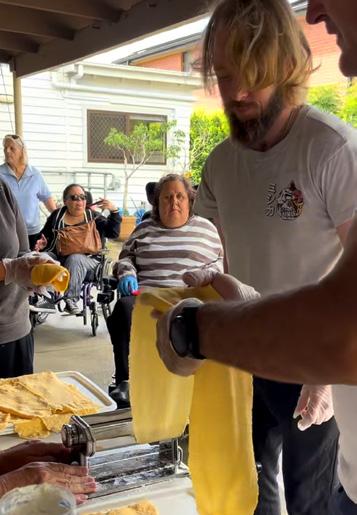
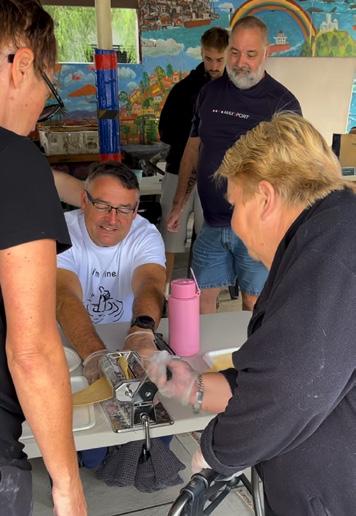
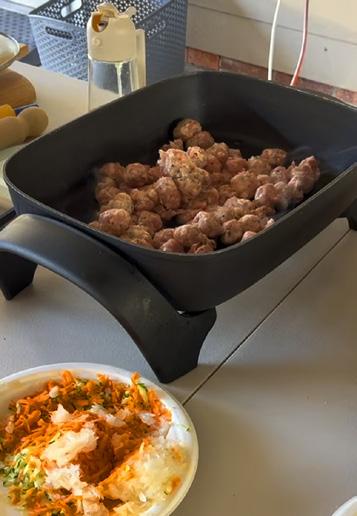
Dee-licious pasta and sauce with our very own chef and restauranteur (and CSW) Dee!
Italian spaghetti sauce with meatballs
Have a go at this easy Italian style pork and fennel meatballs in tomato sauce. Keep in the fridge or freeze in portions for whenever you want a quick, tasty and healthy dinner!
Ingredients
1 x Italian style pork sausages
50ml olive oil
½ x brown onion
½ teaspoon minced garlic
1 x carrot
1 x zucchini
1 x 400g tomato pasta sauce/ puree (Barilla or other brand)
Method
1. Squeeze filling from sausage skins to make small meatballs.
2. In a large frypan cook meatballs in olive oil until nicely coloured Remove from pan and set aside.
3. Add grated onion, carrot, zucchini and garlic to the frypan and cook until soft and golden.
4. Add cooked meatballs and pasta sauce to veg, simmer with lid on for 10min.
Add a little water if too dry.
“The pasta was tasty and I normally don’t eat or like vegetables.”
- Wayne
“It was surprisingly easy to make, I would try at home.”
- Romeo
“The class and Dee were brilliant, I really enjoyed it.”
- Phil
“The garlic bread was amazing, and the class was fun!”
- Olivia
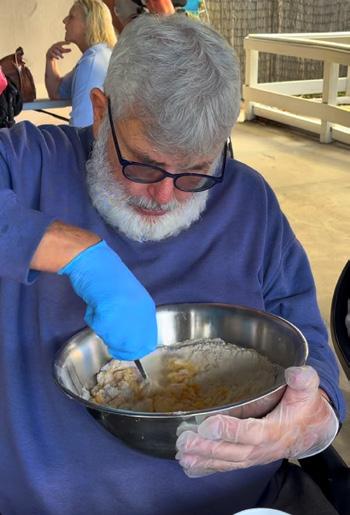
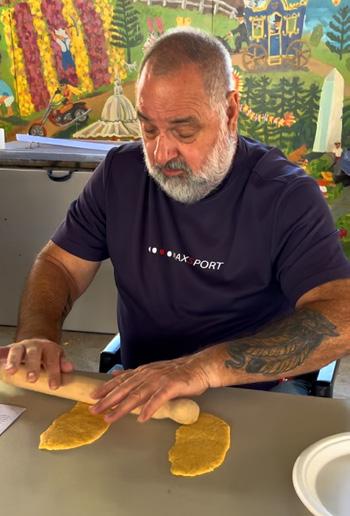
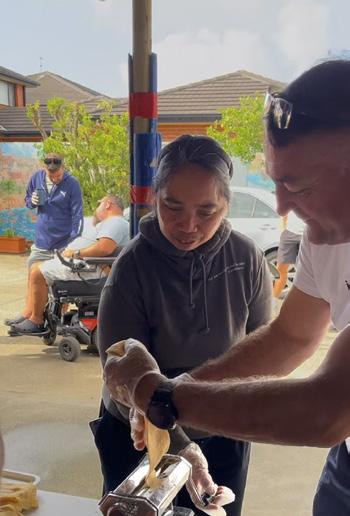
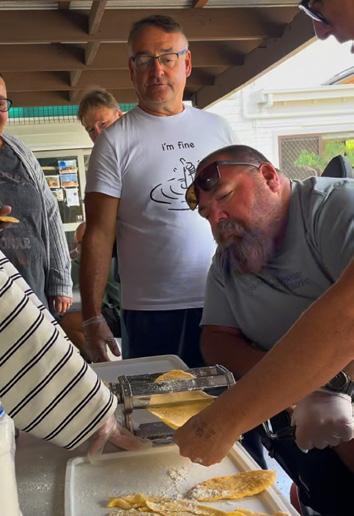
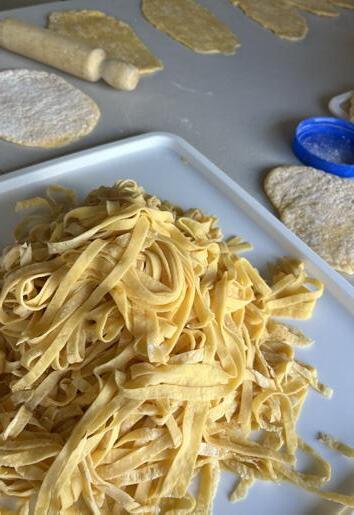
Our latest cooking class was all about making fresh fettuccine from scratch, and everyone got stuck into it. Rec attendees made their own dough, rolled it out, and took turns feeding it through the pasta machine before cutting it into fettuccine. It was a hands-on activity from start to finish, with everyone having a go.
We always try to keep our recipes simple, practical and accessible. Many of the tasks can be done independently or with just a little support, helping people build confidence in the kitchen and realise that cooking healthy meals doesn’t have to be difficult.
Alongside the pasta, we made some easy, nutritious sauces, including a pork and fennel meatball sauce. Participants helped prepare the meatballs, grate vegetables like zucchini, carrot and onion, and bring everything together with tomato puree. The focus is on meals that are healthy, tasty and easy to recreate at home.
While most people probably won’t make fresh pasta every week, the sauces are quick and simple enough for anyone to make and heat up in 5 minutes if they want to. It’s all about showing that healthy eating can be easy and enjoyable.
The cooking classes are also a great social activity. People can get involved as much or as little as they like, and everyone is welcome to come along, have a chat and enjoy the experience. One of the best parts is seeing people try foods they normally wouldn’t eat. Almost every class, someone discovers they actually enjoy a vegetable or ingredient they thought they didn’t like.
At the end of the day, it’s about good food, learning new skills, building confidence and having fun. And of course, making fresh pasta usually means making a bit of a mess—which we think is a sign of a great day in the kitchen! Judging by all the smiles, this one was definitely a success.
Fancy making your own pasta from scratch?
Marion’s Kitchen will guide you (PS. you’ll need a pasta machine):
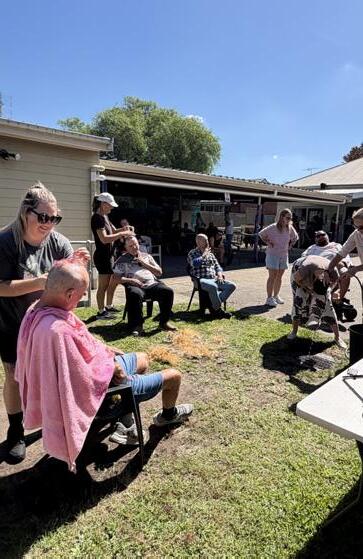
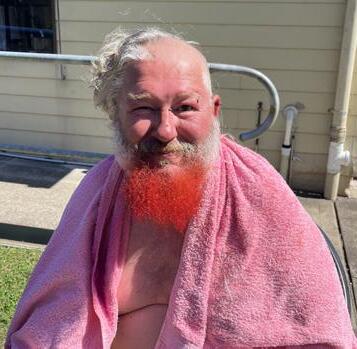
Greatest shave shenanigans
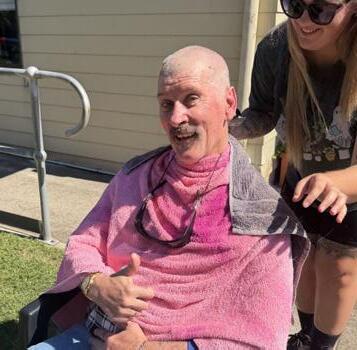
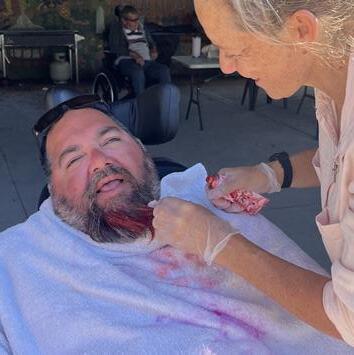
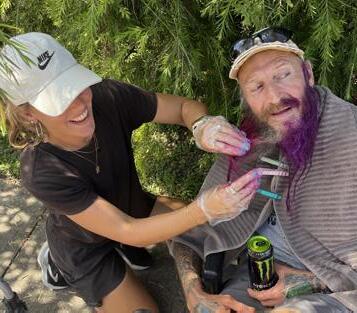
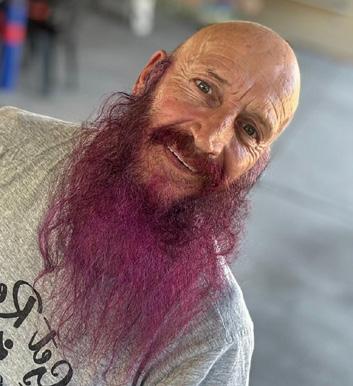
Colin’s idea to take on “The World’s Greatest Shave” turned into something pretty special, with so many from the Headstart community getting involved – consumers, CSWs and office staff all stepping up to shave it off, dye it bright… or both! Together, we raised $200 to fight cancer while having a lot of fun doing it.
“I’m
happy to do it for a good cause.” -Jason
“I really enjoyed today, and will be ready to do it again next year.” - Colin
Remembering Alison Dann Need help?
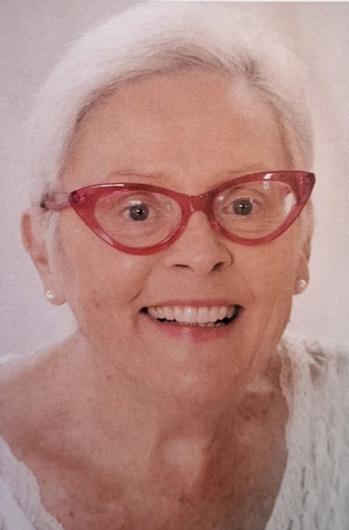
Alison was a beautiful woman, wife, mother and grandmother, but also so much more. Alison was a teacher who made a positive impact to her students over the years and also other teachers who she made lifelong friendships with.
Alison was very creative, had an eye for aesthetics and decorated her beautiful home in her signature white style. Her home was always immaculate, as was Alison in her own personal presentation.
Alison found so much joy spending time with her Daughter Tatum and Grandchildren and creating the perfect play room for them. Alison passed peacefully at home and will be missed by all who knew her. A bright light who shone through the dark times.
Ihad the privilege of being Alison’s CSW for three years, and during that time I came to know someone who moved through life with incredible determination, humour, and style. Everyone who met Alison was drawn to her honesty and quick wit. She had an effortless signature style and was never without a pair of brightly coloured glasses, perfectly matched to her outfit!
Although Alison’s diagnosis turned her life upside down, she faced every challenge with amazing resilience, working hard to remain as independent as possible. Alison had created a wonderful life with her husband, Neville. She was incredibly proud of her daughter, Tatum, and her grandchildren, Bronte and Hudson. It was an honour to know and support Alison, and I take comfort in imagining she is somewhere with a cake and coffee in hand, and a plan for infinite shopping!
- CSW Ruby
Alison was a joy to be around, and getting to know her has been an absolute privilege. She was incredibly caring and compassionate, always putting her family at the centre of everything she did. Alison always found a thoughtful way to make those around her feel loved, often with a coffee & cake in hand.
One of my fondest memories is supporting Alison in the lead-up to Christmas. Ruby and I would join her for shopping trips to Kmart for her grandchildren’s gifts. I loved helping her wrap the piles of gifts and becoming one of her “Christmas elves,” which brought her so much joy.
Another memory I will always cherish is our car journeys to Engage VR physio, where Alison would request Pitbull songs. Seeing her tap her feet and smile was always a highlight.
Alison was my very first shift at Headstart, and I feel incredibly fortunate that our paths crossed. She will be missed dearly and remembered with great fondness by all who had the pleasure of knowing her.
- CSW Olivia
Please call a crisis line if you need support. You are not alone and help is available.
Lifeline: 131 114
24 hour crisis support and suicide prevention services for people experiencing emotional distress. If life is in danger call 000.
Suicide Call Back Service: 1300 659 467
A counselling for anyone who is suicidal, caring for someone suicidal, or bereaved of suicide. For suicide prevention & mental health via telephone, online & video for anyone affected by suicidal thoughts, 24/7.
1800RESPECT (1800 737 732)
A 24-hour national sexual assault, family and domestic violence counselling line for anyone who has experienced, or is at risk of these.
Mental Health Line: 1800 011 511
The Mental Health Line is staffed by mental health professionals who can provide advice and referrals to local mental health services.
Beyond Blue: 1300 22 4636
An mental health and wellbeing support organisation providing support programs to address issues related to depression, suicide, anxiety disorders and other mental illnesses.
Mensline Australia: 1300 789 978
A free phone and online counselling service support for Australian men anywhere.
Kids Help Line: 1800 55 1800
Confidential 24/7 online and phone counselling service for young people (ages 5 to 25). Australia’s only free (incl. mobile).
Elder Abuse Helpline: 1300 651 192
Free information and support services for people who experience or witness the abuse of an older person. Operating hours vary.
Financial Counselling Australia: 1800 007 007
Access free resources and advice from a private financial counsellor. Call to speak to someone in your State.
National Association for Loss and Grief(NALAG): 6882 9222
A free, confidential, grief and loss support services across NSW with telephone support and, in some areas face-to-face counselling. 13 Yarn: 13 92 76
The first national crisis support line for Indigenous Australians who are feeling overwhelmed or having difficulty coping. They offer a confidential one-on-one yarning opportunity with a Lifeline-trained Aboriginal & Torres Strait Islander Crisis Supporter.
Recognising staff “Values in Action”
Nominate a staff member for outstanding achievement!
We continue to recognise the work of those who have gone above and beyond in any capacity to support our consumers in their daily lives. Please help us thank and encourage our workers!
To make a nomination please contact us or email: info@ headstart-abi.com.au
Our core values and beliefs
People-first Adaptable Sensitive to need Bold and innovative Ethics above all Fair and open
2nd and 3rd prize: Signed copy of Craig’s book “Walk Alone”
Win a signed and framed Craig Johnston Liverpool jersey!
Australian soccer legend Craig Johnston is a long-time Headstart Ambassador. Every ticket sold helps Headstart’s Community Education Team raise awareness and prevent brain injury in our community.
Raffle tickets from $5
Raffle link: QR code or www.headstart-abi.com.au/raffle
Making a Complaint
If you would like to continue receiving NewsLink, become a member by contacting us on 4965 4420 for a membership application.
Our membership year starts from 1 July. Your contributions to the newsletter are welcomed, and we will keep you up to date on all the issues, activities and developments in our services.
To sign up for a free digital version of NewsLink go to our website: www.headstart-abi.com.au
Use our online feedback and complaints form Scan QR code with your phone camera or visit https://forms.office.com/r/Kqd2L1MBhJ
You have the right to complain under the Community Services (Complaints, review and monitoring) Act 1993. If you have a complaint there are steps to take. At each step, every effort will be made to resolve your complaint before going to the next step.
Step 1. Talk with the person concerned
Step 2: Talk with Co-worker/staff member
Step 3: Talk with Director
Step 4: Talk with Chairperson
Step 5: Talk with Committee
Step 6: Talk with an outside service
Traditional Owners
At each step you have the right to have someone else present if you wish. This person is called an advocate and may be your friend, family member, staff member, paid advocate or someone else. If you wish Headstart can help you locate an independent advocate.
We recognise, respect and embrace the Aboriginal elders and people of this region as the traditional custodians and cultural knowledge holders of this land. We further acknowledge the cultural contributions of Aboriginal and Torres Strait Islanders with disability and reaffirm our vision of a world where every person is welcomed.
We welcome contributions from everyone: an article, letter, photograph, poetry, or art. We also welcome suggestions as to articles that we could write about for future issues - so please get on touch! We appreciate feedback on anything: the kind of stories, size of our typeface, layout and general appearance of our newsletter.
HAVE YOUR SAY on these, or any other issues by writing to us at:
Headstart ABI Services
95 Turnbull Street
HAMILTON NSW 2303 or email: comms@headstart-abi.com.au