Reimagining How a School Learns, Makes, and Leads Building for Possibility
Lasting Returns, Big Impact
The Human Side of Tax Code
A Living Legacy
The K-12 Student Art Collection
from Ricky Lapidus, Interim Head of School
Reimagining How a School Learns, Makes, and Leads Building an Ecosystem for Possibility
A MESSAGE FROM THE BOARD OF TRUSTEES CHAIR
At Head-Royce, our work begins and ends with students. It is in our mission: to develop students of character, intellect, and creativity.
Every day, across both campuses, we can find our students discovering who they are, what they value, and how they will contribute to the world around them. Guided by exceptional teachers and supported by a deeply engaged and generous community, their journeys are a testament to the lasting impact of a Head-Royce education.
Ensuring that impact continues for years to come is central to the work of the Board of Trustees. We remain focused on stewarding the school in ways that preserve those things that make Head-Royce special, while also preparing it for the future. Investments in the school’s faculty, programs, and facilities—including the South Campus expansion—reflect a shared commitment to ensuring that students continue to learn in environments that challenge and inspire them.
With that in mind, we look ahead with confidence, knowing that the greatest measure of the success of Head-Royce will always be the lives and contributions of the students who walk through its doors and out into the world.
With appreciation,
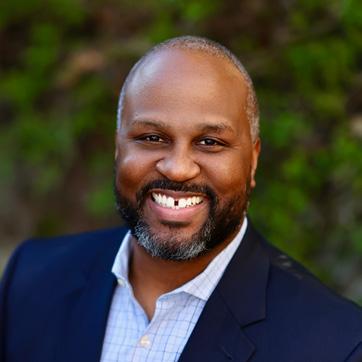
Brock A. Williams Chair, Board of Trustees
FROM OUR INTERIM HEAD OF SCHOOL
Head-Royce represents many things, all at once, and I have the privilege of embracing that complexity. As I write this, many of our students are planning to walk out of their final class as an act of civil disobedience in protest of ICE tactics. Our work as educators is to support students who develop a genuine concern for the world around them. It is profoundly not our job to tell them what they should care about or, more importantly, what they should believe.
I am proud of our Jayhawks every single day. Sometimes it’s in straightforward moments, like a kindergartener proudly empathizing with the monster in a story who doesn’t want to be called a monster: “I don’t want to be called things sometimes, and I have to tell people that.” Other times, it’s with gentle correction, recognizing that not all interpretations of literature make sense, given the context of the times. And sometimes it’s simply in the humor of the classroom, like the time I was subbing a class and heard a 9th grader plead not to be made into an “escape goat.”
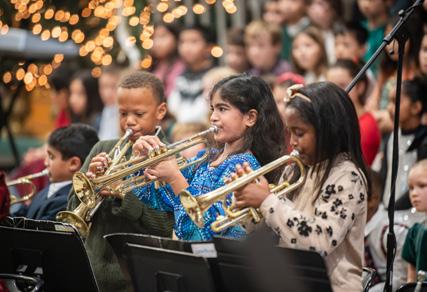
My job is to be proud of our students, even when they make mistakes or, rather, especially when they make mistakes. It’s easy to feel proud when they are winning championships or performing beautiful ensembles at the holiday concert. But kids are meant to be kids, whether they are five or eighteen, and our work is to keep guiding and educating them all the way through. And, as you hopefully will see throughout this magazine, Jayhawks are for life.
Sincerely,
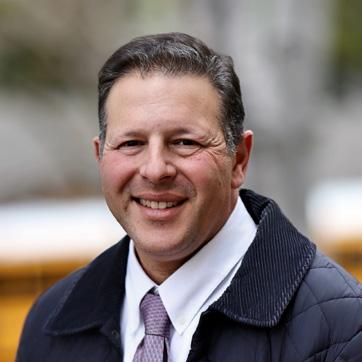
Ricky Lapidus Interim Head of School
P.S. About that protest, the one that was not supposed to be chaperoned because it was an act of civil disobedience…one of the signs said to “Fight Facism” (not fascism). We keep teaching, even when we’re off the clock.
Fallout Trips
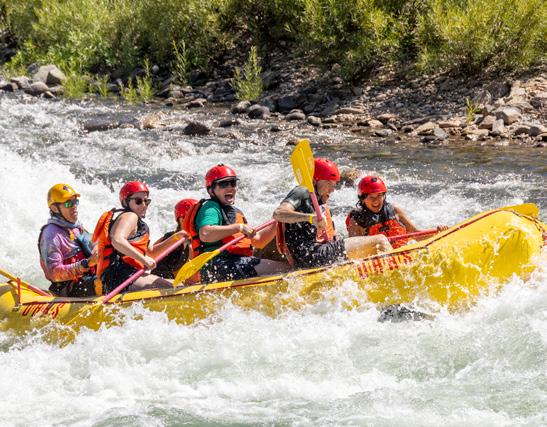
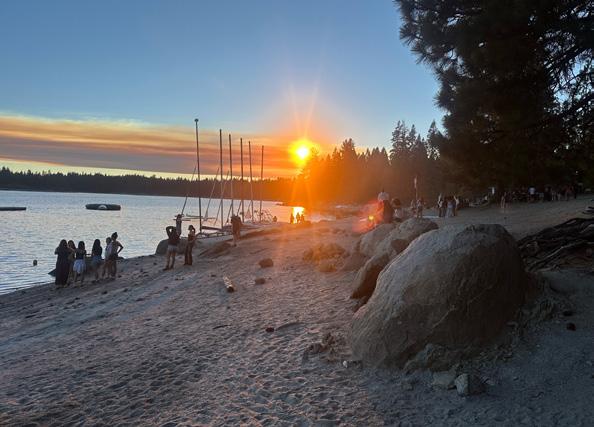
Fallout was a huge success! Upper School students and advisors enjoyed nature, outdoor activities, and meaningful bonding. From rafting adventures to fireside chats, these trips set the tone for a year filled with growth and new friendships.
Creating Paths
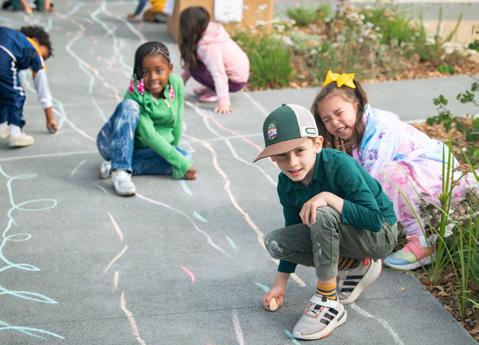
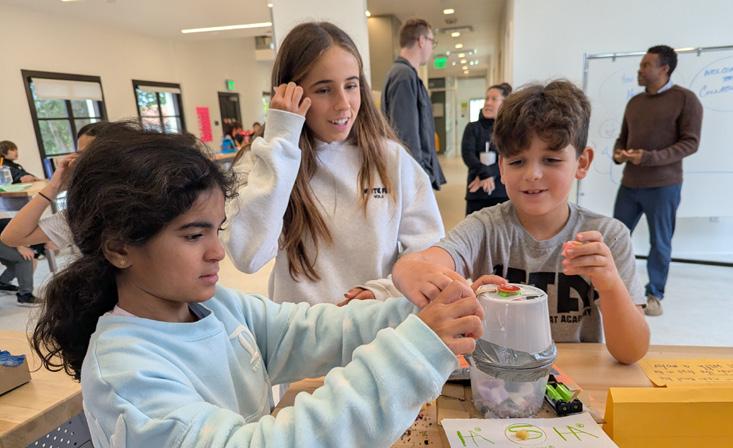
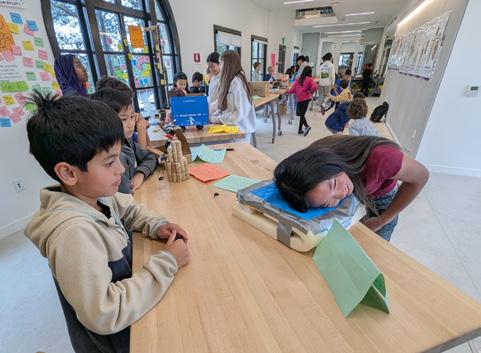
Ms. Njemanze’s kindergartners literally made their own path to the Collaboratory with colorful chalk! Led by David Clifford, Director of Design and Making, they created a welcoming entrance and engaged directly with our design lab through a creative activity.
YOUR IMPACT IN ACTION
Programs like Fallout exist because of Annual Fund support alone. Your generosity keeps these transformative experiences at the heart of the Head-Royce journey.
Welcome Back Celebration
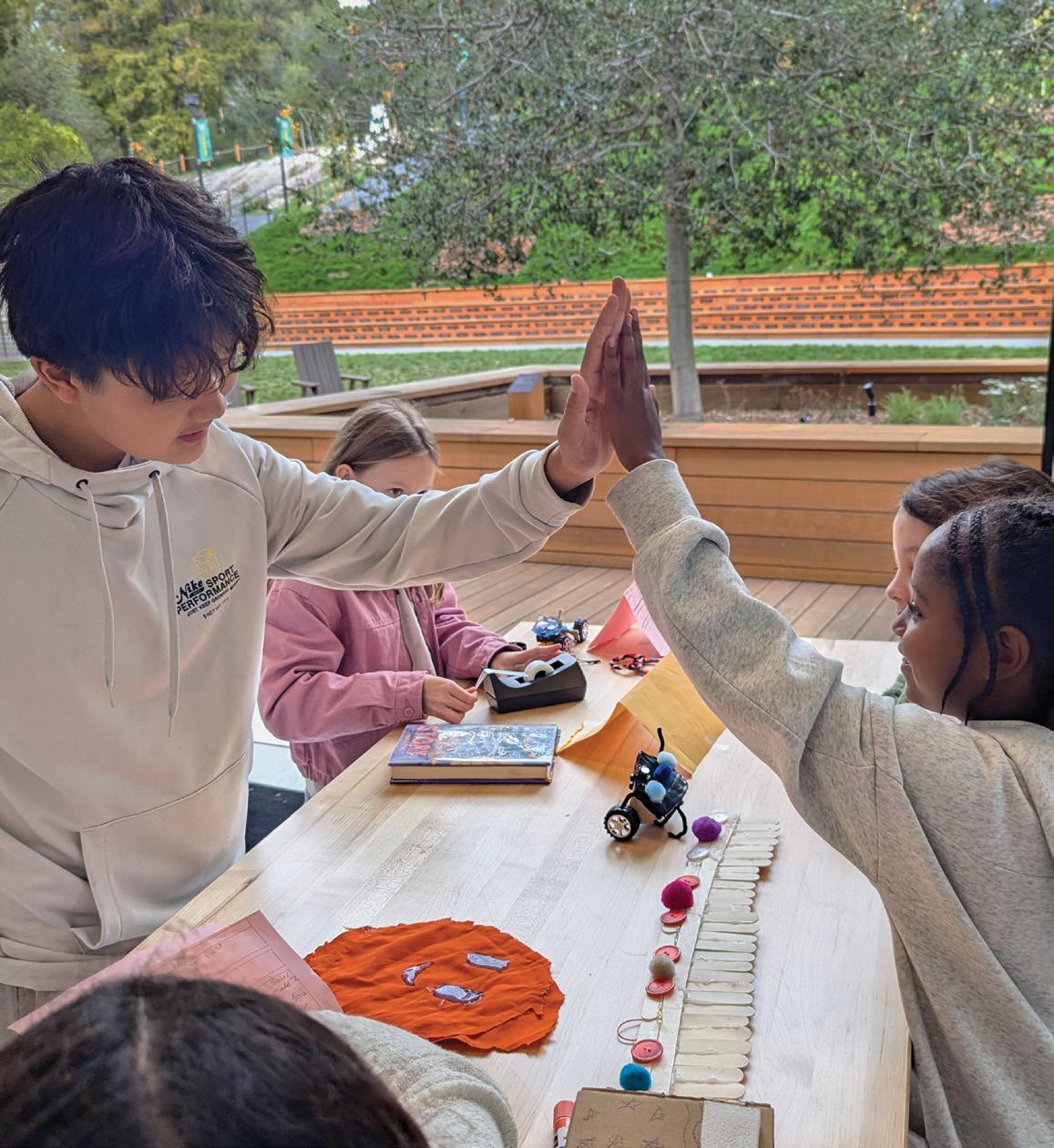
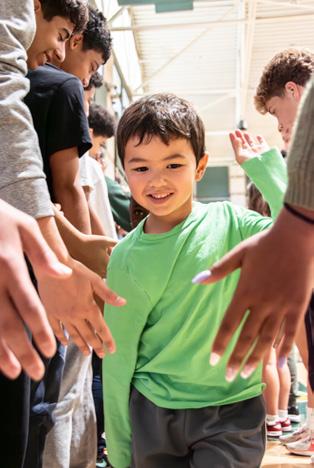
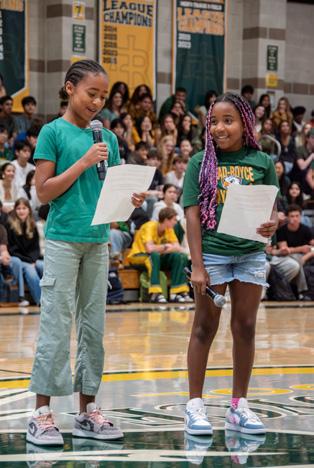
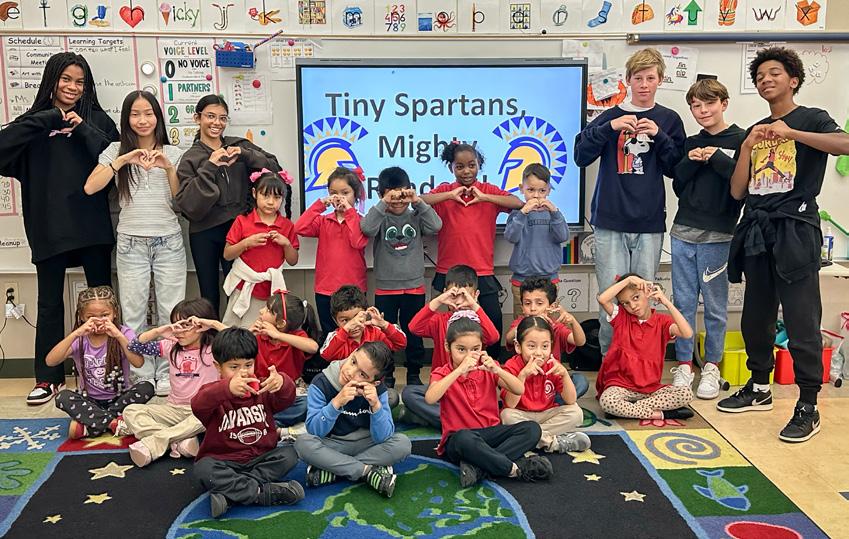
Jayhawk spirit soared at the K–12 Welcome Back Celebration, kicking off a school year full of joy! Students from every division embraced the theme, “Better Together.” As the event concluded, older students formed a tunnel, inviting younger students to exchange high-fives as they left with excitement for the year ahead.
South Campus Grand Opening
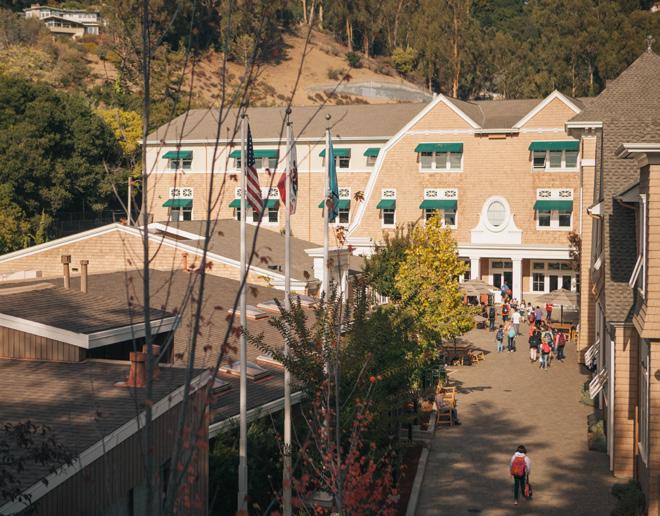
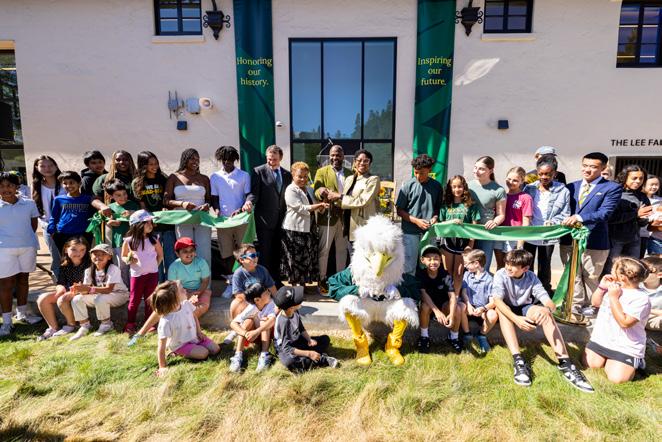
We celebrated the grand opening of our new South Campus, a space for students to imagine, learn, create, and thrive. Mayor Barbara Lee and Councilmember Zac Unger ’91 joined the community for the celebration.
Ruby Day Visit
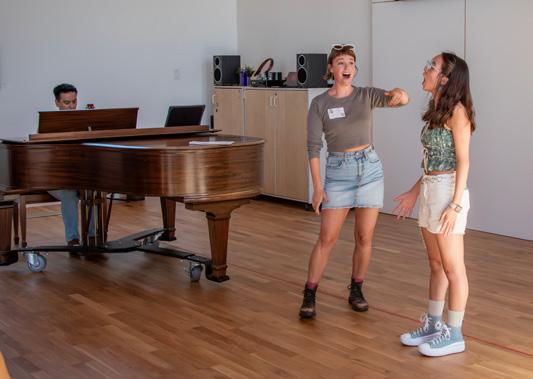
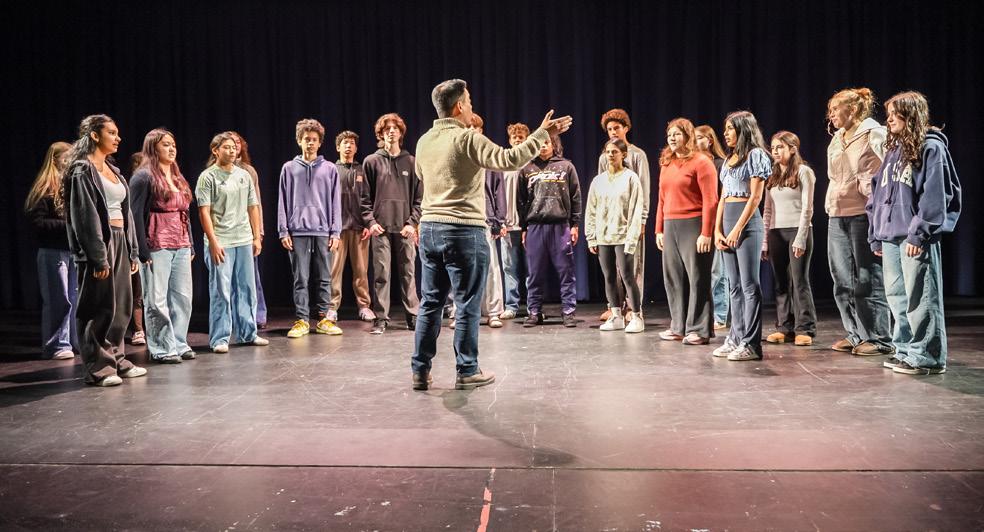
Bay Area actress and singer Ruby Day, known for Annie and Beach Blanket Babylon, guest-taught an Upper School class in the Hawks Nest with Choral Director Joe Lim. She shared industry insights, led vocal exercises, and offered new techniques for students to practice.
Learning in Full Color
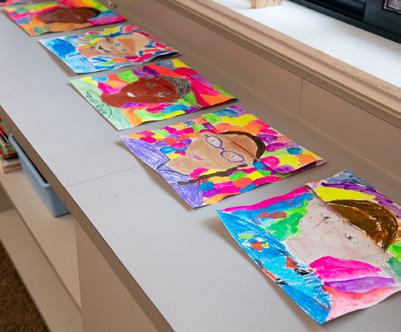
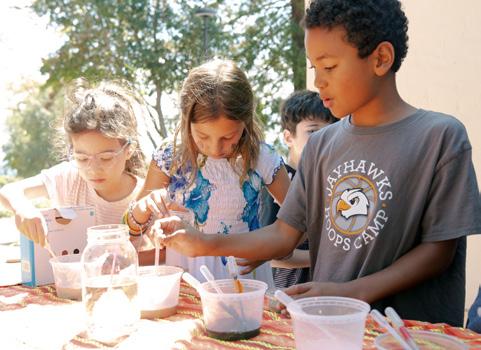
Second graders embarked on a journey of art and self-discovery, exploring skin tone, identity, and individuality through the hands-on Melanin Lab. In the Collaboratory they combined science and creativity, making self-portraits that reflect their values, dreams, and joy—each one as unique and radiant as the student behind it. Read more about this project in our feature section!
Head-Royce Has Pride!
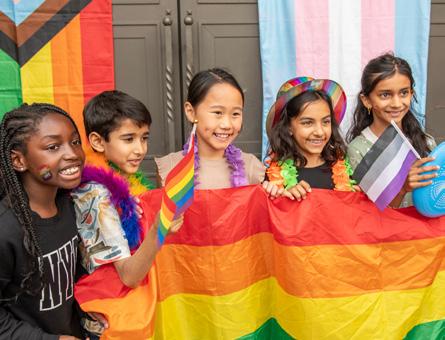
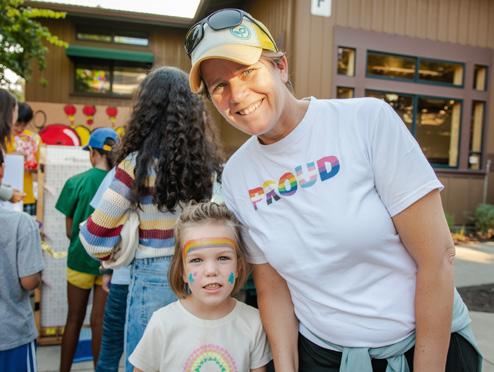
K–12 students connected with friends and shared joy at our on-campus Oakland Pride Lunch Celebration, enjoying music, snacks, curated reads, and buttonmaking that honored our diverse community.
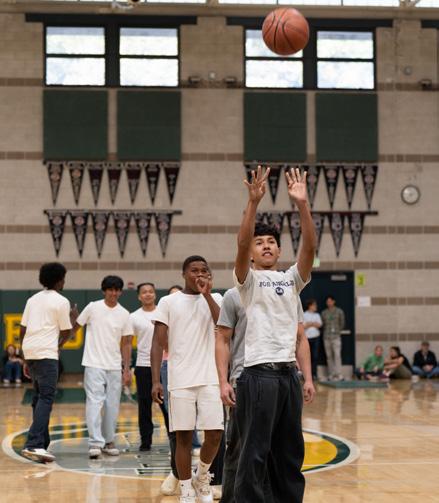
All-School Fair
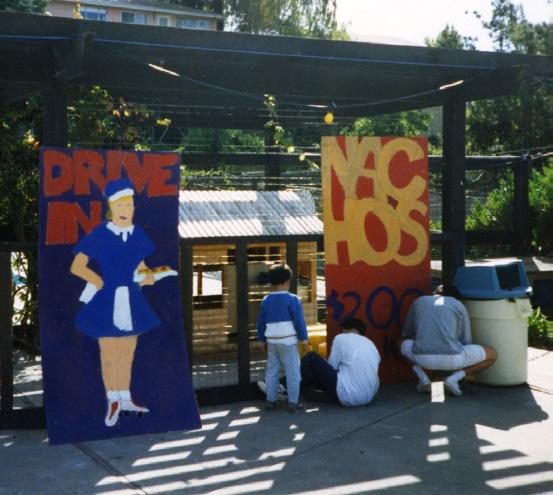
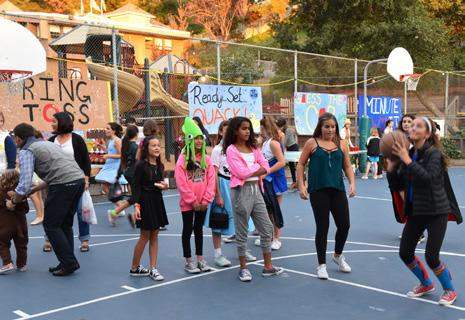
The All-School Fair, a beloved annual tradition, filled the campus with games, laughter, and community spirit! Upper School students led creative and entertaining booths— from face painting to slam-dunk shots—celebrating their interests while having fun together.
By joining in the traditions that shape student growth, like the All-School Fair, you help create moments of joy, connection, and belonging. Every game and toy won and every smile shared reflects a collective commitment that strengthens our students’ learning experience. YOUR IMPACT IN ACTION
Upper School students enjoyed an inspiring dance experience celebrating creativity and learning. Dance 3 and Honors Dance students saw Alonzo King LINES Ballet and met Mr. King, gaining a firsthand look at professional artistry.
Marin Headlands Institute Partnership
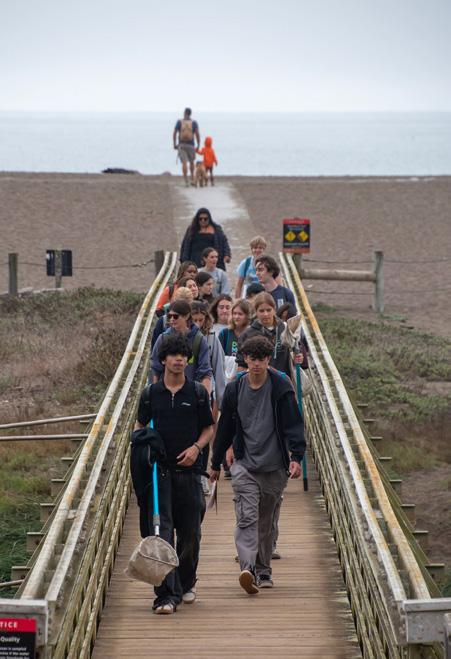
Mr. Vann’s Honors Environmental Science students partnered with the Marin Headlands Institute for two weeks for field research and data analysis. From collecting samples at Rodeo Lagoon to presenting findings to the community, they showcased curiosity, rigor, and creativity.
Inspired by Movement
Miguel Ordeñana Visit
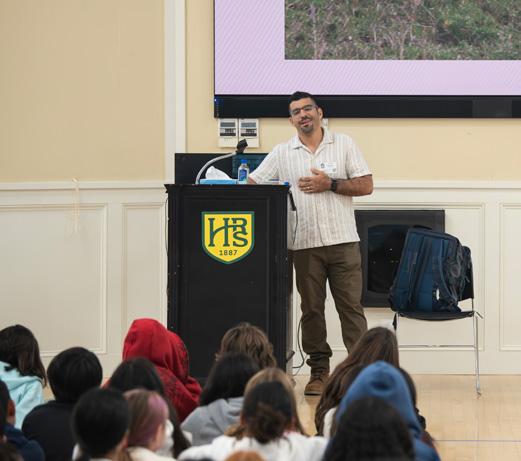
Wildlife biologist Miguel Ordeñana, who discovered the Griffith Park mountain lion “P-22,” visited our Lower and Middle School students to share the cougar’s survival story and the importance of protecting urban wildlife. He spoke about his childhood in Los Angeles, his global wildlife work, and recent research with Bay Area biologists studying San Francisco’s coyotes.
Latin Heritage Month
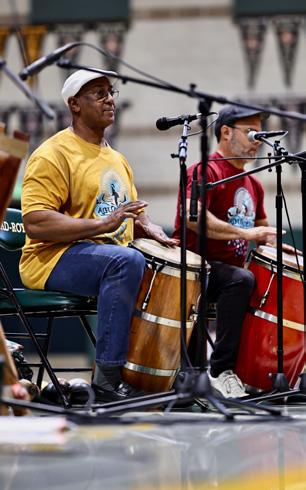
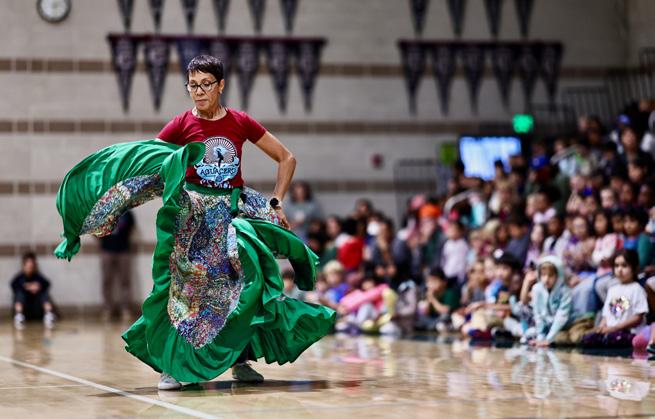
We hosted our very first K–8 Latin Heritage Celebration with Aguacero, a Puerto Rican music and dance ensemble. Students explored Bomba and Caribbean rhythms, learning steps and moving with the beat. From kindergarteners to 8th graders, everyone danced, learned, and celebrated community and culture together. Thanks to Aguacero and our community supporters for making this program possible!
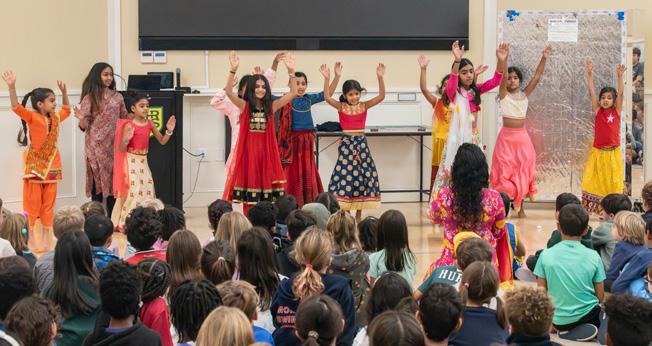
Diwali
Diwali brightened our Lower School with color, rhythm, and joy. Parent volunteers Prashanthi Raman and Sheila Warren shared the story of Diwali, and students joined in, with a few of them boldly performing on stage.
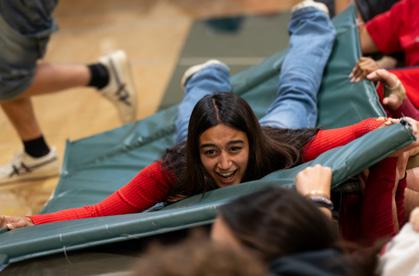
Spirit Week
Our gym buzzed with Jayhawk pride at the Spirit Week assembly. Upper School dancers kicked off the fun (with a cameo from Tuffy!), followed by a lively Knockout game. The excitement continued with the “Steamroller” game, ending in a thrilling tiebreaker with sophomores claiming victory.
YOUR IMPACT IN ACTION
When parents and guardians give their time in everyday, behindthe-scenes ways—driving carpools, picking up meals, and handling logistics—they open doors for students to step into extraordinary opportunities. Small acts of support create big possibilities for kids.
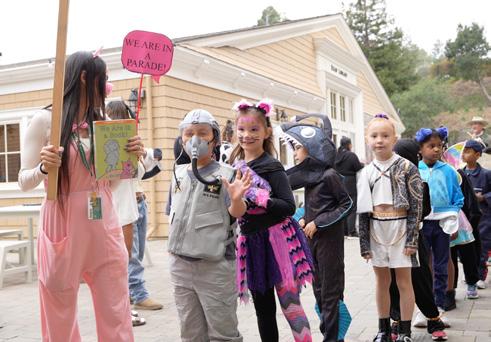
Halloween
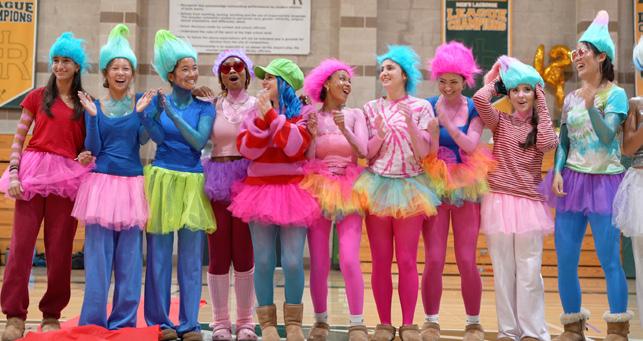
The annual Halloween Parade featured pilots, creatures, and creativity of all kinds, and giggles galore! From dawn to dismissal, the Halloween spirit was on full display with performances, costumes, and originality across all divisions.
Magna Cum Laude
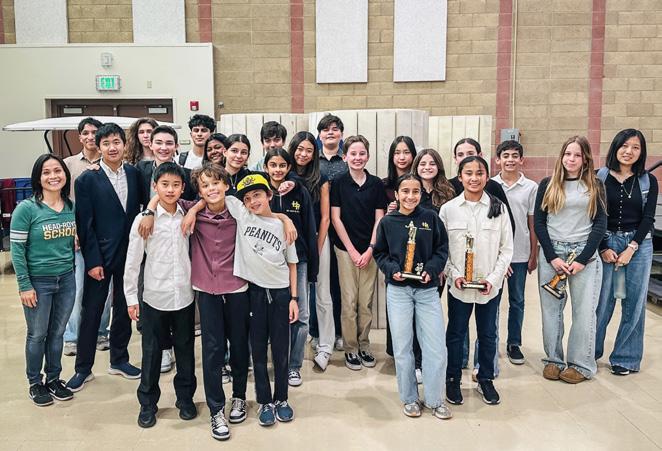
Our Latin department took four Middle Schoolers and four Upper Schoolers to the Northern California Regional Junior Classical League Convention at La Entrada Middle School in Menlo Park. Ninth graders shined with awards in academic contests.
Middle School East Bay Debate League (EBDL) Tournament
We’re proud of our ten Middle School teams who participated in the East Bay Debate League tournament—many students competing for the first time. Two teams finished with standout records, and Head-Royce earned a gavel for the top speaker award among 188 competitors from nine schools.
7th Grade Sailing Trip
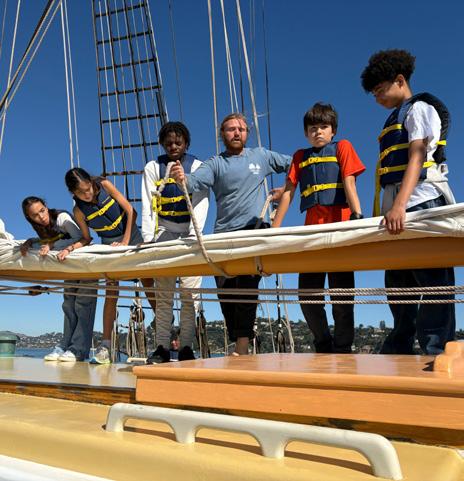
Lines in hand and eyes on the horizon, 7th graders sailed the San Francisco Bay aboard the Matthew Turner, observing water, weather, and wildlife while practicing scientific methods.
Grace Period
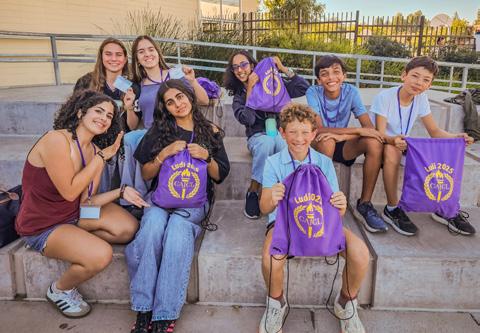
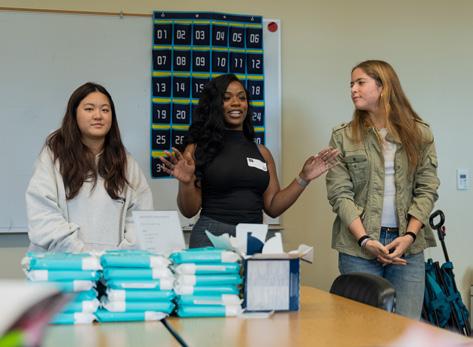
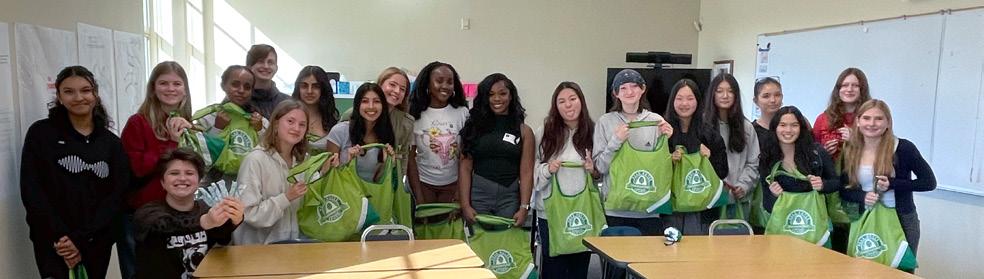
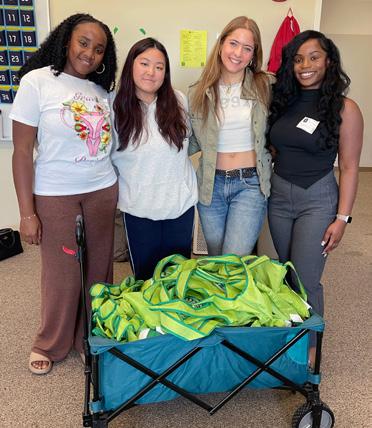
The HRS chapter of Grace Period held its first periodpacking party of the year. Inspired by alumna Trinity Balla ’18 (above center), Upper Schoolers assembled 71 bags of menstrual hygiene products for unhoused and disadvantaged women, while building momentum and support for future events.
Alumni engagement helps turn student ideas into meaningful action. Your inspiration and partnership strengthens a culture of generosity—connecting students to real-world impact and reinforcing the values of service, leadership, and care for others.
Candlelight Concert
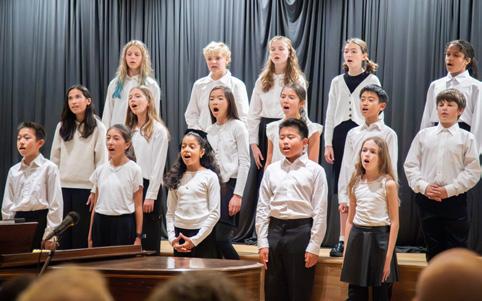
A soft golden glow, song, and community filled the Hawks Nest during the first annual Candlelight Choir Concert. The 6th Grade Choir, 7th/8th Grade Choir, Upper School Chorus, and Colla Voce performed under Joe Lim’s direction, with Evangeline Wolfe at the piano, marking the start of a beautiful new tradition.
YOUR IMPACT IN ACTION
We are grateful to the grandfriends who joined us and the family members who generously gave their time. Your presence bridged generations, carrying traditions forward and creating moments of connection and belonging that students will remember for years to come.
The Secret in the Wings
The Upper School fall play brought a drafty basement and a mysterious book to life, with six lesser-known fairy tales unfolding on stage. Whimsical stories revealed deeper truths and the complexity of real life, reminding us that fairy tales aren’t just for children.
Grandfriends Day
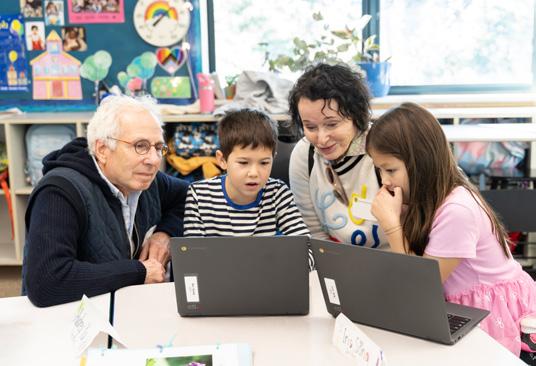
Grandparents, caregivers, and special friends were welcomed into Lower School classrooms for one of our most joyful traditions. They read stories, shared memories, and saw students learning and playing, a heartwarming reminder that family comes in many forms and every student has someone cheering them on.
Middle School Community Engagement Day
Students engaged in hands-on projects, actively contributing to their community. They partnered with food banks to explore food justice and supported younger learners in OUSD classrooms. With seven partner sites, including our Lower School, every Middle School student found a way to make an impact.
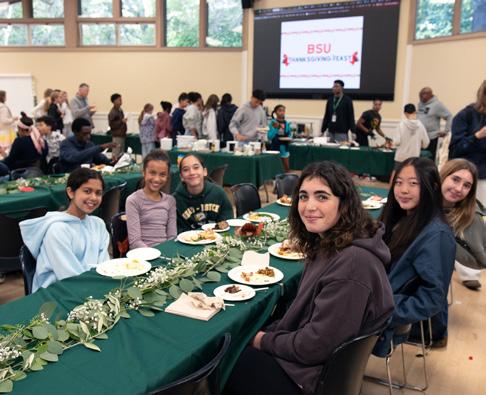
Black Student Union Thanksgiving Feast
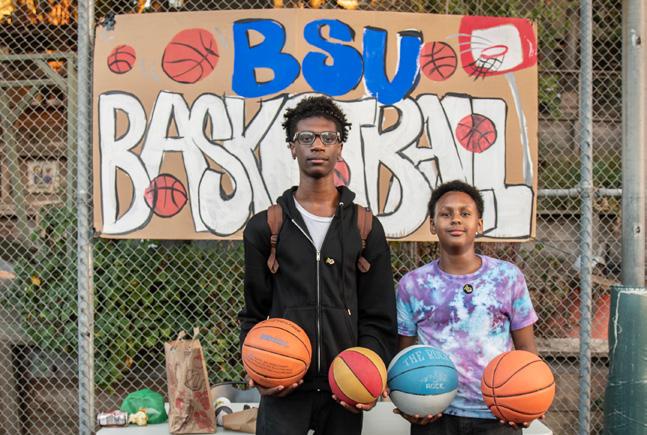
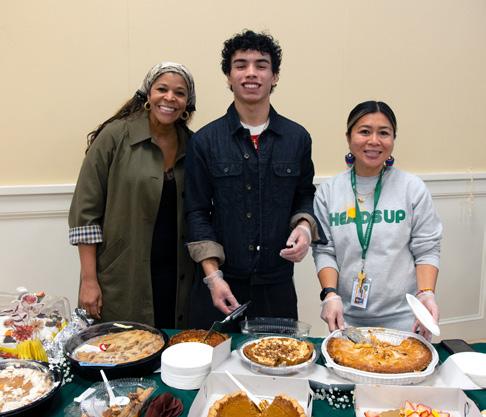
Continuing a beloved tradition, the Black Student Union (BSU) hosted their community-wide Thanksgiving Feast, serving a delicious array of tasty delights for everyone to enjoy.
Out and About
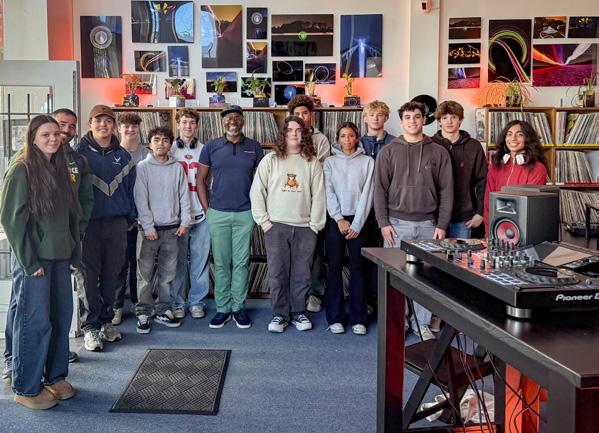
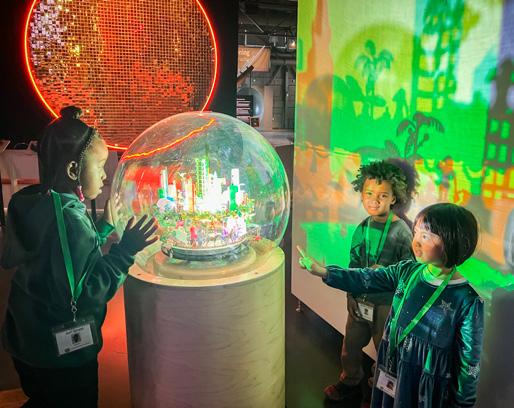
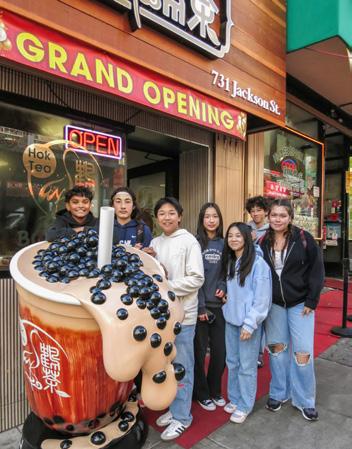
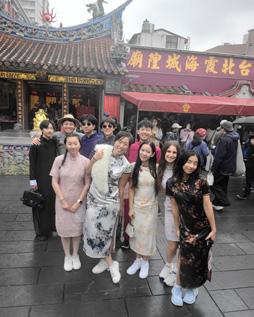
Across our divisions, students connected classroom learning to the world beyond campus through Bay Area field experiences. From hands-on science at the Exploratorium, to language immersion in Chinatown, and music production visits to local recording studios, students learned by doing.
YOUR IMPACT IN ACTION
Field trips are a powerful form of experiential learning. These real-world opportunities shape learning, foster curiosity, ignite creativity, and inspire connection—all thanks to a community that believes in the power of education beyond the classroom.
Fall Music, Chorus, and Dance Concert
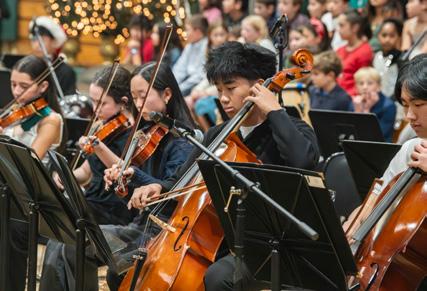
It was an evening of music and movement at our Fall Music, Chorus, and Dance Concert, with students from all levels of the Upper School Choir, Instrumental Music, and Dance programs taking the stage.
YOUR IMPACT IN ACTION
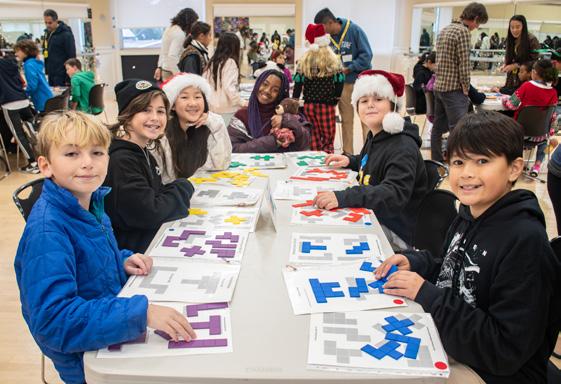
Events like the math festival are made possible by volunteers whose gift of time and care model generosity and teamwork in action.
Students explored math from a whole new angle (pun intended). Through puzzles and games, and with the helpful guidance of our many volunteers, they experienced math as joyful, creative, and empowering—boosting both confidence and curiosity.
Marian, or the True Tale of Robin Hood
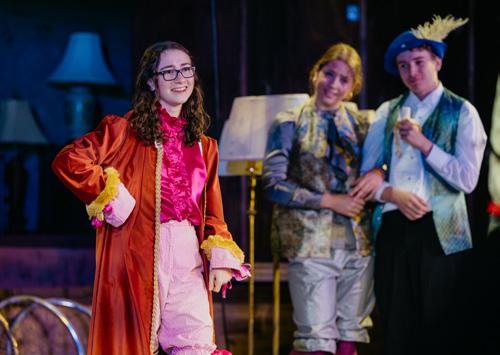
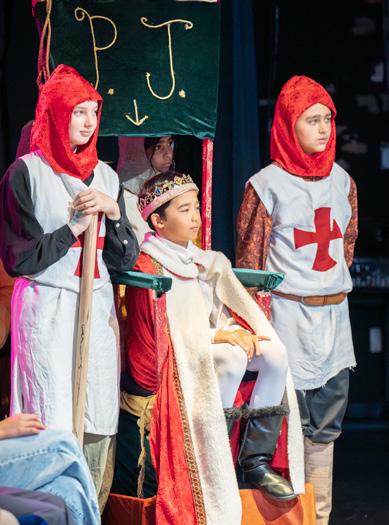
We stepped into the world of Robin Hood with our Middle School play, Marian, or the True Tale of Robin Hood. With creativity and care, our young actors offered a fresh take on a classic adventure!
Julia Robinson Math Festival
Holiday Program
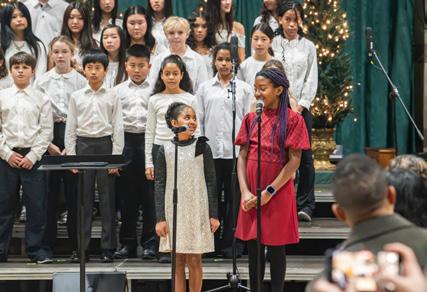
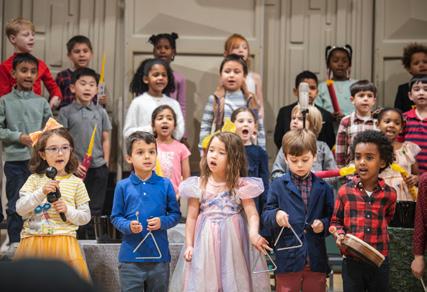
Our annual K–12 Holiday Program brought our community together in a joyful celebration of song and dance, centered on this year’s theme, Dreaming—a reminder of the hopes, imagination, and possibilities we share.
Holiday Art Contest
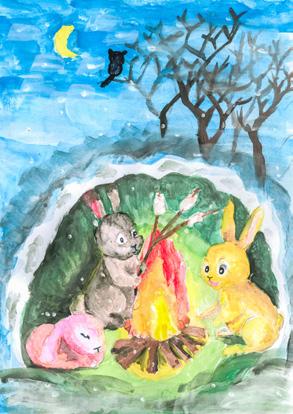
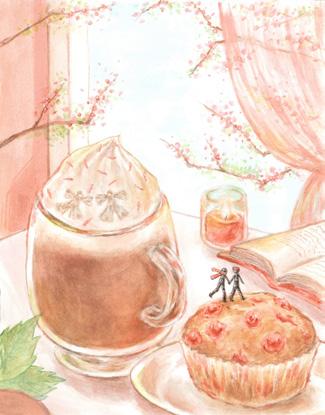
This year, we opened the Holiday Art Contest voting to our entire professional community, with resounding response! Aria H. ’29 and Xingkai M. ’35 earned the top spots for their creative contributions, with Caroline L. ’29 just one vote behind. Their work is featured (respectively) in the holiday program, digital holiday card, and greeting cards.
Middle School
Boys Soccer
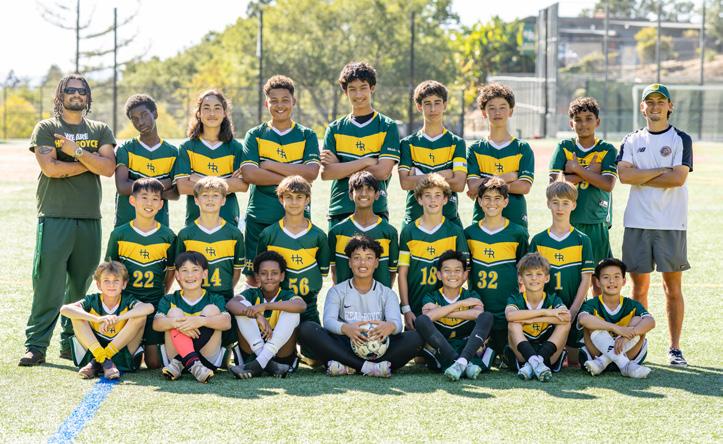
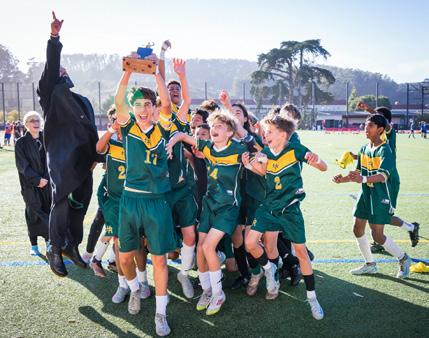
Middle School Boys Soccer won the Bay Area Interscholastic Athletic League Championship, their first since 2008, reflecting months of hard work and dedication.
6th Grade Girls Basketball
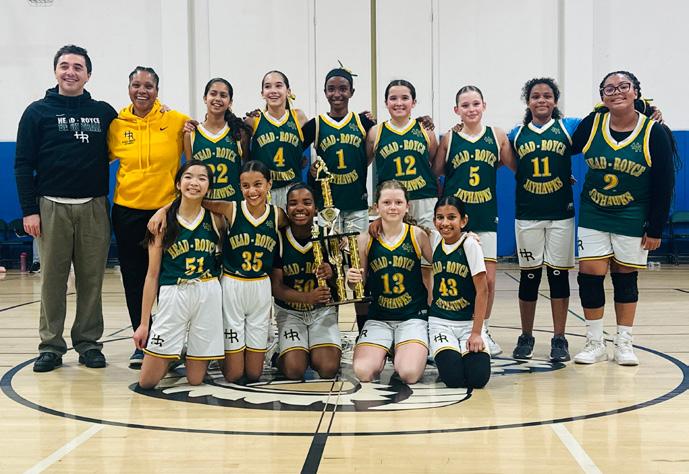
The 6th Grade Girls Basketball team captured their first East Bay Middle School League (EBMSL) Tournament championship. Two clutch free throws in the final seconds sealed the win for the Jayhawks—an unforgettable milestone for our student-athletes and coaches.
Men’s Soccer
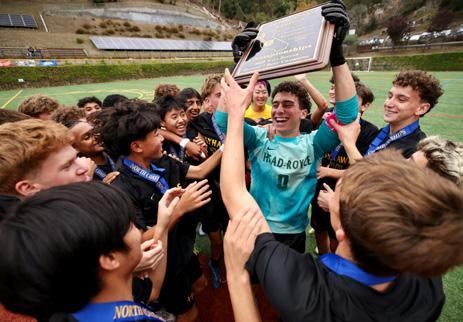
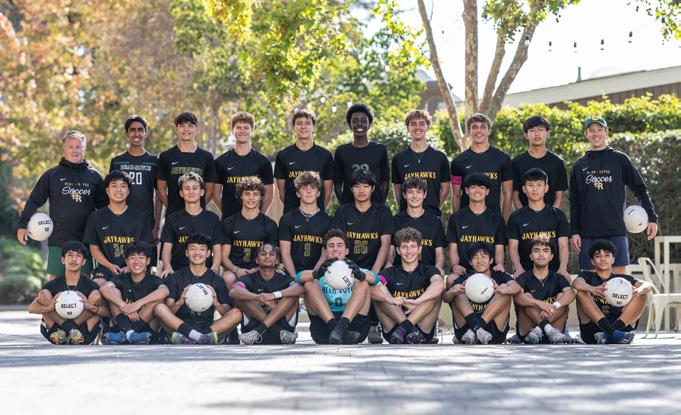
Men’s Varsity Soccer won the NCS Division I Championship, defeating Arcata 3–0 in the final home game. Players, coaches, families, and fans erupted in celebration as the thrilling match concluded.
Men’s and Women’s Cross Country
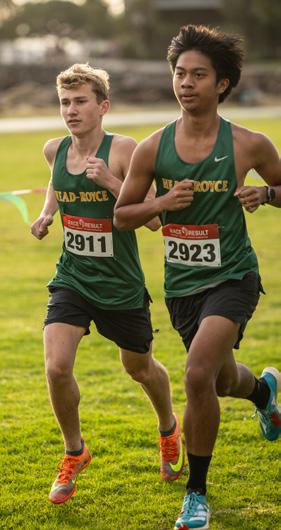
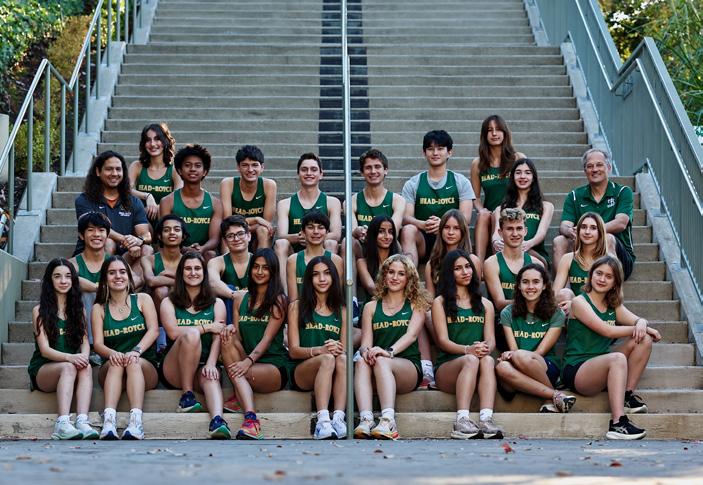
Both Men’s and Women’s Cross Country finished second overall in the combined BCL/BCL East leagues. The Men’s team captured its first meet victory in five years, while the Women’s team qualified for and competed at the California State Meet.
Women’s Golf
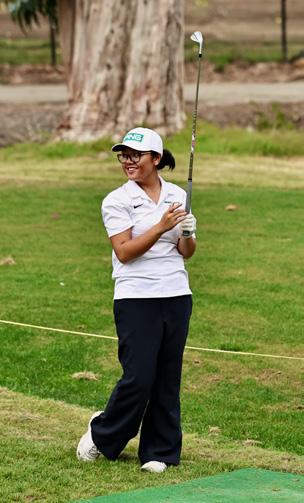
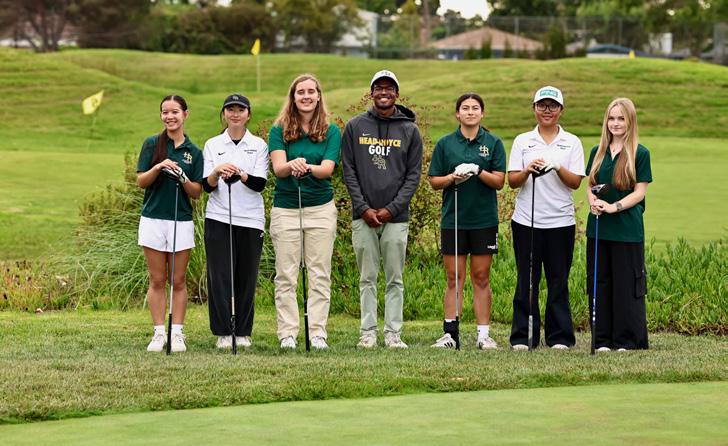
The newly introduced Women’s Golf Team competed at the sub-varsity level, with one standout golfer qualifying individually for both the North Coast Section Tournament in Santa Rosa and the State Tournament in Arcata.
Women’s Tennis
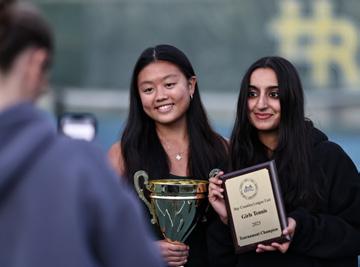
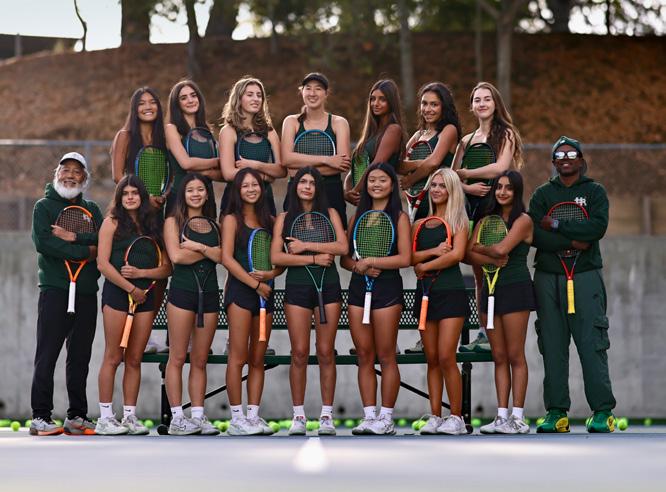
Women’s Tennis captured their seventh consecutive BCL East Team Championship and seventh straight BCL East Playoff Tournament Championship. In individual competition, Head-Royce players claimed BCL East singles and doubles titles, highlighted by a third-place finish in the North Coast Section singles tournament.
Women’s Volleyball
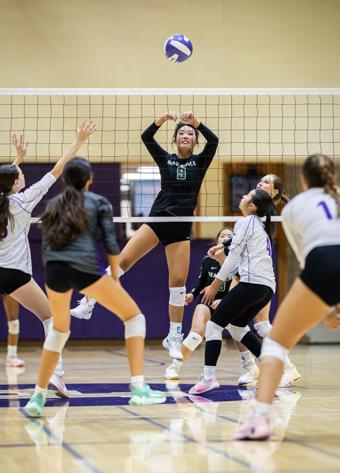
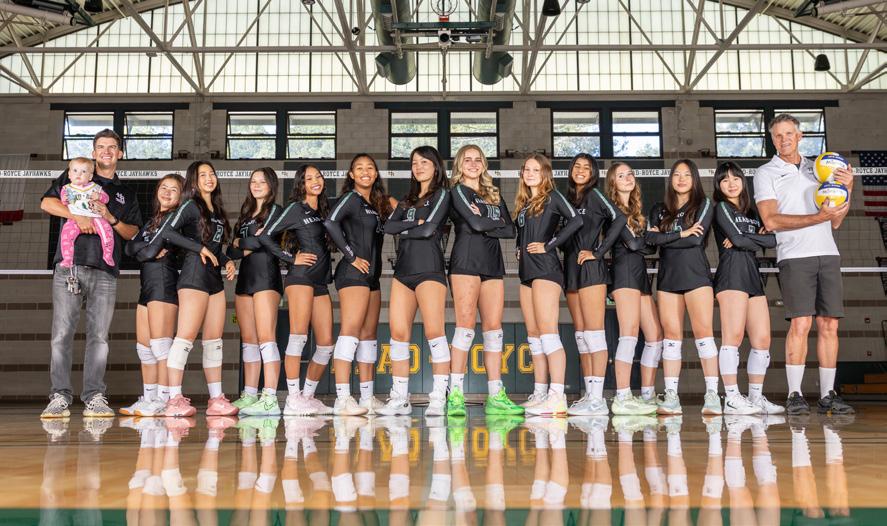
Women’s Volleyball earned its 13th consecutive BCL East title as Co-Champions and was a runner-up in the league tournament, securing a berth in the North Coast Section Division II Tournament. Many
DES
Reimagining How a School Learns, Makes, and Leads:
Building an Ecosystem for Possibility
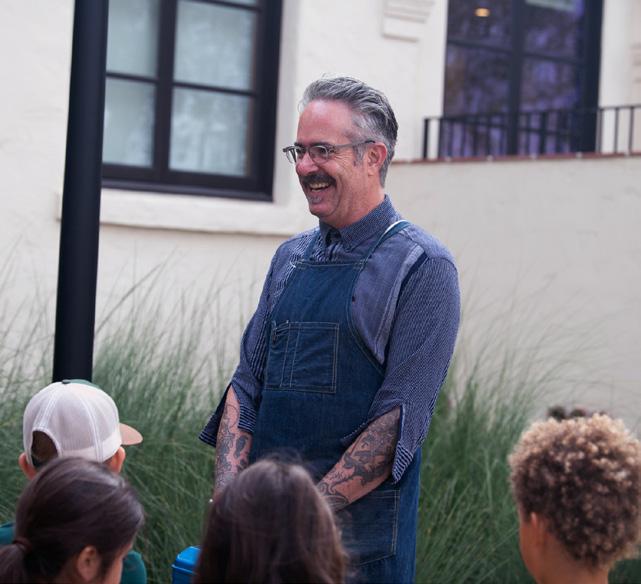
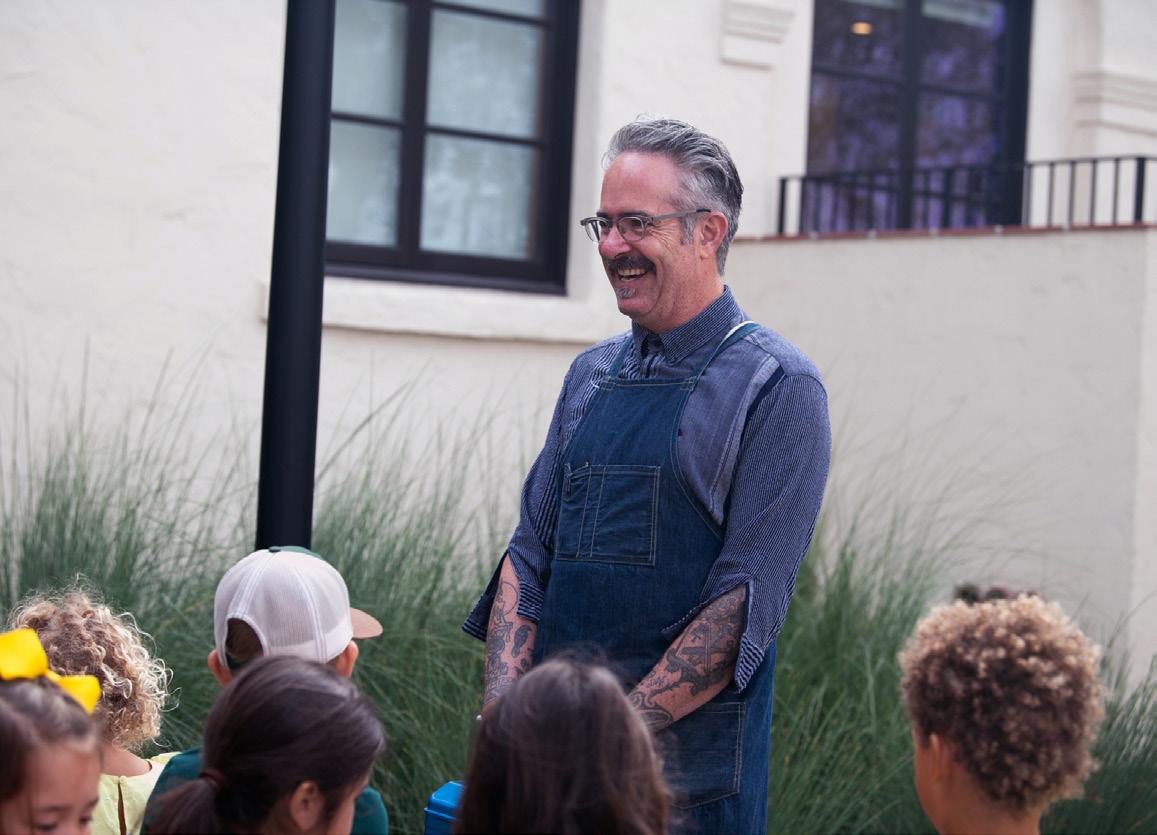
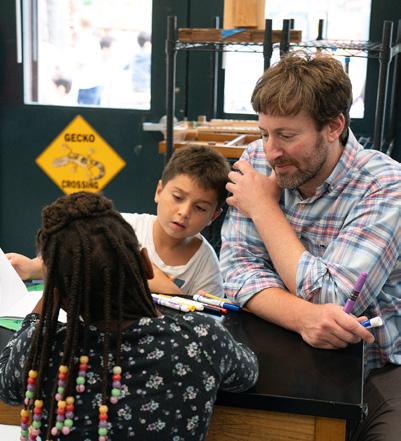
Clifford, Director of Design and Making, with young students on South Campus
David
In conversation with David Clifford, it is immediately clear that his role as Director of Design and Making is as much about listening and learning as it is about building and leading. He describes himself as someone embedded in the life of Head-Royce, observing, engaging, and helping to co-create a more robust ecosystem for designing and building a better world.
David resists the idea that his work is about a place—like the Collaboratory or Fabrication Lab (FabLab)—or about a specific program. For him, the real work is creating the conditions and culture where thinking and behaving like an equitycentered designer can flourish—an ideology grounded in the belief that everyone is a designer, capable of designing for good.
His hope is to create experiences that encourage people to see themselves as designers—conscious of their own creative power, guided by what he calls radical curiosity and care for oneself, others, and the planet.
“For him, the real work is creating the conditions and culture where thinking and behaving like an equity-centered designer can flourish— an ideology grounded in the belief that everyone is a designer, capable of designing for good.”
David is quick to point out that Head-Royce already has seeds of a design mindset. “This doesn’t come from a top-down dictate,” he explains. “It’s about learning from what’s already here.” In this way he is a catalyst and a force-multiplier. His leadership approach is rooted in the Leading for Equity framework which emphasizes practicing self-awareness, building relational trust, observing, immersing, and engaging with the community.
Since joining Head-Royce this past summer, David has conducted about 40 empathy interviews, generating nearly 700 pages
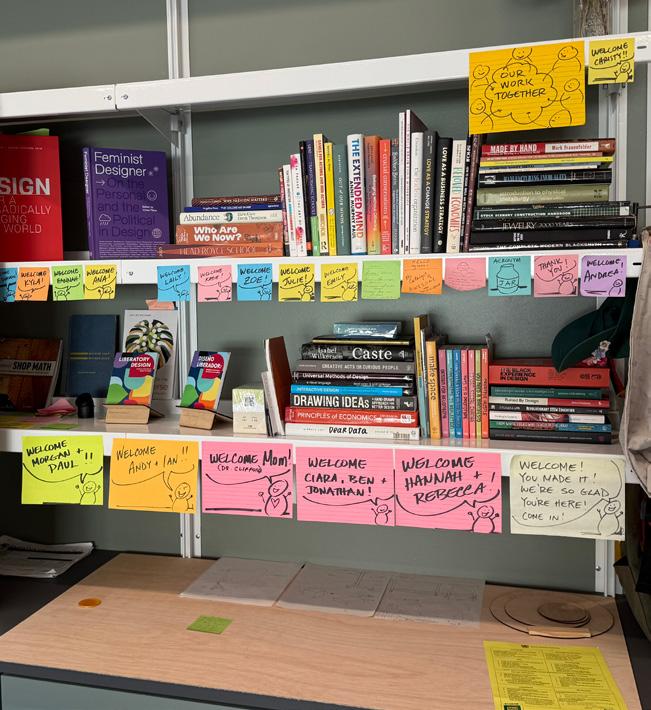
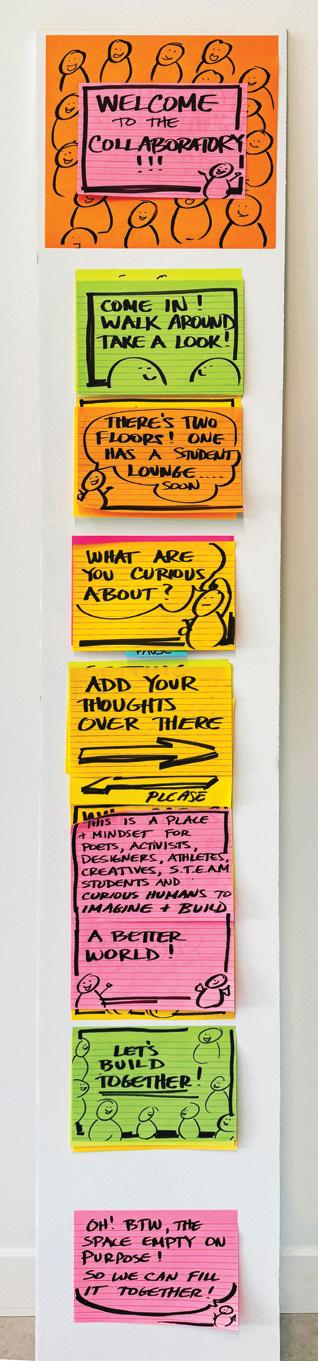
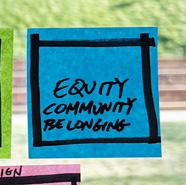
David’s space is full of welcoming notes and words of encouragement.
of transcripts, to learn how people at Head-Royce define design and making and to uncover their hopes for what the new Collaboratory could become. Using AI, he developed a “Unicorn Bot” to synthesize patterns and language emerging from the data. He’s developing a philosophical statement for the Collaboratory—one shaped not by a single voice but by many. Once completed, this will serve as a conceptual compass and a living framework for the Collaboratory, fostering a sense of collective ownership to guide pedagogical approaches, project choices, and curricular decisions.
For David, the school itself is an ecosystem—and every system generates what it was designed to create. He poses big questions, like “What is Head-Royce producing, and why?” His concern is that, as a society, “we’re preparing our kids for our past,” even as we stand on the threshold of a future we can’t yet predict. Across the school, he hears a readiness for something new—a desire to learn, to question, to design differently.
That’s where Liberatory Design comes in. David sees it as a way to invite both students and adults to reimagine systems, spaces, and mindsets. Makerspaces for some, he notes, can bring to mind problematic assumptions. “Technology first” rather than “people first” might be the biggest shadow. This misalignment is what he hopes to address, in reclaiming “making” as a human act of meaning and care. “We make to understand our world and share in it,” he says.
He describes the Collaboratory as an “oasis” or “watering hole,” a place where many different disciplines come to nourish themselves and cross-pollinate. “It’s like a flower,” he says, “inviting multiple pollinators encourages an exchange of ideas and creativity, it produces an intentional diversity, and helps create the environment for growth and bounty.” Over time, those interactions can shift the mindsets of future leaders.
As an ethnographer, David is constantly asking, “Where is design already happening
in the school?” He sees two fronts: the student-facing and the adult-facing. His job, he says, is to create nutrient-rich soil so that new ideas can take root—bringing adults along to deepen the culture of creativity and the psychological safety required to be truly innovative.
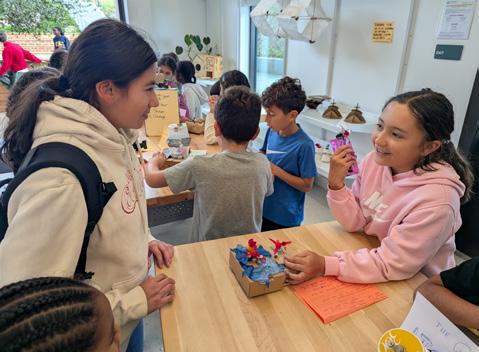
He invites teachers and students to co-design and experiment together. In one collaboration, a 2nd grade class paired a paint-mixing project with relationship and empathy building activities (read more on the next page). The experience blended creativity with empathy, encouraging students to believe in themselves and one day become good ancestors.
David connects this to the idea of an Equity Pause, which invites people to slow down and examine potential biases in their decisions. He draws inspiration from scholars like Dr. Lonny Avi Brooks and other afrofuturists who talk about ancestral intelligence—asking, “How can we design conditions for true curiosity and change?”
“We have to make it possible for people to linger in the discomfort long enough to change,” David says. “To be curious about what change might really mean, feel, and look like.”
This ethos is showing up in classrooms throughout the school. David has been working closely with teachers across all grades to cultivate pedagogical
opportunities for students to explore, be vulnerable, and apply empathy—so that they can practice navigating change and strengthen it as a capacity—a critical skill in navigating the beautiful complexity of relationships.
For instance, 4th graders and 9th graders are collaborating through a circuitry design challenge that bridges physics and empathy: students redesign each other’s morning routines, envisioning devices to improve them. In another project, 5th grade world language teachers are working with David and colleagues to design a monthlong cultural exploration of Chinatown, the Mission, and the French Quarter—creating tools for cultural connection and understanding.
Each of these is part of a larger culture shift—one that asks, “How can we create psychologically safe spaces for creativity, empathy, and collaboration?” David’s work, ultimately, is about changing mindsets and behaviors—preparing a generation not for our past, but for the uncertain, possibilityfilled future they will design themselves.
Across campus, this philosophy shows up in different ways—but always with the same core moves: empathy, constraint, iteration, and care. In the Lower School, that culture begins with belonging.
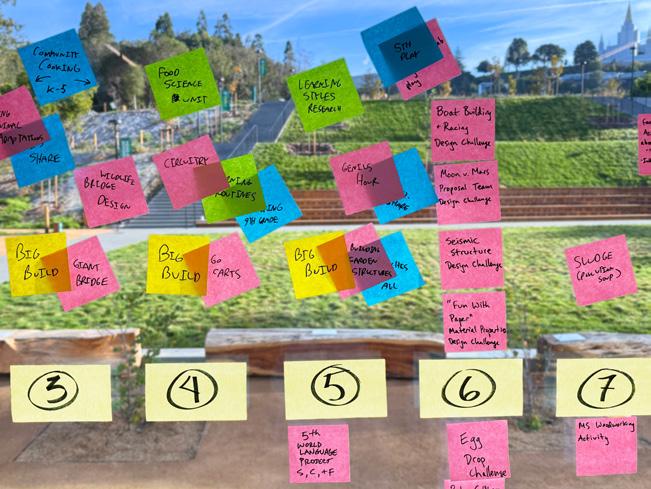
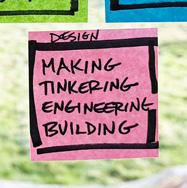
Collaborative projects are highlighted on sticky-notes by grade level throughout David’s workshops.
teacher
In Practice: Opening Doors to Courageous Curiosity
Design thinking at Head-Royce doesn’t begin with tools or technology—it begins with belonging. In 2nd grade, that principle came to life through a project that asked students to explore identity with honesty, care, and courage.
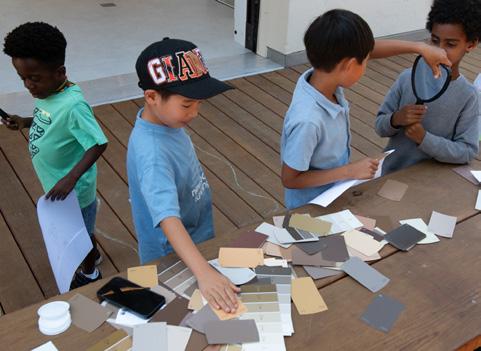
As part of their Unit of Identity, students participated in the Melanin Lab, a lesson that invited them to explore their skin tone openly and thoughtfully. This year, 2nd grade teachers Christy Betts and Chamari Davis collaborated with David Clifford to bring their lab experience into the Collaboratory, offering students both a literal and symbolic bridge to South Campus and reinforcing the idea that this space belongs to them, too.
On the day of the lab, David welcomed students with a generosity that immediately set the tone. As he led them
on a tour, 2nd graders stood wide-eyed, taking in the expanse of tools, materials, and ideas. But more important than the space itself was the way he introduced it—with warmth, presence, and invitation, making students feel truly at home.
The lesson opened with a shared reading of The Colors We Share by Angelica Dass, followed by a “Love Pause,” an intentional moment of reflection that invited students to think about the people—ancestors, family members, and caregivers—who carry them forward. The pause created the emotional conditions for what came next: honest, respectful conversation about difference and identity.
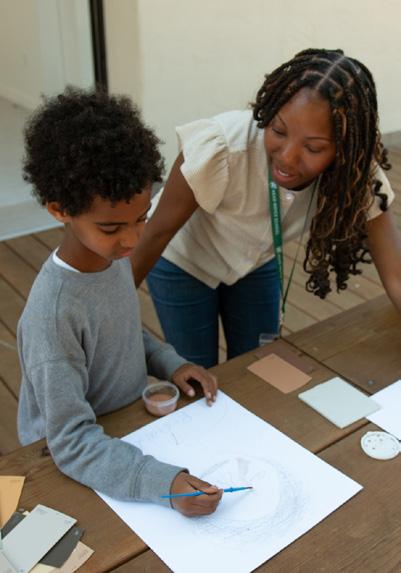
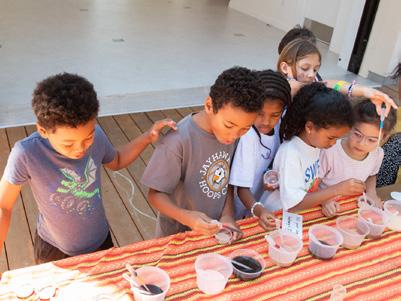
Students then ventured outside the massive Collaboratory door, and armed with paint chips and curious minds, they compared different shades to their own skin tones and to those of their classmates, speaking openly about something deeply personal in a space that felt safe and communal. The work required vulnerability, but students met the moment with curiosity and care— grounded in the trust established before the materials ever came out.
In the Lower School, where each learning day feels like a carefully curated play date, there is profound value in slowing down, reflecting, and naming feelings. Meaningful learning begins when students feel seen, and lessons to connect to emotions help students attach more deeply to the material itself. As 2nd grade teacher Christy Betts observed, “Students learn best when they have room to make mistakes, and they grow most when they feel safe enough to be vulnerable.”
As students grow older, the same design practices—reflection, empathy, and psychological safety—begin to show up in more complex and technical ways.
“When lessons connect to feelings, students feel more deeply attached to the material itself. In the Lower School, where each learning day feels like a carefully curated play date, there is profound value in slowing down, reflecting, and naming feelings. This project reflects a core design principle: meaningful learning begins when students feel seen.”
of
Students work together as they match their own skin tones.
A selection
self portraits, a result of the Melanin Lab project.
Second grade
Chamari Davis helps a student with his project.
Jonathan Braidman, Science Department Chair, works with 4th graders on their circuitry project.
Empathy as Engineering
In 4th and 9th grade science classes, students were simultaneously working on circuitry projects. Jonathan Braidman, Science Department Chair, thought: what if students five years apart collaborated? He reached out to David Clifford to reimagine what had traditionally been an open-ended engineering challenge in the 4th grade circuitry unit. Combining empathy work with user-centered design, they transformed the project into something more meaningful: one where constraints sharpened creativity and design was centered on improving someone’s life.
The result was a simple but powerful shift: before building anything, students learned how to listen. Redesigned to center user experience and lived need, 4th graders partnered with 9th graders, conducting empathy interviews focused on a familiar but revealing topic—morning routines. The goal was not just to build a working circuit, but to design a device that could improve someone else’s day.
After learning the basics of circuitry, 4th graders practiced interviewing one another before meeting with their 9th grade
partners. They listened carefully, asked follow-up questions, and identified specific challenges—then selected one need to address through design. Each student built a prototype incorporating a working circuit, learning quickly that constraints sharpen creativity.
Two skills clearly emerged. The first was the importance of inquiry: students learned that better solutions come from deeper questions. The second was resilience. Ideas often had to be scaled back or rethought entirely, reinforcing that iteration—not perfection—is the heart of design.
The project concluded with a parent share, giving students an authentic audience and raising the stakes of the work. While the process included moments of frustration and uncertainty, those emotions were treated as part of learning, not obstacles to it.
The results were both impressive and endearing—like a 4th grader’s concept for a toothbrush that moves back and forth on its own. Jonathan sees tremendous potential in this cross-grade collaboration. “There’s fertile ground here,” he says. “We’re planting a lot of seeds, and next year, we will need to build the trellis to support what is sprouting, so that we can cultivate it further.”
The experience reframed engineering as a human-centered practice—one rooted in empathy, adaptability, and trust. What students carried forward was more than a functional device; it was a mindset shaped by listening first and designing with care.
The project has already sparked new ideas, with more collaborations on the horizon. As Jonathan sees it, the combination of empathy, resilience, and an authentic audience is transforming not just a circuitry unit—but the mindset students carry into all their learning.
Listening carefully evolves into thoughtfully designed concepts.
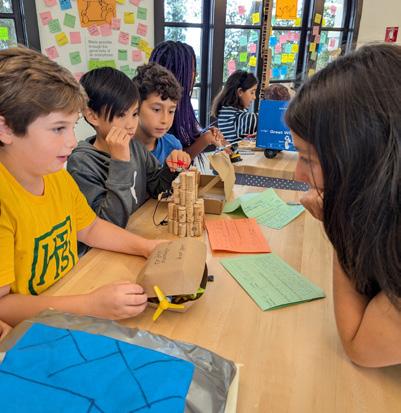
Fourth grade designers demonstrate their invention to a 9th grade student.
“Learning ultimately is an act of vulnerable courage. And if we can create learning spaces where one doesn’t have to feel they have to check parts of themselves at the door, and that they can be their full selves, imagine what can happen in that space!”
-David Clifford
Lasting Returns, Big Impact
The Human Side of Tax Code
With contributions from Dylan B. ʼ26
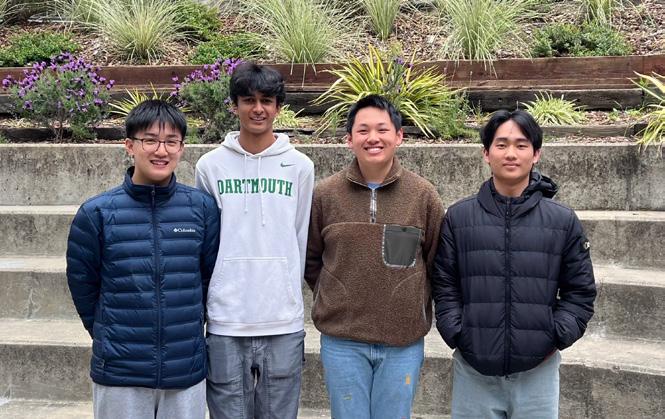
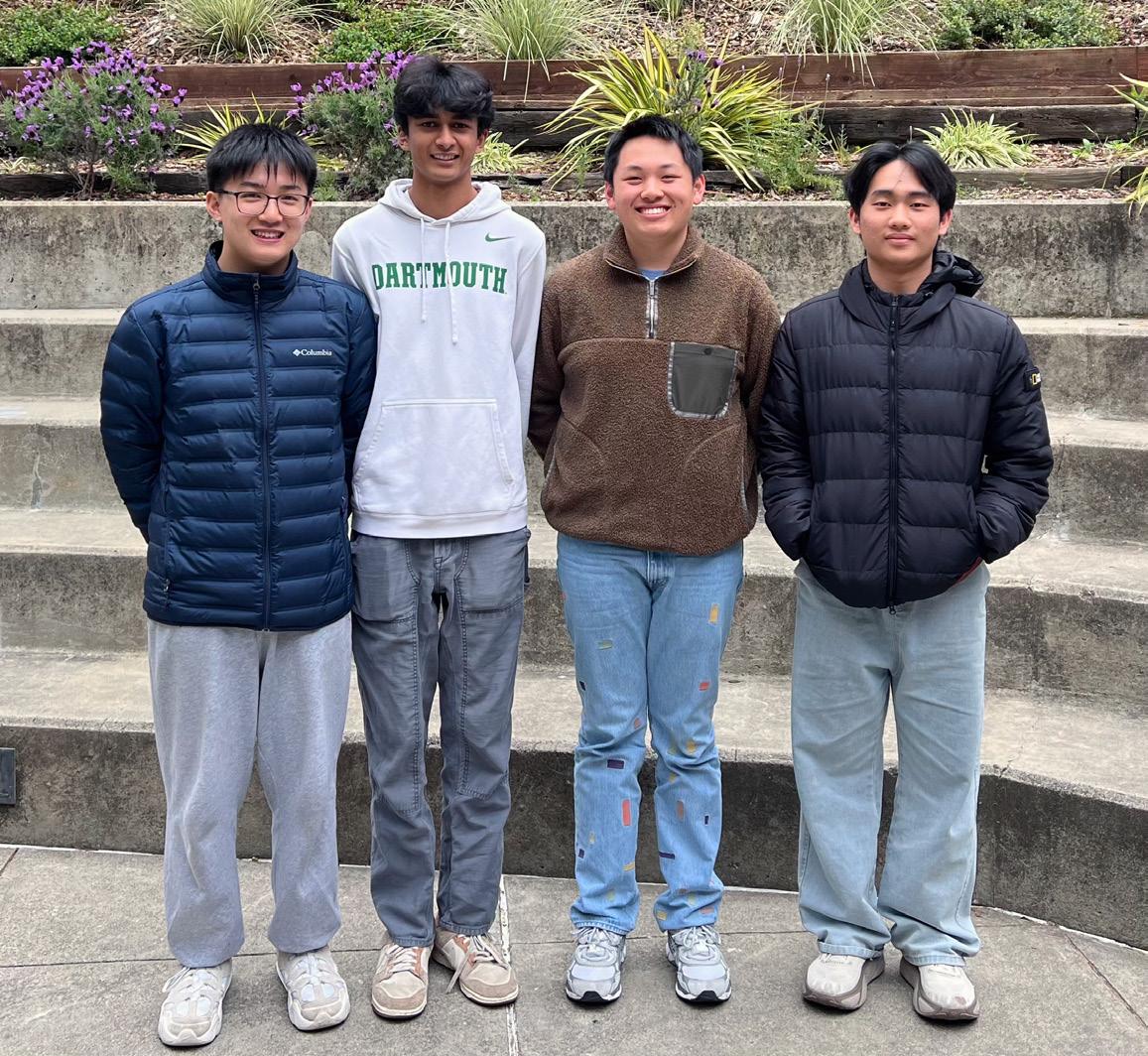
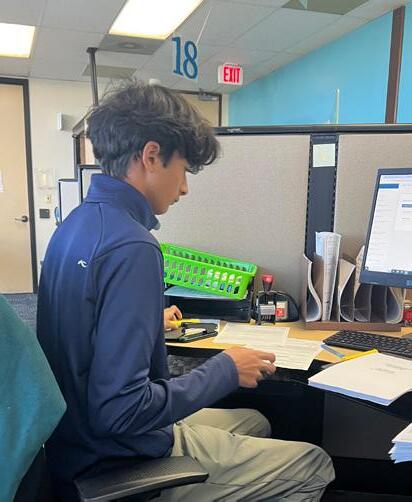
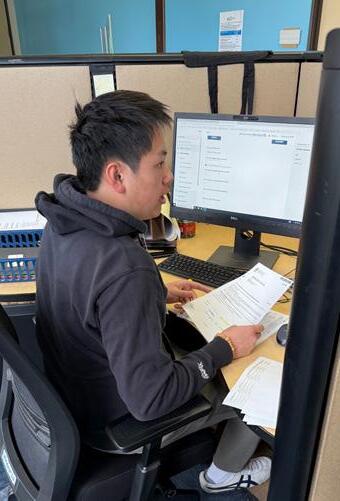
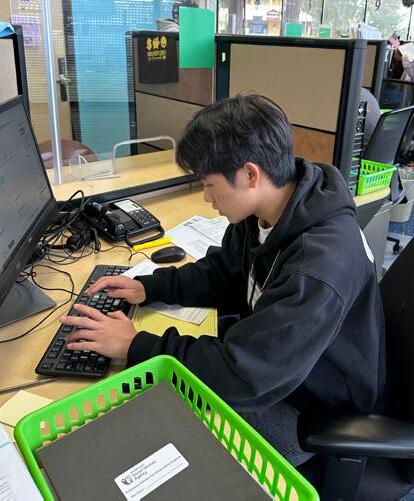
From left to right: Daniel L. ’26, Dylan B. ’26, Oscar C. ’26, and Jun K. ’26
Albert Einstein reportedly said that income taxes were among the most difficult things to understand. If he found tax code bewildering, it is little wonder that so many people feel perplexed each year by the maze of forms, rules, and acronyms that accompany filing.
Few people look forward to tax season. But for many Oakland residents, it’s also when trusted support becomes available through the Volunteer Income Tax Assistance (VITA) program—a long-standing effort that provides free, accessible tax preparation for families who might otherwise struggle to file.
And in recent years, a growing group of Head-Royce students has joined that work, spending their Saturdays helping neighbors navigate a system that can feel incomprehensible.
Head-Royce’s VITA initiative began with one student: Dylan B. ’26, who at age 15 read a New York Times story about how accessible, free tax preparation can help lift families out of poverty. Inspired, he tracked down the local chapter of VITA through United Way Bay Area, and spent winter break his sophomore year completing hours of training and passing multiple certification exams.
By the time he finished, he had become the youngest IRS-certified tax preparer in the program.
However, his first day at the Alameda County Social Services was humbling. As a 16-year-old surrounded by retirees, former accountants, multilingual volunteers, and county staff, Dylan was initially assigned organizational tasks: photocopying documents, assisting with intake, and shadowing preparers. But after several weeks, site supervisor Vera Hutton gave him the green light; he was ready to complete his first return.
“By the time he finished, he had become the youngest IRS-certified tax preparer in the program.”
The client was Miranda, an Oakland resident without U.S. citizenship caring
for her disabled daughter. Dylan toggled between IRS requirements, high school Spanish, and healthcare eligibility rules to determine the credits she qualified for. When he finally rotated the screen to show her refund amount—$12,087— Dylan saw tears well in Miranda’s eyes. That check meant stability: rent, groceries, and breathing room. “I used to think taxes were a burden,” Dylan reflected. “I realized I could use this knowledge to help shift vital funds into the pockets of people who need them most.”
“When he finally rotated the screen to show her refund amount—$12,087—Dylan saw tears well in Miranda’s eyes.”
Dylan also discovered an unexpected advantage: his youth. Clients relaxed when he translated complicated forms into understandable language. Years of tutoring students in calculus helped him explain concepts like “taxable vs. non-taxable income” or the “Earned Income Tax Credit” in ways that resonated. He was becoming not just a tax preparer, but an educator and advocate.
And yet, after months of volunteering, he saw a painful reality: there weren’t enough volunteers to meet demand. Families were
turned away, leaving behind thousands in unclaimed credits. Determined to expand the program’s reach, Dylan returned to Head-Royce with an idea.
He reached out to members of the faculty and the Center for Community Engagement (CCE) to present his plan and seek support. “This work gives students an intimate understanding of the systems that shape people’s lives. It’s a powerful lesson in equity and civic engagement,” remarked Nancy Feidelman, Director of the CCE, who agreed to help guide the effort. With additional support from Jenny Temple, CCE counselor, and Yosup Joo, faculty sponsor, Dylan was able to recruit classmates and officially launch the Head-Royce VITA Club.
The new recruits were nervous: the certification tests were intimidating, the IRS code was tedious; and the responsibility was real. But as they studied and helped each other through the training modules, they grew more confident and competent. Three of Dylan’s friends were the earliest to join: Oscar C. ’26, Daniel L. ’26, and Jun K. ’26. Their experiences quickly revealed how transformative, and deeply human, the work would be.
When Math Meets Meaning
Daniel joined VITA because he liked math and wanted to do something meaningful
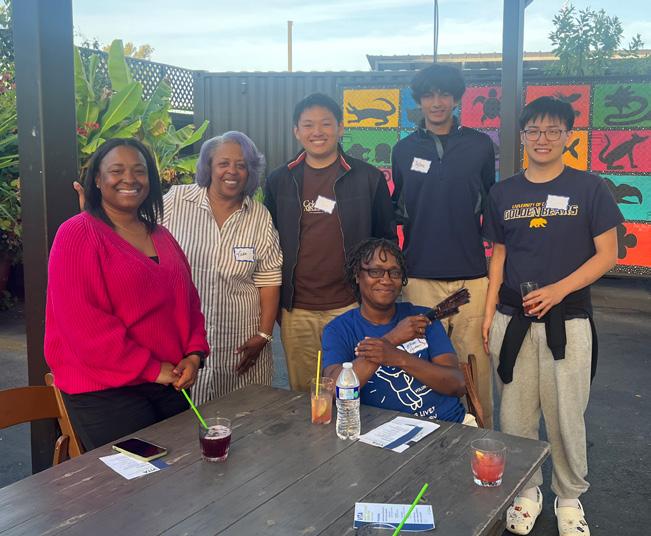
VITA volunteers with United Way Bay Area staff.
with it. But it wasn’t until he attended the first training that he understood the stakes.
He learned that low-income households lose hundreds or even thousands of dollars each year simply because they don’t file, file late, or make small errors. “Seeing that made me understand the impact,” he said. “These aren’t abstract numbers— they’re groceries, medical bills, and basic living expenses.”
His first season brought a moment he will never forget. A client arrived nervous and hesitant, unsure whether he even qualified for VITA services. He kept apologizing, worried he was taking up time. But as Daniel walked him step-by-step through the return, the man relaxed. When Daniel finally shared the refund amount, the man exhaled deeply. He confessed to Daniel that “it would help with groceries and utilities.” Daniel said of that moment, “It highlighted how something that feels straightforward on paper can carry real emotional weight for the people we serve.”
Before this experience, Daniel had an academic understanding of Oakland’s economic inequality. But by working directly with clients, it made it real and personal. He saw how inequity shows up as “gaps in access and security,” he said, and how the systems around us can either support or fail the people in our
own neighborhoods. Reflecting on the experience, he said, “Meeting people faceto-face showed me what numbers on a page can’t capture—the real impact on daily lives. Inequality isn’t only about wages—it’s about the access to opportunities and resources that people deserve.”
The experience sparked a new interest: economics. Daniel now hopes to study policy, understanding how systems can better support families like the ones he serves each tax season.
Complexity, Courage, and Quiet Impact
While studying for certification, Jun discovered the complexities of the tax system. “Studying for the IRS tests showed me how hard it can be to manage finances and taxes,” he said. It was during his second week on site that he realized, “We were dealing with legitimate sums of money that Alameda residents were owed, and helping people find the exact sums was very fulfilling.”
One of his most memorable cases involved an In-Home Supportive Services (IHSS) provider who had no idea she qualified for thousands in credits. Jun helped her navigate income categories, care provider exemptions, and withholding statements until they arrived at a refund that stunned her. Another time, he worked with a family
who spoke little English, drawing on his own experience as an ESL learner to create a safe, calm environment.
Jun also learned about the economic hardships that many community members face: clients juggling multiple jobs; parents providing for disabled children; families living on the brink of crisis, where a surprise $400 tax bill could derail stability.
He realized something essential: “I enjoy working with people and helping however I can. I want to keep doing this—maybe even in my career.”
Understanding People, Not Just Paperwork
Oscar shared a similar shift in perspective. He had already volunteered with nonprofits in Oakland, but joining VITA deepened his understanding of the community.
One interaction stayed with him in particular: an elderly Chinese couple who spoke very little English. Serving as the main liaison and helping them file, he was struck by how “every person we help has their own story and their own unique background.”
The experience ultimately revealed something about himself as well: that he finds genuine joy and fulfillment in service. It also strengthened his resolve to continue contributing to a more equitable Oakland,
Dylan and other Head-Royce volunteers preparing tax returns.
a place where, as he put it, “all communities can reach an acceptable standard.”
A Broader Impact—for Oakland and for Students
By late last spring, Dylan and the VITA team had prepared 75 returns and reviewed more than 200+ additional filings, helping secure over $110,000 in tax refunds for local families and contributing to a total of over $3 million in refunds at the Alameda site.
As Nancy Feidelman noted, “The Head-Royce VITA initiative isn’t just preparing tax returns—it’s preparing students to be engaged citizens who understand that even small actions can have large, meaningful effects. The numbers speak for themselves. Our students helped low-income residents of Oakland receive a remarkable sum in total tax refunds.”
Reflecting on the program’s growth, Yosup Joo said, “When I think about the impact that Dylan and his friends have had on our local and school community, I go back to Margaret Mead’s quote: ‘Never doubt that a small group of thoughtful, committed
citizens can change the world; indeed, it’s the only thing that ever has.’ They embody that spirit. The VITA Club has grown from a few close friends to a room full of 9th through 12th graders making a difference. It’s inspiring to see their academic skills such as math, thoughtful text analysis, and problem-solving intersect with real-world impact. In other words, it’s cool seeing smart, kind kids doing smart, kind things!”
The impact on volunteers is also profound. National research shows that communitybased initiatives directed by young adults increase empathy, problem-solving skills, civic engagement, and sense of purpose.
“VITA combines technical skill with human connection. By placing people at the center of their approach to such an intricate process, our students have learned to navigate complexity while showing compassion and patience,” Jenny Temple reflected.
And the students feel that change. They’ve grown from hesitant volunteers into confident preparers and advocates— young people who better understand the complexities and inequities shaping their city and who have found fulfillment in supporting their communities.
Looking Ahead
As Dylan, Daniel, Oscar, and Jun continue their work—preparing for the upcoming tax season—they invite more students to join them. The VITA Club is not just preparing tax returns—it is helping families access life-changing resources, demystifying an exclusionary system, and showing students that their skills and time can have a meaningful impact. And this is creating something powerful: a bridge between numbers and humanity by connecting young people to their community.
As they sit across from someone with fears, hopes, and a stack of documents—these students are helping turn confusion into clarity and stress into stability. And for many Oakland families, that effort makes a meaningful difference.
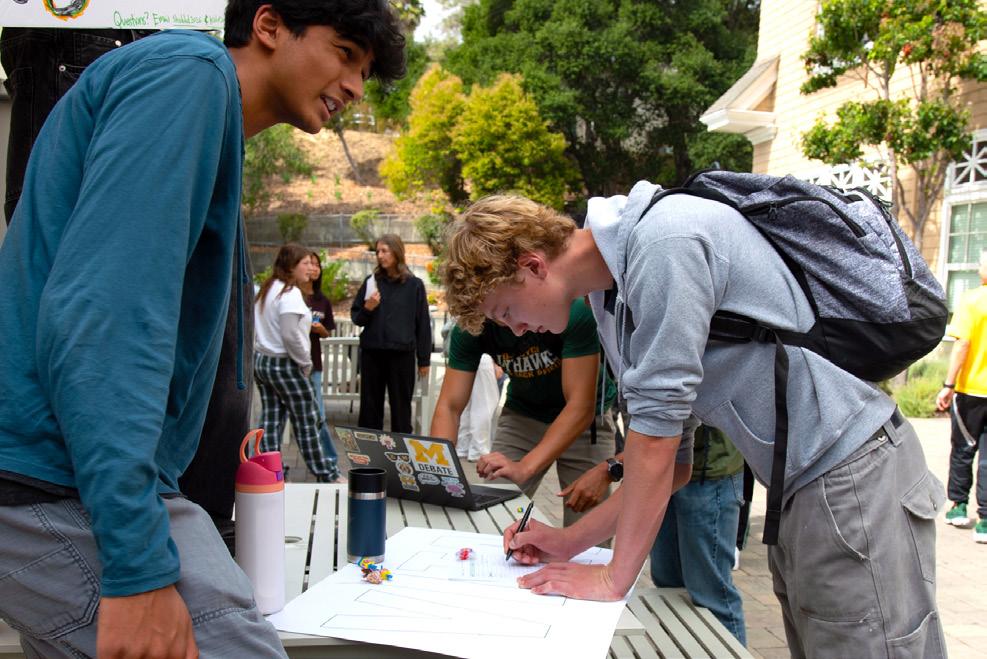
Dylan recruiting a new member of the VITA Club during the Club Fair this year.
A Living Legacy:
The K–12 Student Art Collection
at Head-Royce School
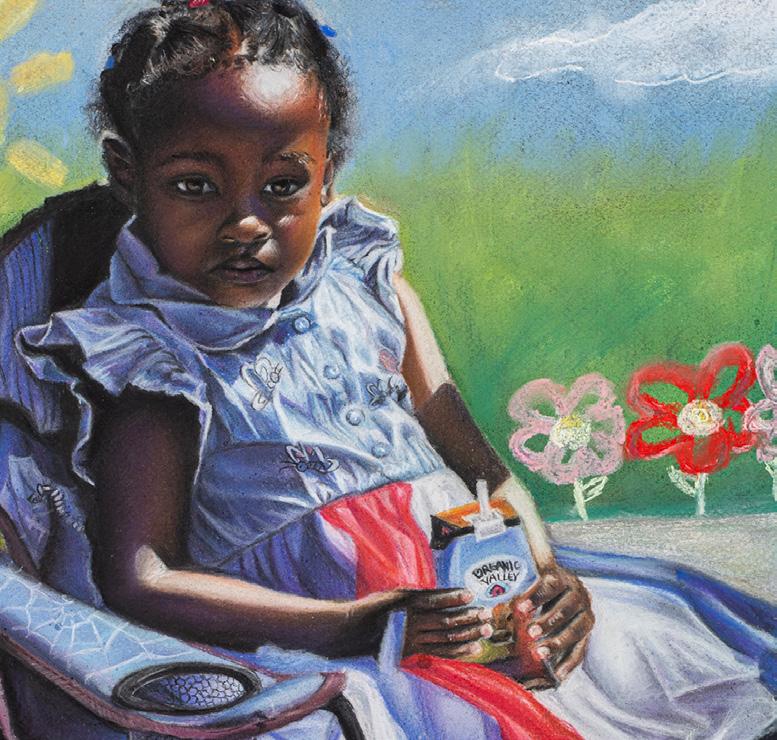
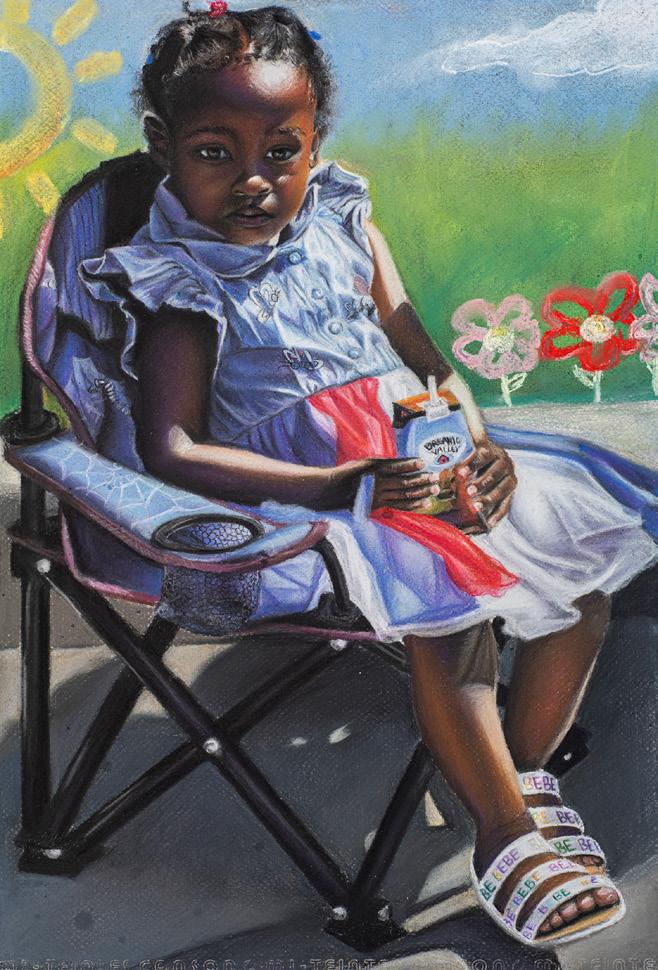
The Girl by Emma W. ’28
“Art tells the story of who we are,” said Emily Miller, Visual and Performing Arts Department Chair. And in that way, the K-12 Permanent Art Collection at Head-Royce School is a narrative of community builders that embodies the creativity and curiosity of our students.
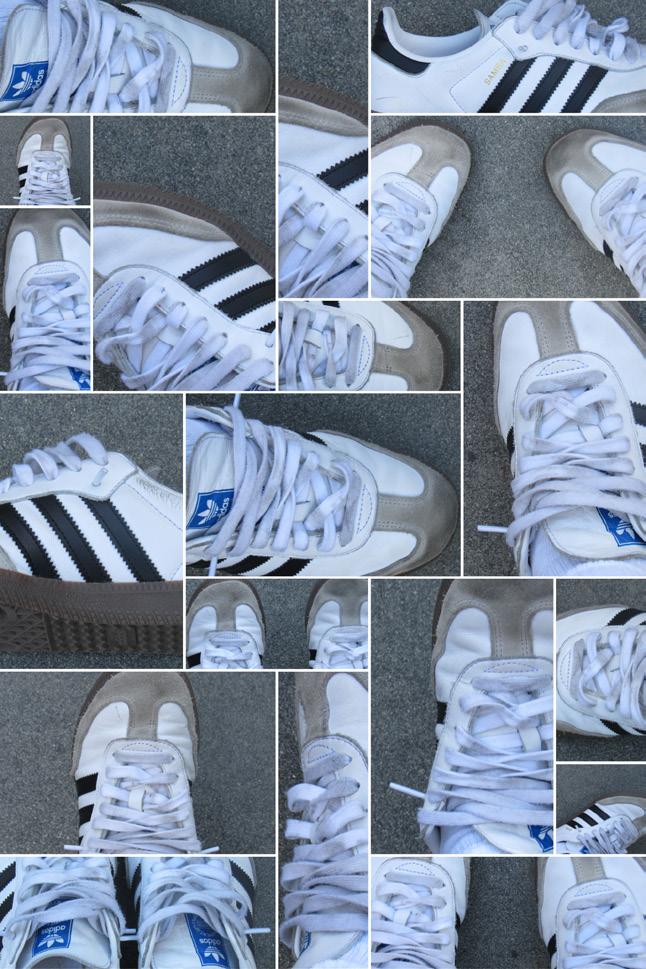
Wander the halls and rooms and you will glimpse a portrait of a LEGO, an exploration of a tennis shoe (“the tennis shoe all Middle Schoolers wear,” Emily
explained). The permanent art collection is more than the sum of its parts; it shows who we are, how we see the world, and
“Art tells the story of who we are.”
how we make meaning of it. By displaying students’ work, Head-Royce communicates that the way our students see the world truly matters.
Origins of the Collection
The inspiration for a permanent K–12 art collection grew from a desire to see student creativity represented across the South Campus. Around the same time, a member of the Head-Royce team visited another school with a permanent collection. That experience sparked a vision for a collection that would celebrate student artists while remaining entirely voluntary. To create more opportunity and inclusivity, all
Avery Shoe by Avery S. ’28
students were invited to contribute, not just those enrolled in art classes.
The philosophy behind the collection is simple yet profound: to honor the diverse voices, perspectives, and creative risks of the Head-Royce community. “Artists are culture makers, and their work reflects the life we’re living,” explained Emily Miller. Each piece tells a story about how students see the world.
Curating the Collection
Selection for the collection is thoughtful and collaborative. The visual arts team ensures all grades, identities, and artistic styles are represented. Submissions are open to all, and the team convenes to review them collectively, honoring not only the finished piece but also the effort, process, and growth behind it. “It’s about recognizing students’ courage in sharing themselves,” noted Emily. This year, 33 works were selected from 90 submissions. The team carefully ensured balance across grade levels, racial groups, and
media, recognizing that some forms— like photography—are easier to submit than others.
Students’ reactions to seeing their work displayed have been overwhelmingly positive. Many were surprised and thrilled to discover that their creative voice could have a permanent presence on campus. The experience encourages students to celebrate themselves and their artistry, helping them overcome self-criticism that often prevents them from sharing their work.
“Artists are culture makers, and their work reflects the life we’re living.”
Educational Value and Impact
The collection does more than beautify the campus; it reinforces Head-Royce’s mission to develop students of character, intellect, and creativity. In developing their works, students practice critical
skills like reflection, storytelling, and analytical thinking. The process mirrors broader pedagogical approaches: students demonstrate understanding in novel ways, collaborate even when working independently, and iterate on ideas—core principles shared with design thinking and studio habits of mind.
The collection also strengthens students’ sense of belonging. Seeing one’s own work—or that of peers—on display fosters a deeper connection to the school community, bridging past, present, and future classes. Recurring themes emerge across years, capturing shared experiences and evolving interests. Together, the works create a vibrant narrative of the Head-Royce experience.
Aesthetics and Campus Culture
The collection enlivens the campus, both visually and emotionally. Works are thoughtfully placed to match the energy of each space: playful and inventive pieces in the Collaboratory, colorful and
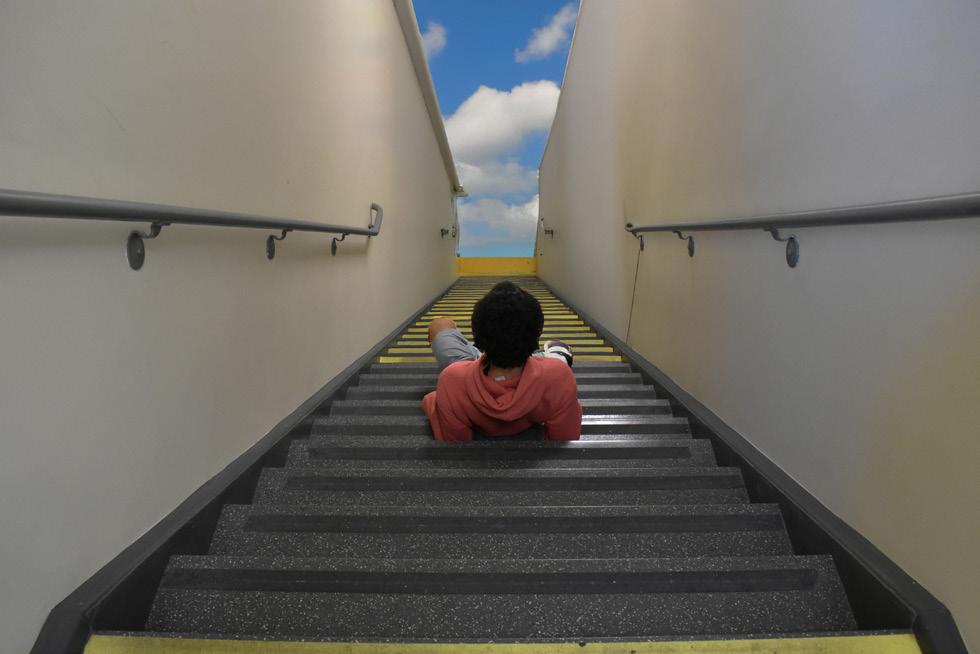
Nico 2 by Nico S. ’28
dynamic images near common areas, and contemplative works in Dewey Hall. This intentional placement encourages conversation, invites reflection, and conveys that the school values students’ perspectives. Visitors, alumni, and prospective families alike experience the campus as a living gallery of creativity, learning, and community.
Process and Preservation
The collection follows a yearlong timeline, from submission to selection, framing, and installation. Decisions are made collaboratively by visual arts staff,
sometimes with input from students and community partners. Special care preserves fragile or three-dimensional pieces, ensuring each work can be enjoyed for years to come.
Looking Ahead
Head-Royce anticipates continued growth of the collection over the next five to ten years. Each year, new works will be added, including displays in the Anna Head Welcome Center and eventually the North Campus. The school is also exploring emerging artistic practices and diverse media, envisioning installations that
continue to inspire and connect students across generations.
Through the permanent collection, Head-Royce affirms that student creativity is not fleeting, but foundational. Each piece is both a moment in time and also part of a larger story, one that reflects curiosity, courage, and care for how we see the world and one another. Together the works form a living legacy, reminding us that when students are invited to share their perspectives, they shape not only the walls of a campus, but the culture of a community.
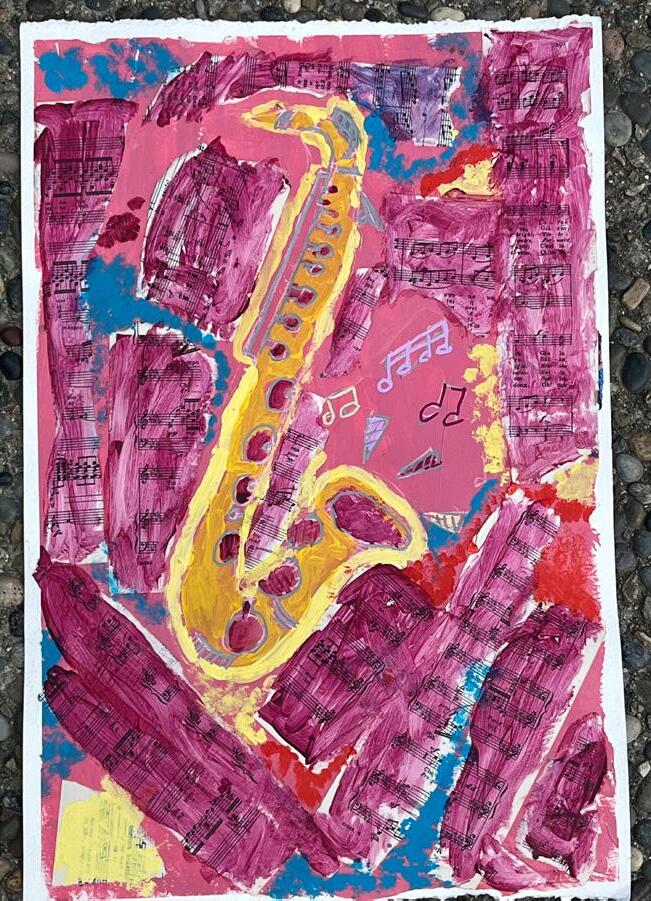
Spencer’s Sax by Spencer S. ’32
I M PA C T
Scan to see our impact makers
The Christopher G. Argyris ’97 Global Study-Travel Fund
Christopher Argyris ’97 lived a life shaped by curiosity, connection, and a deep commitment to understand the world. From his earliest years at Head-Royce, Chris was drawn to people, ideas, and places beyond his immediate surroundings—a trait that guided him.
To honor his life and values, Chris’s parents, Marcia and George Argyris, established the Christopher G. Argyris ’97 Global Study-Travel Fund, Head-Royce’s 100th endowed fund. The fund provides financial support for students to participate in study-travel programs through the Center for Community Engagement, ensuring that students of all economic backgrounds can access transformative, real-world learning experiences.
Travel and global engagement were central to Chris’s identity. His passport was worn from years of movement, and shortly before his untimely death in 2022 at the age 42, he proudly received Greek citizenship, anticipating a future of work and life in Europe. Even in small moments—over shared meals, in spirited
conversations, and while mentoring others—Chris left an enduring impression.
“The Argyris’s generosity will have a lasting impact on our students, helping to make global travel more equitable and accessible for years to come,” reflected Johnny Avots-Smith, Director of Advancement.
The fund is not only a memorial but a living reflection of Chris’s spirit. Through study and travel, students broaden their perspectives, build empathy, and engage meaningfully with communities around the world—experiences that defined Chris’s life. As his mother, Marcia reflected, the fund offers students “the joy of meeting people from all over the world and discovering commonality in unexpected places.”
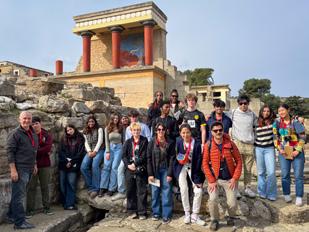
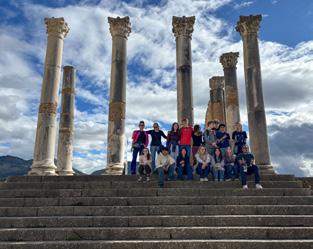
“This gift will open doors for students to engage in immersive, experiential learning—whether investigating wildfire mitigation and agricultural sustainability in Greece or exploring migration, colonization, and cultural
diffusion in Morocco…we see firsthand how transformational study-travel experiences can be. Students return with a deeper understanding of global issues, strengthened peer relationships, and a genuine appreciation for cross-cultural connection. They gain a renewed sense of independence and carry forward a lifelong pursuit of intercultural understanding and openness to multiple perspectives—embodying the very spirit Christopher modeled,” said Kyong Pak, Global Studies Coordinator.
After Head-Royce, Chris pursued a degree in Journalism from Northwestern University’s School of Journalism and shortly thereafter began a career in local television news. Before long he realized his passion lay in international affairs. He went on to earn a master’s degree in International Relations from American University, where he worked with the Center for Global Peace on U.S. State Department–funded projects. Among his most meaningful efforts was leading a diverse group of Sunnis, Shias, and Kurds to Northern Ireland to study peace-building in divided societies. Chris spent six months living in Iraq’s Green Zone—where his mother recalls hearing explosions go off in the background of their phone calls—and traveled extensively throughout the Kurdish region, researching questions of nationhood that would inform his Ph.D. studies in International Law in London.
While there, Chris lived at Goodenough College, a residential community of postgraduate students from more than 80 countries, where he became known as a natural connector—co-producing an opera, hosting gatherings, engaging with global thinkers, and fostering a sense of belonging across cultures and disciplines. Friends remember his warmth, optimism, and rare ability to bring people together with both intellectual rigor and genuine joy. They continue to honor his life with a weeklong celebration of opera, created in remembrance and brought to life through music!
Through the Christopher G. Argyris ’97 Global Study-Travel Fund, Chris’s legacy endures—supporting students’ curiosity, courage, and commitment to understanding the world, and ensuring that his values continue to shape future generations of Head-Royce students.
Global Study: Lasting Impact
How did your study abroad experience change the way you see the world or your place in it?
My experience abroad in Taiwan changed how I understood belonging. Most people feel as though they only belong in the communities they’re comfortable with, but if they’d studied abroad, they’d realize just how easy it is to find community and like-minded people.
The study-abroad experience opened my eyes to the cultural similarities that teenagers share worldwide. Although we live on opposite ends of the globe, we have a lot in common because of social media. We were connected through cultural references and slang, which made it easier to start conversations. My trip made me realize we’re not as different as we think we are.
-Gemma C. ’28
My study abroad experiences have profoundly shaped my view of the world. Traveling to places like Greece and Spain has made me deeply aware of my own privileges, especially when witnessing the aftermath of natural disasters. For example, in Greece, we visited a village affected by a recent wildfire, and that experience highlighted the resilience of the community and the stark contrast to my own life. Similarly, in Spain, engaging with local students and exploring the rich cultural heritage made me realize how interconnected we all are, despite our differences. These experiences have taught me humility and empathy, reminding me that while we have our unique circumstances, our shared humanity is what truly connects us. One key perspective I’ve gained is an appreciation for the complexity and interconnectedness of our world. I realized that even though the world is vast and diverse, the fundamental experiences and emotions of people are remarkably similar. Ultimately, these experiences have made me more empathetic, more self-aware, and more eager to continue exploring and learning from the world around me.
-Loire W. ’26
Something that really stood out to me during my time in Morocco was that language barriers were not that big of a deal. In my home stay, my family spoke no English and only a little bit of French, so we were forced to really try to communicate as basically as possible. It really showed me how connections between people can be formed no matter your background. Our shared human nature lets us form bonds even though we may be different.
During my trip to Morocco I learned a lot about my own intersectionality. I’m a brown American and I often confused people during the trip. I would get asked all the time if I was Moroccan, but the minute they heard me talk they could tell I was American. It was awesome to see their enthusiasm when people thought I was Moroccan, and even after they found out I wasn’t, they continued being so kind to me.
-Rowen W.
’27
Culture of Philanthropy
Leslie Brenman
Supporting students through steady dedication
Helping with the Annual Fund every year has brought me closer to the inner workings of our school and to how these dollars directly shape the Head-Royce experience.
For me, that became real when I first went through volunteer orientation, getting to hear behind-the-scenes priorities and impact from the Head of School, administration and Trustees, and the Advancement Office. My conversations with individual families reminded me how unified our values are: uplifting the treasured faculty that see and support each child as an individual, and the programming that makes all the difference in our children’s development.
When I reach out to fellow parents, my hope is to encourage 100% participation at any level, knowing how vital that engagement is to our school community.
Grace Shieh and Marc Kaneko
Jumping in from day one
As parents of a new-to-HRS 1 st grader, Esme, we were given the same piece of advice by more than one family: be online the minute volunteer sign-ups open—field trips go fast!
That was our first clue that HRS has a truly special culture of volunteerism, where nearly every family engages in ways that work for them. We tried to choose opportunities that naturally matched what we already love. That has led us to volunteer with Admissions, join the classroom for Family Unit sharing, bring snacks to Lower School faculty meetings (often the result of Esme and Mom’s enthusiastic baking “experiments”), and develop a surprising devotion to library duty—no shock, given our love of story time at home.
What made it feel not only manageable—but truly energizing— was how clearly the school communicated that every level of participation mattered. No one ever made us feel like we weren’t doing “enough,” even on days when we were just trying to get everyone fed and out the door on time. Somewhere along the way, we realized we weren’t just volunteering—we were getting a window into the living organism that is HRS, building real relationships, and feeling genuinely closer to the community.
It’s a privilege to be part of a school that welcomes what families have to offer and trusts that it all adds up. Esme is a proud Jayhawk (Woohoo, Class of 2037!), and our one-year-old Margaret just enjoys tagging along—but we’re pretty convinced that she already realizes that HRS is a place full of amazing people, good books, and excellent snacks!
Leslie with her husband, Bobby, and children Aris B. ’33 and Bey B. ’31
Grace with her husband, Marc Kaneko, and their children Esme K. ’37 and Margaret
Mya Paul Championing students beyond her role
My commitment to Nia and the Annual Fund is deeply personal. Founded in 2003, the Nia Endowed Scholarship supports needbased tuition for students of color at Head-Royce. It is funded in part by the annual Nia Speaker of Color Series, a Black History Month event. As a Black Student Union (BSU) advisor, I see firsthand how access and opportunity can shape students’ lives. Supporting Nia matters to me because it helps create pathways for students who look like me to attend Head-Royce—and I’ll admit, it brings me quiet joy to imagine that one of my own BSU students could be a Nia scholarship recipient.
As both an educator and a Head-Royce parent, I already see my role as extending beyond the job description. Supporting the school feels like a shared responsibility. I attended public and Catholic schools growing up, where giving beyond tuition was always encouraged. Now, I give what I can—a monthly contribution that adds up over time. It’s a meaningful commitment that doesn’t significantly affect my income, but it feels important because it helps sustain a community that gives so much to its students.
That commitment won’t end when my son graduates. I plan to continue giving because Nia represents something bigger than any one family—it’s an investment in future students and in the mission of the school. Having worked inside classrooms, I know how much time, care, and energy our teachers pour into the learning experience Head-Royce is known for. I understand what goes into it, and giving back feels like a natural extension of that understanding.
“Having worked inside classrooms, I know how much time, care, and energy our teachers pour into the learning experience Head-Royce is known for. I understand what goes into it, and giving back feels like a natural extension of that understanding.”
Mya, parent and professional community member
Sarah Louie Roitman ’03
Carrying forward a legacy of service
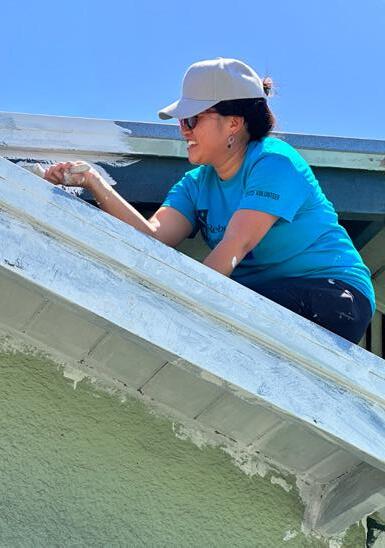
When I was a student at Head-Royce, there was a high school requirement to complete 100 hours of community service. Though there were many options to fulfill those hours throughout the year, I always enjoyed Rebuilding Together (then called Christmas in April) because it was all day on the weekend, where you could sign up with a group of friends or meet new people across grades. The work was physically hard and a long day, but being outside and active—and seeing a project through from start to finish—made it incredibly fun.
After graduating in 2003, I studied Architecture at Cal Poly San Luis Obispo. When I went to work for a large architecture firm in San Francisco, they had a great office culture of giving back to the community and supporting employees who wanted to volunteer. I joined a Bay Area Young Architects group that volunteered with Rebuilding Together, leading teams of volunteers on community projects. The projects I worked on were usually community buildings and nonprofits, which were especially rewarding because the work impacted so many people.
As part of the alumni weekend activities for my 15th Head-Royce reunion, alumni were invited to join students for their annual Rebuilding Together service day. I reconnected with Nancy Feidelman, Director of the Center for Community Engagement (CCE), who was running the project, and offered to help where needed. She later reached out to ask if I would partner with her for future Rebuilding Together projects, and I was happy to get involved again, especially working on homes in the East Bay where I now live. It is an honor to work on someone’s home and share in their pride for their property.
I love working with current Head-Royce students and seeing their enthusiasm for Rebuilding Together. I have been impressed with the students who step up as leaders to get this two-day project up and running. The day-of volunteering brings out the best in students, and I love hearing about moments when students step outside their comfort zones or discover new confidence. Coming together for a common good brings the group together, and it means so much to give back to the same community that shaped me and showed me the fulfillment involved in community engagement.
Sarah painting a house with Rebuilding Together Oakland
Stanislava Stancheva Investing time, nurturing belonging
The gift of time is foundational to the school’s culture of philanthropy because it signals presence rather than just support. Through my professional work in a philanthropic organization, I know that granting money is not always, or solely, the way commitment is shown. Devoting time, making things personal, and building relationships are equally important forms of giving. As a full-time working parent, I’ve also learned that time is the one resource we all give at real personal cost. When families choose to volunteer, they’re saying that this school community matters enough to show up for. That kind of participation turns the act of giving from something transactional into something deeply relational.
Giving my time has helped me build connections at HRS through many small, shared moments of effort. I served as a grade-level coordinator throughout my son’s middle school years, which allowed me to connect closely with families through very practical forms of support—driving students during community engagement days, organizing events, distributing food, cleaning up after school dances, coordinating graduation celebrations, and delivering much-appreciated faculty snacks. Those experiences placed me alongside other parents in ways that feels collaborative and deeply fulfilling.
There have been many moments when the impact of volunteering came not from doing something exceptional, but from simply showing up. In each of these moments, the value isn’t in the task itself, but in the shared responsibility and quiet reassurance that the community will fill in where needed. That kind of support doesn’t happen on its own. Without that collective investment of time, those moments simply wouldn’t exist.
My involvement has taught me that strong school communities are built through participation. When people show up, even briefly or imperfectly, it strengthens trust and reinforces the idea that the school is something we actively build together.
“When people show up, even briefly or imperfectly, it strengthens trust and reinforces the idea that the school is something we actively build together.”
Stanislava with her family
AL U MNI
ALUMNI PROFILE
Big Ideas
By Mary Jo Bowling, a journalist, a Head-Royce parent, and volunteer
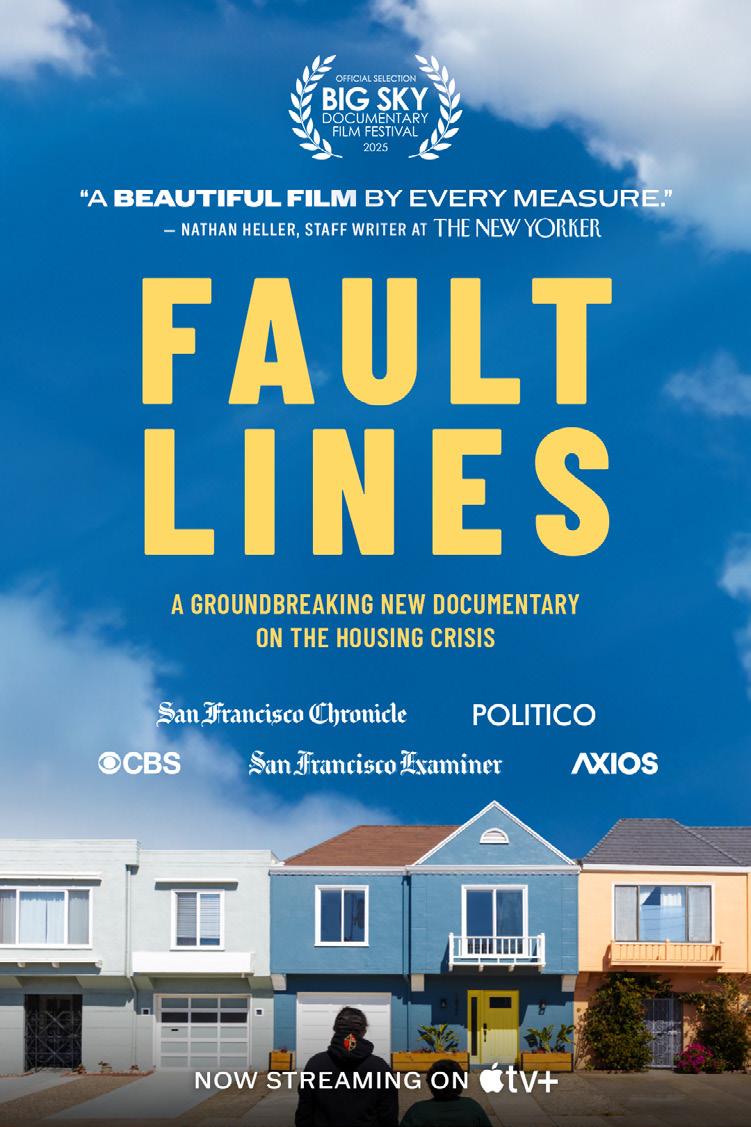
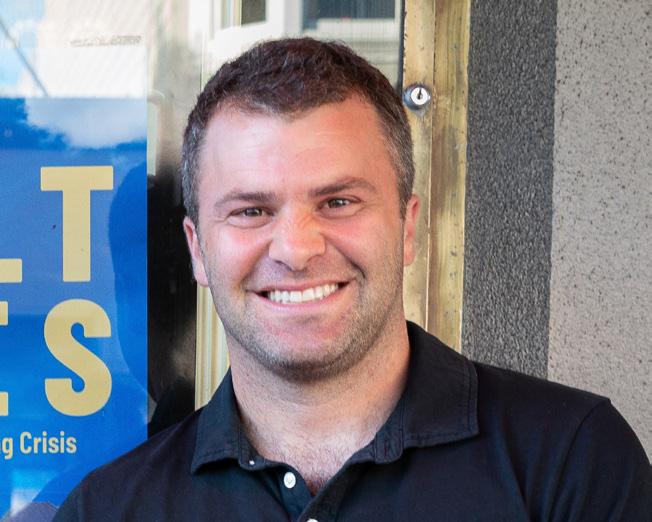
Nate Houghteling ’02 has long been a person who asks questions and takes risks. These traits, fostered during his time at Head-Royce, have led him on some fascinating journeys, including founding a cutting-edge production company and directing Fault Lines, a celebrated documentary exploring the housing crisis in America.
Nate joined the school in 1996 as a 7th grader. “I had attended a smaller school, and Head-Royce felt big to me,” he says. “Walking in off Lincoln Avenue and seeing it tucked down into a valley—it seemed to be filled with anticipation and mystery.”
Some students define themselves by adopting specific roles such as “athlete” or “theater kid.” Nate never felt like that person. “I tried to be friends with everyone, and I floated between different circles,” he remembers. “I played basketball, soccer, and tennis, and I was also involved in a diversity club and student government.” He joined the school with his childhood friend, Kai Hasson ’02, and fellow classmates referred to them and their circle as “The Old Men,” because of their love for playing chess and poker.
His varied interests were encouraged by his teachers. “The teachers were the nucleus of the school,” he says. “My best memories
are of the culture they built and what I learned in their classes.”
That environment proved key to what came next. “Whether it was Paul Scott teaching World History or Dr. Enelow in English, they were pushing us beyond the traditional bounds of those subjects,” he says. “In Paul Scott's class, there was a pursuit of knowledge, truth, and big ideas.” He also recalls working on the student newspaper under faculty advisor Andy Spear, calling the publication “a creative place with a lot of freedom and excitement surrounding it.” There, he tested more waters, writing everything from a humorous column about students taking a gap year to a serious article about a support group for students with eating disorders. In classes such as photography with Jeff Key, a former fine arts teacher, he honed storytelling abilities. “We were encouraged to follow passion and inspiration, to pursue the things that light you up,” he notes. “It became the basis for my professional life.”
After high school graduation, he attended Harvard University, where he majored in History and Literature, and later, he took a job at News Corp in New York City. Meanwhile, his friend Kai, after graduating from Yale, landed in San Francisco at Current TV. The two began collaborating on class-related videos in high school, and they never stopped. Both were fascinated by the nascent YouTube platform and considered it the future.
During their university years, they worked on a web series together, and in 2009, they left their corporate jobs to start a production company called Portal A, a play on the name of El Cerrito’s Portola Middle School, where they used to shoot hoops in the gym as kids.
Moving back into their parents’ homes to start a company might seem daunting, but Houghteling says it didn’t give him pause. “At Head-Royce, we were encouraged to dive into problems where the answer wasn’t immediately obvious,” he says. “Rather than to work for work’s sake, we were taught to be creative and work with purpose, to go out into the community and make a difference.”
Nearly two decades and many YouTube hits later, the move to start their own company paid off, and Houghteling was ready for his next venture: a full-length documentary about housing. “I feel a personal connection to this issue,” he says. “I could see that cities were becoming places where working-class people couldn’t afford to live. I felt a calling to dive into it.”
The calling wasn’t easy. “Going from making short videos to a feature-length documentary felt like I was a sprinter running a marathon,” notes Houghteling. But, working with Portal A and fellow director Yoav Attias, he persevered, following the story for years and examining the subject through the experiences of real people. “It’s been really well received,” he says. “It has appeared at Big Sky Documentary Film Fest and other festivals, and we’ve had a number of screenings around the country.” (One of them was hosted by fellow HRS alumnus Dr. Ben Rosenberg ’02 at Dominican University in San Rafael, where he is an Assistant Professor of Psychology.) The piece is available on Amazon or AppleTV.
Houghteling is already at work on his next venture, a documentary about small news outlets covering the ICE raids in Los Angeles. He’s tackling this and his company’s next chapter as a chance to explore more big questions. “Right now, as an industry, we are on the verge of the next big thing," he says. “At Portal A, we’re always trying to look around the corner to find new ways to tell stories that are urgent to people. We’re excited to keep pushing into the unknown.”
ALUMNI EVENTS
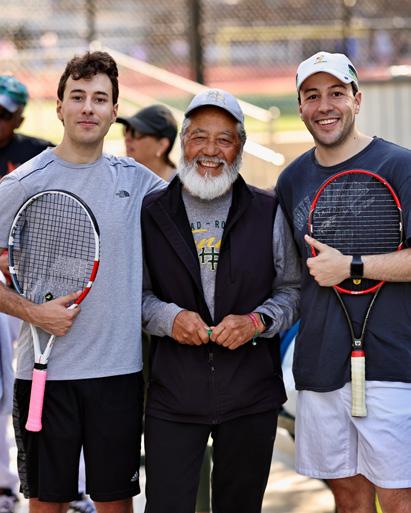
Bob Manalo’s 50th Anniversary Coaching at Head-Royce and Parents and Alumni Tennis Round Robin, October 4, 2025
On October 4, alumni, parents, students, and professional community members—past and present—gathered for the annual Parents and Alumni Tennis Round Robin Tournament, celebrating both our shared love of the game and Bob’s remarkable 50-year legacy of coaching at Head-Royce.
To see more photos from these events, follow @headroycealumni on Instagram
Boston and New York Alumni Events, October 14 and 16, 2025
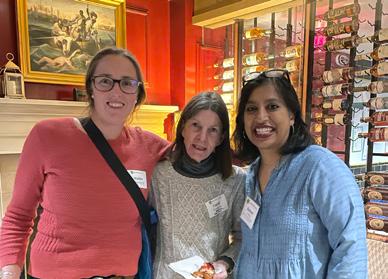
More than 80 alumni gathered at this year’s receptions in Boston and New York City, joined by current faculty members Shahana Sarkar, Geoff Evans, Jen Brakeman, and longtime former Lower School teacher Carol Kennedy.
Holiday Program Alumni Pre-Reception,
December 19, 2025
So many familiar faces filled the annual Holiday Program Alumni Pre-Reception. From the Class of 1953 to the Class of 2025, we loved welcoming alumni back to campus and are grateful for the generations who return each year for this cherished Head-Royce tradition!
Alumni Holiday Party, December 22, 2025
Alumni gathered for another festive Alumni Holiday Party, filling the evening with laughter, stories, and holiday cheer. It was especially meaningful to reconnect with friends who traveled from near and far to celebrate together.
Back-to-Campus Lunch, January 8, 2026
College-age alumni returned to campus while on winter break to visit with their former teachers and friends.
ADULTING 101
STUDENTS | ALUMNI | CONNECTIONS
Trinity Balla ’18: Inspiring a New Generation of Students, November 7, 2025
Inspired by the non-profit that Trinity Balla ’18 founded while a student at Head-Royce, two Upper School students, Ella S. ’26 and Emma W. ’28, launched a student chapter of Grace Period, an organization dedicated to combating period poverty by distributing menstrual hygiene products to unhoused and disadvantaged women in the Bay Area.
Gavin Lituchy ’16: Returning To His Roots,
November 10, 2025
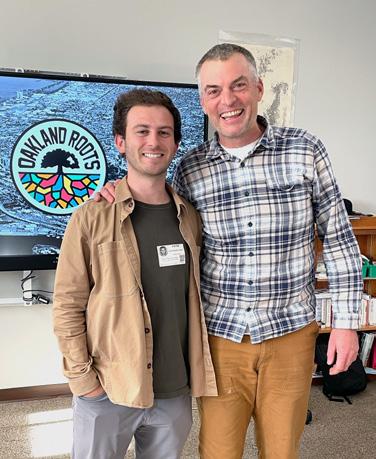
Gavin Lituchy ’16 recently returned to campus at the invitation of his former Upper School History teacher, Geoff Evans, and delivered a thoughtful and informative presentation examining the past, present, and future of professional sports teams in Oakland. Having worked for the Oakland Athletics and currently with the Oakland Roots, Gavin provided great insight into Oakland’s relationship with professional sports organizations for the students in Evans’ History 12: Oakland Through Many Lenses senior elective. From economics to politics, students came away with a deeper understanding of how major sports franchises can impact a city and community.
Mock College Interviews
Over 20 alumni signed up to help prepare seniors for their college interviews this fall as part of the Mock College Interview program, a partnership between the College Counseling and Alumni Offices. They provided a safe space for students to practice their skills while offering suggestions and advice based on their own college and recruitment experiences. Here’s what students said about the experience:
“My interviewer, Eli Siltanen ’21, was a kind and welcoming presence in my journey to college applications and life. I remember planning very little for our mock interview, and having barely any previous interviewing experience—needless to say, it was a vulnerable moment for me to share aspects of my life with little preparation. Eli, however, made it so easy to speak openly because of his welcoming demeanor. After the interview, he provided feedback that was extremely useful for my future interviews, and never once made me feel embarrassed or bad in any way when providing the criticism. Then, we spoke about my experience at Head-Royce, and I had a great time overall. I not only learned useful interviewing skills for the future, but I also made a good friend in Eli.”
-Ruby B.
’26
“I had Leslie Claxton ’59 . She was an absolute hoot. Not only did she help prepare me for all of my college interviews, but she gave me amazing advice on the college process as a whole. We have stayed in touch, and I’ve now met her equally amazing granddaughter, who’s closer to my age. I could not speak more highly of the experience, and I’m so grateful for our amazing alums!”
-Emmy M. ’26
“I had a great time interviewing with Jack Chin ’22 — he gave me helpful feedback on how to answer questions and convey key aspects of my profile, and helped me build confidence going into interview season. I also really appreciated the chance to ask questions about the larger application process and life at college.”
-AJ Z. ’26
Adulting 101 Lunch and Learn: Alumni in Law, January 16, 2025
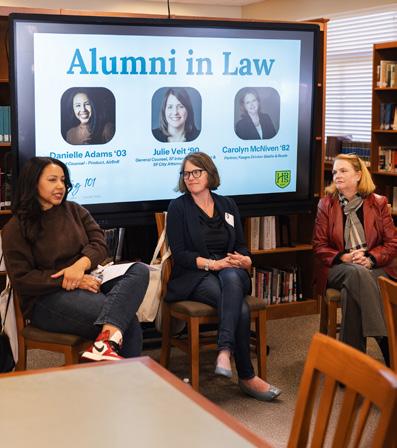
Current junior and member of the Student Alumni Ambassador Team, Amelia W. ’27, organized an Adulting 101 Lunch and Learn about the Law profession. She invited three alumni attorneys including: Carolyn McNiven ’82 , Danielle Adams ’03 , and Julie Veit ’90 to campus to speak with students about their specific area of law and work. They represented a wide range of work within the legal profession. Carolyn is a partner at Faegre Drinker, Danielle is the Lead Counsel for Product at AirBnB, and Julie is with the San Francisco City Attorney’s office and General Counsel for the San Francisco International Airport.
ALUMNI NOTES
Howard Chasnoff ’89
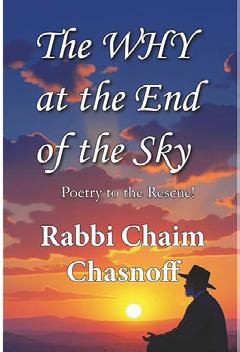
Rabbi Howard Chasnoff ’89 has published a new book, The WHY at the End of the Sky, a collection of accessible, poetic reflections designed to share life wisdom with warmth and humor. Thoughtful, playful, and inviting, the book is meant to be both meaningful and fun. It is available now on Amazon, and readers are welcome to share their reflections with Howard directly at HiChasnoff@hotmail.com.
Sarah Raynor ’94
After twenty-two years in the Mathematics Department at Wake Forest University in Winston-Salem, NC, my family and I have moved to the beautiful state of Vermont. I have taken a position as Math Instructor and Social Justice Coordinator at The Mountain School of Milton Academy, a semester-long school for high school juniors in Vershire, VT. Students learn about food systems both academically and through working on our farm; we grow much of our own food and have wonderful farm-to-table meals. We also have extensive outdoor programs and exceptional academics. A number of Head-Royce students have attended the program and I would be very happy to chat with any current Head-Royce students who are considering it.
Claudia (Holly) Hutchins ’56
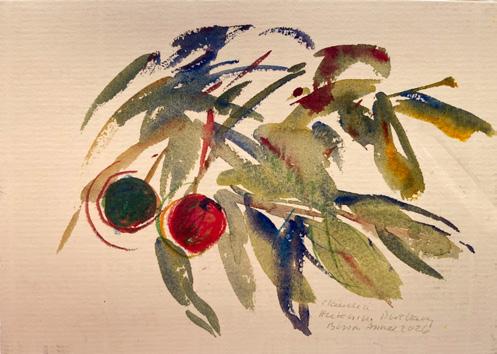
Holly shared a watercolor painting of a strawberry tree in honor of the new year.
Molly Nock Robarts ’56
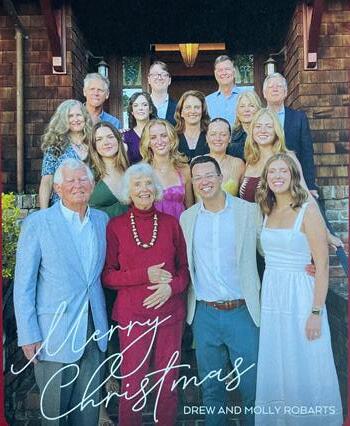
This most recent photo shows three generations of our family. No great-grandchildren yet. Our first wedding will be next summer (Maggie and Caleb in the front row).
Where are they now?
Judy Kennedy joined Head-Royce in 1971, newly out of the University of California, Berkeley with a love of geology, math, and the great outdoors. She had dreamed of teaching ten-year-olds and, despite an opportunity and encouragement to pursue a PhD, chose the classroom instead—a decision that would shape the lives of generations of students. Over 39 years at Head-Royce, Judy became far more than a teacher; she formed multigenerational connections that have remained an important part of her life.
From her earliest days on the then-new Oakland campus, she embraced teaching with boundless energy. Frequent field trips— to places like Big Creek Reserve, the aquarium, and beyond—became hallmarks of her classes, where students learned by observing birds, plants, and mammals, and by creating their own booklets as they explored the world around them. Judy’s deepest curricular passion emerged when she declined to
teach a traditional “missions” unit and instead proposed a curriculum centered on Navajo history and culture. With the school’s support, she created an interdisciplinary experience that included Navajo flute music, sand paintings, quilts, and language. For her, the unit was about more than content—it was about teaching with cultural integrity and offering students a more truthful, respectful understanding of history.
Judy’s dedication extended far beyond academics. She was known for her warmth and her knack for making every student feel seen—a characteristic she carried forward in her retirement. She greeted her students with a hug, handshake, or high-five. “The nice things that students said about me were about how I made them feel,” she reflects. “Academics are one thing, but connecting with people— that’s what matters.”
Though she retired in 2010 to focus on being a grandparent, the Head-Royce community has continued to be an important part of her life. She continues
Then. Now. Always Head-Royce.
This spring, our community marks its 5th Annual Day of Giving, a 24-hour opportunity for alumni across generations to come together in honor of their time at Head-Royce and to invest in the students here today. Day of Giving gifts support the Alumni Impact Fund, strengthening tuition assistance and expanding access for Head-Royce students.
Whether you give on March 26 or in the days that follow, your gift carries forward a legacy of opportunity for current and future Jayhawks.
to play bridge with former colleagues, she celebrates holidays with former students and their families, and she attends HRS events like the recent Holiday Program. She is always greeted—hugged or highfived—with the same warmth she once offered her students, now adults with their own careers and children, including people like Libby Schaaf, former Mayor of Oakland. Judy follows the growth of the school with pride.
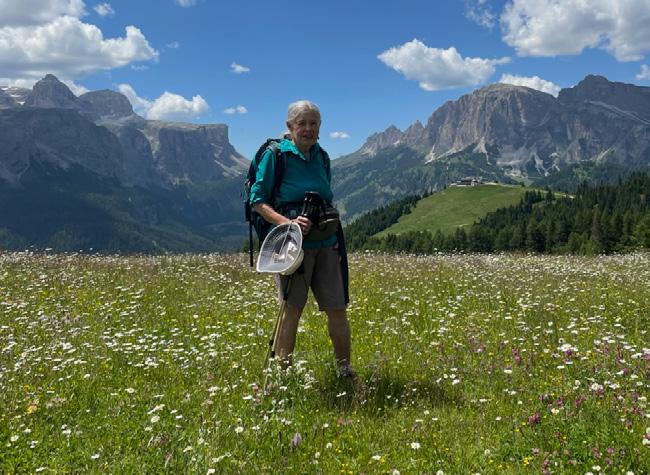
In the years since her retirement, Judy has built a life full of meaning and purpose. She visits her family, including some 40 cousins, in Italy every summer, hikes the Dolomites, gardens, dances, and continues to pursue her own passions. Yet even amidst these adventures, Head-Royce remains top-of-mind to her. She cherishes seeing how the community has evolved, how the student body has become more diverse, and how the spirit of learning and connection that were central to her teaching, continues to thrive.
Judy Kennedy may have retired from teaching, but she never truly left Head-Royce behind. Her legacy endures in the students she taught, the families she touched, and the community she continues to love.
Scan to make your impact!
Judy with Audrey Jones ’18, one of her former 4th grade students
Judy Kennedy hiking the Dolomites
IN MEMORIAM
Ann Babette Foorman ’70
Like stars in the heav’ns Or the ocean’s grains of sand, Earth’s blossoms we are…
This haiku was composed by Ann Foorman in the last months of her life.
Family, friends, and community have celebrated the life of Ann Babette Foorman, and remember her many gifts. They fondly refer to her as a guardian, or as a wildly creative partner, generous beyond measure, and unreserved in her loving. Specificity, graciousness, and serenity characterized her until the day of her peaceful passing on June 6, 2025, following a journey with cancer. She described her life’s work as “actor, professional photographer, and healing arts practitioner.”
Ann was born in California on July 11, 1952 to Carl Theodore Foorman and Babette Ann Foorman. Her mother died when she was seven and her father remarried Lenore Steiner Foorman, her stepmother. In her younger school years, her love for the arts and her interest in theater wove through
her academic studies. She graduated from The Anna Head School as a member of the Class of 1970. Afterwards, she attended Occidental College in California, where she graduated Magna Cum Laude in 1974. Upon graduation she was accepted into the American Conservatory of Theater (ACT) in San Francisco, an acclaimed training program for some of the country’s finest actors. Following her time at ACT she moved to Sunrise Ranch in Loveland, Colorado. In her special and caring way she hosted people from around the world who visited this intentional spiritual community. Her abilities as an actor blossomed, resonating with audiences far and wide. She directed and inspired people of all ages and cultures. A mother of one of her young students described her son’s early experience with Ann as the foundation of his confidence and leadership in later life.
Ann charmed audiences with a onewoman show called Catch Fire with Me that she took on the road across the United States and Canada. Ann subsequently moved to Fort Collins, Colorado, where for 20 years she worked for Hospice, and again participated in community theater productions. She is well remembered for her hilarious performance as Mother Superior in the production of “Nunsense.”
Ann’s love for the world was exemplified in travels to Europe and to India, for which she had a particular affinity. She paid keen attention to challenging situations around the world by supporting key players and making informed financial contributions. Her nephew Nathan describes Ann’s “profound interest in other people’s interests. She would dive in full tilt to support us.” He recalls a trip Ann made to California from Colorado upon hearing of her niece Rachel’s passion for textiles. She flew to Oakland just to take her to specialty textile stores.
Nathan remembers Ann following his own interests in travel and adventure, and her vicarious excitement about every step of his journeys. Many of her friends also report being held closely and safely in her awareness when they traveled.
Ann meticulously tracked their itineraries and movement across the planet.
Ann’s presence was expansive—she included and nurtured everyone around her, bringing beauty to all she touched. Those of us who were with her at Anna Head’s can also celebrate the memories of her enlightened spirit, and her school leadership that was illuminated with humor and wisdom. She was selected to be an American Field Service (A.F.S.) exchange student to India during the summer between her junior and senior year of high school. She performed in The Music Man, The Mikado, and The Chalk Garden, as well as many dance concerts. We will never forget her performance as Maria Von Trapp in The Sound of Music. She was an integral part of the whole school: in classes, where she was an exceptional and curious student, as well as a leader in many clubs and the swim team. Ann was beloved by faculty, staff, and Anna Head students from 1st-12th grades. When she graduated from the Anna Head School in 1970, she was given the Headmaster’s Award for her outstanding participation, citizenship, and commitment to the school. This was an annual award given to an outstanding senior and Ann will forever be remembered as a shining star.
How do you find a word that means Ann? How do you keep a wave upon the sand? How do you hold a moonbeam in your hand?
Rest in peace and light, dear friend.
-KJ and EO
Ann is survived by three generations of family: two brothers, a sister, and their spouses, David and Robin Foorman, William and Jackie Foorman, Gail Foorman and Craig Tovey; nieces and nephews and their spouses, Max Foorman, Rachel and Omer Ayfer, Steve and Janine Nutche, Nathan Foorman, Sean and Tessa Foorman, Benjamin Foorman, and William Tovey; great nieces and nephews, and spouses, Levi and Evie Foorman, Janelle and Lucas Boulton, Sydney Nutche, Zeki and Reza Ayfer, and Isla Foorman. It is Ann’s wish that friends and family gather in small groups or create personal rituals to honor her.
Mindy Pellissier ’71
Melinda Donley Pellissier (Mindy), of Carlsbad, California, was born September 25, 1953 and passed away on September 24, 2023, one day short of her 70th birthday.
Mindy grew up in Orinda with her twin brother, Tim, and two younger brothers. While at Anna Head School, she was active on the diving and swim team with free style and butterfly as her strong strokes. None of us will forget our all-girl production of The Sound of Music in 1969 in which Mindy played Liesl. During the second semester of her junior year, she lived with a family and attended high school in Melbourne, Australia, through the American Field Service student exchange experience, and returned to finish up her senior year at AHS, graduating with her class in June 1971. Afterward, she attended the University of Arizona, receiving her nursing degree in 1975. She spent a year working at the University of Arizona Hospital then went on to hold leadership and managerial positions in health clinics, medical groups,
and corporate healthcare facilities. Mindy met her partner and future spouse, Jane Donley (they were together for over 30 years and wed in 2013), while they both worked for the Scripps Clinic and Research Foundation. At the time, Mindy was the Vice President of Operations while Jane was in marketing and public relations—their projects overlapped, which brought them together. Mindy was in charge of 13 satellite clinics (four or five of which she opened).
By the age of 40, Mindy realized she needed to change her life. “I knew my passions were dogs, clean water for the environment, and living at the beach. I simply incorporated all three into my new life at Ocean Beach.” She and Jane moved from La Jolla in the early 1990s to their duplex on Brighton Avenue in San Diego, near the oceanfront. A few years later they adopted a Hurricane Katrina dog, one of the 63 that had been sent to San Diego. In 2006, one year after Katrina, Mindy traveled to New Orleans to assist and help build homes for Habitat for Humanity. She had also built homes in east Tijuana, along with Jimmy Carter. As conscientious pet lovers and owners, Mindy and Jane washed their dogs often—an unpleasant experience for the couple as well as the dogs. Believing that there had to be a better way for everyone involved, they researched and interviewed hundreds of visitors at Dog Beach, with a growing confidence that a community dog wash facility could be successful. And in February 1993, they opened Dog Beach Dog Wash. It was one of the first “do it yourself” dog washes in the country and they averaged about 400 washes a week. This popular and robust business continues today, even though Jane and Mindy have passed on. Dog Beach Dog
Wash created “Friends of Dog Beach” in 1995 as a group of volunteers dedicated to preserving and enhancing Dog Beach and improving the water quality in the San Diego River and the Pacific Ocean for dogs, people, birds, and aquatic and marine wildlife. Mindy was awarded the Ocean Beach Citizen of the Year for her steadfast work on the Ocean Beach Community Plan update process that she alone worked on for 12 years. She successfully guided the plan through the City Council with unanimous approval. “I see my biggest strength as a ‘consensus builder,’” she once said. “It’s easy for me to hear both extremes of an issue, bring both sides together, exercise a lot of patience, and to the extent possible, find a working solution. I love how diverse the population is on Ocean Beach. I also saw OB as a walkable community and I have worked toward that end through making goals and outlining objectives,” she reportedly said. Mindy served on the Ocean Beach Planning Board for several years. She was the first to join San Diego River Coalition which proposed scientific study that resulted in Dog Beach staying open when pollution upriver threatened it with closure. Some of her other contributions over the years were having 200 trees planted along Voltaire Street and benches installed, as well. She was able to commission an artist to paint a mural in the community. She organized monthly Dog Beach clean-ups, providing tools, supplies, and local advertising. These are just a few and there are many more contributions that Mindy made to her beloved community of Ocean Beach. Mindy’s efforts and actions enhanced life for all in Ocean Beach to enjoy every day, human and canine alike.
FLASHBACK
Did you know that the tradition of the All-School Fair began back in 1942? It was started by the French teacher, Madame Hull who: “...recognized the students’ interest in doing something to help France which had experienced an invasion by Germany. She created an event called a Country Fair, in which each class made a booth that featured activities (bean bag toss, fishing for a prize, baked goods, etc.) where they could earn money to send relief supplies to France.”
-Joyanne Hull Elkinton-Walker ’44 (daughter of Madame Hull)
Since then, the fair has undergone several name changes, from The Country Fair to the Fall Festival to the All-School Fair, but the spirit on which it was founded has never waned—providing our students and community with the opportunity to come together with a shared sense of purpose…and have lots of fun doing it!