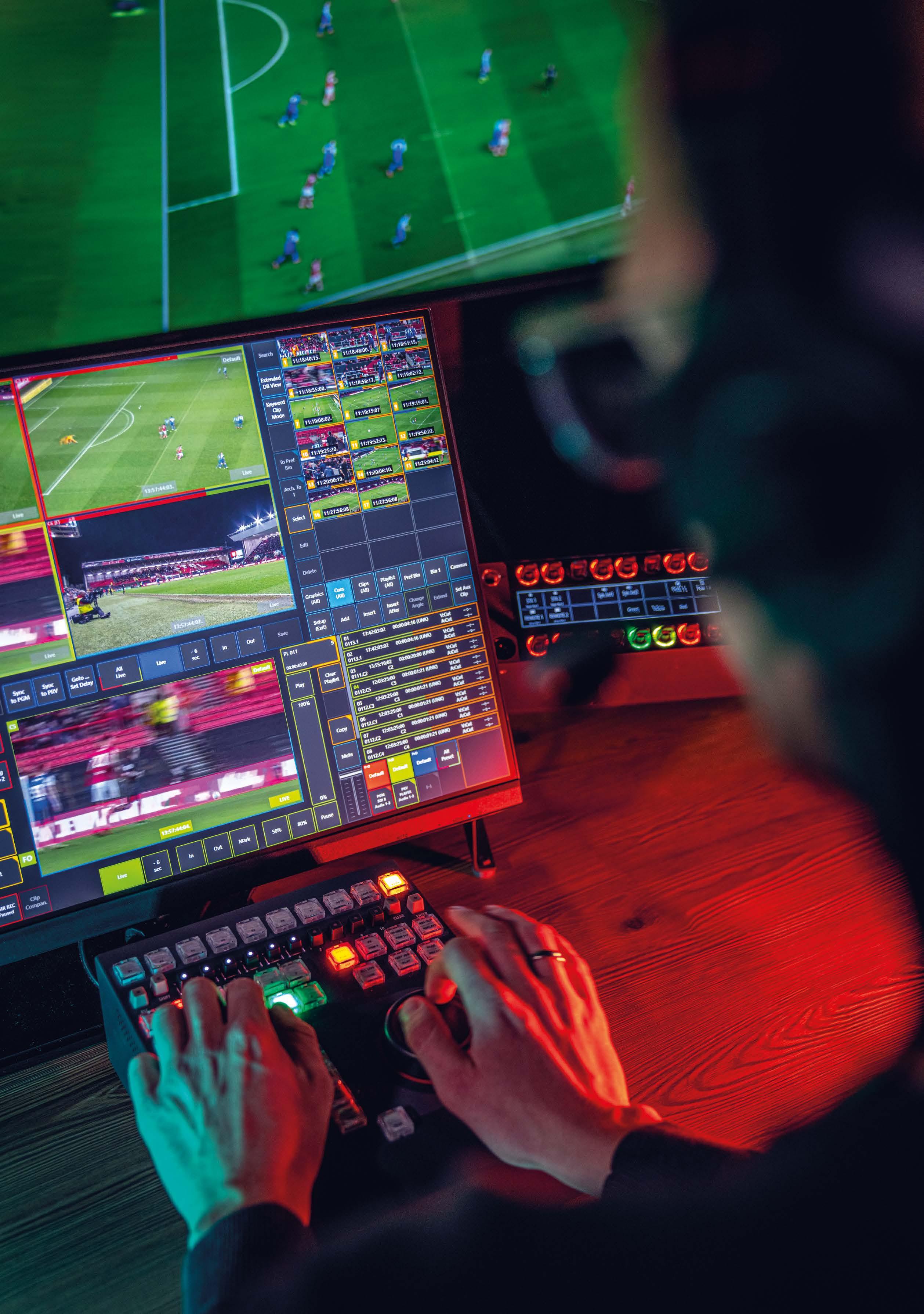
SoundOn is TikTok’s all-in one platform for music creators


Paul Watson CEO
Keith Watson Chairman
Rian Zoll-Kahn
COO
Alice Gustafson Editor-in-Chief
Adam Protz Deputy Editor
Rick Dickerson Reviews Editor
Marc Henshall Head of Digital
Grace Mcguigan
Artist Relations Manager
Rae Gray Head of Design
What’s new this month? How about the definition of new…
The Recording Academy’s latest Grammy rule changes means that now artists can be submitted up to four times for Best New Artist, a change that acknowledges just how differently careers develop in the streaming era. It’s a move that is sure to raise eyebrows; some of you will have noticed that Sabrina Carpenter was nominated in 2025 after releasing seven studio albums, while rising country star Ella Langley – whose breakthrough success with Choosin’ Texas seems likely to secure her a nomination next year – released her debut single back in 2018.
Representation remains another topic impossible to ignore this month. For years, major festivals have defended the lack of female headliners by citing a supposed shortage of suitable acts. Yet the continued success of artists such as RAYE, Charli xcx, Olivia Dean and countless others has increasingly challenged that narrative. The emergence of Olivia Rodrigo’s newly announced all-female festival
sends a clear message: the talent, audience demand and commercial viability have always existed. The issue has never been whether women can headline festivals; it has been whether the industry has been willing to give them the opportunity.
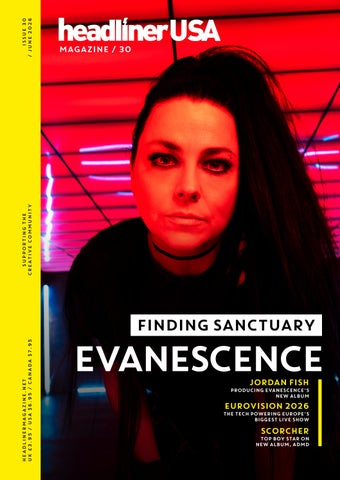
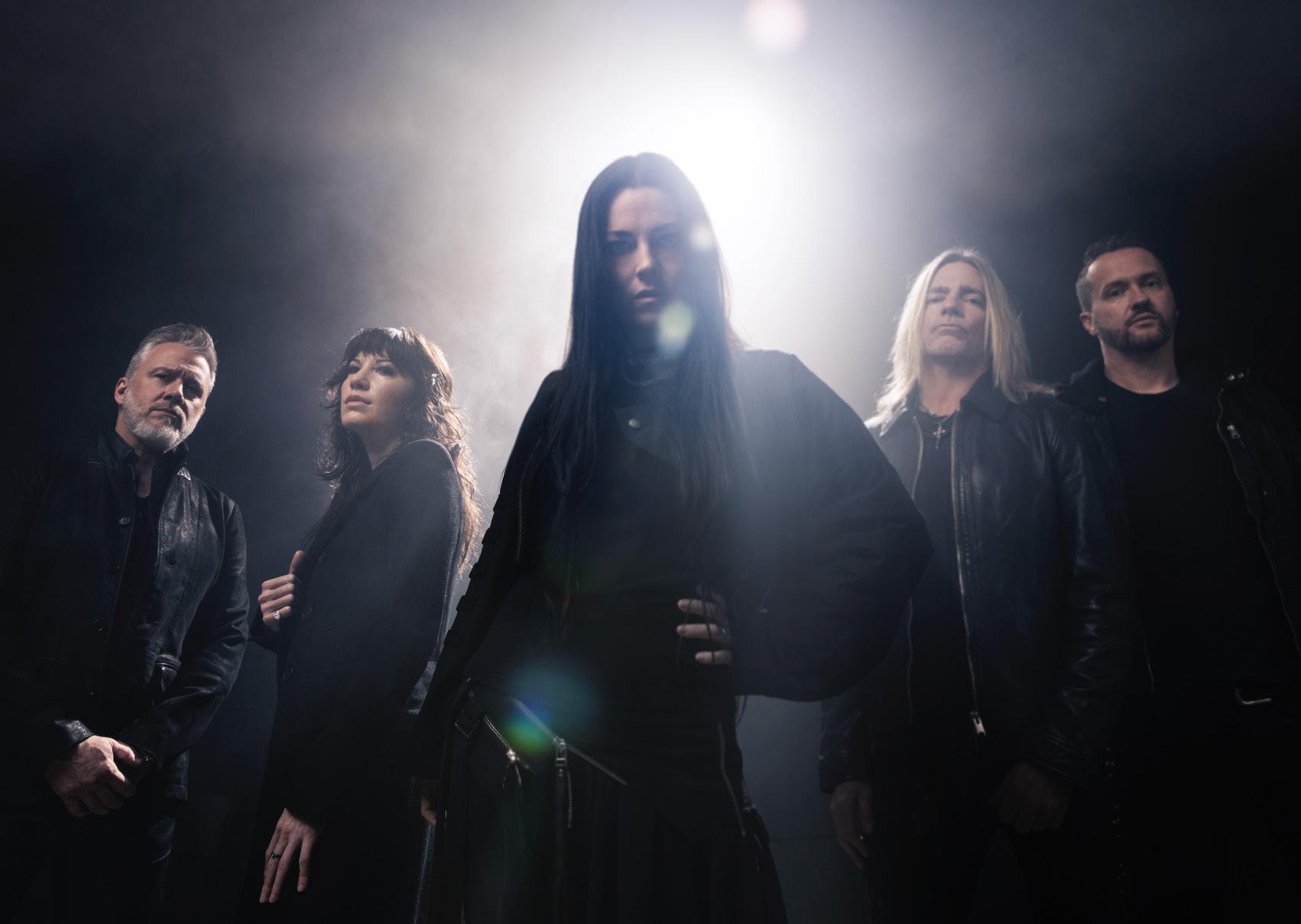
Against this backdrop of change and progress, this month’s issue celebrates some of the artists shaping the future of music. Our cover story welcomes the return of Evanescence. Five years after the band’s last album, Amy Lee opens up about Sanctuary, overcoming the trauma of the band’s early years, working alongside producer Jordan Fish, and preparing for a huge world tour. Fish also joins us for an in-depth conversation about his transition from Bring Me The Horizon keyboardist to one of rock’s most sought-after producers, discussing his work with Evanescence and the technology behind the new record.
We also catch up with grime pioneer Scorcher, whose recent resurgence has reminded audiences exactly why he remains one of the UK’s most compelling rap voices. He reflects on his latest album ADMD, longevity,
and why he refuses to become trapped by nostalgia.
On the live production side, Headliner travelled to Vienna for Eurovision 2026, where some of the world’s leading technology brands came together to deliver one of the most ambitious broadcasts in the competition’s history. We go behind the scenes of the production and sit down with Thomas Riedel to discuss his acquisition of ARRI, the future of live broadcast, and why Eurovision represents a glimpse of what’s next for large-scale entertainment.
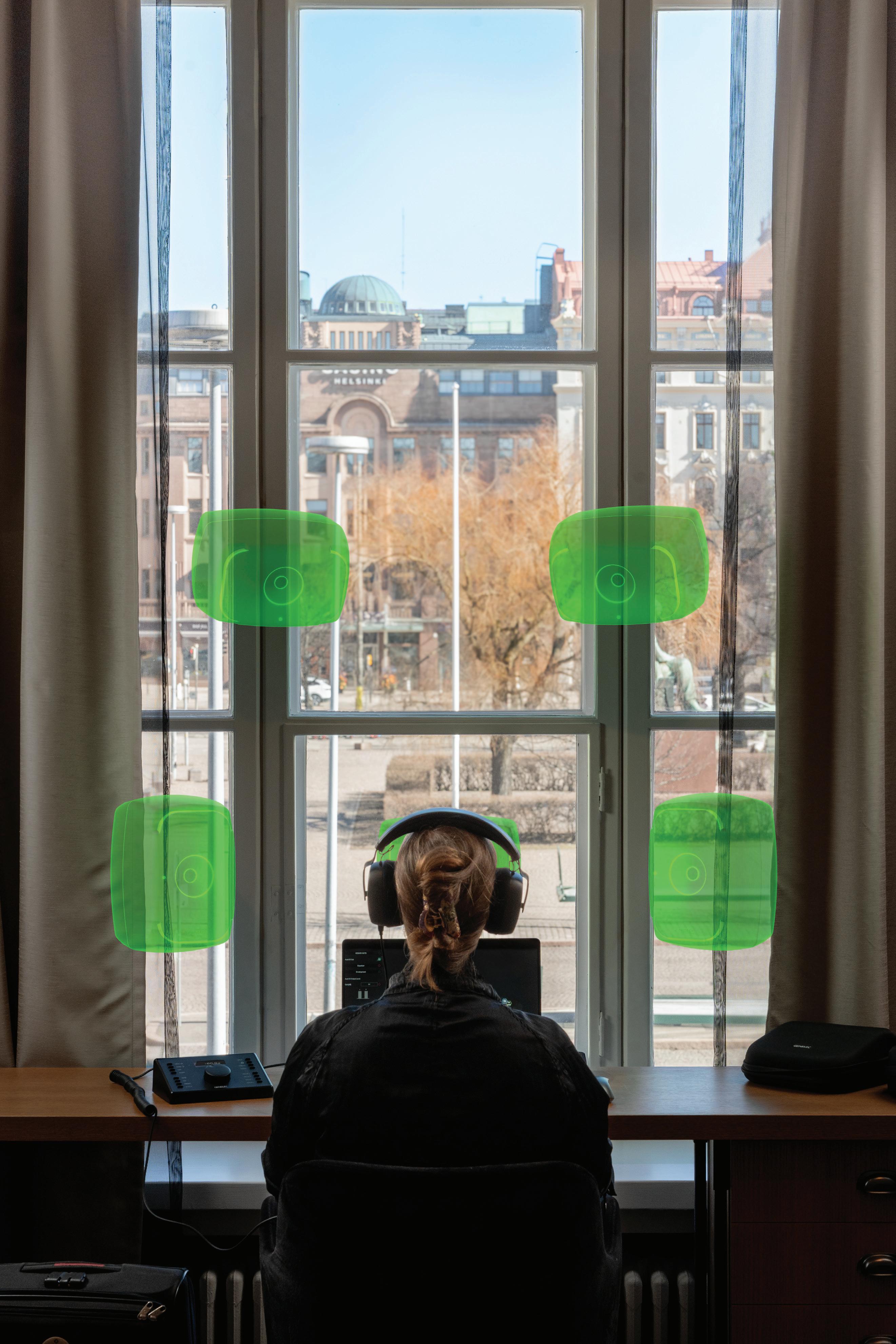
We also bring you a deep dive on L-Acoustics’ new Source Intelligence technology, designed to deliver cleaner vocals, greater intelligibility and unprecedented gain before feedback, offering engineers new solutions for increasingly complex live environments.
Whatever your definition of new, we hope you enjoy the issue.
Alice Gustafson Editor-in-Chief
By Adam Protz
By Adam Protz
By Alice Gustafson
CONSCIOUS PILOT THE STORY BEHIND ‘HUMAN POULTRY’
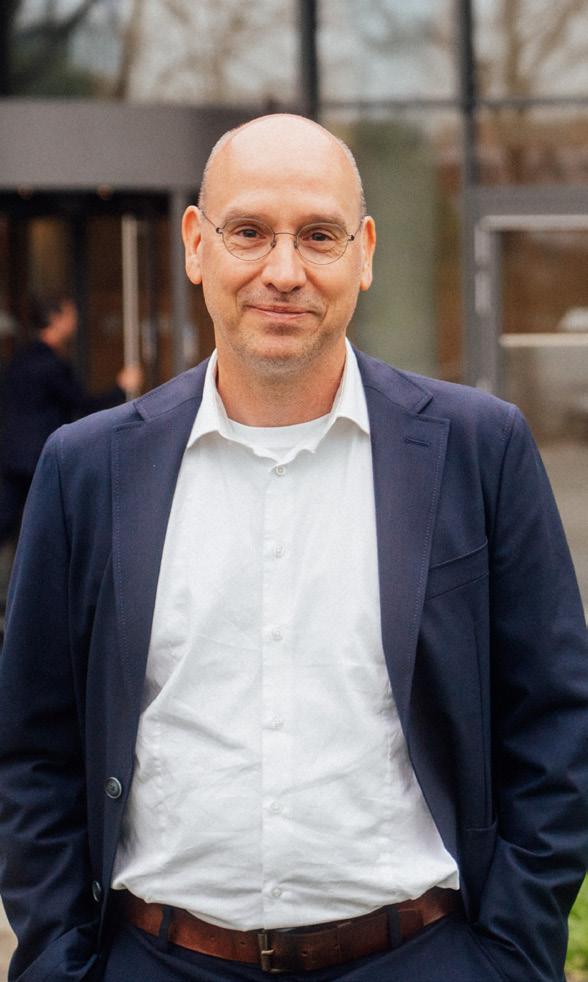
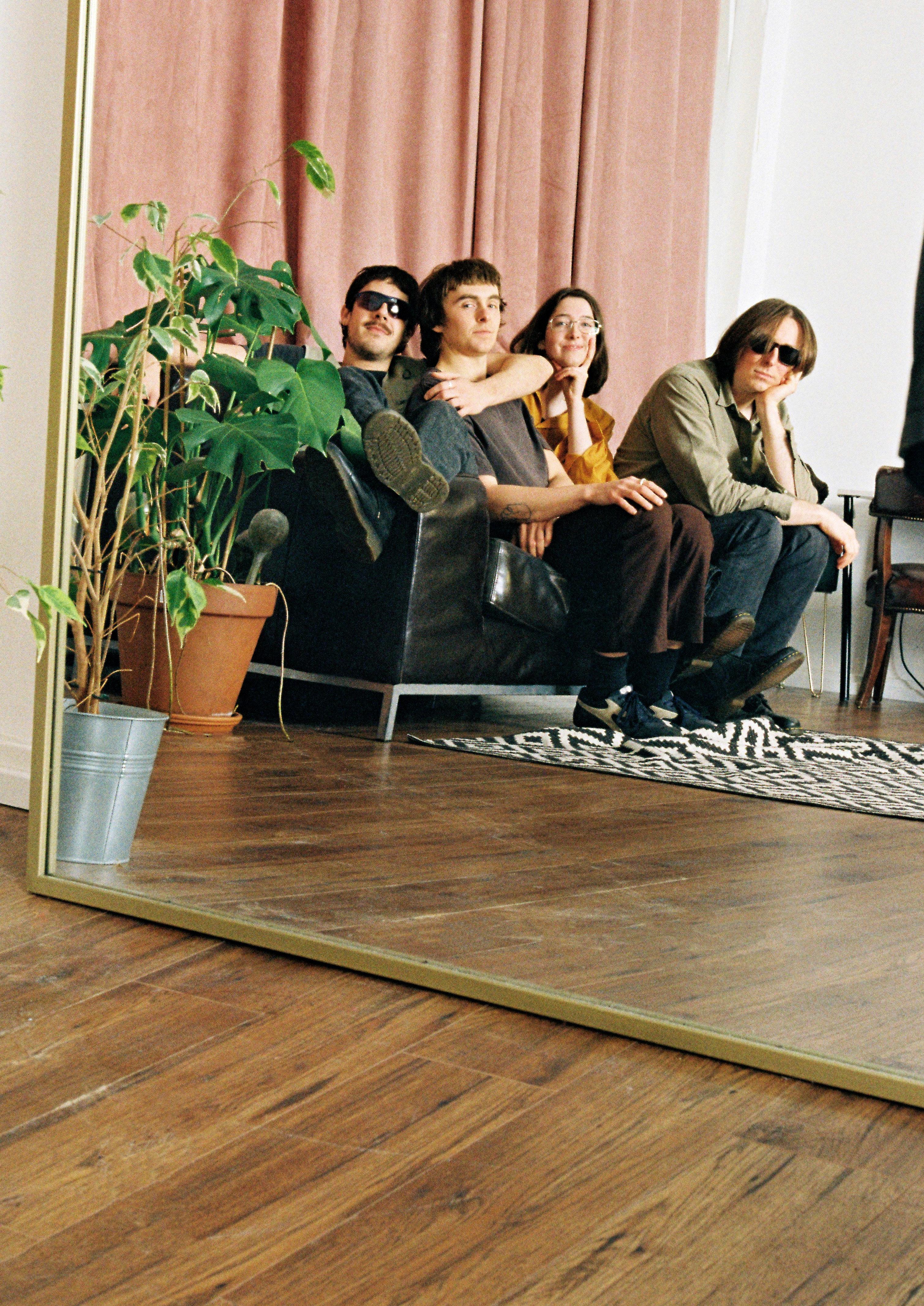
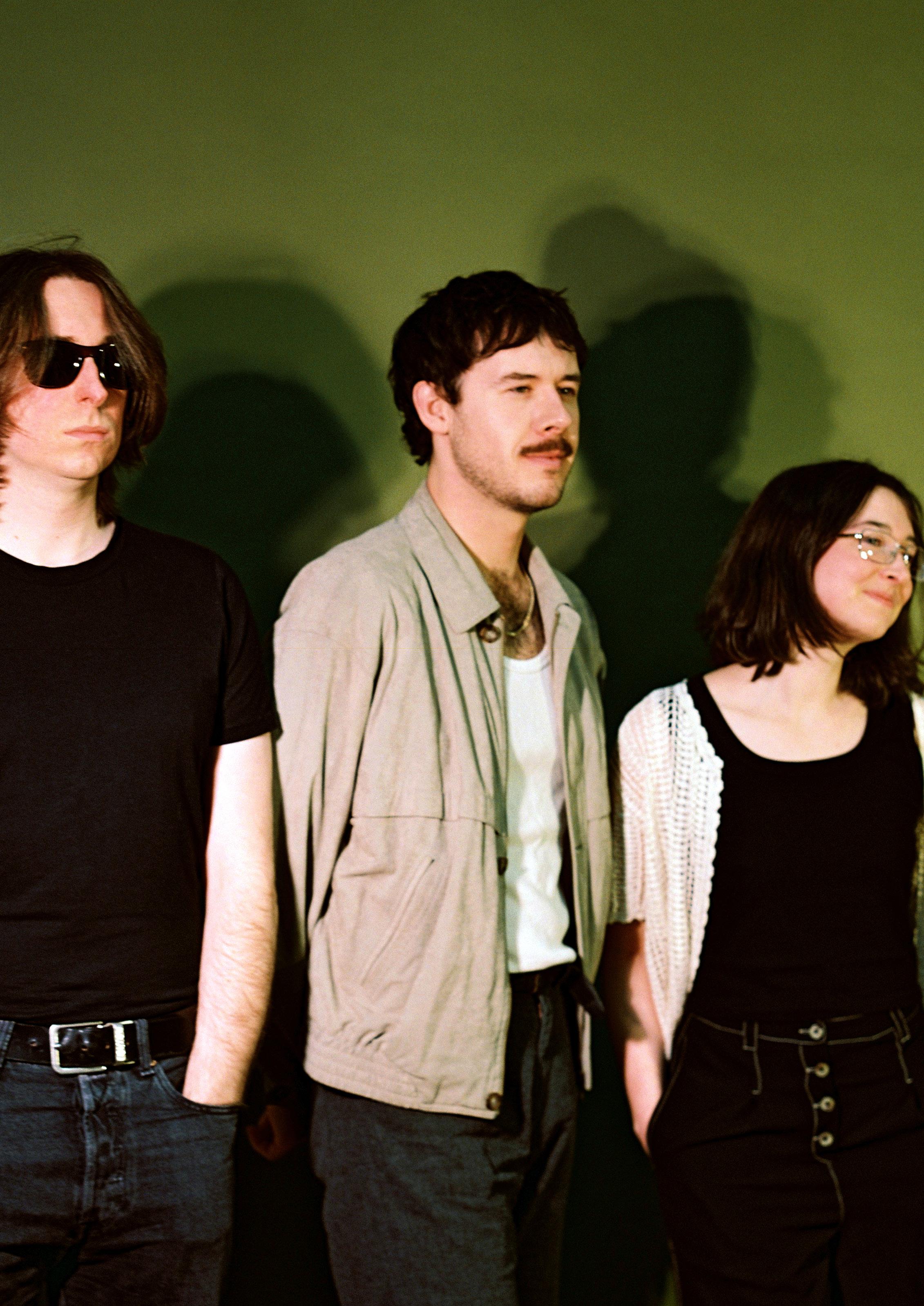
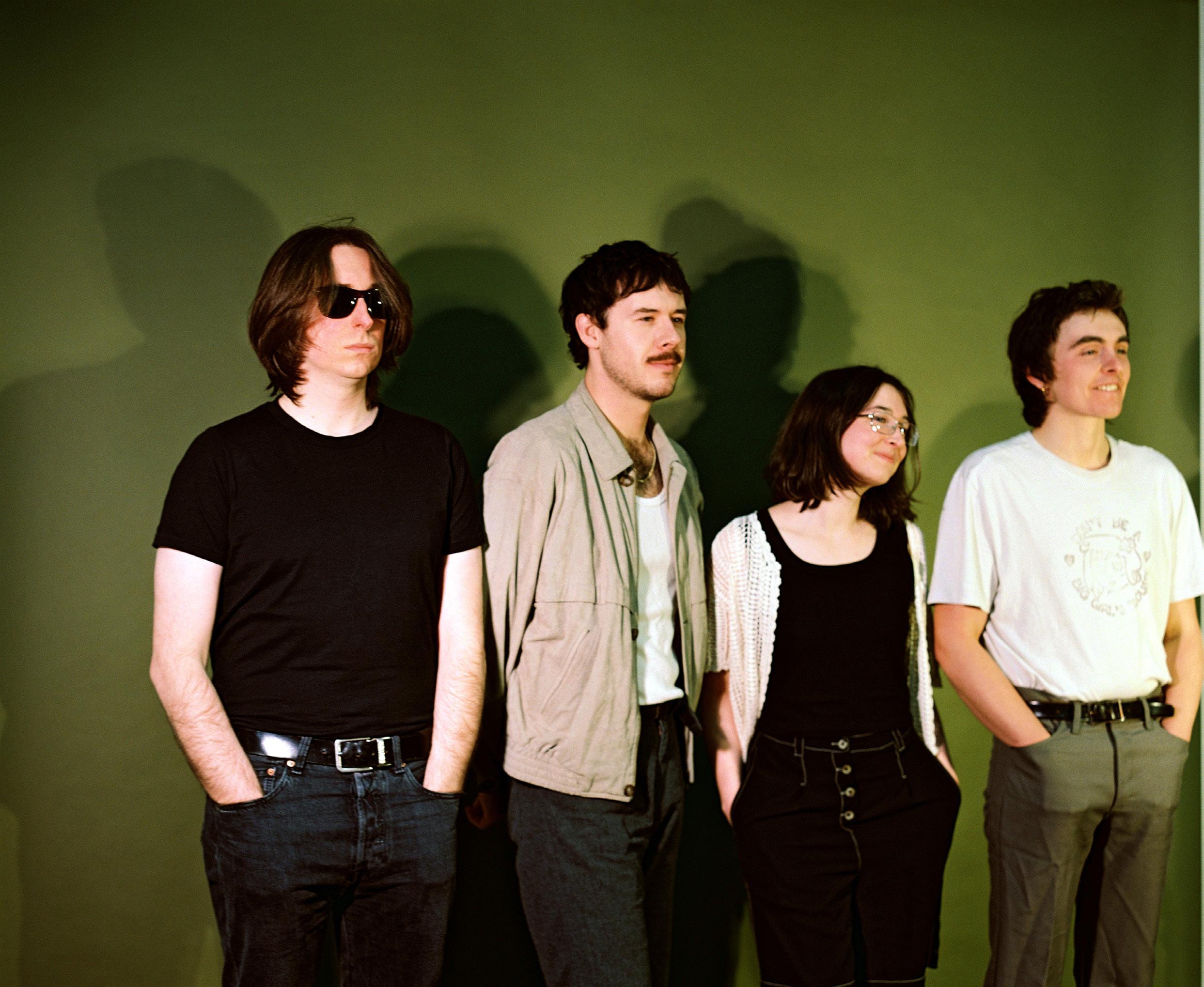
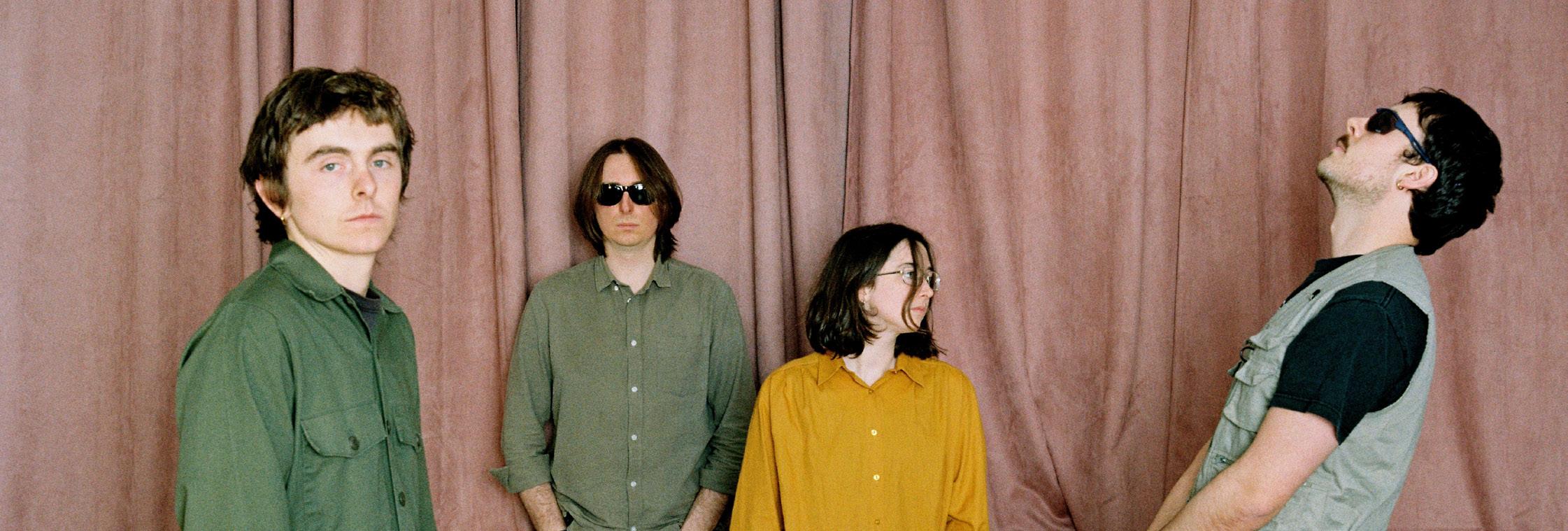
In this world of short-form TikTok content and AI-generated videos, Glaswegian band Conscious Pilot is a straight-up post-punk/indie rock act committed to recording songs to tape and shooting music videos on 16mm cameras. Frontman Joe Laycock talks about the band’s debut album, Human Poultry, a collection of songs about the grim world of employment, warehouse jobs, and fictional, chaotic film directors.
Human Poultry is Conscious Pilot’s heaviest track thus far, with a high BPM, biting riffs, and vocals that are simultaneously chanted with energy while communicating a sense of being beaten down. The song was written by bassist Jack Sharp about the feelings of humiliation he felt after he was fired from a job he hated.
Conscious Pilot is Joe Laycock (vocals and guitar), Emmy Leishman (guitar and vocals), Sharp (bass and vocals) and Chris McCrory (drums), and their LP was written and rehearsed at drummer McCrory’s Glasgow studio, the Workshop. It explores themes of work, crime, religion, sport, tech and art, and a general feeling of modern helplessness.
Hi Joe, how is Glasgow treating you today?
I’m in Glasgow’s famous brewery, actually, right now. Me and Jack used to live in Leeds, and when our old band finished, we wanted to go start a new band somewhere else. We’d always liked Glasgow’s music scene, so we thought it was a good place to move. We both relocated, moved up to Glasgow and started the new project from there. Chris, our drummer, was the producer of our old band, so we already had a good connection with him. We told him we were moving to Glasgow, and then he said, ‘Well, if you need a drummer, let us know.’ We’d never even considered that, really, because we knew him as a frontman and guitar player, but he’d been playing drums for years in other bands.
What influences does everyone bring to the table? Because it’s exciting to hear more of a straightup indie rock/post punk sound these days. It feels like a lot of bands add too many bells and whistles in an attempt to stand out from the crowd.
band is so hard, but we’ve got a good attitude towards it. It drives us to be more creative and put these tours together and make them viable, rather than expecting something from them. But I think it makes us hate our jobs!
After leaving your native Yorkshire, how did the Conscious Pilot lineup come together?
So we snapped his hand off for that. Then we got Emmy, who is in a band called Big Girls Blouse. We’d seen her play, and we had a jam with her prior to asking her to join the band, and we knew she was a good fit.
Jack and I wanted to keep the melodies, but make it a bit more danceable, and make it have a bit more rhythm and beat to it. At the time, we were listening to a lot of the B-52s and Pylon and bands like this, where it’s got a bit more of a beat, rather than that British, more serious post-punky sound. We wanted to go for something a bit more playful and a bit more energetic. Emmy likes a lot of rock and grungy stuff. Chris brought that production head, exposed us to a wider variety of music, and pushed us to be a bit more punk and more energetic. On the album, I think you get a real sense of each member’s personality that comes through. We’re quite unique in that every person used to be the front person in their old band. It brings that sense of, ‘Right, okay, anyone can step up to the front at any time,’ which we really like.
Is Human Poultry’s title track about things like employment and work culture?
I think there’s a bit of a recurring theme on the record about work and balancing stuff and struggling with it all. It’s primarily Jack, the bassist who sings that song about his experience working in a warehouse, and that feeling of just being a cog in the machine. I think that comes through in that song, being a chicken in the coop.
We’ve all had these really rubbish parttime jobs where we’ve been struggling to stay afloat. It’s harder than ever, I think, as musicians, to balance being an artist and also living a life that you want to live outside of the band, and actually making money from the
We also had Internet Support as a single. It’s so good to see a great DIY music video idea: in this one, you’re all like transfixed by a television while people in balaclavas rob your instruments behind you. Who had that spark of inspiration for the video?
The initial idea came from me, because the end of the song is about someone breaking into your house, then you have to contact the police, but you’ve got to do it through this online chatbot. The idea is that we’re getting to the point where you can’t even speak to somebody anymore, and you’ve got to do everything by some sort of robot, and it’s very isolating in the world. When me and my brother were children, something quite similar happened where someone actually broke into our parents’ house and came into the room that we were in, and we were so busy watching The Simpsons that we didn’t even notice them come in. They were just taking stuff in the room, and my parents were upstairs getting ready to go out on a date, so they were in the bathroom. These robbers came in, pretty much stole everything on the ground floor of the house, and we were just so transfixed by the yellow people and colours that we didn’t even know it was happening.
With the rise of AI, and all this sort of stuff, it seems easier than ever to make something that’s super slick. So we decided to shoot it on 16 millimetre film. Keep it really old school. Laura, who was the director, had to keep winding the camera up. You had about 30 seconds to shoot, and then wind it back up again.
Could you tell us a little bit more about the song itself?
We had our producer, Seth Evans, who was working on the album — he’s worked with Black Midi and Geordie Greep. We sent him a few demos of the song and he just kept replying and telling us to make it faster and faster. He said, ‘I need you to get to the point where it’s so intense for you guys to play it that it’s uncomfortable. Because that will translate onto the record, where it’ll just have a certain energy of it feeling like it’s about to fall over, but it doesn’t.’ And that’s quite exciting to listen to. We did a tour in Europe last summer, in May, and we noticed that a lot of people were filming that song in particular.
You describe the song Horatio Burns as presenting a fictional biography of a struggling, morally dubious film director based on Richard Ayoade’s novel The Unfinished Harold Flux. How does a song like that even start?
I was reading the book at the time where Richard Ayoade has made this whole fictional world of this director. I liked the idea of talking about a different kind of art that reflects my opinions and the band’s opinions. Like the shortcomings of the music industry; it was interesting to talk about that through the guise of the film industry, so it didn’t feel too on the nose. It was expressing this Horatio, this fictional director’s frustrations and his desperation to keep going. His drive and the idea that he has to do all the parts himself because he is frustrated and has no budget, spinning all these plates, and the people around him are letting him down. To get that concept across in two minutes, we had to be quite on the nose with the lyrics.
You wrote and recorded the album between Glasgow and London — could you give us a peak behind the curtain on the studio side?
We wrote a lot of it in-house, but we actually recorded it in RAK Studios in London. We did a lot of the demoing and all the writing in Chris’s studio, Workshop, in Glasgow, which doubles as our practice space. The RAK studio in London was amazing; it had everything you needed. Seth and Adele, the two producers, were
absolutely fantastic. We were in Studio Two, which is the older room in there and has an old vintage desk and a tape machine. It suited us well. Rather than being like, ‘Oh, we’re in this big, expensive studio, we’ve got to use the latest equipment and the fanciest room,’ we kept it rock and roll. I think in the future we might record in Workshop, but Chris was still tweaking and setting up the studio, but he’s got to a point now where it’s fully functional. So it’s definitely an option for future albums.
How’s the rest of the year shaping up?
We’re going to look at doing some festivals throughout the rest of the year. We’ve got Kelburn Garden Party in Scotland and some other stuff later in the year as well. We’ve got to the point now where we’ve listened to the songs so much that we’ve no idea anymore; you become detached, disassociated with them. So I’m excited to play them on tour and get people’s feedback.
If someone is completely brand new to the band, is there one track in particular you’d point them towards for a good introduction?
I think Internet Support covers a lot of bases. There’s a song as well on the record called Ode to Ronnie, which is about Ronnie O’Sullivan, and that’s a bit slower and moodier. So that covers the other side of the band as well.
INSTA: @CONSCIOUSPILOT
CONSCIOUSPILOTUK.BANDCAMP.COM




DRUM RE-SYNTHESIZER
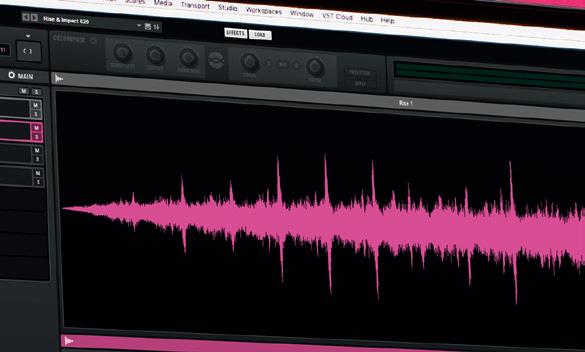
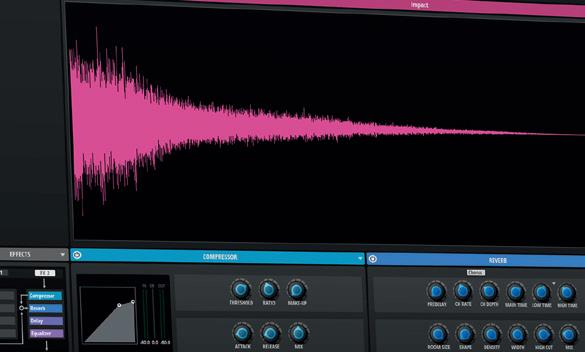



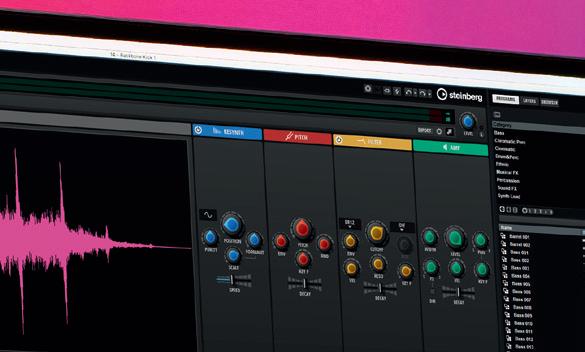
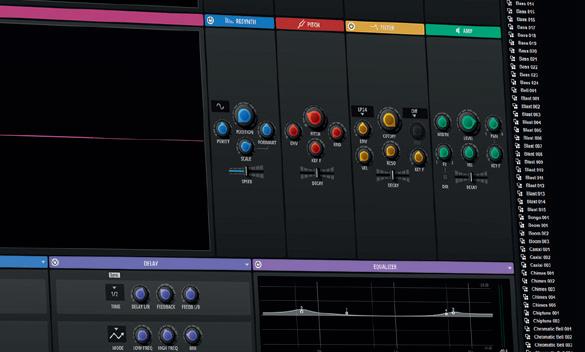
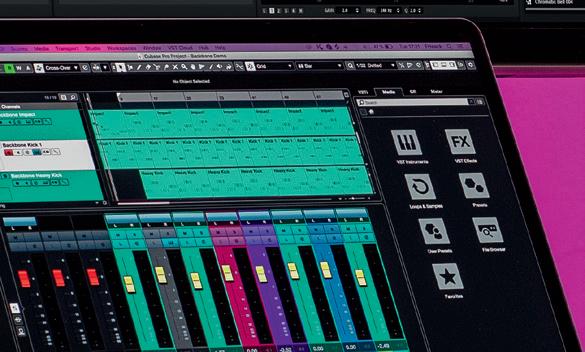
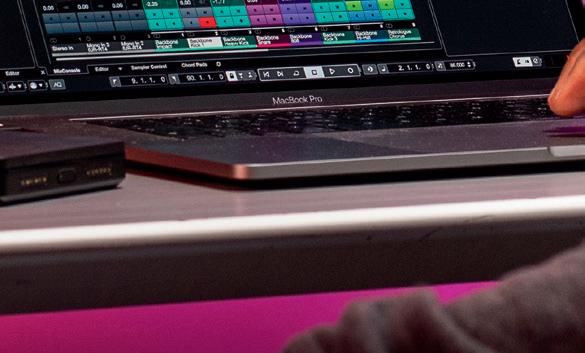


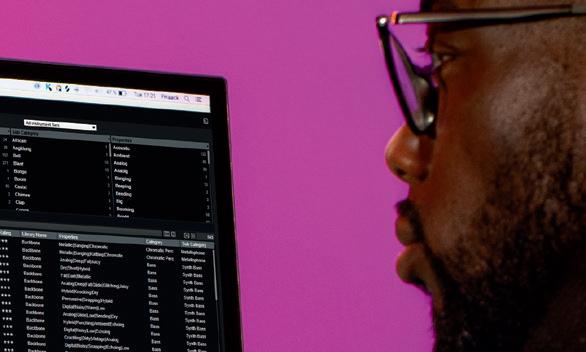
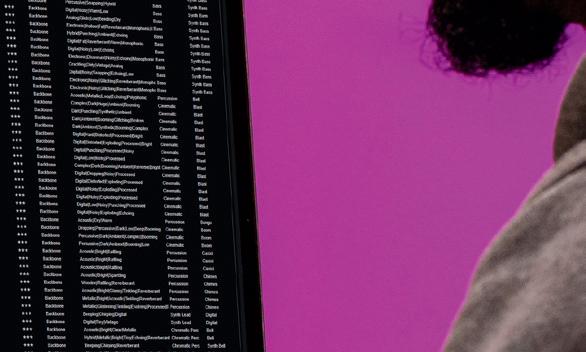




A revolutionary way to design your own drums – Backbone is your new, innovative drum designer for single kicks, snares, hi-hats, percussion, rises, hits and more. Layer up to eight samples and shape them with classic subtractive synthesis, decompose samples into tonal and noise elements and re-synthesize samples to manipulate them in unheard ways.
steinberg.net/backbone


‘SANCTUARY’ BRINGS THE BAND NEW LIFE WORDS
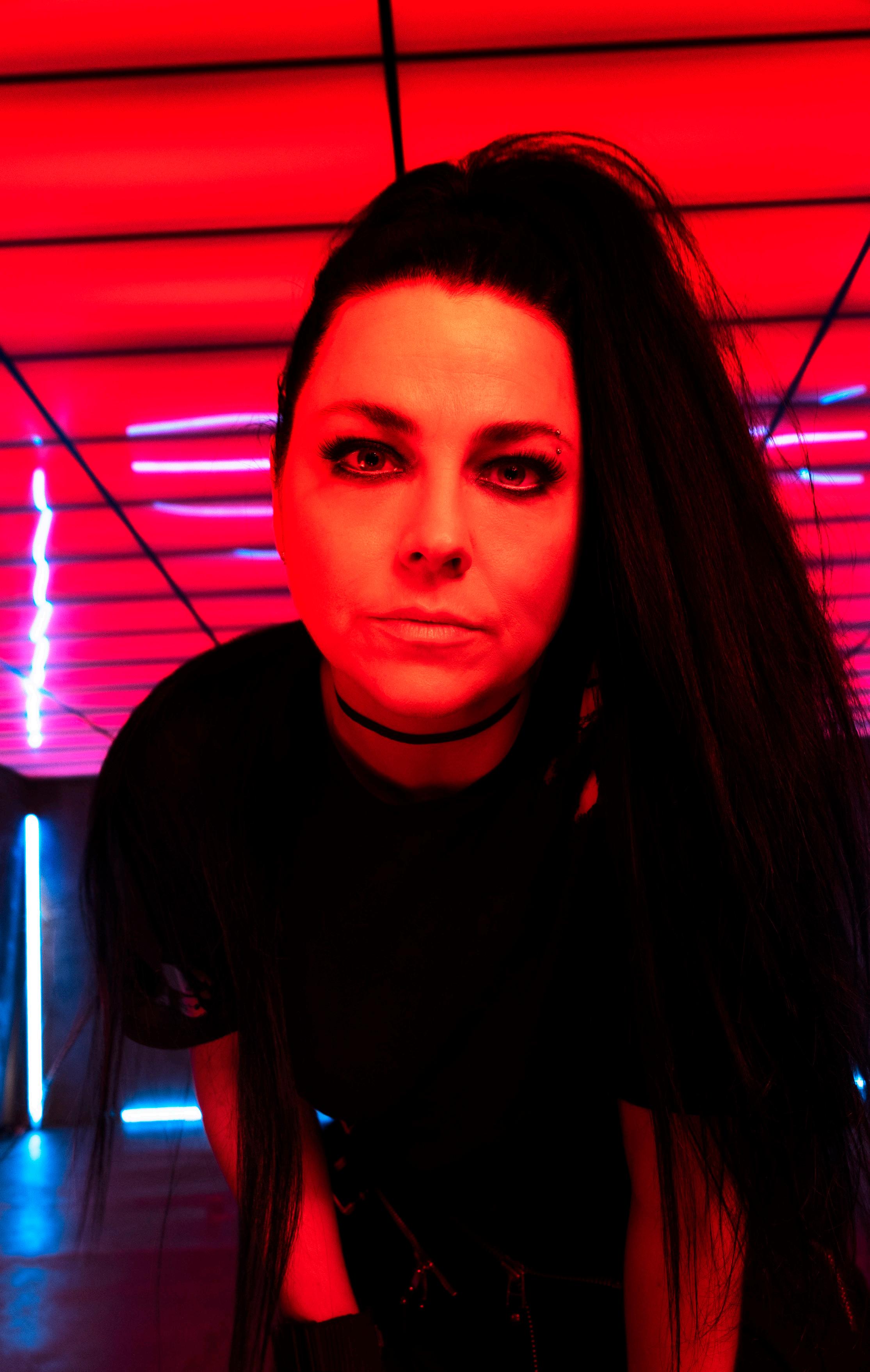
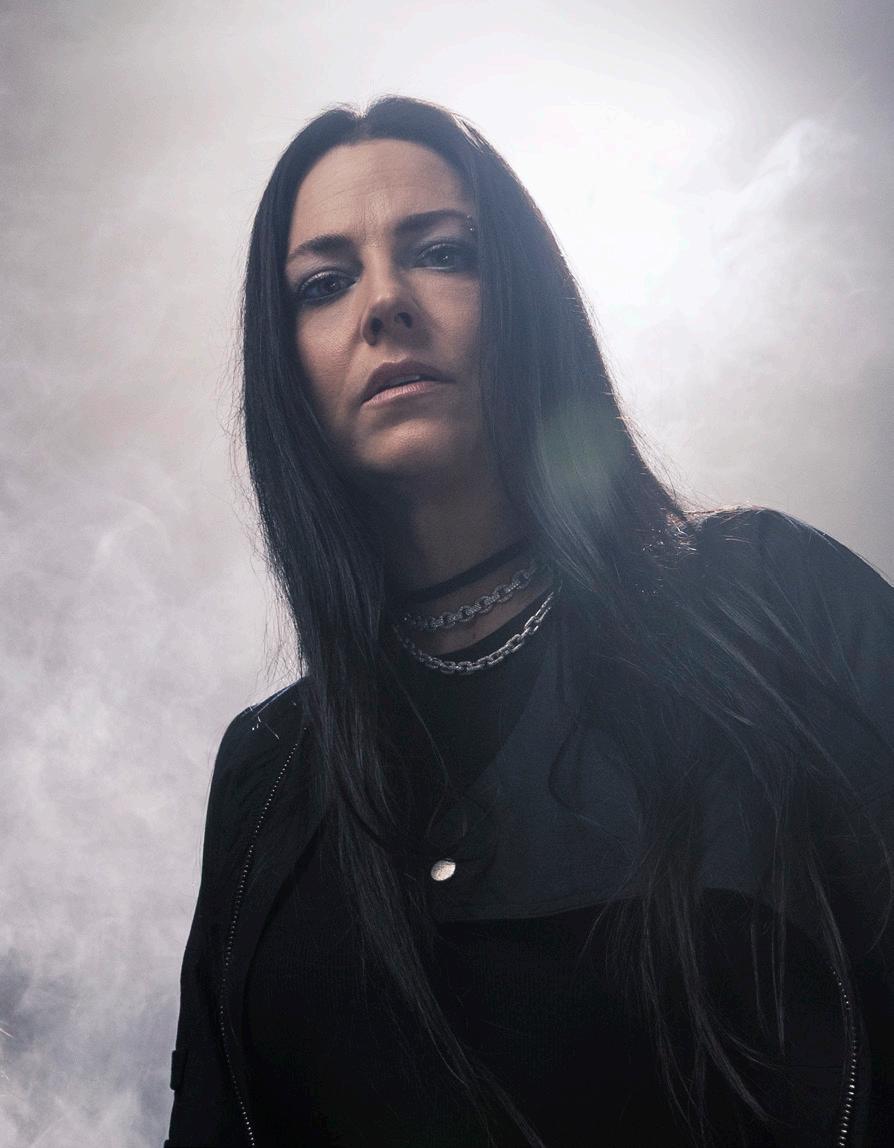
The Cambridge dictionary defines the word ‘evanescence’ as meaning, ‘the condition of lasting for only a short time, then disappearing quickly and being forgotten.’ But after a five-year wait, the chart-topping, Grammy-winning band returns with sixth studio album Sanctuary, showing zero signs of living up to their title. Following the blistering single Who Will You Follow, the new LP features some of the band’s best work to date. Singer, songwriter, composer, and founding member Amy Lee talks about the new record, overcoming the trauma of the band’s early years, working with producer Jordan Fish and their shared Bring Me The Horizon history, and their gargantuan 2026 world tour.

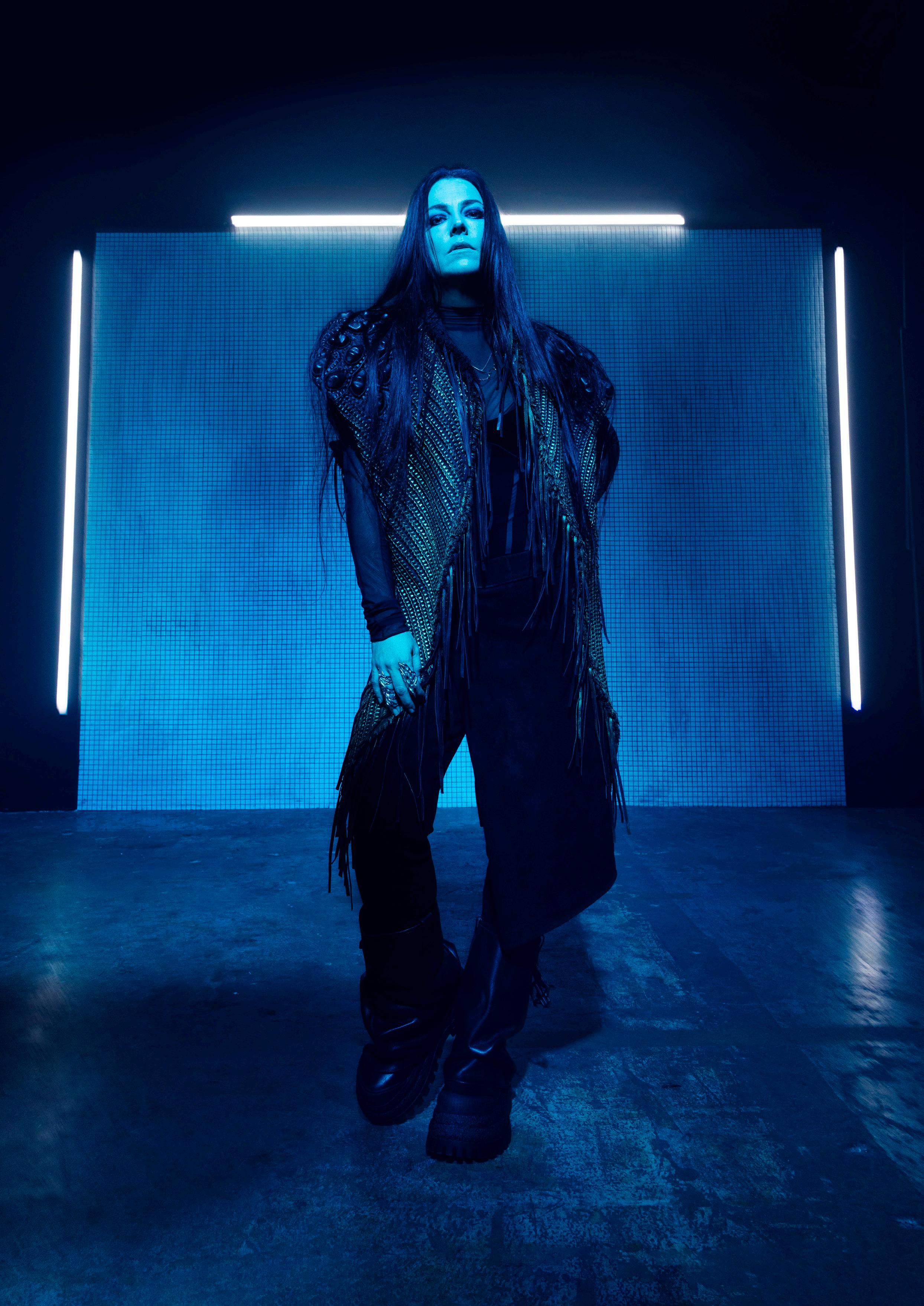
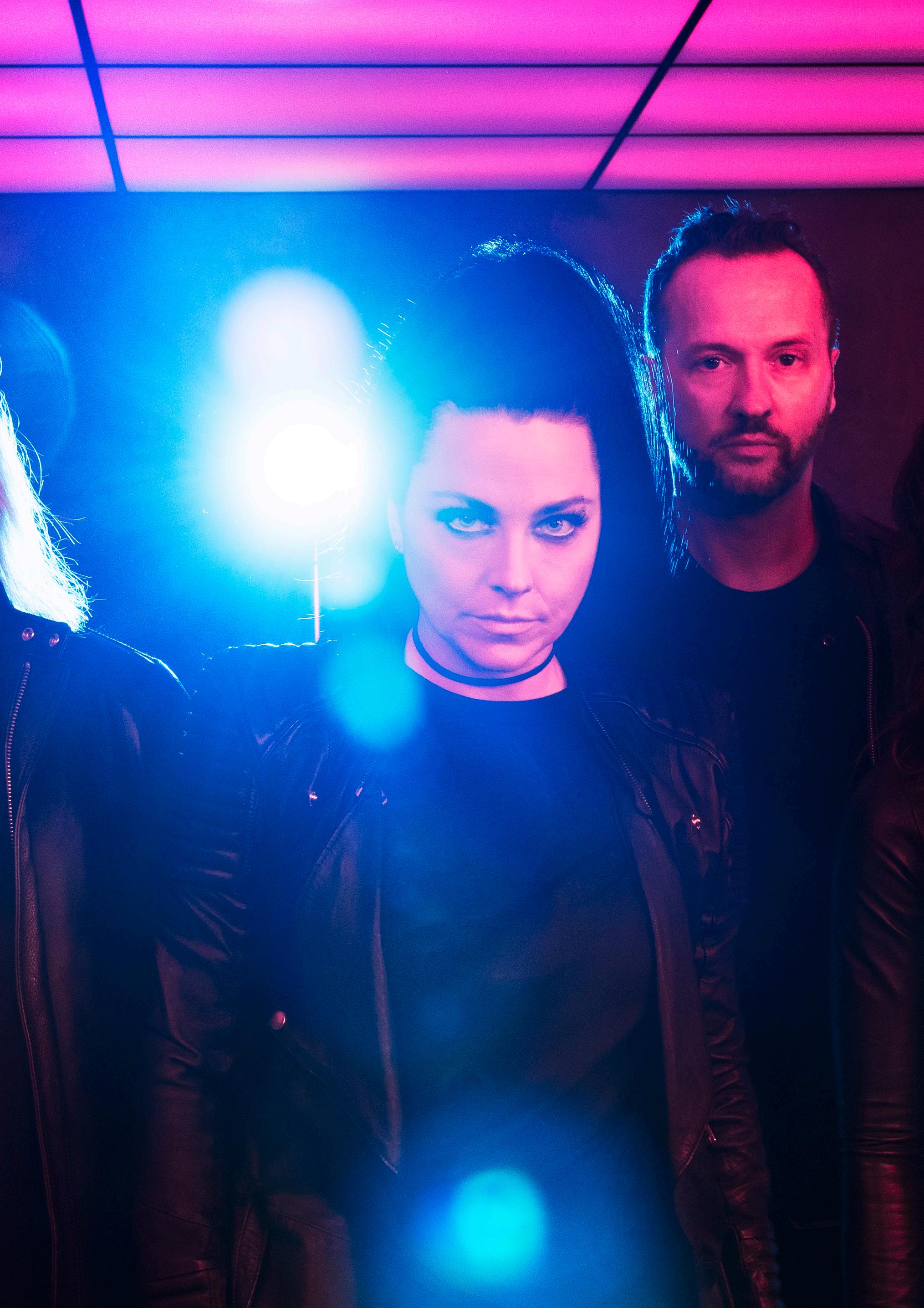
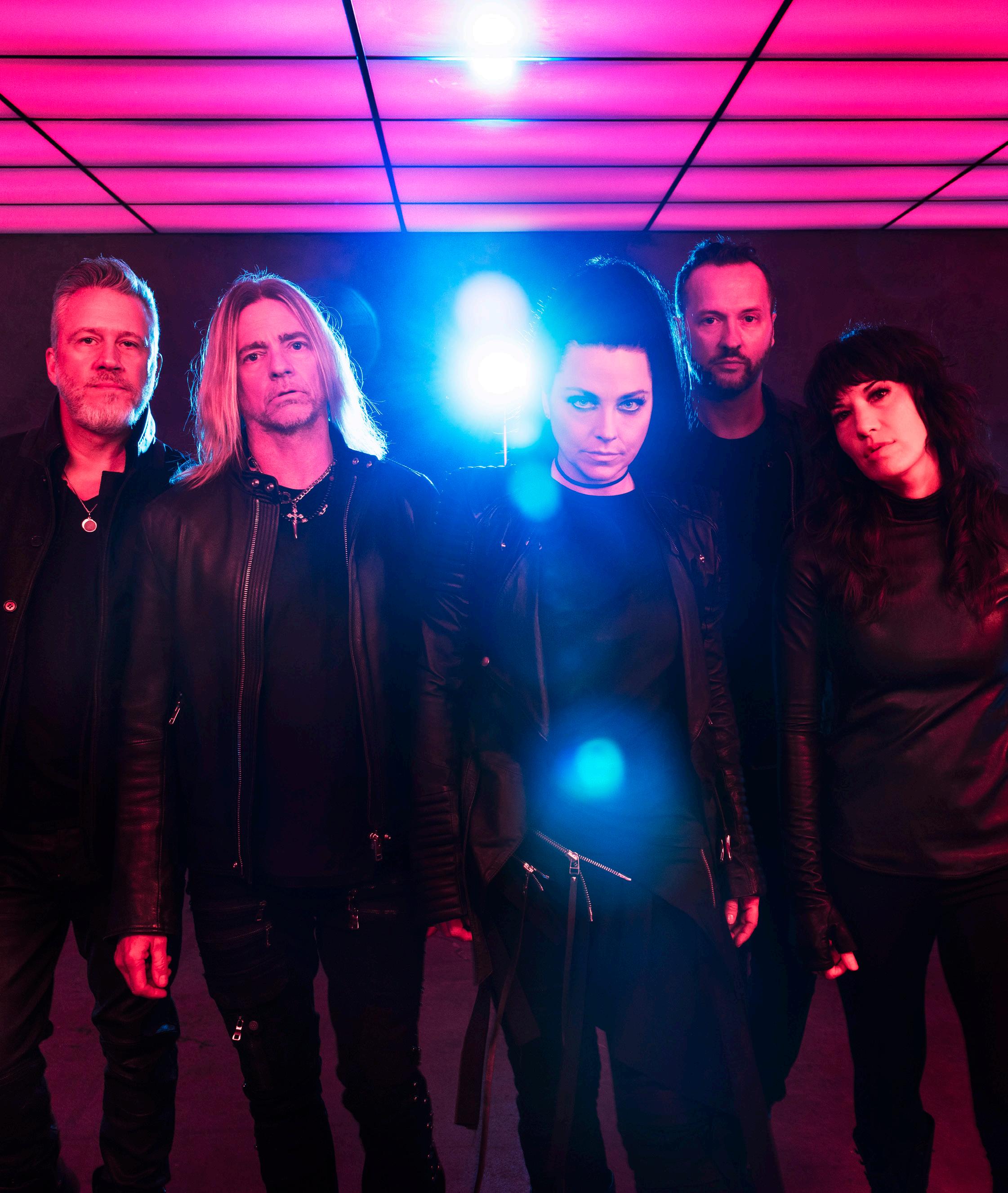
Unless you were living in a soundproofed cave during the ‘00s, you are likely aware that for such a goth-adjacent act, Evanescence quickly attained a level of commercial success beyond the dreams of your average thick-eyeliner-wearing rock band. As the international success of the nu-metal genre – making superstars of Linkin Park, Limp Bizkit, and System Of A Down – seemed to be peaking, along came Bring Me To Life. It was the debut single from what was originally a duo of founding members Lee and guitarist and cosongwriter Ben Moody, who went on to dramatically leave the band during the tour of the debut album, Fallen
Combining cinematic strings, trip-hop style electronics, nu-metal riffage, and Lee’s iconic mezzo-soprano vocals, it topped the singles charts of multiple countries, including the UK, Australia, Italy, and Colombia, while being a multi-platinum success in the US and beyond. Lee and Moody went from being two youngsters from Little Rock, Arkansas to touring the world, and even making an unlikely appearance on Top of the Pops to mark their UK chart success. It all sounds like the stuff of dreams, but besides the pair’s fracturing creative relationship, Lee revealed in more recent years that Wind Up Records initially demanded that the band include a male singer, believing the public would not accept a femalefronted metal act. Lee refused and, thinking it was all over before it had even begun, the label offered a compromise of adding a male vocalist just for the first single — hence the very nu-metal ‘Wake me up!’ rapped vocals in the chorus of Bring Me To Life
With the balladry of My Immortal also hitting it huge, 2003’s Fallen has gone on to become the seventh best-selling album of the 21st century, behind the likes of Adele and Amy Winehouse.
The 2006 follow-up, The Open Door, powered by lead single Call Me When You’re Sober, marked another success for Lee and the band, and has sold more than six million copies worldwide. Next came the self-titled album in 2011 with the excellent singles What You Want and My Heart Is Broken, and then a 10-year wait was broken by the post-pandemic LP, The Bitter Truth, with an orchestral and electronic reworks album prior to that in 2017, with Synthesis
The wait between albums has thankfully been halved to five years this time round. Throughout 2025, there were breadcrumbs signalling that a big Evanescence comeback was on the way. Firstly, with Afterlife for the Netflix anime series Devil May Cry, and then another big sync with Fight Like A Girl for the John Wick spinoff, Ballerina. As Lee joins the call from her home in Nashville, she reveals these tracks were just a case of the band getting active again, rather than a master marketing plan.
“I couldn’t have planned it this well,” she reflects. “I feel we have just been in this moment where everything is lining up at the same time, in a really beautiful way. And it’s at a time when I’m feeling inspired, hopeful, and excited about trying new things, about collaborating with people. And having perspective now, 20plus years into doing this whole Evanescence thing, and being able to see it from a broader view. I can appreciate things from the early days that I had to go through that I didn’t appreciate at the time. I work with great musicians, I have a great band, and we all push each other to be better musicians and to push the envelope. Tyler Bates, who I know but have never worked with, reached out about doing something for Ballerina, and then Halsey reached out about doing a song for the movie, too. It was just one thing after another, and
then we got to go do a stadium tour with Metallica last fall in Australia, which was so special and cool. It felt like the universe was calling. I don’t know what is happening, but I feel like I’m getting better and better at listening, opening my heart and my mind, and following the feelings, rather than forcing my will all the time. It’s beautiful how that’s been so life-giving to our band and to me, and so good for the music.”
Another single came in 2025 in the form of a three-way collaboration, with Lee joining forces with metal superstars Courtney LaPlante of Spiritbox and Poppy. The result was powerhouse track End Of You, in which each of these formidable vocalists delivers a verse. Conceived as a ‘dark Moulin Rouge’, with themes of strength, unity, and the titular ‘End’ referring to the patriarchy, it feels like a huge flag in the sand moment for women in metal. Especially given the context of Lee’s Bring Me To Life fiasco and initially being told a female vocalist wouldn’t be enough for Evanescence to make it.
“There is a general understanding and solidarity with women in heavy music; we know that to some degree we are still an anomaly,” Lee says. “I think the thing to fight for is not to make it all about being a woman, actually quite the opposite. But to be able to hold your own and just be seen as an equal. I don’t want to be the best female-fronted whatever. I just want to be the best. I think there is a lot of beauty and power in women supporting other great women; it shows that we are not tearing each other down for the one slot available for a woman to be up on stage with a bunch of heavy bands all day with dudes. We’re saying, ‘Hey, let’s have more of us, let’s get up there together.’”
Evanescence is settled on a long-term lineup: besides the figurehead in Lee, Tim McCord and Troy McLawhorn have been on guitar duties and Will Hunt on drums since approximately 2006. The only big change was Emma Anzai from Sick Puppies joining to play bass in 2022, following Jen Majura’s decision to quit music. The harmony in the band is evidenced in the lead single, Who Will You Follow. In a glittering discography, there’s an argument to be had that it’s one of the group’s finest songs yet. In trademark style, it opens with Lee singing the chorus over piano chords, before the biting riffs announce themselves. The chorus returns gloriously over the distorted guitars and huge drums, as Lee once again tackles the subject of a world in which the truth is for sale, amidst governments and corporations peddling misinformation: “You drain the life out of me ‘til I don’t know myself / When all your faith in reality fades away / Who will you follow then?”
The frontwoman reveals the song was one of the last recorded for Sanctuary, saying: “It was the last time we were going to get in the studio before the very end. We decided to go in there and track all the things we had half-done; I had some vocal ideas, and we were going to track the band and maybe write one more song. It happens so often — I remember Call Me When You’re Sober was the very last song we wrote for The Open
Door, and Bring Me to Life was one of the last songs we wrote for Fallen. Once you really feel and understand the foundation of the rest of the album, you know what you are trying to top, but also what you’re standing on. A first single needs, to some degree, to sum it up; you want to give people a good representation of what the album is going to be like. We were all in the studio recording for the other songs that were already developed, and Jordan [Fish] started making sounds on his laptop. I started working on the melody, and then we started building a chorus. “Jordan said, ‘Now we just need a riff,’ and Troy said, ‘I got a riff,’ and threw down an incredible riff right away. Then Will told us he had a great idea for a tempo change. He’d always wanted to do a time signature change in a bridge, but we’d tried it before, and it hadn’t really worked. I think the key this time was that Zakk [Cervini] understood it completely right away and started plugging it in, making it work really quickly. I think the speed of both Jordan and Zakk producing is amazing because before you have time to get burned out, exhausted, or forget your idea, they already have a bed ready where it sounds fantastic. The production elements are already in place, giving the vibe, and you never lose that momentum. The song came together really fast with us all in the studio together, and I don’t think we ever really had a discussion about what the first single was going to be. We just knew it was that song.”
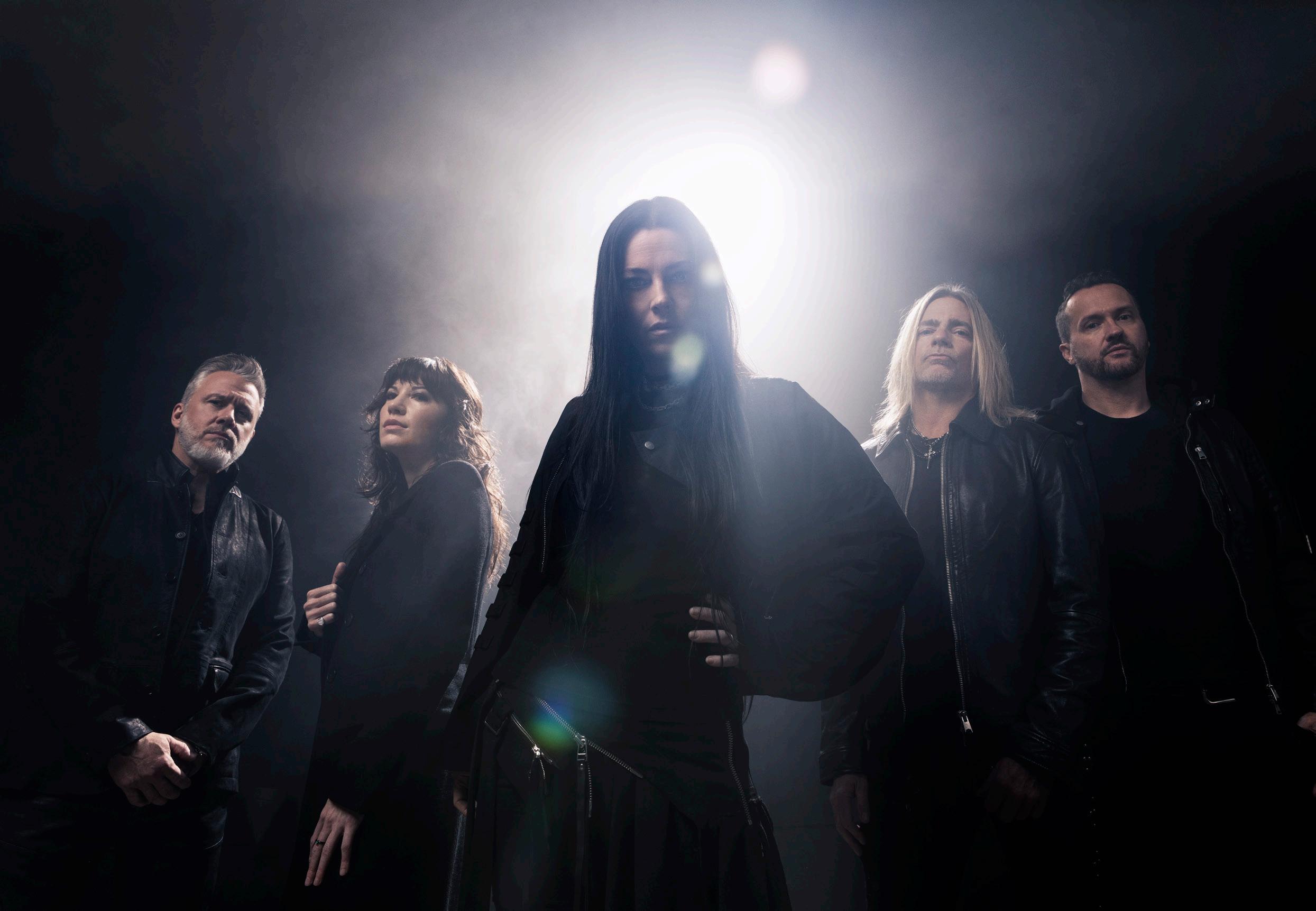
Photo
Chapman Baehler
There have been plenty of incredible Evanescence music videos over the years: the gothic take on Little Red Riding Hood in Call Me When You’re Sober, the crushing weight of celebrity in Everybody’s Fool, and the iconic window ledge wailing in Bring Me To Life. And the blockbuster Who Will You Follow video takes its place as one of the best, also. Directed by Ukrainian film director Jensen Noen, it’s a blockbuster short that wouldn’t look amiss on an IMAX screen. The band perform the track in a city intersection while all the extras in the video are frozen in time, heads down and hypnotised by their phones. Lee is seen in a rapidly descending elevator in a nod to the Bring Me To Life video, and is looking as iconic as ever as she lives and breathes every note, riff, and snare hit. In that aforementioned time signature bridge section change, the budget ramps up dramatically as cars start floating in mid-air and the city starts crumbling a la Inception.
In this short-form TikTok era, Lee feels strongly that music videos still hold an important place alongside the art of music. She adds with passion that, “We are artists. If you are going to call yourself an artist and you have the budget — we have the luxury that not everybody has, that we made money from this music back when people were making more money from it — I have always seen that as such a beautiful asset, and I owe it to the music to put that back in. It’s so amazing to be able to make art
with great artists like Jensen, who can bring other worlds to life. I met him when we did the End of You video, and it really opened my mind to him and his world. The song is about reality breaking and another darker world coming through. I remember looking out at the East River and seeing the wake of the ferries going by and imagining sea monsters under the surface, or the tiles of the floor starting to lift off the ground. I remember bringing that up, and then Jensen took that and started putting together ideas that were more welldeveloped, and he built it into a story.”
Lee then reveals how the album came together from a writing standpoint, between crafting ideas on her own and then in sessions with the rest of Evanescence.
“A lot of this album was different combinations of us getting together. There was a time when Emma and I got together and worked for a bit, and Calm Down was part of that. I get the most inspired generally by sounds in the studio. I like to play in my room with synthesisers, loops, little percussion, and industrial stuff, and a lot of times our music starts in a more synth world. Then I’d take it to the band, we rock it up, and it becomes something else. I like to come with a pack of ideas when the band is going to get together. We did a few songs on this album where we get together between shows and have a little band camp. I would be the one
engineering and putting a structure together in the demo.”
There are many highlights on Sanctuary, an album that does the very difficult task of honouring Evanescence’s ‘00s sound that won them all their original fans, while still sounding totally fresh and contemporary. The opening track, Beautiful Lie, sets the tone brilliantly with its trip-hop and rock elements, and on the title track at the album’s halfway point, there’s a nod to Fallen with Lee’s classic call-and-response backing vocals, with the harmonies often a lower, huskier baritone hitting you straight in the soul.
Former Bring Me The Horizon member, keyboardist, and songwriter/producer Fish has plenty of Evanescence history. Firstly, while with BMTH, it emerged that the Sheffield metal act had accidentally copied the Evanescence track Never Go Back on the Grimes-featuring Nihilist Blues
Instead of descending into a messy legal dispute, BMTH offered Lee a writing credit, and it even led to a collaboration between the two on the song One Day the Only Butterflies Left Will Be in Your Chest as You March Towards Your Death
After parting ways with the band, Fish has gone on to become one of the go-to engineers in the metal music world, quickly racking up huge credits with Poppy, Spiritbox, BABYMETAL, Architects, and now Evanescence, joining Zakk Cervini and Nick Raskulinecz to produce Sanctuary Having dabbled with the band on End Of You and the Halsey and Amy Lee track Hand That Feeds, Lee describes how she felt a deepening musical kinship with Fish on the new album, and also how moving beyond some of the more traumatic parts of the early Evanescence years has opened her up more as a collaborator for this record.
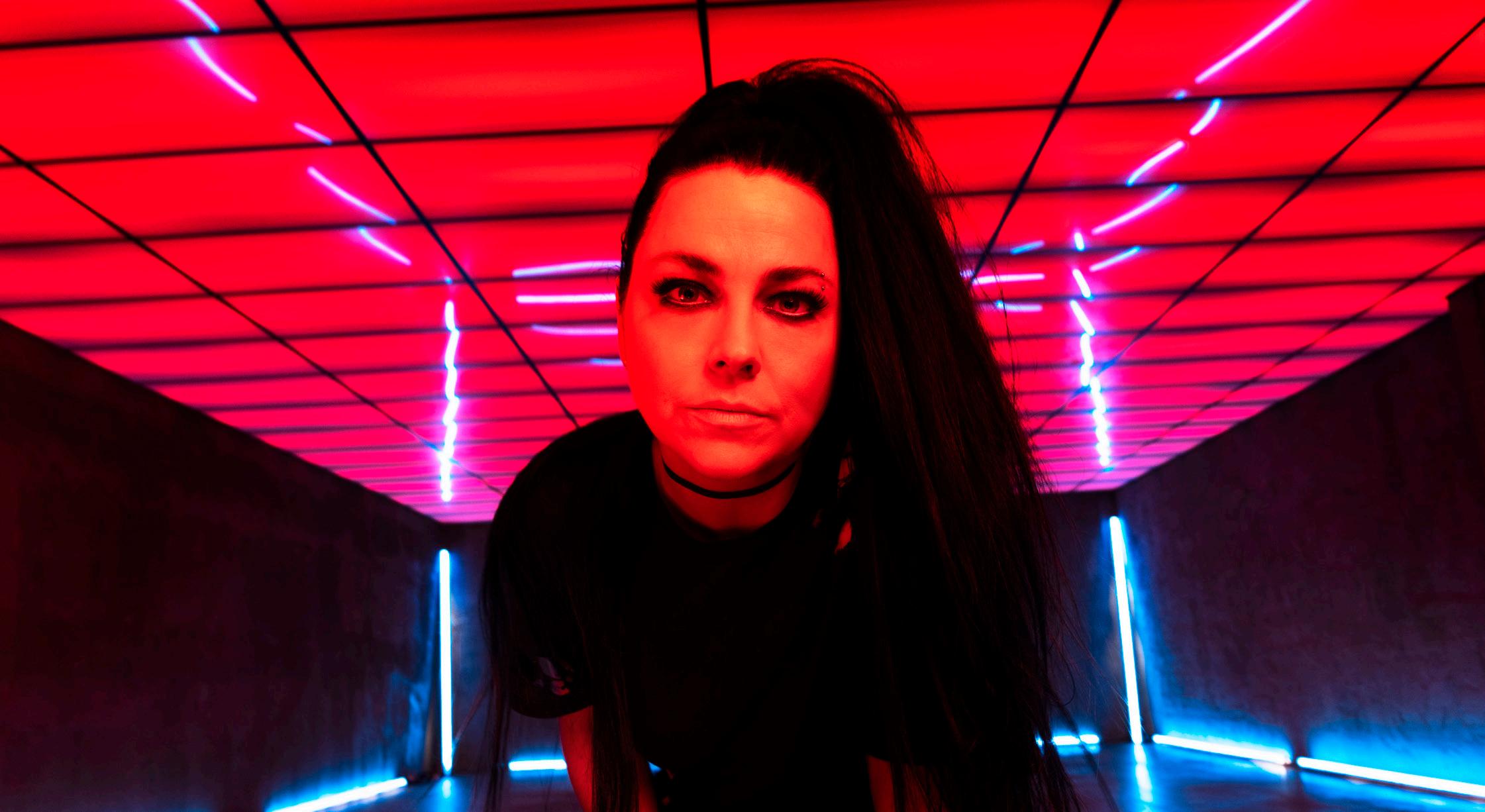
“Jordan and I get each other on a level that is hard to explain. He is an incredible songwriter, and it goes beyond that. It’s also all about the realm of taste, choices, and influences. There is something about it that he just gets. Sometimes when I’m trying to describe something, he is already doing the thing that I could not articulate with words, and it’s like, ‘Oh, you know exactly what that is, all right, cool, perfect, thanks!’ To be able to sit there and trust somebody so much from that standpoint is incredible, especially when I’m working on a melody, and he suggests a great idea on the spot. Instead of me feeling like I need to do all the melodies all by myself. I used to be that way because I had to fight so hard for respect as a writer after Ben [Moody] left the band. It felt like the label, management, and everybody I had around me back then did not understand what I was and what I was capable of, and it was hard to always feel like I had to fight.
“So, in the beginning, it was such a protected place. Besides the music progressions and things that I am writing to, nobody was going to touch anything that was going to come out of my voice — that was mine. As I’ve loosened up about it, I don’t feel like I have to do that anymore. I proved
what I needed to prove. There is nothing but gain from just opening your ears and your mind to something that somebody else might suggest, if you can just be open-hearted and trusting. I feel a lot of good has come out of that relationship for me with Jordan. And Zakk, too. We have an incredible team of people; so many people poured so much heart into this album.”
Lee has to remain tight-lipped about what’s next for Sanctuary after its release date regarding upcoming singles and any more cinematic music videos. But, what we do know is that Evanescence are about to embark on one of their hugest world arena tours yet. From June 11th, they have been State-hopping as they tour the US and then Canada, before being Europe-bound in September; UK stops include London’s O2 Arena, Co-Op Live in Manchester, and more. The support acts read like a very strong Download Festival lineup, with the likes of Spiritbox, Poppy, Nova Twins, and K.Flay joining at various points of the 2026 dates.
“We had a beautiful show for The Bitter Truth, but this is a level up from that,” Lee concludes. “I just want to give the fans everything and more. We are still hammering out details. The set list is
quite long, but building the story of the production has been special. Ten years ago, it felt a little bit more like we could decide what songs we were going to do a little closer to the date, but nowadays, you really need to have that plotted out well ahead of time so they can start building the show, building a story through the imagery and through the effects, and making an arc. We are trying to create the world of Sanctuary, but also honour the Evanescence thing as a whole, bringing people into this 2026 version of our world. It’s all about adding little parts, making it all make sense, and not falling down when there is a hole that pops out of the stage and getting your hair burned off.”
Despite having built such a storied and immense career, there’s a palpable feeling that Sanctuary is a particularly special chapter for Evanescence, with some of their best new songs that can go toe to toe with Fallen.
That blistering new album is out now, and you can catch them on tour everywhere from North America to Europe, to Malaysia, as the globeconquering success of Evanescence shows no signs of slowing down.

PRODUCING EVANESCENCE’S ‘SANCTUARY’
JORDAN FISH
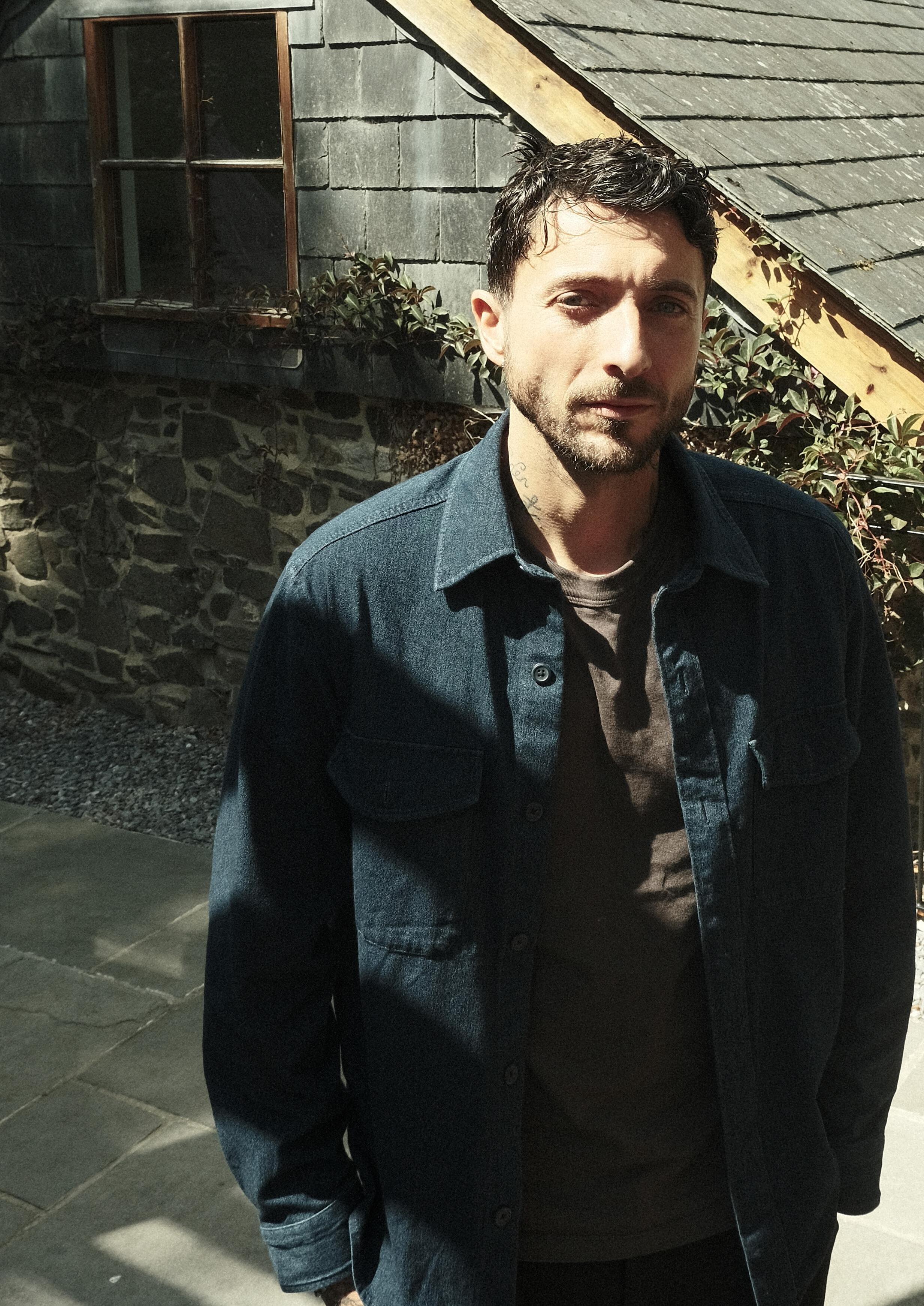
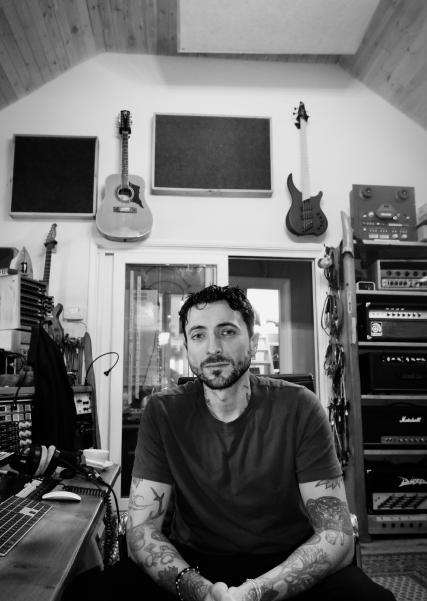
After globe-trotting and touring as the keyboardist and producer of Bring Me The Horizon, Reading-born Jordan Fish is now settled in the cosy life of a full-time producer. That is, if you can call becoming arguably the genre’s go-to producer a cosy life, having racked up credits with Poppy, Architects, BABYMETAL, and Good Charlotte in the span of a few short years. He has just added a momentous name to his CV as a co-producer and writer on Evanescence’s new album, Sanctuary. Fish talks to Headliner about his breakthrough projects with Poppy, his shared history with Amy Lee, how she opened up to co-writing with him more after she wasn’t taken seriously as a songwriter in her early years of the band, and the tech he used to help create the sound of the album.
Fish was born in Reading and grew up in the nearby Berkshire market town of Newbury, regularly hearing the soul records of Whitney Houston and Luther Vandross thanks to his mother. He got heavily into rock and nu-metal at 12 years old and was playing in a nu-metal band two years later. With a growing interest in electronic music during his college years, he then joined the band Worship, allowing him to fully flex his keyboard and electronic production muscles. It was this music that placed him on the radar of a certain Sheffield metalcore act known as Bring Me The Horizon.
Fish began working with BMTH during the sessions around Sempiternal, an album that transcended their already significant commercial success. A particularly pivotal moment for the group was during the writing of Can You Feel My Heart; initially recruited to add some keyboard and electronic parts to the album, it was on this song that Bring Me began to recognise how much Fish was influencing and guiding the new sound of the band. Can You Feel My Heart has 874 million streams and counting on Spotify alone. Eventually becoming Bring Me’s main producer, Fish and the band decided to part
ways in late 2023 after more than a decade together. This was when his full-time music production career began to manifest, and many have noted that his production for BMTH and albums since have been hugely influential on the modern metal sound. Fish agrees that the Poppy albums Negative Spaces (2024) and Empty Hands (2026), two of the biggest metal albums in recent years, are some of his biggest production and co-writing credits thus far.
“Poppy was one of the first ones I did when I was full-time producing and writing, and we just got on really well. She’s really cool. She’s very open to different things and is a workaholic; her favourite thing to do is just be in a studio, making music and writing lyrics. It can be a case of slowing her down a bit, because she’ll finish a record, and then a week later she’s like, ‘Oh, I want to do a song like this,’ and I’ll say, ‘Okay, I need to regroup a little bit.’ We had so many ideas from Negative Spaces. I think Empty Hands ended up being perceived as an entire other record, but I think her intention was for it to be more of a part B to Negative Spaces, because some of those songs were from those sessions. She’s one of my best friends now, she rules.”
Fish’s first interactions with Amy Lee were while in BMTH, remotely recording the collaboration song One Day The Only Butterflies Left Will Be In Your Chest As You March Towards Your Death. His first fateful meeting with her was to be at Download festival, when both BMTH and Evanescence were on the lineup, and the two decided to do a mashup of Nihilist Blues and Never Go Back, the latter being the song Bring Me unintentionally lifted a verse melody from the former.
“We were playing Download together, and so the idea was floated to do a version of the song together,
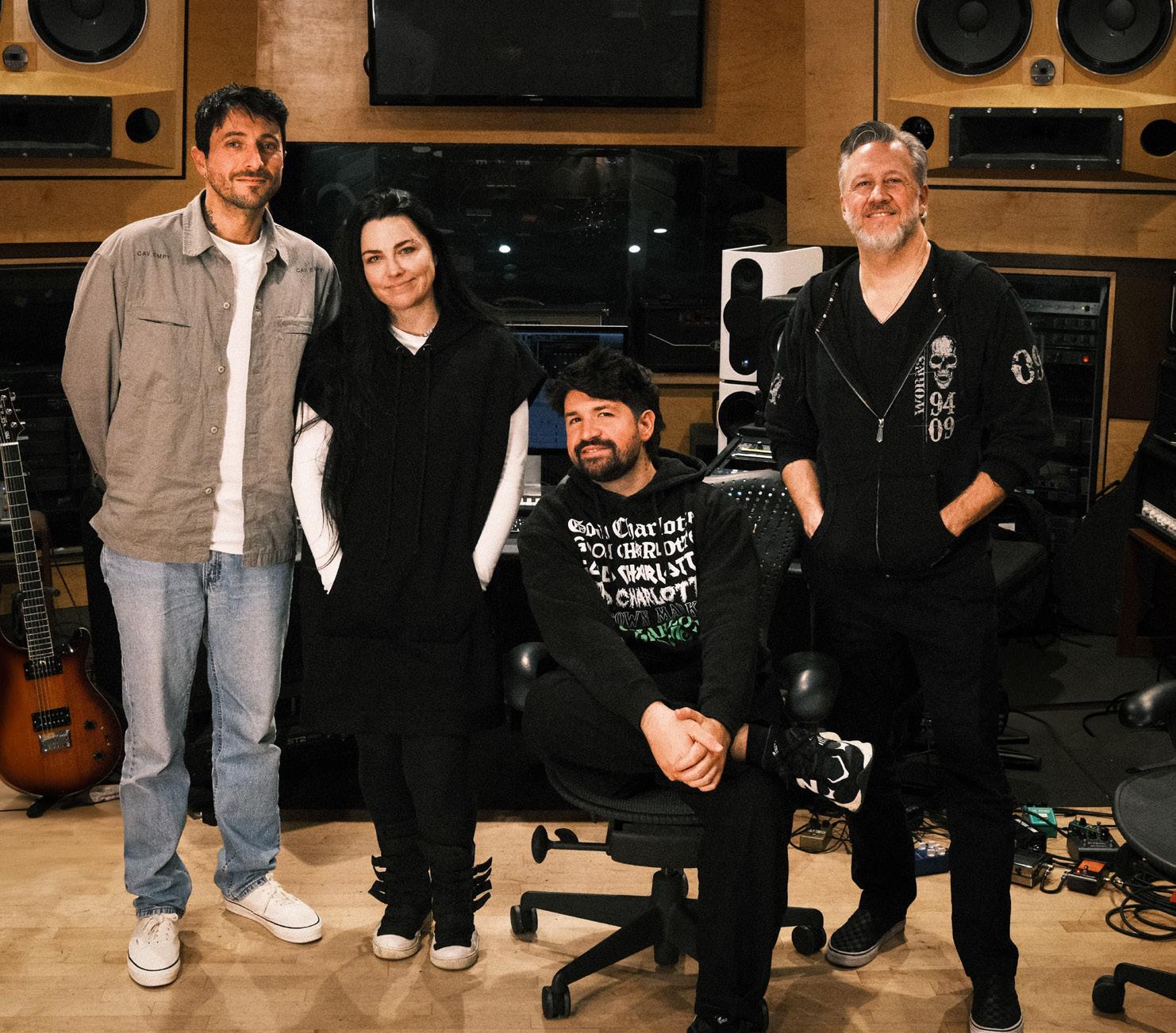
so she ended up kind of singing the melody that we ripped off from her in the first place. It was a cool full-circle type moment. And then we just got on really well. We chatted a lot, and that evening she said to me, ‘I can just feel that we’re going to do something amazing together at some point,’ and that was the end of the conversation. I didn’t speak to her for quite a while after that.”
Lee’s prophecy materialised when Fish worked with her on the Halseyfeaturing track Hand That Feeds, and then on the powerhouse End Of You with Lee joined by Poppy and Spiritbox’s Courtney LaPlante. Bringing Fish into the fold for Sanctuary, then, was almost a natural continuation. “My first session with Evanescence was pretty much a blank slate,” Fish recalls.
“It was me and Zakk [Cervini] and then Amy and Troy [McLawhorn, guitar] from the band, and we got together and started writing. We wrote two or three songs that week. After that, I went out to Nashville,
and I got to work on the three songs they’d done with Nick [Raskulinecz], as well. Amy’s idea was to have me do some of the synths and try to tie them more together with the other songs that they’d written. I think I touched almost everything on the record, except for Forever Without You and Afterlife, which were written before I was involved in the album.”
In Headliner’s cover story interview with Lee about the album, she shared that for this record, working with Fish in particular was one of the first times she felt comfortable enough to open up to working on melodies with another songwriter. This was something she struggled with after the early years, when she wasn’t respected and taken seriously as a female metal vocalist and songwriter.
This is not lost on Fish, who beams, “Yeah, it is amazing. It definitely feels like a privilege to be trusted like that, but I do think that stems from Amy being very intuitive. She is kind of magical. It was weird how convinced she was that we were going to
work together. It was almost like a premonition. Zakk brought me in and suggested it to her, and she was like, ‘Oh yeah, that’d be cool.’ I kind of snuck my way into the sessions, but we have really similar tastes in melody, and I love writing melodies, and I love Amy’s voice. It felt like we were in sync with all of that stuff right from the beginning. So when you have that, and everything’s flowing, it sounds cheesy, but it feels like flying. I also don’t take lightly how much of a big deal it is for her to be open to working with other male producers. I can imagine that if you’re a woman in the music industry and all the credit has gone to other people, the tendency might be to want to just do everything on your own and show that you can do it. Because she’s more than capable of doing that — she doesn’t need me to help her. She’s got one of the best voices ever, frankly, and she’s just so cool and such a nice person. But she also says it how it is. She knows when to say, ‘I don’t like that as much,’ or ‘No, I think you should do this.’”
Fish had a big guiding hand on one of the final tracks Evanescence wrote for the album, Who Will You Follow, which would ultimately become the lead single for the LP. He discusses the early moments of the song, how it got the all-important heavy touch, and the huge curveball of a timesignature change for the bridge.
“I made a little loop in my hotel room with just a chord progression, and it was just my attempt to do something that felt kind of down the middle of what an Evanescence song is to me. I brought it into the studio, put it up, and everyone was like, ‘Okay, that could be cool.’ And then we just started cooking on it from there. Troy started adding guitars, and Troy’s an awesome writer, and he’s a really great player as well. Not too overcomplicated, he just has a great feel, and knows how to make stuff sound
like Evanescence. I think I had written a vocal melody, and that’s one of those examples where Amy was immediately like, ‘Not that melody,’ and she came up with something entirely different for the chorus. Then the lyrics came to her quite quickly on that one. Will [Hunt, drums] hadn’t been in the sessions that week, and he arrived in a Hawaiian shirt and trilby hat. I’d never met Will; he’s a real character, a proper rocker. He was like, ‘We should do the bridge in ⅞ time,’ and I was like, ‘Okay, that’s a crazy idea, but why not?’ But it really made it; it’s one of my favourite bits about that song, just having a little bit of a weird time signature in there. It’s such a drummer idea!”
During his time with Bring Me The Horizon and on the albums he has worked on since, Fish has created a trademark sound with many copycats looking to emulate it. This is down to his writing style and, he reveals, a minimalist gear setup that he can take anywhere.
“My favourite stuff comes to every writing room with me, and that’s my laptop. That’s basically all I ever use, and all I’ve ever used. I don’t use hardware, so pretty much everything I do is in the box. I know it’s not the most romantic or exciting way of working, but it suits me better. I can craft what I’m hearing more easily. In a lot of the sessions, Zakk was leading the technical producer side, tracking guitars and drums, and I would be sitting at the back with Amy writing.
“Or I’d put my headphones on, and cook up an idea for where the bridge could go, for example, and then by the time they’d tracked the guitar, I’d fire over a bunch of files to Zakk to see what everyone thinks. Working at the back of the room really suits me; it gives me kinetic energy, rather than going away with an MP3 and working alone somewhere.
“I use Pro Tools. In terms of plugins, it’s nothing crazy: Native Instruments, Omnisphere, Serum, and Splice. So I’m there getting one-shots. There’s a section in the middle of Rapture, where the idea was to have a breakdown section, and I suggested a more electronic breakdown.
“The creepy arpeggiated intro for that song was inspired by early, glitchy Jon Hopkins. It moves from a straight beat to a shuffle, but that is a lot of manipulated sounds. I’ll just try and get some kind of source material, like a sample, or something I’ve made, or something from the previous session, and then I’m just manipulating and messing around until I start to see light at the end of the tunnel of what it should be.
“There’s no standardised way for me to do it. Generally, the messier and more manipulated I want it, the more I will lean on samples with saturation noise in them, so I can manipulate them into something that’s a bit more interesting. I have a plugin coming out soon, which is exciting. It’s a bunch of sounds that we sampled and made a load of presets with Cradle, the company that does the God Particle plugin.”
Apart from that plugin announcement, Fish isn’t allowed to share what projects he’s working on next, except that he’s all booked out until the end of the year. Which means you can expect to hear several 2026 albums with his sound and magic sprinkled on. In the meantime, you can hear said magic on Evanescence’s Sanctuary, which is out now.
INSTA: @JORDANFISH86
A NEW HIGH IN THE LOW END
Designed and built in the UK, Ten Squared (Ten2) is a range of premium, low frequency loudspeakers. Engineered without compromise, they deliver consistently superior levels of performance in the most demanding professional sound reinforcement applications. All the time. Every time. 18, 21 and 24-inch models available. Discover Ten
celestion.com
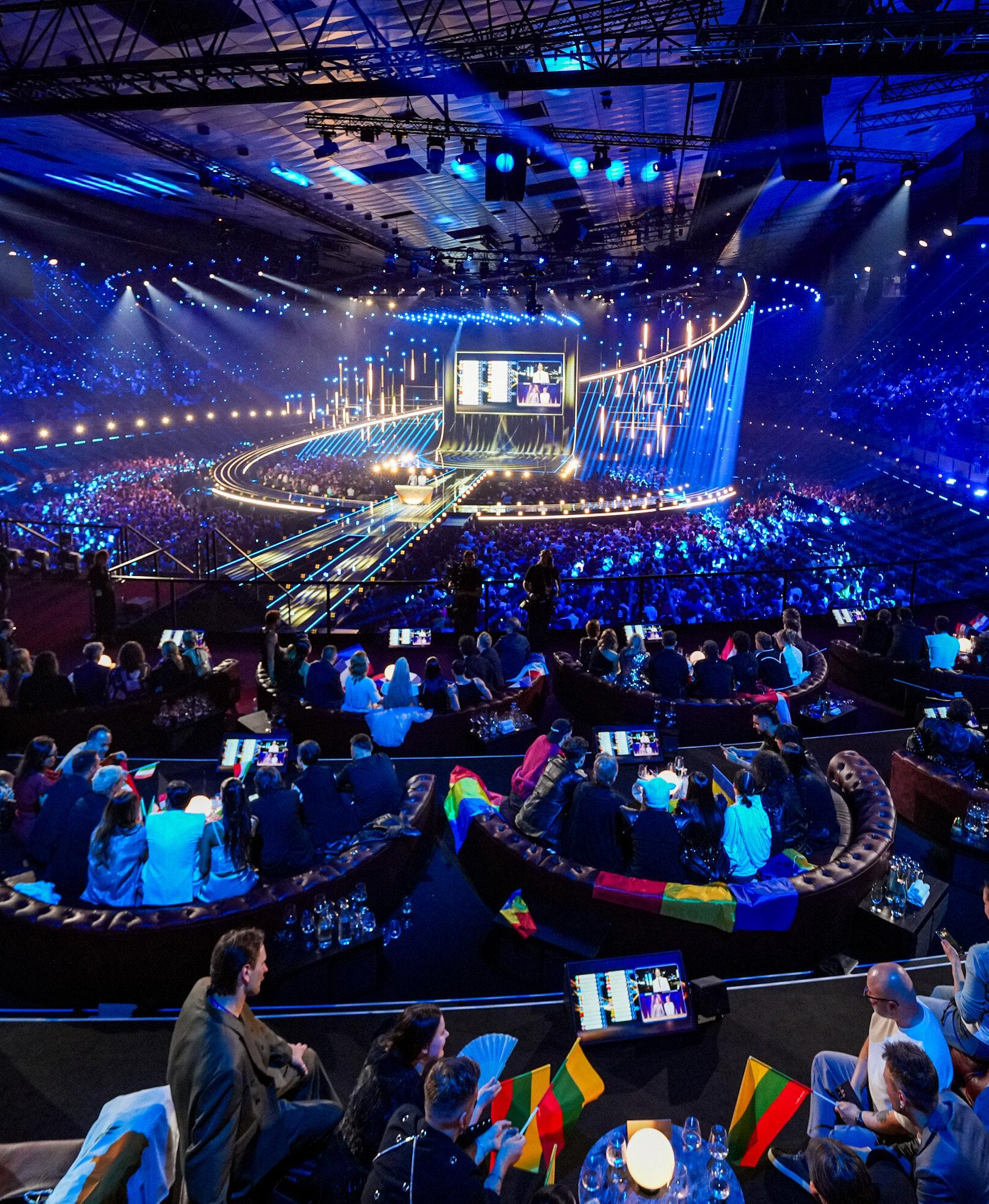
Photo credit: ORF
THE TECH POWERING EUROPE’S BIGGEST LIVE SHOW
EUROVISION 2026
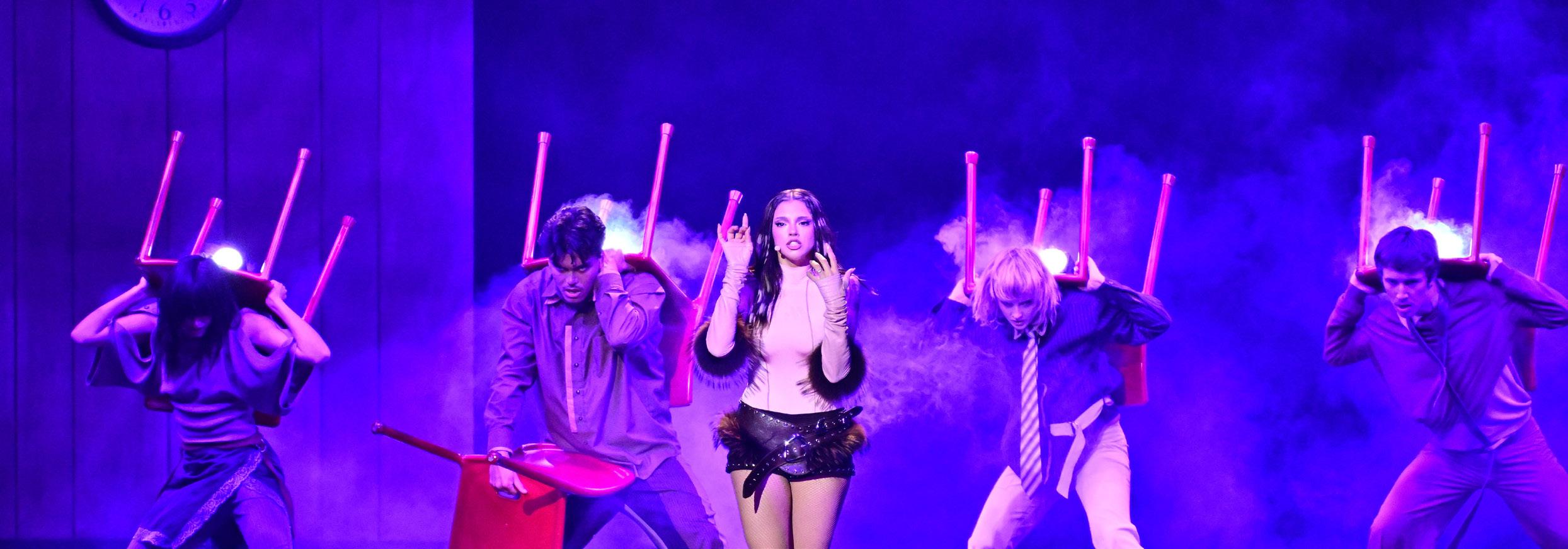
As Headliner settles into its seat in the Wiener Stadthalle just in time for the start of the Eurovision Song Contest’s second semi-final dress rehearsal, we have a good feeling about the first act: Bulgaria’s Dara. Forget easing the audience into the show with a sweeping ballad or saving the most frenzied performances for last to end the show on a high; the minute the Bangaranga chorus drops, the crowd goes wild, and the rest is Eurovision history. And other than a few countries choosing not to participate in the show, something is noticeably different about Eurovision in 2026: the performances unfold like slickly choreographed music videos. Headliner discovers how audiences got more – ahem, bangaranga – for their buck this year thanks to a combination of worldclass audio and the contest’s new cinematic vision.
Organised by the European Broadcasting Union (EBU) and Austrian broadcaster ORF, the contest returned to Austria following JJ’s victory in 2025 with the song Wasted Love – a stunning, moving operatic performance inspired by his own experiences of unrequited love and the conflicting emotions between pain and beauty. The influence of that winning operaticmeets-EDM formula could be felt throughout Eurovision 2026, with many contestants looking to capture some of the magic that secured Austria the trophy.
In the end, however, the contest was won by a song that could hardly have been more different. Bulgaria claimed its first-ever Eurovision victory with Bangaranga, which, with its nonsensical lyrics, ludicrously catchy singalong melody and relentless, chaotic energy, went on to dominate the scoreboard, winning both the jury vote and the televote – the first entry to achieve that feat since Portugal’s victory in 2017. Unapologetically bold and impossible to ignore, it was something of a comfort to see that Eurovision audiences can still be won over by three minutes of joyful mayhem.
“AS THE SHOW GETS MORE AND MORE COMPLICATED, THE DEMAND FOR BOLERO KEEPS INCREASING.”
THE TECHNOLOGY: RIEDEL COMMUNICATIONS SYSTEMS & SIGNAL DISTRIBUTION
The chosen venue was the 16,152-seat Wiener Stadthalle, a familiar setting for Eurovision fans after it successfully hosted the contest in 2015. Eurovision 2026 brought together some of the biggest names in live production technology, with ARRI, Riedel, Sennheiser, DiGiCo, L-Acoustics and Lawo amongst the tech playing key roles in delivering the event’s audio, communications, wireless, broadcast and camera infrastructure. The result was one of the most technically ambitious productions in the contest’s history, combining cinematic visuals with complex live broadcast workflows and fully redundant systems throughout.
Riedel provided the invisible but essential communications and signal distribution backbone for Eurovision this year, delivering fibre infrastructure, intercom systems, radio communications and signal routing that supported the smooth running of the live broadcasts. Although none of this technology is anything the audience sees on screen or on stage, it formed a critical backbone of the production, ensuring that every technical department could operate in sync. The system is designed to be fully redundant, with no single point of failure, meaning any disruption could be immediately bypassed to keep the show running.
Around 750 radios were deployed across nearly 80 communication channels, connecting all areas of the production, from cleaners and security through to production leadership and government coordination. The system also included around 250 analogue radios, mainly used for security and external operations where instant, zero-delay communication was required, alongside a Tetra digital radio system providing wider coverage. Riedel’s Bolero wireless intercom system was heavily used, with approximately 190 beltpacks distributed across lighting, rigging, stage management, floor management and delegation runner teams. In addition, around 120 wired intercom panels were in use, rising to approximately 250 when integrated with NEP’s outside broadcast facilities via fibre.
“You can listen to six different channels simultaneously, whereas with radio it’s only one channel,” explains Yung Min Lee, senior project manager at Riedel Communications. “As the show gets more and more complicated, the demand for Bolero keeps increasing. Normally, we would have around 120 in use, but here we’re at 190, and I could use more!”
The production also uses a digital TETRA radio system for group communications, which introduces a delay of around 120 milliseconds. Alongside this, there is a large analogue radio system in place,
which has no delay and is primarily used for security and external site operations, with approximately 250 analogue radios deployed. At the heart of the venue, Riedel deployed a fibre-based MediorNet signal distribution backbone consisting of around 26 racks and more than 11 kilometres of fibre cabling inside the Wiener Stadthalle. This carried video, audio and timecode signals across the production and was built on a ring topology to ensure automatic rerouting if any fibre connection failed. The system also enabled seamless fibre connectivity to NEP OB vans and external broadcast infrastructure, as well as remote access for the EBU as part of wider contingency planning. Across the production, Riedel’s infrastructure functioned as the central nervous system of the event, carrying all communications, video and audio signals in the background and ensuring that every department remained connected.
“We try to avoid a single point of failure,” stresses Lee. “The advantage of our systems – for example, our micro media products – is that they have two power supplies, and we use both. Communication is key to connecting everything. If something happens, there is a backup scenario in place from the EBU, and communication has to keep running, because it is key to connecting everything. On the signal distribution side, everything sits in what we call the backbone. We do video distribution, audio distribution, and code distribution because everything is scripted. Nobody realises we are here when everything is going well, but if something is not going well, they know who to blame!” he laughs.
“We are the central nervous system, so this has to be up and running for everyone else to be able to do their job in the first place,” nods Riedel’s Jeffrey Stroessner, who has played a key role in supporting the project within Riedel’s Managed Technology Division from the very beginning.
EUROVISION GETS CINEMATIC: ARRI CAMERAS
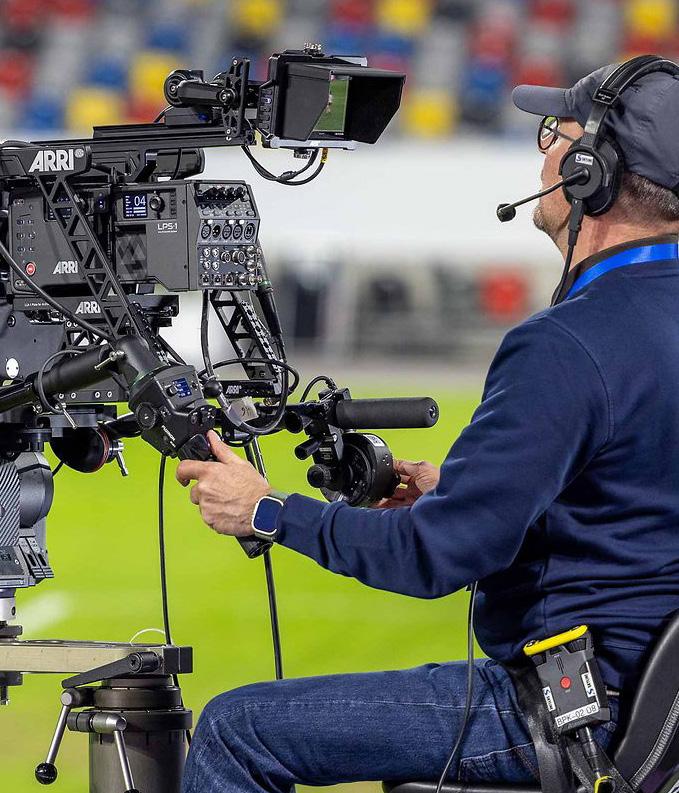
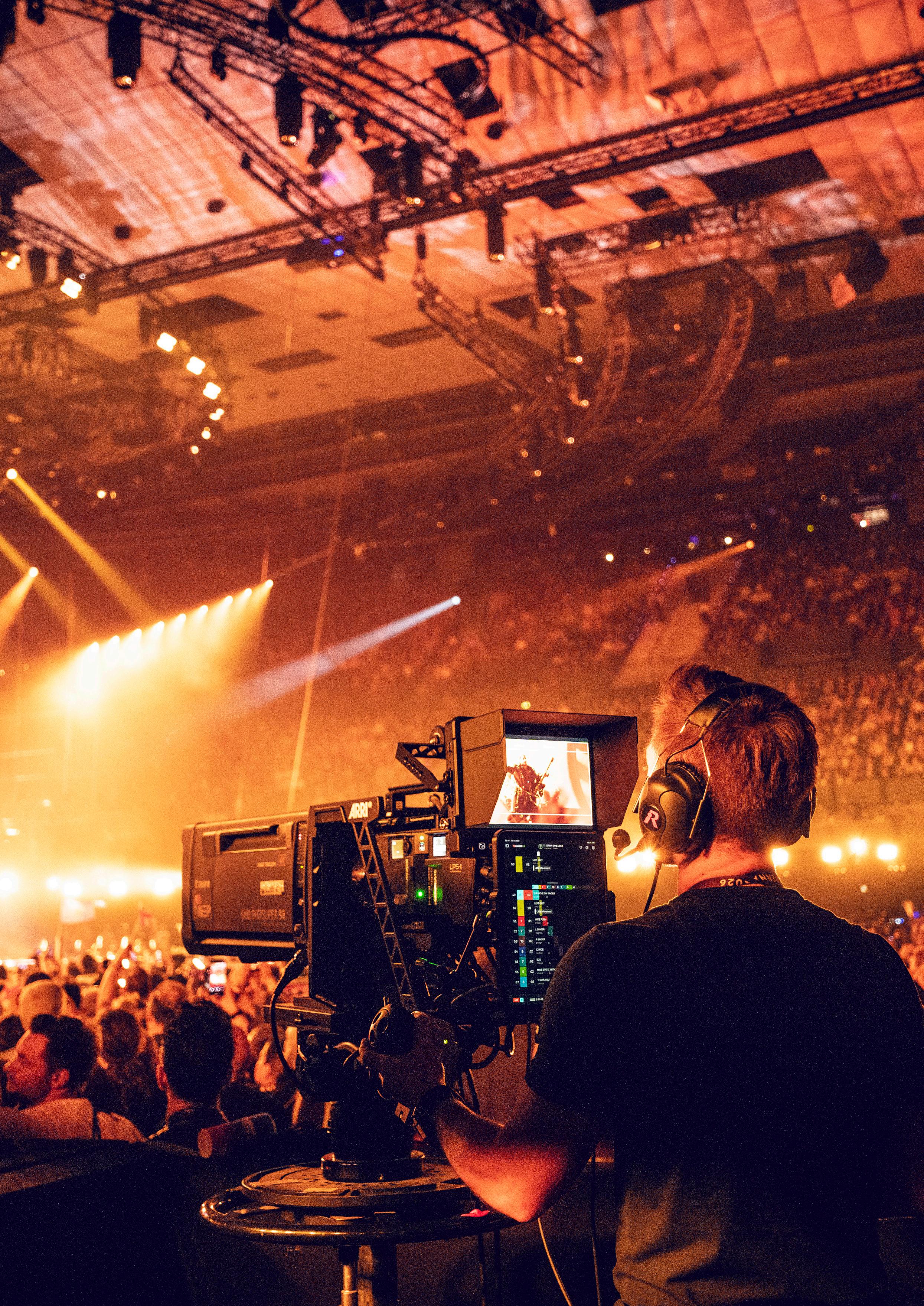
There’s a reason the performances looked so striking this year. ARRI was recently acquired by Thomas Riedel and the Riedel Group, and this year marked the firstever use of ARRI ALEXA 35 cameras across the entire live production of Eurovision. The Munich-based camera and lighting company’s high-end cameras are used on some of the most acclaimed films and productions in the world, bringing a cinematic visual language traditionally reserved for high-end film into a fast-moving live broadcast environment. A total of 24 ALEXA 35 Live cameras captured every position across the show, with all camera cuts executed, planned and rehearsed as per each contestant’s visual references, which this year included Bad Bunny’s Super Bowl performance, as well as memorable performances by Lady Gaga and Justin Bieber.
“It was essentially Thomas Riedel pitching the idea: wouldn’t it be great to have the three major companies in sound, communication, infrastructure and imaging from Germany working on one project together? Meaning Riedel, ARRI and Sennheiser,” Stroessner clarifies. “It was always about more than just the cameras. It was about the infrastructure: how do we integrate it, and how do we hand over to the OB vans as well? In a usual scenario, the OB vans would bring their cameras; everything is integrated, they connect them, and off they go. Whereas we disrupted that a bit with ARRI bringing the cameras, Riedel providing the infrastructure, extending it to fit the cameras, and then integrating with the OB vans.”
Stroessner explains the biggest challenges in adapting that cinematic look to a fast-moving live broadcast environment. “First of all, we tried to be as little intrusive as possible. We didn’t approach this project like, ‘Everything you’ve done in the past is wrong, now we need to do it the cinema way.’ We really tried to align closely with how we fit into an environment that’s not just driven by technology, but also by people who have done Eurovision before, and who understand how it works in
practice. So it was about finding that fine line – respecting broadcast people and existing broadcast workflows, but still adding enough with this cinema look and feel.”
The majority of the cameras on cranes and rail systems inside the stadium ran directly over the MediaNet network, and then the signals were exchanged in the device room in an OB van, while eight standard cameras on pedestals used a traditional fibre base station that was built directly into the OB vans. “I think the integration layer is pretty unique at this level,” notes Stroessner. “Also, the additional benefits we can create through this extra layer of individual looks had to be in sync with the OB van, the vision guys, the lighting designer, literally everything. That’s how it developed into us doing things here that couldn’t be done with other cameras. It was a learning curve for everyone.”
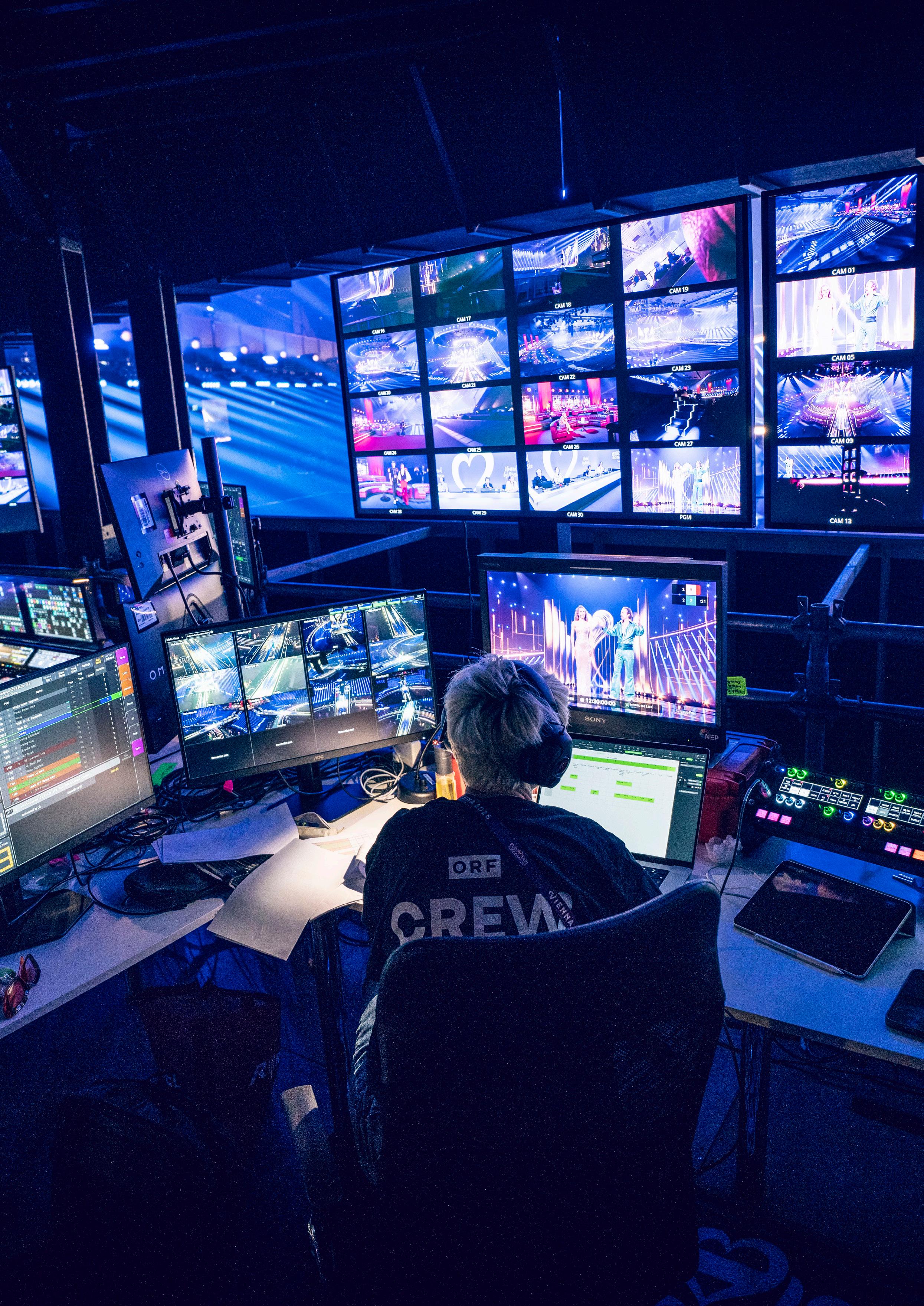
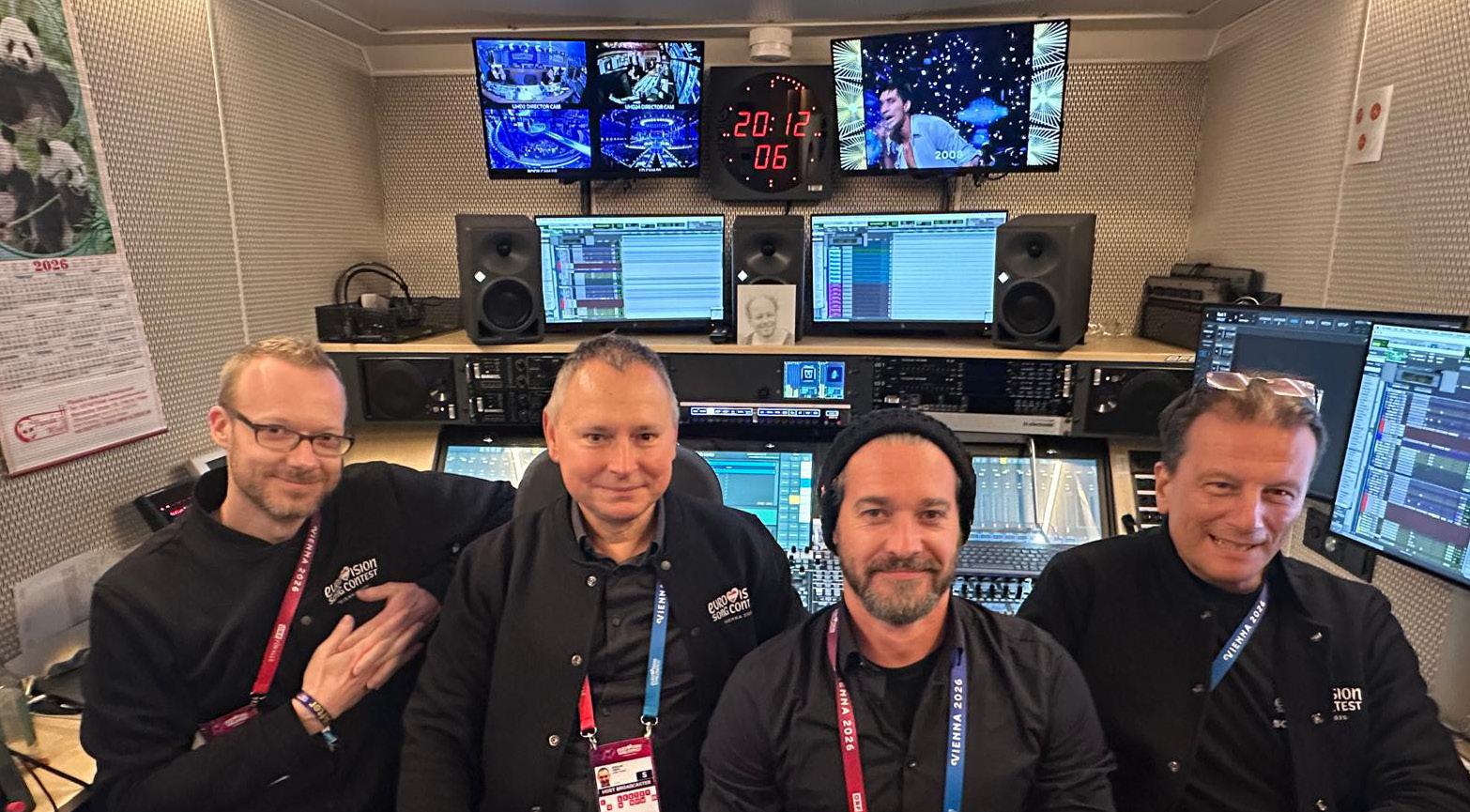
Sennheiser deployed its biggest Spectera set-up to date at Vienna’s Stadthalle, including manufacturing samples of the yet-to-be-launched Spectera handheld transmitter. A total of four active Base Stations handled (each operating on a single RF channel), an additional Spectera base station dedicated to RF scanning, approximately 150 live streams for wireless mics, in-ear monitoring and control data in what is widely judged to have been the best live sound for the ESC ever, created by technical production company Agorà. Behind the scenes, technical crews, artists, and broadcasters had been working tirelessly for weeks to fine-tune every detail of the spectacular shows. The Stadthalle’s sound room, led by Gerhard Jansa, head of audio for Eurovision, handled mic audio, IEM audio, artist audio preparation, and audio distribution to the OB vans. Failsafe operation was key for the entire event; for example, the sound room accommodated two independent mixing desks with an operator each. Unusually, monitoring took place inside the sound room, not inside the main arena.
Jansa specified seven DiGiCo consoles in total at both Front of House and monitor positions, comprising
SENNHEISER’S SPECTERA DEBUT
Photo credit: ORF
“IT WAS ALWAYS ABOUT MORE THAN JUST THE CAMERAS. IT WAS ABOUT THE INFRASTRUCTURE: HOW DO WE INTEGRATE IT, AND HOW DO WE HAND OVER TO THE OB VANS AS WELL?”
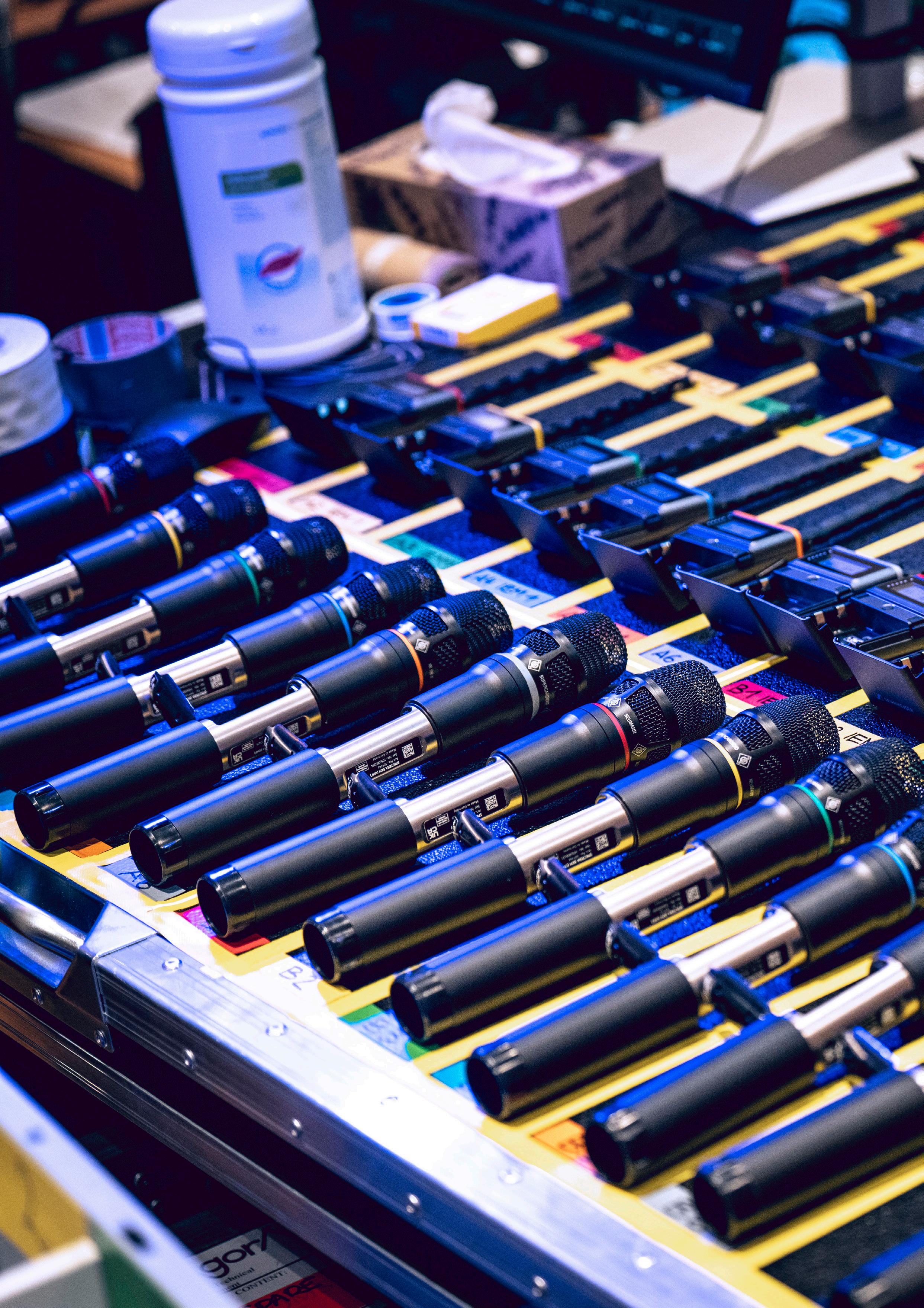
Quantum 338 128 channel mixing consoles, Quantum 225 72 channel mixing consoles and Quantum 852 dual engine 384 channel mixing consoles. “Which is a little bit strange,” acknowledges Jansa of the monitoring console’s position. “But I think for a TV show like this, working outside the arena is even better. The Optocore ring is the reason we went with DiGiCo because signal distribution inside that is much simpler compared to other systems, and it’s really stable. Allen & Heath and DiGiCo have the smallest round-trip latency on the market, and if you’re using large-scale consoles, you’re landing on digital pretty quickly anyway.”
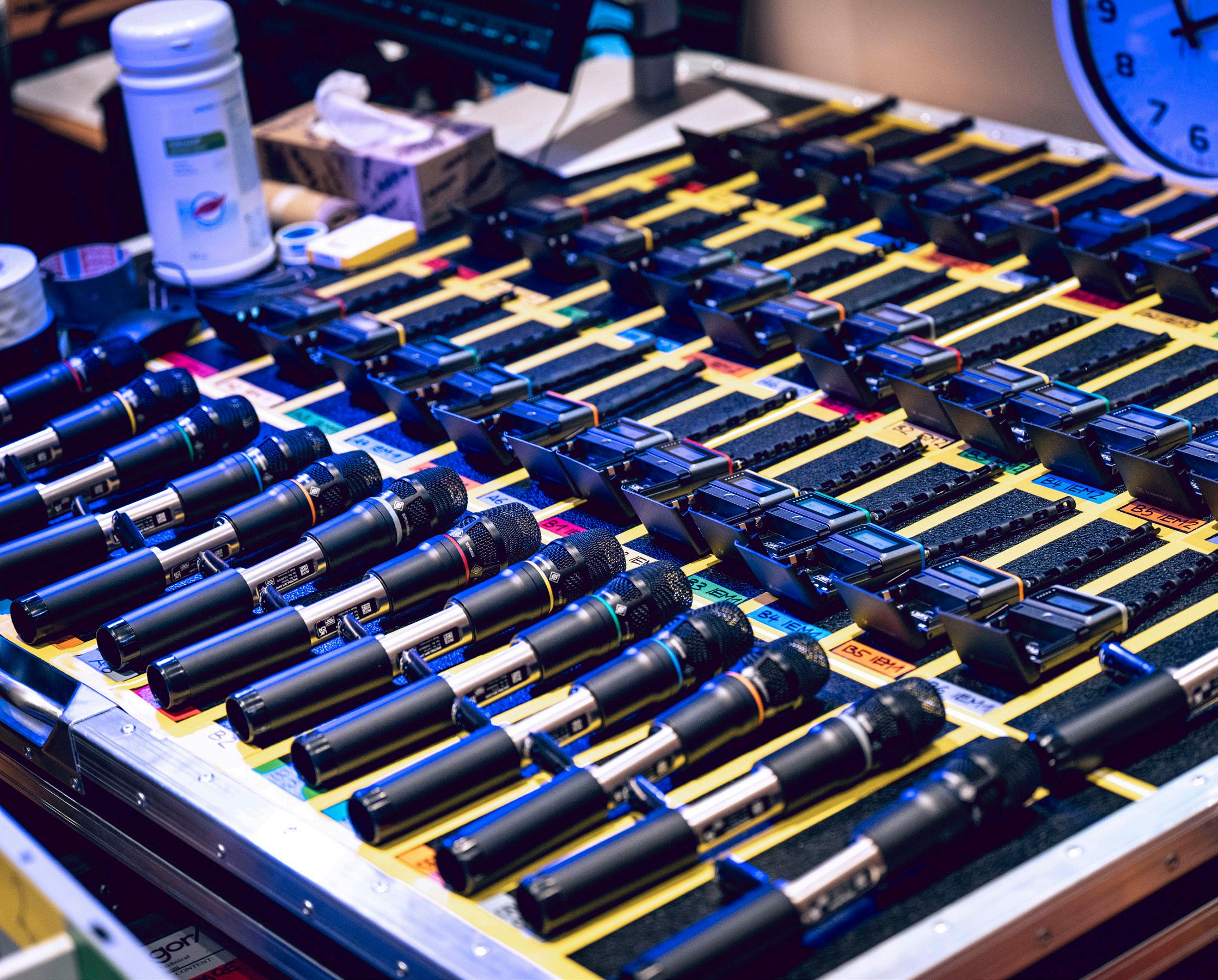
The same idea of failsafe reliability was behind the six Spectera Base Stations that were used – while four were active for audio and control data, working on one RF channel each, another one was exclusively dedicated to scanning the spectrum 24/7, but could also run as a spare, as it was already linked with all antennas. A sixth Base Station was a true spare unit. With six people maximum on stage per act, the team provided a mic rotation of six Spectera handhelds, an in-ear rotation of six Spectera SEK bodypacks working as in-ears only, and an ‘all-in’ rotation of six Spectera bodypacks with headsets, mics and in-ear monitors. Spectera DAD antennas were also mounted behind the stage to ensure
perfect coverage when the artists would enter the stage from behind the video wall.
“We haven’t had a single failure on that system yet, running in this hall with four antennas, it’s been no problem,” enthuses Jansa. “The sound quality is so much better – not only on the receiver side, but overall the audio is better than on an analogue system because it’s a stable stereo you can actually hear properly. Now it’s a totally different experience with very low latency, and that was my goal. Everything under five milliseconds was the target, and we’re just around that.”
Almost the entire setup is supported by a full backup system ready to take over if required. The only two elements that cannot be duplicated are the artist and the microphone in their hand, making it the most critical point in the signal chain. Performers used a total of 46 Spectera SKM handheld microphones, fitted with Neumann KK 105 A super-cardioid capsules, supported by 101 Spectera SEK bidirectional bodypacks for artist and crew communication and monitoring. Headmic 4 cardioid microphones were also used across the production, while in-ear monitoring for the orchestra and dancers during the opening and interval acts was provided via IE 100 PRO earphones paired with EK 2000 IEM bodypacks.
LINE ARRAYS: L-ACOUSTICS IN REVERSE
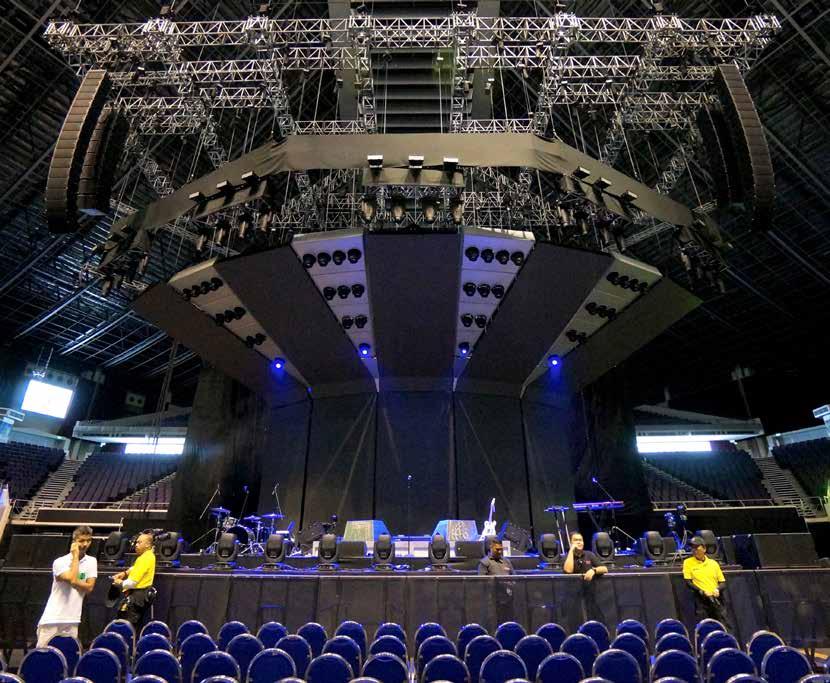
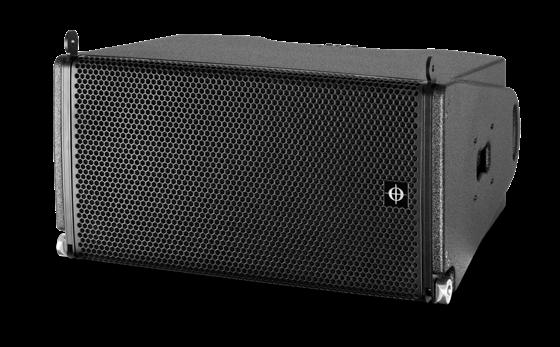
The production’s technical consultant specifically requested the use of a cardioid sound system, which was based almost entirely on L-Acoustics’ L2 and L2D. The only exceptions were two clusters that had to be built using K2 instead of L2 due to sightline constraints related to the video elements and camera positions. In total, the system consisted of 20 L2 and L2D clusters, plus two K2 clusters. In addition, there were two special clusters, each made up of 1 L2 and 1 L2D, specifically requested by the FOH engineers and referred to as the ‘PA reverse’ system. These allowed them to effectively shift the perceived soundstage during moments when the focus of the show moved to the Green Room (designed to look like traditional Viennese coffee houses), located at the back of the arena, opposite the main stage. Lowfrequency coverage was provided by eight subwoofer clusters, each comprising four KS28s in a cardioid configuration. An additional four KS28s were deployed on the floor underneath the stage. Coverage of the arena floor and catwalk was
further reinforced by a total of 36 X8 loudspeakers distributed throughout the parterre area, while 12 Kara enclosures were used as stage sidefills.
“In a complex environment such as Eurovision, with multiple clusters deployed in a venue that is not always ideally suited for live music, a cardioid system like L2 helps minimise sound propagation in unwanted directions, allowing for greater focus on the audience areas that matter most,” explains Valerio Motta, operations and technical relations, audio network system engineer, Agora. “This not only contributed to a highly engaging audio experience inside the arena, but also benefited the broadcast feed, which greatly profited from this improved sonic clarity and reduced spill. A special mention goes to the 26 L-Acoustics 5XT loudspeakers, which were used as dedicated personal monitors for each sofa in the Green Room, ensuring a clear and consistent listening experience for all artists and delegations.”
This system design played a key role in maintaining precise sound localisation and consistent
coverage throughout the Wiener Stadthalle – a very large and acoustically challenging venue, with a considerable volume and several reflective surfaces, making it essential to maintain control over acoustic energy and preserve intelligibility.
“The combination of cardioid technology and careful cluster deployment allowed us to control acoustic energy effectively, improving both the audience experience inside the arena and the quality of the audio delivered to the broadcast production,” adds Motta.
To address these challenges, he worked closely with the FOH engineers and agreed, together with the main system engineer Jerzy Kubiak, on a mono program for the main PA. “This approach allowed us to focus on achieving the highest possible consistency and localisation for every audience member, regardless of their position in the arena, making it essential to maintain control over acoustic energy and preserve intelligibility throughout the venue,” he tells Headliner
A range of AI-assisted audio tools helped the production to improve clarity and control across live sound during Eurovision. These included feedback suppression technology from Alpha Labs, which was used on the PA systems for vocals and spoken elements, which helped reduce acoustic feedback and room noise and increased available gain before feedback in the arena. Accentize plugins were utilised for cleaning and separating audio, particularly for spoken word segments. In addition, Supertone Clear was deployed for de-noising and de-reverb processing on vocal sources where required, mainly for headset microphones, but occasionally for handhelds as well. Meanwhile, Audioström’s LiveProfessor was used at FOH as
a host for feedback-killer plugins to manage live vocal and instrument processing, providing a dedicated, low-latency environment to run VST/ AU plugins without the overhead of a full DAW, while a Fourier Engine Digital transform.engine brought studio-grade audio software plugins to the music mixes.
CEDAR Audio’s dialogue noise suppression (DNS) technology – often referred to as “de-noising” – was also deployed to remove unwanted background noise while preserving the singers’ voices, while Amadeus Acoustics’ object-oriented immersive audio and active acoustics platform utilised advanced 3D spatialisation and digital signal processing to track and move sound continuously through the stadium, creating a natural, highly localised listening
experience for the live broadcast.
INSIDE THE OB TRUCKS WITH LAWO
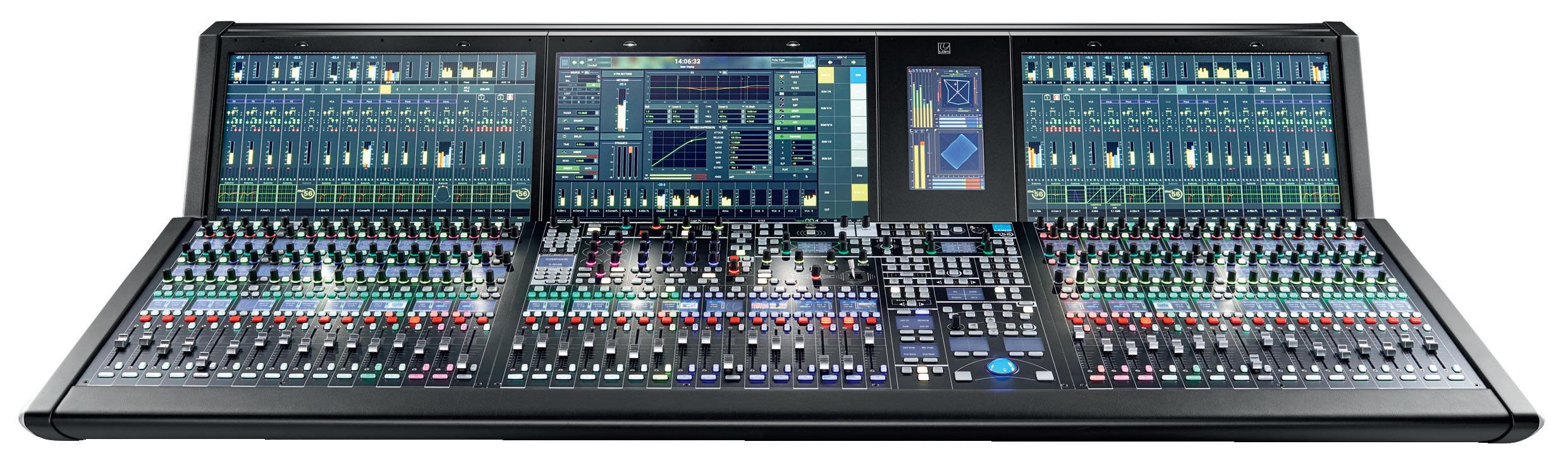
The broadcast side was handled by ORF’s IP-based OB trucks using Lawo mc²56 consoles and A_UHD Core engines. Headliner takes a peek inside, where Jansa explains the advantages of managing a show as complex as Eurovision:
“One of the main reasons we selected Lawo was their proven reliability in large-scale live broadcast environments,” he says.
“ORF is a heavy Lawo user. We have Lawo consoles in all our TV control rooms, and all our larger OB trucks are also equipped with Lawo systems. Most of them still have the old Nova 73 core, but more
AI AUDIO PLUGINS
and more are getting upgraded to the newer A_UHD IP cores. “Eurovision demands a system that can operate continuously under enormous pressure while providing full redundancy and consistent performance throughout weeks of rehearsals and live shows.
“Therefore, it was an easy decision to use two of our recently refurbished radio OB trucks from the regional studios in Lower Austria and Burgenland. Both trucks were recently equipped with identical mc²56 MkIII consoles and the new cores,” he notes.
Because the rented NEP broadcast trucks, as well as the PA and monitor consoles, were MADI-based, Jansa decided to use a complete MADI workflow for the broadcast audio infrastructure. The system was chosen for its extremely stable operation and proven track record in major international broadcasts. It integrates seamlessly into the MADI-based broadcast workflow, while its flexible routing architecture makes it wellsuited to managing the complex signal distribution required for a production of this scale.
It also delivered high-quality audio performance with straightforward integration of Waves SuperRack SoundGrid, along with powerful snapshot and control capabilities that are essential for Eurovision’s quick pace. Comprehensive redundancy options helped ensure uninterrupted operation throughout both rehearsals and live broadcasts, and the familiar console environment allows engineers to work efficiently under pressure.
“I really enjoyed the customisation possibilities of the consoles,” adds Jansa, shouting out Lawo’s free-ofcharge dedicated support for Eurovision 2026.
“Although in the end, we didn’t need it a single time. Everything simply ran perfectly and could be easily configured for this project by our ORF system engineers, Reinhard Tomek and Alexander Schranz. The consoles did their job day after day, and during an event as demanding as Eurovision, reliability is everything. The audio team needs to focus on the show and not on the technology, and the Lawo systems gave us exactly that confidence throughout the entire production period.”
The team has redundancy in place at every level, ready to take over should a primary component fail – the second semi-final is recorded, and the team is ready to switch feeds should the live broadcast go down. They call this the ‘disaster recovery tape’.
“When you start with Eurovision, one of the first things you hear from the EBU is that failure is not an option on live TV,” stresses Jansa. “Really, the Eurovision Song Contest can be looked at like a big karaoke show. It could be quite a simple setup, but because of the very
high broadcast standards they have now, it’s quite complex, so for everything we use, we have at least two systems running. We have two broadcast mobiles from ORF, and they are the same design and now have the new Lawo core installed.”
Inside the OB truck, the production operated with approximately 750 buses managing the complex audio workflow. Pro Tools was used with timecode synchronisation, assigning an absolute reference in hours, minutes, seconds and frames to ensure perfect alignment between audio, video and external devices such as cameras, video systems and other DAWs. The system also incorporated plugins from around 40 different manufacturers, which were pre-programmed and triggered automatically during performances, with reverb being the most commonly used effect.
A fully redundant Pro Tools backup system was in place, which switches over automatically in the event of a failure. If required, engineers can also fall back to a live mixing setup on a Lawo mc56 console, with an additional emergency “plugin panic” function available to maintain continuity during live broadcast.
As Bangaranga echoed around the Wiener Stadthalle and over 100 million viewers tuned across Europe, few would have been thinking about fibre backbones, redundant OB trucks, reverse-angled speakers, AI denoising plugins or cinematic camera workflows.
Yet Eurovision 2026 proved that the world’s biggest live music show is no longer just a song contest – it’s a showcase for the cutting edge of broadcast technology. And if Vienna set a new benchmark for how Eurovision can look, sound and feel, Bulgaria has a daunting challenge ahead.
“Regarding Bulgaria’s win, I dare to say that audiowise, we have raised the bar to a level where their engineers will have to work hard to beat it!” Jansa grins good-naturedly.
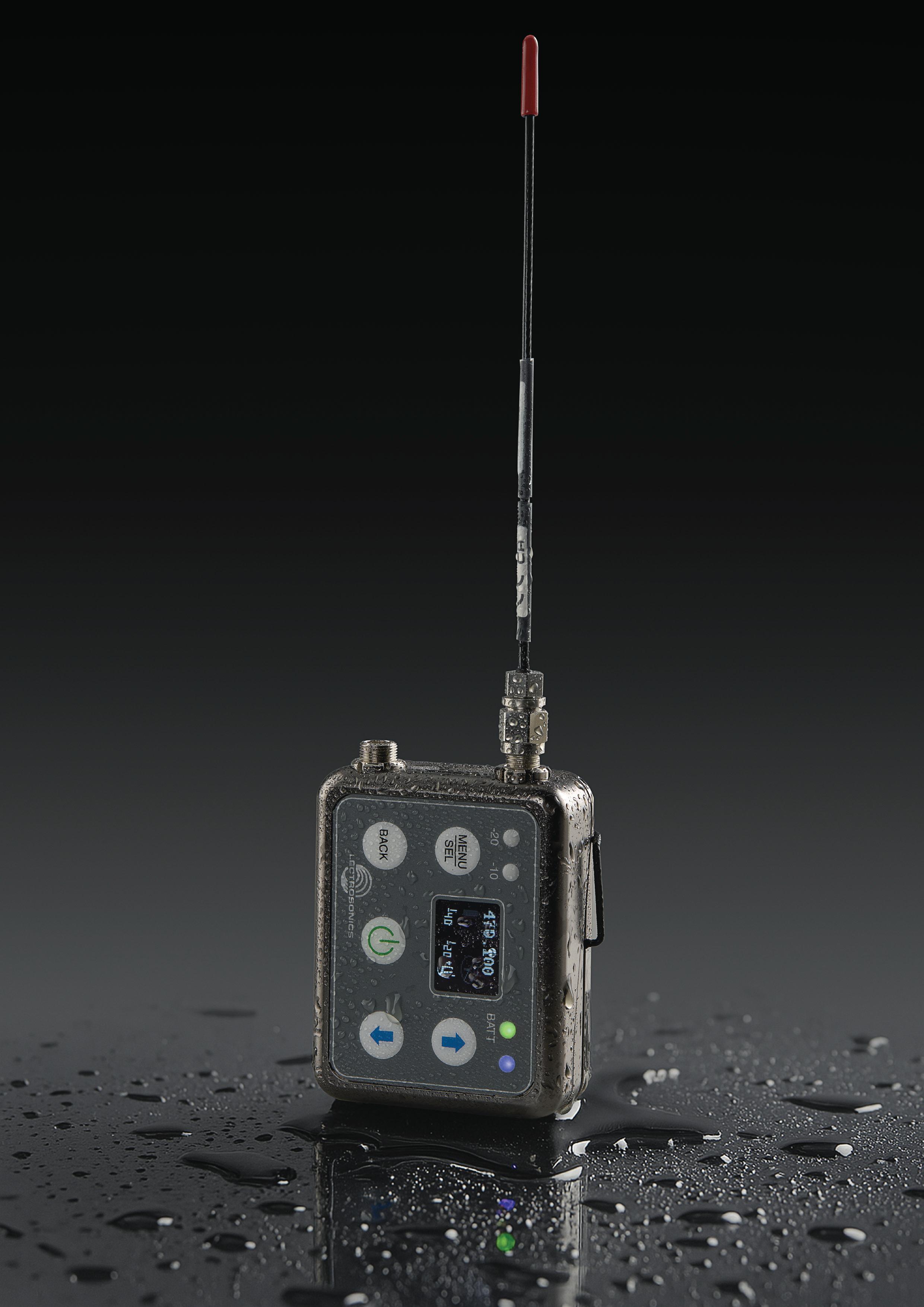
Does your micro transmitter have these features?
• IP57-rated watertight, all-metal enclosure
• Removeable LiOn rechargeable pack
• Drop-in charging with optional dock
• High-Density RF mode for 24+ ch. in 6 MHz
• Fixed audio latency of 1.4 ms
• Lav mic presets for optimum audio quality
• Full menu & control on the unit
• Selectable RF Power up to 50mW
The DSSM micro digital body pack has ALL these features and more, in one tiny package.











SCORCHER MOBO-WINNING RAPPER RETURNS WITH ADMD WORDS BYADAM
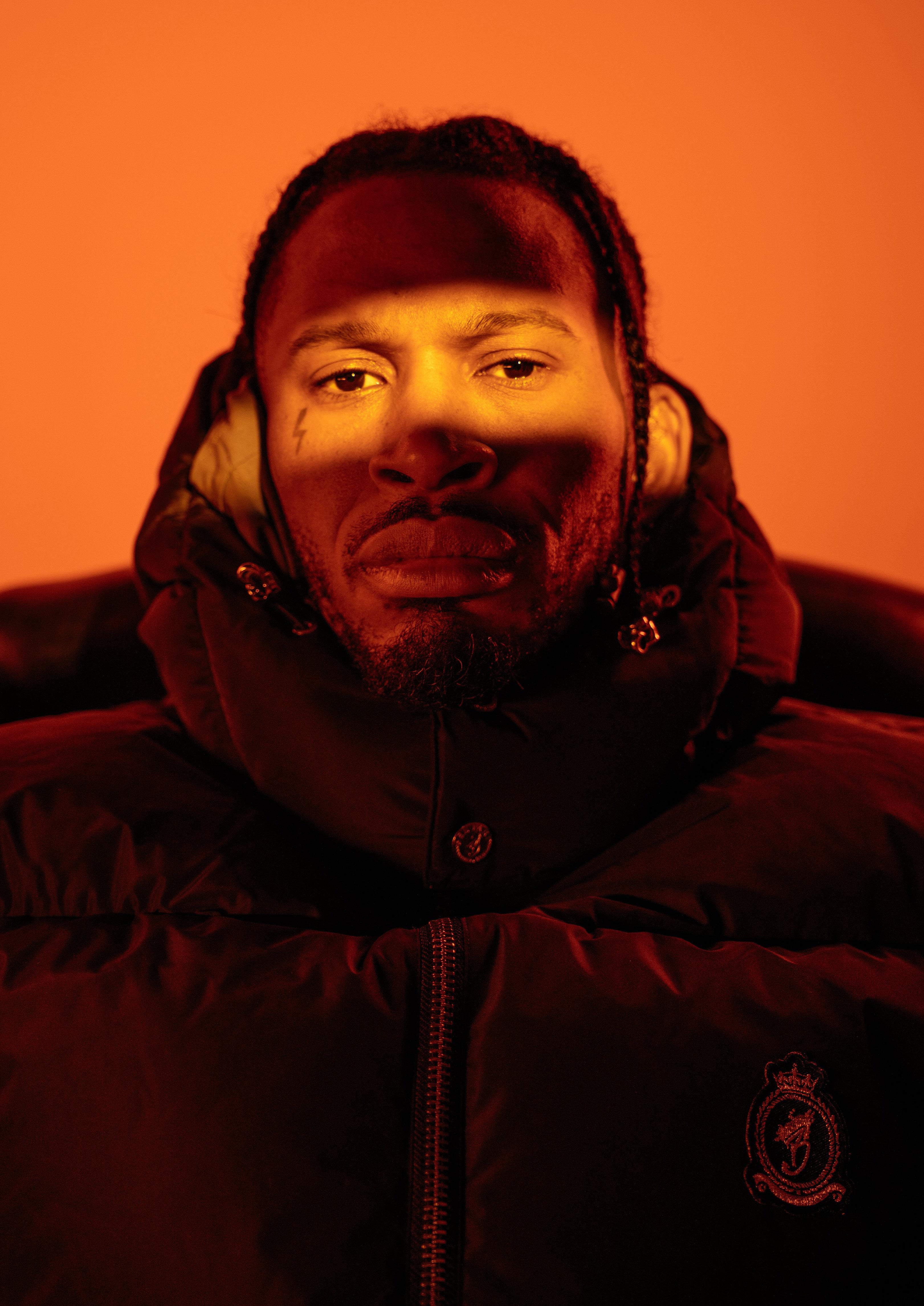
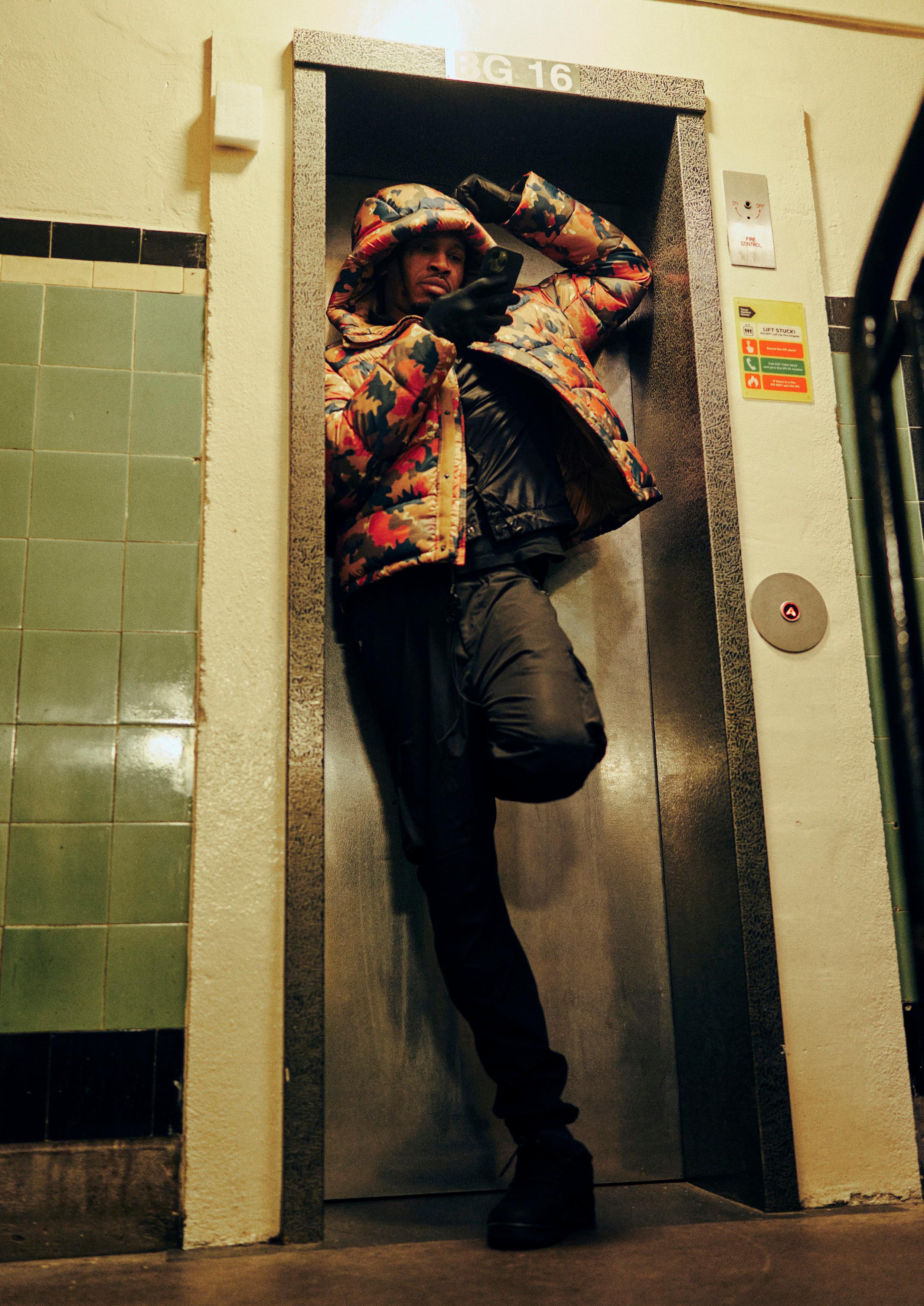
There’s an argument to be had that Scorcher is the most resurgent rapper of recent years. The North London emcee and Top Boy actor has been one of grime’s pioneers since the early ’00s, and his talents and contributions were recognised as Best Grime Act at the 2025 MOBO awards. He showcases his talents on his latest single, Comfy, from his new album titled ADMD (All Dorks Must Die). He gives Headliner the lowdown on always moving forward and not getting too nostalgic for the early days of grime, working with the likes of Giggs on recent singles, and why he always chooses to collaborate with rappers who keep him on his toes.
Born Tayo Jarrett, Scorcher grew up in the Bush Hill Park area of Enfield, the very northern edge of London. Instantly recognisable with a lightning bolt tattoo under his right eye, his first foray into grime music was as a member of the Enfield crew Cold Blooded, but he would leave to join another group; he formed The Movement with Wretch 32, Devlin, Mercston, and Ghetts, some of the UK’s and the genre’s biggest stars. He released a number of mixtapes that established his name as one to watch in the scene, bolstered by a
rap beef between The Movement and Boy Better Know, a rival collective with fellow grime pioneers such as Wiley, Skepta, and JME.
In 2009, he released his debut album, Concrete Jungle. Like many of his fellow grime artists, including Skepta and Tinchy Stryder, Scorcher’s first LP was more of a foray into electro-pop following the huge chart success of the Wiley single Wearing My Rolex. As with many of the releases of the core grime artists of the time, it helped
garner a more commercial fanbase and national radio spots, but fans of the original grime sound were left disappointed.
Scorcher launched his acting career as Kamale in 2011 on the Channel 4 drama Top Boy. Starring fellow UK rappers, Ashley Walters (Asher D of So Solid Crew) and Kano, the programme’s success saw it later renewed by Netflix with a lot of help from Drake. Scorcher took several more acting roles, with one of his more recent roles being
in the critically acclaimed Steve McQueen BBC drama, Small Axe While he never fully left music and has released pretty consistently, the post-pandemic years have seen him return with a forceful new focus and energy — albums include The Drama, Since You Were Gone, and Ballon D’or, co-released with heavyweight grime producers The HeavyTrackerz, best known for the grime chart hit German Whip. And in a moment few would have been able to predict, last Summer Robbie Williams brought out Scorcher, Lethal Bizzle and Wiley during his Emirates Stadium concert for a quick medley of grime’s greatest hits.
As the Zoom recording begins, Scorcher jokes that, “That ‘recording in progress’ felt like federal investigation or MI5!” On growing up with music, he recalls, “My whole life, I’ve just been exposed to music, and people making music. I would go to my dad’s bredrin’s house in Tottenham — he was a drum and bass producer. I played the piano, and my nan used to put me on her lap and make me do scales and stuff. So these things have always just been there.”
Calling Scorcher a pioneer of grime music is no exaggeration. The incredibly unique genre was born from UK garage and jungle, utilising high tempos of 140 beats per minute and syncopated breakbeats. Early songs would use icy electronic sounds, as well as cheap-sounding MIDI woodwinds and strings that somehow worked perfectly (the presets of the Fruityloops DAW are often credited with helping grime producers create the sound). The sound was very much born in London before eventually expanding to other British urban cities, and its creation is documented in YouTube video series such as Risky Roadz. Scorcher features prominently in these videos with freestyles and behind-the-scenes footage.
“It was just normal life,” he says. “I don’t really look back; I’m not a look-back kind of guy. It was literally just what we were doing at the time. It was that new thing, new genre, new ecosystem.” On the constant debates about where grime is at, or if the original sound will make a comeback as it did in 2011, Scorcher is philosophical: “Grime is a staple. I don’t think it’s possible for it to die. If you’re measuring grime by whether it’s in the charts, or what kind of radio is playing it, your perception is totally different to somebody else’s. It all depends on where and how you consume, what your entry point is for the genre. If your entry point is Radio One, you’re going to have a totally different worldview of grime than a person who arrived here via the DVDs, or the raves, or in the youth club. If we were in school, grime would be a core subject. It’s a primary colour. This is not a subgenre of garage or a relative of drill. Grime is its own thing. It’s got its own culture, its own way that people consume it, its own ecosystem, its own legends that are appreciated in their own spaces. Grime is here to stay.”
With Scorcher being a key figure in the UK rap scene since the early ‘00s, his first MOBO win at last year’s ceremony in Newcastle felt fitting. Scorcher saw off fierce competition from D Double E, Chip, Manga Saint Hilare, and more.
“It was more about how I won than the actual winning for me,” he says. “It felt good to really be myself with my actual people. I didn’t do anything clever. I didn’t start jumping on a new trend or a new wave; all I literally did was make music and release it. I didn’t even really promote it that much. It felt good because you know that you’re here for no other reason other than the music you’ve been making.
“I feel like there was a little moment where there was a bit of a shift in the
culture, and people started feeling like, ‘I can do that too.’
“If I can, they definitely can, because I ain’t even doing anything other than making the music, disappearing, coming back with more, and then I’m gone again.”
One of the singles announcing ADMD was Ups, released in January. It features UK heavyweight Giggs, who made a name for himself with a slower, more hip-hop-inspired rapping flow and a distinct deep voice you can instantly spot on a track. Scorcher drops some haymakers in his verse: “You ain’t better than Scorch in your dreams / I’ll spin a emcee when I talk in my sleep.”
“It just felt like I wanted to step further into my space,” he says of the track. “Ups felt like a good way to start off the year. Fresh sound, not particularly following what anyone else is doing, just my own little vibe. I know Giggs from back when we did the Movement DVD. I remember properly arguing for it, saying, ‘No, we need to put Giggs on the DVD.’ It was a bit of a thing because he didn’t make grime, but I was telling people that doesn’t matter. He clearly appreciates the same stuff we do. And do you know how busy Giggs is?! Jesus Christ — I think he did his verse in America.”
The second single was Roads featuring Liverpudlian rapper Kasst 8, one of the more grime-forward tracks on the album and sampling Wiley’s famous ‘Eskibeat’ synth. On travelling to Liverpool, Scorcher says, “Kasst came to link me quite a few times in London, so I thought, it’s only right that I show some appreciation and go to Liverpool. So I went up there, shot the video at night – good vibes. But the second I got to Liverpool, I parked up, and I was waiting for Kasst. I’d been there three minutes, and some little kid recognised me and pushed up on a bicycle, asking what we were doing around there. We were in the trenches!”
“IF WE WERE IN SCHOOL, GRIME WOULD BE A CORE SUBJECT. IT’S A PRIMARY COLOUR.”
And then came Comfy, the final single to precede the release of ADMD. It’s an addictive and sultry drill track with a sampled choir layered underneath the shuffling beat. Scorcher is open about choosing emcees to collaborate with who keep him on his toes, with Giggs being hard evidence of that.
And that is no less true of K-Trap here, especially with the line: “I’m glad I changed my life, that’s brilliant / But let me get the call of duty, I’m filling it.”
When Headliner mentions that bar to Scorcher, he replies, “Crazy! He came for my head. This is the thing. Every time I do a feature with someone, I feel like they just come in with their coldest verse every time. I feel like I’ve got the best Giggs. I feel like I’ve got the most peak Kasst.
I feel like I got vintage, rassclart K-Trap! It’s cold for the audience, but it’s treacherous, man. The bar is so high right now. Proper respect to K-Trap; the way he dealt with the track was like a G. No weirdness, no music-superstar-ness. I just felt like I was dealing with an emcee.”
A common criticism of shows like Top Boy and the lyrics in some grime songs is that they are seeking to glamourise a certain type of lifestyle. In Comfy, Scorcher seeks to point out that there isn’t much about it to glamourise in the first place.
“A lot of people glamourise this street thing when — in my experience, and I can’t speak for everyone — it’s just not all it’s cracked up to be. It’s quite boring, quite mundane. That’s not even talking about the impacts that it has on society. From an everyday
life point of view, the time that you’re wasting, there are parts to this that people are just unaware of. In reality, there’s absolutely nothing going on, just time being wasted.”
The new album is excellent, and Scorcher’s final pitch is that, “ADMD is a fair reflection of me as an artist today, and all the way back in time. It’s a culmination of all those different things. These are the gifts that God gave me, I believe. I’m getting into TV and film, but it’s important for me not to convolute things too much. I’ve only started to really get into that bag now that my album is wrapped and ready.”
INSTA: @ONLYSCORCH
MYTH OR TRUTH?
The best sounding live console was originally designed for broadcast.
Hearing is believing – sign up and find out for yourself.
WORDS BY ALICEGUS T A NOSF
HOW EUROVISION’S CINEMATIC SHIFT IS REDEFINING LIVE BROADCAST
THOMAS RIEDEL ON ACQUIRING ARRI
Thomas Riedel has spent his career building the invisible infrastructure behind some of the world’s most complex live productions – from the Olympics to the NFL – through Riedel Communications, the company he founded in 1987. Known for powering real-time broadcast and communications systems at a global scale, Riedel has long operated at the intersection of sport, entertainment and technology.
Riedel himself is no stranger to entrepreneurship: in addition to being the founder and owner of Riedel Communications and Riedel Networks, he’s the co-owner of the German SailGP Team alongside Formula 1 champion Sebastian Vettel.
However, this year marked what Riedel describes as the most significant milestone of his career: the acquisition of ARRI, the legendary Munich-based camera and lighting company whose high end cameras are used on some of the
most acclaimed productions in the world – from Dune, Oppenheimer and Barbie to prestige television for Netflix, Amazon and HBO, as well as large-scale live productions such as Beyoncé’s Renaissance tour.
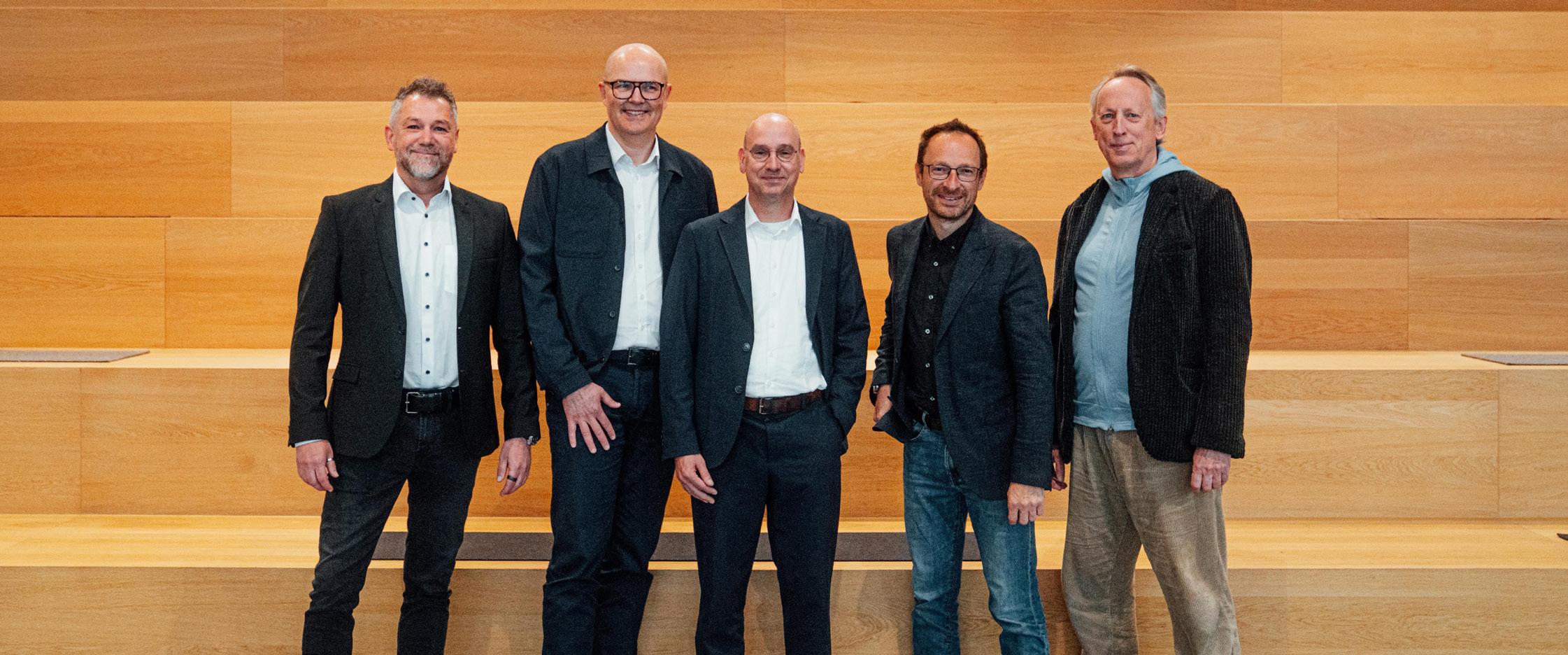
In a competitive international process, Riedel’s vision secured ARRI’s future as an independent yet strategically aligned company within the Riedel Group, combining two German engineering powerhouses across broadcast, audio, video and imaging.
That vision has already stepped onto one of the biggest stages in global entertainment. For the first time in Eurovision Song Contest history, ARRI ALEXA 35 cameras were used across the entire live production, bringing a cinematic visual language traditionally reserved for high-end film into a fastmoving live broadcast environment.
Headliner visits the Wiener Stadthalle in Vienna, where Riedel’s communications and signal distribution systems quietly underpin the broadcast, to speak to Riedel about the thinking behind the ARRI acquisition, why it’s a full-circle moment for him, the challenge of merging cinema-grade imagery with live television at scale, and why Eurovision has become the first major expression of a new creative and technological direction that could reshape live entertainment production.
You said that the ARRI acquisition represents the most significant personal milestone of your career so far. Business aside, what does this deal represent to you personally?
I’m super emotional about the personal part. ARRI was part of my story even before my career. When I was 14 or 15 years old, I was involved in theatre projects at school, and we had ARRI spotlights from my hometown theatre.
I never had the money to buy them, but that was the first moment I learned about the brand; I loved them! It’s a brand that goes back 109 years, with a legendary legacy.
Then, in the early ‘90s – I started my business in 1987 – I already had a bit of an intercom and radio business. People know that I got involved with the Lillehammer Olympics, which is one of the first Olympic projects I worked on.
But what I don’t typically discuss is how I got involved there. It was ARRI who got me involved. At that time, ARRI was the contract holder for lighting the opening and closing ceremonies of the Lillehammer Winter Olympics. Basically, on that project, people forgot about intercom! In November, for games that were happening in January, they suddenly realised they needed an intercom solution. They called all the intercom suppliers around the world, and no one said they could do it because it was such short notice. I was crazy enough to say, “Yes, I can do that.”
How did that become a pivotal moment in your career?
It was ARRI and that project that got me into the Olympics. Funny enough, from Lillehammer, I did a radio interview with my little hometown radio station. When that interview was on air, someone involved in Formula 1 happened to be passing through my city, listened to the station and said, “Who the heck is Thomas Riedel?” That’s how I got into Formula 1.
I can truly say today that without those things, and without ARRI, I wouldn’t even be sitting here. Many years later, I had the chance to become the owner of that company. It still gives me goosebumps. I love the brand, and now I get to know all those people. They’re lovely people, super competent, and there’s a real vision.
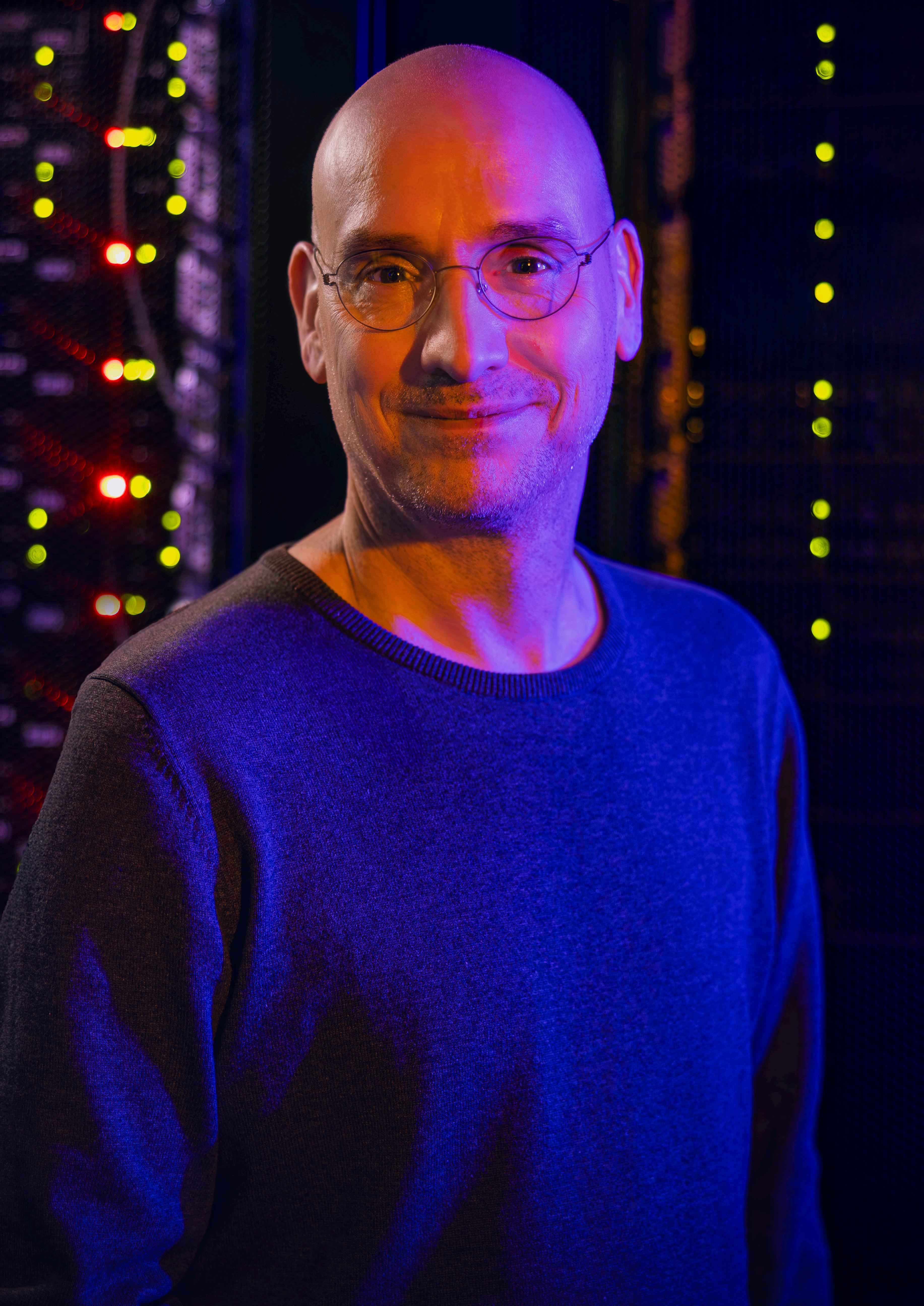
Speaking of which, what is your vision for the future of ARRI?
ARRI is known for cinema and scripted content. They are the global market leader in that field, but they’re not as active in live sports and entertainment. That’s where Riedel is very active. I believe the features of those cameras, specifically the ability to create a very special look and feel, are something that sports and entertainment need as well. I’ve spoken to several major sports leagues, and they all say the same thing: we want our own look and feel.
Can you provide an example?
Think of the Premier League in the UK or the German Football League. What they want is for you to see a football match on screen and instantly know it’s the Premier League, without looking at the graphics or anything else, because the visual style is so distinctive. A standard broadcast camera won’t give you that. It comes from the methods of Hollywood, and it comes from what ARRI can do. That’s my vision.
ARRI and Riedel are two very different companies. What are the synergies you see between them?
You have an ARRI camera on one side, and you have Riedel’s SimplyLive technology, our own replay solution, on the other. These things can work together and become part of a single solution. We want to keep the red Riedel side and the blue ARRI side, but we want to connect them, because there are lots of synergies. We’ll probably do a lot together in sales and marketing, and there are significant opportunities on the technology side as well.
I won’t integrate one company into the other for various reasons. We have 1,100 people on the Riedel side and now an additional 800 people on the ARRI side. Culturally, we have a lot in common. However, fully integrating one into the other would be too difficult and, frankly, doesn’t make much sense. We’ll find plenty of
synergies operationally, but we’ll also create new capabilities by bringing those systems together and making them work as one integrated solution.
Do you think this could redefine what broadcast can actually look like?
Absolutely. I typically see two major trends in our industry. One is about bringing costs down and becoming more efficient. That creates a need for automation, AI and intelligent systems that help control costs and improve efficiency. This is something we’ve always focused on at Riedel, and it’s something we’re also looking at with ARRI.
But there’s another side to it, which is developing new formats and creating new sources of revenue for our clients. Our industry needs more income, and it needs to grow. That’s where innovation and new features come in.
We believe both Riedel and ARRI stand for innovation, new ideas and new possibilities. And particularly with cameras, there’s so much more that can be done. There are so many features, capabilities and opportunities that can be added and brought to the table in that respect.
This year marked the first-ever use of ARRI ALEXA 35 cameras across the entire live production of Eurovision. How ambitious was that decision from a technical standpoint?
On one hand, you have that big vision, but there is also a challenge. The camera is no longer just filming something – it becomes a creative element in its own right. Traditionally, the creative side sat mainly with the stage set and lighting. Now, on top of lighting, you have another element in the chain: the camera. So you effectively have two sets of controls to tune. There was, therefore, a need for the camera teams and lighting teams to align, and that did create a bit of friction at the beginning. But
I think everyone now understands that the combination of both creative elements delivers a far better result.
Most of the delegations now have their own distinct look for their artists, and this is all triggered automatically. It’s also unique: between the acts, during these ‘postcards’ introducing the countries, all the cameras are reprogrammed automatically to the next look. In some cases, the look even changes during the act itself. It’s completely new – highly technical in the background – but it opens up a whole new layer of creativity.
Are you impressed with the cinematic results achieved at Eurovision this year?
I love it! And, the vision experts see the details. They see that black is not just black – there are still many shades within black. The same applies to white. If you look at white dresses, you can see the subtle differences. If you look at fire or smoke, it’s the same.
With standard cameras, you often lose that level of nuance and contrast. I would say the average consumer probably can’t consciously identify all those details, but the overall impression is what they feel. And that’s what creates emotion in cinema; it’s what makes it feel real.
That’s what we see here as well. We know some people don’t consciously notice the details, but they still say it looks amazing, without always being able to explain why. The experts can see the detail, but the audience feels the result. We are super excited and super grateful that the feedback has been so nice.
You’ve built Riedel into a global technology powerhouse. What motivates you to keep making such ambitious leaps?
I’m driven by the results – it’s not about money, to be honest. What drives me is creating formats, doing
the next thing that no one has done before. We want to move humanity forward, and everyone does that in their own field of play. My field is sports and entertainment; that’s what I like. But I also believe it’s more than that. You can say, “It’s just sports and entertainment,” but it’s not just that, because we are talking about culture, and culture is incredibly important. I truly believe that democracy and freedom are protected by culture.
Of course, we are not the same as a doctor in a hospital saving a life, but in another way, what we do is also important. There are good reasons why we protect culture in Europe the way we do – what we have in Europe is the total sum of many different cultures, and that makes Europe unique. Sports and entertainment are a big part of that. I think we are on a different level – we are doing something really important. It’s a little bit of a philosophical view on that, but I think it’s very valid.
Riedel’s solutions are used across motorsports, football, the Olympics, music festivals, operas and award shows, to name a few. Is the Eurovision song contest a particular highlight in the calendar for you, even after all these years of doing it?
It’s been 20 years of Riedel doing Eurovision. My first year was 2006 in Athens. Eurovision is my personal highlight. I always say that, and not only when I’m sitting here talking about Eurovision. It’s what I tell the Olympics and the World Cup people. I say, “I love your projects, but my personal favourite is the Eurovision Song Contest.”
If you are in the arena, even just at a rehearsal, the atmosphere and the crowd are so special. I don’t know any other format that gives you that. The multicultural aspect, the diversity, and everything Eurovision stands for are unique. And it’s not just about winning. It’s about being part of that
movement – that’s part of the fun. Backstage, you see how the artists interact with each other: they sing together, they share songs.
I’m very privileged to have experienced that from time to time and to see that there is competition, but it’s a fair, sporting kind of competition. It’s a shared experience – a celebration of music – and that’s what makes it so special. It represents quite well what I stand for as well.
ARRI.COM
RIEDEL.NET
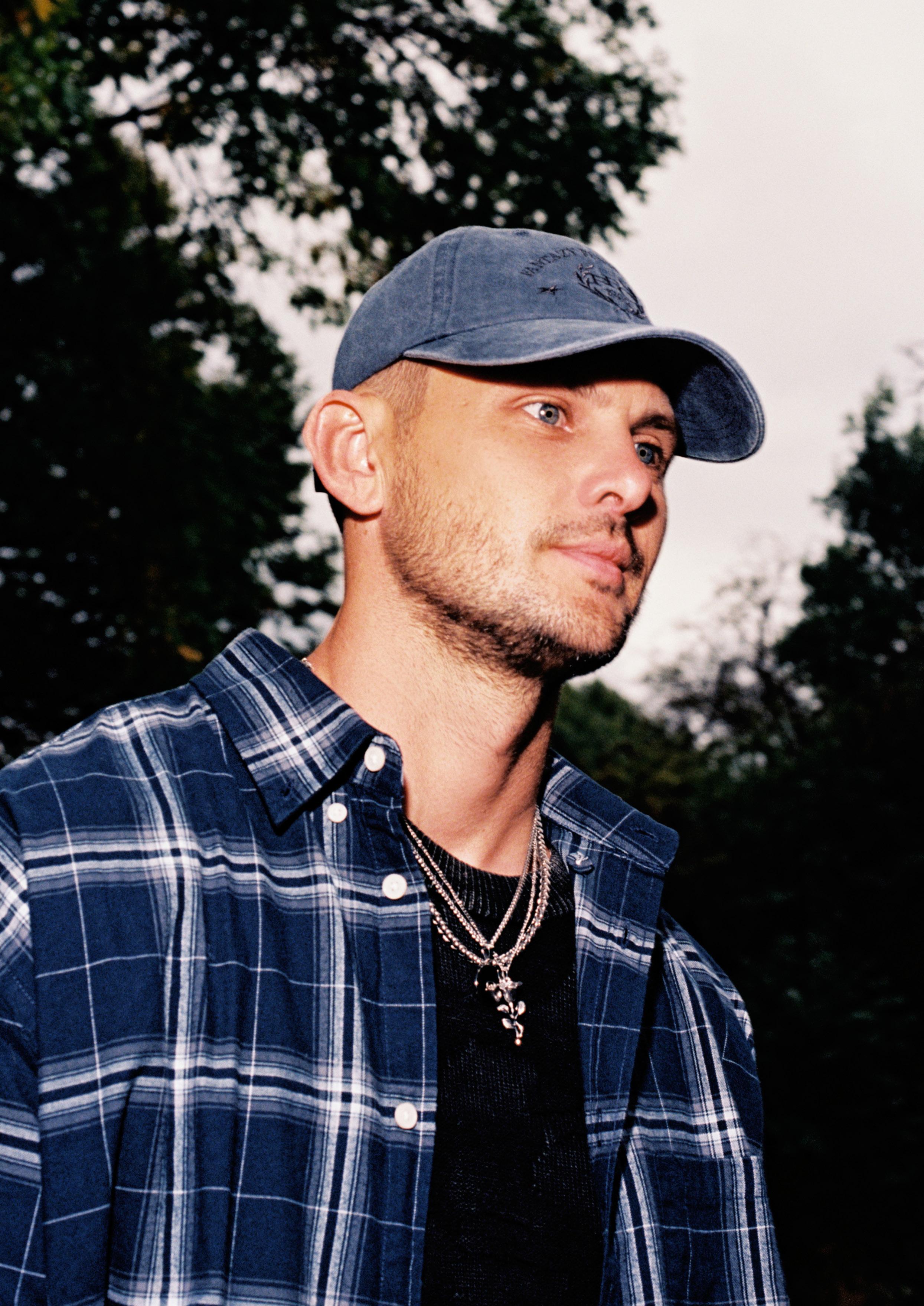
NEW RULES HOMEWARD BOUND
UK-based multi-instrumentalist, producer and DJ, Rules returns with his latest EP, As Soon As I Get Home, a six-track release that marks a defining step forward in his artistic progression. Released via Counter Records, the project continues his exploration of warm, atmospheric house and emotionally driven songwriting, balancing subtle club energy with a refined sense of intimacy and scale.
Written during a period of constant movement and transition, the EP is shaped by themes of memory, connection and distance, drawing on the way places, moments and journeys become embedded in sound. Built from a carefully considered palette of acoustic instruments, synth textures and nostalgic tones, As Soon As I Get Home is designed to feel as relevant and emotionally resonant years from now as it does today.
In this interview with Headliner, Rules discusses the making of his new EP, his approach to making timeless music, how his studio process connects to his DJ sets, getting his hands on a James Blake piano preset, and his thoughts on bringing the saxophone back.
Where are you from, and where do you make your music?
I’m from Derbyshire, which is in the Midlands, and that’s where I was brought up. I lived in London for quite a while, and then I moved back out last year. I bought a place quite close to where I was brought up. But I’m always in London, back and forth at the moment, so it’s a bit of a balance.
Are you into any music that might surprise people?
I’ve gained a real appreciation for classical music. When I was learning it at school, I used to hate it. Maybe it was the way it was taught, but I was doing all these lessons and learning an instrument, playing all these piano pieces, and I found it really boring and dull.
Now, though, I have a completely new appreciation for it, so I listen to it sometimes when I’m just chilling. I’ll put on a classical playlist and have that on in the background. I think it says a lot about how music is taught. I studied music all the way through university and did A-level Music, but it wasn’t very inspiring. It was very analytical, looking at music in a completely different way.
It didn’t really make you want to be creative and get on and make things, and I bet it put a lot of people off. I persevered with it, but I remember that in my final year, I was the only person in my A-level Music class. It was literally just me and the teacher!
When did you decide to start making your own music and making a go of it?
I remember hearing a few records that had saxophone solos – I think it was a Whitney Houston track – and I thought, ‘That sounds amazing.’ I wanted to try to copy that. That’s when I got into improvisation and coming up with my own ideas, and working out different chords on the piano. That’s the sort of thing I wish they taught more in schools, because it inspired me a lot. I then thought, I want to make music, and started a band at school. I split away from all the classical training into more improvisation, and a lot of that music sits in jazz, soul, or R&B. There’s a lot of that feel in it.
Your new EP explores themes of memory, movement and connection; when did these nostalgic themes become clear?
“THIS GUY WAS MIXING A JAMES BLAKE ALBUM IN THE NEXT ROOM. HE SAID, ‘I’VE GOT THIS PIANO PRESET HERE FROM JAMES BLAKE’S PIANO, DO YOU WANT A COPY?’”
Since I’ve been getting busier and busier and doing more, I’ve been away from home a lot, travelling and touring. I find that when you’re away or in different places, you remember certain music in certain locations, and there’s a real nostalgia attached to it. It makes you think of things from the past, and there’s a very deep connection to that. So when I was doing the writing for this EP, that was in my head, and it was just taking me to different places… It sounds quite cliché [laughs].
The single, As Soon As I Get Home has a distinctly chilled, nostalgic vibe, helped along by a haunting James Blake-esque vocal courtesy of SHYA. How did this track come together, and why was it chosen as the EP’s title track?
It’s interesting that you mention James Blake, because the vocalist, SHYA, has such an incredible range and that high, distinctive voice. And there’s a piano I use on that track, and on a couple of others as well. I used to work in a studio called Gin Factory Studios in London, back when I was producing for other people and doing sessions before Rules. A guy was mixing a James Blake album in the next room, and he was getting quite well-known at the time. He said, “I’ve got this piano preset here from James Blake’s piano, do you want a copy?” and I was like, “Yes, please”. It’s got such a real, organic, lovely sound to it, and it’s become my go-to piano sound on a lot of tracks, especially when I’m back at home.
That track was written with SHYA and one of my friends, James Brander. We were in London in a studio in King’s Cross, and we spent a lot of the time just trying to get the feeling of the chorus and verse to really hit emotionally.I went back through all the old voice notes, just going through melodies and trying to lock in the feeling. There were references to classic house tracks with that nostalgic, timeless quality, so it was a very considered process. And with SHYA singing it, it felt effortless to get him to deliver those parts and bring that emotion through.
“WHEN YOU’VE GOT PEOPLE LIKE GREG JAMES PLAYING YOUR TRACK, IT FEELS PRETTY MAD.”
Silverlight was selected as BBC Introducing’s Tune of the Week and achieved playlisting on BBC Radio 1. What is it like to hear one of your tracks on mainstream radio?
I absolutely love hearing things on the radio, especially when it comes on while you’re in the car. I guess you associate radio with driving, right? It’s always phenomenal, and those are always the best moments. Hearing your own music on there alongside other people you’ve grown up listening to is quite something. When you’ve got people like Greg James playing your track, it feels pretty mad, really. I keep getting messages from friends and people I haven’t seen since I was at school, saying, “I heard you on the radio!”
You used acoustic instruments, pianos, Wurlitzers and synthesisers to create a nostalgic atmosphere. Were there any particular pieces of gear or instruments that became central to the sound of the EP?
I’ve got a Wurlitzer that I’ve had for a few years, and that’s really nice to play. It’s not normally in my studio when I’m not writing, because it’s nice to go and mess around on it. I do write on it as well, but it’s in a different room, so I’ll play it separately. I do have some emulations of it in here as well, so when I’m away, I can dial that in. I’ve also got a Prophet synthesiser, which I use for some go-to sounds, like really warm pads and synths. It’s
quite a narrow range of sounds that I use, although I’m very conscious of wanting them to feel timeless and have longevity. I don’t want them to feel dated or overly of the moment. I want them to sound like something you could listen to in 10 or 15 years, and it still feels fresh and organic. That’s what I’ve been leaning towards more, even in the future music I’m working on.
How does your mindset change when you’re behind the decks compared with when you’re in the studio?
It’s something I really broke through on this last tour I did, actually, where you’re really concentrating on how other people are reacting to the music. I think you could easily just play your stuff and leave, but when you’re actually looking around and seeing how people react to it, it not only gives you an amazing feeling, it also helps you understand what parts of the music are resonating and what’s working, so you can improve those sets. I guess that’s the nature of DJing, really, but especially with your own music, it has a big influence on where you can take things, and I’ve found that really valuable.
When you’re creating tracks in the studio, do you have the live DJ element and interactive experience in mind?
Whenever I’m doing a song, even though it’s often in a dark room with
the piano out, I’m always thinking about two scenarios. One is early doors, sun setting, with friends, that kind of vibe. That’s the feeling I try to capture and also portray, so a lot of the content I make is trying to represent that. Then there’s also this other scene of just two people in the middle of a dance floor, with everything else blurring around them. That’s what I’m always thinking about when I’m working. When you feel you’ve nailed a song and you’re listening back to it, you get this real buzz from it. It takes me to that place. I have actually put in some crowd sounds into the session before, because it almost gives an atmosphere.
What DJ setup are you currently using for most of your performances?
It depends on what I’m doing. If I’m playing a DJ set, I tend to use a Pioneer DJ setup. For my tour, I’ve got Novation gear. I’ve got a controller with about eight faders for all the different stems, so I can mix in and out of all the different parts and instruments. I’ve got a few controllers like that on stage, plus some Novation keyboards and a couple of keyboards from Yamaha. I really want to get a real piano on stage at some point, but it just doesn’t really fit the budget at the moment. I’ve got that James Blake piano sound running through
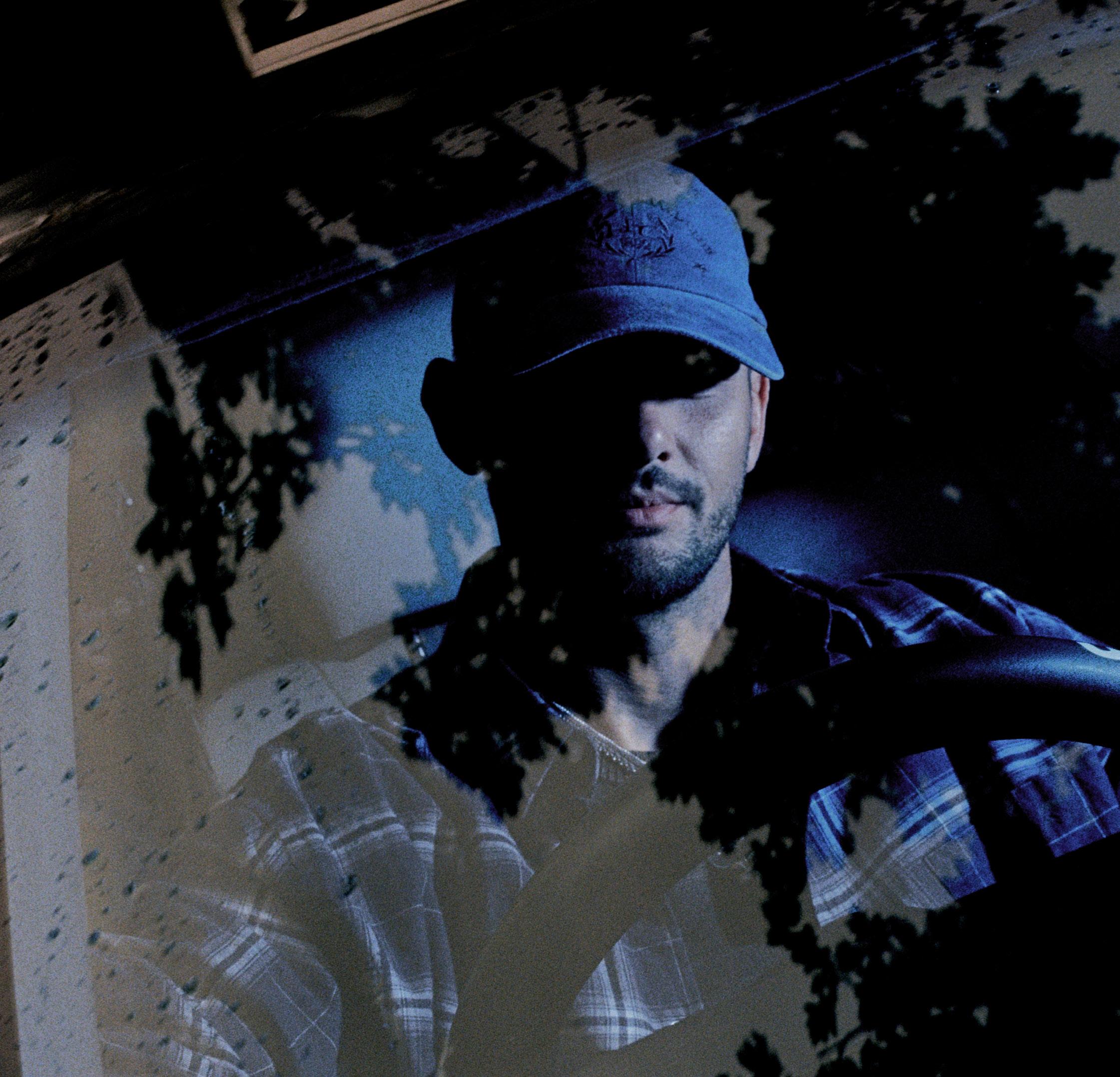
a weighted MIDI keyboard as well, so it does the job.
For in-ears, I use custom ACS Custom ones. I’ve got a spare pair of Shure ones as well because I lost a set at one point, so I had to revert back to them, which were really good anyway. On stage, I also use a weighted keyboard from Yamaha, which is really nice because it feels like you’re actually playing a proper piano. I also bring a bit of saxophone into the set, but not too much – it can be a bit much! What I’d really love is to bring more of the
actual instruments on stage. I’d love to bring my Wurlitzer electric piano out on tour, but at the moment I’m using an emulation of it instead. As things build, I’m hoping I can move more in that direction.
very aware of that, and I don’t play it enough. I don’t have any saxophone on my EP either, apart from some very reverbed pad-style sounds of it. But I’d love to have a track that really does include saxophone, in that sweet spot. I’m still working that out. Can you ever really have too much saxophone?
It’s a real Marmite thing, and in some ways, I think you can. I obviously love it because I’ve been playing it, but I definitely understand it can also come across in two very different ways: either completely cheesy, or really tasteful and considered. So I’m
INSTA: @THISISRULES
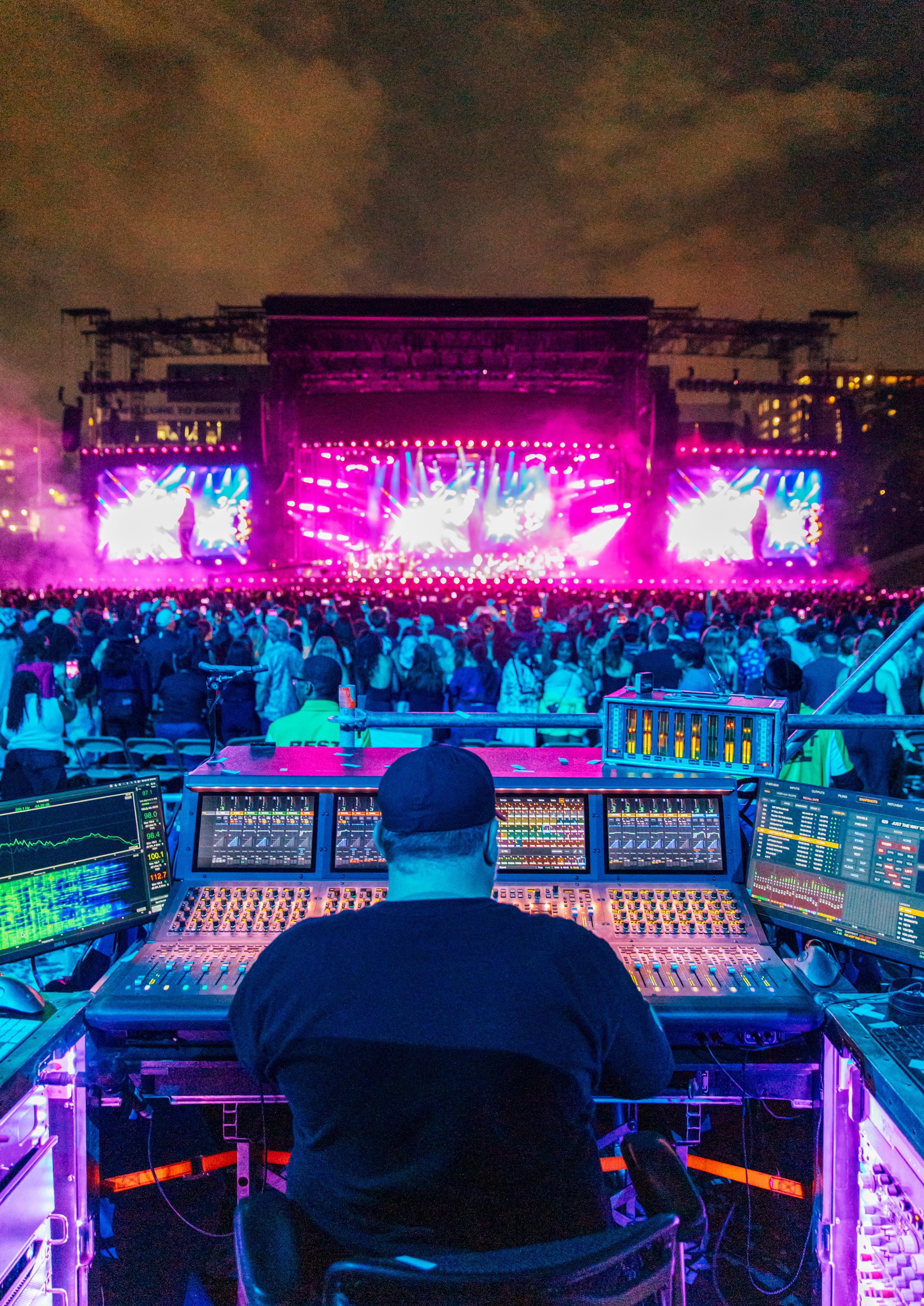
THE END OF VOCAL BLEED?
L-ACOUSTICS UNPACKS SOURCE INTELLIGENCE
For decades, live sound engineers have accepted vocal bleed and feedback as unavoidable compromises. Whether it’s crowd noise, stage wash, or the PA itself spilling back into the microphone, keeping vocals clear has traditionally meant relying on gates, notch filters and careful stagecraft, often at the expense of natural sound or performer freedom.
L-Acoustics believes it’s time to leave those compromises behind. Its new Source Intelligence technology uses machine learning to continuously separate the human voice from everything else in real time, removing PA bleed, stage noise and ambient sound while preserving the character of the vocal. The result is something previously considered impossible in live sound: cleaner, more intelligible vocals, significantly greater gain before feedback, and the freedom for artists to perform almost anywhere on stage – even in front of the PA. While AI-powered vocal processing has existed in the studio for years, Ryan John, director of product management, software at L-Acoustics, says Source
Intelligence is the first solution to bring that level of voice separation to live production without introducing the latency or workflow compromises that have previously made it impractical. Running transparently on the L-ISA Processor II, it requires no threshold settings, no constant tweaking and no changes to an engineer’s existing console workflow.
Headliner caught up with John to discuss the years of development behind Source Intelligence, why it represents a fundamental shift in live vocal processing, and how it could redefine what engineers and performers expect from live sound.
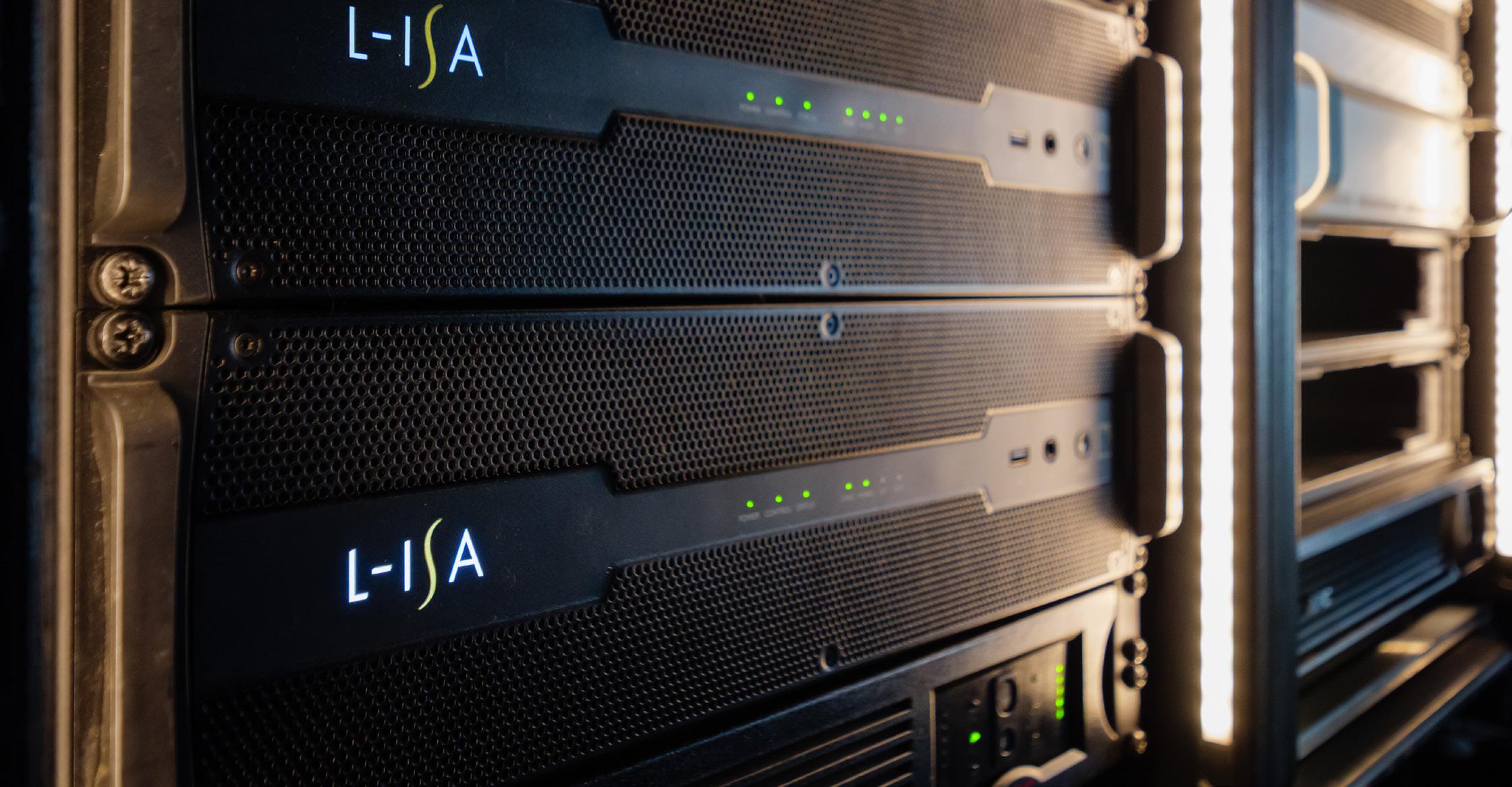
Source Intelligence has been described as doing something not previously possible in live sound. From a technical and practical standpoint, what makes this technology genuinely revolutionary?
The majority of tools commonly used today in live sound for noise reduction of a voice are based on a threshold, wherein when the signal is above that threshold, it all passes through, and when the signal is below the threshold, it is reduced. The problem with these tools is that often the bleed of the crowd, or a drum kit next to a singer, also crosses this threshold. When the voice signal is passing through, the noise is also. Approaching this problem from the perspective of machine learning achieved a more focused and higher-quality result, which allows Source Intelligence to also remove background noise even during singing. What we have achieved technically allows a combination of higher quality, higher level of noise reduction, and lower latency than any other tool on the market.
Is there currently anything else on the market capable of continuously separating the human voice from stage bleed and ambient noise in real time at this level?
There are a few machine-learningbased tools that have existed for studio mixers, which function well but at a very high latency, which is entirely acceptable in a studio mixing environment, but very far outside the window of what is deemed acceptable for live sound usage. There are also some other AI tools focused on feedback suppression, but none of these tools are capable of achieving the same level of background noise reduction, nor the same audio quality standard when set to high.
One of the most striking claims is that performers can now move in front of the PA without risking feedback. How does Source Intelligence improve the experience not only for FOH engineers, but also for performers themselves during a live show?
For the performer, it’s genuinely liberating in a way that’s hard to overstate. Traditionally, there’s this invisible boundary that artists instinctively learn to respect: step too close to the PA and things go wrong fast. With Source Intelligence, that constraint essentially disappears. Artists can move freely across the stage, lean into the crowd, work the full width of a venue, all without the FOH engineer
needing to ride a fader or anticipate anything. For the engineer, it removes one of the most stressful variables from the show. You’re no longer managing a performer’s proximity to the system in real time. That mental bandwidth gets redirected toward the creative side of the mix, which is where it should be.
In blind listening tests, Source Intelligence ranked highest for vocal quality. What reactions have you had from engineers hearing the system for the first time?
Honestly, the most common reaction is a kind of stunned silence, followed by, “Wait, can you do that again?”
There’s a moment where engineers want to verify what they’re hearing is real. When you pull the processing in and out, the difference is so stark that experienced engineers, people who have heard everything, find it genuinely surprising. A lot of them have spent their entire careers managing feedback and bleed as a constant constraint, and when that constraint suddenly isn’t there, it almost doesn’t compute initially. The reactions I find most telling are from engineers who are naturally sceptical of anything new. Those are the ones who, after hearing it, start immediately asking when they can put it on their next tour.
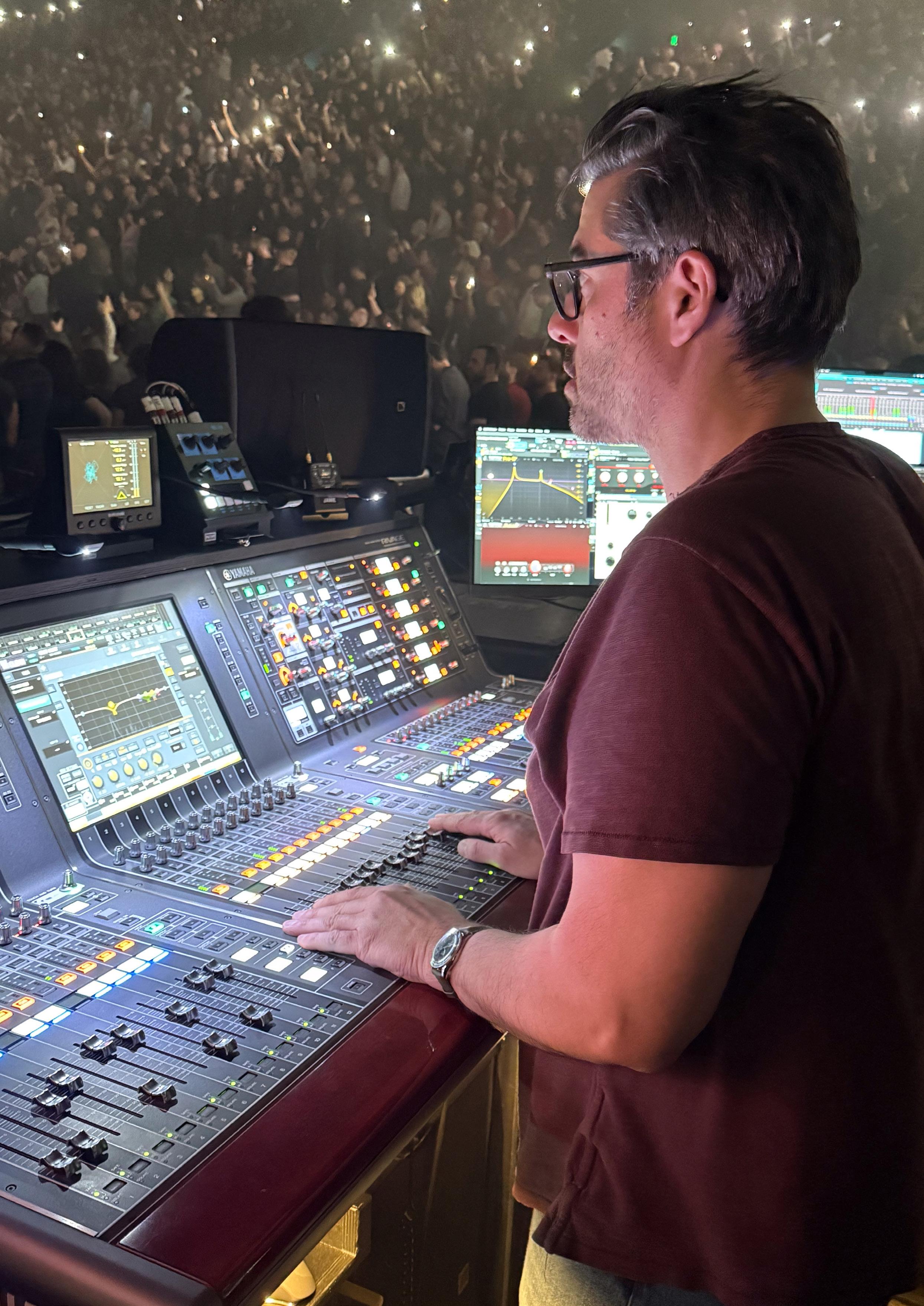
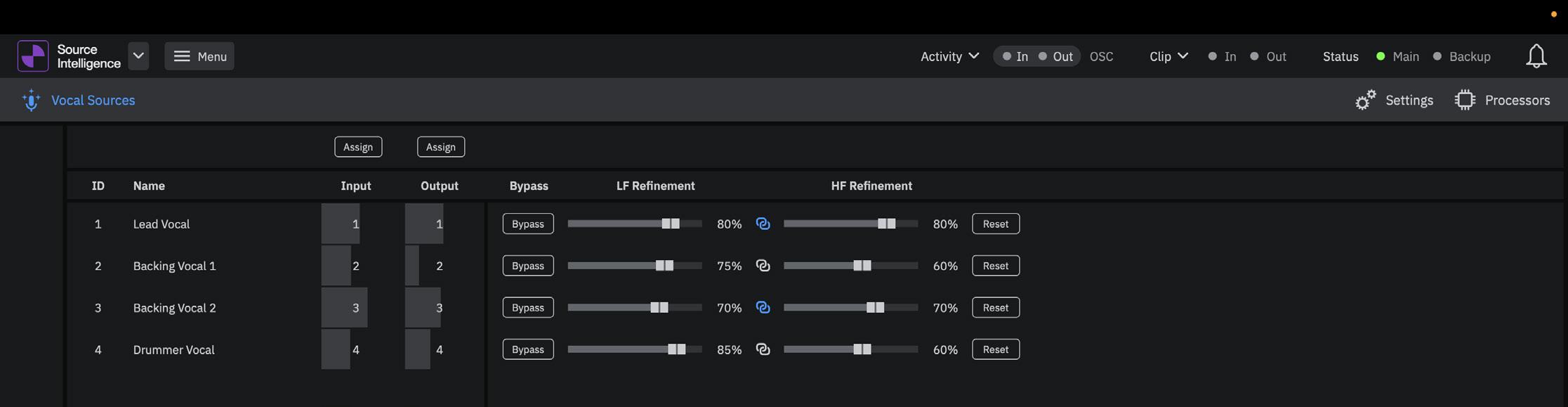
Joey Diehl, FOH engineer for Benson Boone, described the results as “basically studio quality vocals.” Were there any moments during development or testing where the team realised just how transformative the technology could become?
There was a moment early in testing when we put it through a particularly difficult real-world scenario, a very loud monitor setup with significant stage volume, the kind of situation where traditional processing would be fighting a constant battle. When we heard how cleanly Source Intelligence handled it, I think the room collectively went quiet for a second. That was a turning point. It wasn’t just performing well in ideal conditions; it was performing exceptionally in exactly the conditions where everything else struggles. That’s when it became clear this was going to change how engineers think about what’s possible in a live environment.
The fact that the software requires no threshold settings or ongoing adjustment is particularly interesting. Why was simplicity and workflow integration such a major focus?
We know the vocal is often the most important channel; it’s the one thing we can’t break sonically, and it’s the one thing we can’t have sound bad. It leads us towards this process wherein an engineer can just trust it and know it works. Live sound engineers deal with an enormous amount of complexity in real time. The last thing anyone needs is another parameter to manage. With traditional noise reduction and feedback tools, you’re constantly adjusting thresholds as the show evolves, across different songs, different dynamics, quiet verses into loud choruses. Every adjustment is a distraction from the mix. The fact that Source Intelligence handles all of that automatically means engineers can stay focused on what actually matters, which is serving the music and the artist. Simplicity wasn’t a compromise; it was actually the goal. If it’s simple, it gets used properly. If it’s complex, it gets used wrong or not at all.
How important is low latency in making this kind of processing viable for professional live sound environments, especially for large-scale touring productions?
In live sound, latency tolerance is measured in single-digit milliseconds before performers and audience members
start to perceive a disconnect. For a large-scale tour, that window is even tighter because you’re often dealing with significant system complexity, including multiple delay stacks, large PA hangs, and artists who are very sensitive to what they hear in their ears. If the processing adds even a noticeable fraction of a second, you’ve introduced a problem that no amount of audio quality improvement can compensate for. The latency spec for Source Intelligence was effectively set by the demands of the most latency-sensitive production scenarios we could imagine, and we made sure the system performed within those bounds before we ever considered it ready for touring.
Have there been any surprising use cases or scenarios during testing where Source Intelligence solved problems the team hadn’t initially anticipated?
One area we didn’t initially anticipate is how much it changes the monitor world. The primary focus was FOH, but what became clear in testing is that the clarity of the source signal at the top of the chain has a downstream effect on monitor mixing as well. Monitor engineers started reporting that they were achieving better IEM mixes because the processed signal they were working with was inherently cleaner. There were also some broadcast applications where the technology performed beyond what we expected, particularly in environments where high ambient crowd noise was a known challenge. Any situation where you’re trying to put a clean vocal signal out into the world, Source Intelligence finds a way to be useful.
For engineers and production teams hearing about Source Intelligence for the first time, what do you think will surprise them most once they actually experience it in a live environment?
What surprised people most was the removal of something they never imagined could be removed, to a point where the result almost didn’t seem believable. Your average listener has no idea how difficult the reality can be for an engineer, but every mixer knows what comes down that microphone. They’ve never had a solution that could clean up background noise from a vocal while the singer is singing, and they didn’t believe it was possible.
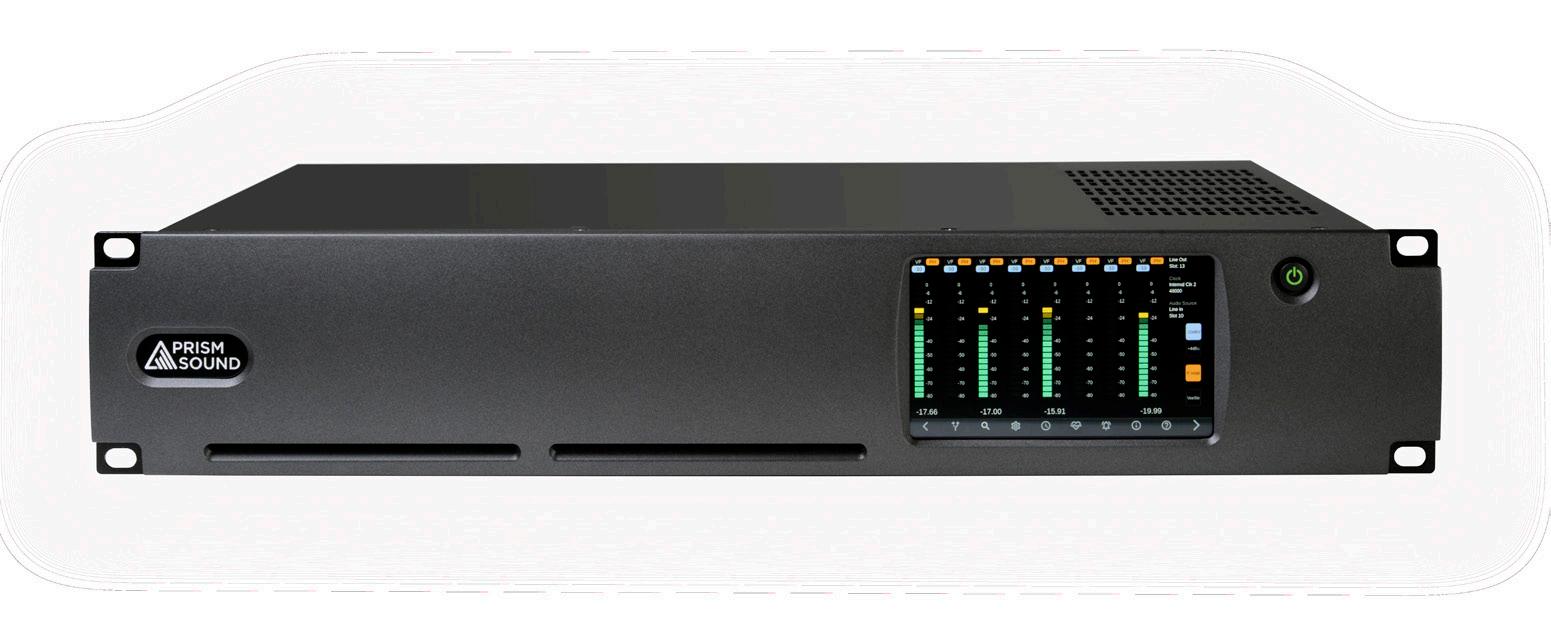
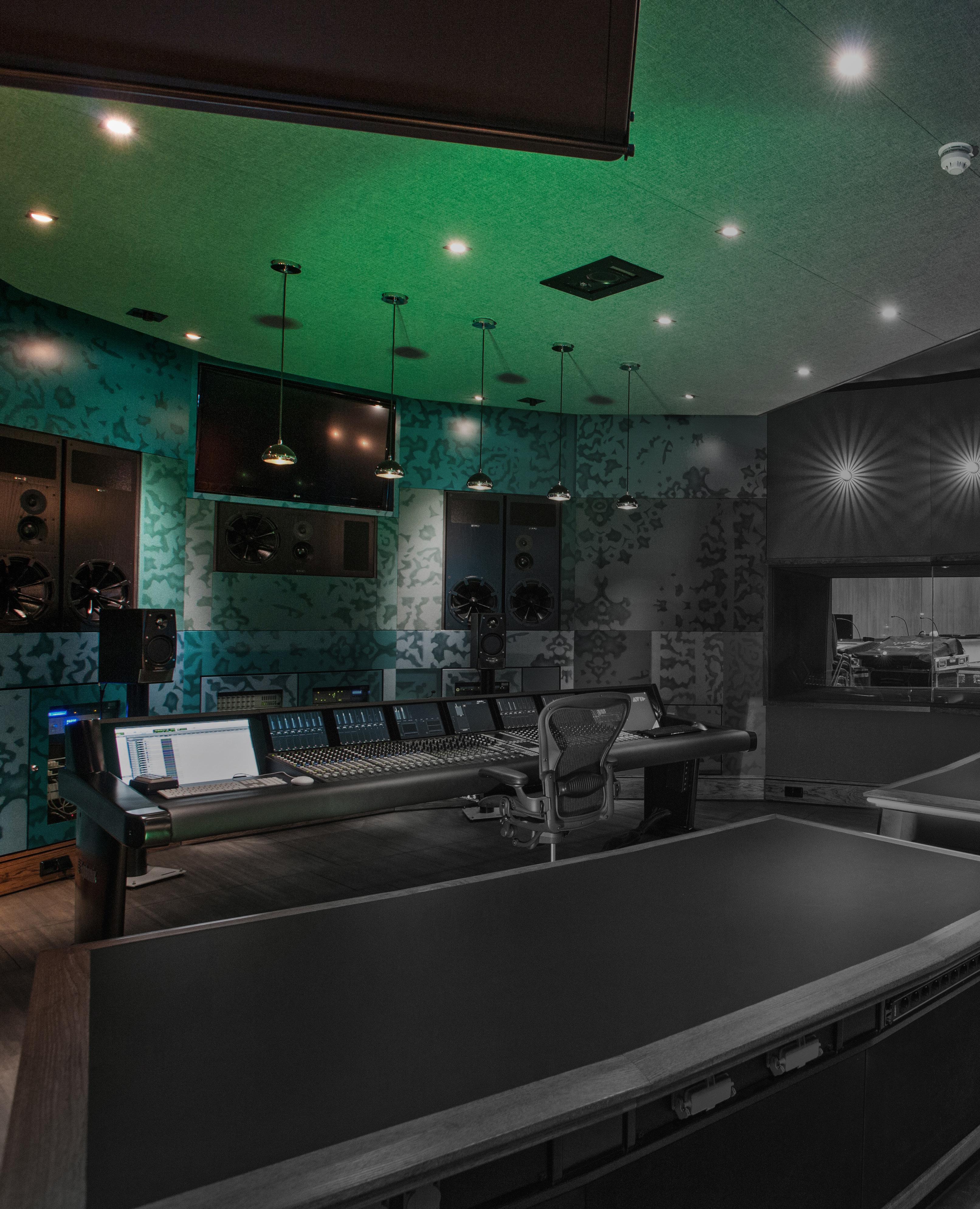

WORDS BY LUCYPART R I EGD
WILL HARRELL AUDIO CAPTURE IN EXTREME TEMPERATURES
Los Angeles-based production sound mixer Will Harrell’s journey into production sound began over a decade ago at the University of Texas at Austin. Realising he needed a technical speciality within the film industry, he leaned into his passion for music and has since worked in a range of challenging environments, as Headliner discovers.
Harrell has worked on various projects, from commercials for Mercedes to press junkets for hit shows such as The Last of Us and Paradise. He explains his mindset when it comes to his work: “Anything I can do to make sure more art gets out into the world gives me a sense of purpose.”
Early in his career, Harrell saved up from a grocery job to buy budget gear, but soon realised the limitations of prosumer wireless systems. A turning point came when he borrowed a Lectrosonics 400 series kit from the university gear department, as he recalls: “I was so blown away by the quality of the Lectrosonics’ signal. Just select a
clean frequency, and you’re golden; I realised I could rely on Lectrosonics just like a hardwire.”
Harrell relocated to Los Angeles in 2018 and has since adapted his equipment setup to suit crowded urban RF environments and increasingly complex productions. “Living in LA, clean frequencies are often not available in a wide spectrum, so it’s helpful to have something like the SMDWB transmitters that cover multiple blocks,” he says. To keep his bag setup light, he uses the DSR4 fourslot receiver.
Harrell used this setup on a fastpaced Jack Link’s commercial.
“It was three days of miking up Sasquatches and recording their grunts,” laughs Harrell. “I rigged up my DSR4 receiver and an SNA600 antenna, and everything went off like a dream.”
Harrell also points to the HMa plugon transmitter as an important part of his workflow. “On a film set, the boom is your bread and butter, and you can’t have wireless dropouts,” he states. “The HMa surprises me every day with how reliable it is.”
Recording in extreme temperature conditions placed unusual demands on the equipment. “I watched the camera department struggle with their equipment and was concerned
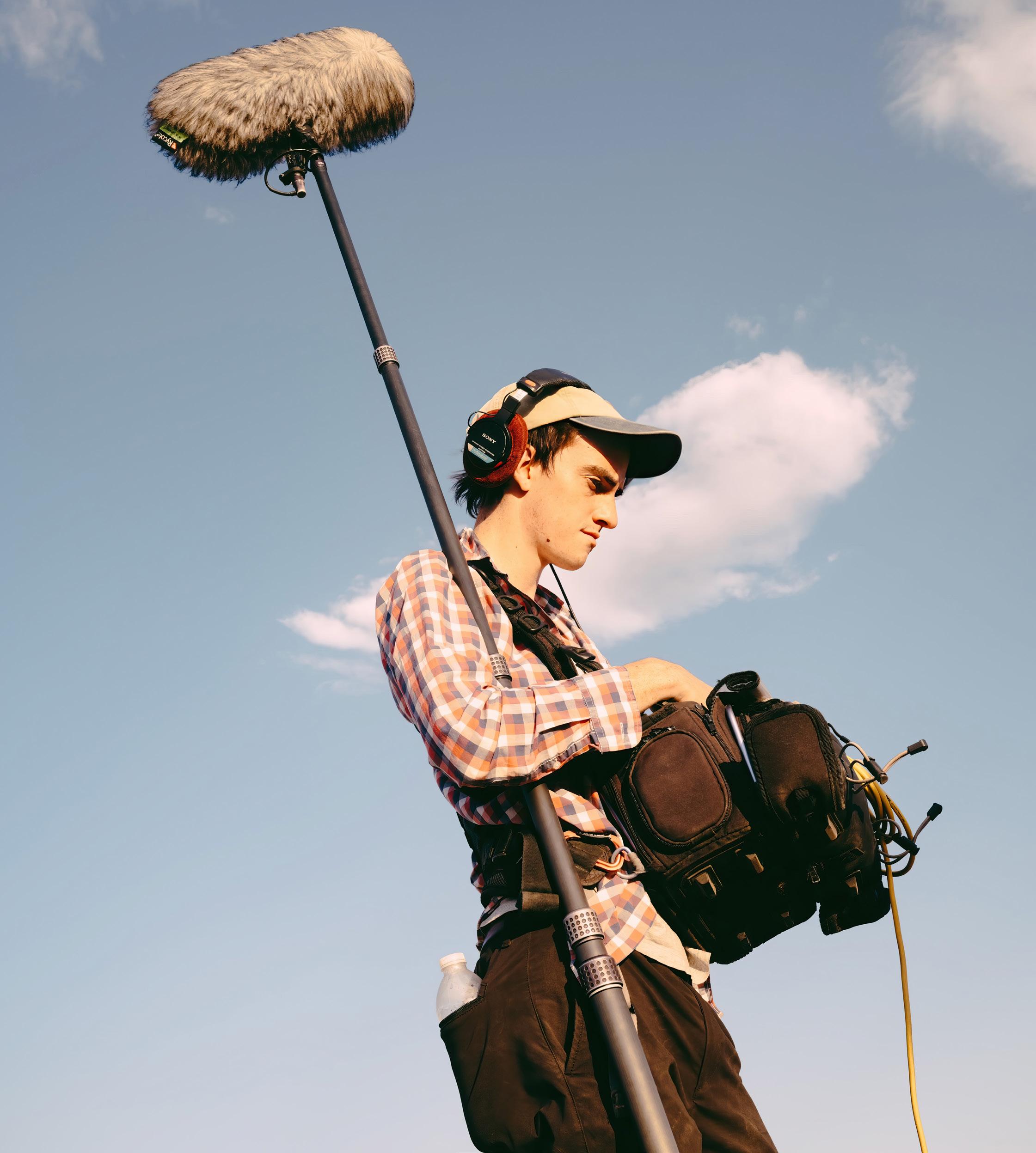
with how my gear would hold up,” Harrell shares. “Despite the negative 20-degree weather, I noticed absolutely no difference in the operation of the Lectrosonics gear.”
Six months later, Harrell found himself in the opposite environment, at Joshua Tree National Park. “We were shooting a short in the blazing
120-degree Joshua Tree sun, and the Lectrosonics gear never overheated or showed any signs of failure,” he explains. “Between Iowa and Joshua Tree, the operating temperatures swung 140 degrees, and Lectrosonics didn’t break a sweat.”
Most recently, Harrell has been working on a fashion film
starring Stellan Skarsgård and a documentary series that investigates water contamination across the United States, featuring Erin Brockovich. Looking back on his varied career, he concludes: “No sound is uncapturable. There’s always a way to do it.”
LECTROSONICS.COM
WORDS BY LUCYPARTR I D EG
PIAST GLIWICE SCORING WITH SOUND
The Piotr Wieczorek Municipal Stadium is home to professional football club Piast Gliwice, who compete in the Ekstraklasa, the top division of the Polish football league. Headliner discovers how the stadium’s new CODA sound system has elevated the fan experience to meet the demands of a contemporary match-day environment.
The team’s home stadium underwent a significant transformation in 2010, which coincided with the team’s return to the Ekstraklasa after a tricky season. A key aspect of the stadium’s 2010 evolution was the reshaping of its sound. In the intense match-
day environment, stadium acoustics are crucial, directly impacting atmosphere and crowd engagement.
The Piotr Wieczorek Municipal (Piast Gliwice) Stadium employed Tommex to design, supply and
install the system. The stadium had many requirements: booming announcements to be heard from each seat on a noisy match day; clear audio for music playback and DJ sets; a wide frequency range; flexible installation; and weatherproofing.
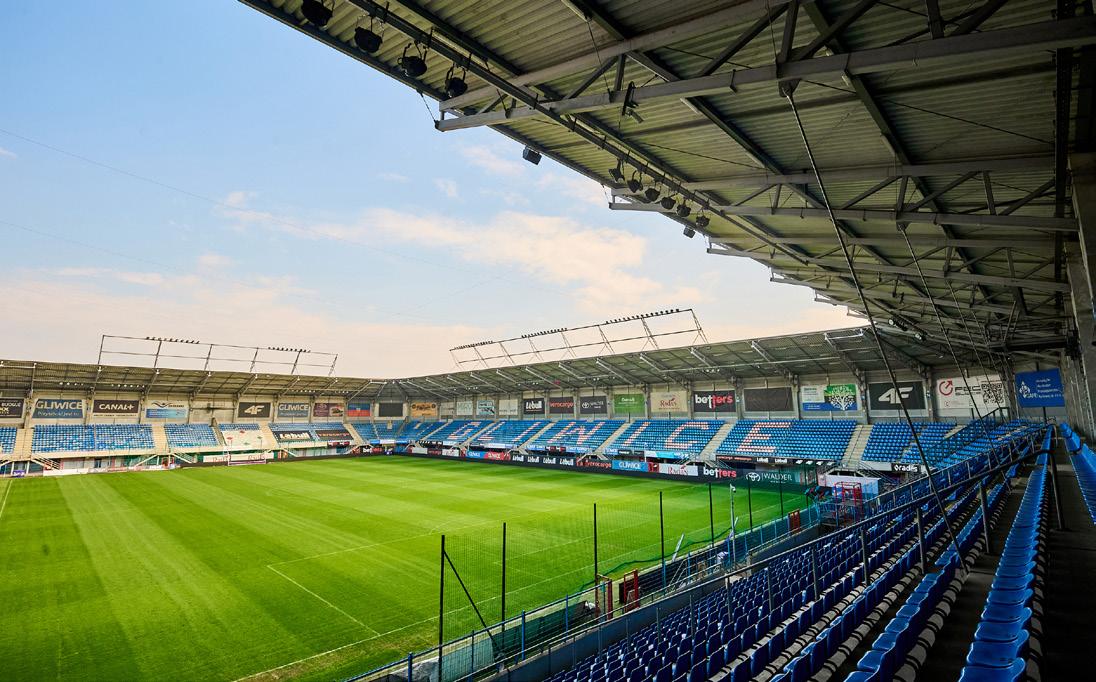
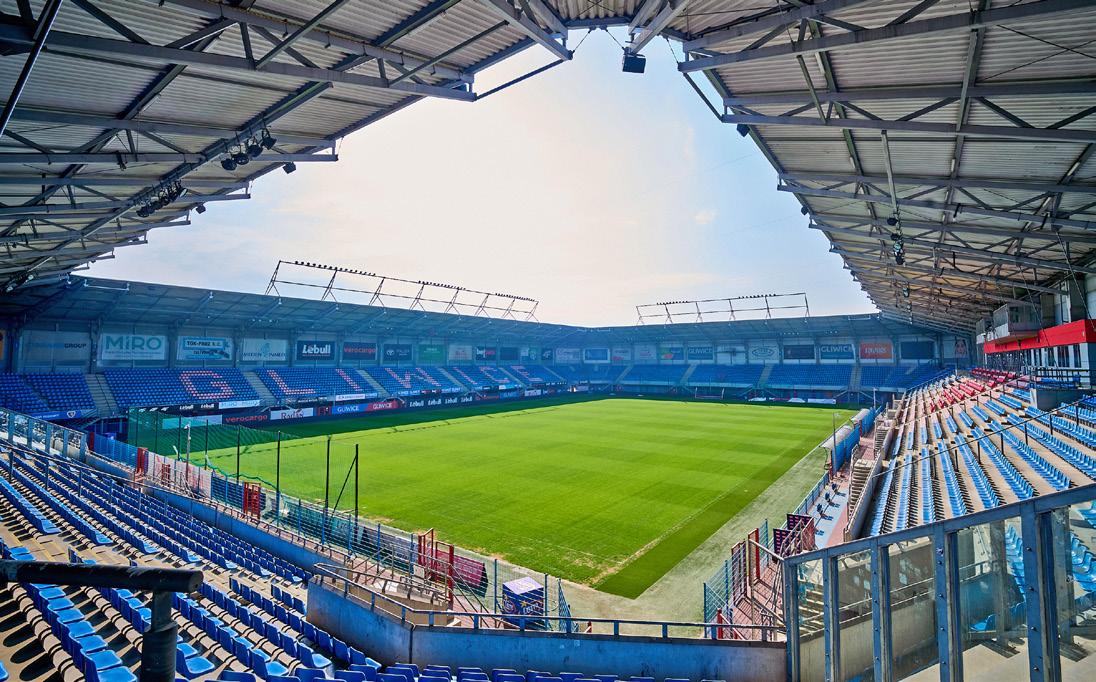
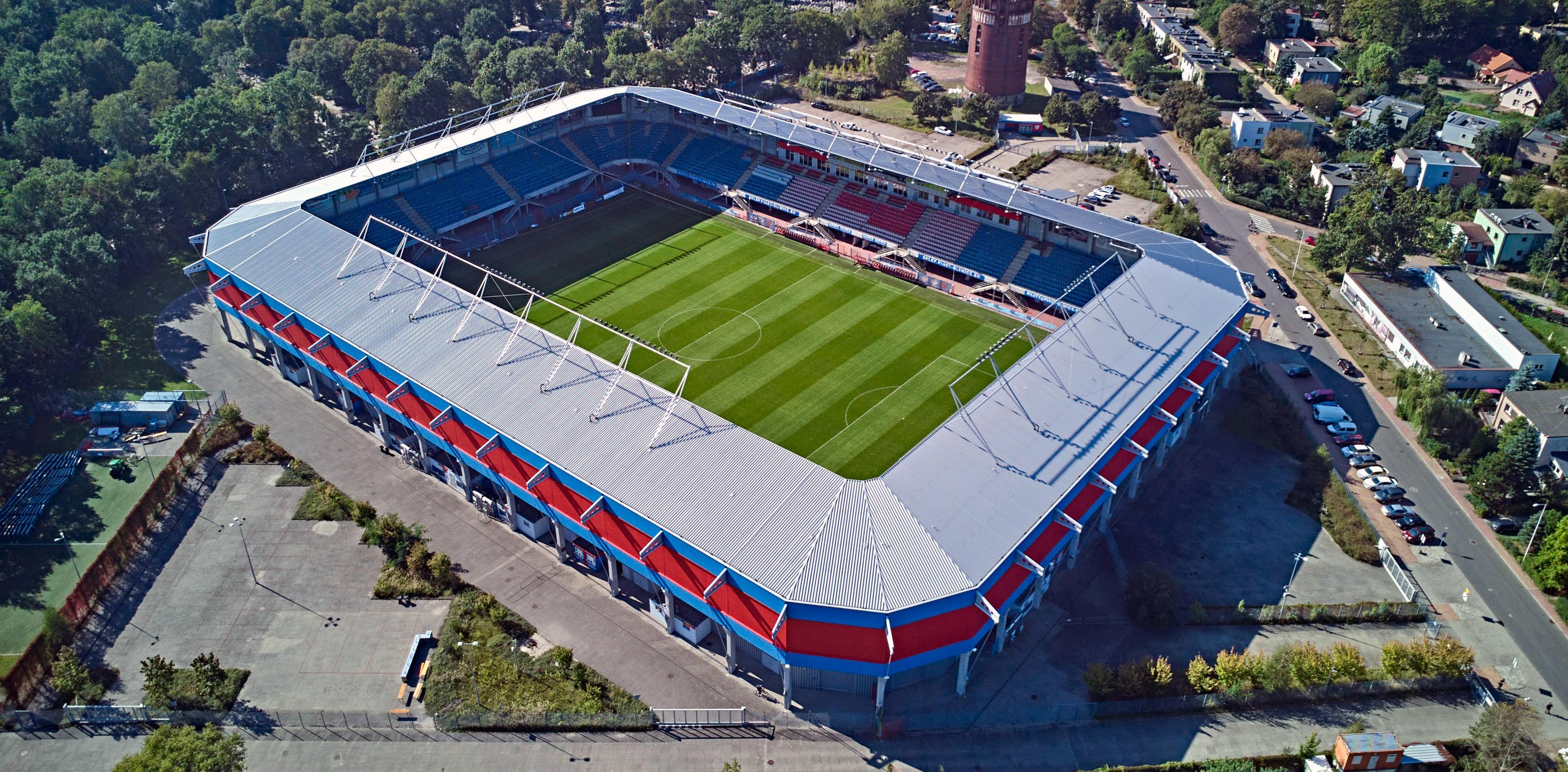
Considering the needs of the stadium, Tommex put its faith in a CODA Audio system. CODA Audio G515Pro loudspeakers were mounted in the roof areas of the stands using CODA’s horizontal u-bracket accessory, A15HG. G515-Pro is a twoway system with a power handling of 600W, featuring a low distortion 15” neodymium woofer and a oneinch neodymium compression driver coupled to a 90° x 60° rotatable elliptical waveguide.
The system used the marine-grade (MG1) weatherproofed versions of the loudspeakers designed for outdoor environments, which were driven by CODA Audio’s LINUS DSP amplification: LINUS 12C and LINUS 6.4i.
The Piast Gliwice club authorities were pleased with how the sound system turned out.
Michał Kozioł, the commercial proxy for the club, describes how the new system improved matchday atmosphere: “Replacing the sound system was crucial for us and significantly expanded our capabilities. Thanks to this, we can create sports events with even greater energy, music, and sound quality – fans can truly feel part of the action in every part of the stadium.
At Piast Gliwice, the audio upgrade was vital for improving the fan experience, as Kozioł describes:
“During sports events, good sound reinforcement is essential to the
audience experience. We had received feedback from fans pointing out that at certain moments, the sound in some sections of the stadium was not sufficiently audible.”
Piast Gliwice stadium provides an impressive visual experience, with bright floodlights and the four fully-covered, single-tiered stands bringing fans close to the action. The new sound system allows fans to be immersed in the game through audio, too. “Now, we can build the atmosphere of a match not only through visuals but also with top-level sound quality,” smiles Kozioł.
CODAAUDIO.COM
DAVID GUNNESS, FOUNDER OF FULCRUM ACOUSTIC
THE CELESTION INTERVIEW
David Gunness is a leading American audio engineer and inventor known for shaping modern loudspeaker design and digital signal processing (DSP). After more than a decade each at ElectroVoice and Eastern Acoustic Works (EAW), where he developed the pioneering “Gunness Focusing” technology, he co-founded Fulcrum Acoustic in 2008 with Stephen Siegel. Today, as co-owner and senior vice president of engineering, he continues to drive innovations in high-output loudspeakers, coaxial systems, and passive cardioid technology. In this Celestion Interview Series feature, Gunness reflects on his early career, key engineering breakthroughs, and the philosophy behind Fulcrum Acoustic.
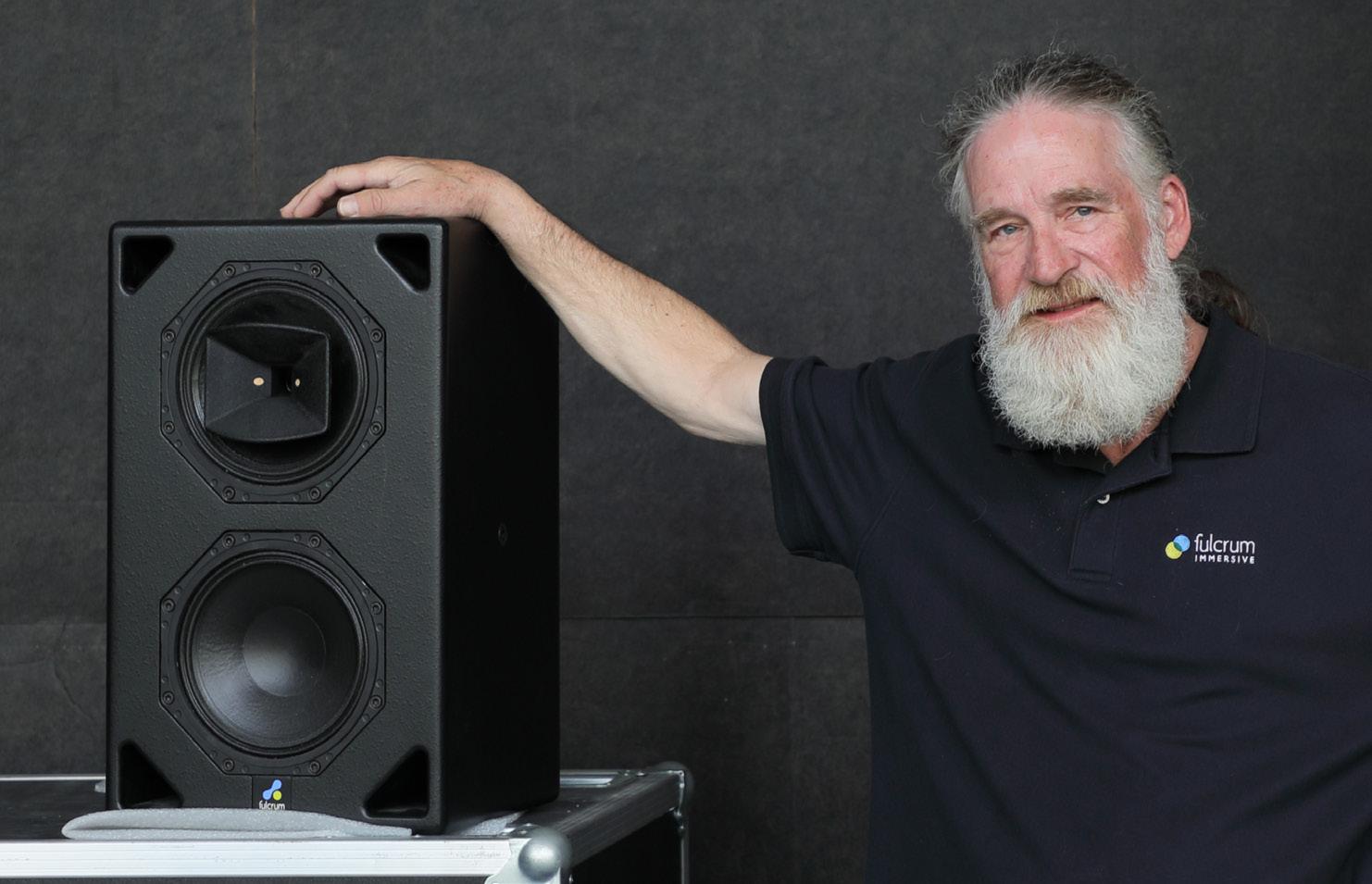
What was the thing that got you started in the music industry?
It started because I was a gigging college musician who couldn’t afford a proper PA system. I decided to build my own speakers so I could play out. I bought some plywood, used a table saw in my basement, and built my first speakers using Radio Shack components. I carried them around and used them to play all my gigs in college.
How did you learn to make loudspeakers?
I initially found enough information to make a basic second-order passive crossover for a two-way speaker, but I knew it didn’t work perfectly and could be improved. That curiosity led me to spend many hours poring through Audio Engineering Society (AES) journals in my college library. I was also fortunate that a tenured professor at the university, Richard Greiner, offered a couple of audio-specific courses. I took those classes, which gave me a rare opportunity to earn a university degree that included a significant amount of audio technology.
How did you get your start in the business?
When I graduated from university, I interviewed with several companies and accepted a job as a product
design engineer with Electro-Voice. Interestingly, on my very first day of work, I was handed two highly important projects. I hit one out of the park, but I struggled with the other. My project management wasn’t great, and I didn’t realise I could ask for a larger tooling budget to make a proper U-bracket. It also featured a completely round horn, and I learned the hard way that a round horn is not a good idea. I learned so much from that early project, and it directly influenced the 30 or 40 coaxial horns I have designed since.
Fulcrum Acoustic is renowned in the industry. From your viewpoint, what is the main reason for that?
It comes down to consistently excellent audio quality. We currently have around 130 products in our catalogue, the majority of which were designed by me and voiced with Rich Frembes’s welcome criticism and ear. While we have more people involved in the design process now, the voicings are still heavily influenced by Rich and me. Because we work so closely together as a team, the voicing of our 30-inch coaxial horns sounds identical to our 5-inch fill speakers. That consistency makes it incredibly easy for our customers to integrate large systems because they aren’t fighting with loudspeakers that inherently sound different from one another.
“FOUNDING FULCRUM ACOUSTIC IS ABSOLUTELY MY PROUDEST ACCOMPLISHMENT.”
Which product or technology do you consider your company’s most innovative?
The underpinning of our company is our pattern control coaxes. We offer five different patterns in a 12-inch coax, a 15-inch coax, and in dual 12 and dual 15 formats. Bizarrely, even 17 years after we introduced them, nobody else in the industry has stepped up to match it. We also have our AHC Series, which features an innovative, high-sensitivity re-entrant horn designed for 80 Hz and up. I set out to figure out if a passive cardioid speaker was possible, and it worked.
Today, we have an entire range of passive cardioid subwoofers, mains, and fill speakers. If you place our CCX passive cardioid speaker halfway down a church, it suppresses the low frequencies from travelling backwards into the front rows; it only fills the exact area it is intended to fill. Today, roughly 40%
of our loudspeakers are passive cardioids.
What is the accomplishment that you are most proud of?
Founding Fulcrum Acoustic is absolutely my proudest accomplishment. In terms of individual speaker designs, the KF900—which I designed prior to founding Fulcrum—was my magnum opus. It essentially proved to the world that large-format digital steering was possible.
What do you think has been the single most important technological achievement in the pro audio industry?
The rapidly expanding capabilities of digital signal processing (DSP) enable its use to make loudspeakers sound significantly better. I developed processing advancements that were initially marketed as Gunness Focusing
under EAW, with Fulcrum Acoustic’s version marketed as Temporal Equalization, or TQ. That shift in DSP technology has been the biggest change in the industry since I entered it in 1984. When we started Fulcrum, we leveraged that technological shift. We never set out to make a loudspeaker intended to be plugged directly into an amplifier without DSP.
Every loudspeaker we have ever made requires DSP, which allows us to maintain an incredibly high level of sound quality and consistency.











REPLAY FOR EVERYBODY, EVERYWHERE.
RiMotion is an easy-to-install replay solution that can be implemented almost instantly in broadcast environments of any scale. It streamlines traditional and modern workflows and provides real-time performance, even when working remotely.
• Intuitive touchscreen