SoundOn is TikTok’s all-in one platform for music creators




Bridging in-room and personal headphone monitoring
Our UNIO TM Ecosystem gives the ability to optimise, align and seamlessly navigate your monitoring options, for the exibility to work anywhere, anytime – from stereo to immersive.
Now, with the introduction of Personal Reference Monitoring – our pioneering new active monitoring headphone solution –UNIO offers the very highest level of headphone accuracy.
genelec.com/unio
Paul Watson CEO
Keith Watson Chairman
Rian Zoll-Kahn COO
Alice Gustafson Editor-in-Chief
Adam Protz
Deputy Editor
Ste Knight
Partnerships Director
Rick Dickerson
Reviews Editor
Marc Henshall Head of Digital
Grace Mcguigan
Artist Relations Manager
Rae Gray Head of Design
This month, the live music industry finds itself at a turning point. A landmark US verdict against Live Nation and its ticketing arm Ticketmaster has ruled they operated as an illegal monopoly, overcharging fans for years. It’s a decision that could reshape how live music is priced, accessed and experienced –raising urgent questions about value, fairness and who the modern music ecosystem really serves.
Those questions feel even more pointed when set against Coachella, a cultural juggernaut (now often referred to as the Influencer Olympics) that continues to sell out despite rising costs, fewer acts, and shifting expectations. From headlinegrabbing performances to a sea of phones capturing every moment, the festival highlighted a growing tension between spectacle and connection. Some called it genius, while others called it lazy: Saturday headliner Justin Bieber split opinions with his minimal-production slot, part of which saw him stream his older music videos from YouTube.
Sabrina Carpenter and Karol G’s sets, however, brought the ol’ razzle dazzle, with complex choreography, multiple outfit changes, elaborate set designs, and, in the Espresso star’s case, an appearance from actual Madonna – with the crowd’s muted reaction to classic crowd-pleasers, Vogue and Like a Prayer, baffling those watching from home. The contrast between those headline sets raised the question: if a female headliner sat on the floor scrolling through YouTube, would she be praised in the same way, or crucified in the reviews?
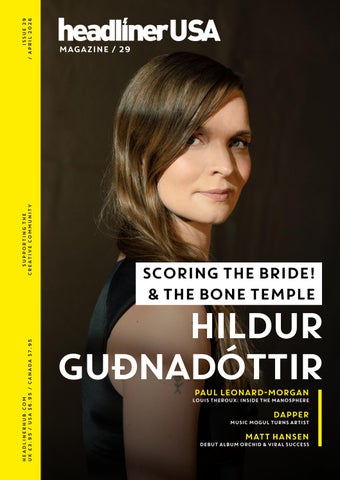
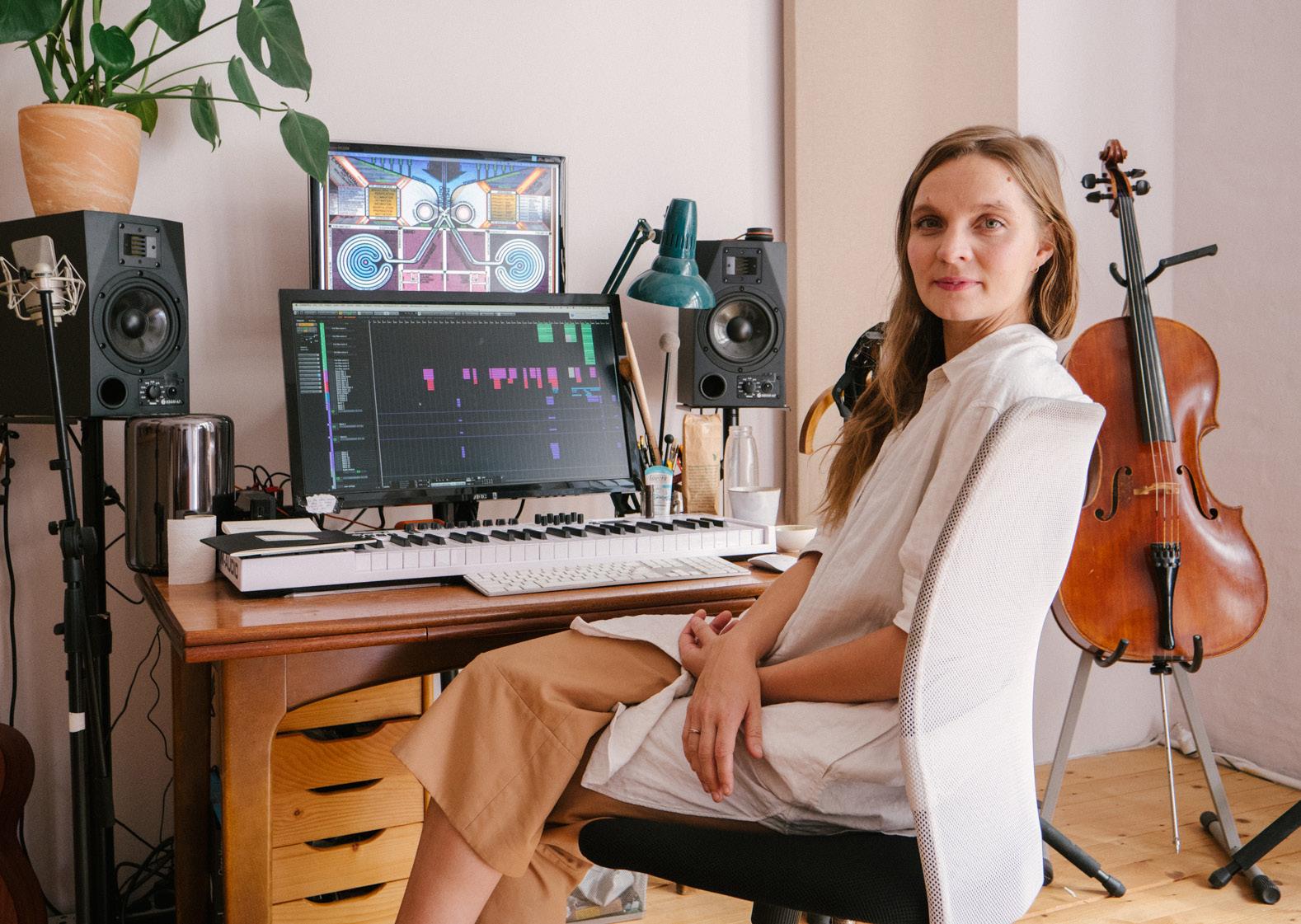
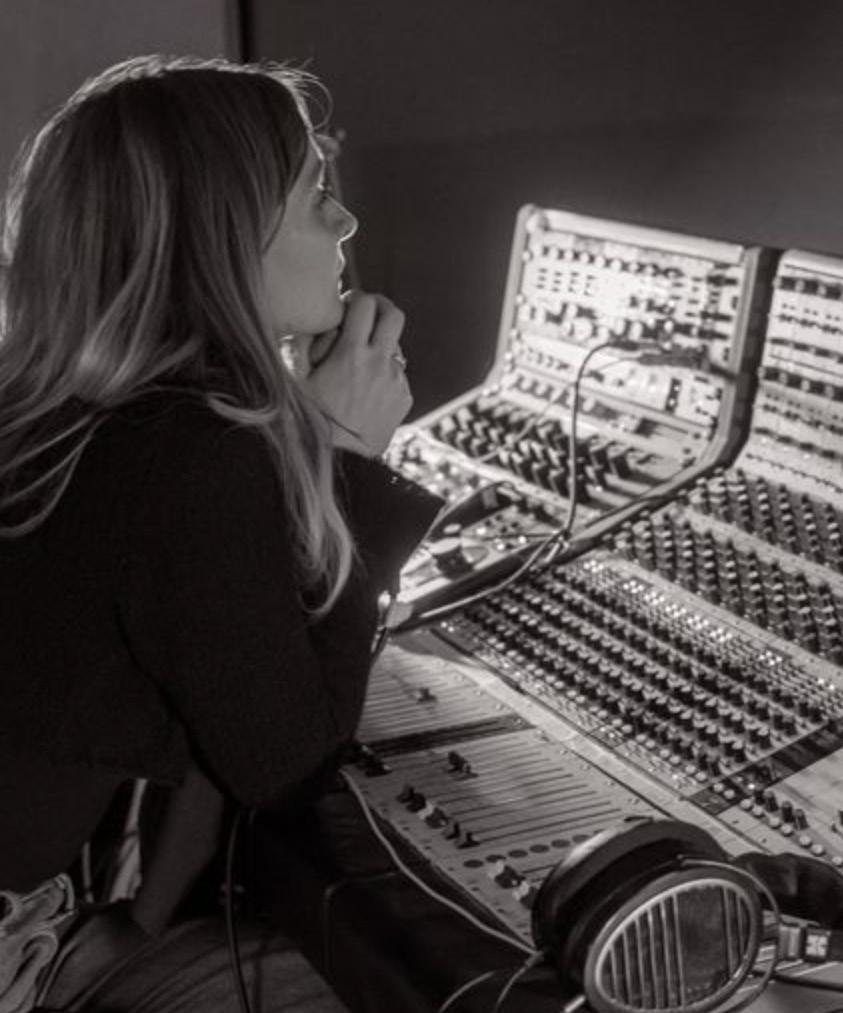
In this issue, these themes of value, attention and the evolving relationship between artist and audience run throughout. Our cover star Hildur Guðnadóttir reflects on her “monster year”, which saw her appeal to horror fans with her scores for the Maggie Gyllenhaal-directed The Bride! and 28 Years Later: The Bone Temple. We also explore how Paul Leonard-Morgan created the dark, viral music for the disturbing Netflix documentary, Louis Theroux:
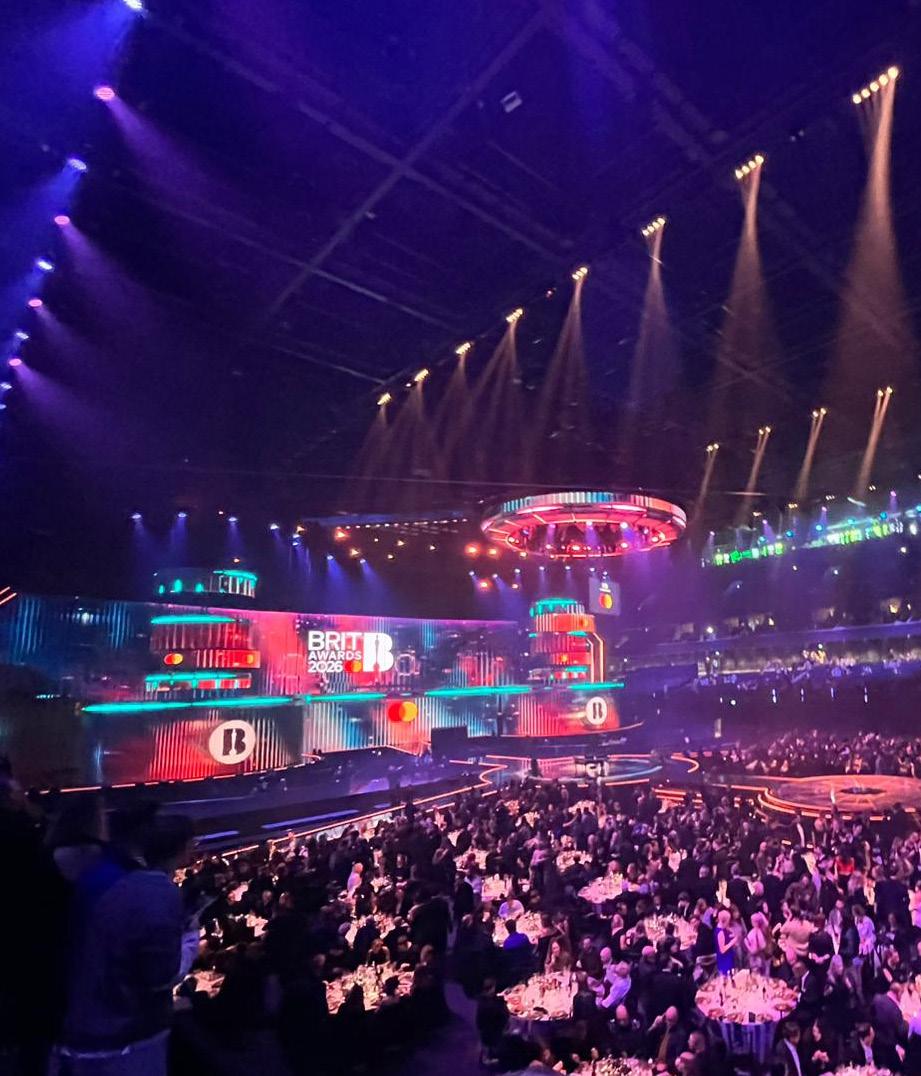
Inside the Manosphere, learn why artists like Matt Hansen are building careers in the attention economy, and how industry figures such as Dapper are redefining what it means to move between business and artistry. In live sound, we caught up with Hope Solutions to learn about how they’re driving change in sustainable touring with Coldplay and The Brit Awards.
From ticketing to touring to the stage itself, the industry is being redefined in real time – and Headliner will continue to bring you the latest. Enjoy the issue!
Alice Gustafson Editor-in-Chief
By

Adam Protz
By Adam Protz
By Alice Gustafson

52 CLUB WINTERCIRCUS: NIGHTLIFE MEETS CONCERT-GRADE IMMERSION
56 BEHIND JIMMY CARR ARENA TOUR’S RAZOR-SHARP SOUND
58 THE SECRET TO WARLOCK GUITARIST TOMMY BOLAN’S SIGNATURE WALL OF SOUND
62 CLASSROOM TO CONTROL ROOM How ECU got its media edge
66 STUDENTS TO ESPN Behind Binghamton’s broadcast breakthrough
70 BILLIE EILISH TO BLOCKBUSTERS Joseph Dutaillis on recording high-stakes audio
74
INDUSTRY INSIGHT
What Sinatra’s team knew about building systems that don’t need you

byZara Dosanjh
TRUTH TO BE TOLD
GERD
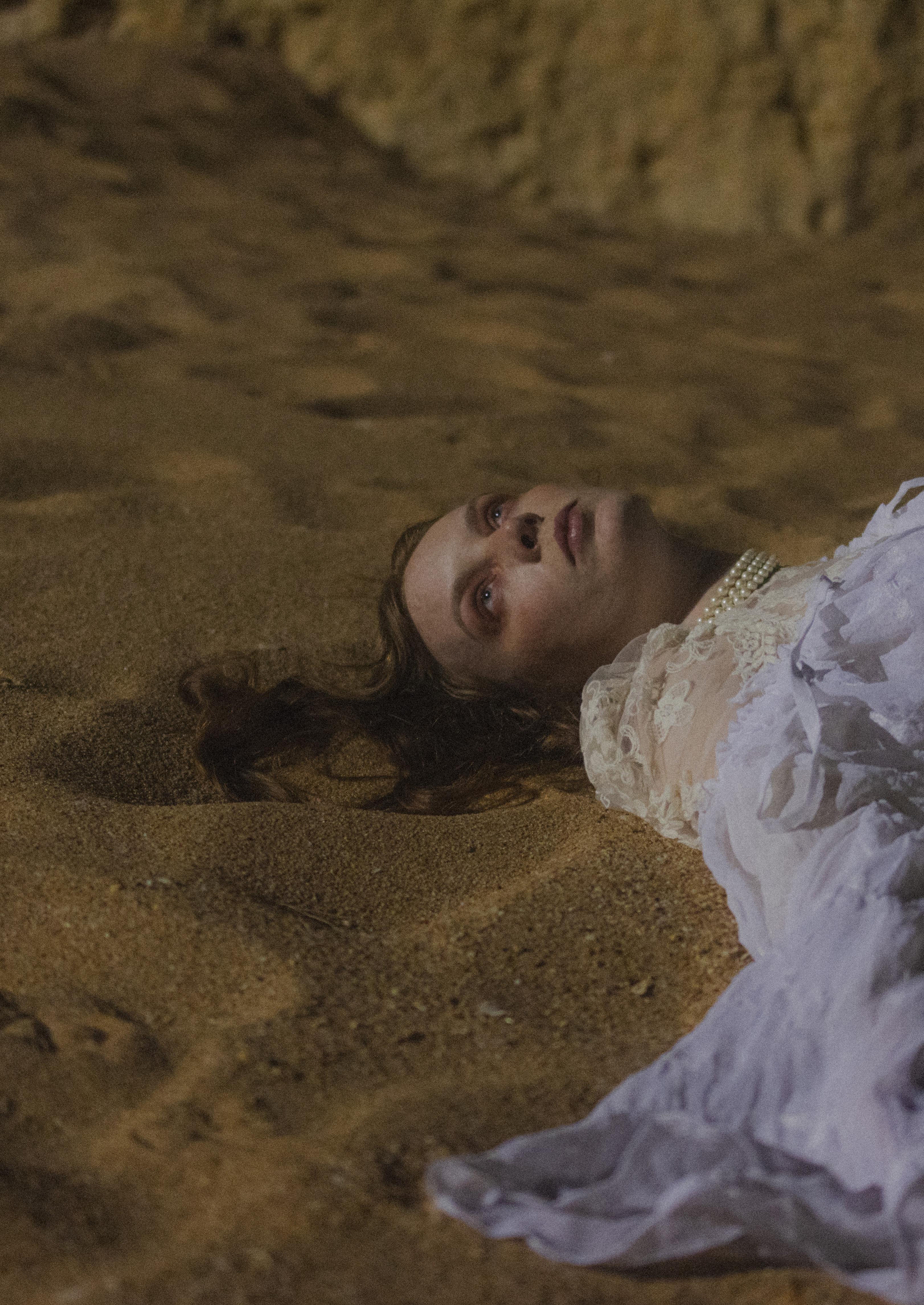
GERD has undergone a tectonic transformation from small-town girl to international rising indie pop star, defying the norms of the pop scene in Sweden. Her latest single Truth To Be Told fuses her timeless classical music roots with pulsating electronic production, a style that’s expansive and flecked with originality. GERD speaks to Headliner about why Swedish artists are done playing it safe, and reveals the story behind her new single.
“It means a woman who takes care of her own,” GERD tells Headliner, explaining the meaning behind her stage name. Once her grandmother’s name and now her own middle name, it has come to define her identity as an artist. She’s calling from Sweden, where the sun is softly filtering through the window behind her. Her presence
matches her music perfectly: gentle, illuminating, and quietly powerful.
“I felt it was a good name for what the music is about, that sense of community,” she adds.
Growing up, she dug her heels into whatever her local community had to

offer, albeit not quite the pop sound GERD would later make her own. “I went to church choir, but I’m not religious in any way. It was the only choir we had,” she laughs. “When you are from a small town, you find a connection with things that are available to you – it sort of pushes you to find your own view.”
It wasn’t long before GERD’s curiosity urged her to apply for music schools, determined to find out what lay beyond her hometown.
GERD wrote her first song to get into the Institute of Contemporary Music Performance (ICMP) in London. Although somewhat chaotic, it was exactly the kind of education GERD was looking for. “It was a good way to explore which small things I could take from all of these genres, and how I can make it my own, which is very much opposite of what we were taught in Sweden,” she adds. “It was a bit more square: this is pop music, this is the structure, this is what you should do. But ICMP was very open-minded.”
GERD’s next project, More Water Than Anything, will fuse all the contrasting
elements that make up her musical background. “For the upcoming album, I’m doing something with a choir from my hometown,” she says, with a hint of pride in her voice. “I think the youngest person there is 50-something, and the oldest is 96. They come from over 200 years of traditional Swedish choir singing. It’s a way of stepping back to my roots and what I come from, and honouring the tradition of my hometown. It’s amazing, these dark male voices. It’s a very deep foundation of a song and sounds like a bass choir.”
GERD isn’t the only one who’s noticed that Sweden’s music scene is currently experiencing one of its most interesting periods in years. “When I started out, I remember in meetings people would say, ‘This song is amazing – can you translate it into Swedish, and we will sign you?’ Or, ‘Is this pop? Is it indie pop? We don’t know what to do with this,” she recalls. “What if you try to be a bit more like this, or if we put you with the right writers and make you sound like that?’” she sighs. “London gave me a space for my music, and knowing there are other people doing this. They just didn’t exist in Sweden, but they’re starting to.”
This shift is something GERD feels is important. “Nowadays, the music industry is looking for more personality. Sweden has amazing music exports like ABBA and Avicii, and now Zara Larsson is having her moment. We have so much great music, but I think we played it safe for a while. I’m hoping we’re going to get back to pushing the boundaries of what music can be.”
GERD’s identity as an artist, within Sweden’s music scene and beyond, is complex. “People who listen to mainstream pop think I am outside the box, and people who are outside the box feel like I am mainstream pop,” she laughs. “I’ve decided to just be in my own space. But I do feel like I’m starting to gain a community of people, and I think that’s the most important thing. I realised when people were singing along and playing the songs, people are relating to this, and it’s not just me, and that was very empowering. Pop music or not, I do not care; it’s a space, and we can all be there together,” she says assertively.
GERD cites her parents as a driving force to carve out her own name rather than bend to the expectations of an industry that didn’t know quite what to do with her. “I am so happy that I had my parents pushing me into trying to do my own thing rather than listening to everyone else,” she says. “I remember coming home wanting to sound like Celine Dion, and they’d say: ‘Well, how would you sing that song? Don’t try to sing like her. Try to do your own thing.’”
GERD draws inspiration from a host of artists, viewing them not as competition but as formative role models. Aurora, Florence + The Machine, and Låpsley have all shaped her work in one way or another, marked by their distinctive world-building. Flickers of various genres and artistic influences burrow into GERD’s songwriting process, quietly positioning her in a canon of pop artists who treat their work like a like a form of myth-making.
In fact, Swedish myth and folklore bind GERD’s songwriting process.
“I invited a bunch of producers and songwriters out to my island in Värmland. It’s in the forest, and you have to go by boat. You’re disconnected from everything, so you have to hang out. When you are in an environment that is very quiet and isolated, you begin to bond and go into deep stuff. You get to sit with yourself and the music and really reflect more. And it starts to be very much about storytelling and the art, rather than just making a good song. We spoke a lot about folklore and traditions. When the forest is dark, and you’re sitting having wine by the lake, and you hear sounds, you feel it, and you really understand how people, especially traditionally, thought about all those things,” GERD reflects.
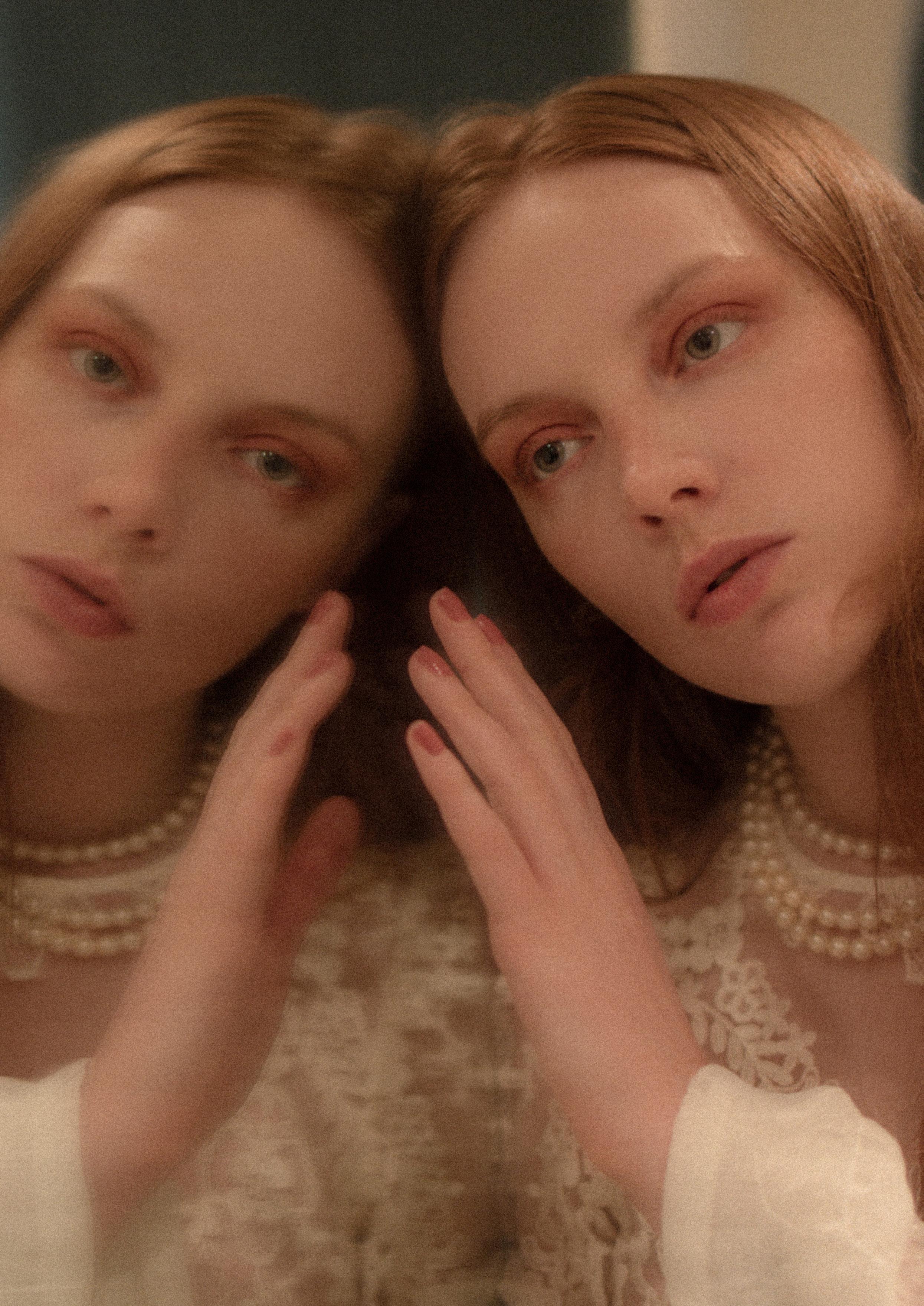
Hurts, a single GERD released earlier in the year, is a hauntingly melodramatic tale of confusion and fear, a song GERD cites as heavily influenced by this remote trip to Värmland. “Hurts is the feeling before everything sort of falls down,” GERD says. “We were discussing how when walking in the darkness [in the forest], it almost felt like we were being chased by some kind of monster. And is it internal, or is it external? Is it a thing in the wind?”
And what draws GERD to this ancient world of myth? She puts it simply: “It’s the rawness. We are striving for absolute perfection all the time. And in a city as big as Stockholm, you can feel it all the time, the pressure of everything, that you’re
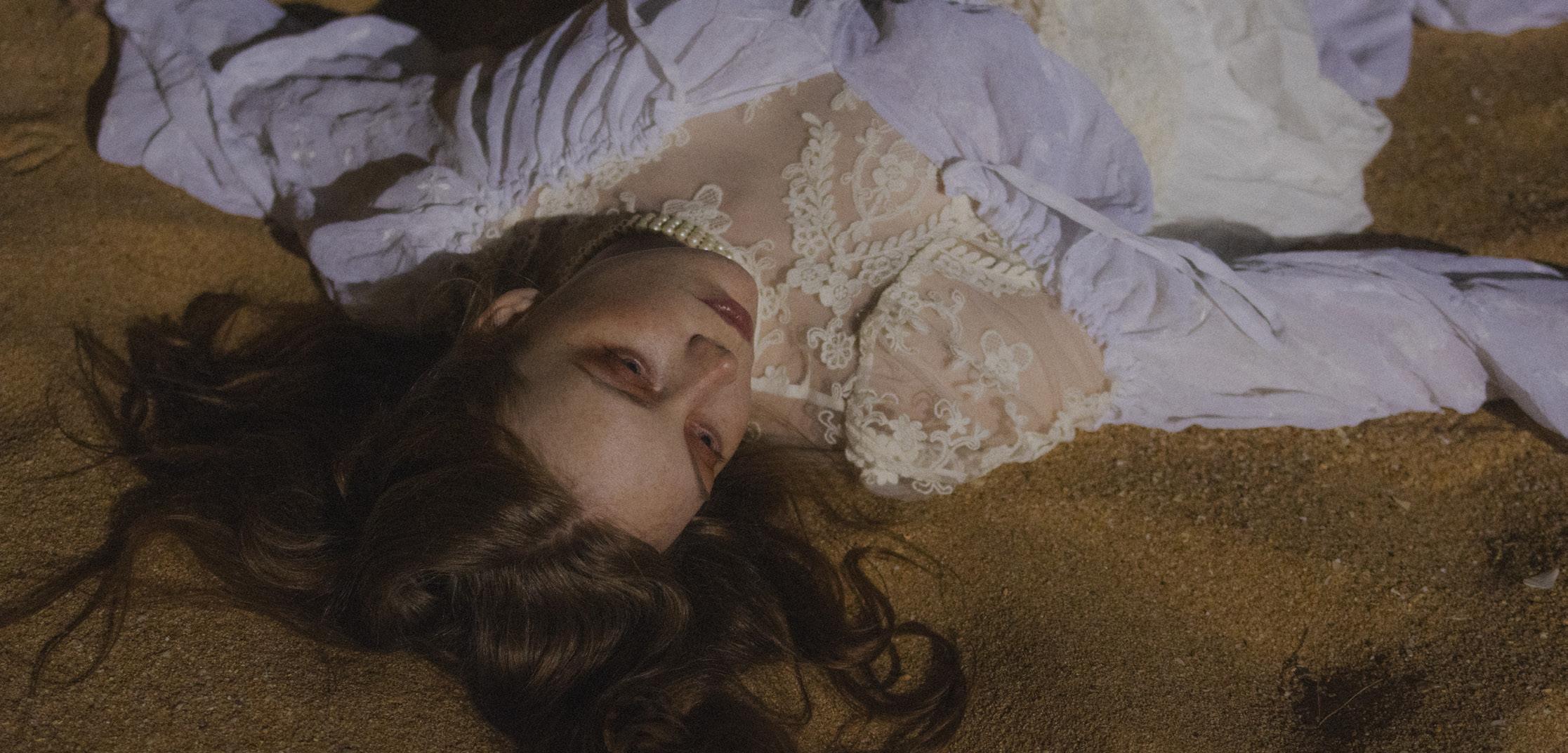
supposed to succeed and the stress of the city. On the island, it just disappeared. We were discussing a lot about trying to make music that felt authentic and raw, which was a bit more unpolished. I don’t think the plan was to make them otherworldly, but looking back, it feels like another world, because it sort of is when you live like that.”
The story behind her most recent single, Truth To Be Told, is equally rich in lore and vulnerability. “We were discussing the feeling of sitting at a table with other people and feeling like you’re not talking or saying anything because you don’t know the right thing to say,” GERD says. “On a good day, you could have the energy to take that room and to be that spark, but when you’re not yourself, or you’re having a rough day, you feel like you’re losing a piece of your sparkle.
“It’s supposed to feel like you’re walking to this dark beat that moves you through the song, and in the end, it lifts you up and allows you to not always have that perfection of being the sparkle in the room. It’s both a sad song in the sense that it’s never fun to lose to sparkle. But it’s also an empowering moment as well, to accept that you cannot always have it with you and that it’s okay.”
Everything links back to community for GERD. Whether it lies in her namesake or her songs, this artist strives to connect with her listeners, to connect people.
“That’s the beautiful part,” she says, “when people say, ‘I heard your song, and it made me feel less alone,’ or, ‘It made me pick up the phone and call a friend because I’ve been isolating myself.’ I wanted to be relatable, and obviously, that means being vulnerable. It’s okay to be vulnerable, and we shouldn’t be scared of emotions. The only time I am cursing myself is when we’re doing it live, day after day, and I have to relive those emotions, because when
you write something true to you, then you’re reliving the moment. But it’s usually a good thing.”
Above all else, it’s vulnerability that defines GERD. It’s the thread that runs throughout every lyric, every performance, every creative decision she makes. It’s non-negotiable. “I think personal music is the best kind of music. How would I ever be able to translate anything if I’m not feeling it?” she asks. “My biggest strength is that I come from so many different musical backgrounds, and I push to collaborate with people outside my comfort zone, to push myself to develop. But every time you push for something, you’re also realising the core of who you are and what you’re good at.”
The further GERD reaches, beyond her hometown, beyond London and all its colour, the more clearly she finds her way back to herself.
INSTA: @GERD_MUSIC


Credit: Antje Jandrig
oW r ds byADAM PROTZ SCORING THE BRIDE!
AND 28 YEARS LATER: THE BONE TEMPLE GUÐNADÓTTIR HILDUR
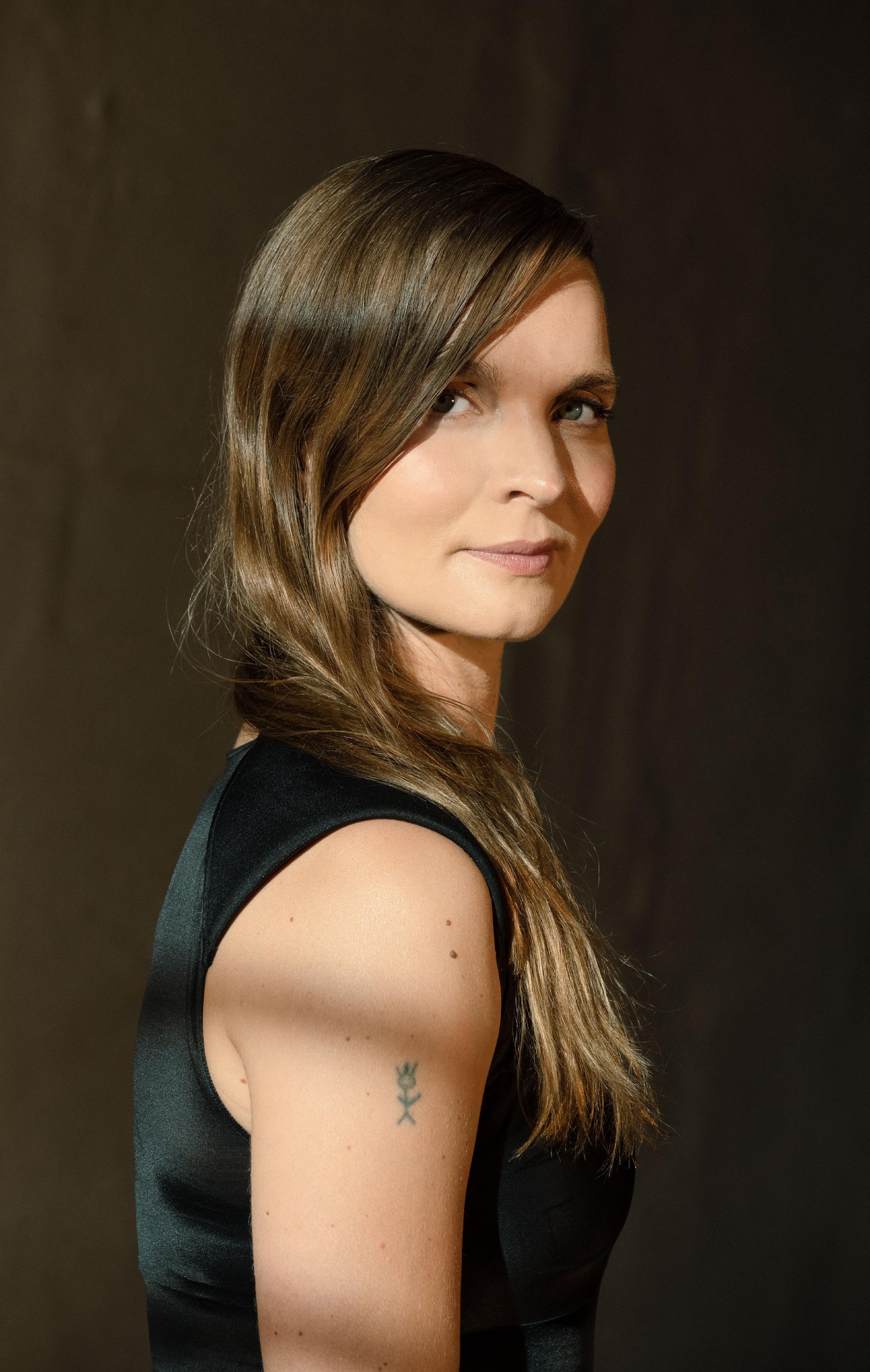
Hildur Guðnadóttir calls 2026 her “monster year.” The Icelandic composer went from releasing indie-classical solo cello albums to becoming an awards-magnet film composer, with BAFTAs, GRAMMYs, and an Academy Award to her name. It was her score for the Joaquin Phoenixstarring Joker that brought her the Oscar gong, as well as awards hosts stumbling over the pronunciation of her surname, when she had already won international fandom from her music for HBO’s Chernobyl. And the reason she deems this year as monstrous is following her work on 28 Years Later: The Bone Temple and the Maggie Gyllenhaal-directed The Bride!. She chats about her journey from indie musician to one of Hollywood’s most in-demand composers, working on these idiosyncratic films back to back, and why Cubase is key to her work.
Born in the capital of Reykjavík, Guðnadóttir was raised by musicians: an opera singer mother, and a clarinettist and composer father. And, in a nice reminder of what a tiny yet prolifically musical country Iceland is, her brother plays guitar and keys in Agent Fresco, whose singer, Arnór Dan, is also known for his collaborations with composer Ólafur Arnalds. The cello entered her life at age five, and she had already begun professionally gigging at 10, playing with her mother at a restaurant.
Her solo career began back in 2006, with the release of her debut solo album Mount A, at the time going by the moniker Lost In Hildurness. She continued releasing solo records and began composing for film and television in 2011. After relocating to Berlin, Guðnadóttir shared a studio with composers Dustin O’Halloran and the late Jóhann Jóhannsson, who are both associated with the ‘neoclassical’ music scene, alongside the likes of Arnalds and Nils Frahm. She played cello for Jóhannsson on
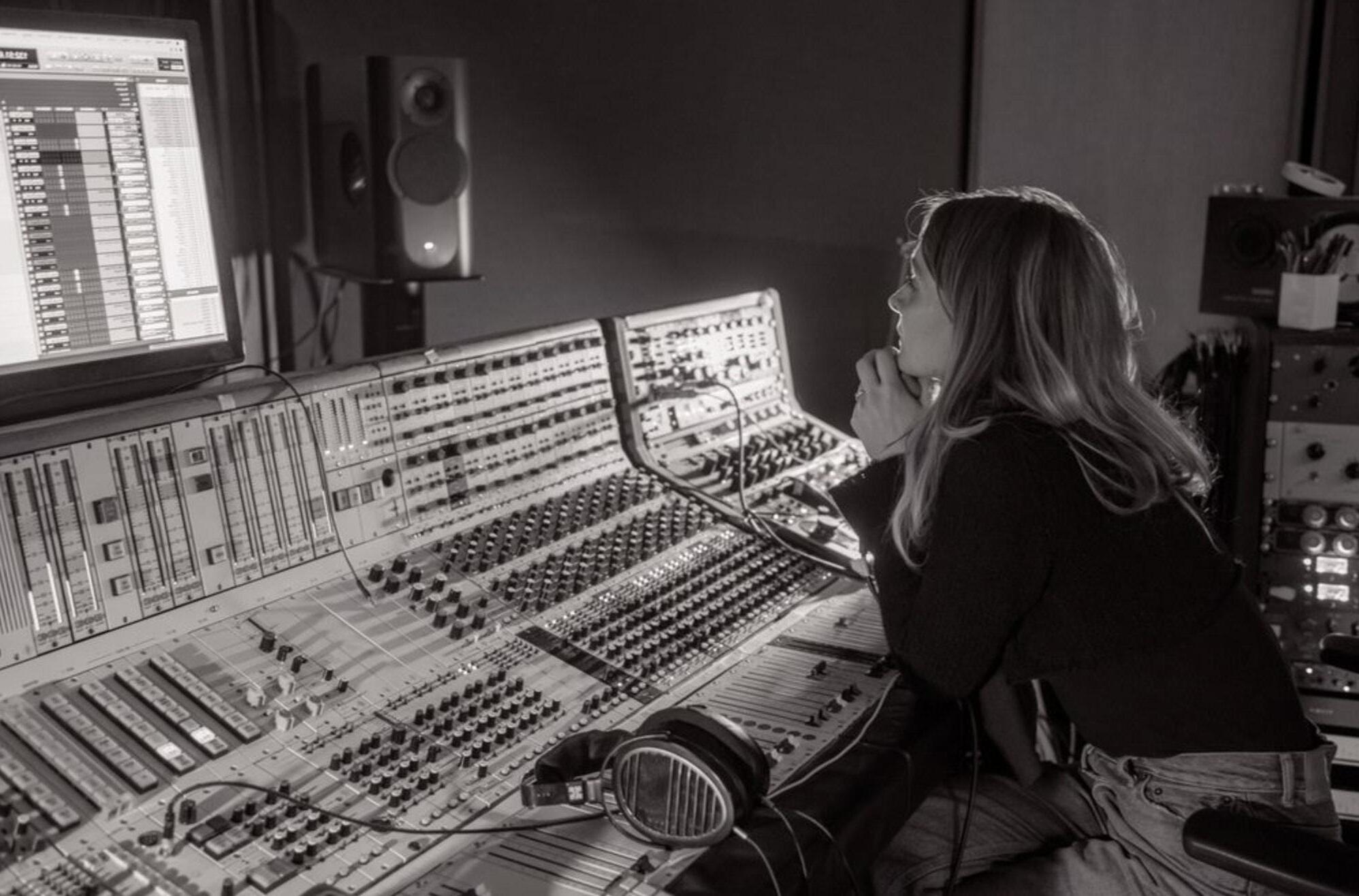
his scores for the acclaimed Denis Villeneuve films Prisoners, Sicario, and Arrival. With her foot firmly in the Hollywood door, her career gained rapid momentum as she wrote the music for films including Mary Magdalene, the Sicario sequel Day of the Soldado, and her muchloved score for the HBO miniseries Chernobyl. 2019 was stacked with superhero films, and she worked on one of the year’s standouts with the genre-defying Joker. This was her Oscar-winning moment, sharing in the film’s success, with Joaquin Phoenix also winning Best Actor for his role as the beloved Batman villain.
Guðnadóttir joins the call and is hit with the big question: as Iceland famously has an extraordinary creative output for such a tiny population, why would you wish to leave (albeit for another very special creative place, Berlin)?
“Iceland is wonderful, and I’m so grateful that I got to grow up there,” she says earnestly. “It’s an incredible music community with incredible people. Growing up in that environment was so special,
and it still affects me in such a big way. But the downside to Iceland is that it’s very small and quite isolated. When you’re travelling a lot, it’s not the most practical place to live — you have to wake up very early for any flight that you take, and you normally have to have connecting flights and all of these things. So in my touring days, it felt like it made more sense to live somewhere a bit more central. I ended up staying in Berlin. I really love it here. I’ll go back to Iceland, though, eventually; I think we all go back in the end.”
For Guðnadóttir, going from the indie-classical scene to scoring some of the biggest Hollywood films, just as her contemporaries such as O’Halloran and Volker Bertelmann have, is perfectly logical in her mind due to her fascination with communication and narrative. “For me, music is really a form of communication, first and foremost,” she explains. “I think it’s a way for me to communicate with myself and try to have an understanding of myself through playing and composing. When you play, especially an instrument that’s very unforgiving,
like the cello or a string instrument that you can’t get away with not practising, that shows up – fast. So you have this mirror of where you are, and you have this way of getting to know yourself through music. I have worked with bands a lot before, but it was when I started writing and recording my own music that I started to understand myself as not just a musician, but also as a person. And I think that stories and character studies have always been a huge interest for me. When I was 19 or 20, I started working in theatre, and I started having an understanding of how music could amplify stories, and it feels like film was a natural development of that interest, of stories and human understanding. Not that I have a complete understanding yet of the human experience, but it’s this striving to understand people and also people that I find confusing and potentially difficult. Because the more foreign people are to me, the more I try to understand them. So I didn’t especially seek out to become a film composer, but it felt like a natural thing, and it’s just one of the mediums I work in. I still work in theatre, and I’ve just worked on a performance at
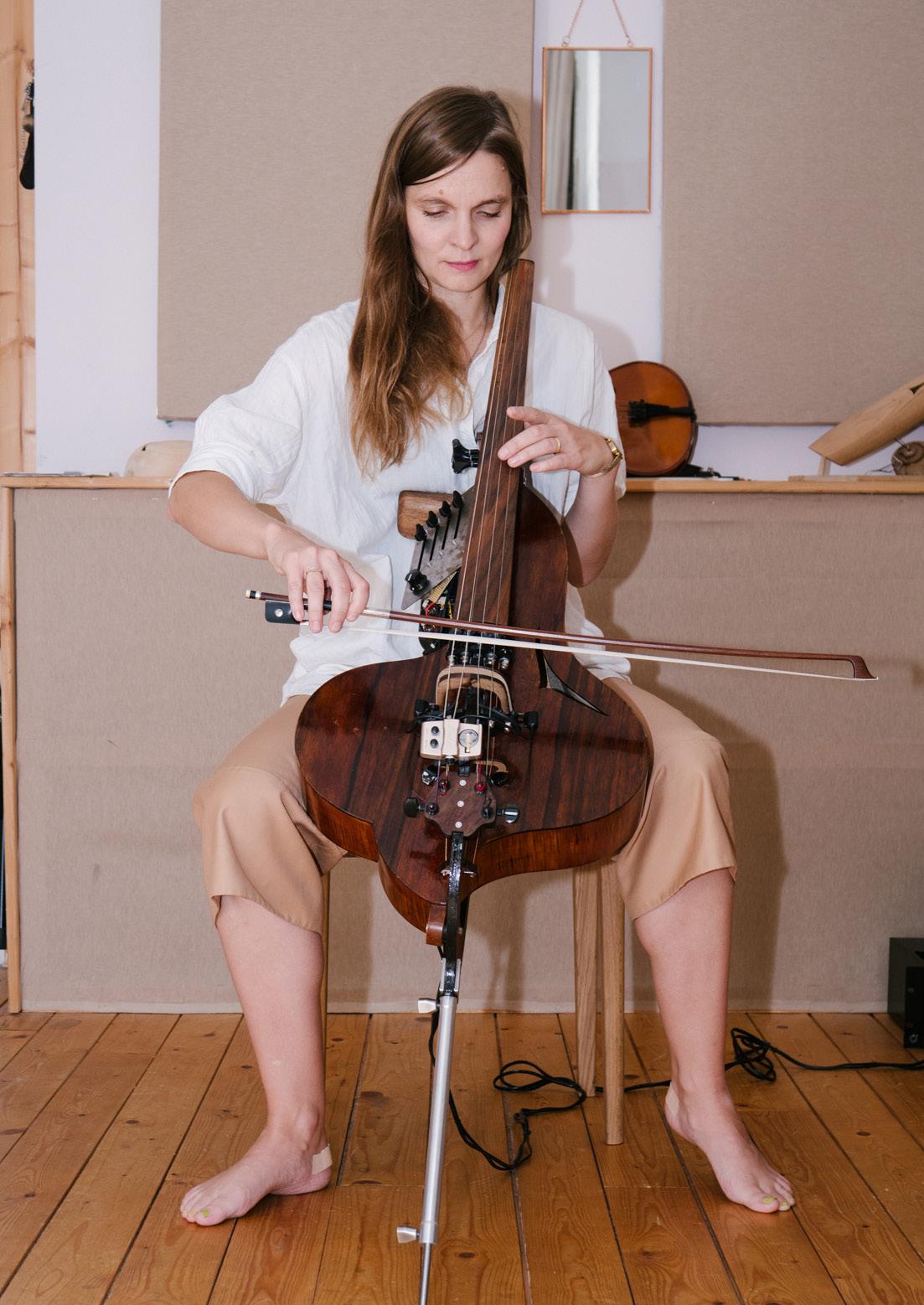
Credit: Timothée Lambrecq
the Royal National Theatre in London with Cate Blanchett and Nina Hoss that’s coming up.”
There certainly is a through thread there — the soundscapes she created on her first solo LP, Without Sinking, full of eerie and harsh cello textures, can be heard all the way through to her work on Chernobyl and Joker The style of textural string playing and writing in both her own scores and her collaborations with Jóhann Jóhannsson has been shamelessly ripped off in many other scores — none more mercilessly than the descending low strings ostinato from Sicario. Film awards season 2026 has drawn to a close, and even though six years have now passed since her own Oscar win, Guðnadóttir laughs that, “My name is now permanently prefixed with ‘Academy Award winner.’” But, jokes aside, recalling that she took that lifechanging moment as an opportunity to talk about how much it means to her to be a female composer in a very male-dominant corner of the film industry in her acceptance speech, Headliner asks if she’s feeling optimistic about film music becoming more diverse. There are many encouraging signs, but she was only the third woman to ever scoop the award, and the first to do so in over 20 years. There hasn’t been a female winner since, and the 2026 nominees were all male. So, while the strong stereotype of a film composer being a middle-aged white man is slowly shifting with more female and global majority composers making it their career, the progress is certainly slow.
“I do feel that it’s going in the right direction, but I do wish that it was going a little bit faster,” she laughs. “It’s been six years, and I think that only one woman has been nominated since then, and all male winners, of course. I think that’s across all the award circuits, not just the Oscars. I know that we’ve had some more women in the gaming awards who have been nominated. But I feel
like we should be seeing more, and I was hoping for more of a change, but I guess good things happen slowly.”
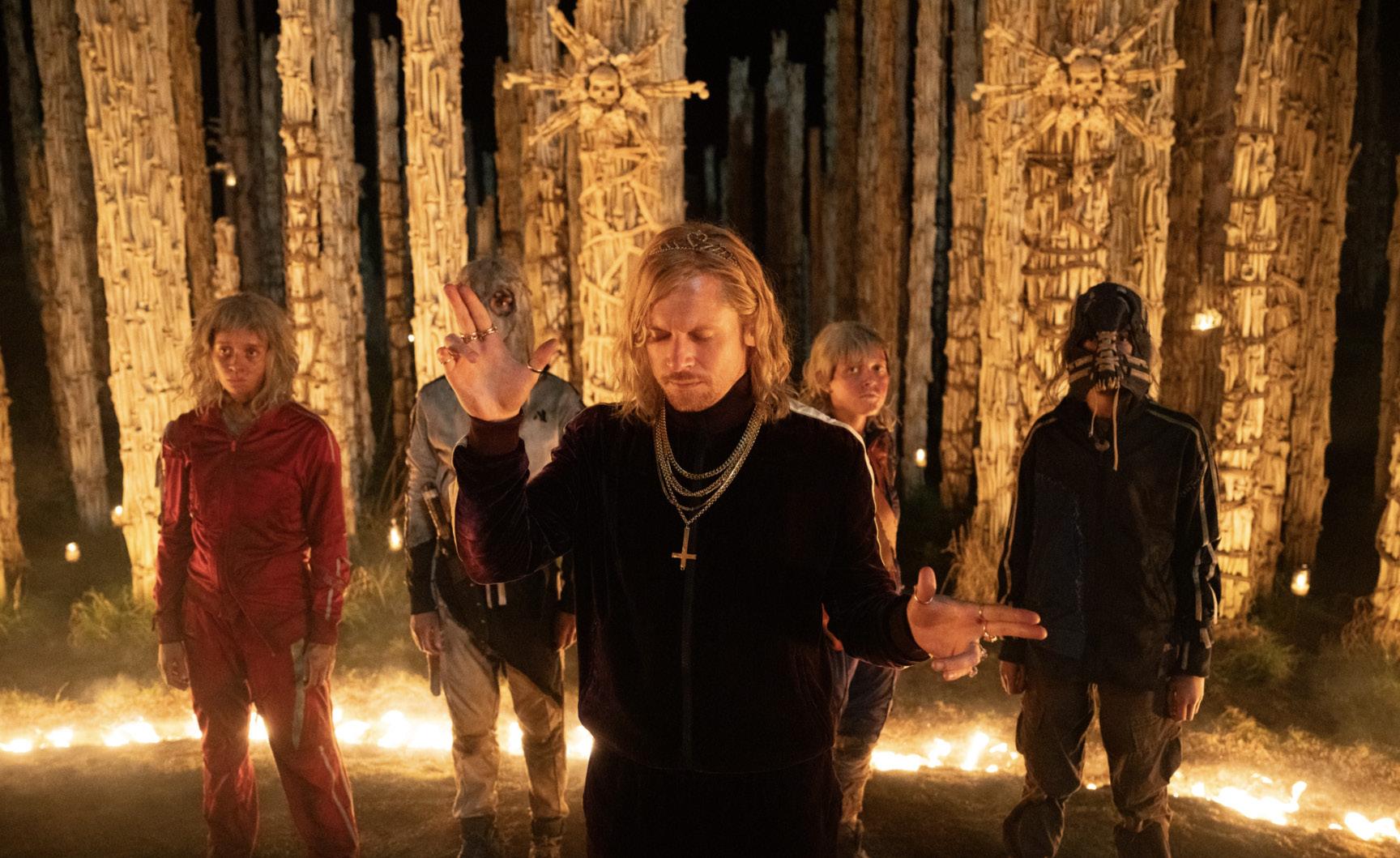
Guðnadóttir’s 2026 began with the release of 28 Years Later: The Bone Temple, the second film in the new sequel trilogy that relaunches the 28 Days Later franchise. This was never going to be the film for some Hans Zimmer copycat; while these new films are reboots, they have the feel of indie Brit-flicks in style.
2025’s 28 Years Later, which saw director Danny Boyle returning at the helm, is surely one of the quirkiest franchise reboot films ever released, with its rapid editing style and a very unique score from the Scottish band Young Fathers.
However, Guðnadóttir reveals it wasn’t a case of following on from the band’s score for the first film at all: “The crazy thing was that both parts were shot almost simultaneously, and the post-production happened almost simultaneously. So we were working on both films at the same time, and I got the scripts to both films. I started fairly early, and all I knew at the time was that Young Fathers were doing the score for the first film, and that was my whole knowledge throughout this whole process. I knew Young Fathers’ music, so I knew roughly what sound worlds they’re coming from. But I never got to hear a note of what they were doing, and I didn’t see a single frame of part one. I saw part one in the cinema with everyone else, and it was my first time hearing any of their score. And that was terrifying in a way, because I was crossing my fingers
Sony Pictures
THE BRIDE! A Warner Bros. Pictures release. Photo by Niko Tavernise
“TALK ABOUT 2026 BEING MY MONSTER YEAR…ZOMBIES, FRANKENSTEIN, AND THE LIVING DEAD SEEM TO BE THE THEME FOR MY YEAR.”
and hoping for the best and that somehow these stories were going to work together.”
Despite this unorthodox approach, what is certain is that Guðnadóttir could not have been a better pick for The Bone Temple. This entry was directed by Nia DaCosta, who had previously collaborated with the Icelandic composer on Hedda. Alex Garland returned as the writer, and the story focuses on the characters portrayed brilliantly by Ralph Fiennes and Jack O’Connell, shifting away from Jodie Comer and Aaron TaylorJohnson. Guðnadóttir’s trademark cello writing and performing, more eerie and foreboding than ever, finds a perfect home in this postapocalyptic movie, which people love to fiercely debate whether it is or isn’t a zombie franchise.
“Everything came together so naturally,” she recalls. “The edit was so clear, the direction was so clear. It flowed in such a great way, and the whole process of working on this film was so joyous. There were hardly any scenes that we struggled to find the
right tone for. I hope people will feel that when they watch it. I’ve only had one screening with an audience at the premiere, and obviously, at the premiere, everyone was very excited, but you could feel in the audience this sense of communal joy, where people were laughing so much, and then they stood up and applauded when the crazy Iron Maiden scene happened. The performances and the use of the music scenes, like Duran Duran; they’re just so weird and wonderful. It’s all these things that you think aren’t going to work that are just so fun somehow.”
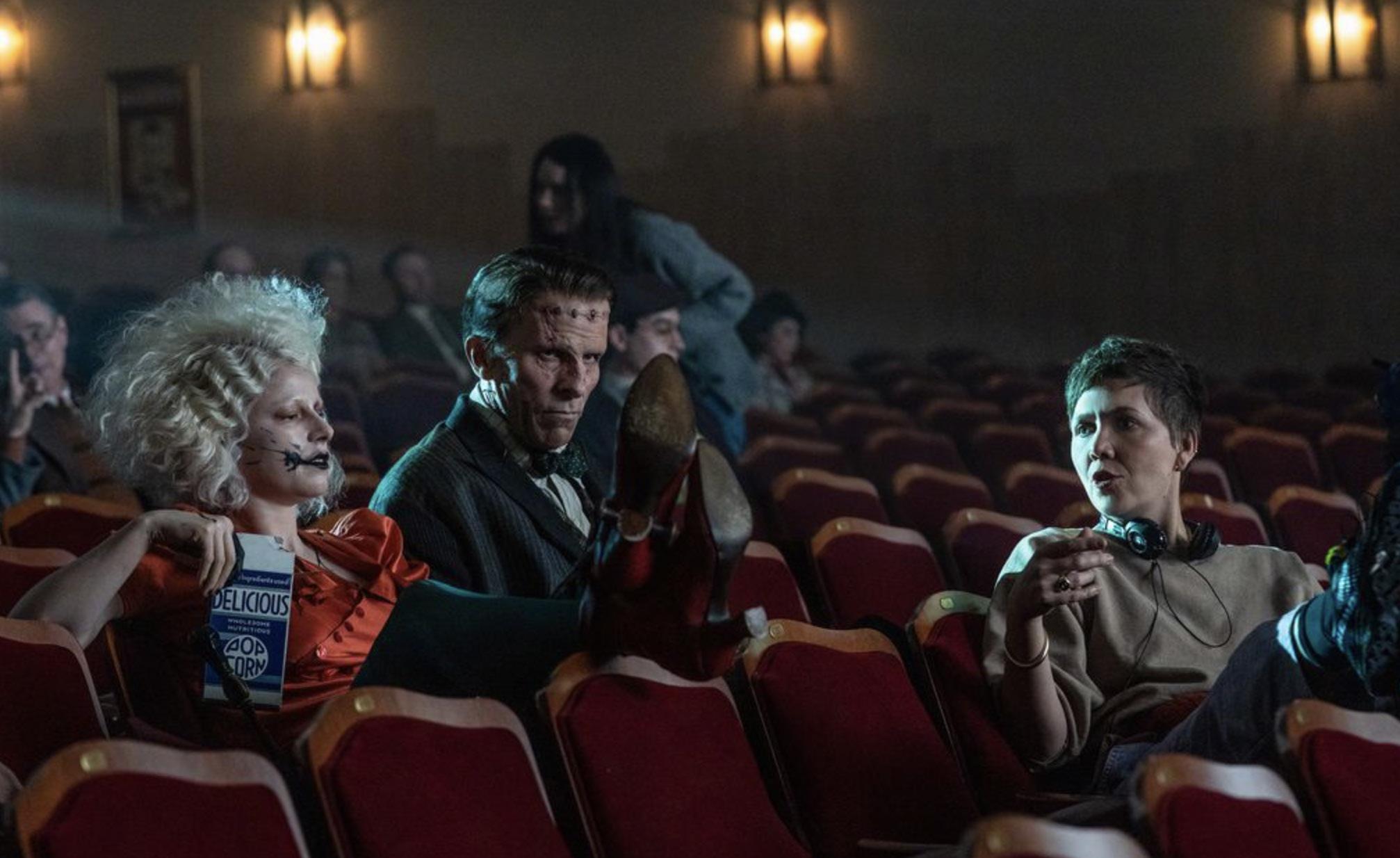
Sticking with the macabre vibes, another major 2026 film for Guðnadóttir is The Bride, in which she collaborated with some other supremely talented women, including director Maggie Gyllenhaal, who gained acting fame from films such as Donnie Darko and The Dark Knight, and lead actor Jessie Buckley, who has also just joined the Oscarwinners club for her role in Hamnet as of this year. Hot on the heels of Guillermo del Toro’s Frankenstein from the tail-end of last year, we get
another spin on Mary Shelley’s tale, in which the creature, here known as Frank and played by Christian Bale, requests a partner. Buckley’s character is transformed into the titular Bride.
It’s undoubtedly one of the most unique soundtracks Guðnadóttir has worked on, which features songs performed by Gyllenhaal’s brother, Jake, who plays Ronnie Reed in the film. There are also musical contributions from Swedish artist Fever Ray.
“Talk about 2026 being my monster year in every way,” she laughs.
“Zombies, Frankenstein, and the living dead seem to be the theme for my year. The Bride! has this very strong sense of opposing elements coming together. It’s about life and death, this crazy romance and also this kind of raucous violence. It’s very punk but also very classical. The film is always looking at these blacks and whites, and finding the area where they become grey. I think with this film, Maggie is trying to access how to be someone, create something, or have
“CUBASE
something that doesn’t fit in one box.”
In terms of becoming Gyllenhaal’s composer bride of sorts for the project, Guðnadóttir reveals that it all hinged on sharing some early musical ideas and seeing if they were in sync with finding the right sound for the film.
“She [Gyllenhaal] called me up, and we had all these conversations. I think I was an interesting choice, because I really do live in two worlds; I play in a metal band, and I’m a classical musician. I studied classical music, and the cello is my main instrument, but I live very much in the experimental – the metal, and the electronic worlds. So I think that’s probably what made me one of the people on the list, because she knew that the music was going to have to play a very specific role. I did start out writing the love theme as an experiment to see if we were speaking the same language and whether or not to jump on the project. This love theme, I guess you could call it a demo, instantly connected with her. From that moment, we decided that I’d jump on board with her.”
When a film has such a stunning ensemble cast as The Bride! does, namely Jessie Buckley, Christian Bale, Peter Sarsgaard, Annette Bening, Jake Gyllenhaal, and Penélope Cruz, it’s interesting to ponder how the on-screen performances affect the approach of the composer.
For Guðnadóttir, it was a case of
recognising that “A film like The Bride! has a lot more locations. It covers a lot more distance, not just physically, and the characters are also very complex. I mean, Jesse plays three different characters, basically simultaneously with all different accents; she’s both alive and dead, and she’s speaking with an English accent and an American accent,” she says with a hearty laugh.
“And I think the music has to live in that space too. The film is telling a lot of different stories, and even more stories than it appears to be telling at the time. So the music has to play a lot of different roles.”
Behind the scenes, these films, like the majority of Guðnadóttir’s scores, were created using Steinberg’s Cubase digital audio workstation software. She describes why, having tried a number of the leading DAWs available, Cubase serves her film composing work in the most harmonious way.
“I started working in Cubase when I started to do more film work, because I’m not a big fan of MIDI, and I’m not a big fan of sample libraries. Because, in my heart of hearts, I’m really a performer. I love recording music, and I love being in a room with people who are playing music,” she explains. “That’s really where I feel most at home, and I feel most energised by that environment, that live playing element of music. But the nature and the speed at which you’re often required to work
in film does require you to work with sample libraries, and it does require you to do demos and mock-ups and those kinds of things. So I do have to befriend MIDI and the keyboard, which is not my preferred instrument.
“Cubase feels like the most inviting environment for me to work with in that sense; the MIDI environment and the timeline environment are very inviting – and straightforward and easy to get into. Before, I was working in Pro Tools and Ableton a lot, and Ableton is not really great for timeline and film timecode work. And with Pro Tools, at least at the time when I was starting out in film, I felt the MIDI environment was not super straightforward. I think it’s changed a lot now, but now I’ve just got so used to Cubase that it’s hard to change back. And also, they’re such great people at Cubase. They’re lovely people, and they’re so supportive of people working on films. They’re open to suggestions and so kind when you have to work around some problems – you can contact them directly.”
Life and music continue apace for Guðnadóttir. She just returned to the stage at the Barbican Hall in London to perform music from her 2025 solo record, Where to From. The album is available to buy on vinyl and CD via the legendary classical record label, Deutsche Grammophon, as well as being on all streaming platforms. The scores for The Bride! and The Bone Temple are also both out now, and this trailblazing composer ends with some tantalising film news: “My next film is going to be Enemies, a really cool film which will be my first time working with A24; Austin Butler and Jeremy Allen White are the main actors,” she discloses with a smile.
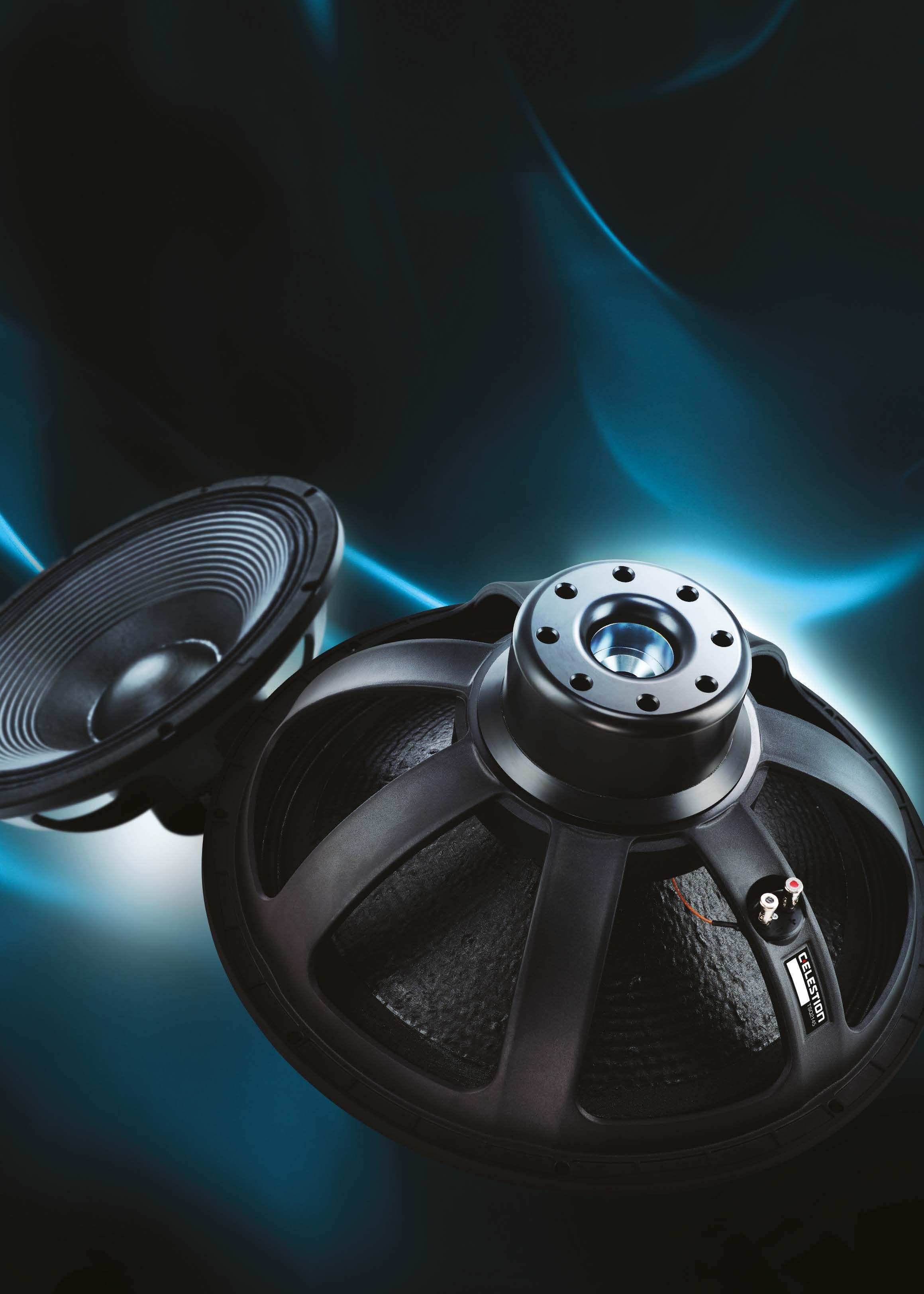
A NEW HIGH IN THE LOW END
Designed and built in the UK, Ten Squared (Ten2) is a range of premium, low frequency loudspeakers. Engineered without compromise, they deliver consistently superior levels of performance in the most demanding professional sound reinforcement applications. All the time. Every time. 18, 21 and 24-inch models available. Discover Ten
celestion.com

GIRL GROUP ANGLO-NORDIC BAND CHANNELS THEIR RAGE
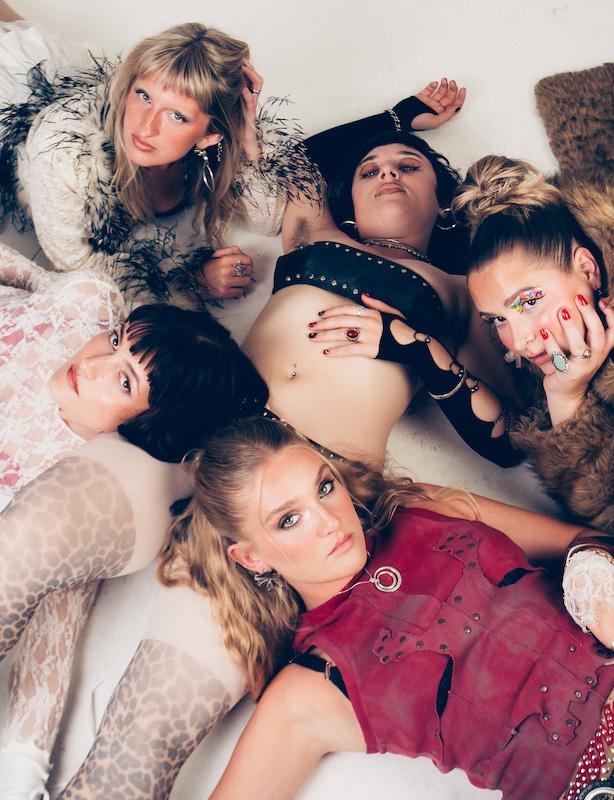
Anglo-Nordic band Girl Group are redefining genre with ‘brat-punk’ – a hybrid of hyperpop, electronic and indie. They are a North Sea collaboration comprised of Katya Birkeland, Thea Gundersen, Mia Halvorsen and Maria Tollisen, all Norwegian, while member Lily Christlow is from Bridlington, Yorkshire. Each is an alumnus from the prestigious Liverpool Institute for Performing Arts, where they met and formed the band. After their hit performances at Reading and Leeds Festivals and gaining support from Elton John and BBC 6 Music, Girl Group speak to Headliner about new songs Rage Song and SuperDrug, and why only female acts ever get accused of being ‘industry plants.’
“WE SEE OURSELVES AS VERY MUCH SELF-MADE IN THAT EVERYTHING IS DONE IN-HOUSE.”
With four of the Girl Group girls (Halvorsen and Tollisen were already friends from Oslo) relocating to attend LIPA, there was already a kinship there as Scandis new to Liverpool. Once they were all settled and forming a friendship with Yorkshire-born Christlow, they bonded further over their treatment from male classmates, who would largely exclude them from studio sessions, or on occasion invite them, but then essentially ask them to be quiet and not participate at all.
Early last year, the band released Yay! Saturday. While much of their music and lyrics focus on their experiences as women, this debut single is a fun alt-pop jaunt about the messiness and fun of nights out together. The song established the Girl Group sound: pop of a very tongue-in-cheek nature with decidedly un-radio-friendly lyrics, with indie rock elements and instrumentation. A string of singles led to the EP Think They’re Looking, Let’s Perform in June 2025, and a month later, they would be opening for Olivia Dean in Paris. That Summer, their Reading and Leeds Festival performances had the highest BBC Introducing Stage attendances; things are snowballing for this band very nicely indeed.
LIPA is such a prestigious UK performing arts institution, but it sounds like you bonded very strongly over several things besides music when you met there?
Birkeland: It was quite absurd moving from Norway and coming to this place where there were so many
international students and so many students who were very serious about becoming musicians. It felt quite daunting. We started because the boys’ clubs were quite prominent there, as well as everywhere in music. It was a combination of finding other musicians who burn for the same things as you do, and then also being a bit frustrated at the system, and having the motivation of so many people around you who are constantly trying to make it.
Starting up in Liverpool was very good for us because it’s such a nice city for community and supporting each other. It felt so safe to try new things; you can do a lot of events and trust that people will show up. Being from Oslo, there aren’t a lot of opportunities for newer musicians.
There was just a big shift in coming to a city where there was just culture, music, and life everywhere. We all really appreciated that.
On one hand, the band name Girl Group does exactly what it says on the tin. But on the other hand, you’re almost completely subverting the idea of what people expect a girl group to be — the music and lyrics aren’t sanitised, or created with the idea of getting on the radio without ruffling any feathers. Was this the thinking behind it?
Christlow: We had a lot of very silly names thrown around, and Katya suggested Girl Group. Immediately, we thought it was really lame, and
then we all came back to it. We like the idea that it subverts the typical connotations of that. People think of manufactured girl groups and how those are almost synonymous; that seems to be something to make a point about in itself. We see ourselves as very much self-made in that everything is done in-house. Maria’s the producer, and we wanted to turn that idea on its head. It’s also quite a naive name, but in the best way.
Another part of that subversion is the choreography you have in your music videos and on stage. It’s fun and playful, but you also intend it to be a little tongue-in-cheek.
Christlow: That was a big part of awakening our inner little girl. It’s a subversion of groups like the Spice Girls and Little Mix, and how they have this on-point choreography that’s all synchronised. We wanted to play on that, but it’s literally just us making it up in someone’s bedroom. The movements are influenced by the words and what we’re trying to say with each song.

Reading your lyrics and about your experiences of being women in the music industry brings to mind a notable double standard recently: Wet Leg and The Last Dinner Party were accused of being ‘industry plants’ because they became successful relatively quickly. But when the same happens with male bands who went to some of the most expensive private schools in the country, no one says a word. Is this something you’re conscious of?
Gundersen: We talk about exactly that all the time. One of the songs on our first EP was about The Last Dinner Party and Wet Leg being talked about in that way. It’s so frustrating how no one says that about male bands ever. It’s difficult to get money without the backing of a label, and then once the band signs, they’re completely discredited from all the work that went into getting signed. We literally all wrote our dissertations about this.
Birkeland: It’s also very interesting because there are so many male artists or bands who don’t get the same accusation. It’s so obvious that bands like Wet Leg and The Last Dinner Party have worked so hard, but there are just accusations being thrown around. People try to say that I’m throwing around misogyny where it isn’t, but when we researched what bands have that thrown around, it’s almost completely female bands and artists. It’s quite ridiculous.
Speaking of things that do what they say on the tin, you recently released Rage Song — which particular machine is this single raging against?
Birkeland: No offence, but men! There was a specific situation going on, and it just awoke some feelings from all of these times that we’ve been frustrated with partners or acquaintances or fathers, and rambling about that for a bit, which felt nice. It was nice to get all the frustration out in one song. I really love screaming it on stage; it’s very fun. Something that I’ve learned growing up is how much of my anger is suppressed as a woman. You’re constantly taught that you’re supposed to be polite and pleasing, nice and quiet. There was something very cathartic about that song. You’re not supposed to think about what you’re saying. It’s important for women to know that anger is an important tool to help them stand up for themselves.
One of the singles you followed that up with is SuperDrug. Could you share a bit about the serious messaging of this track?
Birkeland: It was very scary to create a song like that because it was already scary to criticise birth control. When you look at the US, they’re starting to take away women’s rights and reproductive rights. They’re even talking about banning birth control. For us, coming from countries where we’re lucky enough to have access to it, it was more a frustration at women’s health and the lack of research around it.
Going to the doctor with questions and being met with the same “I don’t know, sometimes this happens, try birth control again.” It’s a very nuanced subject to touch on in three minutes. We’ve been wanting to make songs about women’s health because it’s such an incredibly heavy thing we deal with all the time, which is exhausting and very sad. It felt very cathartic to make a pop banger from it.
Both of those songs appear on your new EP, Little Sticky Pictures. What’s in the pipeline to promote it?
Christlow: It’s been so much fun; it also came out on vinyl with both of our EPs on. It will be a vinyl with Little Sticky Pictures and Think They’re Looking, Let’s Perform, which we’re still very excited about. The vinyl has stickers of us on it, and you can stick them on the front. After doing EP one, we weren’t quite done with that world. Being able to do the double vinyl makes them feel like one big project together, which we’ve loved. Next up, lots of shows and festivals, and we’re getting back to writing. It’s going to be a busy year.
INSTA: THISISGIRLGROUP




DRUM RE-SYNTHESIZER
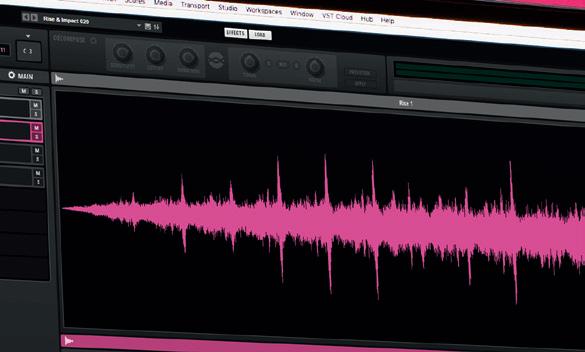
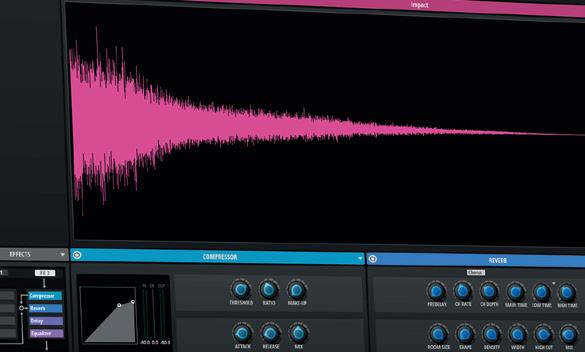
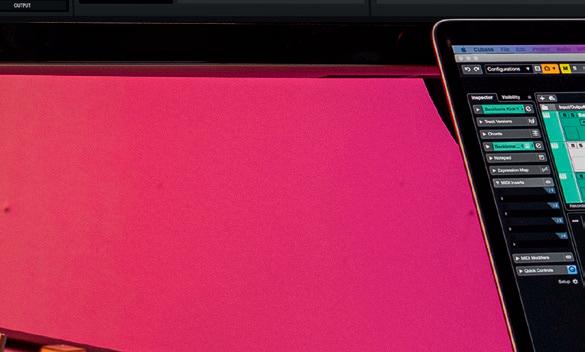



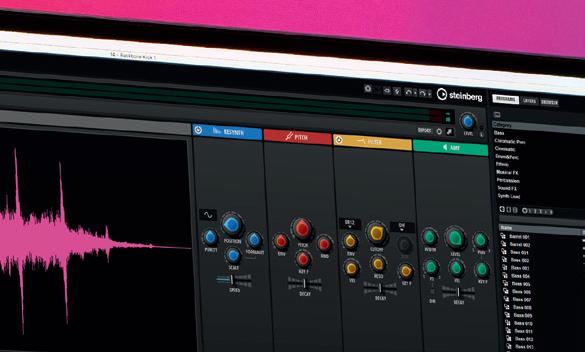
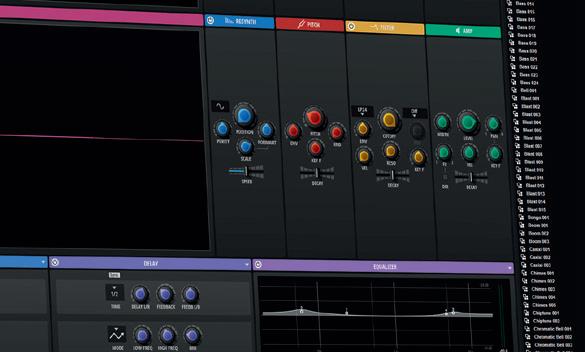
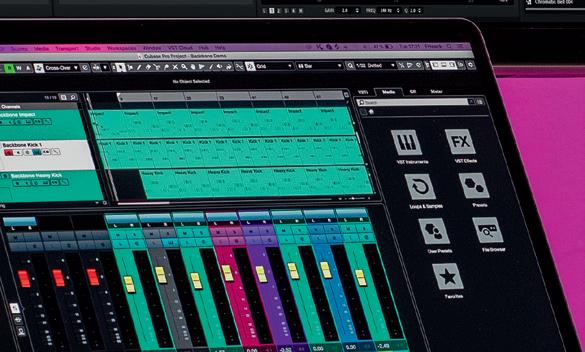
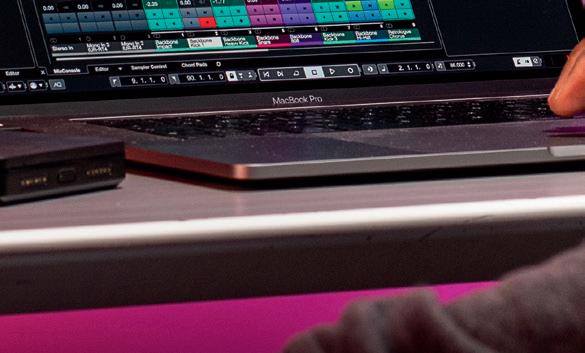


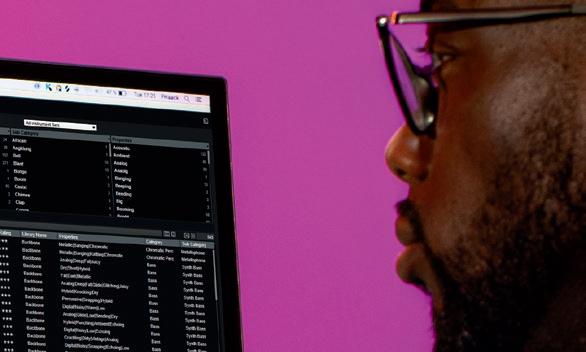







A revolutionary way to design your own drums – Backbone is your new, innovative drum designer for single kicks, snares, hi-hats, percussion, rises, hits and more. Layer up to eight samples and shape them with classic subtractive synthesis, decompose samples into tonal and noise elements and re-synthesize samples to manipulate them in unheard ways.
steinberg.net/backbone


SCORING LOUIS THEROUX: INSIDE THE MANOSPHERE
PAUL LEONARDMORGAN
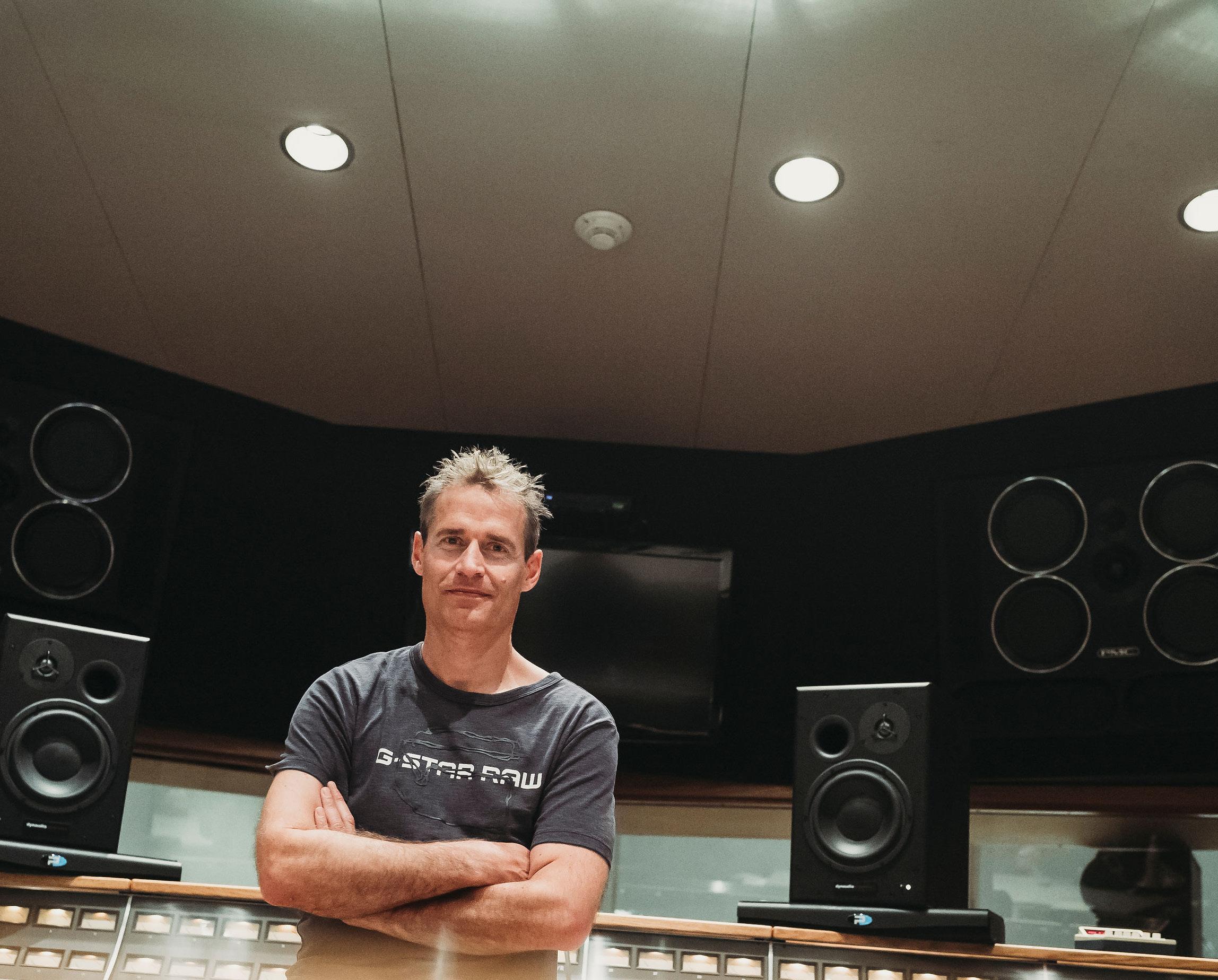
Credit: DianaFeil
“Are you getting triggered?” Louis Theroux asks in the new Netflix documentary, Inside the Manosphere. For the millions who watched the film, after hearing the nuggets of wisdom offered up by the toxic bros scraped up from the bottom of the manosphere content creator barrel, the answer is likely yes. When it came to writing a manoscore, BAFTA Award-winning, Emmy and Ivor Novello–nominated composer Paul Leonard-Morgan knew a conventional documentary soundtrack simply wouldn’t cut it – it needed something sharper, stranger, and far more unsettling.
Louis Theroux: Inside the Manosphere dives into the controversial online world known as the “manosphere” – a network of influencers and communities promoting hypermasculine ideals, “red-pill” thinking, misogyny, and an opposition to feminism, and sees an evercurious Theroux spend time with prominent creators who run various monetised podcasts, livestreams and social channels aimed largely at disenfranchised young men.
The film also pulls back the curtain on the business behind it all – a disturbing masterclass on monetising the fragile male ego through deliberately provocative content designed to go viral, memberships and coaching programmes. At its core, the documentary explores why these ideas resonate, how they spread online, and what happens when identity, influence and profit collide in the algorithm-driven world of social media.
For all his experience in film, TV and game scoring (Limitless, Cyberpunk 2077, Dredd, The Tomorrow Man, Reflections Upon the Origin of the Pineapple and new Uma Thurmanstarring ballet action thriller, Pretty Lethal), this was Leonard-Morgan’s
first introduction to the murky world of the manosphere. “I collaborated with Ross Hamilton on this, a great music producer, and we were chatting about one of the scenes where HSTikkyTokky [one of the more meme-able subjects from the documentary] was saying, ‘I’m not getting out of bed until I’ve made $5,000,’ so everyone starts giving him $50 until he gets up,” recalls LeonardMorgan from his home in L.A.
“You understand that it comes from a good place: self-improvement, trying to better yourself, work out, dress nicely, whatever. But after a while, you realise it’s just complete BS. When you start getting into that, I had this sudden horror of how people don’t see through this, and then it ties in with the rest of society in general: how do people not see through the BS in anything, whether it’s politics, the manosphere, or whatever? I struggle to understand how people don’t see it.”
Following a decades-long career primarily associated with the BBC, Theroux’s debut as a presenter for Netflix was a huge hit, and while drawing attention to the algorithmic nature of controversial content clipped up for TikTok attention spans, the film, in turn, was marketed and shared online in bite-sized reactionary snippets of its most outrageous moments. The irony is not lost on Leonard-Morgan.
“It just exploded. It was the number one documentary on Netflix around the world, and what’s been incredible is seeing the number of memes, the amount of social media commentary, and legitimate commentary from people. It’s really opened up a discussion, which is fantastic, and was needed for this pretty horrendous subject matter. There’s this kind of bizarre circle about that,” he points out. “The irony of writing these
pieces is that your TikTok attention span is about 10,15 seconds, and the Instagram attention span is around 15 to 30 seconds. So we were scoring it as a film, but were trying to come up with a super short motif that was not signposting people as good or bad. It’s got an edginess and a manosphere undercurrent to it. So many people have got in touch since and said, ‘I work out to this album!’”
Throughout the documentary, Theroux meets various ‘influencers’ who proudly impart their insight on “one-way monogamy”, coaching boys to be boys in a world they perceive as being rigged against them, demonstrating toxic feuding, homophobia, and in one particularly disturbing moment, orchestrate and film an alleged child predator sting and assault. This is all against a steady and predictable backdrop of promoting anti-feminist, “traditional” values (all the while gleefully profiting from women who work on OnlyFans), and clip-farming for attention and profit – regardless of whether they believe that what they’re saying is true or not.
Objectively, these are not likeable men, but Leonard-Morgan didn’t want to go overboard when scoring certain moments or personalities, despite feeling frustrated with the difficult subject matter. “Frustrated in the sense that you don’t want to paint them as arch villains, because then people start empathising with them,” Leonard-Morgan explains. “People often root for the anti-hero, or even the outright villain, so you don’t want to present them that way. You’ve got all these guys talking, and you listen, but you’re careful not to give them their own motifs as characters. Instead, we gave them a shared sound. It’s not happy, it’s not sad – the main motif has both a major third and a minor third, so it feels unsettling. It’s about giving the documentary an overall sense of
“UNDERNEATH THOSE HEATED DISCUSSIONS BETWEEN LOUIS AND THE INTERVIEWEES, WE SUDDENLY DROP OUT THE BASS.”
unease, neither happy nor sad, but with momentum.”
To achieve a score fit for the incurably insecure, LeonardMorgan used a Rhodes keyboard with a tape delay underscored with cinematic bass and crunched-up beats. He explains what sets it apart from other electronic music and subtly creates an opportunity to make the viewer feel uncomfortable. “It’s a technique I’ve developed over the years,” he discloses. “Underneath those heated discussions between Louis and the interviewees, we suddenly drop out the bass. For some reason, as an audience, you can’t quite work out why, but you suddenly become completely focused on Louis and whoever he’s interviewing.
“You still have the pulsing, arpeggiated keyboards, but no bass. So you don’t quite know why, but suddenly you’re listening to the dialogue far more closely, and the music’s taken over the internet, the way the whole Manosphere thing has,” he adds.
“People have written dissertations on the soundtrack, with people trying to work out why they felt a certain way, and when they analysed it, they realised there was no bass. It’s mad. You forget that the hundreds of millions of people watching this film will start analysing it. To feel part of something that’s in everyone’s conversation at the moment is great.”
30 PAUL LEONARD-MORGAN Scoring Louis Theroux: Inside the Manosphere
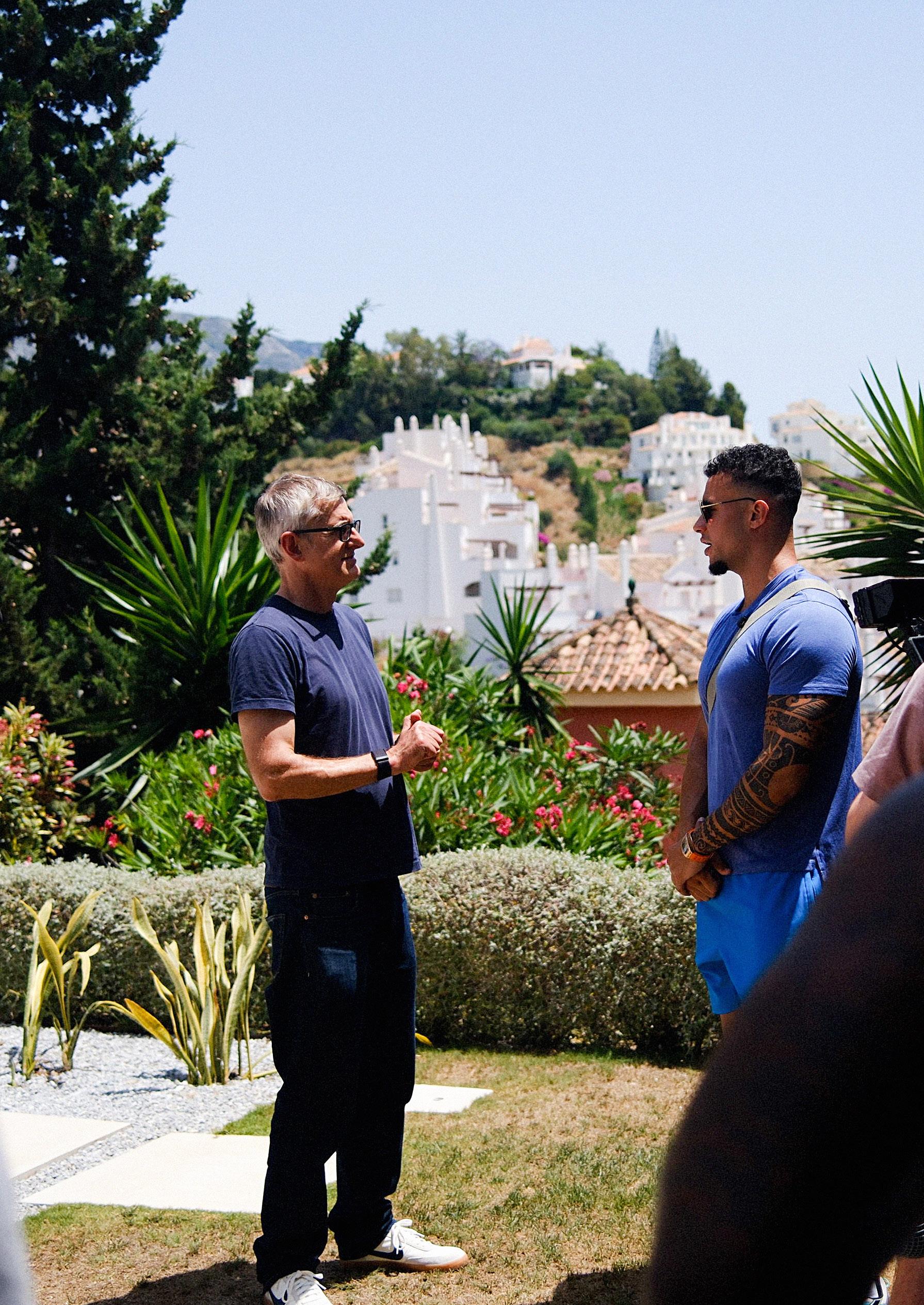
Theroux is known for feigning a mild, non-threatening curiosity during interviews, along with using his trademark blank stares and long silences to make conversations (more) uncomfortable, compelling subjects to fill the void. This also played into the music choices.
“Louis has this wonderful technique of just letting people give themselves enough rope to hang themselves,” Leonard-Morgan nods. “He’s not intentionally trying to trip them up, but a lot of people do that anyway – particularly these podcasters who want to prove to Louis, ‘You’re old school, I’m new school’. It’s bizarre, because they end up digging their own grave – there are comedy pauses, and there are genuine pauses.”
Leonard-Morgan points to an early scene in the film as an example: “There’s a comedy pause in the opening theme. You’ve got this pulsing, muted bass, with the motif over the top, and then it cuts to Louis. Someone’s taking the piss out of him online, he’s looking at it, then he turns to the camera and asks, ‘Do I sound like that?’ Then he pauses and says, ‘A little bit.’ It took bloody ages, because they kept recutting it. Every time you think you’ve nailed the beat – because it’s almost a bass-drop moment – we’d have to redo it. We ended up cutting the music there for seven beats. But getting exactly seven beats was crucial – if you did six and a half, for some reason, it just wasn’t as funny. We had to get the tempo exactly right so that his pause felt like the fill of a bar.”
Despite trying to get one up on the presenter, those on the receiving end of Theroux’s steady stare feel compelled to fill the silence in the film, with interviewee, Justin Waller, (who at first feigns not being able to keep track of how many children he has: two) poignantly offering, “Stings, huh?” after divulging that his partner isn’t allowed to talk to other men.
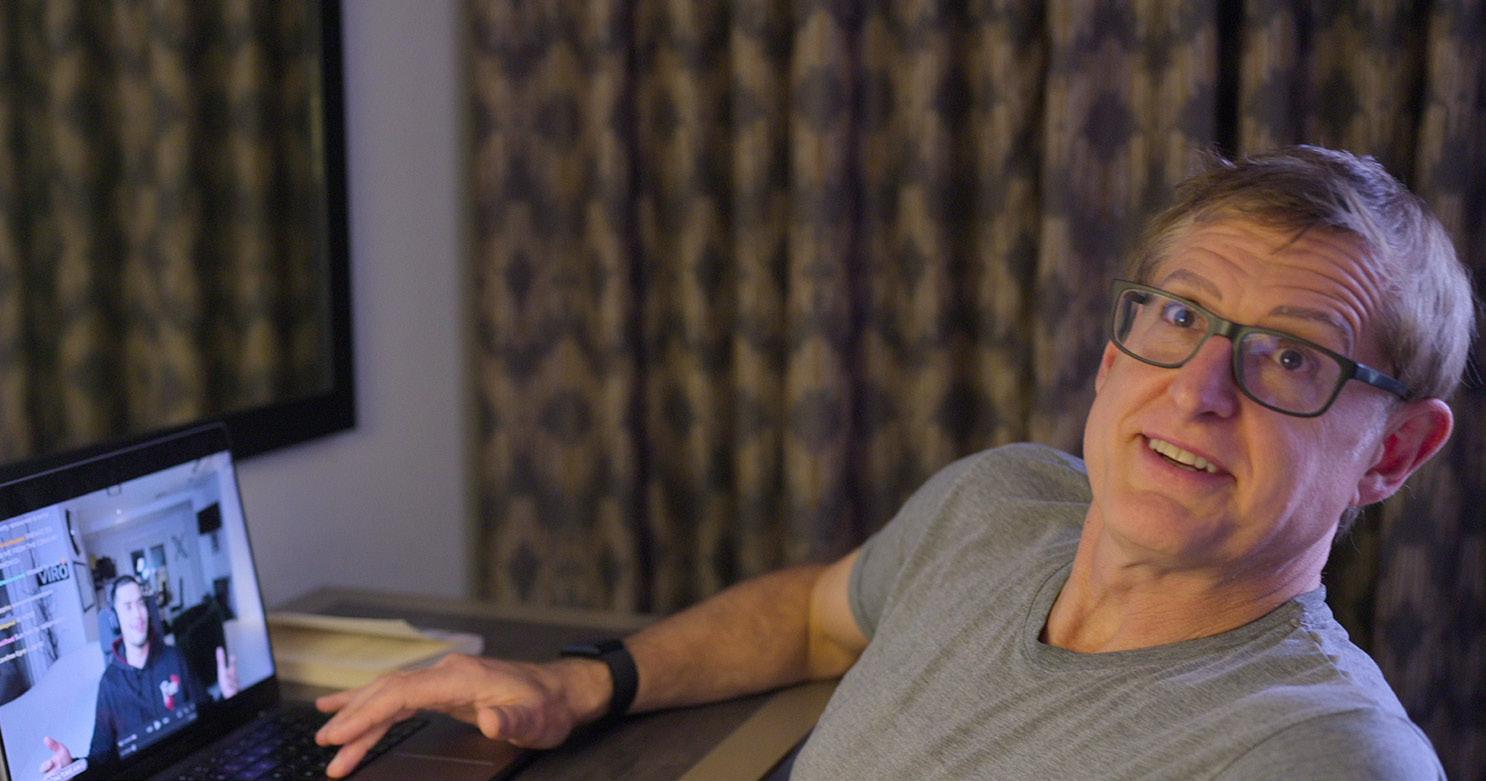
“There are moments where he’s interviewing people, and you need that awkward silence,” agrees Leonard-Morgan. “Silence is so powerful, isn’t it? The natural tendency, especially in interviews, is to fill those gaps, and that’s when people fall down the rabbit hole, because they say the first thing that comes into their head.
“Particularly with these guys, that’s when they suddenly let something slip – some kind of truth they didn’t mean to reveal. So in those moments, there’s no music, because you’ve got to let it breathe.”
Leonard-Morgan once again lets silence do the talking in one of the film’s most ridiculed moments, when, after being told off by his mother, HSTikkyTokky whines, “Mummy, I don’t want a juice bar”.
“To begin with, that bit was supposed to be right at the end of the film,” Leonard-Morgan reveals. “The music was actually quite a downer, because you don’t want to play it up emotionally – as in, ‘Yay, life is good, we’re all fine’.
“You can juxtapose music, so you can have happy music against sad visuals, and sad music against happy visuals. But putting sad music against a line like that felt counterintuitive. So in the end, I said, ‘This ending is ramping up to the end credits; it should have the feeling that this guy
is digging his own grave – you’re starting to see him for what he is’. You don’t need sad music there. It’s not about signposting, it’s about having a general sense of momentum. It’s at that point that we start introducing the Moog-style bass underneath, leading into the end credits. But yeah, it’s very funny,” he grins, adding that his personal favourite moment to score was a workout scene.
“I actually don’t usually watch my work, but I watched The Manosphere because it was number one on Netflix,” he says humbly. “I thought, ‘Well, it’s quite good!’ I love the workout scene, which is about five minutes in. You’ve got HSTikkyTokky working out, and there’s a moment where Louis turns to him and jokes, ‘Calves need a little work,’ and he replies, ‘They do’. You suddenly see that bit of insecurity, even though Louis is taking the piss.
“That theme we’ve got going there, with the drums – we really nailed it. We suddenly knew what we were doing with the overall sound of the show. That whole sequence makes me laugh every time I see it, and that’s where you really start getting into the film.”
Louis Theroux: Inside the Manosphere is streaming on Netflix.
PAULLEONARDMORGAN.COM
Credit: Courtesy of Netflix
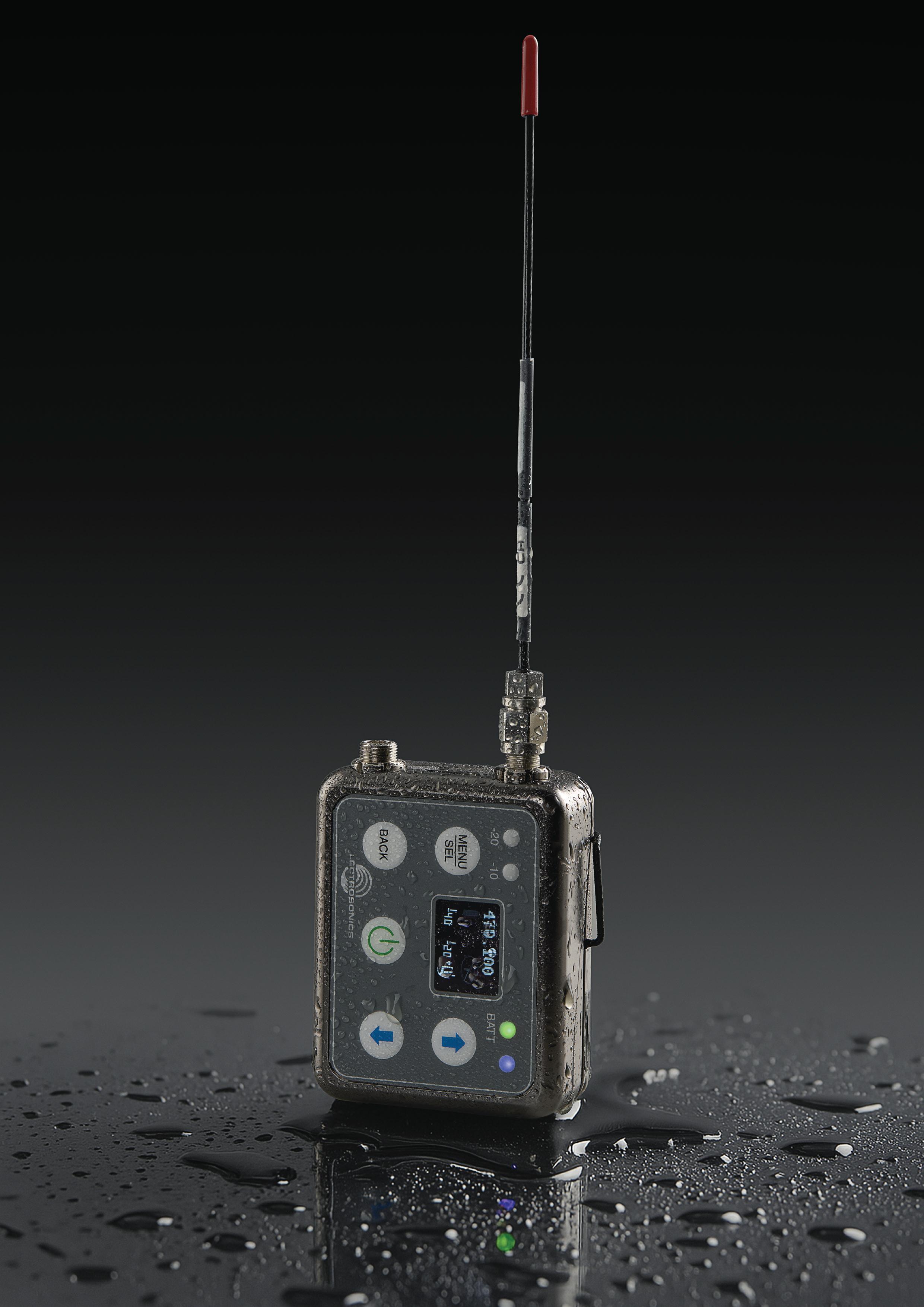
Does your micro transmitter have these features?
• IP57-rated watertight, all-metal enclosure
• Removeable LiOn rechargeable pack
• Drop-in charging with optional dock
• High-Density RF mode for 24+ ch. in 6 MHz
• Fixed audio latency of 1.4 ms
• Lav mic presets for optimum audio quality
• Full menu & control on the unit
• Selectable RF Power up to 50mW
The DSSM micro digital body pack has ALL these features and more, in one tiny package.











MY TYPE
DAPPER
Words by ADAM PR O ZT

Having seemingly conquered the business side of the music industry and elevated many Nigerian afrobeats artists to success, music industry magnate Dapper has set his next challenge: Dapper the artist, releasing his own music. He is the founder and CEO of the Dapper Group, which owns an 8% market share of the industry across the entire African continent. Fresh from earning a Guinness World Record for the largest ever orchestral afrobeats concert with Dapper Live, he brings us his third single, the sultry My Type.
Dapper is no mere record label owner; Dapper Group spans Dapper Music and Entertainment, DapperDigital, Dapper Films, and Dapper Live. Dapper Group has grown to become one of the largest music companies throughout Africa, and has helped to supercharge the rise of Nigerian luminary stars such as Seyi Vibez, Shallipopi and T.I Blaze. In fact, Dapper Group has been comfortably delivering over one billion annual streams from the company’s artists since 2022. Its ecosystem covers almost every conceivable area a musician could hope for, with the label, distribution, publishing, production, and live concerts. Some have gone as far as crediting him with reshaping the live music scene in Nigeria, especially in the case of his flagship event series, Trench Symphony, which combines afrobeats performances with a live orchestra. The December edition was the moment Dapper added a Guinness World Record to his accolades, as it paired the artists on the lineup with the largest ever orchestra at an afrobeats concert.
In terms of his own artistic output, he has released three very impressive singles so far: Blessings (Kura), Scenes, and the new single, My Type. While some might question if
someone so seemingly businessoriented would be able to release good music, the fact that the singles are as good as they are perhaps makes a lot of sense when he has the perfect pipeline for releasing music already in place around him.
“For me, music dates back to primary school,” he says, casting his thoughts back. “I used to be in a band, I would play instruments, and I also joined an orchestra. I ended up replicating the same thing in secondary school. I became captain of the band, and I’d be playing the clarinet and the saxophone. University is when it morphed into more of the business side of things, because I started managing artists and creating music as an executive producer — just facilitating sessions and artist and producer meet-ups so we were able to create music.”
Like a true entrepreneur, Dapper spotted a big gap in the African music market early on in his career: digital music distribution, which he sought to solve with Dapper Digital. It’s something he has had a big impact on across the continent.
“When we got into the game, there were only a handful of distribution companies, and they weren’t doing DIY services. It was very manual via emails. Our industry, as it is today, is not what it used to be. There was no Apple Music some 15 years ago; it was just iTunes. At the time, you would put out your music through blogs — that was how we used to release music here in Nigeria. The idea was for the music to blow up, get a following, and the artist would then get shows and make revenue from the popularity and maybe brand deals. But there was no real way of monetising the actual sale of the record. When we started Dapper Digital, there were local platforms for ringtones, which were a major source
of revenue. Then there were physical copies of CDs, but they were going extinct as people moved to MP3s. That was the gap in the market.”
It was in December last year that Dapper Live was officially recognised by the Guinness World Records. The concert graced the Balmoral Eko Convention Centre inside the Federal Palace Hotel, Lagos State. Trench Symphony: The Dapper Live Experience paired the afrobeats lineup alongside an 85-piece orchestra, the latter number being the key factor that scooped the Record. “The Trench Symphony Guinness World Record was special because for a lot of those artists on that bill, that was their first experience with a live orchestra,” Dapper says.
“That was their first experience rehearsing for three months right before a show. It put things in perspective for everybody involved. This is the level that we need to be playing at if we’re trying to take this to the world. People deserve excellence. They want you to be at your best every time, and that’s what we try to instil in our guys. Nobody has to be paying you or looking at you before you are at your best. Getting the World Record cemented the whole intention and purpose of why we did it. Next up, we’re trying to take this same show on the road.”
It would be a crime not to ask industry expert Dapper to drop some gems for fellow music artists on what it takes to succeed in an ever-changing and oversaturated music industry. His answer centres on an all-important principle: “I would say stay true to the music and know why you are here. There are a lot of artists who became artists because of Apple Music or Spotify; it wasn’t about trying to be musicians, it was more about a means to an end. Ask yourself, why do you do this? The
artists I’m seeing excelling are the ones who are doing this not because anybody’s watching, but because this is what they’re meant to do and what they’re dedicating their life to. If you are able to remember why you do it in the first place, that’s what’s going to keep you going.”
Dapper began the journey of releasing his own music — perhaps his most intimidating challenge yet after being behind the scenes for so many years — with Blessings (Kura), released in August 2025. It’s a delicious slice of afrobeats, with that classic combination of African sounds meeting modern music production, as Dapper sings that ‘blessings flow like water’ and about ‘moving with no compass.’ “Starting out, I didn’t have a compass in terms of starting a music group,” he explains.
“But whatever I was going to do, I always envisioned it like that. That was why the lyric was so profound to me;
I’m not the one planning it. I don’t even know where I’m going. God is my compass; I just move, and he directs me. I had been procrastinating releasing my music for a long time. When you scrutinise other people’s music so much, you get a bit weary of people doing the same to you. With other artists’ music, I might not overthink as much, but with my own songs, I’m overthinking everything. I just needed to do this. I released it on my birthday, so it was like a birthday present to myself.”
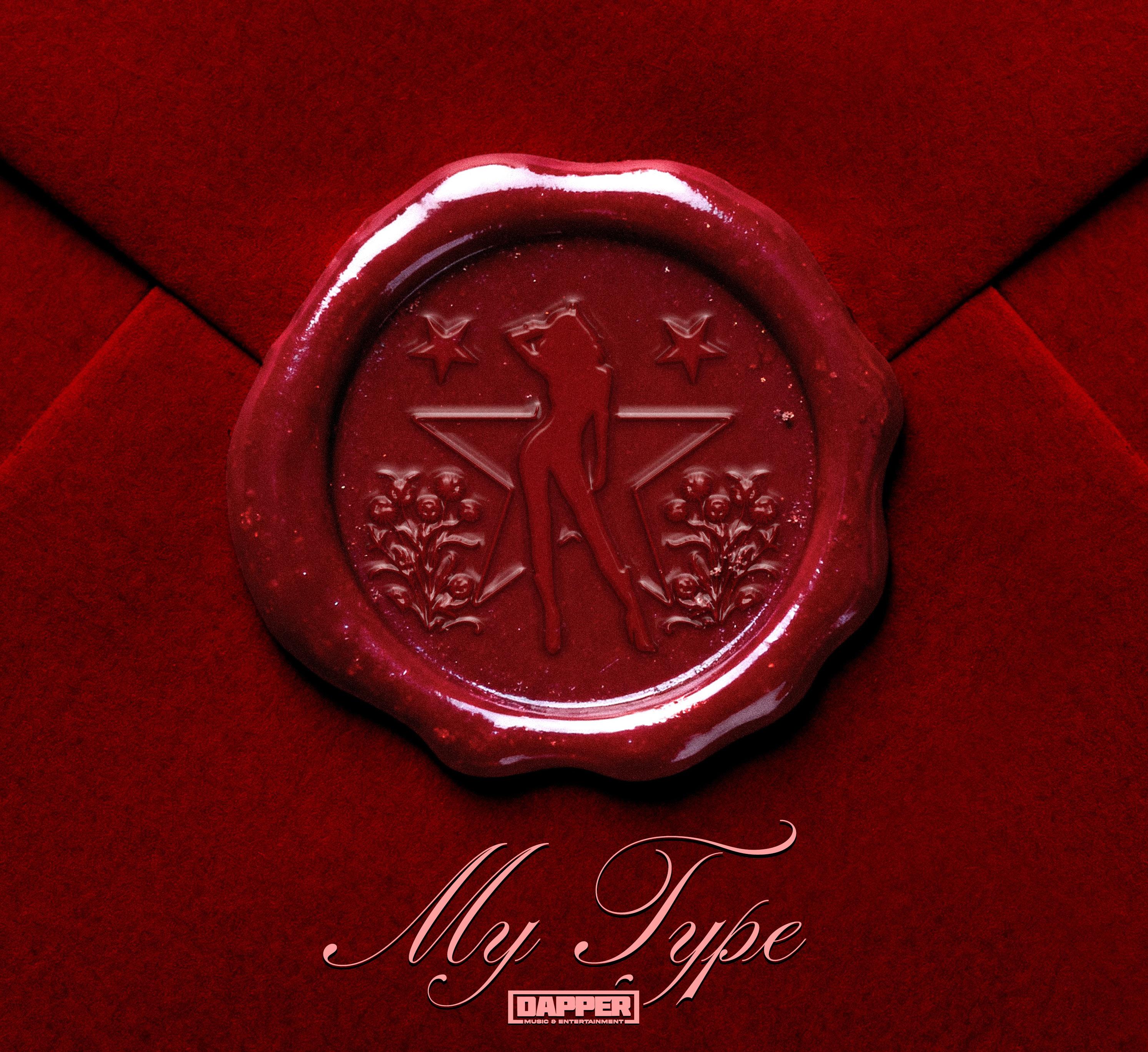
Following the huge second single, the cypher-style Scenes, Dapper brings us My Type, continuing his trend of ensuring each song is totally different to the last. The sophomore track has a big, hip-hop energy with multiple emcees lending a relatively short verse. My Type is a lower-BPM, sultry single which sees Dapper leaning into his romantic side. And as a collaborative piece, also featuring TML Vibez, Singah and Jujuboy, he reveals that

“BEFORE, WE COULDN’T EVEN DREAM OF A GRAMMY. WE WOULD HEAR OF ARTISTS WHO ALMOST WON ONE, BUT IT WAS NEVER ARTISTS SINGING CONTEMPORARY AFRICAN MUSIC.”
this was an exciting international effort. “With My Type, I had been sitting on that record for over a year. We made the track in a camp we were doing in Ghana. This was meant to be the first Ghanaian-Nigerian music collaboration project ever.
“Nigeria is as close to Ghana as any state in Nigeria. If you were to fly to any state in Nigeria from Lagos, you could get to Ghana faster. There’s always this banter online: Nigerian versus Ghanaian Jollof, arguments about football and music, but you can tell the love is there. Nigerians love Ghanaians so much, and Ghanaians love Nigerians so much too. So for me, it was like, how have we not made a project?”
Dapper then shares that, with My Type, he worked on the song in the same way he would if it was releasing a song with an artist on his label. “I’m going to be honest, I apply the same formula I applied to my work with other artists for myself, which is that I follow what I like. Sometimes the
idea is from me, sometimes the idea is from a producer, sometimes the idea is from another artist. Everyone involved will be in the studio, listen to the track so far, and suggest ideas. We just build it from there.”
The conversation closes with the discussion of where afrobeats and African music at large go from here. Artists like Tyla, Burna Boy, and Wizkid are currently paving the way and crossing over into North American success with Grammy wins. And Dapper, who has not built a career by playing it small, is unsurprisingly optimistic that this trajectory will gain more and more steam:
“It can only get bigger,” he says passionately. “There’s a line from Tupac where he talks about how, even if he doesn’t change the world, he wants to at least spark the mind of the person that’s going to change the world. I can tell you for free, there are a lot of young Nigerian stars right now who are able to dream, and that’s where it starts. Before, we
couldn’t even dream of a GRAMMY. We would hear of artists who almost won one, but we didn’t know them. It was never artists in our time singing contemporary African music. Now this is happening right in front of us. We’re doing our part in terms of instilling belief and leading by example.”
INSTA: DAPPERDAMM
MYTH OR TRUTH?
The best sounding live console was originally designed for broadcast.
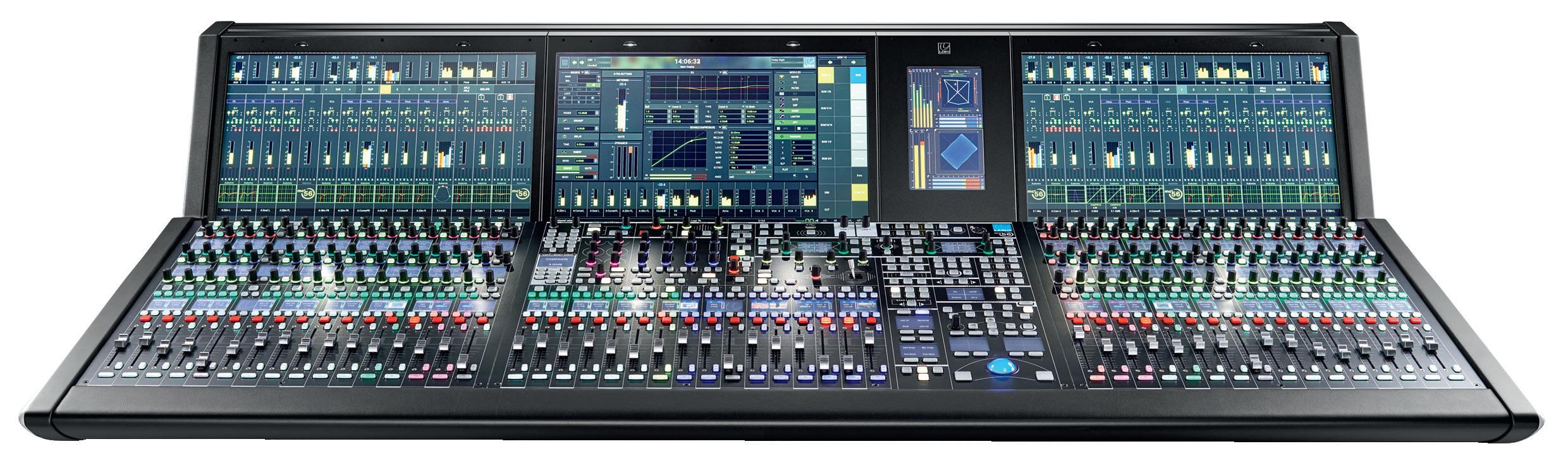
Hearing is believing – sign up and find out for yourself.
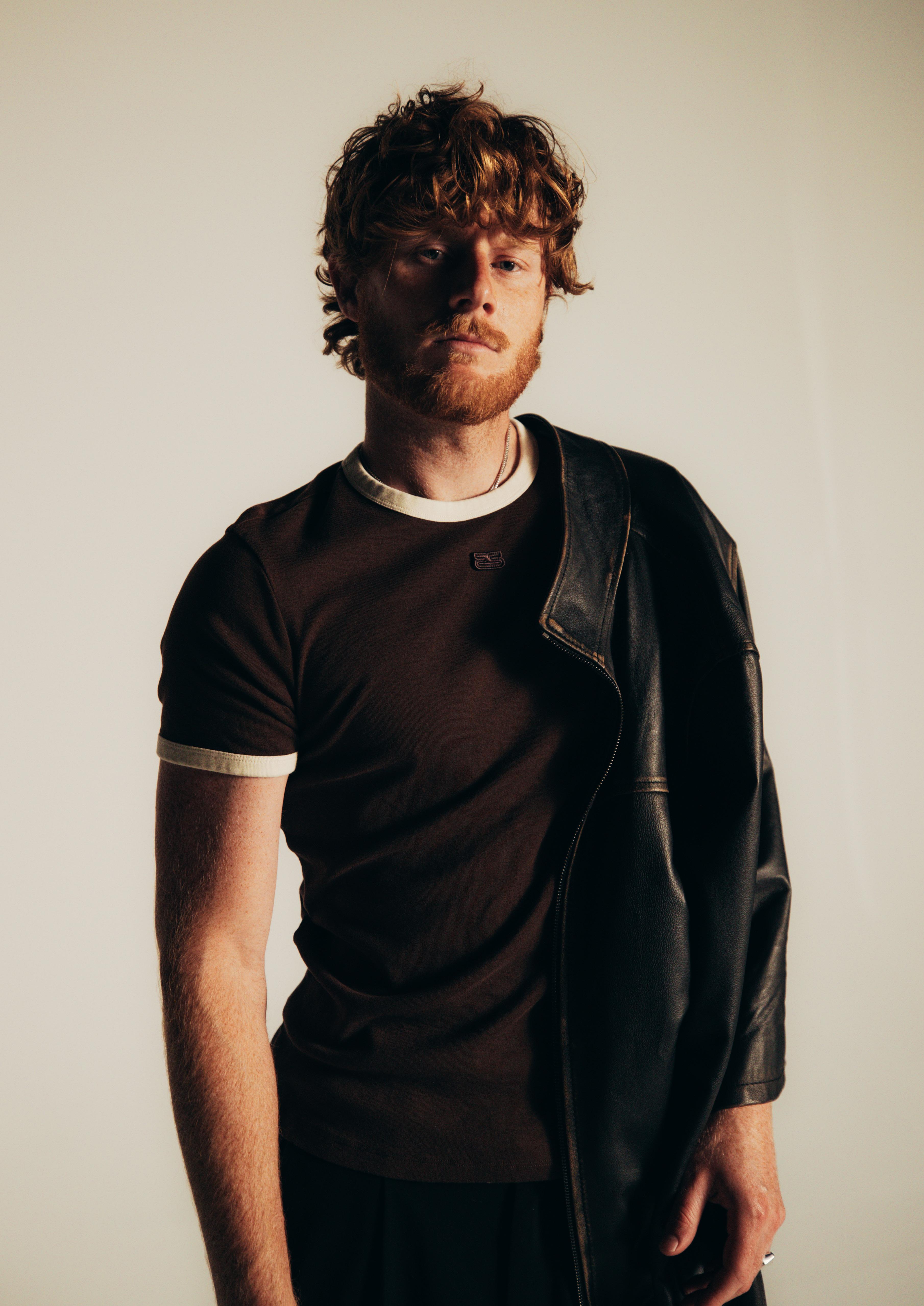
ORCHID WORDS BY ADAM PRO T Z
MATT HANSEN
Matt Hansen is only a quarter of a century old, yet he has already amassed a passionate global following. The L.A.-based singersongwriter is another artist who has played the TikTok game very well, boasting three million followers on the app. And offline, he has headlined tours across Europe, the U.S., and Australia, and opened for artists including Train, Lauv, and Teddy Swims. He speaks to Headliner about his May 2026 debut album, Orchid, what it’s like to ‘waterfall’ an album release over a period of years, and why his live shows have been a training camp for these new songs.

In case his ‘Tok following alone wasn’t impressive enough, Hansen has also stockpiled one billion streams worldwide, off the back of hugely popular singles Something to Remember, Yellowstone , and LET EM GO . Nor is it difficult to see why, with these songs hitting the sweet spot between pop and country, a deft combination to stop someone mid-doomscroll, and to get them to migrate from social media to the Spotify app and add these songs to their playlists. And, like many astute artists in this music industry so heavily influenced by these attention-economy apps, Hansen has bided his time and released single after single, and the time is finally right to release Orchid , his first full-length LP.
Hansen joins the call from his home in L.A., after some well-earned downtime after a heavy bout of touring. “I’ve always loved to sing, since I was nine years old,” he recalls when asked about where it all started for him. “My parents used to play a lot of Fleetwood Mac, and a lot of that amazing ‘70s and ‘80s rock, so I grew up listening to that. Eventually, I started playing in rock bands, and then moved to L.A. when I was 18 to go to music school. I started to realise how much I love doing this.”
Regarding his pivotal decision to start posting on a certain short-
form video content app, he says: “TikTok came around, and I thought it would be smart to just post myself singing covers in a random parking garage. I feel pretty lucky to have started my career right when TikTok came around, because it just placed all the power in the hands of the musicians and the artists. You post for free, and you can get your career off the ground for $0, which is really cool.”
Hansen choosing the City of Angels as his base might be an eyebrowraiser for some; while his music is equally as much pop as it is country, there’s certainly enough of those sounds that pull from American folk and the US South to instead warrant Nashville being his tactical base. But his love of all things melody and pop means Los Angeles is the perfect city for him.
“I’ve always been very drawn to Nashville,” he says. “I do a lot of writing trips there. I’ve grown up in California my whole life, so L.A. was my first thought; it’s on the West Coast, and I’m closer to all the people that I know and love. I also enjoy the amount of pop music that’s here. I’m a singer-songwriter, and I absolutely pride myself on lyrics and melody, but I think that there’s a lot to learn from top 40 pop. You can hear it in the music that I make, melding those kinds of melodies with some traditional
singer-songwriter, folky stuff. I absolutely love telling stories, and if I can get that story across in the most catchy melody possible, that makes me so happy.”
Hansen is one of many ‘Covid graduate’ artists — because his career has taken off in the last few years, it was strongly shaped by being stuck at home when he started working on his music and not being able to do in-person gigs. The key question is whether this generation of musicians see it as a blessing or a curse; for Hansen, it’s the former.
“I genuinely do think it was a big blessing being in L.A. during Covid. I was in college, so I was taking classes online, and then I had nothing else to do other than make music and go make these videos. I would definitely classify myself as a Covid artist who came up during that time. That was probably one of the most formative musical times in my entire life. When the pandemic first started, I went home with my parents, sat in my bedroom, and I wrote a song a day. They were all horrible! I was just self-producing and self-writing. I did so many hours of practice without putting any songs out.
“When I came back to L.A. and started putting those videos up on TikTok, I had this new idea of what
“THERE’S A LOT OF STRENGTH IN UNDERSTANDING THAT A TIME WAS SAD.”
I wanted to do and a lot more direction with what I wanted to say. Covid gave me a lot of perspective on what I wanted to say in my music and also how I wanted to sound, because I was able to sit alone with my thoughts and my music and just be like, ‘I like this, I don’t like this.’ I slowly moulded it into what it is now. I see lockdown as an incubation period for my musical journey.”
As the May 15th release date for Orchid rapidly approaches, Hansen has released almost all the songs from his debut album as singles, a pretty exemplary example of a ‘waterfall release strategy’ — his fans and followers on social media will know the record’s many (and there are many) catchy hooks very well, and the anticipation will be high. “It’s been three years of my life compiled into one body of work,” he says, like a sigh of relief. “I felt like I didn’t have enough to make an
album for a long time, just storywise. I had the songs, but I was like, ‘This doesn’t wrap up what I want to say quite yet.’ Then I wrote a couple of songs at the end of last year that really solidified it for me.
“I’ve been putting out music for five years now with no album, so now is the time. The title, Orchid , came from a metaphor that we had come up with. That song is my favourite song that I’ve ever made. I’ve been through some weird relationship things, mainly one North Star, traumatic relationship that I write about a lot. And this song was really important for me, not only in the musical aspect but in my own personal life and my own emotional sanity. I needed to write that song. For a long time, I held on to that one very closely and kept it close to the chest, because it’s a gutwrenching one for me. It was such a beautiful way to talk about love and
talk about letting someone go and finding the right person for you.”
And while, at least on the face of it, it sounds like a very positive album sonically, Hansen adds that his main message with this album is “that process of coming out of something very traumatic and leading your way into a new time.
“It’s learning how to let go, but also understanding that some kind of pain is always going to be with you, and that’s okay. You don’t have to forget it; it’s a part of your life and your story. You don’t have to shove it deep down and just hope that it doesn’t come back up. I gravitate towards melancholy and towards those kinds of feelings. I find comfort in them. There’s a lot of strength in understanding that a time was sad. You can still remember it and not be fond of it, but look back and be like, ‘You know what? I am so happy that

I had that experience, because now I understand how happy I am now.’”
Many of the songs on Orchid are very uplifting; you needn’t have any fear of this album putting you into a downer. None more so than Yellowstone , a song with one of the LP’s biggest choruses, which is truly saying something. And, while it is a rousing song and being named after one of the USA’s most breathtaking national parks seems innocent enough, Hansen explains how the song touches slightly more on the morbid than you might expect.
“I was doing a writing camp in Joshua Tree, and we were talking about writing a happy song, because I really hadn’t put out anything recently that was upbeat. It was all just sad. One of the writers was talking about how he had seen on the news that if Yellowstone were to explode — because of the geysers and the pressure underneath, it’s like an underground volcano — it would blow up half of the US, and the events would be catastrophic. I thought it was such a wild thing, and I’ve never heard anyone put that in a song. At first, it started as this campy, stupid song, and then I realised it actually feels very real. It’s this apocalyptic love song. If we just don’t dwell on the science of how it works, it’s
really fun. The world is exploding, and I’m going to run right to you. It came from a joke, and then we turned that into a song and tried to make it not stupid!”
Knowing that Hansen has a big European and North American tour accompanying the release of Orchid , and that he recently performed his first arena show, Headliner closes by asking what it was like playing such a cavernous show as a singer-songwriter.
“In a large room like that, you can lose a little bit of the intimacy of a songwriter song,” he reveals. “The main thing is you limit a lot of the distractions. A lot of the production can be a lot more minimal than it would be for a straight-down-the-middle pop show. You don’t give them other things to get distracted by. You still let the music and the lyrics speak. It’s better for the fans not to have this gigantic spectacle of a thing to focus on when the lyrics are the main point. It’s always music first for me.”
INSTA: MATTHANSENMUSIC
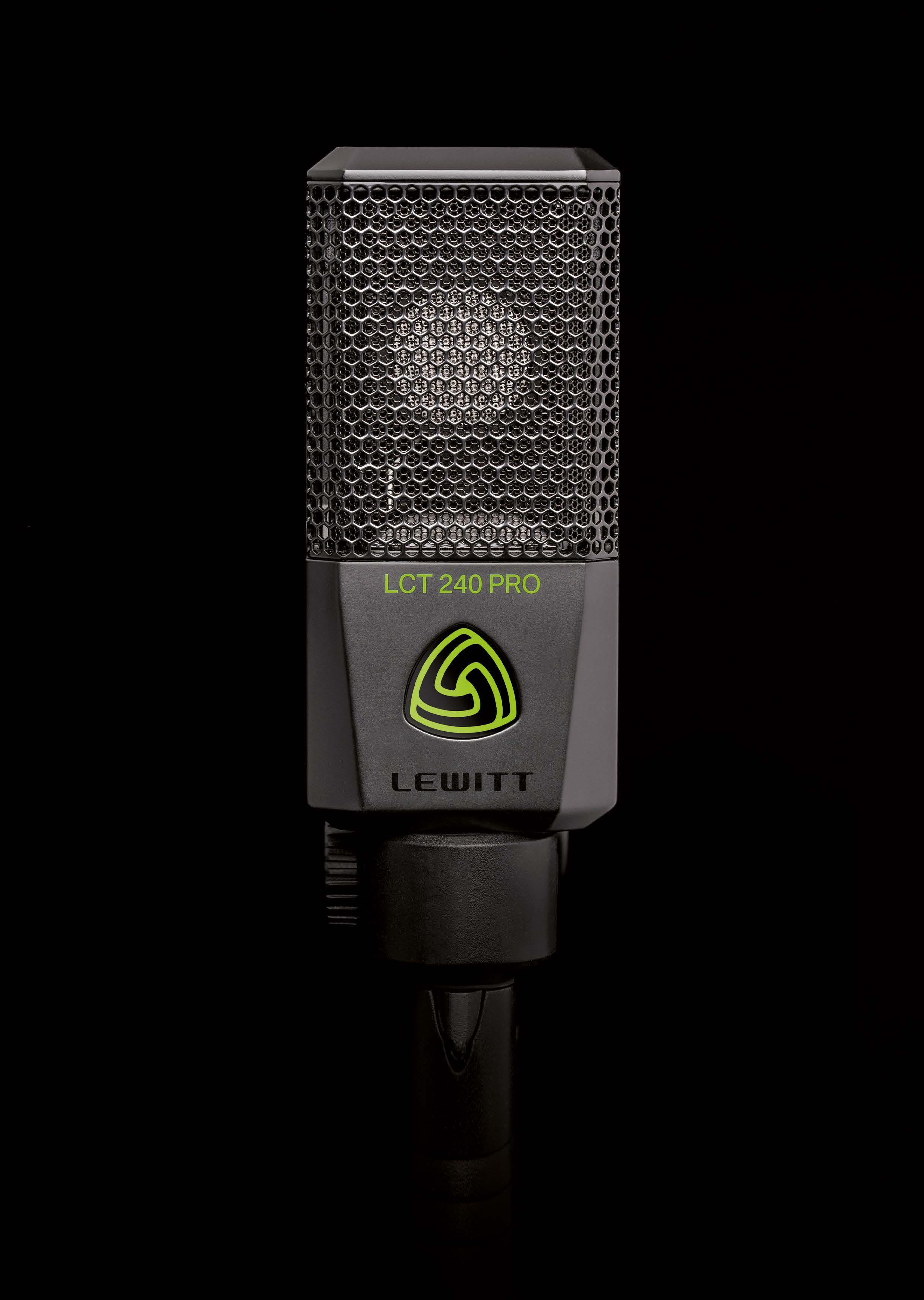
LCT 240 PRO
The perfect microphone for home recording.
• Easy-to-use XLR microphone
• For recording vocals and instruments at home
• Professional sound quality
• Cardioid polar pattern

DRIVING CHANGE IN SUSTAINABLE TOURING
HOPE SOLUTIONS
Sustainability is fast becoming one of the most urgent challenges facing the live music and events industry, with increasing pressure on artists, promoters and organisers to reduce environmental impact without compromising the scale and experience of modern productions. At the forefront of this shift is Hope Solutions, a specialist consultancy working across music, media and entertainment to help organisations embed meaningful, measurable climate action into everything from global tours to major broadcast events.
Founded by Luke Howell, the company has built a reputation for combining industry insight with data-led strategy, supporting high-profile projects to assess, measure and reduce their environmental footprint. From advising on global touring operations to shaping sustainability frameworks for large-scale events, Hope Solutions focuses on practical solutions that can be implemented across complex production ecosystems.
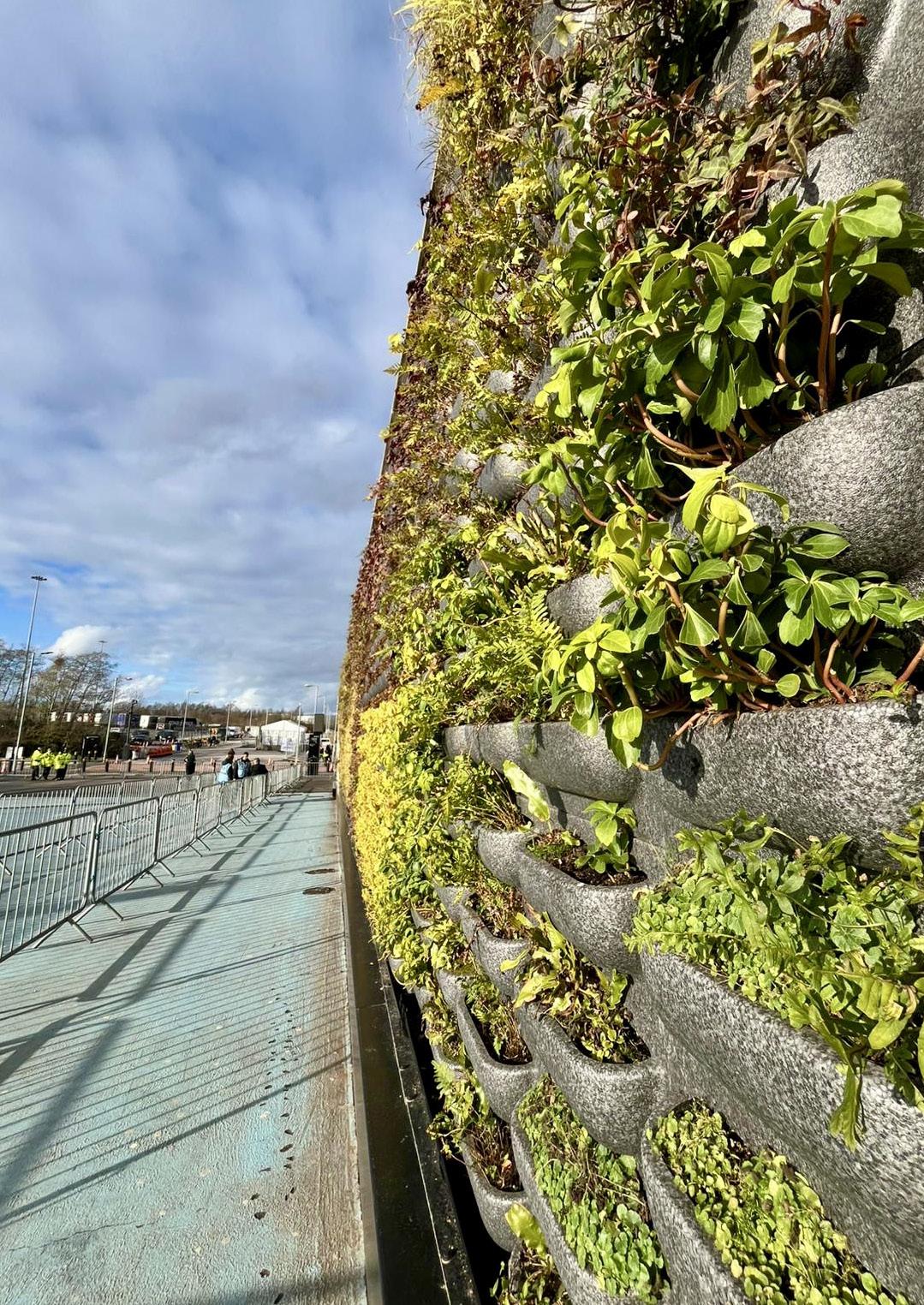
Their recent work includes leading the sustainability strategy for the BRIT Awards following its move to Manchester, which took place at Co-op Live – a venue powered by 100% renewable electricity and home to a football-field-sized solar array. The arena also operates without single-use plastic bottles, runs a local reusable cup system, offers locally sourced and plant-based catering options, and is focused on achieving zero waste to landfill.
In this interview, Howell discusses Hope Solutions’ approach to sustainable touring, its work on Coldplay’s Music of the Spheres tour and the BRIT Awards, the biggest contributors to environmental impact in live events, and the barriers that still exist for artists and promoters looking to tour more sustainably.
Hope Solutions’ goal is to help organisations take practical steps towards a more sustainable future; what does “practical” sustainability mean in the context of live events?
For us, “practical” sustainability is about efficiency and resilience. It’s not about abstract targets or box-ticking, it’s about real-world solutions that work within the constraints of live production. That could be reducing energy demand, optimising logistics, or switching to lower-impact systems like battery power instead of diesel generators. It’s also about making sustainability achievable at scale.
What challenges in the live events and touring industry made Hope Solutions step in and support climate action?
I grew up in a touring circus and later worked across festivals and environmental education projects, so the intersection of climate, environment and live entertainment has always been something I understood. As the industry scaled globally, so did its environmental impact, but without consistent data, frameworks or accountability. That gap between ambition and actionable delivery is where we stepped in.
Why is it important for sustainability to be embedded into the fabric of live events, productions and supply chains rather than treated as an add-on?
The earlier sustainability is introduced, the easier and more effective it is to deliver. Proactive planning allows teams to design out emissions rather than trying to retrofit solutions later. When sustainability is embedded from the outset, it becomes part of decisionmaking across production, logistics and supply chains, rather than an afterthought. That shift from reactive to proactive is critical to achieving meaningful impact.
Do you think the industry is moving quickly enough towards meaningful climate action?
From your experience working across major projects, what areas of the industry tend to have the biggest environmental impact?
The biggest impacts are fan travel, energy use, and food and beverage. Our recent research with MIT and industry partners shows that fan travel alone can account for over 75% of an event’s total emissions, with venue energy and concessions making up much of the remainder. There’s significant variation depending on the type, size and location of an event, but these hotspots are consistent across most formats.
What barriers still exist for artists or promoters who want to tour more sustainably?
Yes and no. There’s a huge amount of positive work happening, but there’s still plenty of room for improvement, and some parts of the industry are slower to adapt. While the overall carbon footprint of live music is relatively small compared to other sectors, it has a far-reaching cultural influence. It can lead from the front, showcase what’s possible, and challenge established norms. Cost is still the most commonly cited barrier. Despite growing evidence that sustainable choices can lead to long-term savings, there’s often hesitation around upfront investment. Inertia is another challenge because many teams rely on processes they’ve used for decades and are reluctant to change or experiment. Shifting that mindset is just as important as introducing new technology.
The BRIT Awards moved to Manchester for the first time this year; what did that mean in terms of reassessing the event’s environmental footprint?
A venue move is a key moment to reassess impact. It creates an opportunity to evaluate infrastructure, energy systems, logistics and audience travel patterns from scratch.
In practical terms, that means looking closely at how the venue is powered, how resources are used, and how audiences and crews travel to and from the event and then identifying opportunities to improve efficiency, reduce emissions and embed better systems.
What practical steps can arenas and venues take to cut carbon while still hosting large-scale events?
Focus areas include improving energy efficiency, upgrading HVAC and lighting systems, integrating renewable energy and battery storage, and using smarter building management systems.
Even simple operational changes like ensuring equipment is switched off when not in use can have a significant impact. Venues can also support touring productions by providing the right infrastructure, such as suitable grid connections to reduce reliance on generators.
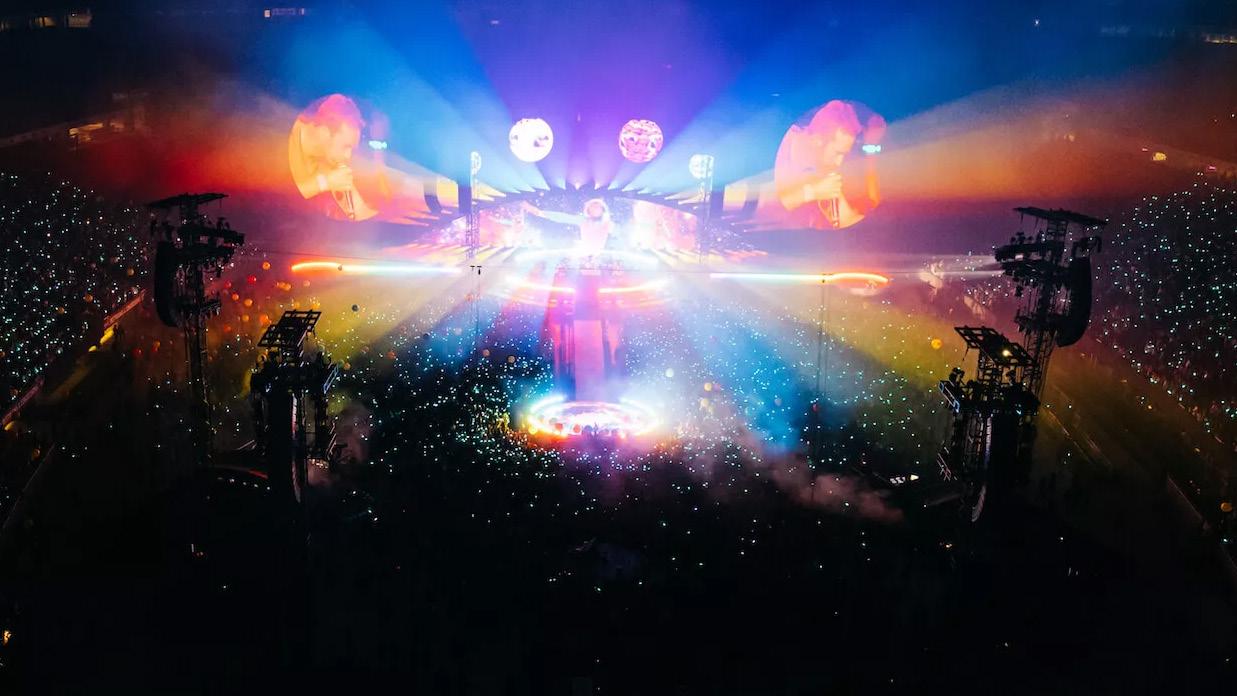
Coldplay’s Music of the Spheres tour set out to minimise CO2 emissions, with the band requiring that the sound system be 50% more energy-efficient than their previous tour, resulting in the deployment of a d&b audiotechnik system. What were Hope Solutions’ key sustainability goals behind that project?
The goal was to reimagine what a global stadium tour could look like from a sustainability perspective: reducing emissions, integrating renewable energy, and embedding lower-impact solutions across every aspect of the tour.
What role do artists, promoters and production teams play in accelerating that shift?
They play a critical role. Artists and their teams can influence decisions around production design, travel and suppliers, while promoters and venues can enable or restrict what’s possible. Collaboration across all these groups is essential to delivering meaningful change.
What changes would you like to see across the entire live music ecosystem in the next 5-10 years? The tour achieved a 59% reduction in emissions compared with the band’s previous tour; what made that possible?
Greater standardisation in data and reporting, wider adoption of renewable energy and low-carbon technologies, and sustainability being embedded as a core part of how events are designed and delivered, not treated as an add-on. Ultimately, the goal is for sustainable practices to become the norm, supported by better infrastructure, stronger collaboration and a shared commitment across the entire industry. A combination of innovation, planning and collaboration. This included the use of renewable energy and battery systems instead of diesel generators, more efficient production design, and a holistic approach to logistics and operations. It also involved working closely with partners across the supply chain to implement and scale these solutions. It shifted the conversation from, “Is this possible?” to, “How do we do this at scale?” By demonstrating that a complex, global tour can significantly reduce its impact, it set a new benchmark.
Are you seeing a broader shift across the music industry towards more sustainable touring models?
Yes, there’s a clear shift. More artists, promoters and organisations are embedding sustainability into their planning and decision-making. While progress isn’t uniform, the direction of travel is positive, and momentum is building.
Credit: Stevie Rae Gibbs
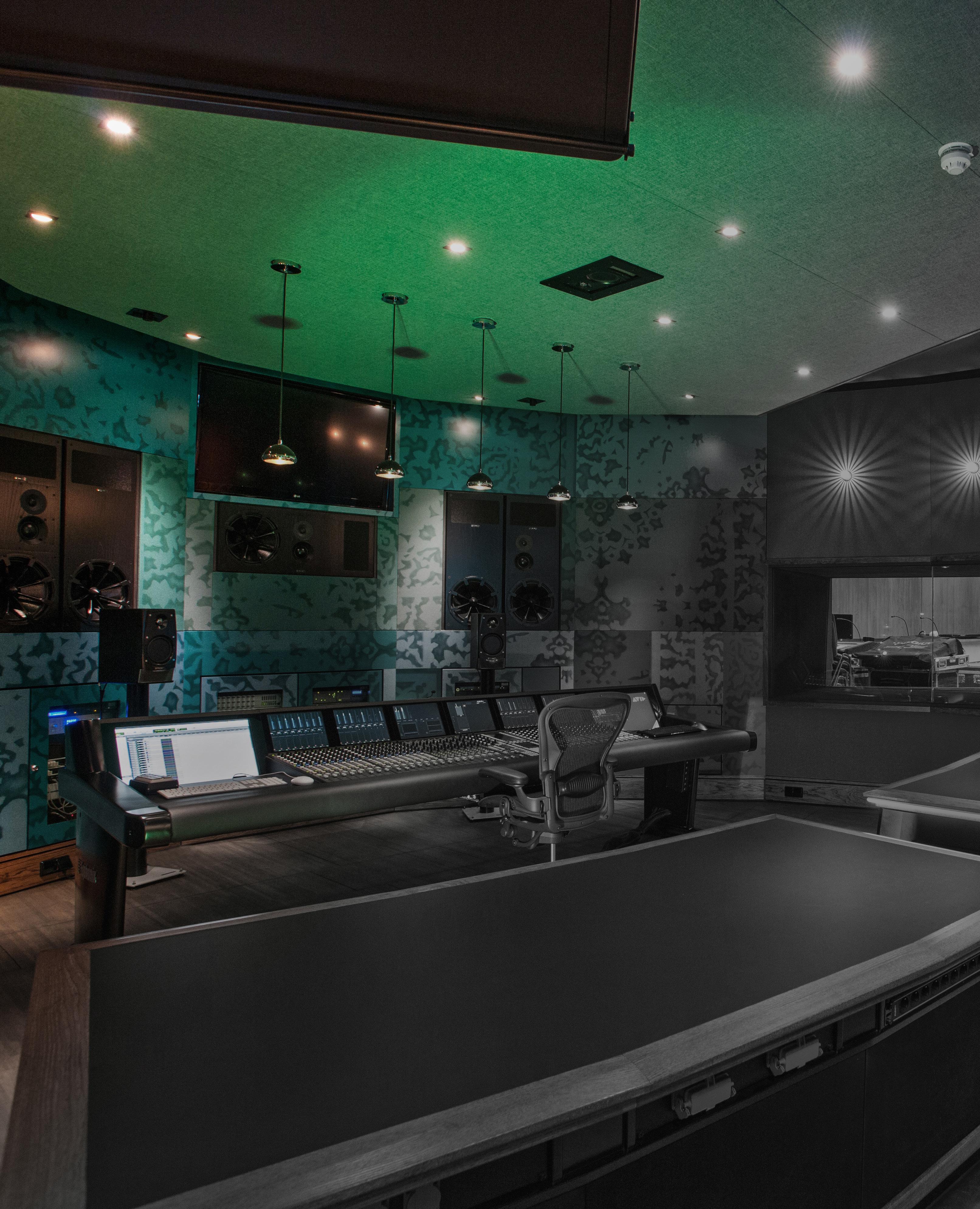

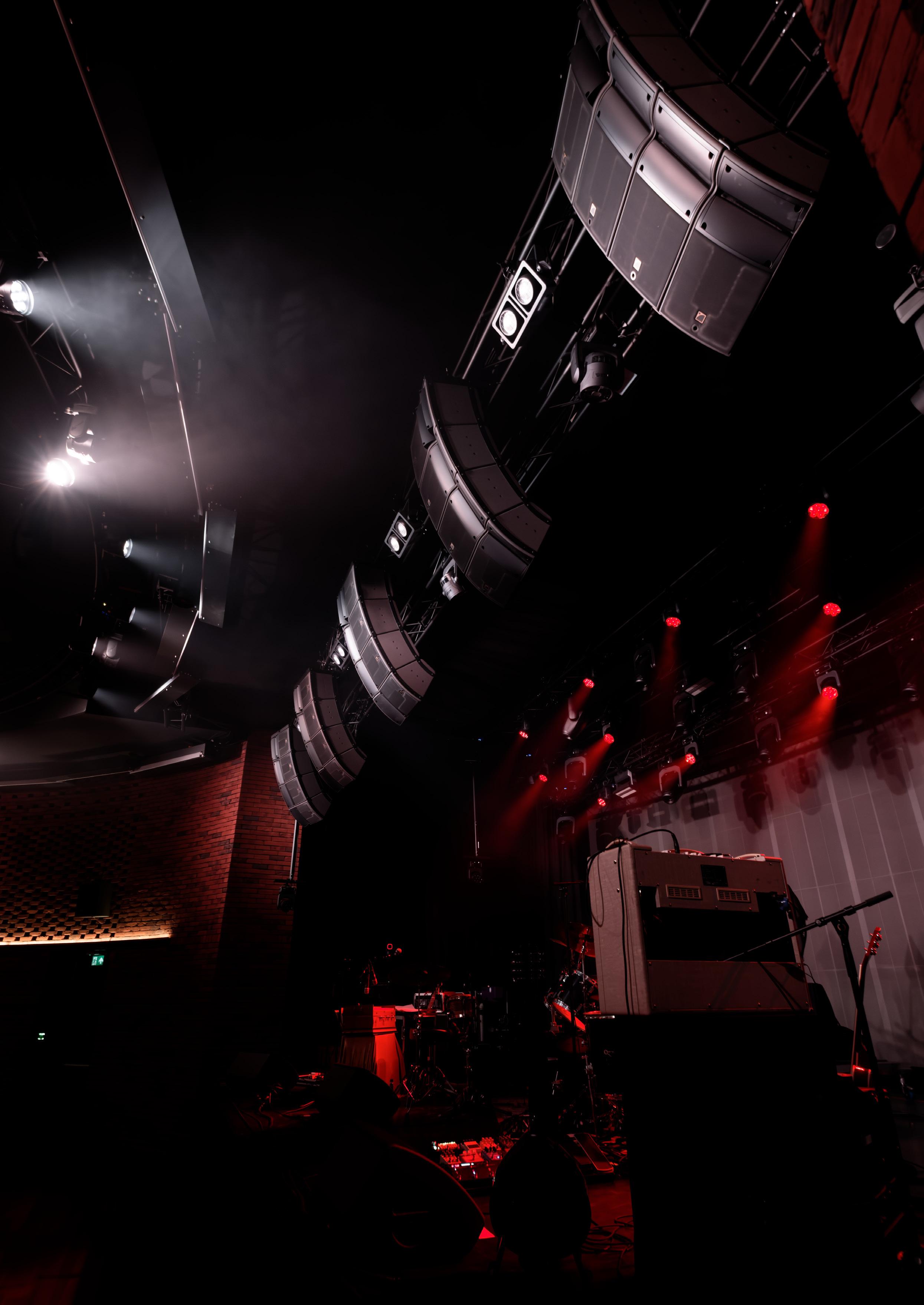
Words by Alice Gu s t
NIGHTLIFE MEETS CONCERT-GRADE IMMERSION
CLUB WINTERCIRCUS
Club Wintercircus is not your average nightspot. Located within one of Belgium’s most storied historic structures in the heart of Ghent, the venue was conceived from the ground up as a premium destination for both nightlife and live music – a place where electronic culture and concert production share the same room, and neither makes a compromise. When Viernulvier and Democrazy, two of Ghent’s leading cultural organisations, launched the project, their brief was precise: deliver a best-in-class immersive audio experience that could hold its own under any conditions. Headliner takes a closer listen…
L-Acoustics Certified Partner XLR, a Belgian integration specialist, won the public tender in 2024. Their answer to the brief was an L-Acoustics L-ISA Immersive Hyperreal Sound installation. Their design is a full object-based install that places every person in the 550-capacity room at the centre of the performance, regardless of where they’re standing.
“When L-Acoustics developed L-ISA, it was exactly to answer this type of demand,” explains Louis Lukusa, CEO at XLR. “There was no doubt, this project represented the alignment of two shared visions focused on delivering an exceptional immersive experience.”
The Wintercircus building is a landmark in Ghent — a 19th-century
circular structure that is part of a larger heritage redevelopment project. The club itself, however, is entirely new: purpose-built for live music and nightlife, with acoustics baked into the design from day one rather than retrofitted as an afterthought. That circular geometry, while architecturally striking, is an acoustic challenge in its own right. Reflections and standing waves are inherent to the shape, and XLR had to model and manage them carefully. Microphone positions during calibration were chosen with the room’s geometry in mind to achieve natural, balanced coverage across the entire floor. The structural demands went further still. With a venue designed to run at high SPL for extended periods, mechanical isolation was non-negotiable.
“The entire sound system needed to be fully isolated from the building structure,” explains Lukusa. “Every loudspeaker is mechanically decoupled from ceilings and walls to avoid vibration transfer and ensure complete acoustic isolation. This level of detail was essential to achieve a natural, balanced sound throughout the room.”
Soundvision, with its L-ISA extension, was central to the design process, allowing XLR to visualise spatial imaging, assess immersive coverage, and refine the system long before a single cabinet was hung. The main front-of-house configuration features five hangs of A10i loudspeakers, each comprising three A10i Focus and one A10i Wide – a combination that delivers even tonal coverage
and consistent dispersion across the audience area. Subwoofers are positioned underneath the stage – a deliberate design choice that keeps them entirely hidden from view while maintaining powerful, clean lowfrequency reinforcement. Eight KS21i units, arranged in a lightly arced configuration, provide smooth bass distribution without compromising the venue’s visual aesthetic.
Immersion beyond the front plane is delivered by 11 X12 loudspeakers for surround reinforcement and 11 X8 units deployed as elevation channels, enabling precise objectbased placement of sound in three dimensions. An L-ISA Processor using 32 outputs drives the spatial engine, while the system is powered by three LA7.16i and one LA4X amplified controllers. A P1 processor is used to bring a stereo input onto the Milan-AVB network, allowing visiting engineers to feed a simple leftright signal directly into the system when full immersive processing isn’t required. This provides a straightforward workflow for touring engineers while maintaining compatibility with the venue’s L-ISA configuration.
“The goal was to deliver the same high-quality live sound experience to every listener,” continues Lukusa. “L-ISA enables artists and engineers to think differently about spatial mixing, creating a more natural connection between performer and audience.”
The system runs entirely on a MilanAVB network backbone, managed via two LS10 switches and integrated into an Agora MK2 Ghost switch infrastructure that carries AVB, Dante, and GigaAce traffic as a converged network over fully redundant 10-gigabit fibre.
The AVB boundary clock built into the Agora switch ensures rock-solid synchronisation across the entire network with imperceptible latency.
“AFTER EXPERIENCING OBJECT-BASED MIXING, THE ENGINEERS’ ENTIRE APPROACH TO MIXING CHANGED.”
At the console, an Allen & Heath dLive handles source management and format conversion, feeding the L-ISA Processor via MADI. The result is a single unified ecosystem where all protocols coexist cleanly. “For us at XLR, Milan-AVB has become the standard whenever we work with L-Acoustics,” enthuses Lukusa. “Keeping the entire signal path in AVB ensures maximum stability, minimal latency, and full compatibility across the installation.”
The project timeline was demanding by any measure. XLR had five weeks to design, order, install, and commission the full system, and deliver training to the venue’s technical team before opening night. They met it. The in-house technical team at Club Wintercircus – Stan and Oliver – are, according to XLR’s project manager Vassili Golfidis, among the most capable and passionate technicians in the Belgian live sound scene. They embraced the system immediately, took full ownership from day one, and quickly became skilled L-ISA operators.
The ripple effect has extended to touring engineers passing through the venue. Several chose to run their shows in L-ISA after experiencing the system firsthand, and the experience
changed their approach to mixing entirely. “After experiencing objectbased mixing, the engineers’ entire approach to mixing changed,” confirms Lukusa. “Since then, many have fully embraced immersive technologies in their new projects.”
“From the very first stage of assessing the quality requirements and criteria leading to a new immersive sound design for Club Wintercircus, L-Acoustics proved to be our best choice,” adds Oliver Houttekiet, technical director at Wintercircus.
“The power of our immersive system, combined with our 360° projection capabilities, truly elevates you to a magical, all-encompassing experience that profoundly stimulates the senses and allows us to pursue the future of live entertainment. I stand fully behind our sound system choice and our collaboration with XLR Pro, knowing we can rely with complete confidence on outstanding service and the high-quality realisation of our immersive system. It is therefore a personal honour to represent Club Wintercircus.”
L-ACOUSTICS.COM


RAZOR-SHARP SOUND
JIMMY CARR ARENA TOUR
Jimmy Carr, comedy heavyweight and king of the one-liner, is back on stage with his ‘Laughs Funny’ tour, which, on most days, sees him perform two shows across UK arenas. Known for selling out venues worldwide, Carr relies on precision as much as punchlines, especially when it comes to sound. Liverpool-based events production specialist, Adlib, supplied audio for the tour, deploying a CODA Audio AiRAY system. Headliner discovers how its punchy power, crystal-clear coverage, and compact design ensure every quip lands loud and clear, night after night.
WORDS BY ALICEGUS T A NOSF
Having regularly provided production for many of the leading lights of British comedy, including Russell Howard, Joe Lycett, Jack Whitehall, and most recently, Romesh Ranganathan, Adlib once again deployed a CODA Audio AiRAY
system to provide the combination of power, accuracy of coverage, intelligibility and small form factor, essential for large-scale arena comedy shows. Adlib supplied a CODA Audio system based on the company’s flagship AiRAY line array.
“We combined AiRAY with CiRAY for this show, which allowed for flexibility when designing for each venue whilst also fitting into a compact footprint,” explains Billy Bryson, Adlib system technician. “The system’s phase linearity and coherent
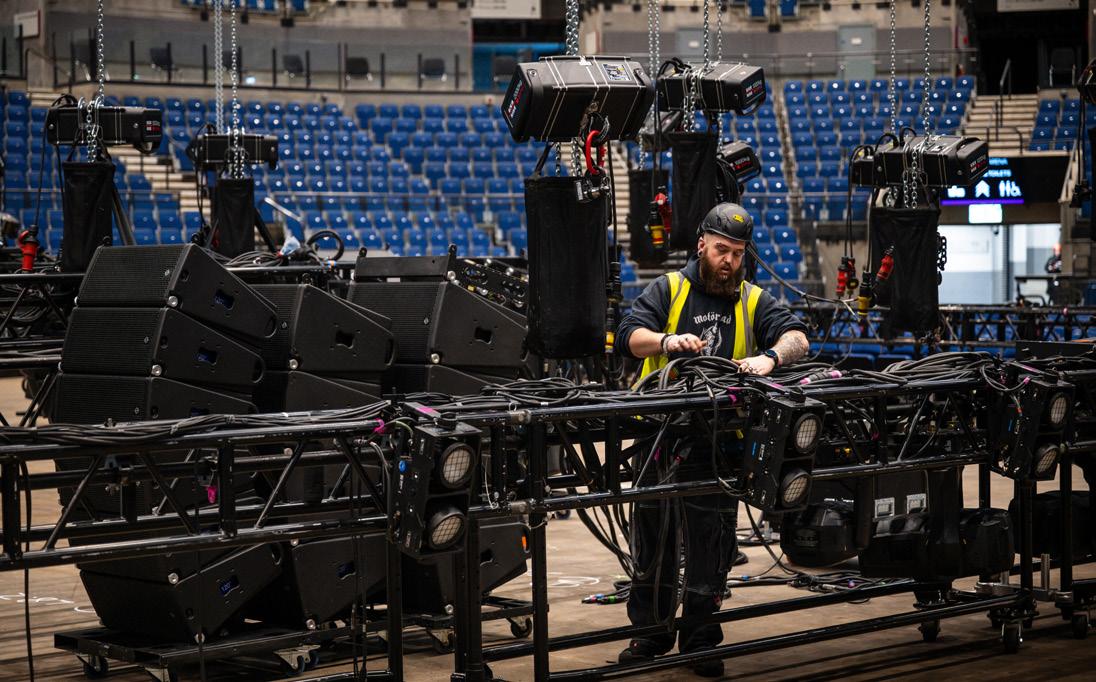
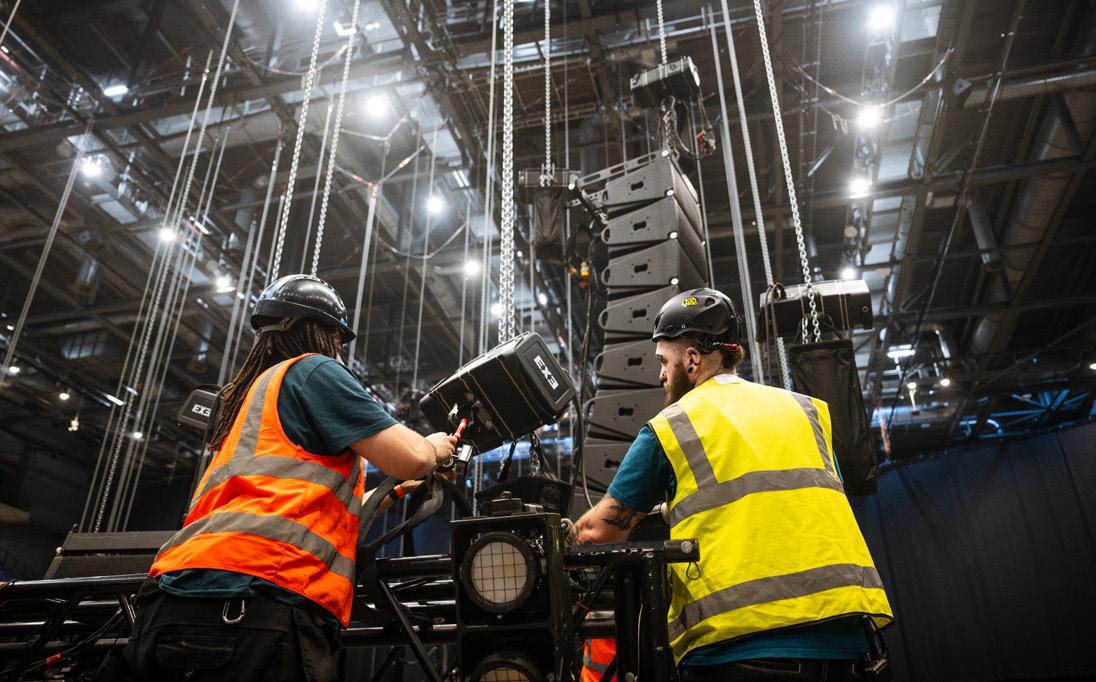
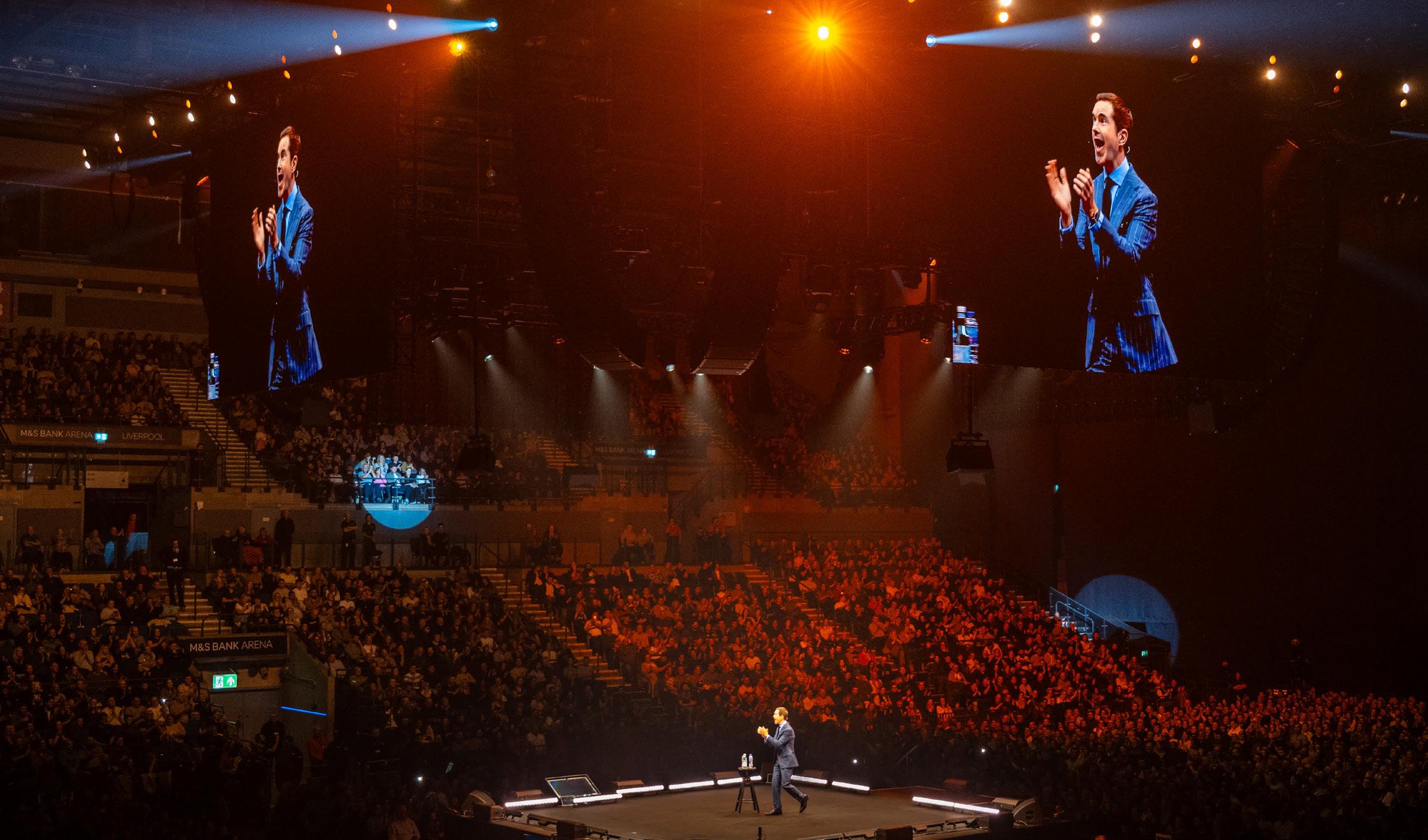
wavefront (thanks to the DDP mid-high driver) resulted in clean, intelligible speech in every seat in the venue.”
The shows are in the round, with the stage located in the middle of the arenas. A total of eight hangs comprising CODA Audio AiRAY and CiRAY were flown at the four ‘corners’ of the rig, utilising a mixture of 90° and 120° couplers to balance long-throw SPL and near-field coverage. To save on long cable runs, these were powered by flown CODA Audio LINUS14 amplifiers – six on each corner.
Four CODA Audio HOPS 10-Pro loudspeakers were flown on Doughty Modular Drop Arms between each set of hangs, serving as centre fills, with cabling integrated within the lighting and video system, which Adlib also supplied.
A single LINUS14 powered these, located at the end of the communal cable bridge truss that served all departments. The system was completed by 12 CODA Audio HOPS8 loudspeakers positioned along the edges of the stage, to aid with natural imaging for those closest to Jimmy Carr.
“Mixing on the CODA Audio system has been consistent, day-to-day, venue-to-venue, with Jimmy’s team commenting very positively on the intelligibility and gain-beforefeedback achieved across the tour,” enthuses FOH engineer for the shows, Sam Cooknell. “The system sounded open and natural, so listening was effortless.”
CODAAUDIO.COM
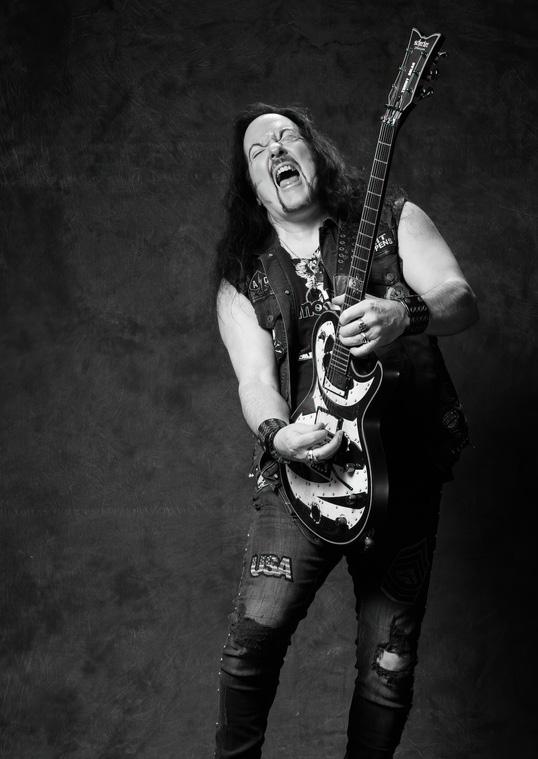

N.Y.C SOUNDS
TOMMY BOLAN
Tommy Bolan doesn’t do subtle. Known for his “10-thousand volts” live shows and as the six-string shredder behind Warlock’s Triumph & Agony, the guitarist has long been a commanding presence in heavy metal. He dives into his wild musical journey, the uncompromising “rage metal” of N.Y.C., and why he relies on the Celestion Vintage 30 to deliver his signature wall of sound.
What was that first experience that made you realise you wanted to be a musician?
I’d have to go back to Kiss. My brother owned the stereo, so he controlled the music. He played Destroyer and Rock and Roll Over, and then I saw them live at Madison Square Garden. I just lost my mind! A week later, we were putting on fake Kiss shows in the neighbourhood. We cut out
cardboard guitars, went to BaskinRobbins to get big old ice cream canisters, and painted them up to look like drum sets. After that, I started taking lessons in Jackson Heights, and two and a half years later, I became a teacher. I was just so absorbed with it that I melted right in.
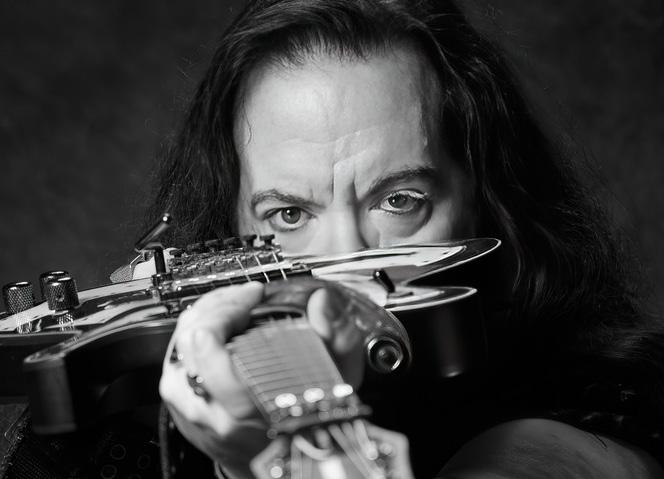
I’m playing some festivals like Hell’s Heroes with Doro doing the Triumph & Agony stuff, which is fantastic. But the story of the hour is my band N.Y.C. We just finished our album, Built to Destroy, via Adrenalizing Media. It’s me singing and playing guitars, along with a rhythm section from hell: Stet Howland from WASP and Steve Unger from Metal Church. People ask me to describe the sound, and I call it “rage metal.”
What exactly is “rage metal?”
I describe it as the energy of AC/ DC, the power of Judas Priest, tied in with the grit of Motörhead. I’m the frontman, so I want that AC/DC energy. Priest brings that massive, unavoidable power, like a wall coming at you. And Motörhead is just that attitude of, “We’re playing, get out of the way!” The album has a very
forward-moving theme. It’s intense! I got to vent all my aggression and anxiety. My philosophy is: lead, follow, or get out of my way. But we also have cool dynamics – Vince DiCola, who did the Rocky IV soundtrack, even came in and played some icy piano on a track called Gasoline. I just dropped the hammer on this record. And of course, having the proper Celestion speakers to play it all through made all the difference.
Who were your tonal influences growing up?
Judas Priest really influenced me. When I heard Screaming for Vengeance, I probably blew the speakers out of my car! As I transitioned into metal, I started analysing tone, depth, and articulation. Priest’s distortion kept getting bigger and bigger with every album. Then there’s AC/DC; they could sound clean, but it was always massive.
Do you remember when you first discovered Celestion speakers?
Actually, I do. Back in the day, I’d hear friends playing through Marshall half-stacks, and I’d go, “Dude, that sounds great!”
Finally, I got my hands on a cabinet loaded with Greenbacks, and I was like, “Holy cow!” Celestion brought out the absolute best in my amp; it always does. I started collecting cabinets with Greenbacks, Vintage 30s, and G12Hs. During the Triumph & Agony album, we brought in a famous amp tech from New York named Cesar Diaz. He looked at my vintage Celestion cabinets, popped the backs off, and said, “People would jump out of windows for these things!”
You’re playing some reunion shows with Warlock, but tell us about your new band, N.Y.C.
“I EQ MY ENTIRE RIG AROUND THE VINTAGE 30. I STRIKE GOLD EVERY TIME.”
Do you use a different setup in the studio versus playing live?
My flying rig is pretty much my main rig. The new album was recorded primarily with my Peavey 6505 Plus and an old XXX II amp. I brought my amps in, turned everything up to 95, and just went nuts! For speakers, the whole album was recorded with Celestion Vintage 30s.
Why is the Vintage 30 your go-to speaker?
First of all, it sounds great. That’s the most important thing. But speaking professionally, I EQ my entire rig around the Vintage 30 because it is consistent and available. If I fly to play a gig in Sweden or Norway and request a backline, they might have some cabinet I’ve never heard of, but chances are it will have Vintage 30s in it. I strike gold every time, and I win! I don’t have time to stop during soundcheck and go, “What’s the problem?” The Vintage 30 delivers every single time. I’m also looking forward to trying out the new Celestion Peacekeeper. I think it’s a badass idea because I want to turn my smaller combo amps up even
louder, get that power amp structure to break up sweetly, and see how it reacts. I’m going to turn the fire up so the amp explodes with tone!
What advice do you have for players chasing a great heavy metal tone?
They always say tone is in your fingers, which is true to a point. But you have to think of your signal chain from A to Z. You can’t spend all your money on an expensive amplifier and then buy a blown speaker you found in an AM radio. It just ain’t going to work! You’ve defeated the purpose.
Get a great amp like a Peavey, use good pedals like Morley, and load your cabinet with Celestions. Even your patch cables matter. Follow the sound from the guitar to the speaker. Each point must count.
After all these years, what does the Celestion brand mean to you?
It’s an honour to endorse Celestion. With what I do, failure is not an option. There’s no sleep, and no rest for the wicked. Adding a Celestion to your rig
brings out the best in your amp. It is always a step up in any condition. You can’t lose!
What’s next for N.Y.C.?
We’re waiting on tour dates for Canada, Australia, and Europe. Adrenalizing Media opened all the doors for this, and now we’re getting ready to take the band on the road. One thing is for sure: it’s going to be loud, and it’s going to be Celestion powered. Fuhgeddaboudit!
Wordsby ALICEGUST
A F NOS
ECU’S MEDIA EDGE
CLASSROOM TO CONTROL ROOM
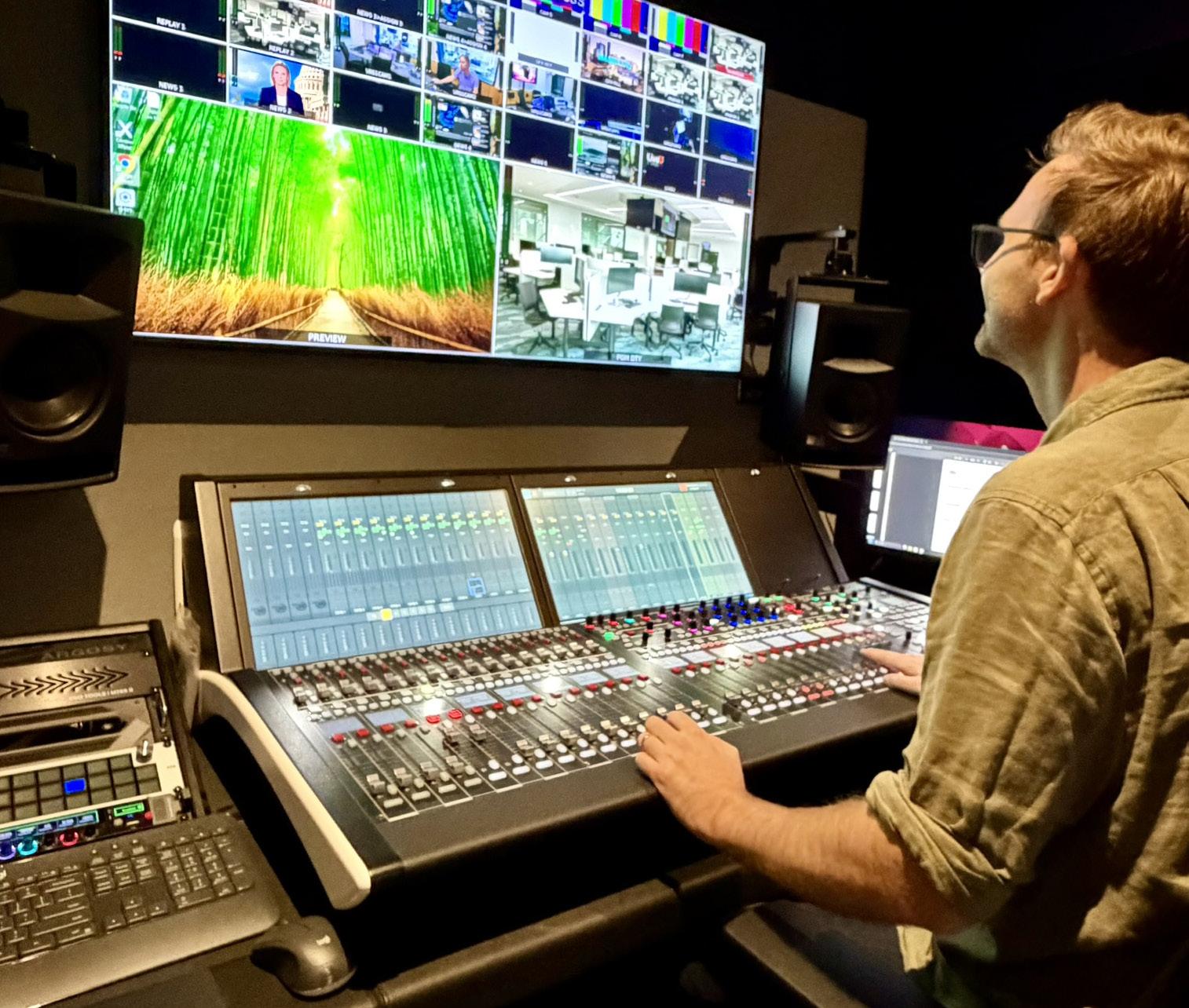
Edith Cowan University in Perth is giving media students a front-row seat to the future of broadcast. Its new City Campus facilities put learners at the heart of real-world production, powered by Lawo’s HOME platform and Virtual Studio Manager (VSM) for fully integrated IP workflows. Headliner swots up to learn how the evolution of classroom to professional playground is allowing students to gain hands-on experience in industry-standard broadcast environments, readying them for life behind the camera and beyond.
Edith Cowan University is renowned for its strong focus on industryaligned teaching, practical learning, and innovation in journalism and broadcast media. Delivered in collaboration with Lawo’s partner PAT and systems integrator Diversified, who were responsible for overall system delivery and integration, with Techniq Media acting as the principal broadcast consultant, the installation centres on Lawo’s HOME management platform for IP infrastructures and the overarching broadcast control and workflow solution VSM (Virtual Studio Manager), working in tandem to deliver a fully integrated, futureready broadcast environment.
The mc²36 audio production console completes the core control and audio ecosystem, enabling students to train on workflows and technology used in professional broadcast facilities.
From the outset, ECU’s requirement for the new infrastructure was to create a studio environment that could be prepared quickly and reliably for teaching, rehearsal, and production use, while remaining accessible to users with varying levels of technical experience.
“THE STUDIO NOW RESEMBLES A NASA CONTROL ROOM, DELIVERING CAPABILITIES THAT WILL BE THE ENVY OF OUR COLLEAGUES IN PROFESSIONAL NEWS OR PRODUCTION COMPANIES.”
“The studio now resembles a NASA control room, delivering capabilities that will be the envy of our colleagues in professional news or production companies,“ says Andrea Burns, academic lead of screen and media at Edith Cowan University.
HOME serves as the foundation for the facility’s Audio-over-IP infrastructure, providing centralised discovery, management, security, and resource allocation across the mc²36 console and networked audio devices. By managing AoIP resources transparently and reliably – including support for ST 2110, AES67, and RAVENNA – HOME allows students to work with advanced IP audio workflows without needing deep technical knowledge, while giving lecturers a stable and predictable environment for teaching.
Building on HOME, VSM acts as the overarching broadcast control and orchestration layer, unifying the studio’s multi-vendor technology stack. Video routing is handled by an Ultrix FR5, while IP video transport and timing are provided via Riedel Horizon and Riedel Micron. VSM consolidates device control, routing logic, tally management, and studio state transitions into a single operational interface.
By integrating directly with HOMEmanaged audio resources, it ensures that all elements of the facility –audio, video, and peripheral devices - behave as a coherent system, while presenting lecturers and students with clearly defined operational modes aligned to teaching workflows.
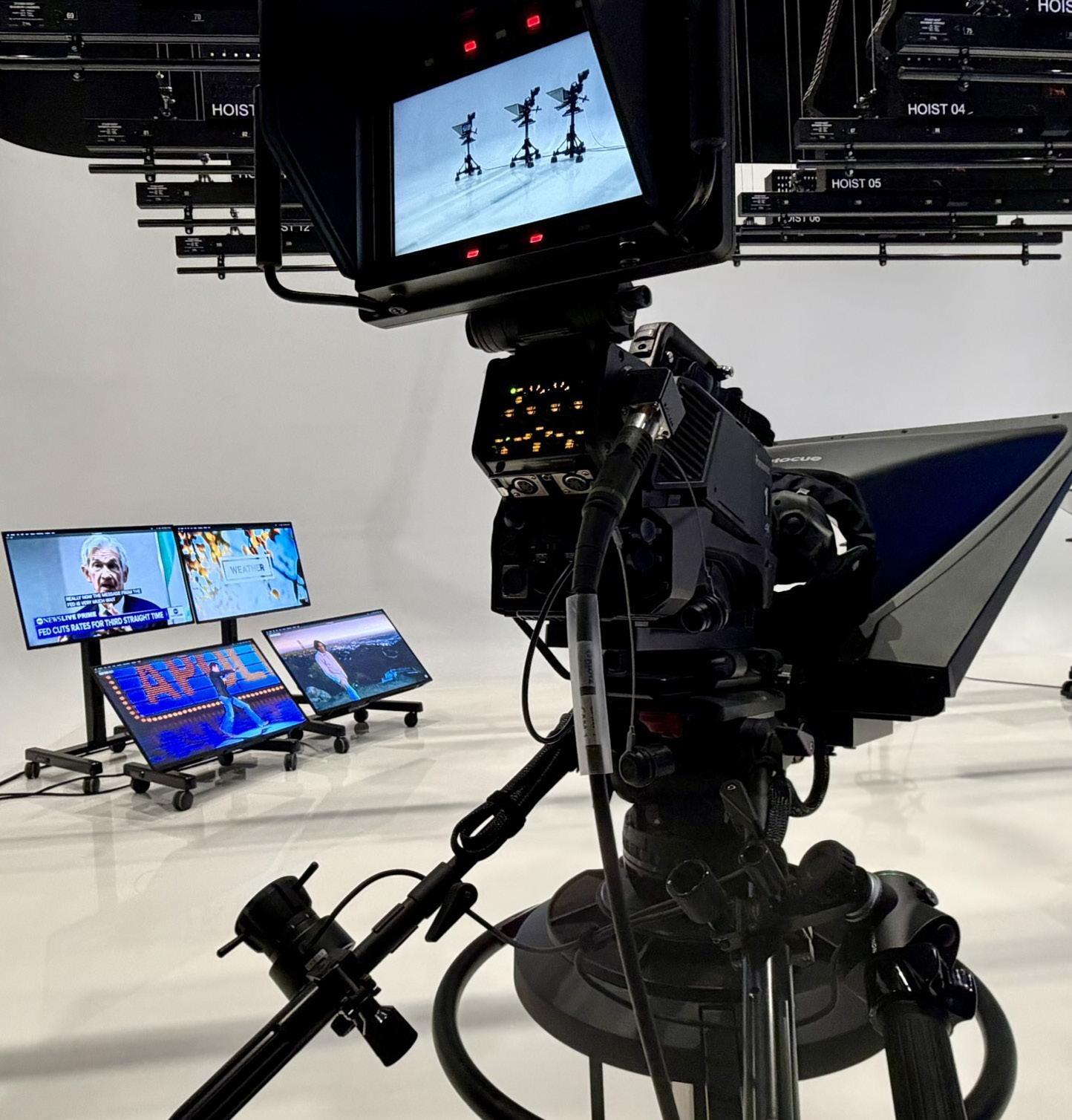
The mc²36 console provides a professional, all-in-one audio production environment. Powered by A_UHD Core processing technology, the console delivers 384 DSP channels, 864 I/O channels, and native IP support for all major AoIP standards. Its user-centric interface—
including colour TFT fader displays, touch-sensitive rotary encoders, Full-HD touchscreens, and loudness metering—offers students a visually rich, highly intuitive operating experience, closely mirroring major broadcast facilities.
Throughout the facility, LUX (Lawo Unified Experience) principles ensure a consistent, role-based user experience. VSM desktop interfaces and dedicated 50-key panels are mapped to studio presets and operational modes—such as teaching, production, or reset-
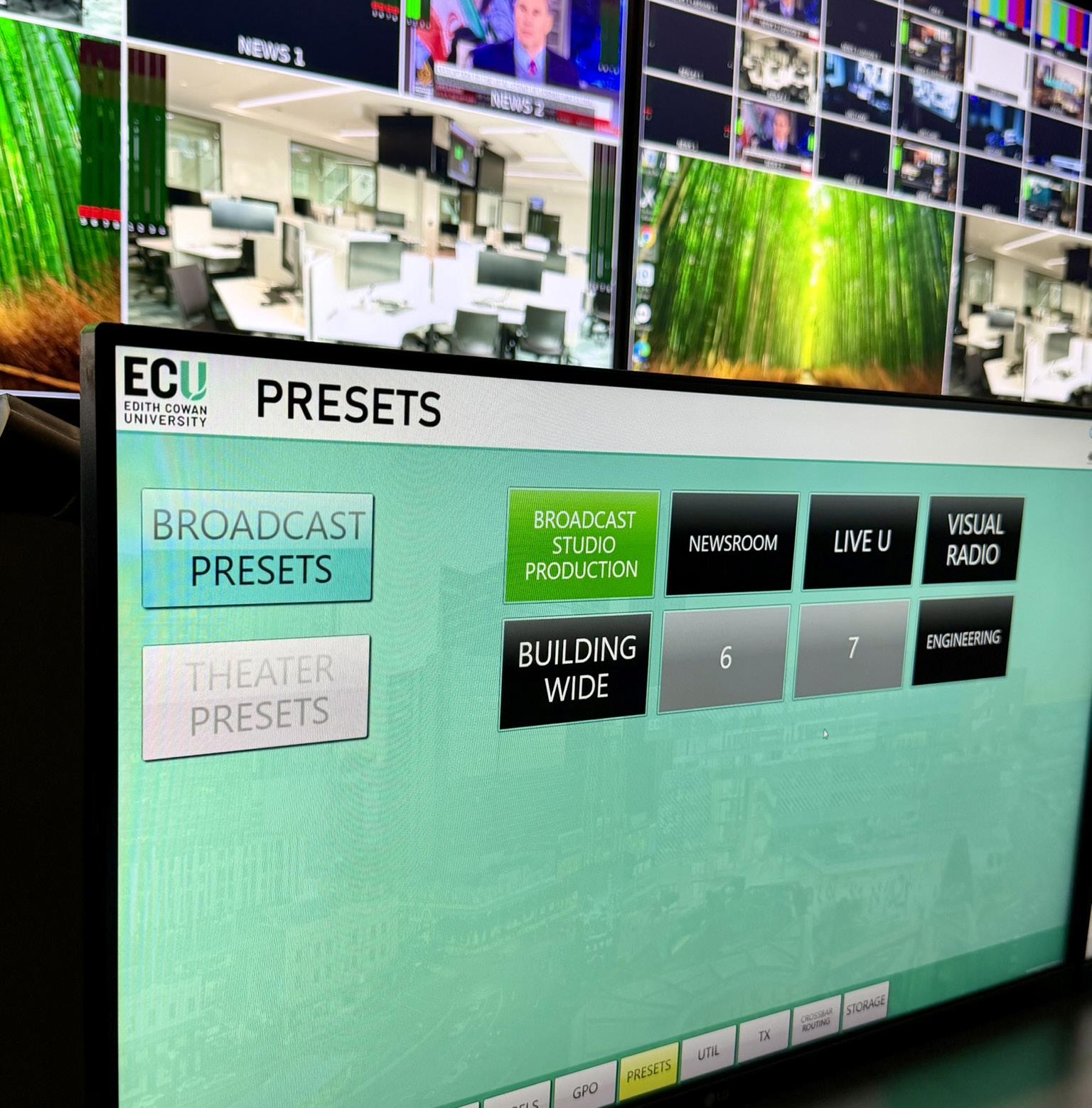
allowing lecturers to prepare the control room with a single action. This ‘push-button studio readiness’ reduces cognitive load, minimises errors, and maximises focus on practical learning outcomes.
For ECU, the combination of HOME, VSM, and mc²36 aligns perfectly with its educational objectives: providing authentic hands-on experience, fostering professional skills in modern broadcast workflows, and creating an accessible, structured
learning environment. Students gain early exposure to IP-centric production infrastructures, while lecturers benefit from predictable, repeatable workflows. With Lawo technology at its core, ECU now operates a broadcast training space that is both professional-grade and purpose-built to support its mission of preparing the next generation of media professionals.
“It’s the fact that the team worked with one eye on technical precision and the other on student potential that made this collaboration a real success,” concludes Burns.
“And they’re as excited as we are by the possibilities this system creates for our students.”


STUDENTS TO ESPN
At Binghamton University, the evolution of student-run sports production is being driven by smart technology and real-world demands. This year marks a milestone for Binghamton University’s Athletics, celebrating the university’s 80th anniversary and 25 years competing at the Division I level. As output surpasses 120 broadcasts annually, Riedel’s SimplyLive RiMotion R12 is streamlining replay workflows and enhancing efficiency, enabling student operators to deliver polished, professional-level coverage with speed and precision. Headliner takes a closer look…
SimplyLive RiMotion R12 empowers a student crew of 60-70 operators with the tools to deliver highquality productions. The addition of this replay system has enhanced the university’s game coverage, improving production quality, with approximately half of its annual productions now using Riedel’s replay system, allowing operators to cue BINGHAMTON’S
replays and transitions much faster than before.
“Our production program has grown tremendously over the past few years, and what makes it special is that it’s almost entirely student-run,” says Jeremy Donovan, video production and multimedia
coordinator, Binghamton University Athletics. “Most of our students come in with no broadcast experience at all, but they learn quickly and end up producing ESPN-quality shows across more than 100 live events a year. Tools like the SimplyLive system make that possible because they’re flexible enough for beginners while
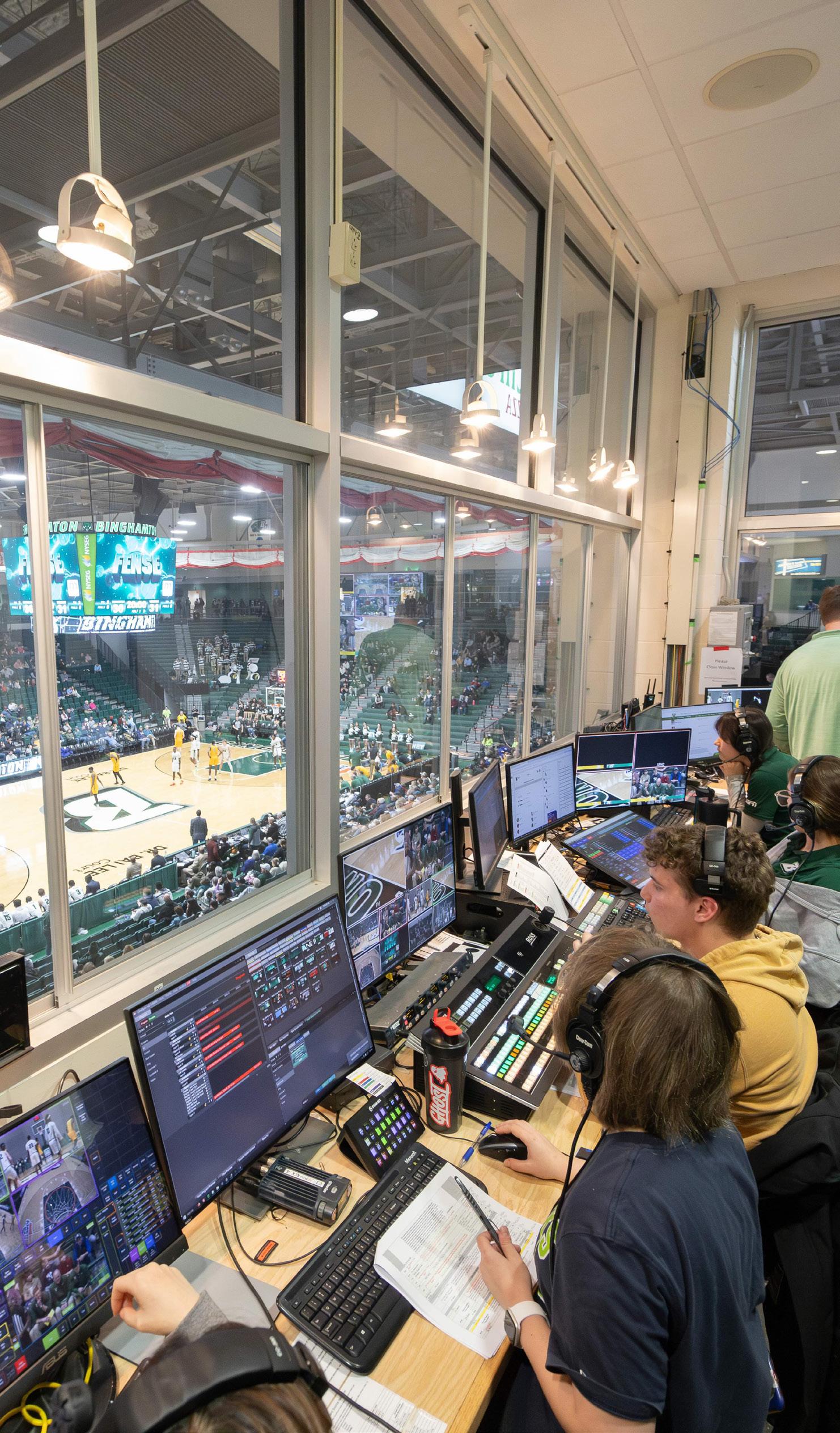
still giving us the capabilities we need as our broadcasts expand onto ESPN, SNY, and MSG.”
The upgrade replaces the university’s previous replay solution, which had reached the end of its operational life after years of steady growth in production volume. Since entering its ESPN partnership, Binghamton has grown from streaming a handful of basketball games to producing full broadcasts for football, volleyball, wrestling, baseball, softball, and men’s and women’s lacrosse. Students handle nearly every production role despite most having no prior broadcasting experience, joining the program from majors such as nursing, engineering, business, and political science.
The SimplyLive system gives students a workflow they can adapt to quickly, whether they prefer touchscreen control, a hardware interface, or a mix of both. In a recent playoff game, student operators used RiMotion to assemble a multi-angle replay of a buzzer-beater within seconds.
“One thing I appreciate about this replay system is how approachable it is for our students,” Donovan points out. “They can run it the way that feels natural to them – whether that’s staying on the controller, which offers the T-bar and jog wheel for more precise control, relying on the touchscreen, or combining the two.
“One of the big reasons we chose the Riedel system was the ability to export clips while we’re still creating them. That lets us quickly move highlights out of the replay system, convert them, and upload them within minutes so the athletics social team can share highlights almost immediately.”
Students now reconfigure the system before nearly every game, shifting between four-camera basketball productions with added PTZs and simpler two-camera lacrosse setups, and the browser-based configuration allows these changes to happen quickly and easily, even during busy weeks with overlapping events.
“ONE OF THE BIG REASONS WE CHOSE THE RIEDEL SYSTEM WAS THE ABILITY TO EXPORT CLIPS WHILE WE’RE STILL CREATING THEM.”
The R12 system also gives students an efficient browser-based configuration module to easily change the setup between games, which vary in camera sources and playback channels. The flexible options offer up to 10 camera sources and up to four playback channels to meet the varying production demands.
“SimplyLive’s design fits the realities of a student-run environment,” adds Andrew Grant, sales manager, live production, at Riedel Communications. “It gives operators a workflow that’s easy to learn and flexible enough to match different skill levels, while still delivering the responsiveness needed for high-profile broadcasts.”
“For programs like Binghamton that are producing more events every year, it’s a practical and reliable way to keep their coverage growing,” he concludes.
RIEDEL.NET
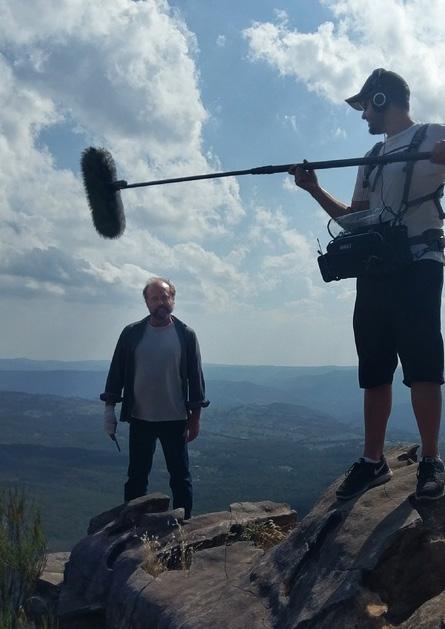
Joseph Dutaillis on high-stakes audio

JOSEPH DUTAILLIS ON HIGH-STAKES AUDIO
FROM BILLIE TO BLOCKBUSTERS
From fast-moving car interviews with Billie Eilish to high-pressure press junkets for Wicked and Wednesday, Sydney-based sound recordist Joseph Dutaillis has built a reputation for delivering pristine audio in unpredictable environments. With credits spanning 50+ short films, features, and global campaigns for Apple, Disney and Coca-Cola, he operates at the sharp end of production, capturing A-list talent including Ariana Grande, Cynthia Erivo and Jeff Goldblum – who even praised his work – while navigating complex, high-stakes setups. In this interview, Dutaillis reveals how he keeps audio flawless when there’s no room for error.
To meet these demands, Dutaillis relies on a comprehensive Lectrosonics portable wireless kit anchored by DSR4 Four-Channel Digital Slot Receivers, SRc DualChannel Slot Mount ENG Receivers, SMQV Dual-Battery Digital Hybrid Wireless UHF Belt-Pack Transmitters, and HM Digital Hybrid Wireless UHF Plug-On Transmitters.
Early in Dutaillis’ career, he realised that consumer-grade gear couldn’t handle the rigours of professional sets. “When you get into this industry, you might start with something else, but you quickly learn that other brands just aren’t up to the task,” he explains. “Over 15 years ago, I chose to step up to Lectrosonics wireless
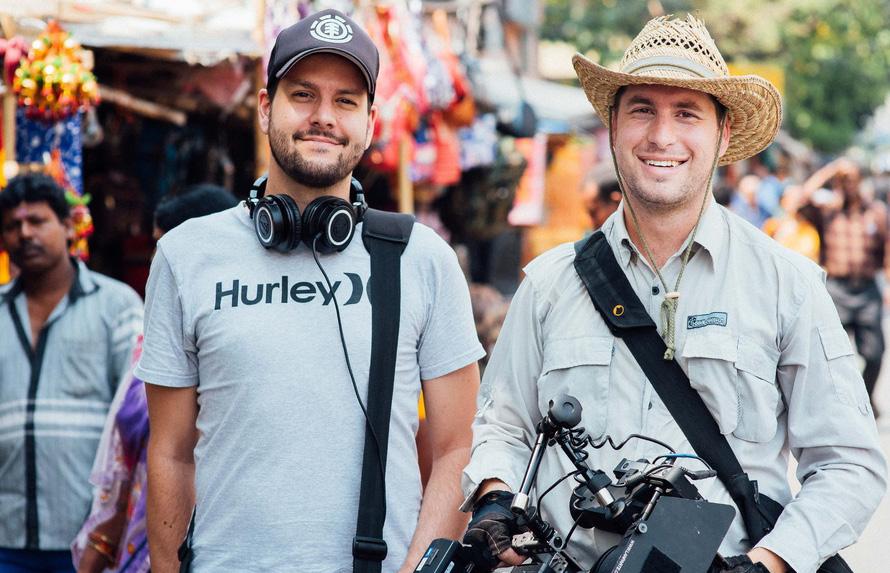
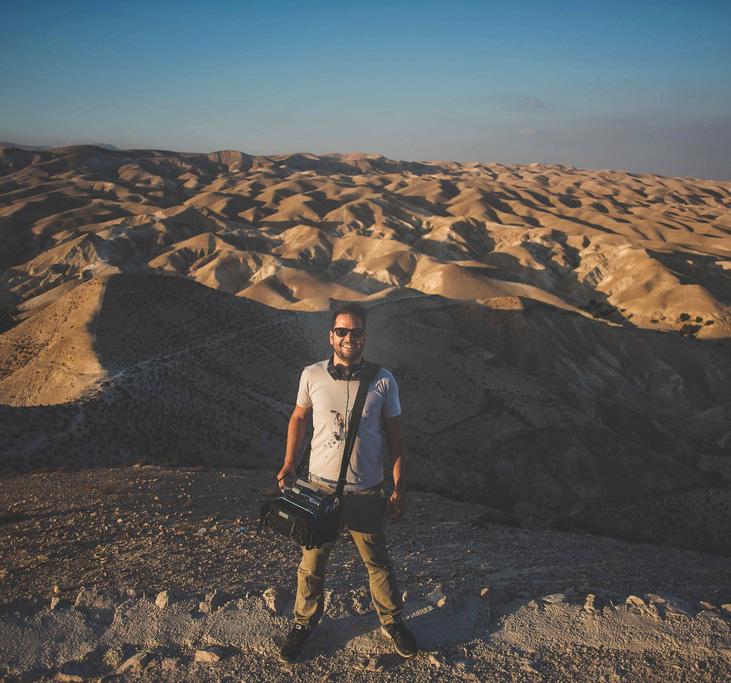
products because they just work, sound amazing, and are incredibly sturdy. I know that if an actor drops a transmitter, it’s fine. It’s a hardworking piece of gear.”
To remain agile, Dutaillis relies heavily on his DSR4 receivers. “Because I do such a variety of
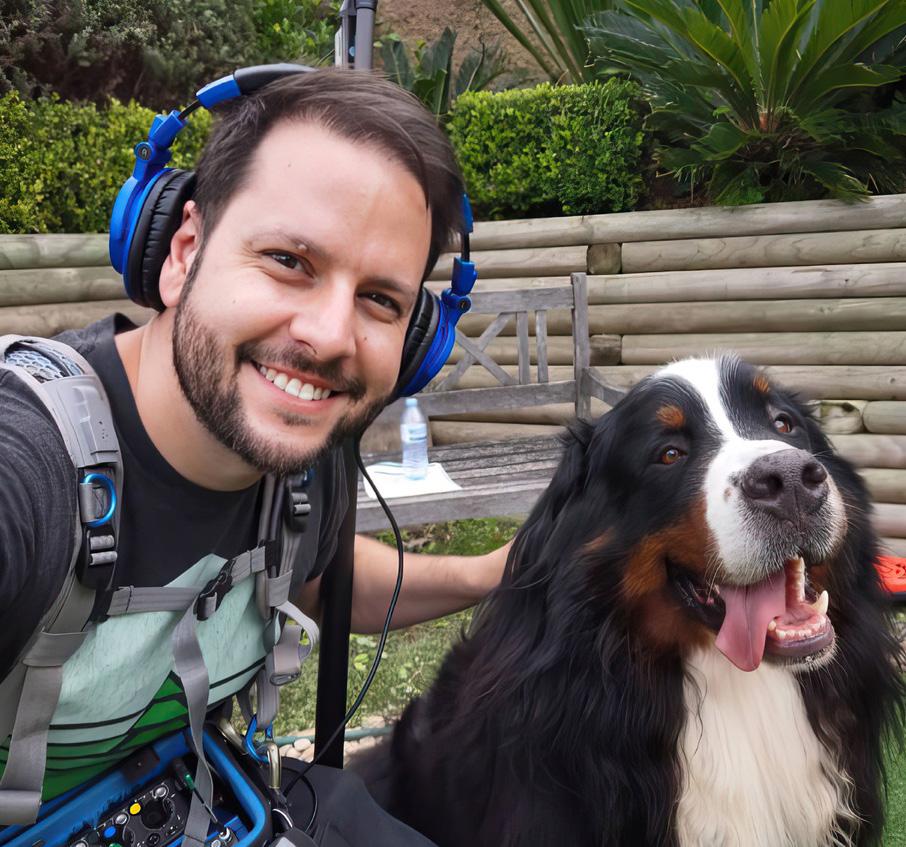
work, I keep a versatile kit, so I’m not swapping gear in and out,” he notes. “With my Sound Devices mixer and two DSR4s, I have eight channels in a very small footprint. It’s light enough to strap on and go, making it manageable for all the situations I encounter.”
That reliability is crucial in unpredictable environments, such as a mobile interview with Billie Eilish and Zane Lowe for Apple. “The interview was set in a car, and we were in a follow vehicle. They drove a huge loop through the city and into the suburbs,” Dutaillis recalls. “Going through that wide
“ALL THE THINGS YOU HEAR ABOUT HERZOG ARE TRUE, FROM HIS ECCENTRICITY TO HIS PARTICULAR ATTENTION TO DETAIL. HE WAS INSISTENT THAT WE DIDN’T USE LAV MICS.”
of a span, you can’t constantly coordinate frequencies. It was a matter of finding a clear frequency and trusting it. With Lectrosonics, I had the confidence to know I could run multiple channels at a distance without any dropouts.”
Dutaillis also braved the scorching heat of Central Australia while working with the legendary German director Werner Herzog. “All the things you hear about Herzog are true, from his eccentricity to his particular attention to detail. He was insistent that we didn’t use lav mics because he preferred the sound of the boom,” says Dutaillis. “I was manually booming long interviews nonstop in the dry heat, as high as 45 degrees Celsius, but I never worried that my Lectrosonics wireless boom with my HM transmitter would fail me. I know Lectrosonics will sound great.”
The intense pressure of high-profile press junkets also demanded flawless execution. During the press junket for the hit film Wicked , Dutaillis managed the primary interview room for Vogue , capturing A-list stars including Ariana Grande, Cynthia Erivo, and Jeff Goldblum. “Interviews were scheduled to
the minute across the entire day with multiple crews operating simultaneously, so frequency coordination was essential,” Dutaillis recalls. “Lectrosonics gear provided the reliability and sound quality I knew I could rely on.” The flawless execution even earned him a direct compliment from Goldblum, who praised his excellent work after being miked.
Similarly, the Wednesday Season 2 press junket featured three audio crews operating in a single room separated only by thin partitions. Dutaillis oversaw the audio teams as cast members like Tim Burton, Jenna Ortega, Emma Myers, and Gwendoline Christie were miked up once, with each crew simply dialling into the talent’s respective frequencies as they entered their space. “With everything happening in such close proximity, proper frequency coordination was essential, and the DSR4s make that much easier with their smart scan option,” Dutaillis explains.
Recently, the rise of vertical video on platforms like TikTok has presented new challenges, such as the need for a short film-style campaign for eBay. “Because it was shot vertically,
there was so much headroom that a boom simply wasn’t an option,” Dutaillis explains. “I relied 100 per cent on radio mics. The small size of the SMQV transmitters was essential because you can hide them so well, even in scant costumes.
“It gives you the confidence that you’re going to get a great result without needing a retake.”
Beyond the gear, Dutaillis praises the people behind it. “Lectrosonics is tried and true, and still an industry leader for a reason: It sounds amazing, and it’s reliable,” he enthuses. “Plus, their customer service is exceptional. You don’t just feel like you’re talking to a corporation; you’re talking to the people who design and fix the products. They stand behind their gear and want to help you, which is just another reason I support them.”
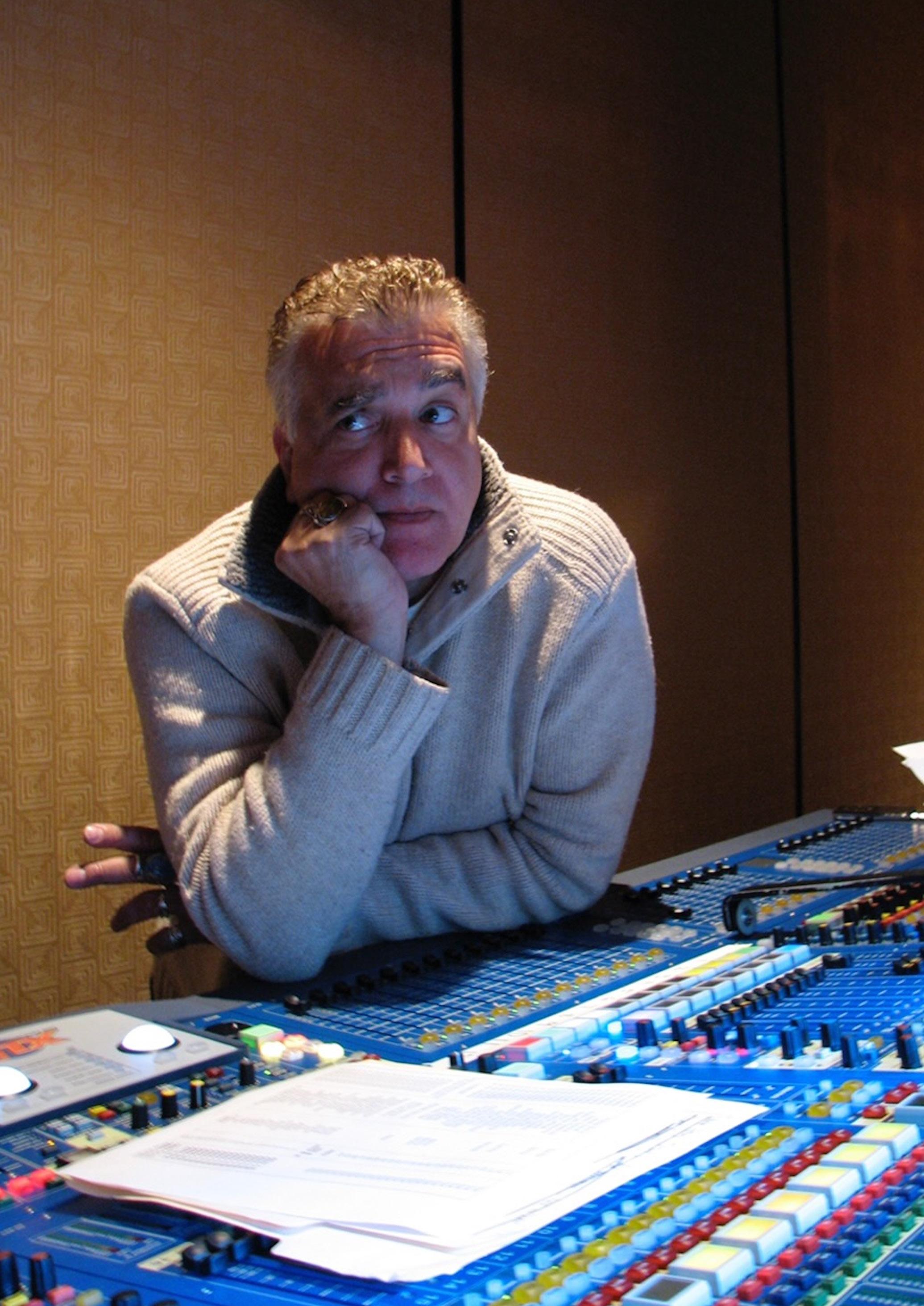
WHAT SINATRA’S TEAM KNEW ABOUT BUILDING SYSTEMS THAT DON’T NEED YOU
LUCAS “RICO” CORRUBIA
Frank Sinatra never asked a sound engineer to fix a problem that belonged to someone else. The night it happened, Lucas “Rico” Corrubia was mixing front of house. Sinatra was working through a number, and the dynamic wasn’t right. The trumpets were off. The balance between the orchestra and the voice – the thing that makes a Sinatra performance feel inevitable rather than assembled – was missing. In his latest Headliner column, pro audio executive Mike Dias profiles Rico, who learns that the best systems are built long before showtime – where every player owns the standard and the mix takes care of itself.
Most performers would turn to the sound engineer. Fix it. That’s your job. Get the mix right. Instead, Sinatra turned to the orchestra. “This whole orchestra, I’m going to tell you something. It’s not the kid’s job to do the dynamic. It’s all of your jobs. When I make this hand gesture, the trumpets are going to play that high note at this volume. Or you’re out of here.”
When Rico told me this story while recapping his 45-year career, he ended by saying, “You mix Sinatra at unity.” The fader sits at zero. Not because the engineer isn’t present – but because every person in that system has internalised the standard so completely, has been held to an expectation so clearly communicated, that there is nothing left for the engineer to correct. Sinatra didn’t want the sound engineer to fix the dynamic. He expected his orchestra to do their job. The engineer’s job, when the system is working, is not to interfere. And yet, most executives spend their careers riding faders. Compensating in real time for a system that was never properly calibrated. Working harder and harder to correct in the moment for problems that should have been solved upstream. Wondering why the mix never quite sounds right.
What Sinatra understood, and what Rico absorbed working inside that system, is that the console has a limit. The best engineer in the world can only do so much to compensate for an orchestra that doesn’t own its dynamics. The fix doesn’t happen at the board. It happens in the room, before the show, with the people who are going to play it. Hold everyone to the standard. Communicate it with enough clarity and enough consequence that no one needs to be reminded during the performance. Then let the engineer hold steady. That’s not a principle about sound. That’s a principle about every system that has to perform under pressure in front of people who are paying attention.
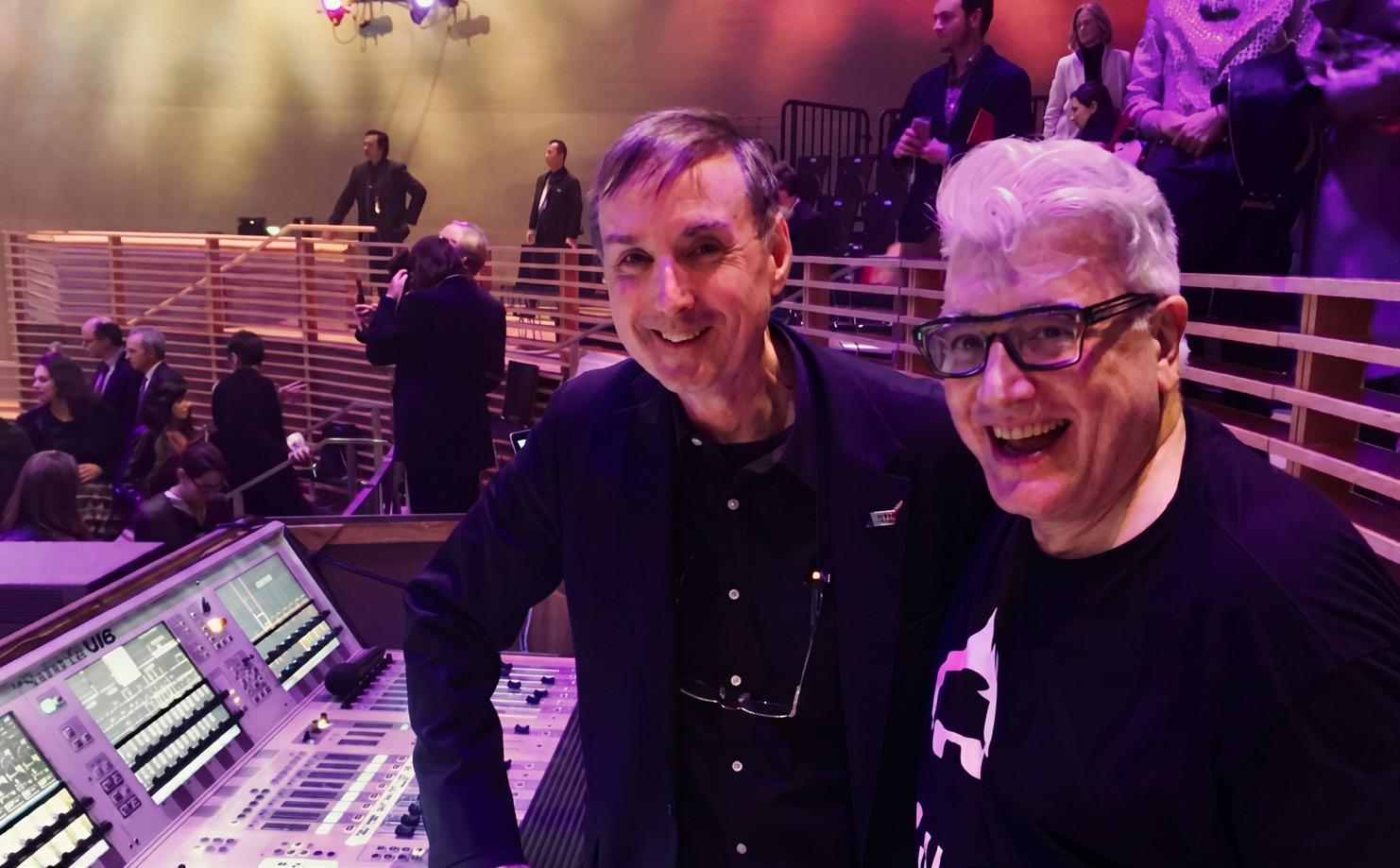
IT STARTED AS A SUMMER JOB
Rico didn’t plan any of this. He was 26, heading toward a master’s programme in art therapy, when his friends in Atlantic City called. The casinos were building showrooms. The money was good. The only job left was sound engineer – a field he knew nothing about. He went for the summer. A veteran named Tom Young became his first mentor, taking him under his wing in the late-night lounge at Bally’s, teaching him reverb on a PM 2000 from 10 pm until four in the morning. The mentorship moved fast. Within months, Rico was the house sound engineer at the Golden Nugget – a nervous wreck with four months of experience and enough ears to know when something was wrong, even if he couldn’t always explain why.
Then Steve Wynn signed Sinatra. And the summer job became a laboratory. What Rico learned in those casino rooms, mixing the Chairman of the Board for audiences who had come specifically to hear the space between the notes, was a doctrine that would travel with him for the next four decades. Not technique. Something prior to the technique. The understanding that sound is not what comes out of the
speakers. It’s what happens inside the listener. He never went back to school. And 45 years later, he doesn’t have a single regret about it.
BROADWAY TAUGHT HIM THAT COORDINATION IS AN ART FORM
The concert world found Rico first, but Broadway claimed him. Pete Townshend came backstage after hearing him mix The Music of Andrew Lloyd Webber on tour and told him he had to do Tommy. That was Rico’s first Broadway show. He walked into the load-in thinking like a touring engineer – moving fast, pushing hard, expecting to have it done – and was pulled aside by his Local One brothers who explained, with varying degrees of patience, that he had six weeks. For a touring engineer, that’s not a timeline. That’s a lifetime. And it turned into an education.
Because what Broadway teaches, if you’re willing to learn it, is that precision is not the same as speed. You have time to move a cluster of speakers 10 feet and listen to what changes. Time to find the frequency that’s reflecting off a wall, impacting just a few seats. Time to discover what a great snare sound actually means in this room, for this show, for this audience. Time to get it right in a
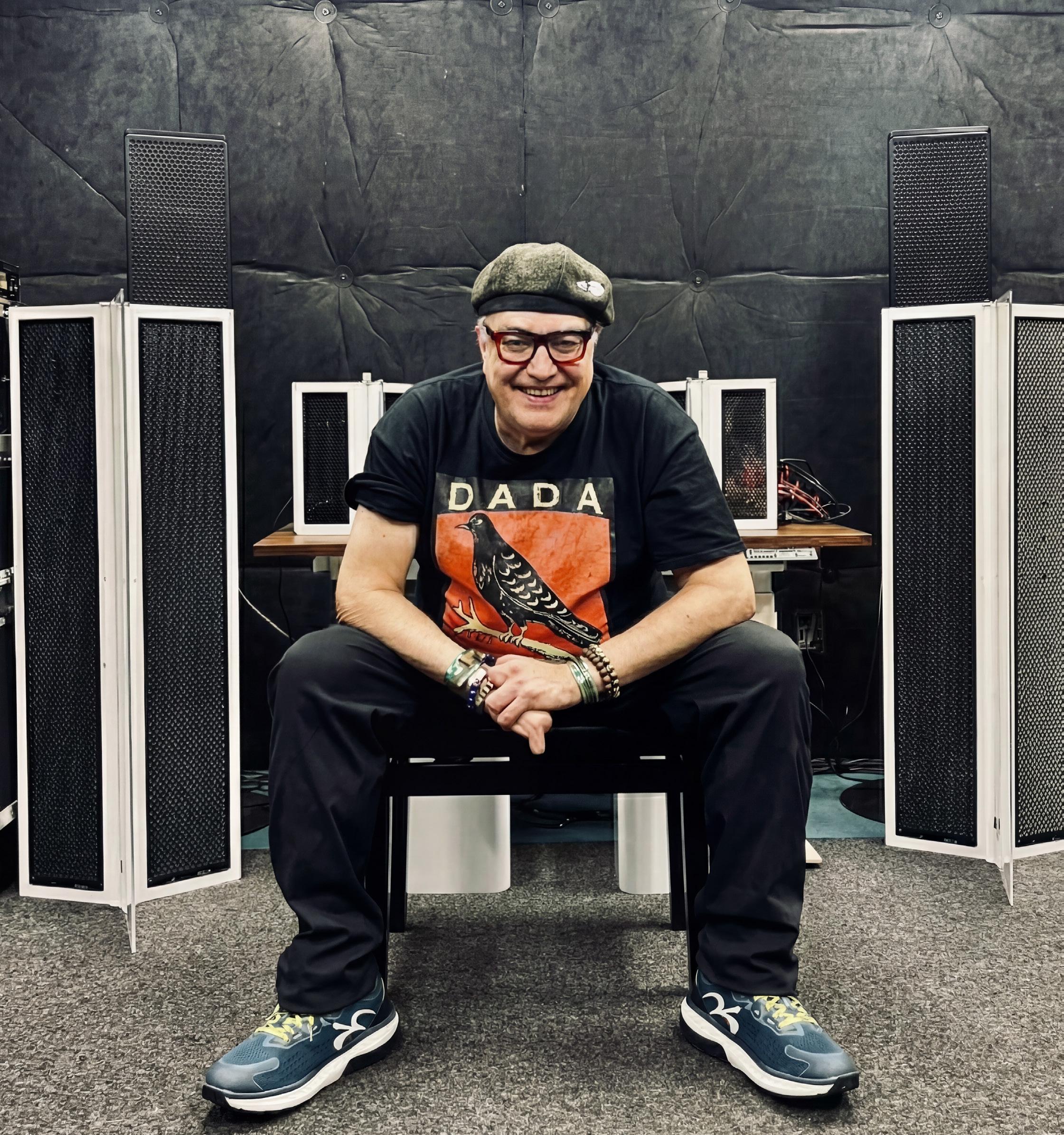
way that touring never allows. But the deeper lesson, the one that separates Broadway from everything else Rico had done, wasn’t about sound at all. It was about what happens when an entire production reaches the level of coordination where every element is listening to every other element simultaneously.
Not everything deserves full gain. Not every moment should be mixed
at the ceiling. The most powerful moments in a Broadway house are often the quietest: the solo that’s barely amplified, coming from one precise point on stage, in a room of a thousand people who have leaned forward without knowing they did it. The engineer’s job in those moments is not to fill the space. It’s to protect the silence around the thing that matters. Most executives present at 10 all the time. They never bring it down.
They don’t understand that the leanin – the moment when an audience closes the distance voluntarily – is only possible when you’ve made room for it.
TOURING TAUGHT HIM THAT THE SYSTEM WILL NEVER SURVIVE CONTACT WITH REALITY
Broadway builds the perfect system. Touring teaches you that it won’t last. Different city. Different room. Different acoustic nightmare. You walk in at eight in the morning, and you have until lunch to get it right. There is no moving the cluster. There are no six weeks. There is your ear, your system engineer, and a series of decisions that have to be made quickly and correctly because the show is tonight, regardless. Decisions have to happen faster. The ear has to get sharper. The pattern recognition that took weeks to build in a Broadway house needs to happen in minutes because it has to. And then you load out, drive to the next city, and do it again. What touring builds is judgment under pressure. The ability to read a room not as it should be but as it is, and to know the difference between what can be fixed in the time available and what has to be accepted and worked around.
There was a night at Royal Albert Hall that illustrates what happens when Broadway patience meets a touring timeline: Rico was mixing a large orchestral concert. The sound company had put up 80 speaker boxes per side. Standard thinking for a room that size. More coverage. More confidence. More everything.
Rico walked in, listened, and heard the slapback – the half-second ghost of the vocal bouncing off the back wall, the echo that makes everything feel slightly wrong in a way audiences sense but can’t name. He couldn’t leave it. So he and his system engineer stayed in the hall through the night. Ten in the evening until morning. Unplug boxes one at a time. Walking the room after each one. Not from the mix position, walking the seats, finding the problem at its source, tracing it back. By morning, they had gone from eighty boxes per side to roughly twenty. And the coverage was perfect.
That’s a Broadway instinct, the patience to keep listening until the room tells you what it needs, applied inside a window that touring created. The touring world trained him to work fast. Broadway trained him to work deep. Royal Albert Hall required both simultaneously. Most executives know how to do one of these. The ones who only work fast leave 80 boxes up and call it good enough. The ones who only work deep are still unplugging boxes when the doors open.
THE RICO BUTTON
Here is what the young engineers sent to learn from Rico came home with: something they couldn’t name. He hung speakers in ways that were unorthodox. Sometimes strange. Often counterintuitive to anyone who had learned the rules before learning the rooms. And when the system came up and the space filled, they’d look at each other and reach for the technical language and find it wasn’t quite there.
It sounded right. It felt right. They just couldn’t fully explain why.
He tried to teach it. He’d walk them through his thinking, trace his logic, explain what he was hearing. Some of it transferred. Some of it couldn’t be, because the knowledge had stopped living in his head a long time ago. It lived in his hands. In his ears.
In 45 years of eight-in-the-morning decisions and six-week calibrations. The people who worked with him called it the Rico Button. As in: he sat down at the board, he did whatever he does, pressed the magic Rico Button, and it just sounded different.
Every organisation is searching for this. They’re building processes, frameworks, playbooks, and measurement systems, trying to capture the thing their best people do, and finding that the process never quite produces the feeling. That’s because the Rico Button isn’t a technique. It’s what happens at the intersection of two kinds of mastery
that almost no one is asked to develop simultaneously: the patience to build something perfect, and the judgment to know when perfect isn’t available and act anyway. That’s the career nobody writes about. The one where no one knows your name, and everyone knows what you helped make great.
–
Lucas “Rico” Corrubia spent 45 years doing something he couldn’t fully explain. Broadway. Touring. Sinatra. Van Halen. Bernadette Peters. Liza Minnelli. Michael Crawford. He built perfect systems and then watched them collide with reality every single day. His credits include The Who’s Tommy on Broadway and international tours with some of the most demanding performers in history. What he learned in those collisions is the thing no MBA programme teaches, and the thing every executive desperately needs.
Mike Dias writes and speaks about pressure, performance, and the Relationship Economy – translating the hidden operating systems of world-class entertainers into leadership frameworks that actually work. His lens makes one thing clear: trust is the condition, the framework is the practice, and experience is the outcome.
MIKE-DIAS.COM











REPLAY FOR EVERYBODY, EVERYWHERE.
RiMotion is an easy-to-install replay solution that can be implemented almost instantly in broadcast environments of any scale. It streamlines traditional and modern workflows and provides real-time performance, even when working remotely.
• Intuitive touchscreen